Eric D. Snider

Eric D. Snider's Blog

Richard Dutcher leaves Mormon cinema and Mormonism

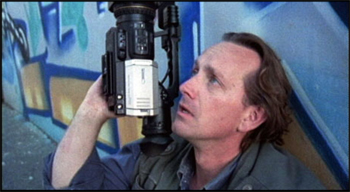
Alt text

Richard Dutcher in his upcoming film “Falling.”

Richard Dutcher, whose 2000 film “God’s Army” launched a new wave of Mormon-themed theatrical features, announced two things last week: that he’s leaving Mormon cinema, and that he’s leaving the Mormon church.

This is big news to followers of LDS cinema, and small news to people who didn’t realize there was such a thing as LDS cinema. But in Utah there has been no bigger film-related story in this decade than Mormon cinema — films made by, for, and about Mormons.

“God’s Army,” released March 10, 2000, was the first. Its $2.1 million gross showed Utah filmmakers that a movie with a niche audience (Mormons comprise only about 2 percent of the U.S. population) could be successful, provided they kept costs low and turned out a good product. Dutcher himself made the movement’s second entry, “Brigham City” (2001). By the end of 2003, 10 more non-Dutcher LDS films had been released, some good, some bad, some profitable, some not. As of this writing, another dozen or so entries have been filed, including Dutcher’s third film, “States of Grace” (2005), which is far and away the best of the lot and one of the best films of any kind of that year.

Most of these played only in Utah theaters. A few did well enough to move into other locations, mostly in the western U.S., where the highest concentration of Mormon audiences is. None ever managed to be the illusory “crossover success” that many directors were hoping for; in general, non-Mormons have shown no interest in watching movies they perceived as being for Mormons only.

But to Mormons, the movement was exciting and rejuvenating. Here were our own people, telling stories about us! And some of them were actually GOOD! The possibilities were endless: Mormon films could be nothing more than light entertainment, or they could inspire audiences with stories of faith and courage, or they could present important messages and themes. In other words, they could do the same things that Hollywood movies do, only from a Mormon perspective. If non-Mormons weren’t interested in them, fine. There are enough Mormons to sustain the genre.

The problem, as Dutcher writes in his farewell address that was published in the (Provo, Utah) Daily Herald on April 12, is that “diminishing quality has brought diminishing returns.” Many of the filmmakers that came along after Dutcher have sullied the marketplace, filling it with sub-par movies that have dramatically lessened the enthusiasm that audiences once felt for Mormon cinema. As a result, the genre has suffered, and the last batch of films have completely flopped at the box office.

Dutcher urges these filmmakers to do better, to learn from their mistakes, and to help the Mormon cinema movement live up to its potential.

“Stop trying to make movies that you think the General Authorities would like,” he writes, the general authorities being the leaders at the top of the LDS Church. “General Authorities buy very few movie tickets. Make films that the rest of the human family will enjoy. Stop being afraid that if you put something ‘edgy’ in your films then maybe you won’t get any important callings. Who cares? Someone else can be in the bishopric or the Relief Society presidency, but no one else can make those films, those very personal films, that only you can make.”

Dutcher ends his address by bowing out of Mormon cinema. He has two new movies, “Falling” and “Evil Angel,” finished and awaiting release, and evidently neither is Mormon-centric. He says he’s finished not just with Mormon cinema, but with the Mormon church:

“Mormon doctrines are powerful and beautiful and have given great meaning to my life for more than 30 years. [Dutcher's family joined the LDS Church when he was a child, but he says his own personal conversion occurred when he was 14.] I’m sure they will always continue to inform not only my future work as a filmmaker, but also my private spiritual journey. But it does not appear that it will be my honor to make some of these films that the LDS community so desperately needs.”

He goes on to say:

“As many of you know, I am no longer a practicing member of the church. The private answers to the questions I have asked in my prayers, and in my films, have led me on an unexpected journey, a spiritual path which may ultimately prove incompatible with Mormon orthodoxy. This understanding has brought me some of the most profound surprises and also the deepest sadness of my life. It is very hard for me to say goodbye to something that I love.”

Now, I don’t know what this means. It sounds like wishy-washy bet-hedging to me, like when people say, “I’m not religious, but I’m spiritual.” (I love comedian Daniel Tosh’s response to that: “I’m not honest, but you’re interesting!”) One of Mormonism’s central tenets is that, well, either it’s true or it’s not. Either The Church of Jesus Christ of Latter-day Saints is a “true” church acting on authority from God through direct revelation to his prophets — or it isn’t. Dutcher once espoused this black-and-whiteness, both in interviews and through his films.

I hasten to add, however, that I’ve always liked Dutcher, both as a filmmaker and as a person, and this doesn’t lessen my esteem for him. I’m just frustrated by the vagueness and floweriness of the paragraph I just quoted — in no small part because it’s the opposite of his movies, which are direct and unambiguous. Dutcher has always been a straight-shooter, and his adieu to Mormonism sound lofty, idealistic.

In other words: I’m not particularly concerned about Dutcher leaving the church. I just wish he could explain why in more practical terms. But oh well.

Some people have posted messages on the Daily Herald’s Web site in which they speculate — some even sound smugly certain of it — that the reason Dutcher is no longer an active Mormon is that he must have committed some grievous sin. I should point out, however (and I know this through personal experience, from when I wrote for the Herald), that the anonymous Utah Valley cowards who post messages on the Daily Herald’s Web site are generally petty, self-righteous, small-minded Pharisees. It’s certainly true that sinfulness is why lots of people leave lots of churches, but there’s no reason to assume that’s what happened with Dutcher. I’d rather be frustrated by his vague public declarations than satisfy my curiosity by coming up with an unjustified conclusion.

I once wrote an article for Irreantum, a literary journal published by the Association for Mormon Letters, discussing how Dutcher’s “States of Grace” and John Moyer’s “Mobsters and Mormons” reflect modern Mormonism in a real-world context. (You can read the article here.)

I talked about how both films depict Mormons as living among people of other religions, and how the movies don’t unrealistically paint all non-Mormons as misguided. Other faiths are treated as valid, positive systems in these movies. Then I said this:

“This acceptance of other religions doesn’t mean that Moyer and Dutcher are backing down from Mormonism’s assertion that it is the one true church. There is no ‘all paths lead to God’ wishy-washiness going on here. The films merely accept that in the real world there are good people of other faiths who, realistically speaking, are not going to convert to Mormonism anytime soon. The films don’t see a need to cast all non-Mormons as villains, or all villains as non-Mormons.”

With Dutcher’s announcement, I might have to rethink that. Maybe “States of Grace” had an “‘all paths lead to God’ wishy-washiness” after all. It is interesting how real-life events can change your perspective on a film … though “States of Grace” is STILL a great movie, and a Christian-faith-promoting one, regardless of whether Dutcher still goes to church now.

Dutcher hinted that he was moving away from Mormon orthodoxy in this interview with Christianity Today back in November. There was discussion at the time about what it all meant — Was Dutcher just downplaying his Mormonness for his general Christian audience? Had he been quoted out of context? — but now the matter seems to be settled.

Dutcher has often been an intense, impassioned speaker, critical of his colleagues’ lousy efforts. He speaks as the godfather of Mormon cinema, a position he deserves but which occasionally leads to his sounding a bit pretentious. He has been so devoted to his craft that it has impacted every aspect of his life, apparently right down to his spirituality.

I hope he finds happiness in his personal life, and I look forward to seeing his next films. Mormon cinema will go on, and he will only have contributed three films to it. But his contributions to the movement as a whole are monumental.

TOMORROW: The responses to Dutcher’s Daily Herald article, including an Oscar-winner flying off the handle.

16 Responses to “Richard Dutcher leaves Mormon cinema and Mormonism”

  1. RandyTayler Says:

    That’s really sad to me, but I guess it’s sad to me whenever anybody leaves the Church. For their sake, mostly, but in Dutcher’s case, it’s also sad for the Church’s sake; we can use as many true artists as we can get.

  2. NBarrett Says:

    Tomorrow’s episode sounds interesting. I’ll be sure to tune in.

  3. Amp Says:

    I don’t know much about Dutcher or Mormon cinema (I’ve only seen God’s Army) but I think his observations and criticisms of Mormon culture (based on the interview and column you linked) are dead on.

  4. Jim Says:

    I agree with a lot of what Dutcher says about LDS cinema, but I fear that Dutcher’s article contains elements of the “I am intellectual, hear me roar” mentality. A more cynical part of me can’t help wondering whether Dutcher was being deliberately unclear. The article seems more geared towards CREATING questions about him–questions that will have to be answered in future news articles–than towards ANSWERING questions about him.

    Note that I’m not saying that Dutcher’s spiritual course change is a mere PR stunt–it may be something very deep and sincere. But . . . how to put this tactfully . . . he doesn’t seem to mind the fact that so many people are interested in his spiritual path. There were plenty of ways he could have said farewell to Mormon cinema without bringing his own theological beliefs into it.

    I hope I’m wrong, and at any rate I sincerely hope he finds his spiritual journey–whatever it may be–personally fulfilling. But I don’t think we’ve seen the last of Dutcher’s pontifications on Mormons and Mormonism. It seems to me like he WANTS someone to ask him why he left.

    (apologies for the occasional all-caps. Eric, is it possible to do italics in comments to this blog?)

    –Jim

  5. mpb Says:

    Thanks Eric. I was hoping you’d post your thoughts on this. I was also hoping you’d post your thoughts on Keith Merril’s response and subsequent apology (and on his films in general and whether or not you think Dutcher’s assessment of them is warranted), but I am guessing you either didn’t see Merril’s writing or you don’t care to comment.

    I think Dutcher is free to think what he wants, wishy-washiness or not. Like Dutcher’s connection to Cowdery, I feel a connection and understanding with individuals like him whose private spiritual journey leads them away, however strongly they wish it were otherwise, from the Church. I wish him the best and as an active Mormon feel the loss of his contributions to the faith. Particularly, I wholeheartedly agree with his Mormon Cinema philosophy and it hurts not to have him contributing from the inside.

    However, I don’t particularly like the “Mormonism as a stepping stone” line of thought that tends to imply that those of us who have stuck with the Church have not given it as thorough or as meaningful of a spiritual analysis.

    Just sayin…

  6. BR Says:

    Eric,
    Thanks for your post and for your thoughts. I found you linked on Reuters and was actually really impressed with what you wrote, not only about Dutcher, but also the other articles you linked. Though I understand why you think Dutcher’s reasons for leaving the church are wishy washy, speaking as someone who has left the church….sometimes, that’s all you get.
    I have not been a member of the church since I was 19, and I am 35 now. However, though I am not a member I still consider myself a “Mormon” in some part of my being. I still think of myself as Mormon first when someone questions my religion. I do not answer that I am a Mormon, out of respect to members who are much better at following the tenants of the church than I am.
    My point is, I am a non-member. And I voluntarily left the church. Why? Because I felt that it was something I had to do. I had many reasons….I don’t like the idea of “one true church” because I know so many good people who aren’t members and never would be….I feel that the consumption of prohibited beverages is not harmful in moderation….and a lot of it had to do with when I quit (I was on a mission).
    My point is, I can only tell you that I left the church and that I felt is was for the best, (and still do). I would rather be an inactive Mormon, than a bad Mormon. But why is not always as black and white as in a script. So cut Dutcher a bit of a break, at least for now. After 16 years all I can still tell you, is that I am still a non-Member, even though I have a tremendous respect for the church.

  7. Andrew D Says:

    You know, my brother and I talked about stuff like this concerning Mr. Dutcher this last weekend… craziness.

    I like his reference to Oliver Cowdery. I hope he reconsiders his feelings towards the church.

  8. dave Says:

    The biggest problem I see is that many people thought that Dutcher was toeing the line spiritually when his movies came out, for depicting thing like baptism or blessings. Now they’re going to feel they’ve been proven right. Plus, people who participate in LDS cinema are going to have to fend off questions about their commitment to the church. Mamas aren’t going to let their children grow up to be filmmakers. I think this is a sad day for
    LDS cinema.

  9. Ben Says:

    Dutchers films have been great. They have pushed audience members to evaluate exactly what they believe and why. The rest of Mormon cinema seems to be content to be associated with the church, making money because they are going to sell tickets to the Mormon community. They don’t seem to be interested in creating a moving and compelling film, they are content to make fluff. They entertain, but they don’t get viewers to care. Dutcher was a filmmaker first. His films were great because he allowed the viewer to see his own personal questions and how he found strength from his faith. Its sad that he felt he couldn’t be a Mormon anymore, but he has never BASED his movies on him being a Mormon, they have been based on his asking questions of himself and of the audience. I am still going to be following Dutcher because he makes great movies. One of the best TRULY independent filmmakers that is working today. Faith and spiritually will still be huge themes in his films. I only wish I could see them before they come out on video. (limited release sucks)

  10. card Says:

    “They have pushed audience members to evaluate exactly what they believe and why.”

    That’s actually what annoys me about the movies. I equate the pushing with someone trying to tell me how to feel, and that’s irritating.

  11. Argus Skyhawk Says:

    I can imagine why Dutcher might not have wanted to be more specific about why he is leaving the church. If he stated particular doctrines or practices with which he disagreed, he would likely invite unintended debate and offend people he did not intend to alienate. I know that Dutcher has shown through his movies that he is willing to be brutally honest at the risk of offending others, but doing so in that article could drag the direction of the conversation away from what he intended to say.

  12. Clinton Says:

    Well, as long as Eric doesn’t leave Mormonism and its cinema, everything will be okay, ’cause you know, how can you have an art without anyone to criticize it?
    Actually, the only Dutcher film I saw was God’s Army. It was good. I’ve also seen The Legend of Johnny Lingo (it was bad, but I liked it anyway), The Singles Ward (bad, but my brother-in-law loves it), The Best Two Years (good), Charlie (my wife and I watch that one whenever we need a good cry. Don’t tell her it’s bad, them’s fightin’ words), The Other Side of Heaven (does that count as a Mormon movie? anyway, I thought it was good). That’s all I can think of for now. Seems like Mormon cinema’s doing okay to me. I guess Dutcher and I must have different tastes.
    One more question: if Orson Card’s Ender’s Game gets made into a movie, and he’s credited with the script, can that count as Mormon cinema too? How about if any of the Alvin Maker or Return to Earth books get made into movies?

  13. Argus Skyhawk Says:

    Clinton, your taste might not be too different from Dutcher’s; most of the movies you mentioned are among the better LDS films. The RM was lame, and I stayed away from The Home Teachers, The Book of Mormon Movie, Day of Defense, Church Ball, Baptists at Our Barbeque, Hand Cart, and various others because I heard they were awful. Dutcher may; have been refering to those.

  14. Argus Skyhawk Says:

    I will add that Dutcher shares your opinion of The Singles Ward (so do I). He asked that his cameo be removed from the video release after he saw it in the theater.

  15. SCS Says:

    I enjoyed reading your reasoned analysis of the situation with Richard Dutcher, Eric. I pretty much agree with your assessment of things.

    I may be a Johnny-come-lately to this discussion, but I only just learned about all of this. As a member of the church and an ultra-low-budget independent filmmaker, I knew who Dutcher was and had an interest in his career. I live outside Utah, and I’ve only seen one of his films (”States of Grace”), although I’ve read reviews of his others.

    There are several facets to this story. I’ll try to touch on each.

    First is Richard’s departure from the church. I was genuinely saddened to read his announcement. A side of me actually wanted to crank off a lengthy email to him. But who am I kidding…he’s a big boy, and he doesn’t know me from Adam. Still, if I knew him personally, I would have been on the phone to him in a heartbeat. I wish him well and hope that he will one day reconsider.

    The impact of this on LDS cinema, and the state of that niche market is another facet. I’ve really not sampled much of LDS cinema, although, I was aware Dutcher was considered one of its brightest stars. I suspect there’s more than a little truth to some of Dutcher’s criticisms about the general quality of the genre/niche based on what I’ve read elsewhere, however, I disagree with his apparent disappointment in Keith Merrill’s work. I know where he’s coming from, but he’s missing the big picture, and he’s somewhat comparing apples to oranges. Merrill’s films accomplished their purposes very well. Still, I can appreciate Dutcher’s frustration with quality control in the genre and his desire to see the bar raised.

    I read an interview with him once where he seemed to blame others for essentially killing off the market for his own films. I’m not sure that was entirely fair of him. Dutcher, as much or more than any other ‘LDS cinema’ filmmaker, had a name that audiences knew and a reputation that exceeded what most came to expect from the genre. I bought his “States of Grace” DVD purely on his reputation, not on the reputation of the genre. I believe that ultimately your fortunes rise or sink based on the quality of your work. When you start blaming people outside your production for your lack of success, it’s time to step back, take a deep breath, and open your mind to your own shortcomings.

    I have enormous respect for anyone who can marshal the sort of resources Dutcher did and create films of the quality of “States of Grace.” And I appreciate the limitations of low-budget filmmaking, both in terms of human and non-human resources. That said, I can understand why SOG wasn’t more successful. I definitely think Dutcher is a talented filmmaker, but I can see areas for improvement in SOG’s script. It would be interesting to sit down with Dutcher and have a constructive-criticism session. He isn’t leaving cinema altogether, so we’ll be able to track his progress down the road. As Keith Merrill wondered, I do hope Dutcher doesn’t compromise his values in his future work. Merrill had a good point about the value of “G-rated truths.” You don’t have to sell your soul to make a hit–or to move your audience.

    The final facet to this saga is Keith Merrill’s reaction. Merrill will be the first to admit he spoke out of anger (actually, he did–both in his original letter and his subsequent retraction). I understand why he took offense. I don’t hold it against him. We’re all human. I thought his apology was sincere, and what more can you do in that situation than that? Despite the tongue lashing, Merrill does make some valid points of his own. He’s a very talented filmmaker in his own right, and I still have enormous respect for the man and his work.

    Some final thoughts–I guess this development means Dutcher won’t be the ‘promised one’ who makes the definitive Joseph Smith film after all. I had high hopes back when he announced he was going to make the film, and it sounded like he had the funding, although I guess Larry Miller decided to pull out. I do believe that film will be made one day when the right person comes along.

    While I don’t aspire to make films that would fall into the ‘LDS cinema’ category, I do hope those who devote themselves to this niche will strive to improve their craft and push the quality of their work to ever-higher levels. Dutcher may not have also been as tactful as he could have been, but he isn’t entirely off the mark in some of his remarks. Even though Dutcher has left the stage, there is still enormous potential in the genre, just as he used to believe. The audience is ready and willing to lay down their hard-earned money for a quality film experience. It’s up to filmmakers to provide it. “If you build it, they will come.”

  16. Mark Says:

    I thought he left the church, but I read in the Daily Herald that he’s screening another “mormon movie” at the sunstone symposium (sp?).

    Is he mormon or not????

Leave a Reply

Subscription Center

Eric D. Snider's "Snide Remarks"

This is to join the mailing list for Eric's weekly humor column, "Snide Remarks." For more information, go here.

Subscribe

Eric D. Snider's "In the Dark"

This is to join the mailing list for Eric's weekly movie-review e-zine. For more information on it, go here.

Subscribe
 
Visit Jeff J. Snider's website