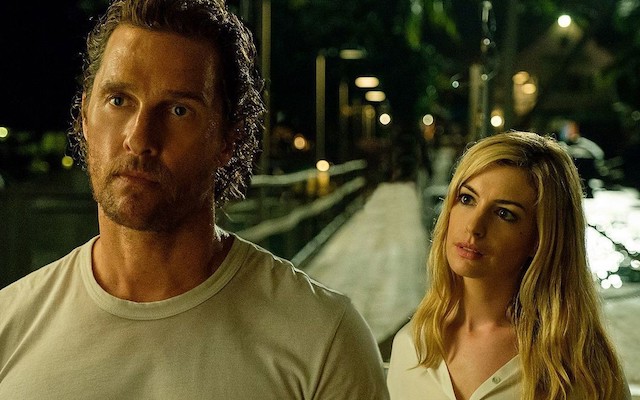
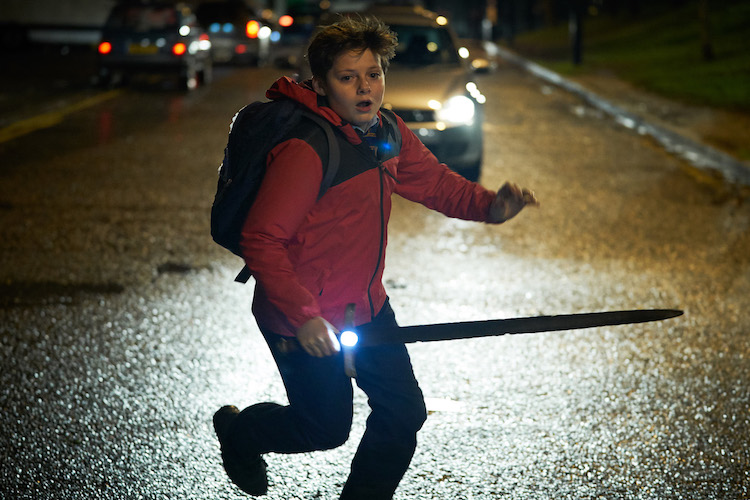
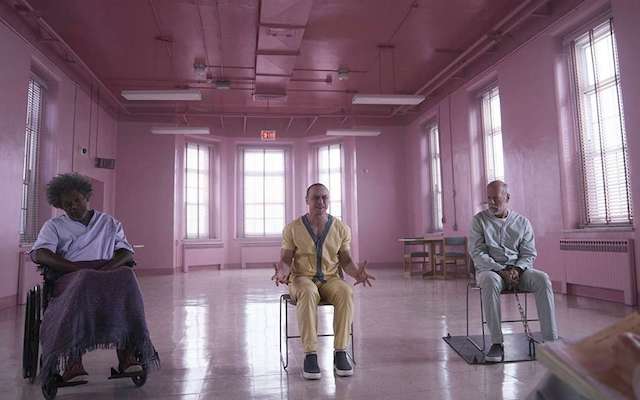
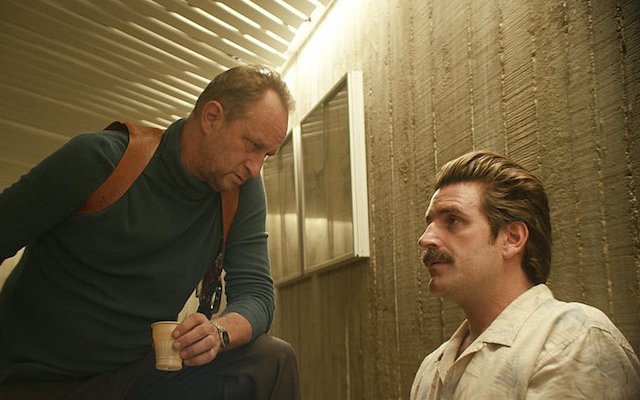
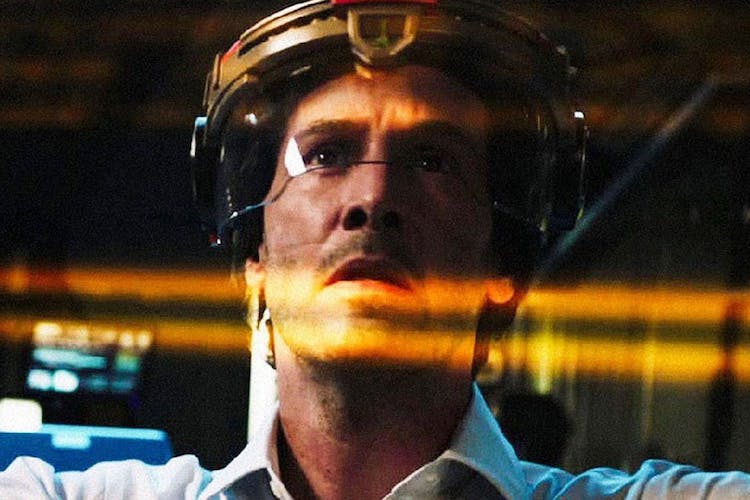
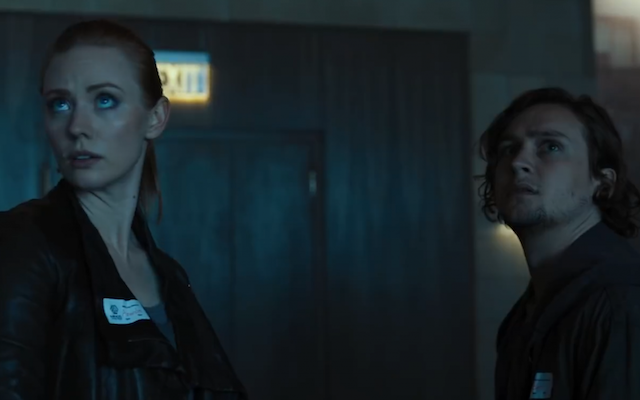
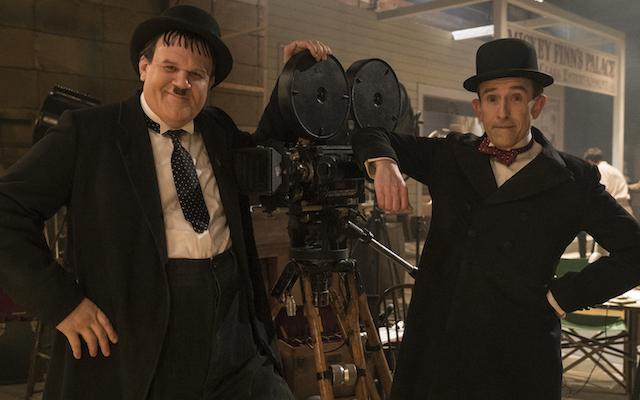
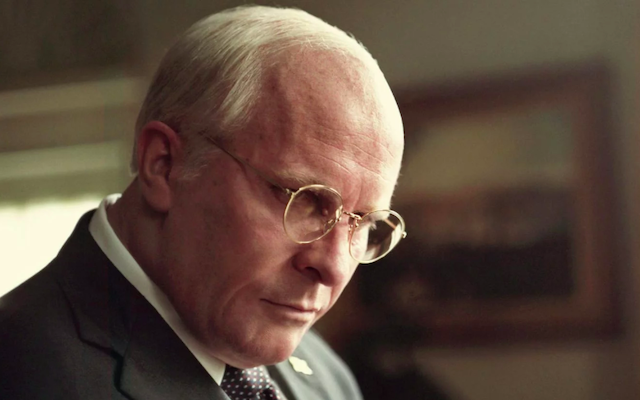
He was ultimately convicted solely on the bow tie.
[On Netflix.] ••• It was inevitable that a former teen star from the Disney Channel would eventually play a serial killer, if not actually become one. Zac Efron, whose breakout performance in “High School Musical” was more than 13 years ago, is good as Ted Bundy in “Extremely Wicked, Shockingly Evil and Vile,” but the movie (whose title comes from the judge’s sentencing remarks) is problematic in its bungling of a crucial question: How do you make a movie about Ted Bundy — whose charm and handsomeness were keys to his success — without lionizing him?
The film is told largely from the point of view of Bundy’s girlfriend, Elizabeth Kendell (played by Lily Collins), who believed in his innocence for many years and knew him to be sweet, affectionate, and good with kids. We see the aftermath of some of Ted’s crimes, but never the acts themselves, only Ted’s (rather convincing) insistence that he didn’t do them and his subsequent efforts to escape from police custody, often by wooing nearby females. Going only by what the movie shows us, Ted could be innocent … except that he’s Ted Bundy, and we know he isn’t.
Curiously, the film initially goes out of its way not to reveal that he is Ted Bundy. When he meets Liz at a bar in Seattle in 1969 and she says, “I don’t even know your name,” the scene cuts away before he answers. When he runs into an old acquaintance, she says, “Well, hello, stranger!” Nobody calls him “Ted” until 25 minutes in, and it’s another 15 before we catch his last name. For a while I wondered if the movie wasn’t going to tell us who we were dealing with until the very end, to let us think he’s just some guy, maybe even a falsely accused one, before hitting us with the gut-wrenching truth. Not only was this a fascinating idea, it was plausible: The director is Joe Berlinger, a documentarian who has made movies about actual falsely accused prisoners (and “Book of Shadows: Blair Witch 2,” but we all make mistakes).
But no, like I said, he’s positively ID’d at around the 40-minute mark as Ted Bundy, the cruel, vicious psychopath who eventually confessed to 30 murders and was probably responsible for more. The problem is that Berlinger (working from a screenplay by first-timer Michael Werwie) recounts Bundy’s brazen encounters with the law as though Ted were nothing more than a lovable rogue, like he’s the Dukes of Hazzard tryin’ to get away from ol’ Roscoe. The film does nothing to show what made Bundy tick, glamorizing him instead. A title card at the end listing the known victims, meant to show respect, does the opposite: We just watched a movie about what a nutty, handsome character he was, and now you want us to be somber and mournful about the victims you never showed?
The use of real TV news footage mixed with recreations, while skillfully done, makes me uneasy as well. This all happened relatively recently. The survivors and the families of the victims are still among us, probably shaking their heads at the distastefulness of it all. Since the film doesn’t shed any light on Bundy anyway, it would have been better if it had used his story as the blueprint for a movie about a fictional killer, one that wouldn’t be fraught with real-world implications. Movies don’t exist in a vacuum, and filmmakers shouldn’t be flippant when they turn evil deeds into entertainment.
“Amazing Grace,” Aretha Franklin’s 1972 double-album of gospel songs, was the top-selling record of her career and the bestselling live gospel album of all time. (There might have been more live gospel albums than you realize.) It was recorded over two nights at a Baptist church in L.A.’s Watts neighborhood, filmed by director Sydney Pollack and five cameramen so that Warner Bros. could release a movie version as a companion to the album. But there were technical problems for a few decades, followed by legal problems, and so the “Amazing Grace” documentary is only now being released, 47 years later, over Aretha Franklin’s dead body. (I recommend this Rolling Stone article for a succinct and fascinating overview of the movie’s history.)
If it seems disR-E-S-P-E-C-Tful to watch a movie that Aretha didn’t want you to see, take solace in knowing that 1) it wasn’t because she thought the movie was bad and 2) it’s so great and beautiful that her objections should have been overruled anyway, just for the common good. Her voice, not yet 30 years old, is as earth-shakingly powerful as it would ever be, delivering the catalog of familiar gospel songs (plus Carole King’s “You’ve Got a Friend”) with more passion, volume, and technical precision than most of them would ever get from any other singer. She doesn’t engage in between-songs banter with the audience, doesn’t say much of anything when she’s not singing. She’s backed by a powerhouse choir and small band, with the Rev. James Cleveland banging away on the piano and serving as emcee. Everyone is at the top of their game.
Contrasting the polished sound of the event (which millions have already heard) is its scrappy, unpolished look. The purpose of the two nights was to record an album, after all — filming it was a secondary concern. So this is a behind-the-scenes documentary as much as it is a concert film, and you can see the cameramen scrambling around, wires and cables everywhere, even Pollack himself sometimes, emphatically gesturing instructions to his crew. The New Temple Missionary Baptist Church, with its ancient choir seats and uncomfortable-looking pews (familiar across all religious denominations), doesn’t look any different from a normal Sunday service except that Mick Jagger and Charlie Watts are standing in the back. It’s January, but a lack of air conditioning has everyone sweating profusely, especially Aretha. All of this rawness makes the show feel more intimate, the reactions from the congregation more like our own. A meticulously “cinematic” concert film wouldn’t have been nearly as effective at capturing the Queen of Soul’s majesty.
(Note: The film played for one week in December and is thus technically a 2018 release, but its real run began April 5, 2019.)
As neither a child of the ’90s, a current child, or a person who has ever played Pokemon, I am not the target audience for “Pokemon: Detective Pikachu,” a kid-focused, live-action PG adventure that assumes viewers are already familiar with Pokemon lore and have no unresolved questions. If you’re unclear on the relationship between Pokemon and their “trainers” (really more of a pet-and-master thing, and sometimes a cockfighter-and-owner thing), or how the “pocket monsters” coexist with humans, or what any of the rules are in this cockamamie world, well, there’s probably a wiki you could read.
Pokemon are a variety of woodland creatures that have different special powers and are friendly to humans. Nearly all people have a Pokemon “partner,” to the extent that if you don’t have one, people think you’re weird, like when someone doesn’t have a cellphone. That’s the case with our hero, Tim Goodman (Justice Smith), a lad of about 20 who trained Pokemon as a kid but stopped when his mother died and his father grew distant. Now his dad, a police detective, has been killed in action, so Tim travels to the metropolis of Ryme City — basically a mildly Japanese London where humans and Pokemon live side-by-side — to settle his affairs.
There he meets his father’s Pokemon partner, Pikachu, who speaks in Ryan Reynolds’ voice. Pikachu is shocked that Tim can understand him — usually, a Pokemon’s babbling sounds to human ears like it’s repeating its own name (“Pika pika pika!”). Pikachu was there when Tim’s dad supposedly died, but he has amnesia (“a bad case of the forgetsies”) and can’t recall what happened next. But he reasons that if he’s still alive, Tim’s dad must be, too, and they set out to solve the mystery together. Also involved is a teen reporter named Lucy (Kathryn Newton) who knew Tim’s dad was working on a huge case and delivers all of her lines with the cheesy gusto of the main girl’s kooky best friend on a Disney Channel sitcom.
With its detective-noir plot and casual interactions between homo sapiens and cartoon characters, it’s strikingly reminiscent of “Who Framed Roger Rabbit.” I gather it has the same kind of inside references, too, assuming that you already know (for example) who Psyduck, Lickitung, Aipom, Snubbull, and Cubone are and what powers they have. If you don’t, it’s probably a bit like watching “Roger Rabbit” without ever having seen a Looney Tunes or Disney cartoon.
Weirdly, despite the odd-couple premise and despite casting Ryan Reynolds as Pikachu, the film is not primarily a comedy. Reynolds gets a few of his trademark meta-snarky lines in, there’s some humor in Tim being the only one who can understand Pikachu, and I laughed quite a bit at a scene with a mime Pokemon. But director Rob Letterman (“Goosebumps”) mostly keeps a straightforward tone, going through the steps of unraveling the mystery (which involves a media tycoon played by Bill Nighy) and exploring the movie’s various daddy issues. The plot is insane, yet somehow also rudimentary, even formulaic. If you thought the film might treat Pokemon mythology irreverently, think again. It’s the faithful, franchise-building kind of adaptation, not the post-modern, self-referential kind. I’d have enjoyed the latter version better, but like I said, this wasn’t made for me.
I appreciate it when movies are short, especially bad movies like “Poms.” But “Poms” would have been better if it had taken more time to establish the characters and their motivations — if it had actually told a story, in other words, like a real movie, instead of just squirting a bunch of faux-sentimental ideas on the screen and trusting that people who only see one or two movies a decade would find it charming. Well, I don’t find it charming, and I see one or two movies A YEAR.
It’s the story of Martha (Diane Keaton), a senior citizen who learns she has cancer, sells her stuff, and moves from New York to a retirement community in Georgia called Sun Springs to run out the clock. She tells no one about the cancer and refuses all treatment; fortunately, it’s the mild kind of cancer where the only symptom is occasional vomiting and then, at the end of the movie, sudden, offscreen death. No explanation is given for any of her actions; they are simply What She Does.
What She Does at Sun Springs is start a cheerleading club. Seems Martha had to drop out of high school cheerleading to care for her sick mother, and now her earthy new neighbor, Sheryl (Jacki Weaver), who was a nuisance at first and then suddenly a friend, encourages her to take it up again. But Vicki (Celia Weston), the officious Southern belle who’s president of the Sun Springs government, says NUH-UH you may NOT have a cheerleading club because you are old ladies and you will break your hips! (Vicki’s real objection is that she doesn’t like Sheryl for reasons the movie forgot to think of.)
They start the club anyway, rounding up Pam Grier, Rhea Perlman, and four nobodies in a montage of unfunny tryouts. They rehearse semi-disastrously, pausing to list all of their respective physical limitations but not to give the club members names or personalities. Sheryl’s teenage grandson, Ben (Charlie Tahan), arranges for them to perform at his high school, where their performance is filmed and uploaded and goes humiliatingly viral even though it’s not THAT bad. I mean, it’s not good, but it’s not hilariously bad, you know? A team of elderly cheerleaders would have to be a lot worse than this to go viral, is all I’m saying.
Anyway, they disband the club in embarrassment, then get a pep talk and regroup, then bring in Ben’s snotty crush (Alisha Boe) to choreograph their routine, then perform at the Big Cheerleading Competition, where they blow everyone away by moving more or less in unison as they perform their simple, unchallenging steps and do so without falling down, hooray for them, the end.
Rhea Perlman’s character is a repressed housewife who’s only allowed to join the club over her husband’s dead body, a dark, farcical plot device that is never given its due and is out of place in an otherwise down-to-earth (if not exactly “realistic”) story. Another group member (Phyllis Somerville) has a bullheaded son who controls her life and finances and won’t let her join, and who insults the teenage choreographer to her face so that the women can shout him down and have an easy Girl Power moment. Director Zara Hayes, a documentarian moving to fiction who co-wrote the screenplay with first-timer Shane Atkinson, wants the whole thing to be about women (especially older women) empowering themselves, but every aspect of the story is rushed and half-baked. The relationships among the women are assumed rather than established; everything happens in montage, or between scenes. After they come to her defense, the teen choreographer tells the women they’re like grandmothers to her, and you think: When did that happen?! It’s a classic case of assembling a team of likable, familiar actors and assuming the movie will write and direct itself.
The story and premise of “The Hustle” are so elegant in their simplicity that it’s no surprise this film has already been made twice: first as “Bedtime Story” (1964), with Marlon Brando and David Niven, then as “Dirty Rotten Scoundrels” (1988), with Steve Martin and Michael Caine. Directed by British TV guy Chris Addison and written by Jac (short for Jacqueline) Schaeffer, this new account of the competing conmen on the French Riviera replaces the fusty Englishman with Anne Hathaway, the crass American with Rebel Wilson, and finds a respectable supply of laughs in the process. It won’t supplant either of its predecessors, but it won’t be embarrassed to sit on the shelf next to them.
Penny (Wilson), a brash Australian, is a small-time hustler who specializes in taking money from awful men. Josephine Chesterfield (Hathaway), a refined Brit, is Penny’s big-league equivalent, bilking well-heeled heels in the fictional French resort town of Beaumont-sur-Mer. The two meet on a train in France, and while Josephine is impressed by Penny’s skills, she doesn’t want an amateur messing up the cozy situation she’s got going. They spend the rest of the film alternating between working together and working against each other, ultimately agreeing that whoever succeeds first at getting $500,000 from a naive young tech tycoon (Alex Sharp) will “own” Beaumont-sur-Mer and the loser will leave town.
Wilson puts her crass bumbling to good use, reining it in so as not to go overboard. Hathaway is better with setups than punchlines, but the role gives the inveterate drama nerd a chance to use several accents and affectations in the service of Josephine’s various phony characters. (The ability to cry on cue is a valuable skill in acting as well as in con-artistry.) It’s Josephine who points out why it’s easy for women to trick men: “No man will ever believe that a woman is smarter than he is.”
That’s as far as the gender discussion goes, though. This isn’t an exercise in man-bashing. There’s no #MeToo undercurrent, and only one passing reference (in a newspaper headline) to Trump. (Fun fact: At one point the film was going to be called “Nasty Women,” from the term Trump used to describe Hillary Clinton in one of the debates. I’m glad they changed it; it would have been wrong for a movie as decidedly apolitical as this.) The plot is mostly the same as “Dirty Rotten Scoundrels,” with some details changed for variety’s sake — Penny feigns psychosomatic blindness rather than paralysis, and her version of Josephine’s mentally challenged sister is bolder and bawdier than Steve Martin’s “Ruprecht.” Farcical through and through, it’s light fun, generally amusing with pockets of hilarity. See it with someone you don’t entirely trust!
[On Netflix.] ••• The premise behind “Wine Country” is that “SNL” alumnae Amy Poehler, Maya Rudolph, Rachel Dratch, and Ana Gasteyer, and “SNL” writers Paula Pell and Emily Spivey, wanted to make a movie where the six of them could hang out. (Don’t worry, there’s a part for Tina Fey, too.) This sounds a lot like the premise of Adam Sandler’s “Grown Ups” movies, but I suspect you have already guessed the difference: In addition to wanting a vacation, the ladies also came up with a funny screenplay (by Spivey and Liz Cackowski, another “SNL” writer) and actually tried to make a good movie.
They succeeded fairly well. Directed by Poehler, the sunny, relaxed comedy gets too wacky by the end but is generally almost as funny and comfortable as you’d expect a real-life hangout session with these women to be. They play six friends who met as waitresses at a Chicago pizza place 25 years ago, remained close as they scattered to live their lives, and are reuniting now at a gorgeous Napa Valley rental house to spend the weekend celebrating the Dratch character’s 50th birthday and drinking copious amounts of wine.
Everyone around them — including the Airbnb owner (Fey) and a tarot-card reader (Cherry Jones) — assumes that six female friends sharing a tipsy weekend will end up at each other’s throats. The groundwork for that eventuality is laid by the six women’s well-established personalities, flaws, and quirks, which are realistically diverse and not jokey. Abby (Poehler) is a highly organized divorcee who has mapped out the entire weekend; Rebecca (Dratch) is a therapist whose husband treats her like a doormat; Catherine (Gasteyer) is workaholic CEO who’s always too busy; Naomi (Rudolph) is a harried mom of young kids who’s ignoring a voice mail from her doctor because it might contain bad news; Val (Pell) is a gregarious lesbian who befriends everyone, including Uber drivers; Jenny (Spivey) is the party-pooper who never wants to go anywhere or do anything, and is just as surprised as the other five that she actually showed up for this.
The interpersonal beefs, grievances, and disagreements emerge naturally and are, of course, handled. (Spoiler alert: They’re still best friends at the end of the movie.) Along the way, the women laugh, drink, and sing; go on a wine-tasting tour where they exhibit zero interest in learning anything other than how to drink more wine; attend a pretentious art show where they almost have a rumble with a bunch of Millennial women; and marvel at how much older and tireder they’ve gotten since their Chicago days. Not surprisingly, some individual scenes have the level of reality of a comedy sketch (Fey’s character is very funny but not at all plausible as a person), which is frequently entertaining, before we come back to the simpler pleasures of fun people sitting around enjoying one another’s company.
“Long Shot” has the skeleton of a romantic comedy, but the flesh on those bones has a lot of flavors: political satire, odd-couple comedy, celebrity culture, and ’90 nostalgia, to name a few. The screenwriters are Dan Sterling, who wrote Seth Rogen and James Franco’s North Korea movie “The Interview,” and Liz Hannah, who co-wrote Spielberg’s “The Post.” If you’ve seen those movies, you won’t be at all surprised by the intelligence, wit, and profanity of “Long Shot.”
Nor will you be surprised by the presence of Seth Rogen (Charlize Theron might throw you). Rogen plays Fred Flarsky, a dogmatic Brooklyn gonzo journalist who quits in protest when his alt-weekly is bought by Parker Wembley (Andy Serkis), a right-wing, Rupert Murdoch-ish old lech who also has a TV news network where hosts wonder aloud whether women are too emotional to hold public office. At a fundraiser with his rich friend Lance (O’Shea Jackson Jr., always welcome), Fred runs into Charlotte Field (Charlize Theron), a childhood neighbor who babysat him when he was 13 and she was 16 and now happens to be Secretary of State. In need of a snarky writer to punch up her speeches while she explores the possibility of running for president, Charlotte hires Fred to join her team.
Several lines of comedy are established. Charlotte is elegant, refined, and glamorous (in public, anyway; privately, she swears like a sailor), while Fred is, well, Seth Rogen: dressed like a journalist, unkempt beard, a variety of drugs in his pockets. He’s an idealist who has principles on every subject and won’t budge on any of them; she’s a politician with a conscience who understands that “until you’re running the game, you have to play the game.” Charlotte’s haughty chief of staff, Maggie (June Diane Raphael), strenuously disapproves of Fred’s presence for all of these reasons, even more so when he and Charlotte become romantic. Maggie’s research shows that the public would rather see Charlotte with someone like the adorable prime minister of Canada (Alexander Skarsgard), not some schlubby, unemployed muckraker.
There’s also some political satire, though that’s where the romantic-comedy sensibilities take over. The sitting president (Bob Odenkirk) is a TV-star dimwit, but a harmless, likable one, not you-know-who. When the plot needs a minor international crisis for Secretary of State Field to address, a fictional country is used. The journalism buyouts, the celebrity references, and the casual sexism of the political scene are all very much of-the-moment, but the specifics are broader to give the movie a longer shelf life. Political satires are timely; rom-coms want to be timeless. So this one ignores the state of things in 2019 and goes for a general 2010s vibe, including a weak call for bipartisan cooperation that would have been fine a few years ago but is tone-deaf today. It also has a strong undercurrent of early ’90s nostalgia, with flashbacks to Fred and Charlotte’s teenage interactions and a performance by Boyz II Men.
Theron and Rogen have an easygoing chemistry together — more comedic than romantic, but we’ll take it. Director Jonathan Levine (“50/50,”“The Wackness”) is at home finding humor in non-fantastical situations, and Rogen stirs himself to be more three-dimensional than his usual clownish characters. Theron, it turns out, can do anything, including all levels of comedy from low to high. A scene in which Charlotte must conduct state business while tripping on MDMA is exactly the right mix of absurd and realistic, Theron neither overplaying nor underplaying it. Elsewhere, she spars verbally and delivers zingers like a pro. Indeed, the one thing I find implausible about the movie is Charlotte’s need for outside help to show voters she has a sense of humor. (The beautiful woman choosing the dumpy guy is a cliche, but let’s be honest: It’s a very true-to-life cliche, and dumpy guys everywhere are grateful for it.)
I don't know why I find this image so funny, but I do. Dennis Quaid looks so left out!
The only way to enjoy “The Intruder,” a mediocre domestic thriller with a plot that’s entirely predictable (and totally spelled out in the trailer) is to pretend it has more subtext than it does. Viewed in a certain way, for example, it could be seen as the story of how white, conservative, gun-loving Baby Boomers have screwed things up but refuse to step aside and let the younger, browner generation take over. The Boomer even wears a red hat!
On the surface, though — which I believe is the only level intended by writer David Loughery (“Lakeview Terrace”) or director Deon Taylor (“Traffik,”“Meet the Blacks”) — it’s just the story of San Francisco ad exec Scott Russell (Michael Ealy) and his wife, Annie (Meagan Good), buying a fabulous, century-old, $3.5-million house in Napa, way off the main road, isolated from everyone. The seller, gregarious but slightly simple-headed widow Charlie Peck (Dennis Quaid), is moving to Florida to live with his daughter. But he can’t seem to let go of the house, which he’s lived in his entire life. Staying at a motel in town before the Florida move, he’s constantly showing up to mow the lawn and whatnot, seemingly forgetting that the place doesn’t belong to him anymore. He is appalled by every change the Russells make to the house and property. He becomes a stalker very quickly.
Scott thinks the guy is a nut; Annie, who has the worst instincts of any woman in a film this year, thinks he’s harmless. (The only way a woman, especially a woman of color, could miss the red flags in Charlie’s behavior is for her to be fictional and written by a man.) Friction develops between husband and wife on this issue, further complicated by Scott’s history of infidelity and current flirtations with ice cream parlor clerks. A few lines of dialogue halfheartedly draw a comparison between the “manly men” of Charlie’s generation and the progressive but effete men of today, but that theme is not developed. In all, the movie is nothing you haven’t seen before.
It has one bright spot, though: Dennis Quaid being a psycho. Not a lot, unfortunately, but enough to hint at how intimidating and fearsome he can be when he lets loose. The film shows us Charlie’s point of view frequently, but there’s only one moment where we actually get inside his head for a brief fantasy, and it’s spectacular. That jaw-dropping moment would lose its power if we visited Charlie’s thought process regularly, and maybe even get campy. But at least it would have been interesting! As it is, we have to make our own fun.
Well, I think she looks fine, not -- oh, the other ones. OK, I can see that.
The main purpose of the animated “UglyDolls” film is to make viewers aware that there is a line of plush toys called UglyDolls that they can buy. In that sense, the movie is a rousing success. No one can watch this movie and come away not knowing that UglyDolls exist. It’s less praiseworthy as a piece of entertainment, but it’s better than a lot of toy-based content, with a positive (if oft-repeated) message for the kiddies.
It begins in Uglyville, the happy home of misshapen or irregular factory-rejected dolls, where the town itself is made of leftover scraps of fabric and plastic. An opening number clearly modeled after “The LEGO Movie’s” “Everything Is Awesome” establishes that life here is great and couldn’t be better, except for one thing: Many residents of Uglyville cling to the hope that one day they’ll enter the “Big World” and become the playthings of human children. (Other residents think the Big World and children are a myth.)
The most optimistic of the Uglies is Moxy (voiced by Kelly Clarkson), who leads an expedition beyond Uglyville to find out where they came from and how they can fulfill their doll destinies. She and her cohorts (Wanda Sykes, Pitbull, Leehom Wang, and Gabriel Iglesias) find the Institute of Perfection, a cookie-cutter world where flawless dolls are taught by their teen-idol leader, Lou (Nick Jonas), how to be the best dolls they can be. Lou is beloved for his insightful ability to point out dolls’ minuscule imperfections (“That man can entertain and emotionally devastate like nobody else,” someone says), and the Uglies, obviously don’t stand a chance of passing his rigorous tests. Many of the Perfection residents are mean to the newcomers, but one, Mandy Janelle Monae), takes pity on them because she’s harboring a secret imperfection of her own.
The message, about embracing your flaws, quirks, and abnormalities as the things that make you special, is a welcome one. The pop songs, by Christopher Lennertz and Glenn Slater, are better than average. It’s mostly singers in the voice cast rather than actors (Blake Shelton, Bebe Rexha, Charli XCX, and Lizzo among them), but everyone except Pitbull does all right. (Pitbull gives line readings so bad I can’t imagine what the rejected takes sounded like.)
The best I can say for first-timer Alison Peck’s screenplay, though, is that it made me chuckle a few times (several lines are obviously intended for the adults in the audience) and I didn’t hate any of it. The world-building is half-baked, and director Kelly Asbury (“Shrek 2,” “Gnomeo & Juliet”) seems content to deliver a medium-grade, brightly colored babysitter rather than something memorable. I can’t quite recommend “UglyDolls,” but as one who saw the “Bratz” movie, believe me: This could have been so much worse.
(Note: I’m going out of my way not to “spoil” anything here, including things that happen within the first 20-30 minutes that would normally be fair game in a review. You’re welcome, nerds.)
When we last saw the Avengers, they were part of the lucky half of the universe that had not been wiped out of existence when Thanos (Josh Brolin) snapped his fingers. (And what a fortunate coincidence that the random culling didn’t include any of the six core Avengers, not even the archery guy nobody cares about.) We assumed all or most of the damage done in “Infinity War” would be undone in “Endgame” — the only question was how, exactly — and I’m pleased to report that the “how” is something that hadn’t occurred to me (not that I spent a lot of time speculating). After all, Thanos himself isn’t the problem. Getting rid of him doesn’t solve anything. It’s the Infinity Stones that matter.
Things are somber in the aftermath. Half the population is gone, and the world is in turmoil. Tony Stark (Robert Downey Jr.) bitterly reminds everyone that his idea of protecting the Earth with a big shield would have prevented this. Clint Barton (Jeremy Renner), aka Hawkeye, has gone on a personal mission of vengeance that the movie doesn’t bother to show us (poor Clint). Natasha (Scarlett Johansson), aka Black Widow, is trying to maintain order, coordinating with Carol Danvers (Brie Larson) — who’s helping out on other planets, too — and with Okoye (Danai Gurira), Wakanda’s remaining leader. Capt. Steve Rogers (Chris Evans) leads a support group for mourners. Thor (Chris Hemsworth) lets himself go in comical ways, while Bruce Banner (Mark Ruffalo) finds a peaceful balance between himself and Hulk.
Scott Lang (Paul Rudd), who was very, very tiny in the “quantum realm” when the Thanos snap happened, pops out of it and has an idea. Time works differently down there, so maybe you could slap some science together and, like, change time. Travel through it, even. The others heroes scoff at the idea of a “time machine” as the stuff of science-fiction (a glowing green rock that can manipulate time when a wizard uses it, THAT makes sense), but it’s their only hope. Besides, it’s not that far-fetched. “I get emails from a raccoon,” Natasha says. “Nothing is crazy anymore.”
There’s a lot of movie in this movie, which runs nearly three hours without credits and has appearances by more than 50 people from previous Marvel Cinematic Universe films. Kudos to directors Anthony and Joe Russo just for keeping things organized, let alone coherent, which they also manage. Nearly everyone with dialogue gets a good character beat or two, and the core players have the types of interactions we’ve come to expect and enjoy (Tony Stark calling Rocket a “Build-a-Bear” and referring to bearded, disheveled Thor as “Lebowski”; several comments about Captain America’s butt). There are complications in the story (written by MCU regulars Christopher Markus and Stephen McFeely) that feel arbitrary — time travel is fictional, guys! You can make up any “rules” you want! — but the way the film incorporates scenes and images from past MCU adventures is ingeniously satisfying. Somehow they found an excuse to go everywhere and see everyone, all while reminding the central characters that time really only goes forward and that they must accept themselves as they are.
Does it feel too long? Yes. Is that a surprise? No, especially considering how many story threads need to be wrapped up (think of the last “Lord of the Rings”). But there’s not much wheel-spinning in the epic-sized story, and the Russos use its massiveness to impress the scope of it all upon us: Billions of people died on Earth alone, trillions across the universe. Against all odds, these last two Avengers movies really do show the weight and finality of death (final under certain circumstances, anyway, and weighty if it’s people we know) while spotlighting what we love most about these crossover events: the thrill of seeing multiple heroes work together to defeat an enemy. This isn’t the end, of course, merely the season finale after the customary 22 episodes, but it’s an appropriate place to stop and reflect on the fun we’ve had, or what we remember of it.
Full disclosure: One of the producers of this film, Scott Weinberg, is a longtime friend and colleague, and writer-director Josh Lobo is a pal I’ve socialized with at film festivals. Honestly, I think this association makes me more critical of the film, not less, but you can decide for yourself.
Heavier on atmosphere than story, “I Trapped the Devil” is a dreamy, ominous, and at times frustrating horror film from first-time writer-director Josh Lobo. The title is admirably direct and non-metaphorical: Matt (AJ Bowen) and his wife Karen (Susan Burke) drop in unannounced on Matt’s brother Steve (Scott Poythress) at Christmastime and discover that there’s a man locked in the basement who Steve believes is literally Satan. Matt has been worried about Steve anyway — he’s prone to depression ever since a recent tragedy — and this new business is more cause for alarm. Whoever’s in the basement, it’s obviously not the devil … right?
The premise and plot are essentially the same as the 1960 “Twilight Zone” episode “The Howling Man,” but Lobo dresses it up with a nightmarishly foreboding musical score and sound design (lots of atonal industrial noises) and some dream logic. At no point do Matt and Karen ask basic questions like how long the man has been in Steve’s custody or where he found him, and even though they talk to the man himself through the door behind which he’s barricaded (he has a sonorous, gently creepy voice, provided by Chris Sullivan), they don’t ask him who he is or how he got there. There are surreal touches like an old TV set that erratically shows bizarre images. Mixed with this are more placid scenes than the film needed of Matt and Karen discussing what to do about the situation.
Is the ethereal and mysterious mood enough to compensate for a screenplay that spins its wheels too much? It is for me. The interactions with the prisoner are chilling, and the rest has just enough malevolent gloom to make it a modestly unnerving effort for horror connoisseurs.
“Family,” a sunny and likable small-scale comedy from first-time filmmaker Laura Steinel, belongs to the subcategory of movies in which bad role models and hopeless kids are paired up so they can learn from each other: “Bad Santa,”“Bad Teacher,”“Role Models,”“School of Rock,” etc. In this one, selfish, bad-with-kids career gal Kate Stone (Taylor Schilling) is conscripted by her brother (Eric Edelstein) and sister-in-law (Allison Tolman) to spend a few days babysitting their friendless 11-year-old daughter, Maddie (Bryn Vale). This necessitates staying at their suburban home, which Kate views with disdain (she’s the “Yuck, these people eat at Olive Garden!” kind of snob), almost as beneath her as childcare is.
The hook? It’s while under Aunt Kate’s unwatchful eye that Maddie finally makes some friends … but they’re Juggalos, i.e., devotees of the trashy, violent horror-rap group called Insane Clown Posse. ICP’s music is unlistenable for most humans, but it’s not Maddie’s musical tastes that Kate worries about (I don’t think Maddie even listens to any). The Juggalos hold a gathering every year that’s like Burning Man for dirtbags and thugs who paint their faces to look like nightmare-clowns and give themselves faux-tough street names. And Maddie is only 11, far too young for such a thing, even if the specific new Juggalo friends she’s made are decent enough.
The last chunk of the film is a tangent meant to reshape our views of ICP and the Juggalos. This may be a worthy endeavor — appearances notwithstanding, there is reportedly a strong and wholesome sense of community among Juggalos, whose fascination with stabbing is generally tongue-in-cheek — but it feels too specific here: Once you introduce Juggalos into a story, it becomes a story about Juggalos, not about the aunt and her niece bonding. But Schilling is sharply funny, she works well with the morose Vale, and, unlike most films that follow this formula, Steinel’s screenplay doesn’t lean too much on “adults saying transgressive things in front of kids” for laughs. It might even turn you into a fan of Insane Clown Posse (though probably not).
Like most movies, “The Curse of La Llorona” is part of the extended “Conjuring” universe. The connection is negligible — the older priest in this one had an encounter with the evil doll in “The Conjuring” prequel “Annabelle” — but it’s enough to slap the franchise name on it and tide fans over until the next “Conjuring” film, which is called “Annabelle Comes Home” and won’t be released for another 10 whole weeks.
Easily the weakest of the not-very-strong bunch, “La Llorona” is set in Los Angeles in 1973 and concerns a busy single mom named Anna (Linda Cardellini) who works for Child Protective Services. She’s bad at her job, but that’s somewhat beside the point and isn’t acknowledged by the movie anyway. (Seeing a burn mark on a child’s arm, she asks if his mother did it. The boy’s brother says it wasn’t her. Anna asks zero followup questions.) When two Hispanic boys turn up drowned in the river under mysterious circumstances, Anna learns from the aforementioned priest, Father Perez (Tony Amendola), about the legend of La Llorona (“weeping woman”), a 17th-century lady who drowned her own children and now roams the countryside looking for other kids to murder. Everyone assumes it was the kids’ own crazy mother (Patricia Velasquez) who did it, but we suspect it was the ghost lady.
Anna’s own children get involved when she brings them to the crime scene and her son, Chris (Roman Christou), wanders off and has a brief interaction with La Llorona, a woman in white who cries black tears. Sra. Llorona is sometimes a ghost but sometimes takes corporeal form. Sometimes you can see her, sometimes you can’t. She likes to appear and disappear suddenly, her appearances always accompanied by loud, screeching music to let us know that what’s happening is scary.
The movie follows the PG-13 horror template with absolute fidelity (and don’t be misled by the R rating: it’s a PG-13 movie). The screenplay, by Mikki Daughtry and Tobias Iaconis (the duo behind “Five Feet Apart”), makes no attempt to spice things up, and first-time director Michael Chaves (who will helm “The Conjuring 3” next year) seems content to let everything unfold exactly as prescribed by the 10,000 identical films already released. A less reputable priest (Raymond Cruz) is brought in for some mumbo-jumbo exorcising, and the last 30 minutes are full of the usual haunted-house shenanigans, screaming, being dragged down hallways by unseen forces, etc. It’s toothless, inoffensive horror at its most toothless and inoffensive.
Etymology time! “Hagazussa” (“hedge sitter”), an Old High German word that gave us witchy terms like “hag” and “hex,” refers to the old women who would sit near the hedges that separated cultivated land from wild forests, gathering herbs and such while the menfolk did agricultural labor. The movie called “Hagazussa” is about a medieval Alp-dwelling goatherd named Albrun (Aleksandra Cwen), whose name comes from roots meaning “elf, supernatural being” and “secret, magic.” Albrun has a baby despite there being no evidence that she’s ever had a man in her life (no evidence besides the baby, I mean), and she keeps to herself in a shack in the mountains, where she regularly encounters (causes?) unnatural phenomenon. You can see why the bratty, superstitious children in the village think she’s a witch. Also, maybe she is one? Subtitled “A Heathen’s Curse,” this gorgeously photographed, almost dialogue-free debut feature from German writer-director Lukas Feigelfeld tells Albrun’s story elliptically, ambiguously, letting the tension and sinister omens build almost unbearably. I wasn’t totally satisfied by the eventual release — it’s possible I missed some of the significance of the film’s folkloric elements and other imagery — but even so, it’s a singular tone poem that evokes powerful unease.
Here’s an amusing coincidence. “Little,” which is a reversal of the Tom Hanks classic “Big,” was written by Tina Gordon Chism, who also wrote “What Men Want,” a reversal of “What Women Want.” Chism’s niche, apparently, is mediocre rewrites of fantasy comedies where the premise is reversed and the main characters are black women. All of which is fine except for the “mediocre” part.
“Little” (which Chism also directed) begins with sweet 13-year-old Jordan Sanders (Marsai Martin) being bullied in middle school but reassured by her parents that her intelligence will be an asset when she grows up. She’ll be the head of a company someday, and nobody bullies the boss.
In the present day, adult Jordan (Regina Hall) has taken that sentiment to heart. She runs a booming Atlanta tech company, has more money than she knows what to do with, and is a total bitch to everyone she meets. She’s demanding, like “tell the housekeeper to put my slippers exactly 53 centimeters from my bed” demanding. It’s shades of “The Devil Wears Prada” when her employees sound the alarm and scatter for cover when she arrives at the office. She’s especially mean and unreasonable with her timid assistant, April (Issa Rae), a wilting flower who doesn’t stand up for herself with anyone, let alone Jordan.
After being rude to a little girl who then waves a pretend magic wand and curses Jordan to be a kid again, Jordan does indeed wake up as her bespectacled, bushy-haired, 13-year-old self. A nosy neighbor sees a kid in Jordan’s penthouse apartment and calls Child Protective Services (in the form of Rachel Dratch), so next thing you know Jordan is back in middle school — the very same middle school she was bullied at 26 years ago.
Meanwhile, April has to go to the office and fill in for Jordan (who’s said to be out sick). Her lack of confidence initially makes her a doormat, but soon the employees start responding positively to her friendlier, less terror-based managerial style.
Most of the comedy (such as it is) is centered on the dynamic between April and Jordan. Jordan is still the boss, but out in the world April has to take control and act like the girl’s “auntie.” When Jordan’s regular hookup, Trevor (Luke James), comes a-callin’, Jordan and April scramble like flustered idiots to concoct a cover story before landing on young Jordan being other Jordan’s daughter, heretofore kept hidden from Trevor because Jordan is secretive.
“Flustered idiots” describes their behavior much of the time. As is often the case with feeble comedies about people pretending to be something they’re not, this one reaches for laughs by having Jordan continually forget that people are seeing a 13-year-old girl and not a 39-year-old woman. So somebody asks what she’s doing in this luxurious apartment, for example, and she indignantly answers something to the effect of, “It’s MY apartment! I bought it with my money because I’m a rich boss lady!” Then she catches herself, hems and haws, and sputters out a suitable lie. She does this CONSTANTLY. Every 30 seconds or so her memory resets and she forgets she’s a little girl now. It’s grating, lazy humor. (In her defense, everyone she encounters is too dumb to realize anything is amiss.)
I’ll say this, though. Chism’s screenplay may be pale and tired, but 14-year-old Marsai Martin (from TV’s “Black-ish”) is a firecracker. She’s convincing as a supercilious woman in an awkward teen’s body and easily holds her own in every scene. She’s actually better than Issa Rae, who can’t do much with her weak, mousy character. Give Martin something other than bland piffle to perform and I bet she kills it.
You know what they say about a guy with big feet? Big arms.
“Missing Link” is Laika’s fifth gorgeously detailed work of stop-motion animation and the fourth to leave me kind of cold. Only the studio’s debut, “Coraline,” had the intended impact; “ParaNorman,” “The Boxtrolls,” and “Kubo and the Two Strings” were all wonderful to look at but offered no emotional connection. I feel bad not being moved by these painstaking efforts, but it’s been pretty consistent.
This one’s about a turn-of-the-last-century English explorer, Sir Lionel Frost (voice of Hugh Jackman), who is the laughingstock at the gentlemen’s club because of his interest in the Loch Ness Monster and other supposedly imaginary beasts. On a tip, Sir Lionel travels to the Pacific Northwest and finds a Sasquatch (Zach Galifianakis) who surprises him by speaking English and asking for help. Mr. Link (as Sir Lionel starts calling him) is lonely here, the last of his kind. But he’s heard of a place in the Himalayas called Shangri-La where there are creatures similar to him who must be his cousins or something. In exchange for proof of Mr. Link’s existence, Sir Lionel pledges to assist him in his travels.
A deceased colleague of Sir Lionel’s had a map to Shangri-La, and while his feisty widow, Adelina (Zoe Saldana), won’t let Sir Lionel take it, she’s willing to join him and Mr. Link on the journey as a means of breaking up her boring life. They’re pursued by one Willard Stenk (Timothy Olyphant), an assassin hired by Sir Lionel’s snootiest gentleman rival, Lord Piggot-Dunceby (Stephen Fry), to make sure they don’t achieve their goal.
All the ingredients are there for a rousing adventure, and writer-director Chris Butler (“ParaNorman”) and his crew created an astounding array of models and sets to depict it. I love Lord Piggot-Dunceby’s haughty appearance, and the way an old Nepalese woman’s head shakes in the manner of the very elderly. You can see the countless hours of meticulous work that went into every corner of every frame. Maybe that’s the problem — where the similarly painstaking Pixar films tend to be so breezy you forget how much work went into them, the Laikas feel effortful.
The Sasquatch character should have been the ace in the hole. Gentle, nervous, fussy, and literal-minded, he has great comedy potential. But the movie, while amusing, is only sporadically funny. The characters look terrific and the voice work is solid, but they don’t have souls. The chemistry among them never produces anything memorable. Simple to a fault, the story and script could have used some punching-up to give it more personality, more zip — more anything. My cold, dead heart is often touched by films, especially ones aimed at kids. Why can’t I love the Laikas? I am a monster. Please escort me home to the Himalayas.
There are two things I know about Emily Dickinson: She was a reclusive spinster, and many of her poems can be sung to the tune of “Yellow Rose of Texas.” The second thing, which is definitely true, is addressed in “Wild Nights with Emily,” Madeleine Olnek’s deadpan biopic that tongue-in-cheekily details how the first thing probably isn’t. Turns out Emily (played by Molly Shannon with apt nervous spaciness) had a romantic relationship with her brother’s wife, Susan (Susan Ziegler), on whom her brother was cheating with one Mabel Todd (Amy Seimetz), who would posthumously publish Emily’s work after erasing all of the poet’s references to “Sue.” Olnek wants to set the record straight (as it were) about Emily’s life and personality, but she does it in the style of the “Drunk History” TV show: historical facts mixed with comedy. A potential publisher of Emily’s poems (Brett Gelman) is a fatuous, “woke” feminist; Emily and Susan (and the film itself) mock the shallow verses of Helen Hunt Jackson, then called “America’s greatest lady poet,” with modern causticity, albeit expressed in the formal, contraction-less language of the 1880s. It’s altogether more charming and sweet than you might expect an Emily Dickinson biography to be.
The R-rated “Hellboy” is a comedically gory but otherwise not particularly funny reboot of the comic book character (previously brought to PG-13-rated life by Ron Perlman and director Guillermo del Toro), a red-skinned, horned demon with a giant fist who works with the Bureau for Paranormal Research and Defense to keep other monsters under control. The big guy’s played by David Harbour this time (from Netflix’s “Stranger Things”), directed by Neil Marshall (“Centurion,”“Doomsday”) but overseen by about a thousand producers and studio suits who pecked the film into a barely coherent mush.
One big problem is that we never get a sense of Hellboy’s personality. He’s not quite a smart-aleck, not quite a dumb guy, not bent on revenge or justice. He’s mildly rebellious but not a loose cannon. His relationship with Professor Broom (Ian McShane), his adoptive father, lacks depth or warmth. He meets up midway through the film with Alice Monaghan (Sasha Lane), a medium who was saved by Hellboy when she was a baby, and with a soldier named Daimio (Daniel Dae Kim) who hates monsters but harbors a secret. The film establishes this trio as our core team going forward, but they’re all just sort of thrown together.
The screenplay, by first-timer Andrew Crosby (creator of TV’s “Eureka”), is all over the place. It begins — begins! — with King Arthur (Mark Stanley) Gwyneth-Paltrow-in-“Seven”-ing a witch in A.D. 517. Her name is Nimue (Milla Jovovich), and in the present day some evildoers are trying to put the 12 pieces of her dismembered body back together again so she can do more evil. Several entities are simultaneously trying to kill Hellboy because of his supposed role in a prophecy about the end of the world. Numerous flashbacks are deployed chaotically, filling us in on story tangents that one senses used to be more fully present before the film was chopped up.
Nazis are also involved. Just FYI.
The humor is blunt and obvious, often punctuated with profanity to make a mediocre punchline seem edgier. One typically lame example: After giving gross Baba Yaga mouth-to-mouth resuscitation, Hellboy says, “Somebody get me a mint!” That was the best line they could come up with for that situation. There’s a lot of that.
On the plus side, the film has some fantastic fairy tale monsters and outrageously bloody battles therewith. The designs of the trolls, giants, and fairies are marvelously grotesque, including a peg-legged Baba Yaga whose twisted limbs and hideous face would have been right at home in, well, a Guillermo del Toro movie. Fleeting moments of excitement can be found in the proceedings, as when Hellboy fists a giant’s eye socket. But really, a movie in which the main character fists a giant’s eye socket should be more entertaining than this.
[On HBO.] ••• Little had to be changed about the plot of Richard Wright’s 1940 novel “Native Son” to make it work with an adaptation set in the present, but something must have been lost in translation. As directed by first-timer Rashid Johnson (a respected Chicago artist) from a screenplay by Suzan-Lori Parks (“Girl 6”), the story’s crucial event and its immediate aftermath come across as implausible, even unintentionally funny. The film doesn’t recover from that clumsiness; the good news is that it doesn’t happen till over an hour in.
Everything up to that point is smooth sailing, particularly the lead performance by Ashton Sanders (who played the teenage Chiron in “Moonlight”) as Bigger “Big” Thomas, a skinny, quiet black punk rocker who also loves Beethoven and marijuana, eschews politics, and resists a friend’s urging to join him in a robbery because he doesn’t want to do that “stereotypical Negro” stuff but carries around a gun that belonged to his late father. Big takes a job as a driver for wealthy businessman Henry Dalton (Bill Camp), the sort of well-meaning white liberal who gives to the NAACP and makes sure to mention it, and ends up chauffeuring Dalton’s college-age daughter, Mary (Margaret Qualley), to parties with her political activist boyfriend (Nick Robinson).
Watching Big navigate this different world is compelling because he’s a compelling character — deliberate, smart, by turns responsible and reckless, hard to categorize — and the film’s too-brief exploration of race and class is interesting as far as it goes. But perhaps it ought to have gone further, as the intended message about the expectations placed upon black men doesn’t make impact, overshadowed by the melodrama of the third act.
"I'll agree to stop being racist if you'll agree to stop being black."
Hollywood continues to solve racism one bigot at a time with “The Best of Enemies,” a shiny, shallow trinket based on true events that, in the hands of first-time feel-good filmmaker Robin Bissell, seem made-up.
It’s 1971 in Durham, N.C., where the schools are still segregated and C.P. Ellis (Sam Rockwell), head of the local KKK franchise, has the ear of several members of the city council. A fire at the black elementary school (not arson!) would seem to force the integration issue — where can those kids go now but the white school? — but the racists are NOT having it.
Enter Ann Atwater (Taraji P. Henson in matronly padding), a tireless community organizer and exhausted single mom. She sees no reason to compromise on any of this but is persuaded to participate in a 10-day discussion called a charrette in which members of the community on both sides of the issue — black and racist — discuss the problem and seek solutions. She represents the black citizens; C.P. Ellis agrees to represent the whites. The moderator, a black man named Bill Riddick (Babou Ceesay), wants to appease the racists, a bad but very popular strategy throughout history.
As you might expect, Ann and C.P., who have been aware of each other for years but obviously have not traveled in the same circles, come to respect one another over the course of the charrette. (I should note that it’s C.P. who has to change his attitude, not Ann. She makes virtually no effort to stop being black when C.P. is around.) Ann finds ways to connect to C.P. and his family (including his wife, played by Anne Heche) without backing down from what’s right while C.P.’s overt, N-word-using hatred of black people gradually diminishes. Meanwhile, the racist machine that C.P. is part of works to thwart the charrette process. C.P.’s Klan lieutenant (Wes Bentley), a corrupt city councilman (Bruce McGill), and two non-racist whites (John Gallagher Jr. and Caitlin Mehner) figure into the story, giving it more nooks and crannies.
You know who doesn’t figure much into the story? Ann Atwater, whose story half of it is. As much as I like the sub-genre of Movies Where Taraji P. Henson Puts a Boot Up The Man’s Ass, it’s frustrating when she’s given only a few showcase scenes to do it. “The Best of Enemies” focuses mostly on the white guy, telling us little about Ann’s own life and reducing her to a shuffling, sagging stereotype of an indomitable black woman.
And then there’s the finale. It spoils nothing to say that C.P. has a change of heart; what else would the movie be about? The problem is: I don’t buy it. I’m not saying it didn’t happen. Everything may have transpired exactly as it’s depicted here. I’m saying that within the movie, the resolution feels like a contrived fantasy, not the actions of a real person. Rockwell does the best he can (which is a lot), but the screenplay isn’t up to the difficult task of showing someone changing.
They show footage of the real C.P. Ellis and Ann Atwater over the closing credits, I guess in case we didn’t believe they were real people. Hearing their voices made me think I’d rather see a documentary about the two of them. Turns out there is one: “An Unlikely Friendship,” which is under a half hour and aired on PBS. “The Best of Enemies” isn’t bad, just a mediocrity and a lost opportunity. If history is any guide it will win Best Picture.
The interesting thing about anti-abortion propaganda film “Unplanned” is how little it tries to persuade anyone of anything. Preaching to the choir, it presupposes that everyone already agrees abortion is murder and that no further discussion is necessary to prove it. It also assumes you believe that Planned Parenthood is evil, and doesn’t get around to smearing the organization until the second half — and even then the most egregious of PP’s offenses are attributed to a rogue, overzealous PP agent.
But the movie isn’t just bad at being propaganda, of course; it’s also bad at being a movie. Written and directed by Chuck Konzelman and Cary Solomon, it has the exact look and feel (except for the abortion scenes) of a movie made by a church (any church) for Sunday School purposes: bland acting, boring writing, everyone doing their best but simply not being very good at the things they’re trying to do, bless their hearts. And that’s before the movie even gets to its religious angle, where things only get goopier.
It’s the true-ish story (one with some holes in it) of a woman named Abby Johnson (Ashley Bratcher), the director of a Planned Parenthood office in Bryan, Texas, who became a staunch abortion foe once she actually saw an abortion. In flashback, she tells us of being a carefree college student who became a PP volunteer after seeing a booth on campus and being told that PP wants to reduce the number of unwanted pregnancies by providing access to birth control (which is true and which no one in the movie tries to refute).
While acknowledging that PP provides other services besides abortions, the movie doesn’t depict them, or even mention what they might be, lest the target audience (people who’ve been conditioned by conservative media to think PP is just an abortion factory) start to get some vague idea of what PP actually does. Abby quickly rises in the ranks at the clinic, mentored by Cheryl (Robia Scott), who we know is the villain because she has black hair and pale skin. “Abortion is what pays your salary!” is the sort of thing she says to Abby. Later, when Abby betrays Planned Parenthood, Cheryl warns that “we’re part of a billion-dollar corporation” and “one of the most powerful corporations on the planet,” so Abby better watch her step. “Soros” is mentioned (no first name necessary), a dog-whistle for ultra-conservatives that means “rich Jews trying to destroy America through liberalism.”
For abortion opponents, the movie is a pleasant (except for the abortion scenes) little sermon and a chance to have their views reinforced unquestioningly. For those not opposed to abortion or undecided on the matter, it’s a chance to watch wooden actors recite clunky dialogue featuring claims that don’t even sound true. It reminds me of the anti-Mormon films and literature that used to get passed around: convincing if you don’t know anything about the subject, ludicrous if you do.
The whole point of “Pet Sematary” — both Stephen King’s 1983 novel and the effective 1989 movie version — is that you shouldn’t revive the dead because they won’t be the same when they come back. (It’s one of those universal, timeless messages.) So it’s a little on the nose that the new adaptation, directed by talented up-and-comers Kevin Kolsch and Dennis Widmyer (check out their “Starry Eyes”), feels … off.
Maybe it’s just that it loses some of its horror potential when you already know the story, but this version, while duly atmospheric and dread-filled, has an air of the perfunctory about it, like we’re only going through the motions. Here’s the part where there’s foreshadowing. Here’s the part where the terrible thing that happens. Here’s the part where the father’s inevitable response makes it worse. Et cetera.
For the uninitiated, the scenario is dark from the get-go. Dr. Louis Creed (Jason Clarke) has moved with his wife Rachel (Amy Seimetz), 8-year-old daughter Ellie (Jeté Laurence), toddler son Gage, and their cat to rural Maine to work at the university. Their new home is idyllic except for being right next to a highway down which semi trucks frequently come barreling, occasionally hitting someone’s pet. A “pet sematary” (so spelled on the sign) has been established in the woods by neighborhood children for generations and does not lack occupants.
When the Creeds’ cat, named Church, is inevitably robbed of his ninth and final life, the family’s nearest neighbor, kindly old widower Jud (John Lithgow), tells Louis that up beyond the pet sematary is the REAL cemetery, the one the old native tribes once used. It is said that anyone buried there will return from the grave. In Church goes, and out he comes again the very next day.
But guess what? Now the cat is “different,” somehow meaner and less affectionate than before, even though he was already a cat. Jud tells Louis, “Oh yeah, that’s usually what happens, did I not mention that? But hey, you spared your daughter the sorrow of losing her cat, right?”
I should add that besides all this, Louis had not one but two supernatural premonitions in which a dead hospital patient warned him not to mess with the dead.
So what happens next? You know if you’ve read the book or seen the other movie, but I bet you could guess even if you haven’t. Sure enough, a tragedy befalls the Creed family that is even worse than losing a cat, and sure enough, Louis then does what common sense, direct warnings, and actual recent experience indicate he should not.
His reckless, illogical, self-defeating actions are understandable if he’s delirious with grief and remorse. I assume King’s novel establishes that state of mind, but this movie does not. Louis behaves as if following a script, doing what he does not because of internal motivation but because it’s what’s supposed to happen next.
The story also features unrelated supernatural moments like Rachel having flashbacks to her sickly sister, who died young, and being haunted by memories of her. In the book these details might add to the suspenseful mood; here they just seem like a red herring.
But if the whole thing doesn’t work very well as a whole, there are individual scenes and sequences that offer the cold sweats audiences paid for, and it might all be highly effective for a viewer with no foreknowledge of it. Then again, even the best possible version of this story would still be a creepy downer. But if you like creepy downers and aren’t already familiar with “Pet Sematary,” here you go, I guess?
No, this won't attract suspicious looks from passersby, why do you ask?
Despite their adventures ostensibly being aimed at kids, most superheroes aren’t children themselves. Except for the Spider-Men and occasional moments with the younger X-Persons, we rarely see a superhero revel in the sheer delight of having awesome powers.
So part of what makes “Shazam!” a treat is that the hero is a 14-year-old boy, Billy Batson (Asher Angel), a cynical foster kid who doesn’t believe in dumb things like “family” but sure gets a kick out of having super strength and the gift of flight. Yes, when Billy says the magic word he transforms from himself into a grown man (played by Zachary Levi), but that grown man is still Billy inside, and his sidekick — fellow foster kid Freddy Freeman (Jack Dylan Grazer), a disabled wiseacre — is a young teen in both body and mind (think “Big,” as I know the makers of “Shazam!” did once or twice). The sequence in which the two conduct experiments to find out exactly what Billy’s new powers are is just what you’d expect two 14-year-olds, one rebellious and one hyper-smart, to do.
Billy gets his powers after being whisked to a magical realm where a wizard named Shazam (Djimon Hounsou) bestows them upon him. Some 45 years earlier, another young boy had the same chance but was denied because his heart wasn’t pure enough. He grew up to be Dr. Thaddeus Sivana (Mark Strong), a would-be supervillain from whose eyes seven demons representing the deadly sins can emerge when summoned to wreck havoc on mortals. He wants the Shazam powers, too, and is interested to learn that someone seems to have acquired them.
As villains go, Sivana is weak and forgettable — your standard “I want to rule the world” zealot with no distinguishing characteristics. He does have one memorable scene where director David F. Sandberg’s affinity for horror (he made “Lights Out” and “Annabelle: Creation”) is put to good use, but otherwise the movie just isn’t interested in him.
What is the movie interested in? Havin’ fun. Henry Gayden’s screenplay has no subtext to ponder, no comments on the human condition. It takes place in the same world as Batman and Superman but has no strong ties to the DC Extended Universe movies. The scenes of superheroic derring-do are familiar scenarios — thwarting a stick-up, rescuing a bus dangling over a bridge — performed with good humor and youthful bravado. Though I laughed and enjoyed myself, the whole thing began to evaporate from my memory as soon as it was over.
What stands out most is that it’s fine as a superhero movie but better as a warmhearted story about makeshift families. Billy comes to appreciate Freddy and the four other fosters who share a home, accepting that they’re stronger together and setting the stage for team adventures in the future. Between this, “Aquaman,” and “Wonder Woman,” it’s clear that the way forward for the DCEU is to relax, lighten up, and quit being so gloomy.
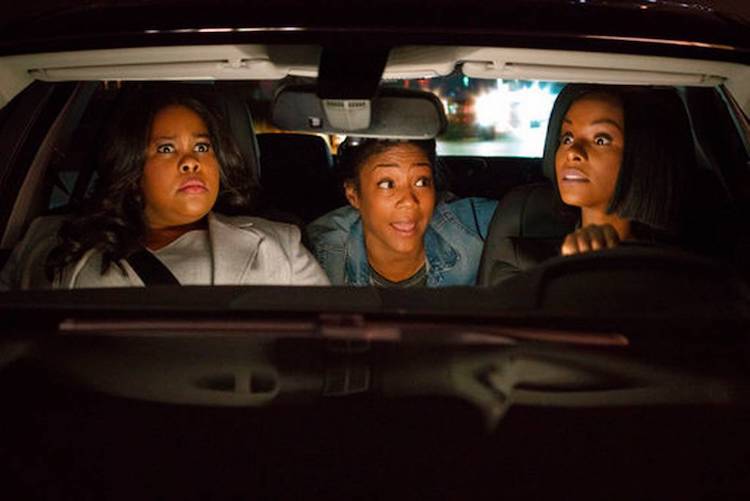
What are they looking at? Is there ANOTHER flying elephant?
The self-cannibalization at Disney continues with “Dumbo,” a turgid, labored, bloated live-action remake of the 1941 animated classic with precisely none of the original’s emotion, charm, or joy. Why do these things that are obviously bad ideas to begin with keep turning out so bad? It is a mystery.
Directed by a somewhat toned-down Tim Burton from a screenplay by Ehren Kruger (writer of most of the “Transformers” movies), this version aims for quasi-realism: The animals don’t talk or (for the most part) do other things that animals cannot do. So instead of a wise-guy mouse helping the floppy-eared baby elephant become a star of the circus, that function is performed by an emotionless girl named Milly (Nico Parker) and her little brother Joe (Finley Hobbins), who travel with the circus because their father, Holt (Colin Farrell), works for it.
(The year is 1919, by the way, and Holt has just returned from the Great War minus one arm. Don’t worry, though — he’s soon given a dummy arm that can’t move but at least absolves the special-effects crew of having to digitally remove Farrell’s real one. Self-invented crisis that served no story purpose anyway averted!)
Anyway, the entire plot of the original 64-minute “Dumbo” is recreated more or less faithfully in 40 minutes, leaving an hour to address Dumbo’s life after his flying act saves the struggling circus. Max Medici (Danny DeVito), the sympathetic circus owner, becomes a partner to tycoon V.A. Vandevere (Michael Keaton), who has just opened a Disney-like theme park and wants to make Dumbo the main attraction. Vandevere promises jobs at the park for Medici’s loyal performers, but you can guess how that goes. The kids want to reunite Dumbo with his mom, who’s on display in another part of the park, but Vandevere opposes this for reasons that are unclear beyond general evilness.
This points to a problem with turning animation into live-action. We tend to overlook logical flaws when they’re in a cartoon, but when flesh-and-blood (and CGI) creatures are involved, they stand out. This entire story is based on a flawed premise: Why would a crowd of circus-goers find a baby elephant with huge ears anything but adorable? Why in the world would their first instinct be to boo, jeer, and bully the thing? Yet without this reaction, Dumbo isn’t marginalized, doesn’t have to be cheered up by the kids, doesn’t discover his flying abilities, etc. The crowd reaction makes no sense but drives the entire story.
And what showman wouldn’t be thrilled at the publicity prospects of reuniting his star performer with his mother? Jumbo and Dumbo, proud momma and her amazing flying boy! Why would Vandevere react to the discovery that he already owns Mrs. Jumbo by plotting to kill her and keep Dumbo sad??
Even can’t-miss emotional moments like Dumbo visiting his locked-up mother manage to miss because everything feels phony and perfunctory. Elements of the original that don’t work in 2019 (baby elephants getting drunk; racially stereotyped crows singing songs) are wedged in anyway: The “pink elephants” hallucination now comes in the form of giant soap bubbles being blown as part of a circus act, and lines from “When I See an Elephant Fly” are worked into Dumbo’s introduction by the big top announcer, who’s played by the “Let’s get ready to rumble!” guy (Michael Buffer) and says, I crap you not, “Let’s get ready for Dumbo!” (Twice.) For a movie that’s completely unnecessary, not much thought seems to have been put into it. Who could have predicted??
The title character in “The Beach Bum,” a stoner-poet named Moondog, is the part Matthew McConaughey was born to play, and he is indeed at his McConaughey-est here: grinning, giggling, pontificating, publicly urinating, stumbling hazily from one party to the next, just generally living his best life. But the film is written and directed by the aggressively abrasive Harmony Korine (“Trash Humpers,” “Spring Breakers”), so Moondog’s “best life” also includes almost missing his daughter’s wedding because he’s banging a waitress, breaking out of court-ordered rehab, and mugging an old man for cash to buy drugs with Zac Efron (in the James Franco role). Korine finds these things adorable and hilarious, all the more so because Moondog gets away with everything, the li’l rascal. The whole movie is an unwitting tribute to white privilege.
Moondog is understood by the world at large to be a poetic genius, albeit a sloppy, unreliable one who hasn’t produced anything new in years. His Louisiana-accented agent (Jonah Hill) gets him speaking gigs here and there, and he lives in Miami with his fabulously wealthy wife, Minnie (Isla Fisher), who shares his amoral worldview of having no values and valuing nothing. When she dies in a car accident, she leaves behind an ultimatum: Moondog has a year to finally finish the book he’s been writing forever or else he gets none of her money.
Cute-sounding premise, and John Debney’s whimsical musical score matches it — but, again, there’s the Korine factor. Every instance of amusing irresponsibility — Moondog palling around with a rapper named Lingerie (Snoop Dogg) or a dolphin-tour guide named Captain Wack (Martin Lawrence), whose foot gets bitten off by a shark — is counteracted by something obscene, reckless, or cruel. We’re supposed to find Moondog charming, impish, outlandish, and endearing, but I mostly found him appalling and unlikable. I kept judging him, which is awkward when the movie is doing the opposite.
Is this a me problem, not a Harmony Korine problem? Maybe. But I’m the one writing the review, so you’re stuck with it. Korine shows undeniable talent and craftsmanship, with a playfulness that occasionally serves him well. “Spring Breakers” was appalling too, but mesmerizing and cautionary: a fun nightmare. “The Beach Bum” feels like a nightmare too, only it doesn’t acknowledge that it is one. Gleeful anarchy is one thing; this is malevolent anarchy, bad luck for anyone who isn’t Moondog.
Jordan Peele, the newly minted horror auteur behind “Get Out,” gives us a lot to process in the early minutes of his follow-up, the suspenseful and more overtly horrific “Us.” We’re told of a network of underground tunnels in the United States (the “U.S.” of the title?); images of rabbits in cages accompany the opening credits; in a 1986-set prologue, a little girl sees a TV commercial for Hands Across America, then wanders off from her parents at the Santa Cruz Beach Boardwalk and has a scary experience in a house of mirrors; there are sightings of a Bible verse, Jeremiah 11:11; and in the present, that little girl has grown up to be Adelaide Wilson (Lupita Nyong’o), still traumatized by the 1986 incident as she and her husband and children relax at their summer house not far from where it happened.
You probably can’t tell from all of this where it’s heading, even if you happen to know what Jeremiah 11:11 says (“Therefore, thus saith the Lord, Behold, I will bring evil upon them, which they shall not be able to escape; and though they shall cry unto me, I will not hearken unto them” — an epigraph befitting most horror movies). That’s one of Peele’s talents as a storyteller: introducing compelling details without showing his whole hand, then entertaining us as he reveals everything.
The meat of the plot would seem to have almost nothing to do with the details already mentioned. One night at the summer house, Adelaide, husband Gabe (Winston Duke), and their kids Zora (Shahadi Wright Joseph) and Jason (Evan Alex) are alarmed by the arrival of a family of feral doppelgängers, one for each of them, all armed with intimidating pairs of scissors. Zora’s counterpart never stops grinning creepily; Jason’s crawls and grunts like a dog and wears a mask; the dad is bearded and mute except for groans. Only the Adelaide equivalent speaks, and it’s in gasps and whispers.
I’m obviously not going to tell you what the doubles want, but your assumption that it’s not good is astute. “Us” works reasonably well as a straightforward horror movie of the home-invasion sub-genre, and for a while Peele revels in the terrifying chaos he’s created. Four family members each having a designated assailant (I believe the sportsmen call this man-to-man defense) means Peele gets to cut back and forth among four separate nightmare scenarios happening simultaneously. He has an acute sense of how to shoot and edit a scene for maximum suspense, and while he doesn’t wallow in blood he isn’t afraid of it, either. “Us” has light moments, including a few that I’m not positive Peele intended to be funny, but overall it’s a serious, methodical, intensely focused horror story that plays with light and shadows visually as well as thematically.
But it’s also an allegory, and that’s where it gets tripped up. When asked who they are, Adelaide’s double (let’s call her Badelaide) replies, “We’re Americans” — a non sequitur that signals another layer of meaning we should be looking for. The last 30 minutes of the film make it clear that what we’ve seen shouldn’t be taken literally, if only because the explanation for it all doesn’t make sense literally. But even as an allegory it’s muddled. If there’s a specific point Peele is trying to make — and I get the feeling he’s trying to make several — it gets lost in the sheer volume of stuff going on.
Lupita Nyong’o is astonishingly good as Adelaide and Badelaide, who look alike but have different personalities and mannerisms. Nyong’o is, at various times, creepy, gorgeous, fearsome, vulnerable, and frantic, and she’s never less than 100 percent committed. The finale isn’t entirely satisfying on a horror level, and the whole thing is only partly effective as a “We have met the enemy and he is us” metaphor, but Nyong’o is the real deal from start to finish. And even if I didn’t love the film, I suspect I’ll be thinking about it for a long time.
"Great, they seated the terrorists in my section."
The title character in “Hotel Mumbai” is actually called the Taj Mahal Palace Hotel, or the Taj for short, and it was one of a dozen Mumbai locations attacked by Islamic terrorists on November 26, 2008, ultimately killing 174 people and injuring hundreds more. The film, directed by first-timer Anthony Maras, follows the disaster-movie formula as it provides a slick, engrossing account focused mainly on the events at the Taj, an enormous luxury hotel with a staff of hundreds.
We’re introduced to most of the major players, representing all walks of life, before the shooting begins. Arjun (Dev Patel), a humble waiter at the Taj, has a pregnant wife at home; a Sikh, his turban briefly makes him an object of suspicion later. He’s surrounded by loyal kitchen staff and other hotel employees for whom the guests’ comfort is their top priority, even during terrorist attacks. The guests include David (Armie Hammer) and his Iranian Muslim wife Zahra (Nazanin Boniadi), rich Americans visiting with their baby son and a nanny, Sally (Tilda Cobham-Hervey); and Vasili (Jason Isaacs), a brusque and demanding Russian businessman. Several of the terrorists are also introduced, all young men who seem like ordinary dopes except for the obvious.
Though a few explosions are involved, most of the mayhem at the Taj and elsewhere comes from good ol’ AK-47s. Many, many people are gunned down; the onscreen violence isn’t gratuitously graphic, but it is plentiful. None of the main characters are terribly interesting as individuals (they’re mostly archetypes), but collectively they’re diverse enough and provide enough different scenarios — some hunkered down in a secured private room; some in their hotel rooms; some trying to escape — to keep the adrenaline going. Maras’ use of real news footage from the attacks gives me pause, but otherwise he’s skillful at presenting a suspenseful, satisfying action movie without sensationalizing the tragedy.
He's already this pale and sickly when the movie STARTS.
One thing you can say for sure about “Relaxer”: There will never be a gender-swapped remake of it. The story, first juvenile and then surreal, only makes sense in the context of men’s craving for competition and willingness to spend absurd amounts of time and energy on total nonsense. That’s not to say women won’t enjoy watching the movie, just that their takeaway message will probably be an eye-rolling, “Oh, men” (which they must be used to). Men, on the other hand, will watch it and think, “OK, I can see doing that….”
Writer-director Joel Potrykus, chronicler of peculiar men in previous SXSW premieres “Buzzard” and “The Alchemist Cookbook,” returns with frequent collaborator Joshua Burge starring as Abbie, a layabout living on his brother’s couch in the summer of 1999. When we enter the picture, Abbie is near the end of a challenge issued to him by the brother, Cam (David Dastmalchian), to drink a gallon of milk within a specified length of time without getting off the couch. We infer that submitting to ridiculous challenges like this is how Abbie earns his keep in Cam’s mournfully dingy Michigan apartment, in which the entire movie takes place.
When the milk challenge ends (disgustingly), Cam has a new one for him: beat the all-time Pac-Man record, here on whichever video game console they have in the apartment (it must be an old Atari), before Y2K. That gives Abbie five months. He still can’t leave the couch, though.
If you can’t buy the premise of someone voluntarily remaining couch-bound for days at a time to win a bet, or of being on the honor system not to break the rules, then you can stop here. “Relaxer” assumes we get it and makes no effort to make it seem reasonable. There’s no discussion of Abbie potentially sneaking away to the bathroom when Cam is out of the house, not even an assertion by Abbie that he won’t. It is simply understood that Abbie WILL NOT LEAVE THE COUCH. Period. You have to respect that.
Once Cam leaves, Abbie calls a friend to bring him supplies. That friend, Dallas (Andre Hyland), is a motor-mouthed white-trash vulgarian patterned after a Danny McBride character who shows up not to help Abbie so much as to pester him. (Eager to be included in the “challenges,” Dallas challenges himself to duct-tape a two-liter bottle of soda to each of his own hands. He does this instead of giving the couch-bound Abbie something to drink.) This section of the film is funny in the familiar way of raunch-coms (it could just as easily be Seth Rogen and Michael Cera), with Abbie, gaunt-eyed and deadpan like Buster Keaton, responding wearily to Dallas’ shenanigans while continuing to play Pac-Man.
Conversations with other visitors shed more light on Abbie, a slightly soft-brained underdog who might be too innocent for this world. (He might also have supernatural powers.) The movie gets more farcical when Abbie starts trying to use his reaching implements — he has duct tape, a cup, and the poles from a tripod — to get water, first from the rain falling outside, later from a pipe in the wall. Burge’s performance through all of this (did I mention he’s in his underwear the whole time?) is comically adept and even psychologically compelling: What’s going on in his head?
There comes a point where “Relaxer” moves past farce, evolving from “implausible but possible” to flat-out fantasy. It’s one of those “Oh, it’s THAT kind of movie” moments, and you either go with it (and what comes next) or you don’t. Having seen too many movies, I’m a sucker for surprise left turns and outside-the-box thinking, and I was delighted by the third-act developments in what had already been a witty, strange comedy. I’m not sure what I saw, but I’m glad I saw it.
“Captive State” is geeky, serious sci-fi told with a straight face and no comic relief. This is essential because, like most geeky sci-fi, it’s a hair’s breadth from cheesiness: A few missteps and the whole thing becomes a campy laughingstock. But director Rupert Wyatt, who made the similarly perilous “Rise of the Planet of the Apes” and co-wrote “Captive State” with his wife, Erica Beeney, defies his frustratingly cheap budget with handheld cameras and a docudrama style that thrusts us into the urgency of the situation. In short, we believe it, no matter how ridiculous it is.
The film is set nine years after all of Earth surrendered to an alien invasion, putting humanity under extra-terrestrial rule. America still has essentially the same form of government, but now the legislators are aliens. Our law enforcement, collaborating with the invaders, have turned us into a police state, and every human has been outfitted with an “identity implant” in the neck. Moreover, the general consensus among humans now is that the alien takeover was a good thing. Our country was a mess before first contact, and now it’s been cleaned up! Crime is at an all-time low, so you can walk the streets safely (as long as you never say anything critical of the E.T.s in D.C.).
Our story is concerned with both sides of the brewing war: the underground Resistance (who are widely viewed as terrorist insurgents) and the police, represented by John Goodman as a determined agent named Mulligan. It’s hard to accept Goodman as anything other than, well, a good man, so we give him the benefit of the doubt that he’s been brainwashed by alien propaganda and is simply doing his job. On the other side, a young man named Gabriel (Ashton Sanders) has ties to a secret group of resisters called Phoenix — led by his supposedly martyred brother, Rafe (Jonathan Majors) — that’s planning something big at an upcoming Unity Rally where the aliens are scheduled to make an appearance.
Wyatt and Beeney’s screenplay shows thought and consideration. Technological development came to a halt when the aliens took over and jammed digital signals, so most people who aren’t collaborators have outdated computers and communication devices. The Resistance is all analog now, including the use of carrier pigeons. Newspapers are important again. Everything in occupied Chicago, where the action is set, looks authentically grimy and rundown, like the world in “Ready Player One” was supposed to be.
Recognizable actors are strewn throughout: Vera Farmiga as an upscale prostitute who gives Mulligan information; Alan Ruck as a Phoenix member working on the inside; Kevin Dunn (from HBO’s “Veep”) as Mulligan’s alien-supporting boss. Goodman’s authoritative presence gives the film weight, and Ashton Sanders (“Moonlight”) continues to be a quietly soulful actor who commands attention whenever he’s onscreen (which isn’t enough).
While the plot has its shocking moments, it’s not built on twists or pyrotechnics but on the secret machinations of Phoenix and the feds. Parallels to real-world propagandists and their collaborators are clear without being heavy-handed. It’s a bit overlong, but Wyatt’s earnest intensity had me hooked for most of it. I for one, do NOT welcome our new insect overlords.
The setting of “Wonder Park,” a goopy pile of trash made by a third-tier animation studio, is an amusement park called … Wonderland. Why isn’t the movie called “Wonderland”? Probably because there are so many other “Wonderland” movies, most of them Alice-related. So why isn’t the park called Wonder Park? Your guess is as good as mine — better, maybe, because you might actually care whereas I’m just freestyle complaining.
Young June (voiced by Brianna Denski) has invented this imaginary theme park with her mom (Jennifer Garner), pretending it’s run by her stuffed animals. In the real world, June designs and builds junior versions of the park’s rides for the amusement of herself and her friends. But when Mom falls ill, June stops playing pretend Wonderland and throws her blueprints in the fireplace, too sad to use her imagination anymore.
This proves disastrous for the inhabitants of Wonderland, who exist (in June’s imagination) and rely on her for guidance! Via magic or something, June walks into a nearby forest and emerges in the actual (imaginary) Wonderland, now in disrepair and overshadowed by a purple cloud called The Darkness. The boss, a chimpanzee named Peanut (Norbert Leo Butz), has gone into hiding. The others — a bear named Boomer (Ken Hudson Campbell), Steve the porcupine (John Oliver), Greta the warthog (Mila Kunis), and a pair of woodchucks (Kenan Thompson and Ken Jeong) — are struggling to prevent the park from being completely dismantled by an army of Peanut plush toys from the gift shop that have become “chimpanzombies” (the single most clever thing in the entire film).
Unsurprisingly, a story set in a pretend place with low stakes and no real-world consequences yields unsatisfying results. The threats are nebulous (the source of The Darkness is June’s lack of imagination…), the objectives unclear (…so she just needs to … imagine stuff again?), and there’s no wit or cleverness in the animals’ light-hearted shenanigans and adventures. The fantastical rides are fun, but you can only get so much mileage out of that, even in a movie that’s only 77 minutes without credits. It exists mainly to set up an upcoming Nickelodeon TV series, and it shows.
By the way, if you’re wondering who directed this movie, according to Paramount, the answer is nobody. The actual director, Dylan Brown, was fired more than a year ago after multiple complaints of sexual harassment. He wasn’t officially replaced, however, and the movie simply has no onscreen “directed by” credit, not even a pseudonym. But I have to say, if ever a movie did seem like it directed itself without human input, it would be this one.
Pictured from left: Richardson, the title character, Sprouse.
The disease in “Five Feet Apart,” the latest romantic drama about two teens in love where at least one of them has an incurable disease, is cystic fibrosis, and they both have it. They meet in the hospital. Stella (Haley Lu Richardson), our chipper, somewhat obsessive-compulsive, video-blogging protagonist, is in for a “tune-up,” as she puts it; Will (Cole Sprouse), the floppy-haired, soft-featured bad boy of the CF world, has a bacterial infection and a pessimistic attitude about taking his meds. Both are free to date and fall in love with whomever they please, with one exception: Because of the risk of cross-contamination, two people with CF can never touch each other. The rule of thumb is to always stay six feet apart. (Cutting it down to five is Stella’s version of taking a risk.)
Directed by actor Justin Baldoni from a screenplay by first-timers Mikki Daughtry and Tobias Iaconis that is somehow not based on a Nicholas Sparks novel, “Five Feet Apart” is well acted by its two leads, but especially by Richardson, who has a natural, down-to-earth persona reminiscent of Jennifer Lawrence. Stella and Will’s chaste puppy love is cute, with the sad reality of their situation always lurking in the periphery (and often given center stage). They’re supported by Kimberly Hebert Gregory (from HBO’s “Vice Principals”) as their stern but loving nurse and by Moises Arias as a fellow CF-er (Stella’s term) who happens to be gay. Having a third patient in the mix means more possible combinations of who will live and who will die — the audience would revolt if a disease-of-the-week movie had zero casualties — but it’s still fairly predictable. Then again, that’s better than most actual Nicholas Sparks plots, which tend to be unpredictable because they are insane. This one hews pretty closely to reality while checking off the boxes for what a weepy teen romance is supposed to look like.
Many of the people seeing “Captain Marvel” (myself included) won’t know anything about the character going in except that she’s from Marvel Comics and that you’d think she’d be a bigger deal given that she’s named after the company. After seeing the movie, a middling, good-enough episode in the Marvel Cinematic Universe series, I still don’t know much about her except that she derives her massive power from one of the MCU’s many enchanted trinkets — the Tesseract, whose powers are also not clear to me — and that she will likely be the key to defeating Thanos in next month’s “Avengers: Endgame” (which will finish the story that “Avengers: Infinity War” half-told last year).
Directed by the “Half Nelson” team of Anna Boden and Ryan Fleck from a screenplay credited to them and Geneva Robertson-Dworet (“Tomb Raider”), “Captain Marvel” does highlight the filmmakers’ resourcefulness. Faced with having to concoct an origin story that will mesh seamlessly with the moving parts already flying around the MCU, they turned the formula on its head. We start on the planet Hala, populated by warrior-heroes of the Kree race, where a soldier named Vers (Brie Larson) is being trained by exacting sensei Yon-Rogg (Jude Law) on the art of killing Skrulls, the Kree’s shapeshifting enemies. When Vers is captured in battle, the Skrulls dig around in her memory for a detail they need — thus giving us a brief overview of Vers’ life without having to spend the first half of the film on it.
This narrative choice also ramps up the mystery factor. Vers’ memories seem to take place on planet Earth, which is strange for an alien from the planet Hala. In her memories, she was a pilot, and her mentor was the brilliant Dr. Lawson (Annette Bening), whom Vers now sees whenever she visits her planet’s A.I. leader, which takes the form of the viewer’s most trusted and revered person (mine, as you know, is Carrot Top). The Skrulls, led by a rather nice-seeming fellow named Talos (Ben Mendolsohn), are after a light-speed engine that Dr. Lawson was supposedly working on, which the Kree fear would allow the Skrulls to terrorize even more galaxies than are currently on their route. And over all of this hangs the question of Vers’ true origins.
Most of the action takes place on Earth in 1995, where Vers comes in pursuit of the Skrulls. She teams up with S.H.I.E.L.D.’s Nick Fury (Samuel L. Jackson), who still has both eyes in 1995, and there are brief interactions with our beloved Agent Coulson (Clark Gregg), who is still alive in 1995 (and I guess is alive again now, but only on the Marvel TV shows, which doesn’t count, sorry). The Blockbuster video stores and dial-up internets and grungy music of the mid-90s are also on display, mostly for humorous purposes.
The dynamic between Larson and Jackson as Vers and Fury is lively and fun. He’s an upbeat butt-kicker who has just learned that aliens exist; she’s a no-nonsense butt-kicker who might be an alien and has no patience for Earth men who tell her to smile more. When she ditches her space costume (“dressed for laser tag,” someone says) for a less conspicuous outfit, it includes a Nine Inch Nails T-shirt and makes her look, as Fury puts it, “like someone’s disaffected niece.” Which is perfect.
The Skrulls’ ability to turn from ugly reptilians into any other person just by looking at them results in amusing situations like Vers fighting with an “old woman” on a train in front of stunned passengers. Vers and the other good guys are constantly on guard with each other, asking deeply personal questions to make sure no one’s been replaced by a Skrull impostor. We also learn details about the Skrulls and their past that suggests the issue is more complicated than Us vs. Them, with talk of “refugees” and someone calling Earth a “s***hole” that will call certain current events to mind.
But the shifting alliances and carefully parceled-out information, while keeping things interesting, also create a problem that several Marvel films have had: There are obstacles but no real villain. Vers’ challenges are largely internal. This pays off in a stirring moment where she recalls all the times she’s gotten up after being knocked down, underscoring perhaps the most admirable thing about humans (female humans in particular) … but it’s not the adrenaline-fueled climax we’ve been conditioned to expect.
The whole thing feels like Marvel paused the main story (the Avengers and their friends) to quickly tell the backstory of a new character who’s about to show up and be important, like a flashback in a Tarantino movie. It’s necessary — think how annoyed we’d be if “Avengers: Endgame” hinged on someone we’d never seen before — but it does the character a disservice. She’s named after the franchise, for crying out loud! Can’t we come up with something more exciting and fully formed?
"OK, let me 'level' with you. Ha ha, just my little joke."
The plucky, rough-around-the-edges Canadian thriller “Level 16” is a “Black Mirror”-lite story about teenage girls being trained in a creepy, militaristic sort of finishing school called the Vestalis Academy and located in a secret fortified bunker. The girls, about a dozen of them, spend every waking hour learning how to be “clean girls” — obedient, passive, etc. — in preparation for the exciting day when they will meet their “new families.” They never go outside, cannot read or write, and have limited knowledge of the world beyond what their instructors tell them.
One of the girls, Vivien (Katie Douglas), starts thinking there might be something wrong with this perfectly non-suspicious situation when she’s reunited with Sophia (Celina Martin), a girl she hasn’t seen since they were both back at Level 10. Sophia has learned some things about the Vestalis Academy and encourages Vivien to stop taking the pills they give everyone each day. Could there be more going on here than meets the eye?? (There could.)
This dystopian “Handmaid’s Tale” riff seems like it must be based on a YA novel, but it’s actually an original product from writer-director Danishka Esterhazy. She doesn’t let the low budget or the occasionally subpar acting from the supporting cast prevent her from telling an engaging sci-fi story that will particularly appeal to teenage girls who are trying to break out of their own confinements.
“A Madea Family Funeral” is typical of Tyler Perry’s Madea series: excruciating and baffling with occasional flecks of bemusement at how misguided it is; garishly lit and cheap-looking, like it was shot on a sitcom soundstage (which it was); woefully overlong and ham-fistedly plotted because writer-director-producer Perry keeps hitting pay dirt with these things and has no incentive to improve.
The structure is a fascinating mess. Sassy grandma Madea, her straight-man nephew Brian, and her raunchy brothers Joe and Heathrow — all played by Perry — are irrelevant to the main action. Those characters, plus Madea’s friends Miss Hattie (Patrice Lovely) and Aunt Bam (Cassi Davis), could be removed from the screenplay without having to alter the plot. They’re here solely to comment on the main action. This would be a great opportunity for humor if Tyler Perry were a funny writer.
The actual story, a dull melodrama, concerns a branch of the family to which, if I caught the details correctly, Heathrow is the grandfather. (Heathrow is a new Perry character, a legless war veteran cancer survivor who can only speak through one of those electronic voice boxes.) Several interchangeable siblings and their significant others are gathered to celebrate their parents’ anniversary. Pretty-faced Jessie (Rome Flynn), whom the others gently tease about being secretly gay (THIS IS DANGEROUS TERRITORY FOR TYLER PERRY TO TREAD ON, I’M JUST SAYING), is unaware that his fiancee, Gia (Aeriel Miranda), is sleeping with his brother, A.J. (Courtney Burrell). We learn of this fact when Gia and A.J. happen to shack up in the hotel room adjacent to where A.J.’s father is cheating with family friend Renee (Quin Walters), during which he (the father) dies. This is also the hotel where out-of-towners Madea and company are staying, because Tyler Perry movies are usually centered on lazy coincidences.
So A.J. and Gia know A.J.’s dad was a philanderer, but they can’t say how they know without revealing their own affair. A.J. handles the situation by acting like a jerk to everyone, including his own wife, Carol (Kj Smith), and using the fact that his dad just died as his excuse, all while STILL trying to hook up with Gia, who is sharing a bedroom with her fiancé Jessie in the same house.
There’s also a sister and her husband, but who cares?
All the secrets come out eventually. Most of the plot elements, which would be alarming and traumatic if played seriously, are treated as farce, but not the funny kind of farce (though this will be news to Perry, who believes he is hilarious). The widow, Vianne (Jen Harper), whose husband died on their anniversary, gets over it VERY quickly, hooking up on the night of the funeral with a man played by Mike Tyson.
The film’s dialogue breaks down roughly into the following categories:
– People talking about how other characters smell: 5%
– Madea talking about what “black people” do, particularly the tradition of waiting several days, even weeks, after a person’s death before holding the funeral: 15%
– Miss Hattie (an embarrassingly amateurish character straight out of a college improv show) or Aunt Jam almost revealing something about one of the affairs, only to be violently shushed by Madea: 15%
– References to the deceased dying with an erection that persists up through the funeral: 10%
– Madea, Joe, or Heathrow rambling semi-coherently about how things used to be, like they’re a common president of the United States or something: 30%
– Banal conversations that sound like they’re being made up impromptu by actors who didn’t know they’d be asked to improvise today: 25%
I kept wanting to take a red pen to the screenplay and cross out the lines — sometimes entire scenes — that didn’t need to be there. That would include everything with the Perry characters, particularly an interminable sequence where they’re pulled over by a white police officer and hilarity fails to ensue, but also several scenes involving the characters the story is actually about. The result still would have been bad, but at least it would have been shorter.
Coming-out stories have become common enough that movies are starting to tell them with nuance. The “Am I gay?” question no longer has only two possible answers; there’s a whole spectrum, as 17-year-old Franky Winter (Josh Wiggins) discovers in “Giant Little Ones,” a discreet and decidedly un-salacious drama from Canadian filmmaker Keith Behrman. Franky is a virgin, but he lives vicariously through his lifelong best friend and high school swim teammate Ballas (Darren Mann), who supposedly enjoys sexytimes with his girlfriend Jess (Kiana Madeira) on the regular. Franky acquires a girlfriend of his own, the sweet but boring Priscilla (Hailey Kittle), but that relationship and his friendship with Ballas are thrown into confusion when Franky and Ballas have a furtive, drunken sexual encounter one night during a sleepover. The audience doesn’t know exactly what happened or even who initiated it; all Ballas says to Franky the next day is, “It would never have happened if we weren’t wasted.” End of discussion.
Except that Ballas apparently isn’t done discussing it, because soon rumors about Franky’s sexuality are swirling around the school, catching the attention of the swim team’s resident homophobe (Evan Marsh) and causing Priscilla to dump him. Franky’s butch, outspoken transgender friend Mouse (Niamh Wilson) tells him to embrace his queerness and people will stop hassling him about it, but while Franky does have some issues with homosexuality — his father (Kyle MacLachlan) recently came out of the closet and left his mother (Maria Bello), prompting bitterness — the simple fact is that he’s not gay. Or he doesn’t think he is, anyway. And why did Ballas lie about what happened?
There are formulaic elements to the film, which ultimately isn’t far removed from the coming-out/coming-of-age indie dramas of the last decade. But it doesn’t pander to gay audiences (even a shower scene has the swim team wearing shorts), and the story takes an unusual turn in the way that Ballas’ sister, Natasha (Taylor Hickson), also a social pariah for unfair reasons, becomes Franky’s supporter and confidante while Ballas pushes him away. Young people trying to sort out their own sexual feelings may find Behrman’s thoughtful, tender-hearted film particularly cathartic, maybe even instructive; everyone else can enjoy a well-acted and unpretentious coming-of-age story.
We’re so accustomed to stalker movies now that they can be told in shorthand. “Greta” is a too-efficient example of this, in addition to being a cautionary tale about why you should never do something nice for a stranger.
Directed by Neil Jordan (“The Crying Game”) from a screenplay credited to him and Ray Wright (“The Crazies”), this no-frills thriller concerns a young woman named Frances (Chloe Grace Moretz) who finds a purse on the subway and returns it to its owner, Greta (Isabelle Huppert), a refined older French widow who is effusively grateful for the service. The two become friends, Frances standing in for Greta’s daughter who lives in Paris, but Frances is unnerved when she discovers that Greta has used the “lost purse” ruse before. What is she really after?
Well, Frances jumps to the conclusion that Greta is a dangerous stalker. We know this is probably true — it’s why we came to see the movie — but Frances assumes it before she’s seen any evidence beyond Greta being clingy and lonely. She calls the police when so far all Greta has done is stand outside the restaurant where Frances works. Adding more details to Greta’s fixation would have fleshed out the story, upped the film’s creepiness factor, AND given the usually rigid Huppert more opportunity to revel in playing an insane person (but I relish the moments where she does get to cut lose). The decision to rush through that part hurts the movie, which needed either more camp or more terror to really be effective. As it is, it lacks oomph until the climax, by which point the opportunity has been missed.
Hello friends and strangers! Thanks for reading my word piles about movies. In May I will have been a Serious Film Critic for 20 years, and later in 2019 I’ll write my 4,000th review.
Four thousand! That’s almost a million!
Who pays me to write these reviews? Good question. (Who would, right?) Technically, I write them for free. But then, to support the arts, my beloved patrons each contribute at least $1 a month through Patreon. It’s called “crowdfunding,” or “socialism.” Instead of one editor having to pay me a living wage, the cost is broken down into micropayments from many people, each contributing a negligible amount that adds up to a non-negligible sum.
At the moment, there are 175 patrons paying a total of $440 a month. I’m deeply grateful, but obviously we’re not at “living wage” level yet (this is not my only source of income), and the average contribution is $2.50, which is more than $1.
I would love to have 1,000 patrons, each contributing a dollar. That would be $1,000 a month (check my math for me), which would be a fine sum. (I mean, I’d love to have 10,000 patrons, each contributing, a million dollars, but let’s be realistic.)
What do patrons get? Here is what!
EDS-ASAP: An email from me with a brief reaction to a movie, sent immediately* after I see it (*give me a few minutes to get home). Very useful when you need to know NOW whether a movie is worth seeing and can’t wait for the full review. And sometimes I end up not writing a review, so the EDS-ASAP insta-reaction is all there is. And it’s only for patrons! Jealous??
A few examples of EDS-ASAP:
That’s the only patrons-only reward I have right now, but I’m open to ideas for others. If you have suggestions, questions, or comments about any of this, feel free to email me.
My sincere thanks to all patrons and former patrons. Journalism, the internet, and the economy have all changed dramatically in the last 20 years, and I’m grateful to have a base of supporters who have stuck with me.
And to you who aren’t yet patrons: Become a patron! It’s the only way to know the true joy that comes from being a patron.
Love,
Eric
Patrons can opt out of EDS-ASAP if they don’t want the emails. Patreon charges users on the 1st of each month. There are no additional fees beyond the amount you pledge to contribute, and you can cancel anytime. No salesman will call. Void where prohibited. If it takes you longer than four hours to read a review, consult a doctor.
Not doing yourself any favors looking that creepy, kid.
In the loudly menacing “The Hole in the Ground,” a solid debut from Irish director Lee Cronin, young mother Sarah (Seána Kerslake) and her son, Chris (James Quinn Markey), have just moved to an isolated house in the country — which, not to blame the victims here, never turns out well. Their house is near a forest, at the center of which is the big-ass title character, about 100 feet in diameter, dug out like a mining pit. There’s not even a fence around it. This is very dangerous!
But the film’s horror isn’t about someone falling into the hole, as fun as that would be. There are other ominous factors, including an older local woman, Noreen (Kati Outinen), who went cuckoo a while back and thought her son had been replaced by a “changeling.” Now she wanders the streets in a hood and cloak like a harbinger of doom and is the subject of local legends.
Wouldn’t you know it, Sarah soon starts having the same suspicions about Chris. He seems different somehow since they moved here, and even his benign actions like eating spaghetti or combing his hair now strike her as sinister. She has vivid hallucinations that make us, as viewers, unsure whether she’s cracking up or whether there’s something else at play here. And what does the hole have to do with it, anyway?
Creepiness ensues. Based more on tension and uncertainty than on shocks, the film’s horror is never unbearable or grotesque. The screechy sound design can be overbearing (and does all the work in some scenes), but apart from that and the fact that the film goes on for exactly one (1) scene longer than it should have, I have no major qualms with this atmospheric and effective little chiller.
I loved the first two animated adventures about the Viking boy and his fire-breathing friend, but “How to Train Your Dragon: The Hidden World” falls a bit flat. Maybe too much time has passed? It’s been five years since Part 2, nine years since the first one, and as much as I enjoyed them, I never felt compelled to watch them again. When “The Hidden World” began — with Hiccup (Jay Baruchel) and friends rescuing dragons from trappers — I recognized all the characters but didn’t feel anything for them. That turned out to be a problem because the film assumes we’re already all-in on these folks — which, to be fair, is a safe assumption. The target audience has probably re-watched both films multiple times. I understand that I’m the problem here.
Written and directed by franchise veteran Dean DeBlois, “The Hidden World” is aesthetically as beautiful as ever, with melancholy themes reminiscent of “Toy Story 3.” Hiccup, chief of the village since his father died, is growing up and being urged to marry Astrid (America Ferrera). He has turned the island of Berk into a “dragon-Viking utopia,” but they’re running out of room for everyone because dragons are large. Complicating matters: Some rival Vikings who aren’t down with the “be nice to dragons” philosophy have hired a dragon hunter, Grimmel (F. Murray Abraham by way of Bela Lugosi), to capture Toothless so they can use him as bait for the rest. And what bait do they use to catch Toothless? A female Night Fury, white in color and as feline in her mannerisms as Toothless is canine. Toothless is smitten. Seems Hiccup isn’t the only one approaching adolescence.
John Powell’s soaring musical score is a great boon, especially during the wordless scenes of Toothless and New Girl courting and cavorting. (They have a romantic flying scene that reminded me of its equivalent in the first “Superman” movie.) Thanks to dreams and flashbacks, Hiccup’s connection to his father (Gerard Butler) is still a driving force in the story, but his long-lost mother (Cate Blanchett), introduced in Part 2, might as well have remained lost. This chapter, about growing up and moving on, has heart but lacks the warmth and comfort of its predecessors. The two 6-year-olds who sat near me loved it, though, so who cares what I think?
Despite its happy, Irish-sounding title, “Donnybrook” is bleak misery porn about meth and meth-adjacent Midwesterners scrambling to survive and/or kill each other. It’s compelling stuff, written and directed with mean efficiency by Tim Sutton (“Dark Night”), but I wish the main character were more interesting and that the point were more insightful than “Golly, it sure sucks to be poor and desperate.”
Our bare-knuckled hero is Jarhead Earl (Jamie Bell), a veteran in a trailer park with two filthy children and a junkie wife (Dara Tiller). Earl has had it up to HERE with Chainsaw Angus (Frank Grillo), the brutal drug manufacturer/distributor who supplies junk to the missus and everyone else in town, and he starts a feud with Angus and his sister/business partner, Delia (Margaret Qualley), whom Angus treats like actual garbage and who is perhaps not entirely loyal to him. Having obtained the entry fee by robbing a gun store, Earl makes his way to the Donnybrook, an underground brawl offering $100K to the last man standing, pursued by Angus and Delia, all of them pursued by a cop (James Badge Dale) of questionable character.
Sutton, adapting Frank Bill’s novel, sustains a menacing tone throughout largely through the Angus character, a fearsome boogeyman with no compunctions about killing. Bell shows gritty strength as Jarhead Earl, but the character is stoic to the point of feeling under-written. Still, the showdowns among Earl, Angus, Delia, and the cop are viscerally effective — not to mention the Donnybrook itself, which is insane — and the whole thing has an appealing somberness to it.
We in the Northern Hemisphere have this image of New Zealand as Australia’s sillier, goofier neighbor. “Mega Time Squad” does nothing to dispel that impression, being a manic, light-hearted comedy about a nice young criminal who uses time-travel paradoxes to create a gang of himself (himselves?).
The setting is the small town of Thames (pop. 7,200), and specifically within the criminal underworld of that town. Our hero is Johnny (Anton Tennet), a grinning Dave Franco type who’s a low-level goon for local crime boss Shelton (Jonny Brugh), who’s genuinely dangerous but hard to take seriously because he reminds you of Michael Scott. Johnny pulls a heist of rival Chinese gangsters and plans to keep the money for himself, but Shelton learns of the betrayal and comes after him.
Fortunately for Johnny, among the things he stole from the Chinese was an ancient bracelet that can send its wearer back in time (not long, just a few minutes). Johnny activates it while being chased by Shelton’s crew, creating a second Johnny who tells the first Johnny where to hide. The timeline resets itself as long as the Johnny who travels back in time follows the same course of action he followed before; when he deviates, the result is multiple Johnnys. I can’t say it all makes sense, even within the rules of time-travel fiction, but the result is three Johnnys working together to get the stolen money back and defeat Shelton.
Writer-director Tim van Dammen fills the movie with provincial dopes whose foibles we can laugh at without feeling bad about ourselves. These include Terry (Eru Wilton), a lieutenant of Shelton’s who’s always getting shot; and Jay (Simon Ward), an off-the-grid friend of Johnny’s who lives in a storage unit and explains time travel to him. The only moderately smart figure is Shelton’s sister, Kelly (Hetty Gaskell-Hahn), who’s on Johnny’s side and plays straight-man to everyone else’s buffoonery. Everyone behaves as if what they’re doing — stealing from the Chinese, ordering hits on one another, etc. — is just a game, even though it has real stakes. It’s a fun tone to take, perfect for a story that’s inherently goofy.
Onscreen, most of the work falls to Anton Tennet, who spends much of the film sharing scenes with no one but his clones. Van Dammen handles the technical side of this quite well — I expected the seams to show more in such a low-budget production — and Tennet’s playful, puppyish energy makes us root for Johnny, who never seemed cut out for a life of crime anyway.
The script is a little rough around the edges. The dialogue is fast-paced and loopy for a while but eventually settles into a routine that it can’t quite shake off. And while you can never really “explain” time travel in a movie, this one could have done a better job establishing how the rules work in this particular universe. But when it’s on, it’s very funny — absurd, childish, petty, seemingly dumb but actually clever. It makes you think New Zealand would be a charming place to visit, and that you’d probably be OK even if you ran afoul of local gangsters.
“Fighting with My Family” would be nothing more than a routine underdog sports story if it hadn’t been written and directed by Stephen Merchant, the gangly Englishman responsible for most of the funny things Ricky Gervais has ever said on TV. In Merchant’s unlikely hands, this fact-based account of a working-class Norwich family obsessed with American pro wrestling is sharp and funny, with amiable performances and an interesting look behind the scenes at WWE.
Teenagers Zak (Jack Lowden) and Raya (Florence Pugh) Knight, raised by one-time amateur wrestlers (Nick Frost and Lena Headey), both jump at the chance to audition for the WWE, but only Raya is selected by coach Hutch (Vince Vaughn) to go to Florida and train with other hopefuls. (Dwayne “The Rock” Johnson, who encouraged Raya in real life, appears as himself in a few scenes.) Raya, whose Goth persona is at odds with the bubbly blondes she’s teamed with (all models rather than athletes), experiences self-doubt and flirts with the idea of changing herself to be more “normal.” Back in England, her brother sulks while continuing to compete in the family’s amateur league. It’s the usual believe-in-yourself sports stuff, in other words. But if the film’s dramatic elements are generic, the humor, especially in the first half, is buoyant enough to make it worthwhile even for those of us with no interest in wrestling.
“Alita: Battle Angel,” directed by Robert Rodriguez and co-written and produced by James Cameron, marks the first time the two filmmakers have collaborated. You can see Cameron’s influence in the way the film is technically proficient but emotionally hollow, and Rodriguez’s influence in the way some of the characters have had their limbs replaced with weapons. It is very much on-brand for both of them. (Cameron shares writing credit with Laeta Kalogridis, who wrote “Terminator: Genysis”).
Based on a Japanese comic (but don’t worry — the film contains no Japanese people), this is flashy, expensive-looking entertainment set in The Future, some 300 hundred years after the collapse of civilization, focused on a kindly cybernetic doctor named Dyson Ido (Christoph Waltz) who repairs cyborgs free of charge as a service to the ruined wasteland community in which he lives, called Iron City. Earth is basically a garbage dump now, humans and cyborgs scrambling for scraps while the elites live it up in a floating sky city called Zalem.
Among the detritus jettisoned by Zalem is a still-functional female cyborg consciousness that Ido finds and implants into a robot body he had lying around. He names his new cyborg daughter Alita, after his real (dead) daughter, which Ido thinks is charming but his ex-wife (Jennifer Connelly) thinks is weird. Alita (played by Rosa Salazar) has giant eyes and a creepy CGI robot face, lest the audience find her relatable. She doesn’t remember her former life or what type of cyborg she was, but she’s incredibly strong and a great fighter, and she’s a natural at motorball (roller derby on motorized roller blades), Iron City’s favorite cyborg sport.
Ido is a bounty hunter in his spare time, and one particular cyborg criminal, Grewishka (Jackie Earle Haley), wants to get him and his little girl, too. Another cyborg named Zapan (Ed Skrein) is also given the assignment of killing Alita. It seems that in addition to whatever other secrets Alita may hold, her robot heart is a powerful energy source. Up on Zalem, a mysterious figure named Nova controls things, occasionally shoving his consciousness into someone else’s body — Mahershala Ali’s, specifically — in order to make a statement. Oh, and Alita gets a human boyfriend, Hugo (Keean Johnson), who is completely unnecessary to her, the film, and mankind.
Rodriguez, directing his first movie in five years, brings his usual energy. The fight scenes are coherent and exciting (as they should be when they involve beings who are half-robot), and the motorball sequences are rad fun. But the rest is listless futuristic mumbo-jumbo without a single interesting character, building to a conclusion that’s really just a setup for the next film. Only the budget and the name recognition separates this from any number of SyFy channel movies.
When we last saw plucky college student Tree Gelbman (Jessica Rothe), at the end of 2017’s serviceable genre exercise “Happy Death Day,” she had unmasked her killer and broken the time loop that was causing her to relive the day of her murder (which also happened to be her birthday) over and over again. “Happy Death Day 2U” sends Tree back to that day, only now it’s in a parallel universe — one where Tree’s boyfriend (Israel Broussard) is dating her nemesis (Rachel Matthews), but where her mother is still alive. The “Groundhog Day” thing is still happening, but the killer is different.
This was never a “horror” premise so much as a sci-fi/mystery, and the follow-up, written and directed by Christopher Landon (who directed the first one), emphasizes the comedic aspects and downplays the whodunit even more. Tree is positioned as an exasperated, Buffy-like heroine, leading a crew of nerds trying to fix the quantum mechanics science project that caused the time warp, all while navigating her feelings toward the boyfriend AND solving the mystery of who’s killing her this time. Tree’s deaths (some of them deliberate, to “restart” the day) are often funny, as is her annoyance at having to do this again. Fans of the first film will find it much more pleasing than she does.
Why does this still from the movie look like someone's wacky prom photo?
The premise of “Isn’t It Romantic” is similar to last year’s “I Feel Pretty” in that both involve blondes getting bonked on the head and waking up in a fantasy version of Manhattan. In “I Feel Pretty,” Amy Schumer’s head injury led her to believe she was thin and gorgeous. In “Isn’t It Romantic,” Rebel Wilson’s concussion sends her to live in a romantic-comedy world, one where she has a sassy gay best friend and an absurdly spacious apartment, and where it’s always sunny except when a rain-drenched kiss is called for. Both movies have upbeat morals about self-esteem for viewers, but the newer film has a better idea of what to do with its premise.
Natalie (Wilson), an assistant architect, is on the record as not being a fan of rom-coms, so she finds it unsettling to be living in one. (She also hates that since her rom-com is apparently PG-13, her F-bombs are always “bleeped” by, say, a nearby truck backing up.) Her neighbor, Donny (Brandon Scott Jones), whom she barely knew yesterday, is now her constant companion, an over-the-top queer stereotype. At work, her friend Whitney (Betty Gilpin) is now her bitter enemy because women in the workplace have to hate each other in rom-coms. Natalie’s platonic friend Josh (Adam Devine) is the right man for her, but she doesn’t notice him because a hunky rich Australian (Liam Hemsworth) has inexplicably taken a liking to her. They met, of course, when his limo bumped into her on the street.
The gags mocking rom-coms are astute and funny, perhaps cathartic coming from a trio of writers (Erin Cardillo, Dana Fox, and Katie Silberman) whose credits include such genre exercises as “How to Be Single,”“Couples Retreat,”“The Wedding Date,” and “Set It Up.” Plot tropes are playfully teased, and director Todd Strauss-Schulson (“A Very Harold & Kumar 3D Christmas”) fills his magical, love-centered version of New York with visual cues: The attorney ads in the subway that used to say “INJURED?” now say “SMITTEN?”; the “See something? Say something” poster now reads “See someone? Say something!” and urges people to strike up conversations with potential soulmates; a map reveals that the island of Manhattan itself is now heart-shaped. The whole thing is under 90 minutes, and Natalie is in the rom-com world by minute 15 — quick and to the point, that’s how we like our high-concept comedies.
As enjoyable as the riffs on rom-com cliches are, the film’s best attributes are its positive messages for young women. Natalie, who sneers at rom-com happily-ever-afters, ends up with one herself, but it’s not because she finds a man; it’s because she learns to love herself. Wilson’s self-deprecating humor is relatable and endearing, not pathetic, and she supported by a keen group of actors (including Jennifer Saunders as her mother, seen in flashback). Come for the impromptu musical numbers and “Pretty Woman” references; stay for the cheerful lessons about confidence and self-esteem.
(Note: The funniest, sharpest, most savage parody of romantic comedies is still “They Came Together.”)
There have been two other Lego movies since “The LEGO Movie” (a decent “LEGO Batman” and a headache-y “LEGO Ninjago”), but “The LEGO Movie 2: The Second Part” is the first direct sequel to the original entry. It feels late, even though it’s only been five years. But while releasing two other franchise entries in between (just eight months apart from each other, no less) has diluted the brand, this frisky followup shows there’s still room to build.
Again written by Phil Lord and Christopher Miller but this time directed by Mike Mitchell (“Trolls,” “Shrek Forever After”), the sequel continues the adventures of happy-go-lucky Emmet (Chris Pratt) and his new butt-kicking Goth girlfriend, Lucy (Elizabeth Banks), in a post-apocalyptic Bricksburg leveled by invading Duplo aliens (i.e., the little sister of the boy whose Legos these are). As Lucy worries that Emmet’s trust and optimism have no place in their harsh new world, she and a handful of others are abducted by alien Queen Watevra Wa’Nabi (Tiffany Haddish), a shape-shifting entity who welcomes them to her planet and declares her intentions to marry Batman (Will Arnett). Can she be trusted? Well, she sings a song about how not-evil she is, so why not take her at her word?
Emmet sets out to rescue Lucy and friends, which means venturing into “outer space” (i.e., out of the basement). Here he meets someone who can help: Rex Dangervest (Pratt again), a cynical, high-flying space cowboy who is an amalgam of Pratt’s other movie roles, including being a raptor trainer and having “chiseled features previously hidden under baby fat.” Besides assisting with the rescue, Rex gives Emmet advice on how to be a tough action rogue who doesn’t need other people.
That’s not the movie’s lesson, of course. The real lessons are about sharing, co-existing, and working together, and about how mavericks like Rex Dangervest aren’t always as happy as they seem. As before, the animated story is a metaphor for what’s happening in the live-action world, where the boy (Jadon Sand) and his little sister (Brooklynn Prince) keep fighting over the Legos, risking threat of “Armomageddon” (Mom taking the Legos away).
It’s all filled with funny meta-jokes like Bruce Willis living in air ducts, “attractive, nonthreatening teen vampires,” and an unlicensed Disney knockoff called Larry Poppins. The movie’s ostensible target audience won’t catch the references to “Mad Max: Fury Road” and “Terminator 2: Judgment Day,” but their adult companions might. The novelty has worn off, so this isn’t the same dizzying blast as the first one. But like the plastic bricks themselves, these movies are as much fun for adults as for kids.
Men want Taraji P. Henson scowling while holding a football.
“What Men Want” is officially credited as a remake of 2000’s “What Women Want,” but the films have little in common beyond the central premise of someone being able to hear the thoughts of the opposite sex. It seems like an arbitrary distinction. Do all body-swap comedies have to acknowledge “Freaky Friday” as their inspiration?
Anyway, this much bawdier take on the idea, directed by Adam Shankman (“Rock of Ages,”“Hairspray”), replaces Mel Gibson with Taraji P. Henson (solid choice) as Ali Davis, the only female sports agent in an office full of alpha males. While celebrating a bachelorette party with gal pals, Ali visits a shady psychic (a loony Erykah Badu) and subsequently hits her head, whereupon she can hear men’s thoughts. She briefly freaks out, but then, upon confirming with her mousy gay assistant (Josh Brener) that the power is real, she realizes how it can work to her advantage. Now she can get inside the mind of the hotshot basketball player she’s trying to sign (Shane Paul McGhie), and of his crazy father (Tracy Morgan), and of the handsome bartender she’s just started dating (Aldis Hodge)!
Though fitfully amusing, the film fails to meet its potential in several ways. The thoughts that Ali overhears as she passes men tend to be jokey non sequiturs — “This whole ‘wearing women’s underwear’ thing is great. Who knew?”; “I’m getting fat — like Rerun fat” — or expository lines that sum up the man’s personality (like if she passed me, she’d hear me thinking, “Gee, I sure love writing and movies, and am also gay!”). These are hit-or-miss, humorwise. The conflict lies not in Ali using her ESP to gain information she shouldn’t have, but in a dumb farce situation where she lets the basketball player’s family-oriented dad think she’s married to Will the handsome bartender but doesn’t tell Will about the ruse. When Will finds out — well, now there’s a lie for him to be upset about, as is required for all romantic comedies.
Which is ultimately what this is: just another romantic comedy full of blah rom-com tropes. Henson gives it her all, and her funny, feisty attitude helps immeasurably, but she can’t overcome the weakness of the heavily rewritten screenplay (credited to Tina Gordon, Peter Huyck, and Alex Gregory). A movie with this premise should have her hearing men’s thoughts by the 20-minute mark, but it’s 30 minutes before we get there. Once the power wears off, there’s another 30 minutes for her to sort out her love life and career and whatnot. It’s a 90-minute movie trapped in a 117-minute movie’s body, and it squanders a chance to mine the abundant comedy to be found in men’s inner monologues.
IMPORTANT NOTE: Fiji brand bottled water is mentioned by name three times and is visible onscreen at least once more. Be sure to write Fiji brand bottled water a letter thanking them for their support of cinema.
You know how sometimes your intellectually gifted 8-year-old son starts lashing out in violence? And how he also has a sudden liking for paprika and has been muttering in a foreign language in his sleep? And so you take him to the psychologist, and she’s like, “Oh, he’s probably a reincarnated Hungarian serial killer”? Friend, “The Prodigy” has been in your shoes. Directed by Nicholas McCarthy (whose “The Pact” and “At the Devil’s Door” played festivals earlier this decade), this dark, modestly thrilling, not too gory horror entry stars Taylor Schilling (“Orange Is the New Black”) as the mother and Jackson Robert Scott (Georgie in “IT”) as young Miles, an extremely bright lad who booby-trapped a babysitter and hit a classmate with a wrench. Dad’s in the picture too, but the movie has no use for him — which is unfortunate, because Jeff Buhler’s screenplay could have used some red herrings, some alternate possible explanations for Miles’ behavior. Instead, it tells us at the end of the first act what’s going on, then follows that through to one of a small handful of possible endings, with no diversions in between: straightforward to a fault. But Schilling’s alert, protective mom is strong, and 10-year-old Scott’s ability to switch casually from innocent lamb to creepy kid is effectively eerie.
Good news! They decided to have the Sundance Film Festival again this year. I’m here in Park City, Utah, for my 20th ‘dance, having started in 2000, when Bill Clinton was still president, back when having a doughy sex offender in the Oval Office was considered charming.
I arrived this afternoon and picked up my press credentials at Sundance HQ, then checked into the condo that I’m sharing with like 50 other guys. It’s always like the first day of summer camp (I assume; I grew up on the West Coast), greeting friends you haven’t seen since last year, remarking on how good everyone looks or refraining from saying anything because they look worse. A few of us made a trip to the grocery store conveniently located next to the main press venues to stock up on supplies for the week, and saw many other people with newly acquired badges doing the same thing.
As has been the case the last few years, most of the opening night movie options didn’t appeal to me and weren’t anything I “had” to see, so I only caught one screening. It was of “Native Son,” a modern adaptation of Richard Wright’s 1940 novel about a young black man hired to work for a wealthy white family. The lead is Ashton Sanders, who played the heartbreaking teenage version of the main character in “Moonlight” and does a terrific job again here. The movie has its flaws (here’s a more complete review), but Sanders isn’t one of them.
Day 2: Friday, Jan. 25
The weather is cold but clear, the Sundance volunteers are chipper and helpful, and nobody has died yet. In the real world, the government is still shut down and what’s-his-name — you know who I mean — Orange guy? Lives part-time at the White House? — he’s still a nightmare. But here in the world of cinema, we’re distracting ourselves with, um, documentaries about Harvey Weinstein and Michael Jackson and their respective sex crimes! That’s why they call Hollywood the dream factory, folks!
I didn’t see either of those documentaries — I feel like my current level of awareness of those cases is sufficient (plus the MJ one is four hours long, and ain’t nobody got time for that) — and instead focused on narrative films about girls getting their lives disrupted in ways ranging from hilarious to terrifying.
First was “Troop Zero,” an utterly delightful comedy with Viola Davis and Allison Janney as opposing leaders of off-brand Girl Scout troops in rural Georgia in 1977. Davis and Janney are in it plenty, but the lead is Christmas Flint (Mckenna Grace), an exuberant misfit who starts her own ragtag troop to compete with Janney’s mean girls. The plot is over-simple (here’s a full review), but it’s a sweet, funny, PG film about girls supporting each other — not what you usually see at Sundance.
Next up was “Dirty God,” which is exactly what you usually see at Sundance. It’s a blunt, bleak, 21st century kitchen-sink drama about a lower-class London girl recovering from an attack that left her with extensive burn scars, now trying to put her life back together and not let the attack destroy her. But her life was crap even before this, so yikes. The plot is thin, and these aren’t the sort of characters you want to just hang out with. Not quite gratuitous misery porn — it’s ultimately more hopeful than that — but adjacent to it.
These were both Press & Industry (P&I) screenings. Credentialed press, who review movies all the time, generally follow proper theater etiquette, but Industry pass holders — who had to buy their passes and are often seeing movies only to determine their market value — are notorious for treating screenings like work meetings. To get an Industry badge, I think you have to PROMISE Sundance that you don’t actually like movies and will leave every screening early after playing on your phone the whole time.
The new thing I noticed this year is a lot of Industry types dimming their phones almost all the way. This Hollywood version of politeness is actually effective: As long as your phone isn’t a distraction, nobody cares whether you’re paying attention to the movie. Sit there and sleep for all we care, just don’t light up the room (or snore). So to Industry people who simply can’t not check their phones constantly during movies, I encourage this practice.
The reason I mention it is that you can tell when a movie isn’t connecting with a P&I audience by how many phones come out. I saw a lot during “Dirty God,” including the trio next to me who, sure enough, were on their phones nonstop and then left after an hour. Sundance: a celebration of cinema!
Next up was “Share,” another film where something bad happens to a girl. She’s an American high school student this time, and a video goes viral in which she’s passed-out drunk, being manhandled, mocked, and possibly worse by a group of boys. (The “possibly worse” is part of the issue, as the video cuts off and she doesn’t remember the night.) Focused mainly on Mandy’s feelings, the movie isn’t grueling — though she was victimized, she doesn’t fall apart completely, and she has great parents who do all the right things. Currently relevant issues like “boys will be boys” and “should we ruin a young man’s life over this?” are raised and addressed. Rhianne Barreto’s lead performance is well calibrated.
My last movie of the day was the public premiere of “The Hole in the Ground” (not to be confused with “Your Ass”). This was a midnighter at the Egyptian Theatre, up at the top of Main Street, which is always fun to go to at least once and at most twice every year. Main Street is world-famous for being a zoo during Sundance, with crowds that are 5% celebrities and 95% people looking for celebrities. For a veteran such as myself — not sure if I mentioned it, but this is my 20th year in attendance — the novelty of star-seeking has long since worn off, but I always think of Main Street as being “fun.” Examining my feelings, I realized this is because I always think it’s fun when a lot of people are outside really late at night. (It’s midnight! Why’s everyone outside?? This is crazy!) Many examples of things that might have people outdoors in the wee hours that are not fun immediately come to mind, but we won’t dwell on them.
“The Hole in the Ground” is an Irish horror film in which a mother and her young son move to an isolated house in the country — which, not to blame the victims here, but that never turns out well. Their house is near a forest, at the center of which is the big-ass title character. Presumably related to this, the mom starts to think her son isn’t really her son anymore. Creepiness ensues. The horror is never unbearable or grotesque; the movie’s based more on tension and uncertainty than shocks. The screechy sound design can be overbearing, but apart from that and the fact that it goes on for exactly one (1) scene longer than it should have, I have no complaints. Well, and it’s always such a cold, late trek back to the condo from Main Street at 2 a.m., but that’s not the movie’s fault.
Oh, and at some point, the shutdown ended. Fitting that the government reopened while I was at Sundance, since I was also here two years ago, when it shut down.|
Day 3: Saturday, Jan. 26
I had planned to get up early and get to a 9 a.m. screening of “Late Night,” starring Emma Thompson as a talk show host and Mindy Kaling (who wrote it) as her first female staff writer. But longtime readers will know, as I did, that there was little chance I would actually do this, especially not the morning after a midnighter. It’s a shame, because I won’t have any other opportunity to see “Late Night” at the fest, and now the internet has one less opinion of it.
But remember Shia LaBeouf? Well, he’s back, in semi-autobiographical form. Today’s first movie (at the reasonable hour of noon) was a P&I screening of “Honey Boy,” written by The Beef, in which The Beef plays a fictionalized version of his own father, a former rodeo clown and current irresponsible dirtbag stage dad. The fictional Shia, a child actor named Otis Lort, is played at age 12 by Noah Jupe, who looks vaguely like a young Shia, and at age 22 by Lucas Hedges, who bears less resemblance to Shia and Noah Jupe than any other living white man.
Anyway, Mr. LaBeouf is fantastic as the elder Mr. Lort, creating an outlandish but recognizable character. (Note: “Lort” is also how Tyler Perry’s Madea says “Lord.”) Hedges is good too (physical non-resemblance aside), and even copies some of Shia’s mannerisms and speech patterns. The movie jumps back and forth between 1995, when Otis is on a corny unnamed TV show, and 2005, when he’s in rehab for the third time, trying to reckon with his tumultuous upbringing.
I seem to be in the minority in that I only found “Honey Boy” moderately compelling. It’s definitely not a self-indulgent vanity project — which it could have been. It’s more thoughtful and self-aware than that. But it still felt too specific, too much about LaBeouf’s particular scenario, without much universality. I don’t know. Maybe I had my heart set too much on getting some behind-the-scenes “Even Stevens” dirt.
Next was a nice slice of science fiction called “I Am Mother.” You’ll never guess when it’s set: after the apocalypse! Humanity was wiped out, but in a giant bunker, a robot called Mother (voiced by Rose Byrne) has been programmed to grow some pre-frozen embryos into people and raise them as a real mother would so they can repopulate the world. She has one so far, who’s about 18 and loves her mechanical mom. Things go awry when Hilary Swank shows up at the bunker, very much a living human even though Mother said there were no other people at all, let alone Hilary Swank. What’s up with that?
What’s up with that? was also the theme of the next movie, but we’ll get to that in a minute. Between films, I met up with adorable film couple Dor Dotson and Josh Johnson and their new baby, Nigel, at what used to be the Yarrow hotel but is now the DoubleTree by Hilton but we still call it the Yarrow because we are old. Like me, Dor is at Sundance for the 20th year in a row (she’s worked in publicity and distribution and just loves movies), and she was here a week early to be a panelist at the Arthouse Convergence conference — with a baby! (They do not take the baby to the movies.)
My point is that Dor is awesome and she let me hold her baby.
The Yarrow was where I needed to be for my next film, “The Lodge,” from the same demented Austrians who made “Goodnight, Mommy.” The venue is called the Park Avenue theater now (it’s the DoubleTree conference room), and it’s also where some press screenings are, but this was a public one. The fellow next to me asked if I’d been here before, so I got to tell him it was my 20th and show him my badge from 2000, which I was wearing along with my current one, because I am a nerd. The woman next to me and the guy in front of me (who looked like Bradley Cooper but wasn’t) chimed in with how long they’d been coming (six years and 15 years, respectively), and they asked me about my favorite experiences over 20 years, and I regaled them with stories like I was a venerable elder. WHICH I AM. Let me have this.
When the film was being introduced, the lady next to me leaned over and said, “It’s a horror film??” I said yes, and that I’d heard it wasn’t kidding around, either. She said, “Oh, s***,” and apologized in advance if she squealed or yelped.
Turns out “The Lodge” is not the kind of horror film that makes you yelp (save in one or two spots), nor is it the kind, like “The Hole in the Ground” was, that brings out the subsection of horror audiences known as The Ladies Who Say “Oh No” a Lot. ([Person in movie walks down basement steps] SMATTERING OF QUIET FEMALE VOICES FROM AUDIENCE: Oh no…) It’s more the quiet and ominous kind, about two sad kids spending Christmas in a snowy cabin with their new stepmother, who was the only survivor of a suicide cult when she was young, and whom the kids do not like. One morning they wake up and find their stuff missing … but they’re the only three people around for miles. What’s up with that?
On paper, I like what “The Lodge” does and the dark places it goes. In execution, it stalls for a while in the midsection. It kept me guessing, though, including a maneuver where a character in the movie expressed the same theory for what was happening that had just occurred to me, which meant it couldn’t be right. I like it when movies outsmart me (but please note that I’m offended when people do it).
Next it was back to the condo to record a podcast with my tall friend Jeff Bayer and to do some writing, fueled by my first trip of the week to Burger King, which is the only fast food option near the Sundance hub and has been for 20 years, possibly due to a deal with the Burger King himself.
My midnight movie was at the Egyptian again. The schedule gods cursed me this year. But I lucked out and caught an express shuttle straight to Main Street and was basically at the front of the line for the movie. It was here that I heard reports of a problem that first arose last year and which I thought was a fluke but apparently wasn’t: Some people are being turned away from screenings even though they have tickets (which they paid for!) and were in line on time. It happened last night with “Late Night” and at least one other, and people were not happy about it.
How does this happen? Because of the Express badge. When you buy an Express badge ($4,000 for the first six days of the fest, $3,500 for the last five) or receive one as a member of the press who works for an important outlet, you’re guaranteed a seat at any screening as long as you’re there 15 minutes early. Sundance has no way of knowing how many Expressers will show up until they do, so when something attracts an unusually large number of them, the ticket holders — who only paid $25-$50 per screening — get screwed. They get refunds or vouchers, of course, but it means they waited in line for nothing and wasted a valuable movie slot. I made a mental note* about this injustice and resolved to investigate. (*tweet)
Most movies in the Midnight section are horror-ish, but there are always a few that play at midnight because they’re raucous comedies that aren’t respectable enough for prime time. Tonight’s was “Greener Grass,” an absurdist suburban satire written and directed by Upright Citizens Brigade alumnae Jocelyn DeBoer and Dawn Luebbe and populated with like-minded sketch-and-improv workhorses (including “SNL’s” Beck Bennett). It’s set in a sunny, artificial, candy-colored world with manicured lawns and interchangeable husbands, and the plot (such as it is) concerns one of the housewives giving her baby away to her best friend and then having second thoughts.
The humor is arch, absurd, and surreal. Not as deliberately off-putting or bizarre as “Tim & Eric,” but along those lines. It reminded me of “Stella” (Michael Ian Black, David Wain, Michael Showalter), or a lot of “Adult Swim” material (like “Childrens Hospital”) or some of the weirder “SNL” digital shorts. There are daft touches like the fact that every adult in town wears braces but the movie never mentions it. One character turns into a dog. This kind of thing usually wears thin before it’s over, and it does here, but it made me laugh enough overall to recommend it.
The first Friday and Saturday of Sundance are always the most zoo-like on Main Street, and the party was dying down when I left the theater at 1:45 a.m. I saw what seemed like more than the usual number of drunk people being held up by friends as they staggered down the sidewalk, babbling happily. I saw a man and woman in their 40s leaning against the window of Main Street Pizza & Noodle, making out like teenagers.
Picture taken from a distance because I didn’t want to spook them.
I didn’t feel like waiting for the bus, and the 1.5-mile distance from the Egyptian Theatre to my condo is all downhill, so I walked home. Off of Main Street, things were quieter, though still considerably more lively than they usually are at 2 a.m. in Park City (population: 8,378). Right there on Park Avenue, about 100 yards down from the 7-Eleven, I saw three deer just hangin’ out next to a building. They didn’t seem lost or distressed; like all Park City residents, they’re probably used to this.
|
Day 4: Sunday, Jan. 27
The Sundance sales have started to come in. Amazon paid $13 million for “Late Night,” then topped themselves paying $14 million for “The Report” (starring Adam Driver, about the CIA’s torture program). “Native Son” and “Share,” both A24 productions, were sold to HBO Films (which means they probably will not play in theaters). But A24 also bought “The Farewell,” a Chinese wedding comedy starring Akwafina, for $6-7 million.
But those deals have nothing to do with me, so let’s not dwell on them. I started the day by emailing the Sundance press office for comment about Ticket-Holders-Being-Shut-Out-Gate (still working on the name). I asked how this happens, and what, if anything, is being done to fix it. I received this reply from a Sundance representative:
Our ticketing staff has a variety of models for holding space for passholders, which are adjusted for each screening and each film. In cases of exceptional passholder attendance, we find alternatives (more below) for on-time ticketholders. We’ve never had to turn away hundreds of ticketholders. [I had heard a figure of 200 for the “Late Night” screening and asked specifically about it.]
Sometimes, if a screening fills before all on-time ticketholders are able to be seated, those guests are, of course, offered refunds or free exchanges, and comped tickets are offered equivalent exchanges.
In other words, it happens for the reason we assumed — too many passholders showing up — and what they’re planning to do about it is nothing.
What could they do? Issue a more conservative number of tickets at first and require passholders to choose their movies the night before. The day of, when you know how many passholders are coming, you release any remaining tickets. Technology like this exists — Fantastic Fest has a great system — but it would mean requiring passholders to pre-plan and use a cellphone app, so we can probably forget about it.
My first screening of the day was a P&I of “Sister Aimee,” which according to onscreen titles is “5 1/2 percent truth.” What is definitely true is that in 1926, a charismatic evangelist, faith-healer, and showwoman named Aimee Semple McPherson disappeared in Los Angeles and reappeared several weeks later at the Mexican border. She claimed to have been kidnapped, but her story didn’t really check out.
The movie, written and directed by Samantha Buck and Marie Schlingmann, speculates on what really happened. Anna Margaret Hollyman is great as the brash, dynamic Sister Aimee, who’s charismatic and spiritual onstage, cynical and crass offstage. She and her radio engineer (Michael Mosley) fake her death, leave their spouses, and drive to Mexico, led by a Mexican guide (Andrea Suarez Paz) who doesn’t say much but is good at disarming threats.
So it’s a picaresque Western with some “Chicago”-style razzle-dazzle (including a song!) about a confident, successful woman finding out what her limits are. It doesn’t add up to much, but it’s amusing and lively, which is enough.
Next was another story about a real-life rogue: Ted Bundy, played by Zac Efron, in a movie called “Extremely Wicked, Shockingly Evil and Vile.” (The title comes from the judge’s comments at Bundy’s sentencing, but it could be the title of so many Sundance movies.) It’s told mostly from the point of view of Bundy’s girlfriend, Liz (Lily Collins), who believed in his innocence for many years, and doesn’t show any of Bundy’s crimes. If you go only by what the movie tells us, Ted could be innocent … except that he’s Ted Bundy, and we know he isn’t.
That’s kind of the issue. At first the movie goes out of its way not to say the name of the character Efron is playing. When he meets Liz at a bar and she says, “I don’t even know your name,” it cuts away before he answers. When he runs into an old acquaintance, she says, “Well, hello, stranger!” Nobody calls him “Ted” until 25 minutes in, and it’s another 15 before someone says “Ted Bundy.” I initially wondered if the movie wasn’t going to tell us who it was — that it was going to let us think it’s just some guy, and that maybe he IS innocent. The director is Joe Berlinger, a documentarian who has made movies about actual falsely accused prisoners (and “Book of Shadows: Blair Witch 2,” but we all did foolish things in our youth), so it would have made sense.
But nope, it’s definitely Ted Bundy, a cruel, charming psychopath who eventually confessed to 30 murders and was probably responsible for more. “EWSEAV” gives no insight into what made him tick. Berlinger glamorizes Bundy, and a title card at the end listing the known victims, meant to show respect, does the opposite: We just watched a movie about what a nutty, handsome character he was, and now you want us to be somber and mournful about the victims you never showed? The use of real TV news footage mixed with recreations made me uneasy as well. Since it doesn’t shed any light on Bundy anyway, I think it would have been a better movie if it had used his story as the blueprint for a movie about a fictional killer, one that wouldn’t be fraught with real-world implications.
Zac Efron is pretty good, though. “High School Musical” fans are in for a treat. His naked butt appears, in what I’m calling Efrontal nudity.
I went back to the condo (aka The Fartiest Place on Earth) to write, and got involved in it so much that I neglected to hustle back to the Holiday Village cinemas (where most P&I screenings are held) in time for the 6:30 of “Paradise Hills.” It was my first shutout of the fest, made all the more painful by it being entirely my fault and not, say, Jeff Wells’.
My midnight movie was at the Library this time, much closer to the condo than the Egyptian and easily walkable. One thing that’s new for me this year (my 20th year at Sundance) is that I am wearing the appropriate footwear. I’ve always just worn whatever shoes I had at the time and avoided stepping in puddles or snowbanks, but my current favorite pair is very lightweight, so I bought some big old steel-toed clodhoppers at Payless for $28. Not only are my feet warmer than ever before, but now I can stomp around heedlessly, giving no thought to what I step on, as is my right as an American. It only took me 20 years to get this right.
The movie was “Little Monsters,” which is about zombies and is not to be confused with another Sundance entry, “We Are Little Zombies,” which is not about zombies. (Helpful hint: Don’t put “Zombies” in the title unless the movie contains literal, non-metaphorical zombies. It sets unreasonable expectations. See also: “Dragon,” “Monster,” “Ninja,” “Devil,” etc.) “Little Monsters” is also not to be confused with “Little Monsters” from 1989. It’s also not to be confused with “Casablanca.” I mean, there are a lot of movies it’s not to be confused with.
It was written and directed by Abe Forsythe, an Australian whose previous film, “Down Under” — a pitch-black comedy set during the Sydney race riots of 2005 — won awards at Fantastic Fest (where I saw it) but was never released in the U.S. “Little Monsters” is a dark comedy in another vein, about 10 kindergarteners, their teacher (Lupita Nyong’o), the slacker uncle (Alexander England) of one of the kids, and an annoying children’s TV host (Josh Gad) hunkering down when a zombie outbreak occurs during a field trip to a petting zoo. This is the movie to watch if you want to see Lupita Nyong’o behead zombies and threaten Josh Gad (I admit the reverse would be more interesting), and play Taylor Swift’s “Shake It Off” on the ukulele. The humor leans too much at first on the slacker uncle saying inappropriate things in front of children, but once it gets into the groove, it’s great — the kids are funny, the action is gory, and even Josh Gad grows on you. It has dark humor, but not the kind of dark where kids die. And again, Lupita absolutely slays.
It played like gangbusters at the Library. Forsythe said during the Q&A afterward that the Taylor Swift ukulele singalong was an actual thing that his son’s kindergarten teacher did, but that the rest of the movie is not based on a true story. Lupita Nyong’o couldn’t be at the screening because she was in L.A., winning a Screen Actors Guild Award with the “Black Panther” cast. Gad joked that he’s going to be in trouble with Disney after they see this movie, which I would have said was ridiculous if Disney hadn’t recently fired James Gunn from “Guardians of the Galaxy Vol. 3” over some dirty jokes. (Josh Gad will suffer no fallout, of course, because he hasn’t been politically vocal enough to be targeted by the right-wing dipsticks who got Gunn fired.)
And with that, I returned to the condo, where paying for a spot always guarantees you a spot.
Day 5: Monday, Jan. 28
Like many journalists covering Sundance, I share a condo with far more people than the condo is supposed to hold in order to bring the per-person cost down to something close to reasonable. We had 10 at my place (number of beds: six) until this morning, when one of us left. Now we only have two people on air mattresses and one on the couch. Luckily, we’re all friends (-ish). We’re probably still in violation of the fire code, but who isn’t these days?
The thing about sharing a condo with eight straight men — and I don’t wish to generalize about the straights, only to share my truth — is that straight men are slobs and I don’t know how any woman puts up with them. They’ll finish a can of beer and set the empty can on the counter FIVE FEET AWAY from the recycling bag where the can is supposed to go. Or they’ll finish their Starbucks and leave the empty cup on the coffee table — which is for COFFEE, not for empty coffee CUPS — like they’re expecting a busboy to come along and clear it. This has always been the case, year after year, and no amount of passive-aggressive remarks in this Diary can change it.
While I was asleep, four studios were competing to buy “Little Monsters.” By the time I woke up — less than 12 hours after its world premiere — it had been bought by Neon and Hulu, together, in some kind of partnership. They aren’t partners normally, but they’re hooking up just this once and seeing how it works out.
My first movie today was a P&I screening of “Relive,” starring David Oyelowo as an LAPD detective who is surprised to get a phone call from his recently murdered niece, calling from three days before she died. (Is this a Verizon thing?? I’m on Sprint.) Uncle Jack takes advantage of the time warp to try to prevent and/or solve the murders (her parents were killed too), but not before spending what feels like several minutes staring agape at his phone and not saying anything while his niece says, “Hello? Hello?” It’s a perfectly good premise, but the film turns into a formulaic police procedural with the most obvious, easily guessed resolution.
Something alarming happened at the next P&I screening. The Sundance staffer in charge of the venue always introduces the film, tells us how long it is, and reminds us to turn off our phones. But this time, she said, “Please silence your phones, and if you have to use them, because we know you’re working, please turn the brightness down.” She GAVE US PERMISSION to use our phones during the movie! Colleagues reported a similar announcement at a different screening earlier today. The announcement was met with a handful of modest boos, some of them emanating from this reporter’s own gullet.
Ironically, I didn’t notice much phone use during the movie. Either the Industry people all did a good job of turning the brightness down, or diddling on their phones lost its appeal once it was no longer forbidden.
The movie was “Them That Follow,” a drama set among snake-handling Christian cultist hillbillies, focused on the pastor’s daughter (Alice Englert), who’s betrothed to a dull, potato-faced fellow Serpentarian (Lewis Pullman) but is in love with a non-believer (Thomas Mann). Walton Goggins plays the pastor, with Olivia Colman and Jim Gaffigan as the non-believer’s super-believing parents. Which is great, because I’d been wondering when Olivia Colman and Jim Gaffigan would finally make a movie together.
I’m always down for a spiritual drama, and this one, with its intense emotions and solid acting and snakes, had me engaged. I’ve even had crises of faith like the girl in the film, Mara, does. But for some reason it didn’t resonate with me. I think it’s because snake-handling is stupid and dangerous. Like, objectively. It’s not a belief system that merits respect, and Mara’s dilemma boils down to, “Should I go off and be happy, or should I stay here and be miserable until I’m killed by snakes?”
This was my second Jim Gaffigan movie of the fest, and the second where he played a Southern dad. He’s also in “Light from Light,” which I haven’t seen but which makes three for him this year. It’s not unheard of for certain indie darlings to be in three or four Sundance movies at once, but I wouldn’t have thought of Gaffigan as an “indie darling.” But I guess he is now! Good for him. They should make a Hot Pockets movie.
Went back to the condo after that to record another podcast, then had a break during which I meant to write but instead took a nap. You’d think after 20 years I could literally write Sundance reviews in my sleep, but nope.
Then it was back to Holiday Village for a P&I of “Before You Know It,” which sounds like the title of a Nancy Meyers movie along the lines of “Something’s Gotta Give” or “It’s Complicated.” And it pretty much is one of those movies: white New Yorkers who claim to have money problems but seem to be getting along just fine encounter an amusing disruption to the status quo. In this case, two sisters Rachel (Hannah Pearl Utt, also the director and co-writer) and Jackie (Jen Tullock, the other writer) learn that the mother they thought was dead is alive and Judith Light and starring on a soap opera.
It’s part screwball comedy, part Woody Allen-ish celebration of neurotic Manhattan theater types, and all very, very irritating. Jackie’s the kooky sister who throws herself at unavailable men in a lukewarm subplot The real issues involved (their mother abandoned them!) are treated lightly, which is fine, but the movie isn’t funny enough for it to work. The whole thing needed to be screwier, tighter, and more focused.
From there we headed next door to the Ray Theatre, a new venue as of last year, where the “surprise screening” was to be held. The surprise was announced a few weeks ago as being “Fighting with My Family,” Stephen Merchant’s true story of a wrestling-obsessed English family whose children audition for the WWE; the tickets actually said “Surprise Screening – Fighting with My Family,” because words don’t have meanings anymore.
You know who was there, though? Sundance alumnus and hat critic Zach Braff! He’s not in the movie, but he was there with the movie (or sitting in the seats reserved for people with the movie). There was an incident almost five years ago where he thought my dislike of his “Wish I Was Here” meant I hated HIM, so he got on Twitter and made fun of my stupid hat, then deleted the tweet and blocked me when everybody started clowning on him for being a baby. I’m still blocked. Bayer said I should go get a selfie with him without revealing our shared history, then tweet the picture and make fun of him. I couldn’t see a downside to this, but I also didn’t want to be one of those people who ask celebrities for selfies at movie screenings.
Several of the people in the film were there to watch it, including Florence Pugh, Jack Lowden, Lena Headey, Nick Frost, and even Dwayne Johnson! He produced the film and has two key scenes in it, but I very much expected him not to appear until the Q&A afterward on account of his being The Rock. Vince Vaughn was there at first, presumably for red carpet purposes, but left as soon as the movie started and came back afterward.
The movie’s fine. Having Stephen Merchant write the dialogue for it helps considerably, as it’s otherwise a routine sports underdog story. The stakes don’t even feel very high. The main character, Raya, says, “I’ve dreamt of this since I was 13,” but she’s only 18 now. Five whole years, huh? But it’s got some solid laughs, some insight into how professional wrestling works, likable characters, everybody goes home happy.
When the MGM logo appeared at the start of the movie, exactly one person applauded. You still have fans, Leo!
After three midnight movies in a row, I was OK with not doing one tonight. One of my favorite parts of Sundance is having a late night at the condo with my friends, hanging out while we do our work and/or try to prevent others from working. The lineup of friends has evolved over the years, but the principle is the same: A film festival becomes drudgery unless you have people to share it with. Even if those people are slobs.
Day 6: Tuesday, Jan. 29
Spent the morning and early afternoon writing, then went to a P&I screening of “Sweetheart,” which at 82 minutes was already everyone’s favorite. A lot of Industry people, especially, leave after Monday, so from here on the P&I screenings are a little less crowded and have a lot less phone usage. The announcement that you could use your phone as long as you kept it dimmed was never repeated after yesterday’s screenings. I think it might have been a theater manager who went rogue.
“Sweetheart” is a treat. Kiersey Clemons (“Hearts Beat Loud”) washes up alone on an uncharted desert isle that is home not to Gilligan and the Skipper but to a monster — a literal, not metaphorical monster! The shot in which the creature is first glimpsed is an all-time great reveal, and director J.D. Dillard finds the balance between showing the creature too much and not showing it enough. I’d have liked a more exciting climax, but that’s my only complaint about this taut, no-fat thriller.
Jordan, Jeff, and I then went to the adjacent grocery store to get food and supplies for tonight’s party. The weather in Park City continued to be chilly but clear, and downright warm when the sun comes shining through the windows. Elsewhere in the country, people were preparing for record lows in the minuses. The one week of the year that I get to complain about being cold, and the Midwest and East Coast had to steal it from me.
The last screening before the party was a movie about partying: “Animals” (not to be confused with “Corporate Animals,” also playing here), in which one of two party girls meets a guy and starts to settle down and grow up, which makes the other party girl feel jealous and abandoned. The settling-down girl is played by Holliday Grainger, with whom I was unfamiliar; the other one is Alia Shawkat, from “Arrested Development,” whose persona is perfect for this kind of hedonistic, heavy-drinking role.
We’ve seen plenty of movies on this topic. “Animals” doesn’t do anything new, though it does have a moment where someone spills wine on a baby, which I don’t think I’d seen before. It actually follows some of the same beats as “Before You Know It” from yesterday, but with more fully developed characters (who aren’t morons) and smoother direction. I can easily imagine people LOVING this movie, especially if it’s not the 18th movie they’ve watched in six days.
Then it was time for the party. This was our ninth annual “blogger party,” for our fellow critics, journalists, and press types. We never came up with a better name than “blogger party,” even though it’s not completely accurate, which makes you question how good we are at journalism. Over the years it’s evolved into a setting for young new critics and first-time Sundance-goers to meet old veterans, and there were several newbies here tonight. Their challenge was to determine which old-timers would be good mentors and which could only be cautionary tales.
A few of my friends, like beloved Sundance boyfriend Matt Patches of Polygon, had already left town, and several others were here and just didn’t show up (and are now dead to me), but we still had a good turnout: enough guests that it felt like a party, but not so many that the police came. I met a lot of new people while doing my favorite party thing, which is scurrying around picking up empty bottles and cans.
No injuries were reported.
Among the party highlights:
– Jeff Bayer, who is 6’6″, met someone who’s an inch taller. First we were going to make the giants fight each other, but they ended up being friends and hanging out for most of the night. I like to think they spent the entire time talking about being tall.
– We did the thing where we put Monica Castillo of Remezcla next to tall people. She never tires of this.
– It was my only chance the whole week to see David Ehrlich (IndieWire), because he has an Express badge and mostly goes to public screenings, whereas we lowly General Press people mostly stick to P&Is. The badge system divides us as a people. I hardly saw old friends Jordan Hoffman (Times of Israel) or Erik Davis (Moviefone) the whole week for the same reason. My only chance to see Kate Erbland (IndieWire) — Kate, who was one of the hosts of the original party back in 2011 — would have been the party, except she didn’t come. (DEAD TO ME.) Ehrlich came, though, and I was glad because I like him so much better in person than on Twitter.
– The party ended with about 10 of us playing Movie/Actor, where one person names an actor, the next person names a movie that actor was in, the next person names another actor who was in that movie, the next person names another one of that actor’s movies, and so on. The rules are very simple, but Dan kept explaining them anyway. Turns out Dan Mecca and Chris Bumbray have encyclopedic memories of everyone’s filmographies, embarrassing the rest of us.
– Vince had such a good time (read: drank so much) that he slept not only in his clothes but with his press lanyard still around his neck. He said this was so he could get into the good parties in his dreams, but I think it was because he was drunk.
Day 7: Wednesday, Jan. 30
Today began a little slowly for many of us, having been up late with the party. Jeff and I groggily recorded a podcast, then he headed to the airport with Dan and Jordan, who are cowards who leave early. Luke and I went to a public screening at the Ray Theatre of “The Nightingale,” from Jennifer Kent, writer-director of “The Babadook,” which scared the pee out of Sundancers five years ago. The followup isn’t horror but a revenge drama, set in the British colonial Australia in the 1800s, about an Irish ex-convict avenging the death of her family at the hands of English soldiers.
Every description of the film by people who had seen it included the word “brutal.” This was not false advertising. You take it with a grain of salt when people say a Sundance movie is “crazy” or “shocking,” because Sundance audiences are somehow still surprised when movies have metaphors or penises. But “brutal,” you take seriously. “The Nightingale” is certainly the movie I’ve seen that had the most rapes in the first 20 minutes, and I don’t even know what the previous champion was. It has to be the rapiest female-directed movie I’ve seen. And the rape is just for starters! There’s also plenty of traditional violence and murder.
So it’s an intense movie. About halfway through, we heard a commotion behind us that turned out to be a man having a seizure and the people around him calling for help. The Sundance staff very quickly stopped the film, turned on the lights, and summoned medical assistance. The man, who looked to be in his 30s, indicated he’d had seizures before, and after a few minutes he walked out of the theater on his own power, so I assume he’s OK. They waited a few more minutes to let everyone settle, then restarted the movie and resumed traumatizing us.
I wish I could say it’s the most unsettling movie I’ve seen, but that is sadly not true. It’s up there, though, not because of what’s shown onscreen (I’ve definitely seen more graphic violence) but because of the implications of it all, the matter of who’s being harmed, and why, and by whom. The revenge-seeking Irish woman, Clare (played by Aisling Franciosi, who, like most actresses I’m unfamiliar with, has been on “Game of Thrones”), is aided on her quest by an Aborigine man named Billy (Baykali Ganambarr). Billy’s people are in the process of being raped and murdered into extinction by white settlers, so he’s not a fan of whites generally. But he and Clare have something in common: They both have good personal reasons to hate the English. One of the film’s purposes is to shed light on what British colonists did to the Aborigines, which has not often been explored in movies.
Despite the ugliness of many characters’ behavior, there are graceful moments of beauty sprinkled throughout, including some that I don’t think a male writer or director would have considered. (Example: Clare is in pain because she’s still lactating after having lost her baby, and Billy makes a poultice to ease the discomfort.) The relationship between Clare and Billy becomes its own thing of beauty, providing light in a dark world.
Next was a P&I screening of “The Farewell,” one of the most universally beloved films of the fest. We’re at the point in the week when many of the P&I people have gone home, so the screening was sparsely populated and filled mostly with festival volunteers and publicists (who only get to see movies once everyone else who wants to see them is seated). Like “Crazy Rich Asians,” “The Farewell” is about Chinese culture, weddings, and Awkwafina. She learns that her grandmother has terminal cancer, but that the family has chosen not to tell her. Instead, everyone’s returning to China to say their farewells, under the guise of attending a wedding.
We learn in the film that lying to a loved one about his or her medical condition is evidently a thing in Chinese culture. Why make them worry? And doesn’t dwelling on “I have four months to live” ensure that it becomes a self-fulfilling prophesy? Written and directed by Lulu Wang, and “based on an actual lie,” the film is mournful but celebratory, honoring a life well lived, family bonds, and other wholesome things. It’s a humorous heartwarmer and a gentle tearjerker, and Awkwafina is good in a relatively serious role.
Went back to the condo to write for a while, fueled by Burger King and leftover party snacks, before heading to the Library for my fourth and final midnight screening of the fest. I love these screenings, but I was alone for all of them this year except “Greener Grass,” where I had Meredith Borders (Fangoria) as a seat partner. Frequent midnight buddy Drew McWeeny wasn’t here, Scott Weinberg hasn’t been here in years, and Rob Hunter kept choosing different movies from me, maybe on purpose.
But the midnight movies, especially, tend to have friendly audiences, and you end up talking to whoever’s next to you anyway. I was in line in front of two volunteers who seemed like sharp youths. Today was Volunteer Appreciation Day, and I was glad I could appreciate some right to their faces.
A few words about that. Like most festivals, Sundance relies on an army of volunteers to keep things running — more than 2,000 of them, about half from Utah and the rest from 45 other states and 20 foreign countries. You see them all over Park City: at the shuttle stops to help you get on the right bus; at certain crosswalks to help you not get run over; and at all the venues, helping wrangle the lines, guide people in, scan badges and tickets, clean up the blood and vomit afterwards, etc. Wherever you go, you’re never more than a few feet away from a volunteer who will cheerfully tell you what you need to know or where you need to go, usually accurately.
The Sundance volunteers are unfailingly polite and friendly, even when their job (which they are not being paid for) requires them to stand outside in 20 degree weather and sometimes falling snow.
I don’t remember ever seeing a civilian get huffy with volunteers, but I’ve seen Press and Industry people do it, usually when a screening is full and they can’t get in. It doesn’t happen often, but it happens. And whenever it does, a protective wall of indignant bystanders immediately forms to shield the volunteer and chastise the assailant. DON’T BE RUDE TO THE VOLUNTEERS. Being mean to the staff is why certain off-brand Babadooks stop getting invited to Sundance, and not for any other stupid reason they might dream up.
As I said, today was Volunteer Appreciation Day, an occasion marked by a pre-movie trailer that starts with inspiring quotes about taking risks from such noted philosophers as T.S. Eliot and Will Smith, then pivots to telling us about the volunteers and asking us to give them a round of applause. Which we gladly do, in part because we are relieved that nothing more is required of us.
For some reason (and they did this last year too) they also showed us this trailer all day on Monday, advising us that Wednesday would be Volunteer Appreciation Day and telling us to “take this moment” to applaud them. This was confusing on Monday. Did they mean take THIS moment, right now? Two days early? Did they think we needed 48 hours’ notice to prepare ourselves for Volunteer Appreciation Day, to decorate our homes and gather our families around? I do not understand all the customs related to this holiday.
One of my favorite uses of volunteers is at the Library. The auditorium itself is on the third floor, so you have to walk up two long flights of stairs to get to it. A volunteer is posted at each landing, smiling and pointing the way (there’s only one way you can go), saying encouraging things like, “Just one more flight!” and “You’re almost there!,” like the animatronic figures you pass as you go from one scene to the next in a Disney ride.
While we were waiting for the movie to start and the audience was filtering in, a stoned young ski-bro entered the theater and cried with a loud voice, “Zuko! ZUKO!” Seeing, evidently, Zuko, he then happily cried, “Zuko! and led a cadre of fellow stoners to their seats. I don’t know if Zuko and his friends enjoyed the film, but I suspect they did.
This picture doesn’t represent the movie AT ALL, but it’s the only still they made available for press.
The movie was “Corporate Animals,” a comedy about a group of employees on a team-building retreat who are trapped in a cave-in with their awful CEO (played by Demi Moore). They run out of food before too long, which leads to exactly what you’d expect. I’d heard several people say that the humor wore thin, but I was amused and engaged all the way through. The characters are a lively, diverse bunch, and there’s a lot going on: one has a leg wound that’s going bad and making him delusional; one’s having an affair with the boss; one’s just a jerk who verbally abuses everyone. “Weinstein” is used as a verb to describe sexual harassment in the workplace. All of this is scabrously funny, and so is the comedy related to what people do when they get desperate for food. (That aspect, though played for laughs and not horror, is not for the faint of heart.)
I got back to the condo around 2:00, just as others were returning from whatever their midnight movie had been. We sat around talking and snacking for a while before succumbing to the siren call of our most cherished mistress, Lady Sleep.
Day 8: Thursday, Jan. 31
I spent the day writing and didn’t see a single movie. Movies continued to be shown, but they were movies I’d already seen or didn’t need to see more than I needed to write. Vince, Nick, and Rob left, leaving only me, Luke, and Chris for the last night at the condo, plus a Josh who needed a place to stay.
There’s always a little melancholy at the end of Sundance, coupled with an intense desire to be home and usually some intestinal irregularity. I used to have a recurring dream, a few times a year, where it was the last day of Sundance and I realized we’d forgotten to have the party. This year the dream had a variation: Sundance was over and I hadn’t seen any of my friends. I never dream that I went to Sundance and didn’t see any movies, presumably because my subconscious doesn’t think that would be so bad. But to come all this way and not enjoy the sociality of my fellows? What would be the point??
That was especially true this year, when the Sundance lineup was good but not great. I didn’t see anything I loved, almost certainly nothing that will be on my top 10 list for the year. (My 2018 list had six movies that played at Sundance.) But I still had a great time because of the community, and the friends, and the fact that it didn’t snow AT ALL.
Late in the evening, with Chris and Josh out at a movie, Luke and I got Mexican food and hung out. This was Luke’s first Sundance — I have been to 20 times as many Sundances as him. Without prompting, he asked me lots of questions about Sundances past, giving me a chance to bloviate about how it used to be and how it has evolved. He asked questions I’ve been DYING for someone to ask. “Was the Park Avenue [Yarrow] screening room always like it is now?” “Why, no, young man! Let me describe all the changes!” It was nice to have a new audience as I went full Grandpa Simpson. I missed the old friends who couldn’t make it this year, or whose paths didn’t cross with mine during the week, but having a newbie listen to a veteran’s old stories was a pretty good ending for my 20th Sundance.
That feeling when you realize you're making a January movie.
Even if its plot twists weren’t dumb (which they are), “Serenity” would be a bad movie because of its broad, hammy acting. Written and directed by Steven Knight (“Locke”), this perplexing noir misfire has the kind of performances where people regularly look up to the sky and shout “Noooooo!” (or words to that effect). Bad though it is, at least it’s not boring.
The setting is Plymouth Island, a quaint tropical spot in what seems to be the Caribbean, where a U.S. war veteran named Baker Dill (Matthew McConaughey) barely makes a living as a fisherman. He and his first mate, Duke (Djimon Hounsou), also earn cash by taking tourists out on Baker’s boat (called Serenity) so they can fish in the deep sea, but sometimes Baker gets distracted by a specific tuna he’s been trying to catch for years and ignores what the customers want.
In his spare time, Baker sleeps with Diane Lane.
Then Baker’s ex-wife, Karen (Anne Hathaway), shows up, all femme fatale-like, with a proposition: If Baker will take her abusive new husband, Frank (Jason Clarke), out to sea and cause him to have a fatal “accident,” Karen will give him $10 million. Baker’s concern for Karen is minimal, but they have a 13-year-old son together, Patrick (Rafael Sayegh), whom Baker doesn’t want living with a heel stepfather. He loves his son so much that they somehow have a psychic connection.
Meanwhile, there’s a man in a suit (Jeremy Strong) who needs to speak with Baker about something but keeps missing him. There are other peculiar details, too. The film’s very first shot is a close-up of someone’s eye; the camera zooms into it and emerges in the ocean on which Serenity sails, suggesting that this is all in someone’s mind or at least from a very specific point of view. The explanation for everything makes no real-world sense and raises more questions than it answers.
There can be pleasure in seeing a movie go so wrong in so many ways. “Serenity” isn’t loud, irritating, offensive, or controversial; it’s just stupid, earnestly and cheerfully so. It’s a bad movie that has NO IDEA it’s a bad movie, where if you were to say, “Hey, movie, don’t you think you’re kind of bad?” the movie would reply, “What? No! Why on earth would you say that?” Being even-keeled and sincere makes it more palatable than a lot of bad movies, but make no mistake, it’s still bad.
The kid who would be king with the sword that would be heavy.
There’s nothing the world needs less than another King Arthur movie (unless it’s another Robin Hood movie), and that’s why Joe Cornish didn’t make one. Instead, the man behind minor cult hit “Attack the Block” (whence came John Boyega) made “The Kid Who Would Be King,” set in the present day, about a 12-year-old boy who discovers he’s Arthur’s heir after pulling a sword out of a chunk of concrete at a demolition site. It’s not a retread of a familiar legend — it’s a witty, kid-friendly adventure that uses the Arthurian legend as the background for an original (well, “original”) story about young heroes.
The lad is Alex (Louis Ashbourne Serkis), an ordinary Londoner living in a world that desperately needs saving, indicated by the blunt newspaper headlines: “GLOOM”; “MISERY”; “WAR.” After Alex and his best friend, a dorky amateur magician named Bedders (Dean Chaumoo), discover the sword and its mysterious properties, they are visited by a young Merlin (Angus Imrie), who dumbly tries to pass himself off as a schoolboy named “Mertin” (“Greetings, young academicians!” he says to the class) before showing Alex and Bedders the ropes and telling them their mission: to stop the snakelike Morgana (Rebecca Ferguson) from escaping from the underworld during the upcoming solar eclipse. The boys team up with a pair of bullies, Lance (Tom Taylor) and Kaye (Rhianna Dorris), to follow Merlin’s instructions about proper knightly behavior, learn lessons about bravery and friendship, and so forth.
The film’s delights are in its details. Young Merlin, panicky and perturbed, can only perform magic by doing elaborate hand gestures, like a coked-out baseball coach. (Patrick Stewart appears in a few scenes as the elderly Merlin. This is wholly unnecessary, but hey, Patrick Stewart.) There are ghostly skeletons on horseback chasing our heroes, but their fragility makes them relatively easy — and fun! — to vanquish. Merlin’s wizard powers can only be replenished by beetle blood, ground bone, and beaver urine — all of which, fortuitously, can be found in the products of a local fried chicken restaurant. Cornish’s playful sensibilities and strong sense of momentum keep the energy up, resulting in a new fantasy adventure for families to watch over and over again.
“Dirty God” is in the tradition of English “kitchen sink dramas” and dreary Mike Leigh films, a blunt, bleak story about a working-class person whose already miserable life is made worse by someone else’s cruelty. Jade (Vicky Knight), about 20 years old and the mother of a toddler, is recovering from a vicious attack by her ex-boyfriend that left her with burn scars on her face and torso. Her little girl is frightened by her now, so she stays with Jade’s mother, who’s a shoplifter. Everyone speaks in rough cockney accents and calls each other “c**t” a lot.
It’s not quite gratuitous misery porn — it’s ultimately more hopeful than that — but it’s adjacent to it. Director Sacha Polak, co-writing with Susie Farrell, focuses on Jade’s valiant and not-so-valiant efforts to rebuild her life and not let her injuries destroy her, but it’s hard not to get bogged down in the sadness of every damn detail. Vicky Knight, in her first credited film role, earns sympathy as Jade tries to improve her appearance with makeup, cheap plastic surgery, and even a burka, then turns heartbreaking when she debases herself with sleazy webcam sex, or when she’s the subjected to mockery by co-workers at the call center where she’s employed. She has a thing for her best friend’s boyfriend, who is happily unbothered by her scars (but is still someone else’s boyfriend). Knight’s naturalistic performance notwithstanding, it’s a hard movie to watch, and the rewards aren’t sufficient. The plot is thin, and these aren’t the sort of characters you want to just hang out with.
"You painted this room purple and WE'RE the crazy ones?!"
Picking up a few weeks after “Split” and 18 years after “Unbreakable,” M. Night Shyamalan’s “Glass” concludes his weird comic book trilogy by bringing all the main players together, crossover-style. That includes David Dunn (Bruce Willis), the security guard who discovered in 2000 that he was virtually indestructible and could see people’s sins when he touched them (a “sixth sense,” if you will); Elijah Price (Samuel L. Jackson), the brittle-boned comic book enthusiast aka “Mr. Glass” who positioned himself as David’s archenemy; and Kevin Wendell Crumb (James McAvoy), the multiple-personality serial killer from “Split” whose horde of internal voices includes a superhuman beast.
These three are classic comic book archetypes — the reluctant hero, the brainy villain, and the remorseless anarchist — but Shyamalan isn’t building toward a classic comic book showdown, at least not in the usual sense. Expecting “Glass” to be a superhero movie, even an M. Night Shyamalan version of one, is the surest path to disappointment.
It is, instead, a nerdy deep-dive into the filmmaker’s ideas about superhero movies, featuring deconstruction of comic book storytelling mixed with suspense tropes. The title character initially seems to have been given that honor simply because it’s his turn (the unbreakable man and the split man already had theirs), but it proves to be thematically appropriate. He may not be the protagonist, but Elijah Price’s existential quandary — “What is my place in this world?” — is at the center of the movie.
David has spent the years since “Unbreakable” running a home-security store by day, being an avenging angel by night. Dubbed “the Overseer” by the media, he’s assisted by his son, Joseph (Spencer Treat Clark), who stays back at the Batcave watching David’s body-cam feed and advising him via earpiece. Finding the still on-the-loose serial killer from “Split” is a top priority, but so is avoiding detection by the police, who don’t like vigilantes because the cops are a bunch of squares.
Elijah Price, meanwhile, has spent the intervening years doped up in a hospital for the criminally insane whose name, like many movie asylums, has the word “raven” in it. David and Kevin Wendell Crumb both end up here, too, and we get to the meat of the story, wherein Dr. Ellie Staple (Sarah Paulson) tries to treat their “delusion” of being superhuman. She works specifically with people who think they have comic book powers. This is a bit of a non-starter for the audience — we’ve seen these guys in action; it ain’t no delusion — but it’s enough to make David start to doubt his sanity. David’s son and Elijah’s mother (Charlayne Woodard) are eventually involved, as is Casey Cooke (Anya Taylor-Joy), the girl who escaped from Kevin at the end of “Split” after developing affection for his true, un-crazy persona.
As a fan of “Unbreakable” and “Split,” I like how Shyamalan combines the comic book elements of the former and the horror elements of the latter into the nutty, self-aware, periodically thrilling amalgamation that is “Glass.” (The tie-ins to “Unbreakable,” including the use of its deleted scenes, are also well done.) Elijah isn’t just the physically weak madman who teams up with a brutish thug to achieve his goals; he’s the madman who’s fully aware that this is how it always plays out in the comics, who believes he’s fulfilling his destiny by becoming a comic book supervillain and comments on it frequently.
But Shyamalan is dead-set against giving us what he sets us up to want. He even teases a specific third-act climax and then devilishly (annoyingly?) doesn’t provide it. The story spirals into lunacy and the conclusion is unsatisfying, though it’s hard to say just how unsatisfying Shyamalan meant it to be. I suspect his thinking was, “It’s so different from what you thought it would be! Isn’t that great?!”
But I enjoyed most of the movie, different though it was from expectations. James McAvoy delivers another amazing performance as the multi-minded Kevin, giving each of his personalities his or her own voice, walk, and mannerisms, switching between them without missing a beat. The content may be frivolous, but the skill required to pull it off convincingly is masterclass-level. And while I wish there had been another sequel somewhere that focused on David and Joseph Dunn’s crime-fighting escapades, we get an exciting snapshot of them here that will have to suffice. I don’t like all of Shyamalan’s choices, but I sure get a kick out of watching him do exactly what he wants to do.
French Stellan Skarsgard interrogates French Jon Hamm.
“Keep an Eye Out” is the latest absurdist lark from Quentin Dupieux, whose “Rubber” — about a series of murders committed by a sentient automobile tire — is one of my favorite absurdist larks of the current century. Called “Au Poste!” in its native France, “Keep an Eye Out” takes place (apart from flashbacks) entirely in a police station, where one Louis Fuguain (Gregoire Ludig) is giving a statement to Chief Inspector Buron (Benoit Poelvoorde). Seems Fuguain found a dead body outside his apartment building, and since it turned out to be a murder victim, Fuguain has to be cleared as a possible suspect. He’s flustered because it’s late at night and he’d never seen a corpse before. “If it was your first corpse, how did you know he was dead?” Buron asks. Fuguain says, “I’ve seen lots of live people, and I compared.”
What ensues is best described (by me, anyway; maybe you can do better) as a series of comedy sketches that involve a fixed set of characters and advance a unified narrative. The basic conflict of the mega-sketch is that Fuguain wants to wrap this up and go home while Buron is content to amble along at a leisurely pace. Then someone else accidentally dies while Buron is out of the room, and Fuguain, fearing he’ll be suspected, hides the body in a locker, giving him even more incentive to end the interrogation quickly while adding the I’ve-hidden-a-body-in-this-room gags to the mix (improvised distractions, a nervous guy trying to be nonchalant, etc.).
As all of this plays out, we’re treated to mini-sketches involving these characters. There’s a second cop, Philippe (Marc Fraize), an officious, obedient suck-up who’s missing an eye and says “actually” a lot; you can imagine him popping up on “SNL” across four seasons. When Buron shares a personal anecdote, we see it in flashback — and so does Fuguain, who comments on it, prompting a discussion with Buron, who’s jealous that he doesn’t see it when Fuguain tells stories. When Buron has a cigarette, smoke seeps out through his chest, a condition he treats as normal while Fuguain freaks out. And so on and so forth.
There are many absurd delights in these mini-threads, running the gamut from wordplay to slapstick and back again, all performed with an air of dedicated lunacy. More up my alley it could hardly be, though it ends the way a lot of sketches do: with one last comic twist, followed by a petering out because Dupieux couldn’t think of a good ending. But the film begins with a man in small swim trunks conducting a symphony orchestra in a field before being chased by police, so I don’t know what you’re complaining about.
It’s not fair to call “Replicas” the stupidest movie of 2019. The year is only two weeks old — and besides, it was supposed to be the stupidest movie of 2017, before it got shelved for reasons that become apparent upon viewing it.
An affectless Keanu Reeves whisper-mumbles his way through the role of Will Foster, a biotech engineer who has moved with his doctor wife, Mona (Alice Eve), and their three children to Puerto Rico, where he’s employed at a well-funded research lab that’s trying to transfer human consciousness into robots. They’ve found a way to record a person’s brain onto a hard drive (it involves jabbing a needle into the eye of a living or very recently deceased person), but when they put the digital brain into a robot, the robot freaks out and kills itself.
Within 15 minutes of the film’s beginning, Will’s wife and kids are dead. Grief-stricken, Will calls his brainy/snarky lab partner Ed (Thomas Middleditch) to the scene of the accident so he can scan their brains onto hard drives before it’s too late. Ed’s role in the film is to be the audience surrogate, the one who tells Will things like “What if something horrible goes wrong?” and “Let’s pump the brakes on the crazy train, all right?” Reluctantly, he downloads Will’s dead family’s brains so Will can clone them.
Wait, clone them? He’s not going to put their brains into robots? No indeed. Because in addition to the consciousness-transferring-to-robots business, this research lab has also been working on human cloning and just didn’t mention it. You pour a bunch of the person’s DNA into a special vat, clack some keys on the computer, seal it up for 17 days, and voila! Fresh-baked clone! Once Wife and Kids 2.0 are finished cooking, Will plans to transfer their minds back into them and wake them up like nothing ever happened.
You, a smart person, immediately recognize several problems with Will’s plan. Will, a moron, does not. For example, what’s Will supposed to do for the next 17 days? “You didn’t think anyone would notice your entire family was missing?” Ed/the audience asks. More inadvertent hilarity ensues when there are only three clone-baking pods available and Will has to choose which of his children he’s not going to resurrect (his wife’s a shoo-in). After making his choice, he erases all memory of that person from Mona and the other two kids’ brain hard drives — it’s easy; you just do a search for the person’s name in the directory and it finds the relevant memories — and then scurries around the house removing photographs and other evidence of that child’s existence.
Ed also points out that it’s only a matter of time before their bosses notice that the research facility’s clone pods are all missing. How Will feels about this is hard to say, as this is one of the movies where Keanu Reeves does not express convincing emotions of any kind (i.e., it is like at least half of all Keanu Reeves movies).
The film’s premise grants ample opportunity for horror (what if the clones are “different” somehow?), thrills (what if someone finds out?), and/or comedy (self-evident). It could have been a campy “mad scientist” movie about a single-minded genius who will stop at nothing to achieve his goals. It could have been a sci-fi drama about loss. Instead, it’s none of those things. It never leans into any of the possibilities in favor of remaining a dumb, middle-of-the-road non-entity without purpose. The lazy screenplay (by Chad St. John, of “London Has Fallen” and “Peppermint”), flat direction (by Jeffrey Nachmanoff), and lifeless performances (by everyone) create a tedious, ludicrous mess laden with glaring plot holes and general imbecility. It’s a replican’t (I’m not sorry).
If you think you would enjoy an uncomplicated, PG-rated movie about a dog traveling 400 miles to be reunited with her humans, there’s an excellent chance you will enjoy “A Dog’s Way Home,” which is exactly that and does exactly what you’d expect it to do (albeit with more CGI cats).
Based on W. Bruce Cameron’s novel and directed by “Air Bud” and “Dolphin Tale” auteur Charles Martin Smith, this “Incredible Journey”/”Homeward Bound” retread follows an adorable pit bull mix named Bella (her thoughts narrated by Bryce Dallas Howard) who’s adopted as a feral puppy by an adorable medical student named Lucas (Jonah Hauer-King) and his depressed veteran mom, Terri (Ashley Judd). They live in Denver, though, where — and this is true — pit bulls are illegal. (“It’s basically racism for dogs,” says Lucas’ girlfriend.) The only solution: send Bella to live with friends in Farmington, N.M. I guess Lucas and Terri don’t know anyone who lives, say, just outside of Denver.
The plot is harebrained, with a lot of extraneous human-related complications, including a heartless property owner named Gunther (not listed on IMDb; nice work, Columbia Pictures) with a vendetta against Lucas because he tried to stop him from developing his land while there were still feral cats living on it. But once Bella runs away from Farmington and we get to the dog’s-eye-view of a perilous journey home, it’s qualify comfort food. (Bella is SUCH A GOOD GIRL! YES SHE IS!) She has mini-adventures with other dogs, cougars, a well-meaning gay couple, a depressed homeless man, and more. Military veterans are a recurring motif throughout the movie, for no apparent reason other than to boost its bona fides as a story for Decent, Upstanding people. (What’s more American than dogs and veterans?)
The feral cats and the cougars are mostly CGI, which is only a problem insofar as they look fake next to a real dog. I know cats are hard to train, but come on. In my day, if you couldn’t train an animal to do something, you either filmed around it or you used a hilariously unconvincing puppet.
Like many wholesome movies about animals, this one has its morbid aspects: Bella’s mother is ripped away from her in the opening minutes; a dog is temporarily chained to a corpse; etc. But the target audience can rest assured there are no dog deaths, and the inevitable reunion is suitably tearjerking and slobbery. By the time we get to the veterans at the VA hospital doing an “I am Spartacus” routine to keep Bella from being confiscated by the mean animal-control officer, it won’t matter how contrived it all seems. Not when she’s SUCH A GOOD GIRL!
Everything about “The Upside” feels contrived and phony, like the movie version of an inspiring-but-fake anecdote your aunt shared on Facebook. Which is impressive, considering it’s a true story.
Of course, it’s more directly a remake of the French film “The Intouchables,” which itself was inspired by a documentary about a wealthy Parisian quadriplegic who hired an unqualified French-Algerian ex-con as his caregiver; the inauthenticity that plagues “The Upside” could have crept in at any point during that game of telephone (and plenty of people thought “The Intouchables” was shallow glurge to begin with).
This version, directed by Neil Burger (“Divergent,” “Limitless”) from a screenplay by first-timer Jon Hartmere, stars Kevin Hart as Dell Scott, a rude parolee with a bad attitude who doesn’t want a job so much as he wants to get signatures from potential employers showing that he tried to get a job, to appease his parole officer. Thinking he’s applying for a janitorial position, Dell barges into a Park Avenue penthouse where morose quadriplegic tycoon Phillip Lacasse (Bryan Cranston) and his executive, Yvonne (Nicole Kidman), are interviewing full-time live-in caretakers, complains about being kept waiting, and demands a signature so he can get out of there. Over Yvonne’s strenuous, well-founded objections, Phillip offers Dell the caretaker job.
Dell, self-centered and emotionally stunted (note: the movie does not realize this; the movie thinks he’s a lovable, shoot-from-the-hip rascal), is not qualified to take care of a quadriplegic man, and he flat-out refuses to do some of the tasks associated with the job. He takes the job because of the salary, but this doesn’t explain why Phillip offered it or why Yvonne lets him keep it. The implication is that Phillip, who was hurt in a paragliding accident and lost his wife to cancer, chose the worst applicant because he just wants to die. But that doesn’t come across except by implication, and even then doesn’t feel plausible.
The rest is just as artificial, peppered with wacky comedy moments like Dell being surprised by the high-tech shower in his bathroom, Dell refusing to change Phillip’s catheter or even say the word “penis,” Dell driving recklessly through Manhattan with Phillip in the passenger seat and telling cops that they were rushing to the hospital. Phillip gradually gets a new lease on life, which is attributed to Dell’s influence, though I’m hard-pressed to point to an example of Dell being helpful. Dell comes to share Phillip’s love of opera (after talking and laughing through one and threatening to beat up the people who dare shush him) and catches up on child-support payments to his ex-wife but doesn’t really change in any other way. He never realizes what an a-hole he is, and by the end he’s claiming he was the most qualified applicant on the grounds that he and Phillip have become pals. It’s a story about a jerk who learns nothing, disguised as a heartwarming story of opposites-attract friendship.
It might have been better if it had focused on the character who does evolve, the one whose emotions are relatable and who seems more or less like a real person. But despite a game performance by Cranston, Phillip is rendered a supporting player in his own life. Even the things about him that are probably based on fact, like his love of opera, feel like movie clichés. It probably goes without saying that the realities of being paralyzed from the neck down are not addressed in any meaningful way. This is weak stuff all the way around, a blob of unflavored Jell-O that you’re supposed to find delicious just because it went through the motions.
Hello, readers and illiterates who have this site read to them! We’ve just finished the third full year of my Patreon campaign, wherein you pay $1 (or more) per month and I review as many films as I can. With gratitude for everyone who has contributed, I offer this accounting of what you got for your money.
Total Patreon funds received (minus Patreon’s fees): $5,436.65 Reviews: 182 What patrons, as a group, paid per review: $29.87 What a patron who gave $1 a month paid per review ($12 ÷ 182): 6.6¢
I have to say, 6.6¢ per review is a bargain. It’s almost nothing, yet it adds up to something. People who aren’t patrons are paying basically the same amount as people who are. So why not be a patron? You see my reasoning.
I’m pleased with my tally of 182 reviews. That’s 50 more than 2017, and the most I’ve done since 2009. (I still have a few December titles to catch up on, too.) My new system of writing at least a short review for every new release I saw worked pretty well, though there were a handful I still didn’t get to, best intentions notwithstanding.
I added a new perk for patrons this year that’s gotten a lot of positive response. It’s called EDS-ASAP, and it means that I email patrons a brief reaction to movies as soon as I see them. Because sometimes you can’t wait for the full review, you know? You need to know NOW if a movie is worth seeing. (Patrons can opt out if they don’t want these emails.)
My sincere thanks to all readers, patrons or not. This year marks my 20th anniversary as a film critic, and I intend to do it for another 20 years, or until I die, whichever comes first. Thanks for being along for the ride.
(And hey, why not be a patron? A dollar a month! At those prices you almost can’t afford not to be a patron.)
This room has a clearly marked "EXIT," not sure what the problem is here.
There’s something comforting about the fact that any popular new phenomenon will eventually be turned into the premise for a horror movie. For example, escape rooms are big lately. You and a few friends get locked in a room and have to solve puzzles to get out; if you don’t do it in time, you “die” (i.e., the zombies get you, or whatever the game’s theme was). The movie version of this, simply called “Escape Room,” seizes upon the obvious idea of “What if this game turned out to be real??” and spins it into a diet version of the “Saw” franchise: PG-13, modestly inventive, fun rather than gruesome, with a few characters who are even likable.
It practically writes itself (though it was actually written by Bragi F. Schut and Maria Melnik), with the only variation from what you’d expect being that it’s a group of six strangers, not friends. Our heroine is Zoey (Taylor Russell), a timid but bright college student with a head for puzzles who responded to the anonymous invitation because her professor challenged her to do something outside her comfort zone. Before getting to the escape room we also meet Ben (Logan Miller), a grocery stock boy who yearns for more in life, and Jason (Jay Ellis), an arrogant stock broker; once we’re there, we meet the other three: scarred Iraq vet Amanda (Deborah Ann Woll), gregarious bear-man Mike (Tyler Labine), and Danny (Nik Dodani), a gaming enthusiast who’s done a million escape rooms and is super-excited about this one. (Viewers making survival predictions based on who the movie seems to think is important will probably be right.)
This particular game involves multiple connected rooms that grow increasingly lethal. One gets smaller like the “Star Wars” trash compactor; one is an oven; one is upside-down; etc. None of the players were chosen randomly (their backstories prove relevant), and we gather pretty quickly that the details of the rooms aren’t random, either.
The variety in locations allows for visual creativity — the upside-down room is especially cool — while inspiring different responses in the participants. Jason the hotshot money guy can’t believe they’re in real danger (where’s the profit margin in actually killing your customers?), while Zoey quietly scurries around gathering clues and evidence. Danny thinks the whole thing is great and not at all suspicious: “I feel like I’m playing the world’s funnest game with the world’s meanest people.”
Well, Danny is wrong, as everyone learns soon enough. But director Adam Robitel (“Insidious: The Last Key”) doesn’t torture anybody — there are no “saw off your arm to save your life” scenarios here — and he gives the story a good-natured, funhouse feel despite its dark premise. There’s humor in some of the characters’ interactions and breathless tension in the diabolical contraptions they face. As with nearly every film about a group of strangers being brought together by a mysterious entity, the eventual explanation for it all is disappointing, and there were at least two moments when I thought the movie was over before it actually was. But Zoey is a plucky girl worth rooting for, supported by characters who are either appealing or awful in appealing ways. It’s noteworthy that while this is a movie about people being killed off one by one, there were only one or two characters whose deaths I was eager to see. That alone separates it from the horror flicks populated entirely by jerks and morons.
Based on my own research. Films included only if they played theatrically. Corrections and additions are welcome (@ me). For comparison’s sake, here’s the 2017 edition.
Total wide releases (600+ theaters):
160
Sequels, prequels, remakes, reboots, and franchises:
42
Based on novels, stories, legends, or video games:
Early Man; First Man; Slender Man; BlackKklansman; Aquaman; Guilty Men; An Ordinary Man; Padman; Ant-Man and the Wasp; Spider-Man: Into the Spider-Verse; The Old Man & the Gun; Spinning Man; Welcome to the Men’s Group; What a Man Wants; White Boy Rick; The Wild Boys; Beautiful Boy; Boy Erased; Billy Boy; Billionaire Boys Club; Poor Boy; The Sisters Brothers; Winter Brothers; Brother of the Year; Brotherly Love; Brothers of the Wind; Peter Rabbit; Samson; Love, Simon; Sherlock Gnomes; Paul, Apostle of Christ; Uncle Drew; Christopher Robin; Ben Is Back; Ralph Breaks the Internet; Robin Hood; The House That Jack Built; A Kid Like Jake; Tyrel
Couples titles:
Mom and Dad; Frank and Ava; Ray Meets Helen; Sid & Aya: Not a Love Story; Us and Them; Bernard and Huey; Stan & Ollie; Holmes & Watson
Movies about dogs or dog-like things:
Dog Days; Isle of Dogs; Show Dogs; Sgt. Stubby: An American Hero; Alpha; A.X.L.
Movies that sound like they’re about animals but aren’t:
Black Panther; Red Sparrow; The Mule; Bumblebee; Bird Box; The Yellow Birds; Ant-Man and the Wasp; Spider-Man: Into the Spider-Verse; We the Animals; American Animals; Wildlife
Summer movies:
Summer of 84; Summer of 67; Summer 1993; Summer 03; Age of Summer; All Summers End; Hot Summer Nights; A Midsummer Night’s Dream
Nighttime movies:
Night School; Night Comes On; Game Night; The Strangers: Prey at Night; Midnight Sun; The Midnight Man; Midnighters; The Night Eats the World
Movies that tell you what not to do:
Leave No Trace; Don’t Go; Don’t Leave Home; Don’t Talk to Irene; Don’t Worry, He Won’t Get Far on Foot; Never Look Away
Movies that were trying to confuse us:
– Overboard; Overlord
– Incredibles 2; Indivisible; Insidious: The Last Key – Unsane; Unbroken: Road to Redemption; Unfriended: Dark Web
– Boy Erased; Beautiful Boy; Beautifully Broken
– The Wild Boys; Wildlife; Wildling
Movies based on true stories that end with photos or film of the real people they’re about:
12 Strong; Winchester; The 15:17 to Paris; 7 Days in Entebbe; A Stupid and Futile Gesture; The Polka King; The Tale; American Animals; Padman; I Can Only Imagine; Adrift; Tag; BlackKklansman; Papillon; White Boy Rick (voice only); Boy Erased; Operation Finale; Jane and Emma; Instant Family; Bohemian Rhapsody; Green Book; On the Basis of Sex;Welcome to Marwen; Stan & Ollie; The Miracle Season
Movies whose titles are never referenced or explained within the movies themselves:
White Rabbit; Night Comes On; Fifty Shades Freed; Destroyer; Nobody’s Fool; Roma; Peppermint*
*The little girl orders peppermint ice cream before being killed, but it’s never mentioned again, and her dad got ice cream at the same time and was also killed but the movie isn’t named after the flavor he chose.
Movies about young people with superpowers:
Spider-Man: Into the Spider-Verse; The Darkest Minds; A Wrinkle in Time; Incredibles 2; The House with a Clock in Its Walls
Movies about real-life art thefts that were perpetrated by college-aged numbskulls rather than criminal masterminds:
American Animals; Museo
Movies about heists where the idea is to steal decommissioned cash from a federal building before it’s shredded:
Den of Thieves; The Hurricane Heist
Movies in which parking valets use their access to the private information in people’s cars to burglarize their homes:
Bad Samaritan; Death Wish
Movies in which people assume that they can get away with crimes because they’re part of a demographic that police tend to overlook:
Widows; Ocean’s Eight (they’re women); The Old Man and the Gun; The Mule (they’re old white guys)
Movies about girls going in search of their missing scientist fathers:
A Wrinkle in Time; Tomb Raider
Movies in which multiple random people are temporarily possessed by a wandering spirit:
Every Day; Truth or Dare
Movies with Lizzo’s “Good As Hell”:
Blockers; I Feel Pretty
Movies in which Cyndi Lauper’s “Girls Just Wanna Have Fun” plays while the girls head out to have fun:
Tully; Life of the Party
Movies in which people are held captive in highly secured homes with high-tech surveillance:
Bad Samaritan; Breaking In
Movies that begin with fleeting images of a horse in distress:
Thoroughbreds; Bad Samaritan; The Rider; The Sisters Brothers
Movies in which a main character’s mother has cognitive issues that require supervision:
On Chesil Beach; Hearts Beat Loud; What We Had
Movies about bros who like to prank each other, and a bear is involved:
Super Troopers 2; Action Point
Fact-based movies about aquatic misadventures:
Adrift; The Mercy; Chappaquiddick
Movies in which game night turns deadly:
Game Night; Unfriended: Dark Web
Movies in which characters play Cards Against Humanity:
Unfriended: Dark Web; Tales from the Hood 2
Movies that explicitly rip on the Green Lantern movie:
Deadpool 2; Teen Titans Go! To the Movies
Movies about racism in which freestyle rap plays a significant role:
Bodied; Blindspotting
Movies about racism where the plot hinges on a black man using his “white voice” on the phone:
Sorry to Bother You; BlackKklansman
Movies in which minorities worry they will be shot by police during a traffic stop or in which such a shooting occurs:
The Hate U Give; Widows; Blindspotting; The Mule; Monsters and Men; River Runs Red
Horror movies in which youths use someone else’s laptop and get into trouble by messaging with one of that person’s contacts:
Unfriended: Dark Web; Slender Man
Movies in which someone befriends a doglike creature that isn’t a dog:
Alpha (wolf); A.X.L. (robot dog); The Predator (alien space dog); Bumblebee (alien robot)
Movies in which a kid finds a potentially dangerous robot/weapon that becomes a sort of pet and defender while being chased by the military:
A.X.L.; Bumblebee; Kin
Horror movies in which a woman is stalked in a bathroom stall by a silent killer:
Halloween; Hell Fest; The Possession of Hannah Grace
Musicals whose title songs include the words “mama mia”:
Mamma Mia! Here We Go Again; Bohemian Rhapsody
Movies featuring submarine rescues:
The Meg; Hunter Killer; Aquaman
Movies that reference the “Dark Web”:
Cam; Unfriended: Dark Web; Ralph Breaks the Internet
Movies in which school shootings are referenced or depicted:
Eighth Grade; Vox Lux
Movies with scenes at a support group of some kind:
Hereditary; Instant Family; Nobody’s Fool; Ben Is Back; Boy Erased; Beautiful Boy; The Miseducation of Cameron Post; A Star Is Born; Don’t Worry, He Won’t Get Far on Foot; Tag
Movies that take place on, or have plots driven by, the internet:
Cam; Ralph Breaks the Internet; Searching; Assassination Nation; Ready Player One; Unfriended: Dark Web
Movies with dead mothers:
Searching; Mary Poppins Returns; Eighth Grade; Leave No Trace; The Rider; Hereditary
Miserable biopics about miserable artists at the end of their miserable lives:
The Happy Prince (Oscar Wilde); At Eternity’s Gate (Vincent Van Gogh)
Movies in which the mating habits of seahorses are discussed:
Leave No Trace; Spider-Man: Into the Spider-Verse (not Aquaman, surprisingly)
Movies in which Michael B. Jordan fights the son of the man who killed his father:
Black Panther; Creed II
Movies in which Nicole Kidman is the mother of a statistically unusual son:
Boy Erased (son is gay); Aquaman (son is Aquaman)
Sequel/remakes that don’t add to the originals’ legacies but don’t detract from them either, in which Angela Lansbury has a brief appearance as a character who didn’t need to be in the movie at all and definitely didn’t need to be played by Angela Lansbury:
The Grinch; Mary Poppins Returns
Movies in which Ben Mendelsohn is the ruler of a dystopian society destroyed by income inequality:
Ready Player One; Robin Hood
Movies in which Henry Golding feels forced to choose between his mother and his female partner (and in which his partner dramatically gets a prized emerald ring from his mother — h/t @DanaSchwartzzz):
Crazy Rich Asians; A Simple Favor
Halloween movies in which Jack Black is a weird recluse responsible for magic-fueled mayhem in a small town:
The House with a Clock in Its Walls; Goosebumps 2: Haunted Halloween
Movies called Somebody & Somebody in which John C. Reilly plays the second Somebody:
Holmes & Watson; Stan & Ollie
Movies co-starring John C. Reilly that aren’t musicals but have one musical number co-written by Alan Menken:
Ralph Breaks the Internet; Holmes & Watson
Movies by first-time writer-directors that premiered at Sundance and were released by A24 in which one of the most terrifying scenes involves a girl squirming in the backseat of a car driven by a teenage boy:
Movies in which a family holds hands to say grace before a meal and a woman gives birth in a bathtub:
A Quiet Place; If Beale Street Could Talk (h/t/ @ThatAdamPalmer)
Movies written and directed by men named Drew that take place at stylized hotels in a distant time period, where violence erupts between some of the guests:
Hotel Artemis; Bad Times at the El Royale (h/t @TorYHarbin)
Movies in which a woman administers a desultory hand-job:
This is the 15th year I’ve done this. As always, it might only matter to me and will not be on the midterm.
MOVIES
I watched 381 movies in 2018. It could have been a lot more — there were 105 days on which I watched no movies. The point is, there are too many movies. Here are the ones I watched.
Festival films to be released in 2019 (or possibly never) (24):
Sundance: Piercing Ophelia
Fantasia Festival: Boiled Angels: The Trial of Mike Diana Buffalo Boys Relaxer Mon Garcon Scythian, The Mega Time Squad Chained for Life
Telluride: Trial by Fire
Fantastic Fest: Strike, Dear Mistress, and Cure His Heart Luz Keep an Eye Out Donnybrook One Cut of the Dead Savage Standoff at Sparrow Creek, The School’s Out When the Trees Fall Level 16 Climax Perfection, The After the Screaming Stops Under the Silver Lake
Pre-2018 films that I watched for the first time (66):
Adventures of Buckaroo Banzai, The (1984) The Adventures of Ichabad and Mr. Toad (1949) After the Thin Man (1936) American Soldier, The (1970) American Flyers (1985) Another Thin Man (1939) At the Earth’s Core* (1976) Baby Doll (1956) Bartleby (1970) Being There (1979) Blessed Event (1932) Bob & Carol & Ted & Alice (1969) Brief Encounter (1945) Carnival Magic* (1981) Christmas Evil (aka You Better Watch Out) (1980) Dark Alibi (1946) Deadly Games (1990) Dementia 13 (1963) Diary of a Country Priest (1951) D.O.A. (1949) Equalizer, The (2014) Face in the Crowd, A (1957) Falling Down (1993) Fear and Desire (1953) Firemen’s Ball, The (1967) Flying Deuces (1939) Funny Girl (1968) Greatest Showman, The (2017) Gypsy (1962) High Society (1956) Hostiles (2017) Howling, The (1981) Justice League: The New Frontier (2008) Killer Fish* (1978) Living End, The (1992) Martyrs (2008) Night and the City (1950) Night Moves (1975) Ninotchka (1939) Our Man Flint (1966) Overboard (1987) Papillon (1973) Pet Sematary (1989) Plague Dogs, The (1985) Shadow of the Thin Man (1941) Song of the Thin Man (1947) Sons of the Desert (1933) Sorcerer (1977) Star Is Born, A (1937) Strange Color of Your Body’s Tears, The (2014) Strike up the Band (1940) Super Fly (1972) Sweet Smell of Success (1957) Thin Man Goes Home, The (1945) Throw Momma from the Train (1987) Time Machine, The (1960) Tom Jones (1963) Too Funny to Fail (2017) Westworld (1973) What About Dick? (2012) While the City Sleeps (1956) White Fire (1985) Wild at Heart (1990) Wizards of the Lost Kingdom II* (1989) Woman of the Year (1942) Yentl (1983) You Only Live Once (1937)
*Watched via MST3K
TV
I don’t pick up many new shows these days. The premise or talent involved have to really appeal to me for me to make the time commitment. Here’s what I did watch in 2018.
Mr. Robot S3: I thought I was done after S2 was so confusing and unrewarding, but I gave it another chance. Now I’m definitely done.
Bob’s Burgers S8/S9
The Simpsons S29/S30
Brooklyn Nine-Nine S5
The Good Place S2/S3
Saturday Night Live S43/S44
Great News S2: This show (which Tina Fey had a hand in) was really starting to find its groove when, of course, it was canceled.
Altered Carbon S1
Unbreakable Kimmy Schmidt S3/S4
Broad City S4: One of my favorite touches has been how they leave the swear words in but bleep the word “Trump.”
BoJack Horseman S4/S5
Westworld S2: I liked it better when it was a show about a Western-themed amusement park with lifelike robots, rather than whatever it became in S2. But I’ll give S3 a shot.
Silicon Valley S5
Arrested Development S4: I watched the remixed version of 22 regular-length episodes, which I found funnier than the original version of 16 long ones. I started S5 but got tired of it and quit.
Barry S1
Trial & Error S2: I don’t know if this comedy about a young hotshot lawyer in a small idiot town will come back for S3, but I hope so. Both existing seasons — which each have a self-contained, season-spanning murder mystery — are really funny, with a “Parks & Recreation” vibe.
Better Call Saul S4
South Park S22: I quit watching sometime during the most recent season. I just don’t find it very funny anymore, and I’m often infuriated by the show’s head-in-the-sand, everybody-is-bad, believing-in-things-is-lame attitude. The satire has grown pointless over the last few years.
BOOKS
I hardly read fiction anymore. This is bad. Here’s what I did read, though.
The Boy on the Bridge – Mike Carey: A sequel to “The Girl with All the Gifts,” which I quite liked. This one is OK.
Brave New World – Aldous Huxley: I’d somehow never read it (I was more of a “1984” man).
Thrice the Brinded Cat Hath Mew’d – Alan Bradley: It’s the eighth in a series of novels about a young girl solving mysteries in postwar England. I don’t know how I ended up reading #8, but it was delightful enough to make me want to check out the others.
Summer Lightning – P.G. Wodehouse: I’ve always loved Wodehouse. That guy could turn a phrase, I’ll tell you what.
The usual disclaimers apply: I didn’t see every movie, I’m an idiot who doesn’t know what he’s talking about, etc. I note that four of the 10 were directed by women, and nine of them were “festival movies,” premiering at Toronto, Sundance, or Telluride. There were a lot of excellent movies in 2018, but these are my top choices.
For fun, I’m including excerpts from the notes I took during the movies. I apologize if this is not, in fact, fun.
First of all, I can’t blame anyone for not liking this movie. It is ROUGH. Long will I remember the midnight screening at Sundance, when a packed theater recoiled in shock and horror at a particular moment about 38 minutes in. (If you’ve seen the movie, you know the moment I mean.) During the glory days of MoviePass — when you could use it to see movies — I saw Hereditary for a third time just so I could watch the audience’s reaction to That Moment and a few others. I was not disappointed. But beyond shock value, this meticulous and dread-filled debut feature from writer-director Ari Aster delves into the terrors parents and children inflict on one another, with a central performance by Toni Collette whose equal I didn’t see all year.
This loosely fact-based account of two women competing for Queen Anne’s attention in early 1700s England is very dark and very funny (that’s not the last time you’ll see a movie on this list described that way) and marked by fantastic performances by Emma Stone and Rachel Weisz as the would-be favorites, Olivia Colman as the queen. Every time I think I’ve decided on Stone being my personal favorite, I remember some detail of Weisz or Colman’s work that makes me reconsider. It’s director Yorgos Lanthimos’ least weird, most accessible film (you should see the eyes go wide on people who’ve never seen anything else of his when you tell them that), but also his most thoughtful and resonant.
I think if I were Russian I would be offended by this movie, in which the murderous reign of Stalin — something that many people are old enough to remember — is treated with cavalier dark humor by filmmakers who aren’t even Russian. How dare they, you know? As a non-Russian, I find it hilarious, another excellent political comedy by Armando Iannucci (In the Loop, HBO’s Veep) that treats greedy, inept, wicked men like buffoons. To borrow a phrase applied to another horror, it shows the banality of evil by reducing political strivers to their basic elements. Oh, and it has everyone in the cast speaking in their native accents, including Steve Buscemi as Khrushchev. I don’t care where you’re from, that’s funny.
Joseph Kahn’s explosive comedy about a white college student who becomes a battle rapper premiered at the Toronto Int’l Film Festival way back in September 2017 (I saw it at Fantastic Fest the next month) and wasn’t released until over a year later. I worried that it was so of-the-moment it would lose its power by the time it came out, but I was happily mistaken. Kahn satirizes a number of hot-button topics with shotgun-like efficiency, all in the service of a story that’s structured like — and is every bit as exciting as — a sports movie.
This is another one that I saw at Sundance in January and kept thinking about all year long. Unlike Hereditary, though, it stayed with me because of its loveliness and compassion. The story of a PTSD-addled widower (Ben Foster) and his 13-year-old daughter (Thomasin Harcourt McKenzie) living off the grid near Portland is heartbreaking yet life-affirming, dealing with people in precarious circumstances but not focused on misery or despair. Debra Granik (Winter’s Bone) is an insightful filmmaker who should be given whatever resources she needs to make whatever movies she wants.
The most surprising thing about this painfully funny, all-too-real depiction of what it’s like to be a girl in 8th grade is that it was written and directed by a man — a comedian, no less, former YouTube star Bo Burnham. How he relates so well to the specific perils of middle-school girlhood, I don’t know, but the terrific central performance by then-14-year-old Elsie Fisher certainly helps. She’s so endearing and natural that for a while I feared she was a non-actor who’d been tricked into embarrassing herself on camera (she’s not, and she wasn’t). It’s the only movie this year that made people squirm as much as Hereditary did, albeit for wholly different reasons.
Speaking of people making insightful movies on a subject you wouldn’t think they’d know much about, Beijing-born Chloe Zhao’s intimate and understated drama about an injured South Dakotan rodeo rider is quietly devastating. She actually did use non-actors, with real cowboy Brady Jandreau playing a role based on his own experience of nearly being killed and having to contemplate the possibility of never getting on a horse again. Jandreau’s naturalism works to the movie’s advantage, conveying sensitivity and humility by revealing his true feelings. There’s a lot of heartbreak and humanity on display here.
For pure, wholesome, unfiltered joy, nothing in 2018 came close to this delightful sequel about the polite young bear who gets into gentle scrapes in the friendliest neighborhood in London. Paddington (voiced with tenderness by Ben Whishaw) is a CGI creation, but he’s surrounded by earnest, committed actors — Hugh Grant, Sally Hawkins, Jim Broadbent, Hugh Bonneville, et al. — who treat the material with as much respect as their more “important” roles. The open-hearted sincerity and goodness are contagious. If you aren’t charmed by this movie, there’s something wrong with you.
Melissa McCarthy gives a career-best performance in Marielle Heller’s fact-based movie about a surly writer who stumbles into a scheme of forging letters from literary figures and selling them to collectors. McCarthy has played frumpy, pathetic characters before, even unlikable ones, but here she shows emotional depth that we haven’t seen before. She’s assisted by Richard E. Grant as her flamboyant, mismatched friend and fellow alcoholic, the two of them comprising one of the year’s best duos as sad, broken figures helping each other get better. But don’t worry — the warm moments never get in the way of the movie’s curmudgeonly heart.
Like Hereditary, this was a Sundance premiere where the ending was too much — too far-fetched, too stylized, in this case — for a lot of viewers. It’s an incendiary but thoughtful racial comedy about a black man (Daveed Diggs) trying to get through his last days on probation without getting screwed up by his irresponsible white friend (Rafael Casal), all while grappling with the fact that he just witnessed a police shooting of an unarmed black man. For me, the intense finale (which relies on an extraordinary coincidence) is saved by Diggs’s magnetism and righteous anger, and I was moved by the character’s emphatic plea to be seen for who he really is.
Really Good Movies That Might Have Made the List If I’d Compiled It on a Different Day:
Movies I Didn’t See That I Am Led to Understand Are Quite Good:
Cold War The Other Side of the Wind Shoplifters Support the Girls Zama
THE WORST MOVIES OF 2018 THAT SHOULD HAVE KNOWN BETTER
I’m not including some low-budget, independent things that were lucky to get released and are best forgotten. What I am including are well-financed products that were given wide release despite being terrible, which deserve to be scorned and mocked. In alphabetical order:
It was the official mustache of comedy legends and Nazi dictators.
You don’t need any more than a passing familiarity with old-timey comedy duo Laurel and Hardy to enjoy “Stan & Ollie,” a loving biopic set primarily during a U.K. tour in 1953, years after their heyday and some time after they’d had a falling-out. You should have some L&H movies on hand, though, because Steve Coogan and John C. Reilly’s affectionate impersonations will make you want to dive into the real thing. If inspiring appreciation for its subject is the loftiest thing a biopic can do, then the wholesome and delightful “Stan & Ollie” is one of the most successful in recent memory.
Directed by relative newcomer Jon S. Baird from a screenplay by Jeff Pope (“Philomena”), our story has a dazzling backstage prologue set in 1937, when prickly beanpole Stan Laurel (Coogan) and easy-going plus-sized Oliver Hardy (Reilly) are at the height of their fame working for producer Hal Roach (Danny Huston), who has shrewdly diminished their bargaining power as a team by signing them to separate contracts that keep most of their films’ profits in his own hands. Residual soreness over something that happens as a result of this still lingers 16 years later, when Stan and Ollie reunite for a series of live performances in second-rate venues across England. They’re still recognized everywhere they go, but it’s often in the context of “I thought you had retired!” or “You’re still doing this?” and does not often lead to ticket sales.
Those old hard feelings don’t get in the way at first, though, and one of the film’s many pleasures is its portrayal of two old pros who enjoy one another’s company and like performing together. Stan calls Ollie “Babe” because it used to be his stage name, but it feels like a term of endearment, too. They’re in their early 60s in 1953, with Oliver dangerously overweight, but they remain lithe, nimble slapstickers. They love their work so much that they perform even when they’re not onstage, doing a brief comedy bit while checking into a hotel for the benefit of no one but the desk clerk. Subpar lodgings and small theaters don’t offend their egos; they’re just worried that it won’t paint an encouraging picture to the movie producer who’s supposed to catch a show and hopefully make a film with them.
The old comedy skits and bits recreated in the film are charming (and funny, which recreations seldom are), expertly performed by actors whose admiration for the people they’re portraying is palpable. They’re aided by makeup and prosthetics, but Coogan and Reilly also nail L&H’s voices, mannerisms, and talents. When C&R appear onstage as L&H, they’re not just copying them — they’re re-performing the sketches, molding their own talents into the shape of L&H’s. It wouldn’t work if Coogan and Reilly weren’t comedically gifted in their own right.
Other nice touches abound. Oliver and Stan are joined on the tour by their wives — soft-spoken sweetheart Lucille Hardy (Shirley Henderson) and brusque Russian Ida Laurel (Nina Arianda) — whose bickering threatens to turn them into a comedy duo of their own. But the film is all about the collaboration and friendship between Stan and Oliver, which becomes unexpectedly sweet and emotional. Oliver is a friendly bear of a man, quick to laugh at Stan’s clowning and praise his clever ideas, while Stan is more reticent in his compliments. “You loved ‘Laurel and Hardy’ but you never loved me,” says a wounded Ollie late in the film. Stan’s reaction to this reveals a heart and soul as generous as Oliver’s, cementing the two as an iconic pair who truly belonged together.
For people who like lists of things, here is a list of all the wide releases (600+ theaters) of 2018. There were 161 of them, which is about average. Movies that opened small and eventually expanded are included, as are films (marked by an *) that are now in limited release but scheduled to go wide in January. Links are to my reviews, which are authoritative and final.
“Vice,” about VP Dick Cheney (it’s not a biopic, it’s a Dick-pic), was written and directed by Adam McKay, who made the similarly themed “The Big Short.” McKay is better known, though, as an “SNL” writer who became Will Ferrell’s chief collaborator, directing him in “Anchorman” (and its sequel), “Talladega Nights,”“Step Brothers,” and “The Other Guys.” “Vice” shows both sides of McKay’s personality: the outspoken liberal, as well as the guy whose heart is still at “Saturday Night Live.”
You see the latter influence in “Vice” in the way McKay is so concerned about making everyone look the part. Christian Bale got fat, wore a lot of makeup, and does a creditable Dick Cheney impersonation … but he never seems like anything other than Christian Bale in a Dick Cheney costume. Sam Rockwell, who bears a passing resemblance to George W. Bush and could have played him perfectly well without cosmetic assistance, is given a pointy prosthetic nose, a reflection of the “SNL” mentality of the last 30 years or so, where the most important element of a celebrity impersonation is getting the look right. That works fine for a comedy sketch, but not if you’re trying to portray fully developed characters.
Which, let’s be honest, isn’t what McKay is trying to do. “Vice” is often hilarious and inventive in its depiction of Cheney’s rise from drunken Yale dropout to Machiavellian puppet-master/war criminal. Like “The Big Short,” it has fourth-wall-breaking flights of fancy, including one scene where Cheney and his equally power-hungry wife, Lynne (Amy Adams), lapse into mock-Shakespearean dialogue a la “Macbeth.” But amused outrage is all McKay can offer. He has no insight into Cheney’s personality beyond the unsurprising fact that he genuinely loves his family, and no views on America’s post-9/11 actions beyond the familiar, factual ones. Very little in “Vice” is news to anyone who paid attention over the last 20 years, nor is it synthesized into anything more than surface-level entertainment — which is only a problem insofar as McKay thinks he’s doing more than that.
Narrated by Jesse Plemons as a young man whose connection to Cheney I won’t spoil for you (it will make you roll your eyes), “Vice” begins with the strident tone of a Michael Moore film, the kind where even people who agree with the general message say, “Hey, buddy, take it down a notch.” We bounce back and forth between Cheney’s early days, toadying for up-and-coming warmonger Donald Rumsfeld (Steve Carell), and his vice-presidency, which he pursued because he knew Bush was an empty vessel who would let him handle the hard stuff (foreign policy, domestic policy, etc.). There’s an unintentionally absurd moment when 27-year-old Cheney first becomes a congressional intern and is played by the same 44-year-old Bale as the 2000s Cheney, reminding me of the joke in “Walk Hard” where 14-year-old Dewey Cox is played by John C. Reilly.
It’s fascinating to see Lynne Cheney play such a pivotal role in her husband’s life. She campaigns for him in 1978 while he recovers from a heart attack, doing more with her pleasant, personable demeanor to get him elected to the House of Representatives than he could have done his own grumpy self. It is Lynne who chews him out for being a sorry drunk — early in the film, in what would typically be the third-act turning point — and inspires him to sober up. “I won’t ever disappoint you again,” he says. The dark irony is that he doesn’t: Every despicable thing he does thereafter pleases her immensely. His story is really hers, too.
Another nice touch: At the end of “Anchorman,” Steve Carell’s “mentally retarded” character, Brick Tamland, is said to have later become “one of the top advisers to the Bush White House” — and now here’s Carell playing Donald Rumsfeld. That’s probably the entire reason he was cast, though he does a serviceable job in the role (under a ton of makeup, of course, lest we not believe that he’s really playing that character).
This review sounds negative, and the movie is smug and shallow, but I did enjoy it. It’s just frustrating that McKay used his considerable comedic talents to address a topic about which he had no particular point of view beyond “Wow, what a load this guy was, eh?” He’s all fired up with no ways to channel his anger beyond the obvious, unhelpful ones — good for a few laughs and nothing more, just like “SNL” usually is.
The documentary “RBG” gives a fine overview of the life and work of Supreme Court justice Ruth Bader Ginsburg, but the fictionalized version, “On the Basis of Sex,” isn’t entirely redundant. Directed by Mimi Leder (“Deep Impact,” “Pay It Forward”) from a screenplay by Daniel Stiepleman (RBG’s nephew), it focuses mainly on a particular stretch in the 1970s when Ginsburg and her husband, Martin, worked on a landmark gender-discrimination case. This was a time when many people, even legal professionals, had never thought of “gender discrimination” as being a thing, so pretty much any case was going to be groundbreaking.
The first part of the film provides context, with young Ruth (Felicity Jones) meeting Martin (Armie Hammer) in 1956 at Harvard, where she’s one of nine female students in the law school. They have a happy, complementary marriage — he’s gregarious and funny; she’s, uh, not great at tact — and work as equal partners in the home (she’s a terrible cook). Despite graduating at the top of her class (from Columbia; she transferred when Marty got a job in New York), Ruth can’t find any law firm that will hire her, so she becomes a professor at Rutgers while maintaining her license to practice law.
That comes in handy when she stumbles across a sex-discrimination case that she figures is bound to get attention because the victim is a man — Charles Moritz (Chris Mulkey), a bachelor who’s been told by the IRS that he can’t deduct the cost of an in-home nurse to help care for his ailing mother because that deduction is only available to women or widowed men. That obviously makes no sense, but the U.S. attorneys (played by Sam Waterston, Stephen Root, and Jack Reynor) defending the law hysterically claim that changing it will be a slippery slope that leads to the downfall of society, etc. Even the ACLU, represented by Mel Wulf (Justin Theroux), doesn’t want to tackle sex discrimination when racism still hasn’t been fixed. Ruth’s feminist idol, activist Dorothy Kenyon (Kathy Bates), advises her to “change minds first, then laws.” The legal argument that Ruth and Martin land on is that minds already have changed; the law just needs to catch up.
Though Ruth Bader Ginsburg is a liberal hero (see “RBG” if you want more hagiography), the “politics” of this film are pretty moderate — which goes to show how much we’ve changed since the ’70s, when her ideas were controversial. The film is slightly above-average for a historical drama, with compelling legal maneuverings at its core, and while Jones and Hammer’s portrayals of Ruth and Marty aren’t physically or vocally accurate, they’re good performances that give the characters some depth. In particular, I like Ruth’s relationship with liberated teen daughter Jane (Cailee Spaeny), who comes to appreciate that debating and sharing ideas is how her mother expresses love — a key to understanding a famously icy icon.
Just sittin', havin' a think on my destroyin' bench.
“Destroyer” begins with a bedraggled, hungover L.A. police detective being summoned to a crime scene: a man with a distinctive tattoo on the back of his neck shot dead, surrounded by ink-stained money. The weathered detective, Erin Bell, played by a severely de-beautified Nicole Kidman, tells her colleagues she might know who did it. When she gets back in her car, we see that she used to have the same tattoo.
More intriguing details pile up quickly in this grimy, darkly comic neo-noir from director Karyn Kusama (“Girlfight,”“Jennifer’s Body”) and screenwriters Phil Hay and Matt Manfredi, who also penned Kusama’s last movie, “The Invitation” (you should see “The Invitation”). Det. Bell interprets the inky cash as a message that a scumbag named Silas (Toby Kebbell) — whose gang of bank robbers she once infiltrated on an undercover assignment with fellow cop Chris (Sebastian Stan) — is back in town, so she starts tracking down his associates. It’s one of those stories where nobody knows where he is, so Bell has to strong-arm a series of lowlifes into telling her what they do know so she can piece it together. (Bradley Whitford has an amusing scene as a criminal “fixer” whom Bell intimidates at his Hollywood Hills mansion.)
Aiding Bell in her strong-arming is the fact that she is, as the kids say, out of effs to give. In the present, she has a resentful 16-year-old daughter, Shelby (Jade Pettyjohn), who has a sleazy older boyfriend (Beau Knapp) whom Bell is thisclose to just murdering. (“I don’t care what happens to me,” she tells him, which he probably thinks is a bluff but which we have seen is absolutely true.) Flashbacks explain what went wrong in the old undercover assignment, and how it made Bell into the weary, cynical ballbuster she is today. Each former acquaintance she finds (none of whom are glad to see her again) reminds her more about how much she’s lost. You don’t want to be on this woman’s bad side, but that’s where pretty much everyone is.
Kidman’s haggard appearance is the work of the hair and makeup department, but the character’s exhilarating free-fall into self-destruction is all Kidman. I sometimes forget, with all the delicate roles she plays, how great she is when she gets her face dirty and her knuckles bloody. Her intensity as Erin Bell is fearsome and funny, and the clever screenplay is structured so that we’re still learning new information about her right up to the end.
Etan Cohen didn’t write “Holmes & Watson” as a vehicle for Will Ferrell and John C. Reilly. Indeed, at one point Ferrell was going to play Dr. Watson, with Sacha Baron Cohen (no relation) as Sherlock. It’s hard to tell how much the script changed when Ferrell and Reilly got onboard as the detective and his sidekick (Cohen is still the only credited writer), but you get the sense that some of the stars’ semi-improvised on-set clownery made it into the final cut — a desperate attempt by two seasoned pros to turn a lukewarm screenplay into something hot.
It didn’t work, but at least they tried. Cohen (not to be confused with Ethan Coen, half of the Coen brothers), who directed Ferrell in the similarly half-arsed “Get Hard,” is making his first outing as sole writer-director, and his story of Holmes and Watson trying to stop a plot to kill Queen Victoria in the 1890s is insufficiently funny or clever (or cleverly stupid). As a Will Ferrell superfan, I’m the exact target audience for this, and it only barely worked for me.
The stars are certainly in their element, with a dynamic similar to their first outing together, “Talladega Nights.” Ferrell’s Sherlock Holmes is an arrogant blowhard who dismisses the contributions of others; Reilly’s Dr. Watson is Holmes’ biggest fan and doormat. They get to do silly things like overreact to a swarm of bees (Watson fires a gun at them) and take turns screaming the housekeeper’s name when they need her. Their boyish glee when (for example) a drunken Holmes encourages a drunken Watson to send a lady a late-night telegram (“Are you awake? Stop.”) is infectious.
But the well that Cohen’s script goes back to the most often is the Jokes About How Primitive the 1800s Are Compared to Now well. Dr. Watson’s state-of-the-art “modern medicine” involves regular prescriptions of heroin and opium; the gymnasium has a “lung exercise station” where people smoke cigarettes to improve their health; and so on. Running along the same lines are the jokes where an 1890s practice predicts the future: the aforementioned booty call; a “self-photograph” with a giant box camera; the spin class at the gym with everybody on stationary penny-farthings; the invention of pay-per-view when Holmes and Watson charge spectators to watch a boxing match, and the “Let’s get ready to rumble!” guy shows up to say “Let’s get ready to scuffle!” You get the idea.
All of this is fitfully amusing, but not enough for Cohen to build the whole movie around it. The story is a mess. Convinced that his nemesis Moriarty (Ralph Fiennes) isn’t behind the plot to kill fusty Queen Victoria (Pam Ferris) — for whom Watson has the hots, by the way — Holmes tries to determine who is, while in the background his failure to appreciate Watson’s assistance percolates. There are two American women involved, Dr. Grace Hart (Rebecca Hall) and her mute assistant Millie (Lauren Lapkus), who thinks she’s a cat for some reason. Holmes falls for the cat girl, Watson for the doctor (they have a very hard time believing a lady could be a doctor, of course), but the only real impact this subplot has on the film is forcing main action to pause now and then for a courtship scene.
Everyone’s careers will survive, and clips of the funny parts will probably make their way onto the internet. I will fondly remember Ferrell’s haughty, pursed-lipped Holmes and his not-quite-passable English accent, even if the the film in which he appeared was strained and erratic.
“Welcome to Marwen” is the latest Robert Zemeckis film to use state-of-the-art technology in the service of a story that’s cold and emotionless even though it’s supposed to be the opposite of that. It’s the natural evolution of the trio of animated films he made in the ’00s (“Polar Express,”“Beowulf” and “A Christmas Carol”) that seemed to exist only because Zemeckis wanted to play with his animation toys. “Welcome to Marwen” is mostly live-action, but it has the same hollow emptiness, giving the impression that Zemeckis, like George Lucas, is great with technology but bad with humans.
It’s a true story, already told in the documentary “Marwencol,” about a man named Mark Hogancamp (Steve Carell) who barely survived a brutal beating and now copes with his PTSD and other issues by making and photographing dolls in a World War II setting he built in his yard. The dolls are based on himself and people he knows, including: Roberta (Merritt Wever) from the hobby shop where he buys his supplies; Anna (Gwendoline Christie), his Russian nurse; Caralala (Eiza Gonzalez), who works at the bar where he hangs out (and outside of which he was beaten up); and the latest addition, Nicol (Leslie Mann), based on his new neighbor, with whom he is instantly smitten.
Mark occupies his days with flights of fancy wherein his doll, Capt. Hogie, has run-ins with Nazis while defending the ladies of a small village in occupied France. We see this ongoing fantasy play out as if the dolls were alive, “Toy Story” style; the dolls’ faces are the actors’ faces, digitally ensmoothened so they look like plastic (which a lot of actors’ faces actually are! Hey hey!). In Mark’s imagination, Capt. Hogie falls in love with the new Nicol but is afraid to be with her because all previous attempts at romance have been thwarted by a Belgian witch named Deja Thoris (Diane Kruger), who has killed before (Mark has a box for deceased dolls). Obviously, the hangups preventing Mark from moving forward in his imagination — where he ought to have free rein — are preventing him from moving forward in real life. The men who attacked him have been convicted, but he’s not sure he’s strong enough to attend the upcoming sentencing.
The special effects are seamless. The screenplay, on the other hand, which Zemeckis wrote with Caroline Thompson (a frequent Tim Burton collaborator), is clumsy and strange, seemingly oblivious to how weird it is. Mark has a thing for women’s shoes (this was what led to the attack, possibly a hate crime), but the movie refuses to delve into what it means, leaving at as a surface-level peculiarity. Tonally, the film occupies the uncomfortable space between being very serious and being completely absurd. Zemeckis definitely is not making light of the situation, but it would only require a half-step of tweaking to remake this exact screenplay as a dark comedy about a delusional screw-up. The only two emotions it conjured for me were boredom and bafflement.
He's actually much more useful as a car than a robot.
One hesitates to mention right off the bat that “Bumblebee” is a “Transformers” prequel, lest discerning readers assume “Bumblebee” is bad and should be ignored. But it is a prequel, and if the other “Transformers” movies had been like this — smallish in scale, focused on a few characters, under two hours, under 300 decibels, and made by a filmmaker instead of a sentient carnival Tilt-a-Whirl — they, too, might have been enjoyable fantasy adventures.
Set in 1987 and backed by era-appropriate pop hits, “Bumblebee” follows the “E.T.” and “Iron Giant” template, albeit with less sentimentality. When the alien planet Cybertron is overrun by the Decepticons (robots that transform into cars and/or planes and are evil), the leader of the Autobots (robots that transform into cars and are good) goes into hiding and sends a soldier named B-127 to Earth to lay low and await further instructions. But B-127 loses his memory and his voice in an altercation with a Decepticon before turning into a yellow VW Beetle and ending up at a junkyard.
It is there that he’s found by 18-year-old Charlie (Hailee Steinfeld), a car buff who is a girl but named Charlie so you’ll know she’s kind of a tomboy. She lives with her mom (Pamela Adlon), doofus stepdad (Stephen Schneider), and annoying little brother (Jason Drucker) and has been wanting a car to replace the moped she uses to get to her job at the Hot Dog on a Stick booth at the local amusement park. She misses her dad, who died not long ago, and has thrown away her diving trophies because she associates the sport with him. In other words, she could use a friend and a new form of transportation.
Charlie and B-127 are initially afraid of each other — and if you think you won’t feel sympathy for a 12-foot robot with highly expressive mechanical eyes cowering in the corner of a garage, think again. They warm up to each other, she names him Bumblebee, and he starts trying to talk by tuning his radio dial to songs with lyrics that fit the situation. She tells him to always be a VW Beetle when others are around, and to only be a robot when they’re alone. “Oh, you want me to hide part of who I am so that YOU won’t be embarrassed??” Bumblebee says in an alternate version of this movie where being a Transformer is a metaphor for homosexuality.
Meanwhile, the U.S. Army, in the person of John Cena, is on the lookout for the space-robot that fell to Earth in the middle of a training exercise a while back. John Cena and the military are thus receptive when two Decepticons, Shatter (voice of Angela Bassett) and Dropkick (Justin Theroux), arrive and tell them B-127 is a dangerous fugitive and they should help them find him. This is a lie, of course, and John Cena is skeptical — he points out, as no one ever has in this franchise, that they’re called DECEPTICONS, for crying out loud — but anyway, the search is on.
Also in the mix is Memo (Jordge Lendeborg Jr.), a nice boy Charlie’s age who lives across the street from her and works at the churro booth across from Hot Dog on a Stick, who stumbles onto her and Bumblebee’s secret while nervously asking Charlie on a date. Now she has a partner for the second half of the movie, when the two of them and Bumblebee fight the Decepticons and the Army. They also enlist Bumblebee to help apply toilet paper and eggs to the home and car of a mean girl who made fun of Charlie for having a dead father. Bumblebee really gets into smearing eggs on the car and ends up dancing on top of it, crushing it. Against all odds, this speechless space-robot has an endearing, childlike personality.
“Transformers” impresario Michael Bay produced this friendly prequel, but it was directed by Travis Knight, who made “Kubo and the Two Strings” and worked on Laika’s other stop-motion ‘toons (“Coraline,” etc.), with a screenplay by Christina Hodson (“Unforgettable”). Thanks to seamless special effects, the computer-generated Transformers seems to have weight and mass and occupy real space, making it impossible (for me, anyway) to tell when it’s digital and when actual models or animatronics were used.
More importantly, while the story has no shortage of fun mayhem, there’s no widespread destruction or cacophonous free-for-alls, no sense that the action is the whole point of the movie. The point is the friendship between the alienated young person and the alien, both vulnerable but resilient. I don’t want to oversell it, but for a holiday lark aimed at young people, this is a pleasant, unassuming little surprise.
We learn in “Aquaman” that the amphibious superhero is the product of a brief but passionate romance between a lighthouse keeper named Tom (Temuera Morrison) and Atlanna (Nicole Kidman), queen of Atlantis, who came ashore during a period of rebellion and horniness. She had to return to the sea, though, and that sad occasion led her to an observation about crying on land versus crying underwater: “Where I come from, the sea carries your tears away.”
Such is the poetry of “Aquaman,” directed with colorful enthusiasm by James Wan (“Insidious,”“The Conjuring”) but written, by David Leslie Johnson-McGoldrick (“Red Riding Hood”) and Will Beall (“Gangster Squad”), as if under the assumption no one would hear the dialogue anyway. Like the title character, the movie is nice to look but does itself a disservice by speaking.
Some 30 years after his sea-mom returned to her moist kingdom, Arthur Curry (Jason Momoa) is a rowdy, beer-chugging galoot with super strength, the ability to breathe underwater, and a psychic connection to fish that isn’t yet fully developed. He’s been performing rescue missions in the Atlantic on the down-low, giving rise to legends about “the aquaman” but as yet no hard news (there’s no Lois Lane on the case). Told that his mother was executed when she returned to Atlantis, Arthur has no interest in visiting the place, but he accepted occasional training visits while he was growing up from Vulko (Willem Dafoe), Mom’s trusted adviser. Now word comes that Atlantis needs its “half-breed bastard” (they are very judgmental down there) to seize control from his half-brother, King Orm (Patrick Wilson), who has HAD IT with surface-dwellers polluting the oceans and wants to start a war with us.
Arthur is reluctant but eventually recruited by Mera (Amber Heard), an Atlantean warrior princess with the power to control water (and, in one scene, wine). Before he can barge into Atlantis and challenge Orm, though, he must find the legendary Trident of Atlan, a map to which can only be found by first going to the Sahara Desert and following the instructions there to another location, which turns out to be Sicily, where Arthur and Mera have a highly enjoyable (and not terribly destructive, by superhero movie standards) battle and chase with soldiers sent by Orm. That team is led by David Kane (Yahya Abdul-Mateen II), aka Black Manta, a pirate who blames Aquaman for his father’s death — which, to be fair, Aquaman absolutely caused — and has been given Atlantean weapons to help him kill Arthur.
James Wan’s movies haven’t all been great, but they always show an eye for arresting visuals and nifty camerawork (aided by technology when he wants to do something a camera can’t physically do). He has plenty to work with here; the many corners of the undersea world are full of fascinating beasts, including seahorses and sharks outfitted as war animals, not to mention the Atlanteans’ war machines that are built to look like sea creatures. (Why don’t we do this? Why aren’t our tanks shaped like dogs?) There are some skirmishes among the factions when King Orm has to get everybody onboard with his kill-the-surface-dwellers plan, and while the politics aren’t compelling — it’s a king we don’t like fighting with sea-people we don’t know — the battles are fun to watch.
As for the Aqua-bro himself, Momoa’s performance as a grinning, dopey, fist-bumping, stringy-haired beef slab is growing on me as a counter to the usual crop of superheroes, who tend to be more thoughtful and circumspect and wear shirts. He’s a likable ox, and the character experiences growth over the course of the film that Momoa conveys well.
That screenplay, though. The dialogue is functional at best, seldom witty; the movie isn’t serious, but it’s never particularly funny, either. There’s too much stuffed into the story (the Black Manta subplot could go), though at least the scenes of young Arthur being trained by Vulko are presented as flashbacks rather front-loading the movie with them. But as clunky and dour as most of the DC comic book movies have been, anything that’s light and not insultingly stupid is an improvement. Will there be more? As Aquaman would say, “YEEEAAAHHHH!”
“Mary Poppins” is one of my all-time favorite movies, so while I’m not usually given to alarm over proposed sequels and remakes — it’s not replacing the original; get a life, nerds — I assumed that “Mary Poppins Returns” was a bad idea and braced myself for a disappointing retread.
It turns out that it is a retread, and it’s not as bright and colorful (literally or figuratively) as the 1964 classic, but it’s only disappointing if you were expecting “Mary Poppins.” If you want to watch “Mary Poppins,” stay home and watch “Mary Poppins.” Like the remake of “The Grinch” earlier this season, “Mary Poppins Returns” doesn’t add much to the legacy, but it doesn’t detract from it either. If there had to be a sequel (which, again, there did not), this one, directed by Rob Marshall (“Chicago,” “Into the Woods”) is about as good as you could reasonably expect it to be.
It’s set some 20 years later, during the “Great Slump,” as the Brits evidently called the Depression. Grown-up Michael Banks (Ben Whishaw), recently widowed, lives with his three young children in the familiar house on Cherry Tree Lane that he and Jane (Emily Mortimer) grew up in. They are about to lose the house to a villainous banker (Colin Firth), though, unless they can find the stock certificate proving that Grandpa Banks left them sufficient money to cover it.
Floating in from the heavens is Mary Poppins (Emily Blunt), looking exactly as she did all those years ago (they don’t notice that she is played by a different actress), still the same practically perfect nanny and shade-thrower. “We are still not a codfish,” she says to a gaping Michael before sliding up the bannister to reclaim her old room. She’ll help Michael and the children until it’s time to move on; in the meantime, they’ll have adventures and sing songs. You know the drill!
David Magee’s screenplay (based on a story credited to him, Marshall, and regular Marshall collaborator John DeLuca) tries to replicate the original film’s magic by replicating its components, and largely succeeds. Instead of Bert the chimneysweep (who’s said to be off traveling the world), it’s Jack the lamplighter (Lin-Manuel Miranda), who trained with Bert as a boy and knows Ms. Poppins already and is basically Bert but with a different name. Instead of a chalk drawing, Mary, Jack, and the kids jump into the scene painted on a ceramic bowl. Instead of visiting Uncle Albert’s house, where laughing makes you float to the ceiling, they visit Cousin Topsy (Meryl Streep), whose house turns itself upside-down every Wednesday.
These sequences are plenty of fun, buoyed by catchy new songs by “Hairspray” duo Marc Shaiman and Scott Wittman that blend well with the ones we already know (snippets of which are heard in the score). Miranda, in keeping with franchise tradition, does an atrocious cockney accent, but he also does a “Hamilton”-esque patter verse in one of the production numbers that’s very impressive and doesn’t feel as anachronistic as you might think (Bert did some patter in “It’s a Jolly Holiday,” too, you know). The staging, the choreography, and the multitude of special effects are suitably magical, yet old-fashioned enough — the animation looks hand-drawn, not computer-generated — that you might forget it’s been 54 years since Disney’s last visit to Cherry Tree Lane.
It’s too bad the story has nothing for Jane to do, and too bad that Michael’s three children — John (Nathanael Saleh), Annabel (Pixie Davies), and li’l scamp Georgie (Joel Dawson) — are essentially interchangeable. But the energy seldom flags because there’s always something imaginative just around the corner, and because of Emily Blunt’s supremely confident and thorough undertaking of a role that could have been a disaster for her. She perfectly captures Mary Poppins’ imperious but loving demeanor and her matter-of-fact treatment of nonsense, recreating the character without simply impersonating Julie Andrews. You get the sense that everyone involved had genuine affection for the old film and wanted to make a worthy followup. I don’t know if that’s the case (maybe it was just a job for some of them), but the sequel has a warmth and wholesomeness that feels very familiar.
A thousand years in the future, when the population has been decimated by war and society is starting over again, the hot new trend in municipal planning is “traction cities,” where entire towns are built on massive machines that travel on enormous tank treads, roaming the countryside like pirate ships. (They’re small as “cities” go, maybe the size of a couple city blocks — still, pretty big to be out rolling around Europe.) This is “Mortal Engines,” adapted by Peter Jackson and friends from the first of Philip Reeve’s four Young Adult novels, directed by first-timer Christian Rivers with all the enthusiasm of someone who’s getting his big break and can’t do anything about the boring script his producers handed him.
On the good ship London, a feckless young apprentice named Tom Natsworthy (Robert Sheehan) teams up with justifiably angry Irish lass Hester Shaw (Hera Hilmar) to bring down the sinister Thaddeus Valentine (Hugo Weaving), a London leader who killed Hester’s mother in his quest to find a legendary weapon that could make London even more of a giant, deadly bully than it already is. There’s a resistance made up of people who understand that “traction cities” are unsustainable (they require incredible amounts of fuel), giving Tom and Hester a group to join.
They’ve created an awesome world here, with cool sets and steampunk devices — like a teen version of “Mad Max: Fury Road.” But the story is wholly unremarkable, composed of the generic beats you’ve seen in other YA adaptations, and the characters are all forgettable. There’s not a single noteworthy performance in the bunch, not even from Hugo Weaving as the villain. Like the rolling city of London, the movie is a gigantic, lumbering waste of resources populated by nobody interesting.
Clint Eastwood’s 37th directorial effort, “The Mule,” has all the hallmarks of an Eastwood enterprise — unfussy direction, efficient but unhurried, moderately entertaining but nothing special — and is, like most of his work this century, loosely based on a true story. I say “loosely” because unlike the movie character, the real guy seems to have had some kind of inner monologue and was probably a more compelling figure than Eastwood’s two-dimensional geezer.
Eastwood plays Earl Stone, a successful Illinois horticulturalist and failed family man who is beloved by the flower community and the Mexican gardeners with whom he exchanges jovial insults (in Spanish, signifying they’re friendly barbs), loathed by his ex-wife (Dianne Wiest) and daughter (Alison Eastwood), loved by (but on thin ice with) his granddaughter (Taissa Farmiga). It’s not clear what his business is, but it involves hybrid plants, and it goes under because of internet competition (“Internet, who needs it?” is one of his first lines in the movie, lest there be any confusion over who the target audience is).
Tipped off by a friend of the granddaughter about a chance to earn money “just by driving,” Earl is soon earning cash by transporting bags of drugs in his pickup truck from their entry point in El Paso back up to the Chicago area. His points of contact are scary-looking Mexican dudes whom he’s soon glad-handing, asking about their nephews, and so forth; to them, he’s a reliable novelty who completes his runs on time and never gets stopped by police. They don’t say, “Here is a bag of drugs,” of course, and he knows not to look inside or ask questions. But on the third or fourth run, when he finally does look in the bag and sees bricks of cocaine, he is … surprised. “Oh, s***,” he growls. Well, what did he THINK he was delivering? Is it just the quantity of drugs that alarms him? Is he alarmed? Because he doesn’t second-guess his choices after this discovery, never feels any internal conflict over what he’s doing.
That’s the baffling thing about the movie. How do you tell the story of an octogenarian who becomes a drug mule without ever asking what he was thinking? He needs cash to avoid losing his house, but it’s all gravy after that. He even goes to Mexico and meets the head of the cartel (Andy Garcia) at his lavish hacienda, asking, “Who do you have to kill to get a place like this?” (The kingpin’s reply: “Oh, many, many people.”) It’s not ambiguous what Earl is doing, yet Earl seems to have no thoughts about it one way or the other. How does a war veteran and upstanding citizen rationalize breaking the law? The screenplay, by Nick Schenk (“Gran Torino”), doesn’t even think to ask the question.
There’s another very strange moment when he stops to assist some stranded motorists who happen to be black. When he cheerfully congratulates himself for “helping Negroes,” they politely but firmly let him know that “Negroes” is no longer the preferred term … and he is surprised. Delighted, even, to be learning a new fact. Where has he been for the last 50 years? And what is the point of the scene? That even though he’s old and kind of racist he’s still nice? What does that have to do with anything?
I realize that non-introspective characters are another Eastwood hallmark, but it’s a liability when there’s so little else to hang the movie on. DEA agents played by Bradley Cooper and Michael Peña are closing in, but Eastwood makes little effort to find any suspense in it. While there’s something worthwhile in Earl’s belated realization that he neglected his family for years and his desire to make up for that now, that happens in the background. In the foreground? A likable old coot just amblin’ around the country, singing along with songs on the radio, complaining about the internet and cellphones, being folksily racist, working for murderers, not a care in the world. Some senior citizens take up painting in their twilight years; Eastwood makes weird, mediocre movies to keep himself busy. Good for him, I guess.
What the world looks like if you get bitten by a radioactive spider.
There were twoexcellent Spider-Man movies in the early 2000s, followed by a mediocre one, a mediocre reboot, and a mediocre sequel to that reboot. Last year’s reboot, “Spider-Man: Homecoming,” balanced the scales — three great, three not — and our adhesive friend’s reputation is fully restored with “Spider-Man: Into the Spider-Verse.” Now the great Spidey movies outnumber the forgettable ones! And surprisingly, I no longer think they should quit while they’re ahead.
This is no reboot, either, but a sequel to all of the previous entries — yes, even the Andrew Garfield ones, which canceled out the Tobey Maguire ones. Those all happened, just in different parallel universes. “Into the Spider-Verse” is set in one of those alternate dimensions, slightly different from ours in purely cosmetic ways (the NYPD is called the PDNY), with biracial Brooklyn middle-schooler Miles Morales (voice of Shameik Moore) admiring local hero Spider-Man (Chris Pine) before being bitten by a radioactive spider himself. Miles tries to take over the job when Spider-Man is incapacitated by the Kingpin (Liev Schreiber), but his powers are new and unstable. Besides, he’s just a kid, with no real desire to stand out or be different.
The Kingpin, working on some cockamamie scheme, has a particle accelerator that the first Spider-Man was trying to deactivate when he was knocked out of commission. As he feared, the device opens portals to other dimensions, and soon Miles is joined by several other Spider-Persons, each from a different plane of reality. There’s Peter B. Parker (Jake Johnson), in his late 30s, tired, paunchy, divorced from Mary Jane; Gwen Stacy (Hailee Steinfeld), aka Spider-Woman; Peni Parker (Kimiko Glenn), an anime girl from the future who has a big robot spider assisting her; Spider-Noir (Nicolas Cage), a black-and-white Peter Parker from the ’30s who’s a gumshoe by day, webslinger by night; and Spider-Ham (John Mulaney), a cartoon pig version of Spider-Man. (The whole movie is a cartoon to us, of course, but Spider-Ham is a cartoon to them.) Together, they have to stop Kingpin — who’s in cahoots with Doc Ock (Kathryn Hahn) — and send everybody back to their respective universes, lest they cease to exist.
A significant portion of the story is about the jaded Spidey showing the new kid the ropes, giving him on-the-job training while seeming bored with the whole thing. (He’s been doing this for so long, and is so familiar with the tropes of his profession, that he knows what a villain is going to say before he says it.) This dynamic is funny and endearing, the older Spider-Man warming up to the younger one, the younger one trying to understand how to use his powers while staying under the radar of his police officer father (Brian Tyree Henry), who hates vigilantes like Spider-Man. All of the Spider-Persons, being the only ones with powers in their home worlds, are awestruck and comforted to learn that there are others like them.
The movie’s messages are twofold: No matter how different you are, you’re not alone; and even an ordinary person can be a hero. It’s important for kids to hear that, and the PG-rated “Into the Spider-Verse” is aimed at a young audience. But the screenplay, by Phil Lord (“Cloudy with a Chance of Meatballs,” the LEGO movies) and Rodney Rothman (“22 Jump Street”), is smart, funny, and mature, treating viewers with respect rather than pandering to them. The film lightly deconstructs superhero myths without becoming a full-on meta-commentary, the trio of directors (Rothman, plus animators Bob Persichetti and Peter Ramsey) focused on creating high-flying comic-book adventures that lead to surprisingly tender emotions. It’s a plucky movie that hits the Oz trifecta — heart, brains, and courage — and leaves the portal open for more inter-dimensional hijinks to follow. I, for one, welcome our new spider overlords.
* * *
A few words on the movie’s look. The artwork and animation are bold and surprising, often stunning to behold — beautifully stylized one moment, almost photo-realistic the next. The images have a textured feel, like pulpy newsprint, composed of colored dots like old comics, but the action is exhilaratingly fluid and decidedly not old-fashioned. At the same time, it takes some getting used to, as part of the style is for objects in the background (and sometimes the foreground) are rendered with double images, so it’s like looking at a 3D movie without the glasses. This is done to direct the viewer’s eye to the part of the screen that’s important, but it kept making me blink and look again at the background, trying to sharpen it up. It was a while before my brain accepted that it’s supposed to look like that.
It’s a family affair in “Clara’s Ghost,” written and directed by — am I reading this right? — “Bridey” Elliott? That seems like a typo. She’s the daughter of Chris Elliott and sister of Abby Elliott. Mom is Paula Niedert Elliott, who was a “Late Night with David Letterman” staffer when Chris worked there. The whole family plays the Reynolds family, whose circumstances lightly mirror the Elliotts’: Ted Reynolds (Chris) is a once-famous actor whose star has dimmed; daughters Julie (Abby) and Riley (Bridey) co-starred on a sitcom as children and have struggled to find work as young adults; and mom, Clara (Paula), is in the background, the non-famous one, the one who isn’t asked to stand in the pictures when magazines do stories about the “famous family.”
The girls have come home to Connecticut for a couple days for a photo shoot and to celebrate the dog’s birthday (yes, really), but Clara is having trouble keeping a grip on reality. She’s started seeing a ghostly woman in white, perhaps a former occupant of their very old house. She’s also drinking a lot, but that’s normal, and she’s not the only one. Meanwhile, Ted is bitter at being fired from a show that Julie and her producer fiancé are developing, and the girls are hanging out with family friend Joe (Haley Joel Osment), their high school buddy and weed dealer.
The family dynamics are funny and gently odd, and the film has the sort of quirky humor you’d expect from something with Chris Elliott’s DNA in it. I enjoyed hanging out with them, even though the story ultimately fizzles out. Surprisingly, the best performance is by the non-actor, Paula Niedert Elliott, whose worried, addled, tipsy Mom character is never more endearing than when she’s late-night drunk-dialing a winery to pay compliments and ask questions (“If someone could call me back about the fruity undertones, I would appreciate it”). The movie isn’t quite an insightful look at the Forgotten Mom character, but it almost is.
“Mary Queen of Scots” is a lavish period piece starring Saoirse Ronan as the 16th-century monarch who has a claim to the English throne occupied by Elizabeth I (Margot Robbie) but is having enough trouble keeping control of Scotland. The political maneuvering between Mary and Elizabeth fuels much of the plot — Liz even tries to get her own BFF, Robert Dudley (Joe Alwyn), to marry Mary and be Liz’s puppet — but the movie is far too feminist to let a catfight be at the center of it. Additional intrigue includes Mary’s actual husband, Henry Darnley (Jack Lowden), being a lout and secret bisexual, and her courtier David Rizzio (Ismael Cruz Cordova) being targeted for assassination, and Protestant blowhard John Knox (David Tennant) actively campaigning against letting a Catholic (and a WOMAN!) be in charge.
It’s the first film by acclaimed theater director Josie Rourke, whose facility with Shakespearean plots and Elizabethan language comes in handy. It’s not stodgy, though — if anything, it’s too modern in its depiction of some characters’ attitudes about sex and sexuality. The screenwriter, “House of Cards” creator Beau Willimon (who also wrote “The Ides of March”), is an old pro with palace intrigue and political skulduggery; that and the fabulous costumes and wigs make this a grand but accessible historical biopic. (Bonus: You will never recover from seeing Margot Robbie in an orange fright wig and pox makeup.)
“Vox Lux,” a sober but spicy drama written and directed by actor-turned-filmmaker Brady Corbet, is about a teenage Staten Island girl named Celeste who barely survives a horrific act of gun violence that kills others, sings an earnestly cheesy song for the memorial service, and parlays the success of that performance into a career in pop music. (The movie is aptly subtitled “A 21st-century portrait.”) Natalie Portman plays Celeste as a cynical, tough adult, in the film’s second half, when she’s staging a comeback after doing the public-flameout-then-rehab thing. In the first half, chronicling Celeste’s uneasy introduction to superstardom, she’s played by Raffey Cassidy, who returns in the second half to play Celeste’s own teenage daughter, Albertine — a nice touch of symmetry, especially when Adult Celeste begins to worry that Young Albertine’s behavior is mirroring her own at that age, which it literally does.
Though quietly intense throughout, the film never again reaches the heights of its breathtaking opening sequence. That seems intentional — when you’re catapulted to fame by a single spectacular event, everything that follows is bound to be a letdown. Corbet’s style is frequently ponderous, even “slow,” but generally compelling as he explores the factory-like process of turning Young Celeste into a star (with Jude Law as her order-barking, unnamed manager), and then the more unpredictable process of rehabilitating Adult Celeste’s public image. Celeste has fascinating flaws, among them her cruel treatment of her older sister Eleanor (Stacy Martin), all caused or exacerbated by her initial trauma and the whirlwind lifestyle that followed it. We sympathize with her, admire her, and resent her in approximately equal measure, with Portman giving a full-gusto performance that seems inspired by the foul-mouthed rap character she playedtwice on “Saturday Night Live.”
Prolific Chilean filmmaker Sebastian Silva had five movies play at Sundance before “Tyrel” premiered there, including two in the same year (“Magic Magic” and “Crystal Fairy and the Magical Cactus,” 2013). He introduced a screening of “Tyrel,” which is about race relations, by saying, “It’s a movie that was specifically designed for Americans. So enjoy it … or not.”
I didn’t particularly enjoy it, but not for the reasons Silva presumably thought some Americans mightn’t. It’s a shaggy, low-key dramedy about a group of guys spending a weekend — the weekend of Trump’s inauguration, as it happens — at a cabin in the Catskills, from the perspective of the one black man among them, Tyler (Jason Mitchell, who played Eazy-E in “Straight Outta Compton”). Everybody in the group (which includes Michael Cera and Christopher Abbott) is cool and friendly, but their ingrained subconscious racism and general bro-y insensitivity keeps manifesting itself (the film’s title is someone’s mispronunciation of Tyler’s name).
The problem is that it doesn’t go anywhere. “Tyrel” is “Get Out” if you removed the horror, most of the comedy, and the point. You keep waiting for something to happen, for the awkwardness and brooding to build to something, and it doesn’t. It’s a good rough draft of a screenplay that just needs to be fleshed out before they start filmi– oh, whoops. Too late now.
“Anna and the Apocalypse” is a Scottish zombie high school musical comedy set at Christmastime. Does it fulfill every magical possibility of that delicious combination of themes? No, but let’s be reasonable. It’s a remarkably self-assured and polished second feature by director John McPhail (expanding on a 2011 short by Ryan McHenry), with tuneful, rhyme-full pop songs by Roddy Hart and Tommy Reilly, game performances by a likable cast, and an acceptable amount of undead gore. (It’s the sort of zombie movie that has a scene set in a bowling alley just so it can show a severed head come up through the ball return.)
The dead begin rising on the night of the school Christmas program (there’s a wonderfully naughty song parodying the sensuality of “Santa Baby”), which only adds to the existing drama: bright, spunky Anna (Ella Hunt) is contemplating what to do after graduation; her father (Mark Benton), also the school’s janitor, wants her to go to college; her platonic friend John (Malcolm Cumming) is pining for her.
McPhail has a merry old time with the juxtaposition of Christmas and horror; witness the optimistic, what-a-wonderful-world song that Anna sings as she walks down the street, oblivious to the zombie chaos emerging around her. But he conjures real emotion, too, as Anna’s dad and the campy-mean headmaster (Paul Kaye), barricaded in the school, debate the merits of working together versus deciding who’s most expendable. The film’s energy falls off a bit in the latter stages, but this plucky and funny holiday treat shouldn’t be ignored.
Hannah Grace is already possessed when “The Possession of Hannah Grace” begins, and she dies during a botched exorcism before the opening credits roll. The movie isn’t about her anyway: It’s about Megan Reed (Shay Mitchell), a young ex-cop haunted by a mistake she made that got her partner killed, who takes a new job working the graveyard shift in a hospital morgue, where everybody’s already safely dead.
OR ARE THEY?? The heavily mutilated body of Hannah Grace (Kirby Johnson) is delivered one night — but wouldn’t you know it, even though she’s dead, she’s still possessed. Exceptionally generic supernatural spookiness ensues. There’s the standard flickering lights (some of them are on motion sensors for added creepiness), the red herrings in the form of hospital security guards and ambulance drivers, the twisted corpse crab-walking around corners then disappearing. Naturally, Megan is a recovering alcoholic and pill addict, so she doesn’t know whether the things she’s seeing are really happening or she’s just losing her mind.
It’s all directed with perfunctory competence by Diederik Van Rooijen (a Dutch filmmaker making his English-language debut) from a witless screenplay by Brien Sieve (“Scream: The TV Series”). To its credit, it goes easy on the jump-scares and occasionally makes good use of silence. But the “rules” that govern the possessed corpse of Hannah Grace are arbitrarily enforced — she’s bound by physical laws sometimes, at other times apparently capable of teleporting or moving through walls — and while the concept of a demon-filled cadaver skittering around a dark hospital basement is interesting, the film doesn’t do anything with it that you haven’t seen before … or that you won’t see again in a few weeks, when the next movie exactly like this one comes out.
You wouldn’t want to make them the staple of your cinematic diet, but movies where the main characters are all corrupt or vain are often satisfying because they let us enjoy the audacity of bad behavior without suffering the consequences of it. Never is that more true than when the people in question are politicians or other elites, as in the immensely entertaining “The Favourite,” telling the roughly fact-based story of two women vying for the affections of England’s Queen Anne in the early 1700s. It’s from director Yorgos Lanthimos (“The Lobster,” “The Killing of a Sacred Deer”), no stranger to dark comedy, but with all of its cutthroat machinations, pathetic figureheads, and behind-closed-doors absurdity, you’d be forgiven for assuming it came from the minds behind “The Death of Stalin” and HBO’s “Veep.”
When we begin, Queen Anne (Olivia Colman) is physically frail, suffering from gout and other ailments, hopelessly neurotic and self-doubting. Her best friend since childhood, the iron-willed Lady Sarah (Rachel Weisz), duchess of Marlborough, gives Anne unflinchingly honest advice, basically running the kingdom through her and inspiring as much terror in the hearts of the royal servants as the queen does. Politically, Sarah and prominent parliamentarian Lord Godolphin (James Smith) favor continuing the war against France, even if it means raising taxes to finance it. (There was a time when nations didn’t go to war if they could’t pay for it.) The queen leans toward reconciliation, but she’s putty in Sarah’s hands.
Lady Sarah’s security is threatened when her cousin, Abigail (Emma Stone), a gentlewoman whose family has fallen on hard times, shows up wanting whatever menial palace job she can get. Assigned to be a skullery maid, she starts looking for ways to be noticed by Anne and succeeds before very long. Robert Harley (Nicholas Hoult), a member of the opposition party and a proponent of peace, sees his chance to sway the queen’s opinion and recruits Abigail to help undermine Sarah’s influence.
You see how this could be a lot of fun (for the audience, not the characters). Sarah and Abigail are well-matched connivers, and there are wonderfully fraught scenes where they practice pigeon-shooting while subtly threatening one another. Weisz and Stone are perfect in the roles, the former regal and stately, the latter more of a girl-next-door, get-down-in-the-mud type, both fiercely intelligent and formidable. And I haven’t even mentioned that their triangle with Queen Anne isn’t just political but romantic…
The queen, not nakedly ambitious or duplicitous like they are, is pitiful in other ways. She orders a page boy to look at her, then screams at him for looking at her. When a public appearance grows awkward, she pretends to faint. Well aware that sugar upsets her stomach, she has servants standing by with puke buckets so she can heave her cake and eat it too.
Most of this is played for laughs and succeeds in that way, but Olivia Colman also brings real pathos to the role. We come to understand the loneliness of being a queen and the tragedies this particular queen has endured, many of them related to her gender. More than Abigail and Sarah, Queen Anne emerges as a sympathetic figure whose awfulness can be ascribed to her history. But all three women share in the indignities women suffered in that era, and one of the film’s many pleasures is seeing them make the most of what little power they have. You’d still rather be a man than a woman in the 18th century, but you’d think twice if being a man meant you’d run afoul of any of these three.
The screenplay, written by historian Deborah Davis and punched up by Tony McNamara (with Lanthimos’ input, one suspects), has something else on its mind, too: the sheer ridiculousness of the royal court. While the women are plotting and stabbing each other in the back, the bewigged fatheads of parliament have obscene feasts and indoor duck races, and worry about their makeup. In one entirely unexplained scene, they revel in throwing fruit at a fellow lord who’s naked except for his wig and apparently enjoying whatever this game is. The dance steps at a formal ball are Monty Python-level silly and thus hilarious on two levels: the level where silly dancing is always funny, and the level where royalty is ludicrous.
I also enjoy the way the movie is shot (by cinematographer Robbie Ryan), using only natural light and candles for authenticity, often with fisheye lenses that give you the feeling you’re watching surveillance footage. We are flies on the wall for all the funny, messy, shocking, tragic, and slapstick events connected to a government full of Machiavellian grifters. Thank goodness it all happened 300 years ago and has no relevance now.
Browsing the internet looks awkward and uncomfortable, which sounds about right.
The premise of Disney’s “Wreck-It Ralph,” you’ll recall, was, “What if ‘Toy Story’ but with video game characters?” For the sequel, “Ralph Breaks the Internet,” it’s, “What if ‘Toy Story’ but with the internet?” We’ll get to see how our favorite online characters act when nobody’s watching, beloved characters like “eBay” and “Twitter” and “YouTube.” Love those guys!
It’s dangerously close conceptually to “The Emoji Movie,” and I marvel at how quickly the novelty of seeing physical representations of internet concepts wore off. (Oh, is Twitter a bunch of little birds? How cute for you.) But unlike “The Emoji Movie,” “Ralph Breaks the Internet” has heart, soul, and writers, and a positive message for kids that you don’t see very often. Director Rich Moore has returned, with “Wreck-It Ralph” co-writer Phil Johnston as co-director, screenplay by Johnston and Pamela Ribon. It’s approximately as funny and endearing as the first one (which is to say it’s a good time, but nothing special).
Ralph (voice of John C. Reilly) is happy with his new life, where people appreciate the work he does as the bad guy in the Fix-It Felix arcade game, and where he hangs out after hours with Vanellope (Sarah Silverman), the glitchy star of the Sugar Rush game and technically a princess (but a cool one). Vanellope is bored, though, and wants new adventures. The opportunity arises when the steering wheel on Sugar Rush gets busted and the arcade owner unplugs the game. (All the characters are evacuated safely, don’t worry.) To make things right, Ralph and Vannellope travel to The Internet to find a replacement part.
What do they find on the internet? Everything you can imagine* (*that would be appropriate in a PG movie)! Internet users are represented by avatars that physically move between websites, which are depicted as buildings. When you click a link, a transparent bubble swoops in to enfold you and whisk you off to your destination. Pop-up ads are guys who run up to you and yell in your face; an ad-blocker is a Secret Service-looking dude who sternly orders ads to get lost. A friendly spambot (Bill Hader) promises you can “Make Big Money Playing Video Games!”; Ralph follows him to his website, which is a dusty, dilapidated shack in the bad part of town. You get the idea.
There are two conflicts. One is that Ralph and Vanellope, having found the $200 replacement part, must come up with a way to pay for it with actual real-world U.S. dollars. The other is that out in the big, wide world, with so many new horizons, Ralph fears Vanellope will make new friends and replace him. It’s a valid fear, because they find themselves in Slaughter Race, an online car-stealing, street-racing game headed by a badass named Shank (Gal Gadot). Vanellope idolizes everything about her, and even gets to sing a “Disney princess” song (with music by Disney veteran Alan Menken) about how she loves this filthy, crime-ridden new game.
The first problem is handled amusingly and soon: Ralph stars in a bunch of viral videos on a site called BuzzzTube where “likes” are worth actual money — which isn’t how YouTube operates, which is why it’s “BuzzzTube,” run by a chic, media-savvy woman named Yesss (Taraji P. Henson). The problem of Ralph’s insecurity takes over as chief concern then, culminating in a sweet reaffirmation of friendship and the comforting message that two people can still be friends even if one of them moves away.
In the midst of all this is a side mission (heavily featured in the trailers) where Vanellope visits a Disney website and meets all of the Disney princesses, even the ones from movies no one remembers, like “Princess and the Frog” (which is great!). There are jokes about the recurring themes among the princesses (no moms, a fondness for gazing wistfully into water, the ability to make animals do their work for them, etc.), and some really terrific gags about the ladies’ lives outside of their movies. In an extra nice touch, they got all of the princesses’ original voice actors (except for the deceased Snow White, Cinderella, and Sleeping Beauty) to pop in for their cameos. For people of a certain age, it’s irresistibly fun to imagine Belle, Ariel, and Jasmine, Pocahontas, and Mulan hanging out with the newer kids like Rapunzel, Moana, and the “Frozen” sisters.
Now, there’s a little bit of mission creep here. The Disney princesses, like everything else in the world, can be found on the internet, but they’re not internet characters. To really execute this concept you’d need to have Ralph and Vanellope run into, say, Homestar Runner, or the “Chocolate Rain” guy, or Axe Cop, or that “Fred” kid with the high-pitched voice, or dancing hamsters, or people doing the Harlem Shake, or a dress whose color nobody can agree on, or Kim Kardashian’s butt (which is where the phrase “break the internet” came from) — you know, internet things. But I note that most of the entertainment in the film comes from tangents and details that have little to do with the main story.
Finally, do you remember how the ENTIRE CRISIS in “Wreck-It Ralph” was that Ralph’s leaving the game made it unplayable and they had to hurry and bring him back before it got unplugged? Well, he’s out of his game for well over 24 hours this time, and there’s nary a mention of how his absence affects his Fix-It Felix coworkers. Then again, this plot hole gives me something to complain about on the internet, so maybe it’s thematically appropriate after all.
The financial and artistic success of “Creed,” a “Rocky” sequel that was thoughtful and character-driven in a way that most “Rocky” sequels aren’t, inspired optimism that subsequent chapters would follow suit. At the center was a dynamic new character, Adonis Creed (Michael B. Jordan), son of Apollo Creed, trying to make his mark on the world outside his father’s shadow. The dramatic possibilities were endless.
It was nice while it lasted. “Creed II” retreats to the safety of familiarity, with Creed fighting Viktor Drago (Florian Munteanu), son of the boxer (Dolph Lundgren’s Ivan Drago) who killed Apollo in the ring back in “Rocky IV.” Here they had a chance to take the franchise in new directions, and instead they go back to relying on the past. Are you surprised that Rocky himself, Sylvester Stallone, co-wrote the screenplay? Ryan Coogler, who wrote and directed “Creed,” is gone, with Stallone and Juel Taylor on screenplay duty (revising earlier efforts by Cheo Hodari Coker and Sascha Penn), and direction by Steven Caple Jr., who at least manages to recreate the intimate, dramatic tone Coogler set in the last movie.
So it’s a step down from its predecessor, but hey, aren’t we all? “Creed II” works well enough as yet another “Rocky” sequel. In fact, it’s like two sequels in one: Creed becoming the heavyweight champion, which might reasonably have been the climax of “Creed II,” occurs in the first few minutes, putting him in a position to be challenged by Viktor Drago. It seems the Drago family fell on hard times after Apollo’s death and Ivan’s subsequent defeat at the gloves of Rocky Balboa, becoming pariahs in their native Russia. Viktor, trained since birth to one day avenge the family name, taunts Creed by saying the only reason he’d turn the fight down is if he’s afraid history will repeat itself. And thus Adonis is goaded by his masculine ego into taking the fight, a fight that was proposed as a means of soothing two other men’s bruised pride. If it weren’t for fragile male egos, the movie wouldn’t exist. Although I guess the same is true of boxing in general.
Anyway, the drama outside the ring involves Adonis and Bianca (Tessa Thompson) becoming domesticated, having the life events you expect a young couple to have in a sequel. Bianca’s hearing is still gradually failing, and she worries she’ll pass it to the next generation. Adonis wants to move back to L.A., where he grew up, and where his adoptive mother (Phylicia Rashad) still lives. (If you, like me, are whisked back to your childhood when you see Phylicia Rashad play a perfect mom, you’ll be glad to know she has more screen time than she did in “Creed” and interacts with more characters than just Adonis.) All the talk of family, including Rocky’s efforts to make contact with his estranged son, is warm and homey, if not always totally compelling.
In the ring, the action is impeccable and visceral, the fights expertly choreographed. Viktor, like his father before him, is a hulking beast, bigger and taller than Adonis — but Creed is a speedy little devil, ducking punches and scampering like a rabbit. These sequences are thrilling to watch, though I felt no investment beyond the general sense that I’d like Adonis to win. The Dragos aren’t really portrayed as villains, so there’s no “right” outcome. Perhaps “Creed III” will provide Adonis with a meaningful opponent, where there’s more on the line than not wanting people to think he’s chicken. (Note: It should not involve Mr. T.)
Where are the merry men? Why does nobody seem merry?
The latest familiar story to be revised by a narrator who implores us to “forget what [we] think we know” about it is the tale of Robin Hood, captured in “Robin Hood” (not to be confused with the 11+ other films called “Robin Hood,” or the 70+ other films that are about Robin Hood without being titled “Robin Hood”). Directed by one Otto Bathurst, who comes to us from British TV, and written by first-timers Ben Chandler and David James Kelly, this is a dumbly anachronistic action-adventure that you will never believe was not directed by Guy Ritchie and written by 12-year-olds.
Our prince of thieves, played by Taron Egerton (“Kingsman: The Secret Service”), begins as a nobleman who’s sent off to the Crusades in the late 1100s, summoned by a sealed letter from the government that says “DRAFT NOTICE” at the top, as such notices always did in the 12th century. When Robin returns, four years later, his beloved Marian (Eve Hewson), believing him dead, has married Will Scarlet (Jamie Dornan), a dull Irish tool. What’s more, the sniveling, fear- and warmongering Sheriff of Nottingham (Ben Mendelsohn), has begun to tax the peasants egregiously to pay for the Crusade, which he says is necessary because the Arabians “hate us — our freedom, our culture, our religion.” Later we learn that the Sheriff is colluding with the Arabians to prolong the war to line his own pocket. He doesn’t say, “No collusion! No collusion! You’re the collusion!,” but it’s implied.
(Does the movie do anything with these parallels to modern times? No, it is too dumb.)
It’s not Robin who has the idea to rob from the rich and give to the poor, though. That comes from John (Jamie Foxx), a Muslim whom Robin met and sort of defended during the Crusades, who has followed Rob back to England to bring down the corrupt English government from the inside. His idea is to stop the war by defunding it (ha ha, imagine not doing a war just because you couldn’t pay for it), prompting Robin to become Batman: respectable lord by day, masked wealth-redistributionist and folk hero by night.
Is there a Friar Tuck? Sure. He’s played by Tim Minchin, and he’s supposed to be the comic relief. He is not funny.
Is Robin an expert archer? Yes, after a training montage under the tutelage of John, who went to the trouble of painting human figures on thin planks of wood for targets, like modern-day shootings ranges have. Maybe I’m stuck on the best version of Robin Hood — the one with the singing cartoon animals — but has Robin always been such a cold-blooded killer? He shoots many arrows into many torsos here, including the torsos of low-level guards and stooges, whom action heroes usually dispatch non-lethally with a conk to the noggin. Had the silent one-punch knockout not been invented yet?
What about the device that rapid-fires arrows like a machine gun? Had that been invented yet? Because they do have one of those.
Mendelsohn is deliciously hammy as the Sheriff, and he and Sir Robin wear very handsome jackets. But the movie is too moronic to be taken seriously, not flagrantly stupid enough to be an entertaining hate-watch. Instead it falls in the middle ground where forgettable movies go to die.
P.S. Speaking of rich people having their money taken from them, Lionsgate spent $100 million on this.
Are we gonna steal some money? Yeah, just a widow bit.
“Widows,” a sprawling crime drama from director Steve McQueen (“12 Years a Slave”), begins with a sharp, fragmented sequence that ends with the deaths of four Chicago men and the creation of the title characters. The grieving women’s husbands were criminals, killed mid-heist in an explosion that took the cash with it, and the widows must now contend with the aftermath — namely, the crime boss whose $2 million was stolen wants it back. He doesn’t even care that it got blown up, that’s how unreasonable he is.
As luck would have it, the thieves’ ringleader, Harry Rawlings (Liam Neeson), left behind a notebook with detailed plans for their next heist. His widow, Veronica (Viola Davis), need only recruit a few accomplices and carry it out. The crime boss, Jamal Manning (Brian Tyree Henry), a local businessman who’s running for alderman, threatened only Veronica and doesn’t even know who Harry’s collaborators were. But the collaborators’ widows don’t know that, and Veronica lets them believe that replacing the $2 million is their problem, too.
Two of the other three widows are in desperate financial straits with their husbands gone. Linda (Michelle Rodriguez) has lost her clothing store because it turns out her deadbeat spouse gave it to a loan shark. Alice (Elizabeth Debicki), seen in flashback with a black eye administered by her abusive husband (Jon Bernthal), has no means of support and turns to high-end escorting. The last widow, Amanda (Carrie Coon), a new mother, is doing OK and wants no part in the other three’s shenanigans, so the fourth slot on the heist team is filled by Linda’s babysitter, Belle (Cynthia Erivo), who works at a hair salon that’s owned by the mob.
So: a heist. That’s plenty to build a movie around, but there’s actually a lot more going on here. That up-and-coming criminal who’s running for alderman is running against Jack Mulligan (Colin Farrell), part of a political dynasty that includes the current alderman, his father, Tom Mulligan (Robert Duvall). In classic Chicago style, the Mulligans are corrupt, nepotistic, and not a little racist, used to winning elections by whatever means necessary. Jamal Manning wants to overthrow them and start his own corrupt, nepotistic political dynasty, which I suppose is the American dream. The campaign is connected to the heists in ways I won’t reveal.
McQueen, who co-wrote the screenplay with Gillian Flynn (“Gone Girl”) as an adaptation of Lynda La Plante’s 1983 British miniseries, has pulled off a nifty trick. “Widows” is a cool heist caper with delightful surprises and reversals. (One fun angle: The notebooks and blueprints give detailed instructions on how to get past security and break into the vault … but they don’t indicate where the vault is. A bank? Somebody’s house? The women have to figure it out.) But it’s also a sober drama about women gaining their independence and autonomy, and about the white patriarchy struggling to maintain control of the world while women and people of color try to snatch it away. The widows have nothing in common other than poor taste in husbands, and they don’t immediately work well together. Veronica takes the lead, giving Linda and Alice assignments that she expects them to fulfill without any hand-holding, forcing them to be more resourceful and pragmatic than they realized they were capable of. The women bond over their shared grief and, like their sisters in “Ocean’s Eight,” can count on being ignored or underestimated to help them achieve their goals.
If this were purely a heist film with no subtext or side plots, it would be a breezy 100 minutes long. Instead it’s a hefty 129 minutes, taking its time with the characters, showing us their lives, using snippets of flashbacks to reveal how they interacted with their late husbands. It feels more fleshed-out, more real-world weighty than your standard popcorn caper, and it’s a rush seeing these women take matters into their own felonious hands.
After seven books and eight movies, we really came to love those Harry Potter characters, didn’t we? We watched them grow and learn and evolve — not just the kids, but the adults too.
The prequel franchise assumes, without evidence, that our affection extends to characters we don’t know who happen to live in the same fictional universe as Harry Potter. The dreadful miscalculation made by writer J.K. Rowling and director David Yates, first in “Fantastic Beasts and Where to Find Them” and now in “Fantastic Beasts: The Crimes of Grindelwald,” is that it’s the Wizarding World itself we adore, regardless of who the players are.
This is wrong. It’s so wrong that I’m surprised it needs to be said. We have spent A LOT OF TIME in this world. We are no longer dazzled by the mere existence of magic. What’s more, the dazzle we felt before was partly because we were seeing it through the eyes of characters — wide-eyed children — who were experiencing it for the first time. There was wonderment and discovery, for them and for us. Now there’s just a growing roster of 1920s wizards and witches who have been doing this their whole lives, and an audience who’s been watching it for most of theirs. The magic has lost its magic, you know?
The deal this time is that it’s 1927 and the coldly malevolent Grindelwald (the coldly malevolent Johnny Depp) has escaped from magic prison and is rallying his pureblood followers with the aim of holocausting all non- and semi-magic people. (He’s very Hitler-y, this Grindelwald, and it’s implied at one point that if he’d been permitted to carry out his plan, it would have prevented the actual Hitler. Food for thought!) Grindelwald wants to find Credence Barebone (Ezra Miller), one of the orphans from the last movie, because he believes Credence is some kind of Chosen One. Credence, who is working for/possibly enslaved by a magic freak show in Paris, feels the same way and is looking for his birth mother to find out who he really is. Newt Scamander (Eddie Redmayne), the quivering autistic man who collects fantastic beasts, is also looking for Credence, acting on orders from Albus Dumbledore (Jude Law). And so is Ministry of Magic auror Tina Goldstein (Katherine Waterston).
Oh, but let me tell you about all the romances! Tina’s sister, Queenie (Alison Sudol), has split up with schlubby muggle Jacob (Dan Fogler) because mixed marriages are frowned upon, so they’re pining for each other. Newt pines for Leta Lestrange (Zoe Kravitz), who’s engaged to his brother, Theseus (Callum Turner), who works for the Ministry of Magic. So little backstory is provided there that I assumed Leta was in the last movie and I’d simply forgotten her (she was not).
Jacob was a bright spot in the previous film because he was a newcomer discovering magic for the first time. Now that it’s old hat to him, he’s as uninteresting as the rest of them. As for Newt, I’m starting to believe these movies are nothing more than an elaborate — and, I might add, highly successful — effort to make me hate Eddie Redmayne. The story lumbers along without urgency, Yates and Rowling believing they’ve earned the audience’s loyalty just by using the Harry Potter font in the titles, and they keep dropping new details to set up the THREE MORE MOVIES planned for this cycle. When they’re not doing that, they’re shoveling out fan service, like a sequence at Hogwarts that absolutely did not need to be set at Hogwarts — but hey, look, Hogwarts! Seeing it reminds us of other movies, movies we liked! What fun.
Racism is solved one moron at a time in “Green Book,” a lighthearted, vaguely true story set in 1962, with bigoted Bronx-Italian meathead Tony “Lip” Vallelonga (Viggo Mortensen) hired as chauffeur and bodyguard for refined black concert pianist Dr. Don Shirley (Mahershala Ali) as he tours the racist Midwest and the RACIST-racist South. Forced to see firsthand how racism affects an actual black person, Tony softens his own prejudice and becomes a defender.
That’s basically the whole movie, but I haven’t spoiled it for you. How else was this story going to play out? Touring with a black man makes Tony dislike minorities even more than before? (Please do not make a movie like that.) Directed by Peter Farrelly (his brother Bobby sat this one out) from a screenplay by Tony Lip’s son Nick Vallelonga and Brian Currie, it’s a pleasant, humorous movie, affable but extremely shallow. It provides a glossy look at the racism that was often deadly in real life, told from the perspective of the white guy who overcomes his own prejudice, not the black guy who actually experienced it. As likable as the movie is, I couldn’t shake the feeling that Shirley’s story would have been so much more interesting than Tony’s.
Not that Tony isn’t an intriguing character himself (at least the way he’s depicted here). A sly, streetwise opportunist who tries to ingratiate himself with the mobsters who frequent the club where he’s a bouncer, he’s the sort of striver who enters (and wins) a hot dog eating contest when funds are low. His racism, suggested by the language he uses, is firmly established when he throws away the water glasses that his wife (Linda Cardellini) let the black repairmen use while working in their apartment. Later, when Dr. Shirley interviews him for the chauffeuring job and asks if he would have a problem working for a black man, Tony assures him he wouldn’t. “Just the other day my wife and I had a couple of colored guys over,” he says. “For drinks.” Good thing Viggo is charming or his character would be despicable.
The elegant Don Shirley, who lives in an apartment above Carnegie Hall, is initially humorless and guarded, though he warms up over time as he and Tony spend two months on the road, guided by the Negro Motorists’ Green Book, which told African Americans in the segregated ’60s which hotels and restaurants were safe to patronize. Their odd-couple dynamics, made more amusing by Tony’s obvious discomfort at being a black man’s flunky, give way to mutual respect: Don helps Tony write letters home; Tony helps Don learn how to be black. Trained in classical music before being forced to shift to jazz (people wouldn’t accept a black guy playing Chopin), Don has heard of Little Richard and Aretha Franklin but doesn’t know their music until Tony introduces him to it. He’s never eaten fried chicken, either, and must be taught how by Tony. This is cringeworthy, but it leads to one of Tony’s best dumb-guy lines as he relishes a dining opportunity in a particular state: “Kentucky Fried Chicken! In Kentucky! When’s that ever gonna happen?!”
Mortensen’s excellent performance makes Tony slightly more than just a stereotype, his spot-on accent and mannerisms supported by the hint of depth in the character. Ali’s performance is richer, though, embodying Don Shirley’s loneliness and repressed anger (not to mention his musical prowess, which Ali fakes admirably). Whatever flaws the film has, its two leads are well-matched, with an easygoing rapport. And there’s an undeniable thrill to seeing racist crackers get their comeuppance, no matter how contrived or manipulative it may be.
But I keep coming back to this. The film begins with the words “inspired by a true story,” and we recognize that “inspired by” grants filmmakers more artistic license than “based on,” which implies fidelity to the truth. And that’s fine. But then the film ends with photographs of the real Don Shirley and Tony Lip, with onscreen titles telling us about the rest of their lives. This undercuts the “inspired by” disclaimer and leaves us with the impression that what we’ve just seen is true. It revokes, somewhat, the artistic license, leaving less room for excuses when we learn (for example) that Shirley was never estranged from his brother and certainly did not have to be taught by a white dude how to eat fried chicken. It adds to the slightly sour taste we already had in our mouths because of the movie’s point of view, making it seem all the more like a well-intentioned but rather clueless feel-good effort.
Just look at this picture for two hours and you'll get the idea.
Fans of Vincent van Gogh who have been clamoring for a lifeless, inert biopic, your prayers are answered! “At Eternity’s Gate,” from director Julian Schnabel (“The Diving Bell and the Butterfly”), flirts with greatness by casting the excellent Willem Dafoe as the Dutch painter, but the screenplay (by Schnabel and two others) gives him little to work with even though it takes place in the most dramatic years of van Gogh’s life, i.e., ear-cutting time. (That incident is discussed but not shown, because showing it would be too interesting.)
The depressed, mentally deteriorating Vincent admires fellow artist Paul Gauguin (Oscar Isaac), finds solace with his brother Theo (Rupert Friend), and has a fascinating theological conversation with a priest (Mads Mikkelsen) about how Jesus was also unappreciated in his time, but most of the film is devoted to scenes of Dafoe looking disheveled and crazy while painting, sketching, rolling around in the dirty, or doing nothing. Lush cinematography and a lovely musical score can’t compensate for a dull story that offers no insight into a brilliant, disturbed mind.
“Instant Family” may not be the most wonderful movie of the year, but it’s certainly the most surprisingly wonderful. Inspired by a true story, the premise threatens a sappy, manipulative Hallmark movie: White childless couple Pete (Mark Wahlberg) and Ellie (Rose Byrne) decide to take in a foster kid and end up with a trio of Latino siblings. Ho ho, what a handful that’ll be!
And it probably would have been a cheesy heartwarmer if the real events that inspired it hadn’t happened to Sean Anders, director and/or co-writer of films like “Sex Drive,”“Hot Tub Time Machine,”“Horrible Bosses 2,” and “Daddy’s Home.” Working with usual writing partner John Morris, Anders delivers a film that is duly sweet but also realistic, populated by characters who swear and have doubts, where the would-be foster dad can’t help making inappropriate comparisons to rescue dogs and fixer-upper houses. Pete and Ellie get the idea of fostering because there’s something missing from their lives, but they’re motivated to go through with it out of pride because their relatives don’t think they can. That’s not the reason you want to hear for someone becoming a foster parent, but I bet it’s a common one.
Pete and Ellie have something like a toddler in mind, but at the meet-and-greet for fosters and potential parents, they’re won over by 15-year-old Lizzy (Isabela Moner) — well, not won over so much as teased for being too scared to take on a teenager. When the family services people tell Pete and Ellie that Lizzy has two siblings and then show pictures of the adorable little cherubs, Pete says, “Why would you show us these??” and Ellie says, “You’re an a**hole right now.” They take in all three, of course — adolescent Lizzy, dopey younger Juan (Gustavo Quiroz), and precious li’l Lita (Julianna Gamiz) — and of course all three turn out to be challenging in some way.
Pete and Ellie are part of a group of foster parents guided by family services employees Karen and Sharon, played by Octavia Spencer and Tig Notaro, respectively. Spencer’s larger-than-life sass and Notaro’s well-calibrated deadpan make them an excellent comic duo, and they encourage the parents to vent their frustrations at the regular support meetings. The other families — including an infertile couple, a gay couple, a Christian couple who want to “share their blessings” — become friends through shared experiences, and they laugh at one another’s foibles (as when Pete and Ellie initially brag about how well things are going, unaware of the “honeymoon” period). “It’s important to have a sense of humor,” says Sharon, and she couldn’t be more right. One of the parents (Iliza Shlesinger), a single white lady who wants to adopt an athletic black teenager and recreate a “Blind Side” situation, roundly mocked by the others for this, grumbles, “You know, this is the exact opposite of a ‘support’ group.”
The kids, whose mother is a drug addict, have bounced between foster homes and have developed anxieties and fears that the film treats seriously, not (just) as punchlines. The difficult emotional nuances of fostering are considered: You come to love the kids, but that makes it hard to root for their mother to get her act together so she can have them back, and then you feel bad for feeling selfish.
Julie Hagerty and Margo Martindale are on hand as the adoring foster grandmothers, and Joan Cusack shows up at the end as a neighbor who gets caught up in the love-fest. Which is what the movie is, and why it works: It’s about flawed but decent adults defending and protecting children (when Lizzy gets dirty text messages from an older guy … buddy, WATCH OUT), all in a funny, relatable way, with everyone fully aware that the most important thing is love. The happy tears and good feelings it produces are well earned, not forced. The closing credits have pictures of real foster families, for crying out loud. This is basically propaganda to encourage people to become foster parents, and I can hardly think of a better use of propaganda.
[On Netflix] Most of us don’t have the exact problems that Alice in “Cam” has because most of us aren’t webcam performers who make a living doing sexy shows online for tips (not that we’re judging). But this intriguing if underdeveloped thriller from first-time director Daniel Goldhaber and screenwriter Isa Mazzei has cautionary lessons for everyone who worries about being overexposed in the Internet Age.
Under the nom de cam Lola, twentysomething Alice (Madeline Brewer) has gained a number of regular online followers who show up every evening to watch her chat and do sex stuff (solo) on a site called FreeGirlsLive.com. Watching is free, but the performer usually has a threshold of “tokens” (which cost money) that she must receive from viewers in order to do certain things, e.g., “You want me to eat a banana? Fifty tokens!” (I’m toning it down a bit.) Lola makes a good living at this and is in the website’s top 100 cam girls, but she wants to break the top 50 and is fiercely competitive with her colleagues, many of whom coincidentally (?) live nearby and are known to her in real life.
The opening sequence establishes uneasy tension about how far Alice/Lola is willing to go, and subsequent scenes dive into the world of cam girls, which can include meeting online admirers in person (for money, of course). Alice tries to keep her cam life separate from her real one, and is unsettled when one of her fans (Patch Darragh) shows up at a store where she’s shopping. We also meet Alice’s mother (Melora Walters), from whom she is hiding her profession, and her teenage brother (Devin Druid), with whom she is waaay too open about it.
With this groundwork laid, offering several possibilities as to what type of thriller this is going to be, we come to the crux of it: Alice goes online to be Lola one evening and discovers that Lola is … already online. Right there in her chatroom, chatting and doing the usual sex stuff for the usual viewers. It’s her! Except it can’t be her because she’s here. Is it a recording of a previous show? If it is, it’s one Alice doesn’t remember doing.
We join Alice in running through the possible explanations, our attention held by the fact that none are ruled out. Whatever “evil” is going on here might be supernatural, technological, or hallucinatory in nature — or it could be ordinary human nefariousness. Or a combination! Whatever it is, the fake Lola — Fauxla, let’s call her — isn’t nearly as cautious about revealing Alice’s personal information as the real Lola is.
Madeline Brewer’s lead performance is solid in a role that demands zero self-consciousness and a lot of pluck. Alice and her friends ought to be more freaked out than they are by what they’re seeing with their own eyes, but we’ll blame the screenplay for that. And while I think the route the story ends up taking isn’t as interesting as some of the other possibilities would have been, it’s logical, and it’s creepy in ways that wouldn’t have made sense 25 years ago. It’s also nice, for once, to see an Internet-centric horror movie that doesn’t seem to have been made by people who are terrified of or completely unfamiliar with the Internet. The Internet’s great, “Cam” says — you just have to be smart about it.
“The Grinch,” an 85-minute animated retelling of Dr. Seuss’ “How the Grinch Stole Christmas” — which was already adapted perfectly in 1966 as a 26-minute Chuck Jones cartoon — is fitfully amusing, harmless, and negligible. It neither detracts from Dr. Seuss’ legacy (remember “The Cat in the Hat”?) nor enhances it, being instead a serviceable expansion of a simple, redemptive story that didn’t need to be expanded but isn’t necessarily damaged by it. Yes, we’re given some backstory on why the Grinch hates Christmas, but only a little, and it’s not overplayed.
What Michael LeSieur and Tommy Swerdlow’s screenplay mostly does is connect the dots in the sparse, 1,350-word original text. Of course all that the hermit-like Grinch (voiced by Benedict Cumberbatch doing a “Dr. House” American accent) ever really needed was to feel included. Logically, young Cindy-Lou Who (Cameron Seely) doesn’t just happen to get up for a drink of water and find Grinch-as-Santa in her house; she had an elaborate plan to stay up and catch St. Nick in the act so she could ask him in person for what she wants for Christmas — which is for her harried unmarried mother (Rashida Jones) to be happy. Directors Yarrow Cheney (“The Secret Life of Pets”) and Scott Mosier (a Kevin Smith producer co-directing for the first time) have fun with the parallel stories of the Grinch preparing to imitate Santa and steal the Whos’ presents while Cindy-Lou and her friends prepare for their own Christmas Eve mission, and Kenan Thompson brings ho-ho-hos as Whoville’s most enthusiastic Christmas decorator.
While the Christmas-loving village of Whoville and its residents look familiar, a few details have been modernized, like the aforementioned existence of non-nuclear families. Whoville has a female mayor (Angela Lansbury!), though the character is irrelevant. The Grinch’s cave is a sleek lair tricked out with imaginative gadgets and convoluted devices for making breakfast, and he spends his idle hours playing the pipe organ. The songs from the 1966 cartoon are present, albeit in modified form. A lot of the original narration is preserved (read by Pharrell Williams), and you can tell which parts are new because they aren’t as strictly rhymed and metered as Dr. Seuss’ verse always was.
In short: It’s fine. Unnecessary but cheerful, pointless but uncynical, its heart is the right size.
NOTE: We learn here that the Grinch hasn’t been walking around nude since 1957. He’s actually wearing furry green trousers that are indistinguishable from his furry green legs, which we see when he arises in the morning and puts his fur-pants on over his tighty-whities. The fact that he wears underwear indicates he has genitals that need to be hidden or protected, which means the Grinch reproduces sexually (or would if given the chance). Are Grinches the same species as Whos? Is “Grinch” even a species? The Grinch calls himself “Grinch” as if it’s his name, not his race. At any rate, questions of how/when/whether the Grinch gets it on and with whom remain unanswered.
Hard to imagine what could have given filmmakers in 2018 the idea that moviegoers want to see Nazis get killed, but hey, we’ll take ’em. “Overlord,” a violent, horror-tinged, sci-fi take on Germany’s World War II atrocities, recalls the Nazisploitation flicks of the ’60s and ’70s grindhouse circuit, except that it’s from the point of view of the American interceders, not the Nazis themselves. Also, it cost a lot more to make than, say, “Ilsa, She Wolf of the SS.” The point is, to enjoy “Overlord” or anything else in this category, you have to be OK with entertainment that’s laden with Nazi imagery (which can be hard to take even when the story’s message is clearly anti-Nazi).
You also need to be OK with entertainment that’s dripping with blood and guts, because HOO BOY. Director Julius Avery, backed by producer J.J. Abrams and a fervently tacky screenplay by Billy Ray (“Shattered Glass”) and Mark L. Smith (“The Revenant”), considers the story’s gruesome possibilities to be a feature, not a bug. He’d undoubtedly right; the audience that goes for Nazi-themed horror tends to enjoy gore, too. And if you’re not the audience for this, you probably already realize it.
It’s 1944, and in preparation for D-Day, the U.S. Army’s 101st Airborne Division has to sneak into Nazi-occupied France and disable a radio tower on top of a church. A tough-acting Cpl. Ford (Wyatt Russell), brought in to advise and intent on carrying out the mission at all costs, becomes the commanding officer when the plane carrying the team is shot down and only a handful of privates remain: Boyce (Jovan Adepo), who wants to do the mission but save innocent bystanders too; Tibbet (John Magaro), the requisite Brooklyn wise-ass; and Chase (Iain De Caestecker), an Army photographer embedded with the 101st Airborne.
(A few other survivors don’t survive long, including the requisite hick who steps on a landmine the moment he starts speaking wistfully about his postwar plans. The WWII movie template is in full effect here.)
After saving a local villager, Chloe (Mathilde Ollivier), and her little brother (Gianny Taufer) from a rapey Nazi officer (Pilou Asbaek), the team discovers that the church isn’t just where the Germans have planted a radio tower but is also a house of horrors where the Nazis are conducting gruesome medical experiments on their way to building “super soldiers.” These experiments might involve the raising of the dead, which could lead to NAZI ZOMBIES.
Yep, we’re in the realm of mad scientists, dangerous serums, and human monsters — classic B-movie stuff, rendered with gory, over-the-top gusto. The thinking seems to be that since using the Nazis’ real experiments as a springboard for ghoulish entertainment is inherently distasteful, one might as well go all the way. There’s logic to that, and “Overlord” is a lot of audacious fun when it’s about the Americans fighting and destroying the Third Reich’s grotesque monsters, which they do with enthusiasm and extreme prejudice.
But speaking of horrors, let’s talk about Wyatt Russell’s performance. Cpl. Ford is supposed to be a badass, but in Russell’s hands he only ever seems like a soft doofus who’s pretending to be a badass. Russell lacks the gravitas to convincingly play a man who’s experienced the hell of war, and is consistently out-acted by Jovan Adepo (from HBO’s “The Leftovers”), whose Pvt. Boyce grapples with his reputation among the men as someone who’s reluctant to kill — a positive trait normally, but not during a war.
Avery, whose only prior feature was 2014’s unseen “Son of a Gun,” shows impressive technical skills here, notably in the parachuting sequence (which would be the best skydiving scene of the year, hands down, were it not for “Mission: Impossible — Fallout”). “Overlord” is shallow comic book carnage with no subtext, but it successfully walks the line between serious and ludicrous without tipping over into campy, and the war-movie tropes are used effectively. Besides, it’s good to see Nazi-killing portrayed on the screen now and then, just to keep our skills fresh.
You are not leaving this house dressed like that, young lady!
After “The Girl with the Dragon Tattoo” author Stieg Larsson died, his publisher hired David Lagercrantz to write more sequels, like those Jason Bourne books that weren’t by Robert Ludlum. Coincidentally, the movie version of “The Girl in the Spider’s Web” feels like a Bourne knockoff, not (just) because it isn’t as good as the originals but because for some reason hacker punk Lisbeth Salander (Claire Foy) is now getting caught up in espionage capers involving nuclear launch codes and going on the run because she’s been framed for murders like a common Jason Bourne.
What happened to avenging wronged women? Oh, there’s a little bit of that, just enough to remind you why you liked Lisbeth in the first place. But mostly it’s a dreary, derivative spy plot, directed by Fede Alvarez (“Don’t Breathe”), in which a conscious-stricken computer programmer (Stephen Merchant) hires Lisbeth to steal an app he built that can access all the world’s nukes, and return it to him so he can destroy it. She gets it, but of course it’s promptly stolen from her by bad guys, including one (Sylvia Hoeks) who reminds Lisbeth of her sister. But her sister is dead, isn’t she?? Et cetera.
What happened to journalist Mikael Blomkvist (Sverrir Gudnason)? Oh, he’s around too, occupying space and screen time. Since this is the fourth installment in the saga (though only the second to get an American movie adaptation), some obligation was probably felt to include all familiar characters. But they’re counting on a built-in fondness that is by no means assured: To the extent you ever cared about Lisbeth and Mikael, it wasn’t this Lisbeth and Mikael. And anyway, the characters have little to do with each other anymore.
LaKeith Stanfield is a welcome presence as an NSA agent pursuing Lisbeth and the app, and some of the hacker-vs-hacker business is fun. But in the end it’s an ordinary, mundane tech thriller whose only distinction is that it’s connected to a previous movie. It’s the very definition of a sequel nobody wanted.
"Senator, any comment on that hairpiece? Who are you kidding?"
“The Front Runner,” Jason Reitman’s political dramedy and light satire about Gary Hart, is set in a quaint, bygone era when adultery could derail a politician’s career and when there were no news networks trying to fill 24 hours of programming each day. Things are different now, but the film, mostly a straightforward account of the final three weeks of Hart’s presidential primary campaign in the spring of 1987, doesn’t add anything to the current debate about privacy, tabloid news, and the morality of politicians — a missed opportunity to give an old episode new relevance.
Hugh Jackman plays Hart, a handsome-for-a-politician Colorado senator who’s caught having an affair with model Donna Rice (Sara Paxton) while in the middle of campaigning — indeed, after daring the media to follow him around so they could see he had nothing to hide. Vera Farmiga plays Hart’s mortified but not naive wife (“The one thing I ever asked is that you don’t embarrass me”), with J.K. Simmons as his tough campaign manager, but it’s really an ensemble piece — almost Altmanesque at times — about the various campaign staffers and news reporters surrounding the story.
Those people have a wide range of opinions about the ethics of stalking a politician, about whether it matters if he is an adulterer, about the public’s right to know vs. a candidate’s right to privacy. You keep waiting for Reitman to connect the dots and provide insight into the politics of 2018, but while he and co-writers Matt Bai and Jay Carson (adapting Bai’s book “All the Truth Is Out”) recreate the sights and sounds of 1987 with nostalgia-goosing accuracy, with a tongue-in-cheek tone that keeps things from feeling too serious, it’s never anything more than a standard political biopic with a little zip to it.
The Australian filmmaker Joel Edgerton, who directed “The Gift” and played Uncle Owen in the “Star Wars” prequels, is not gay. This felt apparent to me, a gay, watching “Boy Erased,” which Edgerton adapted and directed from Garrard Conley’s memoir about having to attend “conversion therapy.” It’s a film by someone who doesn’t quite grasp what it’s like to be gay and feel guilty about it — but I’ve never seen anyone make such a sincere effort to try to understand.
Garrard Conley is called Jared Eamons here (possibly because “Garrard” isn’t a name), played by Lucas Hedges as a humble college freshman from Arkansas whose father, Marshall (Russell Crowe), is a preacher and whose large-haired mother, Nancy (Nicole Kidman), is a preacher’s wife. We bounce back and forth in the timeline, but we come to understand that after struggling with his sexuality while at college, Jared was outed to his parents, who then convinced him to go to a church-centered conversion program called “The Source,” located some distance away.
It functions like a day camp. They stay in a hotel; Mom drops Jared off at the church campus in the morning and picks him up again at 5:00. The day is spent with Jared and a handful of other gay teen boys being instructed by the pastor, Victor Sykes (Edgerton himself), in matters of masculinity. They practice firm handshakes, good posture, and basketball, and make humiliating videotaped confessions of their sinful actions (or, if they haven’t committed any, their sinful thoughts). Those handshakes are all the physical contact the boys are supposed to have with anyone, lest their passions be stirred; one of the teens, a true believer named Jon (wunderkind filmmaker Xavier Dolan), has taken it a step further, proudly telling Jared that it’s been 23 days since he’s had any physical contact with another human being.
Your heart breaks.
Flashbacks reveal Jared’s past homosexual experiences — one negative and one positive, both confusing to him — while in the present he wrestles with The Source and whether it’s helping, and whether he even wants it to help. It’s in these details that Edgerton seems a bit lost. The setups and takedowns of the “villains” are easy, the specifics of The Source under-explored, the interactions among the participants not fully fleshed out. Edgerton understands the basics and has built a solid framework for this story, but it’s only in bits and pieces that it feels truly authentic.
Yet Hedges, a sensitive actor who has already appeared in three Best Picture nominees (“Manchester by the Sea,”“Lady Bird,” and “Three Billboards Outside Ebbing, Missouri”), brings heartfelt pathos to the role of Jared Eamons, capturing a young man who isn’t even sure how he feels, let alone whether those feelings are acceptable. As his parents, Crowe and Kidman are also outstanding: Dad the stubborn religious patriarch, Mom torn between her desire to be a subservient spouse and her maternal instincts to protect Jared at all costs. The eventual outcome is as satisfying as you’d hope, and though emotions run high, the film never descends into weepy melodrama.
Like I said, this is a film made by someone who doesn’t know what it’s like to feel guilty just for being, but who wants us to know he’s on our side anyway. “Boy Erased” feels like a protective hug from someone whose only certainty is that he wants to help, and who’s going to help NOW, with the light and knowledge he has, rather than wait till he understands perfectly. Like the similarly themed “Love, Simon” from earlier this year, it’s a good movie that does a great thing. To be on the receiving end of a movie’s empathy machine is a gift.
"My name is Adam and I'm here to say / I like makin' rhymes in a serious way!"
My understanding of battle rap — informed entirely by Joseph Kahn’s “Bodied,” a devastatingly funny social commentary — is that it’s like a no-holds-barred comedy roast except the jokes have to rhyme, with participants insulting each other in loosely metered couplets that may be either improvised or prepared. As in a roast, every aspect of the target’s private and public life is fair game, and getting offended is considered unprofessional. I feel like being a battle rapper MIGHT be my calling in life.
“Bodied” (slang for killed or defeated) examines this subsection of hip-hop culture through the eyes of a white Berkeley graduate student, Adam (Calum Worthy), who’s writing his thesis on it and ends up becoming a participant after interviewing battle-rap champion Behn Grymm (Jackie Long) — much to the dismay of his own shrill, scolding girlfriend, Maya (Rory Uphold), who’s offended by the content of the un-P.C. raps and by the very idea of a white suburban kid being involved.
Kahn structures the story like a sports movie, culminating in an electrifying showdown between mentor and protege that is at least as exciting as any actual sports movie I’ve watched. But even better, he uses the scenario to crack open and satirize an impressive number of hot-button topics — racism, misogyny, homophobia, cultural appropriation, who can say the N-word, fake outrage from outsiders, the liberal game of calling out other liberals for not being woke enough — AND to discuss the mechanics of brainstorming and joke-writing.
The screenplay, attributed to actual battle-rapper Alex Larsen with Larsen and Kahn sharing “story by” credit, has people not having conversations so much as taking turns making overwritten pronouncements, a style that requires some adjustment but fits the broadly satiric tone and intentionally stereotypical characters. Despite a few comedic misfires (inevitable in a film this densely packed), it’s an explosively funny snapshot of American culture in 2018.
"And what's your friend doin' here? Does the movie even need her??"
Though written and directed by Tyler Perry, “Nobody’s Fool” starts out bearing little resemblance to a Tyler Perry film. For one thing, it’s just called “Nobody’s Fool,” not “Tyler Perry’s Nobody’s Fool.” And instead of a clumsy melodrama, it’s a clumsy raunchy comedy about a sophisticated New York ad agent, Danica (Tika Sumpter), having to take in her trashy, mouthy, sexually voracious sister, Tanya (Tiffany Haddish), newly released from prison. Their odd-couple dynamic is further complicated when Tanya comes to believe that Danica, long-distance dating a man she’s never met in person, is being catfished.
Why, that all sounds like the setup for a normal R-rated comedy! But signs of Tyler Perryism start to creep in. Right in front of Danica is Frank (Omari Hardwick), the sensitive hunk who runs her favorite coffee shop, gives her free coffee and a rose every morning, and is clearly in love with her. Danica’s set on this “Charlie” fellow, though (if he exists) — and besides, Frank has been to jail, which goes against Danica’s list of requirements for her perfect man (which is an actual printed list).
The plot is full of inane contrivances. Frank immediately gives Tanya a job at his coffee shop. She’s required by her parole to attend Alcoholics Anonymous meetings — and guess what, Frank’s cafe is where they are held! (It’s like Perry wanted to save money on sets by having everything take place in one spot.) Despite being New Yorkers, everyone owns a car and drives everywhere, because Perry forgot that he was finally making a movie not set in Atlanta (or, alternatively, does not know that New York is different from Atlanta). The catfishing thread is resolved with help from the actual guys from MTV’s “Catfish” show (Nev Schulman and Max Joseph), in a bizarre sequence that involves Chris Rock in a Jheri curl wig and a wheelchair. Whoopi Goldberg plays Tanya and Danica’s pot-growing and -smoking mother, but her only function in the story is to help the girls get along so that Tanya won’t come live with her.
But Haddish, who has already been in three moviesthisyear and was tamped down or underused in all of them, is finally permitted to cut loose and be the vulgar sexpot she was in “Girls Trip.” She’s very much in her element, making the most of the weak dialogue that has her throwing herself shamelessly — indeed, proudly — at every man she meets. Unfortunately, Tanya is not the lead character (despite Haddish’s top billing) and doesn’t actually have much to do. The focus is Danica, who turns out to be the type of wishy-washy, clueless woman Perry excels at mis-writing.
At around the hour mark, the story reaches the point where it should be wrapping up. The catfishing thing was settled, and Danica is starting to come around on Frank (who continues to be perfect). That’s when the Tyler Perry we know shows up to turn the remaining 50 minutes (UGH) into an exasperating soap opera for dum-dums. The sisters have a petty falling out; Danica dithers tediously about Frank; the catfishing thing comes back AGAIN, only to be settled again, accomplishing nothing other than padding out the runtime another five minutes. There’s potential for discussion about how Danica succeeds in white society by stifling her blackness, referenced subtly (and then overtly) by Tanya being the only one to call her “Da-NEE-ca” while everyone else says “DAN-ica.” But like so many Perry ideas, that one is casually introduced and then forgotten.
It eventually dissolves into the usual Perry morass, where nobody onscreen is behaving like a real person and you spend the last half-hour tapping your foot impatiently while making the “move it along” motion with your hand. Or maybe that’s just me. At any rate, “Nobody’s Fool” is another demonstration of what often happens when a single person writes, directs, and produces a movie without input from anyone else: You get a rough draft. The theaters charge full price, though.
One thing about witches is that they know how to have a good time.
“Suspiria,” from “Call Me by Your Name” director Luca Guadagnino, is a remake of a 1977 cult favorite by Italian horrormeister Dario Argento — but don’t feel bad if that means nothing to you. Argento, a legend in horror circles for his genre-defining work in giallo films, never had mainstream name recognition, and while “Suspiria” was his biggest success in the U.S., it was still a niche offering, making around $8 million in today’s money.
Guadagnino’s moody, nightmarish version is a very loose remake anyway — an “homage,” the director calls it — adhering only to the basic outline of Argento’s: An American dance student goes to a German dance academy that turns out to be run by witches. That last detail, initially ambiguous in the original, is announced right from the start in the new version. No question about it: They’re witches. Not the broomstick-riding kind, but definitely the cackling kind. Hoo boy, the cackling! Such cackling you’ve never heard, at once raucously joyful and, if you’re the thing they’re cackling at, terrifying.
Our American dancer, Susie Bannion (Dakota Johnson), arrives at the Markos Dance Academy in West Berlin in 1977. That’s the year the original came out, but it’s also the year the RAF’s terrorist activities came to a head. The Lufthansa 181 hijacking is happening in the background, reported on radios and TVs, while events at the Markos academy unfold, leading us to reflect on the parallels.
The Red Army Faction (known in the media as the Baader-Meinhof Group) consisted of Marxists who felt Germany hadn’t done enough to repudiate and eradicate Nazism. Likewise, there is internal strife at the Markos academy, with the beloved choreographer, touchy-feely Earth mother Madame Blanc (Tilda Swinton), competing with established figurehead Helena Markos (unseen till late in the film) for control — not just of the dance company, but of the coven’s broader agenda. The academy’s dozen or so board members are almost evenly split between the two factions, though the Markosites — the past, the old ways — hold a narrow majority.
Susie Bannion doesn’t know any of this behind-the-scenes stuff. She only knows that the Markos Dance Academy is a supportive, welcoming environment. Preternaturally gifted in the ways of modern dance, Susie immediately earns Madame Blanc’s affection and quickly ascends to the top, yet the jealousy and backbiting we expect from her fellow dancers never materializes. Everyone gets along swimmingly … unless they go against Madame Blanc, as Russian dancer Olga (Elena Fokina) does, before she suffers a grotesque fate.
Grotesque fates are in abundance here, all rendered in Guadagnino’s gorgeous, stylized fashion, captured by “CMBYN” cinematographer Sayombhu Mukdeeprom. For all the ugly actions it contains, the movie is beautiful to look at, full of ethereal grace as well as ghastly events. It’s a horror film in the sense that horrific things happen, and some of the characters are frightened, but it rarely tries to scare the audience. The goal is more to unnerve and fascinate us (until the lurid climax, which is totally bonkers).
This is very much a celebration of female empowerment, though it also reminds us that absolute power is dangerous regardless of the gender of the hands it’s in. The only significant male character, a psychiatrist named Dr. Klemperer, is played by Tilda Swinton in elaborate makeup and prosthetics (credited as “Lutz Ebersdorf”). The good doctor believes the rantings of a patient (Chloe Grace Moretz) about the Markos academy being run by witches, and he sets out to expose it. Perhaps his status as the one traditionally “good” person in the story is why Guadagnino wanted a woman to play the role, lest it seem like a movie about out-of-control females who need male supervision.
There’s a lot going on here, and it goes on for 2 1/2 hours, at times feeling overstuffed. Yet it’s often transfixing in its dreamy weirdness and macabre possibilities, aided by Thom Yorke’s otherworldly musical score. That score, like pretty much everything else in the movie, will be off-putting and unenjoyable to some viewers, total catnip to others. I’ve seen it twice, liked it a lot but didn’t love it, but can’t stop thinking about it. Some kind of witchcraft, probably.
I’m far from the first one to point this out, but “Bohemian Rhapsody” — a biopic of Freddie Mercury (and, to a lesser extent, the band he fronted, known as Queen) — is the sort of watered-down pablum that should be embarrassed to show its face in a world where “Walk Hard: The Dewey Cox Story” exists. Somewhat directed by probable pederast Bryan Singer (Dexter Fletcher directed the rest after the studio fired Singer), this is a perfect representation of the formulaic musical biopic that “Walk Hard” skewered so expertly.
It begins in 1985, with Mercury (Rami Malek) and his bandmates (Gwilym Lee as guitarist Brian May, Ben Hardy as drummer Roger Taylor, Joe Mazzello as bassist John Deacon) about to take the stage at Live Aid. Then, of course, we must flash back (“Dewey Cox needs to think about his entire life before he plays”), back to 1970, when toothy 24-year-old Persian immigrant Farrokh Bulsara is a baggage-thrower at Heathrow and aspiring musician. Already calling himself “Freddie” as he tries to escape his conservative Zoroastrian parents’ influence, our lad happens to go to a bar on the night that the band performing happens to lose its lead singer. Freddie suggests himself as a replacement; the band is like, “Uh, no, your teeth are ridiculous even for England”; Freddie sings a few bars and dazzles them. Their first performance with Freddie starts a bit rocky before he dazzles the audience, too. A star is born, just like clockwork!
All of the following things ensue:
– Montages of whirlwind tours where the names of the cities fly out at us over footage of the band playing.
– Famous songs’ origins are explained.
– A stuffy record executive (played by Mike Myers) tells them that the song we now know to be their signature song will never get radio airplay.
– The temperamental but brilliant lead singer alienates the band by showing up late and being selfish, and by using too much drugs and/or alcohol.
– The band tells him, “You need us” and he replies, “I don’t need anybody.”
– The troubled singer hits rock bottom and gets sick.
– The band looks the same in 1985 as they did in 1970, but the singer’s parents have aged 30 years.
Now, to turn Freddie Mercury’s specific story into a Generic Rock Star story, the screenplay (by “Darkest Hour” and “The Theory of Everything” scribe Anthony McCarten) has to considerably tone down his sexuality and lifestyle. (As luck would have it, this also helps preserve the PG-13 rating.) Going against conventional wisdom about what makes for good filmmaking, this is a movie that likes to tell, not show. We’re told that Freddie’s substance abuse is a problem, but we never see him acting drunk or high, never see him actually using. (Except for a single shot of cocaine on a coffee table, there’s barely even a hint of which substances are the problem.) We’re told that he’s promiscuous, but the only person we ever see him with sexually is Mary Austin (Lucy Boynton), his girlfriend from before he realized he was gay. We see that he’s hosting big parties at his home, but we have to take the movie’s word for it that they’re “wild.” Freddie says early on that he wants to name the band Queen “because it’s outrageous, and I can’t think of anyone more outrageous than ME,” but the movie’s idea of “outrageousness” is for him to flirt a little and call everyone “darling.” It’s 2018, but for some reason the movie is as chaste, straight, and discreet as if it were made in 1988.
Yet Malek’s performance as Mercury is outstanding, at least physically, capturing his stage presence and mannerisms. The filmmakers have used excellent trickery to blend Malek’s voice with Mercury’s real voice and an expert Mercury impersonator’s, and scenes of the band performing have the electric thrill of a concert. As a Generic Rock Star story goes, it’s fine — it checks off the boxes, hits the main points, gets most of the hits in there somewhere (“Under Pressure” is wedged in as an afterthought). But if you’re a Queen fan and/or have ever seen a musical biopic before, you’re liable to be disappointed.
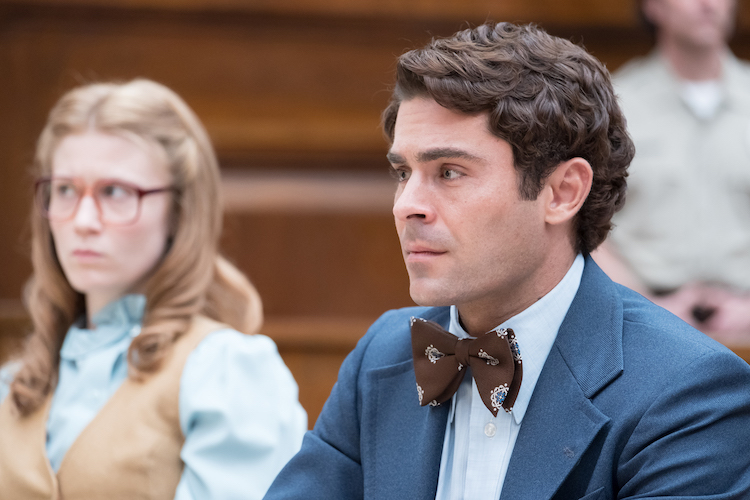


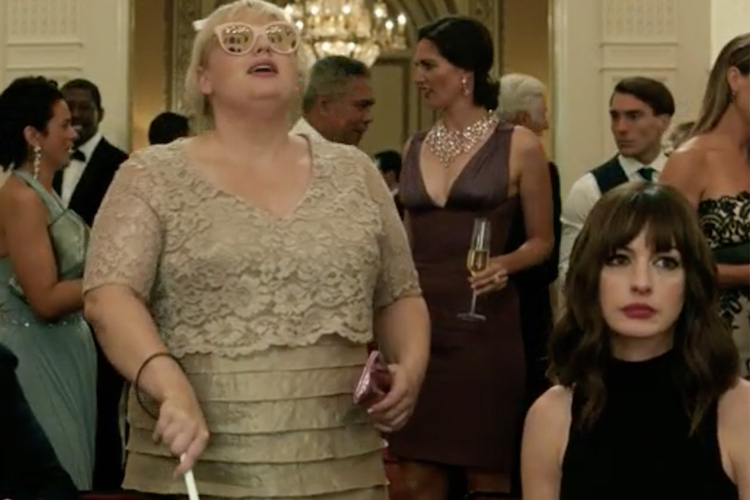
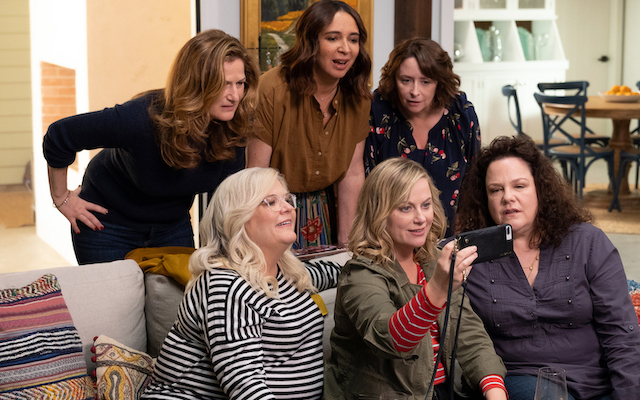


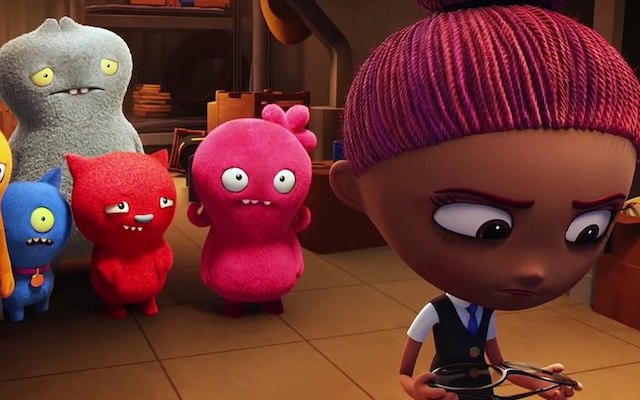
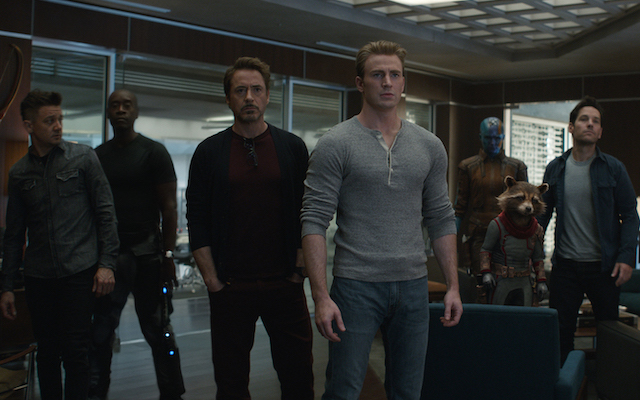
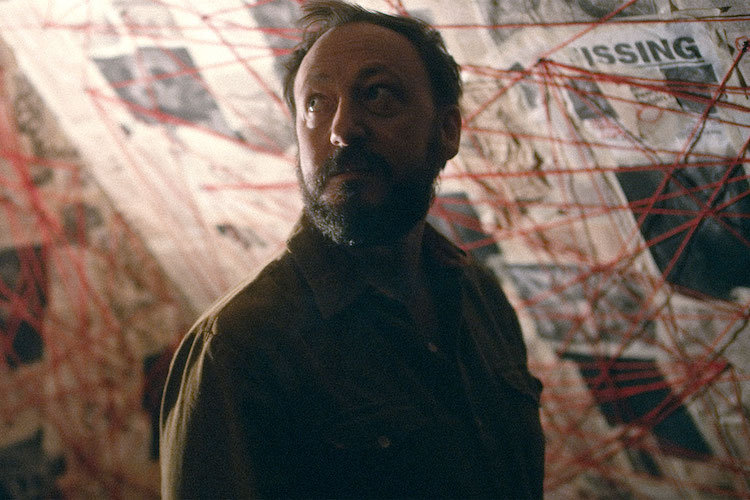
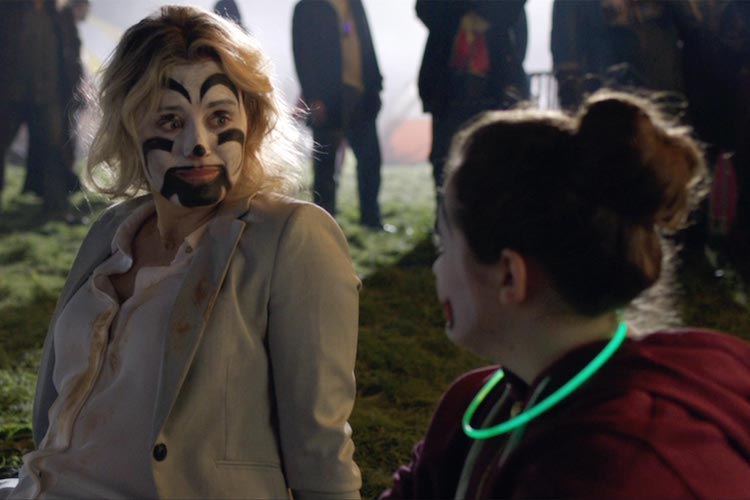
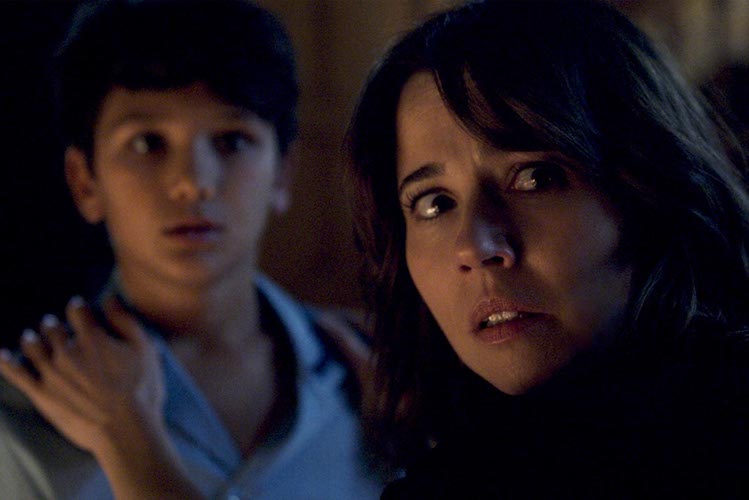
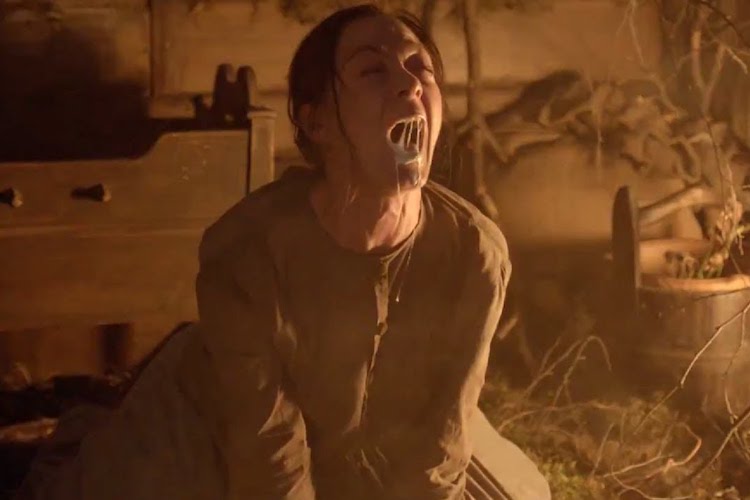

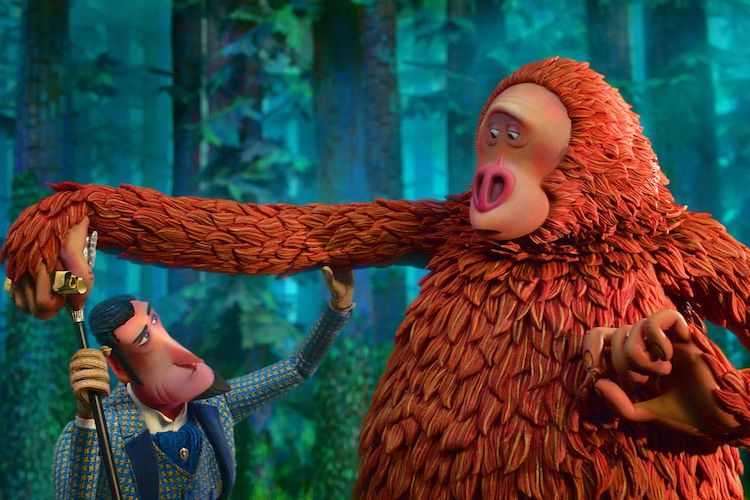
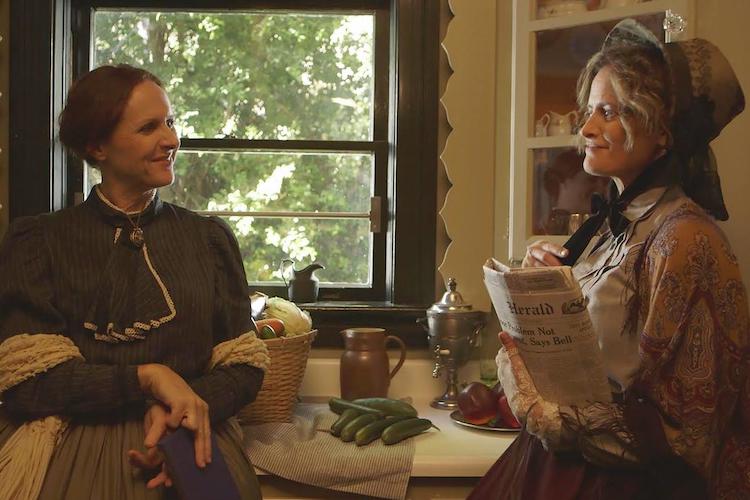

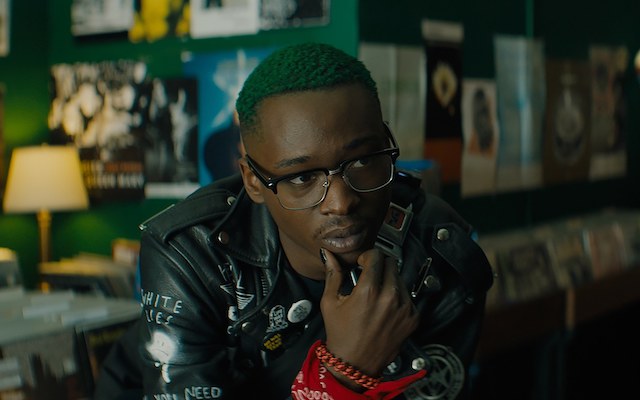
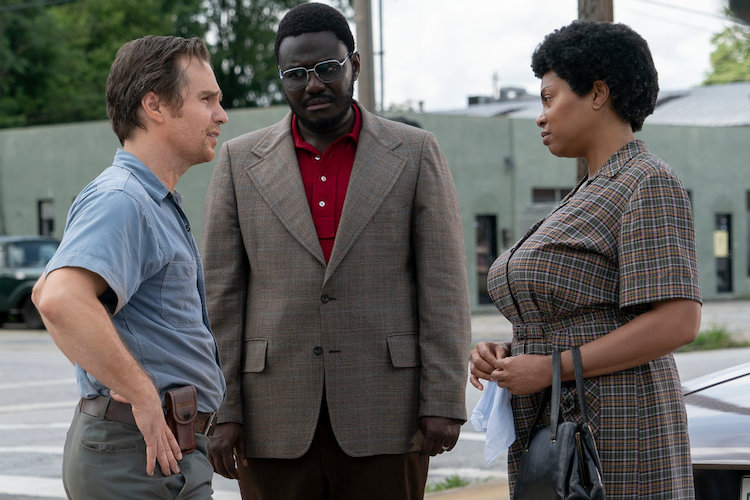
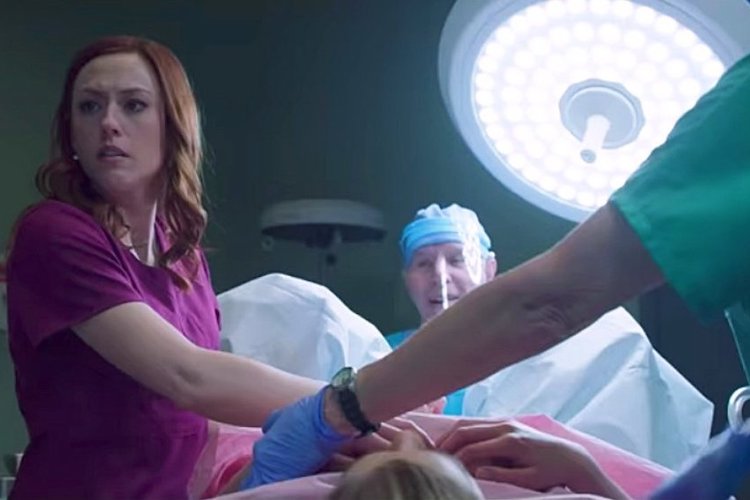
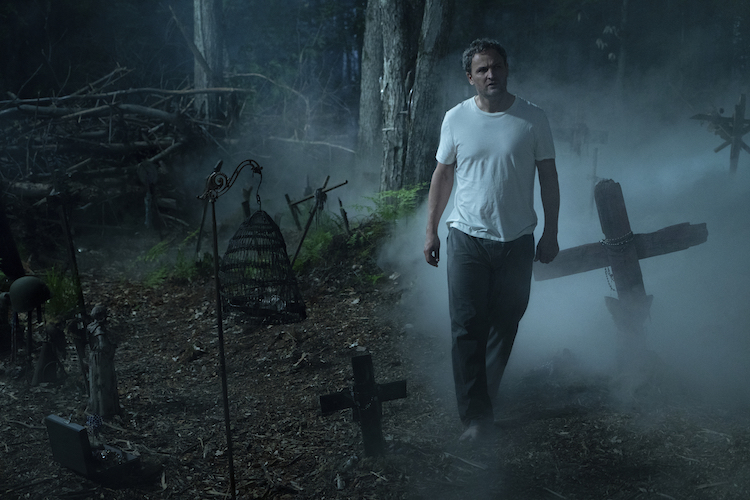
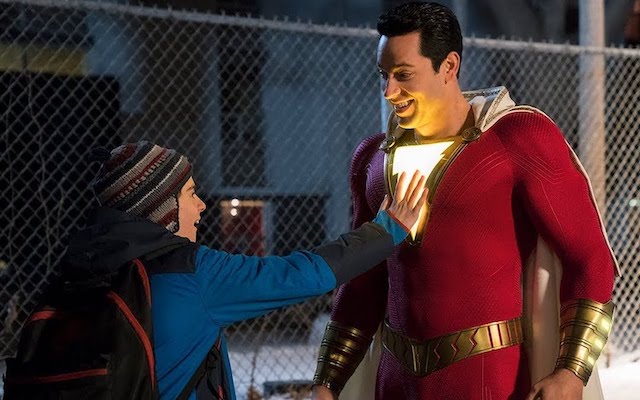



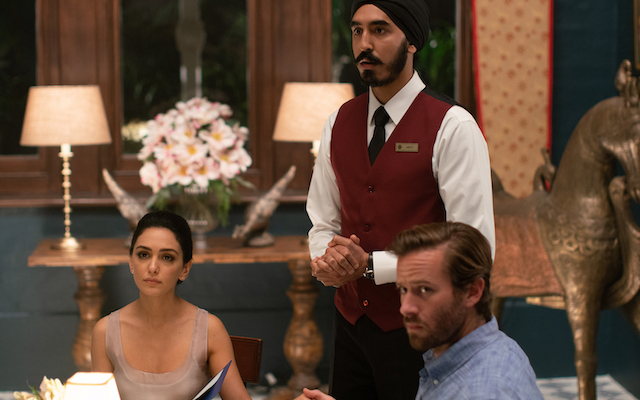
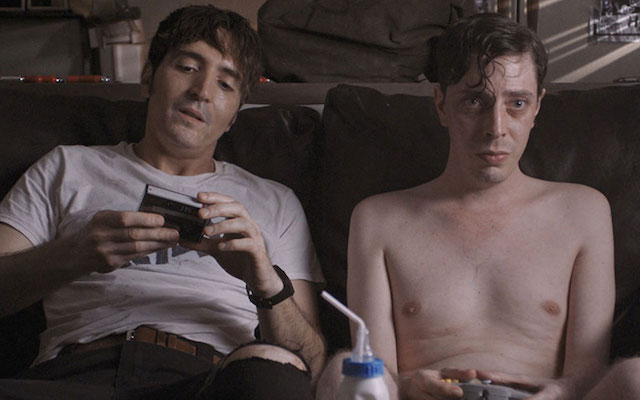
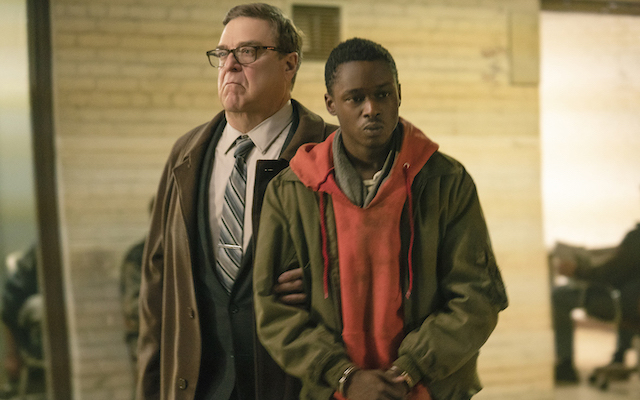


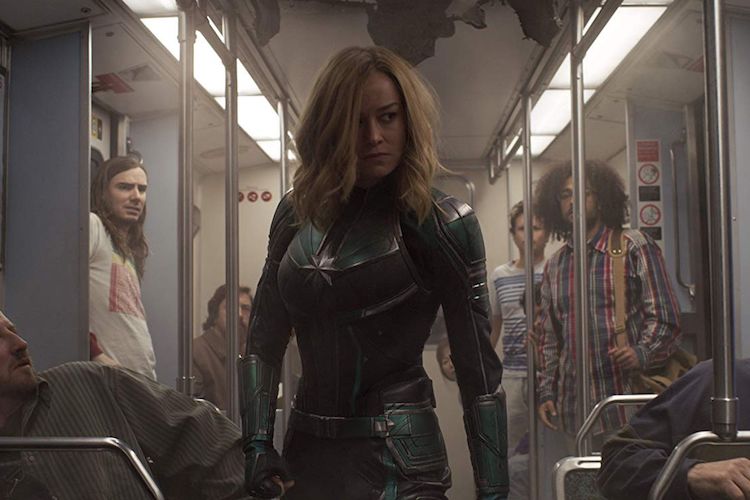


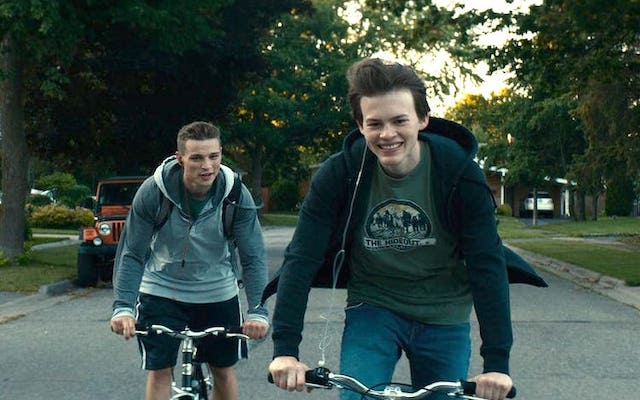




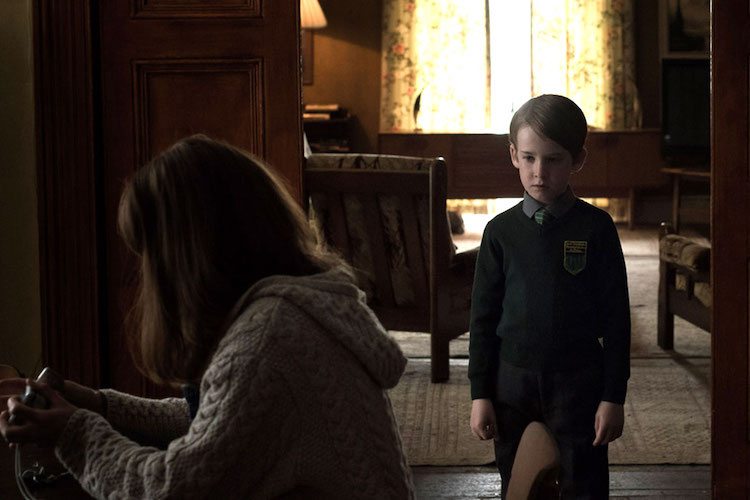

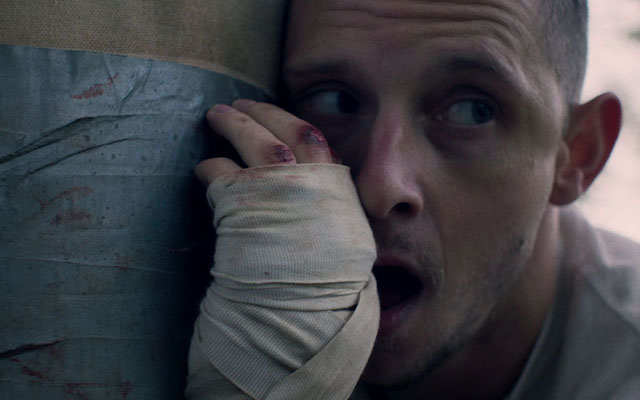
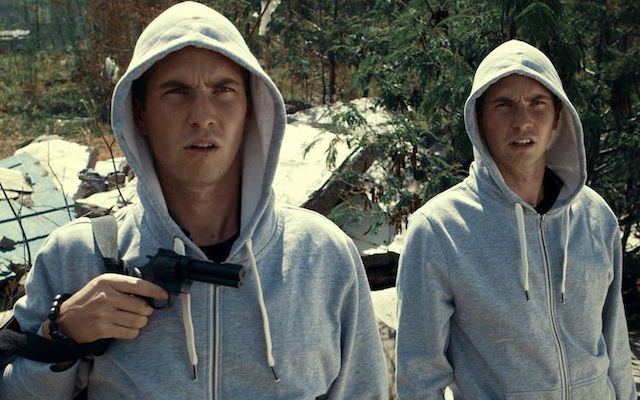


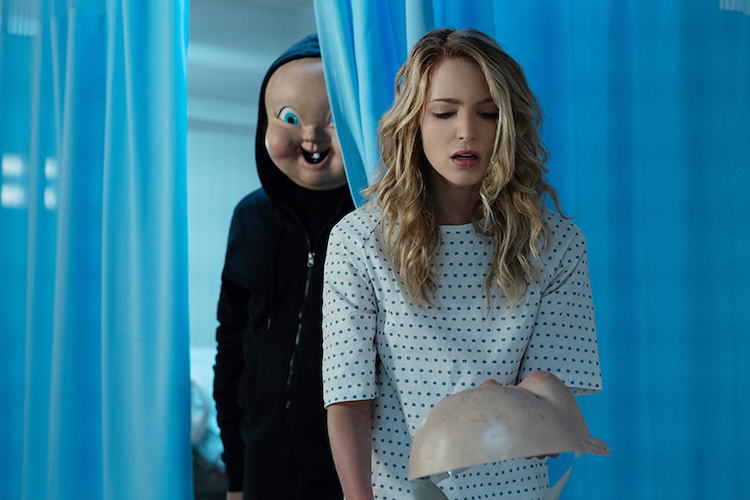
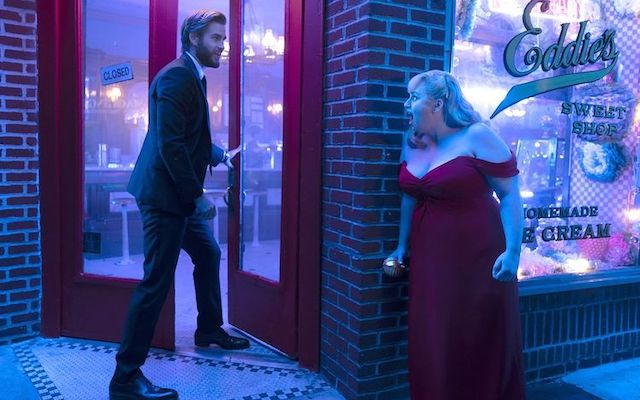

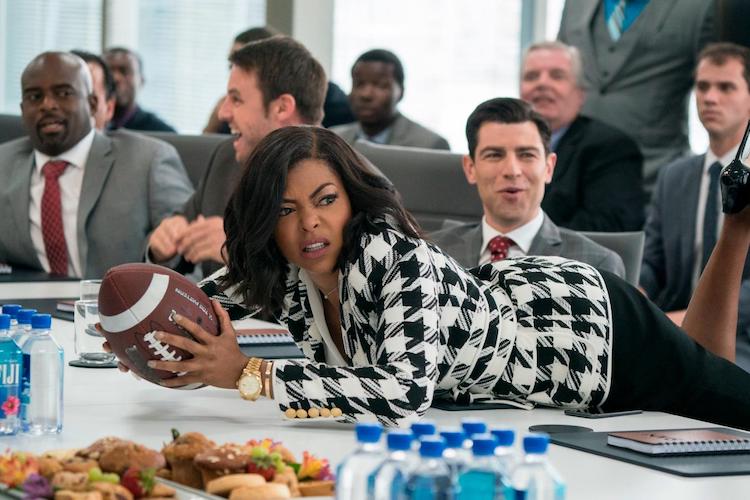
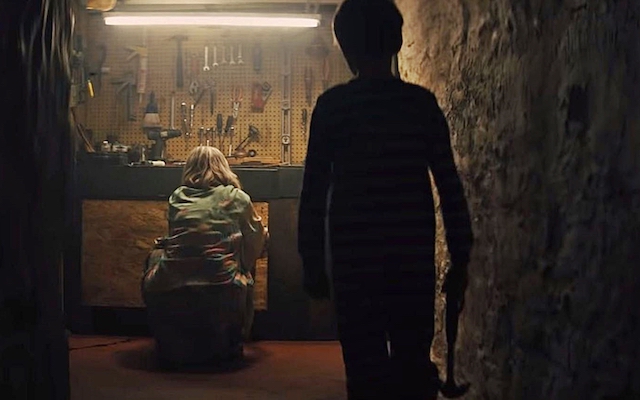

 As has been the case the last few years, most of the opening night movie options didn’t appeal to me and weren’t anything I “had” to see, so I only caught one screening. It was of “Native Son,” a modern adaptation of Richard Wright’s 1940 novel about a young black man hired to work for a wealthy white family. The lead is Ashton Sanders, who played the heartbreaking teenage version of the main character in “Moonlight” and does a terrific job again here. The movie has its flaws (
 First was “Troop Zero,” an utterly delightful comedy with Viola Davis and Allison Janney as opposing leaders of off-brand Girl Scout troops in rural Georgia in 1977. Davis and Janney are in it plenty, but the lead is Christmas Flint (Mckenna Grace), an exuberant misfit who starts her own ragtag troop to compete with Janney’s mean girls. The plot is over-simple (
 Next up was “Dirty God,” which is exactly what you usually see at Sundance. It’s a blunt, bleak, 21st century kitchen-sink drama about a lower-class London girl recovering from an attack that left her with extensive burn scars, now trying to put her life back together and not let the attack destroy her. But her life was crap even before this, so yikes. The plot is thin, and these aren’t the sort of characters you want to just hang out with. Not quite gratuitous misery porn — it’s ultimately more hopeful than that — but adjacent to it.
 Next up was “Share,” another film where something bad happens to a girl. She’s an American high school student this time, and a video goes viral in which she’s passed-out drunk, being manhandled, mocked, and possibly worse by a group of boys. (The “possibly worse” is part of the issue, as the video cuts off and she doesn’t remember the night.) Focused mainly on Mandy’s feelings, the movie isn’t grueling — though she was victimized, she doesn’t fall apart completely, and she has great parents who do all the right things. Currently relevant issues like “boys will be boys” and “should we ruin a young man’s life over this?” are raised and addressed. Rhianne Barreto’s lead performance is well calibrated.
 “The Hole in the Ground” is an Irish horror film in which a mother and her young son move to an isolated house in the country — which, not to blame the victims here, but that never turns out well. Their house is near a forest, at the center of which is the big-ass title character. Presumably related to this, the mom starts to think her son isn’t really her son anymore. Creepiness ensues. The horror is never unbearable or grotesque; the movie’s based more on tension and uncertainty than shocks. The screechy sound design can be overbearing, but apart from that and the fact that it goes on for exactly one (1) scene longer than it should have, I have no complaints. Well, and it’s always such a cold, late trek back to the condo from Main Street at 2 a.m., but that’s not the movie’s fault.
 But remember Shia LaBeouf? Well, he’s back, in semi-autobiographical form. Today’s first movie (at the reasonable hour of noon) was a P&I screening of “Honey Boy,” written by The Beef, in which The Beef plays a fictionalized version of his own father, a former rodeo clown and current irresponsible dirtbag stage dad. The fictional Shia, a child actor named Otis Lort, is played at age 12 by Noah Jupe, who looks vaguely like a young Shia, and at age 22 by Lucas Hedges, who bears less resemblance to Shia and Noah Jupe than any other living white man.
 Next was a nice slice of science fiction called “I Am Mother.” You’ll never guess when it’s set: after the apocalypse! Humanity was wiped out, but in a giant bunker, a robot called Mother (voiced by Rose Byrne) has been programmed to grow some pre-frozen embryos into people and raise them as a real mother would so they can repopulate the world. She has one so far, who’s about 18 and loves her mechanical mom. Things go awry when Hilary Swank shows up at the bunker, very much a living human even though Mother said there were no other people at all, let alone Hilary Swank. What’s up with that?
 What’s up with that? was also the theme of the next movie, but we’ll get to that in a minute. Between films, I met up with adorable film couple
 The Yarrow was where I needed to be for my next film, “The Lodge,” from the same demented Austrians who made
 Turns out “The Lodge” is not the kind of horror film that makes you yelp (save in one or two spots), nor is it the kind, like “The Hole in the Ground” was, that brings out the subsection of horror audiences known as The Ladies Who Say “Oh No” a Lot. ([Person in movie walks down basement steps] SMATTERING OF QUIET FEMALE VOICES FROM AUDIENCE: Oh no…) It’s more the quiet and ominous kind, about two sad kids spending Christmas in a snowy cabin with their new stepmother, who was the only survivor of a suicide cult when she was young, and whom the kids do not like. One morning they wake up and find their stuff missing … but they’re the only three people around for miles. What’s up with that?
 Most movies in the Midnight section are horror-ish, but there are always a few that play at midnight because they’re raucous comedies that aren’t respectable enough for prime time. Tonight’s was “Greener Grass,” an absurdist suburban satire written and directed by Upright Citizens Brigade alumnae Jocelyn DeBoer and Dawn Luebbe and populated with like-minded sketch-and-improv workhorses (including “SNL’s” Beck Bennett). It’s set in a sunny, artificial, candy-colored world with manicured lawns and interchangeable husbands, and the plot (such as it is) concerns one of the housewives giving her baby away to her best friend and then having second thoughts.

 My first screening of the day was a P&I of “Sister Aimee,” which according to onscreen titles is “5 1/2 percent truth.” What is definitely true is that in 1926, a charismatic evangelist, faith-healer, and showwoman named Aimee Semple McPherson disappeared in Los Angeles and reappeared several weeks later at the Mexican border. She claimed to have been kidnapped, but her story didn’t really check out.
 Next was another story about a real-life rogue: Ted Bundy, played by Zac Efron, in a movie called “Extremely Wicked, Shockingly Evil and Vile.” (The title comes from the judge’s comments at Bundy’s sentencing, but it could be the title of so many Sundance movies.) It’s told mostly from the point of view of Bundy’s girlfriend, Liz (Lily Collins), who believed in his innocence for many years, and doesn’t show any of Bundy’s crimes. If you go only by what the movie tells us, Ted could be innocent … except that he’s Ted Bundy, and we know he isn’t.
 The movie was “Little Monsters,” which is about zombies and is not to be confused with another Sundance entry, “We Are Little Zombies,” which is not about zombies. (Helpful hint: Don’t put “Zombies” in the title unless the movie contains literal, non-metaphorical zombies. It sets unreasonable expectations. See also: “Dragon,” “Monster,” “Ninja,” “Devil,” etc.) “Little Monsters” is also not to be confused with “Little Monsters” from 1989. It’s also not to be confused with “Casablanca.” I mean, there are a lot of movies it’s not to be confused with.
 My first movie today was a P&I screening of “Relive,” starring David Oyelowo as an LAPD detective who is surprised to get a phone call from his recently murdered niece, calling from three days before she died. (Is this a Verizon thing?? I’m on Sprint.) Uncle Jack takes advantage of the time warp to try to prevent and/or solve the murders (her parents were killed too), but not before spending what feels like several minutes staring agape at his phone and not saying anything while his niece says, “Hello? Hello?” It’s a perfectly good premise, but the film turns into a formulaic police procedural with the most obvious, easily guessed resolution.
 The movie was “Them That Follow,” a drama set among snake-handling Christian cultist hillbillies, focused on the pastor’s daughter (Alice Englert), who’s betrothed to a dull, potato-faced fellow Serpentarian (Lewis Pullman) but is in love with a non-believer (Thomas Mann). Walton Goggins plays the pastor, with Olivia Colman and Jim Gaffigan as the non-believer’s super-believing parents. Which is great, because I’d been wondering when Olivia Colman and Jim Gaffigan would finally make a movie together.
 Then it was back to Holiday Village for a P&I of “Before You Know It,” which sounds like the title of a Nancy Meyers movie along the lines of “Something’s Gotta Give” or “It’s Complicated.” And it pretty much is one of those movies: white New Yorkers who claim to have money problems but seem to be getting along just fine encounter an amusing disruption to the status quo. In this case, two sisters Rachel (Hannah Pearl Utt, also the director and co-writer) and Jackie (Jen Tullock, the other writer) learn that the mother they thought was dead is alive and Judith Light and starring on a soap opera.
 From there we headed next door to the Ray Theatre, a new venue as of last year, where the “surprise screening” was to be held. The surprise was announced a few weeks ago as being “Fighting with My Family,” Stephen Merchant’s true story of a wrestling-obsessed English family whose children audition for the WWE; the tickets actually said “Surprise Screening – Fighting with My Family,” because words don’t have meanings anymore.
 You know who was there, though? Sundance alumnus and hat critic Zach Braff! He’s not in the movie, but he was there with the movie (or sitting in the seats reserved for people with the movie). There was an incident almost five years ago where he thought my dislike of his “Wish I Was Here” meant I hated HIM, so he got on Twitter and made fun of my stupid hat, then deleted the tweet and blocked me when everybody started clowning on him for being a baby. I’m still blocked. Bayer said I should go get a selfie with him without revealing our shared history, then tweet the picture and make fun of him. I couldn’t see a downside to this, but I also didn’t want to be one of those people who ask celebrities for selfies at movie screenings.
 The movie’s fine. Having Stephen Merchant write the dialogue for it helps considerably, as it’s otherwise a routine sports underdog story. The stakes don’t even feel very high. The main character, Raya, says, “I’ve dreamt of this since I was 13,” but she’s only 18 now. Five whole years, huh? But it’s got some solid laughs, some insight into how professional wrestling works, likable characters, everybody goes home happy.
 “Sweetheart” is a treat. Kiersey Clemons (“Hearts Beat Loud”) washes up alone on an uncharted desert isle that is home not to Gilligan and the Skipper but to a monster — a literal, not metaphorical monster! The shot in which the creature is first glimpsed is an all-time great reveal, and director J.D. Dillard finds the balance between showing the creature too much and not showing it enough. I’d have liked a more exciting climax, but that’s my only complaint about this taut, no-fat thriller.
 The last screening before the party was a movie about partying: “Animals” (not to be confused with “Corporate Animals,” also playing here), in which one of two party girls meets a guy and starts to settle down and grow up, which makes the other party girl feel jealous and abandoned. The settling-down girl is played by Holliday Grainger, with whom I was unfamiliar; the other one is Alia Shawkat, from “Arrested Development,” whose persona is perfect for this kind of hedonistic, heavy-drinking role.
 – We did the thing where we put
 Today began a little slowly for many of us, having been up late with the party. Jeff and I groggily recorded a
 Next was a P&I screening of “The Farewell,” one of the most universally beloved films of the fest. We’re at the point in the week when many of the P&I people have gone home, so the screening was sparsely populated and filled mostly with festival volunteers and publicists (who only get to see movies once everyone else who wants to see them is seated). Like