Home Blog Page 11

August: Osage County

0

The Westons of Osage County, Okla., where it is currently August, are the kind of family that movies have always thrived on: people you’d never, ever want to have any connection to in real life, but whose vicious squabbles are entertaining to watch from a safe distance. Furthermore, “August: Osage County” (both as a Pulitzer-winning play and now as a movie) is the sort of drama that actors love: a thick, dialogue-oriented piece of fiction that gives multiple performers many opportunities to ham it up. Jam-packed with snarking, lying, brawling, crying, drinking, and smoking, it lends itself easily to big, capital-A Acting, both comic and tragic.

The movie version, directed by John Wells (“The Company Men”) and adapted by the playwright, Tracy Letts (“Killer Joe”), gathers a terrific ensemble of actors. Every member of the troupe seems delighted to be in the production: Meryl Streep as Violet, the boisterous, pill-popping, cancer-stricken, daughter-tormenting matriarch; Sam Shepard as Beverly, her heavy-drinking novelist husband; Julia Roberts, Julianne Nicholson, and Juliette Lewis as their offspring; Margo Martindale and Chris Cooper as Violet’s sister and brother-in-law; Ewan McGregor and Dermot Mulroney as sons-in-law; Abigail Breslin as a teenage granddaughter; Benedict Cumberbatch as a nephew. If you put this cast on Broadway, you’d sell out a year in advance.

But on Broadway, you’d have more time to develop the characters, which means more opportunity to give the audience some real emotional connection to them. The play is 3 1/2 hours long; the movie chops out 40 percent of it to bring it down to an even two hours. The behind-the-scenes reasons for this are obvious and perhaps inescapable — moviegoers avoid 210-minute domestic dramas, even funny ones that star Meryl Streep and Julia Roberts — but the result is a film whose effects are fleeting where they should be memorable, lightweight instead of resonant.

It is a fun way to spend a couple hours, though. (Fun for us, I mean. It’s miserable for them.) The occasion is the disappearance of Beverly Weston, who has occasionally run off before but never for this long. The dutiful middle daughter, Ivy (Nicholson), still lives in town, while the others have fled: headstrong Barbara (Roberts) and her husband Bill (McGregor) to Colorado; trashy Karen (Lewis) to Florida, where she’s bagged a showy, Corvette-driving clown of a fiance, Steve (Mulroney). They all come home when Dad goes missing, to help Violet cope and to sort through whatever aftermath there may be. Aunt Mattie Fae and Uncle Charlie (Martindale and Cooper) are on hand, too, joined by their son, Little Charles (Cumberbatch), who’s a disappointment to Mattie Fae and must constantly be defended by Charlie.

We learn plenty about everyone’s relationship with everyone else. There’s no need to summarize it all here; suffice it to say that there is no shortage of disagreeable feelings and terrible secrets mixed in with the genuine familial affection that sometimes manifests itself. And it all goes back to Violet — Violet, that brash, opinionated, sometimes cruel wife and mother whose being stricken with mouth cancer seems like an appropriate punishment for her tart tongue. Streep fairly explodes with Acting, chewing the scenery like a hungry beaver as Violet pokes, cajoles, and manipulates her relatives. What makes it fun is that no one puts up with it for very long. This is a whole family of pot-stirrers and openers of old wounds.

As Violet’s faculties wane and she proves unsuited for making decisions, eldest daughter Barbara steps up as the new taskmaster. One of the major thematic threads of the play is Barbara’s concern that she will turn into her mother. The movie waters that down a bit, just as it does with nearly everything else (Barbara and Bill’s tumultuous marriage, Ivy’s spinsterhood, etc.). As a whole, the film gets by on its cast of fine actors doing charismatic work, and that’s enough to recommend it. But it’s a shame Wells couldn’t capture the extremes of the play — the hilarious highs as well as the devastating lows. What we have instead is rather glossy, like a sitcom version of a Eugene O’Neill play.

The wide releases of 2013: a handy list

0

Would you like to take a trip down memory lane but only with regards to movies and only going back as far as January 1? Then here is a handy list! It’s all 144 films that 1) played in wide release (at least 600 screens) and 2) opened in the United States in 2013. Movies that started smaller and eventually expanded to 600 screens are included as long as their initial U.S. release was in 2013.

I saw 107 of the 144. The ones I missed are marked with an asterisk. Links are to my reviews. Sometimes I saw a movie but didn’t review it with my writing, but did review it with my voice on the Movie B.S. with Bayer and Snider podcast. In those cases, links are to the appropriate episode. Sometimes I saw a movie and didn’t do any kind of review, written or spoken, in which case there’s no link. Dates are when the films opened, not necessarily when they went wide.

How many did you see???? Go outside and say the number really loud.

1/4 Texas Chainsaw 3D
1/11 Gangster Squad
*1/11 A Haunted House
*1/18 The Last Stand
1/18 Mama
*1/18 Broken City
1/25 Parker
1/25 Movie 43
*1/25 Hansel and Gretel: Witch Hunters

2/1 Warm Bodies
*2/1 Bullet to the Head
2/8 Identity Thief
2/8 Side Effects
2/14 A Good Day to Die Hard
2/14 Safe Haven
2/14 Beautiful Creatures
*2/15 Escape from Planet Earth
2/22 Snitch
*2/22 Dark Skies

3/1 Jack the Giant Slayer
3/1 21 & Over
*3/1 The Last Exorcism Part II
*3/1 Phantom
3/8 Oz the Great and Powerful
*3/8 Dead Man Down
*3/15 The Incredible Burt Wonderstone
*3/15 The Call
3/15 Spring Breakers
3/22 The Croods
3/22 Admission
3/22 Olympus Has Fallen
3/28 G.I. Joe: Retaliation
3/29 The Place Beyond the Pines
3/29 The Croods
*3/29 Temptation: Confessions of a Marriage Counselor
*3/29 The Host

4/5 Evil Dead
*4/5 The Company You Keep
4/12 Scary Movie 5
4/12 42
4/19 Oblivion
4/26 Pain & Gain
*4/26 The Big Wedding
4/26 Mud

5/3 Iron Man 3
5/10 The Great Gatsby
*5/10 Peeples
5/16 Star Trek Into Darkness
5/23 The Hangover Part III
5/24 Fast & Furious 6
*5/24 Epic
5/31 After Earth
5/31 Now You See Me

6/7 The Purge
*6/7 The Internship
6/12 This Is the End
6/14 Man of Steel
6/14 Before Midnight
6/14 The Bling Ring
6/21 World War Z
6/21 Monsters University
6/28 White House Down
6/28 The Heat

7/3 Despicable Me 2
7/3 The Lone Ranger
*7/3 Kevin Hart: Let Me Explain
7/5 The Way Way Back
7/12 Pacific Rim
7/12 Grown Ups 2
7/12 Fruitvale Station
*7/17 Turbo
7/19 R.I.P.D.
7/19 RED 2
7/19 The Conjuring
7/26 The Wolverine
7/26 The To-Do List
7/26 Blue Jasmine
*7/31 The Smurfs 2

8/2 2 Guns
8/2 The Spectacular Now
8/7 We’re the Millers
8/7 Percy Jackson: Sea of Monsters
8/9 Elysium
*8/9 Planes
8/16 Kick-Ass 2
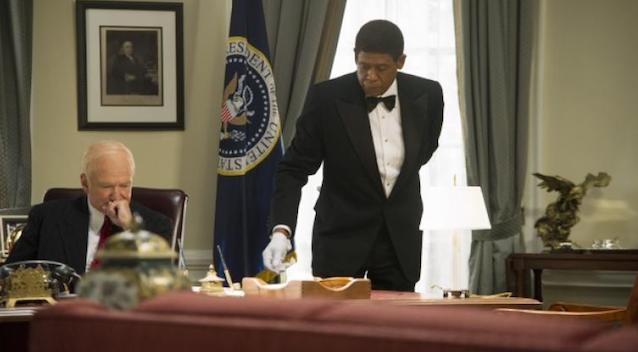
8/16 The Butler
8/16 Paranoia
*8/16 Jobs
8/21 The Mortal Instruments: City of Bones
8/23 You’re Next
8/23 The World’s End
*8/23 The Grandmaster
8/28 Closed Circuit
*8/30 One Direction: This Is Us
8/30 Getaway
*8/30 Instructions Not Included

9/6 Riddick
*9/13 The Family
9/13 Insidious Chapter 2
9/18 Enough Said
9/20 Prisoners
*9/20 Battle of the Year
*9/20 Rush
*9/27 Cloudy with a Chance of Meatballs 2
9/27 Don Jon
*9/27 Baggage Claim

10/4 Gravity
10/4 Runner Runner
10/11 Captain Phillips
*10/11 Machete Kills
10/18 Carrie
10/18 Escape Plan
10/18 The Fifth Estate
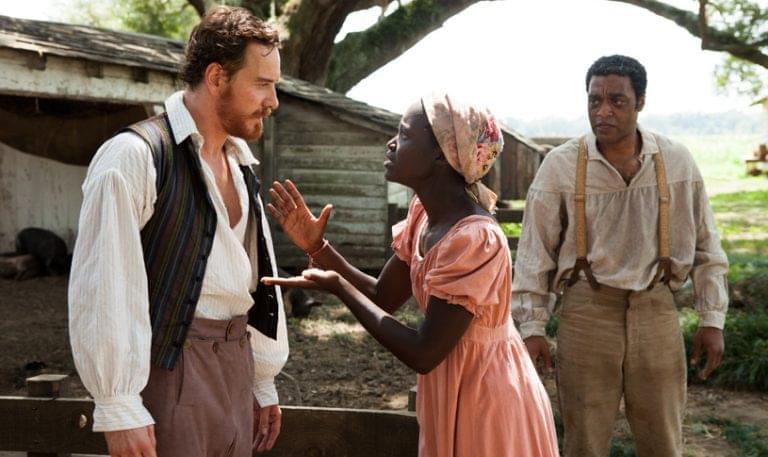
10/18 12 Years a Slave
*10/25 Bad Grandpa
10/25 The Counselor

11/1 Free Birds
11/1 Ender’s Game
11/1 Last Vegas
11/1 About Time
11/1 Dallas Buyers Club
11/8 Thor: The Dark World
11/8 The Book Thief
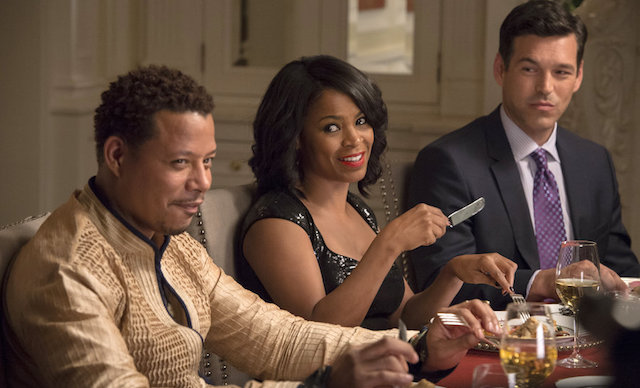
11/15 The Best Man Holiday
11/22 The Hunger Games: Catching Fire
11/22 Frozen
11/22 Delivery Man
11/22 Philomena
11/27 Homefront
11/27 Black Nativity
11/27 Oldboy
11/29 Mandela: Long Walk to Freedom

12/4 Out of the Furnace
12/13 The Hobbit: The Desolation of Smaug
*12/13 Tyler Perry’s A Madea Christmas
12/13 American Hustle
12/13 Saving Mr. Banks
12/18 Anchorman 2: The Legend Continues
*12/20 Walking with Dinosaurs
12/25 The Secret Life of Walter Mitty
12/25 Grudge Match
12/25 47 Ronin
12/25 The Wolf of Wall Street
*12/25 Justin Bieber: Believe

47 Ronin

0

[CAPSULE] Based on a real Japanese legend stemming from actual events, “47 Ronin” is about a white samurai who helps his cohorts get revenge against a shape-shifting witch. (One suspects the story has been embellished.) I don’t know enough about the tale to say whether it’s offensive to insert Keanu Reeves as the star (probably yes?), but I know enough about movies to say that this banal, generic samurai epic is flatly uninteresting, tedious, and overlong.

Reeves’ character, Kai, an outcast “half-breed” of unknown origin, has an extraneous, unconvincing love interest in Ko Shibasaki, who pines for him and the others as they seek justice for a rival province’s witch-based treachery. As the sorceress, Rinko Kikuchi almost hams it up enough to be entertaining. But with no engaging characters, plot surprises, or stand-out battle scenes, you have to wonder who this was even made for. (Bonus: Kai’s non-Japaneseness has no effect on the story and is only included so that the movie could have an American lead actor.)

The Secret Life of Walter Mitty

0

In “The Secret Life of Walter Mitty,” the title character — a timid Life magazine photo archivist played by Ben Stiller (who also directed) — has to wake up from his daydreams and live life to its fullest. And you know what helps him do this? The fact that his real life turns out to be almost as exciting and improbable as his fantasies. A victorious bar-fight with a drunken brute, an unprotected dive into treacherous ocean waters, a magnificent hike through the mountains of Afghanistan, and a spur-of-the-moment trip to Greenland and Iceland (not to mention the disposable income to afford it) are just a few of the unrealistic “real life” things that happen when Walter (who’s never traveled, fought, or hiked before) breaks out of his shell and grabs life by the nipples.

Based on James Thurber’s 1939 short story in the sense that it has the same title, and written by Steve Conrad (“The Pursuit of Happyness”), Stiller’s film is a curiously antiseptic dud. It’s obviously meant to be inspiring, but it’s airless and flat, like it was made by aliens who don’t understand how human emotions work, only that they are desirable and can be produced by some combination of panoramic images and stirring music.

Here is the protagonist making inroads with his secret crush, who is played by Kristen Wiig, whom you have enjoyed in other films! This makes you “happy,” yes? And here he is learning that if you’ll take some risks, life will reward you with impossible magic! This brings you to “tears,” right? Are we saying that right? “Tears”? What about this Arcade Fire song? These are good things, no?

I’d be more forgiving of the movie’s cluelessness if the story weren’t 100% stupid and crammed with shameless product placement for Papa John’s and eHarmony (for starters). A flaky but brilliant photographer named Sean O’Connell (Sean Penn) sends Life a roll of film containing what he believes will be the perfect image for the magazine’s final cover — only the picture isn’t there. Rather than tell report this to his boss (Adam Scott, miserably playing a villain) or try more diligently to contact the phone-less and email-less O’Connell, Walter simply hops on a plane bound for the last place O’Connell is known to have been, which happens to be Greenland. He does this at the prompting of his co-worker, Cheryl (Wiig), who thinks it’s not only a great idea but the only real option. Along the way, he talks on the phone a lot with an eHarmony employee (played by Patton Oswalt), who also inspires him. More faux-motivational nonsense ensues, each unlikely plot point giving way to the next until it finally ends and you leave the theater either weeping or wondering what, exactly, was supposed to have made you weep.

Grudge Match

0

“Grudge Match” is based on the premise that Sylvester Stallone and Robert De Niro played boxers in famous movies a long time ago, and wouldn’t it be funny if they played boxers again now that they are old? I readily accept the first part of that premise — “Rocky” and “Raging Bull” are indeed movies that exist — and the second part is not unworkable. Stallone’s current strategy is to make films that emphasize his advancing age, and De Niro’s shtick is to make lowbrow comedy versions of his iconic roles from the past. So, sure, “Grudge Match,” why not?

Disappointingly, the finished product is sloppy Hollywood dreck filled with obvious old-age gags and jokes that are surprisingly raunchy for a movie that also wants to be heartwarming and family-centered. It feels like a braying network sitcom, complete with supporting cast made up of stock characters, including Precocious Child, Old Man with No Verbal Filter, and Fast-Talking Black Guy.

The boxers, Henry “Razor” Sharp (Stallone) and Billy “The Kid” McDonnen (De Niro), were bitter rivals, personally and professionally, in the early ’80s. They fought twice with one victory apiece and had scheduled a tie-breaking bout when Razor suddenly retired from boxing. Now, on the 30th anniversary of the grudge match that never was, an up-and-coming fight promoter named Dante Slate Jr. (Kevin Hart) persuades the two enemies — who can’t stand to be in the same room together — to come out of retirement and settle the old score.

This leads naturally to an abundance of lowest-common-denominator verbal sparring, mostly based on McDonnen being out of shape and Razor being a penny-pinching fuddy-duddy. The formulaic “grumpy old men” material wears thin quickly, so to make sure we’re awake, the jokes occasionally veer into more distasteful territory, as when a public brawl lands Razor and McDonnen in jail and Razor says to the other inmates in the holding cell, “Will one of you fellas hurry up and rape this guy?” (No one does.)

The film, directed by Peter Segal (“Tommy Boy,” “My Fellow Americans,” “Anger Management”), is weighed down further by a bevy of sentimental subplots — as it turns out, we’re actually supposed to care about Razor, who’s uninteresting, and McDonnen, who’s a jerk. Razor reconnects with his old love, Sally (Kim Basinger), and with his old trainer, Louis “Lightning” Conlon (Alan Arkin), now a crabby crank in a nursing home who accuses his male nurse of molesting him while giving him a sponge bath. (“I’m just doing my job.” “Yeah, that’s what my Scoutmaster said!”)

Meanwhile, McDonnen gets to know his grown son, B.J. (Jon Bernthal), who has only just now learned who his father is and who has a little boy of his own, Trey (Camden Gray). There is a delightful and wholesome scene where McDonnen jokes about what “B.J.” could stand for (snicker BLOW JOB snicker), then tells young Trey that it means “butterscotch jellybeans,” prompting Trey to say, “I want B.J.’s for my birthday!” Har!

I repeat: HAR!

It’s not the jokes’ tastelessness that hurts the film, it’s that they don’t fit with the movie’s innocuous, middle-of-the-road tone. Not helping: the jokes aren’t funny, either. Stallone and De Niro are both still capable of giving sharp performances when they want to, and this would have been a fine opportunity to prove it while indulging in a bit of nostalgia at the same time. But the weak humor, thin characters, and tired scenarios make this a grueling bout to watch. You’ll want to “throw in the towel,” and other boxing expressions.

Movie B.S. with Bayer and Snider #190: ‘Anchorman 2, ‘American Hustle,’ more

0

[Prepare for Christmas with a festive episode of Movie B.S., the world’s only podcast!]

Episode 190: ‘Anchorman 2,’ ‘American Hustle,’ ‘Inside Llewyn Davis,’ ‘Saving Mr. Banks’

0:00-2:00 – Introduction
2:00-21:30 – “Anchorman 2: The Legend Continues” review
21:30-29:25 – “American Hustle” review
29:25-39:50 – “Inside Llewyn Davis” review
39:50-41:10 – Brief tangent about “American Horror Story” and “Homeland” (no spoilers)
41:10-51:15 – “Saving Mr. Banks” review
51:15-1:03:30 – QOTW (favorite holiday season movie-going memories)
1:03:30-1:06:00 – Bayer makes a shocking announcement
1:06:00-1:08:45 – QOTW for next couple weeks: your favorite movie, male performance, and female performance of 2013
1:08:45-1:11:50 – Wrap-up and goodbyes

QOTW: What is your favorite movie, male performance, and female performance of 2013?

Download audio / Listen at MovieBS.com / Listen at iTunes

Anchorman 2: The Legend Continues

0

I bow to no one in my fondness for “Anchorman: The Legend of Ron Burgundy.” None of this “it was only so-so at first but got funnier on re-watch” business, either. That’s bush league. I loved it immediately and forever, its scattershot story and slapdash editing easily outweighed by its loopy comic brilliance. Who cares how cobbled-together something is if you’re laughing?

That question is relevant again with the sequel, “Anchorman 2: The Legend Continues,” which is often hilarious but also has many stretches of dead air. Once again written by Will Ferrell and Adam McKay, directed by McKay, heavily improvised by the cast, and edited into a two-hour movie from several hours’ worth of material, the follow-up is even messier than its predecessor was — only this time, it’s not as thoroughly redeemed by quotable dialogue and high-spirited insanity.

Set as the ’70s are giving way to the ’80s, “Anchorman 2” finds married newscasters Ron Burgundy (Ferrell) and Veronica Corningstone (Christina Applegate) being split up by professional differences that boil down to Ron being an arrogant baby. When a Rupert Murdoch-like Australian tycoon launches a 24-hour news channel, Ron is given a chance to stage another comeback and reunite with his old team: sportscaster Champ Kind (David Koechner), gonzo reporter Brian Fantana (Paul Rudd), and idiotic weatherman Brick Tamland (Steve Carell).

McKay and company recreate or allude to several key moments from the first film (Brian has a collection of condoms to rival his colognes, for example), but they’re shrewd enough not to overdo it. Many of the new ideas are delightfully bizarre, and I admire everyone’s willingness to try unorthodox, potentially offensive comedy scenarios. (They try real satire this time, too, mocking the rise of “give ’em what they want” TV “journalism.”) Sometimes it pays off –there’s a shark; I’ll say no more than that — and sometimes it doesn’t (there’s a dead-end tangent about Ron losing his sight). Ron’s racial awkwardness with his black boss, Linda Jackson (Meagan Good), is so cringeworthy I can’t decide whether it’s hysterical or just excruciating.

But when the movie works, it works as well as the first one did, with well-used cameos and perfectly inane non sequiturs. The last half-hour, especially, is off-the-rails anarchic, as all of the film’s remaining energy comes bursting forth in a dozen different ways. (You thought things escalated quickly last time!) The Burgundy team obviously had a lot of fun creating this messy, rambling sequel — they threw everything at the wall to see what would stick. They ought to have been more selective in the editing process, but still, great story, compelling and rich.

The Past (French)

0

“The Past” is about the past (no surprise there), and how decisions made then can dramatically affect the present and future. But it’s also about communication — verbal and non-verbal, the things we say and don’t say, the misunderstandings that can arise. The first scene has a soon-to-be-divorced couple separated by glass at an airport, unable to hear each other, but able to communicate what needs to be said in that moment. Later, they’ll be speaking face-to-face and miss each other’s point. So it goes.

This is Iranian writer-director Asghar Farhadi’s followup to his Oscar-winning drama “A Separation,” which also dealt with marital difficulties in an intelligent, grown-up fashion. (“The Past” was Iran’s submission for this year’s Academy Awards, yet somehow failed to make even the shortlist of potential nominees.) The setting is France this time, where mother-of-two Marie (Berenice Bejo) is waiting for her husband, Ahmad (Ali Mosaffa), to sign the papers and finalize their divorce. Ahmad, an Iranian who has been living in his homeland since separating from Marie, has returned to France for this purpose after dragging his feet for some time.

The domestic situation is complicated. Marie’s children, 16-year-old Lucie (Pauline Burlet) and much younger Lea (Jeanne Jestin), are the products of pre-Ahmad relationships, and they don’t call Ahmad “dad.” Marie is now engaged to a new man, Samir (Tahar Rahim), who has a young stepson of his own named Fouad (Elyes Aguis). Fouad’s mother is out of the picture for reasons that complicate things even further.

Marie didn’t book a hotel for Ahmad while he’s in town, ostensibly because he has canceled before and she wasn’t sure he’d show up. But the deeper reason, as other family members suss out, is so that Ahmad would be forced to stay with her and the kids and see how well they’re doing without him. There’s awkward tension as Ahmad tries to be easygoing, to be fatherly to the kids without overstepping his bounds, and to be gracious to his wife’s new partner. He’s also put in the difficult position of witnessing a great deal of animosity from Lucie toward her mother.

Farhadi is an elegant storyteller. He reveals information about the characters and what has already happened to them little by little, drawing us into their lives much more completely than we would be if he had just dumped all the pertinent information on us in the exposition. We find ourselves playing detective, keeping track of the details we learn so we can assemble the whole picture, the way you might do if you were a non-relative eavesdropping at a family reunion.

Not only is the story more interesting when it’s told this way, it helps Farhadi avoid moralizing. By the time we fully comprehend what So-and-So’s motives were for doing such-and-such, we’ve come to understand So-and-So well enough not to be too judgmental. Indeed, there’s some questionable behavior in everyone’s past, the reverberations of which are still being felt. Marie’s series of long-term but ultimately failed relationships have taken their toll on the kids, who have reacted to the instability in ways that will have yet more consequences, and so on.

To spell out every detail of the story would be a disservice to it. On paper, the plot is melodramatic and soapy. In Farhadi’s hands — and aided by these sensitive, reined-in performances — it feels sensible and restrained, full of drama but not with histrionics. It’s a cautionary tale about the heartbreaking effects of poor communication, and a reminder that the past will always be with us.

2013 Film Titles: A Dramatic Reading

0
2013 Film Titles: A Dramatic Reading

And now, two playlets in which the dialogue is composed entirely of 2013 movie titles (U.S. theatrical releases).

Playlet 1

An atheist who believes global climate change will soon kill Mother Earth has a conversation with a Christian who believes global warming is a hoax and the Earth is fine.

ATHEIST: This is the end. The heat, it’s a disaster! After Earth catching fire, oblivion! No one lives.
CHRISTIAN: Epic paranoia. Let the fire burn. The world’s end? No, maniac.
ATHEIST: All is lost!
CHRISTIAN: Much ado about nothing, old boy. Reality: Nebraska frozen. Enough said.
ATHEIST: The east Europa report — Mud! Olympus has fallen! Pacific rim aftershock! Warm bodies!
CHRISTIAN: (gazing heavenward) Ain’t them bodies saints? God loves Uganda. Love is all you need in a world.
ATHEIST: (scoffing) Stories we tell fill the void. Escape from tomorrow at any price, if I were you.
CHRISTIAN: (mocking him) Escape from planet Earth? Getaway out of the furnace, turbo planes reaching for the moon? I’m so excited!
ATHEIST: (under his breath) Dealin’ with idiots as I lay dying…
CHRISTIAN: The act of killing her? “Mama” — the host, the great beauty? Wrong. All is bright! Safe haven, beautiful creatures, the canyons, free birds out of the clear blue sky… Hunky dory!
ATHEIST: Thanks for sharing an oversimplification of her beauty. A dark truth: you ain’t seen nothin’ yet. Dark skies, killing season. The end of time. The last stand!
CHRISTIAN: (shaking his head sadly) Caught in the web. Free the mind, Crystal Fairy!

(Unable to agree, they change the subject.)

CHRISTIAN: Somebody up there likes me. I’m in love with a church girl!
ATHEIST: From up on poppy hill?
CHRISTIAN: Beyond the hills. The place beyond the pines.
ATHEIST: Fruitvale Station? Red flag. Broken city.
CHRISTIAN: (aghast) The big wedding … we’re the Millers!
ATHEIST: I give it a year.

(Exeunt.)

* * *

Playlet 2

A 6’4″ felon is visited in prison by his attorney. They meet in an interview room overlooking the prison yard.

FELON: Philomena Parker the counselor!
ATTORNEY: Don Jon the book thief.

(Felon clears his throat.)

ATTORNEY: Identity thief.

(They shake hands and sit down.)

FELON: Admission: escape plan before midnight. A hijacking. Two guns, a single shot, bullet to the head.
ATTORNEY: About time. Come out and play!
FELON: (pretending to rob her) Gimme the loot!

(They laugh together.)

ATTORNEY: Prisoners. Zero charisma.
FELON: We are what we are. (looking out the window, admiringly) Machete kills like someone in love.
MACHETE: (yelling from outside) NOW you see me!
FELON: (smiling as he gazes wistfully out the window into the prison yard) Greedy lying bastards, the anonymous people — the family.
ATTORNEY: The company you keep…
FELON: (pointing to some of the inmates) Cutie and the boxer? Drinking buddies. Simon Killer, Charlie Countryman? Romeo and Juliet. Hell, baby, here comes the devil, Snitch!
ATTORNEY: (teasing him) Is the man who is tall happy? Touchy feely?
FELON: (suddenly turning vicious) You’re next. (smiling again; he was joking) Frances? Ha!

(Exeunt.)

— Film.com

A Dennis the Menace Christmas

0
A Dennis the Menace Christmas

Hey, kids! How would you like to see a holiday movie featuring your favorite li’l scamp, Dennis the Menace? Sounds great, right? No, not tennis, Dennis. Dennis the Menace. You know, from the comic strip! No, the comic strip. In the newspaper. The newspa— oh, forget it. Listen, there’s a little bastard named Dennis, and he causes a lot of trouble, and it’s supposed to make you laugh, so just shut up and watch it.

Pardon us for starting the column with a quote from movie’s press release, but we thought it would set the tone. “A Dennis the Menace Christmas” is exactly what the title suggests: a cloying and desperate attempt to wring additional money out of a 60-year-old character by plopping him into a holiday story. It’s also an opportunity to give Mr. Wilson a Scrooge-like makeover, a plot you may recognize from the Christmas episode of every TV show that ever had a curmudgeon character.

Mr. Wilson (played by real actor Robert Wagner) is obsessed with 6-year-old Dennis Mitchell (played by some obnoxious kid), perhaps unreasonably so. The film’s opening sequence cuts back and forth between Dennis and Mr. Wilson’s bedrooms as each wakes up, stumbles to his closet, gets dressed, grooms himself in a mirror, and goes outside. Then Dennis runs into Mr. Wilson with his bike. Cut to Mr. Wilson waking up in bed — it was only a nightmare. But I think we’re missing the larger point here: Mr. Wilson had a dream that included the details of Dennis’ morning routine. That’s not normal.

Anyway, Dennis may have been termed a “menace” by the liberal media, but he’s not malicious. He means well; he’s just accident-prone and really stupid (though the film doesn’t acknowledge the latter trait). He’s a happy-go-lucky kid who inadvertently leaves a trail of destruction and mayhem everywhere he goes, an innocent-minded tyke who merely sows terror in the minds of those around him.

But Dennis has his own problems too! For example, there is a bully named Jack who makes fun of his crappy bike, which is literally falling apart as Dennis rides it. (See? The real menace is entropy.) Dennis hopes Santa will bring him a zippy new bicycle for Christmas so he can beat Jack in a race and, I don’t know, prove his manhood or whatever.

Dennis’ other problem is figuring out what to get Mr. Wilson for Christmas. The Wilsons do not celebrate Christmas, not for any logical reason like “being Jewish,” but because George Wilson is a cantankerous grinch who despises joy in all its forms. He thinks lights and decorations are a waste of electricity, and decries the holiday as “shameless capitalism” (because if there’s one thing we know about Mr. Wilson from the comics, it’s that he’s a hippie).

He assumes his kind wife, Martha (played by Louise Fletcher, aka Nurse Ratched from “One Flew over the Cuckoo’s Nest”), feels the same way he does, though in 40 years of marriage they have never actually discussed it. There is a hilariously maudlin scene where Martha is alone and she takes out a single Christmas tree ornament she keeps in a box in a drawer, gazes at it wistfully for a moment, then sadly puts it away again.

Dennis’ parents, Henry and Alice, have problems, too, like not being able to afford Christmas because of the property damage incurred by their careless, under-medicated spawn. Fortunately, Alice says, “they’re hiring down at the mall,” so she waltzes in and takes a job as a gift-wrapper. (How depressing is it that the idea of readily available jobs makes the movie seem to take place in a fantasy world?)

She takes Dennis to work with her, on account of she’s an idiot, and of course he destroys everything. He only wants to help, but he always helps in the stupidest, most complicated, most unlikely to succeed way possible. Honestly, we think he may have brain damage. An ordinary kid doesn’t think the best way to put a gruff neighbor in the Christmas spirit is to steal another neighbor’s tree and smash it through the gruff neighbor’s window. Even by the logic of dumb kids, that’s dumb. But that’s what Dennis does to Mr. Wilson. Then Mr. Wilson is arrested — actually put in handcuffs and taken to jail — for stealing the tree, on the grounds that it was in his living room so he must have been the one to take it, and then somehow the movie continues to exist even though it is too stupid to exist.

Something else that is a problem is that this town hasn’t had snow on Christmas in 30 years. You’d think the locals would be used to it, but no, they talk about it ALL THE TIME. Just in passing, somebody will say, “Golly, it sure would be nice to have snow on Christmas,” and somebody else will say, “It sure would — but you know we haven’t had snow on Christmas in 30 years!” It’s mentioned at least six times. The movie really wants to make sure we remember that it hasn’t snowed here in 30 years. There is NO WAY it’s going to snow! It would be SUCH A MIRACLE if it did! And then at the end of the movie, of course, it snows. And the movie’s like, “Ta-da!” It’s so proud of itself, bless its stupid heart.

There is also magic in this movie, because why not? Dennis makes a wish that causes a black man in a dapper white suit to fall from the sky and become a mall Santa. He is subsequently revealed to be an angel on assignment to give someone the Christmas spirit, which leads to the Charles Dickens portion of our program. Dapper ghost Santa shows Mr. Wilson his past, wherein he was a Dennis-like lad who pestered an elderly neighbor; his present, with Martha stealing forlorn looks at her beloved secret ornament when he’s not around; and his future, where Dennis, inspired by his example, is a bitter old Christmas-hating man himself.

George Wilson has the requisite change of heart, buys Dennis the bicycle, forgives the debt the Mitchells owe him for property damage, and decorates the house for his wife. He is a new man. Does this end his longstanding fear of Dennis’ mighty destructive powers? It does not. For at the very end of the film he is run over by Dennis on his bike — just as his creepy, little-boy-getting-dressed dream foretold. The battle between Mr. Wilson and Dennis will continue to rage for as long as there are indiscriminate older actors and precocious kids to play them in straight-to-video movies.

— Film.com

Movie B.S. with Bayer and Snider #189: ‘The Hobbit: The Desolation of Smaug’

0

[We find many ways of pronouncing “Smaug” on Movie B.S.]

Episode 189: ‘The Hobbit: The Desolation of Smaug,’ Pitch Me

0:00-2:30 – Introduction, blather
2:30-4:25 – iTunes review
4:25-5:40 – Jeff’s drink; Tyler Perry’s movies
5:40-26:40 – “The Hobbit: The Desolation of Smeowg” review
26:40-37:20 – QOTW (sequels that deserve a re-do)
37:20-45:10 – Pitch Me
45:10-54:40 – That time machine thing, to Dec. 11, 1992
54:40-58:25 – Wrap-up and goodbyes, including a couple brief recommendations

QOTW: What is your favorite holiday-season movie-going memory?

Download audio / Listen at MovieBS.com / Listen at iTunes

Hours

0

(This review was published in March 2013 during the South By Southwest Film festival.)

All human beings have a talent for one thing or another, and Paul Walker is a human being, so Paul Walker undoubtedly is good at something. But whatever it is, it’s not acting. Acting is not the thing Paul Walker is good at. He’s harmless enough in the “Fast and the Furious” movies, where little acting is required and where he has equally blank-faced scene partners (Vin Diesel, cars, etc.) to offset him, but it would be a bad idea to put him in, say, an emotional drama that’s essentially a one-man show.

Yet that’s exactly what has been done with “Hours,” a dimwitted, unintentionally funny melodrama starring Walker as a man stuck in an abandoned hospital during Hurricane Katrina with no one to talk to but himself, his ventilator-reliant newborn infant, and a rescue dog. Oh, and the ventilator itself. He talks to it sometimes, too. The power is out, and the ventilator’s backup battery only holds a charge for a few minutes at a time before he has to hand-crank the generator again. “You’re playing dirty, Mr. Machine!” he hollers, at the machine.

Anyway, the point is, Walker is the only person in the movie most of the time, and it’s as bad as it sounds like it would be.

Walker’s character, Nolan Hayes, arrives at the hospital with his wife, Abigail (Genesis Rodriguez), just as Katrina is hitting New Orleans. Abigail isn’t due for another five weeks, but she’s in labor now, delivering a frail but resilient baby girl and dying in the attempt. Nolan is devastated. Nearly as devastating: the endless, cringe-worthy scenes of Walker moving through the stages of grief like a first-year acting student trying to impress his professor.

Though he’d planned to name the baby Hailey, Nolan decides now to name her Abigail, in memory of her mother. Glossed over is the fact that until now, he was going to name his daughter Hailey Hayes, which would have made her fit only for a career as a superhero’s girlfriend.

The hospital is evacuated when the electricity goes out, but baby Abigail’s ventilator is too heavy to permit transport, and its battery, as mentioned, is almost useless. Nolan has to stay nearby and crank the generator every three minutes. In between, he dashes out to look for possible rescue or assistance strategies, dashing back when his three minutes are up to recharge the battery. One of the film’s paradoxes is that even though he knows he only has three minutes, he rarely seems to be in much of a hurry, walking briskly (sometimes even dawdlingly) when a sprint would be more efficient. Look, Paul Walker, if YOU’RE not convinced that your situation is desperate, why should I be?

That is the problem in a nutshell: Walker is not convincing. Not as a grieving husband, not as a frantic father, not as an exhausted man deprived of food and sleep for 48 hours. Flashbacks to his life with Abigail demonstrate that he wasn’t convincing when times were happier, either. There’s a scene where he runs — really runs — up five flights of stairs to the roof to try to get a helicopter’s attention, and is then so depleted he has to stop and catch his breath before he can hurry back to recharge the ventilator. Stopping means his baby could die, but he is physically unable to continue. Yet watching him, you think: You don’t look that tired. You’re barely sweating, hardly even breathing hard. You’re not doubled over, collapsed with exhaustion.

In other words, Paul Walker is so bad at acting that he cannot convey “tiredness” in a character who just ran up five flights of stairs.

It’s not all running up stairs and screaming at ventilators, though. There are also quiet moments when Nolan sits and talks to his baby. He goes through the artifacts in his wallet, pulling out something that reminds him of his grandfather. “Now there’s someone I would have liked you to meet,” he muses. “You two are quite alike, really.” UGH.

This dialogue was written by Eric Heisserer, who worked on the screenplays for “Final Destination 5” and the remakes of “A Nightmare on Elm Street” and “The Thing.” Now he’s directing for the first time. It’s possible that his lackluster script, with its go-nowhere plotting and surface-level emotions, could have been rendered watchable by a talented and charismatic actor. But with Walker, it never stood a chance. He’s just not up to the challenge of carrying every scene by himself for an entire movie.

Saving Mr. Banks

0

“Saving Mr. Banks” tells the heartwarming story of how icy authoress P.L. Travers was charmed by Walt Disney and his merry men into letting them turn her Mary Poppins books into a movie, and how she came to love and appreciate their artistic vision even though it was different from hers.

You’ll notice I said the story is heartwarming, not true. It isn’t. Travers did relent in granting the film rights to Disney (obviously), but she hated the movie his team came up with. She loathed the whole experience so much that she wrote it into her last will and testament that if a Mary Poppins stage play ever came to be, no one involved with the 1964 film could be associated with it. (That’s why the 2004 live musical’s new songs weren’t written by the Sherman brothers, even though they were still alive and active.)

There’s something vaguely stinky about the Disney studio making a movie about how the Disney studio made “Mary Poppins,” and the prettying up of actual events — the Disneyfication of the story — confirms the odor. Yet I’d be lying if I said I wasn’t moved by “Saving Mr. Banks” when I watched it. Directed by skilled tear-yanker John Lee Hancock (“The Blind Side”), the film has an almost irresistible charm built into it: the prim, formal Travers is played by the flawless Emma Thompson, and everybody’s best friend Walt Disney is played by everybody’s best friend Tom Hanks. Travers could have been too cold and demanding, and Disney could have been too folksy and smooth — but not with Thompson and Hanks making the effort to give the caricatures some life.

The film focuses on the two weeks in 1961 that Travers spent in Hollywood, working with Disney’s people to hammer out a cinematic version of Mary Poppins that Travers could live with. Disney’s script writer, Don DaGradi (Bradley Whitford), and songwriters Robert and Richard Sherman (B.J. Novak and Jason Schwartzman) show her what they’ve come up with; she rejects just about every detail. She hates the songs. She hates the idea of having songs in the film. She doesn’t want any part of it to be animated. She scoffs at the notion of Dick Van Dyke playing Bert. And on and on.

This is interspersed with flashbacks to Travers’ childhood in Australia, where her father (Colin Farrell) works at a bank but is otherwise the total opposite of the stern Mr. Banks of Disney’s “Mary Poppins” — affectionate, doting, playful, irresponsible, and drunk. In a movie that works properly, these flashbacks would explain why Travers is dead-set against the Disney team’s ideas, as well as why she eventually relents. In this movie, however, there is no such explanation. We realize immediately that everything Travers opposed wound up in the “Mary Poppins” we all know and love. So why did she change her mind? “Saving Mr. Banks” can’t explain it. (Maybe because it didn’t happen?)

Besides Thompson and Hanks’ winning performances, there is also Paul Giamatti as an unflappably friendly chauffeur who takes Travers from her hotel to the Disney lot every day. The relationship between these two is the only authentic-seeming one in the film — a testament to the value of fine, committed actors doing the best with what they’re given.

Historical revisionism aside, the film suffers from clunky writing (by Kelly Marcel and Sue Smith) and heavy-handed symbolism. Travers demands that you call her “Mrs. Travers,” not Pamela; Disney insists on being called “Walt,” no matter what; ho ho, what a mismatch! When Travers arrives at her California hotel and finds a fruit basket containing pears, she chucks the pears out the window into the pool, an act that contradicts her stern, reserved demeanor in every single other scene. Why does she hate pears so much? As we later learn in a flashback, it’s because she was out buying pears when her father died. Ugh.

In the end, what works about “Saving Mr. Banks” has nothing to do with “Saving Mr. Banks.” The cast is charming, and the behind-the-scenes process of bringing “Mary Poppins” to fruition makes us think about how much we love “Mary Poppins.” That’s it. The film reflects light from other sources but doesn’t produce any of its own.

American Hustle

0

There is indeed something uniquely American about “American Hustle,” a loosely fact-based comic drama about chicanery, ambition, corruption, government bureaucracy, and good old-fashioned greed. Nearly everyone in it, from the self-admitted conmen to the supposedly upright FBI agents, is conning someone else. Sometimes it’s for reasons that are arguably altruistic (like tricking a criminal into helping you catch bigger criminals), and sometimes it’s for personal reasons like love and jealousy. Either way, if there’s one thing we Americans are good at, it’s talking people into things. Originally, Eric Warren Singer’s screenplay was called “American Bull****,” which is even more to the point.

The year is 1978. The hairstyles are big, the clothes are flamboyant. Irving Rosenfeld (Christian Bale), a portly, disheveled fast-talker and inveterate con artist since childhood, owns a few dry-cleaning stores but makes his real money through phony money-lending scams. In this latter enterprise he finds a new partner, Sydney Prosser (Amy Adams), who uses a fake British accent to lull potential marks into believing she and Irving are trustworthy. (This is surprisingly effective in real life, too.) Irving has a needy, neurotic wife at home, Rosalyn (Jennifer Lawrence), but wants to escape from her, from New York, from everything.

When Irving and Sydney are caught in an FBI sting, the upward-striving agent in charge, Richie DiMaso (Bradley Cooper), makes them a deal: use their expertise to help him make four other as-yet-undetermined busts and they’re off the hook. The familiar “crooks help cops catch other crooks” formula is entertaining as usual, with Sydney and Irving’s dual narrations filling us in on the comically elaborate methods of baiting a trap and hooking a sucker. (“The more you say no, the more they want in on something,” Irving says. “It’s so stupid.”) But it gets thorny when, in the process of busting small-time criminals like themselves, Irving and Sydney stumble upon opportunities to nab bigger fish — like bribe-taking politicians and the Mafia. Richie DiMaso is as giddy as a kid on Christmas over the prospects, while his underworld pawns want nothing to do with something that dangerous.

Director David O. Russell (“Three Kings,” “Silver Linings Playbook”), more playful than ever, rewrote enough of the screenplay to get a shared credit, and allowed his cast — many of whom had worked with him before — to get into character and improvise. Accordingly, the film has a sort of disciplined looseness to it, tightly paced and shrewdly constructed but also ridiculously entertaining. The hair and costumes are key, both in establishing the time period and in reminding us not to take it too seriously. Bale is mesmerizing as Irving, totally immersed in the outlandish caricature of a man made mostly of pot belly and comb-over. Adams’ cleavage is showcased nearly as much as her acting; Lawrence struggles a bit with the New Yawk accent but brings emotion to her semi-tragic dimwit character; Cooper, his tightly permed hair making him all the more punchable, plays the weaselly DiMaso to the hilt.

The expansive story hints at deeper themes — how we all do things we don’t like in order to survive, how the American dream lends itself so readily to exploitation by greedy hustlers — but you don’t get the impression Russell intended to deliver a thoughtful treatise or exposé. He’s here for kicks and giggles, and the movie offers plenty.

The Hobbit: The Desolation of Smaug

0

There’s a terrific action sequence in “The Hobbit: The Desolation of Smaug” that involves a river, some barrels, and a lot of orcs and elves. It’s visually coherent and exciting, it was shot smoothly, and it’s just a pantload of fun. If the rest of the film were as energized and entertaining as this section, “Desolation of Smaug” would be exponentially better than “An Unexpected Journey.”

Instead, it’s merely somewhat better than last year’s meandering dud — a slight improvement on a movie that should have been pretty easy to improve upon. With the exposition out of the way in Peter Jackson’s for-some-reason-a-trilogy based on J.R.R. Tolkien’s novel, this middle chapter has no excuse for being so inert.

Well, except that it’s based on only one-third of a story. But that’s more of an explanation than an excuse.

“Desolation of Smaug” begins with Gandalf (Ian McKellen) doing what he does best: giving an assignment to some little people, then leaving. (But not before he says ominous things like “He’ll either help us … or he’ll kill us” and “We’ll be safe for the night … I hope.”) Local hobbit Bilbo Baggins (Martin Freeman) and grave-faced dwarf Thorin Oakenshield (Richard Armitage) are still leading a delegation of dwarves toward a mountain where a dragon named Smaug is guarding a treasure that includes a jewel called the Arkenstone that they must acquire in order to yada yada the something something. But the journey is long and treacherous, and Bilbo has that troublesome ring in his pocket, which he occasionally uses to make himself invisible.

Bilbo and friends encounter a batch of elves along the way, including fan favorite Legolas (Orlando Bloom), his father, King Thranduil (Lee Pace), and new lady elf Tauriel (Evangeline Lilly). The latter is set up for potential romance with Legolas, but she is also sympathetic to one of the dwarves, Kili (Aidan Turner), who is injured by an orc’s arrow. We also meet a human fellow named Bard (Luke Evans) who lives in the town next to the mountain and aids our heroes in their quest.

There is plenty of activity in the film, with much less sitting around than last time. We do not, for example, waste 40 minutes singing songs and washing dishes. Yet there’s still precious little that actually happens. Bilbo and company run afoul of giant spiders in one tingly scene, face orcs now and then, and eventually have a lively experience with Smaug (voiced to plummy perfection by Benedict Cumberbatch). Some of this is thrilling enough, as far as it goes. But storywise, we’re hardly any further along when the movie it ends than we were when it started.

Characterwise, we’re even worse off. Who, exactly, are we supposed to be attached to? Bilbo may be the protagonist of the whole epic, but he’s barely used in “Desolation of Smaug,” and his character arc is stalled. Gandalf is M.I.A. Newly introduced characters like Tauriel are interesting for variety’s sake but don’t bring anything new to the table. The dwarves continue to be roughly interchangeable, as whatever individual personalities they had in the book have not yet been translated to film. (Maybe that’s in part 3?)

Ultimately, that’s the crucial difference between this trilogy (so far, anyway) and “Lord of the Rings.” In “LOTR,” the space between action sequences didn’t feel like downtime because we enjoyed the company of the hobbits, dwarves, and elves we were journeying with. It helped that they often split up, too, giving us multiple storylines to follow. In “The Hobbit,” they’re all clustered together most of the time, the characters aren’t particularly interesting, and the dynamics between them produce no sparks. We embarked on a very long road trip with entirely the wrong group of traveling companions.

House at the End of the Street

0
House at the End of the Street

Everybody loves Jennifer Lawrence! She gets giddy when she meets celebrities, she fell down at the Oscars, and she recently got a haircut. She’s just like us! We recently got a haircut too! We are so smitten with Jennifer Lawrence that we are willing to overlook the bad movies she made before she was famous. Like “House at the End of the Street,” a cookie-cutter horror dropping that came out, um, last year.

In her defense, Jennifer Lawrence — or, as the kids on the Internet like to abbreviate her name, “Jennif-Lawren” — does a perfectly acceptable acting job, to the extent that it is possible to perform capably in a movie that is designed to repress all indications of quality. She plays a teenage girl named Elissa Cassidy who, like most heroines in horror movies, has just moved from Chicago to a big house in the woods. It’s a new start for Elissa and her recently divorced mother (Elisabeth Shue). The two have a strained relationship for reasons that boil down to “it’ll be easier to introduce conflict into the story if they have a strained relationship from the start.”

The Cassidys’ new home in this rural community is next to a house where four years ago the parents got stabbed to death by their crazy young daughter, Carrie Anne, who fled and was presumed to have drowned in a nearby river. But they never found her body, so now there’s an urban legend (well, rural legend) that she lives in the woods like Bigfoot. Local teens claim sightings, tell campfire stories, probably dress up as Carrie Anne for Halloween. The whole nine yards.

Elissa and her mom are surprised to learn that the murdered family’s surviving son still lives in the house. Which is weird, right? Of course it’s weird. We almost moved out of our apartment once because we saw a spider in the bathtub. This guy, Ryan Jacobson (Max Thieriot), keeps to himself and is shunned by the community for continuing to sleep, eat, and poop in the house where his sister murdered their parents. Everyone figures he’s probably a psycho who’ll snap at any moment. And what better way to help a grieving, mentally unstable person avoid going off the deep end than by spreading rumors about him?

Elissa meets Ryan one night when she’s walking home in the rain and he offers to give her a ride. She follows the advice that most of us learned in childhood and can probably recite from memory: Never get into a car with a stranger, especially if you’ve heard creepy gossip about him, unless it’s raining REALLY hard and the guy seems nice enough, then it’s OK. He does seem nice, too. He’s about 20, all baby-faced and soft-voiced, played by this actor, Max Thieriot, who barely moves his lips when he talks, like a ventriloquist. It makes him hard to understand. Why would you give a speaking role to an actor who can’t speak? You’d think that would come up pretty early in the audition process.

CASTING DIRECTOR: What’s your name, please?
MAX THIERIOT: [indecipherable mumble]
CASTING DIRECTOR: Next.

Anyway, it turns out Ryan’s sister Carrie Anne is neither dead in a river nor lurking in the woods, but is living in a room at the end of a concrete corridor located in a bunker below the basement of the house. Ryan has her locked up and drugged to keep her from killing more people, poor thing, and she snarls rabidly when he brings her food, like an ingrate. Ryan is a good brother to protect his psychotic sister in this manner, and lucky that their family’s rustic New England-y house happened to be built atop an impenetrable fortress suitable for fugitive-harboring.

There is almost a tense moment when Carrie Anne escapes, gets out of the house, and dashes across the lawn toward Elissa’s house, presumably to do some murderin’. But Ryan catches her before she does, and the tension is averted, as the cinema gods intended.

Elissa doesn’t know about Ryan’s subterranean-dwelling devil sister, of course. She and Ryan start to get cozy — it’s her putting the moves on him, just as in so many nerds’ Jennifer Lawrence fantasies — and Mom isn’t happy about it. She sides with the townspeople in thinking Ryan is unhinged, even though friendly local cop Bill (Gil Bellows) assures her that the boy has never caused a moment’s trouble and that the townspeople are just superstitious snobs. Nonetheless, she tells Ryan not to hang out with her daughter anymore. Furious, Elissa gets around this injunction by programming their landline to forward to her cell phone so that Mom will think Elissa’s at home when she calls to check up on her. This is the only movie we know of in which call-forwarding plays a crucial role. (There was a movie called “*69,” but it was about something else.)

Realizing that it’s running out of plot with a lot of time still left on the clock, the movie stalls. Elissa, a singer and guitarist, is asked by some classmates to perform with them at a battle of the bands. Mom starts dating the cop. Ryan tells Elissa more about his past (we think; it was hard to make out).

Then Carrie Anne escapes again and Ryan chases her again. At this point it feels like “Yakkety Sax” should be playing. He catches her and accidentally snaps her neck like a twig, killing her, which seems counterproductive to his goal of protecting her. Also, damn, girl, why your neck so fragile?

What we and Elissa eventually discover is that this wasn’t even Carrie Anne. The real Carrie Anne died years ago. Ryan’s been abducting teenage girls, holding them captive, and pretending they’re Carrie Anne. On account of he’s K-R-A-Z-Y. He was the one who actually killed their parents, too. Turns out the ignorant locals were right! Listen to your neighborhood gossip, folks. It could save your life. Elissa’s own life is briefly imperiled as Ryan tries to make her his next Carrie Anne, but even a dumb movie like this one knows an inarticulate dweeb is no match for Jennifer Lawrence.

— Film.com

Movie B.S. with Bayer and Snider #188: ‘Out of the Furnace,’ ‘Oldboy,’ more

0

[The Movie B.S. podcast warms your ears on chilly winter days.]

Episode 188: ‘Out of the Furnace,’ ‘Oldboy,’ ‘The Broken Circle Breakdown’

0:00-5:10 – Introduction; fish sweatshops; it’s going to be a busy season at the movies
5:10-17:00 – “Out of the Furnace” review
17:00-33:00 – “Oldboy” review, comparison with the original
33:00-34:50 – “The Broken Circle Breakdown” review
34:50-47:30 – QOTW (animated films that should be remade in live action)
47:30-49:20 – Wrap-up and goodbyes

QOTW: What non-”Star Wars” sequel deserves a re-do?

Download audio / Listen at MovieBS.com / Listen at iTunes

Inside Llewyn Davis

0

There are two important things to know about the fictional 1961 folk singer at the center of Joel and Ethan Coen’s “Inside Llewyn Davis.” One, he’s quite talented. Not brilliant, not the best of his generation, but well above average, with a clear, honeyed singing voice and an intensity of spirit. Two, he can be a real bastard sometimes, burdening his friends with his vagabond, couch-surfing ways, and ruining dinner parties with his outbursts.

This combination of talent and moodiness is common in artists, of course, and the question is often whether the first thing excuses the second thing. Llewyn (played by Oscar Isaac) is good enough that it’s not delusional of him to seek fame and fortune in the burgeoning New York folk scene (which the Coens recreate with charming though un-nostalgic precision). But he’s not so great that you can entirely overlook his recklessness and prickly demeanor. He’s not, as the movie makes explicitly clear, Bob Dylan.

On the other hand, we’re sympathetic to his situation, as are his friends (some more than others). Until recently, he was part of a duo. His partner’s absence casts a pall over everything. You want to bring down a room, all you have to do is mention Mike. Llewyn is penniless and depressed. It’s February, and he doesn’t even have a winter coat. He has the drive and talent to be successful. What he doesn’t have, so far, is the luck.

“Inside Llewyn Davis” covers a pivotal week for Llewyn, during which he’ll have to decide, once and for all, whether he’s cut out for the lifestyle of a Greenwich Village folkie, or whether it’s time to give it up and return to the stability of the merchant marines. His decrepit agent (Jerry Grayson) isn’t hopeful. A middle-aged Upper West Side academic couple, Mitch and Lillian Gorfein (Ethan Phillips and Robin Barlett), are his biggest supporters, encouraging his career and letting him crash on their couch regularly; he loses their cat.

The flecks of gray in Llewyn’s hair make him look older than he is (late twenties, probably), but they’re reminders of a dilemma that is looming larger and larger in his mind: He’s not gettin’ any younger. How long can he keep doing this? “It was never new, and it never gets old, and it’s a folk song” is how he describes a tune to a small but appreciative cafe audience. It’s a clever, slightly profound line — and it’s also a comment on the unending cycle of striving, hustling, and starving that is his life.

Llewyn’s ex-girlfriend, fellow folkie Jean (Carey Mulligan), loathes him with humorous fury, though you can detect the remains of fondness underneath her invective. She and her new romantic and musical partner, earnest doofus Jim (Justin Timberlake), mix easily with others, including a soldier (Stark Sands) who wants a music career when he gets out of the Army, and Al Cody (Adam Driver), who’s at approximately the same level as Llewyn professionally, but isn’t hindered by the same kind of emotional baggage. Llewyn was great as half of a duo, but he’s cold as a solo act, and he refuses to stop being a solo act.

Like many of the Coens’ films, this one has a dark whimsy to it, peculiar and funny but run through with deep melancholy. Certain characters, like the peevish blowhard jazzman Roland Turner (John Goodman!), who sneers at Llewyn’s folk music, are so wonderfully off-kilter — and disappear from the narrative so abruptly — that you think maybe you dreamed them. This sense of reverie is enhanced by Llewyn’s acoustic musical selections, which are emotional and haunting rather than political, and by the film’s recursive structure, which hints at the idea of Llewyn being doomed to repeat his failures forever, learning and improving only slightly from one cycle to the next.

But perhaps that’s the pessimistic view. Another way of looking at it is this: Llewyn may not be on the brink of success, or even financial stability, and maybe he’ll never get there at all. But he’s gradually learning how to make his life bearable, thanks in large part to his “career,” whatever it is. His stubborn devotion to music isn’t what’s ruining him, it’s what’s keeping him alive.

The film would make an excellent double feature with the Coens’ last original movie, “A Serious Man,” which was also about a worn-down striver trying to make sense of a random-seeming universe. (Incidentally, both films didn’t have their full impact on me until the second time I watched them.) But this one’s more overtly funny, more fixed in reality. Oscar Isaac’s heartfelt turn in the lead role is also a display of musical talent — the guy can sing the hell out of a folk song — that serves as the movie’s wounded soul.

Movie B.S. with Bayer and Snider #186: ‘Frozen,’ ‘Philomena,’ ‘Nebraska,’ more

0

[Six reviews on this week’s Movie B.S.! That’s practically seven!]

Episode 187: ‘Frozen,’ ‘Philomena,’ ‘The Book Thief,’ ‘Nebraska,’ ‘Black Nativity,’ ‘Homefront,’ Character Casserole

0:00-5:00 – Introduction; the pronunciation of “Smaug”; Bayer’s weird feet
5:00-13:00 – “Frozen” review
13:00-19:25 – “Philomena” review
19:25-25:30 – “The Book Thief” review
25:30-32:10 – “Nebraska” review
32:10-37:45 – “Black Nativity” review
37:45-42:40 – “Homefront” review
42:40-43:30 – They didn’t screen “Oldboy” for critics in most cities
43:30-51:20 – QOTW (movies that make you hungry)
51:20-58:50 – Character Casserole
58:50-1:00:35 – Wrap-up and goodbyes

QOTW: What animated film should be remade in live action?

Download audio / Listen at MovieBS.com / Listen at iTunes

Mandela: Long Walk to Freedom

0

And now we must walk that delicate line between honoring a biopic’s subject and criticizing the biopic. This is particularly difficult right now, in mid-December 2013, because the film is “Mandela: Long Walk to Freedom”; its subject died just a matter of days ago; and the movie is mediocre.

I wish it were otherwise. Everyone wishes it were otherwise! Based on Nelson Mandela’s autobiography, scripted by William Nicholson (“Gladiator”), and directed by Justin Chadwick (“The Other Boleyn Girl”), this is a well-intentioned but staid, tepid appraisal of the South African leader’s life. Like so many biopics before it, the film falls into the trap of reducing a great man’s life to a series of plot points made overly familiar by all the other biopics we’ve seen. For example:

– As a young lawyer in Johannesburg in the 1940s, Mandela (played with respectful zeal by Idris Elba) is doing about as well as a black man can do, and is uninterested in political activism. “When I am richer than they are, they will not call me ‘boy,'” he says of the vicious racists who surround him. But then a friend of his is beaten to death by police, and now Mandela has motivation to get involved. This may well be accurate, but the way it’s portrayed makes Mandela come across like the reluctant heroes in countless boilerplate movies who are spurred to action by a personal tragedy.

– Years pass, and Mandela becomes a rising star within the African National Congress. As is frequently the case in these matters (or at least in movies about them), his success comes to the detriment of his home life. He cheats on his wife, who one night delivers this groaner of a line to him: “You care about all the children of South Africa except your own!”

Fortunately, as the film goes on, it’s able to break free from some of these formulaic requirements, even if it never becomes truly distinguished. Mandela is sentenced to life in prison (run by an eeeee-vil warden, of course), where he refuses to give into resentment or anger. This in itself is compelling: a man who could honestly forgive his jailers and tormenters and wish nothing but peace for all people would be fascinating no matter how well the part was acted. It helps that Elba, one of the best actors of his generation, is wholly committed to bringing life and authenticity to a man he admires.

Mandela’s relationship with his second wife, Winnie (Naomie Harris), has great dramatic potential that is only hinted at by the film (which chooses to make Mandela’s political life its focus, for good reason). They’ve been married only a few years when he’s sent to prison, cutting their romance tragically short, and later they grow apart ideologically. Nelson favors pacifism; Winnie is more extreme. During a rare prison visit, he asks her how she deals with the constant harassment she receives from police and the government. Her answer: “By hating them.” Harris is steely and fierce, Elba gentle yet authoritative. If someone were to make a movie focusing specifically on Nelson and Winnie’s relationship, they would be perfect.

It is hard to overstate the positive impact Nelson Mandela had on South Africa and the world. The film, to its credit, doesn’t get sloppy or embarrassing in its affection for the man, though it mostly sidesteps his flaws, too. It’s a respectable effort at telling a vital story, but covering 50 years of Mandela’s life means glossing over many elements of it, addressing others only superficially. In the end, the positive feelings the film engenders aren’t toward it, the film, but toward him, the man.

Homefront

0

In the movies, Jason Statham’s “thing” is getting into fistfights with dudes and sometimes shooting them. He’s not the only actor in Hollywood who specializes in this, of course, and he’s not the best, but he’s pretty good at it. What’s more, he’s reliable. Whatever else happens in this crazy, mixed-up world of ours, you can count on there being one or two movies a year where the entire plot is that some bad guys come after Jason Statham and he kills them.

The latest is “Homefront,” a thin, benign afterthought of a movie that gives Statham a daughter to protect and plenty of goons to injure, but not much else. He plays Phil Broker, a former DEA agent now keeping a low profile in tiny Rayville, Louisiana, where for sure a tough stranger with an English accent won’t stand out at all. He doesn’t want any trouble and is reluctant to fight, yet somehow wherever he goes there are people who want to fight him. You know how it is.

Trouble begins when his 10-year-old daughter, Maddy (Izabela Vidovic), defends herself against a bully at school, and the bully’s belligerent cracker parents demand restitution. The kid’s mother, Cassie (Kate Bosworth), a skinny meth addict, is particularly vocal about it, and she summons her low-life brother to threaten the Broker family.

This low-life brother is named Gator Bodine, and he’s played by James Franco. I don’t know which of those facts excites me more. Gator Bodine is a dirty meth manufacturer who thinks nothing of barging into a competing drug den and kneecapping its operators, and at one point he summons a meth skank played by Winona Ryder for some vigorous, sleazy sex up against a car. In the course of his snooping around he learns about Phil Broker’s connection to the DEA, which makes Phil even more of a target than he was before. Things spiral out of control in the unnecessarily complicated manner of films like this, culminating in a showdown involving rednecks and bikers.

The director, Gary Fleder (“Kiss the Girls,” “The Runaway Jury”), films the fight scenes so that they’re simultaneously perfunctory AND hard to follow: generic, yet confusing. The screenplay was adapted by Sylvester Stallone from a Chuck Logan novel; it’s the first time Stallone has written a movie without also starring in it. Phil Broker, with his steely resolve, moral high ground, and deadly fists, is exactly the kind of character Stallone would have played 25 years ago, and as successors go, he could do a lot worse than Statham.

But despite a handful of amusing quirks, “Homefront” is a tedious and forgettable affair with laughable dialogue and a piteously weak story. It’s a waste of Franco, too. I mean, I enjoy a goofy James Franco performance as much as the next guy (unless the next guy is James Franco), but there is a limit to his usefulness. One thing you don’t want, for example, is for a movie’s climax to be centered on a man-to-man fight between Franco and, say, Jason Statham, because that fight is not going to be interesting or entertaining. I shouldn’t have to point this out.

Black Nativity

0

It’s the time of year when good intentions count for more than they usually do, when a nice gesture is appreciated even if it’s clumsy and maybe accidentally pokes you in the eye. That’s why I’m OK with “Black Nativity,” a heart-on-its-sleeve Christmas story of love and redemption that’s 100 percent earnest but only about 60 percent successful. What it tries to do is praiseworthy; if we’re charitable, maybe we just leave it at that.

Inspired by Langston Hughes’ 1961 play, “Black Nativity” is a holiday fable written and directed by Kasi Lemmons (“Eve’s Bayou,” “Talk to Me”), one of the few black female directors in Hollywood. It’s aimed specifically at Christian, churchgoing African Americans, and is set in Harlem, albeit the sparkling movie version of Harlem where crime and poverty are mentioned but unseen, and where kindly streetwalkers prevent oblivious young men from walking into traffic.

The young man in question is 15-year-old Langston, named after the poet and played by singer Jacob Latimore. Langston lives with his mother, Naima (Jennifer Hudson), in Baltimore, his father having walked out on them when he was a baby. Now facing eviction, Naima sends Langston to Harlem to spend Christmas with his grandparents, whom he’s never met and whom Naima hasn’t spoken to since a falling out some years ago.

The grandparents are Rev. Cornell (Forest Whitaker) and Angela Cobbs (Angela Bassett), pillars of the community known and respected by all. They eagerly welcome their grandson into their spacious brownstone and their lives, and yearn for a reconciliation with their wayward daughter. Langston is sullen and resistant at first, disappointed by life and uninterested in these nice older people’s religious ways. All he really wants to do is come up with the $5,000 it’ll take to keep him and his mother from being evicted so he can return home. (You know a situation is dire when it involves yearning for Baltimore.)

Did I mention that “Black Nativity” is a gospel and R&B musical? It is indeed! Langston and other characters often express their feelings through song, which adds to the film’s allegorical, not-quite-realistic tone. It culminates in Rev. Cornell’s church’s musical Nativity pageant, during which Langston dozes and dreams of even more symbolism (a pregnant neighbor stands in for Mary, etc.). The songs are well-sung — Tyrese Gibson, Mary J. Blige and Nas are also in the cast — but quality-wise, they’re no more than serviceable.

Much more effective are the performances by the authoritative Whitaker, the radiant Bassett, and the hey-this-kid-is-pretty-good-where’d-he-come-from? Latimore. As old wounds resurface and the fractured family must learn to understand and forgive one another, these three (with support from Gibson and Hudson) keep the film grounded, preventing it from slipping into histrionics and melodrama. The people in this movie have problems, some of them fairly serious, but Lemmons’ goal is to stay at surface level, lest the crises sour the Christmas spirit.

As a white Christian, I’m only half of the target audience, but I found the film pleasant enough, its pastoral ambitions compensating for its lack of finesse. It’s didactic and simplistic at times, though that probably comes with the territory when you’re doing anything related to the Nativity. You don’t judge your neighborhood church’s Christmas pageant very harshly, do you? Then again, the Christmas pageant doesn’t cost $10 and require you to sit through 20 minutes of trailers.

The Skulls III

0
The Skulls III

Nobody remembers “The Skulls,” the 2000 thriller about an Ivy League university’s secret society that starred Joshua Jackson and Paul Walker. As with most things in which Paul Walker appears, all memory of “The Skulls” evaporates as soon as you finish watching it. But the people who own the sequel rights to inane but mildly profitable teen-friendly thrillers remembered, and they made two straight-to-video followups that honored the spirit of the original by being completely disposable and maybe having Paul Walker. (IMDb says they didn’t, but who can really say for sure?)

Now, these sequels have nothing to do with the first movie besides featuring the same not-at-all-secret secret club at the same unnamed university whose logo is a “Y” but it’s NOT YALE DON’T SAY YALE THE LAWYERS ARE WATCHING. In the first two movies, the plot is that someone new joins the Skulls and witnesses a murder. But the third film, not content to follow the formula, adds a bold twist: someone new joins the Skulls and witnesses a murder and is also a woman!

She is Taylor Brooks (Clare Kramer), she’s a student at Y— University, and she is scrappy as all hell. Her older brother committed suicide after failing to get into the Skulls because he knew it disappointed their father (Karl Pruner), who’s a congressman and a Skull and a poor father. Rep. Brooks, already disappointed by his son’s failure and subsequent suicide, is further disappointed by Taylor’s vagina-having, which prevents her from joining the Skulls and making her father’s life worth living.

Taylor’s emo boyfriend, Ethan (Shaun Sipos), is pledging the Skulls, or rushing, or auditioning, or whatever you do to secret societies, which only makes Taylor more antsy. She wants the Skulls to allow women into their creepy hoods-and-cloaks fraternity too! Ethan is embarrassed when Taylor says this to one of the Skulls, a preternaturally preppy Aryan named, of course, Roger (Bryce Johnson). They have a lovers’ spat where Ethan urges Taylor to please not emasculate him in front of his friends, or in front of guys whose friendship he is hoping to win by toadying up to them and performing humiliating initiation rituals for their amusement.

Taylor goes home to sulk with her chirpy roommate, Veronica (Brooke D’Orsay), about the unfairness of it all. Veronica says, “There ought to be a law,” which is totally a thing that young people say in the 21st century. THIS GIVES TAYLOR AN IDEA! She rushes to the library to have a montage of looking things up in books (it is less exciting than it sounds), and after much research and analysis she reaches an astonishing conclusion: there IS a law! It turns out public universities are not allowed to discriminate against women. Who knew?* She goes to the Dean to file a discrimination claim.

So far, it might sound like “The Skulls III” is not so much a dumb thriller about a secret society as it is a dumb drama about a feminist heroine breaking through the glass ceiling in a vain attempt to win her father’s love. The movie was worried you would think that, so it has set the whole thing up as a flashback: in the present, Taylor is in a police interrogation room being grilled about a murder. (Murder! That’s exciting!) Everything we’re seeing is what she’s telling the cops, who are understandably frustrated by her meandering, pointless story that has been going on for 30 minutes so far without addressing the murder. “You have to understand how it was,” she insists, before returning to her completely non-murder-related narrative.

Well, the Skulls are forced to let an icky girl audition to be in their club, and Taylor undergoes the same vaguely satanic initiation rituals as the guys. One of her fellow pledges, Brian (Steve Braun), is nice to her, while the others are resentful and sullen about having to wear pants and cut back on the farting in the clubhouse from now on. There is eventually a murder, thank goodness, much to the relief of the cops who have been listening to her ramble. They think she did it. They have this exchange:

TAYLOR: It’s not true!
COP: Then what is true?
TAYLOR: I don’t know!

So it’s a heated battle of wits here.

Once the Skulls’ lawyers show up at the police station (the perk of being a Skull), Taylor is free to go and investigate who’s framing her. Brian the nice guy and Veronica the chirpy roommate help her track down a forged email that was involved in the framing, using some high-tech jargon that was way ahead of its time in 2004:

VERONICA: We don’t know who [sent it], but we know the address of the computer.
BRIAN: What do you mean by ‘address’?
VERONICA: Well, every computer has a unique address embedded into every outgoing email. It’s called the Internet protocol address.

From there it’s your basic framed-for-murder plot, where the businessman father of a current Skull framed Taylor to strong-arm her Congressman father into giving him a government contract. It’s the kind of movie where people shout things like “If the police take me in now, I’ll never get to the truth!” and “I’m in too deep to walk away now!” and “You have no idea what kind of people you’re dealing with!” and so forth. In other words, it’s the second straight-to-video sequel to a movie that barely warranted existing in the first place. Paul Walker was OK, though, if he was in it (must verify this).

*Everyone except Taylor.

— Film.com

Movie B.S. with Bayer and Snider #186: ‘Catching Fire,’ ‘Delivery Man,’ more

0

[Fewer people die listening to Movie B.S. than in a Hunger Games tournament.]

Episode 186: ‘The Hunger Games: Catching Fire,’ ‘Delivery Man,’ ‘Blue Is the Warmest Color’

0:00-2:40 – Introduction, banter
2:40-15:40 – “The Hunger Games: Catching Fire” review
15:40-22:40 – “Delivery Man” review
22:40-32:00 – “Blue Is the Warmest Color” review
32:00-42:20 – QOTW (movies that would have worked better as TV series)
42:40-49:20 – Movies from this weekend some years ago (we’re working on it)
49:20-52:00 – Wrap-up and goodbyes

QOTW: In honor of Thanksgiving, what movie makes you hungry, and for what?
Download audio / Listen at MovieBS.com / Listen at iTunes

Philomena

0

A sweet old woman searches for her long-lost son with the assistance of a cynical freelance journalist who’s hungry for a meaty human interest story. That one-sentence description of “Philomena” is accurate, but it barely scratches the surface of the themes and ideas addressed by this magnificently acted and gently moving two-hankie drama.

Directed by Stephen Frears (“The Queen,” “High Fidelity”), the film is also about the intersection of religious faith and religious guilt, about the contrast between believers and non-believers (and between real Christians and hypocrites), and about the need to forgive others. It shows how the true measure of a person is in how he or she responds to personal crises and setbacks.

Yet it also works perfectly well as a surface-level story about a mother looking for her child. That’s where the film’s greatest emotional impact is found, thanks to the inherent, universal sentiment of that scenario — who wouldn’t cry? — and to Judi Dench’s unreservedly endearing central performance.

It’s based on a true story recounted by Martin Sixsmith in his book, “The Lost Child of Philomena Lee,” and adapted for the screen by Steven Coogan and Jeff Pope. Coogan himself plays Martin Sixsmith, a British journalist-turned-spin-doctor who has been sacked from his government job (the film’s set in 2002-03) and is casting about for a new project. He hears about a retired Irish nurse, Philomena Lee (Dench), who has been struggling in vain to find the son she was forced to give up nearly 50 years ago, when the lad was 2 or 3. Philomena was a pregnant Catholic teenager in Ireland in the 1950s — one of history’s worst combinations. She was sent to one of the church’s “Magdalene convents,” where she and other unwed mothers worked as indentured servants as penance for their sins while their children were given up for adoption.

Martin, cut from the mold of hard-nosed journalists, views “human interest” stories with disdain, on the grounds that they are not real news. He’s also a lapsed Catholic, now an atheist, or something like it. (Asked why he walked out of a church before the service was over, he says, “I don’t believe in God, and I think He can tell.”) But with no other immediate prospects, and sensing a larger story at play here, he meets Philomena and agrees to help her find long-lost Anthony. Their journey takes them back to the convent and eventually to America.

The film thus takes the familiar shape of a pleasant story about mismatched duo on a shared quest. For all the elements that make you cry (both tragic and sweet), there’s also a lot of comedy to be found, mostly in the contrast between Martin’s exasperated cynicism and Philomena’s unfailing kindness and optimism. Though she worked for three decades as a nurse and isn’t exactly naive, she has the small-town mentality and limited range of experiences of a sheltered aunt nourished by, as Martin puts it, “Reader’s Digest, the Daily Mail, and romance novels.” She’s delighted by everything: chocolates on the hotel pillows, the free beverages on the plane, the “little bits of toast” that you can put on salads at the buffet. You’ll want to spend much more time with her than the film’s 98 minutes allow.

I won’t tell you how the search ends, but I will say that it’s surprisingly tender and powerful. Once the question of where Anthony went is resolved, Philomena grapples with the other questions: was he better off in his new life than he would have been with her? Did he ever think of her, or wish to find her? Was the heartbreak she suffered all these years no more than she deserved because of her sins? And who’s to be held accountable for the awful crime of taking a child away from his mother?

On that point, the movie comes to its most instructive piece of dialogue. Martin, outraged by an injustice perpetrated against Philomena, and face to face with the people responsible for it, can’t understand why she isn’t fuming too.

“I’m angry!” he says.

Philomena’s calm, almost pitying reply: “It must be exhausting.”

That’s Philomena in a nutshell. Mourn for your losses, of course, and be sorry for the opportunities denied you. But why be angry, especially about something you can’t change? If someone hurt you in the past, and isn’t in a position to hurt you more in the future, why cling to the grudge? Why remain bitter and resentful? Philomena has lived her life by this principle, and in so doing has allowed herself to be happy despite the tragedy of her early years. It’s an uplifting end to a quietly remarkable film.

Delivery Man

0

In a way, “Delivery Man” is an awe-inspiring achievement: a movie that is 100% disconnected from reality, without a single plausible moment or believable character. And I’m not even talking about the premise, which is that an irresponsible man’s many donations to a sperm bank 20 years ago resulted in 533 offspring, 142 of whom have filed a lawsuit to learn his identity. I mean, no, that premise doesn’t make any sense. But I’ve seen movies with unlikelier scenarios succeed better than “Delivery Man,” which disastrously tries to squeeze real sentiment out of its inane plot when it can barely squeeze a laugh out of it.

Vince Vaughn, trying to be sincere and likable instead of the things he usually is, plays David, a debt-ridden, commitment-phobic delivery driver who learns of the aforementioned offspring from a lawyer who breaks into his apartment at 3 in the morning. (This is not explained.) Somehow his donations were used hundreds of times (not explained), and now 142 of those kids, all around 18 years old, want to know his name. Why they want to know and why David doesn’t want to tell them are not explained. I mean, it’s not like they’re demanding child support, and it’s not like knowing the name of the guy who fathered them will tell them anything useful. But armed with a list of their names, David starts going around New York City (they all live in New York City, I guess) and doing random acts of kindness for them, acting as a “guardian angel.” He thus ingratiates himself into the lives of his children as nothing more than a well-meaning stranger, testing the waters to see if he is capable of being a father (or even a grown-up).

Meanwhile, his fed-up girlfriend, Emma (Cobie Smulders), has just revealed that she is pregnant. “You don’t have the skills to bring up a child!” she told David, to indicate to us what the movie was going to be about. (See also: David’s married brother hanging up the phone after a child-related conversation with his wife and admonishing David, “Never procreate!” ZOING! If he only knew!!) When the news media pick up the story about this anonymous man who fathered 533 children via sperm donation — hello, obligatory Jay Leno monologue cameo! — Emma is one of many people who find the guy disgusting and creepy, as if he personally went into that lab and put his semen in 533 women.

In addition to living in New York, another coincidence about all of David’s children is that they don’t have parental figures in their lives. Their mothers got inseminated, gave birth, then ditched ’em, I guess, because they need guidance now and have no one to give it to them. We see most of them only briefly, in vignettes, but some of the ones David gets to know include a would-be actor, a suicidal girl, and an obsessive vegetarian.

The 142 litigants have regular meetings as “children of Starbuck” (that’s the pseudonym he used when he donated), including an activity day in Central Park. Food, games, and fun, all for people who only know each other because they are co-litigants and share some DNA. One of the signers is a wheelchair-bound 18-year-old with severe physical and mental handicaps who cannot read or speak. This enables the film to include dreadfully maudlin scenes of David being kind to him, but it also raises the question of how he came to be interested in joining the lawsuit.

The one interesting thing about “Delivery Man” is that it was written and directed by Ken Scott as a remake of his own French-Canadian film called “Starbuck.” I haven’t seen the original, but I’m told the remake is practically identical except for being in English. Does this mean that Ken Scott made the same terrible movie twice? Or was “Starbuck” somehow better despite being the same? I’m almost curious enough to watch “Starbuck,” which at the very least will not subject me to the sight of Vince Vaughn desperately trying to make people like him.

(Note: Chris Pratt earns a few laughs as David’s mildly competent lawyer friend, but don’t see the movie just for him, come on.)

The Hunger Games: Catching Fire

0

Suzanne Collins’ “Hunger Games” trilogy is a great read if you’re into that sort of thing (reading), and it’s shrewdly constructed. The first book, memorably adapted last year into a star-making vehicle for Jennifer Lawrence, focuses on the Hunger Games themselves, an event in a dystopian future America in which two children from each of the 12 districts are put into an arena and forced to fight to the death. (It’s like “American Idol,” only fun to watch.) But the book also lays the groundwork for a larger story, one that’s not just about one girl’s harrowing experience in the Hunger Games but about the government that requires it and the popular uprising that is bound to come.

That groundwork is important because it establishes that there’s still more for our heroine to do even though her Hunger Games experience is over. We expect Part 2 to be a continuation of Part 1, not a repeat of it. We’re primed for a story that will be about the Hunger Games society without necessarily putting the characters we know into the Games again.

And then Collins does it anyway. She gets us back into the arena as a means of advancing the larger story. She has it both ways — and it works. You don’t roll your eyes in “Catching Fire” when Katniss Everdeen has to participate again in what was supposed to be a once-in-a-lifetime ordeal. Given what we know about the society and its cold, cruel leader, President Snow (Donald Sutherland), the development makes sense when it’s explained. And now somehow the stakes are even higher than before — and the stakes were life-and-death before!

The fleet-footed movie version of “Catching Fire,” directed by Francis Lawrence (“I Am Legend”), captures the spirit of its book even better than the last film did. It brings out the saga’s central conflict — despotic President Snow versus champion of the people Katniss Everdeen — and shows how resourceful people can work within the system to bring it down. The Hunger Games, with their ubiquitous TV coverage, are Snow’s very public way of reminding his subjects not to mess with the government. But in “Catching Fire,” Katniss and her allies use this constant media coverage to their advantage, turning Snow’s own propaganda tools to fight against him.

Note that the central conflict does not concern which boyfriend Katniss will choose, despite what Entertainment Weekly would have you believe. I almost think the blandness of both characters, Gale (Liam Hemsworth) and Peeta (Josh Hutcherson), is intentional, meant to keep us from feeling like the love triangle is the whole point. (I almost think that.)

As “Catching Fire” begins, the effects of the last Hunger Games are still being felt. Katniss has some of the PTSD that affects most of the Games’ survivors. Gale is sulky over how she has to pretend to be in love with Peeta for publicity’s sake; Peeta is sulky because he knows she’s only pretending. The stunt that Katniss and Peeta pulled embarrassed the Capitol and inspired small bursts of rebellion in the districts, which Snow is eager to quash. In a sinister face-to-face visit, he lets Katniss know that she and her loved ones will suffer the consequences if any more of her public actions have a revolutionary tone to them.

The plot brings Katniss and Peeta back to the Capitol, where they interact with other past winners, including peacock Finnick Odair (Sam Claflin), mute old lady Mags (Lynn Cohen), babbling loon Wiress (Amanda Plummer), electrical genius Beetee (Jeffrey Wright), and mouthy loose-cannon Johanna (Jena Malone), who is introduced taking off her clothes in an elevator. Stanley Tucci returns, even funnier than before, as the veneer-toothed TV host Caesar Flickerman, and we see new depth in fashionista Effie Trinket (Elizabeth Banks). The new Gamemaster, Plutarch Heavensbee (Philip Seymour Hoffman) — R.I.P. Wes Bentley’s skillfully manicured beard — despite being on Snow’s staff, seems reasonable. Of the Capitol’s wastefulness and excess while citizens are starving, he says, “It’s appalling. Still, if you abandon your moral judgment, it can be fun.” Which is true of so many things.

With the Katniss-Peeta-Gale business shoved to the background (we barely see Gale), the film runs smoothly and efficiently for its first 90 minutes, effectively mixing dark humor, social commentary, and pure story- and character-driven entertainment. Jennifer Lawrence excels at conveying Katniss’ fear and worry over her actions’ effects on other people, the grim reality of which the film doesn’t shy away from. Strong and self-possessed though she is, Katniss is a teenager with huge burdens on her shoulders, and Lawrence’s emotional performance brings it home.

Curiously, it’s when the Hunger Games begin that the movie loses its oomph. Oh, it makes sense for us to be here again; it just doesn’t have the same thrill it had the first time, fiendish new obstacles notwithstanding. Since we realize there’s more to come after this (a third book, which is being split into two movies), I hope we can be forgiven for getting a little impatient here. The movie seems to feel that way too: the last five minutes reenergize the story and set the stage for what is sure to be a thrilling showdown. I’ll see you back here in a year.

Movie B.S. audio commentary: ‘Predator’

0

Have you always wanted to watch the Arnold Schwarzenegger film “Predator” with me and Jeff Bayer? Then I have good news! We recorded an audio commentary for this movie as a reward for one of our Cannes Kickstarter supporters, and we liked it enough to make it available to the general public (you).

Here’s how it works. You pay $1.99 and download the MP3. Then you get a copy of “Predator” (sorry, we can’t sell you the movie), and you get ready to watch it. Then you start playing the MP3, which begins with me and Jeff telling you when to press “play” on the movie so it’ll be synced up with us. Then you watch the movie and listen to us talk about it and make jokes and stuff.

Note, this isn’t intended to be “Mystery Science Theater”-style heckling. There’s some of that, but it’s improvised; we didn’t prepare any zingers in advance. It’s more like a standard (but excellent!) DVD commentary in which we talk about the movie and pick it apart while we watch it.

We had fun doing it, and we’ll do more if people like this one. Actually, we’ll do more if people download this one, regardless of whether they like it. But we also hope they like it!

Download the commentary here.

Movie B.S. with Bayer and Snider #185: ‘Best Man Holiday,’ ‘Kill Your Darlings’

0

[This week’s episode of Movie B.S. has two reviews, a game of Pitch Me, and a burp from Jeff.]

Episode 185: ‘The Best Man Holiday,’ ‘Kill Your Darlings,’ Pitch Me

0:00-6:15 – Introduction; iTunes review; a tangent on Bayer’s beers
6:15-19:10 – “The Best Man Holiday” review
19:10-28:25 – “Kill Your Darlings” review
28:25-43:00 – QOTW (actors you love despite being in many bad movies)
43:00-49:10 – Pitch Me
49:10-51:00 – Wrap-up and goodbyes

QOTW: What movie would have worked better as a TV series?

Download audio / Listen at MovieBS.com / Listen at iTunes

The Best Man Holiday

0
The Best Man Holiday
I'm confident neither of these guys is the "best man."

Like many things you’ll be consuming in cinemas and at your dinner table over the next several weeks, “The Best Man Holiday” is warm, mushy, and underdone, yet undeniably made with love. Written and directed by Malcolm D. Lee (a sequel to his minor 1999 hit “The Best Man”), it’s “The Big Chill” meets Tyler Perry as upscale African-American friends reunite at Christmastime for laughter, tears, a little bit of Christianity, and a steady supply of old wounds to pick at.

Everyone’s got a subplot — the author (Taye Diggs) needs a book topic; the NFL star (Morris Chestnut) is considering retirement; the school administrator (Harold Perrineau) is embarrassed by video of his ex-stripper wife (Regina Hall); the hard-working TV exec (Nia Long) won’t commit to her boyfriend; the gold-digger (Melissa De Sousa) has become a reality TV star — and just for good measure there’s cancer and a pregnancy, too. Terrence Howard provides laughs as the outspoken, pot-smoking, unattached male member of the group; the rest of the movie is good-natured light melodrama that runs too long but pushes some of the right buttons.

Charlie Countryman

0

Charlie Countryman is the kind of character Shia LaBeouf should keep playing, and “Charlie Countryman” is the sort of movie he should keep making, even if this particular one isn’t very good. It suits The Beef because it’s free-spirited and unconventional — the very opposite of the “Transformers” series. And though it’s overlong and hindered by thematic meandering, at least it fails in interesting ways. There was risk involved here, both for LaBeouf and for first-time director Fredrik Bond. I respect that.

The movie isn’t bad, either, just wobbly and in need of tightening. The title character is a directionless young American who goes to Bucharest after the death of his mother (Melissa Leo), a flighty but devoted parent who suggests the trip to Charlie in a post-mortal vision. Does Charlie see dead people? It would seem so, as it happens again on the plane to Romania, when the wise old Romanian sitting next to him expires mid-flight and then continues speaking to him.

What is stranger than this, however, is that the movie drops the subject of Charlie’s paranormal methods of communication, never to address it again. This is NOT a movie about a guy who talks to dead people, even though the main character totally is that guy. Instead, the story shifts into a Dickensian tale full of danger, romance, whimsy, chance meetings, and astounding coincidences, as Charlie befriends the old Romanian’s daughter, Gabi (Evan Rachel Wood), and is drawn into her life. She plays cello for an opera company and has a menacing gangster husband named Nigel (Mads Mikkelsen), whose partner, Darko (Til Schweiger), owns a Bucharest strip club that Charlie happens to go to one night.

There’s a lot of “happens to…” going on here. Matt Drake’s screenplay is brimming with accidental encounters and serendipity, the underlying implication being that things are happening according to some grand cosmic plan — until a moment late in the film, that is, when the whole notion of a “plan” is dismissed with a laugh. (In that case, why were all these random, implausible things happening?) There’s also plenty of diverting nonsense painting Bucharest as a surreal Pleasure Island, including a wild, drug-fueled hostel Charlie stays at with a couple of English hedonists named Luc (James Buckley) and Karl (Rupert Grint), the latter of whom ingests several Viagra, which leads to problems at the strip club, and, oh, never mind.

Much of the story is baffling and off-kilter, yet it’s occasionally sweet, too. LaBeouf’s dopey earnestness serves him well, and while Evan Rachel Wood’s charms are mostly hidden under a Romanian accent and too much eye makeup, Charlie and Gabi make enough of a connection that we’re willing to root for them when things turn violent and perilous. But the haphazard use of magical realism and the ever-shifting thrust of the narrative makes the film wear out its welcome long before it’s over. The film is an oddity that almost, but not quite, merits consideration.

The Pitch Meeting for ‘Last Vegas’

0
The Pitch Meeting for ‘Last Vegas’

Thanks to the magic of high-tech surveillance equipment and a murky sense of ethics, we’re able to spy on the boardrooms of Hollywood and bring you the germs of ideas that lead to full-blown outbreaks of movies. Why, look, here’s an example now of the thing I was just talking about. Here is a transcript of:

The Pitch Meeting for ‘Last Vegas’

PRODUCER: I can pitch my idea in however many words this is: “The Hangover” but with old guys.

STUDIO EXEC #1: Love it.

STUDIO EXEC #2: Love it more.

STUDIO EXEC #3: Like it, don’t love it. Could it be “The Hangover” but with young guys?

STUDIO EXEC #2: Ooh, yes! Like “The Hangover”! It could be a third “Hangover” movie.

STUDIO EXEC #3: You mean fourth. There was already a third “Hangover” movie.

STUDIO EXEC #2: Uh, I’m pretty sure I’d remember if there was a third “Hangover” movie.

STUDIO EXEC #1: The problem with putting old men in it is that it will attract old audiences, and old audiences don’t like that kind of humor.

PRODUCER: Not a problem. We make it a watered-down, PG-13 version of “The Hangover” to appeal to a wider audience, and add a maudlin side to the plot so our grown-up viewers will feel like they’ve seen a real, honest-to-goodness film, not a crappy throwaway.

STUDIO EXEC #2: But it would still be a crappy throwaway, right?

PRODUCER: Yes. But one with delusions of adequacy.

STUDIO EXEC #3: What’s the maudlin side? One of them doesn’t die, does he?

STUDIO EXEC #1: Please say no.

STUDIO EXEC #3: I only want someone to die in a comedy if the other characters are going to carry his body around and pretend he’s alive.

PRODUCER: No, no, nothing serious like that. Two of the guys have an old grudge between them that they’ll have to hash out by the end of the movie. That way there’s some conflict built into the story, and it’s a chance for old men to be cranky.

STUDIO EXEC #2: What’s their disagreement about?

PRODUCER: Does it matter?

STUDIO EXEC #2: It doesn’t. That was a test. You passed.

STUDIO EXEC #3: Sounds like adults will go for it, but what about the “Hangover” crowd? Will it be dirty enough for young males?

PRODUCER: No, but we’ll sell it like it is. The trailers will play up the “horny old men leer at hot chicks” angle.

STUDIO EXEC #1: Which is not an inaccurate depiction of Las Vegas.

STUDIO EXEC #2: OK, so who’s in it besides Robert De Niro?

PRODUCER: Wait, how did you know De Niro was attached?

STUDIO EXEC #2: A lowbrow comedy that gives old actors a chance to humiliate themselves? Maybe do some Viagra jokes? Of course De Niro’s attached. I’m 25 years old. As far as I know, that’s all he’s ever done.

STUDIO EXEC #3: My dad says he used to be a legend.

STUDIO EXEC #1: I heard that in history class.

PRODUCER: Yeah, we have De Niro. We also have — are you ready for this? — fellow Oscars winners Michael Douglas, Morgan Freeman, and Kevin Kline.

STUDIO EXEC #2: Wow!

STUDIO EXEC #3: What a cast!

STUDIO EXEC #1: The stars of three of my favorite movies: “One Night at McCool’s,” “Along Came a Spider,” and “Wild Wild West”!

STUDIO EXEC #2: You know, I heard you say out in the lobby that you had four Oscar winners attached, and I just assumed it was, like, Cuba Gooding Jr., Marisa Tomei, Geena Davis, and Mo’Nique.

PRODUCER: You’re not the first person to tell me that.

STUDIO EXEC #3: So what are these old men in Vegas for?

PRODUCER: They’re friends since childhood, the Michael Douglas character is getting married, and the other three join him for a bachelor party.

STUDIO EXEC #1: Question.

PRODUCER: Don’t worry, the woman he’s marrying is less than half his age.

STUDIO EXEC #1: Carry on.

PRODUCER: I have worked in Hollywood before, you know.

STUDIO EXEC #1: Of course. I’m sorry.

STUDIO EXEC #2: So it sounds like: they get to Vegas, they gamble, they drink, they play grab-ass for 90 minutes, they resolve their old issues, one of them cries, it makes a hundred and fifty million dollars, maybe there’s a Supporting Actor nomination, everybody goes home a winner. What’s not to love?

PRODUCER: I’m glad you feel that way. Let me add that one of the characters has been given permission by his wife of 40 years to have sex with a stranger in Las Vegas in the hopes that it will spice up their own marriage.

STUDIO EXEC #3: That plot device has always worked well for us.

STUDIO EXEC #1: Audiences love stories based on a 15-year-old boy’s conception of what marriage is like.

PRODUCER: Oh, and the guy who played Turtle in “Entourage,” he’s in it too, for some reason.

STUDIO EXEC #2: Sure, why not.

STUDIO EXEC #3: Kid’s gotta work.

— Film.com

A Demon in My View

0
A Demon in My View

Anthony Perkins will forever be remembered as the man who played Norman Bates in “Psycho” and an improbable number of “Psycho” sequels (three). But he also left behind a rich, oily legacy of lunatic characters in stupid movies like “A Demon in My View,” which has a great title and is based on what sounds like a good novel but which is a crappy movie. I’m sorry, you know I hate to be blunt, but there it is.

Like many atrocities of the 20th century, the film is a German production. It’s in English, though, filmed in London with mostly British actors, plus a few random Germans, plus Anthony Perkins. But it feels like a German movie because the leading man, Uwe Bohm, has a thick, unnavigable German accent. Also, according to IMDb, director Petra Haffter’s first feature was called “Madness: The Whole Life Is Madness,” which is possibly the most German title I’ve ever heard.

Anyway, this Bohm fellow plays Anthony Johnson, a mumbly German grad student working on his dissertation in London while waiting for his girlfriend, Helen (Sophie Ward), to work up the nerve to leave her husband and run off with him. The very first image in the movie is of Anthony and Helen tenderly a-doin’ it, in soft focus and accompanied by soapy music, as if “A Demon in My View” were some kind of unbearable romantic drama rather than a grossly incompetent psychological thriller. This introductory scene sets the tone for the movie, which in general is going to focus more on Anthony and Helen’s boring affair than it should (i.e., at all).

The apartment house that Anthony Johnson moves into is also inhabited by Anthony Perkins’ character, a persnickety fussbudget bachelor named Arthur Johnson. Pay attention here: Anthony Perkins doesn’t play Anthony Johnson; he plays Arthur Johnson, who lives upstairs from Anthony Johnson. The plot ends up hinging on the two A. Johnsons being mistaken for one another and getting each other’s mail, so you know it’s pretty thrilling. Few films are brave enough to tackle the controversial subject of Postal Service errors. Fewer still are bold enough to have Character A’s animosity toward Character B stem entirely from Character B moving into Character A’s building while having a similar name.

Arthur has lived in this building for 20 years and is a humorless busybody who keeps to himself while eavesdropping on everyone else. In the cellar he has a mannequin that sometimes he’ll talk to, cuddle with, or strangle — which might sound weird, but don’t worry, the mannequin is female. He also sometimes has flashbacks to when he was a young boy and his stern aunt scolded him. One time he jabbed a baby with a diaper pin! These flashbacks help us understand Arthur as a person who feels emasculated by women and shouldn’t be allowed near children, both of which were obvious from looking at him.

Meanwhile, German Anthony befriends a couple of other tenants whose function is to provide backstory (and who don’t resent him for his name). It seems there was a notorious strangler in this neighborhood 20 years ago! It is a chilling tale: the fiend murdered a whopping total of two people and then stopped. The cops never found him, so he’s still out there somewhere, continuing to not kill anyone anymore. Why, right this minute he could be planning to not kill YOU!

Obviously, Arthur is the killer. Obviously. Nothing has ever been more obvious. The movie acknowledges the obviousness of this fact by only stalling for another hour before openly revealing it. In the meantime, Arthur starts taking German Anthony’s mail — first by accident, then on purpose. When Anthony’s beloved Helen writes to him, Arthur intercepts, reads, and then burns the letters, pretty much just to be a wiener.

Trouble arises when German Anthony lets some neighborhood kids go into the cellar and take whatever junk they can find to use for their Guy Fawkes bonfire, and Arthur’s mannequin girlfriend ends up at the top of the heap. I don’t know much about Guy Fawkes Day observances, and a tradition that encourages children to gather flammable objects and start fires in public seems ill-advised, but it’s worth it for the amusing sight of Arthur watching aghast as his one true love goes up in flames.

Well, it’s all downhill for Arthur after that, mental health-wise. Without a mannequin to use as an outlet for his impulses, he is soon back to strangling people. One person, anyway. Two murders 20 years ago, and now a third one. Arthur Johnson is on a rampage! Why couldn’t he get a new mannequin? Are we to understand there was something special about this particular mannequin, and that he’d been strangling it/making love to it for 20 years? Hoo boy, what a story that mannequin would have to tell if she could talk, and if those boys hadn’t set her on fire for Guy Fawkes Day.

There’s only one way for this story to end: Helen’s jealous husband shows up, mistakes Arthur Johnson for Anthony Johnson, and shoots him dead. The end.

What you need to understand about “A Demon in My View” is that it’s 110 minutes long but only has about 20 minutes of story. The alleged protagonist, German Anthony, doesn’t do anything except pine for his girlfriend. The character we should be most intrigued by, Arthur, is snippy, petty, indecisive, and weak (not to mention a sociopath, though we’d overlook that if he were entertaining, like we do with Kanye West). There are a million side characters who add even less to the story than German Anthony does: the landlord, who has endless pointless conversations with Arthur about rent prices; a Chinese prostitute who lives in the building; an impudent co-worker at Arthur’s office job; a Jamaican tenant who marries the film’s only other black character; etc. Fortunately, Anthony Perkins’ legacy remained intact. If three “Psycho” sequels couldn’t kill it, nothing could.

— Film.com

Occasional link roundup – Oct. 1-Nov. 10

0

First, a holiday tradition…

With the Unspecified Holiday Season now upon us, you have perhaps wondered, “How can my gift shopping benefit Eric D. Snider?” And the answer lies in the Amazon affiliate program.

Whenever you’re going to buy something from Amazon.com, come here to EricDSnider.com first. Under the “Buy Stuff” tab at the top of the page, choose “Shop on Amazon.com.” You’ll be taken to Amazon’s home page, just like normal — except that now there is code hidden in it that will result in a small commission for me on everything you buy in that session.

It’s not a huge amount of money, but it helps cover the web-hosting fees, and it pays the salaries of the Laotian children who work in my sweatshop. And hey, you’re shopping at Amazon anyway, so why not?

P.S. If you have Amazon bookmarked in your browser, replace the bookmarked URL with this one:

http://www.amazon.com/gp/redirect.html?ie=UTF8&location=http%3A%2F%2Fwww.amazon.com%2F&tag=thelandoferic&linkCode=ur2&camp=1789&creative=9325

Then you won’t have to come here first every time.

And now: links!

“About Time” A- [GeekNation]
“A.C.O.D.” B [GeekNation]
“All Is Lost” A- [GeekNation]
“All the Boys Love Mandy Lane” B 
“Argento’s Dracula” F
“Blue Caprice” B+ [About.com]
“Blue Is the Warmest Color” B [About.com]
“Carrie” B [Twitch]
“Ender’s Game” C [Film.com]
“Escape from Tomorrow” B- [About.com]
“Escape Plan” B- [GeekNation]
“Go for Sisters” B [Twitch]
“Gravity” B+
“Haunter” B [Twitch]
“Romeo & Juliet” C
“Thor: The Dark World” C- 
“Zero Charisma” B [About.com]

Eric’s Bad Movies #238: ‘Allan Quatermain and the Temple of Skulls’ (2008) — Indiana Jones rip-off. [Film.com]
Eric’s Bad Movies #239: ‘Dead in the Water’ (2002) — Wealthy brats turn on each other on a yacht. [Film.com]
Eric’s Bad Movies #240: ‘The Quest’ (1996) — Jean-Claude Van Damme is an old-timey pickpocket who becomes the world’s greatest fighter. [Film.com]
Eric’s Bad Movies #241: ‘Hammer of the Gods’ (2013) — Vikings and Saxons kill one another. [Film.com]

Eric’s Movie Column: We Asked a Telekinetic Teenage Girl with a Crazy Mother to Fact-Check ‘Carrie’ [Film.com]
Eric’s Movie Column: The Pitch Meeting for ‘Last Vegas’ [Film.com]
Misc: 25 Reasons to See ‘Ender’s Game’ [Movies.com]
Misc: Every Reason You Need to Go See ‘Escape Plan’ [Movies.com]

Snide Remarks #692: “Requiem for a Geo” – A surprise ending for a beloved old friend.

Movie B.S. with Bayer and Snider #179: ‘Gravity,’ ‘Runner Runner,’ a game of Pitch Me [MovieBS]
Movie B.S. with Bayer and Snider #180: ‘Captain Phillips,’ ‘Romeo & Juliet’ ‘We Are What We Are,’ ‘Machete Kills’ [MovieBS]
Movie B.S. with Bayer and Snider #181: ‘Escape Plan,’ ‘Carrie,’ ‘The Fifth Estate,’ a game of Character Casserole [MovieBS]
Movie B.S. with Bayer and Snider #182: ‘The Counselor,’ ‘All Is Lost,’ ‘Zero Charisma,’ ‘Argento’s Dracula,’ a game of Interquel [MovieBS]
Movie B.S. with Bayer and Snider #183: ‘Ender’s Game,’ ‘Last Vegas,’ ’12 Years a Slave,’ ‘About Time,’ ‘Free Birds’ [MovieBS]
Movie B.S. with Bayer and Snider #184: ‘Thor: The Dark World,’ ‘Dallas Buyers Club’ [MovieBS]

Subscribe to In the Dark, a weekly email with all my latest reviews, DVD releases, and Netflix recommendations.

Follow me on Twitter.

Movie B.S. with Bayer and Snider #184: ‘Thor: The Dark World, ‘Dallas Buyers Club’

0

[A slightly abbreviated episode of Movie B.S., still packed with vitamins.]

Episode 184: ‘Thor: The Dark World,’ ‘Dallas Buyers Club’

0:00-5:00 – Introduction, beverages, and this week’s sponsor: The Queens’ Tea, fine purveyor of many teas that you can buy and they will mail them to you.
5:00-15:45 – “Thor” review
15:45-28:20 – “Dallas Buyers Club,” including an endorsement of safe sex
28:20-39:20 – QOTW (movies that could be theme park rides)

QOTW: What actor do you love even though he or she has been in a lot of bad movies? And why?

Our sponsor: The Queens’ Tea, for all your tea needs! They ship!

Download audio / Listen at MovieBS.com / Listen at iTunes

Go for Sisters

0

Few filmmakers are more legitimately “independent” than John Sayles, who has now written and directed 18 features since 1979 (“Return of the Secaucus Seven”) without studio backing. His latest, the affable character drama “Go for Sisters,” while not an outstanding or distinctive achievement, is a perfectly good addition to the Sayles filmography, energized by three central performances that have a lived-in, likable vibe to them.

Our heroine is Bernice Stokes (LisaGay Hamilton), a tough-minded but not unsympathetic Los Angeles parole officer with little patience for nonsense. “I listen to people sugarcoat their bulls*** all day,” she tells her public-defender boyfriend as he tries to ease his way into a “we’re breaking up” speech. The bulk of her job entails sitting behind a desk and hearing parolees, mostly drug offenders, explain why they violated the terms of their parole by hanging out with known miscreants.

One of these is a case she ought to recuse herself from: Fontayne Gamble (Yolonda Ross), a woman Bernice was friends with in high school before they had a falling out, who is now an ex-junkie trying seriously to keep herself clean. (Back in the day, the two were so alike that people said they could “go [i.e., pass] for sisters.”) Now working as a short-order diner cook, Fontayne steadfastly refuses to be dragged back into her former life, even though her financial situation means she’s stuck living in the same neighborhood as her former associates. Bernice, with her finely tuned B.S. detector, can tell Fontayne is sincere.

Bernice has a son, Rodney, who served in the military but has since fallen into the kind of life his mother contends with every day at work, which breaks her heart. He evades her attempts to keep in touch with him. When a drug dealer Rodney knew is murdered and Rodney becomes a potential suspect, Bernice sets out to find him before her colleagues in the homicide division do. For this she needs the assistance of someone familiar with L.A.’s seedy underbelly. Someone like Fontayne.

If the idea of two 40-something black women, one a wily parole officer and one a prison-hardened lesbian, hunting down clues to solve a mystery sounds like it should be a weekly TV series, I agree with you. Hamilton and Ross’ performances are so comfortably authentic you’d think they’d been playing the characters for years already. And “Go for Sisters,” with its no-frills visuals and budget-conscious shooting locations, often looks like a TV movie, not a cinematic experience. But the burgeoning relationship between Bernice and Fontayne, gradually repairing whatever the damage was that split them up in high school, provides the nucleus for an effective human drama.

Things only get better when Edward James Olmos arrives as Freddy Suarez, a retired police detective whose connections to the criminal world and ability to speak Spanish prove invaluable in tracking Rodney to Mexico. The parole officer, the recovering junkie, and the near-blind ex-cop take a trip south of the border, where things get moderately exciting — this is not an action film, mind you — and the mysteries begin to unravel.

Being independent means having no one to rein you in, and Sayles’ tales can get a little rambly. “Go for Sisters” certainly doesn’t use all of its 123 minutes wisely. Sometimes you get the sense that an intriguing “Chinatown”-style detective story is going to emerge, but Sayles proves to be less interested in that sort of thing than in the homey relationship between Fontayne and Bernice. Tighter scripting and a more focused storytelling approach would have helped. Even as it stands, though, the film is a compelling, unassuming little morsel worth checking out.

Thor: The Dark World

0

I liked the first “Thor” movie, released way back in 2011, probably in part because I’d never read a Thor comic book and didn’t have any investment in the character or the mythology (Marvel, not Norse). The film was a little light on action, but I didn’t mind because it was so cheerful and funny. The sequel, “Thor: The Dark world,” is a thudding misfire, a watered-down and uneven offspring of that first film. It still has characters who serve no real plot function — lookin’ at you, Darcy (Kat Dennings) — but who now aren’t funny, either. Thor (Chris Hemsworth) and his mortal beloved, Jane Foster (Natalie Portman), produce so few sparks as a couple that it’s hard to buy their love as something worth traversing the universe for. And the action, directed this time by TV stalwart Alan Taylor, is tepid and unengaging.

The plot is an amalgamation of standard superhero stories: a monstrous villain seeks a vaguely defined but dangerous weapon with the intent of plunging the universe into darkness; the hero’s girlfriend coincidentally gets dragged into it; eventually a portal to another world opens in the sky above a major city, which gets wrecked. That formula is fine, but only when the details are interesting. In this case, they aren’t. The villain, a dark elf called Malekith (Christopher Eccleston), is devoid of personality, and a weak replacement for Loki (Tom Hiddleston), who’s still here but sidelined for a lot of the movie. (The film gets about 58% better whenever Loki shows up.) The weapon, a nebulous gas or plasma or something called Aether, has the potential to … do bad things … when the planets converge, which they’re about to do, et cetera. The first half feels clumsy and off-balance, a congenial but chaotic jumble of anemic action and wan storytelling. Things improve in the second half, when the objectives are clearer and Loki has more to do, but it’s still an underwhelming experience.

Reaching for the Moon

0

The American poet Elizabeth Bishop was known to be a reserved, introspective woman, and “Reaching for the Moon,” a movie about her 15-year sojourn in Brazil, is as staid and polite as the lady herself. In fact, one is tempted to say the film is TOO polite. Directed by mid-grade Brazilian filmmaker Bruno Barreto (“Bossa Nova,” “View from the Top”), it’s a respectable biopic that’s perfectly watchable and charmingly photographed, but that could stand to loosen up a bit.

When we begin, in 1951, the melancholy Elizabeth Bishop (Miranda Otto) is in New York City, already well established as a respected poet but at the moment creatively blocked. Her friend and mentor, fellow poet Robert Lowell (Treat Williams), gives helpful advice about her poetry, and also makes good-natured “weekly attacks on [her] virtue,” as she puts it, romantic overtures that she rebuffs with demure courtesy. She decides to take a trip to clear her head: “The geographic cure,” Robert says. “Terrific, except you can’t escape yourself.” Elizabeth’s response is a simple, “We’ll see.”

She takes a boat to Brazil, where she knows some people, intending to stay for a couple weeks before embarking on a longer journey around South America. She has a college friend there, Mary (Tracy Middendorf), who lives with her romantic partner, renowned Brazilian architect Lota de Macedo Soares (Gloria Pires), in a lavish home Lota designed. At first Elizabeth is an awkward fit for Brazil in general and at odds with Lota specifically. Brash, boisterous, and confident, Lota is practically the opposite of Elizabeth, who can’t stand the sound of her own poetry and keeps insulting the local culture without intending to.

An illness forces Elizabeth to stick around longer than she planned, and during this time her relationship with Lota changes. Lota, bear in mind, is the committed domestic partner of Elizabeth’s friend Mary. But Lota summarizes her philosophy pretty succinctly: “What kind of life can you expect if you put friendship before love?” Mary doesn’t leave the picture entirely — an awkward three-sided relationship emerges instead — but Lota succeeds in drawing Elizabeth out of her shell of reticence into a romance.

Lota describes Elizabeth early in the film as “imperious, aloof,” which is as apt as anything I could come up with. But there is warmth in her, waiting to be coaxed out and understood. Miranda Otto, whose striking resemblance to Jodie Foster feels somehow thematically appropriate here, conveys the poet’s inner turmoil, her struggles with alcohol, and her creative frustration with radiant clarity and sympathy. Gloria Pines, a Brazilian actress who’s rarely (if ever) been seen on American movie screens, brings strength and energy to the role of Lota as well. She really gets to shine later in the film, when it’s Lota who’s suffering emotionally while Elizabeth holds an even keel.

Barreto made the film on location in Brazil, of course, and his cinematographer, Mauro Pinheiro Jr., captures the country’s lush, gorgeous scenery. You can see why an American poet might stick around for 15 years, romance or not. The aesthetic qualities support the movie’s general tone of pleasant, unobjectionable drama for grown-ups.

Which can wear thin after a while. The story (based on Carmen L. Oliveira fact-based novel “Flores raras e banalissimas”) makes a half-hearted effort to flesh out Elizabeth’s life by flashing back to painful childhood memories (her mother was carted away to a loony bin), and it has Elizabeth summarize the theme: “You can’t expect someone who was raised in a desert to swim like a fish.” Showing emotion is hard for her, more so when she’s surrounded by vibrant, outgoing types. And so the movie, too, is restrained and muted, handling its stormy and passionate material with such delicacy that you long for some a moment or two of crassness, just to liven things up.

Hammer of the Gods

0
Hammer of the Gods

Like many people, I have little interest in historical wars not involving Nazis or orcs, so I don’t know much about the battles between the Vikings and the Saxons in England in the ninth century A.D. Fortunately, there are educational films like “Hammer of the Gods” to fill in the gaps of my knowledge.

Covered in grime and blood and leaving a trail of puke everywhere it goes, “Hammer of the Gods” is a gross movie about brutal people hacking each other to death with swords. The hackingest person is our hero, Steinar (Charlie Bewley), the brooding “bad boy” warrior son of the Viking king in 871 A.D., and the David Beckham of his day. Steinar is a real top-notch Saxon-slaughterer, but that doesn’t mean he can’t have a short, stylishly unkempt haircut and the overall demeanor of an American Apparel model.

His father, King Bagsecg (James Cosmo), got slashed in the gut during the last round of Saxon violence, and it’s 871 A.D., so pretty much all injuries are fatal. But before he dies in agony several days from now, he wants Steinar to go find his eldest son, Hakan, who was banished years ago, and tell him he gets to be king after all, no hard feelings. Bagsecg’s reasoning is that despite whatever he was banished for, Hakan was a real kick-ass warrior, and that’s all the Vikings really need in a leader after all. The current heir to the throne, Harald, is a wimp, and Bagsecg doesn’t think Steinar is fit to be king either (though he’s trustworthy enough to be sent on errands like finding his exiled brother so he can be king).

So then guess what? There’s a whole movie of resentful Steinar, his three oafish buddies, and his bastard half-brother Vali (Theo Barklem-Biggs) trekking through the hills and forests to find Hakan. People we don’t like in search of a guy we don’t know. Occasionally they are interrupted by Saxons, and there’s a skirmish accompanied by dubstep music, and all the Saxons get killed, and sure, that’s fun to watch if you like geysers of blood and dubstep music. But mostly it’s just Steinar & Co. walking around, arguing over whether certain “omens” portend good or ill, having pugnacious conversations about Viking religion, and generally being unpleasant dillweeds who swear constantly, loudly, and anachronistically.

The tone of the movie is lightened, as it often is in these situations, by the arrival of an obese pederast. This is Ivar (Ivan Kaye), a jolly exiled Viking who used to have sex with boys back in the Viking village (don’t worry; everyone finds it pretty amusing now). He currently lives in the wilderness and keeps a teenage boy on a chain and has a slave girl do his dishes, which is a pretty good setup for a banished pedophile, all things considered.

Steinar and his fellowship have come all this way to ask Ivar where Hakan is. You see, when your story is centered around someone looking for something, you have to come up with lots of ways to prevent them from finding it or else you’ll be over too soon. That’s why Steinar couldn’t just look for Hakan; first he had to look for Ivar, and then Ivar would tell him where to look for Hakan. To kill even more time, Ivar refuses to say where Hakan is unless Steinar can beat him in a combination arm-wrestling tournament and drinking challenge — oh, and if Steinar loses, he has to be Ivar’s sex slave for the night, because this movie wasn’t icky enough already. Steinar wins, thank goodness. Crisis averted, time wasted, etc.

Then it’s more walking and fighting and killing and arguing, and members of Steinar’s group start numbering among the casualties because this is the sort of movie where everyone is going to die, because dying is rad. Steinar is almost the only one left by the time he finds Hakan (Elliot Cowan), who it turns out has spent his exile years building a weird cult around himself with the assistance of their mother (Glynis Barber), who everyone thought was dead but who was here the whole time, doing incest with Hakan, for more grossness.

Hakan, Mom, and their followers all believe that the gods have chosen Hakan as the rightful king. As luck would have it, the very reason for Steinar’s visit is to invite him to come be the king! Except that in the course of his journey, Steinar realized that he himself has what it takes to lead the Vikings, i.e., he is remarkably good at killing Saxons. Emboldened by his newfound self-esteem, he refuses to accept Hakan as the heir, no matter what Dad says.

As you’d imagine, the only way to settle the matter is for Hakan and Steinar to be lowered into a pit and have a shirtless knife fight until one of them is dead. That protocol is indeed followed, and Steinar emerges victorious after biting off his brother’s ear and snapping his neck. He pushes Mom to her death, then goes home to kill Harald in front of their father, who chuckles approvingly. The Aristocrats!

— Film.com

Movie B.S. with Bayer and Snider #183: ‘Ender’s Game,’ ’12 Years a Slave,’ more

0

[This is the 183rd episode of Movie B.S., but don’t worry, you’ll be able to catch up.]

Episode 183: ‘Ender’s Game,’ ‘Last Vegas,’ ’12 Years a Slave,’ ‘About Time,’ ‘Free Birds’

0:00-4:05 – Introduction, iTunes review
4:05-17:20 – “Ender’s Game” review
17:20-27:25 – “Last Vegas” review
27:25-39:00 – “12 Years a Slave” review
39:00-47:00 – “About Time” review
47:00-53:20 – “Free Birds” review
53:20-1:03:00 – QOTW (how you discovered the show)
1:03:00-1:04:05 – Wrap-up and goodbyes

QOTW: What movie should become a theme park attraction?

Download audio / Listen at MovieBS.com / Listen at iTunes

Ender’s Game

0

Easily the most popular book ever written about naked young boys playing laser tag in space, Orson Scott Card’s “Ender’s Game” has been a sci-fi mainstay since its first publication in 1985. Since it took 28 years to get it to the big screen, the fact that the end result feels rushed and hasty probably qualifies as irony.

Not in terms of production value, mind you. Adapted and directed by Gavin Hood (“Tsotsi,” “X-Men Origins: Wolverine”), this “Ender’s Game” is about as slick a spectacle as fans could have hoped for, blending futuristic wonderment with recognizable human behavior. The zero-gravity capture-the-flag games are convincing (and fun), and the various spacecraft involved are rendered with crispness and clarity. This sucker was obviously not just slapped together.

It’s the storytelling that feels hurried. In the future, some 50 years after an insectoid race of aliens attacked Earth and killed millions, our hero, Ender Wiggin (Asa Butterfield), is one of many pre-teen boys (and a few girls) who have enlisted in the international military academy. The training facilities are on a space station orbiting the Earth, and the technology is advanced, but otherwise it’s not much different from a prep school or a Hogwarts.

Before the movie even starts, overseers Col. Graff (Harrison Ford) and Maj. Anderson (Viola Davis) have detected great potential in Ender. In a matter of minutes, they’ve determined that his willingness to keep kicking an already-defeated bully is evidence of his suitability for military command. Shortly after that, they’re fast-tracking him for battle training. Graff goes out of his way to praise Ender’s intelligence and skill in front of the other kids so they’ll resent and challenge him.

Ender does indeed rise quickly in the ranks, showing a skill for strategy in the war games that he and his fellow cadets practice day in and day out. He outfoxes his jealous team leader, the delightfully named Bonzo Madrid (Moises Arias), and bonds with female recruit Petra Arkanian (Hailee Steinfeld). His other friends, Bean (Aramis Knight) and Alai (Suraj Partha), are present but under-utilized, while his family members back on Earth hardly get any screen time at all.

Just what it is about Ender that makes the higher-ups so sure he’ll be their savior remains a mystery, both to him and to us. Yes, he’s smart — but surely the army has had smart leaders before. (One of them, played by Ben Kingsley, appears later.) Why are we putting all our eggs in the Ender Wiggin basket? That’s the sort of thing that might be addressed if the movie weren’t constantly chugging from one plot point to the next, rarely stopping to explore or ponder. Elements that were critical to the book (like the “mind games” Ender plays, the dreams he has, and his relationship with his siblings) are glossed over or omitted so the movie will have time to hit the required story beats — never mind that those story beats don’t mean anything if the film doesn’t help us understand why they’re happening.

Dodgy American accent aside, Asa Butterfield (from “Hugo”) acquits himself well enough in the lead role, as does the rest of the young cast. Harrison Ford seems to be awake and paying attention, and Viola Davis adds crucial gravitas to her few scenes as a sympathetic officer. By all appearances, this should be an excellent sci-fi adventure. But Hood keeps such a steady, unvaried pace that the revelations of the final act — which should be HUGE — have the same dramatic heft as everything else. And when everything weighs the same, nothing weighs anything.

— Film.com

About Time

0

I’ll describe how wonderful “About Time” is by telling you what it’s not. It’s a time-travel movie, but with an absolute minimum of science-fiction, paradoxes, and butterfly effects. It’s a romantic comedy, but only for the first hour or so, and not the annoying kind full of misunderstandings and hurt feelings and love triangles that only have one possible solution. It’s a celebration of life and family, but it’s not sappy or manipulative. I cried a lot at the end, and I look forward to crying some more the next time I see it, which I hope is soon.

This sweet dose of sunshine comes from the upbeat mind of Richard Curtis, writer of “Notting Hill,” “Four Weddings and a Funeral,” the Bridget Jones adaptations, and “Love, Actually” (which he also directed, as he did “About Time”). Wry British people having funny, heartfelt romantic misadventures are his stock-in-trade. He has added a new wrinkle here, but it doesn’t fundamentally change anything. As someone says early on, “All the time travel in the world can’t make someone love you.” This is about people, not timelines.

Our hero and narrator is Tim (Domhnall Gleeson), a tall, ginger-haired fellow who is 21 when his father (Bill Nighy) reveals a startling fact: all the men in their family can travel through time. Only backward, though, not forward, and only to moments in their own lives. (No killing Hitler. Dad mentions that specifically.) The myriad questions that arise — how many generations has this been going on? What started it? How is it done? — are cheerfully swept aside because the movie has no interest in them. Tim and his dad can go back in time. They just can. Don’t worry about it.

Tim uses his newfound power to seek love, of course. When he woos a young lady with less than optimum smoothness, he can go back and do it again until he gets it right. No more missed opportunities or fumbled encounters. (Domhnall Gleeson, the affable Irish actor who plays Tim, has loads of fun in what should be a breakout role.) While living in London and having no luck meeting anyone outside of work (he’s a lawyer), he happens to make the acquaintance of Mary (Rachel McAdams), an effervescent American girl who finds his slight dorkiness charming and is able to look past his being a ginger.

I love what happens from there. Part of the reason is that it’s not what I expected. With this premise, and considering what we’ve seen in other romantic comedies, we anticipate certain plot devices. We expect Tim’s time-traveling to result in a major crisis. We brace ourselves for the moment when Mary finds out he’s been bending time and space to win her affection and gets angry about it. Without spoiling anything, I’ll just say that Curtis is aware of the genre tropes and chose in this case to take an alternate route around some of them.

The second half of the film moves away from the rom-com formula in favor of a more general theme about living life to its fullest. Tim has dilemmas involving his insane playwright roommate (Tom Hollander), his free-spirited, unlucky-in-love sister (Lydia Wilson), and an old flame (Margot Robbie). His efforts to solve these problems are always motivated by compassion and kindness, yet they don’t always yield the results he wanted. But the film never dwells on any one crisis for very long. There’s no single conflict that defines the story because there’s no single conflict that defines Tim’s life.

Movies that don’t have a specific obstacle for the protagonist to overcome often run the risk of being meandering and pointless, but “About Time” avoids that pitfall through sheer, relentless optimism. Tim’s family — which also includes a dear mother (Lindsay Duncan) and daft uncle (Richard Cordery) — are affectionate toward each other. Tim and Mary have a mature, happy relationship. Bill Nighy is an absolute treasure as Tim’s dad, and their scenes together are marvelous and tender. Spending two hours with all of these characters is a sweetly uplifting, even life-affirming experience.

The Broken Circle Breakdown (Flemish)

0

The familiar Christian hymn “Will the Circle Be Unbroken?” asks rhetorically whether we’ll see our loved ones in the afterlife. The implied answer is that of course we will: the family circle will not be broken. But that question is at the heart of “The Broken Circle Breakdown,” a bittersweet, rustic-colored drama about two lovers struggling with their beliefs after their daughter is stricken with cancer.

I hear your groans of “Ugh, kids with cancer,” and I sympathize. But it’s less maudlin than it sounds, more authentically moving and tender. These lovers, Didier (Johan Heldenbergh) and Elise (Veerle Baetens), are impulsive, free-spirited Belgians, which is mildly interesting, and they perform bluegrass music, which is fascinating. Who knew there was an audience for bluegrass in Belgium? Didier plays banjo; they both sing (in beautiful harmony); and they’re accompanied by an ensemble of skilled musicians who love the distinctly American genre.

Their daughter, Maybelle (Nell Cattrysse) — named after Maybelle Carter — is already in the hospital when the film begins, but the story hopscotches through time, jumping casually forward and backward as necessary to paint the entire picture of Elise and Didier’s relationship. When they first meet, Elise is a tattoo artist with a punk-rock background, and a devil-may-care attitude about her own body art. Change your mind about a tattoo? Eh, just cover it with a new one! Didier, who lives in a pleasantly run-down country farmhouse, doesn’t just love bluegrass; he loves America, or at least the promise of it. The two fall quickly and passionately in love, with Elise blending seamlessly into Didier’s life. There are joyful scenes of the two of them and their musician friends sitting around a bonfire, playing, singing, and laughing. When Maybelle comes along, she has a built-in family of bearded bluegrass uncles.

Things aren’t rosy forever, obviously (though one of the benefits of non-linear storytelling is that we can flit from happy moments to sad ones and back again instead of being stuck with whatever’s happening in the “present”). When the story turns tragic, Didier and Elise first cling to one another, then blame one another (that part is wearingly predictable), then discover fundamental differences in their philosophies. Didier becomes angrily atheistic, going so far as to issue an anti-God rant in the middle of a performance. (He’s mad at George W. Bush, too, for vetoing — in the name of morality — stem-cell research that might have helped Maybelle.) Elise retains her basic faith in God and the stabilizing belief that our dear departed wait for us in heaven, a belief that Didier has trouble abiding.

The director, Felix Van Groeningen, wisely makes Didier and Elise’s relationship — not their relationship with their daughter, and not their daughter’s illness — the center of the story. Johan Heldenbergh (who wrote the play it’s based on) and Veerle Baetens give raw, honest performances as the couple, neither one as toned or as beautiful as movie stars normally are, but both possessed of fine singing voices and rough, unadorned talent. Often Van Groeningen will pause just to luxuriate in a scene of Didier, Elise, and the band delivering a slice of bluegrass heaven.

Van Groeningen is on shakier ground when it comes to the American angle. Didier’s fondness for America isn’t established well enough to make it interesting when he grows disillusioned, nor is there enough of a connection between his grief and America’s actions to justify the disillusionment. A glimpse of 9/11 happening (the film is set in the early 2000s for some reason) lays the foundation for later commentary on religious extremism, but that commentary never comes. Unless all religion is to be considered “extremism,” but I don’t think that’s the movie’s intention.

In fact, while the film wrestles with thorny issues, it ultimately affirms spirituality — or, at the very least, the idea that spiritual beliefs can be beneficial, regardless of whether they’re provably true. Just as powerful, if less overt, is the film’s presentation of music as a healing, binding force.

Last Vegas

0
Last Vegas

The best that can be said for “Last Vegas” — a comedy about four old men cutting loose in Sin City, “Hangover”-style — is that it’s not as bad as it sounds, with only the bare minimum of jokes about Viagra and incontinence.

The quartet of lifelong friends, now in their late 60s, reunite when one of them, affluent L.A. mogul Billy (Michael Douglas), announces he’s finally getting married (to a 32-year-old). Each of the others brings his own trite comedy device to Vegas for the bachelor party: Archie (Morgan Freeman) wants to escape from his well-meaning but over-protective son; Sam (Kevin Kline) has been given permission by his wife to have sex in Vegas as a means of reviving their own marriage (ugh); and grumpy Paddy (Robert De Niro) has turned reclusive since his wife died and has an ill-defined beef with Billy. A lounge singer in their demographic, Diana (Mary Steenburgen), befriends the four of them while they spend the weekend gambling, drinking, ogling young women, and making comical references to their restricted diets and sleep habits.

The screenplay, by Dan Fogelman (“Crazy Stupid Love,” “The Guilt Trip”), offers a few funny and good-natured moments, but it’s also larded with inane subplots (like a young bro being coerced into acting as the guys’ gofer), forced sentimentality, and a great deal of narrative wheel-spinning between the time they arrive in Vegas and the time they leave. Director Jon Turteltaub (the “National Treasure” movies) can’t coax any life out of De Niro or any laugh-worthy moments out of Douglas. Freeman and Kline, though, are merrily committed to making the best of things, and their likability keeps the film from being a total bust.

The Quest

The Quest

In 1996, having established himself as a poor actor with limited range, Jean-Claude Van Damme set out to prove he could also be bad at directing. The result of his quest was “The Quest,” an semi-coherent chunk of cinema about a secret martial-arts tournament. It’s a lot like “Bloodsport,” which Van Damme was also in, as well as “Mortal Kombat,” which Van Damme was somehow accidentally not in.

As a special bonus, “The Quest” begins with JCVD in old-age makeup! He is a dapper elderly gentleman with a walking stick who enters a bar late one night and reluctantly beats up knife-wielding punks who try to rob the place. “Where’d you learn to fight like that?” asks the awestruck bartender. JCVD replies, “It was a long time ago…” Then he tells us the movie.

The actual story is set in 1925. (This makes JCVD’s butt-kicking in that bar scene all the more impressive, since the character would have to be in his 90s.) Van Damme’s name is Chris DuBois, and in 1925 he is a New York City street clown who commands a legion of pickpocketing urchins, Fagin-style. Pursued by the cops one evening, Chris DuBois bravely runs to the docks and hides on a ship departing for the Orient. He is discovered mid-passage and is almost executed as a stowaway but is rescued when the ship is overtaken by British “mercenaries” (i.e., pirates) commanded by the roguish Lord Edgar Dobbs (Roger Moore).

Dobbs is impressed by Chris’ fighting skills during the skirmish — he kicks a couple of guys, punches another one; real thrilling stuff — so he takes him to Muay Thai Island, a place near Siam where dudes train other dudes in the local martial arts. Now, the thing about Chris is that even though he is a great fighter, he doesn’t like fighting. He doesn’t practice or train. He only fights when he’s forced into it, which for some reason happens everywhere he goes. If you asked him, “Are you a fighter?” his reply would be, “My goodness, no. I am but a humble thief and exploiter of orphans.” This “reluctant but amazing fighter” shtick is a common theme in Van Damme movies. The only thing JCVD loves more than fighting is pretending he doesn’t want to fight.

Anyway, Chris sees two Muay Thai fighters picking on another Muay Thai fighter, and his honor compels him to step in and save the poor schmuck. His secret prowess for fisticuffs thus exposed, Chris has no choice but to let the Muay Thai people train him in their ways and become better at it than they are.

Six months later, Chris is a fast-rising star in Bangkok’s underground Muay Thai fighting circuit. Out of nowhere, his greatest desire now is to compete in a secret tournament in which the top prize is a solid gold dragon. He needs Dobbs’ financial assistance to make the long journey to the Lost City where this tournament is held, and Dobbs and his lumpy sidekick, Smythe (Jack McGee), agree to accompany him to the Lost City so they can steal the golden dragon. They’re all joined by a sassy blond newspaper reporter, Carrie Newton (Janet Gunn), who’s after the scoop of a lifetime (“Men Gather in Lost City to Beat One Another Senseless!”).

I should mention that this tournament is only for people who received personal invitations written on scrolls and hand-delivered by a serious-looking Chinese man during the opening credits of the movie. And there’s only one invitee per country, and for some reason only 16 countries are invited, and one of them is “Africa.” Look, this isn’t exactly the Olympics.

Anyway, the American representative is the heavyweight boxing champion, Maxie Devine (James Remar). He willingly signs his invitation over to Chris once he realizes that Chris is a better fighter than he is, then shows up at the tournament personally to vouch for Chris’ superiority. Maxie was convinced after one fight with Chris, which consisted of receiving one (1) kick to the leg and one (1) punch to the face. “You beat me, with your legs and with your speed,” says Maxie, the heavyweight boxing champion, to the guy who just picked up Muay Thai.

There are three things Jean-Claude Van Damme loves:

1) Fighting
2) Pretending he doesn’t want to fight
3) Being told what a good fighter he is

The Lost City is an exotic, fantastical Asian village three days’ journey from civilization in a jungle, full of ancient beauty that will soon be destroyed because the Lost City town elders invited the world’s strongest fighters to have a contest there. Seriously, it’s like a teahouse hosting “Jackass” tryouts. In the tournament, the fighters from around the world wear whatever outfits they’d wear back home — so there’s a Japanese guy in a sumo diaper, a bare-chested Brazilian in flowing capoeira pants, a Spanish guy dressed like a matador, and so on, like the “Mortal Kombat” version of It’s a Small World. I kid you not, the German delegation arrives by blimp and wears those pointy German helmets. This is delightful.

As Chris advances in the tournament, the spunky newspaper reporter draws impressively detailed schematics of the fight choreography. Her character is really only here to give Van Damme someone to kiss at the end of the movie, but she takes good notes.

You might wonder: Will the movie deem it necessary to show us the entire tournament, or will it condense things so we move pretty quickly to the part where Chris wins? The answer is: Oh my, yes. The entire tournament. Not just the parts Chris is involved in, or that affect the plot. You’re going to see the entire thing — scene after scene of a nameless grappler defeating another nameless grappler through his superior skill in the sacred art of punching and kicking. You pay for the fighters and their costumes, you’re gonna use them the whole day.

Meanwhile, comic relief Roger Moore and his sidekick try to steal the golden dragon and get caught, and now if Chris doesn’t win the tournament they’ll be executed. Don’t worry, though: he (spoiler alert) wins. The tournament’s sponsors and all the fighters from many lands acknowledge that Chris DuBois, grease-painted pickpocket from New York, is the best in the world at doing a thing he claims not to enjoy, in a style he hadn’t heard of a year ago. All hail him!

— Film.com

Movie B.S. with Bayer and Snider #182: ‘The Counselor,’ ‘All Is Lost,’ more

0

[Movie B.S. is a podcast that I co-host with Jeff Bayer. We review movies and play games and stuff.]

Episode 182: ‘The Counselor,’ ‘All Is Lost,’ ‘Zero Charisma,’ ‘Argento’s Dracula,’ Interquel

0:00-4:50 – Introduction, hats, iTunes review
4:50-8:00 – This week’s sponsor: The Inside Mag, where listener Andre Noble has written a short story. Read his story, why don’t you?
8:00-21:00 – “The Counselor” review, and “Bad Grandpa” non-review
21:00-32:10 – “All Is Lost” review
32:10-42:50 – “Zero Charisma” review
42:50-45:00 – “Argento’s Dracula” review
45:00-50:30 – New QOTW, plus our listenership numbers
50:30-58:50 – Interquel (“LOTR: Return of the King” and “Independence Day”)
58:50-1:00:40 – Wrap-up and goodbyes

QOTW: How did you discover Movie B.S. with Bayer and Snider? Please indulge us this once.

Download audio / Listen at MovieBS.com / Listen at iTunes

Blue Is the Warmest Color (French)

0

There probably isn’t anyone who’s heard of “Blue Is the Warmest Color” who hasn’t also heard that it contains a graphic eight-minute lesbian sex scene. At this point, it might as well be part of the title. “Blue Is the Warmest Color: The 8-Minute Lesbian Sex Scene Movie.”

Perhaps it’s unfortunate to reduce an intelligent three-hour coming-of-age drama to such simplistic terms. On the other hand, you don’t put a graphic eight-minute lesbian sex scene in your movie without expecting (wanting?) it to become a focal point. I mean, it’s not like being eight minutes long rather than two minutes makes it four times as crucial to the story.

What’s interesting is that the sex sequences (there are a couple) are hardly the most potent or memorable aspects of the movie, which would work almost as well without them. More noteworthy is the film’s nonsexual intimacy: the way director Abdellatif Kechiche shoots his remarkable actresses’ faces in closeup, often with tears flowing, granting us access to their poignant, complicated feelings. Even those of us who are not teenage girls confused about their sexual identity can relate to the intensity of emotion portrayed here.

Based on what must be a rather graphic graphic novel by Julie Maroh, the film concerns Adele (Adele Exarchopoulos), a French girl of about 16 whose high school existence so far is ordinary. Her girlfriends talk in randy language about the boys they like, making sure to alert Adele when cute Thomas (Jeremie Laheurte) starts paying attention to her. She starts dating him, and they have sex, but it’s unrewarding for her. (The joylessness of that experience will soon be contrasted, of course.) To her alarm, she has an erotic dream one night about a blue-haired girl she recently saw on the street. Her awakening has begun.

The blue-haired girl turns out to be a few years older and named Emma (Lea Seydoux). She’s a free-spirited artist (is there any other kind?). Adele meets her for real while venturing into the city’s gay bars with her openly gay classmate, Valentin (Sandor Funtek), and a relationship begins.

The movie covers a long span of time — several years, apparently, given the progress Adele and Emma make in their education and careers — but offers little in the way of contextual clues about how much time is passing. Like Adele herself, the story is so caught up in the romance and the blossoming, deeply felt love that it barely pauses to look around. Exarchopoulos, who was 18 when the film was shot, gives an achingly sensitive performance, and Seydoux matches her.

As vividly as Kechiche captures the pain and euphoria of young love (plus the particulars that make it slightly different for gay couples than for straight ones), he fumbles some of the more mundane aspects of the story. This is the sort of teen film, for example, where the classroom discussions are coincidentally hyper-relevant to what the characters are going through. There’s a clumsy metaphor about Adele not liking shellfish but being gently taught by Emma how to enjoy it, even love it. And it’s hard to argue that Kechiche needs three hours to tell the story, especially one that is essentially archetypical, representative of the universal experience of first love.

But there is much to admire here, especially in the acting, which is so authentic it doesn’t feel like acting at all. Everyone who has been in love has been injured by it too, and “Blue Is the Warmest Color” paints the whole picture with devastating, blissful accuracy. Gay or straight, male or female, you’ve felt a lot of these feelings before.

The Counselor

0

A few Cormac McCarthy novels been turned into movies (“No Country for Old Men” and “The Road,” notably), but “The Counselor” is the first time he’s written something directly for the screen. Watching the film, I couldn’t help but think it would work better as a book. All of the most interesting things about it are related to its words, whether in the form of quasi-philosophical speeches that several characters give, or grimly poetic dialogue like this:

DRUG LORD’S HEARTLESS GIRLFRIEND (Cameron Diaz): I don’t think I miss things. I think to miss something is to hope it will come back. But it’s not coming back.

SPIKY-HAIRED FLAMBOYANT DRUG LORD (Javier Bardem): You don’t think that’s a bit cold?

DRUG LORD’S HEARTLESS GIRLFRIEND: I think truth has no temperature.

Directed by Ridley Scott, it’s typically bleak McCarthy stuff, with a Southwestern lawyer (Michael Fassbender) choosing to enter a lucrative arrangement with a Mexican drug cartel, then coming to regret that decision in the gruesome, unstoppable way that people always come to regret such decisions. The details of the plot are vague — heck, the main character doesn’t even get a name — because they don’t matter; the point is that getting involved with bad people always has negative consequences, regardless of who you are or what specific type of corruption is at play.

The doomed inevitability of it all appeals to me. I’m intrigued by stories where the characters have already sealed their fates and are trying to outrun them. (“There is no choosing,” someone says in “The Counselor.” “There is only accepting.”) So what’s the problem? Despite Fassbender’s anchoring performance and colorful turns by Javier Bardem and Penelope Cruz, the movie is ultimately too vague and impersonal, populated not by people but by plot functions. (Brad Pitt has a few scenes as Guy Who Sets The Hero Up With The Drug Connections.) The film’s ugly tone and occasionally brutal violence reminded me of last year’s “Killing Them Softly” (but without that movie’s energy); its outlandish sexuality reminded me of “The Paperboy” (though not quite as insane). “The Counselor” does offer a stellar bad performance by Cameron Diaz, though — maybe her best bad performance in years. I can’t exactly recommend the movie, but I’m not sorry I saw it. But I’d rather read it.

We Asked a Telekinetic Teenage Girl with a Crazy Mother to Fact-Check ‘Carrie’

0
We Asked a Telekinetic Teenage Girl with a Crazy Mother to Fact-Check ‘Carrie’

(Note: Our guest reviewer, 16-year-old Ashlei Mulligan of Fresno, Calif., is a junior in high school who has both telekinetic powers and an abusive, Bible-thumping mother. She has agreed to offer her expertise on the issues addressed in the film “Carrie.”)

When the people from Film.com asked me to fact-check this movie, at first I was like, “That sounds dumb.” I mean, movies are movies. Nobody expects them to be real. When me and my friends saw that “Thor” movie, we weren’t like, “How can he be the hero of the story when Norse gods are false and blasphemous?” Because it’s just a movie, you know?

But then I saw “Carrie” and I was like, “No, THIS is dumb.” LOL. Even if something is fictitional, it should still make sense, right? This movie is chop-full of mistakes. You can tell the people who made it don’t even know anyone with telekinesis or an irrational fundamentalist mother, or else they would have been embarrassed to put this movie in movie screens.

First of all, you can’t use telekinesis to pick up anything heavy. That’s the hugest mistake I noticed. It actually takes a lot of mental effort. You can’t do it while you’re texting. You can lift up a stack of books, a garbage can, maybe a desk, stuff like that. One time I got mad enough at my mom to raise her off the ground like an inch, and then I blacked out for an hour. Carrie lifting up a car? I was laughing so hard. Cha, right.

You could pick up a baby, though. Or a very small person. If Carrie went to a school for 5-year-olds, she could probably telekinesis them all over the gym during prom if she wanted to. Small animals are also super easy to pick up, and they’re good for practice. Like raccoons or whatever. I used to go to the park a lot and throw squirrels around with my mind. They’re more of a challenge than inanimate objects. That’s what most girls do when they’re first learning, actually, is practice on animals. Carrie didn’t even think of it! That’s just lame.

I also couldn’t believe the clothes that she wore to school. Her mom is supposedly this crazy Christian nutcase, and she lets Carrie leave the house with her wrists and ankles exposed like a common harlot? The filmmakers have obviously never met a real sex-phobic fundamentalist loon. I’ve never been in public wearing anything more revealing than a loose kaftan made of burlap.

One thing they got right is having Carrie discover her powers at the same time she has her first period. It’s usually some major life event that brings it on. For me it was my mom murdering my dad. She was like: *stabs him in the chest with a sharpened crucifix* and I was like: *knocks lamp over with telekinesis.*

But fundamentalist Christian wack-job mothers don’t punish you for getting your period. That’s silly. Menstruation is natural. What they punish you for is if you use a tampon, or “the devil’s cork.” Get it right, Hollywood!

When Carrie started to get really good at telekinesis, I noticed she used her hands a lot. She was gesturing with them like a music conductor. You know who does that when they use telekinesis? People who aren’t telekinetic. Magicians and crap. That’s all for show. The real power comes totally from your mind. You could stand there frozen like a statue and still move things. Sometimes I’ll arch my eyebrows or squint my eyes because I’m concentrating. Sometimes I concentrate so hard that I pee a little. For reals! That’s gross, but it’s so true. Ask any telekinetic person. Why didn’t they show that in the movie??

Another thing. If they really wanted to be realistic, the prayer closet Carrie’s mom locks her in would have been smaller. I can’t even stand up in mine! When I saw the closet in the movie, I was like, “Lucky!” LOL! But it was cool when Carrie used her mental powers to crack the door, even though that’s not realistic. Telekinesis means moving stuff, not breaking it. Did they even do any research?

Don’t get me wrong, it’s a fun movie if you can just leave your brain at the door and not think about the obvious things they’re messing up, like Carrie using telekinesis all day without getting a nosebleed, or her mom letting her go to a school that hires women, or Carrie dancing with a boy without getting pregnant. I just wish Hollywood tried a little harder to get the facts straight. This is why nobody goes to movies anymore. This, and because their mothers won’t let them.

— Film.com

Movie B.S. with Bayer and Snider #181: ‘Escape Plan,’ ‘Carrie,’ ‘Fifth Estate’

0

[Nothing cures the “I haven’t listened to a podcast yet today” blues like a cozy mug of Movie B.S.]

‘Escape Plan,’ ‘Carrie,’ ‘The Fifth Estate,’ Character Casserole

0:00-2:05 – Introduction
2:05-3:45 – This week’s sponsor: “Door to Door,” a new comedy webseries at TheBestSeriesEver.com
3:45-15:50 – “Escape Plan” review
15:50-23:35 – “Carrie” review
23:35-33:00 – QOTW (hypothetical ’70s remakes)
33:00-35:10 – We request suggestions for QOTW and other discussion topics
35:10-39:35 – “The Fifth Estate” review
39:35-43:30 – You can download our “Commando” audio commentary for $1.99!
43:30-53:30 Character Casserole (Tony Stark, Wolverine, Erin Brockovich)
53:30-54:40 – A plug for “The Saratov Approach”
54:55-55:40 – Wrap-up and goodbyes, complete with bizarre technical glitch

QOTW: Please suggest Question of the Week and other discussion topics for us to use on the show. Thank you in advance.

Download audio / Listen at MovieBS.com / Listen at iTunes

Haunter

0

Time is a fluid thing in the atmospheric “Haunter,” but it’s set mainly in 1985. It’s the day before Lisa’s 16th birthday. It has been for a while. Lisa (Abigail Breslin) and her wholesomely plain family — mother (Michelle Nolden), father (Peter Outerbridge), and little brother Robbie (Peter DaCunha) — seem to be in a “Groundhog Day” situation, reliving this same day over and over. Only Lisa realizes it, though, along with its corollary: they’re all dead.

These facts are revealed early in “Haunter,” a good old-fashioned ghost story (with a few slight formula tweaks) from director Vincenzo Natali. His most famous films, like “Cube” (1997) and “Splice” (2010), were far more violent and intense than this one which fits in the genre of gore-free PG-13 thrillers — and in the even smaller subsection of gore-free PG-13 thrillers that are good.

The story, written by Brian King, unfolds entirely from Lisa’s point of view as she tries to make contact with the other side, facing opposition from a mysterious, craggy-faced man (Stephen McHattie) who warns her against such attempts lest there be dire consequences. (“You are a Busy Betty!” he says menacingly. “I do not like Busy Bettys!”) Lisa also strives to understand who this man is, how she and her family died, and why the repetition of this single day has suddenly broken out of its pattern.

My description makes it sound like a mixture of “Groundhog Day,” “The Others,” and the first season of “American Horror Story.” To be honest, it starts out feeling that way, too. But the story breaks off into new directions soon enough, and avoids coming across as derivative. Lisa encounters anomalies that intrigue us as much as they do her: missing laundry from the washing machine, Robbie’s imaginary friend, her father’s sudden interest in cigarettes, an argument about auto parts. There is much more at stake here than simply getting her family to accept the truth about what has happened to them. There’s a bigger picture.

I wish it all came together in a more cohesive and satisfying way than it does, but King’s screenplay gets mired in muddy details and never fully explains the rules of its fictional supernatural world. Lisa’s connections to and interactions with the house’s former and current occupants are ill-defined, occurring at arbitrary times and for seemingly arbitrary reasons. The film is seldom what you’d call “scary,” either; it’s closer to “spooky” (which isn’t a criticism, just an observation).

But 16-year-old Breslin’s lead performance is strikingly good, with a convincing mix of emotions both normal (teen boredom) and abnormal (existential terror over the realization that one is dead). She’s able to carry the film on her shoulders, assisted in particular by Stephen McHattie, a familiar character actor who has never seemed as intimidating as he does here.

Carrie

0

It’s been 37 years since Brian De Palma turned Stephen King’s first published novel, “Carrie,” into a bloody camp classic, more than enough time for the idea of a remake to become palatable (not to mention financially appealing). And its central elements — high school bullying, religious fundamentalism, teen sexuality — are timeless. If anything, the story is more chilling now than it was in 1976, when the idea of a student exacting lethal revenge on cruel classmates was almost unheard of in real life.

The remake, directed by Kimberly Peirce (“Boys Don’t Cry”), does modernize a few plot details; for example, thanks to smart phones, bullying is now a multi-media experience. But overall it’s astonishingly faithful to the original, with similar dialogue and almost identical story beats. The screenplay is credited to Lawrence D. Cohen, who wrote De Palma’s version, and Roberto Aguirre-Sacasa, who’s a writer/producer for “Glee,” which seems appropriate. It’s as if Peirce’s intention wasn’t to re-imagine King’s novel but to emulate De Palma’s movie.

Curiously, the result isn’t wholly derivative. Peirce isn’t luridly insane like De Palma, for one thing, instead bringing a matter-of-fact, down-to-earth approach to the material that serves it well. The story is more coherent, the characters more clearly drawn. Intentionally or not (that’s the eternal question), some of the more outlandish parts of De Palma’s nutty vision inspire laughter. Not so with Peirce. Her “Carrie” isn’t a “scary” movie, exactly (neither was De Palma’s), but its last 30 minutes or so are intense, horrific, and captivating. A few hiccups aside, the whole enterprise works really well.

Carrie White (Chloe Grace Moretz) is a naive and sheltered high school senior whose wingnut Christian fundamentalist mother (Julianne Moore), always quoting the Bible (or making stuff up) and berating her, has raised her in such a way as to ensure her ostracism among her peers. Mom also neglected to tell Carrie that menstruation was a thing, so the poor girl is terrified when she starts bleeding in the locker room shower one afternoon. Her classmates, led by chief mean girl Chris Hargensen (Portia Doubleday), savagely mock her hysterical overreaction. Being teased is nothing new for her, but this is especially cruel.

Something that is new for Carrie, though, is her previously unknown ability to move things with her mind. The telekinesis manifests itself during the shower incident, and it starts Carrie down a new path of self-empowerment. Overall, it’s a pretty big day for Carrie.

In administering punishment for their cruelty, the gym teacher, Ms. Desjardin (Judy Greer), tells the girls something that encapsulates the story’s essence: “I want you to think long and hard about what it would be like to be Carrie White.” That’s what bullying is: a failure of empathy. (In the novel, Carrie isn’t just telekinetic, she’s telepathic — the supernatural version of empathy.) One girl, Sue Snell (Gabriella Wilde), feels guilty for taking part in the abuse, and as penance asks her dreamy boyfriend (Ansel Elgort) to take Carrie to the prom, to at last help her feel included. Meanwhile, Chris wants revenge on Carrie for spoiling her fun, because Chris is awful and deserves whatever happens to her.

Chloe Grace Moretz, previously seen killing oodles of people in the “Kick-Ass” movies and “Let Me In,” doesn’t lack commitment, but she’s not cut out for the role of the mousiest, most timid girl in school. It’s not just that we associate Moretz with more headstrong characters. She seems to have a natural self-assurance, an inherent boldness, that she can’t suppress. It’s telling that she does her best work in the final third of the movie, when she and Carrie are both unleashed.

On the other hand, Julianne Moore is marvelously unhinged as Mrs. White, bringing new dimension to the demented, self-harming mother. The movie’s one significant deviation from the 1976 version (I won’t spoil it for you) places greater emphasis on Mrs. White’s history, and it’s in the very first scene. It made me hopeful that we were in for a truly new interpretation of the story. Alas, this was not to be. But what we did get is a bloody, compelling teen horror flick that, remake or not, outclasses plenty of its peers.

— Twitch

Escape Plan

0

“Escape Plan” succeeds where the “Expendables” movies have failed because it doesn’t just bring iconic ’80s action stars together, it actually gives them something to do. Sylvester Stallone and Arnold Schwarzenegger, playing smarter-than-they-look muscle-heads, aren’t exactly stretching their range as actors here, but they’re not just reciting their old catchphrases, either. Sly punches a lot of dudes, Arnold fires a gun, they both deliver lines that are supposed to be humorous but aren’t — and hey, what do you know, there’s a story too! It’s almost the team-up movie you wanted 25 years ago, kind of!

Stallone plays Ray Breslin, the best there is at his chosen profession. That profession: testing prisons’ security protocols by getting incarcerated and seeing if he can escape. He has a 100 percent success record. “He is able to break out of any prison designed by man,” says his slick business partner, Lester Clark (Vincent D’Onofrio). Ah, but what if you put him in a prison designed by the Devil?? That’s not what “Escape Plan” is about, but oh man, what if it were??

It’s not far off, actually. Ray is hired by the CIA to test a secret, off-the-grid facility meant to hold the world’s nastiest terrorists and saboteurs, the sort of prison that doesn’t allow visitors, doesn’t care about human rights, and technically, from a legal standpoint, does not exist. Ray’s accomplices, tech wizard Hush (Curtis “50 Cent” Jackson) and I’m-not-sure-what-her-job-is Abigail (Amy Ryan), advise against it. The CIA wants him to go TOTALLY undercover, without even a tracking device so his team can keep an eye on him and extract him if necessary. But the money is good, and Ray is bold, and so here we are in Super Prison.

The warden, a fastidious and well-dressed sadist named Hobbes (Jim Caviezel), is quick to make things difficult for Ray (who’s here under a fake name and backstory), and Ray is just as quick to get himself put in solitary so he can figure out how to escape. Meanwhile, he’s befriended by a fellow inmate, one Emil Rottmayer (Schwarzenegger), a congenial, smooth-talking (well, for Schwarzenegger) techno-terrorist who is unusually nosy when it comes to Ray’s personal business.

You will not be surprised — not nearly as surprised as Ray is, anyway — to learn that there’s more to Super Prison than meets the eye, and that ulterior motives were involved in putting him here. Can he escape from what he now realizes is a far more dangerous situation than he signed up for? No? What about with Rottmayer’s help? What about then?

Let me be clear about something: “Escape Plan” is nonsense. The logistics and location of the secret prison are ludicrous, and the whole conspiracy, once everything is revealed, is about three twists more complicated than it needs to be. (The screenplay is credited to Miles Chapman and Arnell Jesko.) There’s a conscience-stricken prison doctor (Sam Neill) who decides to help Ray after reading a book called “Medical Ethics” that contains a copy of the Hippocratic Oath. A Muslim prisoner (Faran Tahir) proves useful in an amusing, dumb fashion. Now and then we cut back to Amy Ryan and 50 Cent panicking because they don’t know where Ray is, with 50 Cent clattering away on a computer keyboard and then dramatically announcing that he can’t find any information.

But the movie works for two major reasons. One, the ever-changing details of Ray’s on-the-fly escape plan are fun to watch unfold. No matter how ridiculous things get, dammit, you want to see how they’re gonna do it, and director Mikael Hafstrom (“The Rite,” “1408”) keeps things bouncing even when there’s not much physical action.

Furthermore, Stallone and Schwarzenegger are … well, Stallone and Schwarzenegger. Say what you will about these guys — that they’re inarticulate, for example, or that they’ve both made an unconscionable number of bad movies — when they’re energized by a lively story and fully committed to what they’re doing, they become conduits of pure movie star charisma. “Escape Plan” isn’t quite over-the-top enough to be a cheesy classic, nor is it legitimately good enough to be wholly respectable. But as a Saturday matinee about two old guys proving they’ve still got what it takes to kill some bad guys? You could do a lot worse.

All Is Lost

0
All Is Lost

One of the first things Robert Redford says in “All Is Lost” — and it’s also one of the last things he says — is “I’m sorry.” His character, whose name we never learn, is in a damaged boat on the open sea, writing a note to his loved ones that he has little reason to believe they will ever read. “All is lost,” he reports. All except “soul and body, and a half-day’s rations.”

There’s poetry in those mournful words, and there’s poetry woven throughout the film, a beautifully gripping survivalist story written and directed by J.C. Chandor (“Margin Call”) to be simple, uncluttered, and, except for that prologue, almost entirely wordless. Redford’s sailor (the credits just call him Our Man) is alone on his yacht, and unlike Sandra Bullock’s similarly stranded astronaut in “Gravity,” he doesn’t talk to himself much. That means there isn’t a lot of explaining as he goes about trying to repair his boat, signal for help, and conserve his resources. Chandor trusts us to follow along even if we don’t know the particulars of the nautical world as well as Our Man does. We’re with him all the way regardless.

Having established the direness of the situation in that prologue, Chandor takes us back to eight days earlier, when Our Man awakens to find the hull of his yacht breached by a shipping container that must have fallen off a freighter. The accident is random and unforeseeable — a cruel twist of fate. We’re in the territory of one of the classic conflicts that our high school English teachers drilled into us: Man vs. Nature. It doesn’t get much simpler than that. I mean, the guy is even called Our Man.

In an era of over-complicated movie plots and effects-heavy spectacle, it’s refreshing — heck, it’s exhilarating — to see a film so stripped-down and unadorned. There are no flashbacks to Our Man’s life before this trip. We don’t know what the purpose of the journey was, or where he was going, or who his loved ones are. Why? Because none of those details are relevant to the matter at hand, which is simply this: how long can a person survive in a hostile, unfeeling wilderness? How long before his spirit breaks and he gives up?

Redford’s performance is crucial, obviously, and the 77-year-old Hollywood legend has never been better. Without any grand gestures or showy theatrics, he quietly conveys the character’s resourcefulness, pragmatism, frustration, and fear. Our Man is courageous and undaunted, yet realistic about his plight. With Redford as his avatar, Chandor skillfully drives the stark terrors of the open ocean — everything from dehydration to sharks — into our hearts. The suspense is fierce, but even more intense are the feelings of admiration we have for our hero. What a piercing, elegant, emotionally powerful story.

— Geek Nation

12 Years a Slave

0
12 Years a Slave

There are three devastating, longer-than-average shots in “12 Years a Slave” that encapsulate the film’s greatness, both as a movie and as cultural commentary. Two of them, though they depict abject cruelty, may seem otherwise unremarkable at first glance, but they actually speak volumes about the movie’s approach to the ghastly subject of American slavery. The third shot’s notability is unmistakable, and it showcases director Steve McQueen’s brilliance while underscoring his thematic intent.

We will discuss these three shots not in chronological order but in the order that suits us best, because it’s our review and we can do what we want.

Shot #1 is in a scene 15 minutes into the film, when Solomon Northup (Chiwetel Ejiofor), a prosperous black man living in New York in 1841, has just been kidnapped by slavers in Washington, D.C. Solomon has been free his entire life, aware of the horrors of slavery but spared from experiencing them firsthand. His initial reaction to being abducted and chained in a shack is righteous indignation: I’m not a runaway slave, I’m a freeman, you have no right to do this, etc. The law is on his side, of course, but we note the awful absurdity of the situation: if he were a slave, caging and beating him would be perfectly legal. As a black man, the only thing that makes him a human being instead of property is a piece of paper.

His captors seek to make it clear to Solomon that he is no longer a freeman from Saratoga, N.Y. As of this moment, he’s a runaway n***** from Georgia. But for their plan to work, Solomon’s will has to be broken. A slave who’s constantly whining about how he’s not supposed to be a slave, and how he has a wife and children back in Saratoga, and how he could clear all this up if you’d just give him the chance, would be a liability.

Which brings us to the shot: an unbroken 85-second take in which Solomon is forced to his hands and knees and savagely beaten across the back until he submits to his new status as a slave. The ugly man doing the dirty work uses a plank of wood until it splinters, then asks Solomon if he’s a slave. Solomon whimpers something that sounds like “no,” so now it’s on to the whip to finish the job of breaking his spirit. Finally Solomon accepts that if he doesn’t stop objecting, he’ll be killed.

And that’s how you make a human being relinquish his humanity: through brute force. There’s no other way. Rhetoric, propaganda, and constant negative reinforcement can help make one group of people subservient to another, but it can’t do the whole job. The only way slavery was able to continue was through physical violence.

By depicting it so matter-of-factly, in a single shot, without flinching, McQueen drives the bleak reality of Solomon’s situation home to viewers who’ve never experienced anything remotely like it — viewers who perhaps imagine that if they were in Solomon’s shoes, they would assert their freedom even to the death. This is critical to the film, not just thematically but in terms of storytelling: since Solomon is going to be a slave for the next 12 years, we need to believe that he could be forced into it. McQueen makes sure we believe.

Shot #2 is at the opposite end of the movie, in the final half-hour. Solomon is working under a particularly loathsome plantation owner named Edwin Epps (Michael Fassbender), a Bible-quoting drunkard and rapist whom Solomon tactfully describes as “a man of hard countenance.” (One of the things I like about John Ridley’s screenplay, based on the real Solomon Northup’s memoir, is how even casual conversation sounds elegantly formal by modern standards.) Epps’ own wife (Sarah Paulson) is more direct, calling her husband “a no-account bastard,” though she’s mostly just jealous because Epps favors a slave girl, Patsey (Lupita Nyong’o), over her.

The multi-layered conflict between Epps, his wife, Solomon, and Patsey comes to a head in an astonishing scene consisting of a single take that lasts 4 minutes and 45 seconds, in which Patsey is stripped naked, tied to a post, and mercilessly whipped. To make it crueler, Epps forces Solomon to do some of the whipping.

The scene is almost unbearable to watch (I know I am not making this movie sound very appealing), but it’s a masterwork of filmmaking. Ejiofor, Fassbender, and Nyong’o give impeccable, heartbreaking performances that cover a range of intense emotions even as they also handle the complicated logistics involved in choreographing the shot.

Because the scene is so horrifically compelling, and because the camera moves around a lot, I didn’t realize on first viewing that it was shot in a single take. It’s difficult to stage any shot of that length, let alone one involving background extras, simulated violence, and extreme emotional duress. Why did McQueen do it this way, rather than with ordinary cutting and editing?

As with the previous example, I think it’s to give the scene a sense of immediacy. Not cutting away (not even to another angle of the same action) is the filmmaking equivalent of staring at something without blinking. Whether we consciously realize it or not, we as viewers are drawn into it, unable to relax until finally we cut to something else.

Shot #3 is in the middle of the film, and it’s the one that even a casual viewer will recognize as a singular piece of work. At this point, Solomon is owned by a master named Ford (Benedict Cumberbatch) who treats him with relative kindness. But while Ford is away, Solomon runs afoul of one of his overseers, a petulant brat named Tibeats (Paul Dano) who genuinely, truly hates n*****s. Tibeats and his lackeys string Solomon up in a noose, intending to hang him, but are prevented from finishing the job by a higher-up who points out that since Solomon is Ford’s property, nobody but Ford has the right to kill him. Tibeats and company retreat, leaving Solomon in the noose, his hands tied behind his back, his toes touching the ground just enough to keep him alive in what looks like an obscene parody of a dance.

And there he stays. For hours. Shot #3 is 85 seconds long. The camera remains still, Solomon gasping and struggling in the foreground while in the background life on the plantation continues. No one, slave or white person, dares rescue him, though a slave does eventually come and give him a sip of water. Slaves go about their work; children play; life proceeds normally even though there is a man hanging from a tree right in front of them.

This is McQueen’s metaphor for the institution of slavery. For decades, while unthinkable cruelty was being inflicted daily on millions of human beings, society went about its business, unable or unwilling to change it. I don’t mean that as a condemnation of average Americans in the 1800s, any more than we judge the slaves in the film for not coming to Solomon’s aid. Part of what made slavery so insidious was the fact that it was a massive, well-established institution that the average person couldn’t fight even if he wanted to. This was normal.

I don’t think we’ve ever fully reckoned with that, with the reality that for many decades, this thing that is very obviously wrong was not considered wrong. What were we — and I mean all the societies that condoned slavery, though the film is about America specifically — thinking? “12 Years a Slave” forces us to consider the actual, literal, day-to-day monstrousness of slavery in a way that few works of art ever have.

But it’s also a stellar piece of cinema, artfully directed and performed, full of haunting beauty. McQueen doesn’t sensationalize or wallow in the depravity: apart from the three scenes discussed, there isn’t a great deal of graphic violence. And there runs through it an undercurrent of hope. We know Solomon will eventually be free, and his refusal to give up entirely — even as he has to make certain concessions to stay alive — is inspiring. The film is exactly the sort of thing we mean when we talk about the arts reflecting, ennobling, and strengthening a culture.


[ On the complete opposite end of the seriousness spectrum, I also recorded “Randy Newman’s Title Song from ’12 Years a Slave'” ]

Kill Your Darlings

0

“On the Road,” “Howl,” “Big Sur” — for some of us, the movies about Beat poets we’ve seen in the last five years outnumber the Beat poems we’ve read in our lives. But the latest, “Kill Your Darlings,” covers a lesser-known aspect of the Beat Generation: the time that one of them killed a guy.

Part biopic, part coming-of-age story, and part thriller, “Kill Your Darlings” is primarily about Allen Ginsberg, the poet’s son from New Jersey whose friendships with the likes of Jack Kerouac and William S. Burroughs at Columbia University in the 1940s led to a new movement in American poetry and literature. Ginsberg is played here by Daniel Radcliffe as a timid, naive young man whose eyes are opened by Kerouac (Jack Huston) and Burroughs (Ben Foster), but more by Lucien Carr (Dane DeHaan), whose name isn’t nearly as familiar to us now but who had a profound influence on Ginsberg.

In the film, Lucien is prototypically witty and urbane, fashionable and erudite, rebellious toward authority and a proponent of, ah, pharmacological mood enhancement. He lives down the hall at Columbia from Allen, who’s captivated by his devil-may-care attitude and quickly falls under his spell. It’s through Lucien that Allen meets the other key players, who, like him, have literary aspirations but feel stifled by the restrictions of meter and rhyme being taught to them by their professors.

Encouraging their rebellion is one David Kammerer (Michael C. Hall), an enigmatic sophisticate who hosts well-attended intellectual parties at his apartment and is evidently in love with Lucien Carr. Lucien’s own sexuality is ambiguous, but as a master manipulator he’s happy to give David what he wants in exchange for David writing his papers for him. Allen, whose sexuality isn’t ambiguous but who hasn’t fully realized it yet, starts to develop similarly fond feelings toward his exciting new friend.

The film, a long-gestating passion project by writer-director John Krokidas, opens with a flash-forward of Lucien in jail and a panicked Allen Ginsberg visiting him. So we know the stakes will eventually be high, and we can guess who the involved parties will be. But most of the movie is focused on Allen’s personal journey, his “kill your darlings” process of casting off one’s preconceived notions about one’s art and oneself. In that regard, the film is respectable if not excellent, telling Ginsberg’s story without really capturing the Beat movement’s origins. Some elements, like Allen’s issues with his parents (played by David Cross and Jennifer Jason Leigh), feel like they’re included out of biographical obligation. In other instances, we’re shorted — I’d love to have seen more of Ben Foster’s William Burroughs, for example, who’s introduced to us breathing nitrous oxide at a party, lying in an empty bathtub in a three-piece suit.

Radcliffe, eager to prove he can do more than cast spells and fight Voldemort, has gotten a lot of the film’s pre-release attention, partly because he’s playing a real person and partly because that real person was gay. Radcliffe is good, bringing vitality to Ginsberg’s tentative, gradual discovery of himself, and fully committed to what the role requires of him. But the real standout is Dane DeHaan (“Chronicle,” “The Place Beyond the Pines”), a talented actor with an androgynously handsome face that can be boyish and intense at the same time. Lucien is a fascinating character, a user and a schemer who wields his charm like a weapon. You can see why David Kammerer and Allen Ginsberg would be drawn to him, and why they might hate him, too.

Some of Krokidas’ metaphors are heavy-handed, none more so than when images of a fatal stabbing are intercut with a scene of someone having anal sex for the first time. But his overall touch is steady as he tells this engaging story about bright, inexperienced artists working through their tumultuous formative years.

Dead in the Water

0
Dead in the Water

Hollywood is a land of wish fulfillment and never is that more true than in films like “Dead in the Water.” This dim-witted quasi-thriller presents us with three vain, petty characters who deserve to die horribly … and then they die! Horribly! Say what you will about the quality of the film (it’s poopy), at least it gives the people what they want.

This is the story of a spoiled rich American girl named Gloria (Dominique Swain) who lives with her father in Brazil, where he’s a banker/businessman/robber baron. Gloria’s fraternity-scented boyfriend, Danny (Scott Bairstow), has been here the last few months, learning the business and being a tool, and the two of them are taking the yacht out today so they can bicker and have sex on the open water, away from humanity.

They are being joined on this excursion by Jeff (Henry Thomas, formerly known as Elliott from “E.T.”), their wimpy third-wheel friend whose secret love for Gloria is pitifully un-secret. In addition, Gloria’s father has asked her to take his Brazilian business partner’s son, Marcos (Sebastian DeVicente), along for the ride. Marcos doesn’t speak English well; nobody else has bothered to learn much Portuguese while living in Brazil; Danny and Gloria are having relationship problems because they’re both self-absorbed pinheads; Jeff is their pathetic go-between desperately hoping for attention from Gloria that he’s never going to get. All the elements are in place for this to be the most unpleasant boat trip since “Amistad.”

Here is what we learn out on the water. Gloria and Danny have been dating for four years — “two years on, two years off,” according to Gloria, which sounds to me like they’ve been dating for two years, but whatever. She’s frustrated that Danny won’t commit to her. She expresses her frustration by performing a sex act on him. Danny cruelly teases Jeff, who is his best friend, about his crush on Gloria. Jeff cattily reminds Danny, who is his best friend, about the time Danny embarrassed himself on a business trip in Hong Kong. Danny, Jeff, and Gloria laugh about their Rich People problems and make fun of Marcos.

Marcos seems cool.

While Danny and Jeff are swimming near the anchored yacht, Gloria chats flirtatiously with Marcos, toying with him as she describes her troubled relationship with Danny. She says Danny has to become a successful financier or he won’t be able to support her expensive tastes. “I’m prime real estate, and I will not be devalued!” she says, adding casually, “You must think I’m so shallow.” Such a description would be an insult to shallow things, but Marcos is too polite and does not speak enough English to mention it.

Gloria then instigates a make-out session with Marcos, which Danny and Jeff return just in time to witness. Lucky for her, Gloria is an awful person with the resourcefulness to pretend Marcos’ advances were unwelcome, leading Danny to do the appropriate grown-up manly thing and push Marcos overboard. Then he fires up the engine and drives away, leaving Marcos clinging to a life preserver. Jeff and Gloria tell him to quit being a brat; Danny says he’ll just putter around for a few minutes to give Marcos a scare, then come back and retrieve him. But by the time they return, Marcos is gone. Looks like he drowned. Whoops!

If it was grueling to watch these three insufferable clowns whine like rejected “Real World” cast members when nothing bad was happening, you can imagine what kind of shrill, shouty drama ensues now that they’ve killed a guy. First, there’s a lot arguing over whose fault it is. It’s entirely Danny’s fault — in the sense that all of the relevant actions were performed exclusively by him — but he wants Jeff and Gloria to share the blame because they failed to stop him. “That seems fair,” said Sen. Ted Cruz (R-Texas).

The arguing is followed by a great deal of sitting around on the yacht and moping. Whatever people who don’t have souls do instead of soul-searching, that’s what they do. If they tell the truth about Marcos’ death when they get back to shore, Danny’s life will be ruined and Gloria won’t have any reason to be his girlfriend anymore. But if they say Marcos’ death was accidental, his father will be resentful and cancel his business affairs with Gloria’s dad, which will make Gloria’s family poor, which will leave Danny with no reason to stay with her. Jeff’s priority is to somehow manipulate the situation until it results in Gloria loving him.

Racked with guilt, Danny ties the boat anchor to his leg and throws himself overboard, a perfectly reasonable course of action that Jeff stupidly thwarts by rescuing him. (Yeah, Jeff! Maybe she’ll love you if you save her boyfriend’s life!) Turns out Danny did something similar after the professional screw-up in Hong Kong. Attempting suicide is apparently just what Danny does when he makes a huge mistake, which is apparently often. There could probably be a web series called “The Clumsy Suicide Attempts of Danny the Hothead.”

Realizing his tactical error, Jeff seeks to rectify it by smashing Danny in the head with a fire extinguisher while he sleeps below decks. As the old saying goes, “If at first you rashly save an enemy from drowning, smash, smash again.” Tragically for stupid Jeff, Danny wakes up just in time, grabs a conveniently located knife, and stabs him in the gut. Gloria comes down to see what all the ruckus is and finishes the job by smothering Jeff with a pillow, without any clear motive beyond her general bitchiness.

Then she kisses him. I note that this means she has now kissed all three men in the film, including one of their freshly slain corpses.

BUT WAIT! Then Jeff isn’t dead after all (there is a lot of that in this movie), and he wakes up to tell Danny how his precious girlfriend smothered him. Nobody likes a snitch, Jeff. But it doesn’t matter, because Gloria puts a signal flare in the yacht’s gas tank, jumps overboard, and watches as Danny starts the engine and the boat goes KABLOOEY. Having failed to grab a life preserver or to think her cunning plan all the way through, Gloria drowns ignominiously.

An epilogue reveals that Marcos is fine, by the way. He faked his death to get back at his mean hosts, and now he’s chilling poolside with a babe in a bikini. Where? How? Who? What? Don’t ask questions. Just enjoy the satisfaction of knowing that three-fourths of the film’s wretched characters died appropriately. That’s a much better percentage than we got in, say, “The Expendables.”

— Film.com

Movie B.S. with Bayer and Snider #180: ‘Captain Phillips’ and more

0

[This is my podcast, Movie B.S. It’s for listening ONLY. I’ve had reports of people tasting it, and I don’t approve. Let’s show a little respect, guys.]

‘Captain Phillips,’ ‘Romeo & Juliet,’ ‘We Are What We Are,’ ‘Machete Kills’

0:00-2:45 – Introduction, nonsense
2:45-6:20 – This week’s sponsor: You Look Nice Today Photography. For all your Portland-area photo needs!
6:20-22:45 – “Captain Phillips” review, ending with tangent about “Gravity”
22:45-33:10 – “Romeo & Juliet” review, ending with an IMDb user review of it
33:10-41:20 – “We Are What We Are” review
41:20-43:35 – “Machete Kills” review
43:35-1:00:00 – QOTW (what movie you would delete from existence, with Jeff and Eric’s answers, which leads to a flight of fancy)
1:00:00-1:04:20 – Wrap-up and goodbyes, including an update on Eric’s hair growth
QOTW: Your hypothetical cast for a hypothetical remake of any ’70s film.
Download audio / Listen at MovieBS.com / Listen at iTunes

Zero Charisma

0

Movies about slovenly man-children in a state of permanent adolescence have thrived in the last decade, probably due to the growing number of slovenly man-children in the audience and in Hollywood. But few of these comedies (they’re almost always comedies) have explored the hierarchy within the world of immature adults, the varying degrees to which one kind of nerdiness is acceptable while another kind is for losers. Why is it cool to spend hours playing Grand Theft Auto V but not to spend the same number of hours with a tabletop role-playing game?

The answer suggested by “Zero Charisma” is that it’s not the activity itself that matters; it’s the person engaging in it. Whatever kind of game you’re playing, at the end of the day, it’s still just a game. Your participation in it only warrants scorn if your obsession with it brings out your worst personality traits. The film, a likably blunt glimpse into the geek microcosm by Austin filmmakers Katie Graham and Andrew Matthews, boldly presents us with a seriously scorn-worthy main character, then roots around uncomfortably (and amusingly) in his neuroses. The payoff is lacking — for all the suffering he endures he ought to come away with more substantial lessons learned — but it’s a funny, no-holds-barred look at a world many viewers will recognize with satisfaction and/or shame.

Our disheveled hero is Scott (Sam Eidson), a portly, chin-bearded stereotype whose primary function in life is to serve as Game Master for a small group of equally dorky dice-rolling, spell-casting friends. With his teddy-bear physique, wide nose, and sloping brow, he looks like a fantastical creature from one of his games. Scott is prickly and sarcastic with his friends, especially Wayne (Brock England), a wispy-mustached skinny fellow who acts as his sidekick. Scott is bitter about losing his job at a gaming store, haughty toward anyone who doesn’t grasp the nuances and complexities of role-playing games as well as he does, and fussy when his grandmother (Anne Gee Byrd) — whom he lives with, rent-free — interrupts the game to make herself a sandwich. In short, Scott is hard to get along with. What’s worse, he thinks he’s a jovial, good-time guy.

His insular world is shaken up by two developments. One, his flighty absentee mother (Cyndi Williams) returns with her well-meaning fiance (Larry Jack Dotson), rekindling old resentments between mother and son. But this takes a backseat to the greater crisis: Miles (Garrett Graham), a new addition to the gaming group who’s hipster-cool, physically fit, and has a pretty girlfriend. Everything Scott and his buddies are into, Miles is into it too — yet somehow he’s better at it than they are. Scott is furious with jealousy at the way Wayne and the others fawn all over the newcomer. What does this guy have that he doesn’t?

The film has a “Napoleon Dynamite” vibe at first, both in the scenario (unaware doofus who lives with his grandmother; Wayne is a version of Napoleon’s brother Kip) and in the way the characters are treated with what feels like a mixture of disdain and affection. But the point of “Zero Charisma” isn’t to mock the gaming world. I don’t know for sure, but I’d guess from watching it that the filmmakers are gamers themselves. The details in the dialogue, the pecking order among the characters — it all has the air of authenticity. There’s a brief, subtle joke about in-depth fantasy-game knowledge being no better or worse than statistic-heavy sports geekery, and some digs at hipsters who dabble in nerd pastimes without committing to them.

Sam Eidson is terrific as Scott, walking the line between being a pathetic buffoon and being a relatable young man with issues. The movie is sloppy in its treatment of Scott’s relationship with his mother; we never get a firm grasp of what went wrong or how it pertains to Scott’s current situation. But that’s in the periphery anyway. At the center is this funny, uneven story about a misfit among misfits, a rough-edged character who just might become a new cult hero.

All the Boys Love Mandy Lane

0

Jonathan Levine has directed three movies — “The Wackness,” “50/50,” and “Warm Bodies” — in the seven years since his first one, “All the Boys Love Mandy Lane,” played at a handful of festivals and then got stuck in a purgatory of shifting ownerships and distributor bankruptcies. Now that the gore-accented indie thriller is finally in theaters (and on VOD), we can see that Levine was a promising talent right from the start, delivering a sly, startling cautionary tale about the things boys will do to impress girls.

The girl is Mandy Lane (Amber Heard), a high school junior who’s recently blossomed into an alluring, as-yet-virginal beauty. She joins two other girls and three boys for a weekend at a Texas ranch (instead of the customary cabin in the woods), where there is drinking, sex, drugs, and eventually fatal mayhem. The killer’s identity isn’t a secret for long — Levine and screenwriter Jacob Forman are more interested in the “why” than the “who” — nor is this just a slasher flick. With its dreamy, sun-baked vibe (kudos to cinematographer Darren Genet) and pervasive sense of teenage longing, it’s more like an episode of “Friday Night Lights” that turns violent.

Romeo & Juliet (2013)

0

I know it’s pointless to call a movie “unnecessary.” Strictly speaking, all movies (and other works of art) are “unnecessary” in the sense that we don’t need them to survive. But egads, the new version of “Romeo & Juliet” sure is unnecessary. Never mind the perfectly good cinematic interpretations that are already out there; never mind that there’s at least one high school within a 100-mile radius of your home performing the play right now; never mind the abundant familiarity the average moviegoer already has with this story. Why should anyone go see this retelling when there are so many other things vying for our leisure time? Justify yourself, movie!

Adapted, trimmed, and altered by Julian Fellowes (“Downton Abbey”) and directed by Carlo Carlei, this production is faithful in spirit to Shakespeare’s romantic tragedy. It’s set in the right time period, with appropriate costumes and manners, and it has a suitably classical-sounding musical score — a lush, beautiful one, actually — by Abel Korzeniowski. Romeo (Douglas Booth) is almost implausibly handsome, Juliet (Hailee Steinfeld, from “True Grit”) is fair of face and could pass for 14, which is how old Shakespeare wrote her to be. But they don’t have any chemistry together, underscoring what is always tricky about this play: the star-cross’d lovers only have a few minutes’ stage time in which to convince us they’re madly in love. Booth and Steinfeld don’t pull it off.

For me, the greatest potential in a Shakespearean production is in the acting. Good performances by capable actors can breathe new life into familiar lines and make plays you’ve seen a hundred times feel fresh. Alas, the only person doing that level of work here is Paul Giamatti as Friar Laurence, his eyes agleam and his delivery confident. No one in the cast is bad, per se (the roster also includes Damian Lewis, Laura Morante, Kodi Smit-McPhee, Natascha McElhone, Stellan Skarsgard, Lesley Manville, and Ed Westwick), but only Giamatti seems like he’d be at home onstage at the Globe.

Escape from Tomorrow

0

Nothing that happens in “Escape from Tomorrow” is half as intriguing as what happened behind the scenes. That’s not for lack of trying, mind you — what happens onscreen is pretty weird, too — but it’s hard to top the bizarre journey that first-time filmmaker Randy Moore had in getting his work into theaters.

“Escape from Tomorrow” is about a man losing his mind while on vacation with his wife and children at Disney World. Moore shot the film guerrilla-style at Disney World and Disneyland without even trying to get permission from the Disney company, which doesn’t allow outside productions to shoot in the parks, especially not productions that make a mockery of the squeaky-clean image. Moore, his actors, and his crew had to keep a low profile, shooting surreptitiously for a few minutes at a time to avoid attracting attention. If nothing else, the movie is a marvel of logistics and planning.

It was a hot ticket when it premiered at Sundance last January, mostly because everyone thought they’d never get another chance to see it. The pervading belief was that Disney would sue it out of existence (the company is not usually shy about defending its intellectual property). Some experts argued that the film qualified as satire and would be protected under the First Amendment, but they also acknowledged that a victory in court would take years.

But lo and behold, Disney has taken the opposite approach: total silence. Rather than stomp into the valley and fight David, Goliath has chosen to ignore him. And so here is “Escape from Tomorrow” (with the obligatory “Disney had nothing to do with this movie” disclaimer at the beginning) in theaters and VOD, out there for all the world to see. We live in an age of miracles!

It’s a shame the movie isn’t as good as its backstory.

Disregarding the unusual circumstances under which it was made, it’s a barely passable, surrealistic dark comedy that starts with Jim (Roy Abrahmsohn), on the morning of his family’s last day at Disney World, learning he has lost his job. He doesn’t tell his wife (Elena Schuber) or their kids; instead he sublimates the bad news and starts to go a little bonkers. He gazes lustfully at a pair of jail-bait teenage girls. He hallucinates on It’s a Small World, seeing demonic faces on the angelic dolls. He learns that something called “cat flu” has been going around. As the day progresses, Jim learns more disturbing things about the park.

Contrary to what you might expect, the film doesn’t really take satiric aim at Disney specifically, but is instead a jaundiced view of the idealized American family vacation. The Disney parks typify that ideal, of course, but whatever pointed criticism there was of Disney’s corporate takeover of children’s imaginations has been excised from the film’s final cut. The first 20 minutes are titillating because we see a lot of footage shot inside the Disney rides, which we instinctively know is taboo. Once the novelty wears off, though, we’re faced with subpar acting (even if we allow for the difficulty in capturing performances shot on the fly) and a not-quite-coherent story.

Then again, it’s impossible to watch the movie without thinking about its origins, and those origins make it a fascinating artifact. It’s estimated that 70 percent of Americans have been to a Disney theme park at least once in their lives; that number is probably even higher among “Escape from Tomorrow” audience members. So even if it’s not great as a movie, it’s intriguing as a reflection of an experience familiar to most viewers.

Requiem for a Geo

0
Requiem for a Geo

Ladies and gentlemen, I regret to inform you that Elaine Stritch is no longer with us.

No, no, not the actress who played Jack Donaghy’s mom on “30 Rock.” She’s fine (as far as I know). I mean Elaine Stritch the 1994 Geo Prizm that a family friend gave me in 2007 after the demise of my previous car. My friend Gene named the car Elaine Stritch because, like the venerable actress, it was rickety, cantankerous, and temperamental, yet somehow still kickin’ after all these years. She was indestructible. A real feisty old broad, with 275,000 miles on her! And she won a Tony!

elaine
The 1994 Geo Prizm.

Elaine Stritch served me well for more than six years. Though she experienced much cosmetic decay — including three of her four door handles breaking off over time, a preexisting crack in the windshield that I never fixed, and a leaky power-steering hole — her essential automotive functions remained unimpaired. Despite her advancing age, she continued to get terrific gas mileage, her heat and air-conditioning still worked, and most of the rusty spots on her body weren’t rusted all the way through.

But I knew this would not last forever. She was 19 years old, which in human years is like 90. I knew that sooner or later my car would be diagnosed with an ailment whose remedy, from a financial standpoint, would be, shall we say, unjustifiable. Like if your grandmother fell and broke her hip, and she needed a new one to be able to walk … but she’s 90 years old and it’s going to cost $50,000. You’d say, “Yeah, listen, Grandma, I think you’re just gonna have to sit from now on. I mean, let’s be honest: best-case scenario, how much older are you really going to get?”

This is also why the rest of the world didn’t exactly bend over backwards to help when Greece had its financial disaster a few years ago and teetered on the brink of collapse. You’re 2,500 years old, Greece. You’ve had a good run. Let’s not artificially prolong things.

A few months ago, it came time to renew Elaine Stritch’s registration, which meant getting an emissions inspection. These requirements vary from state to state. Sometimes it’s only the large metro areas that require it, on the grounds that it’s OK to pollute the air out in the boonies because there aren’t as many people breathing it. Or your car may not have to meet emissions standards if it’s very, very old. We let old cars pollute the air the same way we let old people be racist: we don’t condone it, but we understand that you came from a different time, and you’ll be dead soon.

Elaine Stritch was old, but not old enough to be exempted from the emissions test. The problem, as you may have predicted, is that she did not pass. She had passed in previous years, and she only barely failed this time, but that didn’t matter. They are very strict about it. You HAVE to pass the test, NO MATTER WHAT (unless the car is very old or lives in the boonies)! Except for the many, many exceptions, there are NO EXCEPTIONS!!

So now I had to make some repairs and try again. Which repairs, specifically? That’s the fun part. There’s no way of knowing! There are lots of things that could cause your car to fail the inspection, but no simple method of identifying what the culprit is in your particular case. (I mean, unless it’s something obvious, like instead of a combustion engine your car run on a coal-burning stove.) Ideally, cars would have a part called the inspection knob, and if the car doesn’t pass the inspection, it’s because the inspection knob is worn out. Simply replace that inspection knob and you’re good to go!

But we do not live in an ideal world (THANKS, OBAMA). I had to use the trial-and-error method of getting Elaine Stritch up to code, starting with the inexpensive things and working my way up to the expensive ones, and stopping before I did those. I changed the spark plugs, put an additive in the gasoline, gave the tailpipe a vigorous massage — all to no avail. I got the car tested when the engine was cold, when it was hot, and in between. One test would show the hydrocarbons being acceptable while the carbon monoxide was too high; the next test would be the other way around. In Oregon, you don’t have to pay for the test until you pass it, and I took advantage of that. I had Elaine Stritch inspected seven times over the course of a month, each test preceded by my performing some act of maintenance that I’d been told might help her pass. None of them worked.

Now I was stuck. The only remaining potential fixes were too expensive to bother with, especially since there was no guarantee that any of them would work, either. Remember, the car was running just fine. But without passing the inspection, I couldn’t renew the registration — and once the registration expired, which it did on May 31, I risked getting a ticket every time I drove. I started to feel like an outlaw, paranoid whenever I was in the car, constantly worrying and looking over my shoulder. Now I know exactly how George Zimmerman feels!

It was frustrating. To return to the grandmother analogy, it’s like when your grandmother feels OK but the doctor says her blood pressure is high, and until you get that blood pressure down, he won’t renew your grandmother’s registration so she can continue operating as your grandmother. (In this analogy, grandmothers must be registered.) And so your grandmother risks getting a citation every time she does something grandmotherly: baking cookies, watching Fox News, putting “The” in movie titles that don’t start with “The,” etc. What an awful way to live.

I had already accepted that sooner or later, Elaine Stritch would no longer be operable. Now I had to accept the more immediate fact that sooner or later — and probably sooner — she’d get a ticket for expired tags. It took about a month. The ticket was on my windshield one morning: you’re not even allowed to park on the street with expired tags, and my apartment doesn’t have a garage. A few weeks later, the city dispatched someone to see if the tags were still expired. They were, and so the city dispatched a tow truck to impound Elaine Stritch.

I never saw her again.

It only took a few minutes to do the math. Even if I paid the impound fee to get her out of lockup, she’d still be unregistered, and I’d still have to spend more than she was worth to get her emissions down to acceptable levels. I determined the best option was to just let the city keep her. You’re only on the hook for impound fees if you actually want the car back. This was two months ago. I assume that by now she’s been auctioned off or crushed into a cube. I like to think they sent her out to a nice, quiet place in the country, to live out her days with the other cars that are perfectly functional but slightly too pollution-y to live in the city.

And so in the end it was like when your grandmother is very old, and you know she isn’t long for this world, and you’ve come to terms with that fact, and you’re just waiting for the day to arrive — and then before she can die of natural causes, she is kidnapped by tow truck drivers, and you disregard the ransom notes and just let them kill her. I’m glad I was home when the abductors came, so I could say goodbye one last time and get my belongings out of her and tell the kidnappers about how the driver’s door doesn’t open from the inside.


R.I.P. Elaine Stritch
1994-2013

elaine
Elaine Stritch: last known photo (early 2013, courtesy of Google Street View)

Allan Quatermain and the Temple of Skulls

0
Allan Quatermain and the Temple of Skulls

“Allan Quatermain and the Temple of Skulls” has an impressive bad-movie pedigree behind it. First of all, it’s from The Asylum, the straight-to-video quasi-studio (it’s actually just a couple of guys in a shed) that specializes in cheap knock-offs of current blockbusters — in this case “Indiana Jones and the Crystal Skull,” which itself was a cheap knock-off of “Journey to the Center of the Earth” with Brendan Fraser.

In addition, it revives a character who had previously appeared in another blatant Indiana Jones rip-off, “Allan Quatermain and the Lost City of Gold” (1987), a movie whose colossal badness no doubt inspires the shameless hacks at The Asylum to this very day, out back in their shed with their camcorders and their humiliated actors and their SyFy Channel contracts.

There are no temples or skulls in “Allan Quatermain and the Temple of Skulls,” but there is an Allan Quatermain, for whatever that’s worth. He’s a surly and humorless explorer (played by Sean Cameron Michael) who no longer explores and lives in South Africa with nothing to do but putter around the house all day. His finances are depleted, his wife is dead, his son is off at an expensive London boarding school. Whatever thrilling adventures Quatermain has had in the past, they are well behind him. So we’re feeling pretty stoked that the movie has chosen this portion of his life to show us.

To pay his son’s tuition, Allan has reluctantly decided to sell an old map he possesses that supposedly leads to King Solomon’s treasure, which he does not believe exists. The buyer, Ainsley (Christopher Adamson), is a snarling ghoul of a villain who the movie implies has connections to the Nazis (because it’s the 1930s and all villains have connections to the Nazis). But Allan has second thoughts, the deal goes south, and now Ainsley is steamed. Quatermain has no friends, but at least now he has an enemy.

As fate and screenwriting contrivances would have it, at the very moment Allan has met up with Ainsley at a bar, two young aristocrats named Sir Henry (Daniel Bonjour) and Lady Anna (Natalie Stone) have arrived hoping to hire Allan to help them find their friend who disappeared while searching for King Solomon’s treasure. They even have their own copy of the map! I guess Solomon passed out a few of them. Allan agrees to help Henry and Anna in exchange for a shload of money, but make no mistake, he doesn’t want to go on the expedition. He doesn’t like Anna or Henry, nor indeed does he find enjoyment in any aspect of being alive day to day. Allan Quatermain is a grouchy bastard. The movie thinks he’s being a lovably rakish curmudgeon, but he’s actually an off-putting lout who’s too sulky and unpleasant to be the main character of a movie. Fortunately, this isn’t really a “movie” so much as it’s series of filmed occurrences that happens to be movie-length.

Allan, Henry, Anna, and for some reason Allan’s African housekeeper Umbopa (Wittly Jourdan) all head out on the expedition. It is a walking expedition. They do a lot of walking. To convey the idea of the characters walking a lot, the movie shows the actors walking a lot. It is Method acting. They’ll walk for a while; and then they’ll run into Ainsley, who wants to kill them and take their map and who is somehow always one step ahead of them; and then they’ll escape from Ainsley through sheer luck or coincidence; and then they’ll walk for a while again, and the cycle repeats itself. The movie does this for about 45 hours.

As they journey through the South African savannas, Allan and the others face many perilous threats. For example, there’s a swarm of poorly rendered CGI locusts or maybe bees or perhaps raisins that they have to run away from. Another time, they see a rhinoceros! He’s not doing anything, just hanging out. But the scene gets very tense and everybody freezes up, because I guess they are afraid the rhino might do something? I think the movie thinks rhinos are more inherently frightening than they are. Maybe the movie is thinking of alligators. Whatever the case, the rhino just walks away, so never mind.

The four are eventually taken captive by a native tribe made up of spear-throwing warriors and floppy-breasted topless women, known to anthropologists as the National Geographic tribe. Turns out Umbopa is their queen! This has no bearing on the story, but good for her! Turns out Neville is here too, and so is Ainsley, of course, because he’s everywhere the movie needs him to be whether it makes sense or not.

As for King Solomon’s treasure, not only is it real, it is located nearby, inside one of those movie caves that collapse when you remove ancient artifacts from them. Anna survives a gunshot to the head thanks to the tiara the tribe’s chief gave her when he “bought” her from Ainsley (don’t ask), while Ainsley does not survive having his head ripped from his neck by Allan Quatermain, who uses a head-removal device he got from the Nat Geo tribe. That is a pretty sick thing for a primitive African tribe to have, but that’s probably just my Western Imperialism talking.

Technically, this lumpy, film-like mush was based on the Allan Quatermain novel “King Solomon’s Mines,” which had been made into a movie several times before but never with CGI locusts/bees/raisins. Quatermain originated in a series of novels published between 1885 and 1927, and the character was actually one of the inspirations for Indiana Jones. The fact that he eventually came to be used as an Indiana Jones rip-off is thus ironic and probably very sad for fans of those books. I wonder if he’s a scowling prick in the books, too, or if that’s just The Asylum’s magic touch?

— Film.com

Movie B.S. with Bayer and Snider #179: ‘Gravity,’ ‘Runner Runner,’ Pitch Me

0

[Two glasses of Movie B.S. a day keeps your ears running smooth.]

‘Gravity,’ ‘Runner Runner,’ Pitch Me

0:00-2:10 – Introduction
2:10-6:40 – This week’s sponsor: 11th season of LoadingReadyRun, an online sketch series with a good Kickstarter campaign
6:40-17:55 – “Gravity” review
17:55-27:25 – “Runner Runner” review
27:25-49:00 – QOTW (actors with the best overall track records)
49:00-55:45 – Pitch Me
55:45-1:00:00 – Wrap-up and goodbyes
QOTW: What ONE movie would you delete from existence, and why?

Download mp3 / Listen at MovieBS.com / Listen at iTunes

Argento’s Dracula

0

You can usually disregard the possessive parts of movie titles like “Dr. Seuss’ The Lorax” and “Tyler Perry’s Madea Goes to Jail” as the fulfillment of contractual obligations, not as necessary components of the actual title. (I don’t care what the poster says. Your movie is called “The Lorax.”) But I think we should make an exception for “Argento’s Dracula.” This will distinguish it not only from other movies called “Dracula,” but from the schlocky, no-name, straight-to-Netflix trash that it otherwise resembles. Without Dario Argento’s name in the title, you’d never know how it even got made, let alone released.

This ludicrous poop-pile comes from the Italian horror icon whose films like “Deep Red” and “Suspiria” influenced the genre in the 1970s, and whose less-inspired ’80s stuff at least, you know, added to the canon. His version of “Dracula” would be laughable if it were the first film by a Hollywood producer’s nephew. As the twenty-first feature by a 71-year-old genre veteran, it’s embarrassing.

Or it should be, anyway. Considering he put his name in the title, Argento probably isn’t actually embarrassed by it. What was he thinking, though? That is the question. Shooting in 3D for the first time (because why not?) and working with three co-writers — it took four people to come up with dialogue like “Did you hear that?” “Hear what? It’s just the wind” — Argento has concocted a Bram Stoker adaptation that’s as banal as it is ridiculous. It doesn’t have a single scary moment, it’s not atmospheric or mysterious, and it doesn’t offer any creative flourishes on what is already a very, very familiar story.

To wit: clerk Jonathan Harker (Unax Ugalde), recently married to the lovely Mina (Marta Gastini), comes to the 19th-century town of Passburg to work for Count Dracula (Thomas Kretschmann), who, I’m not gonna lie to you, is a vampire. Dracula has a new vampire mistress named Tanja (Miriam Giovanelli), whose admirable nude body is displayed in an early, gratuitous sex scene that is followed immediately by her unwilling conversion to vampirism. Jonathan, traveling solo for a few days until Mina arrives, gazes with alarm at the numerous garlic cloves hanging in the local tavern, and visits with Mina’s friend Lucy (director’s daughter Asia Argento), who has nothing useful to tell him regarding Dracula’s tendencies.

When Mina finally shows up, she and Lucy are delighted to see each other, and later Mina gives Lucy a sponge bath. This scene makes complete sense, and it is not weird for a septuagenarian to film his 36-year-old daughter in the nude.

The film does have some unintended laughs, if you are the type of person who finds ineptitude amusing (i.e., if you are a person). Most of the line readings have the stilted, affectless air of an elementary-school play, as if the actors not only don’t know how to act but are barely sure of how to read. An Eastern European train station looks remarkably like a cardboard facade of a train propped against a blue screen. The wolves menacing someone in the woods are clearly three very happy dogs over which growling sound effects have been added. In one very special moment, Dracula transforms into a human-sized CGI praying mantis and kills a victim by jabbing his (Dracula’s) pincer through his (the victim’s) chest.

But do not be misled by that tantalizing description of cheesy Z-movie badness. Such pleasures are fleeting. The entertainment value in Argento’s sad, befuddled decline wears thin before long; after that it’s just boring. It isn’t until the 70-minute mark that the promise of the opening credits — “and Rutger Hauer as Van Helsing” — is fulfilled, and by then it’s too late for anything to salvage the wreck. Listen to the children of the night! What garbage they make.

Gravity

0

Seeing “Gravity” is the closest most of us will ever come to knowing what it’s like to be in outer space. In fact, after seeing “Gravity,” I hope I never do experience space firsthand. That place is terrifying. There’s no air! Or gravity! You break free from your tether while space-walking, and guess what? You float away forever. NO THANK YOU.

This and other lessons are taught in Alfonso Cuarón’s breathtakingly tense sci-fi thriller, a dazzling special-effects showcase that uses state-of-the-art technology to put us right in the spacesuits with Sandra Bullock and George Clooney. They play astronauts — Clooney’s the veteran mission commander; Bullock’s a biomedical engineer in space for the first time — who find themselves in perilous circumstances when their space shuttle is hit by debris. Bullock and Clooney are essentially the only people in the movie, and they’re both utterly convincing as they struggle with a diminishing oxygen supply and other crises.

Cuarón (“Children of Men,” “Harry Potter and the Prisoner of Azkaban”) wrote the screenplay with his son Jonas — but truth be told, there wasn’t a lot of writing to be done. The story is uncomplicated, and the dialogue and characterization are no more than serviceable.

What makes “Gravity” worth seeing — and seeing in 3D, on the biggest screen you can find — is its totally immersive style. Long, unbroken takes shot by a smoothly floating camera simulate the sensation of being in space, and Cuarón eerily conveys the appropriate feelings of isolation and helplessness. I’m not sure I exhaled more than five or six times the whole 90 minutes.

A.C.O.D.

0

Half of all marriages end in divorce, but we’re told that the one in “A.C.O.D.” was “particularly sh***y.” As evidence, the film presents camcorder footage from the main character’s now-infamous 9th birthday party, where his parents’ screaming match attracted the police. Tough break for the family, but we’re delighted: the parents are played by Richard Jenkins and Catherine O’Hara. A movie can’t be too bad if it’s got either of them, let alone both.

“A.C.O.D.” (which stands for “adult children of divorce”) is full of casting pleasures like that, including Adam Scott as the high-strung thirtysomething child of that divorce, Amy Poehler as his stepmother (yes, she’s Jenkins’ new wife), Jane Lynch as his childhood therapist, Mary Elizabeth Winstead as his girlfriend, and Clark Duke as his shiftless younger brother. Some of those people are on the “I’d watch them in anything” list for a lot of us, and the film — a sharp but warm-hearted comedy with a hint of rom-com spice — is more than happy to take advantage of its cast’s built-in likability.

Adam Scott’s character, Carter, was wrecked by his parents’ disastrous breakup, and has been their unwilling go-between ever since. Even after all these years, they still hate each other and refuse to be in the same room together. In Carter’s words, they “turned a nine-year marriage into a hundred-year war,” albeit a highly amusing one. (Again, amusing for the us as viewers, not for Carter.) When Carter’s brother, Trey, gets engaged to a girl he’s only known for four months, Carter has to confront two issues: his own perfectly understandable wariness toward marriage, and his duty as older brother to get Mom and Dad both to come to the wedding.

Despite the childhood turmoil, Carter fancies himself a well-adjusted adult, and his success as the owner of an upscale restaurant counts in his favor. He thinks his stable relationship with a yoga instructor named Lauren (Winstead) is evidence that his parents didn’t screw him up too bad; on the other hand, Lauren meekly points out that Trey is getting married after four months while she’s been seeing Carter for four years and doesn’t even have a key to his apartment.

The commitment-phobic child of divorce may not be an original trope for an indie comedy about affluent white people — seriously, these characters are all very well-to-do and very white — but screenwriters Ben Karlin (The Onion, “The Daily Show”) and Stu Zicherman (who also directed) offer some praiseworthy variations on the familiar scenarios that arise. Carter reconnects with his former therapist, who it turns out wrote a book about him and other C.O.D.’s and now wants to do a followup. Jessica Alba appears as a fellow case study, and the film wisely steers away from using her character the way you think it’s going to. Carter’s relationships with his brother, his stepmother, his stepfather (Ken Howard), his girlfriend, and both of his parents are treated intelligently and often hilariously. Not a lot of insight, perhaps, but plenty of laughs.

As much as I like Adam Scott on “Parks and Recreation,” his work as this film’s central character is slight — perfectly acceptable, but without the kind of strength and energy you want from a comedic lead. Fortunately, he’s surrounded by performers who are more dynamic, especially O’Hara, Jenkins, and Duke. They all add flavor to a bright and breezy story.

Occasional link roundup – Sept. 1-30

0

Hello! Your old pal Eric here, checking in with a status update!

September was a whirling tornado of adventure for me, with the Garrens Comedy Troupe 20th Anniversary Reunion Spectacular (a video is in the works), followed closely by a trip to Austin for Fantastic Fest, followed immediately by a visit to my ancestral homeland of Lake Elsinore, Calif., for my parents’ 40th wedding anniversary.

All three activities were wonderful, and I’m grateful to have been part of them. I loved seeing so many semi-distinct groups of people — my Utah friends, my comedy friends, my movie-blogger friends, and my family — all in such a short period of time, and to hug them and laugh with them and playfully punch a few of them in the crotch. That being said, I was on the road 16 out of 30 days in September, which is too much for me, and all my normal routines and work habits were knocked out of whack. Doing those terrific things meant not doing some of the things I usually do, including most of the things I do for a “living.”

Long story short: I’m glad to be nesting in my Portland hobbit hole again, and glad for a new month with no impending trips or distractions, and eager to get back into the swing of things. In the meantime, here’s what I did manage to write in September.

“C.O.G.” C [About.com]
“Don Jon” B+ [Geek Nation]
“Prisoners” B- [Geek Nation]
“Riddick” B- [Twitch]
“Short Term 12” A- [About.com]
“A Single Shot” B [About.com]

Fantastic Fest:
“Detektiv Downs” B [Twitch]
“Goldberg & Eisenberg” B- [Twitch]
“Grand Piano” B [Twitch]

Eric’s Bad Movies #236: “Dinosaur Island” (1994) — An uncharted isle inhabited by sexy ladies and dinosaurs [Film.com]
Eric’s Bad Movies #237: “Munchie” (1992) — Dom DeLuise voices a magical monster who “helps” a kid [Film.com]

Movie B.S. with Bayer and Snider #176 (9/6): “Riddick,” “Short Term 12,” Interquel [MovieBS]
Movie B.S. with Bayer and Snider #177 (9/20): “Prisoners,” Fantastic Fest [MovieBS]
Movie B.S. with Bayer and Snider #178 (9/27): “Don Jon,” “Rush,” “Enough Said,” Fantastic Fest [MovieBS]

Subscribe to In the Dark, a weekly email with all my latest reviews, DVD releases, and Netflix recommendations.

Follow me on Twitter.

Movie B.S. with Bayer and Snider #178: ‘Don Jon,’ ‘Rush,’ Fantastic Fest, more

0

[It’s a fact: Movie B.S. is packed with vitamins, minerals, and candy corn.]

‘Don Jon,’ ‘Rush,’ ‘Enough Said,’ more Fantastic Fest

0:00-2:10 – Intro and stuff
2:10-10:25 – “Don Jon” review
10:25-15:00 – “Rush”
15:00-18:10 – “Enough Said” review
18:10-29:45 – QOTW (taboo subjects that could be addressed in a mainstream movie)
29:45-32:15 – Diversion about being on the road, etc.
32:15-52:08 – Fantastic Fest wrap-up, including reviews of “Coherence,” “Cheap Thrills” (don’t miss Jeff’s interview with Pat Healy!), “The Congress,” “Grand Piano,” “Eega,” mentions of other films, talk of parties, and so forth
52:08-53:30 – Wrap-up and goodbyes

QOTW: In your estimation, what actor or actress has the best track record — the lowest percentage of bad movies?

Download audio / Listen at MovieBS.com / Listen at iTunes

Don Jon

0

Joseph Gordon-Levitt made plenty of good decisions with his directorial debut, not least of which was casting Scarlett Johansson as his own love interest. (Smart!) But his shrewdest choice came after the film’s Sundance premiere, when he changed the title from “Don Jon’s Addiction” to just “Don Jon.” Not only does the word “addiction” suggest a grim, somber drama, which this decidedly is not, but that title misrepresents how important Don Jon’s compulsions are to the story. While his addiction to online pornography figures into things, it is not his (or the movie’s) defining characteristic.

What the movie actually is, is a sharply funny and insightful examination of modern love. In it, an emotionally stunted man learns that despite the technology of the 21st century, love is the same as it’s always been: a two-way street that’s more about connecting emotionally with someone than it is about rubbing your genitals against theirs. “Don Jon” may be filthy, but it’s downright old-fashioned in what it teaches about true love.

Gordon-Levitt (who also wrote the original screenplay) stars as Jon, a muscle-headed New Jersey guido so notoriously successful with the ladies that his friends have nicknamed him Don Jon. The most important things in his life, he tells us in narration, are “my body, my pad, my ride, my family, my church, my boys, my girls, my porn.” He and his “boys” regularly go out to the clubs to pick up women and to have frank discussions about the physical merits of the ladies they ogle, who are ranked on a scale of 1 to 10. Jon rarely bothers with anything less than an 8. He gets more action than anyone.

Yet there is a snag. He prefers porn-assisted masturbation to real sex. Real women aren’t as accommodating as the women in the videos, and it’s too difficult (if not impossible) to have a real-world sexual encounter that meets every one of your desires. It’s much easier to be fully satisfied when you take the other person out of the equation altogether.

This becomes a problem when Jon meets Barbara (Scarlett Johansson), a perfect 10 and a high-maintenance Jersey girl who is repulsed by his porn habit and orders him to cease and desist. She orders him to do a lot of things, actually, including taking business classes at night school (he works as a bartender now) and introducing her to his friends and family. Jon goes along with it all. She’s more than a piece of tail. She might be — gasp — The One. Jon’s stereotypical Italian-American Jersey parents (played by Tony Danza and Glenne Headly) are ecstatic. His sister (Brie Larson), forever looking at her phone, has no comment, at least not yet.

Jon’s porn consumption is played for laughs at first, but the laughs are eventually accompanied by winces as we realize he’s seemingly unable to break the habit. Still, the movie doesn’t veer seriously into dramatic territory. The porn is a red herring, a symbol for Jon’s unrealistic expectations of women and inaccurate understanding of what love is. It’s when he’s befriended by Esther (Julianne Moore), a night-school classmate who’s older and wiser than he is, that he starts to become enlightened.

The thick Jersey accents and Jon’s family dynamic (it’s based on shouting) are consistently entertaining. Johansson has the acting chops to turn the incredibly broad Barbara into an authentic human being, while Moore brings experience and sorrow to the strange Esther. And Gordon-Levitt proves to be as self-assured behind the camera as he is in front of it. He doesn’t try anything artistically fancy here, but he pulls off a tricky thematic feat: making a coarse, raunchy movie that has sweetness and genuine maturity at its heart.

Movie B.S. with Bayer and Snider #177: ‘Prisoners,’ Fantastic Fest begins

0

[A shorter episode of Movie B.S. this week, with some surprise guests!]

‘Prisoners,’ Fantastic Fest begins

0:00-2:10 – Intro; we’re live at Fantastic Fest; it’s raining
2:10-6:40 – “Machete Kills”; Russ Fischer stops by
6:40-10:00 – “Almost Human,” “The Dirties”
10:00-16:00 – “Prisoners”
16:00-17:50 – Brad McHargue and Jacob Hall stop by; they’ll be fighting later
17:50-22:00 – We didn’t see “Battle of the Year” or “Salinger,” but we talk about them anyway
22:00-24:00 – Elijah Wood isn’t as short as Jeff thought he was; Luke Mullen and Will Goss stop by
24:00-30:50 – QOTW (horror movies that deserve sequels)
30:50-31:55 – Wrap-up and goodbyes

Our guests: Russ Fischer, Brad McHargue, Jacob Hall, Luke Mullen, Will Goss

QOTW: What taboo subject could be addressed in a mainstream film (like Internet porn addiction in “Don Jon”) that hasn’t been yet?

Download audio / Listen at MovieBS.com / Listen at iTunes

A Single Shot

0

There are actually three shots fired at the beginning of “A Single Shot.” All three come from the rifle of John Moon (played by Sam Rockwell) and are aimed at a deer in the forlorn, foggy hills of West Virginia (played by Vancouver). But the shot that matters is the one that misses the deer and hits a female camper, killing her and setting in motion a dark chain of events.

Haunting stories like this one, where a tragic mistake leads almost inevitably to larger, more willful errors, are fascinating to watch, even if you have to avert your eyes now and then because of the tension. John, a desperate ne’er-do-well with a thick mountain man beard, compounds his error by hiding the woman’s body and taking the box of cash that he finds among her belongings. Now it’s not a sad accident anymore. Now it’s a crime.

“A Single Shot,” directed by David M. Rosenthal and adapted by Matthew F. Jones from his own novel, isn’t as harrowing or intense as some of the noir-ish thrillers it emulates. But its foreboding atmosphere effectively conveys the chill of living with a terrible secret, and Rockwell’s central performance paints John Moon as a man who’s flawed but not despicable, a tragic figure we can sympathize with as he tries to change his destiny.

He lives in a trailer in a small town where everyone’s poor as dirt or otherwise miserable, surrounded by squalor and hopelessness. His wife, Moira (Kelly Reilly), a diner waitress, has recently left him, taking their toddler son with her. When John stops by the house she’s staying at, he finds a nude woman (Amy Sloan) and a crack-smoking man (Joe Anderson) watching S&M porn while they “babysit.” Later, John is visited at his own home by a friend named Simon (Jeffrey Wright), who brings a couple skanks with him for casual, sleazy debauchery. The fact that these wretched lives are being lived out while surrounded by such natural beauty only adds to the sadness. (It’s hard not to think of “Winter’s Bone,” a similarly grim tale set in the gorgeous but depressed American South.)

John doesn’t want a divorce like Moira does, but he uses some of his ill-gotten cash to hire a nervously folksy lawyer named Pitt (William H. Macy). (Poverty wouldn’t be plausible for an attorney, so Pitt has another affliction that keeps him on the same level as the other characters: he’s partially crippled.) Pitt smilingly observes that there are “overlapping interests in a small town,” which proves to be more sinister than it sounds. The money John found surely was not acquired legally by the dead woman, and any associates she had are 1) bound to come looking for it and 2) probably not afraid of committing additional crimes to get it. And since it’s a small town with overlapping interests, it won’t be too hard for any interested parties to figure out who has it.

You know approximately where this is going — or at least you know that things will get worse for John before they get better — but there are many small, satisfying details that bring the story to life and give it authenticity, reminders of its origins as a novel. John’s father owned a farm that was foreclosed upon a few years back, depriving John of his livelihood and what little pride he had. He has a sweet friendship with a local girl (Ophelia Lovibond) that may hold some promise for the future. The movie feels lived-in, like we’re visiting a community with a long history.

Certain plot elements in the last 20 minutes or so are hard to swallow, especially considering how level-headed the story has been up to that point, and I confess that some characters’ thick rural accents were almost impenetrable to my ears (and I speak hillbilly!). But the film’s pervasive sense of mournfulness and dread makes it a memorable and compelling drama.

Prisoners

0
Prisoners

Keller Dover, who has the second goofiest name in “Prisoners,” is a devout family man who recites the Lord’s Prayer before shooting a deer in the woods near his Pennsylvania home on Thanksgiving morning. We are reminded more than once that he wears a crucifix, and his car radio is tuned to the sermon channel. His basement is well-stocked in case of an emergency, but he’s not a crackpot survivalist or armageddon-countdown enthusiast. He just likes to be prepared, cautious, and in control.

“Prisoners,” a somber and occasionally grueling thriller directed by Denis Villeneuve (“Incendies”), is about what happens when a man like Keller (Hugh Jackman) has his sense of security threatened. While the Dovers are celebrating Thanksgiving with their down-the-street neighbors, the two families’ young daughters go missing, leading to a frantic search of their small, semi-rural community. The police nab a suspect, a soft-voiced, creepy-faced loner named Alex Jones (Paul Dano), but there isn’t enough evidence to hold him. Unable to cope with a situation beyond his control, and enraged by the prospect of sitting around while the police look for his daughter, Keller takes matters into his own hands. If Alex Jones won’t tell the cops where the girls are, maybe he can be persuaded to tell Keller Dover.

Meanwhile, the person with the goofiest name in the film, Detective Loki (Jake Gyllenhaal), handles the traditional police-work aspect of the case. We’re given refreshingly little backstory on Loki — it tends to be unnecessary, doesn’t it? — but his unusual tattoos, twitchy eyes, and vigorous work ethic suggest intensity and intelligence. As if solving the case weren’t enough work, he also has to keep an eye on Keller to make sure the angry father’s thirst for justice doesn’t make things worse. (Spoiler alert: it does.)

As the ordeal continues, Keller’s wife (Maria Bello) exits the nightmare — and relieves herself of responsibility — by self-medicating. The other couple, played by Terrence Howard and Viola Davis, are wary of Keller’s tactics but complicit in them: they want their daughter back, too. Aaron Guzikowski’s screenplay grimly covers its procedural bases with effective red herrings and hidden-in-plain-sight clues — Alex’s mousy aunt (Melissa Leo), a corpse in a basement, a different creepy guy (David Dastmalchian), some snakes, a priest (Len Cariou), and a book of mazes are involved, just to name a few — and does a good job keeping us guessing about Alex’s knowledge of the crime.

Viewed merely as a gruesome, standard-issue “Mystic River”-ish mystery, “Prisoners” works well enough, though its twists and layers aren’t sufficient to justify its two-and-a-half-hour runtime. (At most, this is a two-part episode of “Law & Order: SVU.”) There are some provocative ideas rattling around here, too, but they’re more implied than addressed, even though there’s plenty of time to address them.

The obvious one, about losing the moral high ground when we torture wrongdoers, has popped up frequently in movies in the last 10 years, but seldom on a personal level the way it is here. We can say we oppose the torture of suspected terrorists on principle — but would we be as adamant if we thought the terrorist had abducted our child? In our quest for righteousness, do we (as individuals or as a society) sometimes misdirect our wrath? Religion plays a role in some characters’ lives, but not in a way that’s thematically meaningful.

Jackman’s performance as the tormented and driven Keller Dover is admirable if only for the way it keeps us sympathetic to him long after he deserves it — a testament to the actor’s inherent likability. Gyllenhaal puts a new spin on a familiar type of detective character, while the rest of the workmanlike cast do what they can with under-written roles. Part of me likes the film’s solid, old-fashioned style, the way it resembles the smart adult thrillers of the ’70s and assumes the audience is savvy enough to follow the details. But part of me wishes the film made its points more succinctly, without so much dawdling in the murky corners.

C.O.G.

0

No modern writer I’m aware of is better at telling bizarre, funny personal anecdotes than David Sedaris. The best of his essays, collected in such books as “Barrel Fever,” “Me Talk Pretty One Day,” and “Holidays on Ice,” focus on things that really happened to him (allowing for a little poetic license), and that are highly unusual, but that hint at universal themes anyone can relate to. He’s at once a unique oddball with a seemingly endless supply of embarrassing stories, and a nerdy Everyman who speaks for us all.

None of Sedaris’ stories are what you’d call “cinematic,” but some have enough meat on them to be expanded into autobiographical-type films. That includes “C.O.G.,” from Sedaris’ 1997 compilation “Naked,” in which he describes the months he spent in the Pacific Northwest as a college student, working as an apple picker and in other odd jobs. What we soon discover in Kyle Patrick Alvarez’s well-intentioned big-screen adaptation, however, is that it’s not necessarily the events Sedaris describes that make his essays enjoyable; it’s the words he uses to describe them, the deft turns of phrase and the wry narration. Without Sedaris’ voice (his writer’s voice, I mean, though his actual speaking voice helps too), the story falls flat.

In the film, the fictionalized version of David Sedaris, a brainy naif played by Jonathan Groff (from TV’s “Glee”), shows up in Oregon wearing his Yale sweater and eager to have some rustic, character-building experiences. Calling himself Samuel for purposes of reinvention, David finds work at an apple orchard where he’s the only English-speaking non-immigrant, and where he makes little effort to fit in or understand his fellow laborers.

He later graduates to an indoor job sorting apples on a factory line. (We get the feeling the boss, played by Dean Stockwell, took pity on the lad and tried to find him work he was better suited for.) His coworkers here speak English, but they aren’t Yale-educated Easterners, and David — despite his professed interest in personal growth and enlightenment — again does nothing to relate to them. They think he’s something of a blowhard, and they’re right.

Does David not realize he’s being smug and precious with all his philosophical talk and high-falutin’ language? Evidently not: “I think everybody else is just so intimidated by me,” he says to his one friend, Curly (Corey Stoll). “They don’t know how to talk to me.”

The real opportunity for self-discovery comes later still, when David is befriended by Jon (the wonderful Denis O’Hare), an unfailingly cheerful evangelical Christian whose religiosity hides a fiery temperament. (“C.O.G.” stands for “Child of God.”) David teams up with him to carve Oregon-shaped clocks out of jade to sell at a farmers market. Meanwhile, David is coming to terms with his sexuality, and has an amusing liaison with Curly.

Groff is fine, but he isn’t quirky or ill-at-ease enough to adequately personify the awkward, weird charm of Sedaris’ stories. He’s too normal, too handsome. And without the character’s running commentary on the kooky people he encounters, it’s hard to know what he’s thinking, how it’s affecting him, what (if anything) he is learning. Some films rely too heavily on voice-over narration; “C.O.G.” is one that could have benefited from it, as it would have preserved the author’s acute satirical point of view.

But it’s not a total wash. Writer-director Alvarez (whose first film, “Easier with Practice,” was about a different sort of misfit) worked hard to get Sedaris’ permission to adapt the essay, and his fondness for the material shines through in the film’s open heart and good intentions. A few scenes of picaresque comedy hint at the gloriously off-kilter production it could have been. Maybe next time. I think a movie version of “The Santaland Diaries” could be amazing.

Goldberg & Eisenberg (Hebrew)

0

It’s too soon to tell whether Oren Carmi is Israel’s answer to the Coen brothers, whom he lists among his influences, but his debut feature, the darkly comic “Goldberg & Eisenberg,” shows promise. I get the impression that a grim sense of humor is crucial to one’s survival in Tel Aviv, and Carmi clearly has that going for him, even if some of the other elements of his film are a bit uneven.

Goldberg (Yitzhak Laor) is a nebbish, a timid freelance computer programmer who is eager — nay, desperate — to find a girlfriend, and is going about it systematically with the various online dating sites. While waiting to meet a date one evening in the park, he is approached by Eisenberg (Yahav Gal), a gregarious, loudmouthed schlub who offers him a dirty joke to use in his wooing efforts. Goldberg declines with the customary “why is this crazy person talking to me?” semi-politeness.

But for reasons he cannot fathom, Goldberg then becomes Eisenberg’s number one subject of fascination. Eisenberg follows him around, stalks him daily at the park, insinuates himself into Goldberg’s life, answers his ad for a roommate. Sometimes it seems like he wants Goldberg to be his friend, but other times he appears to be looking for someone to bully. Eisenberg’s buddies are sketchy characters too: one of them wears a swastika T-shirt, which I can’t imagine goes over well in Tel Aviv.

Eisenberg’s boorish actions amount to whimsical harassment at first as he pesters Goldberg with inane conversations and untrue but harmless accusations. (He keeps suggesting he thinks Goldberg is gay, but Goldberg isn’t gay, and it’s not clear that Eisenberg even really thinks he is, or whether he’s projecting his own desires, or whether it’s something else altogether.) Is he unaware of the social norms that usually dictate personal interactions? Is he flouting them on purpose? Is there any method to his madness? What, to put it bluntly, is this guy’s deal?

Eisenberg graduates to more menacing behavior before long, though it’s still vague and non-specific, possibly still nothing more than just some weird guy’s unusual personality. When Goldberg starts dating a woman who appreciates his geekiness, Eisenberg steps up his disruption efforts. Things escalate from there.

Whatever type of movie it might sound like this is, it is probably something else. Carmi skips the usual “obsessed stalker” tropes, and he doesn’t go the straight horror route, either, though he dabbles plenty in both areas. “Goldberg & Eisenberg” is often shockingly funny (the ampersand-oriented title puts you in the mind of a wacky buddy comedy), and it’s not afraid to get bloody when bloodiness is called for. But it also ruminates on modern loneliness, and what it’s like to be single in a big city (i.e., exhausting and discouraging).

Mostly, though, Carmi favors the slow burn, the gradual unraveling of Goldberg’s life as this Kafka-esque force of randomness persecutes him. This process is enjoyable and often nerve-racking to watch (it’s aided by Bruno Grife’s agitated jazz- and electronica-infused score), but the eventual payoff isn’t as rewarding as process of getting there is. It feels like we’re building up to something good, only to have the tension fizzle out in the end. But I’m interested to see what Carmi does next, as long as it doesn’t involve him showing up at my house.

Detektiv Downs (Norwegian)

0

A lot of movies about mentally disabled private investigators are gimmicky and insensitive, but not “Detektiv Downs”! This is surely the most warm-hearted and clever Norwegian movie about a detective with Down syndrome that I have ever seen.

What possesses a man like Bard Breien to write and direct a movie in the traditional Bogart noir style but with a protagonist whose world-weary cynicism has been swapped out for a chromosome abnormality? I don’t know, but I’m glad he did, because this is one of the more pleasant surprises of the year, a film that works as a straightforward P.I. mystery as well as a tweak of the genre.

Our gumshoe, Robert Bogerud (Svein André Hofsø), has a hat, a trench coat, and an office, but he can’t seem to get any clients. Why? Well, because he has Down syndrome. Duh. Neither he nor the movie has any illusions about that. Some potential clients are polite when they meet him face-to-face and change their minds; others are not. Robert’s father, a detective with the local police department, is embarrassed by his son’s play-acting. But Robert believes his natural empathy can truly help him to help others.

He gets his chance when a leggy dame hires him to find her husband, former world-champion speed skater Olav Starr, who went missing a few days ago. As it happens, the family — which includes Olav’s corpulent adult son and sullen fashion model daughter — doesn’t actually want him found, hence the hiring of a detective they’re sure won’t be able to do it. But Olav’s elderly mother, unaware of her daughter-in-law and grandchildren’s ulterior motives, sees goodness in Robert and puts her faith in his abilities.

Having already established its noir bona fides with suitable lighting and music, the film now unspools just like a classic detective story, only a bit dirtier (wait’ll you find out Olav’s family’s secrets!) and with most of the suspects and witnesses declining to take the P.I. seriously. In the process, Breien revels in kooky details and enigmatic supporting characters (played by Sven Nordin, Ida Elise Broch, Nils Jørgen Kaalstad, and Kari Simonsen), and in his lead actor’s charming, unaffected performance. Just as Robert is aware of his limitations but refuses to be hindered by them, so Hofso’s work in the film implies that he feels the same way.

You have two fears going into a film like this. Either it’s going to be exploitative and uncomfortable, or it’s going to be sentimental and preachy. Thankfully, it’s none of those things. This isn’t a “message” movie. Only tangentially does it address society’s treatment of the disabled, or the stigma facing people with Down syndrome, or anything else along those lines. We don’t get patted on the back for being so open-minded and compassionate as to accept an actor with Down syndrome into our movie.

What we find instead is an upbeat theme of trying to understand each other and letting people find their own happiness, all expressed within the formula of an honest-to-goodness legitimate detective story. Maybe that’s another way that it’s different from something Bogart would have starred in: you leave feeling optimistic.

Enough Said

0

Waiting till 2013 to give Julia Louis-Dreyfus a starring role in a movie was inexcusable, but it’s a comfort to know that when it finally happened, it was something as wholeheartedly charming as “Enough Said.” This zippy, warm-and-cuddly comedy for grown-ups is a perfect vehicle for JLD’s sweet sarcasm, her throaty laugh, and her comic timing (honed all those years on “Seinfeld,” now on display in HBO’s “Veep”). She plays a divorced L.A. massage therapist named Eva whose life is in flux as she starts tentatively dating someone new at around the same time her daughter (Tracey Fairaway) is about to leave for college. Louis-Dreyfus’ sparky energy is nicely balanced — somewhat surprisingly — by the gentle tenderness of the late James Gandolfini, who plays the new man, Albert, and whose presence here makes an already sublime film even more poignant.

Eva has no interest in Albert when she meets him casually at a party, but a subsequent first date shows them to be eminently compatible as they spend the evening making each other laugh and finding their common interests. This first section of the film, from consistently reliable writer-director Nicole Holofcener (“Lovely & Amazing,” “Please Give”), is disarmingly funny, full of zippy dialogue that feels natural and unwritten. Along the way, Eva also meets a new friend and client, Marianne (Catherine Keener, now five-for-five in Holofcener films), with whom she can bond over complaints about their respective ex-husbands.

We go along cheerfully in this vein for a while before any conflict emerges, and then the plot kicks in and we see where the story is going. Exactly where it’s going, in fact. On paper, it’s a trite romantic-comedy formula, and the film does hit several of those beats (including the “montage of broken-up couple missing each other while a sad pop song plays”). But it’s deeper and more mature than that, genuinely humorous and adorable, and it eventually offers real insight into adult relationships. Someone who’s wrong for you might be perfect for someone else. Some problems can be fixed easily if you address them head-on, while other things will simply never change — and in plenty of cases, that’s OK. Louis-Dreyfus and Gandolfini may be oddly matched, at least physically — a fact the movie doesn’t shy away from — but they both give such earnest performances that it’s impossible to resist their charm. I didn’t just laugh at this movie, I wanted to curl up with it and snuggle.

2013 fall TV premiere dates

0

This is mostly copied from Entertainment Weekly. Shows that aren’t real (“Toddlers & Tiaras”) or not on real channels (TLC) are omitted out of spite. Asterisks indicate new shows.

Mon 9/16
Bones (Fox)
Dancing with the Stars (ABC)
*Sleepy Hollow (Fox)

Tues 9/17
*Dads (Fox)
*Brooklyn Nine-Nine (Fox)
New Girl (Fox)
The Mindy Project (Fox)

Wed 9/18
Survivor (CBS)
For Better or Worse (OWN)
Key & Peele (Comedy Central)

Fri 9/20
Last Man Standing (ABC)
The Neighbors (ABC)
Shark Tank (ABC)

Mon 9/23
How I Met Your Mother (CBS)
The Voice (NBC)
2 Broke Girls (CBS)
*Mom (CBS)
*The Blacklist (NBC)
*Hostages (CBS)
Castle (ABC)

Tues 9/24
*Marvel’s Agents of S.H.I.E.L.D. (ABC)
NCIS (CBS)
NCIS: Los Angeles (CBS)
*The Goldbergs (ABC)
*Trophy Wife (ABC)
Chicago Fire (NBC)
*Lucky 7 (ABC)
Person of Interest (CBS)

Wed 9/25
The Middle (ABC)
Revolution (NBC)
*Back in the Game (ABC)
Criminal Minds (CBS)
Law & Order: SVU (NBC)
Modern Family (ABC)
CSI (CBS)
Nashville (ABC)

Thurs 9/26
The Big Bang Theory (CBS)
Parks and Recreation (NBC)
*The Crazy Ones (CBS)
Glee (Fox)
Grey’s Anatomy (ABC)
*The Michael J. Fox Show (NBC)
Two and a Half Men (CBS)
Elementary (CBS)
Parenthood (NBC)

Fri 9/27
*MasterChef Junior (Fox)
Undercover Boss (CBS)
Hawaii Five-0 (CBS)
Blue Bloods (CBS)

Sat 9/28
Saturday Night Live (NBC)

Sun 9/29
The Amazing Race (CBS)
Once Upon a Time (ABC)
The Simpsons (Fox)
Bob’s Burgers (Fox)
Family Guy (Fox)
The Good Wife (CBS)
Homeland (Showtime)
Revenge (ABC)
American Dad (Fox)
Eastbound & Down (HBO)
*Masters of Sex (Showtime)
The Mentalist (CBS)
*Betrayal (ABC)
*Hello Ladies (HBO)

Mon 9/30
*We Are Men (CBS)

Wed 10/2
*Super Fun Night (ABC)
*Ironside (NBC)

Thurs 10/3
The Vampire Diaries (CW)
*The Millers (CBS)
*Welcome to the Family (NBC)
*The Originals (CW)
*Sean Saves the World (NBC)
Scandal (ABC)

Mon 10/7
Hart of Dixie (CW)
Beauty and the Beast (CW)

Tues 10/8
The Biggest Loser (NBC)
Supernatural (CW)

Wed 10/9
Arrow (CW)
*Full Circle (DirecTV)
*The Tomorrow People (CW)
American Horror Story: Coven (FX)
Call Me Fitz (DirecTV)
Less Than Kind (DirecTV)

Thurs 10/10
*Once Upon a Time in Wonderland (ABC)

Sun 10/13
The Walking Dead

Thurs 10/17
*Reign (CW)
White Collar (USA)

Tues 10/22 
*Ravenswood (ABC Family)
Awkward (MTV)

Friday 10/25
The Carrie Diaries (CW)
Grimm (NBC)
*Dracula (NBC)

Mon 11/4
*Almost Human (Fox)

Fri 11/8
Raising Hope (Fox)
*Enlisted (Fox)

Thurs 11/14
*Ground Floor (TBS)

Sun 11/24
*Getting On (HBO)

Blue Caprice

0

“Blue Caprice” is a loosely fictionalized account of the “Beltway sniper” attacks that killed 10 people and terrorized the Washington, D.C., metro area for three weeks in 2002. Except the film’s not about the attacks themselves: it’s about the killers and their backstories. In the true-crime tradition, the idea here is to take us into the minds of the murderers, not to justify or excuse what they did but to show what led to it.

I almost said the point was to explain what led to the killings, but that’s wrong. Chillingly, the film’s explanation is that there really isn’t one. Nothing caused the killings other than good old-fashioned misplaced rage. The title refers to the car the killers drove and were eventually captured in, but it’s also grimly appropriate given the non-automative meaning of “caprice” as sudden, impulsive, and seemingly unmotivated behavior. First-time feature director Alexandre Moors and screenwriter R.F.I. Porto unnervingly convey the killers’ methodical yet ultimately random cruelty, and they do it without being exploitative. The evil is coldly matter-of-fact, not sensationalized.

The opening credits use news footage and actual 911 calls (which are distressing to hear) to recap the well-known events: a killing spree, a manhunt, and the eventual arrest of the perpetrators. With that documentary summary serving as prologue, the film proper begins in the Caribbean city of Antigua, where an abandoned 16-year-old boy named Lee Boyd Malvo (Tequan Richmond) serendipitously finds a savior in an American named John Allen Muhammad (Isaiah Washington). John is in Antigua on “vacation” with his three young children, which we understand to involve a custody dispute back in the States. John takes Lee under his wing, becoming a sort of father figure, albeit an irresponsible and reckless one.

So far, nothing in the movie itself has indicated that these characters are destined to be the D.C. snipers. After those opening credits, the story could just as easily be about the police who pursued and captured them — in which case we’d be prepared for a triumphant ending, since we know justice was eventually served. But something tells us this isn’t that story. Our movie-watcher’s intuition (or perhaps our knowledge of the real-life events) suggests it will be the more sinister angle.

We jump ahead five months to John bringing Lee home with him to Tacoma, Wash. (In real life, there were several steps between the Caribbean and Tacoma — and it look much longer than five months — but there’s no reason to quibble over artistic license if it makes the story less complicated.) John refers to Lee as his “son,” taking him around town and monologuing as the taciturn lad walks a few steps behind, soaking it all in but saying little. We soon realize that John is bitter and resentful about his divorce and about life in general. He doesn’t know where his wife and children are, only that they have a restraining order against him. He has a hot temper.

He also has a friend who owns an astonishing arsenal of guns. This guy, a wormy dirtbag named Ray (Tim Blake Nelson), takes John and Lee out for target practice in the woods near Tacoma, where it becomes clear that Lee is something of a natural. With John’s stream-of-consciousness tirades growing more fervid and violent in nature, and with Lee willing to do anything John asks of him, the film’s sense of doom grows stronger. Colin Stetson and Sarah Neufeld’s ominous, agitated musical score adds to the melancholy tone.

Isaiah Washington, who has been off the radar since leaving “Grey’s Anatomy” six years ago, does impressive work as John, refusing to make him either an unmitigated monster or a misunderstood tragic figure. John initially seems like such a loving dad type that it’s unsettling when his darker side begins to manifest itself (and it really does manifest itself). Washington makes the transition feel authentic, as if the two sides were there all along and we just didn’t notice. Tequan Richmond is also effective as Lee, a neglected kid who fell under the spell of a sociopath and became a real tragic figure. His continuing devotion to the only man who ever showed him love or discipline is heart-rending.

Munchie

0
Munchie

If you took all the lousy movies about kids who befriend magical creatures and laid them end to end, that would be weird and useless. That’s not how movies are measured. But there would be a lot of them, is my point. And one of them would be “Munchie,” an almost perversely inept feature aimed at children and made by people who evidently assume that children are morons who will swallow anything. While I grant you that this view is not wholly unjustified, “Munchie” takes it to extremes.

The title character is a mischievous gnome or imp or troll (fantasy races all look the same to me, I’m sorry) who has magic powers and is about the size of a child or an ALF. He is an animatronic puppet, though his movement is limited to his eyebrows waggling up and down, his eyes semi-opening and semi-closing, and the middle sections of his huge, wide lips moving slightly when he talks. Imagine one of the shoddy characters you’d find at an imitation Chuck E. Cheese, then imagine that character having a stroke. That is Munchie.

Munchie communicates only through sarcasm and wise-crackery, suggesting he may have originated in the Catskills. We hear him before we see him, locked in a box sitting on the passenger seat of a pickup truck being driven at great speed by an anonymous man. The police are in pursuit. Munchie’s voice, provided by Dom DeLuise, comes from the box: “Hey, where we goin’, to a fire?? Oh, I can hear a police escort. How sweet! I like that. I love sirens. They really get your attention! Are we there yet?” DeLuise, a consummate professional, delivers every line with the same passion and enthusiasm he would have used had the lines been funny.

Evading the police, the man in the pickup truck arrives at his destination, a place out in the boonies marked by a sign that reads: “DANGER! BOTTOMLESS PIT! PROCEED AT YOUR OWN RISK!” You’d think an actual bottomless pit would 1) be a big tourist attraction and 2) have a fence around it, but no. The man throws Munchie’s box into the pit and skedaddles. We never learn who he was or why the police were chasing him, but we’ll soon discover that anyone who tries to get rid of Munchie is a hero.

Some years later, Munchie is discovered by young Gage Dobson (Jamie McEnnan), an unpopular tween introvert who daydreams about being elected class president, i.e., the saddest dream. He’s the “new kid in school,” but he has been for two months, so his excuse for not having any friends is drying up fast. He is regularly bullied by boys who are not larger or stronger than him. His dad is gone, and his mother (Loni Anderson) is dating a gold-chain-wearing, tracksuit-clad, thin-mustached smarm factory named Elliott (Andrew Stevens). Gage’s only friend is the eccentric Professor Cruikshank (Arte Johnson), a dotty old Russian scientist who lives across the street, on loan from the Quaint Movie Character Museum.

Gage’s miserable, hopeless life is made worse when he finds Munchie, still locked in his box, in a cave in the woods near Gage’s house. (How did the box get from the bottomless pit to this cave? Shut up, that’s how.) Gage hears a grating, Brooklyn-accented voice pleading with him to open the box, and he only hesitates for a moment before complying. Look, in general you shouldn’t open boxes that don’t belong to you, but in particular you should never open a box if the request to do so has issued from within the box itself. That’s just common sense. Whatever’s inside is probably there for a reason.

Now we see Munchie for the first time. We recoil at his leering grin, his pointy mouse ears, and his full head of human hair: what the hell is this thing? The movie clearly intends for Munchie to be a lovable scamp that children in the audience will adore, but he looks like a mutation you’d see living in the sewers in a movie set in post-apocalyptic New York. He does a little musical number when he first pops out of the box — but the animatronic creature hardly moves, making the super-exuberant vocal work from DeLuise seem extra desperate and flop-sweaty. It feels like: “Maybe if I SHOUT all my LINES like I’m DOIN’ a SKETCH with BURT REYNOLDS on ‘The Dean Martin Show,’ this CRAPPY PUPPET will ACTUALLY COME TO LIFE!”

Munchie appoints himself Gage’s new best friend and sets out to improve the boy’s life by solving all of his problems: the bullies, Mom’s boyfriend, the weird thing he found in a cave that keeps following him and solving his problem, etc. Munchie can help because he has ill-defined magic powers that he couldn’t use to get himself out of his box prison (because shut up, that’s why) but that he can use for things like making a pizza fly out of a restaurant, zoom across town, and glide through Gage’s bedroom window. For some reason the movie thinks we want to see this entire process, by the way, including the Italian stereotype chef angrily chasing the pizza down the street as it flies away from him, furious that an invisible force is stealing his pizza. (The movie seriously spends more than a minute on this sequence. More than a minute, and less than a hundred dollars.)

In describing the plot of this film, I can hardly improve on the summary furnished by Netflix: “Gage befriends an odd creature that wants to help him with his school problems. Yet the Munchie’s good intentions keep landing Gage into more trouble!” Eloquently stated, whoever wrote that (Google Translate?). Munchie does want to help, but only if he can do it through mischief. Non-mischief solutions to Gage’s problems will not be considered.

So Munchie helps Gage win a fight with one of the bullies (by cheating), sneaks into the administration office to change Gage’s grades on the computer (which is also cheating, and which doesn’t require any magic), and sabotages Elliott’s romantic dinner with Gage’s mom. All of his gremlin-like prank-making is done secretly, so that no one but Gage will know he exists, but Munchie is usually so pleased with himself that he can’t resist saying things like “The drinks are on him!” when he magically spills champagne on Elliott. Munchie is that special kind of irritating movie character: the character who’s ostensibly trying to hide but keeps drawing attention to himself in order to be funny to the audience.

Munchie is eventually discovered by the grown-ups, who of course want to let scientists take him BECAUSE HE’S A TERRIFYING GOBLIN WITH SUPERNATURAL POWERS. Gage and Professor Cruikshank take him on the run. (Yes, there’s a scene where Munchie makes their car fly through the air in front of the full moon like in “E.T.” Why wouldn’t there be?) Don’t worry, everything ends happily enough for there to have been a sequel, “Munchie Strikes Back,” in which Munchie was voiced by Howard Hesseman instead of Dom DeLuise. Because even Dom DeLuise had his limits.

— Film.com

Movie B.S. with Bayer and Snider #176: ‘Riddick,’ ‘Short Term 12,’ Interquel

0

[Movie B.S. is a movie podcast, as far as I know.]

‘Riddick,’ ‘Short Term 12,’ Interquel

0:00-2:50 – Introduction; iTunes review
2:50-4:15 – This week’s lunch sponsor
4:15-6:00 – Pig War
6:00-19:30 – “Riddick” review
19:30-28:05 – “Short Term 12″ review
28:05-38:50 – QOTW (biggest surprise of the summer movie season)
38:50-45:40 – Interquel (“Man of Steel” and “Face/Off”)
47:45-47:50 – Wrap-up and goodbyes

QOTW: What horror film that didn’t get a sequel deserved one?

Download audio / Listen at MovieBS.com / Listen at iTunes

Riddick

0

No one expected there to be even one sequel to “The Fast & the Furious,” let alone five of them (so far). Even fewer people thought there’d be a follow-up to “Pitch Black,” the 2000 sci-fi thriller about people stuck on a planet with carnivorous monsters and a Hannibal Lecter-ish murderer — and yet then came “The Chronicles of Riddick” in 2004 and now “Riddick,” with more sequels on the horizon if this one does well enough. That both unlikely franchises should star Vin Diesel is evidence that he is some kind of enchanted, lucky creature who frequently happens to be in the right place at the right time. He is probably immortal. Don’t cross him.

“Pitch Black” was well-regarded, inexpensive, and not a hit, whereas “The Chronicles of Riddick” was poorly regarded, very expensive, and also not a hit. Perhaps you recall its ambitious mixture of bombastic fantasy worlds and epic-scale mythology. (It’s OK if you don’t. I only recall because I re-read my review a few minutes ago.) “Riddick” wisely takes things back down a notch, returning to “Pitch Black’s” simple formula of scary creatures, scarier humans, and a barren planet, without all the nonsense. David Twohy is back as writer and director (did you see his clever and under-appreciated “The Perfect Getaway” a few years ago?), and further collaborations between him and his marble-mouthed, gravel-throated muse would not be unwelcome. Maybe the next Riddick movies could have less of a rape-y vibe, though? Just a suggestion.

“Riddick” starts with some goofy narration by Diesel as the title character. “Don’t know how many times I’ve been crossed off the list and left for dead,” he says, pulling himself out of the rubble where his enemies from the last film left him sometime between the end of that movie and the beginning of this one. “There are bad days, and then there are legendary bad days. This was shaping up to be one of those.” He doesn’t know what planet this is, only that it’s not his own. “Instead of Furya we end up someplace called … Not Furya,” he tells us. So we’re being kind of tongue-in-cheek about the whole thing.

A team of bounty hunters hot on Riddick’s trail soon arrives, led by a delightfully insane man named Santana (Jordi Molla, in the Peter Stormare tradition). The substantial reward for bringing Riddick in is doubled if you bring him in dead. Santana has a special box he’s going to put Riddick’s head in. We get the impression these head-boxes are commonly used in this reality/galaxy/time period. Gonna kill a guy? Well, you’ll need a box for his head, of course. You can’t decapitate him and then just carry his skull around in a paper bag! What are we, savages?

But soon Santana’s team is given unwanted assistance by another group of bounty hunters, this one led by a man named Johns (Matt Nable) whose son was one of the people on the spacecraft that crashed with Riddick back in “Pitch Black.” (That was 13 years ago in our world. We’ll just have to take the movie’s word for it.) With one team driven by greed and the other by revenge, both look for Riddick on this howling wasteland of a planet, which is also populated by fearsome aquatic reptile-scorpion creatures, among other dangers. Riddick, meanwhile, is also on the offensive.

It never really gets any more complicated than that — and that’s fine with me. The bounty hunters bicker among themselves and take turns harassing the one female member of the group, the mighty Dahl (Katee Sackhoff), who is adamantly homosexual and a total butt-kicker but who (spoiler alert) eventually consents to have sex with Riddick. There’s no such thing as a lesbian when Vin Diesel’s around, amirite?? Riddick lays traps for them all, makes two-steps-ahead strategic maneuvers, and still has time to befriend and train a dog-like alien as a pet, all the while working toward his goal of commandeering a vehicle and getting off this stupid rock.

Twohy and Diesel are clearly having fun with their passion project. Their enthusiasm is evident on the screen: You can usually tell the difference between a movie that people made because they wanted to and one they made because they had to. But the third act drags when it should be racing toward the finale, and the flashbacks to earlier storylines (including a cameo from Karl Urban), while perhaps obligatory for the franchise’s sake, do nothing to progress the story at hand. But it’s mostly passable, slightly dumb sci-fi fun. Vin Diesel’s career lives to mumble another day.

Dinosaur Island

0
Dinosaur Island

Some bad movies were inspired by specific other movies, usually good ones (although sometimes bad movies borrow from other bad movies, which seems like an obviously bad idea, but what do I know, I don’t make bad movies). And then you get something like “Dinosaur Island,” a bad movie that was inspired not by a specific movie, or even a type of movie, but by MANY types of movies. Among them:

– Movies about uncharted islands where prehistoric creatures still live.

– Movies that are transparent attempts to capitalize on recent trends. (This came out a year after “Jurassic Park.”)

– Movies about sarcastic, wise-cracking men who are not particularly handsome or capable but who hook up with dumb, beautiful women.

– Movies about exotic tribes of warrior-women where you are not allowed to be in the tribe unless you are thin, buxom, gorgeous, and willing to run around topless a lot for no reason.

– Movies that do not take themselves seriously, and yet are also not funny.

– Movies that are only 79 minutes long but feel like an eternity because all the characters are irritating morons and you want them to die, but you know they won’t because it’s a comedy.

As you can see, “Dinosaur Island” has everything you could want in an insufferable movie that you hate the experience of sitting through.

It’s about some Army guys whose plane crashes on an unknown island in the Pacific inhabited by both dinosaurs and women — “cavewomen,” as the Army guys call them, though they are more refined and centerfold-y than that term conjures, and more prone to giving one another soapy lagoon sponge baths. The dinosaurs, of which there are both predators and harmless plant-eaters, are mostly shoddy mechanical models that resemble parade floats.

I don’t know what this says about the current state of America’s armed forces, but the men are far more surprised to see women on the island than they are to see dinosaurs. They’re duly frightened of the dinosaurs, but they don’t express much in the way of “Huh, that’s weird, there are dinosaurs here.” Just sort of like “Well, sure, dinosaurs. You’re gonna have some of that on an uncharted island.” The WOMEN, though! The women totally knock them for a loop. The first Army guy to see one of them initially believes he must have imagined it, as if the very idea of a woman being on an island is completely unfathomable. An isthmus or a peninsula, sure, but not an island!

I should mention that the Army guys are glib idiots, like rejects from a “Police Academy” sequel only less funny and less liable to find subsequent work in the film industry. One’s a tubby screw-up named Turbo; one wears glasses and is called Wayne the Brain; one is a schemer whose actual last name is Skeemer. They’re all, I don’t know, privates or freshmen or whatever. Their boss is Capt. Briggs (Ross Hagen), a gruff older fellow who has probably spent his entire career dealing with dummies like them. His trusty sidekick, Sgt. Healey (Steve Barkett), gets killed by a triceratops. Not a good day for Capt. Briggs however you look at it.

The men’s first introduction to both the hot ladies and the dinosaurs is when a small-ish T. rex menaces the soldiers on the beach, is unharmed by their bullets, but then runs away when the women arrive and shake spears at it. Do the women wield special power over the monsters? They do not. In fact, they live in constant fear of a bigger T. rex called the Great One, and survive only by offering it a human sacrifice once a year. The reason they were able to chase off the beach dinosaur with nothing more than sharp sticks, you see, is that the movie needed the dinosaur to be gone for the rest of this scene, so the movie made the dinosaur go away.

The gals take the guys back to their village, where Queen Morganna (Toni Naples) says they should probably be put to death, what with their being outsiders and men and all. Then someone notices that Skeemer has a smiley face tattoo on his arm, and they think this means he and his buddies are the fulfillment of a prophecy about a group of men who will appear on the island and destroy the Great One. Yes, even a fiercely independent matriarchal society with no use for men is really just waiting around for the right men to show up and save them.

You are perhaps wondering how a single-gender society perpetuates itself. As it turns out, there is no need to reproduce because this is a magical island where nothing ages, and all the women are hundreds of years old and will live forever. Oh, and they are virgins. Yes, virgins! They have never had sex, on account of there being no men around. They know HOW to have sex, though, and do so more willingly than you would expect, and are better at it than you would think. But also, they have never heard of kissing. “Please show us, what is this ‘kissing’?” they say when they see a picture of it in the girlie magazine the Army horndogs have with them. My point is, the sex education courses being offered on Dinosaur & Lady Island may require additional scrutiny.

Anyway, the Army guys are supposed to kill the Great One, but it’s going to be tough. Bullets don’t have any effect on these dinosaurs, and shaking spears at them is merely a temporary fix that only works when the plot requires it. While they’re figuring out a way to complete the assignment, the three younger Army cretins get cozy with three tribeswomen, whom they name April, May, and June, after the centerfold models they resemble. These actresses, bless their hearts, were models and pinup girls, not actresses, and they never should have been asked to recite dialogue out loud where people could hear. Then again, the men they’re paired with actually ARE actors, and they aren’t much better. It doesn’t help that they have stupid conversations like this:

SKEEMER: What about that [giant dinosaur] egg?
APRIL: What about it?
SKEEMER: It would make a hell of a Denver omelet!
YOU: SHUT UP, YOU IDIOT.

Each guy has a sex scene with his respective lady friend; this, ultimately, is the real point of the movie. Before the Internet brought cheap, reliable pornography into our homes, horny men who wanted to see beautiful women with giant fake breasts pretend to have sex with unappealing losers had to seek out steamy direct-to-video fare like “Dinosaur Island.” The two pervs who directed it — it took two guys to direct “Dinosaur Island” — both had a lot of experience with trashy exploitation flicks, and they knew what guys wanted: a few passionless sex scenes and a proliferation of narratively questionable nudity, all surrounded by agonizingly unfunny dialogue performed by bimbos and hams. On those counts, “Dinosaur Island” delivers!

P.S. Killing the Great One actually turns out to be pretty easy. They use a grenade. The end.

— Film.com

Don’t miss The Garrens Comedy Troupe 20th Anniversary Reunion Spectacular!

0

The only worthwhile thing I did my freshman year of college was start The Garrens Comedy Troupe. I had the idea in mind when I got to BYU, and one of my new dorm buddies, Braden Jacobs, helped me get it off the ground. We started it as a campus club, held auditions, and assembled a cast. On Jan. 22, 1993, we did our first show. It was a hit! Possibly because admission was free.

We started charging the next week, but the audience came anyway. For the next eight years, The Garrens performed on campus every Friday night, and did dozens of off-campus shows, too, at other colleges and corporate events and stuff. New cast members came and went. I went off to serve an LDS mission for two years, leaving the group in Lincoln Hoppe’s capable, supple hands. We released a cassette and two CDs of our sketches and songs. We did sketches for a giant Marriott Center audience at some campus event. I daresay we became an institution. If you were at BYU between 1993 and 2001, it is highly likely that you attended a Garrens show. You’d definitely heard of us, anyway.

And now we are doing a reunion show! The Garrens Comedy Troupe 20th Anniversary Reunion Spectacular! [BUY TICKETS!] It’s happening Sept. 14 — exactly 20 years after 7 1/2 months after that first show! (Why didn’t we do it last January? Because who wants to go to Utah in January, that’s why.) Some 30 cast members are gathering to perform an evening of sketches and songs from the old days, to be followed by what is sure to be a rollicking Improv Jam.

You guys, this show is going to be so fun. SO FUN!! We’ve spent the summer combing through our material, looking for the best stuff that’s still funny and not too dated. It’ll be nostalgic for anyone who saw us perform back then, but people who have never heard of The Garrens will also laugh at our antics and shenanigans. This I assure you! Our top priority has been to put together a hilarious show, not just to pander to nostalgia. [BUY TICKETS!]

So if you’ll be in or near Provo on Saturday, Sept. 14, please — do me a favor; do yourself a favor — come to this show! It will make laughters come out of you, all over the place.

The Garrens Comedy Troupe 20th Anniversary Reunion Spectacular!
Saturday, Sept. 14
7 p.m., to be followed (at no additional charge) by an Improv Jam
$8 in advance, $10 at the door
JSB Auditorium at BYU
Provo, Utah

BUY TICKETS HERE

Some of the things we’ll be performing:

Guys Apartment
Sharing Our Journals
Mime Guy
Social Hugs 101
Jokers Club
The General Authorities Song

… and about a dozen more sketches and songs

Some of the people who will be in it:

Eric D. Snider
Lincoln Hoppe
Lisa Valentine Clark
Daryn Tufts
Randy Tayler
Aaron Johnston
Ken Craig
Katie Craig
Joel R. Wallin
Mark Berrett
Lauren Johnston
Becky Baird
Shawn Rapier
Jjana Valentiner
Jason Ball
Marc E. Shaw

… and about a dozen more hams and idiots

P.S. It is our intention to film the show and make DVDs and downloads available later, so all is not lost if you can’t make it to Provo on the night in question. That being said, there is always the chance the video will get screwed up and we won’t be able to sell it after all. The only way to be sure you don’t miss the show is to be there live, in person, even if you have to sell everything you own to get there, it is probably worth it.

P.P.S. For a more thorough Garrens history, read this.

Occasional link roundup – July 29-Aug. 31

0

Whoa! It’s been a month since I did one of these! There’s a lot to catch up on. Do you Utah residents know about The Garrens Comedy Troupe 20th Anniversary Reunion Spectacular! taking place on Sept. 14 at BYU?? It is a real thing! We’ve been beavering away on it all summer, and it’s going to be sooooo much fun. Please come watch us!

“Ain’t Them Bodies Saints” B [About.com]
“Austenland” D+ [Twitch]
“The Butler” C+ [Twitch]
“Closed Circuit” C+
“Drinking Buddies” B+ [Twitch]
“Elysium” C 
“Europa Report” B [About.com]
“Getaway” D
“Kick-Ass 2” D [Twitch]
“Maniac” C [About.com]
“Paranoia” C-
“Passion” C+ [City Weekly]
“Percy Jackson: Sea of Monsters” C+ [Twitch]
“Prince Avalanche” B [Twitch]
“The Spectacular Now” B [About.com]
“We’re the Millers” B- [Twitch]
“The World’s End” B+
“You’re Next” B+

Eric’s Bad Movies #233: ‘Dracula 3000’ (2004) — On a spaceship, co-starring Coolio! [Film.com]
Eric’s Bad Movies #234: ‘The Devil Within Her’ (1975) — In which a stripper is cursed by a dwarf to have a demon baby [Film.com]
Eric’s Bad Movies #235: ‘BloodRayne: The Third Reich’ (2010) — Nazis, vampires, and Clint Howard [Film.com]

Snide Remarks #691: “The End of All Things” — Our society has gotten too permissive

Movie B.S. with Bayer and Snider #171 (8/2): ‘2 Guns,’ ‘Maniac,’ Pitch Me [MovieBS]
Movie B.S. with Bayer and Snider #172 (8/9): ‘Elysium,’ ‘We’re the Millers,’ ‘Percy Jackson: Sea of Monsters,’ ‘Blue Jasmine,’ ‘Blackfish,’ ‘Prince Avalanche’ [MovieBS]
Movie B.S. with Bayer and Snider #173 (8/16): ‘Kick-Ass 2,’ ‘The Butler,’ ‘Paranoia,’ final Summer Box Office Challenge update [MovieBS]
Movie B.S. with Bayer and Snider #174 (8/23): ‘The World’s End,’ ‘You’re Next,’ ‘The Spectacular Now,’ ‘The Mortal Instruments: City of Bones,’ Character Casserole [MovieBS]
Movie B.S. with Bayer and Snider #175 (8/30): [MovieBS]

You’re Old: ‘The Fugitive’ Came Out 20 Years Ago This Week — Aug. 6, 1993 [Movies.com]
You’re Old: ‘The Last Temptation of Christ’ Came Out 25 Years Ago This Week — Aug. 12, 1988 [Movies.com]

Eric’s Movie Column: The Steep Decline in Sketch-Comedy Movies from ‘Kentucky Fried Movie’ to ‘Movie 43’ and ‘InAPPropriate Comedy’ — It’s a pretty serious drop-off [Film.com]
Eric’s Movie Column: ‘The Butler’ Box Office and Political Agendas — You can’t twist the facts to be how you like ’em [Film.com]
Eric’s Movie Column: The 2013 Summer Movie Quiz! — How close were you paying attention? [Film.com]

Subscribe to In the Dark, a weekly email with all my latest reviews, DVD releases, and Netflix recommendations.

Follow me on Twitter.

Movie B.S. with Bayer and Snider #175: ‘Getaway,’ ‘Closed Circuit,’ and more

0

[Summer ends with a whimper, but Movie B.S. is always a blast!]

‘Getaway,’ ‘Closed Circuit,’ ‘Ain’t Them Bodies Saints,’ ‘Austenland,’ ‘Drinking Buddies’

0:00-7:25 – Introduction; this week’s sponsor/apology; something about Canada; we didn’t see the One Direction movie
7:25-18:15 – “Getaway” review
18:15-24:50 – “Closed Circuit” review
24:50-30:05 – “Ain’t Them Bodies Saints” review
30:05-36:50 – “Austenland” review
36:50-43:40 – “Drinking Buddies” review
43:40-52:25 – QOTW (singers/bands who deserve a biopic, and who should star)
52:25-58:50 – Post-mortem on the summer movie season; then memories of past summers
58:50-1:02:00 – Wrap-up and goodbyes

QOTW: What was the biggest surprise (good or bad) of the summer movie season?

Download audio / Listen at MovieBS.com / Listen at iTunes

Getaway

0

There’s one amazing shot in “Getaway.” If you see the movie — which you shouldn’t, because it’s stupid and boring — you’ll know the shot I mean because it’s the only shot in the whole film that lasts longer than half a second. It’s an extended take from the point of view of a car that is speedily pursuing another vehicle down a highway in Sofia, Bulgaria. Other cars zip in and out of the frame, narrowly missing us and the car we’re chasing. We cover what feels like a mile of road before we cut away. It’s exhilarating!

Apart from that, I can think of almost nothing positive to say about “Getaway,” except that it’s relatively short, gets right to the point, and doesn’t try to be funny. (Nothing worse than a movie that thinks it’s funny but isn’t.) Ethan Hawke stars as Brent Magna (!), a former NASCAR driver living in Sofia who gets a phone call telling him a) his wife has been kidnapped and b) he has to follow his instructions to the letter or she’ll die. The instructions are to steal a particular car that has been left for him in a particular spot, and then to drive around Sofia smashing into fruit carts and farmers markets at the whim of the person on the other end of the phone. The car is fitted with cameras and microphones, lest Brent get any funny ideas about escaping.

For added nefariousness, the voice on the phone (provided by Paul Freeman) has a German accent. For no reason that I can discern, we only see the villain’s fingers, lips, and eyes until the very end of the movie, when it’s revealed to be Jon Voight. So what? Why the mystery? And why couldn’t Voight do his own damn German accent?

But I’ve gotten ahead of myself. After screeching around Sofia for a while, dutifully knocking things over while evading the police (of whom dozens must be killed, given the wreckage of their cars), Brent is waylaid by a carjacker. A teenage girl carjacker played by Selena Gomez, obviously. He swipes the gun out of her hands, and then, instead of driving away and leaving her behind, pulls her into the car and takes her with him. So now he’s got a passenger/carjacker/hostage he doesn’t need or want. (They talk openly about how to escape their predicament, despite the aforementioned microphones.) The good news is that if you’ve always wanted to see Ethan Hawke bicker with a teenage girl for 90 minutes, this is your chance!

What is the villain’s master plan? Oh, the usual: something convoluted and impossible, a grand scheme that’s elaborate without being interesting and that requires a lot of things beyond his control to happen at just the right time and in just the right way. This featherbrained, high-octane misfire was directed by Courtney Solomon (“Dungeons & Dragons,” “An American Haunting”), who evidently is capable of staging thrilling action — witness that one great shot — and has simply chosen not to. Most of “Getaway” consists of chaotic, fast-cut car wrecks and related mayhem, all of it devoid of character, none of it plausible or even exciting. Doesn’t help that it also reinforces my fear of Germans.

Passion

0

Oh, Brian De Palma. What a special, trashy, highly competent auteur you are! No one makes lurid erotic thrillers with more consistency or panache than this guy. Some De Palma films are bad and some are good, but what they all have in common is that at some point while watching them you shake your head, chuckle, and say to yourself, “Oh, Brian De Palma.”

“Passion,” his first film in five years, is certainly no exception. It’s a remake of the 2010 French thriller “Crime d’amour,” but it’s also a remake of De Palma’s own filmography, a greatest hits collection of femmes fatales, blondes, doppelgangers, bisexuality, murder, masks, and voyeurism. But unlike his most enjoyable excursions into this realm — “Dressed to Kill,” say, or even “Body Double” — “Passion” feels like a rehash. We’re used to the director borrowing from Hitchcock; now he’s borrowing from himself, a copy of a copy.

No denying he does it with flair, though. Notwithstanding the warm-blooded title, “Passion” is set in cold, sterile offices and apartments in the forbidding city of Berlin, within the cutthroat world of advertising. Christine Sanford (Rachel McAdams) runs the local office of an international firm, eager to impress the company’s founder and namesake, J.J. Koch (Dominic Raacke), enough to be promoted to a New York position. She’s been working on a smartphone campaign with a protegee, Isabelle (Noomi Rapace), who alternates between idolizing her boss and envying her. Christine, as manipulative as she is beautiful, uses this to her advantage, flirting with Isabelle, fawning over her, and then taking credit for her ideas.

A similar dynamic is established between Isabelle and her own assistant, Dani (Karoline Herfurth). Dani is smitten with Isabelle, possessive of her, indignant over the way Christine treats her. Isabelle, no slouch herself in the manipulation department, wields professional and sexual power over Dani in much the same way Christine does it to her.

Just to make things more complicated, there is also a man involved. He’s Dirk Harriman (Paul Anderson), a business associate, Christine’s boyfriend, and, soon enough, Isabelle’s lover. Christine, fond of toys, masks, and other kinky accoutrements, is bored in bed with Dirk; Isabelle is decidedly not. Weak-willed and malleable, Dirk can be swayed to either side of the Christine-vs-Isabelle war.

Much of the film is centered around these four characters gaining leverage over one another, with Christine and Isabelle jockeying for dominance at the ad agency while Dani and Dirk hold on tight to their own trump cards and blackmail material. (Nobody is clean here.) Isabelle strikes back against one of Christine’s underhanded ploys, only to learn no one can out-nasty her. If you thought Christine was a poisonous viper when she was merely trying to step on a colleague’s neck, imagine what she’s like when the colleague tries to step on hers.

It all sounds like a lot of fun, doesn’t it? A heaping helping of betrayal, backstabbing, and business, mixed with sex, scandal, and spying? And once we get to the crux of the story — a murder that several people had motive to commit — it does become a salacious whodunit that plays out entertainingly for a while. Leading up to it, though, De Palma drags in far more baggage than he has any intention of dealing with. Christine’s story about her twin sister; her sexual preoccupation with masks; the imbalanced relationships and reversed gender roles: all this and more is laid out, then never really addressed, as if De Palma brought a box full of toys and then lost interest in most of them.

The last half-hour is more focused; unfortunately, that’s also where the plot collapses into absurdity, with ludicrous revelations, over-the-top villainy, and some rather implausible machinations. This is where the hollowness of the whole enterprise becomes glaringly obvious. There’s no depth here, no psychological observation, no real commentary on gender politics. It’s just salacious goofiness that is eventually downright campy. You could make a case for De Palma intending it that way — except that real camp happens accidentally, not on purpose.

So what did De Palma want? Probably the reaction he got: mild interest, occasional intrigue, a lot of chuckling and head-shaking. I think he just wanted more of it. That’s hard to pull off, though, when you’re playing the same tune you’ve been strumming for 40 years.

‘The Butler’ Box Office and Political Agendas

0
‘The Butler’ Box Office and Political Agendas

All human beings have biases and opinions. That includes the subsection of reporters, critics, and journalists who are human beings. It’s only natural to hope that your personal point of view is borne out by the facts, and to take a some pleasure in reporting it when it is. The movie you loved had a killer weekend at the box office? Wonderful! The movie you hated totally bombed? Schadenfreude!

And when it goes the other way — when the awful sequel is a hit and the masterpiece is a flop — you shrug, you say, “Oh well,” and you do your job anyway. That’s because you’re a grown-up adult who accepts reality, and as such you are comfortable with the fact that not everyone shares your opinions.

Or, if you’re driven by a political agenda and willing to be dishonest, you twist the facts and pretend they support your point of view even though they don’t, as the conservative website Newsmax did this week with “The Butler.”

Even before it was released, Lee Daniels’ “Lee Daniels’ The Butler,” directed by Lee Daniels, was scorned by some conservative media outlets (including Newsmax) for two reasons. One, its portrayal of St. Ronald Reagan was reportedly not entirely favorable; and two, Nancy Reagan was being played by Jane Fonda. Back in 1972, you see, liberal lefty anti-war communist traitor Jane Fonda visited North Vietnam and infamously posed for photographs that made it look like she wanted to shoot down American planes. She has apologized for that part a few times (usually when she has a movie coming out), but it remains a sticking point. For some conservatives, casting Fonda as Nancy Reagan is a slap in the face, like casting Osama Bin Laden as George Washington.

So that’s the background. Some people wanted “The Butler” to fail for reasons entirely unrelated to the film’s quality as art or entertainment. Which is fine! I hope “Transformers 4″ is a flop, even if it’s really good (it won’t be), solely because I savor the idea of Michael Bay failing at something. I would enjoy that. But, see, the difference between me and Newsmax is that I’m not going to misreport the facts to convince people that “Transformers 4″ DID bomb if it didn’t.

Here’s the headline on the conservative website’s Aug. 26 story:

‘Butler’ Box Office Sales Plummet by One-Third

And the first sentence: “The movie ‘Lee Daniels’ The Butler’ saw its weekend box office receipts plummet by nearly a third, from $24.6 million in its opening week to $17 million last week, after a storm of protests from Republican and veterans groups.”

Strictly speaking, and allowing that “week” should properly be “weekend,” everything in that sentence is true. Box Office Mojo confirms that “The Butler” made $24.6 million its opening weekend, and $16.5 million its second weekend. (Newsmax was probably going by the studio’s Sunday night estimates — a common practice — which had “The Butler” earning $17 million.) That is a decline of 33%, which is indeed “one-third.”

And, true enough, the film’s second weekend at the box office did occur “after” some groups protested the movie. There is no disputing the chronology. One of those things definitely took place after the other thing.

But here’s the crucial fact that Newsmax ignored:

A 33% drop from opening weekend to second weekend is really, really good! The average second-weekend drop-off for wide releases in 2013 has been 51.8%. Thirty-three percent for “The Butler” is one of the SMALLEST declines of the year. Out of 75 wide releases in 2013, only four films have done better than that: “Side Effects” (32.6%), “Escape from Planet Earth” (32.5%), “We’re the Millers” (32%), and “Identity Thief” (31.5%).

Anyone who knows what they’re talking about sees a 33% decline and says, “Wow! That’s terrific!” The only way you see it as a “plummet” is if you’re looking for any excuse to say the movie has failed.

What Newsmax did is the equivalent of declaring, “Ty Cobb was a terrible player! He only got a hit 366 out of every 1,000 at-bats!” But as anyone who knows baseball will tell you (and as my brother told me), Cobb’s lifetime batting average of .366 is the highest in major league history.

We’ll give Newsmax the benefit of the doubt and assume that since the movie business isn’t their usual beat, they didn’t realize 33% is a GOOD number (one of the best of 2013) and not a bad one. If they knew that and chose to spin it anyway, on the assumption their readers wouldn’t know any better, then they’re dishonest. Surely they wouldn’t do that on purpose.

Wait, what’s that? Newsmax runs box office stories regularly? They even have a writer on staff who primarily covers the movie industry (though he didn’t write this particular article)? Huh. That certainly weakens the doubt we were giving them the benefit of.

“The Butler’s” second-weekend non-failure also puts the lie to the second part of Newsmax’s lead: “…after a storm of protests from Republican and veterans groups.” There may well have been protests, and it’s entirely possible that some people changed their minds about seeing the movie because of them. But I wouldn’t exactly brag about a protest’s efficacy when the targeted movie scored one of the lowest second-weekend box-office declines of the year. Rather, I wouldn’t brag about it unless I was confident my readers wouldn’t know I was full of crap, and if I wanted them to think their actions had had more effect than they actually did.

All of this has nothing to do with my own opinion of “The Butler,” which I didn’t particularly like, or with my political views, which it is safe to say are somewhere left of Newsmax’s. What it has to do with is my opinion of facts, numbers, and context: I like them. I’m a big fan.

It’s OK to hope the facts end up supporting your view. It’s not OK to mislead people when they don’t, even in comparatively trivial areas like box office reporting. Skewing the truth to fit a political agenda only hurts the organization doing the skewing. If you’ll lie about something as dumb as the box office, what else will you lie about?

— Film.com

The 2013 Summer Movie Quiz!

0
The 2013 Summer Movie Quiz!

Labor Day is upon us, which means we have survived another summer blockbuster season! But did it make an impression on us? After all the robots have been decommissioned and the zombies beheaded; after the last spider-bitten testicle has returned to its normal size and no “SNL” alumnus has yet to be urinated on; after we have seen every last animated creature smirk at us while delivering a pun: how much do we remember? Test your knowledge of the 2013 summer blockbuster season by taking this fun educational quiz!

PART I

Match the plot device, concept, or Macguffin with the movie that used it.

1) World Engine
2) Ghosting
3) Drifting
4) Serum PX-41
5) Golden Fleece
6) Stolen Gold Bricks
7) Hidden Nuclear Device
8) Racism
9) Replicants That Are Not, Strictly Speaking, “Robots”
10) Massacre of Indian Village

A) “After Earth”
B) “Despicable Me 2″
C) “The Hangover Part III”
D) “Lee Daniels’ The Butler”
E) “The Lone Ranger”
F) “Man of Steel”
G) “Pacific Rim”
H) “Percy Jackson: Sea of Monsters”
I) “Red 2″
J) “The World’s End”

Answers: 1F, 2A, 3G, 4B, 5H, 6C, 7I, 8D, 9J, 10E

* * *

PART II

TRUE or FALSE?
There was a children’s movie this summer about a snail that gains super speed through nitrous oxide.

TRUE or FALSE?
There was a movie this summer in which a depressed Canadian avenged the death of a bear.

TRUE or FALSE?
There was a movie this summer in which a man ate another man’s heart in view of the dead man’s brother, and this movie was rated PG-13.

TRUE or FALSE?
Yes, yes, the runway was impossibly long. Give it a rest already.

Answers: 1) true 2) true 3) true 4) true

* * *

PART III

Match the opening-weekend gross with the public statement made about it by a studio executive on Monday morning.

1) $174.1 million for “Iron Man 3″
2) $116.6 million for “Man of Steel”
3) $97.4 million for “Fast & Furious 6″
4) $29.2 million for “The Lone Ranger”
5) $13.3 million for “Kick-Ass 2″
6) $12.7 million for “R.I.P.D.”
7) $3.5 million for “Paranoia”

A) “We’re pleased that audiences didn’t mind our putting Vin Diesel in the same movie as The Rock, of whom Diesel is a defective prototype.”
B) “That’s it, we’re done. Fired. No way they let us keep our jobs. Dammit. We knew this would happen. We knew it was bad, and we released it anyway. Son of a b****.”
C) “Audiences really related to our story of a rich white man who gets what he wants.”
D) “No… no no no no no… This can’t be happening. No. No. Oh. Oh, man. Oh, man.”
E) “Holy s***! What the f***! F***! F***! F***! G**d*****!”
F) “I’M NOT TAKING THE FALL ALONE! YOU’RE ALL GOING DOWN WITH ME!! DO YOU HEAR ME?? YOU’RE ALL GOING DOWN TOO!!”
G) “What can I say? People love IHOP.”

Answers: 1C, 2G, 3A, 4D, 5F, 6E, 7B

* * *

PART IV

Which of these are the actual names of characters in this summer’s movies, and which ones did we make up?

1) Cypher Raige
2) Stacker Pentecost
3) Butch Cavendish
4) Bleaker Dystopia
5) Yancy Becket
6) Happy Hogan
7) Blister “Bliss” Killingsworth
8) Han Seoul-Oh
9) Steeple Manifesto
10) Jurgen Warmbrunn
11) Leslie Chow
12) Hannibal Chau
13) Lt. Chang
14) Fist Chu
15) Methuselah Forsyth
16) Aldrich Killian
17) Jack
18) Emil Stenz
19) Grudge Templeton
20) Thaddeus Bradley
21) Roycephus Pulsipher
22) Brigham Jung
23) Frey Santiago
24) Brent Magna
25) Rake Riskin
26) Lyndon B. Johnson
27) Jack (a different one)
28) Jock Goddard
29) Bobby Trench
30) Pants Mulligan

Answers: the made-up ones are 4, 7, 9, 14, 15, 19, 22, 25, 27, 30

— Film.com

Closed Circuit

0

“Closed Circuit” starts out like it’s going to be a canny thriller about British lawyers uncovering the truth about a London terrorist attack, perhaps using the surveillance footage emphasized in the film’s opening moments and suggested by the title. But it turns out to be a disappointingly mundane, run-of-the-mill, this-conspiracy-goes-all-the-way-to-the-top sort of mystery, albeit a briskly watchable one. The surveillance aspect barely figures into it.

Directed by John Crowley (whose “Boy A” and “Intermission” are worth looking for), the film stars Eric Bana as Martin Rose, a defense barrister appointed to the case of a Turkish man (Denis Moschitto) arrested as the mastermind of a deadly bombing. The defendant’s “special advocate” — an additional defense lawyer, and I’m not going to pretend I know how the British legal system works — is Claudia Simmons-Howe (Rebecca Hall), with whom the newly divorced Martin had an affair. We’re supposed to find the barristers’ personal drama interesting, but it’s ordinary drama that has little bearing on the story. A newspaper reporter (Julia Stiles) puts Martin onto the idea that something’s fishy about the government’s open-and-shut case against the Turk, especially since some of the evidence against him is supposedly so revealing that to make it known — even to the defendant or his barrister — would be to jeopardize national security.

It quickly becomes one of those movies where people intensely say things like “What the hell have you gotten yourself into?” and “There are powers at play that neither you nor I can even hope to control!” Jim Broadbent stops by for a couple scenes to chew the scenery as the attorney general (which he is always welcome to do), and the story isn’t uninteresting. But the chilling questions posed by the Truth, when it comes out, aren’t well-served by the finale’s cop-out treatment of them, and the whole thing fizzles.

Movie B.S. with Bayer and Snider #174: ‘The World’s End,’ ‘You’re Next,’ more

0

[Another juicy, succulent episode of Movie B.S..]

‘The World’s End,’ ‘You’re Next,’ ‘The Spectacular Now,’ ‘The Mortal Instruments: City of Bones,’ Character Casserole

0:00-4:20 – Introduction; our lunch sponsor: documentary “Hafu”
4:20-15:10 – “The Mortal Instruments: City of Bones” review
15:10-26:30 – “The World’s End” review
26:30-35:15 – “You’re Next” review
35:15-42:00 – “The Spectacular Now” review, and a new rating system
42:00-50:00 – QOTW (favorite drinking scenes)
50:00-59:20 – Character Casserole!
59:20-1:02:10 – Wrap-up; we were on Golden Briefcase; goodbyes
QOTW: What singer or band deserves a biopic, and who should star in it?

Download audio / Listen at MovieBS.com / Listen at iTunes

You’re Next

0

One of the clever things about “You’re Next” is the way it starts out making you think it’s not going to be clever at all. The prologue is a standard exercise in cinematic bloodshed, and it’s followed by a married couple arriving at their isolated vacation home in the woods — the setup for what could be a generic home-invasion thriller.

What we get instead is a puckish horror comedy that earns the distinction of being a “crowd-pleaser” without acquiring any of the negative connotations. This story of a dysfunctional family that persists in squabbling even under the most dire of circumstances has elements of satire, and Simon Barrett’s witty screenplay subverts a few horror tropes. But mostly the film is content to make fun, smart use of the genre’s conventions, and in the process plays the audience like a fiddle. Like a bloody, maimed fiddle!

The married couple (Barbara Crampton and Rob Moran) are celebrating their 35th anniversary with their four grown children and the children’s significant others. It’s been a while since the entire family was together, but it doesn’t take long for the old rivalries to emerge. Crispian (AJ Bowen), a college instructor, is dating Erin (Sharni Vinson), who is younger than he is. His brother Drake (Joe Swanberg) is a smug jerk with a wife (Margaret Laney) to match. Their sister, Aimee (Amy Seimetz), has a pretentious filmmaker boyfriend (Ti West) who’s an easy target for dinner-table mockery. The youngest sibling, Felix (Nicholas Tucci), is a screw-up with a sullen girlfriend (Wendy Glenn).

After several hilarious minutes of family members needling one another, the mood is spoiled by an assault on the house. The attackers, wearing creepy-cute animal masks, favor crossbows and knives over guns, and they don’t appear interested in leaving any survivors. What was once a dinner for ten very quickly becomes a dinner for fewer. Don’t worry, though — even while wounded and dying, the siblings are able to argue about who’s the fastest runner.

What follows is an energetic mix of “Scream”-like dark comedy, senseless violence, satisfying surprises, and good old-fashioned mayhem. Barrett and the film’s director, Adam Wingard, previously collaborated on “A Horrible Way to Die,” a fine, grim horror tale with one of the best titles in movie history. “You’re Next” is just as dark, but now the atrocities are played for laughs — which, in a way, makes them seem even darker. Wingard, while occasionally overdoing the shaky-cam effect and employing some unnecessary stylistic flourishes, also does a stellar job balancing the gore with the giggles so that neither one overwhelms the other. (He’s a whiz at capturing creative kills, too. There’s one in particular that I think is destined for Hall of Fame status.)

I wouldn’t swear in court that every aspect of the story stands up to close examination, and it’s tricky to have so many characters confined to such a relatively small space. One important and very loud sequence of events occurs in the living room while the family patriarch is investigating another matter — all without him hearing it, and all in the time it takes him to ascend the staircase. In another sequence, someone is discovered to have been murdered in an upstairs bedroom, yet it’s a long time before anyone realizes that this means one of the attackers must still be in the house.

We can probably chalk all of that up to the characters being traumatized and terrified. Scrutinizing the film is only academic anyway. While you’re watching it, you’re too busy enjoying the hell out of it — laughing at the snarky performances, cheering as heroes emerge, recoiling from the spattered blood — to care about details.

Drinking Buddies

0

Joe Swanberg’s career as a filmmaker has gone through several phases, all without his name being known to more than a tiny fraction of the movie-going public. The inadvertent and unwilling godfather of the “Mumblecore” sub-genre (in which listless twentysomethings ruminate on their mundane lives in snarky, semi-improvised dialogue), Swanberg was a perfect fit for the Austin-based SXSW Film Festival, where his first four movies premiered, one after another, four years in a row (2005-2008). But Swanberg’s prolificness — he made six films in 2011 alone — worked against him, especially since they tended to be short, cheap-looking, and derivative projects. The indie community, weary of what seemed to be a quantity-over-quality mentality, turned against him.

This culminated in an event at last year’s Fantastic Fest (another Austin film festival), where Swanberg and one of his chief detractors, critic Devin Faraci, had a debate and then stepped into a boxing ring to settle their differences the old-fashioned way. Swanberg cleaned Faraci’s clock — perhaps foreshadowing the filmmaker’s imminent resurgence (or maybe just the result of the filmmaker being in far better physical condition than the writer).

I mention all of this background because I think Swanberg has turned a corner. His latest film, “Drinking Buddies” — his 14th feature in eight years — is more polished and well-acted than anything he’s made before, with nuanced comic performances by likable stars and a point of view that’s mature, funny, and thoughtful. Swanberg and his usual accomplices have only minor onscreen roles, and the drab, do-it-yourself aesthetics are gone, too, as Swanberg has hired a cinematographer this time (Ben Richardson, who shot “Beasts of the Southern Wild”). Not to dismiss Swanberg’s previous work, much of which was very good, but “Drinking Buddies” seems like a “real” movie.

The title characters are Kate (Olivia Wilde) and Luke (Jake Johnson), employees at a small Chicago-area brewery whose relationship is playful but strictly platonic. Each is in a relationship already: Luke has been with Jill (Anna Kendrick) long enough that they’re starting to discuss marriage, while Kate has been with Chris (Ron Livingston), a music producer, for several months and still doesn’t like to sleep over at his place. The two couples socialize freely and without jealousy, even taking a weekend trip to a lakeside cabin together.

Things get complicated when Chris and Kate’s relationship ends and she starts rebounding. Daily life at the brewery is relaxed and often involves drinking, and she gets cozy — perhaps unwisely so — with another coworker. Luke doesn’t approve. Meanwhile, he’s unsure about his future with Jill, who it must be noted is perfectly delightful and seemingly a great match for him.

Jake Johnson, from TV’s “New Girl” and last year’s “Safety Not Guaranteed,” is on a hot streak right now, and those who have seen his work won’t be surprised by his deftly funny turn here. (As it happens, he has a facility for light drama, too.) The real discovery is Olivia Wilde, who hasn’t had much opportunity to do comedy until now but delivers an impressive performance in a tricky role. Kate has to be blithe and moderately immature, “one of the guys” but still feminine, and a little reckless without being off-putting. Wilde handles it with aplomb, earning laughs and compassion in equal measure.

The entire cast (which also includes Ti West and Jason Sudeikis) has an easy rapport that gives the movie a lived-in feel. Swanberg has always excelled at creating that sort of atmosphere, and it’s an encouraging sign that he didn’t lose the knack when he made a “bigger” film. Despite the higher budget and more famous cast, “Drinking Buddies” has the intimacy and warmth that made those early Mumblecore films so appealing, and Swanberg shows real insight in the way he examines the ever-shifting line between collegial friendliness and actual flirtation. If this is the future of independent romantic comedies, sign me up.

The World’s End

0

My favorite thing about the Edgar Wright/Simon Pegg comedies — “Shaun of the Dead,” “Hot Fuzz,” and now “The World’s End” — is how carefully constructed they are. Throwaway lines are in short supply; filler dialogue is almost non-existent. Everything is there to move the story forward, to set up something for later, or to call back to something from earlier. Screenplays this efficient and functional are rare. Screenplays this efficient, functional, and hilarious are another matter entirely. Who puts that kind of work into a comedy? Wright and Pegg, that’s who.

“The World’s End,” once again written by the two of them and directed by Wright, has the easygoing Pegg playing his most abrasive character yet, a 40-ish layabout named Gary King who peaked in high school and has clung to those memories ever since. He drives the same car, listens to the same music, and has the same maturity level as he did in 1990, on that fateful night when he and his four best mates attempted a legendary pub crawl in their small English town. Now, for reasons not explained till later, Gary is eager — insistent, even — to reunite the five and try it again. One night, twelve pubs, a pint of beer in each.

Gary’s friends have all grown up and moved on, of course, and they now regard him with some measure of pity. Nonetheless, swayed by his tales of recent personal woes, they hop in the car and head out to their old hometown: Pete (Eddie Marsan), an auto dealer; Steven (Paddy Considine), a contractor; Oliver (Martin Freeman), a realtor; and Andy (Nick Frost), a lawyer and once Gary’s very closest friend. They’ve hardly spoken since a certain incident sometime in the ’90s. In fact, the other three are surprised that Andy is coming along at all. Whatever happened, it was serious.

To their disappointment, the five men find that their hometown has changed considerably since they last visited. Underscored is one of the bittersweet ironies of life: staying the same forever is great when it’s the town you grew up in, pathetic when it’s a friend you grew up with. The pubs aren’t as quaint as they used to be. Something’s different about the people, too, in a way that starts as a metaphor, becomes bizarrely, ingeniously literal, and lets the movie turn into an action comedy. The World’s End is the name of the 12th pub on the list, but it will not surprise you to learn it has more than one meaning.

Lest we forget, Wright (who also made “Scott Pilgrim vs. the World”) is something of a master at orchestrating comic fight scenes and other physical movement that’s fluid, funny, and easy to follow. I’m not the first person to point this out, but who’d have thought the best fight sequence of the summer would be in a comedy about a pub crawl? The less action-heavy scenes are crackling, too, with a sharp cast (Rosamund Pike joins the boys’ club as Oliver’s sister and Gary’s one-time love interest) chewing on clever punchlines, zingers, and wordplay.

There is also, somewhat surprisingly, an undercurrent of melancholy as the major themes — moving on, finding closure, remembering the good parts of the past and letting go of the rest — play out in the lives of Gary and his friends while they try to survive in a town that’s rapidly turning into a weird sci-fi nightmare. “The World’s End” isn’t quite as funny as “Shaun of the Dead” and “Hot Fuzz,” but it’s rich and complex in ways those films didn’t even attempt. There are layers upon layers here, all guaranteed to make you laugh and maybe even make you feel a feeling.

Short Term 12

0

A tender, quiet film like “Short Term 12,” so full of humanity and compassion and populated by rich characters, is a soothing balm after a steady diet of raucous, bombastic fare. Even if you tend to seek out thoughtful independent dramas over studio blockbusters anyway, you’ll be impressed by how well this one is executed, a standout among standouts.

The cheerless, impersonal name of the setting, Short Term 12, means it’s one of at least a dozen facilities in the county designated as group homes for teens in the foster-care system. It’s supposed to be temporary, no more than a year, but several residents have been there longer. A few have had brushes with the law, and a few are “at risk” for other reasons. They’re boys and girls, white, black, and Latino. All they have in common is that they don’t have parents to take care of them.

Our focal point is Grace (Brie Larson), an employee at Short Term 12 who comes from a troubled background herself (her father is in prison) and who loves the kids in her charge. She and her scruffy boyfriend, Mason (John Gallagher Jr.), a fellow employee, explain to a new hire, Nate (Rami Malek) — and to us — how the place operates.

We’re not their parents or their therapists, Grace says. We’re just here to create a safe environment. Someone’s always posted at the gate, and you try to stop the kids from running away if you can, but you’re not allowed to touch them once they’re off the property. Knowing this, the kids will make surprise dashes for the gate sometimes, turning it into a game as the adults scramble to catch them before they’re out of bounds. Never a dull moment when you work at Short Term 12!

The kids are mostly decent — confused, hurt, angry, and scared sometimes, but not bad kids. Marcus (a scene-stealing Keith Stanfield), barely keeping his rage in check, is about turn 18 and graduate into the real world. Jayden (Kaitlyn Dever), a new arrival, is a cutter who’s counting on her father to take her home soon. Small, shy Sammy (Alex Calloway) is one of the frequent runaways. A handful of others add color without being stereotypes, effectively playing on our natural tendency to root for children, especially damaged ones.

Troubled teens, concerned adults, lives being changed: Many a tear has been yanked undeservedly from viewers through just such a scenario. “Short Term 12” isn’t one of those treacly, contrived inspirational fables, though — far from it. Watching the film, I was struck by its apparent authenticity, the way it seemed to capture the real ins and outs of an urban group home. No surprise, then, that writer-director Destin Cretton worked for two years at such a place, and drew from his experiences. (He also made a 20-minute short film, using the same title, that won top honors at Sundance in 2009.)

Shrewdly, Cretton has chosen to focus not on the kids, or even on Grace’s relationship with them, but on the way her work with them affects her life, changes her. She learns she’s pregnant at the beginning of the film, and she’s unsure what to do. She sees evidence of negligent parenting every single day. Her own parents failed her. Mason, a devoted boyfriend and a good man, was in the foster system himself. As Grace valiantly strives to help the kids with their problems, she fumbles toward solutions to her own. Brie Larson’s performance is tremendously affecting, an honest and un-showy portrayal of a messed-up woman trying to be less messed-up.

All the performances are good, though — natural, raw, and unforced, with small touches that lend intimacy. You get an overwhelming sense of the filmmaker’s compassion for people as he conveys a simple, reassuring message: no matter what your problems are, there’s someone who wants to help.

The End of All Things

0
The End of All Things

They say that our society has gotten more tolerant of indecency in recent years, and I tend to agree. Please allow me to share several hundred examples.

The greatest proof of our failure as a society is that we tolerate the existence of TV commercials about cartoon bears wiping their butts. Any future civilization looking back on ours will see these commercials and think, “Oh, this must have been right before society collapsed entirely.” Modern archeologists show what ancient Greece and Rome were like at the end by pointing out sculptures and engravings of decadent orgies; future archeologists will see our animated butt-wiping bears as our low-water mark.

I understand the problems faced by Charmin and the other toilet paper manufacturers. Their product is used to remove feces residue from the skin surrounding our anuses. They call it “bathroom tissue,” and it does have other uses. But the main thing — its raison d’etre — is for wiping our rear ends after we defecate. That is a difficult thing to advertise.

But I have good news, Charmin. You don’t HAVE to advertise it! It is not mandatory that commercials for hygiene products graphically spell out what they are for! That is why we have euphemisms and symbols.

For example, we know that the liquid being absorbed by Pampers won’t actually be a cheerful blue color, as depicted in the commercials. Pampers is not trying to suggest that this particular brand of diaper is not only absorbent but will also change the color of your baby’s urine (although that would be neat). By the same token, Charmin doesn’t need to tell us what toilet paper is for. Anyone who has a butt knows what toilet paper is for, and anyone who doesn’t already use it regularly won’t be persuaded to start just because they’ve seen it demonstrated by cartoon forest animals.

Surely there are few people, if any, who are not at least slightly repulsed by these commercials. So why do we allow them to exist? Why have we, as a society, not risen up and rejected them? “That will be quite enough, Charmin!” is what we ought to be saying. “We will not permit you to continue producing commercials along these lines! If necessary, we will physically prevent you from making them.” Yet instead we continue to turn a blind eye, because we lack the collective will as a society to stamp out terrible things that everyone hates.

Another bad omen for mankind’s future: signs that say “NO SHIRT, NO SHOES, NO SERVICE.” The fact that this even has to be spelled out is a symptom of our civilization’s rapid decay. OF COURSE you can’t come into this store barefoot or topless. It’s a store and you are not dressed. Why would you think you COULD go into a place of business bare-chested? Is this place of business located on or immediately next to a beach? Are you a filthy Appalachian child? Are you a kidnapping victim who has just fled your abductor? No? Then you wear shoes and a shirt when you enter a public emporium to engage in commerce. It’s just what people do.

Yet apparently this is not obvious to all people, or else those signs wouldn’t be necessary. You don’t see signs that read “PLEASE DO NOT VOMIT ON MERCHANDISE” or “NO UNMUZZLED PET BEARS ALLOWED,” because it would never occur to most people to violate those social norms. The number of people who need to be reminded to clothe themselves before going shopping is evidently great enough to warrant specific injunctions. How do we permit such people to live among us? Every person who doesn’t feel humiliation at the very idea of entering a store without a shirt on is a person whom we, as a society, have failed to educate. Somehow this very basic value — the value of wearing clothes when you go out in public — has not been instilled in such persons.

I believe future generations will also judge us harshly when they learn that we spent a combined total of nearly $200 million to make not one but two “Ghost Rider” movies. These featured Nicolas Cage as a cursed superhero who rides a motorcycle while his head is on fire. The first expensive “Ghost Rider” movie was bad, and everyone figured they wouldn’t make a sequel. But then they made an expensive sequel anyway, and it was also bad. They made the same expensive bad movie twice.

Future historians will wonder: Were there no worthier works of art or entertainment to spend all that time and money on? Were there no poor among us, no starving people, no diseases left to be cured? I mean, one expensive bad movie, sure. It happens. An expensive bad movie followed by the same expensive bad movie again? That’s just reckless. And we, the human race, allowed it. The people responsible for it walk freely among us, uncondemned. What does that say about us? It says we are too permissive. As a society, we’d better get our butts in gear before we’re wiped out altogether.

BloodRayne: The Third Reich

0
BloodRayne: The Third Reich

Several years ago, you wisely chose not to see a movie called “BloodRayne,” directed by German dummkopf-provocateur Uwe Boll, in which a 1700s Romanian human-vampire hybrid lady named Rayne went around trying to kill all the vampires (except her herself). Demonstrating similar prudence, you also skipped the straight-to-DVD sequel, “BloodRayne 2: Deliverance,” in which Rayne hunted cowboy vampires in the Old West. As delightful as the premise sounds, you knew instinctively that the film would be dull and disappointing. Or more likely, you just never knew it existed.

Now we come to the third entry in Uwe Boll’s epic saga, “BloodRayne: The Third Reich.” It combines two of our favorite trashy-movie elements: Nazis and Clint Howard. Oh, and vampires, I guess. Oh! And soft-core lesbian erotica! So four of our favorite trashy-movie elements. As she is immortal, Rayne (Natassia Malthe) can theoretically continue to pursue the undead bloodsuckers in all sorts of historical and futuristic contexts. The possibilities are limited only by Uwe Boll’s imagination, which unfortunately means they are quite limited indeed, because Uwe Boll is a dummy.

When the film begins, it is 1940-ish and Rayne has expanded her search-and-destroy mission to include not just vampires but also Nazis, because you gotta keep things fresh. She attacks a Nazi train at a rail depot somewhere in occupied Europe, and as she’s fighting with a commandant, some of her own blood accidentally gets in his mouth (gross) and infects him with her vampire cooties. Here she wants to kill Nazis and vampires, and instead she turns a Nazi into a vampire, giving her one more of each to deal with. Rayne is creating problems to be solved by herself, a savvy move in an unstable job market.

She happened to attack these Nazis at the same time as some Resistance fighters led by a dude named Nathaniel (Brendan Fletcher), whose accent and dialect indicate he comes from the region of American Actor Not Bothering to Sound European. (Many people in Boll’s films hail from there.) Nathaniel and his compatriots think it’s cool that Rayne is a half-vampire, though they do comment on her dour tone and general humorlessness. They think she is too morose even for a vampire, and they are not wrong. They’ve heard stories about her prowess at killing Nazis, which evidently she has done successfully in the past. It seems likely that Nathaniel and Rayne will have sex at some point.

Back at local Nazi HQ, a sleazy scientist named Dr. Mangler (COME ON) is experimenting on a live vampire that the Nazis captured in the course of their adventures. The doctor is played by Clint Howard, who as usual has neglected to factor his own personal baseline oiliness into the equation, resulting in a character who is twice as oily as Howard meant him to be. If Clint Howard is in your movie and you want him to be just mildly off-putting and uncomfortable, like the kind of guy you’d move away from if he sat by you on a bus, the direction you give him is, “Play it straight, like he’s just a regular person.” As the Nazi doctor, Howard kind of sounds like he’s doing an Igor/Peter Lorre voice, but again, that might just be him.

Dr. Mangler wants to figure out what makes vampires immortal and give a dose of it to Hitler. Hitler, the exasperating fussbudget, wants to live forever but doesn’t want to be a vampire. Dr. Mangler is intrigued by the news that Commandant Brand is turning into one (a process that evidently takes a day or so, or at least it does this time). The doctor can feel himself getting closer to his goal of making Hitler immortal, which would surely mean a promotion for him.

Meanwhile, Rayne is at a nearby brothel, getting a nude massage from a prostitute in a negligee, as one does. She pauses to rescue another hooker from an abusive john, a German soldier, and is warned by the burly Russian madam, “Your aggressive encounter had better not be problematic for me.” Rayne returns to her massage, which quickly develops into a steamy lesbian sex scene that exists only so the movie can have the words “steamy lesbian sex scene” used in descriptions of it, while one of the other whores, who hates her boss, runs off to tell Commandant Brand that the vampire chick who attacked the rail depot is beating up his soldiers at the whorehouse — a classic gambit from Sun Tzu’s “The Art of War”!

During the ensuing skirmish between Rayne and the commandant’s men, Rayne is injured and Dr. Mangler is able to collect a sample of her blood. That’s twice that her carelessness with her own blood has screwed things up just in a 48-hour period. Rayne scampers away to team up with Nathaniel’s group, and while she’s at their hideout has a nightmare where a vampire Hitler bites her neck. It’s the only time we see Hitler in the whole movie, unfortunately, but you can tell Boll was thinking about him a lot.

After some tediously chaotic battles, Rayne and Nathaniel are eventually captured by the Nazis. Dr. Mangler has already used Rayne’s blood to prepare a potion for Hitler, which he is positively giddy about. “Soon I will infuse our Fuhrer with your blood!” he says. “Then we will see what we get!” The spirit of discovery is alive and well in Dr. Mangler! The commandant’s whole operation, including the captive Rayne and Nathaniel, packs up and heads for Berlin, and it is while riding together alone in the back of a transport truck that Rayne and Nathaniel finally take the opportunity to have sex. Does it make sense that they would do this here and now of all places and times? No. But the film’s almost over and it hadn’t happened yet, so Boll didn’t have a lot of options.

The Resistance fighters attack the convoy, freeing postcoital Rayne and Nathaniel and leading to another tediously chaotic battle in which extras in period costumes pretend to shoot each other while Boll shakes a camera at them. Commandant Brand, now fully vampirized and even more onboard with the Nazi agenda than he was before, pauses from the firefight to drink the serum intended for Hitler, against the protests of the Fuhrer’s prescribing physician. Upon drinking it, Brand declares in a demonic voice, “I am the prodigal son of the Third Reich! I am power incarnate!” He follows this with “Oof!” as Rayne kicks him from behind, knocks him over, then uses a rock to smash his head like a pumpkin. The doctor dies in this scene, too, drawing his just-crazy-enough-to-work scheme of using vampire blood to make Hitler live forever to an anticlimactic end. Say what you will about Dr. Mangler, the man was dedicated to his work.

— Film.com

Movie B.S. with Bayer and Snider #173: ‘Kick-Ass 2,’ ‘The Butler,’ ‘Paranoia’

0

[Have you listened to Movie B.S.? It’s a podcast made out of my voice and Jeff Bayer’s voice.]

Episode 173: ‘Kick-Ass 2,’ ‘The Butler,’ ‘Paranoia,’ final Summer Box Office Challenge update

0:00-5:25 – Introduction; it’s humid today
5:25-7:20 – Our lunch sponsor: The 2 Cents Movie Podcast! It is another movie podcast besides the one that we are!
7:20-9:10 – Jeff’s drink sponsor and more nonsense
9:10-27:10 – “Kick-Ass 2″ review
27:10-29:50 – A comment Jeff got
29:50-41:35 – “The Butler” review
41:35-50:30 – “Paranoia” review
50:30-55:10 – The final Summer Box Office Challenge update
55:10-1:04:00 – QOTW (PG movies that could be remade as R’s)
1:04:00-1:05:20 – Wrap-up and goodbyes

QOTW: What is your favorite drinking scene in a movie (alcoholic or non-alcoholic)?

Download audio / Listen at MovieBS.com / Listen at iTunes