[In theaters and Video on Demand.]••• The rape-revenge sub-genre has many entries, and everything about “Revenge” (including the title) sounds derivative until you get to the credits. How many movies on this topic were written and directed by women? This one, a cool, synth-scored empowerment anthem from French first-timer Coralie Fargeat, turns the exploitation model on its head by delivering more male nudity than female, by not showing the rape graphically, and by making the rapist a pitiful coward, all without skimping on the blood, pain, and satisfying kickassery that the audience for a rape-revenge thriller came to see.
Italian beauty Matilda Lutz stars as Jen, mistress to douchey business-stud Richard (Kevin Janssens), who has brought her to his isolated desert home for a rendezvous before his hunting buddies show up. Fargeat initially lets us think Jen is a subservient sex object (her first act upon reaching the house is to cheerfully offer Richard a BJ), but we learn otherwise when the hunting buddies — coldly sniveling Stan (Vincent Colombe) and sloppy Dimitri (Guillaume Bouchede) — arrive a day early. While drinking and partying, Jen dances lustily for the men, enjoying the full expression of her sexuality, the camera acknowledging her sexiness without leering at her. But Stan, entitled and insecure, takes Jen’s performance personally and, the next day, assaults her while Richard is out of the house and Dimitri does nothing except turn up the TV to drown out Jen’s screams.
Jen subsequently suffers a grievous bodily injury (this we’re shown graphically) that leaves the men thinking she’s no longer a problem as they embark on their hunting trip. The men, you may rest assured, are incorrect. Jen proves to be a resilient survivor, the hunters become the hunted, etc. The heinous things that happen to the men thereafter are no worse than they deserve. Lutz isn’t much of an actress, and the bulk of the dialogue being in English (a foreign language for everyone in the cast) gives the movie a faint whiff of Euro-cheese. But Fargeat deftly sets up the men as pathetic pigs and lets us revel in Jen’s righteous triumph over them in a stylish, exhilarating fashion.
This week’s “good enough, I guess, if you’re not too picky” home-invasion thriller is “Breaking In,” which offers the innovative twist of the bad guys getting inside and holding the kids captive while the mom is locked outside and has to “break in,” as it were. What will those geniuses in Hollywood come up with next?!
A wealthy white-collar criminal has passed away, necessitating a visit by his estranged daughter, Shaun (Gabrielle Union), to his high-tech, super-secured house to get it ready to go on the market. For fun, she brings along her young teenage children, Jasmine (Ajiona Alexus) and Glover (Seth Carr); her husband, who exists (a rarity for a mom-and-kids thriller), stays home because the plot doesn’t need him.
But wouldn’t you know it, a quartet of bad guys have scheduled this very weekend for their burglary of the house, where they believe there’s a hidden safe full of cash. Shaun gets trapped outdoors with one of the dudes (Mark Furze) while the other three — Eddie (Billy Burke) the leader, Duncan (Richard Cabral) the psycho, and Sam (Levi Meaden) the tweaker with a heart of gold — lock themselves in the impenetrable fortress of a house with Jasmine and Glover.
Whatever you think will happen next is probably about right. The screenplay, by formula-friendly Ryan Engle (“Rampage,”“The Commuter”), hews closely to the routine, and director James McTeigue (“V for Vendetta”) keeps things safely PG-13 (watch for the F-words that have been dubbed over with “frickin'” or “full-on,” as in, “He’s a full-on psycho”). The formula allows for a few brief thrills and for Union to have her don’t-get-between-a-mama-bear-and-her-cubs moments, basically meeting the minimum acceptable standards for this type of movie. But don’t go out of your way to see it; there’ll probably be another one just like it in a week or two.
Supreme Court justice Ruth Bader Ginsburg started to become a pop-culture icon a few years ago, when the court shifted rightward and she found herself writing more dissents — scathing ones, often, on subjects that America was newly (re-)interested in, like women’s issues and minority rights. The Internet dubbed her “Notorious R.B.G.,” Kate McKinnon started impersonating her on “SNL,” and suddenly people one-third her age thought she was cool.
“RBG,” a light, approachable documentary by RGB super-fans Julie Cohen and Betsy West, takes this opportunity to show why people in the know have been singing Ginsburg’s praises for more than 40 years. Known as a quiet, introspective thinker with a ferocious streak that belies her diminutive stature, Ginsburg spent her pre-judge career working for gender equality, arguing six such cases in front of the all-male Supreme Court and winning five of them. In one, she represented a single father who had been denied government benefits intended only for single mothers, a case she took to show that gender discrimination hurts everyone … OK, and because it was a smart career move for her. RBG is shrewd, yo.
With access to Ginsburg herself and interviews with her children, a granddaughter, two childhood friends, and other relevant figures (Gloria Steinem, for example), Cohen and West provide an informative overview of Ginsburg’s career while also painting an endearing portrait of her personality and idiosyncrasies. She and her husband, tax attorney Martin Ginsburg, were a well-matched couple, his funny, outgoing nature balancing her soberness, and their love for one another is an unexpected highlight of the film. She transferred from Harvard to Columbia when Martin got a job in New York City; later, when Ruth became a federal judge, Martin happily moved to D.C. to support her, and lobbied hard for her to be considered when Bill Clinton had a Supreme Court vacancy to fill.
The film touches on Ginsburg’s love of opera, her unlikely friendship with conservative justice Antonin Scalia, and her recent rise in the cultural consciousness, which she embraces as much as an inherently shy person can. (She hadn’t seen McKinnon’s version of her on “SNL” but laughs uproariously when the filmmakers show her a clip.) It’s a bit of a hagiography, of course; if Judge Ginsburg has any flaws besides speaking out against Trump before the election (which she acknowledges was inappropriate), the film doesn’t allude to them. Sen. Orrin Hatch, an ideological opposite who voted to confirm her to the Supreme Court on her merits, shows up for a minute with only nice things to say (or at least only nice things that made the final cut).
But you come away from it with an appreciation for someone whose long career has been spent advocating for less powerful people’s rights, and a fondness for the woman herself. Regardless of her legal theories, you can’t help but be inspired by her intelligence and tenacity. At 85, she says she’ll remain on the bench for as long as she’s able to do the work. This documentary gives the impression that could be another 20 years.
There are two premises in “Bad Samaritan,” one that drives the plot and one that explains the villain’s motives. They are middling premises, better than some you’ve heard, less creative than others. They’re executed with average skill by director Dean Devlin, the longtime schlock writer (“Independence Day,”“Godzilla” [1998]) who made his behind-the-camera debut with last year’s “Geostorm” (unseen by me but I’ll take everyone else’s word for it), working from a serviceable screenplay by “Apt Pupil” and “Wicker Park” adapter Brandon Boyce, enacted by competent performers who know their lines. In summary: This is an average thriller that passes the time but will probably soon be forgotten by everyone, including the people who made it.
In Portland, a sensitive young Irish artist named Sean Falco (Robert Sheehan) works as a fancy restaurant’s parking valet with his buddy Derek (Carlito Olivero), but the job is merely a front for their real operation: burglarizing diners’ homes while they’re here eating. Care is taken to make sure we understand that Sean only wants to engage in petty theft, nothing huge or noticeable, and that he doesn’t want to rob people who are nice, because Sean is a Good Guy.
While robbing the home of a man who is not nice — which we know because the man is talking about offshore bank accounts when he rolls up to the restaurant in his Maserati — Sean discovers something he does not encounter very often, i.e., a woman chained to a chair in the man’s home office (usually they are kept in the basement). Unable to get her free in the limited time he has, he vows to return ASAP, and even risks his own liberty by notifying the police. It is to no avail, though; the man — arrogant trust-funder Cale Erendreich (David Tennant), with all the surveillance gadgets and high-tech gizmos money can buy — figures out someone was in his house, figures out who it was, and begins a game of cat-and-mouse with Sean (and Derek a little bit, but mostly Sean).
The other premise is the explanation for Cale’s behavior, which is ordinary psycho-thriller stuff (something from his childhood) that’s teased in such a way that it sounds more intriguing than it turns out to be. That’s not great storytelling, but holding our interest for so long must count for something.
David Tennant, who gets top billing, is a hammy villain of moderate creepiness, but there’s untapped potential in a fussy, snide sociopath. (“They won’t believe that,” someone says of Cale’s plan to frame them for his crimes. “You have no idea how rich I am,” Cale responds.) Robert Sheehan, who has soulful eyes, is a fairly weak average-joe hero, ultimately not achieving much in the way of heroics, though his lack of finesse does enabled the chained-up victim (Kerry Condon) to deliver the film’s one excellent line of dialogue. The abuses heaped upon the captive girl aren’t overly sadistic or torture-porny, and Cale blessedly has no sexual interest in her. “Bad Samaritan” is cheap factory-produced Horror Content, not good enough to be recommendable but palatable, not bad enough to inspire hostility.
Any remake of the 1987 Goldie Hawn/Kurt Russell “romantic” “comedy” “Overboard” would have to reverse the genders. A single father of three rowdy boys tricking a rich, mean amnesiac woman into believing she’s his wife — that is to say, cook, nanny, and housekeeper — feels cruel and misogynistic now. We do NOT gaslight women in 2018 (unless it is REALLY funny)!
The cheap-looking remake, from first-time director Rob Greenberg, is more palatable but sluggish, with Anna Faris as Kate, harried mother of three girls in a coastal Oregon town, and Mexican comic star Eugenio Derbez as Leonardo Montenegro, the arrogant billionaire who falls off his yacht after stiffing Kate on a carpet-cleaning job and ruining her equipment. Kate’s friend Theresa (Eva Longoria), inspired by telenovelas (the film is almost a parody of them), encourages Kate to falsify some photos and documents to make amnesia-stricken Leo think he’s married to her, then bring him home and make him work while she studies for her nursing exam.
The gender dynamic is certainly more comfortable this way. A woman and her three daughters ganging up on a man goes down smoother than a man and his sons misusing a woman, and Derbez’s belligerence makes his suffering more entertaining than sweet Goldie Hawn’s haughtiness did hers. The flip side, though, is that it’s no fun watching Anna Faris be mean, even to someone who deserves it. Once Kate has Leo working construction, doing the housework, and making dinner, she stops pretending to be a concerned wife — he’s supposedly a recovering alcoholic who fell off the wagon and washed up on the beach almost dead, for crying out loud! — and starts treating him like hired help. It’s always a letdown in ruse-centered movies when the people doing the ruses stop trying while the people being fooled continue to be fooled.
I’m not familiar with Derbez, who’s had Stateside hits with “How to Be a Latin Lover” and “Instructions Not Included,” but his performance here suggests he’s used to being bigger and sillier. Despite the farcical plot, Greenberg treats this like a mild, congenial rom-com, with only a few moments of slapstick or buffoonery. The original did the same thing … but the original had Kurt Russell and Goldie Hawn. When we get to the point in this one where Kate and Leo are being nice to each other, it merely confirms that Faris and Derbez have no chemistry together — not comedically, not romantically, barely even biologically. Their falling in love is even less plausible than her making him think they’re already married.
Clutter abounds in the form of extraneous characters. Leo, as “Dad,” helps the oldest daughter (Hannah Nordberg) with boys, and the youngest daughter (Payton Lepinski) with riding a bike, leaving the middle girl (Alyvia [sic] Alyn [sic] Lind) with no function in the story. Swoosie Kurtz appears briefly as Kate’s flighty mom just so she can take off and leave Kate with no babysitter. It’s essential to the story for Kate to need help with childcare; why not just have her, you know, NOT have a mother living nearby? It’s like Swoosie Kurtz was sitting around on the studio’s dime and some executive said, “Hey, find a day’s worth of work for her to do.” Best to forget the whole thing.
Note: The film is set in the same fictional town as the original, and the doctor notes that they’ve only ever seen one other case of amnesia: “a pretty woman back in the ’80s.” Strictly speaking, the events of the previous film existing in this world makes this a sequel, not a remake.
Second note: The fictional town is located on the Oregon coast, but it’s a magical part of the Oregon coast where autumn (the kids are in school and it’s football season) is marked by sunny, bright, picnicking, beach-going, outdoor-swimming-pool-building weather. In real life, the Oregon coast gets about 10 days like that per year, all between June and August, and not consecutively. Why not set it in California, especially with Leo’s wealthy family yachting up from Mexico to retrieve him?
Diablo Cody’s screenwriting career started with a pregnant teenager named Juno. She returns to the subject of maternity with “Tully,” but there’s a crucial difference this time: Cody has three kids of her own now, an experience that informs her painfully funny and sympathetic portrait of postpartum exhaustion. She’s reunited with “Juno” director Jason Reitman, and with Charlize Theron, who starred in the Cody/Reitman joint “Young Adult” (2011), which I don’t think I fully appreciated at the time. These three — the writer, her avatar, and her director — are a formidable team of dark comedians who understand human nature.
Theron plays Marlo, wife of Drew (Ron Livingston) and mother of 8-year-old Sarah (Lia Frankland) and 5-year-old Jonah (Asher Miles Fallica), the latter of whom is probably on the autism spectrum but has so far only been diagnosed as “quirky,” a term that annoys Marlo. (“Do I have a kid or a f****** ukulele?!”) We don’t know what Marlo is like normally because she’s nine months pregnant when we meet her, but we understand she went through a period of depression after Jonah was born; that the new baby was unplanned; and that she’s already tired. (I’ve never been a new mother, but I suspect those who have will see themselves in Marlo.)
As a gift, Marlo’s well-to-do brother, Craig (Mark Duplass), hires her a night nanny, which is exactly what it sounds like: a nanny who only works nights, letting mommy sleep and waking her only when the baby needs to feed. The nanny, a free-spirited 26-year-old named Tully (Mackenzie Davis, all rainbows), proves to be a godsend, not just tending to baby Mia in the wee hours but also cleaning the house and making cupcakes for Jonah’s class. Wary at first of letting a stranger into the home to bond with her baby, Marlo comes to see Tully as a confidante. She even helps Marlo and Drew spice things up in the bedroom!
Reitman uses a montage to show Marlo’s zombified state before Tully arrives — the feedings, the changings, the stained clothes, the lying on the couch eating microwave nachos and watching “Gigolos” — and generally maintains a light directorial touch. Theron commits to the physicality of the role, her body appropriately un-toned and sloppy, bags under her eyes as she trades barbs with Jonah’s principal (Gameela Wright) and contends with the other difficulties in her life. Marlo is weary, but she’s also funny, and Cody finds abundant knowing humor in the situation without resorting to parenting cliches or falling back on self-consciously clever dialogue. She also explores the darker, sadder part of maternity very thoughtfully before coming to the happy ending foretold by the appearance of the Mary Poppins figure. As is often the case, the strange newcomer helps the medicine go down, but the power to overcome life’s challenges was inside us all along.
“Let the Sunshine In,” the latest film by French auteur Claire Denis (“Beau Travail,” “35 Shots of Rum”), is made for two groups of people: fans of Claire Denis’s elliptical, even baffling style; and fans of Juliette Binoche who want to see the actress give a masterclass in nuance and subtext.
Most of the film’s text is sub-, actually; it’s based on Roland Barthes’ philosophical work “A Lover’s Discourse: Fragments” and doesn’t have a traditional story. Binoche plays Isabelle, a Paris artist carrying on a number of casual affairs, still reeling from her breakup with François (Laurent Grévill), with whom she has a daughter. One lover, a doughy, arrogant, married banker named Vincent (Xavier Beauvois), treats her carelessly (“You’re charming, but my wife is extraordinary”); others are thoughtless or boorish or just plain wrong for Isabelle.
Binoche plays her as a complex, dissatisfied woman, overly apologetic in situations where she feels vulnerable, boldly confident when she’s feeling powerful. She says “I don’t know” a lot and discusses love ponderously with her friends. There’s no payoff or resolution in the usual sense — as a movie, it is very, very French — but you may find yourself spellbound by Binoche’s expressive, tender, and deeply sympathetic performance.
You can go crazy trying to understand the thinking of people who make and sell Hollywood blockbusters, but what they’ve done with “Avengers: Infinity War” is fascinating. It was filmed concurrently with its own sequel (due 52 weeks from now), and the movies were first announced as “Infinity War: Part 1” and “Part 2.” But at some point the decision was made to give them separate titles (next year’s hasn’t been announced yet) and bill them as two standalone movies. “I wouldn’t call it one story that’s split in half,” said Marvel producer Kevin Feige. “I would say it’s going to be two distinct movies.”
Well, I haven’t seen the second one yet, but having seen “Infinity War,” I have to say: It sure feels like one story that’s split in half. If it’s not, then “Infinity War” has a dismal, disappointing climax that deflates everything the franchise was building toward. If it’s an ending, it’s a bad one. If it’s a cliffhanger, it’s just a cliffhanger. You sigh and wait for it to be resolved while you wonder how they can expect you to care about an earth-shattering conclusion when the previous two hours (and 18 movies) were all about these magic stones that can undo anything.
Why pretend it’s a standalone conclusion when it clearly isn’t? Won’t audiences enjoy it more if they understand going in that it’s a two-parter? Ugh, like I said, you could go crazy.
Except for the “you can’t really expect us to think this is the end” ending, it’s a fun superhero crossover event, directed by the same team (Anthony and Joe Russo) who deftly handled so many characters in “Captain America: Civil War.” Curiously, the protagonist isn’t one of the Avengers or the Avengers as a team; it’s the villain, Thanos (Josh Brolin), a large purple titan with a scrotal chin and an unquenchable desire to collect six precious gems called Infinity Stones so that he can fulfill his dream of killing 50 percent of the universe’s population.
Thanos has shown up in a few previous Marvel films, usually as a cameo in a mid-credits scene, but he and these stones have been the topic of considerable discussion — often to the annoyance of viewers who wanted to focus on the story at hand and didn’t care about groundwork being laid for future chapters. The gems are at last relevant in “Infinity War,” their locations known, Thanos’ plans for getting them and everyone else’s plans for stopping him manifest. The MacGuffins that seemed like unnecessary distractions are finally given their due in an engaging, planet-hopping story.
Like Lucky Charms, the stones are each a different color and control a different facet of the universe: time, space, power, mind, soul, and reality. Thanos had one before “Infinity War” started and has a second one before it’s 15 minutes old. While he pursues the two remaining stones that are in space, his brutal “children” are dispatched to get the two believed to be on Earth, leading to showdowns in New York City and a certain fictional African nation. Bruce Banner (Mark Ruffalo), who’s having trouble getting his Hulk up, returns to Earth to warn everybody, starting with Doctor Strange (Benedict Cumberbatch), who enlists Tony Stark (Robert Downey Jr.), which leads to Peter Parker (Tom Holland) getting involved, etc.
There’s never a point where all of the superheroes are together in one place, and at least two of them aren’t in the movie at all (adequately explained by a single line of dialogue). But the pairings that longtime Marvel screenwriters Christopher Markus and Stephen McFeely did come up with are inspired, showing just a few of the entertaining combinations that are possible when you have such a deep bench of well-established characters. Stark and Strange, both brilliant egotists who are used to being in charge, have much to say to each other. In space, Thor (Chris Hemsworth) is rescued by the Guardians, and Quill (Chris Pratt) feels outmanned by his muscles and general Thor-ness. (“This is no ‘dude,'” Drax says to Quill. “You’re a dude. This is a MAN.”) Peter Parker hustles around like the team’s gofer, eager to please, apologetic over not remembering all the new people’s names. When Vision (Paul Bettany) proposes that the Infinity Stone lodged in his skull be destroyed so Thanos can’t get it, Steve Rogers (Chris Evans) suggests going to Wakanda to see if T’Challa (Chadwick Boseman) — or more likely his sister, Shuri (Letitia Wright) — can extract it without killing him. Thor, Rocket Raccoon (Bradley Cooper), and Groot (Vin Diesel) have a side mission involving someone played by Peter Dinklage (perfect casting; you’ll know why when you see it).
The banter among these and the many, MANY other characters is usually funny, but there’s not as much of it as you want there to be. There’s no time! “Infinity War,” perhaps more so than any previous Marvel film, is extremely plot-driven, and there’s a ream of Thanos-related exposition to catch up on. (Josh Brolin brings impressive nuance to the guy, and Zoe Saldana’s performance as his adopted daughter Gamora is the film’s heart.) After a while, the battles and face-offs grow repetitive. It’s just so much, you know? And that’s aside from the characters who are present but don’t have much to do, which I suppose might be rectified in Part 2 (sorry, in next year’s untitled “Avengers” sequel). Only time will tell, but let’s not be surprised if both movies together end up feeling like they ought to have been one three-hour epic instead of two overstuffed CGI orgies.
Experience has taught us not to get our hopes up about long-awaited sequels, especially sequels to films whose charms were obscure or quirky to begin with. (It’s hard enough to catch regular lightning twice, let alone cult-favorite lightning.) “Super Troopers 2,” a followup to comedy troupe Broken Lizard’s minor hit from 2002 about screwy Vermont highway patrolmen, repeats the earlier film’s successful strategy of not being overburdened by plot, allowing the five team members — Thorny (Jay Chandrasekhar, who also directed), Mac (Steve Lemme), Rabbit (Erik Stolhanske), Foster (Paul Soter), and crass loudmouth Farva (Kevin Heffernan) — to horse around in sundry ways, provoking each other and their opponents with pranks, drugs, and sheer bloody-mindedness. The result is hit-or-miss, not as manic or anarchic as last time, but peppered with funny moments.
The troopers, who were fired after an incident involving Fred Savage (you have to wait till the end to see what happened), are working new jobs when their old boss, Capt. O’Hagen (Brian Cox), and Gov. Jessman (Lynda Carter) recruit them for a special task. An irregularity in the U.S./Canadian border has been discovered, and in a few weeks a tiny section of southern Quebec is going to become northern Vermont. A temporary police force is needed to oversee the transition, to work alongside three Mounties (Tyler Labine, Will Sasso, and Hayes MacArthur) who have absurdly thick Quebecois accents and are as disdainful of the Americans as the Americans are of them. (Hearing Canadians mock the way we say “sorry” — “SAAAAAHHH-RY!” — is unaccountably hilarious.)
The Vermonters stumble across a drug-smuggling operation, giving them the opportunity to each take a different drug for no reason other than our amusement. Most of their energy, though, is spent harassing their Canadian counterparts (and vice versa), including a delightful sequence where they dress up as Mounties and then set out to be the worst cops they possibly can be, just to give Canadians a bad reputation. That singularity of purpose gives the film a boost. Most of the time, the four troopers who aren’t Farva are indistinguishable from one another, personalitywise. Maybe that’s why the shenanigans wear thin after a while: There’s no character-driven motivation behind them. Then again, how much motivation do you need to torment Canadians?
There are some good ideas and thoughtful insights buried in the very messy “I Feel Pretty,” a comedy about female self-image that is unsure of its own identity. Directed by screenwriters Abby Kohn and Marc Silverstein, the duo behind such mediocrities as “Never Been Kissed,” “He’s Just Not That Into You,”“How to Be Single,” and “The Vow,” “I Feel Pretty” has the advantage of starring Amy Schumer but the disadvantage of not knowing what to do with her.
Schumer plays Renee Bennett, a schlubby, low-confidence Manhattanite who works for the online division of a high-end cosmetics line called Lily LeClaire. The early scenes establish Renee’s place in the social hierarchy. She’s slightly tubby and plain-faced, so she’s ignored by bartenders and treated with disdain by beautiful women. People react to her as if her physical appearance were quite a bit more grotesque than it is, but I guess that’s movies for you. Amy Schumer isn’t “ugly” by any measure, and while she’s more overweight than the average movie star, she’s less overweight than the average American.
Anyway, a bonk on the head during spin class produces a variation on the old sitcom amnesia device. Renee remembers who she is, but now she sees herself as thin, toned, and gorgeous. She’s as giddy as Cinderella over her miraculous change, believing actual magic must be involved. She genuinely believes that even her best friends, Jane (Busy Philipps) and Vivian (Aidy Bryant), won’t recognize her anymore. They do, of course, but they think Renee’s “I’m a different person now” mania refers to a new sense of inner beauty and that she’s just being kind of crazy about it.
Now Renee begins to act with the confidence of a beautiful woman. Where she was once unsure about applying to be the front-of-house receptionist for Lily LeClaire (a position normally reserved for up-and-coming models), now she boldly submits her application … and gets the job when her self-assurance and down-to-earth personality win over the CEO, Avery LeClaire (Michelle Williams), a baby-voiced fashionista who struggles to be taken seriously. When a man at the dry cleaners, Ethan (Rory Scovel), asks Renee what her number is — meaning her place in line — she assumes he means phone number and submits to a date with him, assuring him that he needn’t be intimidated by her gorgeousness. On their date, she capriciously enters a bar’s bikini contest, Ethan watching in trepidation as he waits for her to be humiliated. But when she loses, she doesn’t care. She knows she’s beautiful, and these things are all politics anyway.
You can see the point of all this (and if you can’t, Kohn and Silverstein underline it many times). Renee’s physical appearance hasn’t changed; all that’s changed is her attitude, and that’s enough to make others treat her differently. We can all see ourselves as beautiful! But the message is clouded by the fact that Renee’s greatest career ambition is to be a receptionist — a receptionist for a cosmetics company. Her ditzy devotion to the job and to her idol Avery LeClaire is pathetic, not inspiring. It’s never clear who Renee really is as a person. She’s oblivious one moment, self-aware (and very Schumerian) the next; compassionate in one scene, haughty in another.
Conceptually, the movie is half-baked. I mentioned the amnesia device before (and yes, Renee’s delusion ends with another bump to the noggin). The whole thing would work better if she lost her memory, too, and assumed she’d always been pretty. As it is, she remembers that she used to be “unattractive” and insecure, remembers that her life used to be entirely different. She accounts for the change because she believes there was magic in that spin class or in the coin she tossed in the fountain after watching “Big” — and that just doesn’t make any sense. She should be making a much bigger deal of the fact that her physical appearance was radically transformed, going on TV with pictures of her old self and saying, “Look at this miracle!” The movie keeps refusing to let anyone call her out — to simply say, “YOU LOOK THE SAME AS YOU ALWAYS DID, STOP BEING INSANE!” The longer it continues, the less I can buy it (and I was having trouble buying it to begin with).
The story follows the predictable beats (she turns her back on her friends; messes things up with Ethan; apologizes to them all in a dramatic public fashion; etc.) and offers only occasional laughs. Too much of the humor is centered around Renee saying, “You probably think I’m too beautiful to [fill in the blank],” and the other person saying, “No, that wasn’t my concern…” By far the most interesting person in the movie is Michelle Williams as the makeup queen, who’s having trouble accepting the idea of making an affordable line of cosmetics to sell at Target, and who pronounces the H in “Kohl’s.” Eager to impress the company’s founder, her grandmother (Lauren Hutton), Avery presents herself as an assured businesswoman but harbors insecurities that pop up amusingly from time to time. Renee’s character arc, well intentioned as it is, lacks the spark of genius that Avery’s has. It’s a shame to think of the missed opportunities — a movie about the way attractive people are treated differently from regulars could have been so much more than a pretty face.
You can tell “Traffik” is a serious movie about scary things because it’s spelled with a “k.” “Traffic,” who cares? But “traffik”?? Watch out! Written and directed by Deon Taylor (“Meet the Blacks”), this lurid, clumsy thriller is 30 minutes old before it gives any indication what it’s about — sex-trafficking — and even then, it only thinks it’s about that. It’s really just a generic regular-people-stumble-into-a-criminal-enterprise-and-run-from-bad-guys scenario, and sex-trafficking happens to be the enterprise.
The rest of it, the part that doesn’t matter but constitutes 75% of the story, concerns a dogged Sacramento journalist named Brea (Paula Patton) and her mechanic boyfriend, John (Omar Epps), who’s about to propose. While driving to a friend’s luxurious mountain home for the weekend, they encounter some racist bikers at a gas station who are accompanied by a bedraggled woman (Lisa Hitchcock Kallstrom) who seems to be in some kind of distress. Shortly after they arrive at the house, they are unexpectedly joined by the friends who lent it to them, awful jerky sports agent Darren (Laz Alonso) and his girlfriend, Malia (Roselyn Sanchez). Shortly after that — but still much further into the movie than it should have been — Brea discovers a satellite phone in her purse that must have been put there by the woman at the gas station. She must need help!
Et cetera. “Traffik” starts by claiming it’s “inspired by true events” (translation: “there is such a thing as sex-trafficking”) and ends with sobering statistics about how prevalent it is, but what’s between those two points is an increasingly ludicrous boilerplate story populated by thin characters who make poor choices, culminating in a singularly anticlimactic finale. Paula Patton is good as a strong woman in a tight spot — if we feel for anyone here, it’s her — but she deserves better than a second-rate thriller with a false sense of social importance.
It’s laudable to convert harmless childhood games into horror premises, but “Truth or Dare” does it with such rote blandness that the movie is actually less suspenseful than a real game of truth or dare. Directed by Jeff Wadlow (“Cry_Wolf,”“Kick-Ass 2”) from a screenplay credited to him and three other people, the film is meant to be a creepy “Twilight Zone” sort of thing rather than outright “scary”; then, for some reason, it’s also a soapy melodrama with a love triangle. Sure, why not?
Our brunette “final girl” is Olivia (Lucy Hale), a do-gooder California college student who’s persuaded to skip her Habitat for Humanity plans and spend Spring Break in Mexico with her best friend Markie (Violett Beane); Markie’s boyfriend Lucas (Tyler Posey), with whom Olivia clearly has chemistry; another couple, Tyson (Nolan Gerard Funk) and Penelope (Sophia Taylor Ali); and optional gay friend Brad (Hayden Szeto). An obnoxious seventh classmate, Ronnie (Sam Lerner), adds himself to their group at the resort in Rosarito so that someone can be first to die without it being someone we like.
A fellow Spring Breaker, Carter (Landon Liboiron), flirting with Olivia, leads her and the gang to an old mission late one night, where they play truth or dare and learn they are now cursed. “Tell the truth or you die. Do the dare or you die. Refuse to play and you die.” Sure enough, when they get back to campus, Olivia starts seeing “TRUTH OR DARE” written in places where it really isn’t, followed by demonic voices posing the same question. The Truth or Dare spirit can possess anyone, turning them into its unwilling mouthpiece. When a person is so possessed, their mouth and eyebrows turn into the Joker (or Christian Slater, if you prefer), an eerie look that is consistently chilling no matter how many times we see it (roughly 10,000).
The rules stated by Carter prove true. If you choose “dare” and chicken out, the Truth or Dare spirit possesses you and makes you kill yourself. Same with choosing “truth” and then not being fully honest. There’s a lot of suicide in this movie, even in one character’s backstory (her dad took his own life). Moreover, the Truth or Dare demon is really good at asking piercing questions, so the truths being revealed are almost as rattling to Olivia and her friends as the deaths are.
You will never guess how the curse is broken unless you have seen a teen horror movie before. Would you believe our remaining heroes must track down the one person (usually elderly) who knows the lore behind it all and follow his or her instructions? What are the odds?
The movie half-heartedly brings up the subject of ethics and truth-telling, painting Olivia as a moral figure who always does the right thing. But the more the story addresses its character-based subplots — the Olivia/Markie/Lucas triangle, Brad coming out to his father, etc. — the more ludicrous and hysterical it becomes, and the more we wish it’d get back finding creative ways for people to die. It’s like “Final Destination” without the ingenuity, mixed with “Riverdale” without the sex.
A big ape prepares to do battle with his gorilla friend.
“Rampage” is one of the better video-game-based movies, a low bar that it clears only by forsaking the entire premise of the game. The mid-80s arcade hit had one objective: with a giant gorilla, giant lizard, or giant wolf as your avatar, you destroy every building and eat every civilian you can get your hands or claws on. The movie, of course, makes it about stopping the monsters from wrecking and devouring, because we have to pretend that seeing buildings crushed and people killed isn’t why we watch movies like this.
Anyway, as movies about giant animals wrecking cities go, this one is passable if you can ignore most of the humans and all of the dialogue not spoken by Jeffrey Dean Morgan (we’ll get to him later). Our protagonist is San Diego Wildlife Sanctuary primatologist Davis Okoye (Dwayne Johnson), who has a special relationship with George, a normal-sized albino gorilla fluent in sign language (including obscene gestures) and fond of practical jokes. (The movie treats George’s supernatural intelligence as normal.) We’re told that Davis is a misanthrope who prefers animals over people, but this assertion is undercut by Johnson’s refusal (or inability) to turn off his charisma. For someone who hates people, Davis is very personable.
George is infected by an experimental pathogen accidentally released by the tech company Energyne, run by venal billionaire siblings Claire (Malin Akerman) and Brett Wyden (Jake Lacy). These over-the-top villains created “weaponized DNA” (to what end I don’t know) that makes its host grow in size, strength, and aggression. Also infected were a wolf in Wyoming and an alligator in the Gulf Coast, both developing cool mutations that George didn’t get. Poor George only got larger and angrier, then broke out of his enclosure to go on a spree — a “rampage,” if you will. Davis’s team is contacted by Dr. Kate Caldwell (Naomie Harris), the fired Energyne geneticist who developed the pathogen, who says she may know how to cure it. Once she arrives, everyone on Davis’s team besides Davis is forgotten for the rest of the movie.
Enter Jeffrey Dean Morgan as Harvey Russell, a philosopher cowboy who works for one of the government’s more secretive organizations. (“When science s***s the bed, I’m the guy they call to change the sheets,” he says.) He believes what Davis and Kate tell him, unlike the military, which wants to just drop bombs on Chicago (where the monsters are converging) until the monsters are dead. But if Davis can calm George down, maybe George can help pacify or kill the other two and Chicago can live to be destroyed another day.
The movie is directed by Brad Peyton with the same casual disregard for life and property he brought to “San Andreas,” in which California was wrecked by an earthquake but the only people who mattered were Dwayne Johnson and his immediate family. Peyton’s singular devotion to Johnson continues here. When Harvey Russell is trying to get the military not to bomb downtown Chicago because there are still un-evacuated civilians there, the satellite footage that convinces them doesn’t show the women, children, and first-responders caught in the rubble; it just shows Davis Okoye. If you want to survive, you need to stick close to him.
Apart from Morgan’s colorfully folksy government agent, none of the humans are interesting. The brother-sister villains (evidently inspired by certain Trumps) are cartoonishly amusing but disappear early. (Also vanishing before we’re ready to see him go: Joe Manganiello as a scarred mercenary hired by the Wydens to capture the mutant wolf.) The screenplay, credited to Ryan Engle (“The Commuter,” “Non-Stop”) and three other men, is consistently jokey — not funny, per se, just not serious. These movies CAN be clever and humorous in addition to having spectacularly convincing special effects (which this does), but it takes extra effort. “Rampage” prefers the path of least resistance: mindless banter interspersed with skyscrapers being knocked over.
Chloe Zhao was born in Beijing and is not a cowgirl, but “The Rider,” which she wrote and directed, could hardly feel more authentic if she’d grown up among the hardscrabble South Dakotans it portrays. No doubt it helps to have real rodeo riders playing versions of themselves in a story based on their own experiences, but there’s also an art to choosing the details that best convey character and location. That includes sets and costumes, like the dingy, dilapidated trailer the family lives in, with blankets for curtains, dirty clothes on the kid, where you can tell at a glance that this family’s mother is absent. Casting is important too, and among the skinny cowboy types are some rough, weathered men with physical injuries — a hook for a hand, a burned face — that are never mentioned directly yet tell us a lot about life here in the Badlands, i.e., that it’s grueling and painful and the horses are always trying to kill you.
The story is about Brady Blackburn, a young rodeo star who suffered a potentially career-ending brain injury not long ago and has a head full of staples when we meet him. He’s played by Brady Jandreau, whose biography is the same. (Zhao was looking for a story to tell about this way of life when Jandreau’s head was stomped by a bronco, ending his rodeo career and giving Zhao her story.) The fictional Brady lives with his drunk father, Wayne (actual father Tim Jandreau), and autistic 15-year-old sister, Lilly (actual autistic sister Lilly Jandreau), in the aforementioned crappy trailer, trying to get well so he can get back in the saddle.
Brady has lost dexterity in his right hand and is prone to small seizures since the accident, but to stop riding altogether doesn’t seem like a viable option. What else would he do? Still, he bristles when his rodeo-riding friends talk about having to “cowboy up” and “ride through the pain.” None of them have ever been injured this seriously. They’re talking about the only life they know, but they’re talking to someone who now knows more than they do.
Offering a different perspective is another friend, Lane, who had an even worse rodeo accident that left him mostly paralyzed and unable to speak. (He’s played by Lane Scott, who, like Jandreau, actually went through this. The footage we see of pre-accident Lane is real.) Brady was luckier, and his frequent, tender visits with Lane make him think twice about pushing his luck and getting back on a horse. When he does try it, a seizure and further injury make him think a third time. But again: What else can he do?
That’s the conflict at the heart of this beautiful and understated drama. Brady is torn between traditional notions of masculinity, his love of horses, the community’s assumption that of course he’s not done riding, and the facts of his physical condition. His efforts to find a new path lead to some sublime moments: a peaceful ride on his own horse; a pure, almost magical sequence of breaking another horse with affection and patience.
It’s apparent from the first scene that Jandreau isn’t an actor, but his naturalism works to the movie’s advantage. Looking like a dull-eyed Josh Hartnett, he conveys sensitivity and humility not by Acting but by revealing his true feelings, or a slightly modified form of them. It would be a heartfelt and convincing performance even if you didn’t know it was based on fact, but that knowledge makes it all the more piercing. I wept during the last 20 minutes of the movie, overwhelmed by the heartbreak and humanity on display. It’s not lost on Brady that if he were a horse, he wouldn’t have gotten this second chance. “I got hurt like [a horse] did,” he tells Lilly, “but I’m a person, so I got to live.” Sure, you’re alive, but now what? There’s the rub.
"So we're agreed: We all look awful, but my hair is the worst."
Few actors are better suited to play a diplomat than Jon Hamm, and the erstwhile Don Draper brings his gregarious A-game to “Beirut,” a compelling espionage flick directed by Brad Anderson (“The Machinist,” “Session 9”) and written by Tony Gilroy (“Michael Clayton,” the Jason Bourne series). We first meet Hamm’s glad-handing Mason Skiles in 1972, hosting a successful party in the Lebanese capital (“Christians in one corner, Muslims in the other corner, Jack Daniels in the middle”) that is interrupted by violence in which Mason’s wife is killed. Ten years later, Mason is home in the U.S. working in the private sector as a negotiator, mostly handling union arbitrations and drinking heavily. He’s summoned back to Beirut to negotiate the release of an American hostage taken by the same group responsible for the 1972 incident — and the hostage is Cal Riley (Mark Pellegrino), a friend of Mason’s from whom he has been estranged since then.
Set during what proved to be a temporary ceasefire in the Lebanese Civil War, “Beirut” has the advantage of being a fictional, malleable story with an authentic historical backdrop — realistic, but with Hollywood twists. The kidnappers, led by a young man named Karim (Idir Chender) whom Mason knew when he was a teenager, are demanding the release of Karim’s older brother, a terrorist from the attack at the 1972 Munich Olympics. Mason must negotiate with Israel, the PLO, Karim, and others, and every scene devoted to the give-and-take of diplomacy is electrified by Hamm’s gruff charm. Rosamund Pike brings steely elegance as Mason’s CIA handler, and Dean Norris, Shea Whigham, and Larry Pine are also on hand as State Department officials with varying allegiances and motives, adding to the intrigue.
There’s nothing new here, of course, and Anderson doesn’t seem curious about the complexities of Lebanon. As presented, the story could have been set in any time period during any conflict, though I know Gilroy (who originally wrote the screenplay in 1991) was very interested in Lebanon specifically. But even lacking subtext it’s sturdy, grown-up entertainment that delivers its meat-and-potatoes story without pretense.
It is a time-honored tradition that teens in movies make pacts with one another to lose their virginity, but seldom are those teens female girls of the young lady gender! That makes “Blockers” different from the typical raunch-com — that, and the fact that it was directed and edited with some discipline and seems to have been scripted rather than loosely improvised. I feel like this and “Game Night” are the only recent R-rated comedies that won’t have an hour of deleted scenes on their respective DVDs.
“Blockers,” directed by Kay Cannon (who wrote “Pitch Perfect”) and written by brothers Brian and Jim Kehoe, is less about the girls’ prom-night plans and more about their parents’ efforts to stop them. Single mom Lisa (Leslie Mann) thinks of daughter Julie (Kathryn Newton) as her best friend and can’t believe she would keep a secret from her. Mitchell (John Cena), the athletic and square-jawed but emotional father of Kayla (Geraldine Viswanathan), is appalled for the traditional reasons a father doesn’t want his daughter having sex, with the added element of thinking her prom date is a doofus. Hunter (Ike Barinholtz), the irresponsible absentee father of nerdy Sam (Gideon Adlon), doesn’t want her doin’ it with her prom date because he knows she’s actually gay and would only be doin’ it out of peer pressure. Other than that, he has no problem with anything she does. “Prom was the best night of my life,” he says beforehand. “I think about it every day.”
Kayla’s mom (Sarayu Blue) — whom the movie must occasionally remind us Mitchell is still married to so we won’t think he’s trying to get with Lisa (it doesn’t work; I still kept thinking that) — is the one who points out the double standard here. If these were sons rather than daughters, we’d be high-fiving them, not (to use the term the movie wanted to use in its title but couldn’t get away with) cock-blocking them. There are surely plenty of parents who wouldn’t want their teenage sons having casual sex either, but she’s right about how society in general views such things. “Blockers,” despite its puritanical premise, ultimately aims to be sex-positive and progressive, letting the girls make informed decisions on their own and chastising the parents for failing to trust them.
The three parents’ frantic efforts to spy on and distract their daughters are mostly funny, though they sometimes build to a stunt that sounds hilarious on paper but is unmotivated by the story (e.g., the butt-chugging scene). Mann, Barinholtz, and Cena have strong comic energy together, and it was a shrewd move to give them slightly different reasons for undertaking their mission: They’re on the same side, but there’s still conflict. But there are more laughs, not to mention more originality, from the girls themselves, with Julie acting as straightman while Kayla tests out her newfound fondness for vulgarity (and drugs) and Sam behaves like a lovable weirdo. The film would have been smart to focus on this trio’s ribald repartee and make the parents supporting characters, not the other way around, but that’s parents for you: always getting in the way of your fun.
"No more questions. I will continue to cover this up at a later date."
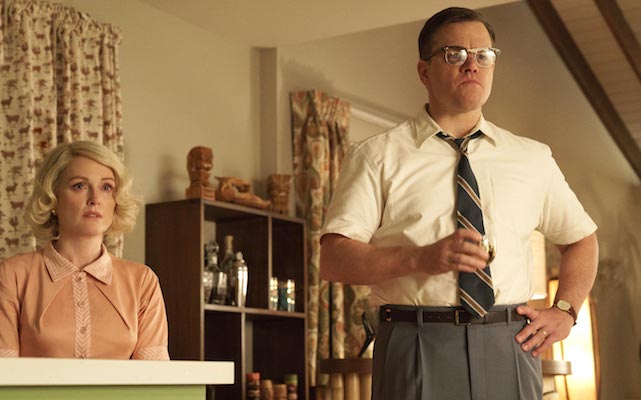
Based on the infamous 1969 incident in which a young woman drowned after a probably-drunk Sen. Ted Kennedy drove his car off a bridge into a pond, “Chappaquiddick” is unusual for a docudrama in that its point of view is different from its main character’s. Our protagonist, 37-year-old Kennedy (played by Jason Clarke in big white teeth), has this reaction to the event: “I’m not gonna be president.” The movie, directed by John Curran (“We Don’t Live Here Anymore,” “The Painted Veil”) and written by first-timers Taylor Allen and Andrew Logan, has this reaction: “Look at this entitled rich a-hole.”
Curran doesn’t hit us over the head with it, though, and the film is not the anti-Kennedy manifesto that some were hoping for. It has the look and feel of a respectful biopic, starting with Kennedy being interviewed about JFK’s legacy on the eve of the Apollo 11 moon mission. (The Chappaquiddick incident occurred while Neil Armstrong and friends were en route.) It’s after a party for former staffers of the late Bobby Kennedy’s presidential campaign that Ted gives one of those staffers, 28-year-old Mary Jo Kopechne (Kate Mara), a ride back to her hotel but goes over the bridge instead.
The rest of the film, save for a few snippets of flashbacks, is about the aftermath. Ted initially seeks to evade responsibility and shift the blame, telephoning his ancient father (Bruce Dern) for advice and hearing the old man croak one word: “alibi.” He has a team of fixers who alternate between berating him for being so careless (he was even driving with an expired license) and convincing him they can beat this thing and he can still run for president. (Note for younger readers: There was a time having done immoral things in one’s private life meant you had no hope of winning an election.) Ted’s cousin, lawyer Joe Gargan (Ed Helms), is presented as a man of conscience who persuades Ted to do the right thing, but Ted’s version of “the right thing” is to issue a written statement that still doesn’t tell the whole truth, and then to show up at Mary Jo’s funeral wearing an unnecessary neck brace.
It’s fascinating, tragic, and sometimes darkly funny to see Ted’s oblivious, self-serving behavior. Without letting him off the hook, the film grants us a few opportunities to sympathize with him. He lives in the shadow of his three dead brothers (the oldest, Joe Jr., died in WWII) and feels his only value to the family is that he’s still alive. He doesn’t know who he is, and now his foolish behavior has ruined his chances of achieving his only goal. Jason Clarke (who, fun fact, was born the day before all of this happened) finds the humanity in Ted Kennedy, a privileged but damaged man who also experienced a great deal of tragedy that was not of his own making. Ed Helms is good, too, as his conscience-stricken cousin.
But the film suffers from too much explanatory dialogue — “So-and-so? Why, he’s the paper’s chief political correspondent and executive editor!” “This person standing right here is the U.S. attorney of Massachusetts!” — and from its bifurcated allegiances. The film’s opinion of Kennedy being different from Kennedy’s opinion of himself adds nuance but reduces clarity. What is the point? Why does this movie exist? It covers events that have faded from the public memory, concerning people who are no longer alive, and has little to say about how those events might have parallels today. But if it’s just meant to be a competent bit of historical drama, it does that well enough.
As a proponent of the “shut up and watch the movie” school of thought, I have a special fondness for films that actively encourage silence. The tense and thrilling “A Quiet Place” does it by putting its characters in a situation where making noise is fatal and then making us forget that it’s only a movie. Viewers with limited lung capacity, be advised that you’ll be holding your breath a lot.
A few years from now, humanity is bedeviled by vicious reptilian monsters that are seemingly indestructible, their one weakness — total blindness — compensated for by an extraordinary sense of hearing. Nonetheless, if you don’t make any noise, they can’t find you. We join the story some months after the initial invasion, the details conveyed to us through the convenient exposition-delivery system of Newspaper Clippings on a Bulletin Board Annotated by Obsessed Researcher. That’s Lee (John Krasinski, who also directed), who lives with his wife, Evelyn (Emily Blunt), and their children Regan (Millicent Simmonds) and Marcus (Noah Jupe) on an isolated (and now mostly sound-proofed) farm in upstate New York. Fortuitously — some might say conveniently — Regan is deaf, so the family already knew sign language and didn’t have to learn it when speaking aloud became deadly. The families that didn’t know how to communicate silently must have been first to die.
But there was a tragedy in the prologue, for which Regan blames herself (accurately) and fears her father no longer loves her. It isn’t so, of course; her father actually spends much of his time in the basement tinkering with hearing aids in the hopes of reversing her deafness. The family has lived like this — walking barefoot on sand-covered paths, communicating in gestures and signs, replacing hard Monopoly tokens with soft ones — for more than a year, but they seem optimistic that the crisis is not permanent, or that if it is, they can manage. There’s no better indication of their hopefulness than the fact that Evelyn is due to give birth any day. We have no record of whether the pregnancy was planned, whether any efforts were made to prevent or abort it, but Evelyn and Lee’s behavior suggests that it is very much wanted now and that the work necessary to prepare for its arrival is done out of love.
There’s very little dialogue, of course, so Krasinski (finally directing a good movie after his awful “Brief Interviews with Hideous Men” and “The Hollars”) uses the camera to focus our attention. It shouldn’t surprise us that a man best known for his wordless reactions on “The Office” has made a movie that hinges on nonverbal communication, but it’s impressive how well the former Jim Halpert pulls it off, aided by Bryan Woods and Scott Beck’s efficient screenplay (which Krasinski revised). We understand all the ways the family’s situation is fraught with peril without needing to have them spelled out. Childbirth is loud! Babies are loud! Regan’s deafness has advantages as well as disadvantages! The film regularly sets up details whose significance isn’t initially clear, trusting us to wait until it is. We learn the “rules” of this world, how quiet you need to be, when it’s safe to make noise (when there’s a louder noise drowning you out).
We should also mention the excellent work by sound editors Erik Aadahl and Ethan Van der Ryn, who put us on edge by amplifying the tiny sounds of everyday life. (Stop breathing! They’ll hear you!) When a shot is from Regan’s point of view, the sound drops out entirely, which somehow makes us even more nervous. (She won’t hear the creatures approaching!) There is a musical score, by Marco Beltrami, but Krasinski uses it judiciously to relieve tension (extraneous noise implies that we’re safe for now) and to ratchet up the adrenaline in the scenes where all hell has broken loose and silence no longer matters.
This is ultimately about a family’s resilience and dedication to one another (the real quiet place … was love), with each of the four family members given a crucial role in the fight, everyone required to sacrifice something. The resolution is maybe a little too convenient (there’s that word again), almost cute, though not enough to squander the terrific premise, and the movie ends on a perfect note that outweighs any prior missteps. See it with someone you love who is also quiet, if you know anybody like that.
Some movies provide so much vivid detail about a character that you could practically write a biography. Lynne Ramsay’s mesmerizing “You Were Never Really Here” (based on Jonathan Ames’ novel) is a different sort of experience, immersing us in impressions and emotions while offering only glimpses of factual details. We never learn our protagonist’s last name or what agency he works for, and his childhood and career path are conveyed only in fragments of memory. Yet these fragments haunt us the way they haunt him. We don’t know his story so much as we feel it, but we feel it deeply.
Joe, played by Joaquin Phoenix at peak dishevelment, is a veteran of the military, the FBI, and a ruinous childhood. He has PTSD that both motivates and impedes his present work as a hired gun who extracts minors from sex-trafficking situations. (“Hired gun” is a metaphor. Joe’s preferred weapon is a ball-peen hammer.) He lives with his decrepit mother (Judith Roberts) and makes “Psycho” jokes with her, but flashback snippets suggest mother and son have endured a lot together. His tenderness with her, in scenes that parallel and contrast his coldly efficient crime-scene-cleaning and body-disposal techniques, reminds us that Joe isn’t merely a killer.
Things go haywire when Joe receives an assignment from his boss, John (John Doman), who works out of an office with degrees on the wall but is apparently connected to an extra-legal (government-related?) anti-trafficking agency. The new task is to rescue the daughter (Ekaterina Samsonov) of a state senator (Alex Manette) who’s involved in the governor’s (Alessandro Nivola) reelection campaign; given those particulars, it’s almost inevitable that Joe will uncover a conspiracy darker than he imagined.
The film is calm and measured, even hypnotic, with agitation rumbling beneath the surface. While that tone is similar to Ramsay’s previous film, the ponderous, nightmarish “We Need to Talk About Kevin,” it reminded me more of Nicolas Winding Refn’s “Drive”: the taciturn, almost nameless hero; the electronic score (in this case by Jonny Greenwood, master of discord); the brooding deliberateness that might come across as boring if you’re expecting more mayhem; the bursts of violence that shock you out of your reverie. But where Ryan Gosling’s driver was inscrutable, Phoenix’s Joe grants us access to his emotions, adding a layer of profound sadness to this jarring, impressionistic underworld thriller.
Not only is this Ep. 400, it’s also the eighth anniversary of Ep. 1! The only effect that my new not-going-to-press-screenings status will have on Movie B.S. is that we moved the show to Mondays instead of Fridays. Oh, and my written reviews of “Isle of Dogs” and “7 Days in Entebbe” are on their way. In a case of bad timing, I took a li’l spring break (previously scheduled) right after announcing the changes, so I apologize if it looked like I suddenly ditched you.
0:00 – Hello, it’s our 400th episode AND our eighth anniversary!
5:10 – “Ready Player One” review
23:35 – “Isle of Dogs” review
28:45 – “7 Days in Entebbe” review (Snider)
33:00 – More discussion of why “RPO” didn’t work for us
35:30 – This week’s DVDs and some streaming recommendations
44:20 – Jeff’s nephew was in town, they watched some movies
46:00 – Recap and good day
“Ready Player One” is set in a future where people spend most of their time in a virtual-reality world called OASIS that allows them to play games and have adventures in whatever fictional settings and with whatever fictional characters they choose (provided the filmmakers could get the rights). Our hero, 18-year-old Wade (Tye Sheridan), tells us real life is so drab that, apart from bathroom breaks and sleep, a lot of folks basically live in the OASIS and have most of their social interaction there. For all intents and purposes, it is their world.
The problem with “Ready Player One” is that the OASIS is not our world. To us (or to me, anyway; I can’t speak for you) it’s just a cool game with a lot of options, being played by people who are not us. No matter how valuable it is to Wade and his fellow denizens of the year 2045, and no matter how vividly it’s created by director Steven Spielberg, it’s not actually real to them. For us it’s even less real — a fake world inside of a fake world.
So what happens when that fake world is threatened? I don’t care, that’s what.
The premise is that the designer of the OASIS, a soft-spoken space cadet named Halliday (Mark Rylance), hid a contest inside of it in the form of three challenges that must be discovered and conquered. Whoever does this first will win the now-deceased Halliday’s half-trillion-dollar fortune and ownership of the OASIS. Five years on, Wade is one of a handful of ordinary people still pursuing this goal, joined by his in-game friends, whom he’s never met in real life but who coincidentally live in his neighborhood.
Their main competition is a video game company called IOI, the second largest corporation in the world (behind Halliday’s) with an eye toward being the first. Headed by malevolent ignoramus Nolan Sorrento (Ben Mendelsohn), the sort of n00b who writes his password on a Post-It note, IOI has an army of staffers called Sixers working round-the-clock to scour every corner of OASIS in search of Halliday’s challenges. Where normal players’ ability to re-enter the game after being “zeroed out” (losing all of one’s points; “dying”) depends on their ability to buy credits (which cost real-world money), the Sixers, with their corporate backing, basically have unlimited lives.
What’s more, IOI has a staff of nerds whose only job is to search Halliday’s digitized memories, journals, and other resources for clues as to where in the OASIS he might have hidden the challenges. This requires them to be experts in pop culture of the 1980s, the decade Halliday grew up in and the source of most of his personality– er, references. The widespread popularity of the OASIS means lots of average joes are also inordinately knowledgeable about the ’80s. For a viewer who grew up in the ’80s and has already been through an ’80s nostalgia phase, this might get old pretty fast.
Wade’s avatar is a blond Timothee Chalamet type named Parzival. A hulking beast called Aech (Lena Waithe) — pronounced “H” — is his best friend, and they’re soon joined by a new girl, Art3mis (Olivia Cooke), for whom Wade develops the hots. There are two more, Sho (Philip Zhao) and Daito (Win Morisaki), who play no significant role in the story except to give the group five members so they can be called the High Five (because they score high, not because they are high). When Wade and the gang start making progress on the challenges, Sorrento takes note and targets them directly, sending a mercenary named I-R0k (T.J. Miller) to kill their avatars.
What little we see of the real world of 2045 suggests it’s overcrowded and polluted but not dystopian. There was no apocalypse. People continue to live and work and order Pizza Hut (delivered by drones). IOI owns debtors’ prisons called “Loyalty Centers” where people work off what they owe by serving as Sixers, a system that no doubt needs regulatory oversight and is dangerously close to slavery. But in general, and in spite of the ’80s fixation, real life isn’t a living hell.
Having shown us this unappealing but not hopeless real world, the movie then spends most of its time in a digital world where people are represented by computer-generated avatars. This creates emotional distance — it’s hard to feel connected to animated beings when we know their flesh-and-blood counterparts are out there — and lowers the stakes of the story: None of this is real. It’s not even a “you die in the game, you die in real life” situation. If you die in the game and can’t afford to buy back in, the only consequence is that you can’t play the game anymore.
This problem of low stakes drags down the entire film. Wade and his friends don’t just want to win the game, they want to prevent IOI from winning. Why would it be disastrous if IOI controlled the OASIS? Because they’d fill it with ads. They would ruin everything — everything in this fake computer world, that is. Real life would continue as before.
No matter how much fun your game is, I don’t care if it gets destroyed. I mean, maybe I can care for the length of a TV episode. But I don’t two-hours-and-twenty-minutes care.
It doesn’t help that Wade is a bland hero whose only motivation seems to be that it’s a game with a prize at the end. There is much good he could do with the money if he wins, but we never get the impression that that’s WHY he’s doing it. So we have a guy who’s on a quest for no particular reason, where if he fails nothing particularly bad will happen. The film tries to up the ante by having Sorrento come after Wade’s real-world guardian, Aunt Alice (Susan Lynch), a character we barely met to whom Wade isn’t especially attached, but somehow that fails to generate sympathy.
The Ernest Cline novel this is based on is so full of ’80s pop-culture references that it became the subject of mockery. The movie, adapted by Cline and Zak Penn, has to show them rather than just rattle them off, so plenty of Generation X memorabilia whizzes across the screen without drawing attention to itself. There’s an auto race that’s vintage Spielberg, the players speeding through a dizzying course in “Back to the Future” DeLoreans and other vehicles that you’d recognize from other movies if you could pause the action and look, with figures like Freddy Krueger and Jason Voorhees appearing in the periphery as other players’ avatars. The more overt references, the ones openly discussed and encountered by the characters, tend to be from properties owned by “Ready Player One” distributor Warner Bros. and don’t necessarily fit the book’s John Hughes and Atari vibe — “The Shining” and “The Iron Giant,” for example.
The film is thus busy and hectic but not cohesive, a game that’s nothing more than a game. There are moments of Spielbergian delight; fine, hammy performances by Mark Rylance and Ben Mendelsohn; and terrific visuals. But it’s all (to borrow a slightly older reference) full of sound and fury and signifying nothing.
I’m no longer going to press screenings. I’ll tell you the whole story later (of course there’s a story) [UPDATE: Here is the story], but first let me explain how this changes things vis-a-vis my reviewing movies:
Hardly at all.
It means I won’t have reviews posted on opening day, but that was becoming rarer anyway. Of the 33 wide releases so far this year, 12 of them — more than a third — opened without being shown to critics first. What used to be a notorious exception (anyone remember “Hollywood’s shameful secrets”?) is now commonplace.
What’s more, movies that “open” on Friday usually start showing at 7 p.m. Thursday. So if I MUST have a review Friday morning, it’s still feasible.
I admit it sounds Very Bad for a movie critic not to be able to go to press screenings. I was alarmed when the news first arrived. But I very quickly came to see the advantages. Let me show you.
True “press screenings” (only critics invited, no audience) have grown rare in Portland. Most are promotional screenings, held in the evening, with a couple rows taped off for critics and the rest of the seats filled by whoever the studio drags in off the street.
We have to be at these things 30 minutes early (45 minutes, technically, but most of us adjusted that). About half of them are held at a theater south of Portland, 14.4 miles from my apartment, a drive of anywhere from 20 to 45 minutes depending on traffic, which is unpredictable and always overlaps with the end of rush hour.
Then the movie starts (somewhere between four and 10 minutes late, never at 7:00 sharp, because the studio rep is trying to fill every single seat) and we watch it in a theater jam-packed with people who are seeing a free movie before it opens. These crowds are often, um, excitable. And smelly. I’ve talked before about the “screening rats,” the people who come to every single one and act like rude, entitled brats. There are a lot of them.
Start to finish, from the minute I leave till the minute I get home again, the process of seeing a 90-minute movie at one of these screenings takes at least 2 1/2 hours. It occupies the entire evening, sometimes three evenings a week.
Compare that to the civilian method of seeing movies. I can go to the theater 3.3 miles from my house, arrive 10 minutes late to skip most of the trailers, and still find the room barely 30% full. The two movies that would’ve swallowed my Monday and Tuesday nights I can now watch back to back in one calm, efficient evening.
What about the cost, though? All those movie tickets are expensive! Not with MoviePass they ain’t. You pay $10 a month (currently $7!) and you can see a free movie every day (only one a day, though, so I do have to pay* for half if I do a double feature) (*or something).
Here are the downsides of not going to screenings:
I don’t get to see my movie critic friends as much, though most of my longtime Portland screening-mates have gone on to other things anyway.
I will miss a few freelance opportunities where I would have needed to see the movie early, but not a financially significant amount.
I no longer get carefully crafted passive-aggressive emails like this:
Honestly, it feels like a burden has been lifted, and I’m not just saying that because I don’t have access anymore. I’ve had a few weeks to adjust to my new lifestyle, and I love it. I spent almost 19 years beholden to the screening schedule, which varied from week to week and was rarely announced more than seven days in advance. All my weeknight plans had to be tentative: “Yes, unless I have a screening.” Now I know my Thursdays are spoken for, and everything else is open. Consistency! Blessed, soothing consistency.
P.S. I know MoviePass’ business model is unsustainable, but that’s their problem, not mine.
There are no literal hauntings in “Ismael’s Ghosts,” a wry, lyrical, but often plodding drama from director Arnaud Desplechin (“A Christmas Tale”), only metaphorical ones. Freewheeling French filmmaker Ismael Vuillard (Mathieu Amalric), who shares Desplechin’s hometown of Roubaix, is in the process of simultaneously shooting and rewriting a new movie when he and his girlfriend, Sylvia (Charlotte Gainsbourg), are visited suddenly by Carlotta (a wide-eyed Marion Cotillard), Ismael’s presumed-dead wife who vanished 21 years ago.
Carlotta’s return causes upheaval, but it’s only one factor in Ismael’s perturbation. It’s apparent that he and the free-spirited Carlotta would have grown apart even if she hadn’t run off (she’s the running-off type). But Sylvia, who’s prudish and insecure on a good day, naturally feels threatened by Carlotta’s presence. Meanwhile, Ismael is struggling to finish his movie, a spy thriller based on the adventures of his own brother (Louis Garrel), who refuses to cooperate; he’s plagued by nightmares; and he remains a friend and confidant to Carlotta’s father, acclaimed director Henri Bloom (Laszlo Szabo), who never got over his daughter’s disappearance.
One senses that this handsomely shot, well-acted film is personal, and familiarity with Desplechin’s previous work might make it more vivid: Amalric played a musician named Ismael Vuillard in “Kings and Queen,” and the spy brother has the same last name as a character (played by Amalric) in two of Desplechin’s other films. Without that context, “Ismael’s Ghosts,” a film about absence, feels like it’s missing something, the same way this review is missing a concluding sentence.
You remember, of course, how a breach at the bottom of the Pacific Ocean produced a gateway through which extra-dimensional Godzillas entered our universe and wrecked our cities, and the only way to stop the destruction was to build giant Transformers to fight them. (It is by the same logic that some want Oprah to run against Trump.) “Pacific Rim” (2013) ended with brave heroes sacrificing themselves to seal the breach and kill the remaining monsters. Now, five years later, 10 years have passed. There have been no further incidents, but here’s a sequel called “Pacific Rim Uprising,” so…
The first movie was shallow but enthusiastic, buoyed by director Guillermo del Toro’s imagination and writer Travis Beacham’s no-frills script that delivered what viewers wanted: giant things fighting each other. In contrast, the sequel, from first-time director Stephen S. DeKnight, with a screenplay credited to him and three others (del Toro is onboard as producer), is weak, aimless, and noisy. The thrill of giant things fighting each other is still here, but it’s reduced by familiarity (we saw this already) and by the film’s lack of it. This movie about huge robots fighting monsters doesn’t have enough robots, fighting, or monsters in it.
Our hero is one Jake Pentecost (John Boyega), son of the Idris Elba character from the other movie but no chip off the old block. Jake is a thief and a rascal who fizzled out of pilot training, forced to either re-enlist or go to prison when he and a plucky teen girl, Amara (Cailee Spaeny), are caught operating an unlicensed Jaeger (that’s what the robots are called) that Amara built from scrap parts. Both are sent to Jaeger Academy, where Amara joins the cadets and Jake re-joins an old friendly rival, Nate Lambert (Scott Eastwood), as the pilots who instruct them.
We still have the Jaeger program, by the way, in case the Kaiju (monsters) come back, but in the meantime they mostly do police work. Jake and Nate are co-piloting a Jaeger — which involves mind-melding, you’ll recall — at a meeting of international importance in Sydney when a rogue Jaeger emerges from the sea and wreaks havoc. Who’s controlling it? And what does Liwen Shao (Tian Jing), head of possibly evil Shao Industries, have to gain by it? Shao has been developing drone Jaegers that can be operated remotely rather than having the pilots climb inside the robot’s head, and which could have averted tragedy in Sydney if they’d been in use, she’s just sayin’. Comic-relief manic scientists Newt (Charlie Day) and Hermann (Burn Gorham) are back, feverishly developing the new tech for Shao.
Despite everyone but Scott Eastwood’s charisma, none of the characters ever come to life except in brief bursts, and the human villain or villains never get a proper payoff. Everything else is strictly by the numbers. Jake must learn to be a hero. Nate must stop squinting and growling at him and forgive whatever it is that happened before (it was between the movies, we didn’t see it). Amara, a Jaeger fangirl who knows the names of the Jaegers and their pilots, has to overcome her junkyard background and prove herself to her haughty fellow cadets, an international mix of teens who seem like a desperate attempt to establish “the next generation” even though this is only the first sequel.
Most of the film has the Jaegers intermittently fighting the rogue Jaeger, pilot unknown, in some perfunctory robot-on-robot violence. That mystery is solved with a lot of time left, so then we spin our wheels until the finale that will surely have all the Jaeger pilots and cadets fighting the Kaiju that will have inevitably gotten loose. Said finale delivers the goods, but it’s 20 minutes of enjoyable CGI mayhem after 90 minutes of so-so horsin’ around. What they tease for part 3 sounds like we should have gone straight there and skipped this water-treading middle episode.
You know what happens when you come up with the title first and then try to build a movie around it? You get uninspired nonsense like “Sherlock Gnomes,” a sequel to “Gnomeo & Juliet,” which I didn’t see but which I assume was also uninspired nonsense. The premise in this world is that decorative garden gnomes are sentient creatures, like the toys in “Toy Story,” with rich inner lives and complex relationships. Did you ever wonder what your garden gnomes were up to when you weren’t around? You didn’t? Well, now there are two movies telling you anyway.
“Sherlock” begins with star-cross’d lovers Gnomeo (voice of James McAvoy) and Juliet (Emily Blunt) living happily ever after, the first film having evidently deviated from Shakespeare. They and their backyard cohorts, who include not just gnomes but ceramic frogs and the like, are moved to a new backyard from which they start to disappear. Gnomes in other London gardens are likewise vanishing, leading to a breathless TV news report where the police are quoted as saying: “We have no time for this. Please do not contact us again.” That made me chuckle, the first of maybe three times in the whole movie.
Fortunately, Sherlock Gnomes (Johnny Depp), the greatest detective in the “ornamental world,” is on the case, assisted by his trusty Dr. Watson (Chiwetel Ejiofor). They are also ceramic beings who make a “chink-chink” sound when they walk and live in constant fear of being smashed to a million pieces. Sherlock, an arrogant jerk who doesn’t appreciate Watson, believes all of this to be the work of his archenemy Moriarty (Jamie Demetriou), a bakery mascot (think Pillsbury Doughboy) whose demented, aggressively cute design is good for a few smiles. But let’s call a moratorium on self-aware movie villains who describe their own plans as “needlessly complicated” and add “but that’s what supervillains do,” OK? What was once clever meta-commentary has become a crutch for lazy writers (in this case Ben Zazove, with four more people getting “story by” credit).
Gnomeo and Juliet are supporting characters who have their dull newlywed squabbles on the sidelines. The greater focus is on Sherlock and Watson, brand-new characters for whom we’re supposed to feel affection just because the movie dumped them on us. The one visually interesting touch by director John Stevenson (“Kung Fu Panda”) is the occasional glimpse into Sherlock’s detective mind, rendered in black-and-white animated line drawings. But the whole thing is short and largely inoffensive (the gnome in the “mankini” is more prominent in the marketing than the film itself), unlikely to do any significant harm if you find yourself obligated to watch it.
Steven Soderbergh’s latest film, the shrewd, exasperating psychological thriller “Unsane,” is one of his experimental projects, shot entirely on an iPhone. It looks awful — harsh, garish, cheap, like he didn’t even use a new iPhone. The shots are nicely composed and smartly framed, though; you can tell it was made by a real director who for some reason wanted it to have the aesthetic of a student film.
Appearances aside (just pretend film isn’t a visual medium), the movie has some heft to it but doesn’t live up to its full potential. Claire Foy, doing an American accent about 70% of the time, stars as Sawyer Valentini, a young woman who moved from Boston to Pennsylvania to get away from a stalker but did not change her name, probably because it was too cool to give up. Sawyer has PTSD now, unable to relax in her new surroundings because she sees her stalker everywhere. She visits a therapist at a for-profit mental-health facility called Highland Creek and is soon surprised to find herself committed — voluntarily, technically, because she signed the paperwork, but she didn’t read it first, or ask enough questions or assert herself afterward.
She meets the usual suspects in the cuckoo’s nest, including Juno Temple as a frazzled girl named Violet and Jay Pharaoh as someone who, like herself, doesn’t seem to belong in the booby hatch. Sawyer freaks out on a male staff member when she momentarily sees her stalker’s face instead of his, and then it gets worse: She thinks another Highland Creek employee (Joshua Leonard) actually IS the stalker, having somehow tracked her here.
She must be crazy after all, right? OR MAYBE NOT! OR MAYBE SHE IS, YOU WERE RIGHT THE FIRST TIME!
That aspect, the uncertainty over Sawyer’s mental health, propels the first two-thirds of the movie, forcing us to second-guess our assumptions in a way that’s intriguing without being maddening. The screenplay, by the duo behind garbage comedies “The Spy Next Door,” “Just My Luck,” and “Larry the Cable Guy: Health Inspector” — their names are Jonathan Bernstein and James Greer, and good for them — further keeps us on our toes with potential red herrings like a sub-thread about uncovering unethical medical practices and a visit from Sawyer’s mother (Amy Irving).
But the film tips its hand too early, revealing the reality of things when there’s still time to fill. Much of what happens after that is “shocking” but not surprising because, once the reveal was made, it was inevitable. I lost patience with the movie somewhere around there, but I ultimately came down on the favorable side because of Joshua Leonard’s crucial performance as the maybe-stalker and Claire Foy’s increasingly unraveled performance (dodgy accent notwithstanding) as Sawyer. The film’s sheer visual ugliness is a hindrance, but it’s evidently what Soderbergh wanted, so more power to him.
Come on, they're not going to let you carry those on the plane. Get real.
Hijacking an airplane was trendy in the 1970s, and evidently not very hard. The incident recreated in “7 Days in Entebbe,” from 1976, was at least the 40th hijacking of the decade, perpetrated by two Palestinians and two German revolutionaries hoping to pressure Israel into releasing political prisoners. The film, directed by José Padilha (whose first movie was the Brazilian hijacking documentary “Bus 174”), feels like it was made out of obligation, like someone was contracted to deliver a certain number of based-on-a-true-story movies and had to crank one out on deadline. It’s made competently but not enthusiastically.
Rosamund Pike and Daniel Brühl play the Germans, Brigitte and Wilfried, who are terrorists but the really nice kind. “We are humanitarians,” Wilfried says to the cabin full of terrified air travelers, brandishing a machine gun that he hopes they don’t make him use. Part of the movie’s problem is that it’s too timid to take sides, assuring us that one nation’s “terrorists” are another nation’s “freedom fighters” and leaning heavily on the Germans’ basic decency. Rational, nonviolent hijackers make for poor drama, though. Even when the passengers have been offloaded to an airport in Entebbe, Uganda, under the auspices of insane warlord Idi Amin (Nonso Anozie), their situation never feels particularly dangerous.
Meanwhile, in Jerusalem, Prime Minister Yitzhak Rabin (Lio Ashkenazi) and defense minister Shimon Peres (Eddie Marsan) huddle with advisers to plan a rescue mission while grappling with the usual questions of whether we negotiate with terrorists (we don’t but maybe we should) and how this is going to play out long-term. “Our enemies are our neighbors,” Rabin says. “We can’t get away from them.” These discussions are where the true drama lies, not in the hopes and dreams and flashbacks of the German hijackers. Padilha, working from a by-the-numbers screenplay by Gregory Burke (“’71”), delivers tension and heroics when the time comes, but he never gives us a reason to care about this particular incident or the people involved in it.
He knew he was gay because of his knack for posing contemplatively.
“Love, Simon” is the first film about a gay teenager’s coming out ever distributed in wide release by a major studio. We’ve seen mainstream films with queer youth as supporting characters, and numerous coming-out-centered films that played the arthouse circuit. But one of the majors (20th Century Fox in this case), backing a sort of gay teenage romantic comedy, showing it in every multiplex in the country? That’s new. And given the number of people now running Hollywood who WERE gay teens 20-40 years ago, it’s surprising.
One of those gay former teens is Greg Berlanti, a writer for gay-friendly turn-of-the-century teen drama “Dawson’s Creek,” creator of like-minded “Everwood,” and producer of the current “Riverdale.” His indie comedy “The Broken Hearts Club” was notable at the time (2000) for NOT being about Important Issues, with gay characters just living their lives at a time when most cinematic gays were dying of AIDS or marching in protests. He’s made one other movie since then, the (straight) rom-com “Life As We Know It,” and now returns to the big screen with the warm and fuzzy “Love, Simon.” Even though it’s based on a novel (by Becky Albertalli) and adapted by “This Is Us” producer/writers Elizabeth Berger and Isaac Aptaker, it feels like a personal movie for Berlanti.
I mention all of this up front because there are a few fusty, out-of-touch moments in “Love, Simon” that remind you it was directed by a 45-year-old man whose own teen years were radically different from his protagonist’s. (Not just the prevailing attitude toward sexuality, either: everything about high school was different 30 years ago.) It’s altogether a friendly, old-fashioned movie, very tame in its depiction of burgeoning sexuality, without life-or-death melodrama or rejection — and that pleasantness can make it seem less revolutionary than it is, like it’s the hundredth one of these, not the first.
Simon (Nick Robinson), a dreamy, nonthreatening senior, narrates the film via emails he’s writing to his pen pal, a fellow student at his school who came out anonymously on the school message board and calls himself “Blue.” Simon has begun a correspondence with Blue (calling himself “Jacques”), discussing their shared secret and falling in love. Meanwhile, of course, Simon is trying to figure out which of his classmates Blue is, plugging each new suspect into his imagination as he makes his guesses.
Simon hasn’t come out to anyone but Blue. He hasn’t told his lifelong best friend Leah (Katherine Langford), who has a crush on him that he doesn’t see; or Abby (Alexandra Shipp), who’s just been cast as the lead in the school musical; or Nick (Jorge Lendeborg Jr.), a soccer player who’s in love with Abby. He hasn’t told his affectionate, progressive parents (Jennifer Garner and Josh Duhamel) or his younger sister (Talitha Bateman).
His secret is threatened when another student, smart-mouthed busybody Martin (Logan Miller), discovers Simon’s emails to Blue and blackmails him: He’ll out Simon unless Simon sets him up with Abby and gets her to like him. This thread of the story is tiresome, a contrived conflict that lacks authenticity (though it’s on par with the nonsense typical of a teen rom-com), but it spotlights the film’s curious position.
Set among non-religious people in a non-backwards part of America in 2018, the movie can’t realistically present Simon’s sexuality as a major problem. When he does come out, whether on his own terms or Martin’s, we know that none of his friends or family are going to reject him, and that any opposition he faces will be the minority opinion (and a socially unpopular one at that). His reluctance — and he seems to know this, at least subconsciously — is self-inflicted, caused by uncertainty over whether he accepts HIMSELF as gay.
The blackmail subplot provides conflict for a story that otherwise wouldn’t have any, and for which not having any is kind of the point. Because this isn’t a movie about a gay teen who bravely comes out of the closet in the face of adversity, which it would have been if it were made even 10 years ago. This is a movie about a teen who overcomes his own hangups to come out into a world that largely accepts him — which is the only way to make this movie in 2018. Our progress as a society has rendered a once-reliable fictional device ineffective. Being gay is no longer an automatic source of conflict unless it’s set in the past and/or involves religious conservatism.
“Love, Simon” is important because it conveys this new reality in a way that’s loving and affirmative, not to mention funny and sweet, with an unabashedly cornball finale to tug at the heart of romantics across the sexuality spectrum. (I suspect the teenage girls who would swoon over Simon in a traditional rom-com will be just as delighted to see him find happiness on the “other team.”) The message isn’t “Be tolerant of gay people.” It’s “We’re tolerant of gay people now, so let’s enjoy some fun, kind, uplifting stories about them the way we would anybody else.” For people like Greg Berlanti and me who grew up in a very different world, it’s cathartic to see stories we can relate to told with a degree of love and compassion that we can hardly imagine.
Say what you will about the new “Tomb Raider,” it shows a tomb being raided less than 20 minutes after it starts. It’s actually a false tomb with a secret room hidden under it, and it’s not raided so much as unlocked with a key, but we’re counting it.
You have to take what you can get with this film, which is based on the 2013 reboot of the Tomb Raider video game whose previous installments inspired the two Angelina Jolie-starring Tomb Raider movies in the early 2000s. Directed by Roar Uthaug (he’s from Norway) from a screenplay by the extremely British-sounding Geneva Robertson-Dworet and Alastair Siddons, this “Tomb Raider” is a series of moderately exciting situations surrounded by — and barely attached to — a derivative fill-in-the-blanks adventure plot.
The appealing Alicia Vikander plays Lara Croft, a spunky young London woman who hustles to support herself as a bike delivery-person. Her billionaire father (Dominic West) vanished seven years ago, and Lara could have his fortune if only she’d follow the advice of family friend/former guardian Ana Miller (Kristin Scott Thomas) and sign the papers acknowledging his probable death. Instead, Dad’s lawyer gives Lara a Japanese puzzle box he left for her, leading her to his secret lair under the family tomb. Turns out Lord Richard Croft moonlighted as a globe-trotting adventurer and has left one of those “If you’re watching this I must be dead” videos with a message that Lara ignores in favor of going off to search for him.
The film is half over when Lara, assisted by Hong Kong boat captain Lu Ren (Daniel Wu), barely makes it alive to Yamatai, a “lost” island where her dad was hunting for an evil Japanese queen’s cursed tomb so he could prevent anyone from ever opening it and unleashing whatever dark forces it contains. In favor of opening the tomb is one Mathias Vogel (Walton Goggins), a cold-blooded psycho with an army of slaves digging up the island in search of it.
As someone who has not played the Tomb Raider video games, I assumed Lara Croft would be the sort of heroine who fights a lot of dudes. That’s usually a safe bet. But in a disappointing nod to reality, Lara mostly runs away when threatened, never engaging in hand-to-hand combat till the end of the film. Mind you, she’s very good at running, and a chase sequence can be as thrilling as a fight, but where does it get us? In one instance, three punks steal her backpack and she chases them down and retrieves it before one of them produces a knife and starts pursuing her. She gets away without fighting anyone or losing the backpack. So what was the point of the sequence?
Most of the action feels like that: fun in the moment but unimportant in the big picture. Lara participates in a bicycle race (whee!); Lara is shipwrecked (exciting!); Lara hangs precariously from a great height (several times!). Nothing really connects until we get to the tomb, which naturally is full of Indiana Jones booby traps and puzzles, but by then it’s too late. The amiable mediocrity has stifled our interest.
First recorded in 1999, MercyMe’s “I Can Only Imagine” is the best-selling, most-played contemporary Christian song since the invention of the radio, written by a Texan named Bart Millard who fell into singing and songwriting after a high school injury ended his football dreams. Millard’s life story, culminating in the composition of the song, is the subject of the polished, faith-based drama named after it, a movie that caters to Christians and other people who enjoy wholesome stories about redemption.
Bart is played by J. Michael Finley, a Broadway actor with a rich, powerful singing voice that fits his stout, doughy appearance. (He looks like Patton Oswalt and Seth Rogen combined with Jai Courtney.) As a younger boy (played by Brody Rose), Bart was subject to the abuses of his grizzled father, Arthur (Dennis Quaid), who drove Bart’s mother away and told him not to waste his time on dreams (which “don’t pay the bills,” after all). In high school, Bart is cast as Curly in “Oklahoma!” against his own wishes (he didn’t even audition) because the glee-club director overheard him singing along with a Christian rock cassette and knew his voice needed to be heard. He takes to it, though, and after graduating joins a band with Christian leanings (whose members are not important to the movie, their names not given) and hits the road.
The band is struggling to find success when a wise Nashville manager, Brickell (Trace Adkins), tells Bart what he really needs to do is go home and sort things out with his father. Arthur always said that the arts and creativity and stuff were just a way to dodge reality — and sure enough, Bart has been using music to avoid dealing with that fractured relationship. The point isn’t made explicitly (and thank goodness for that), but Bart seems to realize he can’t be a musical ambassador for his Heavenly Father while harboring resentment for his earthly one.
Directed by brothers Andrew and Jon Erwin from a script by Jon Erwin and Brent McCorkle, the film sometimes struggles to make its points without exceeding its PG rating. Bart later describes his father as having been a “monster” who savagely beat him, but the Arthur we saw during Bart’s childhood was more of a garden-variety Grumpy Dad with a Belt, the most unsettling parts of his behavior elided. This undercuts the redemption narrative a little, but Quaid’s heartfelt performance makes up for it.
Finley is good in the lead, too, an unlikely schlub with a golden voice who ends up at the top. The film will work best for fans of the song or of Christian music in general (a fictionalized version of Amy Grant plays a key role in MercyMe’s success), but it has enough relatable, not-too-cheesy drama for some crossover appeal, if you can imagine.
(Audience advisory: Cloris Leachman appears in this film as Dennis Quaid’s mother, “Memaw.” She has two or three lines or dialogue and a total of maybe 60 seconds of screen time.)
"Well, let's go. Time's not gonna wrinkle itself."
Madeleine L’Engle’s “A Wrinkle in Time,” first published in 1962, is one of the most beloved young adult novels not to have already been turned into a movie (except for a 2003 TV version that nobody, least of all L’Engle, liked), so Disney’s new big-screen adaptation has a lot riding on it. Unfortunately, it’s “The Chronicles of Narnia” all over again: a popular Christian-themed series of books whose movie version makes you wonder what everyone sees in the books.
Directed by Ava DuVernay (“Selma”) from a screenplay by Disney regular Jennifer Lee (“Wreck-It Ralph,” “Frozen”), “A Wrinkle in Time” feels like a random series of fantastical and often beautiful but still very random events. Cause and effect are not always clear; whimsical things just sort of happen. Someone turns into a giant leaf and lets the kids hop on her back to fly around like a magic carpet, then forgets about gravity and lets one of the kids fall thousands of feet to the ground, only he’s saved because Oprah tells the flowers to go catch him. Oprah is all-powerful here (as in life), but she doesn’t lift a finger herself, just bosses flowers around. Someone else only speaks in famous quotations, except when she doesn’t. The powers and forces at play are vaguely defined, nebulous in purpose. How do you access a wormhole and travel billions of light years in a few seconds? “You just have to find the right frequency and have faith in who you are.” What?!
The basic story is simple enough. Awkward, outcast teenager Meg Murry (Storm Reid) and her adopted genius 6-year-old brother, Charles Wallace (Deric McCabe), miss their father (Chris Pine), a scientist who was studying wormholes and space travel when he suddenly vanished four years ago. Now three fabulously dressed ladies — Mrs. Whatsit (Reese Witherspoon), Mrs. Who (Mindy Kaling), and Mrs. Which (Oprah Winfrey) — arrive at the Murry home pledging to use their powers as “warriors who serve the good in the universe” to help the kids find Dad. For no apparent reason, they are joined on their journey by a boy in Meg’s class, Calvin (Levi Miller), whom they barely know, while their mother (Gugu Mbatha-Raw) is left behind.
The goddess ladies have a great deal of power, though it is limited and not well explained. They whisk the kids to a foreign planet where their father spent some time, then discover he’s been imprisoned on another planet, a totally dark one. (“Dark” just means evil; the planet is well lit.) The ladies, being pure light, CANNOT teleport to a dark planet, except when they can. But then it’s only because Meg has such strong will, in that one instance, for a moment.
Most of the time — and this is the point (?) of the story — Meg is riddled with self-doubt and insecurity, which she must overcome. Yet despite “you just have to believe in yourself” being the most common of all Disney lessons, it falls flat here because of Storm Reid’s distinctly uncharismatic performance and the script’s general blandness. The conclusion is anticlimactic, again because of the vagueness of it all: They overcome evil through the power of love, activated by Meg listing her flaws to Charles Wallace. The struggles and victories are too internal to carry a movie that’s so visual.
And yet there’s a pure-hearted sweetness to everything. Words like “sincere” and “earnest” will probably appear in most of the reviews because those descriptors are as indisputably applicable as words like “fantasy” and “PG-rated” are. It’s not a matter of opinion; the movie is sincere.
The question is, sincere about what? Any overt Christianity in the book (I haven’t read it) is missing here, replaced by a flavorless “good vs. evil” philosophy and a lot of Oprah-like platitudes. (“You just have to find the right frequency and have faith in who you are” might be straight out of L’Engle, but it sounds like something Oprah would say, doesn’t it? Well-meaning but not helpful in any practical way?) It’s a nice movie that’s pretty to look at, but its niceness and prettiness are all it has going for it. Whether that’s sufficient is up to you.
Featuring the latest in awkward funeral choreography.
Armando Iannucci has written and directed two films in his career, and they’re both among the best political comedies ever made. First there was “In the Loop,” an extension of his British TV series “The Thick of It” (he also created HBO’s “Veep”) that used fictional U.K. and U.S. functionaries to satirize our two nations’ political dysfunction and eagerness for war. Now he returns (with co-writers David Schneider and Ian Martin) with “The Death of Stalin,” a breathtakingly dark comedy of errors that holds up the brutal Soviet dictator’s final days and their aftermath as a mirror to current British and American quagmires.
The fictionalized plot, which hardly exaggerates the truth, comes from a French graphic novel; Iannucci and company have added comedy to it, replaying horrific events as farce, turning everyone into greedy bumblers vying to be Stalin’s successor, finding grim laughs in the minutiae of his reign of terror. (“Don’t worry!” says the Radio Moscow director cheerily to the audience he’s hastily assembling at Stalin’s command. “Nobody’s going to get killed!”) When a not-yet-dead Stalin is lying unconscious on his office floor, everyone who enters the room inadvertently kneels in the same puddle of urine next to his body.
The masterstroke, however, is in the casting, and in the decision to have everyone speak in their native accents. So here’s Steve Buscemi as Nikita Khrushchev, a loud buffoon and sycophant who keeps track of which of his jokes get the best laughs; Jeffrey Tambor as Georgy Malenkov, Stalin’s gullible deputy (he weeps hilariously at the sight of Dear Leader incapacitated) whose idiocy makes him useful; Simon Russell Beale as Lavrenti Beria, a Cheney-like opportunist; Michael Palin as Vyacheslav Molotov, a befuddled bureaucrat who was on Stalin’s to-kill list; Jason Isaacs as Georgy Zhukov, swaggering military commander; Rupert Friend as Stalin’s raving conspiracy-theorist son. Stalin himself is played by Adrian McLoughlin in a rough working-class British accent, coming across like a street thug who rose to the top of a crime syndicate.
The few women who are present in all this — Stalin’s daughter (Andrea Riseborough), an anti-Stalin concert pianist (Olga Kurylenko), Khrushchev’s wife (Sylvestra Le Touzel), even down to Stalin’s secretary (June Watson) — happen to be the only reasonable, mature people in the story. This may have been a conscious choice by the filmmakers to comment on male paranoia and competition, or it may just be historically accurate.
True to form, Iannucci packs the dialogue with petty sniping and profane insults, cheerfully mining laughs from ghastly true events. It’s the sort of movie where you kill a political enemy, set him on fire, and then yell obscenities at the burning corpse. (Incidentally, it’s been ages since we saw Monty Python’s Michael Palin on the big screen, and Iannucci’s snarky-intellectual banter is a perfect fit for him.) But where Iannucci’s past work has had a fly-on-the-wall documentary feel, “The Death of Stalin” is more elegantly cinematic, accompanied by classical music (Chopin, Mozart, and of course Tchaikovsky) on the soundtrack. He performs a delicate tight-rope act, conjuring thoughts of Brexit and Trump without laying it on too thick, and mocking political connivers of all stripes with eloquent savagery.
"I feel like we're just pawns in life, but I can't think of a metaphor to express it."
The well-bred teenagers in the audacious dark comedy “Thoroughbreds” are Lily (Anya Taylor-Joy) and Amanda (Olivia Cooke), affluent Connecticut girls who used to be friends, drifted apart a few years ago, and are hanging out again now. Lily’s father died, replaced by a humorless stepfather, Mark (Paul Sparks), who wants to send her to a strict boarding school. Amanda, who claims to feel no emotions whatsoever, has become a pariah since a recent ghastly incident involving a horse, the details of which are teased out over the film. One day Amanda casually asks Lily if she’s ever thought about killing her stepfather. Lily has not ever contemplated such a thing, no, but the words “dark comedy” in the first sentence of this review may suggest where this is going.
First-time filmmaker Cory Finley, a playwright, shows remarkable confidence walking the tightrope between grim humor and provocation, aided by Erik Friedlander’s jaunty, percussive musical score and spot-on performances by Cooke (from “Me and Earl and the Dying Girl”) and Taylor-Joy (“The Witch”) as bored, privileged girls whose moral emptiness is first funny, then chilling, then sad. Initially it’s emotionless Amanda who seems the most dangerous, but the prim, reserved Lily proves unstable too. The girls’ strangely codependent relationship anchors the film, balanced by the character of Tim (Anton Yelchin, who died shortly after the film was shot), a low-level dirtbag and part-time drug dealer whose tough talk is belied by his soft-spokenness. They try to involve him in their plan to deal with Mark the stepfather — who, it should be noted, isn’t a monster. He doesn’t care about Lily and is gruff with her mother (Kaili Vernoff), but there’s no suggestion he’s violent, disloyal, or cruel. He deserves to be divorced, maybe, but murdered? Oh, well. Rich, unsupervised girls will be girls!
The dream of the ’90s is alive in “The Hurricane Heist,” a skillfully made formula flick that in a previous era would have starred someone named Skeet or Keanu as the ordinary joe who helps a federal agent stop a band of thieves from robbing a Treasury building during a Category 5 hurricane. When’s the last time you saw a heist movie where the robbers were unequivocally the bad guys?
Directed by early Vin Diesel-whisperer Rob Cohen (“The Fast and the Furious,”“xXx”), the film stars Toby Kebbell as Will Rutledge, an Alabama good ol’ boy who saw his father killed by Hurricane Andrew back in ’92 and then became a meteorologist. Will is frightened of the very thing he now studies (don’t worry, another character states this explicitly), driving around the Gulf Coast in his tank-like storm-chaser vehicle and warning the National Weather Service that his gut tells him Tropical Storm Tammy is going to be much, much bigger than they realize.
In the small nearby town of Gulfport there’s a Treasury Department building where $600 million in decommissioned currency is about to be shredded and hauled away under the supervision of ATF agent Casey Corbin (Maggie Grace), who fills the “cop with a past” role. (She refers to a bad decision she made “back in Utah.” Yeah, you and me both, sister.) They’re trying to hurry because there’s a storm a-comin’, but the shredder is down and then the generator goes out. The local repairman contracted to fix it? Will Rutledge’s brother, Breeze (Ryan Kwanten), who also watched dad get hurricaned and now owns the old man’s repair shop. The brothers are estranged, but Will swings by to warn Breeze to get out of town before Tammy arrives, doing so at the very moment Casey Corbin arrives to bring him back to fix the generator.
Meanwhile, back at the Treasury building, a heist is happening! It was an inside job, allowing us the pleasure of discovering who the turncoat was. They capture Breeze and make him fix the generator while Will and Casey, outside the locked-down Treasury, figure out a way to stop the villains from hacking into the computer system to open the vault. Is there a sequence where Will uses his knowledge of weather to set a trap for the bad guys? There is indeed. What about a scene where Will throws hubcaps into the gale-force wind, turning those hubcaps into deadly projectiles? Yes, there is that, too. Scenes where people cling to speeding vehicles are also to be found in abundance, executed with Cohen’s adrenaline-pumping style.
Though it sounds bombastic and ludicrous, the film is actually rather unassuming for its genre. It’s not trying to be the BIGGEST or LOUDEST action-weather-destruction-heist movie, just a good one. It keeps its head down and gets to work. The screenplay (credited to Jeff Dixon and Scott Windhauser, rewriting something by “Drop Dead Fred” writers Carlos Davis and Anthony Fingleton) has enough moving parts to keep the action from getting stale, giving the heroes and villains mini-missions that must be performed almost simultaneously: fixing the generator, hacking the computer, disabling a cell tower, and so forth. Toby Kebbell’s dopey-sounding but well educated redneck meteorologist is likable, as is Maggie Grace’s decisive, take-no-prisoners federal agent. A host of other colorful characters on both sides of the law populate the film. It’s junk food, but it’s well-made junk food.
The home invasion thriller, once a sparsely populated sub-genre, has proliferated in the 21st century, perhaps reflecting our growing fear (note the simultaneous rise of the cyber-thriller) that there’s no place the evils of the world can’t reach us.
Or maybe they’re just cheap to make.
Whatever the case, “The Strangers” (2008) was one of the better ones, not to mention quite profitable, so it’s surprising that it took a decade to conjure a sequel. Less surprising is that the followup, randomly titled “The Strangers: Prey at Night” and featuring a new director, writer, and cast, is a step down in quality, though still not without its slasher-y pleasures.
Our victims this time are a family of four — Mom (Christina Hendricks), Dad (Martin Henderson), high school senior Luke (Lewis Pullman), and troubled junior Kinsey (Bailee Madison) — headed for Kinsey’s new boarding school but stopping for the night at Uncle Marv’s lakeside trailer park. The place is abandoned (it’s the off-season) and there’s a misty fog in the air, making it a perfect murder factory.
We actually don’t spend much time in their trailer, as the trio of masked youths who beset them draw them out into the open, into other trailers, to the camp’s playground and swimming pool. The action doesn’t feel claustrophobic, then, but it does feel small, with only the four family members and their three tormentors in the mix, none of them compelling as characters. Director Johannes Roberts (“47 Meters Down”) does get the jump on us a few times, though, as he scrolls down the slasher checklist. (Potential savior who arrives just in time to also be killed? Check…)
The killers are menacing — but it’s their masks doing most of the work, if we’re being honest. There’s no story here, no subtext. The first film’s chilling conclusion was the revelation of the killers’ motive for striking that particular family: “Because you were home.” Randomly, in other words; for the giggles. That motive is reiterated here (I guess these are the same killers?), but it loses its power the second time around. That’s the risk of making a film about violence that is explicitly said to be pointless: the film might seem kind of pointless, too.
[In theaters and Video on Demand.]••• The Civil War gets all the attention when it comes to 19th-century American conflicts, but what about the War of 1812? “Mohawk,” a contemplative bloodbath by Ted Geoghegan (“We Are Still Here”), finds compelling drama in this overlooked skirmish and the way Native Americans were caught in the middle of it. In the process, he shines a light on toxic attitudes that are uncomfortably relevant today.
Fitting, I suppose, for a movie about a three-way war, at the center of “Mohawk” is a three-way relationship. In New York state in 1814, Oak (Kaniehtiio Horn), a Mohawk woman, lives in the woods with Calvin (Justin Rain), also of her tribe, and Joshua (Eamon Farren), a British soldier who’s abandoned his post. We aren’t privy to the details of their polyamorous lifestyle — OK, fine, the only thing we don’t know for sure is whether the two men are intimate with each other or just with her (SUE ME FOR WONDERING!) — but it’s working for them, to the extent that anything can work under the circumstances.
The circumstances, of course, are that all three must stay hidden from the American troops, who are basically killing every redskin or redcoat they find. The situation grows more urgent when hotheaded Calvin preemptively slaughters a camp full of U.S. soldiers and the three have to go on the run, pursued by Col. Hawkes (Jack Gwaltney), his virulently racist second-in-command, Hezekiah Holt (Ezra Buzzington), Holt’s son Myles (Ian Colletti), a one-eyed tracker named Beal (Robert Longstreet), hulking soldier Lachlan (pro wrestler Jonathan Huber), and a cowardly, literally sniveling translator, Yancy (Noah Segan).
Geoghegan, co-writing with Grady Hendrix, strives for historical accuracy as much as possible. He cast actual Native Americans to play the Native Americans, and he treats Mohawk customs respectfully, not as a gimmick or a symbol of exotic “otherness.” When violence erupts between our trio and the soldiers, we hear the bullets whizz through the air after being expelled from their clunky muskets, which the shooters must then hastily reload. Guns are inefficient here; fortunately, there are other ways to maim and kill one another, and both sides prove adept.
Hezekiah Holt’s stated purpose of exterminating the Indians, shared to varying degrees by his men, makes it hard not to think of today’s nationalists and other racists, though the film doesn’t do much to explore that angle. Nor does the film delve into the unorthodox relationship at its center — too bad, since that’s the one element of the story that’s not often found in other movies of this type. At its core, “Mohawk” is a serviceably brutal revenge thriller with an uneasy tension that lingers past the closing credits.
The way the “Death Wish” remake starts, you think it’s going to be exactly what you feared/hoped it would be. We’re in Chicago (not New York this time), hearing a flurry of news reports about gun violence while a police car containing a gunshot cop screams through the crime-ridden city on its way to the hospital. The cop dies, unfortunately, and the doctor who was unable to save him must then go to the room next door to save the life of the shooter. The surviving police officer finds this grossly unfair.
Chicago? Rampant gun violence? Cops shot by thugs? Indignation over criminals’ lives being valued? This is going to be a right-wing fever dream promoting firearms and vigilantism, isn’t it? A lot of the vigilante’s criminal targets are going to be minorities, aren’t they? This is going to be a tone-deaf, borderline offensive mess!
Alas, it is not to be. The movie isn’t good (make no mistake), but neither is it an outrageous propaganda tool like its 1974 predecessor. (Technically, this isn’t a remake but a new adaptation of Brian Garfield’s novel, though it seems to take at least as many liberties with the book as the Charles Bronson version did.) As usual, director Eli Roth (“Hostel,”“Cabin Fever”) and screenwriter Joe Carnahan (“The Grey,”“The A-Team”) are focused on violence and revenge, with little interest in exploring the sociopolitical subtext one way or the other.
“Great!” you say. “Who wants politics in their shoot-’em-ups anyway?” But the decision to set a film in Chicago and have it be all about crime and gun violence, but then NOT get into the issues those subjects bring up, is a statement of its own. Choosing not to address hot-button topics IS a political choice.
To be sure, going all the way with the politics would have been reckless and controversial, neither of which necessarily means “better.” But I bet the movie would have been more interesting. As it stands, it’s a dragged-out slog, easily 20 minutes too long, with a protagonist whose motives are understandable but who never becomes a fully developed character.
He is Bruce Willis, though, so he has that going for him. Our smirky friend has been slumming it lately, starring in straight-to-video trash with titles like “Acts of Violence” and “First Kill,” but “Death Wish” (OK, the title fits the trend) puts him back on the big screen as Dr. Paul Kersey, a renowned surgeon with a loving wife, Lucy (Elisabeth Shue), and teenage daughter, Jordan (Camila Morrone), who’s going off to college soon. A near-fight with a loudmouth at a youth soccer game establishes Paul’s preference for words over fists, though his brother, Frank (Vincent D’Onofrio), regales Lucy and Jordan with stories of how Paul used to be a scrapper, back in the day.
As expected, and soon enough that we don’t get restless, three masked men invade the Kersey home, shoot and kill Lucy, and put Jordan in a coma. (There’s no sexual assault in this version, mercifully.) Paul buries Lucy in her Texas hometown, where her father (Len Cariou) takes a moment while driving home from the funeral to pull his pickup truck over and fire a shotgun at poachers. This is what a man does. He defends what’s HIS. We love and adore and never speak ill of the police, but you can’t count on them to help you. You need a gun for that.
The scene at the gun shop where Paul first contemplates vigilantism is almost as satiric as it should have been. A perky blond clerk (Kirby Bliss Blanton) tells Paul how easy it is to get a gun, whispering conspiratorially about how no one ever fails the mandatory safety class. Instead of buying one, though, Paul opts to rely on dumb luck, which works out great: while he’s operating on a gang member in the E.R., a gun literally falls out of the patient’s sweatpants onto the floor, unseen by anyone but Paul, who kicks it under the table and collects it later.
Paul’s first taste of blood (not literally) comes when he witnesses a carjacking and opens fire on the perpetrators. Video of the incident, captured by a bystander, goes viral, but Paul’s wearing a hoodie that obscures his identity. He targets a drug dealer next, and so on. Chicago’s only homicide detectives, Raines (Dean Norris) and Jackson (Kimberly Elise), talk to Paul about their investigation into his wife’s murder, unaware that he’s the man behind the vigilante killings that they are also (half-heartedly) investigating.
He’s really after the people who hurt his family, of course, and the film contrives ways for him to find them. This, you can tell, is what gets Roth and Carnahan up in the morning: specific, painful revenge against deserving victims, with maybe a pun or two thrown in for good measure. Dr. Paul Kersey, who once swore to uphold the Hippocratic Oath, turns out to be downright gleeful when it comes to torturing and killing bad guys (who are mostly white with a smattering of other races), not to mention good at it.
I can enjoy mindless fictional violence when it doesn’t hit too close to home. “Death Wish” is mostly OK in that respect, except for a shoot-out between Paul and one of the killers in a crowded nightclub, a sequence that’s distastefully casual about innocent bystanders and public shootings. But the film’s bigger problem is its slow, meandering pace, which belongs to a movie far more contemplative than this one. This needed Roth’s grimy, fast-and-loose grindhouse sensibilities, and it needed a more efficient screenplay than the bloated one Carnahan delivered. It’s simple, really. If you’re gonna tell a story that pushes buttons, PUSH THE BUTTONS.
Eventually, the cold and pitiless “Red Sparrow” is about a young Russian woman who becomes a spy and gets tangled up with a CIA operative running a counter-mission. It takes a while to get there, though, and when we do, it’s not the kind of espionage caper that’s “fun” or “has action” but rather the kind where the spies brood and pine a lot except when they’re torturing and/or having sex with one another.
Based on Jason Matthews’ novel, adapted by Justin Haythe (“A Cure for Wellness”), and directed by Francis Lawrence (the “Hunger Games” franchise), “Red Sparrow” offers Jennifer Lawrence (no relation) as we’ve never seen her before: nude and Russian. She plays Dominika, a Bolshoi ballerina whose career is ended by an injury, leading her uncle Vanya (Matthias Schoenaerts) — deputy director of Russia’s CIA equivalent, the SVR — to blackmail her into becoming a government asset. Dominika’s mother (Joely Richardson) is ill, you see, and without that Bolshoi support, she’ll have to go to a state-run hospital unless Dominika does Uncle Vanya’s bidding.
Is it icky for a man to coerce his niece into espionage? Oh, buddy, just wait. For this is not ordinary spy business but sexy spy business! Dominika is sent to a facility where she and other attractive young spy-lets are taught how to extract information from targets by seducing them — “whore school,” Dominika calls it, saving me the trouble. The rules are clear: If it will earn their trust, you will do ANYTHING your target wants you to do, no matter how gross it or he is. According to Whore Academy’s severe matron (Charlotte Rampling), “You must inure yourself to what you find repellant.” This is also good advice for the audience.
If Dominika receives any other spy training, it isn’t shown to us. The ability to have sex with strangers seems to be the main skill needed. She’s a natural at espionage, though, by which I mean she’s good at lying and, as seen in an early sequence, not afraid to beat someone brutally for wronging her. Her mission is to get close to CIA spook Nate Nash (Joel Edgerton) and find out who’s been leaking intel to him from the SVR. But Nash’s mission is to get close to Dominika and try to turn her to the good side (or the American side anyway; it’s hard to tell).
There are a handful of intense moments and bone-crunching, gut-stabbing fisticuffs spread over the film’s 140 minutes. The various menacing men (also including Jeremy Irons as a Russian general) add creepiness, while Mary-Louise Parker adds brief levity as an American willing to sell secrets. Jennifer Lawrence continues to test her limits, taking on a role that requires frank nudity and unseemly behavior, all of which she handles well.
But the film lacks urgency. It gets bogged down in the soup of everyone’s mixed allegiances and internal conflicts, coming to life only periodically to deliver on its potential. The final twists and turns are just satisfying enough to make you wish the whole film had had that kind of energy.
Like a lot of fantasy romance premises, the one in “Every Day” is creepy if you think about it, so don’t. This affable adaptation of David Levithan’s young adult novel, directed by Michael Sucsy (“The Vow”), is a fine piece of misty-eyed teenage pulp, never mind the metaphysical ethical quandaries.
It’s about a genderless soul who wakes up each morning in a different body, inhabits it for 24 hours, then quantum leaps to another one — male or female, any race, but always the same age as our traveler (about 17), and always geographically nearby. This person calls themselves A and has no control over any of it. A can access the memories of the people they inhabit, but not all at once, so there are always awkward moments early in the day as A gets up to speed on who his or her friends are, where he or she goes to school, and so forth.
One fateful day, A takes the form of Justin (Justice Smith), the somewhat meat-headed boyfriend of Rhiannon (Angourie Rice), who is delighted that her beau is more sensitive and compassionate than usual. They have a splendid afternoon and evening together (which Justin doesn’t remember the next day), and A, for the first time, begins to fall in love.
It is several days and bodies later before A is able to convince Rhiannon that all of this is true, that the mousy girl from the library yesterday (Katie Douglas) and the large Hawaiian boy she’s talking to today (Jacob Batalon) are actually the same tender soul that was animating Justin last Thursday. (Note to girls with meat-headed boyfriends: If your man is unusually caring one day, don’t overlook the possibility that he is literally possessed.) Once Rhiannon realizes she’s falling in love with A, the question becomes: How do you have a relationship with someone who’s physically a different person every day?
Angourie Rice, seen last year in “Spider-Man: Homecoming” and “The Beguiled,” does very well in a difficult role that never lets her spend more than a few scenes with any one actor. With the infectious spirit of a young Amy Adams, she quickly creates chemistry with each of the several actors who play A. Credit is also due to Justice Smith, who credibly plays Justin and Justin-inhabited-by-A as two different people.
The romantic notion that A and Rhiannon are in love with one another’s souls and that physical appearance is irrelevant is undercut by the fact that on the days when they want to be physically affectionate, A usually happens to be a cute boy. But Rhiannon does kiss a female A once, and not all of her A’s are white, either, for whatever that’s worth. An androgynous A (Ian Alexander) whom Rhiannon initially misgenders states the theme that might resonate most with teen viewers: “Not everyone’s body aligns with their mind.”
As for the finer points of inhabiting a stranger’s body for 24 hours, the possible harm you could do to that person’s life, the obligation you’d have not to do anything they wouldn’t do themselves, the intimate knowledge you’d gain about them and their romantic partners — on those matters, the film punts. There’s one day when A actually becomes Rhiannon! In the shower, he apologizes to her repressed (imprisoned?) soul, which we are led to understand is semi-aware of being possessed, for inadvertently checking out her lady parts. I know “consent” isn’t a factor when he can’t control whose body he leaps into, but come on. Ew. Anyway, like I said, try not to think about it.
The very funny “Game Night” belongs to the comedy sub-genre of People Think They’re Pretending But It’s Actually Real, a class that includes such fine entries as “Three Amigos,” “Galaxy Quest” and “A Bug’s Life” (which are all the same movie, as you know), plus “Tropic Thunder” and the under-appreciated Bill Murray entry “The Man Who Knew Too Little.” The key to making it work is to not let the oblivious parties remain oblivious for longer than the audience can believe, which depends on how clueless you’ve established the main characters to be. It’s trickier when the characters are smart, though it’s potentially funnier to see a smart person (especially a smug one) be deceived.
That’s what “Game Night” achieves. Directed with surprising visual flair by John Francis Daley and Jonathan Goldstein (the “Vacation” reboot duo) from a screenplay by Mark Perez (“Accepted”), it’s focused on a shrewd, competitive married couple, Max (Jason Bateman) and Annie (Rachel McAdams), who met at bar trivia and have made board games a regular part of their lives. They host a weekly gathering to crush their opponents/friends, attended by fellows marrieds Kevin (Lamorne Morris) and Michelle (Kylie Bunbury), and singleton dummy Ryan (Billy Magnussen) and his rotating series of Instagram-model dates.
One night they are spontaneously joined by Max’s older brother, Brooks (Kyle Chandler), a jet-setting entrepreneur who makes Max feel inferior and has a lifelong track record of beating him at everything. Brooks has arranged for the group to play an immersive murder-mystery game, wherein actors come to your house and “kidnap” one person and the others compete in deciphering clues to save him. But wouldn’t you know it, ACTUAL kidnappers show up and have a knock-down, drag-out fight with Brooks before dragging him away in front of the three couples, who are impressed by the authenticity of the fight and eager to start sleuthing.
The pairs work separately for a while, each twosome pursuing a different wrong path to solve what they have not yet realized is a real kidnapping. Max and Annie, normally a great team, start to unravel under the pressure, culminating in a hilarious scene where they must tend to a wound while bickering and fighting back nausea. There’s great comic potential in intelligent people thinking they have the upper hand when we know they don’t, and Bateman and McAdams — he with his smugness, she with her confidence — are perfect for it. Kevin and Michelle’s mini-thread is his discovery that she once cheated on him with a celebrity, which he obsesses over endlessly and which ultimately pays more comic dividends than you’d expect. And Ryan, that gleamy-eyed fool, has brought a ringer as a date tonight, a co-worker named Sarah (Sharon Horgan) who’s smart but doesn’t like him.
The reality of the situation becomes clear soon enough, and the six players set out to rescue Brooks, whose trouble with organized crime is what led to this and will yet lead to the plot of the film getting so big it almost derails. It’s held together by the group sticking together: they can be snippy with one another, but they always revert to affectionate teamwork before the mood grows caustic. The comedy gets dark, occasionally involving violence and pain, but it’s never nihilistic or mean-spirited.
You see that basic good-naturedness in a jaunty, well-choreographed sequence where our players cooperate to keep a Faberge egg out of some bad guys’ hands (it’s a long story), and in the film’s treatment of Max and Annie’s next-door neighbor, Gary (Jesse Plemons), a sad-sack police officer who was part of game night until he and his wife divorced and he stopped being invited. Established first as an object of scorn, the humorless Gary comes to be a sympathetic character whose amusing idiosyncrasies endear him to us and his neighbors. It helps that Plemons is clearly enjoying himself, giving a performance that’s loopy and weird but always under control. The whole cast has that infectious can-do attitude, resulting in an unexpectedly sharp, upbeat action comedy.
What we know at the beginning of “Annihilation” is that a lighthouse was struck by a projectile that fell from the sky (seldom a good omen) and that Natalie Portman, in hospital clothes, is being interviewed by three men in hazmat suits who want to know what happened “in there.”
What follows is a gripping, uneasy sci-fi horror story in the tradition of “Aliens” or “Predator” (though not “Alien vs. Predator,” strangely), thoroughly engrossing, occasionally gross, with a bit of Kubrickian trippiness thrown in for good measure. It’s the second film directed by screenwriter Alex Garland, following “Ex Machina,” and while it’s an adaptation of a novel (by Jeff VanderMeer), it has some of the same themes as original Garland scripts like “28 Days Later” and “Sunshine”: a small group of people exploring the unknown, unsure what terrors await them (but probably doomed).
Portman plays Lena, a Johns Hopkins biologist who spent several years in the military. That’s where she met her husband, Kane (Oscar Isaac), who went on a secret mission a year ago and never returned. But wouldn’t you know it, at the very moment Lena is listening to sad Crosby, Stills & Nash songs and repainting her and Kane’s bedroom to symbolize her decision to move on, he shows up, seemingly none the worse for wear. What happened? Where’s he been? He doesn’t really know. He’s … not the same.
Where he was, it turns out, was with a team investigating that lighthouse. Or trying to investigate it. The extra-terrestrial object that hit it created a shimmering bubble that has expanded to cover many miles of land and shows no signs of stopping. Simply called the Shimmer by the military’s top scientists, it’s not clear what effect it has on people because so far, except for Kane, nobody who has entered the Shimmer has returned. Something in there is killing every team they send, driving them crazy so they kill each other, or a combination of the two.
Whatever it is, Lena wants to know, for reasons both scientific and personal. She joins four other science ladies on one more excursion into the Shimmer: Dr. Ventress (Jennifer Jason Leigh), a passionless psychologist; Josie (Tessa Thompson), a kindly physicist; Cass (Tuva Novotny), a European anthropologist; and Anya (Gina Rodriguez), a fiery paramedic. There’s a certain fatalism in embarking on a mission that almost no one has ever come back from, and the movie is overshadowed by a sense of doom from this point forward.
The Shimmer has overtaken a chunk of what must be Florida or thereabouts, covering marshes and swamps and at least one very large alligator. The scientists find that their compasses and communications devices don’t work (no surprise), and that the alien substance alters — that is to say, mutates — whatever plant and animal DNA it comes in contact with. Simply being IN the Shimmer, whether you touch anything or not, seems to be enough to do the trick, a fact that dawns on our quintet gradually.
I won’t tell you anything else that happens in the Shimmer. (It’s like Las Vegas in that respect.) Having introduced us to a world with limitless possibilities, Garland lets the madness creep up on us: paranoia here, dangerous creatures there, always a sense of disorientation. Lena is the only character whose thoughts we’re privy to, and we see flashbacks to her and Kane before the mission that shed some light on their motivations. The other women, though not as well developed as characters, each add flavor to Garland’s tense and frequently terrifying concoction, even if some of their doom-laden conversations don’t amount to anything more than dreadful garnish.
A few elements, like the Shimmer’s effect on one’s sense of time, are announced but unexplored, though I note that the “Annihilation” novel is the first in a trilogy. (I also note, however, just by reading the Wikipedia summary, that the movie deviates significantly from the book.) The finale fits the tone of the rest of the film — things weren’t cheerful before; why would they start now? — in a way that will feel cold and perhaps unsatisfying to some viewers, but I ate it up, reveling in the unsettling events and their eerie implications.
“Samson” is a rather enjoyably bad (but still bad) Old Testament adaptation starring beefy Neanderthal Taylor James as the long-haired Israelite strongman who murders numerous Philistines with God’s approval before being undone by a duplicitous dame and a haircut. Taylor James gives a terrible performance as a guy who throws Styrofoam boulders at enemies and fights a puppet of a lion (in close-up), and the wigs and beards are comical. The movie’s budget must have been about a thousand dollars, and it’s all up there on the screen!
The Bible account is largely intact, embellished with a snotty Philistine prince, Rallah (Jackson Rathbone), to serve as antagonist, egged on by King Balek (Billy Zane), his soft, doughy father. (By doughy I specifically mean Marlon Brandoughy.) They both wear eyeliner, as do all the Philistines. The Philistine girl Samson wants to marry, unnamed in the book of Judges but here called Taren (Frances Sholto-Douglas), is the daughter of the king’s slave. The king allows the marriage in the hopes of getting Samson and his legendary strength on the Philistines’ side, but lo, he is in for disappointment on that front.
In this telling, Taren does not betray Samson by revealing the answer to the “riddle” he gave the Philistines. (It’s actually a question about the time Samson found honey inside a lion carcass, which only Samson was there for, making it more of an inside joke than a riddle, but whatever.) No, Samson and Taren’s love is pure and real, and the secret is overheard by Prince Rallah’s wife, a sultry gal by the name of … DELILAH (Caitlin Leahy)! She figures into the story later, too, of course, sent by Rallah to use her feminine wiles to entrap the good-hearted but dumb Samson.
I know I mentioned that Taylor James is a poor actor, but I need to mention it again. He may wield the jawbone of an ass with fierce, sweaty shirtlessness, but his delivery of all dialogue is hilariously, uniformly unconvincing. It’s further hindered by director Bruce Macdonald’s lack of panache, giving the intense moments the same flat emotion as the mundane ones.
It’s not much of a religious experience, either, if that’s what you’re after. Though Samson’s parents (Rutger Hauer and Lindsay Wagner) often mention his having been called of God to become judge of Israel, the only time he shows any spiritual devotion is when he calls upon the Lord for strength to do His bidding (i.e., killing). “Samson” isn’t about faith; it’s about a brawny tool who gets tricked a lot.
Perhaps you get excited when you hear that Nick Park, creator of the beloved “Wallace & Gromit” movies (plus “Chicken Run”!), has directed and co-written a new claymation film about cavemen, called “Early Man.” Excitement is the appropriate reaction, of course — you love Park’s distinctly British sense of whimsy, imagination, and puns — but “Early Man” is only kind of good, not cracking good. It’s missing that spark of genius.
It has an admirably daft premise, though. In the late Stone Age, a young troglodyte named Dug (voice of Eddie Redmayne) is living happily with his small tribe when their fertile valley is overrun by Bronze Age invaders. These haughty newcomers, besides having more advanced tools, speak with French accents and play a peculiar game they call “football,” which you and I would call “soccer.” Dug’s tribe is unfamiliar with the sport, but he makes a deal with the conquerors’ Lord Nooth (Tom Hiddleston): His best footballers will play a single match against Dug’s tribe, and whoever wins gets possession of the valley.
To summarize: This is a caveman movie that is actually a soccer movie. Sure, why not?
Park and screenwriters Mark Burton and James Higginson deploy numerous gags showing how prehistoric soccer is different from the modern version: a player being “suspended” means he’s hung upside-down over the playing field; the instant replay is performed by puppets; etc. They also indulge in some Flintstones-style, animals-as-appliances humor, notably a hilarious bit with a “messenger bird” (Rob Brydon) that memorizes and repeats whatever you say, including “Is it on?” and “How does this thing work?” and so forth.
That’s in addition to the soccer-specific jokes, which remind us that the film was made for people who follow the sport more closely than we do (i.e., Brits), though a gag about French sportsmen exaggerating their on-field injuries never goes amiss. It’s cheerful, gentle fun, albeit with a disappointingly pedestrian story, and the toothy, big-handed design of the characters makes them awkwardly endearing.
These presidential debates have gotten out of hand.
“Black Panther” is a bold entry in the Marvel Cinematic Universe, not (just) because there are hardly any white people in it but because there’s almost nothing connecting it to the other films. Apart from the obligatory Stan Lee cameo and references to the events of “Captain America: Civil War,” you’d hardly know this was a Marvel movie at all: no portals in the sky, no metropolises leveled, no mentions of Thanos or his stupid Infinity Stones. It’s the closest thing to a standalone entry we’ve had since this franchise started, which is refreshing by itself.
Even better? It’s pretty good, full of nobility and purpose without sacrificing fun and charm. Proudly directed by Ryan Coogler (“Fruitvale Station,”“Creed”) from a screenplay he wrote with Joe Robert Cole, “Black Panther” is more serious-minded than its glib predecessors, steeped in African lore and spectacle, with traditional costumes, dancing, and mysticism folded seamlessly into a story centered around the fictional nation of Wakanda. Like “Coco,” it stealthily introduces American audiences to foreign cultures while delivering new heroes who cross national and ethnic boundaries — a painless expansion of our horizons that also happens to kick butt.
Wakanda’s new king is T’Challa (Chadwick Boseman), who by virtue of his office is also the Black Panther, a mighty figure with superhuman strength and agility courtesy of a sacred herb, and a high-tech suit courtesy of his delightfully insubordinate genius sister, Shuri (Letitia Wright), whose inevitable meeting with Tony Stark we cannot wait to see. Wakanda presents a facade of a simple third-world nation, but it’s actually a technologically advanced society powered by vibranium, the strongest substance in the Marvel Cinematic Universe, a mountain of which sits in the heart of Wakanda. T’Challa intends to continue his country’s tradition of isolationism, protecting itself by keeping others out and by not revealing its power to the world.
But there are Wakandans who disagree with this tactic. Chief among them is Erik, nicknamed Killmonger (Michael B. Jordan), who grew up in the United States and has seen firsthand how “people who look like us” are oppressed, their communities ruined by drugs, their men disproportionately incarcerated. Wakanda has the weapons technology to support a worldwide uprising of black people, but T’Challa insists that the Wakandan way is never to fight unless absolutely necessary. It’s the old Professor X/Magneto debate, repurposed for something with weightier, more fraught implications than the treatment of mutants.
As you can see, we don’t need the Avengers here; this is a local dispute to be handled internally. Coogler populates Wakanda with fierce, colorful characters who help us understand the details of this new society we’ve been dropped into without resorting to boring exposition. T’Challa’s ex-girlfriend, Nakia (Lupita Nyong’o), is a trusted adviser. The fearsome General Okoye (Danai Gurira) leads an army of bald female soldiers and is, by herself, utterly terrifying, capable of destroying an enemy (at least emotionally) with a glance. The regal queen mother (Angela Bassett), a passionate elder statesman (Forest Whitaker), an old friend (Daniel Kaluuya), and a rival tribal leader (Winston Duke) all figure prominently, as do a CIA agent (Martin Freeman in a bad American accent) and an insane one-armed arms dealer (Andy Serkis). Also, there are war rhinos. War rhinos!
Structurally, there’s nothing about the film that’s unusual, except within the comic book genre. It isn’t an origin story explaining how Black Panther got his powers (or even what his powers are, really). It doesn’t seem to be setting up plot threads for sequels (until the post-credits scene, which doesn’t count because the movie’s OVER by then, man). It’s so far removed from the usual superhero tropes — thwarted bank robberies, media fame, secret identities, etc. — that viewers who had their hearts set on the regular formula will be disappointed if they don’t recalibrate to Coogler’s rhythm. Our hero’s powers are inseparably connected to his nation’s history and customs in a way that no other superhero can claim — not even Captain America, who was made in a lab as a propaganda tool and, despite his name, isn’t inherently American, not in the way T’Challa is inherently Wakandan.
All of that makes “Black Panther” different. What makes it good is the collaborative sincerity, the sense that the large cast of black actors has worked in solidarity to produce something inspiring for their community while having a blast playing within the boundaries of the Marvel world, creating characters with the potential to interact in interesting ways with the ones we already know. It’s not just that there’s finally a superhero with African roots. It’s that the whole thing is done with dignity, un-patronizingly, a slam-bang action adventure that also fills a need.
“Fifty Shades Freed” (the title is nonsense) is the story of an entitled snob who marries a snob-in-training who enjoys being treated like garbage, apparently. None of their behavior, separately or together, makes any human sense. The plot of the film is really more of a subplot, comprising some 20-25 minutes of the 105-minute runtime, which is otherwise spent on the two snobs having irrational arguments about stupid things, pausing occasionally to have a bland version of kinky sex (sometimes they leave the lights on!).
The final installment in the adaptation of E.L. James’ bestselling trilogy of novels, again directed by James Foley from a screenplay by Niall Leonard, begins with the wedding of petulant Seattle billionaire Christian Grey (Jamie Dornan) and naive publishing dum-dum Anastasia Steele (Dakota Johnson). Christian refers to the gathered friends and family as “riff-riff,” then whisks Ana to the airport, where his private jet awaits. “You own this?!” Ana asks, surprised to discover that her billionaire husband who owns a helicopter also owns a plane.
Their honeymoon is interrupted by the news that Jack Hyde (Eric Johnson), Ana’s obsessed former co-worker, has broken into Christian Grey headquarters and stolen some data. Already paranoid and controlling (he won’t let Ana go topless at a topless beach), Christian assigns full-time security guards to every member of his family. When Jack Hyde breaks into Ana and Christian’s home, he is apprehended quickly and easily, in keeping with the franchise’s commitment to deflating every potentially interesting situation before it develops. Jack succeeds in abducting someone later in the film, and that, too, is defused like the movie is sorry it even brought it up.
But all of that is of secondary importance. The movie’s main purpose is to demonstrate that Christian is a jealous, immature wiener, but that this is OK because Ana is a moron. Or something. I’m actually not sure what the movie’s purpose is. You’d think it was to titillate women, but if that’s the case, why is there a ton of Dakota Johnson nudity and very little Jamie Dornan nudity? Anyway, let me tell you some of the dumb things Christian gets upset about in this movie:
– He is mad that Ana hasn’t yet changed her name from Steele to Grey. He discovers this when he tries to email her at work (Seattle Independent Publishing) using AnastasiaGrey@sip.com and it bounces back. Of course, he must have had her old address already saved, which means he went out of his way to use the new address as a test to see if it had been set up yet, presumably hoping it wouldn’t be so he’d have an excuse to act indignant. He barges into Ana’s office and forcibly ends a meeting she was having with a writer so he can yell at her about this.
– He is mad that Ana was nearly victimized by Jack Hyde. Christian is out of town when the break-in occurs, you see, and Ana had PROMISED him she’d go straight home after work so he’d know where she was. But she went out for drinks with a friend instead (begging her bodyguard not to tell Christian), and when she got home, Jack Hyde was waiting for her. This makes Christian VERY ANGRY! She points out that she was safer at the bar with her friend since home is WHERE THE BAD GUY WAS, but that’s beside the point, which is that she disobeyed Christian.
– He is mad when Ana accidentally gets pregnant. It truly is an accident (she’s well aware that Christian is nowhere near ready to be a father), but Christian is bitter because he just knows that stupid baby is going to take all of Ana’s time and attention and breasts.
But none of the red flags in the previous two movies scared Ana away, so why would she wise up now? She in for the long haul. The long, boring, low-stakes, smutty-but-not-erotic haul.
If you have been exposed to more than a second of advertising for “The 15:17 to Paris,” Clint Eastwood’s dramatization of the 2015 terrorist attack thwarted by three Americans, you are aware that the heroes are played by themselves. This is supposed to give the film “authenticity,” though that only works if you know the people onscreen are the real guys, which I guess is why the marketing department made sure everyone knew that.
Fortunately, and probably coincidentally (I doubt Eastwood tested their dramatic range before casting them), Spencer Stone, Alek Skarlatos, and Anthony Sadler have enough natural charisma to be passable as movie stars. While it’s unlikely their performances will be mistaken for the work of professionals, they’re polished enough not to be awkward. (I wonder if it’s a coincidence that the one who seems least at ease on camera is the one with the least screen time.)
The problem is the screenplay, written by first-timer Dorothy Blyskal, who can’t overcome the daunting hurdle that would face anyone trying to adapt this incident into a film: there’s no story to tell until the thing happens, and once it happens, it’s over in a few minutes. It’s not a movie, it’s an anecdote. A really exciting and inspiring anecdote, for sure! But still.
It’s sloppy from the get-go. There’s a narrator, but only to deliver a couple of lines at the very beginning, and it’s Anthony Sadler, introducing what is mostly Spencer Stone’s story. We meet them in Christian middle school in Sacramento. Spencer (played as a kid by William Jennings) and Alek (Bryce Gheisar) are lifelong friends and mild troublemakers who meet Anthony (Paul-Mikel Williams) in the principal’s office and become a trio. Anthony’s parents aren’t shown until the last scene of the movie (with no lines), but Spencer’s mother (Judy Greer) and Alek’s (Jenna Fischer) join forces to stand against the principal and teachers, who mindlessly enforce strict rules without consideration for context. (Man, these kids are going to love the military!)
Several years later, Alek has moved to Oregon and joined the National Guard while Spencer remains in Sacramento, gets in shape, and joins the Air Force. Anthony visits Spencer in Europe, where Spencer says he feels like life is “catapulting” him toward something bigger. That’s in the same category as what Alek’s mom tells him when he leaves for Afghanistan: that God spoke to her and said something “exciting” would happen to Alek, and she can’t wait to see what it is. Moments like that are the film’s half-hearted attempt to expand the anecdote into a full story by implying the men’s lives were leading up to that day on the train. But you can tell the movie doesn’t really believe that, and Jenna Fischer’s God talk is unconvincing.
The three guys are sightseeing together when, 68 minutes into the film, they board the titular train in Amsterdam. Mark Moogalian, the passenger who was actually shot by the terrorist, plays himself, joined by his wife. Chris Norman, the British businessman who helped the three Americans subdue the attacker, is also here as himself, though he’s never named and doesn’t have any dialogue. The sequence is suitably tense and chaotic, and it’s surreal to watch people re-enact their own trauma, but that’s really all there is to it. The movie is mostly a travelogue, a colorless recitation of events with no personality. Apart from Clint Eastwood’s pathological need to make a quick, easy movie every couple of years, I don’t know why it exists.
Nobody involved with “Peter Rabbit” seems to have been taking it very seriously, which has pros and cons. On the one hand, it’s cheeky and vaguely self-aware, turning the vegetable-thieving rabbit (voiced by James Corden) into a Bugs Bunny type, with a Mr. McGregor (Domhnall Gleeson) who at one point wonders aloud, “Where do [the rabbits] get their jackets?!” (Right?)
On the other hand, the movie (which is live-action except for the computer-generated animals) can’t be bothered to commit to a single, unified approach to its source material. As written by Will Gluck and Rob Lieber and directed by Gluck (“Easy A,”“Friends with Benefits”), Peter isn’t just a smart-aleck, he’s reckless, glib, and callous — not “ain’t I a stinker?” but “ain’t I a sociopath?” The plot is split in two directions, one with Peter and his fellow meadow creatures trying to reclaim their land from the McGregor family, the other with Peter realizing the reason he hates McGregor so much is that McGregor is well liked by his neighbor, Bea (Rose Byrne), whom Peter views as a surrogate mother/girlfriend. Peter is jealous and petty, but the movie shrugs it off like, “Eh, this is just some throwaway family movie, whaddaya want from us?”
Bea is an artist who paints pictures of Peter and his siblings (voiced by Margot Robbie, Daisy Ridley, and Elizabeth Debicki), leading us to infer that she is Beatrix Potter. She loves the rabbits and thinks McGregor should let them eat his garden, though I notice she doesn’t bother planting one of her own. Much of the film’s humor comes from farcical situations where, for example, Peter and McGregor pretend to get along when Bea is around but are at each other’s throats when she leaves the room. That surreptitious war fuels the story, and Gleeson throws himself into the role with abandon. He makes it work.
As Peter, James Corden’s manner is too aloof, too haughty, a Bugs Bunny who makes you sympathize with Elmer Fudd. Knowing McGregor is allergic to blackberries, Peter literally tries to kill him with some and is frustrated when McGregor has an epipen handy. Because unlike the Looney Tunes that “Peter Rabbit” tries to emulate (at times successfully), characters here actually can die. Peter and his siblings’ parents did, as did McGregor’s own father (Sam Neill) at the beginning of the film. Peter was bold enough to claim credit for the elder McGregor’s death, actually, which I find amusing in its audacity. Not appropriate for kids, maybe, but funny to me.
We also talk about “The Howling” (1981), which we’d never seen before.
0:00 – Hello, we’re back from Sundance but here’s a little more about Sundance, plus a Dogcat cameo
4:10 – Not much happening this weekend because of the Super Bowl
6:10 – “Hostiles” review
17:40 – Eric catches up with “The Greatest Showman”
21:40 – “12 Strong” review (Snider only)
25:20 – “Maze Runner: The Death Cure” review (Snider only)
30:00 – Talking about that movie evolves into a discussion of MoviePass and nice theaters, of which both Eric is a fan
33:50 – Jeff watched “Lady Bird” with his wife
35:30 – We’re giving away a few novels to Agents
38:00 – Movie of the Month: “The Howling” (1981)
48:20 – Next month’s MOTM is “Wild at Heart” (1990)
50:10 – This week’s DVDs
51:10 – No show next week, recap and good day
REVIEWS:
Hostiles: B 8/10
12 Strong: B- n/a
Maze Runner: The Death Cure: B- n/a
The Winchester Mystery House is a real place in San Jose, Calif., built in 1883 and expanded upon by its owner, Sarah Winchester, who married into the rifle-making family and inherited much of its wealth when her husband died. It’s supposed to be haunted, but what old house isn’t? More interesting is how Mrs. Winchester had workers attaching new rooms, wings, and floors to it 24 hours a day for months at a stretch, with no master plan, resulting in a labyrinth of architectural oddities that serves no purpose except to confuse visitors.
Sounds like a good setting for a horror movie, right? A haunted house that’s also a maze? “Winchester,” directed by the Spierig Brothers (“Jigsaw”), even spent a few days filming in the actual location, yet still arrives as a watered-down supernatural thriller about the same old vengeful spirits trying to right the same old wrongs. Unlike real estate, location isn’t the most important thing in a movie.
It helps to have Helen Mirren, though. The elegantly feisty old Brit adopts an American accent (which diminishes her powers, but oh well) to play Sarah Winchester in 1906, when psychologist Eric Price (Jason Clarke) is hired by the Winchester company — of which Sarah owns 51 percent — to assess her mental fitness. Her erratic behavior isn’t limited to the constant construction. Related to it is her belief that her family is haunted by the spirits of people killed by Winchester rifles. Sarah’s niece (Sarah Snook) and her young son (Finn Scicluna-O’Prey) are living in the house at the moment, the latter plagued by sleepwalking nightmares and similar unnerving horror-movie behavior. (He’s the kind of creepy kid who points at nothing and whispers, “He’s coming for us.”)
Dr. Price, who has recently suffered a loss of his own and is addicted to laudanum, spends some time stumbling around the house and getting scared by spectral images that appear for a split-second, accompanied by musical stings on the soundtrack to startle us. The Spierigs achieve one truly great scare along these lines by playing on our expectations, but the bulk of their efforts follow conventional patterns. The imagery is often creepy but nonsensical — sort of, “Hey, let’s goose ’em with one of these, never mind whether it fits.”
What’s strange is that the film (written by the Spierigs and Tom Vaughan), while making hay out of the house’s many rooms and Sarah’s reasons for building them, ignores the other chilling possibilities: rooms with no exits, secret passageways, getting lost, etc. The house is so heavily populated by workers and household staff that it never feels like an isolated, creepy old mansion. It’s a labyrinth that apparently doesn’t actually confuse anyone. WHICH MAKES IT A PRETTY USELESS LABYRINTH.
‘Tis also a pity to have Helen Mirren in something this middlebrow without giving her anything fantastic to do. She gets no meaty speeches, no over-the-top behavior, nothing that will make future generations say, “Ah, remember the time Helen Mirren was in a run-of-the-mill PG-13 horror film?” If you’re going to put her in a horror movie, drench her in blood and entrails, or have her get possessed and eat a goat, or SOMETHING. Otherwise she’s just another old lady in just another haunted house.
Sundance! The very word sparks a tingling in the loins of cinema. I, your faithful reporter, am in Park City, Utah, for my 19th Sundance Film Festival, a 10-day celebration of independent films, studio films that pretend to be independent, and complaining about the weather.
That last component is actually in short supply so far. On arriving in this quaint mountain town of 8,300 on Thursday, I found the temperature in the 40s, the skies clear, and less snow on the ground than I’ve ever seen during Sundance. And remember, I have been to 18 previous Sundances! (I will mention this numerous times.) I saw grass knolls previously invisible, dry sidewalks that have always been covered in slush, pathways that were hitherto impassable. It’s a whole different town! Say what you will about climate change, but it keeps things interesting.
This grassy area is usually a 10-foot mountain of snow created by snow plows clearing the parking lot.
I acquired my press credentials from Sundance HQ at the Park City Marriott, settled in to the condo I’m sharing with eight other gentlemen (I use the term loosely), and immediately had a change of plans. I had intended to skip the first round of press screenings this evening because none of the offerings appealed to me, but now I learned of an off-the-books screening of “Blindspotting,” which was having its public premiere simultaneously. “Blindspotting” was on my radar, though I wasn’t sure if that’s because it was getting genuine buzz or because I happen to follow one of the producers on Twitter. Either way, hey, surprise screening to kick things off!
It was a good choice. “Blindspotting” is an explosive racial comedy, a love letter to Oakland, and a jumpstart to the career of its star, Daveed Diggs, who co-wrote the screenplay with co-star Rafael Casal. It’s set during the last three days of a year-long probation for Colin (Diggs), who served prison time for something we learn about later. He’s been living in a halfway house (11 p.m. curfew), trying to stay out of trouble while he counts down the days. This is difficult when his hustling best friend, Miles (Casal), is a goof who “acts ghetto,” waves a gun around, and picks fights with strangers. Colin is beginning to realize and be resentful of the fact that as a large black man with corn rows, he’s under a lot more scrutiny than his play-acting, grill-wearing white pal. Colin witnesses a police shooting early in the film (white cop shoots a fleeing black man), putting him on edge even more.
So there’s this underlying tension throughout the movie, the unspoken fear that something will happen to screw up Colin’s probation. That gives a thrill of suspense to the pointed comedy, which sometimes gives way to pointed commentary as Colin and Miles grapple with their racial identities and how they affect their friendship. Daveed Diggs is charismatic and sympathetic, which becomes crucial in the last act, when the story takes a turn that threatens to knock it off the rails but is saved by the sheer intensity of Diggs’ personality.
I think that climax will be a dealbreaker for some viewers, and I don’t blame them. At least one critic (I use the term loosely) was so bothered by people’s positive responses to the movie that he went around chastising them for liking it, as is his wont. It wouldn’t be Sundance without some jackass or other (usually this one) being angry about other people’s reactions.
The second film of the first night was “Private Life,” starring Paul Giamatti and Kathryn Hahn as an upscale Manhattan couple trying to have a baby. There are fertility issues for both of them — he’s 47; she’s 41 (three years less than their real-life ages) — so they’re trying IVF, adoption, surrogates, the whole nine yards. Whatever it takes to put a baby into their lives, “short of kidnapping.”
Written and directed by Tamara Jenkins (“The Savages,” “Slums of Beverly Hills”), this is seldom an all-out comedy, though it does have droll moments and scenes, particularly when the sophisticated air is punctured by a well-placed vulgarity from Hahn, who’s on the receiving end of what can often be a dehumanizing process of injections and inspections. Jenkins sprawls the film out over 127 minutes, taking us through the many, many avenues a marginally fertile couple might explore, including flashbacks to things they already tried.
It’s somewhat exhausting, which is part of the point. (Imagine how they feel!) It runs long, too, with a pace that is somewhere between “leisurely” and “indulgent,” and the atmosphere — the main characters and all of their associates are urbane, theater-referencing, well-educated people who claim to have money problems but don’t really — can be stifling. But Jenkins and the talented cast (also including Molly Shannon, Denis O’Hare, Kayli Carter, and John Carroll Lynch) show deep compassion for these issues, so much that I suspect the film will be cathartic for viewers who relate to them.
One line that got a big, rueful laugh at the press screening was Hahn talking about a potential egg donor who has a B.A. in journalism and cinema studies: “No wonder she’s selling her eggs, she can’t find a job.”
One detail that only I laughed at: As they scrolled past egg-donor profiles on the Internet, I saw that one was an African-American Mormon from Vermont, which is one of the unlikeliest combinations I can think of.
And thus concluded Day 1. One of my housemates — I won’t name names — arrived already sick with some kind of cold or flu that knocked him out for the night, so we’ll see if he becomes patient zero for a condo-wide epidemic. (Dan Mecca. It’s Dan Mecca.)
Day 2: Friday, Jan. 19
The weather was still fine when Day 2 began, but by the end of the day it was snowing like the proverbial mofo. Still, that’s better than Day 2 of Sundance last year, which started with Obama as president but ended with what’s-his-name.
First up for me was a press screening of “The Guilty,” a Danish film. Most of the press screenings (which are actually press and industry screenings, or P&Is) are in the Holiday Village venue, which is an actual four-screen movie theater and not, say, a converted hotel conference room. A handful of press screenings are across the parking lot from the Holiday Village, in a converted hotel conference room. It’s a “DoubleTree by Hilton” hotel, but until a year or two ago it was called the Yarrow, and it is unlikely that the other old-timers and I (this is my 19th Sundance) will ever stop calling it the Yarrow. The makeshift theater inside of it is now called the Park Avenue Theatre, but I don’t see myself adopting that, either.
I should mention that these temporary screening rooms always have great sound and projection, if not always comfortable seats. We’ve come a long way from the days when we’d just gather in a lobby somewhere and they’d project the movie onto Harvey Weinstein’s back.
“The Guilty” is a tight, efficient, 85 minutes set in a single location: the 911 call center in Copenhagen. (Except it’s not 911 over there, it’s 112. What a country!) A cop named Asger Holm (Jakob Cedergren) is on temporary desk duty taking emergency calls — this is evidently how the Danes punish misbehaving police — when he gets a call from a woman who’s been abducted. She doesn’t know where she is or where the vehicle is going, but it’s a van, so you know it can’t be good. Asger must figure it out and send help, all without leaving his desk.
I was excited when I realized we weren’t going to leave the call center. It’s tricky to pull off a one-location movie without becoming static, and I like it when filmmakers challenge themselves. Director Gustav Moller succeeds at keeping us riveted. We hear the voices of the people Asger talks to, but we don’t see them, so we share his suspense as he waits for responses, listens to vocal clues, strains to hear background noises and what not. Most of the movie has us watching Jakob Cedergren’s face, so it’s a good thing he can act and isn’t ugly.
Then it was right back to the press tent to get in line for my next movie, “Beast.” And whom should I see in line but Dan Mecca of The Film Stage, my friend and Sundance housemate, whom I had last seen doped up on NyQuil on the couch? I was glad to see him up and about, if still exhibiting cold symptoms and likely extremely contagious and why did I sit next to him?
Here I also met a new person, Dan of Thrillist, for whom I’d been told to be on the lookout by his editor, my Sundance boyfriend Matt Patches, because this was Dan’s first Sundance and he didn’t know anyone. (Patches isn’t here this year because his wife just had a baby or some crap.) I introduced Dan of Thrillist to Dan of The Film Stage, and now we are all brothers. New Dan seems nice, though he is no Patches.
“Beast” is about a weird 27-year-old redhead named Moll (Jessie Buckley) who lives with her parents and siblings on the Isle of Jersey and squeezes broken glass in her hand when she gets upstaged by her sister at her birthday party. She then starts dating a dirty, sweaty, swaggering working-class boy, Pascal (Johnny Flynn), who comes to fall under suspicion for a string of local murders. Oh, and when Moll was 13, she stabbed a girl with scissors.
Reading back my description now, I like the movie better than I did when I saw it, when it started strong but fell into meandering, slow-burn territory before finally becoming overwrought. The performances are strong, though, including Geraldine James as Moll’s severe, imperious mother.
A brief break, then over to the Yarrow for “American Animals.” My screening pals this time were Aaron Morgan and Eric Vespe. Aaron and Eric were two of the first movie bloggers I met back when bloggers first started coming to Sundance, when they wrote for Ain’t It Cool News and I wrote for a newspaper. Now that those things don’t exist anymore, we all just work for The Internet. (Side note: Aaron wanted me to mention that he’s 6’5″, 329 pounds, and in perfect shape.)
I had bristled at the title “American Animals” because it sounded generic. Ever since “American Beauty,” countless films have randomly included the word “American” without being about anything distinctly American: “American Fable,” “American Gangster,” “American Made,” “American Outlaws,” even one called “American Animal” (singular). But “American Animals” justifies its title, being the true story of four dumb Kentucky college kids who tried to pull off a heist of rare books by Charles Darwin and John James Audubon. See, the books are literally about American animals! It practically writes itself.
Barry Keoghan and Evan Peters play the two main guys, Spencer and Warren, who half-jokingly come up with the idea to steal these exceedingly rare and expensive books from the university library’s collection, only to have that half-joke evolve into a real (but not very good) plan. As a heist film, it spins its wheels for too long, forgetting that these guys and their pals are dopes and we don’t care about them.
But! Writer-director Bart Layton, whose previous film was the unbelievably engrossing documentary “Impostor,” pulls a master stroke here, incorporating real, new interviews with the actual guys into the story, even having them interact with the movie versions of themselves. Layton blends documentary and dramatization, allowing each half to comment on the other, in a way that I don’t think I’ve seen before. The device turns an otherwise so-so true-crime dramedy into something special.
It was starting to snow by now, as foretold. I popped back to the condo to get something to eat, then returned for a public screening at the Ray Theatre, a brand-new 500-seat venue in the same parking lot as Holiday Village and the Yarrow, in what used to be a Sports Authority store. In my imagination, where Park City is a Brigadoonian town that only exists 10 days a year, the Sports Authority only stayed in business by selling snow boots to incoming journalists who hadn’t packed for the weather. Sundance bought the space in the last year and converted it into a permanent venue. Robert Redford made it official by spraying his musk in all the corners.
It’s always exciting when Sundance gets a new venue, especially one as big and not-a-hotel-conference-room as the Ray, and more especially one in such a convenient location. I ran into several pals in line and ended up sitting with Nick Allen, who writes for RogerEbert.com even though he is not Roger Ebert, and IndieWire’s Steve Greene (known south of the border as Esteban Verde). We sat up near the top, with good sight lines of the screen and even better sight lines of the rubes in the front rows who take their phones out during movies.
(We used to call these people a-holes because they were acting entitled, but now that it’s well established that taking out a bright object during a movie is boorish, socially unacceptable behavior, I have to assume they’re bumpkins from the outer counties who have simply never been in a movie theater before.)
The movie was “Night Comes On,” the feature debut of director Jordana Spiro, who was there to introduce it. That’s one of the cool things about public screenings as opposed to press screenings (although the latter are preferable when the movie is bad and it’s just as well the director isn’t there to see you hate it). Spiro was endearingly nervous, calling the event — the world premiere of her first feature — one of the best days of her life. There are plenty of Hollywood big-shots here, but most of the filmmakers are like Jordana Spiro, up-and-comers whose lifelong dreams are coming true by premiering their films at Sundance. It’s honestly inspiring.
“Night Comes On” is a sober, well-acted drama about Philadelphia juvenile delinquent Angel (Dominique Fishback, from HBO’s “The Deuce”), who’s released from juvie on her 18th birthday. First thing that happens to her is the father of her former cellmate, from whom she’s trying to buy an illegal gun, tries to have sex with her. So it’s gonna be like that.
Angel reconnects with her 10-year-old sister, Abby (Tatum Marilyn Hall), now in foster care, and the two set out to find their father, who destroyed their family. The film isn’t as bleak as it sounds, but it can be grueling, and it feels longer than its 86 minutes. (Esteban Verde, who loved the movie, did not believe me afterward that it had only been 86 minutes.) Those two lead performances are fantastic, though, particularly newcomer Tatum Marilyn Hall, who has the screen presence and confidence of someone much older. It’s a good movie that maybe just wasn’t my thing.
I returned to the condo afterward, trudging through the fast-piling snow. (“Trudge” is the official verb of Sundance.) Neil Miller of Film School Rejects and Dan Mecca were there, allegedly watching news coverage of the government shutdown but really watching SportsCenter. So, really, not much different from last year.
Day 3: Saturday, Jan. 20
It snowed all day, though not nearly as much as last year, when it snowed all day every day forever. In fact, I believe it’s still snowing from last year. I spent the morning writing, then hit a 1 p.m. press screening of something called “Mandy,” about a woman who came and gave without taking and then got abducted by a cult. “Mandy” stars Nicolas Cage, with Andrea Riseborough as his wife, the two of them living a lumberjack’s life in the Pacific Northwest in 1983. Intercut with scenes of their idyllic existence, reading fantasy novels and talking about which planets are their favorites, are scenes of a cult leader, Jeremiah (Linus Roache), and his dimwit followers apparently occupying the same woods. The inciting incident in the plot occurs at the one-hour mark of this two-hour movie, which makes it a spoiler to tell you what the movie is about. Suffice it to say that Nicolas Cage becomes hell-bent on revenge.
The filmmaker is Panos Cosmatos, whose “Beyond the Black Rainbow” is a good litmus test for “Mandy,” which has a trippy ’80s LSD heavy-metal aesthetic, ponderous synthesizers, and unnatural colors. When it does eventually get to where it’s going, Cage does not disappoint in terms of loudness and craziness. Indeed, you don’t even have to sign Nicolas Cage to star in a movie like “Mandy.” Just start filming and he’ll show up, summoned by the vibrations in the air. It’s about a man and woman who run afoul of cultists, and it ends with a chainsaw fight, and also there is a tiger for no reason. Nicolas Cage couldn’t not star in this if he wanted to, which he does not.
Also: I’m going to need a comprehensive list of movie cult leaders named Jeremiah.
Also also: I’m going to need a comprehensive list of Nicolas Cage movies in which someone is set on fire.
After this I walked over to the Yarrow to see if I could find a good place to sit and write for a while. I didn’t find that, but I did run into my friend Sam Fragoso, who writes for a number of outlets and hosts a podcast where he uses an NPR voice to interview actors. Catching up on films we’d seen, Sam said he liked “Tyrel” (which I’m seeing later in the week) but that it might be a little racist. Only a little? I asked. If you’re going to be racist, I say go all the way with it.
Where I did find a place to work was at the Fresh Market grocery store, in the same parking lot as the Yarrow, Holiday Village, and the Ray. Truly, it is the parking lot in Park City. The grocery store has a deli, a Starbucks, wifi, and some tables and chairs, nearly all of which were occupied by Sundancers like myself.
One of my tablemates asked if anyone had seen “Tyrel.” I told her I hadn’t but that a friend had said it might be a little racist. She said, “Racist against black people, or against Asians?” I said I didn’t know and wondered if one or the other would have been OK with her, but I didn’t ask.
I didn’t have another screening till 6:00, and I planned to get in line at 5:30. I worked studiously up to that point, like a big boy, then headed over to the press tent and found the screening almost full already. The movie, “Eighth Grade” — the directorial debut of young Internet comedian Bo Burnham — had been well received at its public premiere the night before, and the other press screenings in this slot didn’t look interesting, so everyone was here. My first shutout of the fest! It was bound to happen sooner or later.
It turns out some of my colleagues had tweeted warnings about the size of the line some 30 minutes earlier, but I hadn’t seen them because I was busy working. Basically, I worked too hard and didn’t check Twitter enough. Let this be a lesson to me.
With a new chunk of free time, I headed back to the condo to record a podcast with Jeff Bayer, my co-host on Movie B.S. with Bayer and Snider, the only movie podcast on the Internet. This accomplished, I had just enough time to dash over to Burger King real quick before I’d need to leave for a screening at the Eccles Theatre. Since I had my car (I drove down from Portland so I could visit Utah friends and family when I’m done Sundancing), and since it was still snowing, I drove to BK instead of walking. On my way back, just a few yards from the condo, I got a flat tire. I had planned to avoid the shuttle buses and drive to the screening (there’s street parking near HQ at night), but there wasn’t time to convince someone to change my tire for me (it was cold), so that plan was aborted. These are the struggles we face.
Traveling with friend and condo-mate Jordan Raup of The Film Stage, I got a shuttle that didn’t take any weird alternate routes or break down anywhere, and we arrived in plenty of time. The Eccles is Sundance’s largest venue, seating 1,270 people, and it is a high school auditorium. A pretty nice one, as high school auditoria go, but it’s always a little weird to watch a Sundance movie at a school, and even weirder during the week, when school is actually in session.
(They keep the students away from the Sundance people, though they only started being stringent about that in the last decade or so. One of my first years here, maybe 2001, I was looking for a place to work between screenings, took the wrong door, and found myself in the cafeteria during lunchtime. I sat at a table with my laptop and wrote for a half hour without anyone ever saying a word to me. I suspect that would not happen today, as I am now 43 years old and have a mustache.) Tonight’s movie was “Leave No Trace,” from “Winter’s Bone” director Debra Granik. It’s about Ben Foster and his teenage daughter living off the grid in Forest Park in Portland, where I live! (Portland, not the park.) When they’re rousted by rangers and put in touch with social workers, the father — a veteran with PTSD issues — kicks against the system while the daughter (played by Thomasin McKenzie) struggles with wanting to be with her dad while also wanting to see where she fits in the world. He can’t function in society, but maybe she can, you know?
The film is moving and compassionate, and the emotions of it really snuck up on me in the end. My eyes made tinkle. Both of the leads do great work — Foster understated and subtle, McKenzie fierce and strong. There’s also the wonderful Dale Dickey as a woods-dweller who helps them out and seems to understand their desire for isolation. It’s really a lovely movie.
EXCEPT FOR ONE HUGE FLAW. As I said, it’s set in Portland. At one point, the father and daughter are hitching a ride with a trucker, who remarks, while driving on a country road, “We just crossed over into Washington,” like they might not have noticed it. Well, the only way to cross from Oregon into Washington is to drive across one of a handful of big-ass bridges that span the Columbia River. You can’t do it unawares. You can’t be driving along and then suddenly be like, “Oh, huh, we’re in Washington now.” So, unfortunately, I have to give “Leave No Trace” zero stars. Rules are rules.
Back home at the condo, people were chugging Pedialite and Alka-Seltzer Cold to avoid getting whatever Dan had, which he seems to be over but which has undoubtedly contaminated every surface in the place. It’s only a matter of time before someone else falls victim, which adds a fun element of suspense.
Day 4: Sunday, Jan. 21
Day 4 began with me replacing the flat tire on my car with the spare donut designed for that purpose. (Donuts: Is there anything they can’t do?) My first movie was a press screening of “Piercing.” Outside the tent, I ran into Vadim Rizov of Filmmaker Magazine, who told me he’d read the novel the movie is based on and that it is effed up. If the movie was faithful to the book, he said, it was going to be too much for some people. All of that, plus the fact that it was only 80 minutes, made me very eager to see “Piercing”!
And it is indeed effed up. Christopher Abbott plays a nervous man who’s planning to murder a prostitute with an icepick. It would seem there are voices telling him to do this, and who is he to argue? We see him in a hotel room, practicing the entire plan, pantomiming the actions. When the escort shows up, she is Mia Wasikowska, and she turns out to be as disturbed as he is.
It’s a darkly comic thriller, knowingly lurid and outrageous, and very squirm-inducing at times. The title, let me tell you, is not figurative. The director, Nicolas Pesce, had a horror movie here a couple years ago called “The Eyes of My Mother,” and that title wasn’t figurative, either. Don’t mess with this guy.
(By the way, Vadim says the movie deliberately misses the point of the book.)
PIERCING: renders an essentially tragic novel about failing to process abuse as psychology-free black comedy, which is (deliberately) missing the point, but this is kind of fun anyway. Surprisingly dollhouse-y.
Next up was something I had been waiting a long time for: lunch. As long-time readers know, there are only a few purveyors of foodstuffs within easy walking distance of Holiday Village, but one of the better ones is a Mexican place right next to the theater, between it and the Ray. Had me a big burrito, I did, plus a Dr Pepper, which with tax and tip came to just $17. I defy you to find me a better deal* on a big burrito and a Dr Pepper! (*in Park City)
And the winner in our “Who will get sick after Dan contaminated the condo?” lottery? Neil Miller —
My body temp is all over the place. My head is on fire. Sinuses are a nightmare. I need to sleep for 20 hours, watch Paddington 2, then return to #Sundance.
— who, if we’re being honest, was just going to watch football today anyway. But get well soon, Neil (and stay in your bed, away from us, thank you).
But there isn’t just sickness among us. There are also injuries! Scott Tobias slipped and fractured and/or dislocated his elbow yesterday, and Peter Sciretta of Slashfilm broke his wrist and had to go home *before the festival even started*. (When there wasn’t even much snow yet! What did he slip on?? The whole thing smells fishy to me. What is Peter covering up??) We wish them a speedy recovery and hope their slipperiness isn’t contagious.
Elbow dislocation and fracture, which recalls a favorite Jack Black line reading: “I’ve got a headache *and* the runs….” (I’ll be fine.)
My #Sundance trip lasted one day. Headed back home with a high likelihood of surgery. This sucks. Thanks everyone for all the support, and I hope my team and colleagues get to see some awesome films this year.
Next was a press screening where I was joined by my friend, condo-mate, and life partner Jeff Bayer, who was missing his son’s second birthday to be here. (Before you say, “Aww,” keep in mind that Jeff missed Sundance two years ago to be at his son’s birth, so it balances out.) Jeff had not yet seen a bad movie this week, and he rolled the dice on one he was pretty sure he wouldn’t like but that he knew I was seeing and he wanted to see one together. There’s your “Aww”!
The movie was “An Evening with Beverly Luff Linn,” directed by one Jim Hosking, the followup to his infamously irritating/amusing “The Greasy Strangler,” which played here in 2016. I enjoyed “Greasy Strangler” as a you-gotta-see-this provocation, and I was curious to see what else Hosking could do. Jeff never saw it and would have hated it if he had, so he really was taking a chance here.
It would seem that all of Hosking’s skills and interests were represented in “The Greasy Strangler,” because “An Evening with Beverly Luff Linn” is more of the same, but less so. He has a few real actors this time — Aubrey Plaza, Emile Hirsch, Craig Robinson, Jemaine Clement — but they all pitch their performances to be at the same level of stilted badness as the non-actors who fill out the rest of the cast.
The story is about a woman (Plaza) dissatisfied in her marriage (to Hirsch) who discovers that an ex-lover (Robinson) is coming to town to perform a show called “An Evening with Beverly Luff Linn” (the ex’s stage name). When the husband steals money from Plaza’s brother (who is Pakistani), the brother hires Clement to get it back, and Clement and Plaza run off together to wait at the hotel where Beverly will be performing.
I didn’t think I would miss all the gross-out stuff of “Greasy Strangler,” but “AEWBLL” hardly has any and is excruciating. Hosking removed the provocation but kept the deliberately bad acting and go-nowhere story. And the thing is ONE HUNDRED AND EIGHT ACTUAL LITERAL MINUTES LONG! There’s a peculiar sincerity underneath it all, and this is clearly the type of film Hosking wants to make. More power to him, but I don’t need to watch them anymore. I SAID GOOD DAY, SIR. (Jeff hated it, too.)
We recorded a podcast after that, making it quick so Jeff, Dan, and some of the other bros could go to a party. I’ve been to some Sundance parties over the years (this is my 19th, I don’t know if I mentioned), and I’ve occasionally had a good time, but there’s usually not much appeal for a non-drinker. It’s the same reason I’m not a big fan of New Year’s Eve or Las Vegas.
While they partied, I went to the Prospector Square venue for an 11:30 screening of “White Rabbit,” about which I knew very little but which I predicted would not have an actual rabbit in it. (I hoped not, anyway. I’ve already seen two movies this week in which rabbits are killed.) As prophesied, “White Rabbit” contains no rabbits, and I don’t know why it’s even called that, unless there’s a cultural reference I’m not getting (entirely possible). Charming movie, though, starring Vivian Bang as an L.A. performance artist (is there any other kind of performance artist?), originally from Korea, who tries to find an audience, a career, and love. Directed by Daryl Wein (“Lola Versus”), it’s a slight movie, only 72 minutes long, light on plot. Sporadically funny, and Bang is fun to hang out with, at least in the movie. I remain wary of performance artists in real life.
When I exited the theater to head home, my phone told me there were only 9 degrees. That is not enough degrees! You need more than that. I filed a complaint with the festival organizers and went to bed.
Much later, my CPAP-aided slumber was interrupted by a drunken Jeff — who’d come home at some point and gotten into bed — stumbling back out of bed and falling across mine before stumbling further and falling across the air mattress on which Vince Mancini was sleeping, on his way to stumbling to the bathroom. Every Sundance has at least one night that ends with Drunk Jeff, and it is eagerly anticipated by all regular attendees.
Day 5: Monday, Jan. 22
If you looked at all the days I’ve spent at Sundance since 2000, the “typical” day for me would like approximately like today. I went to four regular press screenings, ate overpriced food with some friends, and snapped at someone for turning on his phone flashlight during a movie. We began with “Clara’s Ghost,” written and directed by — am I reading this right? — “Bridey” Elliott? That seems like a typo. She’s the daughter of Chris Elliott, sister of Abby Elliott. Mom is Paula Niedert Elliott, who was a “Late Night with David Letterman” staffer when Chris worked there. The whole family plays the Reynolds family, whose circumstances lightly mirror the Elliotts’: Ted Reynolds (Chris) is a once-famous actor whose star has dimmed; daughters Julie (Abby) and Riley (Bridey) co-starred on a sitcom as children and have struggled to find work as young adults; and mom, Clara (Paula), is in the background, the non-famous one, the one who isn’t asked to stand in the pictures when magazines do stories about them.
The girls have come home to Connecticut for a couple days for a photo shoot and to celebrate the dog’s birthday (yes, really), but Clara is having trouble keeping a grip on reality. She’s started seeing a ghostly woman in white, perhaps a former occupant of their very old house. She’s also drinking a lot, but that’s normal, and she’s not the only one. Meanwhile, Ted is bitter at being fired from a show that Julie and her producer fiancé are developing, and the girls are hanging out with family friend Joe (Haley Joel Osment), their high school friend and weed dealer.
The family dynamics are funny and gently odd, and the film has the sort of quirky humor you’d expect from something with Chris Elliott’s DNA in it. I enjoyed hanging out with them, even though the story ultimately fizzles out. Surprisingly, the best performance is by the non-actor, Paula Niedert Elliott, whose worried, addled, tipsy Mom character is never more endearing than when she’s late-night drunk-dialing a winery to pay compliments and ask questions (“If someone could call me back about the fruity undertones, I would appreciate it”). The movie isn’t quite an insightful look at the Forgotten Mom character, but it almost is.
I saw this with Jeff, who was in character for the movie by being hungover from last night. He, Dan, and Vince had gone to some official Sundance party, where there was much to drink, and then to an afterparty at someone’s house, where there was more. Apparently Dominic West (McNulty from “The Wire”) was at this second party, if you’re keeping track on your celebrity scorecard.
Every Sundance screening starts with a brief trailer for the festival that feels less brief the more times you see it. This year’s is a slapped-together montage of words in various languages meaning “dream,” “yearn,” “believe,” crap like that, accompanied by royalty-free music you can download from the Internet, all seemingly assembled in an afternoon by someone’s nephew. It is around this point in the week that one begins to actively hate the trailer.
But today’s movies had another, longer promo before the main one. This trailer starts out talking about storytelling, then moves on to telling us how great Sundance is (which you wouldn’t think needs to be explained to people who are already at Sundance), and then drifts into appreciation for the 2,000 volunteers who run the festival. “Wednesday is Volunteer Appreciation Day,” the trailer says, “So please take this moment to applaud and thank them.” All four times I saw this trailer today, it was followed by a confused smattering of applause. Are we supposed to clap now, or on Wednesday? Why are you giving us two days’ notice on having to clap our hands? You don’t even fill in the TBA screening slots until the day before.
I waited in line for my next movie with Erik Childress, an old friend who’s been coming to Sundance almost as long as I have. We had a new iteration of a conversation we have every year, wherein he rails against a movie he hated that pretty much everyone else liked. (This time it was “The Miseducation of Cameron Post.”) Erik’s tastes often run counter to those of normal people, but he comes by it naturally. He’s not a contrarian doing it intentionally like some common Armond White. (How to spot a critic who’s going against the grain on purpose: he spends a lot of the review talking about what other people thought of the movie.)
This press screening was at the Yarrow (known colloquially as the “Park Avenue Theatre”), a makeshift venue that nonetheless complies with regulations regarding safety lighting, exits, and so forth. It’s not like they scatter 200 folding chairs in a conference room, pack it with critics, and turn off the lights.
So anyway, I was sitting in the front row of the second section, at the far right end of the row. Not long after the movie started, a fellow journalist entered from the doors on the left, then used the flashlight on his iPhone to guide himself down the ENTIRE length of the 40-foot-long, 6-foot-wide, flat, unobstructed, heavily glow-taped aisle. By the time he got to me he’d been shining this spotlight on us for several seconds, and I confess I whisper-shouted something to the effect of, “THERE’S GLOW TAPE ALL OVER THE FLOOR! WHAT DO YOU NEED A FLASHLIGHT FOR?!” I may have also used a vulgarity, which I regret. I do not regret the sentiment. (The man’s response: “Screw you!”) Oh, yeah. The movie. It was “The Happy Prince,” about the final days of Oscar Wilde, with Rupert Everett as writer, director, and star. As a very funny gay person who never has enough money, I am the target audience for an Oscar Wilde biopic, but YEESH what a lugubrious slog this is, Everett’s passionate performance notwithstanding. (This is clearly the movie he was born to make.) We begin after Wilde has spent two years in prison for homosexuality, breaking his spirit and ruining his career. He’s penniless and ill. We never see him (except in very brief, dreamlike flashbacks) as a beloved public figure, never see what made him Oscar Wilde. It’s like a movie about the Titanic that only focuses on what happened after it sank. Everett tells the story in a non-linear fashion, like a dying fever dream, which is disorienting but not in a good way.
No time to cry over disappointing movies, though, because it’s on to the next disappointing movie! It was “Arizona,” a dark comedy from the Midnight section (full disclosure: I watched it at 6:30 p.m.), set after the housing collapse in 2009. It stars Rosemarie DeWitt as a divorced mom in an Arizona suburb who’s about to lose her house while still working for the sleazy realtor (Seth Rogen) who sold it to her. A disgruntled homeowner played by Danny McBride confronts the boss, accidentally kills him, then takes DeWitt hostage because she witnessed it. Things escalate from there, as they do.
It starts out well, if you’re into dark comedies where violent things happen, which I very much am. McBride isn’t a terrifying psycho but a doofy suburban dad who’s immediately in over his head with a woman who’s smart and resourceful. He’s got DeWitt tied up in his kitchen when his ex-wife walks in, and she’s played by Kaitlin Olson — Dee on “It’s Always Sunny in Philadelphia.” If you know that show, you know how funny (and mean) she can be when responding to a man’s frustrating stupidity.
But the movie soon stops being the funny version of this story and just becomes the regular version, where McBride is a psycho with no compunction about killing, and that gets old fast. And it’s a shame. DeWitt is perfect, the underlying premise of a man driven to desperation by the housing collapse is fine material, and a mostly abandoned housing tract where all the homes look the same and there’s nothing for miles around is a great horror setting. And David Alan Grier as the local sheriff! But alas, it all falls apart. JUST LIKE THE HOUSING MARKET.
I saw this with Dan, and afterward we joined Jordan Raup, Jeff Bayer, and Vince Mancini at the Chinese/Thai restaurant next to the Holiday Village and the Mexican place and the not-Sports-Authority-anymore. There was much jovial banter and plate-passing as we spoke lovingly of our absent colleagues and expressed respect for their opinions with which we disagree. You weren’t there, so you can’t prove the conversation was any different.
The other three had just seen “Assassination Nation,” a high-buzz Midnight entry about teenage girls fighting back against leaked nudes and such. Most reactions so far had been positive or mixed, but Vince HATED it, and hated it in such a way that other people liking it made him angry. We all have these now and then. I think mine is the “Fast and Furious” franchise.
We were also hearing lots of praise for another Midnight film, “Hereditary,” which premiered last night. What caught my attention was that I’d seen tweets raving about it from multiple friends with very different tastes. It seemed to have really messed people up, which I always like to hear. A press screening is scheduled for Wednesday morning … but that’s the day after the party we’re hosting, which will last until the wee hours. So who knows what will happen? Our bellies full and our heads up our own butts, a few of us went to see “Ophelia,” a sumptuous-looking retelling of “Hamlet” from the point of view of his crazy ex-girlfriend. Or maybe she wasn’t crazy after all! The film starts the way a lot of movies do nowadays: “You may think you know my story. But you don’t!” And then it turns out the reason you don’t is because they changed it. Which is hardly fair.
Daisy Ridley is an excellent Ophelia, and I enjoyed the way the film changes our perception of her by adding information that doesn’t contradict Shakespeare. That is, until the last 20 minutes, when the film is like, “Screw it, let’s go to town.” (Everyone knows Ophelia went crazy and drowned. What “Ophelia” presupposes is … maybe she didn’t?) The movie would have been better if it had been over-the-top throughout, or if it hadn’t gone over the top at the end, but fans of Billy Shakes should enjoy it.
A final note for the day. Sundance has security guards checking coats and bags at every screening, including press screenings. They’re looking for guns or explosives. Now, when I say they’re checking coats and bags, I just mean that they have you unzip and open your jacket like a flasher, and open your backpack or purse, if you have one. They don’t pat you down or rummage around in your bag, though. The message is clear: You will not be able to bring a gun into the movie unless you put it in your bag underneath something else. Or in your pocket. Or in the front pouch of your backpack, which nobody ever makes me open, which is absurd because that is TOTALLY where I would hide my gun if I had one. Good thing I don’t! (Or do I??) Anyway, thank you for keeping us safe, Robert Redford.
Day 6: Tuesday, Jan. 23
Today I saw my least favorite movie of the festival; a well-regarded movie that I don’t think I quite “got”; and half of a movie that wasn’t going anywhere so I decided to go somewhere for it, i.e., out of the theater.
First was “Summer of ’84,” a Midnight comedy from the trio of directors who made “Turbo Kid,” a daffy, post-apocalyptic, ’80s-style “futuristic” adventure that premiered at Sundance 2015. “Summer of ’84” is another play to nostalgia, but in the least imaginative way possible.
You know the kind of movie where four boys on bicycles have an adventure in the summertime? It’s one of those. Think of every cliché you can come up with for the genre. “Summer of ’84” has them all, without subverting, twisting, or spoofing any of them. The four boys are a Normal, a Nerd, a Fat, and a Horny. The Normal is a Spielberg fan who wants to be a filmmaker when he grows up. The four think their neighbor might be a serial killer, so they undertake their own investigation. There’s a pretty blonde a few years older than our boys whom they lust after, but the Normal says, “Hey, cut it out, don’t talk about her like that,” because he alone knows she’s really special. And she turns out to actually have the hots for him! Shows up at his house when his parents are gone one night and puts the moves on him. I kept waiting for it to be a trick, or a dream sequence, but nope.
I kept waiting for a lot of things that never happened. Since the formula is so common, I figured they’d deviate from it at some point. I mean, why make an homage to ’80s boys-on-bikes movies in 2018 if you’re just going to do a straight copy? But no, a straight copy is exactly what they made. It’s not funny, suspenseful, clever, or surprising. It doesn’t capture the look or feel of 1984 particularly well. The serial-killer angle has no teeth to it until the end, when the movie takes a cruel, tone-deaf turn and kills a character who had no reason to die.
“An Evening with Beverly Luff Linn” was more excruciating to watch, but at least that movie was trying something. “Summer of ’84” does the opposite: it takes the path of least resistance, plays it safe, checks off every trope on the list without question. It’s a terrible waste of time, talent, and energy. (The young cast is fine. Not their fault.)
The next film I watched was “Madeline’s Madeline,” which is in the Next section, and not just because it was the next film I watched (although it was). The Next category tends to be for movies that are particularly low-budget or unusual, such that it doesn’t feel like a level playing field to put them in the U.S. Dramatic competition category. What Sundance regulars have discovered, however, is that Next films are often better than the competition films. Past Next entries include “A Ghost Story,” “Columbus,” “The Fits,” “Tangerine,” “James White,” “Listen Up Philip,” and “Obvious Child.”
“Madeline’s Madeline” certainly fits. Ostensibly, it’s about a 16-year-old girl named Madeline (Helena Howard) who’s had some mental-health issues in the past and is now participating in a theater workshop that emphasizes improvisation based on personal experiences. Madeline’s mother (Miranda July) worries hysterically, and Madeline seems to get along better with the theater director, Evangeline (Molly Parker), who really takes a shine to her.
But all of this is presented subjectively, flitting in and out of reality as Madeline sees it. The theater piece they’re creating resembles Madeline’s life, but Madeline’s life is already like an abstract theater piece. I was enraptured by what I was watching, particularly Helena Howard’s dynamic presence, but I freely admit that my reaction when it ended was as follows: “What?” It didn’t coalesce into something comprehensible for me, and didn’t impact me the way it did several of my colleagues. It might click on a second viewing, which I wouldn’t mind.
Eating and writing happened after this, and then I went to see “Never Goin’ Back,” another Midnight comedy. On the way in, I overheard a colleague talking to a man I don’t know who was involved with “Hacksaw Ridge,” which was hilariously nominated for Best Picture last year. This man (a producer on the film, maybe?) was relating the story of the “La La Land”/”Moonlight” mixup at the Oscars. His team knew “Hacksaw Ridge” didn’t have a chance of winning. But then, when Warren Beatty opened the envelope and looked surprised, all the people who knew they didn’t have a chance of winning experienced a brief moment of wild, tentative hope, only to have it extinguished a second later. The Oscars really were cruel last year.
“Never Goin’ Back” is about two almost-17-year-old girls in Texas who’ve dropped out of school and work as diner waitresses while living with one of the girls’ older brother, a wannabe drug dealer. The girls have planned a trip to the beach (well, Galveston) and must work extra shifts to pay for it. Things go awry, their plans are jeopardized, etc.
They’re patterned after the gals on “Broad City” — sloppy, vulgar, barely responsible, fond of the reefer. The difference is that these two aren’t funny. It’s strange. The movie has the form of a comedy, but the lines that should be humorous aren’t. It was during a montage of elaborate fake illnesses that the girls have used to get out of work in the past that I realized we were sunk. Here was an easy chance to get some laughs … and nothing.
I was sitting between Jeff and Vince. I could tell they weren’t enjoying it, either. When we’d reached the halfway point — 41 minutes — I whispered to Jeff, “It’s only half over.” His eyes indicated his alarm that only 41 minutes had passed. My eyes indicated we should leave. His eyes agreed. We used our eyes to tell Vince, who joined us. The movie wasn’t unbearable or grating; it just wasn’t doing anything for us. You make choices like that sometimes at film festivals.
Leaving the film early gave us extra time to prepare for the party that we and our five housemates were hosting tonight. It’s unofficially known as the “blogger party,” because when it started, in 2011, that term didn’t have as many pejorative connotations. Really, it’s just an excuse for our fellow Sundance press friends to hang out. We provide snacks and booze, and people show up. I always enjoy the gathering. It’s good to see pals outside of screenings, and I like skittering around picking up empty bottles, separating the recycling, and cleaning up spills. They’re important duties, and I’m good at them.
The party was well attended but less crowded than last year. Several regular attendees had left town already, and the press corps in general felt smaller this year. There was only one press screening all week that was hard to get into (“Eighth Grade”), a welcome surprise. Anyway, it was a good party, or at least nobody walked out after 41 minutes.
Day 7: Wednesday, Jan. 24
Today I exercised boldness. “Hereditary,” the film I most wanted to see before I left Park City, was having a press screening at 10 a.m. I’d need to be in line by 9 or 9:15, probably — this was a must-see for a lot of other critics, too — but I’d be able to see it.
But doing so would mean missing the 12:15 public screening of “Sorry to Bother You,” which I also really wanted to see. And there was a “Hereditary” public screening tonight at 11:45 (at the Egyptian Theatre, and I do love Sundance midnight screenings) — but I didn’t have a ticket, and neither did the publicist (or at least I took her non-response to indicate as much). I’d have to roll the dice on the waitlist like regular people. Did I dare pass up a sure thing in favor of a non-sure but preferable thing?
I did, my friends. I did dare. A purely coincidental side benefit of this choice was that I did not have to get up as early.
I wrote in the morning, then headed to the Eccles for a series of public screenings for which I had already procured tickets. I used to spend many, many hours at the Eccles, back when all a press person had to do to get a public ticket was show up at the venue an hour before showtime. There used to be a venue downstairs for press screenings, too, so I’d go back and forth all day without leaving the building. But this was in the early 2000s, when there were fewer journalists covering Sundance (and yet it sure seemed like there were a lot of us), and when the festival was smaller overall (but felt huge).
There isn’t a separate line for regular press at these screenings — all ticket-holders are treated equally — so this is where you mingle with civilian festival-goers, the regular people, the salt of the earth. I didn’t mingle much with the young gentlemen in line near me (I was busy eating a sandwich), but I did see one of them eyeballing my badge to see who, if anyone, I was. (No judgments here! I’d have peeked at his, too, if he’d been wearing one.) As we were being ushered into the theater, I saw him on his phone beginning one of those brief Facebook posts with the large font: “Checking out press”– and that’s all I saw before the phone passed from my view. Was he going to say something about me?? I’ll never know.
The movie, “Sorry to Bother You,” had its premiere a few nights ago and got an enthusiastic response, at least among people I follow on Twitter. (I admit this is not scientific.) There was much talk of how kooky nutty bonkers insane it is — “You’re not prepared for how crazy this movie is!!!,” that sort of thing.
It’s written and directed by Boots Riley, a former musician who watched a lot of Michel Gondry movies and decided to make his own Michel Gondry movie. Lakeith Stanfield stars as Cassius Green, a black Oakland man who gets a job as a telemarketer and finds that the key to sales success — and thus to advancement in the company — is to use a “white voice” on the phone. (Cassius’ is provided by David Cross. Patton Oswalt does someone else’s.) Cassius and his co-workers want to unionize, but he turns his back on them when he gets promoted to a higher level of the company, one that does business with a coke-snorting entrepreneur (played by Armie Hammer) whose business relies on what is essentially slave labor. It gets weirder from there.
I found it funny and inventive, full of whimsical touches and surreal humor, social satire and progressive politics, though it runs out of creative steam before it’s over. Race, class, and capitalism are its targets, and it’s generally spot-on.
As for its reputed kookiness, sure, it’s a weird movie. In 19 years, I’ve probably seen no more than 50 movies that were crazier. There’s something like this every year, where the first reaction is “HOLY COW THIS IS SO BIZARRE!” and then I see it and feel like those first people need to see more Sundance movies. Two years ago it was “Swiss Army Man,” with Daniel Radcliffe as a farting corpse that Paul Dano rode like a jet-ski. “The strangest movie shown at Sundance?” asked The New York Times. Well, no. It wasn’t even the strangest movie at Sundance that year (see also: “The Greasy Strangler,” “Yoga Hosers”).
TWITTER: This movie is NUTS! It has [crazy thing] and [other crazy thing]!
Oh, and you’ll be pleased to know that today was actual Volunteer Appreciation Day, teased two days ago. The volunteers are essential in keeping the festival running. There are 2,000 of them — how much would it cost if Sundance had to pay them? Many dollars! They stand up all day, often outdoors, answer questions, point people in the right direction, and prevent us from being run over by cars while walking from the parking-lot tent to the theater. And what do they get in return? A Kenneth Cole jacket and access to screenings (if they’ve finished their chores and there are seats left). And so we do appreciate the volunteers, almost all of whom are great. I mean, in a group of 2,000 people, you’re gonna have a few jerks. But it’s not like they can say, “Please give a round of applause to honor the Sundance volunteers except for Darren.”
Next up, with only enough time in between to grab a snack and get back in line, was “Tyrel,” by Chilean filmmaker Sebastian Silva, who’s had five films at Sundance previously, including two the same year (2013, “Magic Magic” and “Crystal Fairy and the Magical Cactus”). He’s a handsome overachiever who makes everyone else look bad, is my point. “Tyrel” is about race relations, and Silva introduced it by saying, “It’s a movie that was specifically designed for Americans. So enjoy it, or not.”
It’s a shaggy, low-key dramedy about a group of guys spending a weekend (the weekend of Trump’s inauguration, as it happens) at a cabin in the Catskills, from the perspective of the one black man among them, Tyler (Jason Mitchell, who played Eazy-E in “Straight Outta Compton”). Everybody’s cool and friendly, but their ingrained subconscious racism and generally bro-y insensitivity keeps manifesting itself (the film’s title is someone’s mispronunciation of his name). Basically, “Tyrel” is “Get Out” if you removed the horror, most of the comedy, and the point. You keep waiting for something to happen, for the awkwardness and brooding to build to something, and it doesn’t. It’s a good rough draft of a screenplay that just needs to be fleshed out before they start filmi– oh, whoops.
I was sitting next to a married couple in their late 50s who had Eccles Theatre badges, which grants you priority access to any screening at the Eccles. The Eccles badge people are a sub-class of Sundance-goer, usually about that age, always affluent (the pass costs $2,500 for the first half of the festival, $1,500 for the second), generally pleasant and affable, but also oblivious and entitled and possessed of what you might call Academy Award-level taste in movies. They are the sort of people who, when Ann Dowd shows up in a film, and she’s also been in a few other Sundance movies this year, the husband will say, “Oh, it’s her again!,” and the wife will say, “Oh, yep!,” both making no effort to lower their voices, because why would they? They are the only people in the world. They paid $4,000 each for this Eccles pass, so they can do what they want.
(I did the math. If you attend every single screening at the Eccles for the entire 10 1/2 days of the festival, you can see 52 movies, which works out to $76.92 per ticket. I’m sure I’ve had a few movie experiences in my life that were worth $76.92, but I doubt I’ve had 50 of them in a week and a half. And there’s a higher level of pass you can buy, too, the Express Pass, which grants you priority access to all screenings at any venue. It’s $6,500 for the whole festival, or $104.83 per movie if you watch six movies a day.)
Anyway, the reason I bring it up is so I can tell you what the Eccles husband said to his Eccles wife before the movie, when they were discussing their subsequent plans to see “Don’t Worry, He Won’t Get Far on Foot,” the movie about quadriplegic cartoonist John Callahan. “It’s called ‘Don’t Worry, He Won’t Get Very Far on Foot,'” the man said. “Because he’s handicapped. He’s in a wheelchair.” You don’t get this kind of scintillating movie conversation at press screenings.
(Note: What I said about Eccles people applies to every single person at Telluride.)
Next I had a ticket to an Eccles screening of “The Catcher Was a Spy,” a true story starring Paul Rudd as, I’m guessing, a catcher who was a spy. But I had reached the point in the festival where I needed to skip a movie for mental-health reasons, and my housemates were gathering for a farewell dinner before some of them depart tomorrow, so I decided that was the better choice for me. I gave my ticket away to one of the people walking along the ticket-holder line asking if anyone has extra tickets. She seemed like a nice lady. When I gave her the ticket, she thanked me profusely and hurried over to her friends in line. “I got one!” she called, and they all cheered in celebration. The act of doing something nice (that cost me nothing) for someone who really appreciated it made me cry, if you need an indication of where I was emotionally at this point.
Two roommates had already left, and one was off seeing a movie or some crap, but the remaining six of us — myself, Neil Miller, Rob Hunter, Dan Mecca, Jordan Raup, and Vince Mancini — went to Squatter’s brewpub, across the street from our condo and from the Yarrow. We had a jolly dinner that was only mildly contentious, which is pretty good for Day 7.
At last it was time for Operation: See “Hereditary.” Sundance’s waitlist system is fantastic now that we live in the age of apps. In the old days, you had to show up at the venue two hours before showtime, get a waitlist number, then go kill an hour somewhere before coming back and getting in line again. Now the first part is done electronically: You get a waitlist number through the app. There’s a countdown clock to when the waitlist will open. When it does, everyone who registers within the first 15 seconds is assigned a number randomly, and people who join after that are numbered sequentially. Then you get to the venue 30 minutes before showtime to check in and line up in numerical order.
Up to 300 people can waitlist at the Egyptian Theatre; my number was 109, which the app said had a “like chance of entry, like your mom,” which seemed uncalled for. Lots of people change their minds and drop out, of course, so there were only about 30 people ahead of me when it came down to it. The important thing is, I got in.
This was my first chance to see a movie with my old pal Drew McWeeny. David Ehrlich was also there, as were Jeff Sneider (no relation; we have different last names) and Amy Nicholson, among other luminaries. I had brought a bag of Golden Oreos left over from the party, and I passed them down the row. Jeff said, “No thanks — I never cheat on the black-and-whites,” which I respect.
“Hereditary” is the feature debut of writer-director Ari Aster, who’s had a few short films play at Slamdance, Fantastic Fest, and elsewhere. He introduced “Hereditary” by saying he’d had “a rough few years” with his family. His IMDb bio says he spent 11 years in an iron lung. Whatever has happened in this guy’s life, he’s working through it by traumatizing audiences.
The film starts with the death of a mean old grandma nobody liked, who’d spent the last little while living with her daughter, Annie (Toni Collette), and her family: husband Steve (Gabriel Byrne), teenage son Peter (Alex Wolff), and 13-year-old daughter Charlie (Milly Shapiro). Grandma loved Charlie, but that’s about it. As the family is working through its “grief,” something truly awful happens. In addition, Annie finds a book on spiritualism among her mother’s possessions, with a note to Annie inside.
That’s all I’ll say about the plot. It’s set in a big, old house; between that and the book on spiritualism, you can assume certain elements. But what makes “Hereditary” so frequently terrifying is that it’s not just one kind of hell that’s threatening to break loose. As we learn more about Annie’s family history, and as the aftermath of the new awful thing unfolds, we’re bombarded with numerous eerie possibilities. It’s not one specific thing we’re afraid of, nor does the film limit itself to one sense of the word “horror.” It has scary things, but it also has events, images, and ideas that are simply horrific without being meant to frighten us.
Toni Collette gives the most intensely committed performance of her career, basically having a nervous breakdown for two hours while delivering impassioned speeches that span a range of emotions. Aster directs the whole thing smoothly, nothing jittery, no fake-out jump scares. You can tell he’s confident, as well he should be — this is a great movie. One moment elicited an audience-wide “Gahh!” that was followed by stunned, disbelieving silence. I wish there’d been a camera to capture us all with our eyes wide, our mouths agape, our armrests broken. (It wasn’t just a shock-value moment, either, but a legitimate turn in the story.) There’s another image later that makes me shudder — an involuntary physical reaction — every time I think of it. If there’s a better horror movie this year, I’m going to need new pants.
Day 8: Thursday, Jan. 25
It was the last day of Sundance for a lot of us, even though the festival runs through Sunday. There are a handful of press screenings tomorrow (mostly repeats), and the awards will be announced Saturday night. Just about everyone I know who used to stay to cover the awards will be gone by tomorrow, perhaps because their editors realized it was too expensive to stay in town another two days just to report something they can get from a press release.
Six of the nine people in my condo were gone now, which made the place surprisingly roomy. This tableau of left-behind items gives you some indication of what the week was like:
First up for me was a public screening of “Assassination Nation” at the new Ray Theatre, which I waitlisted quite easily. I brought the leftover party bag of Peanut Butter Oreos to share with the people around me, and was disheartened by how many people were suspicious of them, like there was some kind of catch. Don’t question free Oreos, you guys. Just eat them.
Before the movie, festival volunteers were inquiring about empty seats so they could get more people in. The young woman two seats away from me said the seat between us was for her friend, who was indeed already in the building. “She’s in the toilet,” the woman said. Now, I know “toilet” is how they say “bathroom” in England, but this woman didn’t have an English accent, so it seemed like she was saying her friend was in the actual toilet. I was like, “Lady, it’s Day 8 of Sundance. We’re all in the toilet.”
“Assassination Nation” was a high-buzz film due to its having been sold for $10 million to new-ish distributor Neon (an offshoot of Drafthouse Films), and because it’s #topical and #woke and #metoo. It’s an in-your-face, self-consciously edgy satire about four high school girls who become targets of their town’s ire when half the town’s online accounts are hacked and everybody’s secret affairs and nude pics surface.
Some of the mob-rule/witch-hunt stuff that happens (especially regarding the police) is harrowingly plausible, and writer-director Sam Levinson (“Another Happy Day”) captures the dark side of social media and a weaponized Internet on his way to delivering a Tarantino-style bloodbath. But Levinson also loves to point the camera at girls’ butts while having those girls decry the male gaze, and he’s eye-rollingly gleeful about having the main girl, Odessa Young, alert us up front to the movie’s “trigger warnings,” which appear on the screen in red, white, and blue lettering. You can tell he really, really wanted to squeeze the word “American” into the title but couldn’t find a way. The movie is raucous fun and occasionally suspenseful or horrific, but it’s not nearly as insightful as it thinks it is. It’s not going to make $10 million at the box office, either, but that’s not my problem.
I spent the afternoon writing, then went to my last film of the festival, a press screening of “Juliet, Naked.” The last of the Oreos disappeared here, and I got to see Kate Erbland, whom I hadn’t seen since our first screening seven days ago. The movie, a delightful rom-com for grown-ups based on a Nick Hornby book, is about a woman named Annie (Rose Byrne) who begins an email correspondence with reclusive ’90s indie rocker Tucker Crowe (Ethan Hawke) — the very troubadour with whom Annie’s boyfriend, Duncan (Chris O’Dowd), is obsessed. (The title refers to a newly surfaced demo version of Crowe’s album that sets the plot in motion.)
I like that the film sidesteps many of the usual pitfalls. Tucker Crowe is a bit of a mess, but he’s not a man-child who just needs a woman to fix him. Duncan is an obsessive fan, but he’s within the parameters of normal human behavior, and he’s an endearing dope. Annie is torn between the two men, but her emotions are grounded. The plot doesn’t rely on any dumb misunderstandings, even though there are several opportunities for them. It was a good note to end on for what must be — let me do the math — yep, my 19th Sundance.
* * *
Last year’s Sundance lineup included “Call Me by Your Name,” “The Big Sick,” “Mudbound,” and a surprise screening of “Get Out,” all of which were nominated for Oscars earlier this week, two of them for Best Picture. Nothing on this year’s roster seems likely to follow suit. Several movies were very highly acclaimed — “Blindspotting,” “The Tale,” “Private Life,” “Hereditary,” “Leave No Trace,” “Eighth Grade,” “Sorry to Bother You” — but they’re either not polished enough for prestige status, or they’re too niche in their subject matter to break out.
That doesn’t mean Sundance was disappointing, though, despite what the bean-counters say. If it was short on Great films, it was long on Very, Very Good ones, which is OK with me. There was quite a bit of creativity and diversity on display, new and interesting voices saying unusual things. There were 56 films in the competition categories, with a total of 62 directors, and 23 of them were women. Why, I didn’t see a single movie this year about a mopey white guy returning to his hometown, nor any generic coming-of-age dramas about closeted gay youths — and I did see Toni Collette [REDACTED] her own [REDACTED] in “Hereditary,” which single-handedly made the festival worthwhile (even though she used both hands). Trump was still president at the end, but there’s always next year.
The “Maze Runner” trilogy has turned out to be a pleasant surprise among adaptations of post-apocalyptic book series aimed at young adults (of which there are astonishingly many) (books, I mean, not young adults). As I was forcing myself to finish reading James Dashner’s amateurishly written first novel, I kept thinking: This is bad, but I bet the story will make a good movie.
As usual, I was right. (I didn’t review the first movie, and only sort of reviewed the second one, but I did see them.) Directed by newcomer Wes Ball, this trilogy, which ends with “The Death Cure,” has provided solid youth-oriented entertainment that benefits from not being weighed down by romantic conflicts (though I suspect the lack of swooning is why it hasn’t caught fire at the box office like, say, “The Hunger Games” did). Some of the characters blend together in one’s memory, and the story relies on certain over-familiar formulas … yet here’s the final chapter running well over two hours without getting stale. That’s a feat unto itself.
“The Death Cure” begins without a second of recap, so be prepared. Teen rebels Thomas (Dylan O’Brien), Newt (Thomas Brodie-Sangster), Frypan (Dexter Darden), and probably a few others, aided by adults in the resistance movement like Giancarlo Esposito and Barry Pepper, thrillingly commandeer a train to rescue a boxcar full of chained-up kids, but are disheartened to discover that their friend Minho (Ki Hong Lee) is not among them. Minho is being held by WCKD, the institution that started out trying to find a cure for the zombie-making disease but has evolved into a corrupt entity seeking only to save itself. Represented by mostly nice Ava (Patricia Clarkson) and completely untrustworthy Janson (Aidan Gillen), WCKD thinks Minho’s immunity to the disease means he can be distilled into a cure. The other kids are immune, too, hence WCKD’s vigorous pursuit of them.
Thomas and friends are trying to get into WCKD headquarters in the Last City, a heavily fortified playground for the world’s remaining elites that shuts out the have-nots the way post-apocalyptic (and a few pre-apocalyptic) societies tend to do. Meanwhile, Janson and his WCKD armies are hunting the resistance, and Thomas’ former friend Teresa (Kaya Scodelario) — who betrayed them by allying with WCKD — comes to realize from the inside that WCKD might be, you know, wicked.
Also featured: a decaying rebel leader (played by Walton Goggins) who no longer has a nose.
While no one will mistake these films for masterpieces or “The Death Cure” for anything more than the third chapter in a trilogy, it’s sturdy fare with a grand, satisfying finale. Obviously, you have no interest in seeing it (nor should you) unless you’ve seen the other two. But if you have, the conclusion won’t disappoint you (as long as don’t expect character development all of a sudden).
It’s going to take a few more years, but someday the movies about 9/11 and its aftermath will outnumber the movies about World War II (which at least had the decency to END, you know?). “12 Strong,” based on journalist Doug Stanton’s book “Horse Soldiers,” tells the story of the first American military action taken in response to the terrorist attacks, in which a Special Forces team joined with local forces to strike Taliban strongholds in Afghanistan. First-time director Nicolai Fuglsig pays appropriate tribute to the true acts of heroism that emerged from the mission, but as a movie, it’s just a formulaic war picture.
Chris Hemsworth stars as Capt. Mitch Nelson, who’s on leave when 9/11 happens but barges into HQ to say he wants to take his team into battle. He is told approximately one hundred times that he no longer HAS a team, but Capt. Mitch Nelson is the sort of brash, cocky soldier who doesn’t let facts get in the way. Col. Mulholland (an unsettlingly bald William Fichtner) does have a mission in mind, though, and he chooses Nelson to lead it because, while Nelson has no battle experience, he is the most awesome.
The mission is to meet up with prickly anti-Taliban warlord Gen. Dostum (Navid Negahban) and assist his forces in crippling the Taliban, which will weaken Osama bin Laden and al-Qaeda. Nelson chooses 11 men for his team, but the movie’s only interested in two of them: Hal Spencer (Michael Shannon), who tore up his retirement papers so he could join the fight; and Sam Diller (Michael Peña), a happy-go-lucky soldier who’s devoted to Nelson. The screenplay, by Ted Tally (who adapted “Silence of the Lambs” and “Red Dragon”) and Peter Craig (who adapted both parts of “The Hunger Games: Mockingjay”), falls into a rhythm of mini-missions, each with its own complications, each with clearly stated, oft-repeated objectives. Some films about war in the Middle East are complicated, ambiguous, or hard to follow. This, uh, is not one of those.
The firefights and other skirmishes are engaging, delivering what fans of war movies want to see and producing tension if you don’t know the particulars of the story. The rah-rah jingoism is kept to a minimum, and the opposite side of that — demonizing the enemy — is limited to one random scene of Taliban cruelty. There is a decided lack of emotion, though, with only a cursory attempt made to humanize the three leads or anyone else, their wives and children back home included only out of obligation. The events are depicted competently and soberly, but if they had any impact on subsequent events — if they have any significance at all in the context of the war — that impact and significance are not explored.
“Forever My Girl” is too innocuous to be “bad,” but it certainly belongs to the category of mediocre, wholesome, vaguely Christian movies with country soundtracks that they’re hoping people will watch because they like those things.
Adapted from Heidi McLaughlin’s novel and directed by Bethany Ashton Wolf, it’s about a hot young country superstar, Liam Page (Alex Roe), who returns to his Louisiana hometown eight years after leaving his high school sweetheart, Josie (Jessica Rothe), at the altar. She isn’t glad to see him, and neither is anyone else in town, including Liam’s disappointed pastor father (John Benjamin Hickey).
A contributing factor to Josie’s antipathy: she was pregnant when Liam left (she didn’t know yet) and now has a precocious 7-year-old daughter named Billy (Abby Ryder Fortson), the type of movie kid who says things like, “Do you know the stats on surviving an accident in a convertible?” Liam wants to be in Josie’s life again, and connecting with his daughter might be the key to making amends.
With no one else vying for Josie’s affection, there’s little conflict to the story beyond Liam’s internal “What if I’m a bad person who doesn’t deserve forgiveness?” struggle, which, frankly, he should struggle more with. We spend most of the movie just waiting for him and Josie to patch things up, and for him to give a satisfying explanation for why he left in the first place (which he never does).
Some of the daddy-daughter stuff is cute, and everyone is likable enough. That includes Liam: there’s little justification for Josie to consider taking him back, but he doesn’t come across as an entitled dude who gets whatever he wants — although maybe I only feel that way because I kept reminding myself that the novelist and filmmaker are both women, so if they say it’s OK, well, OK. Anyway, it’s agreeably bland, and it has country music.
Christian Gudegast, writer of “A Man Apart” (2003) and “London Has Fallen” (2016), makes his directorial debut with “Den of Thieves,” and it’s everything he’s been building toward as a creator of generic, testosterone-driven crime dramas that offer nothing new.
Gerard Butler stars as Los Angeles cop Nick Flanagan. Since he’s an L.A. cop over the age of 40 in a movie, you may assume he’s disheveled, hungover, and going through a divorce. Remember the TV show “The Shield”? Flanagan and his crew are a lot like Vic Mackey’s hard-partying, legally questionable strike team, right down to the leader being the only interesting one. They stumble across what they think might be a crew of bank robbers led by one Ray Merrimen (Pablo Schreiber), and they think that this team might be responsible for a string of unsolved “highly sophisticated, well-executed heists.”
The cops are right about that, which we know because this is a cops AND robbers story, about both sides. Merrimen’s crew includes Levi (50 Cent), Bosco (Evan Jones), and Donnie (O’Shea Jackson Jr.), who all lead normal lives except for the bank robbing. Donnie, an ex-con working as a bartender, gets grabbed up by Flanagan’s team and pressured for info about what Merrimen and company are up to. From that point on, however, the movie keeps us in the dark about how much Donnie is compromised, how much he really knows, and how much of an advantage the police have over the criminals.
This is all fine material for a heist movie, and “Den of Thieves” eventually becomes a reasonably entertaining one. Butler is negligible, but Pablo Schreiber and O’Shea Jackson Jr. give strong, charismatic performances as the multi-layered criminals. But it’s hindered by two things. One is the dialogue, which Gudegast co-wrote with Paul Scheuring and which is lazily peppered with repetitive macho posturing. There’s a lot of this:
“F*** you!”
“F*** me? No, f*** YOU!”
It’s also the sort of movie where the rogue cops tell the crooks, “You’re not the bad guys. We’re the bad guys.” Again, the feeling this most strongly inspires is an urge to re-watch “The Shield.”
The film is also hurt by delusions of gravity, spending too much time — which is to say, any time at all — on Flanagan’s personal life, on inter-department squabbling between him and the FBI, and on team-building camaraderie among the thieves. There’s a scene where 50 Cent has his criminal friends get together to scare his daughter’s prom date — amusing as far as it goes, but completely pointless. It’s the sort of vignette you include when you’re doing a whole season of a cops-and-robbers TV show but that you omit when you’re trying to tell a single story in one movie.
When we get to the day of the Big Heist, the movie’s been on for 70 minutes … and it’s only half-over. Slick, twisty fun ensues, but a 30-minute trim would have made the whole enterprise much more recommendable.
[In theaters and Video on Demand.]••• Brian Taylor, who co-directed the “Crank” movies, “Gamer,” and “Ghost Rider: Spirit of Vengeance” with fellow adrenaline junkie Mark Neveldine, strikes out on his own with “Mom and Dad” demonstrating that he doesn’t need any help coming up with bonkers ideas for movies and executing them with maniacal glee. Of course, it helps to have Nicolas Cage, patron saint of bonkers movies, in the cast.
The premise is one any parent can relate to: What if you wanted to just straight-up murder your stupid kids? In this case, there’s a virus (or something; the movie doesn’t elaborate) that infects an entire city’s parents with an insatiable desire to kill their offspring — only their own, though; they would never harm another child. Cage and Selma Blair are a bored couple who fall victim to the hysteria, with Anne Winters and Zackary Arthur as the son and daughter who have to defend themselves. Though Blair is actually the main character (and handles the black comedy with aplomb), Cage gives a few vintage line readings that will be added to the canon of quotations and GIFs, and his presence gives the cheerfully distasteful story some credibility.
Taylor wisely doesn’t get too graphic with the child deaths (yes, there are some), going for gonzo thrills rather than cheap exploitation and getting laughs by turning familiar, wholesome sights — like new fathers gazing through the window into the hospital nursery — into horror. Story threads like the Selma Blair character fretting about aging and a schoolteacher talking about “planned obsolescence” feel like dead weight, lacking the thematic resonance Taylor intended. But then Lance Henriksen shows up as Nic Cage’s father, and all is well.
"Clean your room or I will murder you, for money."
“Proud Mary,” about Boston crime families battling each other, is a film at war with itself. One faction really wants it to be a throwback to ’70s blaxploitation, with Taraji P. Henson as a gun-slinging Pam Grier type who fights against The Man. That faction produced the opening credits, where “Papa Was a Rolling Stone” plays over ’70s-style fonts and images.
But most of “Proud Mary,” for some reason, wants to be a dreary melodrama with little action and much formulaic dialogue. Mary, a hitperson who lives in a fabulous apartment in the present day (not the ’70s), becomes the guardian of Danny (Jahi Di’Allo Winston), a street-wise 12-year-old who’s been working for the Russian drug dealers who are Mary’s family’s competition. Mary’s “family” is actually her ex-boyfriend, Tom (Billy Brown), and his father, Benny (Danny Glover), and Mary feels like maybe she’s had enough of this life. She certainly doesn’t want Danny to get trapped in it.
The film is more about Danny than Mary, and young Jahi Di’Allo Winston plays the orphaned lad with a good mixture of adolescent bravado (he pulls a gun more than once) and childlike fear. But director Babak Najafi (“London Has Fallen”), working from a trite screenplay credited to three other men, gets bogged down in the budding child-guardian relationship between Danny and Mary, and in the inevitable revelation (which we know from the beginning) that will threaten it.
Things pick up whenever the film’s criminal elements take over, culminating in an acceptable finale with guns a-blazin’ and the title song a-playin’. It’s frustratingly inert otherwise, managing to feel overlong at only 89 minutes. The melodrama needs to be richer, the gangster drama needs more oomph, and both elements need to do a better job of supporting one another.
If you missed “Paddington” three years ago, you missed one of the most thoroughly delightful children’s movies in recent memory, about an anthropomorphic Peruvian bear (voiced by Ben Whishaw) who comes to live with a human family in London. Based on Michael Bond’s beloved books (which date back to 1958) and written and directed by Paul King (director of “The Mighty Boosh”), “Paddington” fell into the sweet spot of movies meant for kids that work so well on adults that we suspect they were actually made for us.
“Paddington 2,” with King and the cast returning, is nearly as delightful as its predecessor, with effortless charm, well-choreographed humor, and a magnanimous spirit. When bad or scary things happen, the characters react to them gently, unhysterically, so as not to worry the little ones. Paddington gets sent to prison for a crime he didn’t commit — scary! — but he immediately befriends everyone and turns the place into a civilized utopia. Politeness and manners win the day every time.
The story concerns Paddington’s efforts to find a birthday present for his dear Aunt Lucy (voice of Imelda Staunton), who lives at the Home for Retired Bears back in Peru. Mr. Gruber (Jim Broadbent), the antiques dealer, has a rare pop-up book about the landmarks of London that would be perfect — Aunt Lucy has always wanted to see London — and Paddington takes up odd jobs to raise the money to buy it, supported, as always, by his adoptive family, the Browns.
Down the street lives Phoenix Buchanan (Hugh Grant), a washed-up stage actor reduced to doing dog food commercials who believes the pop-up book has clues to a hidden treasure, which he needs to finance his career-reviving one-man show. A master of disguise who talks to costumed mannequins of Hamlet, Macbeth, etc., in his attic, Phoenix steals the book from Mr. Gruber, frames Paddington for the theft, and hustles around town looking for the clues.
It’s Mrs. Brown (Sally Hawkins) who figures out that Phoenix Buchanan is the culprit, and her husband (Hugh Bonneville) is quickly convinced as well. (I’m always pleased when the “one person knows the truth but no one will believe them” phase of the plot is minimized.) While they set out to clear Paddington’s name, the bear himself is helping the prison chef, Knuckles McGinty (Brendan Gleeson), revise the menu to include marmalade and other inmate suggestions. (Tattooed across Knuckles’ knuckles: “N-U-C-K”; “E-L-‘-S.”) Back in the Browns’ neighborhood, everyone whose life had been improved by Paddington feels his absence.
The key to both films’ success is that King casts committed actors who take their work seriously. You can tell when the performers in a talking-animal movie are phoning it in and when they’re giving it the same legitimacy as their more “important” roles. Hugh Grant’s hammy actor-turned-scoundrel is a hilarious villain, and the scene where Hugh Bonneville and Sally Hawkins sneak around his house looking for evidence is a work of admirable silliness — but all three are dead earnest about making their characters believable within the reality established by the movie. Ben Whishaw’s work is important as well, bringing Paddington to life with only his voice.
Strangely, the two Brown teenagers, Judy (Madeleine Harris) and Jonathan (Samuel Joslin), are wedged into the story without being given much to do, a clumsy misstep in an otherwise well-structured movie. Judy has found an old printing press and started her own newspaper; Jonathan is into trains but fears it’s a nerdy hobby. Both elements factor into things eventually, but only in a cursory, checklist kind of way.
And now that I’ve said that, I’m worried Paddington will accuse me of having forgotten my manners. Quibbles aside, this is sincere, top-notch family entertainment that appeals to children and grownups without pandering to either demographic. I don’t say this often, but if you see “Paddington” or “Paddington 2” and don’t like it, there’s something wrong with you.
If it’s January, Liam Neeson must be punching people (or wolves). In “The Commuter,” directed by regular Neeson wrangler Jaume Collet-Serra (“Non-Stop,” “Run All Night”), the people who need punching are on the evening train from Manhattan to Poughkeepsie, which insurance man and former police officer Michael MacCauley (Neeson) rides every single day and usually does not have to punch anyone. On this occasion, however, he is approached by a beautiful, enigmatic woman named Joanna (Vera Farmiga), who eventually establishes the scenario: Michael must find a certain person on the train and get that person’s bag. Michael will be paid $100,000 for this. Joanna doesn’t mention any consequences if Michael chooses not to take the job, but once she’s off the train he learns that his wife and son are in danger, because of course they are. Better get punchin’!
So it’s that kind of movie: a pulpy, mildly intense potboiler where a man is forced to perform tasks while under constant (some might say impossible) surveillance, receiving messages and instructions at crucial points in a manner indicating extraordinary (some might say impossible) planning among multiple conspirators. And it’s pretty good at being that kind of movie! The screenplay (by first-timers Byron Willinger and Philip de Blasi, with rewrites by “Non-Stop” polisher Ryan Engle) keeps us in the dark with Michael, gradually revealing who’s behind all this, what’s in the bag, and what the cops played by Patrick Wilson and Sam Neill in one early scene have to do with it. Michael’s police instincts kick in; he’s on this commuter train every day, so he knows which passengers aren’t usually here and are therefore potential suspects. He has to interact with his usual commuter buddies without letting on that anything is amiss. When everything is over, a passenger says, “Next time, I’m takin’ the bus!” You know. That kind of movie.
It eventually gets a bit too preposterous, going off the rails (get it?) as the conspiracy gets wilder and wilder. As is often the case, we come to realize that the villains’ plan was far more elaborate and complicated than it needed to be, though of course that’s part of the fun. Collet-Serra keeps the camera moving, swooping and swirling between train cars and through windows, doing impossible things to hold our attention while Michael punches his way to justice in a respectably forgettable, good-while-it-lasts action thriller.
First of all, the number of sequels with “Last” or “Final” in the title that have actually turned out to be the last one is vanishingly small, so don’t take “Insidious: The Last Key” at its word. Franchise writer Leigh Whannell has configured things to allow for infinite additional stories (audiences willing), though this barely recommended effort doesn’t offer much hope for the series’ creative energy.
The fourth entry in the haunted-house franchise is another prequel, like 3 was, set after 3 but before 1 and 2, and focused on Elise Rainier (Lin Shaye), the sixty-something psychic ghost-hunter who has emerged as the series’ unlikely protagonist. Aided by her comic-relief technical assistants, doofuses Specs (Whannell) and Tucker (Angus Sampson), Elise is the one that the main characters in previous films have called for help with their house-demons, but now we learn Elise’s own backstory.
A prologue depicting Elise’s childhood in New Mexico shows she’s always had “the gift” for communicating with spirits, which her mother (Tessa Ferrer) tried to foster and her prison-guard father (Josh Stewart) tried to beat out of her. In the present (well, 2010), Elise is rattled when she’s contacted by someone seeking her services who now lives in the very house she grew up in, still haunted after all these years. The current resident, Ted Garza (Kirk Acevedo), reports the standard creepy noises, weird sightings, and so forth, and Elise, still bearing the physical and emotional scars of what happened to her and her family there, determines to get to the bottom of it once and for all.
Tropes familiar to “Insidious” fans appear again, including the mysterious coma that is actually an astral projection into a realm called the Further. This installment also has an undercurrent of feminine outrage, with women standing up to the men (living and dead) who mistreat them, though this never quite gels into a fully developed theme. The plot doesn’t have any twists that you haven’t seen elsewhere, but it’s just unpredictable enough to keep things mildly interesting, and director Adam Robitel (“The Taking of Deborah Logan”) achieves two or three good, quick scares without any cheap tricks.
You’ll notice my endorsement is not terribly enthusiastic. If one’s feelings about a movie could be chemically analyzed, mine on “The Last Key” would come in at just a few percentage points above “meh.” What tips the scales ever so slightly is Lin Shaye, a veteran actress with more than 125 film credits spanning 43 years finally playing the top-billed main character. And she earns it! She’s deeply committed to portraying Elise’s pain, remorse, and strength with sincerity, and her performance is more tragic heroine than B-movie scream queen. She seem to be enjoying herself, which is good, since she’ll be playing this role indefinitely.
Movies in which a group of prim, God-fearing adolescent girls are kept sequestered from the world but encounter evil anyway:
The Beguiled, Annabelle: Creation
Movies in which a group of ne’er-do-wells pull an elaborately planned heist and get away with it despite there being no moral justification for it:
Going in Style, Logan Lucky
Movies in which being high on drugs interferes with a woman’s musical performance:
Band Aid, Patti Cake$
Movies in which a mother exaggerates her child’s illness to keep the child close to her:
It, Everything, Everything
Movies that use scenes of captive animals to make you think of Nazi concentration camps:
War for the Planet of the Apes, Okja
Movies in which a couple breaks up but one of them soon has a life-threatening medical crisis that draws them back together:
The Big Sick, Stronger
Movies in which a major character is only ever known by a pronoun:
It in It; Him in mother!; It/Him in The Shape of Water
Movies in which six teenage ninjas in color-coded costumes are assembled to fight evil:
Power Rangers, The Lego Ninjago Movie
Movies with overt references to King Arthur, Excalibur, and/or the knights of the round table:
Transformers: The Last Knight, King Arthur: Legend of the Sword, Kingsman: The Golden Circle
Movies in which parents contemplate killing their own children:
Thelma, The Killing of a Sacred Deer, Suburbicon
Movies in which the primary antagonist is a clown with rabbit teeth:
It, Battle of the Sexes
Movies with characters who don’t know who their fathers are:
The Snowman, Wonderstruck, Father Figures
Movies in which someone is self-conscious about being from Sacramento while applying to colleges:
Brad’s Status, Lady Bird
Christmas-themed sequels to parenting-based comedies where the hook is that this time, the parents’ parents show up, and that end with the newly befriended grandparents going to Las Vegas together:
Daddy’s Home 2, A Bad Moms Christmas
Movies that begin with a brilliant legal mind finishing one case before being whisked away (by train) to the one the movie is focused on, and that end with him being hurried off (again by train) to the next one:
Marshall, Murder on the Orient Express
Movies that cover an entire school year, in which a teenage girl who is at odds with her mother auditions for a school play on a whim:
Lady Bird, Wonder
Movies with Wonder in the title in which a boy with a handicap is befriended by another boy in New York City:
Wonderstruck, Wonder
Movies in which a piece of fruit is used sexually:
Girls Trip, Call Me By Your Name
Movies featuring amphibious men with grotesque musculature:
The Shape of Water, Justice League
Movies in which the hulking main character is actually timid and mild, and in which one of his female companions is a proponent of dancing while fighting:
Jumanji: Welcome to the Jungle, Ferdinand
Movies in which people are hidden under a zoo by a zoo employee:
Split, The Zookeeper’s Wife
Fact-based movies that seek to rehabilitate the image of a female Olympic hopeful who has been popularly maligned since running afoul of the law:
I, Tonya, Molly’s Game
Movies with 10-letter titles and controversial racial politics in which Matt Damon plays an ineffectual suburban husband:
Suburbicon, Downsizing
Fact-based movies about an Englishman who gets impatient with a member of the household staff, fires her, and has to be chastened by his wife:
The Man Who Invented Christmas, Darkest Hour
Movies featuring Christopher Plummer as a miserly rich man who is forced by circumstances to examine his values:
The Man Who Invented Christmas (in which he learns his lesson), All the Money in the World (in which he does not).
Movies featuring Jaeden Lieberher as a boy with a crush on a girl who’s being sexually abused by her father:
The Book of Henry, It
Movies featuring Mark Hamill as a fundamentalist zealot who lives in an isolated bunker:
Brigsby Bear, Star Wars: The Last Jedi
Movies featuring Vin Diesel confronting a devious antagonist aboard her high-tech plane:
xXx: Return of Xander Cage, The Fate of the Furious
Movies set in the 1970s featuring Brie Larson and “Run Through the Jungle”:
Kong: Skull Island, Free Fire
Movies about a teenage girl repeatedly reliving the day of her death:
Before I Fall, Happy Death Day
Movies about office workers pitted against each other in a fight for their lives:
For the 14th year in a row I kept track of what I watched and read and report it now to you, if you’re interested. If you’re not interested, you can skip this. I’ll never know!
MOVIES
I watched 339 movies in 2017, less than my target of one a day. On the other hand, there were 120 days on which I watched no movies, for an average of 1.3 movies per day on the days that I did watch a movie. (Also, I watched some of them twice, which is why the numbers don’t add up to 339.)
Festival films to be released in 2018 (or possibly never) (27):
Sundance: The Yellow Birds
(An interesting note: To reach the end of the year and only have ONE film I saw at Sundance not released yet is a first. It’s partly due to my seeing fewer movies at Sundance than usual and intentionally choosing ones that had a good chance of getting released. But it’s more due to streaming services — VOD, Netflix, Amazon — picking up movies that, a few years ago, would have never seen the light of day after their festival premieres.
Oxford (Miss.) Film Festival: Don’t Come Around Here Kudzu Zombies Midnight Return Overlook Film Festival: M.F.A. Stephanie
Fantastic Fest: 3 Ft Ball and Souls Anna and the Apocalypse Applecart Bodied Cold Hell Dan Dream The Death of Stalin Gemini Hagazussa Juvenile Maus Mom and Dad Pin Cushion Rabbit Revenge Rokkur/Rift Ron Goossens, Low Budget Stuntman Tigers Are Not Afraid Top Knot Detective Under the Tree Vidar the Vampire
Pre-2017 films that I watched for the first time (74):
Addams Family Values (1993) The Adventures of Prince Achmed (1926) Alone in the Dark (1982) Altered States (1980) Avalanche* (1978) The Beast of Hollow Mountain* (1956) Bedazzled (1967) The Beguiled (1971) The Best Years of Our Lives (1946) Carry On Nurse (1958) Cathy’s Curse (1976) Chasing Amy (1997) The Christmas That Almost Wasn’t* (1966) Cry Wilderness* (1987) Dangerous Liaisons (1988) The Devils (1971) The Exterminating Angel (1962) Extreme Prejudice (1987) FernGully: The Last Rain Forest (1992) The Fury (1978) Ghost in the Shell (1996) Gidget (1959) Going in Style (1979) Grave of the Fireflies (1988) The Great Dictator (1940) Henry Gamble’s Birthday Party (2016) The Hidden (1987) In a Lonely Place (1950) In Like Flint (1967) In the Heat of the Night (1967) In the Mouth of Madness (1994) House of Games (1987) Insomnia (1997) La Jetee 1962 Johnny Guitar (1954) The Killing (1956) Krisha (2016) The Land That Time Forgot* (1975) The Loves of Hercules* (1960) Malcolm X (1992) Masterminds (2016) Muppets Most Wanted (2014) Murder on the Orient Express (1974) My Blue Heaven (1990) Paper Moon (1973) The Party (1968) Paterson (2016) Patriots Day(2016) Pitfall (1948) The Pride of the Yankees (1942) Putney Swope (1969) The Red Shoes (1948) Reptilicus* (1961) Romy & Michelle’s High School Reunion (1997) The Room (2003) sex, lies & videotape (1989) Shall We Dance (1937) Silence (2016) Silver Streak (1976) Stakeout (1987) Starcrash* (1978) Stranger Than Paradise (1984) Suspiria (1977) Targets (1967) They Live (1988) They Live By Night (1949) The Time Travelers* (1964) The Trip to Italy (2014) True Stories (1986) Weekend (2011) Wizards of the Lost Kingdom* (1985) The Woman in Green (1945) Yongary* (1967) Young Mr. Lincoln (1939)
*Via Mystery Science Theater 3000.
TV
I’m hardly the first person to notice this, but there are too many shows. I bet I could list 50 shows that I’ve been told are “really good” by people whose opinions I trust, who are probably correct that I would enjoy those shows if I watched them. It’s overwhelming, so I mostly don’t watch any of them. Here’s what I did watch this year, though.
The Good Place S1/S2 (NBC) This sitcom set in the afterlife is something special. It’s great.
Great News S1/S2 (NBC) 30 Rock creators Tina Fey and Robert Carlock are behind this show, about a young woman working on a TV news show where her mother (Andrea Martin) is an intern. It’s not at 30 Rock levels yet, but it has potential. John Michael Higgins is great as a Ron Burgundy-esque news anchor.
Legion S1 (FX) I don’t remember anything about this now.
Saturday Night Live S42/S43 (NBC) The current Weekend Update team of Michael Che and Colin Jost is the weakest in years. They have no chemistry together, and Che is bad at reading jokes from cue cards (the one skill the gig requires). The rest of the show has been solid, though.
Schitt’s Creek S1 (Netflix) Watched a season of this Canadian show while visiting a friend. Eugene Levy and Catherine O’Hara play rich idiots who lose their money and move to a tiny town they once bought because the name was funny. Attempted to continue when I got home, but found the video and audio were out of sync on Netflix; didn’t follow up; forgot about it.
Silicon Valley S4 (HBO)
The Simpsons S28/S29 (Fox)
Supergirl S2 (The CW) I was writing something about the Supergirl movie from the ’80s, figured I should check out the new TV show for comparison’s sake, ended up getting hooked. Love the upbeat, optimistic superhero attitude.
Trial & Error S1 (NBC) I don’t think it did very well, but this 13-episode sitcom about a young lawyer sent to a small town to defend a man (John Lithgow) accused of killing his wife had a fun Parks & Recreation vibe to it, with the colorful local characters and whatnot.
Twin Peaks S3 (Showtime) I liked it.
Veep S6 (HBO)
Vice Principals S2 (HBO)
And these that I watched a few episodes of but didn’t finish but still might:
BoJack Horseman S3 (Netflix)
The Deuce S1 (HBO)
South Park (S21) (Comedy Central)
Unbreakable Kimmy Schmidt S3 (Netflix)
Wet Hot American Summer: Ten Years Later (S1) (Netflix)
BOOKS
I don’t finish books I’m not enjoying, so I enjoyed all of these to some degree. The ones I especially recommend are starred.
**Instructions for a Heat Wave – Magie O’Farrell
Bittersweet – Miranda Beverly-Whittemore
**The Humans – Matt Haig
Slade House – David Mitchell
**The Fireman – Joe Hill
The Turn of the Screw – Henry James
**Big Little Lies – Liane Moriarty
**The Nix – Nathan Hill
**Here I Am – Jonathan Safron Foer
Dirk Gently’s Holistic Detective Agency and The Long Dark Teatime of the Soul – Douglas Adams
We’ve just finished the second full year of my Patreon campaign, wherein patrons pay $1 (or more) per month and I review as many films as I can. With gratitude for everyone who has contributed, I offer this accounting of what you got for your money.
Total Patreon funds received (minus Patreon’s fees): $6,507.50 Patreon-funded reviews*: 88 What patrons, as a group, paid per review: $73.95 What individual patrons who paid $1 a month paid per review: 13.6¢
(*I wrote 132 reviews total, but 44 were paid for by Crooked Marquee. I’d have written those reviews without Patreon, so it doesn’t make sense to count them among the reviews that patrons paid for.)
The good news is that $73.95 per review is within the range of what actual big-time professional websites pay.
The bad news is that I only wrote 88 Patreon-funded reviews, compared to 143 in 2016.
Those numbers embarrass me. I knew I’d have around 50 Crooked Marquee reviews for the year (I’m doing one a week-ish), but I thought I’d have at least 100 others, something like 150 total. I didn’t realize the non-CM reviews were diminishing so much until I did the end-of-the-year math.
I’ve been thinking about how to attract more patrons anyway, and about how to give y’all more bang for your buck. The answer is obvious: MORE REVIEWS, DUH.
I wrote 132 reviews this year, but I saw 169 of the movies — 113 wide releases, 56 limited. That’s 37 more reviews I could have written if I’d, you know, written them. I did talk about most of them on Movie B.S. with Bayer and Snider, but my voice, though dulcet-toned and euphonious, is not as scintillating as my written words.
Why didn’t I write reviews? In many cases, it’s because I saw the movie at a festival, didn’t have time review it immediately — you have to do a lot of triage when you watch 25 movies in a week — and my notes and memory weren’t sufficient to write it up when it came to theaters, and re-watching it wasn’t feasible.
(For the record, I do end up re-watching four or five festival movies every year so I can write reviews. Do I wish, every time, that I had written the review after the first viewing? Yes.)
In other cases, I went to the screening and reviewed the film on the podcast but didn’t have time that week to write it up. Then it’s the NEXT week, and there are MORE movies, and the backlog piles up, etc.
But I’ve been letting the perfect be the enemy of the good. No time for a full-length, in-depth review doesn’t mean there’s no time for ANY review. I can at least excrete a 200-word capsule telling you what the movie’s about and whether it’s any good. I still want 600-800 words to be the norm, but a handful of shorter reviews would be better than skipping those movies entirely.
And so, be it hereby resolved:
I will write a review (at least 200 words) of every new release I see in 2018.
I’ll adjust my priorities and time-management strategies as necessary. I can’t see everything — there were 155 wide releases in 2017, more than 400 limited releases, and heaven only knows how many that premiered on Video on Demand, Netflix, or Amazon — but everything I do see will get a review.
Thanks again to all my patrons. You are the wind beneath my wings, or at least the funds beneath my rent checks. If you’d like to become a patron, it is very easy and cheap: go here, give Patreon your PayPal or credit card info, and indicate your pledge ($1 a month is plenty, for reals). They’ll charge you on the 1st of each month. You can cancel or change it any time you want.
Even if you’re not a patron and it will be a cold day in hell before you become one, thank you for reading my stuff. I hope you continue to do so for hundreds of years to come.
So. 2017. How about that? This was the year that I started switching to saying “twenty-seventeen” instead of “two thousand seventeen.” I expect to be fully converted to the “twenty-” system by the end of 2018. What a time to be alive! Anyway, movies.
THE BEST MOVIES OF 2017
The big takeaway here is that the letter grades on my reviews are virtually meaningless. Having been promiscuous with the A’s and A-minuses in my younger days, I’ve become stingy with them now, often hedging my bets with a B+. What I’m discovering is that those top three grades — A, A-, B+ — wind up meaning about the same thing, so don’t get too hung up on a B+ movie ranking higher than an A-, it’s just a show, you should really just relax, etc.
1. “Dunkirk” This isn’t the first time a Christopher Nolan film has topped my list (hey, “Memento”!), and I doubt it will be the last. With “Dunkirk,” the meticulous Mr. Nolan applies his careful attention and time-bending narrative obsessions to a historical incident, with an emotional impact that sneaks up on you like a sniper. The idea of taking solace in having done your best even though you lost the battle, and of survival being a victory in itself, felt especially resonant this year.
2. “Call Me by Your Name” I don’t know how I would feel about this movie if I were a completely heterosexual straight opposite-sex-attracted person, but it’s been interesting all year long to see how many un-queer critics have loved it unreservedly. Luca Guadagnino and James Ivory’s adaptation of André Aciman’s novel, while indisputably a Gay Story, transcends labels thanks to its compassionate point of view and sensitive performances. It’s an ode to love in all its forms, to the very idea of Love as an essential part of humanity that we should grab onto whenever it finds us.
3. “Stronger” One of the most emotionally sublime moments in a movie this year comes near the end of “Stronger,” when Boston Marathon bombing victim Jeff Bauman (Jake Gyllenhaal) comes to accept his role as “inspiring public figure” — a position he never asked for and has spent most of the movie bucking against. Gyllenhaal’s performance as a flawed, reluctant hero is anguished and authentic, and director David Gordon Green treats Boston’s traditions, peculiarities, and provincialism with respect.
4. “A Ghost Story” Parts of David Lowery’s contemplative tone poem about mortality tried my patience (both times I watched it), but nothing else this year matched its haunting, melancholic impact. This was a risky film that could have been an insufferable disaster; instead it provides the unforgettable experience of seeing eternity pass before your eyes. It may also be the best Casey Affleck delivery system: covered in a sheet and barely talking.
5. “mother!” Here’s another one that could have been a pretentious mess (some people feel it is exactly that) but that I adore for its audacity. Darren Aronofsky’s religious allegory about God — and, uh, Mrs. God? Mother Nature? — follows a nightmare logic that’s compelling to follow even if you don’t entirely “get” it. Jennifer Lawrence, Javier Bardem, Ed Harris, and Michelle Pfeiffer — big stars, all of ’em — are fully committed to Aronofsky’s weird vision, which makes it all the more fascinating.
6. “Baby Driver” A re-watch confirmed what I thought the first time: Edgar Wright’s toe-tapping heist caper has a mundane plot, but the intricate way that the musical soundtrack is woven into it makes it absurdly, invigoratingly entertaining. While not a “musical” in the sense of characters breaking into song, it’s as carefully constructed and choreographed as one, including well-shot action sequences and clever humor.
7. “Get Out” The first time I saw this, it struck me as a comedy with expertly used horror elements. The second time, it felt more like a horror film with a significant dose of sharp comedy. Either way, Jordan Peele’s scathing take on liberal racism (the real kind, not the Fox News kind where pointing out racism is racist) suggests Peele has a bright future ahead as a filmmaker in whatever genre(s) he chooses.
8. “Lady Bird” See, this takes us back to the “Call Me by Your Name” thing. I have never been a teenage girl, nor have I ever had an antagonistic relationship with my mom, and Greta Gerwig’s semi-autobiographical solo directorial debut is full of highly specific details — yet I found something relatable in every minute of it. With Saoirse Ronan as her avatar, Gerwig explores a surprising number of teen-angst threads in a brisk, funny, emotional 93 minutes.
9. “Raw” Another extraordinary debut from a new filmmaker, “Raw” is Julia Ducournau’s visceral, unsettling, and unexpectedly sweet coming-of-age story about a college freshman raised as a strict vegetarian who samples meat for the first time and develops a craving for flesh. (Not meat. Flesh.) Come for the hint of cannibalism in this unforgettably morbid dramedy; stay for the love.
10. “Three Billboards Outside Ebbing, Missouri” Martin McDonagh’s highest-profile film (he also made “In Bruges” and “Seven Psychopaths”) is his grimmest and most morally conflicted one yet, focused on a grieving, angry mother (Frances McDormand) and her extreme efforts to get justice for her murdered daughter. Never one for subtlety, McDonagh asks us to consider things like misogyny, racism, and police violence, and to examine whether it’s revenge or redemption we’re after, all while maintaining a dark sense of humor.
Really Good Movies That Are on My Top 10 List in an Alternate Universe That Is Only Slightly Different from Ours:
Movies I Haven’t Seen Yet — Due to Portland No Longer Being Considered a “Top Market” for Movies, Don’t Get Me Started — That I’m Led to Understand Are Quite Exceptional:
“Phantom Thread”
THE WORST MOVIES OF 2017
Year-end mini-rants about movies I hated don’t appeal to me as much as they used to, but for the record, here are the films I found most odious in 2017, listed alphabetically.
With the birth of Crooked Marquee, where for some reason I am the editor, this year I scaled back my writing for other sites and concentrated on that one and this one (the one you’re reading now, EricDSnider.com). Here’s everything I produced that wasn’t a movie review.
My 2017 Sundance Film Festival Diary (2/6). An abbreviated version of something I used to do regularly, and which I’ll be doing more of at Sundance 2018.
What You Missed at The Overlook Film Festival (5/2). I got to attend a new horror festival in a fun venue: the Timberline Lodge on Mt. Hood, the exteriors of which appear in the film “The Shining.”
40 Things That Happened Because of ‘Star Wars’ (5/25). This was for the Vanity Fair website, but they reprinted it in December in a special-edition magazine about “Star Wars: The Last Jedi.” I’m fancy!
Movie Articles We Rejected This Summer (8/22). This was a bit inside, aimed mostly at people who spend a lot of time reading (or writing for) movie websites. (But there’s like a million people that applies to.)
The Pitch Meeting for ‘Olaf’s Frozen Adventure’ (11/28). The press screenings for “Coco” didn’t include the Olaf short. When it came out and everyone hated it, I went and paid money to see it so I could write this. You’re welcome.
Here’s a list of every wide-release film (600+ screens) that opened in the U.S. in 2017 — 155 of ’em. Movies that opened small and eventually expanded to wide release are included, as are movies (marked by an *) that are now in limited release but are scheduled to go wide in January. Links are to my reviews.
1/6 Underworld: Blood Wars
1/13 Monster Trucks
1/13 The Bye Bye Man
1/13 Sleepless
1/20 xXx: Return of Xander Cage
1/20 The Resurrection of Gavin Stone
1/20 Split
1/27 Resident Evil: The Final Chapter
1/27 A Dog’s Purpose
After writing several wordy screenplays and a few endearingly verbose TV shows for other people to direct, Aaron Sorkin takes command of the whole operation with “Molly’s Game,” a fact-based story that is every inch An Aaron Sorkin Film. Walking and talking? Earnest speeches? Social justice? Daddy issues? You bet!
This uneven but entertaining lark comes from a 2014 memoir by Molly Bloom (played by Jessica Chastain), a former Olympic hopeful who puts off law school and ends up running a high-stakes underground poker game for the rich and famous that falls under the scrutiny of the FBI. The film begins with her arrest, then flashes back as she narrates her history for her honest lawyer, Charlie Jaffey (Idris Elba). Driven to excel by her demanding father (Kevin Costner), Molly applies her intelligence to low-level jobs in L.A., thereby learning enough to wrest control of the long-standing weekly game from her gross boss, Dean Keith (Jeremy Strong). It’s all perfectly legal as long as she only works for tips and doesn’t take a cut of the action.
The poker scenes are exciting if you know the game, though they’re not the focus. Molly’s quick ascent to power and her scrambling efforts to remain there are what interest us, and Chastain’s all-business, no-time-for-love, pill-popping performance is typically strong. It’s hokey when Dad shows up near the end to explain what’s wrong with her — but darn it, it’s an effective scene, acted by two pros. Sorkin hints at exploring the gender dynamics (Molly is always the only woman in a frat-like room full of poker-playing dudes), and I wish he’d done it more thoroughly. But he delivers a solid starring vehicle for Chastain (Elba: meh) that feels breezier than its 140-minute runtime.
"I have no comment on the sudden change in my ex-father-in-law's appearance."
Just in time for Christmas comes “All the Money in the World,” the story of billionaire oilman J. Paul Getty (Christopher Plummer, much better suited for the role than Kevin Spacey in old-age makeup would have been), a terrible miser who refuses to part with even a tiny fraction of his fortune to pay the ransom when his 16-year-old grandson, Paul III (Charlie Plummer, no relation), is kidnapped by the Italian Mafia in 1973. In the end, the old cheapskate … is still an old cheapskate. Take that, Dickens!
As an indictment of vile capitalist swine, Ridley Scott’s fact-based melodrama has a satisfying flavor, but it’s hindered by a lack of focus. David Scarpa’s script (based on John Pearson’s book) has Paul III narrating occasionally, but he’s not the protagonist. Neither is his grandpa. His resilient, patrician mother, Gail Harris (Michelle Williams), is the closest thing the movie has to a protagonist — but the film only pays enough attention to her to make us wish it paid more.
Ex-CIA agent Fletcher Chase (Mark Wahlberg) helps Gail negotiate with the kidnappers and her ex-father-in-law, both angles offering suspense that Scott exploits with his usual grandeur. Brief, compelling historical interludes fill us in on whatever backstory is needed without trying to cover anyone’s entire life. The film doesn’t drag, but it never quite finds its angle, either, content to unload the story on us and call it a day.
Among the many curious surprises offered by “Downsizing,” a social satire about mankind’s efforts to reduce the entire population down to an average height of five inches, is that it was made by Alexander Payne. Co-writing with regular collaborator Jim Taylor, Payne (“Election,” “The Descendants”) is no stranger to tongue-in-cheek commentary, but “Downsizing” has the loopy, unpredictable, melancholy plot line of something by Charlie Kaufman (“Adaptation,”“Anomalisa”). To put it bluntly, I had no idea Payne was this imaginative.
The premise is that Norwegian scientists have perfected a means of shrinking people with a single injection into the bloodstream. Whatever other purposes such technology might have, the aim here is to relieve overpopulation and save the Earth: tiny people not only take up less space, they also eat, use, and waste a lot less food and other resources than their full-sized counterparts. After a handful of brave scientists reduce themselves and live that way for several years, occupying specially made small houses and such, the procedure is opened up to the general public.
The selling point for average people — such as Omaha occupational therapist Paul Safranek (Matt Damon) and his wife, Audrey (Kristen Wiig) — is that being small is also drastically less expensive. A palatial home that would cost hundreds of thousands of dollars in the big world can be made from a few dollars’ worth of lumber. A fancy steak dinner is significantly cheaper when you only need to eat a quarter of an ounce to feel stuffed. People like the Safraneks, barely making ends meet now, can live like tiny kings.
Focusing primarily on Paul Safranek, the film walks us through the shrinking process and into the small community he’s chosen to live in, called Leisure Land. Now, no one says smalls HAVE to live apart from bigs, and they do interact sometimes (yes, there’s a scene where a tiny person has to sign a giant document with a giant pen, and yes, this is funny). But for logistical purposes, the big and small worlds are mostly separate, and this allows for one of the few plot developments that you could have seen coming: this new society has many of the same problems as the old one. Human nature doesn’t change just because the humans are smaller.
Among the people Paul meets in Leisure Land are Dusan (Christoph Waltz), an unnecessarily weird neighbor from eastern Europe, and Ngoc Lan (Hong Chau), a Vietnamese dissident and devout Christian who escaped to America. It is because of these two that the story takes its fascinating twists and turns — not in a meandering way, but in the manner of a whimsical picaresque about a man going from one adventure to the next. There are a thousand directions you could go with the basic premise, giving you plenty to think about as you ponder the path Payne chose.
Damon is fine as a well-intentioned Everyman muddling his way through life, but Paul is often merely an observer to the miniature world around him. His choices and character aren’t as interesting as the film’s real standout, Hong Chau (recently seen on HBO’s “Big Little Lies”) as Ngoc. She’s the one who opens Paul’s eyes to the poverty and inequality of the small world, giving him a renewed sense of purpose (albeit one with a “white savior” thread to it) and opening the door for Chau’s layered performance of a surprisingly complex character.
Still, despite Hong Chau and despite the fantastical premise, “Downsizing” belongs to the same category as most Alexander Payne movies: sharp-edged comedies about the problems of comfortable white people. Those who were put off by this element in, say, “The Descendants” or “Sideways” won’t find “Downsizing” any more palatable, and may be frustrated by the more complicated characters being pushed off to the periphery. I found the whole thing so stimulating as a thought experiment — not to mention its clever humor — that I’d happily watch another film set in the same world, exploring more of the thematic possibilities.
No wonder newspapers died if all people did was stand around looking at the TV.
Supreme Court Justice Hugo Black wrote that the Founding Fathers enshrined freedom of the press in the First Amendment because “the press was to serve the governed, not the governors.” That quotation turns up in “The Post,” which is about the 1971 Pentagon Papers case that Black was responding to, in which the Nixon administration tried to stop newspapers from publishing leaked documents that showed Nixon and previous presidents lying about Vietnam.
But I read the quote again — “the press was to serve the governed, not the governors” — less than two weeks after “The Post” came out, in the memo that the CEO of Macmillan sent to employees explaining why they were ignoring Donald Trump’s cease-and-desist letter about Michael Wolff’s “Fire and Fury: Inside the Trump White House.” Trump had tried the same thing as Nixon (albeit more ham-handedly and with even less legal justification), and the answer was the same. In case you were wondering whether a movie about journalists in 1971 could be relevant in 2018.
Steven Spielberg’s latest is another old-fashioned tribute to American ideals, told with the director’s usual flair for storytelling and a command of the camera that makes commanding a camera look easy. He casts one of his all-American stalwarts, Tom Hanks, as Washington Post editor Ben Bradlee, and Meryl Streep (whose only prior Spielberg experience was as the voice of the Blue Fairy in “A.I. Artificial Intelligence”) as Katharine “Kay” Graham, the socialite-turned-publisher who inherited The Post after her husband’s death and, when the film takes place, is still struggling to get her footing as the company prepares to go public.
In June 1971, The Post is still considered a “local” paper — an important one, given that it covers the nation’s capital, but local nonetheless, far less powerful than The New York Times, whose top editor (Michael Stuhlbarg) shares a friendly professional rivalry with Bradlee and Graham. When The Times publishes excerpts from a classified Pentagon study showing that American leaders knew the war in Vietnam was unwinnable as early as 1965, The Post scrambles to play catch-up and track down the same documents, which run to several thousand pages and may contain other bombshells. Of course, pursuing this story could get The Post into the same legal trouble The Times is now in. Ben Bradlee’s job as editor is not to care about things like that. Kay Graham’s job as publisher is to figure out how much she ought to care.
The screenplay, by “Spotlight” writer Josh Singer and newcomer Liz Hannah, gives Ben and Kay several meaty scenes to discuss journalism, the First Amendment, and speaking truth to power, and Spielberg wisely gets out of Streep and Hanks’ way. A single early scene at a breakfast meeting conveys Ben and Kay’s personalities with great clarity — his newspaperman’s blustery irreverence, her socialite’s refined manners and tact — as well as their professional camaraderie and mutual respect. Their interactions ring true with every publisher-editor interaction I ever saw or heard about in my own days at a print newspaper, back in the early part of this century.
Spielberg dives enthusiastically into the minutiae of 1970s journalism, with its rotary phones, teletype machines, and shoe-leather reporting. Post staffers played by Bob Odenkirk, David Cross, Pat Healy, Carrie Coon, and others pursue leads and comb through documents with fine cinematic urgency. Business advisers, potential investors, and lawyers played by Tracy Letts, Bradley Whitford, Jesse Plemons, Zach Woods, and others debate the prudence of The Post’s course of action, which Kay Graham must ultimately sign off on. If you don’t know (or don’t remember) the historical details, “The Post” works as a suspenseful political thriller.
That’s the foreground plot. In the background, it’s about Graham coming into her own as America’s first female newspaper publisher (a distinction the film doesn’t mention), and gradually realizing how her life and career have been affected by sexism. Streep is wonderful in the role, making numerous small, pitch-perfect character choices without any big capital-A Acting. Graham is comfortable addressing a group of well-heeled partygoers in a fancy living room (she seems to be hosting a different soiree every night), but put her in a boardroom full of besuited men — men who generally treat her with pity or condescension — and she freezes up. She’s Ben Bradlee’s boss, but he has so much more hands-on experience than she does. Yet over the course of the film, in the process of overseeing a momentous week in The Post’s history, Kay becomes stronger. Brief but crucial scenes with Ben’s wife (Sarah Paulson) and Kay’s daughter (Alison Brie) help underscore Kay’s character arc … which, as it turns out, mirrors The Washington Post’s. Both are meek but scrappy when we start, fully equipped to brawl with the big boys by the time we finish.
It is possible to watch “The Post” and think it has too much on-the-nose speechifying. That was my reading the first time I saw it. But on re-watch, I was won over by the film’s earnestness, by the inspiring sight (however Hollywoodized it may be) of multiple intelligent adults standing up for what they sincerely believe is in the best interest of their nation. I was genuinely moved by Kay’s personal journey, and by Ben’s (his eyes are opened to the depth of Kay’s sacrifices), and by the noble pursuit of truth in the service of journalism. These things are corny in the wrong hands, but Steven Spielberg’s hands are the right ones. No one alive is better at conveying what makes America uniquely great, or at getting an audience to believe that everything will be OK if we just do what we know is right.
"No, I don't know the other girls' names, either."
To use a musical term the Bellas would understand, “Pitch Perfect 3” is a diminished third. Set three years after “Pitch Perfect 2,” it has Beca (Anna Kendrick), Amy (Rebel Wilson), and the rest (the movie is not interested in the rest but here they are) working various unfulfilling jobs and missing their a cappella days. Then Aubrey (Anna Camp) announces that her neglectful Army father has enough clout to get his daughter’s defunct college a cappella group that hasn’t performed together in three years a spot on the USO tour, no questions asked, which could lead to a gig opening for the famed DJ Khaled (DJ Khaled, a real person).
So the original Bellas, minus one of them who’s home pregnant but plus new Emily (Hailee Steinfeld) from the last movie, go to Spain, Italy, and France to flirt with soldiers and have “riff-offs” with their USO tourmates — country band Saddle Up and all-female rock band Evermoist — with whom they are competing for DJ Khaled’s blessing. Meanwhile, Amy’s own absentee father, disreputable Fergus (John Lithgow), shows up on the tour to bug her for access to her trust fund.
Franchise creator Kay Cannon returns to co-write the screenplay with Mike White (who had a big year himself, writing and directing “Brad’s Status,” writing “Beatriz at Home,” and co-writing “The Emoji Movie”), with Trish Sie (“Step Up All In”) as director. But whatever passion Cannon once had for the lives and loves of the Bellas seems to have faded. Part 3 is clumsily plotted and full of awkward expository dialogue, leaving only the musical moments to provide diversion (which they do well). Beca and Amy are the only ones given anything to do; the rest are just along for the ride and are, except for the one who talks really quietly, interchangeable. It ends like the series finale of a sitcom that ran two seasons too long, with everyone getting a new job or life path, well on their way to living happily ever after. Let’s all move on to other things, shall we?
The premise of “Jumanji,” a holiday hit 22 Christmases ago, was that a board game brought jungle animals into the real world to chase Robin Williams around the house. “Jumanji: Welcome to the Jungle,” a surprisingly peppy quasi-sequel, updates and reverses it. Now it’s a video game that magically sucks its players into its perilous world, represented by the avatars they chose at the start of the game. Those avatars might be very different from their real-world selves. You see the potential for comedy here.
So did director Jake Kasden (“Walk Hard: The Dewey Cox Story”) and the two pairs of writers — Chris McKenna and Erik Sommers (“Spider-Man: Homecoming,” TV’s “Community”), Scott Rosenberg and Jeff Pinkner (TV’s “Zoo”) — responsible for it. “Welcome to the Jungle” emphasizes its humor, with a few scenes that feel like sketches (not in a bad way) and only a casual interest in jungle adventure (though that’s handled well enough) as it conveys its ironic message about only having one life and making the most of it.
We briefly meet four disparate high school students: Spencer (Alex Wolff), a gangly, uncertain nerd; Fridge (Ser’Darius Blain), the hulking jock who was Spencer’s friend in childhood but shuns him now; Martha (Morgan Turner), a sullen alterna-girl; and Bethany (Madison Iseman), a vain, entitled brat who lives on Instagram. While serving detention together and cleaning out an old storage room, they find a gaming console with the Jumanji cartridge and four controllers (the only part of the movie I find implausible), then find themselves inside the game.
The game world looks to us like the real world, not a digital one, and our four heroes are the characters they randomly chose at the start: Spencer is Dwayne Johnson, now playing a fearful boy who’s allergic to everything; Fridge is Kevin Hart, an alpha male in the body of a goofy sidekick; Martha is a badass fighter played by Karen Gillan; and Bethany is Jack Black. They have the knowledge and skills of their avatars (e.g., one’s a zoologist) mixed with their own personalities, which are now comically incongruous with their physical appearances. To get out of the game, they must save the jungle world of Jumanji from the spell it’s under by finding the sacred blah blah and returning it to the yada yada.
The character arcs are simple but effective, and the hokey teen emotions don’t intrude too much. Spencer gains self-confidence; Fridge learns to be a team player; Martha is self-actualized by combining her intelligence with her physical strength; Bethany stops being such a rancid mean girl. The dialogue and situations written for them are funny, making good use of their differing personalities, but the film’s success hinges on the casting. All four must play against type, and all four do it authentically, with sincerity over jokiness. Jack Black’s impersonation of a self-absorbed teenage girl is the most difficult (it would be easy to fall into mockery, or to come across as an effeminate gay man), but it turns out to be the funniest because Black convinces us there’s a real girl in there. The same goes for Dwayne Johnson fretting about seat belts and Claritin, Kevin Hart talking like a tough guy, and Karen Gillan (recently seen as blue-skinned Nebula in the “Guardians of the Galaxy” films) worrying she’s not brave enough. The scene where Bethany urinates with a penis for the first time will live in Jack Black’s highlight reel forever.
(Also notable: Hart and Black usually play similar types in movies — the manic, goofy sidekick — but “Jumanji” puts them both to good use without canceling each other out.)
The movie has some fun with the logic of video games in that each player has multiple but finite lives (so they can die hilariously), but it leaves a lot of fertile territory unexplored. I get the sense that the writers, like myself, haven’t played video games much in the last 25 years and really only needed the gimmick of the extra lives. But that leaves more for the sequels to play with, and a (mostly) family-friendly adventure comedy like this, with a positive vibe and slightly twisted sense of humor, is bound to spawn sequels. I’d like the next one to take on a Frogger format, please, thank you.
By the time I saw “The Greatest Showman,” my 13-year-old niece had seen it four times. She’s not interested in P.T. Barnum as a historical figure (she and the movie have that in common), but she does like cheesy pop music and boys with soft eyes, so the math adds up.
This is a full-blown, burst-into-song-while-you-walk-down-the-street kind of musical, aimed at teenage girls, gay men, senior citizens, and other people who already like musicals. That last part cannot be overstated. If you’re not a fan of glitzy, glossy, overacted, heart-on-your-sleeve singin’ and dancin’, you will not enjoy “The Greatest Showman.” If you’re lukewarm on musicals, this won’t be the one that turns you into a fan. It’s good, but it’s only good if you already like the thing that it is.
Which I do! I love beautiful, well-crafted, profound musicals with cleverly rhymed lyrics. Fortunately, I also enjoy shallow throwaway puff pieces with catchy tunes, lyrics that are purely functional, and dead-end subplots, which is what first-time director Michael Gracey energetically delivers. The content is old-fashioned and wholesome, but the aesthetic is frenetic and “Moulin Rouge!”-y, complete with anachronistic dialogue and modern orchestrations. (Actually, one of the big songs, “Come Alive,” sounds a great deal like De Barge’s “Rhythm of the Night,” so by “modern” I guess I mean circa 1985.)
The film never tells us what year it is or gives us a sense of how much time has passed, but Barnum lived from 1810 to 1891, so we’ll assume it’s the mid 1800s. Hugh Jackman plays Barnum starting at about age 20 (ahem), all the way through the creation of his first circus, which happened when Barnum was 60, though I don’t think he’s supposed to be that old when it happens in the movie. The real Barnum had a partner by the name of Bailey, but he’s been fictionalized into a guy called Carlyle (Zac Efron) who speaks in a suave Don Draper voice, and only the broadest strokes of Barnum’s biography remain intact.
A self-made man and the son of a poor tailor, Barnum marries the well-monied Charity (Michelle Williams), has two adoring daughters with her, then opens a Manhattan museum dedicated to oddities. It flops, but one of daughters gives him a suggestion: put some LIVING things in it. A call for “unique persons and curiosities” goes out, and soon Barnum has assembled a troupe of freaks: bearded lady (Keala Settle), dwarf (Sam Humphrey), a tattooed man (Shannon Holtzapffel), and so forth. Barnum subsequently becomes famous for “fake” oddities — which is confusing given that the movie only shows us the real ones — and wants to find a genuine talent. As soon as he does (a Swedish singer named Jenny Lind, played by Rebecca Ferguson), he turns his back on his beloved freaks, who sing a song about not being ashamed of who they are.
Meanwhile, Carlyle develops a crush on trapeze artist Anne Wheeler (Zendaya), then is embarrassed because she’s black, then gets over it, end of subplot.
The screenplay, by Jenny Bicks (“Sex and the City”) and Bill Condon (who adapted “Chicago” and “Dreamgirls”), is a pastiche of hopes-and-dreams tropes with serviceable dialogue, all enthusiastically performed by an eager cast. But the songs are the important thing, and these nine (by “La La Land” duo Benj Pasek and Justin Paul) are unapologetically average, taking no chances, content to be just good enough. (The boldest choice is rhyming “little” with “it’ll” in a power ballad.) Are there better movie musicals? Yes, dozens. Are there any in theaters right now, though? Nope, this is it. Enjoy!
Finn, who never get his final First Order paycheck, takes it up with HR.
There was a comforting sense of deja vu in “Star Wars: The Force Awakens,” which kicked off a new trilogy by mimicking the plot structure of the original film. Don’t worry about falling into a rut, though. The next chapter, “The Last Jedi” — Episode 8 if you’re scoring along at home (and I know you are) — parallels “The Empire Strikes Back” incidentally but goes in bold new directions while delivering familiarity. Written and directed with thoughtfulness and visual flair by Rian Johnson (“Brick,”“Looper”), it also gives “Empire” a run for its money as the best Star War.
“The Last Jedi” picks up right where we left off. Rey (Daisy Ridley) has found hermit Luke Skywalker (Mark Hamill) on a remote island on a remote planet with the intention of bringing him out of retirement to help the Resistance (which a generation earlier was called the Rebellion) take down the First Order (which rose from the ashes of the defeated Galactic Empire). Like most hermits, Luke is grumpy and regretful. He tried to rebuild the Jedi Order a few years ago, but a certain pupil turned to the Dark Side, killed a bunch of people, and made Luke come to the conclusion that the Jedi should just die out. REAL HELPFUL, LUKE.
Rey, no slouch in the Force department herself, is psychically connected to Kylo Ren (Adam Driver), the aforementioned misbehaving student who’s now a disciple of the First Order’s Supreme Leader Snoke (Andy Serkis) and would like to be a new Darth Vader when he grows up. There’s some question of whether Kylo Ren still has a spark of good in him — heck, Anakin Skywalker still did at the end of his life, and he’d done worse things. Rey’s origins and potential are also matters of discussion and concern.
Meanwhile, Resistance leader Gen. Leia Organa (Carrie Fisher) is at odds with her best, cockiest pilot, Poe Dameron (Oscar Isaac), a hotshot who reminds everyone a bit of the late Han Solo. When Leia is sidelined, Vice Admiral Amilyn Holdo (Laura Dern) takes charge and has even less patience for “trigger-happy fly-boys” like Poe than Leia did. The First Order, led by the ever-hammy, slowly-losing-it Gen. Hux (Domhnall Gleeson), has tracked the Resistance fleet even through light speed, and it’s only a matter of time before the rebels run out of fuel, their shields come down, and the First Order destroys them. Does Holdo even have a plan?
You know who does have a plan? Rose Tico (Kelly Marie Tran), a low-level Resistance crew member who befriends Finn (John Boyega), the reformed Stormtrooper who continues to have doubts about how involved he wants to get with this whole thing. With a tip from owlish space pirate Maz Kanata (Lupita Nyong’o), Rose and Finn go looking for a particular expert who can be found in a place known for attracting the worst elements of society, a real hive of scum and villainy, if you will. It’s not a filthy cantina, though — it’s a lavish casino, playground of wealthy war profiteers and other rich villains. There are fine adventures to be had on that planet, including a stampede of space-horses and a reintroduction to the child-slavery theme that made “The Phantom Menace” such a hoot. (Also: a drunk space-leprechaun putting coins into BB-8, whom he mistakes for a slot machine.)
Your old friends Chewbacca, C-3PO, and R2-D2 are here, plus a few new characters introduced in “The Force Awakens,” plus a new species of adorable birds that live on Luke’s hermit island and serve no story purpose but are, as noted, adorable (and presumably delicious). You will also find Benicio del Toro as a mysterious rogue, and several sublime callbacks to previous episodes that deepen the mythology without feeling like wedged-in “fan service.”
The conflict still raging inside Kylo Ren is manifested throughout the film in the form of characters and objects being divided: an ugly scar down the middle of someone’s face; someone literally being cut in half; etc. Even the Resistance is briefly split into factions over loyalty concerns, though those problems are worse at the First Order, where Hux and Kylo Ren’s grappling for power shows the weakness inherent in a tyrannical system.
Now the thing about Rian Johnson, as you know if you’ve seen any of his other films, is that he’s very good at making films. “Brick” was set in modern reality but used the language of film noir to color its story. “The Brothers Bloom” saw the world through a prism of whimsy, misdirection, and con-artistry. “Looper” was thrilling science-fiction about supernatural forces and history’s tendency to repeat itself. All of these, it turns out, were good practice for the “Star Wars” franchise, where old cinematic styles, parlor tricks, and lessons about creeping authoritarianism are part of the landscape.
True to the formula, Johnson tells his part of the saga by breaking the story into separate threads, each with its own set of objectives, and hopscotching between them. Every location has its action scenes, none of them superfluous, all shot and edited with obvious concern for maximum clarity and impact. Some elements that were computer-generated in previous entries (and looked it) appear authentic here, either because Johnson switched to practical effects or because technology got better (I don’t really care which).
Johnson also continues the trend started by J.J. Abrams in “The Force Awakens” of giving the characters complex emotions and motivations. Humanity was never a strong suit for tech-minded George Lucas, but it abounds in Abrams and Johnson. “The Last Jedi” has people struggling with personal weaknesses, moral dilemmas, incipient romantic conflicts, and the fear of repeating past mistakes. There’s heroism, fear, remorse, and humility, all intensified by charismatic performances and Johnson’s boundless optimism, which is never bogged down by ponderous speeches. As the rebels’ beloved princess-turned-general has been known to say, the most important thing is hope. We head into the final chapter of the Skywalker saga with plenty of it, both for the fictional heroes and for the story that’s been part of our lives for 40 years.
“Ferdinand” is a colorful animated comedy about bullfighting, from the point of view of the bulls. You must see the problem almost immediately: cartoons are for kids, but bullfighting is a cruel, barbaric sport in which animals are tortured and killed for spectators’ amusement. How do you make a fun cartoon about that? You don’t, right? Someone pitches you a children’s cartoon about bullfighting from the bulls’ perspective, and you say, “Uh, no, obviously. Obviously we’re not doing that.”
Not the people at whatever company made “Ferdinand,” though! (It wasn’t Disney, Pixar, or DreamWorks, so it doesn’t matter.) These folks took the charming 1936 children’s book (which Disney adapted as a short in 1938) — the entire plot of which is that a peaceful, flower-sniffing bull is put in the arena to fight but shows no interest in doing so, causing the matador to cry, the end — and stretched it into a 100-minute feature requiring contributions by no fewer than six screenwriters (three for the story, three more for the script). When they ran into the difficulty inherent in celebrating a barbaric custom, they worked around it by, uh, not celebrating it. But they don’t really take a stand against it, either.
The result? Blandness, of course. Where a film like “Coco” could appreciate and honor the customs it portrayed and dive respectfully into Mexican culture, “Ferdinand” might as well be set in Omaha. It’s not even clear where it IS set (Spain, not Mexico) until it’s half over. There’s no local flavor. Only the minor characters are voiced by Hispanic actors. You could tell, in “Coco,” that the artists had immersed themselves in the culture they were re-creating. There’s no evidence of that in “Ferdinand.”
In the film, Ferdinand (voice of John Cena) and his fellow bulls are aware that non-fighting bulls are sent to the “chophouse,” never to return, and that being selected for the bullfighting arena is the honor of a lifetime. It has not yet dawned on them that none of THOSE bulls ever return, either. So Ferdinand’s objections don’t stem from cowardice or self-preservation; he just doesn’t like fighting. (But it’s the voice of JOHN CENA, you see! A professional WRESTLER! Ha ha!)
So he escapes from the bull farm and becomes the pet of a girl named Nina (Lily Day), who either somehow figures out that his name is Ferdinand or coincidentally gives him the same name he already had. But he winds up back at the farm anyway, taunted by alpha bulls Guapo (Peyton Manning), Valiente (Bobby Cannavale), Bones (Anthony Anderson), and Angus (David Tennant), and befriended by a “calming goat” named Lupe (Kate McKinnon). When Ferdinand figures out what actually HAPPENS in bullfighting, he and the others try to find a way into peaceful retirement.
Funny things include: Ferdinand in the village plaza gingerly tiptoeing through a china shop, trying not to be the cliché; Kate McKinnon’s loopy Lupe the goat; and a trio of dandy-ish German horses who mock the bulls from across the fence.
The rest isn’t exactly unfunny, just unenthusiastic. There’s no passion in the formulaic script or the animation, vivid though it is, or in Carlos Saldanha’s (“Ice Age,”“Rio”) direction. That’s not surprising, given how noncommittal the movie is about its subject matter. What’s surprising is that they made the movie anyway.
This is the story of “I, Tonya,” not I, Eric, but let me begin with a relevant personal detail. When the Tonya Harding/Nancy Kerrigan brouhaha was dominating news coverage in early 1994, I was an LDS missionary, quarantined from current events. (I missed most of O.J., too.) I eventually pieced the story together (primarily through David Letterman reruns), but I had so little personal connection to the people involved that I couldn’t keep them straight. Was it Harding who kneecapped Kerrigan, or vice versa?
Going in with few preconceived feelings about Tonya Harding, my mind wasn’t blown when, in the end, I felt nothing but sympathy for her. This cheeky, hilarious biopic, written by Steve Rogers (“Hope Floats”) and directed by Craig Gillespie (“Lars and the Real Girl”), seeks to redeem an unfairly maligned woman, an almost superhuman athlete whose low class status kept her from being embraced by the figure-skating community, and who showed strength despite being abused by her mother and husband. Viewers who have long seen her as a trashy villain will probably have a harder time accepting this perspective than I did, but that’s their problem, not mine.
Gillespie begins many years after the fact, with Tonya (Margot Robbie), her mother LaVona (Allison Janney), her ex-husband Jeff (Sebastian Stan), and a Hard Copy producer (Bobby Cannavale) giving to-the-camera interviews about The Incident. We return frequently to these interviews for perspective and commentary, often with LaVona or Jeff disputing the veracity of the scene we just watched and insisting they never hit her. Other times it’s the Hard Copy guy laughing about what a crazy time this was, how it was “a story populated solely by boobs.”
That’s an understatement. Onscreen titles assure us that the story comes from real interviews these people gave back in the ’90s, clips of which are seen over the closing credits to prove that, yep, they were as nutty as Gillespie and Rogers make them seem. LaVona, an oft-divorced chainsmoker who shows no outward signs of loving her daughter (or anyone), sees Tonya’s potential at a young age and forces her to become a fierce competitor. By their own admission, the Hardings are poor rednecks with unrefined tastes, so Tonya is an awkward fit in the prim world of figure skating. Gillespie revels in her big ’80s hair, homemade costumes, profanity-heavy language, and hard-rock skating soundtrack without exactly making fun of her, though he doesn’t exactly NOT make fun of her, either. That delicate balance is maintained for most of the movie.
As a teenager, Tonya meets Jeff Gillooly, a whiny, mustached dope who’s sweet at first but soon starts hitting her. Jeff’s tubby, boastful friend, Shawn Eckardt (Paul Walter Hauser), the sort of doofus who claims to have special-ops training, leads Jeff into his dumb plan to take out Tonya’s chief rival. Unless you were also in a news coma in 1994, you know the rest.
What’s new is Margot Robbie’s career-best, warts-and-all performance, convincingly playing Tonya at ages 15-40 and earning our compassion without pleading for it. Robbie can be scathing one minute, then insufferable (Tonya’s a real pill), then heartbreaking, but she’s never inauthentic. Allison Janney is masterful as LaVona, who’s trickier to play because she has no positive qualities yet comes across as genuinely human (if monstrous). And while I’d never noticed Paul Walter Hauser in anything before, his scene-stealing work as Shawn Eckardt suggests a deep reservoir of comic talent.
Gillespie does his due diligence in the skating scenes, using CGI and other magic to put us on the ice with Tonya, sharing the thrill of victory, the agony of broken laces. Though it’s irresistibly funny and filled with insane (but true) details, this is ultimately a sad story about a woman who was mistreated from day one, overcame obstacles to achieve brief glory, and then lost the one thing that brought her happiness. Those who have hated her for almost 24 years may have to reexamine their feelings, but at least the guilt trip is an entertaining one.
Like many fairy tales, “The Shape of Water” is a fantastical story about a lonely person who finds fulfillment through interaction with a magical creature. Unlike most fairy tales, “The Shape of Water” lets its sex, violence, and cruelty fall out casually, no sugarcoating. You’re being charmed by the “Amelie”-like musical score and the whimsical characters when oh, hey, there’s Michael Shannon being very gross while having relations with his wife.
Anyone who saw “Pan’s Labyrinth” won’t be surprised to learn that its maker, the mischievous Mexican maestro Guillermo del Toro, is also behind “The Shape of Water” (sharing screenplay credit with Vanessa Taylor), his 10th feature and approximately the 10th to have macabre, gothic themes, beautiful imagery, and a dark sense of humor.
And yes, it’s about a woman who befriends a fish-man.
The woman is Elisa (Sally Hawkins), mute since birth (or thereabouts) but able to hear, sign, and love. She lives above a Baltimore movie theater in 1962, across the hall from Giles (Richard Jenkins), an older, gay freelance commercial illustrator whose loneliness mirrors hers. (Just about everyone in this story is lonely.) They watch old musicals on TV and tap along with the dancing, almost like a father and daughter.
Elisa, who dreams of watery adventures and was found near a river as an orphan baby, works on the overnight cleaning crew at a government research facility alongside Zelda (Octavia Spencer), a chatterbox who, like Giles, is fluent in understanding Elisa’s sign language. Elisa and Zelda are on the clock when a new “asset” arrives accompanied by one Mr. Strickland (Michael Shannon), the government functionary who found it and brought it here from South America. The asset is an amphibious man-like creature (played by Doug Jones) with sharp teeth and claws, kept chained in a tank so he can be studied and eventually dissected.
Strickland and his five-star boss, Gen. Hoyt (Nick Searcy), view the creature as nothing more than a tool to help us beat the Soviets (and you better believe the Soviets are after this thing too). Strickland, narrow-minded and racist, tells Elisa and Zelda that it’s an “affront,” an aberration that wasn’t “created in the Lord’s image” like we were (well, like white people were), that is has no feelings or emotions. Elisa comes to believe otherwise, as does Dr. Hoffstetler (Michael Stuhlbarg), a scientist who witnesses the fish-man’s cognitive abilities.
Del Toro’s story has multiple angles, then: Elisa befriending fish-man; the Soviets trying to get him (or at least stop the Americans from having him); Elisa and Hoffstetler trying to save him before Strickland and Hoyt “crack the damn thing open, learn what you can, and close shop.” Strickland emerges as a true fairy tale ogre, a lewd, controlling villain who enjoys afflicting the fish-man with his cattle prod, which he calls an “Alabama howdy-do.” (You must admit, that’s a very good name for a cattle prod.) It’s a “Beauty and the Beast” situation, including the eternal question of who’s the real monster here. Michael Shannon plays the role with fearsome malevolence.
But our primary concern is kind, meek Elisa and her amphibious companion, unspeaking misfits who make a connection in a world where so many are excluded because of their sexuality, race, or biological class. Baltimore’s racial tensions play out in the background; the Cuban Missile Crisis looms — but here are two souls finding tranquility in the peaceful seas beneath the choppy surface, metaphorically speaking. Sally Hawkins’ gentle plainness always makes her sympathetic, more so when she plays someone with a disadvantage that makes us want to protect her. Doug Jones, who’s played demons, ghouls, and other makeup- or CGI-intensive entities in a couple dozen movies (he was the Pale Man in “Pan’s Labyrinth”), has become expert at conveying emotion and humanity through his body language, unhindered by whatever latex or pixels are superimposed over his face. Elisa and the amphibian man’s sweet, unorthodox relationship reminds the other characters and us that there’s someone out there for everyone.
“The Room” (not to be confused with “Room,” about the kidnapped woman and her son) is a thoroughly incompetent melodrama from 2003 that won the pop-culture lottery by becoming a cult favorite. Dozens, if not hundreds, of movies this bad are made every year; most are never seen by anyone but the people who made them and the poor wretches who view film-festival submissions. “The Room,” on the other hand, plays regularly to sellout crowds, taking on a “Rocky Horror Picture Show” vibe as fans bring relevant props and shout out their favorite lines.
(Side note: I cannot think of a worse way to see a movie for the first time than with an audience full of people who have seen it before and are yelling along with it. That is my personal nightmare. GOOD DAY.)
With all that “success,” even the kind with ironic quotation marks, you can see why Tommy Wiseau, the enigmatic weirdo who semi-wrote, quasi-directed, and fails to star in it, is so pleased with himself. He came to Hollywood to make a movie that would be profitable and memorable, and “The Room” is both of those things. That it achieved its fame only by being so catastrophically bad that people would tell their friends, “Oh my gosh, you have to see how bad this movie is!” is beside the point.
“The Disaster Artist” is a funny and highly energized dramatization of how “The Room” came to be, based on Wiseau’s friend and co-star Greg Sestero’s book about the experience. James Franco, ever a fan of outsider art, irony, and an excuse to be naked, directed the film and plays Wiseau, with his brother Dave as Sestero and a host of pals in other roles. It’s a good, shallow movie about a bad, shallow movie, and about the kooky characters who move to Hollywood to pursue their wholly unrealistic (but you never know!) dreams.
It begins in San Francisco in 1998, with timid, naive 19-year-old Greg Sestero taking acting classes and trying to parlay his good looks into a career. Wholesome and gregarious, Greg is fascinated by new classmate Tommy Wiseau, a stringy-haired ham with an indiscernible accent, boundless confidence, and not a shred of talent. Tommy won’t tell anyone where he’s from (he says New Orleans and denies having an accent), claims to be Greg’s age (he’s clearly at least 15 years older), and deflects all biographical questions (including how he seems to have unlimited financial resources) as too personal. His acting is atrocious, but he’s sincere and fearless, lacking all sense of embarrassment — a quality Greg needs to adopt.
We would suspect that Tommy’s interest in Greg (whom he calls “Baby Face”) is prurient, especially when he proposes they move to L.A. together, except that Tommy is too ludicrous to be creepy. Franco’s impersonation of the guy’s dented English, drunken enunciation, and inscrutable mannerisms is spot-on, yet even having seen “The Room” I had a hard time accepting that Tommy was a real person and not a character in a comedy sketch. I suspect that’s what it’s like to know the actual Tommy Wiseau. You’re always asking yourself, “Is this guy for real?”
“The Disaster Artist” can’t answer that question, so don’t get your hopes up. Told mostly through Greg’s eyes, it takes us through the process of Tommy writing his own screenplay, hiring the first crew members who apply, casting some actors, and making “The Room.” Since he’s the boss and his checks don’t bounce, everyone caters to his insane whims, like shooting in HD and 35mm, or building a set of an alleyway that’s identical to an actual alley just outside the studio doors. The 40-day shoot drags on for much, much longer. The script supervisor, Sandy (Seth Rogen), becomes de facto director for the scenes that Tommy is in, and he and the cinematographer, Raphael (Paul Scheer), become our surrogates as they watch the process and constantly ask, “WTF?”
Turns out Tommy can’t remember his lines (which he wrote). Though playing a character, he insists on wearing his own eccentric clothes. He insists on being nude for a love scene that doesn’t require full nudity, on making sure his naked butt is visible on camera, and on directing it in the buff, too. Franco plays up the absurdity of all this, presumably aware of the irony in being gratuitously naked as he directs and stars in a film about a delusional idiot who directed and starred in a film while gratuitously naked.
But the screenplay, adapted from Sestero’s book by Scott Neustadter and Michael H. Weber (“500 Days of Summer”), laughs off Wiseau’s mistreatment of the nude actress involved, Juliette Danielle (played by Ari Graynor). He’s hypercritical of her physical appearance and refuses to close the set to protect her privacy, indignities that in another story would be our reason for hating a character. Here, well, it’s just that nutty Tommy! Whaddaya gonna do? Wiseau’s other abuses, like refusing to air-condition the sweltering studio until a nice mom-aged actress (Jacki Weaver) passes out, are similarly played for laughs, and there’s no mention of the fact that many cast and crew members were replaced over the course of the production, some of them multiple times. We knew “genius” directors could get away with anything; who knew they didn’t even have to be talented?
Those familiar with “The Room” will be satisfied to find many of its peculiarities explained in this behind-the-scenes account, but Franco was smart not to focus on that. This isn’t the making of “Casablanca”; even given its cult following, how many average moviegoers have actually seen “The Room”? It’s Dave Franco as Greg who holds our emotional investment, a loyal and forgiving friend who doesn’t get fed up with Tommy’s exhausting nonsense until much later than we would have. Their friendship — or at least Greg’s side of it — is sweet, made more so by the actors’ brotherly connection.
With familiar faces at every turn, many of them in minor roles — Megan Mullally, Nathan Fielder, Jason Mantzoukas, Zac Efron, Josh Hutcherson, Hannibal Buress, Bob Odenkirk, Jerrod Carmichael, Sharon Stone (!), Melanie Griffith (?!), etc., etc. — there’s the pervasive sense that this is all just a well-executed lark by the Francos and their friends (also including Dave’s wife, Alison Brie, who plays Greg’s girlfriend, of whom Tommy is jealous).
Despite this, “The Disaster Artist” doesn’t feel like an inside joke but an expansive, welcoming comedy aimed at movie fans of all stripes. Don’t expect any insight into what makes a guy like Wiseau tick, or what makes some awful movies so appealing, or anything, really. Just enjoy the experience of making Tommy Wiseau a laughingstock again.
“Call Me by Your Name,” a gay coming-of-age romance set at an Italian villa in the summertime (the best possible location for such a story), isn’t sexual so much as hormonal. It’s not about doin’ it; it’s about wanting to do it, about discovering what “it” even is. Drenched in sunlight, the movie is filled with warmth (and hotness), devoid of sappy melodrama but rich with honest emotion that transcends boundaries of sexual orientation. This romance may not have the physical features of the ones you’ve had, but you’ve probably felt this longing.
It is 1983. Oliver (Armie Hammer), a strapping twentysomething grad student who looks like Armie Hammer, arrives at the summer home of Prof. Perlman (Michael Stuhlbarg), his wife (Amira Casar), and their 17-year-old son, Elio (Timothée Chalamet). The Perlmans are multicultural polymaths, fluent in a few languages, well-monied and socially liberal, affectionate as a family. Elio, a willowy, introverted teen, is typically bored with the students who come to work with his father each summer, but he’s fascinated by Oliver’s casual confidence and simultaneously put off by his cockiness.
Whatever Oliver’s personal proclivities might be (we aren’t given any backstory), he and Elio both behave like everyone else, dancing and flirting with local girls at parties, reading books while lounging poolside in their swim trunks. They become friends, of a sort, though Elio is unsure how deep that friendship is, whether Oliver views him as a peer or as his professor’s kid. Through the summer, Elio simmers.
It all leads more or less where you’d expect it to, but director Luca Guadagnino (“I Am Love,” “A Bigger Splash”), working from André Aciman’s novel, lets it develop naturally, building on glances, implications, and indirect acknowledgments. The writer and producer is James Ivory, of the august Merchant-Ivory label, and his restraining influence can be felt. Elio and Oliver (and the other guests) are often wearing nothing but shorts, as is seasonally appropriate, so even incidental physical contact has an added charge, and their legs and torsos are lovingly photographed by cinematographer Sayombhu Mukdeeprom. But the film’s sexual activity is discreet, not exploitative, and the film leaves much unsaid. The word “gay” and its synonyms are never spoken except once in passing, referring to someone else. Any lengthy, angsty conversations Oliver and Elio may have about their secret love and the consequences of revealing it are held out of our hearing.
In that respect, “Call Me by Your Name” is different from many gay-relationship films, where the central conflict is that the relationship exists. Oliver and Elio’s liaison is certainly problematic — it’s a conflict — but the primary struggle is within Elio. To that end, Timothée Chalamet (who was 20 when the film was shot) gives an astonishingly sensitive performance, capturing the awkwardness and exuberance of unexpected love with devastating accuracy. Armie Hammer, who’s seldom been given an opportunity to shine, also does good work, adding a layer of tenderness to his foundation of natural charisma.
And then there’s Michael Stuhlbarg, coming through with a closing speech that encapsulates, with perfect clarity and insight, the themes of this beautiful, deeply erotic film. It’s an ode to love in all its forms, to the very idea of Love as an essential part of humanity that we should grab onto whenever it finds us. That the story happens to involve absurdly good-looking people is just icing on the peach.
"According to the Ghost of Christmas Future, we have about 150 more years of books being given as gifts."
“Invented” is a rather melodramatic overstatement, but “The Man Who Invented Christmas” is an affable and gentle holiday biopic, perfect for a matinee with visiting relatives who need something to shut them up for a couple hours.
The man in question is Charles Dickens, who capitalized on Victorian England’s burgeoning re-interest in Christmas (it had fallen to “minor holiday” status) by writing “A Christmas Carol,” which in turn made the holiday more popular, which fueled more sales of “A Christmas Carol,” and so forth. The film covers the two months in 1843 in which Dickens wrote the book, and the condition in which he wrote it: panic.
As presented in Susan Coyne’s mostly historically faithful screenplay, the kind-hearted and charismatic Dickens (Dan Stevens) has little time to produce a novel that he desperately needs to be a success (his last three were flops), and he’s having trouble working the story out. He interacts with his imagined characters (including a fine Christopher Plummer as Scrooge), a narrative device that is less precious than it could have been, though the movie does delight overmuch in showing Dickens stumbling across familiar-to-us details that will make their way into the book (a ghostly waiter named Marley, that sort of thing).
Stevens cuts loose as Dickens, a theatrical fellow who does funny voices for his adoring children, and finds depth in his flaws, notably his disdain for his embarrassing father (Jonathan Pryce). Dickens’ heart bleeds for the poor and disadvantaged, yet his compassion seems not to extend to dear old Dad, a mischief-maker who sells his son’s autographs for money. Without overselling it, director Bharat Nalluri (“Miss Pettigrew Lives for a Day”) underscores Dickens’ own Scrooge-like need for redemption (albeit on a much smaller scale), and delivers a warm, hearty yuletide tale in the process.
There are plenty of cartoons about holidays like Christmas and Halloween, but the genius-nerds at Pixar saw an unfilled need and came up with “Coco,” the first major animated film about Día de Muertos, or Day of the Dead, observed in Mexico and by Mexicans everywhere. Making a film to appeal to an untapped market is good business sense, but “Coco” also has that trademark Pixar sincerity, the sense that the storytellers really wanted to do justice to the subject and not just pander to an audience.
What they came up with is an earnest values-based story about honoring and remembering every branch of the family tree. Aside from being a lively adventure comedy, “Coco” is also an introduction to — and assiduously earnest portrayal of — some cultural traditions that many viewers haven’t seen before. It is a noble thing to expand an audience’s worldview, and director Lee Unkrich (“Toy Story 3”), who conceived the story with screenwriters Matthew Aldrich and Adrian Molina (who also co-directs), does it without sacrificing entertainment value.
Our junior Mexican hero is 12-year-old Miguel Rivera (voice of Anthony Gonzalez), a would-be musician whose dreams of stardom are hindered by one thing: his family hates music. Seems his great-great-grandfather was an ambitious troubadour who walked out on his wife and young daughter to pursue a music career, and the Riveras have been staunchly anti-music ever since. Miguel has to hide his guitar and practice in secret lest he offend his elders, the eldest of which is his great-grandmother Coco (Ana Ofelia Murguia), the little girl whose father left. Coco must be 90 now, near death, her memory fading. She still occasionally mentions “Papá,” whom the family has never forgiven. She’s the connection between the living and the dead, and it’s fitting that the movie is named after her.
While preparing photos of departed loved ones for Día de Muertos, Miguel finds evidence that his infamous great-great-grandfather was none other than his idol, Ernesto de la Cruz (Benjamin Bratt), a legendary musician who died many years ago and is still beloved throughout Mexico. In his eagerness, Miguel does something that offends the spirits and puts him, a living boy, in the land of the dead, a sort of parallel dimension that overlaps with ours.
His dead ancestors are surprised to see him, and surprised that HE can see THEM. He can cross back to the realm of the living with the blessing of a relative — but his great-great-grandmother, Mamá Imelda (Alanna Ubach), will only grant it on the condition that he not pursue a career in music. Instead of taking the blessing and going back to the living world, Miguel sets out to find Ernesto de la Cruz here in the land of the dead. (What would a Pixar movie be without a journey and a quest?)
Miguel is soon joined by Hector (Gael Garcia Bernal), a rascal and a scammer who’s been forgotten by almost everyone in the living world. He wants to send a photo of himself back with Miguel to put on an ofrenda, which will allow Hector to visit the living on Día de Muertos. (That’s the deal, you see. The dead can come visit once a year, but only if someone puts their photo on a makeshift altar.)
The film has lots of fun with the dead, portrayed as skeletons (with eyeballs and clothing) whose component parts can disassemble at will, especially if it produces a funny sight gag (like when a surprise causes a man’s jaw to drop right off his skull). Having created a vivid world full of Día de Muertos details, Unkrich and his team run around in it like kids exploring, enjoying the scenery while they tell their story.
It’s a twisting, surprising story, too, with unexpected complexity. We think we’re in for a “follow your dreams” message, maybe some “power of music to transform the soul” ideas, but those themes, while present, are less vital than the old-fashioned reminder at the heart of the movie: “There’s nothing more important than family.” As usual, you get the feeling the storytellers truly believe it, and they infuse it with beautiful imagery and an appreciation for Mexican culture. Bien hecho, Pixar.
“Darkest Hour” is about a controversial leader’s steadfast refusal to engage in peace talks in favor of going to war. Not the sort of message you’d expect people to support these days — but I should mention that the leader is Winston Churchill and the war is the one to stop the Nazis. We’re not pro-war generally, but pro-THAT-war, yes.
Gary Oldman, aided by many pounds of extremely convincing prosthetics and makeup (designed by the brilliant Kazuhiro Tsuji), plays the portly, gin-blossomed, 65-year-old Churchill in May 1940, when he’s appointed Prime Minister following the resignation of Hitler-coddling Neville Chamberlain (Ronald Pickup). Everyone in his party wants Viscount Halifax (Stephen Dillane) for the job, and when it’s pointed out (correctly) that the opposition will only accept Churchill, there are grumbles of “Oh, no” and “Not him” around the table. Can’t wait to meet this Churchill fellow!
With that lead-up, we are introduced to Winston as he works from bed one morning, grunting, belching, and drinking while taking phone calls and dictating garbled telegrams to his new secretary, Elizabeth Layton (Lily James). A great orator with a superb wit, Winston has become cantankerous lately, requiring gentle reproof from his loving but clear-eyed wife, Clementine (Kristin Scott Thomas), whom he adores. If he is to be Prime Minister, she says, he needs to be kind.
He needs to be a lot of other things, too, including stubborn and persuasive. Halifax, Chamberlain, and others within Churchill’s party want England to try negotiating with Hitler, who is in the process of overtaking France and cornering the entire British army on the beaches of Dunkirk. (The movie gods smiled upon us with the 2017 one-two punch of “Dunkirk” and “Darkest Hour,” which cover the same events from different angles.) If the Nazis succeed there, they’ll invade England next. Mightn’t we be better off if we capitulate now?
Churchill’s eventual response, as you know, is “NEVER!” (I’ve paraphrased it.) Having been one of the few in British politics to recognize Hitler’s threat early on, he’s convinced that peace talks with this madman now would only result in England’s demise. You can’t negotiate with a lion when it already has your head in its mouth. Churchill is against peace talks from the get-go, but the film is about his process of confirming that decision, the doubt and anxiety and political squabbles that plague him as he scrambles to salvage Dunkirk. It doesn’t help that he’s already widely blamed for another costly military disaster — World War I’s Battle of Gallipoli — and that King George VI (Ben Mendelsohn) doesn’t like him.
If Gary Oldman were to announce his retirement from acting tomorrow, his performance here would be the perfect capstone to an admirable career. Apart from the physical transformation, and besides capturing Churchill’s voice and mannerisms, he conveys the immense pressure on the man, his ability to be humorous and self-effacing one minute, a roaring parliamentary lion the next. Anthony McCarten’s pithy screenplay gives Oldman plenty of meat to chew on, including some of Churchill’s famous speeches, and director Joe Wright (“Atonement”) guides the drama with a steady hand. It’s good enough that we can forgive an undeniably stirring but fairly ludicrous scene where Winston seeks the opinions of ordinary folks on the subway. That part feels phony, but Oldman sells it with the same sincerity as in the film’s more authentic moments. Makes you wish we had someone like Churchill to help fight the Nazis this time.
Superman is dead. He was killed by a monster (not Batman) at the end of “Batman v Superman” and is still dead when “Justice League” picks up the story some time later. The titular coalition of superheroes doesn’t exist yet, but Bruce Wayne (Ben Affleck) — not generally a team player — is trying to assemble one to protect Earth against an invasion of humanoid flying insect aliens that portend a graver threat, and so forth. You know, the usual world-saving business.
That’s as good a reason as any to assemble the Superfriends, but “Justice League” is a rocky start to what Warner Bros. hopes will be an “Avengers”-sized franchise. It doesn’t help that one of the founding members of the group is dead and that the audience knows he won’t be dead forever (Henry Cavill’s name is second in the opening credits) and is just waiting for the movie to get on with it. Superman’s absence hangs over the story like a fog, making Batman grumpier than usual, making Lois Lane (Amy Adams) and Martha Kent (Diane Lane) sad, making the world fall apart without a protector.
It’s a dismal set of circumstances, and there’s plenty of director Zack Snyder’s trademark moroseness and brooding (and slow-motion action and spandex-enhanced butts) to be had. But there’s lightness, too, thanks to Diana Prince (Gal Gadot), aka Wonder Woman (though nobody calls her that), who was eager to accept Batman’s call to action and serves as a humanist counterpart to his growling pessimism. Even more enthusiastic is Barry Allen (Ezra Miller), aka the Flash (though nobody calls him that), a super-fast kid whose wide-eyed, golly-gee excitement is tempered by the fact that he’s never been in battle and is terrified. He’s little more than comic relief, but that relief is much needed.
Because you know who else is onboard? Two more gloomypusses. One is Arthur Curry (Jason Momoa), aka Aquaman, an Atlantis-dweller who fights underwater crime (I guess?) and helps his friends in Scandinavian villages by bringing them fish (i.e., his other friends) to eat. Part frat boy, part death-metal dude, Aquabro is an above-it-all loner who joins up only after the forces of evil threaten Atlantis. His powers include being very strong and sort of being able to control water, which comes in handy once. Bruce Wayne asks him if he talks to fish, and he scowls and says something like, “The water talks to them,” which sounds like deflection. Aquaman talks to fish but is too cool to admit it.
The final member of the group is Victor Stone (Ray Fisher), aka Cyborg (though nobody calls him that), a young man whose scientist father (Joe Morton) experimented on him with Kryptonian technology that mutated him into a cybernetic hybrid with powers that Victor himself does not understand and cannot control. Victor is unhappy about this.
As you can see, there are a lot of moving parts here, so many that there’s no room for an interesting villain. Instead we get Steppenwolf (voiced by Ciaran Hinds), a CGI demon who’s seeking three powerful McGuffins called Mother Boxes that can do a variety of things ranging from turning Earth into a ruined hellscape to resurrecting Superman. (Pretty wide skillset on those Mother Boxes.) Steppenwolf is eminently forgettable, a common disappointment in the sub-genre of superhero movies.
The heroes are far more engaging, especially the ones we know anything about. Rather than tell us everyone’s backstories, the movie is content to tell us that there ARE backstories and ask us to wait for the standalone Aquaman, Flash, and Cyborg movies to elaborate. I can do without Aquadude and Cybore for now, but the groundwork is laid for them both to be compelling characters later on. The Flash already is, thanks to Ezra Miller’s exuberant energy, and though Wonder Woman doesn’t build much on the work she did in her own film (this one is too busy for individual heroics), her presence is welcome. Ben Affleck is still a good choice for an older, bruised, more jaded Batman, but there’s not a lot of Bat-action here. I like this exchange, though:
WONDER WOMAN: You know you can’t do this forever.
BATMAN: I can barely do it now.
Considering the behind-the-scenes difficulties — Snyder left the film due to tragic personal reasons, leaving it to be completed (and partly rewritten and reshot) by Joss Whedon — it’s impressive that “Justice League” isn’t messier than it is. Keeping it under two hours probably helped (better to rush than meander), but it would have been better if they’d restructured the story to have Superman return in the first half, not the second. The team needs its leader, and the DC Extended Universe needs its idealistic Boy Scout.
"OK, time to haul ass! Ha ha, that's just a little joke of mine."
You thought you knew the story of the first Christmas — BUT YOU WERE WRONG! As explained by “The Star,” a timidly respectful animated story aimed at Christian families, an adventure-seeking donkey actually played a much larger role than the Gospels would have you believe.
We begin with Mary (voice of Gina Rodriguez) being visited by the angel in, according to the onscreen titles, “Nazareth, 9 months B.C.,” which, OK, is pretty funny. You know that part of the story already, and the screenplay by Carlos Kotkin (“Rio 2”) hews closely to the biblical account where those matters are concerned, even borrowing some of the scriptural dialogue.
The creative license begins with a mill donkey, Bo (Stephen Yeun), who yearns to escape and lead the royal caravan, which I guess is the donkey equivalent of getting into Harvard. He does escape, but he hurts his leg and ends up becoming the pet of several-months-pregnant Mary and her new husband Joseph (Zachary Levi), who is jealous of the attention Mary pays to the donkey, mostly just to give the story some conflict. When they toddle off to Bethlehem, they leave Bo behind.
Meanwhile, three wise men roll into town on their camels (Oprah Winfrey, Tyler Perry, and Tracy Morgan), looking for the “new king.” The old king, Herod (Christopher Plummer), sends a henchman and his two attack dogs (Ving Rhames and Gabriel Iglesias) in search of the alleged royal baby so he can, you know, kill it. Bo gets wind of the plot from his know-it-all friend Dave the dove (Keegan-Michael Key) and hurries after Mary and Joseph to warn them, aided by Ruth the sheep (Aidy Bryant), whom Dave the dove dislikes mostly just to give the story some more conflict.
Directed by Timothy Reckart (an animator making his debut feature), “The Star” looks as plastic as a cheap Nativity set, but that’s probably beside the point. The film feints at comedy now and then, almost exploring the humor inherent in Mary’s virginal pregnancy (picture the conversation: “So, Joseph? I have something to tell you…”) but mostly finding small chuckles in animal slapstick and misunderstandings. (One of the camels mishears: “King of the shoes?”)
The primary objective is to treat the subject reverently and instill positive spiritual values; several characters are shown praying and receiving answers to their prayers. The thin story is stretched to its breaking point — this 86-minute movie could have been 60 — and it’s overstuffed with extraneous characters voiced by the likes of Kelly Clarkson, Mariah Carey, Patricia Heaton, Kristin Chenoweth, and Kris Kristofferson. But it’s a solid choice for religious families looking to entertain and edify their children, or for people who need a new Christmas soundtrack in their lives.
“What’s the deal with your face?” That’s what the jerky fifth-grader, Julian (Bryce Gheisar), asks the new boy with the birth defect, Auggie (Jacob Tremblay), at the beginning of “Wonder,” an unabashedly affirmational dramedy directed by Stephen Chbosky (“The Perks of Being a Wallflower”) from R.J. Palacio’s 2012 novel.
The deal is that Auggie has a genetic abnormality that made him differently faced and has caused other health problems that have led to numerous surgeries in his 10 years of life. He’s always been homeschooled, adored and protected by his mother (Julia Roberts), father (Owen Wilson), and teenage sister (Izabela Vidovic), but now he’s entering the real world — well, sort of. It’s a fancy private school, the sort of place where the principal, Mr. Tushman(!) (Mandy Patinkin), is confident the students will comport themselves with dignity and class because their parents are rich.
There are mixed results on that front. The aforementioned Julian, one of those li’l bastards who act sweet when adults are around, is actively unkind and influences the boys who follow him. Others avoid Auggie but aren’t cruel about it. It isn’t long before one classmate, Jack (Noah Jupe) — first at his mother’s insistence, then on his own — befriends Auggie and helps him navigate fifth-grade life. For his part, Auggie remains guarded (he’s used to kids rejecting him) but eager to fit in.
What a sweet, modest film this is! The story (which Chbosky adapted with Steve Conrad and Jack Thorne) is inherently emotional, but Chbosky conveys its compassionate message — “be kind” — without manipulation or false sentiment. Jacob Tremblay (the kid from “Room”) gives an earnest performance as the bright but often sad Auggie, and Noah Jupe (recently seen in “Suburbicon”) is an endearing best friend. Interludes with Auggie’s older sister and her high-school troubles reinforce the film’s positive vision of an almost idyllic world where parents and teachers are supportive of children, and where opponents are converted, not vanquished. It’s a nice place to visit.
“Thelma,” a reserved but piercing supernatural coming-of-age drama from director Joachim Trier (“Oslo, August 31st”), begins with a young girl hunting a deer with her father in the snow. Her eyes fixed on the oblivious animal, the girl doesn’t see that for a brief yet unmistakable moment her father has the rifle aimed at her. Well, then!
Except for a few key flashbacks such as that one, “Thelma” is about the title character as a college freshman (played by Eili Harboe), away for the first time from her controlling, fundamentalist Christian parents. Martha, socially awkward and mocked for her sheltered background, is relieved when she’s befriended by cool girl Anja (Okay Kaya), but alarmed by the sudden onset of occasional, inexplicable seizures accompanied by mental acuity and powers she doesn’t understand.
Thematically, “Thelma” is reminiscent of “Raw” (which had cannibalism as sexual-awakening metaphor) and “Carrie” (the repressed girl discovering what she’s capable of), enhanced by Trier’s intimate direction and Harboe’s intense central performance. If it drags a bit, it’s worth it to gobble up the morsels about Thelma and her family’s history that bring the story all together.
These are two and three; the first one's the kicker.
Martin McDonagh, who was born and raised in London but has Irish parents and dual citizenship, examined the squalid, petty lives of his countrymen in several caustically funny stage plays before turning to movies: “In Bruges” dealt with hitmen and remorse; “Seven Psychopaths” took the action to Hollywood and commented on hyper-violent American filmmaking. His third picture, “Three Billboards Outside Ebbing, Missouri” takes it a step further, scrutinizing the way Americans respond to real-life violence. McDonagh’s gaze is piercing, his opinion of us dim … but if it’s any consolation, that’s how his plays treat his Irish characters, too.
“Three Billboards…” is grim, often hilarious, and consistently thought-provoking, with heart-rending pain at its center. Mildred Hayes (Frances McDormand) rents the titular ad space outside the titular (but fictional) podunk Midwestern town to put up a message calling out the local sheriff for not having arrested anyone yet for the months-ago rape and murder of her daughter. The crime shocked the town (everyone knows who “Angela Hayes” was), but Chief Willoughby (Woody Harrelson) is well liked, and his deputies, while not exemplary lawmen — more on that later — don’t seem to have botched the investigation in any obvious way.
Willoughby, patient and folksy, clearly a longtime acquaintance of Mildred’s, understands her frustration but tells her there simply wasn’t anything more they could do. There were no witnesses. They have the killer’s DNA, but it doesn’t match anyone in the system. What are they supposed to do, take the DNA of every man in town? How do they know he was even a local?
Mildred’s response is righteous, indignant, and extreme: “If it was me, I’d start up a database, every male baby what’s born, stick ’em on it, cross-reference it, and as soon as they done something wrong, make a hundred percent certain it was a correct match, then kill em.”
One is tempted, in late 2017, to think that sounds like a fine idea. Mildred was abused by her ex-cop ex-husband, Charlie (John Hawkes); between that, her daughter’s murder, and the good-ol’-boys jocularity of the local cops, she’s about HAD IT with men. But to go around compelling DNA samples from every adult male in the region would be illegal and possibly unethical. We sympathize with Mildred, but we see Willoughby’s point of view. Furthermore, he’s dying of cancer, and Mildred’s billboards call him out by name. Is this fair? Can Mildred be right and wrong at the same time?
Responding less diplomatically to the billboards is Willoughby’s right-hand man, Officer Jason Dixon (Sam Rockwell), a drunken, hot-headed racist who’s notorious for beating up minority suspects and absolutely should not be in law enforcement. He’s livid with Mildred Hayes and with Red Welby (Caleb Landry Jones), the young man at Ebbing Advertising who rented her the space. Much of the town feels the same way he does, harassing Mildred as well as her teenage son, Robbie (Lucas Hedges), whose own feelings are mixed. His older sister was raped and murdered, and now there are billboards slapping him in the face with that fact every time he drives home.
You see the painful dilemma we’re in here. Don’t worry, it gets worse. As Mildred turns up the heat on the cops (who have no choice but to reopen the case and look again), and as Dixon and the town turn up the heat on Mildred, a number of characters do a number of appalling things in their quest for justice, vengeance, and even redemption. Our heart aches for Mildred — and what a flinty, furious performance by a never-better Frances McDormand — yet we can’t deny she goes too far. Dixon is a vitriolic bully whose first scene has him calling a Mexican a “beaner” and being spat at (deservedly) by a black man, yet his arc winds up testing the limits of our capacity to forgive. (Rockwell also gives one of the best performances of his career, blending his loosey-goosey affability with malevolence and sorrow.) Harrelson’s sheriff is gentle and honorable, notwithstanding his tolerance of Dixon’s misbehavior.
That mixture of goodness and badness in individuals is what makes the film so brutally compelling, as there seems to be no limit to what everyone is capable of. Nearly every character, even the “good guys,” has a moment of cruelty. Sometimes it’s tough but fair, as when Mildred chews out a Catholic priest for having the temerity to scold her, or when she points out to Willoughby how “he said, she said” cases so often end up favoring the he saids. In a few instances, the cruelty even has a loving element to it; the one flashback we see of Mildred and Angela interacting before the girl’s death is starkly memorable in that regard. Other times the cruelty is indefensible yet morbidly funny (a common McDonagh maneuver), making us laugh and then wonder if we ought to be laughing.
McDonagh is not subtle, and “Three Billboards…” sometimes feels too on-the-nose. But at the same time, it has an allegorical feel, like a morality play, intended to be plausible but not exactly realistic. Everyone speaks in a stylized rural patois: “Why don’t ya draw up a little contract betwixt us?”; “Ain’t contravening no laws on propriety”; etc. Everyone is a “type,” but they’re types infused with qualities associated with other types, disparate characters cut from the same rotten cloth. (That cloth: “humanity.”) McDonagh brings up the problems that beset our society — police violence, the oppression of women, institutionalized racism — and wants to know how we’re going to handle them. “Anger begets more anger,” someone says (followed by mockery for using the word “begets”). But these are nasty, entrenched problems. Maybe we need anger. How committed are we to justice? What about vengeance? What about redemption? Can there be too much of any of those things?
The most overt instance of a character directly stating one of the film’s themes is also one of the most important lines, encapsulation McDonagh’s pessimistic view of where we’re headed. One person asks how a particular situation will be dealt with once they arrive at their destination, and the other person says: “I guess we can decide along the way.” No need to establish firm principles of right and wrong now; let’s just see what happens. How’s that working out for us?
"I know, I can't believe people keep hiring me either."
In 1934, when Agatha Christie published “Murder on the Orient Express,” trains were still a popular means of transportation, and Asia was still called “the Orient.” Much has changed in the last 83 years — for example, in her entire life Agatha Christie never had more than one flavor of Oreos — yet her story is remarkably undated. The killing, the motives, and the types of people involved are timeless.
That’s a roundabout way of saying that if Kenneth Branagh’s new movie version feels stodgy and protracted, don’t blame Agatha. Branagh and screenwriter Michael Green (“Blade Runner 2049”) keep the 1934 setting and most of the story details, but add things like gunplay and a perilous chase on a wooden train bridge to give it some modern razzle-dazzle that feels beneath them and us. More subtly, they’ve emphasized the brilliance and righteousness of the main character, world-famous Belgian detective Hercule Poirot (played by Branagh), constantly building him up as a virtuous defender of humanity and laying it on really thick as they do. This is supposed to be a lighthearted murder mystery, fellas. Take it down a notch with the moralizing and the speechifying.
After a Jerusalem-set prologue in which his deduction skills prevent a three-way holy war (SEE HOW IMPORTANT HE IS?), the elaborately mustached Poirot boards the title train with a dozen or so other passengers. It’s the first-class car, so everyone is wealthy and ostensibly respectable, though we don’t get to know most of them until they become suspects (and even then there are a few who clearly aren’t important — sorry Penelope Cruz!). There’s an oily American businessman among them, Edward Ratchett (Johnny Depp), who is found murdered on the second morning of the three-day journey, just before the train is partially derailed by an avalanche (avalanche!) and must sit there until rescue comes. That gives Poirot plenty of time to solve the mystery, which he does at the behest of his friend Bouc (Tom Bateman), a railway executive who’s onboard.
(Aside: This film would have had $100 million in pre-sales if the marketing had told people that Johnny Depp is the one who gets murdered.)
Our almost-all-star cast of suspects includes MacQueen (Josh Gad), Ratchett’s nervous secretary, and Masterman (Derek Jacobi), his elderly valet, as well as people who seemingly had no connection to him: Mrs. Hubbard (Michelle Pfeiffer), a husband-seeking flibbertigibbet (“a head full of steam and a mouth full of words,” Poirot says of her); Gerhard Hardman (Willem Dafoe), a racist German scientist; haughty Russian princess Natalia Dragomiroff (Judi Dench) and her maid, Hildegarde Schmidt (Olivia Colman); the Count and Countess Andrenyi (Sergei Polunin and Lucy Boynton); Miss Mary Debenham (Daisy Ridley), who’s been working as a children’s governess and is secretly dating Dr. Arbuthnot (Leslie Odom Jr.), who as the only doctor on the train probably isn’t a suspect but you never know.
Some of these people prove interesting, but none of them get enough attention to really capture our imagination. How great to see Judi Dench as a noblewoman and Michelle Pfeiffer as a talkative manhunter! How disappointing to see them relegated to stock characters who merely serve a function in the narrative. Only Poirot gets a chance to shine — which, to Branagh’s credit, he does. He plays the detective as obsessive, cursed with an inability to overlook flaws, unyielding in his pursuit of justice, but quick with a bon mot.
Branagh is less successful as director of the proceedings, which move at a wobbly pace until the last 20 minutes or so, when they become slapdash. Some clues are set up but never redeemed (like the detail of Ratchett not speaking any foreign languages); others are listed in Poirot’s summation without having been established earlier (like Frau Schmidt’s knack for cooking). It’s an un-meticulous film about a highly meticulous character.
Of course, there’s a good chance you already know how the movie ends, either from reading the book or from seeing Sidney Lumet’s 1974 movie version with Albert Finney, Lauren Bacall, Sean Connery, Ingrid Bergman, et al. Is it still a fun mystery when you know the solution? For me, the answer is no, not particularly. With the element of surprise gone, you look to the performances and direction for diversion. These, as mentioned, are adequate but unremarkable. If you’re a “Murder on the Orient Express” novice, it’s probably worth seeing — but, again, there’s that smoother, more polished 1974 version just sitting there, with Anthony Perkins instead of Josh Gad.
Greta Gerwig, the pixie-like pillar of indie film and an indomitable screen presence, recently starred in and co-wrote “Frances Ha” and “Mistress America” with her boyfriend, Noah Baumbach, who directed them. But for her latest effort, the outstanding autobiographical comedy “Lady Bird,” she takes the director’s chair herself and casts Saoirse Ronan as her 17-year-old avatar, Christine McPherson, who has given herself the nickname “Lady Bird” as a quirky affectation. It’s a fine nickname, but now what are they going to call the movie about Lyndon B. Johnson’s wife?
The year is 2002, because why not? Lady Bird lives in Sacramento (“the Midwest of California”), much to her own chagrin, and wants to go as far East as possible for college, much to the chagrin of her mother (Laurie Metcalf). Typical of girls her age, Lady Bird has a fractious relationship with her mom and adores her dad (Tracy Letts), who putters around quietly in the background while Mom plays bad cop about Lady Bird’s grades, college applications, and such. When they argue yet again about in-state schools being cheaper than East Coast ones, Lady Bird expresses her anger by jumping from a moving car, breaking her arm, and writing “F*** YOU MOM” on her cast. So it’s like that.
The film spans Lady Bird’s senior year at a Catholic girls’ school where she has not always put forth her best effort, academically speaking. She and her zaftig best friend, Julie (Beanie Feldstein), aren’t exactly unpopular, but Lady Bird is self-conscious about living in the “wrong” part of town when so many of their classmates lives in tonier neighborhoods. (“How in the world did I raise such a snob?” her mother wonders, not without reason.) LB’s social circle expands when she starts seeing Danny (Lucas Hedges), a boy she meets at auditions for the school musical, and then Kyle (Timothee Chalamet), a willowy bass player, both of whom have popular friends like queen bee Jenna (Odeya Rush). This being a coming-of-age story about a teenage girl, you may rest assured Lady Bird ditches frumpy Julie for cooler friends, with equal reassurance that she eventually repents of this.
Gerwig packs an impressive amount of relatable teen angst into just 93 minutes, covering such topics as virginity-loss, homosexuality, depression, and class struggles, all while maintaining a sharp sense of humor and an authentic voice. There’s not an ounce of contrivance or phoniness. (Joking aside, that’s why the film is set in 2002: because it’s where Gerwig’s memories of this stage of life are.) I don’t know if a teenage Gerwig really did throw herself from a moving vehicle out of exasperation with her mother, but that moment and all of the film’s other moments feel true.
The performances are spot-on, especially the two that matter most: Saoirse Ronan as Lady Bird and Laurie Metcalf as her mother. Both characters are vivid and flawed, and both actresses play them with compassion and nuance. Lady Bird is self-centered; her mother is reflexively critical; yet they’re bonded in the unbreakable way of mothers and daughters. When it’s over, you may want to pick up the phone and call Laurie Metcalf (or your own mom, whatever).
The mighty Norse god Thor, as played by Chris Hemsworth, is a fun presence in the Marvel Cinematic Universe®, but his last stand-alone film (“Thor: The Dark World”) was the worst of the franchise. The latest, “Thor: Ragnarok,” regains its sense of humor and gives Thor plenty of entertaining interaction with others, redeeming this particular thread in the Marvel tapestry. Yet like the thunder god himself, the film is stuck between two worlds: the one where you want to tell a lively fantasy-adventure story, and the one where you have to make it tie in with the other movies.
As foretold by a teaser scene at the end of “Doctor Strange,” Thor and his mischievous/murderous brother Loki (Tom Hiddleston) have come to Earth in search of their father, Odin (Anthony Hopkins), whom Loki deposited here and misplaced. Dad has news: The boys have a sister! An older sister, totally forgot to mention her, sorry! She’s been in space-jail for eons because of her genocidal impulses, but Odin’s imminent death will free her, whereupon she is expected to return to Asgard and unleash a demon that will bring about Ragnarok, aka the Norse apocalypse (like the regular apocalypse, only blonder).
Sure enough, big sis Hela arrives, played by actual space-queen Cate Blanchett and looking every inch like the goddess of death that she is. While racing back to Asgard to protect it from her, however, Thor and Loki are knocked out of the rainbow tunnel and land on a random junk planet run by a Grandmaster (Jeff Goldblum, now at the stage of his career where he starts playing himself) who befriends Loki and forces Thor to be a gladiator. You’ll never guess who Thor’s opponent is, unless you’ve seen even one second of advertising for the movie, in which case you know it’s the Hulk (Mark Ruffalo), who’s been here since he left Earth at the end of “Avengers: Age of Ultron.”
The gladiator planet is a comedy goldmine in the hands of director Taiki Waititi (“What We Do in the Shadows,” “Hunt for the Wilderpeople”) and screenwriters Eric Pearson, Craig Kyle, and Christopher Yost (all veterans of Marvel’s TV properties). There is the Grandmaster, of course, in all his Jeff Goldblumian dorkiness, and his bitter assistant (Rachel House). There’s the drunk scavenger (Tessa Thompson) who first captures Thor and turns out to be a fellow Asgardian. There’s Korg (Waititi in a motion-capture suit), a creature made of rocks who welcomes Thor to the gladiator pen and speaks in a polite New Zealand accent. Many people are hit on the head or fall off of things, to the amusement of all. If nothing else, “Thor: Raganarok” is among the funniest Marvel films.
And there may indeed be nothing else. The action is fine (Led Zeppelin’s “Immigrant Song” is used to great effect), the story is fine (though the whole gladiator planet sequence feels like a tangent), the outcome is … typical. As much as Blanchett gives herself to the role of Hela, the character is yet another lackluster villain without interesting dialogue or a long-term purpose, a Monster of the Week. Meanwhile, unsure what to do with a semi-reformed Loki, the film has him stick mostly to brotherly antagonization, which is diverting for now but unsustainable in the long run. But hey, lotsa laffs! You could do worse than a superhero movie that’s merely hilarious.
P.S.: There’s a mid-credits scene setting up the next adventure, and a post-credits scene that’s merely an amusing button on the film you just watched (i.e., you don’t need to stay for it).
Stealing a tree from Lady Footlocker is not how we celebrate the Lord's birth, ladies.
Is it Terrible Christmas Movie season already? Seems like Terrible Halloween Movie season just ended. The first of this year’s miserable entries is “A Bad Moms Christmas,” a grim followup to last year’s modestly amusing “moms gone wild” raunch-com that thrived on chemistry between harried Mila Kunis, subservient Kristen Bell, and reckless Kathryn Hahn. The sequel separates them most of the time and waters down their personalities. You know, for the holidays.
This time, returning writer-directors Jon Lucas and Scott Moore bring the moms’ moms into it, splitting up the three leads and bogging them down with broad, farcical conflicts. To wit:
– Amy (Kunis) is exasperated by her snobby, critical mother Ruth (Christine Baranski), for whom nothing is ever good enough. Ruth, a cold woman who seems disinterested in her daughter and only mildly interested in her grandchildren, believes the way to show love — which, again, she does not otherwise seem interested in doing — is through extravagant Christmases that include seeing the five-hour Russian version of “The Nutcracker” (not the lame “enjoyable” one) and throwing a party — in Amy’s house, on Christmas Eve, without her consent — for 150 people.
– Kiki (Bell) loves her mom, Sandy (Cheryl Hines), but Sandy is clingy, having arrived early to spend “every waking moment” of the next three weeks with her. Sandy creeps into Kiki’s bedroom every night to watch her sleep. Desiring to establish some boundaries, Kiki takes Sandy to a therapist (Wanda Sykes) — spur of the moment, three days before Christmas — the result of which is that Sandy thinks she and Kiki need to spend MORE time together, which inspires her to buy the house next door to Kiki, on a whim, and pay with cash. No explanation is given for how this is possible, much less how Sandy made an offer and closed on the house, keys in hand, all between Friday the 22nd and Christmas Eve Sunday.
– Carla (Hahn), who’s less irresponsible than before and works at a spa, is surprised when her deadbeat gambler mother, Isis (Susan Sarandon), shows up to visit. Does she want money? Yes, as it turns out. The two alternate between partying together (they share a common interest in male strippers) and bickering over Isis’ absenteeism and general flakiness.
After tormenting their daughters for 90 minutes, the three grandmothers end up at the same midnight mass on Christmas Eve, where they resolve to change their ways. The next morning — that is to say, Christmas Day, somewhere between eight and 10 hours after midnight mass — Isis tells Carla that she got a job at the local family fun center! She applied for the job, took a drug test, got the results of the drug test back, and was hired, all today. This morning. Christmas morning. A few hours later, the grandmothers (who are now best friends) must leave Christmas dinner early because they spontaneously decided to spend New Year’s Eve in Las Vegas and their flight departs now, six days before New Year’s Eve.
As you can see, the film’s level of reality is that of a comedy sketch. It’s an issue I had with the other “Bad Moms,” too: Lucas and Moore are so lazy with the details that you get the impression they’ve never experienced real life before, like rich kids in a trust-fund bubble who get to be 40 years old without ever buying their own groceries, or whatever. It doesn’t make for a relatable story, which was originally the point of all this. And then there’s the last act, where suddenly we’re supposed to care about these one-dimensional characters’ feelings just because we’re at the point in the movie where that usually happens. It was a mediocre concept to begin with, and Lucas and Moore made it worse. Merry Christmas!
Since 1978, Halloween hasn’t just been a day to worship Satan and eat small candy bars. It’s also been a celebration of a long-running, highly influential film series about a masked killer: Batman.
Just kidding. Trick-or-treat! It’s “Halloween,” John Carpenter’s seminal stab-fest that was subsequently ripped off by “Friday the 13th,” a lot of others, and its own inferior sequels. Borrowing concepts from prototypes like “Psycho” and “Peeping Tom” (both 1960), as well as gruesome grindhouse fare like “The Texas Chain Saw Massacre” (1974), “Halloween” was the first modern “slasher” movie, launching a sub-genre that dominated horror through the ’80s (when they were America’s chief export) and into the ’90s.
The “Halloween” franchise consists of eight movies — we’re not counting Rob Zombie’s reboot and sequel, because screw them — and the most recent one is 15 years old. Yet they remain part of the zeitgeist, a reference point even for casual movie fans and people who don’t like horror movies.
And yet … how much do we really know about them? How obsessively have we analyzed the details? Not obsessively enough, it seems to us! So here’s a film-by-film breakdown of the story, the scares, and the stabbings that have made us Michael ad-Myer-ers for almost 40 years.
(Again, Rob Zombie’s 2007 remake and its 2009 sequel are not included purely out of spite.)
For more detailed statistics, including a complete list of Michael’s victims, see Part 2.
Some notes on methodology…
Kills: Only Michael’s are counted. Offscreen kills are included if they are confirmed within the movie. Kills confirmed only in the novelizations and comic books do not count. Dog murders count.
KPH: Kills per hour. Total kills divided by the runtime (not including credits or flashbacks) in hours (e.g., 85 minutes = 1.42 hours).
Jump scares: Defined as a moment when a character (and usually also the audience) is startled by something that proves to be un-scary, usually (but not necessarily) accompanied by a musical sting on the soundtrack.
Michael’s musical theme/Michael breathing: Counted once per scene.
Michael vanishes: Instances where Michael is there one second, gone the next, as if supernaturally. Imaginary sightings are included (it’s too hard to tell which ones are definitely imaginary), but instances where there’s enough time between Michael’s presence and his absence for him to have simply walked away like a normal person are not.
Halloween
THE MOVIE: The setting is Haddonfield, Ill., on Oct. 31, 1978 (a Tuesday, by the way). Exactly 15 years earlier, 6-year-old Michael Myers stabbed his sex-having sister to death. Now, as a 21-year-old who’s called a 23-year-old in the closing credits, he has escaped from a mental institution and returned to steal his sister’s gravestone and, as long as he’s in town, kill some more teenagers.
Laurie Strode (Jamie Lee Curtis) is a virginal high school student babysitting young Tommy Doyle when Michael Myers shows up to murder them all. On his heels is Dr. Sam Loomis (Donald Pleasence), who has been Michael’s psychiatrist ever since the blood-covered lad arrived at the nuthouse 15 years ago. Loomis is certain that Michael is an irredeemably evil, soulless monster, even though Michael hasn’t said a word to anyone in 15 years. So either Loomis just really has a good eye for this sort of thing, or else Michael is keeping a vivid diary that Loomis has read.
The film ends with Loomis shooting Michael until he (Michael) is dead, whereupon he (Michael) vanishes because he wasn’t dead after all, suckers!
NOTES: Haddonfield’s Halloween traditions are unusual. A few kids go trick-or-treating in mid-afternoon, after which they all stay home with babysitters while their parents go to parties. My theory is that John Carpenter and Debra Hill (who co-wrote and produced the film with him) had never celebrated Halloween and had only read about it in an encyclopedia. (Wait’ll we get to H3, where they think kids observe Halloween by wearing one of three identical prefabricated masks!) There’s also talk of the homecoming dance being “tomorrow” — i.e., Wednesday, Nov. 1 — which makes me think Carpenter and Hill did not go to high school, either.
Halloween II
THE MOVIE: Picking up exactly where the first one left off, most of H2 is set at Haddonfield Memorial Hospital, which is staffed by one (1) doctor (who is drunk) and a few nurses and has no patients other than Laurie Strode. (The nursery is full of newborns, but their mothers evidently bolted as soon as the cords were cut.) Michael Myers is pursuing Laurie specifically for some reason, which reason turns out to be that she is his sister and he’s keen on killing all of his relatives. It’s sort of his “thing.” Brief glimpses of Laurie’s childhood confirm that she was adopted by the Strodes and once visited young Michael at the nuthouse, and that all of this was totally made up later to justify having Michael continue to pursue her in the sequel.
Meanwhile, Dr. Loomis is running around Haddonfield yelling about how dangerous Michael Myers is. To help out, he points a gun at a mask-wearing teen who isn’t Michael, causing the teen to run into the street and get smashed between two cars and blown up. (The teen turns out to be Ben Tramer, mentioned in H1 as the boy Annie set Laurie up with for tomorrow’s homecoming dance. Loomis basically ruins everything.) In defiance of what would become slasher tradition, the cops actually listen to Loomis, though they also let him wave a gun around and chase innocent youths into traffic.
Michael murders some nurses, paramedics, and cops on his way to Laurie, then fails to kill her, making the whole day a bust for him. Loomis shoots him a few more times, and then Laurie shoots him in the face, but all it does is blind him, so Loomis blows up the room containing himself and Michael and this finally does the trick, or seems to.
NOTES: It took three years to slap a sequel together; in those days, a low-budget horror film returning a huge profit didn’t automatically trigger a sequel like it does now. By this time, Jamie Lee Curtis deserved top billing with Donald Pleasence, so they shared it the way Ted Danson and Shelley Long did on “Cheers.”
Loomis is very proud of having shot Michael six times, and he tells everyone who will listen. Thing is, it’s not true — he shot him seven times. Roll the tape!
(When these same events happened at the end of H1, it was indeed six shots. For some reason an extra shot was added when the scene was recreated for the sequel.)
Speaking of miscounts, someone says the body count at the hospital is “ten, so far,” but Michael only killed eight people at that location that we know of. Perhaps there were others, or perhaps some patients died from neglect.
The stereotype is that people in these movies get killed after they have sex, but nurse Karen and paramedic Budd are murdered after only fooling around a little. Michael Myers has a zero-tolerance policy for teen horniness.
"Only one of us is going to take this sitting down."
George Clooney, like most powerful creative types, needs to be told “no” more often. He and regular writing/producing partner Grant Heslov were developing a story about a black family moving into an all-white suburb in the 1950s when Clooney remembered an unproduced script by Joel and Ethan Coen about ordinary idiots pursuing a criminal endeavor and getting in over their heads (a common Coen theme). For reasons that only Clooney can explain, he chose to cram the disparate stories into one screenplay.
The resulting film, “Suburbicon” (whose production notes include the foregoing information) is unsurprisingly disjointed, yet surprisingly not bad as a Hitchcockian, “Fargo”-lite quasi-satire. I credit that to the strength of the Coens’ script, which occupies roughly 75% of the story and is too distinctive to be wrecked by a non-Coen’s mishandling. Clooney, who directed five movies before this one and has starred in four of the Coens’ own films, no doubt thought himself up to the task of interpreting Joel and Ethan’s peculiar speech patterns and evocative one-scene characters for the big screen. He wasn’t — he gets the tone all wrong — but darned if it isn’t watchable anyway. The racism angle, a mistake, comes across as a fascinating error rather than a ruinous one.
It’s the late ’50s in the squeaky-clean planned community called Suburbicon, and the Meyers family are the first African Americans in the neighborhood. The white people freak out, saying the sort of blatantly racist things that many white people often said in those days, about property values and miscegenation. Neighbors on both sides of the Meyerses put up fences to block their view of the Negroes, but the back-fence neighbors, the Lodges, withhold judgment. Aunt Maggie (Julianne Moore) encourages young Nicky Lodge (Noah Jupe) to play with the Meyers kid, possibly just so she can see what happens. Nicky’s mom, Maggie’s twin sister Rose (also Moore), is confined to a wheelchair since a car accident and has little interest in anything. The father, Gardner (Matt Damon), is also mum on the race issue, for now.
Violence does come to Suburbicon, but not because of the black family. There is a home invasion perpetrated by two sinister Coen-esque goons, and Mom ends up dead. Gardner, Nicky, and Aunt Maggie are devastated, Gardner returning to his nondescript office job to a chorus of “So sorry to hear about your loss” but finding himself unable to work. Uncle Mitch (Gary Basaraba), the twins’ brother, takes a fatherly interest in Nicky, realizing before we do that Gardner isn’t much of a dad.
Then things REALLY go awry. Without spoiling anything beyond what is implied by this being (mostly) from the writers of “Blood Simple,” “The Man Who Wasn’t There,” and “Burn After Reading,” certain people’s motives and actions are called into question, first by a cop (Jack Conley) who should be selling insurance and then by an insurance investigator (Oscar Isaac) who should be a cop. Nicky emerges as the true protagonist of the story, albeit one who observes and witnesses more than he takes action.
While all of this is happening, the racists continue to gather outside the Meyers house to make noise and be a nuisance. Clooney sometimes cuts to authentic-looking news footage of white people voicing concern about coloreds moving in, and our main characters occasionally interact with them. But Clooney’s point in juxtaposing these separate stories never becomes clear beyond the obvious, facile one about using minorities and immigrants as scapegoats for our problems. The real story, a meat-and-potatoes crime caper with comic undertones, doesn’t need the racism tangent and isn’t improved by it.
Clooney’s handling of the main thread isn’t smooth, either. He chose an arch, plastic tone rather than a gritty or natural one, with a musical score (by Alexandre Desplat) that’s intentionally oversized and melodramatic. It all has the sheen of satire without actually being satiric, save for a few moments. Keeping us at arm’s length from the characters’ emotions makes the dark story easier to swallow; but paradoxically, it also lessens the impact of the story’s darkness. The pleasure in a plot like this is in vicariously experiencing the thrill of wrongdoing and the satisfaction of seeing wrongdoers punished, all in one. Those sensations are muted here, but the twisting mechanism of the story and the Coens’ colorful dialogue ring through.
“What is this movie about?” That’s what I jotted around the halfway point — awfully late for the question to still be necessary — of “All I See Is You,” a foggy psychosexual drama from director Marc Forster (“Finding Neverland,”“The Kite Runner”) that spins its wheels stylishly but doesn’t go anywhere.
Blake Lively stars as Gina, a blind American woman living in Bangkok with her much older, mildly Australian husband James (Jason Clarke), with whom she’s trying to have a baby. Surgical restoration of Gina’s sight (she’d lost it in a car wreck) changes the dynamics of their relationship: Gina doesn’t need James as much as before, and James isn’t able to control Gina as much as before.
But that’s my one-sentence summary of an obtuse, inscrutable story. The script (written by Forster and Sean Conway) meanders through subplots with Gina’s free-spirited sister, a missing dog, and a flirtatious neighbor that reinforce the basic idea of James no longer feeling necessary while obscuring what’s going on in Gina’s head, culminating in an abrupt climax and a “wait, what?” ending. What is this movie about? Never mind, I don’t care anymore.
“Novitiate,” set in the midst of the Catholic Church’s 1964 “Vatican II” reforms, begins with 17-year-old Cathleen (Margaret Qualley) entering a convent and telling us in narration: “Under everything else, we were women in love.”
She means in love with God, in the way that nuns were metaphorical “brides of Christ.” There are other kinds of love bubbling under the surface too, but the focus of first-time writer-director Margaret Betts’ sensitive, slow-moving spiritual drama is the relationship between a person and God … and how that relationship can feel one-sided.
Cathleen, raised by an agnostic and increasingly baffled mother (Julianne Nicholson), found her own way to the sisterhood after attending Catholic high school on scholarship. She has a convert’s zeal, more so than many of her sisters who grew up Catholic. Her heartfelt relationship with God doesn’t preclude having doubts, however, and her strict life as a novitiate (basically boot camp for nuns) is difficult.
That’s mostly because of the old-school Reverend Mother (Melissa Leo), who’s been a nun for 40 years and is 100 percent certain of everything. She adheres to archaic forms of penance, secure in the knowledge that her way of life is sanctioned by God and will never change. The Vatican II rebranding is a shock to her system. For the first time, she finds herself struggling.
Qualley (the daughter of Andie MacDowell) is a soulful lead as Sister Cathleen, showing us the convent through a newcomer’s eyes and introducing us non-Catholics to customs and doctrines we may not have been aware of (some of which have changed since 1964, and some of which change during the film). Dianna Agron is important as Sister Mary Grace, the compassionate nun between the Reverend Mother and the novitiates who tries to be a moderating influence but is uncertain of her own path.
But the emotional center is Melissa Leo’s heartbreakingly relatable performance as the Reverend Mother, a devout woman whose world is changing. You don’t have to be celibate, a nun, or even religious to understand the pain and confusion in her eyes, the feeling of being let down by a trusted institution. Betts’ screenplay and direction don’t seem intended to tear down Catholicism or religious orders, but to suggest there are multiple paths a person can take to find God.
We doubted that “Saw 3D,” the seventh and “final” chapter in the gruesome franchise, would be the last one (that it was the seventh we did not dispute), and our cynicism has paid off (again). Part eight, “Jigsaw” — now it’s named after the villain instead of his favorite weapon — isn’t what you’d call “necessary,” but it’s made with enthusiasm and ingenuity by twin directors Michael and Peter Spierig (“Predestination”), and it doesn’t reek of cash-grab sequel-itis. I suppose it helps that they waited seven years to make it.
We begin with hapless lowlife Edgar Munsen (Josiah Black) already having been forced to play one of Jigsaw’s fiendish “games,” the result of which is that Munsen is shot by police and five strangers wake up in a locked room, their own game evidently started by a remote control Munsen held. The five (soon four) have buckets over their heads and chains around their necks; the chains drag them toward buzzing circular saws embedded in the door; a voice that sounds very much like Jigsaw’s tells them he wants a “sacrifice of blood”; and so forth.
As usual, it doesn’t matter who these people are or what they’ve done to earn maybe-Jigsaw’s condemnation. Their characters are barely individualized beyond white guy (Paul Braunstein), black guy (Mandela Van Peebles), blonde (Brittany Allen), and redhead (Laura Vandervoort). The dialogue they speak (shout, mostly) certainly was not anyone’s top concern. Nonetheless, the personalized traps and games devised for them are clever enough to sustain the premise, and there’s something new at every turn as each small victory gets them out of one elaborate predicament and into the next. Writers Josh Stolberg and Pete Goldfinger (“Piranha”) understand the simple formula that drives these films and make no effort to improve upon it.
Meanwhile, pervy cop Det. Halloran (Callum Keith Rennie) and normal cop Det. Hunt (Clé Bennett) are trying to figure out who put the now-comatose Munsen up to this, and what it means. When bodies start showing up bearing the marks of Jigsaw, aka John Kramer (Tobin Bell), the cops figure it must be a copycat. Jigsaw? Why, he’s been dead 10 years now. OR HAS HE?? Studly coroner Logan Nelson (Matt Passmore) and his assistant, Eleanor (Hannah Emily Anderson), who’s fascinated with Jigsaw, join the investigation, which leads to the cops and doctors all suspecting one another of hiding something. But they aren’t. OR ARE THEY??
The writers and directors keep things peppy with short scenes hopping between the action in the escape room, the cops, and the medical examiners, each thread having its own twists and surprises. (Significant chunks of the film are like an especially gory “C.S.I.” episode.) The constant motion prevents boredom from settling in while also discouraging the viewer from thinking too hard about the plot, which pulls some narrative tricks that will be familiar to fans of the series. The Spierigs and their crew also deliver graphic, impressively detailed carnage — a cross-section of someone’s skull, somebody’s acid-melted face, etc. — without overdoing the torture angle.
That’s always been the fine line for me with these movies. The traps and games are morbidly entertaining, but it’s a turnoff when the films dwell on the physical pain and suffering. That’s where, for me, it stops being fun. “Jigsaw” uses its blood and guts prudently and doesn’t attempt any social commentary. Honestly, it’s oddly comforting to see a story where victims are selected based on their actions, not slaughtered randomly by a maniac. The less our horror movies remind us of the real world right now, the better.
“God’s Own Country” begins with a smooth-chested, naive-looking young Yorkshire man vomiting all night, then arising early to give a pregnant cow a gynecological fisting. Do not be alarmed; these actions make perfect sense. The fellow, Johnny Saxby (Josh O’Connor), is given to over-drinking, and he lives on a farm with his stroke-hobbled father (Ian Hart) and aged grandmother (Gemma Jones). Johnny’s subsequent actions this morning — going to a livestock auction and having sex with a stranger in the bathroom — are somewhat less explicable, though we come to understand them in time.
Johnny feels trapped and bored, his friends gone to university while he’s stuck picking up the slack left by his father’s deteriorating health. We infer that the bathroom hookup was not his first, but he’s not out of the closet, and he’s not interested in romance. That is, until the arrival of Gheorghe (Alec Secareanu), a swarthy Romanian farmhand Johnny’s dad hires who stays in a caravan trailer out in the yard.
A raw, tender, and at times deeply sensual autobiographical feature debut from writer-director Francis Lee, “God’s Own Country” invites comparison to “Brokeback Mountain” — sparks fly when Johnny and Gheorghe undertake a multi-day job that requires camping on a remote corner of the property — but it’s less tragic, focused on Johnny’s internal struggle to accept the love offered to him. The most pivotal scenes are wordless (good thing, as I could have used subtitles for a lot of the Saxbys’ dialogue), with natural, unselfconscious performances by O’Connor and Secareanu. In addition, though it’s Johnny’s story, his father and grandmother are not unimportant to it, as Lee deftly reminds us in a few well-placed moments that make this an above-average gay coming-of-age drama.
0:00 – Hello, a story of a sick child (Jeff’s)
6:30 – iTunes review
8:20 – There are five wide releases, of which FOUR did not screen for critics here
12:45 – “The Florida Project” review
24:00 – “The Snowman” review (Snider only), in which the Nicholas Sparks rule is applied and we reveal the entire plot
35:15 – “Breathe” review (Snider only), ending with brief discussion of Andy Serkis’ upcoming “Jungle Book” movie
41:35 – This week’s DVDs, including a giveaway of “Girls Trip” on Blu-ray; recap and good day
REVIEWS:
The Florida Project: B+ 9/10 (BS-approved!)
The Snowman: D n/a
Breathe: B+ n/a
Days before “The Snowman” was released, director Tomas Alfredson said in an interview that 10-15% of the screenplay was never filmed, leaving gaps in the story that had to be covered in the editing. As far as I’m concerned, that should be published in all the ads next to the movie’s rating: “By the director’s own admission, this movie is borderline incoherent because a significant chunk of the script didn’t get filmed.” Tickets should be offered at a discounted rate, like obstructed-view theater seats or dented canned goods.
I suspect “The Snowman” would have been bad anyway, given that the main character’s name is Harry Hole and everyone calls him “Harry Hole” all the time, or sometimes “Inspector Hole” (don’t mind if I do!). That’s his name in the Norwegian novels he comes from, too, but there it’s pronounced Norwegianly: “hoh-leh,” almost “holy.” The movie, though still set in Norway and made by a Swedish director, Americanizes it to “hole.” Harry Hole. When bad choices like that are being made at a fundamental level, what hope is there for the rest of the movie?
Anyway, Harry Hole (Michael Fassbender) is a rheumy-eyed Oslo cop who drinks too much and is currently sleeping in the park while his house is renovated. (Why doesn’t he stay with friends or in a hotel? The 10-15% probably explains that.) Harry Hole has an ex-girlfriend, Rakel (Charlotte Gainsbourg), with whom he has a teenage son, Oleg (Michael Yates), who doesn’t know Harry Hole is his father, thinks he’s just a family friend. (Why have they kept Oleg’s paternity a secret? Check the 10-15%.)
Harry Hole receives a cryptic, handwritten, all-caps note at the police station from someone who’s been spying on him and has a fixation with snowmen. The same day, a local mother goes missing from her home, outside of which the culprit has built a snowman. Harry Hole remembers reading about a previous case from nine years ago, when a detective named Rafto (Val Kilmer, somehow, seen only in flashbacks) pursued a serial killer with an identical M.O. Partnered with a cop named Katrine (Rebecca Ferguson) — who’s TOO CLOSE TO THE CASE! etc. — Harry Hole hunts for the Snowman Killer while juggling uninteresting dramas with his ex-girlfriend and his secret son.
All of this is set against the backdrop of Oslo putting in a bid to host the “Winter Sports World Cup” (definitely not the heavily trademarked Winter Olympics, please do not suggest such a thing), sponsored by wealthy industrialist Arve Stop (J.K. Simmons) and a shady “pregnancy doctor” (does Norway not have a word for “ob-gyn”?) named Vetlesen (David Dencik). These and others are presented as possible suspects, though the full import of the Winter Sports World Cup bid and details like Stop and Vetlesen’s involvement in prostitution (I think?) are not adequately explained, at least not in the 85-90% of the movie that exists. All I know is that this is the only movie I’ve seen that is not improved by the presence of J.K. Simmons.
Alfredson, whose previous films (“Let the Right One In,”“Tinker Tailor Soldier Spy”) were not humiliating disasters, wrings only a few moments of dramatic tension out of a potboiler story that should have been an easy hit but is instead a plodding, emotionless exercise to be cast down the memory hole (harry or otherwise).
If you’ve seen Yorgos Lanthimos’ other films, like “Dogtooth” or “The Lobster,”** you enter “The Killing of a Sacred Deer” braced for uncomfortable hilarity with touches of deadpan violence. In that respect, Lanthimos does not disappoint. In other respects — say, in the area of providing a lighthearted cinematic experience that you can wholeheartedly recommend to all your friends — he is unsuccessful and not interested.
With regular co-writer Efthymis Filippou, the Greek absurdist here presents what might be his darkest morality play yet. Set in an unnamed American city (filmed in Cincinnati), it involves a heart surgeon, Steven Murphy (Colin Farrell), his ophthalmologist wife, Anna (Nicole Kidman), and their children, teenage Kim (Raffey Cassidy) and younger Bob (Sunny Suljic). But it also concerns a 16-year-old boy named Martin (Barry Keoghan), with whom Steven has some kind of connection, buying him gifts and taking him out for ice cream. We do not immediately understand the nature of Steven’s relationship with Martin — there’s an uneasy feeling as we wonder just what kind of “unsettling” this movie is going to be — but we learn that the boy’s father was a patient of Steven’s and that his mother (Alicia Silverstone) has the hots for the doctor.
Other odd details emerge. The Murphys are a loving, functional family, but their conversations are mundane, their manner detached and clinical. Steven and Anna’s sex life involves one of them pretending to be unconscious, like a patient under anesthesia. Everyone overshares private information and asks strangely personal questions. Martin, a squirrelly, messy kid, ingratiates himself with the Murphys, befriending teenage Kim before finally spelling out his intentions. I won’t spoil them, but if the film’s title means anything to you (it comes from Greek mythology), you may guess where things are headed.
What follows is a perverse “Twilight Zone” scenario about an impossible choice, made grimly funny by everyone’s stilted delivery (as if they’re bored with a very un-boring situation) and Lanthimos’ commitment to his premise. I wish it ended with more flourish instead of simply resolving the plot; on the other hand, Keoghan (recently seen suffering a head injury in “Dunkirk”) gives a performance of remarkable subtlety and creepiness. The film is an audacious, unpredictable provocation that tickles my sensibilities but may offend yours. You’ll know whether the movie’s for you by whether the preceding sentence reads like a warning or an invitation.
**I seem not to have reviewed “Dogtooth” or “The Lobster,” but both are excellent forays into the absurd. “Dogtooth” concerns a family that keeps its children isolated from the rest of the world in hilarious, unsettling ways; “The Lobster” (also starring Colin Farrell) is set in a world where single people are sent to a facility and given 30 days to find a mate or be turned into the animal of their choice. (P.S. Lanthimos also made a film called “Alps,” which I haven’t seen but which proves not all of his titles have animals in them.)
A theme running through most of Todd Haynes’ films (“Velvet Goldmine,” “Far from Heaven,” “Carol”) is one of breaking loose from convention to be true to oneself. Often this breaking-loose has to do with sexuality, but the wonderful “Wonderstruck,” based on the illustrated novel by Brian Selznick (“Hugo”), applies it to marginalized children trying to find their place in the world. It’s a charming, magical story, full of simple surprises and innocent beauty.
It starts out as two stories, actually. In Minnesota in 1977, 12-year-old Ben (Oakes Fegley, from last year’s “Pete’s Dragon”) never knew his father and recently lost his mother (Michelle Williams) in a car accident. He finds an old book among her belongings — “Wonderstruck,” about New York’s American Museum of Natural History — and a bookmark with an inscription to Ben’s mother from someone named “Danny.” Could that be Ben’s father? While dialing the telephone number of the bookshop indicated on the bookmark, Ben is struck by lightning and loses his hearing, as if the universe didn’t want him to make the connection. Doesn’t matter. He sets out for New York to find the bookstore and, he hopes, his father.
Meanwhile, in Hoboken, N.J., in 1927, a deaf, lonely rich girl named Rose (Millicent Simmonds) idolizes movie star Lillian Mayhew (Julianne Moore) and dreads the coming day when talkies will take over, spoiling her refuge. Fed up with her disinterested father (James Urbaniak), who seems annoyed with her for being deaf, Rose heads into Manhattan in search of Ms. Mayhew, who’s rehearsing for her Broadway debut. It isn’t as long a journey for Rose as it is for Ben — New York is just a ferry ride away — but it’s a grand adventure for a 12-year-old deaf girl in 1927.
Haynes cuts back and forth between time periods regularly, underlining the parallels in the stories — both kids trek to New York and face dangers in the big city; both end up at the American Museum of Natural History — without indicating how they are related. The 1977 scenes have the rich, saturated colors and funky soundtrack of movies from that time, and while Ben can’t hear the hustle and bustle around him, we can. We can practically smell it. To remind us that Ben is deaf, Haynes occasionally lets the dialogue drop from the sound mix.
The 1927 scenes, on the other hand, evoke the silent film era without duplicating it. The widescreen images are sepia-toned. We don’t hear any dialogue (you may be surprised at how good you are at lip-reading), and there’s a near-constant musical score — but the music, by the great Carter Burwell, is modern, not era-appropriate. (I like to imagine that it’s the music Rose hears in her head, accompanying her own life.) Burwell’s score is gorgeous and yearning, and Haynes uses it across both time periods, tying them together even while we’re still in the dark about their connection.
The parallel tracks do eventually merge (this is not a puzzle movie), focusing on Ben’s search for his father. He’s helped by a new friend, Jamie (Jaden Michael), an eager lad without many friends whose own father works at the museum. Jamie is an endearing type, the good-hearted character whose only function in the story to help the protagonist and be his pal. His and Ben’s sweet friendship anchors the movie.
Selznick, adapting his own book, has a storyteller’s gift for parceling out information. He reveals biographical details one piece at a time, letting us enjoy the process of discovery in a manner similar to how Ben and Rose are learning more about their world. They’re not after the same facts we are, but the path is the same: curiosity, wonderment, the joy of finding out something new. The movie is a celebration of all that, framed within a story about kids doing neat things like hide out in a museum after hours. This is a lovely, euphoric movie, made with skill and compassion.



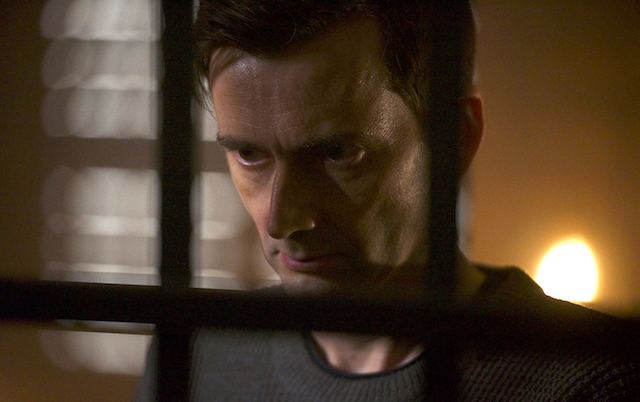
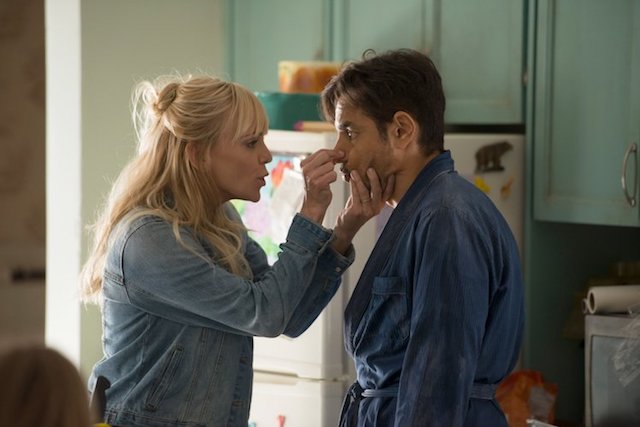

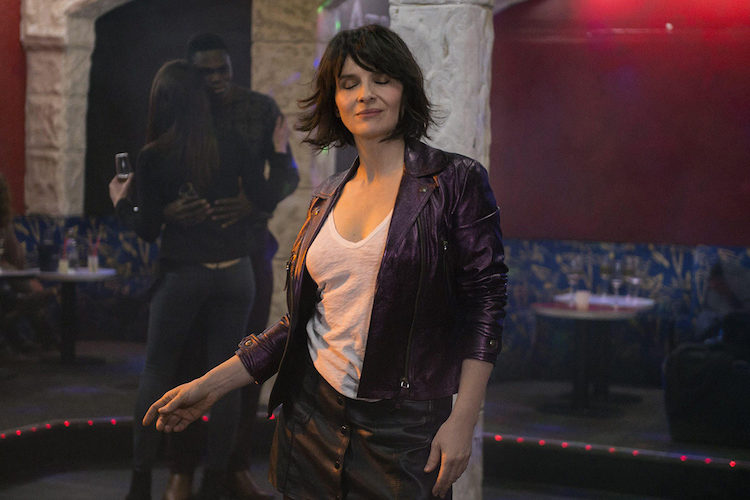


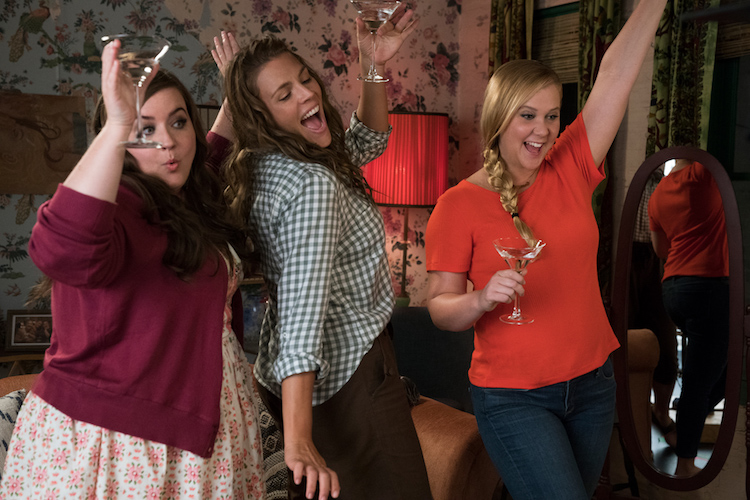


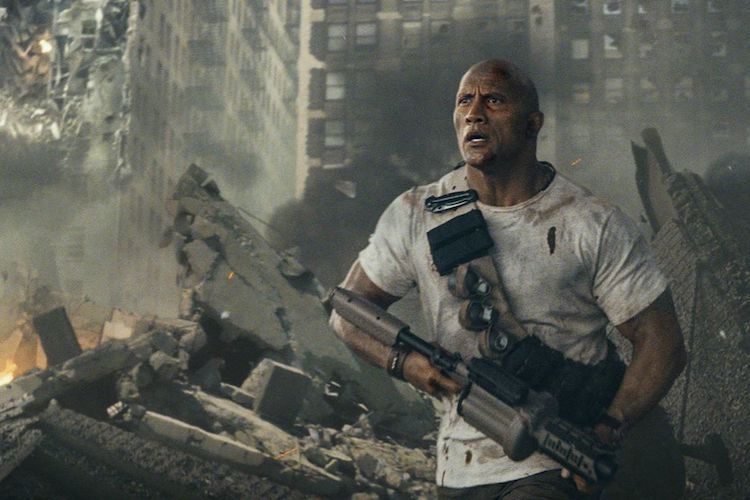

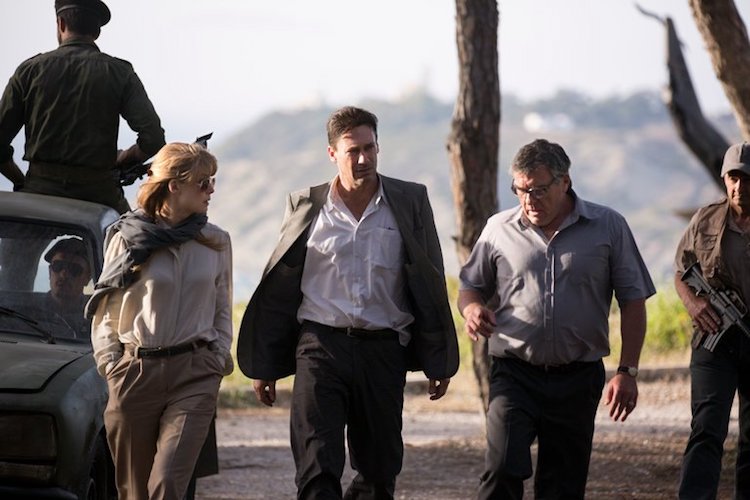
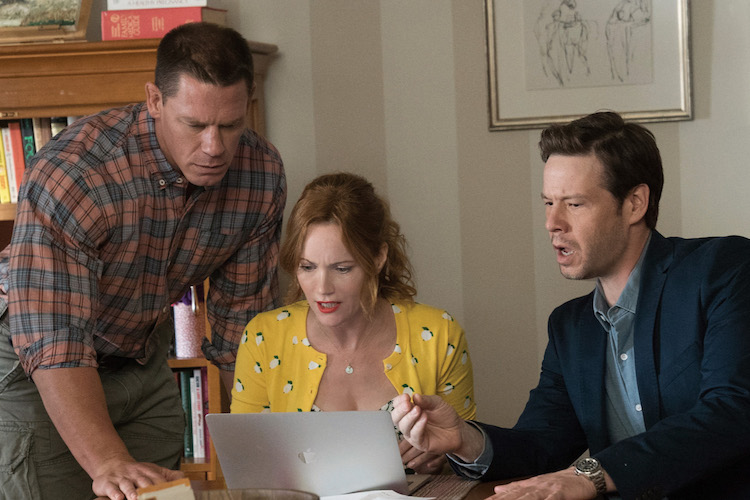
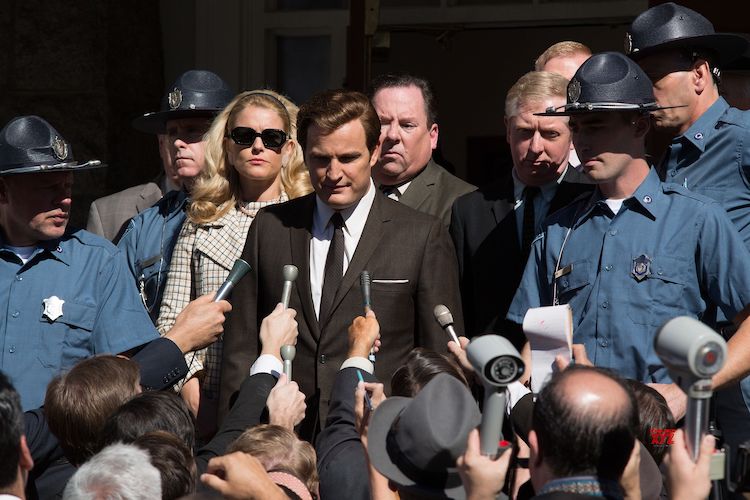
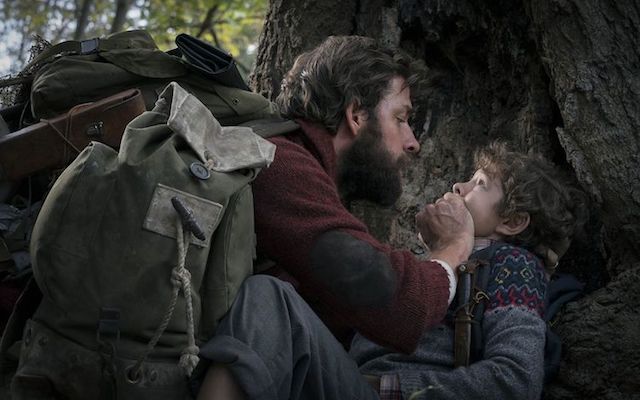
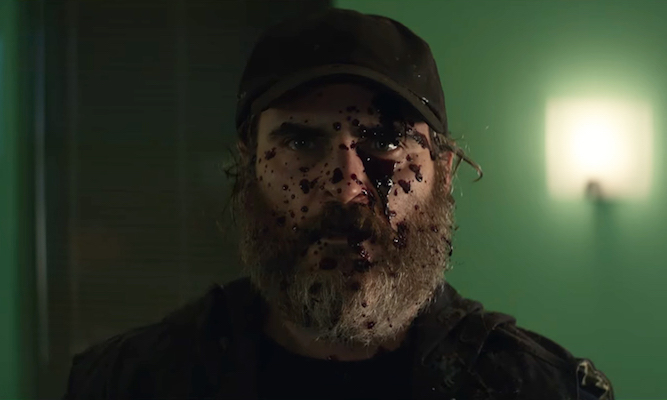


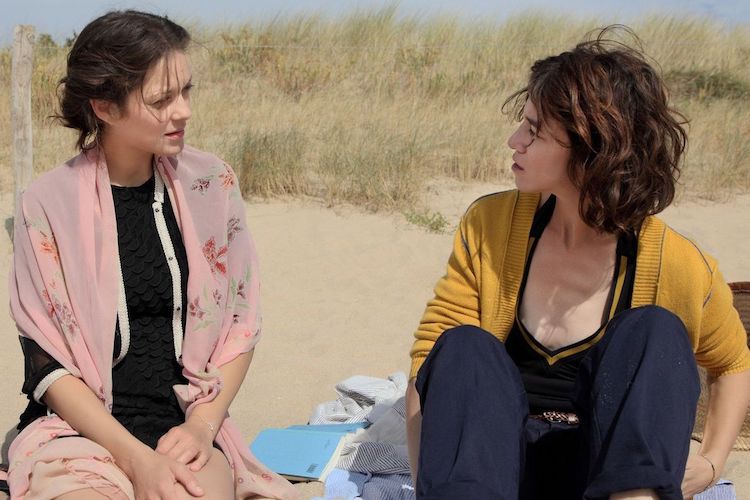
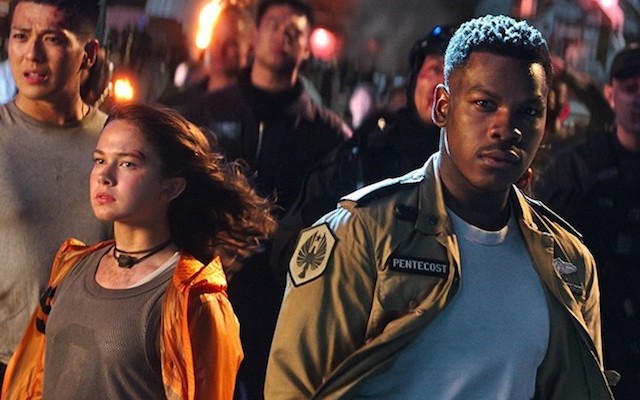
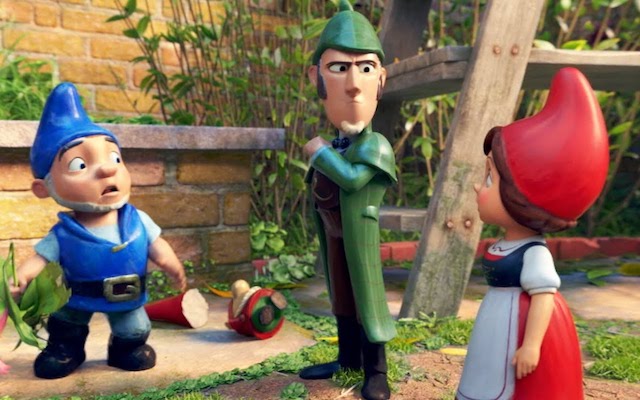
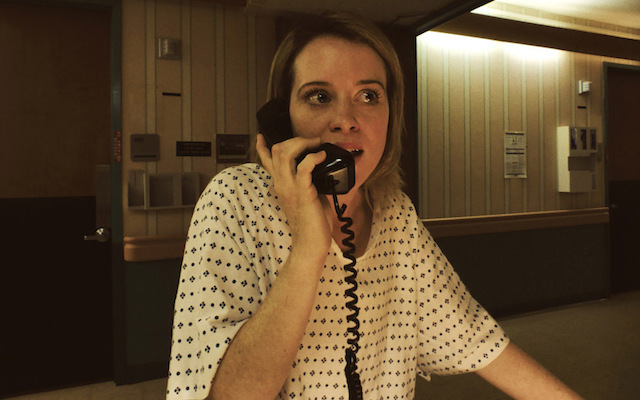
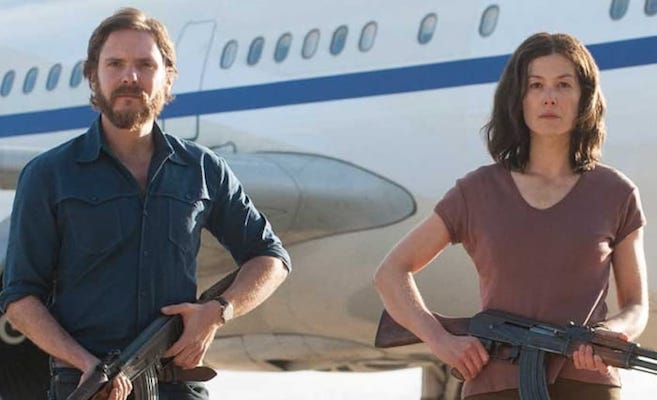
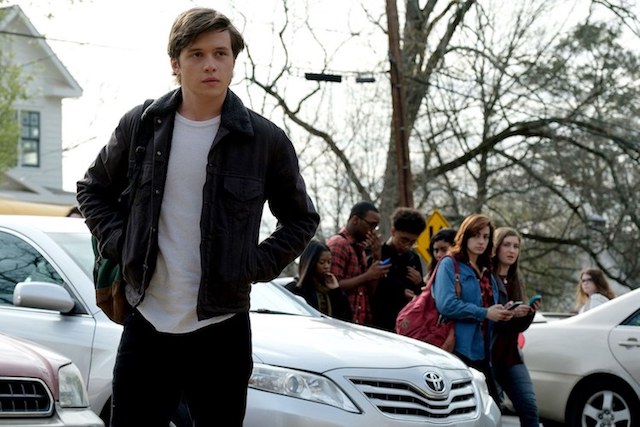

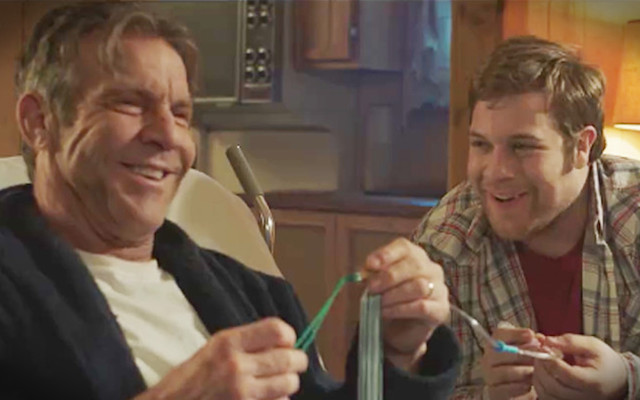
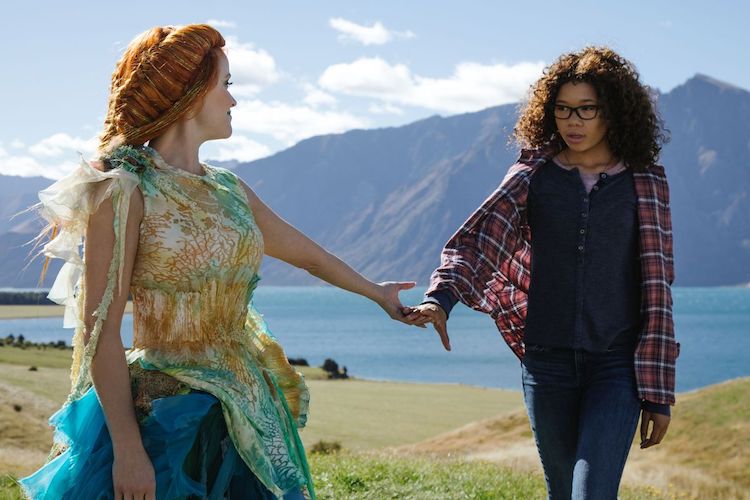
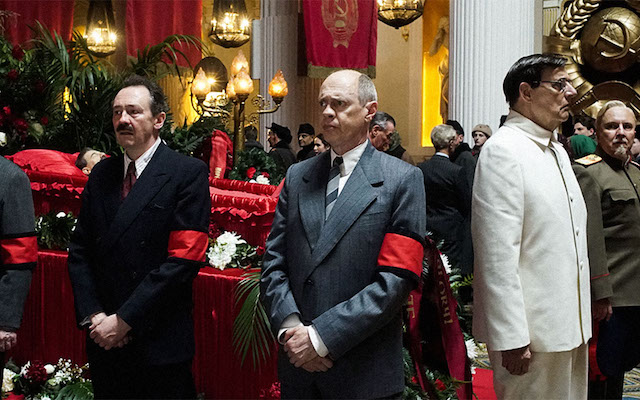




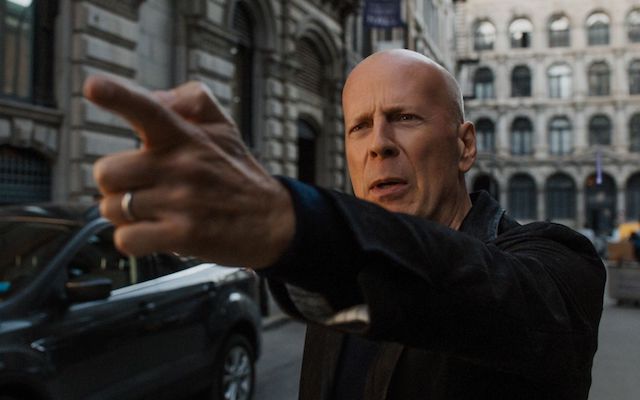
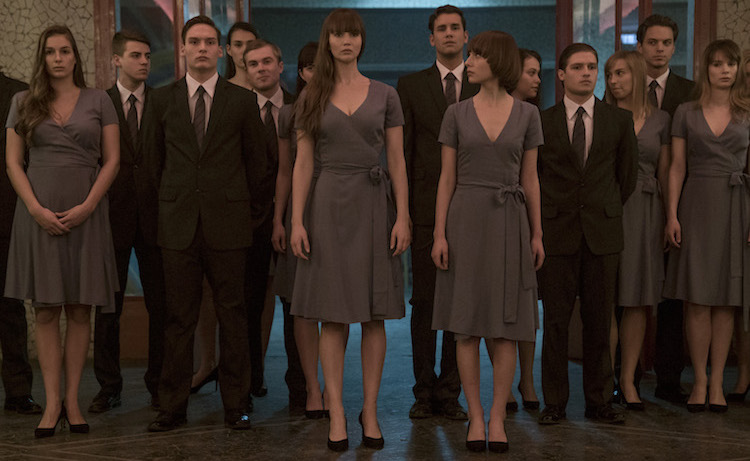

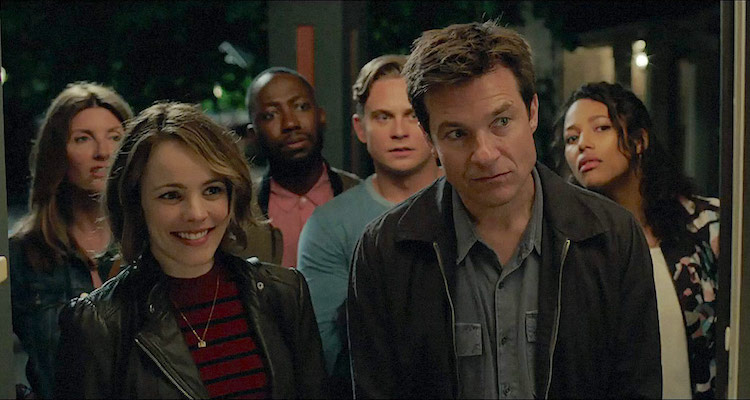
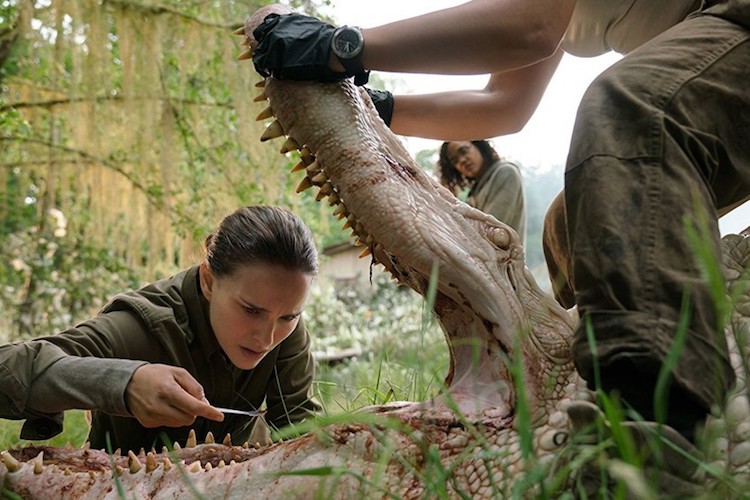


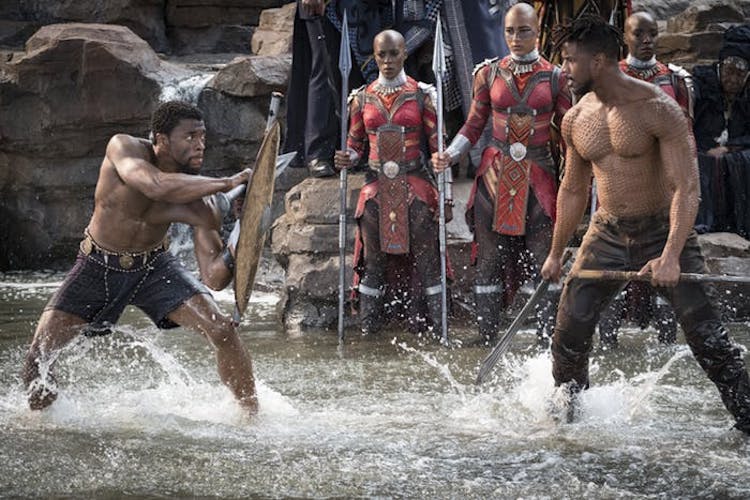



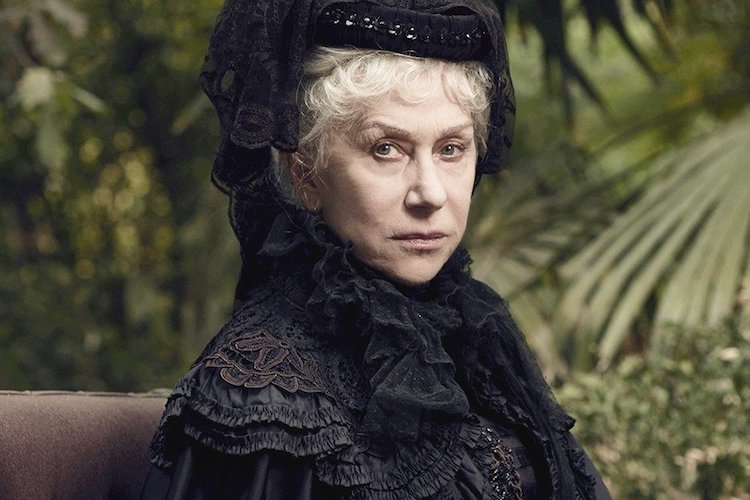



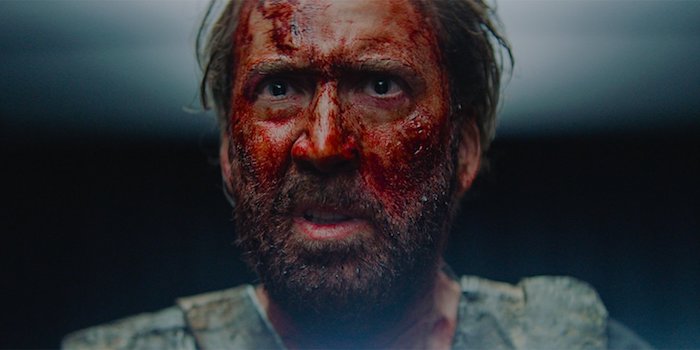
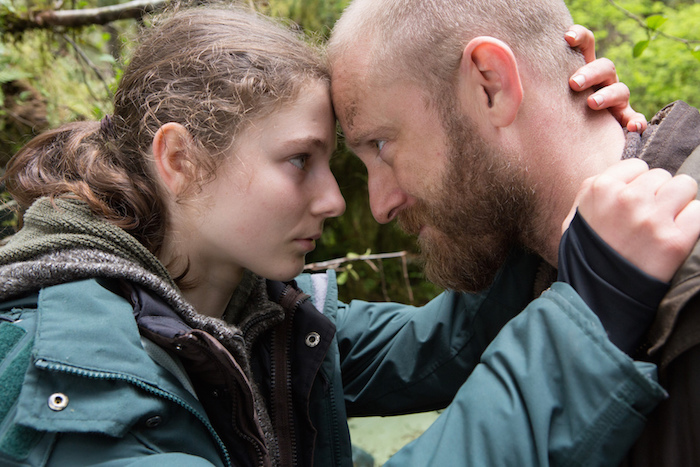


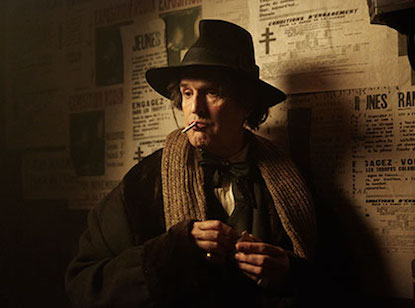








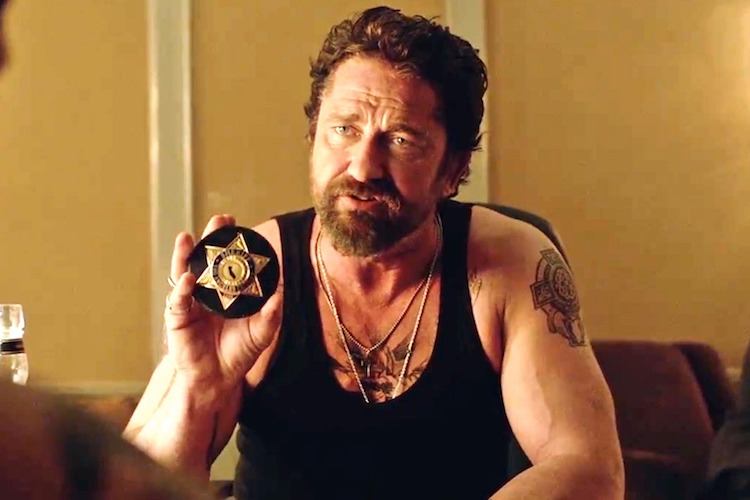
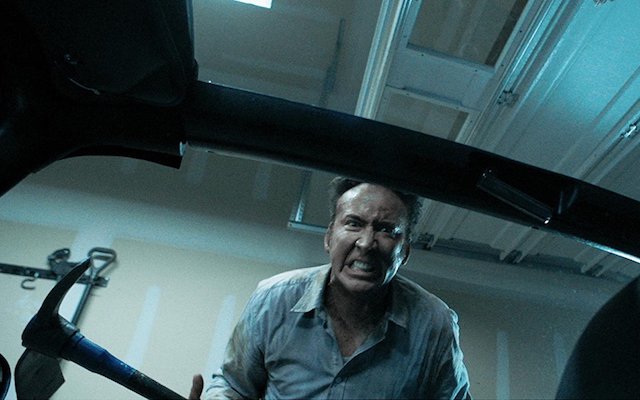
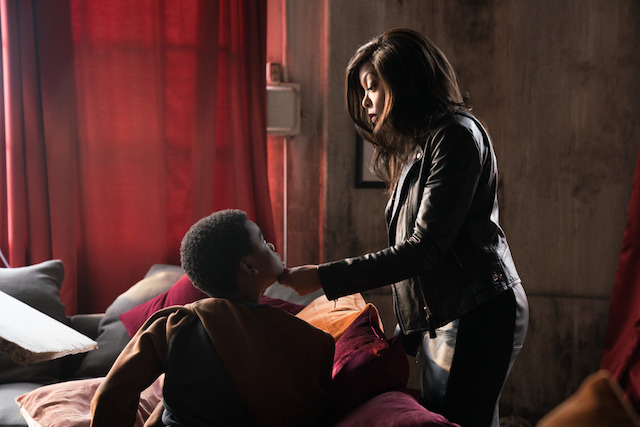












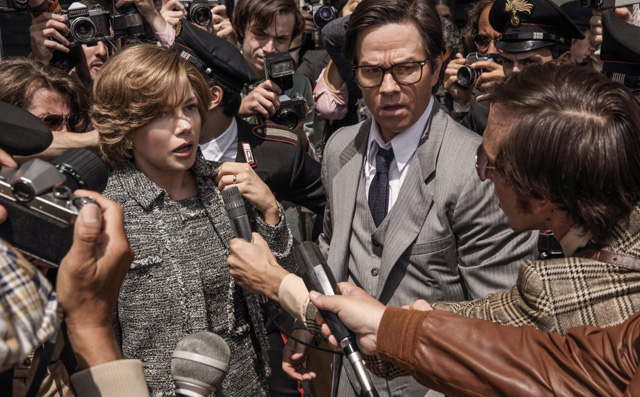

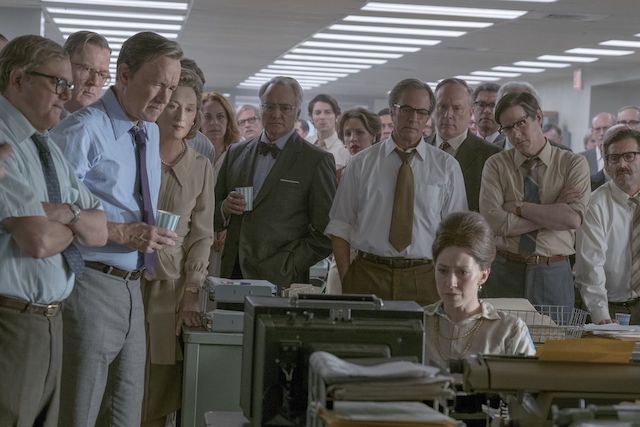
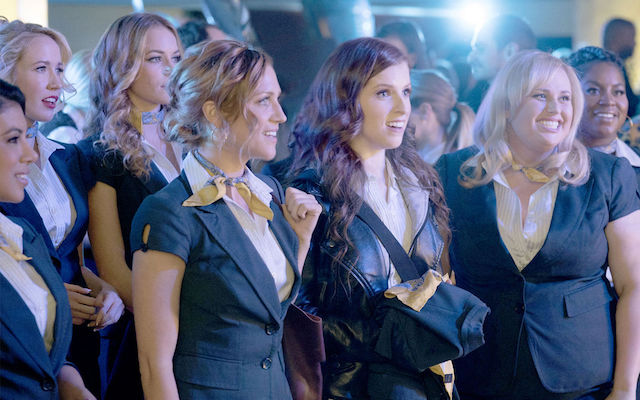


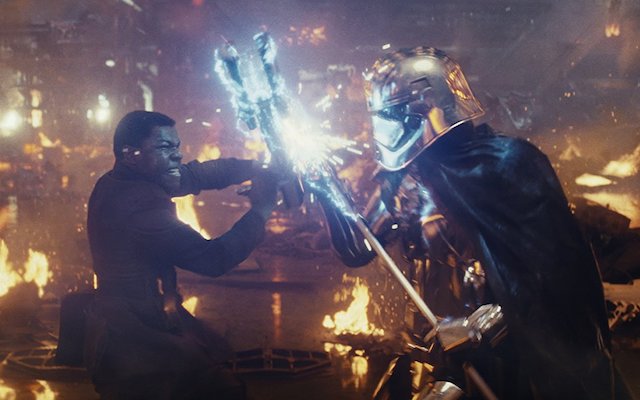

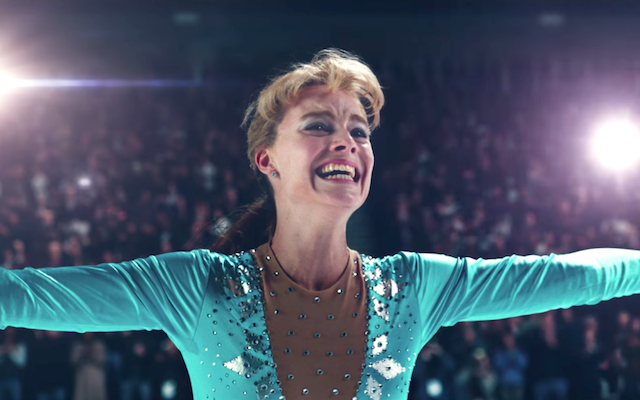

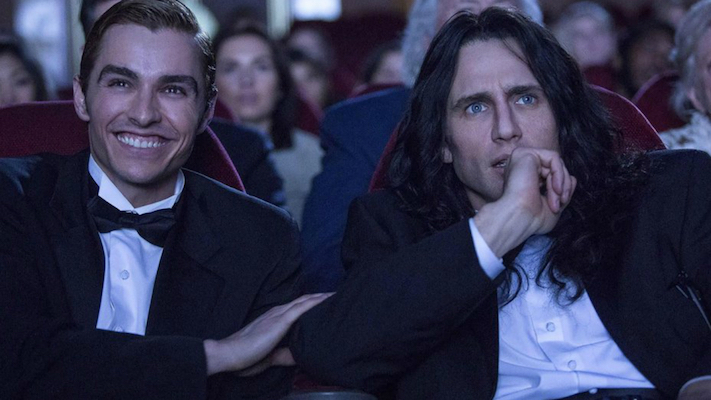
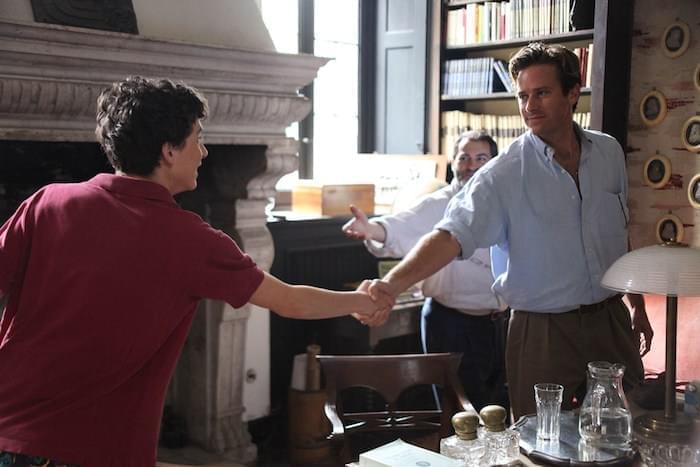
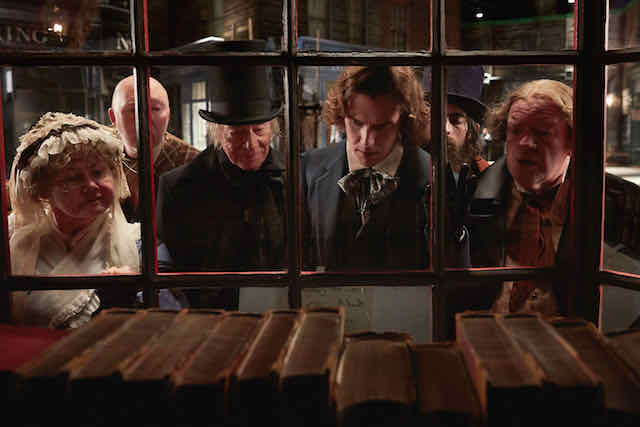

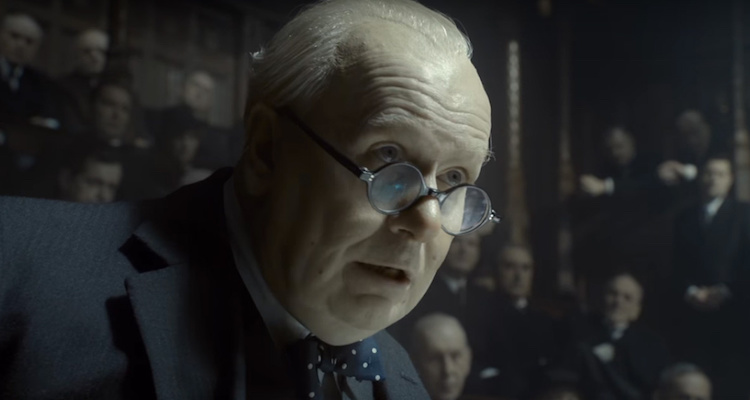
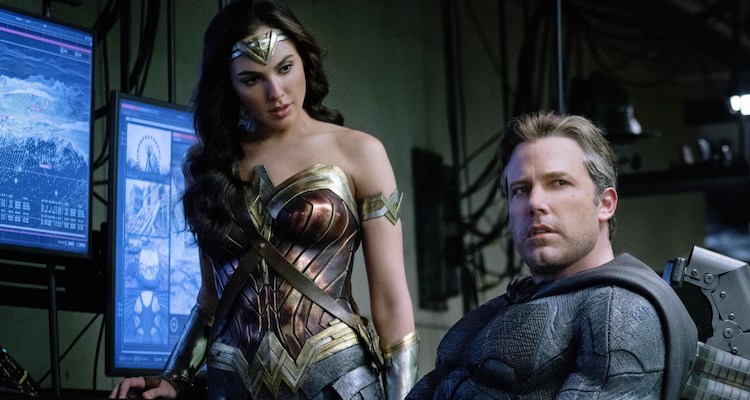

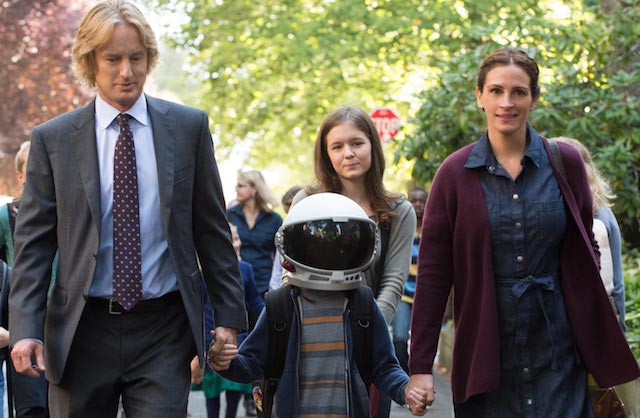

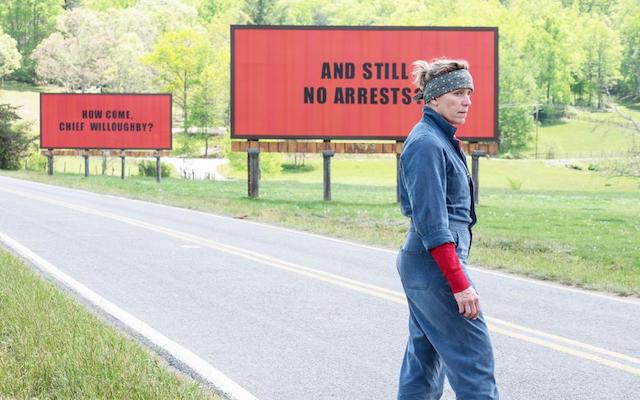
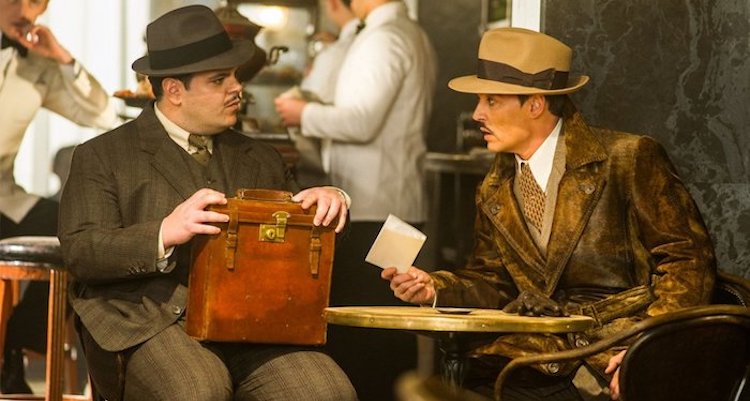
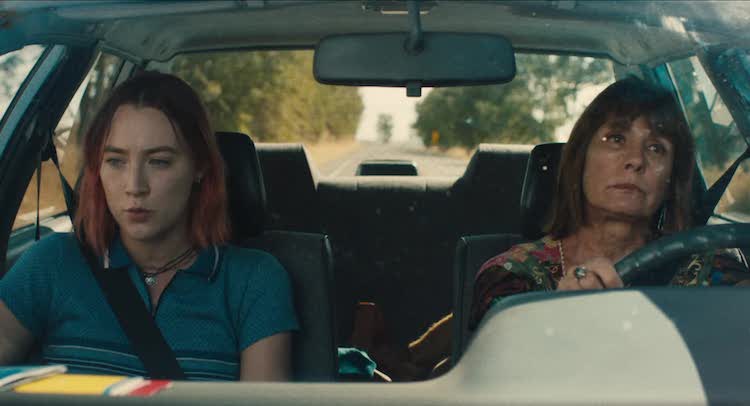


 Some notes on methodology…