Home Blog Page 16

Bathroom of Terror

0
Bathroom of Terror

I was awakened at an indecent hour on a recent morning by what I instantly recognized as the urgent need to make wee-wee. We’ve all been roused by the call of nature before, but this call was particularly insistent, like a telemarketer, one who was also, for some reason, screaming. Yes, it was like a screaming telemarketer inside my bladder — and it wanted out NOW!

I stumbled to the bathroom in the customary manner of a person who has gotten out of bed to urinate but wants to avoid truly waking up: eyes basically closed, conscious thoughts eschewed. Due to the acuteness of my need, however, I stumbled more hurriedly than usual, and in the process rammed my left foot directly into the door jamb. I said “Ouch!” (or something to that effect) and ignored the pain while I accomplished the task at hand, i.e., going whizz.

When I had finished, I stepped away from the toilet and noticed that where my left foot had been planted there was now a small pool of blood. What I had thought was merely a painful foot-bumping had in fact produced an impressive gouge in my middle toe, which had bled profusely while I was standing there dealing with the bladder situation. Glancing back, I saw that I’d left a trail of bloody toe-prints all the way from the doorjamb to the toilet. It was alarming and gross — but you have to remember, it was also five in the morning. I knew that if I gave any of this my full attention, it would wake me up completely and possibly ruin my remaining three (or four, or five — you’re not my mom) hours of sleep. The mere act of knowing this was itself almost enough to wake me up. I needed to get back to sleep, and fast!

I used a wad of toilet paper to clean off my toe and was relieved to find that the bleeding had basically stopped, which meant I could ignore it for a few more hours. Just in case, I put a sock on that foot — a clean sock, thank you very much — and went back to bed.

Then I forgot about it.

A few hours later, when I woke up for real and trundled toward the shower, I was shocked to find my bathroom resembling a crime scene. There were bloody toe-prints all over the floor, and a crimson pool on the rug next to the toilet. It took a couple seconds for the events of earlier that morning to return to my memory, and in the meantime I stood agape in horror like Norman Bates, unable to process what I was looking at. The lesson we learn from this is that one should always clean up one’s blood as soon as it is spilled, lest one forget about it and startle oneself with it later.

Now, that story reminds me of another one. When I was about 14, I was tangentially involved with the Boy Scouts, insofar as I was a Mormon teen and the Mormons’ youth program for boys was intertwined with Scouting. You didn’t have to be good at Scouting, or even interested in it, but if you went to the church-sponsored young men’s activity on Tuesday nights, there was a good chance you’d hear something about merit badges or knot-tying or good-deed-doing.

On this particular evening, we were being visited by a local fellow who was a professional fisherman, which is a real occupation. Actually, he made the bulk of his living not by fishing but by writing magazine articles about fishing, which somehow seems even less conceivable to me than making a living by fishing. But anyway, he was there to show the Boy Scouts his rod and reel — er, his bait and tackle — I mean, his equipment. Zowie!

Among the items he brought for our perusal were these rubber worms that worked on the same principle as real worms, that principle being that fish are stupid and will eat anything. Unlike real worms, the rubber worms were reusable and did not smell like worms and did not have to be dug out of the ground and did not wriggle obscenely when you had a bucketful of them. They looked like Gummi Worms, basically, only not edible (which is also true of Gummi Worms, but never mind).

So there were eight or ten of us sitting in a circle, passing around the fake worms and other fishing-related gizmos and doodads while the fisherman regaled us with stories about, I don’t know, probably fishing. We weren’t listening; we were playing with the gizmos and doodads he was passing around. When a rubber worm got to me, I inspected it with the natural curiosity of a bored adolescent who is desperate to find amusement however he can. I looked at it very closely, examining its texture and weight. I smelled it. I pulled on both ends of it to see how strong it was. The answer, I learned, was that it was not stronger than me, because I accidentally pulled it in half. Yes, even as a teen I had the power to tear thin rubber things apart without even trying!

In addition to possessing amazing strength, I was also very self-conscious as a teen, and I nervously looked around to see if anyone had witnessed my dumb accidental vandalism. No one had. My fellow Scouts and quasi-Scouts were busy looking at the other visual aids, and the fisherman was engaged in telling a story that I assume ended with him telling us how big a particular fish was, since that’s how all fishing stories end. So there were no witnesses to my act of destruction, but what was I going to do? I didn’t want to give two halves of a fake worm back to the guy and be like, “Uh, sorry, I broke your worm.” Instead, I chose to simply do away with the evidence. There were several of these worms being passed around; surely the fisherman wouldn’t notice if one didn’t return. I would just surreptitiously slide the worm halves into my pocket and that would be that.

Except it was summertime, and I was wearing shorts, and for some reason these shorts did not have pockets. Were they swim trunks? Had I worn swim trunks to church youth group/Boy Scouts? It’s entirely possible. It was a different time. Having furtively moved my hand down to my waist region in search of a pocket only to come up empty, I now panicked a little and just shoved the bisected worm into the waistband of my shorts.

Then I forgot about it.

A few hours later, I was at home, going about my business, when nature called. I walked blithely into the bathroom, stood at the toilet, and hitched my shorts down in order to gain access to the relevant apparatus — whereupon the forgotten worm halves tumbled out of my crotch and into the toilet. And for a split-second, I was as terrified as I’d ever been in my life because I thought my wiener had fallen off.

I recalled the facts of the situation soon enough, but in the meantime, in that fraction of a second … well, a lot of troubling thoughts passed through my mind, let’s just say that. The lesson we learn from this is that one should always dispose of the evidence of one’s crimes as soon as they are perpetrated, lest one forget about it and have a brief but harrowing existential crisis later.

_____________________________________________

A Year of Snide Remarks was funded by a Kickstarter campaign. This week’s column was sponsored by rap artist Prof’s latest album, “King Gampo.” Sponsor had no editorial control over the column, and the author alone is responsible for its content.

Slappy and the Stinkers

Slappy and the Stinkers

Not to judge a book by its cover, but when you write a column about bad movies and you stumble across something called “Slappy and the Stinkers,” you tend to feel like half the work has been done for you. “Slappy and the Stinkers” sounds like its own review. “Is this movie any good? Well, I’ll tell you this: it’s called ‘Slappy and the Stinkers.’ The end.”

Learning that it stars Bronson Pinchot, a bunch of annoying kids, and a farting sea lion is almost redundant. Of course a movie called “Slappy and the Stinkers” stars Bronson Pinchot, a bunch of annoying kids, and a farting sea lion. What else could it be?

“Slappy and the Stinkers” is the kind of generic-brand, pseudo-Disney children’s comedy that you’ll see playing on the VCR in a pediatrician’s waiting room, and which will one day be logged into evidence after a receptionist loses her mind from watching it all day and murders someone. It was conjured into existence, perhaps using dark magicks, after the success of “Free Willy” made marine animals all the rage in Hollywood. “SATS” doesn’t even bother to hide its inspiration. When the kids decide to help a sea lion escape from an aquarium, one of them says, “Like ‘Free Willy’! It’s Free Slappy!” I’m surprised that wasn’t the movie’s advertising tagline. “It’s like ‘Free Willy,’ but with a seal!”

(Interesting trivia fact: Do you know the difference between a sea lion and a seal? You do? Well, good for you, smarty-pants. Nobody cares.)

The Stinkers of the title are a group of five kids, all about 8 years old, who are attending a summer program at the prestigious Dartmoor Academy, a snooty private school run by fussy headmaster Morgan Brinway (B.D. Wong). The group consists of a tough-talking leader, a good kid, an asthmatic nerd, a girl, and a black boy, which means they meet the federal requirements to be registered as a Little Rascals knock-off and are therefore eligible for grant money. Brinway calls them the Stinkers because they are always getting into trouble — nothing serious, just whimsical mischief along the lines of attaching a leaf-blower and some wings to a desk chair to see if they can make it fly. (They cannot.) They also like to sneak out of the opera appreciation class that Brinway teaches, though that can hardly be described as “stinky” behavior when it is the only natural response to such a class.

Brinway is assisted by a woman named Harriet, played by Jennifer Coolidge doing an annoying Scandinavian comedy accent. When something goes wrong and Brinway starts mincing and flouncing and blustering like a fey Yosemite Sam — in other words, about every eleven seconds — Harriet is usually there to calm him down with her annoying Scandinavian comedy accent. Jennifer Coolidge and B.D. Wong are both skilled actors who have been delightful to watch in other productions, and if you asked either of them about “Slappy and the Stinkers” I bet they would pretend not to know what you were talking about.

The other employee at Dartmoor is Roy, the groundskeeper and bus driver and all-around handyman played by Bronson Pinchot. Roy is clearly meant to be a stoner, but he has to be the PG-rated, kid-friendly kind of stoner who just comes across as incredibly stupid, like Shaggy in “Scooby-Doo” or Tara Reid in real life. During a field trip to the local aquarium, Roy hears the word “octopus” and says, “Octopus? Here, puss, puss, puss!,” because he thinks it’s a kind of cat. Then the octopus in question reaches out of the water and grabs Roy’s hair with its tentacles, for comedy. It is that kind of movie.

It’s during this field trip that the Stinkers encounter Slappy the sea lion. Within seconds of being introduced as a character, Slappy farts loudly, as if the movie was worried that his being a sea lion wouldn’t be enough of a novelty to hold our interest. “Sure, he’s an aquatic mammal who does tricks,” said a producer. “But today’s kids have already seen that! I’ll be damned if they’ve seen a farting seal, though!!” Slappy farts three more times in the movie, and also has a scene where he gorges on chocolate-flavored laxative and then sits on a toilet. Kind of a waste that the movie paid for a whole sea lion when all it needed was the anus.

Watching Slappy for less than a minute and hearing him break wind is all the motivation the Stinkers need to arrive at the decision that they must get Slappy out of the aquarium and back into the ocean, where he will surely be happier and less gassy. A sequence of events too nonsensical to be described in human language leads to the Stinkers getting Slappy out of the facility and on to the school bus. Their plan is to sneak him back to Dartmoor, and then to figure out how to get him to the ocean. They contemplate this from the parking lot of the aquarium, from which the ocean is clearly visible and cannot be more than 100 yards away.

They get Slappy back to Dartmoor and hide him for the afternoon in Mr. Brinway’s hot tub. Wouldn’t a hot tub actually be a terrible place for a sea lion? Don’t worry, the film clears up that plot hole by having the Stinkers mix in a lot of ice and salt, thereby recreating Slappy’s natural habitat. But how will they feed him? Don’t worry, the film addresses that plot hole, too, by having the Stinkers order $150 worth of fish from a local fish-and-chips franchise and telling the delivery guy to just charge it to Brinway. You know how take-out restaurants will deliver food to your house and you can just say, “Oh, charge this to So-and-So?” It’s like that.

The kids figure Brinway never comes home early and never uses his hot tub anyway, whereupon Brinway decides to do both. (He makes the decision immediately, lest we forget the comedy set-up that has been put into place.) So then there are shenanigans and hijinks related to getting Slappy out of the hot tub before Brinway sees him, and to Brinway wearing an American flag Speedo, and to whatever other assorted humiliations the movie can conceive to inflict upon Brinway in this short space of time, lest we forget that without farting sea lions and abused authority figures, the movie would just be 15 minutes of over-acting children shouting dumb dialogue.

It is decided that Slappy will spend the night with Witz (Carl Michael Lindner), the asthmatic nerd and neurotic worry-wart of the group. The rest of the Stinkers tuck Slappy into bed with Witz and then one of them says, “Try not to wheeze! To a sea lion, a wheeze might sound like a mating call!” This only makes Witz more nervous, which makes him wheeze, which makes Slappy kiss him on the forehead, which makes everyone laugh because now Witz might get molested by a sea lion, LOL.

The next day they load Slappy into an old free-standing bathtub they have lying around, put it on a wagon, and use their bicycles to haul it to the beach. (To their credit, they do not go to the same beach that they walked past when they left the aquarium.) But Slappy looks out into the ocean, sees stock footage of a killer whale, and refuses to enter the water because killer whales eat sea lions. “No, it’s OK!” the Stinkers tell him. “It’s just stock footage! It’s from another movie!” But Slappy won’t listen, on account of not having ears. Now the Stinkers’ plan is to take Slappy back to the aquarium they stole him from in the first place, making this the most confused conservation message I’ve ever seen in a movie.

Meanwhile, a villain named Boccoli (Sam McMurray) has been trying to steal Slappy himself so that he can sell him to a circus on the black market. This was before Craigslist, when the only way circuses could get animals was from the back of a guy’s van. But never fear, the kids pull a lot of painful pranks on Boccoli, “Home Alone”-style, and rescue Slappy and get him back to the aquarium, where he’ll live happily and fartily ever after.

(Note: Bronson Pinchot’s character serves no function in the story. It is possible that he was included only because Pinchot was under contract and had to rack up another 10 minutes of screen time before the studio would let him go.)

— Film.com

What Household Items Will Become Movies After the Board Games Are Used Up?

0
What Household Items Will Become Movies After the Board Games Are Used Up?

The “Battleship” movie is coming May 18, and there’s nothing you can do about it. It’s out there, it can’t be reasoned with, etc. Everyone laughed when it was announced a couple years ago, then laughed some more when movie versions of Monopoly, Clue, and Ouija were also announced. Movies based on board games?? Madness! The others have fallen by the wayside for the time being, but you can bet they’ll be back in development if “Battleship” is a hit.

And what then? Eventually we’ll run out of board games and have to move on to other common household items. Join us now as we take a startling look into the future.

“Scrubbing Bubbles”

As a young child, I found these animated bathroom-cleaning monsters terrifying. Yes, they only devour filth and grime and are not inherently evil. Nonetheless, their piranha-like swarming tendencies and their ability to render a dirty thing sparkling clean in a matter of seconds are alarming. With some realistic CGI, they could be turned into unstoppable killing machines that go on a rampage after a radiation leak makes them thirsty not for germs but for HUMAN FLESH.

“Tyler Perry’s The Piano”

There was already a movie called “The Piano,” of course, starring Anna Paquin, Holly Hunter, and a nude Harvey Keitel. This one is different. This one is actually about a piano. Utilizing his facility with on-the-nose metaphors and hysterical melodrama, Perry presents the black and white piano keys as living beings, played by actors, three of whom are Perry himself. The ebony and ivory live together in perfect harmony on the piano keyboard, but only sometimes. Other times — like, for example, if you play an ebony F-sharp and an ivory G together — it sounds hideous. They all learn to get along when the B-flat (Perry, in drag) gives a stirring speech about the value of discord.

“Humidifier”

In this Michael Bay production, a humidifier runs amok and threatens to make the entire world too humid! (The humidifier is actually a space robot, probably.) In addition to ruining people’s hairstyles, this would make every place feel like Florida, i.e., worse than death. Only Shia LaBeouf and a bosomy gal to be named later can save the day! To be followed by “Humidifier 2: The Moistening.”

“Farrah’s Faucet”

Here is an enchanting animated tale for children, in which a young girl named Farrah discovers that when she turns her bathtub tap to just the right angle, the faucet delivers soup instead of water — hearty, delicious soup! Farrah uses her good fortune to help her impoverished family earn a living by selling the tasty bathtub soup, threatening to unseat the current titans of the soup industry. (That would be Campbell’s, but they can’t be called Campbell’s in the movie. In fact, just to smooth things over, the studio will work with Campbell’s to produce a “Farrah’s Faucet” tie-in soup.) The corporations send assassins to Farrah’s house, but she defeats them because it turns out the kitchen sink faucet shoots lava.

“Day of the Phone Books”

You’ve never known terror like the terror on display in this shocking horror film! It begins peacefully enough, with a suburban homeowner stepping onto his porch one morning and finding that a new phone book has been delivered. At first he views it as a curiosity, a quaint relic from the past, like discovering that someone has left a gramophone on your lawn, or a Puritan. But the man’s amusement turns to panic when the phone books keep coming, day after day, filling his house, with no receptacle big enough to contain them. All his neighbors have the same problem. There’s no way to stem the tide of phone books, no way to make them stop coming! Soon they have covered the landscape, like in “WALL-E,” and all of humanity drowns in unwanted, unstoppable phone books. (Based on a true story.)

— Film.com

Weekly link roundup – Feb. 25-March 2

0

NEW MOVIE REVIEWS:

“The Lorax” (C+)
“Project X” (D-)
“Tim and Eric’s Billion Dollar Movie” (B) [Film.com]

* * * * *

MOVIE COLUMNS:

Eric’s Bad Movies: “Tentacles” (1977), starring John Huston, Shelley Winters, Shelley Winters’ giant hat, and an octopus. [Film.com]

Re-Views: “The Next Best Thing” (2000), starring Madonna and Rupert Everett, continues to not be a very good movie. [Film.com]

* * * * *

MY OTHER STUFF:

Movie B.S. with Bayer and Snider: We celebrated our 100th episode by reviewing some movies and playing a game, as mandated by the Constitution. [MovieBS] or [iTunes]

In the Dark: Subscribe to this weekly e-mail and get all the latest movie reviews, DVD releases, and other pertinent info delivered to your electronic mailbox. [Eric D. Snider’s In the Dark]

Twitter: @EricDSnider

* * * * *

MISCELLANEOUS MERRIMENT:

Gawker went to Netflix and gathered the worst user reviews of the Best Picture nominees. These are good things to read if you want to lose all faith in humanity (again). [Gawker]

For some reason, here is my pal Matt Patches having a staring contest with Paul Dano. [YouTube/Hollywood.com]

In a similar vein, here’s my other pal Chase Whale being abused by Tim and Eric. [YouTube]

The dapper and gentlemanly James Rocchi gets all level-headed over Lou Dobbs’ claim that “The Lorax” is indoctrinating kids to hate capitalism. [MSN Movies]

Brian Salisbury eviscerates “Project X” with more humor and vitriol than I did. [Film School Rejects]

A Russian cat with weird ears and weirder posture watches “Star Wars.” [YouTube]

The Lorax

0

It was only after seeing the new animated version of “The Lorax,” and being disappointed by it, that I went back and re-read the Dr. Seuss book it’s based on. I think my disappointment would have been greater if the book had been fresh in my mind when I saw the film. Having only dim memories of it prevented me from realizing, in the moment, just how untrue to its spirit the movie really is.

The good doctor’s 1971 original, while peppered with Seussian language and told in rhyme, is bleak. The world is gray and deforested, choking to death on smog, all the animals gone. The brief story doesn’t end with someone fixing things and everyone living happily ever after: it ends with the hope that renewed efforts will one day make things right again. There’s no assurance it will actually happen. Simple and unadorned, the story has a haunting, somber effect.

Compare that to the movie — a merry, song-filled, candy-colored thing that’s as hollow as a cheap chocolate bunny. Writers Ken Daurio and Cinco Paul (who did a much better job with “Horton Hears a Who”) got rid of 99 percent of the rhyming and every Seussian word other than “Lorax,” “Once-ler,” “Truffula,” and “Thneed,” yet somehow rendered the story less serious, not more. What was once a straightforward and uncluttered narrative is now padded with backstory, subplots, and diversions, all necessitated by the desire to stretch an 1800-word story into a feature-length movie. The book left no doubt that Dr. Seuss took the message seriously. The film leaves no doubt that the principal motivating factor was a desire to convert Seuss’ books into money, and that “The Lorax” just happened to be next on the list.

We open in Thneedville, a synthetic metropolis where only the oldest citizens can recall a time when trees existed. The absence of plant life seems to have had no ill effect on the city; indeed, everyone is healthy and happy. A boy named Ted (voice of Zac Efron), desiring to woo the lovely Audrey (Taylor Swift), who has an affinity for extinct flora, sets out to learn what happened to the trees — and, if possible, to get one. So that Audrey will like him. Yes, the chain of events that brings plant life back to the world is set in motion not because the world needs plants, but because a boy wants to impress a girl. Better to do the right thing for the wrong reason than not to do it at all, I guess.

Ted’s grandma (Betty White, obviously) tells him to venture outside the city to the wastelands and ask the Once-ler where the trees went. The Once-ler (Ed Helms), a shack-dwelling hermit, reveals all in the form of flashbacks that basically follow the tale you’re familiar with. He set out as a young man to make his fortune, chopped down trees to make a product called Thneeds, sold a zillion of them, and in the process used up every last tree in the country, the fool. He did all of this despite warnings from the Lorax (Danny DeVito), a potato-shaped sprite who speaks for the trees and other voiceless creatures.

In filling out the details of the story, the writers and director Chris Renaud (“Despicable Me”) inject a lot of forced whimsy. When the Lorax and some animals sneak into the Once-ler’s house late at night, we hear the “Mission: Impossible” music. There’s some glib satire about a greedy industrialist (Rob Riggle) selling air to the citizens of Thneedville. Meanwhile, the film eliminates most of the whimsy that was already there, discarding fanciful animal names like Bar-ba-loots and Swomee-Swans and calling them plain old bears and birds.

All of that being said: yeah, the movie is cute. It has a few laughs and is not generally annoying. It’s only disappointing in comparison to its source material, and in comparison to what it could have been; by itself, it’s worthy of a shrug and a pat on the head, no more, no less.

Project X

0

Like pretty much all movies now, the rancid and pointless teen comedy “Project X” pretends to be “found footage,” i.e., it is filmed by the characters themselves. The artistic reason for this choice is presumably to make the story seem more true-to-life. It doesn’t work, though — and thank goodness. If I thought actual teenagers were as idiotic and depraved as the ones in “Project X,” I’d have to give up on life.

The film doesn’t do a good job of portraying real teenage boys, but it is a good example of the kind of wish-fulfillment movie that teenage boys would make if they had the resources. You can imagine a handful of 17-year-old douchebags excitedly spelling out their ideas:

“OK, so the main dudes throw this huge, epic house party, and chicks get naked and fool around with them, and everybody drinks and takes drugs, stuff gets wrecked and set on fire –”

“– and then there are no negative consequences! Like maybe they kind of get in a little bit of trouble, but not really.”

“Right! The main thing is that the quiet kid who threw the party is viewed as a hero now!”

“Even his dad is more impressed than angry!”

“Yeah!”

“And it will all be really hilarious because everyone will say and do filthy things the whole time, which is the same thing as being really hilarious!”

What’s alarming, and a little sad, is that “Project X” wasn’t made by teenagers but by grown-ups. The writers, Matt Drake and Michael Bacall, have IMDb credits from more than a decade ago, so they’ve gotta be at least in their 30s. Same goes for the director, Nima Nourizadeh. He’s never directed a movie before, but surely he’s at least seen some?

Anyway, the scenario for this dumb exercise in teensploitation is the 17th birthday of Thomas (Thomas Mann), an ordinary and somewhat shy high-schooler whose parents are leaving for the weekend and have said he can have a couple friends over. Thomas’ best friend, Costa (Oliver Cooper), the type of swaggering loudmouth who says “pimp” a lot, invites the entire school. The third member of their group, JB (Jonathan Daniel Brown), helps out by being chubby and nerdy, giving Costa someone to make fun of. Oh, and there’s a fourth friend, Dax (Dax Flame), whose sole interest in life is following the protagonists around with a video camera and silently staying out of the way.

The party gets out of hand rapidly. Hundreds of people arrive, including all the hottest chicks and the coolest bros in town. In accordance with signs Costa has posted that say “NAKED GIRLS ONLY,” the girls obligingly remove their bikini tops when getting in the swimming pool. (That’s not really the same as being “naked,” but Costa isn’t a stickler.) People skateboard off the roof. Alcohol and marijuana flow freely, and then a piñata full of Ecstasy tablets livens things up even further. People retire to various rooms of the house to fool around.

That includes Thomas, who has his eye on a foxy brunette named Alexis (Alexis Knapp) but also — what are the odds?? — has a very pretty blond platonic friend, Kirby (Kirby Bliss Blanton), who might want to be more than platonic. Everything’s coming up Thomas!

The only thing Costa talks about more than girls’ genitals (“p***y”) is his own genitals and the genitals of other boys. You could spend a year working in a urologist’s office and hear fewer references to penises and testicles.

Please understand that I feel very, very old when I say this, but the way every guy in the movie treats girls is unsettling, and so is the way every girl goes along with it. The fact that there are no repercussions for anyone’s behavior only makes it worse, both morally and artistically. Usually a movie about youthful debauchery lets you know, at some point, that while this is all fun to watch on the movie screen, it’s not really OK in real life. “Project X” does no such thing, and in fact does the opposite. And from a movie-going perspective, what’s the point of a story where none of the characters learns anything or grows in any way or changes at all?

The point is to be funny, of course. And believe me, I have no problem with a relentlessly vulgar and “pointless” sexcapade if it makes me laugh! Being funny excuses everything. But apart from a few bits of slapstick and a couple lines of dialogue, “Project X” isn’t funny. It seldom even tries to be, except insofar as kids doing outrageous and naughty things is, by itself, funny. The laughs are supposed to come because, OMG, that car just drove into the swimming pool! OMG, that guy got Tasered! OMG, what a wild party!

No. No, movie. You can’t film a bunch of teens acting like random jackasses, slap a title on it, and call it entertainment. I mean, I guess you can, but you’d be wrong.

Tim and Eric’s Billion Dollar Movie

0

The world can be divided into three categories: people who have seen “Tim and Eric Awesome Show, Great Job!” on Cartoon Network’s Adult Swim and liked it; people who have seen it and hated it; and people who haven’t seen it at all. The first group will enjoy “Tim and Eric’s Billion Dollar Movie,” the second absolutely will not, and the third … well, it’s hard to predict how a person would react to his or her first exposure to this very odd, very specific brand of intentionally off-putting anti-comedy.

I enjoy the TV show, in which Tim Heidecker and Eric Wareheim play themselves playing guys who are making a TV show on a fictional network, complete with low-budget commercials and news segments. It’s like a surreal, often nightmarish, frequently hilarious “SCTV” — and the episodes are only 10 minutes long, which is a good dosage for this kind of random, plot-less thing. My chief concern going into the film was whether 90 minutes of it would be 80 minutes too much.

Fortunately, the movie turns out to have more of a story than I would have expected, given the looseness of the TV show, and the plot provides structure and focus. In it, Tim and Eric have been given a budget of $1 billion to make a movie, and have returned with an unreleasable three-minute disaster starring a Johnny Depp impersonator. Their investor, kneecap-breaking businessman Tommy Schlaaang (Robert Loggia), wants his money back. Tim and Eric hear of an opportunity to make a billion dollars running a dilapidated Midwestern shopping mall, and set out to do so before the Schlaaang Corporation can catch up with them. (I didn’t say the story was realistic. I said it existed.)

Heidecker and Wareheim work in what you might call the humor of unpleasantness. No one in a Tim & Eric production is physically attractive; bit parts are often played by people with that cable-access, we-found-this-guy-on-the-street look about them. Between the unflattering clothes and outdated technology, you get the vague sense that everyone and everything is from 1989. Heidecker and Wareheim practice the fine art of annoyance through repetition, which can make you laugh, make you exhausted, or both.

The movie stays true to this formula, with the added benefit of being free from TV restrictions: now they can use vulgarity, violence, and poop to make us laugh-cringe. And boy, do they. The pinnacle is a sequence in which we cut back and forth between a grotesquely unsexy sex scene and a supremely distasteful procedure at the Shrim Healing Center. John C. Reilly appears as Taquito, a sickly, hacking squatter who lives in the old mall and becomes Tim and Eric’s sidekick, with Will Ferrell as the shady mall owner (who’s obsessed with “Top Gun,” for no reason), Will Forte as an angry shopkeeper who doesn’t want more customers, and Zach Galifianakis as Jim Joe Kelly, the boys’ spiritual guru. Everybody’s gross. Speaking of which, Michael Gross shows up at the end.

Needless to say, this freewheeling parade of bizarreness is not everyone’s cup of shrim. Chances are good that the people whose cup of shrim it is already know who they are. If you’re not sure, that’s why we have YouTube. Search for “Tim and Eric Awesome Show Great Job” and see if you’re intrigued, entertained, and/or baffled by what these likably unlikable weirdos do.

The Next Best Thing (2000)

0
The Next Best Thing (2000)

A 1996 documentary called The Celluloid Closet gave a fascinating and fairly thorough history of homosexuality in the movies, in particular addressing the way gay themes used to be kept as subtext rather than expressed outright. Much has happened since 1996, though, and if The Celluloid Closet is ever updated, it will probably include The Next Best Thing as a milestone in gay cinema.

The film starred gay icon Madonna and openly gay actor Rupert Everett, was directed by openly gay filmmaker John Schlesinger, and addressed gay-rights issues at a time when few mainstream movies did so. Surely it earns a place in the history books for those reasons.

Unfortunately, it’s also terrible. Whatever the movie’s intentions might have originally been, the finished product came off as obnoxiously preachy, not to mention phony and unfunny. It tanked at the box office, earning just $14 million in the U.S. and another $9 million overseas. The vast majority of reviews (81%, according to Rotten Tomatoes) were negative, mine included…

What I said then:

“If The Next Best Thing doesn’t turn out to be among the five worst movies of the year, it won’t be for lack of trying. It has all the makings of a terrible movie. It casts Madonna, who has never been capable of acting, as its lead…. Then it makes her act opposite Rupert Everett, who is normally very good but who is here saddled (as is everyone) with atrociously ridiculous dialogue and no characterization. Then it lets everyone act in the most wooden, stilted fashion possible, making the already-absurd storyline seem even more implausible because we never actually believe a single word anyone says. It preaches, too…. The movie ends generically and sadly. Then, over the closing credits, we’re told by words on the screen that things actually turned out OK after all — as if to say, ‘Oh, that sad ending — you know, the one part of the movie that actually seemed based in reality? — we were kidding about that. Everything’s fine.’ Even the actors don’t seem to be having a good time in this joyless, hollow train wreck…. This movie isn’t hell itself, but it is the next best thing.” Grade: F [My complete review.]

The film did indeed make my worst of 2000 list, surpassed only by Blair Witch 2: Book of Shadows, Pokemon The Movie 2000, and Battlefield Earth. For obvious reasons, I barely gave it another thought after that. But 12 years have passed. Who knows? Maybe the parts that are supposed to be funny would seem funny to me now, and maybe the dramatic elements would come together more gracefully. I’m always willing to give someone a second chance!

The re-viewing:

Ugh, this movie is awful. Everything about it, from the first frame to the last. I went in with an open mind, I promise. I didn’t re-read my original review first, and I did read the few positive reviews I could find. But even still, sitting through this embarrassment again was a chore.

How sad that this was John Schlesinger’s last film. He won an Oscar for directing Midnight Cowboy (1969), went on to make Sunday Bloody Sunday (1971), The Day of the Locust (1975), and Marathon Man (1976), and wound up here, working on a movie that probably meant something to him personally but was doomed for failure. He suffered a stroke several months after The Next Best Thing was released (he’d already had a quadruple heart bypass in 1998), and remained in poor health until his death in 2003.

Perhaps even worse than this being Schlesinger’s last film is the fact that it wasn’t Madonna’s.

Hey, look! Neil Patrick Harris is here, in a supporting role as a gay friend of Rupert Everett’s. This was six years before he officially came out of the closet (in People magazine, of course, as required by law), but I don’t think he was trying to hide it, either. He hadn’t been in the public eye much since Doogie Howser anyway, apart from a role in the 1997 cult favorite Starship Troopers. And now he’s the king of everything, beloved by one and all, happily married to David Burtka and raising twins! The world is different now from what it was in 2000.

I’d forgotten the asinine twists that the plot takes in its second half. Madonna’s character turns out to be an utterly loathsome human being, and there’s a barrage of implausible nonsense. It ends on a somber note — but one that was realistic for the time — only to cancel it out over the closing credits in favor of a “they all lived happily ever after” ending. The whole thing is baloney.

You know who else thinks so? Rupert Everett. He wrote very amusingly about the process of making this disaster, including several anecdotes about Madonna’s diva behavior. Reading that, I’m surprised the movie didn’t turn out worse than it did.

Do I still hate this movie?

I do. Very much so. Its combination of casting and subject matter will give it a place in the history of gay cinema, and one could argue that anything that contributes to awareness of important issues isn’t completely worthless. But as a movie, it’s an unholy mess, devoid of humor, intelligence, and entertainment value. Let us never speak of it again. Grade: F

— Film.com

Tentacles

0
Tentacles

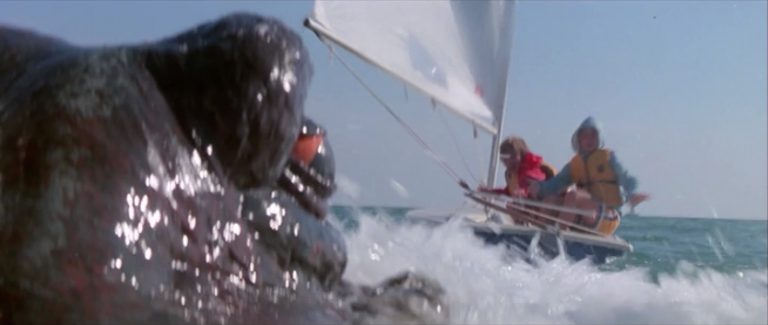
“Tentacles” is a cheap “Jaws” rip-off about a giant octopus. It was made at a time when everybody was trying to think of which giant sea creatures other than sharks could theoretically terrify moviegoers. It is not a good movie. But it’s hard to call it a complete failure when the first two octopus victims are a peg-legged sea captain and a baby. You win extra points for that sort of thing.

The film was made by an Italian production company with a mix of American and European actors, and though it’s set in California, I can’t find a definitive answer on whether it was shot there or in Italy. A few of the minor roles were definitely played by Italians; you can spot them either because their voices have been dubbed or because they speak with comically thick Italian accents. Perhaps self-conscious about this geographical ambiguity, at one point the movie features a parade led by a man dressed as Uncle Sam. [Italian accent] See?? America! The movie, she is from America! [end Italian accent]

tentacles

At any rate, there’s a bunch of famous actors totally slumming here, probably because it was the middle of the 1970s and everybody was on drugs. John Huston gets top billing as Ned Turner, an ancient semi-retired journalist who sits around the seaside town of Solana Beach looking for news. He lives with his sister, Tillie, played by Shelley Winters, who drinks at breakfast, has been through multiple husbands, and has a 10-year-old son. (Fun fact: Winters was 56 at the time.) Ned spends his mornings in a full-length nightgown which, coupled with his wizened, craggy features, renders him positively Gandalfian in appearance. (Fun fact: John Huston was the voice of Gandalf in the animated version of “Lord of the Rings” that came out this same year.)

Ned Turner’s curiosity is aroused when he hears that a couple of bodies have turned up in the water, cause of death unknown. Unknown to him and the other characters, that is. We, the viewers, know they were killed by a creature of some kind, and though we have not yet seen any part of the actual creature, we’re pretty sure it’s something with tentacles, what with the movie being called “Tentacles” and all. That narrows it down to an octopus, a squid, or a Cthulhu.

Ned Turner — who is wearing clothes now, not his housedress — starts popping up all over town, uninvited, butting into other people’s scenes and demanding answers, much to the annoyance of Sheriff Robards (played by Claude Akins). There’s some suspicion that Trojan Construction, which is digging an underwater tunnel for some reason, might have played a part in the deaths, but that suspicion doesn’t go very far because it doesn’t make any sense. It does, however, allow the movie to trot out Henry Fonda as the president of Trojan, a heartless industrialist who is named Mr. Whitehead but unfortunately never pops. The filmmakers convinced Henry Fonda to be in something like three scenes, and they want to get their money’s worth, even though that subplot serves no purpose

tentacles

Meanwhile, the country’s foremost marine expert, Will Gleason (Bo Hopkins), has been called in to investigate. Will Gleason is well-known and well-respected at the local Sea World-y place because of his knowledge of, and borderline creepy affinity for, killer whales. He knows the two orcas who perform in shows here very well, and seems to think he can communicate with them. Killer whales are his best friends. He has a wife, too, but whatever. Will Gleason sends two divers down to check out what Trojan Construction is up to, whereupon the divers get sprayed with ink and devoured by the tentacled menace, which the movie is still being very careful not to show us. The movie spent all its money on Henry Fonda, John Huston, and Shelley Winters, and only had enough left over for one regular-size octopus, which it must use sparingly, because of octopus union regulations.

tentacles

The movie has now eased into everyone’s favorite section of a movie like this, the section in which a series of random people get killed by the monster. First up is a super-fat guy with an enlarged Italian accent that the movie tries to convince us is Mexican! He and his non-fat, non-Italian buddy get attacked in the same scene, and their lady friend back on the boat knows that something is wrong when the non-fat guy’s legs pop up out of the water. They stick straight up, too, which is weird in its own way. Not only is there a giant sea creature on the loose, there is also a disruption in the properties of buoyancy and water displacement!

But what about drunken Shelley Winters? She’s busy wearing a hilarious giant hat and enrolling her son and his friend in the junior regatta! Then she has lunch and drinks some more and brags to her son about what a great sailor she is. It is possible that Shelley Winters was not entirely aware of what the film was about, or that she was even in it. When the regatta begins, it is immediately interrupted by a giant octopus that knocks over all the boats and eats some of the kids, as is the duty of a giant octopus. Nobody knows this is happening, though, because the race is on the open sea, out of view from the shore, which is a completely sensible location for a children’s event. Drunken Shelley Winters, still drunken but now wearing a more appropriate hat, figures out something is wrong when her son stops responding to the sailing instructions she’s been screaming at him through a walkie-talkie. She figures he couldn’t have just thrown the walkie-talkie into the ocean so that he wouldn’t have to put up with her micro-managing his life anymore; there must have been a giant octopus attack. (She happens to be right in this case, but her reasoning is still flawed.)

tentacles

The boy survives, unfortunately, and must continue to live with drunken Shelley Winters as his grandmother-aged mother. But noted marine expert and orca whisperer Will Gleason has had it up to HERE with these melon-farming octopi in his melon-farming ocean. His plan is to tell his orca friends to swim down to the octopus’ lair and kill it. In exchange for completing this task, the orcas will be freed from their servitude at the Sea World-y place. Will Gleason’s human friend, who isn’t allowed to have a name, thinks this plan won’t work — not because Will Gleason won’t succeed in conveying his instructions to the killer whales in a way they can understand, but because the octopus will surely be smart enough not to return to its lair. “All octopi, large or small, have a sense of foresight,” say the nameless human friend. This echoes what every schoolchild learns about marine life: dolphins are mammals; sharks have three rows of teeth; octopi can predict the future; starfish are made out of stars; whales are racist; etc.

But this particular octopus proves to be pretty stupid in the foresight department, returning to his lair in time to be at home when Will Gleason’s hit-orcas arrive. Now the movie brings out the big guns, using a toy killer whale to fight with a regular octopus and letting us figure out for ourselves what’s going on. The octopus is vanquished, don’t ask me how, and the orcas are so happy to have been of service that they keep hanging around Will Gleason and his friend afterward, perhaps eager to receive a new assignment to murder something. In the meantime, John Huston and Henry Fonda have completely disappeared from the movie (not that I blame them), and the surprise twist ending is that it turns out Will Gleason was our main character all along. After skimping on the tentacles and offering far too much of John Huston in a housedress and Shelley Winters in various hats, the movie finds one last way to disappoint us.

— Film.com

Weekly link roundup – Feb. 18-24

0

NEW MOVIE REVIEWS:

“Wanderlust” (B+)
“Act of Valor” (D+)
“Gone” (D-)

* * * * *

MOVIE COLUMNS:

Eric’s Bad Movies: “Bulletproof” (1996), starring Adam Sandler and one of the Wayanseses. [Film.com]

What’s the Big Deal?: “American Graffiti” (1973), the movie that George Lucas made before he got involved with all that space stuff. [Film.com]

Re-Views: “Any Given Sunday” (1999), a movie I once called “the ‘Saving Private Ryan’ of sports movies,” which I now regret. [Film.com]

* * * * *

MY OTHER STUFF:

Snide Remarks: “A Novel Approach” — Books that are being made into films

Movie B.S. with Bayer and Snider: Our 99th episode has reviews of “Gone,” “Wanderlust,” and “Act of Valor,” plus a rousing and particularly Nazi-centric game of Interquel. [MovieBS] or [iTunes]

In the Dark: Subscribe to this weekly e-mail and get all the latest movie reviews, DVD releases, and other pertinent info delivered to your electronic mailbox. [Eric D. Snider’s In the Dark]

Twitter: @EricDSnider

Act of Valor

0

Matters of national security would make it impossible, but I would love to see a documentary crew follow the Navy SEALs on some of their dangerous, highly specialized missions, to give us a feel for just how amazing those elite groups of soldiers must be. Such a film could be a rousing mix of patriotism and blockbuster action.

Since a documentary isn’t feasible, “Act of Valor” does what someone probably thought was the next best thing. It tells a fictional story, but with the Navy SEAL characters played by actual Navy SEALs. (The non-SEALs are actors, just like in a regular movie.) The directors, Mike McCoy and Scott Waugh, who were approached by the Navy to make the film, address the audience in a prologue to explain that using real SEALs gave the movie a sense of authenticity that they couldn’t have gotten with actors.

With all due respect to the directors, and even more respect to the SEALs themselves, that doesn’t turn out to be true. All the SEAL-ish things that the SEALs do in “Act of Valor” could have been performed by actors or stuntmen — and in fact have been performed by actors and stuntmen in countless other military movies. Remember, we’re not watching real missions here. We’re watching re-enactments of missions in which the soldiers happen to be played by real soldiers. In between those action scenes, when the SEALs recite their scripted dialogue, it becomes painfully obvious that … well, that they’re not actors. Having SEALs on the set as advisers would lend authenticity. Making the SEALs do the acting themselves has the opposite effect, especially when it comes to the maudlin, emotional stuff. It’s about as disastrous as it would be if you sent a troupe of actors to rescue a kidnapped CIA operative.

Of course, it doesn’t help that they started with a dull, generic screenplay. Written by Kurt Johnstad (who was co-credited on “300”), it’s a laughably mundane collection of war-movie tropes: extracting a prisoner from South American rebels, stopping a terrorist attack before it happens, raiding a drug-trafficker’s base, all the usual business, portrayed with matter-of-fact gunshot-to-the-head bloody violence. The logistical details of the operations are perhaps more true-to-life than we typically see — we know those guys are holding their guns the way real SEALs hold their guns, creeping through the forest the way real SEALs do — but that doesn’t make up for the weakness of the story. Some of the missions are executed with badass efficiency — but so were a lot of the missions Jack Bauer used to do on “24.”

When you boil it down, “Act of Valor” is the worst of both worlds: a bad screenplay performed by non-actors. The fact that they’re performing scenes modeled after things they’ve done in real life doesn’t make it any more convincing, and certainly not any more entertaining. I’m in awe of the brave, heroic men who do this stuff in real life. “Act of Valor” isn’t real life. It’s a movie, and not a good one.

Gone

0

If “Gone” were a single episode of a police drama — which is what it feels like it is, albeit a very stupid one — I would have been interested enough to keep one eye on the TV while I folded laundry. The scenario is intriguing in the way that the average “Law & Order: SVU” scenario is intriguing, and I’d have been curious to see how it would turn out. And then, when it was over, I’d have been disappointed by the anti-climactic conclusion and the general idiocy of the last act. Maybe I would have thrown something at the TV.

That’s if “Gone” were a one-hour TV show! It’s even worse as a 94-minute movie, because you have to leave your house and pay money to watch it. This is not something that’s worth paying for. No money should ever change hands in any “Gone”-related interaction, unless it is because you are buying matches and gasoline to set all the copies of it on fire.

This unthrilling thriller stars Amanda Seyfried as Jill, a bug-eyed young Portland woman whose college-student sister, Molly (Emily Wickersham), goes missing on the morning of a big test, leading Jill to conclude that Molly has been kidnapped. This conclusion does make some sense, mind you. Jill herself was abducted a year ago, barely escaping with her life, and has feared ever since that the perpetrator would return to finish the job. The cops never caught the guy, you see, on account of they don’t think he exists. They couldn’t find any evidence that any crime had been committed. Jill might be a nut who conjured the whole thing in her imagination.

The police are not much help today when Jill barges into the precinct, all bug-eyed and panicky, declaring her sister missing. Even if Jill’s story from a year ago is true, there’s no reason to think the guy has come back. For that matter, there’s no reason to think Molly is even “missing.” She’s an adult, after all, and adults do sometimes leave without telling their sisters where they’re going. I can assure you, if Jill were my sister, she would NEVER know where I am.

The main cop, Det. Daniel Sunjata from “Rescue Me,” is the most dismissive of Jill’s hysteria, while a new guy, Det. Wes Bentley from “American Beauty,” thinks she might be right. Det. Daniel Sunjata explains to Det. Wes Bentley (and us) what Jill’s whole backstory is. Now we’re wondering too: Is Molly really missing? Did the same guy take her? Or is Jill insane? How much, if any, of this is only happening inside her bug-eyed head? What’s up with those pills she has to take every few hours? Are they to help her eyes stay bugged out?

Left to her own devices, Jill becomes an amateur sleuth, using what scant clues she can find to track her sister’s whereabouts, all while driving around Portland like a maniac as the cops try to calm her down. The movie may be dumb, but Jill isn’t, at least not for the first hour. She cleverly deduces several things that weren’t obvious, and she thinks quickly on her feet. It’s only in the final 30 minutes that she turns into a complete moron, allowing herself to be led via cellphone into a dangerous situation that she has no reason to believe will help her find her sister.

Like the episode of “Law & Order: SVU” that I’d rather have been watching, “Gone” (the first English-language film by Brazil’s Heitor Dhalia) pads out its running time with the requisite false suspects, sidetracks, detours, and red herrings. Problem is, they don’t add up to anything. When all is revealed at the end of Allison Burnett’s ludicrous, dimwitted screenplay, the only normal reaction is: “That’s it?” This could be followed by a series of reactions each beginning with “Wait, but why did…” or “Wait, but who was…” or “Wait, but what about…?” I would recommend seeing this film only if you like wasting your time and money on terrible things. Even then, I would think twice.

Wanderlust

0

The key to enjoying the delightfully absurd “Wanderlust” is accepting that it does not take place in the real world. Real people have motivations for what they do, and their actions have consequences. “Wanderlust” is populated by characters from a sketch-comedy show who make whatever bizarre decisions are necessary for the premise to play out.

A couple of married urbanites fall on hard financial times and spontaneously move into a commune with a bunch of goofballs? Sure! They engage in the whole “free love” thing without having a real conversation about it first? Why not! A hippy-dippy messianic leader suddenly turns greedy and conniving? Okay!

Normally such thin plotting would be grounds for stern criticism, but not here. For one thing, I suspect that if you told the filmmakers their movie doesn’t make any narrative sense, they would agree with you and say, “So what?” For another thing, the movie is frequently hilarious. You ideally want a comedy to be really funny AND tell a real story, but if you can only achieve one or the other, I’ll take the laughs.

“Wanderlust” comes from the surreally subversive people behind TV cult favorites like “The State” and “Stella.” David Wain is director and co-writer, as he was for “Wet Hot American Summer,” “The Ten,” and “Role Models,” and he shares screenplay credit with regular collaborator Ken Marino. If you’re familiar with any of the titles just mentioned, you’ll have a pretty accurate idea of what to expect here: appearances by Michael Ian Black and Michael Showalter, gags ranging from the satiric to the nonsensical, individual scenes that function as comedy sketches, and a general sense of looseness bordering on anarchy.

Paul Rudd, who’s worked with this team several times before, and Jennifer Aniston, who’s just beginning to test the waters of R-rated comedies (loved her in “Horrible Bosses”), star as George and Linda, a happily married Manhattan couple who can’t afford the city lifestyle anymore. While driving to Atlanta to stay with George’s materialistic, rat-race-loving brother (co-writer Marino), they stumble upon an idyllic rural commune inhabited by a couple dozen hippie types who seem quite content with their way of life. George and Linda are welcomed with open arms.

Is all of this an excuse to make fun of truth circles, smug vegans, and hummus-eating tree-huggers? Yes! The large cast of funny actors create a world of oddball characters, then roam around in that world to see what happens. Seth (Justin Theroux), the commune’s leader, speaks of leaving behind the cares of modern society, but has pagers and fax machines as his point of reference. Carvin (Alan Alda) is the burned-out hippie who founded the place 40 years ago with a bunch of his buddies. Eva (Malin Akerman) is big on the everybody-has-sex-with-everybody aspect. Wayne (Joe Lo Truglio) is a nudist and a winemaker, and the only person in the group who is either of those things. The pregnant Almond (Lauren Ambrose) is married to Rodney (Jordan Peele), and is very proud of the fact that their relationship is biracial. Other characters, like Kerri Kenney-Silver’s Kathy, are like utility players, doing whatever kind of daftness is called for at the moment. Would it be funny to have someone possess no sense of personal boundaries and to sit and watch while George uses the toilet? Okay, in this scene, that’s how Rodney and Kathy are.

There are also some great laughs in the scenes with George’s brother and sister-in-law (Michaela Watkins). The latter hates the joyless drudgery of her McMansion lifestyle as much as her husband loves it, and passes the days drinking margaritas and expressing darkly comic resentment.

For a while George and Linda seem like the sane people in a sea of crazies, but eventually these characters are revealed to be as thinly drawn as the others. I admit that’s a little disappointing, yet I can see the reasoning behind it. No, it doesn’t make any sense that George and Linda would buy into the “open marriage” element of communal living. But unless they do, we can’t enjoy the hilarity that ensues! The movie’s hands are tied, you see. Believe me, a world deprived of the scene where Paul Rudd prepares for a liaison by talking to himself in a mirror would be a sad world indeed.

Any Given Sunday (1999)

0
Any Given Sunday (1999)

I’m not sure I want to admit how many Oliver Stone films I’d seen before I saw Any Given Sunday in December 1999. The answer would be a very low number, and it wouldn’t include JFK or Wall Street. Any Given Sunday was definitely my first big-screen Stone experience, as well as the first film he’d released in the short time I’d been pretending to be a movie critic. It felt like an Event, you know?

The movie kind of blew me away. I gave it a glowing A-minus review and said some hyperbolic things that we’ll get to in a minute. There were plenty of other critics who liked it too, though (it’s at 50% on Rotten Tomatoes), including Roger Ebert, Time’s David Ansen, and Entertainment Weekly’s Owen Gleiberman. I wasn’t totally out in left field (or right field, or however that metaphor goes). Still, I thought there was a good chance the passage of time would make me love the film a little less if I saw it again.

What I said then:

Oliver Stone’s Any Given Sunday is the Saving Private Ryan of football movies. Just as World War II films had been done before but would change forever after Spielberg took a turn, the genre of football movies (indeed, the genre of sports movies in general) will from now on have to answer to this one, an epic-length, obscenely realistic examination of every angle of professional football…. We see the game from the perspective of the players, the coaches, the media, the fans and the people watching on TV — and in each case, we’re made to feel like we’re RIGHT THERE with them (which, you’ll recall, was what people loved so much about Saving Private Ryan)…. [Cameron] Diaz is badly miscast as the general manager [but] nearly everyone else in the ensemble is terrific…. It’s like Stone is making violent, passionate love to the game of football…. It’s a visually exciting movie, dazzling in its whole-hearted use of mind-bending images…. I could hardly take my eyes off the screen. It’s unflinchingly real, but explosively entertaining, too. Grade: A- [complete review]

Yikes, what was THAT all about? “The Saving Private Ryan of football movies”? Every sports movie from now on will be compared to this one? “Mind-bending images”? The hell??

This is an embarrassing reminder that one thing a critic should never, ever do is make predictions about how a movie will be perceived in the future. None of this “destined to be a classic” nonsense. Because you don’t know. Nobody knows. You’ll usually end up being wrong. And anyway, who cares? Your audience wants to know whether they should go see the movie now, not whether it will be viewed as a milestone a decade from now. Learn from my mistakes, people.

The re-viewing:

My 1999 review suggests that I thought the football sequences in Any Given Sunday were as brutally, bone-crunchingly realistic as the battle scenes in Saving Private Ryan. Watching it again, I don’t know where I got that idea. Oh, the hits are powerful, sure. The crisp sound design and razor-sharp editing brings it all to life. But it doesn’t even approach the relentless, devastating realism of SPR. In fact, I’m almost certain I’ve seen other football movies since then whose game scenes were as hard-hitting as these. It’s entirely possible that I hadn’t seen many football movies at all when I saw Any Given Sunday, let alone any of the gritty, bone-crunchy variety.

But I do still think Stone’s movie does a terrific job encapsulating what professional football means in America. Not just the game itself, but the physical demands, the business aspect, the team politics, the fame-and-glory element, the devoted fans, the racial component — you get a sense of football’s prominence in American life, the sheer hugeness of it. As with most Oliver Stone movies, you can debate whether his depiction of the subject is sensationalized, but I think this is a basically accurate picture.

I also like the way the film covers so many different types of people within the football system, all of them desperate in some way: the aging player and aging coach worried about being replaced, the hotshot whose head swells with sudden stardom, the young heiress who owns the team and is out of her depth, the player who will knowingly trade his health to keep playing. The movie is long, but it has a lot going on, and the screenplay — by John Logan, who would go on to write Gladiator and The Aviator — often conveys character information very efficiently. For example, we only have a few scenes of the Dennis Quaid character with his wife (played by Lauren Holly), but we understand the tense dynamics of their relationship.

Al Pacino and Jamie Foxx have a scene together that’s vintage Stone. It’s when the coach and his showboating new quarterback are having dinner at the coach’s house, arguing about everything football-related other than the game itself. The dialogue is rapid and aggressive, the performances solid, and it’s manically edited. (It’s no surprise that there are four editors credited on the film, three more than are credited on most movies.) And the discussion is intercut with images from completely outside the reality of the characters: snippets of footage from Ben-Hur — the chariot race and then the galley ship, when Foxx mentions slavery — and old black-and-white football games, like visual aids for Pacino and Foxx’s argument. Say what you will about the effectiveness of such audacious storytelling techniques, how many current filmmakers besides Stone would even try them?

Do I still love this movie?

No, I’ve definitely come down from the “love” part of the scale. I’m still in the “like a lot” section, though. The film didn’t dazzle me the way it did 12 years ago, probably because I’ve seen so many movies since then with as much (or more) visual panache. There certainly isn’t anything I’d call “mind-bending images” here, nor can I figure out what I was referring to when I said it the first time. But it’s a good movie, muscular and entertaining, and bombastic in a likable way. Grade: B

— Film.com

A Novel Approach

0
A Novel Approach

Those crazies down in Hollywood — or as I like to call it, HOLLYWEIRD!! — are desperate to find new ways of inflicting their garbage upon us, and now they’re really starting to scrape the bottom of the barrel. Do you want to know what their latest scheme is? Making movies based on books.

That’s right, they’ve exhausted all the regular sources for cinema stories — board games, TV commercials, Twitter feeds, bumper stickers — and now they’re trampling the sacred halls of literature in search of new plots to steal. Those godless heathens are absolutely shameless.

Since writing those first two paragraphs it has come to my attention that Hollywood has actually been making movies based on books for a long time. I don’t know why I never noticed before. Anyway, this does not diminish my outrage at the following projects currently in development.

Some Books That Are Being Made into Movies That Maybe You Hadn’t Heard About

GreenAlt text Eggs and Ham, by Dr. Seuss. In this tender coming-of-age story, an innocent young college student (played by the brother from one of the Disney Channel sitcoms) is approached by a shady character named Sam (played by Steve Buscemi), who tries to get him to eat green eggs and ham. The young man, though in the phase of life when experimentation is common, politely declines, whereupon Sam embarks on a whimsical series of efforts to get him to change his mind, offering green eggs and ham in a variety of locations: on boats, on trains, in the back rooms of various bars, etc. He is eventually successful in his attempts at persuasion, and the lad finds that he enjoys green eggs and ham after all! He and Sam move in together and have green eggs and ham all the time, until one day the young man says he’d like to maybe sample some other oddly colored foods, and Sam murders him in a jealous rage. Written and directed by Gus Van Sant.

Alt text

The Phone Book, by the phone company. You know how people are always saying, “So-and-so has a great voice, I’d listen to him or her read the phone book”? Well, time to put your money where your mouth is. Morgan Freeman, James Earl Jones, Peter O’Toole, Jeremy Irons, and Maggie Smith take turns reading the phone book in this 13-hour production. Not as great as you thought it would be, is it? Maybe you should think before you make such wildly hyperbolic declarations.

Alt text

The pictures that tell you how to put Ikea stuff together, by Sweden. These charming wordless instruction pamphlets were just begging for the big-screen treatment, and fortunately it’s Pixar that has taken the job. If DreamWorks had done it, the smiling man who puts the things together would have been a wise-cracking penguin, and the bookcase he’s assembling would have had the voice of Eddie Murphy. Pixar will give the subject the right mix of warmth and humor: all the pieces of the bookcase are sentient beings, and they work together to help their hapless new owner assemble the bookcase before his wife and new baby come home from the hospital. But when it turns out one of the crucial pieces is missing, the man and his partially assembled bookcase must take a quick trip to Sweden to retrieve it! Guaranteed to win the Oscar for best animated film, unless they give Larry The Cable Guy a part.

Alt text

Men Are from Mars, Women Are from Venus, by John Gray. It’s a love story of cosmic proportions in this hilarious romantic comedy about two aliens — one from Mars, one from Venus — who meet on Earth and (eventually) fall in love! Blorpblek the Martian (played by Gerard Butler) has come to our planet in preparation for his people’s invasion of it. But wait a second! Frrrrrp the Venusian (played by Katherine Heigl) is here because HER people are ALSO planning an invasion! Whoops! Both planets can’t conquer us at once — but you can bet that Blorpblek and Frrrrrp can conquer the odds and fall in love despite the vast differences between their cultures, not to mention the differences between their species’ reproductive organs, both in location and number. Written and directed by Nora Ephron.

Alt text

Ziggy’s Gift: A Holiday Collection, by Tom Wilson. Just in time for Christmas comes this live-action version of everyone’s favorite comic strip, coffee mug, and page-a-day calendar character, Ziggy! Kevin James stars as the lovable, amorphous, pantsless semi-human who spends his days returning things to department stores, being belittled by IRS agents, and waxing philosophical about whatever new trends young people were talking about 18 months ago. Will it be during this magical time of year that Ziggy finds his true love? Not to spoil anything, but no! Ziggy will die alone and afraid — and hilarious! Written and directed by whoever keeps making those “Alvin and the Chipmunks” movies.

Alt text

The Giving Tree, by Shel Silverstein. This graphic and disturbing horror film will make you think twice about the way you treat your local flora. Billy is a little boy whose best friend is a tree. That’s right: young Billy is schizophrenic. After years of swinging from the tree’s branches and making its leaves into crowns and playing king of the forest, Billy gradually comes to believe that his beloved tree has betrayed him! In retaliation, he begins a campaign of daily torture and humiliation, which the tree is powerless to prevent. Billy uses a dull pocketknife to carve his initials into the tree’s trunk. He plucks the tree’s apples and scatters them around town, and then slowly dismembers his poor friend, one branch at a time. The tree’s screams — which only Billy can hear — are exquisite. In the gory final scenes, Billy cuts down the tree’s trunk, leaving only a gnarled stump on which he sits, calmly, at last victorious over the voices in his head. Written and directed by Ron Howard.

_____________________________________________

A Year of Snide Remarks was funded by a Kickstarter campaign. This week’s column was sponsored by Orson Scott Card’s InterGalactic Medicine Show. Sponsor had no editorial control over the column, and the author alone is responsible for its content.

Please help send Movie B.S. to Cannes!

0

As you may know, I am the cohost of a weekly podcast called “Movie B.S. with Bayer and Snider.” I’m the Snider part; my friend and colleague Jeff Bayer is the Bayer part. (It took a while to settle on those roles, but we’re happy with the way it turned out.) We thought it would be fun to take our show to the Cannes Film Festival and do daily podcasts reporting on the movies we’ve seen, the snootiness we’ve encountered, and the French people who have made us uncomfortable. This does sound like fun, no?

But it’s an expensive festival to travel to, and Jeff and I aren’t exactly loaded, even though his wife is a doctor and I am an Internet sensation. We have therefore launched a Kickstarter campaign to send “Movie B.S.” to Cannes! We need $5,000 to cover air fare, hotel accommodations, and daily baguettes. If we can raise the money, we’ll do at least six podcasts of at least 45 minutes each during the week we’re there. Like our regular weekly shows, these podcasts will be available free of charge to anyone who wants to listen.

We have until March 8 to get $5,000 in pledges. The way Kickstarter works is that nobody pays anything until March 8 — and even then, only if we’ve reached the $5,000 threshold. If we fall short, nobody pays nothin’, and we forget the whole thing. And it doesn’t matter how much you pledge. Minimum is a dollar. Wanna pledge a dollar? Be our guest! Thank you!

There are rewards for more significant contributions. For $100, we’ll let you be a guest on one of our regular weekly shows for five minutes, to talk about whatever you want (within reason). For $250, you get that prize, plus a T-shirt with the fabulous Movie B.S. Cannes graphic image seen above. For $500, you get the guest spot, plus the T-shirt, plus Jeff and I will record an audio commentary for the movie of your choosing! This will be great.

Like I said, any contribution of $1 or more is welcome and appreciated. And if you’re not already listening to “Movie B.S. with Bayer and Snider” on a regular basis, this would be a fine time to start!

(P.S. In a few months there will be another Kickstarter campaign for another year of Snide Remarks, so if you have a finite Kickstarter budget for all of 2012, feel free to split it between this one and that one. Oh, and thanks again.)

Bulletproof

0
Bulletproof

Today’s moviegoers know that Adam Sandler stars almost exclusively in unbearable comedies that are devoid of wit, humor, and all that is good, and that these movies are always “written” (to the extent that a sheet of paper with drool on it can be called “writing”) and “directed” (in the same sense that a traffic accident is “directed”) by Sandler’s buddies. But it was not always this way! Back when Sandler was first breaking into the film business, he sometimes had to star in excruciating movies that were conceived by strangers. Sandler had not yet acquired the clout necessary to get a film made based on nothing more than “I’ll do a funny voice and my stoner friends will point a camera at me,” which is his standard pitch today.

One of the movies he made without his entourage was “Bulletproof,” an action comedy costarring Damon Wayans. Coming on the heels of Sandler’s “Billy Madison” and “Happy Gilmore,” “Bulletproof” showed that no matter who you paired him with, he was always capable of being an unfunny simpleton who would grate on your nerves and make you long for the sweet release of death.

Sandler plays Archie Moses, a low-level criminal of average competence who’s been working for the last year with Keats (Wayans), a fellow crook who helps him steal automobiles and pick fights in bars. Archie and Keats are best pals now, with a rapid-fire banter that emphasizes calling each other retarded (Keats makes two such references in the first three minutes of the movie) and generally acting like the kind of idiotic bros that other idiotic bros would find funny. (You know who you are! Actually, you probably don’t.)

But guess what! Keats is an undercover cop. He’s been palling around with Archie for 12 months in order to get close to the drug kingpin that Archie runs errands for, a James Caan-y sort of fellow named Colton who is played by James Caan. Now, at last, Keats has gained Archie’s trust sufficiently for Archie to put him in the same room as Colton, and this massive police investigation — which evidently involves one (1) undercover officer and unlimited financial resources — is about to come to fruition.

Needless to say, Archie’s feelings are very hurt when he finds out that his best friend Keats is a cop. Finding out in the middle of a major drug transaction in a warehouse as it is raided by the police only makes the sting sharper. Still, it is purely by accident that Archie shoots Keats in the head during the commotion before escaping on a motorcycle that did not exist three seconds earlier. Seriously: we cut from a shot of Archie standing near the fallen Keats to a shot of Archie zipping out of the warehouse on a motorcycle. Never mind what happens to Archie and Keats’ friendship — I want to know about Archie’s ability to conjure a motorcycle with his mind!

Let us take stock. So far this movie has given us two loud-mouthed imbeciles as main characters, and then broken one imbecile’s heart and shot the other one in the head. This would be a good place to end. Yes, the movie would only be 15 minutes long, but what a satisfying conclusion! Alas, it keeps going. Keats survives the headshot and falls in love with his physical therapist, Traci (Kristen Wilson), while Archie goes on the lam and drinks a lot before being arrested and agreeing to testify against Colton. His one demand is that Keats be the one to come escort him back to L.A. He never vocalizes a reason for this, but it is presumably so that the movie can be about the two of them having wacky adventures on the way to California. “What if we were to get lost in the Arizona desert?” Archie probably said to the police. “Wouldn’t that be funny? Come on, tell Keats he has to come pick me up.”

As expected, Colton’s men ambush Keats, Archie, and the rest of the cops at the airport, killing everyone except Keats, Archie, and the pilot of the small plane that was to fly them to Los Angeles. The pilot is hit by a stray bullet during takeoff, leaving Archie to fly the plane, which is something Archie totally knows how to do, don’t worry about it. Other bullets pierced the fuel tank, however — the bullets hit pretty much everything except their targets — and once the fuel is gone, the engines cut out, and Archie and Keats crash-land in the Arizona desert. Unhurt, they walk away from the plane, which then teeters off the edge of a cliff and explodes on impact, which is a pretty remarkable thing for a plane with an empty fuel tank to do.

Archie and Keats work out their issues as they wander the desert. Archie resents Keats for pretending to be his friend while working undercover; Keats resents Archie for shooting him in the head. Each man’s defense of “But I was only doing my job, and I actually do like you!” and “But it was an accident when I shot you in the head!” falls on deaf ears.

They bicker like the couple in “Who’s Afraid of Virginia Woolf?,” albeit with more whining and poop jokes, and eventually stumble onto a rustic motel where they can stay for the night while waiting for the FBI to come retrieve them. (There is no such thing as local law enforcement in Arizona, I guess.) Archie engages the oddball desk clerk in some homoerotic jesting, the point of which is that homosexuals are hilarious and it would be hilarious (but also super-gross, dude!) if Archie was one (but he isn’t, don’t worry, bro!). Adding to the gay hilarity: the desk clerk says the only room available is the honeymoon bungalow! Zoing! That means the honeymoon bungalow must be the motel’s only room, period, because there aren’t any other guests at the moment, but whatever. You may well imagine that at some point Archie and Keats will be doing something in the honeymoon room that is perfectly innocent but that will cause the desk clerk, passing by the window, to think that they are having homosexual gay sexy-times, with their butts! That old comedy shtick might seem stale now, but in 1996 it was cutting-edge. It was right up there with jokes about how women be shoppin’.

Our heroes make it back to L.A. eventually, only to discover that all the cops are on Colton’s payroll, which they know because Archie recognizes their names from Colton’s ledgers. (In addition to running errands for Colton, Archie the low-level criminal apparently also did some light bookkeeping.) More bad news: Colton has kidnapped Keats’ physical therapist/girlfriend Traci and wants to trade her for Archie. That arrangement would have suited Keats just fine a couple days earlier, but now he and Archie have made amends: Archie has accepted that Keats really is his friend even though he was an undercover cop when they met, and Keats has accepted that Archie didn’t intend to shoot him point-blank in the forehead. Accidents happen, after all. Besides, the bullet to the head doesn’t seem to have had any ill effect on Keats, and now he has a steel plate that he uses to head-butt bad guys about a hundred times in the movie. Overall, getting shot in the head might have been a positive thing for him. At any rate, he and Archie are friends again now, which is one of two outcomes that you usually get when two quarreling men get lost in the desert. (The other is that they die.)

Archie and Keats team up to save Traci from Colton, which naturally means descending on Colton’s palatial, heavily guarded estate and shooting a couple dozen assorted goons and henchmen with the unlimited supply of weapons that Archie and Keats have, just because. The final twist is that Traci was working for Colton all along! Her job was to pose as a physical therapist, get close to Keats, and trick him into falling in love with her! This was all part of Colton’s plan to [ADD THIS PART LATER ONCE I FIGURE OUT WHAT COLTON’S PLAN WAS]. The real point is that the movie needed Keats to have a girlfriend so that she could be used as bait, but also needed Keats NOT to have a girlfriend so that he and Archie could run off to Mexico together at the end. Nothing can be permitted to disrupt the sacred bond of friendship that developed when Archie was stealing cars and Keats was pretending not to be a cop and lying about every aspect of his life! That relationship is rock-solid. Life evidently did not imitate art, however, as Damon Wayans has not appeared in any of Adam Sandler’s films since then, and Sandler has made about 35 of them, including three since I started writing this.

— Film.com

Pros and Cons of Seeing ‘The Phantom Menace’ in 3D

0
Pros and Cons of Seeing ‘The Phantom Menace’ in 3D

George Lucas announced in September 2010 that he would release 3D versions of all six “Star Wars” films, one a year, starting in 2012. In a rare instance of George Lucas doing exactly what he said he was going to do, “Episode I — The Phantom Menace” does indeed open in 3D this Friday.

The “Star Wars” fans who hate George Lucas as much as they love “Star Wars” have been conflicted these last 18 months. After making the obligatory jokes about whether Jake Lloyd’s performance would be three-dimensional (har!), they wondered: can we pay to see these movies? Remember, we agreed as a society that we hated the prequels and would hate them forever, no matter what. That’s why they’re only the 7th, 32nd, and 14th highest-grossing films of all time, respectively, and why they only made a combined worldwide total of a measly $2.4 billion, because everyone hates them.

But even these despised prequels have moments that the hardcore detractors have to admit will probably look pretty spiffy in 3D. People rant and rave about how “The Phantom Menace” has the twin evils of Jake Lloyd and Jar Jar Binks — but when push comes to shove, they sure love that pod-racing scene.

So it’s a thorny dilemma. It’s probably the greatest crisis our generation has ever faced. To help you make sense of it all, we have compiled this list of the pluses and minuses.

PROS

– Qui-Gon Jinn might be less boring if we pretend he’s being played by the Liam Neeson we saw in “Taken” and “The Grey.”

– No movie can be completely worthless when it has Ewan McGregor, Terence Stamp, Dominic West, Samuel L. Jackson, AND the voice of Frank Oz. Science has proven this.

– With regard to Jar Jar Binks, one of two things will happen. Either you’ll find he doesn’t irritate you as much as he did 13 years ago, which will be nice; or you’ll find you still hate him just as much as before, which will be satisfying in its own way.

– 3D glasses will help you avoid being recognized by anyone who might mock you for being there.

– The people who legitimately like this movie — generally speaking, people who were 15 or younger when it came out — are all going to be there. Wouldn’t it be fun to share in their happiness? Or, if it turns out they don’t like it anymore, in their disappointment?

CONS

– You hate these movies, remember? You totally hate them. George Lucas took your childhood out to dinner, took advantage of your childhood, and then never called your childhood again. George Lucas ruined all your happy memories of the original “Star Wars” trilogy. He is history’s greatest monster. When the original trilogy gets its 3D release, then we’ll have something to talk about. But you HATE these prequels.

– Those #@!*% 3D glasses and those $%^&@* 3D ticket prices.

– You might think seeing the lovely Natalie Portman would be a “pro,” but sorry: she was only 17 when this was filmed. You’ll have to wait for “Attack of the Clones” to appreciate her beauty guilt-free.

– George Lucas is already the richest fat-necked man in the world, and buying a ticket to this will only make him richer and his neck fatter.

– You know what else opens this weekend? That thing with Denzel Washington, “Safe House,” where NO ONE IS SAFE! That looks pretty good.

— Film.com

Weekly link roundup – Feb. 11-17

0

NEW MOVIE REVIEWS:

“Ghost Rider: Spirit of Vengeance” (C-)
“This Means War” (D+)

* * * * *

MOVIE COLUMNS:

What’s the Big Deal?: “Ben-Hur” (1959), full of chariots, slave ships, Christian allegories, and Charlton Heston. [Film.com]

Re-Views: “Spirited Away” (2002), the enchanting Japanese cartoon that feels less enchanting on second viewing. [Film.com]

The Oxford Film Festival: and what it says about other small fests. [Film.com]

* * * * *

MY OTHER STUFF:

Snide Remarks: “Man Vs. Animal” — It’s not clear which of us is smarter.

Movie B.S. with Bayer and Snider: We talked about “This Means War,” “Ghost Rider,” “Bullhead,” and “Kill List.” [MovieBS] or [iTunes]

In the Dark: Subscribe to this weekly e-mail and get all the latest movie reviews, DVD releases, and other pertinent info delivered to your electronic mailbox. [Eric D. Snider’s In the Dark]

Twitter: @EricDSnider

* * * * *

MISCELLANEOUS MERRIMENT:

What men’s interest magazines are really about. [Modern Primate]

My pal MaryAnn Johanson jumps on a recent meme bandwagon with this explanation of what film critics do. [Flick Filosopher]

Someone added audience “Wooooo!” responses to inappropriate moments of “Saved by the Bell.” [Viraltoob]

Everyone who has been to Austin’s Alamo Drafthouse knows it’s the best movie theater ever conceived by man. Now residents of San Francisco will get to enjoy that same awesomeness! [Alamo Blog]

Almost certainly the world’s best commercial for a technical college. [Gizmodo]

Ghost Rider: Spirit of Vengeance

0

If there was any hope for the “Ghost Rider” franchise after that disastrous first entry five years ago, it was in hiring “Crank” directors Mark Neveldine and Brian Taylor. Their frenetic, cracked-out style would theoretically complement Nicolas Cage’s over-the-top sensibilities, resulting in a comic book movie that would at least be dizzily entertaining, if not actually “good.”

That was the theory, anyway. But while Neveldine and Taylor do bring their visual flair, and while Cage is as deliberately insane as ever, “Ghost Rider: Spirit of Vengeance” is a plodding waste of time and energy. It has a dull, jumbled storyline and a collection of vague characters whose actions don’t mean anything. What a tragic misuse of perfectly good craziness!

Whatever happened in the last film doesn’t matter, which is good, since I don’t remember. Cage’s character, Johnny Blaze, fills us in on the basics: he signed a deal with the devil to save his father, and now he turns into Ghost Rider whenever he’s in the presence of evil. His superpowers as Ghost Rider are being on fire and looking scary. He can ride a motorcycle, but he’s also pretty good at that when he’s not Ghost Rider. If you are evil, watch out, because Ghost Rider will throw his fire chains at you and turn you into ash and/or take your soul, I think!

Johnny Blaze is bummin’ around “Eastern Europe” (the movie doesn’t care to be more specific), ostensibly because he’s trying to get away from his past, but more likely because movies are cheaper to shoot there. He runs into Moreau (Idris Elba), a priest from an obscure religious order, who says there’s this boy who’s been taken by bad guys, and if Johnny can save him, the Ghost Rider curse will be lifted. Johnny doesn’t like being the Incredible Flaming Hulk, so he is pleased to accept this task, though it’s curious that he does not first ask for some verification that Moreau can actually deliver on this promise.

The boy, Danny (Fergus Riordan), is the subject of a prophecy that involves the winter solstice, yada yada, and the devil — here going by the name of Roarke (Ciaran Hinds) — has employed a sinister dude named Carrigan (Johnny Whitworth) to retrieve him from the monks protecting him. Why can’t Roark do it himself? Dunno. The devil has a lot of power, but not when it would be useful. Meanwhile, Danny’s mother, a woman of dubious character named Nadya (Violante Placido), is trying to keep him safe from the cult that wants him, yada yada.

That’s all well and good. Save the boy, lift the curse. But then Johnny saves the boy and the movie still has like an hour to go, so there’s a lot of engine-revving, plot-wise. How do you screw up such a simple, popcorn-worthy concept? By muddying the story with anemic villains (Carrigan is granted the power to make things decay!), completely forgettable supporting players, and a series of flat confrontations between a hero with ill-explained abilities and people with perplexing motivations. A movie about a man who is frequently on fire SHOULD NOT BE BORING!

I will say, however, that Nicolas Cage is frequently a lot of fun to watch when he’s Johnny Blaze. (When he turns into Ghost Rider, he’s just special effects, and he doesn’t say much.) There’s been some question the last few years of just how in on the joke Cage is with regard to his peculiar style of mega-acting, but his appearances in recent weeks — including a self-mocking bit on “SNL” — suggest he is well aware of it. Turns out it doesn’t matter. Whether the batpoop-craziness of his performance is intentional or not, it is a wonder to behold. “Ghost Rider: Spirit of Vengeance” is a bad movie, but thanks to Cage it is not entirely without entertainment value.

This Means War

0

I can pinpoint the exact moment when I checked out of the brightly lit but dimly conceived romantic comedy “This Means War.” Let me describe the scene for you.

Lauren (Reese Witherspoon), our perky professional gal who’s unlucky at love, has just run into her ex-boyfriend and his gorgeous fiancée, who kiss passionately for no reason right in front of her, right in the middle of their conversation. (BECAUSE THEY ARE DEEPLY IN LOVE AND LAUREN IS ALONE, YOU SEE!!) Not wanting to seem pathetic, Lauren tells them she’s on her way to have dinner with her own fiancé, a surgeon named Ken, who we know does not exist. Where she actually goes is to a sushi restaurant where she is a regular, and where the chef is named Ken, which we learn because he’s wearing a giant name tag that reads “KEN.” (OH, THAT’S WHY SHE SAID HER BOYFRIEND WAS NAMED KEN!!) Then, as fate would have it, the lovers she just ran into ALSO come to this restaurant! What are the odds?? “Oh, this seat must be for your fiancé,” one of them says to Lauren. And before Lauren can answer, Ken the chef says, “No! Sushi for one! Always sushi for one!!” End scene.

The skeleton of this sequence — Lauren sees ex-boyfriend, feels vulnerable, makes up a lie, gets caught in the lie — is perfectly acceptable comedy fodder. What ruins it is the bumbling, on-the-nose execution, culminating in the chef saying not just that Lauren is here alone tonight, but that she is here alone EVERY night (which he has no reason to say). The film wanted to establish that Lauren is single and kind of pitiful, and it took the easiest, dumbest, least plausible route to get there.

That’s the movie in a nutshell: half-decent ideas totally botched by generic, ham-fisted writing. (The screenplay is credited to Timothy Dowling, who worked on last year’s “Just Go with It,” and Simon Kinberg, who wrote “Mr. & Mrs. Smith” and “X-Men: The Last Stand.”) It would be nice to pin some of the blame on the director, McG, just because it’s McG and he’s a doofus, but I’m not sure anyone could have saved a script this sloppy.

Here are some of the more famous rom-com cliches that are used without wit or distinction in “This Means War.”

– Lauren’s best friend, Trish (Chelsea Handler), is a sex-obsessed married woman who drinks a lot and “tells it like it is,” i.e., she only talks about sex and drinking. Some recent movies have converted the Vulgar Sexpot Best Friend into the Gay Best Friend, but “This Means War” sticks with tradition. Everything Trish says is saucy and blunt, which is not necessarily the same thing as funny.

– Lauren meets Tuck (Tom Hardy), a Nice Guy who is incredibly good-looking but unable to find a date, on a dating website. Turns out her well-meaning coworkers posted a profile on her behalf! Zoinks! The website, by the way, is called It’sFate.net, because the film takes place in a world where URLs can have apostrophes.

– Lauren also meets FDR (Chris Pine, in Capt. Kirk mode), a Commitment-phobic Player whose odd name is never explained, at a massive DVD-rental store, because the film takes place in a world where there are massive DVD-rental stores. He tries to pick her up by guessing what kind of movie she will rent. They clash and do not like each other!! But he persuades her to go on a date.

– While on their date, they see Lauren’s ex-boyfriend and his gorgeous fiancée on the street, so Lauren does that thing where she tells FDR to kiss her and pretend to be her boyfriend. He goes along with it. Then, having bonded over this chicanery, Lauren and FDR warm up to each other.

– Now Lauren has two boyfriends and doesn’t know which one to choose. What’s more, both boyfriends are keeping secrets from her, secrets that will make her very sad when she finds out, which she inevitably will. She even makes a point of mentioning that she has a hard time trusting people, to make it all the sadder when her trust is violated at the movie’s 70-minute mark.

But guess what? “This Means War” isn’t just a dimwitted romantic comedy. It’s also a dumb action comedy! Because Tuck and FDR are both CIA agents, you see, and lifelong best friends. They both know that the other is also dating Lauren, and they’ve adopted a “may the best man win” policy. They’ve agreed 1) not to tell Lauren that they know each other and 2) not to tell her that they are CIA agents. Each man uses his CIA resources to tap Lauren’s phone and plant cameras in her house to learn more about her and woo her better. Tuck hears Lauren tell Trish that Tuck is kind of “safe,” so he takes her to a paintball game where he can show off his macho side. FDR learns that Trish volunteers at an animal shelter, so he takes her to a different shelter and pretends he’s a regular there. All of this is unsettling if you think about it for more than a few seconds. And if you think about it for more than a few seconds, you’ll have put more thought into it than the writers did.

In keeping with dumb-action-comedy subplot, Tuck and FDR are on the trail of a European bad guy named Heinrich (Til Schweiger) whose brother was killed during a CIA mission, thus giving Heinrich a personal vendetta against Tuck and FDR. Eventually Lauren is dragged into it, and there are car chases covered by TV news choppers, and big shootouts, and a lot of things explode for no reason, and so forth. Also, Tuck and FDR have a Blustery Boss (Angela Bassett, in a thankless role) who calls them on the carpet for their reckless, loose-cannon ways.

You know who has chemistry? Tom Hardy and Chris Pine. Not the romantic kind (now THAT would be a movie!), but the fraternal kind. Their scenes together, which might outnumber the scenes that either of them has with Witherspoon, often have a lighthearted energy that’s fun to watch and that suggests they’d make a good duo in a buddy comedy. It’s the one thing that keeps this mess from being a complete debacle.

The Oxford Film Festival, and What It Says About Other Small Fests

0
The Oxford Film Festival, and What It Says About Other Small Fests

Oh, sure, there’s Sundance and Cannes and Toronto and all those other “big” film festivals. Who needs ‘em?!

Wait, that’s too harsh. We do need them. They’re great festivals. I’m sorry. Let me start again.

Oh, sure, there’s Sundance and Cannes and Toronto and all those other “big” film festivals. They can all die in a fire!! (Ugh, that’s still too harsh, but it’s too late, I’m going with it.) Last weekend I had the great pleasure of attending the Oxford Film Festival, held in the charming northern Mississippi town that is home to Ole Miss, John Grisham, and a lot of things that William Faulkner touched or slept in. Oxford’s fest isn’t as glamorous or star-studded as the giant festivals, but if we’re talking about pure, unfiltered love of movies, it competes quite well, thank you very much.

I was part of the shorts jury. This was my fourth time; I guess Oxford likes the way I judge people’s shorts. The festival, which launched in 2004, has steadily gotten better, each year an improvement on the last. They showed six narrative features this year, seven documentary features, 57 shorts in six categories, and three music videos — all crammed into three days of screenings at the local multiplex, with a few at one of the city’s music venues. (Like South By Southwest and Sundance, Oxford is gradually taking over its host city.)

I wasn’t able to see everything, but everything I saw was worthwhile. Here are a few flicks to look out for.

– The jury winner in the Narrative Feature category was “Perfection,” a bleak drama about a woman who lives with her crazy mother and cuts herself. (I think we’ve all been there.) Christina Beck wrote, directed, and stars in the film — it’s an expansion of her 2004 short “Slice” — and also received the festival’s Lisa Blount Memorial Acting Award. “Perfection” would not have been out of place at Sundance, and I mean that as a compliment.

– In the Documentary Feature category, the winner was Keith Shapiro’s “Rhino Resurrected,” a breezy and entertaining look at L.A.’s legendary record store and offbeat music label, Rhino Records. If you listened to Dr. Demento on the radio back in the ’70s and ’80s, you heard about a million things from the Rhino catalog. (Remember “Fish Heads”? Of course you do.) Shapiro told me he expects to have some trouble getting clearances for all the music used in the film, but I hope that doesn’t prevent a distributor from picking it up.

– From England — where I’m told they also have a city called Oxford — came “Frontman,” a funny mockumentary about an old rock band reuniting after their lead singer dies. Written and directed by Ben Hyland, the film is a cross between “This Is Spinal Tap” (of course) and “The Full Monty,” with some simple, genuine sweetness mixed in with the frivolity. It’ll be on DVD in the U.K. at some point; as far as I know, there’s no deal in place yet for the U.S. But I do know that Hyland is about to shoot his next feature, “Terry and the Bear,” about a stand-up comedian with an imaginary friend.

– The prize for best Narrative Short (one of my jury’s categories) went to G.B. Shannon and Ryan Parker’s “Fresh Skweezed,” a lovely little story about an 11-year-old girl running a lemonade stand in the trailer park where she lives. I don’t know what will become of the film — shorts don’t have as many options as features. Haley Parker, the girl who plays the lead, is a firecracker.

– In the Documentary Short category (my other group), we chose Rory Fraser’s “Saint,” a slightly unsettling look at a mixed-martial arts fighter who’s also a born-again Christian and insists Jesus was more of a tough dude than he’s usually given credit for. We weren’t sure whether Fraser knew how nutty the guy seems, but either way, it’s a compelling doc. (You can watch it here.)

The advantages that a small, regional fest like Oxford has over the big fests are obvious to anyone who’s been to both. Oxford is small enough that festival parties — open to jurors, journalists, filmmakers, and badgeholders — are actually fun to go to. Instead of 500 people being crammed into a loud, swanky club with no food and maybe a couple complimentary drinks (Sundance, bleh), you have 100 people at a house party, with abundant food and drink provided by local sponsors. None of the filmmakers are famous enough yet to be aloof, so everyone mingles.

It probably goes without saying that small fests are much easier for regular movie-lovers to attend. (The irony of the giant, prestigious festivals is that the bigger they get, the harder it is to actually see any movies there.) Oxford was well-attended and has good support from the community, but you still could have walked into any screening two minutes before showtime and gotten a seat.

You see, these lesser-known film festivals are the hidden gems of the movie world. I’m not going to claim that the overall roster of movies at Oxford is as good as the lineup at a typical Sundance, but the difference between them isn’t as great as you might think, either. If you’re a film buff who can’t afford to travel to the top festivals, you would do well to check out whatever is happening in your own backyard. Just about every medium-sized American city has a film festival of some kind, and you can see a lot of interesting stuff that you might not catch anywhere else. Oxford is setting a good example of how a festival can be small without being insignificant. Why not see if you can help your local fest do the same?

(Note: The Oxford Film Festival paid for its jurors’ plane tickets and hotel rooms. While the festival undoubtedly wants press coverage, there was no agreement, spoken or unspoken, that I would write anything in exchange for the trip. My only obligation to the festival was to do jury duty, which I did, and which I was awesome at.)

— Film.com

Spirited Away (2002)

0
Spirited Away (2002)

Before Spirited Away, most of my experience with Japanese animation had been, shall we say, less than favorable. (Pokemon The Movie 2000, anyone?) Even the one everybody liked, Princess Mononoke, released in the U.S. in 1999, left me cold. Whether it was the animation style, the stories, the cultural differences, or some combination of factors, anime and I were not getting along.

But then: Spirited Away! Pixar guru John Lasseter, a huge fan of the film who was largely responsible for getting Disney to release it in the United States, oversaw the English-language dubbing. Already Japan’s highest-grossing film in history up to that point, it became a hit in the U.S., too, and won the Oscar for best animated feature (beating Disney’s own Lilo & Stitch and Treasure Planet). Almost every movie critic went nuts for it, and I was no exception…

What I said then:

“[This] is among the most delightful, imaginative stories I’ve seen all year…. Alice in Wonderland comes to mind, especially if Lewis Carroll had smoked more opium than he already did. Yet Spirited Away manages more than just goofy imagery and odd characters. It has a classical heroine on a quest, epic adventure, and some real gravity, too…. It’s one grand episode after another…. Throughout it, there is much wry humor and sympathetic characterization, aided by some excellent voice work. It’s a full half hour longer than most animated films, but it’s worth every minute.” Grade: A- [complete review]

The next films by this director, Hayao Miyazaki — who’d also made Princess Mononoke — were Howl’s Moving Castle and Ponyo, both of which I liked well enough but for which I couldn’t muster a lot of enthusiasm. In both cases, I felt myself wanting to love them the way I’d loved Spirited Away, and being frustrated that it wasn’t working out. In my memory, Spirited Away remained infallible — “Miyazaki’s masterpiece” is what I called it in my Ponyo review.

The re-viewing:

So you can imagine my surprise when I re-watched Spirited Away last week for the first time since 2002 and found myself reacting exactly the way I’d reacted to Miyazaki’s other movies: impressed by the creativity, casually amused, but not really invested in the story. It turns out the Miyazaki film I’d thought was his standout was really on about the same level as the others.

Weird things happen constantly in the Spirited Away universe. Even minor details are given a whimsical twist. In 2002, this steady stream of imagination delighted me. Now it exhausts me. Yes, yes, you’re very creative. I get it. Could you maybe streamline all this merriment into a story? Without a coherent narrative to latch onto, I grew bored and impatient. It was like watching a series of unconnected dreams.

As fate would have it, an old pal of mine, David Cornelius, had written a negative review of the film — one of only four cataloged at Rotten Tomatoes — that summarized the way I now felt about it. He wrote: “The plot becomes as freeform as the characters, and we’re treated to a series of (occasionally confusing, rarely entertaining) episodes in which our heroine explores this strange new world. There’s stuff about, among other things, a giant baby, a mischievous spirit named No Face, and a ‘stink spirit.’… None of this makes much sense, but it’s not really supposed to; it’s all so ‘dreamlike’ and such. But it’s not very interesting…. Ultimately, Spirited Away is a movie that’s often great to look at, but not that much fun to watch.”

Dave’s negative feelings were much stronger than mine, but I agree with his general sentiments. I simply wasn’t enchanted by the colorful nonsense this time. Between the periodic bursts of bedazzlement (which really do stand out), I struggled to maintain interest. The good ultimately outweighs the not-as-good, but it was disappointing to discover that Miyazaki’s meandering, mischievous magic now felt cold rather than magical.

Do I still love this movie?

We’ll have to downgrade it from “love” to “like OK.” I would gladly show it to my nieces, who are at the right age to relate to the young heroine and who would probably be enraptured by the vivid, surreal weirdness on display. For me, though, I’ve come to the conclusion that Miyazaki just isn’t my thing. Grade: B

— Film.com

Man Vs. Animal

0
Man Vs. Animal

As a species, we humans have many advantages over the other animals, including opposable thumbs and an appreciation for limericks. But sometimes I worry about us. We have a dangerous capacity for self-delusion that is not generally found in the animal kingdom. Animals never think they’re smarter or more capable than they actually are, but people do it all the time. To put it bluntly, we’re idiots.

You want examples? SHUT UP AND I’LL GIVE YOU EXAMPLES. Have you ever gone out to your car on a winter morning and found that the windshield was covered in ice? And you start to scrape it off, but because you’re either cold or in a hurry you don’t take the time to do it right, and instead you just scrape off one corner of the windshield so you can see where you’re going, and figure the defroster will take care of the rest as you drive? And so you’re driving with severely limited visibility on icy roads surrounded by other lazy drivers who also can’t see very well? Have you ever done that? Well, guess what. You’re dumber than an animal. When an animal encounters a situation that it cannot safely navigate, it stops. It waits for conditions to change, or it finds another route, or it gives up. An animal doesn’t think, “Hey, I bet I can outsmart the laws of nature!”

Of course, our refusal to accept our limitations is also how we make advancements. Nature said we were supposed to die of polio, so we killed polio. Nature told us we had to stay on the Earth, so we built a machine to take us to the Moon. Nature gave us the capacity not to vocalize every thought that comes into our heads, so we invented Twitter. In your face, nature!

But there is a fine line between bold exploration and sheer stupidity. Magellan was a bold explorer; a guy who uses gasoline to light his barbecue is stupid. (Most animals don’t even use tools, but the ones that do at least use the right tools.)

Consider also the disclaimer that appears in advertisements for state lotteries: “Lottery games are based on chance and should be played for entertainment only and not for investment purposes.” Now, regardless of your stance on gambling, you have to admit it is pretty entertaining to give a dollar to a convenience store clerk and get a worthless scrap of paper in return. That’s to say nothing of the scratch-off games, which involve everyone’s favorite pastime, scratching! Who doesn’t love scratching things??

What’s alarming is that we have to be TOLD not to play the lottery for investment purposes. We need someone to remind us that no matter how many dollars we spend on lottery tickets, we are never going to win enough to recoup our losses. Because you know that without that disclaimer — and in fact, even with it — there are people who think, at least subconsciously, that playing the lottery every week will eventually pay off. Basically, we’re smart enough to know what math is, but dumb enough to think that we can outsmart it.

You know what else humans do that animals never do? Get so fat they can’t walk. I guarantee, any dangerously obese animal you’ve ever seen got that way because humans helped it. There aren’t lions out in Africa just lying around, unable to walk because they’ve gotten too fat on gazelles. When a lion has had enough gazelle to eat, it stops eating gazelle until it gets hungry again. Whereas I just finished a carton of ice cream because I didn’t want to put it back in the freezer with only two scoops left.

But we are not a lost cause. One thing that gives me hope for humanity is air travel. That might sound counterintuitive. You might think that air travel, far from demonstrating the best mankind has to offer, actually brings out the worst in people. I used to think so too.

But consider. Have you ever taken a 6 a.m. flight? I have, many times. And every time I do, I’m astonished at how many other people are also taking 6 a.m. flights. The airport is always packed, and it is packed with the most miserable people in the world. You have never seen so many unhappy human beings in one place as in a TSA checkpoint line at 5:15 in the morning. We’ve all been awake since 3-something, it’s way too early to be doing anything, let alone anything that requires standing upright and dealing with airport security. And then, once we’ve been herded and prodded and x-rayed and fondled, we’re shoved into an airplane with a hundred strangers, all of whom are as grumpy as we are. Regardless of the time of day, airplanes are seething cauldrons of frustration and annoyance, a volatile mix of people who don’t want to talk to anyone and people who want to talk to whoever is next to them.

So what part of this gives me hope for humanity? The fact that we don’t murder each other. Think about it. Every single day, millions of people strap themselves to chairs in metal tubes being hurtled through the sky, elbow-to-elbow with foul-smelling strangers and overly chatty grandmothers, unable to truly relax or even get comfortable for the duration of the flight. How are there not murders happening on planes ALL THE TIME?? People behave rudely or impatiently, and occasionally there are incidents where someone flips out and has to be subdued. But it’s genuinely miraculous that we endure all of this without killing each other with our bare hands, or with 3.4 ounces of liquid. By all logic and reason, and given what we know about human nature, murders should be happening on airplanes so frequently that it shouldn’t even be newsworthy anymore. We should just be hearing occasional reports about the airlines’ efforts to keep their murder rates down. “Delta announced that its monthly murder rate fell below 100 in January for the first time since the airline instituted its policy of charging ten dollars to read the in-flight magazine.” But instead the number of airplane-related homicides hovers somewhere around zero.

This is where we have the advantage over the animals. If you corralled a hundred random animals and locked them into a cramped metal cage with no food or fresh air, they would kill each other. You wouldn’t even doubt that they were going to kill each other. You would plan on it. You would say, “Well, we’re sending a hundred animals to you by air, so you can expect to receive a plane with about 98 animal corpses.”

So kudos to us for constantly putting ourselves in situations that ought to result in bloodshed and not actually shedding one another’s blood! Then again, at least the animals that can’t fly have the good sense not to do it anyway. So maybe we’re back where we started.

Weekly link roundup – Feb. 4-10

0

NEW MOVIE REVIEWS:

“Safe House” (C)
“The Vow” (C)
“Journey 2: The Mysterious Island” (C+)

* * * * *

MOVIE COLUMNS:

Eric’s Bad Movies: “The Dungeonmaster” (1984), featuring neither dungeons nor masters. [Film.com]

Re-Views: “Masked and Anonymous” (2003), Bob Dylan’s enigmatic vanity project that bored a lot of people. [Film.com]

The Pros and Cons of Seeing “The Phantom Menace” in 3D: A thoughtful essay on this weighty issue. [Film.com]

* * * * *

MY OTHER STUFF:

Snide Remarks: No new column this week, but please check out this blog entry, “The state of Snide Remarks address.”

Movie B.S. with Bayer and Snider: We launched our Kickstarter campaign to send us to Cannes, reviewed “The Vow,” “Safe House,” and “Journey 2: The Mysterious Island,” and played a game. What more do you want?? [MovieBS] or [iTunes]

In the Dark: Subscribe to this weekly e-mail and get all the latest movie reviews, DVD releases, and other pertinent info delivered to your electronic mailbox. [Eric D. Snider’s In the Dark]

Twitter: @EricDSnider

* * * * *

MISCELLANEOUS MERRIMENT:

A smart young critic named Sam Fragoso interviewed me about my “life” and “work” and “career.” You can listen to it on his website. [Duke & the Movies]

My pal Brian Salisbury made me laugh with his discussion of “Scream Blacula Scream” for his ongoing Junkfood Cinema column. [Film School Rejects]

My other pal William Goss wrote this thoughtful essay about depression, “The Grey,” and “Oslo, August 31st.” [The Hitlist]

My third pal Drew McWeeny wrote an angry and funny column with this title: “An open letter to the worst human being ever to sit in a theater.” [HitFix]

If you love “Breaking Bad” AND you have a valentine, you can’t go wrong with these cards. [The Curious Brain]

Journey 2: The Mysterious Island

0

The problem with Jules Verne, of course, is that he wrote his adventure novels well over a hundred years ago, and none of them are about boy wizards or sexy werewolves. So we can’t just do a straight adaptation of, say, “Journey to the Center of the Earth” or “20,000 Leagues Under the Sea.” We gotta spruce it up, put a modern spin on it, find a way for it to involve Brendan Fraser and 3D and farts.

That’s what got us 2008’s “Journey to the Center of the Earth,” a good-naturedly useless confection, and what has now led us to “Journey 2: The Mysterious Island,” a Fraser-free quasi-sequel. Verne’s “The Mysterious Island” was a sequel to “20,000 Leagues Under the Sea,” not “Journey to the Center of the Earth,” but I gather the plot here doesn’t follow anything of Verne’s very closely anyway, so who cares? They’re really just in it for the name recognition. If there’s one thing that will draw the target audience of 12-year-old boys to the theater, it’s titles of 130-year-old French novels!

Fraser is gone — he heard a “George of the Jungle” reboot calling his name — but we still have Josh Hutcherson, the teenager who played his nephew in “Journey.” The character, Sean Anderson, is now living with his mother (Kristin Davis) and stepfather, Hank (Dwayne Johnson), and is obsessed with unlocking the mysteries of Verne’s books. Having already discovered that it was indeed possible to take a journey to the center of the earth, Sean believes the other novels are based on truth, too, and that there must therefore be a mysterious island.

Turns out there is! Sean’s grandfather found it and has sent Sean a radio signal with its coordinates! (It’s near Palau, in the South Pacific.) Sean and Hank have these coordinates before the movie is 10 minutes old. The remaining obstacles between them and the island — the expense of travel, the dangerousness of the quest, common sense, and so forth — are overcome just as quickly and ludicrously. The movie really, REALLY wants to just skip ahead to the part where they’re on the island.

They’re aided by a goofy Palau tour guide, Gabato (Luis Guzman), and his teenage daughter, Kailani (Vanessa Hudgens). Gabato and Kailani provide bumbling comic relief and a love interest for Sean, respectively. Once they stumble upon the island, they find Sean’s grandfather, Alexander (Michael Caine), and immediately have to figure out a way to leave the island, because it’s sinking, or some nonsense like that.

The island is a treasure trove of colorful special effects. Inspired by Swift’s “Gulliver’s Travels” (which in this universe has something to do with Verne’s “The Mysterious Island”), the tropical paradise is brimming with tiny versions of large animals like elephants and huge versions of small animals like iguanas. This is so The Rock can ride on the back of a giant honeybee, which I didn’t realize I’d been waiting all my life to see until I saw it.

The whole thing’s as glossy and prefabricated as a Happy Meal, of course. Directed by Brad Peyton (“Cats & Dogs: The Revenge of Kitty Galore”) with an eye toward replicating “Jurassic Park” and Indiana Jones, it’s unapologetically derivative and feels hastily assembled. The screenplay, by cousins Brian Gunn and Mark Gunn, makes characters bicker — first Sean and Hank, then Hank and Alexander — not because they have any reason to dislike each other but because it seemed like the movie could use some bickering.

But being an assembly-line trifle for families doesn’t necessarily make it a bad movie. “Journey 2: The Mysterious Island” benefits from Dwayne Johnson and Michael Caine’s inherent charisma, and from the inoffensive pleasantness of the younger cast members. Some of the action scenes are fun enough. You don’t get the impression that anyone really knocked themselves out trying to make a great movie, but it doesn’t reek of shameless cash-grabbing, either. A big ol’ shrug of the shoulders, that’s what it gets from me.

Safe House

0

A friend of mine described “Safe House” on Twitter as “a normal action movie, but with Denzel!” That’s accurate and succinct, and it tells you everything you need to know. Were it not for my puritan work ethic I would just steal that line and end this review now.

Mr. Washington plays Tobin Frost, a CIA agent who went rogue nine years ago and has allegedly been selling secrets all over the world ever since. He causes a stir when he walks into the U.S. consulate in Cape Town, South Africa, and turns himself in — not out of remorse for his crimes, mind you, but to get away from the bad guys who are after something he has.

Now in custody, he’s taken to a nearby CIA safe house staffed by an eager young field agent named Matt Weston (Ryan Reynolds). Weston has been posted in Cape Town for a year now, frustrated by the lack of career advancement and bored by the dearth of detainees and witnesses needing to be kept in his safe house.

Despite Weston’s diligence and professionalism, however, the safe house is breached, some members of the CIA team are killed, and Weston and Frost are on the run. Back in Langley, CIA top dog Linklater (Vera Farmiga) and Weston’s mentor, Barlow (Brendan Gleeson), debate whether Weston has gone rogue with Frost or whether he’s trying to re-apprehend him.

If none of this sounds very remarkable, that’s because it isn’t. Pursued by the mysterious bad guys and now by the CIA and local Cape Town law enforcement, Weston and Frost are dragged into gunfights, fistfights, and car chases, all rendered generically and spruced up with too much shaky-cam — that old fallback for directors (Daniel Espinosa in this case) who want to disguise the fact that we’re just watching the same old action sequences we’ve seen a hundred times before.

But like my buddy said, there is Denzel. He’s got that indefinable movie-star charisma that makes him compelling in just about any role, more so when he’s playing someone who is not necessarily operating within the confines of the law. Reynolds is in serious mode here, his typical snarky demeanor dialed down considerably. He’s basically playing straight man to an off-the-wall Washington, an unusual arrangement that doesn’t pay off as well as it should have because of the film’s overall inertness.

The Vow

0

The germs of a few good ideas reside within the bowels of “The Vow,” but the movie is too preoccupied with pushing chick-flick buttons to cultivate them. Someone figured — and perhaps not without reason — that you don’t need thoughtful, resonant themes when you have Channing Tatum’s torso.

Based on a true story, “The Vow” does everything it can to seem fake and Hollywood-ized, the better to please the demographic in search of a simple, weepy romantic Valentine’s Day story. The situation is this: Leo (Tatum) and Paige (Rachel McAdams) have been together four years and are deliriously in love when a car accident leaves Paige with amnesia. Not full-on amnesia, though: she remembers everything up until a few years ago. Which is to say she remembers everything except her soulmate and husband. This is a sad and frustrating situation for Leo, and a reminder of how easy it is to forget Channing Tatum.

Paige’s snooty upper-crust parents (played by Sam Neill and Jessica Lange), from whom she was estranged, see this as an opportunity to start over again, to bring her “home” and pretend she never met Leo. Paige doesn’t remember why she stopped speaking to her parents, and Leo is too much of a gentleman to tell her. Her parents act selfishly, in other words, while Leo is always well-meaning and sensitive, if occasionally a bit dumb. (For some reason he thinks the best thing for someone who doesn’t remember the last four years of her life is to overwhelm her with a surprise party full of friends she’ll feel bad for not recognizing.) Paige knows she is supposed to be in love with Leo, but she doesn’t feel it. He has to woo her all over again.

You can see the elements falling into place. A compassionate husband (who’s also super hot, by the way, and completely loyal) will do everything in his power to help his beloved wife regain her memory, and he’ll need to do a lot of romantic things to make it work. He will sacrifice his own career and livelihood in order to focus constantly on her needs, her feelings, her happiness. He’ll even stand up to her mean parents if he has to! Everything is carefully calculated to make the young female audience say, “Awwww!”

The screenplay — credited to Abby Kohn and Marc Silverstein (the duo behind “Valentine’s Day” and “He’s Just Not That Into You”) and Jason Katims (“Friday Night Lights”) — lays it on pretty thick. When Leo goes with Paige to visit her hometown and college friends, she not only remembers every detail but mentions every detail. “Oh, the neighbors got a new mailbox! How cute!” (That’s actually one of her lines, more or less.) She remembers her douchey ex-fiance, Jeremy (Scott Speedman), and can’t remember why she dumped him. She doesn’t mean to rub it in that she remembers everything except Leo, but that’s the effect. Poor Leo! Awwww!

One of the aforementioned germs of a good idea is the exploration of how easy it is to return to our old selves, to disregard the progress we’ve made. Paige clearly improved herself these last few years, not just in meeting Leo but in leaving law school to pursue her real passions and ditching her toxic family. Yet now the easiest path would be for her to ignore all that (because she’s forgotten it) and revert to the person she used to be. Circumstances have made such regression convenient. Why shouldn’t she stick with what she remembers and is comfortable with?

Another potentially interesting idea is the concept that “love” is not biological. Without her memories of Leo, Paige doesn’t love him. What are the implications there? Is Leo obligated to help her regain her memory — i.e., to help her love him again? Would that really be “helping” her?

We get hints of this kind of thematic depth here and there, but obviously it’s not even close to being one of the film’s top priorities. Directed with unremarkable competence by Michael Sucsy (who made “Grey Gardens” for HBO a few years ago), “The Vow” strives hard to be a by-the-numbers romantic drama, no thoughtfulness allowed. It gets by on the combined likability of McAdams and Tatum, and on a handful of gently sweet moments. I suspect it won’t take a car crash to make you forget you ever saw it, though.

Masked and Anonymous (2003)

0
Masked and Anonymous (2003)

There’s never a shortage of famous people sauntering around at the Sundance Film Festival, but even veteran festival-goers are occasionally subject to being starstruck. It just has to be someone really big. In 2003, it was Bob Dylan.

The music legend was in Park City with Masked and Anonymous, a film he starred in and had pseudonymously co-written. It had a huge cast of famous actors who had jumped at the chance to do something, anything, with Bob Dylan, and the mood at Sundance was very much the same. What’s the movie about? Doesn’t matter! It stars Bob Dylan, and Bob Dylan himself will be at the premiere. WE NEED TO SEE THIS!

I didn’t see the film until its theatrical release several months later, but Roger Ebert was at that premiere, and he reported that everyone, even seen-it-all Hollywood types, were giddy about Dylan’s presence. The audience gave him a standing ovation just for walking onto the stage before the movie.

And then everyone saw the movie. They hated it. Boy, did they hate it. Ebert gave it half a star. Other reviews (here’s the Rotten Tomatoes page) were even less favorable: “A strong contender for the worst movie of the century” (Lou Lumenick, New York Post); “A train wreck, and an overbearing train wreck at that” (Ty Burr, Boston Globe); “An unholy, incoherent mess” (A.O. Scott, New York Times).

It was impossible not to have heard how badly the film had bombed, but I tried to keep an open mind when I watched it myself. Maybe I would like this thing that nearly everyone else had hated. It had happened before!

Not this time, though…

What I said then:

“A nearly incomprehensible vanity piece starring Bob Dylan and about a million other celebrities who apparently really, really wanted to be in a film with Bob Dylan, even if the film was useless…. Some only make brief appearances to ramble for a while about something, with Dylan forced to stand there squintily and sort of listen…. Dylan himself says little; mostly he observes. When he does talk, it’s often to say something absurd…. There’s a lot of enigmatic stuff like that here. You pile up enough enigmatic stuff, you’re going to have one big, senseless movie…. It’s the sort of nonsense that’s intriguing for about 15 minutes, simply because its incoherence approaches a surreal level. But then the novelty wears off, and it settles into being the worst thing a movie can be: boring.” Grade: D- [complete review]

The movie faded into oblivion and did not, as far as I can tell, develop any kind of cult following. Nonetheless, Rotten Tomatoes reported that 19 of the reviews on record — 25 percent! — were positive. They couldn’t all be Bob Dylan fanatics who automatically adore everything he does, could they?

I read several of these reviews before re-watching the movie. I wanted to know what the film’s supporters saw in it so that I could look for those things too. The reviews by Stephanie Zacharek, Nick Davis, and Ann Hornaday were the most illuminating, each written by someone who found the movie fascinating, if problematic.

The re-viewing:

The consensus among those who praised the film seemed to be that they liked its rambling, shuffling, obtuse oddness. The word “messy” comes up a lot. Everyone acknowledged not entirely knowing what it was about (something the filmmakers and actors likewise acknowledge in the DVD extras); the difference between them and the rest of us was that they enjoyed the puzzlement.

I’m down with that. I can go along with something baffling and oblique, not expecting it to come together in any kind of meaningful way, especially if I know up front to brace myself for that. Sometimes it’s a pleasure just being in the characters’ world. With this philosophy in mind, Masked and Anonymous isn’t that far off from Nashville or any of Robert Altman’s other sprawling ensemble comedies, at least in terms of style.

That was my mindset going in for the re-watching. And you know what? I kind of liked it this time. Dylan is enigmatic and doesn’t add a lot (except when he’s singing), but he’s surrounded — and outweighed in terms of screen time — by such charismatic folks as John Goodman, Jessica Lange, and Jeff Bridges, all of them fully committed to the pale aphorisms that comprise much of the dialogue.

Furthermore, the movie takes place in a world that is intriguingly bizarre. It’s America, more or less, but now run by a dictator who looks like a South American despot, complete with military uniform and thick, black mustache. The TV network (singular) is run by the government. There has been a revolution resulting in many casualties. Sure enough, I found that I enjoyed hanging out in this surreal environment enough to compensate for the lack of any narrative coherence.

My original review stressed how all the actors seemed gleeful just to be in Dylan’s presence, and how it was such a useless vanity project. But I didn’t see that this time. It didn’t feel self-indulgent to me (even though it clearly is), nor did Dylan seem aloof (even though he probably is). It felt like Dylan and some actors were having fun making a weird little movie, the actors expressing their happiness through actorly exuberance, Dylan expressing his by occasionally kind of smiling.

Do I still hate this movie?

I do not. I wouldn’t exactly say I “like” it, either, but I appreciate it, and there are things about it that are compelling to watch. I agree with Stephanie Zacharek, who said she loved the movie but warned against watching it repeatedly and overanalyzing it. She said, “My advice is this: See it in one glorious shot, grab as much from it as you can and run like hell.” Grade: C

— Film.com

The state of Snide Remarks address

16

My fellow Internet users, I am pleased to stand before you this evening to present the annual state of Snide Remarks address, which has never happened before and isn’t even really a “thing.”

It has been 11 months since the new batch of Kickstarter-funded Snide Remarks columns began its run. We have made great strides forward. Of the 50 columns promised, 38 have been delivered, and only five or six were about PETA. Very few of the columns caused the death of anyone directly. One of them described Arianna Huffington as some kind of mythical beast. That was fun. (Here are the archives, in case you missed one.)

I wanted to update you on some of the behind-the-scenes particulars. The idea of crowd-sourcing my freelance employment through Kickstarter was new to me — I think it was fairly new in general — and so there has been some trial and error. Here’s where we stand.

– I promised to deliver 50 columns in one year, starting March 7, 2011, and allowing myself two weeks off. In hindsight, this was hilarious. I burned up my two free weeks almost immediately, then had to throw myself on the mercy of the readers in a blog post aptly entitled “I’m dumb.” The consensus among commenters was that it was OK if it takes more than a year, as long as they get their 50 columns. I appreciate your understanding.

There were stretches in the past when I wrote Snide Remarks every single week for more than a year at a time, and I assumed I could do it again. What I neglected to consider was that pretty much all the circumstances are different now. For example, there was a time when Snide Remarks was available by subscription only, which meant that if I missed a week I would have to credit people’s accounts. The thought of manually adjusting all those accounts one by one was so nightmarish that I never missed a week. Also helping: for a big chunk of that time, I didn’t have much employment other than Snide Remarks.

When I was at the Daily Herald — that was what we called a “newspaper,” in a state known as “Utah” — I had a few impressive streaks of never missing a week. Heck, I was writing Snide Remarks TWICE weekly during some of that! But those columns were also much shorter than we are now accustomed to; it was fairly easy to take nothing more than a germ of an idea and lather it up to column length. I also wrote about a lot of local things. I also frequently had the luxury of being able to spend an entire day writing Snide Remarks without having to write anything else.

None of those things are true anymore. Now I am blessed with enough paid gigs to make a living, and while Snide Remarks is a key component, it’s not the only component. Those other paid gigs, though rewarding and enjoyable, are time-consuming, and everything — including Snide Remarks — is probably harder to write than it looks. (Unless it looks really, really, REALLY hard, in which case it is not as hard as it looks.) I’m writing for a general audience, not the readers of a dumb paper in Utah. And where I had plenty of administrative work to do at the newspaper, giving my fevered brain much-needed breaks, now pretty much everything I do requires some level of creativity. Even if I’m physically capable of standing here for 10 hours a day writing, it turns out I am not mentally capable. This has been a frustrating thing for me to accept.

– So far I’ve published 38 columns, with 12 still to come. I did that math myself, but it checks out. They’re still comin’, don’t worry. Obviously, it’s not going to happen within a year of the start date. That ship sailed long ago, and I was not on it.

– Once these 50 columns have been delivered, I’ll do another Kickstarter campaign to fund another 50. I’m not going to promise to do the next 50 in 52 weeks, though, because I am capable of learning from my mistakes. (This is a recent development.) I have a plan in mind that will work better. I’ll tell you about it when the time comes. The point is, there will be more Snide Remarks after this batch of 50 is done.

– A few words on the sponsored columns. The Kickstarter deal was that if you contributed at least $100, you got to choose the topic for one of the columns and put an ad at the bottom of it. Of the 19 people who did this — heroes, all of them — four chose to just give me the money and not claim their prize. (Or at least they never responded to the multiple emails I sent asking if they wanted to claim their prize.) Several others had an advertisement they wanted to include but left it up to me to choose the topic of the column. In other words, just because a column has a sponsor doesn’t necessarily mean that the sponsor chose the subject matter. Some did, some didn’t. Anyway, seven of the 12 columns yet to be delivered will be of the sponsored variety. So if you’re one of those seven sponsors, don’t worry.

Thank you, one and all, for supporting Snide Remarks. Whether you contributed to the Kickstarter campaign or are “just” a reader, I appreciate your enthusiasm, comments, feedback, and baked goods. I hope your investment, whether of money or of five minutes of your time per week, has been worth it. (Because there are no refunds.) Onward and upward!

P.S. No column this week. Suckers!

The Dungeonmaster

0
The Dungeonmaster

So there was a cheesy sci-fi/fantasy movie in the mid-1980s called “Ragewar,” but when it was released in theaters they changed the title to “The Dungeonmaster” to capitalize on the current popularity of the Dungeons & Dragons games. The movie didn’t have anything to do with dungeons, dragons, or Dungeons & Dragons — but it didn’t have anything to do rage or war, either. To be honest, I’m not sure what the movie does have anything to do with, and I’ve watched it. They could have also called it “Ragemaster” or “Dungeon War” or “Dungeon Rage” or “Dumb Thing We Farted Out with Our Computers and Crayons” or “The Copier Needs Toner” or “Three Flowers for Mrs. O’Hara” or “Who Wants Bacon?” Any random assemblage of words would have sufficed.

Our hero, to use that term even more loosely than usual, is Paul Bradford (Jeffrey Byron), a computer technician. We take our IT guys for granted nowadays, but in 1984 a man who knew computers inside and out would have been viewed as some kind of wizard genius (which is how a lot of IT guys view themselves today, but that’s another issue). Paul has invented a computer that can communicate with other computers (i.e., the Internet) and that possesses all knowledge on every subject. Does he use this amazing device for the good of mankind? No, he uses it to change the traffic signals when he goes jogging so he won’t have to wait for the lights, and to access an ATM when he doesn’t have his bank card handy. He has also given it a sexy female voice, as has been the custom of pervy computer programers since the dawn of time.

This hero, this giant among men, has a girlfriend named Gwen (Leslie Wing) who is an aerobics instructor, which is what most women in movies were in 1984. (To be fair, it’s also what most women in real life were in 1984.) Gwen is jealous of Paul’s cozy relationship with his computer. “Every time I think about that experiment you were involved in, and how you were able to ‘link up’…” she says, trailing off in disgust. “Hey,” he replies seductively. “It can’t link up the way WE can.” And thus we learn that Paul had sex with his computer, or at least that Gwen thinks he did.

Perhaps this is a reference to the film’s opening sequence, in which Paul dreamed that he pursued a hot babe through some corridors and was about to have sex with her when they were interrupted by aliens and Paul woke up. But there is also the very real possibility that this opening sequence didn’t relate to anything! It is never mentioned again! Sure, an ordinary movie would go the traditional route and only include scenes that “make sense” and “relate” to the “plot.” But “Ragedungeon Warmaster” is not hindered by such restrictions!

Anyway, one night something magical happens with Paul’s sex computer and he and Gwen find themselves in a fantasy dream computer world, dressed like Renaissance Faire actors. Gwen has been taken captive by a demonic creature named Mestema, who is played by Bull from “Night Court.” Paul, who has access to his computer by means of a wristband that is also a computer interface — it was 1984; be glad it wasn’t a leg warmer — learns that “Mestema” is another name for the devil, who has gone by more names throughout history than Sean Combs and “The Hogan Family” combined. Mestema explains that he thought Paul would be a worthy opponent because of the way that Paul is able to conjure magic with his computer. Mestema has never seen such sorcery before! In other words, the devil is amazed by the Internet. Modern viewers will laugh at this anachronism, since we now know that the devil invented the Internet.

Mestema announces that he is going to eat Gwen’s soul (or whatever the devil does) unless Paul can conquer a series of seven challenges. We are crestfallen to hear the news. Seven challenges?? Ugh, what’s wrong with three? Or even four! Four would be a great number of challenges to have. But no, there are seven, and Paul’s only weapon is his computerized wristband, which for some reason can shoot laser beams now. It is vaguely implied that all of this is taking place in a computer world, like “TRON,” which would explain why Paul suddenly has a video-game weapon. But if Mestema is bedazzled by the magic of computers and the Internet, why would he choose that world as the site for his battle with someone who is an expert in it? That’s something that a cyber-demon would do (THEY CALL HIM CAPSLOK!), not a demon who oversees all forms of general evil, and certainly not The Devil. To put it bluntly, I question this movie’s authenticity.

Maybe we can figure out what the movie has in mind by examining the specific challenges given to Paul! (Spoiler: we can’t.) Some of them fit within the realm of fantasy nonsense conceived by people who have watched “Jason and the Argonauts” many times: ancient clay statues that come to life, warrior-dwarfs in fur pelts, that sort of thing. But then there’s one where Paul faces the heavy-metal band W.A.S.P. and uses his wrist computer to produce high-frequency sounds that make the band members disintegrate. (Really.) In another scenario, he’s dropped into a big city where a serial killer is on the loose; another one is basically “Mad Max”; another one has zombies. The only thing these all have in common is that no matter what Paul’s opponent happens to be, it can be destroyed with lasers. The movie trumpets the fact that each of the seven challenge sequences was made by a different director, but if you didn’t know that you’d swear they’d all come from the same director, and that the director was an adolescent chimpanzee with a rudimentary understanding of film technique (Uwe Boll, in other words).

The best things that can be said for “Masterwardungeonrage” are that it’s only 70 minutes long, that it has a naked lady in the opening sequence, and that it didn’t kill as many people Dungeons & Dragons did. (Only 150 deaths are directly attributable to the movie, and most of those were film critics.) Also, it has a part where Paul tells Mestema, “I reject your reality and I substitute my own!,” which is a great thing for a petulant teenager to tell his parents and has also been adopted as a slogan by one of the guys on “MythBusters.” For my part, I reject the reality where I watched “Dungeon War With Bull from Night Court” and substitute a reality where I’m eating a delicious ice cream sundae.

— Film.com

Link roundup for the last couple weeks

0

Excuse me, waiter, you brought out the February too early. I wasn’t finished with my January yet! No, it’s OK, not a big deal. I’m just saying. Anyway, here’s everything that’s happened in the last couple weeks, linkwise.

SUNDANCE:

At Film School Rejects, my pint-sized platonic lady friend Allison Loring did a Q-and-A with me about my Sundance experiences. Click for the article; stay for the picture of me, which is probably the best picture of me ever taken. [Film School Rejects]

I also showed up for part of the Operation Kino podcast to talk about Sundance with fellow festival-goers Katey Rich and Matt “Patches” Patches. [Cinema Blend]

A dispatch about my first day at Sundance 2012, with movies about sad artists. [Movies.com]

How to be a thoughtless jerk at a film festival screening. [Movies.com]

And here are the Sundance reviews I excreted for Film.com, listed in order from best to least-best:

“Beasts of the Southern Wild” (A-)
“The Raid” (B+)
“Oslo, August 31st” (B+)
“Wrong” (B)
“V/H/S” (B)
“I Am Not a Hipster” (B)
“Red Hook Summer” (B-)
“This Must Be the Place” (D)

* * * * *

NEW MOVIE REVIEWS:

“Extremely Loud & Incredibly Close” (C+)
“Red Tails” (C)
“Haywire” (A-)
“Man on a Ledge” (C+)
“The Grey” (B+)
“The Artist” (B+)
“Chronicle” (B-)
“The Woman in Black” (C+)
“The Innkeepers” (B)

* * * * *

MOVIE COLUMNS:

Eric’s Bad Movies: “Hard Target” (1993), starring Jean-Claude Van Damme, who stars in most of the movies we talk about at Eric’s Bad Movies. [Film.com]

Re-Views: “Anatomy of Hell” (2004), an excruciating movie that is still kind of excruciating. [Film.com]

* * * * *

MY OTHER STUFF:

Snide Remarks: “The Hood Life” (discovering the benefits of hoodies) and “A Game of Quarters” (those sad, weird vending machines).

Movie B.S. with Bayer and Snider: Episode 95, postponed by technical difficulties, was extremely loopy and incredibly dumb. Episode 96 was more normal, although that’s relative. [MovieBS] or [iTunes]

In the Dark: Subscribe to this weekly e-mail and get all the latest movie reviews, DVD releases, and other pertinent info delivered to your electronic mailbox. [Eric D. Snider’s In the Dark]

Twitter: @EricDSnider

The Innkeepers

0
The Innkeepers

Ti West isn’t through with spooky edifices yet. He returns, after his slow-burning “The House of the Devil,” with “The Innkeepers,” a very different kind of horror film. While “House of the Devil” was a tense homage to the babysitters-in-peril bloodbaths of the late ’70s and early ’80s, “The Innkeepers” is casually hip, a product of the Whatever generation. Perhaps fittingly, it doesn’t add up to much, and that’s disappointing. But it’s a lot of fun along the way.

Most of it is very funny, in a low-key, mumblecore kind of way, focused on two aimless twentysomethings who work at a quaint New England inn called the Yankee Pedlar. They are Claire (Sara Paxton) and Luke (Pat Healy), and they are about to return to their natural state of unemployment on account of the Yankee Pedlar is closing forever. They are the only two employees on duty over this final weekend, assisting the two or three lingering guests and killing time.

The Yankee Pedlar, like most old things in New England, is supposedly haunted. Luke runs a Geocities-style website documenting the “evidence,” which mostly consists of a standard legend — young lady committed suicide after being jilted; her ghost roams the halls; yada yada — and video clips of doors closing by themselves. He says he’s had contact with the resident ghost in the past. With the hotel about to be shuttered, he and Claire see this weekend as their last chance to obtain proof.

They are not the type of people to expend a lot of effort, though. Mostly they sit around the hotel lobby amusing one another, being playful in the manner of people who are friends at work but probably not anywhere else. The actors, Sara Paxton and Pat Healy, are marvelously charismatic, presenting Claire and Luke as real, normal, believable characters. We’re essentially just hanging out with them for a good chunk of the film, and we’re glad to do so.

Then, of course, there is spooky stuff. One of the hotel guests is a former sitcom actress (Kelly McGillis) turned spiritualist, which comes in handy. Claire starts to be a true believer in supernatural phenomena, though she finds it more entertaining than genuinely scary. At first, anyway.

When the big scares come, they do not come suddenly. Instead, West builds tension steadily and gradually, eventually delivering some good funhouse terror. There’s a solid 30 minutes that’s as well-paced and thrilling as any horror film in recent memory, buoyed by the naturally humorous characters. I don’t think there are any “jokes” in the movie; the laughs arise organically. The scares are slightly more contrived, but still generally effective.

What’s disappointing about the film is its ending. To be more specific, it doesn’t have one. The story seems to be moving toward an explanation, or a climax, or an ironic twist, or something, and instead it just … ends. Is this a cop-out? A meta-comment on horror films? A mistake? I don’t know. All I know is the film, which is good, would have been a lot better if West had stuck the landing.

The Woman in Black

0

The first discernible line of dialogue in “The Woman in Black” is an offscreen mother wailing, “Aaaahhh! My babies!” Her “babies” — young girls, actually, but we’ll cut the mother some semantic slack during her time of grief — have just met a mysterious and untimely end. The movie has thus established that it is to be an old-style melodrama with histrionics, creepy children, and simple ghost stories. You understand the tone even more when you know it’s set at the turn of the last century in a cobwebbed English mansion near a village populated by superstitious provincials.

But there is such a thing as being too simple, and “The Woman in Black,” directed by James Watkins (“Eden Lake”) and starring Daniel Radcliffe in his first post-Potter role, suffers from it. Based somewhat loosely on Susan Hill’s novel (also the source of a long-running British stage play), the film is supposed to be light on story and heavy on atmosphere, but it only gets one of those things right. Though it has the elements of an atmospheric chiller, it doesn’t use them well enough to actually establish the atmosphere or the chills except in brief, occasional bursts.

Radcliffe plays Arthur Kipps, who looks about 18 but is already a lawyer, a widower, and the father of a 4-year-old boy. Kipps is assigned by his firm to handle the affairs of an old client who has just died in a small town, where he finds that the locals don’t like outsiders, don’t want people poking around, and so forth. The deceased lived at the vast Eel Marsh House, accessible by a causeway that disappears at high tide (a great spooky detail), and Kipps elects to stay at the place overnight while he sorts through the paperwork.

Is the house haunted by a vengeful spirit or spirits? Maybe! (Yes.) In between strange sightings and unusual sounds, Kipps uncovers the truth about what happened before, all of which proves to be standard ghost-story fodder. I don’t fault the movie for its uncomplicated, campfire-story-esque plot, which I think is charming. The trouble is that it’s dully repetitive. The lengthy middle section of the film plays out like this: Kipps sees or hears something in another part of the house or on the foggy estate; he goes to investigate and finds nothing; then he sees or hears something in another part of the house, maybe even the same room he just came from; he goes to investigate and finds nothing; then there is yet another sound or image that draws his attention; etc., etc. I can only take so much of Daniel Radcliffe timidly tiptoeing around a dark house with a candle in his hand and a blank look of apprehension on his face. The amount I can take is maybe five minutes, and the movie has 30 minutes of it.

Perhaps I’m making the film sound worse than it is. Putting aside the tedious walking-around-the-house-to-see-what’s-making-that-creaking-noise sequence, it’s always watchable, and sometimes modestly intriguing. I can see it becoming a staple of slumber parties and teen-appropriate movie nights. It’s too slight an effort to cause any serious goosebumps, though, and it’s bound to fade from memory as soon as the sun comes up.

Chronicle

0

There have been dozens of “found footage” or faux-documentary movies in the 13 years since “Blair Witch Project,” but never has that narrative device felt more forced and unnecessary than in “Chronicle.” It’s like they had a perfectly good idea for a traditional movie but for some reason had to shoot it this way, maybe because they lost a bet, or got drunk and accepted a dare.

And it’s a shame, because without that distraction, “Chronicle” is an entertaining and creative take on the concept of teenage superpowers. Written by Max Landis (son of John) and directed by Josh Trank, both twentysomething newcomers with much evident potential, the film is about a withdrawn high school senior named Andrew (Dane DeHaan) who starts using a video camera to chronicle his sad life: his father (Michael Kelly) is an abusive alcoholic; his mother (Bo Petersen) is bedridden and dying. His cousin, Matt (Alex Russell), a fellow senior, is his only friend.

One night at a house party, Andrew and Matt end up investigating a strange hole in the ground in a nearby field with Steve (Michael B. Jordan), the Most Popular Boy in School. The three come away with telekinetic powers — minor at first, but growing stronger with use. (The movie couldn’t care less about explaining where the powers came from. Aliens? Sure, let’s say aliens.) The guys figure out that if they can move objects through the air with their minds, they can move themselves through the air, too, which is to say they can fly. Among the film’s very best sequences are the ones that realistically capture the exuberance that anyone would feel while experimenting with such powers. Whether they’re soaring through the clouds or using telekinesis to get all the Pringles out of the can, they’re believable as everyday teens.

The question for the boys is: what now? They seem to have an unspoken understanding that going public with their abilities would be a bad idea, probably because they’ve seen enough movies to know they’d only wind up in a government laboratory. When Andrew gets reckless, Matt reins him in. More prudently, Steve uses his own popularity to assist Andrew in getting a chance at success doing “magic tricks” in a school talent show. (Yeah, becoming a magician is definitely the way to make your classmates think you’re not a loser.)

But as history, “X-Men: First Class,” and the sixth season of “Buffy the Vampire Slayer” have taught us, it can be very dangerous for a person with great power to also have great anger. Once the fun and games are over, what are Andrew, Matt, and Steve supposed to do with their abilities? That question is at the center of the film’s third act, when it morphs into an exciting action flick with tinges of horror.

Though they have charisma as a group, none of the three main characters are vivid as individuals — having Matt quote philosophers a few times is not the same thing as giving him a personality — and the one we’re supposed to sympathize with, Andrew, has a life cobbled together from easy cliches.

Still, those drawbacks are nothing compared to the looming problem of the found-footage concept. The movie itself seems exasperated with the gimmick, constantly trying to find ways around it or giving lame explanations for why the characters are filming themselves. (My favorite is when a police officer refers to the camcorder next to an unconscious person’s hospital bed and says, “The camera has to stay on for the investigation.”) Andrew’s angry father discovers his expensive camera and throws a fit about the waste of money it represents — but leaves it running while they argue, lest the movie audience miss this important scene. One of the first things Andrew does with his telekinesis is use it to make the camera float around him so he doesn’t have to hold it all the time. You know what a found-footage movie looks like when it’s shot with a floating camera? A regular movie. I gotta say, when even the characters are tired of the movie’s gimmick, maybe it’s time to retire the gimmick.

Kill List

0

We’re a good 20 minutes into “Kill List” before anything happens that could be cited as a clear, unmistakable example of nefariousness. But one of the things I love about the movie is that even before that — and after it, until more unambiguous darkness appears — there’s no question that Something Is Wrong. We feel it in the droning, atonal music that plays ominously in the background during seemingly ordinary moments, and in the way the characters are constantly on edge. Whatever is happening or is about to happen, it’s not good.

The setting appears normal enough, if a bit grim. Jay (Neil Maskell), a working-class Englishman, lives with his wife, Shel (MyAnna Buring), and 7-year-old son (Harry Simpson) in the dreary suburbs, unemployed in recent months and feeling the pinch of tight finances. Gal (Michael Smiley), a gregarious old friend of Jay’s from their days in the military, comes to visit with news of a potential job, bringing his girlfriend, Fiona (Emma Fryer), with him. Shel urges Jay to take the job. There is bitter arguing. (“You’re in serious danger of turning into a miserable cow,” Jay observes, certainly not the meanest words to pass between them in either direction.) Jay reluctantly tells Gal he’ll do the job.

What sort of work do Jay and Gal do? Well, the film is called “Kill List”; you can probably make a few inferences from that. I can promise you, though, that what unfolds is unlike any murder-for-hire movie you’ve ever seen. The brainchild of writer/director Ben Wheatley (whose “Down Terrace” was another grim, less twisted crime drama), “Kill List” gradually descends into sinister, disorienting madness. As it does, Wheatley keeps us off-balance by alternating between scenes of straightforward brutality, which are hard to watch but easy to understand, and moments of disquieting eeriness, which are easy to watch but hard to understand. Beating a man to death with a hammer is grotesque, but it’s logical. A man smiling and saying “thank you” as he’s about to be murdered … well, that’s disconcerting. The film’s last 20 minutes combine real and surreal into an insane climax of dizzying, what-the-hell-am-I-watching nightmares.

Woven throughout are hints of something larger and more insidious than a mere kill list. Jay demonstrates a more vicious temper than we’d realized. He encounters people who say odd things to him in odd situations, as when he sees a doctor for an injury to his hand and receives this diagnosis: “The past is gone. The future is not yet here. There is only ever this moment.” There seems to be some meaning in the types of people on the list, their professions boldly declared to us by onscreen titles.

I’ve seen the film twice and still wouldn’t swear that I understood exactly what has happened (though I have my theories). Some of that mystery is intentional; some may be due to my dumb American ears having a hard time cutting through the English and Irish accents, which are unusually thick. But more important than absolute clarity is the feeling, when it’s over, that you’ve experienced something profoundly unsettling. Wheatley accomplishes that goal with chilling accuracy.

A Game of Quarters

0
A Game of Quarters

Several years ago some friends of mine thought it might be profitable to own and maintain a bunch of vending machines placed at local businesses. These were not the big, refrigerator-sized machines with dozens of candy options, but the small, single-item ones, the kind where you put a quarter in the slot, crank the knob, and get a handful of Skittles or whatever. It must only be children who use those machines, right? Adults usually don’t ingest food products that came out of a germ-ridden plastic drum and were delivered without any packaging directly into their sweaty hands.

My friends soon discovered that selling candy a handful at a time for a quarter was not profitable and moved on to other business ventures. I think about them whenever I see one of those little machines in the corner of a Kinko’s or a Jiffy Lube waiting room. The poor things always look so forlorn, full of candy that hasn’t been restocked in a year, wishing they were real vending machines with candy bars and rolls of Life Savers, and not just unsanitary buckets of loose Mike & Ikes.

Sadder still are these machines’ tawdry cousins, the ones attached to the walls of public restrooms that dispense novelty condoms and other unseemly products. As depressing as it must be to drive around to all the H&R Blocks and Alamo Rent-a-Cars to restock the lame handful-of-candy machines, it must be absolutely soul-crushing for your route to include nothing but the filthy toilet facilities of gas stations and dive bars. Really, if you ever find yourself holding a job that requires you to enter a lot of public bathrooms, you should probably reevaluate your career choices. Most people are reluctant to go into those places even when they have a biological need to do so. How could anyone endure a job that is basically an endless tour of them?

I have to imagine the job is made even more dreary by the fact that there’s never any money to collect because no one has ever actually purchased anything from one of those machines. Condoms that glow in the dark or have other amusing properties are a bad idea anyway, and I think people know instinctively that they shouldn’t trust their reproductive health to something they bought in a public bathroom. In fact, you really shouldn’t be buying anything in a bathroom. I don’t know why society even allows this. There shouldn’t be any financial transactions taking place within ten feet of where strangers are pooping.

Another reason those bathroom machines don’t do a lot of business is that the items cost 75 cents, quarters only, and what are the chances you’re walking around with three quarters in your pocket? You’re certainly not going to leave the bathroom, go to the bartender or gas station attendant, get change for a dollar, and then return to the bathroom to buy the off-brand erotic scented oil or the prophylactic with a cartoon drawing of a wolf on the wrapper.

bathroom cologne

The most baffling restroom vending machine I’ve ever seen was at a Love’s Travel Stop in Idaho. “Travel stop” is what the Love’s corporation calls it; the rest of us would call it a “truck stop.” They sell gasoline and convenience-store items, as well as driving paraphernalia like hands-free cellphone devices and books on CD and methamphetamine-strength caffeine pills. It’s a place for truckers, and for people who live in Oregon who must pass through Idaho on their way to Utah. In the bathroom was a device that, for a quarter, would spray you with a dash of cologne. Seriously. You deposit the quarter, turn the dial to one of the five cologne options, put your hand over the corresponding nozzle, and push the plunger. Then you are spritzed with cologne — not actual designer cologne, of course, not for 25 cents, but cheap cologne designed to imitate Polo, Drakkar, Obsession, Eternity, or Polo Sport.

This seemed like an idea whose time had come, because if there’s one thing I know about truckers, it’s that they always want to smell their best. The same goes for anyone who’s driving a long distance. How many times have you young dudes been on a road trip with your buddies and wished that instead of smelling like Doritos and farts, the car could smell like fake bathroom Drakkar? How many family vacations have been ruined because Mom and the kids were stuck in a small, confined space with a Dad who had inconsiderately failed to douse himself in cologne before leaving the house?

I momentarily considered buying a spritz of truck-stop cologne for the purposes of science but decided against it. For one thing, I did not have a quarter. I never have a quarter. I’m not even sure how I would get a quarter. If the machine took debit cards, then we’d be getting somewhere.

But I also realized that if you shouldn’t conduct financial transactions in public restrooms, you definitely should not, under any circumstances, conduct a financial transaction in a public restroom that ends with you being sprayed with liquid from a mysterious box. That’s not something you should let happen to you even for free, let alone for money. Save your quarters for better things, like unhygienic fistfuls of Reese’s Pieces, and travel-size bottles of Purell.

_____________________________________________

A Year of Snide Remarks was funded by a Kickstarter campaign. This week’s column was sponsored by University of Idaho’s Two Cent Tips. Sponsor had no editorial control over the column, and the author alone is responsible for its content.

twocenttips

The Grey

0

As appealing as the idea may sound, “The Grey” is not a movie about Liam Neeson punching wolves. I’m not saying he doesn’t punch any wolves in the movie, nor am I saying that he does; the point is, that’s not the point. In this bleak and frigid survival thriller, directed by Joe Carnahan (“Narc,” “The A-Team”) and based on a short story by Ian Mackenzie Jeffers, the wolves are only a metaphor anyway. They represent death, despair, or fear — anything that might cause a person to give up. (I guess they could represent wolves, too, but that’s not as common to the human experience.)

Neeson, now well-established as a fearsome force of nature himself, plays Ottway, a petroleum-company employee whose job is to keep the crew safe from animals while they’re working in the harsh wastelands of Alaska. The job does not make him happy, nor does anything else. In a letter written to a lost love that serves as narration, Ottway expresses only gloom, misery, and remorse. On the job, he says, he’s “surrounded by my own kind — ex-cons, fugitives, killers, a**holes.” He’s suicidal yet continues to live.

Ottway’s desire to live rather than die is further tested when the company-chartered plane bound for Anchorage crashes in the brutal Alaskan wilds, killing everyone onboard except for himself and six others. (Dermot Mulroney, Dallas Roberts, and Joe Anderson are the most recognizable actors in the supporting bunch, joined by Frank Grillo, Nonso Anozie, and Ben Hernandez Bray.) Seemingly lost by their employers and abandoned by God, Ottway — the only one with any survival skills — becomes the de facto leader of the group as they trudge toward safety. Cold, lack of food, and, oh yeah, wolves threaten at every turn.

Carnahan does deliver solid, workmanlike sequences of action, peril, narrow escapes, and death, but it would be a mistake to lump “The Grey” in with other thrillers where Nature bumps off victims one by one, slasher-style. It runs deeper than that, examining the way dire circumstances bring out our true selves. These guys are rough characters on a normal day, full of vulgar bravado and inflated self-confidence, yet in the face of death they become gentler, not tougher. Sitting around a campfire after a day or two in the wilderness, after their group of seven has already had casualties, they talk about tender things like their young children back home. The movie doesn’t invite us to ask ourselves what we would do to survive in this situation. It asks us to reflect on whom we would miss, whose face we would want to remember when death came. This isn’t an adrenaline-heavy, rock-’em-sock-’em action movie, but a thoughtful one, albeit one punctuated with thrilling moments.

It is my understanding that wolves almost never attack humans without provocation, and that “The Grey” does them the same public-relations disservice that “Jaws” did to sharks. I sympathize with the wolves, but I think that’s reading the film too literally. We all have wolves circling us, whether in the form of day-to-day troubles or serious crises. Life itself is a threat — after all, it invariably leads to death. Our character is shaped by the way we respond to our trials.

Ottway speaks frequently of his fractured relationship with his father, and in particular of a short poem the gruff old man wrote: “Once more into the fray/Into the last good fight I’ll ever know/Live and die on this day/Live and die on this day.” Notice it’s “live and die,” not “live or die.” You’ll do both over the course of whatever your final battle is; the point is that you can’t know which battle will be the final one. The men in “The Grey” frequently think they’re about to draw their last breaths, but it only winds up being true once per person. You have to keep fighting anyway. You can’t give up. Liam Neeson wouldn’t want you to.

Man on a Ledge

0

Sam Worthington plays the man in “Man on a Ledge.” He might have been better cast as the ledge. Previously foisted upon us in “Avatar,” “Terminator: Salvation,” and “Clash of the Titans,” Worthington is the world’s dullest up-and-coming action star, and “Man on a Ledge” shows him in no danger of relinquishing that title. But there are interesting people around him in the film, an unambitious but competent heist thriller directed by documentarian Asger Leth (“Ghosts of Cite Soleil”) that also features Elizabeth Banks, Jamie Bell, and Ed Harris. The result is dumb, easy-to-swallow fun, more or less — the sort of movie that makes people say, “Well, that wasn’t as bad as I thought it would be.”

Worthington plays Nick Cassidy, a New York City cop who was convicted — wrongly, he alleges — for committing a felony against David Englander (Ed Harris), a ruthless real estate mogul. Now Nick finds himself on an upper-story ledge of a Manhattan hotel, threatening to jump and refusing to reveal his identity to anyone. He tells the cop (Edward Burns) trying to talk him down that he wants to speak to a specific detective, a troubled investigator named Lydia Mercer (Elizabeth Banks).

While this is going on, so are some other things. As you might have guessed, Nick’s threats of suicide are not the real issue here. His brother, Joey (Jamie Bell), and Joey’s girlfriend, Angie (Genesis Rodriguez), are involved, as is his former partner, Mike Ackerman (Anthony Mackie). Oh, and Kyra Sedgwick plays a TV reporter covering the ledge drama, but her character is laughably pointless.

The secret master plan is eventually revealed to be convoluted and idiotic, as is often the case in movies about secret master plans. Pablo F. Fenjves’ screenplay offers only perfunctory glimpses into the characters’ mindsets, and gives them very little to say that is memorable, funny, or interesting. Only Ed Harris gets to have any fun, playing the billionaire villain with over-the-top rage and indignation. He throws a wristwatch at a wall in anger. That part is memorable.

For as generic as the film is, though, it’s not irritating, and it’s never boring. It’s too industrious to fall into those traps — there’s too much going on, and even though most of it is nonsense, at least it’s watchable nonsense. Harris, Bell, and Banks, all working well below their proficiency level, give it some spice. I suspect a lot of people will be paying a dollar to rent this from Redbox in a few months. From an economic standpoint, that sounds about right.

Haywire

0

You know, when someone decided that mixed martial arts champion Gina Carano should be a movie star, it would have been easy to showcase her fighting skills in some brainless, slapped-together action flick. That’s been the practice with plenty of other athletes-turned-actors, and it makes a certain amount of business sense. Why waste a good screenplay and a good director on someone who might not be a good actor?

But “Haywire” shows that our mothers were right: anything worth doing is worth doing well. Carano, indeed, is nothing special as an actress — but darned if it matters when she’s supported by a killer screenplay, a sharp cast, and Steven Soderbergh’s unmistakably sly, mordant direction. They could have put a robot in the lead (as long as it could fight) and still ended up with a blissfully entertaining 93 minutes of butt-kicking and snark.

Carano plays Mallory Kane, a highly skilled mercenary who works for an unnamed company that is frequently contracted by the U.S. government to perform sensitive, dangerous missions like hostage extractions. But we don’t know any of that at first. What we know at first is that Mallory is in a breakfast diner in upstate New York, speaking casually but intensely with a man named Aaron (Channing Tatum), who is evidently a colleague of some kind. The smart, whirling screenplay — by Lem Dobbs, who wrote another fantastic Soderbergh film, “The Limey” — hooks us immediately by hinting at the characters’ shared history. They talk about what happened in Barcelona, what happened in Dublin, what “he” (whoever “he” is) told Aaron to say to Mallory. We don’t know what’s going on, but our instincts tell us finding out is going to be a lot of fun.

Our instincts are correct. With an innocent bystander (Michael Angarano) as her witness and audience, the on-the-run Mallory spends the first two-thirds of the film catching us up on what already happened. You don’t want to know the details from me, of course, but I can tell you there was a mission, a double-cross, and the other sorts of complications you expect to find in an espionage caper. The players include Mallory’s boss and former lover, Kenneth (Ewan McGregor); a Spanish client named Rodrigo (Antonio Banderas); a British secret agent (Michael Fassbender) with whom Mallory did a job; an older businessman called Coblenz (Michael Douglas); and Mallory’s soldier-turned-novelist father (Bill Paxton).

On paper (or on the computer screen where you just read it), nothing about that outline sounds notable. Even the fact that the chief butt-kicker is a female girl lady woman is barely newsworthy. But several things elevate the film to well-above-average, almost-even-great status. Soderbergh has a knack, demonstrated especially in the “Ocean’s” movies, for being inventive without showing off, and “Haywire” has this in spades. Infused with the director’s cool, jazzy style, it’s complemented perfectly by Dobbs’ effortlessly droll dialogue and the cast’s eagerness to have some slick, well-organized fun.

Despite those strengths, it’s possible that what viewers will enjoy most are the many, many scenes of people beating the crap out of each other. Soderbergh doesn’t disappoint here, either, taking full advantage of Carano’s real-life combat skills to deliver smashing sequences of marvelous violence. This is some of the most entertaining and cleanly choreographed hand-to-hand fighting I’ve seen in a while, and Soderbergh is careful not to diminish the fun by letting it get vicious or brutal. Could Carano carry a movie that required more nuanced acting than this one does? Hard to say. She could definitely carry a few more Mallory Kane films, though, and I’ll be happy to watch them if she does.

Red Tails

0

With the 1995 HBO film “The Tuskegee Airmen” already well-regarded as the definitive account of the U.S. Army’s first squad of black fighter pilots, you have to wonder what purpose is served by “Red Tails,” which covers much of the same territory and does so without distinction or flavor. Made by TV director Anthony Hemingway (his big-screen debut) with some help from executive producer George Lucas, “Red Tails” looks more like a TV movie than the TV movie did, and is disappointingly shallow. A true story as inspiring as this one deserves a more insightful treatment.

After a title card reminds us that Negroes were once considered unfit for military service because of supposed inherent character and intellectual weaknesses, “Red Tails” drops us into the action in Italy, 1944. A group of black pilots who trained at Tuskegee, Ala., as an “experiment” to see whether their race could be as skillful as whites at shooting enemies while flying airplanes has been relegated to unimportant missions. They’ve been given just enough work for the top brass to say they’re being used, but not enough to actually matter. In the skies above them, their white counterparts act out a dogfight so comic-book corny that I honestly thought we were seeing a video game or other simulation. (The movie’s first line of dialogue is a gleeful exclamation: “Germans! Let’s go!” The only thing missing was “Wheee!”)

These Tuskegee flyers are portrayed as a generic bunch of war movie stock characters, all represented by nicknames. Easy (Nate Parker) is their strict team leader; he drinks a lot. His best friend, Lightning (David Oyelowo), is a maverick and a hotshot, and the one burdened with the obligatory romance with a local Italian girl (Daniela Ruah). Deacon (Marcus T. Paulik) trusts that “black Jesus” will protect him; Junior (Tristan Wilds) is the enthusiastic new recruit; Smoky (Ne-Yo) plays blues guitar; Joker (Elijah Kelley) jokes; you get the idea.

Their commanding officers, Col. Bullard (Terrence Howard) and Maj. Stance (Cuba Gooding Jr.), do all they can to convince the higher-ups that the team deserves to be trusted with an important mission. When they do accomplish something impressive, racist Col. Mortamus (Bryan Cranston), with his smooth Southern-gentleman accent, tells Bullard, “Eight German fighters or 80 German fighters, it still doesn’t change what I think of you and your boys.” Later, the Tuskegee Airmen are assigned to escort an all-white group of pilots, who figure, oh great, having black pilots next to us is the same as having nobody next to us. When the Tuskegee boys, their planes’ tails painted a distinctive red, prove their worth, the racists immediately change their tune. “I hope we meet up with those Red Tails next time!” says one.

And that’s the film in a nutshell. We never get a real sense of the persecution and mistrust these pilots faced, nor do we get a real sense of what it felt like to overcome it. The racism is portrayed in the dullest, simplest terms — and so is the men’s resilience in the face of it. The plodding screenplay (by John Ridley and Boondocks comic creator Aaron McGruder) is so genteel as to be mundane, and Hemingway directs with more reverence than energy. The only time the movie really comes to life is during the dogfight scenes, which are moderately exciting but still riddled with old cliches.

What we’re left with is a respectful and well-intentioned historical drama that is neither good enough to seek out nor bad enough to actively avoid. The story of the Tuskegee Airmen ought to be told more often than it is. “Red Tails” is better than nothing — but “nothing” isn’t the other option. That HBO film is still out there, and “Red Tails” doesn’t add to it or improve upon it.

Anatomy of Hell (2004)

0
Anatomy of Hell (2004)

You know those movies that seem designed to be provocative, the ones that are just daring you not to like them? I frequently find myself taking the dare. Hey, movie: you want me to find you tedious and unwatchable? Okay! Be glad to!

“Anatomy of Hell” was such a film. My review of French provocateur Catherine Breillat’s genital-centric sex drama was represented at Rotten Tomatoes with this quote: “I hate this movie, but only because it hated me first.” Watching it was a miserable experience. I didn’t see how anyone could possibly like it — but then again, I didn’t try to see how anyone could like it, either. I knew I hated it, and that’s all that mattered as far as my review was concerned.

But time heals all wounds, and now, several years later, I was curious to learn what the film’s supporters admired about it. Knowing that wouldn’t necessarily change my opinion of the movie (though I was open to that possibility, however unlikely), but it might help me understand where Breillat was coming from. If we’re being completely honest and rational, we probably don’t really think someone made a film with a mission statement of “I want to repulse everyone and show hatred for all mankind.” A movie might have that effect, but it’s probably not what the filmmaker intended.

What I said then:

“This is an un-erotic sex movie, filmed in a sterile white room and full of joyless cavorting, and featuring probably the least titillating nudity ever captured on celluloid. It is about a man who hates women and a woman who hates men, written and directed by a woman who evidently hates women, too, and who shows remarkable contempt and disrespect for her audience as well. I hate this movie, but only because it hated me first…. Through it all, Breillat maintains one constant: Her movie is boring…. It feels padded, and it’s only 73 minutes. Can Breillat tell a story? Can she make a point? Or is she so caught up in her own self-proclaimed avant-garde genius that she doesn’t have time to film anything presentable? As a legitimate filmmaker she is venomous and unwatchable; as a pornographer she is unarousing. Clearly film is not her medium…. [This] is a lurid, obscene, pointless film, utterly without artistic merit or redeeming social value. It is … a vile collection of misogyny, misandry and misanthropy.” Grade: F [complete review]

The re-viewing:

I declared that “Anatomy of Hell” was “utterly without artistic merit or redeeming social value.” That was arrogantly overreaching on my part. I hadn’t read any other reviews of the film before I wrote mine (a practice followed by most critics), which means I didn’t know what case was being made for the movie’s artistic merit. It was fair for me to say I hated the film and to explain why. It would have been fair for me to consider the arguments in favor of it and reject them. But I shouldn’t have said it had NO worth as a work of art or a piece of social commentary without at least considering the perspective of the people who supported it.

Before I re-watched the film, I sought out the positive reviews so I’d have an idea of what to look for. There weren’t many. The most enlightening was the one J. Hoberman wrote for Village Voice. (I also consulted John Anderson in Newsday, Jeremy Heilman at Movie Martyr, Stephanie Zacharek at Salon, and Eric Henderson at Slant.) Hoberman calls the film “blatantly self-reflexive.” The woman in it hires a man to watch her where she is, as she puts it, “unwatchable.” Hoberman says, “Less narrative than moral tale, more meta than hardcore, ‘Anatomy of Hell’ is a movie about watching that watching.”

The film’s self-reflexiveness didn’t stand out to me the first time around. It’s a movie in which we watch someone watch someone else, but the significance of this — that it could mean Breillat is commenting on us as an audience — didn’t occur to me. All movies are artificially constructed, of course, but usually the idea is to forget that and get lost in it, not to be constantly reminded that you’re watching a movie. Hoberman says that since this film is so blatant about being artificial, the opening disclaimer about a body double being used for the most intimate close-ups is “perhaps misleading.” The point isn’t to reassure us that some no-name actress provided the orifices we’re seeing instead of a famous actress; the point is that it doesn’t matter whose bits they are because this movie, like all movies, is fake.

I wrote: “This is an un-erotic sex movie, filmed in a sterile white room and full of joyless cavorting, and featuring probably the least titillating nudity ever captured on celluloid.” Reading the positive reviews, I see that what I meant as a criticism is simply an accurate reading of what Breillat was trying to do. Yes, it’s un-erotic, joyless, and un-titillating: that’s the point. As Eric Henderson put it, “all forms of sexuality are rendered devoid of eroticism through their lack of proper context.”

I also wrote: “It is about a man who hates women and a woman who hates men, written and directed by a woman who evidently hates women, too.” On second viewing, I don’t think that’s accurate. One crucial point that I seem to have missed the first time is that when the woman talks to the man about his hatred and fear of vaginas, she’s talking about gay men, not all men. She has intentionally chosen a man who will not be aroused by her, who can examine her with something like objectivity, in order to consider why it is that his demographic is so put off by her. The man’s homosexuality didn’t seem particularly significant to me the first time; now it seems pivotal.

Moreover, I don’t think the woman hates men, nor do I think Breillat does. That seems to me like a profound misreading of the movie, like calling “Blazing Saddles” racist because it makes jokes about racists. “Anatomy of Hell” is about misogyny and gynophobia, but it isn’t itself misogynistic or gynophobic. It’s more a clinical examination. Breillat shows us something repulsive, has the characters comment on how repulsive it is, and then asks, “Why is it repulsive?” When I first saw the film, I was so disgusted by it that I didn’t bother to contemplate why Breillat was being so disgusting, much less whether my being disgusted was the whole point.

Do I still hate this movie?

All that being said, yes, I still hate this movie. But my hatred is more well-informed now. My experience was similar to my revisiting of “Freddy Got Fingered.” I still find Breillat’s movie tedious and unpleasant, but I have a better understanding of — you might even say an appreciation for — why it’s tedious and unpleasant. In the words of the Internet, I see what you did there. I can see that what I once felt was blind, unmotivated, pointless ugliness actually had some thought behind it. That makes it easier to understand why the film exists, if not to actually enjoy it. Grade: D

— Film.com

The Hood Life

0
The Hood Life

There are many articles of men’s clothing that I have never owned. A jockstrap, for example. I’ve never had a reason to buy one, not even for comedy. I’ve also never had a rain slicker, galoshes, mittens, or capri pants. (That last one is a trick. There’s no such thing as men’s capri pants.) Nor have I ever owned a wife-beater T-shirt. I don’t have the arms for it, or the wife. Frankly, I don’t know why the companies that manufacture those shirts even call them that. Seems kind of offensive.

Until recently, the list of clothing I’d never owned also included hooded sweatshirts, or “hoodies,” as the kids call them nowadays. I’d had sweatshirts without hoods, and casual sweaters, and I even went through a brief cardigan phase in high school (I was not popular), but for whatever reason I’d never come to possess a hoodie. It seems like the main reason people buy hoodies is that they have a sports team or college they want to advertise, and I hadn’t found myself in that situation. Nor had I ever thought, “Gee, I wish I had a hoodie.” In my perception, whatever functions a hoodie performs, those needs were being met by other articles of clothing.

Or so I thought! Last summer I learned that my friend Mike is a major hoodie aficionado. This was revealed when several of us were sitting around Mike’s patio table one night when it got chilly, and he offered to go inside and procure hoodies for whoever needed one. A few of those in attendance had come prepared with their own outerwear, hooded or otherwise, but I had not. I hadn’t realized we were going to keep sitting outside after it got cold, like a bunch of idiots. But apparently we were. So I took Mike up on his kind offer of hoodie-lending and soon found myself wrapped in comfort and warmth. I was hooked!

Now you’re thinking: It’s one thing if you’d never owned a hoodie, Mr. Snider. But was this the first time you’d ever even WORN one?? And to that I can only answer: maybe? I cannot specifically recall any prior instance of a hooded sweatshirt being on my body, which only stands to reason considering I never owned one. In general, the only time you wear a hoodie that is not your own is if you are a girl and your boyfriend lets you wear his, or if you are in Mike’s backyard and it gets chilly. None of those things had happened to me before.

And yet the experience of wearing the hoodie felt familiar. I knew instinctively that I wanted to put my hands in the front pocket. It was the pullover kind of hoodie, not the zip-up kind, so it had that single pocket where you can put your hands together like two gophers meeting in the middle of a tunnel. Doing so made me feel warm and safe, even though I was only slightly warmer than I’d been five minutes earlier, and not at all safer. In fact, with my hands occupied doing the gopher thing in the pocket, I was probably less safe in the event of a sudden predator attack. It wasn’t cold enough to put the hood up, but I did like the way it served as a neck cushion while in the down position.

It was here that Mike’s fondness for hoodies was made known to us. He doesn’t just have a lot of them, he actively loves them. He can (and will) wax rhapsodic about his favorite hoodies of yesteryear, the hoodies that carried him through difficult times before falling into disrepair and being sadly replaced. “I once had an intense love affair with a six-dollar hoodie from Target” is something that Mike actually said to me. I talked more about hoodies with Mike in five minutes than I had with everyone else over the course of my entire life.

I resolved to buy a hoodie at the next opportunity. In the meantime, I retained some skepticism about the hood part of the hoodie. It didn’t seem like it would be very useful, since I don’t get caught outside in the rain very often. Hoodies didn’t become popular as a fashion item — indeed, didn’t start being called “hoodies” — until the 1990s, and by then I was old enough to have already settled into my sartorial habits. I had my set of clothing items that I bought and maintained and replaced as necessary, and hoodies weren’t among them.

And so this mindset where young people wear hoodies with the hoods up, not to protect against rain or cold but simply as a statement to the world, that whole thing passed me by. I didn’t get it. One summer night around 10 o’clock I happened to glance out my window and see a young man get out of a car and walk down the street, and he pulled his hood up as he did so, even though it was a warm, clear night. And because I’m a fussy old lady, apparently, I thought: Why is he wearing the hood? What’s he got to hide? What’s he doing out at this hour, anyway, walking around by himself, pulling his hood up like he doesn’t want to be seen? I closed the blinds and peered between the slats, scowling after this kid — this hoodlum, no doubt! That’s probably where that word comes from.

Only after buying my first hoodie did I come to appreciate the value of the hood. It was your basic starter hoodie, dark blue, nothing special, no logos on it. It was late fall now, and one night my apartment got chilly. Not cold enough to use a bag of ice to trick the thermostat into turning the heat on, but cold enough to wear another layer. These were the perfect conditions for the deployment of a hoodie! As I was sitting there in my hoodie, watching TV, the hood got bunched up behind my neck and became uncomfortable. Without even thinking, I pulled the hood up over my head.

It was as though a whole new world had opened up — or, more accurately, had closed off. With the hood on my head and my hands gophering in the pocket, I felt secure and comfortable, protected from the cares of the world. It was like I had nestled into a warm, cotton bomb shelter. And this was in my own apartment, where I was already shielded from most things!

The true test of the hoodie’s powers came several nights later, at a movie screening. It was a public event, but I was the only critic in attendance, so I was surrounded on all sides by strangers, and not just strangers but the kind of strangers who are always waiting in line for hours to get into these free movie screenings, i.e., very strange strangers. I was wearing my hoodie, and once again instinct kicked in. I put up the hood, thereby isolating myself from the terrifying world around me. The hood’s edges blocked my peripheral vision, letting me see the movie screen without distraction. Even the sounds produced by the rubes who must vocalize their every thought when they see a moving-picture show impacted me less than usual. When someone two rows behind me said, in a conversational tone, “Dolly Parton looks great for her age!,” it was as though it had happened elsewhere, in a parallel universe that was related to mine but didn’t have any effect on it. Had I at last found the secret to protecting myself from the annoyances of public life? Could it be as simple as this? Probably not. Nonetheless, I am glad to have discovered the usefulness of the wearable cocoon.

Hard Target

Hard Target

A lot of bad movies star Jean-Claude Van Damme, and a lot of bad movies are ripoffs of “The Most Dangerous Game,” but “Hard Target” is the only bad movie that is both of those things. It’s also one of the few Van Damme movies to feature a character who is harder to understand than he is, and the only one where it’s Wilford Brimley. It might be the only film in which Van Damme punches a snake, but I wouldn’t bet on it. Van Damme seems like the kind of person who has punched more than one snake in his life.

“Hard Target” takes place in New Orleans, that crawfish-scented, zydeco-scored cesspool of vice and crime, and I guess also streetcars. Here a ruthless entrepreneur named Fouchon (Lance Henriksen) runs a business wherein rich people pay a lot of money to hunt hobos for sport. This was later Dick Cheney’s plan for ending homelessness, but in 1993 it was still controversial, so Fouchon keeps it on the down-low. He and his righthand man, the comically named Pik van Cleef (Arnold Vosloo), use shady operators from New Orleans’ seedier neighborhoods to find homeless men who won’t be missed if they disappear, then promise those men $10,000 if they can get out of the city without being killed. They usually agree to these terms, as do most people when given an opportunity to leave New Orleans.

Now brace yourself, because a lot of coincidences are about to happen. A woman named Nat (Yancy Butler) comes to town looking for her estranged father, with whom she has not had any contact in twenty years. She knows the old man is homeless, so she hires a local grease-ball named Chance Boudreaux (Van Damme) to help her comb the back alleys and shelters to look for him. (She met Chance when he rescued her from some thugs who were harassing her, which I think they were only doing so the movie would have a reason for Chance to rescue her.) On the first day of Nat and Chance’s search, the cops find Nat’s father’s body in a burned-out building on the outskirts of town. If only Nat had tried to reconcile a week earlier! I hope any of you who are currently not speaking to either of your parents take this as a sign to patch things up immediately, before they are murdered and set on fire.

The police assume Nat’s hobo father died accidentally in the fire. But Chance Boudreaux isn’t so sure! Chance Boudreaux is an out-of-work merchant seaman with a Billy Ray Cyrus mullet, so I think he knows a thing or two about police forensics! He barges past the police tape to where Hobo Dad’s body was discovered and finds the victim’s military dog tag. It has a hole punched through it — which can only mean that Hobo Dad was shot, i.e., murdered, and that his body was burned to hide the fact. I guess if any movie has a chance of convincing us that a Van Damme character is smarter and more competent than the local police it’s one set in New Orleans, but it’s still a stretch.

So Chance and Nat start investigating Hobo Dad’s last known whereabouts. Chance seems to know a lot of local homeless people. Chance is not a homeless, but he can pass for one. He and Nat learn that Hobo Dad was part of an army of bums hired by a local pornographer to hand out fliers for his phone-sex business. This sleaze-bag, Randal (Eliott Keener), a rotund weasel made entire of sweat, is Fouchon’s connection for finding hunting targets. When Fouchon and Pik van Cleef learn that Randal has been talking to nosy out-of-towners about one of their victims, they rough him up and cut off part of his ear with a pair of scissors. This is gross. It is also one of the hallmarks of bad violent movies: unlikable characters torturing other unlikable characters, to the satisfaction and enjoyment of no one.

While Chance and Nat are looking for clues, Fouchon is continuing to operate his business. There is a scene of him playing an elaborate classical piece on the piano, which demonstrates 1) that despite being a psychopath he has refined tastes; and 2) that the people who made “Hard Target” had also seen some of the 42,580 previous films in which the psychopath played the piano and had refined tastes. Fouchon takes his latest client on a hunting expedition in which the target is Roper (Willie C. Carpenter), an old friend of Hobo Dad’s. Roper takes a bullet in the arm but manages to escape. He runs through the streets of New Orleans saying “Help me!” to strangers, but no one will help him because they think he is just a bum who wants their spare change. (To be fair, he is a bum, and he probably would not turn down any spare change.) I think the movie is trying to make a point about the way we ignore the plight of the homeless. The real point the movie makes, however, is that Roper is not very good at expressing himself. “I’ve been shot!” or “Some men are trying to kill me!” or “Please call the police!” would have communicated his situation much better than the vague “Help me!”

Anyway, Fouchon and his guys just straight-up shoot him dead in the street, in front of witnesses, none of whom come forward when the police arrive, which makes you wonder why Fouchon bothered to keep his hobo-hunting operation a secret in the first place.

At last we get to the part we’ve been waiting for, where Fouchon starts hunting and tracking Chance Boudreaux. Somehow aware of Chance’s great skill at not being hunted or tracked (despite his powerful scent), Fouchon brings in a team of former clients to help him, like a “Jeopardy!” tournament of champions, offering $750,000 to whoever brings him down. Now on the run, Chance and Nat travel deep into the bayou to seek refuge with Uncle Douvee (Wilford Brimley), an incomprehensible old Cajun who looks like Papa Smurf and sounds like the candlestick in “Beauty and the Beast.” Your dreams of seeing a filthy Wilford Brimley toddle around a dilapidated shack with a shotgun in his hand are fulfilled.

hardtarget

At one point during their marshland trek, Chance tells Nat to stand still and close her eyes. She does so, thinking he’s going to kiss her, and then instead he grabs the rattlesnake that was lurking behind her and punches it in the head. Ha ha, you thought he liked you when all he really wanted was to punch a snake! Girls are so dumb. Then Chance bites the snake’s rattle off and leaves the angry serpent as a trap for the bad guys, as one does.

Like all Van Damme films, this one has its climax in an abandoned warehouse. This particular warehouse holds old Mardi Gras floats, but it could have been anything: boxes, crates, vats of deadly acid, steam-producing machines that are activated by bumping into a lever, etc. Chance, Nat, and Uncle Douvee manage to kill most of Fouchon’s team before it all comes down to Jean-Claude Van Damme versus Lance Henriksen, as foretold in the book of Revelation. Since the movie was directed by John Woo, there are a lot of doves flying around, and everything happens in slow motion. The movie is 97 minutes long, but if it weren’t for the slow motion it would only be about an hour. And since it’s a Van Damme movie, Van Damme kicks a lot of people. The only thing Van Damme loves more than punching and mutilating snakes is kicking people. Sometimes in this movie he’ll shoot a guy and then kick him, too, for good measure, in case the bullet through the heart didn’t do the job. If you’re a young man trying to make it in Hollywood and you get a part in a Van Damme movie as Goon #4 or whatever, you probably feel pretty gypped if you never get kicked by Van Damme. I mean, what’s the point?

— Film.com

Weekly link roundup – Jan. 7-13

0

NEW MOVIE REVIEWS:

“We Need to Talk About Kevin” (A-)
“Joyful Noise” (C-) [Film.com]

“Contraband,” which has to do with Marky Mark taping drugs to his chest and sneaking them somewhere, or something like that, was screened at the same time as “Joyful Noise.” I chose the one that was closer to my house.

Also, Disney’s “Beauty and the Beast” is being re-released in 3D. I assume it’s as good as it was before, only now in 3D.

* * * * *

MOVIE COLUMNS:

Eric’s Bad Movies: “Lisa” (1990), a Lifetime Movie Network sort of flick about the dangers of men. [Film.com]

What’s the Big Deal?: “La Strada” (1954), the one that put Fellini on the map. [Film.com]

Re-Views: “All the Real Girls” (2003), an introspective drama from the man who would later direct “Pineapple Express” and “Your Highness.” [Film.com]

One Year Ago: Catching up with “Green Hornet,” “The Dilemma,” and more. [Movies.com]

* * * * *

MY OTHER STUFF:

Snide Remarks: “A Grimm View of Politics” — Fairy tales for our partisan times.

Movie B.S. with Bayer and Snider: We talk about “Joyful Noise,” Jeff’s adventures at the Critics’ Choice Movie Awards, and more. [MovieBS] or [iTunes]

In the Dark: Subscribe to this weekly e-mail and get all the latest movie reviews, DVD releases, and other pertinent info delivered to your electronic mailbox. [Eric D. Snider’s In the Dark]

Twitter: @EricDSnider

Joyful Noise

0

After two music-themed films that were better than you’d expect, writer/director Todd Graff has hit a sour note with “Joyful Noise.” This overlong and forgettable comedy about a gospel choir is so uninspiring that I’m not even concerned about using the “sour note” cliche. The movie deserves no better!

Graff’s “Camp” and “Bandslam” were refreshing in the way they addressed teenagers without pandering to them, depicting a summer theater camp and a battle-of-the-bands competition, respectively, with honesty and affection. They weren’t great movies, but they had some life to them. In contrast, “Joyful Noise” feels phony and pointless, a muddle of discarded “Glee” subplots.

At least it has the good fortune of being enacted with enthusiasm by a very appealing cast, or else it would be completely unbearable instead of just mundane. That cast is headed by Queen Latifah and, of all people, Dolly Parton, who has not appeared on the big screen since 1992’s “Straight Talk.” (She had a role in 2002’s “Frank McKlusky, C.I.,” but I can’t find any proof that it actually played in American theaters.) Both women get a chance to do what they do best — sing and be sassy — so you can understand why it appealed to them. Beyond that, it’s hard to say.

They play parishioners and choir members at a holy-rolling church in Podunk, Georgia. It is a very folksy place, the kind of town where people deliver a lot of homespun wisdom that begins with “My mama always said” and “My daddy always told me,” and where many of the colloquial sayings involve chickens. Vi Rose Hill (Latifah) is a working mother whose husband is doing a stint in the Army, leaving her to handle their high-school-age children. G.G. Sparrow (Parton) is a rich grandma whose husband is the choir director. He’s played by Kris Kristofferson. Do you like Kris Kristofferson? TOO BAD! He dies during the opening credits.

Vi Rose is appointed as the new choir director, a snub that might lead to friction between her and G.G. except that the movie quickly forgets it and goes somewhere else. The choir is a perennial runner-up in a national competition, but they’re hoping this might finally be their year to taste sweet victory. Vi Rose is perceived as too tame a director, though, and won’t let her daughter, Olivia (Keke Palmer), really let loose and dazzle everybody. She feels such a display would be inappropriate when the point is to praise God — a philosophy that would make sense if the choir weren’t primarily singing pop songs that don’t mention God anyway. (Foremost among them: Michael Jackson’s “Man in the Mirror.”) Vi Rose has some concerns about the specific musical arrangements, too, but I was never able to tell the difference between the ones that were OK and the ones that weren’t. They’re all loud and exuberant and involve piano, drums, guitars, and a horn section. Are certain chords unholy? Are certain keys unsuitable for worship?

Meanwhile, G.G.’s teenage grandson, Randy (Jeremy Jordan), has come to town, wooing Olivia and allegedly causing trouble, though the movie is pretty scant on details of just how Randy’s presence is a problem. He seems like a decent kid to me. He uses the power of music to help Vi Rose’s other kid, Walter (Dexter Darden), come out of his Asperger’s Syndrome shell. Vi Rose and G.G. quarrel about some things. And so on.

Littered throughout all of this are about a dozen half-considered plot threads. There’s Earla (Angela Grovey), a choir member who’s unlucky at love. There’s the town’s economic depression, symbolized by Caleb (Andy Karl), another chorister, who might lose his job. (The other singers in the choir don’t even get that much detail.) There’s Manny (Paul Woolfolk), the boy who likes Olivia and sees Randy as a threat. There’s some nonsense about Vi Rose’s husband (Jesse L. Martin) and his reasons for reenlisting.

The result is a seriously cluttered movie, one that spends just enough time on each thing to make you think it’s going to develop it, but not enough time to make it interesting. Is it a story about Vi Rose and G.G.’s rivalry? Is it about the young romance between Olivia and Randy? Is it a drama about Vi Rose’s family? Is it the choir’s pursuit of victory? It is all of these things, and more! No, actually, it is none of these things, and less.

But the cast has spirit, and a few of the many, many musical numbers are infectious. Parton radiates enthusiasm and affection, clearly enjoying herself, and is even game for some jokes about her obvious plastic surgery. (“I am who I am!” G.G. declares, to which Vi Rose replies, “Maybe you were five procedures ago.”) Latifah is saddled with an ill-defined character, but she delivers one powerhouse speech to her daughter late in the film that makes up for it. For the first 20 minutes or so, “Joyful Noise” is a pleasant little down-home hootenanny. Then it gets lost in its jumble of bland subplots and grows tedious, making us look anxiously at our watches as we wonder when this preacher is going to wrap things up.

All the Real Girls (2003)

0
All the Real Girls (2003)

David Gordon Green isn’t even 40 years old yet and he’s already had two vastly different filmmaking careers. He’s currently in the mode of marijuana-influenced slacker comedies, with “Pineapple Express,” “Your Highness,” “The Sitter,” and several episodes of “Eastbound & Down” under his belt. But before that, he made four intensely quiet and introspective dramas — “George Washington” (2000), “All the Real Girls” (2003), “Undertow” (2004), and “Snow Angels” (2007) — that had the indie world buzzing.

All I knew about Green when I saw “All the Real Girls” at the 2003 Sundance Film Festival was that his debut, “George Washington,” had appeared on several critics’ top 10 lists and was supposed to be a real gem. (I saw it eventually, and I agree.) His follow-up was almost as widely adored. I was definitely a fan.

What I said then:

“‘All the Real Girls’ is a tender story of young love, set against the unlikely backdrop of a blue-collar Southern town…. [It’s] the sort of place where men work in factories during the week and on their cars on the weekends. They drink beer, own dogs, and get in fights. And yet, in writer/director David Gordon Green’s elegant film, they all have souls, too, ultimately capable of expressing great emotion…. Most of the film’s time is spent on establishing a very real sense of place; even if we don’t know which town this is … we definitely know the type…. The characters seem real…. At the forefront is Paul and Noel’s courtship, played with natural, sweet awkwardness by Schneider and Deschanel. It’s one of the most down-to-earth teen romances I’ve ever seen in a film, full of optimism but not glamorized…. The film has a leisurely pace, which, yes, is critic-speak for ‘it’s slow.’… But it works here. The film brings you into its world and into the lives of its characters in such a way that spending time there a pleasure.” Grade: A- [complete review]

I really liked Green’s next two films as well, and I was part of the movie-watching world that was intrigued when we heard he’d be directing James Franco and Seth Rogen in the pot comedy “Pineapple Express.” It was such an astonishing departure, like Judd Apatow making a Holocaust drama. (Note to Judd Apatow: please do not make a Holocaust drama.) Little did we know that broad comedy would become the norm for Green, much less that “Pineapple Express” would be the last good movie he made (at least so far).

I was curious to watch “All the Real Girls” again and see if it held up over time. Had those early movies of Green’s been flukes? Had he just gotten lucky before finding his true calling as a director of bad comedies? These are the questions I pondered.

The re-viewing:

Well, it turns out there were warning signs. You know who’s in this movie? Danny McBride! Playing a character named Bust-Ass! So maybe we should have seen this coming.

Otherwise, though, “All the Real Girls” is light years away from “Pineapple Express” and “Your Highness.” It’s driven by its characters and its mood rather than by its story. The humor arises naturally, the way funny moments come up in real life. Most of the guys are slackers, but that isn’t their single defining characteristic.

At the time, the most recognizable person in the cast was Zooey Deschanel, and she’d only been in a handful of films, most of them little-seen. (The biggest was “Almost Famous,” in which she played the main character’s rebellious older sister.) She affects a cute little Carolina accent here, delivering her very first line, “I like you,” something like this: “Ah lahk yew!” What she isn’t, however, is quirky or “adorkable” (she’s not “adorkable” on that new TV show that keeps insisting she is, either, but that’s another matter). The Zooey Deschanel fatigue we have suffered in recent years is not manifest here.

Her costar, Paul Schneider, was a friend of Green’s who’d been in “George Washington” and Green’s previous short films but nothing else. He’s been in a handful of mostly smaller movies since then (“The Family Stone,” “Away We Go”), but he’s probably most recognizable from his work on the first couple seasons of TV’s “Parks and Recreation.” Schneider conceived the story for “All the Real Girls” with Green, which probably accounts for its feeling of authenticity.

Speaking of authenticity, I was particularly struck this time around by what seems like a paradox. The movie feels real, natural, and lived-in. But it also feels lyrical and poetic, with lush cinematography and no extraneous camera movement. Turn off the sound and you can imagine it being a dreamy fantasy; leave the sound on and turn off the picture and you’d visualize something gritty and documentary-like. This is how all of Green’s first four movies were, depicting real life as though in a state of reverie.

I wasn’t as smitten with the film on second viewing as I was the first time. I wonder if I’d have liked it as much in 2003 if I’d already seen “George Washington,” or if Green’s debut would have overshadowed his sophomore effort, as it did for some critics. George is definitely a better movie, even more poetic than this one, and more tightly structured. But you can see a real talent emerging in “All the Real Girls” — one that I hope comes back again someday.

Do I still love this movie?

I still like it a lot, yeah. You see a lot of low-budget indie dramas at film festivals, including dozens that have the same scenario as this one (person returns to podunk hometown, stumbles into romance, etc.). But the vast majority are much more raw and unpolished than “All the Real Girls,” which manages to combine emotional truth with aesthetic beauty. Grade: B+

— Film.com

A Grimm View of Politics

0
A Grimm View of Politics

The Three Little Pigs (Conservative Version)

Once upon a time there were three little pigs who wanted to own houses even though they had no reliable source of income, being pigs and all. The first pig took out a loan to buy a house made of straw. The second pig took out a loan to buy a house made of sticks. The third pig took out a loan to buy a house made of bricks. Everyone told them they should be careful about buying such expensive houses because they might not be able to keep up on the payments, but the pigs did it anyway. I’m not prejudiced or anything, but it’s a simple fact that pigs are notoriously reckless when it comes to personal responsibility.

Sure enough, these lazy, entitled pigs fell behind on their payments, and the bank that owned all three mortgages sent a collector around. The pigs called him the Big Bad Wolf, which was cruel because he was really just a dedicated employee doing his job — you know, his JOB?? Ever heard of one of those, pigs? (He really was a wolf, though.) The pigs thought it was unfair that they should be kicked out of their homes; after all, it was the scary old bank that tricked them into signing those documents! Why, the bank practically forced them!! In complete accordance with the law, the wolf knocked over the straw house and the stick house, but was prevented from fulfilling his duties at the brick house. So he pulled himself up by the bootstraps and got resourceful: he climbed down the chimney. (You heard me right: these “poor” pigs had a fireplace!!) Unfortunately, the three little pigs had a fire going at the moment, because they were cooking meth, and the wolf died, and the liberal media covered it up.

The Three Little Pigs (Liberal Version)

Once upon a time there were three little pigs who had been told all their lives that it was the American dream to own a home, and that all Americans were equally capable of achieving that dream. The pigs were young and naive and hadn’t yet realized that they’d been lied to by the capitalist system that’s set up to ensure that the rich get richer and the poor get poorer. So they dutifully followed the socially prescribed method of taking out a mortgage from a corporation (which, ironically, has more rights in the eyes of the U.S. government than a person does, let alone a pig). The bank, seeing that the little pigs were inexperienced in matters of finance, took advantage of them by talking them into loans they didn’t understand and would never be able to repay, in the hopes that the pigs would default, which another part of the bank was betting they would.

Sure enough, those same banks ruined the economy, and the pigs lost their jobs. The people responsible for the economic disaster got bailouts from their Republican friends in Congress, but was there any help for the pigs? No sir. The bank sent the Big Bad Wolf to kick them out of their homes. This thug went so far as to literally blow two of the houses over. With the pigs inside! (Did the wolf get in trouble for nearly killing them? Of course not. He worked for the bank, which means he worked for corporate-owned America.) When the wolf came to the third house, the pigs stood up for their rights as citizens and demanded fairness and justice. A pig’s home is his castle, right? Isn’t that one of the central conservative doctrines?? Anyway, they defended themselves, and unfortunately the wolf died in the conflict, but who cares? One less fascist thug in the world.

* * * *

Goldilocks and the Three Bears (Conservative Version)

Once upon a time there was an unemployed lesbian who broke into a house owned by bears. She ate their food (and complained about it), broke their chair (ditto), and slept in their beds. Then, when the bears came home and chased her out, she had the nerve to sue them for harassment and distress, even though she was the criminal here. Can you believe that? And of course the activist judge awarded her the money. This country has gone insane, I tell you.

Goldilocks and the Three Bears (Liberal Version)

Once upon a time there was a girl named Goldilocks who lost her way in the woods and was desperately in need of food and shelter. As luck would have it, she happened upon a cottage. She intended to ask the occupants if they would be so kind as to let her use their phone and perhaps offer her a little something to eat, considering they were all living creatures who shared the sun and the moon and the stars and all that Mother Earth has to offer. Finding no one at home, Goldilocks entered the house anyway and ate a small bowl of food. Like Jean Valjean before her, she broke a minor law regarding property rights in favor of keeping a larger law concerning the inherent worth and dignity of all living souls. If the homeowners’ own daughter were lost in the woods, surely they would want her to do the same thing.

Well, not these homeowners. Turns out they were bears, three of them, weighing a combined total of 1,200 pounds, armed with sharp claws and teeth, and they chased Goldilocks out of the place with all kinds of self-righteous indignation. Oh, really big and tough, aren’t you, bears? Chasing an unarmed little girl out of your house because she had the nerve to be hungry and lost. Hey, you’ve got yours, so screw everybody else, right? You sicken me.

* * * *

Jack and the Beanstalk (Conservative Version)

Once upon a time there lived a boy named Jack whose uneducated, unmarried mother wouldn’t get a job because she felt like the world owed her everything. They lived in a one-room shack, though you can bet they still had a flatscreen TV. One day Jack’s mother finally decided to be proactive for once in her life and told Jack to take their cow into the village and sell it. This would bring some cash into the family’s finances and would also stimulate the local economy, both desirable actions during the Obama recession. Jack took the cow into town and traded it for a handful of beans that a merchant told him were magic. “The fair market value of this handful of magic beans is one cow,” the merchant said, and Jack couldn’t argue with that. When he returned home with the beans, Jack’s mother said, “I think you probably got ripped off. But there are bound to be trade-offs like that when you live in an unregulated market, and a market that isn’t unregulated is no better than socialism.” So Jack and his mother ate the beans and then starved to death, and now their shack is a Starbucks.

Jack and the Beanstalk (Liberal Version)

Once upon a time there lived a boy named Jack whose mother worked two jobs to put food on the table but still barely got by because of tax cuts for the wealthy, and the war in Iraq. They lived in a tiny shack that was still better than most people in India have, so they weren’t complaining. Things eventually got so bad that Jack’s mother told Jack to take their cow into the village and sell it. (They could not simply eat the cow because they were vegans.) Jack did as he was told, but a con artist suckered him into trading the cow for a handful of magic beans. Jack’s mother wrote a very angry blog post about the lack of regulation, pointing out that such things rarely happen in Canada or Denmark, and called for a boycott of all non-union sellers of beans and other legumes. Jon Stewart had a field day with it. Anyway, as luck would have it, the magic beans turned out to be hemp seeds, and Jack and his mother became marijuana farmers and legalization activists.

* * * *

Little Red Riding Hood (Conservative Version)

Once upon a time there was a girl named Little Red Riding Hood who lived on the edge of a dark forest that was perfectly suitable for development but had been preserved by tree-huggers. One day her mother gave her a basket of goodies to take to her grandmother, who was very old and in poor health because of Obamacare. Grandmother lived on the other side of the forest — not in some government-run facility like a common leech, but in a quaint cottage that she paid for herself through years of hard work. Red Riding Hood’s mother said, “Hurry along to Grandmother’s house, and don’t stray from the path! The forest is dangerous!” The forest was in the “bad part of town,” if you know what I mean.

Little Red Riding Hood was skipping along the path when she encountered a wolf who looked at her very menacingly, the way illegal aliens do, and said, “¿A donde vas, chica?” Red Riding Hood replied, “You should speak English if you’re going to live in this country.” Then the wolf pushed her down, stole the basket of goodies, and used her social security number to get a job.

Little Red Riding Hood (Liberal Version)

Once upon a time there was a girl named Little Red Riding Hood who lived in a diverse, non-gentrified neighborhood on the edge of a dark forest. Her grandmother lived on the other side of the forest, dying because of Republican Medicare cutbacks, and George W. Bush, and Fox News. Seeing that there was a need in the community, Red Riding Hood organized some of her fellow citizens to protest on the steps of City Hall about this unjust treatment of the elderly. On the way there, Red Riding Hood encountered a wolf who said that he’d just been to Grandmother’s house and had devoured her, so there was no need to continue with the protest. Red Riding Hood said it didn’t matter, now it was about the principle. Then everyone smoked weed and had gay marriage all night.

Lisa

Lisa

You kids today are spoiled. If you want to watch a dumb movie about women being terrorized by men, you can just turn on the Lifetime Movie Network. But such conveniences did not exist in the ancient times of 1990. In those days, melodramas depicting the disproportionately negative consequences of women’s mildly foolish choices were hard to come by. Audiences clamoring for a story in which, say, a woman gives her phone number to a stranger and then almost gets murdered, or in which a woman answers a personals ad and then almost gets murdered, or in which a woman goes on a blind date and then almost gets murdered had to wait for such a tale to appear on the big screen.

“Lisa” was created to fill this void in the marketplace, and also to alert women to the terrible dangers of the following things: answering machines, being a single mother, and not letting your daughter have a phone in her room. Unfortunately, the movie opened just a few weeks after “Pretty Woman,” and was overshadowed by that film’s more imaginatively fictitious concept of how men and women relate to each other.

The title character of “Lisa” is a 14-year-old Los Angeles girl played by Staci Keanan, who was then at the peak of her fame as the star of TV’s “My Two Dads” (which, by the way, was not even close to being as interesting as the title made it sound). Lisa lives with her mother, Katherine (played by former Charlie’s Angel Cheryl Ladd), who got pregnant as a teenager and is eager to prevent Lisa from making the same mistakes she did, i.e., the mistakes that led to Lisa’s existence. It is a mixed message at best. But Lisa and Katherine have a warm, “Gilmore Girls”-ish relationship, by which I mean they share each other’s clothes, gossip about boys, and cause suicidal thoughts in anyone who gets stuck listening to them jabber.

Like many girls her age, Lisa wants to be an adult and do adult things. She would like to have sex with attractive men, for example. That is one of the grown-up things she wants to do. She doesn’t come out and say the word “sex,” but she definitely wants to have older boyfriends. She and her BFF Wendy (Tanya Fenmore) like to snap Polaroids of handsome strangers they see on the street and keep the pictures in a scrapbook hidden under Lisa’s bed. Sometimes they’ll note a man’s license-plate number, call the DMV, sweet-talk his home address out of whoever answers, and then lurk outside his house giggling. Now that I think about it, it’s entirely possible that this is what 14-year-old girls think “sex” is. At any rate, the film helps us develop an appreciation for how much harder it was to stalk people before the Internet.

While Lisa is engaging in this weird, unproductive, unhealthy but mostly harmless behavior, Los Angeles is being menaced by a murderer (played by D.W. Moffett). Dubbed the Candlelight Killer, his modus operandi is to rape and murder women in their homes. Not very original, I know. But he also has a gimmick where he leaves a message on the woman’s answering machine first, then breaks into her house and waits so that he can be there when she gets home and listens to it. The message always says, “Hello, this is Richard. I’m in your apartment. I’m going to kill you.” I have to admit, I would probably be creeped out if I heard that message, especially if it was followed by Richard killing me. The only thing more unsettling than being murdered is being told that you’re going to be murdered right before you are murdered.

The stories of Richard the serial killer and Lisa the girl who wants to grow up too fast intersect when they literally bump into each other on the sidewalk one night. Lisa doesn’t know that the man is a murderer, of course, only that he is twice her age and handsome. She dutifully spies on him until he gets in his car, takes down his license number, and works her DMV magic. Next thing you know she’s calling him at home, pretending to be some “mystery woman” he met once, and having long, flirtatious phone conversations. Richard is intrigued, probably by the idea of there being a beautiful woman out there whom he has met but failed to murder.

You might be wondering where Lisa thinks this phone relationship is going to lead. If she ever meets up with Richard in person, he will see that she is a teenage girl and lose interest in her, both romantically and professionally. (He kills women, thank you very much, not children.) Lisa’s friend Wendy raises the same question, and Lisa says, hey, you never know, maybe he will love me even though I am 14! Maybe we will run off together in a romantic fashion! Many teenage girls think this way — foolish, impractical, immature — but kudos to Lisa for doing it in a way that seems especially crazy. For such a smart girl, she sure is dumb.

Katherine won’t let Lisa go on dates until she’s 16 — a reasonable and prudent rule, especially considering that if she knew the extent of Lisa’s man-stalking behavior, she would probably raise it to 30. But she also lets Lisa wear her clothes and perfume, and tell waiters that they are sisters rather than mother and daughter, all of which seems like asking for trouble. The best part is that while Katherine is currently dating a decent, wholesome man, she hides it from Lisa out of fear that if Lisa knows her mom is gettin’ some, she’ll go out and get some herself. Katherine has not even tried to explain to Lisa the concept of certain things being OK for adults but not teenagers.

Ironically, Katherine’s brilliant strategy of hiding her completely normal romantic relationship from her daughter has the opposite effect. Lisa thinks the reason her mom is so strict with her is that she’s lonely herself. Ergo, if Lisa could find a man for Katherine, Katherine would loosen up and let Lisa do whatever she wants. Somehow this leads to Lisa setting up a rendezvous with Richard in such a way that Richard will meet Katherine and think that SHE is Lisa. Five seconds of conversation will clear that up, of course, but Lisa figures Richard and Katherine will have fallen in love by then, and Katherine will allow Lisa to start dating, and Richard will be her new father, or possibly boyfriend that she shares with her mother. Lisa may not have considered all the specifics of her scheme.

This is where the movie finally gets to the point and has Richard attempt his “murder foretold by answering machine” trick on Katherine. We paid to see Katherine and Lisa cower in a corner while a psychopath hunts them, and at last the goods are being delivered! They can’t call the police, either, because Katherine got angry with Lisa for something earlier and took the phone out of her bedroom, and Lisa’s bedroom happens to be where they are now cowering. That means it’s up to the ladies to defend themselves from Richard, which they do by beating him with a baseball bat and pushing him out the third-story window. He deserves it, obviously — but would it have hurt to record a creepy message first telling him they were going to do it? Small gestures really do count for a lot.

There are several lessons to be learned from this dreary, mawkish story, some of them contradictory. If Katherine had let Lisa date at 14, she wouldn’t have sought out more dangerous pastimes. If Katherine hadn’t taken the phone out of Lisa’s room, they could have called the police. On the other hand, if Lisa hadn’t disobeyed her mother and hadn’t generally been a weird liar who tells weird lies, none of this would have happened. On the third hand, Katherine’s reason for not telling Lisa she had a boyfriend is insane. But on yet a fourth hand, she was probably right that Lisa would throw a fit if she knew. That’s too many hands for one movie, and all of them should be used to slap some sense into everybody involved.

— Film.com

Randy Newman’s title song from the movie ‘We Need to Talk About Kevin’

4

Since “We Need to Talk About Kevin” is a very serious and harrowing movie, I thought it would be funny if it had a jaunty, shufflin’, New Orleans-y theme song by Randy Newman.

This is what I came up with. Being a huge fan of Randy Newman, his older stuff even more than his movie songs, came in handy. The music and structure are basically a combination of “I Love to See You Smile” (from “Parenthood”) and “You’ve Got a Friend in Me” (from “Toy Story”), though I guess part of the joke is that they also resemble many of Newman’s other movie songs.

Please note that the song has SPOILERS for “We Need to Talk About Kevin.” I don’t think it’s anything that would totally ruin the movie for you — the Very Bad Thing that Kevin did is alluded to pretty early in the film — but there’s your warning nonetheless. (The movie will be released in more theaters later this month.)

(Note: I should mention that the “Randy Newman sings inappropriately merry song for serious movie” idea is not original to me. The comedy duo of Paul & Storm did one for “The Passion of the Christ” several years ago. I don’t think I actually heard the song at the time, but I did hear about it and can definitely trace the concept back to them. And of course the idea of “catchy tune for un-catchy movie” goes at least as far back as Tom Lehrer’s proposed theme song for the movie version of “Oedipus Rex,” a song that I think about at least once a week.)

Weekly link roundup – Jan. 1-6

1

NEW MOVIE REVIEWS:

“The Iron Lady” (B-)
“The Devil Inside” (F) [Film.com]
“Pariah” (B)
“Angels Crest” (B)
“Roadie” (C+)

* * * * *

MOVIE COLUMNS:

Eric’s Bad Movies: “Double Dragon” (1994), which was the second video game movie ever made and helped established the pattern of video game movies being terrible. [Film.com]

What’s the Big Deal?: “The Public Enemy” (1931), starring James Cagney as the kind of character James Cagney became famous for. [Film.com]

Re-Views: “White Chicks” (2004), a Wayans Brothers movie that has not really improved with age. [Film.com]

* * * * *

MY OTHER STUFF:

Snide Remarks: “Seething Stars” — Let’s make fun of gossip magazines!

Movie B.S. with Bayer and Snider: We covered several limited-release films this week, including “The Artist,” “My Week with Marilyn,” and “Carnage,” plus “The Devil Inside.” [MovieBS] or [iTunes]

In the Dark: Subscribe to this weekly e-mail and get all the latest movie reviews, DVD releases, and other pertinent info delivered to your electronic mailbox. [Eric D. Snider’s In the Dark]

Twitter: @EricDSnider

Roadie

0

Michael Cuesta earned notoriety a decade ago with his first film, “L.I.E.,” starring Brian Cox as a pedophile and Paul Dano as one of his targets. Cuesta went on to direct multiple episodes of “Six Feet Under” and “Dexter,” plus a couple more movies (“Twelve and Holding,” “Tell-Tale”), but the future success hinted at by his dazzling debut has so far eluded him. It’s possible he sympathizes with the frustrated protagonist in his new film, “Roadie,” who likewise has not lived up to his potential. If so, it’s a little ironic, because “Roadie” is exactly the kind of generic and unremarkable indie comedy that will ensure Cuesta never gets ahead.

It stars Ron Eldard as Jimmy Testagross, a would-be rocker who has spent years schlepping equipment for the Blue Oyster Cult. After he is unceremoniously fired mid-tour, Jimmy returns to the Queens, N.Y., neighborhood where he grew up, and finds that his widowed mother (Lois Smith) is going a bit dotty, and that his high school sweetheart, Nikki (Jill Hennessy), has married a loudmouth named Randy (Bobby Cannavale). Jimmy tells everyone he’s Blue Oyster Cult’s manager and occasional songwriter, and insists he can only stay for a couple days. In reality, he has all the time in the world, and no idea what to do with it.

Ron Eldard has earned praise on Broadway, had stints on “ER,” “Men Behaving Badly,” and “Blind Justice,” and acted in films like “Black Hawk Down”, “Freedomland”, and “Super 8”. He’s a natural at both comedy and drama. He ought to be more famous than he is. With a profane, rat-a-tat delivery and jaundiced view of the world, his Jimmy Testagross has a bit of the Denis Leary about him, which isn’t a bad thing at all. He comes across as a likable guy with some rough edges — someone with whom it would be easy to spend a couple hours hanging out. As Jimmy’s neglected old mother, Lois Smith is somewhere between kindly matron and harping battle-axe (maybe you can see why Jimmy hasn’t visited in a while), while Bobby Cannavale and Jill Hennessy are serviceable as the other two parts of Jimmy’s social triangle. The small cast fits the movie’s small scale, taking place over the course of about 36 hours in one corner of the neighborhood.

Movies about people who return to their hometowns in times of crisis are not in short supply. Neither are movies about people who realize their lives have no direction. It is likely that every writer who has reconnected with old friends while visiting the town he grew up in has thought, “Hey, these wistful feelings I’m experiencing would probably make for a good movie!” But why would Cuesta, with three films already under his belt, choose such a simplistic and uncompelling story for his fourth? (He wrote the screenplay with his brother, Gerald Cuesta.) Instead of bringing something new to the familiar scenario, he merely assembles the usual ingredients into an average, innocuous film, something that isn’t good enough to recommend or bad enough to avoid.

The Devil Inside

0

The shocking twists in “The Devil Inside” begin immediately. Even before the first scene there’s a title card informing us that “the Vatican did not endorse this film nor aid in its completion.” That’s huge! Normally the Roman Catholic church is heavily involved in the production of cheap, uncreative horror films! It’s pretty much their main focus. Why, I can’t remember the last awful scary movie I saw that didn’t have the Vatican logo on it!

I wish that “disclaimer” were the dumbest thing about this derivative faux-documentary, but it isn’t. Not by a long shot. The dumbest thing about it is that even though it doesn’t feature a single original idea or scary moment, a group of movie-industry professionals chose to put it in theaters. Theaters that charge admission! And it never even rises the level of Fun Bad, where at least you can find enjoyment in the train wreck. A train can’t wreck if it never tries to go anywhere. It’s like they tried to make the blandest, most derivative, least memorable horror movie possible, carefully avoiding anything that might resemble actual entertainment.

Like 98 percent of all horror movies made in the last five years, “The Devil Inside” pretends that it is a documentary. The subject is Isabella Rossi (Fernanda Andrade), a young woman who’s trying to find out what happened to her mother, Maria (Suzan Crowley), during an exorcism 20 years ago. The filmmaker, Michael (Ionut Grama), follows Isabella to Rome, where her mother is being held in a mental hospital. Mom has been under lock and key ever since some Catholics tried to exorcise the demons out of her and she killed them (the Catholics). At some point she got transferred to this Italian facility, because for sure the United States is always handing criminally insane people over to foreign asylums, just for fun.

Anyway, Isabella drops in on a class at the Vatican’s School of Exorcism, which not only exists but permits random tourists to drop in. There she befriends two young priests named Ben (Simon Quarterman) and David (Evan Helmuth), who have a secret project where they try to cast the demons out of people the Church has given up on. After visiting Mom in the loony bin, Isabella is convinced she’s still possessed by Satan (or by whichever of Satan’s interns was assigned to her 20 years ago), and so then there’s a lot of wheel-spinning and time-wasting before the movie finally gets to the point, which is obviously to have Ben and David try to exorcise Isabella’s mom.

All of which sounds like potentially good fodder for a creepy demonic-possession thriller, if not exactly a groundbreaking one. But instead it’s a weak, tedious waste of time, with even the reliable gimmicks of the genre rendered impotent by apathetic execution. And I really do think “apathetic” is the right word. The screenplay, by director William Brent Bell and Matthew Peterman, isn’t just devoid of wit and flavor — it doesn’t even try to have any. (Bell and Peterman were also responsible for 2006’s dumb “Stay Alive,” about a deadly video game.) Bell directs with all the enthusiasm of a guy who was called into work on his day off.

Most damning of all? The movie has no ending. Apparently unable to devise a climax and resolution for their mundane story, Bell and Peterman pulled the old “and that’s where the tape suddenly ran out!” maneuver — the ultimate lazy cop-out for the found-footage genre. The message is clear: the filmmakers didn’t feel like coming up with a satisfying conclusion to a movie that already wasn’t trying very hard. Moviegoers are sometimes very easily entertained, it’s true, but I find it hard to believe that Bell and Peterman honestly believed this pile of nonsense would please anyone.

White Chicks (2004)

0
White Chicks (2004)

In my mind, the Wayans family has been responsible for dozens of movies in the 2000s, so I was surprised to discover that the number is actually just five: “Scary Movie,” “Scary Movie 2,” “White Chicks,” “Little Man,” and “Dance Flick.” Also a little surprising was the realization that except for the first “Scary Movie,” every Wayans production has been not just bad but punishingly, miserably, grade-F bad. Something about the Wayanses’ concept of humor is almost completely at odds with mine.

What I said then:

“I hope ‘White Chicks’ proves to be the worst movie of the year, simply because I don’t want to imagine a movie worse than it. It takes a premise that is unworkable to begin with, stretches it so far that no one will buy it, and then utilizes only the stalest and most obvious jokes anyway…. The screenplay … resorts often to crude humor, including a by-now overdone joke with one of the brothers being lactose intolerant…. The other jokes are your garden-variety ‘white people are different from black people’ bits…. I hope a lot of pain was involved in making the film, because I can attest that a lot of pain — and boredom and eye-rolling and disgust — was involved in watching it.” Grade: F [complete review]

My wish that no film in 2004 would be worse than “White Chicks” was granted, at least according to my year-end list. In hindsight, my No. 2 choice, “Superbabies: Baby Geniuses 2,” feels like it was probably slightly worse, but the only way to test that theory is to watch it again, which I am not prepared to do at this point.

Not that I was alone in my dismissal of “White Chicks,” of course. But it did get a handful of positive reviews — 15 percent, according to Rotten Tomatoes — and it was successful at the box office, making $70 million in the United States and another $42 million overseas. A not-insignificant number of people evidently liked it. So let’s give it another chance, shall we?

The re-viewing:

As I noted in my original review, most cross-dressing comedies are “implausible” in that the men usually don’t make very convincing women. Even the best entries in the genre, like “Tootsie” and “Some Like It Hot,” require the viewer to overlook the fact that anyone spending five seconds with these “women” would realize that they are actually men in drag. You just have to go with it.

What I couldn’t get past in “White Chicks” was that the guys weren’t just posing as random, anonymous women. They were posing as specific, famous women. I could buy that people would be fooled into thinking they were ladies. But I couldn’t buy that anyone would believe they were ladies whom they’d met and spoken with before. Even a really good celebrity impersonator wouldn’t deceive people who actually know the celebrity.

That was my primary fixation in 2004. (With regard to this movie, I mean. Not in 2004 in general.) But this time I figured if I could overlook the Wayans brothers’ not looking like women, I could also overlook their not looking like the specific characters they were posing as. A good movie doesn’t require you to make yourself do anything — a good movie does it for you — but while the possibility of “White Chicks” being a good movie was remote, I wondered if it could at least be a tolerable one once I got past that mental block.

The movie sure doesn’t make it easy for me. The first time the guys go out in public dressed as the Paris Hilton-ish celebutantes they’re impersonating, their fine booties are ogled by passing men. They both respond to this with loud, masculine belligerence — “WHAT ARE YOU LOOKING AT? HOW DARE YOU?” etc — which is stupid. They’re trying to pass themselves off as women, remember?

This is a running theme in sub-par comedies involving law enforcement. FBI agents go undercover, yet they continue to act they way they normally do, for “comedy.” The Wayanses do it at the beginning of “White Chicks,” posing as Cuban shop owners but speaking gibberish Spanish and dancing around like buffoons — completely blowing their cover, basically. I understand that it’s mildly funny to see Shawn and Marlon Wayans do a comedy skit in elaborate makeup and prosthetics, but it totally ruins the reality of the scene. And that’s the definition of a cheap, lazy laugh: one that comes at the expense of the scene.

There’s a similar lack of discipline with Lisa (Faune Chambers), the wife of Marlon’s character, Marcus. The first Lisa-related jokes establish her as a clingy, suspicious, demanding woman. When she calls Marcus on his cell phone and he says he can’t talk because he’s being chewed out by his boss, she immediately calls the boss’s cell phone. When Marcus gets home that night, she wants to know why it took him eight minutes when it’s normally a six-minute drive. Those may not be great gags, but they serve the purpose: now we know that Marcus’ wife is overbearing.

But wait! The very next thing that happens is that Lisa begins to tell Marcus about her day, and he immediately dozes off — now he’s the jerk. And for the rest of the movie, he’s learning to appreciate his wife and not take her for granted. All that stuff about Lisa being awful is completely forgotten, like it never happened. In other words, the movie establishes what kind of character Lisa is … and then, once the immediate need for a joke has passed, disregards it.

One of the movie’s positive reviews — linked at Rotten Tomatoes to remind us that you only need to be semi-literate to be linked at Rotten Tomatoes — says, “If you just want mindless entertainment check it out. Check your brain at the door and giggle your butt off.” We’ve discussed previously how this is a nonsensical thing to say, but I did notice that as I got increasingly bored with “White Chicks” and started folding laundry and looking at Twitter while I watched it, it become more pleasant. Not funny, still, but not actively irritating anymore either. Some of the stuff with Terry Crews as the lovestruck athlete who pursues one of the non-women is amusing. If you were to stumble across it on cable, you might watch five minutes of it and not think it was the worst thing you’d ever seen.

So I guess the right way to enjoy “White Chicks” is to only half-watch it while you’re doing something else. I hope they quote me on the Blu-ray!

Do I still hate this movie?

Yes, albeit not as passionately as I did before. A second viewing confirms that it’s a sloppy, undisciplined, unfocused mess made by people who excel at writing brief comedy sketches but not full-length stories. But it’s a more harmless, negligible kind of awful than I previously gave it credit for. Grade: D

— Film.com

Seething Stars

0
Seething Stars

Sometimes I use this column to make savage mockery of gossip magazines and celebrity culture. This is fun for me, but in order to do it I have to buy a few gossip magazines, and that’s embarrassing. I always want to tell the cashier, “Oh, don’t worry, I’m buying these ironically so I can make fun of them.” But I don’t tell the cashier that, because the cashier doesn’t care, and I am considerate.

okmagazineI got kind of hung up on the current issue of OK! magazine. There’s this two-page spread with the headline “STARS SHINE IN BRILLIANT GREEN,” with this explanation: “OK!’s fashion expert Giuliana Rancic weighs in on the bold color that’s hot in Hollywood.” And the feature, in its entirety, is simply pictures of five celebrities — well, four celebrities and LeAnn Rimes — who happened to wear green dresses at various events in the last couple months, with fashion expert Giuliana Rancic writing 25 words apiece on how uh-mazing they looked. Remember, green is the bold color that’s hot in Hollywood! Everywhere you go in Hollywood, from the backlot at Paramount to the ritzy shops on Rodeo Drive, all anyone can talk about is the color green. “Have you seen the new greens yet?” “Why, yes, aren’t they fabulous?” “I hear they’re working on a new emerald green for release this summer!”

These important photographs of famous people wearing clothes are enriched by Giuliana Rancic’s commentary. “Jennifer [Love Hewitt] strutted down the carpet in this fitted Dolce & Gabbana dress. It gives her body a great shape, and she really owns this look. She’s oozing confidence.” Or this one, for Zoe Saldana: “Obsessed! I am in love with Zoe in this sparkly Elie Saab gown. She looks so regal and statuesque. She’s the epitome of glamour, head-to-toe perfection.”

Listen, I don’t know who Giuliana Rancic is, and I’m not interested enough to type her name into the Google search bar, and I don’t know if she has other jobs besides this one, and far be it from me to begrudge anyone a paid writing gig in this market, and I know I’m not exactly curing cancer myself, but SHOOT ME IN THE FACE before I ever take a job as soul-crushingly pointless as “gossip magazine fashion expert.” How do you even drag yourself to work every day, knowing that all you’re going to do is look at pictures of famous people and use vapid, shallow words to describe them to people who are looking at the same pictures? I mean, all the people who work at a gossip magazine are wasting their lives. But at least the writers and paparazzi are invading people’s privacy and thereby making a contribution to the forces of evil. We all choose whether we want to make the world a better place or a worse place, and they have chosen to make it worse — and that’s a legitimate decision. The fashion expert isn’t even doing that. “Uma Thurman is working it in this gorgeous Versace dress. I love the sheer detail. She looks great!” What is that? That’s nothing. It’s not bad, it’s not good, it’s not offensive, it’s not insightful. It’s the journalistic equivalent of a light, odorless fart. The magazine could print the photos with or without the commentary and it wouldn’t make any difference to even one person.

Anyway, here’s that feature where I quote something from a gossip magazine and then tell you what they’re really saying. All excerpts are from the Jan. 9 issues of OK! and In Touch.

What they say: “Finally, after years of sadness, Jennifer Aniston finds her happily-ever-after with Justin Theroux.”
What they mean: “We are contractually obligated to include a ‘Jennifer Aniston finds happiness’ story once per month.”

What they say: “Mariah Carey has gone wild shopping for her twins, dropping $100,000 furnishing a nursery for them…. The twins’ room has gold-trimmed walls.”
What they mean: “Mariah Carey has the same decorating tastes as Saddam Hussein.”

What they say: “Chris Brown … went out of his way to buy something that would certainly get him noticed: a shocking $1.5 million red Bugatti sportscar.”
What they mean: “Remember that time Chris Brown beat up his girlfriend? We don’t!”

What they say: “Gerard Butler is known for his twinkling eyes and devil-may-care swagger, but the Scottish sex symbol wore a rather different expression after a potentially life-threatening surfing accident!”
What they mean: “We’re so glad he didn’t die, or else that description would have been tacky.”

What they say: “According to several websites, Kate Gosselin was dipping into the dating pool once again…. Not so, says Kate, dismissing the rumors.”
What they mean: “The screeching harridan who had eight babies as an attention-getting device and berated her husband on TV until he left her has still not managed to find anyone willing to spend time in her company.”

What they say: “New York University film professor Jose Santana claims he was fired for giving James Franco a ‘D’ in a directing class.”
What they mean: “There was no way he deserved better than a D-.”

What they say: “Justin Bieber sang ‘Baby’ with his adorable 3-year-old sister, Jazmyn, at his concert in Toronto.”
What they mean: “Justin Bieber sang with a member of his target demographic.”

What they say: “Kim Kardashian thinks adopting a Haitian baby will help her seem less fake.”
What they mean: “Kim Kardashian thinks a transparent gesture that she copied from other celebrities will help her seem less fake. Don’t be too hard on her, though — it’s the first thought she’s ever had.”

What they say: “Britney Spears is excited to marry her fiancé, Jason Trawick. And after two failed marriages, she wants to do it right this time!”
What they mean: “Britney Spears will walk down the aisle only slightly buzzed, rather than flat-out stoned.”

What they say: “On a recent night out in Berlin, Ashton Kutcher appeared to be celebrating his newly single status — and he didn’t care who saw him.”
What they mean: “A guy who didn’t care if anyone saw him cheating on his wife also doesn’t care if anyone sees him being single.”

What they say: “Who’s your doggie? Can you match these pups to their celebrity owners?”
What they mean: “No matter how many of these pups you can match to their celebrity owners, you lose just for trying.”

What they say: “Nicole Kidman and her husband, Keith Urban, took daughter Sunday Rose for a shopping stroll … and rewarded the little girl’s patience in classic fashion — by buying her a puppy!”
What they mean: “Nicole Kidman’s daughter is finally going to experience warmth and affection.”

Double Dragon

Double Dragon

Here’s a good example of how the movie business is an unpredictable crapshoot. On Nov. 4, 1994, an adaptation of the video game Double Dragon was released in theaters. It was terrible, and it only made $2 million. Six weeks later, a movie version of the video game Street Fighter was released. It was also terrible — but it made $100 million. Why did “Street Fighter” earn 50 times as much money as “Double Dragon”? I grant you that “Street Fighter” had Jean-Claude Van Damme in the lead while “Double Dragon” only had the guy from “Party of Five” (which did not even exist yet!), but surely this alone cannot account for the huge disparity in income between these two essentially interchangeable movies. That’s like telling a pair of identical twins that one of them is beautiful and the other one is ugly when in fact they’re both silly, cheap things based on video games.

“Double Dragon” begins with the standard hooey about an ancient Chinese medallion that has mystical powers over the body and soul, it can control everything, yada yada. Listen, buster, we’ve heard it all before. Long ago, the emperor split it in half so that nobody could have all the power at once, and people have been trying to get the two halves together ever since. Everyone calls it “the double dragon,” though I don’t think cutting something in half is the same as doubling it.

doubledragon

Anyway, the two halves of the medallion (or possibly “two medallions”) have been hidden for centuries when we start the movie, which is set in the futuristic year of 2007. A massive earthquake leveled Los Angeles back in 2000 (remember??), and the ruined city, now called New Angeles, is run by gangs and vigilantes — and sure, make your jokes about how that’s not much different from the real Los Angeles, but please keep in mind that the post-apocalyptic version has more parking and less smog than the real one. A ruthless crime lord and millionaire named Kogo Shuko (Robert Patrick) wants the medallion(s) so that he can rule the world, and he’s already had a foxy minion named Linda Lash (Kristina Wagner) retrieve one half from its ancient hiding place in a remote Chinese village. The movie doesn’t tell us how Linda found an artifact that the movie just finished telling us was unfindable, though. In fact, the movie doesn’t even seem to notice the discrepancy.

Back in New Angeles, Shuko is delighted to have the medallion and eager to find the other half. You can tell Shuko is evil because he has a goatee and the same hairstyle as Vanilla Ice, which only a sociopath would choose on purpose. Little does Shuko know that the other half of the medallion is currently dangling from the neck of someone who lives right here in New Angeles! Locating and obtaining the part that was tucked away in an isolated foreign village was easy. It’s the local half, the one being worn as a necklace, that’s problematic.

The wearer of the half-medallion is Satori (Julia Nickson), a beautiful Chinese-American woman who has the artifact because she happened to be there when it was found by some explorers, who I guess weren’t terribly concerned about what happened to it next. Satori acts as guardian not just to the medallion but to Jimmy and Billy Lee, a pair of twins who are clearly in their 20s and do not need a guardian, unless it’s because they’re juvenile, snickering morons (although if that’s the case there are a lot of guys in their 20s who should have guardians). Jimmy and Billy are played by Mark Dacascos (from previous Bad Movies entry “Only the Strong”) and Scott Wolf (from “Party of Five”). You might think that being of different ethnicities would preclude Dacascos and Wolf from being cast as brothers at all, let alone twins, but you have to remember that the movie takes place in the future and is terrible.

doubledragon

Our first introduction to Jimmy and Billy is at a martial-arts tournament, where they compete as a team and do pretty well, although Billy (the Scott Wolf twin) is not very serious about it. When some opposing fighters taunt them after the match, Billy yells, “Eat the fist, buttheads!” and starts a brawl. (Can you imagine a fight breaking out at a martial-arts tournament? Shameful.) And that’s basically the end of Billy and Jimmy’s fighting prowess as far as the movie is concerned. They spend the rest of the film being pursued by villains and henchmen, and their typical response is to look at each other, do a comical simultaneous scream of terror, and run away. They engage in hand-to-hand combat only after exhausting all the cowardly options, including fleeing and making dumb wisecracks.

The reason I’m telling you so much about Billy and Jimmy is that it turns out they are our main characters. I know, I’m not thrilled about it either, but there you go. One of Shuko’s goons, a Mohawked street punk named Bo Abobo (Nils Allen Stewart), happens to notice Satori’s medallion when he happens to choose Billy and Jimmy to pick on one night — Shuko learns of the medallion’s location completely by accident, in other words — and the chase is on! Having fulfilled her role as Provider of Backstory, Satori gets conveniently killed, leaving the medallion in the sweaty, stooge-like hands of Billy and Jimmy the idiot twins.

doubledragon

Meanwhile, there’s a group of vigilantes called the Power Corps who are dedicated to taking the streets back from the deadly gangs, something the police have refused to do because it is too hard. (In the one scene where a cop tries to do anything — he fights with Linda Lash — he doesn’t have a gun. Maybe being unarmed is why the police force is reluctant to do police work?) Since the gangs are allied with Shuko, that means the Power Corps are allied with Billy and Jimmy. Their leader is a girl named Marian. She is played by Alyssa Milano, which unfortunately emboldens the movie enough to have someone fight with her and say, “Now who’s the boss??,” which is inexcusable. Also, at one point everyone’s in a room filled with arcade games, and one of the games is Double Dragon, which is just stupid. I mean, come on, movie. Don’t be cute. I know you were intended for 12-year-olds, but you can do better than that.

doubledragon

The half of the medallion that Shuko already has gives him the power to occasionally leave his body and possess someone else’s, but only for a couple minutes, and not consistently. The half of the medallion that the twins have does not do anything, or at least not anything that they’re able to figure out. It isn’t until Billy hurls it away in disgust that the medallion comes to life, leading us to conclude that it is activated by the power of frustration, or perhaps by the power of not being held by Billy. When it does work, it gives the guys super strength, kind of, for a minute, and then doesn’t. The powers of the medallion are erratic at best. You can see why Shuko is the first person in centuries to put forth any effort to find it. Not really one of your top-tier magical artifacts. When Jimmy and Billy finally get both halves and put them together, they discover that the medallion has the power to give them matching costumes, which was evidently all they ever wanted.

When “Double Dragon” was released, the genre of video-game-based movies was new. The only entry so far had been “Super Mario Bros,” and while that was indeed a rancid swamp of dark energy and malevolent forces that destroyed the lives of everyone it touched, it was not enough to sour Hollywood on the whole idea. “Double Dragon’s” failure might have given the industry pause, if it hadn’t been followed so soon by the financial success of “Street Fighter.” The point is, there’s no way to predict which bad movies will make money and which bad movies won’t. Although it does seem obvious that the one with Scott Wolf, Mark Dacascos, and Alyssa Milano running around Los Angeles screaming and making corny jokes probably wouldn’t.

— Film.com

Link roundup for the last couple weeks

0

Here’s everything you might have missed in the second half of December, along with all my end-of-the-year stuff.

END-OF-THE-YEAR STUFF:

The Best and Worst Movies of 2011. Plus miscellaneous data.
Eric’s Media Inventory. What I watched and read in 2011.
All the wide releases of 2011. There were 141 of them. How many did you see? (Note: question is rhetorical.)
2011 film titles: a dramatic reading. On a whim, I composed this playlet in which the dialogue is composed entirely of 2011 movie titles.
My best film-related articles from 2011. These are the Film.com articles that I liked the most.

NEW MOVIE REVIEWS:

“War Horse” (C)
“We Bought a Zoo” (C+)
“The Girl with the Dragon Tattoo” (C+)
“The Adventures of Tintin” (B-)

* * * * *

MOVIE COLUMNS:

Eric’s Bad Movies: “Standing Ovation” (2010). The most astounding thing about this train wreck is that it actually played in 600 theaters in the summer of 2010. This is why we need to have regulations. [Film.com]

Re-Views: “The Passion of the Christ” (2004). Not nearly as funny as I remembered it. [Film.com]

The Next 35 “Alvin and the Chipmunks” Movie Sequel Titles. I love it when Laremy the editor gives me silly topics like this. [Film.com]

* * * * *

MY OTHER STUFF:

Snide Remarks: “Joseph’s Blog: The Carin’ Carpenter” — An anecdote about poor hospitality

Movie B.S. with Bayer and Snider: The Dec. 23 show had reviews of “We Bought a Zoo,” “The Girl with the Dragon Tattoo,” “The Adventures of Tintin,” and “War Horse,” and the Dec. 30 episode is our 2011 top 10 lists and such. [MovieBS] or [iTunes]

In the Dark: Subscribe to this weekly e-mail and get all the latest movie reviews, DVD releases, and other pertinent info delivered to your electronic mailbox. [Eric D. Snider’s In the Dark]

Twitter: @EricDSnider

The Best and Worst Movies of 2011

0
The Best and Worst Movies of 2011

Over the last few weeks I noticed several of my colleagues musing on Twitter about how difficult it was to choose a No. 1 film for 2011. They seemed to feel that there were a lot of movies that were very good, but few that were great, and nothing that jumped out as an obvious choice for Best Movie of the Year. And I was glad they said this, because it meant I wasn’t alone.

There was no clear winner for me this year. The top five movies on my list feel about right, but I’m not completely sold on the order. The same goes for Nos. 6-10. Several runners-up might have made the bottom half of the list if I’d compiled it on a different day.

Some of the movies here got B+ reviews from me originally, edging out a handful of A-‘s. I regret nothing! Sometimes reconsidering and/or re-watching a movie makes it feel better or worse than it did the first time. That’s just how it goes. It’s an art, not a science. That’s why wagering on the outcome is not allowed.

I see a couple of themes among my top 10 choices. Several of them, including Nos. 1, 2, 3, 5, and even 4 and 9 a little bit, are about the male psyche. How do we expect men — and how do men expect themselves — to behave in order to be considered Real Men? What’s the right mixture of heroism, stoicism, chivalry, foolhardiness, and braggadocio? How is a man supposed to act when he gets sick, sees his dreams fade, or is faced with a challenge?

The other common thread is that nearly every film on this list is a risk-taker. Many of them (like Nos. 1, 4, 5, 6, and 9) tell familiar stories but do so in a bold new way that makes them fresh and original. Some of them (like Nos. 2, 8, and 10) have familiar core elements but are so inventive they barely resemble anything we’ve seen before. It’s interesting that of these 10 movies, only three (Nos. 1, 6, and 7) were based on books or other pre-existing properties. The other seven were invented just for the screen. Adaptations, sequels, and remakes are often great, of course. But there’s something especially exciting about a good movie that came to life as a movie, and only exists in that medium.

THE BEST MOVIES OF 2011

topten

1. “Drive.” If there wasn’t a clear-cut best movie of 2011, this one came closest for me. Nicolas Winding Refn’s intoxicating neo-noir existential crime thriller, starring Ryan Gosling as a taciturn getaway driver, stuck with me for weeks after I saw it, like a moody, lingering dream. It’s an action film that moves slowly, a character study that has bursts of brutality. Only on paper does it resemble the formulaic crime dramas it sounds like it reminds you of. On the screen, spinning its uncommonly entertaining yarn out of perilous characters and nightmarish scenarios, it feels dazzlingly original. It also boasts one of the year’s best soundtracks.

topten

2. “Bellflower.” Here’s another one that lingered with me for a long time, and that pertains to Los Angeles men whose lives center around cars, and that has moments of surprising bloodshed. Evan Glodell’s brazenly genre-defying, micro-budgeted adventure is by turns funny, sad, horrific, insane, insightful, and disturbing, and it takes bigger risks than any other movie I saw this year. If it had failed, it would have failed spectacularly. Instead it succeeded, and I cannot wait to see what Glodell does next. I’m also a little afraid that he might be crazy.

topten

3. “The Tree of Life.” Speaking of crazy people, Terrence Malick’s latest is a rumination on nothing less than THE MEANING OF LIFE! And it’s a gorgeously photographed poem of a movie, one that invites viewers to immerse themselves, get lost, and meditate. Plenty of movies fitting that description are pretentious and boring, which is how detractors described this movie. But I think it’s too sincere and humane to be pretentious. Malick means what he says.

topten

4. “50/50.” Cancer, am I right?? This film has Joseph Gordon-Levitt as a young man stricken with cancer and Seth Rogen as his best friend, and yet it is not a dark comedy or a dreadful misfire. The degree of difficulty here was very high, but writer Will Reiser (who based it on his life) and director Jonathan Levine pulled it off, delivering a poignant, uproarious, and compassionate dramatic comedy. This is the funny cancer movie by which all other funny cancer movies will be judged.

topten

5. “Rango.” Who’d have thought, in a year that also had him playing Jack Sparrow and Hunter S. Thompson, that the best Johnny Depp movie would be the one where he’s the voice of a cartoon lizard? “Rango” is the loopiest, most anarchic, most inventive animated film of 2011, and one of the flat-out strangest of any genre. The whole thing feels like the Coen brothers made a Tex Avery cartoon set in the Old West, ran it through a Pixar filter, and then dipped it in LSD. I don’t even know if kids liked it, and I don’t care, either.

topten

6. “We Need to Talk About Kevin.” Another dreamlike entry on the list, this haunting drama focuses on a nightmare scenario — a mother dealing with a son who’s irredeemably monstrous — and lets us wallow in her painful memories. Tilda Swinton is terrifically haggard and exhausted as the mother, Ezra Miller is insidiously creepy as the son, and director Lynne Ramsay gives the whole thing a surreal, hallucinatory spin, as if we’re viewing everything through the prism of the mother’s gauzy, damaged subconscious.

topten

7. “Winnie the Pooh.” Every other film on this list is in some way bold, inventive, and original. “Winnie the Pooh” isn’t any of those things — and that’s why it succeeds. Instead of updating Pooh for the 21st century, Disney offers the same hand-drawn animation, jaunty songs, and sweetly child-like sense of humor that we remember from the Pooh ‘toons of our youth (which in turn, were fairly similar in spirit to A.A. Milne’s books). The result is a gentle mix of nostalgia and guileless charm. It doesn’t matter that the film is just for kids. When it does its job right, everyone watching it is a kid.

topten

8. “Rubber.” This is a movie about a sentient automobile tire that goes around killing people. It is also a dementedly clever deconstruction of horror movies, not to mention a chunk of genuine capital-A Absurdism. For meta-commentary, the tire’s murderous deeds are witnessed by an audience of people who observe the tire’s rampage and the subsequent police investigation in real time. The film’s trailer describes it as “Roger Corman by way of Samuel Beckett,” an utterly perfect summary that I won’t try to improve upon. Once again, a movie takes incredible risks and reaps satisfying dividends.

topten

9. “Like Crazy.” Anton Yelchin and Felicity Jones give natural, engaging performances in Drake Doremus’ emotionally honest little drama. It would be enough for a movie to accurately convey the giddiness of young love, or the misery of long-distance relationships, or the deeply felt pangs of breaking up, or any of the other facets of a typical romance. This one covers them all, and does it succinctly. In barely 90 minutes, we feel like we’ve experienced an entire relationship.

topten

10. “Martha Marcy May Marlene.” Like “We Need to Talk About Kevin,” this tense drama flashes back and forth between past and present as a young woman (played by startling newcomer Elizabeth Olsen) escapes from a cult and tries to reenter normal society. The more we learn about the nature of the cult and its charismatic leader (played by the skeevy John Hawkes), the more we wonder whether she’ll ever be able to leave it behind. The film’s conclusion still doesn’t resonate with me, but what a gripping story it is, meticulously crafted by writer/director Sean Durkin. This was his first feature, and it’s one of the year’s most auspicious debuts.

Honorable mentions (in alphabetical order): “The Adjustment Bureau,” “The Artist,” “Attack the Block,” “The Beaver,” “Beginners,” “Crazy Stupid Love,” “The Descendants,” “The Future,” “Harry Potter and the Deathly Hallows Part 2,” “Hugo,” “Insidious,” “Midnight in Paris,” “The Muppets,” “Point Blank,” “Take Shelter,” “Win Win”

Films I didn’t see that have appeared on many other critics’ top 10 lists: “A Separation,” “Certified Copy,” “Margaret,” “Uncle Boonmee Who Can Recall His Past Lives,” “Mysteries of Lisbon”

_________________________________________

THE WORST MOVIES OF 2011

1. “The Three Musketeers.” I feel bad for all the movies I called “stupid” before this one.

2. “Big Mommas: Like Father, Like Son.” If there’s one thing funnier than a guy in a dress, it’s TWO guys in dresses! And if there’s one thing funnier than Martin Lawrence, it’s … well, pretty much anything. Thanks to “50/50,” this was the year we finally proved that Martin Lawrence is actually less funny than cancer.

3. “Sucker Punch.” Sure, a hyper-stylized fantasy about hot chicks in a mental ward who use their imaginations to escape from the drudgery of being raped all the time sounds like a great idea for a movie. But somehow Zack Snyder messed it up!

4. “Mr. Popper’s Penguins.” Jim Carrey co-stars with computer-animated penguins who poop a lot. Speaking of poop, this movie is made out of poop.

5. “Bucky Larson: Born to be a Star.” I guess it makes sense that Nick Swardson would star in a movie about someone who becomes famous despite not having any talent.

6. “New Year’s Eve.” Garry Marshall appeared on this list last year with “Valentine’s Day,” and now his lazy, imbecilic follow-up has earned the same distinction. Keep making your dimwitted comedies, old man! I’ll be here!

7. “Something Borrowed.” Kate Hudson will not rest until there’s no one left who can remember ever having liked her.

8. “I Don’t Know How She Does It.” The easy joke is “I don’t know why she does it, either!” The more rewarding joke is “Sarah Jessica Parker looks like a horse!”

9. “The Human Centipede 2.” After some people accidentally found some merit in the first “Human Centipede,” writer/director Tom Six sought to make something no one could possibly enjoy. A strange goal, sure, but who am I to judge?

10. Adam Sandler double feature: “Jack and Jill” and “Just Go with It.” I asked Adam Sandler why his movies are so sloppy, unfocused, and unfunny nowadays, and he responded by setting a pile of money on fire and pushing Rob Schneider down a hill.

Films I didn’t see that might have been contenders: “The Smurfs,” “Alvin and the Chipmunks: Chipwrecked,” “Spy Kids: All the Time in the World,” “Dylan Dog: Dead of Night,” “The Rite,” “Creature,” “Abduction,” “The Darkest Hour,” “Hoodwinked Too! Hood vs. Evil”

_________________________________________

MISCELLANEOUS DATA

Shortest movie: “Winnie the Pooh” (63 min.)

Longest movie: “The Girl with the Dragon Tattoo” (158 min.)

Shortest title: (tie) “Rio,” “Hop”

Longest title: “Detective Dee and the Mystery of the Phantom Flame”

Least enjoyable good movie: “Shame”

Most enjoyable bad movie: “Conan the Barbarian”

Best movie by a bad filmmaker: “Tower Heist” (Brett Ratner)

Worst movie by a good filmmaker: “Cars 2” (John Lasseter, Pixar)

Movies in which married men sneak off to Korean massage parlors: “The Dilemma,” “Hall Pass”

Movies in which people get unwanted facial tattoos: “Beastly,” “The Hangover Part II,” “Bellflower”

Movies in which someone trades a car for a scooter: “Bellflower,” “Rio,” “Larry Crowne”

Movies released on May 6 with characters named Darcy: “Thor,” “Something Borrowed”

Movies that could have been called “My Best Friend’s Wedding” in which the female pals have dance routines to pop songs from their childhood: “Something Borrowed” (“Push It,” Salt-n-Pepa), “Bridesmaids” (“Hold On,” Wilson Phillips)

Movies in which the heroes have fights aboard moving trains: “Fast Five,” “Priest,” “Sherlock Holmes: A Game of Shadows,” “Mission: Impossible — Ghotocol,” “Sucker Punch,” “Abduction,” “Source Code”

R-rated comedies in which Jason Bateman plays a character who counts on getting a promotion at work and is said to drive a Prius: “Horrible Bosses,” “The Change-Up”

Movies in which Matchbox 20 is mentioned by name: “Friends with Benefits,” “30 Minutes or Less”

Movies in which two idiots build a working flamethrower: “Bellflower,” “30 Minutes or Less”

Movies in which a central character’s parent has Alzheimer’s: “Friends with Benefits,” “Rise of the Planet of the Apes,” “50/50,” “The Descendants,” “A Separation”

Movies in which a vengeful man whose girlfriend has cheated on him sets fire to some of her belongings: “Bellflower,” “50/50”

Movies in which a young would-be novelist in the early 1960s gets a job at a newspaper writing on a topic he or she knows nothing about: “The Help” (household hints), “The Rum Diary” (horoscopes)

Movies with characters named Jack and Jill: “Jack and Jill,” “Puss in Boots”

Movies with characters based on the Little Red Riding Hood fairy tale: “Red Riding Hood,” “Hoodwinked Too! Hood vs. Evil”

Movies with titles that were also the titles of ’80s pop songs: “Take Me Home Tonight,” “Drive,” “I Melt with You,” “Rio”

Movies in which a financially well-to-do man is perturbed by the arrival of his wife’s mentally unstable sister as a long-term houseguest, and in which Brady Corbet plays a minor role: “Martha Marcy May Marlene,” “Melancholia”

Movies in which a woman in a wedding dress goes to the bathroom outdoors: “Bridesmaids,” “Melancholia”

Movies in which John C. Reilly plays the father of a boy who’s involved in a violent altercation with other children: “Carnage,” “We Need to Talk About Kevin”

Movies in which the title character has a parent read “Robin Hood” to him as a little boy: “Hugo,” “We Need to Talk About Kevin”

Movies in which someone who is not a vampire drinks blood: “Limitless,” “Breaking Dawn — Part 1”

Movies whose titles are complete sentences: “We Bought a Zoo,” “We Need to Talk About Kevin,” “I Don’t Know How She Does It,” “Just Go with It,” “I Am Number Four,” “Take Me Home Tonight,” “Mars Needs Moms,” “Don’t Be Afraid of the Dark,” “What’s Your Number?,” “Everything Must Go,” “Take Shelter”

Movies in which Jews in the 1960s hunt for Nazi doctors: “X-Men: First Class,” “The Debt”

Movies in which the heroic title animal is occasionally upstaged by a belligerent bird: “Dolphin Tale” (a pelican), “War Horse” (a goose)

Movies in which the male lead buys a pack of cigarettes, smokes one, and immediately throws the rest away: “Win Win,” “The Girl with the Dragon Tattoo”

Movies in which a man’s friends help him shave his head: “The Hangover Part II,” “50/50”

Movies that don’t actually feature any of the animals mentioned in their titles: “There Be Dragons,” “The Girl with the Dragon Tattoo,” “Straw Dogs,” “The Beaver,” “The Eagle,” “The Green Hornet,” “The Human Centipede 2”

Non-sequels with numbers in their titles: “50/50,” “I Am Number Four,” “Super 8,” “30 Minutes or Less,” “The Three Musketeers,” “Apollo 18”

Movies in which the main character’s job involves cars and/or driving: “Drive,” “The Lincoln Lawyer,” “Cars 2,” “Fast Five”

Movies in which birds are either the central characters or the preoccupation of the central characters: “Rio,” “Happy Feet Two,” “The Big Year,” “Mr. Popper’s Penguins”

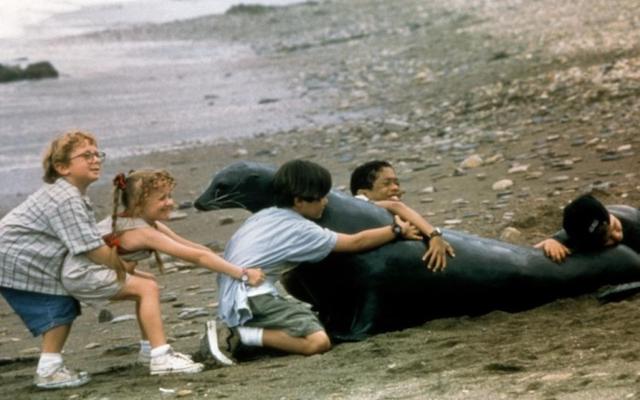
Media Inventory: What I Watched and Read in 2011

0
Media Inventory: What I Watched and Read in 2011

This is the eighth year I’ve kept track of all the media I consumed. I like to keep track of things. As always, this may be of no interest to anyone but me, and you are welcome to skip it, or to read it and then send me angry emails for wasting your time.

MOVIES

I watched exactly 400 movies in 2011. The roundness of that number is not a coincidence. I realized on Dec. 31 that I had 397 under my belt, and I was planning to watch two that day anyway, so I threw in a third one for good measure. Technically, I watched 387 different movies in 2011, but there were 13 that I watched twice.

It is my great fortune to have a job that not only permits me but requires me to watch a lot of different movies. My regular columns at Film.com — Eric’s Bad Movies, What’s the Big Deal?, and Re-Views — account for three movies a week, and then there are the new theatrical releases on top of that. Does that leave any time for me to watch something just for the fun of it, without any obligation? I would have thought it didn’t, but looking at the list I see about 75 movies I caught this year that had nothing to do with work. (And of course plenty of the “work” movies are enjoyable, too. It’s not like I’m out digging ditches.)

As anyone who watches a lot of movies can tell you, a certain sameness starts to creep in after a while. Not just in the content of the movies (though that’s certainly true) but in the circumstances of watching them. Either I’m sitting in one of the five local theaters where press screenings are usually held, or I’m sitting in my ugly but comfortable yellow chair in my apartment, or I’m sitting on Jeff Bayer’s couch. Those scenarios alone probably account for 80 percent of all the movies I watched in 2011. So the times that I saw something under less common circumstances tend to stick out in my mind, even if the movies themselves weren’t anything special.

Some of my fondest movie-watching memories of 2011:

– At Sundance, I attended a 10:30 p.m. press screening of “Bellflower” because I had nothing else to do and my buddy Drew McWeeny was going. The only thing I’d heard about the movie was from someone who’d caught a public screening earlier that day and told me it wasn’t worth my time, but he underestimated my willingness to waste my time. And I’m glad I did: The movie wound up being one of my favorites of the whole year. I’m still friends with the person who had warned me away from it, just not as close.

– Seeing “The Devil’s Double” — a ludicrously over-the-top story about the man who unwillingly served as the public lookalike for one of Saddam Hussein’s insane sons — late at night at Sundance with pals Matt Patches and Dan Mecca was a memorable experience. We laughed a lot. (The movie is not a comedy.)

– My friend and podcasting co-host Jeff Bayer and I watched a lot of movies together this year, either because we were at the same press screenings or because we were watching the movie at his house. Sometimes when his doctor wife has to work the graveyard shift I’ll come over and we’ll watch comedies late into the night. This year we ran through such classics and semi-classics as “Airplane!,” “Stripes,” “Police Academy,” “Volunteers,” “Fast Times at Ridgemont High,” “Animal House,” “The Jerk,” “Wet Hot American Summer,” and “Super Troopers.” As a comedy nerd, I love analyzing these movies in an informal setting with someone who is also a comedy nerd.

– Jeff and I also did a “Lord of the Rings” marathon, watching the whole trilogy (the extended editions!) in one day when he was immobile due to knee surgery. It was the first time I’d seen the movies in their entirety since they were in theaters, and watching them straight through was a great way to immerse myself in that world. Also, Jeff was on painkillers, and he started doing “You shall not pass!” with his crutches. Good times.

– I have two particularly fun memories from the Tribeca Film Festival. Unfortunately, neither of them involves the festival itself or any of the movies that screened there. One night several of my New York City-based movie writer pals and I gathered at someone’s apartment and watched an obscure 2002 comedy called “She Gets What She Wants” (formerly titled “Slap Her, She’s French”) on Netflix. This was done at my recommendation. We paid casual attention to the movie while talking amongst ourselves. It was a joyous evening. My other fond memory from that week was when I got to join just about every movie writer in New York at the “Fast Five” screening. Never mind the actual movie. I just enjoyed seeing it with people I don’t get to hang out with very often.

– Local radio clowns and geek heroes Cort and Fatboy sponsor a midnight movie the first Friday of every month at Portland’s Bagdad Theatre, and the tragedy is that somehow I only made it to one of them this year. It was a great one, though: “Raiders of the Lost Ark,” on a scratchy old 35 millimeter print, and in the company of a few friends. It’d been a while since I’d seen “Raiders” at all, let alone on the big screen. I pledge to attend more of these events in 2012.

– My friend Eugene was visiting one weekend when I got a text message from another friend asking if I wanted to join him that night for a screening of a movie called “Who Can Kill a Child?” I asked Eugene if that sounded like something he would enjoy, and he did not hesitate to say yes, obviously, he wanted to see a movie called “Who Can Kill a Child?” It was sponsored by the Northwest Film Center, which that month was showcasing Spanish films. “Who Can Kill a Child?,” a rarity from 1976, is a creepy “Children of the Corn”-ish thing that underwent a lot of censorship back in the day and is seldom seen anymore. I didn’t love it, but I sure loved the experience of spontaneously catching a movie I’d never heard of with two friends who’d never met each other.

– Along those same lines, late one night I got a hankering to play movie roulette, and to watch whatever Turner Classic Movies happened to be showing next. It must have been fate, because TCM’s selection was “Wicked, Wicked,” a 1973 oddity that was never released on VHS, let alone DVD. It’s a campy horror flick about a killer bumping off guests at a resort hotel. The gimmick is that the whole thing’s in split-screen, showing either two different scenes or different angles of the same scene. That gimmick is hilariously pointless, and the acting is generally pretty bad, but what a fascinating artifact! I was really glad to catch it, especially because it’s something that no one else I know has ever seen.

And here are the movies:

2011 theatrical releases that I reviewed (155 of ’em!):

The Adjustment Bureau
The Adventures of Tintin
American: The Bill Hicks Story
Angels Crest
Anonymous
Another Earth
Apollo 18
Archie’s Final Project
The Art of Getting By
Arthur
Arthur Christmas
Attack the Block
Bad Teacher
Battle Los Angeles
Beastly
The Beaver
Bellflower
Beware the Gonzo
Big Mommas: Like Father, Like Son
The Big Year
Breaking Dawn — Part 1
Bridesmaids
Bucky Larson: Born to be a Star
Captain America: The First Avenger
Cars 2
Cedar Rapids
The Change-Up
Colombiana
Conan O’Brien Can’t Stop
Conan the Barbarian
The Conspirator
Contagion
Cowboys & Aliens
Crazy Stupid Love
The Debt
The Descendants
Diary of a Wimpy Kid: Rodrick Rules
The Dilemma
Dolphin Tale
Don’t Be Afraid of the Dark
Dream House
Drive
Drive Angry
The Eagle
Everything Must Go
Fast Five
50/50
Final Destination 5
Friends with Benefits
Fright Night
The Future
The Girl with the Dragon Tattoo
A Good Old Fashioned Orgy
The Green Hornet
Green Lantern
The Guard
Hall Pass
The Hangover Part II
Hanna
Happy Feet Two
Harry Potter and the Deathly Hallows Part 2
The Help
Hesher
Higher Ground
Hobo with a Shotgun
Hop
Horrible Bosses
Hugo
The Human Centipede 2
I Am Number Four
I Don’t Know How She Does It
I Melt with You
The Ides of March
Immortals
Insidious
The Interrupters
J. Edgar
Jack and Jill
Johnny English Reborn
Just Go with It
Killer Elite
Kung Fu Panda 2
Larry Crowne
The Lie
Like Crazy
Madea’s Big Happy Family
Mars Needs Moms
Martha Marcy May Marlene
Melancholia
Midnight in Paris
Mission: Impossible Ghotocol
Moneyball
Monogamy
Monte Carlo
Mr. Popper’s Penguins
The Muppets
The Music Never Stopped
New Year’s Eve
One Day
Paranormal Activity 3
Pariah
Paul
Pirates of the Caribbean: On Stranger Tides
Point Blank
Priest
Puss in Boots
Rango
Real Steel
Red Riding Hood
Redland
Rio
Rise of the Planet of the Apes
The Roommate
Rubber
The Rum Diary
Sanctum
Scream 4
Season of the Witch
Shame
Sherlock Holmes: A Game of Shadows
The Sitter
The Skin I Live In
Something Borrowed
Source Code
Straw Dogs
Sucker Punch
Super
Super 8
Tabloid
Take Me Home Tonight
Take Shelter
Terri
The Thing
13 Assassins
30 Minutes or Less
Thor
The Three Musketeers
Tinker Tailor Soldier Spy
Tower Heist
Transformers: Dark of the Moon
The Tree of Life
The Trip
Tucker and Dale vs Evil
Unknown
A Very Harold & Kumar 3D Christmas
War Horse
Warrior
We Bought a Zoo
We Need to Talk About Kevin
Win Win
Winnie the Pooh
X-Men: First Class
Young Adult
Your Highness
Zookeeper

2011 festival movies that I reviewed that have not yet opened theatrically:

American Animal
A Bag of Hammers
A Boy and His Samurai
Clown
The Devil’s Business
The Good Doctor
Headhunters
The Innkeepers
Juan of the Dead
Kill Me Please
Retreat
Roadie
Silent House
Sleep Tight
Two Eyes Staring
Underwater Love
You’re Next

2011 releases that I saw but did not review:

At the Sundance Film Festival:
The Catechism Cataclysm
The Devil’s Double
The Greatest Movie Ever Sold
Project Nim
Septien
Submarine
The Troll Hunter
Uncle Kent
The Woman

At the South By Southwest Festival:
Being Elmo: A Puppeteer’s Journey
Blacktino
Charlie Casanova
Detachment
The Divide
The F.P.
The Key Man
Kill List
Little Deaths
Sound of My Voice

At the Tribeca Film Festival:
Beyond the Black Rainbow
Blackthorn
Jesus Henry Christ
Magic Valley
Rid of Me
Saint

At Fantastic Fest:
Elite Squad 2
Juan of the Dead
New Kids Turbo
Penumbra

Elsewhere:
(Note: Some of these are end-of-December releases that I’ll get around to reviewing in the next couple weeks.)
The Artist
Beginners
Carnage
Coriolanus
A Dangerous Method
Dr. Limptooth
In a Better World
Limitless
Margin Call
The Mechanic
Meek’s Cutoff
The Mill & the Cross
The Myth of the American Sleepover
Nightmares in Red White and Blue
Red State
Sleeping Beauty

Pre-2011 releases that I had seen before, and reviewed, that I re-watched this year:

All About My Mother
Almost Famous
Amelie
Anatomy of Hell
Atlantis: The Lost Empire
Austin Powers in Goldmember
The Brown Bunny
Dr. T and the Women
Dude, Where’s My Car?
For Love of the Game
Forgetting Sarah Marshall
Freddy Got Fingered
Gladiator
House of 1000 Corpses
The Illusionist (2010)
The Incredibles
In the Loop
Inglourious Basterds
Jay and Silent Bob Strike Back
Knocked Up
Kung Pow: Enter the Fist
Land of the Lost
The Last Samurai
Little Nicky
The Lord of the Rings: The Fellowship of the Ring
The Lord of the Rings: The Return of the King
The Lord of the Rings: The Two Towers
MacGruber
Man on the Moon
Monster’s Ball
Mulholland Drive
Mystery Team
Mystic River
Not Another Teen Movie
The Others
The Passion of the Christ
Pearl Harbor
Planet of the Apes (2001)
Pokemon The Movie 2000
Scott Pilgrim vs the World
Scream 3
She Gets What She Wants/Slap Her She’s French
Spy Kids
Super Troopers
War of the Worlds
Wet Hot American Summer
White Chicks

Pre-2011 releases that I had seen before but did not review, that I re-watched this year:

Aguirre, the Wrath of God
Airplane!
Animal House
Bats
Beauty and the Beast (1946)
Ben-Hur
The Big Lebowski
Blow Up
Breakfast Club
Butch Cassidy and the Sundance Kid
Close Encounters of the Third Kind
Cutthroat Island
Dark City
Dirty Harry
Dirty Rotten Scoundrels
Duck Soup
The Final Sacrifice (via Mystery Science Theater 3000)
Frankenstein (1931)
George Washington
The Godfather
The Great Escape
It’s a Wonderful Life
Jaws
The Jerk
Johnny Mnemonic
The Last Picture Show
Lawrence of Arabia
The Limey
The Lion King
Little Shop of Horrors (1986)
Midnight Cowboy
The Naked Gun
The Net
Network
Nosferatu
One Flew Over the Cuckoo’s Nest
Pinocchio
Raiders of the Lost Ark
Red White & Blue
Room Service
Rushmore
The Saint
Scream
Scream 2
Seven
Shaft
Some Like It Hot
A Streetcar Named Desire
Who’s Afraid of Virginia Woolf?

Pre-2011 releases that I saw for the first time this year:

For Eric’s Bad Movies:
Above the Law
The Allnighter
A*P*E
Body of Evidence
Bolero
Buddy
Butterfly
Can’t Stop the Music
Cyborg
Empire of the Ants
Fluke
Freejack
Furry Vengeance
The Gate
Happy Birthday to Me
Hawk the Slayer
Hercules in New York
Hocus Pocus
Hunk
Invasion U.S.A.
Lost in Space
Magic in the Water
Molly
Roller Boogie
Solar Crisis
Solarbabies
Standing Ovation
Steel Dawn
Teenage Mutant Ninja Turtles III
Teen Wolf Too
Thrashin’
Top Dog
Under the Cherry Moon

For What’s the Big Deal?:
An American in Paris
The Battle of Algiers
Eraserhead
The Gold Rush
Grand Illusion
The Grapes of Wrath
Last Tango in Paris
MASH
Mean Streets
Metropolis (1927)
Rosemary’s Baby
Sophie’s Choice
The Sound of Music
Straw Dogs (1971)
Sullivan’s Travels
Tokyo Story
The Virgin Spring

For other reasons, or occasionally no reason:
American Grindhouse
Battle Royale
The Bellboy
Boondock Saints
Bride of Frankenstein
Cannibal! The Musical
Country Strong
Diabolique
Dogtooth
Double Dragon
Down Terrace
Eddie Murphy: Raw
Evelyn Prentice
Fast Times at Ridgemont High
Gambit
Gentlemen Prefer Blondes
Lady in the Lake
Make-Out with Violence
The Man with Two Brains
Newsies
New Year’s Evil
North
Peeping Tom
Picnic at Hanging Rock
Police Academy
Pontypool
The Secret of Kells
Session 9
Stripes
Superman II: Donner Cut
Volunteers
Who Can Kill a Child?
Wicked, Wicked
Zombie (1979)

TELEVISION

These are the shows I watched regularly this year, listed in approximate order of how much I like them.

“Breaking Bad.” Would-be writers should study the way this series is constantly raising the stakes for its characters, even after you’d think the stakes couldn’t possibly get any higher. What a great show.

“30 Rock.” I like a lot of comedies, but this is the one that presses my personal funny buttons the most. It has its own unique blend of madness, and that blend is suited to my tastes.

“Parks and Recreation.” Just about as funny as “30 Rock,” with the added bonus of being heartfelt. This series has actually choked me up a couple times, which few comedies do.

“Community.” Clever, calculated, and detail-oriented comedy aimed at people who eat and breathe pop culture. Funny stuff, but it’s not for everyone.

“Fringe.” Really gutsy storytelling on this show, which is the best successor “The X-Files” has had. I’m amazed it’s still on the air.

“American Horror Story.” At first I was compelled by how off-the-charts insane this series was, especially because I wasn’t entirely certain that it was supposed to come off as crazy as it did. But by the end of the season, I was flat-out hooked on its macabre tales.

“Bob’s Burgers.” Wry, offbeat humor. It’s coming back to Fox sometime in the spring.

“Louie.” Louis C.K. happens to be a genius, so giving him free rein to do whatever he wanted with his own half-hour sitcom was a smart move. This show experiments with formats, ideas, and concepts that no sitcom has ever tried before.

“It’s Always Sunny in Philadelphia.” Still raucously, offensively funny after all these years.

“Modern Family.” The bloom’s off the rose a bit in the third season, but this one’s still good for some laughs.

“Saturday Night Live.” If you’re one of the people who say, “Oh, is that show still on??” or “Who watches ‘SNL’ anymore??,” shut up. It’s still on, and it’s as funny as it ever was — which is to say, hit or miss.

“Childrens Hospital.” Love this absurdist medical-drama spoof on Adult Swim.

“South Park.” Nothing else to say about this, except that its longevity and continued high quality are impressive.

“Futurama.” There were a few episodes that made me wonder if resurrecting this canceled cartoon was a good idea after all, but my faith has been restored.

“The Killing.” The AMC series upset a lot of fans with its open-ended season finale. I don’t blame them. Nonetheless, I really liked the slow, quiet intensity of the show, and I’ll be back for season 2.

“Southland.” A good, solid cop drama.

“The Simpsons.” Every five or six episodes one will pop up that’s as brilliantly funny as the classic shows of yesteryear.

“The Walking Dead.” I don’t know about this one. I’m close to giving it up. We’ll see how the second half of the season goes.

“The Office.” I quit watching after the season premiere. I was just done with it, and that seemed like a good stopping point. A great series while it lasted, then a good one, and now one that I’m simply not interested in watching.

I also finally started watching “The Wire” this year (I’m in season 3 now), and I love it. “Happy Endings” is backed up on my DVR; I’ve liked the four or five episodes I’ve watched. I also wish “Mad Men” had been on 2011.

BOOKS

Like everyone else, I wish I had more time to read. (Maybe I should watch fewer movies?) I was in a book club with some friends for a few years, which meant I read at least one novel a month, but now that group has disbanded and I am left to my own devices. But one of those devices is now a Kindle, so perhaps the novelty and convenience will inspire me to read more.

The Art of Racing in the Rain, by Garth Stein. This is the story of an automobile racer and his life’s dramas, as told by his dog. Despite some implausible soap-opera stuff that happens to the guy, I found the book sweet and moving, not least because I love dogs and love the idea of dogs loving me too. Nearly everyone else at my book club disliked the novel, though I note that several of them do not like dogs at all, so they can’t really be trusted.

Beyonders: A World Without Heroes, by Brandon Mull. The author of the enjoyable Fablehaven books starts a new series here, in which a couple of 13-year-olds are magically transported to a world ruled by an evil wizard who must be defeated, etc. Standard fantasy premise. I probably wouldn’t have read this if Mull weren’t a friend of mine (fantasy isn’t really my thing), and it’s geared toward younger readers than me, but I found it genuinely clever and exciting.

Born Standing Up, by Steve Martin. Steve Martin is one of my professional heroes. He’s a brilliant writer and performer (his many bad movies notwithstanding), and his sharp mind is a place of wonder. Why it took me until now to read this memoir, which came out in 2008, I don’t know. He covers his childhood and his career as a standup comedian — a career he walked away from when he grew complacent with it, even though he could have kept going forever. His analysis of joke-writing and joke-telling is manna for a comedy nerd like me. Reading this book made me respect him even more, both as an artist and as a person.

The Boy Who Couldn’t Sleep and Never Had To, by D.C. Pierson. A funny and imaginative novel about a geeky high schooler whose new best friend has never slept and apparently has no biological need to. The boys are way into science fiction and fantasy, and their adventures begin to resemble the stories they’ve conjured. Fun stuff.

Catching Fire and Mockingjay, by Suzanne Collins. These are the second and third parts in the Hunger Games trilogy, which I’ve seen a lot of people dismiss because the marketing department keeps comparing it to Twilight, which is a turn-off to many readers. Don’t be fooled! Except for being narrated by a teenage girl and having a bit of a love triangle, this series bears no similarity to the Twilight saga. It’s set in a post-apocalyptic America in which two children from each of a dozen districts are chosen every year to compete in a battle-to-the-death for entertainment purposes. (That concept is similar to the Japanese movie “Battle Royale,” but that’s as far as it goes.) One girl tries to bring down the system. By the end of the trilogy, I’d been shocked several times by the intensity of the story’s events, and by how caught up in the action I was.

The Dead-Tossed Waves and The Dark and Hollow Places, by Carrie Ryan. These are the sequels to The Forest of Hands and Teeth, a post-zombie-apocalypse young-adult novel that has one of the best titles I’ve ever heard. Like The Hunger Games, the narrator of each book is a teenage girl; unlike The Hunger Games, the love triangle aspect got to be a bit much for my tastes. (The target audience is young women.) It’s a satisfying story, though, if you’re into the whole post-zombie-apocalypse thing.

A Friend of the Family, by Lauren Grodstein. A New Jersey doctor is alarmed when his 19-year-old son starts dating the daughter of the doctor’s best friend. Why? Because several years ago, the girl was charged with committing a terrible crime, and though she was acquitted, doubts remain. This was a book club selection, and I confess remembering very little about the book except that I liked it. Pretty good depiction of a parent’s protective instinct, I think. Sorry, I’m not much help here.

The Imperfectionists, by Tom Rachman. Loved this book. It’s set at an English-language newspaper in Rome and follows the lives of the people who work there (or used to work there), each chapter telling a different but connected story. The writing is sparkling, funny, and insightful.

Mere Anarchy, by Woody Allen. A collection of his humor pieces, many of them originally published in The New Yorker. Woody Allen is frequently so good as a filmmaker that we tend to forget how good he is — and he is more consistently good — as a writer of prose. There’s some very, very funny and urbane material in this volume of silliness.

An Object of Beauty, by Steve Martin. I didn’t find this examination of the hoity-toity art-collecting world quite as engaging as I have Martin’s other novels, but the man has an undeniable way with words.

Oliver Twist, by Charles Dickens. I had one of those inexpensive mass-market paperback copies of this book, and it occurred to me that I had never read an entire Dickens novel before, and so I took the plunge. What fun! This Dickens fellow may be on to something. I adore the quirks of old-timey language, and I was frequently amused by the humor of this story, which hardly follows the musical version at all. So here’s a thumbs up for Charles Dickens, if you were looking for someone to vouch for him.

The Raw Shark Texts, by Steven Hall. This is an original and mind-bending thriller about a man with a memory condition trying to learn the mysteries of his former, forgotten life while being pursued by conceptual enemies. Words, thoughts, and memories are the abstract things that become concrete (sort of) in this highly unusual but accessible story.

Room, by Emma Donoghue. There was much contention at book club about this one. Nobody was lukewarm — everyone either liked it a lot or hated it a lot. It has a pretty harrowing premise: a woman has been held captive in an 11-by-11-foot windowless room for seven years, and the book is narrated by her 5-year-old son, who was sired by her captor/rapist and has never been outside. I was morbidly fascinated by the thought of viewing the world through the eyes of a child who doesn’t know the world exists, and I found the mother’s fierce devotion to her son very moving. But I can see why people hated it, too. It’s written in the kid’s language — his mother is the only human being he’s ever had interaction with — and some of the content is grueling.

Angels Crest

0

The title town in “Angels Crest” is a small, snowy place in Montana where the locals all know each other, where the diner is run by the woman whose name is on the sign, and where people equipped with firearms can adjourn to a nearby wood, shoot a deer, and be home in time for breakfast. Like many movies set in small, snowy towns like this, “Angels Crest” is a quiet drama about imperfect people coping with loss and regret. Doesn’t anything happy ever happen in wintry hamlets?

Directed by Gaby Dellal (“On a Clear Day”) and adapted from Leslie Schwartz’s novel, the film reminds me a lot of David Gordon Green’s “Snow Angels,” though it’s not quite as evocative or emotionally powerful. “Angels Crest” centers around a dumb mistake that leads to the death of a 3-year-old boy. His father, Ethan (Thomas Dekker), who is too young to have produced a child on purpose but was a dedicated dad nonetheless, is devastated. The boy’s mother, Cindy (Lynn Collins), a full-time alcoholic, is enraged by her ex-partner’s carelessness.

The rest of the town is split. Some blame Ethan; some figure he blames himself enough already. Some acknowledge that all parents make mistakes, and thank God that they never made one with consequences this dire. Cindy was in bed with Ethan’s best friend Rusty (Joseph Morgan) when the crisis arose — could either of them have helped prevent the tragedy if they’d been available? Jane (Elizabeth McGovern), a waitress at the diner and a friend of Ethan’s, has cause to reflect on her own failings as a parent, while her partner, Roxanne (Kate Walsh), observes. Likewise, Cindy’s God-fearing mother wonders where she went wrong with Cindy.

Details like that emerge here and there, giving the story a little dimension, but not enough. A district attorney (Jeremy Piven) prosecuting Ethan for negligence once lost a child of his own — yet that never factors in to anything. You get the feeling those smaller nuances were more fleshed out in the novel and have been reduced in the adaptation process. (The screenplay is Catherine Treischmann.) As a result, while larger themes are hinted at — accepting blame, dealing with grief, atoning for the past — the only avenue that’s explored with any depth is Ethan and Cindy’s.

Thomas Dekker is sympathetic as the grief-stricken Ethan, though perhaps not quite up to the task of carrying a film like this on his own. The movie’s real strength is Gaby Dellal’s careful, subtle direction. She avoids the pitfalls of melodrama and histrionics that often plague movies about loss, keeping her actors’ emotions grounded in recognizable truth. She has made a solid, respectable drama worthy of wider attention.

The Iron Lady

0

As the first female prime minister of the United Kingdom and a key player in 1980s world politics, Margaret Thatcher deserves a tough-but-fair biopic shedding light on her strengths and weaknesses as a person and as a leader. Until such a movie arrives, we have “The Iron Lady,” a standard, surface-level biopic that’s orderly and clean and offers only a cursory examination of what made Maggie tick. Though it’s modestly engaging as a shiny biography, the film’s primary accomplishment is offering further evidence that Meryl Streep will deliver perfectly good performances even in movies that are unworthy of them. And we already knew that.

The “present” is sometime in the last several years, after Thatcher’s husband, Denis, has died and Margaret’s mind has begun to go. Even buried under the usual layers of old-age makeup, Streep conveys the former prime minister’s intelligence and spark that manifest themselves during moments of lucidity. When her daughter, Carol (Olivia Colman), and other caretakers are not around, she sees and speaks to her dead husband, whom she misses terribly and cannot let go. He’s played by Jim Broadbent, dotty and darling as ever. I’m sure I’m not alone in thinking that a movie of Streep and Broadbent doing nothing but toddle around the house saying affectionate British things to each other would be magnificent.

The bulk of this movie, however, is told through that venerable tool of the biopic, the flashback. Wearing less makeup but equipped with appropriate dental costumery, Streep plays Thatcher during her rise to prominence in the 1970s, followed by the surprising run at the prime ministership that put her in office for all of the 1980s. Working from a by-the-numbers screenplay by Abi Morgan (“Shame”) and directed by Phyllida Lloyd (“Mamma Mia”), Streep’s version of Margaret is unyielding, uncompromising, and usually convinced of the rightness of her position, morally and politically. In her early years in Parliament, the lone female among dozens of harrumphing coots, she comes across as a powerhouse, a force to be reckoned with. She is smart, she has ideas, and she deserves to be taken seriously. In her later years, this evolves into browbeating staffers like a schoolmarm.

Thatcher’s determined resilience is the only thing that drives her, as far as the movie is concerned. Scenes from her younger days (in which she’s played by Alexandra Roach, with Harry Lloyd as Denis) show her as steadfast as ever. There’s a brief suggestion that her commitment to public service has caused her to neglect her family, but that line of thought doesn’t go anywhere. Every now and then her anti-union, pull-yourself-up-by-the-bootstraps conservative rhetoric makes you think there might be insightful parallels to be drawn between this and the current political climate, but the movie isn’t interested in them. Like that other recent biopic about a controversial conservative government figure, “J. Edgar,” “The Iron Lady” doesn’t want to take a firm position on anything.

What it wants to do instead is to be a nice, inoffensive political biography that could be shown to high school students on days when the teacher doesn’t have a lesson plan. On those terms, it’s not bad. Streep and Broadbent are entirely watchable, and Thatcher’s story, even in its vague and watered-down state, is inherently interesting. Thatcher’s detractors will be furious that the film isn’t more of a hit piece, while her admirers will probably find it shallow. So who’s it for? People who don’t already have an opinion on Margaret Thatcher — my fellow Americans, most likely.

2011 Film Titles: A Dramatic Reading

0
2011 Film Titles: A Dramatic Reading

And now, a playlet in which the dialogue is composed entirely of 2011 movie titles.


[Outside a bar at closing time. People are waiting in line for taxis. A MAN sidles up to a WOMAN.]

MAN: What’s your number?
WOMAN: I am number four.
MAN: Arthur.
WOMAN: Hanna.

[They shake hands.]

MAN: [gesturing to his car] Monte Carlo. Real steel!
WOMAN: [unimpressed] Something borrowed?

[Despite the WOMAN‘s lack of interest, the MAN plunges ahead.]

MAN: Cold weather! [pause] Everything must go… [he gestures to his car again]
WOMAN: Abduction?!
MAN: No strings attached!
WOMAN: One day. The future. Another earth.
MAN: Don’t be afraid of the dark!
WOMAN: [considering] The dilemma: Contagion? Unknown.
MAN: Just go with it!

[She considers his offer. She does find him attractive, and it is getting late…]

MAN: 30 minutes or less.

[She still isn’t sold.]

MAN: Fast five.
WOMAN: [sighing reluctantly] Take me home tonight.
MAN: Win win!
WOMAN: [to herself] The art of getting by…

[He opens the passenger door for her.]

MAN: Your highness.

[They get in.]

WOMAN: Drive.
MAN: In time. [seeing pedestrians in the crosswalk] Madea’s big happy family!
WOMAN: Drive angry! Like crazy!
MAN: A dangerous method!

[She puts her hand on his thigh.]

MAN: [shrugging] Crazy, stupid love…

[He runs over the pedestrians. The WOMAN is impressed.]

WOMAN: Courageous! Footloose! Limitless!
MAN: [regretful] Beastly. Shame.
WOMAN: [seeing an acquaintance on the sidewalk] Martha Marcy May Marlene!
MAN: The girl with the dragon tattoo? Young adult? Zookeeper? I don’t know how she does it!
WOMAN: We bought a zoo.
MAN: Super!

[They arrive at her home, a charming two-story.]

MAN: Dream house! [he sees a silhouette in the window] The help?
WOMAN: We need to talk about Kevin.
MAN: The roommate?
WOMAN: Friends with benefits.
MAN: Sucker punch.

[Suddenly a bright light fills the sky. Loud ALIEN VOICES boom in the night air.]

ALIEN VOICE 1: Attack the block!
ALIEN VOICE 2: Mars needs moms!
MAN: Take shelter!
WOMAN: I am!

[They run inside the house.]

MAN: Sanctum!
WOMAN: I saw the devil! Extremely loud and incredibly close!
MAN: Insidious immortals!

[The ALIENS attack and kill everybody. The end.]

All the wide releases of 2011

9

Do you like lists of things? Then here is one! It is a list of the 141 movies that 1) opened in the United States in 2011 and 2) played on at least 600 screens. Movies that opened smaller but eventually got to 600 screens are included, as long as their first release was in 2011. Re-releases of older movies don’t count, even if they were converted to 3D and called “The Lion King.”

I saw 113 of the 141 movies. The ones I missed have asterisks. Links are to my reviews. Sometimes I saw a movie but didn’t review it. That’s how life is sometimes. Dates are when the film opened, not necessarily when it went wide.

How many did you see? It is a contest.

1/7 Season of the Witch
1/14 The Dilemma
1/14 The Green Hornet
*1/21 No Strings Attached
*1/28 The Rite
1/28 The Mechanic
2/4 Sanctum
2/4 The Roommate
2/11 Just Go with It
*2/11 Justin Bieber: Never Say Never
*2/11 Gnomeo and Juliet
2/11 The Eagle
2/18 Unknown
2/18 I Am Number Four
2/18 Big Mommas: Like Father, Like Son
2/25 Hall Pass
2/25 Drive Angry
3/4 Rango
3/4 The Adjustment Bureau
3/4 Beastly
3/4 Take Me Home Tonight
3/11 Battle Los Angeles
3/11 Red Riding Hood
3/11 Mars Needs Moms
3/18 Limitless
*3/18 The Lincoln Lawyer
3/18 Paul
3/25 Diary of a Wimpy Kid: Rodrick Rules
3/25 Sucker Punch

Pariah

0

While coming-of-age dramas about gay teenagers are common enough (especially at film festivals), they’re usually about boys, not girls. Your more lesbian-centric movies tend to be about adults. At least as far as American films go, anyway. The Europeans are bigger on teenage lesbians. And now that we’ve helped our Google rankings for the search terms “European teenage lesbians,” let us discuss “Pariah,” which is indeed an American coming-of-age drama about a 17-year-old girl.

Her name is Alike (that’s ah-LEE-kay), she is played by Adepero Oduye, and she is a virgin, though she seeks to change that status. Her best friend, Laura (Pernell Walker), a bold and sexually active lesbian, regularly takes her to a dance club in their Brooklyn neighborhood that caters to African American ladies, in the hopes that Alike will meet someone. The loud, aggressive atmosphere is intimidating to a newbie, though.

Alike lives with her younger sister, Sharonda (Sahra Mallesse), and their parents, and has made only tentative steps toward coming out to any of them, at least officially. There is certainly some degree of awareness — Alike dresses “butch”; some of the neighbors gossip — but that awareness is accompanied by denial. Alike’s mother, Audrey (Kim Wayans), buys her a girly blouse and tries to push her into being friends with a co-worker’s wholesome daughter. Needless to say, Audrey doesn’t think much of Laura.

Secrecy is a bigger concern for Alike at home than at her school, which is almost entirely African American and seems to have a sizable contingency of gay girls. (The film depicts the subculture of black lesbians matter-of-factly without delving too deeply or making it into a curiosity.) But she isn’t the only one sneaking around: her father (Charles Parnell), a cop, is quite obviously having an extra-marital affair.

“Pariah” was written and directed by Dee Rees as an expansion of her 2007 short film, which featured the same young actresses playing Alike, Sharonda, and Laura. Rees says the film is at least partially autobiographical, and that’s no surprise. It has the ring of authenticity, and in particular the kind that is found almost exclusively in small, independently financed movies rather than impersonal studio productions. The performances are raw without falling into melodrama; the characters behave plausibly.

Unfortunately, the trade-off for emotional honesty and a real-world story line seems to be that the film doesn’t come across as remarkable in any way. Even though indie dramas about black teenage lesbians (hello, SEO!) aren’t exactly a dime a dozen, “Pariah” feels overly familiar, a fairly standard entry in the broader genre of teen-centered dramas.

But as criticisms go, “This fails to be remarkable” isn’t a very harsh one. “Pariah” is definitely respectable work, with earnest intentions and a vivid depiction of a corner of American culture. Dee Rees may be a filmmaker to watch.

War Horse

0
War Horse

The main character in “War Horse” is the horse. I keep trying to convince myself otherwise, but it’s true. The story’s action follows the horse, a spirited thoroughbred named Joey, on a series of adventures on and near the battlefields of World War I. The constant is Joey’s original owner, a poor farm boy named Albert (Jeremy Irvine), who was heartbroken to see Joey sold to the war effort and hopes to be reunited with him someday. But this isn’t a movie about a boy trying to find his horse. It’s a story about a horse who used to belong to a boy and might eventually belong to him again.

In the meantime, the narrative shifts focus whenever Joey changes hands. He starts in the service of the British cavalry, then at various times is owned by German officers, young German soldiers seeking desertion, a little Dutch girl and her jam-making grandfather, and others. Everyone comments on what a remarkable horse Joey is, and I don’t know what they’re seeing that I’m not. As horses go, Joey seems slightly above average at best.

Which brings us to the main problem with this ramblingly episodic, earnest but dull Steven Spielberg misfire. The character we spend the most time with is Joey, who is a fine horse but a horse nonetheless and thus does not have goals, motivations, or strategies. He has a limited capacity to make things happen; mostly he can only react to things that happen to him. There are plenty of human characters who might engage our interest, and some of them occasionally do — so does Joey occasionally, for that matter — but they are decidedly not the focus. The focus is the majestic, mute creature who can’t formulate a plan or express a wish beyond the immediate future. The periodic attempts to anthropomorphize Joey by having him “volunteer” for a difficult task so a fellow horse (his girlfriend, I think) won’t have to do it are just silly.

And yet the handsomely photographed production has individual sequences that rise above the meandering narrative and corny dialogue (“The rest of our lives depend on this!”; “Wherever you are, I will find you!”; etc.) to become as emotionally compelling as Spielberg intended the entire film to be. Chief among these is a scene in which Joey is snagged by barbed wire in no man’s land and must be rescued through a cooperative effort by soldiers from both sides. Such a scenario of momentary detente is plausible (see, for example, the fact-based “Joyeux Noel,” about a Christmas Day truce), yet somehow magical in its ability to inspire. In other words, it’s classic Spielberg, something that’s generally lacking in “War Horse.”

Extremely Loud & Incredibly Close

0

The 9/11 terrorist attacks may eventually serve as source material or inspiration for dozens of movies, fact-based and fictional, just as World War II and the Kennedy assassination have. But so far, with only a few exceptions, filmmakers have been hesitant to address the subject directly. To their credit, they’ve been even more cautious about using 9/11 as the background for a story that didn’t need to be about 9/11. Ten years later, the general policy is still that movies don’t mention 9/11 explicitly unless there’s a good reason for it.

“Extremely Loud & Incredibly Close” might be the first major film to break that unspoken rule, and I’m not sure it even knows it’s doing it. For while this is the story of a young boy whose father died in the Twin Towers, it’s really just about finding closure and moving on after a senseless and unimaginable loss. Nothing about the drama’s execution suggests that it is, at its core, a September 11th story. The kid’s dad might just as well have died in a car accident.

The thing is, I enjoyed Jonathan Safran Foer’s poignant 2005 novel. It felt like a 9/11 story, not like a story about grieving that happened to use 9/11 as the backdrop. Somehow it lost that flavor in its transition to the big screen — maybe because so many of the boy’s interactions with fellow New Yorkers, which contributed thematically, had to be cut for time. What we’re left with, as adapted by Eric Roth (“Forrest Gump,” “Munich”) and directed by Stephen Daldry (“Billy Elliot,” “The Hours”), is a well-meaning but perfunctory story that doesn’t justify its use of what the boy calls “the worst day.”

The boy, Oskar Schell (Thomas Horn), is an unusually precocious 11-year-old who almost certainly has Asperger’s syndrome, though the movie devotes one line of dialogue to establishing that he doesn’t. (But really, he does.) He’s bright and methodical, has a mind for details and figures, and isn’t very good at reading other people’s feelings. His adoring father, Thomas (Tom Hanks), used to create elaborate scavenger hunts for him to test and strengthen his mind, and the two were inseparable. (We see them in flashbacks interspersed throughout the film.) Thomas died on 9/11, leaving behind not just Oskar but a grief-stricken wife, Linda (Sandra Bullock), and an elderly German mother (Zoe Caldwell).

Now, some months later, Oskar finds a small envelope in his father’s coat pocket, and in this envelope is a key. Written on the envelope is the word “BLACK,” which Oskar decides is a name. Desperate to maintain any remaining connection he has to his father, Oskar resolves to find the lock that goes with the key, first tracking down this “BLACK” person.

This leads Oskar to have numerous encounters with strangers (whom he usually avoids) and to travel all over the city (ditto). His experiences tend to be overly precious, as when he meets one Abby Black (Viola Davis) and has a conversation with her about elephant tears while her husband moves out of their house. Nothing about the exchange is plausible. Not a bit of it feels like real life. The same goes for his subsequent meetings with horseback riders, people in prayer circles, a deaf man, and all the others who appear in his Searching For The Lock montages.

Things start to look up when Oskar meets the elderly man (Max von Sydow) who rents a room from his grandmother. Simply called the Renter, the mysterious old fellow doesn’t speak, but uses hand signals and notepads to communicate. He accompanies Oskar on some of his travels and helps him to feel more comfortable doing things like using public transportation.

Oskar narrates the film in his distinctive, numbers-obsessed, nerd-in-training motormouth fashion. I find him sympathetic and fascinating, and I’m curious to see what becomes of the intense young actor who plays him. But the character can rub people the wrong way. Nearly everyone I’ve talked to who dislikes the film — and there are many who dislike it a lot — cites Oskar as the deal-breaker, finding him irritating and obnoxious. I didn’t have the same reaction, but I can see how someone who doesn’t like the kid wouldn’t be able to tolerate the movie.

Even as one who likes the kid, I didn’t feel the emotional catharsis that the film obviously intended. The boy’s mother disappears for most of the film, and the explanation for it is contrived and false-sounding, a disappointing end to what could have been a sweet subplot about Oskar and Mom bonding after their loss. The old man who doesn’t talk disappears too, for no good reason. Oskar keeps being left alone to flounder through his grieving process, and it’s all just a little too fanciful and unrealistic to be satisfying.

I don’t think the film is disrespectful to the memory of those who died on 9/11, because I think the film is earnest. Misguided, maybe, but not intentionally calculating or phony. Regardless of which specific tragedy launches it, though, Oskar’s journey doesn’t ring true.

We Bought a Zoo

0

All movies are “manipulative” in the sense that they’re trying to make us feel a certain way. The good ones do it artfully, leading us where they want us to go without it being obvious that we’re being led. Some filmmakers are better than others at hiding the strings. Then there’s Cameron Crowe, whose attitude with “We Bought a Zoo” seems to be that he doesn’t care if we see exactly what he’s doing every step of the way, because the movie’s charm will win us over.

He’s mostly right. There’s plenty of warmth and humor in “We Bought a Zoo,” a congenial family film populated with many likable actors and earnestly devoted to pleasantness. But the movie also has the distinction of being based on a true story yet coming across as completely fake, an achievement that requires some seriously ungraceful writing and direction.

This is indeed the story of some people who bought a zoo. (No metaphors here!) Benjamin Mee (Matt Damon), a thrill-seeking journalist and recent widower, is looking for a change of scenery for himself and his children, 14-year-old Dylan (Colin Ford) and 7-year-old Rosie (Maggie Elizabeth Jones). Only six months have passed since their mother’s death, and they have responded in the usual manner of movie characters, i.e., the little girl is sweetly mournful and the teenage boy is a sullen bastard. They find a nice old house on a 14-acre parcel of land that is perfect except for one thing: IT’S HAUNTED!!

No, just kidding, it’s a zoo. It closed to the public a couple years ago, but the animals are still there, being tended by a small staff that includes perky young Kelly (Scarlett Johansson), drunken Scottish MacCready (Angus Macfadyen), barely-gets-any-lines-and-has-to-walk-around-with-a-monkey-on-his-shoulder-all-the-time Robin (Patrick Fugit), and somebody’s 13-year-old cousin Lily (Elle Fanning). The owner has stipulated that whoever buys the property must take the animals, too, and can’t ship them off to other zoos or glue factories or whatever. Benjamin loves the house, isn’t so sure about the zoo thing. But hey, look at the way Rosie lights up around those peacocks! They make her happy! We’d better buy this zoo!

It doesn’t matter what Dylan thinks, but for the record, he’s not happy about leaving the city and his friends and moving to a house in the boonies where he’ll have to help take care of wild animals.

A familiar procession of events follows. There are mishaps and hijinks with the animals, tough decisions to make about an elderly tiger, comical setbacks related to Benjamin’s inexperience, skeptical glances from the professional staff. Benjamin’s brother, Duncan (Thomas Haden Church), urges him to cut his losses and get out now, before he’s bankrupt. Walter Ferris (John Michael Higgins), a snippy guy from the U.S. Department of Agriculture, comes around to make inspections, which the zoo must pass before it can reopen to the public. MacCready HATES Ferris so much that he has to be locked in a closet when Ferris shows up, lest he murder him. I’m gonna go out on a limb and guess that dopey shenanigans like that didn’t happen in real life.

The screenplay was written by Aline Brosh McKenna, whose scripts for “27 Dresses,” “Morning Glory,” and “I Don’t Know How She Does It” suggest that she is not familiar with the way actual human beings function (to put it tactfully), or that she’s simply a bad writer (to put it another way). Crowe revised McKenna’s work and shares screenplay credit with her, and I don’t know who’s responsible for which specific trite elements like the deus ex machina plot devices (plural) or the convenient quasi-romances between Dylan and Lily and Benjamin and Kelly. Doesn’t matter who wrote the cliches: Crowe filmed ’em, unconcerned at how transparent they would seem.

As a result of this ham-fisted Hallmark attitude, the movie’s emotional moments don’t register very strongly. When we do feel a warm fuzzy in the heart or a lump in the throat, we also see everything Crowe did to put it there. How un-subtle is he? In a scene where everyone’s sad because it’s raining, the soundtrack plays a somber old Randy Newman song called … “I Think It’s Going to Rain Today.” Yeesh.

The Passion of the Christ (2004)

0
The Passion of the Christ (2004)

Between The Passion of the Christ and Fahrenheit 9/11, you’d have a hard time saying which 2004 movie was the most divisive and controversial, and which one depended the most on the beliefs that audiences brought with them to the theater. In what was otherwise a fairly calm year for cinema, these two kept critics a-talkin’ and pundits a-jabberin’ for months.

We’ll leave Michael Moore for another day and get to work on Mel Gibson. (Yeesh, these two, am I right??) The Passion of the Christ was an extraordinary event regardless of whether anyone liked it. Gibson had the actors speak Aramaic, Hebrew, and Latin, which was almost unheard of, and he focused on the physical torment Jesus suffered, earning a hard R rating where most movies on this subject had been tame family affairs (and in English). Thanks in large part to support from church groups, the film made $370 million in the U.S. and another $241 million overseas. It remains the highest-grossing R-rated movie of all time by a wide margin, and it holds the record for best February opening weekend ($83.8 million). Oh, and it was an independent film, too, produced by Gibson’s company Icon Productions and distributed by Newmarket.

What I said then:

“If there were an extraordinarily powerful six-hour miniseries about the life of Jesus, The Passion of the Christ would be the gripping two-hour finale…. The film begins in climax and remains in crescendo for two hours — a gripping way to tell any story, but especially a story as emotionally weighted as this one. I was enthralled from beginning to end, despite knowing the plot already and despite some scenes being unendurable for their graphic depictions of torture. I don’t believe anyone has made a movie about Jesus that is more compelling than this one, and certainly no film released so far this year [note: it was only February] has even approached this level of artistic quality…. Gibson stays faithful to his source material, but embellishes on it enough to give the narrative some structure and weight…. Gibson and I may disagree on some points of doctrine, but I respect anyone who makes a film based on his personal convictions, and even more so if the filmmaker does a vigorous, handsome job of it, as Gibson has done here…. [It is] a work of art that succeeds as a film, as a message, and, yes, as a labor of love.” Grade: A [complete review]

The reviews at the time were split almost equally between positive and negative at Rotten Tomatoes. The movie made it to my top 10 list for the year; it also appeared on some critics’ 10 worst lists. In my top 10 article, I wrote: “More than any film I’ve ever seen, it is subject to so much of the viewer’s personal baggage that reviewing it is nearly impossible. All I can do is say what it did to me, which is that it horrified, uplifted and compelled me — compelled me to keep watching (even when it was difficult), compelled me to think about my own beliefs in God, compelled me to ponder the film long after I’d seen it. Oh, and the filmmaking is pretty fantastic, too.”

The re-viewing:

I had to brace myself for this one. I remembered it as being brutally graphic and painful to watch. So I got good and drunk first.

No, I kid. I remained sober (which is probably more than you can say for Mel Gibson when he was making it). I recalled something Roger Ebert wrote in his review: “The movie is 126 minutes long, and I would guess that at least 100 of those minutes, maybe more, are concerned specifically and graphically with the details of the torture and death of Jesus.” OK, I thought, pressing “play.” Here goes!

An interesting fact: Ebert was way off in his assessment. Apart from Jesus getting manhandled and pushed around a bit, the physical torment doesn’t begin until minute 53, when the movie is nearly half over. Yet Ebert remembered the movie as being almost all pain, all the time — and so did I. The impression I had when I finished watching it in 2004 was that I’d just endured almost two solid hours of brutal violence. But it’s actually more like 45 minutes.

This became clear on the second viewing. The scourging scene remains gruesome and horrific. Some people used to die from that punishment alone, before they even got to the cross, and you can see why: jagged bits of bone and metal tied to the ends of the whips, gouging into the victim’s flesh, tearing out chunks — bleh. Bleh, I say! NO THANKS ON THE SCOURGING! In comparison, the crucifixion sequence was far less painful to watch, and those two sequences account for almost all of the violence and physical suffering depicted in the film.

So why did I remember it as being wall-to-wall torture? Two reasons. One is simply that the brutality is all in the second half, so it’s freshest in your mind when you leave the theater. The bigger reason, I think, is that even before the assault begins, Gibson does an excellent job of filling us with dread. We know it’s going to happen — not just because we know the story but because of the tense, ominous atmosphere created by the film. Jesus is already suffering spiritually when we begin, and the Jewish leaders are conspiring with Judas to arrest him. We get tense as we feel the storm clouds gathering, even before anything actually happens.

I said in my original review that allegations that the film was anti-Semitic were “wholly without merit. Jewish leaders are indeed shown to be the ones clamoring for Jesus’ execution, but there is no underscoring, no statements to the effect of, ‘Hey, look what THE JEWS did!'”

Since then, Mel Gibson has said a few things in public that would tend to, shall we say, bolster the argument that he hates the Jews, so I was on high alert as I watched it this second time, to see what I might have missed originally.

And I still don’t see it. If I didn’t know what I do about Gibson’s real-life behavior, I’d be baffled that anyone would even think Passion of the Christ is anti-Semitic. Katha Pollitt wrote in The Nation that “physically, they are anti-Semitic cartoons: The priests have big noses and gnarly faces, lumpish bodies, yellow teeth; Herod Antipas and his court are a bizarre collection of oily-haired, epicene perverts.” She’s partly right. Some of the Jewish priests in the film do have big noses and gnarly faces — but so do many of the people in the crowd scenes. The movie was shot in Italy, where big noses and gnarly faces are to be found in abundance, and the extras were cast because they looked authentic (i.e., ugly), not like movie stars. I don’t think the priests’ teeth were yellow, but I did notice poor dental hygiene, not to mention savage cruelty, on the part of the Roman soldiers scourging Jesus. Herod and his cohorts are indeed a bunch of hard-partyin’ freaks, but they’re the only ones in the movie like that, and there’s certainly no suggestion that their Jewishness has anything to do with it.

Nonetheless, not being Jewish, I acknowledge that I might not be as sensitively attuned to such things as someone who is. I guess all I can say is that The Passion of the Christ doesn’t seem anti-Semitic to me, and that I’ve seen it twice now and still like Jewish people. So if it was supposed to be anti-Semitic, it didn’t work. (Let me also be clear that anyone who uses the Bible as an excuse to persecute the Jews is an ignorant buffoon and a disgrace to Christianity.)

Something that didn’t work for me this time that apparently didn’t bother me in 2004 is the bald albino Satan figure who pops up occasionally and is once seen carrying a demon-faced child (or possibly a dwarf). Given that the rest of the film sticks mostly to the Biblical account and tradition, this seems like a bizarre place to take artistic license, not to mention a bizarre way to do it.

Do I still love this movie?

“Love” probably isn’t the right word for a movie as grueling as this one, but pretty much, yeah. While it isn’t as emotionally harrowing the second time around, and the extra-Biblical oddness is distracting, it’s a beautifully photographed and well-constructed movie. Many expressions of faith are sincere but artistically mediocre, but this one combines earnest religious sentiment with genuine skill. Grade: B+

— Film.com

The Girl with the Dragon Tattoo

0

The problem with both movie adaptations of “The Girl with the Dragon Tattoo” — Niels Arden Oplev’s 2009 Swedish version as well as David Fincher’s new American one — is that they believe we are far more interested in Mikael and Lisbeth’s relationship than we actually are. The central mystery is finally solved, after more than two hours, in a thrilling fashion — but instead of ending, the movie returns to the lives and loves of its characters for another 20 minutes, intent on wrapping up loose ends that we weren’t aware existed. I assume this is done out of faithfulness to Stieg Larsson’s novel, and maybe the bond between journalist and computer hacker is more resonant in print. On film it feels very much beside the point, or at least it has both times so far. Maybe the third adaptation of this book, if there is one, will make the pair’s personal connection feel plausible.

When it’s dealing with the crime investigation and Lisbeth’s harrowing ongoing battle with a corrupt social worker, Fincher’s “Girl with the Dragon Tattoo” works well enough. It’s a cold, mechanical procedural at heart, which makes a perfectionist like Fincher (“Seven,” “The Social Network”) a good choice to direct it. He and veteran screenwriter Steven Zaillian (“Moneyball,” “Schindler’s List”) wisely retained the desolate Swedish setting, which not only avoids outraging the book’s fans but is the perfect location anyway for a story about such frigid people.

High-profile Stockholm journalist Mikael Blomkvist (Daniel Craig) has just suffered a public disgracing when he’s recruited by Henrik Vanger (Christopher Plummer), the head of a wealthy industrialist family, to investigate the 1966 disappearance and presumed murder of his great-niece. The girl, Harriet, was a teenager at the time, and the killer has been taunting Henrik by sending tokens whose meaning only Henrik and the other Vangers could know. Whoever did away with Harriet must be a relative.

There are plenty of suspects, as nearly every member of this venal family is despicable and holds some icy grudge or other against someone else. Many of them live, in separate houses, on a small island near the town of Hedestad, and it is here that Mikael comes to investigate. He pores over the evidence gathered by police 40 years ago, applying a fresh perspective and the mind of a journalist to it, while simultaneously getting away from his professional scandals back in the city.

Meanwhile, only tangentially connected to all of this, there is 23-year-old Lisbeth Salander (Rooney Mara), a pale, skeletal computer hacker adorned with the kinds of tattoos and piercings that make you afraid of her when you see her on the subway. She makes a living doing thorough (and I mean thorough) background checks on people for clients who are happy to look the other way if she does something illegal like hack into the subject’s email. Her childhood evidently filled with horrific trauma, Lisbeth was a ward of the state in her teen years, and continues to be supervised by government agencies. She no longer tolerates being victimized, however.

Lisbeth’s past experiences and present expertise make her suitable for the job of helping Mikael find out who killed teenage Harriet. The film is half over before they join forces, and when they do there is some uncertainty about whether their relationship will remain strictly professional. (OK, maybe not that much uncertainty.) But beyond that, there’s nothing compelling about their partnership. The characters are intriguing separately, but their relationship to each other is no more interesting than the one between the two lead cops in a “Law & Order” episode, and it’s fraught with a lot more implausibility. Mikael and Lisbeth are barely believable as a professional duo, let alone a personal one. Whatever Craig and Mara needed to do, chemistry-wise, to make this partnership work, it didn’t happen.

Still, the Harriet mystery, growing deeper and more gruesome as new facts come to light, is whatever you’d call the movie equivalent of a page-turner. Stellan Skarsgard, Steven Berkoff, Geraldine James, and Joely Richardson shine in supporting roles as Vangers and Vanger associates. (Robin Wright is wasted as Mikael’s editor and lover.) A viewer who hasn’t read the book or seen the other movie — i.e., who doesn’t already know what’s going to happen — will no doubt find the story’s whodunit aspect satisfying.

But while this is clearly a David Fincher creation, with the images meticulously composed, the violence shocking but clinical, and the Trent Reznor/Atticus Ross musical score suitably dispassionate, the director never finds a way to make it his own. Making a film based on a recent book that’s already been adapted once puts the fiercely independent Fincher in the position of having to convince viewers that his heart is truly in this, that he’s not doing it as a favor to the studio or out of some contractual obligation. What he has delivered is adequate, but it doesn’t have any flavor — and of all the things Fincher is, “bland” is not usually one of them.

— Film.com

The Adventures of Tintin

0

For me, Tintin falls under the category of Things I Know Very Little About That Are Popular In Europe, next to Mr. Bean, bidets, socialized medicine, and soccer. So I have no preexisting attachment to the character when I report that “The Adventures of Tintin” is a buoyant tale of junior heroics that offers a good bit of fun and may well produce a new generation of fans.

The Belgian lad could probably use some new fans. The old ones must be dying off rapidly, since the character’s been around since 1929, and it’s been 40 years since the last of a handful of European Tintin cartoons was made. The new one, directed by Steven Spielberg and co-produced by Peter Jackson, uses motion-capture technology to create an animated world that’s almost life-like, comfortably bridging the gap between the original comic book drawings and live-action. The people are still a little dead-eyed, but motion-capture has gotten better since “The Polar Express,” seven years ago — heck, since “A Christmas Carol,” two years ago — and the Spielberg/Jackson partnership yields the kind of visually impressive results that you’d expect.

In the film, Tintin (voiced by Jamie Bell) is an intrepid teenage journalist in the 1930s who stumbles into an international mystery involving sunken treasure, hidden clues, biplanes, dynamite, and Morse code — all the hallmarks of an adventure tale for boys. Accompanied by his faithful dog Snowy, Tintin ends up shanghaied on a steamer ship whose commander, Captain Haddock (Andy Serkis), is so drunk his breath is intoxicating. Haddock and Tintin joins forces to stop the evil Sakharine (Daniel Craig) from gathering the puzzle pieces he needs to locate the treasure, which belonged to Haddock’s grandfather.

That’s the basic plot, culled from three of the original Tintin comic book stories and adapted by veteran U.K. TV writer Steven Moffat (“Dr. Who”), Edgar Wright (“Hot Fuzz”), and Joe Cornish (“Attack the Block”). The details are standard Saturday matinee fodder; you can see why “Raiders of the Lost Ark” was compared to Tintin when it came out. Spielberg had actually never heard of Tintin when he made “Raiders,” but he became a fan soon afterward, recognizing the similarities between the Belgian boy and Indiana Jones. He’s been trying off and on to make a Tintin movie ever since. Certain scenes vividly recall Indy’s adventures, especially a virtuoso chase sequence through a Moroccan seaside village that’s presented in one long, dizzying take. This marvelous segment would have been impossible in a strictly live-action movie. It’s an example of Spielberg stretching his creative muscles in a new medium, like an artist trying out a new kind of brush.

But though it moves along at a steady pace, “The Adventures of Tintin” is also airy and hollow, almost by-the-numbers. Comical side characters like a pair of bumbling detectives voiced by Simon Pegg and Nick Frost seem to have been included out of obligation, not because they had anything to contribute. The dialogue is amusing but rarely laugh-out-loud funny, and apart from the sequence mentioned in the last paragraph none of the action is especially memorable. Don’t get me wrong, the movie is fine as a see-it-once-and-forget-it lark. I just get the impression it was supposed to be more than that, and it isn’t.

The Next 35 ‘Alvin and the Chipmunks’ Movie Sequel Titles

0
The Next 35 ‘Alvin and the Chipmunks’ Movie Sequel Titles

What we’ve already seen:

“Alvin and the Chipmunks”
“Alvin and the Chipmunks: The Squeakquel”
“Alvin and the Chipmunks: Chip-Wrecked”

The next 35 titles:

“Alvin and the Chipmunks Meet Frankenstein”
“Alvin and the Chipmunks Take Manhattan”
“Alvin and the Chipmunks Go to White Castle”
“Alvin and the Chipmunks: The Rodent Less Traveled”
“Alvin and the Chipmunks: Where Do Rabies Come From?”
“Alvin and the Chipmunks: Live at Budokan”
“Alvin and the Chipmunks and Ted and Alice”
“Alvin and the Chipmunks and the Half-Blood Prince”
“Alvin and the Chipmunks: The Legend of Curly’s Gold”
“Alvin and the Chipmunks: Chip-faced”
“2 Alvin 2 Chipmunks”
“Alvin and the Chipmunks Give Comfort to Our Enemies and Are Traitors to the People”
“Alvin and the Chipmunks Are First Against the Wall When the Revolution Comes”
“Alvin and the Chipmunks vs. Chip and Dale and Disney’s Lawyers”
“Alvin and the Chipped Monks”
“Alvin and the Ship Funks”
“Alvin and the Chipmunks: Vampire Hunters”
“Alvin and Hey, What About Dave?? Why Doesn’t He Get Better Billing??”
“Nothin’ But Mammals: Chipmunks After Dark”
“Alvin and Hobbes: A Chipmunk and His Tiger”
“Tinker Tailor Soldier Chipmunk”
“Alvin, Simon, and the Parts of Theodore That the Dog Didn’t Eat”
“Alvin and the Chipmunks: The First Avengers”
“Are You There, Alvin? It’s Me, Chipmunks”
“Alvin, and Two Guys in Ratty Chipmunk Costumes”
“The Alvin with the Chipmunk Tattoo”
“Alvin! Or My Chipmunks Will Shoot!”
“Shmalvin and the Shmipmunks” (unauthorized sequel)
“The Old Man and the Sea and the Chipmunks”
“Alvin and the Chipmunks: FAAAAAAARRRRRTT!”
“Alvin and the Chipmunks Learn the True Meaning of Hanukkah”
“Alvin and the CHiPs”
“Alvin and/or the Chipmunks”
“Alvin”

— Film.com

Joseph’s Blog: The Carin’ Carpenter

0
Joseph’s Blog: The Carin’ Carpenter

Hey everyone! Sorry I haven’t posted anything here at The Carin’ Carpenter for a while. Things have been hectic. Wait till you hear what happened.

But first let me say: if you’re in Bethlehem, do NOT stay at the Bethlehem Sleepytime Inn!!! It is the WORST!!!

My wife and I were in town last week for the tax-census thing, and I know it was a busy weekend, but there’s no excuse for the awful experience we had at this hotel.

First of all, the desk clerk was super rude about how busy he was. He could plainly see that my wife was pregnant (not my kid — long story), and that we had just arrived on the 6:30 donkey from Nazareth. We were obviously tired and dusty and smelled like donkey exhaust. But this guy — I didn’t catch his name, but he was swarthy — he’s like, “You don’t have a reservation? We’re full.” And that’s it. No “I’m sorry” or “I’ll see what I can do,” just “we’re full, get out,” and he turns his back on us.

Now, I’m a carpenter. I work mostly on commission. How many jobs do you think I’d get if I treated potential clients like that? So I’m like, “Hey, buddy, my wife is great with child. Don’t you have ANY rooms? Even a twin bed and a cot would be OK.” And he sighs this big, loud sigh, like I’m totally inconveniencing him, and he says, “Fine, we’ve got something around back that you can have.” And I’m like, “Yeesh, THANK YOU, was that so hard?”

So we get a room. End of story, right?

Not even close.

This “room” he gave us was a stable. The actual, honest-to-goodness STABLE behind the hotel, where the animals live. I couldn’t believe my eyes (or nose). My wife is like, “Just let it go, this is fine, it’s only for one night,” but I was ready to beat the crap out of Mr. Swarthy. I was gonna get Babylonian on him. If we hadn’t already tried every other hotel in Bethlehem, we’d have said “screw you and your barn” and gone somewhere else. That’s the humiliating part. This guy KNEW we were stuck, KNEW we were totally at his mercy, and so he knew we’d put up with it. I was shocked at his unprofessionalism. Even Motel VI wouldn’t pull a stunt like that!

So we settle in and try to get comfortable on piles of hay, but it’s hard because it’s nighttime and we’re basically sleeping outside. This was the 24th. Do you remember how deep that cold winter night was? Super deep.

I bet you know where this is going. While we’re in the barn, trying to sleep, what happens? My wife goes into labor. Apparently the days were accomplished in which she should be delivered. Boy, when it rains it pours, am I right?

Well, you can forget about Mr. Swarthy at the front desk helping out. We were on our own. I had to deliver the baby myself. Fortunately, since I’m a carpenter, I had a vise and a chisel with me, so I was prepared. Everything turned out OK, or you can bet we’d be suing the hotel. A bunch of shepherds came by to look at the freak show — “Oh, wow, this lady just had a baby in a stable!” — and some old dudes dropped off some myrrh, which I drank. So that was nice. The only real problem was some kid with a drum who kept wanting to play for the baby — you know, like newborn infants love a good drum beat. Rat-a-tat-tat! Just like a lullaby! Dumb kid. Anyway, that wasn’t directly the hotel’s fault, but you can bet it wouldn’t have happened if we’d been, oh I don’t know, INDOORS!!!

Finally, the so-called “continental breakfast” was just a bagel and orange juice.

But yes! The baby was born! He’s adorable. We don’t have any pictures to post yet, but we’re expecting to see a lot during the Renaissance.

=======================

Dear Mr. Joseph:

As vice president of the Sleepytime Inn corporation, I would like to apologize for the treatment you received at our Bethlehem location, as described in this blog post. Customer satisfaction is very important to us. I have directed the hotel’s manager to retrain the staff on proper procedures to follow when there are no rooms available.

The reason I’m posting this as a public comment on your blog, however, is to set the record straight on a few of the details you mentioned, lest any of your readers get the wrong idea.

– It is not the policy of Sleepytime Inn to offer stables, barns, outhouses, or other non-traditional spaces to guests. When the rooms are full, the rooms are full. While we pride ourselves on taking proper care of our livestock and beasts of burden, obviously we know that a stable is no place for humans to sleep (unless they’re Samaritans).

– Even if we’d been able to provide a room for you, the bed would have been a cloth sack stuffed with hay, which is pretty much what you had in the stable. There’s a good chance your room would have had a donkey in it, too. I don’t know how much time you’ve spent in Bethlehem, but there are donkeys everywhere. The stable wasn’t really THAT bad, is my point.

– We did not charge you anything for the stable. I wish to make this very clear. You paid nothing for the room, other than a small surcharge to cover the costs of replacing the hay, which the cleaning staff found covered in frankincense and afterbirth.

– The desk clerk you called “Mr. Swarthy” is named Isaac, and he is no swarthier than anyone else from the tribe of Reuben. He offered to let you stay in the stable because you had no other options and he thought it would be better than nothing. Despite being very busy with other guests, he went out of his way to make you as comfortable as he could. I am sorry if you were insulted by the gesture, but Isaac only meant to give you a roof over your heads. If you would have preferred to sleep in the gutters of Bethlehem, that choice was still available to you.

We at Sleepytime Inn headquarters congratulate you and your wife on the birth of your child, and wish you nothing but health and happiness in the days to come. Should you find yourselves in Bethlehem again in the future, we would be pleased to offer you a complimentary night in our finest donkey-free suite. We could even accommodate you if you wish to celebrate your son’s birthday here, though we do ask that you make a reservation in advance, as we tend to be very busy during the Christmas season.

Standing Ovation

0
Standing Ovation

I almost feel bad making fun of “Standing Ovation.” Not that it isn’t terrible. It is terrible. Sweet merciful mangos, is it ever terrible. It’s about a bunch of screeching New Jersey tween girls who sing awful songs, and none of them can act, and every detail of the plot is moronic, and everything everybody says is dumb, just dumb, all the time. In terms of production quality and entertainment value, the only difference between “Standing Ovation” and the raw camcorder footage your dad shot of your 8th birthday party is that the birthday party footage wasn’t shown in 700 movie theaters and didn’t make blood spurt out of my eyes when I watched it.

The reason I almost feel bad picking on it is that no one in the cast is actually a professional performer, and most of them are kids. This is almost everyone’s only IMDb credit. They clearly WANT to be professional actors, but they aren’t yet, and they probably never will be, because they don’t appear to have any talent for it. Do I really want to make fun of 13-year-old girls who aren’t really actors in the first place? Or does being in a wide-release motion picture make you a fair target, regardless of who you are?

And even if they are fair targets, are there certain aspects that are off-limits? For example, there’s this one poor girl in the movie who’s chubby and has a faint but noticeable mustache. She’s probably 13 years old, and she’s at that awkward stage, bless her heart, where she just looks like a bug-eyed, toad-faced little monster. We all went through that. All of us. Even people who were cute kids or who went on to be good-looking adults had a phase at some point in adolescence where their facial features were all mismatched sizes, like a Mr. Potato Head Frankenstein monster, with oily skin, and wiry hairs sprouting in random places. You cringe when you see pictures of yourself from that era. Now imagine you were in a movie! Imagine that just when you were the least photogenic that you would ever be in your life, someone thrust you in front of a movie camera and made a permanent record of your lumpy, misshapen body while you delivered insipid dialogue in your grating mid-puberty voice. No one should have to go through that.

So we agree that our critique of this excruciating film shouldn’t dwell on the physical appearances of the hapless young people who were roped into it. That’s fair. I’m just saying, if you watch the movie, you’ll find it impossible not to notice just how unappealing everybody is. The toad-faced one is especially noteworthy, but even the “pretty” girls are made to wear unflattering costumes and too much makeup, and photographed in garish light. The film was shot on the Jersey Shore, using mostly local kids who responded to ads placed in the local papers. They can’t act. They don’t know what they’re doing. They were basically chosen at random — not because they were photogenic or talented or charismatic, but because they were nearby. Go outside and look around. Do you think the average person on the street should be in a movie? Of course not. And that’s on a normal street! Now imagine it’s a street in New Jersey!

Anyway, the first surprising thing about “Standing Ovation” is that James Brolin is credited as the executive producer. That means he’s the one who paid for it. Why a famous person with a lot of money would finance a pointless, no-name production like this I don’t know. On the other hand, the movie looks like it cost about three hundred dollars to make, so it wasn’t much of an investment. James Brolin might not even realize that he DID finance it. Maybe the director found James Brolin’s wallet and took three hundred dollars out of it before returning it, then paid him back by calling him the executive producer.

The second surprising thing about “Standing Ovation” is that while it has all the hallmarks of a movie made by some pervy anonymous guy and his neighbors’ children, it was actually written and directed by Stewart Raffill, who previously made “The Ice Pirates,” “Mac and Me,” and “Mannequin 2.” Those weren’t good, of course, but they were movies, with professional actors and everything. Raffill seems to have fallen on such hard times that now he can’t get a single member of the Screen Actors Guild to work with him.

“Standing Ovation” is a wholesome and family-friendly movie about the importance of chasing your dreams even when you lack the skills necessary to achieve them. Never let not being good at something stop you from forcing people to watch you do it! Our heroes are a quintet of middle-school-aged girls who believe they are America’s next singin’-and-dancin’ pop act. They are called the 5 Ovations. They sing generic songs with vague, harmless lyrics about getting on the dance floor and being in love with someone, and they do it while performing choreography that they learned during that one semester they took drill team.

Their fiercest competition comes from The Wiggies, a group of five sisters who are just like the Ovations except that they are mean and ruthless and catty, and slightly better at what they do. The Wiggies dress and dance like those icky junior miss beauty pageant contestants that are the focus of every show on basic cable. You know the kind I mean? They’re all tarted-up and acting in a manner that is … not “sexual,” exactly, but something? Something they’re too young for? The Ovations are less overt than The Wiggies, but both groups make you think: Oh, dear, these girls do not have good mothers.

The Wiggies are the daughters of Mr. Wiggs (Sal Dupree), the wealthy owner of the largest wig factory in America, which means “Wiggs” is either a dumb pseudonym or an extraordinary coincidence. Also, I doubt that they’re all really Mr. Wiggs’ daughters, since one of them is black, but that’s none of my business. The important thing to know is that the girls and their alleged father are a bunch of conniving cheats, regularly sabotaging the efforts of the 5 Ovations at talent competitions. In the opening sequence, they bribe a stage manager to pour pepper into the Ovations’ microphones, which is convenient because the stage manager happens to have a pepper shaker (helpfully labeled “PEPPER”) right there in the wings next to the sound board and the technical equipment.

The Ovations, on the other hand, do not engage in such unfair practices. Well, except in retaliation, like when they put fleas in The Wiggies’ wigs. But then it’s OK. It’s not “cheating” if someone else cheated first. If kids’ movies have taught us one thing, it’s that the whole “be the better person and don’t stoop to their level” philosophy is for chumps.

The Ovations’ leader, I guess, is Brittany (Kayla Jackson), who lives with her old Irish grandfather (P. Brendan Mulvey), who likes to gamble away the family’s rent money at the horse races. In one scene, Brittany follows Grandpa to the off-track betting parlor and berates him for his losses, then immediately reverses course and pleads with him to bet on a long-shot she heard about from a friend. It pays off, they win $2,500, and the movie never mentions gambling again. Which is probably just as well, since the movie apparently had no clear views on the subject anyway.

How did Brittany have a tip on a horse race, you ask? She got it from Joei Batalucci (Joei DeCarlo), a tough-talking, street-wise girl at school who has declared herself to be the Ovations’ manager. Joei gets the Ovations a gig performing at a retirement home, which is perfect because senior citizens are well-known for their love of tween pop music. Joei also wants Brittany and the Ovations to help her find the guy who stole $90,000 from her family a decade ago. How she thinks the Ovations can assist in this search is not specified, but you have to understand that sometimes the movie just likes to say things without thinking about them first.

Meanwhile, there’s a running joke where a much younger girl named Alanna Wannabe (Alanna Palombo) keeps trying to weasel her way into the 5 Ovations or The Wiggies — any group will do, she just wants to be a star! Her signature song consists of the lyrics “All I want to do is sing!” over and over again. She sings in a comically off-key fashion, which I assumed was part of the joke until I realized that the movie never acknowledges it. As far as the movie is concerned, she sings as well as the rest of them. That’s probably what her parents tell her, too, when she collects her participation trophies at the Everyone’s A Winner school talent competitions.

The big news is that a major television network is having a music video contest, and the winning group gets a million dollars. One of the 5 Ovations uses a calculator to figure out that this would be $200,000 apiece. (She seriously uses a calculator.) The Wiggies have lots of money to make a fancy video, whereas the Ovations must flirt with a boy their age whose father owns a recording studio to get him to help them out. How a recording studio will be useful in filming a video is not specified. Again, sometimes the movie is just thinking out loud. At any rate, they record a song and make a video, and it comes down to the 5 Ovations and The Wiggies at the big, nationally televised, million-dollar concert — which was clearly filmed in a high school auditorium — and you’ll never guess who wins.

But wait! Just because everything we could possibly care about has been resolved doesn’t mean the movie is over! (Just ask the people who made “The Girl with the Dragon Tattoo.”) Joei figures out that the man who stole her family’s money is now the head of the very television network that hosted the contest — and that he’s also Brittany’s long-lost father! That’s two implausible coincidences for the price of one! Also, Joei occasionally has asthma attacks, and you keep thinking it’s going to figure into the plot somehow, but it never does, which leads me to think that the director simply didn’t notice that the actress kept taking out her inhaler during certain scenes.

What makes “Standing Ovation” especially unbearable is that its simple, half-hour plot is stretched out to 105 minutes through the wearying overuse of montages and rehearsal sequences, all set to songs that are so bad that they’re not even protected by the First Amendment. “I’m one in a million/And I know you’re feelin’/The confidence and attitude that I have” says one, over and over again, until you hate it, the movie, and everyone you’ve ever loved. “One in a million” is actually a good way of putting it, because on a pain scale of 1 to 10, “Standing Ovation” scores 1,000,000.

— Film.com

Weekly link roundup – Dec. 10-16

0

NEW MOVIE REVIEWS:

“Mission: Impossible — Ghost Protocol” (B+)
“Sherlock Holmes: A Game of Shadows” (B-) [Film.com]
“Young Adult” (B)
“The Sitter” (D+)

* * * * *

MOVIE COLUMNS:

Eric’s Bad Movies: “Hunk” (1987), about a dweeb who sells his soul to the devil to become a popular stud. Based on a true story (mine). [Film.com]

What’s the Big Deal?: “It’s a Wonderful Life” (1946), a holiday film about the redistribution of angel wings. [Film.com]

One Year Ago: Catching up with “Tron Legacy,” “Yogi Bear,” and more. [Movies.com]

* * * * *

MY OTHER STUFF:

Movie B.S. with Bayer and Snider: We talked about “Mission: Impossible,” “Sherlock Holmes,” “Young Adult,” and the way certain actors are better runners than others. Scintillating! [MovieBS] or [iTunes]

In the Dark: Subscribe to this weekly e-mail and get all the latest movie reviews, DVD releases, and other pertinent info delivered to your electronic mailbox. [Eric D. Snider’s In the Dark]

Twitter: @EricDSnider

Sherlock Holmes: A Game of Shadows

0

“Sherlock Holmes: A Game of Shadows” begins with an explosion, followed by a bone-crunching fistfight, followed by a lot of bullets being fired in slow-motion. It picks up right where the last film left off, in other words, and literary purists who sniffed at the application of 21st-century snark to Arthur Conan Doyle’s 19th-century character will find themselves sniffing still. But once you come to terms with the fact that this is an entirely different mindset from the traditional one — once you succumb to Robert Downey Jr.’s exceedingly Robert Downey Jr.-ish way of playing Holmes, and Guy Ritchie’s very Guy Ritchie-esque method of directing — you can have a fair amount of fun with it.

In the 2009 film that relaunched this franchise, Dr. John Watson (Jude Law) was engaged to be married, and Holmes was anxious over the impending loss of his crime-solving partner and bromantic other half. All of that is still true now, as the action commences the day before the wedding. Holmes has not gotten used to the idea — if anything, he is more petulant than ever — and his mile-a-minute brain is occupied with thoughts of Irene Adler (Rachel McAdams), the American criminal he once loved, who now seems to be working for Professor Moriarty (Jared Harris). Holmes doesn’t trust the esteemed university professor, and with good reason.

While Watson is celebrating his last night of premarital freedom by drinking and gambling, Holmes becomes entangled with a gypsy fortune-teller named Simza (Noomi Rapace), who has a target on her back because of her brother’s connection to an anarchist group. Europe is on the verge of war at the moment (when isn’t it?), and a string of bombings perpetrated by extremists is making tensions worse. Holmes suspects Moriarty is part of it all, though he can’t prove it yet. Three guesses whether he’s right.

And thus Watson is abducted from his honeymoon to assist Holmes and Simza in saving Europe from whatever dastardly business Moriarty has in mind, leading them to a gypsy camp near Paris and a variety of other exotic locales. Tangentially involved — and not involved enough, if you ask me — is Sherlock’s brother, Mycroft Holmes (Stephen Fry), an amusingly fatuous blowhard who’s as keen on observing tiny details as Sherlock is. An adventure in which both Holmeses teamed up would be something.

While the usual pattern with sequels is to take whatever people liked in the first one and amplify it, “A Game of Shadows” is actually more restrained. Instead of being louder, sillier, and more chaotic, this installment is more tightly focused, and more plausible in a real-world sense. (Don’t get me wrong — it’s still pretty far-fetched.) The screenplay was written by a husband-and-wife team, Kieran Mulroney and Michele Mulroney, which is an improvement over the lengthy list of scribes who took turns hacking at the other film. Ritchie loves slowing down action scenes to show us every detail, a trick that is usually cool to look at and sometimes even beautiful.

But despite this fine-tuning, “A Game of Shadows” suffers in other ways, most prominently in the area of battle fatigue. There are many, many fight sequences, and they start to feel hollow and exhausting before long. Meanwhile, the scenes in which Holmes uses his brilliant powers of deduction to solve mysteries are few and far between, nuggets of gold lost in the sea of guys punching each other. But the rapport between Holmes and Watson is still funny, and the film has several excellent sight gags to complement the verbal sparring. The series isn’t flat-out great yet, but it’s heading in the right direction.

Mission: Impossible — Ghost Protocol

0

For a director to make the switch from animation to live-action is no small task, but nobody should be too surprised that Brad Bird’s first flesh-and-blood effort has the best action sequences, hands down, of any movie this year. Have you seen “The Iron Giant,” “Ratatouille,” and “The Incredibles”? Those films, with their smooth, masterful action scenes, might as well have been storyboards for “Mission: Impossible — Ghost Protocol.”

In fact, animation might be the best training of all for this kind of movie. A cartoon has to be meticulously planned and carefully laid out, especially when it comes to busy scenes with a lot of characters and movement. You can’t just slap it together. Many live-action directors cheat by using choppy editing to cover their mistakes or create artificial excitement, but someone who has overseen cartoons will have the patience and discipline to do it right. Or at least that’s my theory at the moment. We’ll see what happens when Bird’s Pixar cohort Andrew Stanton (“Finding Nemo”) makes the same leap with “John Carter” next year.

At any rate, “Ghost Protocol” may lack an interesting villain, but it has just about everything else you could possibly want in a high-tech spy caper. It begins with IMF agent Ethan Hunt (Tom Cruise) getting busted out of a Russian prison, moves quickly to a mission to prevent nuclear launch codes from falling into the hands of a madman, and after that barely pauses to catch its breath before people are dangling from skyscrapers and leaping out of trains. Yet instead of feeling chaotic and exhausting, as movies that seem to feature nonstop action often do, this one is breezy and invigorating, the action fluid and logical. Not to pick on the “Transformers” movies, but the incoherent action in them is a big part of why they’re terrible. Brad Bird lays everything out perfectly, ably assisted by editor Paul Hirsch and cinematographer Robert Elswit, who won Oscars for their respective work on “The Empire Strikes Back” and “There Will Be Blood.”

Ethan’s partners this time are Benji (Simon Pegg), his old I.T. buddy who has graduated to field agent, and Jane (Paula Patton), whom Ethan has not worked with before. Jane is a skilled agent but is currently hot under the collar because of what happened in a botched mission involving fellow agent Hanaway (Josh Holloway) and devious French assassin Sabine Moreau (Lea Seydoux). The fourth member of their team — and this chapter is all about the importance of teamwork — is Brandt (Jeremy Renner), a pencil-pushing assistant to the IMF Secretary (Tom Wilkinson) who’s dragged into the middle of the action.

The screenplay, by “Alias” writers Josh Appelbaum and Andre Nemec, is marked by dialogue that’s more efficient than memorable — functional, rather than clever — and a story that’s twisty enough to be “Mission: Impossible” without being impossible to follow. The stakes are clearly delineated, and we know what the objectives are. None of it is remarkable, though it’s always nice to see the old classics played with enthusiasm and skill. (And I do wish the bad guy had more to him than this one does.) The real meat is in the execution of the stunts, and the way they’re seamlessly integrated with the scenes in between. Bird doesn’t do anything just because it looks cool. He does things that make sense within the story, and that look cool.

Everyone’s going to be talking about the sequence set at the world’s tallest building in Dubai. And with good reason: it’s one of the most breathtakingly suspenseful and shrewdly crafted segments I’ve ever seen. You don’t even need to be told that it was actually shot there, and that Cruise did most of his own stunts; you can tell by looking. More importantly, the sequence works not because it’s BIG and HUGE — it’s not like they blow up the building, or outrun a tidal wave, or knock a bridge over — but because it operates on simple principles and slows down enough to let us see, and thus care about, what’s going on.

That’s the movie in a nutshell: thrilling, charismatic, fun, and not too ludicrous. If Brad Bird chooses to accept the mission of making more live-action films as vigorously entertaining as this one, I’ll never disavow him.

Carnage

0

“Carnage” is the sort of slight, tossed-off film that would go completely unnoticed if it weren’t for its pedigree. The stars are Jodie Foster, Kate Winslet, Christoph Waltz, and John C. Reilly, and the director is Roman Polanski. Between them there are five Oscars, another ten nominations, and several tons of newsprint. You’d expect a collaboration of this magnitude to be something special. You probably would not expect an 80-minute satiric comedy that almost certainly worked better as a stage play than as a movie. Like I said, you’d overlook the movie entirely if it had less interesting names attached to it.

Formerly titled “God of Carnage” and written by Yasmina Reza (who’s credited with Polanski for the screen adaptation), this is the story of two upscale married couples who have met to discuss a playground fight that occurred between their sons. Penelope (Jodie Foster) and Michael (John C. Reilly) are the parents of the boy who lost some teeth in the fracas; Nancy (Kate Winslet) and Alan (Christoph Waltz) are the apologetic parents of the aggressor. Since these are civilized, reasonable adults who live in nice homes in the good part of Brooklyn, there is no need for arguing or finger-pointing. On the other hand, there does seem to be a lot of demand for smugness and passive-aggressiveness.

Everyone starts out cordial enough, but you can see it won’t last. The actors have been well-cast in roles that emphasize their strengths. The Jodie Foster character is a strong-willed do-gooder, so it’s only a matter of time before she butts heads with the Christoph Waltz character, an arrogant lawyer who’s as good at parsing the subtle meaning of words as she is. The Kate Winslet character is less uptight than Foster, a little warmer, but quick to defend herself. The John C. Reilly character just wants everyone to be happy and get along … at first.

These four are the only characters, Penelope and Michael’s apartment the only location. To the extent that it’s claustrophobic, it feels intentional: we’re trapped in this 80-minute, real-time discussion just like they are. We have the luxury of laughing at things they have to take seriously, though, and that emotional distance helps us enjoy the humor in the awkward situations that arise, the darkly comic subjects that come up in the conversation. Though all four are alike in many ways — their WASP-y sense of entitlement and self-satisfaction — their personalities are different enough to allow for a variety of amusing permutations. One minute it’s couple against couple; the next it’s the men versus the women; then it’s three against one. Everyone has a legitimate reason, at some point in the evening, to be appalled by everyone else’s behavior. The introduction of alcohol to the proceedings adds fuel to the fire.

It’s all reasonably entertaining to watch, occasionally very funny, and it never drags — no small feat for a one-set film with only four actors. (Then again, with “Repulsion,” “Rosemary’s Baby,” and “The Tenant” under his belt, Polanski is an old pro with apartment-based stories.) But there isn’t much to it. For as pointed as the underlying social commentary is — humans are naturally brutal creatures who must be trained to be civilized — it doesn’t have any real bite, nor does the verbal sparring between these four supercilious dopes amount to anything out of the ordinary. On top of that, the abrupt conclusion is unsatisfying. We were hoping that this depiction of upper-class hell would lead to some real scorch marks.

Help defeat my friend’s evil kidney

6

Dawn Taylor was the first new friend I made when I moved to Portland in 2005. We’d had some Internet interactions before that through our membership in the Online Film Critics Society, but we didn’t meet in person until she sat next to me at the “Fantastic Four” screening in Portland. We laughed at that movie and quickly became BFFs.

That makes Dawn’s husband, Patrick Hurley, my BFF-in-law. As tart and sassy as Dawn is, Patrick is sweet and goofy, like a big ol’ puppy. (Dawn is secretly sweet, too, but she won’t admit it.) I got to know Patrick because he came to a lot of screenings with his wife. They’re a fine pair. I love them.

Last year, one of Patrick’s kidneys turned to the dark side and attempted to kill him, having been inspired by an equally sinister gall bladder that had to be forcibly removed. Patrick now requires dialysis a few days a week for the rest of his life (or a kidney transplant; let us know if you have one lying around). His health problems cost him his job, which decreases his ability to pay for the bills incurred by his health problems. He and Dawn do not have insurance. Patrick qualifies for disability payments — but those won’t kick in until March 2012. The government likes to wait a few months before it helps you out, in the hopes that in the meantime you will get better or die.

So here’s what I want you to do: Go to this page that some friends of ours have set up, read more about Dawn and Patrick, feel compassion for them even though you don’t know them, then click the “Donate” button and contribute a few dollars. The account is operated by Patrick’s sister. (Edit: Her name is Erin Davis, her husband is Scott Davis. Their names are on the PayPal account.) All the proceeds will go straight to Patrick and Dawn to help them pay their bills.

I can personally vouch for the 100-percent legitimacy of this cause. Give a dollar, give $10, give $50, give $1,000 — whatever you can give, it will help. These people are my friends, and they need help from their fellowmen. Were you hoping to do something charitable and kind for someone this Christmas season? Here’s a perfect opportunity.

Patrick’s Evil Kidney

Hunk

0
Hunk

There is an actor you have not heard of named John Allen Nelson who appeared in the TV soap operas “Loving” and “Santa Barbara” in the early 1980s, playing such men as Duke Rochelle and Warren Lockridge, whose names were taken from the book “1,001 Generic Soap Opera Character Names.” Like many men who appear in soap operas, John Allen Nelson’s primary talent was that he looked good with his shirt off, a skill that is difficult to parlay into big-screen success. Lucky for him, an inept writer/director named Lawrence Bassoff was looking for just such a person to star in a movie called “Hunk” — and a quasi-star was sort of born, for a minute!

John Allen Nelson plays the title character, Hunk Golden, a handsome, bronzed, feathery-haired he-bimbo who sets all the ladies’ hearts a-flutter in the California yuppie beach community of Sea Spray. But as he explains to his psychiatrist, Sunny Graves (Rebeccah Bush), at the beginning of the film, he isn’t really Hunk Golden. Inside, he’s actually Bradley Brinkman, an average-looking dweeb who became Hunk Golden via supernatural means. Sunny Graves assumes that Hunk is delusional and is simply having trouble accepting how hot and awesome he is, and she pledges to help him come to terms with his issues (i.e., to sleep with him).

hunk

Hunk makes Sunny and us listen to his story, which is not fair, since at least Sunny is being paid. A few months ago, he was indeed Bradley Brinkman (Steve Levitt), a computer programmer whose boss assigned him to write a program that would be lucrative for the company. Desperate, he typed “I’d sell my soul for a moneymaking program,” whereupon the computer came whirring to life and printed out “The Yuppie Program,” a lifestyle guide that subsequently sold thousands of copies. What we realize here is that every time the movie says “computer program,” what it actually means is “book.” Bradley is a writer. But writers apparently aren’t nerdy enough (I beg to differ), so the movie made him a “computer programmer.”

hunk

Whatever. The point is, after this mysterious success, Bradley rented a beachside house in Sea Spray to spend the summer coming up with his next “program.” Everyone in Sea Spray is a cartoon exaggeration of an ’80s yuppie. They’re wealthy, snobbish, attractive, and they have names like Alexis Cash, Skeet Mecklenburger, and Coaster Royce, courtesy of the book — I’m sorry, the program — “1,001 Generic Yuppie Character Names.” Bradley does not fit in with this crowd, nor with his wacky neighbor, Chachka (Cynthia Szigeti), a loud-mouthed gossip whose gaudy jewelry and tacky outfits are outrageous even by 1987 standards (which means in 2011 they would be considered an act of war). When Chachka introduces Bradley to the beach yuppies, one of them literally kicks sand in his face, courtesy of the program “1,001 Things That Happen in Old-Timey Comic Strips That You Could Maybe Put in Your Movie.”

Remember, all of this is a flashback that Hunk Golden is narrating to his psychiatrist. The dialogue is peppered with phrases like “there’ll be HELL to pay” and “I’m having a DEVIL of a time,” with the operative words always emphasized unnaturally, like we’re idiots who don’t know foreshadowing when we hear it 50 times.

hunk

Bradley keeps seeing a gorgeous, enigmatic brunette all over town who gazes at him lustily and then vanishes into thin air. She is played by Deborah Shelton, a former Miss USA who also did three seasons on “Dallas” and had thus made a career out of being ogled without really having to do anything. This mysterious woman finally speaks to Bradley, in a very seductive manner, and reveals that she knows a lot about him. “Aroused?” she says. “Your curiosity, I mean.” (Either way, no.) Her name is O’Brien. She works for the devil. Would Bradley like to be good-looking and popular? She can make this happen if Bradley signs a contract in his own blood. Thinking O’Brien is a nutcase and wanting to play along for fun, he signs a contract in his own blood — Bradley’s commitment to playing along for fun is admirable — and wakes up the next morning fully transformed into HUNK GOLDEN. The camera lingers on his underwear-clad body for a full 80 seconds without cutting away, then frequently comes back to it for the rest of the movie, with Hunk generally wearing as little as possible. This is inept writer/director Lawrence Bassoff’s way of establishing the film’s central premise, which is that actor John Allen Nelson is hot. You start to wonder if the reason Nelson agreed to appear in this film was that it was easier than filing a restraining order.

hunkIn addition to being a fine physical specimen, Hunk is also rich, refined, a good fighter, and generally awesome at stuff. The Sea Spray yuppies love him! Hunk is the toast of the town. He has sex with as many women as he possibly can, which is many women indeed. He sets fashion trends by ripping the sleeves off his jacket and wearing it, bare-chested, with a popped collar and a necktie, as if he were both a Chippendale’s dancer and a douchebag. Life is great for Hunk-who-used-to-be-Bradley.

But inside, Hunk is conflicted. In further conversations with O’Brien and the devil himself — played with Borscht Belt yuk-yuk sensibilities by James Coco, who is the over-the-counter version of Dom DeLuise — Hunk learns that after he dies, the only way to prevent being tormented for eternity will be to recruit other souls for the devil to torment instead, as O’Brien did to him. Hell is basically a big multi-level marketing scheme, which sounds about right. Hunk doesn’t want to do this. Fortunately, he is only in his current situation on a trial basis, and can go back to being Bradley Brinkman anytime before Labor Day, no questions asked. So it’s hardly a conflict at all. He can be handsome and popular all summer long, then return to his mundane life without hurting anyone. It’s pretty much the best of both worlds. I don’t know what Hunk’s problem is, apart from being a stupid whiner.

hunk

At any rate, Hunk is depressed to think he’ll have to be a demon in the afterlife, but not depressed enough to stop having threeways with trashy Sea Spray women. And also not depressed enough to just opt out of the devil’s contract, as he is permitted to do anytime before Labor Day. That’s why he’s seeing the psychiatrist, I guess, because he’s conflicted. But guess what?? It turns out the psychiatrist, Sunny Graves, is actually the demoness O’Brien in disguise!! This twist is genuinely surprising because it doesn’t make any sense. O’Brien knew that Hunk would want to talk to a professional about his inner turmoil, and she couldn’t risk letting him talk to an actual shrink (why not?), so she created a fictional one, rented office space, bought an ad in the Yellow Pages, and then hoped Hunk would choose her. Even for the devil, that is a very elaborate ruse, and one with a very high risk of failure.

Hunk becomes even MORE conflicted about this easily solved non-problem when Bradley escapes from hell, where he’s being temporarily detained, and urges him not to continue on this path. This makes us say: Buh-wha? Hunk IS Bradley. We watched O’Brien work her devil magic and turned Bradley into Hunk. How can Bradley exist as a separate body and soul? Is this like the scene in “Superman III” where bad Superman fights good Clark Kent? Because just FYI, “Superman III” is not a movie you should emulate. You should not take cues from “Superman III,” particularly when they raise such complex theological questions.

hunk

But anyway, Hunk now has the following reasons for NOT finalizing his deal with Satan:

– He will have to spend his post-mortal life being tormented, which is not desirable.
– The only way to avoid being tormented is to recruit other souls to be tormented in his place, which is also not desirable.
– His former self, Bradley, will remain in hell forever, which is also not desirable.

On the other hand, he has the following reasons to continue being Hunk Golden:

– He can keep having sex with many women.

So it’s quite a dilemma. Since this is a comedy (technically), you may rest assured he makes the right choice in the end and goes back to being Bradley Brinkman. But this makes us wonder what becomes of Hunk Golden, since he and Bradley were evidently two different souls. Does Hunk cease to exist altogether? Or, worse, is he in hell now? That would be an interesting subject for a story! Someone should write a program about it.

— Film.com

Weekly link roundup – Dec. 3-9

0

NEW MOVIE REVIEWS:

“New Year’s Eve” (D-) [Film.com]
“Shame” (B) [Film.com]
“Tinker Tailor Soldier Spy” (C+)
“I Melt with You” (D)
“Hugo” (B+)
“Melancholia” (B-)

* * * * *

MOVIE COLUMNS:

Eric’s Bad Movies: “Under the Cherry Moon” (1986), starring Prince, directed by Prince, enjoyed by no one. [Film.com]

What’s the Big Deal?: “The Great Escape” (1963), with Steve McQueen jumping a motorcycle over a fence to get away from Nazis. [Film.com]

Re-Views: “Pearl Harbor” (2001), a movie (and a B+ review) which will live in infamy. [Film.com]

One Year Ago: Catching up with “The Chronicles of Narnia: The Voyage of the Dawn Treader,” “The Tourist,” and more. [Movies.com]

* * * * *

MY OTHER STUFF:

“Rocky! The Musical”: Stallone really is producing a live musical version of “Rocky.” When I learned this, I wrote the opening number, to be sung by townspeople. Enjoy. [YouTube]

Snide Remarks: “Indistinguishable, That’s What You Are” — Some products don’t inspire loyalty.

Movie B.S. with Bayer and Snider: Reviews of “New Year’s Eve,” “Tinker Tailor Soldier Spy,” a game of Interquel, and many more treasures. [MovieBS] or [iTunes]

Not Just New Movies: Ben and Tyler invited me on to discuss “Cool World” on this week’s podcast. How could I turn that down?? [NJNM]

/Filmcast: Dave, Devindra, and Adam invited me on for “Hugo” talk this week. I never say no to the /Filmcast! No one ever should! [/Film]

In the Dark: Subscribe to this weekly e-mail and get all the latest movie reviews, DVD releases, and other pertinent info delivered to your electronic mailbox. [Eric D. Snider’s In the Dark]

Twitter: @EricDSnider

I Melt with You

0

In “I Melt with You,” a quartet of 44-year-old men who were friends in college reunite for their annual weekend of debauchery and hedonism. Sounds fun, right? Not this time! This time, one of the four is being a real Debbie Downer, reminding everyone of how they’ve failed to live up to any of their youthful ideals, and how they’re all terrible human beings. They start to wonder if life is even worth living. Having sat the ludicrous tedium of “I Melt with You,” I know how they feel.

Seldom has a film that longed to be so insightful wound up being so superficial. Directed by Mark Pellington (“The Mothman Prophecies,” “Henry Poole Is Here”) and written by Glenn Porter from a story the two conceived together, “I Melt with You” attempts to turn a “Big Chill” scenario into a dark, thrilling character study, yet fails on almost every level. It seems to think it’s the first movie ever made in which middle-aged characters reflect on how they’ve changed since college, as if this is some awe-inspiring revelation. Then, when the story telegraphs what’s eventually going to happen, we’re stuck waiting for it to get around to it.

Not helping: the fact that all four central characters are loathsome. Jonathan (Rob Lowe) is a skeevy doctor who sells prescriptions to recreational users. Ron (Jeremy Piven) is a thieving financier. Richard (Thomas Jane) is a teacher who’s resentful at not being a successful novelist. Tim (Christian McKay) is Señor Buzzkill, mourning a tragic loss from five years ago and forcing the others to remember the things they swore they’d do when they were 19.

These four reprobates assemble at a California beach house to drink as much alcohol and take as many drugs as is humanly possible, and to cavort with whatever college-age locals they can lure back to the place. Pellington, whose background is mostly in music videos, depicts the days-long revelry in a garish, nightmarish fashion, as if the party is at once the most fun you’ve ever had and the dirtiest you’ve ever felt. This is likely intentional, and kudos to Pellington and cinematographer Eric Schmidt for achieving it.

What’s unintentional, I suspect, is how painfully dull it is. We get scene after scene after scene of drinking, snorting, smoking, and swallowing, interspersed with scenes of various pairs of the four men having generic conversations about their lives. Hey, did you know we’re not the same people we were 25 years ago? Whoa, man. THAT IS DEEP.

Then, for some reason, there is Carla Gugino. She plays a local police officer who responds to some weirdness at the beach house. She even gets her own scene, with a female friend, in which they discuss the nature of men. One suspects the movie’s more profound themes were meant to be conveyed here; instead, the effect is laughable: What is Carla Gugino doing in this movie? Why is her character such a bad cop? Wasn’t there a better way to get these ideas across?

I was briefly intrigued by the meat of the movie’s plot, which emerges about halfway through and suggests chilling potential. (I won’t spoil it for you.) Unfortunately, like everything else, this is dragged out interminably, the four actors blithering and sobbing and screaming like first-year theater students while Pellington tries to establish suspense over a conclusion that a) we know is foregone and b) we don’t care about anyway.

Once it’s over, you can look at the entire story and see how it could be the basis for a compelling film. But that film would need to be about 30 minutes long, not 125, and it would need to have believable characters in whose fates we had some interest. “I Melt with You” is a tiresome, self-serious slog that needs to melt a whole hell of a lot faster.

Tinker Tailor Soldier Spy

0

About two-thirds of the way through “Tinker Tailor Soldier Spy,” I jotted in my notes: I don’t know what’s going on. I’d been struggling to keep my head above water the whole time, and it was here that I resigned myself to drowning. I didn’t miss a second of the film, yet when it was over I felt disoriented, as if I’d dozed off for several minutes in the middle and was never able to catch up again.

It’s not easy to admit that you just flat-out didn’t understand a movie, especially when it’s your job to understand movies. But here we are. I take some solace in knowing that “Tinker Tailor Soldier Spy” is based on a famously dense John le Carré novel that was previously adapted into a seven-hour BBC miniseries — there’s a lot of ground to cover, in other words. What’s more, it takes place in the halls of British Intelligence in the early 1970s, and I have little familiarity with that world and that time. A person could be smart and attentive and still be hopelessly lost in this thick labyrinth of espionage. Right? I mean, it’s not like I failed to grasp “Mr. Popper’s Penguins.”

There’s a character in here named Control. He’s played by John Hurt. The movie was half over before I realized that when people referred to “Control,” they were talking about a man, not an organization. My notes even had it in all-caps — CONTROL — because I assumed it was an acronym. But nope, it was a guy. A guy named Control.

I don’t cite that as a fault of the film, only as an example of a seemingly basic piece of information — a character’s name — that instead added to the confusion. But never mind the people’s names: the really tricky part is keeping track of what they’re doing, and why.

The essence of it is that a recently retired intelligence agent, George Smiley (Gary Oldman), is called back into duty when another operative, Ricki Tarr (Tom Hardy), alleges that someone high up in the operation is acting as a mole for the Soviets. The mission is to determine whether this is true, and if it is, who the double agent is.

This sort of story lends itself to a certain amount of confusion, of course. Often we’re supposed to be as much in the dark as the characters are. But this particular tale, directed by Tomas Alfredson (“Let the Right One In”), is made all the more dizzying by frequent flashbacks, many of which are not readily identifiable as such, and by the characters all existing in a closed-off world where they can use professional jargon freely without having to explain themselves. This is realistic, no doubt, but hard for an outsider to follow. The story itself moves slowly, fueled by suspicions more than adrenaline.

I wish I’d understood what was happening better, because I really liked most of the performances. Gary Oldman’s weary, reserved old spy is captivating, and there are terrific appearances by the likes of Colin Firth, Benedict Cumberbatch, Tom Hardy, Simon McBurney, and Toby Jones as other agents and operatives.

The question is this: Would additional viewings of the film bring the pieces together? Or is the information simply not there? My hunch is it’s the former, and I may indeed watch it again at some point. So do we blame the movie for being impenetrable, or do we blame the viewer for being unable to penetrate it? Let’s split the difference and call it a C+.

New Year’s Eve

0

Twenty-two months ago, director Garry Marshall and writer Katherine Fugate hit pay dirt with “Valentine’s Day,” which crammed a dozen under-developed romantic-comedy plot lines into one stunningly lazy film and made $216 million worldwide. The obvious thing to do when you have found a very easy way to make a lot of money without putting forth any effort, is to do it again. Marshall and Fugate have therefore re-teamed for “New Year’s Eve,” which is not a sequel (it has none of the same characters) but is instead an even lazier, even dumber re-hash of “Valentine’s Day” — a movie that was already very lazy and dumb to begin with!

The setting has shifted from L.A. to New York, and it’s December 31 instead of February 14, but the premise is the same: numerous photogenic people have romantic adventures over the course of the day and night, and a few dozen A- and B-list actors get to do no more than a few days’ work and be in a high-profile movie. Some of the romantic adventures intersect, and some don’t. What’s consistent is that not one of the characters ever behaves in a normal human manner, nor is even one of the stories compelling, funny, or interesting. You talk about a script feeling like a first draft; this one feels like the rough outline that you scribble on a napkin before you even start on the first draft.

Claire (Hilary Swank) is stressed out because she’s the vice president of the Times Square Alliance and is in charge of the ball-dropping thing, and if that goes wrong, all of New York City will be plunged into darkness and despair. She has her staff practice throwing confetti out the windows, to make sure it … works? I guess? For extra dumbness, she’s afraid of heights. Chris “Ludacris” Bridges, who clearly was never as bored in his life as he was during the one day he had to spend working on this movie, plays a police officer who is her friend and serves no function in the story. It’s another cop who slings Claire over his shoulder to carry her upstairs, because she’s afraid of heights, as I mentioned.

Meanwhile, there’s a hipster douche named Ashton Kutcher, and he plays a hipster douche named Randy who is a real Ebenezer Scrooge when it comes to New Year’s Eve, for reasons the movie does not bother to pretend to be interested in coming up with. He gets stuck in his apartment building’s elevator with Elise (Lea Michele), and they are trapped for what the movie tells us is more than eight hours. How unlucky for them that nobody else in the building tried to summon the elevator all day long! At the end of this ordeal, they fall in (SPOILER ALERT!) love.

Meanwhile, a mousy and timid secretary named Ingrid (Michelle Pfeiffer) has squandered the entire year without tackling her list of resolutions, so she does the only logical thing: she hires the bicycle messenger who delivers packages to her office to help her accomplish everything before midnight. The courier, Paul (Zac Efron), is Randy’s friend, which you can tell because they both say “bro” a lot. Ingrid is painfully awkward, possibly autistic, and her resolutions are mostly things that cannot be accomplished in one day, like “travel around the world.” So Paul has to cheat a little to help her achieve them, and I don’t know why she needed him anyway, but I resolved I would give the movie a positive review if these two characters had sex, but they didn’t.

Meanwhile, there are other people with equally implausible and idiotic New Year’s Eve complications. Jessica Biel and Sarah Paulson are pregnant ladies hoping to win a prize by giving birth to the first baby of the new year, with Seth Meyers and Til Schweiger as their husbands. They get very competitive about this!!!!!! Robert De Niro is an old man dying of cancer in a hospital where the nurse is Halle Berry. Katherine Heigl is a caterer at a fancy party where legendary rock star Jensen (played by Jon Bon Jovi) is performing, and this guy is her ex-boyfriend, and they clash. In other words, it’s Katherine Heigl doing a medley of her greatest hits! Sofia Vergara works with Heigl and has giant bazooms and speaks in that comical South American accent of hers, for comedy. Sarah Jessica Parker is a mom with a 15-year-old daughter (Abigail Breslin) who wants to spend New Year’s Eve in Times Square with her pals. Josh Duhamel was at a wedding in Connecticut and is now hurrying back to the city and must hitch a ride in an RV driven by a vacationing family. He needs to get there in time so he can reconnect with the mystery woman he met last New Year’s Eve, who is probably one of the other women we have already met, but it’s a mystery!!!!!

Also, Carla Gugino, James Belushi, Hector Elizondo, Cary Elwes, Cherry Jones, and Matthew Broderick (playing a character named “Buellerton,” heaven help us) have small roles. IMDb says Alyssa Milano was there too, but I don’t remember seeing her.

Here’s the film’s sense of humor boiled down to one line: “You’re a real hostile guy. Where do you work, the DMV??” (Boy, the DMV, am I right??) And here it is boiled down to another line: “There are so many things we can’t control in this world: earthquakes, floods, reality shows.” (Golly, those reality shows sure are out of hand, aren’t they?) If you find those jokes funny, this is definitely the movie for you. If you don’t, then you will probably feel the same way I did, which is that I kept hoping a monster would rise from the sea and devour everyone.

The Sitter

0

An R-rated comedy starring someone from the Judd Apatow crowd as an apathetic babysitter probably sounded like gold at the pitch meeting, but “The Sitter” — with Jonah Hill in the lead, directed by David Gordon Green (“Pineapple Express”) — is an oddly frantic and mostly unfunny mess.

Noah is a selfish twentysomething layabout who lives with his mom (Jessica Hecht) and has a one-sided relationship with a the awful Marisa (Ari Graynor), who uses him for her needs and won’t give anything in return, if you know what I mean. One night Noah helps his mother out by babysitting a neighbor’s children: 13-year-old Slater (Max Records), neurotic and anxious; Blithe (Landry Bender), who’s obsessed with celebutantes and club culture even though she’s something like 7 years old; and Rodrigo (Kevin Hernandez), an El Salvadoran adoptee who likes to detonate cherry bombs and commit other acts of destruction. Marisa calls to ask for a favor involving a cocaine dealer (Sam Rockwell), and this leads to Noah and the kids dashing around Manhattan, getting into trouble, having hijinks, and so forth.

Written by first-timers Brian Gatewood and Alessandro Tanaka, the film won’t make a commitment on what type of character we’re dealing with. Sometimes Noah is reckless and inappropriate, like the awful authority figures at the center of “Bad Teacher” and “Bad Santa”; other times he’s trying to do his job but has a hard time controlling the brats he’s in charge of. Is the humor supposed to come from the babysitter’s apathy, or from the kids’ destruction of him? The kids’ wildness doesn’t matter if the sitter doesn’t care anyway.

There are multiple weird details scattered throughout that are pleasantly puzzling, like the coke dealer’s obsession with ranking his friends, and Noah’s absurd interactions with various dangerous types. But other elements just seem underdone, as if somebody had an idea for something to add and never came back to it. The bizarre humor is sometimes loopy enough to get a “what the hell?” laugh, but overall it’s unfocused and sloppy.

Young Adult

0

Diablo Cody is one of the few screenwriters whose name regular people even recognize, let alone have an opinion about, so the release of “Young Adult” — her third feature, after her Oscar-winning “Juno” and lackluster “Jennifer’s Body” — attracts more attention than usual. Will she continue in the vein of the other two, manufacturing clever slang for quirky characters that will strike some viewers as catchy and others as grating, or will she branch out? To put it more bluntly: is Diablo Cody a one-trick pony?

One of the disarming surprises in the determinedly dark comedy “Young Adult” is that the dialogue sounds almost nothing like the stuff Cody is known for. The few instances of cutesy language manipulation are acknowledged as such, and are there to represent what the main character, a writer of teen-girl-oriented novels, thinks teenagers sound like. (They DO sound like that, of course. Because they all saw “Juno.”) Yet it’s not accurate to say that the film doesn’t feel like a Diablo Cody movie, either, because it has many of the same themes as the other two, including adolescent angst, pregnancy, messed-up girls, and an uncomfortably close examination of modern womanhood.

So instead of being off-putting to a lot of people because of its self-consciously snappy dialogue, “Young Adult” will be off-putting to a lot of people because of its irredeemably loathsome main character. That would be Mavis Gary, a 37-year-old Minneapolis woman who makes a living ghost-writing a popular young-adult fiction series and is a hilariously abrasive rhymes-with-witch. Played with admirable fearlessness by the normally very likable Charlize Theron, Mavis has the self-absorbed shallowness of a teenage girl. She’s fixated on celebrity culture, she drinks Diet Coke for breakfast, and she gossips like a 17-year-old.

Her state of arrested development is epitomized by her ongoing obsession with Buddy Slade (Patrick Wilson), the jock who was her boyfriend in high school … almost 20 years ago. Now living a humdrum but happy life in their dumpy hometown, Buddy is married and has just had a baby. Mavis takes this as a sign that NOW is the time for her to act. She sets out for Mercury, Minn., to reconnect with Buddy, break up his marriage, and steal him away.

Let’s be clear here. I’m not reducing Mavis’ more nuanced actions into a glib one-liner. She really intends to get Buddy back, and states it outright to Matt Freehauf (Patton Oswalt), a loser from high school whom she runs into her first night back in town. What’s more, she thinks success is not only possible but inevitable, that Buddy still yearns for her and is unhappy in his current situation. She believes this despite having zero evidence that any such thing is true. In short, she’s delusional and pathetic.

Usually, the only way a character like this can strike us as funny is if she’s two-dimensional — that is, if she’s played strictly for laughs. If we start believing her as a real human being, we’ll stop laughing and start feeling sorry for her. The bold risk undertaken by Cody, Theron, and director Jason Reitman (Cody’s “Juno” collaborator) is in going for three dimensions anyway. They let us laugh at Mavis’ ruthless, snotty, self-destructive behavior for a while, then force us to peer inside and see what made her this way. That process is squirm-inducing, to say the least, and I wouldn’t blame anyone for finding it too unpleasant to be enjoyable. (Mavis is like the realistic version of Cameron Diaz’s character in “Bad Teacher.”) On the other hand, you might marvel at how audacious it was to even attempt such a stunt. It would have been a lot easier to make a movie about a woman who’s cartoonishly malicious.

I landed somewhere in between. Theron’s performance is bravely unselfconscious and, lest we forget, frequently very funny. Like many actresses who are beautiful, she doesn’t get juicy comedy roles very often, and you can see her striving to get everything she can out of this one. Her opposite is Patton Oswalt, a non-beautiful performer who does comedy almost exclusively but who gets to exercise some impressive dramatic muscles here as a man with physical damage to go along with his emotional scars. Theron and Oswalt complement each other in a way that’s more satisfying than you’d expect.

But while I love a good dark comedy as much as anyone, this one doesn’t have enough payoff to justify the arduous experience it puts us through. Mavis’ journey as a character — where she is at the end in relation to where she was at the beginning — is more admirable as a theoretical exercise than as an actual thing that I’d want to watch. Growing pains are rough. The pains of not growing are even rougher.

We Need to Talk About Kevin

0

At the center of “We Need to Talk About Kevin” is a premise drawn from a parent’s nightmare: what if your child were a cruel, remorseless monster? It’s the stuff of horror movies, and this qualifies as one — though not in the usual way that “evil kid” movies do. Kevin isn’t possessed by the devil or anything like that. There’s no explanation for his behavior, no discernible cause. From the moment he’s born, he’s simply … bad.

Cases of inexplicable, incurable evil are rare in real life. There’s usually something biological, environmental, or psychological that can be pinpointed as the cause, and there’s usually something that can be done about it. Deviating from that reality is what makes this a horror film, and a dark one at that. Kevin’s mother can’t outsmart him, can’t make him see his errors, can’t reason with him. There isn’t a puzzle she can solve that will give her the key to defeating him. There is no solution.

Yep, it’s a nightmare, and director Lynne Ramsay emphasizes that by giving the story a surreal, dreamlike spin. The novel it’s based on, by Lionel Shriver, is in the form of a series of letters written by Eva, Kevin’s mother. Ramsay, adapting the screenplay with co-writer Rory Kinnear, still tells the story from Eva’s point of view, but she makes it even more subjective by presenting it as snippets of Eva’s memory. In the present, Eva (played by Tilda Swinton) is haggard, broken, and heavily medicated. Her day-to-day life is a fog. She flits — and we flit with her — back and forth between past and present, moments from her current reality blending seamlessly with similar ones from before. With its trancelike tone and echoey sound design that grows progressively more hollow, the entire movie feels like it could be coming from inside Eva’s fevered mind.

What we know from the outset is that Eva lives alone in a dumpy house, has trouble finding a job, and is a pariah in her community. Kevin (Ezra Miller) is incarcerated. Eva flashes back to when she traveled the world, to when she met Franklin (John C. Reilly), an affable but unserious fellow, and settled into marriage and parenthood with him. Kevin is difficult from the beginning, screaming constantly as an infant, remaining mute as a toddler, refusing to engage with his mother on any level. (He’s reasonably cooperative with Franklin, which only makes Eva crazier.) As a little boy (played by Jasper Newell), when he should be the apple of his mother’s eye, Kevin is refusing to be toilet-trained just to spite her. He’s obstinate, willful, and destructive.

As he grows into adolescence, Kevin becomes more devious and subversive, his alarmingly adult capacity for malevolence belied by his clothes, which are too small for his body and make him look like a little boy. Ezra Miller, who developed his talent for playing smart, calculating teens in little-seen indie films like “Afterschool,” “City Island,” and “Beware the Gonzo,” emerges here as an unsettling force. Even when Kevin’s deeds seem exaggeratedly nefarious, he comes across not as a campy or one-dimensional “bad seed” but as a frighteningly believable picture of a kid who cannot be reformed.

Even better is Tilda Swinton, who’s onscreen for most of the film and plays Eva at several different stages of her life, and always conveys the mixture of complicated emotions that’s right for the moment. She’s exhausted and beleaguered now, at various other times frustrated, resigned, or guilt-stricken, occasionally even happy and hopeful. Differences in hair and makeup make it easy to tell past Eva from present Eva, but Swinton’s performance would have created a distinction anyway. The character is more haunted and shell-shocked now than she was before, and you can see it in Swinton’s face.

More questions lurk around the movie’s fringes. Is a mother obligated to love her child even when that child is unlovable? Eva can be icy and judgmental; did Kevin inherit the worst of her traits? Does that make his actions her fault? How responsible is any parent for a child’s behavior? Where’s the line between “we did everything we could to raise him right” and “we could have done more”? That there are no clear-cut answers makes the film all the more disquieting, especially for any soon-to-be parents in the audience.

Pearl Harbor (2001)

0
Pearl Harbor (2001)

May 25, 2001: a date which will live in infamy. It was on this Memorial Day Friday that Michael Bay’s “Pearl Harbor” was released to widespread derision from critics. Widespread, but not universal. Among the 25% of reviews that were positive was one written by Eric D. Snider, who is me.

Go ahead and laugh! Enjoy my shame! But keep in mind, at this point Michael Bay had only made “Bad Boys,” “The Rock,” and
“Armageddon,” all disposable and entertaining to some degree, if not exactly “good.” When I told people that “Pearl Harbor” was worth seeing, no one was flabbergasted, the way they would be if you had nice things to say about a Bay movie today. He wasn’t really “Michael Bay” yet then.

Nonetheless, as “Pearl Harbor’s” reputation grew more notorious over the years, I started to fear what might happen if I watched it again. I had a sneaking suspicion that my views would change. At last, with a great deal of pride-swallowing, not to mention an incentive (I had to write something this week), I caved in and gave it another go.

What I said then:

“A three-hour movie featuring a fictional love triangle set against a historic tragedy in which the action scenes are far better than the romance scenes. Yes, ‘Titanic’ was a good movie. But we’re talking about ‘Pearl Harbor,’ which is a great deal better. The film is easily divided into two halves: The mediocre half and the excellent half. The mediocre one comes first, unfortunately, as for the first 90 minutes a sterile, perfunctory romance is established…. Thus begins the excellent half of the movie, which commences with a 30-minute attack sequence that is ungruesome — no severed limbs or gushing blood — and yet terrifyingly realistic. Director Michael Bay … delivers the goods this time. His long tracking shots that follow the bombs as they drop from the planes are more than just cool gimmicks. They’re exhilarating moments that bear the mark of near-genius…. It is rare that a movie lives up to its hype, and this one doesn’t…. It assumes viewers will care about the love triangle without giving them much reason to. But when it is good, it is spectacular. When it’s over, the positive feelings have outweighed the negative ones, and ‘Pearl Harbor’ will go down as a success.” Grade: B+ [complete review]

You know what else I hadn’t done in a long time? Read my review of “Pearl Harbor.” I knew it was a B+, and I knew I’d gotten some grief for it over the years, but MAN ALIVE. Did you see the part where I said it was “a great deal better” than “Titanic”? I must be the only intelligent adult who has seen both movies who has ever held that opinion. Or what about when I said the awesome bomb-dropping shots “bear the mark of near-genius”? It’s hard to live down using the term “near-genius” in your review of “Pearl Harbor.”

I’ll say this much for myself: at least I didn’t water down my opinions out of fear they’d be unpopular. You have to be brave enough to say what you think, even if what you think is insane. This review accurately reflects how I felt about the movie when I first saw it, so I stand by it in that regard.

The one actual “mistake” I made was saying the movie “will go down as a success.” As a critic who’s really smart and professional and awesome now, I cringe when I read that, because it’s a bad idea for a reviewer to make predictions. “It will stand the test of time”; “sure to be a favorite for years to come”; even “an instant classic” — those are dangerous words. People already think critics are know-it-alls, and pretending we can see the future is not going to help that perception.

One more thing about this review. If you read the whole thing, it doesn’t sound like a B+. The amount of criticism it includes, even balanced with the praise, feels more like a B, maybe even a B-. In those days I would jot down my gut-reaction grade as soon as the movie was over, to remind myself how I felt at that moment, and I was sometimes hesitant to second-guess myself by deviating from it. Now I frequently change grades over the course of writing a review, and sometimes don’t even assign one until it’s finished. Like I said, I’m a lot more awesome now.

The re-viewing:

Well, no wonder the movie is so long. It starts in 1923! The prologue, with those two hick kids flying a plane and being best friends and whatnot, made me fear the worst for the re-viewing. “What have I done?” I asked myself. I grew more despondent as we jumped ahead to 1941, with stock characters saying generic lines, and soldiers doing dumb things to get the nurses’ attention, and Affleck and Hartnett doing goofy Tennessee accents. (“Please don’t take my wangs!” Affleck says, presumably meaning “wings.”)

Then there’s the soldier who has a stammer. I had forgotten about him.

I hadn’t forgotten about FDR’s giant comedy chin, though! All the money this movie cost and they couldn’t come up with a better prosthetic for Jon Voight? Also, remember the time when FDR stood up from his wheelchair just to make a point? FDR will not take this war sitting down!!

Since America’s not in the war yet when the film starts, but since it’s illegal to make a war movie that doesn’t cast Americans as the heroes and saviors in every situation, “Pearl Harbor” sends Affleck overseas to help the Brits. Naturally, he’s a better fighter pilot than any of them. One of his British officers says, “If there are many more back home like you, God help anyone who goes to war against America!” “Team America: World Police,” which was inspired by movies like this one, said it best in a song called “America: F*** Yeah!”

Then Affleck comes back from the dead and is kind of a bastard to everyone because he assumed that his girlfriend would remain celibate for the rest of her life after he died.

Oh, and Kate Beckinsale is obviously pregnant, because she’s nauseous. Pregnancy is the only known cause of nausea in female movie characters.

But then — THEN the attack happens. Regardless of what cheesy things we have endured prior to it, this sequence, comprising about 35 minutes of the film, is a fantastically thrilling depiction of war, and it isn’t cut together in the confusing, chaotic manner of many Bay-directed action scenes. It’s more than just blowin’ stuff up, too. Bay captures the size and scale of the attack, the horror and excitement of it. The dialogue continues to be corny — but I would remind you that this is the case with most war pictures. I don’t think Affleck saying “Get me to a damn plane!” (not once but twice) is any worse than what you hear in a typical World War II-themed B-movie.

Then, of course, it’s back to the love-triangle nonsense, and the resolution of Affleck and Hartnett’s interpersonal bro problems, and the convenient death that simplifies everything. This is where you roll your eyes and look at your watch a lot. Maybe — MAYBE — you even fast-forward the DVD a little bit.

Now here’s the thing. My reaction to the movie the second time is actually pretty close to what it was the first time: lots of mediocrity and hokeyness and dopiness, but not a lot of things that I would say are downright BAD. I can see hating certain elements of it, but the overall effect — even without the fine bombing sequence in the middle — is that it feels harmlessly dumb and generic, not rage-inducing. Trust me, I was open to the possibility that I would loathe the movie this time around, and I was somewhat surprised that I didn’t. The only main difference between how I feel now and how I felt ten years ago is that the good doesn’t outweigh the mediocre anymore.

Do I still love this movie?

No, but I really don’t think it’s terrible, either. It has some terrible components, and some terrible scenes, and some terrible characters, but not enough to totally ruin everything. I’m not saying the movie is good overall, only that it isn’t a complete travesty. If it hadn’t been three hours long and kind of bombastic and directed by Michael Bay, we might have disregarded it entirely. Grade: C

— Film.com

Indistinguishable, That’s What You Are

0
Indistinguishable, That’s What You Are

I have brand loyalty for Q-Tips. The generic cotton swabs are cheaper, but they also have noticeably less cotton on the ends. You might as well be cleaning out your ears with a screwdriver.

I’m partial to Q-Tips because of their non-screwdriver-like qualities, but sometimes we’re loyal to certain brands for reasons that are less logical than that: force of habit, perhaps, or a subconscious response to the pleasing shape of the company’s logo, or the knowledge that a particular product is made in Norway, and we’ve always been fond of the Norwegians. Whatever the reason, brand loyalty often plays a significant part in decisions about where to spend our money. But there are some industries in which the individual companies, try as they may, can’t get customers to become passionate about them.

Let us begin with movie theaters. Before the movie starts there’s usually a commercial for whichever conglomerate owns the cinema you’re sitting in: “Thank you for choosing AMC Theatres!”; “Welcome to Regal Entertainment!”; or whatever. Often these are elaborate animated productions touting all the amenities the theater offers. For example, did you know that refreshments are available in the lobby?? And that you should be courteous to other patrons by silencing your cell phone?? It is true!

The only thing I don’t understand about these ads is why they exist. People who are sitting in a movie theater do not need to be sold on the idea of going to the movies. That is self-evident. As for promoting the specific theater chain: again, we’re already there. We’ve already chosen Regal or AMC or Cinemark or whoever, and not to burst your bubble, but our choice had nothing to do with who owned the theater. Nobody ever says, “Hey, let’s go catch a motion picture down at the Carmike Cinemas!” People say, “Hey, let’s go watch this specific movie that we want to see at whichever theater is showing it nearest to our home!” Certain theaters might be avoided because they are rundown, unsavory, or infested with teenagers, but that doesn’t reflect on the entire chain.

In short: Relax, theater chains! There is no need to sell yourselves to us! We don’t care, and you’re all the same anyway!

That goes for you too, airlines. Every flight ends with a stewardess saying something to the effect of, “We know you have many options for air travel, and we thank you for choosing us!” And yes, technically, I guess we did “choose” your airline. We told Travelocity where we needed to go and when, and Travelocity gave us a list of options, and we selected the flight that was cheapest and had the fewest layovers — and yep, that happened to be one of yours. Congratulations, airline! Your policy of being a little bit cheaper this one random time has earned you a customer this one random time! Kudos!

It’s even more presumptuous when the stewardess says, “We thank you for spending part of your day with us!” — you know, like we just wanted to hang out for a while. Listen, don’t flatter yourself. I needed to go to Austin; you were flying a plane there; I tagged along. It didn’t really have anything to do with you.

I guess there are people who fly so frequently that certain patterns emerge, and they develop loyalties. Maybe the seats on one airline’s planes tend to be made of a slightly less rigid form of cement than on the others’. Maybe one airline’s stewardesses wear thicker pancake makeup and use more egregious Southern accents than the other airlines’ stewardesses. For the average person, though, every flight is approximately as exhausting and nightmarish as every other flight, and when something is unusually terrible — a lengthy delay, a foul-smelling seatmate, a wing falling off mid-flight — it has little to do with the name on the side of the plane. That’s just how air travel is (i.e., awful).

The only thing I know about individual airlines is that Southwest does not assign specific seats, in accordance with the company’s philosophy that flying with them should be as much like riding a bus as possible. All the other airlines run together in my mind into one indistinct puddle of stale air, stingy accommodations, and general misery.

The saddest example of trying to create brand loyalty where none can possibly exist is gas stations. The average person considers all gasoline to be exactly the same. Sociologists believe this perception stems from the fact that all gasoline is exactly the same. It doesn’t matter whether you buy it from Texaco, Shell, Arco, or somewhere else, or whether you refine it yourself in your own backyard, like the pioneers did. It’s all the same stuff. Yet the chains that own these gas stations spend millions in advertising to convince us that their gasoline is better than their competitors’. Chevron has Techron! It will clean your engine! The gasoline you buy at OTHER stations will fill your engine with gunk and remorse, but Chevron gasoline — with Techron! — is so clean that the exhaust from your car’s tailpipe will taste like lemon and have healing properties.

They go on and on, but we don’t believe them. First of all, “Techron”: that’s not even really a thing. They made that up. And anyway, even if we don’t know anything about cars, we at least know that gasoline is poisonous, and that the way an engine works is that it basically ignites that poisonous liquid so it explodes. The process is inherently filthy and toxic. So what do we do when we need gasoline? We go to whichever station is handy when we need it. If there are several options, we choose the cheapest one. The end.

Sorry, filling stations! You’re not like Q-Tips! You’re like movie theaters, airlines, and hipsters: you all look the same to us, and we are not interested in why you think you’re different. Please stop trying. Please stop asking us to “like” you on Facebook. We don’t like you. We don’t dislike you, either; we just don’t care. Keep selling us your services, and try to have a little dignity.

Under the Cherry Moon

0
Under the Cherry Moon

Prince’s 1984 film “Purple Rain” was successful with audiences and critics because they accepted it for what it was: a 110-minute music video featuring music they liked. It didn’t matter that the story and acting were mediocre, because those factors are irrelevant in music videos. But then Prince pressed his luck with a follow-up film, called “Under the Cherry Moon,” in which he minimized the musical component and focused on plot and characters. Prince was acting on the old showbiz principle that says, “Find out what they want, then give ’em the exact opposite in direct proportion to how much they don’t want it!

“Under the Cherry Moon” is insufferable in a variety of ways. For one thing, it’s in black-and-white, which is usually a pretentious choice after 1970 and in this case was probably to match Prince’s favorite films, which were perfume commercials. Also, Prince directed it himself, even though he did not know how to do this. He was already on thin ice with the whole “acting” business. You should be wary of a movie whose lead actor and director are a person who is actually neither of those things.

We start on two good notes, however. The credits reveal that Kristin Scott Thomas is in this movie — her first film role, as indicated by the words “introducing Kristin Scott Thomas.” (“Everyone, I’d like you to meet Kristin Scott Thomas,” the movie says. “Kristin, this is everyone.”) We also get this bit of good news from the narrator, concerning Prince’s character: “He lived for all women — but he died for one.” That means he’s going to die before the movie’s over! Little things like that are what keep us going.

bath time

Prince plays Christopher Tracy, a nightclub pianist and part-time gigolo who works the wealthy female population of the French Riviera. His partner in hustling is Tricky (Jerome Benton), a waiter at the lounge, and the two share a cheap apartment where they sit around with their shirts off and engage in unfunny faux-homoerotic banter, like when Tricky reminds Christopher of some task that needs to be done and Christopher says, “You know I think you’re cute, but you’re not my wife!” In another scene, Christopher is taking a bath (no bubbles) while Tricky sits reading in a chair next to the tub. All of this makes as much sense as anything else in the movie — whose central premise, after all, is that a scrawny, glittering midget with a John Waters mustache is a successful gigolo.

Christopher and Tricky have set their sights set on Mary Sharon (the aforementioned KST), a socialite and heiress to a $50 million fortune, and they crash her elegant 21st birthday party in order to cozy up to her. At first, Mary seems like the type of unpretentious rich girl who might actually go for a two-bit hustler: our introduction to her comes when she appears at the party clad in a towel, flashes everyone, then sits down and plays the drums. Queen Elizabeth she ain’t. But Christopher, suffering from the same inflated sense of self-regard as the non-actor who non-plays him, goes too far in his flirtations with her. He gets kicked out of the party (which, you’ll recall, he was not invited to in the first place) after he materializes in Mary’s bedroom and pesters her while she’s on the phone with her overseas boyfriend. Indignant at being ejected merely for party-crashing and breaking-and-entering, Christopher declares that Mary needs to “loosen up.” How much looser a person who flashes her guests and plays the drums in a towel can possibly get, I dare not imagine.

prince

Actually, from this point forward the movie pretends the flashing incident didn’t happen. Now that Christopher has decided Mary is a stuck-up prude, that’s what she is. Well, except for the times when she suddenly cuts loose and parties with Christopher, I mean. These moments appear at random intervals and without any warning. One minute Mary is rejecting Christopher’s advances and considering him beneath contempt; the next minute — literally, less than 60 seconds later — she’s dancing like a maniac at the nightclub where Christopher has commandeered the microphone to sing a Prince song. Likewise, sometimes Christopher is a suave, elegant man capable of seducing society women, and other times he’s a crass idiot who speaks in street slang. This inconsistency is easy to explain, though: the people who made the movie didn’t care.

There is a scene where Christopher talks to Mary on the phone and persuades her to let him come over and do sex with her, but then Christopher sneaks in through the wrong window at Mary’s house and almost does sex with Mary’s mom instead. But we’re not going to talk about this scene, because it is troubling.

Instead, we will talk about Mary’s father, Isaac (Steven Berkoff). Unlike Mary, who disapproves of Christopher only 50 percent of the time, Isaac disapproves of him 100 percent of the time. He wants his daughter to marry some fancy rich dude, not a golddigger who doesn’t love her. Dads are weird like that! Lucky for Isaac, Christopher and Tricky ran afoul of some bad guys back in Miami, so all he has to do is apprise said bad guys of Christopher’s current whereabouts and let them do the rest. (Tricky, you may have noticed, is irrelevant most of the time. This is generally the case with people who go by names like “Tricky.”) I assume the way Isaac knows about Christopher’s troubled past is that there is some kind of Evil Rich Guy database that keeps track of outstanding grudges, vendettas, and the like. You type in the person’s name and some identifying characteristics (Christopher; 5’3″; mustache drawn with mascara; spangly outfits; somehow both painfully shy and irritatingly flamboyant), and see if you get any matches.

The upshot is that the bad guys track Christopher down and shoot him, and he dies. But first he professes his true love for Mary, which may or may not be sincere. THEN he dies. The important thing is that he dies. So what was the point of it all? Well, it’s a classic Hollywood story: boy meets girl; boy intends to swindle girl; girl vacillates between encouraging and rejecting boy; boy almost has sex with girl’s mom, for comedy; boy takes bath under best friend’s supervision; girl’s father orders murder of boy; girl loses boy; boy agrees never to make another film. And we all lived happily ever after!

— Film.com

Weekly link roundup – Nov. 26-Dec. 2

1

NEW MOVIE REVIEWS:

There aren’t any movies this week, because Hollywood has forsaken us. Maybe you should think about what you did wrong.

* * * * *

MOVIE COLUMNS:

Eric’s Bad Movies: “Steel Dawn” (1987), a dull post-apocalyptic Western in which Patrick Swayze stars as Patrick Swayze. [Film.com]

What’s the Big Deal?: “An American in Paris” (1951), in which Gene Kelly dances his way into our hearts with ballet (?!). [Film.com]

Re-Views: “Almost Famous” (2000), a movie whose charms might have faded over the years. [Film.com]

One Year Ago: Catching up with “The Warrior’s Way,” “Black Swan,” and more. [Movies.com]

* * * * *

MY OTHER STUFF:

Snide Remarks: “The Circle K of Life” — The Snider boys’ Christmas tradition

Movie B.S. with Bayer and Snider: Our first show outside the warm embrace of Cascadia.fm proves to be uneventful, insofar as nothing caught on fire. [MovieBS] or [iTunes]

In the Dark: Subscribe to this weekly e-mail and get all the latest movie reviews, DVD releases, and other pertinent info delivered to your electronic mailbox. [Eric D. Snider’s In the Dark]

Twitter: @EricDSnider

* * * * *

MISCELLANEOUS MERRIMENT:

Drew McWeeny points out that “fan fiction” is shaping a lot of our current pop-cultural pleasures, thus giving hope to every fan who dreams of writing for his favorite show. [HitFix]

This chart shows how much of the Science, Discovery, National Geographic, and History channels’ programming is actually dedicated to each channel’s supposed focus. (Hint: not much.) [PhD Comics]

Follow-up: the Kansas governor who demanded an apology from a teenage girl has instead apologized to her for overreacting. Justice! [Yahoo!]

The same picture of Dave Coulier every day. [Tumblr]

In Colorado, a retired county sheriff was arrested for trying to trade meth for sex. That’s newsworthy but unremarkable. What’s remarkable (and awesome) is that he was booked in the jail that was named after him. [Denver Post]

Dancing in a mall while listening to Christmas music on your iPod. The big dopey grin on his face is what sells it. [YouTube]

Shame

0

Despite the impression you may have gotten strolling some of the Internet’s more giggly avenues, the most riveting part of Michael Fassbender’s anatomy in “Shame” is his face. He plays a man who is both addicted to sex and disgusted with himself for being addicted to sex, and that awful combination of ugly feelings is visible in his haunted eyes and grim-set mouth. At what might be called the emotional climax of the movie, Fassbender looks about as tormented and miserable as I’ve ever seen a person.

The movie that contains Fassbender’s performance — directed by his “Hunger” collaborator Steve McQueen and written by McQueen and Abi Morgan — isn’t quite as smashing as the performance itself. As an examination of addiction and self-loathing, the film is so simple it borders on superficiality. It shows us one man’s journey without offering any insight about it. Also, McQueen’s fondness for long, unbroken takes is effective when he’s giving us an unflinching look at what makes the character tick; less so when the scene is merely an awkward dinner constantly being interrupted by an incompetent waiter.

But wow, that performance! Fassbender plays Brandon Sullivan, an upscale Manhattanite who earns a good salary in his unspecified white-collar career and can afford a swanky apartment and all the hookers he can hire. (He frequently reminded me of Patrick Bateman in “American Psycho.”) Brandon’s libido is dangerously out of control, to the point where a near-encounter with a pretty woman on the subway requires him to take a moment of “alone” time in the restroom when he gets to work. He’s worried his boss, David (James Badge Dale), a horndog in the more traditional fashion, will discover what websites he’s been visiting on his work computer. Evenings are occupied by online pornography, more alone time, and hopefully a liaison with whatever willing female he can locate. Brandon’s life doesn’t look appealing; it looks exhausting. He’s clearly not enjoying it either.

This unsustainable way of living is made more precarious by the arrival of Brandon’s sister, Sissy (Carey Mulligan), a reckless bohemian who’s as smilingly extroverted as Brandon is withdrawn and sullen. I need not tell you how an unexpected houseguest puts a cramp in one’s style; you can imagine how much worse it is when one’s style is as lascivious as Brandon’s. Sissy is screwed-up in her own ways, sexually and psychologically, and the few clues we get about her and Brandon’s upbringing suggest that we are witnessing a sequel to what must have been a harrowing first 20 years. Our best glimpse into Sissy’s mind comes at a posh nightclub, where she sings a discordant, melancholy rendition of the normally upbeat “New York, New York,” turning its hopeful lyrics (“If I can make it there, I’ll make it anywhere”) into a forlorn assessment of broken dreams. Notably, her brother is moved by the performance. He can relate.

Sissy’s reappearance in his life is what forces Brandon to face his issues directly, but it was clearly only a matter of time before the bottom would fall out anyway. Fassbender, without a trace of self-consciousness to get in his way, brutally conveys the character’s pain and frustration without resorting to big, showy acting. Look at him in the moments when nothing seems to be happening: This guy hates himself. As Brandon tries to go on a normal date with a normal woman (a co-worker, played by Nicole Beharie); as he struggles to keep his addictions hidden from his colleagues; and as he veers between resolve and weakness, viewers are reminded of their own shortcomings, their own tendencies toward self-destructive behavior. Most of us haven’t dealt with this specific compulsion (knock on wood), but we all know what shame feels like.

— Film.com

Coriolanus

0

Shakespeare’s “Coriolanus” is not staged as often as most of his other plays, and it’s never been adapted into a theatrical film before. The reason for this isn’t that it has the word “anus” in the title (though that might be a factor) but that the main character is a haughty, tantrum-throwing mama’s boy. An audience can sympathize with a protagonist who’s flawed; a protagonist who’s just a snotty bastard is harder to accept.

I don’t know what combination of bravery and foolishness possessed Ralph Fiennes to choose such a problematic play for his directorial debut — and he plays the title role himself, too — but he pulls it off. Aided by John Logan’s screenplay adaptation, which downplays high-born Coriolanus’ contempt for common folk, Fiennes makes the guy seem like a genuine badass, flawed but not completely beyond hope.

This version moves the action from ancient Rome to modern times, in a country rocked by civil unrest, food shortages, and the drumbeats of war. Gen. Caius Martius Coriolanus (Fiennes), a ferocious war hero whose victories have won him the admiration of the lower classes he despises, is drafted for political office by his formidable mother, Volumnia (Vanessa Redgrave), and by Menenius (Brian Cox), a longtime mentor and a political operative. Caius’ wife, the genteel Virgilia (Jessica Chastain), recognizes that she isn’t needed in this equation, and that she especially shouldn’t get between her husband and his mother.

But Caius Martius is too proud and temperamental to put up with the realities of politics. Why should he be forced to show the citizens his scars, figuratively or literally, just to get their votes? His opponents are only too happy to exploit Caius’ hot temper and paint him as a supercilious elitist (which, to be fair, he is). Eventually Caius finds that his best ally might be his lifelong nemesis, Tullus Aufidius (Gerard Butler), who leads the army of the city-state that is forever trying to conquer Rome.

The film is shot in a gritty, verite style that emphasizes the warfare aspect of it; the cinematographer, Barry Ackroyd, worked on the similarly stark-looking “Green Zone,” “The Hurt Locker,” and “United 93.” Meanwhile, the dialogue is pure Shakespeare. This combination of hyper-realistic and modern visuals with poetic Elizabethan language gives the movie a surreal, dreamlike quality that couldn’t have been achieved if Fiennes had kept the ancient setting. Some of the details of the play don’t fit in the modern world, but that wrongness only enhances the film’s eerie quality.

Fiennes, Redgrave, Cox, and most of the rest of the cast are old pros at this sort of thing, navigating the tricky language with confidence and giving meaty, entertaining performances. Butler is noticeably less skilled at it than Fiennes is, which shows especially in the scenes they have together, “beard to beard,” as Tullus puts it. (Butler’s impenetrable Scottish accent doesn’t make the action any easier to follow.) For Shakespeare aficionados, it’s nice to finally have a big-screen version of one of the Bard’s more difficult plays. That it’s a solid, respectable adaptation to boot is icing on the cake.

Almost Famous (2000)

0
Almost Famous (2000)

What to make of “Almost Famous”? It’s a cult classic in the sense that it developed a passionate following despite being unsuccessful at the box office. But it got almost universally positive reviews and four Oscar nominations (including a win for its screenplay), and that kind of official recognition tends to disqualify movies from the “cult classic” designation. So maybe it’s just an “under-appreciated gem”?

As I’ve watched the adoration swirl around this movie for 11 years, I’ve felt like I was missing something. My review from September 2000 indicates I thought it was terrific, but it didn’t stay with me at all. It seems like I had the opposite reaction from everyone else: instead of ignoring it at first and growing to love it, I loved it at first and grew to ignore it. If it is a cult favorite, am I part of the cult?

What I said then:

“‘Almost Famous,’ in fact, is almost perfect. Obviously crafted with a great deal of love … Crowe’s story is about music, doing what you love, family, loyalty and self-worth. The humor in it comes naturally, with no set-ups or punchlines; just the regular flow of comedy that comes from real life…. McDormand is fantastic as the worried mom…. Hudson is no less remarkable as the world’s biggest groupie, a heart-breaking character who gives the film it’s wistful poignancy…. New-comer Patrick Fugit is impressive, too, as William…. Crowe expertly avoids the pitfall of many ‘labor of love’ projects, where the finished product is only interesting to the guy who made it. The film may not resonate with everyone — there is a strong emphasis on rock ‘n’ roll, with little attempt to universalize it — but it will surely strike a chord of nostalgia with any open-hearted viewer.” Grade: A- [complete review]

The re-viewing:

I chose the theatrical version of the film, not Crowe’s special “bootleg cut,” which is 40 minutes longer. It’s not that I doubt those who say it’s better than the theatrical cut; it’s just that I wanted to recreate the original experience. (Also, I kind of doubt those who say it’s better.)

You can see why Crowe won an Oscar for his screenplay. “Best screenplay” usually means “best dialogue,” and this one has plenty of sharp, well-written lines. “I didn’t invent the rainy day, man. I just own the best umbrella.” “Listen to ‘Tommy’ with a candle burning, and you will see your entire future.” “I am a golden god!” (They’re better in context.) It’s a verbose film — in a good way — and the conversations have been crafted with care, meant to be interesting in their own right in addition to advancing the plot.

But there’s some lame, lame stuff in here, too, including two instances of the Ironic Historical Statement. That’s where a character in a movie that’s set in the past says something that is innocuous to the other characters but allegedly funny to the audience because of what has happened since then. Jimmy Fallon’s manager character says, “If you think Mick Jagger will still be out there trying to be a rock star at age 50, then you are sadly, sadly mistaken.” (Get it? Because Mick Jagger was 57 when this movie came out, and he was indeed still trying to be a rock star!) The editor of Rolling Stone speaks in awe-struck tones about his fancy new 1973 modem: “It’s a very high-tech machine that transmits pages over the telephone! It only takes 18 minutes a page!” (Zowie!) That kind of joke is almost always cheap and out of place unless it’s in a broad, silly comedy, which “Almost Famous” is not.

Those are minor complaints. I have a bigger problem with the basic implausibility of the story: a 15-year-old gets assigned a 3,000-word Rolling Stone article without meeting or even having a substantial conversation with the editor, and then tours with a band for three weeks without any discussion of expenses or liability, or without even actually demonstrating that he is, in fact, on assignment for Rolling Stone. I dismissed these concerns in my review on the grounds that the story was semi-autobiographical; i.e., it doesn’t matter how unbelievable it sounds, because it really happened to Cameron Crowe! But it didn’t really happen. Crowe profiled The Allman Brothers Band for Rolling Stone (the experience that seems to have formed the basis for the movie), and he was indeed the magazine’s youngest contributor — but he was an 18-year-old college student at the time, not a 15-year-old high school senior. There’s a world of difference.

And anyway, how in the hell does his overprotective, rock-‘n’-roll-hating mother let him go on tour with a rock band during the school year? Even most cool moms wouldn’t let their 15-year-old boys do that. This isn’t a trifling detail, either. It’s the whole crux of the film!

That being said, I was impressed the second time around with Frances McDormand’s performance as the mom. I wrote in 2000 that she was “utterly realistic — no easy feat, considering how over-the-top she is in her overprotection.” I agree with myself today. McDormand provides a fine example of a good actor improving so-so material.

Oh! A fun game you can play with “Almost Famous” is Spot the Actor Who Wasn’t Famous Yet. In addition to gimmes like Zooey Deschanel (this was only her second film role), you’ll get Rainn Wilson, Eric Stonestreet, Michael Angarano (as young William), Bijou Phillips, Jay Baruchel, Nick Swardson (as a screaming David Bowie fan), and Mitch Hedberg.

Do I still love this movie?

I like it well enough, but “love” is a strong word. Crowe is great at capturing the way popular music makes people feel, and his depiction of the rock world in 1973 feels authentic. The acting is strong, too, and the central characters vividly portrayed. (You may recall that this was the first and last time that Kate Hudson impressed anybody.) I have no problem declaring it a likable and infectious entertainment. But great? No. Not even almost. Grade: B

— Film.com

The Circle K of Life

0
The Circle K of Life

We Sniders love Christmas because we Sniders love tradition. We love gift-giving and gift-receiving and “Away in a Manger,” too, but it’s the season’s traditions that capture our hearts the most. If we Sniders do something a certain way one time, we prefer to do it the same way again the next time. We Sniders are probably mildly autistic.

One year when we were children, my three brothers and I wanted to stay up all night on Christmas Eve, presumably so we could prove or disprove the existence of Santa Claus. Our parents wouldn’t have allowed this, of course, so we schemed in secret, planning how we would occupy our time and keep ourselves awake. The only specific detail I remember is that we knew we would need snacks. So on the afternoon of Christmas Eve, the four of us walked to the Circle K a half-mile from our house to buy junk food, the centerpiece of which was a box of Hostess donuts. Not the little “donettes,” either, but the big ones. We were serious.

This was the early 1980s, and we lived in a fairly small town with no more than the average number of child predators, so we were allowed to roam freely and were thus able to execute the Circle K mission without detection. When we returned, we kept the donuts hidden, lest our parents see them, put two and two together, and realize we were planning to stay up all night. Why else would you have Hostess donuts — and not the little ones but the big ones — on Christmas Eve?? Our parents were no dummies.

That night we went to our room to “go to bed” (wink wink), retrieved the donuts from their hiding place, ate them, and promptly fell asleep. I doubt we were awake any later than we usually were.

Now, I told you that story so I could tell you this one. Many years later, when we were all in our twenties, my brothers and I recalled this incident and decided that since we’d done it that one time, that meant it was a tradition. We hadn’t observed the custom for many years, but now we would reintroduce it by walking to Circle K on Christmas Eve, buying donuts, eating them, and going to sleep at more or less the regular time. Our parents still lived in our childhood home, the Circle K was still there, and they still sold Hostess donuts — indeed, some of the same boxes were probably still on the shelf — so there was nothing stopping us from celebrating our newly revived holiday tradition. The only significant modification we made was that we didn’t have to keep it a secret from our parents anymore, because we were grown men.

We skipped merrily to Circle K that Christmas Eve, as grown men do: reminiscing about childhood; pointing out the house where So-and-So used to live or where Such-and-Such happened; fondly recalling events from our youth and making fun of the individuals involved — our customary activities. We bought snacks and ate them as we walked back home. And a merry Christmas was had by all!

A couple years later, in 2001, our parents sold our childhood home and moved to the other side of town, the side with fewer meth labs. It was much too far to walk to Circle K from this new house. Mom pointed out that there was a Circle K down the street from the new house, and suggested we walk to that one. We responded to this heretical notion with derision and scorn. Sure, Mom, we’ll walk to A DIFFERENT Circle K for Christmas Eve! And then we’ll hang our pantyhose by the thermostat and wait for Gandalf to come fill them with pudding! COME ON, MOM.

No, the obvious solution was to drive to the old house, park the car, walk to Circle K, walk back, and return to the new house. I’m pretty sure we all thought of that immediately and didn’t consider anything else. We were lucky our parents had moved only a few miles away, making it an easy trip, as it was unclear how far we’d have been willing to drive for the sake of tradition.

So for the last ten years, we’ve driven to the old neighborhood to make the Circle K trip. Those of us who live out of state make sure we’re in town by noon on Christmas Eve at the latest. If someone isn’t coming home for Christmas at all, as has happened a few times, we go without that person and say the things that he would normally say. Our two sisters, who were not yet born on that fateful Christmas Eve so long ago, are not allowed to join us. They claim they don’t want to go with us on our stupid Circle K trip anyway, but we know that they are jealous.

When my brother Jeff got married in 2003, there was briefly some talk of his wife joining us on these excursions. Looking back, I don’t know why we even entertained the idea. Probably out of consideration for Jeff’s feelings, I guess, although that doesn’t sound like us either. The four of us finally put it to a vote, but we wanted it to be a secret ballot so no one would feel bad for voting against our new sister-in-law, so we stood in a circle and closed our eyes and gave a thumbs-up or thumbs-down — but with our eyes closed we didn’t know what the vote was, and it wouldn’t be fair for only one person to know who voted yea or nay, so we agreed we could all open our eyes for a split-second and then close them again. I don’t remember the final score, but the result was that the Circle K trip is officially ONLY for Eric, Chris, Jeff, and Lane Snider, always, forever, no additions. The only way we would revisit the issue is if we discovered a long-lost biological brother, and our parents have assured us that no such person exists.

circlekclosed

Last week we received shocking news: Our Circle K has closed. We were prepared for the possibility that it might change names at some point (this would have been acceptable), but not that it might shut down completely. We’re not sure what to do now. We can still drive to the old house and walk to the old Circle K, but we won’t be able to buy snacks there, and snacks are a crucial component of the tradition. One option is to walk to Circle K, then keep walking another couple blocks to another convenience store and buy snacks there. This means a little more walking, but it’s only once a year.

Another option — the one I favor — is to have one of our sisters buy snacks somewhere else and meet us at the boarded-up Circle K so we can buy them from her. This transaction would have to be conducted in the parking lot, of course. We wouldn’t break into the building and have our sister stand behind the counter and pretend to sell us junk food, just for the sake of tradition. That would be childish.

_____________________________________________

bugsyA Year of Snide Remarks was funded by a Kickstarter campaign. This week’s column was sponsored by Laremy Legel and his dog Bugsy (pictured). Sponsor had no editorial control over the column, and the author alone is responsible for its content.

Steel Dawn

0
Steel Dawn

One of our favorite pastimes is imagining what things will be like after the inevitable breakdown of society and the annihilation of most of the world’s population. It is fun to speculate about our doom! Wheee! This was especially popular in the 1980s, when the Cold War made nuclear destruction seem possible, and the continued success of Duran Duran made it seem desirable. Among the hundreds of post-apocalyptic films made during that era is “Steel Dawn,” a brooding, dull-witted affair starring one Patrick Swayze. It came out when “Dirty Dancing” was still in theaters, and was intended to capitalize on Swayze’s new stardom by promising to show him being “dirty” some more, but unfortunately they only meant it literally, i.e., he is covered in dust the whole time.

steeldawn

Like a lot of movies, “Steel Dawn” begins with Patrick Swayze standing on his head in the desert and then fighting some mutants who pop up out of the sand. What are these creatures? What is the object that they’re trying to take from Patrick Swayze? What is Patrick Swayze’s character’s name? No one would blame you for assuming that the movie will answer these questions in the next few minutes, but unfortunately the movie does not answer them, ever. The mutants are never mentioned again, whatever they were after is not discussed, and when someone later asks Patrick Swayze what to call him, he says, “Whatever you like, I’m not particular.” That is a good way to respond to a simple “What’s your name?” question, if you are an a-hole. Anyway, nobody ever addresses him by name throughout the movie, so let’s assume his name is Patrick Swayze.

steeldawn

After fighting the sand people, Patrick Swayze trudges across the dunes for a while, finds a random German shepherd to be his friend, and eventually comes to a small outpost. (The dog appears in two or three scenes later on but is never part of the story, nor is its sudden appearance in the middle of the desert explained.) This outpost, consisting of a few small structures in a barren wasteland of desert, is a farm, supposedly, run by a hairful woman named Kasha (Lisa Niemi) — whom you should call Ke$ha — who looks like a Def Leppard groupie (or possibly a member of Def Leppard). Ke$ha calls her property a “purification farm,” suggesting it is involved in the important post-apocalyptic work of maintaining a clean water supply, but at no point does the movie give us a glimpse of what actually goes on here. Laborers just stride around purposefully, tweaking pipes with wrenches and giving the impression that they are busy with chores. Ke$ha asks Patrick Swayze if he’s ever worked on a purification farm before, and he says he hasn’t but he’s a quick learner, which I guess just means that he can walk around pretending to do stuff as well as the next guy.

As you may have noticed, attention to detail is not the movie’s strong suit. Making Patrick Swayze squint at people is the movie’s strong suit. But by listening carefully, we are able to discern a few basic facts about this world: there was a war that decimated the population; Patrick Swayze was a soldier in it; now civilization is in tatters. Are people living in the desert because every other place is even more uninhabitable? Or is this what the entire world looks like now? Those are good questions! Hang onto them in case the filmmakers do a Q&A afterward!

Turns out Ke$ha and her “purification farm” are part of a larger community that consists of other outposts that are all miles apart from each other. Somewhere in the middle is the equivalent of a town square and a marketplace. Why is everyone so spread out? Wouldn’t it be much easier to combat the awful heat and lack of resources, not to mention communicate with one another, if they clustered together? More good questions! This is going to be a great Q&A.

steeldawn

Anyway, this so-called community is harassed by a villain named Damnil (Anthony Zerbe) who goes around with his goons threatening everybody with violence if they don’t do what he says. It is clear that Patrick Swayze will have to fill the role of the quiet stranger who saves the people from an oppressive tyrant, as previously seen in Western movies (all of them). This means he will also have to sleep with Ke$ha, which he does, and act as a father figure to her young son, Jux, whose dumb name is matched by the snotty look he always has on his face. Ke$ha reveals to Patrick Swayze that just below her “purification farm” is a vast natural spring that could irrigate the entire valley forever. She plans to build an aqueduct to facilitate this. But if this huge reservoir is only a few feet under the ground, why is water so scarce up top? What is Ke$ha waiting for? Is this where the water that’s allegedly being purified at her “purification farm” is coming from? If so, where does everyone think it’s coming from, since the spring is a secret? Again, please hold your questions until the end. I’m starting to suspect they aren’t going to be answered, but I am tired of hearing them.

steeldawn

The movie keeps going for a while without justifying why it’s still going. Patrick Swayze tries to be a good role model for young Jux by beating up jerks who cause trouble in the marketplace. Patrick Swayze takes a bath in a washtub, for the ladies. Damnil’s goons vandalize one of Ke$ha’s pumps in the dead of night, so Patrick Swayze and Ke$ha’s foreman, Tark (Brion James), who has Hulk Hogan hair, steal a pump back from Damnil, which is also a good lesson for the kids about making a right, and how two wrongs will do it.

Now the movie has run into a problem. It has a very simple plot, so the only way to stretch the material into 90 minutes is to spend some time with the characters and watch them inhabit their strange, futuristic world. But the movie also has very simple characters who are devoid of personality and are not fun to spend time with, and the movie has also refused to set up their strange, futuristic world in any kind of detail. The movie might just as well have dropped a few rag dolls into an empty cardboard box and asked us to observe them for an hour.

Patrick Swayze eventually administers frontier justice and saves Ke$ha’s imaginary farm, whereupon he declares that he reckons he’ll be moseyin’ along now. “I don’t belong here,” he says. The people who made the movie had clearly seen a lot of Westerns where the quiet stranger leaves town after saving the day and wanted to include that component here, to make “Steel Dawn” seem like a real movie. What they overlooked is that in those other films, the quiet stranger usually has a reason for leaving. Patrick Swayze has never mentioned any friends, family, goals, or obligations. Here he has food, water, shelter, a girlfriend, and a snot-faced little boy who idolizes him. Everyone in the area is as grime-covered and as fond of fighting as he is. If Patrick Swayze doesn’t belong here, he doesn’t belong anywhere. And frankly, a post-apocalyptic world that has no place for a Patrick Swayze is not a post-apocalyptic world I want to live in.

(Note: In keeping with the film’s primary theme of never explaining anything, the title “Steel Dawn” is never explained.)

— Film.com

Weekly link roundup – Nov. 19-25

1

NEW MOVIE REVIEWS:

“The Muppets” (A-)
“Arthur Christmas” (B+) [Film.com]

I don’t have a review of “Hugo.” Here’s why, as explained in this week’s In the Dark email:

Martin Scorsese directed this charming adaptation of the novel “The Invention of Hugo Cabret” — about a young orphan who lives in a Paris train station in the 1920s — and he made it kid-friendly and in 3D. In other words, it’s not much like any of Scorsese’s other movies, except that it’s full of visual style, colorful characters, and entertainment value. So why don’t I have a review of it? SHUT UP, I’M GETTING TO THAT! I was in the process of getting a cold the night I saw it, and I was at the point where I felt headachy and weak: not sick enough to stay home, but sick enough (apparently) to feel dazed and stuporous throughout the film. The 3D, which has been almost universally acclaimed as the best usage of the gimmick so far, only made my headache worse. I know that I like the movie, but I wouldn’t feel comfortable writing a real review un less I saw it again, under better conditions. I will say that while it’s suitable for all ages, kids under about 8 would probably find it too slow.

* * * * *

MOVIE COLUMNS:

Eric’s Bad Movies: “The Net” (1995), starring Sandra Bullock as the hero and the Internet as the villain. [Film.com]

One Year Ago: Catching up with “Tangled,” “Burlesque,” and more. [Movies.com]

What’s the Big Deal? and Re-Views had the week off.

* * * * *

MY OTHER STUFF:

Snide Remarks: My rejected “Breaking Dawn — Part 1” screenplay.

Movie B.S. with Bayer and Snider: We took the week off for Thanksgiving, and to facilitate the transfer from our former home at Cascadia.fm to our new home at MovieBS.com. We’ll have a new show next Friday. iTunes subscribers won’t notice any interruption in service, which is another good reason for you to subscribe to the podcast at iTunes. [MovieBS] or [iTunes]

In the Dark: Subscribe to this weekly e-mail and get all the latest movie reviews, DVD releases, and other pertinent info delivered to your electronic mailbox. [Eric D. Snider’s In the Dark]

Twitter: @EricDSnider

* * * * *

MISCELLANEOUS MERRIMENT:

Here’s a nice little story about the lady who does the voice-over announcements for a bunch of airports. [YouTube]

This hilarious trailer for “Drive Thru” is only hilarious if you’ve seen “Drive.” So go see “Drive,” then watch this. [Spout]

From the New Yorker, an astute analysis of what’s wrong with the TV show “Whitney.” [New Yorker]

The “Lisa needs braces/Dental plan” remix you’ve been waiting for. [YouTube]

This essay, “The problem with film criticism,” is so full of quotable wisdom that I’m tempted to steal it and put my own name on it. [Dissent]

Statler and Waldorf review the 2011 holiday movies, according to Matt Patches. [Hollywood]

The governor of Kansas got his feelings hurt on Twitter by a teenage girl, so he demanded an apology. Really. [Kansas City Star]

The Muppets

0

The premise of “The Muppets” is that this hard, cynical world needs the gentle-but-firm humor and optimism of the Muppets. If you doubt this is true, I suggest you watch “The Muppets,” a movie that winningly makes the case for its own existence.

It’s also a movie that’s well aware of the Muppets’ current position in pop culture: fondly remembered by those of us who were kids in the ’70s and ’80s, but mostly unknown to today’s youngsters. (The “Sesame Street” Muppets don’t count.) Nostalgia plays a significant part in the film, both overtly — the plot centers on the Muppets’ attempt to remind people that they love the Muppets — and as subtext: we know that the human star and co-writer, 31-year-old Jason Segel, grew up with the Muppets and has long dreamed of making a movie with them. So while this is technically a children’s movie, the real target audience is the millions of adults who feel the same way Segel does.

But hey, kids, don’t worry if your parents drag you to see this. I bet you’ll like it almost as much as they do.

Segel plays Gary, a resident of Smalltown, U.S.A., who grew up watching “The Muppet Show” and the Muppet films of the early ’80s. (We don’t speak of “Muppet Christmas Carol,” “Muppet Treasure Island,” or “Muppets from Space.”) Gary’s brother, Walter (voiced by Peter Linz), shares his affinity for the fuzzy creatures, and looks suspiciously like one of them. While taking a tour of the Muppets’ dilapidated old theater in Los Angeles, Gary and Walter, accompanied by Gary’s long-suffering girlfriend Mary (Amy Adams), learn that the place will be torn down by a greedy oilman named Tex Richman (Chris Cooper) unless someone can come up with $10 million to save it.

You know what that means: Gary, Walter, and Mary must reunite the disbanded Muppets and help them put on a show! Segel and his co-writer, Nicholas Stoller (who directed him in “Forgetting Sarah Marshall”), have thus found an ingenious way of bringing the Muppets back to us without it feeling like someone at Disney just wanted to relaunch a cash cow. The movie acknowledges the group’s history, acknowledges that a lot of time has passed, and gives the characters a logical reason to reunite and do a version of their old TV show. And if this reunion of theirs should happen to spark renewed interest in the Muppets, well, they’d probably be willing to make more movies….

I’ll leave it for you to discover the specifics of how Kermit, Fozzie, Miss Piggy, Gonzo, and the rest get back together, what they’ve been doing in the meantime, what unresolved issues they have with each other. As in the Muppet capers of yore, there are road trips, montages, celebrity cameos, self-referential jokes, and musical numbers. The new songs were written by Bret McKenzie, from “Flight of the Conchords,” and abound with catchy tunes and rhyming wordplay. (The film’s director, James Bobin, worked on the “Conchords” TV show.) I particularly enjoyed the opening number, “Life’s a Happy Song,” if my inability to stop humming it is any indication. It’s unabashedly cheerful, cleverly self-aware without being smug, and simple, funny, and sweet — which means it sets the tone for the whole movie.

The humans and their subplots don’t add a lot, but they don’t detract much, either. When the Muppets are the focus (which is 90 percent of the movie), they radiate magical, unfiltered joy. These characters manage to be edgy and innocent, satiric and kind, grown-up and childlike, all at once. That’s how we remember them, and that’s how Segel, Stoller, Bobin, and the talented puppeteers present them. Most of the gags are genuinely funny and most of the sentiment genuinely endearing — enough so that when a joke misfires or a moment feels mawkish, we readily overlook it. I freely admit that I brought plenty of Muppet adoration with me into the theater. I was overjoyed when the movie earned it anyway.

Arthur Christmas

0

We’ll get to praising “Arthur Christmas” in a minute, but first we need to stipulate that it has a bad title. Either you think it’s a yuletide story about Dudley Moore’s (or Russell Brand’s) drunken Arthur character, or, if you know it’s a cartoon, you assume it has to do with that Arthur aardvark character on PBS. But “Arthur Christmas” is in fact a standalone property — and a clever and funny one — with no drunkards or aardvarks in sight. Any confusion could have been avoided simply by giving the main character a different first name, but it’s a little late for that.

The Arthur in question, voiced by James McAvoy, is an earnest young man who works in the mail room at the North Pole. He’s not an elf, though: he’s Santa’s son. His older brother, Steve (Hugh Laurie), a barrel-chested authoritarian with a Christmas-tree-shaped goatee, runs their father’s gift-delivering operation with military precision. Santa himself (voiced perfectly by Jim Broadbent), is mostly just a figurehead now, a kindly, doddering fellow who accompanies the army of elves on their Christmas Eve “missions” but doesn’t really do anything.

Santa is the twentieth person to hold the title of “Santa,” and he’s been on the job for 70 years. Everyone assumes he will soon retire and name Steve his successor. But when he and the elves return to mission control after an exhausting night of delivering presents, an alarming discovery is made: for the first time in decades, a child has been missed. Here’s her present all wrapped up and still sitting at the North Pole. In a few hours she’ll wake up and be devastated.

Steve is pragmatic. Yes, it’s unfortunate that this happened, but it would be wasteful to fire up the massive high-tech “sleigh” just to deliver one present. He prefers to focus on the millions of children who weren’t missed. Statistically speaking, one child left behind is a pretty good success rate! Santa is a little more personally saddened by the oversight, but he acquiesces to Steve’s recommendations.

That leaves Arthur, a true believer in the Santa Claus mystique who loves Christmas more than anything, to save the day. He’s assisted by another marginalized North Pole figure: his 136-year-old grandfather (Bill Nighy). Grandsanta, as he’s known, is a cantankerous coot full of stories about how things were different (i.e., better) when HE was Santa Claus. The elves helped, but he delivered the presents himself! And he actually rode a wooden sleigh pulled by magic-dust-enchanted reindeer! He scoffs at his son (“a postman with a spaceship”) and is glad for the chance to prove his usefulness by pulling the old sleigh out of storage, firing up the reindeer, and delivering that little girl’s present. Along for the ride is Bryony (Ashley Jensen), an eager elf from the wrapping division.

The film has a lot of fun with the logistics of the Santa Claus operation — both the modern, clockwork-like system that sends legions of elves rappelling down ropes into houses equipped with electronic scanners to determine naughty/nice levels; and the old-fashioned system, which relied on antiquated maps and temperamental reindeer. The frenetically funny opening sequence shows how it’s supposed to work, with headset-wearing elves at mission control guiding field officers through tricky scenarios like unsleeping children and inquisitive pets. Ingeniously detailed, this sequence serves as set-up for when Arthur and Grandsanta have to do things the old-fashioned way and find one complication after another. The ex-Santa’s anecdotes and recollections are uniformly hilarious, including his boast about the time he delivered presents despite being delirious with fever: “Every child that year got a sausage nailed to a piece of bark!”

That wry, English sense of humor is on display throughout the film, which was directed by Sarah Smith and written by Smith and Peter Baynham (who, confusingly enough, also wrote this year’s “Arthur” remake). Smith and Baynham come from daft grown-up British TV comedies like “The League of Gentlemen,” “The Armando Iannucci Shows,” and “I’m Alan Partridge,” while their producing partners are from Aardman Animations — i.e., the Wallace and Gromit people. “Arthur Christmas” is a merry mixture of sophisticated jokes, simple jokes, and plenty of silliness. If the story grows thin in the middle (how many times can Arthur and Grandsanta veer off-course?), it’s worth it for the laughs and the warm-and-fuzzy yuletide cheer.

The Artist

0

Nothing about “The Artist” is transcendent or brilliant. A frothy, upbeat tale of old Hollywood, it’s clever but not particularly innovative, different but not unique, funny but not hilarious. Yet as frothy, upbeat tales of old Hollywood go, it’s superb, full of small delights and general sunshine.

The year is 1927, and a grinning ham named George Valentin (Jean Dujardin) is silent cinema’s brightest star, his dashing good looks and pencil-thin mustache gracing the screen in action-romance-adventures like “A Russian Affair” and, coming soon, “A German Affair.” With a talented Jack Russell terrier as his sidekick both onscreen and off, George lives a life of constant shtick: mugging for cameras, absorbing applause, doing comedy bits at the breakfast table for his unamused wife (Penelope Ann Miller). Though he can be an oblivious buffoon — especially toward his put-upon costar (Missi Pyle) — there’s something innocent about his exuberance, like he himself can barely believe how famous and lucky he is. He’s on top of the world, in that comically exaggerated way that characters are on top of the world right before something bad happens to them.

Along comes Peppy Miller (Berenice Bejo), a plucky gal with dreams of being a star. She uses a chance encounter with George to moxie her way onto the set of his next film as an extra, then parlays that into a film career. She flirts with George; George remains respectable, considering he is a married man. But there’s something there.

When the movies become talkies, Peppy readily adapts. George, however, is old-school. He protests that the audience never needed to hear him talk before, and that it’s silly to make such a drastic change when things are fine the way they are. The studio head (John Goodman), now in the business of making sound pictures exclusively, reluctantly lets George go. Undeterred, George sets out to write, produce, direct, and star in his own movie, a silent adventure like his fans are used to. But the public is fickle, and yesterday’s most famous man in the world is tomorrow’s has-been. The 1929 stock market crash doesn’t help George’s situation either. Only Clifton (James Cromwell), his faithful valet, stays by his side.

There’s a lovely scene in which George and Peppy run into each other on the studio lot as she’s going up the stairs and he’s coming down (a not-too-subtle metaphor for their career trajectories). They haven’t crossed paths in a while, and both of their fortunes have changed significantly. Whereas George was once perpetually happy, with no reason to doubt that his life would always be wonderful, he’s now drifting into unfamiliar territory: sadness. Peppy reminds him of a bright spot at what he now fears was the tail end of his career.

But like the corny melodramas it imitates, “The Artist” never gets bogged down in actual sadness. That would defeat the purpose, which is to revel in the simple charms of old Hollywood. Written and directed by Michel Hazanavicius, the whimsical Frenchman (is there any other kind?) who made the “OSS 117” spy spoofs a few years ago, “The Artist” pays homage to an era that the vast majority of moviegoers are too young to remember. Like the films of the 1920s, it’s in black-and-white and almost entirely silent, the dialogue conveyed with title cards, the action supported by Ludovic Bource’s thoroughly enjoyable musical score. (I don’t download a lot of instrumental movie soundtracks, but I’m listening to this one right now.)

Making a silent film in 2011, even a silent film about silent films, is a gimmick, sure, but Hazanavicius doesn’t use it as a joke. A joke would wear thin. “The Artist” remains jaunty and surprising all the way up to its of-course-there’s-a-happy-ending happy ending. Dujardin, with an expressive face made for silent movies and a gift for physical humor, captures that exaggerated, old-timey style of acting without parodying it, and Bejo (who is the director’s wife) is just as capable. The film executes its singular vision confidently, with no major missteps. It’s fun, all right? It’s just fun.