Home Blog Page 42

Eric was on the radio! You missed it!

0

If you happened to be listening to Portland’s KUFO (“the only station that really rocks,” don’t you know) Friday evening at around 6, you surely heard me reviewing “Miami Vice” on the Cort & Fatboy Show. My pal Mike Russell (backup guy for The Oregonian) is their usual Friday night reviewer, but he hadn’t seen “Miami Vice,” so he called me in to be his tag-team partner.

It’s actually a long-running joke now that every week, Mike hasn’t seen one of the pivotal films. Our friend Dawn Taylor has been his partner several times now, but she hadn’t seen the movie either. And so it fell to me.

It was fun. I like doing radio. Cort and Fatboy are both nice and funny and not all radio-y like a lot of DJs are.

In case you didn’t happen to be in Portland listening to KUFO Friday evening, Cort and Fatboy have the entire incident available for your listening pleasure on their Web site — here, specifically. Mike and I are just a few minutes into it. The nice thing about the podcast version is that the heavy metal songs KUFO plays aren’t included: It’s just Cort and Fatboy, in all their Corty, Fatty goodness.

Friday movie roundup – July 28

0

Will “Pirates of the Caribbean: Dead Man Walking” top the box office for the fourth weekend in a row? If it does, it will be the first film since “Passion of the Christ” to achieve the elusive four-peat.

There’s a good chance of it, too. A $20 million weekend is likely, and I don’t see any of the newcomers beating that. “Miami Vice” is SUPPOSED to be big — but is anyone actually looking forward to it? “The Ant Bully” might do OK if it weren’t opening just a week after another animated film. “John Tucker Must Die” is negligible. And “Scoop” is a Woody Allen movie — and, more to the point, only playing on a few hundred screens (though it’s the best new film this weekend by far).

Speaking of “Scoop,” Woody Allen stands out as probably the most prolific of the “living legends.” He’s made 17 films just since 1990, an average of one a year — and he writes, directs and usually stars in them. (It’s 18 if you count a 1994 made-for-TV movie.) You can quibble about the quality of these films, and certainly many of them have been substandard, but there’s something to be said for a guy who’s always TRYING to do something worthwhile, and who keeps at it constantly.

After I finished writing my review of “Miami Vice,” I remembered something I’d said to my seatmate after seeing the film’s trailer a couple weeks ago: “That movie looks really serious.” As in joyless. As in not fun. And it turns out the trailer is completely accurate in depicting the movie’s non-fun-ness.

“John Tucker Must Die”: I have nothing to add about this movie beyond what is in my review.

“The Ant Bully”: I did not see this movie. I think if they want critics to review movies, they shouldn’t schedule the screenings for 10 a.m. on a Saturday. I’d have had to be up by 9, which normally is not a problem, but on a Saturday? Come on! Anyway, I’ll try to get to it over the weekend, since I HAVE seen next week’s “Barnyard” and it would be a shame not to be able to compare the two.

As always, I heartily encourage you — admonish you, even — to subscribe to “In the Dark,” a free weekly e-mail full of reviews, DVD releases, box office scores and other important data. Whatever excuse you have for not having subscribed already, it is a poor one.

Scoop

0

If last year’s “Match Point” was Step 1 of the Woody Allen Revitalization Project, “Scoop” is a confident Step 2. Maybe it’s the shift in focus from New York to London; maybe it’s his discovery of Scarlett Johansson as his new Muse. Whatever the cause, these two movies complement one another and bring Allen back to the forefront of great American filmmakers.

“Scoop” actually works as the comedic version of the dramatic “Match Point,” as both deal with murder and intrigue within England’s upper class. In the new film, an American journalism student named Sondra Pransky (Johansson), vacationing in London, is visited by the ghost of recently departed journalist Joe Strombel (Ian McShane). The inveterate newshound, unable to stop working even when he’s dead, has learned something while crossing the river Styx: London’s notorious Tarot Card Killer would seem to be none other than Peter Lyman, son of respected businessman Lord Lyman!

Sondra is naive and inexperienced, but the perky gal is eager to prove herself in the journalism world. She sets out to investigate Peter Lyman, to see if she can come up with enough to go to the police with. (Just telling them she had a tip from a dead man probably wouldn’t get her very far.) Assisting her against his will is Sid Waterman (Woody Allen), aka The Great Splendini, a vaudeville-ish stage magician in whose disappearing box Sondra was standing, as an audience volunteer, when Strombol appeared to her. Sid saw him too, hence his involvement. A dead guy appears as part of your stage act, you’re kind of obligated to follow his instructions.

Peter Lyman (Hugh Jackman), it turns out, is suave and charismatic and soon smitten with Sondra, who pretends to drown at his club’s pool as a way of meeting him. She tells him her name is Jade Spence and that Sid is her father, an oil tycoon. They are invited to a garden party. A relationship between “Jade” and Peter develops — all so she can look for clues. What if it turns out he’s the serial killer and Sondra has already fallen in love with him?

Johansson turns out to be a good sparring partner for Allen, and the old guy hasn’t been this energized and funny in at least a decade. Sid’s anxieties and nervousness are familiar territory, of course, but as Allen does card tricks for snooty dowagers and patters endlessly and insincerely about what a great crowd everyone is, he comes across as playful and mischievous, even youthful — no small feat for a guy who’s 70 years old.

A significant factor in the humor is that in most of Allen’s movies, he fits in. He’s a New Yorker to the core, and his films are usually set in New York. In London, he sticks out like a sore thumb, for his honking accent as well as for his Jewishness. When he enters a fancy club — one that probably didn’t even allow Jews until recently — as a guest, cracking jokes and making himself at home, he’s referencing his differences simply by not referencing them. Just seeing him there is enough to be funny.

The film moves swiftly and blithely with giddy one-liners, and dialogue that ranges from snarky (Sid says an audience volunteer “looked like Sitting Bull”) to sublime (“I was born into the Hebrew persuasion, but when I got older I converted to narcissism”). Is it a classic? Nah. It’s light as air. But it’s a zippy good time for 90 minutes or so.

John Tucker Must Die

0

The anonymous scribes who toil away at the Internet Movie Database have done my job for me. The plot outline for “John Tucker Must Die” reads: “Three ex-girlfriends of a serial cheater set up their former lover to fall for the new girl in town so they can watch him get his heart broken.” Why spend paragraphs telling you what the movie’s about when that one sentence tells you everything?

Sure, the movie, which by the way is a snarky and modestly enjoyable teen flick, WANTS to be about more than that. The new girl, the blandly pretty Kate (Brittany Snow), is new because her hot mom (Jenny McCarthy) keeps dating losers and moving to a new town every time a relationship goes belly-up. Kate herself allegedly undergoes a transformation in personality while hanging out with the three spurned lovers. So, you know, there are issues to be dealt with.

But the real point is to borrow from “Mean Girls” and “Bring It On” and even “The Longest Yard” (remember the gag where they secretly give a guy estrogen and he starts acting girly?), all in the service of this very basic high school plot. This one’s as old as drama itself.

The cad in question is, of course, John Tucker (Jesse Metcalfe), who must not die — curse you, black-comedy title! — but must rather suffer embarrassment and shame for his crimes. His specific misdeed is dating three girls at once, all from different cliques so they’re guaranteed not to talk to each other and discover what’s going on. Heather (Ashanti) is head cheerleader, Carrie (Arielle Kebbel) is a gung-ho school journalist, and Beth (Sophia Bush) is a militant vegan; John has thought this out carefully.

The girls do finally have a conversation, the truth comes out, and Kate is befriended and put up to the task of wooing John and breaking his heart. The film hints at her having ethical qualms about this, but the fact is I couldn’t tell the “new” Kate from the “old” one, despite her mom’s insistence that associating with these three vipers has changed her. A couple more minutes spent establishing a personality for Kate in Act One would have helped provide contrast for her disposition in Act Three.

TV scribe Jeff Lowell’s screenplay takes a stab at another conflict, too: Kate is actually in love with John Tucker’s brother, Scott (Penn Badgley), who is less awesome and less idolized. This makes it awkward when she suddenly starts dating John, but it’s forced awkwardness. Why does the movie need the Scott character? Isn’t it conflict enough that her affection for John is a charade?

On the other hand, the film delivers a few smartly funny lines amid the teenage trash-talking. In reference to Beth, Kate says, “Being a vegan teen activist is usually code for ‘easy.'” And in describing John, Carrie says, “He’s a statue wrapped in a painting in a frame made of muscles.” Anything approaching that level of savvy is going the extra mile in a teen comedy.

So it’s not very original, and the ending is convoluted (it involves Carrie having some very impressive access to video footage of all of Kate and John’s moments together), and much of what happens is unlikely, to say the least. But it’s not grating the way many of its genre are, and the pandering it does to its teenage female audience seems good-natured, not cynical. (“Look at these cute boys!” the movie seems to say. “We like cute boys, too!”) It’s good for a few laughs. And it has a great title.

Miami Vice

0

The plot of “Miami Vice” is a typically convoluted affair involving drug smugglers, undercover cops and a lot of gunfire. Such merriment has long been fodder for all manner of TV shows, of course, including a certain ’80s trendsetter called “Miami Vice.” What Michael Mann — executive producer of the TV series and writer/director of the new film — has done is take that story and strangle all the fun out of it.

Mann’s films tend to be melancholy, even somber (“Ali,” “Collateral,” etc.), but never has he seemed so hell-bent on dreariness. The story, easily handleable in a two-part TV episode, is stretched out for 133 minutes, its themes repeated endlessly. Occasional bursts of action provide temporary respite. Then it’s back to the dreariness.

The fact that I’ve never seen an episode of “Miami Vice” does not appear to be a liability. Are the cops known as Sonny Crockett (Colin Farrell) and Ricardo Tubbs (Jamie Foxx) the same character types as their TV counterparts were? Probably not: I’m guessing the TV versions had personalities. The movie versions are bleak, taciturn figures who are interchangeable with one another. One of them has a girlfriend and one is single, but that’s as far as it goes. (The one only has a girlfriend for the same reason all movie cops have girlfriends: so she can be abducted by the bad guys.)

Crockett and Tubbs are Miami police officers who go undercover to stop a huge drug-smuggling ring that involves white supremacists and good old-fashioned South American kingpins. There are several layers of employees between the street and the head honcho, and one of those layers is Isabella (Gong Li), a Chinese-Cuban femme fatale for whom Crockett has a serious case of the hots. Despite it being the worst idea either of them has ever had — which is saying a lot, considering the hairstyle he has chosen — they embark on a personal relationship that’s bound to run into snags when he either a) reveals his identity and arrests her, or b) reveals his identity and has to kill her.

Mann has the right idea in providing no superfluous exposition, instead dropping us right into Crockett and Tubbs’ shadowy world and letting us catch up as we go. One must pay attention to the dialogue or risk becoming hopelessly lost; in the debate over how much to spell things out, Mann errs on the side of under-explaining. The film has, in other words, the appearance of being a very smart, sophisticated crime thriller.

Except that it’s not. The story, as I said, is elementary, dressed up with shaky camerawork and cryptic dialogue but still a by-the-numbers undercover-cop story — MINUS the thrills that usually go along with it. Because in Mann’s attempt to make something artsy and grown-up, he has neglected the element of fun. Listening to Colin Farrell and Gong Li fret soberly about their future as a couple, which they do in about 1,000 different scenes, is not my idea of a good time.

The Ant Bully

0

“The Ant Bully” has a premise straight out of the horror comics of the 1950s, the ones where maybe a kid loves sharpening pencils and then one day the pencils come to life, rise up, and sharpen the kid’s head. In the film, a boy torments the anthill in his front yard, then is shrunk to ant size and taken prisoner by his former victims. How the tables have turned, my friend!

They didn’t go the horror route in “The Ant Bully,” of course. Based on a children’s book by John Nickle, it’s a sweet and adventurous story about the value of working together as a community to make life better for everyone. It’s like Marx’s “Communist Manifesto,” in other words, only funnier.

The boy is Lucas (voice of Zach Tyler), a nerdy, bespectacled kid who is frequently harassed by neighborhood bullies. Frustrated at his inability to fight back, he takes out his anger on the beings who are smaller and weaker than him: ants.

The ants, meanwhile, are a smooth-running colony of happy workers who refer to Lucas as the Destroyer and run in terror when he approaches. They have a wizard among them, Zoc (Nicolas Cage), who finally perfects a potion that, when poured into Lucas’ ear while he sleeps, reduces him to a more manageable size.

Lucas is brought before the ant tribunal, where the head of council (Ricardo Montalban) reads the charges against him (“… and he did douse the colony with the dreaded yellow rain …”). Zoc says he should be put to death. But Zoc’s girlfriend Hova (Julia Roberts) takes pity on the boy and offers a different solution: Let her take him under her wing, as it were, and teach him how to be an ant. The queen ant (Meryl Streep) agrees that perhaps this will lead to greater understanding between the ants and the humans and bring about peace between them.

So there’s the central group, kindly Hova, frightened Lucas, and jealous-angry Zoc, working together in the colony. We also meet Kreela (Regina King), a tart-tongued foraging instructor, and a swaggering scout named Fugax (the perfect Bruce Campbell). The conflict they all must fight against? The exterminator (Paul Giamatti) who’s scheduled to come wipe out the ants for good.

With writing and direction by John A. Davis (“Jimmy Neutron: Boy Genius”), the film is filled with wide-eyed wonderment and Pixar-style heart and soul. The ants herd caterpillars the way humans herd cattle, they’re enemies with an evil nest of wasps (I think the wasps should have had snooty New Hampshire accents — you know, WASPs), they love eating whatever fruit-like stuff it is that comes out of the back of caterpillars. It’s fun, you know? There’s even a scene set inside a frog, like Pinocchio in the belly of Monstro.

The animation is top-notch, too, clearly done with quality, not cheapness, in mind.

It’s been noted that the film is an expansion of the slim, sparse children’s book. I don’t know which details are holdovers from the source material, but there are several elements of the film that are simply unnecessary. Lucas’ conflict with his mother — he’s pouting and doesn’t tell her goodbye before she goes out of town for a weekend trip — is extraneous, and so is his grandmother’s UFO-fearing craziness. (For that matter, the grandma character doesn’t do anything useful, though I guess the kids need a babysitter if Mom and Dad are gone.)

It’s good stuff, overall — funny, fast-paced and lively, and better than most of the animated films released this year. Maybe it would have been better if the ants had eaten tiny Lucas, but maybe that’s just me.

Brothers of the Head

0

I’ve never seen a movie quite like “Brothers of the Head.” It’s a documentary about a pair of conjoined twins who were plucked from obscurity in 1974 and made into rock stars. Over the course of their short-lived fame, indie filmmaker Ken Russell cast them in a movie called “Two Way Romeo,” and “Brothers of the Head” includes clips from it, with Russell on hand to introduce them.

Except that it’s all fiction. There were never any Siamese-twin rock stars, much less ones that Ken Russell cast in a film. The “Two Way Romeo” clips are fake, and Russell is playing along with the joke.

This is a mock-rockumentary, then, based on a Brian Aldiss novel and directed by the team of Keith Fulton and Louis Pepe. That duo’s previous film is “Lost in La Mancha,” an actual documentary about Terry Gilliam’s failed attempts to make a film about Don Quixote. The co-writer of Gilliam’s Don Quixote movie was Tony Grisoni, whom Fulton and Pepe tapped to adapt the Aldiss novel to make “Brothers of the Head.” So it all comes full circle, you see.

All this behind-the-scenes information gives the film some context, but it’s possible to enjoy it based only on what’s on the screen. It’s not a comedy, exactly, though it has laughs. It’s more an off-kilter exercise in uniqueness, like someone said, “Here’s a weird story. Let’s tell it in a weird way.”

Tom and Barry Howe (real-life non-conjoined twins Harry and Luke Treadaway) are in high school when an impresario named Zak Bedderwick (Howard Attfield), a former vaudevillian himself, discovers them and decides they should be the centerpieces of a punk band. The boys live in an obscure, marshy part of eastern England, with Tom (on the observer’s left) the stronger twin and Barry slightly weaker, slightly moodier. In a moment right out of “Citizen Kane” (thanks to my colleague Shawn Levy for pointing it out), the twins are signed over to a lawyer by their father while they play innocently in the background.

The lads are taught how to front a rock band, with Tom on guitar and Barry on screaming vocals, and soon a group called The Bang Bang is formed, sort of, and thrust upon the unsuspecting British public. Just as quickly, Tom and Barry grow accustomed to the heady world of rock stardom, complete with a girlfriend for Tom (Tania Emery) who, Yoko-style, wants to split up the band. Literally.

We see all of this in modern-day interviews with the participants, in footage shot at the time on grainy home-movie cameras, and in clips from that never-released Ken Russell movie (which seems more and more bizarre and pretentious every time it pops up). Fulton and Pepe, and cinematographer Anthony Dod Mantle, have done a fantastic job with the different “looks” for the film: the current stuff, the old footage, and the Russell film all look the way they should. The period costumes, hairdos and dialogue jibe, too.

There is the sense that Zak Bedderwick sought to exploit the boys in more ways than one, and that their abusive manager, Nick (Sean Harris), was up to no good, too. It’s ultimately a tragic story, really, almost a cautionary tale, but not one that we’re meant to take seriously. I mean, it’s about Siamese-twin rock stars. How can you not smile the whole way through?

Another Gay Movie

0

“Another Gay Movie,” a spoof made by gay filmmakers for gay audiences, falls into the same traps as “The Singles Ward,” a 2002 spoof made by Mormon filmmakers for Mormon audiences. These movies have little in common aesthetically, but they make the same mistakes.

“The Singles Ward” was packed with cameos by Mormon and/or Utah celebrities and used a scattershot storyline to poke fun at the goofier elements of Mormon culture (but not doctrine). But when it should have been turning the satire on full-blast, that’s when it chose to become maudlin and serious.

Replace “Mormon” with “gay” in the preceding analysis and you get “Another Gay Movie.” Instead of Shawn Bradley and LaVell Edwards turning up for awkward cameos, we have Richard Hatch (the naked guy from Season 1 of “Survivor”) and gay comedian Ant. Jokes are similarly random and inclusive, where even people within the target demographic may not be pop-culturally savvy enough to get them, and the plot goes sappy on us instead of continuing the raucous mockery.

The story is a gay twist on “American Pie,” alternating between parodying it and simply re-using it, though I suspect the filmmakers are the sort who don’t see the difference. Four gay teens, just graduated from high school, vow to lose their virginity before they go to college in the fall. Andy (Michael Carbonaro) is the normal-ish one, the equivalent of Jim in “American Pie,” caught here in flagrante with a quiche rather than a pie. Jarod (Jonathan Chase) is a jock who believes his junk is unimpressive. Griff (Mitch Morris), the nerd, is secretly in love with Jarod, evidently unaware of the latter’s smallness issues. And Nico (Jonah Blechman) rounds out the foursome as the flamingly, outrageously flamboyant one.

Insensitive types are perhaps wondering why the four don’t all just sleep with each other and get it over with. Shows what you know! Friends don’t have sex with each other just because they’re both gay! (Except for the times when they do.)

Anyway, what ensues is a bright, candy-colored parade of tryin’-to-get-some scenarios. The lads go to clubs, look online and seek out referrals, cattily monitoring one another’s progress as they go. Some of the situations are funny, particularly when Scott Thompson is on the screen as Andy’s too-helpful father, but many of them are hoping to get by sheerly on outrageousness. When Nico has an embarrassing intestinal incident while prepping for what he hopes will be his deflowering, I thought: This is the same thing that happened to Jeff Daniels in “Dumb & Dumber.” Ah, but Jeff Daniels’ character wasn’t gay, and a naked Richard Hatch wasn’t sitting outside the bathroom door!! So it’s not just a rip-off of another movie. It’s a GAY PARODY! See how brilliant it is?

Ugh. The movie has too much of that, “that” being both poo-poo-pee-pee humor, as well as rehashings of old plot devices where all they’ve done is throw in some gay pop-culture references, as if that were all it required. Writer/director Todd Stephens does well when he keeps the jokes sly, as he does with the few “Mommie Dearest” references. When he’s blaring the jokes’ intentions through a megaphone, the subtlety is lost.

Yet there are times when he achieves a sort of reckless abandon, throwing everything madly out there to see what works, and you can respect that kind of energy. His cast, while not the most gifted of comic actors (and more skill in that area would have helped some scenes), are nonetheless eager, game, and apparently unselfconscious. Their willingness to do ANYTHING for a joke is admirable, no matter how misguided some of the jokes may be.

I Was a Junket Whore

0

The call came on a Tuesday afternoon. It was the film critic at a weekly newspaper to which I am a regular contributor. The critic asked me: “Do you want to be a whore?”

OK, not in so many words. He asked if I wanted to attend Paramount’s press junket in Seattle for the movie “World Trade Center,” where I’d have the opportunity to interview director Oliver Stone and actress Maggie Gyllenhaal. Paramount would fly me to Seattle and put me up in a hotel for the night. In exchange, I would write a fluffy interview piece about the celebrities and their movie, and sell it to whoever, possibly the paper my friend worked for.

My friend couldn’t go on the junket himself because his newspaper, like almost all reputable news outlets, has rules against such things. It’s not kosher to accept free travel and other perks in exchange for writing a story. For him to go, the paper would have to cover his expenses, or he’d have to cover them himself, to avoid the appearance of “Paramount spent all this money on me and lavished me with gifts, so I wrote a story about how awesome their movie is.”

I, on the other hand, don’t work for the paper and wouldn’t be representing them specifically on the junket. I’d be a freelancer, representing only myself. So the only thing stopping me from going was whether I, personally, had any ethical qualms about it. I do have such qualms, but I also have a curious nature and enjoy doing things that I have never done before. That’s why I shot a man in Reno just to watch him die, and that’s why I said yes to Paramount.

This is the story of how I spent 24 hours as a junket whore.

* * * *

First, an explanation of the term “junket whore.” I assume the “whore” part doesn’t need explaining, though I should note that it is being used here in its euphemistic, non-sexual sense. The studios are nice to you and everything, but not THAT nice.

The “junket” part occurs for just about every major film released in the United States. The one in Seattle was to be a scaled-down version (they called it a “press tour,” not a “press junket”), but when it’s the whole deal, it means flying members of the “press” (more on them later) to New York or L.A. — or someplace else, if it will cutely match the content of the movie better, like the “Cars” junket coinciding with a NASCAR race — put them in fancy hotels, give them food and drink, hand out gift bags of movie-related merchandise and other swag, show them the film, and let them interview the stars.

Most movie critics who work for newspapers don’t go on these junkets, for the above-cited ethical reasons, as well as for logistical ones. When you’re reviewing four or five movies a week, it doesn’t make sense to kill two days for each one.

So who goes on the junkets? TV movie critics and entertainment writers. The former review movies on your local TV station; the latter write superficial stories about how Jamie Foxx just looooooved his co-stars and how Nicole Kidman was just a JOY to work with and how the movie is really fun/important/groundbreaking/scary/whatever. You read these stories in the entertainment pages of your local paper or, increasingly, online.

The people who attend junkets regularly are often known as junket whores. They love the free stuff, they love the royal treatment, they write stories of little consequence and little entertainment value. They are basically being bought by the studio: We’ll show you a good time, and then you be our monkey-boys and write lots of nice stories about us!

The critics who go to these things are looked down upon even more. It doesn’t matter what the entertainment writers think of the movie itself; their stories are all about the celebrities. The critics, on the other hand, are supposed to discuss the film’s merits, and are supposed to do so objectively, without being influenced by the lavish attention paid to them by the studio. If you go on a junket and then — what a crazy coincidence! — LOVE the movie, people are going to think you’re a whore, even if you DID love the movie and it really WAS a coincidence. Prostitutes sometimes like the guys they sleep with, too, but they’re still whores.

(Side note: Are junket whores the same people as quote whores [i.e., the critics who will claim to love anything as long as it gets them quoted in the ads]? Often, yes, but not always. There are plenty of quote whores who don’t go on junkets, but there are few junket-whore critics who are not also quote whores. If a critic regularly attended junkets but dissed the movies, the studio would stop inviting him.)

As I said, the Seattle junket was going to be much smaller than those big Hollywood affairs. For this film, they were doing a tour, spending a couple days in each major city with the press from that region showing up to salivate and ask lame questions. The guys from “Entertainment Tonight” and “Access Hollywood” weren’t going to be there, but their counterparts from KQQQ-TV in Seattle and KYYY-TV in Vancouver would be.

* * * *

The junket was set for a Friday morning, with a screening of the film to take place the night before. I saw it at a screening in Portland (where I live) a week earlier, though, so I’d be free Thursday night to enjoy Seattle. (The interviews were going to be too early Friday morning for me to just come up then. Besides, a hotel room was part of the deal, and I wanted the whole junket whore experience.)

On Monday, however, I got word from Ginger, the indefatigable Seattle publicist coordinating the whole thing, that the junket was being moved up a day. The screening would now be WEDNESDAY night and the interviews the next morning. Fortunately, I had canceled all my plans for the entire month in anticipation of the junket, so the change was no problem.

Ginger had previously asked me to e-mail her my preferred approximate flight times out of Portland and back again from Seattle. Then on Tuesday she told me to call the woman who handles travel for Paramount Pictures and have HER arrange my flights. I called the Paramount woman, she told me to e-mail her my info, and I did. This all happened Tuesday afternoon, and I was supposed to be flying the next day.

Have you ever bought a plane ticket with only a day’s advance notice? It costs about three times what it does if you book in advance. (This is because it is harder for airplanes to carry people who are procrastinators. They’re heavier or something.) Now, I understand that money is no object for a huge corporation like Paramount, but come on. Why waste money when you don’t have to?

Wednesday morning, the Paramount lady bought my tickets. According to Alaska Airlines’ Web site, the cost of a one-way ticket from Portland to Seattle purchased the same day as travel is $174.30, for a round-trip total of $348.60 plus tax. Driving from Portland to Seattle, on the other hand, a distance of 150 miles, would cost me about $15 in gasoline, or $30 round-trip. But anyway.

My flight was at 4 p.m. on a little 36-seat plane. The flight takes only 50 minutes, which is good, since the airplane was the size of a normal airplane’s bathroom. (The small airplane’s bathroom was the size of a normal airplane’s overhead luggage bin.) I had asked Ginger how I would get from the airport to the hotel and she’d told me to take a cab and save the receipt; Paramount would reimburse me. But as it happens, my friend Alice from Tacoma was going to Seattle for a meeting and could pick me up, thus saving Paramount $30 or so. (You’re welcome, Paramount!)

Alice dropped me off at the hotel, a brand-new ultra-stylish high-rise on First Avenue called Hotel 1000. I knew it was stylish because the woman at the front desk called me “Mr. Snider,” which no one ever does. In fact, I never hear anyone call anyone by their last name, except in TV shows and movies. And now at Hotel 1000. “Welcome to Hotel 1000, Mr. Snider,” the bright young woman at the desk said. Awesome.

She also reminded me of a fact I’d previously learned: Along with the room, Paramount had included a stipend of $125 to be used at the hotel restaurant. After all, they couldn’t very well fly me up there and give me a hotel room and then let me fend for myself when it came dinnertime! I mean, we’re not savages here. The cost of the room itself was $279 per night, and I believe I had one of the low-end rooms for this particular hotel.

Hotel 1000 isn’t kidding around about being luxurious and expensive. My room had a breathtaking view of Puget Sound, a vast bed covered in pillows, a flat-screen TV mounted on the wall, a couch, an easy chair, a desk and office chair, and two soft and silky bathrobes hanging in the closet. It was handsomely decorated with tasteful art, most of which centered around tasteful sketches of tastefully naked people.

Then there was the bathroom, which was actually larger than the bedroom in my apartment. The bathroom had a freestanding bathtub, a shower with ultra-modern massaging showerhead, and what I assume is a state-of-the-art toilet. A plentiful supply of huge, fluffy towels. Big bottles of fancy soaps, shampoos and conditioners, not those tiny “hotel” sizes you usually see. Most of one wall of the bathroom was occupied by a window, which could be covered by pushing a button on the opposite wall, which caused a shade to scroll down. Why lower a shade manually when you can push a button and do it magically?

One curious thing about the bathtub: I located the handle to turn the water on, but I couldn’t see where the water would actually come out. There didn’t appear to be a tap or spigot. So I turned the handle and discovered, to my great astonishment, that the water comes out of the ceiling. Directly above the tub is a small opening from which the water cascades in a smooth, cylindrical freefall into the tub. How delightfully unnecessary! I made a mental note to take a bath later on, just to enjoy the crazy water that comes from the sky.

I killed the next few hours checking my e-mail (there is free wi-fi throughout the entire hotel) and calling friends to brag about the fancy room I was in, much the way a country bumpkin would do upon his first visit to a Motel 6. Except that I’m not a bumpkin and this room really WAS fantastic. I also walked up and down First Avenue a bit, browsed in some shops, and enjoyed the warm summer evening.

Upon returning to the hotel from my wanderings, I saw a black SUV parked curbside. A phalanx of dark-suited men emerged from it while hotel employees scampered about loading luggage onto carts and generally making a fuss in exactly the same manner as the animated waiter-penguins in “Mary Poppins.” Soon Oliver Stone himself popped out of the car, closely accompanied by Ginger the publicist.

I also saw, coming out of the hotel, a specific junket whore who is much renowned for his junket whoriness. Somehow that clinched it for me. If HE’S here, I thought, then this is DEFINITELY a place where junket whores gather. It made me feel more conflicted about my activities than before.

Luckily, I had $125 in free money to help me overcome those feelings. At around 10, Alice and her boyfriend Jim finished with their meeting and joined me for dinner, which was to be paid for by Paramount. Had we arrived at the hotel restaurant earlier, we’d have used up that $125 very quickly, as nearly every entree on the dinner menu costs around $25. But after 10 you get the late-night menu, with appetizers and so forth at much lower prices. We all ate and drank heartily and spent $65, plus a $20 tip. I considered maxing out my $125 limit by leaving a $60 tip, but our waiter didn’t really deserve that. Even $20 was pushing it.

Back in the room, I took the previously planned bath — tip: If you’re lying in a tub that is filling up with water that drops from the ceiling, be careful to position yourself so that the waterfall isn’t aimed directly at any sensitive part of your body — then sat around in one of the bathrobes for a while. I wanted to enjoy the amenities as much as I could. It occurred to me that the junket whores get this kind of treatment ALL THE TIME. Whereas I am delighted to have such a swanky room in a swell hotel, junket whores are accustomed to it. They might even feel entitled to it by now. Maybe they complain to the studio when their bathtub DOESN’T have a spigot in the ceiling. I went to sleep thinking I could really get used to this kind of treatment. Maybe being a permanent junket whore wouldn’t be so bad….

* * * *

I probably would have come to my senses anyway, but the events of the next morning convinced me that I do NOT want to be a junket whore and that the whole system is hilariously screwed up.

The first interview was at 10 a.m., so at 9:30 all us whores were gathering in the publicist’s headquarters, a suite on the sixth floor of Hotel 1000. There were breakfast items there, and Ginger had amassed an impressive squad of headset-wearing assistants to coordinate the day’s activities.

I asked Ginger if, since the interviews would occupy the entire morning, I should check out of my hotel room now. She said there was no need, because all the rooms had been reserved for two nights. I was welcome to stay another day if I wanted to, even though I’d be done junketeering by 1 p.m. today.

The way it was scheduled was like this: At 10 a.m. about six of us junket whores would have a roundtable interview with actor Michael Peña and Will Jimeno, the real-life former New York police officer Peña plays in “World Trade Center.” The interview would last 20 minutes. At 11:20 the same group of us, more or less, would have another 20 minutes with Oliver Stone. Finally, at 12:20, we’d interview Maggie Gyllenhaal and Allison Jimeno, who are the fictional and real-life wives to the duo we’d interviewed first.

In the publicist’s suite I ran into Sean P. Means, film critic for The Salt Lake Tribune and an old friend from when we were colleagues in Utah. Sean works for one of those reputable outlets that won’t let you go on junkets on the studio’s dime, so the Tribune had flown him up that morning and would fly him out again that afternoon. Junket-going is rare for him, but this movie seemed like enough of a big deal to warrant it.

The thing is, I was so humiliated to be among the whores, and to be partaking of their whorish ways, that I compounded my whorishness by lying to Sean. When he asked if I had driven or flown from Portland, I said I’d driven. I figured if I said I’d flown, he’d assume I had done so at Paramount’s expense (which I had), whereas I could plausibly have driven on my own. I feared I wouldn’t have the time or eloquence necessary to explain my experiment, how I was being a whore just once to see what it was like, and how I actually felt sick, just sick, about wasting so much studio money and being such a stinky, stinky junket whore. So I went with the lie, which also made me feel bad. I guess there’s just no winning when you’re a whore.

Sean had been lucky and/or influential enough to score one-on-one interviews with the actors (though he’d have to feed at the roundtable trough for Stone himself), so he went his way and I went mine. The Peña/Jimeno interview was in a conference room on the fourth floor. There were seven of us, six men and a woman, and I got the impression most of the others knew each other from previous junkets. No introductions were made, but they were friendly enough and not at all cliquish. I mostly just listened while they chatted about celebrity gossip and casting news.

Peña and Jimeno were eventually led in by Ginger’s assistant, Asia. (Incidentally, Asia is not Asian. Ginger isn’t a ginger, either — in fact, she’s Asian. None of this is relevant, but words are fun.) Jimeno went around the table and shook everyone’s hands, while Peña smiled celebrity-like from his seat on the other side of the table. The publicists told us we had 20 minutes and left. The seasoned junket interviewers began immediately, with no small talk. I guess when you only have 20 minutes, you learn to fire off the questions right away.

It soon became apparent that as interesting as Peña might be as an actor, and though he seemed to be a nice enough fellow, Will Jimeno was far more interesting. Jimeno had actually been trapped under the rubble of the World Trade Center for 13 hours; Peña had merely pretended to do it for a movie. The only problem was that if you asked Jimeno a question, he would give you a much, much longer answer than it required. So you’d have time to ask Peña a greater variety of questions, but Jimeno was the more engaging interviewee. I imagine that’s the kind of tough dilemma junket whores must deal with regularly.

I’ve heard horror stories about junket reporters who hog the interview time or ask ridiculous or impertinent questions, but I didn’t witness any such behavior. Everyone generally took turns asking questions, and the questions were not, for the most part, egregiously stupid. There was one person, however, who asked all the celebrities, “Where were you on 9/11?,” which sounds relevant because of the movie’s content but which is actually a very silly question. Who cares where Maggie Gyllenhaal was on 9/11? We have 20 minutes with her and THAT’S what you want to know? That’s what you think your readers will be interested in? Geez.

We had an hour to kill after this roundtable before the Oliver Stone interview, so we hung around the publicist’s suite and nibbled on granola bars and other munchies they had lying around. We were told after a while that Stone was running a little late and the 11:20 interview would probably be more like 11:40. At 11:30 we were ushered into another suite, where we sat around the table and waited for Stone. Ginger came in occasionally to assure us it would JUST be another couple minutes.

Bored, we chatted amongst ourselves. Sean was at this interview, so he and I caught up on the goings-on of Salt Lake. (The goings-on there are few, but they are intriguing.) I also got to observe the junket whores in their natural environment. Two write for movie Web sites I had not heard of, one that runs reviews along with features and one that only does features (and gossip and prize giveaways and so forth). Another fellow writes for a weekly paper in Vancouver, B.C. There were two more whose affiliations I didn’t catch, though I believe one was a college paper and the writer, the lone female in the group, had not been to one of these before.

I noticed a trend among the seasoned junket goers. When they talked about movies, they didn’t talk about whether they were good or bad. They talked about who was in them and what those people were like. The Vancouver guy seemed to relate to films only in terms of who the stars were and whether he could interview them. The idea of critiquing a movie, of discussing its merits as art or entertainment, seemed foreign. As a film critic, it was unsettling, a bizarro world of what my conversations with colleagues are usually like.

One of the Web site writers lives in Seattle but still used the free hotel room the night before. That’s $300 that Paramount might just as well have set on fire.

I noticed all the junket whores refer to celebrities by their first names. It reminded me of paparazzi, who do the same thing.

Oliver Stone finally arrived at noon, all smiles and gregarious pleasantries and not a word of apology. He probably didn’t know what time he was supposed to be with us, or that he was even late. I suspect his lateness was due to other interviews — he probably had to do phoners with out-of-town journalists who couldn’t attend the junket — running long.

Whatever the reason, he was here now, and we had 20 minutes with him. I had expected him to be crazy and surly, but he was quite the opposite: only mildly crazy, and quite likable and friendly. He spoke of the disaster that was “Alexander,” though he still refuses to accept its disastrousness. He said he plans to release an extra-long director’s cut to DVD, because for sure what that movie needed was to be LONGER.

Ginger was on hand to tell us when our time was up, and once again the roundtable ended with everyone filing out. Two of the junket regulars, as they had done at the Peña/Jimeno roundtable, had the interviewee autograph their press kits. I shook Stone’s hand, thanked him, and said it was an honor to meet him (which it was). Smiling graciously, he held eye contact with me for a second, which is one of those things you’re supposed to do to win friends and influence people.

(Let me jump forward in time a couple days to quote what one of the Web site writers posted on his site’s gossipy blog regarding this roundtable with Stone: “[I] just finished up lunch with the director — a plate of fruit and cheese, and crackers — none of which Stone touched, he just wanted his coffee — and learned that Stone has decided to release a director’s director’s cut of ‘Alexander.'” “Lunch with the director” makes it sound like he sat one-on-one with Stone and chatted over lunch, doesn’t it? And I’m sure that was the point: to make it sound like this guy had lunch with Oliver Stone, to impress you. When in fact this guy shared a table with a half-dozen other people, and the only one having lunch was Stone. [It’s true Stone didn’t actually eat anything; that part wasn’t a lie.])

On the terrace off the fourth floor lobby, there was a luncheon prepared for all the junket-goers (though not the “talent,” as they would of course be dining privately somewhere). Most of the print and online people continued to stick together in a cluster, while the TV guys — who would be interviewing everyone later, after we were through — formed their own congregations at other tables. We had a few minutes to eat: Since everything was behind schedule for undisclosed reasons, the interview with Maggie Gyllenhaal and her real-life counterpart, Allison Jimeno, was now going to begin at 12:45 instead of 12:20. When the time came, as we were being hustled away from lunch and toward a conference room, the headsetted publicist told us, “We HAVE to finish by 1 o’clock.” I said, “If they’re so concerned about finishing on time, maybe they should have started on time.” The headsetted publicist agreed with me but was in no position to say so publicly.

Maggie Gyllenhaal is pregnant and has that radiant, lovely glow that many pregnant women have. Allison Jimeno is a good 10 years older than Gyllenhaal, has dark hair and Italian-American features, and a thick New Jersey accent that reminded me, charmingly, of Tony Soprano’s wife Carmela.

As had been the case with her husband, Allison was the more interesting interview subject by far. I was disappointed to discover that despite Gyllenhaal’s appearance in mostly independent, non-mainstream films, she still seemed a lot like a regular ol’ shallow actress. She said things like this: “I think 9/11 was for everyone a wake-up call.” Really, Maggie Gyllenhaal? You think 9/11 was a wake-up call? Where have I heard that before? Oh, yeah: From EVERY SINGLE PERSON who has ever said anything about 9/11, that’s where. The rest of her answers (to questions that, admittedly, weren’t very probing to begin with) were generic actor stuff about getting into character and channeling your emotions and so forth.

I did not envy her. She’s pregnant, first of all, which makes traveling uncomfortable. And then to go around to all these cities and answer the same dumb questions time after time — part of me didn’t blame her for just giving up and reciting the same half-formed superficial answers at each roundtable.

That said, she could have been more gracious. When the interview was over, she made no effort to shake anyone’s hand or say farewell or anything, instead smiling wanly and disinterestedly as she ate a piece of melon, evidently pretending that once the interview was over, we ceased to exist. (“Scoop: I just returned from lunch with Maggie, where she chomped on cantaloupe and told me she thinks 9/11 was a wake-up call!”) Allison Jimeno, on the other hand, thanked us warmly for our interest in her story.

It was 1 p.m. now, and my career as a junket whore was pretty much over. All that remained was to take a cab to the airport and fly back to Portland. I’m told the hardcore Hollywood junkets, where all the whores come to the studio instead of the studio traveling around to whores, usually have gift bags for the whores to take home to remind them of their pleasant experience. No such luck this time. I wasn’t even sure if I was allowed to take the fancy bottles of toiletries from the hotel. I was fairly certain I couldn’t take the bathrobes, though I really wanted to.

* * * *

Between the hotel (two nights!), the stipend, the plane ticket and the cab fare, Paramount spent close to $1,100 on me, not including things like the breakfast and lunch that were produced for the benefit of all the whores. For Paramount to have spent its money wisely, my story about Stone and the movie, wherever it’s published, will have to convince readers to spend $1,100 on the film. Is my article going to influence 150 people to see the movie who would not have done so otherwise? I highly doubt it. The point of the article won’t be to tell people to go watch the movie — that’s what advertisements are for — and besides, there will be a not-especially-positive review of the film appearing in the same issue, which may counteract it.

Multiply that $1,100 by the 20 or so junket whores at the Seattle event, then by however many stops there were on this tour, then factor in all the additional expenses — Stone’s hotel room, the interview suites, the publicist’s suite, black SUVs to take the talent to and from the airport, etc., etc. — repeating that for every city — and you start to get an idea of how expensive it is to promote a film.

You also get a sense of what an insane waste of money it is. Ginger and the other publicists aren’t to blame, of course; they’re gracious and pleasant and wonderful. It’s the whole system, where dropping $50 million or more on promotion and advertising alone is considered normal. But if the goal of the studio is for the film to make a profit, then it’s absurd to spend so much promotional money on things that, in the end, won’t actually increase ticket sales very much. TV commercials, online ads, posters, soundtracks, sure. All that makes sense. Those things directly influence consumers. The puffy interview stories that will appear as the result of this junket might bring in a few more audience members, but surely not enough to justify the extravagance.

I mean, honestly. The water came out of the CEILING.


[ I debated whether to name the specific people at the junket, but not for very long. I suspected the whores knew who they were, and I wasn’t interested in sicking the whole Internet on them. However, it eventually became necessary to go after one of them in particular, chronicled in this blog entry.
As for the reaction: Well, I knew Paramount wouldn’t like the article if they happened to read it, and I figured they wouldn’t invite me on any more junkets. But they went a step further and banned me from all their press screenings, too — the ones that ALL critics (not just junket whores) go to. Or so I was told, anyway, by Allied Integrated Marketing, the agency that handles Paramount’s affairs in Seattle and Portland. I eventually determined (as discussed here) that the ban was Allied’s idea, not Paramount’s. It was also Allied that took it a step further, banning me from all Allied-sponsored screenings everywhere in the country. Allied really knows how to hold a grudge! Paramount, I’m pretty sure, got over it quickly. (Allied got over it too, eventually, after the people who worked in the office at the time had moved on to other jobs, and after I begged and pleaded. But the ban was in place for about five years.)
Another side effect: In all likelihood, Paramount’s reaction to this column prevented me from getting a full-time job at the newspaper I’d been freelancing for. More of that story is here.
The column and Paramount’s response to it soon became big news around the Internet, with dozens of blogs, message boards and Web sites linking to it. I was delighted to have the extra traffic, of course, though I always get a little nervous when everybody’s looking at me. I wrote the column with a few hundred “Snide Remarks” readers in mind. How would the rest of the world react to it? (“Snide Remarks” was available only by subscription at that time, but I made this specific column open to the public due to its general-interest subject matter.)
To me, the two most noteworthy and amusing consequences were these: I was interviewed by Bob Garfield of NPR’s “On the Media” program; and a Romanian entertainment magazine called Re:Publik translated the column into Romanian and published it in the October 2006 issue. I believe this is the first time anything of mine has been translated into a foreign language. For this they paid me 200 euros (which came to $253.31), payable by Western Union moneygram, since they had never heard of PayPal. Awesome! ]

Friday movie roundup – July 21

0

My, what a busy week! Four new films open in wide release today, and not one of them is going to knock “Pirates of the Caribbean” off its perch. Even if it drops 50 percent from last week, that’s still $31 million.

Curiously, three of the four films have potential to do extremely well, just not well enough. “Clerks II,” the long-awaited sequel to the 1994 indie classic, has a wide base of rabid fans, but the film’s hard-R rating will keep its numbers low-ish.

“Lady in the Water” is the latest from M. Night Shyamalan. His films have opened huge ever since “The Sixth Sense,” and I think this one will be no different. Many of my brethren in the business, however, think audiences are getting tired of M. Night and “Lady in the Water” won’t open particularly well. The mostly negative reviews (including from me) certainly won’t help any.

“Monster House” is aimed at kids (a sure bet in July) and is getting mostly positive reviews. It’s also opening on more screens than the other new releases. Hence, many predict it will be the No. 2 film (after “Pirates,” of course). I just don’t see it, though. I don’t think there’s any anticipation for this movie. But maybe that’s because I don’t have kids watching 11,000 commercials for it on Nickelodeon every day.

The fourth new film is “My Super Ex-Girlfriend,” which nobody cares about, not even the people who made it.

I got to see “Clerks II” way back on June 8, the extra-early date being because the two stars were going to be available for phone interviews and of course we’d want to see the movie before we talked to them. I passed on the interviews, but not on the early screening, which was well-attended by local press and quasi-press. (“Press” people come out of the woodworks when there’s a hotly anticipated movie being screened.)

“Monster House” had about 10 evening promo screenings over the last month, including one last night. I saw it almost four weeks ago, on a record-settingly hot Monday evening. My pal at Willamette Week, David Walker, who had little interest in the film itself and wasn’t obligated to review it, showed up simply because he wanted to go someplace that was air-conditioned. Don the Movie Guy, who runs many of the local screenings, had chocolate for the kids, the leftovers of which he put in his trunk afterward and forgot about. So you can imagine how that turned out.

“Lady in the Water” screened this past Tuesday and “My Super Ex-Girlfriend” last night. I have no anecdotes to share regarding either experience, except to say that there was a woman at “Lady in the Water” who laughed LOUDLY at EVERYTHING in the film. I mean, I got some unintended giggles out of it, but this woman was GUFFAWING at stuff that wasn’t meant to be funny. Maybe she thought the movie was hilariously bad, or maybe she’s just one of those dimwits who laugh at everything.

Remember how “In the Dark” will send you an e-mail every week with the latest reviews, DVD releases and other important movie stuff? Well, it will.

Lady in the Water

0

As an ardent defender of M. Night Shyamalan’s “The Sixth Sense,” “Unbreakable” and “Signs” (but not “The Village,” because that one stank), it pains me to dis “Lady in the Water.” It’s the sort of movie that is reasonably enjoyable to watch only until the end, when you realize you’ve been gypped — not by some outrageous twist that renders the story ludicrous (as with “The Village”), but because there IS no twist, and this story that has appeared to be going somewhere is in fact going nowhere.

After an animated, narrated and truly pointless explanation of man’s history with certainly mythological beings, the film gets right to its story, in which Cleveland Heep (Paul Giamatti), the stuttering superintendent at an apartment complex, finds a sea nymph, or “narf,” in the swimming pool. Her name is Story (Bryce Dallas Howard). She is not allowed to tell Cleveland anything about her world or what she’s doing here in ours, so he has to get clues from a tenant named Young-Soon (Cindy Cheung), whose mother used to tell her a bedtime story about narfs (narves?). This story proves to be remarkably accurate vis-Ã -vis Story’s actual circumstances, which makes me curious about the veracity of, say, “Goldilocks and the Three Bears.”

Story’s deal is that she is in our world to meet someone special, except she doesn’t know who, only that he’s written something. And once she’s met him or her, she has to return to her own world without being attacked by the scrunt, a vicious dog-like creature that’s been prowling the grass surrounding the pool whence Story came. She can do this with the aid of additional people who fill additional roles, and no, she doesn’t know who they are, and no, she still can’t talk about it. So it’s kind of slow-going, developing-a-plan-of-action-wise.

Shyamalan has always been a confident (some say arrogant) director, and “Lady in the Water” is his most boldly peculiar film to date. He’s so certain you’ll be enthralled by his fanciful story that he doesn’t bother to make it swallowable. All the talk of narfs and scrunts and suchlike is done without the slightest fear that we’ll snicker. The film truly is funny at times, intentionally so; other times, I get the feeling I’m not supposed to be giggling even though I am.

Shyamalan does some nifty things with the story’s structure, like using a snippy film critic character (Bob Balaban) to explain how a typical movie’s plot works as a commentary on how the plot of “Lady in the Water” itself is working. And you smile and think, “Cute.”

But the writer/director calls the movie a bedtime story, and I can see what he means: There are some Characters, and they face an Obstacle, and in the end they Overcome the Obstacle and All Live Happily Ever After. And that’s it. That’s the basic structure of most stories, of course, but most stories have a little meat on their bones, too, with characters learning and growing and so forth, and “Lady in the Water” gives those matters only a cursory glance. And not for nothin’, but most bedtime stories aren’t 98 minutes long, either. A pointless, charming little story is fine if it only lasts 10 minutes and is intended to amuse drowsy children.

It’s a hit parade of Shyamalan’s favorite themes — crises of faith, loved ones’ deaths, watery symbolism — all hastily assembled without the innovation and passion that marked his first three major films. The movie certainly isn’t boring, but when it’s over you think: “Really? That was it?” Maybe that’s the twist.

Monster House

0

The first thing you’ll have to get past in “Monster House” is the fact that it’s an animated film aimed at kids but it’s not a comedy. You’ll think it’s going to be one from the trailers and commercials, and it does have some jokes in it. But “Jaws” has some jokes in it, too, and no one’s calling that a comedy.

No, “Monster House” is more or less a straight-up scary movie, the junior version of those glib horror flicks where the heroes make wisecracks even in the face of terror. The problem here is that the lightness of the wisecracks keeps the terror from being very frightening, and the lameness of the wisecracks keeps them from being very funny.

Set in sunny suburbia, the film’s hero is DJ (voice of Mitchel Musso), about 12 and obsessed with the “haunted house” across the street. Every neighborhood has one of these: the creaky old two-story occupied by a reclusive old man rumored to be some sort of devil. If your ball lands on his lawn, you leave it.

This house’s crotchety old occupant is Mr. Nebbercracker (Steve Buscemi). After he is rushed to the hospital for an apparent heart attack, DJ and his buttery friend Chowder (Sam Lerner) — blessed with the departure of DJ’s parents and an inattentive teenage babysitter (Maggie Gyllanhaal) — set out to fully investigate and record the strange doings of the house.

For it seems this house is a living entity. It rolls out its entryway carpet like a tongue, moves its porch like a mouth, and scrunches up its second-story windows like eyes. DJ and Chowder, joined by a pretty neighbor girl named Jenny (Spencer Locke), whom they both flirt with, even witness the house devouring someone. And today is Halloween! Dozens of kids will be walking up the front steps and ringing the doorbell, the last thing you want to do to a hungry, angry house.

Steven Spielberg and Robert Zemeckis are the executive producers, and the film aims for the kind of giggly thrills that some of their films have provided. But first-time director Gil Kenan and the trio of credited writers have mustered a film that merely passes the time. Apart from an adventurous, exciting finale and a few small chuckles and mild thrills throughout, the movie is nothing special. Had it been released at Halloween (where it surely belongs), you might count it as marginal seasonal fun. In the middle of summer, though, it barely registers.

My Super Ex-Girlfriend

0

A terrific idea for a comedy would be where a guy breaks up with a jealous, clingy girlfriend who turns out to have superpowers that she can use to his detriment. A terrific execution of that idea is not to be found in “My Super Ex-Girlfriend,” which has occasional spurts of laughter but is otherwise benign and dopey.

Uma Thurman plays the superhero, G-Girl, who in her daily life is a mousy art gallery employee named Jenny Johnson. Her new boyfriend, Matt Saunders (Luke Wilson), is a non-descript designer-or-developer-or-architect-or-something (you know, like the guys in most movies), and he finds her superpowers awesome at first. Then he realizes she’s kinda crazy and dumps her.

Well. If you think a psycho chick scorned is bad, wait’ll you see a psycho chick scorned who also has super-strength and the ability to fly! Watch out, non-descript Matt Saunders, because this psycho chick is pee-oh’d!

I’m no feminist, but it seems like this movie has little regard for women. In flashback, we see how a teenage Jenny first got her powers. One of the signs? Her breasts grew larger and guys started thinking she was pretty. As a grownup, she’s the film’s female lead yet has a one-dimensional personality, a walking (and flying) punchline to a joke about how dumping a needy girl is always such a pain in the butt. Her midair cat fight with another superheroine is gazed upon by horny, awestruck men. If the filmmakers (“Simpsons” writer Don Payne and director Ivan Reitman) were going for a spoof of how comic book heroines are always ridiculously busty sex objects, they haven’t succeeded at the “spoof” part. For all its Girl Power posturing, the movie is really making the opposite statement.

And it’s not doing it very funnily, either, which is the main problem I have with it. Heck, go for outright misogyny, as long as you’re funny about it. There are a few delightfully absurd moments, and Wilson (more subdued than his grandstanding brother Owen) has a wry delivery that suits his character’s situation. Rainn Wilson (from TV’s “The Office”) lends support as Matt’s bad-advice-dispensing best friend; Eddie Izzard gets a chuckle or two as G-Girl’s archenemy. But Uma Thurman is disappointingly flat, the amusing Anna Faris doesn’t get any funny lines as Matt’s co-worker, and the hilarious Wanda Sykes is underused and pointless as Matt’s boss.

So not only are the women shrieky and one-dimensional, but they aren’t given anything funny to do, either. This is a waste of good talent and a waste of a good idea.

Clerks II

0

It won’t surprise fans of “Clerks” to know that even now, 12 years later, Dante and Randal are still working their same dead-end jobs at a convenience store and a video store. What surprises our slacker heroes, at the outset of “Clerks II,” is that they show up to work one day and find their stores on fire.

“Clerks II” is Kevin Smith’s attempt to regain the glory he hasn’t had since, um, “Clerks I.” (OK, maybe “Chasing Amy.”) It’s a good attempt, too. It smells only slightly of desperation and smells mostly like the raucous, verbose comedy that made “Clerks” a vulgar treat all those years ago. There are remnants of some of the bad habits Smith has picked up in the meantime, too, but more on that later.

With their old jobs in flames, Dante (Brian O’Halloran) and Randal (Jeff Anderson) find employment at Mooby’s, a McDonald’s-style fast food joint that is unpopular enough to give them plenty of time to stand around and talk. Dante is engaged to a dull woman named Emma (Jennifer Schwalback Smith, the director’s wife) and is about to move to Florida, yet is drawn to Mooby’s manager Becky (Rosario Dawson), too. Randal, ever the cynical potty-mouthed pop-culture sponge, doesn’t want to be left behind in New Jersey (who would?) but is happy for his friend. That is to say, he experiences the emotion that for him constitutes “happy,” which for most of us is more like “dyspeptic.”

What of Jay (Jason Mewes) and Silent Bob (Kevin Smith), the offensive stoners who used to stand outside the convenience store? After a stint of court-ordered rehab, they’re back to selling pot and have moved their base of operations to Mooby’s.

Things are more or less the same as we left them, in other words, and it’s surprising to see how much has happened since 1994 that needs to be discussed by Dante and Randal. The Internet, for one thing: The Internet seems like it was MADE for “Clerks”-style minutiae-dissection; it’s hard to believe it didn’t exist when the first film was made. (OK, it existed, but you know what I mean.) The “Star Wars” “special editions” and prequels have come and gone, and so has “Lord of the Rings.” There’s going to be a “Transformers” movie, which delights fellow Mooby’s employee and whipping boy Elias (Trevor Fehrman), a naive Christian and a regular target of Randal’s abuse.

As in the first film, Randal has the best lines and the most outrageous “it’s funny because it’s true” diatribes. He hated the “Lord of the Rings” trilogy, for example, because all they are is nine hours of people walking. (“Even the TREES walked in those movies.”) He’s defensive about the “Star Wars” prequels. He has a fantastic rant about racism and proudly declares he’s going to take back the term “porch monkey” as a non-racist term of endearment. He also has some very questionable ideas about how to throw Dante a going-away party.

Unfortunately, the generic syrupy tendencies that killed Smith’s “Jersey Girl” ooze into “Clerks II” now and then, too. The most unbelievably clichéd is when Dante confesses to Becky that he doesn’t know how to dance at his wedding and so she gives him lessons on the rooftop. That it turns into an exuberant musical number set to the Jackson Five’s “ABC” doesn’t excuse its triteness.

The film’s ending is also needlessly sappy. We LIKE these characters, yes, because they’re funny. But I think Smith is overstating it if he thinks we care about them enough to endure lengthy non-comedic interludes with them. So put the violins away and make with the funny, monkey boy.

And for the most part, that’s what he does. O’Halloran and Anderson still aren’t what you’d call “actors,” and what goes on here is irredeemably vulgar. But when it’s on, it’s really on: sharp, funny and geeky, just like you remember.

Say hello to my crappy theater

1

One of the cool things about Portland (well, about any big city, really, but I’ll claim it for Portland) is that during any given week, there are usually several older films playing somewhere in town alongside the current blockbusters.

I see 10 such films playing this week in P-town, from “Beyond the Valley of the Dolls” at Portland State University’s campus theater (free admission for students!) to “All the President’s Men” at the Laurelhurst (my personal favorite among Portland’s non-chain theaters) to the silent Buster Keaton classic “The General” at the historic Hollywood.

This is great for people like me, who have seen everything in current release but still like to go to the movies sometimes. Home video makes all of these movies available whenever we want them, of course, but the big screen and the big sound system make it a whole different experience.

So I was delighted to see that “Scarface,” Brian De Palma’s infamously excessive tale of a Miami drug lord from 1983, was playing at the Clinton Street Theater this week. I had actually never seen this film, though I am familiar with its most famous line (“Say hello to my leetle friend!”). Yes, it’s on DVD. But a real theater will have a real sound system and a big screen, plus an audience of movie fans. This will be a great experience!

Now, I felt some compunction about going, knowing that the owner is a lunatic who once assaulted a fellow movie critic with a pie after getting some negative press from her. Some of us had vowed not to patronize the theater again. Since I’d never been there at all, though, I figured I could make an exception just this once.

Alas, it was a dreadful experience. The theater itself is fine — old and charming and all that — and the screen is big enough. But the sound system is atrocious, or at least it was Saturday night. I had to strain just to make out the dialogue because the sound was muddled and bass-y. It seemed to be turned down too low, but when audience members complained and management said they’d see what they could do, it got no better. I had to assume that was just how the sound system is there.

After an hour of barely enjoying the film because I couldn’t hear it very well, I left. I figured I could rent the DVD and see the rest of it, but the Hollywood Video near my house didn’t have it in stock. (Well, their computer said they did. But it wasn’t on the shelf.) So I can now say I’ve seen one-third of “Scarface,” and that I’ve been to the Clinton Street Theater enough to know it’s not worth going again. Unless someone can demonstrate that Saturday night was a fluke — maybe it was a fault in the film print itself, not the system — I see no reason to go back.

Goin’ Back to Bally

0

I happened to get on a bathroom scale a few weeks ago, and the scale said some hurtful, offensive things to me. I don’t want to get into exactly what was said, but it started with a “2,” I’ll tell you that much. And nothing good ever comes from a conversation with a scale that starts with “2.”

Yes, I had finally cracked 200 pounds. Just barely, but still. There’s no reason for a guy who’s only 5-foot-10 to weigh 200 pounds, unless — and this is the one loophole — he’s a fat guy.

But I don’t want to be a fat guy. I have enough things working against me in life without adding chubbiness. And I had already noticed some of the tell-tale signs: making fat-guy noises when getting in and out of low-riding automobiles; labored breathing from walking outside to get the paper, and more fat-guy noises when bending over to pick it up; being told at the Red Cross that I was an unfit donor because my blood had too much gravy in it; stretch marks on my fingers; etc.

And so I found it necessary, after a three-year hiatus, to go on a diet and head back to the gym. My diet plan of choice is the crazy insane impossible fad diet where you — follow closely here — only eat foods that are low in calories and fat. I know, I know, I should be eating only red foods, or eating unlimited amounts of meat on alternating days, or drinking special powders in conjunction with a steady diet of celery, egg whites and fudge. But I’m sticking with the low-fat-and-calorie diet instead. My gym of choice is 24 Hour Fitness, because sometimes I like working out at 2 a.m., but since there is not one near me, I wound up at Bally Total Fitness.

The “Total” in the name is misleading. Bally does not offer programs to aid in one’s psychological or academic fitness, for example. Nonetheless, the club is spacious and uncrowded and has that comforting smell that all gyms have, a humid combination of sweat and feet. It’s a smell that tells you people have been getting their fat butts in shape there.

Bally offers new members their first month free, and by “free” they mean “19 dollars.” They have to charge for entering your name into a computer, of course, and also for printing a plastic card with your name and picture on it. Nineteen dollars is actually quite a bargain. They’re probably losing money on the deal.

So I’ve been going regularly the last couple weeks, and it’s fine so far. I had to get used to being sore all the time again, and of course the time spent at the gym is time I cannot spend watching TV, which is an unfortunate side effect.

But perhaps the most jarring thing about rejoining the gym world was reacquainting myself with the issue of locker room nudity.

It is my understanding that women, despite being touchy-feely-huggy-cuddly normally, go to great lengths to avoid being naked in front of each other, even in locker rooms. Men, on the other hand, who have become so phobic of man-on-man physical contact that they’ve started pounding fists instead of shaking hands — apparently the act of interlocking your hand with that of another man was just too intimate — have no problem being naked around each other. Yet the fact that they have no problem with it, if they think about it, is a problem. So they try not to think about it.

In the locker room, though, you have to think about it. When you’re naked, no matter what else you try to think about, it always comes back to the fact that you’re naked. Consider the mind of the average man as he contemplates locker room nudity. It is a whirl of conflicting thoughts and objectives:

– He doesn’t want to seem too shy about being naked, putting his underwear on underneath his towel and so forth, because dude, chill out, we’re all guys here.
– He doesn’t want to seem too eager to be naked, either, because that’s weird.
– He doesn’t want other guys to think that he wants them to see him naked.
– He doesn’t want other guys to think that he doesn’t want them to see him naked.
– He wants the other guys to not even notice that he’s naked.
– He wants the other guys to notice that he’s naked enough so that they don’t stand too close to him.
– He doesn’t want the other guys to stay TOO far away from him, because what, you’ve never seen a naked man before? What, is there something WRONG with me?!

As you can see, it’s a daunting, confusing time. I say eff that. I have opted to join the select group of men whose philosophy is this:

– I am naked and I don’t care and I will remain naked until I feel like putting something on.

This attitude is much less stressful. There are far fewer decisions to make. For example, after showering, it’s common to weigh oneself on the scale at the end of the row of lockers. You can see men being hesitant over what they should do. Should they remain clad in their post-shower towel and weigh themselves that way? Or do they walk over in the towel, then drop it before getting on the scale?

Men in my camp don’t bother with such detailed plans. We drop the towel at our locker, then walk over to the scale au naturale (French for “to the horror of bystanders”). I don’t want to know how much my towel weighs with me in it; I want to know how much I weigh. And it’s usually no more than 20 feet from my locker to the scale. Twenty feet is not such a great distance that it cannot be traveled in the buff.

I do try not to take it to extremes. The man I saw straddling a bench buck naked with one leg up so he could clip his toenails: excessive. In fact, I’d say it is best not to straddle anything in a locker room, clothed or not.

Admittedly, most of the men who adhere to my philosophy of nonchalance are old. This is because the older you get, the less you care about the accepted way of doing things. That is why old people think they are allowed to talk during movies and drive 40 mph on the freeway. And walk around locker rooms in the buff. What can I say? If I’m going to be fat, I might as well be old, too.

The Oh in Ohio

0

Jack and Priscilla are high school sweethearts who got married and now, several years later, are bored with each other. Jack (Paul Rudd) is a high school biology teacher. Priscilla (Parker Posey) works for the city of Cleveland’s public relations department. They eat dinner in silence. They relate to each other civilly but without passion. The reason: Priscilla can’t have an orgasm.

You may have decided based on that prologue alone whether you want to see this movie, a randy sex comedy called “The Oh in Ohio,” but I’ll elaborate anyway. Jack loves his wife completely but feels defeated at being unable to give her ultimate satisfaction, not even once, after all these years of trying. Priscilla, who has NEVER had an orgasm, has some rather puritanical views on sex anyway. When her therapist asks her whether she “enjoys” sex, she replies, “I’ve never thought of it in those terms.”

The solution to Priscilla’s problem proves to be mechanical — that is, she shyly and with much embarrassment buys a self-pleasuring device and with it opens a door to a whole new world she never knew existed.

They used to call sex toys “marital aids,” but this one doesn’t aid the marriage at all. Jack’s self-esteem is deflated even further when he realizes he has been replaced by a machine, and he is soon sleeping in one of two places: on a couch in the garage, or with one of his students, Kristen (Mischa Barton), a conniving vixen with whom he is able to regain his confidence as a competent and satisfying lover.

The fundamental problem with the film, directed by Billy Kent, arrives in the third act, when Priscilla embarks on a bizarre relationship with a swimming pool builder named Wayne. That Wayne is played by Danny DeVito should tell you a few things about why the relationship is bizarre, but it goes beyond that. It feels like a detour, like the movie has wandered off-course.

The movie is often very funny up to that point, with barbed dialogue (written by Adam Wierzbianski) delivered by comedy pros Rudd and Posey. But the last half-hour goes in strange directions and undoes whatever goodwill the farcical ribaldry of the first 60 minutes has established. We wind up feeling like Priscilla after sex with her husband: It was really fun at first; we just hoped it would end differently.

Little Man

0

There’s a difference between being nitpicky and finding genuine faults in something. For example, pointing out that Darth Vader is about a foot taller than Anakin Skywalker is nitpicky. Saying that “Little Man” is a stupid, unfunny abortion of a film is noting a genuine fault.

The Wayans family’s latest dim-witted fart comedy is even worse than its last one, which was called “White Chicks” and was about two black men who unconvincingly disguise themselves as white women. “Little Man” has an even less tenable premise: An extremely short crook disguises himself as a baby in order to infiltrate a suburban home where a diamond is hidden.

You may recall the exact same plot being used in the 1954 Bugs Bunny short “Baby Buggy Bunny.” I note two major differences: That film was a cartoon, and it was only seven minutes long. You accept a lot of unlikelihoods and flat-out impossibilities in a cartoon, and you can buy ANYTHING for a few minutes. But for an hour and a half? Acted out by real people? That’s a tall order.

“Little Man” (directed, as usual, by Keenen Ivory Wayans and written by him and his brothers Marlon and Shawn) fails on every level, first and foremost because everything that occurs in it is one of the following:

a) Illogical.
b) Impossible.
c) Contrary to what a real person would do in the situation.
d) All of the above.

Just watching the film’s trailer, one spots about 11 plot holes. They are not resolved in the film itself. On the contrary, they are multiplied.

I’ll run it down for you: An ex-con named Calvin (Marlon Wayans), who stands about 3 feet tall (it’s Wayans’ head superimposed on the body of a midget in some scenes, on a toddler in others), steals a diamond with his accomplice, a thug named Percy (Tracy Morgan). With the cops on his tail, Calvin drops the ice into a woman’s purse in a convenience store, then follows her home so he can retrieve it. He dresses up as an abandoned baby, leaves himself on the woman’s doorstep, and spends several days being cared for by the woman, named Vanessa (Kerry Washington), and her husband Darryl (Shawn Wayans).

Almost immediately, there is a problem. No one at the crime scene saw Calvin, as he was hidden in Percy’s duffel bag the entire time. The cops are looking for someone matching Percy’s description. Calvin could walk down the street with the diamond in his pocket and not be suspected of anything. He has no need to hide the diamond anywhere, let alone someplace stupid like a stranger’s purse. (You’re a career criminal and THAT’S your go-to maneuver when evasive action is called for?)

And why is it necessary to LIVE in the house for a weekend to get the diamond back? Why not just burglarize the place in the middle of the night? And why would the diamond remain in the woman’s purse? The rock is HUGE, and it’s Vanessa’s everyday-use purse. Surely she would notice it.

And if a baby showed up on your doorstep, wouldn’t you call the police? Vanessa and Darryl consider it, but the “baby” “cries” at the mention of the word “police.” So they keep him instead. I’m sorry, movie, but that is unacceptable.

And then you consider the major problem: CALVIN LOOKS NOTHING LIKE A BABY. He is approximately the same height as a particularly tall toddler, yes. But he has all his teeth. He has facial hair, which he shaves off for the mission but which surely would grow back over the course of the weekend. (He can never get away from his foster parents long enough to make off with the diamond, but somehow he’s finding time to shave every morning?) He has the face of a full-grown man. When changing his diaper, the adults marvel at his manly genitalia. (I hate to ask, but did he shave down there, too?) He has a tattoo. Everything about him suggests he is an adult — yet because he’s short and dressed like a baby, they figure he must be a baby.

Well guess what, morons. I can put a sweater on my dog, but that doesn’t make him Cliff Huxtable.

And then there’s the way Calvin behaves, i.e., not at all babylike. I’ve noticed this phenomenon often in bad comedies about people working undercover: They never try very hard to fit in. Whereas a real person would do his utmost to play the part accurately, people in movies keep acting like themselves. I guess the juxtaposition is supposed to be funny: “Look, that cop is posing as a Korean shop-owner right now, but he keeps acting like Martin Lawrence!” But it doesn’t make any sense.

As a baby, Calvin leers, ogles and paws at women, Marlon Wayans mugging in a most unseemly and embarrassing fashion. He gives a hot friend of Vanessa’s a tongue kiss. He puts the moves on Vanessa herself, in fact, and it is implied he has sex with her without Darryl’s knowledge. And still, no one suspects anything is amiss.

It is clear that Vanessa and Darryl — and perhaps also the Wayanses — have never encountered actual children before. I say this because Baby Calvin is presumably young enough to require breast-feeding and diaper-changing, and not to be expected to speak, yet is also presumed old enough to have all his teeth and to play touch football with the boys in the backyard.

Darryl decides to throw a birthday party for Baby Calvin, just for fun. He decides this on a Saturday night. Sunday afternoon, the yard has an inflatable castle, a hired dinosaur-costumed entertainer, and a couple dozen kids and their parents. It is the most lavish, expensive and carefully planned impromptu party in movie history.

(By the way, that costumed entertainer is played by Rob Schneider. Leave it to the Wayans Brothers to find a way to make an awful movie even worse.)

The police figure out the diamond thief was probably Calvin, so they alert the news media. Vanessa’s grumpy old father (John Witherspoon) recognizes the “WANTED” posters, yet rather than calling the police to tell them a dangerous crook is posing as a baby in his daughter’s house, he confronts Calvin himself.

Later, when the jig is up, Calvin hands the diamond over to a cop and yet the cop doesn’t realize who Calvin is. This must be the officer’s thought process: “Hey, it’s that diamond that was stolen by that really short criminal! The one whose mug shot I’ve been seeing at the precinct the last couple days! The one who looks just like the baby who just handed the diamond to me! Thanks, baby! Coochie-coochie-coo!”

In sum, then, here is the problem: Every single character in this movie is stupid. Dumb characters can be funny, of course, but only when their dumbness is acknowledged — think “Dumb & Dumber,” “Tommy Boy,” etc. If the movie doesn’t KNOW its characters are stupid, there’s no humor in it. There is instead deep frustration and dissatisfaction, irritation at having to endure the foolish behavior of people who, if they had a lick of sense, would act to prevent all this nonsense from happening.

You might be thinking: Eric, chill out. You’re over-thinking it. Why must you look for reasons not to laugh at this movie?

But that’s not how it works. I don’t look for reasons not to laugh; my not laughing makes me look for the reasons why. I think: Why am I not laughing? What is it about the movie’s premise or execution that has prevented it from being funny?

Let me leave you with an example of the razor-sharp verbal comedy the Wayanses have assembled. It is a conversation between Vanessa’s old dad and someone else:

SOMEONE ELSE: You should be castrated!
OLD DAD: What?! There’s nothing wrong with my bowel movements! I go two, three times a day!

Get it? Because he confused “castrated” with “constipated.” GET IT?!! Please kill me.

You, Me and Dupree

0
You, Me and Dupree
They're clearly watching something better than this.

Funny that Owen Wilson should star in a film about a guy who wears out his welcome, because “You, Me and Dupree” marks the point where he’s juuuuust starting to do that himself.

The one character Wilson ever plays — the footloose, sincere-sounding horndog with the vaguely New Age philosophies — was once hilarious, making “Shanghai Noon” a quirky success, adding merriment to “The Royal Tenenbaums,” buoying “Wedding Crashers.” But during the latter film I wondered: How much longer can he do this? “Wedding Crashers” seemed to be the pinnacle of Owen Wilson’s career trajectory, the role he’d been born to play and had been practicing for all his life.

Sure enough, he has crested, and “You, Me and Dupree” marks the start of his descent down the other side. Dupree is a sitcom character, the bumbling, well-intentioned buffoon who is adored by everyone, except for one person who sees him for what he is and can’t understand why everyone else loves him. “You, Me and Dupree” incorporates several standard sitcom plots — My boss is coming for dinner! The houseguest won’t leave! We’re having a wild guys’ night out and my wife just showed up! — and executes them no better than “According to Jim” would.

Dupree (Wilson) is an unemployed 30-something slacker who loses his apartment and crashes at the home of his best friend Carl Peterson (Matt Dillon) and his brand-new wife Molly (Kate Hudson). The arrangement is “just for a few days,” and of course Dupree is going to jump RIGHT into the job search, but obviously those pledges are broken and soon Dupree is wreaking havoc on the Petersons’ lifestyle.

The film’s first section is the mayhem phase. Dupree destroys things, breaks things, sets things afire, sleeps naked, interrupts his hosts’ lovemaking, and so forth. All of this is done with benign obliviousness: Somehow, Dupree doesn’t realize what an obnoxious, boorish jackass he is.

The next phase is the one where Carl, Dupree’s best friend and one-time defender, starts to turn on him, while the once-reticent Molly bonds with him. (As Carl grows more and more frustrated, you think: When did Matt Dillon become Ben Stiller?) Carl, under a lot of pressure at his land-developer job — where Molly’s father (Michael Douglas) is his boss — grows resentful of Dupree’s easy rapport with his wife. He even gets suspicious of Dupree’s motives toward her. He can’t see why everyone (his wife, his father-in-law, his friends, the neighbor kids) love Dupree.

I don’t get it, either, which is one of the reasons I didn’t care much for the movie. Why would you let this guy get away with so much? Why would you let him continue to live in and destroy your house? What, exactly, are you getting out of this friendship?

There’s a third angle to the film that pops up sporadically, and that is where Carl’s boss/father-in-law doesn’t like him and wants him to get a vasectomy so he can’t have children. Now, I ask you, regardless of what he thinks of the man his little girl has chosen, what proud father-of-the-bride doesn’t want grandkids? I think this episode was included only because the screenwriter (first-timer Mike LeSieur) felt he needed one more conflict and couldn’t come up with a logical one.

The film is directed by the Russo Brothers, Anthony and Joe, who directed several episodes of “Arrested Development” and won Emmys for the pilot. Do not let that former excellence fool you into thinking they have done something interesting with “You, Me and Dupree,” however, because they have not. Every comedic move is visible a mile away, every plot point checked off in the normal sequence.

Which isn’t to say it’s not funny sometimes, because it does have its moments. I find myself feeling very little about it one way or the other. It’s not aggravating, nor is it hilarious. The movie is much like Dupree himself: sorta tolerable, mostly useless, and content to just sit around doing nothing.

Friday movie roundup – July 14

0

The movie world is still reeling from last weekend’s “Pirates of the Caribbean: Dead Two and a Half Hours,” which has broken about a dozen records since it opened and will surely eviscerate both newcomers this weekend.

Even if the “Pirates” gross is down 75 percent this weekend from last, that’s still $35 million. Neither “You, Me and Dupree” nor “Little Man” will make anything close to that. (Nor should they.)

“You, Me and Dupree” is Owen Wilson’s first time opening a comedy on his own, without being teamed with Jackie Chan or a monkey or something. It’s a movie in which a lot of things go wrong — destruction of property, random fires, etc. Consequently, the woman across the aisle from me at the screening Tuesday constantly reacted vocally as if these events were befalling her rather than fictional characters:

“Oh! Oh no! Oh dear! Ooooh! Oh no! Tsk! Geez! Oh dear!”

I don’t know if she found the movie funny or merely horrifying.

Behind me was one of those people who has to say out loud everything that he thinks. In addition, his wife was apparently both deaf and blind, as he often had to repeat lines of dialogue for her and tell her what various signs and bumper stickers had said.

Here is a list of the things he said out loud during the movie:

– Oh no!
– Paco.
– Short bus.
– Racked his Duprees.
– Do the Dewey.
– There he is.
– No.
– Best man.

But I promise, the talking man and the horrified old woman did not influence my opinion of the movie itself. I was sitting with my critic friends Dawn Taylor and Mike Russell, and I also had some Chocolate Fudge Pop-Tarts. So everything evened out, external factor-wise.

“Little Man” is every bit as bad as it looks. I urge you to watch the trailer, if you have not already done so. (You can see it here.) It includes the promotional line, “From the guys who brought you ‘White Chicks’!” The sad part is, there are a lot of people for whom that is a selling point. There are people who will say, “This ‘Little Man’ doesn’t look very funny — oh, but it’s the same guys who did ‘White Chicks’! We should give it a chance, then!”

People, “From the guys who brought you ‘White Chicks'” isn’t a selling point! It’s a warning label! Come on!

(Kansas City quote whore Shawn Edwards already said of “Nacho Libre” that “you won’t see a funnier movie all year.” He must have been figuring you wouldn’t see “Little Man,” then, because he has declared it “the wildest, funniest, most hilarious movie of the year.”)

More reviews and box office scores and DVD releases and suchlike can be found in “In the Dark,” my weekly movie e-zine (which is a fancy word for “e-mail”). It’s free and nutritious. Check it out here.

Get well, Roger

0

I’m a little late here, but let me add my voice to the chorus of people wishing Roger Ebert a speedy recovery.

As you may have heard, he had surgery June 16 to remove a bit of cancer from his salivary gland. It was a relatively minor event and went smoothly. However, on July 1 a blood vessel burst near the site of the operation. (Details, some of which I have just paraphrased, are in the Chicago Sun-Times’ story about it.)

Ebert is recovering from the emergency surgery to repair the burst blood vessel and is expected to be back on his feet before too long. But this marks the first time in memory that major films are being released without Ebert’s reviews to read in the paper or online. When a vacation or a surgery is planned, he often can see the film early (he has that kind of clout) and still run the review in a timely manner. No one expected these complications, though.

So there’s “Pirates of the Caribbean: Dead Man’s Chest,” unreviewed by Ebert. Would he have given it three stars, like pretty much everything else these days? Yeah, probably. But honestly, I hardly care what he thinks of a movie. I just love reading his reviews, which are witty and insightful. Often I read something of his and think, “Yes, that’s what I thought, too. Except you said it so much better.” I wish I were half as good a writer as he is.

We in the movie critic world kid Ebert, but only because we love him. He was one of the early adopters of the Internet as a movie-lover’s tool. He’s a tireless defender of good taste and good manners. In person he is amiable and kind. I know everybody’s gotta go sometime, but I hope he still has a few years left in him.

(P.S. His wife, Chaz, published a statement on RogerEbert.com. It says in part: “I am asking you to pray for Roger during his period of recovery and to visualize him being enveloped in healing light.” What does that even MEAN?!)

Angry letters: ‘Akeelah and the Bee,’ ‘Peaceful Warrior,’ ‘Pirates of the Caribbean’

2

Remember those “Akeelah and the Bee” e-mails I got a couple months back? I just got another one, which I’ll include later in this post. But first I want to publish an exchange I had with a reader named Frank, lo, almost two months ago now.

It’s an instructive back-and-forth, I think. Watch how the arguments start out being about lofty things like race and tolerance, and then eventually boil down to what the REAL issue was all along: “How could you possibly not like a movie that I liked?!”

Frank writes:

I do think that you missed the point in your review of Akeelah. Allow me to quote:

[This is Eric quoting someone who had previously written to him]“But here, in racist America, in post-manumission times, just 141 years on the other side of centuries of atrocity and just forty years on the other side of Civil Rights, people who have been held from reading and writing, people who have been held from enterprising, such as movie-making, are trying their hand at it.

[This was Eric’s response.] “All of this is true enough … and yet it has nothing to do with what we’re talking about. Unless your point is that since blacks have been oppressed for so long, we ought to cut them some slack and like their movies just because they went to the trouble of making them, whether they’re any good or not.”

[This is Frank again.] No it means that if you cannot understand how some people may find this movie refreshing and enjoyable your lens is quite racist; at the very least you are insensitive to the African American experience, which unlike some other dominant group who will remain nameless, has not afforded us centuries of ethnocentric propaganda from which to grow weary of cliched messages of love, community and personal triumph. [In other words: Sure, it was full of clichés. But for the first time, it was BLACK characters experiencing those clichés! That makes it new and fresh and exciting!]

I replied:

See, but I CAN understand how some people may find this movie refreshing and enjoyable. I’m just not one of them.

Frank writes back:

Your complete disregard for the responders of your article on Akeelah as well as the tone of the article itself would suggest that you dont.

My response:

You may recall that one of those responders implied I was racist for not liking the film, and another said it outright. If that kind of foolishness doesn’t deserve to be disregarded, I don’t know what does.

As for the article itself, ALL movie reviews express the reviewer’s own opinion. Unless he says specifically that he can’t imagine anyone disagreeing with him, I think it can be assumed that he allows for the possibility.

Frank says:

I would argue the latter. Whether or not you agree with it, your insistence on calling it foolishness denotes insensitivity and a lack of deeper understanding.

We aren’t talking about ALL movie reviews. We’re talking about this one. And frankly by insisting that the film was utterly derivative, 100-percent-recycled, completely forgettable while facilely referring to two films about Italian American athletes to support your claim, you reveal your shortcomings as a film critic, precisely for your failure to comprehend (or acknowledge) how race works in American film. It’s not so much that your review says that it’s not possible for people to disagree with your “opinion” but the tone that implies to do so is laughable. I would argue that for the disproportionate numbers of African American who were brought to tears by this film, your review essentially mocking them naturally resonates as offensive.

I say:

It’s not so much that your review says that it’s not possible for people to disagree with your “opinion� but the tone that implies to do so is laughable.

I assure you, that was not my intention. My intention was only to say what I thought of the FILM, not what I thought of people who like it. I can think a movie is derivative and generic but still respect the people who enjoy it. It happens all the time. We can all be friends, even if we don’t agree on the movies.

Frank:

I can think a movie is derivative and generic but still respect the people who enjoy it.

The film is no more generic than half the violent movies you give positive ratings to. The different here is the PG rating, XX chromosomes and high melanin content of the lead character — the new twist, by the way, that makes this film different from your Italian American fairy tales. [I’m sorry, but the same old cliches don’t suddenly become new merely by being applied to a new race.] Obviously you can’t force yourself to enjoy a film that you don’t like. But there’s no way you can argue, convincingly at least, that race had absolutely nothing to do with it.

Me:

See, and that’s where you lose me. Since you can’t imagine any good reason why I didn’t like it, it MUST be because of race. And that’s preposterous.

Where in my review do you find support for the idea that the reason I didn’t like it was because of the race of the characters? The only time I even mentioned race was at the end, when I said the movie deserved credit for showing African-Americans in a different light than they are usually shown in Hollywood movies — a POSITIVE observation, you will notice, not a negative one.

I’m telling you race had nothing to do with it. I know me pretty well. I’ve been well-acquainted with me for more than 30 years. I would know if race were a factor in my dislike of the film. And I’m telling you it’s not. Now, if you, a stranger who only knows me from glancing at a couple movie reviews, want to psychoanalyze me and tell me race WAS a factor and I just don’t know it — well, then be my guest. But don’t expect me to take you seriously, any more than you would take me seriously if I started trying to tell you about your motivations.

The reasons I didn’t like the film are clearly enumerated in my review. Race is not one of them. Period.

Someone suggested that when people say I’m racist for not liking a movie about African-Americans, I should just reply, “You’re right. I hate black people. You can imagine how difficult it is for me when I have to watch movies about them.” But what purpose would sarcasm serve, really?

Also, I wonder what people like Frank say to the black critics who didn’t like this movie.

Anyway, a few days ago I got this e-mail from someone named Robert:

I’m not sure who you are, or what makes you a venerated movie critic. [Who says I’m venerated?]But after stumbling upon your review of “Akeelah and the Bee” I can assure you that I won’t be reading your comments again. [Bah. You’ll be back. They always come back.]

I don’t think I’ve ever seen a critic miss it as badly as you missed it with this film.

One of the most enjoyable films I’ve ever seen.

A solid 7.5 out of 10. Maybe 8. [My C- grade would be about a 4 on a 10-point scale, and you only give it a 7.5 or 8. And I’m the furthest off you’ve ever seen someone? You never saw a 10-point movie that a critic only gave a 1 or 2? Come on!]

Dude, if I were you I’d choose another line of work. [You’re right. If one guy disagrees with me about one movie, I pretty much have no choice but to start over in a new profession.]

Eh, at least he didn’t play the race card. Good thing, because you know how I hate those black people.

But you know who I REALLY hate? Child molesters. There, I said it. And I said it in my review of “Peaceful Warrior,” which was directed by a confessed child molester, Victor Salva. I pointed out the man’s prior record, which prompted a reader named Chris to write in — yes — defending him.

I’ve known Victor Salva for a number of years and it pains me when I see ‘hit’ descriptions like you included in your interview. He’s a realy nice guy and he paid the price. For someone who objects to moral preaching in film, perhaps you should adhere to your advice and take it out of your reviews.

As to the film, I saw it, and found it to be inspiring. I didn’t read the book, but I imagine it wasn’t very easy to translate. I’d love to see you try..

Yeah, and I’d love to see you try to write a movie review, too.

Anyway, I don’t consider coming out against child molestation to be “moral preaching.” If that qualifies as moral preaching, then what else does? Saying I don’t think people should murder each other? Coming out in favor of curing cancer?

I’m sorry, but if you molest a kid, you’re tarred with it for life. It’s on your permanent record. The best way to avoid being known forever as a child molester is to not molest children. I’m just sayin’.

Finally, my dis of “Pirates of the Caribbean: Dead Man’s Chest” elicited this response from a reader named Trevor. Trevor’s e-mail address implies he was born in 1988, so take what he says with an 18-year-old grain of salt.

I think critics are the most annoying people in the entire world, especially you. [You don’t know the half of it. Try eating with me!] you want to know why? [No.] well, i will tell you. [Damn.] critics completely miss the point of movies. you are supposed to go in, sit down and get comfortable and be taken away into a different world. movies are made so that we can forget about our own lives, and be entertained. and critics walk into the movie, waiting to see what they can bash first, which completely destroys the magic. [We do?! All of us?! Every time?! Why wasn’t I taught that at Film Critic University?!] it’s like you were tying to NOT like the movie, so that you can seem like you know what your talking about.

and what the heck was up with your whole popcorn reference? “People call flicks like this “popcorn movies,” but I think cotton candy is a more accurate comparison. Popcorn comes from an actual food product and has some substance to it. You could live on popcorn, at least for a little while. Cotton candy is light and fluffy and not only has no nutritional value, but doesn’t even really fill you up, either.” that has nothing to do with the movie at all!!! [It’s what we call a metaphor. It’s when you compare one thing to another thing. This isn’t even a very complicated metaphor. If Trevor truly doesn’t understand what I’m saying, then I have to conclude that Trevor needs to retake freshman English.] i wanted to know how the movie was, not to get nutritional facts about popcorn and cotton candy. [Oh. My bad. Here’s how the movie was: not very good.]

and besides, you said dead man’s chest wasn’t entertaining? [Well, no, I didn’t say that. I said it was dazzling and amusing, but not in any kind of memorable way.] well i felt like i was in the theatre for half an hour! and forgetful you say? [Um, again, no. “Forgettable” would be closer, though still a paraphrase.] AND superman returns (which you gave an A- for…) was the most anti climactic movie i have ever watched. i think the movie should hav ended once he landed the plane in the baseball field, just as much as i think you should stop writing reviews

I wrote back to Trevor, quoted his last line — “I think you should stop writing reviews” — and said, “I’ll take that under advisement.” He apparently thought I was telling HIM to stop writing reviews, because he responded: “cool. cos i’ve never actually written one……yeahhh”

So he’s pretty smart, that Trevor.

Eric’s Sack of Mail: ‘Click,’ Ask Eric Stuff, video vs. film

0

Ahoy! It’s time for Eric’s Sack of Mail, where I respond to e-mails I’ve gotten that were neither stupid nor angry. (Don’t worry; we have some stupid/angry letters to respond to tomorrow.)

First up is Steve, who has this response to my review of Adam Sandler’s latest opus, “Click”:

I just read your Click review and I think you got it wrong. I really enjoyed the film. Yes, it rips off many films, but I think you underestimate the feelings of 30ish guys who feel like they don’t get enough time with thier family. Films like this will touch them.

Also, you said: “Why, if Michael can skip ahead a few chapters, he can’t also skip BACK a few chapters if he fears he’s gone too far is not explained.”

It is explained, I think you weren’t paying attention. He DOES go back many times in the film (you even comment about going back to 1976). If he FF’s or SKIP’s a chapter, he is still “living” it on “auto-pilot” … so going BACK would allow him to SEE himself, but not “re-do” the moment. He does this many times in the film, how could you miss it?

Regarding the first paragraph: I understand those feelings. I just also understand that the same idea (workaholic dad comes to realize family is most important) has been done — and done better — in 1,000,000,000,000,000 other movies already. But yeah, if a viewer hasn’t seen any of them, I suppose “Click” will do the job.

Regarding the rest: Yes, I saw those scenes, and their existence strengthens my point. I wasn’t suggesting he go back and re-do the scenes he slept-walked through. I was suggesting he go back and at least re-watch them, partly to learn information he needed, and partly to at least WATCH his kids grow up, if not actually interact with them. I mean, if he really feels like he missed out on his kids’ childhood, why not get out the home movies, as it were, and watch ’em?

Now that we’ve discussed the metaphysics of the Adam Sandler movie, let’s see what “Snide Remarks” reader Tina has to say:

I have a complaint. I hesitate to mention it because in general, I’m a huge fan of all things Snider. [This is the right way to begin an e-mail, by the way.] I commend you Eric for your exceptionally entertaining and informative movie reviews, and your usually-high-quality columns. I say usually because I find the “ask Eric” installments to be a distinct drop on the humor scale from the standard columns. I understand that I am only one reader, and it is possible that there is a large segment of readers who look forward to the “Ask Eric” columns. It is my hope however, that my comment will join a throng of similiar comments and together they will have the power to enact the change I wish to see in the world. Thank you for your time.

Well, I respect Tina’s desire to change the world for good. The “Ask Eric Stuff” columns (sort of a parody of Dear Abby, where people write in with questions and I give unhelpful answers) were hugely popular when I first started doing them in 2001. But it’s true, I haven’t heard much about them lately.

What do you say, “Snide Remarks” subscribers? You likey? No likey? Don’t worry about hurting my feelings, for I have none.

Finally, Alisha writes in with a question that actually required a bit of research to answer. For that I am bitter and angry.

The other day I was reading some article that referred to a movie as being made on video rather than on film, or something to that effect. I can’t remember where I read the article, so I can’t reference it for you–I don’t even remember the film the article discussed. My question is, what’s the difference?

Good question. The technological differences between video and film are complicated, but the key thing is the way the finished products look.

When something is shot on film, it’s really taking 24 still pictures of the subject every second. When those pictures are viewed quickly one after another, it gives the appearance of movement.

Video, on the other hand, records 30 images per second. Plus, each image is divided into two separate fields that interlace to form a complete image — in other words, 60 separate half-resolution images are recorded every second. You get a lot less blurring with 60 images per second as opposed to 24. This is closer to the way human vision works, which is why video looks more “real” than film.

And that’s the chief difference: Video looks more real. For comparison, look at a soap opera (they’re shot on video) and a show like “CSI” (which is shot on film). The soap opera will look more immediate and natural, like it could be happening there in your well-appointed living room. “CSI” looks more like a movie: slightly grainy, slightly detached from what real life looks like. (There are other differences, too, such as lighting and photo-developing techniques, but the video/film difference is the main one.)

Theatrical movies are almost never shot on video. Video looks cheaper than film (which it is), and so shot-on-video movies tend to look amateurish and homemade. You see them a lot at film festivals, but they rarely make it beyond that.

Of course, now we’re starting to see digital video, which is a much higher-quality video that doesn’t look homemade and which has been embraced by major directors such as George Lucas and Robert Rodriguez. Some argue it’s the way of the future; some, like Steven Spielberg, vow they’ll never stop shooting on good old-fashioned film.

Whew! Someone with more technological expertise than myself might have a better, more succinct answer to the video-vs-film question, but I think that basically sums it up. If any brainy readers do have a better one, or if I’ve gotten something wrong, please let me know. And in the meantime, thanks to everyone who contributed to this edition of Eric’s Sack of Mail!

Nice Day for a White Sweating

0

My friend Smacky had been engaged for many weeks, and I was on tenterhooks waiting for him to ask me to be in the wedding. He doesn’t have that many friends, I thought, and certainly none besides me who ever watched ALL the “Friday the 13th” movies with him. Finally, with just three weeks to spare, he called and popped the question: “Do you have a black suit?”

I told him I did not, guessing at his reason for asking but not wanting to presume anything. He asked if I thought I could find a black suit without spending too much money, and I said I could probably find one at Goodwill. He was OK with that. That is why we are friends.

Having gotten the basics out of the way, he arrived at the point. He wanted me to be his groomsman. Not the best man, of course; his brother Jared would be the best man. I would be the second-best man, the groomsman, whose job is to stand next to the best man and be slightly less best than him. Honestly, I didn’t feel slighted. Smacky is closer to his brother than he is to me, and besides: It would be a truly sorry situation if, of all the men in his life, I were indeed the best one.

Smacky and his fiancee, Amelia, were having something of a non-traditional wedding. The men were wearing suits and ties instead of tuxedoes. Amelia and her bridesmaids were still wearing dresses, but they were going to be unusual in some way. Maybe topless or something, I don’t know. The important thing is, I only had to find a black suit, not a tuxedo.

My first visit to a Portland Goodwill store proved discouraging, however. They did have a few suits, but none the right color or size, and none priced below $80. Yes, $80 for a secondhand suit at Goodwill. If you had $80 to spend on clothes, why would you be at Goodwill? I left the store disgusted, more so than I usually am upon leaving Goodwill.

I called Smacky and reported that finding a black suit might be more difficult and/or expensive than I had imagined. I knew bridesmaids usually buy their own dresses (which is why they’re so ugly) (the dresses, not the bridesmaids), but I thought the groom generally paid for his guys’ tuxedoes. When I was best man for a friend a few years ago, I’m pretty sure I didn’t pay for the tux, because I’m pretty sure I would remember that. I would probably be complaining bitterly about it to this day. So I was hoping Smacky would volunteer to assume the cost of my black suit.

Well, as it happens, Smacky is nearly as poor as I am. He said (without me asking) that he would love to pay for the suit but that the wedding was already costing a lot of money. He had this good news, though: “If you can’t find one, don’t worry. My brother Rodger has a black suit, and he can step in for the ceremony and the photos. But you’ll still be the groomsman in my book!”

What I was getting here was that it didn’t really matter who the groomsman was, as long as he was wearing a black suit. It could be me; it could be Rodger; it could be a hobo; it could probably be a mannequin. The important thing was, the wedding could not go on unless there was a full complement of black suits standing at the altar.

I have to say, I think my feelings were a little hurt. That doesn’t happen very often. If it was so important to Smacky that I be in the wedding, and so important to him (or, more likely, to Amelia) that I be wearing a black suit, then maybe he should help me buy a black suit. But no. I came to the cold realization that when someone asks you to be part of their wedding party, what they’re really saying is: “In addition to the expense of traveling to the wedding from out of state, and in addition to the gift you must buy for us, we would also like you to buy a costume. Don’t you feel honored?!”

Now more disdainful of weddings than ever — I’m behind the idea of marriage; it’s WEDDINGS, with their expensive, excessive slavery to ridiculous traditions, that I think are silly — I set out in search of a black suit. I could not afford to buy a new suit, period, even if I had actually needed one apart from the wedding. I HAD to find one cheaply. Yet I felt some comfort in knowing that if I couldn’t, all would not be lost. Second-best second-best man Rodger could step in to take my place if need be. I would miss out on the honor of being in the wedding photos and standing at the altar next to my friend as he tied the knot — but I would also miss out on the hassle of having to be there early, having to mingle with bridesmaids, and having to meet people’s relatives.

Other Goodwill stores turned up suits that were cheaper, but still not the right color or size. I was about to give up when I hit on an idea: The wedding was to be held in Utah. Utah is home to many thousands of men who 1) wear suits regularly and 2) get too fat for them. Utah is also home to Deseret Industries, a Goodwill-style chain of second-hand stores. No one in Portland wears suits anyway, let alone give them away. But Utah! Land of the church-going and home of the fat! Used suits are probably a dime a dozen at Deseret Industries, perhaps even literally!

My mom happened to be in Utah that week visiting my brother and his family, so I put her on the case of finding me a suit, since I wouldn’t arrive in enough time to find one myself. Great mom that she is, she went to D.I., braved the gauntlet of retarded employees — and I mean D.I. hires ACTUAL retarded people, not “retarded” like Wal-Mart hires — and found me a suit. A very sharp-looking one. For $14. Which she didn’t ask to be reimbursed for. SCORE!! Screw YOU, back-up groomsman Rodger! You’ll have to wait for another brother to get married, sucka!

* * *

The venue for the wedding was the beautifully decorated backyard of the house Smacky and Amelia are renting, which Amelia had already moved into. I arrived a few hours early so I could help with whatever preparations were left, but since a squadron of women was already buzzing around the place and seemed to have everything well in hand, mostly I hung out with Smacky in the basement. His best man, Jared, was running errands for the reception. Smacky was nervous, as should be expected, but not the cold-footed basket case you sometimes hear about. I was mildly disappointed at this, as I was at Amelia’s being calm and rational instead of a complete bridezilla. Seems like whenever you want a little mayhem in your life, there’s no mayhem to be found.

Anyway, Smacky and I chatted the way best friends normally do: with a lot of joking and laughing that wouldn’t make sense to anyone else, often on topics that you’re not supposed to joke or laugh about. True, the fact that he was getting married in a couple hours did loom over the conversation. It was like trying to have a normal breakfast on the day the jury’s supposed come back. But we were happy. We live in different states now, so it’s not like we get to hang out all the time anyway, regardless of his marital status. I was glad to be useful for once, keeping him occupied so he wouldn’t have time to freak out. Then we got into our suits and I did my actual groomsman job of grooming him, which in this case meant telling him his hair looked OK.

The wedding commenced at 5:35 p.m. Smacky was already waiting at the altar, as per custom. I assume this is to symbolize the many times in a man’s life when he must stand around dressed up waiting for his wife to get ready. Jared and I escorted one (1) bridesmaid apiece to the altar. (I met mine as we were linking arms to walk out, and told her she looked very lovely. She said thank you. We never spoke again.)

Then Amelia emerged, escorted by her father. A beautiful woman on a normal day, she looked dazzling as a bride. I instinctively looked at Smacky to see his reaction. He had successfully avoided seeing her all day, as per custom, because if you see the bride on your wedding day, you both catch small pox and die. Here he was, laying eyes as if for the first time on the woman he loved. Over the years I’ve seen Smacky in a variety of emotional states, but it occurs to me now that I’d never seen him truly, completely HAPPY until then.

As the ceremony proceeded, I realized (with some self-reproach) that in fact I’d have been willing to pay whatever it cost, and to leap through whatever traditional nuptial hoops were laid before me, if it would help bring about such happiness for my best friend. Buy a suit? Drive 800 miles? Jump in the sewer? Kill a nun? Blow up a school bus? If that’s what it takes, bro. You got it.

You don’t like to be one of those people who cry at weddings, but honestly, a couple of kids so much in love, so obviously devoted to one another, so overcome with joy — well, if that doesn’t make you tear up a little bit, you’re dead inside.

In addition to crying, however, I was also sweating like the proverbial whore in the proverbial church. Let me remind you the men were all wearing black suits on a June afternoon in the middle of the desert. It was 90 degrees. We were facing due west, so the sun at 5:35 p.m. shone directly upon us. Smacky and Jared’s faces were shielded slightly by the canopy, but I was on the end, getting it full-blast. It seemed possible that I would catch on fire before the preacherman finished his inspirational message (of which “marriage is awesome and you should be nice to each other” was the gist). But would I have gladly spontaneously combusted if it would bring happiness to Smacky and Amelia? Whatever it takes, dude.

Once they were pronounced man and wife and the bride was kissed and all that, Amelia hugged her bridesmaids and Smacky embraced his two-man entourage, first his best man and then me. (Surely Rodger, his other brother and back-up groomsman, wept bitter tears as he looked on from the congregation.) I said, “I love you, Brett” — because that’s his real name, you know — and he responded in a like manner.

It’s not very often that you feel totally happy for someone else. Pleased, delighted, congratulatory, sure, that happens. But really, truly happy? For someone other than yourself? That’s a great feeling, no matter how you’re dressed.


According to one of the many Web sites devoted to telling you how weddings are supposed to be done, the groom does not, in fact, pay for his entourage’s tuxedoes. The guys cover the costs themselves. However, the groom does pay for his men’s gloves, ties and/or ascots. I got a tie out of the deal, but I want to know where my gloves and ascot are.
Brett got the “Snide Remarks” name Smacky in an October 2001 column. I was in the habit of giving friends pseudonyms, and “Smacky” was what I sometimes called him in real life, on account of I liked nicknames such as Smacky, Sparky, Cap’n, Smokey, etc.
Note that this column contains my first-ever use of the word “tenterhooks.”

Absolutely the last ‘Inconvenient Truth’ blog entry, ever

0

Diligent, long-suffering readers of this blog will recall that one of the strengths of Al Gore’s global warming documentary “An Inconvenient Truth” is a study he cites that supposedly demonstrates how the vast majority of scientists are in agreement about global warming, and that the debate should therefore be over.

The study was by Nancy Oreskes. According to Gore, she randomly chose 928 global warming-related articles published in science journals between 1993 and 2003 and found that ALL of them supported the majority view — i.e., Gore’s position, that global warming is real, bad and preventable.

I said in a previous blog entry that I have no choice but accept that study as legitimate. I don’t have access to all the science journals, nor the resources to duplicate the study. I said someone who did have the resources was probably already working on either refuting or supporting it.

And I was right! And it turns out Oreskes’ study — and thus Gore’s support of it in his film — was deeply flawed.

A reader named Keryn (I offer no comment on that spelling) pointed me toward an article by Iain Murray published in the National Review. Now, the National Review would sooner open an abortion clinic in its conference room than say anything positive about Al Gore, and much of what Murray says boils down to nothing more than “my scientists are better than Gore’s scientists.” But he does offer a key insight, found in item #24:

On the supposed “scientific consensusâ€?: Dr. Naomi Oreskes, of the University of California, San Diego, did not examine a “large random sampleâ€? of scientific articles. She got her search terms wrong and thought she was looking at all the articles when in fact she was looking at only 928 out of about 12,000 articles on “climate change.â€? Dr. Benny Peiser, of Liverpool John Moores University in England, was unable to replicate her study. He says, “As I have stressed repeatedly, the whole data set includes only 13 abstracts (~1%) that explicitly endorse what Oreskes has called the ‘consensus view.’ In fact, the vast majority of abstracts does (sic) not mention anthropogenic climate change. Moreover — and despite attempts to deny this fact — a handful of abstracts actually questions the view that human activities are the main driving force of ‘the observed warming over the last 50 years.’â€?

The way it went down was, Oreskes’ study was published Science Magazine on Dec. 3, 2004. In it, Oreskes said she had done an Institute for Scientific Information (ISI) database search for the keywords “climate change” and had come up with 928 abstracts published between 1993-2003, and that not one of them rejected the consensus position.

When Dr. Benny Peiser did the same search, however, he came up with some 12,000 papers, not 928. Confronted with this information, Oreskes confirmed she’d screwed up: She hadn’t searched for the keywords “climate change,” as her article said, but for “global climate change.” That search brings up only 1,247 documents. (Where she got the number 928, who knows.)

Seeing that Oreskes’ study was flawed from the get-go, Peiser did his own. He used the same keywords — “global climate change” — for 1993-2003 and came up with 1,247 documents, as just mentioned. Only 1,117 of those had abstracts (you know, the paragraph that summarizes the whole paper). He analyzed those 1,117 abstracts and found that only 13 explicitly endorse the consensus view; 322 implicitly accept it but focus on other aspects; 44 focus on natural factors of global climate change; and 34 reject or doubt the Al Gore view altogether. (Oh, and 470 of the 1,117 articles include the keywords “global,” “climate” and “change” but don’t actually have anything to do with the matter at hand.)

Science Magazine ran a brief correction a few weeks later, but refused to published Peiser’s more detailed study on the grounds that the information he was presenting was already widely disseminated on the Internet. (In other words: “Yeah, we screwed up when we ran Oreskes’ article. Quit rubbing it in.”)

Peiser recounts the whole thing, including his exchanges with Science Magazine, here. It’s good reading.

Several readers also brought to my attention an article from the Wall Street Journal that argues with some more of Gore’s points. This article also mentions the Oreskes/Peiser studies.

The inaccuracy of the Oreskes study hurts part of Gore’s case: the part where he says scientists all more or less agree with him. In truth, while there is a majority opinion (MOST scientists seem to be onboard with it), it’s far from being an overwhelming consensus. I suspect average non-scientist citizens will decide what to believe the same way they usually do: They’ll agree with Gore if they’re Democrats and disagree with him if they’re Republicans. Ta-da!

Final side note/tangent: Many conservative pundits, including my occasional employer Glenn Beck, insist on declaring Gore’s film a box-office failure and mocking him for it. They say this because they wish it to be so, not because the facts support it.

(Glenn Beck has compared the film to Hitler’s propaganda. I suppose it’s his job to stir up controversy by making extreme statements, thus ensuring more attention for himself. Hitler, I mean. Oh, and I guess Glenn, too.) (But I kid.)

The film has grossed $13.6 million to date, making it the fifth most successful documentary of all time. It will be in fourth place by the time it’s finished. (It needs just another $1.5 million to overtake “Madonna: Truth or Dare,” but probably won’t muster the $7 million it needs to kick “Bowling for Columbine” out of the No. 3 spot.)

Yes, $13.6 million is nothing compared to the top grossers of the day. But no reasonable person would compare a documentary to a wide-release Hollywood blockbuster. By any sane system of measurement, $13.6 million for a documentary is fantastic. You can argue with the movie’s facts, agenda or presentation, but on the matter of its box office, there IS a consensus and the debate IS over.

A Scanner Darkly

0

Richard Linklater lost some street cred with “School of Rock,” which violated true independent-film principles by being a box office success, and “Bad News Bears,” which broke the rules by being a crappy remake. But the maverick director is back to his experimental roots with “A Scanner Darkly,” a futuristic sci-fi story told, as was his 2001 film “Waking Life,” through the magic of rotoscoping.

You may not know the word, but you’ve seen the process. It’s when the images in a regular live-action film are traced over by animation artists, frame by frame, giving the movie a real-but-animated look. (Those of us of a certain age recall with fondness A-ha’s “Take on Me” music video, which used rotoscoping extensively.) “Waking Life” was rotoscoped to enhance the movie’s feeling of surreal dreaminess; “A Scanner Darkly” seems to be doing it just for the sake of doing it. If it weren’t quasi-animated, there would be almost nothing about the film worth noting.

Based on a novel by Philip K. Dick — whose works have inspired films both good (“Minority Report,” “Total Recall”) and bad (“Impostor,” “Paycheck”) — “Scanner” is set a few years in the future, in a heavily surveilled America where 20 percent of the citizens are addicted to a new illicit drug called Substance D. An organization called New Path is providing rehab for recovering D addicts, but their methods are mysterious and their treatment centers are not open to public scrutiny.

Officer Fred (Keanu Reeves) is a cop working deep undercover to expose a drug ring — so deep even his co-workers don’t know his true identity. (A costume called a scramble suit obscures the physical traits and voice of the wearer.) He shares a house with some paranoid burnout drug addicts, including Robert Downey Jr and Woody Harrelson. (Well, OK, characters PLAYED by Robert Downey Jr. and Woody Harrelson.) One of them rats out someone named Robert Arctor as a drug dealer, unaware (as are the cops) that Robert Arctor is — ta-da! — Officer Fred.

Soon Officer Fred is being instructed to plant bugs in Robert Arctor’s (i.e., his own) house and to secretly monitor all activities in the home, all in the interest of ferreting out the dealers and addicts. You can imagine what such an assignment does to the already rather schizophrenic Officer Fred, who’s been taking Substance D himself to aid in infiltrating the drug ring.

A pretty decent premise, you’ll agree, but the story doesn’t give it the respect it deserves. Instead, it’s used as a stepping-stone to a larger, more complicated treatise on the government’s abuse of power (one of Dick’s favorite themes). Which is all well and good, except “A Scanner Darkly,” for all its intriguing visual elements, turns out to be a rather mundane story, not particularly surprising or twisty or inventive.

Acting-wise, it’s like a greatest hits collection: Harrison and Downey play crazy people, and Reeves exudes his usual dull confusion. Winona Ryder is in there, too, as a friend of Robert Arctor’s.

I think some people will be tricked by the unusual visual style into thinking the film is more interesting than it is. I say look beyond that at what’s actually happening and you’ll realize that without the rotoscoping, the movie would be completely undistinguished, competent but only mildly entertaining.

Pirates of the Caribbean: Dead Man’s Chest

0

I was surprised when “Pirates of the Caribbean” became an enormous box office hit three years ago, and mystified by people’s ardent, enthusiastic love for it. Sure, Johnny Depp was funny. But wasn’t the film too long and too plot-heavy? I wrote at the time, “You keep watching because it’s neat to look at and is often good-naturedly silly, not because you really care what happens next.” It seemed like a movie you like, not one you love.

The sequel, “Dead Man’s Chest,” is more of the same. It’s slightly longer, slightly more plot-heavy, and slightly less compelling. The novelty has worn off. It’s fun, but in a labored sort of way, like trying to cram too much diversion into one day of a vacation.

It begins with lovers Elizabeth Swann (Keira Knightley) and Will Turner (Orlando Bloom) in hot water for helping Jack Sparrow (Depp) escape the law in the first film. Soon we have a host of characters with a variety of goals: Jack, out at sea with his scurvy crew, has a drawing of a key that he hopes will lead him to the actual key, which he hopes will lead him to a treasure chest; the weaselly Lord Beckett (Tom Hollander) wants Jack’s compass, which seems to have supernatural powers; Will wants Jack to help him save Elizabeth from the gallows; and Davy Jones (Bill Nighy), the mythical fiend of the deep, has a claim on Jack’s soul.

Davy Jones is one of the film’s more interesting creations, a mostly CGI entity with tentacles for a beard and huge, lobstery claws. All of his doomed crew members are grotesque in some way, including Bootstrap Bill (Stellan Skarsgard), a man with a waterlogged face who turns out to be Will Turner’s long-lost father. Aboard Davy’s ship, a face growing out of a wall comes forward to provide details about the source of Davy’s immortality. When the face leans too far forward, we see its brain, meshed with the wall itself.

Details like that give the film (again directed by Gore Verbinski and written by the duo of Ted Elliott and Terry Rossio) a sense of macabre whimsy, and such imagination goes a long way. The fact is, Verbinski and company know what a pirate movie needs. Here we encounter cannibals, monkeys, cages made of human bones, and men climbing masts while holding their knives in their teeth. People fight with swords and fire cannons at one another. There are, dutifully, a few specific references to the Disneyland ride the films are based on.

But heaven help me, it still just doesn’t do much for me. I laughed at Johnny Depp again, and I was mildly thrilled by a few of the many, many action sequences. But that’s as far as it went. The film runs 2 1/2 hours and feels, yep, 2 1/2 hours long, with little in the way of pacing or climax. It’s one bright adventure after another, assembled in what might as well be random order.

People call flicks like this “popcorn movies,” but I think cotton candy is a more accurate comparison. Popcorn comes from an actual food product and has some substance to it. You could live on popcorn, at least for a little while. Cotton candy is light and fluffy and not only has no nutritional value, but doesn’t even really fill you up, either. That’s how these “Pirates of the Caribbean” movies make me feel: a little dazzled and amused, but not in any kind of special or memorable way.

Friday movie roundup – July 7

0

We have only one wide release again this weekend, but it’s a biggie. “Pirates of the Caribbean: Dead Man’s Chest” (and no, the subtitle doesn’t refer to Keira Knightley’s cleavage) is opening in 4,133 theaters. Box Office Mojo says that’s the third biggest opening of all time, just barely behind “Shrek 2” and “Spider-Man 2.”

That’s 4,133 theaters, mind you. Since many theaters will have it on more than one screen, the actual number of screens will be more like 8,300 — about 22 percent of all the movie screens in the country. (There are 37,740 as of 2005.) So choose a screen at random and there’s a one-in-five chance “Pirates of the Caribbean” is playing on it this weekend.

Of course, “Superman Returns” is still out there, still playing in 4,065 theaters on about 8,200 screens. “Click” and “Cars” are still doing brisk business on at least 3,500 screens each. That’s 20,000 screens — 53 percent of the total — accounted for by just four movies.

No wonder the arthouse flicks and the documentaries and the independent films can’t play on more than 20 or 30 screens at a time. Even if the distributors could afford to make 3,000 prints to send out, they wouldn’t be able to find 3,000 screens to show them on.

Anyway, I saw “Pirates of the Caribbean” last Wednesday afternoon at a press screening. Disney is obviously proud of this one, showing it nine days early and even letting us bring a guest to the press screening (which is usually verboten). (Not that I did bring a guest, but I could have.)

The most fun we had was before the movie, when we saw a trailer for “The Guardian,” a “Top Gun”-ish flick due this fall starring Kevin Costner and Ashton Kutcher. When it gets over, I leans over to Dawn Taylor and I says:

“Kevin Costner and Ashton Kutcher. Because a block of wood and a slab of cement were unavailable.”

And Dawn says:

“It’s going to get awfully crowded in that paper bag they both can’t act their way out of.”

OH, SNAP!!

Anyway, “Pirates of the Caribbean,” “A Scanner Darkly” and “Strangers with Candy” are among the films reviewed in this week’s “In the Dark.” If you haven’t subscribed to it yet, there must be something wrong with you, like clinically.

Boise in the Hood

0

This is the story of how I almost got shot in Boise.

I was driving from Portland to Salt Lake City last week and, owing to vagaries of scheduling, had to split the trip into two parts rather than drive straight through. Boise isn’t really the halfway point — it’s closer to SLC than it is to Portland — but the actual midpoint is an empty field near the Oregon/Idaho border, and an empty field has, by definition, no motels in it.

I Pricelined a room at Boise’s Extended Stay America hotel for only $40. When I arrived at the place at nearly 1 a.m. Wednesday night, I was surprised to see many guests still coming and going and milling around. I was also surprised that they were all in their early 20s and that they were all African-American.

Seeing black people doesn’t normally surprise me, but Boise isn’t really known for its racial diversity. Of course, the fact that it was at a hotel suggests they don’t actually live in Boise. I assumed they were part of some kind of conference or training session or something, but why such an event would take place in Boise, heaven only knows.

The desk clerk was an exasperated middle-aged white woman with a smoker’s voice who was perfectly friendly to me but seemed to have had a busy evening so far. She checked me in and assigned me to Room 220. I went up to Room 220 and found that of all the attractive features my keycard had, opening the door was not one of them.

So I returned downstairs and reported this to the exasperated smoker, who said, in an exasperated, smoky voice, “G–d— it, we’ve been having problems with those all week.” Having thus impressed me with her professionalism, she said she’d go up with me and let me in with her master key.

As the two of us rode in the elevator, she suddenly said:

“These black people are driving me crazy! I don’t know what they’re all here for, but I can’t get nothing done when they’re here.”

Simultaneously shocked and delighted to be witnessing such a trainwreck of humanity, I said, “What do you mean? What do they do?”

“Oh, ‘I need the phone activated because my boss won’t do it, I need to be let in because I don’t have my key,’ every five minutes it’s one thing or another.”

So they’re hotel guests who need you to do your job, I thought. You’re right, that is totally just like Those People.

When we arrived at Room 220, she tried both of her keys — actual metal keys, not keycards — and neither of them worked. She told me to wait there and she’d be right back with another set of keys to try. I wondered why, if she was uncertain which key fit the lock, she hadn’t brought all of the possible ones. Maybe she was afraid of being mugged by one of her many troublesome black guests.

I waited about five minutes and then, in my boredom, tried the keycard in the lock again. This time, the door budged but still didn’t open. It seemed to be stuck. I gave it a push. Then I noticed that the latch — you know, the metal thing that hinges over the door when you’re inside the room — was engaged. I thought: How could the maid have accidentally latched that as she left the room? To activate it, someone would have to still be insi–

That’s when the door was shoved closed by someone inside and I heard a male voice say, “Get the gun!”

* * * *

Now, it’s entirely possible that he didn’t actually have a gun. “Get the gun!” is one of those things you’re supposed to say to scare off burglars. (Also: “I hope there are no burglars afoot, for I am leprous!”) But it’s also possible he DID have a gun, for the following reasons:

1. Everyone in Idaho has a gun.

2. He was, as the desk clerk pointed out, staying in a hotel with a lot of black people.

3. Maybe he was afraid someone would be assigned to his room accidentally, open the door, realize the room was already occupied, and decide as long as he was there to go ahead and rob the place.

At any rate, I said, “Sorry! Wrong room!” and hightailed it out of there. I assumed the desk clerk was on her way back with the other key, and I wanted to head her off at the pass lest she be shot. When I got back to the front desk, however, I found it closed down for the night, a security window drawn across the desk. I could see the woman in the back room, sorting laundry. She had totally forgotten about me.

I rapped on the window to get her attention, but to no avail. I pounded harder. She still didn’t hear me. Finally I got out my cell phone and called her. I heard the desk phone ring and saw that it caused the woman to exasperatedly throw down the laundry she was folding, obviously thinking it was another one of those pesky guests wanting something.

I told her I was at the front desk as we spoke, gazing at her through the security window. She turned around, saw that this was so, and came over. I explained (in person now, not on the phone) what had happened at Room 220 … and thus the complete and total flummoxing of the exasperated smoky woman was complete. She had not expected Room 220 to be already occupied, of course, and this unforeseen complication was the tipping point. She was now utterly baffled, entirely unraveled and confounded, now giving the sort of job performance you would get if you put a hat on a monkey and told him to be a desk clerk. The woman stammered and sputtered and fumed and seemed genuinely at a loss to figure out which rooms were actually unoccupied. Honestly, she had no way of knowing. I saw a computer in the office, but she made no attempt to manipulate its functions into producing a list of empty rooms. Perhaps the computer was only for checking e-mail or for visiting white supremacist Web sites.

At any rate, she called someone on the phone to get some suggestions of rooms to try. You wouldn’t think someone who wasn’t even at the hotel would be a reliable source of information when it came to which rooms were vacant, and you’d be right. At his or her suggestion, we tried Rooms 144 and 142, both of which turned out to have people in them, which we discovered only when the desk clerk opened them with her master key, with me in tow and her adviser still on the phone. I got the impression this was how the exasperated smoky woman always found rooms for new guests: She just went around and tried doors until she found one that was empty. (It made me think of another reason the people in Room 220 could have had a gun: They were sick of the desk clerk barging in every couple of hours and had decided to put a stop to it once and for all.)

At last, she opened Room 140 and found it empty. She apologized in a yammering, addlepated sort of way for all the confusion, and left me. She hadn’t given me a key, so I had no choice but to simply not leave the room. I deadbolted and latched the door, lest the woman come back again two hours later with new guests. The next morning, I spoke to the real manager — I wasn’t even sure anymore that the exasperated smoky woman had actually worked there — and while he didn’t seem terribly surprised by anything I relayed to him, he did refund what I’d paid for the room. I thought: Since refunding my money is really all he can do, what would he have done if I’d been shot by the guy in Room 220? Refund my money, and send a card to my parents? I should have asked him what he normally does in that situation.

The Devil Wears Prada

0

The juiciest thing about “The Devil Wears Prada” (the 2003 novel as well as the new movie version of it) is that it’s probably based on a true story. The novelist, Lauren Weisberger, worked for Vogue magazine’s infamously difficult editor Anna Wintour in 1999-2000, and the dragon lady of “The Devil Wears Prada” — the fictional Miranda Priestly at the fictional Runway magazine — is clearly based on Ms. Wintour, Weisberger’s half-hearted claims to the contrary notwithstanding.

Feeding on the fact that nearly everyone has had an unreasonable boss before, and that we all love a good bit of randy gossip, the film adaptation of “The Devil Wears Prada” overcomes some of the novel’s weaknesses to become a snarkily enjoyable story. And the best part? Meryl Streep.

With a carefully coiffed wave of white hair and impeccably stylish clothes, Streep’s Miranda Priestly looks like Cruella DeVil, thus further confusing the people who think Meryl Streep and Glenn Close are the same person. (I know I’ve never seen them together.) She reigns over the Runway office like the Queen of Hearts, crisply delivering instructions that are impossible to decipher, impossible to execute, or both. She needn’t declare “Off with their heads!” like the Queen, though. One purse of her lips and you know you’ll never work in the magazine world again.

And Andrea “Andy” Sachs (Anne Hathaway) wants to be her assistant. Just out of college and eager to get her foot in the door in the publishing industry, bright and optimistic Andy doesn’t know a thing about fashion and has never heard of Miranda Priestly, but she’ll take any journalism-related job she can get. She signs on as Miranda’s No. 2 assistant, preceded in seniority and status by Emily (Emily Blunt), a Miranda-in-training who will make it big in the fashion world herself if she doesn’t have a nervous breakdown first.

What’s it like to work for Miranda? Well, obviously she’ll call you at all hours of the day or night and expect you to do her bidding. In addition, she gives instructions only once, usually without enough information to actually carry them out, and she does not abide follow-up questions. If you need additional info, you ask a co-worker (if you can find one who hasn’t fled at the sight of Miranda) and quickly learn everything there is to know about Miranda so that next time you don’t have to ask. And be prepared, if your name is Andrea, for her to call you Emily anyway.

Streep sashays through this perilous role — it would be so easy to overplay her — with perfection, never going over the top, never reducing Miranda to mere caricature. She gets exactly two scenes in which to show the chinks in Miranda’s armor, to humanize her, and she handles them expertly. (In the more crucial of those two scenes, I was reminded of the moment in “Return of the Jedi” when one of Darth Vader’s underlings walks in on him just as he’s putting his mask on and we catch a glimpse of his hideous unguarded head.) It’s enormously satisfying to watch a talented actress do so much with a slight modulation in her voice or a subtle shift in her facial expression.

Also contributing to the film’s vibe of funny, snobbish bitchery is Stanley Tucci as Nigel, Runway’s artistic director and a veteran in the business of dealing with Miranda. Once again, the role could have been a garishly overdone stereotype — a gay man working at a fashion magazine?! Now I’ve heard everything! — but Tucci snaps off his one-liners with flair and delivers his Important Speeches with sincerity.

I confess to not caring very much about Andy’s (remember Andy, the protagonist?) personal life, what with her chef boyfriend Nate (Adrian Grenier) being driven away from her by her taxing work schedule and the changes in her overall personality. “You’ve become one of them,” Nate tells her, an example of the screenplay (by Aline Brosh McKenna) spelling out its themes in obvious language.

I wonder, too, how much mileage the movie is hoping to gain by showing fabulous people wearing fabulous clothing. One montage depicting Miranda’s rudeness (arriving each morning and dumping her coat and purse on Andy’s desk) has Streep in a succession of high-fashion ensembles and serves little purpose other than to show her wearing them. This had little effect on me. I thought Andy looked fine to begin with, and in one scene after she had switched to wearing expensive couture, I thought she had switched back again, only to discover that the hideous outfit she was now wearing was, in fact, “fashionable.” So I’m not the right one to ask.

But the movie is fun, if nothing else, directed by “Sex and the City” vet David Frankel with an appropriate measure of panache and sarcasm. It makes some weak stabs at analyzing crappy post-college jobs and showing how fashion relates to the soul, but it still isn’t very substantive and probably would have been even less so without Meryl Streep in the lead. Enjoy it for what it is, though: fresh and breezy, and comforting when you realize your boss isn’t as bad as Miranda.

Friday movie roundup – June 30

0

Regardless of which new movie you see this weekend, it’s going to feature attractive people wearing fantastic costumes.

“Superman Returns” opened Wednesday (Tuesday night, actually, as many cities had 10 p.m. and midnight showings), and there’s a good chance you’ve already seen it. If not, by all means, do so. I didn’t get into this very much in my review, but it’s quite different from most superhero movies. The one it’s closest to — and I hesitate to say this, because of the film’s reputation — is “The Hulk.”

“Superman Returns” is very much about Superman’s emotional state and his loneliness as an outsider to the human race, and there are many quiet moments focused on that. You tend to think it’s going to be an all-out action movie, but it just isn’t. You need to know that going in lest you be disappointed when it fails to pump your adrenaline non-stop.

What it does do, though, it does very well. No one expected Brandon Routh to be any good as Superman, but he’s fantastic, capturing Superman’s Boy Scout heroism and angsty personal drama as well as Clark Kent’s doofiness. Much has been said about how he looks like Christopher Reeve (which I don’t really see), but there are several instances where the way he says a line even SOUNDS like him.

The other new film, opening today, is “The Devil Wears Prada,” adapted from the bestselling 2003 novel. The movie is also recommended, albeit not quite as highly as “Superman Returns.” Even if you’re not the type of person who generally notices that an acting performance is great, I bet you’ll notice that Meryl Streep’s is.

That’s all we get this week. More important movie-related stuff can be found in “In the Dark,” of course, which you really ought to subscribe to if you haven’t already. I mean for crying out loud, it’s free.

Strangers with Candy

0

Having been only dimly aware of the Comedy Central series “Strangers with Candy” during its 1999-2001 run, I approach the feature film — a prequel to the series, actually — as someone who has appreciated the individual talents of Amy Sedaris, Stephen Colbert and Paul Dinello but who has no particular attachment to this kooky little franchise.

But even with that detachment, I’m a little disappointed in the film, which begins brilliantly but which, around the half-way point, becomes bogged down in its plot and can barely muster the energy to be funny thereafter. Even the Sundance Film Festival audience, composed primarily of hardcore fans, seemed to wane in its appreciated after 45 minutes or so (though that could also be attributed to the film having started at well past midnight).

But let us consider the character of Jerri Blank. She is a 47-year-old ex-con former junkie whore with an unsettling overbite, a singularly unattractive creature, both in looks and personality. (“Just be yourself,” she is told. “And if things don’t work out, we’ll know where we went wrong.”) Amy Sedaris plays her with squirrelly, cross-eyed zeal, the sort of odd manifestation that can only come from a mind as hyperactively twisted as Sedaris’. The moments are numerous when simply looking at Jerri is enough to make you laugh.

In the film, she has just been released from a lengthy prison sentence to find her decrepit father in a coma and her new stepmother (Deborah Rush), whom she has not met until now, running the house. Thinking that going back to where she was before prison will help her father return to his original state, too, Jerri re-enrolls in high school, a daft, vaguely bisexual 47-year-old in a sea of perplexed teenagers.

Her uptight science teacher, Chuck Noblet (Stephen Colbert), is a gay, married born-again Christian, if you can imagine, carrying on an affair with hippie art teacher Geoffrey Jellineck (Paul Dinello). But the affair is ill-fated. Chuck lets him down gently, saying, “I need more out of this relationship than I’m willing to put in — and I think I deserve better than that, don’t you?” Later, he says, “I wasn’t pushing you away; I was pulling me toward myself.”

That kind of absurdist, whacked-out verbal comedy permeates the film, inspiring fits of giggles that are often accompanied by a disbelieving shake of the head. Characters have names like Tammi Littlenut, Les Tuckles and Iris Puffybush, and the fact that Jerri is far older than her classmates barely elicits notice by the other students. The screenplay, by Sedaris, Colbert and Dinello, emphasizes wordplay and clever phrasing, making it a movie you have to listen to as much as look at.

And then there is, unfortunately, the plot. Jerri and her new friends become involved in the inter-school science fair, and all the machinations attendant to that — intra-school politics, teams stealing ideas, the principal bringing in a shill science teacher (played by Matthew Broderick), and so forth — eventually burden the film so heavily it can barely stand. In the first half, they’re just having fun. Then they realize they’ve introduced this plot, and dammit, now they actually have to see it through. From that point on, what little comedy is able to escape from the black hole of the too-complex storyline is so weakened by the struggle as to be negligible. Comedies are often criticized for being light on story, but here’s one that should have been lighter.

Or maybe it is that a little of Jerri goes a long way. She is, after all, not a believable (or even especially likable) character; she exists only to be funny. Maybe she should only be prescribed in 30-minute doses. Certainly the first 30 minutes of this film are among the most hilarious first 30 minutes of any film. Pity it couldn’t last.

Superman Returns

0

Lois Lane won a Pulitzer for an editorial called “Why the World Doesn’t Need Superman,” written during the five-year period in which the Man of Steel was gone, vanished without a trace and presumably not coming back. He does come back, of course, in “Superman Returns,” and at the end of the film Lois is writing a new piece: “Why the World Needs Superman.” Only she can’t seem to type anything beyond the title. Does the world need Superman?

According to the Daily Planet front pages we catch glimpses of, “Superman Returns” is set in September 2006. Think of what Superman has missed in those five years. Think of what we’ve endured without him. When he makes his first post-hiatus appearance, bringing a doomed airliner to safety in front of a crowded baseball stadium, the reception he gets is deeply stirring. No one begrudges him his absence. No one complains of being abandoned. People are just elated to see him, overjoyed to once again have a savior in their midst. Glance again at the front page of a newspaper and tell me we don’t need Superman.

The question is, do we need “Superman Returns”? Since the last embarrassing effort in 1987 — “Superman IV: The Quest for Peace,” in which Superman battled a monster made of nuclear energy — not only has the world changed, but so has moviemaking in general and comic book movies specifically. Our superheroes today aren’t as four-square as they were the last time a caped Christopher Reeve leapt tall buildings in a single bound. Nowadays they have angst, crises of faith and streaks of brooding selfishness. They are eminently human, in other words — something Superman literally is not. How can a hero so alien be relevant in 2006?

Bryan Singer has the answer with this sensitive, exhilarating film, which he directed from a screenplay by his “X2” writers Michael Dougherty and Dan Harris. (The story is credited to all three men.) Superman, here played with surprising (to this skeptic, anyway) depth by newcomer Brandon Routh, left Earth in search of his home planet Krypton, which astronomers thought they had discovered remnants of. He has returned now introspective and contemplative. So much on Earth has changed in five years. So much within himself seems different, too.

He does still love Lois Lane (Kate Bosworth), but she has moved on. She’s engaged to her boss’ nephew, Richard White (James Marsden), who’s a pilot, which means he can fly, too, just like her last boyfriend. They have a little boy, Jason (Tristan Lake Leabu). Superman — in the guise of Clark Kent, who allegedly has been traveling the world the past few years and now has his old Daily Planet job back — wants to rekindle his romance with Lois but is too decent to break up her happy home. Instead he does what you or I would do in his boots: He floats outside her house and uses his x-ray vision and super hearing to see how she’s doing. He’s a super-stalker.

The film is in large part the story of Superman’s internal struggles and his love for Lois, and many viewers may be disappointed at the comparative lack of action. The film is 40 minutes old before the first action sequence occurs, and the opening 20 minutes or so are eerily quiet. You’d think you were watching a Merchant-Ivory production, not a summer blockbuster.

It’s a thinky blockbuster, yes, though you’ll find plenty of deft humor and breathtaking visuals and nods to the earlier films, too. And when the story calls for action, Singer delivers it, with seamless special effects and thrilling heroics. Yet he seems to realize one of the inherent problems with a Superman story: The guy can only be killed by one thing. Absent that, there’s very little suspense over whether (or even how) he’ll save the day. So it’s wise to focus on other elements in the story, as Singer has done, rather than give Superman a list of good deeds to do and call it a day.

Lex Luthor is present, played with ice-cold malevolent glee by Kevin Spacey, and his plan is, as ever, the very picture of dastardliness. You may recall the ditzy Miss Teschmacher who was Gene Hackman’s sidekick in the first two Superman films; here that role is filled by Kitty Kowalski (Parker Posey), who goes along with Lex’s plans without realizing just how crazy he is.

But while Lex’s schemes are crucial to the world, they are secondary to the film. It is not a story of how Superman stops Lex from killing everyone; as I said, that kind of story has a foregone conclusion. This is the story of Superman coming to terms with himself, rendered by Singer and Routh subtly, quietly, even beautifully. If Krypton is truly gone, does that mean Superman has no one to relate to in all the universe? If we need Superman, does he need us, too?

I think the reason Lois doesn’t know how to begin her “Why the World Needs Superman” essay is that the point is so obvious it shouldn’t need explaining. Of course we need him. Even a fictional Superman, even in this cynical age, is reassuring. I didn’t realize how much I’d missed him until he came back.

Inventory

0

ITEMS FOUND IN(1) MY SISTERS’ SHOWER(2)

– Cetaphil daily facial cleanser (for normal to oily skin), non-comedogenic(3)
– Bath & Body Works Pleasures brown sugar & fig shower gel(4)
– Bath & Body Works Pleasures brown sugar & fig(5) creamy body wash
– Bath & Body Works Pleasures brown sugar & fig bubble bath
– Suave BioBasics shampoo(6)
– Suave BioBasics conditioner
– Breathe Romance: honey & soy foaming bath milk — sensuous amber myrrh(7)(8)(9)
– Breathe Romance: high lather moisture wash (soap free) — sensuous amber myrrh(10)
– Breathe Romance: instant warmth gentle body scrub — sensuous amber myrrh(11)
– DonnaKaran(12) Cashmere Mist body cleansing lotion(13)
– Olay Body body wash plus lotion ribbons with aloe extract(14)(15)
– Bath & Body Works Pleasures Moonlight Path bubble bath, infused with real lavender extract(16)
– Bath & Body Works Skin Therapy skin renewal + body wash with natural exfoliators
– Clairol Herbal Essences Fruit Fusions Refreshing Shampoo.(17)(18)
– Equaline shave gel for women ultra protection against nicks & cuts with vitamin e(19)
– Hydrating body wash – fig – Pure Simplicity(20)
– Bath & Body Works Pleasures Moonlight Path shower gel infused with real lavender extract
– Neutrogena Deep Clean gentle scrub oil free microbeads gently exfoliate, Beta Hydroxy cleans deep into pores for soft, smooth skin(21)
– Nutrimetics Botanicals body exfoliating scrub(22) – watermelon (bottle almost empty)
– Bath & Body Works Skin Therapy Skin Conditioning + In-shower body moisturizer – Moonlight Path

ITEMS NOT FOUND IN MY SISTERS’ SHOWER:

– Soap

_____________________________________________________________

(1) List does not include the many similar items found on the shelf next to the shower.
(2) That is to say, the shower in the bathroom, both (the shower and the bathroom) used exclusively by my sisters.
(3) “So it won’t clog pores,” the bottle says, thus providing a contextual definition of “comedogenic” (“prone to clogging pores,” one assumes).
(4) You’d think brown sugar and fig would be enough food items for one shower gel, but the description on the back mentions some more: “This enticingly warm fragrance combines ripe fig, creamy coconut milk, caramelized brown sugar and soft, velvety musk.” If you’re keeping score, that’s an unbilled coconut milk, with a cameo by velvety musk, whatever that is.
(5) Who decided beauty products should be made of food, anyway? Doesn’t anyone think it’s weird to smear food all over your body outside of comedic context? (I know some people do it for romantic purposes, but that’s weird, too.)
(6) This is a knock-off brand. “Works as well as Biolage” (a registered trademark of L’Oreal), says the bottle.
(7) This represents my best guess at how this name should be punctuated and capitalized. As is common among these products, the bottle itself looks like an e.e. cummings poem, with the product name displayed exactly like this —

breathe
romance

honey & soy
foaming
bath milk

sensuous
amber myrrh

— but “breathe romance honey & soy foaming bath milk sensuous amber myrrh” is a rather unwieldy product name, so I have employed the colon-then-dash style of the “Star Wars” prequels, e.g., “Star Wars: Episode I — The Phantom Menace.”
(8) Note also that I don’t exactly know what “bath milk” is.
(9) Note also that myrrh was one of the gifts of the Magi(a) and that despite its presence in Christian lore for more than 2,000 years, people still have no idea what to do with it, which explains why it is being deployed in bath milk(b)
(10) After the usual blurb about how luxuriant it is, the bottle has this warm recommendation:

And something for your soul: Let the sensuous scent of amber myrrh inspire true romance and total wellbeing whenever you need it most.

And then:

CAUTION: Avoid eye contact.
(11) Should you find yourself at a coffeehouse or beatnik poetry night sometime soon, feel free to use this piece:

breathe
romance

instant warmth
gentle body
scrub

sensuous
amber myrrh
(12) Sadly, Ms. Karan lost the space between her first and last names in a tragic fashion accident.
(13) To enhance pretentiousness, the bottle also includes the French description of both “body cleansing lotion” (“nettoyant pour le corps”) and “refillable tube” (“tube rechargeable”)
(14) Again, capital letters are in short supply. “Olay Body” is the line of products; everything else is the name of the actual product, I guess, though some of it might be descriptive in nature.
(15) “If you like the feel of a light lotion(c), use Olay body wash plus lotion ribbons. Only Olay adds an actual ribbon of lotion to seal in a light, fresh skin feel. The luxurious, fragrant lather swirls across your body(d), visibly improving skin in just 5 days. Ribbons have the power to make everything more beautiful(e).”
(16) “Lavender. Roses. Violets and musk. These are the heady scents of a garden at midnight blended into a soft and sensual fragrance.”
(17) The specific fruits you’ll be rubbing all over yourself are, in English and French, pomegranate/grenade; lychee/litchi; and persimmon/kaki. Did you know “grenade” was French for “pomegranate”? That’s awesome!
(18) This product wins the award for Most Poetic Description. Here it is, in full. Note the alliteration and other poetic devices:

“Delight in a world of luscious exhilaration and unleash the power of your beautifully refreshed hair. Infused with hand-picked essences of Pomegranate, Lychee and Persimmon, this luxurious formula:

• Enhances silkiness, soothing stressed tresses with balanced moisture
• Leaves hair soft, luminous and light, enhanced with essences blended from coconut and palm oils.

DIRECTIONS: Drench hair and invigorate it with the rich, luscious lather. Excite your senses and enjoy the delicious fragrance. Rinse when ready.”(f)
(19) Another knock-off. “Compare to Skintimate.” You can tell it’s trying to be high-class by the lack of capital letters.
(20) “Pure nature. Pure skin care. Pure results.” After some babbling about how super-duper figs are, we get this bit of advice: “And to nourish your spirit, make time every day to read something you enjoy.” Thanks, body wash. Thanks for thinking of my spirit.
(21) It all runs together like this in my notes. I don’t know where the product name ends and the product description begins. I do know that “deep clean gentle scrub” has about four oxymorons in it.
(22) (gommage pour le corps)

_____________________________________________________________

(a) (the biblical ones, not the ones who sold their pocketwatches to buy one another hairbrushes and so forth)
(b) (whatever that is)
(c) And who doesn’t?
(d) This sounds creepy.
(e) I have some serious reservations about the truthfulness of that last statement.
(f) Note that it is possible to read the directions — “Drench”? “Invigorate”? “Excite”? — and still not know what you’re actually supposed to do.

Click

0

Somewhere beneath the fart jokes and the libidinous-dog jokes and the general Sandlerism of “Click” lies a movie with a good heart and an uplifting message. And that movie is called “It’s a Wonderful Life.”

This is the second time (after “Mr. Deeds”) that Adam Sandler & Co. have pillaged a Frank Capra film for their purposes. Capra is fondly remembered for making proudly old-fashioned all-American comedies and moral, patriotic dramas. How Sandler came to inherit that mantle today — thus becoming the 21st century equivalent of Jimmy Stewart — I don’t know. Maybe it’s a coincidence that “Mr. Deeds” and “Click” are both Capra remakes, especially since “Click” isn’t even credited as one.

What I do know is that “Click” starts out as a lowbrow slob comedy with jokes that don’t exactly work and a premise that doesn’t exactly make sense and morphs into a Very Special Episode of a syrupy TV sitcom. It eventually abandons all attempts at comedy and for a full half-hour seeks to elicit sympathy for the plight of its main character. That it aaaaaalmost pulls it off is a startling achievement indeed.

Sandler plays Michael Newman, a workaholic architect who, as is custom with movie dads, neglects his hot wife Donna (Kate Beckinsale) and his two little kids Ben (Joseph Castanon) and Samantha (Tatum McCann). His boss (David Hasselhoff, now officially his generation’s William Shatner) makes demands and Michael complies, regardless of his prior commitments. He even misses young Ben’s (school play? Parent-teacher conference? Piano recital? No, but close) swim meet.

Unlike 100 percent of real-life young American fathers, Michael can’t figure out how to work his TV’s remote control — seriously, isn’t remote prowess what guys are famous for? — and keeps accidentally opening his garage door instead. (Why is the garage door opener on the living room coffee table?) So he goes in search of a universal remote and stumbles into the back room at Bed, Bath & Beyond, where an odd mad-scientist-looking man named Morty (Christopher Walken) gives him a universal remote control that remotely controls Michael’s universe. Hitting “fast-forward” skips through an argument with his wife. He can turn down the volume on his dog’s barking. Bored with rush-hour traffic? Just skip to the next “chapter” and suddenly you’re at work!

The film, written by “Bruce Almighty” scribes Steve Koren and Mark O’Keefe, goes through the obvious permutations here. Michael has a special fondness for freeze-framing people and doing physical harm to them while they stand motionless; that is how he is able to release a mighty burst of flatulence directly in his boss’ face.

But soon Michael realizes he’s fast-fowarding through so many “boring” parts of his life that he’s missing the good parts that happen in between. And then the remote, which learns his habits and adapts to his preferences, starts fast-forwarding automatically — a weekend, a year, 10 years, and so forth.

Why, if Michael can skip ahead a few chapters, he can’t also skip BACK a few chapters if he fears he’s gone too far is not explained.

The director, Frank Coraci (also of Sandler’s “The Waterboy” and “The Wedding Singer”), has his hands full with the change in tone, and I doubt he’ll please all of Sandler’s fans. The people who think a dog humping a stuffed animal is funny surely will not be impressed with the existential “I should have stopped to smell the roses” angst of the second half, while those who appreciate the genuinely good old-age makeup and futuristic set designs in the last act probably won’t have laughed much in the first 45 minutes. (You get three guesses which category I fall into.)

The comedy is weak and the tugs at the heartstrings are only slightly stronger. The good news? The obligatory Rob Schneider cameo has him in disguise as an Arabian prince, so you might not even recognize him! Really, you thank heaven for small favors.

Random note: In a flashback to 1976, Michael sees himself as a kid asking his friends over to watch “Three’s Company.” It’s no wonder they decline, though, since the show didn’t premiere until 1977.

Waist Deep

0

Tyrese Gibson as an ex-con trying to go straight who must rob banks in order to raise the ransom money to free his son from a South Central gangsta played by rapper The Game? Do I smell Oscar?!

It’s called “Waist Deep,” and my, is it ever a deep waste. Gibson plays an ex-con named Otis, who goes by the street name O2. He explains that back when he was a gangsta, he could go into a neighborhood and “set it off” (i.e., start trouble; commit a crime) and vanish into thin air, thus earning the name “Oxygen.” Then, he says, he did this sort of thing SO MUCH that they had to call him “Oxygen 2,” or simply “O2.”

Alas, before he could hone his setting-it-off skills enough to become O3, he went to prison and is now a reformed man, caring for his young son Junior (H. Hunter Hall) and working as a security guard. One day when he’s late picking Junior up from school, the boy asks, “If nobody came back for me, what would happen?” O2 replies soberly, “I’ll always come back for you.”

That sort of dialogue is movie shorthand for “You’re about to be kidnapped,” and sure enough, a thug carjacks O2 without realizing Junior is asleep in the back seat. O2 can’t go to the police because he’s on parole, and in the process of pursuing his son’s abductor he sorta fired a few shots at a few people with a gun that he’s not supposed to have. So, you know, whoops.

Left to take matters into his own hands, O2 joins forces with Coco (Meagan Good), a stolen-goods hustler who agrees to help him on the condition that he help her get out from under the thumb of P-Money. As luck would have it, Junior is now in the possession of Meat (The Game), whose chief rival in the thuggery business is the aforesaid P-Money — which means if O2 can set the two factions against each other, it will solve both his and Coco’s problems (or maybe just get everyone killed).

Meat (who is evil in the classic Bond villain sense, at one point cutting off a subordinate’s hand more or less for the fun of it) thinks O2 has $100,000 of his money from back in the day, and thus demands that sum for ransom. Since O2 doesn’t actually have this money, he and Coco get the brilliant idea of robbing banks to raise it. They also break into a mini-mansion whose owner is on vacation and use it as their base of operations, I guess because O2’s apartment wasn’t nice enough.

Written by Vondie Curtis-Hall and Darin Scott and directed by Curtis-Hall (“Gridlock’d,” “Glitter”), the film is a witless urban drama that’s too serious for its own good and that never met a cliché it didn’t like. It also suffers from a serious lack of chemistry between supposed love interests Tyrese Gibson and Meagan Good — heck between Tyrese Gibson and anyone, since he refuses to smile, emote or display any other trace of humanity.

Furthermore, while the carjacking scene is shot and edited tensely, the rest of the film meanders carelessly, eventually rambling on for a full 25 minutes after the crisis with Junior is resolved. Come on, guys. If there’s one thing I learned from my hard life growing up on the mean streets, it’s when to end a job and get the heck out. That’s why they call me Oxygen. That, and I like watching that women’s cable channel.

Wassup Rockers

0

Larry Clark is back for his fifth theatrical film, and he’s just as creepy and borderline pedophilic as ever!

Clark burst onto the scene in 1995 with “Kids,” a disturbing, occasionally exploitative examination of teenage amorality. “Bully” (2001) focused on kids’ violent streaks, and “Ken Park” — made just after “Bully” but never actually released in the U.S. — was more docudrama-style sex and violence starring non-actor teenagers.

“Wassup Rockers” continues to be a Larry Clark Film in every way, this time dealing with a group of seven South Central L.A. boys, ages 13-16, all Hispanic and in the throes of puberty: a little acne, some ill-proportioned features, and those greasy half-mustaches adolescent boys get that make them look, as Billy Crystal once put it, like half the women in New Jersey.

The boys spend their afternoons on skateboards, their shaggy haircuts and too-tight jeans helping them look the part. They want to be punk-rock stars, too, and have formed a crappy thrash band that rehearses wherever it can find space.

Jonathan (Jonathan Velasquez) is the lead singer and the film’s protagonist. It is mostly through his eyes that we see the 24 hours that the movie comprises. There are seven boys now, but there used to be eight, before Arturo was killed in a drive-by shooting. By the end of the film, the group has grown even smaller.

The film begins without much plot, even letting Jonathan give a documentary-style interview about his friends. Gradually a plot develops, though, with the group taking a bus to Beverly Hills to ride their skateboards in a nice park. After being harassed by a racist cop, the boys endure a Dickens-style nightmare as they struggle to find their way back home, wandering through a backyard party hosted by a predatory gay photographer and meeting up with a couple of rich white high school girls who find Jonathan and Kiko (Francisco Pedrasa) attractive.

Jonathan and his white girl, Jade (Laura Cellner), have off-screen sex — sex is always on the minds of these boys — while Kiko and Nikki (Jessica Steinbaum) talk. Their conversation is the film’s most affecting scene. It’s natural and honest, the sort of talk two real teenagers would have.

The rest of the movie often looks realistic (with handheld cameras and non-professional actors) but still seems artificial, with useless platitudes about racism and the class struggle mixed with the randy teenagers’ raucous everyday chatter. Clark films them skating a lot — A LOT — and mostly just lets them be themselves, which is good when the kids are natural-born actors and not so good when they clearly should keep their day jobs.

“Wassup Rockers” isn’t as blatantly exploitative than Clark’s previous films have been, with no on-screen sex and very little underage nudity. There’s still something vaguely unsettling about what he does, however, though he claims to have his young actors’ best interests in mind. As it happens, this film is neither controversial nor interesting enough to warrant much attention either way.

The Great New Wonderful

0

There are five stories in “The Great New Wonderful,” each of them mildly droll and passably interesting, usually in a quirky way. They are all well-acted. What they do not have is a unifying theme.

This will be news to the screenwriter, first-timer Sam Catlin, who apparently believes that bringing up 9/11 in the last five minutes magically puts everything into perspective. It seems to have that effect on the characters, but the epiphanies they enjoy don’t reach the audience. All we can see is that THEY’RE getting something out of it.

What a great cast, though. How Danny Leiner, the director of “Dude, Where’s My Car?” and “Harold & Kumar Go To White Castle,” managed to get Olympia Dukakis, Tony Shalhoub, Maggie Gyllenhaal, Edie Falco and Stephen Colbert to appear in a film of his, I have no idea. Here they are, though, some of them with only a scene or two, all of them doing fantastic work.

The time is September 2002, just prior to the one-year anniversary of the 9/11 attacks. The stories are not interconnected except that they take place in New York, and at one point individuals from each thread happen to be in an elevator together. (That’s done just to be cute, apparently. The scene has no actual purpose.) So we shall address the stories separately.

Emme (Gyllenhaal) is a hoity-toity pastry chef vying for a high-paying gig providing treats for an obscenely rich teenage girl’s birthday party. Her rival in the business is Safarah (Falco), and in an unguarded moment they both verge on admitting how absurd it is that cake-making should be such a cutthroat field.

Sandie (Jim Gaffigan) works at an office where there has recently been some kind of tragedy, and he has been ordered by human resources to spend some time with a psychiatrist named Dr. Trabulous (Shalhoub). Sandie is affable and carefree, but the shrink spins everything he says into something dreadful. Their scenes play out like a comedy sketch. “My father doesn’t like the crowds in the city.” “Does it bother you that your father is an intolerant bigot?”

A political figure from India is in town. Avi (Naseeruddin Shah) and Satish (Sharat Saxena), both Indian-born New Yorkers, are part of his security detail. They live next door to each other and have wives and children. Avi is cheerful and talkative; Satish is moody and sullen.

David (Tom McCarthy) and Allison (Judy Greer) are a married couple whose bratty son is, in the words of the headmaster at his private school, “a selfish, incorrigible monster.” They are at their wits’ end with the boy. They haven’t had sex in weeks.

Finally, there is Judie (Dukakis), an old Jewish woman stuck in a dull rut with her husband of several decades. She runs into an old friend from high school (Dick Latessa) who has actually BEEN places, and her dissatisfaction with her life becomes even more pronounced.

Actually, all of the characters are in some kind of rut — Emme in the confections rat race, Avi and Satish leaving their identical houses at the same time every morning and doing the same thing all day, Sandie forced to rehash his non-existent rage and sorrow for days on end with this weird psychiatrist. They would all be happier with something else, or so they think.

There are amusing moments sprinkled throughout the film, a few genuine laughs, and some nicely played dramatic scenes. I just wish it cohered into something more substantial, the way it seems to want to. This is a movie that strives to mean something without delivering the materials necessary to pull it off.

Ask Eric Stuff 24

0

Summertime, and the livin’ is greasy! It’s time for a June edition of Ask Eric Stuff, the kid-tested, mother-approved feature in which people ask Eric stuff and he replies with witty, quotable answers, the use of which will drastically reduce global warming.

So you’re thinking, “Wait a minute, bub! How can I, an ordinary civilian, submit a question to be used in future Ask Eric Stuff columns?” And the truth is, it’s so simple, even a monkey with autism could do it (and many often do, I think). You go here and use our English alphabet to type words in the boxes. Then the magic Internet pixies bring your question to Ask Eric Stuff headquarters, and the process is set in motion! Huzzah and hooray!

And now: the questions. Silence, please.

Dear Eric: what can you do when your bored? — Aliyah
Dear Al: Well, you could always do some English homework.

Dear Eric: How can “fat chance” and “slim chance” mean exactly the same thing? — Lucky
Dear Luckee: Sometimes “fat” and “slim” do mean the same thing. For example, when your wife says, “Does this dress make me look fat?,” and you reply, “No, you look slim.”

Dear Eric: I am a pianist who accompanies vocalists for a living. Unfortunately, most of my clients have conveniently forgotten to pay me this month. How can I tactfully remind my singers that they need to dish out the dough? — Moneyless in Mesa
Dear MIM: Next time you’re accompanying a delinquent singer, ignore all the flats and sharps in the sheet music. When the singer asks why you didn’t play them, say, “Sorry, I had to sell all the black keys on the piano to pay my rent.”

Dear Eric: Why does the minivan get such a bad rap? It can hold as many people as, if not more than, an SUV, plus has good cargo space. It also gets better gas mileage. So what’s up? — Minivan Advocate
Dear Minnie: The minivan gets a bad rap because buying one is an indication that you have given up all hope of ever being cool again. Also, a minivan assassinated President William McKinley.

Dear Eric: Why do you use grades instead of stars for your movie reviews? — Baffled in Baffleville
Dear Baff: Because our society uses too many stars, and those stars don’t just grow on trees. Most of them are manufactured overseas. I’m doing my part to help America overcome its dependency on foreign-produced stars.

Dear Eric: Why do some people always drive around with their pets (usually dogs) sitting in their laps? Why did Britney Spears think it was OK to do the same thing with her son? — Confused in Cleveland
Dear Cleve: It all has to do with breeding, doesn’t it?

Dear Eric: Why do birds always poop on my car? — Spotted Car
Dear Spotty: Because they don’t have access to your bed.

Dear Eric: Instead of making Daylight Saving Time a month longer, why doesn’t Congress just kill standard time altogether and make us live on DST all year long? — Daylight Dude
Dear Dude: This is elementary science. If we used Daylight Saving Time all year long, the sun would burn out faster due to our constant overuse of it. Come on, people, THINK before you submit questions.

Dear Eric: How can I get over pneumonia faster? — Barely Breathing
Dear Breathy: I hear death is a pretty fast cure.

Dear Eric: I’m going to be graduating from college soon with a degree that’s relatively useless. What kind of job do you think I can find that won’t involve hot oil or funny hats? — May Comes Soon
Dear Sooner: Oh. I was going to suggest working at a place that sells deep-fried fedoras, but I guess that’s out of the question.

Dear Eric: I am 28 and still living with my parents. I don’t feel that living with them is materially affecting my social life in a negative way. Is there a point when I should move out, based on my age or the fact that I should stop mooching off of them? — 28 and Still Living with Parents
Dear Man-Child: Yes. That point is five years ago.

Dear Eric: Are there ANY calculator guides that are easy to follow? — Calculating Cal
Dear Calc: This question is a paradox. If you’re just using the basic calculator functions, you shouldn’t need instructions. And if you’re using the advanced functions, you should be smart enough to know how to read instructions. It’s like the question of whether God can make a rock so heavy He can’t lift it. (Note: He totally can.)

Dear Eric: I keep lowering the rent for my spare bedroom, but nobody wants to move in anyway. How can I get someone to rent the room? — Louise the Landlord
Dear Lord: Try offering some “incentives.” You know, “incentives”? (Wink wink!) Some renters, especially men, may respond to some kind of “bonus” in sharing a house with a single lady. Get what I mean? Like a month of free rent or something.

A summary of ‘Inconvenient Truth’ e-mails and responses

0

Like many film critics, I’ve received a lot of e-mails in response to my positive review of Al Gore’s global warming documentary “An Inconvenient Truth,” and to my subsequent blog entries on the same topic. Not since “Brokeback Mountain” have so many people been so sure they disagreed with a film they haven’t seen.

Normally I don’t debate a movie with people who haven’t seen it — I mean, really, duh — but since the topic of “An Inconvenient Truth” extends into the real world, and since the movie purports to be an analysis of real-world circumstances, it seemed reasonable to make an exception.

But as I’ve responded to the people who have taken time to write to me — all of them intelligent and (except one, maybe) polite so far — I’ve noticed that I’m repeating myself a lot. So I thought I’d reprint some of the letters here, and then summarize my responses to the issues they bring up. I still welcome e-mails from readers, of course, but perhaps this will make some correspondence unnecessary. Consider it a FAQ RE: Al Gore and global warming.

From a longtime reader named Joe:

    You mentioned that Gore says that there is no real dissent on warming. A couple of days before your post I wrote about it on a blog, specifically about dissent on Global Warming. I know, the name of the blog is Right Wing Pundit, but I didn’t misquote the sources to prove a point.

    I know, I know- maybe I am just a right winger that doesn’t want to face facts, but there are respected people that disagree with some of the science of global warming. The fact that it HAS become a partisan issue doesn’t mean that the partisan people that disagree are wrong.

    My conclusion is that man’s effect on warming is just a theory, and will always be one. It is not scientific fact because it hasn’t passed the test.

From another longtime reader, Rob:

    I was a little disappointed in the lack of sophistication evident in your review of “An Inconvenient Truth” and other comments of yours on the topic of global warming.

    First, the idea that the Earth is warming due to human activity is indeed a theory and not one that is universally supported in the scientific community. Yes, average temperatures have gone up in recent years in many parts of the world, but we don’t know yet what’s causing that phonomenon. Could just be a normal part of the Earth’s temperature cycle, which has varied greatly over the centuries. Certainly, what’s known as “global warming” is one hypothesis that is widely, if not universally, accepted. Perhaps the fact that it IS the dominant theory in the scientific community explains why so few dissenting articles have been published in journals controlled by the scientific community. Anyone who views science as the realm of pure knowledge, and not as a hotbed for partisan politics, is naive indeed.

    (Let me suggest here a very good read: Michael Crichton’s “State of Fear,” which, although a novel, explores the global warming controversy with the depth of scientific and journalistic research that has become Crichton’s trademark.)

    Secondly, you express bewilderment that Republicans and other conservatives could take issue with what is clearly, in your mind, scientific fact. “Aren’t we all living on the same planet,” you ask? Forgive me for saying so, because I normally respect your intelligence–you’ve given me a lot of great movie tips over the years–but that’s nothing more than bumper-sticker wisdom, a trite platitude masquerading as a reasoned argument.

    Conservatives are concerned about the global warming movement because many, both inside and outside the scientific community, are attempting to use this popular theory as a weapon in the war on capitalism. As many leading economists have concluded, adhering to the Kyoto Protocol would do great damage to our economy, perhaps irreversably. Could that, and not “saving the Earth,” be the real goal of the self-proclaimed “environmentists”? Before you answer, look carefully at their politics. You will find that many of them are socialists, if not out-and-out Marxists. The “green movement” is little more than a new cover for an old agenda: redistribution of wealth.

    All conservatives are saying is, let’s not destroy the world’s economy based on panicked responses to an unproven theory. Instead, let’s begin taking sensible steps to lessen our dependence on fossil fuels, such as personal conservation, greater use of mass transit, and using our power as consumers to create the demand for more fuel efficient and alternative fuel vehicles. Meanwhile, we can continue debating the science, and eventually, the truth will emerge.

    Until then, remember that nothing has the power to liberate people and lift them from poverty like free markets.

From a reader named Shang:

    I just read your review of “An Inconvenient Truth” and had some thoughts about global warming that I thought you might be interested in hearing. Let me state first that I am no skeptic of global warming: the evidence is overwhelming and irrefutable. I even believe human activity has contributed to it. I am interested in seeing Mr. Gore’s movie, because I believe there is great value in humans being better caretakers of this planet. The only thing I take issue with is the smug certainty that Gore and those scientists who agree completely with him express when it comes to the extent of the problem, its impacts and our ability to solve it. While I do not doubt that it is mainly Big Oil that is behind the push to downplay global warming, I question the assertion that Gore and your review so elegantly made regarding the scientific consensus about global warming.

    Yes, the statistic you listed from the documentary about all 900-odd journals supporting wholly the theory is very convincing. I am impressed by that and want to know more about it, but coming from a market research background, it seems to me almost too good to be true. I wonder what the methodology is behind this assessment. Then I read articles such as this one that are candid and where the journalist is quite aware of the criticism of the skeptics’ view and easily admits the fishy Big Oil scientist connections when they are pointed out, yet explains logically how Gore cannot point out the biases that surround his research. Could it be that Gore has his “side” just as Big Oil has its “side?” Is one “side” right or might they both be wrong together?

    I cannot ignore that Gore’s evidence is extremely compelling, and most authorities seem to see things his way, but we must realize that going with his assumptions on faith and developing solutions accordingly, while they very well could lead to a viable answer, could also have significant costs and devastating, cascading socioeconomic impacts. Not going with his solutions may also have catastrophic outcomes, which is what he wants everyone to believe, and admittedly out of nothing but sincerity and no ulterior motive. But to ignore reputable sources, which I believe he might be doing, in order to push for extreme measures could be seen as irresponsible.

From a DVD Talk reader who probably had not read anything of mine before and who is named Dave:

    It’s too bad you don’t check you facts. There are plenty of scientists who dispute Gore’s publicity stunt:

[Dave neglected to mention this, but what he is about to cite comes from an article in the online publication Canada Free Press. I do not know how reliable this publication is generally, but I do know that one of their writers once plagiarized material from The Onion for a news story, apparently not realizing The Onion is a FAKE news outlet and that the material she stole from them was made-up. Anyway, back to Dave’s letter/CFP quotation.]

    Professor Bob Carter of the Marine Geophysical Laboratory at James Cook University, in Australia gives what, for many Canadians, is a surprising assessment: “Gore’s circumstantial arguments are so weak that they are pathetic. It is simply incredible that they, and his film, are commanding public attention.”

    Carter does not pull his punches about Gore’s activism, “The man is an embarrassment to US science and its many fine practitioners, a lot of whom know (but feel unable to state publicly) that his propaganda crusade is mostly based on junk science.”

    Appearing before the Commons Committee on Environment and Sustainable Development last year, Carleton University paleoclimatologist Professor Tim Patterson testified, “There is no meaningful correlation between CO2 levels and Earth’s temperature over this [geologic] time frame. In fact, when CO2 levels were over ten times higher than they are now, about 450 million years ago, the planet was in the depths of the absolute coldest period in the last half billion years.”

    Dr. Boris Winterhalter, former marine researcher at the Geological Survey of Finland and professor in marine geology, University of Helsinki, takes apart Gore’s dramatic display of Antarctic glaciers collapsing into the sea. “The breaking glacier wall is a normally occurring phenomenon which is due to the normal advance of a glacier,” says Winterhalter. “In Antarctica the temperature is low enough to prohibit melting of the ice front, so if the ice is grounded, it has to break off in beautiful ice cascades. If the water is deep enough icebergs will form.”

    Dr. Wibjörn Karlén, emeritus professor, Dept. of Physical Geography and Quaternary Geology, Stockholm University, Sweden, admits, “Some small areas in the Antarctic Peninsula have broken up recently, just like it has done back in time. The temperature in this part of Antarctica has increased recently, probably because of a small change in the position of the low pressure systems.”

    But Karlén clarifies that the ‘mass balance’ of Antarctica is positive – more snow is accumulating than melting off. As a result, Ball explains, there is an increase in the ‘calving’ of icebergs as the ice dome of Antarctica is growing and flowing to the oceans. When Greenland and Antarctica are assessed together, “their mass balance is considered to possibly increase the sea level by 0.03 mm/year – not much of an effect,” Karlén concludes.

    Gore’s point that 200 cities and towns in the American West set all time high temperature records is also misleading according to Dr. Roy Spencer, Principal Research Scientist at The University of Alabama in Huntsville. “It is not unusual for some locations, out of the thousands of cities and towns in the U.S., to set all-time records,” he says. “The actual data shows that overall, recent temperatures in the U.S. were not unusual.”

[End uncredited CFP quotation.]

    Obviously, he went to the Michael Moore school of movie making. Inuendo, half truths and misleading statements are no substitute for the facts. [Nor is copying and pasting a Web article a substitute for an actual letter!]

From Dave again, when I wrote back to him and asked why I should believe the scientists he quotes over the ones Gore uses, and also indicated that I, as a non-scientist, have no choice but to go along with what the majority of scientists believe, which in this case is that global warming is real, bad, and preventable:

    I appreciate that you are in the entertainment business and science may not be “your thing”. Still, as a journalist you have a certain responsibility to your readers. Mr. Gore is trying to make money and increase his political coin by releasing a controversial movie. I wasn’t encouraging you to believe one view or another. It’s just that I take umbrage at people who throw away their critical thinking skills and accept facts blindly. It’s clear you did by various statements in your review. As an example:

    “They did a random sampling of 928 global-warming-related articles from all the regular peer-reviewed scientific journals. Of those 928 (which comprise 10 percent of the total published), how many suggested that global warming was not a reality, or that it was part of a natural Earth cycle, or that there was nothing we could do about it? A grand total of zero.” [That paragraph is a quote from my review of Gore’s movie.]

    Did you attempt to verify this statement? What is their definition of “random”? Of those 9,000 articles, perhaps 8,000 refute their claims and they took a “random” sampling of the ones who agreed with their premise.

    Any endeavor that has the possibility of garnering the creator fame or monetary gain should be closely scrutinized, both for the facts of the subject matter and the motivation. For example, perhaps he wants to increase his visibility for a possible run at the White House? Imagine what “his” scientists would stand to gain if that would happen.

    I encourage you to listen to BOTH sides and make an informed decision, rather than believing what you are told. Question everything.

* * * * * *

So there’s a sampling of what I’ve gotten so far, and I should add a thanks my longtime brother Chris for sending me the Canada Free Press link, which is how I was able to spot where Dave had gotten his info from.

Now here is my response to all of this, more or less divided by topic of concern.

IS THERE AN OVERWHELMING CONSENSUS AMONG SCIENTISTS ON GLOBAL WARMING?

Gore says there is. In “An Inconvenient Truth,” he says that in a random sampling of more than 900 articles on the subject published in peer-reviewed scientific journals, NONE of them took the contrary position. Meanwhile, he points out, in newspaper articles about it, the contrary position gets mentioned more than 50 percent of the time — a contrary position that, he says, very, very few scientists actually hold. The media exaggerate how much disagreement there is, in other words.

So says Gore. Dave asked, “Did you attempt to verify this statement?” Well, no. I don’t know what Dave thinks I ought to have done. Gore doesn’t say who conducted this random sampling, or which specific scientific journals they used. Short of obtaining every scientific journal published in the last decade and doing a random sampling of 900 articles myself, there’s not much I can do to corroborate Gore’s claim.

There are people with such resources, and I don’t doubt they will pore over the scientific journals to see if they can refute or confirm Gore’s statistics. But I am not one of those people.

But even if Gore is right, and peer-reviewed scientific journals almost never publish articles suggesting global warming is a) not real, b) not bad, or c) not preventable anyway, that doesn’t necessarily mean the issue is settled.

In his blog entry linked above, Joe quotes the Denver Post in saying, “There are many younger scientists who voice their concerns about global warming hysteria privately but would never jeopardize their careers by speaking up.”

In other words, perhaps the reason scientific journals don’t publish articles debunking global warming is that scientists who take that position are afraid to speak up. Perhaps the reason “the scientific community” generally agrees on it is that those who disagree aren’t admitted into the “scientific community.” It is something to think about.

SO IF THERE’S NO OVERWHELMING CONSENSUS, IS THERE AT LEAST A MAJORITY OPINION?

Yes. I think even those who claim global warming is a crock admit that their viewpoint is the minority one among scientists. It may be a growing minority, and a vocal one, but it remains a minority.

And see, that’s the whole point for me. When a movie says something that I recognize as blatantly illogical or untrue, I’m quick to point it out in my review. But I’m not a scientist. What Gore says in “An Inconvenient Truth” makes sense to me. He explains himself very clearly, and the science he uses seems sound, at least to my layman’s mind.

I’m sure there are people hard at work as we speak, debunking whatever elements of Gore’s film need to be debunked. And if specific errors in fact or methodology come forth, I’ll be glad to know the truth on the matter.

But in the meantime, Gore’s opinion — that global warming is real, bad, and preventable — is the one shared by a majority of scientists. Again, maybe not so many as to be a hands-down, end-of-discussion consensus, but enough to where I, as a regular joe, can comfortably accept that majority opinion as a reliable one and act accordingly.

Dave wants me to listen to the opposing scientists, and OK, I’ve read what they say. But why take their word over that of Gore’s scientists? Logically, if there are qualified individuals coming up with different conclusions, my best course of action is to go with the prevailing, majority opinion.

ENVIRONMENTALISM AS A PARTISAN ISSUE

Rob took me to task when he said: “You express bewilderment that Republicans and other conservatives could take issue with what is clearly, in your mind, scientific fact. ‘Aren’t we all living on the same planet,’ you ask? … But that’s nothing more than bumper-sticker wisdom, a trite platitude masquerading as a reasoned argument.”

Fortunately, I didn’t actually say that. What I said, in my blog entry about the film, was: “How did the environment become a partisan-politics issue? Though it may seem otherwise, Republicans and Democrats actually live on the same planet (Earth), and the condition of that planet affects both groups.”

All I was saying was that protecting the Earth — whether that means fighting global warming, or proving global warming doesn’t exist, or whatever — should be something ALL political parties are interested in. Yet for some reason, it’s vastly partisan.

Rob said the conservative position is “let’s not destroy the world’s economy based on panicked responses to an unproven theory. Instead, let’s begin taking sensible steps to lessen our dependence on fossil fuels, such as personal conservation, greater use of mass transit, and using our power as consumers to create the demand for more fuel efficient and alternative fuel vehicles.”

The problem as I see it is, since environmentalism is so partisan now, all the conservatives can do is SAY that. If a conservative even thinks of doing the things Rob mentions, he is branded a hippie liberal tree-hugger Marxist. So instead, the conservative party line is to TALK about those things, but not to actually do much about them. In fact, some people take stubborn pride in doing non-environment-friendly things just because they don’t like environmentalists (i.e., liberals), sort of like the anti-vegetarian “for every animal you don’t eat, I’m going to eat three” joke.

IS THERE ANY HARM IN FOLLOWING GORE’S ADVICE, EVEN IF GLOBAL WARMING TURNS OUT TO BE FALSE?

What Gore and his ilk suggest is reducing oil and energy consumption, which means driving less, using hybrid cars, developing alternative fuel sources, etc. All of this will help stop global warming — but even if global warming proves false, well, aren’t those good suggestions anyway?

I mean, don’t we all agree that less dependency on oil — especially foreign-owned oil — is a GOOD thing? Wouldn’t we all like lower emissions on cars and thus cleaner air to breathe? And in addition to slowing global warming, doesn’t reducing your electricity usage save you money?

Let’s say a doctor tells you you’ve got cancer, and the only way to cure it is to eat right and exercise daily. Then it turns out you didn’t have cancer after all. Are you mad? Or are you glad you got in the habit of eating right and exercising daily?

Rob brings up what what many on his side of the issue have brought up, which is that Gore’s ideas, if followed to their conclusion, could destroy the national and world economies. Gore addresses this point in his film, but only briefly (that’s one of the movie’s flaws, I think), and not in much detail. I get the impression he talks about it more in his live presentation, and that only a few moments of it was included in the film.

I know, if this is possible, even less about economics than I do about science. But I’m smart enough to see that certain things cause other things. Using less electricity and oil will hurt the electricity and oil industries, which will hurt the many people who are employed by those industries, which will hurt the overall economy.

However, let’s not forget that the economy changes frequently as technology, trends and lifestyle choices evolve. Companies that once made millions producing film are suffering because everyone uses digital cameras now. The people who once produced typewriters have had to focus on niche markets or change their wares. I imagine at one point there were a lot of horse breeders and buggy manufacturers who were sad indeed to see the automobile become so popular.

If an alternative fuel source were found, something cheaper, cleaner and more renewable than gasoline, I think most of us would be delighted about it and would give very little thought as to how it will impact the poor oil companies. They might go bankrupt, and their employees might have to find new jobs in other fields, but life would, in fact, go on. It wouldn’t DESTROY the economy; it would merely change it.

Of course, if the prevailing notions about the severity and preventability of global warming are true, then all of this is irrelevant. We would have to do whatever is necessary, whether it hurts the economy or not. But we’ve survived other economic changes and crises and would probably survive this one, too.

ARE GORE AND HIS COHORTS EXAGGERATING OR LYING ABOUT THIS?

This has always seemed to me the weakest argument. What do Gore or the global warming scientists stand to gain by lying? What’s in it for them?

Now, denying global warming, there’s where the money is. The oil companies and car manufacturers certainly have a vested interest in global warming not being accepted by the general public. But where’s the money in environmentalism? I suppose if Gore owned a company that makes hybrid cars, maybe you’d have something there.

Rob suggested the opposite, actually: that many of the global warming fanatics DON’T want to make money, and in fact don’t want ANYONE to be rich. “Could (destroying the economy), and not ‘saving the Earth,’ be the real goal of the self-proclaimed ‘environmentists’?” Rob writes. “Look carefully at their politics. You will find that many of them are socialists, if not out-and-out Marxists. The ‘green movement’ is little more than a new cover for an old agenda: redistribution of wealth.” He calls it part of the “war on capitalism.”

I’m going to go ahead and dismiss this as what we in the business call crazy talk. I guess maybe there are environmentalist nuts who truly DO have destruction of the economy as their ultimate goal, with little or no sincere concern for actually saving the Earth. But come on, the movement as a whole?

Gore certainly isn’t a socialist or a Marxist, unless you’re one of those right-wingers who think ALL liberals are closet socialists (in which case I respond: shut up, you closet fascist). And I have no reason to doubt that the other people who claim to be concerned for the environment actually are. They may recognize an impact on the economy as a potential byproduct of reformed environmental policies, but it would be an awfully elaborate plan to have THAT as their ultimate goal, with the “save the Earth” thing just the means to that end. I mean, there are probably more direct ways of destroying capitalism, if that’s your intention.

Dave wrote, “Mr. Gore is trying to make money and increase his political coin by releasing a controversial movie.” I guess the way that would work is, he makes everyone think global warming is a serious threat, then takes the lead in defeating global warming. It would be like a knave riding into a village, announcing there are (fictitious or harmless) dragons out in the forest, then getting elected mayor on the strength of his “Stamp Out Dragons” policies.

But watching Gore in “An Inconvenient Truth” — and let me point out again that as far as I can tell, none of the people whose e-mails I’ve quoted here have actually seen it — I see a sincere, passionate man. I don’t see how you can come out of the film not believing that Gore truly believes everything he says. If he’s faking it, his talent for acting (or BS-ing) is epic.

Does that mean he’s unaware of how it might help him politically, should he choose to become a politician again? Of course not. I’m sure he knows the effect this might have on his career. I just don’t think that’s WHY he’s doing it. Now, I can only base that on my gut instinct as I watch him in his film. But one thing I AM good at, if not science or economics, is watching movies.

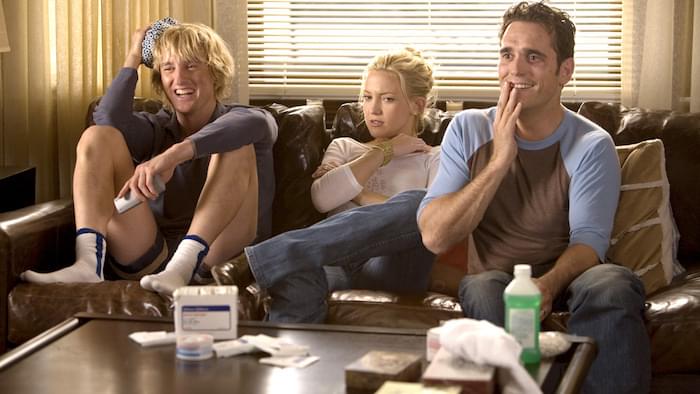
Eric’s Sack of Mail: shocked & appalled, snide, movie grades

0

Here are some more recent items in Eric’s Sack of Mail, the place for e-mails I get that are neither angry nor stupid. They cover a wide range of topics, so put your thinking caps on!

First, a reader whose name I neglected to keep pointed out an amusing paragraph in a recent edition of The Daily Universe at BYU.

I thought of you when I read this. It’s from a front-page article printed in the The Daily Universe on May 25 about the rising cost of gas:

“I’m shocked and appalled,” said JaNae Besendorfer, a senior from Nephi. “It will just be so expensive to go anywhere.”

I especially like that her name is “JaNae.”

I agree! Made-up Mormon names with two capital letters are the best when using expressions like “shocked and appalled.”

Next, a fellow named Rod stumbled across my site and read my somewhat infamous Ann Landers “Snide Remarks” column, to which one angry-letter writer tried to pass off “dishonest” as a normal, common definition of “snide.” Rod had this to say:

I came across your Ann Landers column while seeking a definition of “snide”. Frankly I share the view of those readers who thought it was in very poor taste, though I don’t want to get self-righteous about it, since lots of things I like are in bad taste. By the way, I’m not sure you’re right that no one uses snide to mean dishonest – what led me to your column was reading “Fingersmith” by Sarah Waters, where the leading character describes fake jewelry as snide. However, this may be a Victorian usage, as the novel is set in Victorian times. One online source quotes a 1913 edition of Webster as referring to “snide goods”, but says this usage is archaic. This other source has more on the origin and history of the word “snide.”

That is actually pretty fascinating. I’ll summarize what the second link says: While people generally assume “snide” came from German “schneiden” or Dutch “snijden” — both meaning “to cut,” which lines up with the modern definition of “snide” — in fact “snide” in English ORIGINALLY meant “false, bogus, counterfeit.” That definition of it goes back to 1859, while the current meaning (sarcastic, snooty, sneering, etc.) is only traceable to 1933. So we actually don’t know where the English word “snide” came from — or, if it did come from German or Dutch, why we changed it to mean “fake” before eventually going back to a meaning closer to the German/Dutch one.

Or maybe it’s only interesting to people named Snider and/or people who write columns called “Snide Remarks.”

Next, Justin writes in with a question about my movie reviews:

When you give a film a C+, does that mean the film can be counted as a “good film,” or a “bad film?” (Or a “neutral film?”) Let’s take Hollywood Homicide for example. That’s a perfect example of a movie that I cannot say I feel is a GOOD movie…however, I still cannot say I feel that it is a BAD movie. So in my mind, it’s neutral. (You gave it a C+.) So would it count as a “good” or “bad” film? (I kept thinking about this, especially since your reviews are posted on Rotten Tomatoes, where it has to be either one or the other.)

Rotten Tomatoes has the cut-off at B-, so by their reckoning, C+ is “rotten.” But they don’t leave room for the middle ground: movies that aren’t good, exactly, but aren’t bad either.

As you guessed, that’s where the C+ comes in. Here’s how I think of a C+ movie: You wouldn’t see it on purpose, but if you’re standing at the theater and you’ve seen everything else and the C+ movie starts in 10 minutes, then sure, go ahead and see it. It’s better than not seeing anything.

A straight C grade to me means the film inspires no strong feelings one way or the other, a completely neutral film. C- is where I start using the word “bad” to describe it, and of course it gets worse from there.

(By the way, Justin’s e-mail address bounced when I tried to send this response to him, so I hope he’s reading this.)

Finally, a reader named Mike has a similar question regarding how I rank movie reviews. He writes:

I scanned your movie reviews and noticed that you haven’t given any teeny bopper movies an A rating. That’s as far as I looked, so maybe you’ve given one a “good” rating, I don’t know.

So, my question is whether you have given a teeny bopper movie a good rating, like above a B? You said to some guy on your blog that you try to evaluate three things when you review a movie: what’s it trying to accomplish, does it accomplish it, why. Do any teeny boppers, um, bop teens well? That is, where do most teeny bopper movies fall short?

I think it’s important to point out that I don’t give very many movies of ANY genre an A or A- grade. Since those grades are less common in general, it makes sense that if you narrow it down to a particular genre, there are going to be even fewer.

Second, I guess it depends on what you consider a “teeny-bopper” movie. If you mean movies aimed at teenagers, especially teenage girls — that’s what I think when I think “teeny-bopper” — then “Bring It on,” “Stick It,” “Crazy/Beautiful,” “Anywhere But Here” and “Mean Girls” all got very high marks from me. (Those are the first few that come to mind.) But “teeny-bopper” is kind of a vague term.

RE: “You try to evaluate three things when you review a movie: what’s it trying to accomplish, does it accomplish it, why.”

When I consider those questions, I’m not taking into account who the movie has been marketed toward. What a movie is “trying to accomplish” means what its storytelling goals are, not who it’s trying to appeal to. Plenty of very bad movies meet the goal of appealing to an audience. Saying that a movie achieves that is the same as saying, “It will make a lot of money,” which says nothing about its actual quality.

Many teen-oriented movies are bad simply because they treat the audiences like they’re stupid, talking down to them with idiot plots, unoriginal dialogue and cookie-cutter characters. The movies I cited above all buck that trend by being smart and mature. There is probably a great percentage of teen movies that are bad than with some other genres, simply because with teens, so many filmmakers (and the studios behind them) don’t even TRY to be good. They only want to appeal to teens on a superficial level.

That does it for Eric’s Sack of Mail for now. But soon there will be a new installment addressing “An Inconvenient Truth” and people’s opinions of it. Well, not of the movie, since I don’t think any of the people who have written to me about it have actually seen it, but about global warming in general. So, you know, you can look forward to that.

The Outsider (documentary)

0

Nicholas Jarecki, a young film student who wrote the book “Breaking In: How 20 Film Directors Got Their Start,” reports that the most interesting life story of the directors he interviewed was James Toback’s. This inspired him to make a movie, “The Outsider” … in which James Toback’s allegedly interesting breaking-in story is ignored in favor of showing him at work today.

If Toback had the most interesting backstory, why are you telling us his frontstory?

“The Outsider” is 83 minutes of hero worship. Jarecki clearly admires Toback, whom he follows during the ridiculously short 12-day shoot for his 2004 film “When Will I Be Loved?” Actors who have worked with Toback love him, too. Brooke Shields, Neve Campbell and Mike Tyson are on hand to heap praise on him for not selling out, for being a maverick, for being such an all-around genius.

And hey, Toback loves a lot of people, too. Apparently everyone he’s ever worked with is “brilliant” (including the just-named actors, including Mike Tyson) and directing them was a choice experience.

What glimpses there are of Toback’s past certainly are interesting. He graduated magna cum laude from Harvard in 1966 and is extraordinarily well-read and educated. The ’60s and ’70s were an era of hedonism for him, packed with gambling, women and movies. He once lived in athlete Jim Brown’s house as the only white man in the “orgiastic” entourage. I suspect a biography of him would be eye-opening indeed.

So why the focus on his current work? The way Toback makes “When Will I Be Loved?,” while more free-wheeling and improvised than most film shoots (and certainly shorter), is by no means unique. Seeing him at work provides little insight into what kind of man Toback is, or even what kind of director he is.

“The Outsider” assumes we already think Toback is a genius from watching his movies (which include “Black and White,” “Two Girls and a Guy,” “The Pick-up Artist” and “Fingers”). But since the movie’s whole point is that Toback is an outsider whose films are not widely seen, how can you assume your audience has, in fact, seen them? And what if they saw them and — horrors! — didn’t like them? Such a scenario is apparently beyond conceivability for Jarecki.

Wordplay (documentary)

0

I’m relieved by the existence of the film “Wordplay,” because it assures me that I am not alone. There are other people just like me, who also know the difference between a New York Times crossword puzzle and an inferior one, who understand the lingo used in the clues, and who — heaven help us — actually recognize the names of some of our favorite puzzle constructors.

It’s growing safer and safer to be a nerd in our society, and “Wordplay” is the latest clarion call, a delightfully unimportant and entertaining documentary about the New York Times crossword puzzle and its editor, Will Shortz.

Crossword aficionados know what a difference Shortz has made since becoming editor of the daily puzzles in 1993. His predecessors eschewed puzzles with slang or of-the-moment pop-cultural phrases; Shortz, recognizing the Times’ need to cover the modern world in all its facets, embraces them. Both clues and answers have become more playful and imaginative under Shortz’s watch.

This film, directed by Patrick Creadon, gives some background on Shortz, follows beloved puzzle constructor Merl Reagle as he creates a puzzle from start to finish, interviews notable personalities who are avid Times puzzle fans (including Jon Stewart and Bill Clinton), and has its finale at the 28th annual American Crossword Puzzle Tournament in Stamford, Conn.

In some ways, “Wordplay” follows in the footsteps of docs like “Spellbound” and “Word Wars,” which focused on spelling bees and Scrabble tournaments, respectively. But while “Wordplay” does end with a contest whose outcome is far from predictable, its primary subject is the New York Times crossword puzzle in its daily format, accessible to everyone, beloved by thousands.

Creadon’s access to famous people who love the Times crossword is impressive. Here’s documentarian Ken Burns talking about Manhattan as a city of grids and boxes, and the crossword being a manifestation of that. Here’s Bill Clinton very eloquently explaining how working a crossword is the same as solving a complicated political problem: “You start with what you know the answer to and then you build on it.” The Indigo Girls are here. So is Yankees pitcher Mike Mussina. And of course Jon Stewart, cracking wise about his devotion to the Times crossword. (“Sometimes I will do, in a hotel room, a USA Today. But I don’t feel good about myself.”)

Champion puzzle-solvers are the sort of lovable geeks and non-photogenic types you’d expect, happy with who they are and cheerful about the annual competitions, which are a cross between summer camp (with friends you only see once a year) and fierce intellectual combat.

The film should appeal to anyone with a love of crosswords, or even just a love of the English language. The people interviewed are lively and funny, and Creadon maintains a buoyant pace as he takes us through the black-and-white world of the crossword puzzle.

Nacho Libre

0

Oh sure, you’d THINK Jack Black and the guy who wrote and directed “Napoleon Dynamite” would make a great team. Jared Hess is funny, and Jack Black is funny; why, together they should have newly minted comedy gold spurting out their comedy orifices!

And yet “Nacho Libre” is proof that the pairing is wrong, all wrong. Their styles are opposites. Hess’ “Napoleon Dynamite” found its humor in quirky characters who behaved in ways that, while unusual to us, were perfectly normal for them. Black, on the other hand, doesn’t play “characters.” He plays himself, mugging and smirking as if to remind us that it’s just him after all. In other words, Hess’ comedy depends on actors being fully committed to their characters and never breaking the illusion, but Black refuses to disappear into a character and revels in breaking the illusion at every opportunity.

Both styles work fine separately — Black’s “School of Rock” is a joy to watch, and the charms of Hess’ “N.D.” are, I’m sure, well-known to you — but not together. Hess hasn’t tailored his style to mesh with Black’s, nor has Black made any attempt to fit in with Hess’ sensibilities. And so “Nacho Libre” is full of merry whimsy and scattered chuckles, but never the outright hilarity it aims for.

Black plays Ignacio, a half-Mexican priest at an orphanage in a quaint, timeless village south of the border. Consigned to kitchen duties by his priestly higher-ups (“They don’t think I know a buttload of crap about the gospel, but I do,” he says), he dreams of being a masked wrestler, or luchador, so popular among the country’s ordinary folk. If he were to realize his dream, perhaps he could even make some money to improve the orphanage.

But the monastery he belongs to disapproves of professional wrestling (there’s a church I can get behind), and so he dares not mention his dream to anyone, not even the angelic Sister Encarnacion (Ana de la Reguera), whom he has a less-than-priestly crush on.

Luckily, luchadores tend to be masked. His identity concealed, Ignacio — now Nacho — pairs with a filthy, wide-mouthed street kid named Esqueleto (Hector Jimenez) to become the town’s newest wrestling sensation. Yet they can’t seem to break into the ranks of the established luchadores, and Nacho is particularly disheartened to realize his idol, Ramses (Cesar Gonzalez), is a jerk and a snob.

The screenplay (by Hess and his wife Jerusha, with help from “School of Rock’s” Mike White) finds much of its humor in the old-fashioned pastoral setting of the Mexican village being juxtaposed with modern American slang like “it sucks to be me” and “whatever.” I confess to giggling at this sort of thing oftener than I should, though it is distracting when Black not only says the line, but makes one of his trademark faces to go with it — a reminder that hey, it’s me, Jack Black, pretending to play a role for 90 minutes.

Hector Jiminez, whom the filmmakers found at open auditions on location in Oaxaca, is a gem, though. Filling the “N.D.” Pedro role as the protagonist’s so-oblivious-he’s-cool Mexican sidekick, Esqueleto gets it exactly right, delivering his silly dialogue without affectation or showiness. He has what everyone in “N.D.” had: very little professional acting experience, and thus no self-consciousness to go with it.

Apart from some uninspired slapstick (Nacho falls off a bike; Nacho catches on fire; etc.), Hess shows he’s still a savvy director who has grown since his first film. He composes interesting shots that are more than just functional (making use of Mexico’s gorgeous scenery in this case) and very effectively uses eclectic songs for the movie’s soundtrack. If he’ll branch out into other styles of humor, or find actors who can forget themselves and blend into his world, he’ll have a long, hilarious career.

But I can’t completely dismiss this one. The film is so good-natured and pleasant and simple that I can’t not recommend it. It’s a disappointment in a lot of ways, but it’s sure an upbeat one.

The Fast and the Furious: Tokyo Drift

0

Did you know that if your teenager does something illegal, and you don’t want to see him put in juvenile hall, you have the option of deporting him instead? It’s true! And I learned it from watching “The Fast and the Furious: Tokyo Drift.”

This is the latest film in an increasingly stupid series of movies about the underground drag racing scene, in which young men drive tricked-out cars at insane speeds through city streets and are subsequently surprised and/or outraged when they are killed in fiery crashes and/or arrested.

It is a series that seems to suck the life force out of good directors, first John Singleton in “2 Fast 2 Furious,” and now Justin Lin, whose debut film “Better Luck Tomorrow” was excellent. Very little of Lin’s modern, Fincher- and Scorsese-inspired visual style is evident here, and he seems resigned to telling his implausible, logic-free story in the most pedestrian manner possible.

The story is that Sean Boswell (Lucas Black), a thrill-seeking American teen, is sent to live with his estranged father after yet another round of reckless driving and destruction of property charges threaten to send him to juvie. Dad (Brian Goodman), a military man, lives overseas, and when Sean arrives there, the film includes this caption: “TOKYO, JAPAN.” This is helpful because otherwise, we wouldn’t know which Tokyo we were dealing with. “Tokyo, Ohio?” we might think. “But then why is everyone Japanese?!”

Major Boswell warns his son not to involve himself in any shenanigans or tomfoolery, not to mention monkeyshines or high jinks, but less than 24 hours after stepping off the plane, Sean is not only racing again, but he’s racing a car that doesn’t belong to him, wrecking it, AND incurring the wrath of a local yakuza-connected thug called DK (Brian Tee) by flirting with his girlfriend Neela (Nathalie Kelley).

The car Sean wrecks belongs to Han (Sung Kang), and why Han lent his expensive racing vehicle to someone he’s just met whose racing ability he has no knowledge of is unclear. But as a result, Sean has to repay the debt by working for Han picking up and delivering things as part of an operation ultimately run by DK, though Han (and by extension Sean) is skimming off the top.

It’s needlessly complicated, as you see, considering the movie’s real purpose is to be car porn: show some pretty cars doing amazing things and call it a day. All that “plot” and “dialogue” just gets in the way, you know? The film does meet the car-porn standards, though with a few crunchy racing scenes (which Lin directs proficiently) and numerous loving shots of lightweight, beautifully rendered cars glistening in the moonlight.

The screenplay (written by THREE people, Alfredo Botello, Chris Morgan and Kario Salem) has an impressive number of truly bad lines, of which I will cite just two. First, in the opening sequence that leads to Sean’s arrest, he is arguing with another testosterone-laden, car-loving teenager about a trivial issue, leading the other boy’s bimbo girlfriend to say: “Why don’t you boys let your cars do the talking?” (She subsequently proposes the terms of the race: “Winner gets me.”)

Second, in Tokyo, when Sean once again runs afoul of a hot-girlfriend-having car fanatic, DK warns him: “Stay away from her, or the only thing you’ll be driving is a wheelchair.” We overlook the syntactical error — one doesn’t really “drive” a wheelchair, does one? — because English is not the speaker’s first language. But still.

Much of the film is harmlessly generic, but in its last half-hour it plumbs new depths of dumbness that markedly lower its overall score. The film is so enamored of the racing lifestyle — and so sure its audience feels the same — that racing becomes the motivation for every character in every situation. When Sean wants to settle a business dispute between himself, DK and DK’s mafia uncle (Sonny Chiba), his solution is a race, with the loser (him or DK) forced to leave town forever. Uncle accepts this plan EVEN THOUGH IT MAKES NO SENSE. And while Sean’s father has understandably been opposed to his activities, he eventually comes to accept high-speed street racing as a perfectly viable way of solving one’s problems, a resignation that strikes me as laughably unlikely.

The film ends with a disclaimer, written in legalese (“contained herein”), reminding the numbnutses who thrive on this sort of film not to Try This At Home. Of course, the warning comes after 104 minutes of footage meant to show how awesome it is when a regular non-professional teenage driver becomes a drag racer, so its effectiveness is questionable.

The Lake House

0

They don’t make a lot of movies for grown-ups nowadays, but “The Lake House” is one. Both of its stars are over 40, neither is blond, and not one of the songs on the soundtrack is sung by anyone you’ve seen on MTV recently. (Carole King, anyone?)

Being different doesn’t necessarily make the film good, of course, but “The Lake House,” a remake of a 2000 Korean film (“Siworae”/”Il Mare”) that was never released in the U.S., is a mature and earnest romantic drama that is far superior to the bubblegum we usually get, the stuff that stars Mandy Moore or some equivalent person.

The premise may remind you of “Frequency,” the 2000 Dennis Quaid/Jim Caviezel film about a father and son who communicate 30 years apart through an old wireless radio. In the present story, a lonely doctor named Kate (Sandra Bullock) and a sullen architect named Alex (Keanu Reeves) correspond through notes left for each other in a mailbox at a Chicago-area lake house that they each once lived in. He puts a note in the box, she takes it out, back and forth like that. The problem? They live exactly two years apart. When it’s April 3, 2006, for Kate, it’s April 3, 2004, for Alex.

So you think: Why doesn’t Alex just go find Kate in his time, 2004? And in fact he does happen to meet her at a party. But what’s he going to tell her? “Two years from now, you’re going to exchange letters with me through a magic mailbox at a house you don’t live in yet”? As pick-up lines go, that one’s not very good.

Instead they take the opposite tack. Kate tells Alex to meet her on a particular date — tomorrow for her, tomorrow plus two years for him — at a particular restaurant. But there are complications with that plan, and the pen-pal romance that has developed between them is threatened by more than just the metaphysical distance that separates them.

I like that the film, with a screenplay by David Auburn (who wrote the brilliant play and OK movie “Proof”) and directed by Argentine filmmaker Alejandro Agresti, asks the same questions you and I would ask if we were in this situation, and comes up with the same potential solutions that would probably occur to us. This is noteworthy because “The Lake House” isn’t even close to being a sci-fi film, yet it pays more attention to the details than many sci-fi films do.

It’s a romance, with many of the conventions of the genre. For example, Kate and Alex each have significant others whom they clearly don’t belong with, and Kate uses some especially florid language when Alex asks her what she loves. (“Smelling the flowers before I see them; when it starts to rain just as the picnic is ending,” she says, as I vomit.) And the movie employs the most basic plot structure: We have two people who should be together, and most of the film is spent keeping them apart. The time paradox is simply the obstacle of choice.

There is not much use for Christopher Plummer as Alex’s estranged brilliant architect father, nor for the wonderful Shohreh Aghdashloo as Kate’s doctor friend, except that they provide some context for the moody main characters and their various time-based neuroses. Kate is stuck in the past with an old on-again/off-again boyfriend (Dylan Walsh) while hoping something better will come along in the future; Alex has spent years trying to forget his past, yet can’t seem to make solid plans for the years to come, either.

Bullock and Reeves carry the film well, considering they share only a little screen time together. As my sister put it — yeah, I saw the movie with my sister; what about it? — “Keanu is a much better actor when he’s just playing himself.” I think that sums it up. He’s genuinely emotional a couple times in this film, and I actually believed him. And if I can believe Keanu Reeves as a real person with real feelings, I can believe anything, even magic mailboxes.

Note: A couple brief scenes take place in the lake house’s attic. Yet in the many, many, many, many exterior shots of the all-glass house, it is very obviously a one-story box with no attic whatsoever. That part actually confuses me more than the time paradoxes do.

Lower City (Portuguese)

0

The dull, dimly lit Brazilian drama “Lower City” has some distractions like cockfights and barroom brawls in it, but don’t be fooled. The film’s only message is that it never works out when two men are sleeping with the same woman at the same time. So maybe those cockfights are a metaphor, not a distraction.

Whatever the case, our heroes, such as they are, are Deco (Lazaro Ramos) and Naldinho (Wagner Moura), young virile Brazilians who own a boat and drift from one place to the next, taking whatever work they can find and having sex with whatever women they can sweet-talk. Deco is black and Naldinho is white, but that’s about where their differences end. Both are broody, macho types, thin characters painted as being awfully fond of each other (in a masculine, friendly way) but given little dimension beyond that.

They meet a hooker named Karinna (Alice Braga) and have sex with her in exchange for money, which is the usual arrangement for someone in Karinna’s profession. She gets attached to the fellas, though, pining for them while off doing her business, and soon she is back in their company, not as a prostitute but as a quasi-girlfriend.

You can perhaps see the trouble this would lead to. While Karinna would be happy with the occasional menage a trois, Deco and Naldinho are afraid such an event would be totally gay, dude. So there is a lot of trading off and back-and-forthing, with both men slowly becoming jealous of each other. I suppose it doesn’t help that while Naldinho was in bed recovering from a knife wound — which he got defending Deco from a racist attacker — Deco and Karinna were on the floor next to him, doin’ it. That sort of indecorous behavior goes a long way toward ruining a friendship.

What is unclear is why writer/director Sergio Machado thought we would like any of these people. Naldinho earns a little sympathy for saving his friend’s life, but all three characters are otherwise inscrutable, shallow and unlikable. Furthermore, though they all purport to adore each other, we never see them actually enjoying themselves. Their relationship jumps right to the angst phase, omitting the we-had-joy-we-had-fun period altogether — unless the sequence where they conspire to defraud some of Karinna’s unsuspecting johns is supposed to convey their joie de vivre. (What it actually conveys is that the trio are conniving and perhaps sociopathic.)

So yes, it can be hard when your girlfriend is a hooker. It’s even harder when your hooker girlfriend is also the girlfriend of your best friend, and when you have nascent unexpressed homoerotic love for that best friend. (Deco and Naldinho are the types who would beat me up for saying that, but it’s totally true.) A turgid, ineffective drama, no matter how spicy it is sex-wise, cannot make these truisms interesting.

The Friday movie roundup – June 16

0

There are four wide releases this weekend, including two sequels and something starring Keanu Reeves. So we’re definitely looking at a quantity-vs.-quality thing here.

(Interesting note: Three of the four new films have the increasingly uncommon rating of PG.)

I’ve been in Vegas all week for the CineVegas Film Festival, and thus missed the press screenings for “Garfield: A Tale of Two Kitties” and “The Lake House.” I’ll catch the latter this weekend, for sure; I can’t promise I’ll take any strong action in regards to “Garfield” anytime soon.

The other two, “Nacho Libre” and “The Fast and the Furious: Tokyo Drift,” I saw in Vegas. Vegas, baby! Everything’s better here!

A disappointingly under-programmed CineVegas left me with my Monday evening free, and as it happens, “Fast and the Furious” was screening in the same multiplex inhabited by the film festival. I politely asked the studio rep if I, a wayward visiting film critic, could attend her screening, and she graciously admitted me. That’s Vegas hospitality, baby!

I did have to shush an old man during the screening. Like most old men in Vegas, he was gigantically round and wore shorts. He liked to say things out loud that most of us leave in our brains (“That’s his girlfriend” “They sure are driving fast” “Look at that car”), and since he’s an old Vegas man, he’s not used to being told what to do. So when I shushed him, he looked very surprised. He was quiet for the rest of the screening, though I did notice him look over at me a couple times, perhaps sizing me up to see if he could take me in a fight.

“Nacho Libre” actually screened last night as part of CineVegas, even though it was opening today anyway. Jared Hess’ last film, “Napoleon Dynamite,” played here to great acclaim in 2004, so I assume the inclusion of “Nacho Libre” was either Hess doing CineVegas a favor or CineVegas doing Hess a favor. Random unneeded favors are also very Vegas.

Both new releases, along with write-ups for a few other, smaller releases, can be found in this week’s “In the Dark.” If you’re not already a subscriber, I urge you to remedy that at once. It’s free and exceptionally useful.

Eric’s Sack of Mail: ‘Da Vinci Code,’ ‘X3,’ ‘Inconvenient Truth’

0

We’ve had a lot of letters recently that belong in Eric’s Sack of Mail — correspondence that is NOT angry, irrational or stupid — so we’re going to present some of them today and some of them in another installment. And here we go!

A reader named Garrett responds to my review of “The Da Vinci Code,” where I made fun of a particular detail in the plot:

I didn’t particularly like the Da Vinci Code film, but I don’t think twitting the filmmakers for using a bank account’s “safe passage clause” as a plot point is very fair. Maybe if the bank account was really, really old, back to the times where safe conduct agreements and edicts were more common. Still not very reasonable, I suppose. What is more likely is that the bank manager (in light of his true motives) was making that up in order to get them under his control.

We can, I suppose, fault the two main characters for their naive acceptance of such a ridiculous contrivance.

Was there a time when a “safe passage clause” was common in bank accounts? Like in the Wild West or something? I’ll have to look into that.

But yeah, I think you’re right that the real problem with the movie’s use of it is how the Hanks and Tautou characters accept it like it’s perfectly normal. (Also normal: Declaring “I’ve got to get to a library, FAST!!” in a loud, urgent voice.)

Speaking of big movies where characters say and do ridiculous things, a DVD Talk reader named Brad wrote in response to my review of “X-Men: The Last Stand” (which was listed after two other reviews, by the way; you’ll need to know that). I mentioned some other trilogies where the third entry was the lowest in quality, prompting Brad to say:

I respect your opinion, HOWEVER…

Back to the future III? Jurassic Park III? Godfather III? Okay, I’ll give you that last one.

But BF3 was at least as good as the first one, and better that the second by a mile.

JP3 is, in my humble opinion, much better than the first one. And don’t get me started on Lost World!!

*takes deep breath* I’m alright…I’m okay…

Anyway, all trilogizing aside, no hard feelings, and keep up the good work.

BTW, d’ja notice that of the three [reviews] of this movie, YOURS IS THE THIRD? Coincidence. I think not. What goes around…

Just kidding. 8 > )

“Back to the Future III” and “Jurassic Park III” as good as the originals?! Surely you smoke crack, sir.

And if my review was the weakest of the three, just think how bad the FOURTH one will be!

Ah, good-natured jesting! It is my favorite.

My “X3” review also mentioned the absurd line, “I’m the Juggernaut, b****!” Consequently, a reader whose name I didn’t get wrote in with this information:

I was checking out your review (great review!) and I noticed that you mentioned Juggernaut’s line “I’m the Juggernaut, B****!” as “an effort to produce the Worst Line of 2006.” I’m sure you’ve had plenty of people inform you of this since you posted that, but in case they didn’t, that line comes from a parody that’s spreading like wildfire over Myspace and YouTube. Some guys dubbed their voices over an episode of [the animated TV series] X-men.

I was aware of that, and it actually makes the line worse, in my opinion. Not only is it a bad line by itself, but it was included for a stupid reason (i.e., as a shout-out to fanboys).

Nonetheless, I had not seen the animated dub in question, and the reader was good enough to provide a link. Here is where the little mini-phenomenon can be seen. (WARNING: It contains non-stop R-rated language. Don’t click it if you don’t want to hear it.) And here is the creators’ MySpace page. One of their blog entries chronicles their elation at discovering their line was being featured in the movie, which is kind of adorable. (By the way: I have a friend who honestly believes — and has strong evidence in support of it — that the line in “Pulp Fiction” about “it’s always time for pie” came from her. I’ll have to tell you the story sometime.)

Finally, I wrote a blog entry criticizing Fox News for snottily implying Al Gore’s movie “An Inconvenient Truth” was a failure for grossing “only” $350,000 over its opening weekend when it was only playing in four theaters at which nearly every screening was sold-out. Brandon writes in with this additional insight:

You lambasted Fox News (and rightfully so) for claiming “An Inconvenient Truth” was not a sucess for grossing about $350,000 over the weekend while playing at only four theaters nationwide.

While I’d agree the movie cannot be considered a failure, I’m hesitant to view it as a blockbuster success as you seem to right now. Your argument that every single showing of the movie was sold out at every theater over the weekend reminds me of NASCAR fans. NASCAR fans are quick to point out that the main race for NASCAR sells out to a tune of over 200,000 seats every week. Other sports, they claim, hardly have any teams that sell out on a consistent basis. Here’s why I feel they are wrong:

There were only 200,000 seats available! It’s only available one day of the week! If you took every NFL team and was somehow able to put them into an arena and have them play each other in one game every week, that would sell hundreds of thosands of seats years in advance. Same goes for the NBA or MLB, in my opinion.

Mr. Gore’s movie was available to a limited number of people in limited areas, much like NASCAR. My guess is that those who really really wanted to see it went out of their way to catch it the opening weekend. These people are not few in number, but can hardly rival the numbers of people who have seen and still want to see “X-men”.

I’m willing to bet that if you’d opened “House of 1000 Corpses” to only 4 theaters over one weekend, it would have earned $350,000, too.

You cannot compare the release of “X-men” to the release of “An Inconvenient Truth” in either a positive or negative way, in my view.

Those are good points. “An Inconvenient Truth” is not a blockbuster, and likely never will be. Documentaries that gross huge amounts of money are extremely rare. And you’re right that if the film HAD played in 3,000 theaters, the per-theater average would have been miniscule.

My point was simply that, contrary to Fox’s snotty implication, less than half a million dollars is NOT a disappointment under the circumstances. By all accepted measures within the film industry, $350,000 in four theaters is stupendous, regardless of what “kind” of film it is or what audience it appeals to. A per-theater average of $90,000 over four days is good, period. No one in the film industry would dispute that.

But when Fox News says, “X3 made $120 million! Ooooh, and poor Al Gore’s movie only made half a million,” they’re being disingenuous. The average viewer is going to take the implication — Gore’s movie is a flop — at face value because Fox didn’t MENTION that it was only playing in four theaters and that its take was actually quite good. They took the outcome they wanted — Gore fails — and found a way to phrase the facts to fit that.

“An Inconvenient Truth” has dropped in per-theater average as it has expanded to more theaters, of course. That’s partly because with each passing week more and more people who want to see it have already done so, and also because the potential audience for documentaries in general is so small. It’s grossed $3 million so far. If it makes it to even $12 million, it will be among the top five highest-grossing docs of all time.

That’s it for Eric’s Sack of Mail this time. Keep those sensible and intelligent cards and letters coming!

Junk in the Trunk

0

I recently came into an unexpected bit of unearned money, and it was such a fortuitous event that I thought: I’m going to spend this money on my colon.

It has always been my belief that if you take care of your colon, your colon will take care of you. (Ask anyone; I say this at least twice a day.) It’s important to keep that area clear of toxins and build-up, which is why nutritionists recommend having plenty of fiber in your diet. Fiber can be found in foods such as fruits, vegetables, grains, wicker and cardboard. When you eat these items, the fiber moves through your colon and grabs at the walls of it with tiny little fiber hands, scraping off whatever might be leftover like sucker fish in an aquarium.

But sometimes a high-fiber diet just isn’t enough to keep your colon completely free of debris. Stuff accumulates up there, like the junk drawer next to the drawer where you keep the silverware. And in both cases, one good way to clean it out is to flush it with a constant stream of water for 45 minutes in what’s known as colon hydrotherapy, or a colonic. (It has a different name when you’re using it to clean out the junk drawer next to the silverware drawer, but I don’t remember what it is.)

I read an article about colonics a while back, and I was intrigued. I like to clean things. I like when the bathtub has gotten filthy and I can get in there with a scouring pad and some cleanser and just scrub the dickens out of it, making it white and fresh and new again. And from what I’d read, doing that to your colon can make you feel rejuvenated and refreshed, which is even better, because scrubbing the bathtub always makes me tired.

So in an area of Southeast Portland that teems with quirky, shabby, New Agey businesses like health-food stores for dogs and places that will silk-screen anti-war sentiments onto your underpants, I located a seemingly reputable establishment that handles colonics. It’s called A Vital Life, and it’s located upstairs from a chiropractor and down the hall from a realty office. A Vital Life does reflexology and miscellaneous other alternative-health procedures, but irrigating people’s bowels is their bread and butter, if you will. It’s a two-person operation, owned by Liesa (whom I never saw) and run by an aging hippie gentleman whose name I failed to learn. You’d think being on a first-name basis would be a prerequisite for someone who’s going to put a hose in your bottom, but maybe anonymity is better.

When I called to set up the appointment, the man said the only preparation I needed to do was to drink lots of fluids that day and not eat anything for a few hours beforehand. Nevertheless, being self-conscious and a little nervous about irrigating the ol’ back forty, I did what I could at home to clear things out — akin to tidying your house before the cleaning lady comes over because you don’t want her to see how messy it is, I suppose.

Upon my arrival at A Vital Life, the man led me into the colon hydrotherapy room, where he explained how it would work. It goes down like this: He gives you some privacy, and you strip from the waist down and recline on a padded table. At the end of the table is a little spigot onto which a sterile, single-use tube is already placed. You insert the free end of this tube (which the advertising says is “the width of a pencil” even though it is actually wider than that) into you-know-where, then, once everything is positioned, cover up with a sheet and call the man back in to start the procedure.

(Note: In the previous paragraph, “you-know-where” refers to your bum.)

I managed all of this and summoned the guy back into the room. I’m lying on my back with my knees bent, sort of like having a gynecological exam (I assume), with my lower half covered by a sheet and a tube in my southern hemisphere, awaiting instructions. The man explained that the flow of water would be gentle, forced only by gravity and not through any artificial means of propulsion. It wasn’t going to be a sandblasting, in other words. He also assured me the water was filtered and purified first, which seemed like an odd measure to take, considering where it was going. I mean, what, my colon deals with excrement all day, but a little exposure to tap water will shut it down? What a princess my colon is!

He started the flow of water, which was indeed gentle and warm. It came out of the spigot through the tube and into my rectum and colon. He said that after a few minutes, the urge to send everything back out would become quite intense (duh), and that I should then release it. It wouldn’t go back through the tube, as water would be coming the other direction continuously. It would go out AROUND the tube, into a recessed area of the padded table over which I had positioned myself. That hole in the table — a more sanitary and pleasant version of a toilet, basically — goes to a clear pipe that runs alongside the table and into (I presume) the sewer system. The pipe is clear so that you can see what’s coming out of you, if you’re curious, which you totally are.

The man left me to my work then, promising to check on me every now and then to make sure everything was OK. At his suggestion, in the interest of breaking up whatever wreckage and flotsam was congregating in my colon, I massaged my gut with my hands. As expected, I soon had a most dreadful and insistent urge to “release” (that’s the term the man had used). And so I did. This was no orderly evacuation, either, with single-file lines and calm evacuees. No, this was more of an every-man-for-himself prison riot, with shouting and trampling and terror. I exerted my full strength and sent every drop of water out the escape hatch, and everything it was clinging to along with it.

And then I slowly filled up and repeated the process. Fill up, and release. Fill up, and release. All the while massaging my gut and keeping an eye on the flow tube next to the table to see what manner of offal had been residing in me.

And my, what a parade that was! Let me just say to all the people who have ever told me I was full of crap, you have no idea how right you were. It was a kaleidoscope of colors and shapes and nodules, reminding me of when they cut open a shark and find license plates and tires. What did I ever eat that was THAT color? How did something lodged in my lower intestine come to be shaped like THAT? That bit is shaped like a piano! That part looks like Abraham Lincoln! Can we somehow use these shapes to divine the future?

I thought afterward that it would have been hilarious to put a roll of nickels up there beforehand, just to watch the coins come flowing out during the procedure. And I’d keep count so that I’d know when I was finished. (“Can’t stop yet — I’ve still got 20 cents up there!”)

So what does a colonic feel like? Basically, when you fill up with water, the sensation is exactly like when you suddenly and urgently have to poo. But the nice part is, you CAN. You don’t have to go hunting for a restroom and hold it in while you look. You can just GO, right there, the instant the urge strikes you. It’s really a dream come true.

When the process was finished, I felt exhausted. It really takes a lot out of you (as it were). Toxins are stirred up and eliminated, and your whole system is given a workout. The next day, though, I did feel somewhat refreshed and healthier, although it’s possible those sensations were psychosomatic. The important thing was, I now had a colon so clean you could see your reflection in it, and that’s got to count for something.

The 4th Dimension

0

In “The 4th Dimension,” Jack (Louis Morabito) is a daydreaming antiques repairman who fixes old jewelry boxes and such-like for a German shopowner. But Jack (Miles Williams) is also a little boy in the third grade who has an outrageously precocious knowledge of Einsteinian theory and a sick mom.

It doesn’t take much to gather that antiques-repairman Jack is the grown-up version of precocious Jack, but this enigmatic black-and-white non-linear story has further details that suggest all is not as it seems. Is that a one-room schoolhouse little Jack attends? What year is this? Who is the sultry woman who keeps asking adult Jack to fix a clock — and who’s the old lady who orders him not to?

Both Jacks are germphobic and display obsessive-compulsive tendencies. There is talk of parallel timelines and alternate realities. Adult Jack’s daydreaming begins to take over his life, to the point where he (and we) can’t distinguish between fact and imagination.

It’s an elegiac, even hypnotic film (written and directed by the team of Tom Mattera and David Mazzoni), but it turns out to have a disappointingly ordinary “what is real?” conceit that has been done to death, particularly among independent films. It has admirable qualities, though, such as the impressive opening Steadicam shot that takes us through Jack’s house, and an unedited moment where young Jack recites an amazingly complicated speech about Einstein’s theories in one take — meaning the child actor, Miles Williams, learned the whole thing (and what’s more, delivered it like he actually understood it).

But little perks aside, it is a film whose concept is too often done, and usually only about as well as it’s done here.

Running Stumbled (documentary)

0

The people in “Running Stumbled” are old and caustic, and they speak casually of death, even of murder. They pop prescription pills constantly and live in total squalor in a dilapidated Louisiana shack. All of this makes for a film that is very funny, but also very disturbing, considering it’s a documentary.

Shot like a home movie on non-widescreen video, “Running Stumbled” is an attempt by the filmmaker, John Maringouin, to capture his drug-addict ex-con retired-Dadaist-artist father in his natural habitat. Dad, named Johnny Roe Jr., lives with a woman named Marie, a creaky old thing who aids and abets Johnny’s habits as he assists hers. They probably loved each other at one point, but what passes between them now is far more hostile, though the word “love” does get tossed around occasionally.

Johnny’s first wife, the filmmaker’s mother, was named Carolyn; she’s dead, and the film leaves it vague what exactly happened to her. I thought I heard Johnny say he attacked some police and also his own family in 1968, but that can’t be true, can it? And did I just hear him swear to his son, “I never tried to kill you”? Is that what he was in prison for?

Johnny’s friend Uncle Stanley lives nearby with his ancient mother, who watches “Wheel of Fortune” while waiting to die. Speaking of which, Marie herself keeps saying she’s going to die anytime, and has even narrowed it down to “this September.” In regards to that timetable, Johnny is indifferent.

John Maringouin says he hadn’t seen his father in decades before showing up to make his movie, and it’s obvious there is no familiarity or warmth between them. John treats his dad the way Clarice Starling treated Hannibal Lecter: interested in his behavior, but wary of getting too close.

The film, which alternates between laugh-out-loud funny moments of rural depravity and chilling depictions of human indecency, is John’s effort to — what? Explain his father? Analyze him? Or just document him? Maybe he thought no one would ever believe what his insane old dad was like unless he had it on tape. Heck, I’ve seen the tape and I still can’t believe these people exist. This is “Freaks” for the 21st century.

The Friday movie roundup – June 9

0

The week’s major release is “Cars,” the latest computer-animated family film from the wizards at Pixar. It is without question the “worst” Pixar film so far; I put the word in quotes because it’s still a B- film, which is hardly bad. But it’s not nearly as good as what we’ve come to expect from Pixar. Here’s hoping it’s an anomaly and that they haven’t lost their mojo.

The critical consensus seems to be along the lines of what I just said, though I’ve seen some rave reviews, too. I wonder if some people aren’t going easy on the film because it’s Pixar. Believe me, I WANTED to love it. I tried with all my might. Just couldn’t do it.

Elsewhere, Robert Altman’s “A Prairie Home Companion” opens in semi-wide release today (760 theaters; 1,000 is considered “wide”). Fans of Garrison Keillor’s radio show will probably like it the most, while the rest of will find amusement in a few scenes and otherwise won’t have much to say about it.

I saw it in March at the South By Southwest (SXSW) Film Festival in Austin. It was my first time at the fest, and indeed my first screening of the fest, at the beautiful Paramount Theatre. My chief memory of the actual experience is that we had terrible balcony seats, with our view partially obstructed by the people in front of us. If the show had stayed on the radio, it wouldn’t have mattered, but noooo, they had to go and make a movie.

And opening a bit wider this weekend is Al Gore’s documentary “An Inconvenient Truth,” which is fascinating and informative and alarming. It played at Sundance this year, where I failed to see it, and had two or three Portland screenings that I also missed before finally catching one last night. To be honest, we could have used a little global warming in the theater, because it was freezing. But I digress.

I wanted to talk a little about the reaction to this film. Even before I saw it, I was finding it remarkably immature how people had turned it into a political thing, with conservative pundits coming out of the woodworks to discredit the movie. Why? Because it’s by AL GORE!! And Al Gore is well-known for being a liberal Democrat! Why, he even ran against our beloved and infallible George W. Bush in 2000! That makes him the ENEMY, you know.

I honestly believe that if a non-politician had made “An Inconvenient Truth,” there wouldn’t be nearly as much eagerness to refute it. It’s another example of why I’m turned off by American politics, this attitude of “if the ‘other side’ says it, we automatically have to find fault with it.” (And yes, both sides do it. A liberal would sooner die than admit Sean Hannity has made a good point about something.)

The thing is, I don’t see why the issue of global warming has to be an “other side” thing. How did the environment become a partisan-politics issue? Though it may seem otherwise, Republicans and Democrats actually live on the same planet (Earth), and the condition of that planet affects both groups. So why do conservatives dismiss global warming warnings so vehemently as “scare tactics”? I agree, some people go nuts with it (there are always people who become obsessive over their one pet project), but that doesn’t mean the basic ideas aren’t solid.

For a while, the conservative line was that global warming wasn’t real. Now it’s evolving into: global warming might be real, but it’s not because of anything we did. It’s the planet’s natural progression, the same as there were once Ice Ages and so forth.

And maybe that’s true. I mean, the vast, overwhelming majority of scientists say we ARE at fault and we CAN stop it before it’s too late. But maybe they’re wrong. The vast majority of scientists once thought the Earth was flat, too, I suppose.

So my question is: Why all the anger and vitriol? Even if Gore’s movie is dead wrong and global warming is unpreventable — well, isn’t it STILL a pretty good idea to cut down on our use of oil, and to do the various other things that promote a healthier environment? I mean, if someone made a movie that insisted everyone needed to cut off their toes or else the planet was doomed, then yeah, some skepticism and debunking would be in order. To follow that plan unless we were absolutely CERTAIN it was necessary would do a lot of damage. But what’s the downside to reducing our carbon dioxide emissions and our dependence on oil? Even if the science is all wrong, aren’t the recommendations good ones anyway?

People insisting global warming is either fictional or unpreventable reminds me of when I was an LDS missionary, and we would tell people considering joining the church that if they did so, they would have to refrain from sex outside of marriage. Sometimes they would say they didn’t believe God had issued any commandments on the subject. And why did they believe that? Because they didn’t want to stop having sex! Believing something requires action (or no action, in this case), so sometimes it’s easier to find excuses not to believe.

At any rate, it’s absurd to dismiss “An Inconvenient Truth” because of the messenger. The movie itself isn’t political; Gore makes a couple jokes in passing about the election, and that’s it. As he says in the film, saving the planet is a moral issue, not a political one. It’s the right thing to do, and in theory, both “sides” are interested in doing the right thing.

* * * * * *

I’ll be in Las Vegas for the CineVegas Film Festival tomorrow until next Friday, and then on to California to visit the ancestral Snider homeland. “In the Dark” will come out next Friday as usual, but the only major review will be “Nacho Libre.” “The Lake House,” “Fast and the Furious: Tokyo Drift” and the “Garfield” sequel all open that day, too, but I’ll have missed the screenings, unless I happen to get in good with one of the Vegas critics between now and then.

It has been my custom to write daily reports from the film festivals, but my experience at last year’s CineVegas suggested there wasn’t nearly as much “atmosphere” to report on as there is at Sundance and SXSW. Still, keep an eye on the blog. If something happens that’s worth writing about, I will do so.

A Prairie Home Companion

0

Garrison Keillor and Robert Altman. One has a radio show, the other makes movies. In each man’s case, either you like his work or you don’t, period, and no amount of cajoling from the other side will make you change your mind.

I’ve listened to Keillor’s “Prairie Home Companion” on NPR and found it mildly amusing at best, a folksy little program with jokes that I understand and appreciate, though I always wonder why his live audience is laughing so much harder than I am. Altman, meanwhile, has made films both brilliant (“Gosford Park,” “The Player,” “MASH”) and awful (“Dr. T and the Women”), as well as a few, like “Nashville,” that are beloved by film connoisseurs and that I just don’t get.

These two icons of love-him-or-hate-him entertainment have collaborated to make “A Prairie Home Companion,” a movie that is both a film version of Keillor’s radio show and a backstage ensemble comedy in the traditional Altman style. It retains Keillor’s wry, cornball sensibilities (he wrote the screenplay), and Altman makes his presence as director unobtrusive, favoring long, unbroken takes from Steadicams that float around the theater like a silent and omniscient observer.

The film’s fictional scenario is that new owners are shutting down “A Prairie Home Companion,” making tonight’s broadcast its last. Keillor, playing himself, is philosophical about it, while some of his regular performers, like sister act Yolanda (Meryl Streep) and Rhonda (Lily Tomlin), become nostalgic. Cast and crew are abuzz with talk of the corporate big-wig (Tommy Lee Jones) who’s supposed to show up and pull the plug. Cowboy musicians Lefty (Woody Harrelson) and Dusty (John C. Reilly) decide now’s the time to perform the bawdiest jokes in their repertoire. (“I think my wife might have died.” “Why do you think that?” “Well, the sex is the same, but the dishes are stacking up.”)

Meanwhile, a mysterious woman in white (Virginia Madsen) wanders through all corners of the theater, arousing the attention (both professional and personal) of theater security guard Guy Noir (Kevin Kline). Noir, a regular character on Keillor’s radio show, is here portrayed as a real person, a 1940s-style private detective who says things like, “She gave me a smile so sweet, you could pour it on your pancakes.” Kline plays him as slightly bumbling and accident prone, earning enough laughs to be one of the film’s standouts.

Two of the film’s best scenes occur onstage during the performance of the show itself. In one, Yolanda, a former lover of Keillor’s, has a meltdown during one of his commercials for a fictitious product (duct tape, in this case). In the other, Lefty and Dusty perform a song devoted to bad jokes and tell quite a few of them in the course of it. The musicians are cracking up, and Harrelson and Reilly frequently seem on the verge of laughing themselves. Both scenes are masterpieces of gleeful, carefully orchestrated comedy.

The rest of the movie is typical Altman — which is either good or bad, depending on your view. Characters’ conversations overlap as in real life, and there is a de-emphasis on plot that causes the film to flirt dangerously with dullness. It never quite succumbs, though; the “Prairie Home Companion” broadcast itself is harmlessly diverting enough, with its down-home music and gospel tunes, to keep a viewer’s interest. Keillor’s fans will probably consider the film a masterwork, while Altman’s people will file it away as one of the director’s average efforts, better than “Popeye” but worse than “Short Cuts.”

Cars

0

“Cars” is the longest Pixar movie so far, probably the least engaging, and certainly the least funny. And yet somehow it’s still better than two-thirds of the movies I’ve seen this year. Some of the Pixar magic may have been misdirected on this project, but these guys probably couldn’t make a bad movie if they wanted to. I’m surprised they can even make a so-so one.

The film is set in a world where there are no humans or animals, only automobiles. At the nation’s NASCAR-style arenas, thousands of cars gather to cheer as others of their species strut their stuff — the equivalent of humans going to a track-and-field competition, I suppose. Cars named Bob Cutlass and Darrell Cartrip (voiced by Bob Costas and Darrell Waltrip, of course) give the play-by-play.

Among the top racers is Lightning McQueen (Owen Wilson), a cocky newcomer who downplays his pit crew’s contributions and loves nothing more than being photographed by the press. Overdue for a life lesson, natch, he gets stranded in the Route 66 desert town of Radiator Springs while on his way to a major race in California. He tears up the tiny town’s only road in his recklessness and is ordered by the local judge, Doc Hudson (Paul Newman), to repair it before he can leave.

Ah, the city slicker stuck in a small town who comes to love the locals and re-examine his selfish ways: If there’s a more time-honored premise, I can’t think of it. I’d like to say it gets a fresh Pixarian twist, but it really doesn’t. Lightning falls for a local Porsche named Sally (Bonnie Hunt), befriends a dumb tow truck (Larry the Cable Guy), and eventually sets out to help the dying, off-the-interstate town revitalize itself.

The usual Pixar whimsy is in the details. A sleazy out-of-town restaurant advertises “convertible waitresses.” Instead of bugs crawling around, they have tiny VW Bugs with wings. Lightning is embarrassed that his major racing sponsor is Rusteze Medicated Bumper Ointment — hemorrhoid cream, in other words. The film’s depiction of his rusty, backwoods fans is particularly amusing. (Also: You MUST stay through the closing credits.)

So what’s the problem? It’s hard to feel affection for the characters. They’re machines. Pixar films have often attributed human qualities to non-human things — fish, monsters, bugs, toys — but at least they were biological creatures (or, in the case of “Toy Story,” playthings in the shape of biological creatures). Cars are just cars. Even with eyes on their windshields and front grilles that look like mouths, and despite having personalities and ambitions and quirks, they’re still just machines.

I wonder if it was a mistake to create a world so far removed from reality. Notice how the previous Pixar movies have involved humans, tangentially if not directly. “Finding Nemo” and “Monsters Inc.” were actually ABOUT their characters’ interactions with people, and of course the heroes of “The Incredibles” were actual humans. But in “Cars,” people don’t even exist. Everything is mechanical, even the “animals.” (In rural towns, instead of cow-tipping, the kids go tractor-tipping.) It’s imaginative, but it creates an emotional chasm: Even the craziest sci-fi movies with the most whacked-out ideas usually have, if not actual Earthlings, beings who could be mistaken for Earthlings.

The film is also very devoted to its nostalgia for old cars and the cachet of Route 66, sentiments that much of the audience won’t share. (The question, “How many times can one movie feature the song ‘Route 66’?” becomes relevant, too.) Making unusual, specific situations feel universal has been Pixar’s strength — remember how you cried in “Toy Story 2” when Sarah MacLachlan sang about a toy’s sadness at being discarded by her owner? — but the plight of Radiator Springs and Lightning McQueen’s personal journey never really hit home.

I find myself liking the film, and admiring much of it — the animation technology becomes more stunning every year — but not loving it. John Lasseter, Pixar’s top guy and the director of the “Toy Storys” and “A Bug’s Life,” is at the helm, and the writers are qualified. I don’t know what happened to prevent “Cars” from being an instant classic like its predecessors were.

Yep, here I am, complaining that a movie is merely “good” instead of “mind-blowingly awesome.” But hey, Pixar set the bar. Maybe they should take Dreamworks’ cue and make a few lousy movies now and then, just to make the good ones seem better.

The Heart of the Game (documentary)

0

Who is Ward Serrill, and where did he come from? How does a first-time filmmaker put together a documentary as compelling and dramatic as “The Heart of the Game”?

You can say the drama was happening in real life and all anyone had to do was point a camera at it, but that’s only true up to a point. Serrill presents the story of a Seattle girls basketball team like a seasoned pro, omitting extraneous details, focusing attention on key points, foreshadowing this, alluding to that — like a novelist crafting a work of fiction, except all of Serrill’s story components were real.

Serrill chronicles the rise of Roosevelt High School starting in the late 1990s, when Bill Resler, a tax professor at a local college, was hired to coach the lady Roughriders. As generally happens in these movies, the mediocre team is turned into a thing of greatness by the new coach. Resler is pleasantly eccentric, kind to his players but demanding of them, offering motivational analogies that are graphically poetic. “Sink your teeth into their necks!” he says during the season that he’s comparing his players to wolves. (In other seasons, they are lions or other predators.) “Draw blood!” He has three daughters of his own. He knows how to deal with teenage girls.

Resler’s offensive strategy is to not have one. The opposing team can’t guess what you’re going to do next if even YOU don’t know what you’re going to do next. The strategy works: In the team’s first game under Resler’s leadership, they win by 68 points.

Roosevelt is mostly a white team so far. Across town, though, at the wonderfully named Meany Middle School, a black girl named Darnellia Russell is coming up through the ranks. The next year, she’s at Roosevelt. Geographically, she should be at Garfield, but her mother thinks there are too many bad influences there and sends her to Roosevelt instead.

Darnellia’s mom is right to be worried. Darnellia is stubborn, passionate and angry — and a crackerjack basketball player. Resler tries to teach her discipline on and off the court. She misses a lot of games due to academic disqualification. She struggles to rise above her circumstances — a poor minority living in the bad part of town — and be something more than most people would expect her to be.

Meanwhile, there are enough individual dramas going on here to fill a season’s worth of TV shows. Another star player, Devon, takes on a private coach and becomes selfish toward her fellow players. This coach has a Svengali effect on her. The outcome of the episode is a jaw-dropper.

Over at Garfield, where Darnellia’s friends go, a coach named Joyce Walker (a former professional player herself) is launching a strong new dynasty to rival Bill Resler’s. Her team includes Darnellia’s best friend Keesha. See what I mean about drama?

The film is narrated by the rapper Ludacris, who gives the story a street-ball vibe. (The voice of, say, William F. Buckley would have had a much different effect.) One frustrating detail, though, is that Serrill doesn’t put any dates on the screen — no months, no years, nothing. We’re told in the beginning that we’re starting “seven years ago,” but seven years from when? With as much time as passes over the course of the movie, some guideposts would be handy.

One element that works to the film’s advantage is the fact that Serrill didn’t have access to every part of the Roughriders’ story. Some things happened behind closed doors, and we rely on Bill Resler’s eloquent and lively summaries of the events. You want to have seen it for yourself, but Resler is such an affable host that you don’t mind seeing it through his eyes. He’s Serrill’s best asset, and the director is wise to let him run the show.

Stephen Colbert and cynicism

0

Stephen Colbert gave a commencement address at Knox College in Illinois. It’s funny, of course, but then at the end, he becomes extraordinarily insightful, too. The full text is here. Here’s the part that impressed me:

[He’s encouraging the graduates to follow the rule of comedy improvisation by saying “yes” to as many new opportunities as possible.]

Now will saying “yes” get you in trouble at times? Will saying “yes” lead you to doing some foolish things? Yes it will. But don’t be afraid to be a fool. Remember, you cannot be both young and wise. Young people who pretend to be wise to the ways of the world are mostly just cynics. Cynicism masquerades as wisdom, but it is the farthest thing from it. Because cynics don’t learn anything. Because cynicism is a self-imposed blindness, a rejection of the world because we are afraid it will hurt us or disappoint us. Cynics always say no. But saying “yes” begins things. Saying “yes” is how things grow. Saying “yes” leads to knowledge. “Yes” is for young people. So for as long as you have the strength to, say “yes.”

People have often described me as cynical, and they’ve usually meant it as a compliment. And while I appreciate what they’re trying to say — “I like your perspective on things” — I try to gently point out that it’s not true. I’m not cynical.

A cynic, as Colbert says, is someone who automatically mistrusts everything, who assumes the worst of people and their motives. That is NOT the same thing as being satirical. Satire is based on actual flaws or shortcomings that the satirist has observed in a person, group or institution. Cynicism is based on the cynic’s automatic dismissal of something, whether he’s had any actual dealings with it or not.

“Young people who pretend to be wise to the ways of the world are mostly just cynics.” Exactly right. As I’ve been taking some college film-studies classes these past several months with regular ol’ undergraduates, most of my fellow students have been some 10 years younger than I am. I’ve heard their observations on life and the world and politics and whatnot, and sometimes it makes me smile. I think, “Aw, how adorable! I thought that when I was 19, too!”

I guess at some point you grow out of that phase where you think you’ve got it all figured out. You become an actual grownup — that is, someone who understands that a big part of life is NOT having things figured out. But as an educated adult, you’re able to cope with that uncertainty and be happy and successful anyway. I think that when we’re young, there’s a fear that if you DON’T know everything, you’re screwed, and so we convince ourselves that we’re more savvy than we really are, which often manifests itself in cynicism.

It’s also nice to hear Stephen Colbert eschew cynicism. I bet well-meaning fans probably call him cynical a lot, too, even though he isn’t.

The Omen

0

Of all the sources they could choose to be slavishly faithful to, they pick “The Omen”? In case you’ve forgotten, the 1976 thriller about a kid named Damien who might be the spawn of Satan was no prize to begin with. It was slowly paced and had Lee Remick as the remarkably bland surrogate mother to the devil, though it did have an enjoyably over-the-top Gregory Peck as her husband. (Charlton Heston was approached first. Oh, if only!)

Now, after three schlocky sequels, we get a remake of the original that uses David Seltzer’s 1976 screenplay almost without alteration. The dialogue in many scenes is verbatim from the original, and the few new scenes (mostly focusing on the Catholic Church’s reaction to the just-born Antichrist) don’t add much. A few adjustments to bring it up-to-date — the hero is now pointedly non-religious and even atheist, cuz that’s cool nowadays — and that’s it.

Liev Schreiber, as bland as Lee Remick but less pretty, fills the Gregory Peck role as Robert Thorn, the newly appointed U.S. ambassador to England. He’s been living in Rome, where his son was born, died, and was replaced by an alternate baby without his wife’s knowledge. Played by Julia Stiles (who is as bland as, well, Julia Stiles), Katherine Thorn thinks there’s something odd about her little Damien (Seamus Davey-Fitzpatrick), but she’s can’t quite put her finger on it. And Robert is never with the kid long enough to notice anything amiss, besides sorta not wanting to know that the baby he swapped for his real one might be Lucifer’s child.

The family settles in to its vast London manor, where the nanny celebrates Damien’s fifth birthday by committing suicide in full view of the party guests. That’s awful, but if you think about it, it’s still less traumatic than if they’d hired a clown.

She doesn’t just kill herself, though. First she sees a black dog. The movie seems to think this is a very important detail, so I figured I’d mention it.

Damien is friends with the black dog, but no one else is, except for the creepy replacement nanny, Mrs. Baylock (Mia Farrow), who appears out of nowhere like Scary Poppins and is duty-bound to protect the adorable li’l Antichrist from harm.

And he is cute, too! Mercy me, I could just gobble him up! Young Seamus Davey-Fitzpatrick isn’t called upon to do much “acting,” per se, just scowl and look malignant. But when he does so, he doesn’t look evil; he looks like a 5-year-old pretending to be evil. Adorable, in other words, like a puppy pretending to be vicious. Your Antichrist, ladies and gentlemen.

But Damien has some dark powers, including the power to frighten monkeys and the power to make sandwiches late at night. (Both of these events are portrayed with chilling starkness.) If that’s not scary enough, sometimes the movie makes things happen really suddenly, to make you think, “Oh, that was scary!,” when really it was just startling. The original film refrained from such shenanigans; the remake, being made in 2006, seems obligated to indulge in them.

There is a priest named Father Brennan (Pete Postlethwaite) who warns Robert Thorn about his potentially evil son, and a photographer named Keith Jennings (David Thewlis) who helps Robert look for answers. They wind up in the company of an artifact-collector/ranting lunatic named Bugenhagen (Michael Gambon), and here’s a fun game you can play: Every time someone says “Bugenhagen,” giggle at what a funny name it is.

Robert is an obtuse fellow (which was also true when Peck played him), sometimes intentionally refusing to face facts and sometimes just thick-headed. After his wife suffers a miscarriage, the doctor says, “There was damage to the womb, so she might not be able to…” and Robert says, “Might not be able to what?!” Might not be able to play the violin, you moron, what do you think?

But anyway. The film’s dogged devotion to the original goes beyond using the same screenplay and its accompanying specious reasoning and nearly suspense-free plot. Director John Moore (“Behind Enemy Lines,” “Flight of the Phoenix”) even re-creates some of the same shots, filming certain scenes so they look exactly the same, which I guess will only be apparent if you’re really, really familiar with the original or if, like me, you watch it the same afternoon as you watch the remake.

Moore is a serviceable director, but he can’t match Richard Donner’s utilitarian elegance. A Donner movie always looks like it was made by somebody who knew how to throw a scene together, even if the content of the scene is ridiculous. Moore puts no stamp of his own on “The Omen,” apparently content to be a hired hand and nothing more.

But why remake the film at all if you’re just going to do a carbon copy? That is the $666 question. This film is for people who’ve never seen the original, and who are easily scared by mediocre horror films. You know who you are.

Stupid people shouldn’t use ‘Ask Eric Stuff’

0

I have a regular feature in “Snide Remarks” called “Ask Eric Stuff,” where people ask me advice questions, a la Dear Abby, and I give sarcastic, unhelpful answers. It’s a comedy bit, not intended for serious questions.

The place where you can submit questions, here, makes it very clear what they’re for: By submitting a question to “Ask Eric Stuff,” you’re providing me with a set-up for a joke. If you have a REAL question to ask of me, you don’t submit it through “Ask Eric Stuff.” “Ask Eric Stuff” doesn’t ask for your e-mail address, so even if I wanted to reply, I wouldn’t know how to contact you. To send me a real e-mail, you use the regular contact form, such as can be found on 99 percent of all Web sites.

But still, I get about one “Ask Eric Stuff” question a week that is obviously a real question, sent by someone who wants an actual piece of information from me. Why would a smart person submit a real question through “Ask Eric Stuff”? Ah! It’s a trick question! A smart person wouldn’t.

It should be no surprise, then, that many of these e-mails are not only submitted the wrong way, but consist of very stupid questions to boot. (I have had two so far asking me for Raven-Symone’s e-mail address.) Here’s the latest:

I want to know when will you be coming to Dallas Tx. and will you be doing the play “The Nerd” again? Thank you

I’m guessing this person (he signed his name Arthur) stumbled across one of my theater reviews for the play “The Nerd,” and then made the following errors:

1. He concluded that since he had found the review on my site, I must be the one who performed in the play. (Performed in it, and then wrote a review of myself, I guess.)

2. He figured that not only do I star in this play, but I also take it on the road and must surely have Dallas on my itinerary.

3. He found the “Ask Eric Stuff” link and, failing to read even one word of the text above the “submit your question” box, sent me his query, failing to include an e-mail address so I could respond with the information he requested.

4. He continued to live and breathe even though he is very, very dumb.

A Brief History of ‘Snide Remarks,’ by Noted Mythologist Joseph Campbell

0

The oldest “Snide Remarks” column known to man, dated about 30,000 B.C., was found scratched on a cave wall in France in 1910. It reads in part:

Me love wheel. Wheel is great invention. But what is deal with wheel going slow on fast path? If you on fast path, you go fast! Me hate slow wheelers.

It was accompanied by mankind’s first angry letter:

Me shocked. Me appalled. You not funny.

Additional “Snide Remarks” columns were found in nearby caves, on subjects such as the killing of mastodons, wooing mates, the advent of “fire” (“Just a fad”), and the large yellow ball that hangs in the sky during the daytime.

Many millennia later, “Snide Remarks” pops up again in the annals of western civilization, this time in the ruins of Pompeii, carved elaborately on pillars. (That is how the author came to be known as a “columnist.”) In one instance, the columnist writes:

After a recent hike to the top of Mt. Vesuvius, it came to my attention that I hate hiking. Vesuvius is beautiful, though, if you like things that belch smoke and fire at you. And if you’ve met my Fat Brother Jeffrius, you know I do.

It is assumed that the columnist perished when Pompeii was destroyed, which some feel was the consequence of God’s wrath against the city’s wicked ways. The angry-letter writers were very smug about that.

“Snide Remarks” was a part of Eastern culture, too. In the early 1200s, Chinese writings by the columnist show his views on political issues of the day:

This massive Chinese wall — some are calling it “great,” but I think it’s merely so-so — has been constructed to keep Mongol hordes and other evil-doers out. But have you seen this wall? It’s like 20 feet high. Are the Mongols not acquainted with the technology of the ladder? Some conquering horde they’d be, unable to get over a 20-foot wall. Besides, maybe our focus should be on helping Mongolia improve its own conditions so that its citizens aren’t always trying to come into our country. Has anyone thought of that?

Around the turn of the 15th century, the columnist wrote theater reviews to supplement his meager “Snide Remarks” income. Among his more trenchant observations was this analysis of the opening-night performance of “Hamlet,” published in The London Daily Tut-Tut & I-Say-There:

Far beeth it from me to instruct Mr. Shakespeare in the workings of his business, but sooth, if his pen doth excrete a play of four hours’ length — yea, four hours, I crappeth you not — should not the play feature characters in the act of, oh, I knoweth not, perchance DOING something? I’m just sayin’-eth.

The Colonial period was especially fruitful for the columnist, who wrote essays and treatises on a variety of subjects, generally sympathizing with the American Colonists over Britain, except when it was funnier to side with the British. “Snide Remarks” frequently appeared in Benjamin Franklin’s newspaper, The Morning Colonial Timef and Seasonf, where this, published Dec. 20, 1773, days after the Boston Tea Party, is a typical entry:

I’ve always felt the best way to get the attention of one’s leaders is to dress as if for Halloween and dump groceries in the water. Why, just last week, when I felt my employer ought to give me a raise in my wages, I garbed myself in a vampire costume and threw a sack of potatoes into a bathtub. And a month ago, when I wished to impress upon a police officer that he ought not write me a citation for double-parking my horse outside the post office, I did so by donning a French maid’s outfit and tossing a barrel of oatmeal in the public fountain. (I always keep a French maid’s outfit in the trunk of my horse for just such an occasion.)

Most of the columnist’s observations throughout the 1800s dealt with the pop culture of the day, particularly music and literature. To wit:

On Beethoven: “He’s deaf, so I’ll have to speak up: YOU SUCK.”
On Charles Dickens: “Or, as he’s known in the territory of Deseret, Charles Wienerens.”
On Edgar Allan Poe: “It’s amazing the effect literature can have on a person. For example, the more I read Poe’s stories, the more I regret killing that old man and burying him under my floorboards. I especially regret that the old man was Nathaniel Hawthorne.”
On Jane Austen: “These books are so girly, they actually remove the manliness from other books. I left ‘Pride and Prejudice’ on the shelf next to ‘Treasure Island,’ and when I went to read ‘Treasure Island’ later, it had begun ovulating.”

“Snide Remarks” continued to be popular over the next century and a half, addressing all manner of politically and socially relevant topics and offering thoughtful analysis of the issues of the day, finally reaching its height of importance in 1998, when it talked about “Titanic” and made a bunch of girls cry. And the rest is history.

Fox News: inconvenient truths

0

Here’s a bit of blatant stupidity from Fox News, courtesy of Media Matters. Last Monday, Fox’s Terry Keenan said this:

“And ‘X Men: The Last Stand,’ the dominant force at the box office. The film expected to earn more than $120 million over the Memorial Day weekend as ‘The Da Vinci Code’ fell to fourth place. Al Gore’s global warming documentary ‘An Inconvenient Truth’? Well, it earned less than half a million dollars during its quote, ‘limited release.'”

That last part is said rather smugly, as you can see from watching the video clip available here.

Now, first of all, “The Da Vinci Code” fell to second place, not fourth. But more importantly, regarding “An Inconvenient Truth,” the truth that proved inconvenient in this case is that it was only playing in FOUR THEATERS when it grossed its $367,311. That’s an average of $91,827 per theater, which is in the top 25 highest per-theater averages in history. (It played on a total of nine screens in those theaters, by the way: three locations had it on two screens, and one had it on three.)

A per-theater average of $91,827 is HUGE for a four-day weekend, and it’s three times higher than “X3’s” average. It means every screening was sold-out or close to sold-out. In other words, the only way the film could have earned more than it did is if it had played on more screens, or if the four theaters it played in had installed more seats. Sorry to disappoint you, Fox News, but that makes it a success.

(By the way, I haven’t seen it yet. When I do, I’ll post a review. Stop asking me. Love, Eric.)

The Friday movie roundup – June 2

0

Happy birthday to my brother Jeff! He handles the geek aspects of this Web site in addition to his regular duties as my brother, and he turns, I don’t know, 30 or something today. So happy birthday to him!

The movies I got him for his birthday are “The Break-Up” and the semi-limited-release “District B13.” I enjoyed them both, which puts me in the minority in the case of the former and the majority in the case of the latter.

People going into “The Break-Up” insistent that it be a riotous Vince Vaughn comedy will be disappointed. It isn’t that, and it doesn’t try to be. (Don’t let the faulty marketing ruin the movie for you.) It’s very funny in places, but it’s also a very believable drama about two likable characters. I honestly wanted them to be happy, whether that meant being apart or together.

The characters in “District B13,” meanwhile, are meaningless (though they’re likable enough), with the focus instead on ACTION! ACTION! ACTION! And boy howdy, is there ever action. It’s some of the most fun I’ve had at the movies in a while, reminding me a lot of “The Transporter,” and with good reason: a lot of the same people are involved.

There’s also a limited-release drama called “Peaceful Warrior,” but don’t worry about that. The movie you need to watch for is “The Puffy Chair”. It’s playing in only a handful of cities, but it’s a real gem of a comedy, very laid-back and smart. Seek it out.

I also saw the remake of “The Omen” last night, but since it’s not released until Tuesday (6/6/06, get it?), no review yet. In preparation, my critic pals Dawn Taylor and Mike Russell and I convened at Dawn’s house to watch the original “The Omen” yesterday afternoon, just prior to seeing the remake. We knew the new film had the same screenwriter, and we wanted to have the original fresh in our minds so we could tell how close the two versions are. We’re serious journalists, you know, doing as much research as necessary to get the story.

We ate junk food and made sarcastic comments about the film, which is slow and should have starred overacting Charlton Heston instead of overacting Gregory Peck. (Mike said the remake should star “drunk angry Harrison Ford,” then did a very accurate impression of Mr. Ford.) Gregory Peck and Lee Remick seem so distant to each other as husband and wife. Could it be because he was 60 and she was 40 at the time? Who knows.

Anyway, the remake is astoundingly faithful to the original. Many scenes have the same dialogue word-for-word, and some of the shots even look the same. So why bother remaking it at all? That is an excellent question.

This weekend’s film reviews, along with loads of other movie-related stuff, DVD recommendations and general merriment, can be found in “In the Dark,” which is e-mailed free to lots of people every Friday. Sign up and be part of the crowd. It’s awesome!!!!!!!!!!!!!!!!!!!!!

The Puffy Chair

0

Josh and Emily have been dating for three years, but you’d be hard-pressed to figure out why. They enjoy baby-talking to one another, except when Emily gets serious and wants to discuss marriage, at which point Josh’s habit of calling her (and everyone) “dude” becomes annoying. She’s rather demanding and far too high-maintenance for a tool who is, in his own words, “a romantic retard.”

Naturally, what this couple needs is a road trip with Josh’s hippie brother to pick up a chair purchased on eBay. And so we have “The Puffy Chair,” a funny, un-strenuous movie that glides through life as amiably and with as much endearing awkwardness as Josh himself does.

It was written by brothers Mark and Jay Duplass, directed by Jay and starring Mark. He plays Josh, a failed New York City indie rocker in his late 20s who now calls himself a “booking agent,” though the acts he has booked are suspiciously few. Upon seeing on eBay a recliner identical to the one from his childhood that was the domain of his father, Josh has the brilliant idea of buying it, driving to North Carolina to pick it up, and continuing home to Atlanta to surprise his father for his birthday. This is a grand gesture that he cannot possibly screw up, he reasons. And a trip will be good for his strained relationship with Emily.

They stop briefly at the home of Josh’s brother Rhett (Rhett Wilkins), a New Age-y hippie type who likes to film snails and commune with nature. Somehow it becomes a good idea for him to accompany the two on the rest of their journey, though surely the potential for disaster in such a move is apparent.

The Duplasses’ shooting style is verite, and the dialogue, though in fact scripted, sounds goofily improvised. It has the effect of making us feel like we are watching true, honest moments, the comedy of real life coming through in the mishaps that befall the trio.

There is a bit of a “Curb Your Enthusiasm” vibe to it, too, not just in the documentary-style shooting, but in the situations. The elaborate lengths to which the brothers go to pay the one-person price for a motel room that all three of them will be sleeping in is hilarious, as are the confrontations and social awkwardness that are commonplace in their interactions with each other and with strangers. It makes you squirm sometimes, seeing someone as clueless as Josh acting with such casual self-destructiveness.

They get the chair and eventually make it to Atlanta, but the real “journey” here is the one embarked upon by Josh and Emily (Kathryn Aselton) as they attempt to sort out their relationship. Does a normal girl belong with a frat boy who’s in a state of arrested development? All the right destinations are reached by the film’s end, including the most important one, which is to entertain us with funny, likable characters.

The Break-Up

0

The surprising thing about “The Break-Up” is not how funny it is, as that’s to be expected, but how serious it is. Also surprising: It works.

Here is a believable, non-sappy, unforced breakup comedy that dares to defy expectations of what a “breakup comedy” should be. The story of Gary (Vince Vaughn) and his girlfriend Brooke (Jennifer Aniston), who both refuse to vacate the condo they co-own even after their relationship disintegrates, doesn’t become a “War of the Roses”-style farce, nor does it follow the conventions of the traditional romantic comedy. It’s something else — a light drama with several laugh-out-loud moments and a smart sensibility.

I think it will disappoint a lot of people. Vince Vaughn fans won’t find the next “Wedding Crashers” or “Old School,” though Gary is certainly a kindred spirit to the overgrown teenagers Vaughn played in those films. And romantic-comedy fans will find “The Break-Up” devoid of the glossy emotional manipulation they crave.

Directed by the super-savvy Peyton Reed (“Bring It On,” “Down with Love”) and written by Vaughn’s buddies Jeremy Garelick and Jay Lavender from an idea he conceived with them, “The Break-Up’s” breakup starts with a dinner party for their families thrown by Gary and Brooke in their trendy Chicago condo. Brooke has worked all day at an art gallery and has cooked and cleaned on top of that; Gary has spent the day giving bus tours for the company he runs with his brothers and now wants to watch ESPN rather than help Brooke prepare for the arrival of their guests. The capper? The ONE thing Brooke asked him to do — bring home a dozen lemons — he has failed to do.

As their relationship dissolves — she feels unappreciated, he feels indignant at her feeling unappreciated — they go through the usual steps, including childish behavior and petty revenge tactics. Their stubborn refusal to cancel an already-planned game night with friends has hilarious results. Brooke’s best friend Addie (Joey Lauren Adams) is ripe with own-your-feelings advice, while Gary’s brothers (Cole Hauser and Vincent D’Onofrio) and best friend (Jon Favreau) are sometimes helpful, sometimes juvenile.

The film’s promotional tagline (“pick a side”) suggests a battle of the sexes, but that’s not what happens. Most of the blame for the breakup is clearly Gary’s, and the film makes no attempt to suggest otherwise. Men will wince as they see Gary making the same stupid mistakes they’ve made, and women will smile smugly to see their point of view vindicated — in a movie written and directed by men, no less.

It’s a droll, enjoyable film with a resolution that, despite being the product of studio-ordered re-shoots, is actually satisfying. Could the film be funnier? Yeah, and I think maybe it should be, too. Vaughn and Favreau have just enough scenes together to make you think, “Man, I wish they had more scenes together,” and some of the slyly funny supporting characters — John Michael Higgins as Brooke’s a cappella-singing brother, Jason Bateman as the couple’s friend/Realtor, Judy Davis as the owner of the art gallery and Justin Long as its fey receptionist — are underused.

Yet I’m impressed by how honest the scenes between Brooke and Gary are. Nearly everyone has experienced a breakup before, so why are breakups so rarely portrayed accurately in movies? Vaughn, who is probably the best Everyguy in movies today, and Aniston, with all of America on her side no matter what, are both likable and empathetic in their performances. We want them to be happy, whether that means staying apart or getting back together.

District B13 (French)

0

It’s the year 2010, and Paris has walled off its more troublesome ghettoes from the rest of the city, essentially giving them up for lost. One man still bent on cleaning up the neighborhood joins forces with a cop to stop a local drug lord from firing a missile that will destroy all of Paris. Oh, and the guy’s sister is chained to the missile. Oh, and nearly everyone communicates through a nifty style of urban martial arts known as parkour.

That’s the premise in “District B13,” a ridiculously entertaining French action flick that’s loaded with style, wit and jaw-dropping feats of physical prowess. Now, when I say “ridiculously entertaining,” I don’t mean the film is entertaining because it’s so ridiculous, although it certainly is not what you’d call realistic. I mean that it’s ridiculous how entertaining it is. I think of all the millions spent on “X3” or “M:I-3,” when what they really needed to be successful wasn’t money but energy.

“District B13” has energy, all right, coming from the team that brought you “The Transporter” and “Unleashed” (aka “Danny the Dog”), both similarly gleeful in their manic violence. It begins with Leito (David Belle) disposing of a suitcase full of cocaine that he stole from neighborhood kingpin Taha (Bibi Naceri, who co-wrote the screenplay). Baha’s goons come after him, and Leito makes an extraordinary escape from his upper-story apartment in a dilapidated tenement.

Six months later, Leito’s sister Lola (Dany Verissimo) is a prisoner of Baha’s and Leito himself is in a state penitentiary, thanks to Baha’s ownership of the few cops still patrolling District B13. Enter Damien (Cyril Raffaelli), an undercover cop assigned to rescue the missile from Baha’s possession before it goes off 24 hours from now. Through a ruse that is unnecessarily elaborate, he gets Leito out of prison and conscripts him to be his partner in the mission, to save Lola and the city all at once.

The fight scenes are wickedly choreographed and perfectly performed by all the actors, who were chosen less for their acting ability (though they do fine) than for their martial-arts and gymnastics skills. Director Pierre Morel, a cinematographer taking his first stab at directing, avoids the chaotic, jittery-camera sequences favored by many of his colleagues in Hollywood. Indeed, the camera often doesn’t move at all once it’s been set. The energy comes from the editing, cutting rhythmically from one angle to another, showing us the action in big enough chunks that we’re able to see who’s hitting who or who’s falling off of what or what that guy just got whacked in the head with.

The slender screenplay, co-written by Luc Besson, includes an introductory sequence for Damien that would seem to be superfluous — who is this guy, and what happened to the story about Leito we were watching? — but it turns out to have been a smart addition. It establishes Damien as a fighter who’s as capable and resourceful as Leito (he single-handedly takes down an underground casino), so when the two are paired, we see them as equals, not as leader-and-sidekick.

As far as the characters go, well, they’re likable enough, both very earnest about their goals, but they’re not exactly deep. They do what’s required of them, though, which is to kick butt and save Paris. At one point one of them says, “Violence isn’t the only way to solve problems,” and I couldn’t tell if the movie was kidding or not.

Peaceful Warrior

0

Was it just a month ago that we saw “Akeelah and the Bee,” the latest inspirational film in which a young person is taught wisdom and spurred to victory by an enigmatic teacher? And was it not the very same week that we saw “Stick It,” in which the ins and outs of amateur gymnastics are perused?

It was indeed, and while that is not the fault of “Peaceful Warrior,” a somber drama that combines elements of both films, it is hard to overlook how tired and tiresome the movie is. Frankly, if I never see another movie where a mysterious Mr. Miyagi figure offers cryptic Zen-like advice to a brash young grasshopper, I will not consider myself any poorer.

Based on Dan Millman’s autobiographical “Way of the Peaceful Warrior” and adapted by Kevin Bernhardt, the film begins with Dan (Scott Mechlowicz) as a hyper-confident U.C. Berkeley gymnast. By his own admission, he’s the best athlete on his squad, he has excellent grades, and he only sleeps alone when he absolutely wants to. But he’s had trouble sleeping at all lately, owing to disturbing dreams and premonitions.

One sleepless night he rides his motorcycle to a convenience store/service station where the grizzled attendant (Nick Nolte) starts offering unwanted and incomprehensible advice. He is so epigrammatic, in fact, that Dan calls him Socrates — which is fine, since the old coot won’t give his real name anyway.

Socrates’ philosophy is that Dan needs to empty his mind, to focus not on the past or future but exclusively on each moment. This will improve his concentration on the gymnastics floor and enable him to achieve greater feats than he has heretofore done.

The way he teaches this is by pushing Dan in a pond in one instance and giving all his clothes to muggers in another — cutely, in other words, the way movie characters do. (If Mr. Millman wants to claim this really happened to him, he is welcome to. But it still SEEMS fake.) Dan hollers, “You’re out of your mind!” And Socrates replies, “It’s taken a lifetime of practice.”

Ah, clever Zen wordplay! How you bug me. The quasi-philosophy of the film is maddening, and so is the character of Socrates, who never does reveal who he is or how he does some of the impossible mental gymnastics that he’s shown doing (including whisking Dan to a vision of himself sitting on the rafters of the gym while his real self walks around below). The movie toys with the idea of Socrates not even existing, but that doesn’t work, because we see him interact with other characters besides Dan. So who the hell is he, and what is his DEAL?

The film is directed by convicted child molester Victor Salva, and yes, after you’ve confessed to having sex with a 12-year-old boy (as Salva admitted in 1988), you deserve to have it mentioned every time your name comes up. The auteur behind “Powder” and the “Jeepers Creepers” films, Salva here demonstrates his talent as a visual artist, shooting the gymnastics scenes (with cinematographer Sharone Meir) with a beautiful moodiness that borders on poetry. The attention he pays to the physical grace of the gymnasts is reverential, and not nearly as lecherous as the way he shot the stars of the second “Jeepers Creepers” (or, for that matter, “Powder”).

The story, though, is extremely slow-moving, with no significant developments until halfway through, when Dan suffers an injury. The focus is on Dan’s inner transformation, and while Mechlowicz is a good actor — he was the standout in “Mean Creek” and “Eurotrip” — he can’t carry all of this film’s internal agenda by himself. We’re meant to see an “arc” in his character, but the differences between Beginning Dan and End-of-the-Movie Dan are subtle and few and not sufficiently conveyed.

Like so many films, it’s not bad, just unnecessary. The artiness of certain scenes is nice, but the “life lessons” are annoyingly pedantic. The subject of competitiveness in gymnastics is interesting, but Dan’s teammates and rivals barely register as characters. Dan’s problem is trying to do things he’s not capable of. You could say the same for the movie.

Between

0

Caroline Libresco, a programmer for the Sundance Film Festival, writes in her synopsis of “Between” that it is a “smart, stylish and utterly original metaphysical thriller.” Smart and stylish are in the eye of the beholder, I suppose, but “utterly original”? Has Ms. Libresco never actually seen a film at her festival? Because I can name three off the top of my head JUST FROM LAST YEAR that have almost the exact same plots and twists as “Between.” This movie is a lot of things — dull, amateurish, preposterous, for example — but “utterly original” it most certainly is not.

It is about a bland, husky-voiced gal named Nadine (Poppy Montgomery) whose sister Dianne has gone missing in Tijuana. Where you or I would give her up for lost rather than go to Tijuana and look for her, Nadine heads south immediately, against the advice of her loving but unsupportive husband James (Adam Kaufman).

The cops in Mexico are no help. In fact, they seem to be hiding something. Eventually Nadine gets a detective named Campos (Jose Yenque) to help her, and he surmises almost instantly that she Nadine and Dianne aren’t very close. This is not because Nadine has said something to hint at it, but because the movie wants us to know it and couldn’t think of a better way to tell us.

The movie does that a lot, actually, blurting out facts randomly as opposed to establishing them in a more natural fashion. The screenplay, by Robert Nelms, is hopelessly dim-witted and laughably over-complicated; the direction, by first-time David Ocañas, does nothing to hide the transparent “surprises” and twists that await us, obvious within the first 30 minutes to even half-awake viewers (which will be most viewers).

Anyway, back to Nadine. A hotel desk clerk (Danny Pino) calls her Dianne, which is her missing sister’s name. What’s up with THAT?! And the detective leads her to an old decommissioned city bus, where she finds a lot of clocks, all stopped at 5:32. DOUBLE what’s up with that?! And some events begin to repeat themselves, such as when a grim-faced Mexican woman whom Nadine has approached for clues drops a vase and says, “Lou wha jew MADE me do!” The fact that she makes this exclamation twice, in exactly the same way, is extremely amusing if you happen to be me. (“Lou wha jew MADE me do!” Tee hee!)

Finally her husband James comes to Tijuana “on business,” which makes me skeptical, because what possible business would you have in Tijuana? Is he a cockfighter? Does he sell those little packs of gum at the border?

But back to my point. “Between” is like a made-for-TV movie that you’d find on the USA Network, or perhaps an especially boring episode of a Lifetime detective series. It eventually examines questions of what is real and what is fantasy, just like last year’s Sundance entries “The Machinist,” “November” and “Trauma” did (in case you were wondering which three I was referring to). “Between” is not only unoriginal, but it’s a ham-fisted attempt to re-use unoriginal materials, like a guy who steals lumber from a construction site to build a doghouse, then accidentally sets the wood on fire while he’s building it.

Stirring the Pot

0

For a while I was going to a Portland coffeehouse called The Fresh Pot, not to drink coffee, nor to obtain pot — I think the “pot” in the name actually refers to what the coffee comes in (although it actually comes out of a large machine) — but to eat muffins and drink hot chocolate and make with the clickety-clack on my laptop. I got to know several of the other regulars by sight, and there was one I wound up talking to who was so unusual I wrote a column about him. The column you are now reading is that very column.

We’ll call him James. We got to talking one afternoon when he said he thought he had seen me the night before at a movie theater (he had), which led to a discussion of the movie, which led to other little conversations on subsequent days. I learned he was a Pacific Islander (from Saipan, specifically), and a hyper-liberal activist P.C. equal rights crusader — but a friendly one, and an endless source of amusement for me.

I knew right away that he was going to be interesting when he asked what book I was reading. I showed him, “A Confederacy of Dunces,” and said it was very funny.

“Want to know what I’m reading?” he asked.

“Sure,” I said.

He held up a book that had the word “oppression” in the title, a collection of essays about, um, oppression. I assumed it was a textbook, but he said he was reading it just out of interest.

“I’m anti-oppression,” he explained.

I wasn’t sure how to reply to that. It seemed like he was expecting me to indicate my stance on oppression, but is that the kind of position that actually needs to be stated? Isn’t being anti-oppression sort of like being anti-cancer?

“Well, I don’t think anyone is PRO-oppression,” I said carefully.

He disagreed with that and cited some multi-national corporations that take advantage of workers and so forth, so I clarified. “I’m not currently oppressing anyone, at least not that I know of. And to answer your next question, I haven’t been to Wal-Mart in months.” He laughed, but I’m pretty sure that WAS his next question.

James is majoring in Women’s Studies at Portland State University, and while you might be tempted to call him “gay,” what with his being attracted to men and all, he says he’s not. He’s “queer.” The difference? “Queer” is a political position, too. He doesn’t like being called “male” or “female,” either, but “genderqueer,” meaning somewhere along the spectrum, at least emotionally or mentally or whatever, though physically he’s apparently a guy.

Confused by the idea of his being interested in men yet not being “gay,” I said, “Are you bisexual?”

He said, “It depends on what you mean by that.”

I said, “Are you attracted to women, too?”

He said, “How do you define a ‘woman’?”

So I named a specific organ whose presence on a person’s body would, in my mind, render that person a woman. He said no, he’d never been with anyone who possessed such an organ.

“But I’ve been with genderqueer people who consider themselves more toward the female end of the spectrum,” he said.

“But they had male parts.”

“Yes.”

“But you hesitate to call them ‘men.'”

“Right.”

Call me old-fashioned, but I long for the days when a person with a dingle was a man and a person with a hoo-ha was a woman. Occasionally you’d have someone born with both parts (a hermaphrodite) or neither part (Clay Aiken), but aside from those abnormalities, you had two categories and those pretty much covered everyone.

But now there are all these new genders, being added as rapidly and haphazardly as new marshmallows to Lucky Charms. James told me that genderqueer theory allows for limitless permutations of genders, and that they’re hard at work coming up with pronouns to match them. He showed me a class assignment he had written, in which rather than saying “him/her,” he had written, “him/her/hir,” with “hir” referring to people who consider themselves between “him” and “her.” (Those are object pronouns, of course. The equivalent subject pronoun for “hir” is “sie”: he, she, sie.)

The problem with these new pronouns is that they represent an attempt to FORCE the English language to evolve, which seldom works. Things have to occur naturally, the result of actual everyday usage, not because a coalition of androgynes and Berkeley students willed it. Every time I have tried to introduce new vocabulary, like calling a deaf nephew a “dephnew” or a pigeon a “sky rat,” the attempt has failed. You can’t force the language.

In fact, the subject of language is what led to another peculiar exchange between James and me. One day we were discussing slang, and I was explaining the difference between “mmm,” “hmm” and “um” in conversation. Fascinated by my dissertation on the minutiae of the English languge, James said, “You should study semiotics.”

Feeling playful and clever, I rejoined: “Your mom should study semiotics.”

His face fell as he replied, “Oh, Eric, let’s not go there. No jokes about family.”

I thought it was interesting that not only did he consider “your mom should study semiotics” an actual JOKE, but he also thought it referred to his actual, specific mother, whom he had never mentioned and whom I knew nothing about. But I took down a mental note: Make more jokes about James’ family.

We continued to chat when we ran into each other at the coffeeshop, which was once or twice a week, but over time I came to view James not as a regular person, but as a curiosity. I was talking to him only because of the hilarious stories the conversations produced, like the time a woman turned the corner too fast and almost rolled her car up onto the sidewalk outside the cafe, and I said, “That’s why they shouldn’t let women drive,” and James looked at me like he was going to have a stroke. That’s no reason to hang out with someone. It should be because you like him or her, or even hir. And I didn’t actually LIKE James. I thought he was absurdly P.C. and overly serious, more like a parody of an activist college student than an actual person.

Not surprisingly, our friendship didn’t last. A few weeks after we first chatted, we were again talking in the coffeeshop when he mentioned (I don’t recall the exact context) that all white people are racist.

Now, I had not hidden my race from James. He was well aware that I was of white origin. Yet still he felt comfortable casually mentioning, as though it were a fact accepted by all reasonable people, that every single white person is racist.

That’s when the argument began. This was the tipping point, the precise moment that I switched from being amused by his overeager political correctness to being annoyed by it.

“Don’t even start with me on that,” I said.

“Well, it’s true.”

“I’m not racist. Do you think I’m racist?”

“If you’re not working to eradicate racism, you’re helping it.”

“Maybe we shouldn’t talk anymore, then. I don’t want to be friends with someone who thinks I’m racist. Besides, isn’t ‘all white people are racist’ a racist statement itself? If I started a sentence with ‘all black people are…’ you’d be all over me.”

So he explained how white people are racist. Basically, we live in a racist society with a racist system. Who runs the country? Mostly middle-aged white guys. Hence, everything is set up to help white people and not help other people. The very neighborhood we were in, he said, used to be mostly African-American but has been gentrified, so even our patronage of the coffeeshop was a racist act.

“That’s bullcrap,” I said tactfully. “That’s too many steps. Something I do or say could be racist. But if I do this, which leads to this, which leads to this, which leads to this, which leads to minorities being oppressed — that’s too indirect for it to make me a racist. It’s too many degrees of separation.”

He wouldn’t budge on his stance of all white people being racist, and after a few minutes of heated discussion he had to leave to get to a class or a rally or an effigy-burning or something, and our argument went unresolved.

I stopped going to that coffeeshop soon thereafter, mostly because I found a better one, but partly because I didn’t want to talk to James anymore. He had stopped being the fun kind of crackpot and had become the tiresome kind. “All white people are racist”? Please. Pacific Islanders are always saying crazy stuff like that.

The Friday movie roundup – May 26

1

Remember the old days, when Memorial Day Weekend marked the start of the summer blockbuster season? Well, those days are gone, Grandpa! Summer starts in, like, February now.

Still, Memorial Day Weekend is big, so it’s odd that no one even tried to challenge “X-Men: The Last Stand” today. Surely there’s enough potential audience for TWO movies. “Mission: Impossible III,” “Poseidon” and “The Da Vinci Code” all had “counter-programming” (i.e., new movies you can watch if you don’t feel like fighting the huge crowds), yet “X-Men” goes out there unopposed. Which means even if it’s not exactly the best movie ever (and it’s not), it will still do gigantic business over the holiday weekend.

The highlight of Monday’s screening of the film was that we saw two amusing trailers beforehand: “The Devil Wears Prada” (with Meryl Streep as an ice-cold fashion-magazine editor) and the remake of “The Omen.” I was sitting next to my pal Lady Dawn, and as she has already observed in her blog, we giggled like schoolgirls, at the former because it looked funny, and at the latter because it looked awful. After the trailers, when the movie should have started, the screen went dark and the lights came up. We thought we were in trouble for not taking the previews seriously — “We will turn this movie around and go right back home if you critics can’t behave yourselves!” — but it turns out it was just a problem with the projector. Whew.

“X-Men: The Last Stand” is reviewed in this week’s “In the Dark,” as are two indie films: “Moonlight” and “The Proposition.” Subscribe to “In the Dark” at get reviews and other film-related merriment sent to your e-mail box automatically every Friday. It’s fun!

(By the way, “X-Men: The Last Stand” is another example of liberal Hollywood trying to impose the mutant agenda upon us. I’m getting pretty sick of it.)

X-Men: The Last Stand

0

Add “X-Men: The Last Stand” to the list of trilogies whose third parts are the weakest, along with “Jurassic Park,” “Back to the Future” and “The Godfather.” It’s not a bad movie, though not for lack of several bad elements (sloppy editing, some outrageous plot maneuvers). It’s fun enough to be worth seeing, but it’s nowhere near as slick, action-packed or entertaining as its predecessors.

Brett Ratner, the hit-or-miss director of “Rush Hour” (boo!) and “Red Dragon” (yay!), brings his frenetic, self-assured bombast to the “X-Men” franchise, replacing the savvier, more sensitive Bryan Singer. As a result, “The Last Stand” feels busy and rushed even when there’s no action — which, curiously, is most of the film.

Yes, for an action film there’s surprisingly little action. Instead, the first 75 minutes are practically bursting with plot, as a major pharmaceutical company has created a product that will “cure” a mutant of his or her unusual traits. Mutant activists are outraged by the very idea — mutantism doesn’t need to be “cured” any more than left-handedness does! — while some of the meeker members of the community are secretly overjoyed to know they can finally be relieved of the things that make them different from everyone else.

These divergent opinions exist at the school for mutants run by the benevolent Professor X (Patrick Stewart), too. Rogue (Anna Paquin), whose power is that she can drain a person’s life force by her touch, hates that she can never be physically close to anyone, including her boyfriend Bobby (Shawn Ashmore), aka Iceman. Would she give up her mutantism if it meant she could have a normal relationship?

On the other hand, the militant mutants led by Magneto (Ian McKellen) are rabidly opposed to the cure, with Magneto insisting as part of his Hitler/bin Laden-style propaganda that this is the first step toward the government making the cure mandatory. His paranoid view is supported by the fact that law-enforcement agents dealing with mutants are already carrying guns loaded not with bullets but with vials of the cure. A mutant prisoner steps out of line and bang, his mutant powers are revoked.

Meanwhile, guess who’s back from the dead? Telekinetic master Jean Gray (Famke Janssen), that’s who! Alas, the part of her personality that is “all desire, joy and rage,” as Professor X puts it, is dominant now, and Jean — now called Phoenix — is using her mighty powers to destroy whatever happens to be in her way. Magneto, knowing a good thing when he sees it, recruits her to help him wage war against the Alcatraz-based research facility where the mutant cure is being produced.

Good guys Storm (Halle Berry) and Wolverine (Hugh Jackman) lead the charge to defeat Magneto. As always, they agree with some of his sentiments but disapprove of his methods, especially the methods that involve killing all humans. Professor X’s team is rational and diplomatic about mutant-human relations, and one of the professor’s graduates, the blue-furred Dr. Hank McCoy, is even now in the U.S. cabinet as Secretary of Mutant Affairs. A cure may be wrong-headed, but let’s not go murdering everyone.

There’s a destructive showdown with Phoenix at her childhood home that recalls the franchise’s best fights, and Magneto continues to be a deliciously cold villain, his casual disregard for human life now reaching epic proportions. Yet the film’s final battle of good mutants vs. bad mutants, despite its largeness, is little more than a bunch of people hitting each other. And the massive event leading to it — Magneto has to get his army to Alcatraz Island somehow, so he takes drastic measures — is laughable. You’ll think: Why did he do THAT? Then you’ll think of about 10 things he could have done instead that would have been easier, faster and more logical. But hey, they wouldn’t have looked as cool, right?

(What does Magneto need a whole army for, anyway, when Phoenix can disintegrate things with her mind?)

Most of the characters from the other films are still here, though some have smaller roles while others — notably Kitty Pryde (Ellen page) and Colossus (Daniel Cudmore) — have much larger ones. At least a dozen new mutants are introduced, too, sometimes unnecessarily, as with Angel (Ben Foster), a boy with feathery wings that enable him to fly, who serves no purpose in the story and has very little screen time.

Was Angel a shout-out to fans of the comic book? I gather there’s a lot of that going on, with things that sound like catchphrases popping up randomly as a means of pacifying fanboys, even though it’s apparent the director doesn’t actually give a ratner’s behind about them. (I’ve never read an “X-Men” comic book, but you should have heard the kvetching from the fans after the preview screening!) Between that and the hammy, witless dialogue from writers Simon Kinberg (“Mr. & Mrs. Smith”) and Zak Penn (“Elektra”) — “I’m Juggernaut, b****!” says one new bad-guy mutant in an effort to produce the Worst Line of 2006 — there is plenty to make you shake your head sadly. Not enough to kill the franchise, though. Maybe that will come with Part 4, like it did with “Batman.”

P.S. You have to stay through the very end of the credits or you’ll miss an actual plot point. Kind of a stupid place to put something that’s actually sort of important, but whatever.

An Inconvenient Truth (documentary)

0

The main argument I’ve been hearing against global warming is that the Earth naturally goes through cycles, and that there’s nothing we can do about a periodic cooling off or heating up of the atmosphere. The point Al Gore’s shockumentary “An Inconvenient Truth” makes over and over again is that yes, things like this have happened before — BUT NOT THIS MUCH.

Scientists can determine the Earth’s carbon dioxide levels for the past 650,000 years, and in that time the level never went above 300 parts per million. Now it’s at 380 and rising. So yes, the CO2 levels have gone up and down over time — but they’ve never gone up THIS high before.

More CO2 means higher temperatures — Gore has the graphs to prove it — and sure enough, 10 of the hottest years on record (that is, since 1880 or so) have been in the last 14 years. The very hottest year on record? A little year we like to call 2005.

So the world IS heating up, and that’s pretty well irrefutable. I mean, the temperature is easy to agree on, and it’s a cinch to keep track of. The question, then, is two-fold:

1. Is it our fault?
2. Can we do anything about it?

Gore, as you already know, says the answer to both questions is yes. “An Inconvenient Truth,” directed by TV-drama man Davis Guggenheim, feels like the summation of Gore’s life’s work. He starts out folksy and accessible, talking to his audience (most of the film was shot at one of his PowerPoint-based public speeches) and presenting the facts in a simple, easy-to-understand fashion. As he progresses, he becomes more impassioned, more fervent. It’s clear he has no ulterior motive. He believes this whole-heartedly.

About an hour of the film focuses on what’s happened so far and what’s happening now. There are alarming before-and-after photos of the world’s glaciers, many of which are now lakes or gone altogether but which were enormous masses of ice just 30 or 40 years ago. Gore shows us huge chunks of Antarctica that have broken off the ice shelf and melted into the sea. We get the stats on the polar ice cap, which has grown progressively thinner in the last 100 years.

He explains why it would be bad if the ice caps melt, and why increasing temperatures have done some major damage already. He explains it better than I could, but suffice it to say, it’s not good.

Gore says the biggest misconception people have about global warming is thinking it’s still being debated within the scientific community. “Not really,” he says, and then he unloads these findings, which I found very enlightening:

They did a random sampling of 928 global-warming-related articles from all the regular peer-reviewed scientific journals. Of those 928 (which comprise 10 percent of the total published), how many suggested that global warming was not a reality, or that it was part of a natural Earth cycle, or that there was nothing we could do about it? A grand total of zero. What Gore is saying — it’s real, it’s not natural, but we can stop it — is the overwhelming consensus among scientists, if the articles they publish are any indication. It’s not being “debated.” It’s accepted as fact.

[UPDATE: In July 2006, I posted a blog entry detailing how this study was inherently flawed and its findings incorrect. Gore probably wasn’t aware of that yet when he endorsed it in his film, but it does hurt part of his case.]

Yet 57 percent of newspaper stories related to global warming mention the “controversy” or “uncertainty” of it. Gore says this is due to a campaign of misinformation by Big Oil, which wants to reposition global warming as a “theory” rather than a fact. He compares it to the tobacco industry, which still insists there is some “debate” as to the harmfulness of their product, when really the only debate is in their imagination.

Gore is at his best when he’s on the stage, presenting the information like a particularly engaging college professor. His lecture is compelling and alarming, smart enough to be useful but not overloaded with so much scientific jargon that it makes your eyes glaze over. Gore post-2000 reminds me of Bob Dole post-1996: If he’d been this personable and normal during the campaign, he might have won.

The film’s less useful moments are some narrated segments in which Gore suggests that major incidents in his personal life — his son’s near-fatal car accident in 1989, his defeat in the 2000 election — refocused his vision on environmentalism. It may be true, but it smells sanctimonious and self-aggrandizing, which he tends not to be otherwise. A lone reference to 9/11 is manipulative and unnecessary, too.

Does he have his facts straight? Well, unless scientists have been refuting his claims and simply failing to publish articles in scientific journals saying so, then yes, he apparently has the vast majority of the scientific community behind him. And if what he’s saying is true, then we ought to do something about it. This isn’t a “fun” film, per se, but it never ceases to be fascinating and eye-opening.

Angry Letters: dumb people, ‘Da Vinci,’ ‘Tristan & Isolde’

1

Let’s get this one out of the way first. In a previous blog entry, I made fun of somebody dumb who kept writing to me wanting a certain starlet’s e-mail address. That prompted someone whose e-mail address is “cutie4eva_573” to write me in that person’s defense:

I cannot believe how u treated Keyamaz u idiot! no 1 is stupid but u. the way how u treat people is proof that ur an [swear word],idiot,[swear word] and trash.

Surely “no 1 is stupid but u” is one of the more ironic statements I’ve read this week.

Publishing my reviews at DVD Talk has opened me up to a whole new group of angry people. One discussion thread on the message boards over there is devoted to my review of “The Da Vinci Code,” with some people saying I was biased from the get-go (they think I hated the book, missing the part in my review where I said I liked the book), and others arguing the opposite. It’s noteworthy because many of the people writing make valid points, though I do wonder why some of them get so worked up about it.

In the non-rational, non-valid department, someone posted a message there in response to my review of the “Tristan & Isolde” DVD. It’s a real delight, actually, from a teenage girl named Camille. It recalls some of the very emotional response I got to my “Titanic” column lo those many years ago:

eric d. SNIDER is a BIG loser, who in some points of his “review” was right, ( ex: Franco had kind of a stupid accent) but he was over all wrong. NUMBER ONE SNIDER, It’s a movie targeted MAINLY for teen audiences. So give it a break, because it got to the teen audiences. NUMBER TWO, “we belong together” by gavin Degraw, is a great song. I know this is your opinion, but i think you, being the USELESS critic that you are, probably just listened to 5 seconds of it. It describes Tristan and Isolde’s true love for each other. NUMBER THREE, Sophia Miles was wonderful in this movie ( do you think you could’ve done better??) and James Franco doesn’t just have one facial expression. Over all, this was a great movie, and i know it can be cheesy at times, but otherwise, its a great movie ( not what i would call an EPIC, but a great move none the less)
I DISAGREE very much with the utter stupidity of Snyder’s review.
THANK YOU.

No, thank YOU! That was a great letter, maybe a little bad in parts, but otherwise a great letter (not a FANTASTIC letter, of course, but a great one nonetheless). Really, I mean it, a great letter — notwithstanding its flaws, which are noticeable — but overall a great letter.

Secret Combinations

0

When it comes to food, I’m a simple man with simple pleasures. It doesn’t take a lot of fancy stuff to impress me. Give me a simple meal of Chateaubriand and souffled potatoes in a garlic sauce, accompanied by Chinese snow peas sauteed in an almond-paste reduction, and I’m reasonably content, though I might send the steak back a couple times.

But in the highly competitive world of food and drink, many companies have been trying desperately to lure new customers with crazy concoctions, some of which are so bizarre as to be offensive to nature.

Take Dr Pepper, for example. Dr Pepper is a fine beverage, and is already flavored with a hint of black cherry, as well as a laxative or two. Yet still they felt compelled to introduce Cherry Vanilla Dr Pepper, a soda so overloaded with flavors that drinking it makes your mouth angry, like you’ve swallowed a handful of bees.

Coke started these soda variation wars, of course, with its Vanilla Coke and Cherry Coke and Vanilla Cherry Coke and Diet Vanilla Chocolate Cherry Blackberry Coke and Caffeine-Free Diet Lemon-Lime Orange Cherry Purple Horseshoes Coke. Their latest is Coca-ColaBlak, which is regular Coke mixed with coffee. For real! Two very different, very strong, very bitter tastes, all in one soda! “Coke effervescence with coffee essence” is how the commercials describe it, in a campaign of nearly unrivaled pretentiousness. They also call the drink “sophisticated,” because only really cosmopolitan, big-city types drink coffee, you know.

What does it taste like? Oh, it tastes awful, obviously. It’s like licking the armpit of a coffee-soaked monkey. No one could drink it and think, “Mmm! Refreshing!” In fact, no one could drink it and think anything, because one sip causes your taste buds to beat your brain with a lead pipe. I have to assume that no one at Coke actually sampled the product before sending it out, the same way CBS never watched “Two and a Half Men” before airing it.

Luckily, the fast food chains’ attempts at mixing and matching have been far more appealing. First there’s Taco Bell, whose entire product line consists of just these elements: beans, rice, beef, steak and chicken. Add your choice of tortillas — flour or corn — and it’s still not very many possible combinations. Their solution? Slap them all together into the delicious and awe-inspiring Crunchwrap Supreme.

The Crunchwrap Supreme slathers beef and nacho cheese on a hard corn tortilla. Then lettuce, tomatoes and sour cream go on top of that. Then the whole thing is wrapped in a flour tortilla, which is grilled. The result is both delicious and nutritious, containing elements from the four food groups (meat, dairy, fruits/vegetables, and tortilla).

The other nice thing about the Crunchwrap Supreme, aside from the taste explosion, is that it’s portable. That outer tortilla keeps everything inside, so that you can actually eat it while driving. With other Taco Bell items, you’d be a madman to attempt it, as two or more hands are usually required to keep all the sloppy components contained.

Kentucky Fried Chicken is the latest chain to jump on the combination bandwagon. The company has been struggling for a while now, even changing its name to the initials “KFC” in order to seem healthier (no more “fried”), more humane (“chicken” gets the PETA people worked up), and less backwards (seriously, “Kentucky”?).

And now KFC is back in the limelight with its new KFC Bowl. I was stunned when I saw the commercial. It looked too good to be true: a bowl of mashed potatoes, covered with gravy, sprinkled with corn, topped with chicken, and then smothered in cheese. The idea is basically this: Let’s take all the things you normally buy at KFC and pile them into one trough, so you can eat them all at the same time like the disgusting pig you are. (I am paraphrasing.)

Needless to say, I was intrigued. By the corn, especially. Mashed potatoes and gravy is normal, of course, and it’s not uncommon to put cheese on it. And sure, why not throw some chicken on there? But corn? I wouldn’t have thought of corn.

That’s why I don’t make the big KFC dollars. Because as it turns out the corn gives the item a dash of color, as well as a bit of sweetness. The chefs at KFC laboratories surely know what they’re doing. The KFC Bowl is monstrously delicious, a dream come true for people who want to eat several different items but hate the hassle of having to eat them separately.

In that spirit, I’ve carefully researched some ideas for concoctions that I think would work at other fast food places. If representatives from any of these companies are reading this, my fee starts at $1 million but is negotiable.

The McDonald’s McBucket. On a bed of french fries are two hamburger patties and all the associated condiments, covered with a blanket of Chicken McNuggets. A chocolate shake is drizzled around the perimeter, and it’s garnished with special sauce. The whole thing is served in a collectible bucket featuring images from whatever summer blockbuster McDonald’s made a deal with.

Baskin-Robbins’ 32nd Flavor. The newest flavor at Baskin-Robbins? Equal portions of the other 31, all scooped into a 10-gallon drum!

Burger King’s Royal Feast. Exactly the same as the McDonald’s thing, but with commercials bragging about how it’s better.

Eric Recommends: ‘Extremely Loud,’ ‘Confederacy of Dunces,’ ‘Manhunt’

0

Here are a few more from my catch-up started in the last post. You are invited to click the links if you want to buy any of these titles; the links take you to Amazon.com, where I get a tiny kickback if you buy anything there (even if it’s not the item you originally clicked on).

“Extremely Loud and Incredibly Close,” by Jonathan Safran Foer I hate Jonathan Safran Foer for being a successful novelist who is younger and a handsomer than me, but I sure enjoyed this, his second book, about a pleasantly strange 9-year-old boy in search of clues regarding his father’s death on 9/11. I haven’t read Foer’s first work, “Everything Is Illuminated” (though I did enjoy the movie based on it), but it was much better-reviewed than “Extremely Loud.” Maybe it’s so brilliant that “Extremely Loud” seems weak by comparison, but I found the latter novel to be a witty, poignant story about loss and sadness.

“A Confederacy of Dunces,” by John Kennedy Toole. Onto the short list of books I love the most jumps this hysterical masterpiece about a pretentious, over-educated, under-employed, lazy, hypocritical, pontificating, obese New Orleans man named Ignatius J. Reilly. He lives with his mother, avoids work at all costs, goes to movies just to be offended by the sleazy they contain, and is forever complaining about fictitious physical ailments. Toole paints a variety of memorable Louisiana characters whose paths cross Ignatius’, but none are as delightfully loathsome as the great fathead himself. I would love to see a movie version, but I can’t imagine an actor both good enough and fat enough to do him justice.

“Manhunt: The 12-Day Chase for Lincoln’s Killer,” by James L. Swanson. This non-fiction account of Lincoln’s assassination and the subsequent pursuit of John Wilkes Booth is so well-researched and so craftily told that you’d think you were reading a novel. And yet it’s al true, with no speculative fiction involved: If it’s in quotation marks, someone actually said it. (Swanson used contemporary interviews, court transcripts, and so forth.) And if it’s in the book, it really happened (or at least it is the most reasonable and commonly accepted theory of what happened). Swanson doesn’t burden the book with footnotes or source-citing, though endnotes and a bibliography do assist those looking for documentation or further reading material. He focuses instead on telling an extraordinary story in a clear, accessible, exciting manner. I never would have thought a history book would be a page-turner, but this one is.

Eric Recommends: ‘Final Solution,’ ‘Oryx and Crake,’ ‘A Long Way Down,’ ‘Flicker’

0

I’m supposed to do this every time I read a book worth recommending, yet somehow I’ve failed to do it even once this year. So here’s a little catch-up. You are invited to click the links if you want to buy any of these titles; the links take you to Amazon.com, where I get a tiny kickback if you buy anything there (even if it’s not the item you originally clicked on).

“The Final Solution,” by Michael Chabon. The Pulitzer Prize-winning author of “The Adventures of Kavalier and Clay” wrote this novella about an old man in the 1940s who used to be a big-time detective, is now retired, and becomes involved in solving a case. His name is never given, but we understand: It’s Sherlock Holmes. As always, Chabon writes with a tenderness and eloquence that few other modern writers can match. The story is engaging and satisfying, a great joy to read — and a pretty good Sherlock Holmes story, too!

“Oryx and Crake,” by Margaret Atwood. I had this one read to me on CD by actor Campbell Scott on a road trip. It’s a fine novel, set at some point in the near future, where most of humanity has apparently been wiped out and one man, called Snowman, now lives near the beach and is the only connection the new breed of people — strange, peaceful, childlike adults — have to the old world. Through flashback, we learn how it all happened, and how the evil genius behind it was a friend of Snowman’s. It’s a great story, well told by Atwood.

“A Long Way Down,” by Nick Hornby. The “About a Boy” author’s latest novel is about four strangers who meet on New Year’s Eve on the roof of a building known as a popular suicide spot — which is exactly what they were doing up there, only instead they talk each other out of it, sort of, and become this strange confederation of friends. Like all of Hornby’s work, it’s funny and melancholy simultaneously, a real spirit-lifting pleasure.

“Flicker,” by Theodore Roszak. Here is a big, thick mystery for serious lovers of film, about a man who comes to realize that the works of an obscure B-movie director named Max Castle contain subliminal messages and are part of a larger conspiracy. The fictional Max Castle is folded into real-life film history (he’s said to have assisted Orson Welles on “Citizen Kane,” etc.), and the smartly written, deep-thinking novel demonstrates a genuine passion for the production and viewing of movies. (Note: The book’s title appears in all-capital letters on the cover, “FLICKER,” and at a glance, the “L” and “I” next to each other look like a “U.” I saw more than one person on the train do a double-take when they saw me reading it.)

The Friday movie roundup and diatribe

0

Since other cool kids like Sean Means and Dawn Taylor do Friday roundups, I figured I should, too. If the cool kids don’t like it, they are welcome to beat me up, as always.

Three wide releases this week:

– “The Da Vinci Code,” which is large and serious and not nearly as mindlessly entertaining as the book.

– “Over the Hedge,” a delightful surprise that puts you in the mind of Pixar and not “Shrek.”

– “See No Evil,” starring a professional wrestler named Kane as a psycho killer.

“See No Evil” wasn’t screened for critics, of course. But there was a promo screening last night at 10 p.m., so I went.

It was a double feature for me and the aforementioned Dawn Taylor and her indefatigable husband Patrick, as we saw “The Da Vinci Code” immediately before it (see the diatribe below for more on that). Between “Da Vinci Code” and “See No Evil,” which did I enjoy more? Well, “See No Evil” is an hour shorter….

The crowd for “See No Evil” was ugly and unruly, and I mean that to apply to their behavior as well as their physical appearance. Consider who’s going to come to this: people who like vicious, bloody horror films, and wrestling fans. At least two women had their toddler-age children with them (at 10 p.m., for a gruesome slasher flick). Somewhere in Portland, a trailer park was empty.

One young man was missing two fingers on his hand, the result not of misadventure but of a birth defect. This made him the life of the party among his friends before the movie started, as he cracked one coarse joke after another about his missing fingers, getting boisterous belly laughs each time. I think I was actually a little jealous of how much his audience was eating up his every word. But mostly I was annoyed to realize he was just making the same basic joke (“My left hand is incomplete!”) over and over again. I said to Dawn, “I wish I were missing some fingers, so I could be really popular.”

The reviews are all here on the site, of course, as well as in “In the Dark,” the e-zine that you really should subscribe to so you can have reviews, DVD releases and other important movie stuff e-mailed to you every week. I’m just sayin’.

* * * * * * * *

Now for that diatribe.

The A-list press — daily papers and significant weeklies — got to see “The Da Vinci Code” either Tuesday night or Wednesday morning, depending on the market. Everyone else — read: online critics — had to wait until Thursday night, at a chaotic public screening where the P.R. agency in charge wouldn’t even let the on-site rep tape off seats for us. (That’s a basic courtesy provided by, oh, pretty much every other P.R. agency in the country. But anyway.)

Online critics have a bad reputation, primarily because of Harry Knowles and his Ain’t It Cool News site, a garish, sloppy outlet that prides itself on posting reviews and spoilers as early as possible.

Studios don’t like that. Studios like it when reviews are printed the day the movie is released, in regular daily newspapers. Studios, run mostly by wealthy conservative older white men, aren’t comfortable with this whole “Internet” thing. They’re suspicious and untrusting of it, again largely because of barnacles like Knowles and his ilk, who give the rest of us a bad name.

And so when there’s a movie that’s high-profile but not very good (like “Da Vinci Code”) or that they want to keep under wraps for purposes of marketing or suspense, they hide it from the online press. The print press is OK, because they’re good about not publishing things before opening day. But online guys?! You can’t stop those mavericks!!

(This attitude is backwards, by the way. Who are most movies marketed toward? Young people. And where do young people get their information? I’ll give you a hint: It’s not from newspapers. The movie studios should be embracing online news and entertainment outlets, not eyeing them disdainfully.)

It’s also stupid that the “no online press” rule is applied so uniformly. In every market, there are P.R. agencies that handle the local screenings and publicity. For Portland, it’s a Seattle-based company called Janet Wainwright Public Relations, Inc., that deals with all Sony films, including “Da Vinci Code.” Now, the people at these agencies are supposedly up-to-date on what the critics are writing and when they’re publishing it. We’re told to send them clips or URLs every week. So how hard would it be, when a situation like “Da Vinci Code” comes up, to say: “OK, this critic never posts his reviews until opening day, and his site doesn’t reveal spoilers. He’s proven himself to be trustworthy. So he’s OK.”

Instead, the studios assume that ALL online critics are renegades who post reviews early and are not to be trusted, and they instruct their agencies in the local markets to act accordingly. The studios issue national decrees, when it would be very easy to handle it locally.

So only print critics got to see “Da Vinci Code” in a timely fashion, Tuesday and Wednesday. And guess what? As of Wednesday night, the following print outlets had posted their “Da Vinci Code” reviews online:

Time, Entertainment Weekly, the Atlanta Constitution-Journal, Variety, Hollywood Reporter, the New York Post, the Arizona Republic, USA Today, the Philadelphia Inquirer, the New York Times, Rolling Stone, The Salt Lake Tribune, the Chicago Sun-Times and the Los Angeles Times.

By the time I left to go watch the film Thursday night, another 20 print outlets had joined them, for a total of at least 34 reviews that were posted early. And that’s just the ones linked from Rotten Tomatoes.

So … if the newspaper and magazine critics were posting their reviews early anyway … tell me again why the online critics weren’t invited?

Sigh. My people have been oppressed for centuries.

The Da Vinci Code

0

We need to be clear on something first: “The Da Vinci Code” is not a great book. It’s a fun book, and a quick read, and it has some nifty ideas, but let’s be honest: The writing is pedestrian and the story is ludicrous. It’s the literary equivalent of a movie like “Independence Day” or a restaurant like McDonald’s.

There’s no shame in enjoying a book like that, or a movie like that, or a hamburger from there (I’m a fan of all three) — but you wouldn’t describe any of them as outstanding examples of their craft, would you? If you would, you need to read more books/watch more movies/dine out more often.

The point is, it’s unlikely that a movie version of “The Da Vinci Code” would be brilliant cinema, at least not without completely overhauling the book. It becomes even less likely when that most generically competent and uninteresting of directors Ron Howard gets involved, and the odds drop even further when Howard brings his favorite generic screenwriter Akiva Goldsman (“A Beautiful Mind,” “I, Robot,” “Batman & Robin”) with him.

Sure enough, “The Da Vinci Code” is a thick, bloated film in which very serious people dash around Europe while blurting important-sounding dialogue. They are prone to over-dramatic behavior, as when a Catholic higher-up says that “blood is being spilled,” and to make the point, he pours wine all over the table. There’s a lot of that sort of thing.

It all begins, as you recall from reading Dan Brown’s novel two summers ago, with an old scholar being murdered in the Louvre. American tweed Robert Langdon (Tom Hanks), in town for a lecture and book-signing, is summoned to the crime scene to help analyze cryptic clues left by the victim, only to discover — with the help of the deceased’s granddaughter Sophie Neveu (Audrey Tautou) — that he himself is a suspect in the killing.

Robert and Sophie are soon on the run, fleeing police while deciphering the old man’s clues. Seems the fellow was fond of anagrams, puzzles, riddles, cryptograms and treasure hunts. He was also a member of a secret society called the Priory of Sion, which for centuries has guarded the world’s most closely kept secret: the true nature and current whereabouts of the Holy Grail. If Robert and Sophie can figure out all the clues, they will unlock these secrets — secrets that certain factions of the Catholic Church would kill to keep hidden! (Specifically, there is a masochistic albino monk played by Paul Bettany who freelances as an assassin.)

The Dan Brown/Tom Hanks Runs Through Museums series:

“The Da Vinci Code” (2006) C+
“Angels & Demons” (2009) C+
“Inferno” (2010) C

Luckily, Robert knows a Holy Grail expert, a dotty English man named Sir Leigh Teabing (Ian McKellen), whose last name always, ALWAYS makes me think “Teabag.” Teabing is perfectly delighted to get involved in a good old-fashioned caper, first giving Sophie (and us) some background on the legends surrounding the Grail. And the hunt is on!

Yes, the film lacks a good climax, or even any decent momentum, and is instead just a series of events of average intensity, none more perilous than any other. And yes, it’s definitely too long. But where it really goes wrong is in taking itself so darned seriously.

Take Robert and Sophie’s visit to her grandfather’s safety deposit box, for example. They’re told that one wrong entry in the password will DISABLE THE SYSTEM, a silly, unnecessary detail that’s supposed to add suspense. (What if they don’t enter the right code?!) A few minutes later, when the police show up looking for them, the bank manager tells them this particular account has a “safe-passage clause,” and he ushers them quickly into the back of an armored car to make their escape. Presumably, the safe-passage clause dictates that if the account holder is ever on the run from Johnny Law, the bank is obligated to help him hide. Me, I have to fight just to get free checking.

This is goofy stuff, folks, but Howard and his stern-faced actors treat it like it’s Shakespeare, and not the fun kind, either. Tom Hanks has never seemed so dull, and the pixie-ish Audrey Tautou’s only job is to be surprised by everything. (“What? Quoi? Are you saying…? Do you mean…?” etc.)

In fact, Ian McKellen is the only person in the movie who seems to be enjoying himself. He alone embraces the story’s inherent outrageousness, rather than pretending it doesn’t exist. I bet Ron Howard thinks it’s a brilliant book, while McKellen read it on a plane once, smiled, and forgot all about it.

Over the Hedge

0

Movies based on comic strips have a spotty history — surely “Garfield” still haunts the dreams of many parents, as it does mine — but “Over the Hedge” is a buoyant and funny animated lark in its own right, regardless of its funny-pages origins.

Based on a comic strip that is widely syndicated but far from household-name status, the film begins as spring dawns on an idyllic wooded area in middle America. Here lives a group of peaceful creatures, just emerging from their winter nap: Verne (voice of Garry Shandling), a turtle, is their methodical de facto leader; and Stella (Wanda Sykes) is a rather butch, tough-talking lady skunk; Hammy (Steve Carell) is a dim-witted and guileless squirrel (“Wanna help me find my nuts?!” he asks without any trace of self-awareness).

Rounding out the group is a father and daughter family of possums (William Shatner and Avril Lavigne) and a traditional porcupine household consisting of a mom and dad who sound like they’re from Wisconsin (Eugene Levy and Catherine O’Hara) and three rambunctious little boys.

Now that spring has arrived, they have exactly 273 days to store up enough food for NEXT winter, but they are immediately stymied by something that happened while they were asleep: a wall-like hedge now runs through their forest. On the other side of it is a brand-new subdivision of identical tract homes with identical lawns.

The animals have no prior experience with humans, but a newcomer, a fast-talking raccoon named R.J. (Bruce Willis), fills them in. This is a good thing, he says. Humans’ lives revolve around food, most of which they throw away and all of which tastes better than the roots and bark the animals are used to.

How much do people love food? Just look at the Girl Scouts, R.J. says: “Cookies so valuable they’re hand-delivered by uniformed officers.”

R.J. teaches his new friends how to plunder human backyards and garbage cans, steering clear of the homeowners’ association president (Allison Janney), who is eager to have all the vermin exterminated.

What R.J. doesn’t tell them is that he has ulterior motives for helping them gather so much food so fast. Verne is wary of the cosmopolitan newcomer, but the others are thrilled by his tales of adventure and his knowledge of human behavior.

Where films like “Robots” and “Madagascar” have existed, it seems, for the sole purpose of spitting out pop-cultural references, “Over the Hedge,” written by a four-man team and keeping the spirit of Michael Fry and T. Lewis’ comic, is refreshingly free of them. Instead, it focuses on story and character, letting the comedy emerge naturally from those elements.

In that way, it approximates the spirit of the Pixar films, with their sweet, unironic storytelling, sly jokes, and subtle commentary on deep themes. “Over the Hedge” addresses matters no less weighty than suburban sprawl, environmentalism, America’s obsession with junk food, and makeshift family units.

The plot is Pixarian, too. The morally strong group leader who fears being replaced by an exciting newcomer is pure Woody and Buzz; Verne the cautious turtle is a spiritual brother to the worried father in “Finding Nemo”; the happy dog whose overexcited dialogue consists only of “Play? Play?” recalls “Nemo’s” seagulls (“Mine! Mine! Mine!”).

It culminates in a truly hilarious finale in which the hyperactive Hammy ingests a highly caffeinated soda to give him the burst of energy he needs to accomplish an important task. The situation quickly elevates to absurdity of stratospheric proportions, making yet another film where a Steve Carell character has stolen the show.

(The voice talent is well-cast all around, though. Who better to play a possum who loves improvising elaborate, melodramatic death scenes than the elaborate, melodramatic Bill Shatner? And it’s always nice to hear Eugene Levy and Catherine O’Hara play a couple, as in “Best in Show” and “A Mighty Wind.”)

I’m sorry to report the movie (directed by “Antz’s” Tim Johnson and new director Karey Kirkpatrick) sags a bit in the middle, after the dual conflicts of R.J.’s deception and the threat of extermination have been established, but before anything is done about them. But I like how all of the animals prove valuable to the problems’ solutions, with no extraneous characters floating around. You have to stick together in times like these, a point that “Over the Hedge” makes quite charmingly.

See No Evil

0

You have no idea how happy I am not to know who Kane is. He’s a WWE wrestler, you see, and not having heard of him means I have no connection to that world.

But there are people who love professional wrestling, and who love Kane, and they will surely be thrilled with “See No Evil,” a gruesomely funny dead-teenager movie in which Kane gets top billing despite having only one line of dialogue. Which means whatever his other advantages might be, what Kane really has is a good agent.

Kane, who is 6’9″ and must weigh about 11,000 pounds, plays a serial killer who is fond of removing his victims’ eyes. (Who isn’t?) He lives and works out of an abandoned hotel, where eight young inmates who are guilty of second-degree felonies are going to spend the weekend cleaning up in exchange for time off their sentences.

It’s an unbelievably bad idea, and not just because there’s a maniac who lives on the top floor. (No one knows about him yet.) Consider the logistics: Eight felons are going to “work” in this nine-story hotel, but they only have two officers and an elderly caretaker to supervise them. That’s basically the same as having no supervision at all, a fact that comes urgently to light when they start getting killed.

First-time writer Dan Madigan is careful to observe all the clichés of this genre, including the gratuitous shower scene and the scene where having sex means you get killed. But maybe movies like this are ritualistic: You go because you WANT to see the same thing every time. You’d be disappointed if it DIDN’T have a gratuitous shower scene. In that case, I guess the disappointment here is that she’s only nude from behind.

The director, Gregory Dark, has previously worked mostly on music videos and porn (I’m not making that up), and both skill sets are brought to bear in this project. Voyeurism? Creepy fetishism? Jittery editing? Check, check, check!

But for what it is, it’s not a bad movie. In addition to those gratuitous shower scenes, fans of a slasher film want creative deaths, and “See No Evil” has them, giving many of the characters grotesque farewells that fit their personalities (the one eager to find money is crushed by a safe, etc.). And the final vanquishing of the foe is one of the more energetic ones I’ve seen, not just for its thoroughness but for its sheer enthusiasm.

So the movie delivers some of the goods. It isn’t the least bit scary — a considerable liability for a horror film — but it’s watchable in its own rancid, special little way.

Moonlight

0

“Moonlight” has two 13-year-olds doin’ it, makes frequent references to the girl’s recently begun menstrual cycle, and includes a scene where the boy craps his pants and the girl has to clean him up. Wanna guess which continent the movie comes from? That’s right! Europe! (That’s because it’s a drama. If it were comedy, it would be American.)

Dutch director Paula van der Oest follows up her much-admired “Zus and Zo” with this moody suspense drama in which a young drug mule (Hunter Bussemaker) of vaguely Middle-Eastern origin is shot and left for dead in the woods of Belgium. He stumbles into a backyard shed belonging to a wealthy couple (he’s a psychiatrist, she’s a concert pianist), where the pair’s bored daughter Claire (Laurien Van den Broeck) finds him and, her mother instincts and sexual curiosity both beginning to bloom, nurses him back to health.

Well, not entirely to health. He has been shot, for heaven’s sake. But she nurses him toward the direction of health, and though she doesn’t speak whatever his native tongue is and he doesn’t speak any of the several she knows (she uses mostly English), they develop a bond of friendship and childish affection.

Meanwhile, one of the boy’s pursuers starts nosing around the place, apparently seeking to finish the job of killing poor What’s-His-Name. To further complicate matters, Claire’s parents announce they’ve sold the house and are moving into the city, and that Claire should clear out anything she has stored in the shed, including whatever half-dead incontinent early-adolescent Arab boys she may have accumulated.

A question is immediately raised in the viewer’s mind, particularly if the viewer is me: Why doesn’t Claire go straight to her parents when she finds the boy? He would get the medical attention he needs, and surely Claire’s folks would see to it that he gets proper foster care afterward, if returning home is not an option.

Whatever the reason, she keeps him a secret and ultimately goes on the lam with him. The film takes on an odd, Dickens-meets-Fellini quality at that point, with chapters that could be called “Claire and the Boy Stow Away on a Catholic Youth Retreat, Where the Boy Must Pretend to Be Both a) Female and b) Mentally Handicapped” and “The Children Ingest Some of the Heroin That Came out of the Boy’s Butt.”

And yet despite those bizarre interludes, the film is quite serious about itself. Van der Oest keeps calling artful attention to motifs in Carel Donck’s screenplay like blood, sex and gender, but she never really DOES anything with them. Claire has her first period at the same time the boy is shot, and there are frequent allusions to the boy’s feminine appearance and frequent bleeding. There’s also the reverse, where Claire cuts her hair short to look more like him. But why? And so what?

I do like how the language barrier between the kids means they don’t speak much, and the film is often eerily quiet, to great effect. The gray skies of Europe give it a melancholy that underscores the children’s doomed mission. The situation compels you to keep watching, only to be disappointed when you realize the story’s not going anywhere.

Twelve and Holding

0

All the characters’ lives are messed up in “Twelve and Holding,” but they’re messed up in ways that we can relate to. It’s that underlying truthfulness that gives the well-told story its resonance.

It’s a fantastic second effort for director Michael Cuesta, whose 2001 debut “L.I.E.” was a devastating profile of two boys and the pedophile who interrupted their lives. “Twelve and Holding” is about young people again. There’s no pedophilia this time, but the theme of children growing up too fast is still prevalent.

In a typical suburban New Jersey neighborhood live three 12-year-olds who, we get the feeling, are friends solely because no one else is going to be friends with them. Jacob Carges (Conor Donovan) has a wine-stain birthmark on his face and lives in the shadow of his more athletic, outgoing twin brother. Malee Chung (Zoe Weizenbaum) is a precocious Asian-American girl who plays flute in the middle-school orchestra. And Leonard Fisher (Jesse Camacho) is grossly overweight.

They are frequently bullied by a boy named Kenny (Michael C. Fuchs) and his sidekick Jeff (Martin Campetta), and the film begins with a tragic accident that results in the death of Jacob’s brother. Kenny and Jeff are sent to juvenile hall, and Jacob, Malee and Leonard are left to pick up the pieces.

Dealing with death is just part of the story, though. Malee develops a crush on a construction worker named Gus (Jeremy Renner), a depressed man who is a patient of Malee’s psychiatrist mother (Annabella Sciorra). Though she is smarter than her peers intellectually, Malee is still immature emotionally. Her efforts to impress and woo Gus are sweet, cute, and sad.

Leonard, meanwhile, at the urging of his P.E. teacher, embarks on a diet and exercise plan that will get him in shape for high school football. His plan is aided by a head injury that causes him to lose his sense of smell, which means his sense of taste is gone, too. Now an apple tastes as good as a doughnut, so he might as well eat apples. His family, all as overweight as he is, are miffed over his apparent rejection of what once bonded them.

Jacob’s parents are beside themselves with grief, eventually (absurdly) adopting a foster child to help them cope. Jacob wonders if they would have preferred that he die and Rudy live — a terrible question to ask a parent, but Jacob’s poor little heart is breaking.

He and his friends need reassurance and understanding. Their parents love them, but they don’t know what to do with them. Malee’s mother is bewildered by her behavior. Leonard’s mother and father feel betrayed and guilty. Jacob’s parents are in a tailspin.

Cuesta tells all of these separate but related stories expertly, working from a lean and efficient script by Anthony Cipriano and encouraging remarkably strong, mature performances from the young cast. Directors like Todd Solondz and Larry Clark are fond of tormenting and exploiting their young characters, but Cuesta seems to sympathize with his. He casts them as the heroes, sometimes more adult than the grownups, perpetually fumbling to understand life but refusing to give up on it.

Eric’s Sack of Mail: pot, MySpace, DVDs, Donette

2

Here we go, kids! Time for Eric’s Sack of Mail, where we read letters from people who weren’t angry or irrational!

This first one is pretty mellow, dude. It comes to us from “Kidg1000,” who writes in response to my observation that the movie “Grandma’s Boy” has no plot:

Obviously you have never smoked bud. [“Bud” is what the potheads call pot.] if you have, you would know that an actual plot would bog a movie like this down. its made simply to watch while high.

And that was my problem: I wasn’t high when I watched it. Of course, I’m pretty sure EVERYTHING is funny when you’re high, so I’m not sure that’s the best way of judging a film’s merits.

In this week’s “Snide Remarks,” I talked about my new MySpace page. This caused a reader calling himself Humpty Dumpty (e-mail address “littleskeezy”) to feel disillusioned:

I think you were more of a bada** BEFORE the myspace account. How did you ever finally allow yourself to get conned into getting one? Your logic was so good…having your own website, blog, “thousands” of readers…which I really don’t consider to be too far of a stretch….

Anyway, who needs a silly, trendy myspace? What’s it coming to?

Yes, I’m a total sellout. Next stop: podcasts!

A long-time correspondent named Craig writes in next with this question:

I was wondering if you’ve seen other films follow this pattern:

Netflix just informed me of a “film that I might enjoy,” based on my previous ratings of “Tadpole” and “Igby Goes Down,” called “One Last Thing.” I had never heard of this film, and I guess they didn’t offer it for your review either. Netflix and IMDB show it as having a release date of 2005. I checked out the reviews linked from Netflix and they’re all dated May 5, 2006 (the presumed theatrical release date), but the DVD release is set for May 23.

That seems awfully quick. I mean I’ve heard of direct to video, but are such short runs with preplanned early video releases common nowadays?

It’s not common yet, but this particular indie studio (Magnolias Pictures) is trying it. It’s basically for movies that are going direct-to-DVD after having played at film festivals or whatever, and they’re giving them a brief, cursory theatrical release first.

Why? An experiment, mostly. Presumably, people who see it in the theater won’t be aware of its imminent DVD release. So ideally, they see it, they love it — and then three weeks later, while it’s still fresh in their minds, they see it at the video store and buy it. If it were months and months later that they saw it available for purchase, they might have forgotten how much they liked it and not consider buying it.

The big studios are using the same logic with kids’ films, especially: Get that sucker out on DVD while the kids are still talking about it. If you wait nine months before releasing the DVD, kids’ enthusiasm will have cooled and they’re less likely to harass their parents into buying it for them.

“One Last Thing” did indeed open on a handful of screens on May 5, including one here in Portland. It was done without much warning, promotion or press screenings. It played for a week, I think, and that was it.

Moving on: Marie writes in regards to a previous blog entry:

You noted the age difference of the married characters in “Slither.” When I saw the movie I immediately thought that the double name of the older man, “Grant Grant” was a reference to “Humbert Humbert” from “Lolita.”

Fascinating, no?

Fascinating, YES! I hadn’t thought of that, and it could be a coincidence, but it’s a nice one.

Finally, in 2003 I wrote a column about Hostess mini-doughnuts, which they call “donettes.” I observed that “Donette” would be a pretty name for a girl. And now a girl named Donette has written to me!!

Hi There, My name is Donette, Do you think that is a pretty name for a girl? I was born before Hostess came out with donettes. It is a combination of my Mom and Dad’s first names. Anyway I was very self consious about my name until I was about 25 years old. My recommendation to parents is to not make up weird mnames for thier kids. Life is hard enough…

I agree whole-heartedly about parents not making up names, ESPECIALLY if the way they’re doing it is by combining their own names. That said, “Donette” isn’t TOO strange a name, and rather pretty. Though I would spell it Dawnette, so it least it looks like a girl’s name.

And with that we seal up the ol’ Sack of Mail until next time. Keep those rational, intelligent e-mails coming!

I Just Need My Space

0

I’m glad I’ve finally succumbed to peer pressure and established a MySpace page. Being part of the MySpace community has really helped me see what a sad loser I am.

Not that I was surprised to learn this. But MySpace isn’t really meant for people whose age falls on the wrong side of 30, and that’s one of the reasons I resisted for so long. Occasionally someone would ask if I had a MySpace page, and I would point out that I have my OWN WEB SITE, with a blog and everything, and thousands, if not dozens, of readers every week, and what do I need MySpace for?

You kids, with your MySpace, I would think. If I get on MySpace, what comes next? Starting a “podcast”? Buying a “BlackBerry”? “Downloading” “ringtones”? Where does it ever end?! You kids, with your rock ‘n roll….

Besides, according to all the news stories I’d read, the only people who use MySpace are 1) teenagers and 2) people who want to have sex with teenagers. Since neither category describes me, I didn’t see the point. If I want to feel old and uncool, I can go to Hot Topic at the mall and ask them to turn down the music. (Seriously, why do they play it so loud? And why must the singers sound so angry?)

But alas, I was finally convinced of the benefits of MySpace as a tool for reconnecting with old friends and staying in touch with current ones — you know, the same thing Friendster was, during the four or five minutes that Friendster was “the thing” a couple years ago. So I signed up and was almost immediately contacted by someone I knew in high school who I’d hoped I would never talk to again. The MySpace magic was already working!

If you’re unfamiliar with MySpace, here’s how it works. You enter whatever information about yourself you want — age, hometown, personal interests, nude photos, links to other sites, pictures of rabbits with pancakes on their heads, whatever — and MySpace puts it onto a shiny page for you. (My page is MySpace.com/EricDSnider, of course.) Then you find friends who are also on MySpace, and you add them to your Friends list, and they do the same for you, and soon you have this vast network of friends and semi-friends whom you can communicate with — and this is important — without ever having to speak directly to another live human being.

You can write a blog on your MySpace page, too, and after a bit of browsing, I discovered the greatest thing about MySpace: People fill their blogs with some truly personal, embarrassing things about themselves. For example, here’s a gem from an 18-year-old lovesick kid:

* * * * * * * * * * * * * * * * * * * * * * * * *

blankness of my heart

Current mood: sad

Category: Life

hate, you, love, you, be, you, from the back of my hear


like the dark never ending universer

revolving with no intention of stopping,,,,,,


hate, greed, stuborness….. angered at who you are and what im becoming *lonely******** stars so bright but with no purpose


like you, but like all, suffering and revolving.


but how do we know things revolve?


because someone told us with no feeling


why???????????


intention of what is to become,wait no reason behing this revovling_________  exhuastion


* * * * * * * * * * * * * * * * * * * * * * * * *

Am I violating his privacy by posting it here? No! That’s the beauty part! His profile is public, for all the world to see! So rather than being illegal or unethical for me to show it to you, it’s merely unkind.

Meanwhile, another do-it-yourself site that I’ve become fond of lately is Wikipedia. It’s basically an encyclopedia of all the world’s knowledge, written and edited by regular people, and by regular people, I mean Internet people. Pretty much anyone who’s anyone and anything that’s anything has a page — but, since it’s written by people who hang out on the Internet a lot, there is a great deal of information about things like comic books and movies and quite a bit less on, say, opera.

I’m not exaggerating, either. The entry on “The Barber of Seville” — probably the most famous opera ever written — is 1,200 words. The one on “X-Men” is 4,700.

But the great thing is, ANYONE can edit stuff on Wikipedia. You don’t have to be an Internet nerd. You don’t even have to know what you’re talking about. You can even, as I recently did, make stuff up and add it to the official entry.

For example, see if you can spot the two pieces of sabotage I introduced to the “X-Men” page:

Alt text

(I know, they made it easy for you on one of them, with the different link color and all. The other one is less obvious, until you read it.)

Or what about the factoid I added to “The Barber of Seville”:

Alt text

So you can see that the Internet is a fun place where regular people like you and me can express ourselves and tell lies and disrupt others’ lives, just like the dark never ending universer.

Angry Letters: ‘M:IIII,’ ‘Akeelah,’ ‘She’s the Man’

2

It’s been a busy few days for angry e-mails, so we’ll dispense with the chit-chat and get right to the anger!

First up: Lydia, a reader at DVDTalk (where my movie reviews have started appearing as of recently), had this to say:

Let me preface this by saying that I have seen none of the three movies you just reviewed–not Hoot, not MiIII, not The Promise–and yet, I couldn’t help but notice that you rated Hoot and The Promise as rentals because of their unbelievability, and MiIII as a recommended because of its unbelievability….a little inconsistent! Why not just say you like things being blown up better than owls or foreign movies, and have done with it?

Well, I do like things being blown up better than owls, but I think I like foreign movies better than I like things being blown up. So it’s a toss-up.

If believability were the ONLY factor I was considering in reviewing the movies, then it would indeed be inconsistent to rate one positively because it’s unbelievable while rating others negatively for also being unbelievable.

But even a casual glance at the three reviews in question will show that each of them is several hundred words long, and that most of those words have nothing to do with the films’ believability. It’s just one of many elements, and often not even an important one. For example, “The Promise” is only so-so as a film — but it’s not being unbelievable that gets it marked down.

Next we have Matt Levison, whose mattlevi12@hotmail.com address was “unavailable” when I tried to reply. He also reads my reviews at DVDTalk, and he was upset when I made a joke about Tom Cruise being a “gay scientologist.” But because his reply was so impassioned (read: profane), I’ve had to bleep out a lot of parts, and now it reads like a “Match Game” question:

I read your review of ‘Mission: Impossible III’ and… I think you should go [blank] a big fat [blank]. What the [blank] are you talking about when you say he is a gay scientologist. Show some respect you [blank] homo. Calling people gay is a direct admission that you are gay. Go [blank] [blank] your father with a [blank].

My word! Why do I get the feeling that I could call Tom Cruise a brainwashing kidnapper rapist and it wouldn’t bother Matt Levison nearly as much as when I called him gay?

(I don’t really think Tom Cruise is gay, by the way. Just crazy. There’s a fine line.)

Moving along, I received this missive from one B.W. Johnson. He writes:

Mr. Snide er [Hooray! It’s the 1,000,000th incident of someone thinking it’s clever to point out the “snide” part of my last name!]

If somebody had been killed with a flying axe at the end of a spelling bee movie, would that satisfy your blood lust? [Short answer: Yes. Long answer: Yes, but only if Akeelah is the one swinging it.] Can you spell Deus Ex Machina? [Short answer: Yes. Long answer: Yes, but what does deus ex machina have to do with anything?] I note that you are long on violent movies. [No, I’m long on GOOD movies. Sometimes good movies are violent, yes. But lots of times they’re not.]
Akeelah & The Bee is the kind of movie I would take a teenage daughter to see. I would be just as comfortable if she saw the movie with some of her friends. Take a sugar pill and watch it again.

I truly have no idea why he mentioned deus ex machina. It doesn’t apply to “Akeelah and the Bee,” nor to any other part of his e-mail. I wrote back to ask him what he meant, and he didn’t reply.

Finally, you may recall that after I panned the dreadful Amanda Bynes film “She’s the Man,” I got an angry letter from Robert Mackey, operator of the “Amanda Bynes NOW!” Web site. He subsequently included me on his list of the 10 “most hateful critics,” which in this case meant “the 10 critics who disliked ‘She’s the Man’ the most, if you can imagine someone not liking a film that stars Amanda Bynes!!!!”

Well, in my review of the Lindsay Lohan disaster “Just My Luck,” I noted that I hadn’t been as frustrated and annoyed by a movie since … well, since “She’s the Man,” two months earlier. This reference prompted Robert Mackey to write to me again — only this time, he claimed his name was Bill Mackey. (The e-mail address — which doesn’t work when I reply to it — is “rwmackey.” So maybe his name is Robert William (Bill) Mackey.)

Could you take some advice and act on it for perhaps the first time in your life, Eric?

“Just My Luck” stars Lindsay Lohan. It does not star Amanda Bynes, nor is it “She’s the Man”. Therefore, there is no reason for you to continue to trash either in your review of “Just My Luck.”

This is your final warning. If you continue to slam “She’s the Man” in further movie reviews, I will ask whatever association that polices you film nerds to drum you out.

I am delighted beyond all measure that a 40-year-old Amanda Bynes groupie is so tunnel-visioned that he thinks he could somehow persuade my bosses to censure me for my constant (twice now) denigrating of Ms. Bynes’ work.

In my reply to him — which I sent through the “contact” address at Amanda Bynes NOW, to ensure he got it — I invited him to go ahead and contact everyone I write for. I even provided their e-mail addresses. I also reminded him that any editor receiving a letter on the order of “tell Eric to quit picking on Amanda Bynes!” would assume it had been written by a 14-year-old girl and disregard it.

Obviously, I’m going to slam “She’s the Man” as often as possible now, just to see what Robert “Bill” Mackey does. If he comes to my house and kills me, well, it will have been worth it.

Drunk, crazy Kiefer Sutherland

0

I hadn’t heard this story, but apparently last December, Kiefer Sutherland destroyed a hotel lobby Christmas tree. (He was drunk, obviously.) Well, a new documentary, “I Trust You to Kill Me,” about the rock band Kiefer manages (Rocco DeLuca & the Burden), contains footage of the incident, and when Kiefer appeared on a British talk show recently to promote the film, that’s the clip he chose to bring along.

The indispensable gossip site Defamer has it here.

You MUST watch it. It’s hilarious, particularly the two lines of dialogue immediately preceding the attack.

In a related story, crazy drunk Kiefer has been trying to get as many people as possible to see this film, which at this point does not have a distribution deal. A friend of mine reports that her brother, a member of the band Maroon 5, was recently among those accosted by Kiefer on an L.A. street and brought back to his house — a converted warehouse — to watch the film. Kiefer was completely wasted at the time, and practically begging everyone to stick around and hang out.

I love drunk Kiefer Sutherland. I love that he doesn’t care about his public image or about covering up potentially embarrassing incidents. Any other celebrity would be mortified if he or she were caught destroying a Christmas tree in a stupor. What does Kiefer do? He shows the footage on TV.

I think the next season of “24” should include drunk Kiefer. Maybe the season starts at 1 a.m., and Jack Bauer is at a nightclub, totally smashed. He’s drunk for the first few hours of the crisis, behaving even more recklessly than usual. He sobers up by 6 or 7 a.m., of course, but then maybe he starts drinking again at 10 p.m., so the season can end with him sauced, too.

“Hey Kiefer, you’re a pirate, man.”
“That would explain everything.”

Plagiarism: the final update

0

Here’s the latest plagiarism update: We won!

The University of Missouri-Kansas City has paid the money we demanded after a student there, Samir Patel, plagiarized 58 movie reviews by me and 14 of my fellow writers from HollywoodB****slap.com/EFilmCritic.com.

The complete story can be found here.

The previous blog entries on the subject are, in order, here, here and here. There’s a thread about it on the message board, too.

Poseidon

0

There are few things more pitiful than a movie that thinks it’s being serious when in fact it’s being very, very funny. “Poseidon” is one of those movies, a rushed, unintentionally silly retread of 1972’s “The Poseidon Adventure” that feels more like a parody. It does for disaster movies what “Airplane!” did for disaster movies.

It is, as you know, the tale of a gigantic cruise ship that gets turned upside-down by a tidal wave, drastically interrupting the New Year’s Eve party the rich people onboard were having. Of the thousand or so passengers and crew members on the ship, most are killed right away in the tumult. The survivors are all in the ballroom — where for some reason the woman from Black Eyed Peas has been performing, which strikes me as the very opposite of an elegant New Year’s Eve celebration — and Capt. Bradford (Andre Braugher) urges them to stay there until rescuers come.

But Dylan Johns (Josh Lucas), a rogue-ish high-roller Han Solo type, doesn’t think an upside-down ship will stay afloat long enough for help to arrive. He intends to climb up to the bottom of the vessel and seek rescue that way. He only wants to take care of Numero Uno, but somehow a group of survivors winds up accompanying him on the perilous trek through elevator shafts, fiery hallways and submerged tunnels.

The group includes former New York mayor Robert Ramsey (Kurt Russell), his daughter Jennifer (Emmy Rossum), her respectful fiance Christian (Mike Vogel), a single mom named Maggie (Jacinda Barrett), her little boy Conor (Jimmy Bennett), a stowaway named Elena (Mia Maestro), an oily sleazeball named Larry (Kevin Dillon), and Richard Dreyfuss. For no discernible reason, Dreyfuss’ character is gay and suicidal, traits that are mentioned in the film’s brief get-to-know-everyone, pre-tidal-wave phase, and then never brought up again.

There’s a lot of that, actually. I hesitate to suggest that any movie should be LONGER than it is, but this one’s only 94 minutes without the credits, and it feels hasty. Screenwriter Mark Protosevich (loosely adapting Paul Gallico’s novel) didn’t want the potential victims to be nobodies … but he didn’t expend enough effort in establishing them as real characters, either. (That, or the scenes that would have contributed something were deleted.) The dialogue is that cheesy disaster-speak where you can practically hear the exclamation points at the end of every sentence, and the people are one-dimensional “types.”

Wolfgang Petersen is a competent, at times very entertaining director (“The Perfect Storm,” “In the Line of Fire,” “Enemy Mine”), but here he has everything happening so fast that it becomes absurd, like a condensed speed-through version of a gripping adventure flick. Remember those Hollywood Video “60 Second Theater” radio ads, where a big film is ridiculously boiled down to one minute? Or the hilarious and truly brilliant “Shorter, Harsher ‘Titanic'” that anonymously circulated the Internet several years ago? That’s what “Poseidon” feels like.

That said, many of the action scenes are intense, and sometimes even suspenseful. But they’re curiously unaffecting: Whether the hardy survivors can get through this tight air vent, or across that treacherous open space, or past those deadly flames, it doesn’t feel like it matters. And this isn’t a movie where the victims aren’t important because we’re supposed to enjoy watching them die. It’s the other kind, where we’re supposed to root for them to live. And yet we don’t care. How’s that for upside-down?

Just My Luck

0

Forget “Poseidon.” This week’s real disaster movie is “Just My Luck,” a gruesome trainwreck of a film in which no one says or does anything even remotely resembling what a real person would say or do in the same situation. Every single scene is an abominable assemblage of mind-boggling stupidity, completely unmotivated behavior, and unfunny slapstick. I haven’t been as frustrated and enraged by a film’s all-out idiocy since … well, since “She’s the Man” two months ago. But before THAT, it had been a long time.

The premise is that a super-lucky woman and a very unlucky man meet at a masquerade ball, share a kiss, and in so doing reverse their fortunes. Now miserably unlucky, the woman has to find the mysterious stranger she kissed, kiss him again, and switch everything back again.

Now, here’s the thing: I don’t even have a problem with that premise. It’s a fantasy premise, like the boy waking up as a grown man in “Big,” or the mothers and daughters switching roles in the various “Freaky Friday” movies. There was a Spanish film a few years ago called “Intacto,” where “luck” was an actual commodity that you could take from people and use for yourself. All of those films work just fine.

But the reason they work is that they execute their premises logically. When Josh wakes up 20 years older in “Big,” his mom doesn’t just say, “You’re an adult now?! Wow, that is WEIRD! Anyway, here’s breakfast.” No, she freaks out and thinks there’s a stranger in her house — exactly what a real person would do.

“Just My Luck,” as you may have guessed, does the opposite. It doesn’t even adhere to real definitions of luck. Most of the “unlucky” events in the film are the result of the person being clumsy or stupid. A bird crapping on your jacket, that’s bad luck. Dealing with a malfunctioning hair dryer by dropping it in the bathtub and then turning the water on, that’s just being retarded. The only “bad luck” involved is that apparently your parents were first cousins, you moron.

Lindsay Lohan plays the lucky girl, Ashley Albright, a Manhattan public relations exec who can always catch a cab, whose lottery scratch-offs are always winners (so why doesn’t she play Powerball and make some REAL cash?), whose entire life is a series of fortunate events. Her friends Maggie (Samaire Armstrong) and Dana (Bree Turner) are envious of her luck, and Ashley herself has come to expect that everything will always be rosy. She’s a little smug about it, in fact.

Then there’s Jake Hardin (Chris Pine), a bowling alley employee and would-be music producer whose “bad luck” manifests itself early on when he bends over and rips his pants — a legitimately unlucky event. Now, why a tear in the seat of his pants would cause them to keep falling down after that, I have no idea, but that’s what happens. Somehow the tear in the back renders the waistband unsound, too. My best guess is that the people who made the film have never actually worn pants before and are unfamiliar with how they operate. (“If he rips them, they won’t be able to stay up, right?” “I don’t know — I think so!” “Does anyone here know how pants work?”)

Anyway, they meet at a masquerade party thrown by Ashley’s company, they go for a dance, and they kiss. There is no reason for this. Ashley, in fact, has just met a guy named David (Chris Carmack) whom she adores, and her encounter with Jake is far too brief to end so intimately. The kiss comes out of nowhere. Four people are credited just for writing the STORY on this film, and none of them could come up with a reason for Ashley and Jake to kiss?

The smooch means that Jake has “gotten lucky” in both senses, while Ashley suddenly finds everything going wrong in her life. When a fortune teller — yes, OMG, a fortune teller, crystal ball and everything — tells Ashley she’ll get her luck back if she can find the stranger and kiss him again, she sets out to do just that. She thinks he was one of the dancers hired to perform at the party, so she tracks the dancers down, one by one, and plants a kiss on each of them, then scratches off a lottery ticket to see if her luck is back.

Yes, she just bounds up and kisses the guys. Here is what she doesn’t do instead:

1. ASK each man, “Did we meet at the masquerade party the other night?”

2. LOOK at each man to see if he resembles the guy she kissed. He was wearing a mask, yes, but it only covered his eyes.

No, she just kisses them.

She eventually meets Jake under other circumstances, of course, and neither of them realizes they have met before. The band he’s been backing, a British teenage pop-suck group called McFly, has hit it big with music mogul Damon Phillips (Faizon Love), and they’re about to play at the new Hard Rock Cafe in Times Square. This would be a TERRIBLE time for Jake’s luck to run out!

I want to describe a particular series of events in the movie. See how many times you think, “Wha—?!” as you read.

During her unlucky phase, Ashley drops her contact lens in the cat’s litter box, then puts it back in her eye without washing it off first. (Remember, in this movie, “unlucky” means “mentally handicapped.”) This causes an infection that requires her to wear an eye patch while on a date with her dreamy new beau David, yet David never asks why she’s wearing an eye patch, or indeed even seems to notice it.

The date is at an art museum where David’s mother has an exhibition. It’s “modern art,” and it’s just a big pile of mud being squirted out of a tube. Ashley trips over something and falls into the art, getting mud all over her face. We cut immediately to Ashley having her mugshot taken and being locked in a jail cell.

So … it’s against the law to trip over something at an art museum? Clumsiness in a public art facility is a class B misdemeanor? EXPLAIN YOURSELF, MOVIE!

(Oh, and the next morning, Ashley is released from jail, even though no one has bailed her out. Apparently whatever her crime was, it’s one of those where they just lock you up for a few hours and then let you go.)

The director, Donald Petrie, is a veteran in the field of shlock production — “Richie Rich,” “My Favorite Martian,” “Miss Congeniality” and “How to Lose a Guy in 10 Days” are just a few of his offenses — but even Spielberg couldn’t have made anything good out of this idiotic, dull-witted screenplay.

Likewise, though Lohan and her co-stars mostly phone in their performances, the acting is the least of the film’s problems. If a story has no wit or sense, no amount of deft comic acting can save it.

There is no reason to see this movie. It will not make you laugh. It will only make you sad.

Goal! The Dream Begins

0

Soccer is hugely popular almost everywhere in the world except America. Sometimes I wonder if the rest of the planet has caught on to something that we’re missing. Then I see a movie like “Goal! The Dream Begins” and I realize it’s better this way. We get enough generically inspiring sports movies with just baseball, basketball and football. Imagine how many more there would be if soccer were added to the mix.

Comprising bits and pieces culled from a thousand other sports movies, “Goal!” is the story of a young man’s attempt to live the American dream. Alas, since his American dream is to play professional soccer, he must go to England to do it. Darn that outsourcing!

He is Santiago Munez (Kuno Becker), a Mexican immigrant who works for his father’s landscaping business, buses tables at a Chinese restaurant, and in his spare time plays community-league soccer. His on-field wizardry catches the attention of retired pro Glen Foy (Stephen Dillane), who has ties to the Newcastle United team and arranges for Santiago to try out with them.

Can Santiago become a professional footballer? It depends on whether he can:

1. Raise the money necessary to fly to England.

2. Convince his unsupportive father to let him go.

3-100. Overcome the 98 other obstacles the film puts in his way (jealous teammates, snaky sports agents, the perils of fame, a mild asthma condition, and so on and so on and so on and so on and so on).

The four credited writers have compiled their screenplay with a checklist in hand, and you can rest assured that no sports-movie cliché is left unexplored, with a new potential crisis arising on cue every five minutes.

Santiago gets cut from the Newcastle team about a dozen times, but is always saved at the last moment by Fate (or sometimes by Alessandro Nivola, who plays his hotshot teammate). His asthma condition is uncovered by a pointlessly antagonistic fellow player, and his sort-of girlfriend sees a tabloid photo of him cavorting with bimbos at a nightclub, and he has a hard time adjusting to the rain-soaked, muddy fields of England — but never you fear, he triumphs over every setback with his handsome smile and steely determination intact.

I’m amused by Santiago’s father (Tony Plana), who wants his son to forsake his silly dream of being an athlete and focus on the family business. I can’t imagine a real father being this callous toward his son’s ambitions — it’s not like Santiago is neglecting his chores in order to play soccer, and the Newcastle thing really is a once-in-a-lifetime opportunity — but when I pointed out the same thing in “Akeelah and the Bee” (what mother wouldn’t want her daughter to excel in a spelling bee?), I got an e-mail from someone who assured me such jerky parents exist. So I guess I should consider myself fortunate that my parents encouraged me to develop my natural talents rather than ignore them. Apparently their good parenting puts them in the minority.

Anyway, in one of Santiago’s dad’s “don’t follow your dreams, dreams are stupid” speeches, he very passionately describes how hard he worked back in the old country. “In Mexico, I work construction. At night I clean up in a brothel!” he says.

Am I the only one who would love to see a film about a guy whose second job is cleaning up in a brothel? It would be a comedy, of course, with some schlub of an actor like John C. Reilly or Philip Seymour Hoffman in the lead. Or Jack Black, if you want to go full-on wacky with it.

Also, wouldn’t “Son of a Whorehouse Janitor” be a great name for an album? Maybe even for a band, but definitely an album. I’m giddy just thinking about it.

Anyway, “Goal! The Dream Begins” is the first part in a planned trilogy (part two is due later this year), but if they’re all going to be this bland and unimaginative, I don’t see much point in continuing. It has some cool soccer scenes, if you’re a fan (director Danny Cannon apparently is), and evidently some professional players make cameos. It’s a very nice movie, completely harmless but completely useless, too.

Note: The film begins with a young Santiago and his family sneaking into the United States from Mexico in the dead of night, pursued by border patrol officers. Reference is made later to the family still being illegal aliens. This seems like an odd choice for the movie, especially coming out now, in the midst of a huge immigration debate. Why emphasize that the family is living here illegally? Why not have them become citizens later — or, better yet, make them legal immigrants to begin with? It feels like the movie is trying to make a point, but I’m not sure what it is.

Sketches of Frank Gehry (documentary)

0

A documentary about an architect has an uphill battle finding an audience, because for one thing it’s a documentary, and for another thing it’s about an architect. I mean, come on.

But “Sketches of Frank Gehry” is a spiffy little doc, directed by longtime filmmaker/first-time documentarian Sydney Pollack (“Tootsie,” “The Firm”), who has been friends with the iconoclast for several years. It reveals a little about an architect’s craft and thought process, but mostly it’s about Gehry himself, the man, the myth, the legend.

“What’s so hot about Frank Gehry?” Pollack asks in the opening narration, anticipating the average viewer’s skepticism about the purpose of such a movie. “What’s the big deal?”

The buildings Gehry has designed are the best answer to that question, and Pollack shows plenty of them, including his masterpiece, Bilbao’s Guggenheim Museum. (I refer you to his Wikipedia page, which has pictures of some buildings and links to many more.) While most architects deal with straight lines and easily defined geometric shapes, Gehry favors bizarre curves, twists and oddly proportioned shapes, an exciting blend of form and function. A regular building is a police artist’s sketch. A Frank Gehry building is a Picasso painting.

Gehry himself, born Ephraim Goldberg in 1929 (he changed to the less Jewish “Gehry” in the ’50s at the behest of his then-wife), comes across as a garrulous, likable old crank, not the loony eccentric you’d expect from viewing his work. He’s pragmatic and realistic about his designs and the way they’re perceived, mindful of his critics (though he tries not to be) and always aware that a building must be useful in addition to being beautiful.

The film itself is straightforward and functional, following Gehry around in his work but avoiding any particular “plot.” (An interesting idea might have been to document Gehry’s life from the time he conceives a building until the time it’s actually constructed, but I suppose that would have taken years.) We see him build scale models with his assistants, while interviews with admirers (and even a detractor or two) fill out the details.

There are curious omissions: Gehry’s second wife is mentioned a few times and said to be an important factor in Gehry’s life and work. Yet she is never shown. Is she dead? If she’s alive, why isn’t she interviewed? The same goes for Gehry’s children, of which he has at least two. Where are they? Pollack is remiss in leaving these threads dangling.

Otherwise, he does an adequate job portraying Gehry and his buildings and the passion that goes into creating them. Even at a scant 83 minutes, I wonder if it’s too long to hold a layperson’s interest (I know mine flagged occasionally), but overall it’s a great deal more entertaining than you’d expect a documentary about an architect to be.

Wah-Wah

0

I’ve said before that the danger in being both writer and director of a film is there’s no one tell you you’re doing it wrong. And when the material is autobiographical, as it is in Richard E. Grant’s “Wah-Wah,” there’s even less objectivity.

Grant’s story of growing up in Swaziland in the 1960s, at the tail end of England’s colonial presence in the tiny South African country, is sweet and not without its charms. It ends well, too, which makes a viewer inclined to remember it more favorably than he should.

But the film is a hodge-podge of random plot threads, insignificant details and an often-melodramatic tone. A film in which a little boy prays, “Please make Mummy come back again and fix our broken family” deserves pity, not admiration.

That it winds up being moderately likable and even lukewarmly recommendable is a credit to its overall sunny disposition (maudlin little-boy prayers notwithstanding) and the sheer affection with which Grant infuses. Rare is the honest labor of love that doesn’t have some redeeming value, and “Wah-Wah” ultimately wins you over with its sincerity.

Grant has re-cast his family as the Comptons, with gin-soaked dad Harry (Gabriel Byrne), a British diplomat, glacial Lauren (Miranda Richardson), the Mummy who takes off, and little Ralph (Zachary Fox) in the Richard E. Grant role. Ralph has a facial tic that appears when he’s anxious, and he loves puppetry, to name just two details that have nothing to do with the story but that keep getting mentioned.

After two years at boarding school, Ralph comes home to find that 1) he is now played by Nicholas Hoult, the kid from “About a Boy,” and 2) his father has gotten remarried to a brassy American gal named Ruby (Emily Watson). Ralph resists Ruby’s attempts to ingratiate herself, but as Dad becomes fonder of the drink and less fun to be around, Ralph and Ruby become allies.

Ruby also has the distinction of being the lone non-snob in a sea of idle-rich British hoity-toities still lingering over their ownership of Swaziland. Kids Ralph’s age tend to see through all the bullcrap, and so does Ruby. “Wah-wah” is what she calls the uber-formal British manners and too-polite way of speaking that they have.

So, then. The plot? Well, the town is going to do a production of “Camelot” in honor of Princess Margaret’s visit, that’s something. Oh, and for a few minutes, it seems our focus should be on Harry Compton’s alcoholism. But then his first wife returns, frosty as ever, and our attention is diverted that way for a while. But no, then it’s Ralph’s crush on a girl his age, or the town’s snobbiest snob Lady Hardwick (Celia Imrie) getting her comeuppance, or Ralph and his buddy sneaking into a theater showing “A Clockwork Orange,” or some other slice-of-colonial-life vignette.

Nicholas Hoult, now a lanky 6’3″ and coming into his own as a teen actor, is impressive in what is essentially his first starring role, albeit with a great ensemble backing him up. Grant may have written and directed the film too wistfully and haphazardly, but Hoult keeps things grounded with a mature and funny performance. He helps make the film better than it ought to be.

Keeping Up With the Steins

0

I’m glad I’m not Jewish. “Keeping Up With the Steins” would make me embarrassed to be. It’s bad enough the lousy Christian films I have to put up with.

Scott Marshall is the son of director/actor Garry Marshall, which probably explains how he was able to direct a film this lousy, and how he was able to get Garry Marshall to appear in it. Working from a sub-sitcom-level script by Mark Zakarin, the younger Marshall employs cliche after stereotype after weak punchline in telling the story of a Jewish family intent on making their bar mitzvah party more extravagant then their neighbors’, and darned if he doesn’t manage to make a film that’s almost as bad as one of his dad’s.

The Fiedlers are the Jews in question, an upscale L.A. family whose son Benjamin (Daryl Sabara) is about to turn 13. Benjamin’s dad, Adam (Jeremy Piven, in a watered-down version of his “Entourage” character), is a talent agent with a long-standing rivalry with Arnie Stein (Larry Miller), whose son Zachary (Carter Jenkins) just had a lavish bar mitzvah party on a cruise ship.

Apparently, it’s common within Jewish culture for families to try to outdo each other on the bar mitzvah party. (At least that’s the movie’s implication. If it’s not true, then the film’s very PREMISE is unfunny, in addition to all of its jokes.) Benjamin is unenthusiastic, but his parents and their event planner (Cheryl Hines) are gunning to create THE Jewish social event of the season.

In a bit of logic that only happens in movies, Benjamin invites his dad’s long-estranged father Irwin (Garry Marshall), who walked out on the family 26 years ago, to the bar mitzvah. He gives Grandpa the wrong date, too, causing him to show up two weeks early. The reasoning? He hopes Dad will be so flustered by Grandpa’s arrival that he’ll freak out and cancel the elaborate party plans.

What the hell?? is right. It makes no more sense in the movie than it does on paper, but there you go. Grandpa shows up with his young, free-spirited girlfriend (Daryl Hannah) and is soon cavorting nakedly in the Fiedlers’ backyard swimming pool. (SCOTT MARSHALL: Hey, Dad, will you be in my movie? GARRY: Sure, son. SCOTT: Oh, and will you also do a nude scene? Pleeeeeeeeeeeeeeeeeeeeeeeease?)

The one-dimensionality of these characters is stunning. You have Catskills Grandpa, doing shtick and crackin’ bad jokes like he’s in vaudeville. Then there’s Bitter, Petulant Grown-Up Son, angry that his father has waltzed back into his life, yet unwilling to discuss it, listen to reason, or in any other way behave like an adult. Grandma (Doris Roberts), who has forgiven Irwin for leaving her, is Jewish Grandmother, complete with nagging, kibitzing, butting in, and stealing butter packets from restaurants. The alleged protagonist, Benjamin, is a lump who mopes around with concerns about not understanding the true meaning of the bar mitzvah, who rarely acts for himself but instead is a mute, lumpy witness to the shenanigans that surround him.

Oddly, Adam complains about his father’s hoary old jokes at least twice, yet the groaners Grandpa perpetrates are no worse than anyone else’s. Adam himself, while on the phone trying to book entertainment for the party, says: “How much for 50 Cent? Really? OK, how much for 17 Cent?” Honestly, that’s the movie’s idea of a funny line. It gets no funnier than that. This film couldn’t be more meshugga if it tried.

I am retro

0

So the other day I was at my new favorite cafe/office, The Fresh Pot, clacking away on my laptop and enjoying a tasty mug of hot white chocolate, when a man approached me and said, “Can I ask you about your laptop? Is that a new design?”

Now, I had noticed the man before, sitting at an adjacent table and clacking away on his own laptop, the very latest model from Apple. My computer, on the other hand, was an Apple iBook in the classic “clamshell” style, purchased in January 2001 and now fast approaching the end of its life. (Don’t worry, I have a lovely desktop model at home that I use for most of my computing. The laptop is only for when I’m at the office.)

Alt text

I told the guy, “No, actually, it’s quite old. I bought it five years ago. I don’t think they even make these anymore.” (Subsequent research confirmed that they discontinued the product about six months after I bought mine.)

He was quite taken with the nifty design, though, and I realized my computer is so old, it’s “retro.” Maybe people will start buying these old iBooks in thrift stores and the Salvation Army and carry them around with their “vintage” clothes and ironic old slogan-bearing T-shirts.

In other words, maybe my crappy old laptop is so old, it’s cool again. Hooray for me!

(His)panic Attacks

0

The question on everyone’s mind lately is: What are we going to do with all the Mexicans?

Well, not all of them, of course. The ones who are still in Mexico are fine. And the ones who are in the United States legally, we don’t technically have any problem with them (though we’re keeping an eye on them just in case). But there is currently a great deal of debate over the illegal immigrants in this country, 70 percent of whom are from Mexico. What, if anything, should be done to stop the flow of immigration? And what about the ones who are already here?

Personally, I am unconcerned. I don’t work in the places where one normally encounters the problems associated with illegal aliens. Nor do I listen to talk radio, where all problems, no matter how minor, start to sound huge after a while, and you find yourself inexplicably worked up about tax-deduction statutes or something.

I’m aware of illegal aliens, and I occasionally see people who might be such, but since they don’t impact me directly, I sort of ignore the situation. Yes, I realize that some of my tax dollars are spent on supporting them, but that connection isn’t direct enough for me to become interested in solving the problem. The illegal aliens would have to actually come to my house and physically take my money for use on their education and health care before I would become as enraged as some people are.

And some people are indeed very frothy about the whole thing. They write impassioned letters to the editor and practically spit fire when they are interviewed by reporters. Others, meanwhile, favor letting everyone stay here indefinitely and act like anyone who seeks immigration reform is a racist.

I can see both sides of it, really. On the one hand, we want our country to be a beacon of hope for the world’s tired, poor and afflicted. But on the other hand, Mexicans are darker than us and speak a different language. So you can see our dilemma.

There are people, unfortunately, who use the immigration crisis as an excuse for their own racism. They get so venomous and crass about it, and speak with such disgust for the immigrants, that you can just tell if it were a huge influx of clean, blond Norwegians we were talking about, they wouldn’t care. Hispanics are just so … OTHER.

You can see the xenophobia sometimes when they cite statistics. For example, according to the Center for Immigration Studies, 17 percent of people in federal prisons are illegal aliens. But much higher figures are often cited in anti-immigration articles. Generally speaking, the more exclamation points the writers use, the higher the percentages they claim. And it often turns out that the percentage they’re citing is actually the number of ALL foreign-born prisoners — including the ones who are here legally. They’ve lumped all foreigners in as “illegal aliens,” in other words.

Do you know people who do that? Who assume every Mexican they see is an illegal alien? I do. Generally speaking, they’re the same ones who instinctively lock their car doors when they see a black person approaching. (This is awkward when the black person is a police officer and he’s approaching because he pulled you over for speeding.)

Myself, I love Mexicans. I think they’re mexcellent! They add zest to the American melting pot, bringing with them from South of the Border a love for life, a devotion to family, and a keen knowledge of modern gardening and landscaping practices. I find the world’s cultures fascinating, truly, and yet it’s comforting to see that people are essentially the same. “Flipping the bird” might mean nothing to a man in Zimbabwe or Shanghai. But you sleep with his wife and he’ll get angry, no matter where he’s from! It really is a small world after all, especially when you’re sleeping with foreigners’ wives.

But back to the original question: What to do about illegal immigration? By realistic counts there are about 11 million in the country now (15 million!!!!!!!!! according to some commentators), and the number has grown dramatically in the last decade. Though they contribute to the economy by making purchases, paying rent and taxes, and taking low-paying jobs that Americans, no matter how out-of-work they are, simply WON’T do for $5.15 an hour, illegal immigrants also burden the system by using American hospitals, schools, prisons, welfare and other resources. Of course, lots of American citizens are nothing but dead weight, too. (Entire state of Mississippi, I’m looking at you.) But maybe that’s their right as Americans.

The way I see it, there are two problems here. One is that the immigrants’ home countries suck. The other is that America is too awesome. If Mexico or Guatemala or Hawaii or wherever were wealthier, with greater chances for their citizens to live happy, healthy lives, they wouldn’t feel compelled to go elsewhere. And if America weren’t so awesome — with its XL-sized pizzas and numerous football franchises and 50, count ’em 50, states — we wouldn’t be so darned tempting. You hate to blame the victim, but honestly, America, weren’t you kind of asking for it, going out looking like that, flaunting your goods to all the world? No wonder so many people have tried to take advantage of you, you wanton hussy.

Unfortunately, we can’t do anything about the other countries. We can’t just barge in, depose their leaders and take over. That’s only allowed if their president tried to kill our president’s dad, and there’s no evidence of that with Mexico so far. (SO FAR.) The only real solution, then, is to make America less appealing. Making people not WANT to come here will be far more effective than any law or wall ever could be.

So I propose we subtly introduce the following rumors into general circulation in Mexico and South America as a means of discouraging people from coming here.

– The streets of America are paved not with gold but with asbestos.

– The state of New Mexico is actually just like the old Mexico, complete with corrupt police and a sub-par water supply.

– California’s governor was born in the same country as Hitler. We’re just sayin’.

– The only jobs available in America are ones that involve a lot of math.

– The way welfare works is, you get a check for $800 every month, but you have to pay a fee of $900 to get it.

– Due to an over-reliance on foreign oil reserves and an infrastructure dependent on fossil fuels, the American economy will soon collapse into a crippling depression. Oh, and the winters are cold.

– Those Mexican soap operas you love so much? Americans MAKE FUN of them.

The Proposition

0

The sound of buzzing flies can be heard in almost every scene in “The Proposition,” an earthy, dust-colored Western set in the Australian frontier circa 1880. Even the outback’s more civilized outposts — the nice houses with lace curtains belonging to British officers’ wives — are beset with it. Grime, disease and death are everywhere.

This violent anti-violence tale, written by gloom-rocker Nick Cave and directed by music-video veteran John Hillcoat, explores the gap between society and savagery with a story that’s straight out of the Old West: A man is told that to save one brother’s life, he must kill the other one.

The brothers in question are the Burns boys, all outlaws and apparently responsible for a vicious rape and murder that took place not long ago. Charlie Burns (Guy Pearce) and his brother Mike (Richard Wilson) have been captured by Capt. Stanley (Ray Winstone), a British commander who seeks to tame this brutal, anarchic land, and Stanley makes the devilish deal with Charlie. Either he find and kill his older brother, Arthur (Danny Huston), believed to be the ringleader, or Mike — who is younger and mentally slow — will be hanged.

So Charlie is set free and given nine days to comply, while Mike, bewildered and delirious, languishes in a cell. Charlie doesn’t make his intentions known, not to us and certainly not to Stanley, but he does set out in search of Arthur, who turns out to be living in the middle of nowhere with a small posse of devoted followers.

Back in the settlement, Stanley is trying to shield his wife Martha (Emily Watson) from the violence of the land, including his own. She insists she should not be protected, but she probably underestimates just how bad it is out there. She keeps a garden in the middle of this wasteland, a desperate attempt to bring prim English loveliness to the colony, and you get a sense of how frightened and sad she must be, having uprooted herself and moved to this place with her husband.

The film sets up all these dichotomies — Wild West vs. civilization, family loyalty vs. survival instinct, letter of the law vs. the spirit of it — and lets us struggle along with the characters for answers, culminating in a suspenseful and bloody finale. Charlie and Arthur arrive at an impasse in their relationship, while Capt. Stanley grapples with his superior, Fletcher (David Wenham), a prim, snooty man who sees no reason to honor Stanley’s deal with the Burns boys. Is blood thicker than water? Does a gentlemen’s agreement mean anything in this lawless territory?

It’s surprising that a film this unflinchingly violent can be so thought-provoking, and that the performances are as fine-tuned as they are. From Guy Pearce’s conflicted outlaw, to Ray Winstone’s multi-layered peace-keeper, to John Hurt’s scene-stealing drunken old Englishman, every member of the ensemble contributes. But while I have no doubt the movie wants to be taken seriously, there are times when the gore seems over-the-top, like a grossly comic slasher flick, and I think: Was that supposed to shock me, or entertain me? Either guess as to Cave and Hillcoat’s intentions could be right, and that’s part of what makes the film so troubling.

Note: The movie begins with a warning that some indigenous peoples may find the film offensive, as it contains images of people who are now deceased. Why that would offend someone, while the graphic violence that permeates the film would not, is perhaps one of the reasons I did not become an anthropologist.

Art School Confidential

0

Terry Zwigoff, director of “Ghost World” and “Bad Santa,” reunites with his “Ghost World” collaborator Daniel Clowes to bring us … a lazy, unsatisfying comedy noir called “Art School Confidential.”

‘Tis a pity, because Zwigoff and Clowes are talented guys, both separately and together. But this effort is only moderately funny to begin with, then takes a turn into a plot-heavy world where the laughs are nearly forgotten. It’s like an artist defacing his work when his work wasn’t that good in the first place.

It’s set at Manhattan’s Strathmore Institute, a liberal arts college with the requisite types of students: pretentious beatniks, vulgar filmmakers, gay fashion designers, angry lesbians, vegan hippies, and a few 50-year-old women who are taking art classes because their kids have left home and they have nothing else to do.

Jerome (Max Minghella), a budding artist and incoming freshman, is normal, which makes him abnormal. He is immediately smitten with Audrey (Sophia Myles), a fellow student who works as a nude model in Jerome’s drawing class. Against all odds, Audrey likes Jerome, too, and things begin to look up for him.

In the background, however, there is intrigue: A serial killer dubbed the Strathmore Strangler has been bumping off students for several months and has apparently started up again now that the fall term has begun. And in the foreground, there’s an untalented student named Jonah (Matt Keeslar) who keeps being lauded by the bitter Prof. Sandiford (John Malkovich), much to the annoyance of Jerome, whose own work keeps being overlooked and who starts to lose Audrey’s attention, too.

The film begins astutely, offering scathing indictments of the art world as ruthless and commercial. The pretentious babble of art-school students is mocked, and so is the imbecility and shallowness of much of what is called “art.” Jerome meets a man named Jimmy (Jim Broadbent), an old drunken wreck who was once an artist and now lives in obscurity in a rat-hole of an apartment. He tells Jerome what the art world is really like, and it’s not pretty.

But before long, the film veers into the serial-killer plot, half-heartedly trying for laughs while it goes through the motions of solving the murders. It’s a daring ploy — come for the laughs, stay for the pitch-black dissertation on art and fame — and Zwigoff and Clowes just don’t pull it off. Max Minghella has a certain soulfulness as Jerome, and I think he’d have been a good choice for the role if the script had been better. But what’s here is weak, a freshman-level effort by guys who should be at least sophomores by now.

The Promise (Chinese)

0

There are elements of “The Promise” that are so good they should have been in a better film. The beautiful scenery (some of it computer-enhanced, but seamlessly), the thrilling movement of the camera, some of the exciting action sequences — all of this almost makes you forget how average the rest of the movie is. But I didn’t forget. That’s why I take notes.

Writer/director Kaige Chen (“Farewell, My Concubine,” “The Emperor and the Assassin”) has made China’s all-time most expensive film, but he hasn’t made its best. “The Promise” recalls “Crouching Tiger, Hidden Dragon” and “Hero,” and these epic stories of centuries-ago warriors and princesses, with their magical realism and convoluted backstories, always walk the line between engrossing fantasy and flat-out goofiness. Chen lacks the delicate touch of Ang Lee or Xhang Yimou, though, and “The Promise” falls on the goofy side more often than it should.

Our hero is Kunlun (Dong-Kun Jang), a slave in the army of beloved Gen. Guangming (Hiroyuki Sanada). Kunlun can run faster than anyone the general has ever seen, so he takes the obedient servant on as his personal valet.

Wounded in an attack, Guangming sends Kunlun on a mission to save the emperor (Cheng Qian), under siege at his palace. Kunlun dons his master’s armor and heads in to save the day, rescuing Princess Qingcheng (Cecilia Cheung) in the process — except that, because of the armor, she thinks he’s Gen. Guangming. Later, with the general back in his own costume, he and Qingcheng marry, and she is unaware that her true benefactor is her husband’s slave.

Meanwhile, the nefarious and smarmy Gen. Wuhuan (Nicholas Tse), the one who besieged the emperor’s palace, has it out for Guangming and once hired a black-cloaked assassin called the Snow Wolf (Ye Liu) to dispatch him. Also meanwhile, Princess Qingcheng is concerned about a prophecy the Goddess Manshen (Hong Chen) made years ago: that Qingcheng would lose every man she ever loves.

The plot is even more elaborate than I have suggested, and there is some strange mysticism in the final act that goes over the head of this Western viewer. (I’ll blame it on my Westernness, though for all I know it’s confusing in China, too.) There are also several times when people are fighting and I’m not entirely sure why. The fighters seem to know, though, and I guess that’s the important thing.

With serious performances by good actors, sharp editing and awesome visuals, the film gets more right than wrong, and it’s hard to pinpoint, exactly, where the wrongness is. You just feel it, somewhere in the unreal story and its larger-than-life presentation. It’s not a bad movie by any means; it just fails to be as great as its individual components would suggest.

Mission: Impossible III

0

People have begun to notice lately that movies are in decline while TV shows are becoming more impressive in their scope and size — more like what movies are supposed to be, in other words. Nowhere is this more evident than in “Mission: Impossible III,” a sleek, preposterous adventure directed by “Lost” and “Alias” creator J.J. Abrams that is essentially no better than what Abrams showcases every week on “Alias,” or what his colleagues at “24” manage over the course of a season.

Yes, “This movie is as good as a TV show!” is now a perfectly valid compliment, and “M:I-3” earns it. Abrams’ first foray to the big screen has several thrilling action sequences, some witty dialogue, and one or two … OK, not “surprises,” exactly (if you watch much TV, you’ll spot them early), but pleasant “twists,” anyway. The major question is why you would pay $10 to watch two hours of what you already get for free on TV, but that’s not my department.

It’s been six years since we last saw Ethan Hunt (Tom Cruise), secret agent for the Impossible Missions Force, and his personal life has changed dramatically. He’s in love! True, googly-eyed, couch-jumping love. His betrothed is Julia (Michelle Monaghan), a nurse who is unaware of Ethan’s super-secret private life. She thinks he works for the Virginia Department of Transportation, when really he’s a gay Scientologist. Er, secret-agent, I mean.

On the night of their engagement party, Ethan is summoned back into action by his handler, Musgrave (Billy Crudup). His mission, should he choose to accept it, is to rescue fellow agent Lindsey Farris (Keri Russell) from the clutches of black-market weapons dealer Owen Davian (Philip Seymour Hoffman). That task quickly evolves into the larger job of pursuing Davian and preventing him from putting an apocalyptic weapon nicknamed the Rabbit’s Foot into the wrong (i.e., non-American) hands.

Ethan is accompanied by teammates Luther Stickell (Ving Rhames, the only other character to return from the previous films), Zhen (Maggie Q) and Declan (Jonathan Rhys Meyers). They banter coolly while engaging in high-tech espionage, and are often aided by I.T. geek Benji (Simon Pegg), who is one of many elements of the film to remind me of “Alias.” (There’s even a brief appearance by Abrams’ long-time friend Greg Grunberg.)

Davian is given the perfect dose of smarmy evil by Hoffman, both sadistic and snivelly, so that you’re not sure whether to shoot him in the head or just smack him in the face. (The comeuppance he does get is gratifying, to say the least.) He threatens Ethan’s life, of course, but more alarming to the secret agent is Davian’s determination to get personal by going after Julia.

The emotional dimension doesn’t really work on Ethan Hunt, maybe because Cruise is too much in action-hero mode to pay it the proper attention, and maybe because Cruise’s offscreen persona as a ranting nutcase has finally overtaken his screen personality and made it impossible to take him seriously. Or maybe because it’s so obvious: The hero’s wife or girlfriend ALWAYS comes into jeopardy in these things. I’d be surprised if she didn’t.

But the film is deliciously fun when it sticks to nifty gadgets, impossible technology and thrilling action sequences. Abrams, co-writing with “Alias” scribes Alex Kurtzman and Roberto Orci, treads familiar ground with the story and structure (he even has regular collaborator Michael Giacchino do the musical score), but he treads it nimbly and enthusiastically, like a really smart kid in a really nice candy store.

He directs the hell out of those action scenes, too, with daring camerawork and sharp editing that belie his inexperience with big-screen adventures. You won’t believe a minute of it, but you’ll certainly smile at the infectious high-spirited energy of it all.

Hoot

0

The message of “Hoot” is that it’s never too young to get started in the field of eco-terrorism. Vandalizing construction sites and chaining yourself to bulldozers — that’s not just for grownups, you know.

‘Tis a heartwarming theme indeed, conveyed lightly and with kid-pleasing charm by director Wil Shriner and adapted from Carl Hiaasen’s young-adult novel. Its target demographic of tweenage boys and girls — it’s the rare film that seems aimed at both — will probably react favorably to it, though I can’t say it did much for me, a grownup who notices things like plot holes and logical fallacies.

Roy Eberhardt (Logan Lerman) is the new kid in Coconut Cove, Fla., just moved from Montana and trying to fit in at his middle school, though he doesn’t do himself any favors by wearing a cowboy shirt with his cowboy boots. From the school bus, he sees a barefoot boy about his age running like the wind down the street and into the underbrush. Intrigued, he follows him.

The boy is nicknamed Mullet Fingers (Cody Linley), a runaway who’s living in the tropical greenery near a site where contractors are preparing to build a Mother Paula’s Pancake House. In his spare time (i.e., 24 hours a day), he sabotages the site, pulling the surveying stakes out of the ground, putting small alligators in the port-a-potties, releasing bags of venomous snakes nearby — you know, harmless kid stuff like that.

The reason for his passion isn’t that he hates Mother Paula or her pancakes. It’s that the land is home to an endangered breed of burrowing owls, sweet little birds whose habitat will be destroyed if Mother Paula moves in. Thus it befalls Mullet Fingers, Roy, and Mullet’s sister Beatrice (Brie Larson), a soccer-playing tough girl, to stop the development and save the owls — if only they can stay one step ahead of the bumbling small-town cop (Luke Wilson) who senses they’re up to something.

Perhaps you are thinking, Why don’t the kids just go to the newspapers and tell them about the owls? Surely once it’s made public, government officials will rescind Mother Paula’s permission to build there. At the very least, it would attract the attention of animal-protection organizations with more resources and clout than a transplanted cowboy, a barefoot hillbilly and his wiseguy sister.

If you are thinking this, you are ahead of the movie. The thought never occurs to the movie. The movie figures the ONLY recourse the kids have is to disregard all legal channels and stop the developers by themselves. To help us support that position, the on-site manager is a dim redneck named Curly (Tim Blake Nelson), while the Mother Paula’s regional manager is an evil corporate man named Muckle (Clark Gregg) who isn’t merely indifferent to the plight of the owls — he actively hates them! You’re on the kids’ side NOW, right?!

The young actors give earnest, straightforward performances, and the film has a playful tone that makes it likable regardless of its dubious story line. It’s breezy fun, and probably benign, unless your kids take its eco-terrorism to heart and start padlocking themselves to redwood trees. But that’s unlikely, right?