Home Blog Page 52

Starsky & Hutch

0

Is it wrong to laugh a lot at a movie but still come out of it thinking it should have been funnier? Is that just being greedy? Because that’s the effect “Starsky & Hutch” had on me.

Ben Stiller and Owen Wilson are a reliable on-screen pair — Stiller with his uptight, nit-picking persona, Wilson in his role as the affable stoner — and this is a perfect vehicle for them, as it combines their comedic skill with an opportunity for deadpan irony, at which they excel, used here in mocking praise of a cheesy 1970s TV show.

But though it certainly has its moments, it never achieves a high level of hilarity. It’s uneven — never irritating or flat-out BAD, but never all that good, either. Viewers who remember the series it’s based on might get more out of it than the rest of us.

Stiller is Starsky; Wilson is Hutch. They’re mismatched detectives on the trail of drug lord Reese Feldman (Vince Vaughn), who has developed a new kind of cocaine that’s virtually undetectable and untraceable. They have a pimp-attired informant named Huggy Bear (Snoop Dogg), and they get additional guidance from a perverse prison inmate played by Will Ferrell. In between, they get yelled at a lot by their stereotypically blustery boss, Capt. Doby (Fred Williamson).

If the TV series employed all the buddy-cop stereotypes with a straight face, the film does so winkingly. That blustery boss, Starsky’s self-serious, over-eager tough-guy language, all the generic action and explosions — we’re not expected to take them seriously. We’re supposed to laugh, because we get how cliché they are.

The trouble is, the film is 101 minutes of just that. Irony is, by nature, a form of humor that is detached from its audience as well as its target. We like comedy that will laugh with us; irony is comedy that expects us to laugh while it stands there stone-faced, smug and aloof. If irony is all you’re serving, then it had better be some darn funny irony, that’s all I’m sayin’.

Stiller and Wilson are admirably committed to their roles; Ferrell is typically bizarre in his cameo; and let’s face it, this is the role Snoop Dogg was born to play. Directed by Todd Phillips (“Road Trip,” “Old School”), the film is fitfully amusing but never quite reaches the heights it ought to.

Hidalgo

0

There was, apparently, a time in history when people would get really snobby if they found out your horse didn’t have a pristine lineage. I guess in a horse-based society, it was easy to tell what kinds of horses worked best and which ones were superior to others, the same as it’s easy to tell nowadays that a Toyota is going to run a lot better than a Kia, for example (and I say that as a Kia owner).

But I still don’t quite get it, and while the idea of a cowboy having a horse for a best friend is quaint and all, it’s hard for a fully modernized guy like me to really buy into it, and maybe that’s why “Hidalgo” feels a little silly to me.

Viggo Mortensen, in his first non-Aragorn role in four years, plays cowboy and former soldier Frank Hopkins, who is, circa 1890, a drunken performer in Buffalo Bill’s traveling Wild West show. (The resemblances to the first act of “The Last Samurai” are startling and, I venture to guess, coincidental.)

His best pal is his horse, the titular Hidalgo, a once-wild mustang who gets no respect from the thoroughbred crowd because of his mixed ancestry and untamed roots. But he can run fast, and he’s helped Frank win many a race.

Frank and Hidalgo are challenged to the Grand Prix of horse racing, a grueling 3,000-mile trek across Arabia, with a $100,000 purse going to the winner. Many die each year during this trek, burned up by the blistering sun, lost in sandstorms, or swallowed by quicksand. Naturally, Frank and Hidalgo accept the challenge and the race is on!

First, though, Frank develops a crush on the daughter of a sheik (Omar Sharif), which the anti-Caucasian sheik will have none of. After a bit of a tangent where Frank rescues the daughter (Zuleikha Robinson) from marauders, THEN the race is on!

There’s some fine adventure throughout the film, directed by adventure veteran Joe Johnston (“Jumanji,” “Jurassic Park III,” “Honey, I Shrunk the Kids”) and written by horse veteran John Fusco (“Spirit: Stallion of the Cimarron,” “Young Guns,” “Young Guns II”). Frank’s encounters with bandits, leopards and a plague of locusts are all excitingly staged and provide a good bit of fun, and Mortensen is gently charismatic as always. Oh, and Hidalgo is beautiful, as horses go.

But it’s all so … typical. You know exactly where the story’s going, and you know exactly what Frank’s going to do in any given situation, though I admit he generally does it with panache. It is a good film, if not a great one.

The Reckoning

0

(Note: This review was done without the cooperation of — indeed, against the wishes of — Paramount Classics, which at this time denied online film critics access to press screenings of its movies.)

Those two old favorites, murder and conspiracy, provide the juiciness in “The Reckoning,” a fairly standard murder drama that happens to be set in … A.D. 1380!

This was a time when C.S.I. consisted of mopping up the blood with sawdust, when detective work meant hoping someone happened to see who committed the murder, and when there was no word for “autopsy” in the English language. In fact, there barely WAS an English language. So you can imagine the possibilities in trying to solve a murder under these primitive circumstances. Author Barry Unsworth imagined it in his novel, “Morality Play,” which screenwriter Mark Mills has adapted and Paul McGuigan (who gave us the superior “Gangster No. 1”) has directed.

We find a defrocked priest named Nicholas (Paul Bettany) who, while fleeing his last parish — more specifically, fleeing the husband of the woman he slept with — has run into a traveling troupe of actors led by the slitheringly charismatic Martin (Willem Dafoe). The merry band agrees to let him join them, largely because one of their numbers has just died, leaving a few roles open in their repertoire.

They enter a town where a young boy was recently murdered and a deaf-mute woman has been sentenced to death for it. Martin, seeking to introduce an innovation to English theater by producing a play that is NOT simply a Bible story put on stage, thinks the story of this boy, and how he was led astray and met his doom at the hands of this evil woman, would make a fine morality play. His fellows, not quite the forward thinkers Martin is, are hesitant but ultimately convinced.

Thing is, the deaf-mute woman says, by way of mime and gestures (who could write in 1380?), that she didn’t do it. She says the boy’s moneybag that was found in her house was planted there by the king’s men. Nicholas believes her, and while Martin is more interested in high drama than solving a murder, he’s keen to go along with Nicholas’ investigations for the sake of a good story. Let the amateur sleuthing begin!

Part of the intrigue here, of course, is that ALL sleuthing was amateur in those days. The setting gives the story a few twists that wouldn’t be possible in a film set in the 2000s. A deaf-mute person would make an easy scapegoat then, whereas today she would have interpreters and public defenders on her side. In addition, you could easily bury a body without anyone ever seeing it; there were no release forms or chains of custody or post-mortems in the 14th century.

However, despite the game acting from the sharp cast, which also includes Brian Cox and Vincent Cassel, the movie’s essential ordinariness eventually overcomes it. It is, despite the distractions, just a simple murder story, and the revelations in the end are hardly surprising or noteworthy. The final performance, in which all is explained in the form of a stage play, is useful for revealing the killer’s identity and the conspiracy that kept it a secret, but it seems a little silly when viewed from an objective standpoint. It resembles nothing so much as the final moments of a “Scooby-Doo” episode, where Fred and the gang sum it all up before pulling the mask off the monster. And when you’re making a murder mystery, the last thing you want to invite comparisons to is “Scooby-Doo.”

James’ Journey to Jerusalem (Hebrew/Zulu)

0

In the field of comedies about religious pilgrimages, “James’ Journey to Jerusalem” reigns supreme. (Admittedly, I don’t know how much competition there is in this genre.) It’s a deceptively gentle social satire brimming with likable performances and smart humor, set in an idyllic non-violent version of modern-day Jerusalem.

James (Siyabonga Melongisi Shibe) is a Christian whose African tribe has sent him to the Holy City on a pilgrimage, to learn what inspiration it has to offer them. Unfortunately, the Israeli customs officials assume James is coming to the country to look for work or to steal from them, so he’s put in jail.

From there he’s rescued, in a sense, by Shimi (Salim Daw), who finds workers for a gruff contractor named Feda (Gregory Tal), who in turn sends his guys out each morning as day laborers. (It’s not unlike Fagin’s operation in “Oliver Twist,” though it is somewhat more legal.) James doesn’t like Feda’s bunkhouse rules or his authoritarianism, but he accepts that he owes Shimi a debt for getting him out of jail, so he agrees to work until he’s paid it off, and THEN he’ll continue to Jerusalem.

He gets a regular gig as gardener for Shimi’s aged, cantankerous father, Sallah (Arieh Elias). Sallah likes James for his obedience and positive attitude — a contrast to his own son, who is trying to buy the old man’s property out from under him. Sallah also likes that James can consistently roll double sixes in backgammon, a fact that he uses to his advantage whenever friends come over to play and there is a wager is involved. (Sallah claims he has hurt his arm and must use James as his designated roller.)

What happens to James on his journey to Jerusalem is that he gets sidetracked, distracted by the possibilities of making money, and also by good, honorable things like helping the local Christian congregation, which seems to be consistently in need of his aid.

Siyabonga Melongisi Shibe’s performance as James is instantly sympathetic and endearing, James’ integrity and naivete being two traits we like to see in movie characters, probably because they remind us of how we wish we were. His pairing with Arieh Elias as old Sallah is one of the film’s most delightful aspects, and this is a film brimming with delightful aspects.

So does James ever get to Jerusalem? I won’t tell you. But I will say the ending is a surprise, and a funny one at that.

Dirty Dancing: Havana Nights

0

It is hard not to smile at a movie as simple as “Dirty Dancing: Havana Nights.” The characters are basic, their motivations are clear, the complications are straightforward, and the resolutions are easily arrived at. It’s like a children’s story, but with more rhythmic pelvic thrusting.

Borrowing its title and several plot elements from the cheesy 1987 cult classic, “Havana Nights” is set in Cuba in late 1958, on the very eve of revolution. Blond, wide-eyed Katey (Romola Garai) has been uprooted to Havana — during her senior year, no less! — because her father’s job as an auto-maker bigwig requires him there. There are other American kids living at their hotel, notably James Phelps (Jonathan Jackson), an Aryan posterboy whose WASPish parents have connived with Katey’s WASPish parents to make the two into an upper-class uber-couple.

Katey’s not interested in James, though. She sorta likes Javier (Diego Luna), the bird-faced cabana boy who spends his idle hours dancing Cuban-style in clubs with names like La Rosa Negra. Katey and Javier are an unlikely couple, from two different worlds, but they have something in common: a love for, how you say, the dance.

And so there is a dance contest, and all the WASPs are appalled to discover Katey associating with this local boy, and James is indignant, and there’s a lot of ballyhoo and folderol and what-have-you, all of which is solved with minimal melodrama and not too much bloodshed.

It is set against the backdrop, however unfocused, of the people’s revolution, led by Fidel Castro. Javier’s brother is a revolutionary, and their father died for the cause. If the people win, Cuba has a new beginning and Javier has a reason to stay. If they don’t, Javier would love to win the dance contest and take his family to America with the prize money.

Romola Garai and Diego Luna don’t exactly smolder as a couple, and their romance is depicted so chastely, except for one brief scene, that you generally forget they’re even supposed to be in love. (For a lot of movies, this one included, the only way to show that two people are in love is to have them doin’ it. Take that away, and the filmmakers are stumped.) Garai has an uncommonly flat method of delivering her lines, such that when she began to utter one in particular — “I’m so happy that I could see all this with you” — I honestly believed the character was reciting a poem or a line from Shakespeare, not spontaneously expressing her own feelings.

Patrick Swayze has a cameo as a dance instructor, and it’s alarming to realize he still wears those tight leather pants. (No, I do not believe a costume designer asked him to wear them for the film. I believe he wears them constantly, in his daily life, and has done so since 1987.)

I also feel compelled to mention that one of the Latin-flavored songs heard on the soundtrack includes these lines: “Hey you, Papi/Don’t you stoppy/I wanna see you move your body.”

I said the film was simple, and it is. Some movies’ simplicity feels like a sign of dumbness on the part of their creators, but here it just feels refreshingly unpretentious. When I try to think of how they could have made the film more complex, all the ideas I come up with sound contrived and fake. And maybe when all attempts to add depth to your film fail, that’s when it’s time to abort the project, but oh well. They went ahead anyway, and they have a harmless little movie to show for it.

Broken Lizard’s Club Dread

0

The comedy troupe Broken Lizard’s new “Club Dread” belongs to a genre that has not been explored very often: It is a true horror comedy.

It has elements that parody slasher films, a la “Scary Movie” and the “Scream” series, but it’s not really a spoof so much as it is a straightforward comedy, albeit one set in a horror plot. That Broken Lizard would even attempt such a difficult hybrid as comedy-horror takes guts, as it would have been much easier to simply make yet another slasher spoof.

The blend of yuks and yucks is not an entirely comfortable one, though. The most dangerous pitfall for a film blending genres is that the whole may be less than the sum of its parts, and indeed, “Club Dread” is less funny than a comedy and less scary than a horror. It has several genuinely hilarious sequences, but they are separated by stretches of non-comedy that, while meeting the requirements of a horror plot, are not scary or suspenseful. Being scared is such a different emotion from being amused that it’s hard for a movie to achieve true fright after it’s established an atmosphere of laughter.

The comedy works, though, when it tries to. The film is set on Pleasure Island, a resort spot near Costa Rica owned by Coconut Pete (Bill Paxton), a Jimmy Buffett-ish former pop star with a few tequila-and-beach-party songs under his belt. You pay a huge amount of money, and then you spend a week on Pleasure Island, with wall-to-wall luaus, keg parties, social events and more keg parties, all presided over by Coconut Pete himself.

Where the horror comes in is that a mysterious figure in tribal garb has begun killing staff members, leaving clues to indicate the entire staff is ultimately a target. Communication to the mainland has been cut off, and the boat won’t be back to pick up the guests — who have no idea anything is wrong, and are too drunk to care anyway — for several days.

The Broken Lizard troupe members, last seen in the infectiously daft “Super Troopers” (2002) play the major roles, including Jay Chandrasekhar (also the director) as snooty tennis pro Putman, Steve Lemme as an absurdly oversexed cliff-diver named Juan, and Paul Soter as Pete’s idiot nephew and staff disc jockey Dave. M.C. Gainey also earns abundant laughs as Pete’s cantankerous, alcoholic head of security. (I’m sure I don’t need to tell you what usually happens to heads of security in movies about homicidal maniacs.)

I have no major objection to the film, other than that it’s not as funny as it feels like it ought to be. It made me laugh often, and occasionally very hard, and the scenes that focus heavily on the serial-killer angle pass by agreeably. It might be wise to stick with just comedy next time, though if they can pull off a good comedy-samurai film, or perhaps a comedy-zombie movie, I’d like to see it.

Twisted

0

There is a character in “Twisted” who I correctly identified as the killer within one minute of his or her arrival in the film. A critic friend of mine did the same thing, and another of our colleagues beat us both, identifying the killer just by watching the film’s TRAILER.

Maybe we’ve see too many movies to be surprised anymore. But maybe, just maybe, “Twisted” is an obvious, dumb foray into the genre of moody, jazz-tinged psychological thrillers.

It’s the sort of female-empowerment, woman-in-peril movie that usually stars Ashley Judd; fittingly, it stars Ashley Judd. Judd kicks a man in the crotch within four minutes of the film’s beginning, and I submit to you that the purpose of all Ashley Judd movies is to allow her to kick a man in the crotch, at least figuratively, but often literally as well.

The crotch-kicker this time is Jessica Shepard, a San Francisco police officer who has just been promoted to detective. Being a movie cop, Jessica of course is a loose cannon! And she doesn’t play by the rules! But she gets results, dammit, so get off her back!

Speaking of getting off her back, Jessica needs to get off it more often, it seems, as she’s been sleeping with pretty much every man she meets, in addition to drinking constantly, often to the point of unconsciousness. It is understandable, maybe, why some of her fellow cops would be jealous over her promotion, especially considering the commissioner is her mentor and surrogate father, John Mills (Samuel L. Jackson). The whole thing smells fishy.

Trouble begins when a body washes ashore, and the body is that of a man Jessica had a one-night stand with. That’s not reason for alarm in and of itself, of course, given that Jessica has slept with most of the straight men in San Francisco (and maybe some of the gay ones, too, with that haircut). But when a second body pops up, bearing marks to indicate it had the same killer as the first, and this one ALSO was one of Jessica’s flings, well, then you start worrying.

Jessica wonders if it’s possible she’s committing murders without realizing it, and her shrink (David Strathairn) points out that she has major rage issues. Her partner, Delmarco (Andy Garcia), doesn’t know what to make of her, wavering between mocking her with the rest of the guys in the police department’s de facto boys’ club, and supporting her as a fellow police officer. Their lieutenant (Russell Wong), in the tradition of all movie lieutenants, has to give obvious orders like, “I want this guy stopped before the bodies start piling up.”

Yawn. This is by-the-numbers psychodrama territory, directed without much energy by Philip Kaufman. I note that several of his past films, including “Quills,” “Henry & June” and “The Unbearable Lightness of Being,” have been sexually frank and provocative. “Twisted” is not — but it very closely resembles the Meg Ryan fiasco “In the Cut,” which is. Maybe Kaufman should have directed that and left “Twisted” to a director better-suited for this kind of mediocrity. I’m thinking Gary Fleder, but now I’m just being obscure.

Jessica is a lousy protagonist, constantly reacting to what’s befallen her rather than taking initiative and acting first — that is, she doesn’t make things happen; she waits until things happen to her, and then she deals with them. How are we supposed to root for someone that spineless? She inspires little sympathy and displays no discernible character traits. This became, for me, one of those movies where I wish someone would get eaten by a shark, just to liven things up. At least that would have been unpredictable, a word that is otherwise unrelated to “Twisted.”

Good Bye Lenin! (German)

0

When I was a kid, I hated taking naps during the day because I was afraid I’d miss something. I can only imagine how I’d feel if I were German and slept through the fall of the Berlin Wall.

That’s what Christiane Kerner does in “Good Bye Lenin!,” an appealing farce that has the curious distinction of being enacted by characters who are not farcical at all, but rather fully developed.

The year is 1989 and Christiane (Kathrin Sass) is the East German mother of two grown children, Alex (Daniel Bruhl) and Ariane (Maria Simon). The three have grown especially close since Dad left them in 1978, apparently because he found a new love in the West. Their life behind the Iron Curtain pleases Christiane well enough, but Alex has ideas, as do most young men his age. The last thing his mother sees before she collapses into a coma is Alex being beaten by riot police.

When she awakens eight months later, the Wall is down, Germany is reunified, and the Iron Curtain is now an enormous Coca-Cola banner. Ariane works at Burger King, and Alex has a job installing cable TV.

Mom’s doctor tells Alex and Ariane that any additional shock or excitement could cause her heart to fail again, this time fatally. Alex figures there’s nothing more shocking or exciting than the fall of the Berlin Wall and all the changes that came with it; hence, he decides it is necessary to hide these facts from Mom.

And the games begin. The family’s apartment, recently festooned with Western posters, merchandise and memorabilia, is re-dulled into the blandness Mom remembers. They make certain the window from her bedroom (where she will be confined for a while, luckily) does not have a view of anything overtly capitalistic. And when she sees oddities anyway — like a huge new Coca-Cola banner being unfurled across the street — Alex uses his connections at the local cable channel to produce fake newscasts to explain them away. (Surreptitious use of a VCR is involved here; somehow Mom doesn’t notice the lack of commercials or the lousy VHS picture.)

The fabrications become more and more elaborate, of course, and eventually spiral so far out of control that Ariane refuses to play along anymore, though she doesn’t spill the beans, either. What neither of them wants to accept is that either they will eventually have to tell Mom about their lie, which might be even more shocking to her than if they’d let her find out about the Reunification in the first place; or that they will have to keep it up until she dies, which may be sooner than later. Alex has come up with a solution that is only temporary. The charade can’t last forever, can it?

Director Wolfgang Becker, who co-wrote the film with Bernd Lichtenberg, can claim the film’s depth as its greatest achievement. He has taken an absurd situation, a silly premise, and added weight to the humor. Cold War-era East Germany strikes no outsider as a good place to live, but the people who grew up and lived there must have had a certain fondness for it. It is possible to feel patriotism even for a place like East Germany, which Becker demonstrates subtly as Alex notices one thing after another about his life that has gone downhill since the Wall came down. All countries, no matter how backward or oppressive they may seem to the rest of the world, are made up of PEOPLE, after all, and people usually find a way to thrive. When Alex convinces his mother that the world never changed, he’s at least partially voicing his own wish that it never had.

The Passion of the Christ

0
The Passion of the Christ

If there were an extraordinarily powerful six-hour miniseries about the life of Jesus, “The Passion of the Christ” would be the gripping two-hour finale. It begins with the Garden of Gethsemane and ends with his death and resurrection — a short space of time full of events that are alternately brutal, tragic and beautiful.

The film begins in climax and remains in crescendo for two hours — a gripping way to tell any story, but especially a story as emotionally weighted as this one. I was enthralled from beginning to end, despite knowing the plot already and despite some scenes being unendurable for their graphic depictions of torture. I don’t believe anyone has made a movie about Jesus that is more compelling than this one, and certainly no film released so far this year has even approached this level of artistic quality.

Directed by Mel Gibson and written by him and Benedict Fitzgerald, the film assumes the audience both knows about Jesus and believes in him; I suspect the movie would mean little to a non-Christian, as things like character development are almost entirely absent. You don’t get a sense of why Jesus was hailed as the Messiah by some and reviled by others, because the part of his ministry that would have shown that is done before the movie starts.

Instead, the film focuses on the end of his life, on Jesus’ flesh and blood — literally and figuratively — and both literal and figurative representations of it appear in nearly every frame. Much has been said about the violence of the film, and I’m here to tell you that those who have mentioned it weren’t just whistlin’ Dixie. The scene in which Jesus is whipped and scourged — if you do not know how the Romans did their scourging, then you are in for a shocking lesson — is one of the most harrowing moments of my movie-going life. Despite constantly telling myself, “It’s only a movie; that’s just makeup; those are special effects,” it was still often only through half-open eyes that I could watch it. (The crucifixion scene is a good deal less graphic, though still grueling in its way.)

Though I believe these events actually occurred, and that they directly affect my own spiritual welfare, I don’t think that’s why they were so difficult to watch. What made it hard to bear was the extremely realistic and relentless manner in which they were filmed. Sound effects are present but not overdone. Blood is spilled but not like the absurd geysers we see in slasher films. The cries of pain seem real as Jesus (played with heroic intensity by James Caviezel) is whipped and gouged. Even if it involved characters who were purely fictional and irrelevant, it still would have been a torturous sequence to sit through.

Since most people prefer either no violence at all, or else the stylized, cartoonish bombast of the average Hollywood blockbuster, the question is, why would you want to see something as realistically gruesome as this? Will seeing Christ’s suffering re-enacted so viscerally increase one’s faith, or be spiritually uplifting somehow? I can only tell you my experience.

As I’ve contemplated this aspect of Jesus’ life over the years, I’ve often wondered whether I had it in me to do anything even remotely as selfless. I’ve usually concluded that, if called upon to do so, I could indeed endure great physical pain for the sake of those I loved. I wouldn’t look for opportunities, of course, and I would certainly blubber endlessly about the pain involved, but I’ve generally thought that I could be stoic and brave enough to suffer immensely if it were truly necessary.

But seeing Jesus’ torment so vividly recreated — the scourging, in particular — made me rethink that position. I thought, “OK, here’s an example: Could I endure THIS specific punishment if it would, say, save my mother’s life?” And I was humbled to realize the answer was no — not because I’m a coward, or because I don’t love my mother, but because I was seeing, in graphic detail, the extreme level of sheer physical agony involved. It was no longer a nebulous, imaginary thing or a morbid “What if?” game. It was right there before me, projected in sound and color on a giant movie screen. I could barely endure the pain of watching someone else endure the pain — and it was only an actor, and his pain wasn’t real.

And this led me to think of the real Jesus, and how he actually DID endure this, and it strikes me that if his pain was even a fraction as hellish as this reenactment appeared to be, then all my life I have been far less appreciative of him than I ought to have been. The idea of Jesus taking the sins of the world upon himself is abstract to me, because I don’t know what that would feel like, or what natural force would cause one to feel it. It is spiritual, not tangible. But pain, I can relate to. The physical aspects of Christ’s atonement are something I can understand — and I understand them better, and am more grateful for them, after seeing their depiction in this film.

So that is my experience with the movie. I hope you’ll excuse the highly personal nature of all that; it’s not common to become so introspective in a movie review — but, then, it’s not common that a movie causes me to become so introspective (a fact I am rather grateful for, now that I think about it).

Because it has been discussed endlessly, I should address the allegations of the film’s anti-Semitism: The allegations are wholly without merit. Jewish leaders are indeed shown to be the ones clamoring for Jesus’ execution, but there is no underscoring, no statements to the effect of, “Hey, look what THE JEWS did!” The focus is on what happened, not who caused it. End of story.

The dialogue is in Aramaic, Hebrew and Latin, which were the languages of the day, with the addition of English subtitles, which were somewhat less common. The language was meant to lend the film realism, though to be truly effective, it would need to have been accompanied by a documentary style of filmmaking, not the highly cinematic method employed by Gibson and cinematographer Caleb Deschanel. The language is not a liability, but it is not a strength, either.

I have indicated my personal feelings about the film’s use as a religious experience, but let me return to my assertion that simply as a film, it is better than anything else released so far this year. Gibson stays faithful to his source material, but embellishes on it enough to give the narrative some structure and weight. Through judicious use of brief flashbacks, we discern Jesus’ tender relationship with his mother (Maia Morgenstern) and his role as teacher and friend to Peter (Francesco De Vito) and John (Hristo Jivkov). Mary’s agony over her son’s sacrifice is exquisitely portrayed, and Judas’ (Luca Lionello) betrayal and subsequent guilt are fantastically eerie, given a supernatural flavor that crystalizes the movie’s inherent spirituality. Hristo Naumov Shopov’s sharp performance as the morally conflicted Pontius Pilate is also worthy of note: Here is a character whose role in the story in integral, but who seldom gets the respectful, muscular portrayal he deserves.

Gibson and I may disagree on some points of doctrine, but I respect anyone who makes a film based on his personal convictions, and even more so if the filmmaker does a vigorous, handsome job of it, as Gibson has done here. Too often, artists who endeavor in “labors of love” are too swallowed up in their affinity for the thing to create something that will be of worth to anyone other than themselves. “The Passion of the Christ” is a rare thing indeed, then: a work of art that succeeds as a film, as a message, and, yes, as a labor of love.

Teknolust

0

“Teknolust” uses color and other visual devices to create a wholly imaginative world of the near future, where cloning is close to being a reality. The film has a familiar plot — someone creates/discovers/unleashes a Doppelganger of himself — but with one significant difference. Unlike most movies about twins and lookalikes, this one’s very, very boring.

OK, technically I think we’re supposed to call it “stylized.” There is definitely a style at work here, the way everyone speaks so coolly, and how the movie seems like it’s in a trance, and how everyone is weirdly emotionless. As I once heard a director tell an actor, “I don’t know if that was a choice or a mistake, but if it was a choice, it was a mistake.”

The story is of a mousy, bespectacled scientist named Rosetta Stone (Tilda Swinton) who has created three clones of herself. Swinton plays each of them, too, and they are named for the color they wear: Ruby, Marinne (blue) and Olivia (green). While Rosetta herself is a tamped-down shy girl, her clones are quite the party gals, with Ruby especially having sex with random men as often as possible.

The reason for all the shenanigans is that Ruby and her sisters (or whatever they are) need the sperm to stay alive. The problem with this is that they have been unwittingly spreading a strange, non-fatal virus among their partners.

This puts the police on a search to find whoever’s responsible for the mini-epidemic, and some truly bizarre things take place. There is a female detective named Dirty Dick (Karen Black), and a doctor who always whispers (Al Nazemian).

It all turns out to be curiously pointless, as the lack of emotion throughout the film leads to no emotion at the plot’s climax.

Writer/director Lynn Hershman-Leeson has previously made several techno-themed movies, with titles like “Virtual Love,” “Seduction of a Cyborg,” “Double Cross Click Click” and the somewhat-remembered “Conceiving Ada” (which also featured Tilda Swinton and Karen Black). I have not seen any of them, so I can’t speak to whether the flatness of “Teknolust” is simply her way of doing things. Perhaps it’s an acquired taste.

Tilda Swinton is a fun actress to watch, so it’s frustrating to see her as four different characters when each is more dull than the last. The film’s high point is early on, when the three clones perform an odd dance routine for Rosetta; after that, it’s downhill.

The various people responsible for cinematography, art direction, production design and costuming are to be commended for giving the film a truly unique look. It is bright and colorful and quite striking to look at. Unfortunately, this is a talkie, not a silent film, and none of the people talking has anything in particular to say.

Against the Ropes

0

I hate to keep harping on Meg Ryan, but seriously, Meg Ryan, when are you going to be in a good movie?

I feel bad for you, getting pigeonholed into the cute-and-perky roles and thereby having your obsolescence assured when you turned 40. You had to do something different after that, so you played a conflicted, extremely naked woman in “In the Cut,” a movie that was just pretentious and icky enough to make some people think it was brilliant. (They were wrong, by the way.)

Now here you are in “Against the Ropes,” the latest Meg Ryan film to center around a preposition (“In the Cut,” “Hanging Up,” “Courage Under Fire,” “Sleepless in Seattle” and “Joe Versus the Volcano” being among the others). What have you chosen to do differently here? Well, it’s the same ol’ spunky, blond Meg, the one who doesn’t swear too much, but this time, you’ve gone and taken yourself a Midwestern, “Da Bears”-style accent!

Does it sound a little silly? Well, yeah. But then, so do a lot of people who actually talk that way. So good for you, Meg, tryin’ something different! Good luck on that whole post-romantic-comedy-idol career makeover!

Unfortunately, “Against the Ropes” kinda sucks as a movie, and once again, I feel bad for adorable Meg for getting caught up in it. Written by Cheryl Edwards (“Save the Last Dance”) and directed by actor Charles S. Dutton (his big-screen debut in that capacity), it tells the sort-of true story of Jackie Kallen, the most successful female boxing promoter in history. But it does so in the least compelling, most cliché-heavy manner possible, compounding the error by making Jackie rather unlikable, too.

Jackie (played by Meg) grows up in Cincinnati watching her dad and uncle box, and now, as an adult, she works as an assistant to a fight organizer (Joe Cortese) at the Cincinnati Coliseum. She’s unappreciated by him, and even more so by LaRocca (Tony Shalhoub), a crass misogynist promoter who, like everyone else in the business, refuses to believe a woman could have anything useful to say about boxing. (The film is set in the present day, but I guess boxing is still about 50 years behind.)

After a confrontation in a bar, LaRocca gives Jackie a fighter’s contract, practically daring her to make something of him. The fighter is no good — but the thug who beats him up in his housing project has what it takes. He is Luther Shaw (Omar Epps), and Jackie convinces him to re-enter the boxing world he left years ago.

Of course, this means bringing a crusty old trainer out of retirement, too, to whip Luther into shape. Since Burgess Meredith is dead, Dutton plays the part himself. (“You’ve turned more chumps into champs than anyone,” Jackie tells him, in just one example of the film’s horrible dialogue.)

As Luther rises to success, Jackie undergoes the typical tests of loyalty and honor, making a few mistakes and becoming a rather loathsome character along the way. Her redemption at the end is not nearly enough to compensate for the egotism and bitchiness beforehand. This is especially true given that her redemption culminates in that most ridiculous of all movie clichés, the Slow Clap, including one from her theretofore enemy.

Let me give you some more of the absurd dialogue being used here. When Luther tells Jackie, “I lost my temper,” she replies. “No, you found your temper. You lost the rest of you.” (She’s not being funny, either.) Later, she encourages a young girl to pursue her dreams the way Jackie did: “Run with the big dogs. Don’t just sit on the porch and bark,” she tells her.

The boxing finale is rather well assembled, and even a little exciting; indeed, Epps’ performance in general is refreshingly charismatic. So is Ryan’s, too, up to a point. Neither of them can do much with the generic script they’re given, but at least Meg keeps her clothes on this time.

Welcome to Mooseport

0

“Welcome to Mooseport” is the most pleasant and agreeable unfunny comedy I’ve seen in many a moon. Most unfunny comedies are irritating, distasteful or moronic. Not this one. This one isn’t very funny, but it’s a nice way to pass 111 minutes nonetheless.

I credit the cast. It’s chock-full of likable, talented actors, nearly all of whom should know better than to take part in something so average, but none of whose careers will be harmed one bit for doing so. Gene Hackman, Marcia Gay Harden, Ray Romano, Maura Tierney, Fred Savage, Rip Torn, Christine Baranski — my goodness, each of these people could plant a bomb in a preschool and still have the love of every person in America.

Hackman plays Monroe Cole, who has just finished two terms as the most popular president in U.S. history and is retiring to his vacation home in tiny Mooseport, Maine. He’s a friendly, shrewd man with a boyishly giddy love for the perks of the presidency, not because they stroke his ego (which is only of average size), but because they’re just so darn cool. It’s no wonder everyone in America loved him.

He’s a hit in Mooseport, too, a secluded hamlet where everyone says “hello” to everyone else each morning and where it’s a big deal when the president comes to live there. In fact, the town council wants him to be the new mayor, what with the former mayor having recently and conveniently passed away. No one else is running in the election, which is imminent, and it must be mostly a figurehead position anyway, so against the advice of his advisers (Marcia Gay Harden and Fred Savage), Cole decides to do it.

What the town council didn’t know, though, was that local hardware store owner Harold “Handy” Harrison (Ray Romano) had decided to run, mostly to do the town a favor, since no one else was going to. He’s all ready to back down when he finds out Cole has been chosen, until Cole asks his veterinarian girlfriend Sally (Maura Tierney) out on a date — and she says YES! Of course you know, this means war.

Here’s where the film ought to become hilarious. We have a seasoned political professional, armed with a ruthless campaign manager (Rip Torn), millions of dollars and decades of experience, running against a plumber. We have a former U.S. president trying to become mayor of a small town. We have his shrewish ex-wife (Christine Baranski) showing up just to campaign against him. We have the immature rivalry inherent in all men, where they will compete against each other for the sake of pride, even when they’ve forgotten the real reasons. This is GOLD, people! GOLD!

But it just doesn’t take the risks necessary to be successful — interestingly, the same complaint Sally has against boring ol’ Handy. The movie and Handy both go the easy route, trying not to offend anyone, making the basic jokes and then moving along. What this film needs is some zip, some pizzazz, some moxey.

It almost gets it — but from the supporting female cast, not the leading men, who are too busy being congenial. Baranski, for example, is playing a thankless role — the cold-hearted First Lady is such a cliché by now — but she sure throws some life into it with a dose of pure, calculating evil.

And just you watch Maura Tierney and Marcia Gay Harden, both strong, deep-voiced, beautiful but not classically so, and eminently dignified. Their characters feel alive and passionate, and often funny, too. Their one scene together — in which they drunkenly mock the boys’ golf-for-Sally’s-love competition — is sheer joy to behold, and far too brief.

It was written by Tom Schulman (“What About Bob?,” “Holy Man”) and directed far too slowly by Donald Petrie (“How to Lose a Guy in 10 Days,” “Miss Congeniality,” “Grumpy Old Men”). It goes a little overboard on the gee-aren’t-these-local-folks-wacky? business, and it’s all very toothless and benign.

But I certainly didn’t mind watching it. It’s the kind of movie that smiles blandly at you because it can’t think of anything smart to say, and so you smile back, content but not intrigued. If I had to choose between that and a movie that aggressively demonstrates its emptiness through lame jokes and brash vulgarity, I’d take the quiet one any day.

Eurotrip

0

At a high school graduation party, a punk rocker played by Matt Damon sings a song called “Scotty Doesn’t Know,” about how Scott is unaware that he, the singer, is sleeping with his, Scott’s, girlfriend. The joke is that both Scott and the girlfriend are there at the party, Scott standing forlornly amidst a crowd of head-bopping revelers, the girlfriend making out with the singer onstage.

“Scotty Doesn’t Know” re-emerges several times in “Eurotrip,” each time funnier than the last. It’s a rare example of a teen-movie running gag that’s actually funny, and it’s in good company in this exuberant, unabashedly raunchy tale about the magical powers of hormones and alcohol.

“Eurotrip’s” ancestors include “Porky’s” and “Risky Business,” with the “American Pie” films being its most recent relatives, at least among those that were artistically successful.

Yes, I said artistically. There’s an art — I wouldn’t call it a fine art, but an art nonetheless — to tapping into an adolescent audience’s psyche and knowing what will make them laugh. Perhaps surprisingly, it’s the same things that make grownups laugh: carefully contrived situations, snappy dialogue and a lighthearted attitude. The only difference for a teen film is that the situations, dialogue and attitude all center around boobs. But the principles are the same.

“Eurotrip,” written by Jeff Schaffer (who also directed), Alec Berg and David Mandel — the trio behind “The Cat in the Hat,” unfortunately — is about Scott’s (Scott Mechlowicz) last-minute trip to Europe to meet his hot German pen pal, Mieke (Jessica Boehrs). He is suddenly interested in her romantically because he’s been dumped by the aforementioned cheating girlfriend, and because he’s only just learned that Mieke is not a guy. (He’s been pronouncing it “Mike” all this time.) Scott is accompanied to Europe by Cooper (Jacob Pitts), playing the role of the oversexed, carefree best friend.

They can’t get cheap tickets to Berlin, so they settle for London, where they befriend a brutish soccer team and eventually wind up in Paris. (The sight of the team bus indignantly driving the wrong way down every French street, swearing viciously at all who dare oppose them, is supremely funny.) Here they meet up with their old high school friends Jenny (Michelle Trachtenberg) and Jamie (Travis Wester), who are twins. Jenny is considered “one of the guys” by everyone, and Jamie is an uptight control freak who has planned their European vacation down to the minutest, boringest detail. Still, the four are friends, and though it takes some work to convince Jamie to loosen his grip on the itinerary, they set off for Berlin, by way of several other destinations.

Then it’s one set piece after another, some funnier than others, but none completely useless or grating. They visit a nude beach, deal with an aggressively affectionate Italian train passenger (Fred Armisen, from “SNL”), partake of the debauchery that is Amsterdam, and accidentally elect a new pope at the Vatican (don’t ask).

Though nothing really says “breakout performance,” the mostly unknown cast acquits itself winningly and with comedic skill. It helps that the comedy, while outrageous, vulgar, crude and sexual, is not of the gross-out variety. The focus is on sex and drinking, not defecation and vomiting.

Four of the film’s eight credited producers also worked on “Old School,” another film that was raucously funny but not disgusting. I suspect audiences who enjoyed it will enjoy “Eurotrip,” too, whether they are adolescents or merely think like them.

The Best Two Years

0

“The Best Two Years” is like “God’s Army” without the melodrama. Its characters are Mormon missionaries who are ordinary and therefore relatable. Their stories are commonplace, especially to anyone who has been a missionary, but they are told with insight and compassion.

The film is set in a typically squalid missionary apartment in the Dutch town of Haarlem (which is far nicer than the area of Manhattan that was named after it). Two sets of missionaries live there. One is level-headed district leader Elder Johnson (David Nibley) and his companion Elder Van Pelt (Cameron Hopkin), a preening, fatuous title-seeker. The other companionship is Elder Rogers (KC Clyde) — once productive but lately unmotivated to work — and his brand-new companion Elder Calhoun (Kirby Heyborne), who is straight from the backwoods of Oklahoma by way of the Missionary Training Center.

The mission president (Michael Flynn) has sent Rogers a greenie in the hopes that training someone new will be the kick-start he needs. Rogers resists such maneuvers, but Calhoun is too enthusiastic to be restrained, and Rogers soon finds that his four-hour work weeks have turned into more standard 60-hour weeks. They meet an American named Kyle (Scott Christopher) whose interest in hearing the gospel is weak but who, like Rogers, can scarcely defend himself against the whirlwind of naive fervor that is Elder Calhoun.

Van Pelt and Johnson, meanwhile, have their own differences, which they mostly manage to keep out of the way of their work. Van Pelt gives Johnson grammar tips (most of which, I might add, are incorrect) and won’t let him use his favorite slang term, “flip.” Johnson puts up with Van Pelt’s priggishness because he has received a tape from his girlfriend back home, which he plans to listen to as soon as they can find a working tape player.

Written and directed by Scott S. Anderson, and based on a play he wrote some 20 years ago based on his own experiences in Holland, the film accurately and poignantly reflects the most important elements of the missionary experience, even if it overplays some of the details. (Van Pelt and Johnson’s manic reaction to the arrival of mail crosses over into farce, for example, as does their destruction of the apartment during a “flip”-induced brawl.)

At its heart is the idea that no one is perfect, that “good” missionaries have bad moments and that “bad” missionaries have good ones. KC Clyde, who as Rogers is the film’s emotional center, exemplifies this perfectly with a very real, believable performance. Rogers isn’t unrighteous; he’s simply embittered and burnt-out. He doesn’t know why he’s on a mission anymore, and the moment he rediscovers it is genuinely sweet.

David Nibley is also very natural as Johnson, the other down-to-earth character. He plays him with integrity and with more comical physicality than I would have expected. (There are a number of highly amusing sight gags in the film, and Nibley’s involved with several of them.)

It’s Cameron Hopkin and Kirby Heyborne whose performances need to be reined in a little. Hopkin often is too strong and over-the-top as Van Pelt, trying too hard to play a character who tries too hard. And Heyborne’s Calhoun character just puzzles me. He somehow managed to learn NOTHING in the MTC — no Dutch, no missionary skills, nothing — and even though he’s supposedly a hardcore nerd chess champion (complete with unfashionable eyeglasses), he possesses little common sense or deductive reasoning skills.

Ah, but I like him anyway. I like all four characters, in fact, even in their less well-scripted moments, because of the chemistry among them. They really capture the camaraderie of missionaries, the rivalries and disagreements that are underscored by love.

I admire Anderson for setting most of the film in a single apartment without letting it get claustrophobic, shooting from enough different angles and keeping the dialogue interesting enough to make the setting feel expansive.

He also deserves credit for elegantly mixing comedy with drama, often within the same scene. Rogers and Calhoun’s first lesson with Kyle is a prime example — uproariously funny one moment, touching the next, then back to funny again.

There is a conversion in the film, and it’s oversimplified and easy, but I think that’s beside the point. The film isn’t about how to convert someone. It’s about converting yourself, about figuring out what you’re doing with your life and going with it. It’s a thoughtful and entertaining film.

Confessions of a Teenage Drama Queen

0

Disney’s latest hot commodity, the young actress Lindsay Lohan, got good notices for “The Parent Trap” remake and last year’s delightful “Freaky Friday” remake. She’s being made to pay her dues, though, with “Confessions of a Teenage Drama Queen,” an insufferable quasi-comedy that will one day be nothing more than a blip on her otherwise respectable resume.

Based on a young-adult novel by Dyan Shelden, “Confessions” is about a 15-year-old Manhattanite named Mary (Lohan), though she prefers to go by Lola. Lola is indeed a drama queen, melodramatic in the extreme, always vying to be the center of attention, forever dressed in unusual outfits. She is either devastatingly insecure or stunningly over-confident, but the examination of such deep psychological questions is not on this movie’s agenda.

Lola’s life is thrown into turmoil when her artist mother (Glenne Headly), for undisclosed reasons, moves the family to the affluent suburb of Dellwood, N.J. Here Lola runs the gauntlet of high school clichés: Her only new friend is an unpopular girl, Ella (Alison Pill), and they are tormented by a trio of bitchy girls, led by pretty Carla Santini (Megan Fox).

(It’s been a while since I was 15, and I was never a teenage girl, but is it true that snotty girls always travel in threes, two of whom never speak but only look snide and laugh at their leader’s comments? And do they always make it a point to harass the new girl on her very first day? How do they know someone new has arrived? Do they get notices from the registrar’s office?)

Anyway, Lola sees the upcoming school play as a chance to establish herself as the rightful Center Of The Universe, so she auditions. It’s Shaw’s “Pygmalion,” but the dowdy director, Miss Baggoli (Carol Kane, loopy as always), has decided to update it and put original songs in it. Leave it to this movie to suggest a musical version of “Pygmalion” without acknowledging that such a thing has already been done, and that it was called “My Fair Lady.” Why don’t they just do “My Fair Lady”?

Anyway, she gets the Eliza role. You’d think that would be what the movie is about, but no! The movie has decided to forgo a traditional “plot” and instead present a random sequence of events. So Lola and Ella get very excited about an upcoming rock concert in Manhattan, and they will simply DIE if they don’t go, and Carla somehow got tickets to the after-party (don’t ask me how, considering it will be chock-full of booze and Carla is only 15), which means Lola and Ella simply HAVE to go to the party, too, and so on and so on.

The curious thing about the film, directed by Sara Sugarman and adapted by TV scribe Gail Parent, is that even at less than an hour and a half, it still feels absurdly padded. The story is minimal, and so is the character development, leaving plenty of time for irrelevant tangents and montages. There is Lola’s strange association with cute boy Sam (Eli Marienthal), who becomes her boyfriend without us realizing it, and a lot of clunky, awkward comedy involving the “Pygmalion” production.

If there is a likable character in the bunch, it’s Ella, Lola’s nervous, uptight friend, who endears herself to us with a minimum of histrionics and a smattering of intelligence. Lola, on the other hand, is too flighty and dramatic to be tolerated, and the “lessons” she learns over the course of the film are both obvious and minor. It’s a slice-of-life movie about a character who barely resembles anything in life, making it an exercise in futility to try to slice it.

Will the target audience of teenage girls like it? Maybe. The audience I saw it with was packed with them, and while they laughed occasionally, I can’t honestly say it appeared to be a big hit. But who knows, maybe they were enjoying it quietly while I was disliking it less quietly.

Latter Days and its aftermath

3

The film “Latter Days” came up a while back on the ol’ Eric D. Snider message board, and I said this:

“Well, I don’t know that it looks anti-Mormon. Anti-Mormon in the sense that it espouses a lifestyle that runs contrary to LDS teachings, I guess. Going by the trailer, and what I’ve heard about the film, it seems like it’s a gay romantic comedy, of which there are beginning to be many, with religion (in this case Mormonism) as the plot conflict. I doubt the filmmakers had much specific anti-Mormon sentiment. Probably just a general anti-fundamental-Christian (and that would include Mormons) sentiment, since that’s who isn’t so fond of the gays.”

Having seen the movie, I now realize I was wrong. The filmmaker — C. Jay Cox, an ex-Mormon — does seem to have anti-Mormon sentiment. In fact, it seems like Mormonism is in the film not to examine the personal conflict its gay adherents feel, but solely to rip it apart. Dozens and dozens of details are wrong — wrong in a way that makes the church look bad — and it’s not a case of outsiders not knowing enough about Mormonism to get it right. This is a former insider, someone who KNOWS the facts, intentionally distorting them.

Well, fine. You’re allowed to do that if you make a movie. It won’t earn you much respect as a storyteller, manufacturing falsehoods so that your villain can look like more of a boogeyman, but it may help you gain favor with particular audiences. Gay men, for example, who often like movies just because they have positive gay characters. (See also: Mormons who like movies just because they have positive Mormon characters; Scientologists who defend “Battlefield Earth”; the group of hockey players at the screening of “Miracle” I attended who were GOING to like that movie, NO MATTER WHAT!)

My review of “Latter Days” is here. In writing it, I couldn’t ignore the fact that I’m LDS and therefore noticed the discrepancies between the film and real life. Obviously that played a part in how I reacted to the film. It didn’t prevent me from noting some positive aspects, though, and I gave those as much weight in the review as I felt they deserved.

My review did not, however, take into account the things I’m about to discuss, as they are related more to the film’s marketing and distribution than to the film itself. I wrote this blog entry after I wrote and posted the review.

“Latter Days” was supposed to open simultaneously on Jan. 30 in New York, Los Angeles and — because of the subject matter — Salt Lake City. About two weeks before opening day, however, Madstone Theatres in Salt Lake chickened out and pulled the plug. Officially, the reason was that the film “lacked artistic integrity and narrative strength,” which may sound odd, considering Madstone — a local part of a nationwide art-house chain — has certainly run its share of lame movies in the past.

Off the record, the reason was that Madstone had received threats of boycotts from its members, and rather than deal with possible community backlash, they pulled the film. A Salt Lake film critic hypothesized to me that Madstone got a couple of calls, asked its headquarters what they should do, and the higher-ups said, “Well, it’s not a good enough film to go to the wall over, so let’s skip the hassle and cancel it altogether.”

In my opinion, this is very likely what happened. Certainly Madstone’s threats did not number in the hundreds, or even dozens, and it seems beyond logic that the LDS Church authorities themselves would try to exert pressure, as much as conspiracy theorists like to say otherwise. The film “Orgazmo,” about a Mormon missionary who becomes a porn star, has played in Salt Lake many times — including just a week after “Latter Days” was supposed to run — and Steven Fales’ one-man show “Confessions of a Mormon Boy,” about his own experiences growing up LDS and subsequently coming out of the closet and being excommunicated, had successful runs in Salt Lake in 2001 and 2002. Both of these occurred without incident and without stern phone calls from church headquarters. (For surely if anyone from the LDS Church HAD called, those sponsoring the events would have immediately told every news outlet in the state.)

At any rate, whatever Madstone’s reason, the film was canceled. Brooke Harper, who programs the Tower Theatre and the Broadway Centre (Salt Lake’s other art-house options), declined to show it because she felt it was “embarrassingly” bad. I’m inclined to believe that’s what she really thought, too. She’s not one to shy away from controversy (the Tower is where “Orgazmo” usually plays), and she must have known the controversy around it would have meant high box-office receipts. So she’d have no reason not to show “Latter Days” unless she actually did think it was below her theaters’ artistic standards. (I think her theaters have shown movies that were far worse, but that’s just my opinion. She obviously thought they were OK.)

So why didn’t another Salt Lake theater pick it up? After all, the major chains, unlike art-houses, only want to make money, without regard for film quality. (That’s why “Bad Boys II” played on 11 of your town’s 15 screens last summer.) But the theaters at Salt Lake’s Gateway and Jordan Commons are owned by staunch Mormon Larry Miller, so they were out of the question. And the other chains probably didn’t think the film would make enough money — “high box-office receipts” for an art-house is very different from “high box-office receipts” for a multiplex — to justify the potential controversy and associated headaches.

All of this left “Latter Days'” distributor, TLA Releasing, very frustrated. C. Jay Cox, the writer/director, was upset, too, as were various gay-rights and activist groups in Utah and beyond. TLA held a press conference in Park City — in the midst of the Sundance Film Festival — after Madstone made its announcement, and representatives from GLAAD, gay film festival OutFest and Equality Utah were in attendance.

Much of the press conference focused on explaining why the “artistic integrity” excuse was bogus. They told us, for example, that “Latter Days” had won awards at six film festivals! Which is true: But they were all gay film festivals.

Attending Sundance, which is just a regular ol’ film festival, I had seen many pictures that week that put “Latter Days” to shame in terms of writing, acting and technical aspects. I’d seen some that were worse, too, but my point is that if “Latter Days” had been accepted to screen at any non-gay film festivals — which, I add pointedly, it never has — it would have received no acclaim whatsoever. Not because its themes are taboo or anything like that, but because it’s a sub-par movie. It might be better than the other offerings at gay film festivals, but it falls more toward the bad end of the spectrum when you compare it to independent films in general.

Their other defense of the film’s quality was that it was written and directed by C. Jay Cox, and HE wrote “Sweet Home Alabama”! Which isn’t much of a defense, in my opinion, but OK. “Sweet Home Alabama” was really, really popular, so I guess it must have been really, really good.

The rest of the press conference was full of the typical hyperbole about how GREAT the movie is, as well as hand-wringing over how tragic it was that Madstone wouldn’t show it. The word “censorship” was used at least once, which is a stretch, but again, press conferences are all about hyperbole.

What interests me most is a formal statement written by Cox himself. He says this:

“At a time when the LDS Church is claiming a supposed newfound tolerance for gay members, I am deeply disappointed by such an intolerant stance. [Evidently, he believes that the church persuaded Madstone against showing the film, or else he believes Madstone and the church are the same thing.] For a church whose founder Joseph Smith believed in ‘teaching correct principles and letting people govern themselves’ [quotation marks are his, though it’s really more of a paraphrase than a quote], I find it quite sad that they would attempt to take such a choice away from the people of Salt Lake. [Again, he’s assuming facts not in evidence. In fact, no one at this press conference ever suggested it was church authorities who put pressure on Madstone; that’s Cox’s assumption.] I truly hope that we will be allowed to screen this movie and give people the opportunity to discuss the issues it raises and to judge its ‘artistic merits’ for themselves.”

All of this is extremely disingenuous on Cox’s part. He doesn’t believe for a minute that the church really does have a “newfound tolerance for gay members”; his movie indicates his opinion is that this alleged tolerance is a load of crap! So why should he be surprised that a community full of Mormons doesn’t want to show his movie?

Scott Tobias, film critic for The Onion A.V. Club, sums up the controversy perfectly in his review: “Why would Mormons want to see a movie that doesn’t pay their faith a shred of respect, instead painting them as repressed, hateful, criminally unfashionable polygamists? Writer-director C. Jay Cox and his distributor are crying censorship, but they’re really trying to have it both ways: They release a movie that belittles a community, and then express outrage when that community doesn’t want to show it.”

The film not only makes the church out to be intolerant, bull-headed and abusive, but it distorts reality in order to do so! You could stick with the truth and still paint the LDS Church as being pretty intolerant, but apparently that wasn’t enough for Cox, who wanted the church to look downright mean. Even in matters unrelated to homosexuality, he distorts things to make the church appear worse than it is, as in a missionary discussion scene where blacks’ and women’s status in the church are brought up, only to have the missionaries make insensitive, poorly worded responses that no real missionary would ever say.

I get that Cox is no longer a fan of the LDS Church. He has made that clear, both in the film and elsewhere. But I believe in every instance that one ought to stick to the truth in fighting one’s opponents. Exaggerations and misrepresentations only work for as long as your audiences believe them. Once the truth comes out, your position is weakened.

Last summer I wrote a “Snide Remarks” column criticizing Andrea Lafferty and her ultra-conservative Traditional Values Coalition for distorting facts in order to make homosexuals look evil. Now here’s a homosexual doing the same thing back to the conservatives. I hope everyone’s enjoying the battle, because at this rate, neither side’s ever going to make any progress.

50 First Dates

0

There is a sweet story in “50 First Dates” about a man who falls in love with a woman with no short-term memory, meaning he must re-convince her every day that she is in love with him. In the right hands, this could be a truly unusual romantic film.

But of course it is not in the right hands; it is in the infantile, hairy-palmed hands of Adam Sandler and his usual lowbrow team of producers and hangers-on. I will forever have warm feelings for the director, Peter Segal, for giving us “Tommy Boy” (1995), but he’s out of his element when anything substantive is required. (His other credits include “Nutty Professor II: The Klumps” and “Anger Management.”)

So the sweet story in “50 First Dates” (written by first-timer George Wing) is marred by depressingly broad humor, crass jokes and genital references. What could have been a perfectly good gross-out comedy is ruined by a genuinely lovely story, and vice versa.

It’s set in Hawaii, though, so that’s nice. Adam Sandler plays veterinarian Henry Roth, who somehow has managed to become quite the ladies’ man despite looking and acting like Adam Sandler. But he fears commitment and therefore refuses to become involved with anyone other than tourists and vacationers.

Then he meets Lucy (Drew Barrymore). Lucy was in an accident a year ago that destroyed her ability to create new memories, exactly like the guy in “Memento” (2001). As a result, she thinks every day is the last day she remembers, and so she keeps re-living it. Her fisherman father (Blake Clark) and steroid-enhanced brother (Sean Astin) enable her (against, I’m sure, the advice of any trained medical professional), going to great lengths to convince her, every single day, that it’s Oct. 13 again, making and eating the same birthday cake for Dad and then watching the same videotape of the same movie.

Seizing the opportunity to basically re-do each day until he gets it right — exactly like the guy in “Groundhog Day” — Henry arranges to “meet” Lucy every day, hoping to engage her in conversation and get her to fall in love with him enough to remember him after she wakes up the next morning. Sometimes his idiot friend Rob Schneider (playing a character who might as well be named Rob Schneider) helps out.

Is it a compliment to say that Drew Barrymore is, as an actress and as a person, flighty and scatterbrained enough to make this character work? It doesn’t matter; she is, and she does. She needs a better male lead, though, someone charming and likable, not grotesque and puffy.

Barrymore and Sandler have appeared together before, of course, in “The Wedding Singer” (1998). That film ought to have been instructive, as it was the one time Sandler has successfully played a romantic AND comedic lead. I don’t know if Seagal and Wing watched it or not, but if they did, they didn’t learn anything from it. “50 First Dates” tries to cram Sandler’s typically vulgar modus operandi into a format that is entirely foreign to him. The combination is unpleasant.

The Gospel of John

0

I’ll say this for “The Gospel of John”: It’s the most literal recreation of the Bible in film history. It is, simply, the Good News translation of the book of John, slapped onto the screen, unembellished and unaltered. The verses that are narration are spoken by a narrator (Christopher Plummer, to be specific), and the verses that are people talking are spoken by actors (no one you’ve heard of, to be specific).

I assume it sounded like a good idea at the time. I mean, you wouldn’t make a movie if you KNEW it was a bad idea, right? But man, it sure turned out to be one. Whew! What a stinker this thing is! All due respect to the Bible, but just because a book is good doesn’t mean it can be transferred directly to the screen without some streamlining, adapting and adjusting.

How literal is this movie? Well, it’s three hours long, and the book of John is 21 chapters. At the one-hour mark, we’re covering the events in chapter 7, and at two hours, sure enough, we’re in chapter 14. No incidents are given any more attention in the film than they’re given in the text, not for the sake of highlighting certain themes, not for the sake of focusing on a particular aspect of Jesus’ life, not for nothin’, no way, no how.

The result? It’s boring. How could it not be? Does anyone sit down and read the book of John start to finish? No, you read certain passages or chapters. It doesn’t make sense beginning to end, because it doesn’t have a central plot. It has vignettes and episodes, culminating in a final sequence that is only somewhat straightforward, narratively speaking. In short, to make it work on the screen, one would have to adapt it into a STORY, with a beginning, middle and end.

Much of the narration is superfluous, at times laughably so. For example, there’s a moment when the narrator says, “Jesus looked at him” while Jesus is, in fact, looking at someone. Thanks, narrator. Thanks for clearing that up. Why is extraneous narration left in like that? Because it’s in the book. Everything in the book makes it into the movie, no matter how unnecessary. EVERYTHING.

Another problem is that John didn’t write dialogue to stand on its own, and the Good News Bible doesn’t exactly translate it into flowing, natural language. John condensed what must have been lengthy conversations into a few lines, to give us the gist. The film, since it doesn’t add anything, just gives us those meager exchanges and expects it to look like a regular conversation, which it seldom does. It doesn’t help that the acting is uniformly flat, the actors merely reciting lines rather than attempting to play full-fledged characters.

The director, by the way, is Philip Saville, a British filmmaker who made a few films in the ’60s and early ’70s (including “Stop the World: I Want to Get Off”) and only sporadically since then, and nothing of note. The screenwriter, John Goldsmith, is equally undistinguished.

So it’s a bad movie. Does it have any redeeming value? See, there’s the tricky part. As a Christian, I believe anything that testifies of Christ — and here is a movie that obviously has no agenda other than that — automatically has some inherent value, if only for that reason. That doesn’t necessarily make it good as art or entertainment, of course; it just makes it a good THING, a positive force in the world. A lovely painting of Christ could be described the same way, but I wouldn’t want to sit and look at it for three hours.

The Seagull’s Laughter (Icelandic)

0

We gather from “The Seagull’s Laughter” that things were a bit different in Iceland in the 1950s from what they are today. When a local girl returns after some years of living in America and reports that her husband dropped dead one day while she was defrosting the refrigerator, her girlfriends squeal, “You had a refrigerator?!”

The local girl is Freyja (Margret Vilhjalmsdottir), and she has a Blanche DuBois, “Streetcar Named Desire” quality about her. She seems to have led a fairly privileged life in the U.S. and she clings desperately to her social status now that she’s come home to a small fishing village where men are scarce and good, non-alcoholic, non-abusive men are even scarcer.

She’s craftier than Blanche, though, more able to deal with dastardly menfolk than her unliberated gal-pals are. You start to wonder how her G.I. husband back in America ACTUALLY died.

Freyja moves in with a woman identified only as Grandma (Kristbjorg Kjeld), matriarch of a large, humble family that includes a mildly retarded grownup daughter, various female friends and quasi-relatives, and a precocious young granddaughter, Agga (Ugla Egilsdottir), who acts as a sort of commentator as things unfold around her. (Grandpa is a sea captain, of all things, and is gone a lot. When he’s home, he maintains a figurehead leadership role, but mostly he defers to Grandma to run things.) Agga is immediately suspicious of Freyja and reports her feelings to Magnus (Hilmir Snaer Gudnason), the local cop whose one-room office is across the street from Agga’s house. Magnus humors the girl, but mostly he’s interested in meeting the lovely Freyja, since, let’s face it, women are scarce here, too.

Immediately becoming part of the local scene, making friends and raising eyebrows with her liberated ways and her fancy American dresses, Freyja is cast as the Fairy Queen in a town pageant. She identifies with fairies, and fancies herself one. “Sometimes they fall in love with humans,” she says. “That never turns out well.” Indeed.

Freyja stirs up trouble by becoming engaged to Theodor (Heino Ferch), who was previously engaged to a magistrate’s daughter and is taking a step down, society-wise, to marry a working-class gal like Freyja. Theodor’s mother (Jonina Olafsdottir) despises Freyja, and it should be noted that people who cross Freyja do not usually have a good time of it.

Written and directed by Iceland’s Agust Gudmonddson (adapted from a novel by Kristin Marja Baldursdottir), the film captures the quaintness of provincial life with humor and drama, deftly mixing in feminism, too, in a way that is subtly funny and even a little disturbing. These women aren’t part of any movement; they simply find they must take matters into their own hands if life is going to be livable. Agga reminds me of a young Christina Ricci – a grown-up in a child’s body – and it is intriguing to see the character slowly go from being a little girl to becoming a woman … a woman just like Freyja and the rest. Whether that’s good or bad depends on whether you’re a man or a woman, I suppose, and whether you live in a small fishing village where a woman like Freyja runs things.

Miracle

0

“Miracle” deserves credit for making us feel excitement over something whose outcome we already know. “The Miracle on Ice,” in which the U.S.A. hockey team beat the seemingly unstoppable Soviet Union in the 1980 Winter Olympics, is considered one of the greatest moments in sports history. We’ve heard the story, we’ve seen the clips.

Yet here we are, watching “Miracle,” which tells the story of the team and ends with a vivid recreation of the game itself, and sure enough, it’s a heart-swelling, barn-burner of a finale. Tears flow and spirits are raised — even though we knew it was going to happen, and even though the 90 minutes of film before it are less than spectacular. Such is the power of patriotism, under-dog heroics and a movie that knows when to cue the inspiring music.

Directed by Gavin O’Connor (“Tumbleweeds”) and written by Eric Guggenheim, the film begins with a montage of 1970s news events, most of them unpleasant (Watergate, gas shortage, disco, etc.), laying the groundwork for the notion that the 1980 hockey team was exactly the morale booster that a forlorn America needed. (See also “Seabiscuit.”)

Herb Brooks (Kurt Russell), a university hockey coach in Minnesota with outrageous ’70s hair and outrageouser ’70s plaid pants, is chosen by the American Hockey Association to head up the 1980 Olympics squad. Like most movie coaches, he works his players relentlessly, has unorthodox methods, makes no wrong decisions, and neglects his family. (His wife is played by Patricia Clarkson, who is excellent, though her role, by definition, is small.)

The players are among the best college athletes available, with the usual assortment of problems. Minnesota’s O’Callahan (Michael Mantenuto) has an old grudge against Boston’s McClanahan (Nathan West). Goalie Jim Craig’s (Eddie Cahill) mother just died. Some of the others have trouble getting their egos in check and adjusting to the idea of playing for the team, not for themselves. All of them murmur at Herb’s techniques and look to assistant coach Craig Patrick (Noah Emmerich) as an approachable emissary between them and the coach.

So it’s standard sports-flick fare for a while, not great, but not bad, perfectly watchable but not outstanding. The under-appreciated Kurt Russell is fantastic as Herb, conveying equal parts grit, determination and fatherly concern, often just with his eyes. The actors around him are solid, if not amazing.

Then the last act arrives, and all is forgiven. When the big game is played — condensed, of course, to fit into 30 movie minutes instead of 2 1/2 hours of real time — it is done without speeches or contrived moments; those are taken care of back in the locker room, before the face-off. The spectacle is the game itself, thrillingly re-created by O’Connor, his cinematographer Dan Stoloff and editor John Gilroy. Some of ABC’s Al Michaels’ actual play-by-play is used for extra authenticity.

The film could be faulted for boiling all of the world’s politics into one game — but I think that’s what the Olympics actually DO, and that hockey game in 1980 did it in particular. This is ultimately a pretty stellar re-visiting of an amazing moment in history.

Barbershop 2

0

The charm of “Barbershop” (2002) was the casual conversation among its characters, the way the dialogue established rapport, brotherhood and community while being funny at the same time. You liked hanging out with the people, even if all they really did was sit in a barbershop and shoot the breeze.

Somehow the magic is gone, or at least greatly reduced, in the uninspired sequel, “Barbershop 2: Back in Business.” This time the beloved Chicago South-Side neighborhood fixture is threatened by the imminent arrival of a franchise hair salon called Nappy Cutz across the street — think of Fox Books moving in next to The Shop Around the Corner in “You’ve Got Mail”; it’s that same kind of small-business, they’re-cheaper-but-we-have-character sentimentality.

Calvin’s Barbershop does indeed have character, and characters. Foremost among them is still Eddie (Cedric the Entertainer), the largely unintelligible, cantankerous old barber who was popular enough after the first film to be given his own subplot in this one. (Unfortunately, it’s an irrelevant one that involves flashbacks.) He still says outrageous things, and many of them are funny, but you get the feeling the screenwriter, Don D. Scott (who co-wrote the first film), is scraping around inside a mine that wasn’t meant to be visited more than once.

That is the curse of most sequels, of course, the foolishness of trying to make lightning strike twice. The curse of this particular sequel, directed by Kevin Rodney Sullivan (1998’s “How Stella Got Her Groove Back”), is assuming the fondness we felt for the characters in the first film will carry over automatically to this one without re-establishing WHY we liked them.

For example, take Isaac (Troy Garity), the barbershop’s one white employee, who finally got some respect by the end of the first film. In the sequel, he has become a haircutting superstar and has let it go to his head. He’s a jerk for most of the film … so, um, why are we supposed to like him? Oh, right, because we liked him in “Barbershop.” Sorry, movie, but it doesn’t work that way.

Basically, unless you’ve recently watched “Barbershop,” you won’t remember these characters or their connections to each other, but the sequel expects you to anyway. It takes shortcuts when it should have gone the long way around — something I hesitate to say, since the movie is too long as it is.

And so it is fitfully amusing, buoyed a bit by a charismatic supporting performance by Queen Latifah, weighed down a bit by a typically sour-faced and dull performance by Ice Cube, all of it less interesting and less entertaining than it ought to have been. If Eddie gets his own film, I quit.

Catch That Kid

0

I hesitate to call the main character in “Catch That Kid” pure evil, but she’s definitely amoral, and possibly psychopathic. In every situation, she sees the ends as justifying the means, regardless of how much lying or stealing those means require. And the movie just enables her, as she is never called upon to account for her questionable behavior.

So by all means, take your children to see one of their contemporaries — the 13-year-old Maddy Phillips (Kristen Stewart) — attempt a bank heist and lie to her friends, all without negative consequences. This course of events is usually reserved for dark comedies (see “Bad Santa,” for example), but this is neither dark nor, particularly, a comedy. It’s a children’s-empowerment movie, a remake of a Danish film that I guess was a big deal over there a couple years ago, to the extent that a Danish film can be a big deal.

Maddy is a would-be rock-climber whose mother Molly (Jennifer Beals) has designed the security system at a new high-tech bank and whose father Tom (Sam Robards) owns a go-cart track. Her guy friends Austin (Corbin Bleu), an amateur filmmaker, and Gus (Max Thieriot), an amateur mechanic, both have crushes on her, though the threesome remains innocent and platonic like the 13-year-olds they are.

Then Sam gets sick and requires a $250,000 operation that their insurance won’t cover. Unable to get the money any other way, Maddy convinces Gus and Austin to help her rob the bank her mom’s new bank, “Ocean’s Eleven”-style. How does she get them to do it? She tells each boy, separately, that she is in love with him.

I would love all of this if it were about a devious, cold-hearted woman, not a naive 13-year-old girl. But it’s unsettling, to say the least, to see a child perpetrate one crime after another without suffering any consequences. It’s one thing to give young audiences a thrill by showing kids in cool grown-up situations, as in “Spy Kids,” where they get all the neat gadgets and jetpacks and stuff; that sort of fantasy is perfectly fine for kids to indulge in. It’s something else to show them committing felonies. Not that I think this movie will inspire young people to rob banks; more that it might reinforce an idea many young people already have, which is that they can do whatever they want without any repercussions. I’m just sayin’.

Anyway, most of the comedy is of the irritating variety, notably involving Gus’ older brother Chad (Stark Sands) and his co-worker Ferrell (James Le Gros), who have jobs monitoring the security cameras in the bank and are thus in for some torment as the trio of hoodlums thwarts them at every turn.

Apart from a few serious leaps in logic — as when Maddy must unexpectedly babysit her little brother, yet somehow has a junior-size tuxedo to help him infiltrate a fancy party, too — the story moves along swiftly and painlessly, and is not needlessly cute or stupid. It is written by Michael Brandt and Derek Haas, who also wrote “2 Fast 2 Furious,” which explains the high-speed go-cart chase in this film.

The Dreamers

0

Two of Bernardo Bertolucci’s great loves — sex and movies — are celebrated, analyzed, partaken of and discussed in “The Dreamers,” a film that, despite its potentially volatile subject matter, is innocuous and good-natured.

It’s a bit of a history lesson for folks younger than, say, 40. I wrote just a week ago that the Vietnam documentary “The Fog of War” cannot possibly mean as much to a Gen-Xer (or -Yer, or anyone younger) as it would to a Baby Boomer, and the same holds true of “The Dreamers.”

It is set in Paris in 1968, when the French New Wave filmmakers like Godard and Truffaut were changing the art of moviemaking, and when a Parisian student riot was about to erupt because, of all things, the director of the Cinematheque Francais had been fired. In the midst of all this is naive American student Matthew (Michael Pitt), a 20-year-old film buff who spends every waking hour at the cinema, along with his unwashed, unkempt film-buff brethren and sisters. He meets his kindred spirits, twins named Theo (Louis Garrel) and Isabelle (Eva Green), who invite him to stay at their family’s apartment.

Here they engage in all manner of mind games, movie-trivia games and sex games, a strange triangle of youthful insouciance and blithe know-it-allness. The three are partly lovers, and partly just lovers of film. Outside, though, events are conspiring that will foment revolution.

The characters speak, think and act in the language of film; for them, movies are everything. Cinema informs everything they do. It is the same way for Bertolucci, and it’s energizing to see a movie so devoted to conveying that obsession. Snippets of old movies are spliced in as they are referenced, a dozen or so in total, plus many more that are mentioned but not shown.

When Matthew and Theo argue over whether Chaplin or Keaton was better, Theo makes his case by describing the final moments of Chaplin’s “City Lights.” By coincidence, I had seen this movie for the first time about two weeks before seeing “The Dreamers,” so it was fresh in my mind — but what Theo says about it is something I hadn’t considered, and it made me want to go watch it again. Bertolucci has succeeded in making a movie that makes me want to go watch OTHER movies.

Other movies are, to be sure, more emotionally engaging than this one, whose characters are aloof and inscrutable. Few movies, though, are more beautifully composed: Bertolucci and cinematographer Fabio Cianchetti construct every shot carefully, often building shapes out of the characters’ positions or referencing shots from other films. Even if you don’t pay attention to such things, you will subconsciously realize you’re watching something that has been assembled with precision and expertise.

I don’t know how much a casual filmgoer will like the movie. It seems designed only for hardcore movie buffs — and I mean movie buffs who are hardcore about it, not buffs of hardcore movies (though I suppose that applies to certain elements of it, too). It speaks with enthusiasm about its subject matter; the question is whether it’s preaching to the choir, or to the uninterested.

Note: Much has been made of the film’s NC-17 rating for “explicit sexual content.” In truth, the sexual content is no more explicit than many R-rated films; it is, rather, the nudity (and the frequency of it) that is more explicit than usual. The film is set in the height of the sexual revolution, which coincided with (and is interconnected with) the French New Wave and the Parisian student riots, and thus a high degree of sexuality and nudity fit the story. I’m not sure it’s all completely “justified,” but since when are filmmakers required to “justify” themselves to anyone?

Osama (Dari/Pushtu)

0

In addition to being a fairly well-made motion picture, “Osama” is also valuable as a historical record of what life was like in Afghanistan under Taliban rule.

Written, directed, produced and edited with an unflinching eye by Siddiq Barmak, “Osama” is the first film shot in Afghanistan since the end of the Taliban. It depicts a world where women are subjugated to an extreme degree. A woman cannot leave the house unless she is accompanied by a man, which becomes a problem for a particular family when all of its male members have been killed in the various wars. The Taliban doesn’t make exceptions for widows; apparently, they are expected to simply stay in the house and hope someone brings them some food sometime.

Having no other recourse, the mother of this family (played by Zubaida Sahar, who, like everyone else in the film, is not a professional actress) cuts her 12-year-old daughter’s hair, dresses her like a boy, and helps her get a job at an old family friend’s shop. The girl, now going by the name Osama (Marina Golbahari), is terrified but sees there is no other way to save her family.

Soon, Osama is whisked off to war camp, where all the young boys are given military training. A Dickens-esque street urchin named Espandi (Arif Herati) knows her secret and helps her keep it, a feat which becomes increasingly difficult as time goes by.

There are no histrionics or emotional manipulations in the movie. Its view of the Taliban government is frightening precisely because we understand it to be real; dramatic exaggerations are unnecessary. Barmak tells Osama’s story in a fashion that is disturbingly matter-of-fact, and Golbahari is heartbreaking in the role. When Osama’s secret is discovered and a burka is placed over her head, it might as well be an iron mask or a set of shackles.

Stories similar to this one have been told before — I refer you specifically to the Iranian film “Baran,” though Disney’s “Mulan” bears a few similarities, too — but never in a manner so harrowing. I suspect Western viewers will be amazed that such conditions ever existed for women, and appalled that they existed so recently.

It is interesting to note, by the way, the characters’ reactions to the Taliban. For the most part, people don’t view breaking the Taliban’s rules as going against the will of God; they don’t say it outright, but they don’t seem to believe the Taliban is exactly inspired in its leadership. The female characters hate their lives and say the Taliban has ruined them. So who supports the Taliban? The men, of course.

The Return (Russian)

0

Those viewing Russia as a bleak, disconsolate land will not be persuaded otherwise by “The Return,” a bleak, disconsolate film that is nonetheless intriguing and effortlessly watchable.

It was made by Andrey Zvyagintsev, a Russian TV director making his first feature film. Unlike many new-comers, Zvyagintsev knows exactly what he wants, and “The Return” shows a steady confidence that is often lacking in new filmmakers.

Its protagonists are two boys, Andrey (Vladimir Garin), who is an early teenager, and Ivan (Ivan Dobronravov), called Vanya, a few years behind him. They live in a depressed wayside town with their mother (Natalya Vdovina), and are surprised to learn one day that their father (Konstantin Lavronenko) has returned after a 12-year absence. Andrey barely remembers him; Vanya, not at all. They have to consult old photographs to confirm it’s actually him.

Vanya, more skeptical and unforgiving than his brother, wants to know where Dad has been, where he has come from. His brother and mother both tell him, “He just came,” as if it doesn’t matter from where. If they are curious to know the details, they do not show it. Only Vanya is suspicious and mistrusting of the man who is his father but who has not shown it for the past decade.

Immediately, Father wants to take the boys on a fishing trip, which soon reveals itself to have alternative motives in the form of some shady task he must perform. His treatment of the boys is stern and odd — not entirely without love, but almost. He insists that Vanya (whom he always calls “Ivan,” except at one key moment) call him “Dad,” becoming angry when he refuses.

Since the film is almost exclusively through the eyes of the boys — and usually Vanya specifically — we don’t learn exactly what their father is up to, nor are all the questions about his disappearance, reappearance and attitude answered. Instead we find parallels between Zvyagintsev’s story (written by Vladimir Moiseyenko and Aleksandr Novototsky) and the Bible, notably the story of Abraham and Isaac. Characters seem archetypical: The first time we see Father, he is asleep in bed, his beard, the lighting and the situation reminiscent of Jesus awaking from the tomb on the third day.

What all of the symbolism means — and indeed, how much is really there, and how much is meant literally — is up to the viewer to determine. It’s a compelling movie, albeit a dark, gray one.

Bill McIntosh the plagiarist

0

A few weeks ago, one of my faithful readers (I mean he’s faithful AS a reader; I have no data on whether he’s faithful in general, in other matters) posted a notice on my message board indicating that someone had plagiarized a column of mine.

The column was “How to Do Stuff Better,” an old “classic” (as far as these things go) from the early days of “Snide Remarks.” The stolen version, by sometime BYU student and would-be humor columnist Bill McIntosh, lifted entire sentences verbatim, and had the same general ideas as those expressed in the latter portion of my column.

Since what I’m about to tell you hinges upon this being an actual case of plagiarism, not an imagined one, I will reprint what the plagiarist wrote here. You may click on the above link to read what I wrote in 1997, and compare it with what Bill posted in 1999 or so. Or, to save you the trouble, I have cast in bold type the portions of Bill’s column that are word-for-word reproductions of mine:

***

One of the great things about being lazy is that every once in awhile you come up with ideas that revolutionize the way Americans do things. These things often result in you being hailed a genius, all without you even having to get up off the couch and missing your favorite episode of “I Love Lucy”. I recently had such an experience.

As you know if you have ever been young, dating is mostly a colossal waste of time. Sure it can be fun–most wastes of time are–but ultimately, in the grand scheme of things, the point of dating is to get married, and you are obviously not going to marry every person you date, unless you are from Manti, Utah. Which means that if you’re thinking of time and energy, dating is wasteful and imprudent.

Dating, as guys well know, costs money also. Ton’s o’ Bucks (if you know what I mean). Oh sure, girls will insist that the best dates are inexpensive ones, but bear in mind that 95% of all girls are liars. Chances are, they are lying here also.

The problem with dating, if you’re a guy, is that you’re basically spending money just to find out if a girl likes you or not. It’s like an audition, except you have to pay the casting director just for the privilege of being there. Things are even worse up here at BYU. In the real world (outside of BYU), if a girl doesn’t like you, she’ll say “no” when you ask her out. Here, girls never say “no” when you ask them out, because they are taught to say “no” to a long, long list of various suggestions and propositions, but NEVER to refuse a potential date, as long as he is not a serial killer. To tell you the truth, it doesn’t matter if he has the personality of a rock. It doesn’t matter if he has BO so powerful it causes blistering around the eyes and mouths of innocent bystanders. It doesn’t matter if he’s so unattractive he spends most of his evenings fleeing angry townspeople who are carrying torches and shouting, “Kill the monster!” You always agree to go on a date with him, at least one, just to be “nice”.

I believe I speak for all guys when I say that if you don’t want to go on a date with us, just say no! You can still be nice about it. Believe it or not, there are nice ways of saying “No. thank you” (for example: “No, thank you.”)

Being the rocket scientist I am, I know this will not happen, so I have a revolutionary idea to reform dating and make it more efficient. Here’s how it works: A guy goes up to a girl and hands her $20 and says, “Here’s $20. Do you like me?” If she says “yes,” he takes the money back and takes her on a date. If she says “no,” he says, “The money is yours to keep; thanks for playing,” and moves on to another girl. This way, a guy can go on several “dates” in one night, whittle down the list of possibilities, and, in record time, either get married or determine once and for all that no one wants to marry him. **NOTE** The latter is usually the case.

That’s what I call efficiency. Now shut up! My favorite episode of “I Love Lucy” is starting.

***

As I said, it’s plagiarism, pure and simple, followed by a copyright notice with Bill McIntosh’s name on it.

So I e-mailed Bill and told him to remove the offending article at once. Getting no reply, I e-mailed him again and said if he didn’t remove it, I would have to contact the people hosting his Web site, Geocities (owned by Yahoo!), and have them remove it for him. This is my stuff, after all, even published in a book that I still would like people to buy on occasion. You can’t have people going around claiming to have written something you wrote.

When he still took no action, I did indeed contact Yahoo!, and they removed his site altogether. I only expected them to delete the article in question, but I guess they take their Terms of Service agreement pretty seriously over there.

Anyway, I figured that was the end of it, but then I stumbled upon Bill’s blog, hosted away from Geocities, so it survived the purge. On the right-hand side of the page, he has testimonials from people who like his blog, including a brand-new made-up one from me in which he implies I am a homosexual and a pedophile, and says outright that I’m an a-hole.

What’s funny is that prior to this, he had me included among his “favorite links,” and was obviously a fan, since he liked my column enough to steal it and put his own name on it. Once I committed the unspeakable act of pointing out that he was a plagiarist, he suddenly decided he didn’t like me anymore, and that in fact I was a gay pedophile a-hole.

Is this libelous? I dunno. The only truly defamatory thing he says is the pedophile part, and given the context of the made-up quote, I doubt any reasonable person would take it seriously. Still, a case could be made either way, and he had irritated me, so I contacted Blogspot. Their Terms of Service clearly state that users are not to use their blogs to post anything libelous, and that people ought to report violations of the Terms of Service to Blogspot.

So I did. They replied thus:

Although we host that site, we are not in a position to adjudicate whether the content is defamatory or not.

Accordingly, consistent with section 230(c) of the Communications Decency Act, Blogger does not remove material in response to allegations of defamation. In cases where a contact email address is listed on the page, we recommend working directly with the author to have this information removed or changed.

So apparently, they only want you to REPORT violations of the Terms of Service. They have no intention of actually DOING something about them. I guess they just like to know. “Thanks for telling us,” they say. “That’s very interesting.”

Oh, well. Like I said, it’s not a major defamation anyway, and I was only reporting it because Bill had gotten on my bad side, what with the theft and all. It’s amusing that a grown man responds to being caught by defaming the person who caught him, when just letting it go would have been the sensible thing. But I guess that’s what you do when you’re a baby-murdering dog-raping hermaphrodite like Bill McIntosh.

Blind Shaft (Chinese)

0

Amazing how even as the rest of the world grows smaller, China continues to keep itself so separate, so utterly foreign from the rest of the world. “Blind Shaft” depicts a way of life in China that I have no way of verifying but that I have to assume is relatively accurate. Either way, it’s a decent film, not great but good enough.

It is set in the country’s coal mines, often unsafe and generally run by unscrupulous bosses. Early on, friends Song Jinming (Yi Xiang Li) and Tang Zhaoyang (Shuangbao Wang) kill Tang’s brother, then cause a cave-in, making it look like he was killed in the accident. Wanting to avoid an investigation, the bosses pay Tang a settlement, and he and Song are off.

Thing is, that wasn’t really Tang’s brother. It was just some itinerant worker, and this is what Tang and Song do for a living, killing miners, making it look like an accident, collecting settlement money and moving to the next mining camp.

For their next job, they find a naive 16-year-old kid named Yuan Fengming (Baoqiang Wang). His dad went off to find work months ago and hasn’t been heard from, necessitating his dropping out of school to support the family. Song and Tang tell him to pretend to be Song’s nephew when they apply for work, and soon the scheme is afoot.

Writer/director Yang Li, a first-time filmmaker, presents important differences between Song and Tang. Tang is a bit older, and with fewer morals. Song is supporting a wife and child back home, giving him if not an excuse then at least a reason for the killing and the conning. (Goodness you can’t make enough money doing an honest job.) He takes Yuan under his wing and wants to help the kid, even as he prepares to carry out the initial plan of murdering him.

This is not a con-artist film so much as a social commentary, though. Yang Li is interested in the conditions that would create people like Song and Tang and the corrupt mine bosses who employ them. As such, the film may hold more interest for the people of China themselves — where, in a bit of tragic irony, the film hasn’t opened and probably never will — than for Westerners, though it does provide a curious glimpse into the culture of the East. Seeing a brothel where customers sing karaoke with their hired women before getting down to business made me realize I will probably never fully understand the Orient.

Note: Whoever did the subtitles for this film deserves an award for providing much unintentional amusement. They appear to have been written by a native Chinese-speaker who learned English and who didn’t learn it very well. I note especially this gem: “What’s damn taking so long?!”

The Perfect Score

0

The major assertion in “The Perfect Score” is that the SAT is not a fair test because it is written by rich white men and therefore skews unfavorably away from women and minorities. I had not heard this argument before, but coming from the characters who inhabit the film, it sounds like an excuse for not studying. Quit your whining and get back to work, that’s what I say.

But, then, as I approach 30, I find I am no longer part of the generation targeted by this movie, which it will not surprise you to learn comes from MTV Films. It belongs to the genre of movies that urge viewers to fight the power, fight authority, fight everything, without giving them many good reasons for doing so. Why fight? ‘Cuz fightin’s cool, yo. And because MTV told you to (even though, ironically, MTV of 2004 is as much a part of The Establishment as the MTV of 1982 was trying to bring down. But I digress).

Our heroes are an eclectic mix of high school seniors with various reasons for dreading the upcoming SATs, prompting them to conspire to steal the test answers beforehand. Best friends and all-around Normal Guys Kyle (Chris Evans) and Matty (Bryan Greenberg) need particular scores in order to attend particular universities; Kyle, especially, wants to avoid the fate of his older, useless brother, played by the older, useless Matthew Lillard. Francesca (Scarlett Johansson) wants to bring down the unfair testing system. Anna (Erika Christensen) is No. 2 in her class, but she freezes up during tests. Desmond (Darius Miles) can get to St. John’s on a basketball scholarship, but he needs a high score on the SAT. And Roy (Leonardo Nam), a stoner and our freakish-looking narrator, overhears the answer-stealing plans and is thus brought into the group by default, even though he has no interest in doing anything other smoking pot for the rest of his life.

Kyle and Matty bring Francesca in because her father owns the office building where the test answers are kept. Thanks to her anarchic spirit and knowledge of the facility, they’re able to craft an “Ocean’s Eleven”-type plan to break in, locate the answers, and escape. Needless to say, things don’t go as smoothly as everyone hoped. But along the way, life lessons are learned and relationships are forged, in a very tidy, obvious sort of way.

I question the decision to cast Darius Miles — an NBA hoops player, not an actor — in a major role, given that he cannot act and can barely speak coherently. But giving marble-mouth Miles a run for his money in the Odd Performance category is Leonardo Nam as Roy, the latest attempted reincarnation of John Belushi’s “Animal House” character. He says and does a lot of things, and a few of them are so randomly weird that they get laughs. It’s sort of like swinging blindly at every single pitch: It’s ugly and ungraceful to watch, but a few base hits do come out of it.

The film is directed by Hollywood hack Brian Robbins, the man who directed “Hardball” (2001), “Ready to Rumble” (2000), “Varsity Blues” (1999) and “Good Burger” (1997), and who produced “Summer Catch” (2001) and “Radio” (2003). With “Perfect Score,” he continues to tell low-impact, ill-conceived stories in a most sloppy, uneven fashion. We’re supposed to laugh at all of Roy’s marijuana jokes, but then we’re supposed to take Desmond’s mom seriously when she tells Roy to get off the stuff. We’re supposed to root for the gang to successfully make off with the test answers, but then we’re supposed to agree with them later when they develop consciences.

I can’t help but feel like the movie’s REALLY all about damn-the-consequences hedonism, with that quick chaser of social responsibility thrown in at the last minute to make the producers feel good about themselves. It doesn’t go down well, this uneven mix, this attempt to appeal to teenagers’ base instincts while also teaching them lessons.

This fake concern for young people makes the film seem even more like the MTV product that it is. It’s about as useless as MTV, too, full of shiny objects and pretty people and almost entirely devoid of merit.

The Big Bounce

0

When the twisty plots and stylish dialogue of novelist Elmore Leonard are given half-hearted attention, you get the sort of lazy, dull mess that is “The Big Bounce.”

Set in beautiful Hawaii, the film stars Owen Wilson as Jack, a petty thief, surfer and layabout. At the outset, he is being fired from a construction job because he sides with the locals who don’t want their trees torn down … oh, and because he nails his boss in the face with a baseball bat.

Ignoring warnings from everyone to just leave the island and avoid trouble, he sticks around and befriends a judge and resort owner named Walter (Morgan Freeman). He also meets Nancy (Sara Foster), a gorgeous woman who is the mistress of crime boss Ray Ritchie (Gary Sinise), and the would-be lover of Ritchie’s underling, Bob Jr. (Charlie Sheen). She likes crime, and Jack likes her, so he shows her how to break into houses, steal wallets, that sort of basic stuff.

Then the opportunity arises for a major heist: $200,000 cash that Ritchie has lying around his hunting cabin. Jack and Nancy have to trust each other enough to work together, while simultaneously avoiding the watchful eye of Ritchie and the bumbling foolishness of Bob Jr.

The Leonard novel was made into a film once before, in 1969, starring Ryan O’Neal. That version, which I have not seen, is not highly regarded, but I can’t imagine it’s any less effective than the remake, directed by George Armitage (“Grosse Pointe Blank”). The story feels directionless for much of the time, and the final unravelings are thoroughly unsatisfying.

Owen Wilson, bless his heart, wrings a few laughs out of Sebastian Gutierrez’ lifeless script, and Morgan Freeman is a joy to watch in anything. But as an actress, former model Sara Foster is a good former model. Nice to look at, but man, she’s boring.

It’s hard for a film set on the beaches of Hawaii to be dreary, and this one isn’t. It’s sunny, upbeat and jovial, and not altogether unpleasant. It’s just so mediocre, so lackadaisical. It’s as though the movie itself is a beach bum who doesn’t want to put much effort into anything.

Latter Days

0

The curse of gay cinema so far has been its mistaken impression that tired, worn-out movie plots will suddenly become interesting if you put gay characters in them. The romantic comedy and romantic drama have most frequently been given this makeover, and the ones that have been successful are the ones that have produced likable characters, strong dialogue and engaging storylines — the qualifications for ALL good movies, you’ll notice, not just gay ones.

“Latter Days” takes the curse several steps further. It uses old romantic-drama devices — couple meets under false pretenses, e.g., one of them is on a bet, a dare, etc. — adds some gay cinema clichés — gay man hits on straight guy, who eventually realizes he’s gay — and then thinks all it has to do to make this paint-by-numbers mishmash unique is throw in some religion — the “straight” guy is a Mormon missionary.

The writer/director is C. Jay Cox (writer of “Sweet Home Alabama”), himself a former Mormon and missionary. If “Latter Days” actually examined the dichotomy between religion and homosexuality, or the struggle that gay men with religious backgrounds face in coming to terms with their orientation, then it would have something. But Cox has no interest in examining the Mormon church. He only wants to rail against it. The church and its adherents in this movie are villains, bullies and homophobes, set up not as characters or plot devices, but merely as straw men to be knocked down.

Set in Los Angeles, the film centers on Christian (Wesley A. Ramsey), a shallow party boy who spends his evenings waiting tables at a swanky restaurant and his nights engaging in one meaningless fling after another. Then a quartet of missionaries moves into his apartment complex, and he is smitten with one of them, Aaron Davis (Steve Sandvoss), fresh off the plane from Pocatello, Idaho. After a conversation with his three snarky co-workers, a bet is settled upon: $50 apiece says he can’t get Aaron to have sex with him. Christian, who prides himself on being able to sleep with anyone, takes the challenge.

The best way to get to know missionaries is to claim interest in their message, so Christian sets up an appointment for him and his hag Julie (Rebekah Jordan) to meet with Aaron and his companion Ryder (Joseph Gordon-Levitt). During this discussion, we learn that Ryder is a raging, vicious homophobe, in addition to being insensitive generally, giving his character a grand total of one dimension. (In fact, all of the staunchly homophobic characters in the film are jerks in other regards, too.)

Still, Aaron and Christian are able to strike up a sincere, albeit awkward friendship of sorts, due to Aaron pretty much never being with his companion (a violation of the No. 1 basic missionary rule, though this fact is not addressed). They come very close to kissing in a sequence that came straight from a porn script, in which Christian cuts his leg, faints from the blood, and then must be helped into his apartment and examined — sans pants — by good Samaritan Aaron. The situation is so contrived and absurd that I assumed Christian was faking it all as a means of getting Aaron into his house so he could seduce him. Sadly, he wasn’t faking it, and the movie really expected us to take it seriously.

A kiss eventually does occur, of course, and of course Aaron’s three fellow missionaries walk in as it happens (because of course he wasn’t WITH them, like he was supposed to be), and of course all hell breaks loose. Aaron is sent home from his mission, leading to the sort of scene that usually occurs at the END of romantic films — it’s even set at an airport — but which here occurs at the 55-minute mark. This is the film’s sole innovation, showing the aftermath of the yes-I’m-in-love-with-you, happily-ever-after climax.

In Aaron’s case, the story is far from over when he admits his love for Christian. He has his parents to deal with, conservative Mormons who do not approve of homosexuality even in general terms. Following a night of steaminess with Christian during a layover (as it were) in Salt Lake City, Aaron is excommunicated from the church — his dad is his stake president, too, making it doubly awkward — and sent reeling by his mother’s adamant rejection of him.

The lead performances by Sandvoss and Ramsey are good enough, with Sandvoss believable as a clean-cut, slightly dorky Idahoan and Ramsey equally convincing as a superficial man-whore. Nothing about their relationship is especially creative — they bond by quoting lines from old movies while doing their laundry! — but the two have a certain charm about them, and the film’s target audience of gay men will certainly enjoy their hotel-room scene.

Mary Kay Place is good in a terrible role, that of Aaron’s dreadful mother. Their major scene together, while unfortunately realistic, gives the film a maudlin, melodramatic quality that it didn’t need.

Jacqueline Bisset turns up as the owner of the restaurant Christian works in, and while she is generally a radiant screen presence, her scene of weeping outside a hospital — and being comforted by Aaron — is singularly bad.

In general, the writing is mediocre and the characters stereotypical — of COURSE Christian has a sassy gay black friend who says bitchy things all the time — but there are occasional bursts of comedy and insight.

Now, since I am a Mormon, it is impossible for me not to notice the many incongruities and mistakes Cox perpetrates in depicting missionary work and the church in general. He has managed to make the church look even more intolerant than it is by offering a distorted view of it — a view that most audience members will take at face value, being unfamiliar with the facts.

The scene of Aaron’s excommunication is most telling. As per real life, it consists of Aaron sitting in a room with his stake president and the high council, 12 men called to help govern the affairs of the church in that geographic area. But here the room is dimly lit, with Aaron sitting alone several feet away from the end of the table, with no one to speak in his defense or even provide moral support. His father tells him he is being excommunicated for “the sin of homosexuality,” whereupon all the stern-faced, unsympathetic men file out of the room without a word to him.

In real life, Aaron wouldn’t have been sent home from his mission just for kissing another man, and there certainly wouldn’t have been excommunication proceedings. He’d have been transferred to another area, counseled with and watched closely. But accepting his being sent home, and accepting the subsequent night with Christian, the disciplinary meeting still wouldn’t have gone this way. The room would be brightly lit, for one thing, as such meetings are held in ordinary conference rooms, and Aaron would be seated cordially at the end of the table, not thrust to the center of the room like Sharon Stone in the interrogation scene of “Basic Instinct.” He would have at least his bishop seated next to him to lend support. And if he were excommunicated (rather than a lesser punishment, which is far more likely) for one night of gay sex, it would be for his ACTIONS, not for “the sin of homosexuality.” The church does not teach that homosexuality itself is a sin, but rather the practice of it. If people were excommunicated simply for having the URGE to do things, the church would have no members left.

Do the missionaries in the film ever talk or act like real missionaries? Yeah, once or twice. Ryder says “flip” a lot, which is a Mormon slang term, and the other two missionaries in their apartment engage in a lot of playful fighting and flatulence. But those details are vastly outnumbered by the details that are completely wrong, like Ryder’s declaration, upon being asked by Christian about the church’s stance on gays, that “God hates homos.” (I did laugh, though, at Aaron’s attempt to defuse the situation: “And the French!”)

Cox is allowed some poetic license, of course; he never claimed he was making a documentary. But I have to question his motives. As a former church member, Cox knows how missionaries really talk and act, and he knows how the church really operates. He is skewing the facts either A) because doing so helps his story progress, or B) because he wants viewers to dislike the church as much as he does. I hope it is option A, as that only makes him a bad filmmaker, while option B would make him something worse. Intentionally distorting the facts so your opponent looks more evil than he is smells like propaganda — which, again, is Cox’s right as a filmmaker, but which makes him seem like a guy with an ax to grind, not a guy with a story to tell.

To the gay Mormons, semi-Mormons and ex-Mormons who have eagerly awaited this film to see if it would show what it’s like to be secretly gay while serving a mission, I hate to disappoint you, but it barely even tries. There is one very nice moment when Aaron almost kisses Christian for the first time but instead rests his head on his chest, showing a weariness and resignation, and a desire for understanding. And that is it. The subject of Aaron’s shameful secret, his struggle between his religious beliefs and his feelings, is hardly noted thereafter. He does not seem to have a problem ultimately giving up the church, a fact which runs directly contrary to the experience of all the gay Mormons who endure great torment in deciding which path to follow. If Aaron ever believed strongly in the church in the first place, it is not indicated, making me wonder why religion got dragged into this at all. Once again, I can’t help but think Cox invited the church to his party not to see how it would interact with others, but so he could pour pig’s blood on it.

You Got Served

0

It has been 20 years since the release of “Breakin'” and its sequel, “Breakin’ 2: Electric Boogaloo,” which came out seven months later. The Law of 20-Year Nostalgia, which dictates that once-popular things should come into vogue again two decades later, indicates we’re due for some more breakdancing, and “You Got Served” is here to dish up a big, cheesy platter of it.

Written entirely in slang and directed by music video guy Christopher B. Stokes, “You Got Served” is about a team of hip-hop dancers in central Los Angeles who spend their days shooting hoops and their nights competing against other dance crews at a club owned by the avuncular Mr. Rad (Steve Harvey, who is now officially interchangeable with Bernie Mac and Cedric the Entertainer, at least as far as casting directors are concerned).

The team is led by Elgin (Marques Houston) and his best friend David (Omarion Grandberry), homeboys to the bitter end, as long as David doesn’t actively pursue Elgin’s sister Liyah (Jennifer Freeman) like he wants to. To supplement their dance-off earnings, El and David occasionally deliver “merchandise” for Emerald (Michael “Bear” Taliferro), a large, pin-striped man who reminds me of Kingpin in “Daredevil.”

Then one day El and David get challenged by a white dance group from Orange County. Led by the mouthy, spiky-haired Wade (Christopher Jones), this group puts up $5,000 against El’s crew, a bet El and David gladly take. When they show up to the competition, though, some double-crossing leads them to discover that the “you” of the film’s title is themselves, and served is definitely what they got.

This leads to a petty feud between friends, some tidily packaged drama and life lessons, and a finale set at an MTV-sponsored dance-off where the winners get $50,000 and a chance to appear in Lil’ Kim’s new video.

The performances in the film are passionate and likable, if not especially nuanced — better than you’d expect, considering everyone was cast for their dancing skills, not their acting.

By the same token, the breakdancing itself is infectiously energetic, and great fun to watch. The performers are amazing, giving full voice to the inventive, attitude-heavy, near-gymnastic work of choreographer Wade J. Robson (who has a cameo in the finale). I could watch the dance scenes all day; unfortunately, they are broken up by simple-minded, street-flavored melodrama that, while not as bad as it could have been, could not be considered “good” by any stretch of the imagination.

It gets sillier as it goes, and borrows more than a few plot points from “Bring It On” (2000) (plot points that weren’t exactly clever to begin with). By the time we are forced to endure the skank-encrusted presence of Lil’ Kim herself, one’s patience for the whole affair might have run out. But in the meantime, the dance scenes are fantastic, and they are plentiful.

German nutcake

0

I seem to have made Jutze, a German I made fun of once a long, long time ago, angry again. Read the column and the accompanying letters (the most recent one at the bottom) here.

Random Oscar thoughts

0

Random thoughts on the Oscar nominations:

� It’s fun that Johnny Depp got nominated for Best Actor, but does he have a snowball’s chance in Hades of winning? No sir. That’s where the Academy went, “Hee hee, let’s nominate Johnny Depp! He was really funny in that movie!” Are you going to actually VOTE for him, though? “Oh, Lordy, no.”

� Keisha Castle-Hughes, at 13, is the youngest Best Actress nominee ever. (The youngest person ever to actually win in that category is Marlee Matlin, who was 21 when she won for “Children of a Lesser God.”) Keisha’s not the youngest nominee overall, though. Justin Henry was 8 when he was nominated as Best Supporting Actor for “Kramer vs. Kramer,” and Tatum O’Neal was 10 when she was nominated as Best Supporting Actress for “Paper Moon” — an award she won, too, making her the youngest Oscar winner, period.

� I’ve seen all of the nominated acting performances, and they’re all worthy, in my opinion. No outrageous inclusions like Sean Penn’s “I Am Sam” fiasco. I’m especially delighted to see Shohreh Aghdashloo nominated for “House of Sand and Fog,” and I hope she wins.

� No acting nods for “LOTR: ROTK.” That’s too bad. Maybe the whole Academy SUCKS ROTTEN EGGS!!!!!!!!!!! (Sorry, I became a fanboy there for a minute.)

� Due to a curious Academy rule, the excellent “City of God” gets nominated for Directing, Editing, Cinematography and Adapted Screenplay, but not for Best Foreign-Language Film. Why? Because to be nominated in that category, a film must be selected as the official entry of its native country, and Brazil chose something else (something else that didn’t get nominated). Furthermore, it was eligible in this category LAST year, the year it was released in its homeland. For every other category, the determining factor is when it was released in THIS country, which is why it got those other nominations.

� Of the five Best Foreign-Language Film nominees, I’ve only even HEARD of one, “The Barbarian Invasions.” Why? Because the other four haven’t even been released in the United States yet. Voters will have to rely on screener tapes to see them — or, more likely, they’ll just vote for “Barbarian Invasions,” since they might have seen it.

� I object to songs being nominated when they weren’t featured in the film itself, but rather squoze in over the closing credits. “A Kiss at the End of the Rainbow,” on the other hand, is actually used IN “A Mighty Wind,” and actually plays a part in the film’s story, and is a fantastic song, and therefore deserves to win

� I’m a little surprised at all the love for “Seabiscuit” — not because it’s not worthy, but because it came out in the summer, and I thought memories of it had died away. The “for your consideration” ad campaigns must have paid off.

� Since “Cold Mountain” didn’t get nominated for Best Picture, Miramax’s streak is over. The company had had a film in that slot every year since 1992, often through aggressive ad campaigns (like when the enjoyable but undeserving “Chocolat” got nominated, and like when the enjoyable but undeserving “Shakespeare in Love” actually WON). In a related story, Harvey Weinstein is as fat as a house.

� Ooh, I’ve actually seen two of the Animated Short Film nominees! “Destino” is a gorgeous, awesome piece of work, inspired by a never-finished collaboration between Salvador Dali and Walt Disney. “Nibbles” is a funny French piece about a fishing expedition postponed by numerous stops at fast-food and other eating establishments on the way to the lake. (At Sundance, it played before “Super Size Me,” a feature documentary about a man who lives entirely on McDonald’s food for a month. The programmers like to pair up their shorts and features.)

� The ongoing confusion between Sound and Sound Editing. The Sound category is for the recording of actual sound — dialogue, ambient sounds, etc. Sound Editing is more for sound effects and artificially created noises. Therefore, it always seems logical that the animated film should win for Sound Editing, since the entire thing is nothing BUT sound effects and artificially created noises. But we’ll see.

� Billy Crystal would be a fine host, if this were 1920 and vaudeville were still big. I don’t care for his shtick. Bring back Steve Martin! And kill Whoopi Goldberg.

The Butterfly Effect

0

The theory referenced in the title of “The Butterfly Effect” is the one that says even tiny events can have a profound impact on the course of humanity, like a butterfly flapping its wings in Japan causing Paris Hilton to contract a venereal disease in New York, or whatever.

One wonders about Ashton Kutcher, he of “Punk’d” and “That ’70s Show” and Demi Moore’s boudoir, and what event on the other side of the globe may have caused him to think he could do drama. I don’t blame him for considering the idea, for surely he has seen the success other goofy actors have had when they got serious and started emoting. I mean, did you see the raves Adam Sandler got for “Punch-Drunk Love”?!

It pains me to say it, but Sandler apparently has more talent for drama — or was guided by a better director — than Kutcher. For while “The Butterfly Effect” nimbly walks the line between absurdity and suspense for a while, it is Kutcher’s hammy, amateurish (hammateurish?) performance that ultimately knocks it over the edge.

He plays Evan Treborn, a 20-year-old college student whose childhood was plagued with blackouts and strange occurrences. When he was 7, he drew a picture of himself killing people but didn’t remember drawing it. When he was 13, he and his friends put a firecracker in a mailbox and did some substantial damage, but he doesn’t remember that, either. The neighborhood psycho tried to set his dog on fire because he, Evan, had a crush on the psycho’s sister; again, the memories are gone.

The psycho, Tommy (William Lee Scott), grew up violent, and his sister Kayleigh (Amy Smart) found an unhappy life, too. Their fourth friend, Lenny (Elden Henson), went all beebledy-beebledy after the mailbox incident and never recovered.

Evan kept journals, though, at the suggestion of a psychiatrist. Now, as an adult, he finds that when he reads of certain traumatic events, he is suddenly back in that time and place again, in his younger body, but with his 20-year-old knowledge. Maybe he can prevent some of the many, many tragedies of his childhood, and thus improve the future. If any four lives ever needed fixing, it’s these ones.

You know where this is going, especially if you saw the Halloween episode of “The Simpsons” where Homer kept going back in time and screwing things up. Each time Evan uses his diary to relive the past, he creates a whole new reality in which some things are better and others are worse. (My friend Sean P. Means of the Salt Lake Tribune leaned over and whispered, “When do we get to the one where Ned Flanders rules the world?”) The more intense it gets, the less believable Kutcher is. His demeanor remains laughable, even as he tries desperately to be serious.

He has help dragging the film down, I guess. The script, by co-directors J. Mackye Gruber and Eric Bress (the gentlemen who gave us “Final Destination 2”), is full of ridiculously simplified psychology and many flaws in the space-time continuum. (Why, if he prevented one early trauma, did the additional traumas still occur?) Watch for the delightful moment when a young child moves toward a lit stick of dynamite and says, “Ooh, a sparkler”; watch also for when a character wakes up in a new reality … WITHOUT ARMS!!!! They’re not playin’ this for laughs, either, folks.

If I were Evan, I would be disheartened to realize that no matter what I did to change the past, my reality would always involve having a goatee and a fat roommate. Interesting how some things are inevitable, apparently.

I’ll stop short of calling this a BAD movie, though I will also refrain from calling it a good one. It’s never dull, and it has some legitimate moments of creepiness and suspense early on. The more frenzied things get, though, the more goofy they become. All the finesse goes out the window, never to return, unless someone should go back in time to recast and rewrite the movie.

Win a Date with Tad Hamilton!

0

“Win a Date with Tad Hamilton!” is this year’s “Bring It On.” Both films take a genre normally expected to suck — in this case the teen romantic-comedy — and skew it, cleverly mocking it while indulging in its conventions. I respect a movie that can have its cake and eat it, too, and “Win a Date” does it.

Directed by Robert Luketic (“Legally Blonde”), “Win a Date” opens with three friends watching an old-fashioned romance film starring Tad Hamilton (Josh Duhamel), a handsome actor with the boy-next-door charm of a young Tom Hanks. As the movie reaches its melodramatic climax, the guy in the audience rolls his eyes and asks what kind of emotional cripple would find this malarkey believable. His two female friends, meanwhile, are sobbing. And the chasm between men and women grows ever-wider.

The guy is Pete Monash (Topher Grace), a 22-year-old supermarket manager in rural Frasier’s Bottom, W. Va., who spends his off hour in a jovial platonic threesome with Rosalee Futch (Kate Bosworth) and Cathy Feely (Ginnifer Goodwin), both also Piggly-Wiggly employees. They have been friends forever, but Pete is secretly in love with Rosalee. He lacks only the courage to tell her.

Cut to Hollywood, where Tad Hamilton — whose offscreen lifestyle is closer to Charlie Sheen than Tom Hanks — is about to lose a major role due to his tabloid-worthy shenanigans. His manager and agent (Sean Hayes and Nathan Lane, both amusing) suggest a publicity stunt to improve his image. And so a drawing is held to choose one lucky American girl to win the titular date with the titular Tad Hamilton. That girl, of course, is Rosalee.

She is whisked to Hollywood, wined and dined, given the royal treatment, and has a pleasant time with Tad, who is fascinated to meet someone from a small town who knows who she is and what she’s doing. Before you know it, he’s followed her back to Frasier’s Bottom to be her friend and gain some insight into her peace of mind — frustrating Rosalee, who would rather he be her boyfriend, and frustrating Pete, who would rather he just get the hell out.

Much of the film’s abundant humor is owed to the witty and accessible performances by the leads, but we will single out Topher Grace, whose years of leading “That ’70s Show” have honed his skills remarkably. He has pitch-perfect delivery on every line, earning laughs even on throwaway, in-passing dialogue.

He is matched for skill by the radiant Kate Bosworth, whose role is less funny but just as enjoyable. Ginnifer Goodwin, one of the few likable characters in “Mona Lisa Smile,” has ample opportunity to share her effusive wit here, and Josh Duhamel very ably satirizes the life of a Hollywood pretty-boy.

I also laughed quite a bit at Gary Cole as Rosalee’s showbiz-obsessed father, and was surprised to see the skanky yet wise bartender (Kathryn Hahn) turn out to play a more important role in the film’s resolution than one would expect.

What separates this film from its teen romantic-comedy brethren is that it entertains without pandering to its audience. Its parody of Hollywood is sharp enough to be funny without being so full of inside jokes that its target demographic won’t get it. Its characters lie to each other, the way they usually do in these films, but the lies happen naturally and are resolved far more realistically than usual. The witty script by TV writer Victor Levin gets romantic at just the right moments, and actually succeeds at some of it: I can’t remember the last romantic comedy I saw where there was EVER any suspense over which guy the girl would choose, but here, both Tad and Pete seem like worthy choices at various times. And so “Win a Date with Tad Hamilton!” is a swell surprise indeed.

Touching the Void (documentary)

0

“Touching the Void” is one of the most extraordinary stories of endurance I have ever seen. If it were a fictional story, I would dismiss it as implausible and preposterous. As a documentary — which is to say, all of this really happened — it’s astonishing.

In 1985 British mountaineers Joe Simpson and Simon Yates set out to climb the face of Peru’s Siula Grande. They were experienced ice-climbers who felt the mountain would be a challenge, but not an impossible one. They left an associate, Richard Hawking, down at the base to wait for their return, which they believed would be in just a few days.

I do not need to tell you that a few things went wrong. Because I want you to see this movie, and because you probably don’t remember the story from when it happened (though you may have seen the book Joe wrote, also called “Touching the Void”), I won’t reveal the details. Suffice it to say that one of the men was injured and subsequently separated from his partner, all in the midst of weather conditions that bordered on blizzard-like, with a dearth of food and water available to them. (You need several liters of water per day when doing strenuous activity like mountain-climbing, and you can only eat so much snow.)

Director Kevin Macdonald, whose Oscar-winning “One Day in September” (2000) is another documentary worth visiting, interviews Joe, Simon and Richard in detail, and they provide the narrative. He needed something for us to look at, though, so he hired actors — Nicholas Aaron as Simon and Brendan Mackey as Joe — to re-create many of the physical details of the perilous adventure. We are thus able to see, as well as hear, what happened.

Macdonald doesn’t have the actors speak much dialogue, leaving it to the real Joe and Simon to explain it in their own words. So the actors provide only a physical presence, but their impact on the movie is immeasurable. Macdonald captures some beautiful mountain footage (he shot on location in Peru), and much of what the actors do does seem dangerous, though of course they had photographic tricks and stunt men on their side, which Joe and Simon did not.

I spent much of the film shaking my head in disbelief as I saw what men are capable of doing in dire circumstances, the extent to which people can be broken down and still come back. There were at least three points when I thought, “Well, that’s it, there’s no way he can survive this,” followed immediately by the thought, “But he obviously DID survive, because he’s NARRATING THE STORY!”

What a scary, engrossing movie this is! It is summed up by something Joe says in the narration, which I submit as the understatement of the year: “I can be insanely stubborn.”

My 2004 Sundance Film Festival Diary

0
My 2004 Sundance Film Festival Diary

Day 1 (Thursday, Jan. 15, 2004):

The first day of Sundance is the big gala opening night special whoop-de-doo where Redford blabs for a few minutes about the importance of independent film, and then they show a movie. Except this year, they weren’t letting press stay for the movie. After we listened to Redford, we had to leave. So I didn’t go at all. Like I need to listen to Redford. If I wanted to hear a leathery midget yell things, I’d watch “The Wizard of Oz.”

Day 2 (Friday, Jan. 16, 2004):

I arrived in Park City around 10 a.m., eager to check in, receive my press credentials, and start being a Sundance guy. My cellphone was charged, my leather jacket was out of storage, and I was feeling pretentious as all get-out! However, Utah was experiencing unusually cold weather, even for Utah, and even for January. Today the temperature was down around Holy Crap, with a wind-chill factor of minus Oh My Hell. It was so cold, local Eskimos were lighting each other on fire to stay warm. So the leather jacket soon was abandoned in favor of my warmer, if less fashionable, Banana Republic coat.

None of the press screenings seemed interesting today, so I hit public screenings instead. This requires a bit more planning, as you have to arrive an hour early to ask for a press ticket, but it means you get to see movies with The Public, as opposed to just being surrounded by sweaty film critics.

First on the docket was “The Best Thief in the World,” a rather delightful slice of life about a kid in Manhattan who breaks into people’s apartments and doesn’t take anything. This actually makes him a rather BAD thief, of course, though I suppose from society’s standpoint he would be quite admirable.

I noticed a guy whose nametag indicated he was an official Sundance “packageholder.” I made a mental note to take advantage of his services later in the week.

Second film of the day was “Garden State,” written and directed by and starring and probably edited and scored by Zach Braff, the main guy on “Scrubs.” It was funny! Only problem was that I sat next to the world’s fattest man, who occupied both his seat and mine. He wasn’t sitting there when I arrived, having left his jacket to save the spot while he went out to consume a pig. So I thought, “Oh, good, a seat that isn’t taken.” Turns out the seat WAS taken; it was reserved as the man’s annex. So viewing “Garden State” was uncomfortable, though the film itself was good.

After the film, I located my pal Smacky, who was in town covering the festival for the newspaper I used to work for, The Daily Hasty Decision. He and I chose to see the next film at the Eccles (making three so far for me), “Iron Jawed Angels.” This is a movie about how women got the right to vote in 1920. Apparently, it is based on a true story, which means apparently, women are allowed to vote in this country! Now I’ve seen everything!

The movie was OK. Julia Ormond, one of the film’s supporting actresses, was on hand to field questions. The film’s real stars, Hilary Swank and Frances O’Connor, were nowhere to be found. Out voting, perhaps.

Then it was a quick jaunt over to Burger King before returning to the Eccles for “Employee of the Month.” This violent comedy turned out to be the first terrible movie of the festival, just a big old stinky pile of bad ideas. The director was there to take questions afterward, but we left, because all of my questions involved punching him, and I’m pretty sure Redford warned against that in his opening-night blather.

Day 3 (Saturday, Jan. 17, 2004):

The day began with a press screening of the jolly documentary “Word Wars,” about hardcore Scrabble players. You’d never guess, but a lot of them are nerds! I am grateful for informative documentaries like this.

I had some time to kill after that, so I headed up to Main Street via shuttle bus. I encountered a volunteer whose nametag said Ruth Fisher, which of course is the name of the mother on “Six Feet Under.” I pointed this out to her, and she already knew, because she LOVES “Six Feet Under.” “I heard Nate is here,” she said. I knew she spoke of Peter Krause, the actor, not Nate, the character he plays. I told her I would be on the lookout for him.

Almost immediately, I saw Mark McKinney, who is no Peter Krause, I’ll tell you that much. He was in “Kids in the Hall,” though, and he was in town for “The Saddest Music in the World,” in which he stars. When I saw him, he was having his photo taken with a fan or stalker, hard to tell which. He looked uncomfortable.

After a bit of wandering around, it was time to head for the Eccles, where I had already procured a ticket for the 3 p.m. showing of the aforementioned “The Saddest Music in the World.” This trip, which is approximately three miles, took 35 minutes on the shuttle bus today, due to the heavy traffic around Main Street, and due to the fact that the bus, even when it could go, would not go more than 2 mph. I feared perhaps Dennis Hopper had planted a bomb on it and told the driver if he went above 2 mph, it would explode. Goodness knows Dennis Hopper has time on his hands.

We pulled up at the Eccles at 3:08, and I dashed into the theater. This was difficult for me, as I do not normally dash. The director had just introduced the film and the lights were dimming as I entered. I nabbed a seat on the far end of the front row of the second section — a pretty good seat, really, and I noted this was the part of the audience where the cast and crew of the film being shown tend to sit. I glanced around but saw no one of interest. So I had to watch the movie instead, which turned out to be fantastic, a completely crack-smoking crazy thing that I really enjoyed watching.

It stars Isabella Rossallini, among others. When the film ended and the credits began to roll, I stood up quickly because I had more dashing ahead of me and didn’t have time to stay for the Q-and-A. As soon as I stood up, a woman took my seat. I do believe it was Isabella Rossellini herself. It was hard to be sure in the dark, but it looked like her, and she had a handler with her, a woman fussing around her and acting all personal-assistant-y. So I think I kept Isabella Rossellini’s seat warm for her.

I had to dash, as I mentioned, but it was only downstairs to the Eccles Black Box theater, where press screenings are held. I was there for “D.E.B.S.,” a cheesy pseudo-spoof, “Charlie’s Angels”-style, about a top-secret academy for girl spies, and one of them falls in love with the (female) bad guy they’re chasing, and so on. The only thing it was lacking, as a comedy, was funny stuff. Apart from that, it was a great comedy. I was sorry I dashed, just to see “D.E.B.S.” If I wanted unfunny comedy, I could stay home and watch UPN.

Post-“D.E.B.S.,” I went with my HollywoodB-wordSlap.com friends to their apartment to hang out for a few minutes and mooch some food off them. What a jocular bunch of foul-mouthed movie buffs they are! I just love ’em to effing pieces.

I stayed too long, though, and the shuttle bus was late, so there was more dashing! Yeesh. I made it to the Yarrow Hotel for the press screening of “Harry and Max” just in time to slip into a seat next to Smacky and my friend Scott Renshaw, movie critic for Salt Lake City Weekly.

The Sundance film guide suggests “Harry and Max” is about two brothers, one 23 and one 16, one an aging boy-band pop idol and the other just beginning to follow in his footsteps. This much is true. What the film guide neglects to mention is that these two brothers HAVE SEX WITH EACH OTHER! This is the sort of thing that ought to be mentioned in large letters in the film guide. If technology will allow it, the film guide should actually vocally YELL it at readers. Of course, the film guide should have also mentioned that the movie is pretty crappy, full of soap opera-quality dialogue and poor acting, but if the Sundance programmers refrained from scheduling bad movies, the festival would only last five days instead of 10. But anyway.

It was after 9 p.m. now, so I headed back up to Main Street, where I’d received an invitation to the party for “Second Best,” a film starring Jennifer Tilly and Joe Pantoliano. I’m pretty sure EVERYONE was invited to this party; I assume this because I was invited, and I only get invited to the sort of parties that everyone gets invited to.

There was a long line to be admitted, and a guy was checking to see if people were on The List. While waiting, I made friends with the two guys behind me, who indicated they were certainly NOT on The List, but they hoped to weasel their way in anyway. I told them that if they would allow friends of List people to enter the party, then I would gladly claim them as my friends. Sundance, you see, is all about making connections and telling lies to help total strangers.

When it was my turn, the man asked if I was on The List, and I told him I was. I told him my name. He did not find my name on The List. He said, “Did you RSVP?” I had not RSVP’ed, for the e-mail invitation I’d received had not indicated RSVP’ing was necessary. I could tell, however, that to vocalize this response would result in my not being admitted to the party, and a similar fate for my two total-stranger friends. So I said, “Yes, I RSVP’ed.” He asked who I was working for, and I told him Salt Lake City Weekly (which was at least partially true, as I had done some pre-festival coverage for them, and it’s what my press badge said). He told me I could come in.

“Well, I actually RSVP’ed for myself and two guests, these two guys here,” I said. “Is that all right?” And he let them in, too, and two strangers now idolized me.

Like most Sundance parties, this party was divided into two parties. One, for the stars of “Second Best” and their friends, was indoors with free drinks. The other, for people like me and the people I help get in, was in a large tent with drinks that cost money. Still, even without the celebrities, it was fun, as far as these things go. People drank and danced and smoked pot, so it was pretty much like high school.

I did see Jennifer Tilly and Joe Pantoliano, though, as they passed by the commoners on their way to the real party. I like Joe from his roles in “Memento” and “The Sopranos.” Jennifer, I couldn’t tell you thing one about. I guess she’s an actress or something. Whatever.

After the party I headed home to write. On the way, I stopped at 7-Eleven and bought a bag of Chex Mix, which I intended to share. Instead, I ate the whole damn thing while I wrote, like some kind of Chex Mix pig. I shall have to do more dashing tomorrow, to compensate.

Day 4 (Sunday, Jan. 18, 2004):

The weather was less arctic today, still cold but meliorated by sunny, clear skies. As long as you were wearing a heavy jacket and didn’t stay outside too long and moved around a lot, it was almost even pleasant (also if you were an Eskimo).

I stopped at Sundance headquarters at the Park City Marriott for a moment and whom should I see in the lobby but Peter Krause, aka Nate from “Six Feet Under”! Looking scruffy and bedecked in ski garb, he was standing around yammering with some friends, apparently about to head out to the slopes. If he hadn’t been in mid-conversation, I might have said hello and told him about the girl I’d met named Ruth Fisher. But he was busy, which is good, because that would have been a stupid thing to say.

First on the docket today was “In the Realms of the Unreal,” a documentary about an old man who painted and wrote weird stories then died. (The film elaborated a bit more than I have done.) It was one of the better surprises of the festival for me, a lovely, lyrical movie about a man whose imagination never captivated anyone until it was too late. But then, many geniuses were never appreciated until after their deaths, like Van Gogh, and Corey Haim.

The next press screening slot, 2 p.m., was a no-brainer: At the Yarrow was showing “CSA: The Confederate States of America,” a mock documentary/satire about life in modern America if the South had won the Civil War. The conflicting film, at the Eccles Black Box, was “Open Water,” something I knew nothing about, and didn’t care, because “CSA” sounded interesting.

Then, alas, I began hearing about “Open Water.” People were saying it was suspenseful and scary, about a pair of scuba divers who were inadvertently left in the water by their boatmates, and who subsequently encountered sharks and whatnot. My no-brainer scheduling choice now was a brainer, and I had to choose. Still, I chose “CSA.”

It turned out to be the wrong choice. “CSA” is a fine idea for a film, but it isn’t executed especially well. The production values are too low in many instances, making the modern-day TV commercials and other elements in this alternate reality appear unconvincing and thus less funny.

“Open Water,” meanwhile, continued to generate buzz, and was bought by Lions Gate. I held out hope that one of the still-TBA press screening slots would be filled with another showing of it.

Next: “November,” starring Courteney Cox, looking a good deal like Margot Kidder circa 1978 (not circa today, as Margot Kidder circa today looks like Courteney Cox circa 2025). It’s a psychological thriller about a woman whose boyfriend was killed in a convenience store robbery … OR WAS HE?!?!?!?!??!?!??!?!?!?!?!?!??!! (Answer: Yes.) (Or is it NO?!?!??!?!??!) I liked it a lot, and it was only 70 minutes, which is always a plus.

We had to hustle (but not dash, thank goodness) after that back to the Yarrow to sign in for the 7:45 press screening of “Napoleon Dynamite.” This film had generated HUGE buzz, with talk of sold-out public screenings from which hundreds of screaming audiences members were turned away. So we wanted to be there early, to ensure we got a seat, to avoid being one of the screaming turned-away-ees.

“Napoleon Dynamite,” it happens, was made by Jared Hess, a fellow BYU alumnus. It is the first time Sundance had presented a film by an LDS director other than Neil LaBute (who doesn’t really toe the line, LDS-wise) (whatever “toe the line” means). Furthermore, it’s the feature version of a short called “Peluca” that I saw last year when I sat on the jury for the LDS Film Festival, not to brag or anything, and the short was hysterical. So I was looking forward to seeing the feature.

Aaaand… it’s great. it’s really, really funny, about a nerdy high school guy in Preston, Idaho, and the odd townsfolk. It’s a movie where nothing really happens, no one really learns anything, and you laugh all the way through. Even when I wasn’t laughing, I was amused, contented, enjoying myself. Quite a fun movie.

At the screening, there was a bit of serendipity among critics. Greg Dean Schmitz, of Yahoo’s movie site, and Sperling Reich of FilmStew.com had both suffered injuries the day before, had lain next to each other at the hospital … and were now reunited at the screening, sitting one behind the other! It was quite a tearful reunion. Greg, it seems, had had his fingered fractured when a shuttle bus door closed on it. Sperling, meanwhile, had collapsed at the Eccles due to some mysterious illness that, among other things, gave him a temperature of 105 degrees. They are both fine now, and will continue to grace the Internet with their prose.

Oh, and at some point I saw Wallace Shawn (the guy who says “Inconceivable!” in “Princess Bride”) in the Yarrow Hotel lobby. He co-wrote “Marie and Bruce,” playing here at the festival.

Day 5 (Monday, Jan. 19, 2004):

Everyone kept going on about how I needed to see “The Motorcycle Diaries,” a film based on the writings of revolutionary Che Guevara, recounting his motorcycle trip through South America in 1952 with his friend Alberto Granado. EVERYONE kept talking about it. Unfortunately, the press screening was at 8:30 a.m. today, the time slot that, traditionally, I plan on attending, but in actuality never do, what with it being at 8:30 and all. I forced myself, though (and took a Vivarin pill for the caffeine effect), made it to the screening, and enjoyed the film, though I didn’t find it as life-changing as EVERYONE had led me to believe. I do like the name “Che,” though.

On the way out, I saw James McDaniel, who I know as Lt. Fancy on “NYPD Blue,” but who is at Sundance in his capacity as star of “Edge of America,” which I’ve heard mixed reviews of.

I had requested a press ticket to the noon screening of “The Machinist” at the Egyptian Theatre, but was denied. “There’s a press screening tomorrow,” I was told by way of explanation. “Yes, but it’s at EIGHT-THIRTY IN THE MORNING!!” I pointed out. My assertion did not fall on sympathetic ears.

Still, I had hope of arriving at the theater an hour early and picking up a press ticket that way — that is, until I got there and found out the Egyptian doesn’t do hour-early press tickets, don’t ask me why. Perhaps hour-early press tickets run contrary to Egyptian customs.

Anyway, with nothing else to do for a while, I looked for a place to sit down and write and wound up taking in a press conference. An upcoming film called “Latter Days,” about a Mormon missionary who realizes he’s gay and falls in love with a local gay fellow, was scheduled to open Jan. 30 in New York, L.A. and Salt Lake City. Now, however, the theater that was to show it in SLC had chickened out. So some of the gay activist groups had called this press conference to decry the film’s “suppression” and “censorship,” neither of which term really applies, but they’re activists, not vocabularians, so I cut them some slack.

(I’m told the Tower Theatre and Broadway Centre, the other arthouse options in SLC, will also not run it — not because of the feared controversy, but because the film is “embarrassing” in its badness. Having seen the trailer, this does not surprise me.)

At the press conference, which was open to the public, I met three BYU ladies who claimed to be fans of mine. Two of the girls were from England, one from northern Idaho, all of them YUMMY!!!! I hope they’re reading this, because otherwise I’ve called them YUMMY!!!! for nothing.

Then it was back to headquarters for a few minutes, where I saw Laura Dern, looking lovely and standing in the exact same spot where I’d seen Peter Krause before. Apparently this is the celebrity spot. Then it was back to the Yarrow for “Maria Full of Grace,” about a Colombian girl who becomes a drug mule; hilarity ensues.

At 5 p.m., I saw “The Woodsman,” in which Kevin Bacon plays a recently paroled child molestor. The movie isn’t as funny as you’d think it would be, though Kevin does get to have onscreen sex with his real-life wife, Kyra Sedgwick, which is just WEIRD.

After “The Woodsman,” I jaunted back to HollywoodB-wordSlap.com headquarters with my colleagues Erik and Scott to mooch some more food off them and use their Internet connection. I had a ticket to the public screening of “Never Die Alone” at 9:30, but I wasn’t sure I wanted to go. For one thing, it stars DMX, who violates my No. 1 rule of celebrityhood, which is that in order to be in movies, you need to AT LEAST have a name, and “DMX” clearly is not a name. (“The Woodsman” co-stars Mos Def, which also isn’t a name. I’m not completely sold on “Kyra Sedgwick,” either, for that matter.)

For another thing, my friend The Flake was working at the Sundance box office and had been saying all week that we should hang out some night, yet he kept blowing me off in favor of other endeavors. Tonight, though, he insisted we would actually hang out. He had been invited to a party for the Silver Lake Film Festival, as had I, so he said he would meet me there around 7:30.

Coincidentally, my old friend Jamal also called and said he would be at the Silver Lake party, so I told him we could hang out until The Flake showed up, because for some reason I thought The Flake actually WOULD show up at some point. (I knew it wouldn’t be 7:30.) Jamal and I sat around, shot the breeze, went to another party, and walked along Main Street for a while before he had to go home and get some sleep. I went back to the first party, determined from The Flake’s bartender friend that The Flake had not, in fact, ever shown up, and went home, stopping at 7-Eleven for some more Chex Mix first, to help ease the pain.

Day 6 (Tuesday, Jan. 20, 2004):

It was my plan to attend the 8:30 a.m. screening of “The Machinist.” Unsurprisingly, however, when the wakeup call came at 6:45, I told the wakeup call to bite me. Instead, I aimed for the 11:30 a.m. screening of a documentary called “Super Size Me,” about a man who lives on fast food. It sounded like a great idea for a film, though I wondered whether they could legally make a movie about me without my permission.

I wasn’t the only one who was intrigued by the premise. The press screening was a madhouse, a MADHOUSE, I tells ya, with a good deal of clamoring and commotion going on. It was a brouhaha, I’d say, and a fracas almost broke out. Even being there 20 minutes early, which is usually plenty of time, I wound up not getting in. About 50 others were in the same boat. Fortunately, word on the street is that another press screening will be scheduled, so I will hopefully still have a chance to see it.

With a window of time suddenly having opened, I went to headquarters to write for a while. While there, I tried the new Diet Coke with lime, making its debut at the festival. I must say, I’m not a fan. I’ll take my Diet Coke fruit-free, thank you.

So my first movie of the day was at 2 p.m.: “Open Water,” previously mentioned as a much-recommended thriller just purchased by Lions Gate. It’s about a couple of scuba divers who get left behind by their boat (whoops!) and drift in shark-infested waters in the middle of the ocean. It has a “Blair Witch” feel to it, in that it’s shot on video rather than film, focuses on characters who are alone and terrorized, and takes place in the woods, except in this case by “woods” I mean “ocean.” It’s not a great film, but it’s OK. If the acting were better, it would be fantastic. But that’s true of so many things in life.

At the screening was Lisa Schwartzbaum, film critic for Entertainment Weekly. If you’re a nerd like me, she counts as a celebrity. I introduced myself and told her I love her writing; I didn’t mention that I still think she smokes crack, all these years later, for giving “Fight Club” a D+. She was gracious and charming and I want to have her babies, or perhaps vice versa.

Next up was “Eulogy,” a comedy having a public screening at the Eccles. Stars Ray Romano and Jesse Bradford (“Bring It on,” “Clockstoppers”) were on hand, as were others, probably, though those were the only two I picked out of the crowd. (Other stars of the film include Piper Laurie, Hank Azaria, Zooey Deschanel and Rip Torn.) The movie’s a pretty ordinary, commercial comedy about a dysfunctional familiy gathering for the father’s funeral. Why it’s at Sundance, I don’t know. The most interesting thing about it was the guy I sat next to, a civilian dumb guy who literally slapped his knee whenever he laughed hard. I didn’t realize anyone actually did that.

This was the third film I’d seen at the festival, by the way, in which a character sings an inappropriate song at a funeral: “Three Times a Lady” in “Garden State,” “Skip to My Lou” in “The Saddest Music in the World,” and now “Papa Was a Rolling Stone” in “Eulogy.”

Mere moments after “Eulogy” ended, a press screening of “I’ll Sleep When I’m Dead” began in the Eccles Black Box downstairs. This is a British film about a man seeking revenge for his dead brother. If it sounds generic, it is. It has a character saying, “I want to kill you so bad, I can taste it.” Well, what does wanting to kill someone taste like? And how would you know that’s what you were tasting? Would you be like, “Huh, there’s a weird metallic taste in my mouth. Oh…! That must be me wanting to kill you that I’m tasting”?

Thereafter, I headed up to Main Street to go to a party for “Yes Men,” a documentary I’ve not yet seen, that for some reason I was invited to. (I mean I was invited to the party, not the movie. I don’t need no stinking invitation to watch a movie.) What a swanky party this was! There was food — actual food! — and free beverages. There were also women walking around carrying platters of things, including escargot, which I tried for the first time. (Verdict: Not a fan. I’ll have my appetizers deep-fried and containing chicken, thank you.) No famous people were in attendance, at least not that I could discern.

Thence, I went to an 11:30 p.m. public screening of “Saw,” a midnight-horror-creepy sort of movie starring Cary Elwes, of “Princess Bride” fame, making him the second “Princess Bride” star I’ve seen this week. The movie is quite effectively scary and whatnot, with obvious homages to “Seven,” among other films. Cary was on hand to take questions afterward, and I even snapped a photo with him. He was nice and friendly and stuff.

Day 7 (Wednesday, Jan. 21, 2004):

I had to return home last night to check the mail, make sure TiVo was operating properly, and see whether my newest housemate had set anything afire. (Lots of mail, TiVo was fine, nothing on fire.) There was nothing too compelling to see this morning, so I slept in and returned to Park City in time for a 2 p.m. press screening of “Home of Phobia,” a rather funny, raucous, if uneven comedy about a college freshman who pretends to be gay in order to get a girl to like him. John Goodman plays a gay bartender. Is there anything funnier than a gay John Goodman? I don’t think so.

While traipsing through headquarters not long after, I saw the four lovely stars of “D.E.B.S.” conducting a TV interview of some kind. They were radiant and beautiful and dumb as four posts.

I attended a public screening at the Eccles of “Sky Blue,” an anime film — yes, an actual cartoon. At Sundance. It was stunning to look at, but I can’t say I was ever interested in what was going on.

Immediately thereafter was a press screening of “Garden,” a documentary about gay teen prostitutes on the mean streets of Tel Aviv. A laugh a minute, I tell you…!

It was a tired day for me. By this point in the festival, you start to feel fatigued and lonely. Even though you see movies with other people, often sitting next to people you even know, movie-watching is still a solitary experience. Your reaction to the movie is between you and it, and no one else. So if you spend a week watching four movies a day, you start to feel like you haven’t interacted with another non-filmed human being in decades.

So I hung out with my HollywoodB-wordSlap.com pals for a while, watching a “Mystery Science Theater” DVD on someone’s laptop (we ARE nerds) and shooting the proverbial breeze. It was a relaxing way to end the day, and to help me get my second wind (hopefully) for tomorrow.

Day 8 (Thursday, Jan. 22, 2004):

My second wind arrived as scheduled, accompanied by some slightly less-arctic weather and a nagging ache in my lower back from sitting all day. But I was refreshed and revved up and I hadn’t had any Chex Mix in a few days, so I was feeling good.

First up was the long-awaited second press screening of “Super Size Me,” the documentary about a guy who lives on McDonald’s food for a month as an experiment. What a fantastically entertaining and interesting movie this is! Thus far, it is my favorite film of the festival.

I thought it would have the opposite of its desired effect, and make me want to go eat at McDonald’s, but it actually didn’t. It made me wary of fast food, and more concerned about my health in general. So this is pretty potent filmmaking we’re talking about here, if it made me consider changing my lifestyle. (Note: This feeling wore off.)

After as healthy a lunch as I could muster — animal crackers — I saw “Primer,” a low-budget flick about two engineers who create time travel in their garage. Not many Sundance films deal with time travel, unless there are also lesbians involved, so it was fun to see such a commercial, mass-appeal subject being used.

Next I met up with my friend Smacky, ace reporter for my former employer The Daily Poor Upper Management. We went to a public screening of “Tiptoes,” in which Gary Oldman, who is not a dwarf, plays a dwarf. This is accomplished through the magic of filmmaking, i.e., Gary Oldman walks around on his knees. It’s just another product of liberal Hollywood, always pushing the “dwarf agenda,” trying to convince us it’s “normal” to live a dwarf lifestyle. I don’t care if people want to be dwarfs in the privacy of their own homes, but that doesn’t mean I want to see a movie about it.

It’s a pretty dopey movie, and it made me sleepy and grumpy. (Bang bang!) To be honest, I really don’t like short films. (Bang bang BANG!)

We stayed for the Q-and-A, in which director Matthew Bright told us he was thrown off the film by the producers right after shooting, that he hasn’t watched their cut of it, and that he wishes them death. (I’m not exaggerating: He said that.) He said none of the producers named in the credits actually did any work, other than getting in the way and screwing things up. It was by far the best Q-and-A ever.

A bit later, Smacky, the HollywoodB-wordSlap.com friends and I saw “Trauma,” starring Colin Firth as a man whose wife has died and who now has a tenuous grip on reality. It’s approximately the one-millionth movie I’ve seen dealing with that theme, and the second at this very festival (the first being “November”). I say, if your spouse dies, see a therapist immediately, before you go completely insane. Head that one off at the pass.

Day 9 (Friday, Jan. 23, 2004):

My last day at the festival was a good one, marked by tolerable weather (somewhere around minus-5,000 degrees) and getting home at a reasonable hour. In between were four films, including two horror flicks and a porn.

First was a press screening of “Mean Creek,” which I hadn’t paid much attention to but which someone whose opinion I trust recommended to me. It’s about some teens plotting revenge against a bully, because no one’s ever made a movie like that before. One of the kids is Rory Culkin, and one of them is the kid on “Smallville” who can read minds and knows Clark’s secret (the secret about having super powers, not the one about being gay). A pretty solid movie, I daresay. Joining me for the viewing of it was my old friend Jamal, who was doing some kind of Sundance-related work this year and therefore could weasel himself into press screenings, though from what I understand he spent most of the week weaseling himself into parties where there was free liquor instead, not that I am one to spread gossip.

I obtained some quick Burger King lunch after “Mean Creek” and proceeded to “Haute Tension,” a French slasher film about some teen girls in a remote cabin in the woods who get pursued by a homicidal maniac, because no one’s ever made a movie like that before. It has a twist at the end that makes it different from most movies … except that the twist doesn’t work, and requires a lot of cheating, and so it just makes the film worse. Plus, it’s French, and who cares if French girls get axed?

After that film, I had to take a couple of HollywoodB-wordSlap.com friends to the airport. They, like most festival-goers, were leaving before the thing officially ended. By this point in the week, the press screenings are a lot less crowded, and even public screenings are extremely easy to get into. Eleven days doesn’t sound like a long time for a festival to last, but it sure feels long when you’re in the middle of it. So it’s not surprising that people start to trickle away by Friday.

I made it back to Park City just in time to catch “The Park,” a Hong Kong horror film in 3D! Well, some scenes are in 3D, anyway. Trouble is, they’re not very good scenes, and the 3-D doesn’t add much to them, and the non-3D scenes are downright boring. I’ve never seen such a dull horror film. The 3D glasses did give me a headache, though, which is the purpose of 3D glasses. So I guess the film met that particular goal.

I don’t know where Smacky was today. I never saw him. I didn’t see any of my other Sundance friends, either. As I said, Park City starts reverting to its normal, 50-week-a-year ghost town status right about now. I had some dinner at Pier 49 Pizza and read a couple chapters in “Mr. Timothy,” a dark new novel about Tiny Tim, of “A Christmas Carol” fame, who is now all grown up and fighting crime, or something. Fantastic stuff.

My last film of the day, and of the festival, was from the “Park City at Midnight” category. These tend to be movies that appeal especially to 20-somethings, and they are often horror films; “Blair Witch Project” premiered here, and it’s where “Saw,” “Haute Tension” and “The Park” all went, too. “Super Troopers,” which you may have seen a couple years ago, also debuted in this spot. You get the idea.

Anyway, this final film was “Raspberry Reich.” The Sundance film guide blurb says it makes fun of “terrorist chic,” the trend of people emulating terrorists without understanding what terrorism really is, or the issues behind it. What the film ACTUALLY is, is pornography. Flat-out, unadulterated, hardcore pornography. I mean the kind of pornography so explicit that it is not legal to broadcast it in many areas, the kind where it is apparent even to a casual viewer that the sex acts are NOT being faked. The film was shot on cheap video, features astoundingly bad acting and dialogue, and has only a thin strand of a plot — all additional hallmarks of porn, as you know, or as you may have heard from the kids on the playground.

I am not intimately familiar with Utah’s decency laws, but I suspect this film violates them. I watched enough of it to get the idea, to grasp that the film really WAS going to be nothing more than a cycle of boring dialogue, skanky sex, boring dialogue, etc., and then I left. Since I’m not really in the practice of reviewing porn titles, I don’t think I’ll be reviewing this one. It’s not likely to be released to theaters, anyway, what with being against the law in a lot of places.

So there you go. I saw 40 films this year, including a few that were available for screening before the festival. Most of them were good, or at least passable; only a few were downright bad. That makes a good festival, and if the programmers make some questionable choices now and then, what with all the crack they smoke, the outstanding films make up for it.
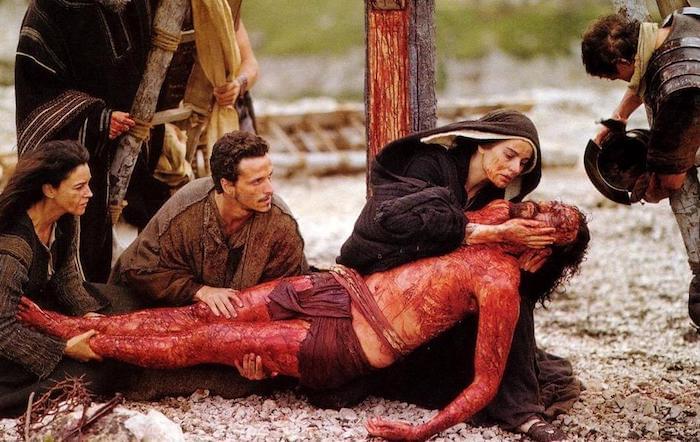

Along Came Polly

0

“Along Came Polly” is much better than it sounds, because it sounds awfully generic. An overly cautious, buttoned-down, germphobic guy meets a carefree, spontaneous, flighty girl! Hilarity ensues!

But the guy is Ben Stiller and the girl is Jennifer Aniston, and they know what they’re doing. Stiller excels at playing hapless guys for whom everything goes wrong — he’s very much in “Meet the Parents” territory here — and Aniston’s sweet, friendly demeanor is loved by 20 million “Friends” watchers a week (of which I am not one, but that’s my own fault, not hers).

Stiller plays Reuben Feffer, a risk analyst for an insurance agency whose wife Lisa (Debra Messing) runs off with a nude Frenchman (Hank Azaria, unrecognizable) while on their honeymoon in the Caribbean. Reuben heads home to New York and, still reeling, bumps into Polly Prince (Aniston), an old schoolmate he hasn’t seen since junior high. They hit it off, but her flakiness doesn’t jibe with his system of carefully evaluating every potential risk before making a decision.

There’s a curious lack of conflict in the film, until Lisa shows up again, but everyone knows Reuben isn’t getting back together with HER. He and Polly get together fairly quickly; the question is whether they’ll last, but even that issue is decidedly non-cloudy.

As such, the movie has a breezy, negligible feeling to it. It earns quite a few solid laughs — including from Alec Baldwin as Reuben’s crass Jewish boss and Philip Seymour Hoffman, doing an impression of Jack Black, as Reuben’s useless best friend — and will probably be a breakout hit. It’s not worthy of tremendous success, but it warrants a look, if only to enjoy Hank Azaria’s outrageous French accent.

Torque

0

“Torque” is a guy movie, made by guys, full of guys (and some hot babes), and following a guy’s idea of what constitutes a logical progression of events. In the video-game-addled mind of your average guy, it makes perfect sense for every disagreement to culminate in a fight, followed immediately by a motorcycle chase. There is so much testosterone in this film that any woman who watches it will come out of it with a hairy chest and a favorite football team.

So it’s a stupid film, about California motorcycle gangs and drug smuggling and all that, but is it fun? Yes and no. The race sequences are loud, fast and sharply edited, and first-time director Joseph Kahn and cinematographer Peter Levy manage some pretty nifty camerawork. The whole thing feels like the 21st-century offspring of music videos, beer commercials and porn, and I’m sure you understand that in the right context, such offspring can be highly enjoyable.

Unfortunately, the people talk when they’re not racing, and those parts are boring and silly. Our hero is Ford (Martin Henderson), who six months ago left the country because the FBI was after him for a huge pile of drugs that weren’t his but he knew they wouldn’t believe him. Now that the heat is off, he’s back, trying to patch things up with the girlfriend (Monet Mazur) he left behind without explanation.

However, the real owner of the drugs, gang leader Henry (Matt Schulze), wants to know where Ford hid them, especially considering he hid them in some of Henry’s motorcycles; drugs and bikes have been missing for half a year now, and Henry’s MAD!!!!

Also mad is the leader of another gang, Trey (Ice Cube), whose brother was killed by Henry, though Henry made it look like Ford did it, thus putting Ford on the run from the feds AND Trey AND Henry.

Oh, but it’s all so silly. While it’s chock-full of style (and nothing else), it lacks the pizzazz to elevate it from tedious action film to giddy adrenaline rush. Every performance except Ice Cube’s is flat, and there is no wit in the dialogue. It’s just filler between chase scenes, and filler gets old after a while.

Teacher’s Pet

0

Though it comes to us from Disney, “Teacher’s Pet” bears more resemblance to the frenetic, loose-limbed anarchy of the old Warner Bros. cartoons than to the slick, genteel productions usually associated with the Mouse House. The protagonist is a brash Bugs Bunny figure, while his sidekick is a good-natured Porky Pig type. The villain has the bombastic ravings of Yosemite Sam, mixed with the far-out ideas of Marvin the Martian. The plot is absolute screwball — and when I say that, I’m holding up a drawing of a screw and a ball.

This is a thoroughly delightful, giggle-inducing movie that will amuse kids with its quirky drawing style and outlandish action, while entertaining their parents with fast-paced dialogue and clever songs. It lacks the weight and overall polish to become a “Disney classic,” but it certainly deserves a spot on the list of family cult classics.

Based on an ABC cartoon series and featuring much of the same talent, “Teacher’s Pet” is about a dog and his boy. The dog, Spot (voice of Nathan Lane), wants to be a real live boy so bad that he dresses up in human clothes and passes himself off as a student, attending class with his owner, fourth-grader Leonard Helperman (Shaun Fleming).

Leonard’s mom (Debra Jo Rupp) is the teacher, as it happens, and in the movie, she is nominated for a Teacher of the Year award and sent to sunny southern Florida to compete. Principal Strickler (Wallace Shawn) lends her his RV for the trip, but on one condition: No dogs allowed in the vehicle.

But Spot MUST tag along, because he wants to find a certain South Florida scientist he saw a TV show about, a Dr. Ivan Krank (Kelsey Grammer), who claims he can turn animals into people. So a ruse is devised, and Spot accompanies, and there is much mayhem and many shenanigans.

Nathan Lane is an inspired choice to play Spot, a resourceful, wise-cracking character whose streetwise optimism makes him a true descendant of the aforementioned wabbit. He dons costumes as often as necessary to fool the gullible, does pratfalls to make a point, and occasionally bursts into song. He’s a funny, dynamic character, and great fun to watch.

The supporting cast is full of odd little delights, like Megan Mullally and Paul Reubens as a misshapen mosquito and alligator, respectively, failed animal-to-human subjects in Dr. Krank’s laboratory. Jerry Stiller and David Ogden Stiers are a gutbusting addition as Leonard’s other pets, a bird and a cat, and Estelle Harris — Jerry Stiller’s “Seinfeld” wife, you’ll recall — plays an oblivious petsitter.

The theme of conflicting dreams (Spot wants to be a boy, Leonard wants a faithful dog) is dealt with just seriously enough to warrant making a feature-length film. The main priority is jokes, and lots of ’em, flying at you visually and aurally, in the landscapes, the one-liners and the whacked-out drawings. Maybe the best compliment I can pay the movie is that it makes me want to seek out the TV show it’s based on.

Screaming Men (documentary; Finnish)

0

In Finland there is evidently a chorus of men who scream national anthems rhythmically and with diction, with counterpoints and solos, just like a regular choir … um, except they’re screaming, not singing.

Why anyone would want to hear this is a question not asked by Mika Ronkainen, director of the documentary “Screaming Men.” He, like us, sees the group as a quaint bit of silliness that makes the world more interesting, nothing more. Luckily, the Screaming Men recognize the absurdity, too, and following them on their globe-trotting concert tour is a sublimely amusing experience.

Ronkainen directs with a keen eye for what makes Screaming Men interesting. He and the choir both have a sense of humor so silly it recalls Monty Python. (Members of the choir often wear ties made of rubber, for example, and the “lighting” portion of their show consists of the screamers taking photos with the flash on. Why? Just because.)

The film shows the audition process (a deceptively austere procedure) and details some of the group’s problems as they travel the world. Some countries, it seems, have laws against altering the national anthem in any way, and screaming it is viewed by some as an alteration. How group leader Petri Sirvio, a dynamic, fun-loving man, solves these crises provides the film’s most entertaining moments.

Like the Screaming Men themselves, “Screaming Men” is not revolutionary or extraordinary. The choir is just a bunch of silly men doing silly things, and the documentary captures that with appropriate energy.

Dirty Work (documentary)

0

First-time filmmaker David Sampliner had a great idea for his documentary “Dirty Work,” and he executes it admirably, if modestly. What about the yucky jobs, the ones no one would want? Who does them? Do they enjoy them? Is so, WHY?!

And so we meet three men with jobs most people wouldn’t do no matter how much you paid them — bull semen collector, septic tank pumper and mortuary restorative artist — and we learn what makes a person choose such a distasteful occupation.

Dr. Russ Page, the semen specialist, grew up around animals and always had a fascination with their reproduction. Now well-educated and articulate, he sees his job as interesting and challenging, not disgusting.

Then there’s Bernard Holston, the embalmer who speaks at length on the illusion of funerals and the tricks he uses to make the corpses appear “lifelike,” the way mourners want to see them.

Finally, we meet Darrell Allen, half-owner of Darrell & Martha Allen Septic Tank Cleaning in rural Georgia. (“You dump we pump” and “We want your stinkin’ business” are among their advertising slogans.) Darrell is one of the more amusing documentary characters in recent memory, possessing literally the thickest Southern accent I have ever heard. (Some of his dialogue is even subtitled, and with good reason.)

He loves his job, and admits he probably couldn’t get a classier one, since he doesn’t read or spell very well. (He mentions that he entered school at age 5 and graduated from sixth grade 12 years later.) Pumping people’s septic tanks makes him privy to all manner of secrets. After AIDS became known in the mid-’80s, he saw a dramatic rise in the number of condoms that turned up (he pronounces it “cun-dums”). He knew one woman who took diet pills, pills that he found, complete and undigested, in her septic tank, apparently not having done her much good.

Though each of the vocations is gross, the profiles of the three men help us appreciate what might draw a person to them. Unpleasant or not, we can see interesting aspects — not enough to make us change our career plans, probably, but enough to make us realize there’s more to it than we’d thought.

Even at a scant 58 minutes, the film feels a bit padded, as once the initial novelty of filthy jobs and the men who love them has worn off, there’s not much else to say, other than, “Ewww.” Trim off 10 minutes, put some commercials in it, and you’d have a fine hour of television on The Learning Channel. Maybe even the pilot for a series. I know I’d watch.

The Best Thief in the World

0

What makes Izzy, the 12-year-old boy at the cent of “The Best Thief in the World,” the best thief in the world is not just that he seldom gets caught. It is also the fact that he hardly steals anything. Oh, the odd candy bar here and there, or a few dollars. But when he encounters a huge wad of money, he seems barely interested. His thievery is, for the most part, in word only.

Played by new-comer Michael Silverman, Izzy is a most interesting boy, and an intriguing character to watch in this most enlightening slice-of-life picture from Jacob Kornbluth (“Haiku Tunnel”). He’s the oldest of three children who live barely supervised in a low-rent Manhattan apartment. Their mother, Sue (Mary-Louise Parker), an English teacher on summer break, is preoccupied with caring for their father, Paul (David Warshofsky), who recently suffered a debilitating stroke.

The younger kids do well enough, but Izzy, on the cusp of adolescence, is at the age where mischief is his default setting. He spends his time climbing through fire-escape windows into neighbor apartments when the tenants are out, performing minor, mostly harmless, acts of vandalism before exiting. It is not aggression that drives him, but boredom and a desire for random rebellion.

As these kids often do, he falls in with a bad crowd, older kids whose level of juvenile delinquency far exceeds his own. Caught between wanting to fit in and his basic nature as a good kid who loves his mom, Izzy has to make some tough decisions. His choices would probably be your choices, too, if you were him.

As coming-of-age movies go, this one is far less melodramatic than most. It allows for kids to be kids, not forcing them to be miniature grownups or manipulating their experiences into something more meaningful than they are. Silverman is fantastic as Izzy, his precocious mind masked by his innocent-looking, boyish face. He’s a kid you could trust, if you didn’t know better.

Mary-Louise Parker is also wonderful as Sue, a woman overwhelmed by the burdens places upon her. She’s an underappreciated actress, in part because she doesn’t do very many films. But every time I see her, I enjoy watching her, that lazy intensity, that manner of speaking that suggests mild exasperation in everything she says.

It’s a nice film. It’s not perfect, but it’s good. Despite being rife with harsh profanity, it has a pleasant, affable feel to it. It’s a movie that wants you to like it, and is actually worth liking.

Employee of the Month

0

Films with satisfying surprises in their finales operate on the principle that if you were to go back and watch the film again, you’d see the puzzle pieces were there all along and that you simply hadn’t assembled them.

A cheaper way to surprise your audience, and the method used by “Employee of the Month,” is to simply lie to them. Tell them one thing up front and then, when you change everything around at the end, they’ll sure be surprised! Surprised and pissed off, but surprised.

It is bad enough that “Employee of the Month” is a bad comedy for most of its running time. It adds insult to injury when, in its last act, is also becomes a bad heist movie, with crosses and double-crosses occurring entirely at random without regard for the facts already established. This makes it a bad movie in two different genres, an impressive feat, to be sure.

Matt Dillon plays David, a man with everything. He has just gotten engaged to Sarah (Christina Applegate) and is due for a promotion at the bank he works for, where everyone loves him. But instead he gets fired, rather inexplicably, and subsequently loses Sarah, too, when she discovers he’s been cheating on her with her best friend Wendy (Andrea Bendewald).

David’s best friend is Jack, played by Steve Zahn on a sort of Steve Zahn overdrive, as if he’s compensating for people who have not seen his last five movies by being five times as wacky as he normally is. Anyway, Jack’s a coroner who steals dead people’s jewelry, and he’s totally IN YOUR FACE! And he totally says WHATEVER is on his mind, no matter how politically incorrect it is! I mean, dude, that’s gotta be freakin’ HILARIOUS!

Oy. It’s annoying, that’s what it is, and I’m a guy who likes Steve Zahn. But this dreadful script, by first-timers Mitch Rouse and Jay Leggett (Rouse directed, too), doesn’t know what to do with him. His anti-gay tirade is puzzlingly out-of-place in 2004, the sort of thing that would normally be followed by some kind of don’t-be-such-a-jerk comeuppance. It’s not, and while I have no problem with politically incorrect humor, such humor is still required to be funny, which this isn’t. Most of Zahn’s shtick is bad, in fact, making his character seem like a complete butthole, not a wacky sidekick.

The script generally suffers from under-editing. It takes some jokes too far and doesn’t take others far enough. The dialogue is forced and strained, and the humor broad and generic.

And then come the surprises. It is alarming to realize this film was made by people who don’t see any difference, in terms of entertainment value, between farcical comedy and graphic violence. It reminds me of “Bad Boys II” in that regard, attempting to foist corpses and blood upon us while still expecting us to laugh when someone gets a pie in the face. It’s ugly, sloppy filmmaking, made worse by those surprises being achieved by cheating the audience. If David tells us up front that he has just lost everything, his fiancee and his job included, and that he’s a desperate man now, then that needs to be true. They teach you that in Screenwriting 101, a course I suggest Rouse and Leggett take, several times, before being given the green light on another film.

Garden (documentary; Hebrew/Arabic)

0

The Garden is a seedy area of Tel Aviv, home to prostitutes and drug dealers, professions both held by Nino and Dudu in the documentary “Garden.”

Directed by Ruthie Shatz and Adi Barash, the film is notable for its intimacy. Nino and Dudu, both teenagers and best friends, allow the filmmakers access to nearly every aspect of their lives.

Nino, a Palestinian constantly on the run from Israeli law enforcement, has been in jail and is destined to return there, though his attitude remains cavalier, his smile nearly constant. Dudu, an Arab-Israeli whose voice is scarred by years of smoking and whose body is poisoned by as years of drug use, worries for his friend’s safety. In between, they perform sex acts for money and dabble in drug distribution, while constantly on the lookout for a place to stay.

Where the film falls short, however, is that it fails to indicate what drove the boys to this life. There is no implication that this was the only alternative for them; they both have families not far away, and Nino is still in touch with his. In an area as fundamentally religious as the Middle East, surely the people have strong feelings about homosexuality. Was that a factor for Nino and Dudu? Is this all a young gay person in Israel CAN do with his life? The film ignores the subject of religion altogether, and barely addresses gay-bashing.

And so we see a great many details of the boys’ lives and personalities, but little about their past or their future. The film has a superficial air about it, focusing tightly on two trees and consequently neglecting the forest that would give them context.

Tiptoes

0

After “Tiptoes” had its premiere screening at Sundance, director Matthew Bright told the audience the producers threw him off the film as soon as shooting was done, and that while he hasn’t seen (and won’t see) the finished product, he’s certain they botched it.

Well, “Tiptoes” is a mess, for sure. But I think it would have been a mess anyway, given that its screenplay (by Bill Weiner) is sanctimonious and maudlin, playing like an educational film on dwarfism, and that the performances are one-dimensional.

There is an affable dwarf named Rolfe (Gary Oldman) with a normal-sized twin brother named Steven (Matthew McConaughey, who is 11 years younger than Gary Oldman). Their parents are little people, too — a fact Steven has hidden from his girlfriend Carol (Kate Beckinsale).

Steven’s maybe a little embarrassed by his small family, but when Carol gets pregnant, the possibility she will have a dwarf baby makes it crucial that everything be discussed openly. This leads to much Movie-of-the-Week angst and informative conversation. (“Did you know dwarfism affects this and this and this?” “Why, no, I didn’t, please tell me more.”)

For some reason, Rolfe’s dwarf friend Maurice (Peter Dinklage) is a crazy French radical, and for some other reason, Maurice picks up a normal-sized hippie named Lucy (Patricia Arquette) on the side of the road and starts fooling around with her. Maurice and Lucy serve no function in the film other than to make it seem almost surreally ridiculous.

You may have noted that Rolfe, a dwarf, is played by Gary Oldman, who is 5’10”. This is achieved through the movie magic of having Oldman walk around on his knees. One scene has his lower legs digitally removed, which probably cost a lot but which looks embarrassingly fake. Another time, his lower legs are clearly visible through a glass coffee table that was supposed to keep them hidden. Most of the time, you just wonder, if he’s a dwarf, why are his arms so long?

At every turn, we are given more information on dwarfism, and more mini-lessons on how to be tolerant and appreciative of little people. All of which would be fine, if it were part of a movie that was interesting, entertaining or well-acted. But in this case, it’s part of a movie that’s stilted and awkward — not altogether boring, I must say, because there’s a certain trainwreck curiosity about it, but not recommendable, either. It’s a barely watchable experiment gone awry.

Trauma

0

Billy Crudup and Jennifer Connelly appeared in 2000 in a film called “Waking the Dead”, about a man who keeps seeing his dead girlfriend, causing him to wonder if he’s going insane. That film, while mishandled a little, at least offered some penetrating performances and a well-conceived story.

“Trauma,” which has essentially the same premise as “Waking the Dead,” lurks around like it’s some kind of innovative, all-original psychological thriller, when in fact it rates a big fat “so what?” It is yet another film about a man with a tenuous grip on reality, and all of his weird memories and hallucinations are just like the ones suffered by all the other men with tenuous grips on reality in all the other movies.

This man is played by Colin Firth, though, and it is fun to see him play someone more unhinged and unpredictable than the staid, reserved characters he usually plays. His name is Ben, and he awakens from a post-car accident coma to learn that his wife was killed in the crash. On nearly the same day, a pop star named Lauren Parris was found dead in a canal, which means the whole world is mourning her death while Ben is trying to mourn his wife’s.

The incidents may be connected, though. Some facts suggest Ben was more than just a casual fan of Lauren’s, and an especially dogged police inspector refuses to let the evidence, albeit circumstantial, go unnoticed.

Meanwhile, Ben befriends Charlotte (Mena Suvari), a woman in a neighboring apartment, and continues to be plagued with visions of his deceased wife. Could she be alive? Is he going mad? And so on.

Suvari’s performance is flat and lifeless, which I think might have been due to instruction given by director Marc Evans, who might have wanted her to seem ethereal and otherworldly. I don’t know; to me, it just makes her boring.

I have nothing else to say here. The twists, when they do finally arrive (after so much dilly-dallying), are not especially surprising, and the movie adds up to little. I recommend “Waking the Dead” for a much better treatment of a very similar subject.

Une Soiree Musical avec Eric D’Snider

0

ERIC D. SNIDER TO PERFORM MUSIC AND COMEDY SIMULTANEOUSLY
‘How is It Done?’ Marvel Scientists

Eric D. Snider, the Utah-based writer, critic, humorist, raconteur, bon vivant, man-about-town and unicyclist, will perform “Une Soiree Musical avec Eric D’Snider,” his show of comedy songs and anecdotes, on Monday, Feb. 9.

The show will be at the ComedySportz venue, 36 W. Center St., Provo. Show time is 8 p.m. Tickets are available at the door for $5. Doors open at 7:30.

Accompanying himself on the piano, Eric sings of love, pop culture, Utah culture, inappropriate swimwear, and movies, among other things. His songs have been heard on the nationally syndicated Dr. Demento radio show, and his recent CD, “Will Make Jokes for Food,” has sold literally dozens of copies. Dozens!

Though Eric has performed his cabaret show several times in the past, he promises this performance will include several brand-new songs, in addition to old favorites.

“Even people who have seen me so often they are sick to death of me ought to come,” Eric said as he opened a thesaurus. “The new material will surely cure them of their ennui.”

Among the new songs are ones addressing air travel in a post-9/11 world, “Lord of the Rings” fans, and the life and times of Darth Vader.

Old favorites include “Piano Man,” discussing what it’s like to be a pianist when you’re also a Mormon; “Since My Best Friend Got Engaged,” about what marriage does to a guy; and “The General Authorities Song,” in which Eric sings the names of all the current general authorities of the LDS Church (respectfully, of course) (and quickly).

Eric worked for several years in journalism as a critic and columnist, best known for his “Snide Remarks” column, which earned him fame and stern glares from administrators at Brigham Young University from 1997-1999. From 1999-2003, he wrote “Snide Remarks” for a Provo-based daily newspaper that has subsequently been purchased by the Church of Satan.

Chasing Liberty

0

I keep getting Mandy Moore confused with Hilary Duff. Is that normal? Does that automatically disqualify me from reviewing either of their films? I WISH!

Sadly, Mandy Moore is in a new one called “Chasing Liberty,” where she plays Anna Foster, daughter of the President of the United States (Mark Harmon). Anna is 18 and accustomed to life in the spotlight; still, she’d like to experience a normal date with a normal guy without a dozen Secret Service agents prowling around.

So one night while she’s on a trip to Prague with the folks, she escapes onto the back of a moped being driven by Ben Calder (Matthew Goode), an English-ish young man who has no idea Anna is the first daughter.

Oh, except he does. Turns out he’s a Secret Service agent, too, and the president decides to use this to his advantage. Anna wants some freedom? He’ll let her think she’s getting it by running off with Ben, when in fact Ben is under strict orders to keep Anna safe from harm and mischief.

Thus we have established The Lie, that all-important romantic-comedy ingredient. Anna lies to Ben about who she is, and Ben lies to Anna about who he is. (Of course, he was ordered to lie by the president of the United States, which is a pretty good excuse.) The truth is bound to come out, causing a breakup, followed by much moping and sadness as they miss each other and a sweet modern pop song plays on the soundtrack, at which point they will reconcile.

But I have gotten ahead of myself. Ol’ Ben has his work cut out for him keeping Anna out of trouble, for trouble is exactly what Anna wants to be in! It’s a little irresponsible, in my opinion, to make a film geared toward teenage girls, pushing all the teenage girl buttons (rich kid fantasy life, cute boy, scenic Europe, etc.), and then to have the protagonist getting drunk, cavorting naked on a beach, and having sex, all without consequences of any kind. The youthful fantasy of running away from home and experiencing life may be OK to indulge in a film made for teens; I think the events portrayed here cross the line — especially, again, because none of Anna’s actions have consequences.

But anyway. Jeremy Piven and Annabella Sciorra have an amusing subplot as the two agents regularly assigned to Anna, now traveling through Europe trying to keep up with her and Ben. Piven’s character has the hots for Sciorra’s; they banter; it’s funny. It is the only source of actual humor in the film, really.

The whole thing’s inexcusably long, especially given how bland and ineffectual it generally is. It is not without its charms, though, and its target audience will probably find it pleasurable. It will certainly tide them over until the next film is released starring Mandy Moore and/or Hilary Duff, whichever.

My Baby’s Daddy

0

“My Baby’s Daddy” did not come about because someone had an idea for a story. It came about because someone had an idea for a situation. The difference is vital. A story has an ongoing progression of plot, events, and character development. A situation is merely a set of circumstances, a moment frozen in time. An interesting situation can certainly lead to a good story, but you still have to write the story. It’s not just going to happen on its own.

The situation in “My Baby’s Daddy” is that three life-long friends in Philadelphia find that their respective girlfriends have become pregnant, followed nine months later by births all on the same day. These are bachelors, carefree and relatively young, suddenly thrust into fatherhood. The comedy practically writes itself!

Or so you’d think, and so the four writers credited to “My Baby’s Daddy” seemed to think. But comedy does not write itself, and “My Baby’s Daddy,” while possessed of a promising situation, barely establishes a story to go with it. The men do their daddy duties with varying degrees of success and bumbling … but then what? Then nothing. The movie has no idea what to do with its premise, so instead it churns out scene after scene of tired slapstick.

Anthony Anderson, making his 14th film appearance so far this century, plays G, a would-be boxer who works at a mini-market owned by the family of his Chinese girlfriend Xi-Xi (Bai Ling). Lonnie (Eddie Griffin) is a nerdy would-be inventor with big glasses whose crass, vulgar girlfriend Rolanda (Paula Jai Parker) treats him like dirt. Dom (Michael Imperioli), the white guy of the group, is a music producer with a casual relationship with Nia (Joanna Bacalso).

Eddie Griffin is singularly irritating and unfunny as Lonnie, a cartoonish imbecile whose dork-to-cool makeover comprises one of the film’s many senseless tangents. (Why make him nerdy if you’re just going to change him 20 minutes into the film?) His two co-stars, working from good will earned in other roles, are likable enough.

There’s just so little for any of them to do. The jokes are so old and stolen they’re embarrassing. For example, G expresses amazement upon the birth of his son at how well-endowed the boy is, only to be told that’s the umbilical cord. Trouble is, I can recall the same gag being used in specific episodes of “The Simpsons,” “Family Guy,” “The Golden Girls,” and “Saturday Night Live.” And did we need to see yet another person fall victim to a baby boy’s geyser-like peeing while changing the lad’s diaper? Can we just let that joke die?

This movie has a lot of farting, too, and none of it comes from the babies. When you have a movie full of babies and you’re still resorting to gags about ADULTS breaking wind, well, that’s when it’s time to give up.

The Home Teachers

0

Kurt Hale and John E. Moyer are getting better at making films. “The Home Teachers,” their second followup to the huge Mormon hit “The Singles Ward,” is better focused and less chaotic. The useless and embarrassing celebrity cameos are almost gone, and so are the plot tangents. It now seems like they were actually making a movie, rather than throwing a party for all their friends.

Unfortunately, “The Home Teachers,” while more professional in some technical and structural areas, is a wreck in other ways. Hale’s directing techniques are more polished, but his and Moyer’s screenplay borrows too much from other films, suffers from an abrupt change in tone, and, worst of all, ISN’T FUNNY.

As helpfully explained by title cards as the film opens, “home teaching” is the LDS practice of sending brethren around to all the homes in the ward each month to check on the temporal and spiritual welfare of the members. The good home teachers get it done early and have an honest interest in their families’ well-being. The slackers wait until the last day and do it just to appease their supervisors.

Our film opens on the last day of the month. Greg Blazer (Michael Birkeland) is a football dad, barreling out of church each Sunday as soon as the final “amen” is uttered so he can deposit himself on the couch and watch football the rest of the day and ignore his wife and three daughters. Home teaching, we gather, has not been a major concern of his up to this point.

But his newly assigned companion, recent move-in Nelson Parker (Jeff Birk), is far more enthusiastic. Nelson wears a bowtie, carries a Palm Pilot everywhere, and wouldn’t dream of spending the Sabbath watching sports when there’s so much of the Lord’s work to be done. He drags Greg away from the TV and out to visit their three families.

Here the film ceases to be about home teaching, Mormon culture, or even religion in general, and starts being a disaster comedy, with Greg destroying everything he touches and the unflappable Nelson becoming increasing flapped. Situations grow worse and worse, and the results become, at least in theory, progressively funny.

I believe Hale and Moyer have the right idea, using Mormonism as the context of a story rather than the focus of it. Problematically, none of it is funny. They have seen hilarious farcical comedies, obviously, but they don’t seem to understand why they were funny and therefore can’t replicate them.

I could just tell you that most of the comedy in “The Home Teachers” isn’t funny, but that wouldn’t help you. Let me explain why it isn’t funny.

For farce to work, it must obey the basic laws of physics and logic. Farce isn’t where impossible things happen; it’s where IMPROBABLE things happen. The genius of good farce is in the audience’s realization that, while it’s unlikely they’d ever find themselves in that situation, if they DID find themselves there, that’s probably how they’d react, too. Farce creates a new reality, where improbable predicaments arise, but its characters are still bound by the laws of human nature and react accordingly. That’s what makes it funny: the persistence of human nature even in the most bizarre circumstances.

In “The Home Teachers,” many things occur that are simply impossible. To make matters worse, the characters react in ways that fly in the face of all common sense and human nature. Not only COULDN’T we ever find ourselves in that situation, but even if we did, WE WOULDN’T REACT THAT WAY. The humor is lost.

Exhibit A is Greg’s battle with an overflowing toilet in the home of one of his and Nelson’s families. (We won’t address the fact that approximately 1,000,000 movies have already used recalcitrant commodes as a comedy device, and we’re tired of it, even when it’s done right.) It is improbable that the toilet would continue to flow so rapidly and thoroughly, but it’s at least possible. What’s impossible is that a thin stream of water would shoot up from the toilet bowl into Greg’s face. Toilets aren’t made that way; it’s not physically possible for that to occur.

Now, if you were in this situation, you would turn the water off, because you know there’s a knob on the wall behind the toilet that will do that. (Maybe you don’t, but a manly man like Greg surely would.) But Greg doesn’t do that. Instead, he slips and slides around the wet floor, flailing madly in a Chris Farley-ish manner as he does.

Next, he feels it important to soak up all the water with something. He does not grab towels, however, as none seem to be handy. Instead, he takes a wedding dress from the hall closet — a closet that is otherwise completely empty; apparently this is a special closet reserved for wedding dresses only — and uses it as a sponge.

We have already left the realm of probability and human nature, but wait, there’s more. Apparently, this wedding dress is the one the lady of the house wore when she was married, which happened ages ago. But people don’t keep their years-old wedding dresses in the hall closet, and certainly not in new plastic coverings that say “UtahWeddings.com.” They keep them in their attics, in trunks. So not only wouldn’t this wedding dress be available for use in real life, but even if it were, no sane, sober, adult person would use it to mop up toilet water.

Later, Greg and Nelson drive two-plus hours to Vernal, Utah, to attend a memorial service for a relative of one of their families. (No Mormon family would hold a funeral on a Sunday, and no home teacher would drive that far, spur of the moment, to attend, especially if he’d never even met the family.) Predictably, Greg winds up engaged in mortal combat with the dead body (another thing we’ve seen a bit too often in movies, though sadly not often enough in real life), and rather than simply dropping the body or putting it down, he dances around with it draped over him. Meanwhile, two people faint (highly unlikely) and must be taken to the hospital (extraordinarily unlikely).

I could go on listing the impossible events and the unbelievable reactions they inspire, but you get the idea. I suspect the writers thought of amusing end scenarios — mopping up toilet water with a wedding dress; molesting a corpse — and simply couldn’t come up with reasonable avenues of arriving at them.

The film’s third act comes back around to home teaching again, and everyone’s supposed to learn a lesson and hug. The shift in tone is jarring, particularly after an hour of mayhem and hijinks.

I hear the rebuttals already: You criticized “The Singles Ward” and “The R.M.” for being TOO Mormon; now you criticize “The Home Teachers” for not being Mormon enough. But on the contrary, my objection to “Singles Ward” wasn’t that it relied on Mormon jokes; it was that it relied on easy-to-make, obvious Mormon jokes. My criticism of “The Home Teachers” has nothing to do with the type of humor employed. It’s the poor execution of it. Make Mormon jokes, make non-Mormon jokes, make whatever kind of jokes you want. Just make them funny, that’s all I ask.

So yeah, the farce doesn’t work. Is the movie enjoyable? Meh. It didn’t actively irritate me the way “Singles Ward” did, but at least “Singles Ward” made me laugh a few times, amidst the irritation. “Home Teachers” produced hardly a chuckle.

I’m not sure what the appeal would be here. Without the “it’s funny because it’s true” Mormon humor that made the other two films successful, it’s basically just another mismatched-partners/”Tommy Boy”-ripoff/one-thing-after-another comedy. And if that’s what Hale and Moyer want to produce, they’ve got a lot of catching up to do before they’re even close to being competitive with Hollywood.

Confessions of a Burning Man (documentary)

0

Burning Man is an annual week-long bacchanal in the Nevada desert in which thousands of hippies, slackers and other underemployed 20-and-30-something elements of our society gather to share their art, smoke their pot, and set a huge wooden effigy on fire. It’s a celebration of laid-backness and freedom, two qualities which often take the form of nudity (as if you had to be told).

I have an acquaintance who goes every year (he can be seen briefly in the film I’m going to start reviewing any minute now, as a shirtless guy performing massage on another person) who one year, I’m told, made a bear suit to wear. It was his brother explaining it to me, so the information was second-hand, but apparently the bear suit was “just because.”

Had I talked to the masseuse himself, I doubt I would have received a better explanation than that, as I doubt there IS a better explanation than that. Burning Man is about doing what you want, lettin’ it all hang out, just having a good time. “Confessions of a Burning Man,” the film I have now begun to review, captures none of that.

Directed by Paul Barnett and Unsu Lee, this is a documentary in the most literal sense of the word. It does indeed document some images that a visitor to Burning Man 2001 might have seen, but it gets nothing of the spirit of the festival, and I suspect it barely scratches the surface of what goes on there. Where are the drugs? The sex? I’m not saying that’s what Burning Man is ALL about, but anyone who’s been will tell you it’s part of it. Even a major part, in some cases. Worth mentioning, anyway. But it’s nowhere in the film.

Also absent in the film is any sense of story or purpose. The film follows a few individuals’ lives there, but it would seem nothing of note happened to them all week long. All 87 minutes of the film seem like B-roll footage that could be used as an introduction to a cool film about Burning Man, not the film itself. People who have been will find the film lacking, I’m sure. People like me, who have never been, and who wouldn’t go if you paid them (no proper showers or toilets for a week? Forget it) will continue to be mystified as to what, exactly, is the appeal to the thousands who go.

Taken on my last New York trip

0

Sorry, Christina Aguilera. You’ll have to do your laundry somewhere else.

The Best and Worst Movies of 2003

0
The Best and Worst Movies of 2003

2003 was dominated by “Lord of the Rings,” with “The Two Towers” occupying everyone’s attention at the beginning, anticipation for “Return of the King” keeping us alive through the middle, and the actual viewing of “Return of the King” giving the year a glorious conclusion.

Mixed with all that, we find it was a year of great documentaries, of many, many horror films, and a few too many comic book movies. Actors continued to surprise us (Bill Murray in “Lost in Translation”), and directors continued to turn genres upside-down (Quentin Tarantino’s “Kill Bill, Vol. 1”).

It was a great year for Sundance again, too: Four of the films on this list (Nos. 2, 6, 8 and 9) made their American debuts there.

It is interesting to note how often young people turn up in the best films of the year. There are nerdy ones (“Spellbound”), troubled ones (“Elephant”), lost ones (“Finding Nemo”), and devastated ones (“Capturing the Friedmans”), plus some very normal ones (“Raising Victor Vargas,” “All the Real Girls”). That’s not to mention the memorable supporting roles by children in films that did not center on them: Vivica A. Fox’s young daughter coming home from school in “Kill Bill” is one of that film’s most alarming sequences, and Ben Kingsley’s son in “House of Sand and Fog” brings the plot to a boil there.

Why so many good movies about young people? Young people’s innocence makes for charming entertainment; their loss of innocence creates urgent drama. We like the way children think, the way they see the world. They have not yet been spoiled by the harsh facts that comprise a grownup’s reality.

“The Lord of the Rings” is not about children, except that it is. The Hobbits are short, guileless, happy folks who spend carefree days in what seems to be an endless summer. When that existence is threatened, they — and we — see how imperative it is that the threat be eliminated so that they can return to their idyllic lives in the Shire. I think we all want, at least subconsciously, to return to our childhoods, to our Shires. We recall with fondness the untainted worldview we held then, and wish we had not learned so many things that changed it. Films like “Lord of the Rings,” and others that celebrate the attributes of youth, give us hope that child-like optimism is possible even in adulthood.

1. “The Lord of the Rings: The Return of the King” It’s hard to separate one’s feelings for the final chapter of this masterful trilogy from one’s feelings for the series as a whole. I’ve given up trying. Viewed as one 9-hour film, “The Lord of the Rings” is an astonishing achievement, and one whose influence will be felt for decades. Seldom have we been blown away by technology while feeling for the characters, too; it’s usually one or the other. Peter Jackson and company reminded us we can have both. I hope the success of these films will inspire other filmmakers to strive for perfection not just in special effects, but in human effects.

2. “28 Days Later” In a year jam-packed with horror films, this British import stood out as a singularly frightening and vivid one, focusing more on the psychology of its characters than on their dismemberment. So few purveyors of this genre have ever gotten it right that it’s almost startling to see it happen: If we care about the characters — if we like them — heck, if we even know their names — we’re far more likely to be scared for them. It’s a film about people, not about zombies, but the zombie parts are thrillingly executed, too, making the film a truly entertaining scare.

3. “Spellbound” Yeah, the title’s a pun, but I’ll overlook that offense because “Spellbound” is exactly what audiences are when they watch this documentary about the 1999 National Spelling Bee. Following a handful of contestants before and during the competition, we choose favorites, predict winners, and hold our breath as they go for the G-O-L-D. Because it’s real life, anything can happen: There’s no “main character” whose destiny is obviously to win. Who would have thought spelling bees could be so suspenseful, or their contestants so warm and funny?

4. “Elephant” This mesmerizing fictionalization of the Columbine shootings is eerily calm, so low-key that a reading of the screenplay would probably convince you it was a boring film. It’s the way it’s filmed — like a fly on the wall, following students through an ordinary day leading up to the massacre — that draws you in. The senselessness of violence never seemed so tragic.

5. “Finding Nemo” Pixar’s winning streak continues with this beautiful, fanciful, funny story about parenthood and family. Pixar is a national treasure.

6. “Capturing the Friedmans” Documentaries are often only as interesting as their subject matter, but this one takes it further. The harrowing case of a New York family torn apart by allegations of child molestation is made all the more compelling by director Andrew Jarecki’s method of storytelling, which reveals the facts slowly and carefully to maximize our interest. When it’s over, we’re still not sure who’s right and who’s wrong, but we’ve seen documentary filmmaking at its most intriguing.

7. “Kill Bill Vol. 1” Having praised “Elephant” for showing the senselessness of violence, I feel obligated now to defend my inclusion on this list of “Kill Bill,” a film that wallows in violence and uses it — rather effectively, I might add — as entertainment for its audience. Some have argued that if it weren’t for films like “Kill Bill,” we wouldn’t have tragedies like those in “Elephant,” though that’s a pretty serious oversimplification. The point is, different films serve different purposes. Quentin Tarantino’s homage to ’70s martial arts films and to violent cinema in general is explosively entertaining and artfully composed. Most of the blood is, in fact, so over the top that it becomes an intentional parody of the genre.

8. “Raising Victor Vargas” This affectionate look at love and romance among inner-city youths is so full of natural, unaffected humor that you’d think you were watching the people next door (assuming you live in a Dominican neighborhood of New York). The performances are as life-like as anything I saw all year.

9. “All the Real Girls” Ditto the performances in this film, which examines love and romance among small-town youths. Interesting to note how, in Manhattan or rural North Carolina, love is the same, and people in love act the same. What a beautiful film this is.

10. “House of Sand and Fog” Though I think it gets a bit plotty in the end, that doesn’t diminish the strength and majesty of this quiet, powerful film in which a house means everything in the world to two different people. Ben Kingsley’s performance is amazing.

NOTE: “The Triplets of Belleville” was a 2003 release that, unfortunately, I was not able to see until January 2004. Had I seen it in time, it would have placed No. 4 on my list, and pushed everything else down (with No. 10 falling off the list altogether; sorry, Mr. Kingsley).

Honorable mentions: “Big Fish,” “Elf,” “School of Rock,” “Better Luck Tomorrow,” “Mystic River,” “The Last Samurai,” “The Station Agent,” “Winged Migration,” “The Secret Lives of Dentists,” “Freaky Friday,” “Seabiscuit,” “Lost in Translation,” “Shattered Glass.”

AND THE WORST…
You can’t have a best list without a worst list; it would upset the balance of the universe. To determine the worst films of the year, I first consulted my database to see which movies had received F or D- grades from me. To determine which order they should appear in, I reflected on which films still, at the end of the year, left a bad taste in my mouth.

1. “Bad Boys II” I gave this film a D-, suggesting there was something in it that saved it from being an utter failure. Looking back, I cannot imagine what that thing was. This is bloated, offensive, loud, bombastic, irritating filmmaking at its absolute worst.

2. “Day of Defense” At last, the sub-genre of Mormon cinema has found representation on the year-end lists! Sadly, it is on this end of the list. While “Bad Boys II” was more irritating, “Day of Defense” was by all technical measures a worse film, with worse acting, worse direction, worse editing, and so forth. Nothing in the film is plausible; much of it is inadvertently laughable. Luckily, no one saw it: It exited theaters six days after it was released.

3. “House of 1000 Corpses” A hateful, vicious piece of work by a guy from a band called White Zombie. After three years of behind-the-scenes struggles, the film finally made it to theaters, but whoops! It turns out to have been a pile of crap.

4. “From Justin to Kelly” Even I, as a fan of “American Idol,” knew this was a bad idea from the get-go. How come I’m smarter than the people who made it?

5. “View from the Top” Gwyneth Paltrow walks daintily onto the movie screen, drops her drawers, and defecates on the audience. Mike Myers makes a cameo.

6. “Grind” It’s a movie about skateboarding. Let me reiterate: It’s a MOVIE, but it’s about SKATEBOARDING. It’s a full, feature-length, charge-you-nine-dollars-to-see-it MOVIE … and yet, it’s about SKATEBOARDING. (P.S. It’s also a BAD movie about skateboarding.)

7. “Masked & Anonymous” Not many truly awful films come out of the Sundance Film Festival, but when they do suck, they suck with a vengeance! This Bob Dylan vanity project (didn’t know he had any vanity, did you?) is so incomprehensible, only Bob Dylan can understand it. And of course he can’t explain it, what with the speech impediment and all.

8. “The Cat in the Hat” It’s unfair to criticize a movie for being different from the book its based on, because all that matters is whether it works as a film. So here’s the thing: Putting aside the fact that “The Cat in the Hat” destroys everything the book represents, it’s STILL a terrible movie, full of obnoxious behavior and unfunny slapstick. Mike Myers had a cameo in “View from the Top,” too, making him the least-appealing actor of the year, except for …

9. “National Security” … Martin Lawrence who didn’t just have cameos but STARRED in “National Security” and “Bad Boys II.” Even the presence of Steve Zahn, who is usually funny, failed to make this loud dreck tolerable, primarily because Martin Lawrence is so unfunny, he sucks the funny out of everything around him. True story: “National Security” was playing at the multiplex right next to “Blazing Saddles,” and it acted as a humor vacuum so that “Blazing Saddles” became a tragedy. People came out of it sobbing.

10. “Boat Trip” Consider this Cuba Gooding Jr.’s award for all-around bad acting, having appeared in this debacle as well as “Radio” and “The Fighting Temptations.” Next year, he will be appearing in your local Arby’s as a night manager.

Dishonorable mentions: “Darkness Falls” (darkness sucks!), “Biker Boyz” (it’s a MOVIE about MOTORCYCLES), “Gigli” (pronounced “jiggly,” like J-Lo), “Mona Lisa Smile”

MISCELLANEOUS NOTES

Longest film of the year: “Gods and Generals,” 220 minutes.

Shortest film of the year: “The Jungle Book 2,” 72 minutes.

Most enjoyable bad movie: “Timeline”

Least enjoyable good movie: “Irreversible”

Best performance in a bad movie: Adam Brody in “Grind”

Worst performance in a good movie: Kevin Costner in “Open Range”

Least surprising surprise: The “twist” at the end of “The Life of David Gale”

Craziest surprise: That “Pirates of the Caribbean,” based on a theme park ride, was actually really good

Funniest death: Tie between Wheezy Joe in “Intolerable Cruelty” and the little girl in “Day of Defense”

Proof that God exists: Freddie Prinze Jr. did not make a movie this year, but Quentin Tarantino did.

The Best and Worst Films of 2003

0

My summary of the best and worst of the movies of 2003 can be found here, for your reading pleasure.

Over at the message board, the conversation turned to how few of the films most people had seen. I hope that at least in some cases, my praise of the best films will inspire people to see them. If you click on the Amazon.com link at the bottom of each review, you’ll be able to see if it’s out on DVD, and if it is, you can head down to your Blockbuster or your Netflix or whatever and rent it.

(I suppose I could have provided an extra service by finding out first which films on my list were available on home video and indicated it in the article, but I think you’ll agree that would have been too much work for a lazy person such as myself.)

Sometimes people complain about critics’ top 10 lists, and how so many of the films are artsy-fartsy movies that nobody saw, the implication being that if they did poorly at the box office, it must be because they’re the sort of movies that only critics like.

Let’s look at the 2003 box office. The top 10 highest-grossing films are, in order: “Finding Nemo,” “Pirates of the Caribbean,” “The Matrix Reloaded,” “Bruce Almighty,” “Lord of the Rings: Return of the King,” “X2,” “Elf,” “Terminator 3,” “Bad Boys II” and “The Matrix Revolutions.”

First, note that two of those, “Finding Nemo” and “LOTR,” are on my list, and on the lists of most critics in the country. A third one, “Elf,” made my honorable mention list.

The remaining seven are good films (except “Bad Boys II”) … but how many people would call any of them their FAVORITE film of the year? Both “Matrix” films made a shload of money, but did anyone LOVE them?

I think even for normal people (i.e., not critics), the films that entertain us are not necessarily the films that touch our hearts or change our lives. The reason critics have so many artsy films on their lists is that, as critics, they get to see more movies than most folks, so the pool from which they choose their favorites is larger.

“Spellbound” and “Raising Victor Vargas,” to name just two, played in limited release (that is, on maybe 100 screens at a time, rather than 4,000) and hence had a smaller audience. But I guarantee if you sought them out and watched them, you’d enjoy them.

Which goes back to my original point. Critics give their lists as honest appraisals of what they believe to be the best films of the year, whether they were financial hits or not. If some of the titles are obscure, all the better, because everyone likes to root for the underdog. I’d be very happy if, at my recommendation, someone watched a little-known movie on my list and wound up liking it as much as I did.

21 Grams

0

Mexican director Alejandro González Iñárritu made waves in 2001 with the marvelous “Amores Perros,” which began with a car crash and then showed us the lives of the people involved in it. His first English-language film, “21 Grams,” which he has again co-written with Guillermo Arriaga, also uses a car accident as a means of making strangers’ lives intersect, and also tells its story in a non-linear fashion. The difference is that unlike “Amores Perros,” the story in “21 Grams” is negligible. Untangle it, put it in proper order, and look at it objectively, and you see that both plot and characters are thin and threadbare.

Though it might be a case of style over substance, the style of “21 Grams” is so engaging you can almost overlook its lack of substance. We meet several different characters, some with no clear connection to each other, some in what seem to be contradictory circumstances. For example, there is Sean Penn lying on his deathbed, then needing a heart transplant, then lying on the floor having been shot. There’s Benicio Del Toro being urged to phone an ambulance, and there he is again preaching born-again Christianity to a misdirected teenager.

All of the film rolls forth in that manner, with moments occurring out of sequence, all the pieces of the puzzle being assembled randomly. We learn, gradually, the basics: There has been a car accident resulting in death, and that death facilitated an organ transplant. The death was wrongful, however, and the car accident occurred out of gross negligence. Justice must be paid.

Del Toro plays Jack Jordan, an ex-con who found Jesus and now runs his family’s lives with a harsh zealousness. In his belief system, everything happens because God wants it that way, including the car accident and its aftermath. Somewhat less accepting of that philosophy is Penn’s character, Paul Rivers, a mathematician whose grave illness has strained his relationship with his wife Mary (Charlotte Gainsbourg), and who seems wearily unsurprised when receiving a new heart does not, in fact, make anything better.

Naomi Watts is connected with all this, too, as Cristina Peck, a grieving widow.

The performances from the leads are gritty and realistic; these are good actors, in top form, led by a director whose knack for working with ensembles has already been demonstrated. I just wish it added up to more! The film tries to sound ponderous in matters of death and fate (the title refers to the myth that upon dying, a human body loses 21 grams — the apparent weight of the soul), but achieves only the level of art-house pretension. Its unorthodox storytelling method makes it engrossing, for the most part, if only to figure out what the heck’s going on, and maybe it’s best just to leave it at that. Whatever deeper meaning there might be is obscured by platitudes and by the film’s chronological trickery.

House of Sand and Fog

0

Massoud Amir Behrani, the proud, honest Iranian immigrant played by Ben Kingsley in “House of Sand and Fog,” is the sort of person the American Dream was designed for. As a colonel in pre-Ayatollah Iran, he once had several large trees torn down because they blocked the view of the ocean from his bungalow. Now, he finds America to be particularly suited to his lifestyle, because in America, you’re supposed to be able to get whatever you want. That’s the American Dream, after all.

“House of Sand and Fog,” a particularly distinguished debut from first-time director Vadim Perelman, based on Andre Dubus III’s Oprah-approved novel, is about the dissolution of the American Dream, the one that calls for little houses with white picket fences and two-parent families and a steady 9-to-5 job. Behrani has been living in a small apartment with his wife Nadi (Shohreh Aghdashloo) and teenage son Esmail (Jonathan Ahdout) while he works two jobs, days on a road crew and nights at a convenience store. Having married off his older daughter, he now spends the remainder of his savings on a house, purchased at a government auction for far below the market value. He can fix it up a bit and resell it for four times what he paid and buy a REALLY nice place.

The house in question, however, belonged to Kathy Nicolo (Jennifer Connelly), whose husband left her eight months ago (a fact she has not yet revealed to anyone) and who has spent most of her time in bed, depressed, since then. She never bothered with her mail, where she would have found letters from the county, threatening to evict her if she did not pay back taxes on the house. Sure enough, she has now been evicted, and her home immediately sold to Behrani. The county turns out to have been in error — Kathy never owed any taxes — but Behrani refuses to sell the house back for anything less than market value. Legally, he is in the right. Ethically, the issue is more complicated.

Though she doesn’t articulate it, Kathy needs the house because it is the last vestige of security in her shattered life. Behrani needs it temporarily as a home for his family — first thing he does is have a deck installed on the roof to give it an ocean view — but more permanently as a sign that he is now truly an American — for what is more American than buying something cheap and reselling it for a profit?

It is a battle of wills, then, with Kathy’s emotional outbursts and irrational behavior — aided by Lester Burdon (Ron Eldard), a shady sheriff’s deputy she befriends — pitted against Behrani’s deliberate stubbornness.

Connelly brings tremendous spirit and sadness to the role of Kathy, an utter mess of a woman whose primary method of coping is denial, but whom Connelly makes sympathetic. There is a scene in which she calls her brother for help and is told he doesn’t have time. He doesn’t realize how dire the situation is; she is starting to realize it but doesn’t dare admit it to herself. She cries. It is utterly heartbreaking.

Then we have Shohreh Aghdashloo, an Iranian actress who, like the Behranis, fled Iran when the Ayatollah came into power. I didn’t know that when I watched the film, but knowing it now adds depth to her already fantastic performance. Nadi barely speaks English and is terrified at the thought of being forced back to Iran. Her love for her family and her resilience in crisis become the film’s strong but subtle undercurrent.

And then there is Ben Kingsley, who has an Oscar win and two nominations under his belt already and who deserves at least a nomination for his performance here. His work in “House of Sand and Fog” is careful, measured and powerful. One senses that Kingsley is at all times in complete control of every aspect of his appearance and voice, playing each note exactly as it ought to be played as he brings to life a determined, dignified man who has been pushed to the breaking point.

The human drama captured in this film is some of the most poignant and insightful of the year, up until the final reel, when some of the plot machinations begin to feel like, well, machinations. Still, even in improbable situations, these characters feel like real people, like people we know. Their emotions and attitudes are familiar. We can, and do, weep with them.

Peter Pan

0

It’s hard to believe, but this is the first time “Peter Pan” has been produced as a big-screen, live-action film with sound. A silent version was produced in 1924, and there have been various made-for-TV incarnations, not to mention Disney’s 1953 animated version, but not until now, in the era of special effects, has it all been assembled in a way that looks and sounds real.

I point out the film’s uniqueness because it’s ultimately irrelevant. Despite being a “first” in many ways, the film’s story is still intimately familiar to most people, and audiences will find they’ve been here before. P.J. Hogan’s lavish and ambitious retelling of the boy who wouldn’t grow up does justice to J.M. Barrie’s story, to be sure, but it’s hardly a definitive version. It will seem, after all, like just another remake, even though it’s technically not one.

Is there a different spin on it? Sure, a bit. It’s the first time an actual boy has played a live-action Peter Pan (not counting Robin Williams in “Hook,” because that Peter Pan was grown up), which makes it possible to examine the romantic underpinnings to Peter and Wendy’s relationship. (Hogan’s last two major films were “My Best Friend’s Wedding” [1997] and “Muriel’s Wedding” [1994], and screenwriter Michael Goldenberg wrote “Bed of Roses” [1996], so it’s not surprising that romance should rear its head in their current collaboration.) Peter is played by 14-year-old Jeremy Sumpter, who just about gets the mix of adolescence and childhood right. As Wendy, 13-year-old Rachel Hurd-Wood similarly teeters between little-girlhood and teen-girlhood, just beginning to discover, quite innocently, the magic of love. I find Peter and Wendy’s relationship sweet, even a little tragic, and that’s an element generally forgotten when this story is staged.

John (Harry Newell) and Michael (Freddie Popplewell) Darling are along for the ride, too, as the bunch flies to Neverland, cavorts with the Lost Boys, and grapples with Captain Hook. Hook himself is the dashing Jason Isaacs, who conveys menace and humor with considerable effectiveness. His sidekick, Smee (Richard Briers), is a droll addition as well.

The film focuses on the magic of Neverland, with whimsical special effects and Donald McAlpine’s (“Moulin Rouge” [2001], “The Time Machine” [2002]) soaring cinematography. It is not a film for the ages, nor will it supplant Disney’s animated version or Mary Martin’s famed stage performance as the definitive presentation. But its marvelous visuals will certainly entertain the kiddies.

Cold Mountain

0

Once you accept Southern accents coming from the mouths of such famously non-American actors as Jude Law and Nicole Kidman, you realize much of the beauty of Anthony Minghella’s “Cold Mountain” is in fact the casting of it.

Each actor brings his or her inherent, usually very famous qualities to the film, a Civil War love story. Kidman’s beautiful, sharp features and soft-spoken manner befit Ada Monroe, the Southern belle she plays, and Kidman’s native intelligence lends credence to Ada’s frustration over having been so impractically brought up that when her preacher father (Donald Sutherland) dies, she has no idea how to run the farm and fend for herself. Jude Law has a sensitive, soft face, the face of a poet, not the face of a man cut out for the muddy, bloody trenches that cinematographer John Seale (“The English Patient,” “Harry Potter and the Sorcerer’s Stone”) photographs so vividly. Though Law’s character, Inman, is a man of few words, what he says matters, and the purity of his heart is self-evident. When war breaks out between the states, he fights out of duty, not because he enjoys violence. And when he escapes from an army hospital to make the long walk back to North Carolina and Ada, no one can blame him. A man like this didn’t belong in a war in the first place.

Kidman and Law bring all that to their performances, probably without even trying; it is simply who they are. It’s marvelous for their characters, but a little disadvantageous for their characters’ relationship: Try as I might, I could never see Ada and Inman, who love each other; I could only see Nicole Kidman and Jude Law, who do not have any particular chemistry together. Perhaps there is such a thing as being too famous.

But all of the actors, recognizable or not, seems perfect for the work assigned to him. Take Philip Seymour Hoffman, adding his characteristic eloquent worminess to the lapsed preacher he plays; or Renee Zellweger as Ruby, the no-nonsense, under-educated woman who teaches Ada how to survive on her own, simultaneously fiery and feminine; or even Natalie Portman as a beautiful, fragile young war widow whom Inman encounters on his way home.

Based on Charles Frazier’s novel and adapted by Minghella (who wrote the adaptations for his films “Talented Mr. Ripley” and “English Patient,” too), “Cold Mountain” keeps its stars separate most of the time — fitting, given what little their love is actually based on. They met and flirted briefly just before the war, culminating in one powerful kiss as Inman marched out of town with the rest of the Confederate army. Ada says, “I’ll be waiting for you,” figuring, like everyone else, that the war will be over in a matter of weeks.

The weeks turn into years, of course, and communication between Ada and Inman is virtually impossible. They are both in love, but each wonders whether the other even remembers. Their time together was so short, after all; they have so little to cling to. But in the desolation of the war, it’s all they have.

And so Inman sets out for North Carolina, hoping Ada is still waiting for him, ducking capture by the posse searching for (and executing) war deserters. Metaphorically, he descends into hell along the way, with one particularly harrowing sequence full of debauchery and vulgarity serving as perfect contrast to the chaste, reasonable courtship he had with Ada. She is the real thing; everything else is counterfeit.

It is all achingly romantic, the impracticality of love, and the lengths to which one will go to find it. But the film is also about reconciliation and redemption, the ability to change for the better. Ruby’s scoundrel father (Brendan Gleeson) emerges, hiding from the war and semi-sincerely looking to change his way. Though his relationship with Ruby serves as comic relief, it has serious undertones: Despite their massive problems as a family, they still need each other.

The film is epic in length but narrow in scope, showing us the lives of a handful of people and fixing its emotional sights on them exclusively. The tragedy of war is a factor, but it is not driven home as solidly as the tragedy of love.

Paycheck

0

Adaptations of Philip K. Dick’s sci-fi short stories have been a mixed bag so far. “Blade Runner” (1982) was good, “Total Recall” (1990) was mindless, “Impostor” (2002) was stupid, “Minority Report” (2002) was great, and now we have “Paycheck,” a fast-paced little potboiler that neither helps nor hurts the Philip K. Dick genre.

It’s a film as innocuous and unmemorable as its lead actor, Ben Affleck, who plays a high-priced computer engineer named Michael Jennings. In this version of the present day, there is technology which allows you to erase a certain portion of a person’s memory — the last 10 days, say. What Michael does is he goes to big companies, designs fantastic products for them, then has his memory wiped clean as part of his non-disclosure agreement. The company doesn’t have to worry about him selling what he knows to their competitors, and Michael gets a fat paycheck for doing something he now has no memory of. Life is sweet, no?

Ah, then his wormy old buddy Rethrick (Aaron Eckhart) hires him to spend three years — THREE YEARS! — working on a top-secret project that, we eventually learn, deals with predicting the future. When Michael emerges from the memory-wiping session, he discovers he’s wanted in connection with some criminal activity, and that he mailed himself a bag of worthless items instead of taking stock options for payment. He can’t remember doing this, of course, much less why — but the worthless items begin proving useful, and he realizes he’s orchestrated his own escape from the law in advance, if he can figure out the clues he left for himself.

These are some good old-fashioned plot devices here: the innocent man on the run, the guy with no memory, the man who wants to change the future, and so on. Affleck carries the film well enough, helped considerably by Uma Thurman as his girlfriend, in whose hands something ordinary like a wrench or a motorcycle helmet can be used to great effect.

Director John Woo doesn’t employ the same visual stylishness as most of his films, though he does force his trademark doves into one scene, absurdly enough. The screenplay, by Dean Georgaris (“Lara Croft Tomb Raider: The Cradle of Life”), is pretty vague on HOW, exactly, Rethrick’s machine is seeing the future; either you buy it because it’s a sci-fi movie and you have to buy it, or you don’t. Most of the sci has been dropped altogether, and the remaining fi is basic stuff, entertaining as far as it goes, but nothing special. It moves quickly, doesn’t belabor the obvious, doesn’t do anything stupid, and will be forgotten the moment you exit the theater, even without the use of memory-wiping technology.

Cheaper by the Dozen

0

“Cheaper by the Dozen” is a proud proponent of what they used to call “family values,” before that phrase came to be used only ironically. Its central characters, the Bakers, are a family with 12 children, none of whom, not even the teenagers, ever expresses embarrassment over being from such an unusually large brood. The film declares family to be more important than anything else, and demonstrates vividly how difficult things can get when one parent is absent. The grown-up daughter who visits home may bring her boyfriend, but she is not permitted to share a bedroom with him.

Normally, a family like this would be the butt of jokes, the ultra-religious next-door neighbors, like the Flanderses on “The Simpsons.” But not here. The Bakers never mention religion; they had a dozen kids because, well, they love kids; and everyone manages to stay clean, well-adjusted and decent. They are an ordinary family, except in their numbers. The freak family, in fact, is the Bakers’ upscale neighbors the Shenks, who only have ONE kid, and he’s an over-protected basket case.

Sharing a title and almost nothing else with an old book, play and 1952 film, “Cheaper by the Dozen” is light and charming and a perfect movie to take the kids to. Steve Martin and Bonnie Hunt, two of the most likable actors I know of, play Tom and Kate Baker, college sweethearts who always wanted a big family and who got it in spades. Their oldest, Nora (Piper Perabo), is 22 and out of the house; their youngest are twin boys, Nigel and Kyle (Brent and Shane Kinsman), age 4. The gang in between runs the gamut: rebellious teen Charlie (Tom Welling), shallow teen Lorraine (Hilary Duff), tomboy Sarah (Alyson Stoner), chubby Henry (Kevin G. Schmidt), misfit Mark (Forrest Landis), hockey player Jake (Jacob Smith), and a bunch of others with enough personality quirks to differentiate them from their siblings.

Tom is offered his dream job of coaching a Division I college football team, but it means moving the family from rural Midland, Ill., to a nice Chicago suburb, and it means he suddenly has less time to spend with the kids. Almost simultaneously, Kate is given a shot at her dream, too: The book she wrote about raising 12 kids is being published, and she’s being sent on a publicity tour. Can Tom, who is already becoming an absentee father, handle a football team AND the kids while she’s gone?

This is a film whose plot devices are old but whose performances are fresh and full of life. Martin and Hunt are both on familiar ground. His overwhelmed-but-easy-going dad bit comes from “Parenthood” (1989), and she has her harried-but-quick-witted mom thing down to a science from her current TV sitcom, not to mention her turn in “Stolen Summer” (2002), the little-seen film that was the product of HBO’s first “Project Greenlight.” Hunt, in particular, is a glowing presence in “Cheaper by the Dozen,” firing off her zingers in a manner both sharp and motherly.

Among the children, the performances are not cloying or irritating, which is a high compliment for child actors. They are cute, sweet and/or mischievous, as the situation requires. (Hilary Duff, at 16, still qualifies as a child, I guess, which makes her shrill, self-aware performance an exception to what I just said.)

The film’s overall appeal is in the details, most precisely in what lesser films would have included that this one does not. Two of the kids vomit, but we’re only subjected to a brief glimpse of the actual stuff. There’s not a fart joke to be found anywhere, setting it apart from virtually every other family film of the past five years. Tom, busy with work, neglects his kids in the traditional ways, except that we are spared the usually inevitable scene of him missing an important baseball game or piano recital. In a similar vein, though Mrs. Shenk (Paula Marshall) and Tom’s old friend Shake (Richard Jenkins) clearly have a disdain for children, there is no scene where they get their “hilarious” comeuppance via having goop dumped on their heads or by falling into a mud puddle.

The film is credited to four writers. Alec Sokolow and Joel Cohen have “Toy Story” (1995) to their credit, as well as next year’s sure-to-suck “Garfield” film. Sam Harper wrote the charming “Rookie of the Year” (1993) and this year’s modestly entertaining “Just Married.” Craig Titley, rounding out the bunch, sadly has “See Spot Run” and “Scooby-Doo” (2002) to his debit. What does it all mean? Nothing, I suppose, except that we have four writers who will not win Academy Awards but who can slap together a crowd-pleaser when called upon to do so, and some of those crowd-pleasers are actually sorta good.

The director is Shawn Levy, whose last two films, “Just Married” and “Big Fat Liar” (2002), also were better than you’d expect and also had a child-like charm to them. (I praised “Just Married” for having a smattering of family values, too.) Here, he steps it up a notch. The point of the whole film is that one’s family is more important than anything else, both as a support system and as a source of comedy. We see wholesome entertainment fairly often, but it’s rare, and therefore refreshing, to see a film that is not just squeaky-clean in content, but in its very philosophy. The fact that it’s also a funny, warm, entertaining film is almost just icing on the cake.

Note: Since I am a Mormon from a close family, it’s no surprise that a film celebrating close families resonates with me. I took special note of this comment made by Tom Baker, which serves as the film’s thesis statement: “If I screw up raising my kids, nothing I achieve will matter much.” Compare that with Mormon church leader David O. McKay’s famous quote, “No other success can compensate for failure in the home.” I doubt the screenwriters cribbed from Pres. McKay; more likely, it’s a universal truth that they happened to phrase in a similar way. But it’s an interesting connection, either way.

The Company

0

In choosing whether to watch Robert Altman’s “The Company,” it is imperative that viewers consider one thing: Do you love ballet?

Those who answer “no” must avoid the film at all costs, for the bulk of its scenes consist of ballet performances and rehearsals. Those who answer “yes” should rush to see it, though even they should be prepared for the boredom that will settle in when the actors stop dancing and start talking.

Set in the Joffrey Ballet of Chicago, and featuring some of that company’s real dancers, the film is an ensemble drama following the company for a season. We meet the artistic director, Alberto Antonelli (Malcolm McDowell), who rules the Joffrey like a scarf-wearing beneficent monarch, loved, respected and feared by all who work under him. There is also Loretta Ryan (Neve Campbell), known as “Ry,” who becomes involved with a restaurant chef (James Franco). There’s a weird guest choreographer (Robert Desrosiers) whose concept involves having no music during rehearsals and a finished product involving a giant blue snake.

These characters, along with the rest of company, endure injuries, insults and setbacks over the course of the year, though the screenplay by Barbara Turner (“Pollock”), which she wrote from Neve Campbell’s story idea, gives us only the slightest information about any of them. A new male dancer arrives without any friends or a place to stay, and he crashes on the floor of an apartment shared by several other dancers in the company. What is his name? I have no idea. Where does his story go? Nowhere. Is he the only character in the film to remain anonymous and static? Hardly.

Yet even if the film itself is aimless, the performance sequences are fantastic, featuring some truly amazing dancing that is captured beautifully by the floating camerawork of Altman and cinematographer Andrew Dunn. I generally prefer drama over dance, but this film showed me the mesmerizing power of dance, contrasted with the potential of drama to be extraordinarily dull.

Even the rehearsals have a certain fascination to them, as it is intriguing to see how something like this comes together, the nuts and bolts of it all. Where the film goes wrong is in showing the characters away from the stages and the rehearsal halls without giving them anything to do.

Monster

0

Charlize Theron came on the scene in 1996, with small roles in “That Thing You Do!” and “2 Days in the Valley.” She has appeared in 17 more films since then. I have reviewed 11 of them. I can recall her performance specifically in almost none of them. I said in my review of “Sweet November” that she employs a “featherweight acting technique (that) makes her characters all seem believable but shallow.” That sounds about right.

Her performance in “Monster” would be brilliant anyway, but it’s all the more surprising given her track record as a reliable but unimpressive actress. In “Monster,” she doesn’t just portray Aileen Wuornos, the serial killer/prostitute who murdered seven men in Florida in the ’80s; she becomes her. I believe every second of her performance, every jitter, every burst of white-trash belligerence, every desperate act of loneliness and fear. It’s one of the most convincing and riveting performances I’ve ever seen.

The story in “Monster,” written and directed by first-timer Patty Jenkins, is true, and it’s the sort of lurid stuff that could turn bad easily. Aileen, a part-time whore in the Daytona area, is on the verge of suicide when she stumbles into a bar and meets Selby (Christina Ricci), a girl whose father sent her here from Ohio to save her from a life of lesbianism. (It didn’t work; it’s a gay bar she’s hanging out at.) Aileen is straight, but she doesn’t have much use for men anymore other than financially, so she lets the smitten Selby buy her drinks, and they become friends.

A romantic relationship develops, including an erotically charged encounter at a skating rink that hints at Jenkins’ directorial ability, and soon the two are making plans to strike out on their own together. Aileen continues to prostitute herself to support them, and it is during a sexual transaction gone awry that she winds up killing a client and making off with his car and money.

Thus begins the nightmarish downward spiral that comprises most of the remainder of the film, and I marvel at Jenkins’ restraint in attempting to neither demonize nor excuse Aileen.

Christina Ricci, though not as flashy as Theron, personifies the skillful supporting performance, adding strength to the picture’s foundation. Bruce Dern is also notable as a bartender friend of Aileen’s.

As I said, though, this is the sort of material that can go bad easily, and Theron’s performance single-handedly saves it from becoming a Lifetime TV movie. Her Aileen is so real and vivid that the film remains compelling even when Aileen’s actions mystify or horrify us. Charlize Theron was already a prolific actress, but with “Monster,” a star is born.

Carl’s Jr.’s signage

0

Whilst at Carl’s Jr. in Orem yesterday, we encountered this sign taped to the drive-thru menu. We confiscated it immediately (a duplicate hung at the drive-thru window itself) and took this photograph so you could see for yourself.

I count four errors: 1) Sunday was Dec. 21, not Dec. 20; 2) the word “be” is unnecessary; 3) there are generally only two r’s in “sorry”; 4) “inconvenience” is misspelled.

I’m glad Carl’s Jr. has taken the bold step of hiring the mentally challenged to handle its public relations.

Mona Lisa Smile

0

You are in for a good time if you go to see “Mona Lisa Smile,” particularly if you enjoy films about cold, catty women who lie constantly. (Don’t worry; what few men there are in the film are dishonest, too.) If you like the dour, porcelain-faced Julia Stiles, you will be pleased to know she appears just as humorless and grumpy here as she typically does, and if you are a fan of Julia Roberts’ huge, horse-like head and her equally equine braying laugh, rest assured both are in large supply. Rather than shooting the film for the wide screen, they had to shoot it extra-tall, to accommodate Roberts’ elongated melon.

It might be unprofessional of me to judge an actress solely on her face, but I counter that it is equally unprofessional for a good actress like Julia Roberts to act in such warmed-over cliché-fests as this. I do not mind her gaping, toothy maw when it is the source of strong, intelligent dialogue, but when all that emanates from it is verbal tedium, my mind wanders and I begin to contemplate whether it would be possible to fit both of my hands inside her mouth. (I believe it would. If I ever meet her, I will try.)

Horseface plays Katherine Watson, a “bohemian from California” (we’re told) who, in 1953, gains a position as an art history professor at ultra-conservative Wellesley College. Only girls go here, and all they want to do is kill time before they’re married, at which point they’ll slack off in their studies and start pumping out babies. (I went to Brigham Young University, so this scenario is not altogether foreign to me.) Katherine is appalled and begins whinnying her disapproval however she can, though as a bohemian from California – she went to Berkeley!!!!!!!!!! – there is only so much she can get away with before the administration turns its watchful, dyke-y eye upon her.

This film is a lot like “Dead Poet’s Society,” except crappy. It’s one of those flawed-mentor, you’re-teaching-them-but-they’re-really-teaching-you, see-the-world-through-new-eyes kind of claptraps, with every element of the plot foreseeable even by the dumbest of viewers. Katherine’s generic romance with a caddish professor played by Dominic West barely even tries to be interesting, much less unpredictable.

Making matters worse is the utter unlikability of almost every character. Roberts’ performance is the acting equivalent of sitting at your desk and shuffling papers all day to look busy when in fact you are playing Tetris. She apparently fooled director Mike Newell (“Four Weddings and a Funeral”), but she’s not fooling me! I know slacking when I see it. Julia Stiles continues her unbroken streak of exclusively playing frigid harpies, and even Kirsten Dunst, for whom I have great personal affection, comes off badly as an attitude-heavy student who gets married and lives to regret it. The only characters I liked were Ginnifer Goodwin as a less-pretty student with a spunky personality, and Marcia Gay Harden as a tamped-down but genuine professor. Everyone else is fake, bitter and unpleasant, if they have even those many attributes; many are simply “types” pasted onto the faces of actresses.

The film was written by the duo of Lawrence Konner and Mark Rosenthal, whose last two projects together were “Planet of the Apes” (2001) and “Mighty Joe Young” (1998). This was their first non-monkey-related film in quite some time, and perhaps they had forgotten how to write for human beings. The women here are either stone-cold man-haters or man-hungry ditzes. Both types exist in life, of course, but the fairer sex has other variations, too, and it might have been well to explore some of them, particularly in a film aimed at female viewers. If women wanted to consume entertainment that takes a dim view of womanhood, they could stay home and watch any reality TV program. Why should they go out and pay for it?

Calendar Girls

0

A story like “Calendar Girls” could only have come from England. We Yankees are too coarse for anyone to be shocked if our old ladies posed nude for a calendar. But English women, known for being reserved, prim and — how shall I say this? — not exactly pin-up material — when THEY whip off their knickers in front of a camera, NOW you’ve got yourself a story!

It’s a true story, too, which gives the film a nice touch but which doesn’t matter. Like all good fact-based movies, the plot’s basis in reality isn’t used as a crutch. The movie’s entertaining and whimsical on its own, non-fiction or not.

Chris (Helen Mirren) and Annie (Julie Walters) are too rather subversive members of the Knavely chapter of the Women’s Institute, a stuffy ladies’ club that tortures its members weekly with guest speakers addressing dull topics like broccoli. The WI’s annual fundraiser is a calendar, usually with photos of baked goods or flowers, but this year Chris and Annie have an idea: Do a girlie calendar, like auto mechanics having hanging in their garages, but with the WI ladies posing, their more delicate parts hidden by the usual baked goods or flowers. People would actually buy something interesting like that, and the women can donate the money to the local hospital, where Annie recently saw her husband John (John Alderton) succumb to cancer.

There is the expected opposition from the conservative WI leader, and Chris and Annie’s fellow club members’ initial apprehension, mostly due to their middle-agedness and lack of confidence when it comes to public nudity. Once the calendar is produced and gains notoriety, we see the usual effects of success (neglecting one’s family, forgetting why one started the project in the first place, etc.). The film breaks no new ground in its plotting, that is for certain.

What’s notable is the movie’s gently funny, quaint sense of humor, and the endearingly daft performances from the women. Each woman, lovely in her own way, has a face with character, and I mean that as a compliment. The women are great to look at, with expressive faces and genuine personalities. Helen Mirren, so rigid in “Gosford Park,” seems to having a grand time, and Julie Walters is excellent as her stalwart, more grounded companion. The supporting cast is equally colorful and dotty.

The director is Nigel Cole, whose last film, “Saving Grace,” also dealt with a widow raising money by unusual means (she grew marijuana). He must have jumped at the chance to direct this story, with the same pleasant charm that made “Saving Grace” so enjoyable.

Like that earlier film, “Calendar Girls” may be too slight for its own good. It has its deeper moments, and they are well done, but it can’t ever really convince us that it means anything. Still, as piffle goes, it’s pretty entertaining piffle.

The Fog of War (documentary)

0

I was born in 1974, so I have no actual memories of the Vietnam War. Everything I know about it, I learned second-hand, after the fact.

I think that prevents me from fully grasping the weight of “The Fog of War,” Errol Morris’ striking documentary about Robert S. McNamara, Secretary of Defense from 1962-68, and so-called “architect of the Vietnam War.” I gather that for those who lived in the ’60s and heard news of the war on a daily basis, McNamara was as large a part of the cultural consciousness as the presidents were. But for me, born later and without a direct parallel from my own generation, I don’t have the frame of reference necessary to understand, without being told, why a film interviewing McNamara is any more noteworthy than one interviewing any other political figure from that era.

So here are these reviews, many of them rapturous, written by critics who obviously have a greater connection to McNamara than I do. The film assumes the viewer wants to hear McNamara explain himself, because the film also assumes that Vietnam was a colossal mistake. I think I agree with that, but again, only well after the fact, and only as information has been filtered through the countless books, films, TV shows and Broadway musicals about Vietnam that have been produced in the past 30 years. Would I have been against the war if I’d lived through it? Would I have reviled this hawkish McNamara as nothing but a warmonger? Would I be eager, now, to see a documentary pin him down and get some straight answers?

The answer to the last question is yes; even as someone who merely loves documentaries and has a moderate interest in history, I find “The Fog of War” to be unflaggingly interesting. McNamara, now a sprightly 85, tells his life story ably, with details from his early life providing background.

He worked in the Air Force in World War II under Curtis LeMay, and it was McNamara’s expertise in areas of efficiency that made it possible to kill 100,000 people overnight with the firebombing of Tokyo. “He and I were behaving as war criminals,” McNamara says, and this is one of the instances when Morris holds his camera on McNamara’s face long enough to see that his old eyes are dimmed by something that looks like sadness.

He worked for Ford Motor Co. after the war, discovering ways to reduce injuries in car accidents, and was subsequently recruited by JFK to be his Secretary of Defense. He and Kennedy saw eye-to-eye on a lot of things and became true friends. McNamara reports it was he who chose the president’s burial plot in Arlington.

Johnson was another matter. He was more war-like than JFK had been, and apparently more than McNamara chose to be. McNamara says that in both men’s cases, his job as Secretary of Defense was simply to help his presidents meet their objectives — which sounds a little too close to “I was just following orders” for my comfort. Throughout the film, McNamara discusses what happened, even expresses regret for some things, but always stops short of taking full responsibility. He insists it’s impossible to know what to do about a war when you’re in the midst of it, because war is chaotic, unnatural and unpredictable. The best you can do is look back in hindsight and hope you did it right.

Morris, whose last film, “Mr. Death,” was an even more compelling examination of a controversial and unusual man (an expert in capital punishment who came to believe the Holocaust did not occur), has a knack for expressing things visually, even when the narrative is nothing more than an old man talking. Stock footage, phone recordings, symbolic pictures and dozens of other devices are used to make McNamara’s recollections and explanations take form. What McNamara says may not shake me to my very soul, but it’s assembled as sharply and savvily as a documentary-viewer could want.

The Lord of the Rings: The Return of the King

0

The “Lord of the Rings” trilogy is the greatest cinematic achievement of the past 30 years. It could earn that distinction on the merits of its technical and logistical feats alone (Three epic films shot back-to-back! Amazing computer-generated effects!); factoring in its grand themes, energetic storytelling and heroic characters only puts it that much further out of reach.

The final film, “The Return of the King,” is probably the best film of the year and definitely the best adventure film since — well, since “The Fellowship of the Ring” two years ago. The stories begun then, and ably continued in “The Two Towers,” are concluded here with the same high-flying mix of drama, passion and adventure that has marked the series.

We begin with a harrowing flashback sequence showing Smeagol’s gradual and gruesome transformation into Gollum, a reminder of the ring’s terrible power. From there we continue the split storylines as begun previously. Frodo (Elijah Wood) and Sam (Sean Astin) continue their trek toward Mt. Doom to dispose of the ring in the fires of Mordor, with Gollum (Andy Serkis) as their guide, though his good intentions seem ever more doubtful. Gandalf (Ian McKellen), Merry (Dominic Monaghan) and Pippin (Billy Boyd) learn that Gondor, the last stronghold, is about to be attacked by all of Sauron’s evil forces, but Denethor (John Noble), the man serving as steward in the absence of a king, has gone a bit dotty since the death of his son Boromir (Sean Bean) in the first film. Aragorn (Viggo Mortensen), Legolas (Orlando Bloom) and Gimli (John Rhys-Davies) recruit backup forces, even as Aragorn continues to pine for Arwen (Liv Tyler), who for some reason is dying.

The film is heavy-laden with plot, as always, and I confess some of it, like the Aragorn/Arwen thing, holds little interest for me. Viewing all three films consecutively, such minor subplots might feel more substantial than they do with a year’s time between installments.

But the things that do work, work fantastically as ever. The bad guys are flying around on these fearsome, shrieking dragons now, and I shuddered each time one flew across the screen. Frodo and Sam face an enormous spider that is one of the most convincing special effects in recent memory, made all the more terrifying by director Peter Jackson’s heralded sense of horror-film timing. (Just when you think it’s safe….)

And then there’s the battle of Gondor itself, so colossal it makes the battle for Helm’s Deep look like a drive-by shooting. You wondered how they’d keep it from looking like a repeat of the Helm’s Deep battle when it’s almost the exact same situation? Here’s how. Hundreds of thousands of participants, from orcs to men to elves to giant elephants to undead soldiers engage in combat, all of it meticulously rendered so that even the most impossible elements seem more real than computer-generated. Every bit of it is bigger, grander, more exciting, than before. The trilogy never feels more huge than it does in these sequences.

But Jackson’s particular brilliance (shared by co-writers Fran Walsh and Philippa Boyens) continues to be his ability to deliver such magnificent visual thrills without forsaking the humanity of the work. I can think of many films (including some trilogies) that dazzle me with spectacle but never make me feel anything for the characters themselves. The “Lord of the Rings” set has managed both, and continues to do so here. When it all ends, and the many stories are wrapped up in a succession of final scenes, it’s awesome to contemplate how much life has been infused in these action-oriented tales.

I am struck also by how “The Lord of the Rings” develops such beautiful themes of sacrifice, loyalty and friendship in the most harsh circumstances. Middle Earth is in ruins; the skies are so often black; all the world seems desolate; and yet here are these hobbits, elves, dwarfs and men laboring against impossible odds to restore peace and order. They don’t have high-minded goals like “defeating evil,” though obviously that is the byproduct. What they want to do is to make life enjoyable for themselves and for those they love. If that means defeating evil, well, then, so be it. As with most great films, we find universal themes couched in unique, imaginative settings. This is a trilogy to be treasured, and the final chapter is a fitting capstone.

Little Drummer Boy

0

Let us consider the song “Little Drummer Boy,” in which a young man is whisked off to see the baby Jesus and told to bring a gift. Being poor, he has no money for a present, so he offers to play his drum for the baby instead, that being his only talent and the only thing he has to give.

Here is what I would say if I were Joseph: Wow, thanks, kid, that’s sweet of you. But you know what? No thanks. No thanks on the drumming right here in the stable where my wife just gave birth and our baby is sleeping. We’re all a little tired, frankly, what with having just had a baby on a pile of straw in a filthy barn. Why don’t you go ahead and not play the drum, OK?

Sigh. All right, I understand it’s your only gift. Seriously, it’s the thought that counts, right? I get that. You totally get the brownie points, or whatever. Just don’t play the — what did I just tell you?! KNOCK IT OFF! Quiet, or you’ll wake the Lord! We just got him to sleep, and now you’re — oh, look, see, now you’ve done it. You woke up the baby. You made baby Jesus cry. Is that what you wanted? Are you happy now? It wasn’t bad enough with the herald angels singing, now you have to come in here and play the drums. That’s great. That’s just great.

Delightful names of dead people

1

One of my favorite pastimes is skimming the obituaries for hilarious names. This is especially fun in Utah, where the locals have a penchant for coming up with crazy things to call their children, and have for well over a century.

These all appeared in today’s Salt Lake Tribune:

Betha Orinda Allred Gunther, age 90
Orton Stephen Cochrane, age 87
Rintha Jane North Burns, age 89
Venna McQuivey, age 88
Raynell A. Loboto, 62 (“Raynell” is apparently a boy’s name, by the way)
Legia Eliza Mendenhall Johnson, age 77

How many people do you know named Betha, Orton, Rintha, Venna, Raynell or Legia? Zero? Yeah, me too.

Stuck on You

0

Bobby and Peter Farrelly will probably always be known as envelope-pushing filmmakers for whom nothing is off-limits, but that reputation comes almost entirely from the hair-gel scene in “There’s Something About Mary.” (“Me, Myself and Irene” was legitimately vulgar, but who remembers it?) They went ultra-P.C. (and got too serious) in “Shallow Hal,” and now they offer up another helping of genteel, albeit unusual humor in “Stuck on You.” In fact, “unusual” might be the best way to describe the Farrelly brothers’ humor from now on, rather than “envelope-pushing.”

Bob (Matt Damon) and Walt (Greg Kinnear) are conjoined twins, bound at the midsection and sharing a liver but otherwise two complete men (four arms, four legs, etc.). Bob is a shy athlete, while Walt is a ladies’ man and amateur actor. They work together at the Martha’s Vineyard hamburger stand on that Bob owns, with their combined, well-choreographed efforts at the grill guaranteeing every meal is ready in under three minutes. They are perfectly happy being conjoined, despite their personality differences, and have made it work for them.

But Walt is restless. He wants to move to L.A. to become a professional actor. Bob is happy staying put, and has panic attacks every time Walt is onstage (since he’s there, too, trying to look inconspicuous). Walt points out that Bob’s long-time online girlfriend, May, lives in L.A., and maybe it’s time they finally met. He is persuasive, and Bob wants to help his brother follows his dream. They go.

In Tinseltown, they meet another aspiring actor, April (Eva Mendes), whom Walt starts dating and who couldn’t care less that he has a brother attached to him. After a chance meeting with Cher (in a self-effacing supporting role), Walt is cast with her in a lame TV crime drama. It seems Cher wants out of the contract and uses her casting options to hire someone she thinks the network will dislike as her co-star, prompting them to let her out of her obligation. But they call her bluff and start shooting the show, instructing the cameramen to always keep Walt at the far left edge of the frame so that Bob is out of sight.

Oh, and May (Wenn Yann Shih). It turns out Bob never told her he was a Siamese twin — and he manages to keep it a secret from her even as they begin dating, with various excuses being made for Walt’s frequent proximity. There’s that Farrelly absurdity, taking the common romantic-comedy plot device in which one lover has lied to the other, and taking it to the extreme. For how could you possibly keep such an obvious thing a secret?

In all their films, the Farrellys have employed an underlying sweetness. Here it is to be found in Bob and Walt’s way of eliminating or disregarding every inconvenience their situation must cause, and to turn them into strengths, even. Their sunny outlook comes from years of refusing to consider themselves unusual, and that positive attitude permeates the film. While everyone notices they’re conjoined twins, only the bad guys make an issue of it. It reminds me of how no one thought it was strange that the family in “Stuart Little” adopted a mouse instead of a child.

Damon and Kinnear are affable and funny. It’s not believable they’d even be friends, let alone twin brothers, but that’s part of the joke in the surreal world of the movie. They have a good comedic rapport and do some excellent physical shtick, too, notably in a fistfight they get into with each other. Seymour Cassel is also very funny as Morty O’Reilly, Walt’s 80-year-old Hollywood agent who is decidedly old-school. (“Cronkite’s gonna have a field day with this!” he says in reference to a news story’s upcoming TV announcement.)

As is their custom, the Farrellys (who share story credit with frequent cohorts and producers Charles B. Wessler and Bennett Yellin) have allowed the film to go to theaters with a running time that’s at least 15 minutes too long. The jokes are hit or miss, with a few too many hardy-har-har, “I’m starring in a one-man show”; “You had a friend over? Where was I?”; “If so-and-so calls, tell her I’m not here” kind of gags between the brothers. But, then again, the world of Siamese twins has not been mined for laughs very extensively in the past, so who can blame the Farrellys for doing all the digging they can? Most of what they come up with is pretty good.

AKA

0

Duncan Roy, in introducing his writing/directing debut “AKA” at Sundance, said, “I was sent to prison for a year when I was 20. These are the events that sort of led up to it. I hope you enjoy watching that.”

Knowing the film is at least partially true is one of several elements that make it worth noting. It is also told in a visually innovative style and addresses interesting issues of class and society. Curiously, however, these factors do not make it a good film. It is over-long and at times exceedingly dull — a waste, almost, of some very good techniques and ideas. It sits on the edge of being an excellent movie, then teeters over the wrong way and plummets.

Set in 1978 in England, the film, with its protagonist’s unfortunate circumstances and the odd array of supporting characters flitting in and out of his life, is something a gay Charles Dickens might have written.

Dean Page (Matthew Leitch), a working-class teenager dissatisfied with his waitress mother and abusive father, sets out on his own, thanks to a couple of “Great Expectations”-meets- “Talented Mr. Ripley” connections. He works first at a snobby art gallery for Lady Gryffoyn (Diana Quick), and subsequently winds up in Paris, impersonating her son and running with the aristocracy.

He encounters, over the course of the film, a cadre of hilarious middle-aged gay men and a more serious gay hustler (Peter Youngblood Hills) his own age. Homosexuality is not discussed at great length, but exists as an element within the film. Roy has other issues on his mind, notably England’s fascination with the wealthy and its adherence to old-fashioned class distinctions. Dean’s infiltration of the aristocracy is, of course, an appalling thing to do in that world. Pointing out the absurdity of a class system to the people in it never goes over well.

I have put off discussing the film’s most obvious innovation, which is that the screen is occupied by three separate images, set side by side. It is rather like watching a bank of surveillance monitors, three of them, usually showing different angles of the same scene, sometimes showing exact duplicates of each other, sometimes lagging behind one another just enough so that an important line gets repeated. It takes just a few minutes to get used to the gimmick, and then it becomes a seductive, captivating way to tell a story. If only the story it tells were a more interesting one.

Something’s Gotta Give

0

Though I am pleased to see Jack Nicholson starring in films in which he plays men coming to terms with the aging process (as he did in “About Schmidt”), thus suggesting perhaps Nicholson is doing the same, I am not pleased that this new-found introspection must be accompanied by photographed images of Nicholson’s naked rear end. You may have forgotten, in all the trauma of seeing Kathy Bates naked, that Jack had a brief butt shot in “About Schmidt,” too. And he does it again in “Something’s Gotta Give,” an otherwise very smart and enjoyable romantic comedy co-starring Diane Keaton.

Nicholson plays Harry Sanborn, a 63-year-old playboy, bon vivant and raconteur who never dates anyone older than 30 and who is perfectly satisfied to live the lifestyle of a swingin’, albeit agin’, bachelor. Currently, he’s dating luscious young Marin Barry (Amanda Peet), and the two have capered off to her family’s house in the Hamptons for the weekend.

Alas, Marin’s mother, noted playwright Erica Barry (Keaton), is also planning to spend the weekend there, in the occasional company of her sardonic, feminist sister Zoe (Frances McDormand). Erica is shocked to see her daughter dating someone even older than she, Erica, is, and is put off even more by Harry’s decidedly un-P.C. attitudes about women and relationships. Harry, meanwhile, is befuddled to meet a woman so reticent that he can’t crack her (not that he wants to, given her age). “She’s beyond uptight,” he says. “It almost makes her fun to be around.”

In a twist reminiscent of the old play and film “The Man Who Came to Dinner” (1942), Harry suffers a mild heart attack while gettin’ it on with Marin and is told by his youthful doctor Julian (Keanu Reeves) that he cannot travel back to Manhattan in this condition. He must instead recuperate at the Barrys’ home, nursed primarily by Erica, since Marin has to get back to the city.

And there is the setup, the time-honored rom-com tradition of putting two polar opposites together to watch them fight and ultimately fall in love. But written and directed by Nancy Meyers (director of “What Women Want,” writer of “Father of the Bride”), the film has an air about it that seems just a little more sophisticated than the norm. Erica and Harry have depth to them, and there are several nice touches in the way their relationship develops — examining the difference between “I love you” and “I love ya,” for example, and the way Harry reluctantly realizes that, at 50-something, Erica has a lot more in common with him than anyone in her 20s.

Much of the credit for the film’s success goes to Nicholson and Keaton, who didn’t become two of America’s most beloved actors for no reason. Nicholson, damn him, exudes charm and likability even when playing the most caddish of men, no less so as the freewheeling Harry, whose rough edges do eventually soften into a Schmidt-like acceptance of his place in the world. And Keaton, bless her, is a national treasure. Erica has mannerisms, moods and feelings, and Keaton brings them all to us, humorously, sadly and honestly. She lives and breathes this woman, well enough to deserve an Oscar nomination, in my opinion. I can’t think of a performance by an actress this entire year that I enjoyed more.

Eventually, the film goes where these films always go, and that’s a little disappointing, since its hints of class earlier on give one hope that something different is in the offing. Still, creative ending or not, the comedy is sharp and the writing is swift. The characters undergo personal journeys just deep enough to make them respectable film characters, but not so deep that it will turn off romantic-comedy fans who prefer that everything happen exactly the same way in every film. At least the naked 66-year-old buttocks are a departure from the routine.

In America

0

Above all else, “In America” is clearly an act of catharsis for its writer/director, Jim Sheridan, who uses the story of Irish immigrants coming to New York in the 1980s to tell his own story. His previous films, “My Left Foot” (1989), “In the Name of the Father” (1993) and “The Boxer” (1997), had personal elements to them, but “In America” trumps them all in that respect, and Sheridan’s heart and soul are evident in scene after evocative scene.

The film is set approximately in 1982 (“E.T.” is playing in theaters), though the many anachronisms — the “Aida” marquee in Times Square, to name only one — suggest a certain timelessness. (In Entertainment Weekly, Sheridan said he lacked the budget to give his sets a 1980s makeover, and that he liked the ethereal “when are we?” element anyway.) Johnny Sullivan (Paddy Considine) has moved his wife Sarah (Samantha Morton) and daughters Christy and Ariel (real-life sisters Sarah and Emma Bolger) to New York, hoping The City holds a better life for them. Johnny wants to be an actor, and seems to have some talent for it, though the pressures of supporting a family demand that he get a job as a cab driver in the meantime. Sarah works at a nearby ice cream parlor, and the girls experience a good old-fashioned unbearably hot New York summer with the wide-eyed delight and optimism of youth.

The family has suffered, though. The youngest Sullivan child, Frankie, died a year ago, and no one has fully recovered from the loss. Eleven-year-old Christy, who has a camcorder (another anachronism) and who is our eyes into the film, believes Frankie can grant her three wishes from heaven. She uses the wishes carefully, and tells us of her decisions with melancholic thoughtfulness.

In their slummy apartment building, there is a screaming, reclusive artist named Mateo (Djimon Hounsou) whom the girls befriend and who proves to be useful later on. These young actresses, without much professional experience under their belts, are fantastic at conveying the blithe naivete of the young. They never seem to view New York as a dangerous place, even though they live in a bad part of town and have screaming reclusive neighbors. Life is an adventure, meant to be experienced to the fullest. When sad things occur, like the death of their baby brother, one deals with them however one must and one moves on. It’s the grownups who tend to forget that.

I like the feel of the film, the way it puts us into the various seasons of New York realistically, without the gloss normally used by movies set in the Big Apple. Through the girls’ eyes, we see the magic of childhood, but with the addition of the parents’ point of view, we see it in the context of the real world. It’s a film full of rich, warm humor, honest emotion and gentle, gradual healing.

Girl with a Pearl Earring

0

The historical costume drama “Girl with a Pearl Earring” dazzles the eye with its beautifully photographed Dutch scenery and 17th-century apparel, while dulling the senses, perhaps, with its slow-moving story and inscrutable protagonist. It is as gorgeous as a painting, and almost as motionless.

Scarlet Johansson plays Griet, a poor teenage girl sent to work as a maid and cleaning woman in the home of master artist Johannes Vermeer (Colin Firth). While the missus (Essie Davis), forever pregnant, has a “don’t speak unless spoken to” attitude toward the hired help, as does her imperious, Skeletorian mother (Judy Parfitt), Vermeer himself is much kinder. He comes in contact with Griet when she is assigned to clean his studio, and he sees potential in her, as a student, perhaps as a subject.

It is the latter that causes a rift with Vermeer’s wife, who doesn’t understand art, much less why her husband would want a common servant to pose for a painting. Vermeer’s salacious patron Van Ruijven (Tom Wilkinson), meanwhile, capricious in his decisions to commission or not commission work from the artist, has his own designs.

Yet for all the plot I have just described, the film has the feel of having very little. Written by Olivia Hetreed (from Tracy Chevalier’s novel) and directed by Peter Webber, the movie proceeds at a snail’s pace, going for lengthy stretches without even indicating what direction it’s traveling.

Johansson is part of the problem. Griet’s position requires she be silent and obsequious most of the time, which translates into long pauses before answering questions or indeed before taking action of any kind. It is maddening, almost, to witness what ought to be simple exchanges between her and her employers being extended into great chasms of hesitation and uncertainty.

It also makes it difficult to relate to Griet as a character, particularly since, even in her off hours — as when she is courted by a butcher’s son named Pieter (Cillian Murphy) — she gives little indication that she is ever any different from the cowed, intimidated creature she is at the Vermeer home. Here’s a movie that is so determined to remain respectable and artsy that it dilutes itself into tepid, tedious mush.

The Statement

0

The movie that “The Statement” wants to be but isn’t is a thought-provoking drama about a Nazi war criminal haunted by his past, seeking to avoid capture a half-century later, constantly searching for redemption.

That’s what “The Statement” isn’t. What it is instead is a slow-paced, formulaic thriller in which the Nazi war criminal’s psychology is given the short shrift and the by-the-numbers plot gets all the attention.

It is also a film that is set in France, featuring almost exclusively French characters, yet featuring nothing but English accents. It must take place in a particularly British region of France, I guess.

Michael Caine plays Pierre Brossard, a commander in the Vichy government — France’s ruling body under the Nazi occupation — who killed several Jewish prisoners in 1944. Now, in 1992, he is an old man who has hidden himself within the protective bosom of the Catholic church all these years, keeping a low profile. He’s also been keeping a gun, which he must employ when a secret Jewish organization begins hunting down him and his Vichy compatriots.

Meanwhile, the cops are looking for him, too, and hoping to find him before the assassins do. The cops are played by Tilda Swinton and Jeremy Northam, and darned if they, like Caine, don’t just give it their all, despite having such weak material to work with. (The writer is Ronald Harwood, who won an Oscar for writing “The Pianist”; the film is based on Brian Moore’s novel.)

I’m especially impressed with Caine’s extremely likable persona. If anyone can make a Nazi executioner sympathetic, it’s this guy, and it’s fascinating to see how director Norman Jewison emphasizes the character’s (and the actor’s) age throughout the film. Brossard is well-worn and exhausted. It’s hard to believe this is the same man who once killed innocent Jews, and I suppose that’s at least partly the point: Can a man this elderly and penitent truly be said to be the “same man” he was 50 years ago?

Ah, but I am again implanting ideas into the film that it does not have. Such deep ideas are only hinted at, with the wan storyline at the forefront instead. It’s a shame that a film with this much potential could be turned into such a dull, pedestrian affair.

Bad 9/11 poetry: ‘Untitled’

2
Bad 9/11 poetry: ‘Untitled’

More bad poetry inspired by 9/11. (See this entry for background.)

Untitled

by Sharee Thomas

America
Choice land,
A gift from God.
Freedom,
Fought for
and earned
By generations
of the past.
Wealth,
unparalleled,
bought by sacrifice
endurance
commitment.
Opportunity,
Rights,
Privilege…
Defended
by honest mentors.
America,
Beautiful,
in diversity;
Corruptors
will not stand…
Destroy not
This great land.
Let us take
each other’s hand,
We who love
our liberty!
Let our weapons be
faith,
undaunted courage,
honor, integrity.
Let us preserve for
our posterity…
the heritage
That fills our hearts
with love today.

Big Fish

0

Ed Bloom is a man with many stories, but his favorite is the one where he finally caught the legendary uncatachable catfish in a lake near his Alabama home, using his wedding ring as a lure.

The likelihood of that story being true is slim, particularly when you consider the detail that the fish is supposedly a reincarnated pirate. But Ed loves telling it, and folks love hearing it, except his son, Will, who has grown up believing his father to be nothing more than a facade, a tapestry of tall tales, exaggerations and anecdotes. He doesn’t know who his father really is, and it angers him.

That’s the conflict at the center of “Big Fish.” It’s a serious conflict, but the movie is light-hearted and whimsical anyway as it shows a grown Will (Billy Crudup) trying to reconcile with his dying father (Albert Finney) as he recalls many of Ed’s stories. Much of the film is a depiction of these tales, with the younger Ed, a traveling salesman, played by Ewan McGregor.

Based on Daniel Wallace’s novel and filtered through the strange and brilliant mind of director Tim Burton, “Big Fish” is unfailingly charming and flat-out INTERESTING: You keep watching not just because of the many likable characters, but because you’re dying to know what will happen next, both in the flashbacks and in the present-day drama of the father/son reconciliation. The whole film is the cinematic equivalent of comfort food: tasty, familiar and satisfying (and maybe just slightly nutritious).

Ed’s stories have a folk-tale flavor to them, each one ending with a down-home aphorism. He encounters a giant named Karl (Matthew McGrory) who has superhuman strength and seems to get taller each time he re-enters the narrative. He meets a witch (Helena Bonham Carter) in whose glass eye he can see his destiny. He joins a circus run by an impresario (Danny De Vito) with a paranormal secret, and comes across a hidden town so pastoral and picturesque it can’t possibly be real. Somewhere in all this, Ed meets and marries his wife (played by Alison Lohman as a girl, Jessica Lange as an older woman) in a sweet, chivalric series of anecdotes.

Ewan McGregor’s natural charisma and pleasant demeanor make Ed a worthy protagonist in his tales, but Albert Finney is the one to watch here. As the older Ed Bloom, Finney owns every scene he’s in, even though he’s in bed for most of them. Ed is the sort of congenially cantankerous old Southern gentleman with a quick smile and a million jokes to tell. It’s impossible not to like him, and it’s impossible not to watch when Finney is on the screen.

How could Will be upset with a man this amiable and friendly? That’s what everyone around him wonders. But none of them are Ed’s son, nor are they Will’s father, and the father/son relationship is often fraught with misunderstanding and emotional distance. Will and Ed don’t “get” each other, and that’s a problem only they can solve. As an audience, we feel like intimate observers, privy to everything either side feels.

The story succumbs to an overdose of weirdness in the end, but not in an off-putting way. I find the sentiment of it all, and the underlying message of love and family, to be wonderfully uplifting. It’s a fun, good-natured movie. Between this and “Finding Nemo,” it’s been a good year for movies that make sons want to go home and hug their fathers.

Power Trip (documentary)

0

One of the advantages of living in the Soviet Union was that you didn’t have to pay for electricity. The state provided it. Free electricity and free beatings, that was the deal. When the Soviet republic of Georgia declared independence in 1991 (shortly before the Soviet Union fell), regulated, reliable electricity was one of the first casualties. Freedom meant living in the dark, at least for a while.

“Power Trip” tells the story of AES Corp., the American company that came into Georgia in 1999 to provide power to the people and faced myriad problems in doing it. The Georgians had been getting power however they could, tapping into wires, stealing from neighbors, etc., usually dangerously. AES set out to install meters, establish safe hookups, and — this was the kicker — charge people for the service.

When you’re used to paying utility bills, paying for electricity sounds reasonable. But when it’s always been free before, and when the average residential electrical bill is $24 — compared to the average Georgian monthly salary of $15-$75 — you’re probably not going to like it. The Georgians didn’t. When the film begins, only 10 percent of them were paying their bills. As a result, AES couldn’t afford the materials necessary to produce enough power — and much of the power they were producing was being diverted by the Minster of Energy to fatcats who NEVER paid their bills. Old ways die hard, even a decade after the regime has fallen.

Documentarian Paul Devlin follows the leaders of AES through a year of ups and downs in the Georgian capital of Tbilisi. Piers Lewis, AES’ affable, self-deprecating project director, says he won’t cut his hair until 50 percent of their customers are paying their bills. (It gets very long.) He recounts how AES shut off the power at the airport for non-payment, until an incoming flight terrified them into paying it after all.

AES seems to be doing all it can. It was founded by Dennis Bakke, a well-spoken man who came from a family of preachers and who acts like he came from a family of preachers, and who seems sincere when he talks about electricity as a fundamental need that AES is happy to supply. They just need people to PAY for it, that’s all.

There are near-riots when non-paying customers are disconnected, and some comedy when angry residents smash the newly installed meters — as if THAT’S going to help them get their power back. AES director Michael Scholey becomes a national celebrity, so frequently does he appear on Georgian television to discuss the crisis.

The entire film has a feeling of bemusement to it, as if filmmaker Devlin can scarcely believe it’s happening. It all plays like a surreal comedy of errors. But it has a serious side, too. A Georgian journalist says, “Electricity is very much connected with hope…. People have lost hope.”

Angry Letter: ‘Blair Witch 2’

0

I received this e-mail today from a Swiss reader who took issue with my review of “Blair Witch 2: Electric Boogaloo.” (How come the foreigners only defend movies that NO ONE liked?) I swear to you, I have not tampered with the e-mail at all: She really did spell everything the way it is here.

You are yust moping and pestering about Blair Witch 2. It wasn’t that bad. I know alot of people how found it good. [You must be yoking!] Well I can yust say You Are Boring and this site is too! Sorry but who reads your 6 page long biography about your BORING schooltime. [Well, you did, apparently.] Well I can yust imagine you beeing a little smart kid.you’rsuch a boring person and this picture of you looks so slimy and cheesy. [The way it’s supposed to.] Eric, Eric, Eric, Eric Who the hell is Eric? [Class assignment: Write a song whose first two lines are “Eric, Eric, Eric, Eric/Who the hell is Eric?”]

geetings from Lulu(switzerland)

Like all valid opinions that are definitely worth paying attention to, this one came without a last name (unless it’s “(switzerland)”) or return e-mail address. I was therefore unable to provide Lulu(switzerland) with the names of the other 1,000,000 film critics who disliked “Blair Witch 2,” so that she could write to them, too.

How Convenient

0

I have noticed people taking extreme liberties with the word “convenience” lately, and since I fancy myself something of a wordsmith, I thought I should use my influence to smarten up these no-talk-gooders.

At Wal-Mart, I viewed this sign: “For your convenience, cigarettes are sold only at register #19.”

I ask you, how does selling cigarettes at only one register make things more convenient for me, the average customer? It benefits me in no way whatsoever. And if I were actually buying cigarettes, it would be the very opposite of convenient — inconvenient, that would be — to make me stand in one specific line. What if register #19 has the longest line in the entire store, full of dumpy women stuffed into their belly shirts buying baby formula while accompanied by three filthy barefoot children? Then I, as a cigarette purchaser, have been inconvenienced beyond all reason, if I am indeed forced into register #19’s line!

My other example comes from a call I made to T-Mobile, my cell phone provider. I was interested in changing my plan so that when a call drops mid-sentence in perfectly normal weather in a wide open space, Catherine Zeta-Jones receives a powerful electric shock. While on hold, I heard this recorded message: “Due to heavy call volume, we are experiencing unusually long hold times. As a reminder, T-Mobile representatives are available 24 hours a day, seven days a week, so you may call at your convenience.”

Well, see, the thing is, it was actually convenient for me to call right NOW. That’s actually why I called when I did, because it was convenient for me. I didn’t wait until I had company coming over and a roast in the oven; I called at a time when I had a few minutes to talk without any foreseeable interruptions. Suggesting I call back when the call volume is not so heavy is a perfectly reasonable thing to do, but please refrain from suggesting it would be more convenient for ME to do so, when it is actually you, Mr. T-Mobile, who under that scenario would enjoy greater convenience.

The Last Samurai

0
The Last Samurai

Tom Cruise barrels through “The Last Samurai” with a level of physicality he hasn’t displayed on film in some time. Even in action pictures like “Mission: Impossible” and “Minority Report,” his movements have seemed perfunctory, like he was too caught up in the machinery of the blockbuster to convince himself he was actually doing any of the stunts required of him. But now he has found a role that allows him to mix passion with kinesis, and as he fights both against and with the Japanese samurai of the 1870s, he is ferocious, unleashed and electrifyingly physical. Motion is no longer just motion; it’s an expression of emotion.

Which is why some action films are more than just action films, and why “The Last Samurai” in particular transcends the genre, and why it is being released in Oscar-hopeful December rather than popcorn-selling June. It’s an epic, to be sure, but it keeps a close eye on the humanity of its story and eschews needless spectacle.

The director, Edward Zwick, displayed a similar knack for spotlighting a film’s human elements amidst chaos in “Glory” (1989) and “Legends of the Fall” (1994). He co-wrote “Last Samurai” with Marshall Herskovitz and John Logan, the latter of whom co-wrote “Gladiator” (2000), which fit the same category. So we are in good hands.

The story begins in San Francisco in 1874 as we meet celebrated Civil War captain Nathan Algren (Cruise) now drunk, washed-up and doing the 19th-century equivalent of mall appearances, showing up in towns as a pitchman for the Winchester gun company. He rode with Custer during his infamous Last Stand and is haunted by memories of war’s brutality, made worse by his current occupation, which requires him every day to regale listeners with war stories as he demonstrates the quality of Winchester’s guns.

He’s recruited with his old associate Zebulon Gant (Billy Connolly) to go to Japan for six months to teach the imperial troops — still in the bow-and-arrow mode — to use guns. The samurai, who feel the emperor is moving too fast toward modernization (and which they fear means Westernization), are mounting a rebellion against the emperor. His men are not nearly as well-trained in the art of war as the samurai are, but with guns, they should be able to defend themselves.

In Japan, Algren is awe-struck, as are we, by the beauty of the country — credit cinematographer John Toll (“Braveheart,” 1995) — but he is more preoccupied with the task at hand, and at suppressing his demons. Then, after an ill-advised skirmish with the samurai, Algren is taken captive by them. Their leader, Katsumoto (Ken Watanabe), wants to understand his opponents by studying Algren.

From there Zwick effects a marvelous switch, turning our sympathies by moving our point of view. Spending time with the samurai, we and Algren come to understand their philosophies and their objections to the emperor’s modernization of Japan. Cruise’s soulful performance, crucial to the film, allows us to see Japan through Algren’s eyes, and to feel what he feels.

Nearly as important is Ken Watanabe’s portrayal of Katsumoto. A strong warrior with a sensitive mind, Katsumoto demonstrates how flawed Algren’s perception of the samurai was, with intelligence and humor to spare. Watanabe is completely effective in the role — though perhaps not enough to keep the final scene from ringing a little false and overly laudatory.

But a minor misstep here and there is easily overlooked in such a grand, penetrating film. The war scenes are at once thrilling and horrifying, while the major characters fighting in them — do not overlook Tony Goldwyn as Algren’s long-time foe — come passionately to life. It’s a film about honor, and it’s an honorable film.

Honey

0

I’m offended that the makers of “Honey” think I’ve never seen a movie before. At least, I assume that’s why they thought they could get away with making a film consisting of nothing but clichés, old plot devices and stock characters. If I really hadn’t ever seen a movie before — if I were truly a newcomer to the medium of film, still dazzled by the notion that pictures can move and talk — then I’m sure I would find “Honey” perfectly enjoyable.

But I HAVE seen movies before. I’ve seen a lot of movies. And so “Honey” is just irritating and stupid. “Honey” and I did not get along. “Honey” and I are not friends.

“Honey” is about a New York City girl named Honey Daniels (Jessica Alba) who works days in a record store, nights at a dance club, and teaches hip-hop at the community center somewhere in between. Like Mariah Carey’s character in “Glitter” (a film only barely worse than this one), Honey keeps getting told by everyone how talented a dancer she is, like maybe two or three times in every scene, even though she’s not any better than the dancers around her. In fact, she’s often worse, especially compared to the kids in her hip-hop class, like young thug-in-training Benny (played by someone called, I assume as a joke, “Lil’ Romeo”) and his little brother Raymond (Zachary Isaiah Williams — NOT Raven Simone, the little girl from the later years of “The Cosby Show,” though he does look like her).

Anyway, there’s a video director named Michael Ellis (David Moscow) who sees Honey dancing at the club one night with her homegirl Gina (Joy Bryant), and he wants Honey to come be one of the hootchy dancing girls in a video he’s shooting for a rap artist named, I assume as a joke, “Jadakiss.” She shows up, and not only does he put her in the video, but he makes her the star! And then he makes her his new choreographer!! She’s THAT good!!!!!

Soon she’s the toast of the town, choreographing all the big hip-hop videos, going to all the fancy parties, making the big money, buying “bling-bling” telling people their “flavor” is “hot,” whatever that means.

For some reason, there is also a guy who plays basketball at the community center, and he’s played by Mekhi Phifer, and Honey likes him. I don’t know why he’s in the movie. Perhaps he wandered onto the set and everyone was too polite to ask him to leave.

Do Honey’s parents disapprove of her “squandering” her talents on hip-hop when she could make a career in ballet? Does altruistic Michael Ellis turn out to be slimy and try to sleep with Honey? Does Honey forget her roots and overlook her friends as she becomes successful? Does the community center get shut down, and must Honey put on a show to raise money to save it? Why, yes. If you predicted all that, don’t be alarmed, you’re not a psychic. You have merely seen movies before. Even if you’ve only seen three or four in your entire life, that would give you enough of a knowledge base to not only guess every step of this film’s path, but to write a better one yourself.

Often with these movies, the director casts in the lead a dancer who cannot act, or an actor who cannot dance. The director of “Honey,” Bille Woodruff (a real-life video director), has cast Jessica Alba, who can do neither. Her two facial expressions are “smiling” and “blank,” the latter of which fills in for everything that “smiling” does not cover. Her dancing is OK, but not enough to convince anyone that Honey is worth all the attention she gets.

I have several favorite stupid moments in this film. They include:

– When Honey’s dance club rival calls her a “Section 8, no-rhythm-having club ho.”

– When Honey is stumped for a choreographical concept for her new video, and is then inspired by the movements in basketball and jump rope.

– When Michael Ellis, who is thoroughly white, is rebuffed by Honey and declares, “Bitch, how you gonna play me like that?!”

One moment I honestly enjoyed is Missy Elliott’s brief cameo. She brings more humor, sass and energy to the film than anyone else in it, and she’s only on the screen for a couple minutes. I wish the movie had been about her.

Pride & Prejudice

0

It is a bold endeavor for a first-time filmmaker to take a beloved story like Jane Austen’s “Pride and Prejudice” and set it in the 21st century, but Andrew Black has done it and has done OK with it.

Then again, the transition from 19th-century marriage-minded women to modern-day Brigham Young University co-eds wasn’t really such a leap. And that, I suppose, is at least one of the jokes inherent to this cute, well-produced film that suffers only in its slow pace and unfortunate editing.

Our heroine is Elizabeth Bennet (Kam Heskin), a 26-year-old BYU student with an independent mind and only a casual interest in getting married. She’s some sort of freak, in other words, and the guys can’t figure her out. One fellow, Jack Wickham (Henry Maguire), has proposed a number of times, but she dismisses him and remains his friend, causing what appears to be an easy-going level of frustration for him.

Her roommates are a mixed bunch. Sisters Lydia and Kate (the very amusing duo of Kelly Stables and Nicole Hamilton) calibrate their every move to maximize man-catching potential, Mary (Rainy Kerwin) is a hopeless nerd, and perhaps even insane, and Jane (Lucila Solá), from Argentina, has just landed the wealthy, cute and earnest Charles Bingley (Ben Gourley).

Charles’ English friend Darcy (Orlando Seale), visiting from his current home in California, has a run-in with Elizabeth but soon finds himself smitten with her intelligence, a trait he finds lacking in many of her contemporaries. Elizabeth is indifferent, and Charles’ sister Caroline (Kara Holden), a cold, devious golddigger, wants Darcy for herself.

And thus the romantic comedy machine is set in motion, with characters bound to fall in love, fall apart and fall back together again. Director Andrew Black, whose short film “The Snell Show” took top prizes at Slamdance this year, displays more talent than many new directors do, particularly at corralling so many characters into a single coherent story. The script, by Anne K. Black, Jason Faller and Katherine Swigert, is suitably light-hearted, and has a few good one-liners to its credit.

The film’s trouble is in its editing, also done by a rookie, Alexander Vance. There’s a very slow energy to the film, and it’s because of how the shots are assembled. There are often small pauses between one character’s line of dialogue and the other character’s response. Conversations come across as protracted, and it’s definitely the editing: When two characters speak to each other within the same shot, without cutting from one to the other, the pauses aren’t there and the pace seems normal.

There’s also the matter of the montage scenes, of which there are far, far too many. When the film is nearly over, literally four or five lines of dialogue to go, what do we get? A montage of England to establish that the concluding scene will take place there. Wholly unnecessary, and even more aggravating given how many useless montages have already been shown. (The driving-to-Vegas one springs readily to mind.)

I can’t overstate the problem. With tighter editing, this would be a B or B+ film, easily. The energy would be higher and the jokes would seem funnier. So many scenes wouldn’t feel like cold, stilted readings, they way they do now.

It’s a shame, because some of the performances are delightful indeed. Kam Heskin is a worthy heroine as Elizabeth and she carries the movie well. Her post-breakup ice cream binge-eating sequence with Lucila Solá’s Jane is especially funny. I also liked Hubbel Palmer as Collins, a fantastically dorky newly returned missionary whose advances are not welcomed by anyone. Remember the similar character, DeVerl, in “The Singles Ward”? Palmer actually gets it right here, succeeding at being both funny and believable.

“American Idol” castaway Carmen Rasmusen has a cameo, but it’s so dumb I’m going to pretend it didn’t happen.

If you’re interested, though “Pride & Prejudice” taglines itself “a latter-day comedy,” its connection with The Church of Jesus Christ of Latter-day Saints barely goes any further than that. There’s a scene set in a Mormon sacrament meeting, and it’s assumed all of the characters are LDS; one of them is seen reading the Book of Mormon in one of the aforementioned numerous montages. References to doctrine are almost non-existent. In other words, the film is accessible to one and all, with no footnotes or explanations necessary. And if it were a little better assembled, it would be enjoyable to one and all, too.

What Alice Found

0

So what did Alice find in “What Alice Found”? Truck-stop whores, that’s what!

Seems plain-Jane 18-year-old Alice (Emily Grace) has fled her dull New Hampshire existence to move in with her best friend, who is just starting her first semester at the University of Miami. Alice is carrying a wad of cash, is evasive of police, and lies to strangers about her name; odds are good she made an error in judgment before she skipped town.

Her car breaks down and her money is stolen, but luckily a kindly middle-aged Southern couple she met at the last rest stop comes along to rescue her. They are the taciturn Bill (Bill Raymond) and his wife, Sandra (Judith Ivey), a gabby Kentuckian. They offer to take her to Florida in their RV, as they’re headed that direction, and Sandra meanwhile can help Alice fix up her hair, dress a little prettier, and build her self-confidence.

It sounds all sweet and happy — Alice finds a surrogate mother; Sandra gets a daughter — until we find out that Sandra is a truck-stop whore! They pull into a rest area every night, Bill finds her a customer or two, and when the RV’s a-rockin’, don’t come a-knockin’. Having learned that, and knowing of Alice’s dire financial situation, I’m sure it will not surprise you to discover that before long, Alice has joined the work force, too.

If only the movie were as good as its premise, which is so fraught with melodrama that it ought to have been either emotionally gripping (if done right) or hysterically funny (if done wrong). Instead, the film, written and directed by A. Dean Bell, remains detached from its rather harrowing subject matter — or what SHOULD be harrowing, rather — and instead just tells the story, almost glibly.

It does not help that with the exception of new-comer Emily Grace as the quietly intense Alice, the acting is almost uniformly mediocre, albeit earnest. Judith Ivey at first seems over-the-top and unbelievable as Sandra, and then she grows on you … and then we find out she’s a truck-stop whore, and all bets are off. I simply don’t believe Ivey as Sandra, nor Sandra as a prostitute. And I definitely don’t buy Bill as her pimp.

That said, the film does evolve so subtly into David Lynchian surrealism and sordidness that I remained curious to see where it would go next. It won a special jury prize at Sundance for “emotional truth,” but I find that ironic, because in my opinion it doesn’t have much. It neither glamorizes nor demonizes truck-stop whoredom; it merely depicts it, with little of the internal strife that ought to accompany it.

Monsieur Ibrahim (French)

0

Young Moses Schmitt (his friends call him Momo) is a boy without guidance. He lives with his father in a Paris flat that has a full view of the neighborhood prostitutes on the street below. Dad hasn’t quite reassembled his life after Mom left them years ago, if indeed he ever had it together to begin with, and so Momo is left to his own devices, to ogle the hookers and fantasize about hiring one. Lucky for Momo, there is Monsieur Ibrahim.

“Monsieur Ibrahim” is a sweet, simple movie based on the memoirs of French writer Eric-Emmanuel Schmitt, who also wrote the screenplay. It is set in the 1950s, with early rock music on the soundtrack and playing in the streets of Paris through which Momo (Pierre Boulanger) wanders.

We don’t know how old Momo is, only that he’s lying when he tells the hookers he’s 16. He has to do most of the cooking and cleaning for his dad, and hence is sent frequently to the local market for supplies. The market is run by Ibrahim (Omar Sharif), a smiling old Turkish Muslim whose status as a neighborhood fixture is sure. He knows Momo swipes candy bars from him, and doesn’t much care. Better he should steal from him than from some other, less understanding shopkeeper.

The old man and the boy develop a friendship over the course of their many transactions, and it grows stronger when Momo’s father (Gilbert Melki) loses his job and deserts Momo altogether. Momo has suffered from self-esteem issues in the past, always being compared and comparing himself to other boys, and this setback doesn’t help any. Ibrahim coaches him with life lessons he’s learned from his Koran, or by extrapolation therefrom, like the importance of smiling, which Momo soon uses to his advantage with his favorite hooker (an effect Ibrahim probably did not intend).

Director Francois Depeyron evokes the look and feel of nostalgia extremely well, recalling films like “Cinema Paradiso” for their wistfulness and charm. And he benefits greatly from his two stars: Pierre Boulanger has the handsome young face of a future movie star; Omar Sharif has the character-filled old face of a former one. Boulanger, a newcomer, is particularly impressive as young Momo, in that he is never overshadowed by the decades of experience and skill that Sharif has on him. They seem very much like equals on the screen. You will enjoy watching them together.

Angry Letter: ‘2 Fast 2 Furious’

0

I received an angry e-mail today from a South American reader who took issue with my review of “2 Fast 2 Furious”. Here it is:

I’m from Argentina [a fact which will soon become apparent], and your review about “2 fast 2 furious” its like the ones these frustrated directors ‘ve made, who, the only thing they can do is denigrate and talk about everyone elses work (cuz they wont ever make a single movie). 2 Fast 2 Furious its a movie made for street racers [especially really smart ones], and if u ‘re not one, u wont ever understand a thing. [Note that despite the language barrier, Damien has picked up on how to butcher English like a native-born 14-year-old girl.] If u dont know anything about what a car is, or what a piston ring is, you will hardly understand the porpouse of this movie.
Remember, that sometimes we cannot judge somebody or sth cuz we dont have the elements to do this. In this case, you may know a lot about movies, but the true is that you dont understand a thing about cars. [True. Luckily, I wasn’t reviewing cars, I was reviewing a movie.]

Yours
Damian

What’s amusing is that my review PRAISES the car scenes, and in fact says there ought to be MORE of them! If Damien felt the movie was great the way it is, then perhaps I’m more of a car lover than he is, since I wished for more cars and he was satisfied with the present number. At any rate, glad to know they’re reading me in Argentina.

At the Movies

0

I have three random movie observations to make today.

First, while viewing “Cold Mountain” at a press screening this morning, I was reminded once again that if a movie character coughs without an obvious reason (he’s in a burning building, someone has lit a cigarette in his face, etc.), then it means that character is going to die. The coughing, it turns out, will have been an early indication he or she is fatally ill. Non-dying people do not cough in movies.

Second, Donald Sutherland’s head is at least twice the size of Nicole Kidman’s.

Third, I was watching “Dancer in the Dark,” a film I had problems with when it was released, but which I decided to have another go at. Early in the film, Bjork’s character is at the movies with a friend, who is describing the action to Bjork, because Bjork is going bjlind. They do not whisper; they speak in normal tones. A man in the theater tells them to be quiet, but they refuse, and continue to talk, not just to describe the film, but to make comments like, “I love it when they dance!” And yet, for the rest of the movie, we’re supposed to sympathize with Bjork’s character? I don’t think so! Whatever happens to her after that, she deserves, up to and including being hanged. She’s lucky the man in the theater didn’t kill her right there, as was his legal right.

Still Lovin’ “24”

0

Still lovin’ “24.” It’s not as exciting as the first two seasons (especially season 2, which had me urinating in my trousers on almost a weekly basis), but it’s still pretty good, particularly as we witness Jack’s increasingly bad sense of judgment.

Pretty much everything he’s done so far this season has turned out to be a bad idea. He busts what’s-his-name out of prison, starts a riot in the process, gets some people killed (finally, a season-3 kill to Jack’s credit!), then escapes in a helicopter just as word comes in that the jail-break is unnecessary. Later, he barely misses getting the message yet again. It reminds me of the scene in “Holy Grail” when John Cleese is running through the castle, swording every person he sees, in order to save the princess who turns out to be a man.

Naturally, Jack winds up taking what’s-his-name into the L.A. subway. No one I know has ever ridden the L.A. subway. Many people wouldn’t even know it existed if they didn’t see it in films all the time. I think it was built just so movies and TV shows could have scenes set in it. (City councilman: “Ladies and gentlemen, if we spend $42 million to build a subway system, dozens of movies that would have otherwise been set in New York could be set in L.A. instead.”)

Something else I’m glad to see on “24”: Kim Bauer returning to her rightful position as Dumb Girl Being Held Hostage. I wasn’t buying the whole “I know what I’m doing at CTU” thing; this is a girl who once got caught in a beartrap and was subsequently harassed by a cougar. Anyone with that combination of events on his or her résumé should not be hired for anything other than the most demeaning of seasonal work, such as pumpkin-picker or elf-washer. So when Kim stumbled upon the pivotal information at the end of this week’s episode, I knew there was no way she’d actually do something useful with it. I knew she’d get caught, and held at gunpoint, before she had the chance. And sure enough, in walks the other what’s-his-name, whom they should have known was a mole just from his slicked-back hair. (What’s with CTU’s human resources department, anyway? Are they ONLY hiring moles these days?) Now she’s back to being a victim again, where she belongs, until such time as the writers see fit to kill her.

Bad 9/11 poetry: ‘I Love My Country’

1
Bad 9/11 poetry: ‘I Love My Country’

More bad poetry inspired by 9/11. (See this entry for background.)

I Love My Country

by Lenore Allan Brinkerhoff

[Submitted in ALL CAPITAL LETTERS. I have modified it to make it readable. The author’s odd choice in line breaks has been retained. And I sure do hope those terrorists get the clue!]

A terrible blow to our great U.S.A. —
9-11-01 we’ll all recall that horrible day.
8:48 a.m. The first devastation on one great tower —
The next plane hit the second tower all within an hour.
Intertwined in this was a big blow to our Pentagon —
These all involved our passenger planes
With many innocent people on.
Another plane was diverted away from the
White House we pray —
Although many lives were lost — those who jumped
The terrorist; will be heroes for the day.
In those waning moments did the victims have time to cry?
Did they put their hands in the Lord with prayer;
Before they prepared to die?
Many loved ones lived in our great state —
Were lost in this devastation no more to have a mate.
God bless those innocent people who were on the plane
And on the ground —
This great America will go on;
No greater place can be found.
We are generous, powerful, loving
And our people love serving others —
We have a big heart, we’re giving; this country
Is worth keeping, we’re all sister and brothers.
My heart aches, my soul does bleed —
For the many people still doing a great deed.
We know the only way this terrible problem can be solved —
Work together, track down those who did this dastardly deed,
Plead to and trust in our God.
We as Americans will go on because we know that
The good old U.S.A. is worth keeping and holding on to —
Those who sot to destroy us will see how
Precious our U.S.A. is and hopefully get the clue.
God bless America
We sure do love you
We stand united
We are not alone.

The Haunted Mansion

0

When Disney announced it would create films based on its theme park attractions, all sentient beings in the universe thought: Uh-oh. This is gonna suck.

The moronic “Country Bears” (2002) did nothing to allay our fears, but then the world was pleasantly surprised by “Pirates of the Caribbean” (2003), which was a fine swashbuckling adventure — though, I hasten to add, one with little connection to the ride it was allegedly based on.

Now comes “The Haunted Mansion,” which sticks close to its source material (dangerous idea) and which stars former celebrity Eddie Murphy (dangerous idea). But in the hands of talented director Rob Minkoff (“Stuart Little,” “The Lion King”) and new writer David Berenbaum (“Elf”), we get to be pleasantly surprised again. It starts slow, but once it gets going, it’s a healthy dose of good, spooky family fun.

Murphy stars as Jim Evers, a real estate agent who, like most working fathers in movies, especially those played by Eddie Murphy, works too hard and neglects his family. His wife and business partner, Sara (Marsha Thomason), convinces him to take a weekend off with the kids, Megan (Aree Davis) and Michael (Marc John Jefferies), but he insists they stop for “20 minutes at the most” at a potential client’s house.

The client is Gracey (Nathaniel Parker), and the listing is a dilapidated old mansion on the Louisiana bayou that has been in his family for generations. He wants a fresh start elsewhere, he says; too many memories (“ghosts,” one might say) in the place. But before the Everses can leave, Gracey’s ghastly butler Ramsley (Terence Stamp) announces that the rainstorm has made the roads impassable; they will have to stay the night.

From there it’s a series of frights and set pieces as the family learns the history of the mansion and what they must do to lift its curse. The film deftly walks the line between funny and scary, never becoming so much of one that the audience can’t also feel the other. In the category of funny, Jim and the kids encounter a quartet of busts that start out singing barbershop tunes but that soon begin turning whatever Jim says into a song. Shortly thereafter, we have the film’s scariest sequence, set in a mausoleum full of living skeletons, in pursuit of Jim and Megan.

Kids will probably find most of it scary in a fun way, but you know your kids better than I do. (I haven’t even met your kids.) Be advised that a few moments are fairly intense, even if they are lightened by the cast’s wise-cracking and the film’s general sense of amusement-park giddiness.

In all, it’s neither as clever nor as campy as the attraction it’s based on, but it’s a suitable representation of its, er, spirit. I still hope they don’t make “Spinning Teacups: The Movie,” but if they do, maybe there’s a chance it will be OK.

The Cooler

0

Imagine a man so unlucky, a casino employs him to walk around the floor, casually touching gamblers who are winning too much and instantly changing their fortunes.

Now try imagine someone playing this character with more credibility or soul than William H. Macy. Macy is so adept at delivering gentle, powerful portrayals of melancholy types that his work here seems ingrained into the script (by first-timers Frank Hannah and Wayne Kramer), like no one could have conceived the character without also conceiving Macy to play him.

The man is named Bernie Lootz, and his poor luck caused him to rack up considerable debts at a Las Vegas casino some years ago. In order to work off the money he owes, he has come under the employ of Shelly Kaplow (a humorously vulgar and swaggering Alec Baldwin), who has him perform the job duties previously described. He’s a “cooler,” assigned to cool the winning streaks of lucky gamblers.

Whether these coolers ever actually existed in Vegas, I don’t know. But the concept works perfectly with Shelly, an old-school, Mob-affiliated casino owner who objects to the theme-park-ification of Las Vegas. While modern businessmen, such as the suits brought in to liven things up at Shelly’s Shangri-La, would scoff at such a superstitious notion, Shelly buys into fully — and the fact is, Bernie is an excellent cooler.

When the film begins, Bernie has just six days left before the end of his indentured servitude. A born loser like him has no life (just an ex-wife and a grown son, played by Shawn Hatosy), so he needs to escape Vegas and attempt to start one. Shelly wants him to stay, of course, but lacks the persuasive power to keep him. The only thing that could reach a sad-sack like Bernie is … a woman.

Arriving on the scene is Natalie (Maria Bello), a lovely cocktail waitress who is inexplicably smitten with Bernie. He can’t believe his good fortune — this is a man who thought good fortune had given up on him entirely — but sure enough, Natalie loves him. Who ever said love was logical?

This is a most original, most unusual love story, the likes of which are rarely seen anymore. Bernie and Natalie’s relationship, directed with surprising frankness by co-writer Wayne Kramer, is blissful and unassuming. Macy’s characteristic understatement, punctuated by a wry sense of humor, blends nicely with Bello’s damaged-goods persona as Natalie. The film’s sex and violence are oddly graphic at times, but under it all is a beautifully romantic heart.

Timeline

0

The idea in “Timeline” is that since the fax machine transports documents from one place to another, it should be possible to transport people the same way. Somehow the movie overlooks that when you fax something, you’re not sending the ACTUAL thing over the phone lines; the original stays where you are and a COPY is sent. So if the science is the same, then they should be sending COPIES of people to far-off places, and the actual people should stay behind. But of course that’s not what happens, they send the actual people, by breaking down their atoms and rebuilding them somewhere else, apparently believing this is what fax machines do. But in the process of transporting people, they encounter a wormhole that takes them back to April 4, 1357, in Castlegard, France, on the very day of a pivotal battle between the French and the English!

“Timeline” is the sort of easy-going potboiler that you can sit back and enjoy because, despite being hopelessly stupid, it at least refrains from being irritating or boring. (Truly awful movies are usually one or both of those.) It’s a thick, meaty slab of badness with no irony or cynicism, the kind of earnest Saturday-matinee material that is best enjoyed with a cadre of light-minded friends. I’m not a drinker myself, but I can imagine the benefits of imbibing before or during the viewing of “Timeline.”

It’s a company generically called International Technology Corporation that has devised this human-fax-machine-turned-time-machine, and they’ve sent archeologist Edward Johnston (Billy Connolly) back there, perhaps accidentally (I don’t recall), and now he’s stuck there. His son, Chris (Paul Walker), a dude-speaking non-archeologist who professes early on that he hates The Past, making him the first movie character I am aware of to declare The Past as his enemy, is eager to rescue him. He’s accompanied by people from Dad’s digging expedition: pretty Kate (Frances O’Connor), who’s the reason Chris ever shows up at the digs; rugged Andre (Gerard Butler); and French Francois (Rossif Sutherland), needed for translation purposes. Oh, International Technology Corporation sends along two Marines, too, but you know what’s going to happen to them.

They’re all sent back in time with little medallions that, when pressed, will bring them home again. They have only six hours in which to find the professor; after six hours, it’s TOO LATE! Or something. (I am fond of movies with arbitrary deadlines.)

So then we’re in the 14th century, or at least the movie version of it, where everyone practices good dental hygiene and bathes often and where the French have all learned English and where the English speak not Chaucer-esque Middle English, but more like Victorian English, Sherlock Holmes-style. (Given the setting, thoughts of Monty Python are unavoidable.) Our heroes instantly run afoul of both the French and the English, each group thinking they’re spies for the other, and some of them get killed. Not Andre, though, who hooks up with Lady Claire (Anna Friel), whom we’ve already been told plays a pivotal role in tonight’s battle.

Ah, the goofiness of it all! There’s dubious science, questionable history and outlandish accents oozing from each of the film’s orifices. Paul Walker’s surfer-boy dialect causes everything he says to sound ridiculous, even basic statements such as, “It is a nice day.” When he remarks that rescuing his dad should be easy due to having 700 years of knowledge over his captors, all I can think is, “Yeah, you’d think so, wouldn’t you?” He inspires little confidence even in his ability to perform simple tasks.

The director is Richard Donner, who gave us “Superman,” “The Goonies” and the “Lethal Weapon” movies. His track record for entertaining action films speaks for itself, and I doubt he or anyone involved with “Timeline” imagined that anything special was being produced. The film is not overly ambitious, but neither is it lazy. It works hard at its dumbness, and it’s eager to please. For what it’s worth, it’s probably the most enjoyable bad movie of the year.

The Missing

0

Now more than a century removed from it, two opposite images of the American Old West remain in our culture. One is of a harsh, unforgiving era of lawlessness and desperation, of sickness, disease and random Indian attacks. The other is the “Little House on the Prairie” version, where family is all-important and life is simple, full of work, but rewarding.

“The Missing,” Ron Howard’s proficient new film based on the Thomas Eidson novel “The Last Ride,” combines both views into something I think must be close to how life actually was: desolate and difficult, but made more bearable through a devotion to one’s kin.

Maggie Gilkeson (Cate Blanchett) embodies the harsher elements of it, haggard and time-worn (an especial feat given that it’s the radiant Cate Blanchett we’re talking about) as the single mother of two girls, owner of a ranch, and the only doctor in this part of New Mexico. Traditional family values have escaped her: We have only speculation as to the father of her oldest daughter, Lily (Evan Rachel Wood), and Maggie now sleeps with Brake (Aaron Eckhart), a ranch hand who cannot convince her to marry him. Her husband, father of younger Dot (Jenna Boyd), has passed away. Her own father, she pretends is dead.

Yet he is not. After walking out on the family years ago, Samuel Jones (Tommy Lee Jones) pursued an Indian lifestyle but has now come to regret his former misdeeds. He visits the homestead in need of medical care and reconciliation, but Maggie refuses to give him any of the latter. Indeed, she will not even share dinner or her home with him, consigning him to a night in the barn instead. Brake is amazed she could treat a relative so roughly.

Young Lily, meanwhile, wishes to experience the greener pastures that surely exist beyond the ranch. Like so many movie teens before her, and the heroines of countless musicals, she wants more than this provincial life. When Maggie tells her there’s too much work to do to let her go to the fair that’s coming through town, Lily dresses for it anyway, doing her ranch chores in her best dress and bonnet.

As is often the case with such disaffected, cynical or unhappy movie teens, she is kidnapped. (Seldom do you see well-adjusted children being abducted in films; it’s always the ones who just days earlier were wishing they could get away.) The culprit is an evil Indian who rounds up girls in the territory and sells them as brides across the Mexican border. The sheriff is no help — he’s played by Clint Howard, for heaven’s sake — and the nearest army regiment (headed by Val Kilmer) has different marching orders, leaving Maggie, her estranged father and her terrified young daughter to find and rescue Lily.

This is not Tommy Lee Jones’ first time playing a guy in search of a fugitive, of course; by my count, it’s his fourth. This time he’s softened his edges, included some repentance, and added Native American mysticism to his repertoire. That sort of spiritualism isn’t exactly my cup of tea — I think it’s a cop-out to use prayer or incantations in a movie to solve plot problems, unless the movie is actually ABOUT the power of faith — but it gives the movie an ethereal feel, matching the bleak landscapes and dirty cinematography.

Cate Blanchett is no less sturdy than you’d expect her to be, as fully realized as a hardy frontier woman as she is in her other film roles. She frets for her daughter, struggles to forgive her father, and keeps her shotgun loaded, all with equal aplomb.

Ron Howard’s direction is characteristically capable and just as characteristically nondescript. (Show five Ron Howard films to someone unfamiliar with him and I bet no one would guess they were by the same director. His trademark is that he has no trademark.) Some scenes are truly harrowing, others are exciting, others are poignant, but none so distinctive in its mood that its impact will last beyond whatever film you see after this one.

Nonetheless, in a year that has already seen one fine Western (“Open Range”), it’s good, even a little comforting, to see another one, especially one that recalls John Ford’s great “The Searchers” (1956). Those old values of family, loyalty and bravery don’t get trotted out much anymore without irony attached to them. “The Missing” does them justice, and provides stimulating movie fare along the way.

Bad Santa

0
Bad Santa

“Bad Santa” is a hilariously vulgar film that I thoroughly enjoyed but that I cannot in good conscience actually recommend to anyone. Well, maybe to a few friends and acquaintances whose tastes I know well enough to know that they, too, will find it more funny than offensive. Everyone else, stay away.

Directed by the odd and cynical Terry Zwigoff (“Crumb,” “Ghost World”), the film takes delight in its shocks, but it pulls them off with such panache and zippy humor that they feel more entertaining than appalling. We’ve all endured enough unfunny “shock” comedians and disc jockeys to know that being alarming isn’t the same thing as being funny. Zwigoff, who co-scripted with John Requa, Glenn Ficarra and Arnie Marx from a story by Joel and Ethan Coen, knows the difference. Make an audience laugh hard enough and they won’t mind the assault on their sensibilities.

Our hero is Willie Soke (Billy Bob Thornton), an embittered, alcoholic, foul-mouthed reprobate safecracker who spends one month a year working as a department store Santa. Why? Because it gives him and his partner, a dwarf named Marcus (Tony Cox) who works as his sidekick elf, access to the store’s alarm system and safe. Every year it’s a new city, new names, and a new hundred thousand dollars (or so) to tide them over until next Dec. 1.

Willie hates children, and hates Santa, and hates himself so much that after every job, he insists he’ll never do it again, that he’d kill himself first. And every year, he gets dragged back into it, more hateful and miserable than the year before.

This particular year, he and Marcus are in Arizona, where they encounter an especially fat and dim-witted child who for most of the film is simply called Kid (Brett Kelly). The Kid lives with his senile grandmother (Cloris Leachman), who doesn’t notice that Willie has moved in for the month, a move he deems necessary after he returns to his flophouse motel one evening to find cops rifling through his room. The Kid is picked on by his peers, too large and stupid to have friends, and takes to Willie (who he seems to believe actually is Santa Claus) immediately.

This being a dark comedy — and I mean dark, pitch-black, with hardly an honest emotion to be found anywhere — Willie’s heart is not melted by the boy, at least not in the traditional sense. Part of the film’s filthy charm, in fact, is that it actively rebels against all the elements typically found in holiday fare. Willie and the Kid bond, but only barely, and not so you’d notice. When the Kid makes a gift for Willie, is it something sweet and heartwarming, something that indicates he understands Willie’s secret soul? No, it’s a piece of wood that he has carved into the shape of a pickle, and which he has bled all over in the process. Take THAT, “Miracle on 34th Street.” Up YOURS, “It’s a Wonderful Life.”

The sight of a bedraggled Santa swearing like a sailor and having sex with girthy women, not surprisingly, ceases to be amusing after a while, once we have grown accustomed to it. Still, I admire Thornton’s commitment to the role, giving it as much attention as he does his more serious parts. Commitment goes a long way toward making comedy work, and Thornton spits out his most bilious lines with the venom they deserve.

Tony Cox is a good match for him, half his height but twice his mouth, and Bernie Mac is enjoyable as a chain-smoking mall security guard. John Ritter, in his last film role, plays the mall’s nervous, squeaky-clean manager.

As a remedy to syrupy holiday films that plead with us not to be cynical or skeptical, “Bad Santa” is a rather pleasant bit of bittersweet candy. It should be approached only by those whose tastes run that way, to be sure, but connoisseurs of such finery will find it pretty @&*%@ delectable.

The Triplets of Belleville (French)

0

Animation was invented so that movies like “The Triplets of Belleville” could be made. It’s a perfect blend of outrageous visual humor, lovable caricatures and imaginative storytelling. There is practically no dialogue, but the story comes through as distinctly as if there had been reams of it. It’s the first movie in a long time that I wanted to watch again immediately as soon as it was over.

Written and directed with astonishing originality by Sylvain Chomet, the film opens with an insane ’40s-style black-and-white sequence set in a French nighclub at which the Triplets of Belleville (think the Andrews Sisters, but French) are singing. The surrealism of the piece — a Fred Astaire-type dancer’s shoes come to life and devour him, mid-performance — and the style of drawing used suggest Salvador Dali­ mixed with early Looney Tunes, all set to an infectious dance number.

Then we move ahead, a bit closer to the present and more in the realm of caricature, style-wise. Madame Souza, a squat, bespectacled old woman with one leg shorter than the other, has been watching the show on television with her young, sullen grandson. Seeking to cheer him up, she buys him first a puppy, then a tricycle. Both do him some good, and we flash forward a dozen or so years to see the boy now an outrageously muscled (but just as silent) cyclist preparing to enter the Tour de France with Grandma as his coach. (The puppy, meanwhile, has grown fat and lazy, though he does hurry upstairs every 15 minutes to bark at the train as it roars past the ramshackle old house.)

During the Tour de France, the boy and two other racers are abducted by the French Mafia and whisked away to the New York-style big city of Belleville, where they are to be used for nefarious underground deeds. Madame Souza and the dog, whose name is Bruno, pursue them as fast as their little legs can carry them, but soon lose the scent. As fate would have it, they encounter the triplets of Belleville, now very old but still performing regularly. They take Madame Souza and Bruno into their home and help them search for the missing boy.

There’s that old saying that writing about music is like dancing about architecture. Well, it applies to “The Triplets of Belleville,” too. Writing about such a visual experience wouldn’t do any good. I could tell you the odd, quirky details — like the way one of the triplets catches frogs for the sisters to eat, or how a restaurant maitre d’ is animated so that his head is always bent forward or backward in alternating states of obsequiousness and haughtiness, or how everyone in Belleville (including its version of the Statue of Liberty) is hilariously obese — but then I’d just be giving everything away. You have to see this film — and truly LOOK at it — to appreciate what’s so fantastically entertaining about it. If you don’t smile all the way through it, then visit a physician at once, for you are dead inside. DEAD, I TELL YOU!

You down with OCD?

0

The other day I cleaned the dickens out of my bathroom. The very dickens, I tell you! It wasn’t especially untidy, as I do generally run a tight ship. But it was legitimately in need of a good scouring, top to bottom, and I was suddenly struck with a passion for doing it. However, this passion occurred at 3 a.m., just as I was preparing to go to bed. (Yes, though my bachelor lifestyle is a swingin’ one, 3 a.m. is late even for me. TiVo had presented me with an especially tantalizing selection of “Law & Order” episodes.)

So I was about to clean the bathroom then and there, but I thought, If I am to stave off the onset of obsessive-compulsiveness, I need to NOT clean the bathroom at 3 a.m., for that way lies madness. If the bathroom truly needs cleaning, and if I truly want to clean it, it still will and I still will after I wake up in the morning.

Next morning, sure enough, the bathroom was still dirty and I still had a hankerin’ to clean it. After about 10 minutes of scrubbing and scouring, my back hurt like the aforementioned dickens and I had to lie down and read a magazine for a while. If I’m going to become obsessive-compulsive, I’m going to have to get in better shape.

Crazy like a Fox

0

You know who I like? The Fox network. They’ve got moxie over there. Maybe it’s because they know most people don’t take them seriously, and maybe they don’t take themselves too seriously. Whatever the reason, they’ve made excellent programming choices lately, and I like their style.

First, there’s “24,” one of the best shows currently on the air. When it debuted in 2001, its ratings were tepid. Many more panicky networks would have canceled it, especially considering how expensive it is to produce. Not Fox. Fox kept with it, hoping the audience would grow, and knowing that the viewers it did have were devoted. Now, in its third year, it does solidly in the ratings and is a trendy, “water-cooler discussion” show — EVEN THOUGH most offices no longer have water-coolers.

Then look at “Arrested Development,” a new show that’s part of the Sunday lineup and that is, along with “The Simpsons” and “Malcolm in the Middle,” why Fox has the funniest night on television. “AD” is hysterical, full of dry, caustic wit and wonderfully funny characters. It had endless praise heaped upon it by TV critics, most of whom also predicted that it was so smart, people wouldn’t watch it. And they were right. Its ratings are about a third of what “The Simpsons” gets, and about half of what “Malcolm in the Middle” (its immediate lead-in) gets.

But guess what? Despite the poor ratings, Fox has signed it up for a full season. Why? Because they know it’s a good show, and they want to find ways to attract viewers to it before giving up and canceling it.

Then there’s “The O.C.” What a delightfully stupid show this is! I adore it. Approximately half of it is honest-to-goodness good television (mostly when Adam Brody is on the screen as smart-mouthed Seth Cohen), and the other half is just dumb teen-angst fun. All together, it’s an hour of giddy entertainment.

After its early run on Tuesdays in the late summer, where it met with ratings success, Fox’s plan was to take it away for a month while baseball finished up, then bring it back on Thursdays. Fans were upset: They knew anything airing on Thursdays would fail against the juggernaut of NBC’s shows and the very popular “CSI” on CBS. “The O.C.” would get bad ratings, and Fox would cancel it. We could see it coming a mile away.

So Fox listened to its viewers, switched it to Wednesdays, and now it’s doing just fine.

The latest example of Fox’s smart attitude is with “Joe Millionaire 2,” a bad idea for a sequel that has done pitifully in the ratings. Fox’s reaction? To admit they were wrong, and that “Joe Millionaire 2” sucks.

“Our instincts told us from the very beginning that ‘Joe Millionaire’ was a one-time stunt, and I think we got greedy,” said Fox entertainment chairman Sandy Grushow in an Associated Press story earlier this week. “We tried to sneak it by the American public a second time and we got called on it.”

How cool is that? Any other network would have made excuses. “It just hasn’t found its audience.” “It was competing against a strong baseball playoff season.” “Its lead-in was bad.” “It’s President Bush’s fault.” Fox owns up to the mistake, and I admire that.

Granted, Fox has done some awful things, too, including dumping “Futurama” in a terrible time slot, preempting it with football half the time, never promoting it … and then wondering why it had poor ratings. There’s the shameful shuffling around of “Family Guy,” too, with the same end result. But lately, I like how they’re handling themselves. You get the impression they’re interested in the quality of their shows, not just in ratings, which is a rare attitude indeed.

The Cat in the Hat

0

Bearing a slight, coincidental resemblance to a book by Dr. Seuss, “The Cat in the Hat” is an 82-minute advertisement for bodily functions.

“Try the new fart today!” “Have you had a belch lately?” “Pee: It’s what’s for dinner.”

These, along with nose-picking and vomiting, have enough screen time among them to warrant an above-the-title credit. And while grossness isn’t, in and of itself, a reason to dislike a film, it is when it’s unimaginative and unfunny as it is here, and when it betrays the benign vision of the man who first imagined the story. The crudity is a desperate attempt by a team of apparently bad writers (Alec Berg, David Mandel and Jeff Schaffer) to inject humor into an otherwise flat script. The attempt fails, and the screenplay’s flat landscape sinkholes into a valley of flop sweat whence no joke can return.

In Dr. Seuss’ book, two bored children are visited on a rainy day by a cat who not only talks, but also wears a hat, the latter fact apparently being the most unusual in that day and age (1957). The cat inadvertently makes a mess while attempting circus tricks, whereupon he brings in Thing One and Thing Two, who worsen the mess. Subsequently, the cat cleans up the mess and departs, leaving two astonished children to gape after him and wonder whether to tell their mother when she returns.

In the film, directed by Bo Welch (a production designer making his directorial debut), that basic, five-minute story remains essentially the same, but it is magnified beyond all reason, exaggerated and repeated to the point of annoyance.

The cat is played by a creepily makeupped Mike Myers, doing a Queens, N.Y. accent not unlike Linda Richman’s and laughing wheezily like the Cowardly Lion. Where the book version was mischievous but restrained, even dapper, the movie cat is devilish and outrageous, a vaudeville performer who seems to take delight at how his disasters cause the children such consternation.

For you see, their mother (Kelly Preston) is hosting her office’s monthly meet-and-greet tonight, so the house must be spotless — especially so because her obsessive-compulsive boss (Sean Hayes) will attend and has threatened to fire her if there is so much as a germ.

Furthering the threat is mom’s boyfriend and next-door neighbor (Alec Baldwin), a smarmy gentleman who pretends to like the children but secretly hates them and wants any excuse to send the boy to military school.

Whatever the reasons, anal-retentive Sally (the anal-retentive Dakota Fanning) and rebellious Conrad (Spencer Breslin) want to keep the house clean while mom’s at work and are only slowly won over by the cat’s antics. I’m afraid the antics did not work on me. Myers is a dangerous performer. If you give him too little to work with, or not enough direction, he’ll revert back to his old “Saturday Night Live” habits of mugging and mincing. He does this here almost constantly, also repeating a catchphrase — “Oh yeah!!” — so frequently that the actual count nears infinity.

The jokes are occasionally funny, but more often lame and uncreative. Four times, the film resorts to the gag of someone almost saying a swear word but being stopped just in time, or altering it to something else at the last second. Such a device can be funny once, perhaps, but four times in an 82-minute film?

At one point, the cat, the Things and the children wind up out of the house and in the city’s downtown, where they happen upon an underground rave at which Paris Hilton is in attendance. I’m sure I will not be the only critic to point this out as the moment that typifies the film’s disregard for Dr. Seuss’ whimsical, child-like vision and the whoring of his work. That a film of this beloved classic was made is not the problem; I liked “The Grinch,” and surely Dr. Seuss’ stories lend themselves to the visual medium of film. The problem is when the film runs roughshod over the story and characters while making a beeline for the product tie-ins and pop-cultural references. The book is timeless. The movie is the opposite, a blip in the radar that will cease to exist in a matter of weeks.

Gothika

0

Suppose there’s a female psychiatrist who works with inmates at a penitentiary for the criminally insane. Then suppose the doctor herself goes crazy. Do you suppose they’d put her in the same prison she worked at, so her former patients would now be her cellmates? In “Gothika,” they would.

It is set in New England, where perhaps there is not a wide selection of places to send insane, murderous females. At any rate, it is only one of many oddities about the story and characters contained within this salacious and trashy little thriller.

Halle Berry plays the doctor in question, a bright young shrink named Miranda Grey. She is married, inexplicably, to Charles S. Dutton as a hospital administrator, and both are friends with Robert Downey Jr. (who must have been thrilled to act in a film set in a prison) as another administrator whose interest in Miranda might run deeper than it ought to.

One night during a rainstorm, Miranda sees a woman standing in the middle of the road. Then the woman’s head lights on fire, which cannot be what she expected. Next thing Miranda knows, it’s three days later and she’s locked up for having killed her husband, an act she has no memory of.

Well. Quite a pickle, no? But wait, it gets worse. Miranda also begins to endure visitations by some kind of ghostly presence which seems to be giving her clues about something. Creepy things happen almost constantly, their eeriness intensified by the fact that the prison always seems to be dark, and it always seems to be raining outside.

Give Halle Berry credit for performing with gusto in such a by-the-numbers thriller, and I am utterly delighted with Penelope Cruz, who wins the Christopher Walken award for loopiest supporting performance. (“He came back again and tore me like paper,” she says while recalling a dream. “Ripped me like a flower of pain.” Later, she mentions someone’s Adam’s apple but pronounces it “autumn’s apple.” A good time is had by all.)

French writer/actor Mathieu Kassovitz, making his English directorial debut, gives the film a certain ominous feel, and the camera work of cinematographer Matthew Libatique (“Requiem for a Dream”) carries us through the prison as though we, too, were ghosts, floating through windows and walls carelessly.

In the end, the more lurid the explanations are, the more ludicrous they are, too. It’s silly stuff, but I suppose it’s fine as far as it goes.