Home Blog Page 8

Hardcore Henry

0
Hardcore Henry

“Hardcore Henry” is a “first-person movie,” as in, “Let me be the first person to tell you how bad this movie is.” Written and directed by Ilya Naishuller (a protege of Russian genre-man Timur Bekmambetov), this barely coherent fantasy shoot-em-up is seen entirely through the eyes of its title character, a voiceless, bionic amnesiac who has no idea what he has woken up in the middle of. You’ll know how he feels.

Revived after dying (?) and fitted with parts that make him more machine than man, Henry (whose face we never see and for whom no actor is credited) is told by his scientist-wife Estelle (Haley Bennett) that he must stop a blond, hysterical villain named Akan (Danila Kozlovsky) from using this technology to create an army of super-soldiers just like him. To that end, Henry runs and jumps all over the city (Moscow?), shooting, fighting, and killing like a character in a video game — a video game that never lays out its rules or even its premise. (Akan is telekinetic, by the way, and he’s the only person in the movie who is, but no one ever mentions it.)

Assisting Henry is a friend named Jimmy, played by the ever-hammy Sharlto Copley, from “District 9” and several unfortunate subsequent pictures. Perhaps to make up for Henry being silent and unseen (by us), the film has Jimmy pop up repeatedly, in different guises, to guide Henry on his way. But neither he nor the movie ever really explains what, exactly, the hell is going on, and it soon becomes nothing more than undifferentiated mayhem.

As a gimmick, the first-person point-of-view doesn’t get in the way (much), but it doesn’t succeed at making us feel like we’re part of the action, either. For one thing, Naishuller cheats a lot, using jump cuts (which I guess we’re supposed to pretend not to notice) to cover the gaps in what should have been unbroken takes. More crucially, though, the POV fails because there are no characters or emotions for us to latch onto. What little humor is present is sophomoric; the violence, predictably, is graphic and plentiful. It’s not even like watching someone play a video game. It’s like watching a video of someone watching someone play a video game.

Hush

0
Hush

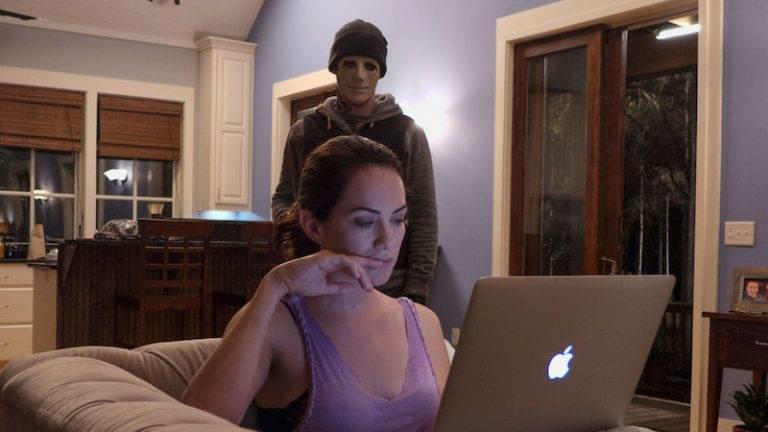
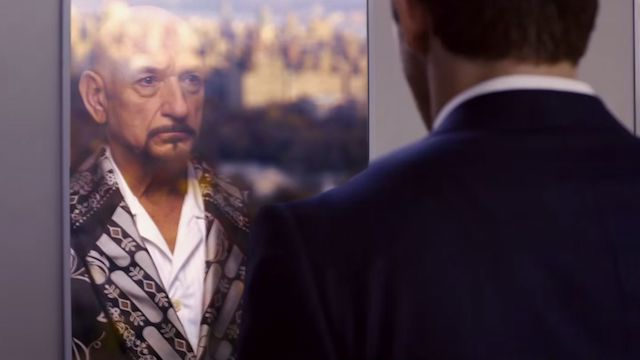
“Hush” is a tense, breathless horror film full of things we’ve seen before but can never get enough of when they’re done well, including a kickass heroine, an inherently frightening premise, and a creepy stalker in a white mask. It also has a few terrific things we don’t see very often, like an awareness of how modern technology actually works and a deaf lady defending herself with kitchen knives. So really, there’s something for everyone.

Kate Siegel, who co-wrote the screenplay with the director, Mike Flanagan (also her husband), stars as Maddie, a fiercely independent single woman who’s been deaf and mute since a childhood bout with meningitis. A novelist by profession, Maddie lives in a rural house with few neighbors (uh-oh) but is in regular contact with her sister (Emilia Graves) via FaceTime. The one neighbor she does have, Sarah (Samantha Sloyan), is also a friend, coming over often to hang out and practice her sign language (even though, like all deaf characters in movies, Maddie is an expert lip-reader).

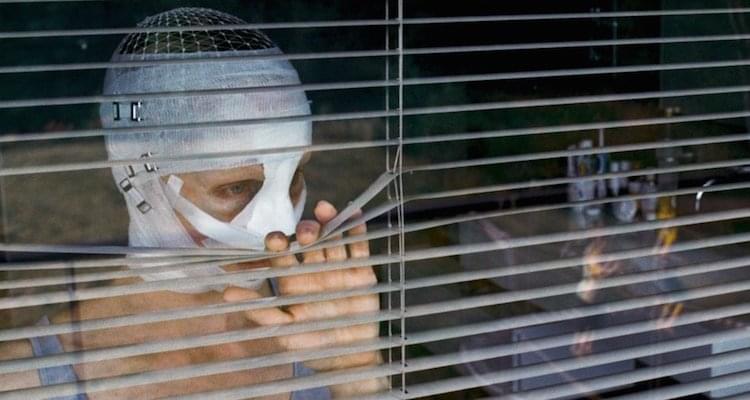
Then comes the trouble. A crossbow-wielding killer (John Gallagher Jr.) in a creepy white mask arrives at Maddie’s place, his intentions conveyed to us in a way that, shall we say, leaves no room for doubt. Lest this feature film turn out to be a short subject, the killer is the sort who likes to toy with his victims. He gets into Maddie’s house and uses her own iPhone and Macbook to terrorize her. She is duly terrorized, but she’s not one to give up easily. And the game is afoot!

The beginning of the film is admirably efficient, smoothly setting up all the details we’ll need later (plus some red herrings) in a matter of minutes. Flanagan (who made “Oculus” a few years ago) also uses this opportunity to establish the importance of sound in our world and the effect of its absence in Maddie’s. We hear the crisp, amplified sounds of Maddie cooking dinner, the ping of her text messages that she can’t hear (they also vibrate), the shrill scream of the smoke detector (which lights up). While those of us with functional hearing can certainly imagine what it’s like to be deaf in a sound-filled world, seeing it in action helps us fall under the movie’s spell and to empathize with Maddie.

The scenario of a person who can’t hear (or see, or walk, etc.) fighting someone who not only has all of their faculties but weapons besides, is the stuff of nightmares. Flanagan and Siegel do not squander the opportunity, finding ways to keep the action fresh despite being limited to a single location with a small number of characters, one of whom doesn’t speak. Except for a few draggy minutes about two-thirds of the way through, the pacing is tight, the story engrossing even though, if we think about it, there are only about three ways it can end.

Siegel’s magnetic screen presence also helps maintain our interest, her intense pale eyes and expressive face doing most of the acting for her. John Gallagher Jr., a likable actor from “The Newsroom” and “10 Cloverfield Lane,” has some nice moments as well (the mask is not an encumbrance for long), and the film has a few welcome touches of humor and a generally down-to-earth sensibility.

It also has, make no mistake, some brutal violence. But the cat-and-mouse aspect of the story doesn’t mean it’s 87 minutes of a pitiable woman being tortured. Maddie is vulnerable and disadvantaged, yes. But she’s strong and creative — she’s a fiction writer, remember. She knows what needs to happen for her story to end well.

— Vanity Fair

The Invitation

0
The Invitation

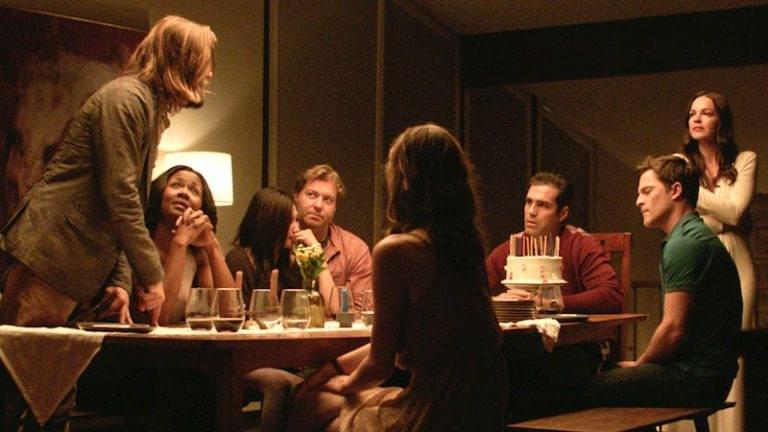
“The Invitation” begins with a mopey sad-sack named Will (Logan Marshall-Green) and his sympathetic girlfriend, Kira (Emayatzy Corinealdi), hitting an animal that darts in front of their car. Their mood was already sober: they’re going to Will’s ex-wife’s posh house for a dinner party meant as a “reunion of sorts” after some unnamed tragedy split the couple and their friends apart two years ago. Now in addition to being solemn, they’re rattled and unnerved.

And so are we. That incident with the unlucky animal (and I omitted some pertinent details) isn’t connected to the main plot, but it masterfully sets the tone for the movie — off-balance, uneasy — while providing some insight into Will’s character. We all have different ways of dealing with crises and pain. “The Invitation” is about, uh, one of those ways.

Not the best way, probably.

Though it depends on your point of view.

I’ve said too much already.

Will and Kira arrive at the dinner party to find Will’s upscale friends — Gina (Michelle Krusiec), Ben (Jay Larson), Claire (Marieh Delfino), gay couple Tommy (Mike Doyle) and Miguel (Jordi Vilasuso) — all as baffled as he is about why they’re here. Will’s ex, Eden (Tammy Blanchard), basically disappeared after the prior tragedy, and nobody in the group has really socialized since then.

Now Eden has reappeared with a new partner, David (Michiel Huisman), after spending some rejuvenating time in Mexico. No longer the grief-stricken wreck she used to be (and that Will still is), she’s serene and ebullient. She and David met in a therapy group and just HAVE to share with their friends how they’ve managed to let go of their grief and heal their minds. They’ve asked two fellow practitioners of The Invitation (as the program is called) to join the gathering and share their stories. One of them, Sadie (Lindsay Burdge), is a giggling cuckoo bird; the other, Pruitt (John Carroll Lynch), is an imposing but gentle-seeming man.

The friends wonder: Did Eden join a cult? Everyone responds with varying degrees of incredulity and scoffing when Eden brings out a laptop to show them an informational video, and the c-word certainly comes up. But maybe it’s just a spiritual self-help program, useful if you’re into that sort of thing, and otherwise harmless. Will is deeply suspicious of it, but his friends recognize that his judgment may be clouded.

Part of the reason “The Invitation” works so well as a paranoid thriller is that it keeps us guessing, right up until the end, about what kind of paranoia is called for. We’re inclined to see things from Will’s point of view, but we have to admit he may be overreacting. Might HE be the problem here? Gina keeps mentioning that her boyfriend was supposed to be here ages ago and hasn’t shown up yet. What’s that all about? These new friends of Eden’s, what’s their deal? Who can be trusted? Or is that not even the relevant question?

The director is Karyn Kusama, who burst onto the scene in 2000 with “Girlfight” (starring Michelle Rodriguez as a boxer), then stumbled with the big-budget sci-fi dud “Aeon Flux” and the Diablo Cody-scripted horror comedy “Jennifer’s Body.” And that was it. Hollywood gave her two chances, then turned its back on her. That’s not nearly as many chances as a lot of directors get, but Kusama isn’t nearly as not-a-woman as most directors are.

Now she’s gone back to her indie roots, working with “Aeon Flux” screenwriters Phil Hay and Matt Manfredi to create a uniquely intense, darkly humorous, and ultimately jaw-dropping cyclone of a movie. It starts out tense; then it gets entertaining; and then it gets insane. We’re treated to some chilling scenes along the way (Pruitt’s monologue about his wife’s death is a macabre gem), hindered only a little by weak performances from some of the supporting players. But the ending? True greatness. This one’ll stick with you, long after company has gone home.

Standing Tall (French)

0
Standing Tall (French)

“Standing Tall” (“La Tete Haute”) begins in the office of a French family court judge, where a frazzled, uneducated young mother struggles to explain over the wails of her baby son why her other son, 6-year-old Malony, is such a miscreant at school that the courts had to get involved. But she doesn’t know why he acts this way, and she can’t take it anymore. She leaves the boy in the judge’s office and stomps out, defeated. Malony, who’s been playing quietly in the corner the whole time, looks up at the commotion and sheds a single tear.

Our sympathy for the lad now firmly established, writer-director Emmanuelle Bercot spends much of the next two hours trying to shake it. We jump forward almost ten years to find Malony (Rod Paradot) still as disruptive and violent as earlier reports indicated, only now he’s stealing cars, too. He’s constantly in the judge’s office — not a bad place to be, considering the judge is Catherine Deneuve, but still. His mother (Sara Forestier) wavers between being fiercely defensive of him and saying things like, “I created a monster, like his father.” (Dad’s dead, by the way.) Malony seems beyond repair, but the judge and Malony’s case worker, Yann (Benoit Magimel), refuse to give up on him.

He doesn’t make it easy. In an outstanding performance by then-18-year-old Rod Paradot, Malony is bratty and disaffected, full of unexplained, misdirected anger and unseen wounds. We follow him to a “juvenile rehabilitation facility” (sort of a ranch for wayward boys), where he makes some progress and then undoes most of it with a careless act. That’s his pattern: two steps forward, one step back. One minute he’s showing signs of maturity; the next he’s petulantly insisting that the only job he wants is that of a tattoo artist. Paradot’s beady eyes convey Malony’s hurt, while Deneuve is a reassuring presence as the kind but pragmatic judge who understands it was bad parenting and poor circumstances, not any inherent defect, that made him this way. She urges him to accept help: “Take the hands that are given to you,” she says, in one of the film’s gentler moments.

There are any number of ways that this scenario could have turned into a treacly, faux-inspiring Hollywood drama with a lot of pat answers and feel-good platitudes. Fortunately, Bercot went the other route, delivering a film that is harrowing and hopeful but always humane, with no easy solutions. It shows the cycle of poverty, illiteracy, and indolence that is often passed from one generation to the next, and how difficult it is to break out of it. (Is the ending a happy one? A strong case could be made for either answer.) Granted, if you’ve seen your share of realist social dramas, you won’t find anything here that you haven’t seen before. (It’s strikingly similar to Xavier Dolan’s “Mommy” — bad luck for Bercot, as her perfectly good film pales in comparison to that blast of pure cinema.) But we’re always up for an edifying glimpse into a damaged soul, no matter how familiar the ingredients may be.

— Oregon ArtsWatch

Meet the Blacks

0
Meet the Blacks

There is far more stimulation in contemplating what an odd mess “Meet the Blacks” is than there is in watching it. Trust me, I’ve done both. The movie itself is a careless, mostly unfunny mix of slapstick, insults, racial humor, toothless satire, and semi-horror, all set in a world where the Purge is real. So is “Meet the Blacks” a spoof of “The Purge”? It sometimes thinks it is, but no, not really. It’s more like “The Purge” fan fiction.

Oh, and it starts with executive producer Snoop Dogg, in whiteface, warning his fellow whites to stay safe during the Purge. Weird, right?

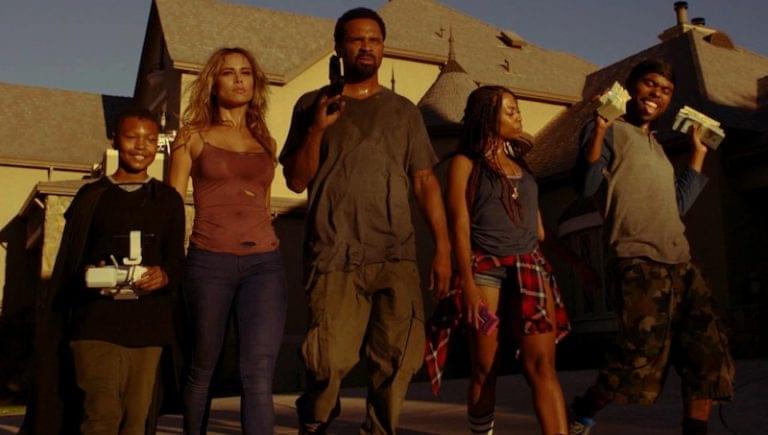
Carl Black (Mike Epps) is a Chicago criminal who steals enough money from his newly imprisoned partner to move his family — Latina second wife Lorena (Zulay Henao), teenage daughter Allie (Bresha Webb), son Carl Jr. (Alex Henderson), and shiftless cousin Cronut (Lil Duval) — to a gated community in Beverly Hills. Now, the Black family is the first black family to live in this neighborhood, so they are on a collision course with wackiness, racism, etc.

Then the Purge begins. For the uninitiated, the Purge is an annual 12-hour period during which all crime is legal. Carl thought there wouldn’t be any Purging in fancy Beverly Hills, and the movie spends several minutes on his sputtering and fuming when he finds out he was wrong. There is also a scene where Carl Jr. explains to his dad what the Purge is, even though his dad obviously already knows what it is because he has been complaining about it. There’s also a scene where Lorena says, “I’m gonna go check on the kids” immediately after the kids have left the room. Like, you can still see them going up the stairs. The story needed Lorena to exit the scene, and “I’m gonna go check on the kids” was the only thing the writers could come up with.

Sorry, I’ve gotten ahead of myself, pointing out random dumb mistakes before I’ve finished explaining what the movie is about. Disappointingly, it follows the basic structure of “The Purge” (including the teen daughter’s secret boyfriend being a factor) without really spoofing it, half-heartedly soaking it in stale gags, clunky writing, and amateurish performances. The tone is all over the place, and even seems to be going for actual thrills in a few scenes — a gross miscalculation.

What would “The Purge” be like if it were about black people? Screenwriters Nicole DeMasi and Deon Taylor (who also directed) seem to have begun with that question, then got stuck. The best they could come up with: the Blacks are tormented not just by would-be murderers but by people they owe money to (including a children’s party clown played by violent rapist Mike Tyson). Mike Epps scores a few chuckles as the cranky dad, but the fact that he constantly lies to his wife and everyone else undercuts his “concerned patriarch” act. He’s a dishonest man and a bad husband and father. There might have been some pleasure in seeing him emerge victorious if the movie 1) acknowledged his badness and/or 2) were funny. But it doesn’t and it isn’t, and here we are.

Batman v Superman: Dawn of Justice

0
Batman v Superman: Dawn of Justice
"It's only weird if you make it weird."

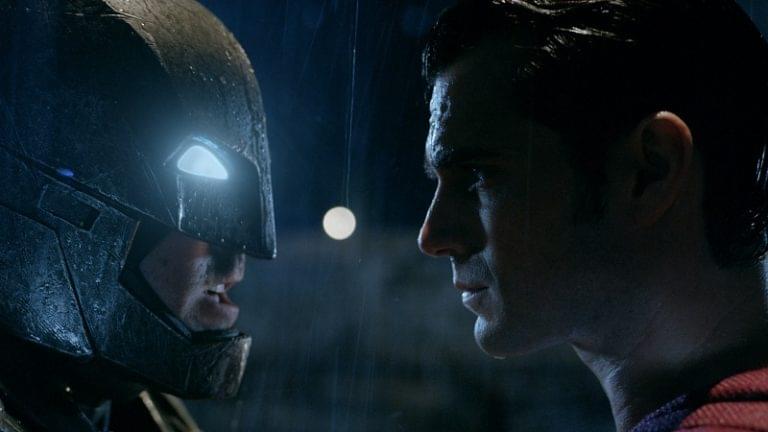
The conflict between Batman and Superman is barely a factor in the long, loud, lugubrious “Batman v Superman: Dawn of Justice,” but the second part of that terrible title is accurate, or at least hints toward accuracy. The real purpose of the film is to set up the Justice League movie, in which Batman, Superman, Wonder Woman, and whoever else isn’t busy will team up to fight evil. By the end of “BvS,” I was indeed thinking that I’d like to see more of these three together. But paradoxically, I was also thinking that if the Justice League movie is going to have the same grim, headachy tone as this one, count me out. It’s like putting your head in a beehive for two and a half hours.

It’s a direct sequel to “Man of Steel” (which I mostly liked), again directed by Zack Snyder, who has lately exhibited more style than sense. Eighteen months have passed since Superman (Henry Cavill) saved the world from General Zod and destroyed Metropolis in the process. (The footage of that has a fresh, 9/11-y scent to it, for maximum coolness.) Across the harbor from Metropolis in Gotham — they’re adjacent, deal with it — Bruce Wayne (Ben Affleck) watched the devastation and, like many viewers of “Man of Steel,” felt Superman should have done more to minimize it. Most people, though, consider Superman a hero. (Allegedly. The movie keeps telling us how beloved he is, but all we ever see are people like Batman criticizing him.)

Over in Metropolis, Superman — or “Clark,” as his girlfriend Lois Lane (Amy Adams) calls him, all the time, in front of people — is as wary of Batman as Batman is of him. Seems the Dark Knight has begun branding villains with a hot, bat-shaped iron, which Superman feels is excessive. He thinks Batman is acting like he’s above the law. Batman thinks the same of Superman. He’s been working in Gotham for 20 years, and the hulking, gray-templed Affleck terrifically conveys Batman’s “too old for this crap” grumpiness. Superman is newer, younger, idealistic — not to mention an alien being who fell to Earth with god-like powers and a magnificent jawline. Not that it’s a surprise when a middle-aged white billionaire mistrusts a foreigner, but you can see Batman’s point. Who IS this guy? Who does he answer to?

Some exploration of the philosophical differences between these two heroes could have been fascinating. At one point, Bruce Wayne says of Superman, “If we believe there’s even a 1 percent chance he’s our enemy, we have to treat it as an absolute certainty” — an appallingly illogical, Trumpish declaration, one that begs to be unpacked. The movie, of course, ignores it, just as it ignores all of the other interesting topics that are raised. (A senator played by Holly Hunter leads a congressional hearing on Superman’s activities; it, too, is snuffed out just as it’s getting good.) The actual fight between Bats and Supes turns out to be 1) quite brief, and 2) without substance: they fight not because they disagree, but because Lex Luthor (Jesse Eisenberg) has manipulated them into it for his own gain.

Oh, yeah. Lex Luthor. In the past, Superman’s arch-enemy has usually been smart, wry, and charismatic. Now he’s a coked-out nutcase, chattering away like a … well, like a Batman villain. Eisenberg’s hammy performance doesn’t help, but most of the blame belongs to the screenplay. Written by Chris Terrio (“Argo”) and genre stalwart David S. Goyer (“Batman Begins”), it’s overburdened with Stuff To Do — introduce Wonder Woman (Gal Gadot)! refer to Aquaman and the Flash! set up Superman and Batman’s shared world! — but has no clear-headed plan for how to fill in the details.

The DC Extended Universe:

“Man of Steel” (2013) B-
“Batman v Superman: Dawn of Justice” (2016) C-
“Suicide Squad” (2017) D
“Wonder Woman” (2017) B+

This is most apparent in the last 30 minutes. After nearly two hours of slogging, borderline incomprehensible storytelling, suddenly there is a new enemy who inspires split-second decision-making and hasty conclusion-reaching. Like all of a sudden we’re on a time frame here, in a movie that previously saw fit to include several of Bruce Wayne’s dream sequences. (YOU ARE ALREADY TOO LONG! WHY ARE YOU WASTING MY TIME SHOWING ME THINGS THAT AREN’T EVEN REALLY HAPPENING??) This enemy does, finally, unite Batman, Superman, and Wonder Woman (presumably; nobody calls her that), enough to whet our appetites for more. But the finale is oppressively bleak, and the consequences of what has happened aren’t treated with nearly the weight they merit. Just like “Man of Steel,” you’ll note.

Public service announcement: Clark Kent’s mom (Diane Lane), newspaper boss Perry White (Laurence Fishburne), and Batman’s butler Alfred (Jeremy Irons) are also in this movie. So is Scoot McNairy, playing an embittered Wayne Industries employee who was injured in the destruction of Metropolis. All four of these characters (and actors, for that matter) deserve more than the scraps they’ve been thrown.

When there’s action on the screen, it’s mildly exciting, if hard to see because of Snyder’s fondness for shooting at night and his insistence on having the cameras operated by jittery, untrained monkeys. (Union rules, man.) And frankly, for a film supposedly centered on the conflict between two unstoppable forces, it has little action and even less substantive head-to-head dialogue. It’s deathly serious, too, with hardly any levity to contrast the dimness. Didn’t these things used to be fun? Or at least thrilling and emotional enough to engage us even when the story was gloomy? Or at least coherent? Oh, well. Maybe they’ll nail it in the reboot.

My Big Fat Greek Wedding 2

0
My Big Fat Greek Wedding 2

“My Big Fat Greek Wedding” was a genuine phenomenon in 2002, an under-the-radar indie comedy whose word-of-mouth kept it in theaters for 51 weeks, earning $368 million worldwide. That it should result in a sequel is no surprise. That the sequel should come out 14 years later and have the stink of a slapped-together rush job is where the surprise happens.

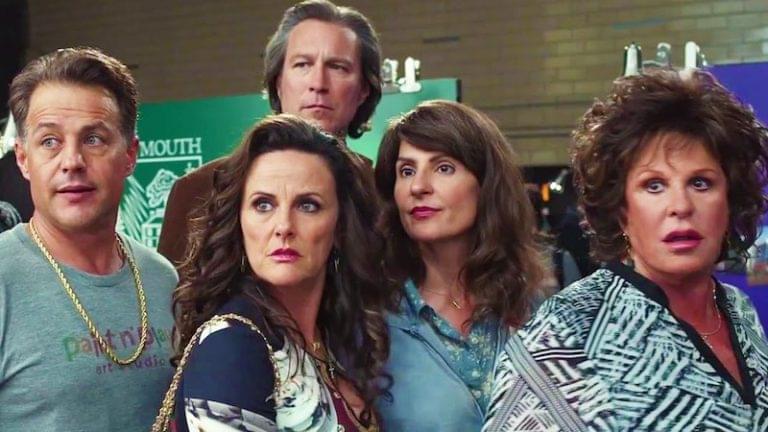
Nothing has changed since we last saw the Portokalos family, except that Toula (Nia Vardalos, also the screenwriter) and her non-Greek husband Ian (John Corbett) now have a 17-year-old daughter, Paris (Elena Kampouris), who’s a senior in high school and embarrassed by her enormous smothering family. Toula’s father, Gus (Michael Constantine), is still spraying Windex on everything, claiming Greek origin for all common words, and pestering unmarried females in his family (including Paris) to find Greek husbands. He and his wife, Maria (Lainie Kazan), still have a Greek restaurant.

But hold the phone, guess what? It turns out that due to a clerical error, Gus and Maria were never actually legally married! (There was a sitcom based on “My Big Fat Greek Wedding” — it ran for seven episodes in 2003 — but no, this is not a plot from it.) It would be a simple thing to have a little ceremony and make it official, but Maria, responding to a primal instinct in movie characters to manufacture conflict where there is none, says she won’t do it unless Gus proposes all romantic-like, which he didn’t do the first time. Gus is stubborn, thinks Maria is being silly, refuses to propose. Then they both get over it and start planning the wedding, only to have Maria contrive another obstacle on the day. (That one gets sorted out, too.)

The film’s plot, to the extent that it has one, is marked by that kind of lackadaisical storytelling. Every conflict that arises is weak to begin with, and then resolved posthaste. Gus has an ancient quarrel with his brother (Mark Margolis) back in Greece; the brother shows up and their differences are settled in seconds. Toula and Ian are worried that Paris will want to go to college someplace far away from home; she does; they’re OK with it after all. Cousin Angelo (Joey Fatone) isn’t married yet; turns out it’s because he’s gay; no one cares. John Stamos and Rita Wilson appear as a local newscaster and his wife, but are given nothing to do.

Vardalos’ screenplay seems stuck between two ideas. She wants to revisit every single character from the first movie, for the fans … but it often feels like she’s rushing through them, checking them off a list just so she can say she did it. In the big picture, she wants to please the fans. But when it comes to the details, she doesn’t know how. Overall, she seems to have taken a page from the Adam Sandler book of filmmaking: never mind the script, just get a bunch of your friends together and have fun!

And there is some fun to be had here, some sweet moments and a few soft chuckles amid the big, broad, stereotypical performances (which are bigger, broader, and stereotypical-er than before). Vardalos still reacts to her ludicrous family with appealing exasperation, but the character isn’t as funny now that she (Toula, not Vardalos) has had her odd-duck appearance and quirky personality smoothed over. She was the heart of the first film; here she’s just a supporting character. It’s not worth reviling, but neither is it worth seeing. As a movie, it’s a simpleton. If it were a person, it would require a caretaker and would not be able to live alone, bless its heart.

Friday movie roundup: March 18

0

Howdy, pardners. There isn’t much to round up this week, on account of I was in Austin for South By Southwest and missed the screening of “Allegiant,” part 3 (?) in the “Divergent” series. The first film was mediocre, and I didn’t see (or even have any memory of the existence of) the second one, so I will probably skip this new one, at least for now. Maybe I’ll catch them all before the final (?) one comes out next year (?).

Anyway, I think you already know if you want to see “Allegiant” and don’t need me to tell you.

I do have a review of “The Bronze” (R) C+, which premiered at Sundance last year. It squanders a perfectly serviceable premise. Let us never speak of it.

On Movie B.S. with Bayer and Snider, we review “10 Cloverfield Lane” and “The Brothers Grimsby.” (The latter: ugh. I’d say I enjoyed about 90 seconds of it, total, and actually laughed quite hard twice. But the rest: ugh.) We also talk about the movies we liked at SXSW.

Speaking of which, I wrote two SXSW reviews for Vanity Fair, like the fancy lad that I am:

— “Hush” (R) B+
— “In a Valley of Violence” (R) B-

UPDATE: Plus two for Film School Rejects:

— “War on Everyone” (NR yet) B
— “My Blind Brother” (NR yet) B

The Bronze

0
The Bronze

The perfectly serviceable premise of the sadly underdone comedy “The Bronze” is that a former gymnast from Amherst, Ohio, is still pathetically milking the brief, minor Olympic fame she earned in Rome in 2004, swanning around Amherst as if the Games happened yesterday (and as if she placed better than third). The film begins with the young woman in question pleasuring herself while she watches the video of her performance, so you have some idea of what you’re in for: dirty, potentially outrageous humor, and possibly a lot of instances where you’re supposed to laugh just because it’s raunchy.

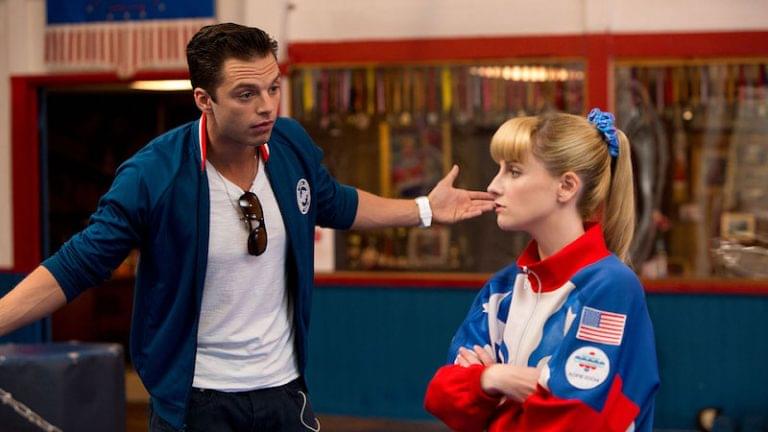
The girl, Hope Annabelle Greggory, is played with go-for-broke, foul-mouthed commitment by Melissa Rauch (from “The Big Bang Theory”), who co-wrote “The Bronze” with her husband, Winston Rauch. An injury took Hope out of the gymnastics business shortly after Rome, and she’s been bitter and nasty ever since, mooching off her indulgent doofus of a father (Gary Cole), snorting crushed-up allergy pills, and frequenting any local business that still gives her discounts as thanks for the glory she brought to Amherst.

When her old coach dies, she stands to inherit $500,000 … but only if she coaches another Amherst girl, Maggie Townsend (Haley Lu Richardson) through her own Olympic trials. Maggie is excitable and naive, which annoys the saturnine and promiscuous Hope, and she is also potentially Hope’s replacement in the hearts and minds of Amherstians, which would obviously be unacceptable. On the other hand, that $500,000 sure would be nice.

Directed by TV adman Bryan Buckley (his first feature), the movie follows a familiar path of quasi-redemption for the humorously despicable character, along the lines of “Bad Santa,” “Bad Teacher,” or any of the other films about poor role models giving their charges terrible help. The problem isn’t the predictability, it’s the sloppy way the changes are brought about. Hope’s drug addiction disappears suddenly from the story once it’s no longer needed. She switches from sabotaging Maggie to helping her without any real decision-making, and without any of her sabotage ever really being funny. She mocks the twitchy gym owner, Ben (Thomas Middleditch), then softens for no reason (and why’d he ever like her in the first place?).

A creatively acrobatic sex scene between Hope and fellow medalist Lance Tucker (Sebastian Stan) is a high point, and there are deep, vulgar laughs sprinkled throughout the film. It’s a so-so comedy that feels like a first draft, an opportunity wasted. Tighten it up and you’d have beautiful gold rather than shameful bronze.

Pee-wee’s Big Holiday

0
Pee-wee’s Big Holiday

Pee-wee Herman’s return in “Pee-wee’s Big Holiday” is, like so many revivals, a mixed blessing that appeals to our sense of nostalgia while only doing a so-so job of recreating the thing we’re nostalgic for. Written by Pee-wee himself (aka Paul Reubens) and “Comedy Bang! Bang!” scribe Paul Rust, this sunny new adventure has its share of absurd laughs and a coy, 21st-century understanding of sexuality that is intriguing (and subtle; the kids’ll miss it). But it never reaches the delirious heights of whimsy that it so clearly aims for.

To start with, Pee-wee looks the same as we remember him, but his voice is different — lower in pitch and intensity, less manic, less nasal. Can Paul Reubens, who is 63 and has been playing the character since his mid-20s, no longer make his voice do what Pee-wee’s voice used to do? Or was it a deliberate choice to tone him down a little, make him less cartoonish? Either way, it’s unfortunate. Often, this Pee-wee comes across not as a mischievous man-boy totally separate from our reality, but as one of any number of real-life repressed gay men in bow ties.

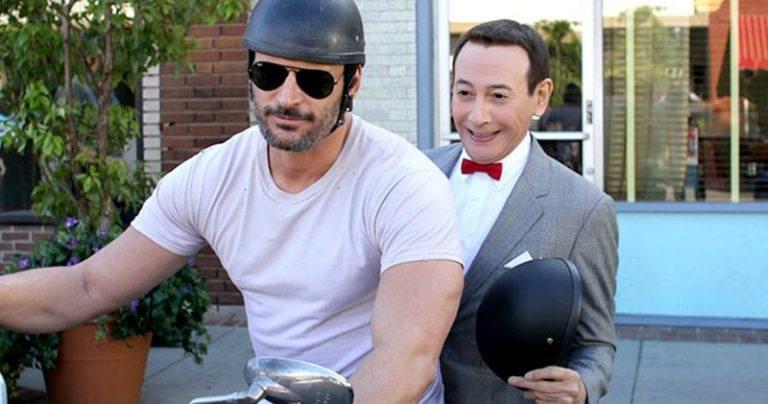
The character isn’t nearly as funny or endearing when he’s not over the top, but if you can get past that, it’s relatively smooth sailing. In this version of Pee-wee’s life (he seems to reset after each adventure), he’s a short-order cook at a diner who’s never left his hometown of Fairville. He’s just starting to feel like a loser whom nobody understands when he meets someone who shares his opinions on important things like candy. This person is Joe Manganiello, the actor, playing himself. Pee-wee’s never heard of him.

“Certainly you’ve heard of ‘True Blood’?”

“No.”

“‘Magic Mike’?”

“You’d think so, but no.”

This conversation takes place as the two are bonding over the elaborate miniature model of Fairville that Pee-wee has in his backyard, becoming fast friends and soulmates. Pee-wee’s knowing reference to “Magic Mike” (the movie about male strippers) signals that it’s OK for us to wonder about his sexuality, which jibes with his fawning giddiness over Joe.

The bulk of the film has Pee-wee on a cross-country road trip, finally leaving home so he can get to New York for Joe’s birthday party. He has a series of amusing encounters along the way with an Amish community, a cave-dwelling mountain man (Brad William Henke), a Katherine Hepburn-y aviatrix (Diane Louise Salinger), a widowed farmer with nine lovely daughters, and more. Some of these vignettes are better than others, but all are short enough not to be a nuisance when they don’t work.

Reubens and his director, John Lee (who’s worked on envelope-pushing TV comedies like “Wonder Showzen” and “Broad City”), know exactly what they’re doing with the hints about Pee-wee, and it works on two levels. On the surface, here’s a silly situation where Pee-wee is stranded and must spend the night in a house with a farmer and his daughters, all of whom keep hitting on him. On a deeper level, this is a scenario from many a dirty joke, turned around so that the man (it’s usually a traveling salesman, isn’t it?) has no interest in the farmer’s daughters anyway, for reasons that are … unspecified. Kids and adults will both laugh at the scene, but if you asked them what makes it funny, they’d give different answers.

The movie never does say anything definitive about Pee-wee’s orientation, of course. Officially, he’s an asexual child-like creature, and the movie is about how great it is to have friends and not be alone. But it seems to me that as Reubens contemplated what (if anything) he’d need to modify for the character to work in 2016, it must have occurred to him that most adults can’t see a guy with Pee-wee’s mannerisms and style and not wonder, at least for a moment, what his deal is. And when the part of the plot that would ordinarily involve a romance has him instead pursuing the friendship of a strapping actor — an actor who sits in his room and pines for him, by the way — it’s almost inevitable that the thought will cross our minds. And when it does, the movie replies, with a wink, “Why, no! What in the world would make you think such a thing?” Oh, Pee-wee! You rascal.

Midnight Special

0
Midnight Special

Jeff Nichols, writer-director of down-to-earth dramas “Shotgun Stories,” “Take Shelter,” and “Mud,” uses his latest, “Midnight Special,” to branch out into science-fiction. Not the flashy, expensive kind, mind you, but the Jeff Nichols kind: thoughtful, meticulously composed, set on a personal scale, and starring Michael Shannon.

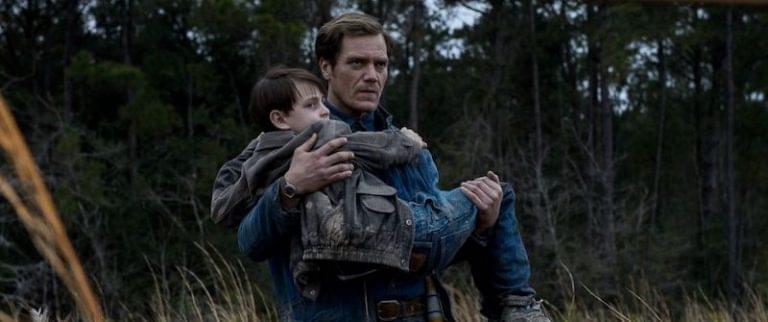
Shannon (who’s been in all of Nichols’ films) plays Roy Tomlin, a Texan fundamentalist cult member whose light-sensitive 8-year-old son, Alton (Jaeden Lieberher), has certain awe- and reverence-inspiring powers of a Spielbergian nature. The sect (pastored by Sam Shepard) treats the boy’s spouts of gibberish as scripture, and the NSA (represented by an amusing Adam Driver as a dogged, curious agent) wants to know how this gibberish contains government secrets. Roy, faithful friend Lucas (Joel Edgerton), and the boy’s mother (Kirsten Dunst), want nothing but Alton’s safety as the date of a foretold spiritual event approaches. The lengths to which they will go to preserve Alton’s safety are a testament to their love for, and faith in, him.

Once it’s all laid out, the story is simple, almost to a fault — don’t expect to be surprised by much. But Nichols reveals details skillfully, weaving an intriguing narrative out of an ordinary one. (One example: a character’s occupation, which might normally be part of the exposition, isn’t mentioned until mentioning it will have some dramatic weight.) This deft storytelling, accompanied by sincere, plainspoken performances, all beautifully captured by cinematographer Adam Stone, lets Nichols harvest much wonderment from his ordinary, extraordinary little tale.

Friday movie roundup: March 11

0

Ahoy-hoy. If you missed last week’s Friday Movie Roundup, well, so did I. Just plumb forgot it. I have included those reviews with this week’s, listed here in order of running time (shortest to longest).

— “Hello, My Name Is Doris” (R*) B+
— “London Has Fallen” (R) C
— “10 Cloverfield Lane” (PG-13) A-
— “Zootopia” (PG) B+
— “Whiskey Tango Foxtrot” (R) B

*Ignore this. It’s a sweet, funny movie with a handful of F-words and some mild sexuality. It’s PG-13.

Movie B.S. with Bayer and Snider is off this week. That’s because of the four movies opening in wide release today, only “10 Cloverfield Lane” screened for critics (and we missed it because of our South By Southwest travels). The other films — “The Young Messiah,” “The Brothers Grimsby,” and “The Perfect Match” — are what we call Hollywood’s Shameful Secrets. I’ll catch “Grimsby” soon for sure; we’ll see about the others.

I’ll be at SXSW through Wednesday. Keep an eye on my Twitter feed if you want updates. We put movie titles in ALL CAPS on Twitter (italics not available; quotation marks waste precious characters), so it’s easy to skip the other things I tweet about and just skim for movie tweets.


Hello, My Name Is Doris

0
Hello, My Name Is Doris

One hundred percent of decent people with human souls agree: It’s been far too long since Sally Field, national treasure, has taken the lead role in a movie. This works to the advantage of a film like “Hello, My Name Is Doris,” which is funny and sweet, but also slight and shallow — but also, Sally Field! Front and center, playing a lovable, vulnerable, dotty spinster! The film is good, but let’s be honest, it would have delighted us even if it were mediocre.

Field plays Doris Miller, a frumpy 60-something with a nondescript office job who has had almost no romance in her life outside of the trashy novels she reads (which she does with reading glasses perched over her regular glasses). She still lives in the clutter-filled Staten Island house she grew up in, which she shared with her mother until the latter’s recent death. Doris isn’t unhappy or lonely. She has a brassy best friend (Tyne Daly) and a concerned brother (Stephen Root) and some friendly co-workers. But she isn’t exactly moving forward, either.

Her world is turned upside down, as worlds are wont to be, by the arrival of a handsome stranger. He’s John Fremont (Max Greenfield), the company’s new art director, a grinning, outgoing fellow who is half Doris’ age yet seems to be flirting with her. Doris, given to daydreams and reveries, wouldn’t think of taking it any further than that, but a motivational speaker (Peter Gallagher) inspires her to go for it. (SPEAKER: “‘Impossible’ — what a confounding word!” DORIS: “And yet I use it all the time…!”) Through the tried-and-true method of lying on Facebook, she gets to know John, pretending to like his favorite electro-pop band, with predictably amusing results. John and his Brooklyn hipster friends, with their rooftop knitting circles and fondness for retro fashion, think Doris is cool. And it seems crazy, but could John actually be into her?

The film was directed by Michael Showalter, written by him and Laura Terruso from Terruso’s short “Doris & The Intern.” Showalter is best known for surreal, parodic humor (“Wet Hot American Summer,” “They Came Together”), and “Hello, My Name Is Doris” sometimes teeters on the edge of making fun of its central character. But it eventually gives Doris some emotional backstory, which Field plays to endearing perfection, and Showalter’s attitude as a filmmaker is sunny and positive.

Pleasant as the movie is, there isn’t much to it. You can see how it worked as a short: inciting incident causes stagnant character to reevaluate life, experience growth. It’s textbook, really, not that there’s anything wrong with that. And it’s ultimately so upbeat, so hopeful, that to nitpick its story implausibilities or wish it had more weight would seem to be missing the point.

— Vanity Fair

10 Cloverfield Lane

0
10 Cloverfield Lane
John Goodman prepares his five-alarm chili.

Don’t be distracted by the title of “10 Cloverfield Lane,” which puts you in the mind of “Cloverfield,” the excellent filmed-by-a-bystander monster movie from 2008. What connection, if any, this film has to that one doesn’t matter, and knowing (or guessing) ahead of time won’t help you enjoy it any more.

No, you should stay focused on the matter at hand: a masterfully suspenseful mystery thriller set in a doomsday bunker, with a story that conjures “Misery,” “Alien,” “The Twilight Zone,” several Steven Spielberg movies, and at least one episode of “Breaking Bad.” (YOU’LL KNOW THE ONE.) Directed with astonishing confidence by first-timer Dan Trachtenberg, the film uses a deceptively simple premise, carefully scripted (by Josh Campbell, Matthew Stuecken, and Damien Chazelle) so that no information is wasted and each new piece of it furthers the mystery. What happened before? What’s happening now? What’s true and what isn’t? And what connection, if any, do the true things have to each other?

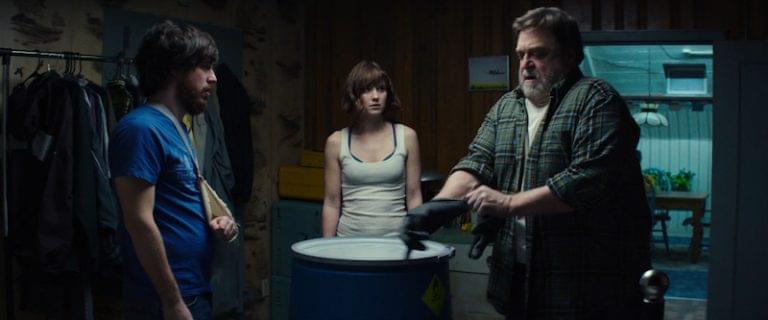
The situation is this: a young woman named Michelle (Mary Elizabeth Winstead), injured in a car wreck, wakes up chained in a concrete bunker owned and operated by one Howard (John Goodman), a gruff, bear-like man who says he only wants to keep her safe. He says there’s been an attack of some kind, that everyone not in a place like this is dead or dying. He doesn’t know a lot of details other than that the air out there is unbreathable. The doors are barricaded, and he’s armed. Nobody’s getting into this bunker, and nobody’s getting out.

Also present is Emmett (John Gallagher Jr.), a harmless-seeming scruffy dude about Michelle’s age, also injured, who helped Howard build the bunker — a multi-room, rather home-like dwelling, once you get used to it — and then sought refuge here when whatever happened out there happened. He doesn’t know much either. But they have enough food, water, power, entertainment, and air filtration to stay here indefinitely.

Michelle is in disbelief at what she’s being told, though she realizes that doesn’t necessarily mean it isn’t true. But it’s hard to confirm that all life outside is dead when you aren’t allowed to go outside. And there are little discrepancies between what she’s being told and what she’s observing. Winstead’s performance during all of this uncertainty is terrific, taking us through the mind of a smart, resourceful, brave-but-not-superheroic woman who’s insistent on making her own choices. When she crawls through an air duct and you automatically think of Ripley in “Alien,” it doesn’t seem unreasonable to put those characters on the same level.

John Goodman is great, too, using his physical mass (he’s bigger here than he’s been lately) to make Howard an imposing force in a confined space, even when he’s calm. Howard is a doomsday prepper and, as Emmett puts it privately, “a blackbelt in conspiracy theory.” As we start to think the issue isn’t Howard’s sincerity so much as his sanity, Goodman uses our natural inclination to like him to throw us off balance. It’s a subtle performance, full of details that take on new meaning in hindsight as we learn more about the character.

I wouldn’t call this a horror film, though it certainly has some white-knuckle moments and a few elements of scary movies. Stylistically, it bears no resemblance to the film it shares an SEO keyword with (rest easy, sufferers of shaky-cam nausea). What’s remarkable is how Trachtenberg keeps the tension and interest level up despite being about three characters in a single setting. Some movies of that description feel like stage plays (which isn’t a bad thing), but this doesn’t. This feels like a movie, one that uses editing, camera movement, and other cinematic tools to tell (very effectively and efficiently) a story that happens to be set in one place. You don’t need a large cast or a variety of locations to produce skin-crawling drama.

London Has Fallen

0
London Has Fallen

In 2013, there were two movies about the White House being attacked by terrorists. This was a popular thing to imagine back in those days. One of them, the death-filled but bloodless, PG-13 “White House Down,” was quite fun as mindless escapism. The other, “Olympus Has Fallen,” was a hard R with gratuitous, cruel violence that sucked some of the fun out of it.

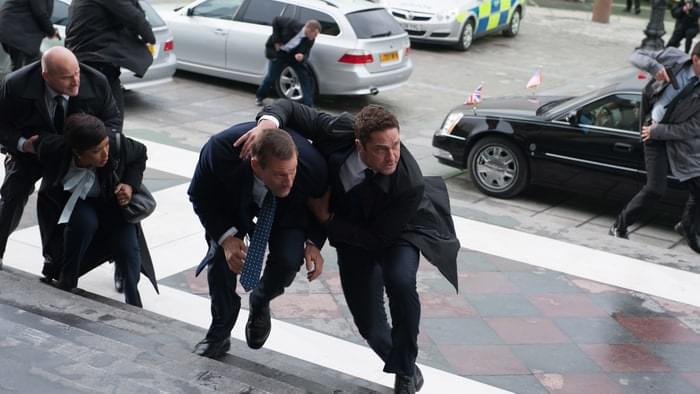
Well, that one turned a bigger profit, so that’s the one that gets a sequel — “London Has Fallen,” in which the same U.S. president and his favorite Secret Service agent are in England for a state funeral when all hell breaks loose. Though it’s by a different director (Iranian-born Babak Najafi), the vaguely distasteful emphasis on death and carnage is still in place, now accompanied by a vaguely distasteful disregard for anything that isn’t American. (You guessed it: hundreds of people die, including prime ministers and presidents, but don’t worry, the Yanks make it out OK.) It’s an especially tacky attitude for a movie set overseas. I mean, we’re guests here. Can we not show a little respect for our hosts? The ones whose landmarks and civilians are being destroyed?

Pres. Benjamin Asher (Aaron Eckhart) and agent Mike Banning (Gerard Butler), joined by Secret Service chief Lynne Jacobs (Angela Bassett) and some expendables, are among the dozens of world leaders gathered to mourn the British prime minister’s death when a massive, coordinated attack — one involving dozens of terrorists infiltrating numerous public agencies to carry out specific assassinations — decimates London. If Mike Banning hadn’t unilaterally changed the president’s schedule by 10 minutes, screwing up the U.K.’s security plans and ignoring the fact that there are 40 other world leaders with their own security details, he and Asher would be dead now. Good thing the rules don’t apply to America or Mike Banning!

Our review of “London Has Fallen” from the Movie B.S. with Bayer and Snider podcast:

Download audio

The people who behaved respectfully when they came to London for the funeral, like the heads of Germany, Japan, and France, are killed without a second thought. That’s what they get. For a minute it looked like France’s guy would survive, and I thought: Oh, this will be fun! The French president will join the American president and his Secret Service buddy to save the day! That’ll be different from the way it played out in the first movie, where it was just Asher and Banning against — nope, never mind, they killed the French guy, too.

Anyway, the head terrorist in charge, Barkawi (Alon Aboutboul), is mad at the United States for a drone attack a couple years ago that missed him but wiped out family members at a wedding party. (It’s telling that the film’s returning screenwriters, Creighton Rothenberger and Katrin Benedikt, went to the trouble of giving Barkawi a legitimate reason to be upset, only to have Asher and Banning ignore it. Oh, there might be some nuances here? SCREW YOU AND YOUR NUANCES, TOWELHEAD!) While Vice President Morgan Freeman, Gen. Robert Forster, Secretary of State Melissa Leo, and others watch helplessly via satellite from the situation room back in D.C., Asher and Banning scamper through London killing terrorists and trying to reach safety.

Despite the TV-quality CGI, the initial attack sequences are intense and breathless. Indeed, when the movie is just doing its bare-bones action thing, it’s fine. It’s the close-up details of Banning shooting and/or stabbing people (so much stabbing), and his cavalier attitude toward it, that’s disquieting. (After he slices a guy up just so his terrorist brother can hear him scream over a walkie-talkie, Pres. Asher says, “Was that really necessary?” Mike Banning’s gruff reply: “No.” U-S-A-! U-S-A!) That’s not to mention the fact that there’s also a lot of talking, and the dialogue is weak, and Gerard Butler’s repressed Scottish accent still sounds like an American speech impediment.

The problem with “Olympus,” which is magnified in “London,” is the lack of self-awareness: the filmmakers don’t seem to realize how obnoxious they’re being. I don’t mind a movie that crosses the line on purpose. It’s when the movie is blithely unaware that the line exists that it loses its flavor for me.

Zootopia

0
Zootopia
Nothing you ever do will be funnier than this scene.

The credo of the city of Zootopia, as featured in the movie “Zootopia,” is that it doesn’t matter what kind of animal you are — “anyone can be anything.” It’s essentially the same “be yourself” message found in every Disney cartoon, but this time there’s a twist: the movie is about race relations.

Oh, I know! I would roll my eyes, too. But this shrewd, funny buddy-cop story about anthropomorphic animals pulls it off without a hint of preachiness. How? By inventing situations that mimic real-life issues without (for the most part) being direct parallels to them, and by not following a consistent pattern of this animal representing that race, and so forth. In an early scene, a bunny seems to be the stand-in for African Americans, bullied by a fox (with a redneck Southern accent) who pledges to keep bunnies in their place. But in other scenes, it’s the bunnies who represent white bigots, with foxes as the oppressed, mistrusted class. In still other scenes, the corollaries are broader — not foxes and bunnies, but predators and prey, or large animals vs. small ones.

In short, each animal has its moments of prejudice and acceptance, of being right and being wrong, of being fearful and being brave. By not letting the story be boiled down to one simple allegory, “Zootopia” conveys its message without being political, inflammatory, or controversial. You might say this dilutes it, that it would have been more effective if they’d gone all the way with #foxlivesmatter. But that’s too narrow a view, and a potential turnoff for audiences (who, after all, just want to see a funny cartoon about talking animals). The movie’s broader take is one that only a die-hard racist could disagree with: that we can acknowledge the differences between our “species” without being unequal, and that while our feelings of bigotry and fear often come from honest emotional reactions (the bunny really did have a traumatic experience with a fox), we must overcome those impulses and judge one another as individuals, not as groups.

Also, no matter how “different” it looks to you, don’t touch the lamb’s woolly hair without her permission. And I know you hear bunnies call each other “cute,” but it’s kind of offensive when non-bunnies use that term. And just watch that fox cringe when someone refers to him as “articulate.” You get the idea.

“Zootopia” is set in a world where predators and prey evolved into a peaceful co-existence and live in human-like cities together. (It’s never explained what the predators eat instead of other animals, nor is there any reference to humans or non-mammals. Just go with it.) Judy Hopps (voice of Ginnifer Goodwin), an optimistic young rabbit, is the first of her species to become a police officer in the bustling metropolis of Zootopia. Not taken seriously by Chief Bogo (Idris Elba), a water buffalo, or by any of her fellow cops, who are various mid-sized animals, she’s assigned to be a meter maid.

Undaunted, Judy Hopps is determined to make a difference in her community. She takes on a “missing mammal” case that no one else has time for because she’s touched by Mrs. Otterton’s (Octavia Spencer) pleas for help. And in the process of investigating, she teams up with a street-wise con artist named Nick Wilde (Jason Bateman), a sly fox who challenges Judy’s preconceived notions about foxes (and who has some serious trust issues with police).

Directed by Byron Howard (“Tangled”) and Rich Moore (“Wreck-It Ralph”), and written by Phil Johnston (“Cedar Rapids,” “Wreck-It Ralph”) and Jared Bush, the film is modeled on the buddy-cop formula, following that pattern of clue-finding, false leads, red herrings, and eventual mystery-solving. But it also discovers many clever ways to exploit the animals-as-humans setting, including a nudist colony run by a hippie yak (Tommy Chong), a DMV staffed entirely by sloths, and an arctic shrew who’s a Mafia kingpin. There are gags based on the relative size of the animals (Judy is a giant in the Little Rodentia neighborhood) and on the human-like rules applied to them (as when an employee at an elephant-owned ice cream shop is chastised for spraying toppings out of his trunk).

It’s consistently cheerful and funny, never heavy-handed, even when serious issues are being hinted at. Kids will undoubtedly enjoy it (what brightly colored entertainment with talking animals DON’T kids enjoy?), but this one seems meant more for adults who can appreciate its ingeniously fabricated world and its big-hearted ideals.

Whiskey Tango Foxtrot

0
Whiskey Tango Foxtrot

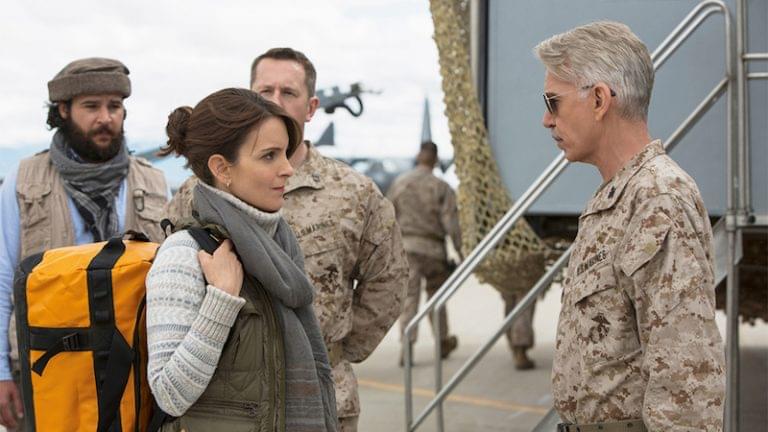
“Whiskey Tango Foxtrot,” about a news producer challenging herself by becoming a war reporter in Afghanistan, is also about Tina Fey challenging herself by headlining a movie that’s not an all-out comedy and doesn’t pair her with a familiar costar. In both cases, the venture into uncharted territory is a success, though not without its hiccups. The journalist finds self-actualization; and Tina Fey proves she’s a real live movie star. Everybody wins!

Based on Kim Barker’s memoir “The Taliban Shuffle,” the film was written by “30 Rock” writer/producer Robert Carlock and produced by “SNL” godfather Lorne Michaels — comfortable collaborators for Fey, who optioned the book two years ago with an eye toward playing the lead. The fictionalized version of Kim Barker, named Kim Baker, is new to the business of foreign correspondence when she arrives in Kabul in 2003 for what she expects will be a three-month stint. The journalists’ housing has a dorm-like atmosphere (“Jump Around” is bumping when we’re first introduced), and the only other woman around, BBC reporter Tanya Vanderpoel (Margot Robbie), is glad to see her.

Thankfully, the film quickly moves past the jokes about Kim being unfamiliar with military lingo and local customs, and establishes her as a competent, albeit frazzled journalist. The commander of the Marines she’s embedded with, Gen. Hollanek (Billy Bob Thornton), takes her seriously much sooner than his type of character usually does movie situations like this. The unnamed TV network Kim works for has provided a hunky Kiwi security guard (Stephen Peacocke), a cameraman (Nicholas Braun), and a “fixer” named Fahim (Christopher Abbott, for some reason) who helps Kim navigate Kabul. It is Fahim who observes that Kim seems to be getting addicted to the rush of covering live, dangerous news stories (and here the film backs up to inform us that before she came to Afghanistan, Kim was in a complacent rut).

Our review of “Whiskey Tango Foxtrot” from the Movie B.S. with Bayer and Snider podcast:

Download audio

Kim’s three-month stint turns into an open-ended stay. This decision isn’t exactly caused, but certainly isn’t discouraged, by the breakup of her long-distance relationship with a boyfriend (Josh Charles) who, the minute we met him, we knew she wasn’t going to keep anyway. As one of a small number of females in the press corps, Kim has plenty of options for a fling, including an abrasive Scottish photojournalist named Iain (Martin Freeman). She’s also hit on regularly by Afghanistan’s gentlemanly new attorney general, Ali Massoud Sadiq (Alfred Molina, for some reason), whose advances she finds amusing.

With its specific focus on a single character with a limited viewpoint, the movie isn’t about the war (much less the politics behind it) but about how covering it provides Kim with an opportunity to find herself. This narrow perspective puts the film at risk of treating the war too lightly, as nothing more than the backdrop for some American lady’s personal journey. There are twinges of such insensitivity — casting Westerners as the two major Afghan characters doesn’t help — but for the most part, directors Glenn Ficarra and John Requa (“I Love You, Phillip Morris,” “Crazy Stupid Love”) treat the violence of war with the weight it deserves, sometimes to shocking effect.

Fey was smart to choose as her first semi-serious role a character not far removed from her “30 Rock” and “SNL” personas. In a lot of ways, Kim Baker is the non-farcical version of Liz Lemon, the real-world counterpart to a cartoon, and Fey handles the dramatic moments well. She and the film both are just serious enough to be taken seriously, even if you can tell they’d prefer to be funny.

Friday movie roundup: Feb. 26

0

Reviews! Get yer pipin’ hot reviews here! I’ll list the movies in order from most good to least good.

— “The Witch” (R) A-
— “Eddie the Eagle” (PG-13) B+
— “Race” (PG-13) B-
— “How to Be Single” (R) B-
— “Touched with Fire” (R) C
— “Gods of Egypt” (PG-13) D

I’ve also seen but have not yet reviewed “Risen” (it’s good – so-so as a sermon, but quite solid as a movie); “Triple 9” (utterly mediocre dirty-cop crime drama); and “Where to Invade Next” (Michael Moore gets in his own way, but it’s a cheery, optimistic movie about possible solutions to America’s problems).

On Movie B.S. with Bayer and Snider, we review “Eddie the Eagle,” “Triple 9,” and “Gods of Egypt.”

At Mental Floss, I wrote up 13 facts about “The Maltese Falcon.” I enjoy researching and writing all of these, but this one was particularly enlightening (#5 especially).

Over at my Patreon, I’m still working toward the goal of reviewing every single wide release that comes out. I’m going to add some other Milestone Goals soon, too. Thanks to everyone who’s been contributing!

Gods of Egypt

0
Gods of Egypt

The fact that almost every actor in “Gods of Egypt” is from northern Europe rather than Egypt (or even the general region) has raised eyebrows, but that’s the least of the film’s problems. Maybe the apology from Lionsgate a few months back for the casting was to distract us from what they should really be apologizing for, i.e., the movie.

Directed by the once-promising Alex Proyas (“Dark City,” “I, Robot”) and written by the guys behind “Dracula Untold” and “The Last Witch Hunter” — these are red flags, people — “Gods of Egypt” is a dopey fantasy adventure set in ancient times, when the gods (Egyptian ones, anyway) lived among mortals. You can tell them apart, though, because the gods are 9 or 10 feet tall and have gold in their veins instead of blood. Although I guess that second part wouldn’t be obvious at first.

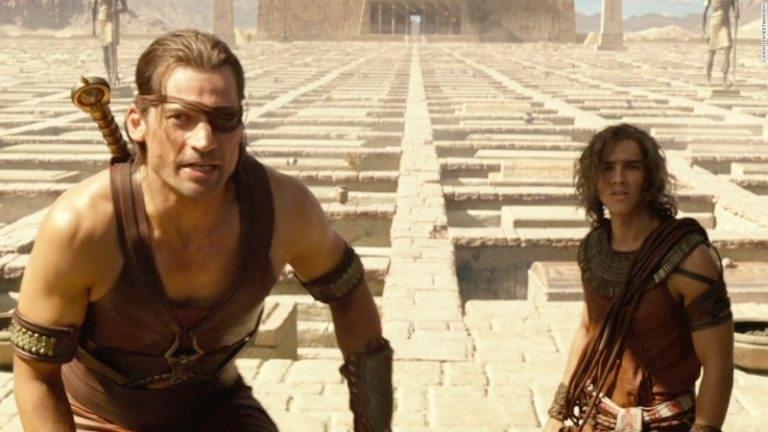
Anyway, the god-king Osiris (Bryan Brown) is retiring and handing things off to his son, Horus (Nikolaj Coster-Waldau), when his brother, Set (Gerard Butler), shows up uninvited, kills Osiris, and takes the throne. Set also plucks his nephew Horus’ eyes out and puts them in a vault. Without his eyes, Horus cannot transform or fly, because of reasons. He ends up working with a mortal, Aladdin-esque street urchin named Bek (Brenton Thwaites) to retrieve his eyes, defeat Set, and rescue Bek’s recently deceased girlfriend (Courtney Eaton) from the afterworld.

Grandpa Ra the sun god (Geoffrey Rush) is also involved, kind of, but not really, living on a platform in space (as one does).

The movie is loaded with special effects, yet looks like it didn’t have the budget to make them convincing. Yet it looks expensive, too. Somehow it looks cheap and expensive at the same time, with careless dialogue, an overstuffed plot, and little sense of drama or excitement. And unfortunately, except for a few scenes, it’s not outlandish enough to be entertaining as a disaster, either, as the performances are generally reined-in (dull, even). Actual Egyptians should be relieved that this plague passed over them.

P.S. At the end, Horus realizes he didn’t need his eyes to fly, he just had to believe in himself. Exactly the same as “Dumbo.”

Eddie the Eagle

0
Eddie the Eagle

There are two kinds of inspiring Olympic movies: the kind that awe us with accounts of athletes in peak condition; and the kind that amuse us with accounts of regular people who somehow found Olympic glory. This second kind is more relatable. You’re not fast enough to be Jesse Owens, and you don’t have the willpower to train yourself to become so. But if a 24-year-old British nerd who’s never ski-jumped before can compete in the Olympics as a ski-jumper, then (theoretically) anyone can!

That’s the story of “Eddie the Eagle,” an exuberant crowd-pleaser about Michael “Eddie” Edwards, who had his 15 minutes of fame at the 1988 Calgary Olympics (same year as the Jamaican bobsled team, which means this film shares a cinematic universe with “Cool Runnings”). Played by the unrealistically adorable Taron Egerton (“Kingsman: The Secret Service”) in giant, unflattering eyeglasses, Eddie is a socially awkward working-class lad who’s had Olympic dreams his whole life despite having very little athletic prowess and no idea which particular event he should focus on. His sweet mother (Jo Hartley) gently encourages him; his pragmatic father (Keith Allen), a plasterer by trade, encourages him to become a plasterer. (“It’s not like I’m taking up ballet!” Eddie pleads, in case you weren’t already reminded of “Billy Elliot.”)

Eddie tries downhill skiing, but he’s told by a grim official before the opening credits have even finished rolling that he “will never be Olympic material.” That’s when he hits on a new plan: the ski-jump. He underestimates how hard it actually is, but he’s right that it requires less stamina and physicality than, say, the biathlon. Moreover, since England hasn’t sent a ski-jump team to the Olympics in several decades, the outdated eligibility requirements make it comparatively easy to qualify. With help from Bronson Peary (Hugh Jackman), a washed-up (and fictional) American ex-jumper who’s now a groundskeeper at a German training facility, Eddie sets his sights on the 1988 Games.

Our review of “Eddie the Eagle” from the Movie B.S. with Bayer and Snider podcast:

Download audio

Despite the underdog cliches — the drunk coach; the stuffy officials; the unsupportive dad; the taunting Norwegians — “Eddie the Eagle” succeeds for the same reason the real Eddie did: optimism, good humor, and infectious, heart-on-sleeve enthusiasm. Director Dexter Fletcher keeps the tone light without being silly, and he doesn’t shy away from the real thrills and dangers of ski-jumping. (Pity about the tacked-on subplot with Christopher Walken as Peary’s disappointed former mentor. Walken is onscreen for about three minutes.)

As Eddie, Egerton juts out his chin and locks his mouth in a determined rictus that somehow conveys optimism even though it is technically a frown. He’s a milk-drinking babe in the woods, too naive to know what he’s doing is impossible, yet too resilient to be dismissed. He’s afraid of women and unnerved by sauna nudity. How can you not root for a guy like that? It’s a can’t-miss formula for a sports movie, and sure enough, “Eddie the Eagle” sticks the landing.

— Crooked Scoreboard.]

The Witch

0
The Witch

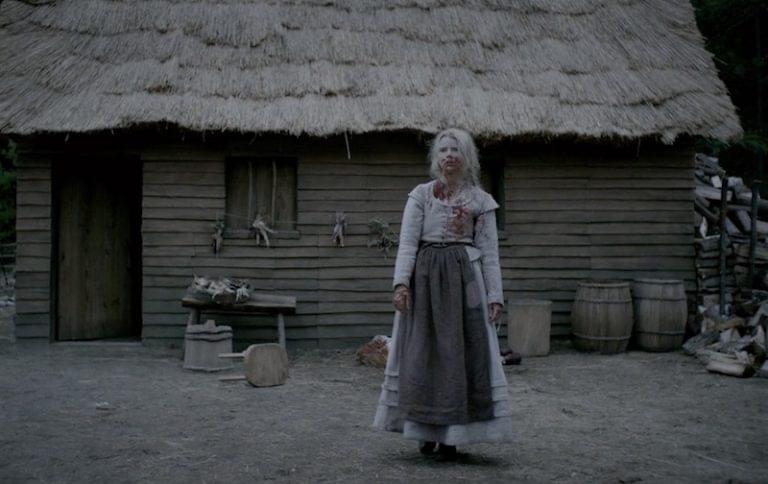
“The Witch” is not the movie to see if you want to be scared in a fun, Friday-night-date sort of way. It’s the movie to see if you want to be deeply unsettled — not momentarily rattled by ghosts lurking in shadows or killers popping out of closets, but profoundly unnerved by dark philosophy. First-time writer-director Robert Eggers finds his horror in ideas more than in deeds (though there are some nasty deeds, too).

Set in New England around 1630, this quietly (and then very loudly) disturbing folktale has its dour Puritan characters speaking in King James’ English (“Wilt thou not help thy father?” is a casual thing for a dad to say to his boy) and spending most of their time frowning. At the outset, this family is exiled from their Puritan settlement over a theological disagreement between the father, William (Ralph Ineson), and the church leaders. The details are fuzzy, but it seems William is too piously strict even for the Puritans. He and his wife, Katherine (Kate Dickie), take their children off into the wilderness and build a new home in isolation near a gloomy forest.

Before the movie is 10 minutes old, the family’s infant son has disappeared and Eggers has treated us to a shocking glimpse of what must be the title character, in a dank cottage in the woods, doing unspeakable things. It’s a brief but chilling sequence, and it pre-answers (for us) the question that will soon arise within the family of whether there are sinister forces working against them, or whether their ill fortune is the result of sin.

As Puritan extremists, they are all prone to feeling guilt. Katherine, dazed by the loss of the baby, prays and weeps constantly. The eldest child, Thomasin (Anya Taylor-Joy), an adolescent teen, is introduced to us in prayer, begging forgiveness for thinking about breaking the commandments. Caleb (Harvey Scrimshaw), a few years younger, averts his eyes when he notices his sister’s cleavage, and frets about the status of his dead baby brother’s eternal soul. He gets no comfort from religion, either. His father tells him no one but God knows who will be saved and who will be damned, and the way he describes it, it sounds pretty random. The only happy people are the twins, Jonas and Mercy, who are about 5 years old and spend their days singing songs to one of the family’s goats.

Things soon get worse. The crops start to fail. William causes discord with a small lie that has far-reaching consequences. Katherine mistrusts Thomasin, who was tending the baby when it disappeared. Caleb goes hunting in the woods, where nothing good ever happens. And at all times, everyone is afraid that they will offend God — or worse, already have.

Though the film has some sequences of terror and some haunting sights, it’s not an action-oriented story. The pervading eeriness comes more from the general tone, the sense of rising despair and urgency as the family is unraveled by fear and accusations. This doesn’t have the plot structure of a typical horror film, and the 17th-century language makes it harder to follow than, say, “Paranormal Activity.” (That’s not a complaint, just an observation.) It’s what you’d call an “art-house” horror film, in that it emphasizes mood and character over jolts.

This constant, steady build-up makes the last 20 minutes of the movie — when things come to a head in a nightmarish cavalcade of evil — all the more horrifying. It reminds me, to a lesser degree, of another sinister-feeling horror film with religious undertones: “Kill List.” “The Witch” isn’t nearly as effed-up, but it has a similar creeping darkness, leaving you with the sense that you’ve taken a harrowing ride through hell and gotten some of it on you.

Race

0
Race

When you have a story that’s about track and field as well as racial prejudice, the temptation to call it “Race” is too great to resist, and we should not fault the makers of “Race” for it. They are not made of stone. In fact, that title turns out to be a perfect fit for the movie: earnest, straightforward, and a little on-the-nose.

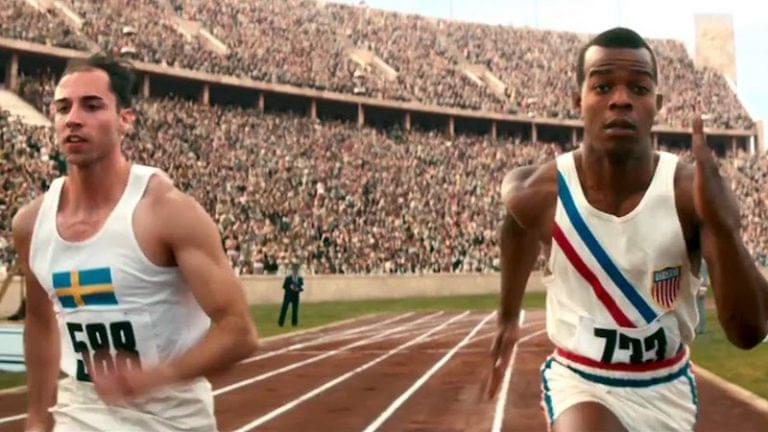
Eighty years later, Jesse Owens is still a household name for his dramatic, Hitler-defying wins at the 1936 Olympics. Yet apart from a 1984 TV miniseries, his story hasn’t really been told cinematically. “Race,” directed by Stephen Hopkins (“The Life and Death of Peter Sellers,” “Predator 2”) and starring Stephan James (who played civil rights activist John Lewis in “Selma”), fills that need well enough, giving a respectful account of Owens’ record-breaking success and his struggles against racism at home and abroad. If nothing else, it’s a great calling card for James, an appealing Canadian actor on the verge of stardom.

We begin with young, eager-to-please Jesse becoming the first member of his family to go to college (well, Ohio State), where he joins the track team. Under the direction of coach Larry Snyder (Jason Sudeikis), a washed-up runner who spends most nights in a whiskey bottle, Jesse immediately establishes himself as a force to be reckoned with, breaking three world records in a single meet and becoming a star. He and his black teammates still aren’t allowed to shower with the white athletes (we’ll blame that on insecurity), but the newspapers are talking about him, and Snyder has his eye on the upcoming Olympics in Berlin.

Speaking of which, the American Olympic Association isn’t sure the U.S. is going. In a series of New York meetings that look like country club events, the AOA members debate whether Germany’s anti-Jew and anti-Negro sentiments are cause for boycott. AOA president Avery Brundage (Jeremy Irons), a rich industrialist, believes politics shouldn’t play a part in the Olympics, and after personally warning Joseph Goebbels (Barnaby Metschurat) to take it down a notch and not to discriminate against the U.S. team’s Jewish and black athletes, the matter is settled. There remains, however, the question of whether individual players want to take part.

The film, written by Joe Shrapnel (!) and Anna Waterhouse, can barely scratch the surface of all the situation’s complexities. In addition to Jesse’s internal struggle over whether he’d send a better message by competing or boycotting, there’s the uncomfortable fact that the German racism and anti-semitism now inspiring indignation aren’t exactly unknown in America. (“When’s the last time any of you played 18 holes of golf with a Jew?” asks Brundage during an AOA meeting. “Or a Negro, for that matter?”) And in Germany, a talented filmmaker named Leni Riefenstahl (Carice van Houten) has been recruited by Goebbels to document what happens at the Olympics and to show the superiority of the Aryan race … even if those two things prove contradictory.

The various moral dilemmas at play here could fill a hundred movies. “Race” can focus on only a few, and even those must be simplified for easy digestion. If we’re ever unsure how we’re supposed to feel, there’s usually a line of dialogue to explain it, as when an announcer at the Games tells us, “This is the true spirit of sportsmanship we’re seeing between these two athletes today” (in case we didn’t realize that’s what we were looking at).

But the movie gains points in the relationship between Jesse and Coach Snyder. While it has a touch of the familiar “wise, paternal mentor guides protege” feel, it’s more like a friendship between a kid and an older brother: affectionate, respectful, and teasing. “SNL” alum Jason Sudeikis may not have great dramatic chops, but his comedy background gives him an easy rapport with James, who has charisma to spare. As inspiring sports dramas go, it’s pretty standard. But while Owens deserves better than that (and maybe something that examines his whole life, not just one year of it), this is a good start.

— Crooked Scoreboard

Friday movie roundup: Feb. 12, 2016

0

Look at the old graphic I found! I made it myself, if you couldn’t tell. Here are the reviews I’ve posted since the last time I addressed you:

– “Deadpool” (R) B
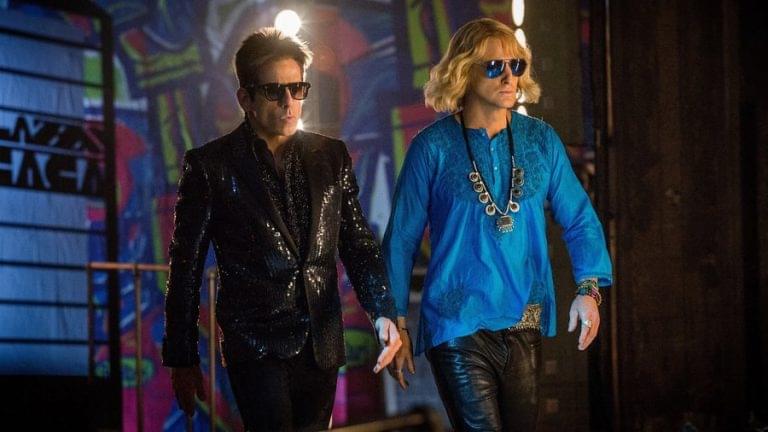
– “Zoolander 2” (PG-13) C-
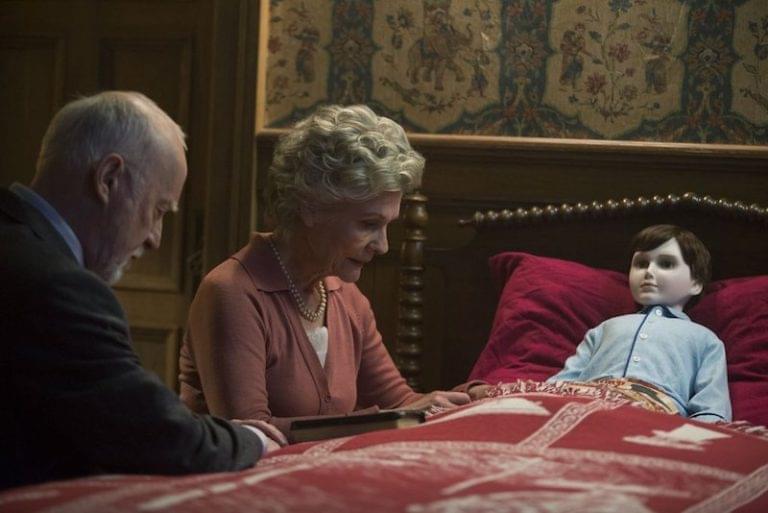
– “The Boy” (PG-13) C+
– “Pride and Prejudice and Zombies” (PG-13) B-

This week’s other new wide release, “How to Be Single,” is decent counter-programming. I’ll have a review up shortly; in the meantime, you can listen to me and Jeff Bayer talk about it on Movie B.S. with Bayer and Snider. (I gave it a B-.)

Over at Mental Floss, I wrote about “Roman Holiday,” a fine film that gave us Audrey Hepburn and Vespa scooters.

Reviews coming soon: “How to Be Single”; “Where to Invade Next”; “Touched with Fire”; “Race”

Thanks as always to the Patrons who keep this enterprise afloat. Your dollars mean almost as much to me as your love.

Touched with Fire

0
Touched with Fire

There is a book called “Touched with Fire” (subtitled “Manic-Depressive Illness and the Artistic Temperament”), but the movie “Touched with Fire” is not based on it. Rather, it’s writer-director Paul Dalio’s semi-autobiographical story about bipolar characters who are helped by the book, whose psychologist author, Kay Jamison, appears as herself to endorse its contents (oh boy).

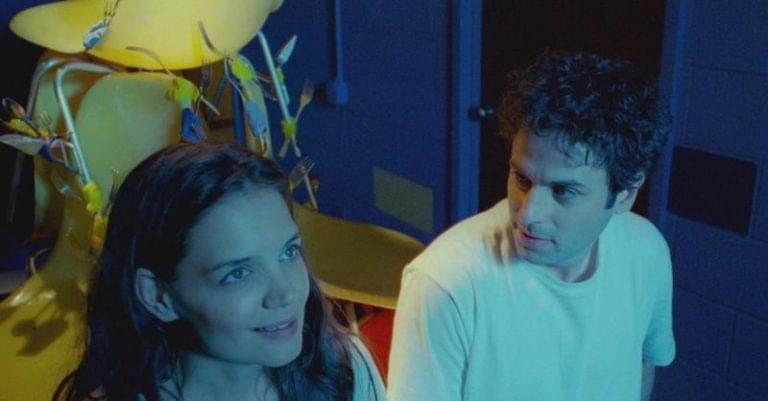
Dalio takes us through a year in the lives of these characters, divided by season, starting with “Fall.” (Get it? Because this is when they fall.) Carla (Katie Holmes) and Marco (Luke Kirby) are twentysomething poets who are introduced to us separately. Carla is reading from her book of poetry (called “faded,” lower-case, in case “Fall” wasn’t enough of a clue) at a bookstore; Marco is holed up in his apartment, smoking weed, going “off the grid,” generally talking crazy.

Carla and Marco meet each other soon after this, in a psych ward, surrounded by a cuckoo’s nest of colorful characters — the perfect setting for a “meet-cute”! They tend to bring out each other’s manic sides, though, and have to be separated. Once released, they pursue a relationship, watched warily by Carla’s parents (Christine Lahti, Bruce Altman) and Marco’s father (Griffin Dunne). The real problem, you see, is that Carla can commit to staying on the medication that evens her out, but Marco finds it limits his creativity and refuses to take it.

“Touched with Fire” (called “Mania Days” when it played at festivals) has a message, and the message is this: TAKE YOUR MEDS! Especially if there are people depending on you! That’s a reasonable message, and I agree with it. (The fact that Katie Holmes is starring in this is proof enough that she has left Scientology far, far behind her.) But it’s a narrowly applicable message, and Dalio doesn’t do anything to universalize it. This isn’t a movie about people overcoming obstacles or even people learning to cope with mental illness; it’s very specifically about people dealing with bipolar disorder and its medications. Moreover, the melodramatic plotting and histrionic performances are at student-film levels. It’s a mediocre but largely unpretentious drama, probably of interest only to those with personal experience with its themes.

How to Be Single

0
How to Be Single

“How to Be Single” is based on a novel by Liz Tuccillo, who co-wrote the nonfiction book “He’s Just Not That Into You,” which was made into a mediocre ensemble romantic comedy in 2009. “How to Be Single” was even adapted for the screen by the same writers, Abby Kohn and Marc Silverstein (plus a third, Dana Fox), thus reducing its chances of being better than “He’s Just Not That Into You.”

And yet it is better! Not a lot, but enough. The many tired rom-com cliches it exploits and its mishandling of some subplots are outweighed by the charm and humor of the cast. Directed by Christian Ditter, the film has little momentum, no scenes that build to a comedic climax. But it’s fitfully very funny, with individual moments that make it worthwhile.

Did that third writer make all the difference? Is it the addition of a potty-mouthed Rebel Wilson character and the freedom of an R rating? Is it the fact that (if online plot summaries are to be trusted) “How to Be Single” the movie bears little resemblance to the book? I don’t know, and I hardly care. I’ll take what I can get.

Perky paralegal Alice (Dakota Johnson) has been in a relationship with Josh (Nicholas Braun) since her first day of college, and is only now experiencing singlehood. Her co-worker, Robin (Rebel Wilson), a hard-partying girl who loves being free of attachments, is eager to show Alice how to live it up in the big city. They’re assisted and advised by Tom (Anders Holm), a bartender who’s an expert at non-committal hookups. Tom has also befriended Lucy (Alison Brie), a relationship-minded type-A personality who uses an algorithm to find her best matches across all the dating apps. (This algorithm is introduced as Lucy’s defining characteristic and then never mentioned again.)

Meanwhile, Alice’s sister, Meg (Leslie Mann), is an OB-GYN who delivers babies all day but doesn’t want a child of her own, until she finally spends a couple of minutes with one and changes her mind. Approximately five minutes after being artificially inseminated, Meg meets Ken (Jake Lacy), a nice younger guy from whom she hides her pregnancy, because it wouldn’t be a romantic comedy if someone’s relationship weren’t predicated on a lie.

Yes, it’s enough rom-com tropes to fill five movies, all at one low, low price! No points will be awarded for originality — though I do like that the conclusion (no spoilers) allows everyone to get what they want and be happy even if what they want is to NOT be in love. The editing is a mess, too, jumping from one story to another at random. We go from Alice meeting a single dad (Damon Wayans Jr.) to a moment THREE MONTHS LATER, their entire relationship skipped over (or perhaps left on the cutting-room floor), while other plot threads are allowed to unfold naturally.

The Robin character is a boon. Without a romance of her own (by choice), she can serve as commentator and heckler to everyone else. Her free-wheeling lifestyle also gives the movie a chance to break away from the demure standards of the genre, and even to obliquely make fun of it a few times. Johnson, Mann, and Brie play likable, supportable women whose personalities are very close to having three dimensions. For a romantic comedy, that’s almost a bullseye.

Deadpool

0
Deadpool

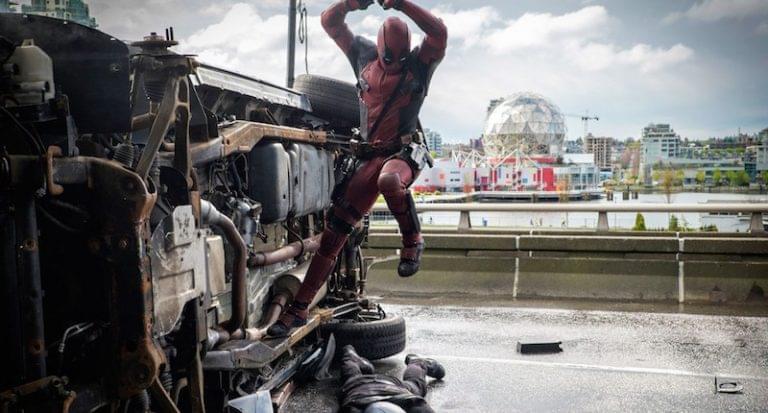
As I understand it from watching the movie, what separates Deadpool from other comic book superheroes is that he doesn’t want to be a hero; he knows he’s in a comic book; he’s willing — nay, eager — to kill bad guys; and he swears a lot.

The “Deadpool” movie conveys these differences, often to hilarious effect. Ryan Reynolds, who played a tamer version of the character for a couple of scenes in “X-Men Origins: Wolverine,” is the perfect choice for a sarcastic, potty-mouthed superhuman, and he revels in the freedom permitted him here. The script (by “Zombieland” writers Rhett Reese and Paul Wernick) is packed with gleeful taboo-busting, including snarky put-downs of other Marvel characters (the ones in the X-Men cinematic universe, anyway). First-time feature director Tim Miller plays along with an opening credit sequence that mocks opening credit sequences, giving descriptions (“God’s perfect idiot”; “a gratuitous cameo”) instead of people’s names.

Yet for all its aesthetic differences, this is ultimately just another superhero origin story — an example the formula, not a subversion of it. The body count isn’t any higher than in any comic book movie; the deaths are just more graphic. Deadpool breaks the fourth wall … but he also points out that he’s breaking the fourth wall, which kind of ruins it. He cracks wise about other superheroes … but only the ones that his film’s studio (20th Century Fox) has the movie rights to. For the most part, funny and zippy though it is, “Deadpool” is the safe, studio-sanctioned version of “edgy.”

We begin with Deadpool already in high gear, wearing a mask and costume while shooting, slicing, and decapitating villains before pausing the action so he can fill us in. He used to be Wade Wilson, a military assassin turned mercenary, a self-described bad guy who hurts worse guys. He also used to be quite the promiscuous slut, before settling down with strip-club waitress Vanessa (Morena Baccarin), whose sense of humor is as twisted as Wade’s. (They bond by one-upping each other’s stories of childhood abuse.)

Then Wade got cancer, tried an experimental treatment suggested by a clearly untrustworthy psychopathic mutant named Ajax (Ed Skrein), and ended up the way he is now: very strong, basically immortal, able to regenerate lost or damaged parts of his body, but ghastly in appearance (hence the mask). He’s looking for vengeance against Ajax, and he’s killing anybody who gets in his way. He’s cheerful in his work, though, always ready with a joke. You appreciate that in a revenge-minded murderer.

Meanwhile, the X-Men keep trying to recruit Deadpool, or at least make him tone down the bloodbaths. And by “X-Men,” I don’t mean Wolverine or Professor X or anybody like that, but a couple of third-tier mutants named Colossus (Stefan Kapicic) and Negasonic Teenage Warhead (Brianna Hildebrand). Getting Hugh Jackman or Patrick Stewart or whoever to play the top-shelf X-Men would have been prohibitively expensive, of course. But Deadpool makes a joke about this, so I guess it’s OK?

This is a rude, raucous action comedy, even more focused on laughs (as opposed to world-building) than “Ant-Man” was. There are bracingly funny side characters like Weasel (T.J. Miller), Deadpool’s bartender friend, and Blind Al (Leslie Uggams), an old woman who shares Deadpool’s apartment with him and apparently has a thing for cocaine. But many of the pop-culture references and jokes are perilously of-the-moment, dooming the film to a short shelf life. (Two years from now, when you re-watch it to refresh your memory before the sequel, you’ll think, “Yikes, this is dated.”) It’s a welcome new flavor in the superhero movie stew, but it’s still floating in the same pot as the rest of them.

Zoolander 2

0
Zoolander 2
These two idiots.

When a hit movie doesn’t get a sequel for more than 14 years, one is tempted to believe it’s because they were waiting until they came up with a good idea for one. After all, if they were content to deliver a mediocre cash-grab, they’d have struck while the iron was still hot, right?

Alas, the idea behind “Zoolander 2” seems to have been, “What if we made a sequel to ‘Zoolander’?” (“And?” “No, that’s it.”) Again directed by Ben Stiller, who shares screenwriting credit with Justin Theroux, Nicholas Stoller, and John Hamburg, this creaky, stumbling follow-up begins with the assassination of Justin Bieber but quickly goes downhill.

A montage of fake news coverage fills us in on what’s happened since the events of the first film. Once-legendary model Derek Zoolander (Stiller) has been in exile since the death of his wife (Christine Taylor) and the removal of his son (Cyrus Arnold) from his custody. His former best friend, Hansel (Owen Wilson), suffered a career-ending facial injury that sent him into hiding, too (not alone; he married all the participants of an orgy he once had).

Derek and Hansel are reunited when they’re summoned to Rome by a new fashionista, Alexanya Atoz (a virtually unrecognizable Kristen Wiig), who needs them for a show. Also involved, somehow, is Interpol’s Fashion Division, headed by buxom agent Valentina Valencia (Penelope Cruz), who’s investigating a series of pop-star murders that involve one of Derek’s patented facial expressions. Previous villain Mugatu (Will Ferrell), currently incarcerated in Fashion Prison, is a factor as well.

The film shows promise early on as Derek and Hansel discover how much the fashion world has changed since 2001, rendering them obsolete. SNL’s Kyle Mooney is funny
as a grungy, ironic designer who loves awful things; Benedict Cumberbatch plays a pretentious un-gendered model named All; and Fred Armisen appears as an 11-year-old child named Vip. (Putting Armisen’s head on a kid’s body must have been absurdly expensive in relation to how funny it is … which itself makes it funnier to me.) These characters in particular confuse and frighten our heroes, who are too dumb to understand irony or gender-fluidity.

But before long, the film settles into a rut. It becomes an aimless series of weak gags predicated on Derek using the wrong words for things (“Tyrannosaurus” for “thesaurus”; “laughing stick” for “laughingstock”), or on his and Hansel’s vanity and general thickheadedness. It’s the same ground covered by the first film, only now with less originality. And it’s all in the service of a plot that is somehow both overcomplicated and nonsensical, packed with a genuinely impressive number of mostly non-laugh-producing celebrity cameos. They should have cranked this out in 2003 and been done with it.

(Note: I gave the original “Zoolander” an A. I was more promiscuous with my A grades in those days. Subsequent viewings put it in the B range. I doubt “Zoolander 2” will get a subsequent viewing at all.)

Checkin’ in – Feb. 5

0

Happy February, readers! Here are the new reviews I have for you this week:

“Hail, Caesar!” – The latest from the Coen brothers is set in Hollywood in 1951, and it’s wacky with a side of inscrutability. Coens gonna coen.

“The Choice” – Based on a Nicholas Sparks novel, though it’s less insane than a lot of them.

“Fifty Shades of Black” – Ugh.

“Kung Fu Panda 3” – The returns are diminishing, but it’s all right.

“Pride and Prejudice and Zombies” screened at the same time as “Hail, Caesar!” (not just in Portland but in most markets) because studios like to play chicken with each other. (That’s especially true when one of the studios has a movie that it doesn’t really care if anyone sees.) I’ll catch up with it as soon as I can.

In the Dark, my weekly email newsletter with the latest reviews, Netflix recommendations, and other stuff, is up and running again. You can see an example of what it looks like and sign up for it here.

And if you want to hear me talk about movies with my voice (interrupted frequently by a cohost’s voice), listen to Movie B.S. with Bayer and Snider.

In other news, Sundance was great, thanks for asking. I wrote this piece about the films you’ll be hearing about in 2016. Here are the full reviews I wrote:

“The Birth of a Nation”

“Christine”

“The Fundamentals of Caring”

“Morris from America”

“Other People”

(Psst! An archive of all my Sundance reviews since forever is here.)


Hail, Caesar!

0
Hail, Caesar!

Joel and Ethan Coen are Jewish, but the only one of their films to focus on the subject of faith directly is “A Serious Man,” in which the conclusion they reach is “accept the mystery” — i.e., you’re never gonna figure it out; whatever will happen will happen, so quit worrying. That theme is also found in “No Country for Old Men” (“You can’t stop what’s comin'”) and “Inside Llewyn Davis,” where the title character faces the fact that his difficult, uncertain life might not ever get any easier.

So where, then, do the Coen brothers suggest we look for meaning in this random, capricious universe? “Hail, Caesar!” tells us where they find theirs: in the movies. Movies are the Coens’ religion, and they’re two of the best theologians currently working.

“Hail, Caesar!,” a half-speed screwball comedy set in Hollywood in 1951, is like the Bible of Coen brothers movies: a greatest-hits compilation of things they’ve done before that, taken as a whole, sort of suggests a unified theme, kind of. Our uncertain protagonist this time is Eddie Mannix (Josh Brolin), a mid-level executive at Capitol Pictures whose job is to wrangle the studio’s stars and manage their public images. It is a 24-hour-a-day job, and Mannix is exhausted. When we meet him, he’s in the process of being headhunted by Lockheed, an aviation company that wants to lure him away with more money, less stress, and greater job security than he has at Capitol.

That’ll have to wait, though, because today Mannix is up to his elbows in Tinseltown troubles. Hollywood legend Baird Whitlock (George Clooney), star of the Roman/Biblical epic “Hail, Caesar!” now shooting, has disappeared from the set, and competing twin gossip columnists Thora and Thessaly Thacker (both Tilda Swinton) are snooping. DeeAnna Moran (Scarlett Johansson), an Esther Williams-y bathing beauty, is newly pregnant and unmarried. Singing cowboy Hobie Doyle (Alden Ehrenreich), an authentic hick, has been reassigned to a period drama directed by the effete Laurence Lorenz (Ralph Fiennes), who says the kid can’t act.

Oh, but there’s plenty more, too. When Mannix, a devout, confession-every-day Catholic, assembles some religious leaders to discuss the depiction of Jesus in “Hail, Caesar!,” he finds their different explanations of God’s nature confusing, contradictory, and unhelpful. (“God doesn’t have any children,” says the Jewish representative. “He’s a bachelor. And he’s very angry.”) And Mannix doesn’t even know about the other impending crisis, wherein a secret cabal of Hollywood Communists are trying to get some star power on their side by any means necessary.

Sounds zany, right? It does have a few madcap moments, and more than a few very funny scenes. But it’s never as full-on screwball as it seems on paper, never as zippy and energized as you’d expect from the plot description. That’s because the ever-inscrutable Coens weren’t content to make a light, silly Old Hollywood comedy. They also wanted to revisit some of their deeper existential and spiritual themes, using Hollywood of the ’50s — one of the most shallow and artificial settings imaginable — as the backdrop. These weightier matters throw the film off-kilter, giving it a weird vibe that perplexed me almost as often as it entertained me.

The Coens seem to get a kick out of filtering 1950s Hollywood through their own arch, semi-ironic sensibilities and recreating it lavishly on the screen. And when it comes to recreating the production numbers that a studio like Capitol Pictures would have been filming in 1951, the Coens use no irony at all. There’s an aquatic ballet with Johansson and a musical number with a tap-dancing Channing Tatum, both shown in their entirety, neither one a parody. There’s no reason to show these whole sequences. (No narrative reason, I mean. Johansson is dressed like a mermaid and Tatum is dressed like a sailor. Obviously there are reasons.) Their inclusion, and the fact that they’re produced with such attention to detail, suggests genuine affection on the filmmakers’ part. It’s a rare indulgence (and a perfectly delightful one) from storytellers known for being unsentimental and efficient.

It’s tempting to call “Hail, Caesar!” frivolous, and I suspect the Coens will be perversely pleased when people do. But unlike, say, “Burn After Reading” or “The Ladykillers” (to name two Coen films that truly don’t have much on their minds), “Hail, Caesar!” hints at bigger ideas and deeper layers. Almost every film of theirs in the last 10 years has worked better for me on second viewing, possibly because the Coens are smarter than I am (please note that this is not true of all, or even most, filmmakers). This one will probably be the same. I look forward to finding out!

P.S. Despite the presence of bigger stars, the standout is Alden Ehrenreich as the aw-shucks Western actor. Whether trying in vain to communicate with Laurence Lorenz, helping Eddie Mannix find Baird Whitlock, or twirling a lasso to kill time while waiting for his studio-arranged date to a premiere, Ehrenreich effortlessly steals every scene he’s in. He’s a great surprise, especially insofar as he balances out a more disappointing one: you’re going to feel like you didn’t get enough Clooney, Tatum, Johansson, Fiennes, Frances McDormand (who plays a film editor), or Jonah Hill (a studio lawyer). I guess that’s the problem with being such great filmmakers that you attract a huge roster of top Hollywood talent eager to work with you: finding enough for them all to do.

Pride and Prejudice and Zombies

0
Pride and Prejudice and Zombies

As a movie, “Pride and Prejudice and Zombies” sounds like the kind of thing that’s going to be all downhill after the title, like “Abraham Lincoln: Vampire Hunter” was. (Not coincidentally, both films were based on books by the same person, Seth Grahame-Smith.) Can a parodic mashup of Jane Austen and George Romero sustain itself for the length of a feature? Or will this be like those stories in The Onion that should have been left as standalone headlines?

“P&P&Z” does sustain itself, more or less, with the tone of a rollicking adventure movie — more “Pirates of the Caribbean” than “The Walking Dead” or “Sense and Sensibility.” This reluctance to commit to either genre, either in earnest or as parody, is a letdown for those of us hoping for a clever deconstruction of one or both of them, but I suppose it’s better than if the film had tried to take on such a task and had failed. Low risk, low reward — but hey, low disappointment.

The basic story is mostly faithful to Austen’s version, with headstrong 19th-century girl Elizabeth Bennet (Lily James) being both offended by and attracted to Mr. Darcy (Sam Riley) — Colonel Darcy, actually, a military man who’s expert at finding and killing zombies. After Elizabeth sets the mood with a variation of Austen’s opening line (“It is a truth universally acknowledged that a zombie in possession of brain must be in want of more brains”), a different narrator explains the alternate-history scenario, where England is constantly at war with zombies in much the same way that nations have struggled against plague, influenza, or communism.

Like most girls of good breeding, Elizabeth and her sisters are trained in martial arts, leading to amusing situations like sparring with each other while discussing men, using dialogue that may well have been taken straight from Austen. This and other juxtapositions (like the young ladies wearing knives discreetly hidden under their corsets and bodices) serve to bridge the gap between period drama and zombie flick. The novelty soon wears off, but thankfully, the film doesn’t keep trying to go back to that well. Instead, the romance continues, and a twist is introduced: George Wickham (Jack Huston), an acquaintance of Mr. Darcy’s who may also vie for Elizabeth’s affections, has discovered a possible solution to the zombie problem.

The movie was adapted and directed by Burr Steers, whose darkly humorous indie debut “Igby Goes Down” was followed by the mundane, mainstream pictures “17 Again” and “Charlie St. Cloud.” “P&P&Z” falls somewhere between those points, slickly produced like a big-studio CGI extravaganza, but also a wee bit off-kilter. Only a bit, though. It isn’t subversive or satirical, but it is good fun with broad appeal.

The Choice

0
The Choice

Like most movies, “The Choice” is based on a Nicholas Sparks novel. That means it’s a romantic drama set near the ocean, everybody has a dog, and one of the principals is going to die. (Or almost die. Sometimes they only almost die.)

This time it’s a small, folksy North Carolina town where Travis (Benjamin Walker), a hunky, carefree veterinarian, meets Gabby (Teresa Palmer), a vaguely uptight med student with a nice doctor boyfriend (Tom Welling) whom we’ll feel sorry for later. Directed by Ross Katz (“Adult Beginners”), the film is full of half-developed threads — Travis’ religious hang-ups; his father’s (Tom Wilkinson) love life; his assumptions about Gabby’s family — that only appear for a scene or two before being dropped; they feel like vestiges of excised subplots. Travis and Gabby’s love story is as blandly formulaic as they come, and the plot twists are emotionally manipulative. But the performances are agreeable, the scenery is nice — and hey, sometimes you want to have your emotions manipulated. If that’s the case, “The Choice” is less of an insane soap opera than a lot of Sparks-based movies, so you could do worse.

Kung Fu Panda 3

0
Kung Fu Panda 3

As you may recall, or as you may have looked up on Wikipedia just now to refresh your memory, “Kung Fu Panda 2” ended with the revelation that Po (Jack Black) was not the only panda left, and that his real father was living in a secret village full of them. “Kung Fu Panda 3” takes it from there, adding another energetic chapter to the story while also reminding us of the law of diminishing returns.

Po’s father, Li (Bryan Cranston), proves to be as cuddly, upbeat, and hungry as Po is. Indeed, these qualities are intrinsic in the entire panda species, which was evidently modeled on Homer Simpson. Po’s adoptive goose father, Mr. Ping (James Hong), is skeptical of the newcomer — where’s he been all this time, huh? — but there are other concerns. An ancient villain named Kai (J.K. Simmons), who’s some kind of ox or something, has returned to the living world from the great beyond to steal the chi from Po and each of his cohorts so that he can, I don’t know, rule the world, or make a big chi casserole, or whatever.

Meanwhile, Shifu (Dustin Hoffman), the red panda who oversees the avengers known as the Furious Five, has turned the master’s reins over to Po. Nobody knows why, especially Po, who doesn’t feel that he’s good at teaching (he is correct). He was always the fluke in this group, not as ferociously skilled as Tigress (Angelina Jolie), Monkey (Jackie Chan), Viper (Lucy Liu), Mantis (Seth Rogen), or Crane (David Cross). (He’s not even technically IN the group, since they didn’t change their name to Furious Six.) But Po is the prophesied Dragon Warrior, so he must be special.

Written by series veterans Jonathan Aibel and Glenn Berger, and directed by returning Jennifer Yuh and animator Alessandro Carloni, the film is about discovering who you are and living up to your potential — you know, the usual. It’s fun to see Po interacting with other pandas, especially as the climax gives them an opportunity to use their special panda talents — eating, hugging, rolling around, etc. — to defeat Kai and his army of supernatural zombies. Kai is a good villain, with an amusing recurring joke about how he’s not as legendary as he thought he was. Jokes about how much Po likes to eat continue to be tiresome, as they have been since halfway through the first movie.

The battle sequences are excellent, as usual, with superior use of 3D and an obvious directive to make the action as clear and easy to follow as possible. But the rest feels ordinary and, despite the five-year gap since the last movie, underdeveloped. (They added Kate Hudson to the cast as a ribbon-twirling panda dancer, then gave the character nothing to do.) We’ve reached the point, somewhat prematurely, that comes in almost every movie franchise, where the sequels start to feel like episodes.

Fifty Shades of Black

0
Fifty Shades of Black

With “A Haunted House,” “A Haunted House 2,” and now “Fifty Shades of Black,” Marlon Wayans has proven that he doesn’t need any help from his brothers to make a truly awful spoof. This is probably a great source of pride for him at family gatherings. “Did you see how low the Rotten Tomatoes score was on that last one?” Marlon Wayans probably says to Damon, Shawn, and Keenen Ivory. “I did that without you.”

Working again with director Michael Tiddes and co-writer Rick Alvarez, Wayans stars in this filthy, witless parody of “Fifty Shades of Grey” — a movie no one took seriously in the first place, you’ll recall, which makes it tricky to mock. It’s even trickier when the thing you’re mocking happened a year ago. By now, unless your jokes are especially clever or insightful, most viewers will have already made them themselves. Oh, is the guy in “Fifty Shades of Grey” kind of a stalker? Yeah, we quit making jokes about that, like, 11 months ago.

Wayans’ character, Seattle billionaire Christian Black, is exactly like Christian Grey except that he’s black. There a few “black people do it like THIS” jokes, and Christian’s white adoptive mother (Jane Seymour) is openly racist (which is actually kind of funny), but it’s not otherwise a “black” movie. We’re not talking “Soul Plane” here — which, coincidentally, gets mentioned in “Fifty Shades of Black” as an example of a bad movie, even though it is much funnier than “Fifty Shades of Black.”

Hannah Steale (a game Kali Hawk) is the naive college student who falls under Christian’s spell, much to the dismay of her desperate platonic friend, Ron (Mike Epps). She has a white, slutty roommate (Jenny Zigrino) who acts black and hooks up with Christian’s brother, Eli (Affion Crockett), who has a comically oversized penis. There’s a lot of wang talk in the movie. There are also a lot of obvious jokes about men and sex — they finish too quickly, they immediately fall asleep, etc. — and numerous references to Christian’s anti-falling-in-love policy. Not “jokes,” mind you, just references.

Following the time-honored tradition of beloved TV matriarchs playing against type in spoof movies (remember Barbara Billingsley speaking jive in “Airplane!”?), Florence Henderson shows up here in a flashback to Christian’s youth, when he was Mrs. Robinson’d by his mother’s friend. Though it is unsettling and perhaps disappointing to see Mrs. Brady behave so obscenely, I laughed at the scene’s core concept, which compares the dominant/submissive relationship in “Fifty Shades” to the one in “Whiplash” (tempo!).

And that’s about it, laughs-wise. This isn’t the worst spoof I’ve seen, but it belongs in the same garbage pile as most of the rest of them. If you pay to see it, you’re encouraging Marlon Wayans to keep making them without incentivizing him to improve. You should really stop and think about that. How will he learn if we keep rewarding him for bad behavior?

Just checkin’ in on Jan. 22

0

Now that my movie reviews are being supported by patrons, I figured I should update this blog more often so you’ll know what’s happening, what’s about to happen, and what will never happen.

First of all, I’m at Sundance! I’ll be providing some coverage for Film School Rejects. I’ll be tweeting a lot, too, if you want to see quick nutshell reactions to things and complaints about the weather.

For Mental Floss, I compiled a list of past Sundance premieres that you can watch online and pretend you’re at the festival.

Back in the regular movie world, “Dirty Grandpa,” with Robert De Niro and Zac Efron, wasn’t screened for critics. In fact, critics in some markets were invited to a screening and then un-invited (always a good sign). “The Boy,” about the creepy doll, wasn’t screened. I will catch up with both eventually, but not for at least a week.

“The 5th Wave,” also in theaters today, was duly screened but not till I’d left town. For catching-up purposes, this will be third priority, after the other two.

Now, some new reviews that I do have:

There’s no Movie B.S. with Bayer and Snider this week because Bayer’s wife had a baby or something. Thank you and good day.

The Boy

0
The Boy

“The Boy” is an atmospheric thriller in the old style, short on sex and violence, long on making the most of its meat-and-potatoes horror premise. It’s too simple a movie to be a blockbuster, and not quite good enough to compensate for its lack of pizzazz (and star power), but people who like mild funhouse scares and creepy puppets will find it well worth the rental fee at Redbox (assuming that fee is still somewhere in the $1 range).

This is the story of a young American woman, Greta (Lauren Cohan), who becomes a nanny for an upper-crust English family, the Heelshires, at their fancy country estate. Despite being rather old, Mr. and Mrs. Heelshire (Jim Norton and Diana Hardcastle) are the parents of a young boy, named Brahms, who Greta is surprised to learn is a porcelain doll about the size of a 6-year-old. The Heelshires treat the doll like a living boy and give Greta detailed instructions for his care before heading out of town on a trip.

As far as cushy jobs go, babysitting a toy is a pretty good one, and Greta is more amused than unsettled by the whole thing. She has a local delivery man, Malcolm (Rupert Evans), checking in occasionally, being a possible love interest, and filling her in on the Heelshires’ backstory. We also learn, via multiple references to it, that Greta has come to England fleeing a bad situation with a former boyfriend, Cole (Ben Robson), whom the movie mentions far too often for him not to show up eventually. Still, not a bad way to spend a summer.

Except that Brahms the doll starts moving. Or so it seems, anyway. He keeps not being where Greta put him, and she’s the only person in the house, so…. Admirably, though the film takes place in a small geographic space and has a tiny cast of characters, the scenario (by first-time screenwriter Stacey Menear) actually lends itself to multiple explanations, none of which leap out as the obvious one. The director, William Brent Bell (“The Devil Inside,” “Stay Alive”), avoids tipping his hand too early, leaving most of the possible outcomes on the table.

Unfortunately, the actual resolution, while fun, can’t withstand even minor logical scrutiny. The film is thus relegated to the category of disposable thrillers that are OK while they last — some half-decent tension, a few mild surprises — but fall apart like cotton candy in the end.

Ride Along 2

0
Ride Along 2
This picture basically tells you the whole plot.

“Ride Along 2” is just like its predecessor, in that both seem destined for heavy rotation on TNT, to be half-watched for a few minutes at a time by channel-surfers and laundry-folders. Which is probably the best way to ingest a good-naturedly dumb action comedy like this one, as prolonged exposure may cause irritation.

In this installment, mean-faced Atlanta police detective James Payton (Ice Cube) is again paired with his sister’s pocket-sized screech owl of a fiancé, Ben Barber (Kevin Hart), now fresh out of the academy and eager to prove he’s a great cop. He isn’t, though; he’s actually dangerously inept, prone to shooting people in a panic. So when the opportunity arises for James to go to Miami in pursuit of an informant, he elects to take Ben with him, precisely so the latter can show his incompetence and be kicked off the force once and for all.

The plot is standard-issue buddy-cop stuff: a slick, respected businessman named Antonio Pope (Benjamin Bratt) is secretly a top smuggler of guns and drugs, with multiple city officials on his bribe list. (The movie tells us this up front so we don’t have to worry about solving any mysteries.) James and Ben are after A.J. (Ken Jeong), a chatterbox hacker with knowledge of Pope’s operation, and are assisted by no-nonsense Miami detective Maya (Olivia Munn). These two characters are a welcome addition to the mix, giving James and Ben new people to spar with and letting someone other than Kevin Hart be the pest for once. When the four of them are driving together — Ben and A.J. in the backseat being annoying, James and Maya glowering from up front — you get a brief glimpse of what an amusing ensemble they could be if someone wanted to make them into one.

Meanwhile, back in Atlanta, Ben’s betrothed (Tika Sumpter) makes preparations with the wedding planner, Cori (Sherri Shepherd), who for some reason is constantly battling with Ben. So deep and immediately demonstrated is this animus that I assumed it had begun in the first “Ride Along” and I just didn’t remember it. But no, Cori wasn’t in that movie, and her character contributes nothing to this one.

Returning director Tim Story and writers Phil Hay and Matt Manfredi score a few laughs amid the formulaic car chases and shootouts, and the rest of it passes amiably. I think I enjoyed this one more than the first one, though still not enough to recommend it or watch it again. I might pause for a minute if I flip past it, though.

13 Hours

0
13 Hours

Michael Bay hasn’t directed many movies that were good, but he’s directed even fewer that were political (chanting “USA! USA!” isn’t the same as being political). So we shouldn’t be surprised that “13 Hours,” Bay’s movie about the Benghazi attacks of 2012, is far more interested in the bullets, bombs, and bodies of the affair than it is in the hearings and investigations that followed it. The whole subject may be politically charged, but don’t forget: Michael Bay is first and foremost a dumb guy.

This is one of his better films, actually, a fairly mature and level-headed combat drama that follows a well-worn path with smooth confidence. Adapted by Chuck Hogan from Mitchell Zuckoff’s book, “13 Hours” isn’t burdened with the cheesy dialogue and moronic humor that have plagued so many Bayopics, and the director’s other usual excesses are reined in. Oh, there are blood-spraying head-shots, and bodies being run over by cars (Bay likes that), and a “Pearl Harbor”-ish moment where we follow the bomb’s point of view as it descends on a target (always a favorite). But in general, Bay seems serious about telling an intense, fact-based story along the lines of “Zero Dark Thirty,” albeit without that film’s level of tension and gravitas.

We arrive in Benghazi, Libya, with Jack Da Silva (John Krasinski), a Navy SEAL now working with other ex-military as security contractors for the CIA, which has a secret base in the city. A mile away is an American “temporary diplomatic outpost” — not an official embassy, crucially, or it would have tighter security — where the U.S. ambassador to Libya, Chris Stevens (Matt Letscher), is due to visit from Tripoli.

At this point, Benghazi is one of the most dangerous places in the world. The post-Gaddafi government is opposed by rebel forces (the bad guys), which are in turn opposed by a militia called the February 17th Martyrs Brigade (the good guys). The trouble, as Jack’s fellow SEAL Tyrone “Rone” Woods (James Badge Dale) explains, is that “not only is hot as balls, you can’t tell the good guys from the bad guys.” They’re all Libyan and heavily armed, and it’s not like they wear uniforms.

Jack, Rone, and the other members of the Global Response Staff (as they are called) may have difficulty knowing who can be trusted, but the movie makes sure we know who can’t: the wormy, cowardly CIA chief (Dave Costabile) in charge of the base. His first action in the movie is to deny Jack and Rone support during a scuffle with locals because he insists on keeping a low profile. Then there’s his declaration that “there is no real threat” in Benghazi (a line engineered to make us howl at his shortsightedness), plus an overall reluctance to get involved in anything. Also, in a movie full of buff guys, he’s doughy. Bro doesn’t even lift.

When the not-an-embassy is overrun by a mob, the G.R.S. guys are eager to lend a hand but are hindered by the Chief’s dithering and the thick, sticky bureaucracy of having a secret CIA base. (If they rush over to help, it will be hard to keep pretending the CIA base doesn’t exist.) Secrecy is eventually a moot point, and the question becomes whether the U.S. can send help that will a) arrive in time to be helpful and b) not start a war. The issue of how (or whether) to send backup during the attack has of course been the subject of much scrutiny in the three years since it happened, but Bay doesn’t blame an agenda, a conspiracy, or even incompetence for the four American deaths. His theory seems to be, “Hey, red tape and protocol, whaddaya gonna do?” (In case you were wondering, Hillary Clinton is never mentioned.)

The combat sequences deliver what they’re supposed to, hindered only a little by Bay’s patented Confuse-O-Vision® shaky-cam technology, and helped considerably by the camaraderie among the men (who call each other “brother” and seem to mean it). Besides Jack and Rone, there’s smart-aleck Tanto (Pablo Schreiber), philosophical Boon (David Denman), indestructible Oz (Max Martini), and Tig (Dominic Fumusa), whose personality trait I didn’t catch but who seems valuable to the team. Their downtime conversations ring true, and the montage of their Skype and FaceTime calls back home to their families is just the right level of sappy.

Like a lot of war movies, this one doesn’t have a purpose beyond thrilling us with bloody combat and brave heroism, no themes deeper than “we have to kill the bad guys when they attack us.” That may be why, for as engaging as it is, it’s never emotionally stirring in the way that the great war movies are, nor does it give the sense that this battle had any long-term significance. It’s a good, ordinary movie about a very bad day.

An assortment of Eric D. Snider updates

17

Happy 2016, Sniderinos! My deepest apologies for addressing you with a racial slur, but I needed to get your attention.

Just wanted to check in and let you know what’s hoppin’ over here at EDS headquarters. First, we had the usual bombardment of end-of-the-year stuff, as follows:

The Best and Worst Movies of 2015

My media inventory (everything I watched and read in 2015)

A handy list of every wide release of 2015

A handy list of everything I wrote in 2015

Miscellaneous data about the films of 2015

(The miscellaneous data is at Thrillist this year. I noticed it had been somewhere different each year since 2012 — Pajiba, then Film.com, then Movie Mezzanine — and decided I liked the nomadic tradition.)

The Patreon movie critic thing

You may also be aware that I’ve embarked on a new scheme for writing movie reviews, one where I am paid not by “legitimate publications” or “editors,” but by You, the People. Like the artists of the Renaissance, my movie reviews are now supported by patrons!

It’s going well so far. At the moment, 164 people are pledging a total of $436.05 a month, which works out to about $40 per review. Most patrons are giving the suggested $1 a month. A buck a month ain’t no thing. Others are pledging amounts that are more than $1 a month, and I’ve come up with a couple of rewards for those who do:

– At $10 a month, you’re entitled to politely demand that I review a particular movie that I haven’t gotten to yet — anything released in the previous 365 days. So if you want to make me watch and review “Pixels,” for example, this is your chance.

– At $15 a month, you get the $10 privilege, plus Eric’s Personalized Movie Recommendation service. This is basically my phone number. You can text me questions like: “I know you haven’t posted a review, but have you seen ‘Such and Such,’ and if so, how is it?” Or: “Is ‘Whatever Movie’ suitable for my children, ages whatever and whatever?” Or: “Here are the three movies we’re considering tonight. Which one should we choose?” This service is already used extensively by friends and family, and for $15 a month you can pretend to be one of them.

I’ve also set a “milestone goal.” Once monthly pledges reach $1,000, I’ll guarantee reviews of every single movie in wide release (plus the handful of indies I review, too). As it stands, I have to skip some in order to work on other things. At $1,000 a month, I can say, “Bug off, other things! The People need their reviews!”

To those who have already become patrons, I give my wettest, most heartfelt thanks. I hope you feel you’re getting your money’s worth. I’ve written 20 full-length reviews since announcing the Patreon 57 days ago. In the 100 days before that, I wrote about 10. It’s nice to be back in the saddle again, metaphorically speaking (I would not enjoy being in a real saddle).

Now I’d like your input. I’d like it so much that I’m turning on the comments. What are some rewards I could offer for different pledge levels? What are some other milestone goals I could set? In short, what are the fondest dreams you’ve always had for EricDSnider.com and movie reviews? We can make them come true (unless they’re dumb)! Let me know.

The Forest

0
The Forest
"I know it's gross, but otherwise bears will get him."

There is a forest in Japan that’s famous for being a common location for suicides. That’s probably not a good selling point for the Japanese national park system (it really sounds like more of a German thing), but it supplies a decent premise for “The Forest,” a mid-grade, bloodless PG-13 horror flick whose only distinction is that it’s not as aggressively bad as most of the films of this type that are dumped in theaters every January.

Now, the film is set in Japan, but don’t worry, it’s mostly about white people. Beginning with a mushy flurry of disjointed flashbacks (why?), we learn that a young blonde named Sara Price (Natalie Dormer) has received word that her twin sister, Jess, was seen entering the Aokigahara Forest, from which most people do not return. Unable to reach her by phone, Sara flies to Japan to search for her.

Local law enforcement isn’t much help. “After 48 hours, we have to assume the person has gone through with their suicide plan,” says one cop. Whaddaya gonna do, y’know? The people at the ranger station inform Sara that the forest is full of angry, mischievous spirits, and that it’s dangerous to leave the marked path because the ghosts will mess with your mind. This is especially true, the rangers say, if you are sad. Sadness is to forest ghosts what uncovered food is to bears.

At a forest-adjacent bar, Sara meets Aiden (Taylor Kinney), a hunky travel writer who’s doing a story about the place and offers to help her find her sister. Sara is convinced Jess is still alive because they are twins, and twins know when each other are dead. That’s just science. A Japanese guide, Michi (Yukiyoshi Ozawa), gives her more reason to hope: sometimes people take a tent into the forest, unsure whether they want to kill themselves or just go camping (same difference, if you ask me). Sure enough, they find a tent with some of Jess’ belongings. Perhaps she is alive and merely lost!

That’s all well and good, but despite the inherently creepy setting — not just woods at night, HAUNTED woods at night — first-time director Jason Zada can’t muster anything more than the standard ghostly visions and hallucinations. To compensate, the screenplay, credited to three individuals who evidently rewrote one another’s work, gives Sara a lot of freaky dreams, thus providing the jolts and jump-scares lacking in her waking life. (Beware of any horror film whose “scariest” parts are in someone’s imagination.) The script also has a few dead ends — most notably a thread about how Jess and Sara’s parents died, which turns out to be irrelevant — suggesting some themes and subplots got lost in the rewrites.

Still, with its eerie setting and its scarcity of sex, nudity, and strong violence, “The Forest” does meet the criteria for, say, a teen slumber party, or a similar gathering of easy-to-please, low-expectations viewers. Which is to say that while it isn’t very good, it isn’t painfully bad, either.

Everything I wrote in 2015

0

Everything I published, anyway. There’s a lot to read here! Better get started!

Movie reviews:
The 33
’71
99 Homes
Adult Beginners
Alvin and the Chipmunks: The Road Chip
Ant-Man
Avengers: Age of Ultron
Balls Out
The Big Short
Blackhat
Black Mass
By the Sea
Cooties
Cop Car
Creed
The D Train
Dope
Drunk Stoned Brilliant Dead: The Story of the National Lampoon
The Duff
The Duke of Burgundy
Entourage
Ex Machina
Experimenter
Far from the Madding Crowd
Fifty Shades of Grey
Focus
Furious Seven
The Gallows
Get Hard
The Good Dinosaur
Goodnight Mommy
Goosebumps
Heaven Knows What
Hotel Transylvania 2
Hot Pursuit
Hot Tub Time Machine 2
The Hunger Games: Mockingjay – Part 2
Infinitely Polar Bear
Inside Out
Insidious: Chapter 3
In the Heart of the Sea
It Follows
Jem and the Holograms
Joy
Jupiter Ascending
Jurassic World
Kingsman: The Secret Service
Knock Knock
Krampus
The Last Witch Hunter
The Lazarus Effect
Learning to Drive
Legend
Love the Coopers
Madame Bovary
Mad Max: Fury Road
Magic Mike XXL
Mission: Impossible — Rogue Nation
Night Owls
Once I Was a Beehive
Our Brand Is Crisis
The Overnight
Pawn Sacrifice
Point Break
Poltergeist
The Revenant
Run All Night
San Andreas
The Scorch Trials
Self/less
Seventh Son
Sinister 2
Sisters
SPECTRE
Spy
The Stanford Prison Experiment
Star Wars: The Force Awakens
Steve Jobs
Strangerland
Taken 3
Ted 2
Tomorrowland
Trainwreck
True Story
Trumbo
Unexpected
Unfinished Business
Unfriended
Vacation
Victor Frankenstein
The Visit
The Voices
We Are Still Here
The Wedding Ringer
What We Do in the Shadows
Wild Horses
Z for Zachariah

Comedy laff-laff chuckle pieces:
— The Pitch Meeting for ‘Unfinished Business’ [Complex]
— The Film Festival Blurb Generator [Movie Mezzanine]
— Love and Sects [Snide Remarks]
— Bake Me to Church [Snide Remarks]
— Eric D. Snider: Boy Journalist [Snide Remarks]
— Eric D. Snider: Boy Journalist (Part 2) [Snide Remarks]

General movie stuff:
— 11 Forgotten Sundance Gems You Can Watch Right Now [The Week]
— Kevin Hart’s Film Performances, Ranked [Complex]
— 14 Directors Who Did Complete 180s Between Movies [Complex]
— ‘Spy’ Is Surprisingly Progressive [The Week]
— ‘Dangerous Men’ and John S. Rad [Vanity Fair]
— ‘The Hunger Games’ by the Numbers [Vanity Fair]
— 2015 Movies: The Miscellaneous Data [Thrillist]

Celebrating anniversaries:
— ‘Stuart Saves His Family’ at 20 [Vanity Fair]
— ‘Lambada’ vs. ‘The Forbidden Dance’: The bizarre Hollywood rivalry that spawned two legendary flops [The Week]
— 40 Things That Wouldn’t Have Happened Without ‘Jaws’ [Vanity Fair]
— You’re Old: ‘Pee-wee’s Big Adventure’ Came Out 30 Years Ago [Movies.com]
— You’re Old: ‘The Usual Suspects’ Came Out 20 Years Ago [Movies.com]
— You’re Old: ‘Bring It On’ Came Out 15 Years Ago [Movies.com]
— Remember When ‘The Running Man’ Foreshadowed ‘The Hunger Games’? [Movies.com]
— Remember When the Supergirl Movie Made Us Think We’d Never See a Supergirl TV Show? [Movies.com]
— Remember When ‘The Crying Game’ Did the Impossible by Keeping Its Secret a Secret? [Movies.com]
— Remember When ‘Edward Scissorhands’ Introduced Us to Johnny Depp’s Weirdness? [Movies.com]
— Remember When ‘The Color Purple’ Gave Us Our First Glimpse of ‘Adult’ Spielberg? [Movies.com]

Mental Floss lists of facts:
12 Angry Men
Aliens
All About Eve
Amelie
Bicycle Thieves
Butch Cassidy and the Sundance Kid
Casino
Chinatown
Con Air
Days of Thunder
Dog Day Afternoon
Eternal Sunshine of the Spotless Mind
Face/Off
The Fifth Element
Good Will Hunting
The Graduate
High Noon
The Hunt for Red October
The Hustler
Lock, Stock and Two Smoking Barrels
Network
Oldboy
Once Upon a Time in America
Platoon
Raging Bull
Requiem for a Dream
Reservoir Dogs
Singin’ in the Rain
The Sting
Sunset Boulevard
Taxi Driver
To Kill a Mockingbird
Unforgiven
The Usual Suspects
Weird Science

Subjects other than movies:
— How Portland’s Neighborhoods Got Their Names [Mental Floss]
— 15 Ways ‘Parks and Recreation’ Is Just Like ‘The Simpsons’ [Complex]
— ‘Parks and Recreation’ by the Numbers [Vanity Fair]
— 15 Facts of Life About ‘The Facts of Life’ [Mental Floss]

Wide releases of 2015: a handy list

0

Here are all the movies that came out in the U.S. in 2015 and played on at least 600 screens. Movies that opened smaller than that and eventually expanded to 600+ screens are included. There were 153 (up from 144 in 2014). I saw 107 of them. How many did you see?? Send me the number in a telegram.

Here are all the movies that came out in the U.S. in 2015 and played on at least 600 screens. Movies that opened smaller than that and eventually expanded to 600+ screens are included. There were 155 (up from 144 in 2014). I saw 109 of them. How many did you see?? Send me the number in a telegram.

1/2 The Woman in Black 2: Angel of Death
1/9 Taken 3
1/16 Paddington
1/16 The Wedding Ringer
1/16 Blackhat
1/23 Strange Magic
1/23 Mortdecai
1/23 The Boy Next Door
1/30 Project Almanac
1/30 The Loft
1/30 Black or White

2/6 The SpongeBob Movie: Sponge Out of Water
2/6 Jupiter Ascending
2/6 Seventh Son
2/13 Fifty Shades of Grey
2/13 Kingsman: The Secret Service
2/20 Hot Tub Time Machine 2
2/20 McFarland, USA
2/20 The DUFF
2/27 Focus
2/27 The Lazarus Effect

3/6 Chappie
3/6 Unfinished Business
3/6 The Second Best Exotic Marigold Hotel
3/13 Cinderella
3/13 Run All Night
3/13 It Follows
3/20 Insurgent
3/20 The Gunman
3/20 Do You Believe?
3/20 Danny Collins
3/27 Home
3/27 Get Hard
3/27 While We’re Young

4/3 Furious Seven
4/3 Woman in Gold
4/10 The Longest Ride
4/10 Ex Machina
4/17 Paul Blart: Mall Cop 2
4/17 Unfriended
4/17 Monkey Kingdom
4/17 True Story
4/24 The Age of Adaline
4/24 Little Boy

5/1 Avengers: Age of Ultron
5/1 Far From the Madding Crowd
5/8 Hot Pursuit
5/8 The D Train
5/15 Mad Max: Fury Road
5/15 Pitch Perfect 2
5/22 Tomorrowland
5/22 Poltergeist
5/29 San Andreas
5/29 Aloha

6/3 Entourage
6/5 Spy
6/5 Insidious Chapter 3
6/5 Love & Mercy
6/12 Jurassic World
6/12 Me and Earl and the Dying Girl
6/19 Inside Out
6/19 Dope
6/26 Ted 2
6/26 Max

7/1 Terminator Genisys
7/1 Magic Mike XXL
7/10 Minions
7/10 Self/less
7/10 The Gallows
7/17 Trainwreck
7/17 Ant-Man
7/17 Mr. Holmes
7/17 Irrational Man
7/24 Southpaw
7/24 Pixels
7/24 Paper Towns
7/29 Mission: Impossible – Rogue Nation
7/29 Vacation

8/7 The Diary of a Teenage Girl
8/7 The Gift
8/7 Fantastic Four
8/7 Shaun the Sheep Movie
8/7 Ricki and the Flash
8/14 The Man from U.N.C.L.E.
8/14 Straight Outta Compton
8/21 Hitman: Agent 47
8/21 American Ultra
8/21 Sinister 2
8/21 Grandma
8/26 No Escape
8/28 We Are Your Friends
8/28 War Room

9/4 The Transporter Refueled
9/4 A Walk in the Woods
9/4 Un Gallo con Muchos Huevos
9/11 The Visit
9/11 Perfect Guy
9/11 90 Minutes in Heaven
9/16 Pawn Sacrifice
9/18 Maze Runner: The Scorch Trials
9/18 Black Mass
9/18 Captive
9/18 Everest
9/18 Sicario
9/25 Hotel Transylvania 2
9/25 The Intern
9/25 Green Inferno
9/25 99 Homes

10/2 The Martian
10/2 The Walk
10/9 Pan
10/9 Steve Jobs
10/16 Crimson Peak
10/16 Bridge of Spies
10/16 Goosebumps
10/16 Woodlawn
10/16 Truth
*10/16 Room
10/23 The Last Witch Hunter
10/23 Jem and the Holograms
10/23 Rock the Kasbah
10/23 Paranormal Activity: The Ghost Dimension
10/30 Burnt
10/30 Our Brand Is Crisis
10/30 Scouts Guide to the Zombie Apocalypse

11/4 Brooklyn
11/6 SPECTRE
11/6 The Peanuts Movie
11/6 Spotlight
11/6 Trumbo
11/13 Love the Coopers
11/13 The 33
11/13 My All-American
11/20 The Hunger Games: Mockingjay – Part 2
11/20 The Night Before
11/20 Secret in Their Eyes
11/20 Legend
*11/20 Carol
11/25 The Good Dinosaur
11/25 Creed
11/25 Victor Frankenstein
*11/27 The Danish Girl

12/4 Krampus
12/4 The Letters
12/11 In the Heart of the Sea
12/11 The Big Short
12/18 Star Wars: The Force Awakens
12/18 Sisters
12/18 Alvin and the Chipmunks: The Road Chip
12/25 Daddy’s Home
12/25 Point Break
12/25 Joy
12/25 Concussion
*12/25 The Revenant
12/25 The Hateful Eight

*In limited release at the moment but will go wide in January

Media Inventory: What I Watched and Read in 2015

0
Media Inventory: What I Watched and Read in 2015

This is for my own records. Nobody else read it!

MOVIES

I watched 349 movies in 2015. That’s less than one a day, which is low for me. On the other hand, it’s still 349 movies, which is a lot. It’s almost 350. Here’s how they broke down:

– 173 theatrical releases (including 10 re-watches)

– 45 festival entries that will open in 2016 (or possibly never).

– 66 movies from previous years that I re-watched.

– 65 movies from previous years that were brand spankin’ new to me.

My goal in 2016 is to watch more movies, and to continue in this fashion until I have seen all the movies.

2015 theatrical releases that I saw:

(Links are to my reviews. If I didn’t write a review but did talk about it on Movie B.S. with Bayer and Snider, there’s a link to the episode.)

The 33
45 Years [B.S.]
’71
99 Homes
Adult Beginners
The Age of Adaline [B.S.]
Alvin and the Chipmunks: The Road Chip
American Ultra [B.S.]
Anomalisa
Ant-Man
The Assassin
Avengers: Age of Ultron
Balls Out
The Big Short
Blackhat
Black Mass
Black Sea [B.S.]
Bone Tomahawk [B.S.]
Bridge of Spies
Brooklyn [B.S.]
Burnt [B.S.]
By the Sea
Carol
Chi-Raq
Cinderella [B.S.]
Cooties
Cop Car
Creed
Crimson Peak [B.S.]
Daddy’s Home
The Danish Girl
The D Train
The Diary of a Teenage Girl
Digging for Fire [B.S.]
Dope
Drunk Stoned Brilliant Dead: The Story of the National Lampoon
The Duff
The Duke of Burgundy
Entertainment
Entourage
Everest [B.S.]
Ex Machina
Experimenter
Fantastic Four [B.S.]
Far from the Madding Crowd
Fifty Shades of Grey
Focus
Freetown [B.S.]
Furious Seven
The Gallows
Get Hard
The Gift [B.S.]
Going Clear
The Good Dinosaur
Goodnight Mommy
Goosebumps
The Hateful Eight
Heaven Knows What
Hotel Transylvania 2
Hot Pursuit
Hot Tub Time Machine 2
The Hunger Games: Mockingjay – Part 2
Infinitely Polar Bear
Inside Out
Insidious: Chapter 3
In the Heart of the Sea
It Follows
James White
Jem and the Holograms
Joy
Jupiter Ascending
Jurassic World
The Keeping Room [B.S.]
Kingsman: The Secret Service
Knock Knock
Krampus
The Last Five Years [B.S.]
The Last Witch Hunter
The Lazarus Effect
Learning to Drive
Legend
Live from New York!
The Longest Ride [B.S.]
Love the Coopers
Macbeth
Madame Bovary
Mad Max: Fury Road
Magic Mike XXL
The Martian [B.S.]
Me and Earl and the Dying Girl [B.S.]
Minions
Mission: Impossible — Rogue Nation
Mississippi Grind
Mistress America [B.S.]
Mr. Holmes [B.S.]
My All-American [B.S.]
Ned Rifle
Night Owls
Once I Was a Beehive
Our Brand Is Crisis
The Overnight
Paper Towns [B.S.]
Paul Blart: Mall Cop 2
Pawn Sacrifice
The Peanuts Movie
Phoenix [B.S.]
Pitch Perfect 2
Pod
Point Break
Poltergeist
Results [B.S.]
The Revenant
Rock the Kasbah [B.S.]
Room [B.S.]
Run All Night
San Andreas
The Scorch Trials
Self/less
Seventh Son
Sicario [B.S.]
Sinister 2
Sisters
Sleeping with Other People [B.S.]
Son of Saul
Southpaw [B.S.]
SPECTRE
Spotlight
Spy
The Stanford Prison Experiment
Star Wars: The Force Awakens
Steve Jobs
Stonewall [B.S.]
Straight Outta Compton
Strangerland
Suffragette [B.S.]
Tangerine [B.S.]
Taken 3
Ted 2
Terminator Genisys [B.S.]
Testament of Youth [B.S.]
Tomorrowland
Trainwreck
The Tribe
True Story
Trumbo
Truth [B.S.]
Turbo Kid
Unexpected
Unfinished Business
Unfriended
Vacation
Victor Frankenstein
The Visit
The Voices
The Walk [B.S.]
A Walk in the Woods [B.S.]
We Are Still Here
We Are Your Friends [B.S.]
The Wedding Ringer
What We Do in the Shadows
Wild Horses
Youth
Z for Zachariah

Film festival entries that haven’t been released theatrically yet:

Sundance: [B.S.]
The Bronze
I Am Michael
Stockholm, Pennsylvania
What Happened, Miss Simone?

Oxford (Miss.) Film Festival:
Billy Mize and the Bakersfield Sound
Bluebird
Dwarves Kingdom
Just About Famous
Oil & Water
Stomping Ground
Yazoo Revisited

South By Southwest: [B.S.]
Babysitter
The Corpse of Anna Fritz
The Frontier
The Grief of Others
Hello, My Name Is Doris
The Invitation

Fantastic Fest: [B.S.]
April and the Extraordinary World
The Brand New Testament
Coz Ov Moni 2: Fokn Revenge
Demon
Der Bunker
The Devil’s Candy
Evolution
February
German Angst
Green Room
Glorious Works of G.W. Zwaen
Hard to Get
High-Rise
Klown Forever
La Granja
Love & Peace
Lovemilla
Men and Chicken
The Mind’s Eye
Office
Rabid Dogs
Schneider vs. Bax
The Similars
Tale of Tales
Tikkun
Too Late
The Witch
Yakuza Apocalypse

Pre-2015 films that I’d seen before, and reviewed, that I re-watched:

Amelie (2001)
Anchorman: The Legend of Ron Burgundy (2004)
Burn After Reading (2008)
Crash (2005)
The Departed (2005)
Eternal Sunshine of the Spotless Mind (2004)
Fight Club (1999)
Foxcatcher (2014)
Godzilla (1998)
Goon (2012)
High Fidelity (2000)
Hot Tub Time Machine (2010)
The Hunger Games (2012)
The Hunger Games: Catching Fire (2013)
The Hunger Games: Mockingjay – Part 1 (2014)
L.I.E. (2001)
Magnolia (1999)
Mission: Impossible 2 (2000)
The Producers (2005)
Requiem for a Dream (2000)
The Royal Tenenbaums (2001)
Sinister (2012)
Step Brothers (2008)
Synecdoche, New York (2008)
They Came Together (2014)
The Virgin Suicides (2000)
Walk Hard: The Dewey Cox Story (2007)
Wet Hot American Summer
Whiplash (2014)
Zoolander (2001)

Pre-2015 films that I’d seen before but did not review that I re-watched:

Butch Cassidy and the Sundance Kid (1969)
Chinatown (1974)
The Crying Game (1992)
Dog Day Afternoon (1975)
Face/Off (1997)
Fantasia (1940)
From Dusk Till Dawn (1996)
Gremlins 2: The New Batch (1990)
Idiocracy (2005)
Infernal Affairs (2002)
Inherent Vice (2014)
Jetsons: The Movie (1990)
Misery (1990)
Mission: Impossible (1996)
Moonstruck (1987)
Network (1976)
A Night at the Roxbury (1998)
The Night of the Hunter (1955)
Nightcrawler (2014)
Pee-wee’s Big Adventure (1985)
Planet of the Apes (1968)
Platoon (1986)
Raising Arizona (1987)
Reservoir Dogs (1992)
Soapdish (1991)
The Sting (1973)
Sunset Boulevard (1950)
Supergirl (1984)
Strangers on a Train (1951)
To Kill a Mockingbird (1962)
Tommy Boy (1995)
Total Recall (1990)
Twin Peaks: Fire Walk with Me (1992)
The Umbrellas of Cherbourg (1964)
The Usual Suspects (1995)
Weird Science (1985)

Pre-2015 films that I saw for the first time:

Alice (Neco z Alenky) (1988)
All of Me (1984)
American Sniper (2014)
Le Bonheur (1965)
Black Sunday (aka The Mask of Satan) (1960)
Bound (1996)
The Brood (1979)
Cannibal Holocaust (1980)
Carry On, Sergeant (1958)
Chitty Chitty Bang Bang (1968)
Cleopatra (1963)
The Color Purple (1985)
Con Air (1997)
Conan the Barbarian (1982)
Cracking Up (1977)
Dangerous Men (2005)
Days of Thunder (1990)
The Doll (1919)
Don’t Look Now (1973)
Edward Scissorhands (1990)
Elevator to the Gallows (1958)
Endless Love (2014)
Eyes Without a Face (1960)
Farewell Uncle Tom (1971)
The Fifth Element (1997)
The Fly (1986)
Gamera vs. Barugon (1966)
The General (1926)
The Great Mouse Detective (1986)
A Hard Day’s Night (1964)
How to Marry a Millionaire (1953)
The Hunt for Red October (1990)
The Hustler (1961)
Invasion of the Body Snatchers (1978)
Jack Ryan: Shadow Recruit (2014)
Kevin Hart: Laugh at My Pain (2011)
Kevin Hart: Let Me Explain (2013)
Lambada (1990)
The Last Unicorn (1982)
Lock, Stock and Two Smoking Barrels (1998)
Love Story (1970)
The Maze Runner (2014)
My Dinner with Andre (1981)
Mystery of the 13th Guest (1943)
Night of the Creeps (1986)
Nine to Five (1980)
Nothing Sacred (1937)
Once Upon a Time in America (1984)
Paper Soldiers (2002)
Perfect Understanding (1933)
The Professional (aka Leon) (1994)
Re-Animator (1985)
The Running Man (1987)
Roar (1981)
Scanners (1981)
Selma (2014)
Shadows and Fog (1992)
Something Like a Business (2010)
Still Alice (2014)
Stuart Saves His Family (1995)
Terms of Endearment (1983)
There’s No Business Like Show Business (1954)
Three Days of the Condor (1975)
The Toxic Avenger (1984)
WarGames (1983)
White Zombie (1932)

TV

Here’s what I watched regularly this year. Current season, unless otherwise indicated.

Another Period
Archer (season 5)
Better Call Saul
Black Mirror (entire series)
Bob’s Burgers
BoJack Horseman
Broad City
Brooklyn Nine-Nine
Fargo
Hannibal
It’s Always Sunny in Philadelphia (season 9)
The Jinx (entire series)
Last Man on Earth
Mad Men
Mr. Robot
Other Space
Parks and Recreation (entire series)
Rick and Morty (season 1)
Saturday Night Live
Silicon Valley
The Simpsons
South Park
The Thick of It (entire series)
True Detective
Twin Peaks (entire series)
Unbreakable Kimmi Schmidt
Veep
Wet Hot American Summer
With Bob and David

BOOKS

Life is too short for mediocre books, so I bail if I’m 25% through and not enjoying it. Everything on this list is therefore good enough to finish, and the ones I’d particularly recommend have stars.

**The Boy Who Drew Monsters – Keith Donohue
Dear Daughter – Elizabeth Little
**Let Me Off at the Top! – Ron Burgundy (Will Ferrell & Adam McKay)
The Martian – Andy Weir
**Mermaids in Paradise – Lydia Millet
**A Practical Guide to Racism – C.H. Dalton (Sam Means)
**Real Moms: Making It Up As We Go – Lisa Valentine Clark
The Scarlet Letter – Nathaniel Hawthorne
The Woman Upstairs – Claire Messud
**Yes Please – Amy Poehler
Zone of Interest – Martin Amis

The Best and Worst Movies of 2015

0
The Best and Worst Movies of 2015

Another year has sped past us at the alarming rate of one day per day, 365 of them in a row, without cessation. Then, without warning, it stopped being one year and started being a different year. What do we do now? We look back on the movies we saw in the old year, that’s what.

THE BEST MOVIES OF 2015

1. “Mad Max: Fury Road”topten
It was a good year for the reinvigoration of ancient franchises, with strong showings in the “Star Wars” and “Rocky” categories. But no sequel, reboot, or reimagining was as energetic,entertaining, or flat-out bonkers as “Mad Max: Fury Road,” an action masterpiece with surprising layers to it. George Miller, who busied himself with children’s stories like “Babe” and “Happy Feet” in recent years, returned with fresh eyes to the post-apocalyptic mayhem that made him famous, and he brought a singular new heroine with him: Charlize Theron’s one-armed Imperator Furiosa. Long may she reign!

topten

2. “Brooklyn”
This has emerged as my all-purpose recommendation, a film so charming and sweet that I can’t imagine anyone not enjoying it. (Well, that’s not totally true. A colleague known for his contrarian ways and general orneriness emerged from the screening muttering, “That was excruciating.” But nobody ever agrees with him.) With an endearing lead performance by Saoirse Ronan, “Brooklyn” is proof that a simple story with little drama and no flashiness can be every bit as engaging as an action spectacle.

topten

3. “Spotlight”
Even allowing for a journalist’s tendency to like journalism movies, this procedural about the Boston Globe’s uncovering of the Catholic Church’s pedophile priest scandal is a cracking good drama. The ensemble cast works as a team — no weak links or showboaters — and each character has a job to do. Will they get the story right? Will they get it out in time? We already know the answers to those questions, but the film keeps us spellbound anyway.

topten

4. “It Follows”
My favorite horror movie of the year has a fresh, original concept (a sort of supernatural STD), a killer soundtrack, and an unnerving sense of atmosphere. Scary movies don’t get much smarter or dread-inducing than this. Plus, I’m one of five critics to be featured on the DVD commentary, which means I’m practically obligated to put it on my top 10 list.

topten

5. “What We Do in the Shadows”
This mockumentary about vampires sharing an apartment, “Real World”-style, premiered at Sundance in January 2014 — almost two years ago — and I’ve been waiting to put it on a top 10 list ever since. Inventive, clever, packed with jokes but never “jokey,” it’s easily the best comedy of 2015, and probably would have been the best comedy of 2014 if it had made it to theaters then. It gives new life to both vampire movies and fake documentaries.

topten

6. “Carol”
Todd Haynes’ “Far from Heaven” was No. 2 on my 2002 list (behind “The Hours”), and it’s nice to see him return with another melodrama set in the 1950s, once again dealing with secret homosexuality (which I guess was the only kind back then). Rooney Mara and Cate Blanchett give full-bodied performances, letting us see the world through the eyes of two very different women.

topten

7. “Creed”
If you’d told me at the beginning of the year that a franchise’s seventh chapter was going to make my top 10 list, I’d have assumed it would be “Star Wars: The Force Awakens,” not this continuation of the Rocky Balboa saga focused on the son of his old rival-turned-friend. But here we are, with Michael B. Jordan and Sylvester Stallone both doing great work in the best “Rocky” movie since the original. Consider the torch successfully passed.

topten

8. “The Martian”
After a string of so-so efforts, Ridley Scott returned to our good graces with this upbeat, fleet-footed adaptation of the bestselling novel about an American astronaut stranded on Mars. Scott recruited Matt Damon to play the unlucky fellow, ensuring that the movie would be optimistic and funny, never wallowing in the poor guy’s desperate situation but instead focusing on how to fix it. Resourcefulness, positivity, logical problem-solving — these are attributes we admire, on Earth and on Mars, in movies and in real life.

topten

9. “Anomalisa”
Charlie Kaufman, the brilliantly weird writer behind “Being John Malkovich” and “Eternal Sunshine of the Spotless Mind,” returns to bend our brains with this melancholic story — told through life-like puppets and stop-motion animation — of a depressed businessman who meets his potential soulmate in a Cincinnati hotel. The painstaking nature of this type of filmmaking is noteworthy, but Kaufman’s soulful script would be just as effective as a radio play, capturing the emotions of a damaged, relatable middle-aged man.

topten

10. “Chi-Raq”
Spike Lee has struggled for years to match the explosive anger and artistic excellence he showed in “Do the Right Thing,” often getting one or the other but not both. “Chi-Raq” hits the mark, a scathing satire (told mostly in rhyme!) that applies the “women try to end war by withholding sex” plot of “Lysistrata” to modern-day Chicago’s gang violence. It’s poetic, incendiary, occasionally overblown, and quite unforgettable.

Some More Movies That Are Really Good and You Should Watch Them

“45 Years”
“’71”
“99 Homes”
“The Big Short”
“Bridge of Spies”
“Cop Car”
“Drunk Stoned Brilliant Dead: The Story of the National Lampoon”
“The Duke of Burgundy”
“Experimenter”
“Goodnight Mommy”
“The Hateful Eight”
“Inside Out”
“Me and Earl and the Dying Girl”
“Mission: Impossible — Rogue Nation”
“Once I Was a Beehive”
“Phoenix”
“Room”
“Son of Saul”
“Spy”
“Star Wars: The Force Awakens”
“Steve Jobs”
“Tangerine”
“The Voices”

Some Movies I Didn’t See That Are on Other Top 10 Lists, So Maybe They’d Be on Mine If I Had Seen Them, Who Knows?

“About Elly”
“Amy”
“Call Me Lucky”
“Clouds of Sils Maria”
“End of the Tour”
“Girlhood”
“The Look of Silence”
“Love & Mercy”
“Mustang”
“Timbuktu”

__________________

THE WORST MOVIES OF 2015

As I have the last few years, I skipped many of 2015’s likely contenders, so this list is not exhaustive. But here’s what I saw and hated, listed approximately in order of how much I hated them, starting with the most hated.

“Fifty Shades of Grey”
“Paul Blart: Mall Cop 2”
“The Gallows”
“Hot Pursuit”
“Seventh Son”
“Entourage”
“Knock Knock”
“The Last Witch Hunter”
“Stonewall”

__________________

MISCELLANEOUS DATA

It’s late December. You know where to go if you want one of those “best movies of 2015” lists. (Anywhere. You can find them anywhere.) But what about the cold, fact facts — the data, the statistics, and the trends? Here is the random but essential trivia for the movies of 2015.

Total wide releases:

152

Sequels, prequels, and spin-offs:

27

Reboots:

3

Remakes:

3

Based on TV shows:

5

Featuring Liam Neeson:

4

Longest wide release:

“The Hateful Eight,” 182 minutes

Shortest wide release:

“Grandma,” 79 minutes

Longest wide release title:

(tie) “The SpongeBob Movie: Sponge Out of Water”; “Paranormal Activity: The Ghost Dimension”

Shortest wide release title:

(tie) “Pan,” “Max,” “Spy,” “Joy”

Movies in which a character played by Jennifer Jason Leigh is asked to sing a song by a man who hurts her:

“Anomalisa,” “The Hateful Eight”

Movies in which a room is divided geographically to prevent its occupants from fighting:

“Joy,” “The Hateful Eight”

Movies named after women (specific):

“Cinderella,” “Ricki and the Flash,” “Amy,” “He Named Me Malala,” “Jem and the Holograms,” “Iris,” “Carol,” “Kumiko the Treasure Hunter,” “Effie Gray,” “Gemma Bovery,” “Madame Bovary,” “Maggie,” “Serena,” “Lila & Eve,” “Eva,” “The Age of Adaline,” “Joy”

Movies named after women (non-specific):

“Grandma,” “Suffragette,” “Sisters,” “Mistress America,” “Woman in Gold,” “The Woman in Black 2: Angel of Death,” “The Diary of a Teenage Girl,” “The Second Mother”

Movies named after men (specific):

“Ted 2,” “Creed,” “Paddington,” “Paul Blart: Mall Cop 2,” “Magic Mike XXL,” “Max,” “Pan,” “Steve Jobs,” “Mr. Holmes,” “Mortdecai,” “Victor Frankenstein,” “Z for Zachariah,” “Hitchcock/Truffaut,” “James White,” “Saving Mr. Wu,” “Mr. X,” “Trumbo,” “Danny Collins,” “Macbeth,” “David and Goliath”

Movies named after men (non-specific):

“The Perfect Guy,” “The Boy Next Door,” “Seventh Son,” “The Gunman,” “Man from Reno,” “Irrational Man,” “Deli Man”

Movies named after both, depending on which part of the movie you’re talking about:

“The Danish Girl”

Movies about abstract nouns:

“Joy,” “Youth,” “Truth,” “Love,” “Love & Mercy,” “Ardor,” “Home,” “Vacation,” “Focus,” “Spring”

Movies that could have swapped titles with one another:

“Run All Night,” “Hot Pursuit,” “No Escape,” “It Follows”

Movies that could have swapped titles with one another, part 2:

“Sinister 2,” “Insidious: Chapter 3”

Movies that could have swapped titles with one another, part 3:

“Hitman: Agent 47,” “The Assassin,” “Assassination,” “The Gunman,” “Sicario” (Spanish for “hitman”)

Movies about trainwrecks named Amy:

“Trainwreck,” “Amy”

Angry movies:

“Furious 7,” “Mad Max: Fury Road,” “The Hateful Eight”

Movies that teach you to count:

“Fantastic Four,” “5 Flights Up,” “Seventh Son,” “The Hateful Eight,” “The 33,” “Child 44,” “45 Years,” “Hitman: Agent 47,” “Fifty Shades of Grey,” “’71,” “99 Homes”

Dark movies:

“Black Mass,” “The Woman in Black 2: Angel of Death,” “Black or White,” “Blackhat,” “Black Sea”

Nighttime movies:

“Run All Night,” “The Night Before,” “The Overnight,” “Goodnight Mommy,” “I’ll See You in My Dreams”

Maritime movies:

“Black Sea,” “By the Sea,” “In the Heart of the Sea”

American movies:

“American Ultra,” “Mistress America,” “My All-American”

Movies that begin with a married couple’s sexytimes being interrupted by their child:

“The Overnight,” “Knock Knock”

Movies in which a dog dies:

“The Lazarus Effect,” “Far from the Madding Crowd,” “The Age of Adaline,” “Pod,” “Chappie,” “Crimson Peak,” “The Gunman”

R-rated comedies with brief cameos by singers playing themselves:

“Get Hard” (John Mayer), “Spy” (50 Cent), “The Night Before” (Miley Cyrus)

R-rated comedies with cameos by both Liam Neeson and Tom Brady:

“Entourage,” “Ted 2”

Movies in which a straight man’s face gets uncomfortably close to another man’s penis:

“Unfinished Business,” “Get Hard,” “The Overnight,” “The Hateful Eight”

Movies in which a character’s large penis is the subject of much attention:

“Magic Mike XXL,” “The Overnight,” “Vacation”

Movies in which a stalker-ish male suitor gifts his book-loving beloved a first-edition novel:

“The Boy Next Door,” “Fifty Shades of Grey,” “The Age of Adaline”

Movies in which Mike Birbiglia shows up for a scene early on, tricking you into thinking the movie’s going to be really funny:

“Adult Beginners,” “Hot Pursuit”

Movies in which the Golden Gate Bridge is wrecked:

“San Andreas,” “Terminator: Genisys”

Movies in which someone is said to look like Gollum:

“Ted 2,” “Trainwreck”

Movies about twins:

“Sinister 2,” “Goodnight Mommy,” “Legend”

Movies in which the only narrative reason for the leading man to be ex-military is to explain his excellent fighting and weapons-handling skills:

“Jurassic World,” “Self/Less”

Movies in which a day-long drive to New York is stretched into an overnight trip for narratively unnecessary and logistically implausible reasons:

“Ted 2,” “Paper Towns”

Movies in which men drive cars across post-apocalyptic desert wastelands and are occasionally rescued by women:

“Mad Max: Fury Road,” “Maze Runner: The Scorch Trials”

Movies in which humans are pestered by bears:

“A Walk in the Woods,” “Once I Was a Beehive,” “The Revenant,” “Paddington”

Movies in which humans are pestered by dinosaurs:

“Jurassic World,” “The Good Dinosaur”

Movies with Paul Giamatti as a sketchy manager of a musical act:

“Love and Mercy,” “Straight Outta Compton”

Movies with Jeff Daniels as a weaselly authority figure:

“Steve Jobs,” “The Martian”

Movies with Jennifer Lawrence as a woman with good aim and a catatonic mother:

“Joy,” “The Hunger Games: Mockingjay – Part 2”

Movies in which there’s gunfire during a rap concert:

“Chi-Raq,” “Straight Outta Compton”

Movies that begin with the main female character’s face in bandages, leaving some question over whether she looks the same as she used to:

“Phoenix,” “Goodnight Mommy”

Movies about the months-long, multinational efforts to rescue people trapped somewhere isolated:

“The Martian,” “The 33”

Movies in which someone uses an old-fashioned typewriter in an unusual place:

“Trumbo” (bathtub), “Goosebumps” (Ferris wheel)

Fact-based films that end with footage of the real people they’re about:

“Straight Outta Compton,” “The 33,” “Pawn Sacrifice,” “Suffragette,” “My All-American”

Movies in which there’s an announcement that something will take place in “Hall H,” presumably as a reference to San Diego Comic-Con:

“Victor Frankenstein,” “Minions”

Movies in which someone climbs inside a dead animal:

“The Revenant” (horse), “In the Heart of the Sea” (whale)

Movies in which a man desperate to survive catches a fish with his bare hands and takes a bite out of it while it’s still alive:

“The Revenant,” “In the Heart of the Sea”

Movies in which either Skype or FaceTime plays an important role:

“The Visit,” “Unfriended,” “Unfinished Business,” “Sisters”

Movies in which someone pretends Skype/FaceTime froze in order to end the call:

“Sisters,” “Unfinished Business”

Movies with climactic rock-climbing scenes:

“Sisters,” “Point Break”

Movies (that feature Christina Applegate) in which a man’s unstylish choice of rental car is played for laughs:

“Vacation,” “Alvin and the Chipmunks: The Road Chip”

Movies that are the seventh entries in their franchises:

“Furious 7,” “Creed,” “Star Wars: The Force Awakens”

Movie that sounds like it is but isn’t:

“Seventh Son”

— Thrillist
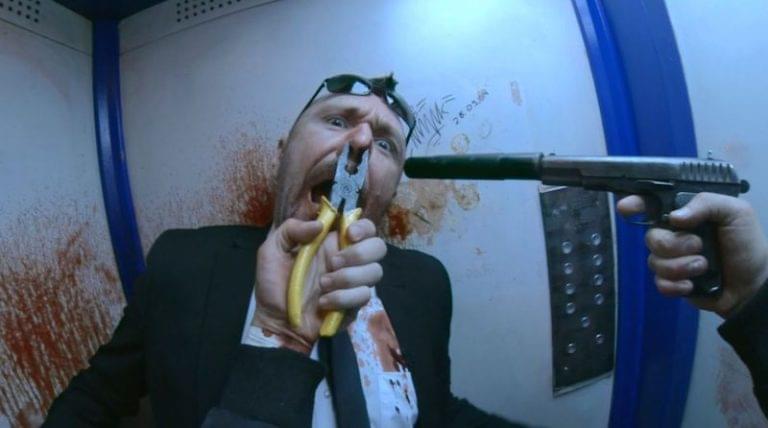
Anomalisa

0
Anomalisa
"Do you feel like it's taken several days of continual starting and stopping to walk down this hallway?"

In his screenplays for films like “Being John Malkovich,” “Eternal Sunshine of the Spotless Mind,” and “Adaptation,” Charlie Kaufman has demonstrated two things: that he’s fond of exploring themes of identity, memory, romantic love, and self-loathing; and that his own un-spotless mind is a fevered, neurotic wonderland.

His latest, “Anomalisa,” isn’t a departure from any of that. Its most obvious distinction — that it was filmed with lifelike puppets and stop-motion animation instead of live actors — is an ingenious and necessary component of the story, not an oddball aesthetic choice (or not JUST an oddball aesthetic choice, anyway). After the tragically under-seen “Synecdoche, New York,” this is only the second film that Kaufman has directed himself, and it has a similar heartrending poignance that resonates far longer than its comedic elements.

This is the story of Michael Stone (voiced by David Thewlis), a depressed businessman who’s in Cincinnati for one night to give a presentation about customer service. (He’s an expert on the subject, having authored such books as “How May I Help You Help Them?”) As he endures mundane, banal conversations with the taxi driver, the hotel clerk, the bellhop, we realize that all of their voices are the same (provided by Tom Noonan). When he calls his wife to have a conversation that should be more meaningful than the ones he has with strangers, we notice the same thing.

This is why the film had to be animated: from Michael’s point of view, everyone besides him has the same voice. It holds true even for old movies he watches on TV. This is what life is like for him, an endless series of pointless interactions with people who all blend together and might as well be one person.

That is, until he meets Lisa. Her voice is different. (To be specific, it’s the voice of Jennifer Jason Leigh.) She and her friend Emily are attending Michael’s conference and are a bit star-struck to meet him in the hotel. Emily flirts with Michael, but timid, reluctant Lisa is the one he wants. Emily is just another Tom Noonan in a world full of Tom Noonans. Lisa is special.

Kaufman (who co-directed with animator Duke Johnson) uses the central metaphor to great effect, showing how the giddy excitement of infatuation can make a person’s flaws vanish. Lisa is vulnerable and usually overlooked by men (“Most people like Emily,” she says simply), but that doesn’t matter to Michael. Not right now, anyway. But an encounter with an ex-girlfriend of his shows how oblivious he can be to other people’s feelings, so wrapped up is he in his own melancholia.

There are sporadic bursts of caustic and surreal humor, often from out of nowhere, as if Kaufman can’t help being funny even when he’s trying to be serious. These light moments are welcome and occasionally sublime, but it’s the heavier stuff that matters. As always, Kaufman isn’t afraid to showcase a protagonist who’s a total wreck of a human being, one whose breakdown we can watch with pity from a safe distance. The painstaking work of stop-motion animation is admirable (the sheer number of different facial expressions is staggering), but it’s the story itself — hopeful, mournful, and sadly relatable — that will pierce your soul right in the gut.

— Portland Mercury

The Hateful Eight

0
The Hateful Eight

“The Hateful Eight” calls itself Quentin Tarantino’s eighth movie, but that’s only true if you count the two “Kill Bills” as one or don’t count “Death Proof” at all (either method is acceptable). Fudging the truth to make the story better is second nature to a raconteur like QT, and his populates his movies with people who reflect that. It’s especially true of “Hateful Eight” — which really has nine characters (“Hateful Nine” doesn’t have the same ring to it) — almost all of whom are fabulists, exaggerators, or flat-out liars. They’re Tarantino’s kind of people, and not just because they love the N-word.

Our setting, filmed in glorious 70mm widescreen Cinerama®, is rural Wyoming several years after the end of the Civil War. Trying to outrun an impending blizzard, a black Union officer, Maj. Marquis Warren (Samuel L. Jackson), now a bounty hunter, catches a ride with a colleague, John Ruth (Kurt Russell), who’s heading to town with a prisoner to see her hanged. Yes, her: she’s Daisy Domergue (Jennifer Jason Leigh), a murderous, spiteful, slightly insane Southern woman who we are led to understand deserves every inch of the noose that awaits her. Still, we cringe every time John Ruth punches her, which is often, and usually at her own provoking.

These three, along with stalwart stagecoach driver O.B. (James Parks), are joined by Chris Mannix (Walton Goggins), a proud Rebel racist who says he’s actually the new sheriff of the town they’re headed for. They end up snowed in at Minnie’s Haberdashery, a way station in the mountains. Minnie is nowhere to be found; she seems to have left the place in the care of Mexican Bob (Demian Bichir). Three other travelers are already there when we arrive: English chap Oswaldo Mobrey (Tim Roth), the very hangman Daisy is destined to meet; taciturn cowboy Joe Gage (Michael Madsen); and Gen. Sandy Smithers (Bruce Dern), an old Confederate coot who has come to Wyoming in search of his missing son.

Well, the war may be over, but the issues between North and South have not yet been sorted. Gen. Smithers and Sheriff Mannix have plenty to talk about, and neither wants anything to do with Maj. Warren — not just because of his race (though that’s 80 percent of it), but because of certain anti-Confederate deeds he committed during the war. John Ruth doesn’t care about any of that and just wants to keep tabs on his prisoner until the weather clears.

The rest of the men’s attitudes and loyalties vary between the two extremes represented by Samuel L. Jackson’s Marquis (pronounced “Mark-wes”) Warren and Walton Goggins’ Chris Mannix — and it really is these two who emerge as the main characters of the story, not Warren and John Ruth like you’d think. Warren and Mannix are opposites with a lot of parallels, soldiers turned lawmen(-ish) who have killed more men than they had to, war or no war, and who are convinced of their righteousness. Jackson and Goggins give boisterous, energetic performances, both keyed up in a way that’s contrasted by Russell’s more cool-headed (and delightful) turn as John Ruth. And don’t overlook Daisy, chained to John Ruth yet some how lurking in the background, biding her time. Jennifer Jason Leigh is an electric mix of scary and crazy.

The closed-room scenario is reminiscent of Tarantino’s first film, “Reservoir Dogs,” especially after things go awry and it becomes clear that somewhere between one and nine of these people are not who they say they are. There are also echoes of “Django Unchained,” of course — though unlike that film, this one is actually about racism (at least in part), and doesn’t just use the topic as the jumping-off point for a revenge fantasia. The lies that the characters tell — to themselves and to others — reflect America’s ongoing effort to come to terms with (or to cover up) its history. I won’t say who it is, but I was surprised when I realized which of the Hateful Eight is never revealed to have lied about anything.

Like most QT productions, however, the main thing “The Hateful Eight” is “about” is fun. It means to be a rowdy story, entertainingly told — a bit of pulp fiction, if you will. In this it is largely successful, with colorful characters, cutely phrased dialogue, outrageous sudden violence, flashbacks, narration, and a few perfectly executed surprises. And a murder mystery! And hey, didn’t I see Channing Tatum’s name in the opening credits? Where’s he? The film’s length is indulgent, but man, nobody does indulgent better than Tarantino.

Joy

0
Joy

“Joy” is a strange muddle of a film, frequently entertaining as it moves along but ultimately disappointing as we discover it’s not heading anywhere. It’s partly a biopic of a real person, but one whose last name is never given. (This remains true even in situations when she’s introducing herself to people who tell her their last names.) It’s partly a domestic comedy about a frazzled single mother in a chaotic household, but there’s little payoff to any of the threads with her mother, father, ex-husband, or children.

Mostly, it just seems to be an excuse for David O. Russell (“Silver Linings Playbook,” “American Hustle”) to work with Jennifer Lawrence, Bradley Cooper, and Robert De Niro again. He rewrote Annie Mumolo’s screenplay and cast 25-year-old Lawrence as a 35-year-old character, with De Niro as her father. Cooper wasn’t suitable for any of the major roles, so Russell had him play a secondary one, probably figuring the folks in marketing would make it look like Cooper has more scenes with J-Law than he actually does. (They did.)

Set in an unspecified but approximately late-1980s era, “Joy” claims to be “inspired by daring women, one in particular.” That’d be J-Law’s Joy, a headstrong divorcee who lives with her mother, Terry (Virginia Madsen), her grandmother, Mimi (Diane Ladd), and her children (irrelevant). Her Brazilian ex-husband, Tony (Edgar Ramirez), lives in the basement, where he’s soon joined by her father, Rudy (De Niro), when his new wife throws him out. (Tony and Rudy don’t get along, so Joy divides the basement with a piece of tape, sitcom-style.) Terry, fearful of the outside world in a way the movie never addresses, does nothing but sit on her bed and watch soap operas all day. Mimi, who’s about the same age as her daughter’s ex-husband (this is not addressed either), periodically acts as narrator but plays no other part in the story. Joy’s half-sister, Peggy (Elisabeth Röhm), hangs around to make Joy feel inferior.

Stuck in her role as housekeeper and peace negotiator, forever keeping her fractured family together (why?), Joy is unappreciated for her talent and ambition. This starts to change when she comes up with an idea for a new kind of mop, one that doesn’t require you to put your hands in filthy water to wring it out. With some financial aid from her father’s new girlfriend, Trudy (Isabella Rossellini), Joy builds a prototype and starts selling mops — independently at first, until she learns about a TV channel called QVC, where things like special mops are sold 24 hours a day. (Cooper plays one of QVC bosses.)

This is where the movie at last begins to find its focus as the story of a scrappy entrepreneur who won’t take no for an answer, who competes against the big boys despite being 1) a woman and 2) not a corporation. The QVC sequences are appealing (watch for Melissa Rivers as Joan Rivers!), and Joy’s battles with conniving businessmen are satisfyingly staged. Jennifer Lawrence is never less than her usual engaging self, and apart from being too young and glamorous to pull off “harried single mom,” her performance as an underdog is solid.

So what’s with all the other stuff? The insanity of Joy’s household offers some amusing moments, but by occupying so much screen time without making any thematic contributions, it undermines the film. All those scenes of Terry being obsessed with soap operas come to naught when Terry basically disappears from the story. Tony, the ex-husband, helps Joy with business connections, but everything else about him is extraneous. You get the feeling all the complicated details of these people’s lives were included just because they’re true, not because they help tell the story. They actually do the opposite, cluttering things up so thoroughly that it’s often unclear what the real story is. Without the mud, this might have been a snappy 90-minute crowd-pleaser about a woman taking on the system. As it is, it’s a meandering two hours punctuated by upbeat moments but not nearly enough joy.

Point Break

0
Point Break

The new version of “Point Break” is pretty dumb. But in other ways, it’s not like the original at all. For example, it’s tedious. Say what you will about Kathryn Bigelow’s Keanu Reeves/Patrick Swayze 1991 cult favorite (for example, that it’s pretty dumb), its action scenes sizzle. This remake, written by Kurt Wimmer (of the “Total Recall” remake), keeps the dumbness, increases it tenfold, and pummels the audience with weak, pointless action. It’s hard to imagine making a worse “Point Break” without doing it on purpose.

Johnny Utah, an “extreme sport polyathlete” turned fledgling FBI agent, is played by Luke Bracey, an Australian piece of driftwood with a face painted on it. In this version, Johnny Utah is haunted by the events of the movie’s first two minutes, when he and his motocross biker friend were doing dangerous things on the tops of pointy mountains, and then the friend fell to his death, as one does. A lot of movies begin with something like this so the protagonist can feel haunted and self-doubting afterward, but the rushed, perfunctory manner with which “Point Break” gets it out of the way has the air of an assignment that wasn’t started until the night before the due date. That it has no bearing on the rest of the movie and could have been omitted entirely just makes it funnier.

The real story, seven years later, is that there’s been a series of high-profile robberies that new FBI moper Johnny Utah thinks are the work of people who, like him, are extreme sport polyathletes. One heist involved skydiving, for example, and a bank job required skilled motorcycling. What’s more, the thieves keep distributing the money rather than keep it. Johnny Utah believes they’re trying to accomplish a series of eight metaphysical challenges outlined by a renowned extreme guru, and the robberies are just, I don’t know, for fun. These crooks don’t want money. They want nirvana.

Based on this hunch and zero evidence, the FBI sends Johnny Utah to infiltrate the group. He knows (well, he guesses, which is the same thing in this movie) where they’re going to be next: in the middle of the ocean, surfing giant waves caused by a rare weather pattern. Sure enough, he’s quickly able to befriend the group’s leader, a smug ramekin of patchouli oil named Bodhi (Edgar Ramirez), who saves his life when the surfing goes awry. This leads to an exchange of dialogue that exemplifies the movie’s irritating hippie-dippy philosophy:

JOHNNY UTAH: I owe Bodhi for pulling me out.
THE GIRL OF THE GROUP: We don’t believe in “owing.”

Ugh, shut up. Shut up about being One with Nature and choose your own destiny and “I love the sea and its power” and “A man who pushes boundaries ultimately finds them” and all the rest of your sage, hollow platitudes. Shut up and snowboard down a cliff face already.

Johnny Utah, Bodhi, and the gang — they have names like Roach, Grommet, and Chowder, and the girl is named Samsara (Teresa Palmer), but she’s only there sometimes — trot the globe doing more extreme stunts, some of which involve grand larceny and some of which do not. Director/cinematographer Ericson Core (“Invincible”) captures the awesome beauty of the film’s many natural settings, ranging from the snowy Alps to the tropical forests of Venezuela. If this were a National Geographic travelogue, it would be stunning.

Unfortunately, it’s a narrative film with flat characters and a low-stakes plot. The trouble with portraying the robbers as non-greedy, non-evil thrill-seekers is that who cares if the FBI ever catches them? They do finally start killing people in the course of their work, justifying the enormous efforts of Johnny Utah and his support team, but it feels like an afterthought. For the most part, the “villains” don’t seem villainous — but they don’t seem like Johnny Utah’s chums, either. The inevitable moment when Johnny Utah must choose between doing his duty and protecting his new best friends rings as false as everything else. The only plausible explanation is that this was all a ruse to make us appreciate the original “Point Break” more. It didn’t work, but I respect the attempt.

The Revenant

0
The Revenant

A revenant is someone who comes back as if from the dead, usually for vengeance. That makes the title of “The Revenant” a bit of a spoiler, since the person in question isn’t even presumed dead till it’s two-thirds over, and doesn’t return till after that. I guess the filmmaker wanted us to know what we’re in for. Revenge is inevitable, for the characters as well as for the viewers.

The filmmaker is Alejandro G. Iñárritu, whose metaphysical backstage comedy “Birdman” won the Oscar for Best Picture last year. The brutal, slow-moving “The Revenant” is about as different from “Birdman” as it could be, and it’s a shift from the multi-character, interlocking plots of his earlier films (“Amores Perros,” “21 Grams,” “Babel”), too. This time the story is simple, almost detrimentally so, with themes so uncomplicated you wonder why Iñárritu needed two and a half hours to convey them.

What a ride those two and a half hours are, though. Set in approximately the 1820s, the film is about a team of fur-trappers fighting for survival while being frequently attacked by Indians and Mother Nature. In particular, there is Hugh Glass (Leonardo DiCaprio), a leader in the company who becomes a liability after he’s horrifically injured by a protective mama bear in a sequence from which the viewer will not recover anytime soon. Having already been decimated by a gruesome Indian ambush, the company must decide how much effort to expend in stretchering Glass home. The snowy journey is perilous for able-bodied men, let alone men barely clinging to life.

Tending to Glass are his half-Indian son, Hawk (Forrest Goodluck), a loyal young man named Jim Bridger (Will Poulter), and John Fitzgerald (Tom Hardy), a coldly practical veteran of this business who’s been scalped by Indians before. Fitz will become Glass’s primary antagonist, once Indians, bears, and ice are finished with him.

It’s a very ordinary story (based very loosely on a novel by Michael Punke), but two things distinguish it. First, instead of treating it like a straightforward survivalist action movie, Iñárritu seems to channel Terrence Malick, with long, quiet stretches that emphasize the silent beauty of nature. Make no mistake, the moments of violent action are as heart-stopping as you’d want them to be. But between those scenes there is much space for contemplation (which will turn to boredom for people who don’t like the movie).

The other noteworthy element, related to the first one, is the way Iñarritu uses the camera to immerse us in the story. Working with Oscar-winning cinematographer Emmanuel Lubezki (who shot “Birdman” and several Malick films), he favors long, unbroken takes in which the camera moves with unnatural steadiness through chaotic, hellish scenes. We are witness to everything the trappers, the Indians, and Mother Nature do to each other, and the unhurried movement of the camera gives it an eerie, unblinking feel.

But what does it all add up to? Ah, there’s the problem. “Revenge is in the Creator’s hands,” someone cautions early on. When the moment of revenge finally arrives, after so much pain, death, and running time, it almost can’t help but seem like a letdown — if not to Hugh Glass then to us (and maybe to him, too). A profound sense of “Is that it?” permeates the last 10 minutes, bringing a gripping saga to a disappointing close.

Sisters

0
Sisters

Casting Amy Poehler and Tina Fey as sisters is an irresistible idea that should have been resisted until a better script than “Sisters” came along. The two are among the best duos currently working in comedy (not to mention their individual brilliance), and fans have been waiting seven years for a followup to their good-but-not-great “Baby Mama.” Tina and Amy are magical as Golden Globe hosts and wherever else they pop up together. So why aren’t they killing us in movies, too?

Let me tell you the premise of “Sisters,” and you see if you can spot the red flag. The Ellis sisters — do-gooder liberal Maura (Poehler) and flaky trainwreck Kate (Fey) — learn that their parents are selling the Orlando house they grew up in, and though they’re in their 40s and living on their own, the girls haven’t quite left the nest emotionally. Recalling the glory days of their high school parties, they throw one last shindig in the old house before the new owners arrive.

Did you catch the warning sign? It’s having Fey play the slutty, irresponsible one. Poehler has proven adept at playing both Type A personalities (like she did on “Parks and Recreation”) and hot messes (like she did in “Baby Mama). But Fey — always a better writer than performer (Poehler is the opposite) — hasn’t demonstrated that kind of range, and she’s never quite convincing in “Sisters.”

It doesn’t help that Kate is written so inconsistently. (It’s the first produced screenplay by the very funny “SNL” writer Paula Pell.) An unemployed cosmetologist with a teenage daughter, Kate is supposed to be coarse, reckless, and kind of dumb. But she keeps saying things that are smart and self-aware — you know, the sort of things Tina Fey would say. It’s like Tina is trapped inside Kate, trying to claw her way out.

Casting issues aside, the film has problems but not insurmountable ones (like the fact that all of the girls’ high school classmates still live in town and can come to a party on one day’s notice), and it’s occasionally hilarious. Unsurprisingly, it’s at its best when Kate and Maura are together, teaming up against their parents (Dianne Wiest and James Brolin), flirting with a handsome neighbor (Ike Barinholtz), or vetting potential party guests. Though they are opposites, the sisters are not enemies (until the inevitable third-act quarrel), and their camaraderie as they face enemies together is appealing.

Our review of “Sisters” from the Movie B.S. with Bayer and Snider podcast:

Download audio

Maura’s romantic subplot with the handsome neighbor slows things down, and it culminates in a truly awful scene of physical comedy that is almost Sandlerian in its idiocy. (The director, Jason Moore, has one other film to his credit: “Pitch Perfect.”) On the other hand, the party is like a series of mini-sketches, with many bright spots provided by the likes of Samantha Bee, Kate McKinnon, Matt Oberg, Greta Lee, and wrestler-turned-actor John Cena (whose flirtation with Fey is a highlight). Bobby Moynihan’s performance as a former class clown whose manic sense of humor never matured past high school isn’t very funny, but Moynihan’s commitment sells it. I wish the same could be said for Maya Rudolph, who’s wasted as an old rival of Kate’s.

“Sisters” fails to show why so many people love Tina & Amy, but it’s not enough of a buzzkill to make anyone relinquish their membership in the fan club. In fact, I suspect someone with no prior experience with these two would enjoy the movie more than those of us who are invested. It isn’t bad, after all (though aspects of it are); it simply isn’t as good as everyone involved is capable of. I feel like a parent here: I’m not mad, just disappointed.

Star Wars: The Force Awakens

0
Star Wars: The Force Awakens
"No, I will not carry you."

Nerds who panicked over Luke Skywalker’s absence from the trailers for “The Force Awakens” will be relieved to read the first sentence in the new “Star Wars” sequel’s opening crawl: “Luke Skywalker has vanished.” You see, the reason his whereabouts weren’t given in the advertising is that determining his whereabouts IS THE WHOLE POINT OF THE MOVIE, YOU CHUCKLEHEADS.

It’s been 32 years since “Return of the Jedi” came out, and that’s about how much time has passed in “The Force Awakens,” which kicks off a new trilogy of “Star Wars” films with which “Star Wars” creator George Lucas will have no involvement (possibly due to a restraining order). J.J. Abrams, director of “Mission: Impossible III” and those shiny new “Star Treks,” is at the helm for this chapter, and unlike those franchises, he didn’t try (or wasn’t allowed) to reinvent anything. He has made a swift, entertaining, and comfortable “Star Wars” movie, one that will feel familiar to fans of the original trilogy.

In our world, the exploits of Luke, Han, and Leia are common knowledge, as much a part of our cultural history as the signing of the Declaration of Independence. In the movie’s fictional galaxy, however, the events surrounding the rebellion against the Galactic Empire have passed into myth, believed by some but otherwise forgotten or dismissed. The First Order, another stormtrooper-based government that rose from the ashes of the Empire, has seen to that. Its leader, Kylo Ren (Adam Driver), another black-clad mask-wearer, is like a skinny, ill-tempered Darth Vader, one who is not as certain of his own evilness as Herr Vader was. Kylo Ren wants to find Luke Skywalker (Mark Hamill) — the last of the Jedis — and kill him before he can instigate another uprising. (Why is it only dictators who ever learn from history?)

But fear not! There is a robust Resistance. On the desert planet Jakku, a rebel pilot named Poe Dameron (Oscar Isaac), a scrappy scavenger named Rey (Daisy Ridley), and a conscience-stricken stormtrooper called Finn (John Boyega), are all drawn into the search for Luke, joining forces with Han Solo (Harrison Ford), Chewbacca (Peter Mayhew), General Leia Organa (Carrie Fisher), and an adorable cat-like droid called BB-8 that has some crucial information in its files.

If you’re noticing parallels to the plot of the original “Star Wars,” just you wait. History is repeating itself in the galaxy, and that means not just plot points but old themes and ideas are popping up again, too. No doubt aware that he was at risk of turning the sequel into a rehash, Abrams is careful to let these familiar elements occur naturally, the way they do in the real histories of real republics. In a similar vein, he also avoids any egregious callbacks or fan-pleasing nonsense. Characters refer to the events of the original trilogy as needed without any winks or nudges to the audience. It’s a “Star Wars” movie that doesn’t barge around yelling, “OMG I’M A ‘STAR WARS’ MOVIE!” You have to admire the restraint.

The screenplay is credited to Abrams and two men who were well-suited to the job: Michael Arndt, whose “Toy Story 3” was another franchise film in which the passage of time between sequels factored significantly into the story; and Lawrence Kasdan, who wrote “The Empire Strikes Back” and “Return of the Jedi.” What they came up with might be nothing special in the story department, but it has the best dialogue of any movie in the franchise. Without being jokey or ironic (earnestness is a core “Star Wars” principle), the script brings the new characters to life by giving them sparkling, well-crafted things to say, and by giving everyone (even the villains) a hint of nuance and backstory. You get the impression there’s a lot to explore here, and the infectiously charismatic performances by all the newcomers make you eager to dig in.

Movie B.S. with Bayer and Snider

Our review of “Star Wars: The Force Awakens” from the Movie B.S. with Bayer and Snider podcast:

Download audio

As with anything that goes on this long, new installments are bound to feel less special than their predecessors, even when they’re better. For “Star Wars,” this is not only the seventh episode, it’s the third beginning — the third time we’re introduced to new heroes, a new enemy, and a new mission. As elegantly as Abrams and his team handle it, it doesn’t really feel new anymore. Nothing in “The Force Awakens” is dazzling to see for the first time, and except for BB-8, there isn’t much visual imagination on display. (Say what you will about the prequels, but those things were full of awesome creatures and alien worlds.)

Then again, if it felt TOO new, it would be deemed blasphemous and J.J. Abrams would be burned for heresy. Considering the strictures he had to work under, this all turned out remarkably well: a rousing adventure that fits the aesthetic of the original trilogy without merely copying it, while starting a new saga that blends familiar old characters with promising new ones. And not a Jar-Jar in sight!

Alvin and the Chipmunks: The Road Chip

0
Alvin and the Chipmunks: The Road Chip

Part four in the “Alvin and the Chipmunks” saga, subtitled “The Road Chip,” retains the philosophy of the previous three, which is that there’s no need to try very hard when your audience is composed of undiscerning children.

(Full disclosure: I missed the third installment, “Chipwrecked,” and thus cannot say with absolute certainty that it’s as lazy as the others. For all I know, it’s a witty, urbane social satire. I’m just extrapolating using the available data.)

This time, the computer-animated singing rodents believe that Dave (Jason Lee), their manager and adoptive father, is going to propose to his girlfriend, Samantha (Kimberly Williams-Paisley), while vacationing in Miami. Samantha is great, but her teenage son, Miles (Josh Green), is always mean to the Chipmunks when the adults aren’t looking, so they don’t want him for a stepbrother. Instead of telling Dave and/or Samantha that Miles is abusive, the Chipmunks decide they must simply prevent the marriage, which they think they can do by preventing the proposal … which they think they can do by stealing the ring.

Anyway, to make a long, unfunny story short, the Chipmunks have to get from L.A. to Miami to stop Dave from proposing to Samantha, and Miles goes with them because he just does, OK? They take a plane at first, with Alvin and Simon hiding in Miles’ jacket while Theodore goes to the cargo hold (there’s no reason for this), where he inadvertently lets all the animals out of their cages and throws the plane into chaos. A lot of people were traveling with their pet goats, porcupines, monkeys, etc., as is commonly done in real life.

An air marshal (Tony Hale) kicks the unaccompanied minor and his three talking chipmunks off the plane in Austin, then pursues them on land because he holds a grudge and the movie needs a villain. They pause in New Orleans long enough to sing “Uptown Funk.” The Chipmunks and Miles reconcile their differences and learn valuable lessons, sort of, eventually. Dave yells “ALLLLL-VIIIIN!” the requisite number of times (10,000).

The movie was directed by Walt Becker, whose previous terrible work includes “Wild Hogs” and “Old Dogs,” which despite their titles are not about talking animals. The screenplay is from the writer of lame family comedy “Tooth Fairy” (Randi Mayem Singer) and the writer of rancid rom-com “Made of Honor” and mediocre road-trip comedy “Due Date” (Adam Sztykiel). These people have hurt us before, is my point.

The plot depends on everyone always making the dumbest choices when presented with problems, while the humor depends on 1) fart noises, 2) Tony Hale being physically punished, and 3) the sound of contemporary pop songs being sung in high-pitched voices. (I continue to be fascinated by the practice of hiring famous actors, then speeding up their voices so they’re unrecognizable. This seems like a waste of money.) For adults, it’s relatively benign tedium. For kids, who cares? They’ll watch anything.

The Big Short

0
The Big Short
"I'm sorry, but yours is definitely more ridiculous than mine."

One of the frustrating things about the 2008 financial collapse is that many Americans, even smart ones like me, didn’t really understand what had caused it. The banks had given too many mortgages to people who couldn’t afford them, sure, leading to a high rate of default and foreclosure. But there was also a lot of outrage directed at the guys on Wall Street, who had done something that those outraged believed was immoral, illegal, or both. That’s where it all got fuzzy for a lot of us.

“The Big Short” makes a valiant effort to explain it to the average person, to help us understand what happened and why we should be infuriated. Like the best teachers, the film is entertaining besides being educational, and it takes great pains to make sure we’re keeping up. Some movies over-explain themselves, trying our patience by talking to us like we’re idiots. “The Big Short” shrewdly realizes that when it comes to the intricacies of credit and finance, most of us ARE idiots, and we have secretly wished that someone would explain it to us like we’re 10 years old.

I’ll leave most of the explaining to the film, but the gist is that in the mid-2000s, a handful of money dudes realized there was a housing bubble fixin’ to burst and set out to increase their fortunes by essentially purchasing insurance against housing bubble bursts. Since a collapse of the magnitude they were predicting had never happened before, banks like Goldman Sachs were more than happy to sell them expensive policies, figuring they’d never have to pay out.

In this account, which uses fictionalized versions of real people, we start with rich weirdo Michael Burry (Christian Bale), an obsessive hedge-fund manager with amusing Asperger-y tendencies and a nose for spreadsheets. He’s the one who combs through the data and discovers that thousands upon thousands of mortgages were given to unqualified borrowers, making them very likely to go into default.

Jared Vennett (Ryan Gosling, with dark hair and an unnaturally tan face) is a smaller-scale version of Burry, a fund manager with less money at his disposal but the same drive and commitment. He gets into business with Mark Baum (Steve Carell), an awful Wall Street a-hole who hates Wall Street and runs his investment firm like he’s an outsider (even though he isn’t). Then there are two eager young nobodies, Charlie Geller (John Magaro) and Jamie Shipley (Finn Whitrock), who come to Wall Street with dollar signs in their eyes, stumble upon this situation, and reach out to an old mentor for advice. The mentor, Ben Rickert (Brad Pitt), has left Wall Street and practically gone off the grid, but he still has contacts.

The film was directed and co-written by Adam McKay, whose other movies — “Anchorman,” “Talladega Nights,” “Step Brothers,” “The Other Guys,” and “Anchorman 2” — all starred Will Ferrell. He may seem like an odd choice for this, until you recall the end credits of “The Other Guys,” which went into baffling detail about the collapse of the housing market and showed how intensely interested McKay was.

He handles this, his first non-farce, with confidence. Co-writing with Charles Randolph (“The Life of David Gale”), McKay seems as comfortable making a slick, fact-based comedy as he did making the loosey-goosey Ferrell movies. He uses every trick in the book to maintain a dizzying pace without overwhelming us, like a terrifically engaging college professor with a savage sense of humor.

Our review of “The Big Short” from the Movie B.S. with Bayer and Snider podcast:

Download audio

Think about the challenge McKay faced here. The reason these guys were able to get away with what they did is that only a small number of people understood the arcane, complex financial maneuvers they were pulling. How do you tell a story that owes its very existence to being hopelessly confusing? McKay does it by having characters frequently pause the action, break the fourth wall, and explain the relevant concept to us, using visual aids as needed. When things get especially complex, he uses unorthodox teaching methods like Margot Robbie describing credit-default swaps while sipping champagne in a bathtub, or chef Anthony Bourdain using leftover fish to explain collateralized debt obligations. The movie gives us the knowledge base we need to understand it while we’re watching it, like an author incorporating footnotes into the text. As a result, we’re able to appreciate how clever the scheme was, how short-sighted and arrogant the banks were, and how nakedly greedy everyone was.

The film only stumbles when it comes to the human elements, like Mark Baum’s personal demons and his relationship with his wife (Marisa Tomei), or Michael Burry’s idiosyncrasies. None of the characters, including the ones based on real people, resonate as human beings, and McKay’s sporadic, haphazard efforts to humanize them are ineffective. Metaphorically speaking, the objective of the movie is to explain an elaborate equation, and every now and then McKay tries to tell us what happened to x as a child, or explain why y is so angry.

Still, if there’s a funnier, sharper, more engrossing movie about a financial collapse, I haven’t seen it. To convey so much dry information in a way that’s accurate and conventionally entertaining is practically a miracle. Now can McKay explain the end of “Trading Places”? I’ve never understood that one either.

In the Heart of the Sea

0
In the Heart of the Sea
Thar he blows.

How do you turn the story of a giant murderous whale into something disappointing and forgettable? You hire Ron Howard, that’s how.

The pedestrian director brings his generically competent touch to “In the Heart of the Sea,” a maritime adventure based on the true story of the whaling ship Essex that ran afoul of an angry sperm whale in 1820. Where a more passionate filmmaker might have imbued this story with heroics and suspense, Howard is content to let it run on autopilot. Here’s the boat; here’s the whale; here’s what happened; thanks for coming, drive home safely.

In real life, the disaster of the Essex was among the incidents that informed Herman Melville’s “Moby-Dick.” In the movie, it’s Melville’s primary source, with an 1850 framing story showing him (played by Ben Whishaw) interviewing a survivor (Brendan Gleeson) about the event. At the end of the film, title cards tell us how great “Moby-Dick” turned out, as if Melville doing research was somehow the whole point of the story.

The actual story concerns Owen Chase (Chris Hemsworth), a Nantucket farmer-turned-whaler who is appointed first mate under captain George Pollard (Benjamin Walker). Chase has more experience than Pollard does, but Pollard is more the son of aristocrats than Chase is, so there you go. Capt. Pollard is cocky and arrogant, whereas Chase is a humble, hardy workingman with a pregnant wife waiting for him at home.

Chase and Pollard butt heads at sea, though it never turns into the “obsessed captain hunts whale” scenario that all the “Moby-Dick” buildup had led us to expect. (That aspect of Melville’s novel apparently came from somewhere else.) What conflict there is in the story is more of the man-vs-nature variety, as enormous sea creatures wreak havoc on the Essex and her smaller whaleboats, just because the seamen are trying to kill the whales and collect their oil.

Our review of “In the Heart of the Sea” from the Movie B.S. with Bayer and Snider podcast:

Download audio

Fierce storms and irritated whales eventually force the surviving crew members to take desperate measures — yet even then the film fails to find any drama or horror in their situation. And not to spoil anything, but their situation IS RIFE WITH DRAMA AND HORROR! Again, to take this material and turn it into something that barely arouses any emotion is almost an achievement in itself. The screenplay, adapted by Charles Leavitt (“K-PAX,” “The Express”) from Nathaniel Philbrick’s nonfiction bestseller, sets up many relationships — Chase and his wife (Charlotte Riley), Pollard and his crew-member cousin (Frank Dillane), even the old salt in 1850 and his wife (Michelle Fairley), who wants him to open up about his traumatic past — but doesn’t explore any of them meaningfully.

For what it’s worth, the movie looks terrific, and the whales (which must have been mostly computer-generated) are convincingly large and weighty. To be sure, there are exciting moments here and there in the narrative; if there were none, the movie would be bad, which it isn’t. It’s only mediocre and pointless. Ron Howard: a name you can trust.

Night Owls

0
Night Owls
First dates, amirite?

“Night Owls” begins at the end of an evening, with two drunk strangers stumbling toward bed together. We know even less about them than they do about each other: she’s a beautiful brunette (Rosa Salazar) with a crazy streak; he’s a funny doofus (Adam Pally) who has scored out of his league. It’s bound for one-night-stand status until she takes a post-coital overdose of Xanax and he’s tasked with keeping her awake and alive.

Why can’t they just go to the hospital? That’s the other thing: they’re not at her house, like he thought they were. They’re at his boss’s house. And his boss, a family man, is a public figure. And they didn’t end up here randomly.

Part of the fun of this congenial, mostly two-person comedy lies in learning the details gradually, not via exposition dump. Directed by Charles Hood (his first feature) and written by him and Seth Goldsmith, the film starts with things already in motion, and unfolds theatrically; with its small cast and single location, you can imagine it being performed as a play.

The general idea (without spoiling anything) is that the girl, Madeline, wants to make trouble for the guy’s boss. The guy, Kevin, idolizes his employer, calls him his mentor, points to all the people in the community whose lives he has enriched. As the hours pass, as Kevin keeps Madeline awake and talking, and in between her bouts of sleepiness, she mocks his blind devotion and hero worship, while he questions her unhealthy fixation on his boss.

Their sparring is witty and full of personality, and frequently marked by nimble physical comedy. Adam Pally, from TV’s “Happy Endings” and “The Mindy Project,” has a winning style that combines snark and silliness, and which deserves a bigger platform than his underrated TV work has gotten. Rosa Salazar, unknown to me (she had a recurring role on “Parenthood”), starts as a character who only has to be sexy (which she is) before emerging as one who’s also sassy, blunt, and self-assured, able to hold her own, argument-wise, even while recovering from a Xanax overdose. Pally and Salazar make a good team.

They’re assisted, mostly via phone calls, by Rob Huebel as Kevin’s damage-controlling supervisor, and Tony Hale as a doctor (well, podiatrist) called in by Huebel. Peter Krause eventually materializes as the man of the hour, Kevin’s boss, in what can only feel like a letdown after Hood spends the whole movie going out of his way not to let us see what he looks like. (Surprise! Kevin works for Peter Krause.)

Throughout the film, the humor is sharp but not caustic, and it’s frequently very funny. When the questions Kevin and Madeline fire at each other start to hit too close to home, the actors succeed at taking their performances to a deeper, more real place without getting maudlin, and without the movie getting ponderous. It’s a thoughtful, humorous, uncomplicated film that invites us to spend time with two highly enjoyable people. Which is always a plus when a one-night stand gets dragged out for 24 hours.

Krampus

0
Krampus
"Well, I suppose at your age you don't get krampus anymore."

Goodness knows there’s no shortage of Christmas movies, but we could use a few more Christmas horror movies, don’t you think? (Rhetorical question. What you think doesn’t matter.) The juxtaposition of merry and scary — look, they even rhyme! — is irresistible, offering a huge variety of devious possibilities that only a handful of memorable films have explored. “Krampus” may not become a perennial favorite on the order of, say, “Gremlins,” but it makes the effort with fiendish gusto.

We are spending Christmas with a typical American family, consisting of Tom (Adam Scott), Sarah (Toni Collette), teenage daughter Beth (Stefania LaVie Owen), and younger son Max (Emjay Anthony). German grandma (Krista Stadler) lives with them, and Sarah’s sister (Allison Tolman), her boorish husband (David Koechner), their bratty kids, and cranky old Aunt Dorothy (Conchata Ferrell) have arrived to make things worse.

Max is having an especially rough time. He still believes in Santa, for which his cousins tease him, and he’s been naughty lately. Crying bitterly, he rips up his letter to Kris Kringle and throws the pieces out the window to be carried away by the cold December wind. But as we know from “Mary Poppins,” torn-up letters from children tend to bring unexpected visitors who have dark magical powers.

The next morning, Christmas Eve, a blizzard knocks out all the power and phone service. When Beth goes to see her boyfriend a couple blocks over, she never comes back. The husbands, timid Tom and gun-toting Howard, go looking for her, while the rest of the family hunkers down in the front of the fireplace before being alarmed by noises from upstairs. At that point, all hell breaks more or less loose.

Krampus, a sort of malevolent Santa Claus who comes to punish bad children, is a folkloric character in the German-speaking world (where else?), hence the presence of German grandma to explain it. (Her story, shown as a stop-motion-animated flashback, is coldly beautiful.) “Krampus” doesn’t bother much with the mythology, which 1) keeps us from guessing what’s going to happen unless we’re already familiar with Herr Krampus, but 2) sometimes makes the action unclear, as we’re not sure what rhyme or reasons there is to the various creatures that show up to do (we assume) Krampus’ bidding.

Nonetheless, director Michael Dougherty (who made the Halloween-themed “Trick ‘r Treat” several years back) revels in the tension and excitement provided by a supernatural home invasion, and he keeps things moving fast enough that we don’t have much time to ponder the details, or to notice that the dialogue tends to be flat. (“It looks like Martha Stewart threw up in here,” says Aunt Dorothy upon arriving at the festively decorated house, apparently bringing her references straight from 2002.)

The creature effects are convincing and goose-bumpy, but what impresses me most about the film is its commitment to its decidedly un-cheerful premise. Friends, this movie’s content is PG-13, but it has the cold, black soul of an R. It’s appropriate for families with older kids (ages 10 and up, I’d say), though only the most macabre families will take delight in it. Gleefully do I imagine Mom gasping in shock while the teenagers titter and the young children cry in terror. All that without any onscreen bloodshed! I don’t know who this movie is for, but I’m glad it exists.

Chi-Raq

0
Chi-Raq

Whenever there is an uproar over an unarmed black man being killed by police (once a month or so), there is a backlash from people who say the outrage is misplaced. “What about the black-on-black murders that happen every day in Chicago?” they say. “Why isn’t anyone concerned about THAT??” (This is the only time they ever bring it up.)

Well, Spike Lee is concerned about it (evidently), and “Chi-Raq” is his incendiary, satirical take on the subject of gun violence in Chicago’s gang-ridden black neighborhoods. A retelling of the ancient Greek comedy “Lysistrata,” “Chi-Raq” doesn’t offer practical solutions but is instead a venue for Lee and co-writer Kevin Willmott (“CSA: The Confederate States of America”) to vent their anger, frustration, and sorrow in an effort to achieve something else borrowed from Greek theater: catharsis.

The film’s style is appropriately theatrical, with choreographed movement, a musical number, color-coded sets and costumes, and other constant reminders that we are watching a performance. Much of the dialogue (including almost everything spoken by Samuel L. Jackson as the narrator and one-man chorus) is written in rhyme, delivered like a cross between street poetry and Shakespeare, peppered with cultural references both ancient and modern. Whether it works or not (and it mostly does), this creative choice gives the film a rhythmic energy and an even greater sense of theatricality, reinforcing the idea that we’re watching not real life but a fable inspired by it.

The title (pronounced “shy-rack”) is a portmanteau reflecting Chicago’s descent into an Iraq-like war zone. It’s also the stage name of a rapper named Demetrius Dupree (Nick Cannon), a leader of the purple-clad Spartan gang that is forever at war with the orange Trojans. After yet another drive-by shooting leaves yet another innocent bystander dead, Demetrius’ girlfriend, Lysistrata (Teyonah Parris), follows in the footsteps of her ancient namesake and proposes that all women — Spartan, Trojan, and unaffiliated — end the war by withholding sex from their men until peace is achieved. “No peace, no [um, vagina, let’s say]!” is their chant.

It’s a silly plot, not a serious policy suggestion, and Lee lets it play out humorously, getting broad and clownish at times, almost campy. (You’ll enjoy Wesley Snipes as a giggly gang leader named Cyclops, and Dave Chappelle in his brief turn as a nightclub owner whose business is off because of the sex strike.) The story structure probably has other inspirations, but it reminded me most of the “South Park” formula, where a local movement gains worldwide traction in an improbably short amount of time, culminating in a “what have we learned” speech from Stan or Kyle or Lysistrata, all of it meant as commentary on current social conditions.

But while the story is exaggerated and unrealistic, it’s conveyed through authentic characters who speak of real pain. Teyonah Parris’ sexy, fierce Lysistrata is well-matched with Angela Bassett’s Miss Helen, a respected authority figure in the Spartan community who has suffered much loss. Nick Cannon is respectably serious as a gun-loving rapper, and John Cusack shouts himself hoarse as the white priest at a black church who must preside over too many funerals. The rawness of the emotions is palpable, inflamed by Lee’s penchant for provocation and overstatement.

It has plenty of Lee’s loopy indulgences, too, like a bizarre tangent with a Confederacy-obsessed National Guard commander (David Patrick Kelly), and a cameo by Isiah Whitlock Jr. that’s just long enough for him to deliver his catchphrase from “The Wire.” There are jokey references to other Greek plays; some invective aimed at highly specific targets (Darren Wilson; George Zimmerman; the entire state of South Carolina); and an abundance of angry rap, often with the words printed on the screen so we can follow along. In short, it’s a Spike Lee film, and one of his best in a long time — earnest, flawed, idiosyncratic, and unforgettable.

For Mormons: A talk I gave in church

0

I spoke some words in sacrament meeting several weeks ago, then thought they might be of general interest. (General interest to my fellow Mormons, I mean, not humanity in general.) So the nice people at LDS blog By Common Consent published them. This was before the new policies were announced (if you don’t know what I mean, don’t worry about it), but what I said addresses that issue, too.

Again, if you’re not LDS, I don’t know how interesting or even coherent this will be. You are welcome to read it, of course, but keep in mind that I was addressing a room full of Mormons.

Anyway, here: The Elements of Testimony

Creed

0
Creed

Some of the sequels make this easy to forget, but the original “Rocky” was a sweet, inspiring little drama without much showiness. It followed a formula, but only partially (a formula wouldn’t have let Rocky lose at the end), and it was about the characters more than it was about the boxing.

The sixth film in the series, “Rocky Balboa,” came closest to recapturing that spirit after parts III, IV, and (especially) V had turned the franchise into a lightweight parade of crowd-pleasing but derivative cliches. That return to form continues in “Creed,” a winning, heartfelt story about the son of Rocky’s opponent-turned-friend, who coaxes the Italian Stallion back from the pasture to train him. It’s the best Rocky film since the first one.

Adonis “Donnie” Johnson (Michael B. Jordan) is Apollo Creed’s illegitimate son, born shortly after his father’s death in the ring in “Rocky IV.” After a rough childhood of fist fights, foster homes, and juvenile detention, Donnie was adopted by Apollo’s wealthy widow, Mary Anne (Phylicia Rashad), an act of compassion that could fill a movie by itself. She has raised him well, and he has an unspecified perfectly suitable white-collar job, but what he really wants to do is wear shorts and punch guys for money.

Having gotten some ring experience winning unlicensed fights in Tijuana (as one does), Donnie heads to Philadelphia, where Rocky (Sylvester Stallone) is happily shuffling around his restaurant and enjoying being old. He has no interest in training anyone, but it’s hard to say no to Apollo Creed’s son. Donnie, for his part, has inherited some of his father’s strength and agility but not his ego. Nothing has come easily for him. He refuses to fight under the name Creed because he doesn’t want any special treatment … or any unreasonable expectations.

There is a formula at play here — nobody will accuse “Creed” of reinventing the boxing movie — but it’s elegantly used, with little touches that add flavor to the familiar recipe. Directed by Ryan Coogler (who made Jordan’s “Fruitvale Station”) and written by him and Aaron Covington, “Creed” is, at its center, an underdog story about a self-taught boxer facing a seasoned pro, in this case a Liverpudlian hothead named Ricky Conlan (played by real fighter Tony Bellew). That’s the same outline as “Rocky.”

Our review of “Creed” from the Movie B.S. with Bayer and Snider podcast:

Download audio

But “Creed” has the benefit of taking place 40 years and six movies later, so it’s also about the burden of legacy, living up to your potential, and the inevitable decay of our human bodies. Adrian is gone. Paulie is gone. Rocky’s no spring chicken. Even Donnie’s beautiful young girlfriend, Bianca (Tessa Thompson), a singer, has progressive hearing loss. (This romantic subplot and a health scare with Rocky, while thematically appropriate, are the two elements that make the movie feel slightly overlong.)

Coogler acknowledges our history with these characters without any winking self-awareness. When there are specific references to past films, they arise naturally, not because Coogler has wedged them in. And Coogler adds his own flourishes, too, including a great match between Donnie and an early opponent that’s captured all in one unbroken take, the camera bobbing around the ring like a third fighter. The match that ends the film is suitably thrilling and brutal.

Not that it’s a contest, but Jordan, who is a better actor than Stallone, gives more emotional weight to Donnie than Stallone ever did to Rocky. (I won’t spoil it, but there’s a particular line Jordan delivers that made me burst instantly into tears.) That said, Stallone is endearingly vulnerable, the most human he’s been in years. If there is to be a new franchise, with Rocky as the crusty old trainer and Donnie as his protege, it’s off to a good start. I just hope the filmmakers, like the characters, learn from the mistakes of the past. That means not casting The Rock as the opponent in “Creed III,” fellas. Trust me.

The Good Dinosaur

0
The Good Dinosaur

“The Good Dinosaur” is Pixar’s 16th film, and it might be its most peculiar. It has a brazenly simple story, though the five (!) people credited with conceiving that story are evidence of the movie’s troubled production and frequent rewrites. Originally scheduled for release in 2014, it was pushed back and had a new director (Peter Sohn) assigned when it became clear to Pixar’s creative heads that the story wasn’t working. Most of the cast was replaced, too.

None of which should be held against the movie, of course. Plenty of excellent films came from circumstances just as chaotic. But it’s relevant when, as in this case, the finished product is … off. Not bad, just not quite right. And certainly not up to Pixar’s usual high standards of crisp writing and efficient storytelling. Were it not for the photorealistic animated backgrounds, you could mistake this for a cheap straight-to-DVD knockoff.

It’s set in an alternate reality where the dinosaurs weren’t wiped out by an asteroid and were thus still around millions of years later, when mammals and birds started appearing. Our hero is Arlo (voiced by Raymond Ochoa), a young apatosaurus (they’re like brontosauruses) who lives with his parents and two siblings on a farm.

Yes, a farm. Dinosaurs are farmers here. They grow corn and raise chicken-like prehistoric birds. I don’t know how they do this without thumbs. Don’t worry about it.

The point is, Arlo is a timid fellow who feels he doesn’t measure up to his big, brave family members. He gets his chance to prove himself when he’s separated from them and must find his way home again. In the process, he befriends Spot (Jack Bright), a dog-like human boy child who is himself without a family.

Arlo and Spot meet a variety of off-kilter characters in their travels, including a neurotic triceratops, a group of storm-worshipping pterodactyls, and a family of T. rexes who own (?) a herd of longhorn buffalo. (The papa T. rex is voiced by Sam Elliott, filling a need we didn’t realize we had.) Judging by the landscape, this is the American Southwest, which is presumably why a lot of the dinosaurs speak with cattle ranchers’ accents. (The sole human character, Spot, doesn’t speak at all, but communicates with grunts and howls.)

The antagonist in the story is Nature itself, with her floods, storms, and predatory creatures. The film is shockingly, humorously matter-of-fact about animals’ tendency to eat one another. The lesson to be learned is that everyone’s afraid sometimes (“If you ain’t scared of a croc bitin’ you in the face, you ain’t alive,” says T. rex Sam Elliott), and that it’s good to have friends and family to help you.

Pixar has spoiled us with a series of movies that have simple stories but weighty, complex themes. That’s why adults have responded to them as well as kids have. But “The Good Dinosaur” is rudimentary, a bare-bones story with basic, uncomplicated themes, and it’s executed without the usual flair. It’s occasionally funny, sweet, or exciting, but never to the degree that you’d put a “very” in front of the adjective. Often it’s forlorn.

But let me mention the artwork again. The canyons, rivers, and prairies that are the film’s setting are the most astonishingly realistic animated images I’ve ever seen. There were times when you’d have had no trouble convincing me that we were looking at actual live film, with cartoon dinosaurs drawn in. I don’t know how these nerds do it, and how they keep getting better at it with each passing film. Here’s hoping the next entry in the Pixar canon has a story and characters that are worthy of it.

Victor Frankenstein

0
Victor Frankenstein

“Victor Frankenstein” starts with the mad doctor’s assistant, Igor (Daniel Radcliffe), telling us, “You know this story.” Well, then what are we doing here, Igor? Are you deliberately wasting our time?

As it turns out, yes, he is wasting our time, but not because we already know the story. We actually don’t know the story, since “Victor Frankenstein” changes nearly everything about it. Written by Max Landis (“American Ultra”) and directed by Paul McGuigan (“Lucky Number Slevin”), this silly, glib reinvention of Mary Shelley’s horror classic falls into the same trap as almost every other reinvention of recent years: it doesn’t seem to want to be taken seriously (it’s too ironic and self-aware), but it doesn’t offer any thrills, horror, or ingenuity, either.

So again I ask: are you deliberately wasting our time?

In this version, set in London in the late 1800s, Igor is a humpbacked circus clown, practically a slave. He’s constantly abused, yet owing to his knowledge of anatomy, he is also permitted to serve as the circus’ unofficial doctor. You’d think he would leverage that skill to maybe get himself a room instead of a filthy cage to live in, but that’s just because you don’t understand the hierarchy of 19th-century British circuses.

Anyway, medical student Victor Frankenstein (James McAvoy) sees the humpback attend to an injured acrobat and is dazzled by his prowess. He rescues the lad from captivity, siphons the pus out of his hump — turns out it was just an abscess, not a proper hunch — and makes him his assistant. Their first project involves electrifying a monkey corpse.

Pus-siphoning? Electrified monkey corpses? I’m making the movie sound better than it is. In truth, it’s stuffed with subplots and contrivances that range from the merely distracting (an investor in Frankenstein’s work might just want to steal his research) to the aggressively unnecessary (Igor’s tentative romance with the injured acrobat, played by “Downton Abbey’s” Jessica Brown Findlay). There’s a police inspector (Andrew Scott) whose harassment of Frankenstein, an avowed atheist, is fueled by his own religious fervor. Considering the objection to Frankenstein has always been that he’s “playing God,” it’s interesting to bring religion into it so directly. But of course the movie doesn’t do anything with it beyond a couple of brief, shallow arguments.

The same goes for Frankenstein’s relationship with his father (Charles Dance), a respected doctor, who appears in one scene to berate his son and to let us know that Victor used to have a brother, for whose death Victor feels guilty. Yes, if you’ve been waiting for a retelling of “Frankenstein” that would provide the mad scientist with a MOTIVE for wanting to revive the dead, it has at last arrived.

McAvoy does his best to make the grinning, vivacious Frankenstein come to life as an entertaining character, but he doesn’t have much to work with. Meanwhile, the prim, dainty Radcliffe is simply miscast as slovenly Igor, a character who serves no real function in the story anyway (he’s not in Shelley’s book, you know). Victor and Igor’s relationship is intended as the focal point here — that’s what’s different about this “Frankenstein” — so when even that part of it fails, there’s not much left. Cart this one back to the cemetery, boys.

The Hunger Games: Mockingjay – Part 2

0
The Hunger Games: Mockingjay – Part 2
"So we're agreed. We squat the whole time."

Well, that’s disappointing. After defying expectations with three rich, thoughtful movies, the “Hunger Games” saga comes to a fizzling conclusion in “Mockingjay – Part 2,” an overlong half-story that doesn’t provide the satisfying resolution it promised. Every archer misses the target now and then, but it’s a particular letdown when the arrow that goes wide is the final one.

Splitting the third book in Suzanne Collins’ trilogy into two parts, a move that reeked of greed but that we accepted after “Mockingjay – Part 1” turned out so well, now seems to have been a mistake after all. Again directed by Francis Lawrence (no relation to Jennifer), Part 2 picks up right where we left off: in underground District 13, where Peeta (Josh Hutcherson) has been brainwashed into thinking Katniss is the enemy, and Katniss (Jennifer Lawrence) is recovering from the time Peeta manifested his new political views by strangling her.

All that’s left, storywise, is for the rebel armies to overtake the Capitol and give the despot President Snow (Donald Sutherland) his fair trial (haha j/k), and for Katniss to choose either Peeta or Gale (Liam Hemsworth). On that latter point, despite having plenty of time in which to do it, the movie fails to make it clear why Katniss ultimately rejects the suitor she rejects. It’s not even clear she has rejected him till later, when he’s not around and we realize, oh, “goodbye” meant “GOODBYE.”

Jennifer Lawrence continues to be a strong, grounded presence as Katniss. No one has done better, more convincing, more emotional acting in a movie franchise than she has. Josh Hutcherson is impressive in this final installment, too (a first for him), giving Peeta some depth as he struggles to regain control of his mental state. There’s not enough Effie (Elizabeth Banks), and Haymitch (Woody Harrelson) doesn’t do much, but we do get a few last moments with Philip Seymour Hoffman, who died before the film was finished.

Here’s the Movie B.S. with Bayer and Snider segment where we reviewed “The Hunger Games: Mockingjay – Part 2”

Download audio

The film is occasionally exciting when Katniss, Gale, Finnick (Sam Claflin), and their fellow soldiers work their way toward the center of the Capitol in streets that have been booby-trapped with Hunger Games devices. (I continue to marvel at Collins’ cleverness in finding a way to squeeze the Games into all three books.) Told by insurrectionist President Coin (Julianne Moore) that she’s more useful as a propaganda tool than as a soldier, Katniss has to do what she does best: disregard instructions and follow her own plan. There’s a brief but horrific sequence in a sewer involving the Capitol’s “mutts” (something else that that movies never explained), which in this case take the form of zombies, or something.

But the action is sparse, and the downtime is often listless. Even more wind gets sucked out of the sails at the story’s anticlimactic finale and the dragged-out resolution (though this was a flaw in the book, too). As good as Part 1 was, the whole enterprise would have been better served if the book had been adapted into just one movie, even a three-hour one. Hopefully they’ll learn from this mistake when they reboot the series in 2025.

Legend

0
Legend

Everyone knows that when you have identical twins, one of them is going to be evil. That’s just science. But what happens when they’re BOTH monsters? That, my friends, is “Legend.”

Written and directed by Brian Helgeland (“42,” “A Knight’s Tale”), the film is about the Kray brothers, violent gangsters who were part of London’s swingin’ ’60s scene. How accurate the details are, I couldn’t say, though I note that the word “legend” appears in the title. Either way, it’s a bruising, entertaining piece of crime cinema, with Tom Hardy doing great work as both twins.

Reggie is the smart one, the personable businessman who can run a nightclub like a respectable member of society while administering brutal beatdowns in the back room. He has a nice girlfriend, Frances (Emily Browning), who serves as narrator and our introduction to the underworld (shades of “Goodfellas,” and not for the last time). When the American mafia, represented by Chazz Palminteri, visits to see about setting up a partnership with the Krays, Reggie and his shady businessman, Leslie Payne (David Thewlis), see it as a smart opportunity.

Reggie’s brother sees things differently. Ronnie is a psychopath, quite literally insane, and uninterested in playing nice to keep a low profile. He thinks being a gangster should be about busting heads, not making business deals. He’s also a homosexual, which is more problematic in the mid ’60s than it would be now, although being a violent criminal shields Ronnie from most persecution.

In addition to building his little empire of nightclubs and protection rackets, Reggie has to keep Ronnie under control, a full-time job in itself. Things come to a head midway through the film, when Reggie and Ronnie turn their fists against each other, ending in a crucial acknowledgement from Ronnie: maybe he’s not quite himself, sanity-wise. We need more of that — more of Reggie’s frustration over his problems being caused by his own twin, and more of Ronnie’s human side. The two are fascinating to watch, and their exploits are entertaining, but we never quite get inside their heads.

Our review of “Legend” from the Movie B.S. with Bayer and Snider podcast:

Download audio

Hardy does give two fully realized performances, though, playing Reg and Ron as entirely different characters. As Ronnie the psycho, he wears eyeglasses and (it appears to me) a plate of false lower teeth. His forehead doesn’t furrow expressively the way it usually does, as if Ronnie is too thick and savage for such delicate nuance. (I speak as one who has given serious contemplation to the details of Tom Hardy’s face.) As Reggie, Hardy is more recognizable, both in appearance and demeanor, and is no less imposing than Ronnie just because he’s not quite as violent. They carry themselves differently and have different speech patterns. In fact, there is enough difference between them (and the photographic trickery is so smooth) that you’re liable to forget it’s the work of a single actor.

“Legend” is ultimately too slight to enter the canon of great gangster films, and Brian Helgeland (as I’m sure he’d be the first to tell you) is no Martin Scorsese. But it’s a bloody, captivating mess as far as it goes, with career-best efforts from Tom Hardy. Next we’re hoping for a movie where he plays triplets.

Let’s all make me a film critic again!

0

Ahoy, friends! Many of you long-time readers remember the days when I reviewed pretty much every new movie that came out. It was a time of peace and security, when you could visit EricDSnider.com with 99% confidence that I’d have a review of whatever movie you were considering.

Those days have passed, sadly. The freelance gigs that were paying me to write reviews have dried up, and the gigs that pay me to write other things don’t leave me much time (or energy) for extracurricular reviews.

I’ve still been reviewing new releases with my voice, on the Movie B.S. with Bayer and Snider podcast. But it’s not the same for you guys. For one thing, it involves listening instead of reading. Totally different skill set.

Well, I’m tired of this. Not writing movie reviews is no way to live.

Starting immediately, I return to being a real Film Critic. And not some lazy dilettante who does, like, one review a week, either, but the old-fashioned kind who reviews pretty much everything.

When a bad-looking horror movie comes out and isn’t screened for critics, I’ll go see it when it opens. I won’t say, “Eh, I don’t feel like it, and nobody’s paying me.” I’ll say, “I DO feel like it, because somebody IS paying me!” And all will rejoice.

What’s that? Who’s paying me? Why, you are! I’m asking readers to pledge $1 a month through Patreon, a crowdfunding site that, um, does this sort of thing. You can use PayPal. Every month that I write at least 10 reviews, you pay a buck. If I don’t meet my quota, you pay nothing.

You can pledge more than $1 a month, of course. If you pledge $10 a month, then once a month you’re entitled to demand that I review any specific movie that came out within the previous 365 days. [UPDATE: because lots of people are pledging this much, we’ll have to trust each other. I’ll review whatever you request as soon as I can, and you only request reviews you genuinely want, i.e., not just because you can.]

Other amounts between $1 and $10 are also allowed. For example, $2.35. You could pledge $2.35 a month.

$3.12 is also an amount that could be pledged.

That’s basically it, but visit my Patreon page for more details.

And to be clear, I’m writing these reviews whether I get enough pledges or not (at least at first). I’m doing the work “on spec,” as they say in the biz, trusting that the support will come.

Thanks for your support, financial and otherwise, over the years. Here’s to a bright new day where I get to write movie reviews, you get to read them, and everybody wins! (Except Adam Sandler. He continues to lose.)

By the Sea

0
By the Sea

In “By the Sea,” when Roland and Vanessa arrive at the picturesque seaside hotel in France where they have come to relax and rejuvenate, the first thing out of Vanessa’s mouth is a complaint: “I smell fish.” Upon checking into their room, she’s annoyed: “What’s that sound?” (It’s the sea, Roland tells her.) This vacation is going to be miserable for both of them, isn’t it? And we’re along for the ride, aren’t we?

Take a deep breath and settle in, folks. This is going to be rough.

Roland and Vanessa are played by Brad Pitt and Angelina Jolie Pitt (as she’s credited here), and Jolie wrote and directed the film. There’s immediate interest when one of the most famous married couples in the world plays a married couple in a movie, especially if the fictional spouses’ relationship is troubled, and especially if one of the real spouses wrote and directed it. Can we suss out the details of Brangelina’s marriage by reading between the lines? What does Jennifer Aniston think??

But watching the film, you don’t get any sense of Jolie trying to capitalize on what could be perceived as a gimmick. If anything, the slow-boiling, exceedingly dry drama discourages voyeurism — first by including a subplot that literally discourages voyeurism, and second by being so dull that anyone who follows Brangelina in the tabloids is bound to be disappointed by the lack of dirt.


Set in the 1970s, when adult dramas like this, especially European ones, were au courant (witness the retro Universal logo at the beginning), “By the Sea” has our 40-something married couple visiting this quaint resort so that Roland, a novelist, can write and drink, while Vanessa, a former dancer, mopes. She is languid and depressed, full of what the French call ennui. We come to understand that Roland and Vanessa have endured something traumatic, and that Vanessa has not recovered from it. I spoil nothing in telling you that if you are hoping this will turn out to be something interesting, or something other than what you expect it to be, well, it’s not that kind of movie.

The kind of movie it is, is the kind where both spouses give each other withering looks and make references to vague jealousies; talk around subjects without talking about them directly; and find common ground by spying on the couple next door. They’re newlyweds on their honeymoon, and Vanessa finds a hole in the wall that lets her peep at them. Roland finds it, too, and it becomes something they can share.

But again: do not be misled into thinking that there will be intrigue or mystery. It’s not that kind of movie.

Jolie’s performance in front of the camera is raw and mostly stripped of vanity. Her character is icy and difficult, and her behavior is not endearing. Pitt is good, too, balancing his wife’s grief with his own mixture of pity and exhaustion.

But they’re both undone by Jolie’s indulgent work behind the camera. The film drags at a glacial pace, leading to an unsatisfying non-climax and the feeling that you’ve wasted two hours (two hours that should have been 90 minutes, I might add). We’re pulled into a maelstrom of negative emotions, but denied the catharsis (or even an outstanding depiction of misery) that would make it worthwhile. If it had been made by people who weren’t international celebrities, it would have played at a film festival and then disappeared, never to be heard from again.

The 33

0
The 33

“The 33” is the perfect movie to see if you do not enjoy being surprised, challenged, or inspired. It tells the true story of the 33 Chilean miners who were trapped 2,300 feet underground for several weeks in 2010 before (spoiler alert if you do not remember what happened five years ago) they were all rescued alive. It was a miraculous and happy story, but the film version is a slog — an earnest slog, but a slog nonetheless. I suspect reading the Wikipedia entry about the event would be more stimulating.

It begins the way disaster movies often do, with a few vignettes introducing us to a handful of the characters. Warning bells went off when I noticed that none of these incidents or people were interesting. Then we meet Lou Diamond Phillips, the mine supervisor whose job (as he mentions twice) IS TO KEEP THESE MEN SAFE, DAMMIT. He brings up a concern to the bossman, who takes the standard “we can’t afford to stop and investigate, time is money” approach of all villainous bossmen.

Well, wouldn’t you know it, La Bamba was right, and the mine collapses. The 33 men are safe(-ish) in a refuge area, on top of which is now sitting a rock that weighs as much as two Empire State Buildings. (Topside, the computer program that explains this to the rescuers includes two icons of the Empire State Building, to help them grasp the concept of something weighing that much.) But as Antonio Banderas, deep in the mine, puts it, “That’s not a rock, it’s the heart of the mountain. She finally broke.” You guys, the mine collapsed because they made the mountain sad.

Here’s the Movie B.S. with Bayer and Snider segment where we reviewed “The 33.”

Download audio

While Chile’s minister of mining (Rodrigo Santoro) tries to formulate a rescue plan, the miners ration their food and try to stay sane. Again, if you were hoping for tension or drama, forget about it. For the most part, everyone gets along pretty well, and conflicts are quickly resolved. Even with about 20 of the 33 men being relegated to nameless background players, the mini-dramas between characters are hasty and underwritten. One of the guys has a sister up top, inexplicably played by Juliette Binoche. One of them has both a wife and a mistress who are fighting over him (and HOO BOY, brace yourself for THAT bit of comic relief). One of them has a pregnant wife. And so forth.

No disrespect to the men this actually happened to, of course, whose lives I’m sure are vivid and interesting. But director Patricia Riggen and her cadre of screenwriters (one for the “screen story,” three more for the script) render them all as nobodies, their personalities barely distinguishable from one another. Most aren’t even stock characters. Stock characters have identifiable traits.

Except for a touching sequence near the end where the men fantasize about beautiful women lavishing them with food, nothing in the film registers as meaningful. Nothing conveys the resilience and courage the men had, either, nor are their struggles given any weight. It’s just a rote recitation of the facts, one that seems sincere in wanting to pay tribute but is too timid to dig deep.

Love the Coopers

0
Love the Coopers

You know the plot where the girl gets someone to pretend to be her boyfriend when she visits home so her parents won’t nag her about being single? And the one where a guy has lost his job but pretends to go to work every day so his family won’t know? “Love the Coopers” has BOTH of those plots, plus several more. It’s better than it sounds like it would be (it sounds like it would be an excruciating nightmare), but not much.

Set entirely on the day of Christmas Eve as the various Coopers scramble around Pittsburgh doing last-minute things, the movie is too crowded to survive without a narrator, so Steve Martin was recruited to fill us in. After however many years of marriage, Charlotte (Diane Keaton) and Sam Cooper (John Goodman) are considering divorce, but they’re waiting till after the Christmas Eve festivities to tell the family. Their son, Hank (Ed Helms), is the one who got fired and hasn’t told anyone yet. Their daughter, Eleanor (Olivia Wilde), has just flown in but is in no hurry to get home, so she kills time flirting with an Army man, Joe (Jake Lacy), at the airport bar before persuading him to be her fake boyfriend.

Meanwhile, Charlotte’s sister, Emma (Marisa Tomei), a “life coach,” has been arrested for shoplifting a gift for Charlotte. (Emma has issues.) She spends most of the film in the backseat of a police car being driven by Officer Williams (Anthony Mackie), whose robotic demeanor prompts Emma to pry into his life and eventually turn this into a therapy session. Everything that happens between them, including the part where it takes several hours to drive from the mall to the police station, is phony movie garbage that doesn’t make a lick of sense in the real world. Forget I mentioned them.

Also meanwhile, Charlotte and Emma’s father, Bucky (Alan Arkin), is sad because he has breakfast at the same diner every single day (that’s not the sad part) and his favorite waitress, Ruby (Amanda Seyfried), is quitting. Her life is in a rut here in Pittsburgh, so she’s moving to … Hot Coffee, Mississippi, to be a diner waitress there. I kid you not, that’s her plan. Anyway, Bucky is sad.

(Are you wondering how Alan Arkin, 81, is father to both Diane Keaton, 69, AND Marisa Tomei, 41? Or how Keaton and Tomei are sisters when they are 28 years and several ethnicities apart? Or how the age difference between them in flashbacks to their childhood is only about five years? Well, stop. It won’t get you anywhere.)

More meanwhile, the John Goodman character has an aunt (June Squibb) who serves no function in the story except to waste time. The Ed Helms character has two sons (Timothee Chalamet, Maxwell Simpkins) whose usefulness escapes my recollection, plus a little girl (Blake Baumgartner) whose job is to say a certain vulgar word whenever we see her, because what good is an ensemble Christmas dramedy without a foul-mouthed little girl?

The film was directed by Jessie Nelson, who wrote and directed “I Am Sam,” and written by Steven Rogers, with whom Nelson helped co-write “Stepmom.” These two have a long history of making mediocre family-oriented nonsense, and “Love the Coopers” (that’s an imperative phrase, by the way: PLEASE! LOVE US!) has them at the height of their vanilla-flavored powers. The movie has the form of a touching, nostalgic look at Christmas, but for everything that works well — Wilde and Lacy, despite the dumbness of their story, are actually good together — there are three more than don’t. The laughs are scant, the convincing emotions scanter. Even John Goodman, who can usually improve anything, is forlorn and lost in this overstuffed holiday mishap.

SPECTRE

0
SPECTRE

Daniel Craig’s fourth outing as James Bond finds him wearier, less humorous, and more apathetic than before – and buddy, I’m right there with you. “SPECTRE” fills in the blanks of a standard 007 adventure, but it feels like those involved were merely completing an assignment. How it was made by the same director, Sam Mendes, and most of the same writers as the energetic “Skyfall” is beyond me.

(Then again, “Casino Royale” was from the writers as “Die Another Day” and the director of “GoldenEye.” The Bond films, perhaps more than any other franchise, are shaped by more hands than just the authors’. Sometimes the extra interference pays off, sometimes it doesn’t.)

“The dead are alive” appears as an epigraph at the beginning, hinting that the film will deal with one or two things: the resurrection of deceased persons, or a general fixation on death. Bond is reminded often of Vesper Lynd (Eva Green), who died in “Casino Royale,” and of his beloved M (Judi Dench), who bit the dust in “Skyfall” but has a message for him in “SPECTRE.” Bond’s parents died, too, as you’ll recall, and “SPECTRE” continues the trend of mining Bond’s past for new complications — even when, as in this case, the new information is of such magnitude that it’s ridiculous to think 007 never mentioned it before.

The present concern is over an international organization of villains who seem to be uniting behind a common goal. But Bond is sidelined, officially: after going rogue one too many times, he’s put on leave by the new M (Ralph Fiennes), who’s under new scrutiny from MI6, which wants to shutter the Double-oh program as obsolete, which it seems like has been the goal for the last four movies. Moneypenny (Naomie Harris) isn’t given much to do, but Q (Ben Whishaw) assists Bond on the sly.

There are Bond girls: Lea Seydoux as Madeleine Swann, and Monica Bellucci as the widow of a guy James assassinated. (Bellucci, as 007’s first age-appropriate lover in years, is gone after one scene.) There’s a big, mean henchman: Dave Bautista as Mr. Hinx. There are action scenes, but nothing memorable.

Our “SPECTRE” review on Movie B.S. with Bayer and Snider:

Download audio

And then there is the villain. He’s played by Christoph Waltz, an addictively watchable actor whose performance in “Inglourious Basterds” six years ago lingers as one of the most entertaining bad guys in recent memory. Here he has limited screen time, and is disappointingly utilized even then, doing nothing more than rehashing old Bond storylines.

What kind of monster casts Christoph Waltz as a villain and then hardly uses him?!

When Craig took over the part and the character was essentially rebooted, the producers wisely addressed the elephant in the room: James Bond’s old-fashioned brand of espionage is quaint in the 21st century. The theme of the last few movies has been 007’s efforts to find the balance between old and new, to keep what still works and replace what doesn’t. But now, four movies in, this relentless focus on the dreary realities of our modern-day surveillance state is just a drag. Things are different now. We get it. Can we let Bond get back to doing what he does best – and, more importantly, to let him (and us) have fun doing it?

Trumbo

0
Trumbo

It’s hard to imagine, but there was a time when many Americans, including some elected officials, were convinced that our country was threatened by the very existence of certain foreign ideologies, and that it was necessary to keep an eye on any American citizen holding those beliefs, even though holding them was not against the law.

Crazy, right? It could never happen today.

“Trumbo” is the story of one particular Hollywood screenwriter, Dalton Trumbo, who was blacklisted when he refused to tell the House Un-American Activities Committee whether he or anyone else he knew in showbiz was a member of the Communist Party. (He was — officially from 1943-1948, but he’d been involved since the ’30s.) Like the man himself, the film is witty and entertaining, and it makes its points gracefully. But unlike Trumbo, “Trumbo” has trouble getting below the surface, and it never rises to the level of classic Hollywood biopic.

The raw material is there, though. Played here by Bryan Cranston, Trumbo in 1947 is the highest-paid screenwriter in Hollywood, happily married to the like-minded Cleo (Diane Lane) and friends with fellow lefties like Edward G. Robinson (Michael Stuhlbarg) and a cadre of screenwriters. Quick with a joke, good at parties, and with a cigarette holder always in one hand, he’s not the wild-eyed anarchist you might expect. As his screenwriter friend Arlen Hird (Louis C.K.) puts it, “You talk like a radical, but you live like a rich guy.” Trumbo’s reply: “It’s the perfect combination. The radical may fight with the purity of Jesus, but the rich guy wins with the cunning of Satan.” (Later in the film, Hird says, “Do you have to say everything like it’s going to be chiseled into a rock?”)

At the other end of the political spectrum is the Motion Picture Alliance, headed by John Wayne (David James Elliott) and devoted to rooting out any communists or other “non-patriots” working in Hollywood. The MPA has gossip columnist Hedda Hopper (Helen Mirren) on its side, fanning the fires of Red Scare paranoia. Why, Hollywood might be putting secret Soviet messages in its films, corrupting our impressionable youth! Won’t someone think of the children??

Trumbo refuses to answer Congress’ questions and serves prison time for contempt, but the meat of the story is after that, when he organizes his fellow blacklisted writers so they can all keep working. Nobody in the 1950s will openly hire a blacklistee, but a handful of studio bosses have no problem employing them secretly. Trumbo gets steady work writing for the King brothers, Frank (John Goodman) and Hymie (Stephen Root), schlockmeisters who don’t care if the script is good as long as it’s done on time. He also writes two Oscar-winning screenplays during this time, “Roman Holiday” and “The Brave One,” one attributed to someone else and the other credited to a pseudonym.

Our review of “Trumbo” from the Movie B.S. with Bayer and Snider podcast:

Download audio

Jay Roach, who directed the Austin Powers movies and “Meet the Parents” but has recently focused on political subjects (“The Campaign,” plus TV docudramas “Recount” and “Game Change”), runs “Trumbo” like a zippy backstage comedy. For fans of old-timey Hollywood, it’s fun to see people like Edward G. Robinson and Kirk Douglas (Dean O’Gorman) being impersonated, and to witness the sausage-making from a safe distance. Though Trumbo’s and others’ careers are at stake, the screenplay (by TV scribe John McNamara) doesn’t get bogged down by negatives, nor does it get preachy about Trumbo’s ideals.

The light touch is welcome, and levity isn’t the same as un-seriousness. What keeps the film from reaching its potential — and it pains me to say this — is Bryan Cranston’s performance. As terrific an actor as he usually is, here he plays Trumbo like a character, not a person, with an affected speaking voice and the general manner of a two-dimensional figure. While those around him give depth to the people they play, Cranston remains at surface level, as if determined not to lose himself in Trumbo. As a result, the movie is fun, but that’s just about all it is. It could have been more.

Brooklyn

0
Brooklyn

“Brooklyn” is a soft, cozy blanket of a movie, capable of producing content smiles at almost a weapons-grade level. Adapted by Nick Hornby from Colm Toibin’s novel, and directed by John Crowley (“Boy A”), this story of an Irish girl who emigrates to New York in 1951 is sweetly romantic but never sappy, just heartfelt and simple.

And funny! It’s also funny. I love this movie.

The Irish lass is Eilis (pronounced “Ay-lish,” more or less) Lacey, and she’s played by Saoirse (beats me) Ronan, who since “Atonement” has been staking her claim as one of the best actresses of her generation. At the outset, Eilis is a meek provincial girl who’s been sponsored by a kindly priest (Jim Broadbent) to come to America. In Brooklyn, Eilis takes a room in a boarding house with other young women, run by the stern but not humorless Mrs. Keogh (Julie Walters). (When a casual conversation about skin care leads to discussion of whether Jesus dealt with acne, Mrs. Keogh shuts it down: “Ladies, no more talk about our Lord’s complexion at dinner.”)

Eilis gets a job at a department store while taking bookkeeping classes at the local college. She’s homesick at first, and unaccustomed to Brooklyn’s hustle and bustle (at least she moved in before the hipsters did). She exchanges tender letters with her mother (Jane Brennan) and sister (Fiona Glascott) back in Ireland, and the priest soothes her with the assurance that homesickness, like most sicknesses, will leave her soon enough.

You know what might help, though? Love! And thus she meets Tony Fiorello (Emory Cohen), an adorably pocket-sized Italian-American boy who treats her with the sort of chaste gentlemanliness you’d expect from good Catholic kids in the 1950s. When he brings Eilis home to meet his (stereo-)typically boisterous family, she prepares ahead of time by practicing eating spaghetti with the girls at the boarding house. That’s after she and Tony have this conversation:

“Do you like Italian food”?

“Don’t know, I’ve never eaten it.”

“It’s the best food in the world.”

“Well, why would I not like it?”

These two!

While Eilis’s new life in America has its challenges, the movie is half-over before anything develops that could really be considered a “conflict.” (It stems from Eilis’s old life in Ireland. Can you ever truly leave your past behind?) When the trouble does emerge, it’s a doozy — not because it’s big and dramatic, but because it’s simple (and relatable), and because it holds the potential for outcomes both joyous and heartbreaking.

Telling a mostly trouble-free story is risky, as many meandering, pointless films have learned the hard way. When this low-drama approach works, as it does so nicely here, it’s because the characters and their situations are sufficiently compelling by themselves, without antagonists or crises. Eilis is hardly a unique creation among movie characters, but Ronan uses her ordinariness to her advantage, creating a sympathetic Everylass in whose happiness we find ourselves increasingly invested. Emory Cohen’s unassuming work as the kind boyfriend is also essential. Like Ronan, he creates a fully developed character out of the most basic raw materials.

Many feel-good films achieve their warm fuzziness by being phony. They oversimplify a suitor so he’s clearly the wrong choice; they contrive drama through implausible plot turns; they use whimsical quirks in place of character traits. “Brooklyn” does none of that, presenting instead everyday characters whose lives follow a familiar trajectory, yet who are compelling and vivid. It’s the authenticity that sells it. If you leave this film without a smile on your face, you must have done something wrong. Go back and watch it again.

Our Brand is Crisis

0
Our Brand is Crisis

“Our Brand Is Crisis” shows that no matter where else we may have fallen behind, America is still a great exporter of political skulduggery. Based on a 2005 documentary about the 2002 Bolivian presidential election, this slight political dramedy stars Sandra Bullock as Jane Bodine, a fierce campaign strategist who’s flown down to La Paz by Senator Castillo (Joaquim de Almeida), an aloof, unpopular former president trying to achieve a come-from-behind victory. Castillo’s rival has hired Jane’s rival, a smiling Carville-esque weasel named Pat Candy (Billy Bob Thornton) with whom Jane has a long, bitter, occasionally playful history.

If you prefer a wordier review, here’s the part of the Movie B.S. with Bayer and Snider podcast where we reviewed “Our Brand Is Crisis.”

Download audio

There are funny moments and crafty maneuvers as Jane and her team (featuring Anthony Mackie, Scoot McNairy, Ann Dowd, and Zoe Kazan) try to guide their candidate to victory, but the film (directed by David Gordon Green) stays grounded in reality, never veering into satire or farce. It might have been better if it had gotten zanier; instead, it’s rather staid and un-risky — until the end, when it takes a turn that might have been effective if it hadn’t come out of nowhere. Still, our love affair with Sandy Bullock continues.

Jem and the Holograms

0
Jem and the Holograms

“Jem and the Holograms” brings the ’80s cartoon about an all-girl rock band into the real world. Sort of. That is to say, it’s live-action, and it thinks it’s presenting a real-world account of a band’s rise to fame, but it’s actually hilariously divorced from reality. (This is the only hilarious thing about it.)

Jerrica (Aubrey Peeples) is a bland teen with a nice singing voice who lives with her sister, Kimber (Stefanie Scott), their Aunt Bailey (Molly Ringwald), and Bailey’s two foster daughters, Shana (Aurora Perrineau) and Aja (Hayley Kiyoko). The four teens half-heartedly want to be a band, but Jerrica is shy, or self-conscious, or something. To be honest, I was never clear on what Jerrica’s deal was.

Then Kimber posts an unremarkable video of Jerrica, calling herself Jem, playing the guitar and singing a song on YouTube, and the next morning THE WHOLE WORLD wants to know who Jem is. Music exec Erica Raymond (Juliette Lewis) floods her inbox with requests for a meeting. Before you know it (it may actually be the next day), Jerrica and the girls are in L.A., getting makeovers and being turned into rock stars. All on the basis of one brief video not unlike 10,000 other videos uploaded to YouTube that day. They become world famous just as quickly, and on the basis of even less artistic effort.

(Side note: Jerrica’s kitschy earrings, a gift from her father, are deemed unsuitable for her new look, so Erica Raymond locks them in a safe in her office — solely so they’ll be inaccessible later in the movie, when the plot requires Jerrica to have them. That’s the kind of writing we’re dealing with.)

Erica has vague plans to cheat the band somehow (she’s fixated on making Jerrica go solo), coinciding with Aunt Bailey’s vague money problems that may cause her to lose her house. Meanwhile, Erica assigns her hunky teenage son, Rio (Ryan Guzman), to keep an eye on the girls, then is angry and surprised when he spends a lot of time with them. The obligatory scene of Jerrica stopping by Rio’s hotel room when he’s just stepped out of the shower is not omitted.

Also, Jerrica and Kimber’s dead father (their mother is never mentioned) left behind a little robot that has been inactive for 10 years but starts coming to life in L.A. It provides clues that the girls have to follow in order to fully activate it. Once activated, it, um, shows some holograms. Nothing essential. We are left to conclude that the sequel (which the film VERY MUCH wants to set up) will feature the hologram robot in a more useful capacity.

The director is John M. Chu, who made a couple of the “Step Up” dance movies, the Justin Bieber concert films, and “G.I. Joe: Retaliation” (which, like “Jem and the Holograms,” is based on a 1980s Hasbro toy cartoon). In other words, his entire career has been leading up to this. He aims for authenticity, treating it like a serious a-star-is-born story, and the way he uses technology in the girls’ lives rings true, even if it all happens implausibly fast.

But Ryan Landels’ drab, simple-minded screenplay, with no grasp of how the world works, undercuts those efforts. The film keeps telling us that Jem and the band are inspiring to girls, but it fails to show how or why this would be. (It also keeps insisting the fans don’t know who Jem really is, even though she’s just Jerrica with eye makeup and a wig.) The paper-thin characters and their impossible rise to fame are pure fantasy — tedious, often dour fantasy, at that — and totally at odds with Chu’s naturalistic style. I never saw the cartoon this is based on, but surely it was at least FUN, right?

The Last Witch Hunter

0
The Last Witch Hunter
"That's seriously the best story you could come up with?"

I hold movies to the same standard as people: if you can’t be good, you should at least be fun. “The Last Witch Hunter,” starring inarticulate golem Vin Diesel as an immortal Catholic tasked with keeping the peace between witches and regular folk, fails to be either. Instead, director Breck Eisner (“The Crazies,” “Sahara”) opts for chaotic action and half-baked digital effects, all in the service of a thin story with no interesting characters.

Oh, and the film desperately, DESPERATELY wants to be the beginning of a franchise, too. Which is always a great motive for making a movie.

Diesel plays a lumpen marble-mouth named Kaulder, on whom the Witch Queen placed a curse back in the 13th century that he would never die. Then he killed her. (Witch, curse thyself!) Today, he travels the world (but mostly New York City), arresting witches who disobey the rule not to use magic against humans. He’s assisted in this by a priest called a Dolan. His new one, Dolan 37 (Elijah Wood), is going to help him solve the murder of Dolan 36 (Michael Caine, who was around just long enough to be an exposition-providing narrator). A collaborator witch named Chloe (Rose Leslie), who is a Dreamwalker (it doesn’t matter), is also lending a hand.

The screenplay, by the writers of “Dracula Untold” and “Priest,” is loaded with references to a complex mythology that could make this a fascinating world, if it were developed and those references were explained. But it skips over the more immediate concern: making THIS story and THESE characters compelling. Kaulder cannot be killed, and doesn’t seem to be tormented by that fact. (“You know what I’m afraid of?” he says. “Nothing. It’s boring, really.” YEAH, NO KIDDING.) For most of the film, he’s trying to regain his memory of the day the Witch Queen cursed him, as he believes he will find clues there regarding the death of Dolan 36. But his reason for believing that is nothing more than a vague clue left by the dying Dolan — hardly enough to hang the whole plot on it.

And so we are disappointed, not because “The Last Witch Hunter” is bad (we sort of expected that), but because it’s not even the enjoyable kind of bad. More filmmakers need to learn that we’ll go along with any fantasy premise, no matter how ludicrous, as long as you show us a good time. Boring us with random details and dry stories won’t cut it.

Experimenter

0
Experimenter

Stanley Milgram was a social psychologist whose work included studies on the “six degrees of separation” theory, which offers the reassurance that all members of the human family are connected to one another. But Milgram is better known for an experiment with more unsettling results, one that measured people’s willingness to inflict pain on strangers. That study is the subject of “Experimenter,” a playful, self-aware movie with an eccentric personality.

Milgram, played by a twinkly-eyed Peter Sarsgaard, breaks the fourth wall to narrate the story from the standpoint of one who has already lived it. Writer-director Michael Almereyda, who made a modern “Hamlet” with Ethan Hawke back in 2000, uses things like visual metaphors (an elephant in the room) and deliberately fake backdrops to remind us of the movie’s inherent artificiality. Just as Milgram tricked people into believing something that wasn’t true, Almereyda (and every other filmmaker) fools us with lights and shadows.

But first we see the 1961 Yale experiments reenacted. Volunteers are told they’re participating in a study about negative reinforcement as a teaching device. When an unseen person in the next room gives an incorrect answer to a question, the volunteer flips a switch that delivers a small electric shock. The shocks get more powerful with each wrong answer, and the victim’s pained reactions are audible. (The victim is really an actor, and there are no shocks.) The question is how far this can go before the volunteer refuses to continue hurting an anonymous stranger.

The answer turns out to be “much further than we thought.” This has chilling ramifications for our understanding of human behavior, and Milgram’s findings are controversial, not least because some view his methods as unethical. The film takes us through the whirlwind of notoriety that followed, including an amusing visit to the set of a TV movie based on the experiment, starring Ossie Davis (Dennis Haysbert) and William Shatner (Kellan Lutz). Winona Ryder adds warmth as Milgram’s supportive wife, while Anton Yelchin, John Leguizamo, Anthony Edwards, Jim Gaffigan, Josh Hamilton, and others appear as test subjects and colleagues.

Almereyda shrewdly avoids telling Milgram’s entire biography, focusing instead on the more easily managed story of this experiment and its aftereffects. As Milgram, Sarsgaard is resourceful and optimistic, a trustworthy pal who’s eager to let us in on his secrets. Despite the alarming questions the study raised about human nature, the film is enjoyably relaxed, a humorous and upbeat account of a fascinating phenomenon. All social science should be this entertaining!

— GeekNation

Goosebumps

0
Goosebumps

If there’s one thing I know about the Goosebumps books, it’s that they came out in the ’90s and I never read them. They are spooky/funny/gross stories for tweens, yes? And there are like a hundred of them (Goosebumps books, not tweens)? OK, then I’m caught up.

Rather than adapt a particular Goosebump into a film, “Goosebumps” takes the meta approach and throws ’em all into the mix. Teenage Zach (Dylan Minnette) moves with his mom (Amy Ryan) to a boring Delaware town (pardon the redundancy), where their next-door neighbors are a pretty girl named Hannah (Odeya Rush) and her weird, reclusive dad (Jack Black). Dad turns out to be R.L. Stine, author of the Goosebumps series. What’s more, when he wrote the books, the creatures he invented actually came to life! They are now quarantined inside special copies of the book manuscripts, but if you open the books, the monsters get out. Someone opens the books. Et cetera.

Writer Darren Lemke (“Turbo”) and director Rob Letterman (“Monsters vs. Aliens”) keep the tone adventurous, not terrifying. Whatever the books may have been like, the movie is only “scary” in the way that a Halloween party is scary: it deals with scary things, but it won’t actually frighten anyone other than the very, very young. The focus instead is mild excitement, as Zach, Hannah, their screamy comic-relief friend Champ (Ryan Lee), and R.L. Stine try to recapture the monsters before they … kill everyone, I guess. Though nobody ever seems to be in any real danger. (It’s a PG film for kids, after all. The creatures cause a lot of property damage but only one injury.)

Jack Black is an off-putting presence, speaking in a clipped, affected dialect that prevents Stine from ever seeming like a real character. The rest of the leads are natural enough, though the mediocre dialogue Lemke wrote for them doesn’t allow for much authenticity. Other characters — like a pair of police officers, Zach’s unfunny aunt, and a coach who hits on Zach’s mom — are haphazardly dealt with, as if multiple scenes were deleted randomly.

But yes, yes, it’s a kids’ movie, it doesn’t matter if it’s any good. I hear you. As far as that goes, it’s harmless enough, and probably fairly entertaining for boys and girls ages 8 through 12. As long as they’re not expecting, you know, goosebumps.

Knock Knock

0
Knock Knock

Despite a promising (or at least noteworthy) start with “Cabin Fever” and “Hostel,” horror director Eli Roth is now probably best known to the widest audience as the actor who played Sgt. Donny Donowitz, the Bear Jew, in “Inglourious Basterds.” Unlike most directors, he looks like an actor. He’s also doing well as a producer, helping to bring films like “The Last Exorcism” and “Sacrament” to the screen.

In other words, if the whole “writing and directing” thing doesn’t work out — and his latest, the lame-brained “Knock Knock,” suggests it might not — then at least Roth has other show-business careers to fall back on.

“Knock Knock” takes a titillating setup (two sexy female strangers show up at a man’s house and proposition him) and turns it into hot, wet garbage that doesn’t even work as exploitation, much less as psychological horror or social commentary. The man, Evan, is played by Keanu Reeves, whose limitations as an actor are only evident when he’s required to do big, intense emotions, which unfortunately this film is full of. Evan’s loving wife and children are away for the weekend when gorgeous Genesis (Lorenza Izzo, Roth’s wife) and Bel (Ana de Armas), soaking wet from being caught in a downpour, knock on his door and ask to use his phone. They are boldly flirtatious, even shocking (“Underwear models are the kind of guys you [screw] when you’re 14,” says one), but Evan amusedly resists their charms until he can’t resist anymore and the inevitable fantasy three-way occurs.

Next morning, the girls take over his posh house, toying with him emotionally and mangling his wife’s artwork. They prevent him from calling the police by claiming to be under 18, a claim that 1) is self-evidently false (I mean good grief, look at them), and 2) only works on dumb guys. They abuse Evan physically and psychologically.

Why? Is it justice for some past misdeed of Evan’s? Something against men in general? No, nothing like that. Genesis and Bel are just malicious, conniving whores, that’s all. Roth and co-writers Guillermo Amoedo and Nicolas Lopez give them no motives, no rationale, no purpose. The result: a story that has no point, and that doesn’t do much to diminish Roth’s reputation as a misogynist. Unmotivated cruelty is too thin a premise to hang a movie on, especially when it’s as hammily acted as this cheap thing is. There are also lazy mistakes in the writing — it’s Father’s Day, but it’s also a long weekend, which doesn’t jibe; the girls chose Evan specifically, but they also went house to house to find a victim at random — but that’s nothing compared to the numerous dumb ways that Evan fails to escape from his easily escapable situation. Then again, I watched the whole movie instead of walking out, so maybe I’m no smarter than he is.

Steve Jobs

0
Steve Jobs

Steve Jobs was a computer nerd who invented apples, alienated his friends, got cancer, and died. Some of these facts are explored in the movie “Steve Jobs,” which, like its subject, eschews the usual formula in favor of something innovative. In this case, screenwriter Aaron Sorkin encapsulates Jobs’ life and career by checking in with him at three specific moments: as he’s about to unveil the Macintosh (1984), as he’s about to unveil NeXT (1988), and as he’s about to unveil the iMac (1998). On each occasion, he’s visited by ghosts of launches past who help him (sort of) see the error of his ways.

Michael Fassbender disappears into the role of Steve Jobs. One could argue that he is even better at it than Ashton Kutcher was, if you can imagine. Smart, persnickety, and endowed with an impressive God complex, Jobs spends the minutes before each launch ironing out details with Joanna Hoffman (Kate Winslet), who’s his marketing chief but functions more like a personal assistant. When Jobs is being difficult, Joanna is the only person who can stand up to him with any hope of being heeded. (“Do you want to try being reasonable? Just to see what it feels like?”) Others — like engineer Andy Hertzfeld (Michael Stuhlbarg), Apple co-founder Steve Wozniak (Seth Rogen), and mentor/father figure John Sculley (Jeff Daniels) — butt heads with the impersonal, vaguely autistic Jobs, with varying degrees of success.

Though Danny Boyle’s fleet-footed direction is skillful, the film’s main appeal lies in Sorkin’s screenplay, which might be the Sorkinest of his career. It has the expected tsunami of dialogue, the walk-and-talk conversations where every participant is about two notches more quick-witted than regular people are — and I love it. I’m a sucker for a sharp exchange and a well-worded one-liner. Sorkin also does a clever job rewriting history so that these crucial conversations 1) happen at all and 2) happen just as Jobs is about to go onstage to address shareholders. Whether the characters and events are factual, I don’t know, and don’t care. The important thing is that it makes for engaging drama (and comedy).

I’m less enthusiastic about the tidy, schmaltzy way Sorkin wraps things up. He chose Jobs’ tumultuous relationship with his daughter, Lisa (played at 5, 9, and 15 by Makenzie Moss, Ripley Sobo, and Perla Haney-Jardine), to be the recurring element that gives us an emotional investment in a story whose protagonist is kind of a jerk. That’s fine, and necessary. But Sorkin mishandles the resolution, resorting to formula after being served so well by ingenuity for two hours. He should have stayed the course and continued to think different.

Goodnight Mommy (German)

0
Goodnight Mommy (German)

Fact: Identical twin children in movies are creepy. (In real life, too, if we’re being honest, but never mind.) “Goodnight Mommy,” a quietly alarming thriller from Austria, puts this truism to good use immediately, starting with scenes of young Elias and Lukas (played by Elias and Lukas Schwarz) running through cornfields (!) and whispering secrets to each other.

They live in an isolated country home with their mother (Susanne Wuest), who has just returned from the hospital with her face in bandages. The boys think she’s … different. She plays favorites with them now, and seems to hold a grudge against one of them. They become convinced that she’s an imposter.

The unsettling lengths to which imaginative, traumatized boys will go to solve a mystery is the crux of the film. By plopping us into the story without exposition (Mom might have had cosmetic surgery, but there’s also mention of an “accident”), writer-directors Veronika Franz and Severin Fiala keep us from being sure who’s sane or crazy, good or evil — until the end, when it all becomes heartbreakingly clear.

Alternatively, everything may become clear for you earlier than that, possibly in the film’s first 20 minutes. (The German title is “Ich seh, Ich seh” — “I See, I See.”) Not to worry. This isn’t a film that relies on its surprises, and I’m not 100 percent sure the filmmakers don’t intend us to figure it out early anyway. In that case, the story simply takes on a different kind of sad eeriness while remaining just as effective and disturbing.

Some things I’ve written lately

0

Ahoy, Internet friends! Just a little update on what’s been happening at EDS HQ lately.

I haven’t been writing a lot of movie reviews, on account of the situations wherein people pay me to write them have been sparse. But I’ve been writing other movie-related things, and my podcast, Movie B.S. with Bayer and Snider, still has me reviewing movies, only with my voice instead of my writing.

Over at Mental Floss, I’ve been writing list-oriented articles about various beloved films. The idea is to find information about these movies that the average fan doesn’t already know. This can be a challenge, but so far I have not resorted to just making things up.

Here’s my author page at Mental Floss, and here’s what I’ve covered so far:

Aliens
All About Eve
Amelie
Casino
Chinatown
Con Air
Days of Thunder
Dog Day Afternoon
Eternal Sunshine of the Spotless Mind
Face/Off
Good Will Hunting
The Hunt for Red October
Lock, Stock and Two Smoking Barrels
Raging Bull
Requiem for a Dream
Singin’ in the Rain
The Sting
Sunset Boulevard
Taxi Driver
Unforgiven
The Usual Suspects
Weird Science

I also did this comedy ha-ha piece for Movie Mezzanine: a do-it-yourself film festival blurb generator. May it bring you hours of enjoyment.

As always, I will be very grateful for any Facebook or Twitter shares of any of these pieces. The higher-ups like that sort of thing, as it tricks them into thinking they should continue to employ me.

99 Homes

0

The very first thing we see in “99 Homes” is the brain-spattered wall of an Orlando bathroom where a man has committed suicide rather than be evicted from his home. The evictor, a Florida-twanged foreclosure vulture named Rick Carver (Michael Shannon), stands with his back to the body, yelling into his phone about how this complicates the process of preparing the house for resale.

Ramin Bahrami isn’t kidding around here. The writer-director of warm character studies like “Man Push Cart” and “Goodbye Solo” starts his latest, a sort of morality play, on this dark note. It leads to a well-executed long take that follows Carver out of the house and into his car, barking orders to his clean-up crew while defending his callous attitude to police. The year is 2010, and he’s a realtor whose whole business is grabbing up foreclosed-upon homes.

Carver is the soulless counterpart to the film’s emotion-driven protagonist, Dennis Nash (Andrew Garfield), an underemployed construction worker and sensitive dad whom Carver evicts, along with his young son (Noah Lomax) and hair-stylist mother (Laura Dern), in an intense, heartbreaking scene that reverberates through the rest of the movie. The three move into a motel populated by fellow evictees while Dennis looks for work — and guess who needs a motivated jack-of-all-trades who can fix houses up so they can be flipped?

A job is a job, and Dennis begins to be drawn into Carver’s greed-driven operation. It includes plenty of actual law breaking, as well as the legal but unpleasant task of evicting people. (“First one’s a bitch, but you get numb to it,” Carver says.) Bahrani isn’t judgmental, but Dennis is getting his hands dirtier than he should. The suspense lies in not knowing how far he’ll go. We don’t know if this will end in tragedy.

Bahrani’s earnest, didactic style is occasionally strident, his points about the foreclosure crisis a little loud at times. But the simplicity of the formula makes the film read like a cautionary tale that a traveling troupe of actors would perform for medieval villagers. Carver is the devil, and so forth. Characters that aren’t needed, like Dennis’s father and his son’s mother, are just omitted from the story. Of course, this unsophisticated formula means accepting some plot contrivances (the motel Hooverville; the convenient way certain characters are connected) and a big, melodramatic finale that’s juuuust this side of ridiculous. But if you can go with it, it works.

Michael Shannon is magnetic as the conniving, acid-tongued Rick Carver, almost tipping over into cartoon villainy before giving us some perspective on the character. He makes the film funnier than you’d expect it to be, with Andrew Garfield’s expressive tearfulness balancing it out the other way. It’s a potent mix that’s more reminiscent of Bahrani’s most recent film, “At Any Price,” than his earlier, more sedate ones. He’s still evolving as a filmmaker, and this new story-driven approach is an interesting turn.

Drunk Stoned Brilliant Dead: The Story of The National Lampoon (documentary)

0

Some documentaries are important because they educate viewers on areas of life that they would otherwise know little about. For example, here’s “Drunk Stoned Brilliant Dead: The Story of The National Lampoon,” which performs the valuable service of informing today’s youth that the National Lampoon label used to be a symbol of quality, not a devalued brand name to be slapped on crappy movies.

The National Lampoon magazine began publication in 1970 as an offshoot of the Harvard Lampoon, which had amused students at that university for a hundred years. National Lampoon was like a darker, meaner, more adult version of Mad, and this doc (nimbly directed by Douglas Tirola) is bursting with glimpses of the magazine’s contents. It’s also crammed with new interviews with just about every key player who’s still alive: co-founder Henry Beard, art director Michael Gross, CEO Matty Simmons, and writers P.J. O’Rourke, Tony Hendra, Anne Beatts, and Sean Kelly, to name a few. Important dead figures like founding writers Doug Kenney and Michael O’Donoghue are remembered fondly (and otherwise) by colleagues who seem never to run out of funny stories to tell. Tales of Kenney and O’Donoghue’s adventures with drugs, alcohol, anger, depression, and brilliance are bittersweet reminders of how tormented some of the funniest people are.

The film traces National Lampoon’s evolution from popular magazine to media juggernaut, and shows how vast its influence was. First came record albums, then a radio show, then an off-Broadway stage show, all featuring sketches and songs written by the Lampoon folks and performed by nobodies with names like John Belushi, Chevy Chase, Christopher Guest, Bill Murray, Gilda Radner, and Harold Ramis. When “Saturday Night Live began,” in 1975, Lorne Michaels found many of his writers and stars in the Lampoon offices. National Lampoon’s first foray into the movie business, “Animal House,” is also recounted, with memories from Kevin Bacon, Tim Matheson, and director John Landis.

We also see the decline of National Lampoon as a magazine in the 1980s, and as a filmmaking force after that. The film and its interview subjects rather pointedly say nothing about the financial concerns that led to the current lamentable situation, where the “National Lampoon” label can be applied to any movie that wants to pay the licensing fee. (For the record, the last real National Lampoon movie before the name was sold was “Christmas Vacation.”) Why dwell on the negative stuff that had nothing to do with the mad geniuses who first began it? Whether you’re familiar with the Lampoon magazine or just a fan of comedy in general, this is a thoroughly enlightening and entertaining homework assignment.

Hotel Transylvania 2

0

“Hotel Transylvania 2” confirms what its predecessor gave us reason to believe: that Adam Sandler can still be funny and likable; he just has to be a cartoon.

Sandler, who co-wrote the screenplay with old pal Robert Smigel, returns as the voice of hotel-for-monsters owner Dracula, whose daughter, Mavis (Selena Gomez), has just married a human named Jonathan (Andy Samberg) and produced a son, Dennis. Grandpa Drac loves the tyke either way, of course, but hopes Dennis has inherited the vampire DNA, not the human stuff, and sets out to show him how great being a monster is. (“Just wait, this kid’ll be guzzling goat’s blood in no time!”) His efforts are amusingly undercut by the fact that monsters are cute and fangless nowadays — a cuddly TV puppet called Cake Monster is especially galling — and instead of being frightened by Frankenstein (Kevin James), the Mummy (Keegan-Michael Key), and their friends, passersby ask for selfies and tell Dracula, “Love your chocolate cereal!” It’s harmless, pleasant fun — why, Mel Brooks even turns up as Dracula’s elderly father! — and a far cry from the aggressive, grating live-action turds Sandler has been plopping out. Whaddaya know, childish jokes play a lot better when they’re actually aimed at children.

Cooties

0

(NOTE: This review is from the film’s premiere at Sundance 2014. It has reportedly undergone some tweaking since then, including a reshot ending. I have not seen the new version and don’t know how different it is.)

The clever premise behind “Cooties” is so simple that it’s hard to believe no one had already used it before “Saw” writer Leigh Whannell and “Glee” co-creator Ian Brennan* got to it. A bacterial outbreak at an elementary school turns the kids into ravenous, flesh-eating zombies** who attack each other while the uninfected teachers and faculty barricade themselves inside the building. The “little monsters” figure of speech made literal? The sight of children ripping limbs from torsos? Yes, please!

But “Cooties,” while suitably gross and buoyed by game performances, doesn’t exploit its concept nearly as well as it should. Co-directed by first-timers Jonathan Milott and Cary Murnion, it turns out to be a fairly standard horror-comedy with an uneven execution and a script that needed revision. When you see little girls on a playground using someone’s intestines as a jump rope, you think: That kind of macabre brilliance should be the rule in a movie like this, not the exception.

It sure starts out well, though, with a graphic, up-close depiction of an infected chicken nugget being made, beginning with the death of the chicken and ending with a grade-schooler biting into the oozing product. This sequence may put you off chicken nuggets forever, assuming the nuggets themselves have not already done so.

The setting is an elementary school, where a would-be horror novelist named Clint (Elijah Wood), having returned to his hometown after failing to make it big as a writer, is spending his first day as a substitute teacher. He is pleased to see an old friend, the chirpy Lucy (Alison Pill), as a fellow instructor, and dismayed to learn she’s dating Wade (Rainn Wilson), the dumb, brutish gym coach. When the zombie outbreak happens — it’s first manifested when a boy yanks an infected girl’s pigtail and it breaks off from her scalp — Clint, Lucy, Wade, and the other adults must go through the usual steps to protect themselves, fight the monsters, and get to safety.

The tone is arch and satiric, often funny. Clint tries out several preposterous opening lines for his novel, which is about a demonic boat; there’s a kid in his class named Patriot because he was born on 9/11; there are laughs at the expense of public school bureaucracy and political correctness. Elijah Wood does well as the lone semi-normal person in the room, reacting to the others’ quirkiness.

But except for the spacey health teacher (co-writer Whannell), whose scientific knowledge comes in handy later, most of the characters are extraneous and ill-defined: one teacher (Jack McBrayer) is very obviously gay but in denial about it, har har; another (Nasim Pedrad) is a shrill woman who introduces herself to Clint by preemptively mentioning she has a rape whistle, har har; out in the parking lot sits a fat guy (Jorge Garcia) in a van, taking psychedelic mushrooms and contributing nothing to the plot.

Milott and Murnion revel in the campy gore, daring us to laugh as we’re being grossed out. That’s a key component of a zombie comedy, and the directors get it. But another crucial element is exciting, creative, or memorable action sequences, and “Cooties” has none. We always dreamed that when we finally saw a horror comedy about cannibalistic child-monsters, it would be more fulfilling than this weak but enthusiastic entry.

*How’s that for a partnership made in heaven?

**These are the “28 Days Later” kind of zombies, by the way, not the “Night of the Living Dead” kind. We’re not going to argue about whether or not they are technically “zombies” because we are grown ups.

Black Mass [AUDIO]

0

You know how there’s crime? Especially in Boston? And how the cops and gangsters all grew up together? Sure. You’ve seen the Martin Scorsese movies — “The Departed” for Boston specifically, but “Goodfellas” and “Casino” for the general vibe of violent, fact-based mob stories about sociopaths who say the F-word a lot. “Black Mass,” directed by Scott Cooper (“Crazy Heart,” “Out of the Furnace”), is the Whitey Bulger story, with Johnny Depp as Boston’s notorious ’70s and ’80s crime boss. Depp is intense, and worthier of being taken seriously as an actor than he has been in quite some time. But it’s actually John Connolly (Joel Edgerton), the FBI agent who protects Bulger by taking him in as an “informant,” who’s the protagonist. The film never really gets inside either man’s head.

If you prefer a wordier review, here’s the part of the Movie B.S. with Bayer and Snider podcast where we reviewed “Black Mass.”

Download audio

The Scorch Trials [AUDIO]

0

“The Scorch Trials,” the sequel to last year’s surprisingly good young-adult adaptation “The Maze Runner,” is again good, so maybe it’s not surprising anymore.

Based on James Dashner’s badly written but smartly plotted books, these films feature teens in a post-apocalyptic scenario, doing brave, difficult things, without having to be motivated by romance (or, worse, a contrived romantic triangle) — which makes for more compelling drama and higher stakes.

Director Wes Ball delivers some exciting action sequences and keeps us on our toes with a series of satisfying plot turns. Though a few of the kids’ personalities blend together, colorful performances abound.

For a more detailed discussion, here’s the part of the Movie B.S. with Bayer and Snider podcast where we reviewed “The Scorch Trials.”

Download audio

Pawn Sacrifice

0

The Bobby Fischer biopic “Pawn Sacrifice” seems to have been made not because someone had insight into the chess champion’s character, but because someone realized Bobby Fischer was famous but didn’t have a biopic yet.

Directed with earnest blandness by Edward Zwick (“Glory,” “The Last Samurai”) from a script by Steven Knight (“Eastern Promises”), the film follows the standard biopic formula, starting with Bobby as an intense, precocious kid who becomes America’s youngest chess champion, before becoming a paranoid, temperamental adult played by Tobey Maguire. Though given to anti-Jew rants and conspiracy theories, when Bobby plays chess, he’s nearly unbeatable.

A 1972 face-off against Russian master Boris Spassky (Liev Schreiber in a thankless role) unites the world in Cold War fervor, but Zwick captures little of the gameplay excitement, focusing instead on Bobby’s erratic (but cinematically uninteresting) behavior. Michael Stuhlbarg and Peter Sarsgaard help out as Bobby’s perpetually overworked handlers, and Maguire struggles valiantly to give his underwritten protagonist some depth. But the film has no climax or resolution, giving the impression that its only purpose was to list the major events of Bobby Fischer’s life. It’s all whats and whens, no whys.

The Visit [AUDIO]

0

Discounting “The Last Airbender,” which was an adaptation, and “After Earth,” which was Will Smith’s idea, “The Visit” is the first purely M. Night Shyamalan film since “The Happening,” way back in 2008. The new thriller — in which 15-year-old Becca (Olivia DeJonge) and 13-year-old Tyler (Ed Oxenbould) spend a week with their grandparents, whom they’ve never met before and who are acting strange — isn’t quite a return to form, but it’s a step in the right direction. It’s suspenseful at times, often funny (on purpose), and both kids have engaging personalities.

There’s one major problem. Even Shyamalan’s bad movies have always looked good, with careful compositions and framing … so it’s baffling that he staged this one as “found footage,” i.e., filmed by the characters (Becca is making a documentary, because of course she is). Besides negating Shyamalan’s visual gifts, this gimmick is self-defeating about 95% of the time it’s employed, including here, because it fails the “Why are you still filming this??” test. Why would an artist in need of a comeback handicap himself like that? The man is full of surprises, that’s for sure.

For a more thorough review, here’s the part of the Movie B.S. with Bayer and Snider podcast where we talked about it.

Download audio

Learning to Drive

0

Learning to drive can be thrilling, risky, and surprising, but “Learning to Drive” is none of those things. It is instead a perfectly pleasant 90-minute diversion with little conflict and no major drama, a sunny entry in the sub-genre of Indie Films Where Two People from Different Walks of Life Are Brought Together to Learn About Themselves (still working on the name).

Directed by Isabel Coixet (“Elegy”) with an emphasis on the actors’ expressive faces, the unassuming film stars Ben Kingsley as Darwan, an Indian Sikh working in New York as a cabbie and driving instructor; and Patricia Clarkson as Wendy, a tony book critic whose sudden abandonment by her husband (Jake Weber) has her seeking new horizons — including getting a driver’s license, which she never needed before.

If you prefer a wordier review, here’s the part of the Movie B.S. with Bayer and Snider podcast where we reviewed “Learning to Drive.”

Download audio

Sarah Kernochan’s screenplay is sophisticated and humorous, respectful of Darwan’s religion (and arranged marriage), if also overloaded with driving-as-metaphor-for-life dialogue. But it’s Kingsley and Clarkson who give it life, using their considerable talent to imbue two fairly unremarkable movie characters with humanity and grace. You could watch these two act all day.

Z for Zachariah

0

For a change of pace, “Z for Zachariah” is a post-apocalyptic drama that’s not about a zombie infestation or teenagers killing each other (though it does have a romantic triangle, don’t worry). Based very loosely on Robert C. O’Brien’s novel and directed by Craig Zobel (“Compliance”), it’s a curious Garden of Eden, religion-and-science parable, one that’s understated and memorable.

The setting is somewhere in the American South, where a simple preacher’s daughter named Ann (Margot Robbie) is the only human being for miles around. Most of America (the world?) has been irradiated by nuclear fallout, but something about the geography of this lush valley has kept its air breathable and its water drinkable. Ann has a hazmat suit that lets her go into the deserted, radioactive town nearby, to pillage what’s left of supplies; she has a dog to keep her company at home; and she plays the organ in the cottage-sized church her daddy used to preach in. But in truth, she’s barely surviving.

Into the valley comes another survivor, a scientist named John (Chiwetel Ejiofor). When he recovers from radiation sickness, he shows Ann (who prayed for his health) how they could restore electricity to the house with a generator powered by a waterwheel that he could build in a nearby stream. But the most logical source of wood to build the wheel is Ann’s daddy’s church, which she is reluctant to dismantle. John doesn’t want to press the issue.

If you prefer a wordier review, here’s the part of the Movie B.S. with Bayer and Snider podcast where we reviewed “Z for Zachariah.”

Download audio

The two get to know each other over the course of some days, working amicably to plant food and make other improvements. They share intimate personal moments, like a lovely scene of dancing to a wind-up record player. Zobel directs this and similar scenes with quiet grace — this is not a flashy movie, by any means, though that doesn’t stop it from being compelling.

Soon another survivor shows up, handsome young Caleb (Chris Pine). He’s a Southern boy, with a religious upbringing like Ann’s, and he’s closer to her age than John is. (Ann, who’s appropriately chaste for a preacher’s daughter, seems to be in her late teens. But as John tells Caleb, “She seems older than she is.”) There are a few light moments where John shows romantic jealousy as Ann warms to the new guy, and while the levity is welcome, these moments are too formulaic and mundane for a story that otherwise feels like a fable.

But we’re soon back on course, and these archetypical characters become more and more complex. Though it’s hard to miss the metaphor when the science-minded newcomer in Ann’s life literally wants to tear down her church, Zobel avoids hitting us over the head with any messages. Instead, he delivers a taut, unpredictable story, leaving us to work out for ourselves which characters we relate to, which of their actions we sympathize with, and what the “right” way to live under these circumstances would be.

Sinister 2

0

A sequel to a film as unsettling as “Sinister” was almost bound to be disappointing — either too tame by comparison, or too nasty. “Sinister 2” manages to be both.

Returning writers Scott Derrickson and C. Robert Cargill continue their story with the still-nameless cop (James Ransone) trying to prevent a new family — a single mom (Shannyn Sossamon) and her twin sons — from falling prey to the home-movie-loving demon Bughuul. With the first film having revealed (spoiler alert) that all the murders were committed by Bughuul-influenced children in the various households, the sequel unfolds from the point of view of one of the boys (Robert Daniel Sloan), who’s on his way toward joining their ranks.

The new perspective opens up possibilities, but the story feels rehashed, and the snuff films the kid finds are grosser (but not scarier) than the originals. Director Ciaran Foy leans too much on the jump scares, too — a sure sign of lack of confidence.

Once I Was a Beehive

0

DISCLAIMER: You should not even listen to me about this movie because my friends made it and I am a biased liar. Ask anyone. I’ve never said anything critical about a friend. It’s just not in my nature. Heck, I have a hard time criticizing strangers, let alone people I know. So I am not to be trusted here. Ignore me. Don’t even read this review. Turn off your computer and throw it into the ocean.

Standing on the shoulders of the well-meaning but mostly lame Mormon comedies that have come before it, “Once I Was a Beehive” manages to be funny, sweet, AND sincere (a rare combination), with a lovely story about girl power, acceptance, and avoiding bears. It’s set at a week-long summer camp for teenage Mormon girls, and is aimed more at that demographic than at mine. But in truth, its sunny idealism and practical approach to faith make it almost universally appealing, unless you’re some kind of monster.

In a smart narrative choice, we’re introduced to the world of girls camp through the eyes of an outsider: 16-year-old Lane Speer (Paris Warner), whose widowed mother (Amy Biedel) has just married a Mormon man (Brett Merritt). While they honeymoon, Lane spends the summer with her new step-cousins, including 12-year-old Phoebe (Mila Smith), a precocious bundle of anxiety and fear. It’s the first year Phoebe is old enough for girls camp, but she doesn’t want to go, especially not without Roxy, her comfort dog. Lane, generous of spirit despite grieving the loss of her father and not being totally OK yet with mom’s remarriage, offers to tag along so Phoebe will have a friend.

There are 10 girls total, a few of whom blend together as background rather than as distinct characters. Among those that register are bossy queen bee Bree (Clare Niederpruem); class clown Mindy (Kaley McCormack); and boy-crazy Charlotte (Allie Jennings). The whole gang is escorted into the woods by their Young Women’s leaders: Phoebe’s mom, Holly (Hailey Smith); Bree’s supernaturally enthusiastic mother, Carrie Carrington (Lisa Valentine Clark), whose name makes Lane think of “the alter ego of a Christian superhero”; and Nedra Rockwell (Barta Heiner), a salty old ex-Marine who prefers the camping and survival skills over the froofy scrapbooking and skit-performing that go on here. Their earnest Mormon bishop (Ken Craig) is here too, arriving in the sidecar of Nedra’s motorcycle.

Written and directed by Maclain Nelson (who never went to girls camp) from a story he conceived with Hailey Smith (who did), the film finds a lot of avenues for humor without overdoing any of them. There are tent mishaps and weather-related shenanigans; some silly flirting with the hunky park rangers; and some drama arising from the fact that even nice Mormon girls can be total b-words. But Nelson doesn’t indulge much in stereotypes (which would be antithetical to the film’s message of being kind to everyone regardless of differences), instead mining good-natured laughs from simple character conflicts.

More importantly, Nelson and his cast give the movie an abundance of heart. Lane and Phoebe’s parallel heartaches help them bond, while Bree comes to grips with the insecurities that fuel her quest for excellence. All of the girls (some of them young adults, actually) give authentic, charming performances, in particular Paris Warner and Mila Smith in the crucial roles of sad, vulnerable Lane and Phoebe. Your heart goes out to them immediately, and you root for their happiness. Barta Heiner, a veteran of Utah stage and screen and a beloved fixture in the BYU theater department, brings additional lump-in-the-throat goodness to Nedra Rockwell.

Some vaguely spiritual lessons are learned as the girls and their leaders face trials of faith, but the movie isn’t interested in proselytizing, and what religious elements are included aren’t unique to Mormonism. (You’ll hear a couple of prayers that could have come out of any Christian mouth.) The real point is to show young people forming friendships and learning to be decent, and maybe to squeeze a few tears out of us along the way. The movie has an infectious optimism that, for a viewer, translates into pure joy.

Cop Car

0
Cop Car

In “Cop Car,” the title character is found abandoned in a field by two 10-year-old boys, whose exhilaration at such a discovery can hardly be overstated. We’ve been introduced to the boys as they walked, with light-haired Travis (James Freedson-Jackson) saying dirty words and dark-haired Harrison (Hays Wellford) repeating them. Except for the F-word, “the worst cuss,” which Harrison won’t say.

So they’re ordinary boys out exploring, the sort of kids you’d find in a Spielberg movie. Finding the cop car to play with, the keys still inside, has made this the greatest day of their lives. They take it for a spin. In their childlike enthusiasm, they don’t stop to consider that a functioning police vehicle, even one found in an unusual place, doesn’t go missing without someone coming to look for it.

That’s where Kevin Bacon comes in. Sporting a glorious law-enforcement mustache, he plays Sheriff Kretzer, a cop of dubious repute who must now find his missing car without the dispatchers and deputies knowing it’s gone, as this would lead to questions he does not wish to answer.

Thus are the elements in place for a surprisingly rich comedy, with an unexpected dash of tension and Coen Bros.-style crime fiction. Everything with the boys is fun and games: they mean no harm, and they’re driving through unpopulated ranch lands, not in any significant danger. (They are spotted by another motorist, though, played by Camryn Manheim.) Even when they pull over to play with the weapons they found in the backseat of the cruiser, we cringe, but we know nothing TOO serious is going to happen. It’s not that kind of movie.

Or is it? Directed by Jon Watts (an Onion News Network pro) and written by him and Christopher D. Ford (“Robot & Frank”), the film doesn’t have “twists,” per se, but it does establish a dark, suspenseful tone that it reverts to now and then, especially when we encounter a man (Shea Whigham) who has unfinished business with Sheriff Kretzer. We gradually realize that what began as an innocuous pre-adolescent comedy also functions as a crime thriller. Occasionally Watts will slow down and take his time, drawing out the tension. When it takes someone two minutes to break into a car, it’s too much. But when it’s to ratchet up suspense at the finale, one person lying in wait for another, the boys in the crossfire, silence but for the sound of a creaking windmill — I swear, it’s Sergio Leone time. In a movie that started out as a light romp about kids!

The ending is somewhat unsatisfying (we deserve less ambiguity), and the whole thing has some fat on it (like those two minutes of car-unlocking non-action). But overall, Watts’ directorial eye is sharp. The boys are natural and not actor-y, and Bacon and Whigham embrace both the comic and serious parts of their roles. “Cop Car” isn’t just good, it’s good in areas you wouldn’t expect a movie with this premise to be good in.

— GeekNation

Mission: Impossible — Rogue Nation

0

One of the many admirable things about the “Mission: Impossible” movies is that they aren’t churned out like factory products, all quick and hasty (one might say fast and furious). “M:I — Rogue Nation” is the fifth entry in 19 years, a reasonable pace that gives fans time to savor each episode while also allowing Paramount to find directors and writers who will make the work a creative priority. Brian DePalma, John Woo, J.J. Abrams, Brad Bird, and now Christopher McQuarrie — like them or not, there’s no denying these directors are more than just hacks for hire.

Having the intensely dedicated Tom Cruise as star and producer probably helps the franchise avoid complacency. Once again deploying his supernatural charisma while doing most of his own stunts, Scientology’s most famous victim is first seen in “Rogue Nation” sprinting over a hill and yelling, “Open the door!” From that moment to the last, Cruise is never less than 100 percent committed to delivering good old-fashioned capital-E Entertainment. That work ethic is shared by writer-director McQuarrie (director of “Jack Reacher” and writer of “The Usual Suspects”), whose “Rogue Nation” is a concise, confident, shrewdly paced adventure with hardly a moment of wasted air. If it weren’t for “Mad Max: Fury Road,” this would be the best action film of the year. (“Furious Seven” is way down the list, and can eat me.)

This time, secret agent Ethan Hunt is trying to bring down the Syndicate, a shadowy terrorist organization composed of ex-spies from around the globe. (You know how the villain in spy movies is always a government agent who turned bitter and crazy? The Syndicate only hires those people.) Bad time for it, though, as the CIA (led by Alec Baldwin, Hollywood’s best bloviating stuffed-shirt) has decided the Impossible Missions Force is out of control and needs to be shut down. Hunt goes off the grid, working clandestinely with tech guy Benji (Simon Pegg) and a stunningly capable British agent — or ex-agent; her allegiances are in question — named Ilsa Faust (Rebecca Ferguson). Be assured, IMF cohort Luther Stickell (Ving Rhames), the only character besides Hunt to appear in all five movies, gets involved too, as does IMF boss Brandt (Jeremy Renner).

McQuarrie expertly balances all the components that make a film like this work. Thrilling action sequences arise naturally from the story (nothing ever feels gratuitous), and are parceled out so as not to overwhelm or fatigue us. One of the best, set backstage at the Vienna Opera, doesn’t even have much “action” in the form of explosions and murders, but it’s grinningly tense and well choreographed. (Shout-out to editor Eddie Hamilton and cinematographer Robert Elswit.) The dialogue is sparkling and funny, but not glib; in that respect, Simon Pegg has been an invaluable addition, a comic character who’s not a buffoon. The clever story keeps us guessing about who can be trusted without resorting to manipulative tricks.

In short, it’s fun — breezy, smart, and exciting, with broad appeal that makes having broad appeal look effortless. It’s hard to imagine anyone who likes movies (and isn’t Cruise-averse) not finding satisfaction in this one. What more could you want? Are you not entertained??

Vacation

0

The great “National Lampoon’s Vacation” inspired a so-so Christmas followup (lots of dead weight in that movie), plus a couple other sequels that all parties have agreed to simply never mention again. The newest sequel, called “Vacation,” is the first to focus on the next generation of Griswolds, and the first to really recapture the loose, anarchic, slightly dark spirit of the 1983 original.

Young Rusty Griswold is grown up now, played by Ed Helms in the image of his father: a nice guy, clumsy, hapless, often clueless, but usually well-meaning. Overhearing that his wife, Debbie (Christina Applegate), and their boys — 16-ish James (Skyler Gisondo) and 13-ish Kevin (Steele Stebbins) — are tired of their usual Memorial Day vacation at a lakeside cabin, Rusty decides on a whim to take everyone on a cross-country drive to Walley World, just as his own father did back in the day. (The film gets a few meta-references out of its system — “Will this ‘Vacation’ be as good as the first one?” “This ‘Vacation’ will stand on its own,” etc. — before moving on.)

The story of a family that drives 2,500 miles when they could have flown is almost inherently going to be discursive and rambling. “Vacation” is filled with — one might even say consists entirely of — tangents, vignettes, and side trips that are, strictly speaking, unnecessary. For example, a stop at Debbie’s college alma mater just as her old sorority is throwing a party doesn’t advance the plot, and what little pertinent information it reveals about Debbie’s character could have been established more efficiently elsewhere.

But none of that matters if the sequence is funny, which this one is. Like most of the movie, it’s gloriously rude, with humor that ranges from the cheerfully offensive to the borderline surreal. (The sorority girls repeat legends they’ve heard about Debbie, culminating in “I heard that if people bop you on the head, gold coins come out of your butt.”) The cast is game: Helms as earnest dad who embarrasses everyone; Applegate as supportive but frustrated matriarch; Gisondo as the dweeby, bookish older brother; Stebbins as a grinning bully of a younger brother. The gleeful manner in which the little bastard torments his big brother made me laugh long and loud. All four of them get a turn at being hilariously bitter or passive-aggressive, but never to the point where you feel like they hate each other. They’re a fractious family, but not an atypical one.

Not every diversion between home and Walley World is of equal value. The ongoing gags stemming from Rusty’s disastrous choice of rental cars (“the Honda of Albania”) wear thin quickly, and the brief appearance by Chevy Chase and Beverly D’Angelo as Grandpa and Grandma Griswold adds nothing but nostalgia. (The inadvertent dip in a pool of raw sewage, prominently featured in all the film’s advertising, is likewise a dud, though there are funny moments in the process of getting there.) But writer/director duo John Francis Daley and Jonathan M. Goldstein maintain a high success rate, earning laughs both cheap and clever from a visit to Rusty’s sister (Leslie Mann) and her impossibly hunky husband (Chris Hemsworth), a trip to the Grand Canyon (with Charlie Day as rafting guide), an illicit encounter at the Four Corners, and so on. There’s very little filler in these 99 minutes. For a movie built on meandering, it’s surprisingly well-oiled and smooth-running.

Unexpected

0

Without coming across as a “message” movie or appearing to have any agenda at all, “Unexpected” underscores the vastly different experiences that a middle-class white woman and an inner-city black teen might have being pregnant in America. So light is the film’s touch, though, that you could miss its observations on class disparity and enjoy it as nothing more than a good-natured, uncluttered comedy about life’s happy surprises.

Cobie Smulders stars as Samantha Abbott, a cool white science teacher at a mostly black Chicago high school, who discovers that she and her long-term boyfriend, John (Anders Holm), are expecting a baby. They’ve been inching toward marriage anyway, so John does the old-fashioned thing and proposes. One quickie courthouse wedding later, they’re a traditional nuclear family.

Sam soon learns that one of her students, a promising but poor girl named Jasmine (Gail Bean), is also pregnant. Jasmine’s going to keep the baby (the a-word comes up), but she assumes it nullifies her college plans. Sam pushes her to apply anyway, with ambitious talk of scholarships and on-campus family housing. In her own life, Sam must find a new job (the school is closing) and figure out her plan for balancing work and family when the baby comes.

These two uncertain but resilient women form a comfortable bond as they gestate together, but their lives are very different. While Sam and John are at an ultrasound appointment, weeping with happiness, Jasmine is at the welfare office with her grandmother and cousin, trying to get more assistance for the new mouth they’ll have to feed. The film’s writer-director, Kris Swanberg (wife of indie stalwart Joe Swanberg), worked as a Chicago public school teacher, and you can see it in the details as Sam tries to get Jasmine the help she needs. Sam’s story is ultimately the focus, but her mentor-sister relationship with Jasmine is what makes the movie special.

Warm, friendly, and often very funny, “Unexpected” is cheerfully free of any major drama. None of the relationships are toxic, and most are sincere and loving. The only obstacles or setbacks in the story are the ones inherent to (or at least typical of) unplanned pregnancies, and even those tend to get resolved quickly and smoothly. It’s worse for someone of Jasmine’s age and socio-economic status, but Swanberg doesn’t play that up much. She prefers to keep things low-key, and to emphasize the positivity and joy of impending motherhood, which spans all classes and cultures. That, plus the authentic, likable performances and funny writing, add up to a film that radiates pleasant optimism.

The Stanford Prison Experiment

0

It’s almost too fitting that “The Stanford Prison Experiment,” just like the 1971 scenario it recreates, starts out well, then gets progressively out of control before dissolving into chaos. The real events offered chilling insight into how people conform to the roles assigned to them; the movie comes across as implausible and hysterical, even though it depicts things that actually happened.

Dr. Philip Zimbardo (Billy Crudup), a psychology professor at Stanford University, recruits male students to participate in a two-week study in a simulated prison in a disused campus hallway. Half of the subjects are randomly assigned to be guards, the other half prisoners, and they follow regular prison protocol. Prisoners are referred to by number, not name. Some participants take the role-playing more seriously than others. One guard (Michael Angarano) really gets into it, imitating Strother Martin from “Cool Hand Luke”; but a smart-alecky prisoner (Ezra Miller) treats the “authority” figures the way a rebellious kid treats a substitute teacher. Zimbardo and colleagues observe the proceedings through video feeds.

This is an ambitious project for talented director Kyle Patrick Alvarez, whose previous films, “Easier with Practice” and “C.O.G.,” also dealt with problematic subject matter but were much smaller in scale. Visually, Alvarez finds ways to keep things interesting despite the dull and claustrophobic setting, moving the camera up and down corridors, shooting many of the actors in close-up. The cast includes just about every up-and-coming male actor between the ages of 18 and 25 (Tye Sheridan, Moises Arias, Johnny Simmons, Nicholas Braun, Thomas Mann, James Frecheville, Chris Sheffield, Logan Miller, etc.), and the performances are generally good, though they’re hindered by the laughably fake era-appropriate mustaches and hairstyles some of them wear.

But as the prisoners and guards grow more adversarial and the experiment falls into dangerous territory, Tim Talbott’s screenplay collapses into melodramatic outbursts. The complicated dynamics among the participants are oversimplified to the point of being campy. We see X leading to Y leading to Z, but we don’t buy that these actions would produce these results.

What’s more, Zimbardo comes across as recklessly committed to not interfering with the experiment. He responds defensively when a colleague asks a legitimate question about his methodology. To use a psychological term, he seems like a bit of a nut. I half expected the title card at the end to say the real Zimbardo was fired and never worked again, but he actually had a long, illustrious career and is highly esteemed in his field. Whether it’s in the writing, or Crudup’s performance, or maybe even the editing — when things are at their worst in the prison, it keeps cutting to a shot of Zimbardo at the TV monitor, leering with fascination — somewhere, I suspect the portrait of Zimbardo that’s coming across isn’t the one that was intended.

Ant-Man

0

Even though no large cities get destroyed in it, “Ant-Man” is a Marvel movie. (You can tell by the stop-the-movie-dead-in-its-tracks Stan Lee cameo.) The perpetually adorable Paul Rudd plays Scott Lang, a felon with a master’s degree in electrical engineering who just spent three years in San Quentin, though you will not believe that he spent even five minutes there. He is manipulated by Dr. Hank Pym (Michael Douglas), a righteous old scientist, into donning a special suit that shrinks him down to the size of an insect, all in the service of getting the shrinkifying serum out of the hands of bad guy industrialist Darren Cross (Corey Stoll). Pym’s scientist daughter, Hope (Evangeline Lilly), bitter about her mother’s sketchy death some years back, works for Cross now, but agrees that he’s gotten out of control.

Directed by comedy veteran Peyton Reed (“Bring It On,” TV’s “Upright Citizens Brigade” and “Mr. Show”), “Ant-Man” wears its ridiculousness well, with a screenplay by Edgar Wright and Joe Cornish (“Attack the Block”) AND Paul Rudd and Adam McKay. No surprise that it’s funny, and the action beats work well too. It’s self-aware but not smug about it, and the cast — also including Michael Peña as Scott’s cheerful criminal friend Luis — is all at the top of their game.

The story is contrived and rush, though, and it’s a little hard to buy that the guy who discovered how to shrink things also discovered how to use mind-control on ants. Those just seem like two totally different fields of study. Or, more likely, it seems like the conversation went this way:

“We named him Ant-Man. He can shrink to the size of an ant.”
“OK, that makes sense.”
“Oh, and he can control ants’ mind.”
“Why?”
“… Because we named him Ant-Man.”

For a fuller review of “Ant-Man,” here’s the segment of the Movie B.S. with Bayer and Snider podcast where we talked about it.

Download audio

The villain is a bit weak, and the story feels small in scale, almost inconsequential. But the film, without belaboring the point, establishes connections between this film and the larger Marvel Cinematic Universe. I’ve said before that the Marvel franchise has come to feel like a TV series. So here’s the comedy episode that introduces Ant-Man, whom you can expect to see hanging around in some episodes hereafter.

Trainwreck

0
Trainwreck

Amy Schumer, our current favorite potty-mouthed comedienne, is striking while the iron is hot with “Trainwreck,” a rambunctious, hard-R-rated romantic comedy that showcases her sweetly poisonous manner. Schumer wrote the screenplay, which is rambling and overlong, and Judd Apatow directed it, which explains why it didn’t get tightened up.

Here’s the portion of the Movie B.S. with Bayer and Snider podcast where we reviewed “Trainwreck.”

Download audio

Schumer plays Amy, a 30-something writer at a men’s magazine whose life is a series of commitment-free one-night stands, drinking, and weed-smoking — in other words, the sort of movie lifestyle normally reserved for male characters. (The film doesn’t really do anything with this gender reversal, by the way.) It befalls a sports doctor (Bill Hader) she’s profiling for a story to tame her wild ways and help her grow up.

Schumer stays disappointingly close to the rom-com formula, with its contrived complications, and the film is burdened by unnecessary cameos and meandering tangents (e.g. everything with her dad, played by Colin Quinn). But the laughs outnumber the groans by a wide margin, thanks to Schumer and Hader’s virtuosity and funny supporting performances by such unlikely suspects as John Cena, LeBron James, and Tilda Swinton. Schumer is a fresh, bold new voice in comedy, and while this film doesn’t fully reflect that, it’s a reasonably mirthful foundation to build on.

Strangerland

0

Why can’t all bad movies be ugly to look at and pitifully acted? Why must there be movies like the sluggish Australian melodrama “Strangerland” — overlong, ambiguous, and unsatisfying, yet marked by beautiful cinematography and a few terrific performances? Such duality makes it hard to reduce movies into a simple Fresh or Rotten.

“Strangerland,” from first-time filmmaker Kim Farrant, stars Nicole Kidman and Joseph Fiennes as Catherine and Matthew Parker, parents who have just moved their family to the hot, dusty, “s***hole of a town” of Nathgari, way out in the middle of nowhere. Matthew is a pharmacist; Catherine spends her days wilting in the heat like a Tennessee William heroine, rubbing ice cubes on her neck. We aren’t told right away what prompted the move to Nathgari, only that it was necessary and nobody liked it.

Their kids, skanky Lily (Maddison Brown), 15, and sullen Tom (Nicholas Hamilton), about 12, have already fallen in with the depressed youth of the village, spending their afternoons at a makeshift skatepark. When Matthew gives the kids money for ice cream, he includes a command for Tom: “Don’t let her” — that is, Tom’s older sister — “out of your sight.” Not immediately but soon, Lily and Tom both disappear without a trace. Lily has run away before, but Tom hasn’t. Suspecting foul play, local cop David Rae (Hugo Weaving) talks to dirty skater boy Steve (Sean Keenan) and addle-pated Aborigine youth Burtie (Meyne Wyatt), both known to be Lily’s associates. Catherine, meanwhile, is convinced the children got lost in the perilous Australian desert. (Spoiler alert: they were not taken by dingos.)

Det. Rae’s investigation drags family secrets out of hiding, giving the townsfolk, already suspicious of the newcomers, new things to gossip about. Matthew acts furtively, either leading his own investigation or covering something up. Catherine weeps, yells, and behaves strangely in her own way, emulating her daughter’s exhibitionism and general sauciness.

But I fear I have made this sound more interesting than it is. Farrant lets the pace drag interminably, parceling out legitimate plot points mixed with obscure tangents (like an appeal to an Aboriginal mystic). She’s not interested in solving the mystery as much as she is in conveying a dreary, bleary tone. The gorgeous Australian landscapes suggest the hopelessness of being lost in such a vast place, but Farrant denies us the satisfaction of a coherent, rational ending to the story.

Weaving makes for a likably disheveled cop, and Kidman’s dramatic range remains impressive, even when she’s doing ridiculous things like throwing herself at neighborhood boys. Newcomer Maddison Brown plays Lily with a sultry sadness that hints at a larger, better story, not to mention a successful career ahead for the actress. But “Strangerland” is a letdown, a slow-moving trip to nowhere.

The Gallows

0

“The Gallows” is a “found footage” movie (strike 1) that begins with a title card assuring us that what we’re about to see is REAL (strike 2). Then it delivers 81 minutes of screaming nonsense filmed by characters who have no reason to continue filming and whose deaths cannot come fast enough (strikes 3-10).

Written and directed by a fantastically lucky duo named Travis Cluff and Chris Lofing, the film is set 20 years after a high school student was accidentally killed onstage by the title character of a play called “The Gallows.” The school’s drama department is mounting the show again now, on the exact anniversary, using the same set design, even printing identical programs. Because the school is located in an imaginary world where even one fraction of that would ever, ever be permitted to happen.

Here’s the portion of the Movie B.S. with Bayer and Snider podcast where we reviewed “The Gallows.”

Download audio

The star of the new production, Reese (Reese Mishler), is a jock-turned-actor whose grating best friend, Ryan (Ryan Shoos), follows him around with a camera, mocking his decision to be in the play, urging him to quit, calling him “bro” and “dude” a lot, just generally being the worst. (Ryan’s objections to the dramatic arts have nothing to do with the fact that Reese’s counterpart got killed last time, and everything to do with the fact that acting is so gay.) Improbably, Ryan convinces Reese to sneak into the theater with him the night before the show (there’s no dress rehearsal) to sabotage the set. Ryan’s awful girlfriend, Cassidy (Cassidy Gifford), comes along, and they find Reese’s drama-nerd co-star, Pfeifer (Pfeifer Brown), already there, perhaps wondering why there’s no dress rehearsal when the show that ONCE KILLED A GUY opens tomorrow.

These four, trapped in a darkened high school where the doors won’t open and the power is out, are subsequently the targets of supernatural harassment. They shriek and cry a lot. Some of them get hurt, though this does not stop them from filming everything. When additional backstory is needed, the movie provides a TV that plays a 20-year-old news broadcast out of nowhere, a maneuver that feels more convenient than spooky.

Utterly devoid of scares, creativity, and common sense, this is a bad movie, and the people who made it should feel bad. I’ve seen actual high school plays that were more entertaining.

Self/less

0
Self/less

You know how sometimes you’re an old, cancer-ridden millionaire, and you don’t want to die, so you pay a cryptic Englishman a lot of money to transfer your consciousness to a new body? Did I mention that you are Sir Ben Kingsley doing a thick Long Island accent, the kind where “call” is a two-syllable word, and that the new body belongs to Ryan Reynolds? Sure. You know what I’m talking about.

That’s “Self/less,” an appealing but derivative tech thriller from director Tarsem Singh (“The Cell,” “Mirror Mirror”). The concept of putting someone’s mind in a different body is not new to cinema, but “Self/less” seems only vaguely aware of that, and the screenplay (by brothers David and Alex Pastor) is loaded with so much obvious telegraphing — a line here, a gesture there, clumsily hinting “THIS WILL BE IMPORTANT LATER!” — that it’s almost charming.

Here’s the portion of the Movie B.S. with Bayer and Snider podcast where we reviewed “Self/less.”

Download audio

Upon “shedding” his old mortal coil and awakening in the young(-er) new one, our man, named Damian, finds himself having what the scientist (Matthew Goode) calls “occasional mild hallucinations.” Nothing to worry about, just take this pill every day for a few weeks. Where did your new body come from? Oh, we grew it in the lab, of course. No, it was never another living person! Ha ha, why would you even say that?

With enough momentum to stave off boredom even though we guess most of the twists, and with just enough humanity to keep us emotionally invested, this is a nicely made, supremely average movie: not bad enough to avoid, but not good enough to seek out on purpose.