Home Blog Page 13

Occasional link roundup – March 24-April 13

0

Here is a fragrant, florid pile of links to things I’ve written in the last few weeks, both here and at other sites. Please to read them, won’t we?

Movie reviews:

“42” C+ [Twitch]
“Admission” C+
“Antiviral” B-
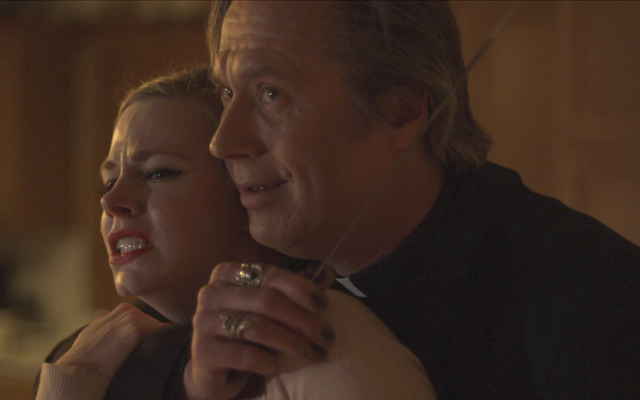
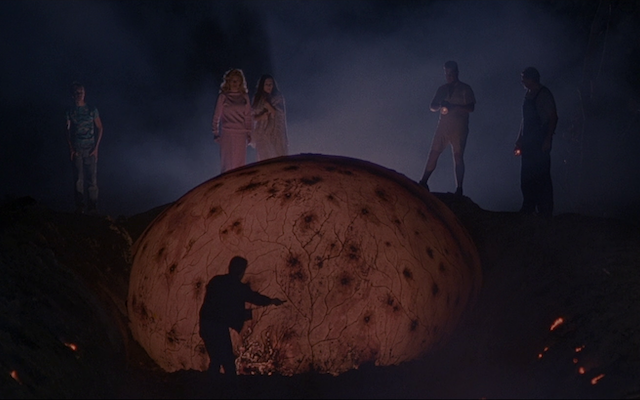
“Evil Dead” B
“G.I. Joe: Retaliation” C
“The Place Beyond the Pines” B+ [About.com]
“Room 237” C+
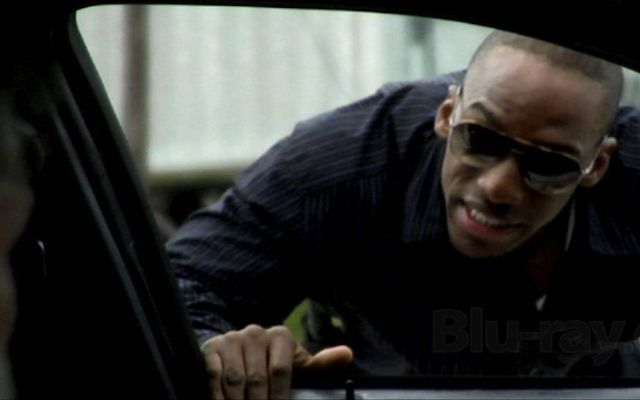
“Scary Movie 5” F [Twitch]
“Simon Killer” B- [About.com]
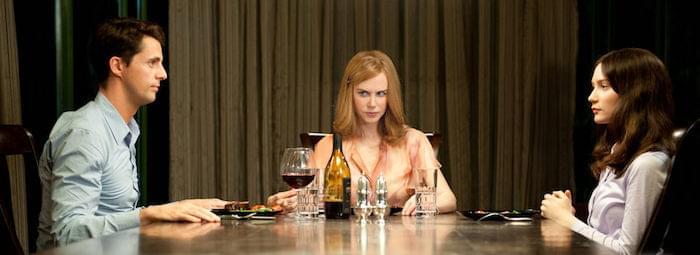
“Stoker” B+ [About.com]
“Upstream Color” B+
“Wrong” B

Other things and/or stuff:

___Snide Remarks #684: “What I Think About What You Think” — Opinions, and the people who have them.
___Snide Remarks #685: “Spring Breaking Point” — Relax and get aggravated at the movies!

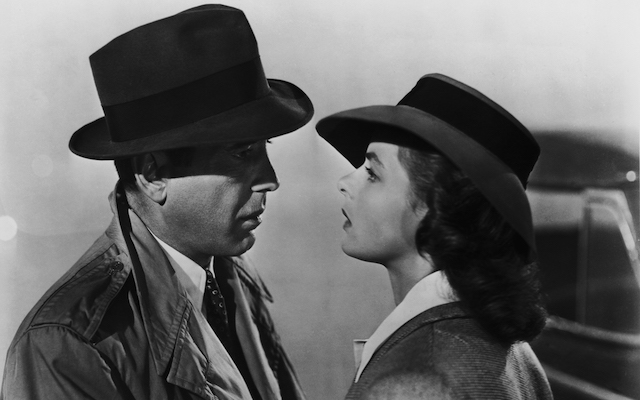
___Eric’s Bad Movies: “Casablanca” (1942). I tried something a little different. [Film.com]
___Eric’s Bad Movies: “Lords of the Street” (2008), starring Kris Kristofferson, DMX, and a guy who isn’t DMX. [Film.com]

___The 8 Most Annoying Movie Marketing Tactics. From character posters to six-second teasers. [Film.com]

___Interview: David Zucker. On how spoofs have changed from “Airplane!” (which he co-wrote and directed) to “Scary Movie 5” (which he co-wrote and produced). [Film.com]

___You’re Old: “Monty Python’s The Meaning of Life” Came Out 30 Years Ago. A sketchy visit to April 1, 1983. [Movies.com]
___You’re Old: “Indecent Proposal” and “The Sandlot” Came Out 20 Years Ago This Week. What a strange double feature that was on April 9, 1993.

___Movie B.S. with Bayer and Snider #154 (3/29). “G.I. Retaliation,” “Admission,” “Ginger & Rosa,” Pitch Me, and more. [MovieBS]
___Movie B.S. with Bayer and Snider #155 (4/5). “Evil Dead,” “Reality,” “Jurassic Park 3D,” personal memories of Roger Ebert, and more and more. [MovieBS]
___Movie B.S. with Bayer and Snider #156 (4/12). “42,” “Trance,” “The Place Beyond the Pines,” “The Sapphires,” “Somebody Up There Likes Me,” Character Casserole, and more and more and more. [MovieBS]

Subscribe to In the Dark, a weekly email with all my latest reviews, DVD releases, and Netflix recommendations.

Follow me on Twitter.

Antiviral

0

If there was any question whether Brandon Cronenberg is the true offspring of David Cronenberg, the matter should be settled by “Antiviral,” a slow-burning body horror that suggests the younger C-Berg is as twisted as his dad. I don’t even want to know what that house was like growing up.

“Antiviral” takes place in a sterile-looking minimalist alternate version of present-day Toronto, in a society where celebrity culture has become so prevalent that people are buying famous people’s diseases. A handsome actor or beautiful supermodel contracts herpes, say, and sells a sample to a licensed clinic, where it is passed via injection to admirers who want to feel a connection to their idols. Coming down with herpes is no big deal. (I’ve done it.) Getting the exact same herpes as the woman on the cover of Vogue, that’s something special.

We’re introduced to this perversity through Syd March (Caleb Landry Jones), a gaunt, sweaty young man who works as a technician at The Lucas Clinic, the premier purveyor of celebrity viruses. A gorgeous model and actress named Hannah Geist (Sarah Gadon) is Lucas’ most in-demand provider of STDs; the clinic has an exclusive deal with her, and the public eagerly awaits news of her latest infections, which are breathlessly reported by the 24-hour TV news cycle. Security is tight — it would ruin the business if the diseases became publicly available, for free — but Syd March has found a way to bring his work home with him and dabble in the black market.

This society’s celebrity fixation runs to even more stomach-churning extremes than selling their viruses, but we’ll leave it at that for now. In the course of establishing his world, Cronenberg makes darkly satirical observations about our real-life gossip culture, all of them astute if not exactly revelatory, and he makes a good case for this absurdity being the logical conclusion to the course we’re already on. (He’s had time to think about it: “Antiviral” is an expansion of a short film he made in 2008.) No doubt making his father proud, Cronenberg treats us to several close-ups of needle injections, rashes, and sores, and the stark white floors and walls of almost every room in the film make for a nice contrast when they become (as they must) spattered with blood.

But once he’s created his world — and done so with effective, calculated precision — Cronenberg runs into a common problem: what to do with it. The plot involves conspiracies and skulduggery, corporate espionage and nefarious dealings. It is the sort of plot that requires Malcolm McDowell to appear and tell Syd, “I’m afraid you’ve become involved with something sinister.” In other words, it’s bland, average sci-fi stuff. Further potential is sapped by Syd’s undefined motives and objectives. We barely know who he, and we know even less about what he wants.

And so it’s fair to say that “Antiviral” is intriguing; it’s just not thrilling. One’s interest is piqued immediately, and I felt compelled to keep watching just to see all the nooks and crannies of Cronenberg’s unsettling but weirdly plausible world. But I never felt engaged in the actual story, which unfortunately makes the 110-minute film feel plodding and ponderous. It’s like a mesmerizing tour of a stunning new state-of-the-art theater, followed by the discovery that the play being staged is an unremarkable one that you’ve seen before. Brandon Cronenberg definitely has promise as a visually minded filmmaker and a teller of gross stories, however, and this is a respectable opening bid.

42

0

The closest “42” comes to revealing anything about the actual personality or character of Jackie Robinson — the first black player in Major League Baseball — is when he privately expresses frustration at being beholden to someone for a kindness. “I don’t like needing anyone for anything,” he says. It’s like the classic job interview scenario. What’s my biggest weakness? Well, sometimes I’m too good at being independent and self-sufficient.

Not that I expected (or wanted) a movie about the dissolution of baseball’s color barrier to dwell on Robinson’s personal shortcomings. You go into a film like this anticipating a pleasant, shiny history lesson and some warm feelings about how a noble spirit embiggens the smallest man, etc. “42” delivers on that, more or less. And besides, I don’t know anything about Jackie Robinson as a person. Maybe he WAS a flawless human being with no interesting imperfections.

But surely writer/director Brian Helgeland (“A Knight’s Tale,” “The Order”) could have found more drama in this inherently dramatic story than is on display here. Robinson, played by charismatic big-screen newcomer Chadwick Boseman, is in the Negro Leagues in 1945 when Brooklyn Dodgers general manager Branch Rickey (Harrison Ford, in bushy eyebrows and a comedic “old coot” voice that’s a mixture of John Goodman and Clint Eastwood) comes calling. A devout, Bible-quoting Methodist, Rickey has moral objections to baseball’s unwritten rule against black players, and economic ones, too: “Dollars aren’t black or white,” he says. “They’re green.” There are lots of black folks in New York, and you can bet more of them will come out to Dodger games if the Dodgers are the first team to hire a black player.

What Rickey needs is a Jesus-like figure who can not only play baseball really well but also withstand the taunts, abuse, and scrutiny without fighting back. Rickey knows, and he convinces Robinson, that even justified self-defense against bigots in the stands and dugouts will reflect poorly on Robinson in the public’s mind. People will remember that he yelled at a guy, not that the guy insulted him first. Robinson agrees to turn the other cheek.

Is this hard for him to do? Yes, but like most elements of the film, it’s conveyed in one simple, easily digestible scene, without much drama. The Phillies’ manager, Ben Chapman (Alan Tudyk), stands near his dugout while Robinson is at bat, yelling the N-word at him over and over again. (I can picture Tudyk’s agent: “You have 300 words of dialogue in the script, and 275 of them are “n*****.”) Robinson controls his anger, then walks into the tunnel under the stands and smashes his bat against the concrete wall in fury and frustration. That aspect of the story has been checked off. Moving on!

But some of Robinson’s early scenes give Boseman a chance to shine. One of the best involves Robinson’s first time at bat for the Dodgers’ minor-league affiliate, when he gets on base and immediately starts testing the limits of what he can get away with. Boseman’s playfulness is a joy to watch, and the sequence hints at Robinson’s stubborn, mischievous streak. It’s gone all too soon.

Still, to criticize “42” very harshly would be like kicking a puppy. It’s too nice, too well-meaning to warrant dislike. Robinson’s fellow Dodgers, including Pee Wee Reese (Lucas Black) and Ralph Branca (Hamish Linklater), support him nicely against the objections of the bigoted players, who all get their comeuppance, you can be sure. The obstacles Robinson faces are presented as minor hurdles, with Robinson’s ability to overcome them a foregone conclusion. Perhaps fearful of being disrespectful, Helgeland is instead overly cautious, refusing to dwell on the hardships for more than a moment before he handles them. There’s very little dramatic tension, but hey, it’s a nice story about nice people who do nice things.

Scary Movie 5

0

I’d be tempted to say that nothing in “Scary Movie 5” is funny, but the outtakes that play over the closing credits show multiple cast members struggling to keep from laughing, so obviously I’m mistaken. Clearly the film is hilarious. Maybe there was a problem with the projection at my theater?

Because what I saw was a boldly uninspired torrent of halfhearted slapstick, interminable poop jokes, and pointless pop-culture references, a veritable tsunami of idiocy cutting a swath of disgust and boredom across the landscape. That it should have been produced and co-written by David Zucker — one of the minds responsible for “Airplane!,” “Top Secret!,” and “Naked Gun,” and the guy who revitalized the “Scary Movie” franchise — adds a tinge of sadness to it. Then again, maybe it’s fitting that the man who helped invent the spoof genre would be responsible for killing it.

Not that the blame is his alone, of course. He and co-writer Pat Proft (another comedy veteran), along with director Malcolm D. Lee (“Undercover Brother”), were subject to the whims of studio executives who dictated which movies they needed to spoof for maximum audience appeal. And by “spoof” I mean “recreate and add poop.” Poop is the magic ingredient for successful parody, as you know. How do you satirize “Paranormal Activity”? Why, you add poop, of course. And what about “Black Swan,” “Inception,” “50 Shades of Grey,” and “Rise of the Planet of the Apes”? That’s a trick question. You don’t spoof them at all, because they’re not horror films and have no place in a horror spoof. But if the men who wear suits and write checks tell you you HAVE to include them, you add poop.

I’ll spend a paragraph telling you the plot, thereby giving it more attention than the filmmakers did. Jody (Ashley Tisdale) and her husband Dan (Simon Rex) become the caretakers of Dan’s brother’s children, and creepy things start to happen in their house. That’s “Mama” (released three months ago) and the “Paranormal Activity” franchise. To bond with one of the little girls, Jody resumes her ballet career (there’s your “Black Swan”), which leads to nothing worthwhile in terms of story, parody, or laughter. The family’s hispanic maid (Lidia Porto) is fat, has hairy arms, wears a bikini, and farts so hard she blows herself off the toilet. I don’t know what movie that’s a reference to, but the presence of farts and toilets makes it COMEDY GOLD®!

There is a section based on “Evil Dead” where Jody and her ballet friend Kendra (Erica Ash, in a role clearly intended for “Scary Movie” stalwart Regina Hall, who declined to appear) stand in the basement of a cabin and recite the evil-summoning incantation, causing the teens upstairs to mutilate themselves. Then they speak the word that ends it, and the teens go back to normal. Then Jody and Kendra, unaware of what’s happening above them, summon the evil again, then end it, then summon it, then end it — back and forth like that for what must be only three or four minutes but which feels an eternity.

The movie is 80 minutes long, including the 10 minutes of credits and outtakes. So the movie is 70 minutes long. Three or four of those minutes are devoted to repeating the gag where the girls unknowingly wreak demonic havoc on teens in a cabin. That’s not to mention the film’s opening sequence, in which Charlie Sheen and Lindsay Lohan make a sex tape. “I have a court date in the morning,” Lindsay says, just one of several thousand lines she and Charlie have that make reference to their real-life misadventures. You know how Charlie Sheen is currently being talked about by all of America, right now, this very minute — er, sorry, two years ago? That’s why. He’s so “of the moment” (the moment being spring 2011).

A curious number of the film’s gags center around hitting Simon Rex in the head or groin. Admittedly, the physical abuse of Simon Rex is pleasing. But it is a sad commentary on the state of 21st-century spoofery when that’s all anyone can come up with for making fun of “Paranormal Activity.” Same goes for the dumb subplot where Rex’s character works with intelligent chimpanzees, all of which — I need hardly tell you — are highly interested in poop. What kind of sick world do we live in where EVEN MONKEYS ARE NOT FUNNY?? Have you no sense of decency, Dimension Films and The Weinstein Company? At long last, have you left no sense of decency??

The Angels’ Share

0

“The Angels’ Share” comes to us from Ken Loach, the socially conscious British director whose “The Wind That Shakes the Barley” won the Palme d’Or in 2006. But “The Angels’ Share,” written by regular collaborator Paul Laverty, is much more lighthearted than the I.R.A.-based “Barley,” being concerned with nothing more than the exploits of some Glasgow delinquents who want to steal some very old, very valuable whisky. It’s the “Ocean’s Eleven” of whisky-heist movies!

And what a charming, sweet-natured comedy it is! Robbie (Paul Brannigan), a young former hoodlum seeking to stay out of trouble so he can care for his girlfriend and newborn son, befriends some of the low-level criminals with whom he’s assigned to do community service. Their supervisor, a kindly, coach-like middle-aged man named Harry (John Henshaw), is a whisky aficionado, and he begins to share his expertise with Robbie and the crew, leading to a scheme to pilfer a few bottles’ worth from a recently discovered cask of rare booze about to be auctioned. (For the purposes of the film, stealing old whisky does not qualify as a “crime.”) Robbie and his pals — including dim-bulb Albert (Gary Maitland) and punk-girl Mo (Jasmine Riggins) — are a fun bunch of tart-tongued Scots, and if their adventures don’t amount to anything of thematic significance, watching them is a pleasure.

To the Wonder

0

Terrence Malick, the idiosyncratic director of “The Tree of Life,” “Badlands,” “Days of Heaven,” “The New World,” and “The Thin Red Line,” probably has as many detractors as he has admirers. His movies tend to be untraditional, after all, and one person’s transcendent, lyrical cinematic experience is another person’s boring, plot-less slog.

The trouble with his latest, “To the Wonder,” is that it really does seem like the sort of movie his detractors say he always makes. It makes those of us who are usually admirers see what the other side is talking about. With its florid narration, non-linear structure, and endless shots of a woman in flowing skirts twirling in fields, on beaches, and in supermarket aisles, it’s dangerously close to being a parody of a Malick movie.

Which is strange, since in some ways it’s different from anything he’s ever done. It’s the first of his films to be set entirely in the present, which makes a lot of difference for a filmmaker so focused on memories and introspection. (The sight of something as mundane as a Sonic drive-thru is jarring — though, as usual with Malick, it’s beautifully photographed.) Premiering at last year’s Venice Film Festival just 15 months after “The Tree of Life” debuted at Cannes, “To the Wonder” is also Malick’s most speedily produced film by a very wide margin: the gaps between his previous projects ranged in size from five years to 20 years.

At any rate, the new film tells its story almost entirely in voice-over, with very little onscreen dialogue. It is the story of an American man, Neil (Ben Affleck), who meets and marries a French woman, Marina (Olga Kurylenko), with a young daughter (Tatiana Chiline). After what we gather is a deliriously romantic courtship and honeymoon, punctuated by Marina’s fawning narration — “I’d never hoped to love again. If you love me, there’s nothing else I need. Love makes us one,” etc. — the new family returns to Neil’s home in Oklahoma. Gone are the ancient and enchanting sights, natural and man-made, that surrounded them when they fell in love. Their present environment is mostly new and ungainly: housing developments, strip malls, the aforementioned Sonic.

Now that the bloom is off the rose, the couple’s relationship grows stagnant. Neil reconnects with a woman from his adolescence (Rachel McAdams), and Marina misses Europe. There is a Spanish priest (Javier Bardem) who waxes rhapsodic — in voice-over, of course; everything is voice-over — about his weakening enthusiasm for his work, though he continues to go through the motions. How he is connected to the main story I will not reveal (because I am not sure).

Let me underscore that what I have just given is a straightforward recreation of a scenario that is not presented in anything approaching a straightforward manner. “To the Wonder” has the dreamlike quality of most of Malick’s work, but more fractured than usual, more ethereal and obscure. We piece the fragments together as we go and assemble the picture in our minds as best we can.

But that process isn’t very rewarding when we’re given so little to work with. Ben Affleck, not permitted to speak more than about 20 lines in the entire film, is stripped of every ounce of charisma. Why bother casting a big star if you’re not going to let him do anything? Olga Kurylenko, lovely though she may be, is likewise neutered by Malick’s obtuseness. There is some poetry in Javier Bardem’s priest’s narrated thoughts, and when that character is on the screen, you catch a glimpse of the tenderness that Malick has shown in the past. “To the Wonder” has the aura of something insightful and beautiful … but only the aura.

Spring Breaking Point

0
Spring Breaking Point

It was 10:30 on a Thursday night, and I was at a movie theater for the first local screening of “Spring Breakers,” which is about four trashy college girls who go to Florida and get in trouble with guns, drugs, and sex. (Note: it’s impossible to go to Florida and not have trouble with at least one of those things.) The movie had opened in New York a week earlier and was already infamous for featuring former Disney stars Selena Gomez and Vanessa Hudgens as two of the girls, all boobs a-flashin’ and suchlike. It’s a sign that they’ve grown out of their “Wizards of Waverly Place” and “High School Musical” personas and want to be grown-ups now, like when Shia LaBeouf left “Even Stevens” in 2003 to become a meth cook and was never seen again.

Just as the movie was starting, four guys came in and sat next to me, in what might have been the only cluster of four seats still open. There was a lot of last-minute seating going on — mostly of teenagers who’d been kicked out earlier by a surprisingly conscientious theater employee who checked their IDs and enforced the “under 17 requires parent or guardian” rule. Now that the heat was off, some of them snuck back in.

(To answer your question, no, I had never in all my life seen a theater employee do this before, and I would not believe it had happened this time had I not seen it with my own four eyes.)

My new seatmates were not among these, however. They were all about 20 years old, stylishly dressed, and heavily cologned. I gathered from the language they spoke and other factors* that they hailed from somewhere in the vicinity of India or Pakistan or thereabouts. A couple minutes into the movie, the fellow seated immediately to my left used his phone to take a picture of the screen. Piracy! In the wild! This was something else I’d never witnessed before, not up close like this. (You’ll notice it didn’t happen at a press screening.) He seemed to have snapped the picture at random, not in an attempt to capture a particular moment from the film. Perhaps it was a new phone and he was testing its ability to take crappy photographs of faraway things in dark rooms.

He took another one about 90 seconds later. I decided now that I had to do something — not because I care about piracy, because I don’t, really, except where it concerns the production of additional “Pirates of the Caribbean” movies, and then I am against it, but because I didn’t want to sit next to some idiot who was going to have his glow-in-the-dark phone out the whole time. I guess this is what those public service announcements mean when they talk about how piracy affects individuals, because here it was, affecting me. It really makes you think.

So I whispered to the guy, “Hey, you can’t take pictures of the movie.” He said, all innocent-like, “Oh, I can’t?” And I said, “No, it’s against the law!” He said “OK” and put his phone away. I wanted to have an additional conversation about whether he REALLY didn’t know he wasn’t allowed to photograph the movie, but this was neither the time (during a movie) nor the place (a movie theater).

A different problem emerged a few minutes later, a problem as old as time: Pirate McShutterbug and his friends started talking. They made brief but frequent comments to each other in ordinary speaking voices. I gathered that they were expressing opinions on the women in the movie, but I don’t know for sure because they were speaking in a foreign language. This brings up a position I have long held, which is that if you’re going to talk out loud during a movie, you should at least have the decency to do it in a language that I, personally, understand.

But having scolded these kids once already, I was reluctant to do it again. I felt out of place anyway: a lone 38-year-old man in a theater filled with couples and groups under the age of 25. This was their territory, not mine. Who was I to tell them how to behave? Besides, I suffer from a condition that most people my age suffer from, whether they will admit it or not, which is that I want cool young people to think that I am cool. Shushing these bozos would be very un-cool.

So I deployed the hood on my hoodie and hoped that the other people sitting nearby would take care of the problem. After each new exchange between two or more of the guys, I waited for one of their peers in the row in front of us to turn around and say, “Hey, bros, chill with the jibber-jabber,” or however the young people talk nowadays. But this never happened, either because nobody else minded the chatter, or because everyone else was, like me, waiting for someone else to take action.

Well, after putting up with this for only like 45 minutes or so, I DID take action. I leaned over to the main offender, two seats away from me, and said, “Hey! Come on!” And then I got up and moved to a different seat.

Now here’s the same story from the point of view of the guy next to me.

“We were a little late to the theater because we were doing a lot of cool things in our stylish clothes, and the only four seats we could find together were next to this weird loner who was the oldest person in the room. I had to sit right next to him. First thing he did was hassle me about taking pictures of the movie with my phone, like it’s any of his business. Then he put his hood up and sat there silently like a psycho while the rest of us enjoyed pointing out which of the girls in the movie had boobs we wanted to see. Then out of nowhere he’s like, ‘Shut up, you guys!’ and then he stormed off to go sit somewhere else. Probably so he could find someone to stalk and kill. This is why I hate going to the movies.”

*skin tone, but I don’t want this to sound like a race thing

Upstream Color

0

Ever since “Primer” won Sundance’s grand jury prize in 2004, indie-watchers have been wondering what its writer-director, Shane Carruth, would do next. “Primer” was his first movie, you see, and he made it for $7,000. Who is this guy? Where did he come from? What other treasures are stored in his nerd brain?

Now, at last, we have answers. Sort of. Carruth’s second film is “Upstream Color.” We know that much for sure. It’s a ponderous, ethereal allegory about our interconnectedness with nature (maybe?), and it has as much in common with “Primer” as a shoe tree does with an apple tree. If Carruth didn’t appear onscreen in both films, you’d never know they had any connection to each other.

I say that not as a criticism, just to indicate that it probably doesn’t matter what you thought of “Primer.” “Upstream Color” is a different thing entirely.

Telling you what literally happens won’t help, but here goes. A woman named Kris (Amy Seimetz) is dosed with a peculiar, mealworm-based drug, and subsequently swindled. A pig farmer (Andrew Senseig) who is also a sound engineer and possibly a doctor saves her. As she recovers from the ordeal, she meets and falls in love with a man (Carruth) who keeps remembering her life’s memories as his own. Thoreau’s “Walden” has an importance.

Carruth relates this strange tale with some linear jumps, dialogue-free sections, and a few other flourishes, but the story itself isn’t complicated. (Weird, sure. Not complicated.) What it means is another matter. Since we’re clearly not meant to take it literally (or at least not just literally), we look for clues to its interpretation. We have to: taken merely at face value, the story is cold, dispassionate, with characters we have no reason to care about. It’s not particularly visually arresting or atmospheric. If that’s all there is to it, then the film is turgid nonsense.

That’s how it felt to me while I was watching it. No particular interpretation manifested itself, and since I couldn’t find the thread that would tie it together, the film rolled over me like a swampy river of opaque randomness. Movies that need to be figured out, or that require multiple viewings to fully appreciate, aren’t a problem; I just found this particular one unfulfilling.

But get this. In the first six hours after I saw the film with a couple hundred other Sundance-goers, and in the course of discussing it with people, I heard no fewer than four legitimate, plausible interpretations of its story. It’s an allegory about love. It’s an indictment of the way we over-medicate ourselves. It’s about mankind’s turning away from nature, God, or whatever force rules us. It’s a rumination on free will. No doubt there are more ideas. Those are just the ones I encountered in conversation.

I don’t have an opinion on what the “right” interpretation is. I’d need to watch it again to see how it resonates now that I’ve mulled it over and heard input from other viewers. What’s noteworthy, I think, is that I do want to see it again. Discussing it with people who got different things out of it has made me eager to reexamine it, to see what might be there for me. So “Upstream Color” is interesting; it just doesn’t get interesting till after it’s over.

Evil Dead

0

The boilerplate justification for remaking a beloved film is that someone wanted to “introduce it to a new generation,” or “bring it into the modern world,” or something along those lines. Most remakes succeed only in introducing money into the filmmakers’ pockets (if that), and quite a few come across as pale, unworthy imitations. “Evil Dead” is the rare example of a remake that works, both as a respectable reiteration of Sam Raimi’s 1981 cult classic (which had a “The” in the title) and as a stand-alone gore-fest.

It’s also, not incidentally, among the bloodiest movies I’ve ever seen, and the writer/director — Fede Alvarez, making his feature debut, with Raimi on board as a producer — says none of it is CGI. Nothing but good old-fashioned red-colored corn syrup (or whatever they use) for this crew — torrents of it, gushing and spurting from this wound or that at regular intervals.

The basic scenario from the original is intact. Five young people, two male and three female, visit a dilapidated cabin in the woods, fully equipped with an unsavory basement, where they discover a sinister book and inadvertently summon evil forces that turn one of them into a raging fiend. The key difference this time is that there’s a serious reason for the excursion: one of the girls, Mia (Jane Levy), is trying to kick a nasty drug habit by going cold turkey. Her absentee brother, David (Shiloh Fernandez), has come to help, joined by his girlfriend, Natalie (Elizabeth Blackmore) and two of his and Mia’s friends, Eric (Lou Taylor Pucci) and Olivia (Jessica Lucas).

Alvarez doesn’t do much with the addiction-as-metaphor-for-demonic-possession angle, but it doesn’t distract, either. The focus, of course, is on ratcheting up the tension as horrific things begin to happen, and then gripping us by the throat and not letting go once all hell breaks loose. In these areas Alvarez performs gruesomely well, some wheel-spinning in the third act notwithstanding. The tone is intense, occasionally darkly funny (though not as much as in the original), and there’s a gleeful malevolence to the violence that gives it the “dare you to look” vibe of a particularly intense Halloween haunted house. Painful, awful things happen to people’s limbs and parts — there’s as much “body horror” here as any other kind of horror — but it doesn’t feel mean or torturous like, say, the “Saw” movies.

It lacks a strong central character, or even a memorable supporting one. Aside from Mia’s addiction and misery (which Levy performs with gusto), the only notable character-related detail is that Olivia is a nurse. This “Evil Dead” isn’t as flavorful as the old one, and it doesn’t try as many different things. But on the promises it does make, it delivers.

Simon Killer

0
Simon Killer

“Simon Killer” opens on a blue-filtered panoramic view of Paris that turns into a red-filtered spasm of strobe lights before cutting to Simon (Brady Corbet), a handsomely scruffy young man, asleep on a bus. The implication is that the light show — which was accompanied by a reggae-tinged pop song that sounds like it was played on circus instruments — was Simon’s dream state. Now that we’ve been granted access to the inside of his head, we’re going to be stuck there (for better or worse) for the rest of the movie.

This is an erotic psychological drama, not nearly as thrilling as its title suggests, but intriguing in the way it boldly offers for our examination a protagonist who is thoroughly unlikable and only barely, occasionally sympathetic. Not at first, though. In the beginning, Simon — a recent college graduate who has fled to Paris after a painful breakup — seems average enough. He speaks middling French, he smokes like a European, and he’s educated: he studied neuroscience, in particular the relationship between the eye and the brain. His casual dismissal of his cheating girlfriend as a “whore,” while coarse, is forgivable under the circumstances.

But soon enough we notice troubling details. His correspondence with his ex-girlfriend and his mom is full of misrepresentations about his experiences. Though his emails to the ex are friendly and cordial, her cold, wary response suggests their breakup wasn’t nearly as one-sided as he told us. What else might he have lied about?

He meets a prostitute named Victoria (Mati Diop, also the film’s co-writer), first in a professional capacity and then socially, whom he manipulates in his needy, narcissistic way. Simon uses people; Victoria is used by people. But they both fill the other role sometimes, too: Simon, in a foreign country and not totally fluent in the language, is easily taken advantage of; and Victoria, though a prostitute, is no victim. She knows how to get what she wants. There’s a crucial and somewhat shocking moment when the power dynamic between them changes is a symbolic but unmistakeable way. The question then is how Simon will react to the shift.

The movie was directed and co-written by Antonio Campos, whose under-seen 2008 gem “Afterschool” — about a video-obsessed teen who films two students’ accidental drug overdose — was a similarly quiet and disquieting look at disaffected youth. Campos shoots much of “Simon Killer” from one of two angles: following Simon from behind, or with the camera placed at crotch level, disinterestedly capturing whatever transpires in front of it. Sometimes it pans slowly back and forth across the room without regard for where the action is taking place. Campos uses long, unbroken takes, making even the steamiest action (and there is plenty) appear matter-of-fact.

This emotionlessness weighs the film down, though. As compelling as it may sound to watch a budding young sociopath come into full bloom, one’s interest level is bound to wane when we’re kept so detached from him. It is perhaps ironic that even though the story is told entirely through Simon’s eyes, and is greatly influenced by his imbalanced train of thought, we never really understand what’s going on with him. We’re fascinated as he becomes an increasingly unreliable and erratic source of information. But the climax, when it finally does come, is as un-climactic as everything before it. There’s a fine line between dispassionate and boring.

But I do like the film’s cool, muted color palette (with cinematography by Joe Anderson) and the general vibe of un-emphasized creepiness. There’s a highly engaging dramatic thriller hidden somewhere in this lugubrious, tamped-down Parisian nightmare.

Casablanca

Casablanca

(Note the publication date.)

I’m too young to remember it, but you know what was apparently a big deal? World War II! It was such a big deal that while it was going on, most of the movies that came out were actually about the war, like there was nothing else worth mentioning. One of these is our subject this week, a melodramatic, turd-like obscurity — a meloturdscurity, if you will — called “Casablanca.”

Hoo boy, what a stinker! Where my intern dug this one up, I have no idea. You can tell a movie’s going to be bad when it starts with that cheesy 1940s narrator (every film from that decade must have used the same guy) laying it on really thick about The War, and all the movie can come up with for a visual to underscore the importance of it is … footage of a classroom globe. Eh, we can’t afford to show you the war. Just take our word for it, there’s a war — and it’s happening on a planet that looks like this!

According to the movie, Casablanca is a city in northern Africa where people who want to get away from The War (i.e., everyone?) can hang out while they wait for exit visas. Casablanca is not in the war because it’s owned by the French, who haven’t gotten around to surrendering it yet. So instead of having a war they just have Nazis hanging around, causing trouble but not technically causing trouble, like an annoying brother next to you in the backseat during a car trip saying, “I’m not touching you! I’m not touching you!”

To pass the time while waiting for their papers, people in Casablanca drink a lot. Their provider is Rick Blaine (Humphrey Bogart), proprietor of an American-style cafe reminiscent of the cantina in “Star Wars,” only with more grotesque creatures, e.g., Peter Lorre. Rick himself is a stubby, toad-like man with a monstrously oversized cranium that is not in proportion to the rest of his body. He looks like a theme park mascot. Rick is fond of saying “I stick my neck out for nobody,” but it’s only because if he did, he would tip over from the weight of his giant Easter Island head. Also, not for nothing, but Rick looks like he probably always smells like cigarettes and B.O. But don’t worry, it’s not like he’s the romantic lead in a movie or anything.

Rick’s only friend is Sam (Dooley Wilson), the cafe’s piano player, whom he treats like a human jukebox. One of the filmmakers’ boldest choices was to cast in the role of Sam an actor who evidently had no idea how a piano works, since the way he pretends to play it is to simply flop his lifeless hands haphazardly on the keyboard. He sings without a microphone, too, yet can be heard over the band that accompanies him. Casablanca is a magical place!

The movie farts around for a while with jokey comedy bits involving colorful local characters, as if it’s the pilot episode of a sitcom (specifically, “Cheers”). French weasel Cap. Renault (Claude Rains) is nervous because a Nazi he’s trying to impress is coming to Rick’s tonight to witness the arrest of a resistance fighter, and he wants everything to be juuuust right. (Doh! What if Lucy burns dinner??!) Renault also has the important job of holding conversations with Rick in which he lists things Rick has done before, to provide exposition. This all takes a long time. Hey, movie, isn’t there a war or something? Isn’t that classroom globe in peril? PICK UP THE PACE, MOVIE. I won’t ask you again.

Well, into this situation comes the aforementioned Nazi-perturber, Victor Laszlo (Paul Henreid), accompanied by his gorgeous lady friend, Ilsa (Ingrid Bergman), who recognizes Sam the piano player. Did Ilsa and Sam used to date?? Ha ha, no; it’s 1942. But Ilsa DID used to date Rick, and she knows Sam because I guess Sam has always been Rick’s friend/pianist/soundtrack. She’s like, “Hey, Sam, what’s up? Play that song. You know, the theme from ‘Casablanca.'” And Sam’s like, “No, Miss Ilsa, I don’t want to.” And she’s like, “PLAY THE DAMN SONG, SAM!” And Sam’s like, “YOU’RE NOT THE BOSS OF ME!!” But then he plays it, and Rick storms out of the back room and says angrily, “I thought I told you never to play that song!” and then he sees Ilsa and goes all homina-homina-homina.

Later that night, after the bar has closed, Rick drinks booze and has flashbacks while Sam provides live accompaniment. We learn that Rick and Ilsa were two strangers doin’ it in Paris before the Nazis showed up, and then she ditched him without an explanation. (The obvious explanation is that she is too beautiful to go on having sex with a dog-faced cartoon character, but he did not take the hint.) Now, a few years later, Rick is still steamed about it. He can’t even muster the civility to say “Here’s lookin’ at you, kid,” which he used to say constantly (400 times just in the flashbacks we see).

Ilsa is with Victor now, but she could at least explain to Rick why she left him so suddenly, right? Oh, sure, she could. But maybe first she should hem and haw and stall and be melodramatic about it, forever. Yes. That’s absolutely what she should do. She says she’s reluctant to tell Rick the whole story because he wouldn’t understand. Yet the “whole story” is this: she was married to Victor; she thought he had died in a concentration camp; she hooked up with Rick; she learned Victor was alive after all; she immediately ended the affair. Which is all pretty easy to understand, actually. You hear that summary and you think: Oh, OK, sure. That makes sense. Thank you. Maybe very simple stories with clear causes and effects were harder to comprehend in the ’40s, because of the war?

It doesn’t matter, though, because Rick is NOT letting go of his grudge. He has some letters of transit that Victor and Ilsa need to escape Casablanca, but he won’t hand them over, purely out of spite. He is being a real pill about this. (Our hero, ladies and gentlemen!) Meanwhile, at the bar, some people sing a French song louder than the Nazis sing a German song, so the Nazis shut down the bar like a bunch of babies. Congratulations, Rick. You’re as much of a sore loser as the Nazis are.

Finally, after adamantly refusing to get involved, Rick’s stubbornness subsides and he starts acting like a true American, which is to say he whips out a gun and starts bossing people around. He forces Renault to let Victor and Ilsa get to the airport, then shoots Maj. Strausser. (This was necessary because it was against the Hollywood Code for a movie to end without the male lead killing anyone.) In the grand tradition of Hollywood endings, the repercussions of Rick’s actions are casually dismissed, and he and Renault become best friends who go around covering up murders for each other, probably. I’m pretty sure the reason everyone was so happy when the war ended is that it meant they didn’t have to watch movies like this anymore.

— Film.com

Wrong

0

Quentin Dupieux’s last film, “Rubber,” was about a sentient automobile tire that used the power of its mind to kill people. His followup, the aptly titled “Wrong,” is more absurd and more laugh-out-loud silly than “Rubber”; it’s also less focused and more pointless. But I’m not sure if those are criticisms or merely observations.

“Wrong” is what would happen if Charlie Kaufman, David Lynch, and Samuel Beckett had a baby, then left it to be raised by crackheads who had gone to film school. In basic terms, it’s about a man named Dolph Springer (Jack Plotnick) whose beloved dog, Paul, has gone missing. It is revealed that Paul was dognapped on the orders of a mysterious man named Master Chang (William Fichtner), a self-help guru and author of the book “My Life, My Dog, My Strength.” Master Chang’s mission is to help people appreciate their pets better by temporarily taking them away, but something has gone awry with Dolph and Paul.

That plot summary is the island of comparative sanity in a frothy ocean of random, arbitrary nonsense. Some of it involves picking at a minor thing until it becomes absurd, like when Dolph and a pizza parlor cashier (Alexis Dziena) discuss the company’s logo at length. But more of the film is based on weirdness that’s even less realistic: Dolph’s gardener, Victor (Eric Judor), reports that a palm tree has turned into a fir tree overnight, which it has indeed; it’s always raining inside the office where Dolph works, and no one ever says anything about it; firefighters ignore a burning van and check their text messages instead. You get an idea of the film’s tone in one of the first shots, a close-up of Dolph’s alarm clock as it switches from 7:59 to … 7:60.

Most of this is pretty funny. When it isn’t, you don’t have to wait very long for another strand of goofiness to take its place. The one thread that can truly be called a subplot, involving Victor and the pizza girl, falls flat — it’s a different kind of weird from the rest of the movie — but it’s impressive that a movie this unabashedly surreal works as much as it does. In general, there’s a reassuring uniformity to Dupieux’s style: in this world, everyone’s insane, which means no one is.

As a fan of “Rubber,” I’m a little disappointed that “Wrong” doesn’t work on as many levels as that meta-meta-referential Absurdist horror film did. “Rubber” was a commentary on scary movie formulas and audiences, but “Wrong” isn’t a commentary on anything. It’s silliness for silliness’ sake — a fine approach, sure, but one that won’t make much of an impact.

Room 237 (documentary)

0

“Room 237” is a shoddily assembled but entertaining documentary about several crazy people’s crazy theories about hidden messages in Stanley Kubrick’s “The Shining.” One enthusiast is convinced the film is all about the Holocaust; another asserts that every time the movie deviates from Stephen King’s novel, it’s because Kubrick is inserting a clue about his involvement in faking the Apollo 11 moon-landing footage. (Nobody’s saying we didn’t land on the moon. That would be a crackpot theory! All they’re saying is that the footage we saw of it was fake.)

Director Rodney Ascher uses clips from “The Shining” and other films to illustrate what’s being discussed by the unseen enthusiasts, whose names are given once at the beginning and not mentioned again. Some theories about the film’s layers make sense and can be reasonably supported by what’s on the screen. (The hotel’s floor plan is shown to be impossible, for example.) Other theories are just silly. (The placement of a tray on the hotel manager’s desk is said to represent his erection, for example.) “Room 237” is inelegant in the way it assembles all this stuff — it seems to dump it on the floor and say, “Here, you sort this out” — but anyone who’s ever obsessed over the subtext of a beloved movie will find it amusing.

Admission

0

Everyone who sees “Admission” will be someone who likes Tina Fey and Paul Rudd. We know this because everyone likes Tina Fey and Paul Rudd. The downside is that everyone will leave “Admission” thinking: That movie was not worthy of Tina Fey and Paul Rudd. Fortunately, it won’t reflect negatively on the stars themselves, who remain likable — and the movie isn’t un-likable, just weak — and we’ll forget the whole thing ever happened.

Fey plays Portia Nathan, a Princeton admissions officer who risks betraying her impartiality when she takes an interest in a bright, odd applicant named Jeremiah (Nat Wolff), whose high school adviser has taken him under his wing. The adviser, John Pressman (Rudd), a world-traveling do-gooder with an adopted African son (Travaris Spears), is relentlessly enthusiastic on Jeremiah’s behalf, and irksome to Portia. She can’t relate to his near-parental concern for the kids, having had her own desires for parenthood squashed by a poor relationship with her mother (Lily Tomlin), a radical feminist who wishes Portia would call her “Susannah” rather than “Mom.”

Lily Tomlin is welcome to play Tina Fey’s mother anytime she likes, and Fey and Rudd (who surprisingly have not been in movie together till now) bring their respective charms to characters who are right in their wheelhouses. There are some pleasant laughs in the film — which was directed by Paul Weitz (“About a Boy,” “American Pie”) and adapted by Karen Croner from Jean Hanff Korelitz’s much more contemplative novel — and even a few sweet moments in the scenes dealing with young potential, the children are our future, etc. But after resisting formulas for most of its running time, the movie succumbs in the last act to some cliches from the rom-com genre, and overstays its welcome before petering out unremarkably.

The Place Beyond the Pines

0

“The Place Beyond the Pines” is a brooding drama of epic scope set in the New York town of Schenectady, whose name comes from a Mohawk word loosely translated as “the place beyond the pines.” (Thanks, Wikipedia!) So that explains the title. But there’s another meaning hinted at in the film itself, as more than one character on more than one occasion heads into the woods with the intention of going past where he’s gone before, not just geographically but morally. Schenectady is the literal “place beyond the pines,” but it’s also a symbol of the cycles and ruts we get trapped in and strive to move beyond.

Directed and co-written by Derek Cianfrance (“Blue Valentine”), the film ultimately has a sprawling scale that spans two generations of two families. It could have been a miniseries — perhaps should have been, to give the complex relationships more room to develop. But there’s no indication of that in its intimate beginnings, where the focus is on one person: Luke (Ryan Gosling), a tattooed, perpetually dirty stunt motorcyclist in a traveling carnival, one of those guys who ride in gravity-defying circles inside a spherical cage. Upon learning that a fling with a local girl, Romina (Eva Mendes), has produced a child, he resolves to stay in town and be part of his son’s life. Romina has mixed feelings about this; her boyfriend, a stable provider named Kofi (Mahershala Ali), is decidedly not pleased.

Luke’s intentions are noble, but he barely has money to support himself, let alone contribute to the baby’s upbringing. A seedy mechanic friend of his, Robin (Ben Mendelsohn), suggests a simple bank robbery — not a lavish heist, but an old-fashioned stick-up by a masked bandit, with Robin as getaway man. You don’t even need a real gun. Luke, embracing the idea, is disconcertingly cavalier about it (“Not since Hall & Oates has there been such a team!” he jokes), and we come to see that his cool, meek demeanor — a Gosling specialty — has an unpredictable, erratic side to it (another Gosling specialty).

At a point much later in the movie than major characters are usually introduced, Luke encounters Avery Cross (Bradley Cooper), a heroically injured rookie cop whose career ambitions, like Luke’s, are partly driven by a desire to take care of his family. But in addition to his worried wife (Rose Byrne), Avery feels pressure from his retired judge father (Harris Yulin), who’s pushing him down a difficult path, and from seasoned-but-shady colleagues like Deluca (a typically imposing Ray Liotta), who expect him to toe the line with regard to their extralegal activities. This pattern of fathers and sons trying to please each other while also escaping one another’s influence is repeated again when we meet A.J. (Emory Cohen) and Jason (Dane DeHaan), teenagers with opposite upbringings but a shared disconnect with their fathers.

Cianfrance and co-writers Ben Coccio and Darius Marder take advantage of the atypical narrative structure by using it to bring out parallels in the three stories. As the sins of the fathers are visited on the heads of the sons, we see history repeat itself, often in ways that the characters themselves don’t realize. The point is that our actions, even righteous ones, have consequences we can’t predict or control, and that who we are is a matter of both nature and nurture.

Gosling, who also starred in Cianfrance’s “Blue Valentine” and looks like his younger, handsomer brother, has proven a useful avatar for the director’s examination of well-intentioned but messed-up men. Gosling’s puppy-dog cuteness, beaming out from under the grime of the character’s ratty T-shirts and acid-wash jeans, can’t help but make him sympathetic to the end. Cooper does respectable work as the conflicted cop, and the young men cast as teenagers do what they can with somewhat limited screen time.

That may be the film’s only notable shortcoming: not having the time it needs to really explore the parallels and reverberations within these stories. (It’s rare to observe that a 140-minute movie should perhaps be longer, but here we are.) “The Place Beyond the Pines” bites off a little more than it can chew in that respect, but it’s still a deeply affecting drama with a powerful impact. Cianfrance is one to watch.

G.I. Joe: Retaliation

0

From what I recall of “G.I. Joe: The Rise of Cobra” — which is to say, from what I gather by reading my review of it — the 2009 franchise starter was silly but not terribly stupid, as if an enthusiastic group of 10-year-old boys had been given $175 million to bring their toys to life. The sequel, “G.I. Joe: Retaliation,” has a new director (John M. Chu, from the “Step Up” franchise), new writers (“Zombieland” duo Rhett Reese and Paul Wernick), and a less juvenile approach. This one’s less overtly goofy — or perhaps just less aware of its inherent goofiness — though it does have Jonathan Pryce as the U.S. president saying, “Get me the G.I. Joes!” the same way one of those 10-year-olds might say it.

(The U.S. president is never given a name, by the way. When he talks on TV, the news channel’s caption reads “U.S. President Addresses Nation,” like maybe even the news people don’t know what his name is.)

The story involves the Cobra organization’s infiltration into the highest levels of power, leaving the dismantled G.I. Joe operation — led by Roadblock (Dwayne Johnson), Lady Jaye (Adrianne Palicki), and Flint (D.J. Cotrona) — to uncover the impostors and restore order. Walton Goggins has an amusing turn as a sadistic warden at a high-tech underground prison where villains are kept; Channing Tatum reprises his role from the last film as a G.I. Joe named Duke, and in that capacity produces a few enjoyable moments of rapport with Roadblock; and of course Dwayne Johnson is 10 pounds of charisma in a five-pound bag. And is that Bruce Willis as a retired Joe? Sure, why not!

There’s a terrific action sequence set atop a mountain that involves zip-lining ninjas and much high-spirited camerawork, and there’s the occasional bon mot that warrants a chuckle. But I’d be hard-pressed to call any of it “exciting”; mostly the film just chugs along, steadily going from one plot point to the next, neither engaging us nor boring us. Look, this is the second one. If the fine people at Hasbro haven’t figured out by now what approach to use to turn their property into a dynamic movie franchise, maybe it’s time to give it a rest.

What I Think About What You Think

0
What I Think About What You Think

As the old saying goes, opinions are like anuses: everybody has one, and everybody thinks theirs doesn’t stink, and some are dangerously unpredictable and will not hold up under scrutiny and have a tendency to make others uncomfortable. Who among us has not at one time or another been offended by the tenor of someone’s loud, squawking opinion?

The question is, what should we do about it when someone holds a belief we don’t agree with?

Roger Ebert, the legendary movie critic and thumb-haver, recently wrote a blog entry called “How I am a Roman Catholic.” Since he doesn’t believe in God, it basically boiled down to: “Eh, I’m not, really.” But one paragraph, about birth control and abortion, caught my attention. Ebert wrote:

“I support freedom of choice. My choice is to not support abortion, except in cases of a clear-cut choice between the lives of the mother and child. A child conceived through incest or rape is innocent and deserves the right to be born.”

Ebert is an outspoken liberal, so I was surprised that this was his view, since it is my understanding that liberals love abortions and would just go out and have them all the time if they could, for fun. And in the awful cases of rape or incest that Ebert refers to, even plenty of conservatives are OK with abortion. It’s something most people agree on — and here’s Ebert, famed lefty, proponent of Hollywood smut, and unapologetic Siskel-coddler, saying “a child conceived through incest or rape is innocent and deserves the right to be born.”

Notice I said I was surprised by Ebert’s position (which I don’t entirely agree with), but I wasn’t outraged or infuriated. Why? Because my medication has left me numb to all passions. But also because his opinion doesn’t affect me. It doesn’t affect anyone but him and the women in his life. He wasn’t saying that this should be the law. Quite the opposite: he said, “I support freedom of choice.” Then he explained what HIS choice would be. Now, it is unlikely that Ebert himself will ever be pregnant — he is far past his reproductive years, and also a man — but presumably he means that if his wife, daughter, niece, or close friend were considering abortion, his advice to her, to the extent that she asked him for it, would run along these lines. Still, it would be HER choice. He is clear on that.

But boy howdy, did some of his readers ever get mad at him for having this opinion! Like many poorly reasoned rebuttals, these were expressed by anonymous cowards in the comments section. A sampling:

I cannot agree that a child conceived from rape “deserves” to be born. As a woman, I have no choice but to believe that [no] child should be born that may not be loved or supported. It must be the choice of [the] pregnant woman. [… which is WHAT EBERT SAID]

The woman who is raped is also innocent. She deserves a say in the matter. [… which is WHAT EBERT SAID]

your abortion stance, if law, would result in millions of women dying from illegal abortions. [Good thing he didn’t say it should be law! Good thing he said the opposite of that!]

Uh-huh. So what does the raped woman deserve? Not the basic human right of control over her own body? [No! The opposite of that! Like he said! In the same paragraph!]

Do you see what happened here? Ebert gave his opinion on a subject, stating up front that he did NOT believe this opinion should be enforced as law — and people got angry with him JUST BECAUSE HE FELT THIS WAY. Because it’s not the belief they think he should have.

This is what’s dangerous, my friends: scolding someone merely for HAVING A BELIEF. Unless you are a pregnant woman within Roger Ebert’s sphere of personal influence, his opinions on abortion have nothing to do with you. You can disagree with them, obviously. But to object on the grounds that his opinions are “wrong,” and that he shouldn’t have them, is uncomfortably close to the realm of Thought Police.

Let’s say I’m a racist. Let’s say I believe that Eskimos are an inferior race and that I want nothing to do with them. (This is hypothetical, of course. I know that “Eskimos” are not real.) This is my right as a human being and an American. I can hate Eskimos all I want. That is none of your concern. You can disagree with me, of course, and think I’m a narrow-minded fool for feeling this way. You can tell me right to my face that you think that. That’s your right, too, just as hating those whale-hunting, seal-eating sub-humans is my right.

What you cannot do is tell me I’m not allowed to think that. Well, you can tell me. But you’ll be wrong. I am allowed to think that.

The only way my opinions matter to anyone other than me is if I act on them: if I try to drum up support for anti-Eskimo legislation, for example, or if I put up a “No Eskimos” sign at my place of business, or if I am abusive to the Eskimos I encounter in my daily life, perhaps shouting “Polar bear!” in a crowded igloo. Merely having a belief, no matter how cockamamie, is not a danger to society in and of itself. It’s only when I use that belief to infringe on others’ rights that it becomes an issue. That’s when you can start objecting.

The reason I feel this way (about opinions, not Eskimos) is that we all cast judgment on one another ALL THE TIME. And as long as that’s all we’re doing — having an opinion — it’s not worth getting worked up about. It’s OK to believe that people who do certain things are sinners who will go to hell. It’s OK to look with disdain upon people who wear pajama pants in public. It’s OK to never want your daughter to date an Eskimo. Yes, we need to be civil and decent to the people whose views and actions we disapprove of, and afford them the same rights and courtesies as everyone else. I want to be abundantly clear about that. But we’re allowed to go on disapproving of them.

Oh, you don’t want anyone judging you or thinking ill of you? You think “tolerance” means everyone should not only let you do whatever you want but also approve of it? Sorry, it doesn’t work that way. People think that other people’s thoughts and actions are stupid or wrong or bad. That’s just how people are. We all do it. We do it all the time! You think she gave up on her marriage too easily. You think they have too many children. You think his girlfriend is too young for him. You think the reason he’s overweight is that he’s lazy. You think she should quit daydreaming and get a real job. And yet you’re still friends with these people. You still love them, despite your distaste for some of their behaviors. And they love you, even though they think your political views are regressive, and your taste in music is lousy, and you throw your money around ostentatiously.

Let’s get back to Ebert’s abortions. He doesn’t support them “except in cases of a clear-cut choice between the lives of the mother and child.” So if you are a woman who has an abortion for some other reason, does that mean Ebert thinks less of you? Does it mean he’s judging you? I doubt he would say so, because he’s generally a decent person and it would be unkind. But sure, maybe deep down he would think that you made the wrong choice. But — and this is my point — so what? As long as his judgment of you doesn’t manifest itself in acts that restrict your rights, his opinion is his to have. That’s my opinion, anyway.

Lords of the Street

0
Lords of the Street

Our subject this week is “Lords of the Street,” which was previously called “Jump Out Boys” for its theatrical release, which turned out not to exist. It stars DMX, whose real name is Earl Simmons, and the onscreen credit says it was “directed by Mr. V,” whose real name is Amir Valinia. Beware of any movie where the star, the director, and the movie itself work under aliases.

Now, when I say that “Lords of the Street” “stars” DMX, obviously what I mean is that he gets top billing even though he doesn’t show up till it’s half over, plays a character whose purpose and identity are not explained, and only has three minutes of screen time. That is a very cushy gig for someone with top billing. Is DMX perhaps also the executive producer of this movie? In a strange coincidence, YES!

Having discussed the abnormalities in the film’s title, casting, and contractual arrangements, we are obligated now to turn our attention to a far less interesting topic, the actual movie, a cheap-looking “Lethal Weapon”-ish puddle of drool set in New Orleans. The married-with-kids cop who is getting too old for this shiz is Raymond, played by Kris Kristofferson (or, in simplified notation, Kris2tofferson). His young, handsome, unmarried partner is Travis Roundtree, played by a model-turned-actor named Ameer Baraka. Since DMX and Kris Kristofferson are listed first in the credits, and since you have only a vague idea of what DMX looks like (tall, black, slender, bald), and since this Baraka fellow fits the same description, it is possible that you will watch more than 30 minutes of “Lords of the Street” before you realize that the two cops are NOT being played by DMX and Kris Kristofferson. It is even possible that you will have jotted references to “DMX & Kris” in your notes, which you will have to scribble out when DMX actually arrives and you’re like, “Oh, yeah, that’s DMX. I feel like a racist now. I’m not going to tell anyone about this.” Or at least that is the impression I get.

Anyway, Raymond and Travis are “bad boy” cops, the kind of lovable imps who do naughty things like dunking an informant’s head in water to make him talk, or putting a gun in a guy’s mouth to make him open a storage shed without a warrant. Zoing! What cut-ups they are! Their blustery lady boss, Capt. Jeffries (Shanna Forrestall), is always chiding them for their unorthodox methods, their flamboyant style, their flagrant violations of the Constitution, etc. But hey, they get the job done. Capt. Jeffries even says to Travis, “You might be a hothead, but you’re the best damned detective we have on this force!” — yes, those actual words, uttered in the 21st century, not in a parody of cop movies but in an actual cop movie.

The guys are called into action when a notorious druglord named Santiago (Armando Leduc) escapes from prison, which is frowned upon, even in New Orleans. Santiago has to get the $15 million in drug money that he squirreled away before he was arrested and return it to the cartel boss, who is his uncle but will have no problem killing him if he doesn’t produce the cash. (If we’re being honest with ourselves, we all have at least one uncle who has the capacity to murder us.) Santiago doesn’t know where the money is now because the only other person who knew about it was his girlfriend, Maria (Ciera Payton), who later testified against him in court and is therefore a) no longer his girlfriend and b) probably not going to tell him where the money is.

Maria has wisely gone into hiding, but Travis is able to find her, protect her, and have sex with her. This pleases Travis’ landlady, Mrs. Wong, a busybody who is always asking when he’s going to settle down with a nice girl, or, failing that, hook up with a druglord’s traitorous moll. While Travis is handling this aspect of the case, Raymond — and I feel the need to remind you that Raymond is played by a 72-year-old Kris Kristofferson — is busy having frequent sex with his wife, because she is ovulating and trying to conceive. How many times do you think you need to hear Kris Kristofferson having sex? If your answer is zero, you should cover your ears twice during this movie.

Santiago, holed up in a shack somewhere, keeps sending goons out in search of Maria and/or the money. Meanwhile, quite a few other criminals whose names and objectives I didn’t catch have menacing conversations with one another about the whole affair, presumably to add flavor to a movie that is otherwise only about a cop falling in love with a witness while his geriatric partner makes a baby. One of these other bad guys calls DMX on the phone to tell him Santiago broke out. DMX, whose name is Thorn, has a grudge against Santiago, the details of which the movie declines to share because the movie forgot to think up what they were. Thorn’s function is to show up a few times, quote Bible verses, and shoot some dudes. In other words, his function is to let us know that the filmmaker has seen “Pulp Fiction.”

Eventually one of the dudes he shoots is Santiago, whom he also sets on fire, for good measure. Then the movie is over, without the main characters, Travis and Raymond, really having to do anything. I’ll have to check the rules, but this might disqualify “Lords of the Street” from being a movie, in which case let’s forget I brought it up.

— Film.com

Occasional link roundup – March 3-23

0

Howdy, gang! Wait, that looks wrong. A group of people who could be described as a “gang” would not answer to “howdy.” So never mind. I’m going to start over. No, I’m just going to regurgitate some links.

“Olympus Has Fallen” B-
“The Croods” B-
“Oz the Great and Powerful” B-
“Somebody Up There Likes Me” B
“Beyond the Hills” D
“Reality” B+
“Ginger & Rosa” B [About.com]

SXSW coverage:
The 8 Most Memorable Premieres in SXSW History. Or the eight I remember the most, anyway. Except for the one I wasn’t at. The seven I remember most, plus one that sounds like it was fairly noteworthy. [Film.com]
The Great Debate: SXSW vs. Sundance. I took the Sundance side, with Film School Rejects’ Rob Hunter sticking up for SXSW. [Film.com]
“Go for Sisters” B [Twitch]
“Hours” D [Twitch]
“Haunter” B [Twitch]
“Drinking Buddies” B+ [Twitch]

Eric’s Bad Movies: “Land of Doom” (1986), set in a post-apocalyptic wasteland, like all ’80s movies. [Film.com]

Eric’s Bad Movies: “Mr. Hush” (2011), about a man tormented by a vampire and a lack of acting talent. [Film.com]

Snide Remarks: “Empty Pockets,” in which traveling by air requires giving up on everything.

Movie B.S. with Bayer and Snider: Episode 151 has “Oz the Great and Powerful,” “Emperor,” and an interview with “Rewind This!” director Josh Johnson. Episode 152 has “The Incredible Burt Wonderstone,” “The Call,” and my report from SXSW. Episode 153 has “Olympus Has Fallen,” “Spring Breakers,” “The Croods,” “Stoker,” and an interview with “On the Road” director Walter Salles. [MovieBS]

Subscribe to In the Dark, a weekly email with all my latest reviews, DVD releases, and Netflix recommendations.

Follow me on Twitter.

The Croods

0

“The Croods” is an ABC sitcom that somehow got turned into a cartoon and released in movie theaters. It’s about a family of cavemen: barrel-chested, authoritative father Grug (voiced by Nicolas Cage); long-suffering, secretly-the-smart-one mother Ugga (Catherine Keener); individualist teenage daughter Eep (Emma Stone); thick-headed son Thunk (Clark Duke); a zany baby; and a cantankerous mother-in-law, Gran (Cloris Leachman), who’s always at odds with her daughter’s husband. (Allow me to underscore this point: this movie has mother-in-law jokes.)

Under Grug’s leadership, the Croods live by a simple code: always be afraid of everything, especially new things, because there is a good chance they will kill you. Eep chafes against this, seeks freedom, wanders off, meets a slightly more evolved guy named Guy (Ryan Reynolds) who has a thing called “fire” — and presto, the stage is set for a classic battle between old and new, grown-up and young, traditionalism and modernism.

The scenario isn’t very promising (it’s awfully familiar, no?), but the execution has its charms, and “The Croods” is often goofily funny. Written and directed by Kirk De Micco (“Space Chimps”) and Chris Sanders (“Lilo & Stitch”), the film’s original story and early drafts were penned by John Cleese — yes, that John Cleese. Hints of what must have been a more subversive and satirical story occasionally emerge in the form of unsubtle brains-vs-brawn showdowns, as when Grug, the ignorance-is-bliss patriarch who is suspicious of learning says, “We don’t need brains! We have these (meaning his muscles)! Ideas are for weaklings!”

Marvelously animated with a rich palette of bright colors, and featuring a menagerie of creatively designed prehistoric birds and mammals (land whales! elephant mice!), the film gets by on its high spirits and good intentions. The family will enjoy it much as they would have enjoyed a marathon of “Full House” in the T.G.I.F. heyday.

Olympus Has Fallen

0

“Olympus Has Fallen” is easily the best “Die Hard” movie of the year, and I include the year’s actual “Die Hard” movie in that statement. It offers a worthy, wise-cracking hero (Gerard Butler), a nefarious villain (Rick Yune), some rah-rah action, Aaron Eckhart as the president, Robert Forster as the Army Chief of Staff, and Morgan Freeman as Speaker of the House. You will agree these are all excellent ingredients for a thick, tasty serving of cinematic frivolity. All that prevents this from being a four-star action blockbuster are some larded subplots and a superfluous degree of buzz-killing violence.

Butler plays Mike Banning (is there a better action hero name?), a former Secret Service agent who’s working a desk job nearby when the White House is ambushed by well-organized and heavily armed North Korean terrorists. The president, vice president (Phil Austin), secretary of defense (Melissa Leo), and other key staffers are held hostage in the underground bunker, and the Secret Service detail is wiped out. That leaves only one man who can save the day: Mike Banning!

The screenplay, by first-timers Creighton Rothenberger and Katrin Benedikt, has sufficient verbal raw meat to satisfy the action fan’s cravings, as when Mike Banning tells a pesky combatant, “Why don’t you and I play a game of f*** off? You go first.” Growling in a Scottish accent that has been minimized so it sounds like an American speech impediment, and stalking around the dark corridors of the ravaged White House (80 percent of the movie takes place at night, in rooms without electricity), the butt-kicking version of Gerard Butler is a welcome sight. This, and not the interminable romantic comedies, is what he should have been doing since “300.”

Storywise, there are some issues. A prologue depicting Mike Banning’s fall from Secret Service grace is useless except to establish that Mike Banning is an action hero who’s haunted by a past tragedy — i.e., that he is like every other action hero in every other movie. Likewise, the important role that the president’s young son, Connor (Finley Jacobsen), plays in the early scenes — palling around with Mike Banning, obsessing over the minutiae of White House security — proves to be a red herring; he’s taken out of the equation soon after the trouble begins. The president’s own physical fitness (we first see him boxing) is another path that’s laid out and never followed. The news media covering the standoff are privy to more information (like what the terrorists’ demands are) than they ought to be. And so forth.

This is pure cookie-cutter, formulaic, by-the-numbers popcorn escapism — and more power to it! When a movie hits all those buttons in the right sequence, it can be every bit as worthwhile as the more “important” movies. But “Olympus Has Fallen,” directed by the often too-serious Antoine Fuqua (“Training Day,” “King Arthur”) is held back by its body count. The first attack sequence, in particular, has civilians being mowed down, crushed by falling debris, slaughtered in a chaotic attack — and Fuqua shows it all. When the bad guys start executing hostages with gunshots to the head — there are many, many gunshots to the head in this movie — Fuqua doesn’t cut away tastefully but shows them, up close and personal. We go into a movie like this wanting to be entertained by implausible scenarios of derring-do, but so much blunt ugliness hampers the fun.

My Brother the Devil

0

The lives and culture of Muslims in the Western world have been the focus of numerous films since the turn of the century, many of them austere dramas examining the torturous relationship between ordinary, faithful followers of Islam and their extremist cousins. What is it like to be a Muslim in a post-9/11 world? That’s the question, sometimes as subtext but often as text, in this cycle of films. And as worthwhile as that question is, and as multi-faceted as the answers may be, a certain sameness starts to emerge after a while.

One of the things I like about “My Brother the Devil,” the slickly produced feature debut by Egyptian-British writer/director Sally El Hosaini, is that it finds new ways to address these themes, as well as new themes to address. It doesn’t forget to be entertaining, either. Set in the rough council estates of East London, it’s an often gripping coming-of-age story involving rival gangs, societal pressures, self-discovery, brotherly affection, and drugs. Lots and lots of drugs. And knives and guns! Are you not intrigued?

The older of the two brothers, and the one with more devilish tendencies (though that knife cuts both ways), is Rashid (James Floyd), a well-liked drug dealer and all-around hoodlum who hides his activities from his Egyptian-immigrant parents, who keep hounded him to get a job. His little brother, Mo (Fady Elsayed), still in school and a good student to boot, idolizes him the way little brothers do, but Rashid struggles to keep him from following in his footsteps. He redoubles these efforts after a harrowing clash with a rival gang leaves one of Rashid’s friends dead and Rashid badly shaken up. His new attitude is sober and serious. “Death is real, bruv,” he tells Mo. “It ain’t a f*****’ game.”

Rashid wants to get away from this lifestyle now — easier said than done. With no legitimate work experience, it is hard to find a job. With no source of income, it is hard to get out of this violent, dream-crushing neighborhood. With no friends other than the lowlifes he’s been associating with — criminals, albeit generally amiable ones — it is hard to break free from old habits. He has a girlfriend, Vanessa (Elarica Gallacher), whose head is on more or less straight, but she seems to be little more than a booty call for him.

Rashid strikes up a friendship with Sayyid (Said Taghmaoui), a professional photographer and marijuana customer. Like Rashid and most of the others, Sayyid has a Muslim background (no one is very observant here, but it remains part of their culture); unlike Rashid, Sayyid manages to live in the depressing neighborhood without becoming mired in its hopelessness. He has dinner one night with Rashid, Mo, and their parents, and comes across as the sort of positive influence they’d like to see.

Meanwhile, Rashid’s former associates have sworn revenge on their rivals, and Mo is eager to fill his brother’s shoes. He’s resentful of Rashid’s change in attitude, and has his own coming-of-age issues to deal with (including the pursuit of a girlfriend of his own). To say more would be to spoil the film’s surprises, some of which are downright Shakespearean in their cold calculatedness, but the basic issue is this: How many different ways can a person bring dishonor to his people — and what do you expect when the standards are set so high? Rashid and Mo both come to be guilty of several transgressions that range in seriousness from lying to much worse things. Do two wrongs make a right? Is one thing worse than another? How does it all balance out?

The central performances by Floyd and Elsayed are authentic and heartfelt. Both young men convey the characters’ conflicted emotions with the kind of passion that should ring true for anyone who’s experienced sibling rivalry (which should be anyone who’s had a sibling). If the story fizzles out before it’s done, leading to a somewhat anticlimactic finale and unclear choices, it’s forgivable considering the thought-provoking and exceedingly well-crafted character drama that has proceeded it.

Gimme the Loot

0

You don’t have to be an old prude to be a little turned off by the description of “Gimme the Loot.” It’s about teenage graffiti artists (which is to say, vandals) who smoke and sell weed, commit numerous petty thefts, attempt a burglary, and swear like sailors. They’re the type of kids you’d at least disapprove of if you saw them on the street, and possibly actively avoid.

And yet pound for pound, “Gimme the Loot” is every bit as charming and joyful as it is profane, affectionately portraying a slice of life that feels both exotic and recognizable. Working on a shoestring budget, first-time writer-director Adam Leon — a native New Yorker in his old stomping grounds — achieves a kind of authenticity that you almost never find in studio productions, only in tiny indie productions like this one.

In the Bronx live two self-possessed kids in their late teens, Malcolm (Ty Hickson) and Sofia (Tashiana Washington), platonic friends with working partnership. They are “taggers,” and they’re part of the underground subculture that uses elaborate graffiti as a calling card, a way of marking one’s territory. This isn’t Banksy stuff, where the graffiti is viewed as social commentary. Malcolm and Sofia and their like-minded friends do it purely for bragging rights, like gangs (only without most of the other activities associated with gangs).

For these two, the ultimate achievement would be to sneak into Citi Field, where the Mets play, and deface the giant apple that pops up when someone hits a home run. Their work would be seen by thousands, and it would be a brazen poke in the eye to their Queens rivals, mocking them on their own turf. (The rivalries in this world appear to be borough-based.) An opportunity arises to do exactly this, but it will require bribing a maintenance worker to let them into the park in the wee hours of the morning.

“Gimme the Loot” then becomes a story about a quest: Malcolm and Sofia have two days to come up with $500. Their plan is to commit whatever small-scale crimes they can, like selling shoplifted spray paint, call in outstanding debts, and get whatever’s available through Malcolm’s “day job” of selling marijuana for a low-level distributor. While making a delivery to a privileged, rebellious white girl named Ginnie (Zoe Lescaze), Malcolm thinks he may have found a potential girlfriend as well as an apartment with stuff to steal.

How is this all so charming and funny instead of sleazy? For one thing, Leon made the inspired decision to fill the soundtrack not with rap (as you’d expect for a film about urban hustlers) but with old soul and gospel tunes — peppy, light music that casts a sunshiny glow over the whole affair. Few scenes are set indoors; most of the movie is out on the streets of New York, basking in the energy and freedom of being young in the city.

Moreover, while Sofia and Malcolm are criminals, they aren’t violent or mean. They get ripped off plenty by other players in this dog-eat-dog world. They don’t openly discuss it, but Malcolm’s encounters with Ginnie are a reminder that a great socio-economic gulf separates them from the “respectable” world. This is simply what their lives are like.

Malcolm and Sofia, both played with appealing gusto by actors with very little professional experience, are full of confidence and swagger. They razz each other the way friends do, and bluster at enemies like kids who have seen too many gangster movies. They fight, they curse, they scheme, they chit-chat, and they laugh. They’re not angry, disaffected youths. They’re happy. The film provides an upbeat, almost jubilant glimpse into a world most of us have little connection to, and it’s a lot of fun to visit.

Mr. Hush

0
Mr. Hush

If all I did was tell you what happens in “Mr. Hush,” you might think it was a profoundly unsettling horror film in which the main character endures awful torment and heartbreak. You might think there was no way you could subject yourself to such a grueling experience. Fortunately, “Mr. Hush” is executed with such comical ineptitude that none of the protagonist’s torment feels authentic, let alone troubling. It’s actually a fairly insulting disservice to all the real people whose wives and girlfriends have been murdered by vampires.

I was initially reluctant to make fun of “Mr. Hush” because I assumed from watching it that it was made by an illiterate child who had never seen a movie before, starring people who were not actors, using a camera that was really just a cardboard box with a lens taped to it. The performances are especially ludicrous. Every line sounds like the actors are reading it for the first time, as if the audio was recorded at the table read. But it turns out most of them ARE actors. They have been in other movies and television shows! And the writer-director, David Lee Madison, is a grown man who can read. So game on.

We meet Holland Price (Brad Loree), his wife, Julie (Jessica Cameron), and their young daughter, Amy (Megan Heckman), at a time of great domestic tranquility. They have pleasant family interactions from a template the filmmaker copied out of a screenwriting textbook, with details inserted to provide exposition. “Are you looking forward to [upcoming event]?” “Yes, I am! It always reminds me of [event from my past].” That sort of thing. The Prices are very happy together, united by their shared inability to recite basic, mundane dialogue in a manner that resembles human speech. The wife, in particular, looks like January Jones yet is somehow a worse actress, even though that is not possible.

On Halloween night, a priest (Edward X. Young) shows up at the Price home asking to use the phone. The priest has the least convincing Irish accent ever recorded, and is clearly not a priest but a psycho killer. Anyone dumb enough to let him into their house deserves to be murdered. Sure enough, the priest slits Julie’s throat right in front of Holland — which should be dreadful but is instead hilarious thanks to the clumsy staging and over-the-top acting. It’s a powerful reminder that the line separating tragedy from comedy is so thin it can be snapped by one actor shrieking “Noooooooooo!” at the top of his lungs.

The killer says “what’s left of” Holland’s daughter is upstairs, so he rushes into her room and cries “Nooooooooo!” again. (Conservative estimates put the number of times he cries “Nooooooooo!” in this movie at approximately 45,000.) Presumably poor li’l Amy is dead, though the movie has the decency not to show her body, just Holland collapsing on her bed in grief. Bonus point for you, movie!

Then it is 10 years later. Holland is now a restaurant dishwasher who lives in a tent in the woods with his buddy Donald (Tim Dougherty). No explanation is given for the unorthodox living situation; we are left to infer that Holland was so devastated by the loss of his family that he can no longer bear to live indoors. He has grown a wig of long, silver hair that hangs over his face. He looks like Alec Baldwin playing a burned-out hippie in a “Saturday Night Live” sketch.

There is a nice waitress at the restaurant named Debbie (Connie Giordano). It seems possible that Holland and Debbie will have a romance. Holland and Donald have this conversation about it:

DONALD: Maybe some things are just meant to be.
HOLLAND: What’s meant to be?
DONALD: You two bein’ together.
HOLLAND: Hey, s***-for-brains. My wife was murdered. Was that ‘meant to be’?
DONALD: Yeah, I’m sorry. It just breaks my heart seeing you sad and suffering all the time. You know, I had a wife once, too. She was the love of MY life. One night she comes home, tells me she has a headache. Give her a couple aspirin, made her a cup of tea, rubbed her head till she went to sleep. Yeah, she didn’t wake up in the morning. No one stole her from me, but she’s gone just the same.
HOLLAND: (handing him a beer) Sorry, man.

In other words, “You’re not the only one with a dead wife, JERK!” But Holland remains surly, with a real chip on his shoulder over his family being murdered.

Nonetheless, he starts warming up to Debbie, and he reveals his tragic history to her. “On Halloween night, I opened the door of our house to a lunatic,” he begins. Then he recounts the entire incident. The movie makes us listen to his whole speech, as if having seen the events with our own eyes weren’t enough. (“Remember when this happened??” the movie seems to say. “From 20 minutes ago?? REMEMBER???”) He ends with, “I never spoke of this to anyone,” which we know isn’t true because he told Donald, and presumably the police. David Lee Madison probably heard somebody say “I never spoke of this to anyone” in a movie once and thought it sounded very dramatic, so he included it in his own movie even though it didn’t fit.

Speaking of people not being good at what they do, it is only here that we learn a crucial detail of the earlier incident: li’l Amy wasn’t killed; she was just GONE, taken, missing. Holland has been searching for her ever since. We assumed she was dead because the murderer basically said as much, and because Madison didn’t give us a full view of her bedroom when Holland rushed upstairs to rescue her. Remember how we thought the movie was being tasteful? No, it was just being incompetent. Bonus point revoked.

Holland and Debbie start dating, and what happens next is impossible not to laugh at. I’m sorry, but it is. One night the doorbell rings, Debbie goes to answer it, and the SAME GUY is there to slit her throat, right in front of Holland. It has happened again. Here we are reminded of the old adage: “Slit my wife or girlfriend’s throat in front of me once, shame on you. Slit my wife or girlfriend’s throat in front of me twice, shame on me.”

Obviously, the killer is a vampire who has sworn vengeance on Holland’s bloodline because his grandfather accidentally killed the vampire’s wife in 1930. You know how it goes. The film’s interminable second half has him in full vampire mode (including fake teeth that give the actor a lisp), taunting Holland and Debbie’s teenage daughter, whom he has tied up in his vampire basement. Upstairs, Holland’s daughter Amy is still alive, don’t ask me why. I guess the vampire figured if he REALLY wanted to make Holland suffer, he should abduct his daughter but not kill her, but not tell him she’s still alive either, and never let him see her again, and now that I think about it, I can’t think of a way that it makes sense, so never mind.

Tied to a pillar in the basement, Holland’s primary self-defense tactic is to scream vulgar insults at the vampire. We get the full brunt of this because the film’s sound mix is terrible, and every time Holland yells — which is often — it sounds like he’s screaming directly into a microphone. Do you like a movie that periodically assaults you with deafening roars, and that is amateurish and boring when it’s not causing eardrum damage? Then this is the movie for you, weirdo.

— Film.com

Reality (Italian)

0

Many of us first became aware of Italian director Matteo Garrone a few years ago, when his “Gomorrah,” a brutally unflinching look at modern organized crime, earned praise at Cannes, Toronto, and on the art-house circuit. How has Garrone followed this? With “Reality,” a satiric take on celebrity culture that is 100 percent different from “Gomorrah.” You’d barely know the films were made by members of the same species, let alone the same guy.

The first several minutes of “Reality” are a whimsical slice-of-life trip through Naples, starting with what looks like a fairy tale wedding (complete with horse-drawn carriage) and continuing through the joyous reception and aftermath. There’s no indication at first which, if any, of these vivid characters will be the focus of the story. There’s no indication of what the story might even be about. We’re just enjoying the ambience of the rambling vignettes.

It evolves that a local fishmonger by the name of Luciano (Aniello Arena) fancies himself an entertainer and thinks stardom is his destiny — his right, even. With a broad smile reminiscent of Jean Dujardin’s in “The Artist” and an equally Dujardinian eagerness to please, Luciano will do anything for a laugh. His three young children and miscellaneous nieces and cousins think he’s a crack-up. His wife, Maria (Loredana Simioli), who works at an Apple-like electronics retailer, is somewhat less enthusiastic.

Luciano’s dreams are encouraged by the success of one Enzo (Raffaele Ferrante), a nondescript man who has parlayed his success as a contestant on Italy’s “Big Brother” into an actual livelihood. Enzo has not become an actor or performer, mind you; he is now famous simply for being famous, appearing before wild crowds at mall openings and such. Enzo is proof that anyone can be a star, so Luciano sets his sights on following his path, starting with an audition for “Big Brother.”

That’s when things take a turn for the surreal. Convinced that the “Big Brother” people are seriously considering him, Luciano also becomes convinced that they are scrutinizing every aspect of his life first, to make sure he’s a suitable contestant. The homeless guy who begs for food? Better give him something to eat, in case the “Big Brother” spies are watching. Where some people try to live their lives exceptionally in order to please God and earn a place in heaven, Luciano does it to satisfy producers and earn a place on TV. Garrone’s astute observation is that in the modern age, fame is our religion.

With a jaunty musical score by Alexandre Desplat and a pleasant visual style aided by Marco Onorato’s colorful cinematography, Garrone (who wrote the screenplay with Ugo Chiti, Massimo Gaudioso, and Maurizio Braucci) delivers a story that’s part fairy tale, part religious allegory, and part scathing indictment. But the comedy remains light, even when we’re laughing at Luciano’s delusion, and Garrone’s point-making never gets heavy-handed. Aniello Arena’s performance is so effortlessly ingratiating and charismatic that even when the character is a hopeless buffoon, you smile at his optimism. And then maybe you think, “Wow, this guy is a nutter.” And then maybe you think, “But it would be cool to be on TV….” And so it goes.

Ginger & Rosa

0

The first image in Sally Potter’s aching coming-of-age story “Ginger & Rosa” is the mushroom cloud over Hiroshima in 1945. At that very moment, thousands of miles away in a London hospital, the title characters’ mothers give birth to them. The atomic cloud hangs figuratively over the girls’ lives ever after.

“Ginger & Rosa” isn’t about the Cold War or the arms race, but about the stresses of growing up in a world where those things are a concern. More broadly, it’s about the stresses of growing up in general, and how adolescents absorb the anxieties of the world around them.

In 1962, when the bulk of the film is set, 17-year-old Ginger (Elle Fanning) and Rosa (Alice Englert) have been inseparable friends all their lives but have begun to take divergent paths. Rosa, raised by an inattentive single mother, is “troubled,” which is how other kids’ parents say they don’t want you hanging out with her. She smokes cigarettes, she wants to find love — or its lustful teenage equivalent — and she isn’t worried about the mounting tension between the U.S. and the Soviet Union because she believes it’s all in God’s hands.

Ginger, on the other hand, is a serious girl, the kind who writes poetry and frets about nuclear war. She’s at odds with her frustrated mother (Christina Hendricks) and intellectual-atheist father (Alessandro Nivola), a leftist writer who was a conscientious objector during World War II. As the Cuban Missile Crisis looms, Ginger grows increasingly morbid and fearful. She’s hardly alone. Anxiety about the very real possibility of nuclear war has stirred other young people to action, and Ginger gets involved with them, to her father’s pride.

Elle Fanning is Dakota Fanning’s little sister, but the days of needing to identify her that way are numbered. Not quite 14 when “Ginger & Rosa” was shot, she gives an astonishingly mature performance as a 17-year-old who is growing up fast but not as fast as she thinks she is. Ginger is smart and worldly, yet sweetly naive in certain ways. She’ll sit in on grown-up conversations and then adopt the opinions she hears as her own. She’s eager to be independent, but just as eager to follow the example of adults she admires. Those include her sophisticated gay godfathers, both named Mark (played by Timothy Spall and Oliver Platt), and their friend May (Annette Bening), who provides Ginger with an example of an educated woman who didn’t wind up living a life of domestic servility.

Though Ginger and Rosa are the story’s focus, and Ginger more particularly, writer-director Potter takes care to flesh out the other characters as well, giving them complex worries and motivations. Ginger’s mother had to give up a potential career as an artist when she became a parent, and she burns with dissatisfaction over how things have turned out: her daughter resents her, and her husband cheats on her. Speaking of him, he’s a contradictory moral figure, asserting righteousness over his dedication to pacifism, yet unfaithful to his wife and given to inappropriate relationships with girls far too young for him.

There are shades of “An Education” here, the 2009 dramatic comedy set in the same time and place and also dealing with a teenage girl navigating the perils of adulthood. (That film also had a 17-year-old conducting a relationship with an older man. Was that a “thing” in London in the early 1960s?) But Potter’s film is more intimate, less comedic — and significantly more beautiful, thanks to Robbie Ryan’s lovely cinematography. The complexity of the characters and the simplicity of the story balance out to a rewarding coming-of-age drama for adults.

The Great Debate: SXSW vs. Sundance

0
The Great Debate: SXSW vs. Sundance

Our Great Debate this week addresses an explosive question that has incited arguments among philosophers and brought nations to war: Sundance or SXSW? I am pleased to take the Sundance side of the debate; joining me on the opposing (losing) side, speaking up for SXSW, is Rob Hunter of Film School Rejects. Both parties stipulate that they hold both film festivals in high esteem, and that it’s not an either/or situation, this is a rhetorical exercise, yada yada. Let’s debate!

Eric D. Snider, Team Sundance: Let me say up front that I love both festivals. I look forward to them every year, each for different reasons. But by almost every standard of measurement, Sundance is the better festival. The average quality of the films is generally higher at the ‘dance — I know there are clunkers, but I’m talking overall — and the films that play in Utah’s snowy climes are more often the ones that go on to be significant spokes in the indie-cinema wheel. SXSW is more fun and has better weather, but those qualities are merely cosmetic.

Rob Hunter, Team SXSW: It appears that I’ve already won this so-called debate as you’ve not only conceded your love for SXSW but also acknowledged it’s more fun than Sundance, but I’ll go through the motions anyway. The quality of films argument is a bit misleading for the simple fact that many of the “best” movies there also find a home at the ‘west. So you can argue that Utah sees them first, by a matter of weeks, but their appearance in Austin pretty much negates the “better” distinction. And if I’m seeing the same movies in both places then those cosmetic qualities you spoke of start to play a bigger role.

Snider, Team Sundance: Rob, you ignorant slut. Surely the fun quotient is not the most important factor. Yes, SXSW is more fun than Sundance. You know what’s more fun than both of them? Disneyland. Does that mean Disneyland is the better film festival? No. That’s dumb. Why would you even say that? Are you even listening to yourself?

I enjoy a good time as much as the next person (unless the next person is Gary Busey), but that’s not what makes one film festival better than another. The quality of the films is the most critical factor. And while you’re right that SXSW shows SOME of Sundance’s standouts, it certainly doesn’t get all of them. In addition, SXSW’s average is brought down by — let’s be honest — a lot of world premieres (especially among narratives) that simply aren’t very good. I don’t mean that as a slam on SXSW, which is much newer than Sundance and has different priorities. But if quality is the key component, Sundance has SXSW beat.

Sundance also plays a large role in shaping the course of independent film for the year. Last year’s lineup included “Beasts of the Southern Wild,” “The Sessions,” “Safety Not Guaranteed,” “V/H/S,” “Searching for Sugarman,” and “The Queen of Versailles.” Quality aside, there’s no denying those were some of the most talked-about and influential indie films of 2012. And Sundance does it every year. How often are the reverberations of SXSW’s premieres felt once the fest is over?

Hunter, Team SXSW: They say insults and name-calling are the last refuge of an out-argued and drowning man who feels compelled to wear wizard hats to cover his sparsely populated pate, so I’ll be avoiding a descent to your level except to say that I am far from ignorant.

The debate here is in regards to which fest is better, and since that’s a highly intangible and subjective term it has to broken into smaller qualifiers. The fun quotient is one such qualifier, and there’s no question that SXSW wins that round. There’s simply more to do in between films, and even the fest runners bring the funny and entertaining through their bumpers and creatively-written “No talking, cell phones, etc” warnings before each film. And your incorrect claim that Disneyland is fun aside, your analogy is nonsensical. You may as well argue that the aftermath of Hurricane Katrina is the better film fest because it featured more volunteers.

And while SXSW doesn’t get all of the Sundance standouts, this year shows that it can get the best. “Upstream Color,” “Before Midnight,” “Prince Avalanche,” “Mud,” “Don Jon,” “VHS2,” “The Spectacular Now,” “The East”… Sure, they missed “The Way Way Back,” but at least SXSW was smart enough to not grab “Fruitvale.” Sundance has just as high a percentage of duds as SXSW because it’s a matter of math as much as anything else.

The difference is that Sundance has a certain illusory cachet about it that makes people “think” its films are the best of the best even when they’re not. Your own example of “Beasts of the Southern Wild” shows that they can even make amateurish, over-reaching garbage smell like award-worthy roses.

But how about the audience quotient? Because it only took one trip to Sundance for me to recognize that it is not a film fest designed for movie lovers. It’s a buyer’s market designed for people on cell phones who have no compunction about walking out early from every single film they see.

Snider, Team Sundance: I will have you know, sir, that this is a prescription hat.

It’s appropriate that you ignored my question about how often SXSW films make a splash outside of SXSW, because it was a rhetorical question, because the answer is PRETTY MUCH NEVER. You may not have liked “Fruitvale” at Sundance (making you part of a very small group), but do you doubt it will be a significant part of the conversation this year?

There’s nothing about Sundance that gives its films a false aura of excellence. To say that is to ignore the many Sundance films that are panned and disregarded: if you think Sundance critics go easy on stuff just because it’s a “Sundance movie,” you’re not paying attention. (And not for nothing, but plenty of so-so films get a HUGE crowd response at the Paramount Theatre during SXSW — and then, appropriately, fall into oblivion.)

Both fests have good and bad movies. We agree on that. I contend that if you were to watch and grade every single film at both festivals in any given year, the average Sundance score would be higher than the average SXSW score. If you were to count only the films making their world premieres at either fest, the difference would be even more stark. That’s just math, “Rob Hunter” (if that is even your name).

Sundance’s press and industry screenings do attract douchebag industry types whose cell phones glow during the film and who leave once they decide they’re not going to buy the film. But the Sundance public screenings are often exciting gatherings of movie fans from around the world, a mixture of glitz-and-glamour and good old-fashioned cinemania. Those lucky people are often among the very first to see excellent movies that are destined for cultural significance later in the year.

We have reached the end of our debate time. The moderator is waving the flag. I will give you the last word, Mr. “Hunter.”

Hunter, Team SXSW: Your argument seems to hinge mostly on timing in that Sundance gets these “important” films first, but by that standard we could just as easily be arguing that Cannes or Toronto are the better fests as the movies that hit big there often become the conversation throughout the following year. And I can’t argue with the calendar.

Your math-ish contention about watching, grading, collating and analyzing every single film at each fest is a hypothetical that shan’t ever be proven. And I can’t argue with a negative.

Your distinction between the P&I and public screenings at Sundance raises an interesting point though. I’d argue that festival audiences in general are not ideal audiences with which to watch films, but while I witnessed walk-outs and cell phones at every single screening I attended at Sundance they were more prevalent in the P&I ones. And I can’t argue with you being mildly correct in that distinction.

Your argument that you didn’t make is the one I agree with most. Sundance is most definitely the best fest for filmmakers in that the perception and cache surrounding it all often provide enough attention to secure distribution deals and such. Movie fans don’t care about that though, and the fact that they can see many of those same movies a few weeks later in a warmer, friendlier location with better food options, beautiful walking trails and scantily clad human billboards pretty much seals the deal on the audience side of things.

But my final point regarding which of the two film festivals is better comes down to an irrefutable fact from which you will have no possible rejoinder… I’ve never seen Jeff Wells at SXSW.

Snider, Team Sundance: I lied when I said I’d give you the last word (and also when I told you I loved you). Please permit me to conclude by saying that I believe Sundance is the better film festival — but as a movie lover, if I had to choose (which I don’t), I would rather attend SXSW. But Sundance is better, so there.

— Film.com

Oz the Great and Powerful

0

You wanted a prequel to “The Wizard of Oz,” and you got one! It’s a very popular novel and stage musical called “Wicked.” Also, here is this, “Oz the Great and Powerful,” a marvelously candy-colored and overall-pretty-fun-nothing-great-but-it’s-all-right fantasy adventure. It will remind you of Tim Burton’s “Alice in Wonderland,” but it’s much better than that. It will remind you of “The Wizard of Oz,” too (obviously), but it doesn’t begin to approach that film’s magic and whimsy (obviously).

With a story patterned after the beloved classic and filled with homages to it, the new film is meant to fit in the same fictional universe and blend in as a companion piece — except for the 74 years of technological advancements between them, of course. “Oz the Great and Powerful,” directed by horror and “Spider-Man” master Sam Raimi, is a CGI dream, bursting with vividly colored special effects and impossible movie magic. The story, not based on one of L. Frank Baum’s 14 “Oz” novels but an original one by screenwriters Mitchell Kapner and David Lindsay-Abaire, is less impressive, though — earnest but shallow, and with a strangely regressive core: wickedness comes to the land of Oz because a woman gets jilted.

James Franco plays Oscar, nicknamed Oz, a slick magician and ladykiller working the Midwest carnival circuit in 1905, frustrated by the lack of big-time opportunities. Transported via tornado to the magical land that coincidentally bears his name, he encounters a good witch, Theodora (Mila Kunis), who says he might be the fulfillment of a prophecy saying a wizard named Oz would fall from the sky and restore the kingdom to its glory. Oz knows he has no actual wizardly powers, but he likes the idea of being everyone’s hero. He also likes Theodora.

Like Dorothy before him (well, after him), Oz picks up a few friends in the course of his quest to fulfill his destiny. A flying monkey in a bellhop costume (voiced by Zach Braff) becomes his loyal sidekick, and they’re joined by a living porcelain doll (voiced by Joey King) whose china village was smashed by a wicked witch. Which of the witches is the wicked witch is a matter of some dispute among the characters, if not exactly a huge mystery to viewers. Theodora’s sister, Evanora (Rachel Weisz), and the fair-haired Glinda (Michelle Williams) are the only other witches in the film, and we know how Glinda turns out, so that narrows it down.

Anyway, the more important issue is what Oz will make of himself. The people of the land (who include Munchkins, as well as Tinkers capable of making lifelike scarecrows, wink wink) have faith in him, unaware that he’s a fraud. He isn’t a wizard — “but can you make them believe you’re wizard enough?” is the question he’s asked. The story gets muddy here. Does Oz want to rule this land, or does he want to get home to Kansas? (Fans of Raimi’s “Army of Darkness” will notice many parallels.) Is he striving to be “king of Oz,” or is “wizard of Oz” a different title? Why did the death of the previous king (father of Theodora and Evanora) leave such a power vacuum?

For me, the movie works just well enough to be recommendable. The story could be simpler and more straightforward (and there’s no good reason for it not to be), but the visuals are dazzling, and the conclusion is satisfying. Admittedly, my fondness for “The Wizard of Oz” plays a crucial role: many of the things I like about “Oz the Great and Powerful” are things only a “Wizard of Oz” fan would appreciate. Then again, who isn’t a “Wizard of Oz” fan?

Somebody Up There Likes Me

0

Bob Byington, one of several oddball filmmakers who call Austin home, has perhaps out-quirked himself with “Somebody Up There Likes Me,” a whimsically deadpan comedy spanning three decades in the lives of hapless waiter Max (Keith Poulson) and his beloved Lyla (Jess Weixler). Time passes quickly for them, as in a dream — one minute they’re getting married; the next minute they have a young son — and Byington’s decision not to bother adjusting the actors’ appearance to reflect their characters’ advancing age is just one of many surreal touches. At 76 minutes, this is barely a feature; as a peculiar series of straight-faced gags designed to baffle and bemuse, it’s barely a movie at all. It might not be everyone’s cup of tea, but “Somebody Up There Likes Me” — a mixture of Miranda July’s magical realism and Charlie Kaufman’s bittersweet absurdity — benefits from a consistency of vision and a genuinely unusual storytelling approach.

Beyond the Hills (Romanian)

0

Romanian director Cristian Mungiu’s abortion drama “4 Months, 3 Weeks and 2 Days” won the Palme d’Or at the 2007 Cannes Film Festival. It was his second feature; his first, “Occidental” (2002), had also played at Cannes. I assume, therefore, that there is some kind of punch-card system involved in Mungiu’s latest getting a spot. Surely “Beyond the Hills” was not selected for the 2012 Cannes lineup based solely on its merits, unless being an interminable one-note punishment is now considered a virtue.

Everything that the few critics who disliked “4 Months, 3 Weeks and 2 Days” said about it — that it was boring, lugubrious, had only one point to make and took forever to make it — is true of “Beyond the Hills,” but more so. Instead of 113 minutes it is 150. Instead of spotlighting the bleakness of 1980s Bucharest it indicts the backwardness of the Eastern Orthodox Catholic Church. Instead of moving slowly but deliberately it moves slowly but repetitively. Instead of being good it is bad.

Our setting is a humble monastery in rural Romania. Here dwells Voichita (Cosmina Stratan), a 25-year-old nun in training who grew up in an orphanage and has found peace here with the dozen or so sisters and the kindly Father Nusu (Doru Ana). Voichita’s best friend, Alina (Cristina Flutur), with whom she spent all of her childhood, comes to visit the monastery, uncertain of what to do with her own life. Would she like to give away all her possessions and become a nun? Maybe. Whatever she does, she wants to be with Voichita.

Voichita and Alina have taken divergent paths and changed their views of the world. “People come and go,” Voichita says. “Only God is always with you.” She never would have said that before, and it runs contrary to Alina’s Voichita-centric philosophy. We come to understand that Alina and Voichita’s friendship used to be quite intimate, if you know what I mean, and while Alina wishes to continue that closeness within the walls of monastery, Voichita is uncomfortable with the idea.

Just as Alina is about to end her visit and return to society, she suffers a seizure or fit of some kind. After a brief hospitalization, her stay at the monastery is extended. What follows is an excruciatingly dull cycle that is repeated endlessly: the priests and nuns fear Alina has the devil in her and try to treat her; she prepares to leave the monastery but changes her mind and decides to be a nun; they worry about the devil thing again; Alina packs her bags but opts to stay; devil — nun — go — stay — etc.

Childhood friends who grow apart. Romantic love that goes only one direction. Finding God and forsaking previous habits. The difference between demonic possession and mental illness. These are some of the interesting concepts that bubble beneath the surface of “Beyond the Hills” but that Mungiu has no interest in exploring. His objective is to excoriate the Orthodox Church (or perhaps religion in general) for turning a blind eye to reality and remaining trapped in the Dark Ages — for being so closed off that they don’t realize how foolish they are. That’s a fine point to make, but good grief, Mungiu takes every precaution to avoid making it succinctly or effectively. Assisted by passionless central performances and dull dialogue, Mungiu succeeds only in exhausting our patience, not in conveying a message.

Empty Pockets

0
Empty Pockets

I was trudging through the security line at the airport one recent morning when a TSA representative started her patter. The TSA patter is familiar to all who have been on a plane in the last several years (a demographic which somehow never includes whoever is directly in front of me in the line). A TSA person who is not actively engaged in the screening/molestation process stands near the line and recites the TSA catechism to those trundling through it. “Remember to take the plastic bag containing your liquids out of your baggage.” “Remember to take off your shoes, jackets, and belts.” “Remember to suck in your gut when we take the naked pictures of you.” And so forth.

This TSA agent went through the usual litany, and then started to get specific. “Folks,” she said, “remember to take everything out of your pockets. Everything! Wallets, keys, phones, iPods, coins, tickets, passports, Chapstick” — and then I realized she was just naming things that fit in pockets. It wasn’t enough to tell us to remove everything from our pockets: she needed to actually list every thing that might be in them.

“– gum, candy, scraps of paper, good-luck charms, small stones –”

I’m guessing she got tired of having conversations like this:

TSA LADY: Be sure to take everything out of your pockets.
PASSENGER: Everything?
TSA LADY: Yes, absolutely everything.
PASSENGER: Our pockets need to be completely empty?
TSA LADY: That’s right.
PASSENGER: Even my wallet?
TSA LADY: Yes. Everything.
PASSENGER: What about these Tic Tacs?
TSA LADY: Yes. Take everything out of your pockets.
PASSENGER: Can I leave my cigarette lighter in my pocket?
TSA LADY: Is it a thing?
PASSENGER: It is a thing, yes.
TSA LADY: Then you need to take it out. There must be no things in your pockets at all.

And then the person went through the scanner and had to get patted down because there were still things in his pocket. This probably happened frequently, and the TSA lady grew weary of it. So now she preemptively lists every specific thing that a person might conceivably have in his or her pockets, in case the term “everything” doesn’t get the message across.

“– receipts, business cards, wadded-up Kleenex, fliers that someone handed you, tiny folkloric creatures such as imps and fairies, loose gravel, vials of serum or elixirs –”

Until recently, you didn’t have to take everything out of your pockets, just things made of metal. It wasn’t till they added the nude porno x-ray scanner naked cancer machines that you had to start emptying them altogether. The new machines, which were selected because they take longer and are less effective while also being more intrusive and humiliating, register any foreign objects in your pockets, or that you have hidden in your fat folds or orifices. And since those objects could theoretically be something capable of taking down an airliner — a bottle of water, for example, or a tube of toothpaste — the TSA needs to have a look at them.

“– handkerchiefs, paper clips, rubber bands, lipstick, napkins, cursed artifacts such as monkey’s paws, little paper flags from Hershey’s Kisses, mints, golf balls, arcade tokens, dryer sheets –”

I was reminded of this situation a few days later, when United Airlines canceled my return flight and rerouted me through Chicago instead of Denver. This was done preemptively, 16 hours before my flight was supposed to leave, because Denver had gotten a lot of snow and I guess they were pretty sure all incoming flights the next morning were going to be canceled, because airlines are so good at predicting things. Of course, I didn’t know any of this yet. All I’d gotten was a notification from United that my itinerary was now completely different and much worse than the one I’d paid for, and they don’t tell you in the notification WHY things have changed, because that’s none of your business. It doesn’t matter why. You’re not going to convince them to un-change it. Providing you with details, just for the sake of information, would only give you false hope that you had any control over it.

But I did want to see if there was a better alternative to the one they’d given me, which included a five-hour layover in Chicago that was going to make me miss the Oscars telecast and prevent me from writing the post-Oscars article I’d been assigned by one of my freelance outlets. So I called United Airlines, and the automated system told me that the expected wait time was approximately nine minutes, probably because a lot of other customers were also calling to complain about ruined Oscar plans and thwarted freelance assignments.

During this nine minutes, I listened to a recorded loop of a smug man reciting United Airlines propaganda. “Did you know that United Airlines was the first airline to reduce carbon emissions through the use of blah blah?” “United Airlines offers more direct flights from Blah Blah to Blah Blah than any other blah blah.” Just as with the airport security line, I was a captive audience. I had no choice but to listen.

(“– bookmarks, jewelry, seashells, claim checks, laser pointers, pieces of string, library cards –“)

I didn’t mind the TSA lady. But the recording was irritating because it was all about how wonderful United Airlines is, and the reason I was on the phone with United Airlines was to discuss how they had completely screwed up my life.

“United Airlines is proud to be a co-sponsor of a charitable blah blah that helps blah blah throughout the world. Please continue to hold so we can explain why we suck and you hate us. In the meantime, did you know that United Airlines is the single greatest corporation in the history of commerce? It’s true. Please continue to hold, allowing your resentment to seethe and your anger to metastasize into full-fledged rage. In the meantime, have you considered naming United Airlines a beneficiary in your will?”

The whole experience was a sobering reminder that when you fly, you need to abandon all hope of having any control whatsoever over any aspect of your journey, and also that you need to take most things out of your pockets.

“– rubber gloves, sunflower seeds, asthma inhalers, 100-calorie packs of tiny cookies, cigarettes, cigars, baggies of loose tobacco, bullet casings, buttons, shopping lists, spare aces for doing card tricks, carpet samples, marbles –”

_____________________________________

This edition of Snide Remarks is sponsored by “Rewind This!”, a new documentary about the rise of home video and the cultural impact of VHS tapes. The film premieres at the South By Southwest Film Festival this week. Sponsor had no editorial control over this column, and the author alone is responsible for its content.

Be kind, rewind

Land of Doom

Land of Doom

“Land of Doom” was made in the 1980s, which means there was a 35 percent chance it would take place in a post-apocalyptic future. This sort of movie was very common in the ’80s, partly because of Cold War fears of nuclear annihilation, and partly because movies set in barren wastelands don’t need a lot of expensive sets or costumes. Dress everybody in rags, find a patch of desert, and you’re good to go.

I have omitted details like “screenplay” and “actors” from that business model because so did the people who made “Land of Doom.” “What is our movie about?” the producers asked. “It’s about some people after the apocalypse!” the writer answered. “Can you be more specific?” asked the producers. “No I cannot!” said the writer. Then the director said, “Enough talk, time is money,” yelled “Action!,” and spent the next couple days pointing a camera at whoever walked in front of it.

The careless tone is set by the opening narration, in which a lady says: “I don’t know how the final war began. It doesn’t even matter.” Oh, doesn’t it? Pray tell, what else “doesn’t matter” in your movie? Plot? Characters? Inciting incidents, rising action, climax, and denouement? Yes, I thought so.

The lady who is uninterested in how the final war began is Harmony (Deborah Rennard), a feisty post-apocalyptic gal who just wants to roam the wastelands in peace and quiet without being hassled or murdered by anyone. You’d think it would be fairly easy to find solitude when the population of the entire planet can be expressed in five digits, but Harmony’s always running into marauders and gangs. (Maybe it’s because she keeps wandering through the same single acre of Turkish desert where the movie was filmed.)

One night while seeking refuge from the violent nightmare that society has become, she stumbles into a cave where a fellow named Anderson (Garrick Dowhen) is recuperating from wounds received in an earlier skirmish. In general, the post-apocalyptic men are even less sensitive toward women than the pre-apocalypse men were, but Anderson is decent. He’s too hurt to move, and they’re both stuck in the cave for the night.

“My name is Anderson. What’s yours?” (Silence.) “I just thought, since we’ll be spending the night together–”
“Will you shut up?”
“Whatever you say.”

Then he shoots a snake that was about to slither past her. (Note: Anderson has a gun.) (Also note: there is a zero-tolerance policy for snakes after the apocalypse.) This thoughtful, violent gesture softens her up.

“Harmony. My name is Harmony.”
“Oh. That’s a very pretty name.”
“What’s that supposed to mean?!”

So Harmony is not very easy to talk to.

Anderson is looking for a fabled land where peace has been restored. Perhaps Harmony would like to accompany him on his search for this place? Harmony says no: she is a loner.

“Most loners don’t survive.”
“I do.”
“I bet you do.”

OK, now it’s our turn: what’s that supposed to mean? Is “Land of Doom” going to be 85 minutes of two grumpy idiots talking to each other in vague but accusatory tones while nothing happens? Is this the passive-aggressive, post-apocalyptic version of “Who’s Afraid of Virginia Woolf?”? Because we do not have the strength for that.

Fortunately, there is more to it. The “villain” in this “story” (under certain limited definitions of those terms) is Slater (Daniel Radell), a blond lunatic who, in keeping with the tradition of insane costumes for villains in cheesy post-apocalyptic flicks, wears a leather “Phantom of the Opera” mask. Slater and Anderson used to be part of the same survivors’ community, but when it came time to organize and rebuild — which Anderson was a proponent of — he was outvoted in favor of anarchy and Slater-ism (which is easier and more fun than organizing and rebuilding). Now Slater is the leader of the most barbaric gang in the land, and his goons are constantly pursuing Anderson so they can kill him.

This, then, is the bulk of the film: Harmony and Anderson trudge endlessly through the desert; Harmony is increasingly grouchy at being dragged into Anderson’s problems; every few minutes a new batch of bedraggled Slater minions pops up; and Harmony and Anderson fight them hand-to-hand in sloppy, underrehearsed bouts choreographed by a crew member who had never seen a fight before.

You may ask: Why is Slater so intent on capturing Anderson? Anderson wants to get far, far away and find someplace nicer to live; why not let him? Did Anderson personally injury Slater in some unforgivable way? Is there more to it than a disagreement over leadership styles? I mean, the winners of elections don’t usually send death squads after the losers (though we’d probably have higher voter turnouts if they did). So what is driving Slater to be so passionate on this subject?

If you do ask yourself these questions, congratulations! You’ve given the story more thought than its writer did. Its writer got as far as “SLATER IS HUNTING ANDERSON” and then was distracted by something shiny.

Anyway, this goes on for a while, possibly forever. Harmony and Anderson meet a guy who offers them food that turns out to be human meat, which they decline like ungrateful bastards. Harmony continues to be angry about everyone and everything, even beating an attacker to death with a rock at one point. Anderson says, “Harmony, you can’t change the world by killing everybody,” which isn’t true, because killing everybody would actually be a very effective way of changing the world.

One thing I will say for “Land of Doom” is that the people in it, who are not good actors, are very enthusiastic about acting (which they are not good at). Nearly every performance, especially among the bad guys, is alive with over-the-top cackling lunacy. They don’t act well, but they act a lot. I could see the film being nominated for Most Acting.

— Film.com

Weekly link roundup – Feb. 17-March 2

0

A big ol’ “thanks, y’all!” to the Oxford (Miss.) Film Festival, which I attended for the fifth time last weekend as a juror. Good times were had. New friends were made. The passive voice was used. In the meantime, here’s what I’ve been up to lately:

“21 & Over” C+
“Jack the Giant Slayer” C+
“Snitch” C
“A Glimpse Inside the Mind of Charles Swan III” D- [About.com]
“Bless Me, Ultima” B [About.com]

Eric’s Bad Movies: “A Talking Cat!?!” (2013), which is about — get this — a talking cat (!?!). [Film.com]

“Snitch,” Guns in Movies, and Why Hollywood Can’t Shoot Straight: A li’l thing about how guns are unrealistically portrayed in movies. [Film.com]

You’re Old: “Army of Darkness” Came Out 20 Years Ago This Week. This was a couple weeks ago. Now you’re even older. [Movies.com]

Movie B.S. with Bayer and Snider:
Episode 149 has our review of “Snitch” and some pre-Oscar gab; episode 150 has “Jack the Giant Slayer,” “21 & Over,” and a bloody game of Interquel. [MovieBS]

Subscribe to In the Dark, a weekly email with all my latest reviews, DVD releases, and Netflix recommendations.

Follow me on Twitter.

21 & Over

0

“21 & Over” is a more uneven, junior version of “The Hangover,” written and directed by the same men who wrote that film, Jon Lucas and Scott Moore. Set over the course of 24 hours at a fictional university in the Pacific Northwest, the raucous, bro-centric comedybauchery has Casey (Skylar Astin) and Miller (Miles Teller) visiting their old high school friend Jeff Chang (Justin Chon) on campus to celebrate his 21st birthday. Jeff Chang (they always call him by his full name) has an important interview tomorrow morning for medical school, and the responsibly-minded Casey is willing to make it an early night out of consideration. But Miller, a full-time partier, casual racist, and motor-mouthed douchebag, won’t allow it. An evening of bar-hopping ensues, followed by Casey and Miller’s desperate attempts to get an unconscious Jeff Chang home by 7 a.m.

The premise is thin: the fellas don’t know Jeff Chang’s address, and he’s too plastered to tell them, so they spend most of the night chasing leads while dragging him around, “Weekend at Bernie’s”-style. (There is no student directory? Jeff Chang’s phone doesn’t have any contacts in it?) Campus life doesn’t make much sense, either — there’s a pep rally taking place at 1 a.m. on the eve of spring break — and the whole thing feels hasty and under-thought, a series of “outrageous” gags hung on a flimsy framework. But the film has its share of laughs, too, mostly in the snarky banter between old friends Casey and Miller and in the gleefully offensive tone of the dialogue. Some more revisions of the screenplay and this could have been a minor meathead classic instead of disposable junk.

Jack the Giant Slayer

0

You can see the business logic behind a movie like “Jack the Giant Slayer.” Take a familiar fairy tale (one that’s in the public domain so you don’t have to pay anybody’s estate), flesh out the backstory, find a way to give it an epic-sized climactic battle, and slap it up on the big screen in 3D. Even if it’s not particularly good — and “Jack the Giant Slayer isn’t — it’ll draw enough of a crowd to make it worth your while.

The business decisions behind this jolly CGI-laden confection are more evident than the creative ones, but it’s not a wholly cynical enterprise. It was directed by Bryan Singer (“X-Men,” “Superman Returns”), a purveyor of enjoyable fluff who strives to deliver popular entertainment that isn’t too dumb. “Jack the Giant Slayer” is by far his silliest film, and it’s hindered by a screenplay (credited to three writers) that seems to actively avoid giving the main characters any personality. But when it really gets going, and especially in the last 30 minutes, it’s passable as matinee fodder.

In this version, Jack (Nicholas Hoult) is an orphaned peasant who yearns for adventure. So does the kingdom’s fair princess, Isabelle (Eleanor Tomlinson). Jack is restricted by his poverty and social class; Isabelle is limited by the usual over-protective rules placed upon royalty in fairy tales. (Her loving father, the king, is played by Ian McShane — not someone you want to disobey.) When the magic beans come into Jack’s possession and a beanstalk is produced, Isabelle gets stuck in the giants’ world. The king sends his army, led by Sir Elmont (Ewan McGregor), up the stalk to rescue her, accompanied by fearless young Jack.

To add some perfidy to the story, there is Stanley Tucci as Roderick, the king’s power-hungry adviser and the man to whom Isabelle’s hand in marriage has been promised. Roderick knows of an artifact that would enable him to rule the giants as their king, and he sees the quest to rescue Isabelle as his golden opportunity to try it out. Complications ensue, and there is a battle between the race of men and the race of giants.

Tucci, McGregor, and McShane are all in fine form, giving robust performances as characters who hardly deserve such attention. They add sparkle. Jack and Isabelle are blank slates, though: likable enough, as far as that goes, but completely uninteresting as protagonists. Hoult had more chemistry with his co-star in “Warm Bodies,” in which he played a zombie. And it doesn’t help that Isabelle, supposedly an adventure seeker, proves to be a disappointingly typical damsel-in-distress type.

I’ve heard people compare “Jack the Giant Slayer” to last year’s “John Carter,” in terms of budget and scope as well as entertainment value. That feels about right to me. Neither film is “bad,” but neither film is really necessary or memorable, either. “Jack” passes the time. Whether that’s worth paying money for is up to you.

Stoker

0
Stoker

“Stoker” is the first English-language film by Korean macabre master Park Chan-wook, whose violent, Tarantino-esque tales (“Oldboy,” “Joint Security Area”) have been providing perverse pleasures to international audiences since the turn of the century. His customary brutality is toned down a bit (in relative terms, anyway), but his abiding themes of vengeance, family, and death are in full force. And while it’s entirely possible that the movie has more style than substance — wow, what style!

Our heroine is India Stoker (Mia Wasikowska), a morbid, withdrawn rich girl whose beloved father (Dermot Mulroney) dies in a freak accident on her 18th birthday, doing little to lighten her Wednesday Addams-ish demeanor. Cooped up in a sprawling Connecticut mansion with doting servants and a mother, Evelyn (Nicole Kidman), who’s barely functioning, India has no companions. Her classmates regard her as enigmatic and unapproachable, making her an object of fascination as well as mockery.

Who should appear at the late Mr. Stoker’s wake but his brother, Charlie (Matthew Goode), a rakish world traveler whose existence India was previously unaware of. (We catch snippets of hushed conversation among the wake’s guests — one of several instances of the film revealing information to us indirectly, as if we share India’s knack for eavesdropping, her ability to hear things other people don’t.) India is suspicious of Uncle Charlie, but Evelyn is relieved that her brother-in-law plans to stay awhile. “How do you spend your days?” he asks her. “I want to know my brother’s wife.” Fans of the Old Testament may hear an alarm go off.

Thus begins a psychosexual thriller about India’s coming of age, which Uncle Charlie plays a part in — but not in a creepy way. Well, yes, in a creepy way. But not in THAT creepy way. India tells us in the opening narration that she has had a “lifetime of longing, longing to be rescued,” and the film is about her developing from a caterpillar into a beautiful, potentially terrifying butterfly. She has experiences with boys from school (Lucas Till, Alden Ehrenreich) that help her learn what she wants. Wasikowska’s performance is devilishly good in these scenes: you can see in her face that India is surprised by what she learns in her process of self-discovery. (We are more shocked.) But when all the dark mysteries are eventually solved, some of them in grimly humorous fashion, there’s a matter-of-factness to it. “Just as a flower does not choose its color, we are not responsible for what we come to be,” India says.

Biblical, literary, and cinematic references are plentiful in “Stoker,” which was written by actor Wentworth Miller (TV’s “Prison Break”). Hitchcock’s “Shadow of a Doubt” is an obvious influence, and the allusion to Bram Stoker isn’t coincidental, though there are no literal vampires here. As always, Park composes his shots carefully and with a flair for invention (aided by Chung Chung-hoon, his regular cinematographer), making the film as interesting to look at as it is to watch. Now, whether there’s any real purpose in a close-up of Nicole Kidman’s golden hair dissolving seamlessly into a shot of a wheat field is open to debate. But there’s no question it looks cool.

There’s a lot of coolness on display here, as well as chilling images of violence and some demented Hitchcockian fetishes. Some of the dazzle is symbolically useful, like the intense and highly physical piano duet India and Charlie play. Some of it is merely window-dressing, like a scene between India, Charlie, and Evelyn that’s staged in such a way that no more than two of them ever appear in the same shot. But it’s all marvelously assembled by a craftsman who takes pleasure in unsettling our minds while he messes with our eyes.

‘Snitch,’ Guns In Movies, And Why Hollywood Can’t Shoot Straight

0
‘Snitch,’ Guns In Movies, And Why Hollywood Can’t Shoot Straight

The NRA is right about one thing. Movies do affect the way we think. Now, I don’t mean that violent entertainment is a major cause of real-life violence (though it’s naïve to think it has no effect). I’m not even sure the NRA believes that argument, at least not beyond its usefulness as a distraction from other issues — like, say, how the NRA’s dedication to flooding the country with guns without a corresponding flood of gun-safety training and education might share some of the blame.

What I mean is that our worldview is shaped by the things we see in fiction, especially when it comes to things with which we have no personal experience. Those of us who have never been doctors, cops, or lawyers assume that there’s some authenticity to the way those professions are depicted in movies and TV — if not in the details of the stories (which we understand are fictional) then at least with regard to the terminology the people use and the protocols they follow.

In principle, there’s nothing wrong with learning about the world from fiction. That is, after all, one of the great uses of literature: to introduce us to people, things, and places we haven’t experienced firsthand. Ideally, this knowledge is enhanced and refined by the real-life information we glean from news stories, documentaries, and whatever personal experiences we might have. That is to say, we let the things we learn about politicians and police officers in the newspapers and in our daily lives color — and where necessary, correct — the impressions we get from fiction.

Where we run into trouble is when something happens in real life that is unfamiliar to our experience, but that has been fictionally portrayed over and over again. Very few of us have any direct experience with bank robberies, either as perpetrators or as witnesses. So if we ever do find ourselves in a bank as it’s being robbed, all we’re going to know about how to react and what to expect is what we’ve learned from movies — which is a lot, because bank robberies are an exceedingly common plot device.

Likewise, while the number of gun-related injuries and deaths in America is alarming, the vast majority of us, statistically speaking, have not been witnesses to or victims of it. But the scenario of “gunman opens fire in a public place” pops up constantly in TV and movies. The result is that when it happens in real life, people expect it to play out the way it does in movies: because that’s our only frame of reference.

After the shooting in the Aurora, Colo., movie theater last July, there was a common response along these lines: “If only a good citizen with a gun had been there to stop him!” Why? In part, because in movies, that’s how it goes down. The hero — whether he’s an everyday joe, a cop, or a costumed vigilante — usually takes the perp out. But in real life, a good citizen with a gun shooting at the killer in a dark, smoky, chaotic movie theater would have been much more likely to hit an innocent bystander. Someone with training in this sort of thing (an off-duty police officer, for example) might have done better (and would have been trained not to fire unless he had a clear shot). But not the average person, no matter how well-intentioned. Buying a gun does not automatically endow the purchaser with excellent marksmanship and steady nerves in high-pressure situations.

The idea that mass shootings mean MORE people should carry guns, to defend themselves and others against future shootings, is not based on reality. It is based on movies. How many movies have you seen where an ordinary person becomes an awesome action hero when trouble breaks out, executing split-second plans, leaping through windows, and shooting bad guys when the need arises? I’ll give you a hint: You’ve seen a lot of them. And it’s fun to fantasize about what you would do in a crisis like that. We all have daydreams about bravely rescuing hostages from madmen, or outmaneuvering a criminal bent on harming us.

But in real life, unless the armed bystander is calm, rational, and has good aim (or is very lucky), he or she isn’t going to save the day. In real life, it’s not easy to hit a moving target. In real life, the prospect of shooting another human being — even one who is in the act of harming others — is daunting and terrifying. Which is at it should be! We SHOULD recoil at the thought of taking a life! We SHOULD want to exercise every other option before resorting to that one! It’s what makes us civilized. This attitude of “Well, if everybody is armed, you can just shoot whoever acts up” is decidedly uncivilized.

Movies show people firing bullets into one another without showing the aftermath. I don’t mean the part where the bad guy dies in a pool of his own blood and we are relieved to see him go. I mean the part where the person who shot him, no matter how justified he or she was in doing so, has to live with that forever. I mean the psychological trauma of taking a life, or even just of being in a life-or-death situation. That sort of thing messes you up. But you wouldn’t know it from movies.

In movies, if the shooting was justified, that’s the end of it. Guy opens fire in a coffee shop; a civilian returns fire and kills him; the end. There’s no paperwork, no legal inquiry, no second-guessing, no nightmares. Also, he never misses the bad guy and hits someone else, or just misses altogether and gets himself killed. And the cops never arrive in the middle of the fracas, see the hero wielding a gun, and mistake him for the bad guy.

In movies, things play out the way they do in the NRA’s fantasies. Or, more precisely, the reverse: the NRA’s fantasies are based on what they’ve seen in movies.

• • •

Dwayne Johnson’s new film “Snitch” provides a good example of Hollywood’s cavalier attitude toward firearms. Johnson plays a man who is emphatically a Regular Guy who goes undercover to entrap some drug dealers and thereby save his son from a prison sentence. (It makes sense in the movie.) (Well, kind of.) When things get hairier than he expected and he feels the needs to shun official help from the DEA and go rogue, he buys a gun. We see him at the gun store, looking intently at the merchandise. We understand that this is new territory for him. He has never done this before.

What we don’t see is any indication that he knows how to handle a gun. There’s no suggestion that he’s ever held a gun in his life. We don’t see him at target practice. We don’t see him learning the basic care and handling of a firearm. Yet when the time comes … in the middle of a high-speed chase … while he’s driving a semi truck … he shoots an enemy through the window of the car speeding along next to him. You know, like you do.

This is classic movie logic: GUN = PROTECTION. The crucial middle steps are omitted. What’s scary is that we’ve unconsciously adopted this inaccurate view — and, worse, that some of us want to use it as the basis for public policy. Wayne LaPierre, the executive vice president of the NRA, is famous for this declaration: “The only thing that stops a bad guy with a gun is a good guy with a gun.” Like most bumper sticker wisdom, this is nonsense. It would be more accurate for LaPierre to say: “The only thing that stops a bad guy with a gun is a good guy — sober-minded, with steady nerves, who has had sufficient training and practice — with a gun.” But that’s not as catchy.

Gun ownership is a right in the United States, but it is also a responsibility. Too many people (including too many people who own guns) forget the second part. It’s embedded in our cultural DNA: guns are all-purpose solutions to myriad problems, and anybody who picks one up can probably shoot a villain with it accurately and without consequence. We have fetishized guns — and that’s something Hollywood and the NRA can share the blame for.

— Film.com

A Talking Cat!?!

0
A Talking Cat!?!

There is no universally agreed upon translation, but my best guess at interpreting the title of “A Talking Cat!?!” is that we are initially astonished by the idea of a cat who talks; this is quickly followed by an air of skepticism, even doubt; but we are at last astonished again, this time with an air of excitement and thrill at our discovery. If you think about it, that’s really the whole sum of the human experience, all encapsulated by the punctuation choices of the well-meaning but incapable people who made this movie.

“A talking cat!?!” you say, or perhaps scream. Yes, the subject of “A Talking Cat!?!” is indeed a talking cat (!?!), a wry fellow named Duffy who we are led to understand goes from place to place, Mary Poppins-like, bringing families together with his feline wisdom. Duffy does not speak aloud very often; mostly we hear his thoughts, which are voiced by Eric Roberts, who sounds world-weary and gruff. He also sounds echoey and hollow, as if the filmmakers recorded him not in a studio but over the phone or in a parking garage. You could probably convince me, without much effort, that Roberts didn’t realize he was being recorded at all, much less that he was providing the voice of a cat.

The main characters in “A Talking Cat!?!” are a talking man and his talking 17-year-old son. (Just assume from here on that every character in the movie talks.) The man, Phil Barber, is played by Johnny Whitaker, who was the little boy on the ’60s TV show “Family Affair.” Now he is old and has a soul patch (and, between you and me, is not being done any favors by either trait). Phil has just sold his tech company, leaving him richer than before but with less to do all day, so he hangs around the house being Casual Dad with his skinny son, Chris (Justin Cone), who is skinny and has a crush on a girl from school. “What do you do when you like a girl??” Chris asks his dad — just one example of the film’s scintillating dialogue.

Before Chris can receive any dating advice from his unmarried, unattached father, they are interrupted by the sight of Duffy the cat, who has presumptuously and arrogantly wandered into the house like he owns the place, i.e., like a cat. Phil wonders aloud if Duffy might be hungry, and Duffy’s voice-over says “Now you’re talkin’!” or “Gee, what do you think?” or something Garfield-y like that. Roughly 20 percent of the film is composed of interactions along those lines (which aren’t really “interactions” since it’s a person saying something and a cat responding only in its head).

Meanwhile, on the other side of the woods behind Phil and Chris’ house, there lives a sweet single mom named Susan (Kristine DeBell) and her 17-year-old twins, budding entrepreneur Tina (Janis Pebbles) and dumb and pretty Trent (Daniel Dannas). Duffy shows up here, too, just long enough to make his existence known and to lay the foundation for future meddling.

Meddling is what the movie is about. Or at least the movie thinks so. The movie thinks that Duffy is going to say things to these people that will bring them together and result in happiness for all. And when the movie is over, the movie thinks that this is indeed what has happened. Thanks, Duffy! You helped!

But I watched the movie, you guys. The cat doesn’t do squat.

Twenty-four minutes into the film, Duffy finally speaks aloud. This special effect is achieved by putting a black dot over the cat’s mouth in post-production, and having the dot expand and contract in size. Duffy speaks to Tina, who is duly alarmed to hear a cat speak. She obeys the cat, though, I guess because why wouldn’t you? An animal wouldn’t go to all the trouble of learning to speak just to tell you lies (though if any animal would, it would be a cat).

Anyway, Duffy tells Tina to check her computer, which he calls her “beeping thing,” because despite being magical and omniscient, Duffy doesn’t know the names of things. When she does, she sees a news story about Phil selling his tech company — a significant local news event involving a rich man who lives within walking distance of Tina’s house, which means she was bound to hear about it soon enough. Duffy wasted his effort on that one, if you ask me.

Duffy next saunters back to the Barber home, comes out as a talking cat (!?!) to Phil, and tells him to take a walk in the woods. When he does, he winds up on the road past the other family’s house, and he meets Susan. The two households have now had direct contact, presumably intended to lead to a “Brady Bunch” scenario. The movie asserts that this is thanks to Duffy the talking cat (!?!). But is it really Duffy’s doing? Phil received no guidance beyond “take a walk in the woods,” and the woods are vast. Duffy may have intended for Phil to meet Susan as part of his divine cat-god plan, but it’s only through sheer luck that it turned out that way.

(Note: Phil is wearing a T-shirt that says, “Un pinche dia a la vez,” which translates as “One f****** day at a time.” “A Talking Cat!?!” is a family movie, but not if the family speaks Spanish.)

When it’s Chris’ turn to receive a visitation from Duffy, the cat tells him to talk to his father. “We don’t have anything in common,” Chris says, to which Duffy replies, “You both talked to a cat!” Duffy’s message for Trent, Tina’s dim twin brother, is motivational, to the effect of “you should pursue the arts because you have a great imagination.” When Trent asks for an example of his supposed imagination, Duffy says, “You’re having a thoughtful conversation with a cat!” This has nothing to do with imagination — he really IS talking to a cat — but never mind. What’s important here is to note that most of Duffy’s conversations with humans are centered on repetition of the fact that Duffy is indeed a cat who talks. It’s as though Duffy himself is so astonished by this miracle that he can’t talk about anything else.

Tina the entrepreneur asks Phil — her future stepfather, if we know our movies — for computer help with her business idea. We don’t hear the details, but it involves “variables” and “algorithms.” Turns out she envisions a computer program where you tell it every article of clothing you own, and it tells you what outfit you should wear. (You input the data by “scanning” each clothing item with what appears to be one of those little reading lights that clips on to your book, but which we are to take the movie’s word for it is a clothing scanner.) Phil sets all of this up successfully, with computers.

When there’s a hiccup in the budding relationship between Phil and Tina’s mom, Duffy must take drastic measures to ensure it is remedied. His solution is to get himself hit by a car, on the assumption that this emergency will bring everyone together. It works; the downside (if you’re Duffy) is that it nearly kills him. Phil and Chris hurry over to Susan’s house when they hear the news, and Susan somberly reports that Duffy is resting in her bedroom. “The vet has made him comfortable, but…” she says, trailing off. Apparently the vet makes house calls, and when the animal cannot be saved, he wraps a little gauze around its head and skedaddles.

But wait! Duffy previously told Trent of a magic collar that gives him (Duffy) his magic powers. If they can find this collar, perhaps it will heal Duffy! Why not, right? Everybody goes searching for it in the woods, and they find it, and sure enough, it heals Duffy of his fake-looking wounds. He undergoes a mystical sort of transformation and is presumably immortal now: Duffy the White. And they all lived happily (!?!) ever after.

— Film.com

Snitch

0

Like Prohibition before it, the “war on drugs” is a disastrous and costly failure that has needlessly imprisoned thousands of non-violent offenders, ruined countless lives, and made dangerous criminals richer — all without doing much to actually reduce the availability of drugs. That’s the message, more or less, of “Snitch.” And I agree with it. But I still don’t like “Snitch,” which is a pseudo-serious hand-wringing action drama that uses social importance to disguise its unoriginality.

The uncommonly tall, handsome, and muscular Dwayne Johnson plays an average, ordinary, everyday Midwestern father named John Matthews whose 18-year-old son, Jason (Rafi Gavron), gets set up in a DEA sting for which the federally mandated minimum sentence is 10 years. The law was meant to provide harsh penalties for big-time drug traffickers, but it’s mostly used against small-time non-pros like Jason (who foolishly agreed to accept a package of Ecstasy for a friend). The only way the sentence can be reduced is if the offender helps the DEA catch other drug dealers. But Jason, who is not a drug dealer or a drug user, doesn’t know any, and he’s not willing to entrap anyone the way he was entrapped.

His dad goes to the federal prosecutor, a humorless ball-buster named Keeghan (Susan Sarandon), and asks: What if I help you nab somebody? Would that count? It would, Keeghan says. As luck would have it, John Matthews owns a successful construction company, some of whose low-level employees have, shall we say, connections to the drug trade. One such fellow, reformed ex-con Daniel James (Jon Bernthal), agrees to put John in touch with a deadly thug named Malik (Michael T. Williams), unaware that John is working for the feds and thus risking both their lives.

If this were a standard “I’ll do whatever it takes to save my son” thriller, without the heavy-handed messaging, two major things would be different. For one, it would probably be a lot more fun to watch. As it is, the stakes are so high, the injustice so appalling, that we’re never really allowed to enjoy The Rock’s feats of derring-do. How can you find excitement in shootouts and high-speed car chases when poor Jason is being beaten up in jail every day? (John visits him frequently, lest we forget how tormented everybody is.)

The other thing that would be different if “Snitch” weren’t so agenda-oriented is that I wouldn’t mind its rampant use of familiar action movie cliches. Such tropes are fun when used in the service of a story not meant to be taken very seriously anyway. Regular joe John Matthews turns out to be an expert driver and a decent marksman when put in harm’s way; he outsmarts both the drug cartels and his DEA handler (Barry Pepper); he single-handedly achieves victory against the odds; yada yada. That’s all well and good in a throwaway action flick. But in a movie that’s “inspired by true events” and that claims to be about Important Things, it’s disappointingly implausible. “Snitch” is an action movie without the fun, and a social drama without the depth.

Bless Me, Ultima

0

Rudolfo Anaya’s 1972 novel “Bless Me, Ultima,” a coming-of-age story set in the Mexican-American communities of New Mexico in the 1940s, was a word-of-mouth bestseller for two decades before it finally got a mass-market release. It took another two decades after that to get a film version produced (Anaya needed some convincing), but those who have loved the novel — assigned to countless students over the years as a superlative example of Chicano literature — will find it worth the wait.

The book and film reflect a culture that has mostly vanished but whose influence is still felt in the American Southwest, in the remnants of the religious and superstitious traditions that thrived before the white man arrived, and which still linger in spite of those cultures’ assimilation into mainstream America. Those of us who grew up in that part of the country, even if we don’t have Mexican or Native American forebears, can see our cultural roots in this mystical, spiritual, and very human story.

Adapted faithfully and with evident respect by writer-director Carl Franklin (“Devil in a Blue Dress”), “Bless Me, Ultima” is about a 7-year-old boy named Antonio (Luke Ganalon) growing up in a small New Mexican village at the end of World War II. His three older brothers are off fighting. His father (Benita Martinez), a cheerful dreamer, wants to move to California someday to seek adventure and fortune for his family. Antonio’s mother (Dolores Heredia) wants only for Antonio to become a priest. The family and nearly all of their neighbors are Catholic, but many old native traditions persist.

Case in point: Ultima (Miriam Colon), an elderly, indomitable curandera, or medicine woman, who still practices the old ways of healing: a mixture of herbal remedies, elixirs, and prayers. Many in the community, even fellow Mexican-Americans who come from the same culture, scoff at her, calling her a witch. But Ultima is not an old fool. Ever stalwart, she is quietly, stubbornly confident in her beliefs and practices, seeing no need to prove herself to anyone. Antonio’s parents respect her (she was midwife at his birth) and invite her to live with them in the closing days of the war.

The tender relationship between Antonio and Ultima is the film’s heart and soul, the old woman protecting him as she teaches him about the life’s challenges. When his brothers return from the war, physically intact but changed by the horrors they faced, Antonio catches a glimpse of the world’s potential for cruelty. (There’s also an incident with a shell-shocked veteran who meets an unfortunate end.) Closer to home, the boy sees Ultima heal his uncle Lucas (Reko Moreno) from a “curse” placed upon him by three sisters who actually do practice black magic. The women’s father, Tenorio (Castulo Guerra), a vicious saloon owner, cannot intimidate Ultima: “Don’t threaten me, Tenorio,” she says. “You will know the power of my medicine.” What could have been a campy line from a fantasy film is here given awesome strength by Miriam Colon’s fierce performance as Ultima. Do not mess with this woman.

Though Antonio is the main character, he doesn’t take action very often. Mostly he observes, quietly learning the ways of the world, discovering how to blend the old with the new as his homeland finds its place in the United States. (New Mexico was admitted to the union in 1912, just 33 years before the film is set.) Inactive protagonists work better on the printed page than on the big screen, and the film gets restless now and then, young Luke Ganalon’s cherubic performance notwithstanding. But it’s a thoughtful, sentimental fable that resonates across the years. The problems Antonio faces, while rooted in his cultural background, are relatable to anyone who was ever a child.

Setup

0
Setup

What little marketing there was for “Setup,” a 2011 straight-to-DVD crime thriller, focused on the presence of Bruce Willis, who has about 10 minutes of screen time. I understand why you’d take every opportunity to use Willis’ name, especially when your other two stars are just 50 Cent and Ryan Phillippe, but I think they missed the real selling point here, which is that “Setup” has a scene where 50 Cent pours a jug of antifreeze over Ryan Phillippe’s head. You probably never even realized that this was something you’d like to see, but it is, isn’t it?

50 Cent has a pretty good reason for dumping antifreeze on Ryan Phillippe. (In the movie, anyway. I don’t know if he has any justification in real life. I mean, probably.) For you see, in “Setup,” they are lifelong friends who pull a heist together, but then Mr. Phillippe double-crosses Mr. Cent and leaves him for dead. If that doesn’t warrant an antifreezing, I don’t know what does.

Mr. Cent plays Sonny, a Detroit crook who tells us in narration that he wanted to be a priest when he was young but ultimately decided to be a jewel thief, possibly for better job security. Sonny, Vincent (that’s Ryan Phillippe), and their third friend Dave (Brett Granstaff) perpetrate a loud, bullet-ridden daylight robbery of a transport vehicle carrying a briefcase full of diamonds, right in the middle of downtown. Vincent shoots the courier in the head, too, which was not part of the plan. They get away before the police arrive, probably because it’s Detroit and the police are occupied with the ten other robbery-murders taking place simultaneously.

Back at the rendezvous point is where Vincent does his double-crossing, shooting both Dave and Sonny and making off with the diamonds himself. Dave, having had the misfortune to be played by the less famous actor, dies immediately, while Sonny is merely wounded. (50 Cent has been shot so many times for real that he probably didn’t even make them use blanks. “Blanks are for punk-a** b****es!” is what I imagine him saying, politely asterisking himself because there are ladies present.) Sonny grieves the death of one friend and the loss of another in the traditional fashion, by going to a church to mouth off to a priest.

PRIEST: Rest assured he is in a better place now.
SONNY: How do you know? You ever been dead before?!

That’s a sick burn and all, Sonny, but you did walk into a church and tell a priest your friend died. What did you expect him to say? Don’t move to Portland and then get mad when it rains, that’s all.

It turns out that the people whose diamonds were stolen are not happy about it, but they’re willing to overlook Sonny’s involvement if he helps them find and kill Vincent. This dovetails nicely with Sonny’s plan, which was to find and kill Vincent. But in the process of looking for Vincent, Sonny runs afoul of a different group of criminals, headed by a mob boss named Mr. Biggs, who’s played by a hairless smirk named Bruce Willis. Mr. Biggs lets Sonny make up the offense by doing a job for him. This is an unnecessary tangent in a movie that’s only 87 minutes long anyway, and it ends with Mr. Biggs’ goon — played by UFC fighter Randy Couture — accidentally shooting himself in the head at Sonny’s weed dealer’s house, whereupon his body is disposed of via meat grinder. That’s gross, not to mention unnecessary, since ground-up Randy Couture doesn’t look much different from regular Randy Couture.

ANYWAY. Sonny figures the driver of the jewel car, a gorgeous woman whom he had the opportunity to kill during the heist but didn’t, must have been in on the set-up. He goes looking for her in the hopes that she’ll lead him to Vincent. Meanwhile, we learn that her name is Mia (Jenna Dewan), and she’s Vincent’s sister. Sonny and Vincent have been friends all their lives, so you’d think Sonny would know Vincent’s sister, but the joke’s on you, dummy, because he didn’t. Mia’s role in the set-up was to get a job driving the car, which she achieved by becoming the girlfriend of a high-level boss at the diamond exchange. “I f***** this guy for six months to make this happen!” she shouts angrily at her brother. Vincent betrays no visible reaction to his sister’s declaration of commitment/sluttiness.

Watching the movie up to this point, and seeing what kind of movie it is — cold, mean, ugly — you’re thinking: When will we get to the part where a woman gets beaten up? Well, don’t worry, here it comes! A goon representing the criminals Vincent and Mia stole the diamonds from barges into Mia’s apartment (she leaves the door unlocked, I guess in case someone needs to stop by and murder her), savagely beats her, and throws her through every glass surface in the place. Story-wise, this happens so that Vincent will have a reason to hate the criminals he stole the diamonds from … whom he already hated and who he knew wanted to kill him. Now he hates them MORE, though, as you can tell by the way famous tough guy Ryan Phillippe glares a little harder and purses his lips even more prettily than before.

Oh! Vincent and Mia’s father is in prison. It’s not relevant, but the movie keeps showing him to us, so I figured I should mention it. Sonny goes to see him about now and says, “Is there anything you want me to tell your son before I kill him?” He goes all the way out to the prison, probably has to take a bus to get there, gets patted down and goes through the security check, just to taunt the incarcerated father of the guy he’s getting revenge on. That’s some hardcore dedication. Also: probably just as well he didn’t become a priest.

Speaking of which, there is lots and lots of God talk in this movie, as if Sonny were some kind of “fully developed character” with “conflicted emotions” and not the dimwitted collection of Movie Criminal cliches that he is. He goes back to argue some more with the priest he was rude to earlier, and he and Mr. Biggs have a theological discussion in the backseat of a limo on their way to kill some people. (“Do you go to church?” is how Sonny begins this conversation, smoothly.) There’s talk of free will vs. destiny. Is all this the same thing as being deep? The movie thinks so. Actually, no, the movie probably doesn’t really care.

To the extent that it was written and directed at all, “Setup” was written and directed by a stunt coordinator named Mike Gunther. Stuntmen tend to be tough guys, so it’s strange that “Setup” spends so much energy desperately trying to seem tough. Ryan Phillippe swaggers like he’s some hard gangsta and not Ryan Phillippe, 50 Cent can’t quit scowling or start acting, and everybody’s dropping F-bombs constantly and conspicuously like sixth-graders who just learned to swear. That being said, it’s better than “A Good Day to Die Hard.”

— Film.com

Weekly link roundup – Feb. 10-16

0

Here are some reviews and other things that I wrote that you can click on with your Internet.

“A Good Day to Die Hard” D
“Beautiful Creatures” B- [Twitch]
“Safe Haven” D [Twitch]
“Barbara” B [About.com]
“NO” B+ [Twitch]

Snide Remarks: “Get Out of the Way, Idaho,” which discusses the strict regulation of minor infractions in The Potato Stateâ„¢

The Great Debate: “Casablanca” vs. “Gone with the Wind,” with me taking the correct side (“Casablanca”) and Corey Atad taking the losing side. [Film.com]

Movie B.S. with Bayer and Snider: We reveal the entire boring-then-crazy plot of “Safe Haven,” plus reviews of “A Good Day to Die Hard,” “A Glimpse Inside the Mind of Charles Swan III,” and “Beautiful Creatures.” [MovieBS]

Subscribe to In the Dark, a weekly email with all my latest reviews, DVD releases, and Netflix recommendations.

Follow me on Twitter.

NO (Spanish)

0
NO (Spanish)

I assume you’re well-versed in Chilean politics of the 1980s. I mean, who isn’t, right? But even if you’re not — even if you’re, say, an American who barely recalls the name Pinochet and is already exhausted by the 2012 U.S. elections — Pablo Larraín’s “NO” is a fascinating, inventive look at the advertising campaign that helped unseat Chile’s dictator in 1988. What happens in “NO” isn’t substantially different from what happens in every election year in every country. Which is to say, it’s absurd, funny, and a little sad.

“NO” was made for a Chilean audience, but Larraín is careful to summarize the pertinent facts for the rest of us (and, I suppose, for Chileans who weren’t alive or weren’t paying attention in 1988). Gen. Augusto Pinochet, dictatorial president of Chile since a coup in 1973, has agreed to allow a vote on whether he will remain in power for another eight years, or whether the country will hold an open election to replace him. The referendum boils down to two simple choices: YES means more Pinochet; NO means no.

Each side is allowed 15 minutes of TV advertising per day, for four weeks leading up to the vote. The YES campaign has all the might of the Chilean government behind it, and the patricians running it are smugly confident that the dirty commie rabble-rousers behind NO will not succeed, never mind the torture, murders, and other atrocities that Pinochet has been responsible for. The NO campaign, on the other hand, is a multifarious group covering more than a dozen different political parties whose only common ground is that they all want Pinochet gone.

Enter René Saavedra (Gael Garcia Bernal), a scruffy ad-man who’s been making a name for himself as a producer of slick, youth-oriented cola commercials and the like. He’s recruited to oversee the NO campaign, displeasing his boss, Guzman (Alfredo Castro), who’s moonlighting on the YES campaign himself. Saavedra’s estranged wife, a political activist named Veronica (Antonia Zegers), thinks the vote is a sham, and that Pinochet will simply ignore the results if NO wins. She’s not alone. In fact, the major problem facing NO isn’t getting people to wish for Pinochet’s ouster — that sentiment is widespread — but in getting them to believe it’s safe to say so. Pinochet has a well-deserved reputation for making political dissidents disappear.

Saavedra brings to the NO campaign a much-needed sense of media savvy. The strident, idealistic men and women who have been handling it to this point have focused their TV spots on listing Pinochet’s offenses, with grim footage of police violence and oppression. Saavedra takes it in a different direction, commissioning upbeat jingles and optimistic commercials emphasizing how much better Chile will be if everyone votes NO. The new slogan: “Happiness is coming!”

Larraín’s crafty innovation is to use as much footage of the actual 1988 TV commercials as he could get his hands on — and to shoot the rest of the film so that it looks similarly washed-out and VHS-y. As a result, there is no visual disconnect between Saavedra and his cohorts planning their campaign and the chunks of the campaign that we see. It’s impossible for the casual observer to tell which parts of “NO” are from 24 years ago and which are careful recreations (except, obviously, for the presence of people like Gael Garcia Bernal).

More importantly, this visual style gives the film a sense of immediacy. The people planning the TV ads — whose very lives may be in danger as NO gains traction and YES starts to get nervous — inhabit the same analogue, low-fi world as the commercials they produce. We laugh, as Larraín intends, as the cheesiness of late-’80s fashions and technology, and the inelegance of some of the ads. (“We’re uncomfortable with his literature!” is the literal translation of an anti-Pinochet song lyric.) But we also understand, on a subconscious level, that these characters live in this world. This matters.

The back-and-forth between the YES and NO campaigns in Chile in 1988 is fundamentally the same as between the Republicans and Democrats in America in 2012 (or any year, really). Some strategies work better than others; mud-slinging is simultaneously decried and practiced; everyone knows that sound bites and slogans count as much as policies and positions. YES paints NO as nothing but rowdy, disorganized socialists; NO (which has the artists and actors on their side) depicts YES as wealthy, complacent fascists. The parallels to last year’s Occupy movement are obvious and thought-provoking.

But make no mistake, “NO” is also a lot of fun. With a zippy screenplay by Pedro Peirano (based on an unproduced play by exiled Chilean novelist Antonio Skarmeta), the film allows for good old-fashioned drama and intrigue in addition to the political activism. Though there is outrage behind some of the characters’ sentiments, the film is sly and frequently very funny rather than angry. This is probably the best fact-based account of 1980s Chilean political advertising that I’ve seen this year.

Beautiful Creatures

0

There’s a lengthy, dragging middle section of the supernatural teen romance “Beautiful Creatures” that threatens to sink the whole enterprise. Tellingly, it’s when the nuts and bolts of the plot kick in: as the witch’s pivotal 16th birthday approaches, good and evil forces conspire to influence her, her non-witch boyfriend is put at risk, ancient feuds come to a head, yada yada. It comes from the young-adult series of novels by Kami Garcia and Margaret Stohl, but it might as well come from any of the other young-adult novels with supernatural elements that have proliferated since the advent of a certain one that rhymes with “Shmilight.”

When the mythology isn’t the focus, though, the movie version of “Beautiful Creatures” is surprisingly peppy and charming — not transcendent of its narrowly defined genre, but a worthwhile entry in it, and not a bad film all around. We have the leads to thank for much of that: Alice Englert as Lena Duchannes, the broodingly charismatic girl who’s rumored to have dark powers; and Alden Ehrenreich as Ethan Wate, the friendly, ordinary boy who’s prone to giggling even though he’s supposed to be sad about his mother’s death. Unlike many cinematic teen relationships, Lena and Ethan’s has a natural, good-natured energy to it. They like each other, and we like them.

The setting is Gatlin, South Carolina, a small town with a high concentration of intolerant bumpkins. Ethan, a high school junior, can’t wait to escape its confines. His unseen father is depressed since losing his wife, and Ethan is cared for by the housekeeper, Amma (Viola Davis), one of Gatlin’s few open-minded individuals. His best friend, Link (Thomas Mann), is the embarrassed son of the town’s most vocal fundamentalist Christian and book-banner (Emma Thompson). Everyone whispers about the new girl, Lena, who has come to stay with her uncle at the family’s secluded manor. The family is said to be full of satanists. Intriguing!

Lena’s uncle, the deliciously named Macon Ravenwood, is a reclusive Southern gentleman of impeccable manners, played with glee by Jeremy Irons. His duty, we come to understand, is to protect Lena from dark forces, many of whom are related to her. Lena will soon become either a good witch or a bad witch, you see — they’re a family of “casters,” not satanists — and there is some question of whether the choice is hers, in the hands of fate, or dependent upon breaking an old curse. Her sexpot cousin, Ridley (Emmy Rossum), roars into town in a convertible and uses her powers to beguile local men into doing her bidding, all in the name of bringing Lena to the dark side. A mysterious and fearsome woman named Serafine is also lurking about.

The supporting characters are colorful, from Ravenwood kinfolk Margo Martindale and Eileen Atkins, to the pious mean girls at school (Zoey Deutch and Tiffany Boone), to the teacher (Pruitt Taylor Vince) who has an eyepatch for no given reason. The movie’s magic-tinged Southern gothic atmosphere is appealing, and though the parodies of small-minded religionists can be a little on-the-nose, there’s more spunky humor than we’re used to seeing in movies about tortured teen romances. In fact, calling it a “teen romance” might be doing it a disservice, since the term conjures images of soggy, morose melodramas aimed only at adolescent girls. This is no Nicholas Sparks nonsense here.

Written and directed by Richard LaGravenese, who penned the adaptations of “The Bridges of Madison County” and “The Horse Whisperer,” “Beautiful Creatures” is undoubtedly meant to appeal mostly to young women, but it doesn’t pander to them or alienate potential male viewers either. The scenario may parallel the one in “Twilight” (albeit with genders reversed), but Ethan and Lena could hardly be more different from Bella and Edward. For one thing, they laugh a lot.

— Twitch

A Good Day to Die Hard

0

If “A Good Day to Die Hard” didn’t have the words “Die Hard” in its title, nobody would pay it the slightest bit of attention. It would be just another brainless action film, the kind that’s somehow chaotic and tedious simultaneously, the kind where things explode without cause and where indestructible heroes leap through upper-story plate-glass windows without regard for what, if anything, is below them to break their fall. Whichever studio owned it probably wouldn’t bother screening it for critics before it opened, the reviews it did get would be brief and dismissive, and it would disappear. You would maybe catch part of it on HBO a year from now and think, “Huh, Bruce Willis is really slumming a lot lately.”

Yet because it bears the “Die Hard” label, we are somehow obligated to take it seriously? Because it is the fifth entry in a very popular 25-year-old franchise, we’re supposed to pretend it is a real blockbuster produced by a legitimate Hollywood enterprise, and not the rickety, watered-down folderol it is? No sir! I refuse. I will give “A Good Day to Die Hard” what it is due: a sloppy, hastily written review of a movie nobody will (or should, anyway) remember three weeks from now.

John McClane (Bruce Willis) goes to Moscow to retrieve his son, Jack (Jai Courtney), who’s been arrested for murder. John and Jack have been estranged for a few years, which I guess is how John McClane the supercop failed to know that his only son was working for the CIA. While bickering tiresomely about their failings as a family unit, the McClanes work to extract a Russian guy named Komarov (Sebastian Koch) who has an Important File, but they are Double-Crossed, and there’s a bad guy who eats a carrot like Bugs Bunny, and Komarov’s hot daughter (Yuliya Snigir) is there, and the whole thing ends at Chernobyl — yes, that Chernobyl, the one that’s 600 miles from Moscow yet can apparently be reached by car in a few hours.

Director John Moore (“Max Payne”) and his stunt crew do achieve a few impressive wrecks in the overlong car chase that occupies much of the movie’s first act, but Moore shoots everything in shaky-cam confuse-o-vision, with no sense of geography, let alone suspense or tension.

The writer is Skip Woods, and I’d assume that what’s on the screen bore little resemblance to what he actually wrote — this is the kind of movie that was surely micromanaged by studio pinheads — were it not for the fact that his previous credits, “The A-Team,” “X-Men Origins: Wolverine,” “Hitman,” and “Swordfish,” were all fairly bad, too. Here the banter between the McClanes is snarky but not funny (“You’re a world-class screw-up, John!” his son yells), they have convenient and coincidental access to every weapon and tool they could possibly need, and John answers a phone call from his daughter while he’s in the middle of a car chase.

It’s dumb. It’s dumb, it’s uninteresting, it’s pointless, and it has nothing in common with previous “Die Hard” movies except the main character and his catchphrase. It’s an embarrassing, calculated effort to wring money out of audiences who have been tricked into believing the old magic has been recaptured. Well, it hasn’t. Don’t let the title fool you. This should have starred Steven Seagal and gone straight to DVD.

Safe Haven

0

Oh, sure, it’s popular to make fun of Nicholas Sparks movies. It’s very “cool” and “trendy” to pile on the insults every time a new one is released, three or four times a year. But do you want to know the real reason why they’re held up to such ridicule?

Because they’re bad, that’s why. What did you think?

They do range in quality, but even the best of them, like “The Notebook” and “Nights in Rodanthe,” are only mediocre. At the other end of the spectrum is “Safe Haven,” a wholly inert lump of by-the-numbers syrup that’s as boring as it is pointless. A person who has never read any of Sparks’ novels (like me) is left to assume that he deals only in directionless stories, random tear-jerking illnesses, and vaguely defined characters. If it is possible to turn a Sparks book into a terrific movie, nobody has done it yet.

“Safe Haven” is the vapid story of a bland young woman named Katie (Julianne Hough) who flees her home in Boston and drifts into the benign seaside town of Southport, North Carolina, which is populated by forgettable quaint types. With goodness-knows-what money or credit (she’s using a fake name), she buys a rustic fixer-upper outside of town and tries to avoid all human contact. But the fella who runs the general store, Alex (Josh Duhamel), a dully handsome young widower with two children, takes a shine to her. Will a romance develop? Will it blossom and bloom? Will there be heartache and sorrow? Since it’s a Nicholas Sparks story, which one of them will die?

Ah, he pulled a fast one us there. The tragic death occurred before the movie even started, in the person of Alex’s wife. Very tricky, Sparks! Alex’s son, Josh (Noah Lomax), bitterly opposes any new romance for his dad — right up until the point, late in the film, when he suddenly and without cause gets over it. Josh’s little sister, an adorable puddin’ named Lexie (Mimi Kirkland), barely remembers Mom, so she’s cool with it from the beginning.

After initially rejecting all friendly advances from Alex or anyone else, Katie gradually warms up to the idea of being a normal human being who functions in society. In this she needs assistance from a neighbor lady, Jo (Cobie Smulders), who has to remind her that it’s OK when people do nice things for her. But trouble is brewing! A shady Boston cop (David Lyons), who of course is a heavy drinker (stack up those cliches, Sparks!), is on Katie’s trail in connection with whatever the incident was that caused her to hightail it.

That angle is the lone bit of mild intrigue in a story that otherwise moseys along aimlessly. Maybe it would be different if Hough and Duhamel had any chemistry together. Maybe they’d have some chemistry together if there weren’t a 16-year age difference between them. Maybe it would help if they had a screenplay that gave them anything to do or say beyond the usual trite nonsense. This one, by Leslie Bohem (“Dante’s Peak”) and Dana Stevens (“City of Angels”), regurgitates the standard formula with a breathtaking lack of passion. When Alex inevitably learns that Katie has misled him about something, he is heartbroken, rejects her, won’t even let her explain. About 90 seconds later, still without letting her explain, he gets over it, just as cursorily as he got upset in the first place. It’s like we’re hastily collecting plot points in a scavenger hunt.

There’s also the matter of Jo, the neighbor lady. She doesn’t serve any purpose in the story. None at all. You could remove her entirely without doing any harm. In fact, given what eventually becomes of the character (ugh, I won’t spoil it for you, but it’s stupid), the movie would be improved by her absence.

Lasse Hallstrom is the director. He earned Oscar nominations for “My Life As a Dog” and “The Cider House Rules,” and also directed “What’s Eating Gilbert Grape,” “Chocolat,” and “The Shipping News.” This is the second Sparks movie he’s made, after 2010’s “Dear John.” There’s no way this line of thought can end happily, so I’ll stop now.

Like most of its Sparksian siblings, “Safe Haven” isn’t claw-your-eyes-out terrible. It’s just … there, a big ol’ pile of derivative fluff with nothing to recommend it. Honestly, if you’re looking for a Valentine’s Day movie, “Amour” would probably make you happier.

Get Out of the Way, Idaho

0
Get Out of the Way, Idaho

I’ve been a licensed driver for 22 years, and in that time have received my share of speeding tickets. Just about everyone has at some point. People who have never gotten a speeding ticket are like people who have never gotten a cavity, in the sense that shut up, nobody wants to hear it. But after a flurry of infractions in my teens and 20s, my run-ins with Johnny Law have grown markedly infrequent in recent years. My last ticket was in June 2005 — almost eight years ago! And eight is practically nine, which is basically a decade, so it’s been more or less a decade since my last ticket.

Until a couple weeks ago, that is. That’s when my streak ended. Gather ’round and I’ll tell you the tale! As with many unfortunate events, it involves Idaho.

One of the things I have enjoyed about living in Oregon compared to where I lived before — Utah and California — is that I almost never see cops on the freeways here. In California and Utah, you have to constantly watch your speed because every two miles there’s a highway patrolman parked in the median, looking for something to do. I believe the difference is due partly to the fact that Oregon has “state police,” who have a variety of crime-fighting responsibilities on and off the freeways, while Utah and California have “highway patrol,” whose only real function is to give speeding tickets.

(Yes, yes, fine, they will also assist you if you have an accident or get a flat tire. So will AAA, or a nice stranger. Really, any time the TV series “CHiPs” showed a highway patrolman doing anything other than writing a speeding ticket, it was lying.)

My point is, the reason I haven’t gotten a speeding ticket since moving to Oregon isn’t that I’ve stopped speeding, it’s that there are fewer police officers interested in catching me at it. Or at least that’s the impression I get.

Anyway. I was driving back to Portland from Utah, where I’d been visiting friends and family, and also kind of covering the Sundance Film Festival for my employer (the Internet). The 12-hour drive between Portland and Salt Lake City is largely a pleasant one, with lovely scenery and majestic mountains and so forth. The exception is the chunk in the middle where you’re in southern Idaho, surrounded by unsightly terrain and boring destinations. (In fact, those exact phrases appear on Idaho’s tourism brochure.) I know Idaho’s real slogan is “The Potato State — for People Who Love Potatoes,” but I think it should be “The Nuisance State: Getting in the Way While You’re Trying to Go Somewhere Else.”

I was in the Idaho part of the trip, on the outskirts of Boise, moving with the flow of traffic, going about 75 miles per hour. (For readers who use the metric system, that’s 113 liters per hectare.) The speed limit was 65. I was adhering to the well-established principle that when you’re using the Interstate Highway System, you can go about 10 above the speed limit without anybody minding, especially if the other drivers are also going that fast. It’s one of those situations where the law isn’t enforced as long as everyone’s breaking it uniformly.

So you can imagine my surprise when I saw the red and blue lights in my rearview mirror. And remember, I hadn’t been pulled over in more than a decade, so in addition to my surprise, you can also imagine my pants-befouling terror. I’d forgotten what it felt like be pulled over by the police, that fiery sensation of panic, humiliation, and fear, like being called to the principal’s office over the loudspeaker at the very moment that you’ve got your finger up your nose.

On this occasion, that feeling was quickly overtaken by Dowager Countess levels of indignation. I’m getting pulled over on the interstate for going 75 in a 65? Are you KIDDING me?? What in heaven’s name is going on here?! I could hardly believe it was happening. Surely there was something else — surely my trunk was on fire, or I had struck a pedestrian miles back and failed to notice him clinging to the rear bumper, or SOMETHING.

Incredulous, yet eager to see what would happen next, I pulled over. The cop approached my car on the passenger side. I know they do that sometimes for safety reasons, but it always freaks me out a little because it feels like he’s going to get in, like he needs a ride somewhere. I leaned over to roll down the window and saw that the uniformed officer was a fresh-faced boy who couldn’t have been more than 13. I have heard that in some rural places you can get a driver’s license earlier than 16 so you can drive a tractor on the family farm, so perhaps there is a similar exception for plucky teens who wish to become police officers. I glanced at the police car now parked behind me to see if it contained an older, larger cop who looked like the lad at my window, who I would assume was the boy’s father, taking him out to see what Dad does for a living, but there was no one. Officer Doogie Howser was out on his own. How exciting it must have been for him!

We had this conversation:

JUNIOR COP: I pulled you over because of your speed. Do you know how fast you were going?
ME: About 75?
JUNIOR COP: Yes. The speed limit is 65.
ME: … Right.
JUNIOR COP: So why were you going 75?
ME: Because that’s how fast people go when the speed limit is 65.

I knew I wasn’t doing myself any favors. But I figured a cop who will pull you over for going 75 in a 65 is probably trying to reach a quota, which means you’re getting a ticket even if you’re apologetic and remorseful. And anyway, even if I had wanted to, I’m not sure I could have convincingly played the role of someone who is sorry for driving quickly through Idaho.

He went back to his car, wrote me a ticket on his Li’l Lawman Playtime Fun Set, and sent me on my way. Ninety bucks it’ll cost me: not too bad. The greater toll was on my psyche. For you see, Officer Hasbro was part of the Idaho State Police. That’s what they have in Idaho — same as Oregon, where I’ve been speeding-ticket-free for a quarter-century. Suddenly my worldview changed. If I can get a citation for gently breaking the speed limit in Idaho, it can probably happen in Oregon, too. Since then I have been paranoid about going even one mile per hour above the posted limit. The people who write speeding tickets for a living would probably say, “Good, that’s the point,” but I say shut up, nobody wants to hear it.

Link roundup – Feb. 3-9

0

A few reviews, a Snide Remarks, an Eric’s Bad Movies — why, it was a week so full of things that you could scarcely ask for more things!

“Side Effects” B [Twitch]
“Identity Thief” D+ [Twitch]
“The Playroom” B+

Eric’s Bad Movies: “The Octagon” (1980), starring Chuck Norris as a man protecting someone from ninja assassins. [Film.com]

Snide Remarks: “Jamaican Me Crazy” — Adventures in getting offended by proxy, courtesy of the Super Bowl.

Movie B.S. with Bayer and Snider: Episode 147 has reviews of “Identity Thief” and “Side Effects,” a quick preview of the Portland Int’l Film Festival, a round of Character Casserole, and a variety of other happy fun-time shenanigans. [MovieBS]

Subscribe to In the Dark, a weekly email with all my latest reviews, DVD releases, and Netflix recommendations.

Follow me on Twitter.

The Playroom

0

You won’t need a degree in film studies to figure out the significance of the story that the four Cantwell children make up in “The Playroom,” an emotionally rich drama set in suburbia in 1975. Gathered around a candle to simulate a campfire setting, they improvise a tale about four orphaned kids who escape from their lonely castle and set out for adventure. Downstairs, the Cantwell children’s reckless parents are entertaining — which is to say, drinking, smoking, and loudly carousing with — another couple.

We understand from the get-go that this is a regular occurrence. The kids — almost-adult Maggie (Olivia Harris), bookish younger teen Christian (Jonathan McClendon), daddy’s girl Janie (Alexandra Doke), and sensitive little Sam (Ian Veteto) — are accustomed to spending evenings in the spacious attic playroom. One of the film’s deftest touches is an early scene in which the kids come home from school and chat casually as they clean up the empty glasses and full ashtrays from the previous night’s revelry, as if this is an ordinary afternoon chore. The children don’t comment on it. They don’t have to: the camera, surrogate for the viewer, does all the judging, panning scornfully across the living-room debris.

But being accustomed to it isn’t the same as accepting it, as evidenced by the fairy tale the kids cheerfully concoct tonight when it all happens again. Maggie, in particular, is getting old enough to seek freedom from parents who don’t do a lot of parenting after 6 p.m. anyway, and she’s eager to prove she can be at least as “adult” as they are, maybe by running off with her motorcycle-riding boyfriend (Cody Linley). Giving her a little extra nudge is the sensational newspaper story about yesterday’s arrest of Patty Hearst. (If you’re curious, that means the film takes place on Sept. 19, 1975.) Maggie can relate to Hearst’s desire for freedom. Her parents say Hearst is a terrorist, period, end of story.

I haven’t told you about the Cantwell parents yet. That’s only because the movie’s focus is on the children, who are having their own dramas in the foreground while their folks’ grown-up battles take place in the background. But the parents, Martin and Donna — played by “Deadwood” alumni John Hawkes and Molly Parker — are a compelling train wreck in their own right, boozing, laughing, arguing, and flirting with Mr. and Mrs. Knotts (Jonathan Brooks and Lydia Mackay). The dynamics between the Cantwells and the Knottses could be the material for an entirely separate movie, one where the kids are sent upstairs and not heard from again. What makes “The Playroom” special is that it never even considers doing that. It’s the children’s story all the way.

The kids’ performances are effective and strong, with little touches that bring them to life as recognizable types of smart young people: the way Christian has a favorite spot for reading, the way Sam catches hold of a new word he hears (“brainwashed”) and says it whenever he can, Janie’s fondness for telling jokes she learned from a joke book. When Mom and Dad get home and the family sits down to dinner — the last moment of traditional family behavior before the Knottses arrive — Martin conducts a spelling bee at which all of his children excel. You could almost believe that this household of bright adults and kids functions normally.

The film was directed by Julia Dyer, written by her sister Gretchen Dyer (who passed away in 2009), and produced by their brother Stephen Dyer. One is tempted to speculate about the state of things in the Dyer home in the 1970s, except that the film doesn’t really have the feel of a direct autobiography. It’s more like a sepia-toned snapshot from an experience that everyone has — childhood — mingled with memories of the freewheeling 1970s and of films like “The Ice Storm” and “Who’s Afraid of Virginia Woolf” (and, coincidentally, the short-lived TV series “Swingtown,” which also starred Molly Parker). It doesn’t reach quite the same devastating heights as those stories, but it covers its own ground with tender, sympathetic honesty that is refreshing and invigorating to watch.

[Also available through Video On Demand.]

A Glimpse Inside the Mind of Charles Swan III

0

The fascinating thing about “A Glimpse Inside the Mind of Charles Swan III” — and it is almost literally the only fascinating thing about this woeful mistake of a movie — is how much genuine talent it squanders.

The writer-director is Roman Coppola, son of Francis Ford Coppola and the co-writer of Wes Anderson’s “Moonrise Kingdom” and “The Darjeeling Limited.” The younger Coppola’s only previous directorial effort, “CQ” (2001), was a misfire, but it hinted at untapped potential for him as a filmmaker. Bill Murray plays a supporting role in the new film, as do the likes of Jason Schwartzman, Patricia Arquette, and Aubrey Plaza (of TV’s “Parks and Recreation”) — all enviable performers.

And in the lead? Charlie Sheen, the once likable and promising star who in recent years has become a parody of himself. He’s now the sort of actor you cast because you WANT people to be reminded of his off-screen notoriety. He’s a gimmick. How completely has he erased the line between his real-life persona and his fictional roles? Since 2000, almost every character he has played on TV or in film has been named Charlie — reinforcing the implication that he’s really just playing himself.

That’s clearly what Coppola had in mind here, perhaps because he suspected his aimlessly twee screenplay wouldn’t stand on its own. The title character is a carousing, reckless, self-obsessed womanizer who is dumped by his girlfriend in the film’s opening moments after she finds a picture of herself in the drawer where he keeps dirty photos of his previous lovers. Charles Swan III is a graphic artist, and a talented one, but undisciplined, erratic, temperamental, and unreliable. (Sound familiar?)

Most of the film takes place during a brief hospital stay, with Charles waiting impatiently for test results that will tell him if he’s living or dying. He’s not sure which he’d prefer. While waiting, he confers with his best friend, a comedian named Kirby Star (Schwartzman); with his novelist sister (Arquette); and with his accountant, Saul (Murray), disappointing or exasperating all of them in one way or another.

But mostly, he withdraws. Clad in Hunter S. Thompson sunglasses and looking much the worse for wear, the bedraggled Mr. Swan lives primarily inside his own head, fueled by constant fantasies about death or heroically rescuing people. Coppola, showing some of the creativity I know is lurking inside him somewhere, takes us bobbing and weaving through Charles’ fantasies, as well as through his memories (which themselves contain fantasies, giving us multiple layers of surreality). The experience ought to be fun, and at first there is some amusement in fanciful images like Charles dancing elegantly in a cemetery with his ex-lovers. But the what-the-heck-was-that? novelty wears off with astonishing speed once it sinks in that none of this is going anywhere.

The problem? Charles Swan III is awful. There are likable cads — the sort of rakish naughty boys we tsk-tsk at while enjoying their exploits — and there are irredeemable jerks. Charles is the second kind. Never mind why any of the other characters put up with him: why are WE putting up with him? His boorishness is seldom funny. There is no underlying charm the way there might have been if someone like, say, Jon Hamm had played the role. But even a charismatic rascal — even Cary Grant at his finest — probably couldn’t have done anything with the film’s meandering, pointlessly arch screenplay.

What I would appreciate is a glimpse inside the mind of Roman Coppola. Whom did he think this would appeal to, apart from the people who helped him make it? What does he perceive its “message” or “point” or “theme” to be? What magic did he use to make an 86-minute movie feel like 186 minutes? And why in heaven’s name did he think casting Charlie Sheen as a thinly veiled version of himself would be a selling point? These are the mysteries of our time.

Identity Thief

0

You have to admit, it takes some guts to rip off a hundred other movies and then call the result “Identity Thief.” That sort of brazenness would be admired by the scoundrel at the center of this wearying, derivative comedy, if she were capable of higher thought, which she isn’t, because she is merely a machine of destruction.

What a waste this is! Jason Bateman, an immensely likable actor with impeccable comic timing and apparently the worst agent in Hollywood, plays Sandy Patterson, a meek Denver family man whose identity is stolen by a Florida woman called Diana. She’s played by Melissa McCarthy, another affable and talented comedian, but one who is unfortunately at the point in her stardom where she’s probably going to make three or four really awful comedies in the span of 18 months before getting her sea legs. (See also: Zach Galifianakis, 2010-11.)

The way Sandy gets his identity stolen, by the way, is by falling for a scam over the phone and giving out his personal information. The reason this is noteworthy is that Sandy works in the financial industry, as the accounts processor for a large investment firm. He does that for a living. And he fell for a phishing scheme.

His credit cards maxed out, his reputation ruined, and his career in jeopardy — not because he fell for a phishing scheme but because Fake Sandy has put him in trouble with the law — Sandy has no choice (NO CHOICE!) but to go to Florida himself, find the impostor, and drag her to Denver to clear things up. The cops, represented by Morris Chestnut, are sympathetic but useless except in terms of stating the film’s premise in easily quoted nuggets: “She’d have to be standing right here to do you any good.” And since the movie has already given up on mundane concepts like “plausibility” and “common sense,” Sandy and Diana will have to travel by rental car rather than plane, train, or bus. Road trip!!

Written by Craig Mazin (“Superhero Movie,” “The Hangover Part II”) and directed by Seth Gordon (“Horrible Bosses,” “Four Christmases”), “Identity Thief” offers a promising flurry of laughs in the first 30 minutes or so, as Bateman does his doormat-who’s-smarter-than-you routine and McCarthy barges around like a brassy tornado. But it quickly grows stagnant: Diana wants to party all the time, picking up strangers at bars and blowing Sandy’s money; Sandy just wants to get home to his wife (Amanda Peet) and kids. So Sandy objects a lot, and Diana steamrolls over him, and for some reason here’s Cameron from “Modern Family” (Eric Stonestreet) having loud, comical sex with Diana in a hotel room.

This is one of those comedies that turn into action comedies out of desperation — you know, where you feel like the only reason there are car chases and drug dealers and gunfire is that the filmmakers couldn’t think of any more character-based jokes. (“They’re on the road … so now what?” “Homina homina homina BOUNTY HUNTER!”) The gags mostly grab at low-hanging fruit, frittering away the marvelous potential of Jason Bateman and Melissa McCarthy on an odd-couple road trip.

Think of all the possibilities! Are you thinking of them? Then you’re a step ahead of the people who made the movie, who got as far as “… then a bunch of wacky shenanigan hijinks capers happen” and stopped.

The flatness of the jokes and the wheezing, tired chugging away of the plot would be disappointing enough by themselves. Making it worse, almost to the point of being insulting, is the film’s clumsy attempt to inject authentic emotion into its chaotic and unbelievable narrative. We’re eventually supposed to feel sympathy for Diana — but it’s only because we’ve arrived at the part of the movie where that character usually gets redeemed, not because of anything we’ve been shown.

The movies that “Identity Thief” is borrowing from range from good (“Planes, Trains and Automobiles,” “Midnight Run”) to bad (“Due Date”), but the best of them have something in common: though their circumstances are unusual, the characters behave in a way that we recognize as the behavior of real human beings, with consequences that are at least vaguely similar to what we’d expect to see in real life. But “Identity Thief” is set in a world where:

– gas station attendants cut your credit card in half when it’s declined;

– a $200 junker you buy at an auto wrecking yard comes equipped with GPS;

– you can rent a car, buy a plane ticket, and pay for hotel rooms without a credit or debit card;

– the police in all jurisdictions have little interest in catching fraudsters, no matter how many people they’ve robbed and how many thousands of dollars of damage they’ve done;

– your first and last name are changed every time you get switched to a new foster home.

I prefer to live in a world where Bateman and McCarthy make comedies worthy of their talents. Why can’t I live in that world?

Side Effects

0

The important thing to know about “Side Effects” — which Steven Soderbergh says will be his last theatrical film for a while, maybe forever — is that whatever you’re thinking it’s going to be, it probably is not that. Pardon my vagueness as I avoid ruining any surprises, but what begins as a shrewd, piercing story about the pharmaceutical industry turns into something else, a different kind of story altogether. That’s Soderbergh: always keeping us on our toes, even in “ordinary” genre films.

We begin with bloody footprints (an ominous sign), then jump back three months. High-finance guy Martin Taylor (Channing Tatum) is just being paroled after doing time for insider trading, and is glad to be reunited with his wife, Emily (Rooney Mara), who has barely coped without him. She suffers off and on from depression and anxiety, and though Martin is eager to regain their former financial status (“I can get us back to where we were. I promise I can make that happen”), Emily continues to struggle with day-to-day living.

She winds up seeing a psychiatrist, Dr. Jonathan Banks (Jude Law), who consults with her former doctor (Catherine Zeta-Jones) and puts her on Zoloft, followed by a newer drug that’s still undergoing trials. Here we get into the nitty-gritty of the anti-depressant business, and the thorny details of how it all works. Dr. Banks is paid a hefty consultant’s fee by the company to put his patients on the new pill. He discloses this fact beforehand, and exerts no pressure on patients to opt in — but still, you can see why there are debates about the ethics of it all. And what about the potential side effects that the commercials always rattle off? Just how likely is it that the average patient will encounter any of them? How is the responsibility shared between doctor and patient? Whose fault — if anyone’s — is it if something goes wrong?

Screenwriter Scott Z. Burns (“Contagion,” “The Informant!”) has done his homework, presenting the logistics of depression treatment realistically and compellingly. We feel slightly uneasy about the slogans and homilies Dr. Banks offers: “[The medication] makes the brain stop telling you you’re sad.” “It doesn’t make you anything you’re not, just makes it easier to be who you are.” “Depression is the inability to construct a future.” It all sounds so simple, doesn’t it? Surely it isn’t.

And then, as mentioned, the plot takes an unforeseen path, and I’ll say no more about it. I enjoyed the first half of the film more than the second, but that isn’t because the second half is poorly executed: it’s that the type of story it tells — Hitchcock meets “Law & Order” — isn’t as satisfying, to me, as the one in the first half. The lofty philosophical questions are supplanted by tawdry, down-to-earth stuff — which is fun, too, but it can be a jarring transition. I couldn’t shake the thought that the movie had gotten silly, but that’s primarily only in comparison to the high-minded tone it had at the beginning. Both halves are entertaining and thrilling in their separate ways.

On the other hand, I wouldn’t be at all surprised if viewers who are only half-invested at first perk up when things start twisting. As with any medication, the reactions will vary somewhat from one patient to the next. Fortunately, you’re in good hands with Dr. Soderbergh. Even if you think he’s screwed up, you’ll probably find the mistakes interesting.

Jamaican Me Crazy

0
Jamaican Me Crazy

As with any major entertainment event, this year’s Super Bowl had its share of surprises and controversy. For example, there was the power outage — and I’m not just talking about how [underperforming player] ruined things for the [team name]! Then there was the halftime show, when two homeless ladies rushed the stage and sang a song with Beyonce. And that’s to say nothing of the game itself, which ended in a victory for one of the teams while the other team did not make enough points to achieve victory (or so I am told)!

But one of the controversies pertained not to the game, or to the halftime entertainment, or to the state of Louisiana’s embarrassing failure to recognize electricity as legitimate science. It had to do with one of the commercials that aired during the game, an ad for Volkswagen that said that if you drive a Volkswagen you will be Jamaican. Here is the commercial in question:

In case you can’t watch the commercial because your employer blocks YouTube videos, or because you are reading this column from a device that does not support video streaming (such as a typewriter or a cinderblock), or because you belong to a religion that forbids the viewing of moving pictures, I will describe it to you.

Everyone at the office is grumpy because it’s Monday and they’re all a bunch of Garfields, but one guy is optimistic and cheerful. He speaks with a Jamaican accent — a reference to Jamaica being a sunny vacation paradise where everyone is happy all the time, because of marijuana. The joke is that the man with the Jamaican accent is not Jamaican: he is a white guy from Minnesota. He’s just so effing happy that he can’t help but talk like a Jamaican! And what has made him so chipper? Marijuana, probably. Also, somehow, a Volkswagen. He drives his co-workers around in it, and probably gets them baked, and soon they are also carefree and speaking Jamaican.

Now, if you showed me that commercial and said that some people had a problem with it, I would have guessed it was due to the ad’s false assertion that driving a Volkswagen will make you happy. Automakers have been propagating this theory for years, but the reality is that studies linking car ownership to serotonin levels have been inconclusive at best. Mental-health experts do not recommend buying a Volkswagen (or any other kind of automobile) as a remedy for depression, and it is irresponsible for Volkswagen to suggest that its product is a “quick fix” for such a complex and potentially debilitating condition. As one who has struggled with clinical depression, I am both shocked and, yes, appalled by this flippant attitude. The best word to describe how I feel is shockpalled.

But no, it turns out that is not what people are upset about. The offensive thing, as we learn from an article in USA Today, is that it has a white American person imitating the dialect of a black Jamaican person. Why is this offensive? Take it away, people with hyphenated last names!

“What happens in this ad is that the culture becomes a punch line, and that is offensive,” said one Rochelle Newman-Carrasco, described in the article as the “chief Hispanic marketing strategist” at an “African-American, Gay/Lesbian and Hispanic” ad agency, both of which are real things.

Along the same lines, Ricki Fairley-Brown, president of another multicultural marketing agency, had this to say, without any apparent sense of hyperbole:

“It’s pretty horrific. Why do they have a white guy from Minnesota faking a Jamaican accent?”

We’ll give Ms. Fairley-Brown the benefit of the doubt and assume that if she could do it all over again, she would choose a word a few notches down the scale from “horrific.” Grisly car accidents are horrific. Biographies of Jeffrey Dahmer are horrific. The contents of Arianna Huffington’s colon are horrific. (She feeds mostly on lizards and gravel.) A guy doing a jolly Jamaican accent is not horrific, not unless he’s cutting off his own arm with a machete while he’s doing it.

But we will address the second part of Ms. Fairley-Brown’s statement. Why do they have a white guy from Minnesota faking a Jamaican accent? Because that’s the joke, you dolt. I don’t have time to explain how “humor” works, and there’s a chance she wouldn’t understand anyway, but the commercial is based on juxtaposition: hearing a Jamaican accent from a man who clearly is not Jamaican is — or at least has the potential to be — humorous. At the end of the commercial, when an Asian man and a crusty old white man also speak Jamaicanly, the potential for humor is even greater because they are even more not-Jamaican than the first guy was.

Watching this commercial and then asking “Why do they have a white guy doing a Jamaican accent?” is like watching “America’s Funniest Home Videos” and then asking “Why did that dad get hit in the crotch?” Because that’s the whole point, you humorless point-misser.

So is the commercial disrespectful to Jamaicans? Is it, as USA Today wonders, RACIST? Well, no. (But putting that word in the headline probably got a lot of people to click on the story, so well done!) The ad plays on Jamaica’s image as a carefree, happy-go-lucky sort of place — an image that (1) is positive, and (2) Jamaica’s tourism board works hard to perpetuate.

In fact, did USA Today ask Jamaica’s minister of tourism and entertainment what he thinks of the ad? Yes! “We view it as a compliment,” said Wykeham McNeill. “People should get into their inner Jamaica and get happy.” He added that the Jamaica Tourist Board is in talks with Volkswagen to work out some kind of promotional partnership. Then he smoked a big fat piece of ganja and did some limbo, because it was lunchtime.

If the issue is that imitating the speech patterns of a person who is not of your race is somehow inherently offensive, then I don’t know what to tell you other than no it isn’t. Sure, that sort of thing CAN be done offensively. If you’re exaggerating and lampooning the stereotypical vocal cadences of, say, a Chinaman, and making him an object of ridicule in a dehumanizing manner, then you are probably being racist. But there’s no lampooning in the VW commercial, nor is there even a racial component. It’s an ordinary imitation of an accent, like a voice actor might use, or like the one used by every person who’s ever listened to a Bob Marley song.

To summarize: Jamaicans are not being held up as objects of ridicule; the joke plays on a positive aspect of Jamaican culture that is embraced by Jamaicans themselves; and there are no derogatory comments about Jamaicans, such as mentioning how they’re all stoned 24/7 and hate homosexuals. Believe me, as a bleeding-heart socialist liberal communist who hates freedom and laughter, I know how invigorating it can be to get offended on behalf of someone else who is not offended. But let’s save our outrage for things that are worthier of it, like the way [name of player] [did something bad].

The Octagon

0
The Octagon

As you no doubt inferred from the title, “The Octagon” is about Chuck Norris saving his friends from terrorist ninjas. What else would you call a movie like that besides “The Octagon”? The film came early in Norris’ career, and helped establish his onscreen persona as an unconquerable hero who can vanquish any foe except acting (acting is his kryptonite). But the film was probably most cherished by the person who got to turn the “O” in “Octagon” into an actual octagon in the opening titles. For a graphic designer, that’s the chance of a lifetime.

Norris plays Scott James, an excitingly named former karate champion who retired from competition out of guilt for nearly killing an opponent. (In other words, Scott’s problem is that he was too good at fighting.) Now he makes his living by beating people up freelance and having a mustache, both of which he is very good at. After watching a dance recital with his lithe, fluffy-haired karate friend A.J. (Art Hindle), Scott goes up to the ballerina and says, “I enjoyed your performance,” whereupon he is instantly her boyfriend. A.J. looks on in amazement at Scott’s implacable charm.

The dancer, Nancy (Kim Lankford), is distracted at dinner because of an assassination that took place overseas, to which she has some kind of connection. Scott expresses concern for her by continuing to have the same dopey smile on his face that he always has, and by speaking in a somnolent monotone such as that favored by hypnotists. When he drives her home afterward, he senses that there are intruders in her house, and sure enough: ninjas. Call the exterminator, you’ve got a whole swarm of ’em! Scott fights and kills them all, of course, but not before they kill Nancy.

Here the movie introduces its most unintentionally comical element: Scott James’ internal monologue. We hear his thoughts. To make it clear that they are thoughts and not things that are being spoken aloud, the movie makes them echo. “Ninja!” his brain tells him, reverb cranked all the way up. “It has to be. But they don’t exist anymore! They CAN’T exist!” This is the first of many intense debates that Scott will have with his brain.

The thing I want you to remember is that when Chuck Norris thinks something, it echoes inside his head.

The reason Scott can’t believe it’s ninjas is that there’s only one person in the world capable of training them, and it’s his brother, Seikura, a Japanese guy who’s not really his “brother” but whom he grew up and practiced karate with. Scott’s mercenary friend, McCarn (Lee Van Cleef), is even more skeptical. He talks about “ninjas” like they’re unicorns or werewolves. NO WAY IT COULD HAVE BEEN NINJAS!!

What the movie fails to explain (well, one of many things the movie fails to explain) is what it was about the guys in Nancy’s house that makes Scott so sure they were ninjas. They were just sinewy martial artists in black clothes, barely discernible from your garden-variety mimes. As far as was demonstrated to us, the viewers, they possessed no extraordinary skills or techniques before Scott single-handedly defeated them. If I were Scott’s brain, this is the conversation I would have had with him:

SCOTT: They must be ninjas!
SCOTT’S BRAIN (ME): But ninjas don’t exist anymore; only one person in the world knows how to train them; and these guys didn’t do anything ninja-like.
SCOTT: Hmm. You’re right. Never mind.

As it happens, of course, Seikura IS training ninjas. He has a secret camp in Central America where lowlifes and ne’er-do-wells come from all over the world to learn the ancient art of, uh, being really quiet, and punching and kicking people while wearing black. Look, I don’t know what ninjas used to do that made them so awesome. But neither does the movie, and I would argue that the obligation to know something about ninjas lies more heavily on a movie about ninjas than it does on me. Seikura’s camp looks like an ordinary military boot camp, with guys in workout clothes sparring in dirt fields and jumping to attention when the sergeant comes by. The place is ninja-themed, I guess, but only in the decor. I don’t see how you’d learn real ninja stuff here any more than you’d learn how to really joust at Medieval Times.

Back in the U.S., Scott meets a rich lady named Justine (Karen Carlson) who’s been pestered and threatened by sinister forces. Knowing of Scott’s reputation as a fighter, a lover, and a mustache-haver, she tries to hire him to kill the person who’s targeting her, who it turns out is Seikura, Scott’s Japanese brother and trainer of ninjas. Scott says he will not do this, no ma’am. In fact, he’s a little offended that she would even ask, especially since she already tried (and failed) to hire two other mercenaries to do it:

SCOTT: What was your plan in my case?
JUSTINE: Well, I had hoped to entice you into taking a personal interest in things.
SCOTT: That’s an insult to both of us. It makes me stupid, and you a whore.

Scott James: karate expert; ninja hunter; ladies’ man.

Undaunted, Justine takes up with A.J., who is more gullible than Scott is, and whom she successfully convinces to find and kill Seikura. As soon as he heads off on this mission, Justine gets worried about him and tells Scott what she’s done. Scott, who knows that even HE would have a hard time defeating Seikura, and that there’s no way someone who isn’t him could do it, now has to rush after A.J. to save him. For her troubles, Justine is killed by a ninja-terrorist-assassin with a blow dart.

That’s two women dead, one to go! The third is Aura (Carol Bagdasarian), a raven-haired beauty who was training at Camp Ninja until she became disillusioned and fled, like a quitter, like a big baby quitter. Now she wants to help Scott take the whole operation down, and she’s willing to show him where the camp is. The location is a source of great mystery. A.J. is shown pestering a series of sketchy informants just to find out what country it’s in. A lot of people know, evidently, and A.J. knows who knows, and each person will tell him which person to ask next, but nobody will actually tell him. It’s like a big, dumb scavenger hunt.

I should mention that there is a brief scene where Scott’s former manager tries to get him to return to competitive karate. He refuses. His brain tells him, “Stop thinking about that” — to which I would have responded, “Listen, brain, you’re the only one doing any thinking here.”

It is possible that what we’re hearing isn’t Scott’s brain at all but an entirely separate personality, one who argues with Scott and echoes.

Anyway, A.J. finds his way to Ninja Camp and is immediately captured. Like, instantly, the very second he arrives. Aura and Scott aren’t far behind, but Scott won’t let Aura raid the camp with him, even though she would be useful and it would help her atone for the guilt of having trained there herself. Scott is a selfish slab of meat who doesn’t want to share his heroism with anyone other than the voice in his head.

Aura follows him anyway, naturally. As he sneaks in, Scott’s brain asks him if he’ll be able to kill Seikura when/if the need arises. Scott lets the question hang there, allowing his brain to have the last word as usual. Then he fights like a hundred ninjas (whose training is revealed to have been shockingly substandard given the level of secrecy and prestige surrounding this place) before facing Seikura’s enforcer, a masked figure whom Scott sets on fire and then slices in half with a sword. This takes place in a big wooden octagon, hence the scintillating title.

Then, finally, Scott battles Seikura himself. A flashback showed us how they became enemies years ago, but it was dumb so I didn’t mention it. (Fine: Seikura got jealous of Scott’s awesomeness, so their father disowned him and ordered Scott to consider him an enemy thenceforth, secondhand grudges being common among practitioners of ancient martial arts.) Remember how Scott wasn’t sure he’d be able to kill Seikura when the time came? Yeah, turns out it’s pretty easy, the end, roll credits.

All of the acting in the film has a community-theater vibe to it, as if a bunch of accountants and dentists and retail clerks got together to make the stupidest movie they could think of for as little money as possible. For all I know, that’s exactly what did happen. You can see why Chuck Norris became a cool action star, though. He’s good at killing people, his mustache holds the secrets of time and space, and his thoughts reverberate audibly off the walls of his skull — the very traits our society prizes above all others. If anyone can save us from thin, silent warrior-mimes, it’s him.

— Film.com

Zombie Boyfriends: ‘Warm Bodies’ vs. ‘My Boyfriend’s Back’

0
Zombie Boyfriends: ‘Warm Bodies’ vs. ‘My Boyfriend’s Back’

The new film “Warm Bodies,” about a compassionate zombie who has a crush on a living girl, might sound familiar if you are the kind of person who remembers obscure movies from 20 years ago. “Warm Bodies” belongs to the same genre as 1993′s “My Boyfriend’s Back”: the young adult zombie-human romantic comedy, or YAZHRC’s, as Variety calls them whenever they write about them. Which isn’t often. Because I think “My Boyfriend’s Back” and “Warm Bodies” are the only ones.

Which is strange in and of itself. There have been plenty of movies where someone comes back from the dead for romantic purposes, but it’s almost always as an angel or ghost or a reincarnated or resurrection person, not a flesh-eating, undead abomination. And goodness knows we’ve seen enough films about relationships between humans and other monsters (vampires, werewolves, Nazis, Katherine Heigl, etc.), just not zombies.

What does our reluctance to depict human-zombie romances say about us as a society? Does it indicate some remaining vestiges of puritanical narrow-mindedness? Are zombies the last minority group against which it is still considered OK to discriminate?

No, stupid. It’s because zombies can’t think or talk, and it’s hard to make a romantic comedy in which one of the central characters is a grunting, decaying monster, “50 First Dates” notwithstanding. It’s so hard, in fact, that filmmakers only attempt it once every 20 years.

“My Boyfriend’s Back” is notable for several reasons, none of them pertaining to the movie itself, which is kind of bad. Did you know it was directed by Bob Balaban, a highly recognizable character actor who rarely steps behind the camera? (Even if you don’t know the name, you’d know the face.) See? That’s noteworthy! Also, it has the very first movie appearances by Matthew Fox and Matthew McConaughey (playing “Guy #2″), and an early performance by Philip Seymour Hoffman, back when he and Jack Black were talking about becoming the same person.

In “My Boyfriend’s Back,” the way they get around the fact that zombies are disgusting and inarticulate is by having this particular zombie not be either of those things. Johnny (Andrew Lowery), a high school putz who’s been in love with a girl named Missy (Traci Lind) since kindergarten, took a bullet for her during a robbery at the convenience store where she works, and subsequently rose from the dead. For no reason, either. There’s no general zombie apocalypse going on, nor was he revived by way of voodoo or sorcery. The cemetery’s gravedigger/exposition-provider knows the rules of zombiehood, so this sort of thing must come up at least occasionally, but it definitely is not commonplace.

Johnny’s body is gradually decomposing, and he craves human flesh, but otherwise he looks and acts no differently from the way he did when he was alive. The movie’s central joke is that nobody in town treats Johnny’s reappearance with anything more than mild surprise. “Just because you’re dead doesn’t mean you can come waltzing in here whenever you like!” his teacher says when he’s tardy to class. There are many, many, many, many, many lines of that nature in the dialogue.

Missy thinks it was sweet of Johnny to die for her. Girls are suckers for stuff like that. (Discussion question: Since dying is an excellent reason not to go to school anymore, doesn’t Johnny’s decision to go anyway indicate that he’s a dweeb who doesn’t deserve a girlfriend?) She goes on some dates with him, despite protestations from her preppy boyfriend (that’s Matthew Fox), who is anti-zombie — and who, let’s be honest, may have a legitimate beef with her for dating other guys while she’s supposedly his girlfriend. The fact that she’s two-timing him with a zombie is just salt in the wound. Most of the town is prejudiced in that way. That’s the movie’s other joke: Ha ha, it is an allegory for racism or whatever! We’ve all learned a lot today, watching “My Boyfriend’s Back.”

You might have noticed that “My Boyfriend’s Back” is a bad title because the person who comes back is not her boyfriend. “The Guy Who Had a Crush on Me for 12 Years and Never Said Anything’s Back” is more accurate, but less eloquent. Another reason “My Boyfriend’s Back” is a bad title is that the popular ’60s song by that name does not appear in the movie. This is unconscionable, and it is probably why the movie failed at the box office (besides opening the same day as “The Fugitive” and not being very good).

“Warm Bodies” has a few things in common with its predecessor. Both films are narrated by their male zombie leads, who are fixated on girls with boyfriends. Both have resolutions to their central problem — how can a living girl and an undead boy find happiness together? — that could be considered cop-outs. Neither film features the song “My Boyfriend’s Back.” And so forth.

But “Warm Bodies” is significantly better, and the zombie in it (played by Nicholas Hoult) is more traditional, the kind who was bitten by another zombie and now shuffles around eating live people and moaning — you know, like zombies are supposed to. He can’t talk, but he can still think, sort of, which is how we get his narration. He’s one of thousands of undead in a post-apocalyptic scenario similar to those in other zombie movies, and the object of his affection is a girl he didn’t know in his previous life. She’s the daughter of John Malkovich, which you’d think would be enough to frighten off any potential suitor, zombie or otherwise.

I’ll leave it for you to discover how the movie deals with the thorny problem of two people being in love even though one of their bodies is decaying. (For more on that topic, see “Amour.”) “Warm Bodies” deserves credit for finding new twists on the reliable old zombie formula. It’s probably enough to tide us over until someone else is sufficiently brave to attempt a young adult zombie-human romantic comedy, in 2033, unless the actual zombie apocalypse happens first.

— Film.com

Link roundup – Jan. 13-Feb. 2

0

January is always a busy month because of Sundance squatting in the second half of it, but this year that busyness was not manifested in my written output. Lots of traveling, administrating, strategizing, and recuperating, but less writing than usual. Such are the vagaries of festival coverage! Such are the caprices of fate. [Fart noise]

Here’s what has come out of my word hole over the last few weeks.

“Warm Bodies” B
“Stand Up Guys” C
“Parker” C+

Sundance things!

“Austenland” review [Twitch]
“Upstream Color” review [Twitch]
“Prince Avalanche” review [Twitch]
“Mud,” “Mister & Pete,” and This Year’s Breakout Kid Actors at Sundance [Movies.com]
“Escape from Tomorrow”: The Thrill of Sneaking Around Under Mickey Mouse’s Nose [Movies.com]
“Fruitvale” and “Valentine Road”: The Biggest Tearjerkers at Sundance [Movies.com]

Eric’s Bad Movies: “The Wraith” (1986), with Charlie Sheen as a supernatural manifestation/drag racer. [Film.com]

Snide Remarks: “Low-Capacity Magazines” — Another lesson in gossip interpretation.

Steven Soderbergh’s Top 5 and Bottom 5 Movies. [Film.com]

Movie B.S. with Bayer and Snider:
Episode 145 has talk of “Hansel and Gretel: Witch Hunters,” “Amour,” a Sundance wrap-up, and more. Episode 146 has “Warm Bodies,” “Stand Up Guys,” and more. [MovieBS]

Subscribe to In the Dark, a weekly email with all my latest reviews, DVD releases, and Netflix recommendations.

Follow me on Twitter.

Warm Bodies

0

Of all the zombie movies so far, few (if any) have told their stories from the zombies’ point of view. The undead can’t talk, think, or learn, and a protagonist generally needs to be able to do at least two of those things.

“Warm Bodies” takes a chance and switches things up, resulting in an unexpectedly kind and funny zombie-teen-romance — a genuinely new twist on a familiar scenario. Adapted from Isaac Marion’s novel and directed by Jonathan Levine (“50/50,” “The Wackness”), the film is narrated by R (Nicholas Hoult), a shuffling member of the undead who can’t speak or remember his former life, but whose mind is sharp enough that he can express his thoughts to us. “Am I the only one who wants more than this?” he asks himself as he trudges through the abandoned airport that is now home to a legion of flesh-eaters. That’s right: R is a zombie with hopes and dreams.

Nearby, in what’s left of the city, survivors of the zombie apocalypse work on fortifying the wall that separates them from the undead. Their leader, the militaristic Grigio (John Malkovich), sends his daughter, Julie (Teresa Palmer), her boyfriend (Dave Franco), and a band of trained zombie-fighters out on a supply run, during which they encounter R and a horde of his colleagues. But when R sees Julie, his instinct isn’t to tear her flesh and devour her brain. His instinct is to fall in love.

Thus begins a story with underscored parallels to “Romeo & Juliet” (note the names), as well as to tales like “King Kong” and “Beauty and the Beast,” with R starting to evolve and become more human while Julie gradually accepts that he doesn’t want to eat her. He’s different from the other zombies! Of course, that’s what you’d expect a smitten girl to tell her disapproving father, isn’t it?

Rather than go all-out to be a romance, a comedy, or a satire, the film keeps an even, low-key attitude, with affable performances by Hoult and Palmer, and by Analeigh Tipton as Julie’s best friend and Rob Corddry as R’s zombie buddy. It’s often funny but seldom hilarious; it has a romance but isn’t mushy; it makes a few jokes about modern society (we’re all “zombies” looking at our phones all the time, etc.) but doesn’t emphasize them. It might have been a stronger film if Levine had chosen one tone and run with it, but the jack-of-all-trades-master-of-none style works for me here.

Certain weaknesses in the story are harder to overlook. It’s established that when a zombie eats your brain, he gets some of your memories with it — an interesting idea that the movie barely makes use of. The “Bonies,” which are understood to be zombies so far gone they no longer even resemble humans, are capable of planning and scheming (making them smarter than regular zombies, not more primitive).

But a strong ending can hide a multitude of sins, and “Warm Bodies” is perhaps the only zombie movie I’ve seen that sent me out of the theater feeling happy, even uplifted. Yes, yes, the allegories about being able to change and the power of love to make us better people are obvious — but so what? Seeing a zombie film that’s so upbeat and nice is … well, nice.

Parker

0

As long as there is January, there will be mediocre-but-not-wholly-meritless action movies in theaters, and many of them will star Jason Statham. (The others will star Liam Neeson.) The latest, based on Richard Stark’s novel “Flashfire” but unimaginatively retitled “Parker,” has Statham playing a professional crook who’s seeking revenge on the fellow-crooks who double-crossed him on a job. That scenario is awfully familiar, and so is Parker: he was the protagonist in more than 20 novels, one of which (“The Hunter”) has already been adapted twice, as “Point Blank” (with Lee Marvin) and “Payback” (with Mel Gibson). We are not treading new ground here, that’s for sure.

Still, as a tasty but un-nourishing rehash, it’s not bad. Director Taylor Hackford (“Ray,” “The Devil’s Advocate”) is just good enough to give it a tart, pulpy spin. The Florida setting and glib criminality give it an Elmore Leonard vibe, and the presence of Jennifer Lopez as Parker’s civilian accomplice — a realtor with a nagging mother (Patti LuPone) and a need for cash — calls to mind “Out of Sight” specifically. Neither comparison does the film any favors, and Lopez grates when she should shine, but Statham and the other fellas (including Michael Chiklis, Nick Nolte, and Wendell Pierce) are good enough at this sort of thing — i.e., violent nonsense — to help the time pass agreeably.

The Wraith

0
The Wraith

“The Wraith” is like “The Fast and the Furious” mixed with “Ghost Rider,” except that that sounds amazing and “The Wraith” isn’t. This meaty supernatural teenage melodrama stars Charlie Sheen, and comes to us from an era when it was acceptable to do things like put Charlie Sheen in your movie. In fact, “The Wraith” came out just weeks before “Platoon,” at the end of 1986, capping off a banner year for Sheen that also included a cameo in “Ferris Bueller’s Day Off” and a cumulative thirteen pounds of cocaine.

“The Wraith” takes place in a desolate Arizona town that consists of a lake, a burger joint, a couple of cops, and three dozen teenagers. The menace of the town is Packard (Nick Cassavetes), a hawk-faced hot-rodder who’s always forcing the other teens to participate in drag races against him, which he always wins. Usually the stakes are the titles to the cars, so by now Packard must own every car in town and the other teens must be walking everywhere, yet somehow there are still cars for Packard to race.

Besides drag racing and general bullying, the other thing Packard is good at is being a jerk to his girlfriend, Kerry (Sherilyn Fenn). He gets sputteringly jealous if she so much as talks to a guy who isn’t him, and he says things like, “If you’re not gonna be my girl, you’re not gonna be anybody’s.” Kerry’s previous boyfriend, Jamie, was murdered, and they never found the killer, even though there’s like 40 people in the town, tops, and even though it’s fairly obvious that it was Packard. The local sheriff is Randy Quaid, though, so that might be a factor in the murder clearance rate.

As for Kerry, she doesn’t seem to like Packard that much, but she doesn’t hate him enough to break up, either. There are probably things about him that she likes, or at least that she used to like. Her attitude toward Packard is the same one most of us have toward “The Office.”

Into this depressing scenario comes Jake (Mr. Charlie Sheen), a mysterious, feathery-haired outsider who rolls into town on a motorcycle, just like Marlon Brando in “The Wild One” or Ralph the mouse in “Mouse on a Motorcycle.” Jake gets on Packard’s bad side immediately by talking to Kerry, first on the street and later at the lake, where the local teens hang out all the time when they are not at the burger joint. Also at the lake, Jake meets dead Jamie’s brother, Billy (Matthew Barry), who is still sad about his brother being murdered by Whoever It Was (it was Packard). A snippet of flashback shows Jamie being stabbed in the shoulder blades. Within seconds of showing us this flashback, the movie shows us Jake taking his shirt off at the lake, revealing mysterious scars on his shoulder blades. Jake is the resurrected version of Jamie, still bearing death scars but otherwise upgraded from anonymous guy to Charlie Sheen.

That night, after the teens have finished their shift hanging out at the lake and have clocked in to their shift hanging out at the burger joint, a mysterious black hot rod pulls up, the identity of its driver hidden behind tinted windows (but for sure it’s Jake, right?). Packard has no choice but to challenge this automobile and its anonymous driver (Jake) to a race — but instead of participating in the race himself, Packard has one of his flunkies do it, in the flunky’s own car. We haven’t seen Packard do this before. He’s usually pretty hands-on with his bullying and menacing, as recommended in the bestselling book “7 Habits of Highly Effective Bullies and Menaces,” by Donald Trump. Maybe Packard has another race scheduled for this slot, or perhaps some domestic abuse, and that’s why he delegated it? No, he sticks around to watch the race … which ends with the flunky driving over a cliff and dying.

Now it all makes sense. Packard stayed out of the race for screenwriter reasons: it had to end in death, and it’s too early in the movie to kill off the main villain. That poor flunky was nothing more than a metaphorical Enterprise crew member in an allegorical red shirt.

Packard and his surviving flunkies are traumatized by the death, but not so traumatized that they cannot continue fixing up their cars at the garage. It’s like if your friend died while skydiving, the first thing you’d probably do is sew some rad patches onto your parachute so you’ll look awesome the next time you go skydiving. The phantom driver shows up at the garage, his identity hidden by a helmet (but it’s totally still Jake), and he fires a couple dozen bullets into the guys’ cars. If, as we have surmised, the driver is Jake, and Jake is the reincarnation of Jamie, and Jamie is back to get revenge on his killers, then he is going about it inefficiently. The flunkies were at most accessories to the crime, and their cars had nothing to do with it at all, and Packard is standing RIGHT THERE WHY DON’T YOU JUST SHOOT HIM??

Well, because then the movie would be over. Nobody wants that, except the people watching it. So the movie continues to drop “hints” about the mysterious driver being Jake, and about Jake being Jamie, interspersed with scenes of Jake and Kerry flirting behind Packard’s back. There are also many, many scenes of drag racing. The movie is under the impression that we want to see A LOT of drag racing, even though it’s just teenagers driving fast down a street, which they tend to do anyway. Whoever told the movie that we were really keen on drag racing, you’re a real prankster!

Anyway, another flunky dies in another race against the unidentified anonymous mystery driver (Jake); this time it’s a jock dude who would never have been hanging out with somebody like Packard in the first place, much less taking orders from him. (To give you a frame of reference, Packard’s other goons are meth-heads named Skank and Gutterboy, and a frizzy-haired tech geek played by Clint Howard.)

Meanwhile, Packard continues to express his love for Kerry through alarming dialogue such as this:

“You and me, we’re like blood brothers.” [He cuts her palm with a pocketknife, then his own.] “I guess you could call us blood lovers. Because that’s how much I love you.”

How much does Packard love Kerry? As much as two lovers who are related by blood!

Despite this, Kerry keeps socializing with Jake on the sly, unable to resist his charms. Remember, this was 1986, when a character played by Charlie Sheen could theoretically be the less sleazy of two options. At last everything comes to a head, and there’s a final drag race between Jake and Packard that turns into a game of chicken that turns into Packard’s car exploding when it smashes into Jake’s. Jake is unharmed, of course; he is a supernatural manifestation. Never play chicken with someone who is a supernatural manifestation. Packard learned that the hard way. The hard, tedious, nonsensical way.

— Film.com

Low-Capacity Magazines

0
Low-Capacity Magazines

You are not supposed to buy the gossip magazines that you see at the supermarket. They are posted at the checkout because you are supposed to flip through them while waiting in line. They’re not intended for purchase. The barcodes on the covers aren’t even real. If somebody tries to buy one, the cashier is supposed to discreetly hand them a card that says, “Up-to-the-minute gossip is available for free on the Internet.”

As you casually browse these publications at your local Safeway or Piggly Wiggly or whatever it’s called where you live, it may be difficult to grasp the truth that lies behind the coded messages the magazines use. To help you improve your reading comprehension, and as a public service, I offer the following examples of what they say and what they mean. All excerpts are from the Jan. 14 issues of Us Weekly, Life&Style, and In Touch.

What they say: “I am a big believer in marriage,” [Kate] Winslet has said.
What they mean: We included this older quote from Kate Winslet in a story about her third marriage because we wanted to subtly pass judgment on her for getting married three times.

What they say: What’s in my bag? Paula Abdul empties out her purse for us.
What they mean: Paul Abdul excuses herself, goes to the bathroom, flushes all the pills, comes back, empties out her purse for us.

What they say: Jessica [Simpson] takes her family on an Oahu getaway! … “She wanted a real family vacation,” a source tells Us.
What they mean: She wanted a real family vacation — and we ruined it, with paparazzi!

What they say: “Kanye will do anything for Kim…. He didn’t want to be on [her reality show] at all — not one episode. But he gave in for Kim.”
What they mean: A source tells us that shy musician Kanye West has been persuaded by his girlfriend to appear in front of cameras.

What they say: Ashton Kutcher [and] girlfriend Mila Kunis … dined at a Cedar Rapids Red Lobster with [his] family and friends. “She looked like she was almost a Kutcher already,” says a witness.
What they mean: “Her eyes were dead and soulless, and you could tell she was no longer able to form complete sentences, and it looked like all of her body hair had fallen out,” says a witness.

What they say: Yoko Ono told Rolling Stone magazine that Paul McCartney was responsible for breaking up the Beatles.
What they mean: Yoko Ono says she didn’t actually do the one thing she’s famous for doing.

What they say: “When I feel indulgent, I’ll have a dried fig with brie,” admits Jennie Garth.
What they mean: “I am constantly miserable,” admits Jennie Garth.

What they say: Chris Brown betrays [Rihanna] by cheating with a pretty blonde.
What they mean: Chris Brown finally stumbles, ruins perfect boyfriend track record.

What they say: Blake Shelton was handing out free copies of his CD during a JCPenney Holiday Giving Tour performance in L.A.
What they mean: Blake Shelton figured out how to get people to own his CD.

What they say: Celeb wedding planner Sharon Sacks’ advice for bride-to-be Kelly Clarkson? “A fresh green and white color scheme,” she tells Life&Style. “Something very organic.”
What they mean: Celeb wedding planner Sharon Sacks’ advice for bride-to-be Kelly Clarkson? “Oh my gosh, you guys actually called me back. Thank you! I was worried nobody would want a quote from someone claiming to be a ‘celeb wedding planner’! I really just made it up to get quoted in gossip magazines. OK, here’s my advice to Kelly: be my friend. Please, please be my friend. Since I was a little girl, I’ve wanted nothing more than to hang out with famous people. Please, Kelly, please like me. Oh, and a fresh green and white color scheme, something very organic. Whatever, it doesn’t matter. Kelly, text me.”

What they say: Jessica Simpson could make fiancé Eric Johnson her husband before giving birth to [her second child] later this year.
What they mean: Jessica Simpson has set a date for her wedding but has not yet worked out the math to determine whether the baby will come before or after.

What they say: Known for making temperatures rise, One Direction hunk Harry Styles cooled down with Diet Pepsi on Dec. 20 in L.A.
What they mean: An 18-year-old boy who inspires sexual fantasies among the thirtysomething women in our office, who do not feel as uncomfortable about this as they ought to, bought some soda, and Diet Pepsi paid us to mention it.

What they say: Robert Pattinson goes home for Christmas alone after a massive blowout with Kristen Stewart.
What they mean: Now that “Twilight” has ended, it’s getting harder and harder to find reasons to talk about these two. Here is some information about what they did over Christmas vacation.

What they say: “Real Housewives of New Jersey”: Is the Feud Over? Teresa Giudice sends enemy sister-in-law Melissa Gorga a surprisingly sweet tweet.
What they mean: We lost three writers before we got to one who could write that sentence without committing suicide.

What they say: Kim [Khardashian] is jealous of Kourtney! Curvy Kim seethes as her sister Kourtney slims down. While Kourtney, 33, looked classy and trim, Kim, 32, seemed uncomfortable squeezed into a black-leather Alexander McQueen skirt and a too-tight cropped top that exposed her belly. Family insiders say the dueling outfits are proof of a longtime sibling rivalry that has taken an ugly turn as Kim tries — and fails — to lose weight.
What they mean: Ha ha, wouldn’t it be great if we made Kim develop an eating disorder?? Everybody point at Kim and call her “fatty”!

What they say: Brad Pitt and Angelina Jolie [vacationed] at designer Donna Karan’s lavish home, which includes three separate villas and costs a minimum of $10,000 a night to rent…. Donna has called the home her “best-kept secret” — but it’s not anymore, thanks to the Jolie-Pitts!
What they mean: Well, thanks to us, technically.

What they say: Kellan Lutz, from the “Twilight” films, says he had an epiphany during an eighth-grade trip: “When I took off my shirt, all the girls were like, ‘Oh, look at your abs!'”
What they mean: Kellan Lutz has been sexually objectified since his early teens.

Weekly link roundup – Jan. 6-12

0

Ahh, the first full week of the new year. After all the hustle and bustle of November and December, it feels good to settle back into the regular routine! For exactly one week. And then it’s Sundance time. Busy busy! I am busy like, how you say, beaver. Here are the things I have beavered this week:

“Zero Dark Thirty” B+
“Gangster Squad” C [Twitch]
“Amour” B+
“The Impossible” B+
“I Am Not a Hipster” B

Eric’s Bad Movies: “The Curse” (1987), starring Wil Wheaton, Claude Akins, and no curses. [Film.com]

Comment: Why Are the ‘Django Unchained’ Action Figures Offensive? Spoiler: they’re not. [Film.com]

Hollywood’s New Year’s Resolutions. I got an exclusive! [Film.com]

Snide Remarks: “Anti-Anti-Semitism” — Hating the Jews seems like a lot of work.

Movie B.S. with Bayer and Snider. You won’t want to miss our reviews of “Zero Dark Thirty,” “Gangster Squad,” “Rust and Bone,” plus the other lame stuff we talk about. [MovieBS]

Subscribe to In the Dark, a weekly email with all my latest reviews, DVD releases, and Netflix recommendations.

Follow me on Twitter.

I Am Not a Hipster

0

The non-hipster at the center of “I Am Not a Hipster” is an indie musician in San Diego who probably wouldn’t be mistaken for a hipster anyway. He’s more of a temperamental jerk. He’s also grieving and depressed, which has led him to reject the fun things in life as trivial. Movies about mopey artists are a dime a dozen at film festivals, but this one — the feature debut from writer/director Destin Daniel Cretton — is a thoughtful and quietly affecting contribution.

Dominic Bogart gives a compelling lead performance as Brook Hyde, a singer/songwriter who has had some underground success in the San Diego music scene and could be destined for bigger things. At the moment of our introduction, however, he is too drunk to perform and must leave the stage to do some vomiting.

Flashback one week. Despite his growing number of devoted fans, Brook is unenthusiastic and moody. An interview with a radio DJ who wants to promote his music turns sour because of Brook’s petulance, then gets worse when the DJ asks about his family. Brook’s mother died two years ago. That’s when he moved to San Diego. His three sisters and their father are about to visit him, though he’s been ignoring their phone calls, evidently hoping that pretending it’s not happening will keep it from happening.

That tactic doesn’t work, however, and his sisters — appropriately named Joy, Spring, and Merrily — arrive to inject some optimism into his life and to call him on his B.S. Since he’s surrounded by admirers in his big-fish-small-pond situation, he doesn’t get slapped into reality often enough. Clarke (Alvaro Orlando), his friend and self-proclaimed manager, puts up with all kinds of abuse and gets no support for his own artistic projects in return.

My description of Brook probably makes him sound like a whiny, ungrateful brat with whom you would not want to spend 90 cinematic minutes. But the difference between this film and many of its ilk is that instead of presenting someone who’s moody for no relatable reason, it explains him to us. We come to understand how his mother’s death affected Brook, and how this has colored his recent behavior. What initially seemed like an unremarkable story about a directionless young person turns out to be a more insightful one about the grieving process.

The credit for this is shared by Cretton, whose screenplay has enough levity to avoid getting mired in Brook’s depression, and Bogart, whose performance gives us enough opportunities to like him despite the character’s mood. Nothing about “I Am Not a Hipster” is a game-changer (and I want to go on record as a non-fan of the title), but it has enough warmth and heart to stand out from the crowd.

Gangster Squad

0

If “Gangster Squad” had been released last September, as originally scheduled, it would have been forgotten by now. There’s a good chance it would have been forgotten by October. Instead, after some reshoots to avoid a coincidental resemblance to last July’s Aurora movie theater massacre, it takes its rightful place in January, the graveyard of generically cartoony action misfires, never to be spoken of again.

Set in 1949 and taking its inspiration (vaguely, one gathers) from a true story, “Gangster Squad” tells of the Los Angeles Police Department’s efforts to bring down notorious criminal Mickey Cohen (Sean Penn), a hamburger-faced ex-boxer who’s affiliated with the Chicago mafia but has gone rogue in his zeal to control all of L.A. Having secured the support of numerous dirty cops, Cohen freely operates casinos, prostitution rings, and other rackets, dispatching his enemies with impunity. And sometimes with puns. Mickey Cohen is the sort of comic-strip villain who tells his henchmen, “You know the drill,” signifying that they are to use an electric drill to murder somebody. Kudos to the henchmen, who have learned to listen carefully to their boss’ offhand remarks and decipher from them what method of death he prefers.

The only man with the guts to stand up to this menace is Sgt. John O’Mara (Josh Brolin), a square-jawed cop and crusading hero whose first act in the film is to save a naive, fresh-off-the-bus-from-Kansas girl from Cohen’s pimps. O’Mara is tired of looking the other way while Cohen turns L.A. into a cesspool, and is thrilled when the police chief (Nick Nolte) notices his efforts and tells him to gather a secret task force to destroy Cohen’s operation — a “gangster squad,” if you will.

The avengers he assembles include a sharpshooter (Robert Patrick), a wiretap expert (Giovanni Ribisi), a fearless black guy (Anthony Mackie), and an eager Hispanic (Michael Peña). Last but not least, there is Sgt. Jerry Wooters (Ryan Gosling, doing an odd high-pitched voice), an honest but not particularly valiant cop who becomes committed to the mission after something happens that makes it personal for him.

For those having trouble recognizing the cliches that are being ticked off, one by one, over the course of the story, let me list a few more. O’Mara’s worried wife (Mireille Enos) is pregnant. Wooters begins an affair with Cohen’s main squeeze (Emma Stone), and to remind us of the danger of this situation, Cohen complains about an unrelated offense, “Story of my life: some bum’s always trying to steal what’s mine.” (OOH, DON’T MESS WITH HIM!) The gangster squad’s unorthodox, extra-legal tactics cause the wiretap expert to wonder aloud: “Can you remind me of the difference between us and them?” And so on.

The elements are in place for a perfectly rousing Dick Tracy-style adventure, and “Gangster Squad” occasionally taps into that sensation — usually when Sean Penn is on the screen, chewing scenery like an enthusiastic Al Pacino understudy. In other words, it’s fun when you don’t take it seriously. Unfortunately, the film expects us to take it seriously far more often than it should. Written without imagination by Will Beall (of TV’s “Castle”) and directed without flair by Ruben Fleischer (“Zombieland”), the story is a mess: Wooters’ one-night stand with Cohen’s moll becomes a relationship behind the audience’s back; the reasons for the squad’s secrecy (nobody’s allowed to know they’re cops) are vague and unconvincing; O’Mara’s wife is against the idea one minute, helping him choose candidates the next. Flitting between over-the-top violence, grim moral posturing, matinee thrills, and slow-motion quasi-“Untouchables” maneuvers, this is a broad, two-dimensional crime noir that thinks it’s deeper and smarter than it is.

Anti-Anti-Semitism

0
Anti-Anti-Semitism

I want to talk about anti-semitism. That’s because I don’t understand it, and I like talking about things I don’t understand, as evidenced by my lecture series “How to Program A Universal Remote Control.”

If you have trouble keeping your bigotries straight, anti-semitic is the one where you hate the Jews. The one where you hate the branch of linguistics concerned with meaning is anti-semantics, and the one where you hate sending messages with flags is anti-semaphore, and both of those are not real things. The term “anti-semitism” was coined in (SURPRISE!) Germany and refers to prejudice against Jewish people, even though the word “Semitic” refers to all the descendants of Shem (son of Noah), not just the Hebrews but Arabs, Babylonians, Assyrians, and so forth.

So there is one thing already that I don’t understand about anti-semitism. You really shouldn’t call yourself anti-semitic unless you hate Phoenicians as much as Jews. The term has been around for a while, though, so I guess it’s too late to revise the definition.

But the main thing about anti-semitism that I don’t understand is how people decide to dislike Jews. With regular old racism, I get it, because there’s a physical component. You can see that someone is different from you, and if you’ve been taught that “different” means inferior, well, there you go. You make your judgment as soon as you see the person. It’s not right, but at least it’s a gut-level reaction. And it’s binary: they’re either OK or they’re not. Granted, some of the more persnickety racists will measure out their contempt for mixed-race people based on what fraction of black they are — thus proving that everything, including racism, can be made worse with math. But never mind them. For the most part, it’s not a case-by-case thing, it’s one or the other, and you know immediately. You’re not going to be friends with a black guy and then, after a year, find out that he’s black.

It’s different with anti-semitism. You don’t necessarily know that a person is Jewish when you meet them, unless they’re doing something obvious like wearing a yarmulke or optioning your screenplay. You could be friends with someone for a long time before discovering he or she is Jewish. I’m always finding out that some acquaintance of mine who I didn’t know was Jewish is Jewish. “Huh!” I say to myself. “How about that!” And the only note I have to add to my mental file for that person is the Hanukkah thing. Everything else stays the same.

But what if finding out that my friend was Jewish meant I had to HATE him from now on?? Yikes! How do you just switch over like that? It seems like it would be a lot of work, mentally, to go through and erase the positive feelings and replace them with “JEW!JEW JEW!” It would be exhausting!

That’s the difficulty of anti-semitism: it requires commitment. There must be times when an anti-semite learns that a friend or acquaintance is Jewish and then has an internal struggle over it, a real crisis of faith.

“Ted? Ted is a Jew? Aw, man. I like that guy! A bunch of us play poker at his house sometimes. Are we sure he’s Jewish? Was his mother Jewish? That’s how it’s transmitted, you know. Through the mother. She is? Both parents? So he’s full-blown Jew. Shoot. Well, maybe he’s an exception. They can’t ALL be bad, one hundred percent of them, realistically. I mean, the white Christian race is superior, but I’m honest enough to admit that some white Christians aren’t that great. Like Kevin Smith. That guy’s a load. Kevin Smith is definitely a worse person than my Jewish friend Ted. As an anti-semite, do I have to loathe and despise Ted just because he’s a filthy Jew, regardless of everything else? I do? Oh, right. That’s sort of the basic principle of being an anti-semite. Well, I don’t like it, but I guess that’s what I signed up for…”

I’m not even sure what it is that we’re not supposed to like about Jewish people. Like I said, at least racism has a visual element, and once you see that someone is black or Asian or whatever, there are plenty of negative stereotypes to look for in them. But all there is for the Jews is that they’re supposedly greedy. They like money. You know who else likes money? Everybody. Literally every person. Oh, Jews will try to get a good deal on something? Try to save money? Try to get more value for their dollar? WHAT MONSTERS.

So I guess my point is, people who hate the Jews probably don’t have a good reason for it, so I hope they stop doing it. The end.

(For the record, I am not Jewish. People have told me that they thought I was Jewish, but I think the word they were looking for was “sarcastic.”)

The Curse

0
The Curse

Way to go, “The Curse.” You get me all excited for a horror film about witches, or maybe about a girl getting her first period, and then you turn out to be about a meteor from outer space that makes people crazy. Where’s the “curse” in that? I ask you.

“The Curse” stars a young Wil Wheaton, credited here as Will Wheaton, as this was before he lost the second “L” in a tragic spelling accident. The film was released in September 1987, the very same month that Wheaton made his debut as the title character in “Star Trek: The Next Generation.” Wil(l) Wheaton must have been one happy scrawny 15-year-old that fall!

fashion shirt

In “The Curse,” he plays Zack, a Tennessee farm boy who lives with his meek mother and jerky stepfather, Nathan, played by old-timey Western actor Claude Akins. Nathan is a Bible-quoting religious zealot who slaps Zack around and favors his own son, Cyrus, a bullying, lard-based older teen whose only shirt is an orange jersey that stops above his navel, exposing his doughy, hirsute midsection. What reason Cyrus has for wearing this article of clothing even once, let alone all the time, I cannot fathom. Maybe this is where the curse comes in??

Back to Nathan the jerky stepfather. His only comment after his wife makes a hearty breakfast is that “the biscuits are a little dry,” and in bed he tells her that it’s not proper for her to make sexual advances on him because that’s the man’s job. Even if he’s right about that (he isn’t), imagine the humiliation in being rejected for sex by Claude Akins.

sweater

So Zack’s home is not a particularly happy one for him or his mother, and it only gets worse when the meteor falls from the sky. (Very few situations are improved by the arrival of a meteor.) It occurs on a night when Mom, tired of being spurned by her husband, seeks comfort in the arms of the farmhand, Mike, who is generally shirtless and whose hair on his head, chest, and back, is of uniform thickness. I don’t normally spend so much time talking about a movie’s shirts or lack thereof, but this one is a special case. Mom and Mike are a-doin’ it out in his cabin when this incandescent sphere the size of a VW bug roars down from the sky and skids to a stop in the backyard. When everybody comes running out of the house to investigate, Nathan sees his wife coming out of the cabin, and, well, if you thought he was sour and contemptuous before…

The farmhand then vanishes from the movie and is never seen or mentioned again.

cuckold

There is some debate among the various family members and their neighbors as to the object’s origin. The doctor who lives next door, Allan, says any glowing thing that has fallen from space ought to be examined by scientists, probably the Environmental Protection Agency. But the local real estate agent, Charlie, urges Allan not to call the EPA, lest some government types come snoopin’ around and declare the land “contaminated” or “toxic” or “deadly to humans” or some other liberal Nanny State claptrap. Duly convinced, and apparently not as smart as you expect doctors to be, Allan tells the family that the thing is just a big frozen chunk of poop from an airplane lavatory that was accidentally unloaded as the plane flew overhead. Nathan, who has not smiled or expressed any positive emotion so far in the film, laughs merrily at this, as does his thick-faced, belly-shirt-wearing imbecile son.

Zack is not convinced. Zack is too smart to be fooled by the old “that’s no meteor, that’s just frozen airplane poop” story. But whatever it was, it has seeped into the ground and disappeared. Within days, the family’s water supply starts to taste funny, but Nathan gets angry when Zack points this out and makes him drink it anyway. Nathan will abide no disparaging remarks concerning the water.

killer tomatoes

Soon the crops are affected, too. Mom cuts a fresh head of lettuce in half and finds it full of gooey slime. Then she cuts open a tomato, which is supposed to be full of gooey slime, and it sprays rust-colored effluvium at her. Still, this is better than anything that goes on in the kitchen at Applebee’s.

Then Zack’s little sister — whom I didn’t mention earlier because she is extraneous — gets attacked by the barnyard chickens, which appear to have gone insane, more so than you expect from chickens. A horse gets angry and attacks Cyrus, too, though that could have been a professional disagreement. The point is, it’s obvious to us and Zack and no one else that something has tainted the water supply. If I had to guess, I would guess that it was the thing that fell from space and subsequently melted into the ground. BUT I AM NOT A SCIENTIST.

wil

Meanwhile, Mom develops gross pustules on her face and gradually becomes an oozing monster, so Nathan locks her in the cellar, as one does. Charlie the real estate guy comes snooping around (no reason is given), and she tears him apart, zombie-style, as one does. John Schneider, best known for his role on “The Dukes of Hazzard” (he played a character named The Blond One, I Can Never Remember If That’s Luke or Bo Duke), shows up as a Tennessee Valley Authority agent looking for a new dam site, and it befalls him to save Zack and the little sister before everything in the house melts, oozes, or explodes. A grateful nation thanks you, John Schneider.

The main problem with “The Curse” is that it’s stupid. The secondary problem is that it doesn’t make any sense. The tertiary problem is that it’s stupid again. Why does Nathan refuse to acknowledge that something is wrong with the water and food supply? Why is the local doctor such an idiot? How come the giant boils on Mom’s face go unnoticed by everyone (including Mom) for several days? Who put the Wheaton kid in charge? Why does he get top billing? A sequel to this movie exists, and I assume it clarifies these matters. Or maybe “the curse” is that we’re destined to never know?? We’ll never know.

— Film.com

All my stuff from the last couple weeks

0

Happy new year! I hope you’re enjoying this “2013” business so far. Here are the end-of-2012 pieces I wrote for you (yes, you specifically):

The Best and Worst Movies of 2012
Eric’s Media Inventory: What I Watched and Read in 2012
My ‘best’ film-related pieces from 2012
2012 film titles: a dramatic reading [Film.com]
The wide releases of 2012: a handy list

And here are the various reviews and other features from the last couple weeks, in case you haven’t been paying attention because of “Christmas” or whatever:

“Django Unchained” B [Twitch]
“This Is 40” C+ [Twitch]
“Jack Reacher” B
“On the Road” B-
“Les Misérables” B [Twitch]

Snide Remarks: “Claus for Reflection” — Assorted yuletide childhood memories
Eric’s Bad Movies: “Creature” (2011), about a creature. [Film.com]

My ‘best’ film-related pieces from 2012

0

Not counting reviews of new releases, I wrote 131 movie-related features for five websites (besides this one) in 2012. Of those, 96 were ongoing columns like Eric’s Bad Movies, What’s the Big Deal? (R.I.P.), and Re-Views (R.I.P.), to which you’ll find a thorough list of links elsewhere. The remaining 36 features varied in subject and tone, and some were better than others, and some I don’t remember writing. But here are the ones that I think are the least bad.

March 5: What Household Items Will Become Movies After the Board Games Are Used Up? [Film.com]

April 4: Things the Avengers Theoretically Would Not Assemble For [Film.com]

May 4: Every Girl’s Guide to ‘The Avengers,’ by Internet Princess Quartney Vagington [Film School Rejects]

June 22: The Apocalypse Is All the Rage [Film.com]

Aug. 1: The Aurora Tragedy: Have We Found Every Way to Exploit It? [Pajiba]

Aug. 3: Happy Anniversary to 1987, the Worst Year in Film History [Film.com]

Aug. 28: Pitch Meeting: ‘Oogieloves in the Big Balloon Adventure’ [Film.com]

Aug. 29: ‘Beached’ and Other Animals-Raising-Kids Movies We Want to See [Movies.com]

Nov. 7: Quiz: Female Character in a James Bond Film, or Drag Queen We Made Up? [Pajiba]

Nov. 7: 007 By the Numbers: Every James Bond Statistic You Never Knew You Needed to Know [Movies.com]

Nov. 9: 007 By the Numbers: Part 2 [Movies.com]

Nov. 16: Dear ‘Twilight’: Thank You for Ending [Film.com]

Nov. 28: Movies That Should Be Remade by Name-Appropriate Directors [Twitch]

Dec. 6: Pitch Meeting: ‘Playing for Keeps’ [Film.com]

Dec. 7: Don’t Listen to Critics Who Say Negative Things About ‘The Hobbit,’ by Someone Who Has Not Seen ‘The Hobbit’ [Pajiba]

Dec. 13: 2012 Film Titles: A Dramatic Reading [Film.com]

Creature

0
Creature

Louisiana was the first U.S. state to try to boost its local economy by offering tax incentives for film productions. “Come make ya movie down hyeah in Looziana!” the state’s lawmakers said, all folksy-like. “We’ll make it cheapa for ya than it would be in Hollywood! Also, we have allygatas!” The plan worked, and many films were made in Louisiana that would have otherwise been produced elsewhere, with non-native alligators.

Of course, the downside to this strategy is that it attracts cheapskates, and cheapskates often make terrible movies, and maybe they wouldn’t have been able to make these movies at all if it weren’t for Louisiana’s assistance. So thanks a lot, Louisiana, for “Creature,” a tepid horror flick from 2011 that set a new box-office record for worst opening weekend for a movie playing on more than 1,500 screens. It made $327,000, or about nine tickets per day at each theater.

If it weren’t for that distinction, there would be nothing memorable about “Creature.” Even the title suggests indifference.

“What should we call our movie?”
“Well, it’s about a creature…”
“LET ME STOP YOU THERE!”

The handful of people who paid to see the movie probably enjoyed the opening scene, in which a nubile young lady disrobes, wades nakedly into the bayou, and gets her legs bitten off by an alligator. Who is she? Why is she skinny-dipping in a swamp? It doesn’t matter, and it doesn’t matter! The important thing is: boobs. Boobs, and also dismemberment.

After this remarkable instance of giving the people what they want, the movie makes the bold decision to give the people what they do not want: a rehash of the last hundred cheap horror movies they saw. Six attractive, horny young people on a road trip stop at a dilapidated country store in the boonies, where they are greeted by the customary assortment of lascivious, possum-scented hillbillies. The chief ‘billy, Chopper, is played by Sid Haig, a veteran actor whose long resume of grindhouse and exploitation films means he has probably been photographed with more naked women than any other ugly man (non-porn division). He tells the kids about Lockjaw, a half-man, half-alligator beast from local folklore that is the bayou equivalent of mythical creatures like Bigfoot and Ron Paul. The young people scoff at such notions and do not believe that Lockjaw exists, whereupon Lockjaw kills most of them, the end.

I’ve done some streamlining, but that’s the gist of it. Note how they tried to throw us off in the beginning by showing a regular ol’ alligator chompin’ that poor nude girl’s legs off. Garden-variety gators are the least of your troubles in this corner of the bayou! (Still, you should not have alligators in your garden.) The leader of the sextet of young people, Oscar (Dillon Casey), grew up ’round these parts and fills his friends in on the details of the Lockjaw legend:

Years ago, after generations of inbreeding, the only remaining members of a local swamp family called the Boutines were a brother and sister, Grimley and Caroline, who considered it their duty to procreate and continue the Boutine bloodline. Don’t worry: they got married first. Well, wouldn’t you know it, on the night of their wedding, a big white alligator hopped up out of the water and dragged Caroline off to its lair. The local mud-dwelling swamp-squatters had long told of an immortal white alligator with godlike powers, and now it had taken Grimley’s wife-sister away with nary so much as a how-do-you-do.

Is this creature Lockjaw?? NO. This is a different creature, one that pre-dates Lockjaw. You could make a movie about a fearsome, possibly divine albino alligator if you wanted to, and you could even call it “Creature.” (Or, I suppose, “Albino Alligator.”) But that’s not what this is about. See, Grimley was so mad at the super-gator that he followed it to its lair, killed it with his bare hands (!), ate it (!!), and then ate all the spare human body parts that were lying around, too, for good measure (!?!). Grimley was pissed, my friends, experiencing the kind of rage that can only lead to slaughtering a monster and dabbling in some light cannibalism. Naturally, Grimley’s actions caused him to mutate into a human-alligator-deity hybrid named Lockjaw, and he still roams the swamps to this day, eatin’ folks and whatnot.

So anyway, that’s what we’re dealing with here. Oscar and his pals drive to the Boutine house to gawk at it, then set up tents nearby to camp for the night. Whatever the original destination and purpose of their road trip was, I have forgotten it, and so have they. Everybody gets drunk and/or stoned and/and horny. Ex-Marine Niles (Mehcad Brooks) and his girlfriend Emily (Serinda Swan) sneak off to have sex in the woods. Karen (Lauren Schneider), a situational lesbian who flashed her boobs at Chopper back at the store, puts the moves on Beth (Amanda Fuller), then is interrupted by Karen’s boyfriend, Randy (Aaron Hill), who cuts a snake in half in anger. Randy was in the military, too, and cut a lot of snakes in half in Afghanistan, probably.

The huge shocking surprise is that it turns out Oscar and Karen are brother and sister — we learn this only after she performs a sex act on him — and Chopper, from back at the store, the one Karen flashed her boobs at, is their daddy! Everything is gross! You’ll never feel clean again! This has all been a carefully planned ruse to lure some dummies into the bayou as sacrifices for Lockjaw, whom the locals revere as a monster-god, like Cthulhu or Ron Paul. Also, Lockjaw wants to make a baby with someone and perpetuate his bloodline, which was already as stagnant and filthy as a Tijuana outhouse when it was just the Boutines. The gene pool has certainly not been improved any by Grimley’s ingestion of and transformation into a reptilian swamp demon.

But I get the feeling Karen was not entirely aware of the extent of her brother and daddy’s plan, as she reacts indignantly to being tied to a chair in the Boutine cabin and having her foot cut off. Perhaps she, like me, doesn’t understand why the foot thing was necessary. Lockjaw doesn’t need to be lured by fresh blood, and he would probably prefer a bride who is ambulatory. He doesn’t choose Karen anyway. There are still two other females of child-bearing age running around the woods, and Lockjaw likes to leave his options open. Even a hell-spawned man-gator beast needs to play the field.

The other huge shocking surprise is that it turns out Niles and Emily are the movie’s heroes. We assumed they were tertiary characters at best, but nope, they’re the ones who manage to survive. How do they do it?? Well, as you know from seeing other movies like this, the only way to escape from an unrelenting supernatural monster who has effortlessly slain every other character in the film is to try what everybody else tried and get lucky. To that end, Niles has a fistfight with Lockjaw and pushes him into a sinkhole in the mud, and then he and Emily run away, easy peasy lemon squeezy.

Writer-director Fred M. Andrews may have had a franchise in mind when he created “Creature.” It ends leaving the door open for further adventures of the Lockjaw-Boutine family. But instead of making another film, Andrews might find it cheaper to just go to the home of everyone who saw “Creature” and describe it to them in person.

— Film.com

The Best and Worst Movies of 2012

0
The Best and Worst Movies of 2012

I didn’t fall in love with a lot of movies this year, but there were quite a few that I liked an awful lot. Strong, significant infatuations, maybe. The films that ended up in the bottom few spots on this list could have been swapped with a half-dozen other equally good titles if I’d made the list on a different day or in a different mood. But that’s why they invented honorable mentions.

The mix of films on this list is probably a good representation of my tastes. There’s studio blockbuster stuff, independent fare, a couple foreign films, comedy, horror, drama, and some genre deconstruction. Also of note: six of the 10 are wholly original properties; one grew out of a workshopped play; one is an author’s film version of his own book; one is based on a true story; and only one is part of a franchise. I noticed a similar trend last year, too. Let’s hear it for originality!

THE BEST MOVIES OF 2012

topten

1. “Argo”
Other movies on this list are more innovative than Ben Affleck’s superlatively entertaining drama about an attempt to rescue six American hostages from Iran in 1980. But the movie’s adherence to classic Hollywood formula is part of why I love it so much: it’s a sign that there’s still life in the old system, that movies can be smart and crowd-pleasing at the same time, not to mention patriotic without being jingoistic. Appropriately, “Argo” itself is a story about the Hollywood dream factory’s resilience and usefulness, recounting an incident where the movies — and people’s perception of them — literally meant the difference between life and death. We’re laughing, gasping, and cheering at Chris Terrio’s efficient screenplay and the many engaging performances, but we’re also being reminded of the significant role that movies play in our lives.

topten

2. “Holy Motors”
Like “Argo,” “Holy Motors” is a movie about movies. Unlike “Argo,” “Holy Motors” is _______. (Anything you can put in that blank will be true.) Leo Carax’s unabashedly bizarre, metaphorical love letter to cinema is open to interpretation in some of its details, immune to interpretation in others, and transfixing from start to finish. I realize that my love for this movie might be similar to a mathematician’s love for a particularly elegant equation, based more on admiration than emotional response. But “Holy Motors” is incredibly fun (and funny), too, an exhilarating example of the medium’s potential.

topten

3. “The Cabin in the Woods”
The ideal audience for Drew Goddard and Joss Whedon’s ingenious deconstruction of horror movies is people who have seen a lot of them, and who have thought about their tropes and cliches. That’s probably why it was a flop at the box office: on date night, most people would rather see a straightforward horror flick than an analysis of horror flicks. But for those of us who are into this sort of thing, “Cabin in the Woods” is the most exciting shake-up in the horror world since “Scream.”

topten

4. “Beasts of the Southern Wild”
A little girl named Hushpuppy, played by 6-year-old Quvenzhane Wallis with astonishing lack of artifice, lives happily but squalidly with her daddy in a particularly wet part of the Louisiana bayou known as the Bathtub. With intoxicating lyricism and poetry, director Benh Zeitlin — who also co-wrote the screenplay and musical score — presents a film that’s part fairy tale and part Dickensian adventure, a unique view of ordinary people in extraordinary circumstances whose loveliness has lingered with me ever since I saw it in January.

topten

5. “The Perks of Being a Wallflower”
On first viewing, I found Stephen Chbosky’s adaptation of his own 1999 coming-of-age novel vividly effective but a little bumpy. On second viewing, my reaction was much more emotional, which is to say I wept like a kitten. Logan Lerman, Ezra Miller, and Emma Watson all play memorable, relatable teenagers learning that it’s OK to be screwed up, and the film captures the exuberance and angst of adolescence better than anything has in a while.

topten

6. “Kill List”
This movie about a pair of murder-for-hire blokes will jack you up — in part because of the occasional bursts of shocking violence, but more because of the profoundly unsettling eeriness of the whole thing. The film’s last 20 minutes combine real and surreal into an insane climax of dizzying, what-the-hell-am-I-watching nightmares. Like I said: it will jack you up.

topten

7. “Looper”
In a year where most of the sci-fi was in the form of disappointing sequels, prequels, and remakes, Rian Johnson’s time-travel thriller felt all the more original. Like most great science-fiction, it emphasized the human element over gadgets, gimmicks, and twists. The well-wrought performances by Bruce Willis and Joseph Gordon-Levitt (playing a young Bruce Willis) didn’t hurt, either.

topten

8. “Skyfall”
In this, the 23rd entry of the 50-year-old movie series, James Bond’s superiors wondered if he was still relevant. “Skyfall” asked us the same thing: does 007 make sense in the modern world, or is he a relic? The answer that both MI6 and the audience came up with was a resounding yes, thanks to this savvy, introspective adventure that mixed the old ways with the new ways. After reintroducing the character in “Casino Royale” and continuing his development in “Quantum of Solace,” “Skyfall” ends with all the pieces in place for a new, rebooted, 21st-century Bond.

topten

9. “Oslo, August 31st”
The date in the title of this haunting, sympathetic Norwegian drama is the proverbial first day in the rest of a certain man’s life. Clean-cut, optimistic 34-year-old Anders (played so earnestly by Anders Danielsen Lie) has just emerged from a rehab facility after several months of being clean and sober. Can he build a new life from the ashes of his old one? Writer-director Joachim Trier makes us root for him all the way.

topten

10. “Moonrise Kingdom”
As dry, droll, and sweet as ever, Wes Anderson scored another solid entry with this wryly heartfelt story of young love between a camping Boy Scout and a local girl on a New England island in 1965. Setting it in the past gives it a more wistful quality, and Anderson’s playful yet formalized style doesn’t keep us at arm’s length. “I love you, but you don’t know what you’re talking about” might be, in context, the year’s best line of dialogue.

Honorable mentions (in alphabetical order): “The Avengers,” “Cloud Atlas,” “Friends with Kids,” “Goon,” “The Grey,” “Haywire,” “Headhunters,” “Lincoln,” “The Master,” “Rust and Bone,” “Sinister,” “Sound of My Voice,” “Zero Dark Thirty”

Films I didn’t see that have appeared on many other critics’ top 10 lists: “How to Survive a Plague,” “It’s Such a Beautiful Day,” “Once Upon a Time in Anatolia,” “Searching for Sugar Man,” “Take This Waltz”

_____________________________

THE WORST MOVIES OF 2012

1. “That’s My Boy”
You had your chance, Adam Sandler. For heaven’s sake, you had dozens of chances. In a year of lazy, sloppy, we’ll-poop-this-out-in-a-weekend-and-you-idiots-will-pay-money-for-it comedies, “That’s My Boy” takes the prize for putridness. As usual, Sandler plays an aggressive idiot with an annoying fake voice who shows up to disrupt someone’s life, and as usual the message of the film turns out to be that everyone needs to act more like the aggressive idiot. But this time, the jokes are especially cheap (Horny grandma! Fat stripper!), the story especially tacky, the performances especially phoned in. You had your chance, Sandler. You’re done. See you in comedy hell, you tired, cynical hack.

2. “The Apparition”
You start with an old but reliable premise: a young man and woman move into a new house, where they notice strange phenomena. And … that’s where you stop, too, I guess. “The Apparition” reportedly had an interesting angle to it at some point, but all traces of it were removed from the final cut, focusing instead on scene after scene of Ashley Greene and Sebastian Stan emoting vacantly like stoned CW Network actors doing a high school version of “Poltergeist” after suffering head injuries. It’s as if Warner Bros. wanted to release a horror film that was as inane, useless, incompetent and insulting as possible. Well, kudos on that, I suppose.

3. “The Devil Inside”
Speaking of lazy found-footage movies made by crass opportunists with no imagination or talent, “The Devil Inside”! It’s about exorcisms. It isn’t scary or original. At the part of the movie where there is supposed to be a conclusion to the story, there is instead a cop-out: “That’s where the tape suddenly ran out! OOoooh, spooky!” No, sir. Not spooky. Lazy. LAZY! If you can’t think of a good way to end your story, don’t make a movie (or, if you’re Peter Jackson, split it into three movies).

4. “Project X”
The astonishing thing about this rancid, pointless comedy about teens throwing a wild house party is that it was NOT, in fact, written and directed by actual 17-year-old douchebags. Watching it, you think: Wow, it is pretty impressive that some genitalia-obsessed 17-year-old douchebags managed to get all this film equipment and make a movie, even a loathsome one! But then it turns out that no, this was written and directed and produced by grown-ups, albeit grown-ups who lazily slapped together a script-less, witless, puerile disaster. Then it feels sad and icky.

5. “Gone”
Amanda Seyfried believes her sister has been kidnapped in this ludicrous, anti-climactic, un-thrilling thriller that feels like a stretched-out episode of “Law & Order: SVU” — except that you had to leave your house and pay money to see “Gone,” whereas “SVU” is on TV thirty times a day for free. (Special citation: Wes Bentley’s supporting performance as a soup-fetching police detective. It’s almost worth watching the movie just to marvel at his peculiarity.)

6. “Alex Cross”
Tyler Perry is a lot of things: writer, director, actor, producer, millionaire, female impersonator, Oprah’s best friend, owner of Atlanta. One thing he is not, as it turns out, is an action star. Directed by Rob Cohen with his usual flair for incoherence, this shameless attempt to launch a new franchise confirms our long-held suspicion that Tyler Perry is drawn to bad scripts whether he wrote them or not. (Special citation: Matthew Fox, now made entirely of veins, as the over-the-top insane villain.)

7. “Dark Shadows”
Watching this half-baked, under-thought, woefully desperate adaptation of the cult classic TV show, one gets the impression that it’s an inside joke — that Tim Burton and Johnny Depp never intended for it to be seen by anyone other than themselves and their friends. According to the box office, they pretty much got their wish. We love you, Tim and Johnny, but you need to see other people.

8. “This Must Be the Place”
Sean Penn plays an aging Goth rocker along the lines of Robert Smith who goes in search of the Nazi war criminal who eluded his father. Sorry if that description makes it sound like an interesting movie! That is not the case. It’s pointless, meandering, self-consciously quirky, and Penn’s character voice is like fingernails on the chalkboard of my soul.

9. “Resident Evil: Retribution”
Look, Paul W.S. Anderson. If you don’t feel like making a fifth “Resident Evil” movie, that’s OK. Nobody’s forcing you. (Or maybe somebody is. I don’t know what your contract with Sony is like.) But when you spit out a 95-minute rehash that starts with 15 minutes of credits, recap, and simulation — all before the story actually begins — it’s insulting and lazy. If you’re not going to put any effort into it, why bother? (Special citation: Sienna Guillory, whose acting is so comically bad I suspect it may actually be a parody.)

10. “Act of Valor”
You know what would be great? A documentary about the amazing soldiers who comprise the Navy SEALs. You know what would be almost unbearable? A fictional movie about fictional SEALs, with a generic Jack Bauer plot and cheesy dialogue, acted out by people who are SEALs in real life but who can’t act. It’s about as disastrous as it would be if you sent a troupe of actors to rescue a kidnapped CIA operative.

_____________________________

MISCELLANEOUS DATA (originally published at Pajiba)

Shortest movie: “A Cat in Paris,” 64 minutes

Longest movie: “Cloud Atlas,” 172 minutes

Shortest title: (tie) “Ted,” “360,” “ATM”

Longest title: “The Man Who Shook the Hand of Vicente Fernandez”

Least enjoyable good movie: “Amour”

Most enjoyable bad movie: “Lockout”

Movies in which Spin Doctors’ “Two Princes” makes an appearance: “Wanderlust,” “Jeff, Who Lives at Home”

Movies in which a man puts his fingers in another’s man mouth: “21 Jump Street,” “American Reunion,” “The Three Stooges,” “Holy Motors”

Movies in which a girl’s record collection is very important to her: Rock of Ages, Seeking a Friend for the End of the World

Movies in which archery is prominent: The Avengers, Brave, The Hunger Games, Moonrise Kingdom

R-rated comedies set in the Boston area about raunchy, pot-smoking losers who were famous in the ’80s and who disrupt their closest associates’ lives, and in which there are numerous celebrity cameos and jokes about the washed-up cast of Diff’rent Strokes: That’s My Boy, Ted

Movies about male dancers set in south Florida: Magic Mike, Step Up Revolution

Movies in which a woman is unaware that her nipple is sticking out of her shirt: The Campaign, 2 Days in New York, The Impossible

Movies in which the size of a young boy’s penis is discussed: Klown, 2 Days in New York

Movies with supernatural elements in which key scenes take place in a Costco: The Watch, The Apparition

Movies in which someone vomits during a public performance, and then sees video of the incident go viral on YouTube: Pitch Perfect, Here Comes the Boom

Movies in which someone falls through the ice on a frozen pond: Rust and Bone, Rise of the Guardians, Skyfall

Movies in which slavery is depicted and decried: Lincoln, Abraham Lincoln: Vampire Hunter, Cloud Atlas, Django Unchained

Movies in which human teeth are sold, collected, or otherwise harvested: Les Miserables, Cloud Atlas, Rise of the Guardians

Movies with confusing and possibly interchangeable subtitles: The Raid: Redemption, Resident Evil: Retribution, Silent Hill: Revelation, Underworld: Awakening

Movies whose titles are homages or references to past horror films: Hitchcock, Frankenweenie, Hotel Transylvania

Killer movies: Kill List, Killer Joe, Killing Them Softly

Sleepy movies: Sleepwalk with Me, Sleep Tight, Sleepless Night

Home movies: House at the End of the Street, Safe House, The Cabin in the Woods, Silent House, Jeff, Who Lives at Home, The House I Live In, Casa de Mi Padre

Colorful movies: Red Tails, Red Dawn, Red Lights, Red Hook Summer, The Grey, The Odd Life of Timothy Green, The Woman in Black, Snow White and the Huntsman, Blue Like Jazz, The Oranges

Movies whose titles are complete sentences: Here Comes the Boom, The Dark Knight Rises, God Bless America, Sleepwalk with Me, That’s My Boy, Think Like a Man, This Is 40, This Means War, This Must Be the Place

Movies that sound like they are about baseball: Pitch Perfect, Playing for Keeps, Trouble with the Curve

Movies whose titles are just somebody’s name: Alex Cross, Jack Reacher, John Carter, Anna Karenina, Ruby Sparks, Bernie, Hitchcock, Lincoln, Marley, Ted

This and that movies: Robot & Frank, Chico & Rita, Rust and Bone, Wagner & Me, Jack and Diane, Celeste and Jesse Forever, Tim & Eric’s Billion Dollar Movie

Counting movies: One for the Money, 2 Days in New York, The Three Stooges, Paranormal Activity 4, The Five-Year Engagement, 6 Month Rule, Seven Psychopaths

Movies on the rise: The Dark Knight Rises, Rise of the Guardians, Moonrise Kingdom

Manly movies: Think Like a Man, Man on a Ledge, Searching for Sugar Man, Mansome, The Man with the Iron Fists, The Man Who Shook the Hand of Vicente Fernandez, The Amazing Spider-Man

Movies in which actor Irrfan Khan says the name “Richard Parker,” who is another character in the movie: The Amazing Spider-Man, Life of Pi

Movies in which the villain was born in a prison and now pursues a relentless course against a pillar-of-the-community protagonist: The Dark Knight Rises, Les Miserables

Movies in which John Goodman swept through the place, did a couple scenes, and instantly improved the film by at least 20%: Argo, Trouble with the Curve, Flight

Movies in which a man receives an HJ from a lady: Hyde Park on Hudson, The Master, On the Road

Best threats from generally non-intimidating actors: “If you insult me again, I will cut your face off and wear it over my own.” — Matthew McConaughey, Killer Joe; “Touch my friends again and I’ll blind you.” — Logan Lerman, The Perks of Being a Wallflower; “I mean to beat you to death and drink your blood from a boot.” — Tom Cruise, Jack Reacher


Media Inventory: What I Watched and Read in 2012

0
Media Inventory: What I Watched and Read in 2012

The rules are simple. I tell you, with an excruciating amount of exactness, what I watched and read this year, and you either read it because you are interested or you don’t because you aren’t. In other words, none of this will be on the midterm.

MOVIES

I watched 503 movies this year, easily beating my previous record, set in 2008, of 430. I agree with you that this is a lot of movies.

But is it too many movies? No! Or at least not necessarily. If each of those 503 movies took two hours (and most took less), that’s still only about 17% of my waking hours spent viewing motion pictures. There was plenty of time left over for writing about those movies (which is what actually pays the bills), pursuing other leisure activities, fulfilling social and personal obligations, and of course my first love, macrame.

And there were a total of 74 days when I didn’t see ANY movies! Never more than three days in a row, though. You have to watch movies regularly or else your eyes will seal up. That’s science.

Some highlights:

– As usual, film festivals accounted for a significant chunk of my movie tally: 110 of the 503 were at Sundance, Oxford (Miss.), South By Southwest, Tribeca, Cannes, Telluride, or Fantastic Fest. All but three of the movies on my top 10 list are ones I first saw at festivals (and another, “Looper,” is one I could have seen at one). Fests are exhausting and often expensive, but they’re incredibly valuable for us movie journalist blogger reviewer types.

– Speaking of which, I got to attend Cannes for the first time this year. Cannes! That’s the big one! In France! My podcasting partner Jeff Bayer and I did daily Movie B.S. shows from the festival, with the trip paid for by listeners. We couldn’t believe how fortunate we were to be able to do this. That’s bucket-list material there, especially since there’s a good chance I’ll never be able to do it again. Thank you to all of you who made it possible.

– Because I like statistics and am insane, I embarked on a huge project in the last quarter of the year: I watched every James Bond movie and kept track of things like how many people he kills (at least 232), how many movies have sharks as weapons (four), and so forth. The project was for Movies.com (part 1; part 2), which is where many of the refugees from the dear departed Cinematical wound up, including beloved editor Erik Davis. I’d never seen most of the earlier Bond films, so it was a great education to watch them all in a short span of time (October), ending with “Skyfall.”

– Turner Classic Movies is a treasure for movie fans, and I was delighted this year when DirecTV started carrying it in high-definition. TCM shows everything unedited and without commercials — the only non-premium channel (i.e., not HBO, Showtime, etc.) that does this 24 hours a day. Here’s what you do. Once a week or so, you scroll through the schedule to see what’s coming up, and if there’s something that catches your interest — something you’ve always meant to check out but never got around to, or something obscure that you probably won’t be able to see anywhere else — you set the DVR. I saw about 30 movies that way this year, ranging from the little-seen silent horror “The Unknown” (1927) and the classic comedy/mystery “The Thin Man” (1934) to insane newer stuff like “Hausu” (1977) and “Possession” (1981).

– Usually it’s at film festivals that I see the most movies in one day. But I had a five-movie day this year, and it was at Bayer’s house. As I recall, his wife was out of town, so we spent an entire Saturday watching the Eddie Murphy comedies “Trading Places” and “Coming to America” (which were both new to me), followed by the entire “Back to the Future” trilogy (part 3 of which I’d never seen). (I know!) Five movies in one day is too many, by the way. You shouldn’t do it more than once a year.

And now, the list:

2012 theatrical releases that I reviewed (149 of ’em!):

Abraham Lincoln: Vampire Hunter
Act of Valor
Alex Cross
The Amazing Spider-Man
American Animal
American Reunion
The Apparition
Argo
The Avengers
A Bag of Hammers
Beasts of the Southern Wild
Bernie
Blue Like Jazz
The Bourne Legacy
Brave
Breaking Dawn — Part 2
Bully
The Cabin in the Woods
The Campaign
Casa de Mi Padre
Celeste & Jesse Forever
The Central Park Five
Chronicle
Cloud Atlas
The Cold Light of Day
The Collection
Cosmopolis
The Dark Knight Rises
Dark Shadows
The Devil Inside
The Dictator
Django Unchained
End of Watch
Fat Kid Rules the World
The Five-Year Engagement
Flight
Frankenweenie
Friends with Kids
Funeral Kings
Fun Size
Ghost Rider: Spirit of Vengeance
God Bless America
Gone
The Good Doctor
Goon
The Grey
Haywire
Headhunters
Here Comes the Boom
High School
Hitchcock
The Hobbit: An Unexpected Journey
Holy Motors
Hope Springs
Hotel Transylvania
The Hunger Games
Hyde Park on Hudson
Hysteria
The Innkeepers
In Their Skin (aka Replicas)
Intruders
Jack Reacher
Jeff, Who Lives at Home
John Carter
Journey 2: The Mysterious Island
Joyful Noise
Kill List
Killer Joe
Killing Them Softly
Lawless
Les Misérables
Liberal Arts
Life of Pi
Lincoln
Looper
The Lorax
The Lucky One
Magic Mike
Man on a Ledge
Mansome
Mirror Mirror
Moonrise Kingdom
96 Minutes
The Odd Life of Timothy Green
On the Road
Oslo, August 31st
The Paperboy
Paranormal Activity 4
ParaNorman
The Perks of Being a Wallflower
Piranha 3DD
Pitch Perfect
Playing for Keeps
Premium Rush
Project X
Prometheus
Promised Land
The Raid: Redemption
The Raven
REC 3: Genesis
Red Dawn (2012)
Red Hook Summer
Red Tails
Resident Evil: Retribution
Rise of the Guardians
Roadie
Rock of Ages
Room 237
Ruby Sparks
Rust and Bone
Safe House
Savages
Seeking a Friend for the End of the World
The Sessions
Seven Psychopaths
Silent House
Silver Linings Playbook
Sinister
Skyfall
Sleepless Night
Sleep Tight
Sleepwalk with Me
Snow White and the Huntsman
Sound of My Voice
Sparkle
Step Up Revolution
Taken 2
The Tall Man
Ted
That’s My Boy
Think Like a Man
This Is 40
This Means War
This Must Be the Place
The Three Stooges
Tim and Eric’s Billion Dollar Movie
To Rome with Love
Total Recall (2012)
Trouble with the Curve
21 Jump Street
V/H/S
The Vow
The Watch
Wanderlust
The Woman in Black
The Words
Wrath of the Titans
Wreck-It Ralph
Your Sister’s Sister

Movies I reviewed at 2012 festivals that have not yet opened theatrically:
(with links to U.S. distributors’ websites if you want to keep an eye on release plans)

Antiviral [IFC Films]
At Any Price [Sony Pictures Classics]
The Attack [Cohen Media Group]
Beyond the Hills [Sundance Selects]
Dario Argento’s Dracula [IFC Films]
Frances Ha [IFC Films]
I Am Not a Hipster [film site]
The Iceman [Millennium Entertainment]
No [Sony Pictures Classics]
The Playroom [Freestyle Releasing]
Reality [Oscilloscope]
Somebody Up There Likes Me [film site]
Whole Lotta Sole [Ketchup Entertainment]
Wrong [Drafthouse Films]

New films that I saw but did not review:
(links are to Movie B.S. with Bayer and Snider podcast episodes where we reviewed the films with our voices instead of our writing)

At the Sundance Film Festival:
Black Rock
The Comedy
Compliance
Hello, I Must Be Going
John Dies at the End
Nature Calls
The Pact
Red Lights
Safety Not Guaranteed
Save the Date
Shadow Dancer
Simon Killer

At the Oxford (Miss.) Film Festival:
Frontman
Rhino Resurrected

At the South By Southwest Film Festival:
The Aggression Scale
The Babymakers
Citadel
The Do-Deca-Pentathlon
Gayby
The Imposter
In Our Nature
Leave Me Like You Found Me
Los Chidos
Lovely Molly
Modus Anomali
See Girl Run

At the Tribeca Film Festival:
Deadfall
Eddie the Sleepwalking Cannibal
Jackpot
While We Were Here

At the Cannes Film Festival:
After the Battle
Ai To Makoto (For Love’s Sake)
The Angels’ Share
Like Someone in Love
Mystery
The Sapphires
Sightseers

At the Telluride Film Festival:
The Act of Killing

At Fantastic Fest:
The ABC’s of Death
Berberian Sound Studio
Black Out
Cold Blooded
The Final Member
Flicker
Here Comes the Devil
The History of Future Folk
I Declare War
Lee’s Adventure
Memory of the Dead (Memoria del Muerto)
New Kids Nitro
Pusher
Taichi Zero
Taped
Two Rabbits
Universal Soldier: Day of Reckoning
Vanishing Waves

Elsewhere:
Amour (review to come)
Anna Karenina
Bachelorette
The Brooklyn Brothers Beat the Best
Chasing Mavericks
Chicken with Plums
The Deep Blue Sea
Detention
The Expendables 2
For a Good Time, Call
Hit & Run
Holy Rollers: The True Story of Card Counting Christians
The Impossible (review to come)
Klown
Lockout
The Loneliest Planet
The Master
Men in Black 3
Peace, Love & Misunderstanding
Promised Land (review to come)
The Queen of Versailles
Smashed
2 Days in New York
Zero Dark Thirty (review to come)

Pre-2012 releases that I had seen before, and reviewed, that I re-watched this year:

A.I.: Artificial Intelligence
All the Pretty Horses
All the Real Girls
American Animal
American Beauty
American Psycho
Any Given Sunday
The Artist
Bad Boys II
Ballistic: Ecks vs Sever
Beautiful Creatures
Big Trouble
Book of Shadows: Blair Witch 2
Borat
Bubble Boy
Casino Royale
Cheaper by the Dozen
The Clearing
The Devil’s Rejects
Die Another Day
Drive
Drowning Mona
Eight Crazy Nights
Elf
The Fall
Fantasia 2000
Fat Albert
Galaxy Quest
Gosford Park
Hardball
Identity
In the Loop
Intolerable Cruelty
King Kong (2005)
Kiss Kiss Bang Bang
The Lost World: Jurassic Park
Manic
The Man Who Knew Too Little
Masked and Anonymous
Million Dollar Baby
Moonlight Mile
National Lampoon’s Van Wilder
The Next Best Thing
Point Blank
Quantum of Solace
Remember the Titans
A Room for Romeo Brass
Scott Pilgrim vs the World
Series 7: The Contenders
She’s the Man
Silent Hill
Small Time Crooks
Snatch
Spirited Away
Stuart Little
The Tailor of Panama
Talladega Nights: The Ballad of Ricky Bobby
Team America: World Police
U-571
Visioneers
Warrior
The Way of the Gun
Wet Hot American Summer
The World Is Not Enough

Pre-2012 releases that I had seen before, but did not review, that I re-watched this year:

For Eric’s Bad Movies:
Children of the Corn
Chill Factor
Hard Target
The House on Haunted Hill

For other columns:
American Graffiti
The Public Enemy

For other reasons, or no reason, or accidentally:
Alien
Aliens
Alien 3
Alien Resurrection
American History X
Annie
Back to the Future
Back to the Future Part II
Blazing Saddles
Boogie Nights
Clue
Death Becomes Her
Die Hard
Fletch
Freaks
A Funny Thing Happened on the Way to the Forum
The Game
The Giant Gila Monster (via Mystery Science Theater 3000)
GoldenEye
A Horrible Way to Die
Hot Shots: Part Deux
The House of Yes
The Lion in Winter
The Matrix
National Lampoon’s Christmas Vacation
A Night at the Opera
Office Space
Parts: The Clonus Horror (via MST3K)
Pi
Predator
The Shawshank Redemption
Singin’ in the Rain
South Park: Bigger, Longer & Uncut
Spaceballs
Spy Hard
Swingers
This Is Spinal Tap
Three Amigos
Time Bandits
Tomorrow Never Dies
The Usual Suspects
Weird Science
Withnail & I
Witness for the Prosecution

Pre-2012 releases that I saw for the first time this year:

For Eric’s Bad Movies:
Abduction
BMX Bandits
Bulletproof
Carnival of Souls (1998)
Case 39
Cherry 2000
C Me Dance
The Color of Night
.com For Murder
Creature
Double Trouble
The Dungeonmaster
Give My Regards to Broad Street
Hot to Trot
Ice Cream Man
The Initiation
Jaws of Satan
Joysticks
The Karate Dog
King of the Camp
Lisa
Lock Up
Mask of Death
The Minis
The Mod Squad
The Phantom
Ringmaster
Slappy and the Stinkers
Spellcaster
Tentacles
Terminal Velocity
Theodore Rex
Wishmaster

For other columns:
An American Werewolf in London
Beetlejuice
Brazil
Casino
Dr. No
East of Eden
The French Connection
Jackie Brown
La Strada
Nanook of the North
The Night of the Hunter
Once Upon a Time in the West
Patton
Schindler’s List

Catching up with films from 2011:
Albert Nobbs
Buck
Bullhead
Certified Copy
Extremely Loud & Incredibly Close
The Iron Lady
My Week with Marilyn
A Separation

Just because:
After the Thin Man
Animal Farm
The Arbor
The Awful Truth
Back to the Future Part III
Bad Day at Black Rock
Bande a part (Band of outsiders)
Baseketball
Born to be Bad
Casino Royale (1967)
College (1927)
Coming to America
The Dark Crystal
A Day at the Races
Dial M for Murder
Diamonds Are Forever
Dr. Monica
Dressed to Kill
Following
For Your Eyes Only
Fright (1971)
From Russia with Love
Gaslight
The Girl Who Knew Too Much (aka The Evil Eye)
Goldfinger
Hausu
Henry: Portrait of a Serial Killer
Illicit
The Invisible Man
Jailhouse Rock
JFK
The Kid
Kind Hearts and Coronets
Labyrinth
The Legend of Hell House
Lemora: A Child’s Tale of the Supernatural
Licence to Kill
Live and Let Die
The Living Daylights
The Madwoman of Chaillot
The Man with the Golden Gun
Moonraker
The Naked Kiss
Near Dark
A Necessary Death
A Night in Casablanca
Octopussy
On Golden Pond
On Her Majesty’s Secret Service
Pootie Tang
Popeye
Possession (1981)
Red Riding: 1974
Red Riding: 1980
Repulsion
Roman Holiday
Safe Men
Samson and Delilah
The Sheik
Sherlock Jr.
Shock Corridor
The Spy Who Loved Me
Tarzan the Ape Man
A Taste of Honey
The Thin Man
Thunderball
The Town That Dreaded Sundown
Trading Places
Triangle
The Unknown
Videodrome
A View to a Kill
Wake in Fright
Watermelon Man
What Ever Happened to Baby Jane?
What’s Up, Tiger Lily?
Why We Fight I: Prelude to War
The Wolf Man (1941)
You Only Live Twice

_______________________

TELEVISION

For the first time in a while, I didn’t pick up any new shows this year. My DVR is already loaded with shows I “watch” that I never watch. But here are the shows I viewed semi-faithfully in 2012, listed in approximate order of how much I like them.

“Breaking Bad”
“Mad Men”
“30 Rock”
“Parks and Recreation”
“American Horror Story: Asylum”
“Louie”
“Childrens Hospital”
“Saturday Night Live”
“The Walking Dead”
“Community”
“It’s Always Sunny in Philadelphia”
“South Park”
“Fringe”
“Southland”
“Bob’s Burgers”
“Happy Endings”
“Modern Family”
“The Simpsons”
“Futurama”
“The Killing” (This was it for me. Season 2 was a slog. I’m done.)

Also: Season 1 of “Downton Abbey” (love!), seasons 3 and 4 of “The Wire” (also love!).

(By the way, I logged about 237 hours of TV programming over the course of the year, which is only about 170 hours when you skip the commercials.)

______________________

BOOKS

The Kindle helps. So do audio books during 12-hour car trips to and from Utah. (I made that drive twice this year.) Though I only read (or had read to me) 17 books in 2012, I’m pleased that the number was even that high, considering I’m not part of a book club or anything else that forces me to read. More in 2013? I say that every year, but sure, let’s say it again. More in 2013!

Horns, by Joe Hill. Dude wakes up one morning after a night of drinking and other forgotten debauchery to find he has horns growing out of his head. What’s more, he seems to have the ability to make people confess their innermost shameful secrets. Joe Hill is Stephen King’s son. The dark, twisted apple doesn’t fall far from the tree.

Bossypants, by Tina Fey. Several chapters are devoted to her childhood, college years, and early career — all hilarious, and all useful in explaining how her “SNL” and “30 Rock” stuff came to be. This woman is amazingly funny, smart, and self-aware.

Alice’s Adventures in Wonderland, by Lewis Carroll. I read this as a kid, re-read it as a grown-up because it was free on Kindle. Still enchanting. I was surprised at how short it actually is. When I was a kid it was this big NOVEL.

Babbitt, by Sinclair Lewis. I discovered Sinclair Lewis when I was in high school. It was a great pleasure to re-read “Babbitt,” a satire of American middle class values that haven’t changed much since the novel was published 90 years ago.

Long Drive Home, by Will Allison. In a brief moment of anger, a man accidentally causes a deadly car accident — but no one knows he was involved, except for his 6-year-old daughter, who was in the backseat. This relatively short novel delves deep into the psyche and makes you ask a lot of “What would you do if…?” questions.

Your Body is Changing, by Jack Pendarvis. This collection of short stories, ranging from the satirical to the absurd to the surreal, is probably the funniest thing I read all year.

Child 44, by Tom Rob Smith. This would be a fairly ordinary detective-murder-mystery thingee except for one thing: it’s set in Soviet Russia under Stalin, where such things as “serial killers” don’t officially exist, and where questioning the system can get you sent to a gulag (or worse). Harrowing stuff, and Smith paints a vivid picture of Russia in the ’50s.

Miss Peregrine’s Home for Peculiar Children, by Ransom Riggs. I was quite delighted by this young adult novel about a teenage boy who goes to a remote Welsh island to learn more about the mysterious orphanage where his grandfather supposedly grew up. Think Harry Potter or “X-Men,” filtered through the whimsical and macabre imagination of someone like Tim Burton (who, appropriately, is set to direct the movie adaptation). I’m eager to read the sequel, due this spring.

The Flame Alphabet, by Ben Marcus. The sound of children’s voices has become lethal and toxic to adults, even (especially) their own parents. A man who has already had to leave his daughter to preserve his own life works to find a remedy. I remember being somewhat unsatisfied with it overall, but it’s a terrific premise, and I enjoyed it for the most part.

Hope: A Tragedy, by Shalom Auslander. First of all, the title. Love it. This is a scathingly funny novel about a put-upon Jewish husband who has just moved with his family to an old farmhouse, only to discover that living in the attic is a crazy old lady who claims she’s Anne Frank. Hilarity, examination of Jewish identity, and fierce scrutiny of our desire to be victimized ensue.

The Sisters Brothers, by Patrick deWitt. One of my favorites from this year, a comic and melancholy story about two brothers (with the last name Sisters) who work as guns-for-hire in the Old West. Conventions of the Western genre are uprooted and examined, all in a rip-roarin’ story.

The Big Sleep, by Raymond Chandler. I’d never read anything by the much-lauded author of detective novels that inspired some classic film noirs, so I chose this one. The old-timey cliches are marvelous, especially when you can picture them coming out of Humphrey Bogart’s mouth.

No Country for Old Men, by Cormac McCarthy. Loved the movie a few years back, and skimmed the book at the time but never read it in full. UNTIL NOW! It’s good. It’s also much clearer about some of the things that are ambiguous in the movie.

At the Mountains of Madness, by H.P. Lovecraft. Having never read any Lovecraft, I gave this novel (about an arctic expedition that uncovers scary things) a whirl. Possibly most useful as an artifact and a trendsetter, since the horror of the story doesn’t pack much of a punch today. I’m curious to read more Lovecraft, though, as I enjoy his grandiose language.

Seating Arrangements, by Maggie Shipstead. The various members of a wealthy WASP-y family in New England, gathered for a wedding, all have their points of view represented in this amusing and insightful novel. I admire an author who can write from multiple perspectives and make every character seem authentic.

Gone Girl, by Gillian Flynn. On the day of their fifth anniversary, a man’s wife disappears. He comes under suspicion but can’t believe anyone would think he did it. Entries from the wife’s diary, found among her things, alternate with chapters describing the current action from the husband’s point of view. And then … there are marvelous twists. Very twisted twists. Don’t learn any more details about it. Just read it.

Going Too Far, by Tony Hendra. Hendra, a writer for National Lampoon in the ’70s, gives a broad, insightful history of how American comedy changed after World War II. (As with most things, the Baby Boomers were responsible.) MAD Magazine, Lenny Bruce, the Smothers Brothers, improv comedy, Second City, National Lampoon, and “Saturday Night Live” are considered, among many other influences. The book was written in 1987, and Hendra goes into perhaps too much detail about the Lampoon, so it’s not as thorough as it could be. But for a comedy nerd — especially one who’s interested in the notion of “going too far” — it’s great stuff. Out of print, but I found a used copy on Amazon for like ten bucks.

The wide releases of 2012: a handy list

0

Do you go to the movies a lot but have a hard time remembering what you saw? Then here is a convenient list to refresh your memory! It is a list of the 139 movies that 1) opened in the United States in 2012 and 2) played on at least 600 screens. Movies that opened smaller but eventually got to 600 screens are included, as long as their first release was in 2012. Re-releases of older movies don’t count, even if they were converted to 3D, because who cares?

I saw 104 of the 139 movies. The ones I missed have asterisks. Links are to my reviews. Sometimes I saw a movie but didn’t write a review, but did review it on the Movie B.S. with Bayer and Snider podcast, in which case there’s a Movie B.S. link. And sometimes I watched a movie and didn’t write about it or talk about it or even tell my diary. Those have no links. Dates are when the films opened, not necessarily when they went wide.

How many did you see? Write down your answer on a piece of paper and put it in a mailbox.

1/6 The Devil Inside
1/13 Joyful Noise
*1/13 Contraband
*1/20 Underworld Awakening
1/20 Haywire
1/20 Red Tails
1/27 The Grey
1/27 Man on a Ledge
*1/27 One for the Money
2/3 Chronicle
2/3 The Woman in Black
*2/3 Big Miracle
2/10 Journey 2: The Mysterious Island
2/10 Safe House
2/10 The Vow
2/17 Ghost Rider: Spirit of Vengeance
2/17 This Means War
*2/17 The Secret World of Arrietty
2/24 Act of Valor
2/24 Wanderlust
2/24 Gone
*2/24 Good Deeds
3/2 The Lorax
3/2 Project X
3/9 John Carter
3/9 Silent House
*3/9 A Thousand Words
3/9 Friends with Kids
3/16 21 Jump Street
3/23 The Hunger Games
3/23 The Raid: Redemption
3/30 Wrath of the Titans
3/30 Mirror Mirror
4/6 American Reunion
4/13 The Three Stooges
4/13 The Cabin in the Woods
4/13 Lockout
4/20 Think Like a Man
4/20 The Lucky One
*4/20 Chimpanzee
*4/27 The Pirates! Band of Misfits
4/27 The Five-Year Engagement
4/27 The Raven
*4/27 Safe
5/4 The Avengers
*5/4 The Best Exotic Marigold Hotel
5/11 Dark Shadows
5/16 The Dictator
*5/18 Battleship
*5/18 What to Expect When You’re Expecting
5/25 Men in Black 3
*5/25 Chernobyl Diaries
5/25 Moonrise Kingdom
6/1 Snow White and the Huntsman
*6/1 For Greater Glory
*6/8 Madagascar 3: Europe’s Most Wanted
6/8 Prometheus
6/15 Rock of Ages
6/15 That’s My Boy
6/22 Brave
6/22 Abraham Lincoln: Vampire Hunter
6/22 Seeking a Friend for the End of the World
6/22 To Rome with Love
6/29 Ted
6/29 Magic Mike
*6/29 Madea’s Witness Protection
*6/29 People Like Us
7/3 The Amazing Spider-Man
7/6 Savages
*7/6 Katy Perry: Part of Me
*7/13 Ice Age: Continental Drift
*7/13 2016 Obama’s America
7/20 The Dark Knight Rises
7/27 The Watch
7/27 Step Up Revolution
8/3 Total Recall
*8/3 Diary of a Wimpy Kid: Dog Days
8/8 Hope Springs
*8/8 Nitro Circus the Movie 3D
8/10 The Bourne Legacy
8/10 The Campaign
8/15 The Odd Life of Timothy Green
8/17 Sparkle
8/17 The Expendables 2 (Movie B.S.)
8/17 ParaNorman
8/22 Hit and Run (Movie B.S.)
8/24 Premium Rush
8/24 The Apparition
8/29 Lawless
*8/29 Oogieloves in the Big Balloon Adventure
*8/31 The Possession
9/7 The Words
9/7 The Cold Light of Day
9/14 Resident Evil: Retribution
*9/14 Last Ounce of Courage
9/14 The Master (Movie B.S.)
9/21 End of Watch
*9/21 House at the End of the Street
9/21 Trouble with the Curve
*9/21 Dredd
9/21 The Perks of Being a Wallflower
9/28 Hotel Transylvania
9/28 Looper
9/28 Pitch Perfect
*9/28 Won’t Back Down
10/5 Taken 2
10/5 Frankenweenie
10/12 Argo
10/12 Here Comes the Boom
10/12 Sinister
10/12 Seven Psychopaths
*10/12 Atlas Shrugged: Part II
10/19 Paranormal Activity 4
10/19 Alex Cross
10/26 Fun Size
*10/26 Silent Hill: Revelation
10/26 Cloud Atlas
10/26 Chasing Mavericks (Movie B.S.)
11/2 Wreck-It Ralph
11/2 Flight
*11/2 The Man with the Iron Fists
11/9 Skyfall
11/9 Lincoln
11/16 Breaking Dawn — Part 2
11/21 Silver Linings Playbook
11/21 Rise of the Guardians
11/21 Life of Pi
11/21 Red Dawn
11/30 Killing Them Softly
11/30 The Collection
12/7 Playing for Keeps
12/14 The Hobbit: An Unexpected Journey
*12/19 The Guilt Trip
12/21 Jack Reacher
12/21 This Is 40
*12/21 Cirque Du Soleil: Worlds Away
*12/25 Parental Guidance
12/25 Django Unchained
12/25 Les Miserables

Django Unchained

0

Quentin Tarantino’s eighth feature film, “Django Unchained,” is his longest, his most narratively straightforward, and his N-word-iest. The godfather of modern gonzo filmmaking addresses American slavery and race relations the same way he has addressed other sensitive issues: by making a boisterously entertaining movie that couldn’t be less interested in sensitivity. He’s in it for the fun. If his amusing story about a resourceful ex-slave seeking vengeance against his tormenters happens to convey a message about the absurd moral wrongness of racism and slavery, well, that’s cool. But the main thing is to have fun.

“Django Unchained” is fun — explosive, outrageous, and bloody, with the kind of shrewd, eyebrow-raising bombast we’ve come to expect from Tarantino. It’s brimming with imaginative grace notes — a horse that curtsies when it’s introduced; a francophile who doesn’t know any French — and freewheeling performances, not to mention a killer soundtrack that, like the movie itself, blends retro with modern. But it’s less focused than usual, more meandering. In fact, it borders on the self-indulgent, first in its unjustified lengthiness, second in Tarantino’s own embarrassing cameo. Our enthusiastic auteur has never been what you’d call “restrained” in the past, but at least he’s generally been disciplined.

Beginning in 1858 somewhere in Texas, the film introduces us to Django (played by Jamie Foxx) while he’s still un-unchained, trudging with a group of fellow slaves through the woods after being purchased at auction. The company encounters one Dr. King Schultz (Christoph Waltz), an unerringly polite and cheerful German-born dentist and bounty hunter who believes Django can help him find a particularly elusive quarry. The two end up pursuing common enemies and striving to rescue Django’s wife, Broomhilda (Kerry Washington), from her cruel new master, plantation owner Calvin Candie (an unusually animated Leonardo Di Caprio).

Except for a few judiciously employed flashbacks, the film is mostly linear, starting at the beginning of the story and ending at the end. In that way, it’s refreshingly uncomplicated. Yet in another way, it’s curiously convoluted: rather than go to Candie’s place in Mississippi and buy (or steal) Broomhilda, Schultz convinces Django that a more elaborate ruse is required. I get where he’s coming from, but his reasoning is shaky, and based on a lot of assumptions — first and foremost, that Candie will need to be tricked into selling Django’s beloved. This drives the story, so we wind up spending much of the film devoted to a course of action that doesn’t entirely make sense.

Then again, it’s hard to complain about the big picture when the details are so pleasingly vivid. There’s a marvelous episode with a plantation owner who is played by Don Johnson and looks like Colonel Sanders, an episode that includes a lynch-mob scene that plays like a “Mr. Show” sketch. (That’s a compliment.) There’s Samuel L. Jackson playing a blustering, pop-eyed “house n*****” who cranks up the “Yes, suh! No, suh!” obsequiousness in public, gets real when he and the boss are behind closed doors. There are several interludes of grotesque violence that serve as a reminder of just how inhumanly brutal the whole business was, including a dip into the world of “Mandingo fighting,” which is like cockfighting but with slaves.

To enjoy a Tarantino film is to enjoy feeling a little dirty now and then. His condemnation of slavery and racism is unequivocal here — probably so much so that certain insecure types will find the movie guilty of being anti-white — but he clearly enjoys rolling around in the filth of it. To see two men compelled to fight until one of them is too broken to continue is disgusting … yet we have to admit, the fight itself is kind of cool. The same goes for Tarantino’s fondness for realistic (perhaps even exaggerated) violence, emphasizing how bloody and painful bullet wounds are (and there are a lot of bullet wounds in this movie). On the one hand, it’s more accurate than traditional Westerns are. On the other hand, you kind of just like watching people bleed, don’t you, QT?

As do we all. If the slightly rambling “Django Unchained” is “lesser Tarantino” — you know, only a B instead of an A — it’s still a heady, delirious good time. Every single actor appears to be having the time of his or her life; to single out Foxx, Waltz, Di Caprio, or Jackson for being so damn energized would be to overlook Don Johnson, Kerry Washington, Walton Goggins, James Remar, David Steen, and a dozen others. I’ll take a misshapen but audacious effort like this over a timid one any day.

Les Miserables

0

When it became his privilege to direct the movie version of the “Les Misérables” stage musical that has enthralled the world for more than a quarter-century, Tom Hooper made one crucial, momentous decision. Instead of following the normal practice of recording the songs in advance and having the actors lip-sync during filming, Hooper had them sing live. (A pianist accompanied them on set; the full orchestra was added later.) Freed from the duty of mimicking canned performances they’d given weeks earlier in a recording studio, the actors could now make choices in the moment, to adjust the emotion on this line or the delivery on that one according to how the scene was going. They could truly act.

And act they do! Not the big, stylized theatrical acting you see in most stage musicals and movie adaptations thereof, but intimate, realistic performances, grounded in real human emotion. To take full advantage of this, Hooper made another unusual decision and filmed most of the songs in close-up, often in long, unbroken takes. It’s better than a front-row seat on Broadway. It’s more like being on the stage, staring Jean Valjean in the face while he vocalizes his inner struggles.

There are trade-offs to this method, however, and while Hooper’s version of “Les Misérables” is magnificent in many ways — strengthened by all-in performances from Hugh Jackman, Anne Hathaway, Eddie Redmayne, and Samantha Barks — it often feels curiously small in scale. That’s what happens when so much of the story is told through close-ups and two-shots: you lose the sense that there is a bigger, grander tale unfolding. (That’s especially problematic when the bigger, grander tale that’s supposed to be the backdrop — the French students’ revolution — wasn’t that compelling on stage to begin with.) Hooper, who previously directed “The King’s Speech,” gives us a few moments of eye-popping spectacle, but overall doesn’t take nearly as much advantage of the opportunity as he could have.

Hugh Jackman is a sturdy, sensitive Jean Valjean, the good man who is hardened and then re-humanized by poverty and injustice. His response to the Bishop’s kindness early in the film has exactly the poignant impact that it’s supposed to. He sings:

“He treated me like any other
He gave me his trust
He called me brother
My life he claims for God above:
Can such things be?”

— and on the word “brother,” his voice cracks with emotion. That one small detail, that one acting choice by Jackman, speaks volumes about why the Bishop’s kindness has touched Valjean so deeply: “He called me brother.” I get teary-eyed just recalling the tenderness of the scene.

Alas, Valjean’s other chance to wreak emotional devastation on the audience, the soaring, plaintive “Bring Him Home,” is neutered by several factors. It’s too high for Jackman (and most people) to sing comfortably, and he’s so focused on getting the notes right that there’s no room left for acting. The scene is also hampered, as are many others in the second half of the film, by Hooper’s poor sense of pacing, going steadily from one number to the next without pause or variation. We seldom get a chance to catch our breath, to contemplate what has happened. There’s a lot of drama and tragedy to be squeezed in here, and while Hooper isn’t rushing, exactly, he does tend to maintain the same fixed rate of speed. Sometimes it feels less like a story and more like a series of unrelated solos and duets.

It muddies some plot points, too. Why is it a secret that Valjean rescued Marius that night at the barricade? Why is Eponine shown disguising herself as a boy when neither she nor anyone else is ever going to reference it? Why does Valjean decide he must separate himself from Cosette and Marius? I know the answers to these questions as spelled out in Hugo’s novel and in the stage show, but if the movie were all I had to go by, I’d be in the dark.

These problems are mostly in the second act, though. The first act has Valjean’s aforementioned high point, as well as Anne Hathaway’s grand-slam performance as the doomed Fantine. Her rendition of “I Dreamed a Dream,” alive with heartbreaking emotion, is possibly the best combination of singing and acting ever captured on film. Others have sung better; others have acted better. But in terms of both at once, I can’t think of a better performance.

As Marius, Eddie Redmayne’s high, quivering voice has imperfections, but it’s full of character and conviction. Redmayne is committed to the emotions of his scenes, particularly in “Empty Chairs at Empty Tables,” and his interactions with Cosette (a fine Amanda Seyfried, playing an underwritten character) and Eponine (the marvelous stage actress Samantha Barks) benefit from this. Barks’ rendition of “On My Own” is a winner, too.

Russell Crowe’s Javert will be a little more controversial. Crowe has experience as a singer, fronting the rock bands 30 Odd Foot of Grunts and The Ordinary Fear of God, and he can carry a tune well enough. What he does with Javert is interesting. While most of the other characters sometimes talk-sing the more dialogue-ish parts of their lyrics, Javert always sings. Always. This is a subtle reinforcement of the character: a strict, traditional, unwavering man who does exactly what is expected of him. Yet it also hinders his ability to express Javert’s emotions, which are crucial when it comes time for Javert to do the thing he eventually does.

If the entire film were as good as the first 30 minutes, it would easily be one of the year’s best pictures. Some of the later flaws come from the source material, but others are Hooper’s responsibility. Still, the degree of difficulty in adapting such a large, beloved show is immense, and I’m grateful he and his collaborators pulled it off as well as they did. Most of the creative risks they took were successful, making this version of “Les Misérables” at once familiar to fans of the play and probably unlike any production they’ve seen.

On the Road

0

(This is a review of the 137-minute version that premiered at the Cannes Film Festival. It has since been reedited and shortened.)

It has long been supposed by many that “On the Road” — Jack Kerouac’s 1957 autobiographical novel that defined the Beat Generation — could not be made into a film, or at least not one that would do it justice. How do you convert such distinct, rambling writing into a visual medium?

The answer, it turns out, is that you don’t. The new film version, by director Walter Salles and screenwriter Jose Rivera (who previously collaborated on “The Motorcycle Diaries,” about young Che Guevara), conveys the book’s story and characters reasonably well, and does about as respectable a job of adaptation as anyone could have expected. (It certainly took long enough. Executive producer Francis Ford Coppola has been trying to get an “On the Road” movie made for more than 30 years.) But it doesn’t capture the cadence and flow of Kerouac’s writing — doesn’t really even try to — and can only hint at the intangibles that made the novel so influential.

We begin in New York in 1947, where Kerouac’s alter ego, budding young writer Sal Paradise (Sam Riley), meets a larger-than-life figure named Dean Moriarty (Garrett Hedlund) through a mutual friend. Dean is the sort of carefree, unreliable, peculiarly charismatic bohemian who attracts crowds of friends wherever he goes, and about whom legends are told. Sexually speaking, Dean is straight but adventurous, and his new wife Marylou (Kristen Stewart) is what you might politely call a libertine. Over the next few years, Dean, Marylou, Sal, and assorted other friends — including gay Carlo Marx (Tom Sturridge) and tied-down Ed Dunkel (Danny Morgan) — embark on a series of unplanned travels back and forth across America. Marijuana, sex, and petty theft are major components of the journeys. Everything orbits around planet Dean.

Garrett Hedlund, last seen as the big lump of dullness at the center of “TRON Legacy,” is considerably more magnetic as Dean Moriarty, a selfish character who is so much fun to be around that his friends forget how selfish he is. Hedlund’s free-wheeling performance is energetic enough that you can almost — almost — understand what everyone sees in Dean, but he’s better at conveying Dean’s pitiable condition at the end of the film.

Kerouac’s avatar, Sal, is an observer in his own story, and Sam Riley (who played Joy Division singer Ian Curtis in “Control”) doesn’t do much to change that. He takes a back seat not only to Dean but to Marylou, portrayed here with shocking sexual freedom by a typically unsmiling Kristen Stewart. The film also benefits from a host of vivid characters with limited screen time: Viggo Mortensen and Amy Adams as a pair of Louisiana drug addicts; Kirsten Dunst as Dean’s second wife; Steve Buscemi as a homosexual who propositions Dean; Terrence Howard as a jazz-loving New York friend; Elisabeth Moss as Ed Dunkel’s fed-up wife.

As a work of narrative semi-fiction, Salles’ version of Kerouac’s book is appropriately graceful, dirty, and enigmatic. He’s a sensitive director and a good storyteller. What doesn’t come across, though, is why the story matters. Who are these Beatniks? To put it more bluntly, who cares? This feels like an anonymous, indistinct slice of Americana, not like an adaptation of one of the 20th century’s most significant books.

Jack Reacher

0
Jack Reacher
I understand why fans of Lee Child’s series of Jack Reacher novels would be upset by the casting of Tom Cruise in the lead role. Jack Reacher is supposed to be a tall, blond, muscle-bound, physically powerful brute of a man, and Cruise isn’t any of those things except a man. And truth be told, there’s a line or two in the movie “Jack Reacher” (written and directed by Christopher McQuarrie, adapting Child’s novel “One Shot”) that don’t make sense when applied to someone of Cruise’s stature.

But putting that aside, Cruise sparkles in the role, exhibiting charisma, menace, and action-hero awesomeness as Reacher, a former Army investigator who now lives off the grid and shows up only when his skills as a cop or fighter are needed. When an Iraq veteran is framed for an awful set of random murders in Pittsburgh, Reacher contacts the man’s defense attorney, Helen (Rosamund Pike), who happens to be the daughter of the district attorney (Richard Jenkins). At first Reacher and Helen have no reason to disbelieve the evidence against her client (who’s comatose and can’t explain himself), but soon Reacher’s Sherlock-like ability to notice minor details leads them to the suspicion that something is amiss. (Which it is, of course. We saw the murders as they were committed, and the shooter was not the man who’s been arrested. No mystery there, at least not for us.)

McQuarrie, who wrote “The Usual Suspects” and wrote and directed “The Way of the Gun,” has fun with the conventions of the genre of movies where savvy detectives follow clues and uncover hidden conspiracies. He’s not reinventing the wheel here, but he gives Cruise and company a lot of quick, snappy dialogue to keep things interesting, and the story is engaging as it unfolds. David Oyelowo lends support as a police detective, Robert Duvall is a welcome sight as the owner of a gun range, and Werner Herzog (yes, the crazy German director) is giddily hammy as a cold-hearted villain.

The movie only stumbles when it dabbles in realism. The sniper incident at the beginning is chilling, as are certain other violent elements in the story — unnecessarily, and uncomfortably so. Usually McQuarrie keeps things light, letting us enjoy the fantasy of one man defending himself against five enemies with nothing but his fists, or an absurd interrogation in which someone is ordered to bite off his own thumb. But when McQuarrie gets serious on us, the tone doesn’t jibe at all with the movie’s frivolity. When you’ve got the title character saying, “I mean to beat you to death and drink your blood from a boot,” it’s hard to go back to down-to-earth authenticity. Why even try? We’re looking for escapism here.

This Is 40

0

The very first joke in “This Is 40” — a movie made in 2012 by experienced comedy professionals — is about Viagra. That lazy, hackneyed start is a bad sign because it suggests that writer-director Judd Apatow, the reigning champion of urbanely vulgar R-rated comedies, isn’t trying very hard on this one. The rest of the movie is generally better than that, with a great deal of very funny dialogue, but it’s also a lot like that Viagra joke: it’s unoriginal, it lacks substance, and it overstays its welcome.

None of these charges are new when it comes to Apatow. Plenty of critics and viewers called out “The 40-Year-Old Virgin” (116 minutes), “Knocked Up” (129 minutes) and “Funny People” (146 minutes) for being too long — and that includes critics and viewers who otherwise liked the movies. But “This Is 40” (133 minutes) suffers the effects more keenly than Apatow’s other movies have, perhaps because it’s missing a lovable central character whose company we don’t mind keeping for longer than we’re supposed to. And while there’s the usual undercurrent of sweetness and sensitivity, it feels mundane this time, like a Hallmark card aphorism.

Reprising the supporting characters they created in “Knocked Up,” Paul Rudd and Leslie Mann take center stage as Pete and Debbie, a Southern California married couple whose relationship is OK overall but stagnant. (Nothing has changed in the five years since “Knocked Up.”) Both are about to turn 40, and Debbie’s reacting idiotically, telling people she’s turning 38 instead. She freaks out over the Viagra thing, too, in the classic “Why do you need a pill?? Don’t you find me attractive anymore?? Wah wah wah!” fashion. Pete’s start-up record label is doing poorly, and he’s lending cash to his father (Albert Brooks) and lying to Debbie about it. Sometimes he escapes to the bathroom to be alone with his iPad.

Both of these people are whiny, privileged, and selfish. They have a fine life, one in which the term “money problems” means they might have to sell the unnecessarily large house they live in with their two daughters, 13-year-old Sadie (Maudie Apatow) and 8-year-old Charlotte (Iris Apatow). Granted, even people whose lives are objectively better than most people’s still have difficulties, stresses, and worries. But a movie focusing on such characters needs to go out of its way to make them relatable if it wants us to sympathize with them, and “This Is 40” makes no such effort beyond casting two immensely likable actors in the roles. (When Paul Rudd is your male lead and I still don’t like him much, you’ve done something terribly wrong.)

While Debbie frets about her age and wonders if a hotter, younger employee (Megan Fox) at the clothing boutique she owns is stealing from her, Pete struggles to revive the career of British rocker Graham Parker (as himself), whose comeback album Pete is releasing. They’re both surrounded by jolly friends who deliver excellent one-liners, including Debbie’s trainer (Jason Segel, the only other “Knocked Up” character to return) and gal-pal Barb (Annie Mumolo), and Pete’s employees Ronnie (Chris O’Dowd) and Cat (Lena Dunham). Melissa McCarthy has a great scene as the mother of one of the girls’ classmates (though the funniest parts are reserved for the closing-credits outtakes), and funny people like Michael Ian Black, Tim Bagley, Robert Smigel, John Lithgow, and Charlyne Yi pop up here and there.

Leslie Mann is married to Judd Apatow, and their daughters play Mann and Rudd’s children here. It’s hard to escape the idea that the film is just a hodgepodge of Apatow’s random marriage-related thoughts, peppered with jokes but otherwise carelessly written, with an aimless story and no sense of pacing. Throw in the cameos by Green Day’s Billie Joe Armstrong, indie rock idol Ryan Adams, and some NHL players, plus the frequent references to “Lost” (timely!) and the whole revive-Graham-Parker’s-career subplot, and you get the impression this should have been called “Here Are Some Things That Judd Apatow Is Thinking About Right Now, In No Particular Order.”

All art is personal, of course; that’s not the issue. The problem isn’t Apatow’s self-indulgence. It’s that the movie feels self-indulgent. Many of the jokes made me laugh, but they don’t add up to anything. There’s nothing here — and 133 minutes is too long to spend on a go-nowhere story with paper-thin characters presented by a once-insightful filmmaker who has gotten startlingly out of touch.

Barbara (German)

0

If there’s one thing we’ve learned from movies set in East Germany during the Cold War, it’s that those of us who didn’t experience it firsthand will never fully grasp just how difficult life was behind the Iron Curtain. As such, “Barbara,” a quietly tense drama from German writer-director Christian Petzold (“Gespenster,” “Jerichow”), may be of more interest to viewers with a personal connection to the old Germany than to general audiences. But you needn’t have lived under an oppressive government to appreciate an intimate, well-told story about someone trying to escape from one.

In 1980, a talented doctor named Barbara Wolff (Nina Hoss) is transferred — exiled, really — to a small hospital in the provinces after making it known that she wishes to leave East Germany (not an uncommon sentiment, but a risky one to express). Punctual, professional, and reserved, Barbara has no friends anymore, and certainly none out here in the boonies. She’s wary of her friendly colleague Dr. Andre Reiser (Ronald Zehrfeld), a teddy bear of a man whom she correctly suspects has been enlisted by the Stasi to keep an eye on her.

Despite any misgivings her other co-workers may have about Barbara, there’s no denying her skill as a physician. When a wild teenage girl named Stella (Jasna Fritzi Bauer), a runaway from a nearby workhouse, is brought in, Andre assumes she’s faking it, as she has done before. But Barbara sees the truth of the matter and assumes a protective role over Stella. In a country known for its heartless rigidity, and in spite of her own ambitions, Barbara has compassion for this poor girl.

Meanwhile, she continues to plan — secretly, cautiously — her own defection to the West. Careful to avoid scrutiny from Andre or the Stasi (who keep popping up like gophers), Barbara plots with her lover, Jorg (Mark Waschke), a dapper man whose connections are mysterious but who has some freedom to travel between West and East Germany.

A significant component of Barbara’s character, one she even mentions herself, is that she keeps her emotions hidden. She obviously has good reasons for this in her current, chastened situation; you wonder what she might have been like before her troubles, when she lived well and worked at a prestigious hospital in Berlin. It’s a tribute to Nina Hoss’ acting that this reticence doesn’t make Barbara a cold or inscrutable character. The severe-looking Hoss, who has now appeared in five of Petzold’s films, has a natural “icy” beauty about her, but through small gestures conveys Barbara’s frustration, sadness, and turmoil.

That’s often the difference between “drama” and “melodrama,” and Petzold clearly prefers the former: no hysterics, a subdued sound mix, sparse outside music, and very little extraneous camera movement. “Barbara” doesn’t do anything to draw attention to itself, and it doesn’t underline the human quandaries at the center of the story, deep and compelling though they are. Instead, the film builds slowly to its conclusion, as subtly powerful as it is inevitable. Can a person find happiness under such dour, repressive circumstances as existed in East Germany at this time, without totally giving in and swallowing the government Kool-Aid? Or must you resign yourself to accepting certain unpleasant realities? And where is the line between “giving up” and “making do”? The answers to these questions, as explored here, might be either distressing or heartening, depending on your point of view.

The Impossible

0
The Impossible

Some 250,000 people died in the tsunami that hit Southeast Asia the day after Christmas in 2004, the fourth-highest toll of any natural disaster of the previous hundred years. That’s a quarter-million stories that ended unhappily, not to mention the countless others that ended with their protagonists alive but injured, impoverished, or heartbroken. The task of making a movie about the tsunami that is not in poor taste seems almost unfeasible. You have to honor the victims and avoid exploiting their tragedy, which means the story you tell probably needs to be a true one. But at the same time, audiences want a triumphant film, one where at least some of the main characters survive. True stories like that, unfortunately, are in short supply.

In other words, “The Impossible” is an excellent title for this harrowing film. Directed with aching sensitivity by Juan Antonio Bayona (“The Orphanage”), it tells a fact-based story about people who achieved something that sounds impossible, and does so in a way that doesn’t diminish the tragedy of those who weren’t as fortunate. Even though some of the characters we follow are extraordinarily blessed, they’re always aware of how lucky they are — and thus, so are we. We can rejoice in their victories while still mourning those who were lost.

The real people who had this experience were tourists from Spain, a fact that gives some viewers pause right off the bat. Why not tell an inspiring story about some of the local people — you know, the ones who lost their homes and communities, not their hotels and expense accounts? I don’t have an answer for that. For the film, the family has been caucasianed up and made British, with Naomi Watts and Ewan McGregor as the parents, probably for no more sinister reason than the unfortunate reality of the movie business, which is that movies with white stars generally do better than movies with Spanish stars (let alone Asian ones). I don’t have an answer for that either. My point is that if you’re hung up on the casting, watching the film probably won’t help.

Watts and McGregor’s characters, Maria and Henry, are at an upscale new Thai resort for the holidays with their sons, Lucas (Tom Holland), Thomas (Samuel Joslin), and Simon (Oaklee Pendergast), of whom the oldest, Lucas, is only about 13. The tsunami hits them without warning, though the same can’t be said for us: we’re dreading it from the first minute, watching as this oblivious family and their fellow tourists go about the mundane details of their vacations. When the disaster arrives, it does so quickly, and Bayona doesn’t glamorize it or turn it into an adventure. Using miniatures, models, and water tanks as much as possible and CGI as little as possible, he delivers a tsunami that is spine-tinglingly realistic, made more dramatic by having someone specific to follow — Maria, whose point of view we hold as she’s tossed around underwater, thrown against rocks and debris, desperately fighting for breath while struggling to keep tabs on her family.

We stick with Maria and Lucas for a while, knowing no more about the status of Henry and the two younger boys than they do. (Maria and Lucas assume they’re dead; we, knowing that you don’t put Ewan McGregor in a film only to drown him in the first 20 minutes and never show him again, suspect that at least Henry has survived.) With Maria badly hurt, the mother-and-son dynamic shifts, and Lucas has to take charge as they await rescue. (Fifteen-year-old Tom Holland’s performance is remarkably authentic and mature.) Yet he remains a scared young boy, one who needs to be taught by his mom to look out not just for himself and his family but for those around him. Later, at a local hospital completely overwhelmed by the disaster, Maria urges Lucas to leave her bedside and go see what help he can provide others. His heart is warmed to see parents and children reunited, even as he continues to doubt his father and brothers will be as lucky.

That theme reverberates throughout the film. The ennobling “we’re all in this together” mentality that tends to emerge during a large-scale crisis is seen frequently here, both among the tourists and the locals. Strangers are willing to help one another, cooperating more selflessly than they do in normal life. Through Lucas’ eyes, we see the beauty of these seemingly small acts of kindness. The casualties are almost incomprehensibly numerous, the disaster so huge that it seems almost pointless to try to help one person. But if you’re that one person…

The movie’s a tear-jerker, obviously. I can’t imagine that anyone who has children can watch a movie like this without feeling some of the panic and desperation that Maria and Henry feel, not to mention the other emotions (at both ends of the spectrum) that arise. Cathartic relief comes eventually, though perhaps not in the manner or at the point in the story you would expect. Without falsely manipulating us, Bayona and screenwriter Sergio G. Sanchez (who also wrote “The Orphanage”) take us through every aspect of the family’s experience — a rewarding process, both dramatically and emotionally. Their story may not be typical, but the family represents the resilience, compassion, and optimism of the whole human race.

Zero Dark Thirty

0

Kathryn Bigelow, who’d won an Oscar for directing the soldier drama “The Hurt Locker,” and Mark Boal, who’d won an Oscar for writing it, were already collaborating on a film about the hunt for Osama bin Laden when history provided them with a more satisfying ending than the one they had. The terrorist leader’s death didn’t necessitate a total rewrite, though. “Zero Dark Thirty” remains largely about the manhunt: the CIA’s methodical, day-to-day, year-to-year sifting of intelligence, tips, and hunches. It culminates in a startlingly matter-of-fact depiction of the SEALs’ daring midnight raid on bin Laden’s compound, which feels like a natural extension of the story rather than a tacked-on conclusion. You would never know that the project began life with a totally different third act.

This is a procedural, free of extraneous emotion and almost clinical in its recitation of the series of events that led to bin Laden’s demise. We’re spared the images of September 11th — audio recordings of 911 calls, played over a black screen, set the stage instead — and indeed of just about anything that might artificially manipulate our emotions. Our protagonist, a CIA analyst named Maya (a steely Jessica Chastain), is so single-minded she doesn’t have a backstory, or even a last name. She isn’t here to fool around, and neither is the movie.

Nor is the movie here to make any bold political or moral pronouncements. No politicians are given credit or blame for anything; neither George W. Bush nor Barack Obama (the film spans both their presidencies) is mentioned in anything more than passing remarks. When Maya and her CIA colleagues are shown waterboarding detainees, it’s presented with the same detachment as everything else, the film neither openly condemning nor condoning the practice. The process of narrowing down the search for bin Laden is so labyrinthine, and there are so many false leads and dead ends, that by the time the movie was over, I honestly couldn’t remember if the information gleaned through torture had turned out to be accurate or not. The film doesn’t underscore the point either way.

I’ve probably made the film sound more dour than it is. Grim, sometimes, yes. But it works as entertainment, too: even without getting a Hollywood makeover, the story has inherent drama, suspense, and thrills, which Bigelow lets arise naturally. The huge cast includes many familiar faces (Kyle Chandler, Mark Duplass, Chris Pratt, James Gandolfini, Harold Perrineau, Mark Strong, Stephen Dillane, John Barrowman, Frank Grillo), and they are sometimes permitted to say improbable but awesome things like “I want targets. Do your f****** job. Bring me people to kill.” And even knowing how it’s going to end, the sequence at the bin Laden compound is extraordinarily tense.

Bigelow and Boal’s choice to forgo the kind of character details that usually add color to a movie like this (a sweetheart back home, a past mistake that haunts the protagonist, or whatever) makes it hard to connect with the film emotionally. I wonder what the reaction would be from an audience member with no knowledge of 9/11, no built-in personal link to the material. But at the same time, this no-frills approach helps us view the story clearly, without filters. We see things through Maya’s eyes; Maya, in turn, represents America: resourceful, tenacious, willing to do whatever is necessary (but not completely ruthless), occasionally wrong but ultimately right, and damn good at what she does. She’s relieved and satisfied when the mission is accomplished, but she’s not sure where to go next.

Amour (French)

0

It’s not surprising that a Michael Haneke film won the top prize at Cannes — it had happened before, with “The White Ribbon.” What’s surprising about the 2012 honors for “Amour” is that it was the “safe” choice this time. The austere Austrian who made the controversial and unsettling “Funny Games,” “The Piano Teacher,” and “Cache” took a more middle-of-the-road approach with “Amour”: less provocation, more compassion.

Don’t worry that Haneke has gone soft, though. His story of an elderly man, Georges (Jean-Louis Trintignant), caring for his beloved wife, Anne (Emmanuelle Riva), after a debilitating stroke is unnerving in its own way — heartfelt and tender, but with an undercurrent of foreboding. This sense of dread stems partly from our assumption that something bad is always bound to happen in a Haneke film (Georges and Anne are favorite character names of his), but more because we know that sooner or later, whether it happens within the time frame of the film or not, there’s only one way that a story of two very old people in poor health can end: these people are going to die. And so are you, and so is everyone you love.

Haneke’s cold style of long takes and frequent silences forces us to spend a lot of time doing nothing with Georges and Anne, which the sympathetic performances make us happy to do. (“Happy” may not be the right word.) Riva and Trintignant are veterans of European cinema — she was in “Hiroshima, mon amour” and “Three Colors: Blue”; he was in “Z” and “A Man and a Woman” — and their natural, unaffected performances are so realistically endearing that we’re liable to overlook how difficult they are for an actor to achieve. They play dignified people being stripped of dignity by the aging process, which might more accurately be termed the dying process. So what makes it worthwhile for the characters, not to mention for the audience watching? You’ll notice Haneke didn’t call the film “Death,” he called it “Love.”

Claus for Reflection

0
Claus for Reflection

I don’t remember how old I was when I stopped believing in Santa Claus (SPOILER ALERT: there is no Santa Claus), but I do remember that I didn’t feel like my parents had lied to me. Even though they had. Boy, howdy, had they. And what a lie! Throughout the first several years of my life, my parents consistently perpetrated an elaborate fiction about an imaginary figure who brought gifts on Christmas Eve, and they never once broke character or let on that they knew it was not true. That is amazing commitment.

Their fraud was, of course, enabled by the participation of every other adult I knew, and indeed by the entire Christmas industrial complex. Being a grown-up apparently means joining a massive conspiracy to spread this lie among children, at all costs. Some people are better at lying than others, but when it comes to Santa Claus, everyone’s a natural. People who have never uttered a falsehood in their lives can, in the presence of children, convincingly expound on Santa’s habits, policies, and practices as if he were their own father.

One year Santa brought us a swing set. We were told to go look in the backyard, and there it was, assembled and ready for swingin’. For some reason it was this gift that made me wonder about the whole Santa thing. How would he fit a swing set in his sack? (The fact that his sack contained millions of other gifts of various sizes did not concern me.) I eventually came to the conclusion that he must have tied the swing set to the back of his sleigh and flown around with it trailing behind him like a kite.

(It had actually been my dad and one of my uncles who’d assembled the swing set, working quietly and in the dark. Having now assembled a few things myself, loudly and in daylight, I’m even more in awe that they were able to let Santa Claus take the credit for it.)

As a kid, I was lucky to have all four grandparents alive and living nearby, so we’d see both sets on Christmas. At my paternal grandparents’ house, we even had stockings, which we’d tear into when we arrived mid-afternoon. I don’t recall whether we were meant to believe that these had been filled by Santa, like our stockings at home, or whether the cover story was that Grandma had done it on Santa’s behalf. It must have been the latter. I like to think that as a budding journalist, I’d have been skeptical of any claims that Santa had filled TWO stockings per child, one at home and one at Grandma and Grandpa’s. Why would he? How would he even know he was supposed to? Santa’s got enough on his plate as it is. He would visit my grandparents’ house and fill the stockings of the people who lived there, of course: Grandma, Grandpa, and my two spinster aunts. But there was no reason to believe he would include extra loot for people who had perfectly good stockings at their own houses.

Certainly there is no mention of any such special favors in the canonical Santa-related works. You hang your stocking — singular — by the chimney with care, and that’s it. Modern interpretation has expanded this doctrine to allow for alternative stocking placement in households where a chimney is not present, but that’s the only major exception of which I am aware. And even that one is not without controversy. Many strict orthodox families either refuse to live in homes without chimneys, or else construct artificial ones in December in order to observe the stocking ritual.

But if those bonus stockings were my grandmother’s work, that raises other difficult theological questions. Can a person just decide, on her own, to act as proxy for Santa, without authorization from the man himself (or at least from his organization)? It seems to me that putting gifts in a Christmas stocking without having been duly deputized by Santa Claus would be against the law, just as it is illegal for someone who isn’t an employee of the U.S. Postal Service to put things in people’s mailboxes. The same would have to apply to the “Santas” you’d see at shopping malls and on street corners. We knew none of those were the real Santa; they were just his helpers, acting in his name. But they must have been legit. Surely Santa would be vigilant about cracking down on unauthorized mall Santas, lest one of them misrepresent him and ruin his reputation. Surely it is just as unlawful to impersonate Santa Claus as it is to impersonate a police officer.

But on the other hand, if Grandma HAD received dispensation from Santa to act on his behalf with regard to our stockings, how had she gotten it? Were there forms to fill out? Did she have to run a proposed list of stocking stuffers past the jolly old elf for approval, or did he give her free rein? How had she gotten a hold of him in the first place? This was a perplexing matter for me as a child. Parents always claimed to have contact information for Santa, and would threaten to inform him if your behavior was unacceptable. (In December, anyway. I don’t remember anyone ever saying, “Be good or I’ll tell Santa!” when it was summer.) But how did they know? He wasn’t in the phone book: I checked. All the adults seemed to be on speaking terms with Santa, whereas none of the children were, so I assumed Santa’s phone number was something you learned once you became a grown-up, probably at the same orientation meeting where they tell you how to make babies.

It has since come to my attention that grandmothers are automatically authorized to act in Santa’s behalf simply by virtue of being grandmothers. Grandfathers are tentatively authorized but must be approved case by case — unless they were approved to be honorary Santas at some point in the past, in which case they are, well, grandfathered in. I’ll stop now. Merry Christmas.

_____________________________________

It's a COOKBOOK!This edition of Snide Remarks was sponsored by the Northshore Democratic Women’s Club’s Cookbook for the Hungry, which adds a dose of humor and politics to the delicious recipes. All profits go to feed hungry people in St. Tammany Parish, Louisiana, so it’s a good cause even if you don’t like the food or the jokes. Sponsor had no editorial control over this column, and the author alone is responsible for its content.

Joysticks

0
Joysticks

There was a movie in 1982 called “Porky’s” that exposed a startling fact long hidden from public view: Teenage boys like to see women’s breasts. With that cat out of the bag, filmmakers rushed to capitalize on it by producing more movies in which women’s breasts played central roles. Around the same time, it was discovered that teens were fond of something called “video games.” If you could make a film that tapped into both of these passions, you’d have a hit!

This led to “Joysticks,” an awe-inspiringly stupid 1983 comedy about boobs and video games that would have been a hit were it not for its excruciating, unrelenting badness and sheer unwatchability. Such factors do not always prevent a movie from being successful, of course, but they did in this case. Sometimes the system works, you know?

“Joysticks” immediately reveals what kind of movie it is. Over the opening credits, set to a montage of a jiggly young woman in short shorts enthusiastically playing an arcade game, there is a song containing these lyrics:

Keen eyes, quick hands
Energize my soul again
Gonna see my name in lights
Playing with my joystick
Wiggle left, jerk it right
Zapping everything in sight
Shooting fast, shooting straight

You have to understand, the word “joystick” had only ever been used as a double entendre by every single boy who had ever played a video game, so it was pretty groundbreaking to see it used that way here.

Our hero — well, there are no “heroes” in a tragedy like this, but our main character — is a bow-tied, klutzy, bespectacled teenage nerd. Since he’s a nerd in a lazy comedy that no one put any effort into writing, his name is Eugene. When we meet him, he’s driving to his first day of work at an arcade when he’s interrupted by two hot chicks who say they want to have sex with him in the backseat of their convertible. They prove their sincerity by flashing their boobs at him. Eugene is astonished by his good fortune, but sees no cause for skepticism. Why wouldn’t two random girls accost him at an intersection and demand a spontaneous three-way? The girls steal his pants, take a Polaroid of him in his boxers, and drive off laughing.

As satisfying as it is to witness the humiliation of someone named Eugene, both in film and in life, the scene doesn’t make a lick of sense, and any potential humor to be derived from it is smothered by the desperate, frantic performances. But it is emblematic of the movie as a whole: allegedly comic but in fact exasperating; devoid of wit or cleverness; catering to the fantasies of adolescent males; and full-to-burstin’ with naked breasts. Had Eugene actually been playing Pac-Man at the time of the incident, it would have been the entire movie in a nutshell.

The arcade is run by a young fellow named Jeff, a smooth preppy guy who is a friend to all the ladies. The girls with the boobs who played a trick on Eugene are pals of his. So is a rich Valley Girl named Patsy, whose Valley Girl dialect is a shocking reminder that it was once considered acceptable to talk like that. As a native of Southern California, I view these embarrassing portrayals the way the NAACP views “Amos & Andy.”

Other regulars at the Jeff’s arcade, which is owned by his frequently mentioned but never seen grandfather, include a group of punk-rockers led by one King Vidiot (probably not his real name) and a fat, farting slob named Dorfus. (The filmmakers wanted the character’s name to be “John Belushi in ‘Animal House,'” but it was unwieldy, plus the legal department said no.)

joysticks5bigThe conflict comes, as conflicts often do, in the form of Joe Don Baker. The thick-faced Texan is the most famous person in the movie, playing Mr. Rutter, the suit-wearing stick-in-the-mud father of the Valley Girl. He objects to his daughter hanging out at the arcade and becomes even more vehemently opposed to it when he arrives to pick her up one day at the very moment that Jeff is helping Eugene get revenge on the boob girls by taking a Polaroid picture of them in a compromised position. Specifically, the boob girls are topless again (they are rarely not topless) and tricked into running out onto the arcade floor in front of everybody, including Mr. Rutter.

There are a lot of boobs in this movie. OK, actually, there are only four. But they keep showing up, the same four, over and over again, like the backgrounds in a “Yogi Bear” cartoon.

JOYSTICKS33Mean ol’ Mr. Rutter wants to shut down the arcade because it’s corrupting the community’s children, and because he’s a big, stupid jerk and the villain of the movie. Boo for crusty adults who don’t like video games!! Now, you could argue that a place where teenage girls are tricked into baring their breasts to other teenagers is indeed a place in need of tighter regulation, but never mind that. The important thing is that Rutter is the bad guy and BOO FOR HIM.

Rutter has two bumbling nephews who serve as his henchmen whom he sends in “undercover” to learn about the inner workings of the arcade. It’s not clear what Rutter hopes to learn by this; the arcade is open to the public and has a fairly straightforward business model of “people put quarters into our machines and then we put those quarters into our bank account.” Nor is it clear why one of the nephews disguises himself as a girl for the fact-finding mission, other than that this is the kind of movie (dumb) made by the kind of people (dumb) who think that’s automatically funny, regardless of whether it makes sense.

At any rate, the cretinous nephews hatch a scheme to come back with a truck later that night, break into the place, and steal all the games. They discuss this plan within earshot of Eugene, who tells Jeff, who plans a counter-plan that will thwart their plan. (Tip for criminals: Do not openly discuss your plan to rob a business while standing in the business during business hours.) Jeff’s counter-plan does not involve simply calling the police, because that would be too easy and rational and effective.

Meanwhile, Eugene and Dorfus break into Rutter’s house to find some dirt on him. He’s gone, but his wife is sound asleep in their second-story bedroom, whose window is the one the boys choose to enter — not a ground-floor window, which would be easier, because everything is stupid and I hate this movie. In a genuinely unbearable sequence of terrible comic ideas and worse execution, the sleeping Mrs. Rutter stretches her arm out and happens to touch Eugene’s belt buckle, whereupon Dorfus pushes him onto the bed and encourages him to have sex with Mrs. Rutter, who I hasten to add is still asleep. Eugene is flustered and bedeviled; Mrs. Rutter is in dreamland but starts “oohing” and “aahing” because she semi-consciously thinks her husband is in bed with her; and Dorfus hides in the bathroom when the actual Mr. Rutter shows up. Then Dorfus farts loudy, and Rutter — who does not see that Eugene is in bed with his wife — blames his wife.

Every aspect of this scene has been designed to inflict maximum pain. No one has ever watched it all the way through more than once without suffering massive internal hemorrhaging. If aliens should ever see this sequence, they will destroy the entire human race, and they will be right to do so.

There’s a lot of tomfoolery and monkeyshines in between, but eventually we come to the movie’s climax, in which everything is to be decided by a head-to-head video game competition. If Rutter’s side wins, the arcade closes. If Jeff’s side wins, the arcade stays open and Rutter can go suck it. Rutter’s player is King Vidiot the punk kid, who has joined forces with him out of hatred for Jeff, while Jeff and the arcade are represented by Dorfus. But Rutter’s nephews kidnap Dorfus, forcing Jeff to play the game himself, which he doesn’t usually do, but he does it, and he wins, and the movie ends with Eugene going to a motel to have sex with Rutter’s wife, and I am not making that up.

Discussion questions:

– Have you ever spent time in an arcade operated by teenagers at which hot chicks were occasionally topless? Why do you think such businesses are so rare?

– Of the 30 or so bad movies that Joe Don Baker has appeared in, which is the worst? Remember, he was in “Congo” AND “Leonard Part 6.”

– With a nerd named Eugene and a slob named Dorfus, why do you think “Joysticks” didn’t also have a fat girl named Bertha, a stripper named Bambi, and a Russian foreign exchange student named Ivan?

– If you had two moronic nephews willing to do your bidding, what would you have them do for you? Probably something more important than serve as your lieutenants in a feud against an arcade, right?

— Film.com

Weekly link roundup – Dec. 9-15

0

Prepare for an onslaught of new movies over the next 10 days or so. In the meantime, there was just one little thing released this weekend…

“The Hobbit: An Unexpected Journey” C

Eric’s Bad Movies: “.com For Murder” (2002), a film about how the Internet is terrifying! Features Nastssja Kinski arguing with a computer. [Film.com]

2012 Film Titles: A Dramatic Reading. Here is a playlet in which the dialogue is composed entirely of 2012 movie titles. [Film.com]

Is “The Hobbit” OK for Kids? The Case For and Against. Keep in mind, though, I don’t really care what your kids see. [Film.com]

Snide Remarks: “More Miserables” — The musical of the book comes to the movies! Here’s all the history you need to know about “Les Miserables.”

Movie B.S. with Bayer and Snider: We talked about “The Hobbit,” “Hyde Park on Hudson,” “The Central Park Five,” the Golden Globes, and “I told you so.” [MovieBS]

Subscribe to In the Dark, a weekly email with all my latest reviews, DVD releases, and Netflix recommendations.

Follow me on Twitter.

The Hobbit: An Unexpected Journey

0
The Hobbit: An Unexpected Journey
The specific hobbit in question.

The main problem with “The Hobbit: An Unexpected Journey” is one that wasn’t unexpected at all. It sounded like a bad idea when honorary Middle-earth resident Peter Jackson declared his intention to stretch J.R.R. Tolkien’s average-length novel into three films — especially since a 1:1 book-to-movie ratio had served Jackson quite well when he adapted Tolkien’s “Lord of the Rings” trilogy. Wouldn’t a three-part “Hobbit” epic feel, you know, padded?

Now the first 169-minute segment has arrived — and by the beard of Gandalf, it DOES feel padded! Huh! Who, other than everyone, would have guessed?

As a fan of “Lord of the Rings” and Peter Jackson in general (I even liked “The Lovely Bones”!), I was more than willing to be wrong about this. But if “An Unexpected Journey” is any indication, we’re in for a long, tedious trilogy. As great as the director and his collaborators are at using state-of-the-art technology to create marvelously lifelike fantasy worlds, it’s not enough to compensate for the fundamental problem of making a 2.75-hour movie out of one-third of a story.

With guest appearances by old Bilbo (Ian Holm) and young Frodo (Elijah Wood) to set the stage, “The Hobbit” takes us back 60 years before the events of “Lord of the Rings,” with young Bilbo (Martin Freeman) recruited by slightly-less-elderly Gandalf (Ian McKellen) to join him and a gaggle of dwarves on a mission to reclaim their mountain home and its treasure from a dragon named Smaug. They’ll have to travel a great distance and face many perils along the way, which certainly sounds like a fine setup for a thrilling adventure.

Here’s a prime example of how Jackson and company screw it up. It’s 40 minutes before the expedition is actually on the road. Is that screen time — a quarter of the film — used to establish the dwarves’ characters? No. (And neither is the rest of the movie. Except for their leader, Thorin, played by Richard Armitage, they are essentially interchangeable.) Is it used to show why the initially reluctant Bilbo changes his mind and joins them on their quest after all? Also no. He just does, that’s all.

So how are those first 40 minutes spent? With dwarves horsing around in Bilbo’s house, eating his food, throwing plates around, singing songs, generally being wacky shenanigans hijinks pranksters. Not that I begrudge the comical characters their merriment, but a little of it goes a long way, especially when the story hasn’t even begun yet. There’s also the not-insignificant matter of all this madcap activity being hectic without being funny.

The story’s pace remains leisurely once our heroes are on the road, though it is punctuated by periodic flurries of adventure. The best of these is an altercation with a subterranean band of goblins, whose leader (voiced by Barry Humphries) is a delightfully grotesque creature who looks like Honey Boo Boo’s mom. The highly energetic and smoothly produced battle — involving dozens of participants, most of them CGI — is the kind of rollicking fun that the rest of the movie desperately needed more of.

Bilbo’s encounter with Gollum (Andy Serkis) lets us see how far motion-capture technology has come since “Return of the King” (when it was already pretty impressive), and a sequence with some oafish trolls is likewise a visual feast. In 3D, and at the increased frame rate Jackson shot it in, the interactions between real people and CGI things are often shockingly convincing, as if the fantasy creatures somehow came to life and are inhabiting the same space as the actors. (The 48 frames-per-second gambit doesn’t pay off nearly as well in other scenes, where the action has the unappealing video-like brightness of a daytime soap opera.)

Fans of Tolkien’s book (which I haven’t read) may find it satisfying just to hang out in Middle-earth with the old gang, regardless of whether anything’s actually happening. A visit to Rivendell seeking support from the elves — they have a “history” with the dwarves; don’t ask; it’s awkward — brings cameos by Elrond (Hugo Weaving) and Galadriel (Cate Blanchett), as well as the not-yet-evil Sarumon (Christopher Lee). Any admirer of Jackson’s “Lord of the Rings” trilogy must smile to see the familiar faces. No question, it’s nice to be back in this world.

Which makes it all the more disappointing that so much of our time is spent spinning our wheels, going on pointless tangents, and getting out of scrapes via Gandalf ex machina. It’s fine if “The Hobbit” is lighter in tone than “Lord of the Rings,” but it still has to move. It’s like we returned to Disneyland to find it looking as magical as ever, but with most of the rides closed.

Stand Up Guys

0

I can only assume that when Fisher Stevens read the “Stand Up Guys” screenplay, he thought: This isn’t very good. But perhaps it will be moderately enjoyable if I can get someone great to play the leads! (I don’t wish to contemplate a scenario where Stevens read Noah Haidle’s cliched, belabored crime dramedy and thought: This is terrific!) And he was right. Thanks to Al Pacino, Christopher Walken, and Alan Arkin — mostly just for being charismatic old pros who are fun to hang out with — “Stand Up Guys” is watchable, occasionally amusing, not altogether insufferable.

Pacino plays Val, a career criminal who has just been paroled after a long prison stretch and is glad to see his old friend and cohort, Doc (Walken), waiting for him. A third collaborator, Hirsch (Arkin), is in a nursing home, a reminder that Val and Doc aren’t long for this world either. Gone are the glory days of crime and whores and guns! But while much has changed since Val went away, one thing hasn’t: a fellow crook named Claphands (Mark Margolis) still holds Val accountable for a past grievance, and he still wants revenge.

Eh, but that side of the film — i.e., the plot — isn’t of much interest. It’s familiar territory, Stevens doesn’t give it any polish, and Haidle’s screenplay barely even attempts to be witty. When the movie is good, it’s because Val and Doc are conversing casually, joking and sparring like comfortable old buddies, the rapport between Pacino and Walken affable and unforced. (Arkin is likewise delightful, but his role is much smaller.) You can almost get away with putting the two in front of a camera and just letting them chat. In fact, that’s preferable to the hollow shenanigans the movie prescribes for them, which include visits to a brothel and the ingestion of too much Viagra, in an unfunny sequence that seems to last much longer than the four hours considered safe. Less of that, more of Walken, Pacino, and Arkin giving each other a hard time, please.

Is ‘The Hobbit’ OK for Kids? The Case For and Against

0
Is ‘The Hobbit’ OK for Kids? The Case For and Against
The specific hobbit in question.

Even people who can’t read or don’t know what books are know that J. R. R. Tolkien’s novel “The Hobbit” is much lighter than his “Lord of the Rings” series. It’s shorter, more whimsical and more directly aimed at children. But does that mean the movie is suitable for kids? It is being brought to us by the same creative team who made the “Lord of the Rings” films, after all, which were often rather intense and had a lot of scenes of hobbits smoking weed.

As a public service, I am here to help you determine whether “The Hobbit: An Unexpected Journey” is right for your pre-teens. Here are my qualifications: I don’t have any children, I’ve never read “The Hobbit,” and I don’t really care what movies your kids see as long as they’re well-behaved and not in the same theater as me.

OK! Let’s go!

Take your kids to see “The Hobbit” …

… If they tend to enjoy movies about magical creatures such as dwarves, trolls, hobbits, wizards, and Christopher Lee.

… If you’re OK with the kids seeing a few decapitations and a lot of stabbings. (Don’t worry, though: There’s no sex.)

… Because what else are they going to see this week? “Hyde Park on Hudson”? “Wreck-It Ralph”? Well, OK, that would actually be a good suggestion if they haven’t seen it. But if they HAVE seen it, then what else are they going to see this week?

… If they are serious fans of Ms. Cate Blanchett, who is ravishing as always in the role of Galadriel the Very Serious Elf Lady.

… If they read the book and liked it. Seriously, any kid who reads an entire novel solely for pleasure deserves to see the movie if he or she wants to. That will be my policy when I have children, in whatever dark future that occurs.

… If you think they’ll get a kick out of dwarves throwing things at each other, which is essentially what the movie consists of.

… And drop them off. Boom: three hours to yourself.

Do NOT take your kids to see “The Hobbit” …

… Unless you’re ready to commit to taking them again next year, and again the year after that — three hours each time — so they can see the whole story. “The Hobbit”: the gift that keeps on taking.

… If they disapprove of Peter Jackson’s controversial use of the 48 frames-per-second shooting format, which has been hotly debated on school playgrounds nationwide.

… If you are not made out of money. Have you seen what an IMAX 3-D ticket costs? The 2-D version is cheaper, and probably looks about the same. You get one less D, so what? Will kids even sit still with those 3-D glasses on anyway? All the kids I know are squirrelly. The glasses would be off in 10 minutes.

… If you’re concerned about the traumatic effect of seeing a nearly naked Gollum gambol around a cave in vivid, 48fps 3-D. Those images are difficult for adults to process, let alone young children.

… If they have trouble telling dwarves apart, or if they think all dwarves look alike. This movie will not help. Also, your children are racists.

… If they’re made restless by movies that are three hours long but only have 45 minutes of story. Show them “Lawrence of Arabia” and “Ben-Hur” first to gauge their tolerance.

— Film.com

More Miserables

0
More Miserables

“Les Misérables” has been popular around the world ever since Victor Hugo wrote it, and even more so since someone had the good sense to turn it into a synthesizer-based stage musical. The other big Broadway hit of the ’80s, “The Phantom of the Opera,” was also based on a French novel, as were most of the Broadway hits of previous decades, including “Le King and Moi,” “Le Sound de Musique,” and “Oklahomme!”

The musical version of “Les Misérables” has earned billions of dollars and has been seen by millions of audience members in hundreds of thousands of countries, proving the old show business adage that people love watching French people die. It has permeated every level of society. Since 1987, not a day has gone by in which someone in a high school drama class has not sung a line from “I Dreamed a Dream.” Yet despite all this, the show has not been made into a movie until now. Sure, there have been numerous movie versions of the “Les Misérables” novel, but not of the musical based on the novel. Now, at last, starting on Christmas Day, audiences will be able to enjoy the epic story the way Victor Hugo intended: entirely in song, starring Wolverine.

Let us take a few minutes to reflect on the long, uninteresting history of this classic story.

The history of “Les Misérables”

“Les Misérables” began 30 years before it was written, when some angry French students dragged the chairs out of the kitchen to make a fort in the street and then got killed by soldiers. This came to be known in history as One of Several French Revolutions — Not “The” French Revolution You Hear A Lot About, But A Smaller One. Inspired by this, novelist Victor Hugo (whose name in French means “Big Winner”) incorporated the events of that fateful day into a book he was writing about France’s impoverished lower class, who were known as “the miserable.” That book: “Gulliver’s Travels.”

No, I kid, it was “Les Misérables.” “Gulliver’s Travels” is something I just made up. Hugo published “Les Misérables” in 1862, at a time when not many novels were being written in French due to the difficulty of producing the accents and the curly things under the C’s on a typewriter. You had to use a combination of command/alt keys, which most typewriters did not even have. Among the handful of French novels written during that era, only a few have survived, including “Les Misérables,” “Le Comte de Monte-Cristo,” “Les Aventures de Huckleberrie Fin,” and “Le Grande Gatsby.”

Hugo’s novel was a smash success, despite being 1,500 pages long and in French. More than 300 pages of the book are devoted to a detailed description of the elaborate sewers that run underneath the streets of Paris and smell exactly like the streets of Paris. (A marvel of civil engineering, the Parisian sewer system became even more vital to the city’s wellbeing when bathing became fashionable, in the 1970s.)

Filmmakers started making movie versions of “Les Misérables” as soon as movies were invented, and not a moment sooner. But nearly all of these cinematic interpretations were sorely lacking in choreographed musical numbers in which dockside whores sing about selling their teeth. It took some French geniuses of live theater to rectify this: lyricist Alain Boublil and composer Claude-Michel Schönberg, who in 1980 staged a musical version of “Les Misérables” that captured all the grandeur of Hugo’s novel without all that pesky “reading.” The show was a flop until it was expanded and translated into English and re-launched in London in 1985. That version was a hit, and a reminder of the sobering fact that everything makes more money in English, including French things.

The 1985 London production of “Les Misérables” is still running now, 27 years later, though most of the original cast has died or gone insane. The Broadway production ran from 1987 to 2003, and only closed when it did because New York City needed a location for a new Olive Garden. There have also been other versions in other languages, but I don’t feel like looking them up. Spanish, probably. Maybe Japanese.

Two years ago, the show’s producer, Cameron Mackintosh, said, “Why the eff isn’t this a movie already? They made a movie out of ‘Mamma Mia,’ for crying out loud.” Whoever was standing near him when he said this got to work, and next thing you know, the guy who directed “The King’s Speech” was making “Les Mis” with Hugh Jackman, Russell Crowe, Anne Hathaway, and sure, why not, Borat. Soon fans who have worn out their CDs of the original cast recording will be able to see this film and be upset that it does not sound exactly like their CDs of the original cast recording.

Here are some other interesting facts about the musical “Les Misérables”!

– Gavroche the street urchin didn’t die in the original production. That element was added after an audience member shot the kid during a performance.

– Grocery stores near theaters where “Les Misérables” is being performed often notice a surge in copycat loaf-of-bread shoplifting crimes.

– The war parts are boring.

– When the show was translated into English, certain elements that were very specific to French culture had to be changed in order to appeal to a mass audience. For example, in the original French, the song “Drink with Me” was called “Drink Champagne with Me, for Breakfast”; “At the End of the Day” was “At the End of the Day At Least We Still Have Socialized Medicine”; “A Heart Full of Love” was “A Mouth Full of Cheese”; “One Day More” was “One Bidet More”; and “Do You Hear the People Sing?” was “Don’t Shoot! We Surrender!”

– It used to be funny to intentionally mispronounce it “Less Miserables,” but only until like ninth grade.

– The composer once admitted in a candid interview that he only put “Bring Him Home” in such a high key as a prank to see if anyone would actually try to sing it that way.

– A sequel to the show, called “Les Even More Misérables,” which focused on Javert’s now-destitute wife and children, was a huge flop on Broadway, though nearly everyone who did see it agreed it was better than “Cats.”

.com For Murder

0
.com For Murder

As soon as the Internet started being used by mainstream society, people began looking for ways to make it terrifying and dangerous. This led to such horrors as the hamster dance and Geocities, as well as the genre of movies about people being killed because of the Internet. Anytime something new comes along, we find a way for it to be deadly. It’s one of our talents as a species.

Among these “be afraid of the Internet” movies was “.com For Murder,” a brazenly stupid thriller that manages to be even worse than its title suggests it is going to be. It was made in 2002, but its knowledge of the Internet is from 1994, and its familiarity with the basic devices of storytelling is from the early days of human language.

We begin at a swanky, ultra-modern house in the Los Angeles hills, where a rich guy named Ben — played by Roger Daltrey from The Who, for some reason — lives with his wife, Sondra (Nastassja Kinski, no reason necessary). As he prepares to leave for something business-related, Ben tells Sondra, “It’s a beautiful evening. Don’t spend it surfing the Web!” That’s the first line of dialogue in the movie. We understand that this is going to be one of those films where all the dialogue is directly related to the main topic, with no casual conversations or character moments. Purely functional and on-point, like a catalog or an owner’s manual.

Sondra and Ben’s house is a high-tech dwelling in which even the most mundane tasks are controlled by a HAL-like central computer, which responds to voice commands and narrates every damn thing he does. “Misty has arrived. Open front door?” “Yes, open the door.” “Front door opening. Misty has entered. Welcome, Misty. Front door closing.” Sondra doesn’t like the house because it’s big, empty, cold, and controlled by a omnipotent cyber-butler. But in addition to being inconvenient and impractical for the characters, the HAL arrangement is problematic for the movie because writer-director Nico Mastorakis clearly doesn’t know the first thing about computers. He was probably the sort of person who thought the CD tray was a cup holder in those late-’90s tech-support urban legends. The best he can come up with to represent the complicated operations involved in controlling the central computer system is this conversation:

SONDRA: After the password, do I hit enter?
BEN: Yeah, hit the code. [She types the code.] Now hit enter.

Whoa, whoa, slow down, hackers!

Once Ben leaves, Sondra fires up the P.C. (which is connected to HAL) and breaks into Ben’s account to snoop around in the chatrooms he frequents. (That computer-science lesson he just gave her must be paying off.) His regular haunt is ALOL — American Love Online, “the only Internet singles bar with no holds barred!” Ben’s computer is so futuristic and high-tech that it does everything by voice command, including entering your password, which seems unsafe. The computer even reads the menu options out loud, then requires the user to vocally make a selection. There is no way to turn this feature off.

It gets worse in the chatroom itself: The software reads the messages aloud, each in a gender-appropriate voice. So instead of silently skimming the inane babblings of semi-literate strangers, you get to HEAR them, all talking at once. This is useful for people who have always wished that the Internet were less like a casual discussion forum and more like a Turkish bazaar.

I probably do not need to tell you that the Internet, as seen in this movie, looks and sounds nothing like any actual website, interface, or operating system. It would not surprise me to learn that neither Mastorakis nor anyone else involved in the production had ever seen the Internet before. We’re talking about a sub-“Law & Order: SVU” understanding of cyberspace here.

Meanwhile, in another part of town, there is a weird naked twentysomething guy sitting alone in the dark in his apartment, being weird and naked and in his twenties. He wears guyliner and has hallucinations. He looks like he was probably in All-American Rejects. He’s played by an intense young actor named Jeffery Dean whose general manner can best be described as “theater major presenting his scene at the end of the semester.”

We don’t know the character’s real name, but he’s known as Werther in the chatroom, and he gets very possessive when Sondra (under Ben’s screen name) chats with a woman called “CrmBrulee.” Werther makes angry threats, as weird naked guys often do on the Internet when you upset them, but unlike real-life weird naked guys, Werther actually follows through on his threats. He uses his Internet skills to track down CrmBrulee’s name and address, then goes to her house and murders her, filming the whole thing with his webcam goggles and streaming it to Sondra’s computer.

How does Werther find CrmBrulee’s personal information? How does he take control of Sondra’s computer and force her to see the murder? Because of the Internet, that’s how. Don’t you see how scary it is??

Sondra’s sister, Misty (Nicollette Sheridan), has come over to hang out, and she sees the online murder, too, which is a nice bonding moment for the sisters. They call the police, who not only don’t believe them, they don’t believe that what the sisters describe is even possible. I have to quote this amazing telephone dialogue:

MISTY: No, officer, nothing happened to us. Just listen to me! Some guy killed a girl in plain view!
OFFICER: Whose view, ma’am?
MISTY: Ours, dammit!
OFFICER: You witnessed a murder? Where?
MISTY: Well, I don’t know exactly, somewhere in L.A. It was on the Internet.
OFFICER: I see. And you’re not under the influence of an intoxicating substance, are you?
MISTY: No, I am not! Some freak webcasted his crime, and we’ve saved the file!
OFFICER: Ma’am I’m sure you did, but it might have been a prank. I’ll tell you what. I’ll give you the number of someone who might be able to help.
MISTY: Who? A shrink?
OFFICER: No, he’s with the FBI.

To summarize: when the police think a crime is fictional and the person reporting it is drunk, they send it to the FBI.

The FBI agent Misty and Sondra call is played by Huey Lewis. He, too, is astonished by the very concept of someone webcasting a crime. It’s not clear what is so baffling about this to everyone. Do they not believe it is possible for a person to operate a video camera while committing murder? Do they not believe video of any kind can be shown on the Internet? Do they believe that murders, like vampires, cannot be photographed? I don’t know. It was 2002. Everything that you can imagine happening on the Internet had happened on the Internet.

The important thing is that FBI Agent Huey Lewis says, “You know, sometimes I think: f*** computers.”

He also tells Sondra to send him her entire computer, over the phone, and he will investigate. “If you just click ‘send,’ I should get everything from your hard drive,” he says, with 100 percent technical accuracy.

Well, wouldn’t you know it, ol’ Werther is back in his apartment by now, watching the whole thing go down because he has access to Sondra’s AND the FBI’s computers, because he’s a hacker, and the Internet. The movie drags things out interminably, but the gist of it is that Werther comes to Sondra’s house and tries to kill her and Misty, and the HAL computer house electrocutes him with its electronic doors, but not before having an argument with Sondra about the ethics of such an act. Is a debate between Nastassja Kinski and a computer as scintillating as it sounds like it would be? It is.

Meanwhile, FBI Agent Huey Lewis is hurrying to rescue the women but goes to the wrong address because — wait for it — he trusted the FBI’s computer system to tell him where Sondra lives instead of doing a “manual check,” which I guess means looking it up in the phone book. Curse you, computers!

When Werther is defeated and everyone is safe and the whole thing is over, Sondra sighs and delivers the final line of the movie: “I love this house.” It would appear that the whole point of the story was for her to change her mind about the house. That is, in fact, the only thing about her that has changed from the time the movie started until it ended. This is one of the most incompetent films I’ve ever seen that had famous people in it, and “she learned to like her house” has got to be the worst character arc.

(Note: I watched the film via Netflix Instant, which the law-enforcement characters in the movie would not believe was a real thing.)

— Film.com

Weekly link roundup – Nov. 25-Dec. 8

0

This is two weeks’ worth of links, on account of last weekend I was under the weather and felt like bleeeeeeh. Everything should be back on the regular schedule this week.

Speaking of which, my Re-Views column is no more, at least for now. I do enjoy revisiting movies from yesteryear, so hopefully I’ll find another place for it. Meanwhile, Eric’s Bad Movies continues forever and cannot die.

“Silver Linings Playbook” B-
“Killing Them Softly” B
“The Collection” C- [Movies.com]
“End of Watch” B
“Playing for Keeps” C- [Twitch]
“Hyde Park on Hudson” C [Movies.com]

Eric’s Bad Movies: “Mask of Death” (1996), starring Lorenzo Lamas as a cop who gets plastic surgery to go undercover as a villain he sorta looks like anyway. [Film.com]

Special Comment: “Don’t Listen to the Movie Critics Who Say Negative Things About ‘The Hobbit'”: An editorial by someone who has not seen “The Hobbit.” [Pajiba]

Pitch Meeting: “Playing for Keeps.” An exclusive transcript of the conversation that led to the new Gerard Butler turd. [Film.com]

Movie B.S. with Bayer and Snider: Reviews of “Hitchcock,” “Playing for Keeps” (we pretty much give away the entire plot), and “End of Watch,” plus discussion of early “Hobbit” reviews and the reaction thereto. [MovieBS]

Subscribe to In the Dark, a weekly email with all my latest reviews, DVD releases, and Netflix recommendations.

Follow me on Twitter.

Hyde Park on Hudson

0

“Hyde Park on Hudson” uses real events from the summer of 1939 to tell what is essentially two stories. One is about President Franklin D. Roosevelt’s intimate relationship with Daisy Suckley, a distant cousin who lives near his vacation home in Hyde Park, N.Y. The other is about a visit to Hyde Park by the King and Queen of England, who hope to gain FDR’s support in the impending war, and who experience some American culture shock in the process. It’s a tale of extramarital affairs and international affairs, of horn-dogs and hot dogs.

Yet contrary to what you might expect, the potentially sordid FDR-and-Daisy half of the drama is feebly unrewarding, bordering on pointless, and bogged down by ponderous narration from Daisy’s diary (read by Laura Linney, who plays her). Meanwhile, the FDR-and-the-King half is endearing and charming, with wonderful performances by Bill Murray as the polio-stricken president and Samuel West as stammering King George VI, two powerful men who find common ground in their weaknesses. You could have omitted the Daisy Suckley angle altogether, as far as I’m concerned — and yet that’s the movie’s hook! It’s the whole reason the movie exists! The world is upside-down, I tell you.

Written by Richard Nelson and directed, with an eye toward tony respectability, by Roger Michell (“Notting Hill,” “Venus”), “Hyde Park on Hudson” is set at the lush country estate belonging to Roosevelt’s mother (Elizabeth Wilson) in the president’s hometown. FDR comes here as often as possible with his staff to escape the madness of Washington D.C., and would happily run the country from Hyde Park full-time if he could. The president’s wife, Eleanor (Olivia Williams, de-beautified with character-appropriate choppers), makes occasional appearances. Franklin and Eleanor are not, shall we say, very close.

By nature a friendly and social man, Franklin cycles through the many fourth and fifth cousins who reside in the Hyde Park area, having this distant relative or that one come spend the afternoon with him in his study to keep him company. It is by this process that he re-encounters Daisy, whose family had money before the Depression but is now destitute. Daisy is nervous and unsure at first — distant relative or not, this is the President of the United States — but soon becomes Franklin’s bosom pal. They take car rides in the country, the president driving a specially made vehicle that allows him to operate it without the use of his legs. Daisy becomes a fixture at the Roosevelt house, regarded by the staff as somewhere between a mistress (not that anyone speaks openly of it) and a personal assistant. FDR’s actual personal secretary, Missy (Elizabeth Marvel), is jealous that her Mr. Burns has a new Smithers.

Then comes news that the British are coming! No English monarch has ever visited the United States before. King George VI and his wife, Queen Elizabeth (Olivia Colman), are not here to reclaim the colonies, however, but to talk FDR out of the isolationist policy that’s been keeping America from getting involved in Europe’s mounting troubles. If this whole “World War II” thing that Hitler’s been planning comes to pass, Britain would sure like to have America on her side.

The film has fun with preparations for the royal visit, with FDR’s aged but formidable mother barking orders to the staff and insisting that her son not offer the King and Queen alcohol. Eleanor wonders if she’ll be allowed to call the Queen by her name rather than “Your Majesty.” A fancy dinner and casual picnic are scheduled. When they arrive, the King and Queen are gracious guests but entirely out of their element, staying in bedrooms adorned with quaint cartoons mocking the War of 1812 and wondering what exactly a “hot dog” is. Life with the U.S. president is about as high as society gets in America, but it’s nothing compared to the formality and pomp of Buckingham Palace.

The best sequence in the movie comes after dinner, when president and king retire to the study to have drinks and talk turkey. You’ll recall from “The King’s Speech” that this monarch struggles with a stammer, and that he was reluctant to take the throne when his brother abdicated. He is as unsure and self-conscious as a king can be, not to mention reserved and proper in the manner of his countrymen. FDR, on the other hand, tells jokes, pours drinks, and laughingly dismisses some of the First Lady’s plans as “crazy” (the King would never speak of Her Majesty that way!). He doesn’t hesitate to ask the King to push his wheelchair into the study so they can be alone, and it’s profound to see the King — who is here to seek a favor, after all — perform such a humble task without a hint of offense.

As he tries to explain his country’s position and seek FDR’s input, the King gets frustrated by his tripping tongue and finally erupts, “This g– damn stutter!” Roosevelt’s kindly response: “What stutter? This g– damn polio.” Both leaders have obvious, potentially humiliating disabilities. What Roosevelt has that the King lacks is confidence.

The scene is well-written, but it’s Murray and West’s performances that make it so sweetly effective, demonstrating that these leaders, whatever else they might be, are good, decent men. While it may sound like stunt casting to put Bill Murray in the role of Franklin D. Roosevelt, Murray clearly didn’t see it that way. Ridding himself of ironic detachment, he pours humanity and compassion into the part in a way that we’ve seldom seen before, even when he’s played non-comedic roles. Samuel West, a busy British actor mostly unfamiliar to U.S. audiences, plays the King with dignified yet down-to-earth honesty. I could watch Murray and West as Franklin and Bertie all day long.

Ugh, but then there’s that other thing. I should stress that the lack of resonance in Daisy’s story isn’t the fault of Laura Linney, a fine actress who does everything she can with what she’s given. The problem is that the movie insists on telling this side of the story in vague, flowery terms rather than specifics, tiptoeing around the notion of FDR having “mistresses,” yet refusing to commit to — or comment on — what that entails. Even when Daisy is telling the story, she doesn’t say whether she and Franklin were physically intimate, preferring to describe her feelings poetically.

Does Daisy feel like a spurned lover? What does she expect from her relationship with FDR? Heck, I’ll ask a more fundamental question: Who is she? Despite all the screen time devoted to her and her emotional turmoil, we never get a sense of her personality or character, of her hopes and dreams, of her life before (or after) Franklin. She’s defined only by her connection to Roosevelt — and that connection is vaguely defined, too. This is a movie about FDR, not Daisy, but the movie thinks otherwise, to its detriment.

Playing for Keeps

0

“Playing for Keeps” is the bargain of the season. No matter what kind of drab, derivative fluff you prefer, this exceptionally toothless comedy has something to offer!

Do you like forgettable movies about a charming but mildly irresponsible man who has it all, loses everything, and learns What’s Really Important? Do you prefer a “Bad News Bears”-style story about a raggedy sports team whose fortunes are changed by an unorthodox new leader? Or would you rather see a tacky comedy about suburban soccer moms being overprotective of their precious snowflakes and throwing themselves sexually at the hunky coach?

“Playing for Keeps” is all of these things — and more! And less. So much more, and so much less.

Gerard Butler gives a typical Gerard Butler performance — friendly, eager to please, and largely unsatisfying — as George Dryer, a once-successful pro soccer player who has fallen on hard times. Why? Dunno. The opening montage of news clips makes passing mention of an injury, but it’s the only reference in the entire film, and there’s no evidence of it in present-day George. Nor is there an explanation for what became of George’s money, or how long ago he quit soccer, or why he has suddenly moved to Virginia to be near his ex-wife and son. It’s as if there’s a reel missing from the beginning of the movie (not that I am asking for the movie to be longer).

Hounded by creditors and his landlord, George sets his sights on a new career as a TV sportscaster. In the meantime, to placate his ex-wife, Stacie (Jessica Biel), and to spend time with their 9-year-old son, Lewis (Noah Lomax), George agrees to coach Lewis’ soccer team. This delights the other players’ moms, who immediately set out to have sex with George. The weepy basket case (Judy Greer), the driven career woman who coincidentally is a sportscaster (Catherine Zeta-Jones), the wife of the team’s sponsor (Uma Thurman) — every lady’s loins start a-moistenin’ when George Dryer strides into view!

But while George enjoys the attention, he is mostly interested in getting Stacie to take him back. It is no obstacle to George that Stacie is engaged to marry her new boyfriend, a perfectly nice fellow named Matt (James Tupper). As to whether George will succeed in breaking them up, keep in mind the movie rule that when a woman has two suitors and neither is blatantly wrong for her, she will choose the one who is played by the more famous actor.

George’s fractured relationship with Lewis is the storyline with the most potential, especially since the “George’s career” and “George’s love life” angles are hokey and underdone. (He impresses the people at ESPN by going off-script. The less said about the women the better, especially poor, flailing Uma Thurman, sneaking into what turns out to be the wrong bedroom to seduce George.) I think we’re all in favor of movies where fathers make amends with their sons, and li’l Noah Lomax has the requisite wide, earnest eyes that make viewers’ hearts melt. But the flavorless screenplay — written by Robbie Fox, whose last solo credit was “So I Married an Axe Murderer” — is too shallow to provide much opportunity for the emotions to hit home.

Besides, the screenplay is loaded with lard, like a pointless wealthy side character (played by Dennis Quaid) who throws his money around and tries to befriend George. That leads to plenty of wackiness, which director Gabriele Muccino (“The Pursuit of Happyness”) is eager to exploit, but few actual laughs. The film is aimed at women — women who don’t mind watching a movie in which all of the female characters are embarrassing, man-hungry ditzes, that is — and I suppose it’s harmless enough as far as vapid, lightweight entertainment goes. But I can’t imagine you’d feel like you got your money’s worth. Not unless you really were in search of something uninspired and vacuous, like I said at the top, but I was only kidding about that.

Snide Remarks flashback: Christmas!

0

It is Christmastime! I can tell because my head is full of mucus and phlegm, and I’m coughing a lot. In lieu of a new column this week, here are some yuletide offerings from yesteryear that might make your heart glow. (Please consult a doctor if your heart glows for longer than four hours.)

“The Christmas Christmas” (12/17/1999): Those sappy heart-warming Christmas stories.
“Merry, Merry, and Quite Contrary” (12/22/2002): Getting into the holiday spirit by buying things.
“You Are Listening to Delilah” (12/20/2004): The syndicated radio host does her Christmas episode.
“I’ll Bemoan for Christmas” (12/19/2005): Dissecting the lyrics of Christmas carols.
“If It Happened Today” (12/18/2006): The Nativity story retold in modern times.
“A Message from Claus Inc.” (12/8/2008): Santa is forced to downsize.
“Joseph’s Blog: The Carin’ Carpenter” (12/20/2011): Mary’s husband posts a negative review of an inn.

Killing Them Softly

0

I haven’t read “Cogan’s Trade,” George V. Higgins’ Boston-set crime novel that’s been turned into the movie “Killing Them Softly,” so I can’t fully report on how faithful the adaptation is. But I do know that it was published in 1974, which means it definitely was not set against the backdrop of the 2008 economic meltdown and concurrent U.S. presidential election. That’s important to note because the way writer/director Andrew Dominik has it, the dirty deeds of the criminal underground metaphorically reflect the banking crisis and the government’s reaction to it.

And hey, more power to him. Without that angle, “Killing Them Softly” is an unremarkable twisty-turny crime caper about various facets of uncivilized society robbing and murdering one another, one of dozens of such movies that have been produced since Quentin Tarantino sprang into existence (although it’s more “Boondock Saints” than “Pulp Fiction,” quality-wise). With Dominik’s interpolations — in the form of sound bites from George W. Bush and Barack Obama, heard and seen in the background — it takes on a new significance that helps it stand out from the many films it otherwise resembles.

Here’s what we have. We have a regular poker game for shady people, hosted by fellow shady person Markie Trattman (Ray Liotta), that gets robbed by two masked goons, Russell (Ben Mendelsohn) and Frankie (Scoot McNairy). Holding up a poker game for criminals may sound like a dumb idea, but Russell and Frankie were hired to do it by another criminal, Johnny “Squirrel” Amato (Vincent Curatola), who had reason to believe that they’d be able to get away with it.

After the heist, the higher-ups bring in Jackie Cogan (Brad Pitt) to punish whoever was responsible, with an unnamed bureaucrat played by Richard Jenkins serving as go-between. Jackie doesn’t like to kill people he’s had personal dealings with before, so he outsources part of the job to another hitman, Mickey (James Gandolfini), who uses the business trip as an excuse to drink himself stupid and cavort with prostitutes. As more facts come to light and more action is required, the unnamed bureaucrat must return to his supervisors to get approval.

The characters don’t directly mention the national financial crisis very often (though they are aware of it), but Dominik makes it impossible for us to miss the parallels. (In no way is this a subtle film. Of Dominik’s previous two movies — the ultra-violent “Chopper” and the ruminative “The Assassination of Jesse James by the Coward Robert Ford” — this is more like the former.) Someone must be punished for the very bad thing that happened at that card game — but who? The guys who did the job? The people who put them up to it? The system that made such a heist possible in the first place? And what sort of punishment is appropriate? Will the guys who are higher up in the food chain be punished less severely than their underlings, even though they are just as culpable? Is it more important to enforce the “law” among criminals, or to send a message to other criminals? As Jackie says, “It’s not so much what you been doin’. It’s what guys think you been doin'” that matters.

But don’t worry about “Killing Them Softly” becoming a political diatribe. Its primary mission is to deliver bone-cracking violence and funny, profanity-driven tough-guy dialogue, and it does that awfully well. Two goons (Max Casella and Trevor Long) beat up a manly character, played by a macho actor, with such fervency that the guy pathetically vomits and whimpers. Someone is shot in the head in super-slow-motion: a ballet of gore. Jackie, Mickey, the unnamed bureaucrat, and others hold dizzying conversations about life, the universe, and everything, always with crackling energy and dark humor. Ain’t nothin’ new about it, but it’s a cool 97 minutes of seedy amusement.

The Collection

0

As we learned in “The Collector,” the 2009 torture-horror throwaway from the men who wrote the last eight or nine “Saw’s,” there is a serial killer on the loose whose shtick is setting up complicated booby traps in people’s houses so that he can feed his bloodlust while also deriving lolz. The sequel takes that premise to the all-too-common next step in the evolution of a horror franchise: repetition with a teensy bit of something new.

Once again enthusiastically directed by Marcus Dunston and written by Dunston and Patrick Melton, “The Collection” picks up just after the events of “The Collector,” with a newly redeemed criminal named Arkin (Josh Stewart) now in the custody of the unnamed masked psychopath (Randall Archer). While the city lives in terror of this maniac, a rich girl named Elena (Emma Fitzpatrick) goes to a rave at a dance club, which soon becomes the scene of more bloodshed than is typical for such an event. But Arkin gets free, making him the only person who has been to the Collector’s lair and come out alive.

Just as “The Collector” was set almost entirely in one location over the course of one night, “The Collection” moves us to the killer’s headquarters, as Arkin leads a group of mercenaries hired by Elena’s father into the heart of darkness. The heart of darkness in this case is an abandoned hotel whose many small rooms and narrow hallways would make any sadistic killer, his trophies, and his still-living victims feel at home.

(Why we need mercenaries instead of the police is not adequately explained, by the way. The team leader, Lucello, played by Lee Tergesen, says it’s because “I’ll do things the police won’t,” but that doesn’t prove to be the case. It seems irresponsible, at the very least, not to share the location of the Collector’s hideout with the cops once Arkin guides Lucello’s people to it.)

This probably sounds like a perfectly good setup for a bloody horror flick about traps and torture. And it is. A perfectly good setup, I mean. But everyone knows that these things are all about the execution (people say that so often, in fact, that it no longer needs to be accompanied by “no pun intended”), and there’s very little creativity on display in “The Collection.” The traps tend to be the standard kind where you step on nails, or the kind where you trip a wire and something sharp shoots out of the wall or swings down from the ceiling. Except for one cleverly gruesome sequence involving a broken bone, if you’ve seen anything else in this genre, you’ve seen what Dunston and Melton are up to here. The dialogue offers no ingenuity either, being mostly on the order of intense declarations like “He’s picking us off one by one!”

That doesn’t make it a bad movie, necessarily, just a familiar one. The deja vu continues as the Collector follows the pattern of Jason Voorhees and Michael Myers and develops what must be supernatural powers: able to move instantly from one corridor to another, to survive all manner of injury, and to know where his pursuers and victims are at all times. Don’t Dunston and Melton, as fans of horror movies, get tired of unstoppable killing machines who are not bound by the usual laws of time and space?

But it’s a slick-looking film, with higher production values than you’d expect, and obviously made by guys who enjoyed what they were doing. If your diet requires you to ingest a certain amount of cinematic blood and mayhem every week, this will meet those needs, like a vitamin. Otherwise it’s for collectors only.

— Movies.com

Mask of Death

0
Mask of Death

Despite the impression given by movies and TV, most police officers go their entire careers without having to shoot anyone. That’s fairly common knowledge. But did you know that it’s also rare for a cop to get plastic surgery to make himself look like a villain whose criminal operation he’s trying to bring down? It’s true! Only about 25 percent of cops ever have to do that.

“Mask of Death” is about one such cop. You might think from the title that the cop wears a mask, but no, he gets plastic surgery. Masks are for cowards who won’t do what it takes to really commit to the job. “Plastic Surgery of Death” was too unwieldy a title, though. It’s the same reason the Wachowskis called their movie “Cloud Atlas” instead of “Hugo Weaving Is Mean in Six Time Periods.”

McKenna

The cop in “Mask of Death” is played by Lorenzo Lamas, and so is the villain — because if there’s one thing Lorenzo Lamas is good at, it’s playing multiple distinct and different characters! The cop and the villain are meant to bear some physical resemblance to one another, but they’re not supposed to be identical, as that would be too much of a coincidence for viewers to believe. So when Lamas is playing the cop, named McKenna, he has a putty nose, a Sam Elliott mustache, and a MacGyver mullet, a combination known as “the early 1990s.”

The bad guy (who looks like your everyday Lorenzo Lamas) is named Mason. We can tell immediately that he’s a bad guy because he wears a suit, has slicked-back hair, and conducts all his business on a boat. He’s in the middle of buying something shady from a shady man named Frank Dalilo (Conrad Dunn) when the deal gets botched by the FBI and a chase ensues, spilling onto the nearby seashore where McKenna and his wife and friends are enjoying leisure activities. In the course of the fracas, Mason is critically injured, and McKenna gets shot in the face but survives while his wife takes a slug to the belly and dies immediately.

At the hospital, FBI Agent Jeffries (Billy Dee Williams), whose fault the whole thing was, notices that Mason and McKenna look a lot alike. He hatches a brilliant plan that has zero chance of failure and is routinely enacted by police departments around the world: since McKenna will need plastic surgery to fix gun-shot face anyway, and since he already kind of looks like Mason, and since Mason is basically dead, let’s have the doctors make McKenna look exactly like Mason. Then he can pretend to be Mason, destroy his nefarious enterprise, and avenge his wife’s death.

Mason

And what about McKenna? Eh, we’ll just tell everybody he died. No big.

McKenna goes along with this plan, though he does have some reservations about walking around with the face of a notorious murderer, even a handsome one. “He makes Charles Manson look like the Good Humor man!” he declares, like a character in a “Laugh-In” sketch. “He blew up a busload of kids!” (Why couldn’t we see THAT movie??) Nonetheless, McKenna is willing to do whatever it takes to stop whatever it is Mason was doing, which evidently is going to continue even now that Mason is dead.

But he wants to know one thing: “When do I get my old face back?” Jeffries tells him, “As soon as the job is done.” “That easy, huh?” says McKenna. Well, no, actually, it’s not that easy. Reconstructive surgery is complicated, especially when it’s being done to a face that has already been reconstructed once before. Even after the Mason job is finished, and even if the FBI has surgeons skilled enough to achieve it, it will be many long, painful months before McKenna looks the way he did in the beginning. I’m just being realistic here. At any rate, having been promised that he won’t have to spend the rest of his life looking suave and attractive but will be able to once again look like Jeff Foxworthy, McKenna agrees to the surgery.

The rest of the movie is surprisingly and distressingly uncomplicated. McKenna successfully impersonates Mason, regains Dalilo’s trust after the botched transaction that started the movie, arranges a time and place to pay $3 million for the top-secret illegal thing Dalilo is selling — which of course is a microchip stolen from the government, because it’s always a microchip stolen from the government — and, sure enough, kills all the remaining bad guys. It’s very rote, with Lorenzo Lamas serving as the poor man’s Steven Seagal (and Steven Seagal is already the poor man’s drunk neighbor who thinks he can do karate). They don’t even do the thing where the bad guys find out he’s really a cop and almost kill him before he escapes in a clever and resourceful fashion! It’s like the movie doesn’t want any hassle, just wants to get through the required plot points quickly. It’s like the movie has somewhere else to be.

The one thing the movie does to add conflict and intrigue is to have the FBI insist that no one be told that McKenna is alive and posing as Mason. That includes McKenna’s partner, sexy lady cop Cassandra Turner (Rae Dawn Chong) — who, as a result, is constantly almost killing him because she thinks he’s Mason, who she thinks killed her partner. McKenna gets shot at by her on several occasions, always narrowly escaping, never revealing his true identity until the end. I understand wanting to keep a secret under wraps by limiting the number of people who know it, but it seems like that group should include people who will try to kill you if they don’t. Then again, I’m not a police officer, and I’ve only used plastic surgery for disguise purposes a couple times.

— Film.com

Weekly link roundup – Nov. 18-24

0

Hey friends! Thanksgiving! Am I right?? Having recently undergone temporary vegetarianism, I was more thankful than ever for the turkey, that noblest of birds, which gives to us of its bounteous breasts on Thanksgiving Day.

Also: mashed potatoes!

My point is, LINKS TO THINGS I WROTE

“Life of Pi” C
“Red Dawn” D+
“Rise of the Guardians” C+ [Twitch]
“Rust and Bone” B+
“The Central Park Five” B [from Telluride, for Twitch]

Eric’s Bad Movies: “Give My Regards to Broad Street” (1984), written by and starring Paul McCartney, who plays himself, poorly. [Film.com]

Re-Views: “She’s the Man” (2006), an Amanda Bynes movie that I found unbearable the first time. [Film.com]

Snide Remarks: My rejected “Breaking Dawn — Part 2” screenplay. But if you watch the movie you’ll see they kept a lot of my ideas.

Movie B.S. with Bayer and Snider: Reviews of “Life of Pi,” “Red Dawn,” “Silver Linings Playbook,” “Rise of the Guardians,” plus a round of Pitch Me for Thanksgiving laffs &c. [Listen at MovieBS]

Subscribe to In the Dark, a weekly email with all my latest reviews, DVD releases, and Netflix recommendations.

Follow me on Twitter.

Rust and Bone (French)

0

Jacques Audiard, the French director who has quietly emerged as one of the best of his countrymen with films like the Oscar-nominated “A Prophet,” “The Beat That My Heart Skipped,” and “Read My Lips,” continues his exploration of criminals and lowlifes with “Rust and Bone,” an emotionally gripping if slightly meandering drama marked by two powerful lead performances.

To the French seaside town of Antibes comes Ali (Matthias Schoenaerts), a thick-fisted ex-boxer whose recent past, whatever it was, did not involve caring for his 5-year-old son, Sam (Armand Verdure). Now that the adorable towhead’s mother has proven useless, Ali must step in. They move in with Ali’s sister, Anna (Corinne Masiero), and Ali takes a job as a bouncer at a nightclub.

But this is not the story of an absentee father becoming a responsible adult, or at least not just that. In the course of his bouncer work, Ali meets Stephanie (Marion Cotillard), a Marineland orca trainer who reaches out to him some months later after she’s horrifically injured and needs compassionate associates to help get her life back together. They become friends, sort of, in the sense that the brutish Ali sometimes has moments of kindness and selflessness.

But this is not the story of a brave woman overcoming her adversities and falling in love with a troubled man, or at least not just that. The film (which was based on a book by Canadian author Craig Davidson) weaves back and forth between Stephanie and Ali’s separate lives, showing the way they influence each other while they go about their own business. Ali, focused on becoming a professional fighter, starts making money in no-holds-barred bouts held in dirt parking lots organized by gypsies, in the meantime generally ignoring or forgetting about poor Sam. Stephanie incrementally crawls out of her depression and regains strength and mobility, even taking on the task of being Ali’s manager at one point.

It must be pointed out that Ali is a terrible father and not a good person in general. He’s purely animalistic: he does what he wants to, when he wants to. His very first interaction with Stephanie is to offer her a ride home after she’s been involved in a bar fight, with no ulterior motives on his part, only to casually mention in the car that she’s dressed “like a whore.” Occasionally his desires overlap with being nice to someone, but make no mistake, he’s only thinking of his own desires.

The marvelous thing is that despite Ali’s objectively bad behavior, we don’t often think of him as a bad person. Matthias Schoenaerts (recently seen in “Bullhead”) gets us to sympathize with Ali, to understand his beastly tendencies. Like a modern-day Stanley Kowalski, Ali bulldozes over everyone and everything around him, but he isn’t malicious about it. He simply doesn’t fit in the world of civilized people. Schoenaerts’ fury and agony are deeply affecting.

His counterpart, Marion Cotillard, is stunning in different ways. The beautiful Oscar-winner (for “La Vie en Rose”) fearlessly allows herself to be filmed in the most vulnerable and unflattering situations, completely committing to the character’s misery after her disfiguring accident. As Stephanie’s fierce bravery and determination are reignited, Cotillard comes to life — which is why it’s disappointing that the movie practically forgets about her during the Ali-focused final act. This is especially puzzling given that, for a while there, it seemed like Stephanie would actually become the main character.

Audiard is either very lucky or else has a great facility with actors. Both of these characters are tricky — Ali could be despicable; Stephanie could be depressing — but Audiard helps the performers make them recognizably human. He also captures some hauntingly beautiful images (Cotillard and an orca separated by a glass wall, for instance) and takes us through many wrenching experiences without neglecting to provide the catharsis afterward. It’s time to start eagerly anticipating every new film he makes.

The Central Park Five (documentary)

0

Uninterested in creating false suspense over how things will turn out, the makers of “The Central Park Five” begin their documentary with audio of Matias Reyes describing how he savagely beat and raped a jogger late on the night of April 19, 1989, in New York’s Central Park. With that settled, the filmmakers proceed to tell the story of how five other people were convicted of the crime that Reyes committed.

“The Central Park Five” bears the name of acclaimed PBS fixture Ken Burns, who co-directed with his daughter, Sarah Burns, and her husband, David McMahon, after Sarah spent years researching the case. (She published a book about it in 2011.) It’s a departure from Ken Burns’ usual fare of historical topics like baseball and the Civil War, but the film benefits from his vast experience, coupled with his daughter’s intense passion for the subject. It’s a compelling story, competently told.

The basics are as follows. Five African-American boys, ages 14-16, were interrogated by police and eventually confessed to the brutal crime that left a 28-year-old woman almost dead. All five recanted their confessions in a matter of weeks, claiming police coercion. Despite that, and despite their separate “confessions” contradicting each other and the known facts, and despite the complete lack of physical evidence or DNA linking them to the crime, the five were found guilty at trial in 1990 and sent to prison. In 2002, the actual perpetrator, a serial rapist already incarcerated, confessed to the Central Park crime, which was verified by DNA evidence.

Each aspect of this story — the crime, the arrests, the convictions, and the exoneration — got intense media coverage nationwide, and especially in New York City. The who, what, where, and when are all common knowledge. What “The Central Park Five” does is explain the how and why. How did five innocent people get convicted for a crime committed by one person? Why did they confess to something they didn’t do?

Those confessions, four of them videotaped by police, are they key. It’s easy to understand the jury’s line of thought, after all: Yes, they deny it now. Yes, there’s no evidence supporting their guilt. But they confessed.

The filmmakers interviewed all five of the boys, who are now in their late 30s, plus family members, a handful of journalists and experts, and mayors Ed Koch and David Dinkins. (No one representing New York City or its police department would comment.) They also provide valuable context for the crime and its aftermath. New York City in the ’80s was a cesspool of crime, drugs, and racial tension — a “garden of terrors,” in the words of New York Times reporter Jim Dwyer. It was an environment in which the arrest of five black teens for the rape of a white woman could instantly become a firestorm, and in which a rush to judgment was almost unavoidable.

The five teens who were eventually convicted of this particular crime were part of a group of about 30 black youths who were prowling Central Park that night, committing milder assaults and general mischief. The police already had several members of the mob in custody and were questioning them about the other incidents when the jogger was found; they quite reasonably suspected that the attack on the jogger was connected to the spree.

That’s where things went awry. As the documentary explains, the police went almost instantly from suspecting the group of hoodlums were responsible for the rape and beating to being certain of it — all without the introduction of any new information. The boys, young and scared, aware that they were on the hook for the things they had done, began agreeing to whatever the detectives suggested, in the hopes — allegedly fostered by the cops — that their cooperation would mitigate some of the punishment. It’s also worth repeating that they were 14-16 years old, with no prior experience with the police.

The film briefly expands its scope beyond this specific case to comment generally on sensationalism in the media, the way interracial rape is covered differently from same-race rape, and the unfortunate fact that the men’s exoneration barely got a fraction of the news coverage that their trial did.

Suitably infuriating and liable to prompt post-screening conversation, “The Central Park Five” is a good example of the kind of documentary that’s serviceable and informative, but not particularly cinematic. The filmmakers deserve credit for assembling all the material in way that tells the story clearly and hits the right points — which is trickier to do than it may sound — but there isn’t much artistry to it. It’s more like an interesting, in-depth article in The New Yorker than a movie.

Hitchcock

0

Despite its thorough-sounding title, “Hitchcock” is not a biopic of the Master of Suspense, but rather a lightweight behind-the-scenes account of the making of his most successful film, “Psycho,” in late 1959 and early 1960. And it’s barely even that. Distilled from Stephen Rebello’s book “Alfred Hitchcock and the Making of ‘Psycho,'” this thin, comical confection by director Sacha Gervasi (“Anvil: The Story of Anvil”) casts Anthony Hopkins as a rather buffoonish Hitch, depicted as a man obsessed with his leading ladies (true enough) and given to spying on them like a bumbling sitcom character (or, if you will, like a psychotic motel proprietor). Sigh. Fortunately, we get Helen Mirren as Alma Reville, Hitch’s wife, collaborator, caretaker, and adviser. Whether she’s affectionately nagging him about his weight or giving him shrewd tips on improving his movies, Alma is Hitch’s constant, and Mirren’s customary fire serves her well. Alma puts up with a lot from Hitch, but Mirren’s inherent dignity keeps the character from seeming like a doormat. (She has her own interests, too, pursuing a separate project with a writer friend, played by Danny Huston.) John J. McLaughlin’s humor-oriented screenplay delivers plenty of backlot Hollywood laughs, many of them hinging on the fact that we know how great “Psycho” — a dubious prospect at the time — is going to turn out. (“Is this still a picture about a queer killing people in his mother’s dress?” asks one studio exec.) Scarlett Johansson is a serviceable Janet Leigh; Jessica Biel isn’t bad as Vera Miles; and you’ll want more of James D’Arcy as the awkward, gangly Anthony Perkins. Hitch deserves a more in-depth examination than he gets here (and so does the making of “Psycho,” for that matter), but if you can disregard your desire for authenticity and scrupulous historical accuracy, “Hitchcock” is light fun with a sweet relationship at the center of it.

Life of Pi

0

“Life of Pi” is one of the most gorgeous-looking movies I’ve ever seen, with beautiful live action images blending with CGI to create crisp, dazzling pictures of natural beauty and transcendent wonder. Director Ang Lee (“Brokeback Mountain”) and cinematographer Claudio Miranda (“The Curious Case of Benjamin Button”) use 3D not as a gimmick but as a legitimate filmmaking tool that reinforces the themes of separation and distance. But among movies that are intended to be spiritually insightful, “Life of Pi” is also one of the most hollow and disappointing that I’ve seen, a surface-level rendering of platitudinous feel-good hooey.

Based on Yann Martel’s popular 2001 novel, the film concerns Pi Patel, an Indian man (played as an adult by Irrfan Khan) living in Canada who relates his incredible experiences to a writer (Rafe Spall), who was told that Pi “had a story that would make me believe in God.” As a teenager (played by newcomer Suraj Sharma in a humble performance), Pi was crossing the ocean with his family and their assorted zoo animals when the cargo ship sank. Most of the film is a flashback to that time, with Pi uneasily sharing a lifeboat with a Bengal tiger, praying for rescue.

In his youth, Pi says, he embraced Hinduism as well as Catholicism and Islam. This amused his friends and family, but Pi found elements in each belief system that appealed to him. Now, adrift in the Pacific with a tiger and a limited food supply, Pi’s soul endures its long, dark night, during which he must surrender himself to whatever forces govern his fate. He encounters breathtaking, almost magical examples of nature’s splendor, and of its cruel, circle-of-life coldness: all animals gotta eat, all animals gotta die.

We know that Pi will survive, of course, since we’ve seen the adult version of him recounting the story. The question is how he did it. When investigators refuse to believe his amazing tale of sharing a lifeboat with a tiger, he offers an alternate version that is more plausible, more mundane, and more tragic. Which story do we like better? Why, the one with the tiger, of course. “And so it goes with God,” adult Pi tells the writer, one of several instances of the movie stating its messages directly.

Pi’s point about the stories is the same as his point about religion. But the two are not analogous! Pi’s preference for choosing religious beliefs buffet-style is reasonable because it’s impossible for him to know which, if any, is the truth. It may even be that God doesn’t exist at all, in which case it makes sense to believe whichever story or stories are most useful to you.

In the case of his post-shipwreck survival, though, there IS a definitively true account of what happened. We’re not talking about something mystical and unknowable. He may not be able to prove it to anyone else, but whatever happened to him DID happen. And so it’s silly to believe an alternate version — or to allow others to believe an alternate version — just because it sounds better. The truth is the truth, you know?

The film makes a more fundamental mistake in reducing Pi’s alternate version to a brief monologue while giving the tiger story the full cinematic treatment — giving the impression that the tiger version, as unbelievable as it sounds, is the true story, and that the other one is a fable Pi made up for those who can’t accept the truth. I think people who have read the novel come away with an entirely different impression, which considerably alters the point of the whole thing.

Several filmmakers set out to adapt “Life of Pi” for the big screen and gave up before Ang Lee came along and found a way. He deserves credit for filming this “unfilmable” novel as well as he did, and for the stunning visual feast he created in the process. Such a journey deserves a better destination, though. This one’s pretty to look at but has little meaning.