Home Blog Page 18

Weekly link roundup – Aug. 13-19

0

NEW MOVIE REVIEWS:

“Fright Night” (B)
“Conan the Barbarian” (C-)
“One Day” (C+) [Film.com]

* * * * *

MOVIE COLUMNS:

Eric’s Bad Movies: “Hercules in New York” (1969). In honor of “Conan the Barbarian,” forever associated with Schwarzenegger, I watched Arnold’s very first movie. It’s pretty dumb. [Film.com]

What’s the Big Deal?: “Nosferatu” (1922). In honor of “Fright Night,” we tackled the first significant vampire movie in movie history. [Film.com]

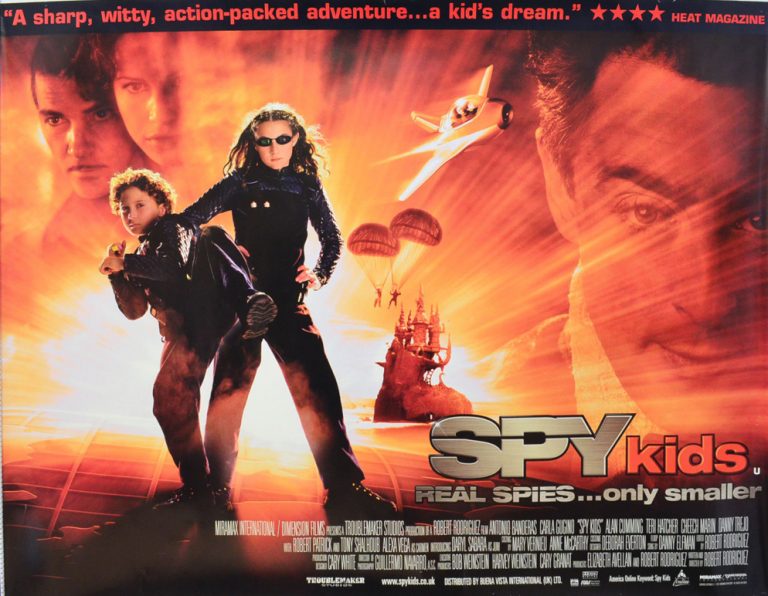
Re-Views: “Spy Kids” (2001). In honor of “Spy Kids: All the Time in the World” (one of Hollywood’s Shameful Secrets®, unscreened for critics), I re-examined the movie that started the franchise. [Film.com]

One Year Ago: Catching up with “Vampires Suck,” “The Switch,” and more. [Movies.com]

* * * * *

MY OTHER STUFF:

Snide Remarks: “No Accounting for Taste” — Thrilling adventures in getting paid.

Movie B.S. with Bayer and Snider: Reviews of “Conan the Barbarian,” “One Day,” and “Fright Night,” along with the usual merriment, including iTunes reviews read in old-timey voice. [Cascadia.fm] or [iTunes]

In the Dark: Subscribe to this weekly e-mail and get all the latest movie reviews, DVD releases, and other pertinent info delivered to your electronic mailbox. [Eric D. Snider’s In the Dark]

* * * * *

MISCELLANEOUS MERRIMENT:

Matt Singer’s theater etiquette manifesto will, unfortunately, only be read by people who already abide by it. But still, one must be vigilant. [IFC]

Phil Hartman’s handwritten letter to someone who asked him for comedy advice is further evidence that Phil Hartman was one of the finest men who ever lived. [Filmdrunk]

On the news that Ridley Scott will revisit his “Blade Runner” concept, Jonathan Sullivan explains how there are actually a lot of good possibilities here. [The Film Stage]

Good news, 9/11 conspiracy theorists! You’re getting your own comic book! [Badass Digest]

I really enjoyed this article — written by an Australian who has lived many places and now resides in America — about why your plans to move abroad might not work out. [Cracked]

A pie chart of the “Saturday Night Live” cast members’ screen time for last season. [I Love Charts]

Here’s a rockabilly music video, “Gimme All Your Lovin'” by Whiskey Shivers, that takes an odd turn very quickly, and then another odd turn near the end. [YouTube]

Andy Levy “apologizes” for making fun of Chris Brown on Twitter. [YouTube]

One Day

0

“One Day” is a generically sweet melodrama about the relationship between two people over the course of two decades, told with a gimmick: every scene takes place on July 15 of a different year. Sometimes July 15 is eventful, fraught with drama that affects their future; sometimes it’s an ordinary, slice-of-life sort of day where nothing happens but hey, it was good to check in.

As gimmicks go — I’m sorry, as narrative devices go — this one isn’t bad, and it probably plays even better in the novel (written by David Nicholls, who also adapted the screenplay). It breaks up what would otherwise be an ordinary “two people’s relationship over the course of a couple decades” story. Even with that hook, though, there isn’t much to it. We have two people, one very nice and noble, the other very flawed and in need of reform, and they impact each other’s lives for a while. The end. It’s what a Nicholas Sparks movie would be if it were aimed at grown women rather than teenage girls.

It’s July 15, 1988, when Emma (Anne Hathaway), a bookish Scottish girl who dreams of being a writer, meets Dexter (Jim Sturgess), a spoiled, upper-class English brat. They’ve just graduated from the same college and might have even crossed paths at some point, who can say for sure? Emma is mousy and Dexter drinks a lot, so there’s probably a lot they both miss. In any event, they spend the evening together and become friends (maybe slightly more), and a bond is formed.

Emma moves to London the following year, into an apartment that smells like “onions and disappointment,” to seek her fortune as a writer. In the meantime, she takes a job at a Mexican restaurant, where her goony but well-meaning co-worker, Ian (Rafe Spall), a would-be comedian, takes a shine to her. Meanwhile, Dexter finds success in the TV business, hosting a shallow late-night youth program and becoming a hard-partying hedonist.

There are several charming vignettes from Emma and Dex’s on-again/off-again relationship, with Hathaway and Sturgess giving consistently engaging performances. Sturgess is sympathetic even when Dex’s behavior is shoddy, and Hathaway is luminous as always. Danish director Lone Scherfig, following up her much more sophisticated coming-of-age comedy “An Education,” clearly loves both characters and wants us to feel likewise. In a movie that had a better story to tell and a deeper point to make, the combination of these actors and this director might be extraordinary. Instead, it’s quite ordinary indeed — an emotional workout, a couple instances of outright manipulation, and little payoff.

Conan the Barbarian

0

The first thing that happens in “Conan the Barbarian” is that a pregnant woman gets stabbed in the gut on a medieval battlefield, sending her into labor and requiring her husband (who luckily is fighting nearby) to cut her some more to get the baby out. Not to be a pessimist here, but if your military is so understaffed that women who are nine months pregnant are considered fit for active duty, I don’t think you’re going to win the war.

The baby, of course, is Conan. He was born to be a warrior!! And, eventually, a talk-show host. Next time we see him, he’s an adolescent boy (played by Leo Howard) being raised by his father (Ron Perlman), the head barbarian in their village of barbarians. Li’l Conan wants to fight with the grown-ups, but Dad doesn’t think he’s ready. Sorry, son! Not till you’re older, and/or pregnant! But Li’l Conan proves his mettle by defeating a handful of rival barbarians out in the forest, whereupon he and Dad make a sword and have a training montage.

Anyway, Conan is eventually played by Jason Momoa, a tall surfer-dude type who — and these are not words I thought I’d ever say — doesn’t have as much charisma as Arnold Schwarzenegger. It is Conan’s destiny to prevent the wicked Khalar Zym (Stephen Lang) and his witch daughter (Rose McGowan) from defeating all the clans and assembling the magical artifacts and locating the right virgin to sacrifice in order to harness unspeakably evil powers, and so on. You know how these stories go.

The problem with this one (a reboot of the tales from Robert E. Howard’s 1930s pulp novels, and a quasi-remake of the 1982 Schwarzenegger favorite) is that it never lives up to the level of over-the-top tastelessness of that first outrageous scene. Directed by horror-remake guy Marcus Nispel (“The Texas Chainsaw Massacre,” “Friday the 13th”), the film is plenty violent — but usually in a way that’s merely bloody and ugly, not twisted. Most of the time it’s just generic sword-and-sorcery cheese, without wit or imagination, and a lot of the time it’s just plain boring. Were it not for the buckets of CGI blood and regular appearances by naked breasts, you’d think you had stumbled across a SyFy Channel original movie.

Fright Night

0

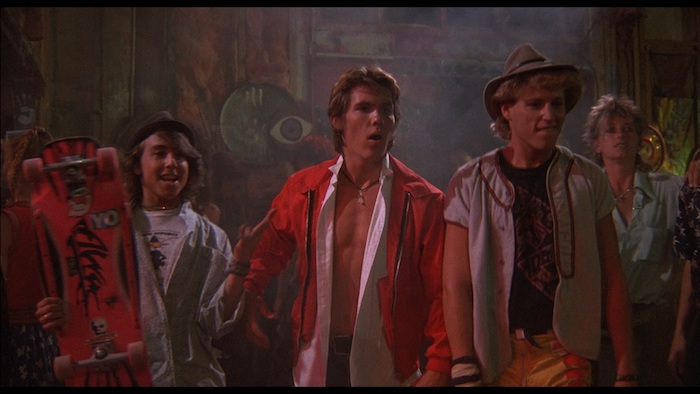
For a film with such a campy title — and for a film about a suburban vampire — “Fright Night” is awfully cool. Self-aware without being ironic and funny without being a joke, this remake of the 1985 second-tier cult classic has a few jolts of funhouse scariness, but it’s mostly content to emphasize the second half of the “horror comedy” label. You do get your money’s worth in terms of bloody mayhem, though.

The setting is Las Vegas, where the nocturnal lifestyle makes it easy for a vampire to blend in. Charley Brewster (Anton Yelchin), a former geek who cast aside his action figures and role-playing games to make high school bearable, lives with his mother, Jane (Toni Collette), in one of the city’s many, many sets of tract homes. Happily dating the gorgeous Amy (Imogen Poots) and associating with the in crowd, Charley now avoids his erstwhile best friend, the still-geeky Ed (Christopher Mintz-Plasse), in order to maintain his reputation.

But Ed has vital information for his old buddy: the man who has just moved in next door to the Brewsters is a vampire. His name is Jerry, which Ed acknowledges is a terrible name for a vampire, and he’s played by Colin Farrell, who turns out to be a far more entertaining and casually creepy bloodsucker than you might have guessed. Any questions about the validity of Ed’s assertions regarding Jerry are put to rest for the viewer pretty quickly, and for Charley not long after. Jerry is definitely a vampire, and potentially a very dangerous one.

There develops a “Rear Window” scenario (translation for our younger readers: a “Disturbia” scenario), with Charley seeking proof of Jerry’s evil intentions while Jerry nonchalantly goes about his business of being charmingly masculine, all the better to woo the ladies, including Charley’s mom. Charley also seeks help from Peter Vincent, a flashy magician of the Criss Angel school who has a show on the Strip and claims to be an expert in the occult. In a parallel universe, this role would be played by Russell Brand, but here it’s David Tennant, preening and posing hilariously.

The screenplay, based on Tom Holland’s original, is by Marti Noxon, whose many years of writing and producing for “Buffy the Vampire Slayer” and “Angel” seem like good credentials. (Did I hear a reference to “Scooby-Doo” in there, just like Buffy used to make?) The story moves at a satisfying pace, and doesn’t lean too heavily on the frustrating angle of Charley and Ed knowing something that nobody will believe. I missed whatever explanation there might have been for how Ed knew Jerry was a vampire, or how Ed knows so much about real-life vampires in general, but hey, nobody’s perfect.

The director is Craig Gillespie, who made “Lars and the Real Girl” and “Mr. Woodcock” and is therefore, unlike Marti Noxon, not an obvious choice to be involved in a “Fright Night” remake. But he does just fine in his first foray into the supernatural, handling both the action and the comedy scenes smoothly.

Wisely, Gillespie mostly stays out of the way and lets his actors have fun with their characters, which they do in great abundance. Yelchin is an agreeable lead, albeit an improbable one; pale and scrawny, he’s the laid-back version of Jesse Eisenberg. And when was the last time Colin Farrell appeared to be enjoying himself this much? I’ll tell you when: last month, in “Horrible Bosses.” But before THAT, it was a long time ago. David Tennant makes the most of his flamboyant showman, with Sandra Vergara earning some laughs as his angry girlfriend/assistant; Dave Franco and Reid Ewing have a few good moments as dimwitted bullies who harass Ed; and Christopher Mintz-Plasse continues to find new ways to refresh his McLovin character without wearing out his welcome.

This remake was probably green-lighted to capitalize on the recent popularity of vampires in entertainment, but Noxon and Gillespie were smart not to follow any of the current trends. Their vamps aren’t like the ones in “True Blood,” “Underworld,” or (obviously) “Twilight,” not in appearance or behavior. “Fright Night” might be a response to a craze, but it gnaws out its own niche within the catacombs of B-moviedom.

Hercules in New York

0
Hercules in New York

Some of our younger readers might not be aware that Arnold Schwarzenegger, famed governor of California and impregnator of maids, was once a movie star. Yes! It may be hard to believe, given his tricky name and indecipherable accent, but he used to appear in Hollywood action films on a regular basis. Some of his most popular characters were beefy men with beefy names like “The Terminator,” “Mr. Freeze,” “Conan,” and “Danny DeVito’s Twin Brother.”

His very first film role, however, was even more iconic. It was the part he was born to play: the lead in “Hercules in New York”! (He played Hercules.)

What a fragrant and savory hunk of cheese this is! Shot in 1969 on a budget of seventy-five dollars and a couple gift certificates, “Hercules in New York” was the 22-year-old Schwarzenegger’s big-screen debut. They credited him as “Arnold Strong,” because it was easier to spell and played up the fact that his primary skill was being able to lift heavy things. (You’ll notice they didn’t call him “Arnold Talented.”) They also had to re-dub his voice, as Schwarzenegger’s Austrian accent was even thicker then than it is now, if such a thing is possible. Basically, Schwarzenegger’s actual contributions to the film were the same as a Muppet’s.

hercules in ny

As you recall from the Bible, Hercules was a Greek semi-god, the son of divine Zeus and some mortal lady Zeus hooked up with. The movie takes us back to those ancient times — as the narrator says, “Far in the dim past, when myth and history merged into mystery.” (Note: that never happened.) Zeus, represented by a man in a bathrobe and a fake beard not unlike a shepherd in a Christmas pageant, sits on a throne on Mt. Olympus, listening to Hercules complain about being bored. Hercules, represented by a bullfrog-throated Austrian weightlifter, whines that he wants to go to Earth to see what the humans are up to. Zeus says no, he needs to stay put, as he would only get into trouble and possibly danger. Hercules is only half-immortal, after all, a fact that Zeus likes to throw in his face.

Another thing Zeus likes to throw in people’s faces is a bolt of lightning. He does this when he gets angry, i.e., regularly. He has a quiver full of bolts, made by the kids in Mt. Olympus High School’s metal shop class. Fed up with Hercules’ insolence, he chucks one at him, thereby accidentally zapping him straight to Earth, which is what Hercules wanted in the first place. Not exactly a MENSA convention up there on Mt. Olympus.

Hercules lands in the Atlantic Ocean (for some reason) and in the present day rather than when myth and history merged into mystery (for some reason), and gets picked up by a passing cargo ship. Zany misunderstandings ensue. Hercules, you see, is not accustomed to people not knowing who he is and revering him as a god (well, half-god; he rounds up). The humans, meanwhile, think Hercules is just a crazy person they found in the water. When they reach New York Harbor, Herc gets off the boat and has a fight with some dudes. No reason, really. Fighting just seemed like something Hercules ought to do. To defend himself against several attackers at once, Schwarzenegger wields a plank of wood, which is kind of like Betty White swinging a bag of dust.

hercules in ny

What Hercules needs for his Big Apple adventures is a wacky sidekick. This is provided in the form of Pretzie (old-timey comedian Arnold Stang), a congenial, turtle-ish fellow with a comical Brooklyn accent who got his nickname because he sells pretzels. Herc tells him he’s Greek, and Pretzie says he used to know a Greek guy named Apollo, and Herc says he knows Apollo, but of course Herc is talking about the Greek god Apollo, while Pretzie is talking about a random guy who happened to be named Apollo. They go back and forth for a long time, having one of those “Three’s Company” conversations where the people think they’re talking about the same thing when really they’re not, and it’s like a vaudeville comedy routine, except that it makes you want to kill yourself.

Neither man has any money to pay their cab fare, so Hercules tosses the driver in the bushes and turns the taxi over, which makes sense coming from a guy whose dad expresses frustration by throwing lightning. Hercules sees some college track-and-field athletes practicing in Central Park and offers to show them how to REALLY throw a discus, by which he means he will throw it very far and they will wonder how he did it. This catches the attention of one Professor Camden (James Karen) and his lovely daughter, Helen (Deborah Loomis). The professor invites Hercules and Pretzie over for tea the next day, then isn’t there, because apparently he really just wanted to set up Hercules with Helen, and I guess he figured Pretzie is Hercules’ handler/trainer. But one of the college athletes is at tea, too, and Hercules, being short-fused and small-brained, gets into a brawl with him that essentially involves just picking the poor guy up and holding him in the air. Helen is terrified of Herc’s brute strength and belligerence.

hercules in ny

But then it’s the next scene, and Helen and Hercules are on a date. She had a change of heart while we weren’t looking and now thinks Hercules is charming. Then a bear escapes from the Central Park Zoo, giving Hercules an opportunity to demonstrate once again that he is both very strong and slightly cleverer than an animal. I enjoy this part of the movie because they’ve clearly made no effort to hide the fact that the bear is just a guy in a costume. I don’t think it’s even a bear costume. It might just be three or four brown bathroom rugs tied to a guy. Anyway, Hercules saves the day and impresses Helen, whose feelings about him manage to stay the same for several consecutive scenes thereafter.

Meanwhile, Hercules is becoming a famous wrestler, with Pretzie as his manager and some mobsters trying to cash in on him. Herc cools it on the whole “I’m a Greek god from Mt. Olympus!” business, having gradually discovered that people don’t believe him and think he is crazy. “A Greek peasant with delusions of mythological divinity” is one character’s assessment of him, though he could also be talking about Arianna Huffington.

Back on Mt. Olympus in the myth+mystery=history days, Zeus sends Mercury to tell Hercules that he’d better get his butt home NOW or he’ll be grounded. Hercules ignores Mercury, as is his custom. Then Zeus’ wife, Juno, who hates Hercules because he’s her husband’s bastard son, waits until Zeus’ term as governor is up and divorces him. No, sorry, I was thinking of something else. Juno gets Pluto (the god of the underworld, not the dog) to slip Hercules a drug that will make him mortal. “A drug that makes me LESS strong? What’s the point of that?!” says Schwarzenegger, in his head.

Hercules gets drugged and loses a televised weightlifting contest, which I guess was probably a big draw before cable, and this angers the mobsters, who were counting on him to win. Hercules could be killed now that he’s mortal, but Zeus finally intervenes and brings him home, and Pretzie is sad because Hercules was pretty much his only friend. But then somehow Hercules talks to Pretzie through the radio (?) and says he’ll always be with him in his heart, which won’t be very useful if Pretzie needs help moving a bookcase.

— Film.com

Spy Kids (2001)

0
Spy Kids (2001)

Hard to believe it’s been ten years since Robert Rodriguez abruptly switched from raucously violent fare like “Desperado” and “From Dusk Till Dawn” to the junior-oriented “Spy Kids.” Even harder to believe is how naturally his energies translated to family-friendly adventures. “Spy Kids” was great — or was it???!?!

I sure thought so in 2001!

What I said then:

“‘Spy Kids’ is a wildly inventive kids’ movie that doesn’t pander to its audience, isn’t full of potty humor, and teaches a good message. In other words, it’s a freak of nature…. The film is a child’s fantasy. Carmen and Juni get to fly around with jet packs, pilot a super-fast airplane, and stay up past their bedtime. They prove themselves more adept at spy work than their suave but rusty parents. As characters, Carmen and Juni are a breath of fresh air. They’re savvy and smart, but not obnoxious or precocious. Their interaction is full of sibling rivalry that is often very pointed, but it’s all resolved nicely in the end…. When it’s all said and done, it is intelligence and wit that help the good guys win, not weapons and muscles. Family unity and trust are also played up…. It’s the rare film that is both ‘good’ (i.e., inoffensive and uplifting), and ‘good’ (i.e., well-made). Take the kids and enjoy.” Grade: A- [complete review]

The brand has been diluted by sequels (including Part 4 this week) and Rodriguez’s other kid flicks, “The Adventures of Shark Boy & Lava Girl in 3-D” and “Shorts,” none of which had nearly the same cachet. It’s tempting to think, in hindsight, that the first “Spy Kids” was no great shakes, either. But it genuinely was well-received. It has a 93% Fresh rating on Rotten Tomatoes and an average score of 71 out of 100 at Metacritic, and it made $148 million at the box office worldwide. Most of the reviews weren’t quite as effusive as mine, but still. This isn’t like the time I gave “Pearl Harbor” a B+. (Yeah, yeah, I know. We’ll get to it.)

The re-viewing:

Hey, look! It’s Danny Trejo as a character named Machete, just like in that other Robert Rodriguez movie, “Machete”! I forgot he was in this. Is he supposed to be the same guy? I’m not sure the backstories of this Machete and the “Machete” Machete can exist in the same universe. There might be some flaws in Robert Rodriguez’s world-building.

As for the rest of the movie, it’s still relatively enjoyable, but I’m not nearly as smitten as I was a decade ago. What struck me as “wildly inventive” then — the flashy spy gadgets, the nifty adventures — feels sloppily and haphazardly assembled. Cool inventions pop up from one scene to the next for no better reason, narratively speaking, than that Rodriguez happened to think of them. The junior variation of an elaborate James Bond-style villainous scheme has no logic to it at all. A kid flick can still be considered a “good movie” even when it resorts to that kind of lazy nonsense, of course. But it wouldn’t be singled out as exceptional.

I do like these kids, though. Movie kids are usually smarter (and more smart-alecky) than real children, and movie siblings rarely relate to each other the way actual brothers and sisters do. (I don’t know why that is. You’d think the people who make movies who have siblings themselves would remember what it’s like.) Carmen and Juni interact in a way that’s believable for a 12-year-old girl and her 9-year-old brother. Their squabbles feel authentic. The film’s imaginative gizmos and set designs are good, but I think its best asset — and the one least commonly seen in children’s movies — is the brother-sister relationship at the center of it.

Do I still love this movie?

No, but we’re cool, this movie and I. We’re on good terms. I can imagine watching it with my nieces and nephews once they’re 8 or so and having a good time with it. There’s no question it presents a nice, simple message and works hard to appeal to its audience. What it doesn’t do, however, is transcend the “kids’ movie” category to become something special. Grade: B

— Film.com

No Accounting for Taste

0
No Accounting for Taste

Like many people — perhaps even some of you reading this — I earn a living by providing services in exchange for monetary compensation. I do a thing, and then someone pays me a previously agreed-upon sum of money for that thing. The system is imperfect, but it generally functions adequately for me and the other people who perform labor in exchange for payment.

I recently encountered trouble with one of my clients, however. It doesn’t matter which one. Pretty much all large or large-ish companies have the same approximate system for paying freelancers, and this system results in occasional screw-ups regardless of the overall integrity of the company. Far be it from me to bite the hand that feeds me! Although I do get a little bitey when the hand is two weeks late, on account of I gots to pay my rent, yo.

Anyway, what happened was that it got to be the first week of a new month, and the payment that normally shows up in my bank account around the 27th had not yet arrived. A simple oversight, I figured. In all the hustle and bustle of clicking a box next to a couple dozen people’s names on a computer, whoever the box-clicker was that day had accidentally skipped over the box next to my name. Honest mistake. No big deal.

Or so I thought. As it turns out, whenever bureaucracy and money are both involved, there is no such thing as a thing that is no big deal. All deals are big. The way the process normally works — and again, it’s more or less the same everywhere if you’re a freelancer or independent contractor — is as follows.

Each month, I send my editor an invoice. Then he takes it to his boss for approval. Since his boss has no idea who I am or what I do for the company, he asks my editor, “Is this correct?,” and my editor says, “Yeah,” and so his boss signs the invoice. Then the invoice goes to the accounting department, whereupon something magical occurs and the money ends up in my checking account.

The details of what transpires in the accounting department are shrouded in secrecy. While the department must exist in a physical location somewhere in the world, it might as well be inside the Narnia closet for as much direct contact as anyone ever has with the people who work there. Most of what we have learned of the accounting department’s practices has been pieced together secondhand from reports given by those few who have interacted with them.

I am pleased to say that I am now one of those few! But I am getting ahead of myself.

First I contacted my editor to see if he could determine when I would be paid. My editor, of course, knows nothing more about the accounting department than I do — even less, perhaps, since he is an actual full-time employee of this company and might thus become more of a liability if he were ever to learn too many of its secrets, whereas I, as an outsider, can do little harm. But according to what he was able to glean through his communication with the oracles who prophesy on behalf of the accounting department, a “check run” would take place the following day, and I would have my money the day after that.

I was savvy enough to know that a “check run” must be the accounting department’s slang term for “paying someone.” But I was troubled. The way I saw it was this: Someone’s job was to pay the freelancers every month. This person had somehow neglected to do this one thing and, being made aware of his or her oversight, was now saying, in effect: “My goodness! That one task that I perform every month slipped my mind last month. Sorry about that! I will take care of it! First thing tomorrow!” And I thought: Well, what are you doing today? It was not yet noon. Would the rest of the workday be spent in preparation for tomorrow’s big event? Does the computer software take 24 hours to boot up? Must the accounts-payable employee go through some kind of ritual purification process before he or she is worthy to press the “Return” key on the computer keyboard that will send the money — the same amount of money they send every month, by the way — to my account? It was already a week late. Why must it be delayed any further?

The answers to these questions cannot be understood by mortal men. So two days later, when the money still had not arrived, I set out to obtain wisdom from the source itself. I called the accounting department. I spoke with a very nice man who seemed perfectly normal in every respect. He was surprisingly candid about the accounting department’s practices, at least in terms of telling me what they were. He did not — or could not — elaborate on the reasoning behind the practices. So I have had to infer that myself.

Here’s what I learned. A check run can only occur every 14 days. It is a fortnightly event, possibly tied to the moon cycle. When the accounting department gets the invoices, they must wait until the next check run to process them. In this particular case, they’d received my invoice from my editor on the very day of a check run. However, the idea of receiving an invoice and then immediately paying it — all in the course of one workday — is, as you have no doubt already surmised, preposterous. Invoices need at least a day, sometimes a day and a half, to ferment before they are ready for processing. The accounting department will process no invoice before its time. When the invoices arrived that morning, the head of the accounting department probably shook his head and said, “Ah, that’s a shame. If they’d gotten these to us yesterday, then we could have put ’em in today’s check run. But same-day turnaround? No sir. Not here. Not on my watch.”

So my invoice had to wait until the next check run, two weeks later. The accountant I talked to verified that it had indeed been included in the latest run, which had occurred the day prior to my speaking with him. The reason it had not appeared in my bank account yet, obviously, was that it takes more than one day for imaginary electronic money to be transferred from one account to another. That’s typically a three-day process because of the great distance the electrons must travel.

I was satisfied that my payment was in the works and would appear in my bank account in the next two days. But as long as I had the ear of someone in the know, I pressed forward with my questions.

“Let us imagine a hypothetical situation,” I said. “Let’s say my editor bursts into your office the day after a check run and says, ‘Holy crap, I totally screwed this up, I accidentally left an invoice out of the batch, my writer isn’t going to get paid on time, his rent is going to be late, and he is going to be very, very persnickety about it. Can you possibly do a special payment so he doesn’t have to wait another 13 days?’ Would you be able to do that?”

The man I was speaking with said, “No, that’s not possible.” Then, apparently by way of explanation, he added, “It takes six people to process a check.”

He said this without any hint of bewilderment or irony in his voice. He didn’t say it like, “It takes SIX people to process a check, can you believe that??” He said it very plainly: “It takes six people to process a check.” He said it as though the concept of a six-person squad being required to perform a basic bookkeeping task made perfect sense in his world — and, what’s more, as though it had never occurred to him that it might not make sense to other people.

Bear in mind, I have direct deposit. These “checks” we’re talking about, the ones that take six people to process, are purely figurative. Heaven only knows how much more complicated the process would be if an actual check were involved, if someone had to actually obtain a writing utensil, fill in the details on a blank check, SIGN it, and MAIL it to me — to bring the U.S. Postal Service into the equation! — well, there’s no way such a thing could be accomplished by the accounting department in anything less than a year and with anything less than a staff of 500 people.

Bear in mind also that this is the “accounts payable department” within the accounting department. The sole function of the accounts payable department is to pay the accounts that are payable. It’s right there in the name. And somehow they have concluded that the most efficient method of doing the one simple task assigned to them is a system that requires the efforts of six people. I considered telling him that when I pay my rent, I just write a check and give it to my landlady — all by myself! Just me! I don’t have to call in five of my friends. I don’t have to get a staff of interns from the local college. I don’t have to go downtown and pick up day laborers. I just write the check and hand it over. If I had told the accountant this, would he have marveled at my abilities? Would I be considered a savant in the accounting world? Would I become the source of a folk legend that would be told in accounting departments for generations to come? “I once heard tell of a fella called Snider, they say he could process a check all by his lonesome.”

Anyway, the point is, there’s no way to do a special check run. A check run can only occur twice a month. To engage in the payment of one’s contracted laborers at any additional time would be sacrilege. It would also be impossible. All six of the people involved in processing a check would have to be in collusion, as all six must perform their tasks simultaneously, from six different computer stations located several feet apart, lest any one person somehow obtain the complete list of procedures and cut a check by himself. And even if all six did conspire to pay someone the money he was owed on a day that was not a designated “check run” day, the system’s failsafe device would kick in. You have seen this failsafe device in action before, in the climactic scene of “Raiders of the Lost Ark.”

The money arrived in my account two days after I talked to the accounting man, just as he foretold, and order was restored. The only way to prevent problems like this in the future is to submit your invoices a year in advance and pray that the accounting department smiles favorably upon your foresight.

Weekly link roundup – Aug. 6-12

1

NEW MOVIE REVIEWS:

“The Help” (B+)
“Final Destination 5” (C+) [Film.com]
“30 Minutes or Less” (B-)

* * * * *

MOVIE COLUMNS:

Eric’s Bad Movies: “Top Dog” (1995). Chuck Norris is a cop; a dog is his partner. It writes itself. [Film.com]

What’s the Big Deal?: “The Godfather” (1972). It’s hard to find anything new to write about “The Godfather.” I’m just sayin’. [Film.com]

Re-Views: “The Brown Bunny” (2004). Yep, still terrible. [Film.com]

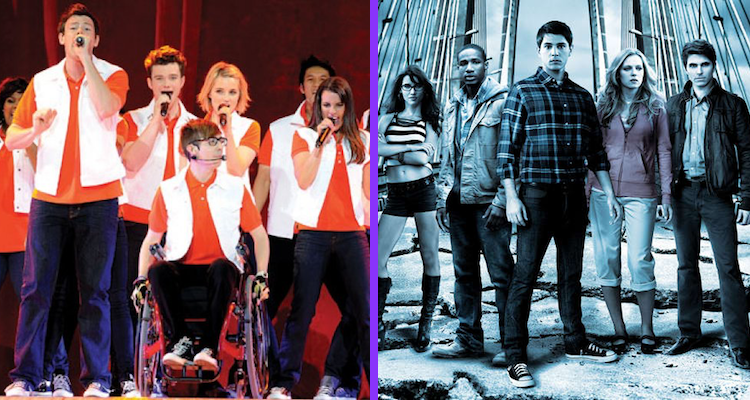
Glee 3-D vs. Final Destination 5: How to Tell the Difference. I like these silly premises. [Film.com]

One Year Later. Catching up with the films that opened 365 days ago. [Movies.com]

* * * * *

MY OTHER STUFF:

Snide Remarks: … was out of service this week for maintenance.

Movie B.S. with Bayer and Snider: Reviews of “The Help,” “30 Minutes or Less,” “Final Destination 5,” “The Future,” and “The Guard,” plus assorted whatnot and miscellany. [Cascadia.fm] or [iTunes]

In the Dark: Subscribe to this weekly e-mail and get all the latest movie reviews, DVD releases, and other pertinent info delivered to your electronic mailbox. [Eric D. Snider’s In the Dark]

* * * * *

MISCELLANEOUS MERRIMENT:

Here’s a thoughtful column by a 21-year-old movie lover, who has basically never lived in a world without the Internet, which is weird to me. [Gordon and the Whale]

Some of us decided “Why cookie Rocket?,” as signed by an orangutan in “Rise of the Planet of the Apes,” should be a thing. [Facebook]

Patton Oswalt’s latest five-second film is no “Crab Walkin’,” but what could be? [Film Drunk]

Thirty examples of filmmakers saying harsh things about other filmmakers. [Flavorwire]

Sometimes people fart on live television. Thanks to the Internet, we can relive those moments. [Super Booyah]

I don’t know, seems kind of rude to make fun of bad movies, but Brian Salisbury’s “Junk Food Cinema” column is fun to read. This week’s is about “Final Destination 3.” [Film School Rejects]

30 Minutes or Less

0

In the dark and often very funny “30 Minutes or Less,” two dirtbags strap a bomb to a pizza-delivery guy’s chest and tell him to rob a bank on their behalf or they’ll blow him up. The lead dirtbag is Dwayne, played by Danny McBride, moviedom’s reigning king of belligerent trailer trash. His sidekick, explosives hobbyist Travis, is played by Nick Swardson. Both men have awful mustaches perched above their dirty, dirty mouths. You can just LOOK at them and know exactly what type of characters they are.

Dwayne and Travis either make you laugh, or they don’t — and if they don’t, there’s no other reason to like them. This black comedy, directed by “Zombieland’s” Ruben Fleischer and written by first-timer Michael Diliberti, avoids any attempt to humanize the characters, as doing so would make the morbid reality of the premise settle in, and our fun would be ruined. So if you are suffering from Danny McBride fatigue, especially considering he plays the exact same profane loudmouth every single time … well, this is more of the same.

But you’re probably not suffering from Aziz Ansari fatigue yet, and he’s here too! The adorably exuberant li’l fellow, best known as Tom Haverford on TV’s “Parks and Recreation,” plays Chet, the best friend of the hapless pizza guy. The pizza guy, Nick, is played by Jesse Eisenberg, a nervous sort even when there isn’t a bomb strapped to his chest. He’s the protagonist, but he’s also the straight man and potential victim, so he isn’t written as a particularly funny or memorable character. Chet must help his pal in this time of crisis, and Ansari’s delivery — a mixture of comical panic, reluctant selflessness, and petty complaining — is infectiously entertaining.

Fleischer occasionally lets the humor get a little too dark. Someone suffers a nonlethal but bloody gunshot wound in one scene, and among the many witnesses is a little girl, who screams in realistic, non-comic terror. That’s just about the only time in the movie that Fleischer makes us view things the way they would be viewed in real life, and it stands in awkward contrast to the light-treatment-of-dark-things attitude on display elsewhere.

Nonetheless, Fleischer keeps things moving at a brisk pace. The film is 82 minutes long, including the credits and a throwaway post-credits scene, and it absolutely shouldn’t have been any longer. The story is satisfyingly tight, with an emphasis on action rather than dithering. I also enjoyed Fred Ward as Dwayne’s ex-military jerk of a father and Michael Peña as a loopy, dangerous professional hitman.

Nobody here is especially likable or sincere, which suits the film’s tone just fine. But they aren’t quite despicable, either, which is what they’d need to be for the movie to completely succeed as a “horrible idiots getting into trouble” comedy. As R-rated comedies go, this one is modestly enjoyable but unremarkable, liable to be forgotten in, oh, say, a half hour or so.

Final Destination 5

0
Final Destination 5

While “Saw” and its sequels were becoming the highest-grossing horror franchise in movie history (not adjusting for inflation) and inspiring much media hand-wringing about “torture porn” and whatnot, the “Final Destination” series was quietly doing its own thing, murdering just as many young people in just as flamboyant a fashion, yet getting only a fraction of the attention.

This is unfair. The “Final Destination” movies have generally been more clever and watchable (and less mean-spirited) than their Jigsaw-centric counterparts, and have done more with their limited formula than “Saw” has done with its. “Saw” is flashier, though, with its emphasis on torture and psychological cruelty. “Final Destination” deaths tend to be quick and painless for the victim, and this is less grueling (and thus less entertaining?) for the audience, not to mention less likely to grab headlines when people write about what the kids are watching these days. But if you consider the ideas at the core of the two franchises, you’ll find that “Final Destination” is far more malevolent.

The point of the “Saw” films is that the Jigsaw-selected ne’er-do-wells and sad sacks are being given the opportunity to rekindle their joie de vivre through devilish traps that allow them to choose life over death. They are the masters of their fates. It’s a stretch, and the message is not often well executed in the franchise, but it’s there. The point in “Final Destination” is exactly the opposite: You CAN’T choose your destiny. When death comes a-callin’, there’s no escaping it, no matter how good or noble or righteous you are. That’s some dark philosophy there, friends.

Such a fatalistic view deserves a sense of humor, because, hey, what are you gonna do but laugh? Morbid mirthfulness was at the heart of the first “Final Destination,” mostly lacking in the abysmal “Final Destination 2,” back again in “Final Destination 3,” gone again in “Final Destination 4” (aka “The Final Destination”), and has now returned once more for “Final Destination 5.” Which isn’t to say it’s a comedy, only that its self-awareness is evident in the way it delivers outrageously over-the-top death scenarios that are bound to provoke gasps and laughs in equal measure.

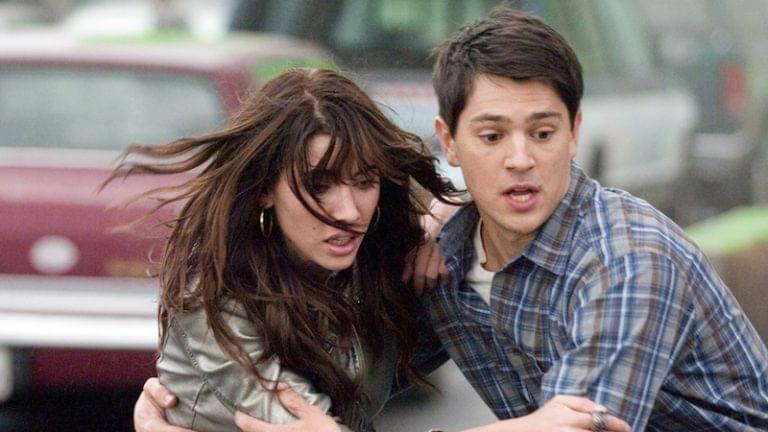
Just as funny, though perhaps not intentionally, is how precisely this fourth sequel follows the established formula. A nondescript young man named Sam (Nicholas D’Agosto) has a premonition of a suspension-bridge disaster that is played out before us, full of gory death and mayhem. (It’s in 3D, too. YOU’RE WELCOME!) Waking from his reverie, he urges his cohorts off their bus just in time to escape what turns out to be an actual disaster with the bridge, just as he dreamed it. There are seven other survivors: his girlfriend (Emma Bell), best friend (Miles Fisher) and best friend’s girlfriend (Ellen Wroe), token black guy (Arlen Escarpeta), comic-relief horndog (P.J. Byrne), slutty girl (Jacqueline MacInnes Wood), and their blustery boss (David Koechner). (They all work at a paper company called Presage. Get it? They don’t.)

They are spooked after their brush with death, more so because Sam somehow predicted it, and even more so because then they start dying anyway, one by one, in the order they should have died on the bridge. A creepy coroner played by Tony Todd (who turned up in a couple previous entries, too) dutifully informs them that you can’t cheat death, which I guess is part of his job as coroner. The rest of the film consists of them trying to cheat death anyway, and in the process meeting their separate ends through various rococo sequences of events.

Steven Quale, a second-unit guy from James Cameron’s crew getting his first big feature as director, focuses his energy on the death and near-death scenes. The opening premonition is nerve-janglingly effective, as is a later sequence set on a gymnastics floor. The subsequent deaths are hit-or-miss, but they all show some creative spark. Quale sets them up like a cross between a joke and a magic trick, carefully establishing crucial details — a frayed wire, a loose screw — misdirecting our attention a couple times, making us anticipate the payoff, and then, WHAM, he hits us with an unexpected punchline.

Unfortunately, nearly everything in between the death sequences is tedious, as if no one bothered to expend any effort on those sections. The writer, Eric Heisserer, who worked on last year’s “A Nightmare on Elm Street” remake, manages to find a couple small variations on the familiar theme, including a pleasant surprise in the last reel, but by and large the dialogue is unimaginative and mechanical. I think everyone understands that the kills are the main attraction here, but that doesn’t mean it’s okay to skip over the elements that tie them together. That kind of laziness is disappointing in what is otherwise a scrappy underdog horror franchise.

Top Dog

Top Dog

When I heard that Chuck Norris had made a movie about a loose-cannon cop who gets partnered with a dog, I thought: Well, sure. They made a lot of cheesy movies like that in the 1980s. Then I found out that this one was made in 1995. Then I just felt sad. In the ’80s, that kind of thing was funny. After that, it was desperate.

“Top Dog” must have been meant for children, insofar as it’s simple-minded and has a dog in it, although I guess that also applies to “Cujo.” In the scene in “Top Dog” where some bad guys open fire on a cop’s house, the bad guys are wearing clown masks and there’s a jaunty, merry tune playing on the soundtrack, lest the kiddies be too traumatized. That’s not to mention all the hilarious things the dog does, like cover his face with his paws when Chuck Norris makes a dumb joke. So, yes, definitely a kids’ movie.

Then again, the movie starts with villains shooting a kindly old man and his dog, and the main story has to do with white supremacists planning a terrorist attack. That doesn’t sound like a movie for kids at all! So maybe it is actually a movie for adults, but only adults who are very easily entertained, or who have suffered brain injuries. You’d think there would be enough people fitting that description for Top Dog to have been a blockbuster, but it only made $5 million.

The title character is a large, friendly, and very shaggy dog named Reno. His handler is a veteran San Diego police detective, Lou Swanson (Carmine Caridi), who gets murdered while investigating an arson. The villains shoot Reno, too, but he survives. We’re told that Reno has been shot five times in the line of duty, which, I’m sorry, just sounds irresponsible. Not to detract from the bravery of our men and women and dogs in uniform, but if you’ve been shot on five separate occasions, I have to think the problem is you.

With Swanson dead, Reno is paired up with Jake Wilder (Chuck Norris), a lone-wolf cop who doesn’t like having partners. The bosses say they chose Jake because he too has been shot five times in the line of duty — which, again, seems like a bad idea, because now you’ve got TWO cops who are always getting shot, and one of them is a dog. Jake and Reno have other things in common too, though. Both are hairy and have unorthodox methods, neither of them talks very much, and they both enjoy junk food and drinking out of the toilet.

Jake objects to having Reno assigned as his partner on the grounds that he prefers to work alone. The fact that Reno is a dog doesn’t figure as prominently in Jake’s argument as you’d think it would. “Sir, Reno is a DOG, and I don’t have ANY kind of police dog training,” is something you can imagine Jake saying in this situation. “In fact, I’m pretty sure there are liability issues here, aren’t there?” is what you might imagine Jake saying in furtherance of his case. But no, Jake’s primary complaint is that he doesn’t like working with others. Sometimes I think the movie forgets that Reno is a dog. He’s able to sniff out clues and make deductions at a much more advanced level than a dog should be able to. I could buy it if Reno were the result of a genetic experiment, but this isn’t “Rise of the Planet of the Dogs.” (Note to self: make a movie called “Rise of the Planet of the Dogs.”)

At any rate, Jake reluctantly takes Reno to the dock where old Detective Grandpa Swanson was murdered, and bullies the harbormaster into telling him what boat was registered at the now-empty space. “You got a warrant?” the harbormaster wants to know, quite reasonably. Jake replies, “Is there a problem?” and starts rooting through the files himself. MAYBE BEHAVIOR LIKE THIS IS WHY YOU’RE ALWAYS GETTING SHOT, JAKE.

Somehow Jake determines that Neo-Nazis are behind all this, which is confirmed for the viewer by a scene in an abandoned warehouse where the leader of the hate group rallies his followers. All of that is pretty cute and entertaining. Then Grandpa Swanson’s grandson, Matthew (Erik von Detten), shows up at Jake’s house wanting to play with Reno. You get the sense Reno was never an official “police” dog so much as he was an elderly cop’s pet who would go out on calls with him and occasionally take a bullet. Anyway, Matthew takes Reno for a run in the park, where they interrupt a dog show, with hilarity and shenanigans aplenty, because this is a kids’ movie (about a terrorist plot).

While this is going on, Jake visits his dotty old mother (Herta Ware) and tells her that some white supremacists are planning an attack soon, but the cops don’t know when or where. MAYBE BEHAVIOR LIKE THIS IS WHY YOUR MOTHER DOESN’T WANT TO SEE YOU, JAKE. Mom casually mentions that it’s probably going to be tomorrow, on account of tomorrow is April 20, which is Hitler’s birthday. Jake asks how she knows that, and she says, “It’s in all the history books,” which is probably true but isn’t much of an explanation. I started hoping Mom would turn out to be a secret Nazi, but I’ll spare you the disappointment and tell you right now that she isn’t.

So we have the date of the attack. But what’s the target? There are so many places in San Diego that attract hatred: synagogues, mosques, Comic-Con, Wes Mantooth’s house, the street corner where Shamu was gunned down by the FBI, etc. Jake finds the warehouse where the Neo-Nazis hang out and, lacking enough probable cause to get a warrant, breaks in anyway, because that’s how he rolls. He leaves a pair of cops to stand guard outside, and they get killed when the bad guys come back, but it’s not sad because they aren’t named Jake or Reno. (Notice that Jake’s talent for getting shot extends to getting other people shot, too.) After fighting some bad guys hand-to-hand, Jake finds out the target of tomorrow’s attack: a “Racial Unity” festival to be attended by ethnic and religious minorities from around the world in a spirit of peace and brotherhood.

Let’s catch up here. A conference promoting racial unity is scheduled for Hitler’s birthday … and the police are stymied when it comes to figuring out where and when a Neo-Nazi group might attack? Sleep well, citizens of San Diego! A mangy, bullet-riddled dog and some dumb cops are protecting you!

You’ll be pleased to know that Jake and Reno stop the terrorists from killing the assembly of Jewish, Catholic, and Hindu religious leaders, but not before representatives from all three faiths are trapped in a limo with a bomb attached to it that Jake has to defuse by using his special ability of randomly choosing which wire to pull out. Reno is likewise instrumental, in that he chases bad guys around and barks at them. Matthew, the grandson of the dead cop, shows up just in time to hear a particular villain confess that he killed the old man, adding a haunting coda to what is already a nightmarish sequence of events for the lad. Everyone involved will be traumatized for life! Except Chuck Norris, who walks away from the disaster of “Top Dog” in the same manner that he walks away from all his disasters, i.e., unscathed, and perhaps unaware that he has just appeared in a movie at all.

— Film.com

The Brown Bunny (2004)

0
The Brown Bunny (2004)

Vincent Gallo’s “The Brown Bunny,” to the extent that it is known at all, is known for two things. One, its press screening at the 2003 Cannes Film Festival was met with walkouts, boos, catcalls, and general derision, culminating in Roger Ebert calling it “the worst film in the history of the festival.” Two, it has a scene where Chloe Sevigny performs un-simulated fellatio on Vincent Gallo.

Ebert and Gallo got into a feud after that, with the director calling the critic a “fat pig,” and Ebert responding that he might lose weight but that Gallo would always be the director of “The Brown Bunny.” Both of those things have turned out to be true. But Gallo edited the film down from 118 minutes to 92 minutes, and this tighter version — the one released in theaters in 2004 — earned praise from many critics, including Ebert. Rotten Tomatoes has it at 44%, which is still “Rotten” but better than the reception it got at Cannes.

I, uh, was among the other 56%. I hated “The Brown Bunny”. And I saw the “better” version! I can only imagine the levels my fury would have reached if I’d seen the Cannes cut, as this would have meant that not only had I endured 26 additional minutes of tedium, but I’d have had to go to France to do it.

What I said then:

“There is no craft here. Gallo … constructs ‘The Brown Bunny’ so badly that it must have been intentional, though to what end I cannot imagine…. There is always either nothing happening, or else something is happening, but the camera is looking elsewhere. (The one exception is The Scene, when of course the camera makes sure to get right up close to the action.) … It is extraordinarily dull and tedious. I must also mention Gallo’s hilariously bad acting in what is supposed to be Bud’s pivotal, emotional scene. He whimpers and mewls like a drama queen on the first day of acting school…. The longer the film goes on, the more I hate it. If this is a ‘feature film,’ then so are your old home movies, or videotapes from a convenience store’s security camera…. I denounce it for being the worst thing a movie can be: boring. It’s not just one scene; the whole movie blows.” Grade: F [complete review]

The re-viewing:

When someone hates a movie like this, he usually feels compelled to point out that he has liked other movies that were similarly action-free, lest you think he’s just a philistine who only enjoys movies with explosions and traditional story structures. I am not above such defensiveness. I’ve praised my fair share of “boring” movies! When they’re done right, they can be mesmerizing, drawing you into their quiet worlds and allowing you to see things through their protagonists’ eyes.

The problem with “The Brown Bunny” is that no matter how closely I watch it, no matter how much I allow myself to be transfixed by its spell, I still never feel what the protagonist is feeling. I don’t even know what that feeling is, let alone feel it myself. The film is 80 minutes of a guy driving around silently, pausing occasionally to make out with Cheryl Tiegs at a rest stop. It’s plain enough that he’s “sad,” but why? What’s he sad about? I CANNOT RELATE TO YOU IF I DON’T KNOW WHAT IS HAPPENING!

Neither is there any art involved. Sometimes a film is slow-paced but marked by striking shot compositions or beautiful imagery. Most of “The Brown Bunny” is shot with a handheld camera looking out through a bug-spattered windshield.

I watched the film with an open mind, eager to see whatever it is that its admirers see in it. I gave myself over to it. “Work your magic upon me, movie!” I said. “I am yours for the taking!”

This lasted about 35 minutes. Then I couldn’t stand it anymore. I watched the remaining hour on fast-forward, with the subtitles on so I wouldn’t miss any dialogue, should any dialogue happen to occur, which it mostly didn’t. I resumed regular speed when Gallo met up with Sevigny, as I knew their pre- and post-BJ conversation would be critical. The act itself is better viewed on fast-forward with captions, if only because the whiny things Gallo says during it are virtually incomprehensible without subtitles.

Look, I tried, Vince. I love giving movies another shot in an effort to find value in them that I didn’t see before. I would love to have come away from “The Brown Bunny” feeling whatever it is that you wanted viewers to feel. But unless that feeling was irritation, boredom, annoyance, and contempt, it didn’t work on me. I’m sorry. You are terrible and I hate your stupid movie.

Do I still hate this movie?

Yes. More so, if that’s possible. Grade: G

— Film.com

‘Glee 3D’ vs. ‘Final Destination 5’

0
‘Glee 3D’ vs. ‘Final Destination 5’

The multiplex is confusing! Your typical neighborhood movie emporium has 16 screens, and on those screens are as many as five or six different movies. It is easy to become disoriented and choose the wrong film, especially when similar pictures are released at the same time. As a guide for moviegoers this weekend, here is a handy summary.

‘Glee: The 3D Concert Movie’ vs. ‘Final Destination 5’: How to Tell the Difference

“Glee: The 3D Concert Movie”: An attempt to cash in on a once-promising franchise.
“Final Destination 5”: An attempt to cash in on a never-promising franchise.

“Final Destination 5”: Takes great delight in torturing its characters.
“Glee: The 3D Concert Movie”: Takes great delight in torturing its audience.

“Glee: The 3D Concert Movie”: Asks you to pay $14 to watch the same thing you can see for free on TV.
“Final Destination 5”: Asks you to pay $14 to watch the same thing you already paid for in four previous movies.

“Final Destination 5”: Young people are butchered.
“Glee: The 3D Concert Movie”: New songs are butchered.

“Final Destination 5”: Moral of the story is that you cannot cheat death.
“Glee: The 3D Concert Movie”: Moral of the story is that apparently you can cheat death, because some of these teenagers are 30 years old.

“Final Destination 5”: An elaborate and complicated series of random events results in a major disaster.
“Glee: The 3D Concert Movie”: A simple and predictable series of familiar events results in Finn and Rachel being mad at each other again.

“Glee: The 3D Concert Movie”: Praised by the gay community for its message of tolerance and acceptance.
“Final Destination 5”: Praised by the gore community for its message of decapitation and impalement.

“Glee: The 3D Concert Movie”: Includes an appearance by Gwyneth Paltrow.
“Final Destination 5”: No appearance by Gwyneth Paltrow, but there might be a severed head in a box.

“Final Destination 5”: Title is misleading; movie is not the final one.
“Glee: The 3D Concert Movie”: Title is misleading; movie contains no glee.

— Film.com

The Help

0
The Help

“The Help” is about a young white woman in segregated Mississippi who seeks to give a voice to the black maids and nannies by gathering and publishing their personal stories. You cringe just thinking about it, don’t you? Movies like this are usually sanctimonious and preachy, or else embarrassing because they focus on saintly white characters who swoop in and save those poor Negroes.

But lo and behold, “The Help” gets it right. Based on Kathryn Stockett’s bestselling novel (which I haven’t read) and adapted and directed by the author’s longtime friend Tate Taylor, the film presents the thorny, emotionally charged material with respect and abundant good humor. Though a white woman is the catalyst, the film belongs entirely to the complex and fully formed black characters. Movies about Southern racism in the 1960s are often so black-and-white (pardon the expression) that they become cartoonish, making the awful realities of the era seem unrealistic. But “The Help” feels authentic, with people talking and behaving in the nuanced manner of real people rather than stereotypes. We get a strong sense of what Jackson, Mississippi, was probably really like in 1963 — the bad, the good, and the in-between.

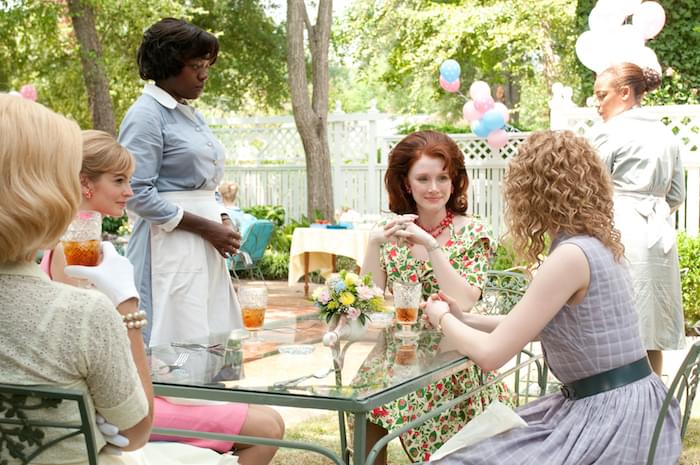
This is a world in which any self-respecting white family with even a modest income employs black women as domestic help. They cook, clean, and essentially raise their employers’ children, then go home at the end of the day to their own families on the other side of the tracks. One such maid is Aibileen Clark (Viola Davis), a luminous woman of about 50 who works for the Leefolt family. She genuinely loves the chubby little Leefolt daughter she’s currently raising, just as she has loved all the other children in her care. The girl’s mother, Elizabeth (Ahna O’Reilly), is a hands-off kind of parent, which is typical of this society. She considers Aibileen and all other blacks to be inferior, of course, but harbors no particular ill will or distrust.

Upon graduating from Ole Miss, one Eugenia “Skeeter” Phelan (the plucky Emma Stone) returns to Jackson to look for work and tend to her ailing mother, Charlotte (Allison Janney). Skeeter is different from the other women her age in that she’s not single-mindedly seeking a husband, nor does she accept without question what she’s been taught about black folks. Skeeter was raised by a maid (played by Cicely Tyson), just like all the other Junior League girls, but she’s come away from the experience with more insight than her contemporaries.

A would-be writer, Skeeter gets the idea to interview Aibileen and the other maids of Jackson, figuring this would make for an eye-opening story. No one has presented their point of view before! Turns out there’s a reason: any maid who talked frankly about her employers in public would be fired lickety-split, then bad-mouthed until she couldn’t find work anywhere else in town. Nonetheless, circumstances eventually embolden Aibileen enough to take the risk.

If Aibileen is the strong, dignified black woman, her best friend and fellow maid Minny Jackson (Octavia Spencer) is the loose cannon. Minny, legendary for her cooking, has worked for senile old Mrs. Walters (Sissy Spacek) for decades, and now works for her daughter, Hilly (Bryce Dallas Howard), who’s the most stone-cold racist b-word in town. While most of her fellow maids have suppressed their indignation in order to make a living, Minny has grown bitter and resentful. It’s only a matter of time before she’s fired.

Adding more flavor to the story is Celia Foote (Jessica Chastain), a bubbly Southern belle who is an outcast from polite society and has, for some reason, none of the attitudes toward “the help” that she’s supposed to have. Newly married but woefully inadequate in the kitchen, she needs a maid who can help out in that department.

Viola Davis and Octavia Spencer give some of the best performances of the year, imbuing their characters with small touches — a sigh here, a raised eyebrow there — that make them feel lived-in and real. Aibileen is wise but fallible; Minny is angry but good-hearted. They have their functions in the plot, of course, but they don’t seem to exist for the sole purpose of performing those functions. (The same cannot be said for Hilly, the film’s lone one-dimensional villain, though even she is played with startling iciness by Bryce Dallas Howard.) Stone, Janney, and especially Chastain turn potentially patronizing characters into lively and memorable ones.

Not everything works perfectly. The inclusion of a potential love interest for Skeeter adds nothing to the story, and Mary Steenburgen’s version of a New York publisher — only seen talking on the telephone, usually barking orders — feels like it belongs in another movie entirely. You could also make the argument, though I might disagree with you, that the film resorts to some gimmickry to earn cheap applause in a couple instances.

What is surprising is that it doesn’t do that sort of thing constantly, as many lesser films have. When the tears come (and believe me, they do), they are sweet and well-earned, not jerked out of you. This isn’t a movie that you watch just because it’s good for you (though it is good for you). You watch it because it’s also a crowd-pleasing, Friday-night-at-the-movies experience, a great mix of noble intentions and popular entertainment.

Investigating the Science of Body-Swap Movies

0
Investigating the Science of Body-Swap Movies

It’s time once again to put a movie trend under the microscope and examine it … with Science! Our subject today is body-swap movies. Specifically: what is the deal with body-swap movies, scientifically speaking?

The body-swap comedy is based on a simple premise: What would you do if you could switch places with someone? The correct answer to that question is that you can’t, what a stupid idea, so don’t worry about it. But WHAT IF?? How would it work? What would happen? Must hilarity ensue, or would there also be potential for somber reflection?

If the two people switching bodies are the same gender and have approximately the same body type and general state of health, then there would not be any significant physical problems. It would be like moving into a new house that has pretty much the same floor plan as your old one. But the greater the differences between the bodies, the more trouble there would be. For example, if a 5-foot-tall man were to switch bodies with a 7-foot-tall man, he would find himself bumping his head a lot, as he would not be accustomed to his height. Likewise, the tall man would do a lot of stooping at first, until he got used to his shorter body.

Or consider an obese man who suddenly finds himself inhabiting a slim, athletic body. He would feel lighter than air, like an astronaut on the moon. He would also discover that the amount of food he’s used to eating would be way too much for his new, smaller physique. The fit guy, on the other hand, would feel like he’s carrying around a hundred-pound weight all of a sudden, and his usual supply of energy and pep would be insufficient. He would also discover that his normal food intake isn’t nearly enough to keep this massive machine running. He would also be very reluctant to see himself naked, whereas the fat-guy-now-in-a-thin-body would stand in front of a mirror all day, marveling.

It could get even more complex than this. What if a concert pianist switched bodies with someone whose fingers are short and stubby? The pianist would retain all his skills, yet would be unable to apply them. His new hands simply wouldn’t be able to do what his brain was telling them to do. In a way, that might be even more frustrating than a pianist switching places with someone who is fingerless altogether.

Now we get to the real heart of the matter. When two people switch bodies, what, exactly, are they trading? The many films produced on this subject seem to suggest that it is their “minds” — i.e., the whole of their memories, personalities, and thoughts. But the “mind” is a nebulous thing, like the soul. Scientifically speaking, everything associated with the “mind” is stored in the brain. But the body-switchers are not literally trading brains. That’s a whole different genre of movie, the brain-trading mad-scientist movie. What the body-swappers are doing is somehow trading the information in their brains without trading the actual brains. It’s like trading computers with someone, except you keep your own computers and just swap the data. What no film has done so far is attempt to explain how the data swap is accomplished, but we assume it involves Wi-Fi.

So what happens if the swap occurs between two people whose brains are physically different? For example, the guy in “Memento” suffered a head injury and now has anterograde amnesia, which means he cannot form new memories. If he switched bodies with a normal person, he’d find that he’d be able to form new memories again, because there’s nothing wrong with the other person’s brain. The other person, however, now inhabiting the brain-damaged body, would have anterograde amnesia.

You don’t need a head injury to be brain-damaged, either. Taking drugs over an extended period of time will do some harm. Not enough to make you an idiot, maybe, but enough to where a really intelligent non-drug-user suddenly inhabiting your body wouldn’t be as smart as he used to be.

What we’re discovering, then, is that the body-swap comedies have oversimplified things. It’s not just a straight-across trade of memories and personalities. There may be things about the new body or its brain that would prevent the transferred person from experiencing full functionality, just as a piece of state-of-the-art software won’t work right if you download it to a computer with a processor that’s too slow.

But let us assume that the two people switching places are both healthy physical specimens with undamaged brains. That will minimize the physiological problems they encounter. But we mustn’t underestimate the impact that our attitudes and behaviors have on our experiences.

Let’s say our body-swappers have wholly different personalities. One is cynical, negative, angry, and rude, while the other is optimistic, friendly, generous, and kind. We’ll call them Mr. Mean and Mr. Nice. Body-swap movies tend to assume that when Mr. Mean inhabits Mr. Nice’s body, everyone will treat him the way they normally treat Mr. Nice — because, after all, he LOOKS like Mr. Nice, and they have no reason to assume he isn’t Mr. Nice, since body-swapping is impossible.

That’s undoubtedly how it would go at first. Mr. Mean would learn what it’s like to be Mr. Nice, with everyone smiling at him and enjoying his company. Mr. Nice, meanwhile, would find that being Mr. Mean is rather unpleasant, since those around him are afraid of him or hostile toward him. But before long, both men’s personalities would come through. “Mr. Nice” would surprise his colleagues by being abrasive and awful, and “Mr. Mean” would surprise his colleagues by being pleasant — and their colleagues would respond in kind. People won’t keep treating the guy who looks like Mr. Nice as if he were Mr. Nice if he stops being Mr. Nice.

Finally, there is the question of what happens when the people trading places are different genders. The answer is that both parties are so grossed-out that they become catatonic and die, the end.

— Film.com

Weekly link roundup – July 30-Aug. 5

0

NEW MOVIE REVIEWS:

“Rise of the Planet of the Apes” (B+) [Film.com]
“The Change-Up” (B-)
“Bellflower” (A-)
“Another Earth” (C+)

* * * * *

MOVIE COLUMNS:

Eric’s Bad Movies: … took the week off.

What’s the Big Deal?: “Grand Illusion” (1937), in which World War I is fondly remembered for the gentlemanly behavior of its officers. [Film.com]

Re-Views: “Planet of the Apes” (2001) got an embarrassingly enthusiastic review from me ten years ago. On second viewing, well… [Film.com]

One Year Ago: Catching up with “The Other Guys,” “Step Up 3-D,” and more. [Movies.com]

* * * * *

MY OTHER STUFF:

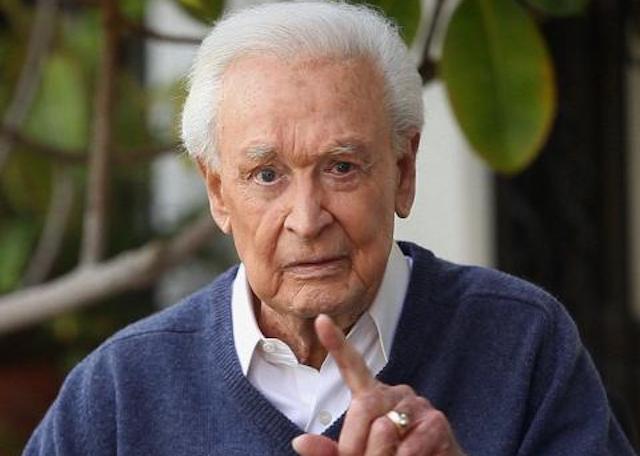
Snide Remarks: “For PETA’s Sake” — Meat, SeaWorld, Bob Barker, and you. [Audio version.]

Movie B.S. with Bayer and Snider: Reviews of “Rise of the Planet of the Apes,” “The Change-Up,” “Another Earth,” and “Tabloid,” plus Pitch Me and assorted chicanery. [Cascadia.fm] or [iTunes]

In the Dark: Subscribe to this weekly e-mail and get all the latest movie reviews, DVD releases, and other pertinent info delivered to your electronic mailbox. [Eric D. Snider’s In the Dark]

* * * * *

MISCELLANEOUS MERRIMENT:

Jeff Bayer and I had a bet on “Movie B.S.” He lost the bet. Consequently, he had to shave my beard off. Here is the video. [YouTube]

Bellflower

0

“Bellflower” has earned a significant number of detractors since its premiere, and believe me, I get where they’re coming from. This is one odd, potentially off-putting movie. But if you see it, whether you love it or hate it, you won’t soon forget it, nor will you see anything like it for a long time.

Oh, it starts out ordinarily enough. Here are a couple of slacker guys, Woodrow (Evan Glodell) and Aiden (Tyler Dawson), who enjoy a state of arrested development in one of L.A.’s less glamorous neighborhoods. They are fixated on “Mad Max”-style post-apocalyptic scenarios, and to that end spend all their time building an indestructible car and constructing a flamethrower. If the apocalypse happens, they will be ready. If anything else happens — say, if they need to get a job, or pay some bills, or take on a responsibility — they will be quite a bit less ready.

Woodrow and Aiden’s friendship is momentarily disrupted by the appearance of Milly (Jessie Wiseman), a beautiful blonde with whom Woodrow begins a whirlwind romance. Milly is similarly free-spirited and bohemian, and likewise apparently unencumbered by employment. She and Woodrow are adorable together. He’s a little shy; she’s a little wacky. “Bellflower” seems to be shaping into a sweet, low-budget, mumblecore-influenced romantic comedy.

And then … wow. And then. After establishing a completely believable and lived-in relationship for Woodrow and Milly — one that rings true for all who have ever been young and smitten — the film just as capably shows the disintegration of such a relationship, the boredom and complacency that can emerge over time. We were hooked by their giddy romance, and now the rug is pulled out from under us. “Bellflower” has deftly transformed into an insightful drama.

And then … and then. Man. You’re not ready for this. When things go south with Woodrow and Milly, the movie evolves even further, and now it does not belong to a genre. There are elements of horror, exploitation, vengeance, tragedy, and buddy comedies. There is more fixation on post-apocalypse survival techniques. The timeline gets fractured. Unspeakable things occur.

Evan Glodell, who plays Woodrow, also wrote and directed the film. It’s his first feature. He even built the cameras he used to shoot it, for crying out loud. He’s some kind of mad genius, a techie nerd with leading-man good looks and the warped imagination of Chuck Palahniuk. He uses the film’s microscopic budget to his advantage: one minute we’re smiling at the charmingly unpolished sound editing and scratchy images, mentally patting Glodell on the head and saying, “Aw, what a cute little movie you’ve made!”; the next minute we’re shocked by some dark, clever turn and realize we’ve been played. Glodell knows exactly he’s doing.

We throw the word “daring” around too often, but that’s what “Bellflower” is. Glodell took incredible risks as a filmmaker, telling a completely unorthodox story in a wholly audacious manner. (He and the cast took physical risks, too. With no special-effects budget, those flamethrowers and other implements of “Jackass”-inspired destruction are real.) Even casting himself as Woodrow was gutsy, since the film lives or dies by our affection for that character. If the film had failed, it would have failed spectacularly.

As I mentioned at the top, there are some who believe the film did fail. I don’t begrudge them that opinion. Goodness knows something as brazenly unusual as this won’t be everyone’s cup of tea. Even if you “get” it, you might not like it. That’s fair enough. All I can do is report my experience with the film, which is as follows: I laughed, I gasped, I felt touched by the warmth, I felt disturbed by the madness, I marveled at how real it all seemed, and I haven’t been able to stop thinking about it.

The Change-Up

0
The Change-Up

Hollywood’s body-swap comedies have explored the wacky shenanigans involved in having to live someone else’s life, but they have largely ignored a major part of it: the sex part. If you’re inhabiting someone else’s body, even going to the bathroom or taking a shower would be an eye-opening experience, never mind carrying on the sex life of the person whose body you now possess.

Now, at long last, “The Change-Up” gives the body-swap comedy the filthy interpretation it’s always deserved. And I do mean filthy. It was directed by David Dobkin, of “Wedding Crashers,” and written by Jon Lucas and Scott Moore, of “The Hangover,” and it seems bent on out-dirtying both of those movies. Being genuinely funny is a secondary concern, though it accomplishes that, too, here and there.

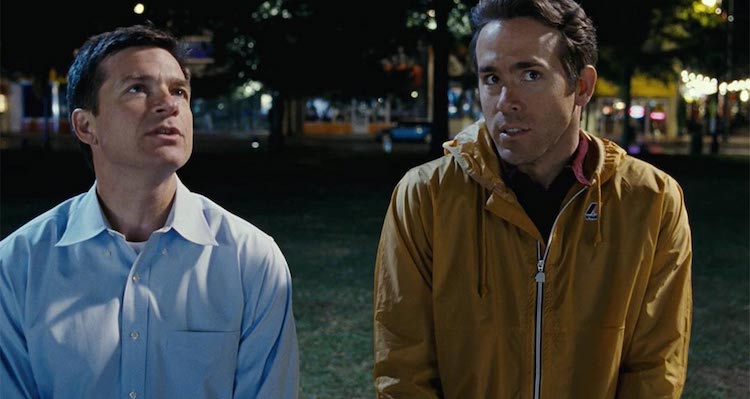
“The Change-Up” stars the immensely likable Jason Bateman as straitlaced family man Dave, and the immensely likable Ryan Reynolds as weed-smoking womanizer Mitch. Dave is a lawyer bucking for a promotion; Mitch is an unemployed actor. Dave has a wife, Jamie (Leslie Mann), and three little kids; Mitch has no obligations of any kind. (“The adults are about to fire up a workday,” Dave says disapprovingly when an already-stoned Mitch calls him one morning at 9.)

They wake up one morning to find they have switched bodies. Never mind how; it doesn’t matter. Mitch-as-Dave has to go to an important business meeting and not screw up the Big Account, while Dave-as-Mitch has to be an actor in a shady low-budget film shoot. Mitch-as-Dave also has to deal with Dave’s children and sleep with Dave’s smokin’ hot wife, while Dave-as-Mitch must contend with Mitch’s odd roster of girlfriends.

Bateman and Reynolds do an impressive job of establishing their opposite characters in the film’s opening scenes, and then do an even better job of impersonating one another’s mannerisms and delivery after they’re switched. There is glee in both actors’ performances, but especially in Bateman’s, as he gets to cut loose when inhabited by the reckless spirit of Mitch.

Unfortunately, the movie doesn’t trust the actors’ facility with comedy and goes overboard to ratchet up the wackiness quotient. When Mitch is in Dave’s body and must pretend to be a grown-up and professional lawyer, he instead behaves like a moron, swearing relentlessly in board meetings and pilfering free snacks from the break room. This is all wrong. Mitch surely knows how mature adults act, even if he isn’t one himself. He’s a slacker, not an idiot. (He’s also an actor, yet he makes no effort to play the role of Dave.)

I found myself forgiving a lot of that kind of sloppiness because of my built-in fondness for Bateman and Reynolds. That includes a particularly nasty baby-poop incident — in the first 10 minutes of the film, no less! — that probably would have turned me off completely if it were, say, Martin Lawrence and Adam Sandler. The film also benefits from the Leslie Mann effect (see also: “Knocked Up”), wherein the tartly funny actress fills her beleaguered housewife character with honesty and emotion, in spite of the nonsense that surrounds her.

The perverse humor and outrageous scenarios made me laugh often enough to recommend the movie, but I’m disappointed that it didn’t explore the potential in an R-rated body-swap comedy more carefully. Much of what happens here is just leftover “let’s see how raunchy we can be” material from the filmmakers’ other movies. But Reynolds and Bateman give such gonzo, fully-committed performances that it’s hard not to find mirth in their characters’ dumb exploits.

Rise of the Planet of the Apes

0

We need to accept first of all that any movie about apes becoming intelligent and overrunning the human race is, by its very nature, ridiculous. Monkeys — I know there’s a difference between monkeys and apes, but I don’t care — are funny. Seeing monkeys do things that humans do is funny. There is no way around this. No movie about an uprising of intelligent apes is ever, ever going to seem completely plausible.

That being said: sweet fragrant bananas, “Rise of the Planet of the Apes” is a blast. This is sharp, thrilling summertime fun here, a movie that addresses its inherently ridiculous premise with a straight face and dares you not to take it seriously. You say this is goofy stuff? Just CGI apes running around causing mayhem? Then why are you so emotionally invested, huh? HUH?? It’s everything a person can reasonably hope for in a “Planet of the Apes” prequel, and maybe a little more.

Er, once it gets past its clunky first act, that is. The humans are always the letdown in a monkey movie, aren’t they? Our primary homo sapiens here is Will Rodman (James Franco), a genetic engineer at a San Francisco pharmaceutical company who’s feverishly working on a drug that enhances brain function. The hope is that it will reverse the effects of Alzheimer’s — which, you will not be surprised to learn, is now afflicting Will’s father (John Lithgow). Chimpanzees are the test subjects; sure enough, they show signs of getting smarter. This will definitely end well, just as it always does when scientists in movies make animals smarter!

The film lays down the details just enough to get them out of the way, but the gist of it is that Will winds up being the caretaker of a chimp named Caesar. As time passes, Caesar shows that he has benefited greatly from Will’s wonder drug, learning sign language, solving problems, and apparently understanding human speech to a remarkable degree. He has soulful, intelligent eyes. We feel a certain sadness about him, the way we did with the kid in “A.I.,” who was a real boy and yet not a real boy. When Will and his veterinarian girlfriend Caroline (Freida Pinto) take Caesar to the redwood forest, it’s the first time the laboratory-born ape has truly experienced life the way nature intended it. But even then, he’s wearing pants.

Gradually, the story lets Will fade away so that Caesar and his fellow primates can take center stage. There is a facility for displaced apes, run by the relatively humane John Landon (Brian Cox) and his significantly less humane son (Tom Felton). Here Caesar can at last interact with his kind — except that his intelligence means he’s not really their kind anymore. Unlike the other monkeys, Caesar can make plans.

Apart from a couple of awkwardly placed shout-outs to the 1968 original, “Rise of the Planet of the Apes” makes the bold choice to eschew campiness and treat the story earnestly, trusting that the technology responsible for the apes and the director responsible for the storytelling will prove so compelling that we don’t mind suspending just a little more disbelief. The gamble pays off. The director, Rupert Wyatt, has only made one feature before — a mesmerizing prison-break thriller called “The Escapist” — and his relative inexperience is manifested as humility. His style is confident, but subtly so; he creates tension, drama, and exhilaration without showing off.

The technology holds up its end of the bargain, too. All the animals were created by filming actors in motion-capture suits and digitally animalizing them. Caesar is played by Andy Serkis (best known as Gollum in “Lord of the Rings”); the ape’s movements and facial expressions — especially those eyes — are essentially Serkis. Think of it as an actor in an ape suit and makeup, except that the ape suit and makeup were digitally added in post-production. Now, I don’t mean to say that the apes always look 100% like real animals (although sometimes they do), only that they’re close enough that we accept them. More importantly, they emote, and they do so convincingly. As long as they capture our interest, it doesn’t matter whether they’re made of flesh, latex, or pixels.

The quality of the computer-enhanced actor-monkeys reflects the movie’s success as a whole. We buy them as real animals the same way we buy all the other preposterous things that comprise the film. Every now and then I’d think, “Wait, Caesar can’t do that. He’s a chimp!” Then I’d remember, “Oh, right, but he’s been given a drug that makes him super-intelligent. OK, then!” And I’d buy it! Whatever it was he was doing that seemed extraordinary for a monkey, I bought it! This is a film that makes us gasp and marvel and laugh, and then marvel further that such an absurd thing has managed to captivate us.

Planet of the Apes (2001)

0
Planet of the Apes (2001)

Even people who haven’t seen “Planet of the Apes” know “Planet of the Apes.” I’m talking about the original one, from 1968, with Charlton Heston and “Get your stinking paws off me, you damned dirty ape!” and so forth. It’s been referenced and parodied so many times in popular culture that I can’t imagine the surprise ending would still be a surprise for anyone.

To remake such a well-known movie was pure sacrilege, of course. Hang around the Internet long enough and you’ll realize that remaking ANY movie is pure sacrilege, because of the way that remakes go back in time and burn all the copies of the originals so you can’t watch them anymore, or something. But there had been so many advancements in makeup and digital effects since 1968 that people were curious to see what an updated POTA would look like. The people who were the most curious were the people at Twentieth Century Fox, who owned the rights to the story and really, really wanted to make some more money with it.

They certainly got their wish! The film had the second-best opening weekend of 2001 (behind the first Harry Potter) and ultimately grossed $362 million worldwide. The reviews were mixed-to-negative — Rotten Tomatoes has it at 45%, though that includes a lot of reviews written long afterward — but so what?

My review was not mixed. It was very, very positive. Gushing, even.

What I said then:

“‘Planet of the Apes’ toys with our expectations. It doesn’t count on our being familiar with the original sci-fi classic … but those who know a little something about [it] will find endless delight in the twisting and remodeling that goes on in the new one…. Mark Wahlberg’s skill at playing quiet, reluctant heroes is now nearly perfect… I can’t think of a better person to have directed this film than Tim Burton. His touch is sly and whimsical…. ‘Planet of the Apes’ takes itself just seriously enough to warrant respect and attention, but not so seriously it chokes on itself…. Burton creates an amazingly believable world…. It is a demented mind indeed that could take a topic with such potential for cheesiness and make it seem so convincing…. The summer blockbuster season just got smarter, cooler and classier.” Grade: A- [complete review]

Man alive, that’s embarrassing. Read the whole review, it’s all like that, just unreservedly effusive and giddy, like I’d just watched the most spectacular film of my life. (And for all that, only an A-minus? I assume the only thing that kept it from getting the full A was that the movie failed to leap from the screen and massage my back while I watched it.)

The re-viewing:

I had a hunch my second viewing, almost exactly 10 years later, would leave me feeling somewhat less enthusiastic. Despite its box-office haul, the film doesn’t seem to have been an enduring classic. Nobody ever talks about it anymore. Roger Ebert wrote in his 2-and-a-half-star review, “Ten years from now, it will be the 1968 version that people are still renting.” It’s been 10 years, and yeah, he was right.

What struck me in 2001 as being “sly and whimsical” and “[taking] itself just seriously enough to warrant respect” struck me in 2011 as being jokey, broad, and goofy. (Jokey, Broad, and Goofy are my three favorite Smurfs, by the way.) A certain amount of humor is inevitable with any primate-based endeavor; you’re going to have lines like “Your monkey launches at 1600!” It’s unavoidable. But the tone in this thing is too campy, almost wacky, like the long-hoped-for musical version from “The Simpsons.” (“I hate every ape I see/From chimpan-A to chimpan-Z!”) There’s an ape grinding an organ while a small human dances around! Another ape says, “Get your stinking hands off me, you damn dirty human!”! Charlton Heston has an uncredited cameo as a dying old ape who speaks out against the evils of guns, har har!

But despite all the silliness, the movie also wants us to take it seriously as an action film. That’s hard to do when every other scene has guys in ape costumes being thrown through the air, as if throwing people through the air were the only summer-blockbuster-action-sequence trick Tim Burton ever learned. Frankly, it just isn’t GOOD enough as an action film to be taken seriously as an action film. Paul Giamatti is really fun to watch as an orangutan who sells humans as pets (slaves?). If the entire movie had that tone — enthusiastically comic, reveling in the absurdity of it all — it might have worked better. Instead it tries to be serious, but all the jokey stuff littering the sidelines clogs our peripheral vision.

And the surprise ending is complete nonsense, obviously. Sure sets up a sequel, though!

Do I still love this movie?

No. NO INDEED. It has great makeup, special effects, and production design, and the pace doesn’t drag much. Other than that, I hereby officially throw my poop at this movie. Grade: C

— Film.com

For PETA’s Sake

0
For PETA’s Sake

According to the ol’ clock on the wall, it’s time to check in and see what kind of marvelous nonsense those drama queens at PETA are up to! Don’t worry, that clock on the wall is made from 100% synthetic materials, except for the hands, which are frogs’ legs.

As you know, the top concern at PETA (People Endlessly Talking Asininely) is making sure that everyone hears a lot about PETA. But the safety of animals is a close second! In fact, PETA’s attention- and protein-starved members are so worried about animals that they will often embark on crusades that are only tangentially related to them. There aren’t enough legitimate crusades to embark on, you see, but if you go more than a few days without being outraged over something, you run the risk of developing a sense of humor and becoming reasonable. So you have to keep those skills sharp!

One thing PETA does to stay alert is go around trying to change the names of things. For example, there was a high school several years ago located in a part of Minnesota known for its meatpacking plants, and the school’s students were called the Packers. PETA thought it was ghastly to name a high school after a slaughterhouse. A nightmarish building full of blood, cruelty, and foul smells should not be associated with a place where animals are killed. PETA suggested they change their mascot to something else, and the school board did the same thing everyone always does when PETA suggests something, i.e., they rolled their eyes and ignored them. PETA has been the object of more dismissive eye-rolling than all the Facebook posts of all the world’s moms combined.

PETA made a similar recommendation to the city of San Francisco a few months ago, suggesting that the neighborhood known as the Tenderloin be renamed, once again to escape the meaty connotations. PETA said they should call it the Tempeh, after the unappealing soybean product eaten by vegetarians and other sad people. Now, if PETA has a chance of winning a crusade anywhere, it’s San Francisco, a city that was built, in the immortal words of Starship, on granola and socialism. But even there the idea was shot down, if only because changing would be a major headache for all the local gay bars that use the word “Tenderloin” in their names.

The PETA columns:

9/7/2001: I PETA the Fool
5/24/2002: PETA’s Dragon
9/8/2002: Milking It
5/25/2003: Pet Peeves
8/25/2008: That’s So PETArded
2/16/2009: PETA, PETA, Kitten Eater
3/7/2011: Rooster’s Millions
8/1/2011: For PETA’s Sake
10/16/2012: PETA vs. Pokemon

But sometimes PETA manages to focus on issues that actually matter, perhaps accidentally. And when it does, it has a powerful ally: Bob Barker. Bob Barker is the envy of every American because for 35 years he held the perfect job, one that allowed him to play games, tell people they were wrong, cavort with gorgeous models one-fourth his age, and sexually harass them without getting fired. An enthusiastic supporter of animal rights, he used to end every show by reminding people to have their pets spayed or neutered, and he was known to drive around the country performing the procedures himself out of the back of his van. By some accounts, Bob Barker has, with his own hands, torn the ovaries or testicles from more than ten thousand cats and dogs.

He’s retired now, but he’s still passionate about animal rights. He recently filmed a commercial for PETA urging people not to go to SeaWorld, because SeaWorld is basically just a prison for sea animals, and most of those sea animals have not even been formally charged, let alone convicted of sea crimes. This makes Bob Barker sad. “Life in cramped tanks is no prize for orcas and dolphins,” he says. “They want to be free with their families in the ocean! Many have died prematurely at SeaWorld after swimming in endless circles and performing dumb tricks day in and day out.”

Bob's Finger of Shame

Oh, they perform “dumb tricks,” do they, Bob? Dumb tricks like spinning a giant wheel in the hopes of getting a dollar? Dumb tricks like guessing prices until a tiny mountain climber falls off a cliff? Dumb tricks like dashing around putting price tags on things, pulling a lever, finding out how many you got right, and then making changes until you get them all right or until 30 seconds runs out? DUMB TRICKS LIKE THAT, BOB??

It’s understandable to have mixed feelings about places like SeaWorld. On the one hand, the animals probably aren’t as happy as they would be in the wild. On the other hand, SeaWorld does plenty of conservation work, too, and helps increase awareness and understanding of these majestic creatures. On the third hand, SeaWorld is long past its glory days, and the orca currently playing Shamu doesn’t have as firm a grasp on the character as his predecessors.

But regardless of your opinion on this issue, one thing is for sure: You do not want to disappoint Bob Barker. A picture of Bob Barker looking crestfallen as he wags a shame finger is PETA’s most powerful weapon. If they were smart, they’d put that picture on a huge billboard right next to the SeaWorld entrance. Since they’re not smart, they’ll probably just suggest that SeaWorld change its name to TragedyWorld, and everyone will roll their eyes and go back to ignoring PETA, the way nature intended. And speaking of things nature intended, those frog legs were delicious.

Weekly link roundup – July 23-29

2

NEW MOVIE REVIEWS:

“Cowboys & Aliens” (C+)
“Crazy Stupid Love” (B+) [Film.com]
“The Future” (B+)
“The Guard” (B)
“Point Blank” (A-)

* * * * *

MOVIE COLUMNS:

Eric’s Bad Movies: “Cyborg” (1989), starring Jean-Claude Van Damme, but not as a cyborg. [Film.com]

What’s the Big Deal?: “Close Encounters of the Third Kind” (1977), in which a pile of mashed potatoes means something. [Film.com]

Re-Views: “For Love of the Game” (1999), with Kevin Costner, baseball, and Vin Scully. [Film.com]

Pitch Meeting: “The Smurfs” [Film.com]

One Year Ago: a trip down memory lane for people whose memories only go back a year. This is maybe a new regular column, maybe. [Movies.com]

* * * * *

MY OTHER STUFF:

Snide Remarks: “The Apple of My i” — America’s fastest-growing religion.

Reject Radio: I was a guest on this week’s edition of this fine movie podcast, facing off against the lovely Kate Erbland in a movie news quiz, and then discussing obsessive fandom. [Film School Rejects]

Movie B.S. with Bayer and Snider: Reviews of “Cowboys & Aliens” and “Crazy Stupid Love,” plus a sexist game of Pitch Me, and talk of my beard. [Cascadia.fm] or [iTunes]

In the Dark: Subscribe to this weekly e-mail and get all the latest movie reviews, DVD releases, and other pertinent info delivered to your electronic mailbox. [Eric D. Snider’s In the Dark]

* * * * *

MISCELLANEOUS MERRIMENT:

Gordon and the Whale — a plucky movie website staffed by some talented and enthusiastic writers — is closing up shop, on account of there’s no money in running a movie website. That’s too bad. I’m somewhere in that photo montage at the end. [Gordon and the Whale]

Site-specific “404 Error” pages. [Slacktory]

This one New Yorker cartoon basically sums up the philosophy behind all comedy. [New Yorker/Yfrog]

Ron Swanson paper dolls. Ron Swanson probably would not approve. [Flannel Animal]

Some hilarious angry comments on Jeff Bayer’s “Cars 2” review. Read the ones from “RICH” especially. [The Scorecard Review]

I didn’t grow up in Portland, so I don’t have any memories of this particular commercial. But I do have a fondness for crazy local ads in general. So here’s Kite Man. [Vimeo]

The Future

0

Miranda July is an artist, writer, and filmmaker whose work gives off a vibe of hippie New Age whimsicality. Everything I read about her suggests she is not for me. Yet both of her feature films — “Me and You and Everyone We Know” and now “The Future” — have been agreeably spacey, even emotionally resonant. Whatever her deal is, she’s good at it.

“The Future,” which July wrote, directed, and stars in, is partially narrated — and poetically, too — by a cat named Paw Paw. (Get used to things like that.) This cat will soon be adopted by a free-spirited thirtysomething couple named Sophie (July) and Jason (Hamish Linklater), but the cat has a terminal illness and will require daily care for as long as he lives. This could be anywhere from six months to five years. Sophie and Jason, who do not have children and can barely fend for themselves, are suddenly aware that they are getting older, that they will die eventually, and that owning this cat will be a huge responsibility.

Basically, Jason and Sophie figure that once they bring Paw Paw home, their lives are over. It will be too late for any major traveling or lifestyle adjustments. That gives them 30 more days of youth and freedom, one more month to truly live.

Jason quits his dull job doing tech support over the telephone and sets out to let fate find him a new calling. Sophie, a dance instructor for children, quits her gig so she can focus on creating her own dance videos, which she will post on YouTube. (She’ll have to upload them from someplace with public Wi-Fi, since she has canceled her and Jason’s Internet service for this month.)

Naturally, the self-imposed deadline results in frustration. Forcing yourself to find enlightenment is like forcing yourself to fall asleep. Jason and Sophie, working fruitlessly on their separate goals, lose their connection with each other. Their very relationship is threatened. Jason talks to the Moon, which talks back to him. Sophie befriends an older man (David Warshofsky) who represents the drab suburban life she would never want for herself.

You can’t take very much of “The Future” at face value. The story eventually becomes surreal and metaphorical; more than once I was reminded of Charlie Kaufman’s “Synecdoche, New York.” Jason and Sophie speak slowly and in soft tones, as if they were on acid. Many of their experiences are bizarre and seemingly senseless — Jason buys a used hairdryer for $3 from an old man on Craigslist; Sophie’s new friend’s young daughter wants to be buried up to her neck in the backyard — and the viewer has to determine what, if anything, the hell it’s all supposed to mean.

So it gets rather arty, but I didn’t find it pretentious. In fact, the overall tone of the movie is quite sweet and earnest, with these two goofy souls learning not to put off happiness or to resist the passage of time. The film’s gentle humor and imaginative digressions won me over, saying things that other works of fiction say all the time, but saying them in a creative way. Plus, you know, narrating cat. Can’t go wrong with that.

The Guard

0

Martin McDonagh, the caustically funny Irish playwright responsible for stage hits on both sides of the Atlantic (including “The Beauty Queen of Leenane” and “The Lonesome West”), successfully translated his perverse talents to the big screen a few years ago with the eccentric crime caper “In Bruges.” Now his older brother, John Michael McDonagh, has gotten into the act, and you can see the family resemblance.

“The Guard,” John’s feature debut as writer and director, is set in the same part of western Ireland as most of Martin’s plays, and shows the same fascination with violence, gallows humor, and tart, profanity-laden dialogue. John Michael McDonagh is no Martin McDonagh (which I’m sure he’ll never get tired of being told), but “The Guard” is a promising start.

He borrowed “In Bruges” star Brendan Gleeson to play the lead, a County Galway police sergeant named Gerry Boyle who doesn’t play by the book. This is notable because in rural Ireland (or so the movie would have us believe) playing by the book is optional anyway. The notion of obeying the rules is treated with disdain. Told he has not followed the appropriate procedure in some matter, Boyle says, “Why don’t you f*** off to America with your ‘appropriate’?” What’s interesting is that this is considered a valid response.

Speaking of the Yanks, an FBI agent named Everett (Don Cheadle) arrives to work with the Irish cops, including Boyle, on the matter of a huge shipment of cocaine that’s rumored to be making its way toward local ports. You’ve seen this arrangement before: fastidious cop is teamed with loose cannon; they bicker; hilarity ensues. Hilarity does ensue, but McDonagh generally avoids the cliches that these characters might fall into. Where he doesn’t avoid them, he subtly mocks them. “The Guard” is less overtly satiric to “Hot Fuzz,” but the films are similar in that Boyle and his colleagues have been influenced by badass American cop movies — and, what’s more, are aware of this influence.

Everett isn’t sure whether Boyle is competent or incompetent, brilliant or stupid. Boyle, for his part, starts their relationship with a few shockingly racist observations. (“I’m Irish, sir,” he explains. “Racism is part of me culture.”) He is blasé about small crimes, takes drugs and cavorts with prostitutes on his days off, but he’s dogged and persistent when a murder occurs. He goes out of his way to be offensive — the arrival of the FBI means he can make a joke about Waco — but he’s a softie at heart, visiting his aged mother (Fionnula Flanagan) at a nursing home and engaging in vulgar banter with her. Gleeson plays Boyle with all of his considerable gusto and gruff charm, making him a joy to watch.

The drug traffickers, meanwhile (including Mark Strong and Liam Cunningham), are the type of villains who quote philosophers between murders, nicely encapsulating the mixture of quirk and violence that is the McDonagh family calling card.

Since this is a variation on the police procedural or detective story, it would be nice if the crime aspect — what the bad guys are actually up to, and how the cops figure it out — were more interesting. All of McDonagh’s cleverness seems to have been expended on characters and dialogue rather than on inventing a fresh story — which isn’t a bad choice to make, if a choice must be made, but still. The film deserves better than a mundane assemblage of action-movie plot devices.

I’m left with the impression that Don Cheadle isn’t given enough to do in the film, although maybe it’s just that he’s overshadowed by Gleeson. Cheadle and his character are both outsiders here. This is a very Irish, very McDonagh, very Gleeson production, with the requisite amount of cheerfully abrasive humor and mayhem.

Cowboys & Aliens

0

“Cowboys & Aliens” is a great title. It suggests a scenario wherein Wild West frontiersmen encounter extra-terrestrials, which is a great premise. For all I know, the 2006 graphic novel is indeed great. But the movie — which is attributed to no fewer than five writers, plus a sixth who gets “story by” credit — definitely isn’t, though it avoids botching it entirely. The cowboys and aliens are here, sure enough. They just didn’t bring enough fun with them.

From what I can tell, apart from the basic idea, the plot bears almost no resemblance to the graphic novel (which was published long after the original concept had been pitched as a movie anyway). Here we have a mysterious man named Jake Lonergan (Daniel Craig) who wakes up in the sagebrush outside a small town in the Old West and has no memory of who he is or how he got what looks like a gunshot wound in his side. He also cannot recollect the origin of the odd bracelet now affixed to his wrist. He knows how to draw, shoot, and fight, though, and it becomes clear soon enough that he is an outlaw, albeit the charming and lovable kind.

In town, Jake stands up to Percy Dolarhyde (Paul Dano), the bratty son of a wealthy cattleman who, owing to his father’s influence, can usually do pretty much whatever he wants, and isn’t used to being stood up to. That puts Jake at odds with Percy’s father, Woodrow Dolarhyde (Harrison Ford), but those matters are set aside when, out of nowhere, several small aircraft swoop through town and snatch up a bunch of townsfolk. Among the taken are Percy, the sheriff (Keith Carradine), the lovely wife (Ana de la Reguera) of the saloon owner (Sam Rockwell). It befalls Jake and Dolarhyde to gather up a posse and go a-searchin’ for them.

As luck would have it, that bracelet on Jake’s arm is a laser gun that he can sometimes use as a weapon. Other than that, all they’ve got to help them defeat the aliens are the six-shooters and lassos common to the Western genre. They aren’t short on stock characters, though: an Indian (Adam Beach) who serves as Dolarhyde’s faithful employee; a young boy (Noah Ringer) whose grandpa was taken and who is just learning the ways of the West; a preacher man (Clancy Brown); and a beautiful stranger, Ella (Olivia Wilde), who says some of her people were taken, too.

Cheerfully but rather aimlessly directed by Jon Favreau (“Iron Man”), the film does well when it’s employing the Western genre devices and giving the charismatic Daniel Craig and grumpy-puss Harrison Ford something to argue about, shoot at, or run from. Ford, who has seemed a little … let’s say “detached” … the last few films, actually appears to be having a good time here, which raises everyone’s spirits. And hey, Sam Rockwell is always fun to have around. Walton Goggins, the terrifically hotheaded actor from “The Shield” and “Justified,” livens things up as a member of Jake’s former gang. The Southwestern scenery is gorgeous. The special effects are outstanding.

But man, does it ever drag on for too long, and with too little payoff. The humor tends to be almost (but not quite) funny, the action almost (but not quite) thrilling, the story almost (but not quite) original. There are sequences where all of those elements rise to the level of quality befitting the talent involved, and you start thinking, “OK, this is fun. I’m enjoying this!” And then it wears off, and there’s yet another scene meant to show us that gruff old Woodrow Dolarhyde is really a softie. (The film is intent on showing us that.) This is the kind of blandly entertaining summer flick that you’ll happily watch a half-hour of when you catch it on cable in a few years.

Crazy Stupid Love

0

Almost everyone in “Crazy Stupid Love” has strong romantic feelings for someone they shouldn’t. That’s one of the reasons love is crazy and stupid, you see. Another reason is that love has this habit of looking pathetic until you fall into it, and then you can’t see how you were ever opposed to it. See? Crazy. And stupid.

Those are the observations made by the film, a multi-threaded and well-organized comedy full of pleasant surprises and appealing characters. Perhaps most surprising is the movie’s provenance: It was written by Dan Fogelman, who has worked mostly on children’s films (“Cars,” “Bolt,” “Fred Claus”), and directed by Glenn Ficarra and John Requa, who wrote the naughty “Bad Santa” before making the darkly comic “I Love You Phillip Morris.” “Crazy Stupid Love” lies at the intersection of those paths, a PG-13 story for grown-ups with a hint of subversiveness and a lot of sweetness.

It begins with good-hearted family man Cal Weaver (Steve Carell) learning that his wife of nearly 25 years, Emily (Julianne Moore), wants a divorce. She has been unhappy for a while, and has recently slept with a co-worker, David Lindhagen, whose name comes to be the movie’s favorite swear word, like Seinfeld’s “Newman.” Wounded and sad, Cal dutifully moves out of the house and into a condo.

While moping and drinking in an upscale cocktail lounge one night, the pitiable Cal draws the attention of Jacob (Ryan Gosling), an impossibly smooth and sharply dressed ladies’ man who can take a different girl home with him every night if he chooses to (and he does choose to). Jacob finds Cal’s pathetic dishevelment and dorky fashion sense fascinating. “I don’t know if I should help you or if I should euthanize you,” he says. He opts for the former and gives Cal one of those dress-and-grooming makeovers that movies love so much, in addition to supplying him with guidelines on how to pick up women.

But this is not just a smooth-guy-helps-nerd-find-love comedy, thank goodness. Jacob’s tutorial is effective, in its way — Cal finds a woman (Marisa Tomei) who admires his desperate honesty — but that’s accomplished while the movie is still young. Meanwhile, Jacob himself is in pursuit of his Great White Whale, Hannah (Emma Stone), a law student who is so far the only woman to resist his charms. (She has a sappy boyfriend, amusingly played by Josh Groban, whom she’s considering settling for.) The last thing Jacob wants is to fall in love, but he’s intrigued by the idea of someone who won’t sleep with him.

Then there’s Cal and Emily’s 13-year-old son, Robbie (Jonah Bobo), who is madly in love with his babysitter, 17-year-old Jessica (Analeigh Tipton), and tells her so. She wants nothing to do with a 13-year-old, obviously — and besides, she’s secretly in love with Robbie’s dad. So there’s another coupling that isn’t ever gonna happen.

Maybe we’re so accustomed to formulas that any slight deviation seems remarkable, but the way “Crazy Stupid Love” veers from the beaten path is, well, remarkable. You could make a good movie out of the Jacob/Cal story, each man teaching the other something about love and romance, each eventually finding his way, and so forth. But Fogelman’s witty, astute screenplay gives us more than that. The characters you’d expect to be supporting ones, like Hannah and Emily and the teenagers, are fully developed, and their stories are given due attention. The movie expands from a two-man piece into an ensemble affair.

Carell, funny as usual, is the more restrained version of himself here — more “Dan in Real Life” than “Date Night.” We’ve seen that before, and we like it. Gosling, on the other hand, is breaking new ground. In perusing his IMDb page, I’m astonished to realize that he has never starred in a comedy before. And yet here he is, giving his suave, sensitive persona a hilarious tweak as an unflappably confident pickup artist who winds up having some depth, too.

Emma Stone, who ought to be a bigger star than she is, continues to charm my socks off; Julianne Moore helps us sympathize with Emily, who’s hurting over the break-up almost as much as Cal is; the kids, Jonah Bobo and Analeigh Tipton, are confident performers; and hey, there’s Kevin Bacon as the oily David Lindhagen.

After being quite smitten with the first 75 percent of the movie, I feared all was lost when suddenly the plot threads began to converge in a contrived and farcical manner into one of those “they’re on a collision course with wackiness!!” scenarios. And then, somehow, the ship righted itself — only to go off-course again with a gooey, disappointing, formulaic finale. But most of the film rings true, reflecting all the humor and tragedy to be found in that crazy, stupid emotion.

Attack the Block

0

The hairy, luminescent-fanged extra-terrestrials that wreak havoc in “Attack the Block” are exotic and frightening, to be sure. But then, so are the hoodlums defending a South London tenement building against them. People are already afraid to go out after dark in this neighborhood; what difference will a few vicious space monkeys make?

This smartly assembled, effortlessly cool sci-fi comedy — written and directed by Joe Cornish and produced by the “Shaun of the Dead” and “Scott Pilgrim vs. the World” team — makes instant stars out of the charismatic non-professionals who comprise most of the young cast. That’s an especially tricky feat given that the characters start out as contemptible street punks, a roving gang of bat- and chain-wielding muggers under the leadership of Moses (John Boyega). They have personality, though, and a lot of brains hidden behind their swagger.

Given their violent natures, it’s no surprise that their reaction to encountering an alien creature is to beat the crap out of it. But violence begets violence, and soon there are more E.T.’s seeking revenge. The boys find unlikely allies in Sam (Jodie Whittaker), a tough, pretty nurse whom they previously mugged, and in a couple of reluctant stoners played by Luke Treadaway and Nick Frost. Those two are the most overtly comic characters, but everyone’s dialogue is fresh and lively, sometimes so rich in what I assume is real South London slang that it might as well be a foreign language.

If this were a heavy-handed message movie, the alien invasion would force Moses and his crew to realize that they have not been living up to their potential as members of society and to change their felonious ways. That is kind of what happens — but the process is thrilling, raucous, and absurdly entertaining. Few movies this year have been as all-out fun to watch as this one.

Point Blank (French)

0

Last fall, Paul Haggis made “The Next Three Days,” starring Russell Crowe as an ordinary man trying to get his falsely accused wife out of prison. It was a remake of a French film called “Anything for Her” (“Pour elle”), written and directed by one Fred Cavaye. “The Next Three Days” faded quickly from public consciousness, and “Anything for Her” was never released in the United States, but Cavaye may soon find himself enjoying Stateside notoriety. His new film, “Point Blank” (“A bout portant”), already a moderate box-office success in France, has been picked up for U.S. distribution by Magnolia Pictures, and it’s exactly the kind of taut, fast-paced, intelligent thriller that audiences love.

Cavaye doesn’t drift very far from his previous subject matter. In “Point Blank,” an ordinary man named Samuel (Gilles Lellouche) must act to save his wife, Nadia (Elena Anaya) — who’s eight months pregnant! — from villains who are holding her hostage. In exchange for her safe release, they want Samuel, a nurse, to help one of their fellow criminals escape from the hospital where he’s currently being treated under close police supervision. The patient, Hugo (Roschdy Zem), was introduced to us in the movie’s opening moments, when he was about to be shot by other bad guys but was hit by a motorcycle before they got the chance.

The police, led by tough-as-nails Commandant Fabre (Mireille Perrier), don’t know that Samuel had a somewhat valid reason for busting Hugo out of the hospital. All they know is that a fugitive has escaped, that a nurse helped him do it, and that someone else altogether wants the fugitive dead. (Someone tried to snuff him while he was still in the hospital.) Fabre, meanwhile, must contend with Werner (Gerard Lanvin), a condescending hotshot of a cop who insists on handling the high-profile cases himself. Since it is believed that Hugo was involved in the death of a tycoon named Meyer, Hugo’s escape falls under Werner’s purview, and so does Samuel’s involvement.

The scenario of an innocent man forced to do something illegal in order to save a loved one is an old standby; it’s hamburger, not steak. Cavaye, again co-writing with collaborator Guillaume Lemans, has no pretenses about the innovativeness of his central concept. Instead, he focuses on executing it with gusto and panache — on cooking up the best damn hamburger you ever had. The film is a lean 84 minutes long, quick but not rushed, cleverly plotted without resorting to outrageous contrivances. The acting is workmanlike, and I mean that as a compliment. Nobody’s grandstanding or chewing the scenery, but nobody’s stinking up the place, either.

You figure there is a point where Samuel merely has to call Fabre, an honest and decent cop, and tell her what’s going on. Fabre can see that Samuel has no criminal record, and it will be easy enough to verify that Nadia is missing. Samuel does call Fabre … but that’s not the end of it. I like a film that’s smart, and confident enough in its smartness not to draw attention to it with gimmicks or tricks. “Point Blank,” an exciting and single-mindedly entertaining experience, is the real deal.

The Interrupters (documentary)

0

You might feel compelled to see “The Interrupters” for one of two reasons. One is that it was directed by Steve James, the socially conscious filmmaker whose documentaries include “Hoop Dreams,” “Stevie,” and “At the Death House Door.” The other potential selling point is the subject matter: “The Interrupters” covers a year in the life of a Chicago organization dedicated to stopping urban violence among teenagers.

This is a fine film for educators and others who work with at-risk youth, or for anyone else passionate about the subject matter. Steve James’ fans — yes, documentarians have fans — will likewise not be disappointed. For the more casual doc-watcher, the film’s running time may be daunting. It’s definitely an exhausting experience, albeit a rewarding and inspiring one.

The organization, called CeaseFire, was founded by Gary Slutkin, a medical doctor and epidemiologist who took a scientific approach to reducing inner-city violence. The spread of disease is stopped more effectively by changing people’s behavior to keep them from getting sick than by administering antibiotics to those already infected; Slutkin theorized that the plague of violence could likewise be stopped at its source. This led to a CeaseFire program called the “Violence Interrupters,” in which people who were once caught up in criminal lives themselves work one-on-one with at-risk youth to prevent individual acts of violence or retaliation.

James focuses on a few specific Interrupters for a year, starting in the summer of 2009, mostly in Chicago’s Englewood neighborhood. Ameena, the daughter of legendary Chicago gangster Jeff Fort, got out of the drug business and now works patiently but sternly with young women who are in the process of repeating her mistakes. Cobe, who has a similar background, works with young men. Eddie, who did time for a murder he committed as a 17-year-old, focuses on helping younger kids avoid the street life.

These people have nerves of steel. To be an Interrupter is to be a social worker, a therapist, and a crisis negotiator, all at once. The job title is often literal, as workers must bodily insert themselves between two angry young people and talk them out of hurting each other. (Did you get that? They talk them out of it.) They’re not systematically trying to dismantle the gangs — indeed, the Interrupters point out that most of the violence isn’t gang-related at all but arises from interpersonal conflicts. Kids grow up poor, in a culture of violence, without many positive role models; so when they encounter something that makes them angry, the only solution that occurs to them is violence.

Many individual stories are told here, some of them harrowing, some sad, some hopeful. The success of Slutkin’s program is heartening, as it suggests there may actually be a solution to this seemingly insurmountable problem — that the cycle of violence can be stopped. How sobering it is to consider an organization whose motto is “STOP KILLING PEOPLE” — or, rather, how sobering it is to realize that there are places where people have to be told that.

Cyborg

Cyborg

What’s that you say? You’ve got a brutally violent movie called “Cyborg” that stars famed oily Belgian Jean-Claude Van Damme? Count me in! I’d love to see Van Damme play a cyborg! Oh, he’s not the cyborg? Well, I’d love to see him battle a cyborg! That would be cool too! Come again? The cyborg is neither the hero nor the villain but merely an ancillary character with about 90 seconds of screen time? And her name is Pearl? I politely decline your offer.

Eh, I guess we’re already committed, so here goes. Like 62% of all bad movies, “Cyborg” is set after the apocalypse. An ominous whispery voice tells us in narration that after the collapse of civilization and its attendant anarchy and starvation came the plague, aka The Living Death. The few scientists left alive are working on a cure, but our campy narrator is not in favor of that. “I like the death!” he declares. “I like the misery! I like this world!” Our narrator is a make-lemonade-out-of-lemons kind of guy. He sounds like an intriguing character! Is it Jean-Claude Van Damme??

cyborg

Ugh, no. It’s a dude named Fender, played by a dude named Vincent Klyn, a professional surfer who somehow wandered into a couple of movies, including this one, sort of. Van Damme isn’t here yet. Fender is the leader of one of those post-apocalyptic gangs that dress in hilarious costumes and kill people for fun. They call themselves “pirates,” but instead of singing jaunty songs and engaging in ribald banter and firing cannonballs at ships, all they do is rape, pillage, and murder. Some “pirates” they are!

Fender and his merry band of comically outfitted sociopaths are in New York in pursuit of a woman named Pearl (Dayle Haddon), the aforementioned cyborg. She has the cure for plague in her possession and must get to Atlanta, where the country’s only remaining scientists are hanging out, either because they’re all that’s left of the Centers for Disease Control, or because they’re all that’s left of Tyler Perry’s top-secret laboratory that produces full-body fat suits and melodrama. In any event, Fender’s gang captures Pearl and forces her to take them with her to Atlanta so that they can stop the plague from being cured. But if Pearl HAS the cure, couldn’t they just kill her? And if some key components of the cure are in Atlanta, can’t they go to Atlanta on their own? What do they need Pearl for? It’s not hard to get to Atlanta from New York. You take I-95 south until it meets I-85, just outside Richmond, Va., and then take I-85 straight to Atlanta. You can’t miss it.

Meanwhile, remember how Jean-Claude Van Damme is in this movie? Well, he is. He plays Gibson, a mercenary who was Pearl’s bodyguard for about five seconds, until Fender knocked him out and kidnapped her. Instead of responding to his embarrassment honorably by committing ritual seppuku, Gibson pursues the pirates. Along the way, he meets a chesty gal whose name the movie doesn’t mention but IMDb says it’s Nady, so we’ll go with that. Nady (Deborah Richter) politely takes off her clothes and offers to have sex with Gibson, but now that Gibson has already botched his mission once, he’s REALLY focused on it. No sex for him! Nady should consider herself lucky, since doing it with Van Damme is probably like doing it with a seal, all slippery and shiny and inarticulate.

Gibson is tormented by flashbacks to an earlier time, when he settled down in a country house with a hillbilly girl named Mary and her two siblings, only to see Fender kill Mary and one of the kids and take the other one hostage. Basically, what we are learning about Gibson is that he has never successfully protected anyone from anything.

Gibson and Nady run into a lot of bad guys on the way to Atlanta. That means there is a lot of fighting, as fighting is the one thing that the star of this movie is reasonably good at. Gibson has a gun, but he prefers to fight hand-to-hand. And what he mostly likes, really, is kicking people. He LOVES kicking people! It’s his favorite thing. You put him up against a band of villains trained in the martial arts and he will throw down his gun and kick every single one of those S.O.B.’s. until they are unconscious, or at least lying on the ground, kicked.

But his kicking skills fail him when he encounters Fender and — what do you know — loses to him, again, as is his custom. The two things Gibson is best at are kicking people and being humiliated by Fender. Fender should probably just kill Gibson, but what kind of movie villain would he be if he actually did the thing he claimed he wanted to do? No, standard procedure once you’ve captured the hero is to put him into a situation where he’ll probably die, then leave him unattended so that you can be shocked later on when he escapes.

cyborg

Fender’s choice is to have his men crucify Gibson, a method of punishment fraught with symbolism, as I’m sure you’re aware. Is Gibson meant to be some kind of “Savior” figure? That would be a bit of a stretch for a character whose main attribute so far is being unable to save himself or anyone else. Then again, Gibson does one-up his most famous crucifixion predecessor by escaping from the cross, which he does in a manner befitting the rest of the film, i.e., with a lot of gore and grunting.

It all comes down to an epic battle between Gibson and Fender (who, yes, are both named after guitars, for no reason). Fender has very pale blue eyes that the movie keeps showing in close-up, I guess because the movie thinks they’re … scary? Creepy? Pretty? I don’t know. When we’re not seeing his eyes, we’re seeing him and Gibson kick the crap out of each other, accompanied by much monster-like roaring, the screenwriter having been made aware that neither actor is very handy with actual words.

Eventually, Pearl the cyborg, making a cameo appearance in the movie named after her, gets to Atlanta with the plague cure, accompanied by a finally-somewhat-helpful Gibson. Pearl tells her scientist friends that while she has the serum, “I feel like [Gibson] is the real cure for the world.” The only way this statement makes any sense is if it comes at the end of a different movie, one where the hero has proven to be noble, valiant, or even competent. “Rudy,” for example. You could argue that the world would be a lot better off if everyone were more like Rudy. Gibson, not so much. And besides, if he’s so awesome and he’s the real cure for the world, why isn’t the movie called “Passion of the Gibson” or “The Last Temptation of Gibson” or something? I rest my case.

— Film.com

For Love of the Game (1999)

0
For Love of the Game (1999)

My relationship with baseball is complicated. I grew up with brothers and a dad who were enthusiastic players and fans, and so my childhood memories of summertime are filled with Dodger games on TV and many warm nights at the Little League field, where it seems like my brothers were always playing, or my dad was always umpiring, or my mom was acting as official scorekeeper.

The complicated part is that I never had any interest in playing baseball, and only passing interest in watching it. I’ve never made the choice to watch a game on TV — but if I’m with people who are watching one, I will gladly follow along. It feels like an essential part of America, and I’m a fan of America. Baseball is also part of my family, and since I love my family I guess I also love baseball. The sport has personal meaning for me.

I suspect that’s why “For Love of the Game,” Kevin Costner’s love letter to baseball, worked so well on me when I saw it in 1999. Not only is it about the pure joy of the sport, it has Vin Scully as the play-by-play announcer — Vin Scully, who’s been calling Dodger games for like 80 years and who is basically the voice of my childhood. Even if I wasn’t paying attention to the game on TV, I could hear good ol’ Vin describing it. I probably have a Pavlovian response to that man’s warm, friendly voice.

What I said then:

“After a string of disappointing (and even downright bad) films, Costner reminds us in this one why we ever liked him in the first place. He IS capable of acting, even emoting at times. When he wants to be, he’s an effective Everyman, a guy that both men and women find appealing and enjoyable to watch…. It’s a genuinely compelling storytelling format, and the leisurely sport of baseball lends itself nicely to such reflection…. If any movie can restore America’s love for this game, it’s this one. The outcome of the game is fairly predictable, but still quite thrilling, as all good sports movies are, and the casting of real-life announcer Vin Scully as the play-by-play man was pure genius…. If Vin Scully tells me that baseball is a fantastic game, and a metaphor for life, and all the other things this movie tells me it is, I believe him. You’ll believe, too.” Grade: A- [complete review]

A majority of critics gave it favorable reviews, but just barely: Rotten Tomatoes has it at 54%. Very few of them, other than mine, were all-out raves, instead falling into the three-stars-out-of-four range. Some of the negative reviews explicitly said that the movie doesn’t work at all if you’re not already a baseball lover (and I agree). Others found the whole thing just plain boring. Would a second viewing, 12 years later, have the same effect on me?

The re-viewing:

Remembering very few details and not having read my review before I watched it, I was surprised by the opening credits — Sam Raimi directed this? I’d have sworn it was Costner himself. I’d also forgotten that it has three guys in the cast who have since turned out to be among my favorite actors: John C. Reilly, Brian Cox, and JK Simmons. This was shaping up to be a fine film, and for reasons I wouldn’t have even appreciated in 1999!

Ugh, then there’s Kelly Preston. She performs without distinction a role that is the film’s weakest attribute anyway, that of Costner’s love interest. The film’s structure has Costner’s Billy Chapel pitching what may well be the last game of his major-league career, and reflecting on his past as he does so. Some of those flashbacks relate directly to baseball — old teammates being traded away, new guys looking to him as a mentor — but most of them concern Billy’s relationship with Preston’s character, Jane. He’s a celebrity athlete who lives for baseball; she’s of secondary importance; yada yada. My notes contain this rather diplomatic observation: “non-baseball scenes are a little flat.”

Sometimes the movie is too on-the-nose, as when Billy injures his hand during the off-season and must be rushed to the hospital. He tells Jane to call his trainer: “He’s the most important person for me right now!” Jane is devastated to have it spelled out in no uncertain terms that the man responsible for saving her boyfriend’s career is more important to him than she is. (Being married to John Travolta in real life, she is probably used to bitter disappointment.)

On the other hand, some of the movie’s hokeyness is charming, in that old-fashioned, take-me-out-to-the-ball-game kind of way. The first few scenes lay it on thick: it’s the last game of the season; Billy’s beloved team owner has sold the team; Billy will probably be traded; Jane is about to move to London. This is truly the Big Game. It ALL COMES DOWN TO THIS!! I roll my eyes at that, but I have to admire the earnestness. And the fact is, baseball often does come down to do-or-die situations. “Bottom of the ninth, two outs, three runs behind, bases loaded” is a cliche — but it happens! Those off-the-field circumstances that can fill a game with added meaning are part of the reason sports fans love their sports.

Raimi does a terrific job switching back and forth between putting us on the field with Costner and putting us in the TV viewing audience, with Vin Scully guiding us. Scully’s lines must have been scripted, but he delivers them naturally, and they all sound like things he would really say. Look at how he sums things up:

“You get the feeling that Billy Chapel isn’t pitching against left handers, he isn’t pitching against pinch hitters, he isn’t pitching against the Yankees. He’s pitching against time. He’s pitching against the future, against age, and even, when you think about his career, against ending. And tonight I think he might be able to use that aching old arm one more time to push the sun back up in the sky and give us one more day of summer.”

Reading that, I think it’s corny. Hearing it delivered by Vin Scully, I think it’s beautiful. The game’s final stirring moments build suspense the way most sports movies do, before delivering a cathartic and satisfying finish. Scully says: “The cathedral that is Yankee Stadium belongs to a Chapel.” Yeah, it’s hokey. But tell that to the lump in my throat!

Do I still love this movie?

No, but I honestly do like it. Costner’s running monologue as he pitches, his interaction with his catcher/friend John C. Reilly, all the commentary that encapsulates the simple pleasures of the sport, Basil Poledouris’ rousing musical score — that stuff works, and it works well. If it weren’t for the just-average relationship story on the side, this would be a classic of the Baseball Movie genre. Grade: B

— Film.com

The Pitch Meeting for ‘The Smurfs’

0
The Pitch Meeting for ‘The Smurfs’

[Scene: A conference room at a movie studio two years ago.]

STUDIO EXEC #1: Gentlemen, I was rummaging around in the Dumpster behind the studio offices yesterday, and guess what I found?

STUDIO EXEC #2: Nick Nolte?

STUDIO EXEC #1: No.

STUDIO EXEC #3: Nick Nolte’s arm?

STUDIO EXEC #1: No.

STUDIO EXEC #2: Was it any part of Nick Nolte?

STUDIO EXEC #1: No! I found this document that says our studio owns the rights to make a Smurfs movie.

STUDIO EXEC #3: A Smurfs movie!?

STUDIO EXEC #2: And someone threw that away?! That’s madness!

STUDIO EXEC #1: I know! There was a treatment for a Huckleberry Hound movie in there, too. People are so wasteful.

STUDIO EXEC #3: So are we going to make a Smurfs movie?

STUDIO EXEC #1: You bet your smurfin’ butt we are!

STUDIO EXEC #2: Haha, “smurfin’!” That is hilarious!

STUDIO EXEC #3: Because it’s like you were going to say some other word, but you replaced it with “smurf”!

STUDIO EXEC #2: It’s funny because it’s true!

STUDIO EXEC #1: Hey, maybe I should write the screenplay myself!

[All laugh merrily]

STUDIO EXEC #1: Ah, if only I knew how to write or spell or type or turn on a computer. Anyway, whoever we hire to write the thing, we need to make sure they include lots of “smurf” words.

STUDIO EXEC #3: Absolutely.

STUDIO EXEC #2: Are you thinking animated, or live-action? When I was a kid in the ’80s, before I started doing cocaine full-time, I watched The Smurfs on TV, and I’m pretty sure it was a cartoon.

STUDIO EXEC #3: It would be easier to make it animated. They’ve got computers now where you just tell them what you want and they poop out a cartoon.

STUDIO EXEC #1: I know, I saw “Cars 2.” But I don’t want to take the easy route this time.

STUDIO EXEC #2: … What?

STUDIO EXEC #3: I … don’t follow.

STUDIO EXEC #2: There’s a route other than the easy route?

STUDIO EXEC #1: I want to make the film in live-action, except for the Smurfs. The Smurfs themselves will be animated.

STUDIO EXEC #3: Brilliant!

STUDIO EXEC #2: A bold decision!

STUDIO EXEC #3: It’s an unprecedented use of technology, and also exactly what they did with the Chimpunks and Yogi Bear!

STUDIO EXEC #1: Precisely! It’s revolutionary, yet depressingly familiar!

STUDIO EXEC #2: I assume we’ll have beloved celebrities perform the voices of The Smurfs?

STUDIO EXEC #1: Yes. Beloved celebrities, and also George Lopez.

STUDIO EXEC #2: Oh, right. I forgot about the Hollywood city ordinance about him.

STUDIO EXEC #3: What ordinance? I’m not familiar with it.

STUDIO EXEC #2: “Any movie with talking animals must include George Lopez as one of the voices.”

STUDIO EXEC #1: “Beverly Hills Chihuahua,” “Marmaduke,” “Rio”…

STUDIO EXEC #3: The Smurfs aren’t “animals,” though, are they? Technically? We could maybe get around that.

STUDIO EXEC #1: Eh, it’s easier to just let him record a few lines than to deal with a lawsuit later on.

STUDIO EXEC #2: Yeah, we’re in enough trouble with the law as it is for failing to cast Martin Lawrence in “Furry Vengeance.”

STUDIO EXEC #3: Now, as I recall, the only human in The Smurfs was Gargamel. We can probably get someone who looks like the character already, like Danny DeVito, or Bob Hoskins, or the “Throw Momma from the Train” lady.

STUDIO EXEC #1: We could, but where’s the fun in that? We should get someone who looks nothing like Gargamel and spend a lot of money on elaborate makeup and prosthetics.

STUDIO EXEC #2: Yes! Someone super-famous, some legendary actor who’s willing to tweak his image by playing an ugly villain, so that when people see the film they’ll say, “Oh my gosh, I can’t believe that’s So-and-So!”

STUDIO EXEC #3: Hank Azaria it is!

STUDIO EXEC #1: Perfect!

STUDIO EXEC #2: We have to take the movie out of the weird little forest where the Smurf village is. That’s boring. Kids today can’t relate to forests or villages.

STUDIO EXEC #3: Or Smurfs.

STUDIO EXEC #2: Good point. Can we lose the Smurfs altogether?

STUDIO EXEC #1: Normally I would say yes. But you’re losing sight of the goal here, which is to capitalize on nostalgia for a long-forgotten creative property — nostalgia that does not exist. Since no one is actually interested in a Smurfs movie, we have to convince them that they are interested by convincing them that everyone else is interested. We have to make it seem like the Smurfs are the latest retro craze! And we can’t do that unless the film is littered with Smurfs.

STUDIO EXEC #3: Can we have the Smurfs go to New York City?

STUDIO EXEC #1: Yes, obviously.

STUDIO EXEC #2: And fall into toilets and play Guitar Hero and harass Neil Patrick Harris?

STUDIO EXEC #1: Again, yes, obviously, these things will occur.

STUDIO EXEC #3: But who will direct this masterwork? Combining live-action with animation is difficult, and the style of humor will require a delicate balance of artistry and fart jokes. Who can accomplish this?

STUDIO EXEC #1: I bet we can get the guy who directed “Home Alone 3,” “Big Momma’s House,” “Scooby-Doo,” and “Beverly Hills Chihuahua.”

STUDIO EXEC #2: You mean Raja Gosnell?!

STUDIO EXEC #3: Do you really think we can get him?

STUDIO EXEC #2: I thought he was still in prison for war crimes!

STUDIO EXEC #1: No, he and Nick Swardson escaped together! And I happen to know he’s looking for work, because that’s what the cardboard sign he was holding at the bottom of the off-ramp said.

STUDIO EXEC #2: Today is like Christmas! Only better, because our families aren’t here!

STUDIO EXEC #3: Studio Exec Number One, you are one brilliant mothersmurfer.

— Film.com
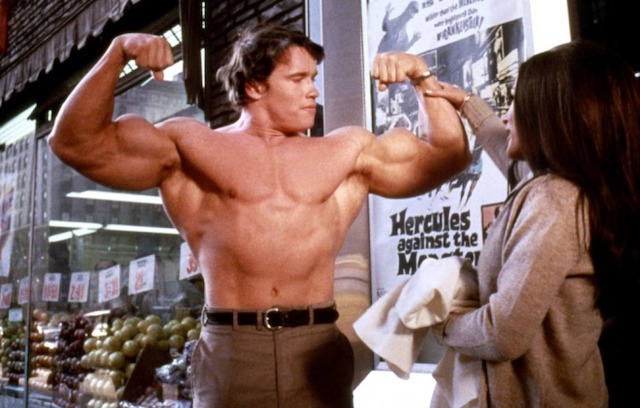
The Apple of My i

0
The Apple of My i

A lot of people worry about the decline of religious observance in America, but that’s only because their definition of “religion” is too narrow. If Apple Inc. had a church for its faithful members to gather in, it would be filled to capacity every single week, all those people reverently bowing their heads, playing with their iPhones, just like in regular church.

Appleism — also known as iDolatry — is the fastest-growing religion in America, gaining adherents more rapidly and steadily than even Justin Bieberism or Oprah’s Witnesses. Each year, millions of zealots breathlessly await whatever new revelation Apple’s leader, Steve Jobs, will bring them from atop his mountain, which is made out of money. Sometimes it’s merely an update to a previous doctrine, like when it became permissible to use Microsoft products on an Apple computer. But sometimes it’s a whole new system of worship, like when Jobs told us we had to start storing our music inside a fragile handheld box and carry it around with us all the time.

Nobody wanted to do that. It was one thing to have a Walkman or Discman that enabled you to have an hour’s worth of music with you when you were on the go. But your entire music collection? Every sound recording you own? Hundreds of hours of music constantly at your fingertips? That was silly. You don’t need 5,000 songs with you, not unless you’re going into space. In fact, it was so absurd that people had to start making NEW recordings, called “podcasts,” in order to justify the existence of the iPods. “Well, of course you need an iPod!” they’d say. “How else are you going to listen to these new podcasts??” And sure enough, because everyone exercised faith in Steve Jobs and did what he told them to do, we grew accustomed to the idea, and now the thought of being without entertainment for more than five minutes at a time is unbearable.

Apple has continued to bestow new treasures upon its people regularly. After the iPod came the iPhone, which led tragically to a million dumb jokes centered on the phrase “there’s an app for that.” Then came the iPad, which is just like the iPhone only bigger and not a phone. All of these devices promised even more ways for us to ignore the people we were having dinner with.

Last week Apple released the new operating system for its desktop and laptop computers, called Lion. The last several updates have been named after members of the cat family: Cheetah, Tiger, Leopard, and so forth. A Mac is like a cat, after all: it can generally clean itself up without assistance, it thinks it’s better than you, and people who own a lot of them tend to be weird. Microsoft, not to be outdone, has named each version of its Windows operating system after an appropriate animal: Snail, Sloth, Old Yeller, Disease-Ridden Sewer Rat, Australian Failing Toad, etc.

Appleists’ response to the new Lion system was speedy and unanimous. They said, as if with one voice, “This is definitely a thing that we paid thirty dollars for!”

In the interest of full disclosure, I should mention that I am an Appleist myself. I have been since high school, when a friend introduced me to the Macintosh. I was an easy convert; the computers I’d known in my youth were fine for playing Lemonade Stand and Oregon Trail, but they hadn’t really spoken to me on a personal level the way Apple did. I’ve been a stalwart Appleist ever since, using Windows-based computers only when there has been no other option, such as when I worked in a PC-based office, or when I visited my parents. (America’s parents continue to be the most consistent users of PCs, usually dusty, antiquated models with dial-up modems and AOL accounts and other viruses.)

Skeptics mock the enthusiasm of Apple’s most ardent supporters. “Those Apple fanboys are so gullible!” they say. “If Steve Jobs were to poop in his hand, call it the iPoo, and sell it for $499, everybody would buy it!” This is an exaggeration, of course. First the Appleists would complain that the iPoo didn’t have a video camera, and THEN they would buy it. After buying it, they would continue to whine about the features it’s missing while also urging everyone they know to buy one. “No, it doesn’t support Flash,” they would say. “But still, as far as handfuls of poop go, the iPoo is amazing. It’s the way of the future.” A year later, when iPoo 2 comes out, these same people would line up to buy it, even though it’s exactly the same as the first iPoo except for now being available in two colors.

Some of Apple’s success can be attributed to the company’s ingenious system for testing new products. Standard practice is to perform “beta tests,” wherein a handful of people use a product before it goes on sale and determine what its flaws are and what defects its software might have. The people testing the product for you don’t have to buy it, of course; you give it to them for free, in exchange for their valuable feedback. But Apple doesn’t do this. Apple has streamlined the process by putting its new products on sale immediately, as soon as Steve Jobs excretes them, and letting the people who buy them serve as beta testers. People will camp for days outside an Apple store just so they can be among the first fans who get to spend $500 on a new thing and then dutifully inform Apple of all the things that are wrong with it. Sure, you could wait until the new and improved version comes out. But if you do, the fundamentalist Appleists will look at you askance and question your faith, and you run the risk of being labeled an Appostate.

_____________________________________________

A Year of Snide Remarks was funded by a Kickstarter campaign. This week’s column was sponsored by LaptopXchange. Sponsor had no editorial control over the column, and the author alone is responsible for its content.
laptopxchange

Weekly link roundup – July 16-22

1

NEW MOVIE REVIEWS:

“Captain America: The First Avenger” (B)
“Friends with Benefits” (B+) [Film.com]

* * * * *

MOVIE COLUMNS:

Eric’s Bad Movies: “Butterfly” (1982), in which a sultry young Pia Zadora puts the moves on Stacy Keach, who is her father. It’s incestulicious! [Film.com]

What’s the Big Deal?: “Shaft” (1971), a film that demands to know whether you can dig it. Well, can you? [Film.com]

Re-Views: “House of 1000 Corpses” (2003), the directorial debut by auteur Rob Zombie, is reexamined. [Film.com]

* * * * *

MY OTHER STUFF:

Snide Remarks: “Drunk Thoughts” — How people think when they are tipsy

Movie B.S. with Bayer and Snider: Reviews of “Captain America” and “Friends with Benefits,” and also “A Little Help,” which I didn’t see but I guess Jeff did, or at least he claims to have. [Cascadia.fm] or [iTunes]

In the Dark: Subscribe to this weekly e-mail and get all the latest movie reviews, DVD releases, and other pertinent info delivered to your electronic mailbox. [Eric D. Snider’s In the Dark]

* * * * *

MISCELLANEOUS MERRIMENT:

It’s impossible to read this “Captain America” review and NOT hear the voice of Comic Book Guy. [Examiner]

Do you want to see “Sesame Street” footage edited to look like a Beastie Boys music video? Yes. YES YOU DO. [Vimeo]

Some of Arizona’s hilarious xenophobes are mad that an Arabic word was used to describe local dust storms. [Arizona Republic] & [Arizona Republic]

My associate William B. Goosefeathers offers suggestions on how to “improve” the “Winnie the Pooh” movie. [Film.com]

Children’s drawings painted realistically. [Buzzfeed]

Speaking of terrifying things, here are some old photos of vaudeville ventriloquists and their dummies. [Public School]

Ten more mistakes in “Transformers: Dark of the Moon.” [Slacktory]

Ranking the 5 dumbest categories of people on the Internet. [Pajiba]

The ultimate Coach Taylor pep talk montage. [Vulture]

Captain America: The First Avenger

0

“Captain America: The First Avenger” is a high-spirited, gee-whiz adventure in the tradition of “Raiders of the Lost Ark” and the matinee serials that inspired it. It was directed by Joe Johnston, whose career has been an alternate-universe version of Spielberg’s — “The Rocketeer,” “Jumanji,” “October Sky,” “Honey, I Shrunk the Kids,” “Jurassic Park III” — and who in fact worked as a visual-effects artist on “Raiders of the Lost Ark.” For an earnest and rousing tale of Nazi fighting and Boy Scout heroism, you could do a lot worse than pairing Joe Johnston with the Captain America mythology.

I liked the film. I like almost any film where someone warns the villain, “You cannot control the power you hold! You will burn!” I like a film where a scrappy li’l fella who wants nothing more than to help the war effort gets his chance to prove that bravery, resourcefulness, and honor are the greatest attributes a soldier can have. I like films that have characters who can be described as having “moxie,” and whose villains are played by Hugo Weaving, with help from Hugo Weaving’s eyebrows. I like films with colorful characters like an eccentric German scientist played by Stanley Tucci and a Tommy Lee Jones-ish colonel played by Tommy Lee Jones.

But I kept waiting to love the film, and it never happened, even though all the elements appear to be in place. I’m perplexed by my failure to be jolted into giddy delight by what would seem to be a textbook combination of action, story, and character. Can a movie be less than the sum of its parts? That’s what it feels like.

Chris Evans stars as scrawny Steve Rogers, a Brooklyn kid who, in 1942, gets to be the subject of an Army experiment that renders him taller, buffer, and stronger. (Seamless special effects make Evans look appropriately puny in the early scenes.) At first his services are required mainly as a tool to sell war bonds, but eventually he finagles his way to the front lines to take on Johann Schmidt (Weaving), Hitler’s top scientist and a competitor for Hitler’s title as Germany’s craziest mass-murderer. Schmidt has some special physical properties of his own, having barely survived being the first test subject for the serum that enhanced Steve Rogers, back before its creator (played by Tucci) fled Germany.

Then you have Peggy Carter (Hayley Atwell), a plucky British gal now in the U.S. Army who gets to have faith in Steve Rogers and be his wholesome love interest. You have Howard Stark (Dominic Cooper), the brilliant inventor, engineer, and entrepreneur whose technology gives Captain America much of his edge (and who we know is destined to be Iron Man’s father). You have a band of rescued POWs who become Captain America’s teammates, who seem like they are probably important figures in the comic books. (The comic books probably tell us what their names are, anyway.) Did I mention you have Tommy Lee Jones as a no-nonsense colonel? I did? Well, did I mention that he tells an underling who has disobeyed him, “You and I are gonna have a conversation later that you will not enjoy”?

The screenplay, by “Chronicles of Narnia” scribes Christopher Markus and Stephen McFeely, has sufficient sparkling dialogue and ample derring-do. But the story plays like an amalgamation of three different Captain America movies: the one where Steve Rogers becomes Captain America and rescues some POWs, the one where he and his new team hop around Europe bustin’ Nazi skulls, and the one where he faces Johann Schmidt in the ultimate battle between Good and Evil. That middle story is disappointingly compressed into a single montage, and the last one doesn’t get the climax it deserves because the movie isn’t allowed to end when it’s done: they still have to set up next summer’s “The Avengers.” Maybe that was really the whole point all along?

Friends With Benefits

0

Sex plays an important role in “Friends with Benefits” — but not as important as you’d expect, given the film’s title and its easy-to-advertise premise of two attractive young people having no-strings-attached hanky-panky. At its core, it’s just a regular ol’ romantic comedy, except that it’s about a guy and girl who are cynical about love because they’ve been raised on a steady diet of dumb romantic comedies.

Since the characters in “Friends with Benefits” openly ridicule the rom-com genre (as well they should), the burden is on “Friends with Benefits” to avoid being the kind of movie those characters would make fun of. And it succeeds, thanks to comedic chemistry between the two leads and nimble direction by Will Gluck, who also did enough rewrites on Keith Merryman and David A. Newman’s screenplay to get co-credit. (I’m telling you, Gluck is one to watch. His “Fired Up!” and “Easy A” were both much smarter and funnier than they ought to have been, and the short-lived sitcom he created, “The Loop,” was borderline genius.)

Mila Kunis plays Jamie, a corporate headhunter described by her ex-boyfriend as “emotionally damaged.” Justin Timberlake is Dylan, described by his ex-girlfriend as “emotionally unavailable.” Miss Damaged and Mr. Unavailable meet when Jamie recruits Dylan for a top position at GQ Magazine, and this professional interaction — and the fact that Dylan doesn’t know anyone else in New York — leads to an easy friendship.

When they do finally sleep together, it’s only after the movie has established a friendship between them that feels remarkably authentic. Their jokey rapport resembles that of the 30-year-olds in your own life, with the fresh aroma of natural, unscripted camaraderie. Do you have any Generation-Y-age friends who are funny? Then they probably converse the way Dylan and Jamie do.

This is crucial to the film, which would be a disaster otherwise. We believe Dylan and Jamie are friends, and we believe that neither wants a romantic relationship with the other (or with anyone), and we believe that they believe they can really have casual sex without strings becoming attached. What sounded like a cheap and shallow premise on paper is actually a fleshed-out and convincing story.

Timberlake and Kunis are marvelous together, both absurdly good-looking and charming, yet somehow also down-to-earth and accessible. The movie not only makes you feel like you’re hanging out with a couple of fun friends for two hours, it also makes you feel like you could actually be friends with Justin Timberlake and Mila Kunis, which of course you cannot.

They are aided immeasurably by three supporting performances. Patricia Clarkson is a whirlwind of comedy as Jamie’s flaky and free-spirited sexpot mother. Woody Harrelson is Dylan’s enthusiastically lascivious gay co-worker who defies most of the “gay best friend” rom-com stereotypes. And the indispensable Richard Jenkins manages to bring real heart to a treacherous role: Dylan’s father, his role model, now suffering from Alzheimer’s.

Certain things are required in a movie like this, even one that’s savvy enough to know that it’s a movie like this. That means Dylan and Jamie’s friendship must be imperiled by their intimacy, that they must have a fight, that one must rush to reconcile with the other in a public place. You can’t avoid every cliche, and maybe you don’t need to. Most romantic comedies are based on the premise of keeping two people who are obviously in love from realizing they’re in love. In this case, we can buy Dylan and Jamie’s reluctance to face facts, and we get a lot of laughs in the process of seeing them figure it out.

[Reprinted from Film.com.]

Another Earth

0

When you hear that “Another Earth” deals with the discovery of a previously unknown planet orbiting not far from our own, you may then be surprised to hear that 1) the movie isn’t really sci-fi, and 2) the story is not a terribly original one.

This quiet and somber indie drama, the first feature by director Mike Cahill, uses the astonishing celestial discovery as the backdrop — literally, in fact; the new planet is often seen hovering in the sky as the film’s characters grapple with their problems, which are tangentially related to it. The new planet can be described the same way Homer Simpson described beer: the cause of, and solution to, everyone’s problems.

For it is while gazing up at it on the first night of its appearance that a promising young woman named Rhoda (Brit Marling, who wrote the screenplay with the director) is involved in an auto accident, essentially ruining her life and cutting off her plans to attend M.I.T. Instead, she takes a menial job as a custodian while privately seeking to clean up the mess she made. (Get use to that “cleaning up” metaphor, by the way.)

Rhoda also begins working as a housekeeper for John (William Mapother), a Yale music professor who has become a drunken, slovenly recluse since a tragedy some years earlier. John needs fixing; Rhoda needs to fix something; they become friends; and so forth.

But what about that other planet? It appears to be habitable like Earth — indeed, it appears to be just like Earth in a lot of ways, to the extent that people start calling it Earth Two when they talk about it, which is almost constantly. (The discovery of ANY habitable planet would be major news; finding one so close to home understandably becomes the dominant topic of conversation around the ol’ water cooler.) Soon it is determined that Earthlings can travel to it. Rhoda wonders if this is her chance — wait for it — to start her life over again.

Don’t concern yourself with questions about how a planet could be this close without being seen a long time ago, or why its alarming proximity doesn’t destroy us. If you’re looking for a sci-fi drama about a major astrological event, you’ll be disappointed. The movie isn’t interested in those questions. Earth Two serves as a symbol: an opportunity to wipe the slate clean, the hope of a life better than this one.

Of course, you might also be disappointed if you’re looking for a poignant and emotional character drama. The movie is interested in that; it just isn’t always very good at it, relying too much on overly familiar dramatic scenarios. Marling and Mapother’s performances aren’t bad, and both actors are intriguing: Marling came from out of nowhere to become a darling at Sundance with both “Another Earth” and “The Sound of My Voice,” while Mapother is a recognizable face who’s rarely (never?) had a leading role before. While I watched the film, I was engaged in the story and curious to see where it would go. Now that I’ve seen it, the thought of watching it again sounds tedious. Some movies hold up to repeat viewings; “Another Earth” barely survives one.

Butterfly (1982)

Butterfly (1982)

Give the people what they want! That is Hollywood’s mantra. In 1982, what people wanted was a gross story about a teenage harlot using her feminine wiles to seduce her own father. Goodness knows why the people wanted this, but they did. The people further requested that the girl and her dad be played by Pia Zadora and Stacy Keach. And then the people said they’d like the film to feature cameos by Ed McMahon and Orson Welles. “OK,” Hollywood said, “now we think you’re just messing with us.” But Hollywood called the people’s bluff and made “Butterfly,” a lubricious cinema fart that meets all of the above criteria and presumably satisfied the people’s craving for incest-based melodramas.

butterfly

The year is 1937. The location is Nevada. The air is dusty. The forecast calls for sleaze with a chance of fondling. A truck driver picks up a hitchhiker, a sultry, pie-faced girl of few words who immediately starts seducing him, only to abruptly ditch him once he has gone out of his way to deliver her to the tiny town that was her destination. We cut to the next scene, where the same girl is sitting on the porch of a small shack, making the same kind of overtures toward the man who lives there. We think: Isn’t this more or less what the first scene was about? Are we stuck in a loop? Will this movie be nothing more than scene after scene of hapless men being sexually aroused and then dismissed by a teenage girl? We hope not, because we’ve already seen that movie, and it was called high school.

The man is Jess Tyler (Stacy Keach). His job is to live in this shack and keep scavengers away from the defunct silver mine behind it. Maybe it doesn’t sound like much of a career, living in a shack so you can babysit a hole in the ground. Really, any occupation that requires you to live in a shack probably will not be very rewarding. But Jess is a simple man with simple needs. Mine-tending and shack-dwelling are the only things he knows.

The girl assails Jess with a never-ending stream of smutty double-entendre. “Is there something you want?” he asks when he first sees her, since he has no idea who she is or what she’s doing here at his shack/place of business. “How can I tell till I know what you got?” is her kittenish and ungrammatical reply. She seems to know a lot about his past, including that he was married to a floozy who ran off with another man 10 years ago and took their two daughters with her. The girl says, “Don’t it get lonely out here? Or is just milking that cow enough for you?” I should point out that Jess had just finished literally milking an actual cow when the girl said this, though knowing the context only makes it slightly less filthy.

butterfly

After several minutes of flirting with Jess and indicating that she wishes to make sexytimes with him, the girl finally reveals that her name is Kady and she’s his daughter. Yes, his daughter. That’s obviously not a very good pick-up line, so you can see why she saved it for last. She was only 7 when she left, and she’s a busty 17 now, which is why Jess didn’t recognize her. First hot chick he’s met in years who wanted to sleep with him, and wouldn’t you know it…!

Kady further reveals that her mom’s still a floozy, that she picked up her floozy ways, and that Kady had a baby of her own a month ago. The child’s father is the son of the rich people who own the very silver mine now being guarded by Jess and his shack, the Gillespies. Remember that detail, because it will be important in the next sentence. Kady figures that even though the mine is defunct, it still has SOME silver left in it, and since the Gillespies won’t let their son marry her, she’s entitled to take some of their silver. The law probably isn’t on her side, but that’s OK. She’ll just have sex with the law until the law changes its mind.

Daddy, being a man of scruples and integrity, doesn’t cotton to Kady’s plan to steal from his employer. Nor does he cotton to Kady’s habit of undressing seductively in front of him, or hopping into the bath basin all nude-like when he’s sitting in the same room. Actually, Jess does cotton to all of this, but he wishes he didn’t. A man ain’t supposed to cotton to his own daughter! Nor is a daughter supposed to intentionally arouse her father’s cottonings!

butterfly

During the bath scene, Kady begs Jess to come over and rub her sore shoulders. He does. Then she guides his hands to her breasts. “You’re my daughter, Kady!” he protests. “I’m a woman, too!” she answers, guiding his hand in a south-southwesterly direction. Pia Zadora passes for 17 here, but don’t worry, she was actually 27 when the film was made. Nonetheless, this is the point in the movie where you start feeling like you need a hot, scalding shower. The feeling will increase over the course of the film, and subside only after you are dead.

Jess manages to resist his daughter’s sexual advances, but he relents on the stealing-silver-from-the-mine thing. Meanwhile, Kady tries to make Daddy jealous by foolin’ around with every available man in the depressed mining town. Jess and the townsfolk keeping pointing out that Kady’s mom was also notoriously trampy, so, you know, whaddaya gonna do? Kady’s mom, named Belle (of course), frequently referenced but so far unseen, starts to become a mythical, larger-than-life figure to us. And on this point, the movie delivers. Belle (played by Lois Nettleton) toddles into town after a while, on the arm of her oily new husband, and she’s as hilariously boozy and cheap as we’d hoped, with clown-like makeup and a hacking cough. No sooner has she arrived than she tries to kill her husband with a knitting needle and then dies of tuberculosis. Amazing comedy-sketch drunken whore mom, we hardly knew you.

butterfly

My, but there’s a lot of plot in this movie! A lot of films would be content to dump a pile of skeevy incest on the screen and call it a day, but not “Butterfly”! “Butterfly” takes its five-pound plot bag and crams it with ten pounds of plot. I haven’t even mentioned the Gillespie kid showing up, and our introduction to his parents, who are played by Ed McMahon and June Lockhart. Nor am I going to mention it! Because the more important thing is that Jess learns he’s not actually Kady’s father, which means having sex with her will not be illegal but merely very creepy! So they do it! Uh, with Kady still under the illusion that Jess is her father. You know that thing where it’s kind of hot to do it with a girl who thinks she’s committing incest? It’s like that.

butterfly

Just when you think they couldn’t stuff any more ridiculous plot twists into this thing, Jess and Kady get caught and are put on trial for incest, and the judge is Orson Welles. And why wouldn’t the judge be Orson Welles? You give me one good reason why the judge in a trashy soap opera starring a nude Pia Zadora wouldn’t be played by one of history’s greatest filmmakers! It’s like when Ingmar Bergman did a cameo in “Showgirls.”

Orson Welles’ greatest contribution to the film is when it becomes crucial to know whether a tertiary character named Ed Lamey has a particular birthmark on his stomach, and the Honorable Judge Citizen Kane issues this command: “Let the court see your stomach, Lamey!”

Oh, and over the closing credits Pia Zadora sings a song called “It’s Wrong for Me to Love You” — which is exactly the title I’d have come up with on my own if you’d asked me to provide a satiric example of what a wrong-headed incest movie’s theme song might be. Sometimes truth is stranger than satire!

— Film.com

House of 1000 Corpses (2003)

0
House of 1000 Corpses (2003)

Rob Zombie had a hard time getting his directorial debut, “House of 1000 Corpses,” into theaters. It was only through perseverance, commitment, and a deal with the dark lord Satan that he finally succeeded in sharing his vision with the world. We’ve hardly been able to get rid of him ever since.

Man, did I ever hate this movie.

What I said then:

“A massively unpleasant film…. I have seen movies with more gore and carnage … but I don’t know that I’ve seen it done with more distastefulness than this. It is so crass that even fans of crassness may find it unenjoyable…. The teens are bitter and stupid and unworthy of sympathy; their captors are ugly, vile persons unworthy of being feared…. As with many first-timers, Zombie’s directorial style is over-done and amateurish. He randomly cuts to violent and/or sexual images every now and then, evidently just for shock value, and he permits some of the worst acting I’ve seen in a good long while…. When movies like these are fun, they are fun because they introduce clever or amusing ways of killing people, or because some level of wit is exhibited by the filmmaker. ‘House of 1000 Corpses’ has none of this…. This is a hateful, vicious piece of work that is best left ignored.” Grade: F [complete review]

The circumstances remind me of a movie I Re-Viewed a couple weeks ago, “Freddy Got Fingered,” which I also remembered as being a grotesquely unpleasant experience the first time. I saw “House of 1000 Corpses” on opening day, April 11, 2003, because it hadn’t been screened for critics beforehand (a practice that was much less common in 2003 than it is now). My friend Brett went with me, because we had this thing where we watched horror movies together, no matter how bad it seemed like they were going to be. We both found this one irredeemably repellent and stupid. (“Movie hates me,” I jotted in my notes.) I was able to work out some of my anger by writing a scathing review, but I don’t know what Brett did. Probably killed a hobo, if I know Brett.

Rob Zombie (real name: Robert Bartleh Cummings, and I’m not making that up) was a heavy-metal musician first, but his move to filmmaking wasn’t completely random. His band, White Zombie, was named after a 1932 Bela Lugosi movie, and Zombie had directed a few of his own music videos. It’s clear from watching “House of 1000 Corpses” that he was a big fan of the 1970s exploitation and horror films (including, of course “Halloween,” which he would eventually direct a remake of). A few of his cast members were veterans of such movies.

Nonetheless, it was Zombie’s previously established musical fanbase that gave “House of 1000 Corpses” its cult following. Instead of selling out when he became a filmmaker, Rob Zombie made exactly the kind of movie that Rob Zombie fans would go for. Fans of horror movies in general and exploitation cinema specifically, well, maybe not.

The re-viewing:

The first viewing, eight years ago, felt like a mindless assault on my senses. The second viewing, just recently, was far less unpleasant. There are probably several reasons for this, but I suspect it’s mainly because I’ve seen several movies of this nature in the meantime that were more repugnant and ugly than “House of 1000 Corpses” is — including its sequel, “The Devil’s Rejects” (2005).

I’m not sure how to feel about the realization that what was once among my most awful movie-watching experiences now doesn’t even make the top ten.

“House of 1000 Corpses” prefigured the torture-horror trend, coming out well before the “Saw” series, “Hostel,” and the others. When I saw it, I had only a passing familiarity with its gruesome predecessors (“The Hills Have Eyes,” “Last House on the Left,” “Texas Chainsaw Massacre,” etc.). I’d seen plenty of slasher movies, but the victims almost always die quickly in those. Torture was a relatively new and hideous notion for me, moviewise.

But it isn’t necessarily a deal-breaker. As I’ve seen more exploitation films, both old and new, on DVD, in theaters, and at festivals, I’ve become fascinated with them (in a completely wholesome manner, I promise). The way they’re structured, the narrative devices they use, their methods of pushing our buttons — all of that is endlessly intriguing to a person who likes to analyze things. Most of these movies are ugly and unpleasant, of course: that’s the point. But I’ve come to appreciate the difference between a movie that rattles your senses in a manner that is ultimately “enjoyable” and one that’s just off-putting and nasty.

There’s a fine line, though, and the line is different for everyone. Listen to the people coming out of a Fantastic Fest screening — who tend to be aficionados of extreme cinema — and you’ll hear opposite reactions to the same movie. What’s awesomely, grotesquely, violently entertaining to one person is merely revolting to another.

Which isn’t to say that I enjoyed “House of 1000 Corpses” on second viewing, only that it didn’t seem to be sitting on my head and punching me in the face the whole time. For I haven’t just seen movies that were more hateful since 2003 — I’ve also seen movies that did this sort of thing much, much better. I’ve seen exploitation films whose central premises have actual ideas behind them, where some wit and imagination are on display, movies that aren’t forced to rely on random cutaways of violence and naked girls for cheap shocks.

Zombie occasionally toys with giving his maniacs a demented motive for their violence, having them utter lines suggesting resentment toward outsiders, or defensiveness about being ignorant hillbillies, or fear of being mocked by city slickers. But the idea is never explored beyond a couple bits of dialogue. We get the sense that these lunatics torture and kill without motive, for no reason other than that they are pure evil. But I’ve seen that done better, too. I’ve seen pointlessly cruel movies where the pointless cruelty was scarier, more unsettling, more chilling.

Zombie has obviously seen the classics of the exploitation-horror genre. But I don’t think he understands what makes them work. Or perhaps he does understand and just wasn’t able to duplicate it himself. In any event, my overriding thought for much of this second viewing was something closer to pity: Aw, look! He’s trying to make something disturbing and creepy! How adorable!

Do I still hate this movie?

Yes, albeit with less fervent passion. It’s not aggressively awful; more like benignly awful, the kind of awful you can sit through without becoming enraged. So I guess that’s a step up? Grade: D

— Film.com

Drunk Thoughts

0
Drunk Thoughts

Let’s check out the latest developments in the field of being very drunk!

First stop: Anchorage, Alaska! This snowy Canadian village, located just north of the North Pole, is home to a lot of drunkards, probably because there’s nothing to do and it’s only daylight for eleven hours a year and you live under the constant threat of a militant Eskimo uprising. To prevent these drunkards from freezing to death in snow drifts or endangering others by driving their dog sleds home to their ice forts, the city of Anchorage has a van that picks them up and takes them to a place where they can sleep it off for the night.

Last week, unsurprisingly, the van for drunk people was taken for a joyride by a drunk person.

The Anchorage Daily News has all the details. You can probably guess most of them, though: the van’s attendants left the vehicle running while collecting a passenger; a drunk dude hopped in and drove away; he crashed; the drunks in the back didn’t even realize a joyride had taken place; the guy’s name was Donny; etc. (It’s a fact that if the name you usually go by is “Donny,” the odds are good that someday you’ll be featured in a newspaper article involving three or more of the following terms: drunk, nude, meth, police chase, trailer park, snake, strip club.)

But there is one surprising aspect to the story. When you hear that a drunk guy took the community drunk van for a joyride, you assume he was one of the van’s “customers” who maybe got fed up with the frequent stops and decided to single-handedly change it from a local line to an express. That’s what I would be tempted to do, if I were drunk and impatient. But no! According to the news story, “Donny H. Weston, 35, arrived in a cab and walked up to the unlocked van.” In other words, he had no affiliation with the drunk van prior to stealing it. He was a completely unrelated drunk guy. Anchorage has so many drunk people that even after they fill up a van with them, they still have enough drunks left over to steal the van.

Now we have so many more questions. Was Donny merely looking for an easy-to-steal vehicle? Was he even aware that his choice turned out to be semi-ironic? Or was he not in the market for a stolen van at all, but simply saw this one with its engine running, and then noticed that it was the drunk van, and he was drunk, and oh my gosh, this is too perfect, I have to drive off in this thing, for comedy? There is a certain amount of logic in that line of thinking, as you’ll recognize if you’ve ever associated with a drunk person, or a comedian.

We also note that Donny was in a cab when he arrived. If the cabs in Anchorage function the same way as in other cities, this cab would have taken Donny all the way to his house if he had indicated to the driver that this was his desire. There was no need to be dropped off where the drunk van was parked. Perhaps Donny was trying to save a few dollars on cab fare.

“Go ahead and let me out here. I can take the drunk van the rest of the way.”

“OK, but you know the drunk van just takes you to a room at the jail where you sleep for the night, not to your house.”

“Oh, yeah? WE’LL SEE ABOUT THAT…!”

Next stop on our tour of drunkenness: My friend’s house the other night! There was a social gathering at which alcoholic beverages were served. Most people drank in moderation or abstained entirely, but one guy got completely wasted and passed out on the couch. Early, too, like 9:30. Naturally, conversation soon turned to the subject of what we should do to him. It is easy and unimaginative and altogether frat-house-y to simply draw on an unconscious drunk’s face with a Sharpie, or to put a sombrero on him, or to pour water on his crotch so when he wakes up he thinks he peed his pants. We knew we were better than that. These are the possible scenarios we came up with:

– One of us trades clothes with him.

– We dress him in the clothes of someone who is much larger than himself, so that when he wakes up he will think he is shrinking.

– Everything is normal when he wakes up, except that his underwear — and only his underwear — is missing.

– Everything is normal when he wakes up, except that his underwear is in his back pocket.

– Everything is normal when he wakes up, except that his underwear is neatly folded on his chest, with a note attached that says “thank you.”

– Everything is normal when he wakes up, except that his underwear is missing, and he can’t figure out what happened to it, and a week later it arrives in the mail.

– Everything is normal when he wakes up, except that his underwear is missing, and he can’t figure out what happened to it, and a week later it arrives in the mail, and the package is addressed in his own handwriting.

– Everything is normal when he wakes up, except that his underwear is missing, and he can’t figure out what happened to it, and a week later it arrives in the mail, and the package is addressed in his own handwriting, and we have murdered his parents.

The last one would have been impossible because none of us knew his handwriting well enough to forge it. Most of the others were impossible too, actually, because no one wanted to handle an unconscious guy’s underwear (not because of impropriety or violation of privacy, but because of gay). So, unfortunately, the drunk dude was permitted to continue sleeping in peace, and thus failed to learn any lessons at all, so I don’t know what the point was.

Weekly link roundup – July 9-15

1

NEW MOVIE REVIEWS:

“Harry Potter and the Deathly Hallows Part 2”
(B+)
“Winnie the Pooh” (A-) [Film.com]
“Tabloid” (B)

* * * * *

MOVIE COLUMNS:

Eric’s Bad Movies: “Magic in the Water” (1995). A children’s movie about the Canadian equivalent of the Loch Ness Monster. [Film.com]

What’s the Big Deal?: “North by Northwest” (1959). A Hitchcock movie about Mount Rushmore and train symbolism. [Film.com]

Re-Views: “Jay and Silent Bob Strike Back” (2001). A Kevin Smith film about Kevin Smith’s failures as a director. [Film.com]

A long column about the length of movies. [Film.com]

* * * * *

MY OTHER STUFF:

Snide Remarks: “Positive Buzz” — Some people can do whatever they want.

Movie B.S. with Bayer and Snider: Reviews of “Harry Potter,” “Winnie the Pooh,” “A Better Life,” and “Terri.” Plus Interquel, QOTW, and a special offer for Portland-area listeners to meet original “Star Trek” cast members. [Cascadia.fm] or [iTunes]

In the Dark: Subscribe to this weekly e-mail and get all the latest movie reviews, DVD releases, and other pertinent info delivered to your electronic mailbox. [Eric D. Snider’s In the Dark]

* * * * *

MISCELLANEOUS MERRIMENT:

Yasser Arafat continues to amuse us. [Hairpiece or Herpes]

A montage of Tami Taylor saying “y’all” on “Friday Night Lights.” [YouTube]

Let’s say watching movies in 3D gives you a headache, but you’re always being dragged to 3D screenings. These glasses allow you to watch a 3D movie in non-headachy 2D. I tried it with the new Harry Potter and was pleased with the results. [2D Glasses]

As an aficionado of Tom Lehrer — only the greatest musical satirist of the 20th century — I was sure I’d heard every one of his songs, even the obscure ones. I was mistaken. [YouTube]

Google Circles you’ll actually use. [Buzzfeed]

Hipster puppies are more adorable than hipster people. [Hipster Puppies]

Hello, amazing future world! Here’s a device that makes fully functional clones of actual three-dimensional tools and objects. [Snopes]

10 lines from the “Evil Dead” trilogy as rewritten by Diablo Cody. [Pajiba]

92-year-old Andy Rooney can’t figure out why he’s out of touch with popular music. [YouTube]

Tabloid (documentary)

0

Errol Morris must have felt like it was time to lighten up. After his last few documentaries addressed the death penalty, Holocaust deniers, the Vietnam War, and Abu Ghraib, his new one tells an astonishing-but-true story about an insane-but-functional woman named Joyce McKinney. It’s called “Tabloid,” and its purpose is not enlightenment but entertainment.

In 1977, England was delighted by a news story about a North Carolina girl who had come to the U.K. looking for the boyfriend who had left her and was now working as a Mormon missionary. The young man, Kirk Anderson, said that when Joyce McKinney found him in the midst of his religious labors, she abducted him, tied him to a bed, and made him have sex with her. When she was arrested, McKinney insisted it had all been consensual, though she also insisted Anderson was being held by the Mormons against his will, which was manifestly untrue.

Well, you can see why the story amused the Brits. “The case of the manacled Mormon!” screamed the headlines. The idea of a woman raping a man made for fascinating cocktail conversation; the fact that the man in question was a Mormon missionary made it especially provocative. Out on bail, McKinney became a media darling, photographed at movie premieres and at parties with rock stars. When she and her accomplice, Keith May, fled to the United States (in disguise, with fake passports), McKinney had 13 suitcases full of press clippings.

In his usual fashion, Morris simply trains the camera on McKinney and lets her tell her story. Say what you will about her — that she’s a rancid, delusional trollop, for example — there’s no denying she’s a colorful character. Her Southern accent and flair for the theatrical make her a lively interview subject. When the things she says are contradicted by other talking heads, including journalists who covered the story in 1977 and a man she hired at the time to help her find Anderson, she becomes an object of fascination. She is clearly not telling the truth about some things, and yet she seems to believe her story so intently. She obviously loves being the center of attention, yet she claims all the publicity ruined her life. When anything negative is reported about her — like, for instance, that she worked part-time as an S&M mistress for hire — she acts wounded and aggrieved, like everyone’s just out to get her. In her view, she has never done anything wrong, ever, and none of her problems have been her own fault. Anything that would appear to suggest otherwise is a distortion or fabrication.

What Morris has realized is the same thing the tabloids have always known: that people with an outlandish sense of self-regard make for riveting entertainment. In keeping with the theme of sensationalized reporting, Morris indulges in a bit of tabloidism himself. McKinney despises the Mormon church, blaming it for turning Anderson against her. When she rails spitefully against the faith’s ceremonies and doctrines — the specifics of which have nothing to do with the matter at hand — Morris helpfully finds a random, sarcastic ex-Mormon to offer further insight into how weird Mormons are. For illustration purposes, he uses clips from a film called “The Godmakers,” a ludicrously slanted and long discredited anti-Mormon screed from 1982. Quoting “The Godmakers” in a story about Mormons is like quoting Mel Gibson in a story about Judaism.

While this sort of arbitrary disrespect will be offensive to Mormons, it fits with the theme of “Tabloid,” which is that sensationalism sells. No matter who’s talking, Morris is eager to make fun of their foibles, to underscore their peculiarities. (One of the journalists refers to Anderson’s manacled position as “spread-eagle”; Morris flashes the words “spread-eagle” on the screen every time he does.) He only corrects their falsehoods when doing so will stir things up further. Otherwise, he lets them stand. Joyce McKinney is a freak show, engaging in one crazy shenanigan after another: the “manacled Mormon” story was just the start. None of her insane adventures are “relevant,” per se, except insofar as they give us one more thing to be entertained by.

Morris has made insightful and thought-provoking documentaries in the past (see especially “Mr. Death” and “Fog of War”), and he probably will again. “Tabloid” is nothing more than a lark, the equivalent of glancing at the goofy headlines in the checkout line and then forgetting all about them.

Harry Potter and the Deathly Hallows Part 2

0

The final book in J.K. Rowling’s moderately successful series of Harry Potter novels was split into two movies, but the split was not equal. “Harry Potter and the Deathly Hallows Part 1,” released last fall, covered about 500 of the book’s 750 pages, leaving Part 2 to deal with the remaining third — climax, mostly, and not just for this installment but for the entire eight-movie series.

How can one two-hour film provide adequate closure for such a long saga? Can it be dramatically satisfying when the vast majority of the audience already knows, in great detail, what’s going to happen? And just how awesome is it going to be when Mrs. Weasley calls Bellatrix the B-word?

The answers are: it can’t; yes; and very.

Part 2 picks up exactly where Part 1 left off, with no change in tone, tempo, or style. It’s immediately clear that the whole story was meant to be told in a single four-and-a-half-hour movie. There’s no point in judging the parts separately; they don’t stand alone, and they weren’t intended to.

Harry’s first line of dialogue is “I need to talk to the goblin,” which seems like a good thing to say in a number of situations. From there the story marches solemnly and urgently toward its conclusion: the search for horcruxes that must be destroyed in order to defeat Voldemort; the final word on Snape’s allegiances; risky plans and dangerous missions; some snogging. The pace is steady, neither rushed nor dragged out, as director David Yates lets the story’s natural ups and downs create the rhythm. Working once again from a screenplay by Steve Kloves (who adapted all but one of the films), Yates understands Rowling’s style of storytelling, and he has guided the saga through its most complex turns. Chris Columbus deserves credit for assembling the cast and directing the first two movies, but it is Yates — the director of films 5-8 — whose graceful touch has emerged as the signature of the series.

There are several thrilling sequences, including one set in Gringotts Bank, that are rife with tension and unease, occasionally leavened by grim humor. For as much mayhem as there is in the film, it’s amazing how quiet it often is. That’s not to say it isn’t rousing and noisy when rousing noise is called for, just that Yates has realized the film need not be a never-ending cacophony of climax.

But speaking of climax, I have to admit the final victory doesn’t feel like one. Instead of making Voldemort’s destruction a triumphant thing, a cause for celebration, Yates underplays it, perhaps not wanting us to forget how costly the victory was. That’s a far more mature and nuanced attitude than the saga’s detractors give it credit for, and I can respect Yates’ choice not to make it a jubilant, ticker-tape-parade sort of moment. Still, I can’t help but feel there must have been a way to give us the satisfaction of enjoying our enemy’s demise while still respecting the solemnness of the occasion.

If there’s no emotional release at that point, though, there’s bound to be in the epilogue, or in the scenes from Snape’s memories, or in Harry’s otherworldly conversation with Dumbledore, or upon the death of this character or that character, or any number of other places. It’s impossible for someone who’s read all the books and seen all the movies not to bring his or her own baggage to this final chapter, filling in whatever blanks there might be. I can point out (just for example) that the movies don’t adequately convey Draco Malfoy’s character and motivations, and that I wouldn’t understand him if I hadn’t read the books. But it’s a moot point: I have read the books, and that experience can’t help but influence the way I respond to the movies.

My hunch is that your reaction to this haunting, magical final installment will mirror your reaction to the book — whether that’s sadness that it’s ending, happiness that it’s ending happily, nostalgia for all the hours you’ve devoted to Mr. Potter and his associates, or some combination of those. In any case, it’s a fitting conclusion to a remarkable tale, and an end to one of the most successful — and successfully executed — movie franchises in history.

Winnie the Pooh

0

As beloved as A.A. Milne’s “Winnie-the-Pooh” books are, there’s little question that most of the people currently living were first exposed to the characters through Walt Disney’s adaptations of them. If a new Pooh flick is to succeed with viewers, it has to capture the spirit of those cartoons from the 1960s and ’70s, and not necessarily the spirit of the books. (Fortunately, the two spirits are pretty similar.) Pooh’s gentle, friendly voice, the familiar theme song, the simple animation — that’s where the nostalgia is.

I am pleased to report that the new feature, simply titled “Winnie the Pooh” (ditching the hyphens was the most serious change Disney made to the Milne formula), recreates the look and feel of the old cartoons about as faithfully as could be expected, given the deceased nature of most of the original voice cast. Knowing the Disney company, I assume they were tempted at some point to produce a hip, 21st-century Pooh — Pooh the Xtreme! — with a jive-talking Rabbit and a skateboarding Tigger, all produced with computers and shown in 3D and featuring a soundtrack by Maroon 5. But any such temptations were repressed. What we have instead is hand-drawn animation, jaunty songs, an uncomplicated story, and a sweetly child-like sense of humor and wonderment. In short: classic Pooh.

You will recognize the elements of the plot immediately. Pooh (voice of Jim Cummings), dangerously addicted to honey, cannot find any in his home and goes looking to “borrow” some from his neighbors. Eeyore (Bud Luckey), the clinically depressed donkey, has lost his tail, so all the inhabitants of the Hundred-Acre Wood try to find a suitable replacement. Christopher Robin (Jack Boulter) is gone for the day but has left a note, which the animals misunderstand, sending them on a quest to rescue their pal from a nonexistent forest monster. Tigger (Jim Cummings again), the Kramer figure in this universe, tries to teach Piglet (Travis Oates) how to be a Tigger too. Owl (Craig Ferguson) talks smarter than he is, Rabbit (Tom Kenny) is flustered, Kanga (Kristen Anderson-Lopez) and Roo (Wyatt Dean Hall) serve as good-natured background — you know the routine.

This is a children’s movie in the purest, most magical sense, appealing to the under-8 crowd by talking to them at their level. The conceit is that these are tales manufactured by Christopher Robin as he plays with his stuffed animals; hence, no one is any more mature or sophisticated or worldly-wise than a little boy would be. The narrator (John Cleese) is the only adult influence on this play-world, and he treads lightly, setting our friends back on course gently and only when asked. There are no glaring of-the-moment pop-cultural references to date the film, nothing that will remind you, 20 years from now, that it was made in 2011. (Unless you look at the credits, I suppose: Zooey Deschanel sings the classic theme song; the new tunes were written by Robert Lopez, a Tony-winner for “Avenue Q” and “The Book of Mormon.”) There is only sincerity and joy.

As a kid, I thought the Pooh characters’ awareness that they are in a book, going so far as to interact with the typography on the pages, was about the niftiest thing in the world. I’m happy that device has been retained, because it’s still awfully neat. Rabbit doesn’t have a very large role in the story (and his voice doesn’t sound right to me), and none of the songs are instant classics like “The Wonderful Thing About Tiggers,” but you can’t have everything, can you?

Apart from one or two sly references, the movie makes almost no attempt to include material specifically for the adults in the audience — and the adults in the audience who have fond memories of previous animated Pooh adventures will find that attitude all the more appealing. How could you be transported back to your childhood if you were constantly being peppered with jokes that only the adult you would understand? In a way, it doesn’t matter that the film is just for kids. When it does its job right, everyone watching it is a kid.

[Reprinted from Film.com.]

Magic in the Water

Magic in the Water

Every year, Hollywood produces several hundred family-oriented movies about workaholic fathers who vow not to neglect their children anymore after something zany happens, often involving an animal. These are among Hollywood’s most vital exports. But did you know that Canada, which is a country located directly north of America, also makes movies like this? It is true! They don’t just involve moose and penguins, either. “Magic in the Water” is about a Loch Ness monster!

This movie was filmed in a scenic “province” (their version of a state) called “British Columbia” (their version of Washington). It stars Mark Harmon as a brusque and unhelpful psychiatrist who hosts a radio call-in show on which he verbally abuses anyone desperate enough to seek his guidance. His character is named Jack Black, which is unfortunate. Jack Black is divorced and does not have custody of his children, so he compensates for this by being distant and inattentive whenever he’s with them.

orky

Such is the case this particular summer, when he takes the kids to a charming lakeside town where the lake, legend has it, is home to a sea monster called Orky. Jack’s young daughter, Ashley (Sarah Wayne), believes in the legend, because kids are dumb like that. Jack’s 16-year-old son, Josh (a pre-“Dawson’s Creek” Joshua Jackson), scoffs at his gullible sister. I should point out, however, that the legend comes from a local Indian tribe, represented by a Wise & Mysterious Old Indian character who sits quietly and observes everything, so the chances of the legend being true start rapidly approaching 100 percent.

Also, the movie poster has a picture of Ashley sitting on the head of a sea monster.

orky

Jack Black is here on “vacation” with the kids, but all he does is take work-related calls on his cell phones. Yes, plural. He has two cell phones that we see, and a third one chirping away in his luggage. The screenplay template said, “Insert details establishing that Father character is too busy for his children,” and this particular screenwriter, unable to come up with numerous details, simply multiplied the one detail he could think of.

orky

Dad’s cell phone addiction leaves Ashley and Josh to sit around, bored in a quaint village that has been made all the quainter by being in Canada. One lazy day Ashley is on the pier at the lake when she thinks she sees something in the water and starts talking to it, as one does. She’s pretty sure it’s Orky. When it’s time to go, she leaves six Oreos on the pier as a treat. (Ashley always has a bag of Oreos with her, I don’t know why. I mean, I know why; Nabisco paid for product placement. But I don’t know why in the story.) The next day, the Oreos are still there — except the filling has been taken out!! Somehow Orky the giant lake monster carefully pulled the cookies apart, licked out the middles, and put them back together, despite being a giant lake monster without opposable thumbs! There must be magic in the water, because I can’t even pull an Oreo apart without one of the halves breaking.

Meanwhile, there’s a psychiatrist in town named Wanda Bell (Harley Jane Kozak) who runs a group therapy for people who believe they have not only seen Orky but been temporarily possessed by its spirit. Apparently that is something that Orky does, if it exists (which it does)! But Dr. Wanda figures it’s a hallucination, a psychosis that all her patients have acquired simultaneously. Such mass outbreaks of mental illness are not unprecedented. For example, many residents of Boston have been convinced for several years that the Red Sox won the 2004 World Series, even though science proves that this is impossible.

orky

One night Ashley overhears her dad complaining on the phone about how he doesn’t have time to be a father AND talk on his multiple cell phones. Her feelings hurt, Ashley half-heartedly runs away, though all she really does is wander away from the lake house over to another part of the lake. She climbs a rickety rope ladder up the face of a cliff, only to be imperiled when the rungs start snapping under her weight. (Josh climbed it earlier in the movie without incident, but whatever.) Jack goes looking for Ashley and winds up under the ladder just in time to break her fall when she plummets. Ashley is uninjured; Jack has a concussion. Also, at some point in all that he got possessed by Orky. When he wakes up, he is cheerful and merry and eager to play and romp with his children.

Jack now has a psychic connection to Orky and starts to get sick when Orky does. And why is Orky getting sick? Because of the steady diet of Oreo filling? Certainly not! It’s because some bad guys in town keep dumping toxic waste in the lake. It’s unclear where this hazardous material is coming from, as the town’s chief industry is Orky-related tourism, which is rather “green,” ecologically speaking. Maybe the bad guys are making plastic Orky masks out of deadly chemicals, then dumping the extra stuff into the lake, thus slowly poisoning the very thing that ensures their financial stability. Look, I didn’t say their business plan made any sense. Maybe capitalism works differently in Canada, because of the metric system.

orky

Actually, in their defense, the bad guys do not believe that Orky actually exists. In fact, they have decorated a submarine to look like Orky (I do not know where they got a submarine), and they drive it around the lake now and then to ensure continued Orky “sightings” and drum up business. Somehow, Ashley and Josh get trapped in this Orky-submarine, and the submarine starts leaking, and they’re going to drown because I guess they can’t open the hatch and get out, maybe? And for some reason a Japanese boy is with them. And then Orky shows up — a mere 80 minutes into the film, I might add — and saves them, then is healed by the Wise & Mysterious Old Indian, who does some chanting and dancing around a totem pole in the forest, and everyone lives happily ever after.

As far as lame, nonsensical children’s movies borrowed from “E.T.” go, “Magic in the Water” is probably the most Canadian, except for “Gooby.” That’s the quote they can use on the DVD if they want.

— Film.com

Jay and Silent Bob Strike Back (2001)

0
Jay and Silent Bob Strike Back (2001)

By the time Kevin Smith made “Jay and Silent Bob Strike Back,” in 2001, he’d already secured a place in the pantheon of Cool Gen-X Filmmaker Geeks with his four previous efforts: “Clerks,” “Mallrats,” “Chasing Amy,” and “Dogma.” They were all set in the same universe, with characters from one film popping up in the others, an ingenious gimmick that gave Smith’s fans the feeling that they were all insiders. It helped that each movie featured an appearance by the cuddly, ursine Smith himself, in the guise of Silent Bob, affable partner to the motormouthed vulgarian pothead known as Jay (Jason Mewes).

I came late to the party. I discovered (and loved) “Clerks” just before “Dogma” came out, and while I never saw “Chasing Amy” or “Mallrats,” what I experienced of Smith’s work appealed to me. The films struck me as funny, irreverent, and intelligent summations of Smith’s generation. Since I was part of that generation (he’s four years older than me), and since I was in my mid-20s when I found him, his obsession with pop culture was right up my alley.

“Jay and Silent Bob Strike Back” was the culmination of Smith-ism, piling all of his characters and fixations into a movie that also happened to have a good-sized budget and would be chock-full of celebrity cameos. It was a movie just for Smith’s loyal admirers, like something a fan club would send out to its charter members. And I ate it up.

What I said then:

“A parody of modern filmmaking that is itself a compelling example of it — a movie that has room to dish out criticism, because it can withstand the same when it’s flung back…. The film is one giddy set piece after another, full of cameos from celebrities who clearly just love Kevin Smith movies and wanted to be in one…. The jokes are surprisingly on-target and fresh, with few misfires…. The film is self-indulgent [but] the reason the self-indulgence is OK is that we like Kevin Smith. He’s the cool, popular kid in school who doesn’t fit with any of the cliques but is accepted by all of them. I hope he hangs around with us for a long time.” Grade: A- [complete review]

Even at the time, my review was more effusive than most. The film had a 53% positive rating at Rotten Tomatoes, with an average score of 5.7 out of 10 — suggesting that even among those who praised the movie, not many looooved it. I wish I could find my notebook from back then so I could see what I jotted down during the screening.

This would turn out to be Kevin Smith’s high point in some ways. It was his widest release to date, and even now is second only to “Cop Out.” Its U.S. box-office gross of $30.8 million was barely behind “Dogma” for first place, and has since been surpassed only by “Zack and Miri Make a Porno” (barely) and “Cop Out.” He didn’t make another film for three years, and it was the much-derided “Jersey Girl.” He followed that with “Clerks II” and “Zack and Miri,” both obvious and not particularly successful attempts to recapture his former profane glory. And then there was “Cop Out,” whose critical drubbing led Smith to rant on Twitter about how the critics were biased against him. (He was partially correct. Critics are biased against bad movies, and he made a bad movie.)

The re-viewing:

Having been moderately to significantly disappointed by all of Smith’s subsequent films, I was eager to re-watch one from the glory days. Some classic Smith! That’s what the doctor ordered.

Well, the doctor’s order has gone unfilled. I re-watched “Jay and Silent Bob Strike Back” and was astonished — dumbfounded — at how awful it was. I barely cracked a smile. Mostly I sat there in stoned-faced disbelief. What an insufferably unfunny mess! How could 2001 Eric and 2011 Eric have such wildly divergent views on the same movie?

The major problem, I think, is that “JASBSB” was very “of the moment,” and that moment has passed. The jokes about Miramax and its stalwarts (like Gus Van Sant and Wes Craven) are all hopelessly out-of-date now. So are the Affleck and Damon bits and the cameos by James Van Der Beek and Jason Biggs. It’s like watching an SNL “Weekend Update” segment from a decade ago. You understand what the jokes mean — and they were probably funny at the time — but they don’t have any resonance anymore.

My 2001 review said this: “A parody of modern filmmaking that is itself a compelling example of it — a movie that has room to dish out criticism, because it can withstand the same when it’s flung back.” I laughed when I re-read that, because on the second viewing, I’d had exactly the opposite opinion.

Someone in the movie, objecting to the development of a film about Jay and Silent Bob, says that they’re “one-note jokes that only stoners laugh at.” There are many such meta-jokes sprinkled throughout the film, Smith’s way of responding to people who were skeptical about the idea of “Jay and Silent Bob Strike Back.” Ideally, those skeptics are watching it and thinking, “Wow, this is actually pretty good. We stand corrected. Well played, Smith!”

But here’s what I was thinking: “Yeah, Kev, they ARE one-note jokes. Yeah, actually, there ISN’T enough material here for an entire movie. As a matter of fact, you should not have been nearly as confident about this as you were.”

I also kept thinking: “Why is every character in this movie — not just Jay and Silent Bob but EVERYONE — so obsessed with gay sex?” The entire run of “Queer as Folk” had fewer references to gay sex than this movie does. It isn’t that the jokes are offensive, but that they’re so numerous, suggesting that Smith has a very, very short list of things he thinks are funny and has to keep coming back to the same ones.

I counted four separate instances of characters making a wink-wink meta-joke and then turning to look directly at the camera — you know, in case we didn’t understand that “a Jay and Silent Bob movie? Feature length? Who’d pay to see that?” was a reference to THIS movie! The one we’re watching!! One of those bits might work. But four? Yeesh. It’s like the movie is so pleased with being self-referential that it can’t stop telling us how self-referential it is.

The humor is generally blunt and obvious in that way. For example, Mark Hamill shows up and has a light-saber fight with Jay and Silent Bob. It ends with his hand being sliced off — a joke that every single member of the audience gets immediately, because that’s what happened to Luke Skywalker. WE GET IT. Yet Smith underscores the joke by having Hamill say, “Not again!” Ugh.

Damon and Affleck’s goofy self-parody made me chuckle a little, as did Chris Rock’s turn as an angry director. My beloved Will Ferrell, for whom I have a confessed weakness, elicited what, two or three small laughs? How is that even possible??

Do I still love this movie?

Wow, no. The Hollywood parodies are dated and clunky, the central characters tiresome, the vulgarity mostly un-clever. The self-indulgence that I enjoyed 10 years ago because Smith was in his prime now just seems desperate and smug. I suspect that one’s satisfaction with “Jay and Silent Bob Strike Back” is dependent on one’s current level of fondness for Kevin Smith in general. Lapsed devotees like myself won’t find anything to re-convert them. Grade: D

— Film.com

A Long Column About the Length of Movies

0
A Long Column About the Length of Movies

On the matter of movie length, Roger Ebert has summarized what every filmgoer knows intuitively: “No good movie is too long, and no bad movie is short enough.” Or as the old journalism saying goes, “A story should be like a woman’s skirt: long enough to cover the important parts, but short enough to keep things interesting.” (Old journalism sayings tend to be sexist. Don’t blame me.)

The point is, it’s impossible to universally declare a “right” length for movies. Three hours sounds too long — but not to the people watching and loving “Lord of the Rings” it isn’t. An hour and 18 minutes sounds way too short — until the film turns out to be “Date Movie,” in which case an hour and 18 minutes is way too long.

The subject came up recently among movie nerds when it was revealed that this week’s new “Winnie the Pooh” film is a scant 68 minutes. And as it turns out, that includes the closing credits and the animated short that opens the film, “The Ballad of Nessie.” “Winnie the Pooh” itself, without the short and credits, is only about 55 minutes. For this you should pay 10 bucks?

I have an acquaintance who thinks in those terms. Why pay 10 dollars for a 68-minute short-and-feature when the same 10 dollars could get you the 153-minute “Transformers: Dark of the Moon”? Why, that’s more than twice as much value for your dollar! That is his reasoning.

To be fair, he’s a cheapskate who only thinks about money. But he may be onto something. At some point, a movie WOULD be too short to be worth a full-price ticket. Less than 60 minutes is probably where that point would be for most people, psychologically, though it’s worth noting that the Academy of Motion Picture Arts and Sciences (i.e., the Academy Awards) considers anything longer than 40 minutes to be a “feature.” Besides, it’s not like Hollywood is intentionally cranking out 65-minute movies on a regular basis in an effort to defraud us. “Zookeeper” was fraudulent, and it was 102 minutes long.

The first movies were all shorts, of course. What we’d call “feature-length” films were a novelty. Even the features that were produced between 1900 and 1915 were shorter than we’re used to now: “Richard III” (1912), the first American feature, was only 55 minutes; “The Story of the Kelly Gang” (1906), an Australian picture that holds the distinction of being the world’s first feature, clocked in at 70 minutes.

Although features became commonplace by 1920 — America produced 682 of them in 1921 — they continued to be comparatively short through the black-and-white era. This fit with the way the business was run, though. In the 1930s, you’d pay your nickel or whatever for a movie ticket, then watch a newsreel, a cartoon, a short, and a feature. Usually it was a double feature, actually, with the B-movie (the less important one) serving as opening act for a more prominent one. The point is, there was a lot going on. Nobody was going to sit through a double feature where both movies were two hours long, PLUS the opening shorts.

Longer movies also cost more to make (duh), and during the studio era this was a major consideration. You’d have your prestigious exceptions — your big “Mutiny on the Bounty” (1935, 132 minutes) or “Gone with the Wind” (1939, 224 minutes) — but for the most part, studio heads wanted to crank ‘em out as cheaply as possible. The term “B-movie” thus came to be associated with films that were inexpensive, short (often 60-70 minutes), and not very good. They were just fine as the bottom half of a double feature, though.

Newsreels started to become obsolete as soon as TV news became a thing, and the studios eventually stopped making live-action shorts, too, with only the cartoons remaining. And what about the double feature? It went away. The 1948 Supreme Court case of United States v. Paramount Pictures had a dramatic impact on Hollywood, basically ending the studio system as it was then constituted. Prior to that, the studios owned the movie theaters, too, guaranteeing they always had a place to show their stuff, and making it cheaper to do so. (You don’t have to give the exhibitor as big a cut of the ticket sales when you own the exhibitor.) With this no longer allowed, the studios had to sell off their theaters and compete with each other for venues — which meant they had to make better movies. Exhibitors had the power now. They could choose which movies they wanted to show based on which ones they thought would sell the most tickets, and that forced the studios to start emphasizing quality rather than quantity. Production costs went up, the studios made fewer films, and the double feature disappeared.

Today, running times have settled into a fairly predictable pattern depending on genre. Cartoons tend to be 90 minutes or less, owing to children’s shorter attention spans and the painstaking nature of animation. (As computer animation has gotten cheaper and less time-consuming, the movies have gotten longer. The first CG feature, “Toy Story,” was 80 minutes; nine years later, “The Incredibles” was 115.) Somewhere around 90 to 100 minutes is the sweet spot for live-action comedies, too, less if it’s a spoof, more if it’s an improv-heavy Judd Apatow joint. Action/adventure films usually come in at 100-125 minutes; so do straightforward dramas. Your big epic movies and biopics are often longer than that, owing to the amount of material to be covered.

But just as we’ve all seen bloated, overlong dramas that didn’t deserve all the screen time they got, we’ve also seen outstanding shorter movies that didn’t need to be a minute longer than they were. Some examples:

– “Duck Soup” (1933) – 68 min.
– “Bride of Frankenstein” (1935) – 75 min.
– “Dumbo” (1941) – 64 min. (And we don’t see him fly until the last four minutes! All the reviews totally spoiled that.)
– “Bambi” (1942) – 70 min.
– “Rashomon” (1950) – 88 min.
– “High Noon” (1952) – 85 min.
– “Paths of Glory” (1957) – 87 min.
– “Airplane!” (1980) – 87 min.
– “The Purple Rose of Cairo” (1985) – 84 min.
– “Before Sunset” (2004) – 80 min.
– “Once” (2006) – 85 min.

(For the record, “Winnie the Pooh” belongs on that list too.)

— Film.com

Positive Buzz

0
Positive Buzz

People have complained about the film “Transformers: Dark of the Moon” for many reasons: it’s too long, it’s too loud, it was directed by a sociopathic 13-year-old boy, it exists at all, etc. I can sympathize with some of these objections. What I can’t get behind, though, is any criticism of Buzz Aldrin for appearing in it.

In case you haven’t seen the movie, on account of being over the age of 30 and/or female, I will tell you what Buzz Aldrin is doing in it. The movie’s premise is that the 1969 moon landing was partly to investigate a UFO that had crashed there in 1961. (The government’s response time to an accident is about the same as Allstate’s.) When this information is revealed to the movie’s fictional characters in the present, the real Buzz Aldrin shows up to confirm that it’s true, and to tell them about the secret things he did on the moon 42 years ago. Optimus Prime, the giant space robot who dresses up like a semi truck on the weekends, treats Buzz Aldrin with great respect. The whole thing reminds me of those cheesy old holiday specials where Dean Martin or Perry Como or whoever would get a “surprise” visit from some other celebrity. (“Say, there’s a knock at the door! Who could that be? Why, it’s our old friend Buzz Aldrin!”)

On Twitter and in other important circles of public discourse, some viewers have expressed disappointment in Aldrin for participating in this goofiness. They say it’s demeaning, that it tarnishes his reputation as an American hero. But I say poppycock. Poppycock and balderdash! (Also: hogwash.) Being in “Transformers” is demeaning for the actors, sure, and for many of the automobiles. But not for Buzz Aldrin. Why? Because his status as one of the few men to walk on the moon means that it is mathematically impossible for him to do anything that would diminish his standing. He gets a free pass. No matter what he does for the rest of his life, he will always be cooler than everyone else except Neil Armstrong.

Buzz Aldrin could have done his “Transformers” cameo in the nude and made fart noises with his hand and his armpit instead of speaking his dialogue, and it wouldn’t have mattered. He would still be a man who walked on the moon. He could play the Jennifer Lopez role in a shot-for-shot remake of “Gigli,” then show up at the red-carpet premiere in blackface and fire a gun into the crowd — he’d be no less an icon than he is now. People would tsk-tsk a little, but then they’d still want to buy him a drink and listen to his moon stories.

Let me be clear. Buzz Aldrin can do anything he wants to. Buzz Aldrin could barge into your home covered in sheep’s blood, make himself a sandwich, relieve himself on your carpet, then set the house on fire on his way out. Anyone else would be arrested for that. Nick Nolte has been twice. But if you called 9-1-1 about Buzz Aldrin, the responding officers would sternly say to you, “Were you aware that this is Buzz Aldrin? Maybe you didn’t realize that he WALKED ON THE DAMN MOON??”

All of this applies not just to Aldrin, of course, but to any of the nine men still living who walked on the moon. If you’ve been to the moon, you have immunity from all laws and social customs forever. There was an act of Congress and everything. (“Whereas going to the moon is awesome; and whereas none of you regular people will ever do anything that is even one-millionth as cool as that…”) Granted, it’s kind of a hassle for the guys who aren’t Buzz Aldrin or Neil Armstrong, because no one knows their names and they have to show ID a lot. But they’re still entitled to the privileges.

And they’re hardly the only ones. Our society grants exceptions to a lot of people. The Queen of England, for example, can do pretty much anything she chooses — and not just in England, either. We defeated her in a war well over 200 years ago, but whenever she visits America we treat her with reverence. She’s allowed to skip to the front of the line at customs, she can drive on the left side of the road, she can get as drunk as she wants without being kicked out of a bar, all because she was elected Queen of another country.

We sort of had an arrangement with Michael Jackson, too. As long as he made cool music and entertained us by being a fascinating weirdo in public, we agreed to look the other way on the child-molesting thing. Sure, we gave him a hard time about it, but we never really made it an angry-mob-with-torches-and-pitchforks kind of issue, not the way we would have if it had been someone other than Michael Jackson molesting those boys.

So let’s have no more of this nonsense about Buzz Aldrin somehow sullying his image by being associated with “Transformers” or “Dancing with the Stars” or German fetish pornography or the Queen of England or anything else. If he wanted to, he could spend the rest of his life sitting on his front porch twisting the heads off live kittens and throwing them at passersby, and he would still be awesome. The fact that he could do this yet chooses not to just makes him more awesome.

Then there was the time an obnoxious attention whore who claims the moon landing was a hoax kept pestering Buzz Aldrin, and so Buzz Aldrin, who was then 72 years old, punched him in his stupid face. The only thing that could make this more fantastic would be if there were video footage of it — which there is!

(Aldrin didn’t get in any legal trouble for punching the guy, either. Why? BECAUSE HE WALKED ON THE MOON. Haven’t you been paying attention?)

In that video, you’ll see that Aldrin puts up with a lot of crap from this idiot. The guy gets right up in Aldrin’s face, calls him a liar and a thief, tells him he’s going to hell for participating in the moon-landing hoax. But Aldrin doesn’t lose his patience until the guy calls him — wait for it — “a coward.”

OH NO YOU DID NOT just apply the word “coward” to a man who got inside a rocket and went to the moon! America basically built a giant bullet, put Buzz Aldrin and Neil Armstrong and the third guy whose name I forget inside it, put the bullet in a giant gun in Florida, aimed it at the moon, and pulled the trigger. Then the bullet hit the moon — BULLSEYE! — and Buzz and Neil got out and hopped around and planted a flag, and then came home. Not one of those actions, except maybe the hopping around, is something a coward would do. You call a guy like that a coward, you’re lucky to escape with just a punch in the mouth, especially considering everyone who went to the moon came back with super powers.

Weekly link roundup – July 2-8

0

NEW MOVIE REVIEWS:

“Horrible Bosses” (B+) [Film.com]
“Zookeeper” (D+)
“Terri” (C+)

* * * * *

MOVIE COLUMNS:

Eric’s Bad Movies: “Furry Vengeance” (2010). One of the benefits of not reviewing something terrible when it comes out is that I can go back to it later for Bad Movies. In honor of “Zookeeper,” here it is. [Film.com]

What’s the Big Deal?: “The Gold Rush” (1925). Charlie Chaplin’s classic. Maybe the quintessential Chaplin movie? [Film.com]

Re-Views: “Freddy Got Fingered” (2001). As a comedy nerd, I enjoyed analyzing what Tom Green was trying to do here. I didn’t enjoy the film, but at least I enjoyed nerding about it. [Film.com]

* * * * *

MY OTHER STUFF:

Snide Remarks: None this week, because of the Independence Fourth of July Day holiday.

Movie B.S. with Bayer and Snider: Reviews of “Horrible Bosses” and “Zookeeper,” listeners’ (and our own) horrible boss stories, an update on the box office game, and a solid round of Pitch Me. [Cascadia.fm] or [iTunes]

In the Dark: Subscribe to this weekly e-mail and get all the latest movie reviews, DVD releases, and other pertinent info delivered to your electronic mailbox. [Eric D. Snider’s In the Dark]

* * * * *

MISCELLANEOUS MERRIMENT:

Toto’s “Africa,” by Ernest Hemingway. [McSweeney’s]

Something about this is creepy. An ad for “Zookeeper” was digitally inserted into a four-year-old rerun of “How I Met Your Mother.” [Consumerist]

“Crabwalkin'”: A five-second film starring Patton Oswalt. [Filmdrunk]

Peter Hall, who I know for a fact is a big ol’ nerd, doesn’t like “Lord of the Rings.” Here he explains himself. [Hollywood.com]

A visual comparison of “30 Rock” and “Arrested Development.” [No idea where it originated.]

What if the characters from “Toy Story” starred in “The Shining”? [Kyle Lambert]

I laughed aloud at several of these: “Yo mama” jokes in the Harry Potter universe. [No idea.]

Speaking of which, here’s a parody of a “Hairspray” song, “Good Morning Voldemort.” [YouTube]

Horrible Bosses

0

We shouldn’t be asking why we have yet another movie about people who hate their bosses. This is one of the most universal themes in all of humanity. Everyone who’s ever had a job has disliked an employer at some point. The real question is why there aren’t MORE movies about it.

But until Hollywood gets on the ball and starts addressing this issue more regularly, we can occupy ourselves with “Horrible Bosses,” a jubilant, vulgar, and extremely funny farce about three men who set out to kill their respective employers. Written by Michael Markowitz, rewritten by John Francis Daley and Jonathan Goldstein (they’re all TV scribes), and directed by Seth Gordon (“Four Christmases”), the comedy is dark and silly, with no one learning any lessons and only the pre-defined bad guys suffering any real consequences. In essence, the movie is set in Farceland, not reality. So don’t try this at home.

The men, friends since high school, are played by Jason Bateman, Jason Sudeikis (“SNL”), and Charlie Day (“It’s Always Sunny in Philadelphia”). If you’re familiar with these guys’ work, you’ll notice they play to their strengths. Bateman is Nick, a sensible and deadpan financial adviser whose boss, Harken (Kevin Spacey), is a cruel taskmaster. Sudeikis is Kurt, a fun-loving adult (he’s an accountant) with a strong undercurrent of frat boy about him (he’s a horndog), whose new supervisor, Bobby (Colin Farrell), is a malignant cocaine addict. Day’s character, Dale the dental assistant, is high-strung and moronic. He works for a sultry D.D.S. (Jennifer Aniston) who constantly, graphically, and unambiguously sexually harasses him all day, every day.

It is clear that Harken and Bobby are evil — not misunderstood, not gruff with hearts of gold, but genuinely evil. They say and do things that make them worthy of death, at least in broad, dark-comedy terms. Dr. Julia, on the other hand, isn’t malicious in her efforts to have sex with Dale. (Kurt and Nick have a hard time even accepting that Dale’s problem is even a serious problem.) But Dale is engaged to a nice girl (Lindsay Sloane) and is eager to be a devoted, monogamous husband.

While commiserating over beers one night, Nick, Kurt, and Dale come to the conclusion that if they hired a hitman to bump off their bosses, well, that would be better for them, and for the world in general. Nick, the rational one — the Jason Bateman one — comes to his senses the next day, of course … just in time for Harken to reach new depths of despicableness and make Nick change his mind back again.

That’s how the film operates: simply and clean, nakedly refusing to make any effort to convince us that three normal guys would actually set out to assassinate their bosses. How blithely oversimplified is the story? When the guys face the obvious, premise-ruining question of why they don’t just quit their jobs, they immediately — and I mean right that minute — run into an old classmate who’s unemployed and desperate. That gives them all the answer they need: the job market is bad; ergo, the only option is to remain employed and kill their bosses. The matter is settled, let’s move on.

So yes, from a structural standpoint, this is barely even a story. It’s more like a series of comedy sketches — or like an episode of “It’s Always Sunny in Philadelphia,” in which Charlie Day plays essentially the same unhinged imbecile character he does here. Day, Sudeikis, and Bateman are a dream team of comic actors. They cover the spectrum of styles (Day all frenetic, Bateman all buttoned-down, Sudeikis somewhere in between), and each has killer timing. The script gives them plenty of funny things to say, but their delivery can turn even so-so lines into huge laughs. The same screenplay shot by the same director but with three different actors could easily have been only half as funny.

The supporting cast is outrageously good, too. Farrell and Aniston give devastatingly original performances as characters who are unlike anyone they’ve played before. Spacey is on somewhat more familiar ground as a mean weasel, but he gets to go to new, nutty places with it. There’s also Jamie Foxx as a gun-for-hire with the last name Jones, first name unprintable, plus Ioan Gruffudd as a professional that Dale finds on Craigslist.

The humor is bawdy, for sure. With Dr. Julia, that’s the whole point: the more straight-up nasty she is, the more effective the character is. Everyone else’s raunchiness is less aggressive and more cheerful, and generally funny enough to justify itself. The guys (or perhaps I should say the screenwriters) are fixated on butt-related matters, but they still come across as white-collar professionals rather than Judd Apatow slackers. (Seth Rogen, Michael Cera, and Jonah Hill: there’s a good example of three very funny actors who would have been completely wrong for this movie.)

Things spiral deliriously out of control as the guys’ plan falls apart (it wasn’t formulated very well to begin with), and Bateman, Day, and Sudeikis have an easy rapport that keeps the comic energy up even when the story goes off into weird directions. This should be therapeutic for anyone who’s ever hated a boss. Which, as I said, is pretty much everyone.

[Reprinted from Film.com.]

Zookeeper

0

I have a hard time buying the central premise of “Zookeeper.” Hot women being interested in Kevin James? Come on. You’d have an easier time convincing me that animals can talk!

That’s the secondary premise of “Zookeeper,” that animals can talk. They’ve made a pact not to do so in front of humans, though, unless the situation really demands it. In this case, the emergency is that Kevin James wants to win his ex-girlfriend back, and he needs romantic advice from an assortment of creatures whose sexual partners have always been provided for them by their caretakers.

Sure, it’s easy to ridicule a dumb movie like “Zookeeper,” on account of its being a dumb movie about a zookeeper who gets Cyrano de Bergeracked by bears and lions. But it isn’t just easy to ridicule it. It’s also fun.

James plays Griffin Keyes, the lead zookeeper at Boston’s Franklin Park Zoo. He’s still reeling after his break-up, five years ago, with Stephanie (Leslie Bibb), a gorgeous blonde who refused his marriage proposal because … wait for it … he was a zookeeper. She had no problem dating him, but there was no way she could marry someone of such lowly station.

Now she has reappeared in his life because (the movie is vague here) she’s friends with the woman who’s marrying Griffin’s brother, and this means she’ll be hanging around the zoo for the next several days leading up to the wedding (?), and Griffin wants to woo her back. He has overlooked the fact that her single objection to him five years ago was that he was a zookeeper, and that he is still as much of a zookeeper now as he was then, if not more so.

Anyway, the animals love Griffin, so they decide to help him. (The animals are able to mingle because, like all animals in zoo movies, they get out of their enclosures after hours and meet in the central pavilion.) Who are these beasts, specifically? Does it matter? Eh, all right. The lion and lioness are voiced by Sylvester Stallone and Cher; there’s an irritating monkey with the irritating voice of Adam “Irritating” Sandler; the quarrelsome bears are Jon Favreau and Faizon Love; Judd Apatow is for some reason the neurotic elephant; Maya Rudolph plays a giraffe; and there’s a wolf with the voice of something called “Bus Rutten,” who IMDb tells me is one of those Ultimate Fighting Championship guys. There is also a gorilla, who is mostly a guy in a gorilla costume, with the voice of Nick Nolte, naturally.

Their first plan is to make Griffin look heroic in front of Stephanie. That plan fails, however, because Griffin is an oaf who falls down a lot. The movie gets tired of it after a while, but in the first half, Kevin James falls down constantly. You could play a drinking game. If you take a shot every time Kevin James falls down in the first half of the film, you’ll be drunk enough to watch the second half.

Frustrated with what an idiot this guy is, the animals break their vow of silence and just speak to him directly, giving him mating-ritual advice based on their own knowledge. The bears tell him to walk with his chest sticking out, and to paw the air in a masculine fashion, as if grabbing salmon out of a stream. The wolf tells Griffin to pee everywhere, thus marking his territory and helping him feel secure and comfortable. Because Griffin is evidently a brain-damaged loner who has never interacted with humans before, he follows the animals’ advice to the letter. At the rehearsal dinner for the wedding, he pees in a plant in the corner of the restaurant. Seriously.

He also takes the gorilla to T.G.I.Friday’s, and gets away with it by putting a T-shirt on the animal and telling everyone they just came from a costume party. Again, I can suspend my disbelief about talking animals, but having a great time at T.G.I.Friday’s? Get out of here.

Well, sure enough, now that Griffin has more confidence and is standing up to his rival (Joe Rogan) and is urinating in nice restaurants, Stephanie starts to like him better. He seals the deal by making her jealous, bringing his lovely co-worker, Kate (Rosario Dawson), to the wedding. Next thing you know — and I mean that literally; the movie feels like it has skipped two or three scenes — Griffin has quit the zoo to work at his brother’s luxury auto dealership, and is doing snobby high-class things with Stephanie. Then he realizes he misses the zoo, the animals, and Kate, with whom he’s actually in love. We knew that was in the cards as soon as we saw how shallow Stephanie was, i.e., in the first scene of the movie. Took Griffin a while to catch up, though, being a large dumb animal and all.

But you probably want to know whether kids will like it. That’s the weird part. The talking-animal scenes constitute maybe a third of the film; the rest is Griffin’s lame romantic efforts and personal growth. (The screenplay was written by two guys, then rewritten by James and his collaborators, which could explain why it’s all over the place. The director is Frank Coraci, who made Sandler’s “Waterboy,” “Wedding Singer,” and “Click.”) It isn’t inappropriate for children in terms of content, but it’s not like kids are really big on romantic comedies, either. And the whole thing’s too simple-minded and derivative for adults. I don’t know who it’s for, other than people who enjoy making fun of bad movies.

Note: In accordance with the law that requires any movie set in Boston to include at least one (1) Wahlberg, Donnie Wahlberg plays a zookeeper in a couple scenes.

Other note: In accordance with the law that requires any movie made after 2007 to include Ken Jeong playing a weirdo, Ken Jeong plays a weirdo.

Furry Vengeance

Furry Vengeance

Tragically, “Furry Vengeance” is not a movie in which people who derive sexual pleasure from dressing up as animals execute deadly revenge on their oppressors. I think we can all agree that such a movie would have been fantastic, or at least disturbing. Instead, “Furry Vengeance” is a movie about a squad of super-intelligent forest animals that conduct a war against Brendan Fraser, focusing primarily on his sanity and genitals. It is a family movie, obviously.

Here is a comedy so painfully stupid that one assumes it is only by accident that it doesn’t star Martin Lawrence. The premise is that some greedy land developers (there is no other kind of land developer in movies) plan to turn a forest into a suburb, and the woodland creatures band together to stop it like the filthy socialists they are. Though this sounds like the plot description of a cartoon, and though the movie obviously wishes it were a cartoon, “Furry Vengeance” is live-action, with real animals, and real actors, and Brooke Shields. The animals have CGI facial expressions, though, to remind everyone that the movie is really bummed about not being a cartoon. It’s like when a man gives his daughter a boy’s name because he really wanted a son.

Anyway, the tone is set in the opening scene. Rob Riggle drives down a picturesque road through a wooded area and says, apropos of nothing, “I do as I please!” Then he has a phone conversation with his boss about how easy it will be to turn all this land into a housing development, and then he throws his cigar out the window — after saying, “Give a hoot, don’t pollute? Whatever!” Having established this complicated, nuanced character, the movie gives him his comeuppance by having a raccoon give the signal to a mink to activate an elaborate system of pulleys and counterweights that sends a boulder rolling onto the road, knocking the man’s car into a ravine.

You may have noticed that the preceding paragraph is filled with utter nonsense. And yet everything happens just as I said it does. The woodland creatures have built an impressive defense system, and they await the command of their leader, a raccoon, to deploy it. You might worry that animals capable of such destruction would be dangerous, but you can relax, because nobody lifts a paw until the raccoon says so. There are checks and balances. These are real animals, remember. Real animals that understand human speech and are capable of executing complex strategies.

That’s more than can be said for the movie’s hero, Dan Sanders, a wide-eyed doofus played by wide-eyed doofus Brendan Fraser. Dan works for Lyman Enterprises, the company that’s developing Rocky Springs, and has moved here with his wife, Tammy (Brooke Shields), and teenage son, Tyler (Matt Prokop), to live in the model home while he supervises construction of the other houses. Dan believes that Lyman Enterprises is only going to build about a dozen houses and leave the rest of the forest untouched. In fact, however, his evil boss, Neal Lyman, intends to level every tree in the region and cover the land in tract homes and shopping malls, out of evilness.

Lyman, incidentally, is played by Ken Jeong. Remember when you’d occasionally see a movie that didn’t have Ken Jeong in it? Those were simpler times.

The raccoon learns about Lyman’s dastardly plans the same time Dan does, because the raccoon stowed away in Dan’s car when he drove to his meeting with Lyman. The raccoon could probably be a character on The Wire. The raccoon returns to the forest to alert the other animals, who all bow in obeisance to him, the mighty raccoon, and they commence Operation: Torment & Humiliate Dan Sanders.

It starts out simple but quickly escalates. The raccoon repositions Dan’s lawn sprinkler so that when he turns it on it sprays him right in the crotch. (The animals are obsessed with Dan’s crotch. They can’t get enough of it!) Other small animals startle him and make him spill his coffee in his lap. A crow taps on his bedroom window while he’s trying to sleep, leading him to chase the bird out onto the roof, whereupon he slips and cracks his nards on the ridge, then falls off the roof. They mess with his treadmill and make him crash. They put an acorn in his breakfast cereal. Skunks hide in his car and spray him simultaneously, turning the vehicle into a mobilized gas chamber. I wish to note, by the way, that Dan gets sprayed by skunks in this manner not once, not twice, but three times over the course of the film. Having the skunks spray their target in a confined space is the animal kingdom’s version of sending in the Navy SEALs. It’s predictable, but it never fails.

You’d think a movie centered on the deliberate and systematic torture of Brendan Fraser would be fun. But no, he ruins it by being very easily exasperated and by screaming a lot in a high-pitched voice. There’s no “slow burn,” no gradual frustration, no increasing levels of comical annoyance. The animals do something, he is immediately at wit’s end, and he shrieks. Someone should make a YouTube compilation of all the times Brendan Fraser screams in this movie. It would be 72 minutes long and would be removed from YouTube for violating the Geneva Convention.

When Dan tells Tammy and Tyler that the animals are out to get him, they assume that he is insane, as it is not rational to think that the birds and mammals of the forest are collaborating to destroy you, even though that is, in fact, what they are doing. It must be frustrating for Dan to be in this situation — it must be frustrating for someone as stupid as Dan to be in any situation, really — but it’s his own fault. It’s not like the animals are being subtle, pulling pranks that could be ascribed to accident or coincidence. At one point they hot-wire his car and start to drive away in it, the raccoon steering while the others operate the pedals. Dan sees it happening. All he has to do is say to the person with whom he is conversing, “Say, could you turn around and look out that window? If you do, you’ll see that my car is being driven by a raccoon, a mink, and a skunk.” Instead, he just does that “homina homina homina” thing that Costello would do when he saw a ghost standing behind Abbott. Well, you’ve made your choice, Dan. You can do comedy routines, or you can prove that you’re not insane, but you can’t do both.

Then there is the time Dan goes outside in the middle of the night to investigate a noise and is startled by a bear. Yes, the bears are involved! This goes all the way to the top, people. Instead of running back into the house, Dan runs into the construction site’s porta-potty, which the bear knocks over and jumps on. (“Nobody s***s in the woods except me!” is what I imagine the bear saying.) Next morning, Tammy and the construction workers find the outhouse lodged in the upper branches of a tree, Dan still trapped inside. The movie makes no attempt to explain how the porta-potty got up there, nor do the characters ask Dan what happened. But the most baffling question is how a movie like this made it almost an HOUR before covering the main character in poop. That is generally an Act 1 scenario.

Tyler, the teenage son, finally stumbles across some local folklore suggesting that every time humans have tried to develop these woods throughout history, they have been thwarted. Tyler suggests that perhaps that is what’s happening here. Dan scoffs. It’s rational to believe that the animals are out to get him, but the idea that they have a specific reason for it — well, that’s just silly. Nonetheless, he comes to accept that perhaps his efforts to destroy the animals’ habitat MAY HAVE BEEN A FACTOR in those animals being upset with him.

Obviously, the only recourse now is to capture all the animals and relocate them. Every creature in the forest is rounded up and caged (with no food or water, by the way), and the crates are stacked in a clearing to await transport. No one questions the wisdom, legality, or feasibility of catching every single animal in the vast forest, but it is accomplished anyway, and rather quickly. When Dan stumbles upon the terrible sight of woodland creatures sitting forlornly in wooden crates, stacked up like the artifacts at the end of Raiders of the Lost Ark, then — and only then — does it occur to him that leveling the entire forest might have a negative effect. He frees the animals from their cages and joins forces with them, presumably swearing allegiance to the raccoon just like everyone else.

Since Dan is a huge dolt, he didn’t have his big epiphany until the very last minute, when it’s almost too late. Evil Lyman and the company are sponsoring a Forest Festival for the local community (which is evidently populated by people gullible enough to believe that a development corporation has the forest’s best interests at heart), and the highlight of this event will be when a wealthy investor from India signs the contract to fund the project. As you know, when people go to a festival, they enjoy the carnival games and the pony rides and the face-painting booths, but what they really look forward to is seeing a foreign man write his name on a piece of paper. Luckily, change-of-heart Dan and his wife and son use a bullhorn to tell everyone what’s really going on, and the animals rampage through the festival spraying everybody and pooping on things, and Lyman’s nefarious scheme is thwarted. Dan becomes a forest ranger after that and establishes a truce with the raccoon, which is for his own good, since the raccoon is smarter than he is.

— Film.com

Freddy Got Fingered (2001)

0
Freddy Got Fingered (2001)

For 10 years, my go-to answer when someone asks what’s the worst movie I’ve ever seen has been “Freddy Got Fingered.” There might be movies I’ve seen that were just as bad (especially since I started doing the Eric’s Bad Movies column), but I definitely can’t think of anything worse.

Vividly do I recall the screening. Many people walked out — and this was one of those free promotional screenings, where the crowd is filled with rubes and hobos who will watch ANYTHING as long as it’s free. There was much agonized writhing on the critics’ row (and, yes, even one walkout); afterward, we felt like we’d survived a harrowing trauma together, like the Oceanic 6 on “Lost.” (Fellow critic Sean Means after I recently brought it up and called us “shell-shocked survivors”: “I’ve seen some things, man.”) The reviews nationwide almost universally were not just negative but scathing. And despite Tom Green’s then-current popularity on MTV, audiences were likewise repelled by his movie. It opened in fifth place and sank like a stone from there.

But after a couple years a curious thing happened. People began to speak positively of “Freddy Got Fingered.” It developed a cult following. That happens to almost all bad movies, but “Freddy Got Fingered” was being championed by such estimable writers as the A.V. Club’s Nathan Rabin and IFC’s Vadim Rizov. That’s in addition to The New York Times’ A.O. Scott, the only major critic who gave the film a positive review right from the start.

These supporters don’t generally claim that the movie made them laugh uproariously from beginning to end. Instead, they describe it in terms of fascination: “It’s confrontational in a very real, near-avant-garde way” (Rizov). “It helps to see ‘Fingered’ less as a conventional comedy than as as borderline Dadaist provocation, a $15 million prank at the studio’s expense” (Rabin). “The movie’s comic heart consists of a series of indescribably loopy, elaborately conceived happenings that are at once rigorous and chaotic, idiotic and brilliant” (Scott).

Clearly these writers saw something about the film that I didn’t, something beyond just “this is gross and not funny” and more fundamental about its very nature. In the back of my mind, I had always suspected that there was more to “Freddy Got Fingered” than I’d given it credit for. It’s just too bizarre, too single-mindedly excruciating, not to have been that way at least partially on purpose. Since I am brave, I ventured to give it another try.

natm
Here are my handwritten notes from the screening 10 years ago. Notice my very first observation about Green’s character: “Is he retarded?”

What I said then:

“Is ‘Freddy Got Fingered’ the worst movie ever made? I don’t know; I haven’t seen every movie ever made. But of the couple thousand or so I have seen, there’s no contest. This is the worst. The film has a clear contempt for its audience…. The only reason [the character] would be acting this way would be if he were severely retarded…. We’ve seen outrageousness and crassness be funny before. It is not funny here. There are no characters to identify with. There is no underlying sweetness. There is no subtle good-natured outlook. There is only caustic ugliness…. Dull, insipid, horrific, uninspired, painful, ill-conceived, amateurish, embarrassing, foolish, moronic. These are the only printable words I can think of for ‘Freddy Got Fingered.’ No, wait, I thought of some more. Vapid, boring, stupefying, unoriginal, cynical, illogical, slow-moving, malodorous and putrid. Do not, under any circumstances, see this movie.” Grade: F [complete review]

The re-viewing:

When people have defended the film directly to me, their accounts of enjoying it have shared the common theme of concurrent marijuana consumption. I do not doubt that this, or indeed almost any broad comedy, is more pleasant when the viewer is stoned, but that’s no way to conduct a serious professional experiment. We are scientists, dammit. I wasn’t under the influence of anything when I saw it in 2001, nor was I when I saw it last week.

The film certainly isn’t misleading. It’s barely 10 minutes old before Tom Green’s character, Gord Brody, stops by the side of the road to masturbate a horse, graphically, and for no narrative reason whatsoever. The message is clear: It’s gonna be that kind of movie. The kind of movie where that kind of thing happens. Whatever kind of movie that may be.

Over and over again, Green will set up a comedy bit and then fail (or refuse) to give it a punchline. Things happen randomly; they happen for a couple minutes; then they stop happening and we move on to something else. There is only the barest skeleton of a plot. Normally, a comedy writer might conceive a hilarious image — say, a guy swinging a newborn baby around by its umbilical cord — and then come up with the path that leads to it, the series of events that would plausibly culminate in such an outrageous act. Green ignores this and instead goes right to the insane images: swinging the baby around, playing a keyboard with sausages tied to his fingers, masturbating a horse, licking the exposed bone of man who has broken his leg, and so on, with no pretense of setup.

So the question is this: Does Green not understand how to make comedy, or does he understand the rules and is violating them on purpose? The chief difference between your illiterate Facebook friend and an avant-garde novelist is that the latter knows the rules of grammar and style and intentionally disregards them, and the former simply doesn’t know them.

The answer lies within the film itself. I was struck, as so many of us have been over the years, by the words of Anthony Michael Hall. He plays an animation-studio honcho to whom Gord has pitched his cartoon ideas. He says:

“Your drawings are pretty good. But it doesn’t make any sense. It’s f****** stupid. OK? What you need here is elevation. There actually has to be something that happens that’s actually funny. What the f*** is happening here?”

Since it’s unfathomable that Green included these lines in his screenplay without being aware that they also applied to his movie, let’s consider why he had a character address the film’s deficiencies so directly. It seems to me that they are not “deficiencies” in the sense of being mistakes, because Green is doing it on purpose. He understands comedy perfectly well and is deconstructing it.

For example, one of the hallmarks of comedy is slapstick. We laugh when somebody falls down. We don’t usually laugh, however, if it looks like the person has been injured. If it looks painful, we wince rather than laugh. Green plays with this throughout the movie. Gord’s buddy Darren (Harland Williams) skateboards down a ramp, falls — and shatters his leg in a horrific manner. He screams in agony, the bone protruding from the wound. The gore isn’t absurdly over-the-top (and thus still funny), as when Monty Python’s quaint picnic turns into a bloodbath. Instead, it’s gruesome and realistic. Green doesn’t expect us to laugh at the image. He expects us to be repulsed by it, and therefore to laugh at how inappropriate it was for the movie to feature it. The thing itself isn’t the joke; the joke is the fact that the thing was included in the film at all.

Similarly, there’s the running gag of the young neighbor boy who keeps being injured, always bloodily and painfully. Where we’d normally laugh at someone being hit in the face with a baseball, we’re aghast when this poor kid comes away screaming with a bloody mouth and chipped teeth. It could be that Green is criticizing the audience’s taste in humor — “You think it’s FUNNY when someone falls down?? I’ll show you what it REALLY looks like!” — but I doubt it. I think he’s just messing around with it, taking it apart to see if it still works, and demonstrating that it doesn’t. Why? I dunno. For fun?

But it gets even more meta. There are certain taboos in comedy. To name just a few, you’re not supposed to hurt kids (especially babies) or women, or make jokes about sexual molestation, or engage in bestiality. To disregard such taboos is to tread on dangerous ground, comedywise. The audience has to understand, first of all, that you KNOW it’s a taboo, and that you’re violating it intentionally. You also have to be extra-clever about it — an ordinary effort won’t do when you’re working uphill.

I think Green is aware of all this, and in “Freddy Got Fingered” he completely ignores it. All of those things (and more) are joked about, and never with any good reason or clever setup or comedy payoff. The film’s title comes from Gord’s baseless accusation that his father molested his younger brother — a plot point that doesn’t show up until halfway into the film, and then is quickly disregarded. So not only does Green violate the taboos, he violates the rules about how to violate the taboos.

There are also scenes of flat-out absurdity, like the one where Gord puts a suit on backwards and sings “Backwards Man,” or when he goes scuba-diving in the toilet. These fall into another category, one that’s somewhat more common: we laugh at the stupidity of it, and then laugh at the fact that we laughed at it. (For examples of this kind of thing that did a better job of it, see “Hot Rod” or “The Brothers Solomon.”)

One of my sticking points 10 years ago was the brief scene in which Gord gets a job at a cheese-sandwich factory and immediately starts behaving in an embarrassingly vulgar fashion in order to discomfit his fellow employees. It’s the kind of stunt Green did a lot of on his MTV shows. But there, he was himself, Tom Green, the cameras were hidden, and the witnesses were innocent bystanders. The laughs came from seeing their stunned reactions to Green’s unexplained nonsense. In the movie, Green is playing a character, and the people observing his idiocy are paid extras. In other words, Tom Green has a reason to act that way; Gord Brody doesn’t.

There are two possibilities here. One is that Green wanted to duplicate the kind of prank he did on his MTV show but failed to grasp that it wouldn’t work in this context, failed to understand that what makes it funny on TV is that the bystanders aren’t in on the joke. The other possibility is that Green knew it wouldn’t work and did it anyway. I’m inclined to think the second option is the truth. He took the comedy apart to see if it would still work, and demonstrated that it didn’t. Why? I dunno. For fun?

Do I still hate this movie?

Well, yes. The fact that it’s irritating and tiresome on purpose doesn’t make it any more bearable. Whether someone hits you in the head with a hammer intentionally or by accident, either way, you still got hit in the head with a hammer. But I do understand the film better now, and as a comedy nerd I can appreciate — notice I do not say enjoy — Green’s bizarre experiment. Just as I wouldn’t recommend “Birth of a Nation” to anyone but the most hardcore students of film history (or racists), I wouldn’t recommend “Freddy Got Fingered” to anyone but the most devoted students of the comedic arts (or stoned people). Grade as a source of entertainment: F  Grade as an experiment: C

— Film.com
Weekly link roundup – June 25-July 1

0

NEW MOVIE REVIEWS:

“Transformers: Dark of the Moon” (C)
“Larry Crowne” (D+)
“Monte Carlo” (B-) [Film.com]

* * * * *

MOVIE COLUMNS:

Eric’s Bad Movies: Has the week off, for freedom and America.

What’s the Big Deal?: “Mean Streets” (1973). This is where Martin Scorsese was invented. [Film.com]

Re-Views: “Gladiator” (2000). I gave it an A, but never watched it a second time, even though I’ve owned the DVD for a decade. [Film.com]

“Larry Crowne” vs. “Monte Carlo”: How to tell if you’re the target audience. [Film.com]

* * * * *

MY OTHER STUFF:

Snide Remarks: “Choosing Your Candid Hate” — The types of people we won’t vote for.

Movie B.S. with Bayer and Snider: Jeff and I discuss “Transformers,” “Larry Crowne,” and “Monte Carlo”; Jeff talks about the New York Times documentary “Page One”; we talk about toys that should be made into movies; &c. [Cascadia.fm] or [iTunes]

In the Dark: Subscribe to this weekly e-mail and get all the latest movie reviews, DVD releases, and other pertinent info delivered to your electronic mailbox. [Eric D. Snider’s In the Dark]

* * * * *

MISCELLANEOUS MERRIMENT:

David Ehrlich has soft, fluffy hair. Also, he wrote this article about connections between Criterion classic movies and superhero films. [Movies.com]

I love it when legends turn out to be true! Play-Doh was invented as a wallpaper cleaner. [Snopes]

Here’s a Cirque du Soleil performer briefly enlivening a Padres baseball game with his blend of acrobatics, whimsy, and satanic power. [Yahoo]

Visual evidence of why the new Batman movie might be terrible. [I Love Charts]

One of my all-time favorites: Jeff Goldblum iMac ad, slowed down to half speed so he sounds totally drunk. There was a time when nearly every conversation between Scott Weinberg and myself included the words “Whaddayoo think thgreatest giff t’ the holidays izz?” [YouTube]

Then there was the time Buzz Aldrin got so fed up with an obnoxious moon-landing denier that he punched him right in his stupid face. You have to watch the whole thing to fully appreciate how much restraint he showed in not punching him sooner. [YouTube]

Terri

0

I’m sick of all the “Napoleon Dynamite” copycats, and I actually liked “Napoleon Dynamite.” I can only imagine how the people who hated it must feel about its imitators. It must be like rubbing salt in the wound.

Those wounds will feel especially salty after “Terri,” a vulgar version of “Napoleon Dynamite” in which the title character is an obese, buffoonish teenager who goes to school in his pajamas and catches mice to leave out in the woods for a local hawk. (I assume that yes, the hawk has sharp talons.) Terri lives with his elderly, bewildered Uncle James (Creed Bratton) and befriends a fellow oddball named Chad (Bridger Zadina), who’s as bizarrely skinny as Terri is fat.

Terri is played by Jacob Wysocki, a very floppy and apparently unself-conscious young man who makes Jonah Hill look like Seth Rogen. I don’t mention his corpulence merely out of cruelty; the film, directed by Azazel Jacobs, is highly interested in it, too. The first time we see Terri, he’s soaking in a bathtub, the camera mercilessly observing all his folds and flaps. His shape figures prominently in everything he does throughout the film.

The kids at school are generally pretty mean to Terri, but he becomes a minor hero when he defends a girl whose boyfriend took inappropriate liberties with her during home economics class. The girl, Heather (Olivia Crocicchia), appreciates Terri’s sense of justice. Meanwhile, the assistant principal, Mr. Fitzgerald (John C. Reilly), starts meeting with Terri on a weekly basis, possibly because he thinks Terri is mentally handicapped.

You probably know that John C. Reilly’s presence in a comedy is a harbinger of good things, and his loony behavior as the unstable Mr. Fitzgerald is this film’s greatest asset. To the extent that there is any “message” to the story, it’s expressed by Mr. Fitzgerald, speaking to Terri: “Life’s a mess, dude. We’re all just doing what we can.”

That’s nice and all, but “Terri” is largely pointless, and while pointlessness isn’t necessarily a bad thing in a comedy, it must be accompanied by, well, comedy. Patrick Dewitt’s screenplay simply isn’t very funny. It’s inconsistent at best — an absurdly amusing scene here, an outrageous bit of mayhem there — and doesn’t add up to anything thematically. That makes it a particularly pointless brand of pointlessness.

Of course, anything related to the funny bone is bound to be subjective; the humor in “Terri” might be up your alley more than it was up mine. I’m not even opposed to the mockery of fat people, if that’s what you want to do, but Jacobs doesn’t really commit to it. The meanness toward Terri is more casual than calculated, without the payoff that comedy demands. The sensation is uncomfortable, and not the enjoyable kind.

Monte Carlo

0

The star of “Monte Carlo” is a person named Selena Gomez, who is also the star of something called “Wizards of Waverly Place,” a Disney Channel sitcom now in its fourth season. Her arrival in “Monte Carlo” is in accordance with the prophecy that all teenagers employed by the Disney Channel shall one day headline their own tween-friendly feature films. Also, the Internet informs me that Selena Gomez is dating something called “Justin Bieber,” and that this fact fills some of Justin Bieber’s female admirers with rage. That isn’t relevant, but I wanted to mention it because it’s amusing.

I’m too old and have too many Y chromosomes to be in Selena Gomez’s target audience, but I know a sunny and inoffensive comedy when I see one, and “Monte Carlo” is one. It provides young girls with some harmless wish-fulfillment without talking down to them, an increasingly rare quality in movies aimed at young people.

Gomez plays Grace, a wholesome 18-year-old Texas girl who has saved her waitressing money to take a post-graduation trip to Paris. Her companion will be her best friend, Emma (Katie Cassidy), a rowdy blonde and high school dropout who works at the same diner. At the last minute, Grace’s mother (Andie MacDowell) and stepfather (Brett Cullen) declare that her stick-in-the-mud stepsister, 21-year-old Meg (Leighton Meester), will be tagging along, too. Nobody wants this, least of all Meg, who isn’t close to Grace and doesn’t like Emma (or “Texas Barbie,” as she calls her).

As fate would have it, the girls cross paths in Paris with one Cordelia Winthrop Scott, a haughty British heiress who is filthy rich, super-snotty, and happens to be a dead ringer for Grace. (Gomez plays both roles.) The two look so much alike, in fact, that Grace is mistaken for her and winds up in her luxury hotel suite while the real Cordelia skips town to go partying. Meg is opposed to such impersonation shenanigans; Emma is very much in favor of them; good-girl Grace wavers but figures there’s no harm in it, just for tonight, since the room is already paid for and Cordelia isn’t using it anyway.

Naturally, this leads to a week of Grace being shuffled around to Cordelia’s charity fundraisers and polo matches and such, including a stint in Monte Carlo, flanked by her “American friends.” The girls get to wear Cordelia’s fancy clothes and jewelry (her baggage arrived after she left), go to elegant balls, mingle with the upper crust, and maybe — just maybe — fall in love. Grace is romanced by Theo (Pierre Boulanger), a down-to-earth Monte Carlo socialite who thinks she’s Cordelia, and Meg meets a freewheeling Australian tourist named Riley (Luke Bracey). Emma, who has a steady boyfriend (Cory Monteith) back in Texas, goes out with a handsome prince (Giulio Berruti), but realizes the fancy life is not for her.

The mistaken-identity/”Parent Trap” switcheroo premise is, thank goodness, not the focus of the story, and the hijinks typically associated with such nonsense are kept to a minimum. Surprisingly, all three of the female leads are given actual character arcs, simple though they may be, and emerge as sympathetic, fully formed characters. The relationships between them — between Grace and Meg, Meg and Emma, Emma and Grace — are explored, not with any dazzling insight, perhaps, but at least with honesty.

We do have to swallow a lot of dumb stuff, of course, starting with the last-minute decision to force Meg to join the trip, continuing through Emma’s boyfriend’s spontaneous flight to Paris to chase after her, and including the odd fact that Riley coincidentally runs into Meg in Paris and Monte Carlo. The movie followed a tortuous route to existence, enduring many rewrites and overhauls before finally being directed by Thomas Bezucha (“The Family Stone”) and co-written by him, April Blair, and Maria Maggenti. (The novel it came from, Jules Bass’ “Headhunters,” was about four middle-aged New Jersey women who go to Monte Carlo and impersonate rich ladies in order to attract wealthy suitors.) The effects of all this tinkering are apparent, yet the finished product is still decent, respectable entertainment, probably suitable for fans of “Wizards of Waverly Place,” whatever that is.

Larry Crowne

0

Few actors are as universally beloved as Tom Hanks, and a turkey like “Larry Crowne” isn’t going to change that, even though Hanks is responsible for writing and directing it, too. Like Hanks, the movie is easy-going and good-natured; unlike Hanks, it is so easy-going and good-natured that it becomes bland and tiresome. It gives you no reason, from one minute to the next, to even keep watching.

Hanks plays the title character, a dedicated retail employee who enrolls in community college after being downsized, hoping that having a degree will make him more marketable in the future. Randomly, the dean of students (Holmes Osborne) sees Larry in the hallway and tells him the basic courses he should take: speech, economics, and composition. We never see the composition class. The economics class is taught by George Takei and has no function in the narrative other than to give Larry a laughably false sense of security later on when he gives someone financial advice. The speech class is where the action is. (The dean even drops by a couple times, though he never serves a purpose after that initial encounter.)

The teacher, Mercedes “Mercy” Tainot, is played by Julia Roberts, who’s up there with Hanks on the scale of universal belovedness. Mercy is bored with her career, and with her shiftless husband (Bryan Cranston). When she mistakenly believes that Larry is dating a younger classmate named Talia (Gugu Mbatha-Raw), she randomly becomes a bitter “down with love” type, even though such an attitude was never suggested before and never resurfaces.

This Talia girl takes an interest in Larry as a project. She wants to de-nerd his clothing, fix his hairstyle, and so forth. Talia and her friends ride scooters everywhere, and invite Larry, a recent scooter convert, to join them. Talia has a boyfriend (Wilmer Valderrama) who kind of pretends to be jealous sometimes, but not really. He chooses the times to be jealous — you guessed it — randomly.

Across the street from Larry are a couple played by Cedric the Entertainer and Taraji P. Henson who are constantly having a yard sale. This, like everything else in the film, is completely random and has no bearing on anything else.

Where is all this headed? Are Larry and Mercy going to fall in love? Is Larry going to learn something important by going back to school? Darned if I know, or care. Seldom have I seen a movie as lifeless, pointless, and useless as this one. It lacks the basic element of a story: a conflict. The few hurdles Larry faces — including seemingly major ones like losing his house — are handled quickly and without drama. There are no antagonists. Every character is nice and friendly and helpful. It’s as if the movie thinks that we are a person with a serious heart condition and must not be even slightly stirred up.

Now, you might point out that some very successful comedies don’t have much in the way of conflict or plot, either. That is true. The reason they are successful, though, is that they are funny. You don’t notice how thin the material is if you’re busy laughing. “Larry Crowne” is a comedy, yet it’s rarely more than moderately amusing. We mustn’t do anything to aggravate that heart condition! That means no belly laughs, either!

I’d be curious to have an experienced screenwriter get a hold of the screenplay (which Hanks co-wrote with Nia Vardalos) and examine it page by page, asking questions like, “Why is this character doing this?” and “Why is this character even in the movie?” and “What purpose does this scene serve?” and “What is the story arc?” and “Is it even remotely plausible that someone as outgoing and personable as Larry would be such an inarticulate public speaker when the speech class begins?” The margins would soon be filled with question marks scribbled in red ink, and the experienced screenwriter would have a migraine.

I note that the other movie Hanks wrote and directed, “That Thing You Do!,” likewise has no antagonists and skips merrily through all its conflicts. How could an actor as experienced and proficient as Hanks misapprehend the basics of storytelling on such a fundamental level? And how could a man so adept at comedy, and so savvy in general, be responsible for such a flavorless pile of glop? I’m baffled.

Gladiator (2000)

0
Gladiator (2000)

Remember what it was like in the summer of 2000, with everyone walking around saying “Are you not entertained?!” and “That vexes me. I am terribly vexed” all the time? Those were the days. Gladiator was the fourth-highest-grossing film of the year, and it won Best Picture at the Oscars, too — a combination of popular success and Academy acclaim that is rarer than you might think.

I was among the majority of critics who gave Gladiator a positive review when it opened, on May 5, 2000. I put it on my top 10 list for the year (No. 8) and bought the DVD. And yet I never got around to watching it a second time. I’ve had that DVD for 11 years and never put it in the DVD player until now.

What I said then:

“The film is so enthralling — so gosh-darned ENTERTAINING, to use an old-fashioned, non-film-critic word — that 2 1/2 hours seems like nothing. It’s a classic-style epic story of heroism, loyalty and bravery, with Russell Crowe delivering a stand-up-and-cheer performance…. The film is visually arresting…. More important are the great performances from Crowe and Phoenix…. Maximus’s journey from general to slave to gladiator to hero makes for a wonderfully moving film. Action movies and gladiator movies have not garnered much respect before, but Gladiator‘s depth and humanity make the whole thing seem legit.” Grade: A [complete review]

The re-viewing:

The reason widescreen movies were invented in the first place was to lure people away from their TVs by giving something they couldn’t get at home. This became a problem when VCRs showed up, because suddenly people were trying to watch, on their TVs, movies that were specifically meant NOT to be watched on TVs.

The situation has improved since the days of giant, clunky VCRs, and even since the dawn of the digital era (which wasn’t all that long ago). The picture quality on the products themselves is better, and TVs are shaped like movie screens, the better to hold the wide, rectangular images. But while we like to claim that our home entertainment systems are every bit as good as a movie theater, that’s not actually true for the vast majority of us. You’ll notice the difference on the rare occasion that you go to a theater with a giant screen, a state-of-the-art sound system, and top-notch projection. You can approximate that at home, but you can’t duplicate it exactly, not unless your home can accommodate a 50-foot screen.

I think Gladiator might be the type of film that suffers from being scaled down. Even on the ol’ 46-inch plasma flatscreen accompanied by DTS Digital Surround Sound, it’s not as grand, not as epic as it was in the theater. I think this, in turn, is because the story’s emotional core — the human side — is superficial. When the bells and whistles that bolster it are diminished, that lack of depth becomes more noticeable.

It is a rousing tale, though. Everything is set up for maximum satisfaction. Maximus’ wife and son are not just murdered but brutally murdered; Commodus is not just villainous but an incestuous coward to boot; Maximus is very good at killing people but only does so when he is absolutely obligated. The film is very much like the gladiator contests it depicts: you give the audience a simple narrative with clear heroes and villains, and make sure the good guys win while delivering plenty of blood.

I was intrigued this time by the film’s commentary on what makes a good gladiator: It’s not just killing your opponent; it’s killing him in a manner that will entertain the audience. Maximus complains that he’s a prisoner, “with the power only to amuse a mob.” Lucilla (Connie Nielsen) replies: “That IS power.” And she has a point. Whoever can entertain the rowdy masses can wield tremendous influence. Just ask Michael Bay.

Do I still love this movie?

I think “like” is a more appropriate term. It’s a perfectly good adrenaline-pumping rah-rah adventure, and fine popcorn fodder. And there’s nothing wrong with that! But it doesn’t do much to transcend the genre into the realm of true greatness. Grade: B+

— Film.com

‘Larry Crowne’ vs. ‘Monte Carlo’: How to Tell if You’re the Target Audience

0
‘Larry Crowne’ vs. ‘Monte Carlo’: How to Tell if You’re the Target Audience

While “Transformers: Dark of the Moon” is the movie that most people will be enjoying (well, watching) this weekend, Hollywood has a little thing called “counter-programming,” too, that enables you to see other new films. But there are two counter-programming options this time, the Tom Hanks comedy “Larry Crowne” and the Selena Gomez comedy “Monte Carlo.” If all you know is that you don’t want to see the giant-alien-robots-that-are-also-cars movie, how do you know which of these other two you want to see instead?! Let us help you.

‘Larry Crowne’ vs. ‘Monte Carlo’: How to Tell if You’re the Target Audience

Do you know what a “Selena Gomez” is?

YES: See “Monte Carlo.”
NO: See “Larry Crowne.”

What about a “Leighton Meester” and a “Cory Monteith”?

YES: See “Monte Carlo.”
NO: See “Larry Crowne.”

Are you old enough to remember when Tom Hanks wore a dress so he could live in a women-only apartment building?

YES: See “Larry Crowne.”
NO: See “Monte Carlo.”

Do you love the television series “Community” but wish it had more Oscar-winning actors and fewer laughs?

YES: See “Larry Crowne.”
NO: See “Monte Carlo.”

When you hear that a movie’s premise is that three teenage girls go to Europe and one of them is mistaken for a princess because she happens to look just like her, and so the ordinary girl and the princess switch places for a few days, can you think of anything that could possibly make the movie sound any worse?

YES, THAT SOUNDS OK: See “Monte Carlo.”
NO, I CANNOT THINK OF ANYTHING WORSE: See “Larry Crowne.”

What if it’s a movie where Tom Hanks gets fired and goes back to community college, where his teacher is Julia Roberts?

YES, THAT DOES SOUND WORSE: “Monte Carlo.”
NO, THAT STILL SOUNDS BETTER THAN THE SWITCHING-PLACES-WITH-A-PRINCESS THING: “Larry Crowne.”

Are you already upset that we’ve described the Monte Carlo character as a “princess” when she’s actually just a very rich and powerful young lady, not technically a princess?

YES, U SHULD GET UR FACTS STRAIGHT B4 U WRITE ABOUT A MOVIE!!: See “Monte Carlo.”
NO, THE DETAILS ARE IRRELEVANT: See “Larry Crowne.”

Are you baffled by Tom Hanks’ continued association with Nia Vardalos, the “Big Fat Greek Wedding” lady?

YES, SERIOUSLY, WHAT’S UP WITH THAT?: See “Monte Carlo.”
NO, IT SEEMS QUITE REASONABLE THAT A HOLLYWOOD LEGEND AND A-LIST CELEBRITY WOULD KEEP COLLABORATING WITH A ONE-HIT WONDER FROM 10 YEARS AGO: See “Larry Crowne.”

Is it your opinion that no product from the Disney Channel teen-idol factory is complete until it has starred in its own movie?

YES: See “Monte Carlo.”
NO: See “Larry Crowne.”

Honestly, at this point, is there anything Tom Hanks could do that would diminish his standing in your eyes?

NO, THERE IS NOTHING: See “Larry Crowne.”
YES, TO BE FRANK, TOM HANKS IS ON THIN ICE WITH ME: Whatever you do, don’t see “Larry Crowne.”

Transformers: Dark of the Moon

0

“We were once a peaceful race of intelligent mechanical beings.” So says Optimus Prime, the alien robot that is also sometimes a semi-trailer truck, at the beginning of “Transformers: Dark of the Moon.” Now there is no more peace, most of the race is gone, and the remaining mechanical beings aren’t particularly intelligent. So Optimus Prime is probably pretty sad, is my point.

“Dark of the Moon,” part three in the ongoing saga of the children’s toys that became a cartoon that became a movie franchise, is better than part two, “Revenge of the Fallen.” But that goes without saying, because most things — not just most movies but most things — are better than “Revenge of the Fallen.” In spirit, “DOTM” is closer to the original “Transformers,” from way back in 2007. Which is to say it’s big, dumb, loud, intermittently enjoyable, but not quite what you’d call “good,” not with a straight face.

It begins rather promisingly, actually, with a sequence establishing that a UFO crashed on the moon in 1961, and that a desire to investigate it was the secret impetus for the Apollo missions. Our fearless director, Michael Bay, cleverly combining real footage with fiction, shows Neil Armstrong and Buzz Aldrin landing on the moon and taking a gander at the mysterious wreckage. Then, to remind us that he is Michael Bay and that this is a “Transformers” movie, he cuts directly from the moon stuff to a shot of a hot chick’s underwear-clad derriere.

The hot chick is Carly, the girlfriend of franchise hero Sam Witwicky (Shia LaBeouf). Sam’s girlfriend used to be Megan Fox, but now she is Carly, and she is played by Rosie Huntington-Whiteley, who is a model making her acting debut. This suggests that at least Bay is realistic about what his movie needs. Why hire an actress when all you really need is a model?

Carly and Sam live in Washington D.C., where Sam is trying to find a job after graduating from college. He’s frustrated and whiny about having saved the world twice with nothing to show for it. All the good Transformers, known as Autobots, are working with the U.S. government as international peacekeepers, anxiously waiting for the bad Transformers, known as Decepticons, to emerge from hiding. It used to be a boy and his magic car out having adventures, but now the magic cars are government contractors.

Things heat up when it’s revealed that the moon wreckage included secret Autobot technology that would have helped them win their war against the Decepticons, had it not crashed on the moon, where it was no use to anyone. Moreover, an Autobot believed to be deceased, named Sentinel Prime (voiced by Leonard Nimoy), has been found, and he’s eager to help Optimus Prime (Peter Cullen) and the others keep this newly discovered tech out of the Decepticons’ mechanical hands. The Decepticons, led by a damaged Megatron (Hugo Weaving), are biding their time.

The story grows more convoluted as it goes; the screenplay (by Ehren Kruger) is not exactly the movie’s strong point. Characters from previous installments are wedged awkwardly into the proceedings simply because, well, they were in the previous installments. That includes Sam’s irritating parents (Kevin Dunn and Julie White), military guys played by Tyrese Gibson and Josh Duhamel, and an ex-government man played by John Turturro. On hand to chew new scenery are John Malkovich as Sam’s obsessive-compulsive new boss, Patrick Dempsey as Carly’s too-handsome employer, and Frances McDormand as the National Intelligence Director.

It’s the McDormand character, Mearing, to whom Sam insists that he’d like to be involved in this new adventure. Mearing says no. Sam says he can help, though he doesn’t explain how, exactly; he doesn’t have any more information than the government does, and he certainly doesn’t have special skills. Carly sticks up for him to Mearing, who won’t budge but who does tell Sam and Carly everything that’s going on, even though it’s secret. Then, when Sam DOES get involved, after Carly tried to help him get involved, Carly is mad at him for getting involved. This is because somebody told the screenwriter that the male and female leads should have a conflict in their relationship at some point in the story, but didn’t tell him that the conflict needs to occur for a good reason.

Bay’s sense of humor is, as ever, moronic. Ninety-nine percent of the attempts at comedy fail for being too broad, clunky, obvious, or just plain stupid. Bringing in the ubiquitous Ken Jeong to play a squirrelly scientist helps remove any traces of subtlety or finesse, comedy-wise.

What Bay is good at, though, is staging action sequences. He usually shoots these sequences like a crack-addled monkey and edits them to within an inch of their lives. But this time around, since he was shooting in 3D, he had to restrain himself, or else the images would be literally incomprehensible. At last, 3D has had a positive effect on the world! Now there are sequences in which the camera moves smoothly, in which shots last for longer than three seconds apiece, in which we can actually see and appreciate the marvelous CGI Transformers. The last 40 minutes or so are basically one big battle, and it’s a perfectly good summertime-at-the-movies combination of loud noises and adrenaline.

But everything else? Sam’s petty jealousy over Carly’s boss? The hilarious coincidences that tie every seemingly unrelated character together? The way the heroes and villains keep having opportunities to kill one another but don’t? Bleh. Bleh on all of that. This would be a solid 60-minute action movie, if only there weren’t 97 crass additional minutes diluting it.

Choosing Your Candid Hate

0
Choosing Your Candid Hate

With the 2012 presidential election less than 18 months away, it’s time for the news media to buckle down and get serious about covering every conceivable aspect of it. Their goal is ambitious. If Election Day arrives and there remains even a single American who is not already sick to death of the political process generally and each candidate specifically, then the news media have not done their job.

In a perfect world, the question of whom to vote for would come down to nothing more than an assessment of which candidate is best qualified for the job and whose positions are closest to the ones you believe a president ought to espouse. In the real world, that is hilarious. In the real world, the choice between Kennedy and Nixon in 1960 basically came down to Nixon being sweaty and Kennedy being handsome. Choosing a president is often expressed in terms of which candidate the average person would rather have a beer with, even though the portion of the Constitution that addresses presidential qualifications makes only passing reference to beer drinking.

Also, let’s be honest, any person rich enough to run for president would never hang out with the likes of you anyway.

So the vote comes down to a lot of factors beyond competence and political philosophies. Some of these factors are more relevant than others. For example, what if one of the candidates was a serial killer? There’s no rule against a serial killer being president as long as he was born in the United States and is at least 35 years old, and most serial killers meet those requirements. But it’s likely that a majority of voters would believe such a person lacked the integrity and discipline necessary to be a good leader, and would not vote for him unless he was really charismatic (or, in Utah, if he was the candidate who wasn’t a Democrat).

The folks at Gallup occasionally conduct surveys about this sort of thing. They’ll ask, “If your party nominated a generally well-qualified person for president who happened to be ______, would you vote for that person?” The most recent survey, released last week, gives us an interesting but incomplete look at the state of the union.

For example, the poll reveals that 5% of American adults would not vote for a black person for president. Think about what that means. It means that 5% of adults not only wouldn’t vote for a black person, but would actually admit to someone taking a survey that they wouldn’t vote for a black person. How racist do you have to be to not even try to hide the fact that you’re a racist? Most racists at least have the common decency to pretend not to be.

I guess the people who comprise this 5% deserve credit for standing up for their beliefs. “A black person?” the respondent might say. “Hmm. Ordinarily, I wouldn’t mind voting for a black person. But I’m a racist, you see. So I’m afraid my hands are tied. I couldn’t in good conscience vote for a black person and still face my fellow racists!” And the person taking the survey would say, “No, of course, I understand.”

Slightly more people, 6%, say they wouldn’t vote for a woman for president. Again, the surprising thing is that so many people would actually say this out loud. “A girl president? Nah, that wouldn’t be right. The president’s wife is called ‘the First Lady,’ and that wouldn’t work if the president has a husband instead of a wife. Besides, if we had a woman president, there’d be three days out of every month when you couldn’t get anything done. On account of her menstruation. Am I right? You fellas know what I’m talkin’ about.”

But blacks and women are way down at the end of the list of groups that people won’t vote for. At the top of the list is atheists. 49% of those surveyed said they would not vote for an atheist for president. The same percentage said they would, and the rest have no opinion, i.e., they are agnostic on the atheist question. While presidents are not Constitutionally required to believe in God, the American people have made it clear that they will not accept a candidate unless he is religious, or unless he at least pretends to be during the campaign to avoid alienating voters who won’t vote for someone who isn’t religious. As long as he pays a lot of lip service to it, that’s generally enough for us.

After the atheists you have the gays: 32% wouldn’t vote for a gay president, even though studies have shown that having one would open the door for a lot of really funny jokes.

After the atheists and the gays come the Mormons. 22% say they wouldn’t vote for a Mormon. That’s more than say they wouldn’t vote for a Hispanic (10%), a Jew (9%), a Baptist (7%), or a Catholic (7%). It’s relevant this year because the current Republican frontrunner is a gentleman who goes by the alias “Mitt” Romney (his real first name is unknown), who is openly Mormon. Just flamboyantly Mormon, all day long. Gallup notes that the percentage of people who won’t vote for a Mormon has been pretty steady for more than 40 years, while the biases against blacks, women, Jews, and Catholics have decreased. What this means, clearly, is that there have not been enough hilarious TV sitcoms about Mormons. And there won’t be, not until we can come up with Mormon jokes that aren’t related to polygamy.

Perceptions can change, of course. In 1959, 25% of Americans said they wouldn’t vote for a Catholic. But the very next year, they amended that to say they wouldn’t vote for a Catholic unless he was handsome and his opponent was sweaty.

These questions are a good start, but I’d like to see Gallup get more specific about what types of people are unelectable. Sure, many of these factors may never come up in a real election, but all the same, I want to know what their chances are.

Assuming the Person is Generally Well-Qualified, Would You Vote for a Presidential Candidate Who:

– is a vegetarian?

– wears an eyepatch?

– is a midget?

– looks like Steve Buscemi?

– smells like fish all the time?

– always wears a sombrero?

– calls everybody “chief”?

– canceled “Arrested Development”?

– wears high heels, but not on his feet?

– has seasonal allergies?

– has a last name that sounds kind of Polish?

– speaks in a fake British accent?

– is Sarah Palin?

– uses that “Hang in there” motivational poster with the kitty cat as his campaign logo?

– has never heard of soup? (Like, a reporter asks him what his favorite kind of soup is, and the candidate says, “Soup? What is that? I don’t know what that is. Is that some kind of ethnic food?”)

– rides a horse everywhere?

– exists only as an Internet avatar?

– is really just one little kid standing on another little kid’s shoulders and wearing an adult’s trench coat?

– can’t say his R’s?

– won’t have a beer with you?

Weekly link roundup – June 18-24

0

NEW MOVIE REVIEWS:

“Cars 2” (C-)
“Bad Teacher” (C) [Film.com]
“Conan O’Brien Can’t Stop” (B+)

* * * * *

MOVIE COLUMNS:

Eric’s Bad Movies: “Lost in Space” (1998). The very picture of a bloated, pointless big-screen version of a TV show. [Film.com]

What’s the Big Deal?: “The Virgin Spring” (1960). Wes Craven’s “The Last House on the Left” was inspired by this much more artsy-fartsy Ingmar Bergman work. [Film.com]

Re-Views: “Not Another Teen Movie” (2001). In the fourth installment of this new column, I finally locate a movie on which my opinion has completely reversed itself. This is very exciting. [Film.com]

Unsettling Questions Raised by the Alternate Reality in “Cars.” [Film.com]

* * * * *

MY OTHER STUFF:

Snide Remarks: “Stand in the Place Where You Work” — No more sitting down on the job.

Movie B.S. with Bayer and Snider: Reviews of “Cars 2,” “Bad Teacher,” and “Conan O’Brien Can’t Stop,” plus a game of Interquel and some obsessing over the “Cars” universe. [Cascadia.fm] or [iTunes]

In the Dark: Subscribe to this weekly e-mail and get all the latest movie reviews, DVD releases, and other pertinent info delivered to your electronic mailbox. [Eric D. Snider’s In the Dark]

* * * * *

MISCELLANEOUS MERRIMENT:

It seems likely that the famously reclusive and eccentric Hollywood analyst Nikki Finke probably makes up a lot of the quotes she uses. [Pajiba]

If you didn’t care for “Green Lantern,” perhaps you’ll think that Robert Smigel’s comedy version — which would have starred Jack Black — would have been better. [Vanity Fair]

Rob McElhenney, who plays Mack on “It’s Always Sunny in Philadelphia,” has gained 50 pounds for the new season. Why? Because fat dudes are funnier. [Warming Glow]

A handy flow chart to determine whether you should forward that email. [dgls.pls.blg]

Chainsaw Suit is one of the web comics I read regularly. This one in particular made me laugh. [Chainsaw Suit]

And then there’s the breakdancing gorilla. [YouTube]

Bad Teacher

0

Cameron Diaz has been in some funny movies, but she’s never been the funniest character in one of them. She’s never needed to be; in the comedies, she’s always been a supporting character or a co-lead. That pattern of being at most mildly funny continues in “Bad Teacher” — only this time it’s a problem, because the movie is all about her. The teacher is bad, sure, but not funny.

This unimaginatively raunchy comedy follows the “Bad Santa” mold by putting a reprobate in an occupation normally associated with saintlier types. Diaz plays Elizabeth Halsey, a middle-school English teacher who drinks, smokes pot, swears at her students, and spends every class period showing movies like “Stand and Deliver” and “Dangerous Minds.” A gold-digger by nature, Elizabeth is only teaching (well, “teaching”) until she can land a rich husband. In the meantime, she needs $10,000 for a boob job, so she steals from the school fundraiser.

That’s only the beginning, something to set the tone. In general, the movie — directed by Jake Kasdan (“Orange County,” “Walk Hard: The Dewey Cox Story”) — has a pretty relaxed attitude about storyline, preferring to shamble along from one episode to another as it covers Elizabeth’s school year. She has her eyes on Scott Delacorte (Justin Timberlake), a cheesy fellow teacher who comes from a wealthy family. She half-heartedly rebuffs the advances of the relatively decent gym teacher, Russell (Jason Segel), who’s broke. She is annoyed by her opposite, Amy Squirrel (Lucy Punch), the very picture of what a perky and dedicated middle-school teacher should be, and who is more Scott Delacorte’s type to boot. The thread running through it all is that Elizabeth needs to come up with $10,000.

There’s nothing wrong with a dark comedy about a transgressive character who never really learns anything. The problem here isn’t that Elizabeth is an unrepentantly awful person; it’s that she’s an uncreatively awful person. Diaz performs with gusto, but the screenplay (by “Year One” scribes Gene Stupnitsky and Lee Eisenberg) doesn’t give her many funny things to say. She’s rude, petty, and shallow — but she rarely demonstrates it with anything better than a generic putdown. The very fact that she IS an awful person, by itself, is only amusing for a few minutes.

So while Elizabeth is clearly meant to be a funny character, most of the big laughs in the film — and there are some — come from the supporting cast. Lynn, a timid fellow teacher, is played by Phyllis Smith, better known as Phyllis on “The Office”; her delivery as a square who wants to be cool is pitch-perfect. Lucy Punch is likewise terrific as goody-goody Ms. Squirrel, who would be a fine enemy for Elizabeth if only Elizabeth herself were better defined. There’s John Michael Higgins as the nerdy Midwestern principal, Thomas Lennon as an easily duped representative of the state testing board, Matt Besser as a semi-enthusiastic Abraham Lincoln impersonator at a historical site, Molly Shannon as the mother of one of Elizabeth’s students — all sharp comic actors, all adept at shining during their few moments at center stage.

But we must return to the curiously underdeveloped parts of the film. The screenplay awkwardly implies that Scott Delacorte is a conservative prude, but doesn’t define it very well or give Timberlake much to work with, and Timberlake, grasping at straws, plays the role like an “SNL” character. When it comes time for Scott’s big moment — a bizarre sex scene — I was more puzzled than amused, because nothing had been done to establish WHY he would be acting this way. Similarly, there are oblique mentions of a mental breakdown Ms. Squirrel had a few years ago, but no payoff to it. Then there’s Elizabeth’s weird roommate (Eric Stonestreet), whose thing is that he’s … dumb? Intimidating? Crazy? He shows up in just a couple scenes, long enough for you to feel like he was supposed to be more fleshed out than he is.

That’s the movie in a nutshell: solid premise, good cast, not enough fleshing-out. “Bad Teacher” is eager to wring laughs out of naughtiness, but doesn’t expend enough effort to get them. Just being bad isn’t sufficiently funny. You have to be bad in creative, clever, and original ways.

Cars 2

0

What a fine thing it is to be Pixar, to have produced 11 computer-animated feature films, all of them beloved by audiences and critics alike. What a marvelous situation it is when the “worst” of your output, “Cars,” still merits a B- rating. We should all strive to do something that “bad”!

Unfortunately, the streak ends with Pixar’s 12th film: “Cars 2,” a tedious action caper that has only a handful of laughs and suffers from a dearth of storytelling magic. Except for the animation, which is typically state-of-the-art, the film is shockingly un-Pixar-like.

This time around, Lightning McQueen (voiced by Owen Wilson) is challenged to participate in a World Grand Prix by Francesco Bernoulli (John Turturro), a cocky Italian sports car who believes he is faster than Lightning. The race is being sponsored by Sir Miles Axlerod (Eddie Izzard), a Richard Branson-like adventurer and entrepreneur who has converted himself into an electric car and has developed a sustainable new fuel, Allinol, that doesn’t rely on oil. The cars in the World Grand Prix will all run on the stuff.

With this as the backdrop, we get to the heart of the matter: international espionage! While in Tokyo for the first leg of the race, Lightning’s old buddy from Radiator Springs, the dimwitted tow truck Mater (Larry The Cable Guy), is mistaken by British spies for their American contact. These spies — the James Bondian Finn McMissile (Michael Caine) and intelligence gatherer Holley Shiftwell (Emily Mortimer) — bring Mater into their mission, which has to do with stopping a conspiracy pertaining to the race.

It’s the classic dumb-guy-is-mistaken-for-smart-guy scenario, with Mater being quite slow to realize that Finn and Holley think he’s a spy, and with Finn and Holley being quite slow to realize he isn’t. Meanwhile, Mater embarrasses Lightning McQueen with his bumpkin behavior at the fancy Tokyo parties, and there is a rift in their friendship.

Here’s a sobering statistic: I laughed more times during the six-minute “Toy Story Hawaiian Vacation” short that preceded the film than I did in all of “Cars 2.” Now, that’s not necessarily a problem. Nobody ever said all Pixar movies have to be straight-up comedies; “The Incredibles,” for example, has several sequences that are more focused on action than laughs. The difference — and it’s a crucial difference — is that we care about the characters in “The Incredibles.” We’re invested in what happens to them. I feel almost nothing for the “Cars 2” figures, and perhaps least of all for Mater, a comic-relief sidekick character who was for some reason made the protagonist of this story. Every other familiar face, including Lightning McQueen, is relegated to secondary status as Mater spends most of his time with Finn and Holley.

If a sequel needed to be made at all (a questionable proposition to begin with), it was wise to avoid simply repeating the story from the first movie. But this screenplay — credited to Ben Queen (creator of the short-lived TV race drama “Drive”), from a story by director John Lasseter, co-director Brad Lewis, and “Cars” co-writer Dan Fogelman — assumes that the audience is far more interested in the further adventures of Mater the tow truck than is warranted. There are lengthy stretches where the film doesn’t even try to be funny, focusing instead on espionage action sequences that feel cold and tiresome. These sequences tend to be well-executed, but they involve characters we have little interest in, situations that mean nothing to us.

When the movie does go for laughs, it usually gets something closer to amused smiles. (When the cars travel by plane, they have to remove their tires at the airport security checkpoint. Amused smile.) Many of the gags rely on Mater’s idiocy, which is funny in small doses but hardly enough to carry a film.

The genius of most Pixar movies up until now has lain in their ability to efficiently create likable characters who are thrust into situations that are fantastical yet relatable. Even if you never played with toys as a child, you can relate to Woody’s fears of being replaced. Even if you don’t fantasize about being a superhero, you can relate to Mr. Incredible’s frustration over feeling unfulfilled. Even if you don’t have children and hate fish, you can relate to Marlin’s search for Nemo. You get the idea. In “Cars 2,” not only is the main character a dud, but so is his crisis: His feelings were hurt when Lightning got irritated with him, and now he thinks Lightning is better off without him. If “Cars” were a weekly TV series, that might work as the emotional core of one episode. It isn’t enough for a 100-minute feature.

Pixar head John Lasseter, who directed the company’s first few movies and is the chief creative adviser to the whole happy team, has spoken frequently about his lifelong love of cars. It was his enthusiasm for NASCAR and nostalgia for classic American auto-making that led to the first “Cars” movie. I think the problem here is that Lasseter thinks everyone shares his passion for automobiles, and that seeing them brought to life on the big screen is inherently delightful. For the first time in Pixar’s history, the storytellers have neglected the one thing they were always best at: telling stories.

Conan O’Brien Can’t Stop (documentary)

0

In the court of public opinion, Conan O’Brien clearly emerged victorious in NBC’s mishandling of him, Jay Leno, and “The Tonight Show.” (I suppose there are people who took Leno’s side in the debacle, but they comprise a small minority, and I prefer to pretend they don’t exist.) “Conan O’Brien Can’t Stop,” a documentary chronicling last spring’s live tour, will add to that goodwill — not because it’s self-congratulatory and fawning, but precisely because it isn’t. Our beloved ginger beanpole, though essentially decent and good-hearted, is revealed to have flaws and rough edges. This only makes us admire him more.

Like Conan himself, the movie is almost unceasingly funny, often pointedly so. If you wondered whether he was angry about losing “The Tonight Show,” seeing his unguarded observations about (and devastating impersonation of) Leno will clear that right up. Instead of growing bitter, though, Conan funneled his emotions into the “Legally Prohibited From Being Funny on Television” Tour. The hectic process is nerve-racking for him, and it’s fascinating to see how a person who is naturally funny uses humor to cope with crises. When things get frustrating in the writers’ room at one point, Conan decrees that no one can speak unless he or she is using a banana for a telephone. He’s being silly … but he also enforces the rule.

The doc (directed by Rodman Flender) uses the tour as its framework and includes footage from it, but the primary focus is behind the scenes, where Conan’s compulsive need to perform takes its toll on his well-being. He did 42 shows in 33 cities in 64 days, AND did meet-and-greets with VIP ticket holders, AND appeared in a talent show at his 25th anniversary college reunion — all because, well, he can’t stop. Yet he doesn’t come across as some “woe-is-me” prisoner of fame, the way wealthy celebrities who grumble about work often do. On the contrary, this illuminating glimpse into the frantic, complicated mind of a performer evokes sympathy. When Conan vents annoyance at having to meet and take pictures with all the family and friends of the show’s backup singers — after a show, when he’s already exhausted, and with the singers clearly having taken advantage of his kindness — we’re right there with him.

The tour becomes a grind, as such things tend to. “It’s almost over,” someone reassures him. “That’s what they said to Anne Frank,” he replies. But Conan keeps in high spirits by delivering energetic performances in every city, and by clowning around on the road with his crew and staff members, and verbally sparring with his assistant, Sona, who’s nearly as quick on the draw as he is. Apart from being a hilarious backstage story, “Conan O’Brien Can’t Stop” is a reminder that the only people who succeed in comedy are the ones who have hustle.

Lost in Space

Lost in Space

Remember your favorite science-fiction TV show from the 1960s? No, not “Star Trek” or “The Twilight Zone” or “The Outer Limits” or “The Time Tunnel” or “My Favorite Martian” or “The Jetsons” or “It’s About Time” or “Land of the Giants” or “Dr. Who” or “The Invaders” or “The Prisoner” or “Voyage to the Bottom of the Sea” or “The Wild Wild West.” The other one. “Lost in Space”! Back in the 1990s, when Hollywood was rummaging around in its attic looking for old TV shows to turn into movies, somebody found “Lost in Space” lying under a pile of “I Dream of Jeannie” and said, “Hey, I bet we could spend a lot of money to make this into a sharp-looking but very stupid movie!”

And it was so. The “Lost in Space” movie is now best-known for being the film that dislodged “Titanic” from the top spot at the box office after 15 weeks at No. 1. In the realm of trivia, “Lost in Space” is the Nancy Zerg to “Titanic’s” Ken Jennings.

The film is set in 2058, at a time when the inhabitants of Earth have just about figured out how to colonize other planets. The problem is that it takes 10 years of space travel to get to the nearest habitable planet, plus you have to be at the airport like three hours early. To alleviate this problem, scientists are building a hypergate, which is like a regular gate only really, really excited. You’ll enter the hypergate just above Earth, and come out of it a second later at the corresponding hypergate at the new planet, because of Science.

But first someone has to take that 10-year trip and oversee the building of the other hypergate. Thus begins our story (finally)! Brilliant scientist Prof. John Robinson (William Hurt) has volunteered to make the journey, on the condition that he be allowed to take his wife and kids with him, which it seems like would defeat the purpose of taking a 10-year work trip, but whatever. His wife, Maureen (Mimi Rogers), is also a brilliant scientist, and so is their oldest daughter, Judy (Heather Graham). Their little boy, Will (Jack Johnson, but not the singer) is a budding science nerd in his own right. That leaves only teenage Penny (Lacey Chabert), the middle child, to disappoint everyone by being uninterested in space exploration. In fact, old party-pooper Penny doesn’t even WANT to spend 10 years of her youth stuck with her family in cryogenic sleep on a spaceship, never to see Earth again. Ugh, what is she, a communist?

Their space vessel, the Jupiter, will make the trip mostly on autopilot, just like the movie, but the Robinsons need a human pilot for the early stages, but they get Matt LeBlanc instead. His character is a fighter pilot named Maj. Don West, and he’s one of those mouthy, arrogant, alpha-male types who says “Top Gun”-ish things like, “OK, last one to kill the bad guys has to buy the beer!” These glib one-liners would sound a lot more badass if they weren’t coming out of Matt LeBlanc, but what could you do? It was 1998.

Maj. West doesn’t want to be on this boring journey on this boring ship, but he does want to make sexytimes with Judy Robinson, even though she’s the boss’s daughter. Judy thinks he’s a doofus, so they engage in ceaseless wry banter like this:

MAJOR WEST: [before doing something dangerous] I’m thinking this is your “kiss for luck” situation.
JUDY ROBINSON: Thinking. Not your strong point, is it?

It is just like watching a screwball comedy from the 1930s, if instead of Cary Grant and Katharine Hepburn it starred Matt LeBlanc and Heather Graham and was written by people fired from the writing staff of “Yes, Dear.”

Meanwhile, the medical adviser for the journey is Dr. Smith (possibly an alias), played by Gary Oldman, who at the time was still Gary Relativelyyoungman. Dr. Smith has taken a bribe from some bad guys to sabotage the Jupiter mission, as this will enable a rival space-exploration alliance to build the hypergate first. His plan is to program the ship’s robot, named Robot, to wait until the Jupiter is in space, kill everybody onboard, then blow up the ship. Unfortunately for Dr. Smith, he isn’t able to disembark before the ship launches, and is therefore stuck on a vessel that is now scheduled to have all its inhabitants murdered in a few hours. You can tell Dr. Smith does not have a lot of experience planning terrorist attacks.

The Robinsons and Maj. West are all in their cryogenic sleep chambers when Robot starts barging around proclaiming, “Destroy Robinson family!” (Robot is the type of robot who announces everything he’s going to do before he does it.) Dr. Smith wakes everybody up from sleepytime so they can help him disable Robot and save all their lives. They accomplish this, but then they’re faced with the awkward fact that they’re now stuck on a spaceship with a non-functional robot and a madman who tried to kill them. Imagine taking a family vacation and discovering halfway there that a deranged hobo has been hiding in the backseat the whole time, and now you’re stuck with him until you get to Branson. It’s like that. Oh, and then they have to jump into hyperdrive to avoid being pulled into the Sun, and so now they’re lost. IN SPACE. With a dead robot and a would-be murderer-doctor.

Well, this all sounds like a scenario for some thrilling action! Thrilling action is what you’d be expecting, though, and Hollywood likes to keep you on your toes by giving you the opposite of what you expect, so instead it’s lukewarm and dull and brimming with lame adventures, and Matt LeBlanc never stops saying dumb, glib things. It’s like they wanted to make an adventure movie with some comic elements, but instead made a boring movie with some annoying elements. You know there’s no hope for success when the Robinsons encounter an abandoned spaceship populated by alien spiders and a CGI space monkey, which they adopt as a pet. The words “CGI space monkey” alone should have been a red flag to the studio executives. “Not a lot of good movies with CGI space monkeys, are there?” someone should have said. “Does the CGI space monkey affect the story in any way?” someone else should have said. You have to ask tough questions when it comes to CGI space monkeys, and it seems like nobody is willing to ask those questions anymore, and that is why we are losing the space race to the Chinese.

— Film.com

Unsettling Questions Raised by the Alternate Reality in ‘Cars’

0
Unsettling Questions Raised by the Alternate Reality in ‘Cars’

John Lasseter, the chief nerd-wizard at Pixar, recently gave an interview to Box Office Magazine wherein he explained some of the mysteries surrounding the universe in which the “Cars” movies are set. We appreciate the effort, but we still have many questions, each more unsettling than the last.

1) Were there ever human beings in this world, or is it an alternate reality where cars evolved instead of people?

We suspect it is the latter. Everything in this world appears to have been made specifically for the use of sentient automobiles, not (as the opposing theory holds) retrofitted by the newly sentient autos after the people all died out. There’s no indication that humans were ever here, no references to them as fossils, nothing. Moreover, the closing credits in “Cars” showed that the “Cars” world has its own versions of Pixar movies. This supports the “alternate reality” theory, as it is not plausible that the cars would coincidentally produce films that happened to be exactly like specific films produced by their human predecessors. They could have done it on purpose, we suppose, as homages, the way Gus Van Sant redid “Psycho,” but we don’t think so.

2) If this is indeed a world that has never been populated by anything other than motor vehicles, then why do the cars have doors and door handles?

The seats and steering wheels could be the equivalent of their internal organs, filling some function other than what we would use a car’s seat and steering wheel for. So what does that make the doors? Some kind of easy access for car doctors to get inside a patient? That’s weird, but we suppose we can buy it.

3) Where do the cars come from?

“Cars 2” mentions that cars are made in factories, which means we do not have to contemplate the logistics of automobile procreation. Instead, we are faced with larger questions. Who makes these cars? Why are there different makes and models of such varying degrees of quality and reliability? With humans, it makes sense that you’d have a few “clunkers” here and there, what with genetics and natural selection and dumb people breeding and everything. That isn’t the case here. These cars are presumably being manufactured by other cars, each one created on purpose, not at random like so many people are. You’d think any lemon that came off the line would be scrapped and rebuilt.

4) At what point in the manufacturing process do the cars become living things?

Is it when the first two pieces of the frame are welded together? When it first becomes recognizable as a “car”? When it rolls down the ramp out of the factory for the first time?

5) Why is automobile racing the predominant sport in this universe?

The equivalent in our world is running, and nobody cares about that.

6) How does the caste system work?

“Cars 2” establishes that vehicles such as boats, planes, and trains are also living things in this universe. What’s curious is that they’re all subservient to the cars. Perhaps that cargo ship is being paid a reasonable salary for his labors, hauling cars and their stuff across oceans. But think about it: He was built as a cargo ship. What else was he going to do for a living? He was destined to be a cargo ship from the moment he came out of the cargo ship factory. It’s disturbing to contemplate a society where your life’s path is pre-determined based on how you’re built.

7) Out of respect for the late Paul Newman, they left the character of Doc Hudson out of “Cars 2.” But George Carlin is just as dead, and all they did was get somebody else to voice his character. What’s up with that?

His name even had the word “car” in it, and we know for a fact that the “Cars” people love crap like that.

— Film.com

Not Another Teen Movie (2001)

0
Not Another Teen Movie (2001)

Comedy is hard to execute, and even harder to review. All opinions are subjective, obviously, but I feel it especially with comedies. What makes me laugh might not make you laugh. What strikes me as unfunny today might seem hilarious five years from now, a month from now, even an hour from now. Your sense of humor is shaped by your subconscious, your expectations, your previous comedy experiences, your previous life experiences — it’s basically the sum of who you are, and it’s unique to each individual. You and your best friend might seem to laugh at all the same things, but I guarantee that’s not literally true, not 100 percent of the time.

Now, there’s a lot of overlap in people’s senses of humor, of course. That’s why certain comedians, TV shows, and movies are popular, because they make sizable groups of people laugh. But to paraphrase an old saying, you can make some people laugh all the time, and you can make all people laugh some of the time, but you can’t make all the people laugh all the time.

This is a roundabout way of saying that I’ve pretty much reversed my opinion of “Not Another Teen Movie.”

What I said then:

“[It] does a fine job mimicking the common plot devices and stock characters of teen movies … but has no idea how to make fun of them. It thinks that re-creating events from famous movies is the same thing as ‘parody’ or ‘satire.’… ‘Not Another Teen Movie’ is, in fact, just another teen movie…. This one is stupid, obvious, unfunny, desperate and insulting — even for people who like teen movies. It was a great idea for a parody, but it was handled just about as badly as it could have been.” Grade: D-

Whew! That was a scorcher, no? The one thing that saved it from getting an F (which I cited in the review) was the out-of-nowhere musical number. Otherwise, I appear to have hated this thing.

natm

(Hey, look what I found! It’s my notepad from December 2001, with the actual notes I took during the screening! These notes are far more detailed than what I usually jot down. It would appear that I was so fed up with the movie that I started writing the review while I was still watching it.)

I had plenty of company in disliking it. Rotten Tomatoes reports that just 28% of reviews are positive, with an average rating of 4 out of 10. Metacritic has the average critic rating at 32 out of 100. It performed reasonably well at the box office, though, opening in third place and eventually making $38 million in the U.S. That’d be about $52 million at today’s ticket prices, a “Hall Pass” or “The Dilemma”-sized modest success.

The re-viewing:

I didn’t realize until it was too late that the DVD I was watching was the super awesome mega extended director’s cut, or whatever. At 99 minutes, it was 17 minutes longer than the theatrical version. I have no idea what was added. So this isn’t exactly an apples-to-apples comparison, but it’s close enough. More like an apples-to-bigger-apples comparison.

Anyway, I was instantly amused by Ricky (Eric Jungmann), the platonic best friend who wears a fedora and dresses in the “look how much of an individual I am!” style. His appearance and demeanor are dead-on imitations of that stock character from other movies (and, indeed, from that stock character in real life). He doesn’t do much in the way of satiric exaggeration — but since that type of character hadn’t entered my mind recently, just having it recreated so accurately was enough to make me laugh.

Jaime Pressly, who went on to fame in “My Name Is Earl,” is consistently funny as Priscilla, the shrewish cheerleader. She’s mostly on hand to parody “Bring It On” (a movie that is funnier than this one, so spoofing it is risky), and I’d always remembered her big line: “Oh, it’s already been broughten.” When the lily-white Priscilla vehemently denies stealing a routine from the black North Compton cheerleaders, I knew what the punchline was going to be: Priscilla would do her routine, and it would have elements that obviously brand it as belonging to North Compton. I was unprepared, however, for the specificity of it: “We are the North Compton wild cats. We’re black, we know it. We shake our big booties and we show it. We ain’t white. We ain’t white. We definitely ain’t white. Break it down n***as.” That’s broad, mildly offensive, and absurdly funny.

I believe “Not Another Teen Movie” is where we found Chris Evans, who went on to be the guy on fire in “Fantastic Four” and is about to be Captain America. My 2001 review suggested no one in the cast performed with any distinction, but this time I found Evans’ cheerful dumbness entertaining. There’s that relatively famous scene (a spoof of “Varsity Blues”) in which Evans tries to seduce a girl by entering the room with whipped cream covering his private parts. Before that happens, though, when he’s still fully clothed, he jauntily exits the room to go prepare, and as he does so he does a little leap and clicks his heels together. That small touch of whimsy cracked me up, and it perfectly encapsulates his likable, stupid character.

I still think the movie, apart from a few gems here and there, isn’t very clever in its satire. Most of the laughs are from pure silliness, rather than from mocking the tropes of teen movies. There are plenty of scenes that aren’t funny at all, where a joke is belabored to the point of tedium.

But I find myself having changed my opinion on so many specifics. In 2001, I criticized the movie for making fun of “American Pie’s” bathroom humor while also indulging in it. But the scene with the explosive toilet is intercut with an English teacher lecturing his students on how modern humor has gotten so crass and vulgar. The movie knows exactly what it’s doing there; how did I miss that?

I also faulted it for trying to mock both classic ’80s teen comedies as well as recent ones. I can see how the blending of old and new might have been an awkward fit at the time, and I still think “NATM” dates itself by including too many specific references to then-hot-but-now-forgotten films like “Cruel Intentions“ and “Varsity Blues.” But now, in 2011, the ’80s comedies and the late ’90s ones are ALL old. The “Breakfast Club” homages blend right in with the “American Pie” spoofs. There’s no conflict.

And that’s ultimately why I think the movie worked so much better for me now than it did then: the passage of time. I’ve had a decade to forget all the current films it was referencing, so seeing them recreated faithfully — and by such an upbeat, game-for-anything cast — didn’t feel like a simple-minded retread; it felt like comedy. It hadn’t occurred to me before that it might be easier to parody something we haven’t thought about in a while than it is to parody something that’s on everyone’s minds right now. We’re more likely to be caught by surprise (the essence of comedy) when the targets seem to come from out of nowhere, rather than from last month’s box office top 10.

Do I still hate this movie?

I do not! I rather like it, actually. It’s not a great comedy by any means — it does have scenes and subplots that fall completely flat — but I’d easily call it a “good” one. Grade: B-

— Film.com

Stand in the Place Where You Work

0
Stand in the Place Where You Work

It’s common knowledge that pretty much everything people enjoy is deadly. Liquor, promiscuity, fudge, corn dogs, homemade penicillin, eating things you find on the subway, bear-baiting, all of it will kill you. A person prone to hyperbole might say, in exasperation, “Fine! To avoid the world’s dangers, I’ll just sit quietly in a comfortable chair!” Well, guess what, Mr. Sarcasm, sitting down will also kill you.

I learned this the same way most of us learn things, through an eye-catching chart on the Internet. (The average person acquires 65% of his or her new information through Internet charts, according to an Internet chart.) This infographic lays out a few facts that, upon reflection, were probably common sense anyway. Sitting for several hours a day is bad for your circulation, it makes your metabolism slow down, you burn almost no calories, you gain weight more readily, and then you get heart disease and die.

Like I said, you could probably figure this out yourself if you ever thought about it. The problem is that people with desk jobs look at that information and think, “Well, there’s nothing I can do about it. I have a job that requires me to sit down all day.” And then we figure that means we’re off the hook. Surely we won’t suffer the consequences that come from sitting all day if the decision to sit all day is not ours to make. That wouldn’t be fair.

Then I learned that some people with desk jobs are taking measures to do less sitting, by switching to so-called “standing desks.” Of course, all desks are standing. Desks don’t lie down. “Standing desk” means that the desk itself is taller than normal, so that the user can work at it while standing rather than sitting. It’s the person who is standing, not the desk. “Standing-at desk” would make more sense than “standing desk,” but it wasn’t up to me.

Anyway, standing desks are all the rage in office settings nowadays. The New York Times wrote about the trend more than a year ago, which means it must have been popular since at least a year before that. Google “standing desk” and you’ll find many articles and blog entries on the subject, including testimonials from people who have converted to the new system and now won’t shut up about it. Some manufacturers have even introduced adjustable-height desks that allow users to easily alternate between standing and sitting.

Needless to say, the idea of standing all day instead of sitting was met with significant skepticism on the part of me. I love sitting down! Sitting is great. It’s almost my favorite of the standard bodily positions. In fact, the only thing I like better than sitting down is lying down. Here, let me rank them for you, in order of my preference.

1. Lying down
2. Sitting down
3. Rolled up like a pillbug
4. Squatting
5. Bending over
6. Hanging upside-down
7. Suspended in midair with my limbs tied to four horses

An affinity for sitting is one of the main reasons I became a writer in the first place. If I’m going to have to stand up while I write, I might as well get a real job.

But a lot of people swear by the standing desk. Ernest Hemingway stood while he worked, right up until he got tired of it and blew his head off with a shotgun. Great thinkers like Winston Churchill, Thomas Jefferson, and Donald Rumsfeld were proponents of the standing desk. Donald Rumsfeld, you guys!! And I’m not afraid to try new things. That’s how I discovered homemade penicillin. I wasn’t prepared yet to commit to a lifestyle change this drastic, but if I could rig up a temporary standing desk and experiment with it, perhaps I could see if Standism held any appeal for me.

I had a footstool that was just the right height. I put the footstool on my desk, put my computer and keyboard on the footstool, and voila! Immediately I started saying French words like voila. Not sure if this was related to the standing.

My major apprehension was that standing for most of the day would make my feet and legs hurt. That’s what happens when I go someplace where there’s a lot of standing in line, like film festivals, or Disneyland, or outside your mom’s bedroom (OH SNAP!). Also, supermarket cashiers and other retail employees often have to stand still for long periods of time, and they never look happy about that, or about anything.

Sure enough, after the first day my feet were tired and sore. It felt like I’d been standing on them all day! Whose stupid idea was this? But I also noticed that I had been more energetic and productive. Sitting is associated with many leisure activities, such as reading, playing video games, watching TV, napping, and not working. So if you sit while you work, it’s very easy to become lethargic, and to drift from working into doing something else. You pause from your labors momentarily to check Facebook, and next thing you know you’ve watched seven episodes of “Parks and Recreation” on Netflix.

But when you’re standing, you’re DOING something. You’re getting’ stuff DONE. No sense standing around wasting time! If I wanted to waste time, I would sit down!

That’s how it works for me, anyway. It’s a psychological thing. Within a few days I had become a convert to Standism. I got some gel inserts for my shoes and found something to use as a footrest so I can put one foot up when I want to, like champion alcoholics do at bars. I have a tall stool that I can sit on if I want to take a break without a complete work stoppage. And I do sit down periodically, of course. I sit when I eat or talk on the phone or go to the bathroom. And whereas I used to do all three of those things at once, now I spread them out, to allow for more sitting opportunities. I no longer take sitting for granted! Now sitting is a special event, a moment to be treasured by me, my butt, and whatever soft surface is under me.

I’ve been a Standist for four weeks now. I’m more focused on work than I used to be, and I accomplish more. Why, just other day I made FIVE jokes on Twitter that I thought were pretty good. I don’t know if any improvements to my health have kicked in yet, but I can definitely confirm that I haven’t died of heart disease, so that’s something.

Weekly link roundup – June 11-17

0

NEW MOVIE REVIEWS:

“Green Lantern” (B-)
“Mr. Popper’s Penguins” (D-) [Film.com]
“The Art of Getting By” (C-)

* * * * *

MOVIE COLUMNS:

Eric’s Bad Movies: “Freejack” (1992). You know how sometimes you’re a race-car driver who gets pulled into the future to have an old man’s brain put in him? It’s like that. [Film.com]

What’s the Big Deal?: “MASH” (1970). The movie version was a lot R-rated-er than the TV version. [Film.com]

Re-Views: “Man on the Moon” (1999). Waiting 11 1/2 years to see it a second time certainly changed things. [Film.com]

Merchandising Opportunities That ‘Cars 2’ Missed. [Film.com]

* * * * *

MY OTHER STUFF:

Snide Remarks: “Goodwill Hunting” — Shopping with the great unwashed.

Movie B.S. with Bayer and Snider: There’s talk of “Green Lantern,” “Mr. Popper’s Penguins,” “The Art of Getting By,” and “The Trip,” plus Pitch Me and assorted nonsense. [Cascadia.fm] or [iTunes]

In the Dark: Subscribe to this weekly e-mail and get all the latest movie reviews, DVD releases, and other pertinent info delivered to your electronic mailbox. [Eric D. Snider’s In the Dark]

* * * * *

MISCELLANEOUS MERRIMENT:

Conan O’Brien’s commencement speech at Dartmouth is very funny, and then very true. [Dartmouth]

That voice coming from the Woody doll isn’t Tom Hanks. [Movies.com]

Austin artist Yehudi Mercado created a poster for the movie-within-a-movie in “Super 8.” [The poster] [The blog it came from]

A TV anchor tries to tell the Dalai Lama a joke. It goes poorly. [Gawker]

… which reminded me of this. [Snide Remarks]

Want to know what Steve Urkel thinks? Oh yes, you do! [Vanity Fair]

The many faces of Ron Swanson. [Flying Scotsman]

Adorably, a lioness tries to eat a baby. [Via]

Sandy Kenyon is a super-cheesy TV movie critic in New York. For some reason, this fellow does parodies of him. They always crack me up. Here’s the latest, in which “Sandy” reviews twist ties. [Sandy Kenyon Reviews the World]

OK, here’s the real Sandy Kenyon actually reviewing “Inception.” You can see why people would parody him. [WABC]

What Anthony Weiner should have learned from David Letterman’s scandal. [Daily Beast]

“The Office” recut as an ’80s-style sitcom. [YouTube]

Your Superhero-Movie Bingo card. [NPR]

The Art of Getting By

0

“The Art of Getting By” would be a good film to watch if you were cramming for your Indie Films of the 2000s final and didn’t have time to see everything on the syllabus. It’s like a Cliffs Notes version of every teen-centered Sundance comedy of the last decade.

Precocious teenage boy who’s a slacker at school because he finds the material unstimulating? Check. Calls his teachers by their first names, cuz he’s quirky like that? Check. Reads philosophy, watches foreign films in repertory theaters, fixates on death and mortality? Has major potential as an artist/writer/thinker if he’ll just apply himself? Falls in love with a classmate, leading to a journey of self-discovery and coming of age? Check, check, check.

The familiarity of all these elements isn’t the problem; it’s the unimaginative fashion in which they’ve been cobbled together. It’s the first feature by writer-director Gavin Wiesen, and I don’t think there’s a single fresh idea anywhere in it. No witty dialogue, interesting characters, or amusing scenarios, either. It should have a plain brown label and be called ‘Movie.’

‘Tis a pity, because it has a good cast. Freddie Highmore (“Finding Neverland,” “Charlie and the Chocolate Factory”) plays George, a Manhattan lad who reads Camus and ditches school to watch Louis Malle films. Too smart for his own good, he’s obsessed with the fact that we will all die eventually, and so why does it matter whether we do our trigonometry homework? His mother (Rita Wilson) is concerned and involved; his stepfather (Sam Robards) is barely present.

George meets Sally (Emma Roberts), a fellow 12th-grader who’s also a bit of a free spirit (i.e., she smokes cigarettes). Sally’s parents are divorced, and her drunken, slutty mother (Elizabeth Reaser) flirts with George and gives him alcohol. Sally and George are just friends at first, and he frets about her relationships with other guys, the cool kids with rich parents.

At school, the principal (Blair Underwood) is on George’s case to finish his work so he can graduate. His English teacher (Alicia Silverstone) is frustrated by George’s refusal to do any assignments, but awestruck by how much he knows about the literature they’re studying. His art teacher (Jarlath Conroy) wants him to express himself on canvas. An alumnus of the school, Dustin (Michael Angarano), now a moderately successful artist himself, becomes a mentor of sorts, though why the principal thought a slacker burn-out like this guy would be a good influence on George is anybody’s guess.

And so it goes, in this manner, for 84 minutes — inoffensive, forgettable entertainment on the order of “Tadpole,” “Adventureland,” “Garden State,” “It’s Kind of a Funny Story,” and numerous others, but with nothing to distinguish itself from the rest of the pack. The novelty of these “alternative” characters and “sophisticated” situations wore off long ago. You can’t just toss ’em up on the screen and let things play out. You have to DO something with them.

The movie is further hindered by a plot device that just doesn’t make any sense: Basically, George has three weeks to do ALL his homework from the past year, or he won’t graduate. (Will he finally be able to commit to something and see it through and thus grow up??) A subplot has George’s stepfather lying to the family about his financial situation; that one collapses into embarrassing and implausible melodrama. There are some expensive last-minute plane trips and other romantic-comedy devices, too, just for good measure.

Highmore, Roberts, and Angarano are promising young actors who have done interesting things in the past and will probably do interesting things again. “The Art of Getting By” (which was called “Homework” when it premiered at Sundance) just has them spinning their wheels, waiting for something better to come along.

Green Lantern

0

Ryan Reynolds might be the reigning champion at playing glib, cavalier hotshots. His condescending snark, often delivered in a soft voice to mask the brutality, almost always makes me laugh, even in movies that aren’t necessarily very good. Because of that — and, let’s be honest, also because of his good looks and supernatural physical fitness — he’s the perfect candidate to play a superhero, especially if it’s the kind who starts out cocky and reckless and has to learn that with great power comes great responsibility.

As far as I know without having read the comic books, that scenario works for Green Lantern. At any rate, it works in the “Green Lantern” movie, a shiny, expensive-looking, somewhat goofy production that marks the 70-year-old character’s big-screen debut. Directed by Martin Campbell (“Casino Royale,” “The Mask of Zorro”), the film wears its nerdy heart on its sleeve, which is endearing, and often falls just short of hitting the mark, which isn’t. But a sufficient number of elements work well enough — and some work very well indeed — that I came away smiling.

Reynolds plays Hal Jordan, a cheeky test pilot whose father was also a test pilot, up until the time his plane exploded with him in it. Hal feels like a coward for occasionally being unsettled by memories of his father’s accident, having convinced himself that real men are never afraid of anything, ever. He works with Carol Ferris (Blake Lively), a fellow pilot, longtime friend, and former lover, for a government-contracted aeronautics company owned by Carol’s father.

Meanwhile, of course, the ancient race of immortals known as the Guardians are chillin’ back on their planet, called Oa, when they receive word that a handful of Green Lanterns have been killed. The Guardians long ago divided the universe into 3,600 sectors and appointed someone to watch over each one. Each of these supervisors has a ring that harnesses the most powerful force in existence, which of course is the power of will, which of course is manifested in green light. I’m sure I’m not telling you anything you don’t already know. An enemy representing the most powerful evil force in existence — fear, which is yellow — had to be imprisoned on a desolate planet, but has now been released after, um, some explorers accidentally fell into his cave. (If I were a Guardian, I would have made it harder for the most powerful evil force in existence to get out.) This thing, a multi-tentacled monster, is called Parallax, and now it has killed some of the aforementioned Green Lanterns.

Among the victims is Abin Sur (Temuera Morrison), who crashes on Earth just before he dies and whose ring chooses his successor. The ring always chooses, and the ring is never wrong. The ring is like the Sorting Hat. Abin Sur’s ring chooses Hal Jordan; ergo, Hal Jordan is the new Green Lantern for whatever sector Earth is in.

Like many origin stories, this one dwells so much on laying out the particulars of the hero’s new powers and responsibilities that it overlooks the need to give him a good enemy to fight. (Parallax is ominous but too abstract to be very scary.) We almost get one in Hector Hammond (Peter Sarsgaard), a dweeby, stringy-haired scientist who examines an alien corpse and is thereby exposed to some of Parallax’s evil yellow bizness. Hector becomes physically monstrous and develops psychic and telekinetic powers, but it’s really Sarsgaard’s repulsively weaselly performance that makes it work as well as it does.

There’s a lot of “almost” here. There arises a standard superhero scenario, with civilians endangered by some menace that requires our hero to save the day, and you think, “Ah, OK, here we go!” And the sequence turns out to be … OK. There’s the matter of Hal Jordan being trained to use his new powers by fellow Lanterns like Sinestro (Mark Strong), Kilowog (Michael Clarke Duncan), and Tomar-Re (Geoffrey Rush). The training sequence is … eh, not bad. There’s a showdown involving Hal Jordan, Hector Hammond, Hector’s senator father (Tim Robbins) and a government scientist (Angela Bassett) that offers action and danger and is … all right.

Much of the film is set in outer space and on the Guardians’ planet, and while there seems to have been some hesitance to fully embrace those hardcore sci-fi/fantasy elements (lest casual moviegoers be turned off), they haven’t gotten the short shrift, either. If that’s the kind of stuff that makes Green Lantern distinct from other superheroes, so be it. I mean, we just had one six weeks ago where the superhero was a Norse god — an actual Norse god! When it comes to comic book adventures, there’s a fine line between silly and awesome, and sometimes no line at all. “Green Lantern” may walk that line less successfully than some of its counterparts, but it’s still good-natured and high-spirited fun. It deserves a chance.

Mr. Popper’s Penguins

0

You know those syrupy family movies about a guy whose successful but hollow life gets turned upside-down by a new arrival who winds up teaching him valuable lessons? Sure you do. Disney makes a lot of them. The man has to take care of a child he never knew he had, or he inherits a mischievous dog, or his crazy mother moves in with him, or whatever. You know the genre.

Well, “Mr. Popper’s Penguins” is such a brazenly moronic and uninspired example of it that you’d swear it was a parody of brazenly moronic and uninspired family movies. Anyone setting out to spoof the genre’s conventions by ticking off plot points from a checklist and padding the dialogue with inanities will find that whatever he conceives mockingly is less dumb than what “Mr. Popper’s Penguins” presents with a straight face.

After years of hard work, Jim Carrey sighs, gives up, and plays Mr. Popper, a skilled real-estate shark with a reputation for being able to buy any property in New York. His bosses adore him, and they’re open to the idea of making him a full partner in the company. First, though, he’ll need to buy one last hard-to-get property — Central Park’s Tavern on the Green restaurant — from its owner, who has no interest in selling. If he doesn’t make this sale, he won’t get the promotion!!!!

Mr. Popper is good at his job, bad at his life. He’s divorced from Carla Gugino, which doesn’t make any sense at all. He is also terrible at communicating with his young son, Billy (Maxwell Perry Cotton), and adolescent daughter, Janie (Madeline Carroll). Why, you’d get the impression that family isn’t all that important to him — and no wonder, since his own father was a globetrotting explorer who neglected him his whole life. Let’s just hope there isn’t some situation later on where Mr. Popper’s lack of family values will endanger his promotion!!!!

Then Mr. Popper’s absentee father finally has the common decency to die, and in his will he leaves Mr. Popper six penguins. “To my son, whom I neglected his entire life, I bequeath a terrible burden that will drive him crazy and that he is probably not even legally permitted to have within city limits,” or words to that effect. Popper doesn’t want six penguins. He doesn’t even want one penguin. But before someone from the local zoo can show up to take the birds off his hands, young Billy and Janie come over to visit, and since it’s Billy’s birthday he assumes the penguins are his gift, and he’s overjoyed, and, well, Mr. Popper can’t very well get rid of them NOW, can he?? So, yes, Billy, these antarctic water fowl are your birthday present! They belong to you! But … they will live here with me, in my penthouse apartment, where you hardly ever are. Happy birthday!

Meanwhile, what about Tavern on the Green? The owner is a very fancy old lady named Mrs. Van Gundy. She is played by Angela Lansbury, but only because Margaret Dumont is dead. Mrs. Van Gundy knows she’ll have to sell Tavern on the Green sooner or later, what with her being 108 years old and everything, but she wants to make sure it’s to the right person. She considers the restaurant staff to be like family. Therefore, she’ll only sell to someone who — wait for it — believes that family is very important!!!!

Meanwhile, what about the penguins? Those birds are a handful, that’s for sure! They squawk, poop, and eat a lot. To keep them alive, Popper has to maintain a frigid temperature in his apartment, and he finally just covers the floors in ice and snow, because that’s easy and makes sense and is perfectly rational. But he starts to bond with the little bastards, too, and they adore him because he feeds them. He starts bonding with his actual children as well, and starts to woo back their mother, now that the penguins have made him nicer and more compassionate, or whatever it is they’ve done to him.

Meanwhile, what is Mr. Popper doing about his apartment building’s strict no-pets policy? First, he bribes the doorman (who might also be the landlord?) to pretend not to notice them when he takes them in and out of the building on outings around the city, which he does rather a lot for someone who is trying to keep them a secret. Apart from that, he just has to dodge Kent (David Krumholtz), the ONE tenant in the ENTIRE high-rise who suspects that Popper has pets, but who never seems to be around when Popper parades them through the lobby. Doh!

Perhaps you are wondering how much of the movie you will have to sit through before Jim Carrey finally gets hit in the crotch. The answer is 10 minutes. Perhaps you are also wondering how long you will have to wait before Jim Carrey gets pooped on by a penguin. The answer to that is 15 minutes. “Mr. Popper’s Penguins” gets right to the point. And you’ll be glad to know that one of those penguins turns around, aims his vile cloaca directly at Mr. Popper, and purposely poops fish-scented feces upon him. The director, Mark Waters (“Mean Girls,” “Ghosts of Girlfriends Past”), makes sure to get the camera right up there on that penguin’s butt. It’s CGI, of course — actual penguins are used occasionally in the movie, but all their facial expressions and choreographed wackiness and excretory orifices are computer-generated — which means it was someone’s job to tell a computer how to draw the thing that a penguin poops out of. “Make sure it kind of vibrates when the excrement comes out,” is something I imagine director Mark Waters telling his team of animators.

Meanwhile, what about the guy from the zoo, official penguin expert Nat Jones (Clark Gregg)? He would LOVE to get these six birds for the zoo, not just because they’ll be popular with visitors, but because THEY WILL DIE IF THEY CONTINUE TO LIVE IN MR. POPPER’S APARTMENT. I feel like that point is not made strenuously enough. Penguin expert Nat Jones is portrayed as a villain for wanting to take poor Mr. Popper’s pets away, but he’s also, you know, RIGHT.

Meanwhile, what’s happening with Mr. Popper’s attempts to buy Tavern on the Green from Mrs. Murder-She-Wrote? She’s being stubborn, so Mr. Popper attempts to charm her at a fancy fundraiser she’s sponsoring at the Guggenheim Museum. “I can’t have anything go wrong this evening!!!!” she declares, in case we are too stupid to understand the stakes. And then guess who shows up and makes things go wrong? The penguins! They follow Mr. Popper across town and wander into the museum, and mayhem ensues. Oh, no! Mr. Popper will NEVER get that promotion now!!!!

Hang on, I almost forgot the part where one of the penguins sees some flying birds (i.e., REAL birds) on TV and wishes it could fly, too, and we say, “Aww!” And then at the end, during the madcap escape from evil Mr. Trying-to-Save-the-Penguins’-Lives, this penguin gets tangled up with a kite and actually does get to fly! Sort of! I mean, the kite flies, and the penguin is attached to it, and I guess that counts. It’s very heartwarming!!!!

So here’s a movie (which bears no resemblance to the 1938 children’s novel it’s allegedly based on, by the way) full of dumb people doing dumb things that real people would never do, and learning dumb lessons from them, and in the process becoming better (but still dumb) people, and penguins make cute CGI faces and poop a lot, and what else do you need? You should definitely take all of your children and pay $10 apiece for the whole family to watch this movie. This is definitely a movie that is worth forty or fifty bucks. Unless you don’t think family is important!!!!

[Reprinted from Film.com.]

Freejack

Freejack

Remember Emilio Estevez? Where has that guy been? If “Freejack” is any indication, he may have disappeared because he went to the future to have Anthony Hopkins’ brain put in him! (That is probably not what happened, though.)

“Freejack” begins in 1991, which was the present when the film was made. Estevez plays Alex Furlong, a race-car driver on the verge of breaking into the big-time. He has an ambitious manager, eager new sponsors, and a hot fiancee named Julie, played by Rene Russo. (Remember Rene Russo? Where has that lady been?) Alex and Julie say a lot of sickening lovey-dovey things to each other in the early scenes of the movie to establish that their love is undying. “Nibble my ear,” he tells her before the Big Race. “For luck!” This is gross, the end.

The lucky ear-nibbling doesn’t work, though, because the Big Race ends with Alex’s car smashing into a wall and exploding. Light petting with your girlfriend is no substitute for safe driving, kids. While this is happening, the movie keeps cutting to a different scene somewhere else, in a place where Mick Jagger is bossing people around and monitoring what happens to Alex. At the very moment of impact, Alex is transported from his death car to wherever Mick Jagger is, a lateral move at best.

Turns out Mick Jagger is in The Future! He’s in the far-off year of 2009. Alex materializes on a table in a medical laboratory, surrounded by science-y doctor guys, and you can tell it’s The Future because their lab suits are made out of tinfoil. You can tell it’s a dark, dystopian future because 1) the future is always dark and dystopian in movies and 2) Mick Jagger is in charge.

So here’s the deal. In 2009, scientists have figured out how to help rich people live forever, just as God always intended for rich people. When you die, they can save your mind/soul/essence/Facebook page on a computer and then download it into a young, healthy body. The only problem is that there are few suitable body donors in 2009 because pretty much everyone is sick and impoverished and addicted to drugs. To overcome this obstacle, scientists figured out a way to help people be healthier.

No, just kidding, they invented time travel so they could steal healthy bodies from the past. They find a moment in history when somebody young and healthy died suddenly, and bring them to the future a split-second before it happens. This process is called “bonejacking,” presumably because 13-year-old boys wrote the movie. Mick Jagger, whose name is Victor Vacendak, is a professional bonejacker (tee hee!) who was contracted to find a new body for an anonymous rich guy.

But something has gone awry in the bonejacking process. Instead of arriving in 2009 with his brain wiped clean and ready to be replaced with some rich person’s, Alex has arrived with his mental faculties still intact, such as they were. He escapes from Victor and the tinfoil guys and is now a wanted fugitive called a “freejack.” (Evidently, unwilling body donors from the past escape custody so often that they had to come up with a word for them.)

Alex doesn’t yet realize that it’s the future, though, the tinfoil lab suits and the ascendency of Mick Jagger notwithstanding. But once he’s on the loose in New York City, he sees more filth and degradation than he remembered New York City having, and more cars that are “futuristic,” i.e., that look like big, slow steel caterpillars. He’s starting to catch on. Then he sees a video display with the date: November 23, 2009. “Hmm,” he seems to think. “‘2009′ doesn’t sound right.” So he looks at his wristband, which says “Grand Prix Championships 1991,” and now seems to think: “Aha! I knew it! It was 1991 when I got up this morning!”

(By the way, I have no personal experience with professional auto racing and am unaware of the protocols, but do they really give each participant a wristband, like the kind you get at a club after the bouncer checks your ID? Is this to let security personnel know that you’re actually in the race? Wouldn’t they be able to tell when they see you driving a car really fast around the track? Has auto racing been plagued by amateurs sneaking into races and passing themselves off as drivers?)

Having double-checked that 2009 is indeed different from 1991, Alex stumbles into a church and asks a nun for help. This nun (played by Amanda Plummer), realizing Alex is a freejack, takes pity on him and uses her highly advanced computer to look up the names of his old associates, to see if they’re still living in New York. (In The Future, computers can do magical things like search the White Pages for people’s addresses!!!) This leads to a lot of chasing and running and escaping, and eventually it leads to Alex finding his old fiancee, still played by Rene Russo with no attempt to make her appear 18 years older. Julie now works for the McCandless Corporation, an evil conglomerate that owns everything in The Future and actually oversees a lot of bonejacking projects. Her boss is Ian McCandless, a ruthless old billionaire. Since he’s played by Anthony Hopkins, speaks in a British accent, and only appears in a couple scenes, I think we’ve figured out who our bad guy is. Don’t tell the movie, though, because the movie was really hoping it would be a surprise and will be disappointed if it knows we guessed early.

Julie assumes that Alex is really just Alex’s bonejacked body with a new brain installed, and he has a hard time convincing her otherwise, even when he shows her the necklace she gave him.

“You gave this to me just before the race!” he says. “Don’t you remember? Julie, that was yesterday! What’s happened to us?”

Well, what happened was that you died in a fiery wreck, there was no body, and then 18 years passed and here you are again. That type of thing has been known to interfere with a relationship.

He succeeds in convincing her that he’s still himself, but not before there’s a lot more chasing and running and escaping from Victor Vacendak and his goons, who are eager to capture the freejack and collect their bounty. They’re in a hurry because time’s a-wastin’ for whichever rich guy ordered the body, because the computers that hold dead people’s minds can only do so for a few days. It seems the scientists who invented time travel and soul transplants couldn’t master the finer points of data storage.

Anyway, Julie has a friend who might be able to help Alex somehow, so they go to meet him at a hip nightclub, which is where all clandestine meetings in movies take place. Since he’s a freejack, Alex’s face is all over TV now, with a $10 million reward for capturing him unharmed. He’ll need to keep a low profile. To that end, he immediately gets drunk at the club, goes on-camera with a TV news reporter who identifies him as the fugitive freejack, and taunts Victor Vadendak. This leads to — that’s right! — more chasing and running and escaping.

Alex is very keen on finding out who paid for his body, as if that will help the situation. Maybe he plans to go to this person and talk him out of it? No, that can’t be it, because the bonejacking doesn’t take place until the buyer has died, and Alex knows this. Maybe Alex is just nosy? At any rate, no one will tell him because it’s supposed to be confidential, and then, big surprise, it’s Ian McCandless, who secretly died a couple days ago and has been pretending to be alive via holograms or some crap, because The Future, or whatever.

To be honest, I’m not convinced that the stakes are very high here. The scientists from 2009 are courteous enough to only steal people from the past who were about to die anyway. They could just pluck people at random, you know! So being bonejacked is basically the same as donating your body to science. You’re dead; what do you care what they do with you afterward, or whose consciousness gets downloaded into your corpse? I guess the fact that it’s not voluntary raises some ethical questions, but I have a hard time getting worked up over matters of principle, especially when those matters are hypothetical and involve an Estevez. I think Alex is just being stubborn. “Oh, how DARE you put someone else’s soul into my body after I’m dead, blah blah blah!” Whatever. Your body can’t have been THAT sacred to you, you raced cars for a living.

Note: Certain elements of this film must be fictional. I lived through 2009 and don’t remember seeing Emilio Estevez anywhere.

— Film.com

Man on the Moon (1999)

Man on the Moon (1999)

As far as I know, this Andy Kaufman biopic is the only movie to be based on an R.E.M. song. But I would definitely be interested in a movie version of “It’s the End of the World As We Know It (And I Feel Fine).”

What I said then:

“‘Man on the Moon’ stumbles awkwardly in some minor areas, but still manages to convey in fascinating terms the oddness of Andy Kaufman’s life…. Jim Carrey … has never committed himself so deeply to a role…. It retells Andy’s public life but gives almost no insight whatsoever into his private life. Why make the movie if you’re not going to say anything?… It’s highly entertaining … but as a biography, it’s about as insightful as a guy lip-synching the ‘Mighty Mouse’ theme.” Grade: A-

Ugh, I’m a moron. Or rather, I was a moron in 1999. I’m really smart now. A rookie movie critic in those days, I tended to be rather promiscuous with my A’s and A-‘s. Basically, if I enjoyed a movie and didn’t notice anything particularly wrong with it, I gave it an A. If there were a couple of minor flaws in an otherwise entertaining film, it got an A-. Over time I adjusted my philosophy to where a movie like that — good, solid, enjoyable, well-made — is a B or B+. Higher grades are reserved for the films that go the extra mile, the ones that don’t just avoid doing anything wrong but provoke what Roger Ebert calls “an ineffable tingle at the base of my spine.”

But even by my lax standards of the time, my “Man on the Moon” review reads like a B, not an A-. Half the review is about the film’s shortcomings and weaknesses. If they were “minor,” as I said, why did I spend so many words talking about them? How did I write that review, re-read it, and then decide, “Yep, that’s an A-“? Like I said, I was a moron. You probably shouldn’t trust anything I said prior to the 21st century.

“Man in the Moon” came at a pivotal time in Jim Carrey’s career. After breaking out in the 1990s as an over-the-top comedy performer, he’d gotten rave reviews (and a Golden Globe) for his more nuanced and dramatic performance in “The Truman Show.” Now he was following it up with what seemed like a perfect opportunity to gain critical respect and perhaps even Oscar consideration. “Man on the Moon” was a biopic of a famous person; released in prime Oscar-bait season (late December); and directed by Academy Award winner Milos Forman, who’d made “One Flew Over the Cuckoo’s Nest,” “Amadeus,” and “The People vs. Larry Flynt.”

As it turned out, “Man on the Moon” only fared so-so with critics, with a few raves, a few pans, and a lot of “eh, it’s all right”s. (The Metacritic average is 58 out of 100; it’s 62% positive at Rotten Tomatoes.) It performed marginally at the box office. Carrey won another Golden Globe, and the film was nominated for best comedy or musical (it’s not really either), but who cares about Golden Globes? “Man on the Moon” didn’t get a single Oscar nomination, and now Carrey is acting opposite CGI penguins.

The re-viewing:

Carrey really is terrific as Andy Kaufman, at least in terms of impersonating his voice and mannerisms. In terms of helping us understand what made Kaufman tick, he’s a bust — but I think that’s attributable to the screenplay (by the guys who wrote “Problem Child”! OK, and also “The People vs. Larry Flynt”), which doesn’t give any insight. And maybe there was none to give. Kaufman’s longtime friend and collaborator Bob Zmuda (played by Paul Giamatti) was an executive producer on the film. If he couldn’t (or wouldn’t) help Carrey, Forman, and the screenwriters understand Kaufman, nobody could. Perhaps providing a biography of a man best known for being an enigma was a fool’s errand to begin with.

The re-enactments of Kaufman’s famous public incidents are fun to watch, with fairly accurate re-creations of the “Saturday Night Live,” “Taxi,” and “Late Night with David Letterman” sets, and excellent mimicking of Kaufman’s behavior. Kaufman’s first appearance on “SNL” (on the show’s first episode) is on Netflix Instant, and clips of the Jerry Lawler/David Letterman fight are on YouTube. That wasn’t the case in 1999; moviegoers couldn’t easily compare “Man on the Moon’s” versions with the originals. I think the slight differences are fascinating. For example, in the movie’s depiction of the “SNL” appearance, Kaufman stands there silently before playing the “Mighty Mouse” record for much, much longer than he actually did — obviously, this creates tension over whether Kaufman will bomb on national television.

Norm Macdonald appears as a cast member of “Fridays,” ABC’s short-lived “SNL” ripoff on which Kaufman was a guest. I didn’t realize until now that Macdonald wasn’t just playing some forgotten “Fridays” performer — he was playing Michael Richards! Interesting tidbit: Scott Alexander and Larry Karaszewski, who wrote “Man on the Moon,” next wrote and directed Norm Macdonald’s “Screwed.” Also, in that “Fridays” scene, the producer Kaufman gets into a fight with is played by the real Bob Zmuda. Trivia!

Do I still love this movie?

It would be more accurate to say I never loved it in the first place. The second viewing, 11 1/2 years later, held plenty of entertainment value for me, and I’m more intrigued by Kaufman’s avant-garde style of anti-comedy now than I was then. For that reason, I wish even more ardently that we could get a feel for what went on in Kaufman’s batty head. As an “inside Hollywood” backstage story, though, “Man on the Moon” is above average. Grade: B

— Film.com
Merchandising Opportunities That ‘Cars 2’ Missed

0
Merchandising Opportunities That ‘Cars 2’ Missed

It’s astonishing to think that the combined marketing power of Disney AND Pixar could have missed any possible opportunity to cash in on “Cars 2.” Yet our careful examination uncovers several potential merchandising tie-ins that Dis-Pix has failed to exploit. We present them here free of charge, as a service to the fledgling Disney corporation.

Actual cars

This should have been obvious. Lightning McQueen is apparently based on the Chevrolet Corvette and the Dodge Viper. Why not get one of those auto companies to make an actual Lightning McQueen car? Surely this would be a boost for the troubled U.S. automotive industry. You’re thinking the reason no one did this is that the “Cars” movies are aimed at children, and children don’t buy cars. True enough. But think about how easy it would be for an enthusiastic and adorable little boy to cajole his father — who’s getting older, after all, and could use a boost to his sense of coolness — into buying a red sports car.

AAA partnership

Let’s say your car breaks down on the side of the road. You’re a member of the American Automobile Association, so you call the toll-free number and a tow truck is dispatched. And when it arrives, guess what it’s been painted to look like? That’s right, it’s Mater, everyone’s favorite illiterate hillbilly anthropomorphic tow truck! Maybe the driver even does Mater’s voice, although that could be a coincidence.

Oreos made to look like automobile tires, in collectible “Cars”-themed packaging

Or Hostess cupcakes. Or whatever.

“Charlotte’s Web” tie-in paperback

Stay with me here. Charlotte’s Web is the story of a piglet who’s the runt of the litter and destined for euthanasia. But he’s rescued at the last minute, and then somehow becomes hugely famous and popular, despite his weaknesses. That is also the story of “Cars,” the runt of Pixar’s litter that made $461 million worldwide and spawned a sequel, despite lacking most of the positive traits of its siblings! Cars is SOME PIG!

Gasoline soda pop

Hey, kids! Wanna be just like your heroes Lightning McQueen and Mater and whatever the hell the other characters are called? Then you’ll need to drink Gasoline! Not actual gasoline — kids, whatever you do, DO NOT drink gasoline — but new Gasoline brand soft drinks! There’s a variety of flavors, and they all come in a totally awesome container that looks like a gas can! “Fill ‘er up” wherever soft drinks are sold!

Ray-Ban sunglasses that look like headlights

These would not look any stupider than regular Ray-Bans.

Fiber One

Fiber One is considered a breakfast cereal for grown-ups because it’s low in sugar and tastes like mulch. But they could easily tap into the juvenile market by putting “Cars” characters on the box and making TV commercials telling kids that Fiber One will help keep your engine running smooth and clean and cut down on harmful emissions.

Historic Route 66

Why haven’t the actual Route 66 road signs along the storied highway been festooned with “Cars” characters yet? There is no conceivable reason for this oversight.

Traffic school

Everybody hates being sentenced to traffic school because of a few tickets. But you’d probably hate it a lot less if it was sponsored by Disney and taught by instructors wearing officially licensed “Cars” costumes! Wouldn’t that be great? Come on, that would be great and you know it. You’d get tickets on purpose, just so you could go to “Cars” traffic school.

— Film.com

Goodwill Hunting

0
Goodwill Hunting
Stock photo. The one I went to wasn't this nice.

It had always been my assumption that the clothes you buy at Goodwill have been laundered between the time they were donated and the time they were put on the racks. They couldn’t just sell people’s dirty clothes, could they? That’s gross. We are not savages.

Upon reflection, it seems my main reason for this assumption was that I’d once heard a comedian say that instead of paying ten bucks to have his suit dry-cleaned, he’d donate it to Goodwill, let them clean it, then buy it back for five bucks. I didn’t think the comedian had actually done this, but the idea seemed logically sound. If Goodwill doesn’t wash the clothes, the plan crumbles.

Then one evening I was with some friends, receiving many compliments from them on the stylish and attractive new pants I was wearing, which I’d bought at Goodwill. I said, “Oh, thanks! Aren’t they nice? I got them at this trendy little boutique called Goodwill.” (That’s a small joke, you see. I often use humor in my interactions with friends.) The conversation turned to how you can frequently find some very nice things at Goodwill, which is what people always say when the subject of thrift stores comes up, as a means of reassuring you that there is NO SHAME WHATSOEVER in buying things that other people were going to throw away. Then it came to light that I had bought these pants earlier that very day, and suddenly there was controversy.

“Wait,” someone said. “You haven’t washed them yet?”

“Isn’t that kind of gross?” someone else said.

I said, “I’m pretty sure Goodwill washes everything before they sell it. They have fitting rooms so you can try stuff on before you’ve even bought it. There must be health code regulations or something.” A few people in the group agreed with my way of thinking, and we were now split between two possibilities:

1. Goodwill washes donated clothing prior to selling it.

2. Goodwill does not wash donated clothing prior to selling it, so anything you buy, try on, or even touch may well be contaminated with whatever diseases and insects plagued the former owner.

The second option was too horrible to contemplate. I’d been wearing these pants all day. It was like learning the cheeseburger you’d already eaten half of was made out of babies. “This cheeseburger can’t be made out of babies!” you’d tell yourself. “I’ve already eaten half of it!”

Goodwill’s website is cagey on this subject. (The subject of washing clothes, not cheeseburger babies.) Under the “dos” and “don’ts” of donating, they say you should wash or dry-clean clothing, and they say not to donate soiled items. But those are just suggestions, and people tend to ignore suggestions when it comes to donating things, because they think, “HEY, I AM BEING CHARITABLE, BEGGARS CAN’T BE CHOOSERS, I AM AWESOME JUST FOR GIVING YOU THINGS!” Most Goodwill stores have fitting rooms, which suggests that they’re encouraging you to try things on before you buy them, which means they can’t be TOO disease-ridden. On the other hand, the Goodwill website makes no mention of fitting rooms, and indeed reports that “some shoppers like to bring in a seamstress’ tape measure” to ensure that the items they’re buying will fit, which sounds like they’re gently suggesting that you NOT try them on.

The next time I was at Goodwill, I asked a cashier about it. I said, “When people donate clothes, do you guys wash them before you sell them?”

The cashier replied, “Oh, heavens, no.”

So there you go.

Still, I figure people aren’t generally donating their dirty laundry. It’s not like you go for a jog and throw your sweaty T-shirt in the Goodwill bin on your way home. Usually you’re giving away clothes that were washed long ago and have been sitting unworn in a closet or drawer while you became too fat to wear them. YOU might need a good cleaning, but the clothes are probably all right.

There remains the possibility that when the police find a cache of dead hobos under a bridge, they take the clothes off the corpses and deliver them to Goodwill, but that probably is not common.

I am far less optimistic about the state of things at the Goodwill Outlet stores. Did you know that Goodwill has outlet stores? They do. This is where things that have failed to sell at regular Goodwills are given one last chance before they are thrown away. Whatever doesn’t sell at the Goodwill Outlet is literally taken directly to a landfill. Please reflect on that. Goodwill already sells people’s trash. The Goodwill Outlet stores sell Goodwill’s trash. It’s the trash’s trash. It’s grandtrash. If you buy something at a Goodwill Outlet and then throw it away again, it becomes great-grandtrash.

The nearest Goodwill Outlet to me is way down at the south end of Portland, where we keep most of our skanky things. I’d heard stories about it and recently went to check it out for myself. It’s a large, nondescript warehouse, like a Costco but without the charm. I assume it’s fairly representative of Goodwill Outlets in general, but to confirm this I would need to visit other Goodwill Outlets, and this is not something that is going to happen within the span of my natural life.

People call the Goodwill Outlet “The Bins,” because instead of being hung on racks or placed on shelves, everything is tossed into bins. The clothing bins are separate from the shoe bins, which are separate from the book bins and the glassware bins and the miscellaneous crap bins, but other than that no attempt is made to differentiate. Clothes are sold by the pound. I’m not kidding. You want a pound of shirts? That’ll be $1.89.

There’s no reason the stuff at the Goodwill Outlet would be any filthier than the stuff at a regular Goodwill, since everything came from there to begin with. But it seems dirtier. At a regular Goodwill, with everything neatly separated according to size and style, it’s easy to pretend that you’re not picking through things that other people threw away. That illusion is ruined at the Goodwill Outlet, with its gray, Soviet-style lighting and piles of merchandise. Merchandise should not come in “piles.” The “pile” is entirely the wrong format for merchandise.

The Bins would be an excellent place to go if you were thinking of becoming a hoarder. It’s a hoarding starter kit. Perhaps it violates the spirit of hoarding to accumulate all your garbage all at once rather than over a period of years, but there’s no denying it’s economical and efficient. If for some reason you needed to be a hoarder by this weekend and hadn’t even started yet, the Goodwill Outlet would be a lifesaver.

The people who frequent The Bins are an interesting mix. I only saw a few who seemed to be there out of necessity, who were so impoverished they could not afford to shop at a regular Goodwill. (“The fancy Goodwill? Who am I, Rockefeller?!”) Mostly there were two groups: the funky do-it-yourselfers who like to buy old trinkets and knick-knacks to make their homes more “eclectic” (read: filled with junk); and the people searching for valuable treasures. If you know what you’re looking for, you can find vintage clothing or rare books that you can sell for a lot of money on eBay, and all you have to do to get them is rummage around in bins full of garbage, like a common raccoon.

You can spot the people who are very serious about their Goodwill Outlet treasure-seeking because they wear plastic gloves as they root through the piles, lest they lose a finger on a saw blade or contract hepatitis from a disreputable negligee. Goodwill actually has signs posted urging browsers to be cautious, as there is no way of knowing where something sharp or contagious might be lurking. As a general rule, one should avoid any kind of retail experience that requires protective gear. One might wear the unlaundered cast-off clothing of strangers, but one must draw the line somewhere.

Weekly link roundup – June 4-10

2

NEW MOVIE REVIEWS:

“Super 8” (B+)
“The Trip” (B)

* * * * *

MOVIE COLUMNS:

Eric’s Bad Movies: “Hawk the Slayer” (1980). A true gem in the Bad Movies crown, and one I’d never heard of until one of you knuckleheads suggested it. Who was it? C’mon, fess up. [Film.com]

What’s the Big Deal?: “Tokyo Story” (1953). This is an interesting case of a movie that’s extremely well-regarded in certain circles of film nerdery, while your average man on the street has never heard of it, I think. [Film.com]

Re-Views: “Kung Pow: Enter the Fist” (2002). The flip side of this new column is that I hardly ever re-watch movies I hated (because why would I?), but many of them have ardent supporters. Will a second screening several years later change my mind? “Re-Views” will alternate week to week between re-watching movies I loved the first time, and re-watching movies I hated the first time. You take the good; you take the bad; you take them both, and there you have the facts of life. [Film.com]

Blu-Ray Review: The Superman Motion Picture Anthology: 1978-2006. I reviewed this nifty new box set. [Film.com]

* * * * *

MY OTHER STUFF:

Snide Remarks: “The Summer TV Preview” — What to watch when nothing else is on.

Movie B.S. with Bayer and Snider: Reviews of “Super 8,” “The Tree of Life,” and “Beginners” (which Jeff saw and I didn’t). There’s also discussion of the Alamo Drafthouse no-texting thing (linked below) and assorted other nonsense. [Cascadia.fm] or [iTunes]

Legion of News: I filled in for Dawn Taylor as sidekick to Rick Emerson on Wednesday’s edition of this program, which is daily news and commentary and stuff. It was fun. [Cascadia.fm]

In the Dark: Subscribe to this weekly e-mail and get all the latest movie reviews, DVD releases, and other pertinent info delivered to your electronic mailbox. [Eric D. Snider’s In the Dark]

* * * * *

MISCELLANEOUS MERRIMENT:

The Alamo Drafthouse, a movie theater that is also a national treasure, has a firm no-talking/no-texting policy. If you disrupt other patrons and someone complains about you, the staff will politely warn you. Do it again and you get tossed out. This young lady kept texting despite repeated warnings, got evicted, then left a drunken and hilarious voice mail for the Drafthouse. (She lies and says she was just using the phone as a flashlight to find her seat, not texting; then says she didn’t know she wasn’t supposed to text; then says she should be allowed to text because she does it everywhere.) The Drafthouse is using her voice mail as its new pre-show “don’t talk or text during the movie” ad. [Alamo Drafthouse]

Then CNN’s Anderson Cooper talked about it and praised the Drafthouse for actually DOING something to address the common complaint that moviegoing is frequently ruined by other patrons. [CNN]

Then Drafthouse founder/CEO/lunatic Tim League explained the policy further. [CNN]

Brian Salisbury, heir to the delicious steak fortune, uses “High Noon” as the starting point for a new column about how movies teach us lessons in manliness. [Movies.com]

What happens when you ride your bike in the bike lane? Hilarity. [Break]

My old friend and high school classmate Craig Bates dusted off something he wrote a couple years ago: Worst. Commencement. Speech. Ever. [Craigbates]

Super 8

0

Even if Steven Spielberg weren’t credited as the producer of “Super 8,” his name would pop up in conversations about it. The movie, written and directed by J.J. Abrams, combines science fiction, the wonder of childhood, fear of the government, and daddy issues in a remarkably Spielbergian fashion. Abrams even goops up the ending a little bit, too, just for good measure.

But only a little bit! Like his idol-turned-collaborator, Abrams is remarkably adept at the art of good old-fashioned storytelling — in addition to being a whiz at the technical side of moviemaking — and “Super 8” is a reminder of how often those crucial elements are missing from big studio productions. You draw the audience in with a story that has a hint of mystery to it, you give them characters to root for and situations they can relate to, and you take them on a ride. It’s simple to explain, hard to execute. Abrams gets it.

In the summer of 1979, an ordinary group of 12- or 13-year-old Ohio boys spend their days using a Super 8 camera to make their own little zombie movie. The director is a likably precocious budding movie geek named Charles (Riley Griffiths), but the group’s de facto leader is Joe Lamb (Joel Courtney), a sensitive kid whose mother died in an accident just four months earlier, leaving him to be raised by his loving but overwhelmed father, sheriff’s deputy Jack Lamb (Kyle Chandler). All the boys are impressed when Charles gets a pretty girl from their class, Alice Dainard (Elle Fanning), to take a role in their movie — no one’s ever had the courage to even talk to her before — but it’s Joe who’s most smitten.

That might be beside the point, though, because: TRAIN WRECK. The five boys and Alice are shooting a scene late one night on the outskirts of town when they witness a spectacular train derailment, barely escaping with their lives and hightailing it out of there before anyone knows they saw it. The U.S. Air Force sweeps in quickly and closes off the scene, which makes a person suspect that something about the train, the cargo, or the accident was out of the ordinary. The next morning, Deputy Lamb, in trying to offer local law-enforcement assistance to the military, only gets the runaround from the military, represented by one Col. Nelec (Noah Emmerich).

Soon enough, as you might expect, some strange things begin to occur in the town. Dogs run away. Electrical equipment misbehaves, or disappears altogether. A couple people go missing. It has to do with Something that was on that train. This is plain as day to the kids, but they’ve been frightened into keeping quiet about having seen the crash. So they continue to make their movie while secretly trying to figure out what’s going on.

Nostalgia plays a significant part in the movie’s appeal. It captures the spirit of childhood — specifically, what it feels like to have been a kid, not to be one now. The world depicted here, a more innocent one where unsupervised kids ride BMX bikes everywhere, doesn’t really exist anymore. And neither does your childhood! You are old now. But remember how great it was to spend endless summer days hanging around with your buddies, conjuring up adventures, nursing crushes on the opposite sex? Remember the rare joy of knowing something that the grown-ups didn’t, even something minor and stupid? To a guy in his 30s, say, “Super 8” might stir up thoughts of “Stand By Me,” “The Goonies,” and “E.T.”

I thought about “Jurassic Park” a couple times as well, and marveled at the tension Abrams creates with his talented young cast, with the right use of Michael Giacchino’s musical score, and with the razor-sharp editing by Maryann Brandon and Mary Jo Markey. “Jaws,” that other touchstone of Spielberg-directed summertime thrills, no doubt taught Abrams the importance of nothing giving us a good look at the Something until the time is right.

What he doesn’t do quite as well as Spielberg, however, is hit the emotional notes. You’ll recall that “E.T.” was the story of a boy who made a friend more than it was a story about an alien coming to Earth — but that the “alien coming to Earth” aspect was pretty cool, too. “Super 8” strives for the same kind of balance and comes up short. The action-adventure-thriller-suspense portion is terrifically executed; the boy-and-his-father/coming-of-age/letting-go-of-loss element, not so much. That wouldn’t be a problem if the movie weren’t so obvious about wanting to end on a touching note.

But if the film’s ambitions slightly overreach its ability to deliver, that’s a better problem to have than not having any ambitions at all. For “Super 8,” it’s merely the difference between being a great film and being a very good one. I look forward to watching it again sometime, preferably projected on a large screen in a park some summer night.

The Trip

0

From the very British BBC comes “The Trip,” a very British comedy starring the very British actors Steve Coogan and Rob Brydon. Viewers who are not familiar with Coogan, Brydon, and British pop culture in general probably won’t find much to enjoy in this beautifully shot, mostly improvised trifle, and even viewers who meet the prerequisites might sigh at the self-indulgence that sometimes comes to light. But the giddy sequences of sublime, inspired silliness make it all worthwhile.

Fittingly, “The Trip” is more about the journey than the destination. Coogan (who has been seen Stateside in “Tropic Thunder” and the “Night at the Museum” movies) and Brydon (who is mostly unknown over here), old friends and collaborators in real life, play fictionalized versions of themselves taking a week-long driving tour of English restaurants. The specifics of their tour don’t matter much; the film’s main objective is to show two funny guys amusing themselves and each other.

This is accomplished with admirable success. Coogan, a restless bachelor trying to get ahead in the movie business, takes on the role of the curmudgeon, feigning annoyance at the lightheartedness of Brydon, a happily married family man. They try to make each other laugh with celebrity impersonations and stream-of-consciousness wordplay. A clip of them doing their dueling Michael Caine impressions has been circulating on the Internet since last fall, when an expanded version of “The Trip” played on British TV as a miniseries. That clip encapsulates what’s enjoyable about the film and represents what most of the footage is like, i.e., Coogan and Brydon riffing. If you are not entertained by the dueling Caines, then there is no reason for you to watch “The Trip.”

Personally, I find the dueling Caines endlessly hilarious, and I’m keen on spending a couple hours with a pair of sharp wits who delight in nonsense. To put it simply, the two make me laugh.

But the film, directed by Michael Winterbottom, adds a bit of melancholic characterization by contrasting Coogan’s and Brydon’s personal lives. Coogan is frequently on the phone with his agent and his quasi-ex-girlfriend, striving for success in business and in love, while Brydon seems content with his modest U.K. fame, his loving wife, and his angelic baby daughter. This stuff lacks the weight it would have needed to really matter, and comes across instead as an attempt to shoehorn some “meaning” into what is otherwise a splendidly meaningless excursion.

Hawk the Slayer

Hawk the Slayer

“Hawk the Slayer” begins with the following title card:

“This is a story of Heroic Deeds and the bitter struggle for the triumph of Good over Evil and of a wondrous Sword wielded by a mighty Hero when the Legions of Darkness stalk the land.”

This is in accordance with federal regulations requiring movies that feature magic swords and/or randomly capitalized Nouns to declare such beforehand, lest the audience be taken unawares.

It is indeed the type of movie of which there was an abundance in the early 1980s, with swords and magic and loincloths and witches and cheesy synthesizer music. Even by the hilariously relaxed standards of the genre, though, “Hawk the Slayer” is quite special. Its actors are especially hammy, its music unusually goofy, its special effects particularly cheap. Perhaps it was this movie that inspired so many other people to make fantasy films in the early ’80s, since it is natural to conclude, upon watching it, that fantasy films do not require a lot of effort.

Our story takes place in Olden Tymes. An elderly king has two sons, the evil Voltan (Jack Palance) and the heroic Hawk (John Terry). You name your kids Voltan and Hawk, you probably shouldn’t be surprised when they turn out evil and heroic, respectively. Voltan kicks things off by demanding that his father give him the key to the Ancient Power, then stabbing him in the chest when he refuses to do so, which is probably the sort of behavior that made King Dad reluctant to give it to him. Voltan stomps off in a huff, whereupon Hawk enters the room and finds King Dad in his death throes. Before he dies, he gives Hawk some very elaborate instructions about how to use the Mind Sword, a weapon that responds to the user’s mental commands (as long as the commands are “Fly up off the ground into my hand, please”).

Hawk vows to avenge his father’s death and destroy Voltan. His brother’s been a pain the neck for a while now, but killing Dad was the LAST STRAW. Meanwhile, Voltan steps up his evilness and starts slaughtering entire villages, just to be a jerk. Then he barges into a convent, kidnaps the head nun, and demands 2,000 gold pieces in ransom. Voltan needs money, apparently, and it has not occurred to him to take it from the people he murders, or (if necessary) to murder people who have more money.

Well, the nuns don’t have a lot of cash lying around, being nuns and all, so they send their pal Ranulf (Morgan Sheppard) to talk to the High Abbot (Harry Andrews), who has that title because he’s the most important abbot, not because he is high. Although he may also be high. That would be coincidental, though. Anyway, the High Abbot says sure, the church has plenty of money — but the church also has a very strict “no ransom” policy. I guess people were always kidnapping nuns in Olden Tymes, and the church was going bankrupt paying the ransoms, so they had to take a hardline stance. This will be something of an embarrassment for Voltan’s organization, which ought to have known about the church’s no-ransom-for-nuns position before the abduction.

The High Abbot wants to help save the nun (just not enough to spend money on it), so he tells Ranulf to go find this dude Hawk, aka Hawk the Slayer, who is a mighty warrior, not to mention Voltan’s indignant brother. Surely Hawk can either rescue the nun or come up with the ransom, nun-saving and fund-raising being among his most renowned skills.

Ranulf finds Hawk through the tried-and-true narrative method of stumbling upon him randomly through no effort of his own. They consult a blind sorceress (Patricia Quinn), who reveals that Hawk and Ranulf need to recruit three other guys to help in their quest. And what is their quest? To defeat Voltan, rescue the nun, come up with 2,000 gold pieces, or some combination of those. It’s rather ill-defined, really, as far as quests go. And now they have this pre-quest of finding these three other guys to help them with the main quest. This part is easy, though, because Blindy McSorceress teleports Hawk to where the guys are, thus saving on transportation costs.

A few words on these three extra guys. They are a giant, a dwarf, and an elf. The giant is played by an actor who is 6’7″, and the dwarf is maybe 5’6″. This is what passes for “giant” and “dwarf” in movies that lack the money or willpower to execute special effects. And you think, well, if they can’t do anything to convince us that these actors are supernaturally tall or tiny, why refer to them as a “giant” and a “dwarf”? Why not just have them be regular dudes with magic powers or something? The answer is again provided by federal regulations, which require that all movies featuring wondrous Swords and Legions of Darkness also contain at least two (2) mythical humanoid creatures such as (but not limited to) giants, dwarfs, elves, fairies, hobbits, etc. It is only by exploiting a loophole in the statute that Hawk the Slayer was able to get out of having a dragon.

The elf is elfin enough, I guess, in that he has pointy Spock ears and talks in a squeaky voice.

The elf (Ray Charleson) is an expert archer. The giant (Bernard Bresslaw) is strong-ish. The dwarf (Peter O’Farrell) does not have any special powers to speak of, and indeed his only contribution to this Fellowship of the Rinky-dink is to provide unfunny comic relief and play practical jokes on the giant. In other words, the dwarf character is 1) not a dwarf and 2) not useful as a character. You have to admire the courage of the filmmakers, though, using the rough draft of their screenplay as the shooting script.

Since you were wondering why Voltan is evil and hates his brother so much, the movie lets Hawk have flashbacks. Years ago, Hawk married the young lady Voltan had his eye on. Voltan responded by picking a fight with Hawk, during which Hawk accidentally burned Voltan’s face and Voltan accidentally killed the girl. This skirmish could hardly have gone any worse for Voltan, but he nonetheless decided to spend the rest of his days picking more fights with Hawk.

(By the way, Jack Palance was 60 when the movie was shot. John Terry, playing his brother, was 29. The actor playing their father was 63. Voltan has brown hair in the flashback scenes, though, to indicate that he was very young and spry when those things happened.)

Hawk and his four compatriots get the ransom money by robbing and killing a slave trader, on the grounds that slave traders are bad and robbing and killing them is okay. Problem solved, right? Not so fast! Hawk knows his evil brother quite well, and he suspects Voltan will not actually return the nun when he gets the ransom money. Voltan is the kind of guy who will take the money, kill the nun, and then kill all the other nuns, too, as a dramatic flourish. Voltan is the kind of guy who would have killed the slave trader AND the slaves.

So Hawk and friends try to skip the whole ransom process entirely and just rescue the nun by themselves. They are thwarted in this by Voltan’s son, Drogo (Shane Briant), who looks to be about the same age as his Uncle Hawk. Drogo wants to prove that he can be even more evil than Voltan, a notion Voltan scoffs at. But if evil is measured in terms of over-the-top scenery-chewing — and you could make the case that it is — then Drogo definitely gives the old man a run for his money. He snivels and whines and pouts to a degree so annoying it’s breathtaking. And he’s acting alongside Jack Palance, for heaven’s sake, who is no slouch when it comes to being a big ol’ goofy ham. Jack Palance is like the version of Clint Eastwood that fell off the back of a horse and got his head stepped on.

Anyway, when Hawk tells Drogo to tell Voltan that his days are numbered, Drogo replies: “I am no messenger. But I will give YOU a message — the message of death!!” The only thing that could have made this threat more delightfully stupid is if Drogo had been dressed as Skeletor when he said it.

There is eventually a siege at the convent. Most of the bad guys are killed; then again, so are a few nuns; then again, so is dumb non-dwarf that I didn’t like anyway. For some reason that blind sorceress shows up, too, and fires a gun that covers a bad guy in Silly String, and somehow this incapacitates him. It’s seriously like a bunch of kids got together to make a movie, and just used whatever they had lying around: a friend who’s kind of tall, pointy rubber ears, Jack Palance, etc.

— Film.com

Kung Pow: Enter the Fist (2002)

0
Kung Pow: Enter the Fist (2002)

It seems strange to rave about how terrific a movie is and then never watch it a second time. There are perfectly logical reasons why things turn out that way, but it sounds backwards, you know?

There is no such paradox with a movie you hated. I’ve never re-watched the vast majority of the films that I’ve given F and D- reviews over the years, because why would I? I’m fascinated and often amused by bad movies, sure, but once is usually enough.

But many of the movies I’ve loathed have defenders. Not idiot defenders like all movies have (“TRANSFORMERS REVENGE OF THE FALLEN WUZ AWESOM U R TO OLD TO GET IT!!”) but actual supporters. Some of these films have developed cult followings of viewers who genuinely, non-ironically consider them quality entertainment. These people see something in these movies that I didn’t — and that intrigues me. We saw the same movie. Why does it work for them but not for me?

So on alternate weeks in this new Re-Views column, I’ll give a second chance to a movie I hated the first time. Who knows how my opinion might shift when the viewings are several years apart? Who knows what triggers might go off that didn’t fire the first time? There’s also the chance I’ll hate it even more the second time, which might be fun in its own way.

First up: “Kung Pow: Enter the Fist.”

What I said then:

“‘Kung Pow: Enter the Fist’ has a marvelous premise but fails completely due to some fundamental misunderstandings of the ways of comedy…. Having the mouths out of sync with the words is funny … but not forever. Giving the characters silly voices is funny … but not forever. Nearly every joke goes beyond the realm of humor and into the realm of being over-done. It’s the perfect example of a movie that should have been 15 minutes long.” Grade: F

It seemed like all the world agreed with me. At Rotten Tomatoes, only 11% of the reviews are considered positive, and the overall average rating is 2.8 out of 10 — which means the people who didn’t like it really didn’t like it. Nobody was lukewarm on this thing. The box office was appropriately low, topping off at about $17 million.

The re-viewing:

The main problem the first time around, and the focus of my review nine years ago, was that the movie’s premise is unclear. It purports to be a comical re-dubbing of an obscure kung fu flick from the 1970s, with writer/director Steve Oedekerk digitally inserted into the action. But then it has scenes that are obviously new, made from scratch, so seamlessly integrated with the old stuff that it’s almost impossible to tell which is which. Those new scenes, like the old ones, have the actors’ mouths out of sync with their words … except now it’s intentional. And it doesn’t really work, comedy-wise, to make fun of “mistakes” that you put there just so they could be made fun of. The human funny bone recognizes such chicanery, and rebels against it.

For the second viewing, I tried to disregard such matters and just let the jokes wash over me. The common direction to “just turn your brain off!” is nonsensical, not to mention impossible without the aid of foreign substances, but I vowed to be as forgiving and easy-going as possible.

It didn’t really work.

The flaws I fixated on originally didn’t bug me as much this time. Instead, I was struck by what a sloppy conceptual mess it is overall. Some scenes are straight-up re-dubbing, replacing the original dialogue with silly stuff. Then there’s a scene where the Steve Oedekerk character does battle with a CGI cow, and one where he talks to a James Earl Jones-ish spirit in the sky, a la “The Lion King.” (Yes, a “Lion King” parody is best when you do it eight years after everyone else, and for no good reason.) Sometimes the humor is based solely on the fact that the people doing the dubbing are talking in funny voices. Other times there’s legitimate satire of the original movie’s incompetence, with jokes about how a character’s shirt changes color in the middle of a scene. There’s a surreal running gag about Oedekerk’s tongue having a face of its own. The movie’s trying to do several very different things all at once, and as a result none of them quite work.

Given all this, I was surprised by how much I laughed, i.e., that I laughed at all. A few bits of silliness made me chuckle, even guffaw once or twice. If Oedekerk — who wrote, directed, produced, and starred in it — had narrowed it down to one unified concept, it could have worked very well. Probably just as a 10-minute short, not an 82-minute feature, but still. It had potential.

Do I still hate this movie?

No, I’ve backed off from my original “hate” assessment. Parts of it are agonizingly pointless and unfunny, but most of it is either harmless or even mildly amusing. I’m still glad they never followed through on the threat to make a sequel, though. Grade: C-

The Summer TV Preview

0
The Summer TV Preview

Hey, couch potatoes! Think summer TV is boring, with all the shows on hiatus and nothing but reruns to put in front of your glossy, sweat-drenched faces? As if! Get with the times, loser! In the modern world, all the networks and cable channels offer new programming all summer long, and your lowered expectations and heat-induced lethargy mean you’ll watch it — YOU’LL WATCH IT ALL! But you need a guide to help you prioritize your viewing! That’s where we come in! Turn on the fan, sit back, let your moistened thighs affix themselves to the couch, and gulp down this thirst-quenching Summer TV Preview!

“Teen Jihadist” (MTV)

MTV brings the terror home with this sizzling new reality series that follows the daily lives of four Muslim extremist teenagers who are planning deadly attacks in the name of their warped misunderstanding of their religion, all while juggling a full class load. You’ll meet Ahmed, Abu, Tabani, and Fatima, high school students who are just like you, except that they’ve pledged their devotion to the slaughter of all infidels — even the hot ones! Will Ahmed have to blow up the federal building before he finds a date to the prom? Will Fatima’s relationship with the hunky president of the Science Club be threatened when he realizes she’s just using him to learn more about chemistry? And what about Abu, the brooding, sensitive terrorist-in-training who feels like no one at school understands him, and also hates Western decadence? And don’t forget about Tabani, the slutty one! That gorgeous teenage jihadist really knows how to party, and murder! Having your security and well-being compromised through acts of terror never felt so sexy!

“The Betty White Worship Hour” (NBC)

Our fawning devotion to the 89-year-old TV legend reaches its pinnacle with this series, in which viewers are instructed in the practice of worshipping Betty White. Watch as zealous followers, known as Betty White Supremacists, praise the divine octogenarian for her wide range of comedic skills — she can play anything from a vulgar grandmother to a potty-mouthed old lady! — and sing hosannas to her for being so nice, so sweet, and so not dead yet. You’ll also learn about the Betty White missionaries, who go door-to-door in Hollywood urging TV and movie executives to include Betty White in every one of their projects, on the principle that there is no such a thing as “too much” Betty White. In the season finale, lapsed Betty White followers who speculate on the existence of other sweet, nice, old actresses are branded as heretics and stoned to death.

“Bosoms of Justice” (The CW)

What happens when four super-hot bikini models quit the business and open a law firm in Malibu? Cleavage, that’s what! These sexy gals may not know much about the law, and indeed their certification from the state bar may be of questionable origin, but one thing’s for sure: they are not very good lawyers! A second thing is also for sure: their clients don’t mind that they still wear bikinis all the time! It’s disorder in the court when the Honorable Judge Hommina Hommina Hommina can’t keep his eyes off the defense table — or should we say the ample bosoms behind the defense table! “Bosoms of Justice”: You’ll change your tune from “I object!” to “I objectify!”

“Some New NCIS Thing” (CBS)

Even the people who run CBS aren’t entirely sure what their “NCIS” and “NCIS: Los Angeles” shows are about. But they do know they’re popular, and that Mark Harmon is on one of them. (Unless that was “JAG.” Is “JAG” still on?) This new spinoff will feature everything that viewers already love about the “NCIS” programs, whatever that may be, along with exciting new twists like, um, it takes place in a different city? Maybe one of the detectives/cops/scientists/doctors is a black guy? We’re spitballing here. Can somebody bring up an episode of “NCIS”? It has something to do with the Navy, right?

“Hidden Conspiracy” (ABC)

You’ll instantly be drawn into this thrilling new serialized drama about a pair of government agents investigating a series of unusual events that point to a vast, complex conspiracy, all of it leading up to a grand revelation that you’ll never see because the show will be canceled after five episodes.

“America’s Next Terrible, Popular Thing” (Fox)

If there’s one thing we love, it’s things that are terrible! From Charlie Sheen to Ke$ha, from the Transformers movies to Four Loko, we just can’t get enough of awful, tacky things that we hate and therefore love to devote attention to. On this competition series, people from all over the United States will present their horrible ideas for new trends in pop culture and entertainment, each one guaranteed to make you groan and shake your head in disgust. And then you’ll vote to decide which one becomes America’s Next Terrible, Popular Thing! Will it be a fad, like getting your dog’s ears pierced? Or a fashion trend, like padded bras for men? Or a new genre of popular music that’s just audio recordings from a slaughterhouse laid over a bass groove? Tune in and find out!

Weekly link roundup – May 28-June 3

4

NEW MOVIE REVIEWS:

“X-Men: First Class” (A-) [Film.com]
“Midnight in Paris” (B+)

* * * * *

MOVIE COLUMNS:

Eric’s Bad Movies: “Teen Wolf Too” (1987). Let’s be honest, the first “Teen Wolf” wasn’t exactly a great movie anyway, but this sequel — ugh. It fits this week because there’s a new “Teen Wolf” TV series starting on MTV, and because the Beast character in “X-Men: First Class” reminds me of Teen Wolf. [Film.com]

What’s the Big Deal?: “The Battle of Algiers” (1966). One of those “important and lauded war-related foreign films” to which I finally got around to paying some attention. [Film.com]

Re-Views: “Mystic River” (2003). New weekly column! The idea is this: I choose a movie that I reviewed at least six years ago, and that I gave an A or A- review, but that I never watched a second time. There’s a finite list of movies that meet those criteria, which is nice, because I like finite lists of things. The concept will be more fully explored in next week’s edition. [Film.com]

* * * * *

MY OTHER STUFF:

Snide Remarks: “Mysterious Kin” — Keeping your baby’s gender a secret.

Movie B.S. with Bayer and Snider: Reviews of “X-Men: First Class,” “Midnight in Paris,” and “13 Assassins,” plus for some reason I talk to Jeff’s niece and nephew, and we play a game of Interquel. [Cascadia.fm] or [iTunes]

Reject Radio: Alleged host “Cole Abaius” had me on to talk about the appeal of bad movies. [Film School Rejects]

In the Dark: Subscribe to this weekly e-mail and get all the latest movie reviews, DVD releases, and other pertinent info delivered to your electronic mailbox. [Eric D. Snider’s In the Dark]

* * * * *

MISCELLANEOUS MERRIMENT:

Matt Singer selects the 25 oldest-looking teenagers in movie history, and provides photographic evidence. [IFC]

A dozen notable post-credits scenes from movies, courtesy of Patches McPatches. [Film School Rejects]

Will Goss, who is kind of funny sometimes, describes the plots of the next four “Hangover” movies. [Film.com]

Everyone should have this kid’s attitude: “I feel happy of myself! … If you believe in yourself, you will know how to ride a bike!” [Vulture]

Well, of course Leslie Nielsen’s gravestone has a fart joke. [Sun Sentinel]

Did you know that if you slow an informercial down to half-speed and add creepy music and sound effects, it becomes terrifying? [YouTube]

I don’t speak Greek, but I assume the topic being discussed here is mental healthcare for the elderly. [YouTube]

X-Men: First Class

0

The damage inflicted on the X-Men franchise by the poorly received “X-Men: The Last Stand” and “X-Men Origins: Wolverine” wasn’t quite as extensive as the harm done to Batman by the infamous “Batman & Robin,” but the brand was definitely in need of similar revitalization. Unlike “Batman Begins,” though, “X-Men: First Class” doesn’t start from scratch. Instead, it uses the themes of the previous movies to build an intelligent, fast-paced, and highly entertaining prequel. It also re-raises the bar for superhero flicks in general, which have gotten complacent lately.

Like most stories, this one starts with the Nazis. In 1944, young Erik Lehnsherr (Bill Milner) displays telekinetic powers when he’s separated from his mother in a concentration camp, thus drawing the attention of a nasty doctor (Kevin Bacon, speaking German and everything!) who wants to study, harness, and replicate Erik’s abilities. At the same time, in New York state, a wealthy British boy named Charles Xavier (Laurence Belcher), who can read minds, meets a girl named Raven (Morgan Lily) who can shapeshift but whose natural state is blue and scaly.

In 1962, Charles has grown up to be a brilliant and compassionate scientist (now played by James McAvoy) seeking to understand genetic abnormalities, while Erik has grown up to be an angry, vengeful man (now played by Michael Fassbender) who’s obsessed with tracking down the doctor who tortured him. Raven (now Jennifer Lawrence) isn’t angry, but she is frustrated at being saddled with a mutation that, unlike Charles’, is physically obvious.

These three are not the only mutants in the world, mind you. That Nazi doctor, now going by the name Sebastian Shaw, is traveling with a few sinister ones — a telepath (January Jones) made out of diamonds (or something?), a dude who can blow windstorms (Alex Gonzalez), and a teleporter (Jason Flemyng) — in his quest to do secret, dastardly things. The CIA gets involved when agent Moira MacTaggert (Rose Byrne) stumbles upon the existence of mutant powers and figures America better get onboard with this, what with it being the Cold War and all.

We know that Charles and Erik are destined to become Professor X and Magneto, one leading the peaceful band of crime-fighting mutants, the other at the head of the militant faction that views non-mutants as enemies. When they first meet, Charles and Erik have the same goal — to thwart Sebastian Shaw — but different motives for it. This gets to the heart of what all the X-Men films have been about: being “different” in a society that sometimes rewards differentness and sometimes vilifies it. Are these powers a blessing or a curse? Do they make you better, or do they make you defective?

Raven finds comfort in befriending Hank (Nicholas Hoult), a scientist with mutant powers almost as readily apparent as hers who’s formulating a serum to change that. He and Raven don’t want to get rid of their abilities altogether; they just don’t want them to be obvious when they go out in public. Other young mutants, like the fire-blasting Alex Summers (Lucas Till), the glass-shattering Sean Cassidy (Caleb Landry Jones), and the fairy-winged Angel Salvadore (Zoe Kravitz), have varying feelings about their abilities, ranging from defensive to self-conscious, meek to defiant. Not all of these characters are fully developed — even a movie with a 132-minute running time has its limitations, apparently — but they add flavor. The movie manages to make each mutant’s power crucial at some point without getting too contrived (although I’m not exactly clear on how Sean, aka Banshee, is able to fly).

“X-Men: First Class” was directed by Matthew Vaughn, whose previous features gave him practice with the elements vital to this one’s success. “Layer Cake” was a twisty, stylish crime caper set in something like the real world; “Stardust” was pure fairy-tale fantasy; and “Kick-Ass” was about an amateur superhero. All three were energetic and confident, as is the new film, which dashes assuredly from one rousing sequence to the next yet never feels like it’s employing action just for action’s sake. With a screenplay credited to Vaughn, regular collaborator Jane Goldman, and the “Thor” duo of Ashley Edward Miller and Jack Stentz, the film strives to put the mutants’ powers in a real-world context, with real-world repercussions. It uses actual events like the Cuban Missile Crisis and the Nazis’ experiments with genetics as the backdrop. Few things are clear-cut; the line between hero and villain is sometimes hard to see. Erik and Charles, though they disagree on tactics, are not enemies, and both men’s points of view are understandable. The issues they face are too complex to be boiled down to a simple “right” and “wrong” way to proceed. Meanwhile, the truly evil Sebastian Shaw is a reflection of each man’s worst potential: Like Charles, he started out being interested in the science behind mutation; like Erik, he came to believe mutants were inherently superior to regular mortals. Either man could go down the wrong path and end up like Shaw.

I come to this movie with no investment in its characters or their origins. I have no idea how much of what’s established here violates comic book canon, and I don’t remember the previous movies well enough to say whether this one negates what happens in them. (Does Charles Xavier doing such-and-such in “First Class” mean he couldn’t have done some other thing that we saw him do in “X2: X-Men United”??? Dunno!) What I do know is that the movie feels smarter and more ambitious than many of its brethren, not to mention more thrilling and flat-out fun. The central performances by Michael Fassbender and James McAvoy are unusually nuanced for a superhero flick, somehow vulnerable and badass at the same time. This is how it’s done, folks! Your move, Captain America.

— Film.com

Teen Wolf Too

Teen Wolf Too

Do you remember how you felt in the summer of 1985? I can tell you. You had Michael J. Fox Fever! (Unless you were not alive.) He was the breakout star of “Family Ties,” a top-10 TV show about a dog named Ubu who was learning to sit. “Back to the Future,” released in July, was on its way to becoming the highest-grossing film of the year. And at the end of August came “Teen Wolf,” a modest hit that capitalized on Fox’s popularity and America’s longstanding interest in seeing its favorite TV stars buried under embarrassing makeup.

The people responsible for “Teen Wolf” were probably very disappointed when Fox declined to return for a sequel, especially since he DID agree to make two more “Back to the Futures.” “What are we, chopped liver?” the “Teen Wolf” people might have asked, mostly rhetorically. But they didn’t let it get them down! Young sitcom stars desirous of movie careers were plentiful in Hollywood. All the “Teen Wolf” people had to do was poke their heads into the studio where “Mr. Belvedere” or “The Hogan Family” or “Growing Pains” or “Head of the Class” was being taped, and grab whichever teen actor was closest. In short, they took the lemons life had handed them and used Jason Bateman to turn them into a big batch of fresh-squeezed “Teen Wolf Too.”

In case you missed the “Teen Wolf” unit in your film studies class, it was about a mediocre high school basketball player named Scott Howard who learned he had an alter ego, that of a werewolf who was really good at basketball. The sequel is about Scott’s cousin, Todd Howard, who doesn’t play sports at all and is hoping he will not inherit the Howard family trait of being a werewolf. Being a werewolf brought his cousin nothing but popularity and success, and Todd wants no part in that.

Todd is a freshman at Hamilton University, where he intends to study science and become a veterinarian (GET IT?? BECAUSE WOLVES) but is here on an athletic scholarship. Wait, didn’t I just tell you he’s not an athlete? Then why does he have an athletic scholarship? Well, it’s because the man who coached Scott’s basketball team, Coach Finstock (Paul Sand), is now the coach of Hamilton University’s boxing team — which is totally a thing, I swear — and he’s counting on Todd to exhibit the same kind of werewolf-athlete abilities as his cousin. This, in turn, will propel Hamilton’s boxing team — again, a real thing, I promise — to the regional and ultimately national championship. Hamilton probably has football and basketball, too, but those don’t matter, because everyone knows a university is only as good as its boxing team. Moreover, Coach Finstock’s reasoning is perfectly sound, as all of your major werewolf legends make it clear that the cousin of a basketball-playing werewolf is always a good boxer. As long as they’re first cousins, that is. The second cousin of a basketball-playing werewolf can’t box for crap.

Todd definitely finds it a little strange that he, a non-athlete, has been given an athletic scholarship, but not strange enough to ask any questions. For example, one of the questions he does not ask is, “What sport will I be expected to play?” He is thus quite alarmed when he learns that he must join the boxing team. (“We have a boxing team? That’s a thing?” is something else he does not ask.) This is after he’s already been alarmed to learn he’s sharing a dorm room with Stiles (Stuart Fratkin), the fun-loving, entrepreneurial doofus who was his cousin Scott’s friend in the first movie. What are the odds that Stiles would end up at Hamilton, too?? And not just Stiles but Chubby (Mark Holton), another guy from the first movie, whose legal first name is actually Chubby, I guess! Everybody’s here!

Todd is annoyed that he has to participate in athletics JUST because he accepted an athletic scholarship. UGH. All he wants to do is be science-y. To make matters worse, Stiles has changed all of Todd’s classes from science courses to fun electives, because I guess at Hamilton University you can just walk into the registrar’s office and change your roommate’s classes around, for comedy. Todd goes in to deal with it and is told that nobody is allowed to change classes after registering. That can’t be true, obviously, because Stiles just did it, but the movie forgot that part, even though it only happened 30 seconds earlier. This movie is so boring it won’t even pay attention to itself. Anyway, Todd gets frustrated with the registrar, and his eyes turn red and werewolf-y, and the registrar is terrified into letting him change his classes back. This is in accordance with classical werewolf lore, which states that the first signs of lycanthropy often appear when the subject is confronted with a plot hole.

Then Todd is at a fancy luncheon for new students, which exists as further evidence that the people who made the movie had never actually been to college or met anyone who had. While dancing with one of the school’s slutty girls, Todd gets a little “hot under the collar,” as it were, and totally wolfs out: claws, fur, fangs, the whole nine yards. He is mortified! As for his fellow students, their reaction to learning that a werewolf lives among them is not panic or fear, nor do they seek counsel from religious leaders or government officials, nor do they band together and slay the beast before it can kill them. No, their response to Todd’s werewolfism is to make fun of it. They tease him mercilessly over the next several days, as if this were junior high school and Todd had worn a girl’s shirt.

All of that changes, however, when Todd goes full-wolf during a boxing match and defeats his opponent. Now everyone loves Todd, and werewolves are awesome! Young people have fickle tastes. Todd, who you’ll recall hated the idea of inheriting the family curse, instantly embraces it now, leading to an exuberant party scene in which he sings “Do You Love Me? (Now That I Can Dance),” wherein “dance” is a euphemism for “turn into a monster and beat people up,” and to which the answer is YES.

At this point, the story requires Todd to get a big ego over his newfound fame, to win one boxing match after another, to skip classes in favor of partying, and to neglect the nerdy girl from his biology class in favor of the campus slutty girls. The movie, getting bored with itself again and seeking to hurry things along, conveys all of this in a series of montages. We see that Todd is the wolf most of the time, rarely converting back to human form. The only way the movie could be any lazier is if it just had a narrator say, “And then Todd got very popular, became a jerk, spent all his time being a wolf, and forgot his friends.”

Something probably happens to make Todd take stock of his situation and realize he’s been misbehaving, but I don’t remember what it is. Actually, it’s entirely possible that no such event occurs, and that Todd has a change of heart simply because the script said: “TODD: [has change of heart].” At any rate, he has a frank conversation with his uncle Harold (James Hampton), who loves being a werewolf but doesn’t use it to get ahead in life, because it is wrong to use one’s talents or skills for personal gain. Todd doesn’t like that he spent an entire semester — i.e., three montages — being a douchebag. He repents of his misdeeds and boxes in the big match against the school’s big rivals as himself, not as the wolf. Because it was WRONG for him to be a wolf when he was boxing. Not that he should be ashamed of being a wolf, though. Heaven forbid! Todd should accept himself for who he is. He just shouldn’t flaunt it. Or use it to help himself. Or to help others. But he shouldn’t be ashamed of it, either. He should be proud of his family’s heritage! Proud in secret, though. Not in public. I’m sure you understand.

— Film.com

Mystic River (2003)

0
Mystic River (2003)

The handy thing about being a movie critic is that your opinions are documented. If someone asks what you thought of a particular movie from several years back, and you don’t remember, you can look it up.

“Well,” you’re thinking, “you must not have had a very strong opinion one way or the other if you can’t even recall what it was.”

And I say: Not so!

Anybody who consumes a lot of entertainment, critic or not, is bound to lose track of the details over time. Ask me about something I saw eight years ago and I can definitely tell you whether I thought it was good or bad. But HOW good? HOW bad? And why? My memory might be fuzzy — especially if I only saw it once.

Every now and then I’ll stumble across an old review and realize, wow, I LOVED this movie! I gave it an A or an A-! But I never watched it a second time. Too many other movies to watch, you know? Always something new coming up. But I was fascinated by the idea that these glowing reviews are in the archives and linked at Rotten Tomatoes — I’m officially on the record as having loved these movies — and yet I’ve only seen them once. A long time ago. If someone were to say, “Hey, Eric, what do you think of ‘Mystic River’?,” my official response would have to be that I think it’s terrific. Or at least I did in 2003. When I saw it. The one time. And never thought about it again.

This column, Re-Views (get it????), is where I finally watch some of those movies a second time. Will I stand by my lavish praise? Or will a second viewing and/or the passage of time make me reconsider? Join me on this thrilling adventure as we find out … together.

First up: “Mystic River.”

What I said then:

I described it as “somber, elegiac … replete with characters who cannot communicate.” It “examines grief in its various forms…. It does this within the framework of a murder mystery, though it expands beyond the confines of that genre into something more deep and compelling.” “Full of gritty, unromanticized emotion as each character faces his demons.” “The film never stops being compelling…. As an emotional rumination on death and its aftermath … it is gripping.” Grade: A-

I certainly was not alone in raving about it. Rotten Tomatoes has 87% of critics giving it a favorable review, and Metacritic posts an average score of 84 out of 100. Lots of 4-star, grade-A reviews in there, balancing out the few negative ones. Sean Penn and Tim Robbins won Oscars for best actor and supporting actor, and the film got four other nominations, including best picture.

The re-viewing:

Watching the film a second time, seven-and-a-half years later, what impressed me most was how much it seemed like an Ordinary Good Movie. That is to say, the acting and direction are good, the story is good, the production values are good … it’s good. What I didn’t see was anything particularly deep or meaningful about it.

I intentionally didn’t re-read my review beforehand because I wanted to see if whatever appealed to me the first time would manifest itself again time without prompting. The tiny subplot with Kevin Bacon’s estranged wife calling him on the phone every day and not saying anything felt pointless; now I see that I once thought that this fit in with the larger theme of failure to communicate — a theme that wasn’t apparent to me at all this time around.

I wonder why that insight occurred to me then but not now. Am I getting dumber? I will look into this.

Much of the dialogue, especially in the early scenes, felt almost laughably on-the-nose this time. In the prologue, set 25 years earlier, the three boys are quickly painted with broad strokes: the upstanding one, the slightly off-kilter one, and the rebellious one. In case we missed this, an adult says to one of them, “You’re the hard case, aren’t you?” Yes, thank you. Should we pin a label to his shirt, too? There’s no need for any of this anyway, since the scenes set in the present day clearly establish what types of people they are.

This type of efficiency is fairly common in movies directed by Clint Eastwood. He’s a no-nonsense, no-frills kind of filmmaker. Get in, tell your story, and get out. That’s why a lot of critics often feel underwhelmed by him. They consider his movies to be like a garden shed: solid, sturdy, practical, but inelegant and unremarkable.

But there is elegance in the way Eastwood handles the film’s climax, with parallel stories playing out simultaneously. We know that the outcome of one will affect the outcome of the other, and the way Eastwood lets them out a little at a time is highly effective. The good storytellers make it look easier than it is.

Do I still love this movie?

Eh, “love” is a strong word. I like it. While there doesn’t seem to be anything particularly special about it, it’s still a well-crafted and respectable film that never wears out its welcome despite being more than two hours long. Grade: B

Other Films in the ‘We Bought a…’ Series

0
Other Films in the ‘We Bought a…’ Series

Cameron Crowe’s next film, due in theaters later this year, is called “We Bought a Zoo.” The title is not metaphorical: It is about a family that buys a defunct zoo and saves the animals from destruction. What’s more, it’s based on a true story. Some family really did this! In England! Then one of them, Benjamin Mee, wrote a book about it, and here we are. (The author is being played by Matt Damon, so that worked out pretty well for him.)

As intriguing as this story sounds, we can’t help but feel bad for the other “We Bought a…” stories that have been overlooked by Hollywood. Movies about buying things can be very entertaining! We hope that “We Bought a Zoo” will kick off a new trend. To help, we offer the following suggestions.

We Bought an Island

A mega-rich but dysfunctional family — unfaithful dad, alcoholic mom, lazy adult children — tries to repair its fractured relationships by purchasing a small Pacific island and living there for a week. Written and directed by Wes Anderson, and starring the people who are always in Wes Anderson movies.

We Bought an iPad

This harrowing, “Saw”-like horror film tells of the ordeal a group of friends endure when they line up a day early at the Apple store to get the latest version of the iPad — only to have the NEXT version announced while they wait. Mayhem and carnage ensue.

We Bought a Zima

Michael Cera, Joseph Gordon-Levitt, and Andy Samberg play a trio of Portland hipsters searching for the ultimate thing to enjoy ironically. Their wishes are fulfilled when they stumble into a wormhole and come out in 1994, where Zima is the most popular beverage in all the land.

We Bought a Bot

Here is a futuristic sci-fi adventure about a wealthy husband and wife who purchase a robot nanny, the Poppins-5000, to care for their children. But when the nanny bot malfunctions, becomes over-protective, and starts killing any child in the neighborhood it perceives as a threat, the parents must intervene to stop its rampage.

We Bought Hershey Bars and Graham Crackers, But We Forgot Marshmallows

In this lighthearted Disney comedy, a family’s camping trip goes hilariously wrong after Dad (Martin Lawrence) neglects to bring all the s’mores ingredients. Then he gets outsmarted by, I don’t know, a raccoon or something. Isn’t there usually a raccoon in these things?

We Bought a Zuul

Uh-oh! There are wacky shenanigans aplenty when the Robinson family brings home a large, horned dog from the pound, only to discover it’s actually Zuul, the demigod gatekeeper of Gozer who was worshipped by the Sumerians and Hittites in 6000 B.C.! Better get the extra-large bag of dog food!

We Bought a Muffin

A young lady wants to buy a muffin at Starbucks, but she doesn’t have enough cash and doesn’t want to use her debit card, so her friend lends her a dollar. Hmm. Now that we think about, this doesn’t sound like a very good movie after all. (We’d watch it before we’d sit through Sofia Coppola’s “Somewhere” again, though.)

— Film.com

Mysterious Kin

0
Mysterious Kin

(Warning: This column contains multiple references to baby genitals.)

Two of my brothers are married. (Not to each other.) At the moment, both of my sisters-in-law are pregnant, and are both due to deliver in mid-June. This is as it should be, as the almanac tells us that Snider mating season did indeed fall in September last year.

Jeff and Beth have taken the route of most modern parents and learned in advance what the child’s gender is. They already have two other kids, one of each sex, so all the novelty is gone anyway. Plus, it’s handy to know ahead of time what you’re having so you can make plans. If it’s a boy, you need to get blue nursery decor and buy clothing with trucks on it, and set up a college fund in case the lad doesn’t get a football scholarship. If it’s a girl, you have to paint everything pink and buy clothes with flowers and lace, and start saving up a dowry so that she will attract high-quality suitors. (It’s never too early to start planning for your daughter’s future!) Jeff and Beth are having a boy, and have distributed ultrasound photos among family members in order to prove it, I guess, not that anyone didn’t believe them. The grandmothers and aunts are cooing over how cute the fetus is, which of course is madness, since the fetus is currently floating in amniotic fluid and looks like a rubber monster from a David Cronenberg movie. I just can’t get over the fact that my nephew isn’t even born yet, and already we’re using modern technology to look at his junk.

Lane and Kelly, on the other hand, have instituted a “no spoilers” policy on their baby. They let their doctor tell them that it’s normal and healthy, and that there’s only one of them, but as far as the gender is concerned, they want to wait and be surprised on opening day. Not that it can really be much of a surprise. I mean, the options are either “baby boy” or “baby girl.” It’s basically a coin toss. Now, if there were other possibilities, then you’d have potential for some serious surprises. Like if usually women gave birth to either a boy or a girl, but sometimes it’s a fax machine, or a raccoon, or a bucket of sand, or whatever.

Once Lane and Kelly’s baby is born, however, there will be no more secrets. All who desire to know whether the baby is male or female will be told without hesitation. The child’s sex will be proclaimed throughout the land. You might think that this policy wouldn’t need to be spelled out — but tell that to the Toronto couple who are currently raising a “genderless” baby.

As reported by the Toronto Star, David Stocker and Kathy Witterick won’t tell anyone what their five-month-old baby is. They named it Storm, which could apply to either gender, since it isn’t a real name anyway. They could have also named it Stove or Curtain or Ladder. Is Storm a boy or a girl? The family won’t say! It’s a big comedy guessing game!

To be clear, Storm is definitely one gender or the other. This isn’t a hermaphrodite/Middlesex/Jamie Lee Curtis situation. Its parents just aren’t telling anyone which it is.

“We’ve decided not to share Storm’s sex for now,” David and Kathy said in an e-mail to friends and family just after the baby was born. They described this as “a tribute to freedom and choice in place of limitation.” It will not surprise you to learn that David and Kathy are hippies, and that Storm was born in a birthing pool at their house, and that Storm has two older brothers named Jazz and Kio, and that David and Kathy let the kids do whatever they want all the time. The parents are tired of society putting all these DEMANDS on them, always INSISTING that a person’s gender is determined by something as random and arbitrary as whether he or she has a ding-dong or a hoo-ha. Let the kid decide his or her own gender, for crying out loud!

Kathy bemoaned the state of things in the newspaper story. She said, “When the baby comes out, even the people who love you the most and know you so intimately, the first question they ask is, ‘Is it a boy or a girl?'”

I know, right? People can be so shallow. I try not to be like that. Whenever I learn that an acquaintance has had a baby, my first thought is to inquire about its hobbies and interests. “Congratulations!” I’ll say. “What does your newborn do for a living?” Then we’ll discuss the infant’s social circle and political views, maybe talk about what movies it’s seen lately, who it follows on Twitter, and so forth. Then, eventually, maybe I’ll get around to asking whether it’s a boy or a girl. But that’s pretty far down the list. Gender is interesting, but you learn so much more about a newborn by looking at its Netflix queue.

David agrees with his wife. “If you really want to get to know someone, you don’t ask what’s between their legs,” he said. Well, if THAT’S how people were phrasing it, I can see why he got tired of it.

David and Kathy’s friends and neighbors find the whole thing pretty weird, which is only natural, since it’s pretty weird. Here’s an excerpt from the news story about it — which I hasten to add was written by a professional journalist, approved by copy editors, and printed in Canada’s largest newspaper:

screengrab

“The neighbours know [David and Kathy] are raising a genderless baby. But they don’t pretend to understand it. While there’s nothing ambiguous about Storm’s genitalia, they aren’t telling anyone whether their third child is a boy or a girl.”

Let me reiterate: THERE IS NOTHING AMBIGUOUS ABOUT STORM’S GENITALIA. If you were to see those genitalia, boy howdy, would your questions ever be answered. But let me tell you something else about Storm’s genitalia. While there’s nothing ambiguous about them, they aren’t telling anyone whether their third child is a boy or a girl. From this we are to understand that Storm’s genitalia themselves have three children, and that the gender of the third offspring of Storm’s genitalia remains unpublicized. Look, Storm’s genitalia can raise their children however they want. What gender they are — indeed, how the sexual organs of a five-month-old infant managed to have children of their own at all — is none of your concern.

It is also possible that “they” in that sentence was meant to refer to “David and Kathy,” even though the immediate antecedent was “Storm’s genitalia,” and the antecedent before that was “the neighbors.” As you can see, pronouns can be very tricky. And it’s only going to get worse if we don’t know what gender anybody is. If we don’t know what Storm is, how are we supposed to fill out the paperwork to have him or her rescued from David and Kathy’s custody? We’ve got to get moving on this, people.


[ Baby updates: they both turned out to be boys, born a week apart in June 2011. I’m their favorite uncle. ]


Weekly link roundup – May 21-27

0

NEW MOVIE REVIEWS:

“Kung Fu Panda 2” (B-)
“The Hangover Part II”
(C+) [Film.com]

MOVIE COLUMNS:

Eric’s Bad Movies: “Thrashin'” (1986). There were several skateboard-centric movies in the 1980s. I chose this one because it was available on Netflix. “Gleaming the Cube,” alas, is not. [Film.com]

What’s the Big Deal?: “Jaws” (1975). I hadn’t seen this in a while. Man, this is one GORY PG film. The fate of the Robert Shaw character is particularly alarming. Anyway, this article mostly focuses on how “Jaws” changed the summer blockbuster season. [Film.com]

An Obsessive-Compulsive’s Guide to the Summer Movie Season: Here’s my first piece for Movies.com, where quite a few former Cinematical writers and editors have found refuge. It’s a nerdy thing full of statistics about the summer blockbuster season. [Movies.com]

MY OTHER STUFF:

Snide Remarks: “It Takes All Kinds” — We are diverse, and also kind of fat.

Movie B.S. with Bayer and Snider: Reviews of “Kung Fu Panda 2” and “The Hangover Part II,” plus a chat with “Saturday Night Live” writer Bryan Tucker. What’s up with “What Up with That”? We ask. [Cascadia.fm] or [iTunes]

In the Dark: Subscribe to this weekly e-mail and get all the latest movie reviews, DVD releases, and other pertinent info delivered to your electronic mailbox. [Eric D. Snider’s In the Dark]

MISCELLANEOUS MERRIMENT:

The Boston Globe’s Ty Burr exposes how movie theaters are letting 3D ruin 2D movies, too: by leaving the 3D lenses on the projectors, resulting in dimmer 2D showings. You should not put up with this. [Boston Globe]

Not to revel in the misfortunes of others, but … “HuffPo Employees Flee AOL After ‘Brutal’ ‘Awful’ ‘Worst Few Weeks.'” [Business Insider]

The “SNL” season finale was pretty solid, as is always the case when Justin Timberlake hosts. Here’s a funny sketch that was cut after dress rehearsal. [Hulu]

Speaking of “SNL,” a fellow enthusiast, Mike Ryan, interviews former cast member Will Forte about his current activities. [Movieline]

Sean O’Connell launches a new column for movie geek parents: “When Can I Watch ____ with My Kids?” First up is “Star Wars.” [Movies.com]

Are you a fan of “Parks and Recreation”? Of course you are, unless there is something wrong with you. Here’s a compilation of Rob Lowe’s character’s best moments. (By the way, the footage is mirror-imaged because somehow that keeps the network from pulling it down quite as fast. The more you know!) [YouTube]

How did we not notice this before?? [Funny or Die]

A see-through frog? Thanks, nature. Thanks a heap. [National Geographic]

Remember how dumb children used to write to me thinking I was Raven-Symone? Turns out Oprah Winfrey has some fans who are just as dumb. [Opera News]

The Tree of Life

0

The reason I didn’t review Terrence Malick’s “The Tree of Life” when it was released in May was that I didn’t know what to say about it. This was partly because I didn’t know what it was saying to me. I knew that I’d been mesmerized by its gloriously dreamlike narrative and stunning visuals, and that it had impacted me profoundly. But I couldn’t articulate why or how or to what end. This made me feel dumb and frustrated, so I skipped the review and moved on to “Mr. Popper’s Penguins,” which was easier to understand and describe.

It was a non-critic friend who came up with the most succinct description of “The Tree of Life”: “It’s like watching a poem for two hours.” He meant it as a compliment, but you can imagine someone who hated it saying the same thing. (“It’s like watching a POEM for two hours!!”) I have a spotty track record when it comes to appreciating fine poetry, but I identified with this one. I kept my friend’s description in mind when I re-watched the movie and found that now that I was thinking in the right terms, I could express my feelings about it more easily.

Like many poems, “The Tree of Life” is about several abstract concepts: the purpose of life, the meaning of suffering, the nature of man, and the nature of God. Such an agenda often sets the stage for stifling pretentiousness, but Malick addresses the themes earnestly and, I think, in as down-to-earth a fashion as possible. A movie rooted in philosophy is bound to feel, well, philosophical. Expecting a filmmaker to avoid highfalutin’ imagery and ideas when he’s examining The Nature of Man is like expecting a geometry teacher to avoid talking about angles.

Unbound by chronology, the film takes us casually bouncing through time, from the beginning of life on Earth to the end of it. Summarized in a more traditional way, the movie’s story is as follows. Mr. and Mrs. O’Brien (Brad Pitt and Jessica Chastain) raise three sons in Texas in the 1950s, in what many viewers will identify as a normal, wholesome, all-American way. The father is stern and exacting with his boys, though not unkind; he genuinely loves his sons but doesn’t know how to express his affection except through authoritarianism. As in many families, while the father is the disciplinarian, the mother is the nurturer, a reliable beacon of warmth. The oldest of the kids, Jack (Hunter McCracken), by birthright gets the brunt of his father’s high expectations, and is first to rebel against them. In the present day, a grown-up Jack (Sean Penn) reflects on his childhood.

Though Mr. O’Brien is presented as the main character, and though he’s played quite well by a surprisingly introspective Brad Pitt, it’s really Hunter McCracken’s unaffected and very natural performance as young Jack that holds the movie together. Jack is our surrogate, the one whose experiences and struggles are meant to make us think about our own. Jack’s questions about his father mirror his questions about God. If he loves me, why is he stern and often unapproachable? Why does he demand that I show my love for him in a particular way (Mr. O’Brien wants a filial kiss on the cheek at bedtime) instead of letting me express myself however I see fit? Why does he tell me to be charitable when he himself appears to be vengeful and jealous?

Jack’s parents represent the two sides of mankind’s eternal struggle. Mr. O’Brien is the natural man, the one who strives and competes and seeks to take what is his. He believes the world is uncaring and unfair, and he wants his sons never to be taken advantage of by anyone. A talented musician, he left behind his artistic side to become an engineer (the most practical of mindsets). Part of him regrets the choice; the other part believes wealth and happiness are still attainable if only he can catch a break in this dog-eat-dog world.

Mrs. O’Brien, meanwhile, is grace and compassion. Played by the luminous Jessica Chastain, she summarizes her outlook in whispered voice-overs: “The only way to be happy is to love.” “Grace … accepts being slighted, forgotten, disliked, accepts insults and injuries.” “Help each other. Love everyone.” “Forgive.” These are the teachings of Jesus Christ, whom she believes in, and though her faith is tested by tragic events, it isn’t broken by them. She knows that the path of grace is the right one. For this her husband calls her naive. “It takes fierce will to get ahead in this world,” he says. “If you’re good, people take advantage of you.”

And he’s not wrong, is he? Sometimes our natural, selfish impulses save our lives, and sometimes being meek leads to being hurt. This battle between nature and grace plays out for all of us, whether we consciously think about it or not. What I love about “The Tree of Life” is that it invites us to consciously think about it. Malick uses the gentle rhythms of poetry and the majestic images of the natural world to bring us to a meditative state. (That could also be a way of saying he puts us to sleep. Your mileage may vary.) Without a strict linear timeline, the movie is free to ponder the big questions, and to help us do the same without feeling we’ve been lectured or preached to.

The only part of the film that rings false to me are the scenes with adult Jack. For one thing, the present-day version of that character would have to be about 70, not Sean Penn’s age. But more importantly, the few minutes of screen time that he has are devoted to reminiscing rather than living: the character doesn’t do anything.

But these are relatively minor complaints about a superbly graceful film, one that begs to be experienced rather than scrutinized. It aims to invoke feelings and emotions more than concrete ideas, and so the specific details don’t matter much. (Maybe that’s why Penn’s scenes, set in the here and now amid mundane workaday cares, seem out of place: they’re too specific.) Few movies even make a serious attempt at this level of contemplation, let alone succeed at it. That’s why “The Tree of Life” is a wonder.

Thrashin’

Thrashin’

Skateboarding was invented in the 1960s, when surfers got bored with endangering the lives of swimmers and decided to start annoying pedestrians, too. Soon, no matter where you went in California, whether it was a beach or a sidewalk, there would be a constant stream of grinning, shaggy-haired dopes speeding past you on boards, either surf- or skate-, all in a hurry to get to the party at Shawn’s house or the bonfire at Brody’s house or whatever. In the 1980s, when skateboarding became popular in the mainstream again, Hollywood set its phasers on “pander” and cranked out a few skate-themed movies to cash in, though where they thought skateboarders were going to get money to buy tickets, I don’t know.

One of these films was called “Thrashin’,” “thrashing” being what skateboarders called skateboarding when “skateboarding” didn’t sound awesome enough. “Where have you been all day, Chad?” your mother might say, and you’d reply, “Out thrashin’! Get off my back, Mom!” The main character in “Thrashin'” is played by Josh Brolin, but the film’s true star is the act of thrashing (i.e., skateboarding) itself. Approximately 1,382 of the film’s 91 minutes consist of nothing more than teens riding around on skateboards. These teens could be anybody; sometimes they are Josh Brolin.

thrashin

Brolin plays Corey Webster, a kid from the Valley who has made his way over the hills and into one of Southern California’s beach communities in order to participate in a series of thrash-centered competitions. Corey has a cluster of average, slightly dorky fellow-thrashers with whom he associates, one of whom has an RV in his backyard for Corey to stay in while he’s in town. Why doesn’t Corey just crash on the dude’s bedroom floor? Two reasons. One, Corey is going to have sex with a local girl later, and he needs a private venue in which to do it. Two, Corey is so committed to skateboarding that even when he sleeps he needs to be on wheels.

thrashin

Corey and his buddies do the sort of things teenage skaters tended to do in 1986: they ride skateboards, look at girls, wear loud clothing, ride skateboards, and ride skateboards. They don’t make trouble for anyone, except those persons who do not wish to see teens riding skateboards. The group is bedeviled, however, by a gang of tough guys known as the Daggers, who also ride skateboards. How tough can a gang be when its members’ preferred method of transportation is a plank of wood set on wheels that one must propel with one’s feet, Fred Flintstone-style? Very tough indeed, actually! The Daggers are led by Tommy (Robert Rusler), a dark-haired bully whose eyebrows are too close together, as if they were recently a unibrow and are still undergoing a division, like the Earth just after Pangea. Tommy lets us know right off how tough he is by dissing some breakdancers. Breaking was right up there with thrashing for popular youth activities in the mid-1980s, so Tommy — and, by extension, this film — takes a bold and potentially controversial stance in dissing it. Breaker-thrasher relations have been tense ever since.

Let me mention here that I have no idea how old these people are supposed to be. Some of the actors are clearly no more than 16 or 17, and some unseen parents are occasionally mentioned. But then everybody goes to a club where alcohol is served, and the bouncer doesn’t even check their IDs. Also, Tommy and the Daggers appear to be living communally in a house of their own, which means someone must have a source of income, credit references, and so forth. What I’m saying is that the film’s establishment of a believable context for its narrative is slipshod at best, and that this lessens the story’s dramatic impact vis-a-vis its protagonist.

Anyway, Dagger chieftain Tommy has a blond sister, Chrissy (Pamela Gidley), who is visiting for the summer from their native Indiana. Tommy, Chrissy, and the Daggers go to the aforementioned club one night, as do Corey and his crew, as do all the city’s other thrashing enthusiasts — thrashionados, if you will — for a night of leaping around and punching one another while the Red Hot Chili Peppers perform. (This was in 1986, before the Red Hot Chili Peppers were famous, but even in this early performance you can really get a sense of how tired of them you’d eventually get.) And whose eyes should meet from across the room? Why, the eyes of Corey and Chrissy, of course! They are to be the film’s Romeo and Juliet, albeit with a less satisfying ending.

Now, it isn’t Corey’s affiliation with a rival group of thrashers that makes Tommy disapprove of Chrissy dating him. That would be petty. It’s the fact that Corey is from the Valley, and the Valley is gross and not cool. Tommy grows violently angry at the notion of his sister (who is from Indiana, I remind you) associating with such a person.

Then there are a lot of scenes of Corey and his friends riding skateboards around L.A., going nowhere in particular but getting there in a decidedly thrashtastic manner. This goes on for quite some time.

Also, I just decided that the house where all the Daggers live should be called Thrashtastic Manor.

So then there’s a skateboard competition in an empty swimming pool. It is serious business, with a play-by-play announcer and everything. Corey’s performance is sabotaged when one of the Daggers throws a handful of jacks (the little metal toys from children’s games a thousand years ago) on the cement, throwing him off his board in mid-thrash. The competition officials don’t do anything about this because the jacks are invisible (I guess?), or possibly because the American Thrash League is corrupt and takes its orders from the Daggers.

thrashin

Meanwhile, there is a rotund, middle-aged man named Sam Flood (Chuck McCann) who owns one of the local skateboard manufacturing companies, which he uses as an excuse to spend way too much time hanging around places where young skateboarders congregate, enthusiastically handing out promotional merchandise while standing too close to them. Do I have to spell it out for you? For crying out loud, he even drives a van. Anyway, Corey hopes to win the big competition next week and earn a pro sponsorship from Sam Flood’s Pervy Skateboard Company, though I suspect he could get that sponsorship now if he’d just take off his shirt.

thrashin

The rivalry between Corey and Tommy finally comes to a head when Tommy challenges him to a joust. Yes, a joust. They meet at night at a dry irrigation canal that can double as a skateboard venue, each armed with what appears to be a medieval-style mace, except at the end of the chain is what appears to be a heart-shaped purse. Then they ride their skateboards toward one another and try to hit each other with these weapons, if indeed a purse on a chain can truly be described as a “weapon.” Also, each jouster’s gang is on hand to cheer him on, and everyone wears face paint and costumes. I don’t mind telling you, the whole thing’s pretty weird. Is it the movie’s contention that gladiatorial contests of this sort were commonplace in the 1980s thrasher community? Or, alternatively, is it merely intended to be symbolic of the type of degradation that can occur when young Californians are unsupervised, a sort of “worst-case scenario”?

In any event, somehow it ends with Corey breaking his arm, and somehow this means he can’t thrash as well as he used to, and now he might lose the big race next week, but then he wins anyway, and Tommy comes to respect him for his prowess and doesn’t care if he has sex with his sister, and everybody goes home happy.

After “Thrashin'” failed to win any Oscars or even a Golden Globe, the brief cycle of skateboard-related films fizzled out. Hollywood went in search of the next big youth activity to exploit, Josh Brolin went on to be a star, and the Red Hot Chili Peppers went on to look like Iggy Pop. It is my understanding that many famous skateboarders have cameos in “Thrashin’,” but because I am elderly, I reject the idea of there being “famous skateboarders,” and so I will not mention them.

— Film.com

The Hangover Part II

0

Ah, the curse of the comedy sequel. You almost can’t win. Fans of the first film want to see their favorite elements revisited, but they get mad if it’s TOO similar, because then you’re just being lazy. But if you veer too far from the path established by the first movie, the fans are disappointed about that, too. To summarize, then: a comedy sequel needs to do exactly what the first movie did, but differently, but not too differently, and not too much the same.

I didn’t laugh as much as “The Hangover Part II” as I did at “The Hangover” — maybe because the simple-yet-brilliant scenario is no longer fresh, and maybe because there’s a stretch of, oh, I don’t know, 30 minutes where nothing particularly funny happens. The guys who wrote the first movie aren’t credited on this one, but they should have been, because I get the feeling the sequel was written the same way “Saturday Night Live” redoes sketches: they copied and pasted the original script to preserve the structure, then just replaced the details.

So instead of Las Vegas, the guys are in Bangkok. Instead of waking up with a missing tooth, Stu has a tattoo. (It can’t be someone else. It has to be Stu. Because it happened to Stu the first time, you see.) Instead of a baby, there’s a monkey. Instead of having misplaced the groom, they’ve lost the bride’s teenage brother. Instead of criminals and strippers, there are different criminals and different strippers (VERY different strippers).

The groom this time is Stu (Ed Helms) himself. He’s marrying a Thai girl named Lauren (Jamie Chung), with the ceremony to be held in her homeland. Phil (Bradley Cooper) and Doug (Justin Bartha) fly out for the occasion (as do their respective wives, but mostly just so they can answer the phone and say, “Really? It happened again?”). Doug’s brother-in-law, you will no doubt recall, is Alan, the bizarre and possibly mentally handicapped man played by Zach Galifianakis. He is sad not to have been invited to Thailand for the wedding. And heck, it wouldn’t be much of a “Hangover” sequel without Alan, so the guys relent and invite him after all. Now the only question is: How will they get Ken Jeong’s Mr. Chow involved??

Everyone tries very hard not to have a repeat of what happened last time someone was getting married, but one thing leads to another, and next thing you know you’re in a seedy Bangkok hotel room and Lauren’s brother, Teddy (Mason Lee), is missing. The guys utter a lot of variations of “It happened again!” and “I can’t believe this is happening again!” I guess we should award the film a few points for acknowledging how odd it is that the same misfortunes keep befalling the same people. A lot of sequels gloss over that and hope we won’t notice.

Some points for nerve should also be awarded to director Todd Phillips, who co-wrote the screenplay with Craig Mazin (“Superhero Movie”) and frequent collaborator Scot Armstrong (“Road Trip,” “Old School”). The degree to which the film duplicates the original story is astonishing — not just the basic scenario of not being able to remember a wild night, but specific plot points, and in the same order. Basically, if you want to avoid spoilers for “The Hangover Part II,” don’t watch “The Hangover.”

As with the first movie, the sequel eventually descends into a period of frantic outrageousness in which the mechanics of the plot must be carried out whether they’re funny or not, and they often are not. As a character, Phil barely registers (Cooper still gets top billing, though), while Stu continues to be likable, if a bit prone to hysterics. Most of the laughs are thanks to Alan, including several non sequiturs that I would bet came from Galifianakis and not the script. He’s a lively, unforgettable character — but even he can’t compete with the version of him we saw two years ago, the one who was new and had not already been rehashed (essentially) in “Due Date.”

“The Hangover,” if not exactly revolutionary, was a perfectly good raunch-com that showcased the different skills of its actors. Its sequel is more of the same, only less so. Why pay to see it when you could just re-watch the first one?

Kung Fu Panda 2

0

Viewers of “Kung Fu Panda” couldn’t help but notice that the main character was a panda, yet his father was a goose. This can be a touchy subject, and one doesn’t like to make assumptions, but it seemed likely that the panda was probably adopted. The movie never made so much as a casual reference to the multi-species family, a deliberate omission that I found charming.

Turns out they were saving it for the sequel! “Kung Fu Panda 2” tackles the story of Po’s origins and neatly incorporates it with a larger story that fits the action-saga mold. The humor isn’t as sharp as before, and the film’s efforts to be emotionally resonant don’t quite work — I think Jack Black is a hindrance there — but the action is exciting and exceptionally well-animated. For once I didn’t resent being obligated to see it in 3D!

Po (voice of Jack Black) is now a local celebrity due to his heroic exploits with the Furious 5, the cadre of martial artists who helped him realize his destiny as the prophesied Dragon Warrior in the last film. His goose father, Mr. Ping (James Hong), still happily operating his noodle restaurant in their medieval Chinese village, couldn’t be prouder.

But there is a new threat lurking. An evil peacock by the name of Shen (Gary Oldman), long ago exiled by his royal parents for some heinous acts, has discovered how to achieve his deadly goals through the use of gunpowder, which has heretofore been used only for peaceful things like fireworks. All the villagers have to defend themselves with is old-fashioned kung fu. How will they thwart Shen’s designs??

As indicated, Po’s origin story is connected to all of this. It’s presented in flashbacks lovingly rendered with old-style hand-drawn animation (or at least animation that looks old-style and hand-drawn), and the way it fits with the larger story of the evil peacock suggests that this sequel doesn’t exist solely because the first one made money. It would appear that returning writers Jonathan Aibel and Glenn Berger actually had an IDEA for how to flesh out Po’s story, not just a financial incentive to do so.

The director, Jennifer Yuh, an experienced animator taking her first turn at the helm, oversees a series of action scenes as lively and thrilling as any flesh-and-blood martial-arts flick. Po’s works with the Furious 5 — tigress (Angelina Jolie), monkey (Jackie Chan), mantis (Seth Rogen), crane (David Cross), and snake (Lucy Liu) — is choreographed and executed with exhilarating precision without losing its sense of fun. (This is a kids’ movie, after all.) The only conceivable valid use of 3D is in animation, and this is a prime example of it.

So the story is well-crafted and competently carried out. I’m less enamored of the dialogue, which includes about a thousand references to Po being fat and/or hungry — not actual jokes, usually, but mere references, or gags where the punchline is that, yep, sure enough, Po wants to stop and get something to eat. That’s how the Garfield comic strip operates, you’ll notice, and nobody wants to see a feature-length movie version of that. The way Po pesters the peaceful old master Shifu (Dustin Hoffman) is likewise tiresome, and unworthy of the intelligence manifest in other aspects of the film.

And I have to confess that while the characters are generally amusing (insofar as they’re utilized — the monkey and snake barely do anything), I don’t care that much about them. Jack Black’s perpetual mugging precludes any emotional attachment to Po regardless of his tragic origin; I swear you can HEAR Black’s eyebrows waggling. Po’s relationship to the members of the Furious 5 isn’t explored much, either.

But hey, it’s fun, the kids will like it, and it doesn’t condescend to them the way a lot of children’s entertainment does. You could do a lot worse than to take your goslings or panda cubs to see it some Saturday afternoon.

It Takes All Kinds

0
It Takes All Kinds

One of the most interesting things about America is how diverse it is. There’s room for everybody! Well, maybe not physically. Not always, not with how fat we are. Seriously, have you seen us? We’re HUGE. There’s a lady in one of those obesity scooters who always goes to the free advance movie screenings, and we dread having to sit behind her because she wears flimsy, sleeveless house dresses whose straps can barely contain her cascading rolls of back fat. Also, one time she brought with her, in a plastic bag, no joke, an entire roasted chicken, which she ate during the movie. I’m not kidding. It smelled delicious, but did she share? No, she did not.

Ugh, I’m off-topic already, and it’s only the second paragraph. That’s bush league, Snider. Bush league. My point is that American society encompasses a kaleidoscopic array of different types of people. While Americans share some broad similarities — we hate rush-hour traffic, we’re tired of “American Idol,” we are fat — in almost every other category there is a wide range of differing opinions, tastes, patterns, and characteristics. You might live next door to someone who is completely opposite from you in every way — and yet, given the size of the population, the odds are good that there are thousands of other people just like that person.

For example, let us consider Tyler Perry. He is a highly successful writer/director/female impersonator who, despite his success, is still so lacking in self-esteem that he puts his name in the title of each of his movies: “Tyler Perry’s Madea Goes to Jail,” “Tyler Perry’s Meet the Browns,” “Tyler Perry’s Cavalcade of Embarrassing Stereotypes,” etc. His films gross an average of $50 million each, which breaks down to about 6 million tickets sold. Six million people pay to see the average Tyler Perry movie — and I don’t know a single one of them. Not one! Aside from fellow reviewers who attend out of obligation, not one person within my sphere of knowledge has seen a Tyler Perry movie. And it’s not because I don’t know any black people, because I DO know black people. They just aren’t the black people who go to Tyler Perry movies.

So who ARE the black people who go to Tyler Perry movies? I don’t know! That’s what’s so fascinating! Here’s this subsection of American culture with millions of adherents, and it’s happening all around me, and yet it doesn’t interfere or even overlap with my life at all. The same goes for NASCAR, a thing that apparently has millions of fans, not one of whom is anybody I’ve ever met. (Meanwhile, less than 2 million people watch “The Daily Show” every night, and it seems like everyone I know is one of them.)

dorf

Or look at this. It’s all the adventures of Dorf, the midget sports enthusiast played by Tim Conway, compiled onto one DVD and packaged in a “collectible tin,” available through Amazon.com for $13.49. [The price has since gone up.] You and I look at this product and have thoughts like this:

– ALL the Dorf videos fit on one DVD? So when they used to sell individual VHS tapes of them, you were paying like twenty bucks for one 25-minute episode? And people agreed to those terms?

– How can something be “collectible” when there’s only one of them? This is the entirety of the Dorf canon. Once you have this DVD and its “collectible tin,” you’re done collecting. There is no sense of accomplishment in that. You can’t have a guest in your home and proudly say, “Take a look at my collection!” and then show him one measly DVD in a cheap tin box. That would be sad.

– It’s labeled the “Super Fan Collection,” which implies that there are varying degrees of fandom when it comes to Dorf. But the “Super Fan Collection” consists of the entire series on one DVD. What does the level of fan just below “Super Fan” buy? Half a DVD?

And yet I guarantee you, there are people who would look at that Amazon.com page and have thoughts like this:

– I know someone for whom this would be the perfect gift!

You and I cannot imagine such a thing. We may be able to think of people who would find Dorf’s antics amusing enough to own on DVD. But do we know anyone who loves Dorf SO MUCH that he would be delighted to receive, as a Christmas present, the “Super Fan Collection” in the “collectible tin”? We do not. But such a person exists! Thousands of them, probably! And if they should stumble across this column, they will say to themselves: “How can this guy and all the people he knows not love Dorf?! Dorf is hilarious! He’s very short, which is already funny, and wacky shenanigans tend to ensue when he tries to teach you how to do something!”

And yet despite all our different entertainment preferences and personal choices, we all live more or less peacefully together in one big, kooky society. When we encounter eccentricities, we generally exercise our right to either tolerate, ignore, or make fun of them. Hey, you want to bring a roasted chicken to the movies? Be my guest! Heck, roll up with an entire gang of scooter people — a complete squadron of motorized cautionary tales — and devour an entire coop’s worth of chickens! What do I care? Just eat quietly, if you please. This country has no room for noisy people.

Weekly link roundup – May 14-20

1

NEW MOVIE REVIEWS:
“Pirates of the Caribbean” (C-)
“Priest” (C) [Film.com]

MOVIE COLUMNS:
Eric’s Bad Movies: “Cutthroat Island” (1995). This is far from the worst movie I’ve dealt with in this column. In fact, seeing it the same week as the new “Pirates of the Caribbean” produced an interesting question: Which movie is actually worse? “Cutthroat Island” eventually wins because of Geena Davis’ wooden performance and Matthew Modine’s general charmlessness, but in terms of plot and story and whatnot, it isn’t appreciably any dumber than “On Stranger Tides.” Yet “Cutthroat Island” was a total box-office flop, while “On Stranger Tides” will make $100,000,000,000,000,000 this weekend alone. [Film.com]

What’s the Big Deal?: “Dirty Harry” (1971). This came up recently when I was chatting with some pals from The Film Stage movie blog. I forget how the subject arose, but these pals expressed puzzlement over “Dirty Harry’s” status as an iconic film. Good entertainment, sure, but what’s the big deal? And that’s why What’s the Big Deal? exists! For situations just like this! [Film.com]

MY OTHER STUFF:
Snide Remarks: “One Less Boogeyman” — The crackpots react to Osama’s death

Movie B.S. with Bayer and Snider: We review “Pirates,” “Hobo with a Shotgun,” and “Hesher,” and play a rousing game of Pitch Me with surprise guest Dawn Taylor. [Cascadia.fm] or [iTunes]

Reject Radio: Matt Patches and I were guests on this show, facing off in a news quiz and then discussing movies as art with host Cole Abaius. A fine time was had by all! [Film School Rejects]

In the Dark: Subscribe to this weekly e-mail and get all the latest movie reviews, DVD releases, and other pertinent info delivered to your electronic mailbox. [Eric D. Snider’s In the Dark]

MISCELLANEOUS MERRIMENT:
Few things in life are more entertaining than dumb people who think articles from The Onion are actual news stories. [Buzzfeed]

Fans of the movie “Network” — which should be everyone, really — may be interested in see screenwriter Paddy Chayefsky’s notes on the script. [New York Times]

Beloved fictional character Scott Weinberg gives us the rundown on the characters in the “Pirates of the Caribbean” juggernaut. [Movies.com]

Pirates of the Caribbean: On Stranger Tides

0

Bleh. Stop it. Just stop it. Don’t do this anymore. You’re done. You did your movie, and then you absurdly stretched it into a trilogy, and it got all meta-referential when you brought in the guy that Johnny Depp was impersonating to play Jack Sparrow’s father, and yes, fine, we all had a good laugh about that. Then it was over. The trilogy ended. We put up with it for as long as we did because we were promised it would ONLY be a trilogy. Then we went on with our lives.

But apparently you didn’t, because now you have returned with a FOURTH movie. This was not the arrangement! We have had our fill, thank you. We are satiated. It is as though you left the stage to appreciative but weary applause, waited until the lights had come up and we were filing out the door, then bounded back on to the stage for another encore. “Hey, everyone!” you said cheerfully. “We’ve got more! Isn’t that great? Eh?? Eh??” And we all said, “Ugh, really?” as we trudged back to our seats and began to wonder why we ever liked you in the first place.

Oh, and this one’s in 3D? Of course it is. [EXPLETIVE] you, movie. [EXPLETIVE] you right in the [EXPLETIVE].

So this time everybody’s looking for the Fountain of Youth. Sure, why not? That seems like something pirates would do. A lady pirate named Angelica (Penelope Cruz), a former lover of Jack Sparrow’s, is searching for it, along with her father, the evil and cruel pirate Blackbeard (Ian McShane). Jack doesn’t have any particular motivation for getting involved other than a mild interest in helping Angelica, whom he feels guilty for mistreating years ago. (That motivation doesn’t come through very clearly in the movie, though. I only knew it because the article in Entertainment Weekly said it.)

Also looking for the F. of Y. is Barbossa (Geoffrey Rush), sailing on behalf of England’s King George, who is portrayed by Richard Griffiths as a porcine dandy. (To be fair, any character played by Richard Griffiths is bound to come across as a porcine dandy.) Do you remember Barbossa? He used to be a ghost, I think, and he is Jack Sparrow’s sworn enemy, probably. It’s a pleasure to see Geoffrey Rush in just about anything, but he’s wasted here, and given hardly any time to interact with Depp.

The Spanish are also keen on finding the F. of Y., but the movie forgets about them most of the time, remembering them only when it is convenient to do so.

So. What else you got, movie? Lots of sword-fighting and swashbuckling and random supernatural stuff? Just like before, only less enthusiastic this time? Like you’re just going through the motions? Yeah. I hear that.

You got rid of Orlando Bloom and Keira Knightley, though! Good for you! They were dead weight. Oh, but I see you’ve replaced them different dead weight. Hmm. Well, I guess it is important to rotate your dead weight. Now we have a boring missionary named Philip (Sam Claflin), a prisoner on Blackbeard’s ship, who falls in love with Syrena (Astrid Berges-Frisbey), who is a mermaid. You’d think a mermaid would almost automatically be interesting, but nope, she’s boring, just like her boring missionary boyfriend.

There are mermaids here, by the way, because you can’t use the rejuvenating powers of the F. of Y. without a mermaid’s tears. DUH.

Also, Blackbeard’s ship is run by zombies. That fact doesn’t serve any purpose in the story, but I felt like I should mention it because obviously someone went to a lot of trouble to include it.

Ian McShane is a fine choice to play Blackbeard, and he puts his fearsome diction and dark, malevolent eyes to good use at first. But before long, he, too, is swallowed up in the frenzied, mindless action that constitutes the bulk of the film. Rob Marshall (“Chicago,” “Nine”), replacing Gore Verbinski as director, doesn’t bother with levels. He doesn’t do “ups” and “downs.” He starts in high gear and stays there — which, after a while, is the same as being in low gear. It’s senseless, dizzying, and exhausting.

And what about our old friend Captain Jack Sparrow? It’s astonishing to see how far this character has fallen since he first staggered into our hearts. Now he’s just shufflin’ through another adventure, slurring perfunctory one-liners like a sitcom character halfheartedly spewing catchphrases. This is the fourth movie; it feels like the twentieth.

Come on, movie. Nobody wants this. Cut it out. Stop now, while you still have a shred of dignity.

(Editor’s note: I think this is a review of “Pirates of the Caribbean: On Stranger Tides,” but it is hard to tell.)

Midnight in Paris

0

Woody Allen is like a thousand years old, and he’s written and directed like a hundred movies. It shouldn’t be possible for him to make something as light-footed and witty as “Midnight in Paris.” But he did make it! I’ve seen it! His name’s right there in the credits!

Land sakes, is it ever charming, as well as consistently funny. It stars Owen Wilson, whose onscreen persona of laid-back, West Coast optimism is the opposite of a typical Woody Allen protagonist, yet turns out to be a perfect fit. Wilson’s infectious enthusiasm blends nicely with Allen’s screenplay, which is giddier than usual anyway.

Wilson plays Gil, a self-described “Hollywood hack” who has forsaken screenwriting to try his hand at a novel, a story about a man who owns a nostalgia shop. Gil is writing what he knows: he is caught up in the magic of the past, too. He particularly romanticizes Paris of the 1920s, when literary and artistic greats mingled at parties and in cafes. While on a visit to the City of Lights he tells his fiancee, Inez (Rachel McAdams), that he could imagine living there, enjoying the life of a bohemian writer. Inez can imagine no such thing.

Gil’s infatuation with Jazz Age Paris comes to fruition one night at the stroke of twelve, when he’s invited into a passing vintage automobile and finds himself traveling with F. Scott and Zelda Fitzgerald (Tom Hiddleston and Alison Pill), who take him to a party where the pianist is Cole Porter (Yves Heck). Gil has no idea how he’s traveled back in time, nor does Allen waste his time trying to explain it, because who cares? The 1920s drove by and picked him up, that’s all you need to know. In the morning, he’s back in the present. Then it happens again every night.

The scenes in the present follow a predictable but nonetheless droll pattern. The more nights Gil spends living it up with the Fitzgeralds and other luminaries, the more he finds his daily life unsatisfying, especially as it involves dealing with his fiancee’s boorish parents (Kurt Fuller and Mimi Kennedy) and her know-it-all friend (Michael Sheen). Gil isn’t just imagining that Paris must have been better in the ’20s. He’s actually sampled it and can say for sure that it is.

The nighttime scenes are the movie’s strength. Mingling with the likes of Gertrude Stein (Kathy Bates), Pablo Picasso (Marcial Di Fonzo Bo), Salvador Dali (Adrien Brody), and Luis Buñuel (Adrien de Van), Gil is a kid in a candy store — and it’s obvious Allen is, too. He wrote a terrific part for Ernest Hemingway (played by a scene-stealing Corey Stoll), portraying the author as the epitome of brusque manliness, prone to saying things like “Have you ever shot a charging lion?” and asking strangers whether they box.

Gil the character is having a great time; so are Wilson the actor and Allen the filmmaker. So is Marion Cotillard, playing a 1920s beauty who (irony alert) is nostalgic for Paris of the 1890s. So is Carla Bruni, who shows up as a museum guide. Allen has frequently looked to the past for inspiration, and surely he knows that many of his fans believe he’s stuck there. “Midnight in Paris” feels like a playful way of acknowledging his nostalgic tendencies while gently satirizing them. With everyone having fun, both in front of and behind the camera, it’s hard for a viewer not to find the whimsy contagious.

Cutthroat Island

Cutthroat Island

If you’re Renny Harlin, the problem with being married to Geena Davis is that she might suggest you direct a pirate movie starring her as the lead pirate. If you’re Geena Davis, the problem with being married to Renny Harlin is that he will go along with whatever stupid idea you give him.

And so here is “Cutthroat Island,” an honest-to-goodness pirate movie, made at a time when pirate movies were not cool. They are cool now, of course, because they focus on Johnny Depp playing a slightly drunken version of Johnny Depp, and that is what audiences crave. But in 1995, there hadn’t been a successful pirate movie in ages. Everyone knew it was folly for Harlin and Davis to spend $100 million making one, and yet that is exactly what they did, because they were two crazy kids in love. Three years later, they stopped being in love and got divorced, but I don’t know who got custody of Cutthroat Island.

We spot our first major sign of trouble in the opening credits, where it is revealed that two men wrote the screenplay but four entirely different men conceived the story. We are skeptical that the story could be so complex, so multilayered, or so brilliant as to require the imaginations of four people. And then, what, they were so exhausted from their story-conceiving that they had to hand the actual scriptwriting over to somebody else? Again, we are skeptical. It only took two dudes to write Memento, and that movie is super-complicated.

But whatever. Geena Davis plays Morgan Adams, a lady pirate working the Caribbean in the 1600s. She is very progressive for her time! Why, women weren’t even allowed to be actresses in the 1600s, a fact that really comes through in Davis’ performance. “I will fly his bloody head as my banner!” is an example of the absurd and vaguely awkward things that she declares unconvincingly in this movie. Another thing she has to say, with regard to her strategy of smashing the bad guy’s boat and taking his treasure: “We’re going to blow out his bottom and get what we came for!” Yes, dear, you do that.

Morgan Adams the lady pirate comes from a family of pirates — and she has the booty to prove it!! HA HA HA HA HA HA HA HA!! No really, her pirate grandfather buried some treasure on an island, as was all the rage among pirates at the time, and left a map of its location so that his heirs could get it. He then divided the map into three parts and gave one to each of his three pirate sons. It did not occur to Grandpa Pirate that his pirate sons, who rob and murder for a living, might rob and murder each other in order to procure the other parts of the map. Yet that is what happens. Grandpa Pirate looks on in disappointment from the afterlife.

Morgan’s dad, Black Harry (Harris Yulin), is the good kind of pirate, i.e., the kind that doesn’t rape or kill onscreen. Her uncle Mordecai (George Murcell) is likewise upstanding and decent, as pirates go. But creepy old uncle Douglas “Dawg” Adams (Frank Langella) is another story! Uncle Dawg the pirate may be a pirate, but he’s also a dog, and probably not a very good uncle, either. He kills Black Harry and Mordecai in order to get their maps, yet somehow fails to get their maps, which suggests he’s also not much of a pirate. Doesn’t really have the arms for the sleeveless vest he wears, either. He’s kind of a washout all the way around.

Anyway, Morgan declares herself captain of her dead father’s ship and sets out to find Cutthroat Island based on the one part of the map she has. Meanwhile, there are shenanigans afoot in the British colonial city of Port Royal, Jamaica! A cad named William Shaw (Matthew Modine) goes to a fancy party dressed as a nobleman, charms the ladies with his naughty double entendres, then steals their jewelry. We don’t know why the movie is showing us this grating and unfunny sequence until we realize it’s Matthew Modine and he’s the second lead in the film, and oh, geez, this is going to be our dashing-rogue anti-hero, isn’t it? Ugh.

Sure enough, he’s caught by the royal officers and put up for auction as a slave, then purchased by lady pirate Morgan because her part of the map is written in Latin, and she heard Shaw can read Latin. (In the old days, you see, when they auctioned off slaves, they also published the slaves’ résumés.) All this means Morgan and Shaw will have to be traveling companions and speak to each other in ribald innuendo and get on each other’s nerves and finally fall in love. But if all she needs him for is to read the Latin, why not make him translate the map right now and then get rid of him? I mean, when I look up a word in the dictionary, I don’t carry the dictionary around with me the rest of the day. Hit it and quit it, pirate lady. Hit it and quit it.

So now Morgan the lady pirate, Shaw her Latin-speaking slave, and their crew are racing against Uncle Pirate Dawg to find Cutthroat Island and the treasure, while both parties are pursued by the royal British anti-piracy brigade, who are approximately as fearsome as you would expect a group of men wearing satin pantaloons to be. Oh, and of course Morgan has a pet monkey, and of course it’s one of those damn pirate monkeys that can load a gun, steal documents, and carry out elaborate plans. Frequently the movie cuts a shot of the monkey so we can see the monkey’s reaction to whatever has just happened, which is the movie’s ways of saying, “Yeah, we got nothin’.”

It becomes increasingly clear that it would not take four people to come up with this story. It wouldn’t even take one person to come up with this story. This story could come up with itself. It’s just a collection of generic pirate-y things like sword fights and cannonballs and guys swinging from ropes. When you buy screenplay-writing software and set the genre to “Pirates,” this script comes up as the template.

What makes “Cutthroat Island” very special is that it is unceasingly loud, chaotic, and frantic. It is the movie equivalent of a guy who corners you at a party and figures he can’t be boring you because, after all, he is shouting at you. Geena Davis and Matthew Modine appear to be having fun, though, and while they don’t have any romantic chemistry, at least they are constantly behaving as if they did. We can take some solace in knowing that whatever led to the dissolution of Davis and Harlin’s marriage, it definitely wasn’t because Harlin was jealous of Modine. They probably got divorced after making “Cutthroat Island” for the same reason couples often split up after their kid commits a heinous crime. Who can maintain a relationship after creating something so hideous?

One Less Boogeyman

0
One Less Boogeyman

Many of us were celebrating in the streets late on the night of May 1, firing guns into the air and chanting “U-S-A! U-S-A!” The atmosphere became even more festive when we found out that Osama bin Laden had been killed. It was the most excited Americans had been over an international event on a Sunday night since The Beatles played “The Ed Sullivan Show.”

All Americans rejoiced at the news. Some Americans then felt guilty for rejoicing, because it’s distasteful to delight in the death of another human being, even a terrible one like bin Laden. But make no mistake, before they felt guilty, they were rejoicing. Still other Americans rejoiced at the news, but then felt guilty because it’s distasteful to approve of things that President Obama does. The jubilant atmosphere was also marred by the tragic and rapid proliferation of Internet jokes about Donald Trump wanting to see bin Laden’s death certificate.

There was no time for celebration in the country’s newsrooms, where the mood was intense and serious. After three years of being very careful not to write “Osama” when they meant “Obama” and vice versa, now journalists faced their worst nightmare: a news story that involved both men. TV anchors were required to say “Osama” and “Obama” in the same sentence. It was a situation fraught with peril. A few TV stations, newspapers, and websites made mistakes along the lines of “Obama says Obama is dead.” We assumed these flubs were the result of simple human error — except when they happened on Fox News, of course, and then we assumed they were deliberate.

doh

While journalists were gathering the facts and reporting them to an eager audience, the nation’s idiots and crackpots were also working overtime, spreading their message through the time-honored medium of letters to the editor. Here’s one that appeared in Portland’s daily newspaper, The Oregonian, on May 3:

Burial at sea? I and now most Americans do not believe that Osama bin Laden was really killed by the United States. Most feel that it is a lie by the Obama administration.
Jerry Schneider, Hillsboro

Now, I know that Jerry Schneider of Hillsboro is one of our greatest thinkers and statisticians, but I’m troubled by certain irregularities in his findings. Bin Laden’s death was announced at 8:30 p.m. Oregon time on a Sunday night. This letter appeared in Tuesday morning’s paper, and was posted on The Oregonian’s website Monday evening. The traditional method by which crackpots submit insane letters to newspapers is still good old-fashioned U.S. mail, but that obviously could not have been the case here. Jerry Schneider must have either hand-delivered it to The Oregonian’s offices or e-mailed it. E-mail seems likelier until you remember that most people who write letters to newspapers are very, very old, and the elderly tend not to be savvy enough to send e-mails to entities other than family members, and even then it’s just forwarded jokes and urban legends and racist cartoons. So I’m guessing Jerry Schneider got into his 1985 Buick Regal, drove into town, and personally put his important letter into the hands of a newspaper employee authorized to receive such communiques. All of this must have been accomplished by mid-afternoon Monday, no more than 18 hours after bin Laden’s death was made public.

But wait. The letter’s central thesis — it covers a lot of important subjects, but the one on which most of its scholarship is focused — is that the majority of Americans believe bin Laden’s death is a lie perpetrated by the Obama administration. How was Jerry Schneider able to determine this so quickly? No national opinion polls were conducted between Sunday night and Monday morning. The slackers at Gallup and Rasmussen and the Associated Press were no doubt sleeping during that time, rather than surveying people on their opinions of a breaking news story. Jerry Schneider must have conducted this research himself, either by calling random phone numbers or by carefully monitoring Internet forums and extrapolating data from the comments posted therein.

But where are the details of Jerry Schneider’s study? What methodology did he use in determining that “most Americans do not believe that Osama bin Laden was really killed by the United States”? What is the margin of error? What was the sample size? And don’t forget, after Jerry Schneider conducted his research and determined that most Americans believed bin Laden’s death was a lie, he STILL had to write the letter that explained his findings, AND get it to The Oregonian before the paper’s deadline. Even if he called ahead and persuaded an editor to hold the opinion page a little longer to give him some extra time to craft his exposé, he still would have needed to hurry.

Hmm. The more I think about it, the more I think that Jerry Schneider didn’t have any basis at all for his assertion that “most Americans” thought Obama was lying about bin Laden. I’m starting to think that this is merely what JERRY SCHNEIDER thought, and that he said everyone agreed with him because he’s one of those irritating people who always assume that everyone agrees with them. I’m starting to think that when he said, so matter-of-factly, that most Americans didn’t believe bin Laden was dead, Jerry Schneider was simply speaking out of his bottom!!

Bin Laden was given a “burial at sea,” which is a polite way of saying that we dumped his body in the ocean. There are pictures of his bullet-ridden corpse, but President Obama doesn’t want to publish them because he knows that within minutes they would be Photoshopped with funny captions, and this would offend the terrorists, who already want to kill us but would now want to, I guess, double-kill us. At any rate, Obama has let a few high-ranking elected officials look at the pictures during sleepovers or when they’re out in the shed behind the White House and nobody’s around. One of the special witnesses to these pictures is Sen. James Inhofe, of Oklahoma. According to news reports, “Inhofe told the Associated Press that he spent about an hour examining more than a dozen photos, some showing gruesome wounds.”

Excuse me, an hour? He spent an hour looking at a dozen photos? What, was he memorizing them? Was Osama hidden in these pictures, “Where’s Waldo?”-style? Most men will admit they have occasionally spent what would seem like an inordinate amount of time gazing at only a couple of photographs … but I really, really hope that Sen. Inhofe was not doing the same thing they were doing.

Bin Laden’s demise was all anybody could talk about for several days, proving that even in death he could be a nuisance. Fortunately, the nation’s senior citizens soon moved on to other important issues, such as the way young people no longer write cards or letters because of Facebook. Here’s a letter to the editor that appeared in Utah last week:

I know nothing about Facebook. My wife knows a little about it. We both wonder if talking with someone over the phone or writing letters and cards is slowly becoming a thing of the past. If our nation’s students are getting below-average scores in math skills, then I think English and communications skills will be the next victims. It is still great to hear someone’s voice over the phone. You hear their voice tones, inflections, happiness and sadness. Also, sweet little notes you write on the cards lend a touch of tenderness, love and class.
Stan Jacobson, Ogden

Lest you think this is not a crucial problem facing America, let me point out that it ran in The Salt Lake Tribune, the Deseret News, and the Ogden Standard-Examiner. Stan Jacobson was so concerned about this issue that he submitted his letter to at least three different newspapers. To the best of my knowledge, Jerry Schneider only reported his findings on America’s disbelief in bin Laden’s death to one news outlet, so I think we know who the real hero is.