Used to be that the Fourth of July was a huge time at the box office, especially when it fell on a weekend. But this year’s dominator, “Transformers: Revenge of the Fallen,” opened a week early, leaving Independence Day week to suffer. I’m pretty sure this is Obama’s fault. I hear he’s coming for my guns, too.
Anywhom, the kids can see “Ice Age: Dawn of the Dinosaurs” (review at Film.com) if they want to. Or not. Won’t make any difference either way. And grown-ups might enjoy “Public Enemies,” starring Johnny Depp as notorious bank robber and murderer John Dillinger.
In limited release, there’s “Adoration,” a solid drama from Canadian filmmaker Atom Egoyan. And hey, happy Canada Day! Whatever that is!
To sign up for the “In the Dark” e-zine, which brings you all the new movie reviews, DVD releases, and other pertinent info in one handy weekly e-mail, visit this page.
One of the very first films to last longer than a couple minutes and tell a complete story was “The Great Train Robbery,” a hugely influential 12-minute adventure that dazzled audiences way back in 1903. Its technical and narrative innovations have since been improved upon, but one thing has held steady: Audiences still love criminals. Sure, we generally like to see them punished in the end (and the old Hollywood Production Code used to insist on it), but in the meantime we delight in their exploits, vicariously enjoying their unrestrained, uncivilized behavior, and secretly kind of hoping they get away with it.
But we occasionally see more realistic depictions of the criminal life, too. The final season of “The Sopranos” made the point that for all the luxuries he enjoys, Tony Soprano has the threat of imminent arrest or death hanging over his head, and he can never escape it. In Michael Mann’s “Public Enemies,” about the 1933-34 manhunt for John Dillinger, the notorious bank robber and murderer lives the high life while on the lam and cracks jokes with adoring journalists when he’s arrested, but he never truly gets to relax and enjoy himself. This is no way to live. He dreams of pulling a heist that will yield enough money for him to flee the country and retire, but bullets from the guns of three G-Men made sure that never happened.
“Public Enemies,” an impeccably produced crime drama that doesn’t trade intelligence for excitement and offers plenty of both, largely follows the traditional gangster-movie format. Played with understated charisma by Johnny Depp, Dillinger relishes his lifestyle. He sees being re-incarcerated just eight weeks after finishing a nine-year prison term as a minor setback, and breaks out immediately. He flirts with beautiful women, and usually gets them, too. Asked about his tastes by one such object of his affection, he says, “I like baseball, movies, good clothes, fast cars, whiskey, and you. What else do you need to know?”
His opponent is a dogged (they’re always dogged, aren’t they?) federal officer named Melvin Purvis (Christian Bale), a real person whose wimpy, square name just happens to be perfect for a guy whose job is to spoil John Dillinger’s fun. Purvis, like Tommy Lee Jones in “The Fugitive,” has no agenda other than punishing wrongdoers for their wrong deeds. If Purvis has a wife, a family, a hobby, or anything else suggesting he is an ordinary human being, the movie doesn’t show us. He’s more like a Terminator, the immovable object that the irresistible force called Dillinger must eventually run into.
Knowing how it will end doesn’t diminish the fun of seeing it play out, though, and Mann has no compunctions about presenting Dillinger’s exploits as slick, populist entertainment. Dillinger’s bank robberies are smooth, even chivalrous (he tells a customer who has emptied his own pockets, “I’m not here for your money, I’m here for the bank’s money”), and his escapes from police custody are clever. On the rare occasion that he must enter a courtroom, he’s aided hilariously by a blustery, silver-tongued lawyer (Peter Gerety) who excels at defending criminals who were caught red-handed. In his off hours, Dillinger sleeps with a beautiful coat-check girl played by Marion Cotillard. Yes sir, the life of John Dillinger certainly does seem to have its perks, right up until a well-coordinated, edge-of-your-seat plan to apprehend him bears fruit.
Depp’s performance is less flashy than most of what he’s done in recent years, proving he’s not just an oddball; he can be calibrated to do normal things, too. But you can also see in his portrayal of Dillinger why people would have liked the outlaw for his magnetic personality. (It must be said, though, that we still don’t know anything about Dillinger’s motives, influences, or background.) Bale, on the other hand, provides balance as the staid, Boy Scout-y Purvis, at one point actually carrying a swooning woman in his arms (one of Mann’s few over-the-top moments). Just as he did in “Heat,” Mann keeps his two superstar leads apart for the vast majority of the film, and what little screen time they do share isn’t important. It’s a testament to how engrossing the film is that we don’t come away feeling cheated at not seeing more Depp-Bale interaction.
Much has been made of Mann’s decision to shoot the picture on high-definition video rather than film, a rather common thing nowadays except when it comes to period pieces, which still tend to favor a glossy, old-fashioned look. The thinking has been that to see the 1930s photographed in a sharp, exceedingly realistic style will be jarring to the viewer. I had the opposite reaction: The clarity and depth of the images (shot by frequent Mann collaborator Dante Spinotti) drew me in closer to the film. Dillinger’s facial creases are visible in tight shots, the texture of his jacket so well defined you can almost touch it. This isn’t the cheap, handheld digital video you see in a lot of indie films, either. This is the good stuff. Mann is moving the medium forward the same way Edwin S. Porter did with his train-robbery picture more than a century ago, and in the process exhibiting the same fascination with crooks.
To answer the obvious question, the makers of “Ice Age: Dawn of the Dinosaurs” are well aware that the dinosaurs came and went long before the film takes place. What happened, though, is that some of the dinosaurs survived in a huge, cavernous world underneath the ice, and in this sequel our mammalian heroes stumble across them. So it’s not a “dawn of the dinosaurs” so much as an “accidental discovery of a few leftover survivors of the dinosaurs.” But that would have been too unwieldy a title.
The third film in the series isn’t as funny or inspired as its predecessors (which weren’t exactly brilliant to begin with) and occasionally feels desperate. The very premise — somehow the main characters find some dinosaurs! — sounds like a last resort, the kind of plot a sitcom resigns itself to using in its seventh or eighth season, after all the good stories have been used up. But the film serves its target audience well enough (as long as the several penis-related jokes go over their heads, anyway) and offers a series of pleasant smiles if not a lot of gut-busting laughs.
Manny the mammoth (voice of Ray Romano) is coupled with Ellie (Queen Latifah), the she-mammoth he met in the last film, and they are expecting a baby any day now. One assumes they are legally married and not simply living in sin. (Hey, if you’re going to anthropomorphize the animals, go all the way with it.) With motherhood in the air, Sid (John Leguizamo), the idiot sloth who functions as the mammoths’ wacky next-door neighbor, slips through a crack in the ice and finds three huge eggs that he believes to be abandoned, so he takes them home. When the baby Tyrannosaurus rexes hatch from the eggs, Sid is thrilled to be their surrogate mother. Less thrilled, obviously, is their actual mother, who comes a-callin’ soon enough.
As mentioned, the dinosaurs live under the ice, apparently unaware (or unconcerned; none of them talk) that mammals thrive above them. Theirs is a lush, tropical world that manages to sustain all manner of flora and fauna despite receiving no sunlight. Manny, Ellie, Diego the tiger (Denis Leary), and the possum brothers (Seann William Scott and Josh Peck) venture into the subterranean world when Sid is taken away by the angry T. rex, and are aided in their travels by Buck (Simon Pegg), an insane Rambo-ish weasel who lives down here like a survivalist enjoying his grand adventure. (“Let me tell you about the time I used a sharpened clam shell to turn a T. rex into a T. Rachel,” he says.)
Buck provides most of the film’s laughs simply by being its freshest, most out-there character. Manny and Ellie have lapsed into dull domesticity, Sid’s dumbness has worn thin, and Diego — well, poor Diego doesn’t even need to be in the movie. The screenplay (credited to five writers!) spends about 30 seconds suggesting he’s losing his edge being part of a “herd” and needs to strike out on his own, then abandons the subplot as if it never happened.
But the most inspired lunacy, as always, is courtesy of Skrat, the hapless squirrel-like creature who’s forever in search of an acorn. His misadventures, which this time involve a female of his species who competes with him for the nut, recall the slapstick glory of the Looney Tunes. At one point, there is a parody of “Alone Again (Naturally)” written from the point of view of the acorn. Yes, the acorn. If the rest of the movie — cheerful, bright, but not very memorable — were half as creative as that single idea, it would be something truly worth discovering.
Opening today as “counterprogramming” (i.e., for people with ovaries) is “My Sister’s Keeper” (review at Film.com), about a girl who was conceived solely as spare parts for her cancer-stricken sister who is tired of donating blood and organs to her. What’s hilarious is that I’m not even exaggerating. That really is what the movie is about.
In limited release: Woody Allen’s latest, “Whatever Works” (review at Film.com), featuring Larry David in the Woody Allen role; and “Easy Virtue,” a delightfully droll Noel Coward adaptation starring Colin Firth and Kristin Scott Thomas.
What about Twitter? Huh? Have you considered that?
To sign up for the “In the Dark” e-zine, which brings you all the new movie reviews, DVD releases, and other pertinent info in one handy weekly e-mail, visit this page.
The premise of the two-hankie dying-daughter melodrama “My Sister’s Keeper” is so preposterous that taking it seriously proves a difficult task. The gist: 11-year-old Anna Fitzgerald was conceived for the sole purpose of being a genetic match for her older sister, Kate, who has leukemia. All her life, Anna has been a donor of blood, marrow, and other necessities, and now Kate needs a kidney. But Anna has had enough of this and wants to sue her parents for “medical emancipation” — the right to decide for herself whether she keeps donating things to her dying sister.
Clearly, this would have worked better as a dark comedy. As a drama, it’s unspeakably ghoulish. The Fitzgeralds had another child not for any of the normal reasons, but to serve as spare parts for their cancer-stricken daughter? That’s how Anna describes it when she approaches a lawyer about her rights: “I was made in a dish to be spare parts for Kate.” And her lawyer says, “You’re kidding, right?” Yeah, that was my reaction, too.
Insane though it may be, that is the movie’s premise (it’s based on a novel by Jodi Picoult, a regular pusher of hot buttons), and the frustrating thing is that it’s not entirely implausible. Nothing about it blatantly contradicts science or the law. Theoretically, this could happen. I can’t decide whether that makes me like it more or less.
This much I know: The film, directed by Nick Cassavetes (“The Notebook”) and adapted by him and “Notebook” collaborator Jeremy Leven, is the unremarkable, broadly drawn weeper it sounds like it would be. Once the bizarre premise is established, all the movie can do is spin its wheels and wait for the story to play out — it has a beginning and end, but no middle. In the meantime, we’re saddled with characters who won’t communicate with each other and whom the screenplay tries, ineffectually, to flesh out with backstories.
Feisty young Oscar nominee Abigail Breslin plays Anna, with Sofia Vassilieva (from TV’s “Medium”) as 15-year-old Kate, whose cancer has come out of remission when the film begins. Having seen super-lawyer Campbell Alexander (Alec Baldwin) in his TV commercials, Anna goes to him for help suing her parents for rights to her own body. Her parents, Sara (Cameron Diaz) and Brian (Jason Patric), are devastated, particularly Sara, who cannot fathom why Anna wouldn’t want to donate a kidney to save her sister’s life. In fact, Anna can’t see anything past her dying daughter, believing Kate’s needs come before everyone else’s.
The issues here are indisputably thorny. Do parents have the right to force one child to donate life-saving organs to another? Was it unethical for them to conceive Anna in the first place, knowing they were doing it only to save Kate’s life? (They have another child, Jesse, played by Evan Ellingson, but he’s not a close enough match to be a donor.) If, as Sara insists, Anna isn’t old enough to decide not to donate a kidney, isn’t she too young to decide the other way, too?
But the movie (and presumably the book) sidesteps any real examination of these moral and legal quandaries, focusing instead on the shopworn family-in-crisis scenarios. In narration, Kate says, “I don’t mind my disease killing me. But it’s killing my family, too!” There’s the obligatory scene where Sara shaves her head in solidarity with her chemo-sickened daughter, who is self-conscious about her baldness but has evidently never heard of the exciting new technology known as “wigs.” Sara and Brian fight because he’s never home and she has to take care of the kids herself, yada yada. Everyone is issued a problem: The judge in the case (Joan Cusack) lost a daughter to a drunk driver, and the lawyer has a “helper dog” for a medical reason he won’t disclose.
All of this is unnecessary, though, since all the movie actually cares about is Kate the dying girl. We’re told that her brother, Jesse, eventually “turned his life around,” but evidence that his life was ever messed up is in short supply. At the trial, Sara says Anna has been acting quiet and evasive all week; did you want to show any of that to us, movie? Every character gets a turn narrating the film, ostensibly to help us know them better but really just a lazy screenwriting technique. (When you don’t know how to show us, you give up and just tell us.) In one scene, the only line of narration is Jesse saying, “When I got home I wondered how much trouble I’d be in,” and it’s accompanied by a shot of him sneaking into the house late at night, making the narration redundant.
Jason Patric is given very little to do as the girls’ father, while Cameron Diaz, even at 36 years old, comes off as remarkably immature as their mother. She strikes one note at the beginning — shrill, strident, desperate — and stays there the entire time. But Baldwin and Cusack, in their smaller roles, are characteristically understated, while Breslin and Vassilieva, in the leads, also do fine work. It would be hard not to be moved by a story of two young sisters dealing with death, no matter how maudlin or grotesque the story that surrounds them.
It’s not hard to suss out the message of “The Hurt Locker,” as it begins with this quotation from New York Times war correspondent Chris Hedges: “The rush of battle is a potent and often lethal addiction, for war is a drug.” Then, just to be sure, all the words except “WAR IS A DRUG” fade from the screen.
That’s the only un-subtle moment in Kathryn Bigelow’s otherwise sharp film, a tight, suspenseful action drama that happens to be set in Baghdad in 2004. Like almost every film about the Iraq War, “The Hurt Locker” is about war in general, not this specific one, and even at that it’s as much about the mechanics of battle as the psychology of it. It’s a film about a squad of bomb technicians, the men who have to decide whether to cut the red wire or the blue wire. Even a semi-competent filmmaker could turn that into something entertaining, and Bigelow — director of such masculine films as “Point Break,” “Strange Days,” and “K-19: The Widowmaker” — takes it further, adding haunting emotional resonance to the surface-level thrills.
Written by Mark Boal, a journalist whose reporting became the basis for “In the Valley of Elah” (another Iraq film), “The Hurt Locker” concerns a three-man Explosive Ordnance Disposal (EOD) unit in the U.S. Army that’s led by a brash young staff sergeant named William James (Jeremy Renner). James is new to the company but already a veteran of Afghanistan and other Iraq operations, and he is so familiar with the protocols meant to ensure safety — well, to minimize the chance of death, anyway — that he feels comfortable ignoring them.
This is alarming to Sgt. J.T. Sanborn (Anthony Mackie), his next in command. The film shrewdly begins, prior to James’ arrival, with an intense bomb-defusing scene that serves the dual purpose of being extremely dramatic and showing us how the procedure is supposed to be done. Sanborn is a stickler for the common-sense details of assisting a fellow specialist through a potentially deadly situation (the way you might be a “stickler” for keeping your eyes open when you drive), and is furious when James disregards them. The third member of the team, Specialist Owen Eldridge (Brian Geraghty), is reeling from a fellow soldier’s death that he believes he could have prevented if he had acted more decisively.
It’s not that James is foolish, though. A man doesn’t live through as many IED-defusings as he has without knowing what he’s doing. For him, the experience is a rush. Why send a remote-controlled robot to investigate a possible explosive device when you can saunter over and check it out yourself? James derives a thrill from discovering exactly how much potential devastation he’s up against, exhilarated not because he takes it lightly but precisely because he doesn’t take it lightly. When he opens a car trunk to reveal a huge, complicated bomb, his reaction of “Oh, God” reflects not excitement but genuine terror — and that’s what he loves. When each mission is over, he immediately lights a cigarette, as if having enjoyed a satisfying sexual encounter. In one instance he even says, “That was good.”
Over time, James, Sanborn, and Eldridge come to understand one another, mourning past mistakes while bonding, in their off hours, the way certain types of men do (i.e., by getting drunk and taking turns punching each other). They cohere as a team, even demonstrating their value as sharpshooters in a quietly gripping sequence involving enemy snipers.
Minor characters played by the likes of Ralph Fiennes, David Morse, and Guy Pearce appear where needed, but James is the film’s central concern, with Sanborn and Eldridge right behind him. Jeremy Renner, a recognizable but not especially well-known actor (he starred in the short-lived 2009 TV series “The Unusuals”), gives what feels like a star-making performance as Staff Sgt. James, the type of authentic, fully realized characterization that would almost automatically earn a more famous actor an Oscar nomination. Anthony Mackie (“We Are Marshall”) is also strong as the soldier who grudgingly becomes his friend, and Brian Geraghty (soon to be well-known for “Easier with Practice”) adds support as the vulnerable Eldridge.
Yet still there remains, for me, something missing. I’ve seen the film twice and failed both times to receive the “ineffable tingle at the base of my spine,” as Roger Ebert puts it, that separates a very good film from a great one. It might be that the sequence where James searches for answers about what happened to the Iraqi boy who calls himself Beckham (Christopher Sayegh) seems like a blind alley, plot-wise, and my befuddlement with it has prevented me from adoring the film as much as I would like to. Whatever the case, “The Hurt Locker” is indeed very, very good, as tense and compelling an action drama as you’re liable to see all year.
In honor of “Transformers: Revenge of the Fallen,” now deafening audiences in theaters everywhere, Eric’s Bad Movies at Film.com this week features “Power Rangers: The Movie.” The posters and other promotional material for the film referred to it by its TV show title, “Mighty Morphin Power Rangers: The Movie,” but the actual onscreen title drops the “Mighty Morphin” part. I am forced to conclude that while the Power Rangers were mighty and could morph on TV, they did not have these attributes in cinemas.
In the mid 1990s, America was attacked by a foreign enemy known as “Mighty Morphin Power Rangers,” a Japanese TV show about costumed heroes who spend their free time beating the suck out of evildoers. The American version, which incorporated footage from the Japanese one, was a hit with children, who appreciated that for once a TV show was telling them the truth: Most of life’s problems can be solved with kicking.
At the height of Power Rangers Fever came a theatrical film, “Mighty Morphin Power Rangers: The Movie,” which took the TV show’s characters, and maybe some of its actors (who can tell?), and put them in a situation that was more or less like the situations they faced week to week on TV, except now you had to pay to see it. And pay you did! Even if you got in free, believe me, you paid.
The Power Rangers are six teenagers, four boys and two girls. It could be an even three and three, but why would you need three girls? Come on, be serious. When evil threatens, the six of them do battle with their karate skills. When things really get hairy, they stand next to each other like “A Chorus Line” auditioners and, one by one, shout the names of their signature animals: pterodactyl, triceratops, tyrannosaurus rex, mastodon, saber-tooth tiger, and white tiger. (No explanation is given for one-third of the crew being tiger-oriented, though one assumes it is the result of lobbying by the powerful tiger industry.) Then they instantly morph into those animals!
No, I’m kidding. That would make sense. What they morph into is stuntmen who are wearing different color jumpsuits and helmets (to hide their faces) and who have little patches on their chests indicating what animal they supposedly represent. Then they do some more leaping and kicking. At no point do any of the Power Rangers exhibit any of the characteristics associated with their animals, except insofar as those animals are known to leap and kick. Maybe I’m missing something here, but WHAT THE HELL, POWER RANGERS??
The movie begins with a five-minute sequence of the Power Rangers, in their everyday teenager incarnations, skydiving. Literally, five minutes. Then there’s two minutes of roller-blading. Then the courier finally arrives with the script and the movie is able to quit stalling and get moving. It’s the usual story line: construction crew accidentally unearths ancient evil being, said evil being attempts to take over the world, is thwarted by superheroes (or, in this case, Power Rangers). This plot is as old as drama itself, having been explored in the ancient Greek tragedy “Mighty Morphin Oedipus Rex.”
The villain is Ivan Ooze (Paul Freeman), your garden-variety demonic-looking fellow who wants to destroy the human race. You can tell the movie is for kids because even though Ivan is described as “evil beyond all imagination,” he’s actually a fey, campy buffoon whom no one could possibly take seriously. He’s also, as is typical with these things, the only character with even a spark of wit or personality.
Goodness knows the Power Rangers are useless. I’m not even sure they have names. One of the guys flirts with one of the girls, so I guess they’re a couple, and I think one of the six is non-caucasian. Other than that, they are interchangeable. Their boss is Zordon, a floating hologram head who “helps” them fight evil by hanging back in his hologram and not doing anything. Zordon is assisted by Alpha, a robot who speaks in an exaggerated robot voice and says things like “A massive surge of evil energy is overloading our sensors! Ay yi yi!” Everything Alpha says ends with “ay yi yi!” This is annoying beyond all imagination, and probably every bit as evil as whatever it is that’s overloading Alpha’s sensors.
Ivan Ooze distracts the Power Rangers by conjuring a squad of purple goons to fight them. The battle rages for what feels like an hour, whereupon the Power Rangers discover that the goons splatter — literally turn to liquid — if you push them somewhat forcefully into a hard surface. They are essentially water balloons. Meanwhile, Ivan Ooze is sneaking into Power Rangers headquarters and almost killing Zordon. (“Ay yi yi!” says Alpha.)
The Power Rangers must save their leader. “You’ve been like a father to us!” one of them says, raising the question of where their actual fathers and mothers are while they’re out till all hours of the night leaping and kicking things. To restore Zordon’s health, they have to go to another planet and retrieve the Great Power, a not-very-creatively named thing that apparently has great power. Alpha sends them through space by “downloading the very last plasmatic morphing gem into the transport core” (IF YOU KNOW WHAT I MEAN), and they land on a rocky planet where they see the skeleton of a giant creature, leading to this conversation:
POWER RANGER: Whoa! Looks like somebody had a bad day!
ANOTHER POWER RANGER: What is it?
POSSIBLY A DIFFERENT POWER RANGER: I think the question is what WAS it?
THE SAME POWER RANGER AS THE FIRST ONE (MAYBE): Definitely not the welcoming committee, that’s for sure!
It is at this point that you locate the railroad spike you brought with you, hold it up to your forehead, and drive it into your skull with a ball-peen hammer. When the film was first released, theaters provided hammers and spikes for patrons who had forgotten theirs, and a set is included with the DVD.
Soon the Power Rangers meet Dulcea (Gabrielle Fitzpatrick), a beautiful, scantily clad sorceress who’s old friends with Zordon and is more than happy to help the Power Rangers locate the Great Power. She bestows on them new animals: falcon, ape, crane, wolf, bear, and frog. (Yes, frog.) As before, these animal associations are chosen randomly and have no impact whatsoever on the Power Rangers’ abilities, which is probably a relief to the guy who got stuck with “frog.” Dulcea, on the other hand, actually does turn into an owl (funny, I’d have guessed cougar) before sending them off to find the Great Power. Along the way, they must battle creatures made of rock, who prove to be very formidable opponents because they do not splatter when you punch them. The Power Rangers are caught off guard by this.
Meanwhile, back on Earth, Ivan Ooze needs to dig up his “ectomorphicons,” which are buried near where he was entombed. To do this, he must enslave some human adults and give them shovels. You would think he could summon another army of splattery henchmen out of thin air to do the work, but evidently there is a limit on that. Instead, he produces hundreds of bottles of “Ivan’s Ooze” — fun, slimy green stuff — and hands it out to kids, free of charge. They take it home, their parents touch it, and whammo! The parents become mindless zombies. Ivan conjures these bottles of ooze out of thin air, in much the same fashion as a more sensible demon might have conjured diggers. He then takes some of his enslaved humans off ectomorphicon-excavation duty and puts them to work in an ooze-producing factory, which doesn’t make any sense at all.
The Power Rangers return to Earth and save Zordon with the Great Power, but that part is boring so I’m not going to mention it. After that, the only logical way for the film to end is for Ivan Ooze to unleash giant insectoid robots on the city (apparently that’s what “ectomorphicons” are), and for the Power Rangers to pilot huge vehicles shaped vaguely like the animals they supposedly represent, and for all the machines to fight each other. It’s a lot like “Transformers: Revenge of the Fallen,” except that one of the movies is crass, mindless garbage aimed at young children, and the other one has Power Rangers.
Michael Bay’s philosophy goes something like this. “Did you like it when I playfully slugged you in the arm? Then you’ll LOVE it when I PUNCH YOU IN THE FACE!” If you thought a 25-foot robot was cool, you’ll think a 50-foot robot is TWICE AS COOL! (Math confirms it!) If it’s funny to see two dogs humping once, just imagine how funny it will be to see it A SECOND TIME!!
This is a man for whom the words “wretched excess” have no meaning — indeed, for whom all words have no meaning, unless they are shouted over the din of a helicopter or tattooed on the lower back of a stripper. Bay directs with a gleeful love of senseless destruction and a casual disregard for human life, a grown-up 13-year-old who doesn’t care if his story makes sense, who doesn’t care if his characters are interesting, who doesn’t care about anything other than making giant things blow up.
“Transformers: Revenge of the Fallen” picks up two years after “Transformers” left off. The U.S. military is secretly working with the Autobots, led by Optimus Prime (voice of Peter Cullen), who can change from a semi truck to a robot and back again in under two seconds, except when it’s more dramatic to do it slowly while the camera swoops around him and the horns in the orchestra blare, in which case the transformation takes more like 15 seconds. They’re tracking down and killing the remaining Decepticons, puzzled that the bad space robots are still here, considering the thing they came to Earth to find — the Allspark — has been destroyed.
Wouldn’t you know it, the Decepticons are looking for something ELSE this time. I anticipate a third, heretofore unmentioned artifact will be their target in the next sequel. And wouldn’t you also know it, Sam Witwicky (Shia LaBeouf) is the key to finding it.
Sam is just heading off to college on the East Coast, leaving his chesty, barely clothed girlfriend, Mikaela (Megan Fox), behind in L.A. Don’t worry, though: As soon as Mikaela learns Sam’s life is in danger, she hops on the next plane and is in his dorm room before sunset the same day, a remarkable feat of travel given the distance and time zones being covered. “Have any strangers given you anything suspicious to carry onboard?” the Southwest Airlines representative asks her at the ticket counter, because that’s TOTALLY what they ask when you fly. All of this, by the way, is after Sam’s mother (Julie White) accidentally eats some pot brownies and runs around his college campus in a hyperactive freak-out before tackling a Frisbee player on the lawn, and after Sam meets his tech-geek roommate (Ramon Rodriguez) and learns he’s a successful entrepreneur, a fact that the movie never mentions again.
The Decepticons learn the whereabouts of some of the things they’re looking for by having Soundwave hack into a U.S. government satellite in space. This is an obvious solution, yet apparently it took the Decepticons two years to think of it. No doubt they were busy designing some of their new agents, which include a sexy female robot that I’ll call the Seducticon. She fits right in at Sam’s school, a college seen frequently in movies and known as Hot Chick University.
The Autobots have been busy devising new toys to sell — er, characters to explore — too. You may have already heard about a pair called Mudflap and Skids, illiterate, dopey-eyed, buffoons who speak in exaggerated hip-hop slang. One of them has a gold tooth. They are the “urban” (read: black) characters, as well as the comic relief. We’ll call them the Amos&Andybots.
Bay is the kind of filmmaker who will boldly create something utterly incoherent, then somehow make you feel like you’re the jerk for pointing it out. “Duh!” he seems to say. “Of course it’s incoherent! I meant to do that! Aren’t you enjoying the loudness??” And while the loudness is periodically entertaining, it just becomes white noise after a while. Bay wants to impress us with how BIG some of the robots are, then shoots himself in the foot by never pausing long enough to let us be impressed by their grand scale. He seems to think that slowing down for a minute, even to take in the view, would be a sign of weakness. No time to enjoy yourself! Gotta keep moving!
It’s that lack of confidence (or, possibly, ADHD) that makes Bay let the thing run for 2 1/2 hours — because more is better, after all. But he’s so intent on giving us more of everything that he neglects the elements that would make that “everything” more satisfying. We’d feel a lot more tension and excitement over the plot if Bay would develop the characters into figures we cared about (and if they didn’t just randomly disappear once the movie was done with them). We’d be much more invested in the action if he would sit still long enough to let us SEE it. We would be thrilled by the story if Bay had chosen to tell one that was smart and clever.
Fans of “Transformers: Revenge of the Fallen” will probably describe it the same way as they described its predecessor. “It’s not meant to be Shakespeare!” “It’s not supposed to be ‘Citizen Kane.'” “Sure, it won’t win any Oscars….” “Leave your brain at the door!” “Lighten up, it’s a popcorn movie!” All of these defenses — which sound more like excuses — are true enough, but they overlook an important fact, which is that testosterone-fueled summer blockbusters can be fun AND smart. It’s not an either/or proposition. Since so many films have proven this, why settle for one that treats its audience like idiots? I can’t speak for you, but I know I deserve better.
This week’s SR®, “Ribald for Your Pleasure,” is available for perusal. And what do you know, so is a new edition of Eric’s Time Capsule at Film.com, celebrating the 27th birthday of John Carpenter’s “The Thing.” This groundbreaking horror film spawned many sequels, including “The Item,” “The Stuff,” and “The What’s-It-Called.”
And hey, what do you also know, I forgot to pimp last week’s edition of Eric’s Ten-Year Itch at Film.com, which addressed Disney’s “Tarzan,” one of the first films I reviewed for the newspaper I worked at in those days, whatever it was called.
This week’s “Snide Remarks,” including the audio version, is here.
The audio version (i.e., the podcast) is also here.
Subscribe to the podcast’s feed with this URL.
One of the unusual things about the CineVegas Film Festival, in Las Vegas, is that many screenings are attended by elderly local residents who, unlike their aged counterparts in other places, are not offended when the movies are filthy.
Apart from this and being too tan, elderly Las Vegans aren’t much different from the garden-variety senior citizens you’ll find clogging highways and populating Sizzlers everywhere else. They make random, out-loud observations about the movie while it’s playing; they favor hard butterscotch candies that can only be unwrapped during quiet portions of the film; and they shuffle slowly down the aisle afterward, taking care to walk side-by-side to prevent anyone from passing them.
What separates them from old people in other places is that they’ll watch anything. The closing-night film at CineVegas was “World’s Greatest Dad,” a very dark comedy written and directed by Bobcat Goldthwait, one of those chubby comedians from the 1980s who used to scream a lot (but not the one who died; that was Sam Kinison). “World’s Greatest Dad” is chockablock with naughty words and vulgar conversations and is not for the faint of heart.
I knew this going in, so I was amused to see an elderly couple sitting in front of me. They had no idea what the movie was about. They had bought CineVegas passes and were just watching whatever was playing. Before the movie began, the woman was on her cell phone bragging to someone about how she’d had her photo taken with Jack Nicholson, and I was going to gently inform her that the Nicholsonian man who’d been hanging around the film festival all week was merely a lookalike, but then I thought Why ruin her fun? And I also thought Why talk to an old person if I don’t have to?
Once the movie began, I thought for sure the old people would be mortified by its salacious content and exit the theater. That is what most old people would do. In Utah, where I lived for 10 years, old people go to movies specifically so they CAN be offended. It’s how they pass the time.
ONE OLD PERSON: Dear, let’s go to the moving pictures tonight and walk out of something in a huff. A DIFFERENT OLD PERSON, TO WHOM THE FIRST OLD PERSON WAS SPEAKING: Why, that sounds delightful, dear! Let’s be sure to park near a liquor store so we can glare disapprovingly at the people going into it.
Of course, it’s not just the elderly who are bothered by ribald content. Sometimes younger people are as well. Last November I wrote a parody of “Twilight” that was subsequently copied and pasted onto a lot of blogs and Facebook pages belonging to teenage girls, teenage girls being the demographic least likely to understand things like “unauthorized reproduction,” “copyright infringement,” and “common sense.” (In their defense, they’ve never lived in a world without the Internet, which has made all of those things murky, if not obsolete.) One blogger posted it on her site after getting it from her little sister’s Facebook page, where it appeared without attribution. The beginning of my parody describes Phoenix, Ariz., as a “hellish, uninhabitable wasteland,” but either the blogger or her little sister deemed this inappropriate and changed it to “suckish, uninhabitable wasteland,” which somehow seems even more vulgar to me. What do these girls do at church when hell is mentioned? Mentally replace it with the word “suck”?
Revelation 20:14 — “And death and suck were cast into the lake of fire.”
Matthew 18:9 — “It is better for thee to enter into life with one eye, rather than having two eyes to be cast into suck fire.”
Matthew 23:33 — “Ye generation of vipers, how can ye escape the damnation of suck?” (Sorry: “the stinknation of suck.”)
But back to the old people in Las Vegas. Despite the outrageously offensive things that occurred in “World’s Greatest Dad,” they didn’t budge. Nor did they laugh or appear to enjoy themselves, but they didn’t budge. At one point in the film an obnoxious teenager says to his father’s girlfriend, “Goodnight, whore,” leading the old couple in front of me to have this conversation:
OLD MAN: Goodnight what? OLD WOMAN: Whore.
Like all conversations conducted by old people during movies, this one was held at full volume. Old people leave their homes so infrequently that when they do, they forget they have done so and continue to behave as if they were still in their living rooms. Remember that the next time some old people annoy you at the movies, and be grateful that they’ve at least kept their pants on (assuming they have).
But this was nothing compared to the ancient couple at another screening several years ago whom I threatened to kill. The movie was “House of Sand and Fog,” a very quiet, somber film starring Ben Kingsley and what’s-her-name, the pretty girl with the Groucho Marx eyebrows. Jennifer Connelly. Yes. So this old couple behind me consisted of a decrepit gentleman whose gnarled, useless ears no longer received transmissions; and a dilapidated woman, presumably his wife, who kindly repeatedly all the major dialogue to him. It was a packed theater and a quiet movie. When two people spoke in a conversational tone, you heard it all over the auditorium. And these people talked A LOT.
First, of course, I turned around and gave them the raised-eyebrows stare. That’s standard protocol. When they continued to talk for several minutes, I turned around and said, “Shh!” That’s also a time-honored practice. It’s as ancient as shaking hands. It’s in the Magna Carta.
Several more minutes went by, and the old man continued to say “What?” and the old woman continued to serve as a human closed-captioning device. I shushed them again. The problem was that with the stadium seating, when I turned around to face them I was really only facing their knees, and their dim, rheumy eyes were on the screen. They might not have even heard my declarations of “Shh!,” and they probably didn’t see me turning around to look at them.
Finally, with just 20 minutes left in the film and the onscreen story reaching its emotionally devastating climax, the old people talked again. This time, I’d had it. I turned around, stood up so they’d know I was speaking to them, and said in a quiet but forceful voice, “Stop talking or I will kill you.”
From a legal standpoint, I don’t think that constitutes an actual “threat,” at least not the kind that’s against the law. If I’d been brandishing a weapon when I said it, or if I’d written my threat down — which I did consider — then it would have been. And obviously if I had actually killed them, that would have gotten me into some hot water with the local constabulary.
But it didn’t come to that. That’s because — and this is why, despite my seemingly disproportionate response, I do not entirely regret it — my threat worked. The couple was quiet for the rest of the movie. I was very glad, too, since I had sworn to kill them if they talked again, and I am nothing if not a man of my word. I didn’t want to murder them, though, so I guess my promise was a bit risky. I’m sure as suck glad they didn’t call my bluff!
Hollywood has dropped its pants and befouled cinemas with two pungent piles of movie poop this week.
One is “The Proposal,” of which the best that can be said is that it’s not quite as suicide-inducingly awful as it looks. Strangely, I seem to have written about this movie twice already, once when I mocked a flier for a screening of it (that’s the screening I attended, by the way), and once when I imagined what the pitch meeting for it was like.
The other bad new release is “Year One” (review at Film.com), which actually had the potential to be good, given its cast and behind-the-scenes pedigree. Sadly, it’s an unfunny, desperate mess.
In limited release is a Norwegian splatter film called “Dead Snow” (review at Cinematical), about young people in a remote cabin who are menaced by zombies — Nazi zombies, as it happens. It’s not as good as you’d hope, given that premise.
Woody Allen’s “Whatever Works” opens in limited release today, too, but I won’t have a review until next week. A friend of mine in Orlando said it’s not screening for critics there because, according to the publicist, the filmmaker only approved screenings for certain critics and certain markets. Right, because who ever heard of a Woody Allen movie doing well in South Florida?
To sign up for the “In the Dark” e-zine, which brings you all the new movie reviews, DVD releases, and other pertinent info in one handy weekly e-mail, visit this page.
The main thing “Dead Snow” wants you to know is that it’s a splatter film about Nazi zombies. You like zombies, and Nazis add kitsch value, so you’re sold. But once you get past the relative novelty of it (they’re ZOMBIES, but they’re also NAZIS!!), “Dead Snow” is only so-so. The only thing that separates it from the zombie movies you’ve already seen is that it’s in Norwegian.
It’s from director Tommy Wirkola, who, with co-writer Stig Frode Henriksen, had a huge hit in Norway with the 2007 Tarantino parody “Kill Buljo.” “Dead Snow” offers more proof of Wirkola’s fondness for Tarantino, and you get the feeling he’s seen plenty of Sam Raimi and George Romero, too. Those are all good ingredients, but without some kind of new spice all you’re doing is serving leftovers.
Hungry now? Good. Let’s talk about flesh-eating zombies. These ones are Nazi officers and soldiers whose frozen bodies, long hidden beneath the snow of Norway’s hinterlands, have now been reanimated for reasons that Wirkola barely bothers to explain. Their victims are a group of college students who have trekked to a remote cabin for a weekend of wintertime merriment.
The cabin belongs to Sara (Ane Dahl Torp), whose fate we learn in the film’s prologue. Her boyfriend, Vegard (Lasse Valdal), leads the other six potential victims to the place, expecting Sara to arrive on her own before long. The only character with any distinguishing personality traits is Erlend (Jeppe Laursen), a movie geek whose purpose is to mention a few horror movies that also involve remote cabins. This is apparently done on the assumption that if “Dead Snow” acknowledges its sources (primarily “Evil Dead”), we won’t get mad at it for borrowing from them.
The fun begins when the Nazi zombies start attacking, with Wirkola competently recreating the scary-funny excitement of the movies he clearly loves. He also runs through most of the cliches of the slasher genre, including an old man who warns the kids to stay away from this place, someone being killed after having sex, and the face-slapping of a hysterical person. I wish he had done something with these tried-and-true elements — satirize them, subvert them — other than just use them.
The zombies’ Nazism is irrelevant, of course; it’s not like favoring the creation of a pure Aryan race makes them any scarier than they were when they just wanted to eat your flesh. Being zombies, they’re not very articulate about their political views anyway. But the blood-drenched fight scenes out in the snow are gruesomely entertaining, and even a little beautiful, what with all that red being photographed against so much white. Wirkola especially has a fondness for exposed intestines. I am certain I have never seen a film that featured so many of them. Entrails get more screen time here than any of the actors do.
The funniest, most inspired moments come in the film’s last 15 minutes — which is smart, because it sends the audience out smiling. The fact remains, however, that what proceeds the finale is just average, a retread of familiar situations punctuated with hilariously gory stunts. If I saw the film again, I’d want it to be a highlight reel, not the whole 91 minutes.
She’s a cold-hearted scary boss lady; he’s her much-abused personal assistant. In order to avoid being deported to her native Canada, she tells the immigration office that he’s her fiance — which means now they have to meet his family and pretend to be in love! Even though they don’t get along! But as the charade continues, they’re surprised to discover that sometimes the thing you pretend is true actually turns out to be true….
That’s “The Proposal.” Surely the sound of it makes you want to drive an ice pick through your eye. But while the plot is generic, unimaginative, brainless romantic-comedy fodder at its most basic, the movie proves bearable thanks to Sandra Bullock and Ryan Reynolds’ charismatic performances. Please note that I said bearable, not good. Not even average. Given the plot summary, though, you have to admit that anything better than “I took my own life halfway through the screening” is impressive. It’s sort of like when someone opens fire on a crowded shopping mall and “only” two people are injured. Yay! I mean, boo, still, of course, but … yay!
Bullock plays Margaret Tate, a no-nonsense, no-smiles editor at a New York publishing house, thus adhering to the law which states that all heroines of romantic comedies must live in Manhattan and work in the media industry (usually fashion magazines, but book publishers are OK). Reynolds plays Andrew Paxton, her assistant, gofer, and abuse recipient. Since Margaret is a workaholic, Andrew has to be, too. He doesn’t like her, and neither does anyone else. Margaret, for her part, doesn’t think about Andrew enough to have formed an opinion of him.
When Margaret is told by her bosses that her visa has expired and she will have to return to Canada, she impulsively declares that no, no, it’s OK, because she’s engaged to an American citizen. Andrew is the obvious choice for her ruse. The wily immigration officer, Gilbertson (Denis O’Hare), doesn’t buy their story — people try stuff like this all the time, you know — but Margaret says they’re going to Alaska to meet Andrew’s family and announce their engagement this very weekend.
Andrew is from a tiny fishing village where everything is named after his family. “Why didn’t you tell me you were some kind of Alaskan Kennedy?” Margaret asks. “How could I?” Andrew replies. “We were in the middle of talking about you. For the last three years.”
Andrew’s father, Joe (Craig T. Nelson), is disappointed in him for leaving Alaska for the big city. His mother, Grace (Mary Steenburgen), and grandmother, Annie (Betty White), are thrilled that he’s brought a girlfriend. For most of the film, Grace and Annie stand around leering suggestively, apparently giddy at the idea of Andrew having sex. You expect this sort of behavior from Betty White, who has been a dirty old woman since the Depression, but Mary Steenburgen?
As usual with these things, Andrew and Margaret “pretend” to be in love by acting squeamish when called upon to kiss and generally avoiding one another. Why? Because that’s “funnier” than if they actually put on a good act and convincingly faked being in love. Lots of crazy things happen to Margaret, like witnessing a male strip show, and letting the family dog get carried off by an eagle. Because she’s a big-city girl who never has any fun, you see. Ha, ha. Get it?
The screenplay, by first-timer Pete Chiarelli, is obligated to include a hometown ex-girlfriend for Andrew, the pleasant but blank Gertrude (a pleasant but blank Malin Akerman). Her character, just like Andrew’s mom, is woefully underdeveloped, serving almost no purpose in the story. Since there’s never any question of whether Andrew and Margaret will eventually fall in love, and since Gertrude is never presented as a serious alternative, why is she even here? She feels like a character who had most of her scenes cut in post-production.
Hmm. It sounds like I hated this movie. I suppose I did, mostly. Did I mention yet that Andrew and Margaret get talked into having the wedding immediately, this weekend, while the family is all together in Alaska? And that the suspicious immigration officer SHOWS UP to investigate the veracity of their true love and affection? And that the entire plot, from top to bottom, is even less plausible than most romantic-comedy plots? And that the whole affair was directed by Anne Fletcher, the choreographer-turned-director who made “Step Up” and “27 Dresses”?
But there’s something about Bullock and Reynolds. They have chemistry — not romantic (goodness no!), but comic. They both play sarcasm well, and their impeccable timing means that even some of their terrible rom-com dialogue earns a chuckle here and there. Bullock was once America’s Sweetheart, you’ll recall, and you can see vestiges of her former glory in this anything-goes performance. In fact, you can see more than that in the scene where Andrew and Margaret, compelled to share a bedroom, accidentally see each other naked. Without sacrificing the PG-13 rating, Bullock reveals a lot more of herself than you’d expect. Anything for comedy, right? I admire that attitude, even if “The Proposal” is ultimately only slightly better than awful.
How does this happen? How does “Year One,” a movie with so much raw talent behind it, turn out so lousy? Look at the cast: Jack Black and Michael Cera are the stars, with supporting roles by David Cross, Paul Rudd, Kyle Gass, Oliver Platt, McLovin from “Superbad,” Hank Azaria, Bill Hader, and Paul Scheer. It was directed by Harold Ramis, who made “National Lampoon’s Vacation” and “Groundhog Day,” and written by Ramis and two writers from “The Office.” This should be one of the funniest films of the year. Instead, it’s one of the dullest.
Like Mel Brooks’ “History of the World Part I,” Ramis’ film takes an “anything goes” attitude, mixing Old Testament figures with pop-cultural views of ancient man, then stringing together a bunch of skits that sort of add up to a story. Black and Cera play themselves, basically, a lazy gasbag named Zed and a timid worrier named Oh, both hunter-gatherers in a small village. When Zed’s buffoonery gets them exiled, they embark on a road trip to see if the world really does end on the other side of the mountain.
It does not. Instead, Zed and Oh encounter Cain and Abel, played by Cross and Rudd, just before the notorious incident for which the brothers are famous. Their third brother, Seth (Gabriel Sunday), is there, too, but he’s a drooling moron who admits to having sex with sheep. Oh, and there’s sister Lilith (Eden Riegel), the world’s first lesbian, a predilection that completely baffles Zed.
Zed and Oh continue their travels, meeting Abraham (Azaria) and Isaac (Christopher Mintz-Plasse) before finding their way to Sodom, which they hear is a real party town. It’s also where the women from their village, Eema (Juno Temple) and Maya (June Diane Raphael), have been taken as slaves, and the lads want to rescue them.
The film starts off well enough. Cera and Black have a comfortable chemistry together, and their familiar personas are entertaining. They get plenty of mileage simply by applying their modern attitudes and speech patterns to their characters’ ancient situations. Cera’s Oh describes himself not as a hunter or gatherer but a maker: “I made this loincloth, these arrows, a shelf unit for my hut….” And Maya, the woman Zed has a crush on, explains why she likes him: “When my parents got killed by that pack of wild dogs, you really helped me see the funny side.”
But the first sign of trouble comes soon, in a scene where a large snake wraps itself around Oh as Zed watches. Oh panics as the snake coils around his neck. And then … the scene ends. We cut to later that night, with Zed and Oh sitting at the campfire. The snake is not mentioned. Oh has no injuries. What happened? How did Oh get away? The scene appeared to be working toward a joke, a punch line, a payoff of some kind, and then nothing happened. Was it just a goofy throwaway thing, one of those spoof-movie bits where characters are injured for the sake of a joke and then back to normal in the next scene? OK — but the snake bit wasn’t funny. It didn’t even seem like it was TRYING to be funny. Why is the scene in the movie? What was cut from it that would have made it make sense, and why was it cut?
I return to my original question: How does this happen?
The second sign that the film is in serious trouble is when Paul Rudd and David Cross appear as Abel and Cain. These men are funny. The premise of two bickering brothers, one rebellious and one sanctimonious, is funny. Yet the scene is not funny. It’s thunderingly unfunny. What kind of devil magic do you have to employ to make David Cross and Paul Rudd as Cain and Abel NOT FUNNY?
Everything is downhill from there. As the film ambles from one plot point to the next (leaving too much sloppy evidence of excised subplots in its wake), you’re lucky to find the occasional chuckle amidst all the desperate clowning. Oliver Platt scores now and then as an outrageously fey royal priest who takes a liking to Oh, and it’s hard not to smile at Abraham’s introduction to “the Hebrews, a righteous people, but not very good at sports.” (Mel Brooks would be proud of that joke.) And given the film’s fondness for obvious, lazy jokes, I’m impressed by its restraint when it comes to Sodom-related humor.
But then there’s Zed eating poop, and Oh urinating on himself, and both of them vomiting, and Seth farting. Is that all you got, Ramis and friends? Bodily functions? If you can’t take this premise and these actors and come up with anything funnier than Jack Black eating poop, then you have no business making comedies.
Of all the actors Woody Allen has recruited to play “the Woody Allen role” in his films, has there ever been a more inspired choice than Larry David? As a writer for “Seinfeld,” and now in his own “Curb Your Enthusiasm,” David’s caustic, neurotic misanthropy fits with Allen’s own nebbishy pessimism like onions fit in a knish. The only surprise in “Whatever Works” is that the collaboration didn’t happen sooner.
David plays Boris Yellnikoff, a cynical, washed-up physicist genius who summarizes his philosophy thus: “You gotta take what pleasure you can find in this chamber of horrors.” (The “chamber of horrors” is life.) To Boris, one’s daily existence is futile and depressing, with only occasionally glints of sunshine. Most people to him are “inchworms” or “cretins.” He has friends who take his grumbling good-naturedly, for the most part, but you can imagine what a pill he is to spend a lot of time with.
One night outside his Manhattan apartment he meets Melodie (Evan Rachel Wood), a naive and optimistic Mississippi girl who’s just arrived in town with no place to stay. Boris agrees to let her sleep on his couch for the night, which is either highly improbable or a sign that he’s not quite as heartless as he pretends to be. (I’m going with “improbable,” since even a friendly New Yorker wouldn’t let a homeless girl sleep in his apartment.) They develop a strange, comfortable friendship in the ensuing days; amusingly, it’s not Melodie who rubs off on Boris but Boris who rubs off on Melodie, the beauty-pageant contestant and church-social attendee absorbing the curmudgeon’s attitudes toward humanity and culture, even though she doesn’t actually understand all the words he uses.
Melodie’s crush on the older, seemingly wiser man is as cute as it is inevitable. Somewhat less cute (but just as inevitable, probably) is when Boris actually responds to it. Yes, this is another Woody Allen film in which a 60-year-old man dallies with a woman one-third his age. But the story doesn’t end there — in fact, it’s just beginning. Patricia Clarkson and Ed Begley Jr. turn up as Melodie’s parents, fresh from Eden, Miss., and beguiled by the freedoms available in the Big Apple; more than anything, “Whatever Works” is Allen’s ode to liberation, to doing whatever you please, no matter how unorthodox, as long as you’re not hurting anyone.
It’s also the latest of several Allen films to feature some very non-traditional relationships, so it’s a little surprising to learn it was written some 30 years ago. Allen likes to make a movie a year, and last year’s threat of an actors’ strike (which never materialized) forced him to go into production sooner than he normally would. That meant dusting off an old screenplay he had lying around, and here we are. “Whatever Works” fits right in with Allen’s ’70s style, though, with fourth-wall-breaking and rueful examinations of love and sex, and it’s a welcome return to New York after four movies set in Europe.
It may also be the last gasp of vintage Allen-style dialogue like this, between Melodie and her mother, who doesn’t like Boris:
MELODIE: He jumped out a window and his suicide didn’t work.
MOTHER: Well, you can’t win ’em all.
Is there still a place in the modern comedy world for old jokes like that? I wonder. Allen isn’t finished yet, though. The screenplay may be old, but it’s been suitably freshened up with modern zingers, and while Larry David may not be a brilliant actor, he’s always terrific at playing the exaggerated version of himself that he uses as his public persona. He’s more than qualified to play Boris — a character who would probably enjoy this movie, by the way, its credulity-straining storyline notwithstanding. The cheerfulness of the whole thing is just too infectious to ignore.
First of all, you got your “Red Sonja” over at Eric’s Bad Movies at Film.com. It stars Brigitte Nielsen in her breakout performance. Do you ever sit around remembering your favorite Brigitte Nielsen performances? I know I do.
And hey, while I’ve got your attention, here are the various things I wrote about the CineVegas Film Festival, some of which might amuse and/or irritate you:
As an actor, you should take it as a bad sign when you play the title character and appear in every scene of a movie, yet you get second billing under someone who only has 15 minutes of screen time. That’s what happened to Brigitte Nielsen in “Red Sonja”: Arnold Schwarzenegger, who’s barely in the film, has his name listed before hers in the opening credits. She suffers all the indignities inherent in starring in the movie, then doesn’t even get top billing for her troubles. No wonder she was depressed enough to marry Sylvester Stallone.
“Red Sonja” was based on a comic book. That’s true of 97% of movies made today, but in 1985 it was uncommon. It was an unusual comic book, too, in that it focused on a buxom female warrior from the Dark Ages rather than a modern-day Spandex-clad super-powered vigilante. I do not know whether the comic book is still around, or care. Seriously! That information is no doubt readily available, yet I am not interested in having it.
When the film begins, a number of terrible things have just happened to Sonja, who is called Red Sonja because her Nordic heritage causes her to sunburn easily. OK, and because her hair is red. The evil Queen Gedren (Sandahl Bergman) made lesbian-type advances on her, which Sonja rejected, leading Gedren to have Sonja’s family killed, which is why I’ve always said you should never reject a lesbian. Then, for added measure, Gedren had some of her men rape Sonja. (Comic books are fun! Wheeeee!) We learn all this backstory from an angel who visits Sonja and recaps it for her, in case she forgot. (“Hey, Sonja! Remember all that trauma you recently suffered?”) The angel also tells Sonja that she now has great sword-wielding powers, which will surely make up for everything else. Also, would it have killed you to bestow the sword powers before the murdering and raping occurred?
Meanwhile, or perhaps years later, a bunch of priestesses are getting ready to destroy a glowing green talisman that has become too powerful for them to control. It was with this talisman that God created the world, whereupon He apparently misplaced it, and the priestesses have been guarding it, waiting for God to show up and claim it at their lost and found. Only women can touch it without being destroyed, by the way, and it’s not clear how its power is used, or why it’s suddenly become a burden on the priestesses, who don’t appear to have any other duties aside from not letting anyone steal it.
Just as they’re about to destroy the talisman (don’t ask me how, but a lot of chanting is involved), the priestesses are interrupted by some of Queen Gedren’s warriors, who steal the artifact. You might be wondering how Queen Gedren happened to know that today was talisman-destroying day. Well, it’s because one of the priestesses Twittered it. No! I am kidding. It’s because the movie is stupid.
One of the priestesses escapes, injured, and runs into the forest, where she is met by Kalidor (Schwarzenegger), whom she sends on a mission to find her sister, who it turns out is Sonja. Kalidor fulfills this duty swiftly. He and Sonja have this conversation:
SONJA: I am Red Sonja.
KALIDOR: Your sister’s dying.
Well! Pleased to meet you too, Mr. No Time for Chit-Chat!
They hurry back to Sonja’s sister, whose name is Varna, and arrive just in time for her to die in Sonja’s arms. Could Varna’s life have been saved if Kalidor had stuck around and tended to her wounds rather than galloping off to notify her next of kin? Probably not, actually, since this is the Dark Ages. Even paper cuts were fatal in the Dark Ages, and Varna got shot with an arrow.
Before she dies, Varna tells Sonja that the wicked Queen Gedren was responsible for the attack, giving Sonja yet another reason to seek revenge on the psychotic sapphic monarch. She accomplishes this, you may rest assured, but boy howdy does it take a long time. The film’s strategy is to have Sonja go from village to village and engage in one sword fight after another, which gets boring even sooner than you’d expect. It gets boring very soon. In fact, it gets boring before the movie even starts, impossible though that may sound. There are movies with exciting sword fights, with swooping cameras and dazzling stunt work. And then there is “Red Sonja,” where the actors lurch around uncertainly and vaguely wave their cardboard weapons at each other.
Sonja has two major philosophies, both of which would make her a lot of fun at social gatherings should she ever be invited to one. Her first philosophy is that she hates Queen Gedren, which is understandable. The other is that she hates men, which is also understandable, since she was raped. She insists repeatedly that she doesn’t need a man to help her with anything, and that includes Kalidor. For his part, Kalidor keeps following her around anyway, usually arriving just in time to save her life or to lift something heavy. So the movie’s ultimate point is that while Sonja thinks she can live her life independently of men, she actually needs someone big and strong to protect her. That the someone in question should be a grunting, incomprehensible slab of oily beef — one who got top billing over her — must be particularly insulting.
Sometimes Sonja has conversations with Kalidor that go like this:
SONJA: (referencing something off in the distance) What is that place?
KALIDOR: Hablok, a great city.
SONJA: (starts to leave)
KALIDOR: Where are you going?
Where do you think she’s going, idiot?! She expressed interest in something, asked what it was called, then started to walk toward it. Did you think she was just wandering off aimlessly and needed your guidance? Tell you what, moron. Why don’t you just stand there quietly, and we’ll call you if we need a jar opened or a state’s economy ruined.
I believe I am obligated to mention that one of the people Red Sonja encounters in her travels is a spoiled young prince named Tarn (which I consistently misheard as “Tard”), whose kingdom was destroyed by Queen Gedren and the glowing green thing. Tarn has a loyal servant named Falkon who is the movie’s comic relief, at least to the extent that he is funny, which is to no extent at all.
Once the evil queen is thwarted and Sonja’s family avenged, the movie ends. That’s fine with me, of course, since this was a 90-minute film with only 30 minutes’ worth of plot, but I kind of wonder how the comic book story continues. Are there more lascivious, sexually predatory monarchs who need to be punished by Red Sonja? Are there more predicaments a simple gal like Sonja can get herself into so that burly European men can rescue her? At what point does Red Sonja become Flecks of Gray Sonja, followed by Way Too Red Again Sonja, followed by Trying Wigs For a While Sonja, followed by Giving Up and Just Getting Old Naturally Sonja? We may never know, or care.
Good day to you! CineVegas is pretty high-energy this year. What was once a nine-day schedule has been collapsed into five days, so everybody’s hoppin’ like a frog that’s been dropped onto a Las Vegas sidewalk at 2 p.m. on a June afternoon.
My travels prevented (saved?) me from seeing Eddie Murphy’s “Imagine That,” so no review. But I did see “The Taking of Pelham 1 2 3,” which is kind of generic. My review is at Film.com.
Your better options are making the rounds in limited release. “Away We Go,” starring Maya Rudolph and John Krasinski (Jim from “The Office”) is a sweet and funny semi-satire of new parenthood. “Moon” is a smart and suspenseful sci-fi film about a man (Sam Rockwell) who works on the titular satellite. And “Valentino: The Last Emperor” is about the renowned fashion designer. It more or less passes the “am I interested in this movie even though I have no interest whatsoever in the subject matter?” test.
To sign up for the “In the Dark” e-zine, which brings you all the new movie reviews, DVD releases, and other pertinent info in one handy weekly e-mail, visit this page.
Intelligent science-fiction is something of a rarity these days, the genre having been overtaken by loud, silly things that focus on technology (weapons, usually) rather than on how humans are affected by it. So “Moon” should be enthusiastically greeted by serious sci-fi devotees, because it’s a smart story, meant for grown-ups, that doesn’t spell everything out but isn’t maddeningly ambiguous, either.
In many ways, it’s a traditional futuristic sci-fi story, complete with a robotic-voiced ship’s computer that speaks in gentle, condescending tones. (Watch for a huge difference between this computer and HAL from “2001,” though.) Set sometime later in the 21st century, it’s set on the moon, where Sam Bell (Sam Rockwell) is nearing the end of his three-year stint mining helium for Lunar Industries, a company that has solved the Earth’s energy crisis by using the moon’s resources. Sam is the only human employee; the actual harvesting is done by machines with Sam merely overseeing it, aided by Gerty (voice of Kevin Spacey), the station’s computer. Back on Earth, Sam’s wife and young daughter eagerly await his imminent return.
But then Sam is critically injured while driving the lunar rover one day. He wakes up in the infirmary, being tended to by Gerty, with no memory of the accident. He’s up and around again in a few days, but Gerty is acting furtive and evasive. (The “body language” of the machine, including video-screen emoticons, is just one of the film’s sublime pleasures.) Curious, Sam drives back out to the crash site, finds the wrecked rover, and discovers that it still has an occupant — an occupant who looks just like Sam.
And I will tell you no more! While the film doesn’t rely on twists or surprises, per se, it does reward the viewer by parceling out information methodically and satisfyingly. You might figure out which sci-fi staple is being employed before anyone in the movie uses the word, but it doesn’t matter — the enjoyment is in watching Sam figure it out (and, even more, watching him figure out what to do once he knows).
It’s an impressive feature debut by British director Duncan Jones, working from a screenplay by Nathan Parker (his first film credit), both for its stylish production design and its avoidance of clichés. Many filmmakers with much more experience have made sci-fi films far less convincing than this one. Jones deserves praise for the special effects alone, which allow Sam and his Doppelganger to interact seamlessly. We’ve come a long way since “The Parent Trap.”
Yet for all its technical achievements, the film remains off-puttingly cold. Sam Rockwell, whose easy-going persona usually makes him instantly sympathetic, seems detached here, as if so caught up in the futuristic sci-fi milieu that he’s forgotten to be a real person. It isn’t a deal-breaker, mind you — I did like the film, and I think hardcore sci-fi buffs will absolutely love it. You know who you are.
People who have seen both the 1974 version of “The Taking of Pelham One Two Three,” a workmanlike thriller with Walter Matthau and Robert Shaw, and the numeralized remake, “The Taking of Pelham 1 2 3,” a generic thriller with Denzel Washington and John Travolta, will probably wonder why this is described as a “remake” at all. The basic concept — terrorists hijack New York City subway train — is all that remains, and it’s not like it’s a terribly inventive premise to begin with. Why not just make another movie about a hijacked subway train? Movies about killer sea animals aren’t necessarily remakes of “Jaws,” after all.
Whatever it is, the new “Pelham” is a pretty ordinary action movie, directed by Tony Scott (“Deja Vu,” “Enemy of the State”) with his usual mixture of senselessly frenetic editing and needlessly profane dialogue. (I noted with amusement that even characters with only one line still manage to squeeze in an F-bomb.) Part of the credit must go to the screenwriter, too, of course: Brian Helgeland (“A Knight’s Tale,”“Man on Fire”), who never met an over-the-top plot he didn’t like.
Washington plays Walter Garber, a Metropolitan Transit Authority official who’s been temporarily demoted to the dispatch desk while he’s investigated for taking a bribe. He’s good at dispatch, though, having worked at this and every other job in the MTA while making his way up the ranks to the ivory tower. It is during one of his shifts on the dispatch desk that the Pelham 123 train (so named because it leaves Pelham Bay at 1:23 p.m.) stops between stations and loses radio contact.
The reason is that it has been taken over by a man calling himself Ryder (Travolta) and a small group of armed bad guys. When Ryder deigns to respond to Garber’s increasingly panicked radio messages, he says he wants $10 million from the city of New York, to be delivered in one hour or else he starts shooting passengers. The idea of a less-crowded subway car might be appealing if it were rush hour, but it’s only mid-afternoon. Garber and the MTA figure they’d better do something to prevent the slaughter of subway riders.
Though Scott’s directorial style is such that you’d think every scene, including the opening credits, was a climax, it’s after Ryder makes his demands that the story actually kicks into high gear. The bull-headed, somewhat unpopular mayor (James Gandolfini) is informed. A hostage-negotiation team, led by John Turturro, descends on MTA headquarters, but Ryder refuses to speak to anyone but Garber. Garber’s wife (Aunjanue Ellis) makes a couple of worried phone calls after seeing TV news coverage of the crisis, primarily to remind us that Garber is a Real Person with a Reason To Live.
The film is obsessed with time. Ryder has delivered a one-hour deadline, and Scott frequently uses onscreen titles to remind us how many minutes are left. Predictably, despite this keen interest in time, the film abuses it. Just like TV’s “24,” events that ought to take no less than 15 minutes are accomplished in three. In other cases, a simple two-minute conversation is alleged to have occupied 10 minutes. These are typical conventions of filmmaking, of course, but constantly referring to how much time is left on the clock only draws attention to them. Either follow a realistic timeline, or don’t.
This is the fourth time Denzel Washington has starred in a Tony Scott film but only the first time for John Travolta — and what took so long? Travolta is in full-on crazy mode here, as if competing with Nicolas Cage for Most Enjoyably Insane Actor. Adorned with an absurdly thin goatee and a cross-shaped earring (Ryder is a lapsed Catholic), Travolta hams it up like the big ham-faced goon he is, and I’d be lying if I said it’s not amusing. But that doesn’t make it good: It’s impossible to take him seriously as a villain. And so, while the film is certainly never boring, it never really convinces us that the stakes are very high, either.
The story has been updated for the cell-phone-and-wifi age (yes, even in subway tunnels), and the twists in the original that made viewers smile 35 years ago have been replaced with the more standard “surprises” that are, by now, de rigueur for hostage-crisis thrillers. Washington’s screen presence is powerful, as always, and the movie isn’t a bad way to pass a couple hours, as long as you don’t sit too close to the screen and are inured to a steady barrage of loud dialogue that doesn’t bother to be clever.
Quick post! Super-busy! Covering the CineVegas Film Festival for Cinematical! No time for personal pronouns or complete sentences! Open all night! All-nude revue!
Eric’s Bad Movies at Film.com: “The Neverending Story III,” a children’s film that ranges from bad to terrible depending on which scene you watch and how closely you think about it. Compare with Eddie Murphy’s “Imagine That,” opening tomorrow, which I haven’t seen but which I assume is bad, given the presence of Eddie Murphy and my skeptical nature.
“The Neverending Story III” is a dumb kids’ movie, by which I mean it is a movie for dumb kids. Do you know any dumb kids? Then plop them down in front of “The Neverending Story III” and watch them tinkle themselves with delight!
It’s the second sequel to the 1984 semi-classic “The Neverending Story,” which was based on a 1979 German fantasy novel. (You can tell the story is German because the villain is a nebulous force called The Nothing, there are places with names like The Swamps of Sadness, and the Empress’ problem is that she doesn’t have a name. It’s a children’s story, obviously.) In the first movie, a boy named Bastian hurries into a bookstore to get away from bullies, steals a book, and eventually learns that his destiny is to forsake reality, disappear into his imagination, and spend all his days cavorting with creatures from the fantasy realm.
In “The Neverending Story II: The Next Chapter,” Bastian steals the same book and saves the same fantasy land, which apparently can’t last more than a week without needing to be saved by some loser kid from the human world. Oh, and he accidentally kills his fantasy-world friend, too. What an awesome fantasy world this is! Is this what German children daydream about?
“The Neverending Story III” picks up with Bastian (Jason James Richter) moving to a new school and immediately resuming his primary activity of being chased by bullies. He ducks into the school library for safety and discovers that Mr. Koreander (Freddie Jones) — the man who owned the bookstore that he used to steal from — is now the school librarian! And he has brought “The Neverending Story” book with him! And Bastian steals it again so he can check up on his old friends in Fantasia!
Those are the details that the director filled in. What the screenplay actually said was, “Blah blah, chased by bullies, something something, finds the book again, yada yada, can we break for lunch now?” Yes, the screenwriter actually included his request for lunch. THAT’S HOW LAZY HE WAS.
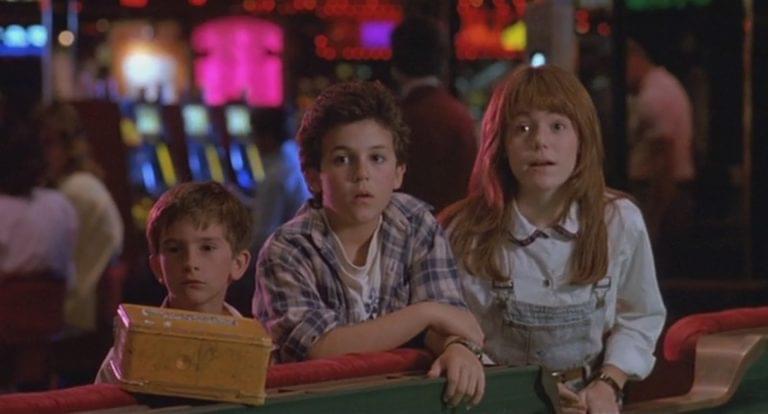
Bastian uses the magical book to escape into the world of Fantasia, which surprisingly is not currently on the verge of destruction. In fact, things are running pretty smoothly. Bastian probably barely recognizes the place. But the bullies, called the Nasties, have pursued Bastian into the library. The lead bully, Slip, is played by a unibrowed Jack Black. He says of Bastian, “When I get my hands on that slippery weasel, I’m gonna rock his world,” which is filthier than anything he said in “Tropic Thunder.”
In the library, the Nasties wonder where Bastian disappeared to, and they start randomly flipping through books, because what else would you do in a library, I guess? They happen to find “The Neverending Story,” see Bastian and themselves described in it, and surmise that if they start tearing apart the library, it will wreak havoc in Fantasia, too. That doesn’t make any sense, even by the loose standards of “making sense” normally applied in these films, but you have to go with it.
In Fantasia, sure enough, things start falling apart, but Bastian can’t get back to the real world to stop it because he doesn’t have the book with him. (But if possession of the book is required for inter-world travel, how did he get to Fantasia in the first place? And he had it in his hands in the library, so why didn’t it come with him?) But some tiny gnomes tell him he can visit the Wizard in Emerald City — I beg your pardon, the Empress in Silver City — and she can help. Her idea is to wish really hard, and THAT will transport him back to the real world.
Oh, great idea, Empress. No one ever would have thought of wishing really hard. It’s no wonder your stupid fantasy world is always falling apart. Holy crap, I hate you so much, you stupid Empress.
But where was I? Yes, the wishing. Bastian and a bunch of fantasy-world creatures link hands and wish together, and it works — but, in a completely unforeseeable turn of events, having them wish together sends them ALL to the human world, not just Bastian. This includes Falkor the dog-faced luck dragon, a baby rock-eating creature called Junior, a cranky tree, and that pair of tiny gnomes. (The gnomes get separated from the group, by the way, and find Bastian — I’m not making this up — by sneaking into a FedEx box and shipping themselves to him. No, I don’t know how they knew his address. No, I don’t know how they didn’t suffocate in the box. No, I wasn’t aware that everything FedEx shipped was delivered the very next day.)
So the trouble now, obviously, is that all these fantastical creatures are in the real world and must get back to Fantasia. Luckily, today happens to be Halloween (what a coincidence!), so they don’t look out of place as they wander the streets with Bastian looking for the Nasties, who still have the book. There is a moment, though, where Bastian has to hide Junior the rock creature from his family, calling to mind the brilliant comedic sequence in “Transformers” when Zac Efron (or whoever it was) had to hide the giant alien robots from his parents, and the giant alien robots trampled Mom’s flower garden, and the whole thing was hilarious and took up 20 minutes of the movie. Good times.
Meanwhile, there is another problem. In order to stay in contact, the Empress gave Bastian a necklace called the Auryn, which Bastian then left on his dresser when he went to school, because Bastian is an idiot. His stepsister, Nicole (Melody Kay), finds it, discovers accidentally that it grants wishes, and uses it to go on a shopping spree: She tries on clothes, declares her wish to own them, and the clerks give them to her. Because what else would a girl do with unlimited power if not obtain cute outfits? Remember, we’re talking about a GIRL here. This is what GIRLS do. Don’t forget that, young female viewers!
But rest assured, everything turns out OK in the end. Fantasia is restored to its usual state of precarious, temporary stability, and the Nasties are given their comeuppance, which includes being forced to appear in “Shallow Hal.” The moral of the story is that books are an adventure and reading is fun. The film makes a pretty good case for it, too, considering how much more enjoyable it would be to read a book than to watch this movie.
It’s unlikely that Francis Ford Coppola will ever make anything as momentous or influential as the first two “Godfather” films or “Apocalypse Now,” which one of the downsides of doing brilliant work so early in your career. In “Tetro,” however, he has made something personal and intimate that, while not brilliant, sticks to the grand, operatic themes that made him famous.
Significantly, “Tetro” is Coppola’s first film since 1974’s “The Conversation” that wasn’t co-written or adapted. It’s all Coppola, all from scratch. Certain details of it suggest autobiography — Coppola’s father was an orchestra conductor and composer, like the father in “Tetro” — but even as pure fiction the age-old story of family rivalries still resonates.
It’s set in Buenos Aires in the present, shot in black-and-white except — somewhat counterintuitively — for the flashbacks. Ben Tetrocini (Alden Ehrenreich), an 18-year-old American boy who works on a cruise ship, is in port while the ship undergoes repairs, and he takes this opportunity to visit his much older brother, Angelo, who left the family in New York City when Ben was young and never came back.
Angelo, played by Vincent Gallo, calls himself Tetro now, and he wants nothing to do with his former life. But his longtime girlfriend, Miranda (Maribel Verd�), welcomes Ben into their apartment with open arms, describing herself as “your sister-in-law — well, sort of.” Vague or ambiguous relationships are a running theme. Ben and Tetro aren’t actually brothers but half-brothers, sharing a father. The old man (Klaus Maria Brandauer, seen in flashbacks) was an exacting orchestra conductor who once asked his own brother to remove his name from a subpar project, lest the Tetrocini name be blemished. His first wife, Angelo’s mother, died in a car wreck; Ben is the son of his second, much younger wife, who has been in a coma since Angelo left home nine years ago. Drama!
Tetro is sullen and cranky, a condition currently intensified by a broken leg that has him hobbling around uncomfortably. He is a failed writer, secretly storing away his unfinished life-story manuscript while he does odd jobs at a local playhouse owned by his friend Jos� (Rodrigo De la Serna). (He calls Jos� “brother” but introduces Ben as his “friend.”) Ben also has writing ambitions, and of course many details of Tetro’s life are in his own life story, too. Complicated jealousies ensue.
Shot in Argentina and photographed beautifully in widescreen by Mihai Malaimare Jr., “Tetro” has the look of nearly every one of Coppola’s films: solid, steady, with an old-fashioned glamour (enhanced by the use of black-and-white, no doubt). Coppola’s half-century of filmmaking experience is brought to bear in the simple yet elegant shot compositions and the swift but unhurried storytelling — things that usually take time to perfect, and that you often don’t notice about a film unless they’re absent.
With strong (albeit unremarkable) performances, “Tetro” falters only in its melodramatic story, which sometimes crosses the line from operatic to soap-operatic. What sticks with me afterward isn’t the specific story Coppola has told, but the ideas it brings up, these themes that have been the subject of stories for as long as there have been stories. “Tetro” won’t be as timeless as that; it won’t even be as timeless as Coppola’s other films. But it has a sublime, nostalgic beauty that makes it worth seeking out, separating it from many of the films it shares theater space with.
The trailer for “The Proposal” explains the plot very clearly: Sandra Bullock and Ryan Reynolds, who hate each other, must pretend to be engaged in order to prevent her from being deported to Canada. It looks awful. Why would someone make such a formulaic, generic movie? We obtained an audio recording of the pitch meeting that should shed some light on things. Here’s a transcript.
ANNE FLETCHER: Hello, gentlemen. My name is Anne Fletcher. I directed the groundbreaking dance movie “Step Up,” as well as the revolutionary romantic comedy “27 Dresses.”
STUDIO EXEC #1: Oh, no need to recite your credentials, Anne! We’re very familiar with your unique, visionary films!
STUDIO EXEC #2: Quite so! What innovative new project have you got for us today?
ANNE FLETCHER: Well, it’s another romantic comedy, but with a twist!
STUDIO EXEC #3: A twist??! My ovaries are tingling already!
ANNE FLETCHER: Thank you, sir. It’s about a no-nonsense workaholic businesswoman —
STUDIO EXEC #1: I assume she lives in New York City and works for a magazine?
ANNE FLETCHER: Close. Book publisher.
STUDIO EXEC #1: Oh! A literary-type dame! Very classy.
ANNE FLETCHER: And she’s from Canada, see, and her visa has just expired, and she’s going to be deported unless she happens to be married to a U.S. citizen — so she tells her bosses she’s engaged to her assistant, who actually hates her, and she hates him too!
STUDIO EXEC #2: And now they have to pretend they’re in love to fool the immigration office!
ANNE FLETCHER: Exactly! It goes even further, though: They have to visit his family and fool THEM, too!
STUDIO EXEC #3: What about her family?
STUDIO EXEC #2: Shush. Do you want the movie to be 2 1/2 hours long? Her family’s dead, I assume.
ANNE FLETCHER: Yes, dead. No sense cramming a whole extra set of characters into the movie.
STUDIO EXEC #1: So they visit his family, and I trust that what ensues can best be described as hilarity?
ANNE FLETCHER: Yes sir. They live out in rural Alaska, you see, and their son’s fake fiancée is a city girl…
STUDIO EXEC #1: A city girl? From Canada? Do they have cities there?
ANNE FLETCHER: I believe so.
STUDIO EXEC #1:(to secretary) Check on that, will you?
ANNE FLETCHER: So she has run-ins with the local wildlife and whatnot, and with the guy’s kooky family.
STUDIO EXEC #2: I’m not sure I’m interested in this project unless the guy has a foul-mouthed grandmother who says comically profane things.
ANNE FLETCHER: Betty White is already on board.
STUDIO EXEC #2: Well, shut my mouth.
STUDIO EXEC #3: And does the couple have to share a bedroom and pretend to share a bed and accidentally see each other naked, and do they get into compromising positions based on the fact that hate each other but are pretending to be in love?
ANNE FLETCHER: You betcha.
STUDIO EXEC #1: All of this is pretty brilliant stuff, Anne, but I believe you promised a twist of some kind?
ANNE FLETCHER: Yes. In the end, you see, with all the pretending to be in love, the two actually fall in love.
STUDIO EXEC #1: OH.
STUDIO EXEC #2: EM.
STUDIO EXEC #3: GEE.
STUDIO EXEC #1: If I’d been drinking coffee just now, I would have spit it out in a comical fashion.
STUDIO EXEC #2: I haven’t heard a twist ending that good since “The Wedding Planner”!
STUDIO EXEC #3: I’m no student of film history, but I feel confident in saying that this is the greatest idea for a film that anyone has ever conceived.
ANNE FLETCHER: Thank you. I think it will be terrific, too.
STUDIO EXEC #1: My only concern is that it’s TOO edgy, TOO unusual.
STUDIO EXEC #2: That’s true. Will audiences go along with such an outrageously unexpected ending?
STUDIO EXEC #3: C’mon, give ‘em credit. Audiences are savvy nowadays. If we tell a story with two broadly drawn, stereotypical main characters who only say and do generic things, then the audience will be more than happy to join us on whatever middle-of-the-road journey we take them on.
STUDIO EXEC #1: Well said. So Anne, who do you envision starring in this film?
ANNE FLETCHER: For the lead, I’m thinking Sandra Bullock. She’s America’s sweetheart, you know.
STUDIO EXEC #1: Yes! Of course! She was my first thought, too. But can we get her? Is she busy? Would she be willing to stretch herself by making a romantic comedy?
ANNE FLETCHER: She has tentatively said yes already.
STUDIO EXEC #4: Great. And is this a time-travel comedy? Because she was America’s sweetheart in 1995, not 2009.
STUDIO EXEC #1: Who are you? Get out of here!
(STUDIO EXEC #4 leaves.)
STUDIO EXEC #1: Sorry about that. So what about the guy? Someone around Sandra Bullock’s age? Maybe Ed Asner? Tommy Lee Jones?
ANNE FLETCHER: Well, I was thinking younger. Get some kids into the theaters.
STUDIO EXEC #1: How about that guy everyone hates who’s kind of a d-bag but he’s really funny and smirks a lot?
STUDIO EXEC #2: Dane Cook?
STUDIO EXEC #1: Yes! What about him?
ANNE FLETCHER: I don’t think he’s available. He’s on his “Random Catchphrase Coasting on Previous Success” Tour.
STUDIO EXEC #1: What about the guy who looks just like him but is actually an actor?
STUDIO EXEC #3: Ryan Reynolds?
STUDIO EXEC #1: Yes.
ANNE FLETCHER: Fine with me. Look, what do I care? Can I just have my money now?
STUDIO EXEC #1: Yes, yes, of course. One last thing. Men tend to avoid movies like this at all costs. So we need to be sure the trailer has a couple of boner jokes in it, to trick guys into thinking it’s not just a chick flick and they might enjoy it, too, even though they won’t.
It’s a rarity for a director’s first film to be as confident and effective as “Easier with Practice” is. And for any film, let alone a debut, to address difficult subjects with this much insight, humor, and humanity is almost miraculous. There are filmmakers who couldn’t produce something this good on their tenth try, and here Kyle Patrick Alvarez has done it right out of the gate.
Alvarez’s screenplay is based on a GQ article by Davy Rothbart, and it concerns an introverted 28-year-old writer named Davy Mitchell (Brian Geraghty) who is driving around the southwest United States with his brother, Sean (Kel O’Neill), to promote his book of short stories. This book hasn’t actually been published, mind you, but self-produced copies are available after the readings.
While at a hotel in Albuquerque one night, Davy gets a random phone call from a woman named Nicole (Kathryn Aselton) who seductively asks what he’s wearing. Nonplussed, he replies, “Clothes, I guess.” Apparently quite skilled at this, Nicole soon has Davy engaging in a bit of steamy phone sex with her. She gets his cell number (this first rendezvous was on the hotel phone) and says she’ll call again.
It becomes a regular thing. Every night, while Sean sleeps in a hotel bed, Davy stays out in their station wagon and talks to Nicole. It’s mostly about the sex, but it becomes a relationship of sorts, too, with post-coital conversations — the equivalent of cuddling, in Davy’s words. Nicole’s primary interest is dirty talk, though, and she won’t ever give Davy her number, which is blocked from his caller ID. Everything is on her terms. Davy is smitten, and stuck.
You can guess how some of this will play out: Davy is awkward with women in person, much more comfortable with the distant, mysterious Nicole; Sean (who cheats on his own girlfriend at every opportunity) makes fun of Davy for having a phone-sex girlfriend. But the film’s last act is a total surprise, a game-changer that brings a whole new level of meaning to the story.
Alvarez and cinematographer David Morrison favor long, unbroken takes and very little camera movement. A less savvy filmmaker approaching a story centered on phone conversations (not a very visual subject) might have tried to jazz it up with skewed angles and lots of cutting, but Alvarez takes the opposite approach and, somewhat paradoxically, makes the film even MORE interesting. We’re able to focus on Davy’s face and body language, to really understand him as a character.
This puts a lot of weight on actor Brian Geraghty’s shoulders, and his performance, somewhat comparable to Ryan Gosling’s in “Lars and the Real Girl,” is terrific: understated, honest, and uncontrived. Between this and the upcoming “Hurt Locker,” Geraghty — who’s been toiling away in smaller roles in smaller movies for years — could become a star.
“Easier with Practice” could have been a disaster. First-time filmmaker, difficult subject matter, lots of telephone conversations, little-known lead actor — one shudders to think how indulgent and wrong-headed this could have turned out. Here’s hoping audiences get a chance to see how well it succeeded, against the odds.
You might have heard some buzz about “The Hangover,” to the effect that it’s real funny and stuff. Well, it is. My review is at Cinematical.
You might have also heard some buzz about “Land of the Lost,” to the effect that it’s a crazy, crack-smoking movie that sucks. Well, I disagree with the buzz there. It’s insane, all right, but it made me laugh quite a bit. So there. My review is at Film.com.
Also opening in wide release is “My Life in Ruins,” which was not screened for critics in Portland, which from what I gather we ought to be grateful for. It stars the lady from “My Big Fat Greek Wedding” as a woman who goes to Greece to, I don’t know, capitalize on whatever fame she still has from that movie she was in seven years ago. Maybe I’ll review it at some point.
Finally, in limited release is “Downloading Nancy,” a rancid, ghastly movie about a woman who finds a stranger on the Internet to help her achieve the greatest “high,” i.e., dying. Maria Bello and Jason Patric star. It premiered at Sundance last year, was eviscerated by reviewers, and is now being released theatrically so it can be eviscerated some more. Done and done!
To sign up for the “In the Dark” e-zine, which brings you all the new movie reviews, DVD releases, and other pertinent info in one handy weekly e-mail, visit this page.
Todd Phillips scored a hit in 2003 with the raucous R-rated comedy “Old School,” then for some reason moved to tamer waters for “Starsky & Hutch” and “School for Scoundrels,” neither of which amounted to anything. Duly chastened, he now returns home with “The Hangover,” a movie that’s as gleefully dirty as “Old School,” and maybe funnier.
It’s a story of friendship, camaraderie, and alcohol. As such, it can only be set in Las Vegas. That is where Doug (Justin Bartha), who is getting married Sunday, is taken by his friends for an epic bachelor party: Phil (Bradley Cooper), a schoolteacher who hates his students almost as much as he hates being married, is the ringleader; Stu (Ed Helms), a wimpy dentist with a controlling shrew for a girlfriend, is the nervous nellie; Alan (Zach Galifianakis), Doug’s soon-to-be brother-in-law, is the spacey, grubby, possibly mentally handicapped one who recalls Will Ferrell in “Old School” (which means he also recalls John Belushi in “Animal House”).
The four embark on a night of revelry. The next morning, Phil, Stu, and Alan wake up in their hotel suite with a tiger and a baby. There’s no sign of Doug, the groom-to-be. And no one can remember anything that happened the night before.
As comedy premises go, this one is brilliantly simple. Three hungover guys stumble around Las Vegas in search of clues as to their missing friend’s whereabouts, not to mention the origin of the baby and the tiger, and not to mention the other various things that have gone awry that, well, I won’t mention. (Spoiler: Ed Helms is missing that tooth in real life.) One perfectly constructed scene at an outdoor breakfast table hints at the sublime genius of the situation, with three well-defined comic characters bickering while examining their clothes, bodies, and memories for hints. It’s good writing (from the “Ghosts of Girlfriends Past” duo of Jon Lucas and Scott Moore), and the trio of actors work together like seasoned pros.
Bartha is missing in action for most of the picture, so it’s primarily the Helms-Cooper-Galifianakis show. Helms isn’t much different from the way he appears on “The Office” (which is fine), Cooper has been developing his comedy chops in smaller roles the last few years, and Galifianakis — wow. Fans of his standup won’t be surprised by how funny he is, but I don’t think anyone was expecting him to create a character as instantly classic as Alan. Whether misunderstanding basic human interactions, being suckered by an untrustworthy drug dealer, or thinking he can count cards like Rain Man, Alan is a treasure trove of WTF? moments. He’s this summer’s Brick Tamland or McLovin: the secondary character who steals the show.
This is the first film Phillips has directed that he wasn’t credited with co-writing, too. I don’t know how much to read into that; written by him or not, “The Hangover” clearly reflects his frat-boy sensibilities, and bless him for that. The movie, sunny and fast-paced from beginning to end, is intently focused not on life lessons or character development but on bawdy shenanigans and boisterous hijinks. It barely even bothers to let its characters learn anything. In fact, I was disappointed when the marriage-hating Phil came around to appreciating his wife and kid by the end. It was funnier when he considered them a burden.
About halfway in, the story starts veering into craziness (Mike Tyson? Angry Chinese gangsters?) without being any funnier than when it was in the realm of the vaguely plausible. You take a risk when comedy leaves the familiar and heads into crazyland, and it doesn’t always pay off here, the cast’s willingness to try anything notwithstanding. I also wonder about Heather Graham’s character, a stripper who takes a liking to Stu. She seems like she ought to have more screen time, especially since she’s played by a fairly well-known actress. I’m guessing some of her scenes got cut in favor of more no-girls-allowed male-bonding episodes.
A series of actors such as Jeffrey Tambor, Rob Riggle, Mike Epps, Matt Walsh, and the indispensable Ken Jeong parade through the film, giving it the feel of a movie that was at least as much fun to make as it is to watch. It’s hard to be shocked by a comedy anymore, especially so soon after “Observe and Report,” but there are moments in “The Hangover” that … well, just watch. Some of those images will be scarred on your retinas for years to come.
Oh, what a weird movie this is. “Land of the Lost” was a fairly strange TV show to begin with, and now the movie version has kept all of the built-in goofiness — the slow-moving reptilian Sleestaks, the race of monkey people, the dinosaurs — and added more. It’s a sci-fi/fantasy comedy full of special effects, yet it also has Will Ferrell and Danny McBride doing their patented semi-improvised idiot banter. It was directed by Brad Silberling, who also made “City of Angels” and “Lemony Snicket’s A Series of Unfortunate Events.” It co-stars Anna Friel, from “Pushing Daisies,” who it turns out is British. It has a scene where the guys get high on some kind of primitive narcotic, then eat a giant crab that wanders past, complete with a giant lemon wedge. What the…?
Naturally, if you don’t usually find Ferrell or McBride funny, this will not change your mind. Purists who love the original TV series might be upset, too, although I would gently suggest that if you believe “Land of the Lost” deserves reverence then you ought to reexamine your priorities. For the rest of us, this is a wildly bizarre and frequently hilarious adventure that appears to be whacked-out by design, not out of sloppiness.
Ferrell plays Dr. Rick Marshall, a “quantum paleontologist” whose book, “My Other Car Is a Time Machine,” has made him a laughingstock in the scientific community. He believes that with a device he’s been working on, a tachyon amplifier, he can open a portal to time travel and parallel universes. Consequently, he’s now stuck doing tours at the La Brea Tar Pits and sublimating his feelings of inadequacy by going on eating binges. (One of his concoctions: a doughnut stuffed with M&M’s. “That way, when you’re done with the doughnut, you don’t have to eat any M&M’s.” So it’s a time-saving device, really.)
On the TV show, Rick Marshall was transported back in time with Will and Holly, who were his teenage children. This time, Holly (Anna Friel) is a grad student who was expelled from Cambridge for advocating Marshall’s crazy theories, and Will (Danny McBride) is a redneck souvenir-peddler at a cave-turned-tourist-attraction in the California desert. It is while paddling a raft through the cave that Marshall, Will, and Holly are caught in the greatest earthquake ever known and sent to the “land of the lost,” an amalgam of dinosaurs, early primates, strange reptiles, and other out-of-place artifacts.
They are befriended by Chaka (Jorma Taccone), a monkey-like fellow whose language Holly can somehow translate (and speak!). Chaka likes Holly but finds Marshall off-putting. (He wants Chaka, who can scarcely enunciate anything in English, to call him “Dr. Rick Marshall.”) Amusingly, Chaka and Holly are the voices of reason in this enterprise, while Marshall and Will are the voices of masculine arrogance and idiocy as the three humans try to find a way back to their own time. Marshall thinks his Ph.D. means any idea he has is brilliant; Will thinks fireworks and machismo are all you need; they’re both morons.
McBride partly owes his career to Ferrell, who helped champion his indie project “The Foot Fist Way” a couple years ago, but this is the first time they’ve actually appeared in a movie together. They’re opposite sides of the same coin. Ferrell excels at characters who believe they are smart but lack common sense and are prone to short-tempered petulance; McBride tends to play men who know they’re ignorant and are proud of it, often belligerently so. Ferrell’s version of George W. Bush was basically a combination of the two types, which probably explains why Ferrell and McBride get along so well, and why their comic interaction feels like they’ve been working together for years, not months. Friel, for her part, is a good foil and straightman, and Taccone, under all that Chaka makeup, almost steals the show.
The screenplay, by Chris Henchy and Dennis McNicholas, whose separate TV credits include “Entourage” and “Saturday Night Live,” gives everyone plenty of room to play around — maybe too much, in fact. The aforementioned drug-trip scene, while perfectly hilarious, is marred by the nagging feeling that it’s only there to kill time. The film is barely 90 minutes, and the actual story — which doesn’t even try to make sense — doesn’t come close to filling it. Then again, the sequence does typify why the movie works: Even when you’re sober, the movie makes you feel like you must be high.
Sam Mendes did caustic satire with “American Beauty” and “Jarhead,” marital angst with “Revolutionary Road,” and tender familial relations with “Road to Perdition.” His fifth film, “Away We Go,” combines all of that into a funny, good-hearted comedy about soon-to-be parents whose desire to give their baby the best possible upbringing fills them with terror. Like all of Mendes’ films, this one brims with recognizable feelings, and the parents, played by Maya Rudolph and John Krasinski, are so down-to-earth they seem like two of your closest friends.
They play Burt and Verona, longtime partners who have not yet married because she (not he, for a change) sees no reason for it. Verona’s parents are dead, and the couple lives near Burt’s parents, aging hippies (played amusingly by Catherine O’Hara and Jeff Daniels) who say grace by praying to the “almighty food gatherer” and who are thrilled to learn Verona is pregnant. Not thrilled enough to put off their plan to move to Europe for two years, though.
Now Burt and Verona have no reason to live in this unnamed area (it looks like upstate New York), and no significant roots in any other cities, and their careers (he works in insurance, she is a commercial artist) could easily be pursued anywhere. Why not move? Why not settle someplace they can really call home?
The film is constructed simply from there: They visit several possible cities, based on having friends or relatives there, to see which one feels right for them and their unborn baby. In the process, they encounter several examples of terrible parents of one stripe or another, and their eyes are opened to just how fraught with peril the whole parenting thing is. Anyone with children can relate. I don’t even have children, and I can relate. This panic, this angst, this fervent desire to get it right — what rational parent never felt this?
In Phoenix, they meet up with Lily (Alison Janney) and Lowell (Jim Gaffigan), whom they knew when they all lived in Chicago some years earlier. Lily is a loud, coarse woman with no sense of decorum, and she and her husband treat their kids the way you treat your couch. You like it, and you don’t abuse it, but you don’t really pay attention to it, either.
In Madison, Wis., it’s the opposite story. Burt’s old friend LN (pronounced “Ellen,” played by Maggie Gyllenhaal) and her dippy partner Roderick (Josh Hamilton) are smug, namaste-saying, New-Age-babble-believing idiots who smother their kids, share a huge “family bed,” and reassure their mush-brained spawn that they’re too special to ever do anything as crass as “work for a living.”
It’s in Montreal that Burt and Verona finally see some good examples of parenting done right, but a meeting in Miami with Burt’s brother (Paul Schneider) — a newly single parent — reminds them once again just how hard the whole thing is.
The screenplay is by indie-hipster writer Dave Eggers (“A Heartbreaking Work of Staggering Genius”) and his wife, Vendela Vida. Fans will recognize Eggers’ intelligence, his fondness for words and their meanings, and his interest in parenting issues. The humor is occasionally benign (there’s a running joke about how Verona is only six months pregnant but looks nine), but it’s more often barbed, with the sharp ends pointed at the buffoons Burt and Verona keep encountering.
It’s easy to go wrong with that sort of thing, to make it seem like the protagonists think they’re better than everyone. Rudolph and Krasinski are so likable, though, that it works — and besides, it’s not like they go around mocking their acquaintances. The movie mocks them, and we laugh at them, but Burt and Verona themselves are more bewildered than anything.
In many ways, this is an intriguing departure for Mendes, a chance to try his hand at warm satire (if there is such a thing). If nothing else, it’s a balm for viewers who are put off by the depressing “Revolutionary Road.” Here’s a happy couple striving to do the right thing. Kind of uplifting, isn’t it?
Making a movie takes time, effort, energy, and money. While watching “Downloading Nancy,” I kept thinking: Why would you go to all that trouble just to make something so ugly?
Not that all movies have to be happy and upbeat, of course. But good “down” movies have a reason for their darkness. There’s a catharsis, or a commentary on the human condition, or something the audience can recognize as being true or insightful or meaningful.
“Downloading Nancy” is just ugly. It’s loathsome, vile, depraved, and classless. It fails to pass the “why would anyone want to watch this?” test. Even viewers who can handle some uncomfortable subject matter or bleak themes want a payoff, some point to it all. (And yes, at times that payoff can simply be that the film is grotesquely amusing, as in the so-called “torture porn” genre.) “Downloading Nancy” has none of that.
Shot on the cheap with garish lighting and snuff-film sets (even a therapist’s office looks suspiciously like the den of someone’s house), the film is about a woman named Nancy (Maria Bello) who has gone off to meet a stranger she found on the Internet. Her husband, a cold-fish entrepreneur named Albert (Rufus Sewell), believes she is visiting friends in Baltimore. He claims to be worried when he doesn’t hear from her for a couple days, but his behavior is awfully blasé for a frantic husband.
Through flashbacks, we learn that Nancy has been seeing a therapist (Amy Brenneman) to discuss the trauma of her childhood, where she was raped and otherwise harmed by her uncle. Her psychological issues have turned her into a raving nutcase, child-like one minute, disturbingly “adult” the next. She enjoys only aberrant sex, preferably involving pain and humiliation. And now she is meeting Louis (Jason Patric) to achieve the ultimate high (read: low).
First-time director Johan Renck, working from a brain-dead screenplay by first-timers Pamela Cuming and Lee Ross, shoves his brave actors through the paces without a shred of humanity. Maria Bello deserves praise for letting herself be as unglamorous and dejected as she appears in the film’s squirmier scenes, yet the dialogue scenes are often laughably trashy and shopworn.
“You can change your mind if you want,” Louis says.
“What, are you losing your [erection] already?” Nancy replies. “I came here to do this.”
I’m sorry — did someone sit on the remote control and change the channel to Cinemax?
Through it all — the abuse, the violence, the sexual deviance — Renck never achieves anything real. Ironically, in his arduous, sweaty attempt to be “provocative,” what he does instead is make something transparent and fake. There is no one in the film for us to like, relate to, sympathize with, or root for, or even anyone who seems like he or she is supposed to inspire such a reaction. The movie has no value whatsoever, not as drama, not as shock cinema, and certainly not as an honest examination of real problems.
“The Ice Pirates,” which is the subject of this week’s edition of Eric’s Bad Movies at Film.com, is another film that I’d never heard of until I asked for suggestions for the column. Several people mentioned it, which is always a good/bad sign (good fodder for the column, but really bad to watch).
It seems to be one of those movies that people watched a lot as kids. I don’t know if it was actually marketed toward children or if that’s just who found it entertaining, but it’s kind of dirty to be a kids’ movie. It was rated PG, but only because PG-13 hadn’t been invented yet; it has a good number of dirty jokes and castration references, plus a sex scene. Also, it’s stupid and terrible. Don’t let your kids watch it! In fact, don’t let anyone watch it.
According to Wikipedia, “The Ice Pirates” is “considered to be a cult classic by many science fiction and B-movie fans.” This is followed by “[citation needed],” which I couldn’t have phrased better myself. Who are these people who consider “The Ice Pirates” — an excruciatingly unfunny semi-comedy and unbearably stupid semi-adventure — a “cult classic”? And what else is venerated in this cult? Bile? Excrement? “Patch Adams”?
“The Ice Pirates” was made on a budget of about $12 by the guy who would later make “Mac and Me,” so you get what kind of filmmaker we’re dealing with (i.e., the untalented kind). It’s simple-minded, as if for kids, but it’s also smutty, as if for adults, but it’s also imbecilic, as if for imbeciles. So it’s a movie for imbecilic adult kids. I understand Adam Sandler has it on Laserdisc.
The movie is set in … THE FUTURE! In OUTER SPACE! The galaxy is suffering from a major water shortage, and what little water is left has fallen under the control of evil villainous bad guy types, who sell it at exorbitant rates. No doubt this is a metaphor for the modern situation of our oil supply being controlled by foreign enemies, which makes “The Ice Pirates” one of the most trenchant political satires of its day, at least among those starring Robert Urich.
Yes, Robert Urich, star of many TV shows and, um, many other TV shows, is the leader of the ice pirates, a band of ne’er-do-wells who go around stealing water and ice from the overlords who hoard it. What do the ice pirates do with it then? Why, sell it, of course. What, did you think they gave it away to the poor thirsty people? The movie is called “The Ice Pirates,” not “The Ice Robin Hoods Who Steal from the Wet and Give to the Dry.” Urich’s character is named Jason, which isn’t a very fierce name for a pirate. Maybe it’s short for Jasonbeard, or Jason the Impaler. He and his buddy Roscoe (Michael D. Roberts) have a small crew consisting of the burliest men you’ll see outside of a lumberjack convention: Ron Perlman, ex-NFL player John Matuszak, and Anjelica Huston.
While stealing ice from a supply ship one day, Jason and friends discover a princess named Karina (Mary Crosby) asleep in a weird cylinder, like the glass box the dwarfs put Snow White in after she got poisoned, except I think this is just supposed to be where people sleep in THE FUTURE. (Preferring a soft, comfortable mattress over a rigid plexiglass box is so primitive.) Jason is smitten with the sleeping beauty and stands leering over her for a while before being dragged away by his compatriots. “What happened to ‘we rape, we pillage’?” he demands, indicating, I guess, that he was planning to rape the unconscious woman before his fellow pirates intervened. Ha ha! We’re having some fun now!
Immediately after stealing the ice, the dread pirate Jason and his crew are captured by the people they stole it from. So our first experience with the film’s heroes is an episode where they fail. Nice. Jason and Roscoe are hauled off to the bad guys’ home planet, Mithra, where miscreants such as themselves are castrated and sold as slaves. Again: Hilarity! In 1984, when this film came out, the funniest thing you could joke about was genital trauma. “Muppet Babies” devoted several episodes to it. Ronald Reagan referred to it frequently in his re-election campaign. And “The Ice Pirates” plays it for all it’s worth, with Jason and Roscoe stripped naked and strapped to a conveyer belt that looks like the one in the “Laverne & Shirley” opening credits (I expected someone to put a rubber glove on Roscoe’s wang), then sent toward a machine with chomping mechanical teeth, all the better to unman them with.
Fortunately, Jason and Roscoe are rescued by Princess Karina, who took a liking to Jason at some point when she was awake (so ix-nay on the ape-ray, or you’ll blow this for him!). She has them fake being castrated, then buys them at the slave auction. Then multiple shenanigans occur that lead to Karina and the boys meeting up with the rest of their crew and hightailing it out of the solar system. Anjelica Huston is jealous to see Capt. Jason lavishing such attention on Karina and not her, but you gotta figure this is something she’s used to. It’s not like she started looking like Anjelica Huston just yesterday.
All of this is accompanied by an aggressively whimsical musical score, a score that grabs you by the throat and crams merriment down your gullet. The music makes you think that the film is intended as a comedy, but most of the overt attempts at humor are simply awful. The very first joke in the movie is Jason and crew sneaking through a ship’s bathroom and passing an alien sitting on a toilet, complete with farty sound effects. Oh, please! As if the buttocks of a reptilian alien creature would be designed in exactly the same manner as a human’s, so as to create exactly the same sound when air passed between them! Come on, “The Ice Pirates”!
The reason Princess Karina has teamed up with the scurvy Capt. Jason is that she needs help finding her father. Seems old dad got whisked away to the legendary Seventh World at the center of the galaxy, whence no traveler can return, except for the many times later in the film when travelers do indeed return from it. It’s hard to get to the Seventh World because you have to go through a time warp, and the process causes you to age rapidly. This makes perfect sense if you are familiar with Einstein’s Theory of Relativity, and by “are familiar with” I mean “have heard of but do not understand.”
Karina’s dad is being held captive by a fey villain named Wendon, played by Bruce Vilanch, the bleating, grape-shaped joke-writer who used to sit next to Whoopi Goldberg on “Hollywood Squares” as part of an experiment to see if you could assemble the nine least funny people in the world and still produce a successful game show. (The other seven were Jay Leno, Carlos Mencia, Larry the Cable Guy, a drunk frat boy, Idi Amin, the mean nurse from “One Flew over the Cuckoo’s Nest,” and a dead dog.) Wendon is evil (I guess; the movie is not clear on what his deal is, exactly) and apparently has magic powers. The heroes decapitate him, which is the natural response to hearing Bruce Vilanch speak, yet his severed head continues to live! Which is fine in and of itself, but it keeps talking, too! (Just keep telling yourself: It’s only a movie….)
The film’s climax is a surreal sequence where the bad guys board the pirates’ ship while they’re in the time warp, leading to a massive fight during which everyone ages several decades. Jason’s hair and beard grow out, and Karina — who had sex with Jason once — grows pregnant and delivers a baby, which then grows up into Robert Urich and saves the day, whereupon they exit the time warp and … everything … goes … back to normal. So it’s a temporary time warp. It ages you, but then you age back again. W.T. Hell?
I guess it shouldn’t surprise me that “The Ice Pirates” has a cult following. Nothing is so terrible that it can’t be beloved by someone. I mean, “Garfield” still appears on the comics page every day, doesn’t it? (I’m asking: Doesn’t it? Do they still make newspapers?) Still, I echo Wikipedia’s “[citation needed]” — but only in the sense of wanting to know that the movie’s fans actually exist, not in the sense of wanting to hear from them. It’s probably best if the members of this particular cult remain anonymous.
On June 26, you’ll be able to see “My Sister’s Keeper,” a tearjerker about a 13-year-old girl whose parents conceived her because their other daughter has leukemia and they thought it would be handy to have a genetic match lying around in case the leukemia daughter needed an organ transplant. That sounds like a ghastly idea for a movie, and the trailer (which you can watch below) doesn’t make it sound it any better. But we discovered an audio recording of the pitch meeting for the film, and we think this transcript will shed some light on why the film was greenlighted.
JEREMY LEVEN: OK, I’ve written a terrific adaptation of a novel called “My Sister’s Keeper,” and you guys are gonna love it!
STUDIO EXEC #1: Whoa, whoa, hang on. A novel? Is it about a boy wizard or a teenage vampire?
JEREMY LEVEN: No…
STUDIO EXEC #1: Is it a comic book?
JEREMY LEVEN: Well, no.
STUDIO EXEC #1: Hmm. I’m skeptical, but go ahead. Just dumb it down, all right?
JEREMY LEVEN: Of course. It’s about a teenage girl with cancer.
STUDIO EXEC #2: Hilarious!
JEREMY LEVEN: No, no, it’s not a comedy. It’s a weepy drama.
STUDIO EXEC #2: Can Will Ferrell play the dad?
NICK CASSAVETES: If I may interrupt here, I’m hoping to direct this project. Jeremy and I worked together on my last film, “The Notebook.”
STUDIO EXEC #1: Oh! You’re the guys behind “The Notebook”? Why didn’t you say so!
STUDIO EXEC #3: Whatever you’re proposing, we’re in favor of it!
STUDIO EXEC #2: I can already see the trailer: “From the director of ‘The Notebook’!”
STUDIO EXEC #1: Yes! That film was great.
NICK CASSAVETES: Oh, thank you.
STUDIO EXEC #1: And by “great” of course I mean “profitable,” not “good.”
NICK CASSAVETES: No, I knew what you meant.
STUDIO EXEC #2: So this new movie: Cancer girl. What’s the deal? She falls in love with a boy from the wrong side of the tracks and hides her cancer from him?
STUDIO EXEC #3: She meets a jive-talking alien who needs her cancer to repair his spaceship?
STUDIO EXEC #1: She switches bodies with the cool kid in school, and now he has cancer and she’s a champion breakdancer?
JEREMY LEVEN: No, none of those.
STUDIO EXEC #1: Good. Because the breakdancing one is already in development.
JEREMY LEVEN: The girl has a little sister who only exists because the girls’ parents wanted a backup daughter in case the cancer daughter needed a genetic match for organ transplants and so forth.
STUDIO EXEC #2: Holy crap. Really?
JEREMY LEVEN: Yep.
STUDIO EXEC #2: They conceived a second daughter just as a spare?
JEREMY LEVEN: Yes.
STUDIO EXEC #2: Is that what the book was about, too??
JEREMY LEVEN: Yes.
STUDIO EXEC #4: Who wrote it? Josef Mengele?
STUDIO EXEC #1: That went over everyone’s heads. Get out.
(STUDIO EXEC #4 leaves.)
NICK CASSAVETES: I know it sounds awful, to think these parents conceived a child solely for spare parts. But now imagine the parents are played by Cameron Diaz and Jason Patric.
STUDIO EXEC #1: I like where you’re going with this.
NICK CASSAVETES: And the younger sister, the spare-parts one, is played by Abigail Breslin, from “Little Miss Sunshine”!
STUDIO EXEC #2: Brilliant! Here, let me give you some money right now. (takes out his wallet)
STUDIO EXEC #3: So what happens? The cancer daughter needs a transplant, and the replacement daughter has to give her one?
JEREMY LEVEN: No! That’s where there’s a twist! The younger daughter decides she DOESN’T WANT TO DO IT! And she hires a lawyer to sue her parents for emancipation so that she can decide for herself what to do with her own body!
STUDIO EXEC #1: My head literally just exploded.
STUDIO EXEC #2: Mine too! Literally!
STUDIO EXEC #3: What a selfish little brat! I bet that really tears the family apart!
JEREMY LEVEN: Oh my, yes. It definitely does.
STUDIO EXEC #1: That’s great. First cancer, and now the sisters are arguing over who gets the kidneys!
STUDIO EXEC #2: “You girls better share and play nice!”
STUDIO EXEC #3: “Don’t make me come up there!”
(All laugh merrily at the idea of a poor dying girl fighting over a kidney with her little sister.)
NICK CASSAVETES: But seriously, it will be a very dramatic film.
STUDIO EXEC #1: I think we’re all in agreement that this is the best idea for a movie we’ve ever heard in our entire lives, but first I need to know one thing.
NICK CASSAVETES: OK.
STUDIO EXEC #1: At some point in the movie, does the girl with cancer say, “I don’t mind my disease killing me. But it’s killing my family, too”?
Last week I posted an item that I thought would be entirely uncontroversial. It was simply a list of mistakes made by major North American newspapers in their reviews of the movie “Dance Flick.” The movie was made by several members of the Wayans family, which led to errors along these lines:
“The Wayans (should be Wayanses) keep making the same movie.”
“Like the Wayans’ (Wayanses’) last movie, this one is no good.”
“I hope this is the Wayans’s (Wayanses’) last movie.
“All those Wayans’ (Wayanses) should know better.”
As I said, I didn’t expect any controversy here. Plurals of last names are formed the same way as plurals of other nouns: by adding “s” or “es.” The only common exception is that last names ending in “y” don’t change to “ies” (e.g., baby/babies, but Murphy/Murphys). And once it’s pluralized, you show possession the same way: by adding an apostrophe. My boss, my many bosses, my many bosses’ offices.One Wayans, several Wayanses, the Wayanses’ latest movie.
Yet as soon as I posted it, there was dissent. Like so many Internet conversations, a lot of people who didn’t know anything about the subject wanted to talk about it anyway, presumably because they enjoy the clickety-clack sound their keyboards make when they type on them. But there were others who knew about things like “style manuals” who nonetheless insisted these newspapers’ mistakes were not mistakes at all.
Back in the days of the Garrens Comedy Troupe at BYU, I wrote a song in which I sang the names of all of the LDS Church’s current general authorities, all 100 or so of them. ‘Twas a big hit, back in the day. (The first performance of it was in early 1996.) But as Mormons are well aware, twice a year, at general conference, there are usually a few G.A.’s released and new ones called to replace them. So the song was always being updated.
The last update was for my second CD, in 2005. I’ve had no incentive to update “The General Authorities Song” since then because I haven’t been performing at all, much less for a mostly Mormon audience. But then I got word from some friends of mine that their children had been listening to the most recent recording, and were delighted by it, and have even memorized a lot of it (which, believe me, is no picnic). And they were greatly desirous that I should update it, particularly since several of the important names in the song have, um, died since the last revision.
So … I did it. Here’s the new version, accurate as of the most recent changes at the April 2009 General Conference. I slapped together a recording to send to my friends and their children, and you can listen to it too. Non-Mormons probably won’t recognize any of the names (well, except for Gary Coleman and Anthony Perkins, since those are also the names of famous actors), but even Mormons wouldn’t recognize a lot of them. Many of the men were called recently and haven’t done anything yet to gain notoriety in the LDS world. So I guess to the extent that the song is fun, it is fun because, well, there are a lot of names, and I sing them really fast. I guess.
And over here at Film.com is Eric’s Time Capsule, addressing “Psycho II,” released 26 years ago this week. For those who were asking, the Eric’s Ten-Year Itch column is only going to be an occasional Time Capsule replacement at first, but will gradually take over completely by the end of the summer.
And if you’re interested in dying a slow, delicious death, I’d like to recommend the Cookie Cake Pie, which is exactly what it sounds like. The combination possibilities are endless! Mom and I are going to try it when I visit home this weekend, and I’ll let you know how it turns out, unless it kills me.
This week’s “Snide Remarks,” including the audio version, is here.
The audio version (i.e., the podcast) is also here.
Subscribe to the podcast’s feed with this URL.
I bought a new desk at Ikea to replace the wobbly old one I’d been using, then realized I’d Ikea’d myself into a pickle: I now had two desks, with no easy way of getting rid of the old one. Giving it to Goodwill was impossible because I had neither the pickup truck nor the motivation required for such a task. And the desk wasn’t in good enough condition to be worth Craigslisting — besides, I wanted it gone NOW. So I decided to destroy the desk and just throw its pieces in the garbage.
Many years ago, when I was a Mormon missionary, one of my fellow missionaries and I did the same thing to a couch. Our apartment had this horrible old wooden couch, a very uncomfortable matrix of slats and beams that would probably have been classified as a torture device if the United Nations had learned of its existence. When some kindly locals took pity on us and gave us a new couch, we had no way to get rid of the old one, and figured no one would want it anyway. It was like the monkey’s paw, a cursed, tainted artifact that could only bring pain and misery to whoever possessed it. So we dismantled the couch right there in the apartment, using a sledgehammer as necessary. (I do not know why we owned a sledgehammer.) The individual shards we tossed off our balcony onto the lawn below, and from there we transported them to the Dumpster. Our neighbors in the apartment complex probably thought, “Oh, there go the Mormons again, with another one of their ritual couch sacrifices.”
So I had some experience in the field of intentional furniture destruction, and as it happens, the old desk had been purchased seven years earlier at Wal-Mart for not very much money, and I had assembled it myself, and so it was disturbingly easy to pry all the pieces apart again. It was so easy, in fact, that I wondered how it had managed to stay put together for as long as it had.
Most of the desk’s pieces were small enough to go into the trash cans behind my apartment, but there were a few — the desktop itself and the backboard, particularly — that were too large. I didn’t know what to do with them. So I leaned them against the wall in my apartment, and there they sat for several weeks.
Then, one Saturday afternoon, I noticed that there was a large, industrial-size Dumpster across the street. The building there was undergoing extensive renovation, and the rented Dumpster was filled with debris. Well, this was handy! I had these oversize desk remnants needing to be disposed of, and here was a waste receptacle large enough to accommodate them!
I carried the pieces across the street and laid them on top of the pile in the Dumpster. That’s when a man who had been watching me the whole time, who apparently was connected to the renovation, said, “You can’t leave those there.” He said it in a smug voice, like he’d caught me doing something that I knew was wrong, like I was some kind of buffoon for thinking I could put trash in a trash bin.
“Why not?” I asked.
“That’s for recyclable material only,” he said.
Ah. Fair enough. I said OK and removed the desk pieces and started walking away, and that’s when the man said, scoffing, “So go dump your s*** somewhere else.”
He said it with contempt. He seemed to think I was a charlatan trying to pull off some kind of ruse, or maybe a hobo who just goes from town to town defiling people’s trash bins with TRASH, of all things. Now I was angry that he was being a jerk about it, so I walked around the corner, where he couldn’t see me, and dropped the desk pieces in front of the building he was renovating. If he wouldn’t let me put them in his Dumpster, I was going to ensure that he’d have to deal with them anyway.
I retreated into my apartment and watched the scene unfold through the slats of my window blinds. After a few minutes, the man’s associate, who had witnessed our interaction, happened to walk around the corner, and he saw the desk pieces, and he was stunned. He yelled back to the guy, “He dumped that trash over here!” The man came hurrying around the corner, saw the desk pieces on his doorstep, and loudly called me several obscene names even though I wasn’t there. He cursed me in absentia. I was unaccountably giddy at having angered him so. He tossed the desk pieces into the back of his pickup truck. “I wish I knew where he lived,” he said, looking around, unaware that I lived RIGHT HERE and was watching him from my window.
That’s when I realized something. The building renovation was going to take several weeks, and this man was in charge of it. My apartment was only a few feet away from the construction. I often leave my apartment to go other places. My car was parked between my front door and this man’s building. It was inevitable that at some point, this man was going to see me again. And when he did, he was not going to be happy.
So I’d let my temper get the best of me, and now I was screwed. I had to come up with a way to weasel out of this situation and make everything better. I didn’t want to spend the next several weeks living in fear of being seen by this man, not when I was already living in fear of so many other things. But I couldn’t just go take the desk pieces back from the sidewalk where I’d left them, like maybe I’d dropped them there temporarily and came back later, because he’d already put them in his pickup truck. I would have to go SPEAK to him and EXPLAIN why I had left the pieces there temporarily, and ask to retrieve them from his truck.
“Think, Eric David Snider, think!” I urged myself, using my full name so I’d know I meant business. “Come up with your most elaborate yet plausible lie! Why would you have suddenly left your debris on the sidewalk in front of this man’s building? What could possibly have interrupted you so urgently?”
Maybe I’d had to go to the bathroom? Nah. No matter how bad I had to go, I could have continued to carry the desk pieces with me as I rushed back to my apartment. Maybe I’d heard my phone ringing and had to hurry inside to answer it, dropping all unnecessary weight in order to streamline my movements? Good, but not great. I’d have had to be expecting a REALLY important call.
Finally I arrived at the best lie: While carrying the desk pieces back to my apartment, I had caught my thumb on a screw sticking out of one of them and given myself a terrible cut. I dropped everything and ran inside to stop the bleeding. Maybe I have anemia or something, making cuts and gashes more serious. Does anemia even do that? I don’t know. Sounds plausible. It’s not like the guy at the receiving end of the lie was a doctor.
I put a couple Band-Aids on my thumb to give the lie full impact — when I lie my way out of something, I implement all necessary props and costumes — and headed back outside. The man was doing some kind of work on the other side of the building. As I approached him, I glanced behind me with a perplexed look, as if having just come from where I’d left the desk pieces and found them gone.
“Hey there,” I said.
He looked up from his work and appeared to be astonished that I had reappeared.
“I hope you didn’t think I had just dumped that wood on the sidewalk over there!” I said. “I was going to put it in the garbage cans behind my apartment, but I cut myself” — and here I held up my bandaged thumb as proof — “and had to hurry inside to take care of it.”
“Oh, I see,” the man said. I couldn’t tell whether he believed me or not, so I plunged ahead.
“Then I came back and saw you’d put the wood in your truck, and I was like, ‘Oh, no, he thinks I just abandoned it there!'” I laughed at the absurdity of such an idea. “I didn’t want you to think I was just dumping my garbage on the sidewalk!”
“Well, you never know with some people,” he said, now apparently accepting my explanation, at least tentatively.
“Yeah, that’s true, you never know in this neighborhood,” I said. Making it an “us vs. them” thing, with you and the person you’re lying to on the same side, is a powerful lying tactic. Granted, it didn’t really make any sense in this case. I mean, what was I implying? That this is a neighborhood where people go around dropping discarded parts of desks willy-nilly? That the sidewalks are often littered with table legs, book shelves, and couch cushions? But it didn’t matter. I’d put him and me on the same side, and we were compatriots now. I told him I’d take the desk pieces out of the back of his truck and put them next to the garbage cans at my apartment building, and we parted ways amiably.
In hindsight, I can see that a lot of my behavior may not have been ideal. I lost my temper and did something rash, and then I lied to eliminate the negative consequences of my actions. But I am only human. And honestly, who among us hasn’t been treated rudely by a stranger, littered on his doorstep, and then hastily conceived a logically spurious cover story to smooth things over? Let he who has never done any of that stuff cast the first desk part.
[ This column originally appeared in “Something Cleverish,” a compilation of humorous pieces by 43 bloggers published as a fundraiser for Stephanie and Christian Nielson, a young married couple who were nearly killed in a small-plane crash in 2008. ]
What a great weekend of new releases! Pixar’s “Up” (reviewed at Film.com) is just about as fine a production as you’re accustomed to from that brilliant bunch of computer nerds. And pulling you in the opposite direction is Sam Raimi’s twisted and scary — but PG-13 — “Drag Me to Hell,” whose trailers don’t do it justice AT ALL. I’d already seen the film when I saw the trailer, and the trailer still made me say, “Wow, I wouldn’t want to watch that.” (Side note to my mom: Wanna go see this when I’m home next weekend? You will love it!)
In limited release is “Departures” (review at Cinematical), a Japanese film that won the foreign-language Academy Award this year even though no one but Academy voters had heard of it. It’s a worthy entry, probably not what I would have voted for, but a good film nonetheless, about a man who returns to his hometown and gets a job working with a mortician.
To sign up for the “In the Dark” e-zine, which brings you all the new movie reviews, DVD releases, and other pertinent info in one handy weekly e-mail, visit this page.
Here it is, the 10th feature film from Pixar Animation Studios, and the 10th one to redefine the rules of animated moviemaking, even compared to previous Pixar films. The studio’s last offering, “WALL-E,” worked hard to establish the realistic, nuts-and-bolts details of futuristic mechanical devices, and created a plausible vision of the future in the process. “Up” looks at reality and says, “Eh, who needs it?” A man lifting his house off the ground with nothing more than a thousand helium-filled party balloons? Sure! Dogs with computerized collars that vocalize their thoughts? Why not!
“Up” is an old-school adventure fantasy, complete with biplanes and a zeppelin, offbeat explorers, and exotically dangerous locales. If it were a live-action film, it would be separated into 10-minute chunks and shown as a serial on Saturday afternoons at the local movie house. (In the 1930s, of course. Not today.) It’s breezy, clever, hilarious, and entertaining — all par for the course at Pixar — and has the depth and intelligence that separate Pixar from every other animation factory. Some other cartoons might be funnier, but none have more heart — more genuine, poignant human emotion — than the stories that Pixar tells.
The film is split into two chunks (or, if you prefer, it’s one chunk preceded by a lengthy prologue). In the beginning, there is Carl Fredricksen (voice of Jeremy Leary), a young boy in huge, square eyeglasses who goes to the movies every week to watch films like “Up” — it’s the late 1930s, or thereabouts — and catch newsreels detailing the latest exploits of his hero, the famed explorer Charles Muntz (Christopher Plummer). Carl longs to be an adventurer himself, and is gobsmacked to meet a girl his age, Ellie (Elie Docter), who is similarly inclined.
As Michael Giacchino’s wistful score provides musical accompaniment, we see a wordless montage of Carl and Ellie’s life together: They grow up, they get married, they buy a fixer-upper, they dream of taking an adventure trip to South America, their lives pass happily. Not yet convinced of Pixar’s storytelling brilliance? This sequence conveys that Carl and Ellie wanted children but were unable to conceive — an important part of Carl’s development as a character, but seemingly impossible to relate in a cartoon without being awkward or embarrassing, and yet director Pete Docter (“Monsters, Inc.”) and his co-writer, Bob Peterson (“Finding Nemo”), have done it, as sublimely and beautifully as everything else. What other filmmakers would even TRY such a thing, let alone pull it off with such aplomb?
The meat of the story comes after this prologue, when Carl (now voiced by Edward Asner) is a cranky old widower who misses his departed Ellie and only wants to be left alone. A brief but serious turn of events might lead to his being forced into a retirement home, and so, left with no alternative, he affixes a thousand helium balloons to his house and floats away. His destination: Paradise Falls, in South America, where he and Ellie always wanted to go.
As you probably already know, however, Carl is not alone. Russell (Jordan Nagai), a relentlessly helpful neighborhood boy and Wilderness Explorer, was under the porch when the house lifted off, and is now along for the ride whether Carl likes it or not. (Spoiler: Carl does not like it.) What follows is a story that grows broader and crazier as it goes, with Carl and Russell reaching South America and encountering unusual animals and a deranged human, before it finds its way back to sanity again in time for a sweet, satisfying conclusion.
The film is hard to classify by genre. It has elements of the road-trip odd-couple buddy comedy, and some dazzling adventure (the vertiginous heights attained by the balloon-house are particularly impressive in 3D), with some ruminations on mortality and the importance of seizing the present rather than dwelling on the past. The story is often very funny but seldom wacky or slapstick, and it’s bookended by sequences that are something else altogether: touching and heartfelt, and unlike almost anything I’ve ever seen in an animated film.
There are details in the middle part of the story that seem daffier and less plausible than they ought to be, though that might just be a personal preference. (Don’t you hate when movie critics say “they shouldn’t have done that” when all they really mean is “that’s not how I would have done it”?) At any rate, despite the story’s high-flying extremes, the characters and their emotions are consistently grounded in reality. Pixar has once again made a movie full of vivid imagination and whimsy, a genuine treat for kids and grownups alike.
One thing about the Academy Awards’ Best Foreign Language category that separates it from the acting, screenplay, director, and best picture categories is that in order to vote, Academy members must prove that they have actually seen all five nominees. In a way, this is good: it means there’s less politicking and favoritism and more sincere praise for the film that voters actually believe is best. But on the other hand, the Academy members who have time to go to special screenings of the five nominees are liable to be the old, retired ones, and their tastes might not accurately reflect those of the Academy in general.
All of this was relevant this year, when a Japanese film no one had ever heard of, called “Departures,” won the Oscar when all the forecasts had been for either “The Class” or “Waltz with Bashir” (which, not coincidentally, were the only two nominees that had played in the U.S. at that point). The Academy voters had seen all five films. Had they, in their wisdom, chosen the film that truly was best?
The answer is: eh, maybe. Now that “Departures” is making the festival rounds in advance of its stateside release in May, we’re able to see why it appealed to the voters. As it turns out, it’s a perfect Oscar choice, a fine film that’s gently funny and moving and not the least bit challenging or controversial. It tells its story with elegant simplicity and is aimed at neither the lowest common denominator nor the highbrow art-house crowd. Pleasantly in the middle is where it sits, and it’s happy to be there.
In Tokyo, a man of about 30 named Daigo (Masahiro Motoki), who looks like the Japanese Eric Bana, has finally landed his dream job as a professional cellist, only to have the orchestra dissolved due to unprofitability. Crestfallen, Daigo and his doting wife, Mika (Ryoko Hirosue), move to the small town Daigo grew up in, to the house his mother left him when she died. Not much has changed about the town, nor about the house, though Daigo is surprised to find among his mother’s things record albums that belonged to his father. The bastard walked out on them when Daigo was six, and Daigo always assumed his mother never wanted to think about him again. Yet here are these keepsakes.
Responding to a rather ambiguous classified ad, Daigo gets a job as a sort of mortician, assisting with the process of “encoffinment,” the ceremonial washing and dressing of a body in preparation for burial. His boss, an older man named Sasaki (Tsutomu Yamazaki), hires him essentially because he’s the only applicant and he’s willing to work hard, then takes him under his wing to teach him the encoffinment trade.
The film gets some broad laughs out of Daigo’s initial aversion to dealing with corpses, including a goofy sequence where a body turns out to be the opposite gender of the one Daigo expected. There’s also a terrifically farcical scene of Daigo having to play a corpse for a training video. Mixing this kind of low humor with the poignance that mostly defines the film might seem odd, but it seems to happen that way a lot in Japanese cinema.
More seriously, Daigo is reluctant to tell Mika what kind of job he got, and his childhood friend, Yamashita (Tetta Sugimoto), shuns him when he learns of it. That element of the story probably makes more sense to Japanese viewers, or viewers who are more familiar with Japanese culture than I am. It’s not clear whether encoffinment is optional or mandatory, religious or secular, and certain characters’ disdain for it is perplexing. (That’s not a criticism — obviously the film was made for Japanese audiences — merely an observation.)
Director Yojiro Takita does a masterful job depicting the ceremony, a modest, reverent rite that’s carried out respectfully by Daigo and Sasaki — especially Sasaki, who has done this for decades, who comes into families’ lives when they are mourning and helps them say goodbye. He helps them find dignity in death. The actor who plays Sasaki, Japanese film veteran Tsutomu Yamazaki, conveys great compassion from behind his solemn eyes.
The screenplay, by first-timer Kundo Koyama, has a few clunky moments of obvious symbolism, like the one where Daigo watches salmon swimming upstream to their place of birth just to die. (They want to go home one last time!) The film’s overall message — that you need to talk to your loved ones now, before it’s too late — is sweet enough, though, and not hammered home too obnoxiously. (If this were an American film, “The Living Years” by Mike + the Mechanics would have been prominently featured at some point.) It probably wouldn’t have been my vote for the Oscar, but it is a respectable and lovely film.
It would be hard to improve on “Drag Me to Hell” as the title of a horror film, and even harder to improve on the film itself. Directed by Sam Raimi and written by him and his usual writing partner, his brother Ivan, it’s outrageously dark and twisted in the most delightful ways, a frenetic funhouse of terrors that causes almost as much laughter as pants-wetting. In other words, it’s a near-perfect distillation of everything that has made Raimi such a highly praised filmmaker for almost three decades.
“Drag Me to Hell” has been hailed as Raimi’s return to his roots (his first feature was “The Evil Dead”), but it’s more accurately a return to something even older: the horror comic books of the 1950s. Best exemplified by the “Tales from the Crypt” series, these stories had outlandish titles like “Death Must Come!” and “The Thing from the Grave!” and had the simplicity of campfire tales. They tended to be gory, tinged with humor, and focused on basic concepts like jealousy and retribution. Publisher William M. Gaines (who would later found MAD Magazine) once got a story where a boy who was obsessed with sharpening pencils was set upon by angry pencils that exacted their revenge on him. Gaines rejected the story, but he admitted the writer understood the basic formula: “You sharpen the pencils, the pencils sharpen your head.”
That’s what “Drag Me to Hell” is all about. A principled young bank officer named Christine Brown (Alison Lohman) gets the idea from her boss (David Paymer) that if she wants to be promoted, she needs to make “the hard decisions.” What he means is that she needs to turn down more loan applications and be less forgiving of debtors’ excuses. She doesn’t feel right about it, but she needs the promotion.
Because simplicity is the key here, the very next customer she deals with is an ancient, gnarled woman of Eastern European extraction, Mrs. Ganush (Lorna Raver), who is several payments behind on her mortgage and just as lax in her hygiene. She wants more time to pay up. Christine, under the scrutiny of her boss, says no. Mrs. Ganush begs, literally, on her knees and pleading. Christine says no. Mrs. Ganush causes a scene and must be escorted from the bank by security officers, then confronts Christine later in the parking garage, in a scene that perfectly encapsulates Raimi’s gift for mixing terrible violence and dark comedy.
Somewhere in all this, Mrs. Ganush places a curse on Christine, a good old-fashioned gypsy hex, the upshot of which is that in three days, Christine Brown will be dragged to hell. Since the film is unabashedly a supernatural thriller, no attempt is made to convince us that any of the spooky things that happen next have real-world plausibility. You must accept the premise of gypsy curses (and, of course, seances, mediums, and fortune tellers), just as you accept sitting in roller coaster car to take a ride on the Matterhorn.
I can’t imagine viewers getting too hung up on the basics, though. They’ll be enjoying themselves too much. As the fiends of hell begin their pursuit of Christine, she turns to her boyfriend (Justin Long), who starts out thinking she’s crazy but becomes a true believer soon enough. Experts in the occult are consulted, including a seer named Rham Jas (Dileep Rao). A goat is involved. Through it all, Raimi is fearless when it comes to doing things you wouldn’t expect in a PG-13-rated horror film. The old unwritten rule about children and animals being safe from harm is discarded. Alarming things happen in gooey ways. Sometimes the line between laughing at Raimi’s audacious, wicked sense of humor and gripping the armrest in fear is almost invisible.
And yet it’s not a gory film. It pushes the limits of the PG-13 rating, perhaps, but it doesn’t revel in gruesomeness. You get the sense that Raimi finds it all funny — he’s not trying to impress you with how cool he is; he’s just having a good time. That spirit is infectious. The cast members are all game for anything — poor old Lorna Raver takes a stapler to the forehead like a pro, and Alison Lohman is constantly being drenched with one thing or another — and their enthusiasm carries the day. I don’t remember the last time I derived so much pleasure from being so scared, but it’s been too long. As long as it’s done with such wit and panache, Sam Raimi has a standing invitation to terrify me anytime he chooses.
It’s tricky to write about “The Other Sister,” because it’s about two young mentally handicapped people who fall in love, and that subject is very sensitive, and the word “retarded” is often used as a playground insult, and by “playground” I mean “Internet.” There’s also the fact that the term “mentally retarded” is never actually used in “The Other Sister,” not even with regard to the characters who are mentally retarded. But they obviously ARE. I mean, that’s what the whole movie is ABOUT. If they were just kind of slow, there wouldn’t be a story, since slow people fall in love all the time. Britney Spears and Kevin Federline, for example. But that’s a whole other can of worms, because whom did I just insult in that sentence? Britney and K-Fed, or mentally handicapped people?
You can see why addressing “The Other Sister” is a minefield, and why it’s good that I’m a sensitive writer with an appreciation for nuance.
“The Other Sister” belongs to the genre of retardsploitation, where weak-willed audiences are manipulated into feeling like they’ve been “moved” by hack filmmakers who present condescending views of the mentally handicapped, usually with the cutesy underlying message of “Aw! Look how adorable the retarded people are! They say the most precious things!” “I Am Sam” is probably the most famous retardsploitation film, but only because it starred A-list actor Sean Penn. “The Other Sister” is much worse and deserves to be more famous; sadly, it only stars Juliette Lewis and Giovanni Ribisi.
Lewis plays Carla Tate, who has just returned to her wealthy parents’ Bay Area home after graduating from a special high school for special kids, which her parents sent her to several years ago after they got fed up with all her damn specialness. She has two older sisters, one of whom, Caroline (Poppy Montgomery), is about to get married, and the other of whom, Heather (Sarah Paulson) is a lesbian. This second bit of information is important because it allows the film to address not just one but two Very Important Topics. The girls’ mother, played by Diane Keaton, has trouble accepting that Carla is “different” and that Heather is “gay.” Their father, played by Tom Skerritt, does the right thing by just drinking all the time.
Carla goes to college — well, OK, a polytechnic — to take some computer classes, and it’s here that she meets Daniel (Ribisi), who is “special” just like her. He says he can drive, and it turns out he means he can ride a bicycle! He wants to take her on a date to someplace nice, so they go to the Greyhound bus station and eat food from vending machines! ISN’T THAT ADORABLE??
Daniel lives by himself, funded by his absentee father, and seems to function well enough on his own, despite his fundamental misunderstanding of many basic things. (Again, the Britney/K-Fed rule applies.) This inspires Carla to consider moving into her own apartment, too. She mentions it in passing one day, very casually, like it’s just a thought she had, nothing serious. Her mom’s response should be something along the lines of, “Well, maybe, someday. We can discuss it.” Instead, Mom freaks out and says no no no no there’s no way Carla can live on her own no no no she’ll set the building on fire no no no she’ll be dead within a week. The amazing thing about this movie is that no matter how wrong and misguided Carla’s ideas are, you somehow wind up taking her side simply because her mother is so much worse, and because at least Carla has an excuse.
Carla and Daniel’s relationship comprises the big, slobbery heart of the movie. They watch “The Graduate” together and love the ending, when Benjamin rescues Elaine from marrying the other guy. “Did they live happily ever after?” Carla asks. “I don’t know,” Daniel says. “They didn’t make a ‘Graduate 2.'” Never mind that this dialogue sounds like it was written for sitcom characters, and the disturbing implication that sitcom characters and mentally impaired people can be written for interchangeably. Consider instead that the ending of “The Graduate” isn’t necessarily a happy one anyway, since Benjamin’s interruption of Elaine’s wedding might have been a mistake. I wouldn’t expect Carla and Daniel to get that, but I would expect Garry Marshall, who directed and co-wrote “The Other Sister,” to have caught it. Instead, he recreates that famous scene — complete with a Simon & Garfunkel cover on the soundtrack — later, when Daniel barges into Caroline’s wedding to propose to Carla, who’s a bridesmaid. Obviously the ambiguity of the “Graduate” ending eluded Marshall, since he presents Daniel and Carla’s eventual marriage as a 100-percent super-awesome thing that will lead to nothing but sunshine and buttercups.
But I have gotten ahead of myself! First, Carla gets her own apartment. Mom fusses over the details, makes sure there are multiple fire extinguishers on hand, and leaves. Five minutes later, the building is on fire and Carla is dead.
No, I kid. Everything is fine. Being mentally retarded, we learn, doesn’t actually have any downsides. You’re still able to do absolutely everything that everyone else does. The only difference is that when you have dialogue like this —
CARLA: I wonder who thought up sex in the first place.
DANIEL: I think it was Madonna, actually.
— it’s “lovable and precocious” rather than “stupid and contrived.”
The reason Carla and Daniel are discussing sex is that they want to do it. I mean, who doesn’t, right? It starts when they’re making out on the couch, and Carla stops and says, “Strange things are happening to my body.” These strange things turn out to be separate from the strange things that are usually happening to Juliette Lewis’ body. They decide to have sex, so Daniel puts on romantic music, which to him means a recording of a marching band playing “Seventy-Six Trombones,” and no, I’m not kidding. He has a thing for marching bands, you see. Oh, the mentally handicapped and their quirks!
Up next is a Christmas party at the Tate family’s country club. Daniel is able to get very drunk by taking advantage of the club’s strict policy of serving alcohol to everyone, including people who look like they might be underage and who are obviously mentally impaired and who clearly have been over-served already. Properly fortified, Daniel takes the stage, interrupts the live music, and slurs his drunken love for Carla into the microphone for all to hear. He also mentions that on Thanksgiving, he and Carla had sex. This is the button on a scene that has already been tremendously uncomfortable and embarrassing, the kind of thing that’s cringe-inducingly funny on “The Office” but unbearable here, where it’s being played for drama rather than laughs. Which isn’t to say it’s not funny, only that it wasn’t supposed to be.
Carla is horribly upset to be humiliated in this way, and Juliette Lewis does a lot of sob-screaming to Diane Keaton out on the country club’s lawn. Carla and Daniel break up now, of course, which means we must endure a montage of scenes in which they mope around, missing each other, including one where Daniel glumly goes through the motions of pretending he’s in a marching band, but he’s too sad, so he can only pretend half-heartedly. Finally, on the eve of Carla’s sister’s wedding, Daniel boards a train bound for Florida, where his mother lives, only to remember (but miss the point of) the ending of “The Graduate,” leading him to get off the train in El Paso and hitchhike back to San Francisco. He covers this distance (approximately 1,000 miles) in less than 24 hours, arriving at the church just in time to crawl into the organ loft, cause a scene, and propose marriage to Carla. This time, she’s not humiliated to be embarrassed in public; she’s delighted! Her sister Caroline doesn’t mind her wedding being hijacked, either. Don’t forget the message of the film: Everything Carla or Daniel does is A-OK.
But Carla’s mother opposes their marriage, not because she dislikes Daniel, but because she’s concerned about whether they can adequately take care of each other, and because Carla is, what, 19 or 20? And she’s never been in love with anyone before? Mom tells Carla this, and Carla does some more sob-screaming. This sob-screaming, which involves sobbing while screaming (if that wasn’t evident), is the primary cudgel in Lewis’ arsenal of blunt acting instruments. She sob-screams: “No matter how long I wait, I can’t be a painter, and I can’t play tennis, and I’m not an artist. But I know how to do some things! And I can LOVE!” This is the scene that would be shown at the Oscars in an alternate universe, one where shamelessly manipulative performances in shamelessly manipulative movies, other than “Crash,” are honored.
Strangely, after this scene, we cut almost immediately to the day of Carla and Daniel’s wedding, with Mom refusing to attend the service. While Garry Marshall has never made a film that wasn’t too long, and while this one has already worn out its welcome by this point, for some reason NOW he decides to skip stuff and get right to the point. Of course, what he skips might have been relevant — people trying to persuade Mom to change her mind, people making sure Carla has some idea what she’s getting herself into, etc. — but there’s always a trade off. If Marshall had included things like that, he’d have had less time to devote to scenes of Ribisi and Lewis babbling at each other in their marble-mouthed impersonations of what they think retarded people sound like.
You may rest assured that Mom comes around in the end and supports the marriage. Everyone is very happy to see Carla and Daniel get into their “just married” car and drive immediately into a ditch, where they catch on fire and die. No, again, I kid. They didn’t make an “Other Sister 2,” due to sanctions imposed by the United Nations, but I’m pretty sure Carla and Daniel live happily ever after, their charmed, perfect lives blending together blissfully for the next six decades. Why Carla’s mom was such a worry-wart, I don’t know, but I do know one thing: Boo for mothers! Seriously, what did they ever do for anyone?
There’s nothing sweeter than retards in love, as demonstrated in “The Other Sister,” which is this week’s edition of Eric’s Bad Movies at Film.com. A friend of mine swears that when he first saw the trailer for this film, he didn’t realize Juliette Lewis was playing a retarded person. He thought she was just being her usual whimsical Juliette Lewis self. And as someone on Twitter just pointed out, “That movie makes me uncomfortable, but at least they cast real retarded people as the leads.” See? The jokes practically write themselves.
If you were paying attention in elementary school English class, you might remember how plurals are formed. Generally, you simply add an “s,” though if the word already ends in “s,” “x,” “ch,” or “sh,” you add “es.” The same rules apply to proper names, too, as in the common expression “keeping up with the Joneses (i.e., members of the Jones family)” They are not hard rules to remember.
And yet whenever the Wayans brothers do something, the world is flooded with mutations of their name just as horrific as the rancid comedies the Wayanses produce. (Their last name is Wayans, not Wayan. Damon is a Wayans. There are many other Wayanses. This is the Wayanses’ latest movie.) When “Dance Flick” opened Friday, I figured the blogs would be the worst offenders, since blogs tend not to have copy editors. But while some onliners did screw it up, what amazed me was how many major newspapers — which DO have full-time copy editors on staff — botched it.
None of the following examples are correct by certain style guidelines, or according to certain local customs. All of them are simply wrong.
The Los Angeles Times: “After the Wayans’ deadly funny ‘Scary Movie’ back in 2000…” “The Wayans had nothing to do with those…”
The Orlando Sentinel: “All the Wayans in the world…” “Keenen Ivory Wayans and the least funny of the gang, Shawn Wayans, were lead Wayans’ in the all-Wayans script”
Newsday: “The Wayans keep mining the same trash heap…”
The (Toronto) Globe and Mail: “A whole lotta Wayans are up for the task…” “The Wayans have fun with the white-black dynamic…”
The Toronto Star: “Too many Wayans spoils the broth…” “One departs from seeing this flick with the fervent hope that it is the Wayans’s last dance movie.”
[UPDATE: See the follow-up post for more scandalous details!]
As you’ve no doubt already heard, “Terminator Salvation,” which opened Thursday, is kind of meh, with a little bleh and eh thrown in for good measure. Without the time-travel element or Schwarzenegger in a leading role, and without the majority of the violence and murder being committed by the good guys, it hardly feels like a “Terminator” movie at all.
Somewhat better is the moderately enjoyable “Night at the Museum: Battle of the Smithsonian” (review at Cinematical), which made me laugh enough to make it worthwhile. Hank Azaria is particularly useful as a resurrected Egyptian pharaoh wannabe. I’ve expected to dislike both “Night at the Museum” films, then have wound up liking them just fine. Apparently Ben Stiller wields magical powers.
Finally, the frontrunner for Worst Movie of 2009 is “Dance Flick,” from the Wayans family. It’s so bad it made everyone in the audience sterile.
What if you followed me on Twitter? What then??
To sign up for the “In the Dark” e-zine, which brings you all the new movie reviews, DVD releases, and other pertinent info in one handy weekly e-mail, visit this page.
The recent glut of generically titled spoofs like “Epic Movie” and “Date Movie” began in 2000, with “Scary Movie,” which was the brainchild of several members of the Wayans family. After the awful “Scary Movie 2,” the Wayanses got out of the genre to focus on garish misfires like “White Chicks” and “Little Man,” while two of the “Scary Movie” co-writers, Jason Friedberg and Aaron Seltzer, took the lead in running the idea into the ground. Their 2008 double-whammy of “Meet the Spartans” (working title: “Epic Movie 2”) and “Disaster Movie” represented the absolute nadir of frenetic, unfunny parodies.
Or so I thought! Now the Wayanses have come back to the trend they launched, and while they’re apparently trying to distance themselves from last year’s flops by calling their new spoof “Dance Flick” rather than “Dance Movie,” it doesn’t matter. They stuck to the formula in every other way, producing a rancid concoction so thunderously un-amusing, so jaw-droppingly wrongheaded, that it’s a frontrunner for worst movie — I’m sorry, worst flick — of 2009.
The Wayanses — five Wayans writers, one of whom also directed, plus several more Wayanses in the cast — have chosen teen-oriented dance movies as their target, with the plot of “Save the Last Dance,” a $91 million hit from early 2001, as the framework. (Viewers who don’t recall the details of that film’s story will have to take my word for it that much of what happens in “Dance Flick” is in reference to it.) A white girl from the suburbs, Megan (Shoshana Bush), gives up ballet after her mother’s death and moves to the inner city, where most of her new classmates are black hip-hop dancers. Her new best friend, Charity (Essence Atkins), has a baby that she brings to school with her; Charity’s brother, Thomas (Damon Wayans Jr.), becomes Megan’s love interest and dance partner.
As usual, the subject matter is ripe for parody, if only someone would get around to actually parodying it. What “Dance Flick” does instead is trot out re-creations of scenes from “Save the Last Dance,” “Step Up,”“You Got Served,” etc., and alter them not by satirizing their content but by having the characters get punched in the face or urinated on. (The very first joke in the film involves someone peeing on someone else.) You don’t have to be a trained humor professional to realize that this is not “parody” or “satire.” It’s references-as-comedy: The Wayanses show you things that you recognize from other movies, and you’re supposed to laugh just because, well, you recognize it. Or because you think it’s funny, automatically, when people get knocked down or hit in the crotch.
Every now and then, the film manages to do something that’s genuinely satirical. In a flashback, we see Megan’s mother rushing to Megan’s ballet audition. Since we know from “Save the Last Dance” that she’ll die in a car wreck on the way there, it’s funny when she says she has to hurry because “it’s about to start raining, and I have to check the brakes, and drop off the life insurance payment.” Here the Wayanses are satirizing the predictable way that mediocre melodramas telegraph their plot devices long before they happen. Good for them.
But most of the “satire” is on the order of the two song parodies that appear in the film, both of them atrociously dull-witted. One comes during the segment spoofing “High School Musical” and “Hairspray,” where the Zac Efron stand-in, Jack (Brennan Hillard), bursts into song to reveal — are you ready for the surprise joke? — how fabulously gay he is. It’s set to the tune of “Fame,” which went “Fame! I’m gonna live forever! I’m gonna learn how to fly!” The parody lyrics go: “Flame! I’ll be gay forever! I will always love guys!” So not only are the parody lyrics grimly obvious, they’re not even the right number of syllables.
The other song parody deals with a grotesquely fat gangster, Sugar Bear (David Alan Grier), who speaks of nothing but food. He sings to the tune of “And I Am Telling You I’m Not Going,” from “Dreamgirls”: “And I am smelling food! I’m so hungry!” Get it? Instead of “telling you,” it’s “smelling food”! And instead of “I’m not going,” it’s “I’m so hungry”! “Weird Al” Yankovic could swallow a bag of Scrabble tiles and crap out a better song parody.
That’s the film all over: spoofs that schoolyard children could come up with themselves, with no real creativity or cleverness. It’s as if MAD Magazine were not just aimed at, but actually written by, 13-year-olds. So to all the world’s 8th-graders I say this: Don’t give up hope! Keep making the same jokes you’re making now, and you may one day be a filmmaker, too!
As I write this, a Broadway revival of Noel Coward’s “Blithe Spirit,” starring Angela Lansbury and Rupert Everett, is playing to packed houses and positive reviews. This coincides with another one of Coward’s plays, “Easy Virtue,” being re-introduced to audiences in the form of a film adaptation starring Colin Firth, Kristin Scott Thomas, and Jessica Biel. A renewed interest in Coward’s work is long overdue, and this effortlessly droll movie should, by all rights, win him a legion of new fans.
The play was written in 1924 and made into a silent film (by Alfred Hitchcock!) in 1928; this mostly faithful new adaptation is set in 1930, on the sprawling Whittaker estate in the English countryside. The Whittakers are the type of family with money but no discernible source of income, and plenty of leisure time but nothing to fill it with. They are also, like so many clans in delicious stories like this, utterly dysfunctional. The patriarch, Jim (Colin Firth), did a bit of “wandering” in France after the Great War and doesn’t seem to have wanted to come back. (“We try not to speak of it,” his son says. “Except in public.”) His wife, Veronica (Kristin Scott Thomas), is haughty and class-conscious. Of their two daughters, Marion (Katherine Parkinson) is waiting for a long-gone fiance who probably is not going to return, and Hilda (Kimberley Nixon) is dimwitted and morbid, fascinated by things like Harry Houdini’s death and the St. Valentine’s Day Massacre.
The Whittakers’ son, Johnny (Ben Barnes), has been traveling — no one really wants to stay here, do they? — but has now returned with a bombshell: He got married. Her name is Larita (Jessica Biel), she’s American, and she’s the world’s first professional female auto racer. She and Johnny met at the Monte Carlo Gran Prix. Larita’s new mother-in-law is aghast for all the obvious reasons, along with a few more. For one, she wanted Johnny to marry Sarah Hurst (Charlotte Riley), the daughter of a wealthy landowner whose estate abuts the Whittakers’. For another, Veronica is insecure about the fact that Larita, this uncouth Yankee, has traveled extensively and learned French, while Veronica, the supposedly upper-crust matron, has done neither. For all her high-society posturing, Veronica is actually rather provincial.
That’s part of the comedy of Coward’s play, which he termed a “melodrama” but which comes across much funnier here. Another comic element is in Larita’s refusal to be cowed by Veronica or the Whittaker sisters, who turn on her after an initial period of tentative friendliness. Larita tries to put up with their rudeness at first, then stops trying, which is when things really get good. She finds a kindred spirit in Jim, her new father-in-law, as both find life on the estate stifling and long to roam.
The adaptation was written by Stephan Elliott and Sheridan Jobbins and directed by Elliott, an Australian who’s best known for his 1994 camp hit “The Adventures of Priscilla, Queen of the Desert.” His cheeky sense of humor is evident in the way he approaches “Easy Virtue,” and in what may have been his master stroke: hiring Marius de Vries to do the music. Just as he did for “Moulin Rouge!,” de Vries incorporates several modern songs into the soundtrack (including “Car Wash” and “Sex Bomb”), throws in some songs by Cole Porter and Noel Coward, and has everything performed by a 1930s-style skiffle band, heavy on the ukulele, banjo, and kazoo. The delightfulness of this music, and its influence on the film’s overall sense of merriment, cannot be overstated.
True to Coward’s intentions, things do take a slightly more somber turn as the story progresses. Biel, outpaced by the rest of the cast but fine when things stay light, lacks the depth to deal with the story’s weightier demands. She comes roaring back to life, however, when the film heads for its happy ending. As for everyone else, well, if Colin Firth and Kristin Scott Thomas firing snarky bon mots at people for 90 minutes doesn’t sound entertaining, I don’t know what to tell you.
Like its predecessor, “Night at the Museum: Battle of the Smithsonian” is a mix of genuinely funny performances and highly lazy storytelling. You know how it goes: the plot is inane, but a lot of the dialogue makes you laugh. It’s hard to respect a movie like that — but, then again, I’m pretty sure “respect” isn’t really what they were going for anyway.
In the sequel, Larry Daley, the hapless former security guard played by Ben Stiller, is now a successful TV pitchman, having invented such handy products as the glow-in-the-dark flashlight. It’s been a couple years since he visited his pals at the American Museum of Natural History — you know, the exhibits and models that come to life after dark, thanks to the magic of an Egyptian artifact — and when he does, he’s alarmed to learn that most of them are being shipped off to the Smithsonian archives in Washington D.C., where they’ll sit in storage crates for the foreseeable future.
This is progress, it seems. Dr. McPhee (Ricky Gervais), Larry’s old boss, tells him that people are bored with dioramas and wax figures. They want holograms and robots. All these old-fashioned pieces are going to be replaced with state-of-the-art technology like a talking Teddy Roosevelt — which, strangely, speaks with the same voice as the waxwork Teddy Roosevelt (Robin Williams) from the first film. What, did the graphic artists who created the computer program see him come to life late one night and record his voice? (Sorry. I’ll try to keep that sort of thing to a minimum for the rest of the review.)
After everything has been consigned to the Smithsonian’s basement, Larry gets a panicked phone call from one of the tiny reanimated diorama figures, a cowboy named Jedediah (Owen Wilson), who somehow not only dialed the phone but knew Larry’s number. They’re in trouble! Come quick! Larry hops on a plane to Washington and eventually gains access to the archives, thanks to the Smithsonian having an elaborate interactive model of its schematics and blueprints online. It’s almost as if they WANT people to sneak down there after hours and mess with stuff!
It seems the life-giving Egyptian artifact, which looks like a golden muffin pan, has been found, and an evil old pharaoh wannabe named Kahmunrah (Hank Azaria) has been resurrected. Once he figures out how to use the artifact, he’ll summon his undead army and take over the world. What he doesn’t realize, of course, is that he only has until dawn to do it, at which point he’ll turn into a statue again.
Don’t be put off by the intense-sounding story, though. Great care is taken to ensure that Kahmunrah is menacing only in a comical way, and Hank Azaria — a hero in the “Simpsons” universe but hit-or-miss in his live-action roles — proves invaluable to the film’s success. Kahmunrah speaks in an exaggeratedly “royal” accent, more British than Egyptian, and uses modern diction and euphemisms. My rough estimate is that Azaria (who also voices the Honest Abe statue from the Lincoln Memorial, and Rodin’s “The Thinker”) was responsible for 75 percent of the laughs I got out of the film.
Stiller’s fine, too, of course. A few scenes (the ones that don’t rely on special effects) permit him to loosen up and improvise with his co-stars, which leads to some funny moments with Azaria, with Jonah Hill as a zealous security guard, and with Amy Adams as Amelia Earhart, who (I guess?) had been a mannequin before being brought to life. While most of the film’s characters, no matter how ancient, speak rather amusingly in 21st-century lingo (there is some debate over whether Kahmunrah is wearing a dress or a tunic), Amelia Earhart talks in 1930s slang.
Steve Coogan is back as Octavius, a Roman figurine. New characters include Christopher Guest as Ivan the Terrible (who says the correct translation is “awesome,” not “terrible”), Bill Hader as a preening and shallow Gen. Custer (“Act first, think later!” he declares while rushing recklessly into battle), and Jon Bernthal as Al Capone (rendered in black and white, which is a nice touch). Various other historical people and creatures show up as required by the story.
Ah yes, the story. Once again directed by Shawn Levy (“Cheaper by the Dozen”) and written by Robert Ben Garant and Thomas Lennon (“The Pacifier,”“Balls of Fury”), “Battle of the Smithsonian” suffers from the same tacked-on message and heavy-handed sentimentality as its predecessor. The story’s resolution doesn’t make any sense at all, and seems like an ending you’d put in as a placeholder until you could come up with something smarter. Luckily, it’s easy enough to ignore those elements and just enjoy the fun.
Since 2000, Steven Soderbergh has directed a dozen films, plus all 10 episodes of the HBO series “K Street.” He usually handles the cinematography and editing himself, too (pseudonymously), making him essentially a one-man movie factory — except that his projects never feel like they came off an assembly line. If anyone in Hollywood has found a way to work as quickly and efficiently as Soderbergh without sacrificing creativity, I’d like to know who it is. And then I’d like to call you a liar, because that person doesn’t exist.
Soderbergh’s latest, “The Girlfriend Experience,” is another one of his art-house exercises (i.e., more “Bubble” than “Ocean’s Eleven”), with a bit of stunt-casting thrown in for good measure. The leading role, a high-priced New York call girl, is played by Sasha Grey, a hardcore-porn actress with more than 150 titles (in just three years!) to her credit but nothing in the “legitimate” realm until now. There’s a certain logic to hiring one kind of prostitute to play another kind of prostitute, of course, but those seeking titillation will find “The Girlfriend Experience” disappointing. There’s hardly any nudity, and only the suggestion of sex.
The film is hardly even about sex. It’s more about money. Not that there’s always a difference. Grey plays Chelsea, an ambitious young woman who has carved a niche for herself as a sophisticated, non-sleazy hooker for the discerning gentleman. Strangely, it would seem, she has a regular boyfriend, too, a fitness trainer named Chris (Chris Santos). They share a lavish apartment that is almost certainly paid for primarily by Chelsea. They seem more like roommates at first — I initially thought Chris was her gay best friend.
The film is set in October and November of last year, when the presidential election and the imploding economy were America’s primary topics of conversation. Most of Chris’ scenes focus on his efforts to increase his income by taking on more private clients or expanding his brand. Chelsea’s well-heeled clients (who come to her for physical needs, just like Chris’ do) babble about money and give her advice. Elsewhere, she meets with financial advisers and web designers who discuss her work as if it were any other enterprise, talking about how she can stand apart from her competition and “grow her business.”
You wonder if prostitutes see a decline in business in a down economy. Chelsea is an impulse buy, after all, a reckless purchase (well, rental) that offers no return for your investment. Not sound economic behavior at all. On the other hand, the men who hire her aren’t liable to be living on the streets any time soon, no matter how bad the economy gets. They’re the type who fret because their net worth has dropped from eight digits to seven. And if she truly provides “the girlfriend experience” — talking, listening, companionship, and sex — then is it really so different from supporting an actual girlfriend or wife?
This is a talky film, to be sure. Ninety-nine percent talk, one percent sex. That’s probably about the same ratio as it is for most men in real life. Written by David Levien and Brian Koppelman (the duo behind “Walking Tall” and “Ocean’s Thirteen”), the actual plot is pretty thin, and the scenes are presented out of order, probably to keep things interesting. We eventually come to understand that, unsurprisingly, Chelsea’s relationship with Chris has been strained by her profession, and that for all her posturing about keeping “love” out of the equation with her clients, it’s inevitable that she’ll meet one she actually likes.
I hope you are not alarmed to learn that Sasha Grey is not much of an actress. She’s stilted and emotionless, a completely blank slate. I’ve heard some people argue that she’s acting that way on purpose, that it’s the character who’s shallow, not Grey, but I don’t buy it. She conveys almost nothing.
Luckily, she’s usually not the only person in the scene, and some of what the other characters are saying is engaging, sometimes funny. To me, the film feels more “interesting” than “entertaining,” the kind of thing that I’m glad I saw but wouldn’t watch again. The conversations it provokes will probably be more enjoyable than the ones it depicts. Think of it as a jumping-off point for later thought.
Do you remember where you were on March 16, 1990? Of course you do. That’s the day that two — yes, TWO — movies about a sexy dance called the lambada hit theaters, and you had to choose which of them to see first. Moviegoers were stymied. It was the “Sophie’s Choice” of awful movies about phony dance crazes!
One movie was simply called “Lambada.” The other film was supposed to be called “Lambada: The Forbidden Dance,” but the producers of the first “Lambada” had already registered the title with the MPAA, so the second “Lambada” had to drop that keyword from its name. It was thus released simply as “The Forbidden Dance,” with “…is Lambada!” added as a tagline, in case you weren’t sure which forbidden dance was being referred to.
Both movies were critical and box-office failures, but “The Forbidden Dance” seems to have been slightly worse, so that’s the one I watched. You might think it would be a brilliant idea to watch them both and compare them, and I agree that that’s a fine notion. You should definitely do that. Let me know how it turns out.
“The Forbidden Dance” stars Laura Harring, who had been Miss USA five years earlier. As you know, beauty-pageant contestants are best suited not for acting or dancing but for doing topless photos shoots and making poorly worded political statements. Vacant-headed but at least beautiful, Harring is paired with a fellow named Jeff James, who isn’t particularly good-looking, can’t really dance or act, and who in fact has no other onscreen film credits before or since this one. It’s as if he was conjured just for “The Forbidden Dance,” then sent back into oblivion whence he came, like a golem.
The film would have us believe that the lambada originated in the Amazonian rain forests of Brazil, where the native tribes spend their evening hours slithering around campfires and thrusting their hips at one another. As the film begins, one such tribe is doing exactly that when they are interrupted by trucks and bulldozers. It seems an American conglomerate called Petramco has bought the Indians’ land, with plans to relocate the natives, cut down all the trees, and build, I don’t know, probably a Brazilian-dance-themed nightclub.
In order to save their land, the chief’s daughter, Nisa (Laura Harring), and the unspeaking tribal shaman, Joa (Sid Haig), go to Los Angeles to plead with Petramco’s CEO. They show up at company headquarters, where the security guard asks for their names. Nisa says, “Nisa,” and the guard asks for her surname, and she says she doesn’t have one. The guard should then ask, “Well, then how did you get a passport? And a plane ticket? We just saw stock footage of an airplane landing, which implied that this is how you arrived in the United States. Are you calling the filmmaker a liar? Did you actually sneak in through some other means? And if you did fly, how did you do that without a last name and some form of government-issued identification?” But the guard doesn’t ask any of those things, which makes me question his usefulness.
Instead, Joa the witch doctor works some freaky magic in the lobby, leading to his arrest (WHERE’S YOUR VOODOO NOW??), while Nisa escapes and spends the night sleeping next to a public fountain. In the morning, a maid named Carmen (Angela Moya) passes by on her way to the fancy mansion she works at, takes pity on Nisa, and helps her get a job at the same, or perhaps a different, fancy mansion. The wealthy white people Nisa now works for have a son, Jason (Jeff James), who spends all his nights dancing at trendy nightclubs. The very first night that Nisa is living at the mansion, Jason passes by her bedroom on his way out and sees her writhing around sexily (?) to music that only she can hear (there is no radio or cassette player in the room) — apparently, her Amazonian tribe is so committed to the lambada lifestyle that they dance even when there is no music to dance to or partner to dance with. In times of great emergency, a lacy curtain can be used as a partner.
Having seen just how sexy (?) and how well (?) Nisa dances, Jason invites her to join him at the club, where all his snobby rich friends make racist remarks that include pejorative terms referring to Mexicans, even though Nisa is clearly Brazilian. I mean, I don’t condone racism at all, but I especially don’t approve of it when it’s done sloppily. Let’s get our slurs straight, people.
Undaunted by the slapdash hate-mongering, Nisa takes Jason on the dance floor and shows him the lambada, aka the forbidden dance (…is lambada!). She explains: “Fifty years ago, the government of Brazil forbid it because it was too sexy.” That’s a hilariously dumb thing to say in a movie, of course, but I do like the idea of governments banning things for being too sexy. Especially Brazil! Too sexy for Brazil?! Don’t they spend about 51 weeks a year down there partying drunkenly in the streets for one festival or another? What does it take to be TOO SEXY??! And more to the point, how bad is Nisa at the lambada? Because when she does it, it hardly looks sexy at all, and certainly not sexy enough to warrant government intervention.
Jason’s parents are dismayed to learn their son has been out doing forbidden dancing with the hired help, and their mean comments hurt Nisa’s feelings, so she runs out into the night to find work at a sleazy strip club. (If you move to L.A. without knowing anyone there, you will inevitably wind up working at a sleazy strip club. Count on it.) It’s called Xtasy, and it’s one of those creepy places with upstairs rooms where the dancers have sex with the patrons. Hmm. Not so much a strip club as a brothel, I guess. The woman in charge of Xtasy, Mickey (Miranda Garrison), hires Nisa on the spot, then provides far too much unwanted assistance as Nisa changes into her costume. Mickey claims to be glad that Nisa, unlike many exotic dancers, actually has some talent for dancing, but this compliment rings hollow given the fact that she hasn’t seen Nisa dance yet. Unanswered is the question about whether Brazil’s strict anti-lambada laws carry any weight here, and whether Nisa can be extradited for unlawful sexiness while traveling abroad.
Jason arrives after a couple days to rescue Nisa from this harsh life, whereupon the two hatch a plan. Auditions are coming up for King Creole & the Coconuts, a Latin-fusion band that has a weekly TV show. If Nisa and Jason pass the audition, they’ll be on live television, which will be the perfect opportunity to hijack the show and plead their case against Petramco, because if there’s one thing viewers of a live music-and-dance TV program love, it’s strident political messages from foreigners.
Jason tries to get his rich parents to help out, but they refuse. His mom sums it up thus: “I do not want my son involved with an Indian princess from the jungle!” (And what mother does, really?) Also unhelpful is Jason’s snotty blond girlfriend, Ashley (Barbra Brighton), who is furious at being dumped for a jungle princess and aligns herself with Petramco to thwart Jason and Nisa’s plans. Petramco has a cowboy-hat-wearing hired goon named Maxwell (Richard Lynch), you see, and even though nobody at Petramco has seen Nisa since that day she showed up at headquarters, and even though Petramco has no idea what she and Jason are planning, she is still considered a thorn in the company’s side. I submit that Petramco’s side is easily thorned.
Oh, Joa the witch doctor got out of jail, by the way, and he, Jason, and Nisa are all living with Carmen the maid now, which leads to a dreadful parallel seduction montage where Jason and Nisa are getting it on in the bedroom while Carmen and Joa are out in the living room. No doubt Carmen is thrilled because she always wanted to land a doctor. Wait’ll she finds out Joa isn’t really a witch doctor but merely a witch physician’s assistant.
Anyway, to prevent the live TV appearance, Maxwell has Jason knocked unconscious and left in the hills while he abducts Nisa and takes her to an abandoned theater, which he apparently owns (what?), and where he forces her to dance for him (also what?). Jason arrives just in time to rescue Nisa and rush to the club where the live TV appearance is happening, though he twists his ankle in the process. Luckily, Joa shows up with Nisa’s father, the king of their tribe (in full Native American feathery regalia, and probably just as last-name-free as his daughter), and he has a snake with him, too. Why a snake? Because its bite will cure Jason’s twisted ankle so that he can dance on TV. Since Joa didn’t know until he arrived that Jason was injured, we’re forced to conclude that this snake’s bite is a cure-all, and that Joa simply carries one with him everywhere he goes. I would welcome further insight on this topic, if any witch doctors or witch medical students are reading this.
You know where it goes from here. They dance on TV; they make their statement against Petramco; everyone agrees to boycott the company; the day is saved. It ends with an onscreen declaration: “This film is dedicated to the preservation of the rain forest.” So to those of you who saw “Lambada” on March 16, 1990, instead of “The Forbidden Dance,” I hope you’re happy with your anti-rain-forest choice. WHY DO YOU HATE THE EARTH??
(For a genuinely fascinating story about family rivalries and ultra-cheap filmmaking, I recommend this article by Patrick Runkle. It explains why two lambada films came out on the same day: because they were produced by cousins who had formerly worked together to create a huge catalog of terrible films, then had a falling-out in the late 1980s and became fierce rivals. It is an epic Hollywood story about two astonishingly untalented artists.)
Back in 1990, there was a phony dance craze called the lambada that was allegedly sweeping the nation, and two enterprising film producers sought to cash in as soon as possible. Thus, on March 16 of that year, two separate lambada films hit theaters. I have dutifully watched one of them (by all accounts the worse of the two), entitled “The Forbidden Dance.” It is this week’s edition of Eric’s Bad Movies at Film.com. Please enjoy, unless you feel it may be too sexy.
The climax of “Terminator Salvation” takes place in a factory where Terminator robots are made, and I believe Henry Ford will be glad to know that his assembly-line process still exists in the future. He’ll especially like that the human workers have been replaced altogether, so that machines are being made by other machines. This Terminator factory is a marvel of efficiency. The factory that makes “Terminator” movies, on the other hand, seems to have gone haywire. It’s cranking out stuff that doesn’t even make sense!
The “Terminator” franchise turns a corner with this, the fourth film. While the first three took place in the present and dealt with robot assassins coming from the future to kill various members of the Connor family, “Salvation” is set in 2018, at the beginning of the events that those cyberkillers were so eager to prevent. Without the time-travel element or Arnold Schwarzenegger starring (I guess he’s busy now, or something), it hardly feels like a “Terminator” picture at all. It stays faithful to most of the story’s mythology, but honestly, who ever cared much about that? Unstoppable killing machines from the future were the main attraction, not minutiae about what year it is when John Connor meets Kyle Reese.
For the record, though, it’s 2018. Skynet, a military defense system, became self-aware some years earlier and instigated nuclear war, wiping out much of humanity and bleaching all the color out of the cinematography. Since the apocalypse, Skynet-powered robots and other machines have been trying to kill the remaining humans, while pockets of resistance fighters — including John Connor (Christian Bale) — fight back.
Connor wants to find and protect Kyle Reese because he knows from the first “Terminator” that eventually he’s going to send Reese back to 1984 to save Connor’s mother’s life and impregnate her. Reese is John Connor’s father, you see. Or, rather, he will be, once Connor sends him back in time. If he doesn’t do that, then Connor will never be born, the resistance movement will fail, and the machines will win.
At this moment, Kyle Reese (Anton Yelchin) is a teenager hiding in the bombed-out hellhole that used to be Los Angeles. (The only difference, really, is there’s no more smog.) He meets Marcus Wright (Sam Worthington), a fierce fighter who appears out of nowhere and seems to not know what’s been going on the last decade or so. Marcus repairs a long-broken radio just in time to hear a transmission from John Connor, and they head north to find him and his group, accompanied by a mute little girl named Star (single-named Jadagrace), who serves no purpose in the story whatsoever.
The crux of the film is the resistance movement’s attempt to destroy Skynet’s headquarters in San Francisco. Hidden radio frequencies are involved somehow (I didn’t quite get that part), and so is a submarine (see previous parentheses), which John Connor is able to locate simply by leaping from a helicopter into the storm-tossed sea and, I guess, swimming downward until he hits metal. There is also the matter of the mysterious Marcus Wright, and the fondness that resistance fighter Blair Williams (Moon Bloodgood) has for him, and whether that will turn out well for either of them.
McG, the goofy-named director, has taken a lot of heat for daring to take on this project when his “Charlie’s Angels” movies weren’t exactly the height of serious filmmaking. But he acquits himself very well, actually, with some killer action sequences, a fast pace, and an appropriate aesthetic for a summer blockbuster. I have no qualms about the direction.
The screenplay is another matter. Written by John Brancato and Michael Ferris (the duo behind “Terminator 3: Rise of the Machines” and “Catwoman”), it suffers from pedestrian dialogue and a surfeit of bad plot devices ranging from the merely too-convenient (how come the Terminators always throw humans around when they catch them, rather than just ripping their heads off?) to the laugh-out-loud preposterous. In that latter category are major elements that would comprise spoilers if I named them, so you’ll have to take my word for it. If you see the film, you’ll know the parts I mean, because you’ll be laughing out loud at them.
Ultimately, it’s a gloomy, lifeless story in which, despite the abundant talent on hand, no one ever emerges as a memorable character. Except for the action scenes, it’s a waste of a franchise. The film wants us to consider the question “What makes us human?” I say the answer is that humans have the ability to separate good stories from bad ones — which goes back to my original theory about “Terminator Salvation” having been produced by machines.
The Wayans Brothers’ spoof film “Dance Flick” finally opens this week after being pushed back from February, no doubt thrilling the 20 or so people who are looking forward to it, all of whom have the last name Wayans. For the rest of us, we thought it might be enlightening to see a transcript from the pitch meeting where the Wayanses convinced the people at MTV Films to finance the project.
WAYANS #1: Yo, yo! Check it! We gots a mad crazy idea for a movie, dawgs!
STUDIO EXEC #1: Uh, the cameras aren’t rolling. You don’t have to act like that.
WAYANS #1: Oh. Right. Sorry. Anyway, we have a fantastic concept for a film that we hope you’ll be interested in financing.
STUDIO EXEC #2: Please proceed.
WAYANS #2: It’s a spoof of dance movies.
STUDIO EXEC #3: Brilliant! Let’s do it!
STUDIO EXEC #1:(whispers to #3)
STUDIO EXEC #3: Sorry, I jumped the gun. Let’s hear a little more about your insane idea before we greenlight it.
WAYANS #3: Well, you know how there have been a lot of dance movies lately? Like “Step Up” …
WAYANS #1: We thought it would be really funny to do a spoof movie of all those dance movies!
STUDIO EXEC #3: Brilliant! We’ll cut you a check!
STUDIO EXEC #2: Hang on, hang on. What would the plot be?
WAYANS #2: That’s the best part. The plot will be the same as Save the Last Dance, except we’ll make fun of it!
STUDIO EXEC #1: And how will you “make fun of it?”
WAYANS #2: Oh, the usual ways. We’ll re-create a familiar scene from “Save the Last Dance,” but have it end with someone getting punched in the face or falling down.
STUDIO EXEC #3: That’s comedy gold!
STUDIO EXEC #2: That’s very astute satire! I hope the audience is savvy enough to follow where you’re going with it!
STUDIO EXEC #1: I like it. Maybe some people are dancing all fancy-like, but then one of them gets hit in the crotch??
WAYANS #1: Hey, now! Don’t try to write the screenplay for us!
(Merry laughter all around.)
STUDIO EXEC #2: It sounds pretty genius to me, but I have some reservations. Some of the recent spoof movies, like “Disaster Movie,” “Epic Movie,” and “Date Movie,” have been complete train wrecks.
STUDIO EXEC #1: That’s true. “Disaster Movie” was so bad it actually caused the death of everyone who saw it.
STUDIO EXEC #2: I heard about that. Eight people dead. So sad. And your own “Scary Movie 2” was terrible.
STUDIO EXEC #1: True. So how will this dance movie be different?
WAYANS #2: We’ve thought about that, and we figured out a way to distance ourselves from those awful spoof movies. Instead of calling ours “Dance Movie,” we’ll call it — are you ready for this? “Dance Flick.”
STUDIO EXEC #2: Oh. My. Fart.
STUDIO EXEC #3: I am literally peeing my pants right now, and it’s at least partially related to how excited I am.
STUDIO EXEC #1: This is the best pitch we’ve heard since the one we heard earlier today, which was also about spoofing dance movies.
WAYANS #1: Fantastic! The screenplay is already finished and ready to go!
STUDIO EXEC #2: What? I thought you said you were still developing it!
WAYANS #1: We were! When we came in here, all we had was an outline. But we left it sitting here on the table, and while we were talking, it literally wrote itself.
(Holds up 90-page script. All look on in awe.)
STUDIO EXEC #1: Gentlemen, we are through the looking glass.
Well, lookee here! It’s a new “Snide Remarks” column, bearing the title “Leaving the House, and Why I Don’t Want To.” Perhaps you will enjoy reading it. There’s only one way to find out.
In other news, we’re starting a new occasional feature at Film.com called “Eric’s Ten-Year Itch,” in which I re-watch a movie that I reviewed exactly 10 years earlier and discuss how my views — and how the movie world, and society in general — have changed since then. First up is a re-examination of “Star Wars: Episode I — The Phantom Menace,” which was released 10 years ago tomorrow, if you can believe that.
For now, “Eric’s Ten-Year Itch” will appear in place of “Eric’s Time Capsule” on occasional Mondays, with the aim of eventually replacing the Time Capsule altogether. I hope you find it interesting, or at least not irritating.
This week’s “Snide Remarks,” including the audio version, is here.
The audio version (i.e., the podcast) is also here.
Subscribe to the podcast’s feed with this URL.
Two momentous things happened 10 years ago this week. On May 19, 1999, Star Wars: Episode I — The Phantom Menace — arguably the most highly anticipated film in the history of cinema — opened in theaters. And on the same day, I became a movie critic. I concede that one of these events probably has greater relevance to your life than the other one, but bear with me, OK?
I had written a handful of reviews before, mostly for my college paper, but it was with The Phantom Menace that I declared myself to be the official film critic for the small daily paper I was now working for. We didn’t have a movie critic, you see, and the bosses didn’t want to pay for one. On the other hand, if I wanted to see movies in my spare time and write reviews at no additional cost to the paper, well, why not? Small papers are great for that “do whatever you want” attitude. I would encourage young journalists to start at such papers, if only the industry weren’t dying altogether.
My decision coincided — and it really was a coincidence — with the release of The Phantom Menace. I vividly recall attending the screening at a theater in Salt Lake City, about half the auditorium packed with critics and hangers-on and the other half full of civilians who had won tickets from radio stations. I didn’t know the other local critics yet, but I could tell by observing them that they were as excited as anyone else. They’d all grown up with Star Wars, too, and the prequel was a major event in both their personal and professional lives.
Then there’s me: excited about the film, excited to be seeing it six days before anyone else, and a brand-new critic to boot. Though I hadn’t grown up a hardcore Star Wars fan, you’d have to be comatose not to feel the thrill of a NEW STAR WARS MOVIE!!. When the 20th Century Fox theme played, followed by the Lucasfilm logo, followed by the sudden, majestic chord that opens the Star Wars fanfare, followed by the familiar crawl of text introducing the story — well, you remember what it was like. You probably felt the same burst of adrenaline I did.
I wrote a rave review. Most other critics also gave it a thumbs-up, if not an all-out rave. Those who dared dislike it got angry e-mails from fans who refused to accept the possibility that a Star Wars film might not be very good. (This is a common occurrence now, with every new highly anticipated “geek”-centric movie, but The Phantom Menace might have been the first instance of it.) Once the film was released and broke box-office records, the backlash turned the other way. Now you had fans who HATED the film, who believed George Lucas had retroactively ruined their childhoods (I never understood how that worked), e-mailing the critics who had written positive reviews. “You fell victim to the hype!” they insisted, not thinking that perhaps they had fallen victim to unrealistic expectations, or that those critics had genuinely enjoyed the film as much as they said they did, independent of hype.
Before long, the prevailing “cool” opinion was that The Phantom Menace was a terrible movie — not just lackluster given the expectations, not a letdown compared to the original trilogy, but actually terrible. I always felt like this position was impossible to defend without taking into account external factors. Judged solely on its own merits, without looking at past Star Wars movies, without considering how long you stood in line to see it, what about The Phantom Menace is really terrible? Jar-Jar Binks, sure. Young Jake Lloyd’s acting, perhaps. But enough to reduce it to a zero-star movie? Come on.
On the other hand, while the two extreme positions — blindly insisting it’s a great movie because it has the name Star Wars attached to it, and hating it because it didn’t match what you imagined it would be — are silly, there is a certain gut-level honesty to them. If you were so fervently devoted to Star Wars that you camped out in front of the theater for a month prior to Phantom Menace‘s opening, and then the movie failed to deliver what you — fairly or not — had expected from it, then who can really argue with your assertion that you hated it? Yes, it’s true that you probably wouldn’t have hated it if you’d gone in with different expectations, or if you’d waited to see it in a less hype-filled environment. But you didn’t. You saw it the way you saw it, and that experience is a fact of history. You can’t change it. Subsequent viewings and the passage of time might change your feelings about the film, but you can’t change that first experience. It’s on the books.
In my case, the experience isn’t just recorded in my memory, but on the Internet. Like most writers, I cringe to see what I wrote 10 years ago, when I was younger and less experienced and more prone to lumpy writing. “[It] has a feeling of child-like wonder and fantasy, grounded in a strong sense of right and wrong, that makes for a fantastic cinematic experience,” I wrote. “It’s a treat for the eyes and a pick-me-up for the soul, coming in only a half-step behind its predecessors.”
After loosely describing the plot, I explained what I felt were the film’s shortcomings: Jar-Jar, the lack of a good villain (Darth Maul looks fearsome but only gets one major scene), and the general sense that characters are not as instantly likable and iconic as Han, Luke, and Leia.
Yet after spending three paragraphs on the downsides, I ended with this:
Small quibbles aside, this review could be summed up in one sentence: The Phantom Menace is a Star Wars movie. Nearly everything that was good about the Trilogy is in place here. You have light sabers, the Force (with its most spiritual overtones yet), battles in space and on land, and good guys and bad guys. Jabba the Hutt, R2D2, the Emperor (watch that guy!) — they’re all here. If you ever enjoyed a Star Wars movie, you’ll enjoy this one. It is truly a magical, wonderful flight of fancy that reminds us that ultimately, Good will overcome Evil. It’s a simple message, sure, but it’s that simplicity that makes the film work.
Then I gave it an A-, which I almost immediately realized was higher than I really felt. Something in the B area would have more accurately reflected the tone of the review.
Watching the film again now, 10 years later, only some of my feelings have changed. I wrote then that Jake Lloyd, “whose acting is fairly good for a 9-year-old (and not as bad as had been rumored), is wise beyond his years, but still child-like in his innocence.” This time, his performance stuck out as a nuisance almost on the level of Jar-Jar Binks (who, if anything, irritates me even more now than he did then). I think Lloyd’s acting is mediocre, even for a 9-year-old. The 1999 version of me apparently did not.
Overall, though, I still find the movie immensely watchable. It moves quickly, the scenes tend to be short, and the sheer imagination on display keeps things hopping even when the dialogue is unmemorable. The pod-racing sequence in the middle, with its parallels to the chariot race in Ben-Hur, is thrilling. And even with all the technological advancements we’ve seen in the ensuing decade, what Lucas did here is still pretty spectacular. “The entire movie seems to have been filmed somewhere other than on Earth,” I wrote in 1999, and I can’t think of a better way to say it now. It’s rare that a movie creates an entirely new world at all, let alone does it well.
Roger Ebert is fond of quoting the author Robert Warshow: “A man goes to the movies. The critic must be honest enough to admit he is that man.” Just because you’re a Film Critic doesn’t mean you’re immune from things like hype, buzz, expectations, and basic human emotions. You try to weed out the things that have nothing to do with a movie’s actual quality — its poster and trailers, the disposition of the audience you saw it with, etc. — but you can only do so much.
That’s why it can be enlightening to look at a movie again after some time has passed — say, 10 years, if you like round numbers and meaningless milestones. The movie has stayed the same, but the viewer (“that man,” as Warshow put it) is different. Your tastes, preferences, attitudes, and philosophies evolve over time, sometimes becoming more firm, sometimes shifting slightly, sometimes reversing altogether. Everything about you, from your personality to your life experiences, plays a part in how you perceive a movie. It’s unreasonable to think you’d feel exactly the same way, in every respect, after another decade of living has altered you.
And that, we hope, will be the fun of this occasional new column. I’ll re-examine a movie I reviewed 10 years earlier, express embarrassment over my writing, and see how my opinion of the film has changed. The point isn’t to determine whether I was “right” or “wrong” before; a review is always “right” if it accurately reflects how the critic felt when he wrote it. The point is for you and me to take a stroll down memory lane and consider how much has changed — or stayed the same — in our cultural landscape.
Star Wars: Episode I — The Phantom Menace
1999 Eric says: It has a feeling of child-like wonder and fantasy that makes for a fantastic cinematic experience, a treat for the eyes and a pick-me-up for the soul, coming in only a half-step behind its predecessors. There are familiar ideas and scenarios, but to say Lucas is merely stealing from himself would be to disregard all the imagination and sheer creativity that are apparent. The characters generally are not as immediately likable as their Star Wars counterparts were; Jar-Jar is a mistake; and there is no solid villain. Nonetheless, The Phantom Menace is every bit a Star Wars movie. Grade: A-
2009 Eric says: It doesn’t have the same zing as the original trilogy, and the characters aren’t as iconic, but what a marvelous assemblage of eye candy it is! The story is full of energy and moves quickly, and the action scenes are appropriately exciting. Who else besides George Lucas has so thoroughly created such a rich, vivid universe of people and places? Grade: B
I look forward to one day being a cranky old curmudgeon who doesn’t leave his house except to get the newspaper and chase hooligans off his lawn. In fact, the only thing stopping me from living this way now is that I’m only in my 30s, and society frowns upon curmudgeonism before the age of 55.
No, but I’m exaggerating. I actually do like going places and being among people, especially at this time of year, when the weather is suitable for outdoor dining and pleasant evening strolls, and especially in Portland, a friendly city whose many, many thousands of panhandlers are generally not belligerent or dangerous. But to hear certain of my friends tell it, you’d think I never went out. This is because around here, “going out” usually means going to a bar or dance club, and this rarely appeals to me. Those places tend to be dimly lit and exceptionally loud, which is an odd way to spend time with people you like. Hey, let’s go someplace dark and scream at each other! Maybe after that we could put in some earplugs and sit in a cave! And could we come out of it smelling like cigarettes? Perfect!
Nonetheless, I am occasionally drawn out into the world of hip young people for a good cause. A few weeks ago, a local film festival called PDX Fest had an event where about 20 Portland-area filmmakers had made music videos to accompany karaoke tracks, which audience members would then sign up to perform. Basically, it was regular karaoke, but with specially made music videos being projected on the wall behind the singers, perhaps to distract the audience from the otherwise inescapable truth that they were wasting an evening watching karaoke.
Like all sensible people, I hate karaoke. It is primarily an avenue for people who cannot sing to demonstrate that fact, assaulting innocent bystanders while they try to enjoy a relaxing meal or adult beverage. Karaoke singers are the musical equivalent of flashers, exposing themselves to strangers only because they can’t find anyone willing to look at them voluntarily. The people with good singing voices usually find other ways to show it; karaoke is a last resort. Sure, you get the occasional good performance. And sometimes there’s corn in my poop, too. So what?
Anyway, I went to this karaoke event because a friend of mine had made one of the videos and, while I don’t condone his lifestyle (i.e., making karaoke videos), I wanted to give the illusion of being supportive. The event was held at a trendy bar/dance club/music venue called Holocene, which I naturally assumed, from its name, would have a Holocaust theme to it, but I found nothing in the decor or architecture that even hinted at Hitler’s Final Solution. Instead, it’s your basic trendy bar/dance club/music venue, where the smells of a thousand colognes and perfumes intermingle as too many people squeeze past one another to gain access to the bar so they can spend too much on drinks that are too small, whereupon they squeeze past one another again to move to another part of the venue so they can sip and spill those drinks while standing next to friends, looking around coolly at the room but unable to converse because of the thumping, bass-heavy din coming from the absurdly over-amplified sound system. Tonight, the only difference was that karaoke had been added. Oh, the things I do to pretend to support my friends!
Even in the days of my youth, I was never much for “going out” as it’s defined here. I seldom even went to rock concerts. With few exceptions, watching people perform music just doesn’t interest me. To me, it’s like listening to someone dance. And even when the musician puts on a show that is visually appealing, there’s also the fact that you usually have to stand up the whole time, which is very tiring and often unnecessary. Frequently, you pay good money for an actual chair to sit in, and then everybody stands anyway, and you have to stand, too, or you won’t be able to see. And if you can’t see, you might as well be at home listening to the performer’s CDs. For free. Without having to leave the house. You see my dilemma. Now get off my lawn!
I made an exception to my usual policy last Friday night and went to Portland’s Roseland Theater to see a performance by Ben Folds, one of my musical idols and a consummate tickler of ivories. (He plays the piano, too.) (BA-ZOING!) My friend Mark went with me, prepared to stand with the other general-admission ticket-holders on the main floor, but we discovered that upstairs in the balcony are three rows of general admission seats. We would not be as close to Ben Folds and his sweaty pianistic exertions, but we wouldn’t have to stand up and crane our necks for three hours, either, and Mark and I are both not as young as we once were. (Especially Mark. I’m just sayin’.)
The show was fantastic, full of energy and passion that was briefly supplemented when a fight almost broke out in the balcony, right in front of Mark and me. You wouldn’t think a Ben Folds crowd would be prone to fisticuffs — “I say he’s playing an F-sharp diminished 7th!” “You’re wrong! It’s an F-sharp minor 7th flat 5th!” — but there you go.
Midway through the show, I was reminded that one of the problems with going out in public is that out in public is where the other people are, and sometimes the other people are idiots. Specifically, there were two young women who had evidently come to the Ben Folds concert just so they could drink beer out of plastic cups and chat with each other. First they sat in a couple of reserved seats, hoping the ticket-holders would never show up, which of course they did, and the freeloaders were evicted back to the general-admission section, where they belonged. Then I guess they decided that if they couldn’t have the seats they weren’t entitled to, there was no point in paying attention to the concert at all, and they might as well stand in the back and talk. This they did, yakking without cessation and at high volume — they had to yell to hear each other over the music, of course — for a solid 90 minutes while Ben Folds put on his show. Every now and then, they would stop talking long enough for one of the girls to yell, “Woooooooo!,” as if to assure Ben Folds that while their actions might suggest otherwise, they were indeed deeply interested in his performance.
All things considered, though, I enjoyed going out. I really should go out more. My pledge is that from now on, when friends invite me to do things, I will follow Jim Carrey’s example in the movie “Yes Man”: I’ll tell them yes, and then make them wonder why I’m not as funny as I used to be. OH SNAP!
Is it just me, or is there approximately zero interest in “Angels & Demons”? “The Da Vinci Code” was a big deal because the book had been so popular, but is there any buzz for the sequel? Anyway, here it is, as overly serious and not particularly entertaining as its predecessor. My review is at Cinematical.
That’s the only new wide release this weekend. In limited release (and expanding soon) is the delightful “Brothers Bloom” (review at Film.com), a whimsical comedy involving con men and capers. Mark Ruffalo, Adrien Brody, and Rachel Weisz star. New Yorkers and Los Angelenos are encouraged to see it immediately. The rest of you can wait until it comes to your city, if you must.
Then there’s “Management” (review at Film.com), starring Steve Zahn as an odd man who falls in love with — and some might say stalks — Jennifer Aniston. It’s a very peculiar romantic drama with comic elements, though I think the ads are playing it up like it’s a wacky comedy, which it isn’t.
Jim Jarmusch’s new “Limits of Control” is repetitive, and it also repeats itself and says the same things over and over again. Plus, there’s a lot of repetition.
Finally, remember the new crime comedy “Next Day Air” that opened last week? No? Well, I reviewed it for Film.com anyway.
To sign up for the “In the Dark” e-zine, which brings you all the new movie reviews, DVD releases, and other pertinent info in one handy weekly e-mail, visit this page.
Rian Johnson’s first feature, the high-school film noir “Brick,” earned one rave after another in 2005, which everyone in show business knows is a mixed blessing. A great first film means impossible expectations for your second film. So I think Johnson made the right choice with “The Brothers Bloom,” a daffy, jolly tale that’s completely different from “Brick” in style and tone, and thus cannot be compared to it. If you’re worried about people judging all your apples by the first one you gave them, give ’em an orange next time.
The main characters are brothers, and Bloom is evidently their last name. One is called Stephen; the other is simply Bloom, as if his orphan status denied him the luxury of a first name. As children, they are bounced from one foster home to another as each set of parents gets fed up with their constant con jobs and swindling operations. In a delightful opening sequence set during their childhood, told in iambic rhyme and narrated by grift-movie fixture Ricky Jay, we learn that Stephen is the mastermind while Bloom is the hopeless romantic who always gets too attached to the girl.
Twenty-five years later, the boys are still pulling con jobs, but Bloom (now played by Adrien Brody) wants out. He wants to settle into a normal life, meet a nice girl, make an honest living. Stephen (Mark Ruffalo) comes up with a new shenanigan to serve as Bloom’s swan-song. The mark? An eccentric heiress named Penelope Stamp (Rachel Weisz) who lives in a huge mansion in New Jersey and can probably be bilked out of a million bucks or so. The boys break into their usual routine (an “accidental” meeting, etc.), and the game is afoot!
Accompanied by Bang Bang (Rinko Kikuchi), their mostly silent Japanese partner and technical adviser, the brothers and Penelope board a steamer headed for Europe. The boys are posing as antiques experts and smugglers this time around, with the retrieval of a precious artifact the guise under which they’ll hit Penelope up for “investment” money. The unforeseen but inevitable complication, of course, is that Bloom begins to fall in love with Penelope.
The movie works reasonably well as a straightforward switcheroo caper, though I’m not sure all the mechanics of the brothers’ big con jobs actually make sense. The more vital components, though, are the characters, and Johnson’s impish sense of humor. He’s fond of putting odd sight gags in the background, some of which are quirky for quirkiness’ sake but most of which are just funny. A montage of Penelope’s eclectic hobbies — juggling, playing various instruments, DJing at a dance club — is a jolting burst of hilarity.
I see the influence of Wes Anderson (“The Royal Tenenbaums,” especially) in the film’s offbeat tone and disconnected characters. Penelope never leaves her mansion, where she lives alone, yet she’s eager to make friends and have adventures. (Weisz’s performance is utterly charming, completely believable as a character that a man could fall in love with upon first sight.) Bloom and Stephen have globe-trotted their whole lives as scampish misfits who have each other and nothing else. There is real brotherly love between them, and that’s what makes the film’s final act so sweet, albeit in a weird, vaguely sardonic way.
Johnson assumes his audience is smart, which is refreshing, and wants us to enjoy the buffet of whimsy laid out before us. This is a happy movie, tinged with bits of melancholy, and a joy to watch. What he’ll do for his third act is anybody’s guess.
I suspect “Management” will make about five dollars at the box office and annoy half the people who watch it. It’s being promoted as a comedy, but that’s only because comedies are easier to promote than oddball romantic dramas with comedic elements, which is what this actually is. Someone in marketing saw that it had funny parts and said, “Whew, thank goodness. Now we can mislead audiences into thinking it’s a comedy!”
It’s an ambitious directorial debut by playwright Stephen Belber (“Tape,” “The Laramie Project”), about a socially awkward man who doesn’t see a distinction between being romantic and stalking someone. His name is Mike (Steve Zahn), and he works for his parents (Fred Ward and Margo Martindale) at the roadside motel they own in Kingman, Ariz. Sue Claussen (Jennifer Aniston), who travels the country selling boring paintings to hotels (haven’t you always wondered where hotel-room art comes from?), stays with them for a few nights, and Mike is smitten.
Sue is a mellow, reserved woman, and Mike is actually fairly low-key, too, his impulsive behavior notwithstanding. When he finds lame, embarrassing excuses to visit her motel room, the awkwardness between them is almost unbearable, yet fascinating to watch, too: Why is he so peculiar? And why doesn’t she discourage him more forcefully? It may be that, having dealt with a skin-headed ex-punk boyfriend (Woody Harrelson) whose mania left little room for sensitivity, Sue kind of likes the fact that Mike is so interested in her.
Nonetheless, flying to Maryland and showing up at her office is a bit much, as are several of the other things Mike does — seemingly without giving them a moment’s thought before doing them — in an effort to woo her. Isolated scenes in the film have a certain loopiness to them, and sometimes Mike’s behavior is weird enough to strain credulity, but eventually the story emerges as a sweet (and believable) tale of unlikely romance. After all, when it comes to love, what’s “normal”?
It helps that Belber has Zahn and Aniston in the lead roles. Both are talented, funny actors who are often cast in the wrong types of movies, or who aren’t adequately appreciated when they appear in movies that are perfect for them. Zahn has the goofy-but-sincere thing down pat, like a less mentally handicapped Adam Sandler; Aniston thrives in girl-next-door roles like this one. They make an intriguing pair, and “Management,” for all its hard-to-define mix of melancholy and absurdity, makes for an intriguing movie.
Part of the problem with the movie version of “The Da Vinci Code” was that it took itself too seriously. You had these people dashing around Europe, investigating obscure clues and uncovering outrageous conspiracies, but the only person who seemed to be having any fun with it was Ian McKellen. “Tom Hanks has never seemed so dull,” I wrote in my review.
Well, say what you will about Ron Howard as a director, but at least he’s consistent. “Angels & Demons,” the “Da Vinci Code” sequel, is as overly serious as its predecessor, and poor Mr. Hanks — the world’s most likable man, for crying out loud! — is still dour and intense. I get that saving the world from disaster is important business, and the characters may not have time to smile and joke and enjoy themselves. But is it too much to ask for it to be fun for the AUDIENCE?
Not having read Dan Brown’s “Angels & Demons” novel (which actually came before “Da Vinci,” not after), I was able to find some entertainment in the mechanics of the plot — not knowing how the mystery would be unraveled, curious to see what the clues would mean. The screenplay, by veteran action writer David Koepp (“Panic Room”) and Ron Howard regular Akiva Goldsman (“A Beautiful Mind”), basically adheres to a limited point of view — we don’t know any more than the Hanks character, Robert Langdon, does. For viewers who already know where things are going, there may not be much pleasure in watching Langdon figure it out, unless the movie has deviated significantly from the book.
This time around, Langdon, relieved of his absurd haircut and back at Harvard University, is summoned by the Vatican after four high-ranking cardinals are kidnapped. The Vatican, in a state of high alert anyway due to the pope having just died, believes the evildoers are members of the super-secret group known as the Illuminati. The reason they believe this is that whoever abducted the cardinals left behind a piece of paper that says “ILLUMINATI” on it.
Langdon’s expertise is needed because this “ILLUMINATI” symbol is written in the form of an ambigram, i.e., it reads the same right-side-up and upside-down. (Look at how “Angels & Demons” appears on the cover of the novel.) Allegedly, this is an ancient secret, the sudden appearance of which can ONLY mean the Illuminati have come out of hiding, because surely no one else could have figured out how to design an ambigram out of “Illuminati.”
The kidnappers have also swiped a canister of anti-matter from a Vatican-funded lab in Switzerland, with the apparent goal of using it to blow up Vatican City. In the meantime, they’ve left a video message for the Vatican in which their language sounds normal but is actually densely packed with clues about their plans and whereabouts. Langdon deciphers these clues and, with a scientist named Vittoria Vetra (Ayelet Zurer) at his side, dashes all over Rome in an effort to thwart the evildoers. It kind of makes you wonder why the evildoers went to the trouble of hiding clues in their message, unless they WANTED to be thwarted. Maybe it was a cry for help?
Assisting Langdon is Patrick McKenna (Ewan McGregor), chamberlain to the late pope and current acting head of state of Vatican City (something of a placeholder until the college of cardinals chooses a new pontiff). An orphan, Patrick is devout and humble, and unafraid of uncovering the truth, no matter what it may be. Somewhat fussier and more old-fashioned is Commander Richter (Stellan Skarsgard), the head of Vatican City’s police force, who scoffs at Langdon’s code-breaking and old-sculpture-interpreting.
The Dan Brown/Tom Hanks Runs Through Museums series:
As I said, there’s a certain rote enjoyment to be had in seeing the elaborate story unfold, a basic thrill in wondering what’s going to happen next. What it lacks is a human touch. Vittoria Vetra is a total blank who might as well have been played by a pile of socks for all the personality she brings. Patrick and Richter are generic types, a Sympathizer and Antagonist, respectively, whose characters never got fully fleshed out. Even Langdon — being played by the world’s most likable man, for crying out loud! — seems like nothing more than a perturbed academic who must hastily solve riddles and save Rome. He’s busy and frantic, but that is not the same as being interesting.
The film also lacks a crisis that can measure up to the one in “The Da Vinci Code.” That story was ultimately about the divinity of Jesus Christ, with secrets emerging that threatened to shake the Roman Catholic Church at its very foundation! “Angels & Demons” is about imperiled clergymen and a terrorist plot to destroy Rome — big deals, sure, but hardly on a par with what sequel-goers are expecting. As a means of dealing with that shortcoming, “Angels & Demons” flirts with bigger issues, including science vs. religion, and briefly claims that the anti-matter relates to “the creation of life.” But this is merely bluster, an effort to make us think the film is deeper than it is. It’s ultimately just a “24”-style murder-and-mayhem thriller — which is a fine thing to be. Why take it so seriously, though?
“The Wizard” is both a tender family comedy about a 9-year-old boy mourning the death of his twin sister, and a Nintendo commercial. You might have thought those two things could never be combined, but that’s why you’re just a whatever you are and not a successful Hollywood executive. You have to think outside the box, and by “box” I mean “bounds of good taste.”
The film, released in December 1989, includes footage from Super Mario Bros. 3, which would not be available in the United States for another few months. And when it finally went on sale, you can bet the eleven people who saw “The Wizard” were first in line!
Ostensibly, “The Wizard” is about a peculiar little boy named Jimmy (Luke Edwards) who has barely uttered a word since an Unnamed Tragedy occurred two years ago. (Spoiler: His twin sister drowned in a river.) What he does instead is wander around catatonically, clutching a lunchbox, and occasionally set out on foot toward California. He won’t say why he wants to go there, though it’s not hard to guess, considering he currently lives in rural Utah. I mean, who wouldn’t want to get out of there?
Jimmy’s mother and stepfather don’t know what to do with him, so they put him in an institution, presumably the Utah State Home for the Confused and Taciturn. (This is where we intend to put my mother, eventually.) This does not sit well with Jimmy’s 13-year-old half-brother, Corey (Fred Savage), who decides to bust Jimmy out of the place and take him to California, for reasons that are not altogether clear.
You would think that to get Jimmy out, Corey would have to get himself admitted to the institution, too, like on “Prison Break,” but it’s actually easier than that, and no full-body tattoos are required. Corey just has to walk in and take Jimmy out. They hide in the back of a Hostess delivery truck, and they’re on their way — on their way to CAVITYTOWN, that is!!
No, I kid. There’s no such place. They’re on their way west, through the Nevada desert, to California. Along the way, they ditch the Hostess truck — no reason is given — and lurk around a bus station, where they try to come up with the $200 required to buy two tickets to California and learn that the $20 they have on them is insufficient. This is a basic math problem and thus educational for young viewers.
They meet a girl named Haley (Jenny Lewis), who is Corey’s age and very streetwise (not Jodie-Foster-in-“Taxi-Driver” streetwise, though). Corey says Jimmy is “just shy,” and Haley responds, “Shy a few bricks, I’d say.” Yes, Haley, you would say that, if you were Rosalind Russell in “His Girl Friday.”
After seeing Jimmy play an arcade game at the bus station, Haley gets an idea. (“Say, fellas, I’ve got me a notion here, see?” is more or less how she phrases it.) Maybe he should enter the $50,000 video-game tournament being held three days from now in the great state of CALIFORNIA! Which is where they’re going ANYWAY! And in the meantime, for travel expenses, maybe Jimmy should go to video arcades and hustle strangers!
The first marks they approach are a pair of 45-year-old businessmen who are, for some reason, playing a video game in a diner. When Haley and Corey tell them that Jimmy can beat them at the game, they scoff. Who ever heard of a 9-year-old being better at video games than middle-aged men?! There is betting, there is gaming, and Jimmy and his pimps walk away victorious.
Meanwhile, everyone back home is frantically searching for Jimmy, and half-heartedly searching for Corey (who at 13 is presumably old enough to fend for himself, I guess). Oh, did I say everyone? Not everyone. For example, the police don’t seem to be involved. Mentally incompetent 9-year-olds roaming the desert highways of the Western states are beyond their purview. And Jimmy’s mother and stepfather aren’t really doing anything, either. But they did go to the trouble of hiring a man named Putnam (Will Seltzer), who is a professional locator of missing children. He’s not a private detective, because he doesn’t get paid if the missing kids show up on their own, or if they’re found by someone else. So he’s more like a bounty hunter. A bounty hunter for missing children.
Since his livelihood depends on finding the kids first, Putnam has a vested interest in preventing other people from locating them. Therefore, he works diligently to hamper the efforts of Jimmy and Corey’s own father, Sam (Beau Bridges), and their older brother, Nick (Christian Slater).** There are many scenes devoted to the hijinks and shenanigans that take place between Putnam and Sam and Nick — wrecking each other’s cars, endangering each other’s lives, that kind of thing. You know how it is: You want to locate your missing children, and the goon your ex-wife hired would rather kill you than let that happen. We’ve all been there!
In addition to racing Putnam to California, Sam and Nick are also busy strengthening their father/son bond through — you guessed it — Nintendo games. It seems Nick found some game cartridges and an old Nintendo console in the back of Sam’s pickup truck, and every time they stop somewhere, he hooks it up to the nearest TV and plays. Sam thinks this is ridiculous until he starts playing and becomes a video-game addict himself. Oh, Nintendo! Always bringing families together.
While those idiots are occupying the subplot, Corey, Jimmy, and Haley are making their way to Universal Studios in Los Angeles, where the video-game contest is being held, and where there are many Universal Studios attractions they can visit in this, a film produced by Universal Pictures. They hitch a ride in a truck that’s hauling cattle, only to be assaulted by the drivers when they see that the kids have money. The kids run around the perimeter of truck, screaming, while the truckers grab at them and throw them around — but don’t worry, it’s accompanied by jaunty banjo music, so it’s hilarious, not terrifying.
The kids also meet a boy named Lucas (Jackey Vinson), who is, like, the best video-game player in the world, which is sort of like being the fattest nerd at a “Star Trek” convention. Lucas has the Power Glove, which in 1989 was the latest, greatest device Nintendo had to offer. “I love to Power Glove!” Lucas says, the only known instance “Power Glove” being used as a verb. “It’s so bad!”
Thanks to the Power Glove, Lucas proves a formidable opponent, and Jimmy’s confidence is shaken. Jimmy conveys this by continuing to not say or do anything or change the blank expression on his face. This is also how he conveys having a lot of confidence. Hanging out with Jimmy is like hanging out with a cat.
The adventures of Corey, Haley, and Jimmy continue. While loitering at a hotel resort in Nevada, they are nearly apprehended by Putnam. He grabs Jimmy and starts to carry him away, but Haley, thinking quickly, yells, “He touched my breast!” Horrified bystanders detail Putnam, and Jimmy and the others are able to escape. Remember, kids: False accusations of sexual abuse are the best way to avoid responsibility. Putnam is a sleazy character, but I felt bad for him here, at least until he muttered, outraged, “She doesn’t even HAVE breasts!”
Hey, movie? WHY ARE YOU SO REPULSIVE?
The film’s climax takes place at the Nintendo tournament at Universal Studios, where Jimmy breezes through the semi-finals to become one of the finalists, along with Lucas and some nerdy girl. Yes, this is a movie whose dramatic high point comes in the form of watching people play video games. You may well imagine how thrilling it is. It’s a brand-new game that they’ve never played before, too, a little something called Super Mario Bros. 3, and the crowd goes wild to see the familiar Italian plumbers doing things that were UNHEARD OF in Super Mario Bros. and Super Mario Bros. 2. Why, in the older games, Mario and Luigi just ran around jumping on turtles and shooting fireballs. But in Super Mario Bros. 3, they run around jumping on turtles and shooting fireballs with different background music!
And who wins the big tournament? Well, I don’t want to spoil anything for you, but let me just say that $50,000 should buy a lot of therapy for these dopey kids and their dumb parents. (Did I stump you? OK, Jimmy wins.)
** Actually, Nick is only Jimmy’s half-brother. Sam was married to Nick and Corey’s mother, who died, whereupon he married another woman and produced Jimmy, but then they got divorced and Jimmy’s mother is now married to Jimmy’s stepfather. If the screenwriter had shown an early draft of his work to any English-speaking person, that person would have said, “You know, I don’t think the family’s backstory needs to be this complicated….” I’m just sayin’.
You can relive the glory days of Nintendo in this week’s edition of Eric’s Bad Movies at Film.com: “The Wizard,” released in 1989 as an extended commercial for the video-game system, and also as a cautionary tale about the dangers of letting video-game companies make movies. Let us never allow this to happen again.
Like most people, I enjoy flipping through the Sky Mall catalog when I’m bored on an airplane and I’ve been bored long enough to have already read the airline magazine. The Sky Mall is a great place to see hilarious ads for ridiculous products that no sane person would ever buy. Here’s one I saw on a recent trip:
Dual Time Dot Matrix Watch. The 70’s coming back again!
When you want to raise some eyebrows or have an excellent ice breaker for your next sales meeting, the jaw dropping Gforce Matric is your best resource. The Matrix makes everyone aware that you know what it takes in life.
Features:
– LCD time display
– Features the day of the week
– Daily alarm
– Hourly chime
– 1/100 second Chronograph with split function
– Countdown timer
– Dual time keeping
– Brilliant backlight
Did you hear that? The 70’s coming back again! For one thing, I assume that should read “the ’70s ARE coming back again.” And for another thing, no they aren’t. Unless you mean that, just as in the 1970s, people will pay a hundred dollars for a very basic digital watch. (In the 2000s, a watch like this goes for about twenty bucks at Wal-Mart.)
But I am also glad to know that if I want to raise eyebrows or have an excellent ice-breaker at my next sales meeting, this watch is my BEST RESOURCE. Not being well-prepared, not wearing a sharp-looking suit, not making eye contact and putting people at ease with a friendly smile, but THIS WATCH. Wasting money on a laughably out-dated timepiece makes everyone aware that I know what it takes in life.
Hey, nerds! There’s a new “Star Trek” movie — and it’s not just for you! Regular people will like it too. It’s one of the best all-out entertaining movies so far this year.
Only one wide-release film dares challenge it, and it’s a comedy called “Next Day Air,” which wasn’t screened for critics in Portland. I’ll have a review later this weekend.
In limited release, there’s “Outrage” (review at Cinematical), an intriguing documentary about U.S. politicians who vote against gay rights yet who are secretly gay themselves — like Larry Craig, though the film “outs” several others, too. The film was made by Kirby Dick, who also made “Twist of Faith” (Catholic priest abuse cover-ups) and “This Film Is Not Yet Rated” (MPAA irregularities). Basically, if you’re a hypocrite, Kirby Dick will eventually find you and make a movie about you.
“Gigantic” is a self-consciously quirky indie comedy about quirky people doing quirky things. If you’ve never seen a single indie comedy before, you might enjoy this one.
Catching up with a couple older wide releases, “Fighting” is better than you’d think (though still not very good), while “Ghosts of Girlfriends Past” is reprehensible and not funny.
To sign up for the “In the Dark” e-zine, which brings you all the new movie reviews, DVD releases, and other pertinent info in one handy weekly e-mail, visit this page.
“Next Day Air” isn’t a movie. It’s an idea for a movie. Actually, it’s not even that: It’s an idea for the first act of a Quentin Tarantino movie. When it ends, 80 minutes after it began, you’re left thinking, “Is that it? Where’s the rest of the story? We’re just getting started!” But then you shush yourself, because the last thing you want is for this senseless drivel to keep going.
From screenwriter Blair Cobbs (his first credit) and director Benny Boom (a maker of rap videos) comes a film about dimwitted criminals trying to outwit each other, if they can only stop jabbering long enough to formulate a plan. They talk like the people in “Pulp Fiction,” and shoot at each like the people in “Reservoir Dogs,” but the things they say are inane, not pithy. It’s billed as a comedy, but how can that be? I barely detected moments that even seemed like they were supposed to be funny, let alone ones that actually were.
Our hero, I guess, is Leo (Donald Faison), a marijuana-addled delivery driver for Next Day Air (think UPS, if UPS hadn’t laughed when the producers called to see if they could use the name) who is on the verge of being fired over his regular habit of being stoned while on the job. He vows not to smoke anymore, then immediately smokes some more, then delivers a large package to the wrong apartment in a dingy high-rise.
The right apartment belongs to Jesus (Cisco Reyes) — no, not THAT one, a different one — and his Rosie Perez-ish girlfriend, Chita (Yasmin Deliz). Jesus is anxiously waiting for the package, which contains 10 bricks of cocaine and was sent by the nefarious Bodega (Emilio Rivera) for elaborate reasons that are explained in some of the film’s many flashbacks.
The wrong apartment, across the hall, where the package has actually wound up, is home to three bumbling would-be bank robbers, Brody (Mike Epps), Guch (Wood Harris), and Hassie (Malik Barnhardt). Hassie lies on the couch unconscious for most of the film, leading me to question why he was included in the first place, while Brody and Guch have arguments about whose fault it was that their bank heist failed, or that the doors on their getaway car were locked, or that everything they do turns to crap. Then this mysterious box of cocaine shows up, and it’s like a gift from God. (Well, Jesus.)
Presumably you know where it goes from here. Brody and Guch call Brody’s drug-dealer cousin, Shavoo (Omari Hardwick), to sell the merchandise, while Bodega and Jesus track down Leo the delivery guy to see what happened to their package. Meanwhile, Benny Boom occasionally takes time out from weakly imitating Tarantino to weakly imitate Guy Ritchie, filling the story with cutaways and other visual aids. These liven up the story without actually adding anything to it, the equivalent of shaking a rattle at a baby instead of feeding it.
When it all ends, bloodily but happily (sort of), I’m left wondering why — why anyone thought these characters were funny, why anyone thought the clearly half-formed story was ready to be filmed, why the movie was made at all. But never mind all that. The important thing is that the film did, indeed, end. Thank goodness for that.
Note: Contrary to regular industry practice, this film was not screened for critics before opening.
Hypocrites beware: Kirby Dick will have none of your shenanigans. His Oscar-nominated “Twist of Faith” dealt with sex-abuse cover-ups within the Catholic Church, and “This Film Is Not Yet Rated” let the irrational and inconsistent MPAA ratings board have it with both barrels. Now, in the engrossing, revelatory new “Outrage,” the message is clear. If you’re a politician who publicly oppresses the gay community while secretly belonging to it, Kirby Dick will kick your closet door down and tell the world what a hypocrite you are.
The incendiary but thoughtful filmmaker presumably has no beef with politicians who put up a straight facade while secretly gayin’ it up when their voting record doesn’t suggest anti-gay sentiments. It’s only when they spend their days voting against gay marriage and domestic-partnership benefits and filling their speeches with anti-gay rhetoric that Dick believes their private deeds ought to be made public. “Outrage” is based on the premise — which Dick assumes we agree with before he begins — that such votes are tantamount to homophobia, and that voters therefore deserve to know what their elected homophobes are up to after hours.
And that is “Outrage”: a series of U.S. politicians with anti-gay voting records are dragged out of the closet. Dick avoids sensationalism, even though the material is inherently steamy, and even though his last name is Dick, for crying out loud. If my last name were Dick and I were making this movie, there’s no way I’d be able to keep it classy.
A prime example of the hypocrisy Dick is talking about is Idaho’s Larry Craig, arrested in 2007 for soliciting sex in an airport bathroom. He insisted it was a misunderstanding, and continues to insist that he’s not gay. He and his wife appeared on television laughing about the absurdity of the idea. Yet here’s news footage from 1982, when there was a scandal over elected officials cavorting with young male congressional pages, and Craig was one of the politicians implicated. That’s two gay scandals for Craig over the course of 25 years. Several men who have had sex with him have come forward to say so. And yet he not only insists he isn’t gay, or even bisexual, but continually votes against laws that would benefit people who are.
In Florida, where it’s against the law for gays to adopt children, the current governor is Charlie Crist. He agrees with that law and actively supported a constitutional ban on gay marriage. But Crist himself? Gay as a French horn. When the heat is on, he’ll get himself a beautiful girlfriend. Last year, when he wanted John McCain to make him his running mate, he went so far as to get engaged. His previous girlfriend is on camera talking about how the gay rumors don’t bother her. But now that they’ve broken up, she all but confirms to Dick that the rumors are true.
The film addresses a few other outrageous examples of this hypocrisy, including Ken Mehlman, manager of George W. Bush’s 2004 reelection campaign, who helped the president make opposition to gay marriage a major plank in his platform despite being secretly gay himself. When Bill Maher outed Mehlman while talking to Larry King on CNN, the news channel deleted that part when it rebroadcast the interview and removed it from online transcripts. In general, Dick says, the mainstream media is complicit in helping the hypocrites keep their secrets. Dick uses the loaded word “conspiracy,” which overstates the case. (For it to be a “conspiracy,” CNN, Fox, and the others would need to have discussed it and agreed on a policy, which obviously didn’t happen.) But it is true that even though the media loves other kinds of juicy scandals, for some reason it tends to ignore this sort of thing. When Larry Craig said he wasn’t gay, everyone just kind of dropped it, despite all the evidence that he was lying.
No doubt the rationale for not pursuing that line of inquiry is that it doesn’t matter whether or not the news media can prove Larry Craig’s, or anyone else’s, sexuality. The filmmaker’s whole point is that since Craig keeps voting against gays, it IS relevant to know that he’s lying about this. Dick also suggests a connection between anti-gay rhetoric in political speeches and a rise in violence against gays, which makes Craig-like hypocrisy actually deadly. His evidence here, though, is tenuous and anecdotal. I’m not saying there isn’t a correlation, only that Dick doesn’t make a strong case for it in the film.
Much of the information in “Outrage” was already available if you knew where to look (the non-mainstream press, primarily), and Dick has merely done us the favor of compiling and corroborating it. There is plenty of original research too, though, as Dick consults openly gay politicians and journalists for their insights and tracks down insiders who have the goods on the hypocrites. The filmmaker keeps himself out of the picture (title cards are used instead of narration) and sticks primarily to the facts — that is, to the testimony he finds credible. He uses irrefutable evidence when it’s available; mostly, though, he must rely on eyewitnesses whose stories stand up to scrutiny. Word has it there are more politicians who weren’t featured in this documentary only because Dick couldn’t nail down enough rock-solid evidence on them. That gives us something to look forward to in the sequel.
Most of my knowledge of the “Star Trek” mythos comes not from watching the original series (which I’ve never done) or the films with the original cast (ditto), but simply by osmosis, living in a society where “Star Trek” is a huge part of pop culture. So while I’m not invested enough to care deeply about the quality of J.J. Abrams’ highly anticipated new “Star Trek” reboot, I know enough to say with some confidence that he has gotten it almost exactly right.
How can Trekkies — or, as they prefer to be called, Trekkie-Americans — not love a film that re-imagines the characters’ origins this cleverly, that incorporates so many of the familiar “Trek” details (“I’m a doctor, not a physicist!”) into such a sleek, vigorous new story? Once you’re past the initial heresy of anyone other than William Shatner playing Kirk, anyone other than Leonard Nimoy playing Spock, et cetera, what is there for “Trek” fans to complain about?
And for the rest of us, who don’t care about the Starship Enterprise in particular and just want to see a good movie? We win, too. “Star Trek” is spectacularly entertaining — fast-paced, glib, thrilling, and slickly produced. It’s better than most summertime action romps even bother trying to be.
What emerges most is a sense of fun. Abrams and his writers, Roberto Orci and Alex Kurtzman (who also wrote the dimwitted “Transformers”), are respectful of the source material, but they don’t let it stifle their creativity. Their allegiance, first and foremost, is to havin’ a good time; if they must slightly alter some “Trek” characters’ biographies in the process, so be it. And since Abrams and company are smart, the film avoids most of the lapses in logic and storytelling that make audiences scoff at a film like, say, “X-Men Origins: Wolverine.”
(I’m having a hard time reconciling the fact that Orci and Kurtzman also wrote “Transformers.” I have to assume that film’s idiocy and this one’s intelligence have to do with the difference in directors: Abrams, who created TV’s “Alias” and “Lost,” is savvy and self-aware; Michael Bay, who made “Transformers,” is a moron.)
It is the 23rd century. Most of the familiar characters are cadets at Starfleet Academy, and the Enterprise is just coming off the assembly line. James T. Kirk (Chris Pine, comfortably adopting Shatner’s inflections and mannerisms without impersonating him), the son of a starship commander, is almost parodically cocky and arrogant, having joined the academy only after Capt. Pike (Bruce Greenwood) convinced him he had the potential to do more than chase skirts in Iowa. He is smitten with Uhura (Zoe Saldana), a brilliant classmate and linguistics expert who won’t give him the time of day, and best friends with Leonard McCoy (Karl Urban), a slightly older and frequently exasperated doctor.
Meanwhile, there is Spock (Zachary Quinto), an outcast on his own planet, Vulcan, because his mother was a human. Like all Vulcans, Spock is ruled by logic and reason, which puts him at odds with the reckless and hotheaded Kirk, once they meet. It doesn’t help that they meet in the context of Kirk beating an impossible-to-beat simulation that Spock devised for Starfleet Academy.
When the planet Vulcan is threatened by an unknown enemy, the United Federation of Planets, its resources stretched thin, must call up its cadets and put the Enterprise into action earlier than expected. The threat, as it turns out, is from “a particularly troubled Romulan” named Nero (Eric Bana), who has a sinister agenda that relates to — well, golly, it relates to everything. Just you wait and see.
The goal here was to devise a story that would bring the Enterprise crew together earlier than it happened in the original “Star Trek” timeline. (Wikipedia tells me that in the TV series, Spock had already served on the Enterprise, under Capt. Pike, for 10 years before Kirk arrived.) Without spoiling anything, I think Abrams, Orci, and Kurtzman have done this as plausibly as can be expected. (You already know that Leonard Nimoy appears as an elderly Spock, so the notion that the film might involve time travel shouldn’t surprise you.) This is not a prequel, but a sort of alternate universe, where things happened this way instead of that way. And, of course, non-“Trek” aficionados don’t care anyway.
I might quibble with the Jack Bauer-like speed with which people are promoted from prisoner to captain, or some characters’ ability to master brand-new technology within seconds of being introduced to it, or the number of times Kirk is left dangling from a dangerous precipice. (And what’s with all those catwalks not having guardrails?) But there’s no sense dwelling on minor criticisms when, overall, the film is so gosh-darned enjoyable. Backup characters like Sulu (John Cho) and Chekov (Anton Yelchin) are given their moments to shine; Simon Pegg is a joy as cranky engineer Scotty; the villains are genuinely fearsome; the story is exciting, and it moves along at a breezy clip.
Then there is the spirited and humorous interplay between Pine, Quinto, and Urban as Kirk, Spock, and McCoy. All three actors give star-making performances — where did this Chris Pine person come from?! — while simultaneously reinventing a trio of beloved characters deftly but humbly. There is no sense that they wish to overshadow their predecessors. Indeed, I see no ego anywhere here — just talented actors working hard to create vivid, complex characters that the audience will care about. They succeeded. Who’s up for a sequel?
The Canadian filmmaker Atom Egoyan often tells his stories with scenes out of order to reinforce his theme that absolute truth is impossible to find. In an Egoyan movie, things are rarely what they seem to be, which becomes evident when he circles back and shows us the details he kept hidden at first. He possesses all the facts (obviously: he created the story) but deliberately obscures them for a while to prove a point. That matches some people’s view of God.
God and religion turn up quite a bit in “Adoration,” another well-wrought and intriguing drama by Egoyan that stars his wife, Arsinee Khanjian, as Sabine, the teacher of French and drama at a Canadian high school. Sabine is Lebanese, and she is compelled by a story told by one of her students, Simon (Devon Bostick). Some years ago, a pregnant woman was stopped at an airport checkpoint and prevented from boarding a Jerusalem-bound plane with what turned out to be a bomb, planted by her Middle Eastern husband without her knowledge. The near-catastrophe was a famous incident. Simon says the woman was pregnant with him: She was his mother, the would-be terrorist was his father.
We first meet Simon, an introspective teenager, as he interviews his dying grandfather (Kenneth Welsh). The old man seems kindly, describing Simon’s mother as a promising violinist but becoming gloomy when he talks about his other child, Simon’s uncle Tom (Scott Speedman). Tom, a tow truck driver, has drifted from job to job and is a consistent source of trouble. He cares for Simon now that Simon’s parents are out of the picture, though you’ll notice Egoyan doesn’t yet explain why they are out of the picture. What happens to married couples who try to blow up planes, anyway? Is Simon even really their son? He starts telling people his story isn’t true after all, but it’s difficult to tell, at first, what the truth is.
Uncle Tom, whose side of the family is Western and caucasian, didn’t care much for his sister’s husband or for anyone else from that part of the world. (I don’t think anyone is ever specifically called a Muslim or Christian in the film, but the implications are clear.) “Maybe people should stick to their own kind,” Tom says to a mysterious veiled woman who walks past Tom and Simon’s house while they’re setting up Christmas decorations. He has no compunctions about saying this.
Egoyan, using his omnipotence as storyteller to manipulate events, doesn’t seem to mind that several elements of the plot will feel like extraordinary coincidences. This person meets that person and that person speaks to this person because Egoyan wills it so. He’s in charge of everyone’s destiny. I haven’t mentioned many specifics of the plot because you’ll enjoy it more if you let Egoyan peel the layers back one at a time.
It’s commonly thought that if you get to know a person, you will understand him better and like him more. But in “Adoration,” we find that sometimes the opposite is true. Sometimes it’s learning more about “the bad guys” that makes you finally decide to pull the trigger on them. Egoyan drives this point home by withholding key information about certain characters and events until the revelation will be most powerful, and by having Simon interact online with dozens of strangers from all corners of the political spectrum, some of whom sound crazy and hateful but may have valid points after all.
The filmmaker employs some cheap symbolism in one scene (burning someone’s possessions as a means of exorcising your memories of them) and relies on some unqualified actors for several of the minor roles, but the film still coalesces into a satisfying and thoughtful whole. The leads — including Rachel Blanchard and Noam Jenkins as Simon’s parents, seen in flashbacks — seem like part of a troupe, committed to Egoyan’s vision and all of them handing in earnest, sympathetic performances.
A confession: I am almost entirely a “Star Trek” virgin, and not in the way that virginity is usually associated with “Star Trek.” I’ve seen only clips from the original series, even less from the spinoffs, and the only films I’ve seen are the three most recent ones. Until now, that is. Now I’ve seen “Star Trek V: The Final Frontier.” And now I’m wondering how “Star Trek” has ANY fans.
“Star Trek V: The Final Frontier”: I’m guessing “final frontier” is a euphemism, as in, “We’ve used up all the good story lines; now we’re down to the ‘final frontier.'” It’s a film with no actual villains, a film in which the Enterprise crew meets the Wizard of Oz and almost gets killed by him. It’s also full of corny, vaudeville-style jokes. I haven’t seen so many bloated, wrinkly mammals doing mediocre comedy since the walrus show at Sea World.
We begin on the planet Nimbus III, identified by an onscreen title as “The Planet of Galactic Peace,” complete with quotation marks, which makes it sound like they’re being sarcastic, like when New Jersey is called “the Garden State.” A dirt farmer is out digging holes in the ground for no reason when he is visited by a Vulcan on horseback who reveals his pointy ears and laughs heartily, as if enjoying a good joke that only he is privy to. Then the opening credits roll — apparently, the people who made the movie thought that showing two characters we’ve never seen before chatting in the desert about something we don’t understand was a good way to whet the audience’s appetite.
After the credits, Capt. James T. Kirk (William Shatner) is climbing a rock at Yosemite National Park. He and the Enterprise gang are on leave while the ship is being renovated. (They’re finally getting a hot tub.) Kirk falls off the rock, plummets earthward, and is rescued by Spock (Leonard Nimoy), who’s wearing a jet pack and, luckily for Kirk, is following his every move, Smithers-like. The two of them join Dr. McCoy (DeForest Kelley) for an evening of marshmallow-roasting and bean-eating around the campfire. Are you riveted yet?? First it’s anonymous characters conversing meaninglessly on a desert planet, then it’s Federation officers going camping — HOW CAN THE FILM MAINTAIN THIS BREAKNECK PACE??!
Shore leave is canceled and everyone is called back to the Enterprise early after a distress signal comes in from Nimbus III. It seems that horse-riding Vulcan has taken three hostages: a Romulan, a Klingon, and an Earthling, which sounds like the set-up for a joke. (Punch line: “Resonating polarizing regulator? I hardly knew her!”) A Federation leader tells Kirk that the Federation doesn’t care about vacation time, or the fact that the Enterprise is only barely functional. Kirk’s orders are to hightail it out to Nimbus and save the day! After some bartering, the Federation agrees to pay the Enterprise crew time-and-a-half and sponsor a pizza party for Sulu’s birthday next week.
Meanwhile, there’s a starship full of rogue Klingons trolling the galaxy, looking for trouble. Their captain, Klaa (Todd Bryant), is bored and wants a challenge, so he decides to pick a fight with Kirk, which suggests that what he meant by “challenge” is “fighting a doughy senior citizen.” This Klingon starship pursues the Enterprise for the rest of the film and never poses more than a minor threat. It is clearly in the movie only because they were halfway done filming and someone realized, “Hey, wait a minute, don’t we need bad guys?,” and they hurried up and slapped some bumpy foreheads on the catering crew and shot some improvised Klingon scenes.
Anyway, back to the real story. Kirk, Spock, and McCoy go down to Nimbus III on a shuttlecraft and try to sneak into the planet’s only civilized outpost, Paradise City, where, as you know, the grass is green and the girls are pretty. They want to maintain the element of surprise with regard to the hostage situation, so they distract the guards by having Uhura do a seductive fan dance on a sand dune. (Since people who have not seen this movie will think I’m joking, I’ve included a picture.) The guards are all very excited to see a 60-year-old woman writhing nakedly in the moonlight, and the plan succeeds in distracting them and creeping out the audience.
Then there is a fight between the Enterprise crew and the Vulcan’s goons. Kirk throws a lot of weak punches, slaps a few guys around. You know how he rolls. Spock does the Vulcan nerve pinch thing on a horse, I kid you not. Eventually we learn what’s going on. The Vulcan terrorist, whose name is Sybok (Laurence Luckinbill), turns out to be Spock’s half-brother, which is a huge surprise to everyone who wasn’t paying attention the dozen or so times that Spock got a weird look on his face when he saw him. Unlike other Vulcans, Sybok has embraced his emotional side and can brainwash people to join his cause by helping them explore their deepest pain. Once they’ve purged it, they feel happy and complacent and will do his bidding. Sybok has already converted his hostages to Syboktology, and now they’re going to help him with his insane plan.
His insane plan is to commandeer the Enterprise and take it past the Great Barrier to the mythical planet of Sha-Ka-Ree, which Sybok insists isn’t so mythical after all. There, at Sha-Ka-Ree, is where one would supposedly find the creator of the universe, aka God. Every civilization in the galaxy has a Sha-Ka-Ree equivalent in its theology, even Klingons. Even Canadians. Since Sybok has already brainwashed most of the Enterprise crew, there’s not much Kirk, Spock, and McCoy can do but go along with it. They get past the Great Barrier without any trouble (it’s really more of a so-so barrier), then land on God’s planet, which looks a lot like New Mexico, which means it looks a lot like Nimbus III, which means — hey! All they did was turn the cameras around and shoot in the other direction!
Sybok and the Three Stooges find God, sure enough. He’s represented by a giant floating head, and he really, really wants Kirk to bring the Enterprise closer to him. Kirk asks why God would need a starship, and God responds by shooting lasers out of his eyes, which you have to admit is a pretty good debate tactic. It is in accordance with the Old Testament, which states, “And verily, if thou wilt question the Lord thy God, the Lord thy God will smite thee with special effects; yea, special effects which cometh from Industrial Light & Magic.”
It becomes apparent that this isn’t actually God after all. (It should have been apparent when they found him living on a planet that looked like New Mexico, for crying out loud.) So everybody skedaddles before whatever this creature is can shoot more lasers at them, and then the Klingons arrive as an afterthought, whereupon a non-evil Klingon ambassador forces Capt. Klaa to apologize to Kirk for attacking him. Then there’s a cocktail party on the Enterprise, Klingons included, and I’m not making that up, either. Crisis averted! Except that there never really was a crisis. But whatever it was, it’s been averted. Excitement averted!
I understand that humor is often a part of the “Star Trek” experience, but surely the fans were disappointed to see Kirk, Spock, and McCoy reduced to such buffoonery in “Star Trek V.” They shuffle around, befuddled and clueless, like a trio of aging second-rate comedians wandering around the buffet at Sizzler, good-naturedly bickering while looking for the pasta salad. And not to dredge up an age-old debate again, but while newly christened Darth Vader may have wept like a little girl when he learned his wife was dead, at least no one in the “Star Wars” series ever got shot in the chest by a faux deity’s laser eyes. That’s just embarrassing. (“How’d you get that scar?” “Oh, I asked a hologram an impertinent question.”)
In closing, I want to point out that William Shatner not only directed this film but helped conceive the story, too. This makes him almost entirely to blame for its lousiness. And if you were to ask him about it, I bet he’d say, “I want to be in the new ‘Star Trek’ movie! Why wouldn’t J.J. Abrams let me do a cameo?? WHINE WHINE EGO EGO WHINE WHINE!!” Then he would shoot lasers out of his eyes.
In honor of the new “Star Trek” film hitting theaters tomorrow, this week’s edition of Eric’s Bad Movies at Film.com is about “Star Trek V: The Final Frontier,” which is generally regarded, by people who think about such things, as the worst of the “Star Trek” movies.
As noted in the column, my firsthand experience with “Star Trek” is minimal. Yet considering I’ve never seen an entire episode of the original series, nor any of the films with the original cast (except, now, “Star Trek V”), it’s amazing how much I just know about “Star Trek.” That’s a good sign that something has permeated the culture: when people don’t even have to watch it to know everything about it. It’s also much more efficient. People have been talking about “Star Trek” so much for the last 40 years that actually watching the show would be redundant.
Someone named Peter posted a comment on my very negative review of “The Informers.” This is what he wrote:
Great movie, Eric and his site blows.
While I don’t dispute the second part of Peter’s statement, I’m curious about his motives. What is his desired goal in posting such a message? I assume he hopes that other readers will have this thought process:
“Hmm, Eric has written a very negative review of this film, explaining what’s wrong with it and why. But on the other hand, Peter says the movie is great, and that Eric and his site both blow. I don’t know who to believe!”
(Or maybe the person is more grammatical and thinks “whom to believe.” I bet Peter didn’t count on that, though.)
Consider also that “The Informers” has been widely panned. Rotten Tomatoes shows 62 negative reviews and only 10 positive. Is Peter visiting all 62 of those critics’ sites and pointing out that the movie is great and that those writers and their sites blow? If not, why was I singled out? Some of those critics hated the movie even more than I did, and some of them and their sites blow even more than my site and I do. Let’s be fair here, Peter.
But then I wonder if maybe I’m misreading Peter’s remarks. The punctuation is a little ambiguous, and the grammar is off. (The third-person plural form of the verb “to blow” is “blow,” not “blows.”) After a little brainstorming, I came up with these alternatives, any of which might reflect Peter’s true intent:
Great movie! Eric and his site blow.
Great — Movie Eric and his site blow.
Great, Movie Eric! And his site blows.
Great movie, Eric! And his site blows.
Great movie? Eric and his site blow?
Great. Movie, Eric, and his site blow.
Peter, if you’re reading this, please let us know what your intentions were so that we may better understand your analysis.
That “X-Men Origins: Wolverine” movie? Not so great. On the other hand, if you have longed to see Hugh Jackman dashing naked through the countryside — and you know who you are — then you will not be disappointed in that respect.
I actually saw “Wolverine” at a press screening in New York, since that’s where I was this week. Gene Shalit was there! Also: Gene Shalit is still alive!
I was not able to attend an out-of-town screening of “Ghosts of Girlfriends Past,” however, so you’ll have to wait to find out how much I hated this romantic comedy starring Matthew McConaughey as a douchebag.
“Obsessed,” currently the No. 1 film in the country (enjoy that flash while it’s still in the pan, Screen Gems!), isn’t approximately as stupid and cheesy as it looks. I caught it yesterday afternoon in Manhattan. People who don’t live there probably don’t realize that movie tickets can cost $12.50, even during the day. Given this, why would anyone see “Obsessed”? I can see wasting $6 or $7, but $12.50? Yeesh.
To sign up for the “In the Dark” e-zine, which brings you all the new movie reviews, DVD releases, and other pertinent info in one handy weekly e-mail, visit this page.
At some point in the early 2000s, Matthew McConaughey stopped being a likable, laid-back everydude and started being an insufferable douchebag who I want to punch every time I see him. Surely I am not alone in this. McConaughey’s self-effacing performance in “Tropic Thunder” made me think he was aware of how he is perceived, but here he is in “Ghosts of Girlfriends Past,” just as smarmy and mellow as ever, only now without satiric intent.
McConaughey plays an inveterate cad named Connor Mead, a fashion photographer who despises the institution of marriage and doesn’t believe in true love. What he believes in is sex — sex with as many beautiful women as he can get his hands on, sex with no commitment or obligations, sex with any attractive female who is willing to copulate with him.
His attitude toward women is fairly abusive, as is typical of romantic comedies aimed at female audiences. (Why female audiences enjoy that is a subject for another day.) When someone he’s photographing says she’s a singer, he replies, “You’re already gorgeous! Why do you need to be good at two things?” Later, he breaks up with three girls at once, all via webcam. The singer witnesses this and flirtatiously says, “You’re really as bad as they say!” To which he replies, “No, my dear, I’m even worse.”
We expect that the film will be about Connor realizing he needs to change his ways, but here’s what I jotted in my notes: Why reform when everyone likes him the way he is? Then I underlined it. Even women who think Connor is awful still sleep with him. In fact, they LOVE how awful he is. They throw themselves at him. He tells a woman to be upstairs in his bed, naked, waiting for him, and she rushes to comply. Why should he treat women more respectfully when his current system is working so well?
The film never answers that question, although it thinks it does. What happens is that Connor attends his brother’s wedding, where he tries to convince the groom, Paul (Breckin Meyer), that marriage is terrible. (See? He’s not just a bad boyfriend; he’s also a bad brother.) Appropriately, the bride, Sandra (Lacey Chabert), is a controlling bridezilla, in case we forgot that the movie thinks girls are icky. Also in attendance is Jenny (Jennifer Garner), Connor’s childhood friend and former sweetheart, and apparently the one woman on earth who has enough self-esteem to resist him (although just barely). Jenny calls Connor on his repulsive behavior, but her scolding doesn’t have much effect when all the bridesmaids have either already slept with him or are trying to.
Then Connor is visited by the ghost of his Uncle Wayne (Michael Douglas), who raised him and taught him the ways of the oily, over-tanned, dirty-martini-drinking lothario. Uncle Wayne was Connor’s role model, a total playboy whose life was devoted to scoring with broads. But now, in death, Uncle Wayne is repentant — no one misses him, you see. (Well, except Connor.) He died alone.
He tells Connor that he will be visited by three ghosts tonight, the ghosts of girlfriends past, present, and future, and they will show him the error of his ways. Only one of them, the one from the past, is an actual girlfriend, though. She’s a dorky spaz named Allison (Emma Stone), and she was the first girl Connor made out with, way back in high school. The ghost of girlfriends present is Connor’s no-nonsense personal assistant, Melanie (Noureen DeWulf), who has never been his girlfriend, and the one from the future is a Nordic-looking woman (Olga Maliouk) who doesn’t speak or identify herself. In other words, the film has ONE concept — a romantic-comedy version of “A Christmas Carol” — and it can’t even follow it correctly.
But anyway. Michael Douglas’ performance as the ridiculous old Uncle Wayne, the sort of ladies’ man who wears plush bathrobes and giant 1970s-style sunglasses, is the film’s one consistent pleasure. (OK, I rather liked Anne Archer as the mother of the bride, too, but she isn’t given much to do.) Douglas has the right attitude, i.e., that this should be a parody of swingin’ bachelorhood, not a celebration of it. The director, Mark Waters, made “Mean Girls,” so he must know what sharp, astute comedy looks like. (Curiously, he also made “Just Like Heaven,” which also dealt with ghost girlfriends.)
But the screenplay, by “Four Christmases” duo Jon Lucas and Scott Moore, which has been floating around Hollywood for the better part of a decade (it was almost produced in 2003 with Ben Affleck in the lead), never comes to grips with the fact that Connor IS A LOATHSOME HUMAN BEING. As my colleague Todd Gilchrist wrote in an insightful essay at Cinematical, Connor’s eventual decision to settle down comes not from a newfound appreciation for romantic love, but from a fear of dying alone. In other words, he’s still acting entirely on selfish impulses. He has not learned the error of his ways at all! Yet the movie wants us to cheer him for having a “change of heart.”
No, movie. I won’t cheer him. I feel bad for the woman he settles down with, since he will either cheat on her or be miserable in monogamy. I feel bad for her for being delusional enough to think she can change him. But I don’t feel bad for all the women who sleep with him, knowing what he’s like, and then get upset when he doesn’t call them the next day. They should have known better. And you, as moviegoers, should know better than to waste your time with this.
Bless their hearts for trying, but the people who made “Battle for Terra” — who aren’t Pixar, DreamWorks, or any other major studio — simply can’t compete with the big boys when it comes to computer-animated feature films. The technical quality would have been terrific 10 years ago but looks cheap now, and while the basic story has potential, the execution is mediocre. At least it’s not “Delgo.”
“Battle for Terra” is set on the faraway planet of the title, where sleek, levitating tadpole-like beings are the dominant race, living in peace and harmony amongst themselves. Certain details suggest this civilization must have a fascinating backstory: it is against the law to invent new things without permission, and when a new thing appears in the sky, the society’s elders suspect it might be a new god for everyone to worship.
These details are left unexplored, though, in favor of the more mundane story at hand. The new lights in the sky turn out to be an invading force from a planet called Earth — hey, I know that place! — which has become uninhabitable, necessitating the search for a new planet to call home. Terra’s atmosphere isn’t breathable for humans, which you’d think would be a deal-breaker, but it’s otherwise suitable. And really, any port in a storm, right?
Mala (voice of Evan Rachel Wood), our spunky, headstrong young heroine, befriends a human soldier named Stanton (Chris Evans) who has been wounded, thus bridging the gap between the two warring races. Stanton’s commander, Gen. Hemmer (Brian Cox), is one of those “kill all the locals” kind of warmongers, so you can imagine his policy on being befriended by them. Meanwhile, Mala’s father and many other Terrians have been taken captive by the invading ships, and Mala wants to rescue them.
The film is an expansion of a 2003 short written and directed by Aristomenis Tsirbas. He has gotten script assistance from Evan Spiliotopoulos, who has a lot of experience on straight-to-video Disney knock-offs like “The Lion King 1 1/2.” The story is strictly Sci-Fi 101, with very little that’s original, though it is intriguing in the way it examines the real consequences of war, i.e., that people die, which is uncommon both in sci-fi and in animated films. Other than that, it’s completely negligible in every way, too intense for kids, too generic for adults, neither good enough to seek out nor bad enough to actively avoid.
I’m going to write this review of Jim Jarmusch’s “The Limits of Control,” and then I’m going to read some of the film’s positive reviews, to see what it is that other people have gotten out of it that I have missed. Sometimes I recognize what a film was trying to do and conclude that it simply didn’t work for me. But in this case, I can’t even tell what was being attempted. And I’m smart! I swear to you, I am smart.
The main character in this quiet, almost action-free story is not given a name. He is played by Isaach De Bankole, though, so I’ll call him Isaach. Isaach is apparently an assassin or spy of some kind, meeting people in airports, getting assignments written in code, and then eating the paper they’re written on. He travels to Spain, where he spends his days drinking espressos at cafes and wandering around museums. He occasionally meets up with a contact who exchanges more codes with him. Sometimes these contacts — played by the likes of Tilda Swinton, Gael Garcia Bernal, Paz de la Huerta, and John Hurt — try to engage him in conversation (or, in de la Huerta’s case, bedroom shenanigans), but Isaach always demurs. He barely says a word in the entire film.
Though the movie is 116 minutes long, its actual story could be conveyed in five. Isaach goes to Spain to complete a particular mission; he completes this mission with no impediments whatsoever; the end. We do not know who the subject of the mission is, or why this subject has been chosen. As mentioned, we don’t even know the name of the guy tasked with carrying out the mission. The five-minute story is stretched out through repetition: Isaach keeps going to the same cafe, keeps doing tai chi in his hotel room every morning, keeps passing the same museum, and so forth.
At one point Swinton’s character, trying to chat with Isaach, says, “Sometimes I like films where people just sit there, not saying anything.” Obviously this is Jarmusch showing self-awareness. He knows he has made a movie in which nothing happens, and in which it doesn’t happen to people we don’t know anything about. He has done this intentionally.
But why? I have no problem with languid films with wispy plots, where most of the action is internal. See, for example, “Silent Light,”“Old Joy,”“Wendy and Lucy,” or even Jarmusch’s own “Broken Flowers.” The difference is that these films generally have a reason for their slowness. Their themes are reinforced by the manner in which the story is told. In “The Limits of Control,” I don’t see any themes at all, much less ones that are served by reducing the story to almost nothing.
What I think Jarmusch is doing is experimenting with the espionage genre. Flicks about hitmen are usually plot-heavy; this one, meanwhile, is quite the opposite. Yet it is not character-centered, either. It is a film full of nothing. Why is anyone supposed to watch it? To find mirth in Jarmusch’s deconstruction of the genre? Good for them if they do. I didn’t.
* * * *
After I wrote the above review, I read a few of the positive ones. In general, it seems the other critics saw the same things in the film that I did; the only difference is that they liked those things and I didn’t.
Betsy Sharkey at the Los Angeles Times says it’s “a little like guided meditation with suggestions floated, waiting, left untethered. It’s up to you to distill meaning — which will leave some convinced the director is merely self-indulgent, and others deeply satisfied.” She fell into the latter group.
The New York Times‘ Manohla Dargis quotes Philip Glass, who said that repetitive music “must be listened to as a pure sound-event, an act without any dramatic structure,” then says: “At least for its first hour, before its repetition strategy turns tedious, the same could be said of ‘The Limits of Control,’ a nondramatic work best appreciated as a pure image-and-sound event.”
So there you go.
P.S. Christopher Doyle’s cinematography is often rather lovely.
Despite appearing in three “X-Men” films so far, the character of Wolverine — played with growly intensity by song-and-dance man Hugh Jackman — remains something of an enigma. Viewers have wondered: How did Wolverine lose his memory before teaming up with Professor X and his squad of mutants? Where did he get his marvelous adamantium claws? And is his adherence to Civil War-era facial-hair fashions the result of his having been born around 1840? Now, in “X-Men Origins: Wolverine,” at last the questions are answered: [spoiler], [spoiler], and yes!
The film starts out more campy than it intends to be and only occasionally recovers, with an uneven screenplay by David Benioff (“Troy”) and Skip Woods (“Hitman,”“Swordfish”) and only serviceable direction by Gavin Hood (“Tsotsi”). It’s 1845 when we begin, in Canada’s Northwest Territories, in what seems like the climactic moments of some other movie. Startling revelations are made about who is and isn’t somebody’s father, and somebody gets killed for reasons that are not shared with us, and the kid who we understand will grow up to be Wolverine, young James Logan (Troye Sivan), kneels over a dead body, casts his eyes heavenward, and shouts, “NOOOOOOOOOOOOOOO!” Which would be really intense except that he’s like 10 years old, so instead it’s merely adorable.
Over the opening credits, we see an adult Logan (now played by Jackman) and his friend/enemy/brother Victor Creed (Liev Schreiber) fighting for the United States in various wars, up through Vietnam, teamed with a squad of soldiers who also have mutant powers. If that sounds a bit like the opening credits of “Watchmen,” wait’ll you see what happens next: One of the soldiers is murdered years later, and it looks like someone is going around bumping off superheroes one by one.
Logan has retired by now, living a peaceful life as a lumberjack in Canada with his girlfriend, Kayla (Lynn Collins). Logan felt there was too much indiscriminate killing perpetrated by the mutant squad, encouraged by the commanding officer, Stryker (Danny Huston) and enthusiastically carried out by Creed — and wait, that sounds like “Watchmen,” too. And wasn’t Liev Schreiber just in a movie called “Defiance” where he played a man who was too murder- and vengeance-minded for his brother’s tastes? In other words, didn’t I already watch “X-Men Origins: Wolverine”? WHY AM I WATCHING IT AGAIN??
For reasons I won’t disclose, Logan is motivated to go along with Stryker’s plan to replace his skeleton with adamantium, which would make him indestructible, which, wait, I thought he already was. Apparently not. Apparently all those bullets being fired at him before were just missing him. Anyway, NOW he’s indestructible, the bony protrusions that pop out of his knuckles supplanted by smooth, stainless adamantium. Later, someone gets the idea that since Wolverine’s skeleton is made of adamantium, he can therefore be killed if he’s shot with an adamantium bullet. This is so stupid that I can’t believe anyone even wrote it down, let alone filmed it.
Wolverine spends most of the film being angry, with about one-third of story devoted to him and Creed fighting. Usually they’ll stand at opposite ends of a long corridor, run at each other at top speed while screaming, then beat the crap out of each other. When time permits, other mutants, some good and some evil, show up. These include (fans, watch for your favorites!) Bolt (Dominic Monaghan), Gambit (Taylor Kitsch), Deadpool (Ryan Reynolds), and the Blob (Kevin Durand), who gets his name due to having inexplicably ballooned to about 500 pounds.
I get the feeling the film was made exclusively for hardcore fans of the “X-Men” comics. It is rife with characters, events, and details that have nothing to do with what’s going on but that have clearly been included to produce fanboy salivation. That’s good pandering, but bad filmmaking. In good films, you don’t include things (or not a lot of them, anyway) that are wholly irrelevant to the story at hand. If this turns out to be a separate trilogy, as planned, then perhaps all of this set-up will prove worthwhile. As a standalone, though, it’s loud, chaotic, and goofy, one of the more negligible entries in the comic-book genre.
(Note: Be sure to stay through the closing credits for an extra scene that will make you say, “I stayed through the closing credits for THAT?!”)
Sometimes movies get reputations they don’t deserve. Gigli was heralded as a new low in disastrous filmmaking, but there were at least a dozen films the same year that were worse. Ishtar is a famous flop, but it’s actually a half-decent comedy. And Howard the Duck has long been considered one of the worst misfires in film history, but if you watch it, you’ll see that– oh, son of a bee, it actually IS that bad.
Based on a Marvel comic book, Howard the Duck came about when George Lucas, fresh off the success of the Star Wars trilogy, thought it would be fun to put his name on a giant pile of poo. (He enjoyed the experience so much that it became his standard operating procedure.) He knew there was a huge untapped audience of people who love animals but hate comedy, and Howard the Duck was just the thing!
So what is the movie all about? Well, do you like duck puns? Then you’re in luck — or should I say DUCK! (No. I should not.) The premise is that there’s another planet just like ours except populated by highly evolved, four-foot-tall ducks who have evidently copied Earth life and simply replaced the names of everything. They say things like “No more Mr. Nice Duck!” and “I’m a dead duck!” Instead of Playboy, they read Playduck. Instead of Rolling Stone, they read Rolling Egg. (They weren’t trying very hard with that one.) The title character’s mail comes addressed to “Howard T. Duck,” which suggests his middle name is “The” and that he has what must be the most common surname on his planet. I mean, it’s a world full of ducks. Do you have any idea how many Ducks are in the phone book?!
One night, for no reason, Howard and his La-Z-Boy — I mean LA-Z-DUCK!!!! — recliner are sucked through a space vortex and deposited in Cleveland, Ohio. You can imagine how disappointing this would be for anyone, let alone a space duck from another planet. Howard is immediately beset by punk teenagers who, for no reason, grab him and drag him into a nearby rock ‘n’ roll bar. A “band” (for lack of a better term) is “playing” some “music” (ditto, ditto), with the lead vocals being caterwauled by Beverly (Lea Thompson), a woman whose frizzy hairstyle is a sobering reminder that you should never, under any circumstances, live in the 1980s.
Beverly and Howard become friends when she is assaulted by hoodlums in the alley after the show and Howard rescues her with his knowledge of “quack fu,” which is just like kung fu except that you don’t roll your eyes when someone mentions kung fu. It starts to rain pretty hard, so Beverly invites Howard to sleep at her apartment, because we all know the last thing a duck wants is to get wet. The next day, she takes Howard to see a scientist friend of hers, Phil (Tim Robbins), who is fascinated by the dwarf-size talking duck and wants to study it, which offends Howard and Beverly immensely, and so WHY DID SHE BRING HOWARD TO SEE HIM IN THE FIRST PLACE?? He’s a SCIENTIST! What did you think he was going to do with a biological oddity? Invite it to dinner? Ugh, I hate this movie so much.
At this point, for no reason, Beverly and Howard have a spat. It’s been less than 24 hours and already she’s sick of dealing with Howard’s complaints about wanting to go home and get away from this terrifying planet. “Maybe you are trapped in a world you never made, but I have problems of my own!” she cries, not the least bit melodramatically or irrationally. They go their separate ways, with Howard resolving to get a job and make the best of Earth life. He goes to an employment agency and, despite not having ID, a Social Security number, or lips, instantly gets a gig as a janitor at what appears to be a sex club/bathhouse, though surely that cannot possibly be the case. He quits immediately, not because he’s appalled to be working at a sex club, but because he doesn’t like working. Howard is actually kind of a jerk. Instead of Howard the Duck it should have been called Howard the Duck, But with ‘Duck’ Spelled with an ‘I’ Instead of a ‘U,’ though I realize this would have been unwieldy on theater marquees.
Throughout the movie, whenever people see Howard, they are amazed or frightened by the fact that he’s a talking duck. This seems wrong, though. He doesn’t look like a real duck — he looks like a midget or child in a duck costume. Everyone’s reaction ought to be: Hey, look! A midget or child in a duck costume! When you see Mickey Mouse at Disneyland, you don’t think, “Wow, look how big that mouse is!” Of course, I’ve never been to Cleveland. I don’t know how gullible they are there, or how accustomed to oversized talking animals.
Anyway, Howard and Beverly eventually reunite, for no reason, just in time for them to almost have sex in her bed. This is one of the creepiest things I’ve ever seen, and I used to live in Utah. They’re just platonic pals, of course, but then Howard makes a joke about kissing her, and she responds by taking the joke too far, cozying right up to Howard seductively, both of them clad only in slinky pajamas, and it becomes obvious she’s not joking at all and would like to make sweet, sweet love to Howard the duck. The idea is particularly disturbing because it forces us to confront the fact that we don’t know how birds go about having sex, exactly. Do they have penises? Are those penises feathery? We are totally ignorant of the workings of reproducktion. (DO YOU SEE WHAT I DID THERE??)
Luckily for humanity at large, Beverly and Howard’s fowl deeds are interrupted by visitors. They are scientists, and they are here to deliver the plot. (Everything up to this point has been set-up.) Apparently the reason Howard is on Earth is that the scientists were horsing around — or should I say DUCKING around!!!!! — with a laser they invented, and it accidentally worked in reverse and dragged Howard here. None of that makes any sense, though, so they keep talking fast and hope we won’t notice. When the laser summoned Howard, it also summoned a demon from another dimension. (Oops.) The demon has taken possession of the body of a scientist named Dr. Jenning (Jeffrey Jones), though Howard and Beverly find this notion preposterous and laugh at the absurdity of it. Anthropomorphic ducks from alien planets? Fine. Demons? Don’t be ridiculous!
The demon wants to use the laser to bring its fellow demons to Earth, which seems reasonable (you’d get lonely), while Howard wants to use the laser to send himself back home again. Howard figures that if the laser brought him here, he can just hit the “reverse” switch and it will do the opposite. Believe me, if this logic made any sense, I’d have hit “rewind” on my DVD player and un-watched the movie.
Much yelling and wackiness ensues, with the “humor” stemming from Howard’s wise-cracking — whoops, I mean wise-QUACKING!!!!!!!!! — nature. No matter what the situation, he’s always shouting some glib one-liner. He’s a regular Rodney Duckerfield! He’s like Martin Lawrence, except not funny. (So he’s like Martin Lawrence.) In the end, Howard must choose between going home and saving Earth from the demons, and he saves Earth, even though Earth is a scary, dirty planet that produces things like Howard the Duck. As a reward, Beverly hires him to be her band manager. I assume she sleeps with him, too, but a gentleduck doesn’t kiss and quack.
When Eric’s Bad Movies at Film.com debuted just over a year ago, I asked readers for suggestions. By far the most frequently mentioned title was “Howard the Duck.” Unfortunately, it wasn’t available on DVD at the time — probably because the studio knew I was gunning for it!!! — but now, at last, our prayers have been answered, “Howard the Duck” has been digitally remastered, and it is finally the subject of Eric’s Bad Movies at Film.com. Do enjoy.
Disney repackaged a bunch of material from the TV miniseries “Planet Earth,” simplified the title to just “Earth,” and released it in theaters on Wednesday. This was done in conjunction with Disney wanting to make money off something that was previously available for free, and also Earth Day. I am disregarding the film’s existence.
In news concerning movies that actually are movies, “The Soloist” stars Robert Downey Jr. and Jamie Foxx and is good. My review is at Film.com.
The other new wide releases were not screened for critics. “Obsessed” is a thriller about a home-wrecker who threatens the relationship between Beyonce Knowles and her husband. “Fighting” is probably about fighting. “Fighting” actually was screened in some cities, for some critics, so I guess the studio is only ashamed of it under certain circumstances.
Originality and innovation are highly praised in filmmaking, and rightly so. But that doesn’t mean a good film can’t be made out of familiar, shopworn materials. The story and characters in “The Soloist” are nothing new, yet the film is quietly, respectably solid. One false move here or there and it would have come off as sappy or contrived, but no — it works.
Based on L.A. Times columnist Steve Lopez’ fact-based book, and directed by Joe Wright (“Atonement,”“Pride & Prejudice”), it is the story of a journalist who befriends a homeless man. The latter is Nathaniel Ayers (played with understated confidence by Jamie Foxx), a Juilliard-trained musical prodigy who is schizophrenic (at best); the former, Steve (Robert Downey Jr., still at the top of his game), the reporter, is in need of a good story.
Nathaniel lives on the street and plays a two-stringed violin, though he was trained on the cello before dropping out of Juilliard when his mental illness took hold. When he talks, it’s a soft but steady barrage of random chattering — a tactic to prevent the voices in his head from getting a word in edgewise? No, flashbacks show he was talkative as a child, too. (In those scenes, he’s played by Justin Martin, who also played the young version of college football legend Ernie Davis in last year’s “The Express.”)
Steve’s life is messy in its own way. He is recently divorced from his wife, Mary (Catherine Keener), who is also his editor at the Times. Reference is made to their college-student son, and how he won’t return his dad’s phone calls. Our introduction to Steve suggests his place in life: Scruffy, unshaven, he’s riding his bicycle the wrong way against a herd of sleek, professional-looking cyclists; then he falls off and face-plants on the asphalt.
It’s worth noting that in real life, Steve is still married. Screenwriter Susannah Grant (“Erin Brockovich”) took some creative liberties to give him more obstacles, i.e., to make him more interesting as a rumpled, hapless movie character. Furthermore, while Nathaniel lives outdoors full-time, Steve’s supposedly civilized life isn’t entirely removed from the perils of nature, either. In addition to his bike wreck, there are the raccoons that tear up his lawn, and the coyote urine that’s supposed to drive them off, which predictably winds up all over Steve. In another scene, Steve gets splashed with his own urine. I guess the joke here is that while you’d expect Nathaniel, the bum, to smell like pee, instead it’s Steve, the reporter. Yellow journalism, indeed!
Steve’s first column about Nathaniel is a hit with readers. A crazy homeless guy who’s a musical genius? It practically writes itself! A kindly old woman sends her cello to Steve, asking that he give it to Nathaniel. (Where’s a homeless man going to put a cello, you ask? Don’t be silly — there’s always room for cello.) A professional cellist (Tom Hollander) offers to give Nathaniel lessons, to pick up where Juilliard left off, then suggests Nathaniel get right with the Lord while he’s at it.
Everybody means well when it comes to someone like Nathaniel, and everybody has ideas about what Nathaniel “needs.” The film avoids convenient homilies, though — he’s neither left entirely to his own devices nor forced into a “normal” life. Thus we are spared what might have otherwise been the inevitable finale, where the homeless character would be scrubbed clean and plopped on the stage at Carnegie Hall to give the performance of his life. Regardless of whatever small changes might have been made to the story to make it more cinematic, I’m glad they didn’t Hollywoodize it too much.
Wright’s directorial style is deliberate and controlled. He makes his statements subtly, without much flash. (No five-minute large-scale tracking shots a la “Atonement” here.) Downey and Foxx, likewise, are secure enough in their talents that they can portray their characters vividly without high-decibel showoff scenes of histrionic emotion. “The Soloist” defies expectations while sticking comfortably close to the basics: a compelling story, solid performances, and capable writing and direction. Even virtuosos play the same notes as everyone else.
Why is there an audience for a movie like “Obsessed”? Are people not aware of the Lifetime Movie Network, which shows films like this 24 hours a day for free?
Ah, but Lifetime movies don’t star Beyonce Knowles. This deprives viewers of the opportunity to see an R&B-pop diva call her husband’s admirer a “crazy b****” (which, in fairness, is putting it mildly) and bare her claws, literally and metaphorically, in a fight for her man. Oh, no, you didn’t! Aw, HELL no! Et cetera.
I confess the climactic cat fight in “Obsessed” is satisfying, partially on its own merits and partially because the story leading up to it has been so predictable and derivative that it’s nice to see something lively. Having an insane villain who is single-mindedly devoted to just one insane goal probably makes the screenplay easier to write: At all times, when contemplating what should happen next, you simply have her be as crazy as possible. But that’s not very interesting, is it?
There’s not a shred of nuance, depth, or backstory on Lisa Sheridan (Ali Larter), who comes to work at a high-rolling L.A. investment firm as a temp (“temp-TRESS,” assesses one of her horndog supervisors). She appears out of nowhere, succubus-like, as an efficient, businesslike, and beautiful office assistant, and immediately latches on to Derek Charles (Idris Elba), who is handsome, liked by everyone, and 100 percent devoted to his wife of three years, Sharon (Knowles).
Derek ignores Lisa’s advances, which is hard to do, since she is throwing herself at him like she’s a rug and he’s on fire. Sharon, for her part, is jealous of Lisa before she even has reason to be, simply because Lisa is gorgeous and works with her husband. I see this as a flaw in Sharon’s character, but the movie sees it as a positive thing. You go girl! And so forth.
Sharon has legitimate cause for concern soon enough, though. Derek refuses to do anything with Lisa, but that doesn’t stop Lisa from manufacturing a fictional relationship with him in her mind. At the office Christmas party — which for some reason spouses are not invited to, but temps are — Lisa corners Derek in the restroom, and now he knows she must be dealt with.
The screenplay, by David Loughery (“Star Trek V”), shuns subtlety in favor of pseudo-ominous lines like “I think you’ll find I’m not the typical temp” and idiocy like Derek’s co-worker (Jerry O’Connell) saying, “A lot of these single girls see the workplace as their hunting ground, and I think this one has you in her crosshairs.” (He follows this up by making a gun with his thumb and forefinger, aiming it at Derek, and saying, “Pshew!”) Derek’s regular secretary is a sassy gay fellow named Patrick (Matthew Humphreys) — gay because all TV and movie characters’ secretaries are sassy gays nowadays — and when Lisa offers to take him out for cocktails to catch up on office gossip, he says, “If you think you can pump me for information with a couple of cosmos — you’re right!” ARE YOU KIDDING ME, MOVIE??
My favorite, though, is when Derek comes home from work and is FINALLY going to tell Sharon about how Lisa has been harassing him, but before he can say anything Sharon says her sister’s husband just walked out on her after having an affair with a woman he worked with. And so Derek doesn’t say anything after all, because the situation is too similar and it would make Sharon furious.
As directed by Steve Shill (a widely experienced TV guy making his film debut), “Obsessed” isn’t campy enough to be cheesy fun, and it obviously isn’t smart enough to be legitimately entertaining, either. But it’s been shrewdly packaged. Casting Beyonce is good for $10 or $20 million at the box office by itself. Furthermore, it was a brilliant choice to make Lisa a white woman. If she and the other two main characters had all been black, the film would have been labeled a “black movie” and white audiences would have ignored it. Making her white eliminates that problem AND makes it more appealing to the black audience, because now it taps into the fear many African-American women have about white women taking all the good black guys. And if I was thinking about racial politics instead of paying attention to the movie, you can imagine how eager to wander my mind must have been.
Note: Contrary to regular industry practice, this film was not screened for critics before opening.
Its generic and lazy title notwithstanding, “Fighting” is almost a good movie. There’s more to it than you’d expect — you’d expect it to be a meathead drama about an underground fight club. And, OK, it is about that. But it also tries, albeit only semi-successfully, to tell a legitimate story about legitimate characters. Consider it a thinking man’s answer to “Never Back Down.”
Set in the less glamorous streets of New York, the story concerns Shawn MacArthur (Channing Tatum), whom we meet as he sells umbrellas, bootlegged DVDs, and other merchandise on the sidewalk. A skirmish with a hooligan leads to fisticuffs, and Shawn emerges the victor, which impresses one Harvey Boarden (Terrence Howard), a honey-voiced hustler who just happens (or maybe not) to have been nearby to witness the fracas.
Harvey makes his living in a variety of ways, most of them extralegal, but the most lucrative is finding young men such as Shawn who are good with their fists. You’d never know it, but there are high-stakes fights being held in the basements of some of New York’s trendiest nightclubs, with screaming, testosterone-driven, businessmen placing bets and the fighters earning thousands of dollars a pop. Shawn — who it turns out was once a promising wrestler at an Alabama university before something went awry — is glad to become one of the gladiators.
Two characters now become necessary. One is a love interest. She is Zulay (Zulay Henao), a fierce, beautiful Latina who works as a waitress and has a young daughter. The two of them live with Zulay’s grandmother in a tiny apartment. The lack of privacy leads to cute, authentic scenes like Zulay and Shawn trying to have a quiet moment together in the building’s stairwell before abuela interrupts and says it’s time for Shawn to go home.
The other necessary figure is an enemy. Here the film isn’t trying very hard. It’s a fellow named Evan (Brian White), who knew Shawn back at college in Alabama and has miraculously, coincidentally, bumped into him again in New York. He gives Shawn some grief when they first see each other — enough for us to know that the film will eventually come down to a fight between the two of them. Meh.
Channing Tatum and the film’s director, Dito Montiel, have worked together before, on Montiel’s well-made autobiographical drama “A Guide to Recognizing Your Saints.” Montiel, who rewrote “Fighting” from a screenplay by Robert Munic, retains his indie sensibilities here, once again nudging Tatum (usually stuck in pretty-boy roles) to flex his acting muscles, too. Shawn and Harvey’s relationship parallels that of Joe Buck and Ratso Rizzo in “Midnight Cowboy,” and New York still has that grimy feel. Montiel also shoots the fight sequences fairly straightforwardly, without much chaos. He clearly has not intended to make an action film, but a character drama.
That being the case, it’s unfortunate that the character-drama elements aren’t better. My suspicion is that Munic’s script was more meatheaded (he was at one point associated with “Never Back Down,” too, possibly for the same screenplay) and that when Montiel added the grittier, more dramatic components, he simply didn’t do enough to flesh them out. The movie isn’t bad — surely it’s better than it might have been — but it’s a case where instead of doing something truly interesting, Montiel has done something only mildly diverting.
I have enough trouble following the details of my own country’s political intrigue, so the material in “Il Divo” — about Italy’s notorious seven-time prime minister Giulio Andreotti — was almost entirely new to me. The film begins with a dizzying stream of names and events, too, which would be a daunting history lesson if the writer/director, Paolo Sorrentino, didn’t present it with such style. Even with no knowledge of Italian government, you can enjoy this hip, un-stodgy, grimly entertaining dissection of it, and of one of its most infamous modern figures.
The film begins with a quote about Andreotti to the effect that if you don’t have anything nice to say about someone, don’t say anything at all. The source of the quote is Andreotti’s mother. We learn (or are reminded, if we’re savvy about world politics) that Andreotti’s nicknames include the Hunchback, the Black Pope, and, getting right to the point, Beelzebub. His political enemies have a habit of “committing suicide.” When former prime minister Aldo Moro was kidnapped by leftist extremists in 1978, Andreotti (his successor) refused to negotiate despite pleas from the pope himself to do so. When the abductors murdered Moro, some blamed Andreotti.
“Il Divo” suggests that Andreotti may have blamed himself, too, as Moro (played by Paolo Graziosi) indicts him in his imagination from beyond the grave. But Andreotti has heavier things on his mind. Played with great control and precision by Toni Servillo, Andreotti suffers from occasional migraines but behaves as if they are continual. His shoulders are stiff, his face pinched and unamused. Sorrentino nearly always photographs him looking directly at the camera or in exact profile. He could be posing for a police mugshot, facing an interrogator, or appearing on a coin. (One can imagine Andreotti doing all of those things, possibly on the same day.)
The film is largely set in the early 1990s, near the end of his last tenure as prime minister, when he is hoping to be voted president. His inner circle of advisers (who have nicknames like “the Shark”) include people directly connected to both the Mafia and the Vatican. Andreotti is almost certainly corrupt and unprincipled, yet he derives no pleasure from it. He doesn’t frolic with buxom young women or spend millions on yachts. He’s in it solely for the power, though he doesn’t seem to “enjoy” that, either. He has the demeanor of a man who has never enjoyed anything, in fact, except in a few rare, gentle moments with his wife, Livia (Anna Bonaiuto), whom he genuinely loves. He also has a soft spot for Ms. Enea (Piera Degli Esposti), his elderly, devoted secretary and perhaps the only person in the world who can tell him what to do.
Sorrentino, who was 37 when he made the film, has the fresh energy of a much younger director but the discipline of someone wiser and more experienced. He knows how to enliven the more mundane aspects of the political process without overdoing it. He has also, it’s worth noting, seen the “Godfather” trilogy a time or five, and has let its qualities — its grand scope, its use of classical music — color his vision in the most positive ways. Influences aside, however, Sorrentino is no copycat. His knack for composing eye-catching shots and his ear for the right techno-pop to mix with the classical selections mark him as unique.
Toni Servillo is 50 years old and bears no resemblance to Andreotti in real life. In the film, he looks 70 and is a dead ringer for the Hunchback. I can’t verify that he’s got the mannerisms and speech patterns down (though I accept the word of those familiar with Andreotti that he has), but I can confirm that, accurate or not, his portrayal of Andreotti is magnetic. Sorrentino tends to put Servillo right in the middle of the frame, but we’d want to look at him anyway. He’s an utterly captivating figure, fascinating to watch even in quiet moments, culminating in an astonishing monologue near the end — the only time Andreotti ever raises his voice — where he insists that whatever “bad” things he has done have been for the ultimate good of the country. “We must love God greatly to understand how necessary evil is for good,” he says. “God knows it, and I know it.”
Andreotti is presented as a comical, sad figure, fearsome in his power and cunning yet ultimately pathetic, too. He is no monster. He seems to earnestly believe what he says about the ends justifying the means, and to accept the weight of his misdeeds upon his hunched, narrow shoulders. Sorrentino and Servillo have made an outstanding film, not a hit piece but a portrait (albeit a damning one) of a strange, singular figure in Italian politics. The real Andreotti probably won’t be a fan, but that needn’t stop the rest of us.
“American Psycho” was based on a Bret Easton Ellis novel, and so is “The Informers,” but don’t let that trick you into thinking “The Informers” is going to be good, like “American Psycho” was. In fact, the response to “The Informers” when it premiered at Sundance was so overwhelmingly negative — like laugh-out-loud, slow-down-to-look-at-the-train-wreck negative — that I’m honestly surprised the distributor had the guts to proceed with the theatrical release.
But sure enough, here it is, brazenly befouling cinemas with its sub-soap-opera acting, melodramatic dialogue, and thoroughly unlikable characters. Seldom has so much attention been paid to such shallow people. I mean that the filmmakers have paid attention. You, the viewer, will pay little attention to these lumps.
Like most Ellis novels, “The Informers” is a string of loosely connected vignettes about unsupervised, unmotivated wealthy young people in Los Angeles in the 1980s. In this case, it’s 1983 (so ignore the reference to “Amadeus,” which didn’t come out for another year), and Ray-Bans, shoulder pads, and blond highlights are everywhere. We begin at a trendy L.A. house party, the type where cocaine and bisexuality are indulged in casually, and we arrive just in time to see someone get hit by a car and die.
In a movie with an actual story line, this would be the “inciting incident.” Here, it is merely an excuse to introduce the major characters, so that we’re familiar with them when lots of nothing starts happening to them. The protagonist, I guess, is Graham (Jon Foster), who’s in love with his girlfriend, Christie (Amber Heard), who sometimes sleeps with Graham’s best friend, Martin (Austin Nichols). But then, sometimes Graham sleeps with Martin, too, so it all evens out. Martin, evidently quite a catch, also sleeps with Graham’s mother, Laura (Kim Basinger), currently separated from Graham’s father, William (Billy Bob Thornton), a movie mogul who’s sleeping with a TV newscaster named Cheryl (Winona Ryder).
But wait! There’s more! Graham, Martin, and Christie, have a friend — the only friend none of them have sex with, apparently — named Tim (Lou Taylor Pucci), who is being dragged on a Hawaiian vacation with his philandering louse of a father, Les (Chris Isaak).
Oh! And there’s a British rock star named Bryan Metro (Mel Raido) who has come to L.A. for a gig, and to sleep with as many teenage boys and girls as possible. Oh! And there’s a hotel clerk named Jack (Brad Renfro, his last film role) whose scumbag Uncle Peter (Mickey Rourke) has shown up with an underage girl in tow. Peter soon abducts a young boy in throws him in his van, much to Jack’s consternation. Out-of-town relatives are such an embarrassment.
The gist of the story is that all these people have sex with each other, and argue with each other, and argue about the sex they’re having. Everyone treats everyone like garbage. The only way you can tell which people are friends and which are enemies is that the friends sleep together.
From what I gather, the film — whose screenplay was co-written, with Nicholas Jarecki, by Ellis himself — was originally intended as a satire of the decade’s hedonistic excesses. The film originally had vampires in it, too (no joke!), but those and about 50 minutes’ worth of material were cut before filming began. The production changed directors early on, too, with Jarecki replaced by Gregor Jordan (“Buffalo Soldiers”), who evidently did not share Jarecki and Ellis’ vision, whatever that may have been. The acting is uniformly flat, even from the cast members who are usually better than this, which suggests they were directed to stylize their performances a certain way. A certain way that didn’t work.
Or maybe it did. Maybe what Jordan and the writers envisioned all along was something tawdry, cheap, unintentionally funny, and — worst of all — boring. I think all they really cared about was that the movie have a lot of naked people in it, and everything else was secondary.
Here are my main complaints about “The 13th Warrior,” starring Antonio Banderas as a 10th-century Arab Muslim who goes on an adventure with Norse Vikings:
– It stars Antonio Banderas as a 10th-century Arab Muslim.
– He goes on an adventure with Norse Vikings.
What? I mean, honestly: What?
We know we’re in trouble immediately, when the first dialogue is Banderas introducing himself in a voice-over: “I am Abhhammdddmambh ibn Bhmmahamajaja.” (I’m paraphrasing.) Banderas, talented and smoldering though he may be, is not very, how you say, articulate. It’s hard enough to understand him when he’s speaking English, let alone English tinged with Arabic names.
Moreover, the Vikings speak, I don’t know, Viking, or Latin, or something. Banderas’ character, whose name turns out to be Ahmed (thanks, Wikipedia!), doesn’t speak their language, but he has a buddy with him, an old man named Mxyzptlk (or something), and he speaks Viking. So he translates for Ahmed.
To summarize: Ahmed speaks “Arabic,” which is presented to us in barely decipherable Spanish-accented English. The Vikings speak whatever it is they speak, and Mpxqlxkj translates. Thus, for the first 20 minutes, everything the movie wants to tell us takes twice as long as it should. The language barrier is there to make the story seem more realistic. Then, just as realistically, Ahmed becomes fluent in the Viking tongue simply by hanging out with the Norsemen for a couple weeks. You know how people go to Cancun for a vacation and come back speaking perfect Spanish? It’s like that. So I applaud the filmmakers for their dedication to verisimilitude (or, as Banderas calls it, “farrisamaledute”).
Ahmed and his buddy, who is played by Omar Sharif, are out galavanting because Ahmed got exiled from Baghdad for being too, how you say, sexy. Too sexy with the caliph’s wife, that is. (“Caliph” is an example of a word that your brain has to contemplate for several seconds before it realizes that’s what Banderas is saying.) So they’re in the north lands, just riding around on horseback, when they come upon a Viking funeral for a king who has just died. Viking funerals are among the best funerals in the world because they involve heavy drinking and fire, making them essentially no different from a Southern barbecue.
Ahmed and Omar Sharif make friends with the Vikings and have some brewskis before learning that there’s trouble back in Vikingland. It seems King Rahthgaaar (or something) is under attack by marauders. Luckily, the Vikings have a witch with them, and she throws some bones on the floor, and from this she determines that they need to send thirteen warriors back to Vikingland to help King Raaahthhgaar fight off the invaders. Why thirteen? One for every month of the year, she says. No one questions her on this. No doubt they’ve been listening to the delusional rantings of this particular witch for decades.
Twelve Vikings volunteer for the mission, leaving Ahmed to be the thirteenth. As luck, fate, and insane old women would have it, the thirteenth warrior is supposed to be a non-Norseman anyway, so it’s a good thing Ahmed was handy, and that no other Norseman wanted to go. I mean, seriously: whew.
Ahmed doesn’t really want to go to war, though. He’s a lover, not a fighter. (This is where Glenn Beck storms out of the theater in disgust. “An Arab Muslim who doesn’t want to kill people? Pure liberal Hollywood fiction!”) But duty calls, and so Ahmed and the dürty dözen make haste for Vikingville. When they arrive, it becomes obvious why this particular village is always being attacked by malicious outsiders: It doesn’t have any *@&!@ walls. Nor does it have moats, fences, or barricades. It doesn’t have anything, not even a guard station where visitors have to sign in. I know it’s not P.C. to blame the victim, but come on, Scandilazians. You can’t always expect a band of freelance knights to come bail you out.
The villagers are terrified of the marauders, who they believe are non-human monsters. Urban legends — well, rural legends, I guess — have sprung up around them, describing them as bear-human hybrids with fangs and claws and a fondness for honey. (The usual method for determining whether someone is a bear didn’t work in the Dark Ages, because everyone pooped in the woods.) Ahmed and his new Viking pals do battle with them when they make their customary twice-weekly pillaging, and the shocking truth is discovered: They’re not bears at all! They’re just a bunch of weirdos who paint their faces and wear bearskins as costumes in order to frighten dumb villagers!
Still, that doesn’t solve the problem of how to stop them from killing everyone in the village. The first step is to build some walls, for crying out loud. While that’s going on, some in-fighting develops within Ahmed’s crew, and I’d be lying if I said I had any idea what the conflict is, or even what any of the characters’ names are. There are twelve of them, and I think only three are ever mentioned by name, and even then it’s always something like “Baowølf” or “Hrrgrr” or some other Ikea-furniture-sounding name, and not to be racist, but all Norsemen look alike to me. I’m sorry, I’m just sayin’.
Finally, after some halfhearted flirtations with village women and lame attempts at subplots, the thirteen warriors set out to attack the bear-men in their own lairs. They do this successfully, and the bear-men are vanquished. It might sound like I’m glossing over the climax, but really, that’s pretty much how the movie presents it. The more important thing is that Ahmed and the Norsemen are friends now, despite their cultural and religious differences. The day may come when they will slaughter each other as infidels. But that day is not today! They will probably need to learn each other’s names first.
This week’s edition of Eric’s Bad Movies at Film.com comes from a time when they were trying to make Antonio Banderas a big-time movie star. It’s called “The 13th Warrior,” and it features many foreigners speaking in heavy accents.
Speaking of foreigners with heavy accents, did I mention I’m in New York City? Well, I am. I’m covering the Tribeca Film Festival for the first time, for Cinematical, mostly because I happened to be coming here anyway for vacation and we thought it would be smart for me to be on vacation AND do some work. Surely you see the logic. If you’re in NYC, and you see me wandering around, be sure to say hi.
Happy April 20 to you! For some of you, 4/20 means celebrating marijuana. For others, it means celebrating Hitler’s birthday. For still others, it means celebrating the 10th anniversary of the Columbine shootings. Whatever your celebration of choice, I hope you are able to spend it with friends and loved ones, stoned.
Speaking of Columbine, one of the movies that got blamed for it was “The Basketball Diaries” — which, coincidentally was released April 21, 1995, and is the subject of this week’s edition of Eric’s Time Capsule at Film.com.
Last week’s Time Capsule was “James and the Giant Peach.” You may recall that this film was blamed when a disturbed youth hijacked a giant peach and rolled over his aunts with it.
Filling in for the ailing Mike Russell, I appeared on KUFO’s Cort & Fatboy program Friday to discuss “State of Play” and “Crank: High Voltage.” You can hear it in the C&F podcast, available here. I show up about two-thirds of the way in. (If you download it, I’m at 38:45.)
Here’s FX’s safe-for-TV edit of Samuel L. Jackson’s famous line from “Snakes on a Plane.”
At Post Modern Barney, there is a list of uncomfortable plot summaries (some of them involving adult language). For example, “The Empire Strikes Back”: Boy is abused by midget, kisses sister, attempts patricide.
Finally, my 2-year-old nephew Logan says: “Wait, what?”
“Crank: High Voltage,” the ludicrous follow-up to 2006’s ludicrous “Crank,” is even less justified than most sequels, given that its main character died at the end of the first film. On the other hand, these movies — can we call them a “franchise” yet? Yes, I believe we can — this franchise is built on a foundation of gleeful, frenetic implausibility. So what if “Crank” ended with Chev Chelios’ death? How is that relevant?
Once again written and directed by the team of Mark Neveldine and Brian Taylor, “Crank: High Voltage” picks up exactly where “Crank” left off. Chev (Jason Statham), a hitman who just spent a day keeping his adrenaline cranked up in order to fight off the poison that had been injected into his heart, has plummeted from a helicopter over Los Angeles, landed on a car, and bounced onto the pavement. Now he is whisked away by Chinese goons who remove his heart and replace it with an artificial one. When he recovers from the surgery, he’s steamed. He wants his heart back, dammit.
The gimmick of the last film was that, in order to keep his ticker ticking, Chev had to keep finding creative ways to boost his adrenaline. Now that his heart is mechanical, it’s only logical that he’ll have to use the mechanical equivalent of adrenaline: electricity. Thus, 90 minutes of Chev rushing around L.A., looking for the guy who took his heart while periodically improvising some means of electrocution to keep himself going. That means attaching jumper cables to his nipples in one instance, rubbing up against an old woman to generate static electricity in another. Whatever it takes, right?
Look, either you buy the premise or you don’t. Neveldine and Taylor go out of their way to remind us that they do NOT mean for this to resemble real life in any way whatsoever. The characters themselves occasionally comment on how implausible it all is, and the opening moments are presented in the style of 8-bit video game graphics. With Chev being required to recharge himself on a regular basis while fighting off enemies, the only thing preventing “Crank: High Voltage” from being a live-action adaptation of a video game is that, well, it’s not based on a video game. But for all intents and purposes, this is a video game, brought to loud, ridiculous life.
Not content to pack their film with wanton violence and deliriously absurd action, the directors have also included over-the-top insulting depictions of Asians, Latinos, gays, and women. Strippers and whores are everywhere; the gays are mincing and wear eyeliner; the Latinos are stereotypical gangbangers; the Asians are so goofy that even their subtitles are in broken English. All of this would be offensive if it were coming from filmmakers who knew how to be offensive — as it is, to be offended would be to give them too much credit. Neveldine and Taylor are two men who are clearly still in the juvenile phase of obsession with genitals, breasts, and buttocks. I lost count of how many male characters suffered crotch trauma. I do remember the guy Chev sodomized with a gun, though, and the poor fellow who was forced to slice off his own nipples.
Several actors from the first film reappear, including Amy Smart as Chev’s girlfriend and Dwight Yoakam as his dangerously unqualified doctor. Bai Ling turns up as a clingy Asian whore; David Carradine appears under outlandish old-age makeup; Corey Haim plays a mullet-wearing strip-club owner; and when Chev runs into a picket line of striking porn workers, apropos of nothing, I do believe there are some actual porn stars involved. Why not, right?
High-strung though it is, the film doesn’t know when to quit. It’s around the 70-minute mark that you think, “OK, that’s about enough”; then the story continues for another 20 minutes. But give ’em credit for maintaining a lively pace and for finding an almost endless variety of ways to keep things visually interesting. You’re liable to watch the whole thing with an expression of bafflement on your face, surprised, delighted, and alarmed by what you’re seeing.
Note: Contrary to regular industry practice, this film was not screened for critics before opening.
By most accounts, the BBC miniseries “State of Play” was a riveting political thriller and well worth the six hours it would take me to watch it. (But why? I could watch almost a whole season of “30 Rock” in that time.) The two-hour American theatrical remake may not do justice to the complexities of the original, but it is a taut and efficient thriller that, unlike so many of its genre, actually has a brain in its head.
This should come as no surprise, given its tony BBC pedigree and the caliber of talent involved in the remake. Kevin Macdonald, who made “The Last King of Scotland” and the tense documentaries “One Day in September” and “Touching the Void,” is the director; the screenplay was written by Matthew Michael Carnahan (“The Kingdom,”“Lions for Lambs”), with revisions by Tony Gilroy (the Bourne series) and Billy Ray (“Shattered Glass,”“Breach”). The result calls to mind films like “All the President’s Men.” With the death of traditional newspapers imminent, how much longer before such movies, unless they are period pieces, are obsolete?
“State of Play” addresses that issue, albeit shallowly — a tradeoff, perhaps, of cramming a six-hour story into two hours. Cal McAffrey (Russell Crowe) is a quintessential ink-stained wretch at the Washington Globe, the sort of no-nonsense hard-news reporter who keeps bourbon in his desk and whose walls are covered in several layers of Post-It notes and clippings. His brassy boss, Cameron Lynne (Helen Mirren), caught between her journalistic standards and pleasing the paper’s new profit-obsessed owners, has overseen such innovations as news blogs. One of the paper’s bloggers, young Della Frye (Rachel McAdams), approaches Cal for background on a story; his attitude toward her is probably similar to how covered-wagon salesmen treated automobile dealers.
Cal is working on a story about a double homicide, seemingly drug-related. Della is writing about the apparent suicide of a Capitol Hill staffer named Sonia Baker. She worked for — and was sleeping with — Rep. Stephen Collins (Ben Affleck), who’s currently investigating the activities of a private defense contractor called PointCorp. Collins and his wife, Anne (Robin Wright Penn), are old friends of Cal’s. The double homicide and the Sonia Baker suicide are, needless to say, not unrelated after all. Why Cameron would let Cal continue to work on a story that turns out to be connected, even indirectly, to his pal Collins is beyond me. A paper like the Globe would surely be sensitive to any hint of a conflict of interest.
But as we learn over the course of the movie, everything is personal. The great lesson in “State of Play” is that you can’t separate human nature from business, journalism, or politics. No matter how much you try, your professional life will be affected by your personality, both for good and bad. Cal’s personal connections, Collins’ dalliances, Della’s relative inexperience, and a host of other thorny issues complicate what would have been a complicated news story anyway. And, of course, if it weren’t for human nature, none of these three deaths would have happened in the first place.
The twists and turns of the plot are engaging and reasonably plausible; when the last few strain credulity, we accept them as a convention of the genre — a movie like this NEEDS those last couple surprises. The cast is serious-minded and focused (Jason Bateman and Jeff Daniels help out as an informant and a congressman, respectively); I don’t think there are any car chases or explosions; the whole production has the feel of something produced by adults, for adults. If it lacks some of the depth of the classics of the whistleblower genre (including Crowe’s own “The Insider”), it’s forgivable. When was the last time you saw a lean, uncluttered mystery-thriller that didn’t insult your intelligence?
Zac Efron wants to break out of his “High School Musical” niche, but apparently not too far out of it. In “17 Again,” he plays a popular, wholesome teenager who’s also the star of the school basketball team. He even dances a little. No singing, though — what, they couldn’t work in a karaoke scene or something?
Very little creative energy was expended in making this film, which is modeled after the body-swapping comedies of the late 1980s (one of which was called “18 Again!”), which in turn were reminiscent of “Freaky Friday” and “Big.” The screenwriter, Jason Filardi — who we can assume is an expert in contrived, formulaic comedy, having also written “Bringing Down the House” — has simply mashed together a series of cliches, and the director, Burr Steers (his first film since his auspicious debut, “Igby Goes Down”), hasn’t done much to improve it.
In the film’s opening sequence, Efron plays Mike O’Donnell, a promising basketball player who, in 1989, while on the verge of getting a scholarship, throws it all away to marry his pregnant girlfriend, Scarlett (Allison Miller). (Welcome to the real world, “High School Musical” fans!) We skip ahead to the present, where Mike and Scarlett are played by Matthew Perry and Leslie Mann, and where they are in the middle of a divorce. Mike has apparently spent their entire marriage complaining about what he missed out on, and Scarlett has finally had enough, kicking him out of the house and forcing him to stay with Ned Gold (Thomas Lennon), his nerdy millionaire best friend.
Then, magically — it doesn’t matter how; just go with it — Mike falls into a river and comes out as a 17-year-old (played again by Efron, of course). He has not gone back in time; he has simply reverse-aged. For some reason, he figures this means he should re-enroll in high school and do things differently this time. Ned, whose life of science-fiction fandom has prepared him for this moment, helps out by posing as Mike’s dad and falsifying some documents of his existence as his son, “Mark Gold.”
As it happens, they all still live in the same city they grew up in, so “Mark” is returning to his alma mater, where his own children are his classmates. Maggie (Michelle Trachtenberg), whose very existence is the reason Mike and Scarlett had to get married in the first place, is a senior. She’s a good kid but has a trashy, douchebag boyfriend named Stan (Hunter Parrish). Her younger brother, Alex (Sterling Knight), wants to follow in his dad’s footsteps by joining the basketball team but is instead the target of bullying and abuse.
You know the drill from here. Posing as the new kid in school, “Mark” spends time with his children and slips them some wise, fatherly advice when they’re not looking. And as Alex’s new friend, he’s able to spend time with Alex’s mom, i.e., his own estranged wife. To the movie’s credit, Scarlett does notice how much her son’s buddy looks like Mike as a teenager. To the movie’s debit, it isn’t until “Mark” has said approximately a thousand things that only Mike could know that she realizes something is amiss.
Efron is gradually establishing himself as a legitimately competent actor, but “17 Again” is beyond his reach. He simply isn’t convincing as an adult trapped in a teenager’s body. He doesn’t get much help from the story’s structure, which gives us only a couple scenes with the adult Mike before he transforms — meaning we don’t have a lot of evidence of how an “adult Mike” acts, and thus can’t find comedy in Efron’s impersonation of it.
Much of the humor relies on Mike getting into situations that are awkward because of his secret status as an adult. A sex-ed lesson in health class, for example, turns into Mike lecturing his fellow students on the benefits of abstinence. It’s awkward, yes — but, crucially, not very funny. If you’re going to make the audience squirm with embarrassment for a character, you need to make them laugh, too. And the film is rife with situations like that, including young “Mark” hitting on Scarlett and, worst of all, the inevitable moment when Maggie — his own daughter — puts the moves on him. Eww.
All of this happens over the course of several weeks. Doesn’t anyone wonder where Mike has disappeared to? I’m just sayin’.
The saving graces are Thomas Lennon as Ned and Melora Hardin as the school principal, whom Ned has a crush on. Their scenes add nothing but padding to the film’s story, yet they’re easily the funniest parts. How can a movie get one thing so right while getting so many others so wrong? That’s the real cosmic mystery here.
(Finally, some nitpicking about the chronology. In one of the 1989 scenes, the basketball coach, played by Jim Gaffigan, calls Mike “Vanilla Ice.” That’s a pretty hip reference, considering Vanilla Ice didn’t become famous until 1990. More importantly, if Scarlett got pregnant with Maggie in early 1989, that would make Maggie almost 20 years old now, and thus not likely still a high school student. In one scene, Mike says it’s been 18 years since he and Scarlett got married; in another, he says 20. I’m guessing the explanation is mundane: The film was supposed to be released a year ago and was probably meant to be set in 2007, not 2009.)
In the future, our immigration problems will be solved by having Mexicans do their menial work with remote-controlled robots. We’ll get our cheap labor, and the Mexicans will stay on their side of the border.
That’s according to “Sleep Dealer,” which makes the suggestion satirically, of course. Set in the near future, the film is loaded with interesting sci-fi concepts but suffers in the execution of them. It falls back on too many clichés and spends too much time on an uninteresting subplot — problems that could have been avoided if the film weren’t so focused on presenting its nifty futuristic quirks.
Our hero is Memo (Luis Fernando Peña), a young man in an arid Mexican village that was ruined several years ago when a water company dammed up the river. In this world, private companies control the water and charge ridiculous prices for it, protected and enabled by the U.S. government. Also in this world, the Internet has expanded to such a degree that you can have nodes implanted into your arms and neck and plug directly into the Information Superhighway. Once you’re connected, you can upload your memories and broadcast or sell them a la YouTube.
This node-based Internet has other uses. The U.S. military no longer has to worry about pilots being killed on dangerous air missions, as they can stay safely at headquarters and control drone planes by connecting their nodes to the planes’ computer systems. There’s also the migrant labor situation I mentioned earlier. Small robots pick fruit and build skyscrapers, controlled by node-implanted Mexicans in warehouses in Tijuana.
Memo wants a job like that so he can support his impoverished family, and it’s while looking for work in Tijuana that he meets Luz (Leonor Varela), an aspiring journalist who sells her memories online to make ends meet. She’s fascinated by Memo’s story — he suffered a personal tragedy when the U.S. military suspected him of being a terrorist — and uploads her daily encounters with him onto the Net. One of her regular buyers is a rookie military pilot named Rudy (Jacob Vargas), who feels guilty for having killed an innocent bystander on a drone mission and wants to make amends.
Rudy’s quest for atonement slows the film down considerably. He’s a secondary character with little personality who is suddenly thrust to the forefront, and his story simply isn’t as compelling as Memo’s. Then again, Memo’s romance with Luz suffers from the usual movie conflicts, including the inevitable moment when he discovers that she’s been selling her memories of him and he feels betrayed.
You gotta hand it to director Alex Rivera (who co-wrote the screenplay with David Riker) for even attempting a sci-fi film on an indie budget. And as it turns out, the semi-lame special effects are not the problem — it’s the script that needs polishing. Rivera has a lot of ideas, and some of them are very clever, like the sleazy guys in Tijuana’s back alleys who offer “node jobs,” i.e., hooking you up to the system so you don’t have to pay a doctor to do it professionally. But the film needs more focus. Even with only three main characters it feels over-crowded with plot lines, and consequently isn’t nearly as fun to watch as it sounds like it should be.
It is my belief that “Showgirls” was conceived on a dare. Dutch director Paul Verhoeven and Hungarian screenwriter Joe Eszterhas had collaborated very profitably on “Basic Instinct” and, as a follow-up, wanted to appeal to their horny male fan base even more directly. My understanding is that after drinking a lot of Eastern European beer — something with an umlaut in its name — Verhoeven told Eszterhas, “I bet you can’t write a screenplay in which every character is unmotivated and unbelievable, every action implausible!” Eszterhas counterchallenged, “I bet you can’t direct a movie where instead of actors you just have dozens of naked breasts speaking to one another!” Neither man completely succeeded — two or three of the events in “Showgirls” do make some kind of logical sense, and Verhoeven was never able to perfect his TalkTit® technology — but on the whole, they met one another’s challenges admirably.
“Showgirls” is a modern, filthy variation on the old “A Star Is Born” model, where a young, naive person goes to the big city with showbiz dreams and works his or her way to the top. In this case, it’s a down-on-her-luck imbecile named Nomi Malone (Elizabeth Berkley), whom we meet as she hitchhikes her way to Las Vegas. She wants to become a dancer. Later in the movie, we find out that she used to be a hooker and has moved to Las Vegas to get away from that lifestyle, which is sort of like moving to Tijuana to get away from Mexicans.
You might have noticed that “Nomi Malone” is a strange name. “Nomi” isn’t actually a name at all. I believe Eszterhas called his protagonist NOMI MALONE because of all the revealing anagrams those letters provide. We will refer to her by some of them throughout this column.
Within a few minutes of arriving in Las Vegas, LAME MOONIN’ has lost her suitcase, violently attacked a random car in frustration, dashed out into traffic, and vomited. None of these things are unusual in Vegas, though it is uncommon to see them all accomplished in such a short period of time. The car she pummels belongs to Molly Abrams (Gina Ravera), who, like all the women in this movie, is a part-time lesbian. She and Nomi almost kiss when they meet, no doubt because Molly is so turned on by seeing Nomi barf and Nomi is so turned on by the thought of a stranger being nice to her.
Then we jump ahead six weeks. LO, MOANIN’ ME is living with Molly in her trailer and dancing at a strip club called Cheetah’s. You would think the movie would show us something as important as its main character getting a job, especially a job that involves taking her clothes off, but “Showgirls” doesn’t have time for that kind of thing, not when there are stilted, innuendo-laden conversations to be had. Molly works as a costumer for one of those glitzy topless shows at the Stardust Casino, and Nomi is dazzled when she comes to see it. Why, if she could get a job in this show, taking her clothes off for money, she wouldn’t have to work at Cheetah’s, where she has to take her … clothes off … for … wait. Crap. Well, the Stardust job would be better, anyway. Never mind why.
The Stardust show is called “Goddess,” and its star is a woman named Cristal Connors (Gina Gershon). Improbably, the film tries to convince us that Cristal is the reason drunken Japanese businessmen come to see “Goddess,” as if it really matters which topless woman dances in front of the 20 other topless women. Cristal is an A-list celebrity in Las Vegas, her picture adorning the show’s posters and billboards. I don’t know why this would be. “Goddess” has no talking, singing, or story line and consists solely of scantily clad women and gay men dancing. It does, however, feature multiple elaborate sets and costume changes. As best as I can figure from the bits and pieces we see over the course of the movie, “Goddess” must be about four hours long, making it the “Lawrence of Arabia” of knockerfests.
At Cheetah’s, I’M ON A MELON’s boss is Al (Robert Davi), your stereotypically loathsome strip-club owner who sometimes requires sexual favors from his employees. You have to assume Cheetah’s human resources department is grossly understaffed. The club’s emcee is Henrietta (Lin Tucci), a brassy, fat woman who tells obscene jokes and flashes her boobies to the audience of hooting, appreciate regulars — because, as everyone knows, there’s nothing strip-club patrons love more than an obese woman doing stand-up. “Hey, get those naked chicks off the stage!” they yell. “Bring back Bette Midler and the knock-knock jokes!”
One night while ME LOIN MOAN is dancing nudely at Cheetah’s, she spots Cristal in the audience, leering at her while seated next to her boyfriend, “Goddess” producer Zack Carey (Kyle MacLachlan). Nomi and Cristal met when Nomi visited Molly backstage at the Stardust, and Cristal seems to like her. Or possibly hate her. It’s not clear how Nomi and Cristal feel toward one another — or, rather, it is clear in each individual scene, but not from one scene to the next. Sometimes it’s love, sometimes it’s hate; sometimes they try to kill one another, sometimes it seems like they’re about to go at it like rabbits. Their scenes together may have been placed in the film in random order. At any rate, Cristal pays five hundred bucks for Nomi to give Zack a private lap dance, which culminates in Nomi thrashing around like a trout on a hook, which Zack evidently finds immensely arousing.
Somewhere in all this, NO I’M ON MALE meets a man named Smith (Glenn Plummer), who is a bouncer at a nightclub despite being only 5’7″ and weighing no more than 150 pounds. A professionally trained dancer from New York, Smith assures Nomi not only that she has genuine talent as a dancer, which is manifestly untrue, but also that she’s too good to be shaking her tatas at Cheetah’s, which is untrue but slightly less obvious. He wants to choreograph a dance performance for her. He also wants to have sex with her. When she storms out of his apartment, they have this exchange:
SMITH: You don’t fool me. I see you.
NOMI: What do you see?
SMITH: I see you hiding.
NOMI: From what?
SMITH: From you.
This is the most complex dialogue Joe Eszterhas has ever written.
With Cristal’s help, Nomi gets an audition to join the chorus line of “Goddess.” Despite being well aware of the show’s content, and despite being currently employed as a stripper, Nomi is hesitant to take her shirt off for the director, Tony Moss (Alan Rachins). (What did she think the audition for a topless revue would be entail? Word processing?) Then, despite giving expensive lap dances for a living, she is appalled when Tony suggests she touch her own breasts.
This behavior is actually consistent with Nomi’s character, as she has demonstrated time and time again that she is very selective about what offends her. She’ll do all manner of debasing things one minute, then get angry if you flirt with her the next. I mentioned the random car-bashing; she also pulls a switchblade on one guy and hurls a plate of French fries at another, both essentially unprovoked. Sometimes she will respond to a question with silence and a blank stare (presumably because the speaker has used a word she doesn’t know); sometimes she will push you down a flight of stairs (as she does to Cristal late in the movie).
Against all odds, NOMINAL EMO gets a part in “Goddess,” then immediately misses the warm, family-like environment at Cheetah’s. It turns out show business is ruthless and competitive! No one ever warned Nomi about this. She is cheered when Al the grim-faced sexual harasser and Henrietta the zaftig nipple-flasher from Cheetah’s come to visit her. Ah, those carefree days of day before yesterday.
A lot more crazy things happen before the movie ends, but enumerating them would be like listing the specific cars involved in a 50-car pileup, or giving names to the rats in a landfill. Nomi makes it to the top of her chosen field and learns something about herself in the process, at least allegedly. The movie doesn’t really tell us WHAT she learned, only that she learned something. One thing she definitely never learned is that she’s as dumb as a jar of beans. You can see it in her vacuous smile, in her dead eyes, in her buffoonish mispronouncing of “Versace” as “Ver-sayse.” The other characters ridicule her for this, as well they should — but why is Nomi dumb at all? Naivete is required for the story to work, but not dimwittedness. Perhaps it’s something the singularly untalented Elizabeth Berkley brought to the role herself. Or maybe it’s there to further arouse the meathead audience: “Not only is she vaguely pretty and usually naked, but she’s dumb, too! HAWT!”
The great irony is that despite its famed luridness and ample nudity, “Showgirls” is not erotic. It barges up to the viewer and says, “Do you like boobies?,” and if you reply in the affirmative, the movie says, “We’ll see about that!” Then it bombards you with bosoms, all of them attached to dull characters reciting tacky dialogue full of double-entendres. It’s as if someone made a porno, took most of the sex out, kept the dialogue, and for some reason added Kyle MacLachlan. Why would anyone do ANY of those things? On a dare, obviously.
Note: In case you were wondering, here are anagrams of some of the other characters’ names.
Molly Abrams: BALMY MORALS
Cristal Connors: SCORNS CILANTRO
Zack Carey: CRAZY CAKE
Tony Moss: MOST NOSY
Up until now, I’ve been avoiding “Showgirls” as a subject for Eric’s Bad Movies at Film.com simply because it’s too legendary — so many people have already written about it that I didn’t know if I’d have anything new to say. (I’m pretty sure I’ll never do “Plan 9 from Outer Space,” either, for the same reason.) But there have been a lot of requests for it, and curiosity finally got the better of me, so here it is. It might as well be National Geographic for as much toplessness as it has, and it might as well be “The Sound of Music” for as erotic as it is.
In the April 17 issue of Entertainment Weekly, in a story about “Fast and Furious,” Benjamin Svetkey writes: “Tens of millions of dollars … were literally burned up on the film’s wildly over-the-top, teeth-rattling chase sequences.”
Well, no. Not literally. Not unless the filmmakers got tens of millions of dollars in cash and set the pile of money on fire (which they didn’t; I saw the movie). Millions of dollars were literally SPENT on the chase sequences, or the chase sequences literally COST millions. But in no way were tens of millions of dollars literally BURNED UP.
Speaking of grammar and usage, there’s been a bit of a smackdown lately about William Strunk and E.B. White’s venerable “Elements of Style,” which has been required reading for college students for half a century. Geoffrey K. Pullum, head of linguistics and English language at the University of Edinburgh (and, surprise-surprise, author of his own grammar book), writes a scathing rebuke of Strunk and White in the current issue of The Chronicle of Higher Education. His article’s title? “50 Years of Stupid Grammar Advice.” His thesis? “[The book’s] enormous influence has not improved American students’ grasp of English grammar; it has significantly degraded it.” OH SNAP!
“Fablehaven: Secrets of the Dragon Sanctuary,” by Brandon Mull, is the fourth installment in the five-part series, and if the first three books were a little light on high-stakes risks, things are definitely beginning to crescendo now.
As always, Mull’s writing is breezy and fun, wasting little time on unnecessary exposition or tangents. It is the story, as you hopefully know by now, of a brother and sister, Kendra and Seth, whose grandparents are caretakers at a preserve for magical creatures. A dark society is trying to obtain the keys necessary to open a demon prison, which would end the world as we know it; it’s up to the kids and their fellow good guys to find the keys first and prevent this.
In “Secrets of the Dragon Sanctuary,” it becomes necessary to visit the highly dangerous, off-limits-to-humans locale of the title, where much excitement and mayhem awaits. I continue to appreciate the fact that Kendra and Seth talk more or less like real kids do, and I’m glad to see some real consequences starting to turn up as the story nears its finale. (In other words: People die.)
If you haven’t checked out the “Fablehaven” series yet, I highly recommend it. While not as rich and complex as Harry Potter (its most obvious parallel), it’s an enthralling and imaginative — and highly addictive — saga in its own right.
Unless you load yourself up on spoilers first, it’s a safe bet that you will be surprised by “Observe and Report” — by its style, its tone, and by what actually happens in it. It’s the one where Seth Rogen plays a delusional mall cop, but he has more in common with Travis Bickle than Paul Blart. (You should know who Travis Bickle is. Really, you just should.)
“Observe and Report” was a big hit at South By Southwest last month, where it played to an appreciative sellout crowd at the 1,200-seat Paramount Theatre. I saw it again last week at a screening here in Portland, where the audience was not nearly as enthusiastic. Interesting how that happens sometimes, though it wasn’t surprising in this case, given the tastes of the people who generally populate these free promotional screenings (low, simple, uncomplicated, etc.). That’s not to say a smart person with refined tastes couldn’t dislike “Observe and Report,” just that the yahoos at these screenings usually don’t like anything that’s the least bit different from the generic fare they prefer.
A high point at the screening was near the end, when a belligerent drunk man had to be ejected from the theater. If you’re familiar with the Portland area — well, yes, the screening was at the Lloyd Center. How ever did you guess?? The only surprise was that he was actually kicked out, rather than being permitted to continue ranting.
Something called “Dragonball Evolution” opens today, too, as one of Hollywood’s Shameful Secrets®. It’s based on a popular Japanese comic book and cartoon series. I’m seeing it today for Cinematical, I guess because someone has to.
To sign up for the “In the Dark” e-zine, which brings you all the new movie reviews, DVD releases, and other pertinent info in one handy weekly e-mail, visit this page.
In another one of those weird coincidences that occur in Hollywood now and then, January’s surprise hit “Paul Blart: Mall Cop” is being followed three months later by “Observe and Report,” which is also about a mall security guard with delusions of grandeur. The similarities end there, however. “Observe and Report” is to “Paul Blart: Mall Cop” what “Taxi Driver” is to the sitcom “Taxi.”
It was written and directed by Jody Hill, whose underground hit “The Foot Fist Way” employed many similar tactics, including the exploration of a main character who is reprehensible, delusional, and foolish. What makes Hill’s work unusual (in addition to being funny) is that these protagonists actually have their shortcomings pointed out. If you think about it, many films center around someone whose behavior would be considered awful if he or she were not the film’s hero. Viewed objectively, a lot of “heroes” are sociopaths and narcissists. “Observe and Report” establishes such a character but takes the less-traveled path of not letting him get away with it. At least, not entirely.
Seth Rogen stars as Ronnie Barnhardt, a schlubby, Seth Rogen-y fellow who’s intensely devoted to his job as head of security at a suburban mall. With smooth-talking Latino Dennis (Michael Peña) as his lieutenant and a portly set of Asian twins (John Yuan and Matt Yuan) as devoted followers, Ronnie runs a tight ship, exercising far more authority over the mall’s denizens than he actually has any right to. He lives at home with his mother (Celia Watson), who’s a fall-down drunk, and I am not using that term metaphorically.
Ronnie gets a chance at some real excitement when a flasher — yes, the good old-fashioned trenchcoat-wearing kind — starts exposing himself to women in the mall’s parking lot. Even better? One of the victims is Brandi (Anna Faris), the beautiful blond makeup-counter girl whom Ronnie has a crush on. She’s a stuck-up b-word who considers Ronnie a loser (and not without reason), but Ronnie’s obliviousness enables him to be thrilled at the prospect of defending her honor and protecting her from harm.
Ronnie is thwarted, however, by an actual law-enforcement officer, hard-nosed Detective Harrison (Ray Liotta), who arrives one day to investigate the pervert situation and again the next day after one of the mall’s stores is burglarized. Harrison is quickly annoyed by Ronnie’s interference with his legitimate criminal investigations, particularly when Ronnie fingers his nemesis, a Middle Eastern kiosk employee (Aziz Ansari), as both the flasher AND the burglar. (The guy’s ironclad proof that he’s not the flasher: “My d*** is brown!”)
Usually in a situation like this, the cop gets exasperated by the meddling civilian, and we laugh at the comical shenanigans and tomfoolery. Not here: We laugh, yes — the film explodes with raucous, twisted humor — but Harrison also shouts angrily and seriously at Ronnie, berating him for getting in the way. And Harrison is absolutely right. The movie doesn’t even try to claim otherwise.
Ronnie responds by trying to join the police force legitimately, and here’s where Hill pulls another switcheroo. It turns out that while Ronnie is dangerously bipolar and under-medicated, he’s not completely incompetent when it comes to police work. We’re used to seeing these clowns prove buffoonish in every regard, yet here’s one who succeeds where we expect him to fail and fails where we expect him to succeed.
And there is more to Ronnie than that. His overzealous pursuit of wrongdoers stems from his strong sense of justice and fairness. He knows what is right, and his voice-over narration about wanting to clean up the streets (“The world needs a f****** hero”) is a combination of Travis Bickle, Batman, and “Watchmen‘s” Rorschach. When Nell (Collette Wolfe), the sweet counter-girl at the cinnamon bun stand, is harassed by her insensitive boss (Patton Oswalt), Ronnie’s fury is noble. Granted, his immaturity and chemical imbalance cause him to act selfishly sometimes, but that spark of good intentions is always there.
Hill shot “The Foot Fist Way” like a documentary, so it’s a nice surprise to see how smooth and confident the direction is in the more polished “Observe and Report.” The soundtrack makes excellent use of relevant pop songs, like The Band singing “everything’s gonna be different when I paint my masterpiece” over the opening credits. A couple of characters are too broad to fit with the rest of the film, though: Ronnie’s soused mother, played by the terrific character actress Celia Weston, and Dennis, who’s given a high-pitched Mike Tyson voice by Michael Peña. Nonetheless, they’re funny, even if it’s a less-disciplined form of funny, and the central performances — Rogen, Faris, and Liotta — are beyond reproach.
This is a fascinatingly bizarre dark comedy, an abrasive and occasionally mean-spirited tale that succeeds by being completely committed to its ideas. Things happen that simply aren’t supposed to happen in movies; as in “Foot Fist Way,” Hill takes perverse pleasure in getting laughs from taboo situations like recreational use of hard drugs and adults beating up teenagers. Sometimes the laughter comes purely from shock — and Hill seems OK with that. Even if you’re laughing at how wrong it is, at least you’re laughing. One character, after witnessing Ronnie’s humiliation at the hands of Det. Harrison, says, “I thought this would be kind of funny, but it’s actually kind of sad.” And that’s the movie to a T: either funny or sad, depending on your point of view. Either way, you won’t soon forget it.
I’ve never seen the Disney Channel sitcom “Hannah Montana,” of course, so I approach “Hannah Montana: The Movie” blind. Is this it? Is THIS what has been enthralling the tween girls lately? A show about a girl who gets into wacky situations and then screws everything up by being an idiot? In the spirit of Passover, why is this sitcom different from all other sitcoms?
If the TV show is even half as brainless as the movie, then the TV show is very brainless indeed. Or perhaps it plays out better on the small screen, in 22-minute doses. As a movie, it’s an annoyance, made more aggravating by the fact that the people who wrote and directed it obviously weren’t even trying to be original or smart. You grant a little leeway, plot-wise, for a movie aimed at kids, but come on. Plenty of kids’ movies are clever and make sense. This one isn’t and doesn’t.
The premise, as I understand it, goes like this. Miley Cyrus plays Miley Stewart, an ordinary teenage girl who has a secret life as world-famous pop star Hannah Montana. Miley doesn’t tell anyone that she’s Hannah so that she may live an ordinary existence free from the hassles of fame. In other words, she wants to have her cake and eat it, to enjoy the benefits of celebrity but none of the headaches.
I’m not as interested in why she keeps her identity a secret as I am in HOW she does it. The only difference between Miley and Hannah is that Hannah wears a blond wig. Otherwise, Miley and Hannah have the same husky baritone, hillbilly-flavored speaking voice, the same non-descript “American Idol” singing voice, the same buggy eyes, snaggled teeth, and camel-like muzzle. How does anyone who sees them both not realize they are the same person? Especially when Hannah’s hotshot publicist, Vita (Vanessa Williams), is pulling Miley out of school for Hannah-related emergencies.
And where do Hannah’s fans think she goes all day? Don’t they wonder why she has no backstory, no family, no Wikipedia entry detailing her early life and rise to stardom? Don’t they find it odd that Hannah apparently only exists when she’s onstage or making an official public appearance?
But, OK, fine. I can accept that “Hannah Montana” is set in a universe parallel to ours in which all it takes to baffle a human being’s powers of recognition is a wig. I can also accept that Hannah’s fans are idiots. (The fact that so many of them are teenage boys is hard to get past, though.) The only people who know Miley’s secret are her best friend, Lilly (Emily Osment), her dad (real-life father Billy Ray Cyrus), and older brother, Jackson (Jason Earles). Sometimes Lilly acts as Hannah’s body double when Miley and Hannah must be in the same place at once and when nobody’s going to be looking very closely, although why that should matter, I don’t know. Obviously no one in this parallel universe ever looks at anything closely.
In the film, Miley’s double life has begun to take its toll, pulling her away from her humble roots. Apparently, being the world’s most popular musical star is time-consuming! Huh! She ruins Lilly’s massive beachside Sweet Sixteen party by showing up as Hannah rather than Miley, drawing all the attention away from the birthday girl, which is very bad manners. Then, to make matters worse, she gets on the stage that for some reason is already set up, with the backup band and dancers that are for some reason already there, and performs a song. She has to! The fans demand it!
To teach Miley What’s Really Important, her dad drags her back to Crowley Corners, Tenn., the backwater town where she was born, and where her grandmother (Margo Martindale) and other kinfolk still live. Here, Dad, who is widowed, meets a new love interest name Lorelai (Melora Hardin), though this is nothing more than a transparent attempt on Billy Ray Cyrus’ part to have more screen time in the movie. He even sings a couple songs, too, in direct violation of the treaty signed by the United Nations after the “Achy Breaky Heart” tragedy of 1992.
Crowley Corners is also where Miley meets a new beau, a wholesome, skinny cowteen (that’s a teenage cowboy, right?) named Travis (Lucas Till). But never mind him. The real intrigue is that a British paparazzo named Oswald Granger (Peter Gunn) is snooping around, trying to find out Hannah Montana’s “big secret.” He has learned, by accident, that Hannah has some connection to Crowley Corners, and now he’s here looking for answers. Again, I have to conclude that he is not looking very hard. (Since Miley is a heroine in a Disney movie, she is allowed to mistreat Oswald as much as she wants to and it’s still OK.) At one point, Miley — not Hannah but Miley — gets up at a hoedown and sings a song for an audience already established as rabid Hannah Montana fans, and STILL no one catches on.
Meanwhile, part of the town is threatened by a developer named Bradley (Barry Bostwick), who wants to tear down the old buildings (moonshine distillery, book incinerator, Klan headquarters, etc.) and put up a shopping mall. To stop him, the townsfolk must raise enough money to pay the taxes. They hold a fundraiser that Miley invites her “friend” Hannah Montana to perform at, and that’s — wait, why doesn’t Hannah Montana just GIVE the town the money? And wait, Hannah and Miley are friends?! And STILL no one catches on?!
The film’s low point arrives when Hannah comes to town and is the guest of honor at the mayor’s banquet … at the very same time that Miley has a dinner date with Travis! And rather than changing the night, or even just the time, of the date, Miley tries to be both places at once, dashing back and forth from the banquet to the restaurant. You may recall this plot device from one of the 1,000,000,000,000,000,000,000 times that it has been used on television. For the most part, no one at the banquet even notices Hannah is gone, even though it’s a small affair and she’s seated at the head of the table. They are frequently distracted by Jackson (Miley’s brother; I mentioned him once earlier), who for some reason has a ferret at the table, and the ferret gets loose.
Now we’re getting into spoiler territory. Please do not read ahead if you do not wish to have the astonishing secrets of “Hannah Montana: The Movie” revealed to you.
Hannah performs at the benefit concert, sure enough, but her heart’s not in it. She’s tired of pretending! Also, she already got caught by Travis and feels bad for lying to him. So in the middle of a song, she stops singing and TAKES OFF HER WIG! The crowd gasps in horror and surprise. They had NO IDEA that Hannah Montana wasn’t actually a blonde! They also had NO IDEA that she was the same person as this girl who grew up here and has been hanging around again for the last couple weeks! Their world is crashing down around them!
Earlier, I said the reason Miley keeps her Hannah identity a secret is so she can live a normal life. But apparently, it’s important to her fans, too. They are crestfallen to learn that Hannah Montana’s real name is Miley Stewart, having never before heard of the concept of “stage names.” They do not want her to give up the charade. They want her to put the wig back on and be Hannah Montana again, even though — and I cannot overstate this — Hannah and Miley look, act, dress, talk, walk, think, and sing exactly alike. Everyone in the audience promises never to tell anyone in the outside world her secret if she will just put the wig on and be Hannah again. They’re like some weird little cult: “WE DON’T WANT MILEY! WE WANT HANNAH! BE HANNAH BEEEE HAAANNNNAAAAAH!”
Don’t I have anything positive to say about the film? Well, it does contain many songs that are sung by Miley Cyrus, playing Miley Stewart, playing Hannah Montana, and some of these songs are inoffensive to the ears and will not cause any lasting damage.
Warning: Billy Ray Cyrus not only appears in this film, but does so wearing a soul patch, even though he is nearly 50 years old. I would not want my children exposed to this.
“Dragonball: Evolution” is based on a manga series (that’s Japanese for “comic book”) that was also turned into an anime series (that’s Japanese for “cartoon”) and is now a movie that was not screened for critics before it opened (that’s Hollywood for “we’re not very proud of it”). I doubt it’s what fans of the story have been hoping for all these years, as they’ve endured one delay after another in getting a live-action version to the screen, but it’s not aggressively bad. It’s more like a dumb, energetic puppy.
It is the story of Goku (Justin Chatwin), a teenager being raised by his grandfather (Randall Duk Kim), who teaches him the ancient ways of martial arts and, from the looks of it, the Force. Goku has supernatural powers that he has not yet learned to harness, including the ability, not unlike a video-game character, to throw colorful balls of energy. Grandfather urges him not to fight unnecessarily, but Goku is always being bullied by his classmates. “They push me so far that I want to explode!” he says. You know how it is — the handsome, nice, sociable kids always have so much trouble making friends.
For Goku’s 18th birthday, Grandfather gives him a cool-looking billiard ball with four stars on it. It is a dragonball — and you better believe there’s an angry dragon looking for it! No, I kid. It’s called a dragonball because, I don’t know, “dragon” sounds cool, I guess. There are seven such balls scattered throughout the world. If you were to assemble them all, you’d be entitled to have “one perfect wish” granted. Trouble is, a long-imprisoned demon called Piccolo (James Marsters) has been let loose, and he’s trying to collect the seven dragonballs himself so he can have his own nefarious wish granted.
It’s your standard setup for adventure: good guy and bad guy racing against each other to find the thing that will allow them to either save or destroy the world. Piccolo is aided by Mai (Eriko Tamura), his bosomy henchperson who’s a whiz with hand-to-hand combat. On his own side, Goku has half-crazy Master Roshi (Chow Yun-Fat), sassy young scientist Bulma (Emmy Rossum), love interest Chi Chi (Jamie Chung), and random highway thief Yamcha (Joon Park). Not all of these characters are useful to the story; you get the feeling some of them were included solely out of obligation. (I’m looking at you, Yamcha.)
Directed by “X-Files” and “Final Destination” veteran James Wong, from a screenplay by Ben Ramsey, “Dragonball: Evolution” benefits from its high energy and fast pace. Barely 75 minutes have passed when the closing credits start rolling, and while that means a lot of story elements have been absurdly compressed into a short space of time, it also means the film never wears out its welcome.
Oh, it’s silly, sure. Bulma made a dragonball tracking device even though she thought her dragonball was the only one in the world. Justin Chatwin, who looks rather like an anime character (tall forehead, giant eyes), gets unintended laughs with some of his more intense lines of dialogue. The fight scenes frequently involve characters moving around in ways that can only be explained by poor editing, not agility. But it’s all good-natured and harmless, and maybe really entertaining if you’re a 10-year-old boy or have a thing for dragonballs.
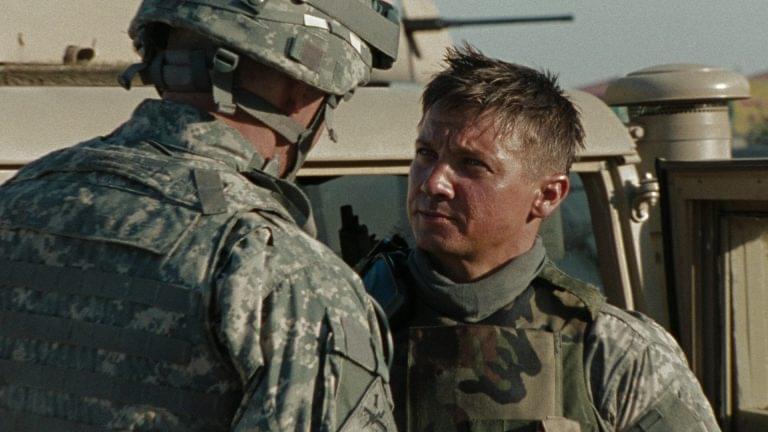
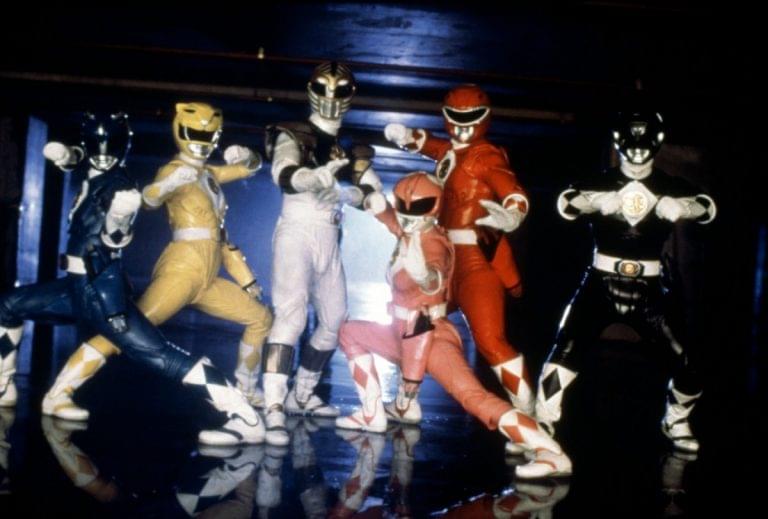

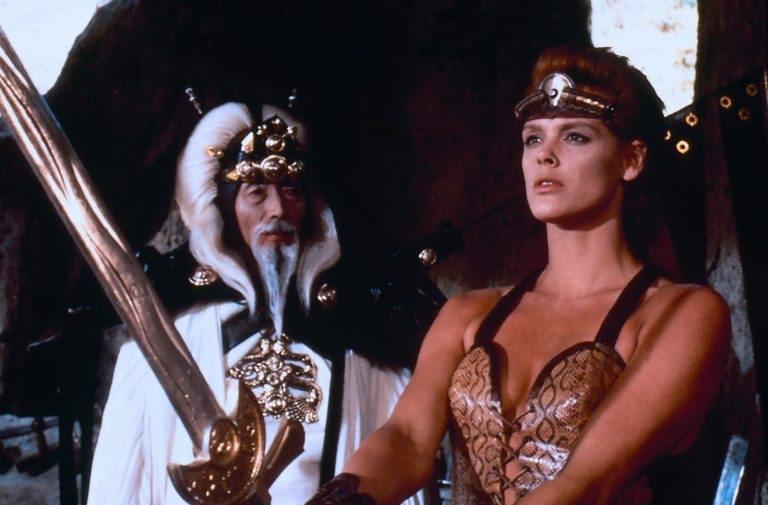

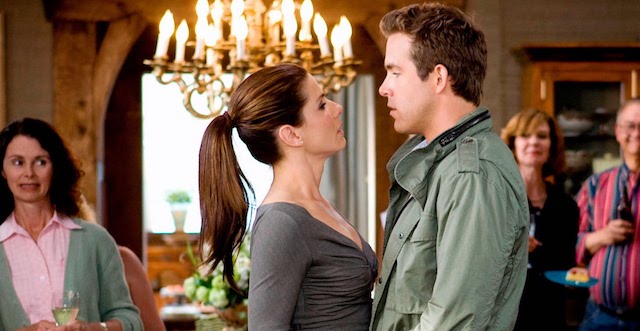
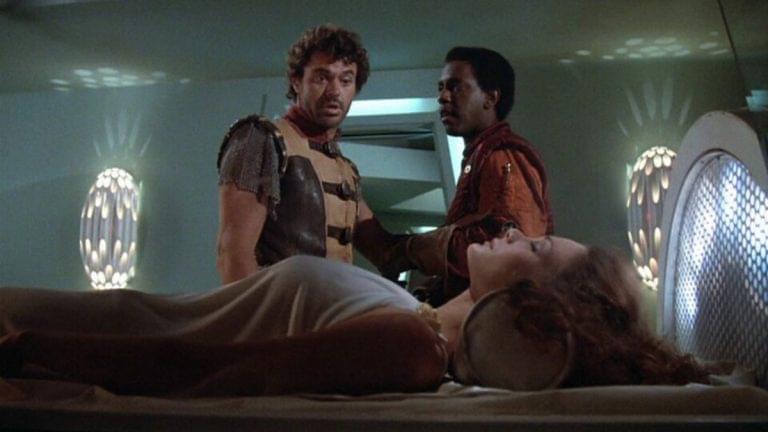






 Langdon’s expertise is needed because this “ILLUMINATI” symbol is written in the form of an ambigram, i.e., it reads the same right-side-up and upside-down. (Look at how “Angels & Demons” appears on the cover of the novel.) Allegedly, this is an ancient secret, the sudden appearance of which can ONLY mean the Illuminati have come out of hiding, because surely no one else could have figured out how to design an ambigram out of “Illuminati.”