Home Blog Page 6

The Sense of an Ending

0
The Sense of an Ending

It’s nice to see Jim Broadbent in a starring role — he’s been a supporting actor in all but a few of the 90 films he’s made — and his warm presence is a boon to the wispy, high-minded “The Sense of an Ending.” But our favorite befuddled British dad deserves a meatier character than Tony Webster, a retired Londoner whose comfortable life is mildly disrupted when the mother of an ex-girlfriend from his university days bequeaths to him a diary that the ex-girlfriend (played as an adult by Charlotte Rampling) refuses to hand over.

There follows much introspection and flashing-back to when young Tony (Billy Howle), the girlfriend (Freya Mavor), and his best mate Adrian (Joe Alwyn) palled around, discussing philosophy and suicide in the manner of 1960s college students. In the present, Tony tells the whole story to his amiable ex-wife, Margaret (Harriet Walter), whose bemused patience hints at what their marriage must have been like. As Tony gathers information about his old flame and her family, events from the past are cast in new light.

Directed by Ritesh Batra and faithfully adapted (by playwright Nick Payne) from Julian Barnes’ novel, the film is too staid for anything like “shocking” revelations. Tony comes to realize a few things he didn’t know before, some of which would be salacious if they were treated as such, but most of the discovery is internal, and Batra never tries to make the story into a mystery. Broadbent’s performance is endearing as always, but Tony is too thinly drawn: we never get a sense of what sort of person he is or what lessons he needs to learn. Whatever they are, he seems to learn them, so good for him, I suppose.

Raw (French)

0
Raw (French)
See? This is why you should never go to college.

It’s fitting that “Raw” begins with a car crash since it, too, is sometimes sickening to watch but impossible to look away from, and you’ll be telling people about it long after you saw it.

The feature debut by French writer-director Julia Ducournau, “Raw” is a singular coming-of-age story about Justine (Garance Marillier), a virginal vegetarian veterinary student just starting at the school where her sister, Alex (Ella Rumpf), is a year ahead of her. (Their parents went here, too, back in the day.) Justine and Alex’s relationship is rocky in the way that teenage sisters’ relationships often are, and they butt heads when, during the extensive hazing process that seems to occupy the bulk of the first semester (are all veterinary colleges like this, or just French ones?), all the first-years are required to eat a tiny bit of meat. Alex tells Justine to just do it. Yes, their parents raised them as vegetarians, but so what? Alex had to go through the same thing when she got hazed. It’s no big deal.

Justine eats the meat and has a series of highly unsettling physical reactions, portrayed with nauseating, almost comical realism. (This isn’t an expensive or effects-heavy film, but Ducournau and her technicians make it count when it matters.) Justine also finds, however, that she has a taste for flesh — not meat, flesh. This coincides with her sexual awakening — she has a hot but unfortunately gay roommate, Adrien (Rabah Nait Oufella) — and she’s overwhelmed by the new desires in her mind and the changes taking place in her body. Her relationship with Alex improves as the sisters find common ground and discover, as the saying goes, that blood is thicker than water.

Ducournau blends body-horror and sexual metaphors with a matter-of-fact sense of humor, grossing us out one minute with alarmingly realistic flesh and blood, touching our hearts the next minute with sweet themes about the sacrifices we make for those we care about. (And what about that car crash…?) Think of this as the unholy offspring of John Hughes and David Cronenberg, an unforgettably morbid dramedy from a distinct new talent. Come for the hint of cannibalism; stay for the love.

Kong: Skull Island

0
Kong: Skull Island
Wow, actors really are smaller in person.

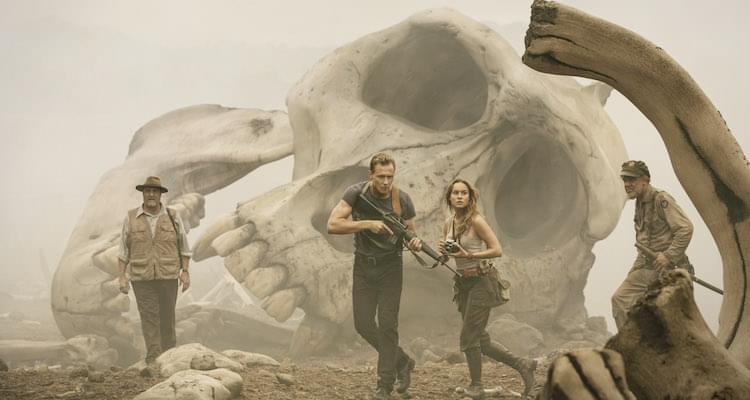
“Kong: Skull Island” is about people barging into a place they’ve never been before, dropping bombs to see how solid the land is, then acting indignant when the local wildlife responds defensively. It’s about humans punishing nature for being nature, and about bureaucrats embarking on research expeditions motivated by revenge.

Fine, fine. It’s also about giant animals, notably an ape of unusual size. A quasi-reboot of “King Kong” (minus the New York parts), “Skull Island” is a fleet-footed adventure movie with breathless action sequences punctuated by horror. Directed by Jordan Vogt-Roberts (“The Kings of Summer”) from a much-rewritten screenplay credited to three other guys, its creaky dialogue and questionable story are counteracted by visceral, thrilling scenes of zoological mayhem. There is a certain kind of moviegoer who wants to see huge monsters squash humans and fight each other, and “Kong: Skull Island” is happy to indulge them, not even bothering to play coy about revealing the beasts. We get a good, clear look at Kong before the movie’s two minutes old.

After a brief 1944 prologue, the year is 1973, as attested by the generic early-’70s rock soundtrack (“Ziggy Stardust,” “White Rabbit,” a few Credence Clearwater Revival tunes, Black Sabbath’s “Paranoid” — all the usual suspects). New satellite images have revealed a previously unexplored island in the South Pacific, just waiting to be mapped, surveyed, and exploited (that part isn’t said aloud) by whoever gets to it first, which the men in Washington D.C. hope will be America. The geological team sent by the Feds is joined by Bill Randa (John Goodman), a government scientist with crackpot theories about What’s Out There, theories whose pots will shortly seem un-cracked indeed.

To help with the expedition, Randa recruits a tracker, Conrad (Tom Hiddleston), the best in the business, etc., the kind of cocksure adventurer who can only be found in seedy bars in the Orient. The group also needs a military escort and expert pilots to get through the daunting weather system that surrounds the island, so they swing by Vietnam to pick up Lt. Col. Preston Packard (Samuel L. Jackson) and his squadron of jocular helicopter bros, who sass one another in the manner of war movies before most of them are gruesomely (spoiler alert) killed. Finally, there’s Mason Weaver (Brie Larson), a respected photojournalist who’s tagging along because she suspects this is more than an ordinary surveying mission, and because what’s a Kong story without a blonde?

Everyone gee-whizzes as the choppers carry them over lush green forests and primeval lagoons, dropping “harmless” seismic bombs to get geological readings. And then the nightmare begins! Kong, strikingly posed against a hellish orange sunset, arrives and, in a marvelously scary sequence, starts batting choppers out of the sky. (Part of this is filmed from a fixed point of view inside one of the helicopters, our vision of what’s going on limited to what the pilots can see — which, for several seconds, is nothing but a few giant brown fingers.) This act of self-defense by Kong is all the excuse needed by everyone in the party — the military, the scientists, the photographer, the tracker, and the bureaucrats — to declare war on him. Later in the film, a few people raise the issue of “hey, he was defending himself, we’re the intruders here, maybe we should chill out.” But at this key moment early on, not a word is spoken in support of simply staying out of the animals’ way.

And you think: Well, all right. You get what you deserve, then.

Packard, a warmonger frustrated by the non-victory in Vietnam, takes Kong’s hostility as a personal affront and vows to avenge his fallen fellow-soldiers — finally, a war he can win. Most of the other survivors of the initial skirmish, separated into smaller groups in the chaos, are focused on reaching the rendezvous point where a ship is scheduled to pick them up. One group, the contingent with Conrad the tracker and Weaver the photographer, runs into a native tribe that semi-peacefully co-exists with Kong and has a guest of its own: Hank Marlow (John C. Reilly), a WWII pilot who was shot down in 1944 and has been on the island ever since, getting more squirrelly with each passing year. Reilly and his antic silliness are a welcome boost of comic relief, not to mention the character’s utility as an explainer of Kong lore.

Now, the nice thing about the characters splitting up is that it means more opportunities to encounter the island’s super-sized fauna, which include massive spiders, insects, water buffalo, and assorted monstrous reptiles. And the nice thing about having too many characters in the first place (there must be 25-30 in the original landing party) is that the movie can afford to kill a lot of them. The movie does this with gusto, skirting the edges of the PG-13 rating by not showing much blood even as people are impaled, torn asunder, devoured, or otherwise exterminated. I wasn’t surprised to find that the screenwriters’ past work includes “Jurassic World” and “Godzilla (2014),” both of which came to mind more than once. (Is there a post-credits scene teasing a sequel? Do giant apes poop in the woods??)

Vogt-Roberts and his technicians have used immersive special effects and old-fashioned things like “good editing” to create exhilarating confrontations with truly fearsome animals, but they go soft on the element that ought to be at the heart of a King Kong story: an emotional connection to Kong himself. With more humanity and compassion and a sturdier plot, this could have been a great blockbuster instead of merely a fun one.

— Crooked Scoreboard

Friday movie roundup – March 3

0
Friday movie roundup – March 3

Greetings, friends (and others). Here are the reviews that I’ve secreted from my review orifice over the last few weeks, in descending order of quality:

“Get Out” (R) B+
“The Girl with All the Gifts” (R) B+
“Logan” (R) B [Crooked Scoreboard]
“Table 19” (PG-13) B
“A Cure for Wellness” (R) B [Crooked Scoreboard]
“I Don’t Feel at Home in This World Anymore” (NR) B
“The Great Wall” (PG-13) B
“XX” (NR) B-
“Fist Fight” (R) B-
“Collide” (PG-13) B- [Crooked Scoreboard]
“Before I Fall” (PG-13) C+

Table 19

0
Table 19
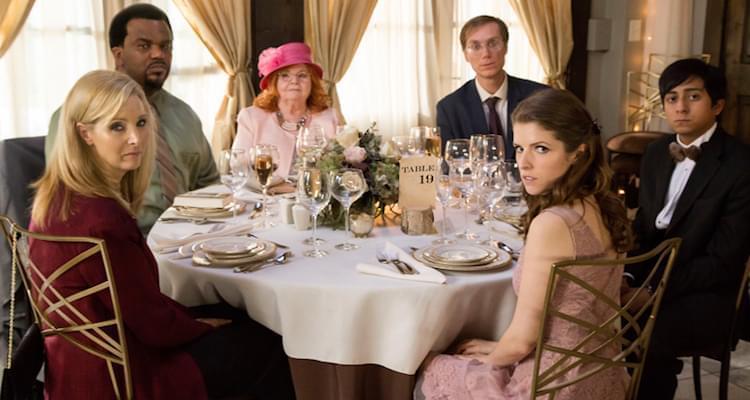
Does this look like a table of people who are in the mood for your nonsense?

In “Table 19,” the title piece of furniture is at the back of a wedding reception, past the tables reserved for guests who matter. The outcasts back here are the people who were invited out of obligation on the assumption they wouldn’t actually come. You feel for them immediately, a band of underdogs who’ve been wronged before the story even begins.

It helps that their leader is Anna Kendrick, a plucky ray of sunshine even when (especially when?) she’s playing a hot mess. Here, in Jeffrey Blitz’s shaggy, formulaic comedy, she is Eloise, a lifelong friend of the bride who was going to be maid of honor until just recently, when she got dumped — via text message, no less — by her boyfriend, Teddy (Wyatt Russell), who is the bride’s brother and the best man. Eloise struggled with whether to still come to the wedding, and doesn’t feel reassured when she meets her table-mates:

– Jo (June Squibb), who was Teddy and the bride’s nanny when they were young and is now largely forgotten by them;

– Walter (Stephen Merchant), a grinning, gawky English cousin who definitely wasn’t recently in prison and then a halfway house, nope;

– Rezno (Tony Revolori), an intense adolescent boy seeking romance, with his unseen mother (Margo Martindale) on the phone as his wingman;

– The Kepps, Jerry (Craig Robinson) and Bina (Lisa Kudrow), who own a diner, are acquaintances of the groom’s restaurateur father, and have lost the spark in their marriage.

They all eventually come to accept that Table 19 is not a place of honor, but they’re less concerned about the individual indignities they’ve suffered than with helping Eloise avenge hers. Teddy, a cheerful blond dope, already has a new girlfriend (Amanda Crew) and doesn’t seem nearly sorry enough for dumping Eloise. A charming Englishman (Thomas Cocquerel) is introduced into the story as a potential replacement, teasing us with two possible outcomes: Eloise reconciles with Teddy, or she goes off with the new guy. In the meantime, we discover that Eloise and Teddy’s breakup had more nuance to it than we first realized.

The supporting characters are likable and provide fodder for some good running jokes, but they’re only interesting insofar as they affect Eloise, the only character who really matters. The Kepps’ marriage problems, for example, though handled maturely, only serve the film by filling it out to feature length. Walter’s efforts not to discuss his criminal past are funny (he improvises lies but is very bad at improvising), but there’s no payoff. Several other lesser threads are also left dangling.

But the movie pulls a neat trick in the last 20 minutes or so, rallying to provide a happy, satisfying ending that sends us out of the theater thinking we saw something better than we did. Blitz’s previous film, “Rocket Science,” from 2007 (he’s been directing TV since then), was similarly funny but overly quirky. Maybe one every 10 years is a good pace for someone who makes charming but inconsequential date-night comedies.

The Last Word

0
The Last Word
"You mean I'm not already dead?"

Newspapers, radio stations, relationships — these are just a few of the things that “The Last Word” focuses on despite not understanding how they work. It’s bold to write about things you’re unfamiliar with, but that’s what first-(and-probably-last)-time screenwriter Stuart Ross Fink has done, his pat, tidy sitcom brought to superficial life by director Mark Pellington (“I Melt with You”).

Meet Harriet Lauler (Shirley MacLaine), a wealthy retired businesswoman and cranky control freak in a small California town who capriciously decides one day that her greatest desire in life is to be spoken of glowingly in her obituary. That will be tricky since everyone hates her — her ex-husband (Philip Baker Hall), her estranged daughter (Anne Heche, only in one scene), everyone she ever worked with — so she forces Anne (Amanda Seyfried), the local paper’s full-time obituary writer (not a real position at a small-town paper) to help her shape her legacy.

Anne doesn’t like hanging out with a haughty 80-year-old as she does some late-in-the-game good deeds to earn praise in her obituary, but she has no choice. (Her editor, played by Tom Everett Scott, is obliged to let Harriet commandeer his employee because Harriet’s company used to buy a lot of ad space.) In an act of undisguised cynicism and condescension that the film doesn’t treat with as much scorn as it should, Harriet looks for a disadvantaged young black girl to mentor and finds Brenda (AnnJewel Lee), who sees through Harriet’s motives but is charmed by her anyway. Anne faithfully documents everything as if she were writing a book-length biography rather than an 800-word obituary.

Just as suddenly as she decided a glowing obit was her life’s ambition, Harriet also decides to become a radio DJ. Even though she stopped buying popular music 40 years ago and has no experience, the manager at the local independent station puts her on the air immediately. She’s just SO GOOD at coming up with the right songs and the right order to play them in, you guys. So good. After her first shift, Harriet gets a round of applause from the staff, including the DJ whose job she took. The station manager also ends up dating Anne, a character who didn’t need a love interest but got one because Fink the screenwriter wanted to cross off every trope on his list.

The film offers not a moment of authentic human interaction or insight but instead puts one-dimensional characters in phony situations that play out with wearying predictability. It’s all wrapped up neatly with shallow platitudes, the insincerity of which cancel out the pleasure of MacLaine’s feisty performance.

Before I Fall

0
Before I Fall
"See you today again, tomorrow."

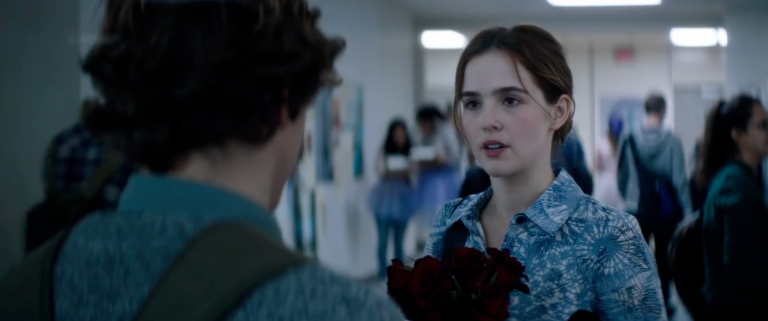
“Before I Fall” is what would happen if Nicholas Sparks rewrote “Groundhog Day” as a teen-angst melodrama. The same lessons are to be learned, in the same order, only instead of a funny Bill Murray learning them, it’s a brooding Zoey Deutch.

To be fair, Deutch (last seen as James Franco’s girlfriend in “Why Him?”) gives a committed, nuanced performance that is many degrees better than the film deserves. Based on a young-adult novel by Lauren Oliver (not Nicholas Sparks), this is the story of a high school senior named Samantha Kingston (Deutch) who dies one Friday night and then keeps reliving her final day. Seems she was a bit of a mean girl, abetting queen bee Lindsay (Halston Sage) and the others in their clique as they harassed unpopular students. These brats are AWFUL (Samantha is actually the least repellant among them), calling each other “bae” and Instagramming everything, to the extent that we are disappointed when only one of them is killed.

Once Samantha realizes she’s repeating the same day, and that she repeats it even when she manages to avoid dying at the end of it, she goes through two phases. First she decides to cut loose and do whatever she wants: dress trashy, sleep with her boyfriend, be an even bigger bitch than usual, etc. Fed up with it, her mother (Jennifer Beals) says, “You’re grounded!” to which Samantha replies, “I’m already grounded!” You know, by the universe. I’m trapped in an existential purgatory until I atone for my sins, Mom! You wouldn’t understand!

She soon gets bored with rebellion, though, and moves on to the mature phase of her groundhog day: trying to get it right. She reconnects with her little sister (Erica Tremblay), tries to repair the damage she and her friends did to a misfit girl named Juliet (Elena Kampouris), and does good deeds for the nice guy (Logan Miller) who has proven to be a better man than her dopey boyfriend.

The premise of reliving one day in a loop might be better suited to teens than grumpy weathermen anyway, given teens’ fondness for nihilism and having problems that no one can relate to. Director Ry Russo-Young, working from Maria Maggenti’s screenplay adaptation, hits all the beats you expect from a teen drama, including strict enforcement of the Law of Relevant Classroom Instruction (Samantha’s repeated school day has a lesson on Sisyphus), easily digested platitudes, and a cool, moody pop soundtrack. But everything about it except for Deutch’s mature performance is overly familiar, too mundane to justify its existence.

Logan

0
Logan
"Ask me about Deadpool one more time!"

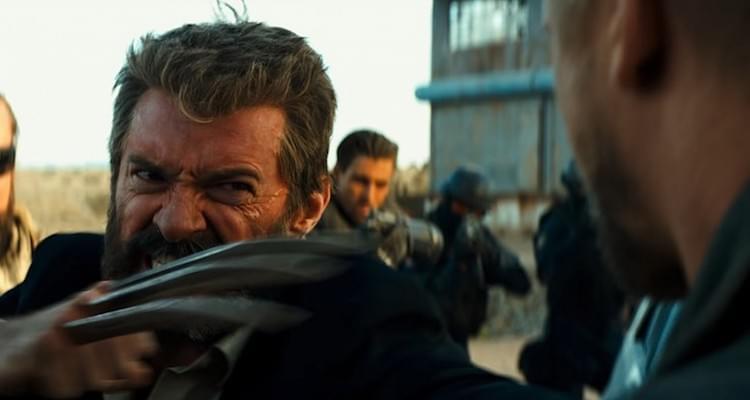
“Logan” is the third standalone film for Hugh Jackman’s knife-fisted X-Men maverick Wolverine, completing the weary trilogy with something fans have long waited to see: Wolverine’s adamantium claws slashing through human skulls like they were piñatas.

Yes, we’re in hard-R territory here, with Mr. Logan (and others) doing fatal, bloody damage to numerous people, swearing like sailors all the while. Liberated from the confinement of the PG-13, director James Mangold (who also made 2013’s “The Wolverine”) gets to show the anti-social X-Man’s anger, pain, and violence in graphic detail. Sometimes this makes scenes more intense than their counterparts in other comic book movies; sometimes it only makes them more graphic. The film feels nothing like a fantasy-oriented superhero flick — why, there’s not even a post-credits scene teasing the next film! — and plays instead as a compelling, overlong, grown-up, 21st-century Western with a tinge of sci-fi. It’s good, but it can be grueling.

It’s set in 2029 (like that’s gonna happen). All mutants are dead or in hiding, and it seems that no new ones are being born. It is no longer hip and trendy to be a mutant. Logan — drunk, decaying, and sullen — is working as a chauffeur in El Paso, caring for the dying Charles Xavier (Patrick Stewart), who’s stashed across the border in a structure that prevents his dangerous brain waves from getting out or being detected. Caliban (Stephen Merchant), a sun-phobic albino mutant, tends to Charles’ daily needs while Logan works to save up money to get them all somewhere safe.

Our reluctant hero soon finds himself saddled with another burden, a little girl named Laura (Dafne Keen) who has mutant powers not unlike his own and is also in need of getting somewhere safe. Laura puts the “mute” in mutant, but what she lacks in conversation she makes up for in slicing through the limbs and torsos of henchmen. There is an everlasting supply of henchmen to be skewered, sent by a robotic-armed dirtbag named Pierce (Boyd Holbrook) who represents certain mutant-oriented sinister forces. But as usual, Wolverine’s greatest enemy is himself.

Mangold, who co-wrote the screenplay with Scott Frank (“The Wolverine”) and Michael Green (“Green Lantern”), doesn’t hide his cowboys-and-Indians inspirations; at one point, the characters watch “Shane” on TV. With its violence-haunted protagonist and settings in Texas, Mexico, and Oklahoma, “Logan” follows the tropes and structure of many classic Westerns, including a sidetrack where Logan, Laura, and Charles help a farm family in need of justice. There are several brutally thrilling chases, fights, and showdowns in the film — Wolverine is deteriorating, but Jackman’s in fine form, and young Dafne Keen is a firecracker — and these are balanced by introspective scenes focused on Logan’s internal misery and his uneasiness with the very notion of “family.”

In all, it’s a fittingly funereal swan song for Jackman’s version of the character (if this is indeed his last ride), one that should please viewers who are emotionally invested in him. That doesn’t include me, alas. Just as “The Wolverine” did, “Logan” strives for and often achieves respectability, but it still gets bogged down by what is to me the character’s fatal flaw: his sulky, doleful personality. It’s even more pronounced when he doesn’t have the other X-Men to provide contrast. This is a well-made but exhausting elegy.

— Crooked Scoreboard

Crooked Scoreboard: Everything from January and February

0
Crooked Scoreboard: Everything from January and February

Crooked Scoreboard is a sports-and-culture website that is transitioning to an everything-and-culture website, with yours truly in charge of the movie section (mostly just editing for now; I plan to start writing more next month).

We’ve run some good stuff in 2017, ranging from the informative to the amusing, and I would be so sad if you missed out on it. So here’s a bunch of links, arranged by subject.

REVIEWS:
— “Collide” (Eric D. Snider)
— “A Cure for Wellness” (Eric D. Snider)
— “Fist Fight” (Jette Kernion)
— “Get Out” (Jette Kernion)
— “John Wick: Chapter 2” (Eric D. Snider)
— “The LEGO Batman Movie” (Dawn Taylor)
— “Patriots Day” (Jette Kernion)
— “Rings” (Eric D. Snider)
— “Silence” (Eric D. Snider)
— “The Space Between Us” (Jette Kernion)
— “xXx: Return of Xander Cage” (Dawn Taylor)

NOT REVIEWS BUT ABOUT SPECIFIC MOVIES:
— “Arrival,” and what it says about human nature. By Amber Emberwing.
— “Chasing Amy” on its 20th anniversary, by Craig J. Clark.
— “La La Land” and “Manchester by the Sea,” and their different but complementary uses of music. By Greg Mucci.
— “Memoirs of an Invisible Man” (1992). Jeremy Herbert reevaluates it on its 25th anniversary.
— “The Ninth Configuration” (1980). Christine Makepeace looks at how William Peter Blatty’s film (he’s the “Exorcist” guy, you know) handles mental illness.
— How the “Rocky” movies got me (not “me,” but Bill Bria) through a liver transplant!
— Harry Potter and the importance of accepting imperfection. Derek Faraci figured out what the Hogwarts story is really about: coming to terms with your heroes’ flaws.
— “Stop Making Sense” (1984) and “Justin Timberlake + The Tennessee Kids” (2016), two very different concert films directed by Jonathan Demme, compared by William Mai.
— “Three O’Clock High” (1987), the best school fistfight movie, analyzed by Derek Faraci.
— “Unbreakable” (2000) — specifically, Kristen Lopez, who has the same condition (osteogenesis imperfecta) as Samuel L. Jackson’s character, watches it for the first time.

IN GENERAL:
— U.S. History in Film Part 1: 1492-1908. Derek Faraci guides us through history as told in the movies.
— Bloody Valentines: 14 violent movies that came out around Valentine’s Day, curated by Craig J. Clark.
— Jeff Bayer cried a lot at the movies in 2016.
— The art of product placement. Derek Faraci again, taking us through some good and bad examples.
— What political thrillers of the ’60s can tell us about today. Tom Lorenzo looks at “The Manchurian Candidate,” “The Intruder,” and “Seven Days in May.”
— Sorry: Movies are still better than TV. D.K. Holm explains why.
— The rise and fall of Ricky Gervais is discussed by Tom Bond in conjunction with Gervais’s new David Brent movie.
— This year’s Oscar films were about the American Dream, by Kristen Lopez.
— The sadness of audio commentary tracks, with specific fond remembrances by D.K. Holm.

JUST FOR LAFFS:
— 7 More Foreign Stories That Should Have Starred Matt Damon. In response to “The Great Wall,” Michael Smith inserts Good Will Hunting into a bunch of other movies.
— 10 Number-Titled Movies That Are Sexier Than the Fifty Shades Films, as determined by Rob Hunter.
— A memo from the Umbrella Corporation. Brian Salisbury tracked down this interoffice communication from the company behind the “Resident Evil” monsters.
— My (Eric D. Snider’s) Sundance diary, part 1 and part 2.
— Presidential movies, according to Amazon users. Jamie Flook found some amusing reviews of president-themed films.
— Your 2017 movie preview, by Eric D. Snider.
— What will happen in 2017-2025, according to movies set in those years. By Michael Smith.
— And Now a Word from President Travis Bickle. Bill Bria imagines Robert DeNiro’s “Taxi Driver” character as POTUS.
— “Underworld,” the whole series. Specifically: what is the deal with them? By Brian Salisbury.
— Will Smith’s bad choices: a fake oral history, by Jacob Oller.


Get Out

0
Get Out
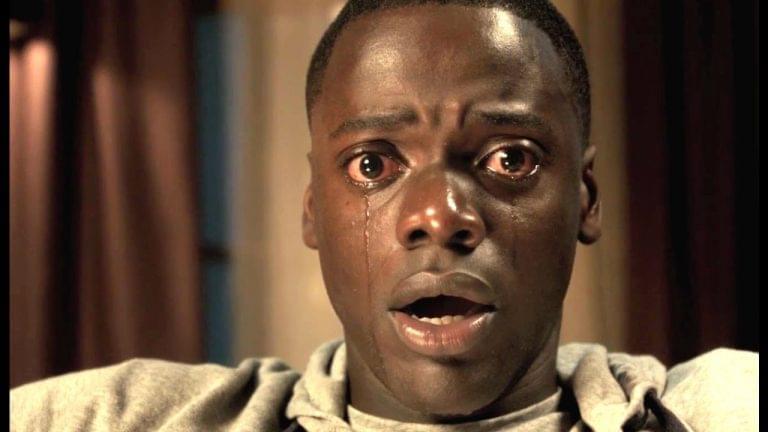
Meeting the girlfriend's parents is going well, I see.

“Get Out” is a feature-length version of the not-quite-joking sentiment among African Americans that the suburbs, with their overwhelming whiteness and cultural homogeneity, are eerie twilight zones for black people. Far from being a one-joke movie, however, Jordan Peele’s directorial debut is a clever, consistently funny racial satire and horror film mocking white liberal cluelessness and finding humor in (without dismissing) black people’s fears.

Thematically, it’s very of-the-moment, though Peele (half of Comedy Central’s “Key and Peele,” flying solo) has smartly avoided any acutely topical references. His screenplay, which he swears is not based on his wife’s family (he’s married to Chelsea Peretti), has a twentysomething black man named Chris (Daniel Kaluuya) traveling with his white girlfriend, Rose (Allison Williams), to meet her affluent family in their prim, well-manicured community. Rose has not told her parents that her boyfriend is black, but she swears they’re so progressive that the only race-related problem will be how much her dad talks about his love for Obama.

Sure enough, Rose’s folks, neurosurgeon Dean (Bradley Whitford) and psychiatrist Missy (Catherine Keener), are educated, gracious, and clumsily welcoming, Dean greeting Chris with “my man” and telling him proudly of how his own father’s claim to fame was losing to Jesse Owens in a 1936 Olympics pre-trial. (This is a gag, but like many gags in the film, it’s also foreshadowing.) Dean feels embarrassed to be a wealthy white man who employs black servants (a maid and a groundskeeper), but they worked for his parents before they died and now they’re part of the family — a part of the family that, Chris notices, is unusually deferential and mild-mannered, like Stepford wives.

There’s more weirdness when the extended family and neighbors arrive for the annual summertime gathering. (Rose also has a brother, played by Caleb Landry Jones, who serves no function in the story.) Chris is the only black man among them, save for one (Lakeith Stanfield) who’s married to an older white woman but is as docile as the servants and dresses as though he were his wife’s contemporary. Everyone is effusively polite to Chris, earning laughs with their self-satisfied manifestations of “acceptance” — for example, making sure to mention that Tiger Woods is their favorite golfer — that are sure to ring true for a large part of the audience.

Chris occasionally checks in via phone with his friend Rod (LilRel Howery, soon to be a breakout star), a TSA agent back in the city whose speech and manner are more authentically (stereotypically?) black. In narrative terms, Rod fills the role of Jive-Talking Black Friend, the person in the horror movie who says, “Aw, HELL no, I ain’t goin’ in there, you people are crazy!” — the voice of reason, in other words; the voice of the audience. That he is, in this case, the Jive-Talking Black Friend to someone who shouldn’t need one, whose own interior monologue should be warning him, is part of the film’s humor about varying levels of “blackness.” No one comes out and says it, but there’s the implication that Chris’s dating a white girl has made him lose some of his natural instincts.

“Get Out” is a comedy first and foremost, but there are thriller elements sprinkled throughout (including a trippy hypnosis scene with Chris and Rose’s psychiatrist mom), and in the end the plot turns to overt horror. Peele’s facility with comedy is well documented, but his deft touch with the scary parts is a nice surprise, and genre fans will appreciate his willingness to deliver satisfying violence when it’s called for. Best of all, though, is his ability to embed themes of racial equality in a mocking satire masquerading as a date-night horror-comedy, and to make fun of white people without becoming the stereotype of the Angry Black Man (not that this will stop Bill O’Reilly from calling him one). Biting but good-natured, incisive but not preachy, this is the kind of self-reflective comedy that can bring America together.

The Girl with All the Gifts

0
The Girl with All the Gifts
"Will your braaaaains be on the midterm?"

With the post-apocalyptic setting of a young-adult novel and the slavering flesh-eaters of a zombie movie, “The Girl with All the Gifts” is a clever improvement on both genres, offering a rare look at what happens after society is decimated by a cannibalism-inducing contagion.

Near a ruined London, young Melanie (Sennia Nanua) is one of a couple dozen children being educated in a fortified bunker. All are infected with the virus, unable to resist attacking when they smell human flesh. When they don’t smell it, though (the uninfected people around them slather themselves in a lotion to block their scent), they are ordinary children. Melanie is especially pure, a guileless and intelligent girl whose body chemistry and unusual self-control might be the key to creating a vaccine. Helen Justineau (Gemma Arterton) is the sympathetic teacher who thinks Melanie is special; Sgt. Parks (Paddy Considine) is the military leader who thinks they’re all monsters; Dr. Caroline Caldwell (Glenn Close) is the lead scientist who thinks Melanie might be more valuable dead than alive.

A breach on the facility by “hungries” leads the film into standard zombie territory — a group of survivors must make their way to safe ground — but at every turn, the film comes up with new ways of addressing the familiar tropes. What is it, after all, that separates man from animal? And is it possible for a leopard to change its spots, metaphorically speaking? (Literally, no, it is not.) Director Colm McCarthy, working from writer M.R. Carey’s adaptation of his own novel, mixes horror, humor, and humanity with thrilling agility, all centered on a star-making performance by newcomer Sennia Nanua.

Collide

0
Collide
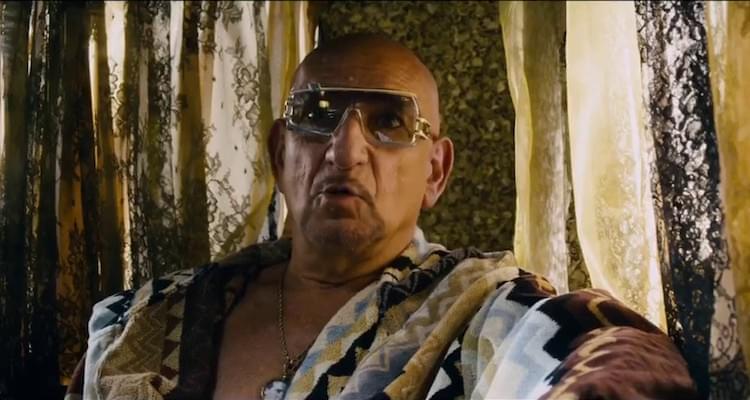
Sir Ben Kingsley.

There is a certain movie formula where an ordinary man must do something illegal and dangerous (usually to save a loved one), but the task goes awry and he spends the next 24 hours running from bad guys (usually drug traffickers), becoming increasingly battered from all the auto wrecks and leaps from rooftops before finally beating them at their own game and limping off into the sunset (usually with a bag of money). These films are seldom great, often bad, but sometimes like “Collide”: breezily paced, no frills, mildly ludicrous but perfectly watchable, and buoyed by hammy villains.

In Germany, a reformed American ne’er-do-well named Casey (Nicholas Hoult), needing money for his girlfriend Juliette’s (Felicity Jones) kidney transplant, takes a job from a Turkish psycho he used to work for named Geran (Sir Ben Kingsley). The job: to steal a cocaine-filled truck from respected businessman/secret drug lord Hagen Kahl (Sir Anthony Hopkins), with whom Geran has a beef. Casey and his pal Matthias (Marwan Kenzari) plan and execute the heist cleverly, but not cleverly enough. Matthias ends up in hiding and Casey goes on the run.

Director Evan Creevy (“Welcome to the Punch”), who co-wrote the screenplay with F. Scott Frazier (“xXx: Return of Xander Cage”), oversees some very well-shot chase sequences, most involving high-end BMWs but a few on foot. The adrenaline-charged vehicular mayhem is effective, as is Casey’s determination to get up after every beating and keep going. Hoult conveys a working-class averageness that makes him easy to identify with.

More important, however, are the villains. We are blessed with two in this case, both played by Oscar-winning British knights. Kingsley is over-the-top as Geran, a jumpy, erratic thug who owns racehorses and hookers and asks Casey if he knows the difference between them. (“Me neither” is Geran’s reply to his own question.) He calls Casey “Burt Reynolds,” citing his resemblance to the once-handsome actor before lamenting that “now he look like mannequin.”

At the other end of the crazy spectrum is Hopkins’ Hagen Kahl, who is somehow the German son of a Nazi but has an English accent. Well-dressed and polite, Hagen is more subdued than Geran, save for moments when he RANDOMLY YELLS certain WORDS like a common Nicolas Cage. He briefly impersonates Rocky Balboa once, calls Casey “bro” another time, and drops casual references to torture and death in a way that only a sociopath can. Hopkins and Kingsley have a few scenes together where they try to out-ham each other, but that battle ends in a tie.

The plot relies on several unlikely things (like Germans always leaving their keys in their cars), and the film cheats a little by withholding information so it can surprise us with it later. I viewed this tactic like a judge on “Law & Order”: you’re on thin ice, but I’ll allow it. Still, Creevy shows ambition in the action scenes and even tries to convey Casey’s state of mind through occasional impressionistic interludes. Ignore the implausible plotting and enjoy the crunch.

— Crooked Scoreboard

I Don’t Feel at Home in This World Anymore

0
I Don’t Feel at Home in This World Anymore

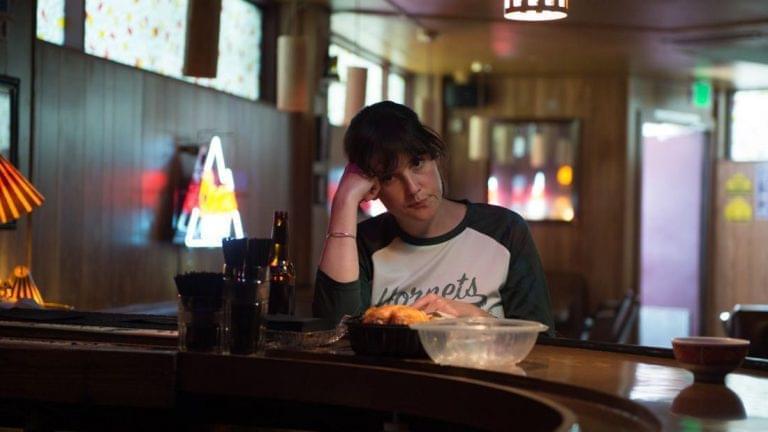
A disaffected title like “I Don’t Feel at Home in This World Anymore” could fit about 75% of Sundance films, but it’s particularly apt for the one that uses it, an off-kilter, low-key comedy with violent mood swings and endearing goofball performances by Melanie Lynskey and Elijah Wood.

Lynskey plays Ruth Kimke, a hapless, lonely nursing assistant who’s becoming increasingly disappointed in her fellowman. A racist patient; a stranger who spoils a book’s ending; a neighbor who leaves his dog’s poop on her lawn; these and other daily indignities aren’t making Ruth feel bitter, just beaten-down. Why are people so thoughtless?

This weariness comes to a head when Ruth’s home is burglarized in broad daylight, apparently unnoticed by anyone on her block. Disheartened by the police detective’s (Gary Anthony Williams) overt lack of hopefulness of solving the crime, Ruth takes matters into her own hands, making a plaster of the footprint the thief left in her backyard and enlisting the help of Tony (Wood), an oddball neighbor with a rat-tail and an obsession with Japanese fighting and weaponry, to pursue justice.

We’re also introduced to the thief, a bleach-blond teenage drug addict named Christian (Devon Graye), and his cohorts, skeevy Marshall (David Yow) and quietly terrifying Dez (Jane Levy). Christian’s wealthy father (Robert Longstreet) and bored, boozy stepmom (Christine Woods) figure into the story as well, providing Ruth with insight into how some people turn out to be such a-holes.

This isn’t a plot-heavy film, though, and it’s only the last 30 minutes or so that are driven by story. More broadly, it’s about Ruth as a character: dowdy, disheartened, but loosely “normal,” a regular jane just trying to get through this hectic thing called life. A deeply funny and compassionate actress, Lynskey conveys everywoman exasperation in increasingly humorous and relatable ways, becoming intent on extracting not compensation from the thief but a simple acknowledgement that his actions were wrong. She’s assisted by Wood’s purely comic-relief performance as the sincere but buffoonish Tony.

This is the directorial debut of Macon Blair, an actor who’s been in all of Jeremy Saulnier’s films — “Murder Party,” “Blue Ruin,” and “Green Room” — and who shows a similar sensibility here, particularly as it concerns violence and the sudden outbreak thereof. Blair veers wildly from one tone to another as the film takes odd, humorous turns, and not all of these transitions are successful. There is the sense, sometimes, that a non sequitur has been tossed in for sheer randomness (like the cop’s tearful revelation that he is getting divorced), adding clutter rather than clarity. But his dark sense of humor and jaundiced (yet somehow hopeful) view of the world shine through, hinting at greater things to come.

The Great Wall

0
The Great Wall
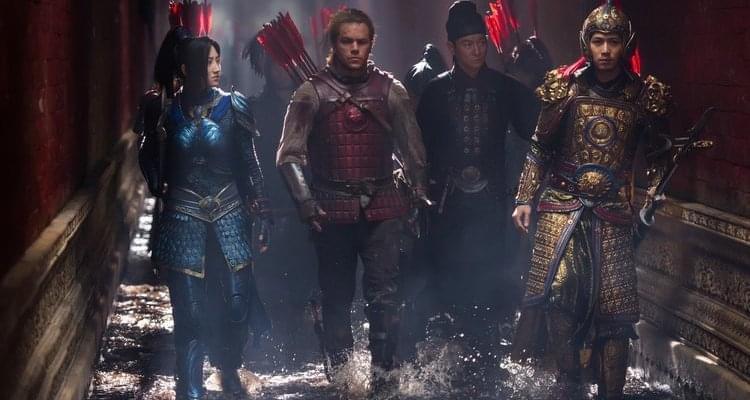
See? He gets his own outfit and everything!

That long wall they’ve got over there in China has inspired many stories, some true and some fictional. “This,” says the title card at the beginning of “The Great Wall,” “is one of the legends.” The fantastical nature of Zhang Yimou’s first English-language film would have been clear as soon as the hordes of reptilian monsters appeared anyway, but it’s good to know up front that “The Great Wall” (despite its educational-sounding title) is more concerned with large-scale entertainment than with historical accuracy. It gives us license to relax and enjoy the extravaganza.

Set around 1000 A.D., “The Great Wall” is about two European mercenaries, William (Matt Damon) and Tovar (Pedro Pascal), who are searching for the “black powder” that China is rumored to have invented, when they’re attacked by a strange creature, barely escaping with their lives. They’re subsequently captured by an elite, resourceful military unit called the Nameless Order, commanded by General Shao (Zhang Hanyu) and tasked with defending the Wall. Shao and his advisers want to know how William was able to hurt the monster so easily, and why there were monsters at all: they weren’t expecting them for several days yet. It turns out these ferocious green rhino-sized devils — ravenous, razor-toothed beasts called tao tei — have been a secret plague on China for centuries, reemerging every 60 years to try and overtake the Wall and enter the capital. William may have unwittingly found a way to defeat them. Magnets are involved!

Do not think for a moment, however, that this is a story about Westerners showing up somewhere to teach the poor benighted locals how to solve their own problems. For one thing, Tovar isn’t interested in helping, only in finding the gunpowder and fleeing. (William is more heroic than that.) But more to the point, the Nameless Order is amazingly well prepared and disciplined, all of its members trained since childhood in the Order’s highly advanced (for 1000 A.D.) methods of defense. When swarms of screeching tao tei, guided telepathically by their queen, besiege the Wall, trebuchets affixed to the Wall itself launch fireballs to create a perimeter while platoons of archers shoot arrows at the tao tei that make it through. For close combat, there’s the crane corps, an all-female army whose members essentially bungee-jump from the Wall with a spear in each hand, stabbing monsters on the ground for a second or two before being yanked back up. These battle sequences are exhilarating, shot on a grand digital scale similar to “Lord of the Rings,” with Zhang (“Hero,” “House of Flying Daggers”) happily in his wheelhouse. In one breathless scene, a thick fog prevents the people on the Wall from seeing the tao tei — whose intelligence is evolving — on the ground below.

The leader of the crane corps, Commander Lin (Jing Tian), speaks English, having been taught by a European named Ballard (Willem Dafoe) who came here 25 years ago looking for gunpowder and never left. Lin is thus able to serve as translator for William, whose archery skills and mysterious accent are both borderline supernatural. (The film addresses the language barrier more realistically than it addresses anything else, letting the Chinese people speak subtitled Mandarin when appropriate rather than having everyone be magically fluent in English.) Lin and her fellow cranes kick all manner of butt, as do the other squads, as does William. When they emerge victorious, it’s because they have cooperated with mutual respect.

A number of superfluous, half-formed ideas bubble up in the plot, and Willem Dafoe’s shadow-dwelling character doesn’t amount to anything. There’s some schmaltz, too, in the form of a scared young soldier whom William takes under his wing. These may be the consequences of the script being the work of six different men: three are credited for the story, three more for the screenplay. Details about the monsters’ origins and nature are dorky-cool, but there’s nothing in the dialogue worth remembering, nor are the characters drawn with any particular skill. Zhang is all about the spectacle — fearsome beasts, massive color-coordinated armies, experimental hot-air balloons, and, yes, some gunpowder. He delivers this with gusto, unconcerned with whether the finer points of the narrative make sense. It’s Matt Damon and Jing Tian (you don’t know her yet but you will) fighting rhino-velociraptors. What else do you want?

Fist Fight

0
Fist Fight
"He dealt it."

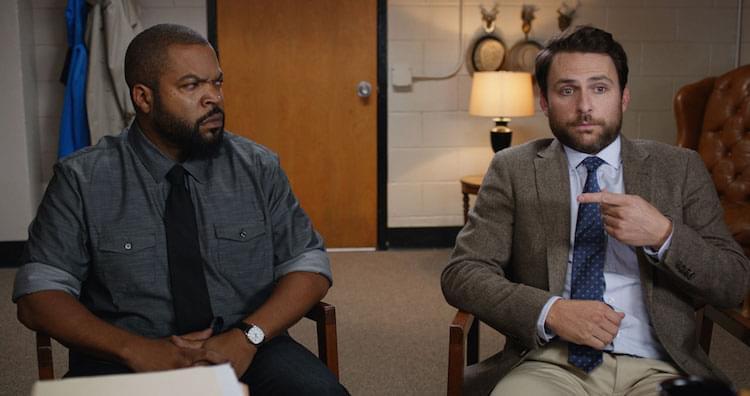
Charlie Day has made a name for himself playing frenetic, high-pitched idiots in the “Horrible Bosses” movies and TV’s “It’s Always Sunny in Philadelphia,” so his performance in “Fist Fight” — as a mild-mannered, reasonably intelligent high school English teacher named Andy Campbell — is risky. To the extent that Charlie Day is known to the general public, it’s as a wound-up supporting character, not the grounded protagonist. Mr. Campbell has a pregnant wife and a young daughter and everything!

Day is up against Ice Cube, typecast as Mr. Strickland, a terrifying history teacher who never for one second comes across as a man with a college education (but never mind). It’s the last day of school at Roosevelt High, the students are in open rebellion (“senior prank day” has gotten out of hand), the teachers are demoralized — but everyone fears Strickland, who finally snaps and becomes comically violent in class. There are 30 witnesses, but for some reason it’s Campbell’s testimony to Principal Tyler (Dean Norris) that gets Strickland fired, causing him to challenge Campbell to after-school fisticuffs.

Campbell spends the rest of the film trying to get out of fighting Strickland, either by getting him his job back, talking him out of it, or getting the police involved. In the process, Campbell realizes that his wife (JoAnna Garcia Swisher) thinks he’s a pushover who never stands up for himself and that he’ll need to go through with the fight or feel emasculated forever.

Directed by Richie Keen, whose TV experience includes a handful of “It’s Always Sunny” episodes, the film is at its best when Campbell unravels, stops following the rules (since nobody else does), and goes for broke. But there are sporadic laughs throughout thanks to a general sense of anarchy and supporting characters like Jillian Bell’s meth-using, student-seducing guidance counselor. Van Robichaux and Evan Susser’s sitcom-simple screenplay is bogged down by extraneous characters — Christina Hendricks as a vengeful French teacher; Tracy Morgan as a befuddled coach — and gratuitous swearing (it’s like the writers just learned about the F-word). But the film’s energetic, almost cartoonish mania wins us over in the end, as long as we don’t give any thought to the lesson it teaches: that cheating, violence, and defiance of authority are acceptable (even preferable) ways to succeed.

XX

0
XX

“XX,” named after the chromosomes, is the first horror anthology written and directed entirely by women (not counting that one of the shorts is based on a Jack Ketchum story). That’s a worthy achievement, especially in a genre as male-dominated as horror, and it proves a previously untested theory: that women are just as capable of producing a hit-or-miss anthology as men are.

There are four shorts, arranged in what turns out to be ascending order of quality. Each has at least one element that’s great, and at least one element that’s disappointing. But the good outweighs the bad overall, and there’s a great deal of fiendish creativity on display — and hey, it’s only 80 minutes total.

In brief:

– “The Box,” by Jovanka Vuckovic (adapting Ketchum), is about a busy mother (Natalie Brown) whose son is shown something mysterious by a man on the subway and subsequently stops eating. The psychological infection, whatever it is, spreads to the boy’s sister and father, too. The acting in this segment is stilted and slow, and the sinister premise doesn’t pay off in the end. But there’s a moment of fantastic gore effects (in a dream sequence that should have been the actual ending, but never mind).

– “The Birthday Party” is a dark comedy starring the delightful Melanie Lynskey as a woman whose hated husband keels over dead just before their daughter’s birthday party, leading her to hide his body so as not to spoil the festivities. Directed by Annie Clark (aka singer St. Vincent) and written by Clark and Roxanne Benjamin, this one suffers from its thin premise, the presence of an inexplicably weird nanny character, and the fact that it leads to a single so-so punchline. It’s also a bit of a letdown that one-fourth of this horror anthology isn’t horror at all. But there are some laughs in it, plus: Melanie Lynskey!

– “Don’t Fall”: OK, now we’re talking! Written and directed by Roxanne Benjamin, this is slick meat-and-potatoes horror about two couples on a camping trip who encounter an ancient evil. It plays like the condensed version of any number of movies about people who go out into nature and get killed, with Benjamin hitting the right beats of tension, surprise, levity, and horror. But this one, too, doesn’t pay off. The story is fully resolved when the film ends; it just turns out not to have been much of a story, lacking all but the most basic details. Someone should give Benjamin the budget and resources to make a feature, though, because she clearly has the chops.

– “Her Only Living Son” comes from Karyn Kusama (“The Invitation,” “Girlfight,” “Jennifer’s Body”), the most experienced of the four directors and the best at her craft. Here we have another mother, Cora (Christina Kirk), whose son, Andy (Kyle Allen), is turning 18 and has been acting like a sociopath. Even more disturbing: authorities like the school principal give him a free pass, saying he’s “special” and worthy of all the leeway he needs. A mother coming to realize her child is a monster is one of the most unsettling premises there is, and Kusama builds the dread expertly — and then, again, things fizzle out.

This is approximately the trajectory most horror anthologies take: some good segments, some bad, none long enough to scuttle the whole thing. The only noteworthy difference between “XX” and the average male-directed anthology is that, wouldn’t you know it, there’s no rape or torture. Weird.

A Cure for Wellness

0
A Cure for Wellness
"This is the worst aquarium I've been to."

Gore Verbinski has directed three “Pirates of the Caribbean” movies and “The Lone Ranger,” plus “The Ring,” “Rango,” and “Mousehunt,” as well as under-seen gems “The Mexican” and “The Weather Man.” With such a varied resume that includes remakes and adaptations, it’s hard to pin down Verbinski’s own aesthetics. What is HE interested in?

I’ve always hoped it was horror, if only because “The Ring” is great and the man’s first name is Gore, but maybe I was right. His tenth film, “A Cure for Wellness,” is a gothic thriller full of horror symbolism and a creeping sense of the sinister, and Verbinski is co-credited with the story. (The only other film he helped write was “Rango.”) There are images here as starkly unsettling as in “The Ring,” albeit without that film’s nightmarish crescendo or tight pacing, and Verbinski squeezes all the mystery he can out of Justin Haythe’s screenplay, which adorns its elemental story with morbidly colorful details.

Dane DeHaan (whose resemblance to Leonardo DiCaprio makes this film more reminiscent of “Shutter Island” than it would be anyway) stars as Lockhart, a young Wall Street hotshot who’s already chomping Nicorette gum like a veteran, dark bags under his ghostly blue eyes. Lockhart is sent to an exclusive Swiss spa to retrieve his firm’s CEO, who went there to “take the waters” and is now refusing to rejoin society.

Many titans of industry can be found at this idyllic spot in the Alps, taking various treatments for their various ailments, most of which are attributable to the fact that they are titans of industry who are working themselves to death. The head of the facility, Dr. Volmer (a keenly untrustworthy Jason Isaacs), is cagey about the details of his methods, and the eerily polite staff is well trained in making it difficult for visitors to see patients. Frustrated, Lockhart is about to try plan B when he’s injured in an accident and becomes a patient himself. All the better to snoop around, right?

Mystery abounds at the sanitarium. An old patient named Mrs. Watkins (Celia Imrie) cuts out pieces of crossword puzzles and tells Lockhart, “There is a terrible darkness here.” He hears legends about the institute’s weird, incestuous founder, whose motto — “Purity Before Wellness” — is posted on Dr. Volmer’s wall. Lockhart meets Hannah (Mia Goth), a spacey young woman who seems to be in a trance most of the time, whose information about the facility and its guests is unreliable. Lockhart’s own mental acuity starts to fail him, too, after he consents to some of Dr. Volmer’s treatments (when in Rome and all that).

The spa is even more ominous when seen through the fog of paranoia and “vitamins,” and Verbinski plays up these elements with gusto. Some details — a cow abortion, an abundance of eels, a missing tooth — have an arbitrary logic that’s either disturbing (that’s how nightmares work, after all) or annoying (that’s also how lazy horror movies work). But either way, the images are indelible.

Unfortunately, DeHaan seems in over his head as Lockhart. The actor is 31 but looks younger and naive; it’s hard to buy that he’s a workaholic, or that his firm would entrust him with such an important mission. I kept imagining what the film would be like with a more experienced, world-weary protagonist — or at least one who would LEAVE THE SPA when its dangerousness became obvious. Maybe Lockhart finds the facility’s bleak, disquieting backstory and horrific current events as compelling as I do. Is he also disappointed, just a little, at the unsurprising nature of some of the mysteries’ solutions? You expect more bang at the end of 146 minutes, even if the time spent was satisfyingly disturbing.

— Crooked Scoreboard

Friday movie roundup – Feb. 10

0
Friday movie roundup – Feb. 10

It’s a week of Number 2’s — sequels, not poop. (OK, some poop.) Actually, the only one of the three that’s better than its predecessor is “Fifty Shades Darker,” which gets a D instead of a D-. “The LEGO Batman Movie” and “John Wick: Chapter 2” are good, but not quite as good as their forerunners. Anyway, here’s what we have from this week and last week:

“The LEGO Batman Movie” (PG) B
“John Wick: Chapter 2” (R) B-
“Fifty Shades Darker” (R) D
“Rings” (PG-13) C
“The Space Between Us” (PG-13) B-

We talk about all o’ them films on this week’s Movie B.S. with Bayer and Snider. (Our first regular show in three weeks! We missed you!)

The LEGO Batman Movie

0
The LEGO Batman Movie

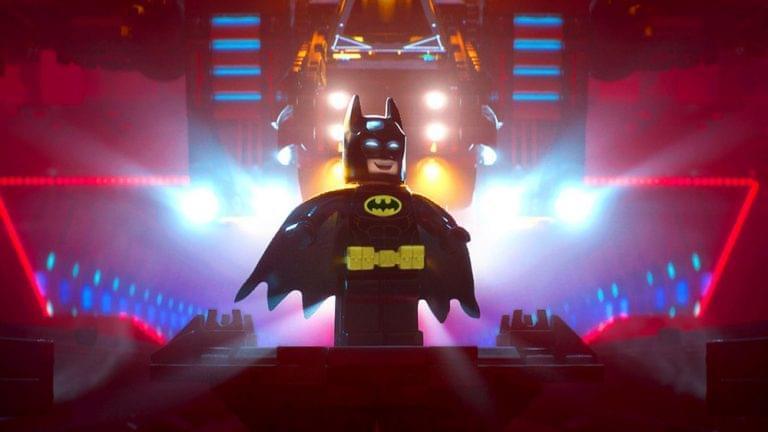
Three years ago, “The LEGO Movie” surprised everyone by being very good despite having the flimsy premise of “What if we made a movie based on a toy?” What we feared would be a cynical feature-length commercial turned out to be a joyful, self-aware comedy about teamwork and imagination in which the word “Lego” was never spoken. The spinoff, “The LEGO Batman Movie,” continues in that vein — spoofy, zany, self-referential — without sustaining the same dizzying level of energy (which is kind of a relief, actually).

Once again computer-animated to look like everything was built out of Legos, the new film casts Batman (voiced by Will Arnett) as a self-centered, beatboxing egotist who sings songs about how awesome he is while saving Gotham but goes home every night to an empty mansion. His faithful butler, Alfred (Ralph Fiennes), is his only friend, and he’s more like a father figure (albeit one Batman doesn’t listen to). Batman says he doesn’t need anyone else, but secretly he’s afraid of being part of a family again.

His lone wolf, “I don’t need anyone” attitude upsets the Joker (Zach Galifianakis), whose feelings are hurt when he realizes Batman doesn’t consider him his greatest enemy. (“Whoa, whoa, I don’t have a bad guy. I’m fighting several bad guys right now.”) Then there’s the new police commissioner, Barbara Gordon (Rosario Dawson), who says Gotham needs active, involved citizens, not an unaccountable vigilante who has destructive battles with supervillains but never seems to catch them.

In the middle of this, almost accidentally, Bruce Wayne adopts an eager orphaned teen named Richard Grayson (Michael Cera) who becomes Batman’s sidekick without realizing Batman and Bruce Wayne are the same person. (The film gets a lot of mileage out of that.) This conflicts with Batman’s “I work alone” policy … but so does belonging to the Justice League, which the film is keen to overlook.

The story isn’t exactly flawless, and there’s a stretch in the middle where the laughs and energy are diminished as the plot chugs along. The promising idea of using Superman’s Phantom Zone as a depository for villains from all universes fizzles, as it turns out Lego doesn’t have the rights to as many interesting bad guys as we thought (save for Batman’s innumerable nemeses). Call me crazy, but maybe a cartoon about superheroes doesn’t need five screenwriters?

But when it’s on, it’s on, directed by Chris McKay (a veteran of Cartoon Network’s Adult Swim) with affectionate enthusiasm. On one level, there are clever meta-jokes about the superhero genre and previous incarnations of Batman. On a more basic level, there are wonderful details, like the fact that Barbara Gordon went to “Harvard for police,” suggesting that this could all be the product of a kid’s imagination. The handful of belly laughs and consistent cheerfulness are more than enough to compensate for the addled, overstuffed story. And how bizarre that the semi-parodic Batman is the first of all the movie Batmans to make us feel an emotional connection to the character. Legos — is there anything they can’t do?

John Wick: Chapter 2

0
John Wick: Chapter 2
You should see him AFTER the fight.

When last we saw John Wick, at the end of his out-of-nowhere 2014 cult hit, the grudgingly reactivated assassin had avenged, with extreme prejudice, the murder of his dog and the theft of his car and was ready to enjoy retirement again. Alas, it was not to be. There were too many unresolved issues — not about the story, which was satisfyingly concluded (but which the sequel seeks to extend anyway), but about the world the story took place in. With its codes of conduct and special currency and unseen hierarchy, “John Wick” was more than an ordinary shoot-’em-up.

So is “John Wick: Chapter 2,” the bigger, longer, not-quite-as-good follow-up. Again directed by Chad Stahelski and written by Derek Kolstad, the sequel spends its first 20 minutes doing something highly entertaining but completely unnecessary: sending John Wick (Keanu Reeves) to get his beloved car (which we’d assumed was destroyed) from the surviving member of the Russian crime family he slaughtered last time. Uncle Abram is played by Peter Stormare with the same crazy energy as his predecessors, and the league of taxi-driving goons he dispatches to stop Wick are mowed down with the same crunching, relentless fervor. Wick and the goons use their cars as weapons (I don’t know that I’ve seen a movie in which more people are intentionally struck by vehicles), along with their fists, feet, and guns. It’s marvelous.

Once we’re done re-tying old threads, the movie gets to its new story, set not many days later. An old colleague of John’s, suave Italian museum curator/hitman Santino D’Antonio (Riccardo Scamarcio), comes a-callin’ with a marker. Seems John owes him a debt (a “blood oath”!) from before, and while Santino let it go when John retired, now that he’s back in the game, well, it’s time to collect. John refuses the job; Santino takes retaliatory measures (don’t worry, John’s new dog is safe); things escalate pretty quickly from there.

John Wick’s new assignment takes him to Rome, where there is a local version of the Continental Hotel for assassins, governed by the same bylaws as the one in New York. (Back in NYC, the desk clerk played by Lance Reddick and the manager played by Ian McShane still fill important roles.) Kolstad and Stahelski revel in the opportunity to expand the universe they created, adding details about the mercenaries’ governing body (the High Table) and its politics, introducing us to other key figures (including one played by Laurence Fishburne), and providing tantalizing glimpses into the day-to-day operations of this mysterious underworld organization. (There’s a whole separate story to be told about the tattooed women in matching sleeveless blouses who operate the old-fashioned switchboards and send out word of new murder-for-hire contracts.)

As compelling as that is, the film slows down considerably in its middle section, action-wise. There’s a repetitive sequence of John shooting bad guys in the catacombs that feels interminable. Things pick up again after that, but the damage is done. We knew as soon as we met Santino that the final conflict would be between him and Wick. The movie should have condensed the Rome business and gotten to that point sooner.

Because there is much for fans of well-choreographed fights and stunt work to enjoy here! Santino is a dud of a villain, but Wick gets another opponent, a fellow hitman named Cassian (rapper-actor Common), who’s worthy of him. Their grappling gives the final section of the film new life, bolstered by the intriguing new information about their professional guild that we absorb. Reeves, still fearsomely agile and adroitly deadpan at 52, is a perfect fit for the material: adorned in cleverness, yet ultimately basically very simple. Chapter 3 would do well to remember simplicity; otherwise, there’s nothing John Wick needs to do differently from what he’s been doing, except maybe get some rest.

— Crooked Scoreboard

Fifty Shades Darker

0
Fifty Shades Darker
Do these people even like each other?

Fans of the “Fifty Shades of Grey” movie may have been nervous when they heard the sequel, nonsensically titled “Fifty Shades Darker,” would have a different director. I’m kidding, of course; people who liked “Fifty Shades of Gray” don’t pay attention to things like that. But if they did, they could rest easy, as James Foley seems committed to preserving the atmosphere of flavorless, plot-free tedium and unsexy smut established by Sam Taylor-Johnson (and, presumably, carried over from E.L. James’ novels, though there is no realistic way to know for sure).

This time, bland billionaire Christian Grey (Jamie Dornan) persuades spineless Anastasia Steele (Dakota Johnson) to be his girlfriend again by promising to keep the sex vanilla. “No rules, no punishments.” That urgent need he has to dominate his lover? He can totally ignore it and be chill. Ana thinks this sounds like a good plan and starts dating him again, though she puts off having sex for two whole days.

But hold the phone, Hector! Christian immediately starts being possessive and controlling even though he said he wouldn’t! He does the usual things: buys the company Ana works for — it’s a small publishing house, where she’s the assistant to fiction editor Nick Hyde (Eric Johnson), an aggressively solicitous horndog set up to be a problem later in the film — and puts $24,000 in her bank account against her will. Typical domineering boyfriend stuff. Ana identifies Christian’s controlling behavior as problematic and potentially relationship-ending, but she stays with him because at least he’s still respectful of boundaries in bed, where it counts.

The film has numerous potentially juicy subplots, including encounters with the woman (Kim Basinger) who Mrs. Robinson’d Christian years ago, and with one of his previous submissives, a bedraggled wraith named Leila (Bella Heathcote). But each time melodrama or conflict arises, it is hastily, tidily resolved, sometimes within the same scene. Christian’s helicopter goes missing? Back in a minute. Fiction editor Nick Hyde, absent since his introduction, reappears to make obscene advances on Ana? She kicks him in the groin and runs off; he’s fired and she gets his job. The movie is ruthless about this, smothering all sparks of a plot before they can take hold.

For a movie about intense emotions, it’s curiously flat, as Dornan and Johnson both tend to maintain almost neutral expressions even when hearing or saying things of great passion. Perhaps this is an acting choice? Or perhaps the inept and pedestrian dialogue defies delivery? (The screenplay is by Niall Leonard. Who can say how much of it is straight from the book?) At any rate, it’s vital that Ana and Christian constantly declare their love for one another, because the viewer would never know it by watching them. They don’t amuse or delight each other. They aren’t witty, interesting, or smart. They have nothing to talk about besides their relationship (which at all times sucks for one or both of them) and their individual past traumas. Nothing seems authentic in this world; everyone’s fetishes and hang-ups come across as just goofy. Or maybe that’s just Seattle?

My 2017 Sundance Film Festival Diary

0
My 2017 Sundance Film Festival Diary

Listen! Do you smell that? It’s the Sundance Film Festival, back for another year of showcasing new independent films and terrorizing the helpless town of Park City, Utah.

The mood is slightly muted this year, partly because there wasn’t much pre-festival buzz about any of the films, partly because Park City is a wintry hellscape, and partly because the first full day of the fest was also the day that a doll-handed rage demon became president of the United States. It never fails: Every time we inaugurate a 70-year-old toddler who has never held a job or known happiness, the mood at Sundance gets taken down a peg.

But hey, movies! Not to brag, but this is my 18th year covering Sundance, so I think I know what I’m talking about when I say that they show movies here. Let’s begin, shall we?

Day 1: Thursday, Jan. 19

The opening-night film was “An Inconvenient Sequel,” the follow-up to Al Gore’s documentary about climate change that captured America’s hearts 10 years ago and inspired everyone to recycle a little bit more for a few weeks. I skipped the film, as I’d just arrived in Park City from a 12-hour drive that had taken 24 hours because of adverse weather and was in no mood for a movie reminding me how bad weather is.

But I did catch another opening-night film (Sundance has like five opening-night films), the magnificently titled “I Don’t Feel at Home in This World Anymore.” This is a low-key comedy with abrupt tonal shifts about a disappointed-with-life woman (Melanie Lynskey) who sets out to find the creep who burglarized her house. She’s assisted by a neighbor (played by Elijah Wood), a Napoleon Dynamite type who’s obsessed with Japanese fighting and weaponry. The movie is solid, especially for a debut; it’s actor Macon Blair’s first time as a director. Netflix bought it, so it’ll probably go straight there without a theatrical release, which is what a lot of good movies do now that it’s the future.

I’m sharing a condo with, I don’t know, seven or eight other gentlemen from the online film community, representing such websites as That One Movie Site and That Other One and Geez, How Many Are There?.com. We are friends and colleagues who are about to become intimately familiar with the subtle differences between one another’s farts. Already there has been discussion of which bathrooms are off-limits for twosies.

Day 2: Friday, Jan. 20

The festival got into full swing today, and Mother Nature supported it by dumping a thousand inches of snow on us, all day long, forever. The running theme of my 18 years at Sundance has been that hosting a major film festival in a small mountain town in the middle of winter is a terrible idea, though I do admire the Sundance Institute’s stubborn commitment to it.

I watched a movie called “Lady Macbeth,” despite my fear that it was going to be another P.C. remake that would ruin my childhood memories of the real Macbeth. But actually it’s a slow-burning drama (with darkly comic moments) about a repressed 19th-century English wife who embarks on an affair with a stableman while her husband is away on business. She becomes empowered, hooray! Then she, uh, takes it too far. I mean REALLY too far. If I were in the business of writing Hot Takes, I would say the movie is a warning against letting women have too much freedom. But no, it’s actually a chilling look at how people (male or female) can explode after being restricted, and how stablemen are untrustworthy.

Another running theme over the years at Sundance has been that there’s only one conveniently located fast-food joint in town, and it’s a Burger King. (Because Park City is Quaint with a capital Q, even the Burger King has to be designed to look like a rustic skiing lodge.) There isn’t always enough time between screenings to have a proper meal in a respectable establishment, so we in the press often find ourselves at BK. The veterans among us have learned to forestall the inevitable Burger King visit as long as possible, but I was feeling nihilistic today and thought, Screw it, I’m getting it over with. As with most resignations, it was delicious.

Something they flirted with last year that seems to be in full force this year is security checks, at public screenings as well as P&Is (press and industry). Before you can enter the theater, you have to open your jacket and backpack or purse so that a guy can glance at them. The guy I asked said they are checking for guns. So be warned: the only way you’ll be able to bring a gun into a Sundance movie is if you, like, hide it. Like in your pants pocket, or an inner coat pocket, or at the bottom of your backpack or purse. But if you have it strapped to your chest, or you’re just waving it around? BUSTED.

Next up was “Person to Person,” one of those shaggy ensemble comedies about various average New Yorkers whose lives intersect (or, in a few instances, don’t), with stories that ultimately tie together thematically into a cohesive whole (or, in this case, don’t). I liked so many of the characters: Abbi Jacobson as a timid rookie newspaper reporter, Michael Cera as her boss showing her the ropes, Philip Baker Hall as a watchmaker repairing a piece of evidence from a possible murder case, the pleasantly schlubby Bene Coopersmith as a record collector who gets duped. There are funny and/or charming moments. But there’s also an arch fakeness to everything, and about halfway through I thought: Oh, man, this isn’t going anywhere, is it? And I was right.

The reaction was generally negative among my immediate circle of pals/roommates, including such Internet luminaries as Neil Miller, Rob Hunter, and Jeff Bayer. We dissed it amongst ourselves as we trudged back to the condo, where Twitter brought word that a decent number of other folks had really liked it. So who knows? These are all matters of opinion, not objective facts like Park City being a forbidden wasteland not suitable for human habitation.

Day 3: Saturday, Jan. 21

As you probably heard (unless Fox News is your only source of information), there were numerous large protest marches throughout the world today, as people took to the streets to register their dissatisfaction with the latest “Underworld” movie.

No, I kid, it was about Trump. Chelsea Handler helped organize a march on Main Street here in Park City — so if you had Chelsea Handler, Main Street, and during Sundance on your “preaching to the choir” bingo card, step up and collect your winnings — and it drew a massive crowd. Considering how massive the crowds usually are on Main Street during Sundance’s opening weekend, to say that this drew a particularly massive crowd is noteworthy.

I marched with them in spirit, but in physical reality I stayed indoors and wrote. Then it was time for “Landline,” the follow-up to “Obvious Child” from director Gillian Robespierre and star Jenny Slate. “Obvious Child,” a hit at Sundance ’14, was a comedy about a young woman grappling with an unplanned pregnancy and her decision to have an abortion. “Landline,” about relationships and infidelity, is broader and more mature, though not as entertaining (which I guess is life in a nutshell).

It’s set in 1995 for no particular reason. That’s why it’s called “Landline,” because everybody still had landlines then. (You know who else still has landlines? Most movie characters.) Anyway, Slate plays a woman who’s engaged to be married but feeling unsure. Her parents — Edie Falco and John Turturro! — have discord in their marriage, too, and her teenage sister (newcomer Abby Quinn), observing these fractured relationships, wonders if falling in love is even worth it. Controversially, the movie’s answer seems to be yes.

Right after “Landline” was “Bitch,” a movie that you’re allowed to say in front of your mom because in this context it means a female dog. It stars Jason Ritter as an oblivious husband and father whose wife (Marianna Palka, who also wrote and directed, and who is Ritter’s real-life partner) has a mental breakdown and starts acting like a dog — barking, pooping, not wearing clothes, constantly licking herself, etc. This sounds like an insane premise for a movie, and it is, yet it’s not even the first time I’ve seen it used at Sundance. (See also: “Bark,” starring Lisa Kudrow.) Ritter does well with the comedy of a frazzled, wild-eyed husband suddenly obligated to take the kids to school, though the Mr. Mom stuff wears thin pretty fast (just as it did in “Mr. Mom,” now that I think about it).

Post-“Bitch,” I had 30 minutes to kill, so I went to the lobby of the Yarrow Hotel, across the parking lot from the theaters where the press screenings are held. There’s a screening venue in the Yarrow, too, and I was sitting in the hallway outside of it. People were exiting to use the restroom before their movie started, but the women’s was closed for cleaning. When ladies saw this and were vexed, I told them that there was another bathroom just upstairs, right above this one. They were grateful for the tip. Not all heroes wear capes.

Then: “The Yellow Birds,” a war movie about how war is so messed up, man. What is it even good for? It’s based on a novel by Kevin Powers (though this fact is buried deep in the credits), and it stars Alden Ehrenreich and Tye Sheridan as cute Army boys who go to Iraq to have their lives ruined. It would be a perfectly good “war is hell” movie — which is to say, as good as the thousand or so other “war is hell” movies that have come out in the last 15 years — were it not for a crucial narrative mistake. One of the soldiers goes missing, the other one has PTSD and won’t talk about it, and so the movie frames the disappearance as a mystery. When the PTSD soldier finally explains what he knows, the answer is intensely lame and unsatisfying. Don’t make something a mystery if it doesn’t need to be, and especially don’t do that if solving the non-mystery will be disappointing. This shouldn’t need to be spelled out.

While standing in line, I had a pleasant conversation with a journalist who writes for a Norwegian newspaper that has 2.5 million subscribers. We were talking about “Chasing Amy,” which premiered at Sundance 20 years ago this week and which is not a good movie but which my new acquaintance considers the best rom-com ever made. We agreed to disagree, but that’s beside the point. The point is, she has more readers than 99% of the publications represented at Sundance, but does she get the Express badge that lets you waltz in to any screening you want? No. Because life is unfair, and because fate is particularly cruel to Norwegians.

The day’s last event was a press screening for “Fun Mom Dinner.” This was a secret press screening (insofar as something emailed to 500 people can be considered “secret”), not on the official schedule, and it required an RSVP as opposed to just being able to show up. That must have been a deal-breaker for a lot of press, because there were only about 50 people there.

The movie was written by Julie Rudd (Paul’s wife) and is unfortunately coincidentally similar to last year’s “Bad Moms.” Here, Toni Collette, Katie Aselton, Molly Shannon, and Bridget Everett are preschool moms who get together for a fun night out. Hilarity, as they say, ensues. There are scattered raunchy laughs, but the plot goes way off the rails in the second half. There’s also an interlude with Adam Levine as a bartender who flirts with the Aselton character (who’s unhappy in her marriage), a performance so smug, wooden, and ruinous that it could only have come from Adam Levine. Adam Levine: a name you can trust.

Day 4: Sunday, January 22

Don’t worry, everyone! It snowed for most of the day, then stopped for a while, then dumped several more inches on us. At press time, meteorologists were forecasting that it would continue to snow until Memorial Day. Sundance attendees are advised to shelter in place.

First up for me today was “Before I Fall,” directed by Ry Russo-Young (“Nobody Walks”). This is what would happen if Nicholas Sparks rewrote “Groundhog Day” as a teen-angst melodrama, with Zoey Deutch as a high school senior who dies and then keeps reliving her last day. She was a bit of a mean girl, it seems, and she needs to change that before God or the screenwriters or whoever will let her move on. It’s not a comedy, though at one point the girl’s parents tell her she’s grounded and she retorts, “I’m already grounded!” You know, by the universe! I’m trapped in an existential purgatory until I atone for my sins, Mom! You wouldn’t understand!

“Before I Fall” is set to open theatrically in March, presumably rated PG-13 and aimed at teenage girls. It’s clunky and inelegant, but it presents a positive message and has a cool soundtrack, so there you go, $200 million domestic.

There was just enough time to grab a snack at the adjacent grocery store before trudging back to the press tent to line up for the next screening: “L.A. Times.” “L.A. Times” is not about the newspaper of that name but rather the life and times of a handful of fictional Los Angeles tools who work in showbiz and spend their free time being insufferable. It was written and directed by Michelle Morgan, who also stars, with Jorma Taccone as her boyfriend and Dree Hemingway (Ernest’s great-granddaughter) as her lovelorn best friend.

The film gets in some good jabs at the pretentious, hollow L.A. lifestyle — everyone’s “working on” a script; someone says that palm trees “are actually very condescending” — but in the end I’m not sure the movie realizes just HOW insufferable these people are. I think our disdain is ultimately supposed to be diluted by affection, but I only felt the disdain part. Nonetheless, it’s a disdain that I largely enjoyed, and the film is well-made.

Earlier today, a film called “A Ghost Story” (starring Rooney Mara and Casey Affleck) premiered to great acclaim, after having already gotten buzz for being picked up by hot young distributor A24 before the festival even started. These factors meant that the press screening, scheduled for this evening, was going to be packed. Sure enough, the line was at capacity an hour early, and by the time I got out of L.A. Times, it was too late for me. Not even a full thirty minutes of screaming “DON’T YOU KNOW WHO I AM??” could alter my fate. So I had no choice but to walk through a quickly developing snowstorm back to the condo to get some writing done. This writing included some of the words you are now reading.

I had to rest up anyway, because I had a midnight screening on the docket! The press screenings are easier for critics like me to get into, but it’s fun to do a few public screenings too, and I have longstanding fond memories of seeing movies at midnight in Park City with friends. Rob Hunter and I trudged (trudged is the official verb of Sundance) up the hill to the Park City Library, which is obviously where movies are shown, and found our friend and roommate Scott Beggs. Movies at midnight with friends!

It was the world premiere of “XX,” the first horror anthology written and directed entirely by women of the female lady gender of the opposite sex from me — specifically (and in order of appearance) Jovanka Vuckovic, Annie Clark (aka singer St. Vincent), Roxanne Benjamin, and Karyn Kusama (“Jennifer’s Body,” “The Invitation”), with animated interstitials by Sofia Carrillo. Introducing the film to a packed and enthusiastic audience, the directors said “XX” was conceived as a solution to the lack of opportunities for women in film, particularly in the horror genre. You want something done right, you gotta do it yourself, basically.

Typical for a horror anthology, “XX” is hit or miss. All four of the shorts (which are 13-20 minutes long) have something truly great about them, but they all have something disappointing, too. Vuckovic’s “The Box” has terrific effects and a creepy premise but no payoff; Clark’s “The Birthday Party” has the delightful Melanie Lynskey but is a dark comedy, not a horror, and builds to a single punchline; Benjamin’s “Don’t Fall” is slick, meat-and-potatoes, people-go-hiking-and-get-killed horror, but has an underdeveloped story; and Kusama’s chilling “Her Only Living Son” likewise fizzles out at the end. But the overall effect of the anthology is strong, even when the individual elements aren’t.

We trudged back to the condo afterward, arriving at the same time that super bros Jeff Bayer, Vince Mancini, and Dan Mecca returned loudly from the film parties they’d been to, at which drinks had evidently been served. It seems to have been quite a raucous party, considering it was for a movie about the Oklahoma City bombing. Bayer went to bed, while Dan and Vince told stories of his exploits. (Apparently he somehow got a new winter coat from someone? I need to follow up on this.) The movies, of course, are the important thing at Sundance, but without friends and friendly colleagues it can be miserable.

The Space Between Us

0
The Space Between Us

As wholesome and sappy as a maple tree, “The Space Between Us” is an inoffensive teenage romantic drama, set in the near future, about a boy named Gardner (Asa Butterfield) who is the first person born on Mars, the result of a NASA astronaut’s careless pregnancy (those dizzy dames and their uteruses, am I right?).

After living his first 16 years with scientist/colonizers on the Red Planet, Gardner comes “home” to Earth, where he’s been chatting online with a troubled Colorado girl named Tulsa (Britt Robertson). NASA’s doctors (like B.D. Wong) and bureaucrats (like Gary Oldman) are concerned that Gardner’s Mars-conditioned organs won’t last under Earth’s heavy gravity; others (like his surrogate mom, Mars scientist Carla Gugino) are more concerned about his happiness and sociability; Gardner just wants to experience the wonders of Earth life (and find his father).

Directed by Peter Chelsom (“Hannah Montana: The Movie”) from a humdrum screenplay by so-so writer Allan Loeb (“Here Comes the Boom”), the film overplays Gardner’s unfamiliarity with human interaction — he grew up surrounded by dozens of scientists and had access to Earth’s media, not isolated in a bubble — and takes some narrative steps that don’t stand up to logical scrutiny. But it also sometimes captures the bittersweetness of young, star-crossed love and the joy of discovery. Viewed as a harmless sci-fi-tinged teen drama, it passes the time pleasantly enough.

Rings

0
Rings

“The Ring” was my favorite of the remakes of Asian horror films in the early aughts. I’m on the record; I’m a Ring-leader. When Samara the stringy-haired wraith comes out of the TV at the end, there’s no convincing me that she can’t emerge from the movie screen, too. That’s just science.

Having poisoned the ghost-well with an unnecessary sequel in 2005, the owners of this particular bit of intellectual property have now commissioned another one, just as unnecessary but perhaps cushioned by the passage of time. It’s been 16 1/2 years since the original, 12 years since the followup. There’s a whole new generation of (potentially) easily scared teens!

“Rings,” as it is pointlessly called, seems to be the result of two different sequel concepts being smashed together. The first half of the movie concerns the efforts of a college professor, Gabriel (Johnny Galecki), to analyze the deadly videotape (since digitized) as possible proof of the afterlife and the existence of the soul. (In case you forgot: if you watch the tape, you die seven days later, unless you make a copy of it and have someone else watch it in the meantime. Then the curse is passed on to that person and isn’t your problem anymore. It’s trickle-down evil.) Gabriel has a secret laboratory and the organized participation of many students, including one Holt (Alex Roe), whose girlfriend, Julia (Matilda Lutz), comes looking for him when he stops answering her calls.

[To read the rest of the review, please visit Crooked Scoreboard.]


War on Everyone

0
War on Everyone

John Michael McDonagh’s first film, “The Guard,” had Brendan Gleeson as a racist, drug-using, rule-ignoring Irish police officer who didn’t care about smaller crimes but would put forth some effort when it came to murder. McDonagh’s latest, “War on Everyone,” delivers two cops who are even looser cannons, completely corrupt, and not even terribly concerned when the crime is homicide. (Expect to see gifs of Michael Peña pounding the table with mock fury and declaring, “I hate murder!”)

Doubling down on this theme means moving the action to America, where crimes can be bigger, cops can be badder, and weapons can be more easily obtained. This may be an evolutionary step backward from “Calvary,” the thoughtful film McDonagh made between “The Guard” and this one, but if he’s not growing much, he’s sure having a great time staying where he is.

The setting is Albuquerque in the present day, but our detective protagonists, Terry Monroe (Alexander Skarsgard) and Bob Bolaño (Michael Peña), drive a ’70s car and are often accompanied by wakka-chikka-wakka music on the soundtrack — lest there be any confusion over which era of law enforcement they seek to emulate. Bob is married with kids and slightly less reckless than bachelor Terry, though it’s a narrow distinction. Bob comes across as educated and alert (if profane), debating philosophy with his wife (Stephanie Sigman), while Terry always sounds drunk and out-of-it (and also profane). Well-matched as friends and partners, Bob and Terry both do good impersonations of clueless idiots when dealing with their angry boss (Paul Reiser). They’re eagerly open to bribery and fond of excessive force.

Following the usual formula, our cops investigate a small thing (an escaped inmate) that leads them into a larger, more sinister plot. An informant, Reggie (Malcolm Barrett), is black and Muslim, opening the door for numerous inappropriate jokes, mostly from Terry. There’s also a fey, oily bar owner (Caleb Landry Jones) and a posh English kingpin (Theo James). Horse racing is involved somehow. Terry, who has a weird Glen Campbell fixation, hooks up with a suspect’s girlfriend (Tessa Thompson), with whom he does a choreographed dance to “Rhinestone Cowboy” before making love.

The story isn’t much, and like “The Guard,” it eventually gets bogged down in its details. McDonagh is better at dialogue than plot — but he’s SO GOOD at dialogue, firing off one scathing joke after another, filling each scene with smart, snappy banter, that it hardly matters. Or he’ll pivot and have the characters get philosophical, contemplating death and mortality for a while before switching back to overt comic offensiveness.

Much of the humor is “un-P.C.,” as they say — racist, vulgar, mean to fat kids, etc. Terry and Bob are deliberately rude, their nihilism manifesting itself as giddy misanthropy. They say and do terrible things, like adult versions of a teenage rebel who only does what he knows he’s not supposed to do. I often laughed and winced at the same time. Yet despite the intentional line-crossing, it never feels like McDonagh is doing it just for shock value. This has been consistent across all his work. He’s a good enough wordsmith that if he includes a racist comment, it’s going to be a really clever racist comment, dammit! (Your mileage may vary, of course.)

Peña and Skarsgard make a better comedy team than I think anyone would have suspected when the Hollywood gods randomly drew their names from a hat and said, “OK, you be in a movie together.” Peña’s almost manic cheerfulness makes Bob impossibly likable, and is balanced by Skarsgard’s more subdued but equally lovable Terry. They’re clearly having fun, and it’s contagious.

— Film School Rejects

January: An Exhaustive Report

0
January: An Exhaustive Report

Hello there! Quite a month it’s been, no? January was a little light on movie reviews due to a perfect storm of factors:

– More movies than usual opened without being screened for critics.
– More of my weekends than usual (when I would usually catch up with those unscreened movies) were occupied by other responsibilities.
– Sundance. It always gets in the way, but this year it felt especially disruptive to the normal flow of things.
– I helped launch a new movie website (more below).

For your convenience, here’s what I did review in January:

New movies:
The Bye Bye Man
I Am Michael
Split
Underworld: Blood Wars
(What I missed: Sleepless, Monster Trucks, xXx: The Return of Xander Cage, The Resurrection of Gavin Stone, Resident Evil: The Final Chapter, A Dog’s Purpose)

December releases expanding nationwide:
Hidden Figures
Patriots Day
Silence
Toni Erdmann
(What I missed: The Founder, Live by Night, Gold)

Sundance:
Call Me by Your Name
Get Out
I Don’t Feel at Home in This World Anymore
XX
Diary part 1
Diary part 2

In other news, Crooked Scoreboard, a sports-and-culture site, is expanding to be an everything-and-culture site, and they recruited me to be the movie editor. I’ll be writing some pieces, too. We’re starting small (it’s a part-time gig), trying to build up a stable of good writers. (If you’re a freelancer and want our guidelines, email me: eric at ericdsnider etc.) Feel free to peruse our latest offerings and share them with friends or enemies.

I Am Michael

0
I Am Michael
"Stop, I've [tee hee] never done this before!"

In 2007, a prominent gay activist named Michael Glatze produced shocked gasps and not a few eye-rolls by renouncing his homosexuality, declaring himself straight, and becoming a Christian minister. “I Am Michael” covers this juicy story with sympathy for everyone involved, and without casting too much judgment on anyone’s decisions — it’s not the “haw haw, look at this delusional religious buffoon!” screed you might expect (especially from a movie premiering at Sundance). But while director Justin Kelly doesn’t sensationalize the material, he doesn’t give it much personality, either. The film is competent, more or less (it’s Kelly’s first feature), but unremarkable.

James Franco, an actor whose sexuality has been the subject of much speculation and coy non-revelations, might be the perfect choice to play Michael. He starts in the ’90s as managing editor of San Francisco-based gay glossy XY Magazine before moving with his boyfriend, Bennett (Zachary Quinto), to Bennett’s hometown of Halifax, Nova Scotia. Michael and Bennett adopt a third person into their relationship (Charlie Carver) and tour the U.S. and Canada making a documentary about LGBT youth. Michael doesn’t seem to be wavering on his sexual preferences, but even from the beginning he dislikes labels. (“Gay and straight are just social constructs.”) And while he hates the fundamentalist Christian churches that make life miserable for so many gay teens, he also realizes that gay activism sometimes makes it seem like if you’re gay, you’re obligated to be part of the movement, which turns young people off.

After a few bits of religious foreshadowing, Michael suffers a health scare and then has a full-on spiritual awakening. He comes to the conclusion that identifying as gay stops you from knowing your true self, which prevents you from knowing God. “I rid myself of my abnormal desires,” he claims, leaving Bennett and the third dude heartbroken.

Kelly co-wrote the screenplay with Stacey Miller, adapting Benoit Denizet Lewis’ New York Times Magazine article. The first section meanders dully, but once Michael’s spiritual side kicks in, the story is compelling, aided by Franco’s sincere performance. Franco seems to understand that whether he was right or not, Michael Glatze earnestly believed he could (and must) change his orientation. We may not be emotionally moved, but Franco and Kelly at least help us understand Michael’s thought process.

— GeekNation

Split

0
Split
"Several of me are offended by your remarks."

“Split,” a return to form for once-beloved writer-director M. Night Shyamalan, is a psychological thriller disguised as a kidnapped-girls horror movie. After stifling himself to make the found-footage exercise “The Visit,” Shyamalan’s distinct style — stiff, formal, sometimes ludicrous and operatic, pockmarked with comedy — is back in full bloom with “Split.” That makes it hard to dismiss, even if you can’t quite get on board with everything it does.

It’s led by James McAvoy, living an actor’s dream as Kevin, a well-organized, obsessive-compulsive Philadelphia man with at least 23 different personalities, each with his or her own voice, accent, and mannerisms. The main one, called Barry, is a nervous, talkative Long Islander who’s been making progress with his (their?) psychiatrist, Dr. Fletcher (Betty Buckley), in treating his dissociative identity disorder (aka multiple personality disorder). But an unhinged personality, Dennis, has been taking control of Kevin lately, and it is he who abducted three teenage girls — Casey (Anya Taylor-Joy), Claire (Haley Lu Richardson), and Hannah (Kim Director) — and locked them in a basement in preparation for something very sinister and very specific.

Following “Psycho’s” lead, “Split” begins by focusing on the victims and their escape efforts before revealing itself to be more about Barry’s story than theirs. But even when it’s “theirs,” it’s really only Casey’s, the misfit girl whose flashbacks to deer hunting with her father and uncle show how she came to be the resourceful survivor she is now. A traumatic past is something she has in common with her abductor, whose personalities were each created out of necessity as a coping mechanism for some particular trauma in the man’s childhood. McAvoy is gleefully serious about all of this, committing himself fully to each persona — including a 9-year-old boy and a prim woman named Miss Patricia — and slipping between them with scenery-chewing bravura.

Of course, you can’t look at this as a story about dissociative identity disorder per se. Shyamalan certainly doesn’t. He merely uses that real-world mental illness as the jumping-off point for fiction — science fiction, technically. His ideas about how the human psyche works are fascinating, with mind-over-matter questions like how one personality can be diabetic while the others aren’t. Can truly believing something cause it to become physical reality? “Split” doesn’t pack the punch of Shyamalan’s best movies (those being “The Sixth Sense,” “Unbreakable,” and “Signs”), but it shows that his outré ideas and methods still have currency.

The Bye Bye Man

0
The Bye Bye Man
Oh, and a seance. Your crappy January horror movie has got to have a seance.

If “The Bye Bye Man” feels familiar, it’s because you have seen movies before and your brain is capable of forming memories. Congratulations on that! You’re more advanced than the people who made “The Bye Bye Man,” who thought they were doing something original. (I assume. If they were making formulaic garbage on purpose, well, kudos.)

Set in Madison, Wis., it’s about boring college student Elliot (Douglas Smith) and his boring girlfriend Sasha (Cressida Bonas), who move into a giant old house together, with Elliot’s boring best friend John (Lucien Laviscount) along to help with rent (which must be thousands of dollars a month, as it’s roomy enough to be a fraternity house). Sasha’s primary characteristic is being pretty — it’s mentioned frequently — while Elliot and John are defined by their crap I shouldn’t have started this sentence if I didn’t know how I was going to end it.

Guess what? There’s a spooky bedside table in the basement (if you know what I mean). Someone has scrawled “Don’t think it, don’t say it” all over it. The “it” that one is urged not to think or say is the title boogeyman, an ill-defined demon who, if thought of or mentioned, will gradually sort of show up and make you do murders, kind of. (Yes, the terrifying phrase that you should never speak or think is: “the Bye Bye Man.” ARE YOU NOT CHILLED??)

Soon enough, Elliot, Sasha, and John, having spoken of “the Bye Bye Man,” all start having hallucinations that inspire jealousy, rage, or disgust, or that make them zone out and lose an hour here and there. Now, visions of things that aren’t there and wouldn’t be scary if they were, are, by definition, not scary, yet director Stacy Title puts most of her eggs in that basket. (Her other basket is the Bye Bye Man himself, a gaunt fellow who appears at random intervals, and his CGI hell-hound. They, too, are not scary.) Throw in a psychic (Jenna Kanell), a research trip aided by a preposterously helpful and knowledgable librarian (Cleo King), and a visit to an old woman who remembers the past (Faye Dunaway, somehow), and you’ve got yourself a generic, pointless, thrill-less PG-13 horror movie! You can have it.

Underworld: Blood Wars

0
Underworld: Blood Wars
Say, who's the new guy?

“Underworld: Blood Wars” is the fifth entry in the dimly lit, surprisingly resilient vampires-vs-werewolves franchise, but it’s the first one where I generally understood what was happening and why. (And that’s without having seen part 4!) It’s still a mediocre rehearsal of genre conventions, and somewhat pointless — the story hinges on everyone trying to extract information from someone who doesn’t have it — but at least it’s coherent?

After a helpful recap, we begin with our super-vampire heroine, Selene (Kate Beckinsale), on the run from both her own kind and the lycans. The vampires consider her a traitor for reasons I do not recall but which seemed valid, and both groups want to find her daughter, Eve, a pureblood vamp-wolf hybrid whose blood could save us all, or something.

But despite being persona non grata, Selene is invited back to vampire HQ, somewhere in approximately Europe, because her skills are needed to train new vampire soldiers (“death dealers”) to fight the revitalized werewolf army that is expected to attack them any day.

The Underworld series:

“Underworld” (2003) C-
“Underworld: Evolution” (2006) C-
“Underworld: Rise of the Lycans” (2009) C-
“Underworld: Awakening” (2012)
“Underworld: Blood Wars” (2017) C

That’s if the vampires can stop fighting among themselves, which they can’t. Vampire hunk David (Theo James), son of vampire grand poo-bah Thomas (Charles Dance), is on Selene’s side; ambitious coven leader Semira (Lara Pulver) schemes campily with her lover/stooge Varga (Bradley James); all are unaware of the double- and triple-crosses that await.

Directed by first-timer Anna Foerster, the action is negligible, the dialogue forgettable, the thrills rare and fleeting. I’m delighted by the fact that in this world, tasting someone’s blood enables you to see their memories (which could radically transform our criminal justice system), but disappointed that the frowny-faced movie isn’t as delighted as I am. But like I said, at least it’s comprehensible. Can’t wait for part 6!

Mormons of Portland! Come watch me talk to the gays!

0
Mormons of Portland! Come watch me talk to the gays!

Portland-area Mormons! Do you want to hear me speak in public about being gay and Mormon, and tell stories on that subject from my BYU and “Snide Remarks” days, and perform some of my fun-time songs on the piano? You can! The power is within you!

Affirmation, a support group for LGBT Mormons and their allies, has invited me to speak at a regional conference in Portland on Friday, Jan. 13. The conference will last through the weekend, and registration is $50. BUT! If you only want to come to my part, Friday night, you can just show up and pay $10 at the door. That $10 includes the dessert social afterward, too, so it’s a bargain. You know how good Mormons are at refreshments and how good gays are at socials, so you can imagine their powers combined.

You don’t have to be gay or Mormon to attend, and there will be people there who are neither. I will say, however, that my presentation will be of little interest to non-Mormons. It’s really geared toward LDS people — gay ones in particular, but also straight Mormons who want to understand and support their gay friends (like me).

So local Mormon friends, I’d love to see you there. Come if you can. Dessert social!

Friday, Jan. 13
7 p.m.
$10  
First Christian Church
1314 SW Park Ave.
Portland OR 97201

Media Inventory: What I Watched and Read in 2016

0
Media Inventory: What I Watched and Read in 2016

This will not be on the midterm. This is not valuable information to anyone but me and those who stalk me (hi, Tim!). It’s just a list of what I watched and read this year.

MOVIES

As it happens, I watched exactly 366 different movies this year, one for each day. But I watched 12 of them twice, making a total of 377 screenings. That might sound like a lot, but at an average of 100 minutes per film, it only adds up to about 26 days’ worth. Links are to my reviews or other features I wrote.

2016 releases (224):

10 Cloverfield Lane
20th Century Women
13 Hours
31
Absolutely Fabulous: The Movie
The Accountant
Allied
Almost Christmas
American Honey
Antibirth
Approaching the Unknown
April and the Extraordinary World
Alice Through the Looking Glass
Arrival (x2)
Assassin’s Creed
Bad Moms
Bad Santa 2
Barbershop: The Next Cut
Batman v Superman: Dawn of Justice
Being Charlie
Ben-Hur
The BFG
A Bigger Splash
The Birth of a Nation
Blair Witch
Bleed for This
Boo! A Madea Halloween
The Boss
The Boy
Bridget Jones’s Baby
The Brothers Grimsby
Cafe Society
Captain America: Civil War
Captain Fantastic
Carnage Park
Cash Only
Central Intelligence
Certain Women (x2)
The Choice
Christine
Collateral Beauty
Complete Unknown
The Conjuring 2
Criminal (2016)
Dark Horse
The Darkness
Deadpool
Deepwater Horizon
Demolition
De Palma
Doctor Strange (x2)
Dog Eat Dog
Don’t Breathe (x2)
Don’t Think Twice
The Eagle Huntress
Eddie the Eagle
The Edge of Seventeen
Eisenstein in Guanajuato
Elle
Elvis & Nixon
Everybody Wants Some!!
The Eyes of My Mother
Fantastic Beasts and Where to Find Them
Fences
Fifty Shades of Black
Finding Dory
The Fits
Florence Foster Jenkins
The Forest
The Founder
Free State of Jones
Free to Run
The Fundamentals of Caring
Genius
The Girl on the Train
Ghostbusters (2016)
Goat
Gods of Egypt
Good Neighbor (aka The Waiting)
The Greasy Strangler (x2)
Green Room
Hacksaw Ridge
Hail, Caesar!
The Handmaiden
Hands of Stone
Hardcore Henry
Hell or High Water
Hidden Figures
High-Rise
The Hollars
How to be Single
Hunt for the Wilderpeople
The Huntsman: Winter’s War
Hush
I Am Not a Serial Killer
Ice Age: Collision Course
In a Valley of Violence
Independence Day: Resurgence
Indignation
Inferno
The Infiltrator
The Intervention
The Invitation
Jack Reacher: Never Go Back
Jason Bourne
The Jungle Book
Keanu
Keeping Up with the Joneses
Kevin Hart: What Now?
King Cobra
Knight of Cups
Kubo and the Two Strings
Kung Fu Panda 3
La La Land (x2)
The Legend of Tarzan
The Light Between Oceans
Lights Out
Lion
Live by Night
The Lobster (x2)
London Has Fallen
Loving
Maggie’s Plan
The Magnificent Seven
Manchester by the Sea (x2)
The Man Who Knew Infinity
Mascots
Max Steel
Me Before You
Mechanic: Resurrection
The Meddler
Meet the Blacks
Middle School: The Worst Years of My Life
Midnight Special (x2)
Mike and Dave Need Wedding Dates
Miss Peregrine’s Home for Peculiar Children
Miss Sloane
Miss Stevens
Moana
Money Monster
A Monster Calls
Moonlight (x2)
Moonwalkers
Morgan
Morris from America
Mother’s Day
Mr. Church
Mr. Right
My Big Fat Greek Wedding 2
My Blind Brother
Neighbors 2: Sorority Rising
The Neon Demon
Nerve
The Nice Guys (x2)
Nine Lives (2016)
Nocturnal Animals
Now You See Me 2
Office Christmas Party
The Ones Below
Operation Avalanche
Oriented
Other People
Ouija: Origin of Evil
Our Little Sister
Passengers
Pele
Pee-wee’s Big Holiday
Pete’s Dragon
The Phenom
Pop Star: Never Stop Never Stopping
Pride and Prejudice and Zombies
The Purge: Election Year
Queen of Katwe
Race
Ride Along 2
Risen
Rogue One
Rules Don’t Apply
Sausage Party
The Secret Life of Pets
The Shallows
Shut In
Sing Street (x2)
Slash
Snowden
Southside with You
Spaghettiman
Standing Tall
Star Trek Beyond
Suicide Squad
Sully
Swiss Army Man
Teenage Mutant Ninja Turtles: Out of the Shadows
Tickled
Toni Erdmann
Touched with Fire
Trash Fire
Triple 9
Trolls
The Wait
Warcraft
War Dogs
Where to Invade Next
Whiskey Tango Foxtrot
Why Him?
Wiener-Dog
The Witch
Under the Shadow
X-Men: Apocalypse
Yoga Hosers
Zoolander 2
Zootopia

Festival films to be released in 2017 (or possibly never) (34):

Sundance:
The Blackout Experiments
The Lure

Oxford (Miss.) Film Festival:
Embers
The Missing Girl
The Sinking of Sozopol
The Week
What Lola Wants

SXSW:
American Fable
Before the Sun Explodes
The Master Cleanse
My Father, Die
War on Everyone

Damn These Heels LGBT Film Festival (Salt Lake City):
Out Run

Fantastic Fest:
Buster’s Mal Heart
A Dark Song
Down Under
Fashionista
The Girl with All the Gifts
Headshot
The High Frontier
The Playground
Raw
Safe Neighborhood (aka Better Watch Out)
Split
Sweet, Sweet Lonely Girl
They Call Me Jeeg
The Truth Beneath
We Are the Flesh
The Young Offenders

Another festival
I was on the screening committee for a festival. I can’t tell you which festival, or the names of the movies I watched, but I watched five of them. Just take my word for it.

Pre-2016 films that I re-watched (71):

2001: A Space Odyssey* (1968)
Ace Ventura: Pet Detective (1994)
The Addams Family (1991)
Airplane! (1980)
All the President’s Men (1976)
The Amazing Colossal Man** (1957)
Bad Lieutenant (1992)
Bowfinger (1999)
Brooklyn (2015)
The Brothers Solomon (2007)
Carol (2015)
Catch Me If You Can (2002)
Chi-Raq (2015)
Citizen Kane (1941)
City Slickers (1991)
Daddy-O** (1958)
Defending Your Life (1991)
Down with Love (2003)
Dreamcatcher (2003)
Elf (2003)
Eyes Wide Shut (1999)
Fantastic Mr. Fox (2009)
Finding Nemo (2003)
Frailty (2002)
From Dusk Till Dawn (1996)
Fugitive Alien** (1978)
Gamera vs. Gaos** (1967)
Gangs of New York (2002)
Ghostbusters (1984)
Half-Baked (1998)
Hook (1991)
Hot Fuzz (2007)
Inside Out (2015)
In the Mood for Love (2000)
It’s Such a Beautiful Day (2012)
Jack Reacher (2012)
The Jungle Book (1967)
Kill Bill Vol. 1 (2003)
Kill Bill Vol. 2 (2004)
The Last House on the Left (1972)
The Love Guru (2008)
Mad Max: Fury Road (2015)
The Maltese Falcon (1941)
Man of Steel (2013)
The Martian (2015)
Mary Poppins (1964)
Memento (2001)
Modern Times (1935)
Moulin Rouge (2001)
Once I Was a Beehive (2015)
Pan’s Labyrinth (2006)
The Philadelphia Story (1940)
The Princess Bride (1987)
Psycho (1960)
Roman Holiday (1953)
Running Scared (2006)
Saturday Night Fever (1977)
Spotlight (2015)
Star Wars: The Force Awakens (2015)
State & Main (2000)
Step Brothers (2008)
Strange Brew (1983)
Sweeney Todd: The Demon Barber of Fleet Street (2007)
Time of the Apes** (1974)
To Be or Not to Be (1942)
The Untouchables (1987)
The Violent Years** (1956)
Waiting for Guffman (1997)
Welcome to the Dollhouse (1996)
West Side Story* (1961)
The Wild Bunch (1969)

*in 70mm at Portland’s Hollywood Theatre, a choice experience I highly recommend
**the MST3K version

Pre-2016 films that I watched for the first time (49):

Always (1989)
American Gigolo (1980)
Animalympics (1980)
Billy Madison (1995)
The Blob (1958)
Blow Out (1981)
The Bodyguard (1992)
Born on the Fourth of July (1989)
Breaking the Waves (1996)
Bridge on the River Kwai (1957)
Boy and the World (2015)
Bulworth (1998)
Cat People (1942)
The Changeling (1980)
Come Drink with Me (1966)
The Cook the Thief His Wife & Her Lover (1990)
Crocodile Dundee (1986)
The Crow (1994)
Dead Ringers (1988)
Dude Bro Party Massacre III (2015)
The Flying Deuces (1939)
The Fog (1980)
Friday (1995)
Fright Night (1985)
Gimme Shelter (1970)
Goke, Body Snatcher from Hell (1968)
The Greatest Show on Earth (1952)
Grosse Pointe Blank (1997)
Jerry Maguire (1996)
The Living End (1992)
McCabe & Mrs. Miller (1971)
Murder Party (2007)
My Neighbor Totoro (1988)
My Own Private Idaho (1991)
Paddington (2015)
Phantasm (1979)
Purple Rain (1984)
Risky Business (1983)
Rounders (1998)
Ruthless People (1986)
Schizopolis (1997)
The Secret of NIMH (1982)
Sid and Nancy (1986)
Sisters (1973)
Stranded in Space (1973)
Stranger with a Camera (2000)
To Be or Not to Be (1983)
The Wicker Man (1973)
A Woman Under the Influence (1974)

TV

Huh. I wouldn’t have guessed there were 25 shows that I watched regularly (I’d have thought it was around 15), but the numbers don’t lie.

Angie Tribeca (S2)
Another Period (S1, started S2 but lost interest)
Archer (S7)
Better Call Saul (S2)
Black Mirror (S3)
Bob’s Burgers (S6-7)
BoJack Horseman (S3)
Broad City (S3)
Brooklyn Nine-Nine (S3/4)
The Exorcist (S1)
The Good Place (S1)
It’s Always Sunny in Philadelphia (S10-11)
Mr. Robot (S2)
The People vs. O.J. Simpson (limited-run series)
Rick and Morty (S2)
Saturday Night Live (S41-42)
Silicon Valley (S2-3)
The Simpsons (S27-28)
South Park (S20)
Supergirl (S1-2)
Unbreakable Kimmy Schmidt (S2)
Veep (S5)
Vice Principals (S1)
Westworld (S1)
The X-Files (S10)

BOOKS

As always, I don’t finish books I’m not enjoying, so all of these are at least partly recommended. But the ones I especially liked are marked.

All the Light We Cannot See (Anthony Doerr)
**The Bone Clocks (David Mitchell)
California (Edan Lepucki)
The Fever (Megan Abbott)
**The Girl with All the Gifts (M.R. Carey)
**Mind of Winter (Laura Kasischke)
The Miniaturist (Jessie Burton)
The Paying Guests (Sarah Waters)
A People’s History of the Civil War (David Williams)
**The Rosie Project (Graeme Simsion)
**Sharp Objects (Gillian Flynn)
We Are Not Ourselves (Matthew Thomas)

Patreon 2016: The Reckoning

0
Patreon 2016: The Reckoning
(Artist's rendering.)

Last November, I launched a Patreon campaign, wherein patrons contribute $1 (or more) per month and I review as many new films as I reasonably can. As we conclude the first full year of this new system, I figured patrons were owed an accounting.

Total Patreon funds received (minus Patreon’s fees): $6,774.54.
Patreon-funded reviews*: 143.
What patrons, as a group, paid per review: $47.37.
What individual patrons who paid $1 a month paid per review: 8.3¢

(*I wrote 164 reviews total, but 21 of them were paid for by other entities. For comparison’s sake, I wrote 104 reviews in 2015, and 103 in 2014. The last time I wrote more than 164 was 2009.)

That nice, round $47.37 is close to what some professional websites pay, but less than most. Nonetheless, I am grateful to the individual patrons who supported this effort in 2016 and who I hope will continue to do so in 2017. And I hope they consider their individual rate — just over 8¢ a review! — to be worth it.

(Obviously, those who are paying more than $1 a month are paying more per review. I am proportionately more grateful to those people.)

The Future

The Patreon campaign will continue in 2017. The principle remains the same: I write reviews of my own volition (“on spec,” as they say in the biz) and post them to my website for all to see; readers, if they so choose, sign up to drop $1 in the tip jar every month.

There isn’t a set number of reviews that I promise to deliver, though you can see that I average about three a week. If the monthly Patreon haul gets up to $800, I’ll guarantee a review of every new wide release. (I reviewed 123 wide releases in 2016, missing 37 of them.) Failing that, I’ll continue to review as many as I can while balancing my other freelance work and Sexiest Man Alive duties.

Mind you, I don’t want anyone to increase their contribution. I don’t think anyone should pay more than $1 a month. I just think more people should do that.

I’ve lined up a new gig in 2017 that’ll be paying for one review a week, but the rest will still need to be patron-funded. So if you’ve been on the fence about this, or wanted to wait and see how things went, or did not begin using money until very recently, now’s a great time to become a patron.

It’s very easy: you give Patreon your credit card info, indicate your pledge amount (seriously, $1 is enough), and they charge you at the beginning of each month. You can cancel or change it any time you want.

My sincere thanks to those who are patrons or about to become patrons. Crowdfunding is still an experimental new idea in a changing economy, and I appreciate your willingness to go along with it.

And heck, even if you’re not a patron, thanks for being a reader! I appreciate that, too.

2016 films: miscellaneous data

0
2016 films: miscellaneous data

Based on my own research. Additions welcome (@ me), will update accordingly.


Total wide releases:

160

Remakes, reboots, sequels, prequels, and franchises:

45

Based on novels:

19

Based on a true story (BOATS, as the kids say):

27

Wholly original, not based on anything:

54

Longest wide release:

“Batman v Superman: Dawn of Justice” (151 minutes)

Shortest wide release:

“Lights Out” (81 minutes)

Longest wide release title:

“Hillary’s America: The Secret History of the Democratic Party”

Shortest wide release title:

(tie) “Race,” “Sing”

Movies named after specific women:

“Moana,” “Florence Foster Jenkins,” “Jackie,” “Morgan,” “Christine,” “Miss Sloane,” “Miss Hokusai,” “Miss Sharon Jones,” “Julieta”

Movies named after specific men:

“Doctor Strange,” “Jason Bourne,” “Sully,” “Ben-Hur,” “Eddie the Eagle,” “Max Steel,” “Max Rose,” “Elvis & Nixon,” “Mr. Church,” “De Palma,” “Victor,” “Morris from America,” “Snowden,” “Weiner”

Movies named after unnamed women:

“Certain Women,” “Elle,” “Bad Moms,” “The Girl on the Train,” “The Witch,” “Blair Witch,” “The Love Witch,” “Queen of Katwe,” “The Mermaid,” “The Handmaiden,” “Our Little Sister,” “White Girl,” “The Eagle Huntress”

Movies named after unnamed men:

“The Nice Guys,” “Dirty Grandpa,” “The Brothers Grimsby,” “Swiss Army Man,” “The Man Who Knew Infinity,” “The Little Prince,” “Gentleman,” “Little Men,” “The Boy”

Movies named after men and women, come on, we can all share this:

“Ghostbusters”

Movies emphatically not named after a woman:

“I Am Not Madame Bovary”

Movies named after cats:

“Keanu,” “A Street Cat Named Bob”

Movies named after men and chickens:

“Men & Chicken”

Movies named for abstract things:

“Nerve,” “Denial,” “Collateral Beauty,” “The Choice,” “The Edge of Seventeen,” “Love & Friendship,” “Loving,” “Indignation,” “Equity,” “Genius”

Movies that never explain their titles (which isn’t to say we don’t understand them, just that the films themselves don’t explain):

“Whiskey Tango Foxtrot,” “Midnight Special,” “Everybody Wants Some!!”

Movies that sound like Donald Trump biopics:

“Why Him?,” “The Neon Demon,” “Money Monster,” “Dirty Grandpa,” “Criminal,” “Don’t Think Twice,” “Denial,” “Rules Don’t Apply,” “Weiner”

Movies that sound like they could be about Trump’s cabinet:

“Suicide Squad,” “Trolls,” “Little Men,” “Sausage Party,” “The Shallows,” “War Dogs,” “Miss Peregrine’s Home for Peculiar Children”

Movies in which someone vomits and we actually see the barf coming out of their mouth:

“13 Hours,” “Other People,”  “Goat,” “The Birth of a Nation,” “31,” “Antibirth,” “Deadpool,”  “Neighbors 2: Sorority Rising,” “The Edge of Seventeen”

Movies with scenes set in strip clubs:

“Deadpool,” “Hardcore Henry,” “Knight of Cups,” “Triple 9,” “Keanu,” “The Infiltrator,” “Dog Eat Dog,” “Bleed for This”

Movies with music stars cameoing as themselves:

“Popstar: Never Stop Never Stopping,” “Bridget Jones’s Baby,” “Boo! A Madea Halloween,” “Why Him?,” “Zoolander 2”

BOATS movies that end with pictures or video of the real people they’re about:

“Race,” “Eddie the Eagle,” “Elvis & Nixon,” “The Man Who Knew Infinity,” “The Conjuring 2,” “The Infiltrator,” “Florence Foster Jenkins,” “Hands of Stone,” “Sully,” “Deepwater Horizon,” “Queen of Katwe,” “Snowden,” “Hacksaw Ridge,” “The Founder,” “Lion,” “Loving,” “Hidden Figures,” “Patriots Day”

Non-Christmas movies with scenes set at Christmastime:

“How to Be Single,” “Deadpool,” “Other People,” “I Am Not a Serial Killer,” “Captain America: Civil War,” “The Nice Guys,” “The Conjuring 2,” “Bridget Jones’s Baby,” “Collateral Beauty,” “The Accountant,” “Elle,” “La La Land”

Movies in which the CIA gives someone a bag of money to do something:

“13 Hours” (fly them from Tripoli to Benghazi), “Moonwalkers” (make a fake moon-landing film)

Movies in which a dog dies:

“The Lobster,” “Wiener-Dog,” “The Witch,” “In a Valley of Violence,” “Green Room,” “Hunt for the Wilderpeople”

Movies in which a god dies:

“Risen,” “Ben-Hur,” “Gods of Egypt,” “Batman v Superman: Dawn of Justice”

Movies with shots of someone sitting on the toilet and we can see that they’re actually bare-assed:

“Other People,” “The Fundamentals of Caring,” “Trash Fire,” “Demolition,” “Nocturnal Animals”

Movies in which someone feels responsible (rightly or wrongly) for a family member’s death:

“The Fundamentals of Caring,” “Trash Fire,” “Manchester by the Sea,” “Zoolander 2,” “The Invitation,” “Cash Only,” “The Nice Guys,” “Captain Fantastic,” “The Girl on the Train”

Movies in which someone’s eyeballs are popped out or otherwise removed:

“The Greasy Strangler,” “The Lobster,” “Sing,” “The Eyes of My Mother,” “Gods of Egypt,” “Hardcore Henry,” “The Neon Demon”

Movies featuring Natasha Lyonne in which a character walks through a convenience store sucking the aerosol from a whipped cream can, and in which alien creatures emerge from human bodies:

“Yoga Hosers,” “Antibirth”

Movies with giant fake penises:

“The Greasy Strangler,” “Fifty Shades of Black”

Movies in which a 15-year-old boy whose parents are splitting up embarks on a creative endeavor and possible romance with a worldly 16-year-old girl who has an older boyfriend, and in which the boy’s climactic moment of performing his art in public is threatened by an authority figure:

“Slash,” “Sing Street”

Movies featuring Michael Shannon and a Nancy Grace cameo, in which Superman and kryptonite are discussed and a character’s eyes emit light:

“Batman v Superman: Dawn of Justice,” “Midnight Special”

Movies starring a woman who co-wrote the screenplay with her husband, who directed the movie:

“Hush,” “The Boss”

Movies in which a black father threatens to whip somebody with his belt:

“Meet the Blacks,” “Barbershop: The Next Cut,” “Boo! A Madea Halloween,” “Fences”

Movies featuring Black Panther, the Black Panthers, or a black panther:

“Captain America: Civil War,” “Elvis & Nixon,” “The Jungle Book”

Movies in which someone has trouble with a vending machine in a hospital:

“Demolition,” “Mother’s Day”

Movies in which someone treats a traumatic injury by wrapping it in duct tape:

“Green Room,” “Keanu,” “Hell or High Water”

Movies in which a person’s wound is stitched unconventionally:

“The Legend of Tarzan” (with ants), “The Shallows” (with earrings)

Movies about talking animals that explicitly reference the animals’ nudity:

“Zootopia,” “The Angry Birds Movie”

Movies in which a character moves so fast that time around him appears to stop:

“X-Men: Apocalypse,” “The Angry Birds Movie”

Movies in which a wealthy couple hires a young woman to take care of their son, who cannot move under his own power:

“The Boy,” “Me Before You”

Movies in which a quartet of anti-heroes with inexplicable superhuman powers are called “the Horsemen”:

“X-Men: Apocalypse,” “Now You See Me 2”

Animated films featuring Albert Brooks in which two animals commandeer a van transporting other animals, and in which a woman is surprised to look into a stroller and see an animal instead of a baby:

“Finding Dory,” “The Secret Life of Pets”

Movies in which a corpse is handled in an unorthodox manner:

“Swiss Army Man,” “The Neon Demon,” “Captain Fantastic”

Movies from Sundance 2016 in which the death of his wife forces an off-the-grid survivalist to deal with issues of child custody, and in which an animal is graphically slaughtered:

“Hunt for the Wilderpeople,” “Captain Fantastic”

Movies that explicitly reference “Jurassic Park”:

“Mike and Dave Need Wedding Dates,” “Swiss Army Man”

Movies that explicitly reference “Casablanca”:

“La La Land,” “20th Century Women,” “Allied”

Movies with characters named Keanu:

“Keanu,” “Mike and Dave Need Wedding Dates”

Movies in which a dumb, romantically unfulfilled male character becomes a wedding planner at the end:

“Neighbors 2: Sorority Rising,” “Ice Age: Collision Course”

Movies in which joyous news is overshadowed by news of Dad having been in a serious accident:

“Don’t Think Twice” (TV audition), “Nine Lives” (girl is finally getting the cat she always wanted)

Movies in which Mom has cancer:

“Other People,” “The Hollars,” “Mr. Church,” “A Monster Calls”

Movies in which someone seems to believe that women pee out of their vaginas:

“Whiskey Tango Foxtrot,” “Captain Fantastic”

Movies in which a character takes refuge in or on a whale carcass:

“The Shallows,” “Kubo and the Two Strings”

Movies in which teens spy on a reclusive neighbor and are unduly curious about what’s in his locked basement:

“Don’t Breathe,” “The Good Neighbor”

Movies with characters wearing eyepatches:

“Kubo and the Two Strings,” “Morgan,” “Gods of Egypt”

Movies released on Sept. 2 in which a miraculous girl arrives in someone’s life after two failed attempts and is subsequently threatened with being taken away from her loving surrogate parents:

“Morgan,” “The Light Between Oceans”

Movies in which someone is resurrected:

“Risen,” “Ben-Hur”

Movies called “Resurrection” in which no one is resurrected:

“Mechanic: Resurrection”

Movies that feature the Creedence Clearwater Revival song “Fortunate Son”:

“Suicide Squad,” “War Dogs,” “Operation Avalanche”

Movies that feature the House of Pain song “Jump Around”:

“Whiskey Tango Foxtrot,” “War Dogs,” “Bridget Jones’s Baby”

Movies about sinister entities that live in the forest:

“The Forest,” “The Witch,” “Blair Witch,” “Green Room”

Movies with scenes in a location where the gravity is shifting:

“Star Trek Beyond,” “Arrival,” “Doctor Strange,” “Passengers”

Movies that begin with the protagonist being interrupted while in the act of hanging himself:

“Swiss Army Man,” “Bad Santa 2”

Movies in which a teen boy who’s accused of being gay hears a friend describe in graphic detail a sexual encounter that is probably exaggerated or false:

“Moonlight,” “20th Century Women”

Movies in which a young man’s life is altered by a single furtive sexual experience:

“Indignation,” “Moonlight”

R-rated Christmas comedies whose plots center around trying to save the family business:

“Why Him?,” “Office Christmas Party”

Movies in which a tech company is owned by a brother and sister:

“The Accountant,” “Office Christmas Party,” “Why Him?”

Movies with anti-violence messages that are themselves spectacularly violent:

“Hacksaw Ridge,” “Assassin’s Creed”

Movies in which Brendan Gleeson plays the father of a murderer:

“Live by Night,” “Assassin’s Creed”

Movies about a group of rogues — including an Asian blade expert, a Mexican criminal, a drunk white loudmouth, and a Louisianan — being assembled for a mission, where the black guy is recruited first and the Indian guy last:

“Suicide Squad,” “The Magnificent Seven”

The Best and Worst Movies of 2016

0
The Best and Worst Movies of 2016

It has not been a very good year, except for movies. And really, what else matters?

THE BEST MOVIES OF 2016

1. “Arrival”
I’m not particularly a science-fiction guy, but I know what I love, and I love “Arrival.” In a year marked by tragedy and pessimism, this sublime, intelligent film about mankind working together was a soothing balm of hope. It also happened to be an exciting story about first contact with aliens, full of the awe and wonder that often makes sci-fi so appealing.

2. “Moonlight”
Roger Ebert used to say that “movies are like a machine that generates empathy.” “Moonlight” is a remarkable example of this. I can personally relate to plenty of it, but there’s much that I have no frame of reference for — yet these unfamiliar experiences ring true, written and acted with such sensitivity as to make them seem universal.

3. “La La Land”
You will agree that the world needs more vibrant, sunny movie musicals. (You will agree or we will not be able to continue this conversation.) Damien Chazelle filled that need with “La La Land,” a toe-tapping, bittersweet, primary-colored fantasia about a struggling actress and musician falling in love in Tinseltown. By embracing its traditionalism without irony, the film feels almost revolutionary.

4. “Green Room”
When I first saw “Green Room,” more than a year ago, its story of punk-rockers fighting white supremacists was merely a brutal, thrilling nightmare, not a timely omen. Current events aside, Jeremy Saulnier’s intense siege — set backstage at a roadhouse where a punk band has witnessed something that the neo-Nazi proprietors wish they hadn’t — benefits from smart writing (the characters aren’t morons) and the sense that no one is safe.

5. “Sing Street”
What’s that? Two original musicals in one year, both worthy of spots in the top 10? That’s practically a miracle. And so is this exuberant, nostalgic story, set in Dublin in 1985, about a 15-year-old boy who starts a band to impress a girl. The movie implies that music makes life better — or at least makes it seem better — and you’ll have a hard time disagreeing after watching it.

6. “The Witch”
“The Witch” is the only film on this list that fits the tone of 2016, insofar as it’s dark and unsettling and doesn’t reassure us that good will conquer evil. (Quite the contrary, in fact.) Set in 1600s New England with era-appropriate dialogue, it’s a folktale about an exiled Puritan family grappling with a sinister force in the nearby woods. Prepare to be unnerved and shaken (if that’s your thing; otherwise, steer clear).

7. “Pete’s Dragon”
Of the three movies this year about children befriending giant monsters — “Pete’s Dragon,” “The BFG,” and “A Monster Calls” — I never would have guessed that the best one would be the one based on a cheesy Disney film. Unlike its predecessor, this remake-in-name-only is gentle, dreamy, and wistful, an enchanting boy-and-his-dragon story that seems unaware of its quiet power. Beautiful inside and out.

8. “Manchester by the Sea”
Casey Affleck is in his wheelhouse here, playing with understated emotion a man who’s been broken by past events and is forced now to finally fix himself. Despite its sad story (Affleck must care for his 16-year-old nephew after the lad’s father dies), it’s a surprisingly funny and warm film, not wallowing in grief but demonstrating that it’s possible to get through it.

9. “The Nice Guys”
Shane Black wrote and directed this loopy, well-assembled lark, a sort of spiritual sequel to his brilliant “Kiss Kiss Bang Bang” (which, if you haven’t seen it, you must). A disheveled Russell Crowe and a silly Ryan Gosling are Los Angeles investigators in 1977 who track a missing girl and stumble into a twisty film noir plot. It’s dark, funny, violent, and filled with more manic energy than just about any other movie this year.

10. “10 Cloverfield Lane”
This is a masterfully suspenseful mystery thriller set in a doomsday bunker, where a car-accident victim (Mary Elizabeth Winstead) awakens to find herself kept by a gruff, bear-like man (John Goodman) who says there’s been an attack that has rendered the outside world uninhabitable. There’s a third stranger, too (John Gallagher Jr.), creating a dynamic where no one knows whether anyone else can be trusted. Strong acting and excellent craftsmanship by director Dan Trachtenberg make it one to remember.

Some More Really Good Movies That You Should Watch:

“Christine”
“Don’t Think Twice”
“Elle”
“Fences”
“The Handmaiden”
“Hell or High Water”
“Hush”
“Jackie”
“The Meddler”
“Swiss Army Man”
“Tickled”
“Under the Shadow”

Movies I Haven’t Seen Yet That I Am Led to Understand Are Quite Exceptional:

“Cameraperson”
“I Am Not Your Negro”
“Love & Friendship”
“Paterson”
“Silence”

THE WORST MOVIES OF 2016

(I listed these in alphabetical order, but don’t let that throw you. “Mother’s Day” was the worst.)

“Alice Through the Looking Glass”
“Collateral Beauty”
“Fifty Shades of Black”
“Hardcore Henry”
“The Huntsman: Winter’s War”
“Mother’s Day”
“Suicide Squad”
“Warcraft”
“Yoga Hosers”

Everything I wrote in 2016

0
Everything I wrote in 2016

As a writer, I often write things. I may write many things over the course of a year. For example, in 2016, I wrote these things. Thank you.

Movie reviews:
HERE. (Sorry they’re not sortable. We need to find a WordPress plug-in that will do that without breaking everything.)

Behind-the-scenes facts ‘n’ trivia:
All the President’s Men
American Graffiti
Bad Lieutenant
Bonnie and Clyde
Born on the Fourth of July
Breaking the Waves
Bridge on the River Kwai
Catch Me If You Can
The Fog
The Fugitive
Gangs of New York
Grosse Pointe Blank
Hook
La Dolce Vita
The Last House on the Left
Monty Python’s Life of Brian
The Maltese Falcon
The Manchurian Candidate
McCabe & Mrs. Miller
Metropolis
Modern Times
My Own Private Idaho
North by Northwest
Pan’s Labyrinth
The Philadelphia Story
Roman Holiday
Saturday Night Fever
The Secret of NIMH
Sid and Nancy
Strangers on a Train
Welcome to the Dollhouse
Who’s Afraid of Virginia Woolf?
The Wild Bunch
A Woman Under the Influence

Anniversary commemorations:
The Addams Family (25th)
City Slickers (25th)
Crocodile Dundee (30th)
Howard the Duck (30th)
Pearl Harbor (15th)
Scream (20th)
50 Things That Happened Because of Star Trek (50th)

Miscellaneous movie stuff:
10 Sundance Film Festival Gems That You Can Stream Right Now
7 Sundance Films You’ll Be Hearing About in 2016
10 Cannes Film Festival Winners That You Can Stream Right Now
The 1907 Version of Ben-Hur That Changed Movies Forever
Armchair Globetrotter
Did 2016’s Biggest Box-Office Bombs Actually Suck?

Wide releases of 2016: a handy list

0
Wide releases of 2016: a handy list

The end of the year is a great time for people like me who love lists of things. Here’s a list of every wide-release film (600+ screens) that opened in the U.S. in 2016. Movies that opened small in 2016 and eventually expanded to wide release are included, as are movies (marked by an *) that are now in limited release but are scheduled to go wide in January.

There were 165 total (up from 155 in 2015). I saw 137 of them. How many did you see? (That’s a rhetorical question. Please don’t tell me.)

1/8 The Forest
1/15 Ride Along 2
1/15 13 Hours
1/15 Norm of the North
1/22 Dirty Grandpa
1/22 The 5th Wave
1/22 The Boy
1/29 The Finest Hours
1/29 Kung Fu Panda 3
1/29 Fifty Shades of Black
1/29 Jane Got a Gun

2/5 Hail, Caesar!
2/5 Pride and Prejudice and Zombies
2/5 The Choice
2/12 Deadpool
2/12 Zoolander 2
2/12 How to Be Single
2/19 Race
2/19 Risen
2/19 The Witch
2/26 Gods of Egypt
2/26 Eddie the Eagle
2/26 Triple 9

3/4 London Has Fallen
3/4 Whiskey Tango Foxtrot
3/4 Zootopia
3/11 Eye in the Sky
3/11 Hello, My Name Is Doris
3/11 10 Cloverfield Lane
3/11 The Brothers Grimsby
3/11 The Young Messiah
3/11 The Perfect Match
3/18 The Divergent Series: Allegiant
3/18 Miracles from Heaven
3/18 The Bronze
3/18 Midnight Special
3/25 Batman v Superman: Dawn of Justice
3/25 My Big Fat Greek Wedding 2
3/25 I Saw the Light

4/1 God’s Not Dead 2
4/1 Meet the Blacks
4/8 The Boss
4/8 Hardcore Henry
4/8 Demolition
4/15 Green Room
4/15 Criminal
4/15 The Jungle Book
4/15 Barbershop: The Next Cut
4/22 The Huntsman: Winter’s War
4/29 Mother’s Day
4/29 Keanu
4/29 Ratchet & Clank

5/6 Captain America: Civil War
5/13 Money Monster
5/13 The Darkness
5/13 Love & Friendship
5/20 The Angry Birds Movie
5/20 Neighbors 2: Sorority Rising
5/20 The Nice Guys
5/27 X-Men: Apocalypse
5/27 Alice Through the Looking Glass

6/3 Popstar: Never Stop Never Stopping
6/3 Me Before You
6/3 Teenage Mutant Ninja Turtles: Out of the Shadows
6/10 Warcraft
6/10 The Conjuring 2
6/10 Now You See Me 2
6/17 Finding Dory
6/17 Central Intelligence
6/24 Independence Day: Resurgence
6/24 The Shallows
6/24 Free State of Jones
6/24 The Neon Demon
6/24 Swiss Army Man

7/1 The BFG
7/1 The Purge: Election Year
7/1 The Legend of Tarzan
7/8 The Secret Life of Pets
7/8 Mike and Dave Need Wedding Dates
7/13 The Infiltrator
7/15 Ghostbusters
7/15 Hillary’s America: The Secret History of the Democratic Party
7/15 Cafe Society
7/22 Ice Age: Collision Course
7/22 Star Trek Beyond
7/22 Lights Out
7/27 Nerve
7/29 Jason Bourne
7/29 Bad Moms

8/5 Suicide Squad
8/5 Nine Lives
8/12 Hell or High Water
8/12 Pete’s Dragon
8/12 Florence Foster Jenkins
8/12 Sausage Party
8/19 Kubo and the Two Strings
8/19 War Dogs
8/19 Ben-Hur
8/26 Don’t Breathe
8/26 Mechanic: Resurrection
8/26 Hands of Stone
8/26 Southside with You

9/2 The Light Between Oceans
9/2 Morgan
9/9 Sully
9/9 When the Bough Breaks
9/9 The Wild Life
9/9 The Disappointments Room
9/16 Snowden
9/16 Bridget Jones’s Baby
9/16 Blair Witch
9/16 Hillsong: Let Hope Rise
9/23 Storks
9/23 Queen of Katwe
9/23 The Magnificent Seven
9/30 Miss Peregrine’s Home for Peculiar Children
9/30 Deepwater Horizon
9/30 Masterminds
9/30 Denial

10/7 The Girl on the Train
10/7 Middle School: The Worst Years of My Life
10/7 The Birth of a Nation
10/14 The Accountant
10/14 Kevin Hart: What Now?
10/14 Max Steel
10/21 Jack Reacher: Never Go Back
10/21 Ouija: Origin of Evil
10/21 Keeping Up with the Joneses
10/21 Boo! A Madea Halloween
10/21 Moonlight
10/28 Inferno

11/4 Doctor Strange
11/4 Trolls
11/4 Hacksaw Ridge
11/11 Almost Christmas
11/11 Arrival
11/11 Shut In
11/11 Billy Lynn’s Long Halftime Walk
11/18 Fantastic Beasts and Where to Find Them
11/18 The Edge of Seventeen
11/18 Bleed for This
11/18 Nocturnal Animals
11/18 Manchester by the Sea
11/23 Moana
11/23 Rules Don’t Apply
11/23 Bad Santa 2
11/23 Allied
11/25 Miss Sloane

12/2 Incarnate
12/2 Believe
12/9 Office Christmas Party
12/9 The Bounce Back
12/9 La La Land
12/16 Rogue One
12/16 Collateral Beauty
12/16 Fences
12/21 Passengers
12/21 Assassin’s Creed
12/21 Sing
12/21 Patriots Day*
12/23 A Monster Calls*
12/23 Why Him?
12/25 Live by Night*
12/25 Silence*
12/25 Hidden Figures*

Hidden Figures

0
Hidden Figures
Overcoming the prejudice against math nerds.

“Hidden Figures” belongs to the feel-good section of Films About Racism, the kind where racism is a problem that can be handled incrementally, with many small victories and bursts of happiness along the way. The violent confrontations and overt hatred that marked many aspects of the Civil Rights movement aren’t at play here; instead, it’s the ennobling true story of the black women at NASA who helped put white men into space.

The hopeful, this-is-serious-but-it’s-going-to-be-OK tone is set early on. Three black women, all math whizzes — mousy genius Katherine Johnson (Taraji P. Henson), fiery Mary Jackson (Janelle Monae), and matronly Dorothy Vaughan (Octavia Spencer) — have car trouble on their way to work at NASA headquarters in Langley, Va., in 1961, drawing the attention of a good ol’ boy cop. As he moseys over to their vehicle, we brace ourselves for a heapin’ helpin’ of harassment. The cop starts to deliver it, too — until he learns they work at NASA. Then his patriotism overrides his racism and he gives them a police escort to work so they won’t be late. Not a moment to lose in the race to beat the Russians!

Our trio of friends are computers, a term that in 1961 still referred to humans who add numbers. At NASA, they work in a room designated “colored computers,” in a separate building from where the white nerds in skinny neckties work. But none of those white nerds understand analytic geometry (HA HA, DUMMIES!), so the head of their program, Al Harrison (Kevin Costner), goes looking for someone who does. Katherine fits the bill (she’s the only one), so she’s brought over, making her the only non-white person in that department. She still has to run back to her old building to use the bathroom, though, as there are no “colored” restrooms in this one. (The way the film ties up this particular thread is priceless.)

The reactions of Katherine’s new co-workers to her presence range from hostile to indifferent, amusingly petty to devastating. One jerk, Stafford (Jim Parsons), refuses to acknowledge her expertise, or even her competence, in anything math-related, setting the stage for either a touching change of heart or a righteous comeuppance. Their boss, Harrison, is racist the way many of his contemporaries were, conditioned not by malice but tradition. His biggest concern is not letting the Russians get to space before we do. If that means working with a black lady, so be it.

Back in the other part of the NASA campus, Mary and Dorothy are forging their own paths. Mary is working with engineers and is knowledgeable enough to be one but lacks the formal training … and can’t get it, since the only local school offering the necessary courses won’t admit blacks. Dorothy, meanwhile, is doing the work of a supervisor, but can’t get her prissy, bleary-eyed white boss (Kirsten Dunst) to give her the appropriate pay raise. When Dorothy sees massive new International Business Machines being moved in, hinting that her entire department may soon be obsolete, she starts reading up on Fortran. (She swipes the book from the public library while being kicked out for being black.)

All three women reflect, to varying degrees, the pragmatic attitude of many minorities of the era, swallowing their anger in the face of day-to-day indignities to focus on the bigger picture. Not one of them simply accepts her secondary status, but each fights it differently. Katherine lets her gentle personality and undeniable brilliance speak for her; Mary files petitions and isn’t afraid to speak up to a loudmouth (and has a husband who’d like her to be more militant); Dorothy thinks in practical terms and gets to work quietly training herself to be the best she can be.

The director, Theodore Melfi (“St. Vincent”), wrote the screenplay with Allison Schroeder, adapting Margot Lee Shetterly’s nonfiction bestseller. Aiming not to make us feel bad about racism (that’s a given) but hopeful about overcoming it and proud of the legitimate advancements we’ve made, Melfi tells the story with cheerful positivity but not too much flippancy. It’s satisfying in the classic Hollywood style, with little triumphs dotting the long road toward equality — little triumphs like hero astronaut John Glenn (Glen Powell) refusing to get into the space capsule until Katherine herself confirms that the calculations are correct (which is evidently true). The film’s light, breezy entertainment value hides a deeper poignance, making it a nice complement to the heavier films that take the opposite approach.

Toni Erdmann (German)

0
Toni Erdmann (German)

The title character in “Toni Erdmann” doesn’t exist but is the alter ego of Winfried Conradi (played by Peter Simonischek), a mischievous old jokester who carries a wig and false comedy teeth with him everywhere he goes, just in case. He’s a music teacher at a German elementary school, surely close to retirement, with a lot of time and imagination on his hands and no one to spend it on. Except his daughter. His poor, poor daughter.

This is the funniest, most affable almost-three-hour German comedy you’re likely to see this year, a heartfelt father-daughter story that almost defies classification. Written and directed by Maren Ade (“Everyone Else”), it’s plotted like a farce — false identities, chance encounters, surprise nudity — but, at 162 minutes, obviously not paced like one. Mingled with the abundant, well-executed silliness is a tender tale about an incorrigible but lovable dad looking out for his unhappily career-driven little girl.

Ines Conradi (Sandra Hüller), a severe blonde with an exhausted demeanor, is an international business consultant who’s been posted in Bucharest, Romania, for the past year. Unannounced, Dad shows up for a visit, alternately amusing and embarrassing Ines with his off-the-wall improvisations as Toni Erdmann, a business consultant and life coach who somehow ingratiates himself with every colleague or client of Ines’ that he happens to meet.

After a stretch of this endearing, frequently hilarious tomfoolery, Dad exits the stage (don’t worry, he’ll be back) and Ines becomes the protagonist. This shift in perspective opens the door for deeper character development, and Ade takes full advantage of it. The more we learn of Ines’ unfulfilled personal life (she has dalliances with a colleague she barely even likes) and the uphill battle she faces in the masculine world of business, the more we understand her father’s sweet, albeit poorly expressed concern.

Without falling into the cliches of the sentimental Hollywood formula where an uptight professional learns to relax through the ministrations of a carefree (i.e., irresponsible) clown figure, Ade explores the off-kilter dynamic between Winfried and Ines with mirthful insight. Simonischek, cheerfully unkempt and paunchy, has a twinkle in his eye when he meddles, more avuncular than paternal. Hüller, serious in her role as straightman (but stand back when she finally cuts loose!), is great at playing exasperation.

Unsurprisingly, at 162 minutes, the film feels too long. Rare is the movie without an epic-scale story that needs such a runtime. That being said, nothing in “Toni Erdmann” made me think, “Oh, this is the part they should have cut.” There aren’t any subplots or tangents, no extraneous characters. It’s too much of a good thing, that’s all, like binge-watching six episodes of a TV show when four would have been plenty. Speaking of which, if there were a weekly series of half-hour “Toni Erdmann” adventures, I’d watch it.

Friday movie roundup – Dec. 23

0
Friday movie roundup – Dec. 23

Merry Christmas or happy Hanukkah, as applicable! I hope you’re spending it with loved ones, or with whomever you prefer to spend holidays with. Here are this week’s reviews:

“Assassin’s Creed” (PG-13) D
“La La Land” (PG-13) A-
“Lion” (PG-13) B+
“Manchester by the Sea” (R) B+
“Why Him?” (R) B-

I also wrote about these movies this week:

“Scream” (on its 20th anniversary) [Movies.com]
“The Fog” [Mental Floss]
“A Woman Under the Influence” [Mental Floss]

We’re still making improvements to the site, and probably will be for a while. If any of you are well-versed in WordPress and want to help me find the right plug-ins and other tools that I need, feel free to drop me a line.

In the meantime, happy holidays!

Silence

0
Silence
"Welp, these Buddhists aren't gonna convert themselves."

Martin Scorsese works with two of his favorite themes in “Silence” — Catholicism and violence — but not in the way he’s done in the past. Slowly paced and, yes, often quiet, Scorsese’s adaptation of Shusaku Endo’s acclaimed 1966 novel has the contemplative mood of a Terrence Malick film, or one of Werner Herzog’s madmen-in-jungles adventures, not his usual operatic frenzy of blood and mania.

The change in style fits the reverence of the story, which is set in Japan in the 1600s (there’s plenty of Kurosawa here, too) and concerns Christians trying to spread their gospel to a country whose leaders violently oppose it. Two Jesuit priests, Father Rodrigues (Andrew Garfield) and Father Garupe (Adam Driver), hear that their mentor, Father Ferreira (Liam Neeson), a missionary in Japan, has renounced the faith and converted to Buddhism. They can’t believe it, but the only way to know for sure is to go to Japan and find him. (Is this an “Apocalypse Now,” too? A little bit, but don’t get your hopes up.)

Trouble is, once they’re in Japan, Rodrigues and Garupe can’t do much searching because they have to hide. Christianity is illegal here, and the Inquisitor, Inoue (Issei Ogata), uses an imaginative variety of torture techniques to make believers either deny the faith or die. The priests find a cluster of devout Japanese converts who have been observing their religion in secret, who have been praying for the Church to send someone to minister to them.

The faith displayed by these Japanese Catholics is humbling in its purity but troubling in its implications. They seem to be more invested in sacred icons like crosses and rosaries than in doctrine, and there are legitimate questions about how much they really understand — how converted they really are — given the language and cultural barriers. Rodrigues and Garupe debate what to do next, how to tend to this flock and other underground congregations while pursuing their original mission to find Ferreira (if he’s even still alive).

They disagree, too, on the right course of action for a believer being asked to choose between his faith and his life. The Inquisitor’s simple test is to have suspected Christians step on a small engraving of Jesus to indicate their apathy toward Him. Rodrigues suggests that if the alternative is to be tortured to death, it’s OK to do this one blasphemous but ultimately meaningless thing; after all, God knows your true heart. Garupe, more rigorous about these things, is appalled at the suggestion.

Questions like that are at the heart of the film. Rodrigues struggles with hiding while followers are being killed, struggles with the resounding silence he seems to get from the heavens. A tragic clown named Kichijiro (Yosuke Kubozuka), a lapsed Japanese convert, is the film’s avatar of weakness, forever denying the faith when his well-being is threatened, then begging forgiveness. Is that OK? Where’s the line between “faithful but pretending not to be for safety’s sake” and “not actually faithful”? When you get right down to it, isn’t all faith internal? Do external gestures even matter?

Rodrigues’ character arc is complex, full of contradictions and self-recriminations. I wish Garfield’s performance had the depth to match. He’s completely immersed in the role, but you get the impression that Garfield himself didn’t fully grasp its intricacies. (Driver is better, but Garupe fades into the story’s periphery, and I find that character less interesting anyway.)

When Rodrigues discusses religion with the Inquisitor (an old, slightly comical dandy), whose point is that Christianity is fundamentally at odds with Japanese philosophy and simply cannot grow here, Rodrigues is condescendingly oblivious. Well, of course it can grow here. It’s the True Gospel! Even if you agree with him on that, it’s fair to ask a question that he doesn’t: Should the Church even be trying to make inroads in a country that emphatically doesn’t want them?

Scorsese, who co-wrote the screenplay with frequent collaborator Jay Cocks, is right at home exploring these complicated questions, undaunted (maybe emboldened) by the fact that they don’t have easy answers. He luxuriates in the misty beauty of Japan (actually Taiwan) and fills the soundtrack with crickets, breezes, and other ambient sound, giving us space to ruminate. This may be patience-trying for viewers who aren’t personally interested in matters of faith and spirituality, though the steady, ominous threat of violence provides its own sort of tension. But for someone who enjoys pondering such things, it’s an effective provocation to further thought.

— Crooked Scoreboard

Why Him?

0
Why Him?
Look, at least he's wearing pants.

It’s not often that Bryan Cranston and Megan Mullally are the comedic saviors of a movie, but that’s 2016 for you. Their years of practice improving sitcoms (“Malcolm in the Middle” and “Will & Grace”) enable them to rescue “Why Him?” from abject mediocrity, as the parents of a young woman who has taken up with James Franco (this is not a horror film).

Cranston and Mullally play Ned and Barb Fleming, wholesome Middle Americans whose 22-year-old Stanford-attending daughter, Stephanie (Zoey Deutch), announces she’s dating 33-year-old dopey-grinned tech millionaire Laird Mayhew (Franco, in his wheelhouse). The Flemings, including 15-year-old Scotty (Griffin Gluck), spend Christmas week at Laird’s tacky Palo Alto mansion, getting to know the man who wants to become part of the family, as well as Gustav (Keegan-Michael Key), his enigmatic manservant.

Laird is said to have “no filter,” a screenwriting hack that allows a character to say and do anything you need him to, no matter how bizarre or outrageous, without it ever being out of character. In practice, it means he swears a lot, often goes shirtless, and gets impulsive but thoughtful tattoos (like the Flemings’ Christmas card on his upper back). His home is decorated with things like a painting of two capybaras humping, helpfully labeled, in large letters, “CAPYBARAS HUMPING.” Laird adores Stephanie and wants her family to love him, but they’re alarmed by his erraticism and are unsure of his trustworthiness. Ned, in particular, in his role as protective father, wants to figure out what Laird’s deal is.

The “Meet the Parents” premise goes approximately where you’d expect, though not exactly, and that deviation is one of its saving graces. Directed by John Hamburg (“I Love You, Man”) and written by Hamburg and Ian Helfer, the plot blessedly is not about secrets and schemes, not about Laird and Ned trying to outwit each other, not about Ned becoming obsessed to the point of mania. Nor is it a “What About Bob?” situation, where someone is insufferably obnoxious but only one other character sees it and everyone else chides him for being such a grump. Everyone recognizes that Laird’s behavior is problematic; the only issue is whether it’s a deal-breaker.

On the other hand, the setup leads to some terribly stale and overdone farce scenarios. These include: Accidental Porn on the Laptop and Then Forgetting How to Close the Laptop; Confusingly High-Tech Japanese Toilet; and Hiding Under a Desk to Eavesdrop on Two People, Who Then Have Sex on the Desk. No amount of talent or comic timing can make these chestnuts new again, and it always surprises me when funny filmmakers think they should try. (I will consider my life blessed if I never see another comedy toilet as long as I live.)

Ditto the awkward, comedy-repelling cameos, which in this case include Elon Musk and members of Kiss. You know, it’s one thing for “SNL” or a late-night talk show to grab somebody famous and wedge them into a skit on the spur of the moment. If it’s not very funny, eh, you shrug and move on. When a movie goes to the trouble of cramming a celebrity into a single scene, you expect more thought to have been put into it.

But Franco’s enthusiastically moronic sweetness is perfectly suited for this kind of thing, and Cranston and Mullally play off him and each other with expert skill. The film is loose enough to allow for a variety of goofiness, much of which works just fine, like a scene where Barb, high on pot, gets amorous with Ned. It’s not that funny on paper, and there’s no good reason for it plot-wise, but Mullally and Cranston sell it. Overall, the laughs are scattershot, but the tone is good-natured, and the humor isn’t cruel.

Patriots Day

0
Patriots Day
"See? Theah they ah -- the Funky Bunch, right wheah I left 'em."

It’s hard to narrow it down, but the most damaging mistake in “Patriots Day” might be the choice to focus on a single fictional character but surrounding him with real people.

Peter Berg’s nakedly manipulative docudrama about the 2013 Boston Marathon bombing and subsequent manhunt strives for authenticity in almost every other regard. It’s the kind of movie that tells you people’s names and job titles when they first appear, what time of day it is, and how many hours it’s been since the blast. But when it comes to the protagonist — Boston cop Tommy Saunders, played by Mark Wahlberg — it’s a one-dimensional Hollywood rah-rah movie, with Tommy magically appearing at every critical moment and doing the things that in real life must have been done by at least a dozen different police officers.

It’s almost comical the way the movie treats him, like he’s the detective who caught the case and has to work every aspect of it. He’s at the finish line when the bombs go off; he’s giving the FBI advice on how to use the public’s help; he’s the cop who responds to the Chinese carjacking victim’s 911 call; he’s in Watertown for the shootout with the Tsarnaev brothers. Many hours after the bombing, when Tommy finally goes off-duty to get some rest, he’s immediately called back to the mobile command center. Why? Because the FBI (led by Kevin Bacon) has diagrammed the street where the bombs went off on a warehouse floor and they need Tommy to tell them which buildings are which. He knows that neighborhood really well, you see. And I guess Google Maps and the hundreds of other law-enforcement personnel who know that neighborhood really well were unavailable. Like Tommy Saunders is a crucial part of the investigation because he knows the Starbucks is next to the Chipotle.

On second thought, there’s another flaw that might be more critical. Berg begins in customary disaster-movie fashion, introducing us to all the major players before the marathon. Some of these people, like J.K. Simmons’ police sergeant in Watertown (the Boston suburb where the killers are eventually caught), don’t enter the story until much later. So throughout the film, Berg periodically cuts back to J.K. Simmons, going about his business, just waiting to be called up.

Anyway, that’s not the flaw I meant. That’s just funny. The flaw is that the screenplay — written by Berg and two other men, with two more men credited with “story by” because parts of their scripts got Frankensteined into Berg’s — sets out to tell the ENTIRE story: the bombing, the victims, the police, and the killers. But it’s really only about the investigation and manhunt. The result is that a few victims are introduced early on; injured in the explosions; rushed to hospitals … and then abandoned. We don’t see them again till the very end, when the film circles back around to say, “Oh, yeah, these people. They survived. They’re fine now. Isn’t that inspiring?” It feels phony to include them at all if you’re not actually going to tell their stories.

But hang on, there are more flaws, more phoniness. You remember this whole tragedy, right? It happened less than four years ago. (If you don’t remember it, spoilers are ahead.) In addition to the three people killed in the blasts, the Tsarnaevs had another casualty, an MIT policeman named Sean A. Collier whom they shot point-blank as he sat in his patrol car. When Collier (played by Jake Picking) appears at the beginning of the film and is identified as an MIT cop, we realize who he must be. Berg then tortures us with scenes establishing that Collier is wholesome and upstanding, with a bright future ahead of him, just so we can be extra-sad when the terrorists randomly select him for murder later on. It’s cruel.

These contrived, calculated efforts to yank our heartstrings come at the expense of storytelling. It’s frustrating, because much of the film works. Berg effectively conveys the horror of the bombing and its immediate aftermath, and everything from the carjacking to the firefight is likewise tense and nightmarish. The cast is terrific, also including John Goodman as Tommy’s superior officer and Michelle Monaghan as Tommy’s wife. She’s just a Concerned Wife on Phone character, but Monaghan sells it. You really believe she’s concerned and on a phone.

The final miscalculation comes at the end. The movie is over; the credits should be starting. Instead, we get five minutes of what I can only describe as a DVD bonus feature, a glossy mini-documentary interviewing the real cops and survivors and talking about Boston’s resilient spirit. (Mind you, the credits don’t start till after this. Berg considers this glurge to be part of the story.) If Berg wanted to make a documentary about the Boston Marathon bombing, he should have. He probably would have done a good job. Mixing fact with fiction for the purposes of emotional blackmail — I didn’t mention how Berg often uses photos and footage of the real killers instead of the actors who play them — is off-putting, bordering on sleazy. The heroes, victims, and survivors deserve better than this patronizing, half-baked insult.

Assassin’s Creed

0
Assassin’s Creed

In a just world, the late-December movie starring Michael Fassbender, Marion Cotillard, Jeremy Irons, Charlotte Rampling, and Brendan Gleeson would be a lush historical epic or period drama. But since the world is garbage, it’s “Assassin’s Creed,” another turgid, muddy, useless video-game adaptation.

Our hero is Callum Lynch (Fassbender), a man who starts the film as a murderer but by the end has been transformed into an assassin. Shortly after being executed for his crimes in Texas, he wakes up in a secret facility in Spain, where Sofia Rikkin (Cotillard), a soothing doctor-y type, explains everything to him (under certain loose definitions of “explain” and “everything”).

Seems Lynch is the descendant of a man named Aguilar who, in 1492, last possessed the Apple of Eden, a mystical artifact that could be used to take away mankind’s freewill. Aguilar was in a league of Assassins whose mission was to prevent the Apple from falling into the hands of the Knights Templar, who would misuse it. The Assassins and the Knights are enemies, then, though they have the same general mission statement: find the Apple; kill anyone who gets in our way. “Everything is permitted. We work in the darkness to serve the light” goes the Assassins’ motto, echoing would could just as easily be the Templars’.

ANYWAY, Sofia and her father, Alan Rikkin (Irons), run the covert modern version of the Templars, an organization called the Abstergo Foundation, dedicated to world peace. Alan’s ostensible purpose is to eradicate violence by using the Apple to remove everyone’s ability to make choices. To that end, they hook Lynch up to a machine called the Animus, which uses his DNA to connect him with his ancestor, allowing him to relive Aguilar’s experiences and hopefully see where he put the Apple 500 years ago. This leads to many scenes of battle and bloodshed (and, for some reason, parkour) in Inquisition-era Spain, some of which is mindlessly watchable, in the same way that a football game between two teams you aren’t familiar with and can’t tell apart might be.

Lynch doesn’t like the Animus, except sometimes he gets into it, and he can’t leave the facility, but it’s not really a prison, except that it is. There are other Assassins being held not-quite-prisoner, too, but the only reason they’re in the film is so they can be in the sequel. There are recognizable human emotions and motivations buried under the layers of humorless exposition and tedious bloodletting, but director Justin Kurzel is about as interested in them as Jeremy Irons is in being in the film (i.e., not at all). Extraneous elements like “story” and “character” are abandoned so we can focus on what’s important: scene after scene of self-serious cyphers fighting over something we don’t care about. I smell something, but it’s not an Oscar.

On the other hand, when Marion Cotillard says “Animus,” it sounds like “enemas,” so that’s fun.

(Oh, right. Gleeson plays Lynch’s father, whose motivations and loyalties are as abstruse as everyone else’s. Rampling plays a higher-up in the Abstergo Foundation. I don’t remember what she does or why she’s in the movie, which I suspect is something she and I have in common.)

Passengers

0
Passengers
"...milady."

“Passengers” sets out on a course for being good, then detours and misses good’s orbit before landing clumsily on bad. It’s a waste of a rich premise, excellent special effects, and a charismatic cast. And it all could have been avoided with a simple course correction!

But we’ll come back to that. The setting is the Avalon, a commercial spaceship carrying 5,000 passengers from Earth to Homestead II, a colony billions of miles away. The trip takes 120 years, during which passengers and crew sleep blissfully in pods. The ship (on autopilot) is programmed to wake everybody up a few months before arrival, whereupon they’ll be trained in how to live on their new planet and enjoy some time socializing on what is essentially a giant cruise ship.

Well, there’s a snafu, and one passenger, a mechanic named Jim Preston (Chris Pratt), is roused 90 years early and can’t figure out how to re-start his pod. (Don’t you hate when you wake up before the alarm but can’t get back to sleep?) He’s the only conscious soul on board, and any crew members who’d be able to help are snoozing in a section of the ship Jim can’t access. Jim is going to die of old age before anyone even knows there’s been a problem. His only companion is a robot bartender named Arthur (Michael Sheen) who serves him drinks in one of the ship’s many entertainment facilities.

Wait a minute, you’re thinking. Isn’t this movie called “Passengers,” plural? And isn’t Jennifer Lawrence in it? When is a snafu going to wake her up?

Here’s where things go wrong. After enduring many weeks of loneliness and exhausting his ideas for “last man on earth” revelry, Jim notices a beautiful woman in a sleep pod. Her name is Aurora (like Sleeping Beauty), she’s a writer, and Jim does enough cyber-stalking of her to fall in love. He wants to wake her up and cure his loneliness, but he knows doing so will condemn her to die of old age with him. Arthur is no help on ethical matters (“Jim, these are not robot questions”), and so, after some (but not enough) internal struggle, Jim wakes her up.

Naturally, he lets her think her awakening was caused by a technical malfunction, like his was, and not premeditated long-game murder. If she knew the truth, she wouldn’t want to be his space-girlfriend. 🙁

Perhaps you can see the problem here. If so, you’re ahead of the film’s director (Morten Tyldum, “The Imitation Game”) and writer (Jon Spaihts, “Prometheus”), who evidently didn’t think this scenario would stick in anyone’s craw. But even apart from the queasy ethics, there’s the disappointment in seeing an intriguing sci-fi premise given the standard rom-com treatment, where a relationship is predicated on a lie and it’s only a matter of time before the lied-to party finds out and gets mad, and they break up, and the liar is sad until their reconciliation, which occurs without the liar ever really being punished for his misdeeds.

To be clear, Jim’s immoral behavior is not the problem, and wouldn’t have been an issue if the film had treated it with due seriousness. Many compelling films have been made about good people who make poor choices and are afflicted by the consequences. The problem is that there aren’t any consequences. The film treats Jim’s actions and subsequent lies the way most films treat a casual, regretted affair: bad for the relationship, sure, but eh, she’ll get over it. Buy her some flowers or something. (I wrote that as a joke, then remembered that Jim actually does raid the ship’s biosphere so he can plant Aurora an apology tree.)

The most frustrating aspect of this near-miss is that it was easily avoidable: Have the technical glitch wake them both up. It’s that simple. Let them be in this situation together, as equals. The story doesn’t need the conflict of Jim having lied to Aurora and Aurora feeling betrayed (AND CONDEMNED TO DEATH). There’s plenty of drama anyway: the malfunction that affected Jim’s pod is causing other things to go wrong, too, with potentially catastrophic results for everyone on board.

Much of the “we have to fix the ship” material is effective, with breathless space-walks and erratic artificial gravity providing respectable sci-fi thrills. There’s light comedy (and dark) sprinkled throughout, especially in the beginning. But the anti-climactic ending is rife with cop-outs, further diminishing the story’s impact, and while we like Pratt and Lawrence as performers, they’re wrong for these roles. Aurora, perpetually being acted upon rather than taking action, is a regressive choice for Lawrence after playing so many strong-willed characters, and Pratt’s cuddly persona doesn’t jibe with Jim’s selfishness — not even the minimal amount that the film acknowledges.

Collateral Beauty

0
Collateral Beauty
"First of all, it's Ms. Death, not Mr."

“Collateral Beauty” is soggy garbage intended to make you cry, but it’s so clumsy in its manipulations that you almost feel sorry for it, the way you would if you realized the mugger trying to take your money was holding a fake knife and was actually two kids in a trench coat. You thought this would work? you would think. Bless your dumb heart.

It’s the story of Howard (Will Smith), the head of an advertising agency, who has been a depressed zombie since the death of his daughter two years ago. His business partners — who are also his best friends; it’s important for you to remember that — can’t get him to engage in the business anymore, and they’re losing clients. They want him to sell the company before it goes under, but he refuses to discuss it, or anything else. He just stands in his office all day, looking forlorn as he constructs elaborate domino chains and knocks them over. He’s a living metaphor.

Howard’s partners (and friends) are Whit (Edward Norton), who’s just gone through a messy divorce; Claire (Kate Winslet), whose biological clock is ticking; and Simon (Michael Peña), who’s got a bit of the ol’ cancer but isn’t telling anyone. They hire a private investigator (Ann Dowd) to tail Howard and see how he’s spending his time away from his dominos, and thereby discover that he has sent letters addressed to Death, Love, and Time. (Mail fraud is involved.) It seems Howard is angry with all three abstract concepts and has expressed his dissatisfaction in writing.

Howard’s partner-friends then hit upon this brilliant idea: they will hire actors to play Death, Love, and Time and appear to Howard in response to his letters. Howard will think he is going crazy, especially if it’s coordinated so that any witnesses pretend not to see the actors. Even better, they’ll get the P.I. to surreptitiously film the encounters, then digitally remove the actors so it looks like Howard is talking to himself. This will prove to the board that Howard is mentally incompetent, and they’ll be able to sell the company without his approval.

(Let me pause to remind you of two things:

1. These are not ruthless businesspeople but Howard’s best friends.

2. This is not a comedy.)

Each friend works with a different actor, and each actor’s role coincides with the personal issues that friend is having. So Love (Keira Knightley) is tutored by bitter Whit, Time (Jacob Latimore) gives advice to Claire, and Death (Helen Mirren) counsels cancerous Simon. Sprinkled throughout the film are vague hints of mysticism, as if all of this is happening according to the Universe’s plan. But that notion is as poorly thought-out as the rest of the movie’s notions, which come from the addled mind of screenwriter Allan Loeb (“The Dilemma,” “Just Go with It”).

Someone will occasionally express misgivings about the outrageously cruel and misguided plan, but never enough to talk the others out of doing it. Though these characters are supposedly educated, upscale professionals, they generally behave like intellectually incurious morons who can’t see the world beyond their stupid noses, and even the most talented actors among them can’t elevate the shallow material. Director David Frankel (“Marley & Me,” “Hope Springs”) films it all with a glossy sheen, as though it were a sunny rom-com rather than a rumination on grief. What were he, Loeb, and everyone else thinking when they embarked on this project? What would the good version of this premise looked like? These are the questions I will ask in my sternly worded letter to Cinema.

Friday movie roundup – Dec. 16

0
Friday movie roundup – Dec. 16

Happy holidays, friends! There’s been a lot going on here at EDS.com lately, which we’ll get to in a minute. But first, here are all the reviews I’ve posted since the last update.

“Arrival” (PG-13) A
“Bad Santa 2” (R) C+
“Bleed for This” (R) C
“Collateral Beauty” (PG-13) D
“The Eagle Huntress” (documentary) (G) B+
“The Edge of Seventeen” (R) B+
“Elle” (R) B+
“Fantastic Beasts and Where to Find Them” (PG-13) C+
“Jackie” (R) A-
“Miss Sloane” (R) B+
“Moana” (PG) B
“Office Christmas Party” (R) C+
“Rogue One” (PG-13) B-
“Rules Don’t Apply” (PG-13) C
“Shut In” (PG-13) D

I have numerous other reviews on the way, including “Manchester by the Sea,” “Moonlight,” “Nocturnal Animals,” and “La La Land” (all of which are good, by the way).

If the site looks different, that’s good. It would be bad if it didn’t look different, because we definitely changed it. More details are here. We upgraded to a better server just today, which will make things run more smoothly, and I’ll be adding tons of old stuff (like Eric’s Bad Movies and What’s the Big Deal? columns) in the coming weeks.

Fences

0
Fences
Title characters not pictured.

As any seasoned pro will tell you, there’s a difference between stage acting and movie acting. In the theater, your performance must reach every seat in the house, your physical gestures big enough to be seen from the back row. Film, with close-ups and other devices to guide the viewer’s attention, allows for subtler performances and quieter nuances.

Many movie versions of plays suffer in the transition, but not “Fences.” Rather than tamp those emotions down into something more “cinematic,” the cast maintains the grand, expansive energy that was presumably on display when they revived it, to great critical and popular acclaim, on Broadway in 2010. (The original production, with James Earl Jones and Mary Alice, was in 1987.) This is capital-A Acting — not hammy, not over the top, just big. As a viewer, you may need to recalibrate your sensors, lest the intensity read as melodrama.

Denzel Washington and Viola Davis reprise their Tony-winning roles in August Wilson’s Pulitzer-winning play, with Washington also taking over as director. They are Troy and Rose, a fractured but passionate married couple leading a typically rough working-class existence in Pittsburgh in 1957. Troy once had promise as a baseball player — how much promise, and where the blame lies for his lack of success, are matters of dispute — but now, at 53, he’s a garrulous garbageman who uses a lot of baseball metaphors when he talks. A born storyteller and exaggerator (he’s compared to Uncle Remus), Troy holds court in his backyard on a Friday evening, sharing a bottle of gin with his faithful sidekick, Bono (Stephen McKinley Henderson), alternately tickling and exasperating Rose with his discursive ramblings.

The actual plot is slight, and it’s woven into the dialogue seamlessly, as if Wilson were trying to hide it. We learn more about Troy and Rose not through exposition but by hanging out with them. We learn that Troy’s brother, Gabriel (Mykelti Williamson), got “half his head blown off” in World War II, leaving him mentally incompetent but providing Troy and Rose with enough settlement money to buy a house. We learn that Troy has an adult son, Lyons (Russell Hornsby), from a previous relationship, and that he’s often in search of a handout. We learn that Troy and Rose have a 17-year-old son together, Cory (Jovan Adepo), whom Troy nurtures with the same tough love that his own father, an illiterate sharecropper, used on him.

Troy has emulated his father in other ways, too, including unsavory ones, which is where the story’s conflicts arise. He’s a larger-than-life character with a personality that takes up a lot of space — it’s hard to imagine him not being the center of attention in any room he’s in — and Washington’s performance is appropriately riveting, charismatic, and lively. Troy is almost incapable of seeing his own flaws, but Washington makes sure they don’t escape our notice. Meanwhile, Davis embodies the impact of those flaws on Troy’s loved ones, giving an aching, soulful performance that is the perfect complement to Washington’s bombast.

There’s a lot to unpack about this family’s past, present, and future, and the cast (all but Cory from the Broadway production) is uniformly good. The characters’ lives feel rich with history and authentic sorrow, their interactions plucked from a heightened version of real life. August Wilson died in 2005, long before his dream of seeing his play on the big screen could be fulfilled, but he’s still credited as the screenplay’s sole author. (What little adapting it needed was done by Tony Kushner, who got a co-producer credit instead.) I suspect Wilson would be pleased with Washington’s smooth, hot-blooded handling of it, unapologetically putting all those fiery emotions out there for the whole world to see.

Rogue One: A Star Wars Story

0
Rogue One: A Star Wars Story
This is when it helps that Stormtroopers tend to be dumb.

Since the “Star Wars” prequels were successful, beloved by all, and in no way a blemish to the franchise’s reputation, the new owners of George Lucas’ toybox figured they should make another one. “Rogue One” is Episode 3.9, taking place after “Revenge of the Sith” and immediately before “A New Hope,” populated mostly by characters we have not seen before and cannot logically expect to see again.

It’s just as well. Whereas last year’s “The Force Awakens” introduced a handful of memorable, well-defined, likable new characters, this chapter (directed by “Godzilla” rebooter Gareth Edwards) is short on personality, long on military strategy. Notwithstanding the series’ title, this is the first entry that fits the “war movie” genre, focusing as it does on the logistics of the ongoing battle between the evil Empire and the plucky Rebellion rather than on the people (and aliens and robots) fighting it. In the process, some intriguing (and newly relevant) questions about government, fascism, and freedom are raised, but they are frustratingly under-explored.

As is often the case in movies that don’t have many interesting characters, the most interesting character is the villain — Orson Krennic (Ben Mendelsohn), an ambitious, vainglorious imperial officer who has abducted a Rebel scientist, Galen Erso (Mads Mikkelsen), and forced him to design a planet-sized weapon, a sort of “death star,” if you will. Erso’s daughter, Jyn (Felicity Jones), has been raised by one Saw Gerrera (Forest Whitaker), a freedom fighter whose extremist views have caused the Rebellion to disavow him. Now Jyn is approached by the Rebels to help them contact Saw Gerrera, who in turn can put them in touch with an imperial pilot (Riz Ahmed) who’s collaborating with the resistance movement and has the scoop on this Death Star thing.

Other personnel include a nondescript Rebel pilot, Cassian Andor (Diego Luna); a reprogrammed imperial droid named K-2SO (voice of Alan Tudyk) who fills the C-3PO role of prissy, sarcastic robot; a blind man, Chirrut Imwe (Donnie Yen), who uses the Force to be an excellent fighter; and his companion, Baze Malbus (Wen Jiang), who is skeptical of the Force and is a great fighter on his own. This group plots to break into an Empire facility on the planet Scarif and steal the Death Star plans, in which Galen Erso has hidden a secret weakness that, once you know about it, makes it fairly easy to destroy the Death Star (thus filling a 40-year-old plot hole). We meet numerous other figures on both sides of the war, including Rebel leaders who are wary of this plan, but they all tend to blend together, mired in purely functional dialogue (written by Chris Weitz and Tony Gilroy) that’s loaded with planet names and technical jargon.

But the last 40 minutes have that familiar “Star Wars”-y feel, cutting back and forth between action on the ground, action in the skies, and action inside the imperial building, where Jyn, Cassian, and the gang do customary “Star Wars” things like conking Stormtroopers on the head and wearing their costumes. They just don’t do it with any particular flair or panache; they are no Rey and Finn, that’s for sure. A gentleman by the name of Darth Vader (voice of James Earl Jones) shows up to do a bit of Force-choking and light-saber-slashing, and Grand Moff Tarkin is Vader’s lieutenant, just as in “A New Hope.” Unfortunately, Peter Cushing, the actor who played Tarkin, died in 1994. Faced with a choice between recasting the role and creating the character with subpar, distracting CGI, the filmmakers thought: What would George Lucas do?

I ultimately have the same problem with this film as I did with another recent franchise spinoff, “Fantastic Beasts and Where to Find Them,” and that is: We’re already familiar with this universe and its mythology. It’s not enough to splash it on the screen and play around in it for a while. You need to DO something with it. “Rogue One” adds a few colorful details to the saga, and certainly there is pleasure in revisiting a favorite place you’ve been many times before. But it’s not an “event” film. For the first time, it really does just feel like an episode.

P.S. If I recall correctly, this movie also has an octopus that can read minds. Just FYI.

Office Christmas Party

0
Office Christmas Party
Michael Bluth makes the case for Ginger Santa.

“Office Christmas Party,” like many actual office Christmas parties, is poorly organized, runs too long, and isn’t as entertaining as it thinks it is. You can’t say there weren’t red flags, though. That generic title — clearly a placeholder that they neglected to replace with something better — is a good starting point. Consider also that SIX writers are credited, three for the story and three for the screenplay. I bet each of them thought one of the other five was responsible for the title.

The plot (the one it took three guys to come up with) is that the Chicago branch of a big tech company will be shuttered by the ball-breaking C.E.O. (Jennifer Aniston) unless they land a particular account TODAY, and the only way to land the account is to invite the client (Courtney B. Vance) to the company holiday party (which coincidentally is TONIGHT) and hope he’s impressed enough by their revelry to trust them with his multi-millionaire-dollar contract.

Co-directors Josh Gordon and Will Speck (“The Switch,” “Blades of Glory”) are in familiar territory, with Jason Bateman as the sardonic, newly divorced manager, Josh, and T.J. Miller (reprising his “Silicon Valley” character) as Clay, the irresponsible boss (and the C.E.O.’s brother; they inherited their father’s company). Olivia Munn plays a programmer who serves two purposes: being Josh’s potential new love interest, and executing the impossible technological trick that saves the company in the film’s prolonged, unfunny, credulity-straining climax.

Adorning this dumb core premise are a thousand details, many of them funny, that speak to the scattershot, free-associating nature of the committee-produced script. One employee (Vanessa Bayer), a single mom, hooks up with a co-worker (Randall Park) who, it turns out, has a “mommy” fetish. A dork (Karan Soni), having bragged to his cubicle-mates about his supermodel girlfriend, hires an escort to pretend to be her. Someone accidentally ingests cocaine. These tropes, which have no bearing on the main story, are more like comedy sketches. They’re right at home among the several ancillary characters who seem like “SNL” refugees: the H.R. person (Kate McKinnon) who’s constantly fretting about workplace violations; the escort’s pimp, Trina (Jillian Bell), who’s chatty and folsky; the over-eager first-time Uber driver (Fortune Feimster).

The sharp cast and the film’s willingness (desperation?) to try everything means that, just by the law of averages, some of the laughs are going to land. The H.R. rep, who turns out to be a major character, sticks out like a sore thumb for being more cartoony than the rest of the main cast, but darned if she isn’t hilarious, another feverishly odd creation by Kate McKinnon. Miller, Bateman, Aniston, and Munn have their moments, as does nearly everyone else. It’s all just so sloppy and undisciplined, like they couldn’t be bothered to polish the rough materials they started with. With better focus and tighter editing, this wouldn’t have felt so much like unpaid overtime.

Miss Sloane

0
Miss Sloane
Respectfully, Senator, Miss Sloane is sick of your face.

The title character in “Miss Sloane,” played by Jessica Chastain, is a Washington D.C. lobbyist known for her tactical brilliance — “the smartest operative on the Hill,” someone calls her. That’s all well and good, but what’s truly revealing is when an NRA representative tries to enlist her to help defeat a universal-background-check bill and her response is to laugh boisterously in his face.

Such behavior doesn’t endear Elizabeth Sloane to the partners of the lobbying firm that employs her (including Sam Waterston, whom I would never want to disappoint), but it speaks to what makes her such a fascinating movie character. She’s professional and shrewd, a master of manipulation with a reputation for winning. Yet she’s also glib, reckless, and unpredictable. She takes speed pills, doesn’t sleep much, ignores her doctor, and cuts ethical corners. She’s the lobbyist equivalent of a brilliant but temperamental artist.

The framing device of this highly entertaining, frequently thoughtful political dramedy is a Senate hearing at which Sloane must testify. (She’s been counseled to plead the Fifth on every question, but her interrogator knows that if he keeps needling her, she’ll be like Roger Rabbit hearing “shave and a haircut.”) A few months prior to the hearing is when her firm gets the NRA contract, whereupon she’s poached by a smaller firm that’s pushing the opposite position. Now she’s working against her former co-workers, who know her strengths and weaknesses. But she has the advantage of being smarter than they are, and of believing in the message she’s selling.

Much skulduggery and espionage follow as the two sides woo Senators in the days leading up to the vote. Their methods are ingenious, and it’s great fun (if you can stomach the cynicism) to see Sloane and her new cohorts jockeying against her old crew, which includes an assistant (Alison Pill) who stayed behind when Sloane switched teams. Both sides sabotage each other, coerce Senators to flip-flop, implement elaborate schemes to frustrate one another’s plans. This leads to the immensely satisfying sight of Michael Stuhlbarg as Sloane’s former boss being enraged by her tricks.

We’re thrilled to watch Sloane get out there and slay one political opponent after another, but part of the thrill comes from sensing that it can’t last. We wait for her to crack, or for the film to delve into what made her the way she is, or for some episode from her past to resurface. (More than one person assumes she’s must have had a traumatic gun-related experience to be so passionate about fighting the NRA.) I won’t say too much about it, but I admire how the jagged, witty screenplay (by first-timer Jonathan Perera) ultimately handles these expectations, revealing enough personal information about Sloane to make her three-dimensional without ruining her mystique with oversharing. Kudos to Chastain, too, for maximizing the impact of the handful of humanizing moments she does have.

The director is John Madden (“Shakespeare in Love”), who worked with Chastain in “The Debt” and knew she had the right mixture of grit, femininity, and not-giving-a-crap for the role of Elizabeth Sloane. Madden lets the film’s timely themes — political money, corrupt systems, influential lobbyists — play out with due seriousness without becoming strident, though the musical score (by Max Richter) often sounds like it goes with a more important movie. This one is a soap opera at heart, a delicious story of professional backstabbing that happens to overlap with some weighty issues.

La La Land

0
La La Land
Singing AND dancing??!

“La La Land” is a musical from the writer-director of “Whiplash” (my favorite film of 2014), starring Ryan Gosling and Emma Stone, set in Tinseltown, heavily influenced by “The Umbrellas of Cherbourg” (one of my all-time favorite films). In other words, it may have been built in a lab specifically to appeal to me. I’m flattered.

This perpetually sunny, bittersweet, primary-colored fantasia begins in a December traffic jam populated by L.A. strivers, all rehearsing their lines or going over their music on their way to their auditions or day jobs. Two of them are Mia (Emma Stone), a struggling actress who works at a coffee shop; and Sebastian (Ryan Gosling), a jazz pianist who pays the bills playing dull Christmas standards but wants to open his own club. Mia and Sebastian meet, then continue to bump into each other over the next several months as they pursue their own lives.

The story eventually becomes a romance, of course, in L.A. fashion. Mia and Sebastian go to a screening of “Rebel Without a Cause,” then visit the Griffith Observatory, where that movie’s climax takes place. Sebastian, unable to open his club yet but wanting to be a responsible adult, accepts a gig playing with an old acquaintance, Keith (John Legend), whose band mixes classic jazz with hip-hop, which Sebastian feels conflicted about. Mia goes to auditions where she acts her soul out in front of semi-attentive casting agents.

Damien Chazelle’s screenplay offers simple conflicts, mostly centered on the age-old battle between ambition and love. He makes sure we grasp that Mia and Sebastian are genuinely talented, not hopeless dreamers (or not just hopeless dreamers, anyway). Mia’s acting is soulful and impeccable; Sebastian plays and composes skillfully; and Chazelle trains the camera on them when they’re working so we can see it. (Yes, that’s really Gosling tickling those ivories.)

The songs (music by Justin Hurwitz, lyrics by Benj Pasek and Justin Paul) are catchy, jazz-tinged ditties, and they include a charming “no, we’re not falling in love, no sir” number, complete with a bit of tap dancing. In every instance, Chazelle and his cinematographer, costumers, and other technicians seek to recreate the widescreen Technicolor exuberance of old musicals, not just in content but in appearance. That means when Gosling and Stone dance, we see them from head to foot, in steady shots that linger for many seconds at a time (the opposite of, say, “Chicago,” which I adore but which is shot like a music video).

And it means our connection to them is based on character and emotion more than plot or conflict. Mia’s wide-eyed beauty, Sebastian’s bemused intensity, the inside jokes they establish as their relationship develops: these are people we enjoy spending time with. Gosling’s performance is understated and funny (his comedic skills always sneak up on you), while Stone’s starts slow and builds to a bravura climax.

Now, as much as I love the film, with its stylized reality and romantic heart and flights of fancy, it has a troubling flaw. The combination of breathy singing (they’re not beltin’ it out for the cheap seats) and unwise sound mixing makes it difficult to hear the lyrics during the first two numbers — a bad way to start a musical! (I’ve seen it twice, once in a theater and once on DVD with a good home stereo system, and it was the same.) It’s a weird misstep for a movie that’s otherwise so meticulous about its aesthetic, but it would take a lot more than that to kill the deeply felt warm-and-fuzzies it inspires.

John Legend delivers what I think is the key line. Sebastian wants to keep jazz music alive and introduce it to the next generation, but he doesn’t want to modernize or change it. Legend says, “How are you going to be a revolutionary when you’re such a traditionalist?” Sebastian doesn’t have an answer to that, but he would if he watched “La La Land,” a film so unabashedly traditional that it feels revolutionary. Technology lets Chazelle do things Busby Berkeley couldn’t do — stage an elaborate, single-take musical number on an actual L.A. freeway, for example — but Chazelle doesn’t modernize the vintage storyline, doesn’t use choppy 21st-century editing, and doesn’t approach any part of it ironically. To make an earnest, gleeful song-and-dance musical in 2016 with no political subtext or social commentary, not as a parody or deconstruction but simply as an old-fashioned ode to dreaming, is revolutionary.

Yes, EricDSnider.com has had some work done

0
Yes, EricDSnider.com has had some work done
No more tormenting villagers with your unresponsive Java scripts!

EricDSnider.com turned 18 this past July, which is fairly old for a website. No surprise it needed a facelift. And now, finally — only several years after realizing the need for it — we’ve delivered a spiffy upgrade. We’re now a WordPress-powered site. What were we before? To answer that question is to explain why it took so long to switch.

I registered EricDSnider.com on July 11, 1998, and used my rudimentary knowledge of simple HTML to make a basic, ugly site. My brother Jeff, seeking to build his skills as a web developer, took the site on as a project in 2000 and started adding new functions and features. This was his lab for learning how to do web stuff.

Over the next several years, Jeff built the site little by little, Frankenstein-style, albeit with less grave-robbing. There were many design changes, but the most important improvements were on the backend — the Content Management System, as they call it nowadays. For example, instead of having to create a permanent page for each movie review basically from scratch, Jeff built a template where I just had to enter the information into the appropriate fields (review text, grade, rating, runtime, etc.) and it would create the page for me.

This, you will notice, is what WordPress and other CMS’s do. They make it easy to build pages, to divide them into categories and sub-categories, to change or update them without having to upload a new file. Jeff had built his own CMS, and it worked just dandy for our purposes.

The problem was that since Jeff had built it himself, that meant he was also the only one who could fix or upgrade it. Any new bells and/or whistles I wanted to add, he was the one who had to build them. (My brother Lane also learned at some point, and helped out for a spell. My third brother and my two sisters never lifted a finger.) In order to make me more self-reliant, we sought to transfer EricDSnider.com to a platform like WordPress, meant for do-it-yourself web publishers who don’t necessarily know “coding” and “programming” and “things.”

The problem then was that since our existing system was a byzantine maze of homemade code that only Jeff understood, it wasn’t easy to adapt it to WordPress. Frankenstein had jury-rigged his monster, attaching muscles with staples and passing off two footballs as lungs. To make the monster into a normal human, Jeff had to get the Normal Human CMS to understand that a football was our version of a lung, and to put it where the lungs go. And he had to do it in a way that would work for the 5,000 or so reviews, columns, and blog posts we needed to transfer.

That’s why it took awhile. I don’t really know what he did, but Jeff wrote some code and added some customizations to WordPress that would allow us to copy the old site over without having to re-post everything manually. I’m told there were some frustrating setbacks during this process, not the least of which was my nagging him, I’m sure.

And now it’s done! More or less. We’re still tweaking things. We’re adding pictures and tags to everything, which will take some time. My super-old stuff, like the stuff I wrote in high school, will return. I’m also going to post a few hundred pieces written for other websites — my “Eric’s Bad Movies” and “Re-Views” columns, various funny things I wrote for Film.com and Cinematical, and so on.

So here we are! I’m excited about the new, improved look and the many options that are now readily available that previously would have required Jeff to make something new. Please pardon our dust over the next little while as we get everything up and running. And many thanks to Jeff for being my poorly paid webmaster for 16 years and my even more poorly paid brother for longer than that. Both jobs are over now, thanks!

(P.S. Many of you are much more experienced with WordPress than I am. If something on the site looks wonky and you know how to fix it, feel free to shoot me an email.)

Jackie

0
Jackie
"Greta Gerwig's staring at me, isn't she?"

The first thing we hear in “Jackie” is Mica Levi’s groaning, indispensable musical score, which conveys sonically the sensation of having the ground fall out from under you. It accompanies our first sight of Natalie Portman as the newly widowed Jackie Kennedy, who, with equal parts steely-eyed dignity and devastation, looks like the music sounds. Thanks to this perfect pairing of sound and image, we’re instantly in the film’s grip.

It doesn’t let go, either, nor does it deviate much from the intent suggested by those first moments. This is the story of the JFK assassination and its aftermath as experienced by Jackie, filtered through her emotions and memories. The objective facts (as far as they’re known) are accounted for and respected — director Pablo Larraín (“NO”) is an expert at historical recreation — but it’s a highly subjective film, often impressionistic, more mood piece than docudrama.

The framing device is that a journalist (Billy Crudup) has come to Jackie’s home to interview her just days after the funeral — an obscene imposition on a grieving widow, but a necessary part of the national healing process. Jackie is painfully aware of her position as a private citizen who has an obligation to let the people hear from her. She tells the reporter that he can only print what she approves, and she calmly informs him several times over the course of their conversation that something she has just said didn’t happen. (The people must not hear of her chain smoking, for instance.) There is no debate over these terms. She’s Jacqueline Kennedy; the journalist doesn’t even have a name.

The interview structure lets the film hopscotch dreamily through time, like flipping back and forth through the pages of a book. We see contrasting scenes of Jackie looking in the mirror on Air Force One: first preparing herself to smile and wave from the Dallas motorcade with her husband (played by Caspar Phillipson), later smoothing her clothes and wiping the blood from her face in the aftermath. We see the making of her famous 1962 White House tour video, where she seems surprisingly ill-at-ease in front of the camera, a hint that she wasn’t the perfectly poised queen of Camelot that America wanted her to be.

We see snippets of the assassination itself, a signature moment in American mythology from which Larraín and screenwriter Noah Oppenheim have wrung new, fresh emotional horror. We see Jackie being comforted by Robert Kennedy (Peter Sarsgaard), by White House social secretary Nancy Tuckerman (Greta Gerwig), by the awkwardly deferential Lyndon Johnson (John Carroll Lynch) and Lady Bird (Beth Grant), by a priest (John Hurt). Jackie is dazed, shell-shocked, flitting in and out of conversations, constantly torn from her reverie to deal with some painfully quotidian concern like clearing JFK’s things out of the Oval Office or planning the funeral.

It’s a compelling portrait of grief, but it’s more than that: a portrait of public grief. With noble grace, Jackie accepts the terribly unfair fact that she can’t run off and mourn in private, that her husband’s legacy will be defined in part by what she does in these next few days. She knows, though she doesn’t like it, that optics and symbols are important, and that every detail of the funeral and her public behavior will be scrutinized for its significance.

Through it all, in public and private, Portman’s portrayal of Jackie is almost startlingly immersive. She impersonates the voice and accent, sure, but more than that, she brings all of Jackie’s internal struggles to the surface as she navigates the slow-moving nightmare she’s found herself in. Even in her vulnerable moments, she’s an icon of strength, and the film is an invaluable glimpse into the mind and heart of a tragic figure.

Lion

0
Lion
"Calcutta. Crap, I'm still in Calcutta."

“Lion” is the incredible true story of why you should never have children in India. Based on Saroo Brierley’s memoir “A Long Way Home,” the film, an inspiring drama that earns tears without jerking them, begins with 5-year-old Saroo (played by a bouncing ball of energy named Sunny Pawar) becoming separated from his mother and brother and ending up a thousand miles away in Calcutta. He doesn’t know his mother’s name, and he misremembers the name of his hometown. Oh, and they speak Bengali here, not Hindi. Oh, and apparently Calcutta is rife with child-snatchers who prey upon street kids, of which there are tens of thousands.

First-time feature director Garth Davis jangles the nerves with these early scenes, but don’t fret. Saroo is rescued soon enough, adopted by a saintly Australian couple, John and Sue Brierley (David Wenham and Nicole Kidman), who raise him up lovingly to become Dev Patel. (Patel gets top billing even though he’s only in the second half of the film. Get a good agent, kids!) Grown-up Saroo, tortured by the knowledge that his family never knew what happened to him, sets out to find them, with only his distant memories and Google Earth to assist him.

Saroo’s path may be unclear but the movie’s sure isn’t. Like the train that took him away in the first place, the film moves steadily toward its tearful destination, propelled by sincere performances and Volker Bertelmann and Dustin O’Halloran’s gently urgent musical score. Kidman shows great tenderness as the adoptive mother, underscoring the theme of “family” not being limited by biology, and Patel is serious-minded and haunted. But it’s little dynamo Sunny Pawar that you’ll remember best, his infectious cheer and Annie-like optimism encapsulating the film’s hopeful tone. The best part might be the broad smile that crosses your face when the movie finally explains why it’s called “Lion.”

Rules Don’t Apply

0
Rules Don’t Apply
"Respectfully, Senator, my understanding is that the rules--"

Warren Beatty has been thinking about making a Howard Hughes biopic for 40 years, yet somehow the creaky, lurching “Rules Don’t Apply” is what he came up with. Though rife with glossy Hollywood charm, the film is strangely disjointed and unfocused, seeking to make Hughes (played by Beatty) the main character even though it spends most of its time with his underlings, who end up being largely irrelevant. Whose story are we watching here? More to the point, why are we watching it?

Beatty, who hasn’t been in a movie in 15 years (“Town & Country”) and hasn’t directed one since the 20th century (“Bulworth”), sets his sights on Tinseltown nostalgia. It’s the late 1950s, and Marla Mabrey (Lily Collins), a would-be starlet fresh off the bus from Virginia with her mother/manager (Annette Bening), has been hired as one of Hughes’ many contract players. Marla is set up in a bungalow and given a driver, Frank Forbes (Alden Ehrenreich), who takes her around to meetings that never involve Hughes himself. Frank, a budding entrepreneur, has never met his boss, either, actually, but has a business proposal for him if he ever does.

Frank has a fiancee (Taissa Farmiga) back home in Fresno but naturally finds himself drawn to Marla. They have become friends and co-conspirators by the time Marla finally meets Hughes, who is eccentric and idiosyncratic but not yet fully insane. He insists that his drivers all be regular churchgoers who abstain from premarital sex. His rendezvous with Marla is over TV dinners in a dimly lit hotel room, interrupted by Hughes’ capricious saxophone playing. He’s intrigued when Marla presents a song she has written, “The Rules Don’t Apply,” whose lyrical theme is that you can do anything you want, no matter how old you are, because you are special. There’s no missing why Hughes and the man playing him would both find this inspiring.

It’s nearly impossible to tell what Hughes is thinking, and he does become crazier as the film progresses, but it’s amusing (for a while) to be baffled by him as we poke around the insular version of Hollywood Beatty has created. (Why, there’s Candice Bergen as his secretary, Martin Sheen and Alec Baldwin as business associates, Matthew Broderick as another driver, plus Ed Harris, Oliver Platt, and Dabney Coleman – DABNEY ACTUAL COLEMAN – in assorted other roles.)

Marla and Frank – that is, Collins and Ehrenreich – are far more engaging with their winsome, flirtatious storyline, and are presented as more dynamic characters. But despite occupying most of the screen time, they’re not the ones Beatty wants us to care about. He wants us to care about Hughes, whom Beatty has portrayed as a charismatic, inscrutable, one-dimensional nutjob. There’s a sloppiness to the way the film is edited; time passes irregularly, a day here, six months there; Marla, a staunch teetotaler, is suddenly drunk in one scene, the moment where she decided to chuck it all omitted. And maybe the cutting and pasting accounts for why the protagonists get the short shrift while the wacky side character is positioned as the hero. Who knows what goes on in an old Hollywood legend’s mind?

Bad Santa 2

0
Bad Santa 2
A peculiar nativity scene

It’s a delicate art, making a film that offends and entertains in equal measure, and “Bad Santa 2” botches it. Where its vulgar 2003 predecessor – with Billy Bob Thornton as an alcoholic, lascivious, safe-cracking department-store Santa – was an enjoyably tart morsel of bittersweet candy, the sequel is only able to duplicate the darkness and raunchiness, not the giddy heights of hilarity.

This time, the perpetually suicidal Willie Soke (Thornton) and elfin partner Marcus (Tony Cox) plan to rob a Chicago charity on Christmas Eve, aided by Willie’s reprobate mother, Sunny (Kathy Bates, who is seven years older than Thornton but a strong addition to the team). The charity is run by a well-meaning, nondescript pretty lady (Christina Hendricks) whose smug husband (Ryan Hansen) is embezzling from it. (In other words, don’t worry, the charity our heroes are stealing from is already corrupt.) Thurman Merman (Brett Kelly), the dumb fat kid who thought Willie was the real Santa, is back too, now 21 years old but still amusingly stupid.

But gone are the original director and writers, replaced by Mark Waters (who’s gone steadily downhill since “Mean Girls”) and scribes Johnny Rosenthal and Shauna Cross (“Whip It”). The plot is threadbare; they’re really just killing time till Christmas Eve. Everything else – including a thread where a security guard (Jenny Zigrino) must be seduced in order to steal her keys – is a wheel-spinning tangent. How many times can we be expected to laugh at the sight of a woman who would never, ever have sex with scum like Willie having sex with Willie? Though the ribald dialogue offers moments of perverse pleasure, delivered with gusto by Thornton, Bates, and Kelly (Cox is a dud), they’re always just moments, never entire scenes, and the flat, uninspired screenplay smells of desperation. And not the good kind.

Moana

0
Moana
"...but someday I hope to be THIS wide!"

“Moana” is an animated Disney film about a headstrong girl in the middle of the ocean whose kingly, overprotective father fears the world beyond their realm and forbids her from engaging with it. But after singing a song about how she yearns for more, the girl disobeys her father, goes on a journey, and ends up saving the kingdom. And you’re never going to believe this, but it’s all from the directors of “The Little Mermaid”!

That’d be Ron Clements and John Musker. They also made “Aladdin,” “Hercules,” and “The Princess and the Frog,” and they’ve returned to apply the time-tested Disney formula to the myths of Polynesia. With a boastful sidekick, a “believe in yourself” message, and peppy songs (by Lin-Manuel Miranda, Mark Mancina, and Opetaia Foa’i), “Moana” fits comfortably in the mold of animated musicals without doing anything new. (Its most radical, though not unprecedented, deviations: Moana’s mother isn’t dead, and Moana doesn’t have a love interest.) But as these very filmmakers have demonstrated in the past, a Disney cartoon doesn’t need to be innovative to succeed; it just needs to hit the audience’s heart and funny bone. “Moana” does that well enough.

The title character (voiced by newcomer Auli’i Cravalho) lives on the small, peaceful island of Motunui, where her father (Temuera Morrison) is chief and she’s next in line. Moana’s people sustain themselves through fishing, always obeying the chief’s directive (helpfully repeated a few times) that “no one goes beyond the reef.” But Moana is drawn to the ocean and wants to reclaim her ancestors’ heritage as courageous navigators – which may be a necessity now that the reef’s supply of fish is dwindling.

Encouraged by her spiritualist grandmother (Rachel House), Moana learns that the ocean has chosen her to complete a mission that will restore the island’s vitality. That’s where Dwayne Johnson comes in. Typecast yet again as a hulking, beefy demigod, The Rock provides the voice of Maui, who swiped the Heart of Te Fiti (it’s a small medallion) centuries ago, inadvertently unleashing a creeping darkness that now threatens to overtake the island. Maui, whose sentient tattoos act as his conscience, has been living in exile, his superpowers revoked though his ego remains undiminished. (His amusingly vain introductory number is called “You’re Welcome.”) And really, except for that one error in judgment, he did do a lot for mankind, back in the day.

At this point, the movie switches from the Provincial Girl Seeks Greater Purpose template to the Mismatched Characters Are Forced to Travel Together template, as Moana pressures Maui to join her in returning the Heart of Te Fiti and restoring order. This, finally, is what the movie really came here to do. Everything else was just prologue; the film is ultimately uninterested in Moana’s relationship with her father. (The screenplay, of questionable structure, is credited to “Zootopia’s” Jared Bush, but at least eight other writers worked on it.) As Moana and Maui they traverse the open seas, they face a variety of exciting monsters and foes, including a giant crab (Jemaine Clement) attracted to shiny objects and an army of wee pirate creatures who wear coconuts for armor and take inspiration from “Mad Max: Fury Road.” These perilous adventures make for smooth, breezy fun, accompanied by the expected bantering, bickering, bonding, life lessons and hugging. Nearly 80 years after “Snow White,” the old Disney factory is still crankin’ ’em out better than anyone.

Manchester by the Sea

0
Manchester by the Sea
"Did you faht?"

Some movies are about people being broken by tragedy and finding a way to carry on. “Manchester by the Sea” is about someone who was broken several years ago, who is now prompted by new circumstances to finally look into the possibility of fixing himself. The first cosmic kick in the face didn’t do the trick; maybe the second one will.

This sensitive and surprisingly funny drama by writer-director Kenneth Lonergan (“You Can Count on Me”) is full of well-drawn characters who seem to have complete histories behind them, who existed before the movie and will exist after it ends (well, except the ones who die, but you know what I mean). Longergan captures the natural rhythms of Massachusetts dialogue — the word “retahded” appears more than once — but more than that, he creates authentic people with relatable emotions. And I say this as someone who has been in almost none of the situations that our sad-sack hero finds himself in.

That’d be Lee Chandler (Casey Affleck), a maintenance man at a Quincy (pronounced “Quinzy”) apartment complex who seems to have given up on life before we met him. He trudges from task to task, not tolerating the tenants’ testiness, making no effort to whistle while he works. Lee is torn from this dazed, surly existence by the news that his brother, Joe (Kyle Chandler), has died back in their hometown of Manchester, Mass., leaving his 16-year-old son, Patrick (Lucas Hedges), in Lee’s care.

Lee doesn’t want the responsibility, but this is not an indie drama about a directionless man-child who’s forced to grow up. Lee has valid reasons for being reluctant to be his nephew’s guardian, which we come to understand through flashbacks to several years earlier, when Lee was married (to Michelle Williams) with children of his own. These flashbacks usually arrive un-signaled, the momentary disorientation reflecting Lee’s foggy state of mind as he drifts between past and present. This is a guy who was already devastated, who had barely cleared away the rubble before the next bomb fell.

But he takes custody of Patrick for now, temporarily moving into the family house while he handles funeral arrangements and looks for a long-term solution. (He asks a family friend, “Do you wanna be his guardian?” The friend, who has teenagers of his own, demurs: “We’re tryin’ to lose some kids at this point.”) Flashbacks tell us more about Lee and Joe’s relationship as brothers, about why Joe’s ex-wife and Patrick’s mom (Gretchen Mol) isn’t an option, about what happened to Lee and his own family. Each new detail adds insight to our understanding of Lee, whose man-of-few-words stoicism makes him hard for the people in his life to fathom.

His nephew is much easier to read. Maybe it’s a generational thing, but Patrick is openly emotional about losing his father, able to talk to his buddies about it, and capable, even in his grief, of playing in a band and stringing along two separate girlfriends who don’t know about each other. (Lonergan excels at showing the everyday humor that arises naturally even in un-humorous situations.) Where Lee’s life came to a standstill when tragedy struck, Patrick is continuing to live his. Affleck and Hedges’ rich, authentic performances, different but complementary — one acts on the inside, one on the outside — draw the relationship between the characters into sharp focus, letting us see how that relationship changes over the course of the film.

True to form, Lonergan doesn’t give pat answers or platitudes. There are no big speeches in the dialogue. This is not a treatise on How to Deal with Grief; if you asked Lonergan for advice on the subject, I suspect his answer would be, “Hell, I don’t know.” But the film’s point isn’t to wallow in sorrow, either. It’s to show that we can get through it, even if the process is long, messy, and inexplicable.

The Edge of Seventeen

0
The Edge of Seventeen
"Before you tell me who you've just started dating, let me take a sip of this beverage..."

With painful accuracy and often hilarious insight, writer-director Kelly Fremon Craig’s “The Edge of Seventeen” explores the difficulties of being a “difficult” adolescent better than nearly any film of its type. Its authenticity makes it a Rorschach test, with your opinion of it depending on your own memories of knowing kids like this – or of beinga kid like this.

Hailee Steinfeld, who was great in “True Grit”(2010) and has only improved as she’s matured, plays 17-year-old Nadine, an intelligent Oregon misfit who’s uncomfortable in her own skin, awkwardly talkative, and unable to relate to her peers. An “old soul,” she’s smarter than most of her generation (she decries their obsession with texting and emojis), but she yearns to be accepted by them, even as she realizes it’s mostly her own off-putting behavior that prevents it.

Nadine’s mother, Mona (Kyra Sedgwick), vain and insecure in her own way, has been a mess since Nadine’s father, the glue that held the family together, died a few years ago. Now she relies too much on Nadine’s golden older brother, Darian (Blake Jenner), to help run the household, which is too much pressure for him. Darian begins dating Krista (Haley Lu Richardson) … who happens to be Nadine’s one and only true friend, her faithful companion since second grade.

Nadine, already a darkly sarcastic girl prone to overreaction, completely freaks out over this development, shunning friend and brother alike and seeking guidance from Mr. Bruner (Woody Harrelson), her cool, snarky history teacher and the only adult who understands her – exemplified in the first scene, when Nadine interrupts Mr. Bruner’s lunch hour to say she plans to commit suicide and he responds that he’s planning the same thing because his lunch hour keeps getting interrupted. They have that kind of relationship.

There isn’t much to the plot beyond Nadine’s struggle to cope with her best friend dating her brother, which reflects on Nadine’s larger struggle to find her own place in the world. She has the hots for a bad boy (Alexander Calvert) who works at a pet store, and her efforts to attract him are humorous, cringeworthy, and heartbreaking, sometimes all at once. (Has any movie more accurately depicted the process of writing a text, rereading it, saying, “What am I doing? I sound like a crazy person!” and deleting it? And if you don’t know what that feels like, this movie isn’t for you.) Meanwhile, a nice guy, Erwin (Hayden Szeto), who’s as awkward around people as Nadine is except that his awkwardness seems happier, develops a crush on her, and may be her salvation.

You can see the formulas at work here: the outcast smart kid, the relatable teacher, the parent who needs to grow up, the general despair of high school. But Craig overcomes the hurdle of familiarity by making Nadine, her mom, and her brother all into fully developed characters. Nadine is unquestionably the focus, but Mona and Darian each have scenes delving into their own issues, as well as their relationship with each other, separate from Nadine. What seems at first to be a stinging comedy about a teenager’s angst turns out to be about an entire family.

Steinfeld shows boldness and vulnerability as Nadine, embracing the character’s prickly idiosyncrasies even when it makes it hard for us to like her. That’s the whole point: Nadine often doesn’t like herself either, but doesn’t know how to change. The film dares to let us see her broken side along with her smart, funny, sensitive side. We sympathize because, if we’re being honest, we can relate.

Fantastic Beasts and Where to Find Them

0
Fantastic Beasts and Where to Find Them
Fantastic beasts (not pictured).

It wasn’t until I watched the Harry Potter prequel “Fantastic Beasts and Where to Find Them” that I realized what made J.K. Rowling’s books and the movies based on them work so well, something that’s missing from “FBAWTFT”: children, and a sense of discovery.

The Hogwarts kids, though they grew up (most of them) in magical households, were just beginning to find their own abilities, just learning how to make the magic happen. Their world was brand-new to us, and it was also new to them. Their wonder and enthusiasm mixed with ours. We were on the ride together.

“Fantastic Beasts” is about adults, not kids, and they aren’t novices. They already know the magical world. Moreover, so do we. We read 4,175 pages and watched 19 hours and 40 minutes’ worth of movies. Believe us, we are experts on this stuff. We aren’t dazzled by this particular brand of magic anymore. Sure, sure – spells, wizards, witches, mythical creatures. What about ’em? Absent the thrill of learning something new and wonderful, Rowling’s world is commonplace.

It doesn’t help that “Fantastic Beasts” is burdened with a plodding, aimless story. It’s set in 1926 New York City, where Newt Scamander (Eddie Redmayne), a conservationist of magic animals, has come to pursue his research and specimen-gathering. While many in the magic community believe these beasts are too dangerous to be permitted to live, Scamander preserves and protects them, keeping them safe in his magic suitcase that is bigger on the inside than it looks on the outside.

Upon arriving in New York, Scamander, a fey, smiling, soft-spoken absent-minded professor type who won’t make eye contact, immediately accidentally switches his suitcase with that of Jacob Kowalski (Dan Fogler), a Muggle who wants to open a bakery. (Think how many movie plots would never get off the ground if there were no such thing as two identical suitcases.) Kowalski is thus brought into the magical world. Like most characters in movies with supernatural elements, after a brief scene of shock and disbelief, he rolls with it pretty easily.

Scamander’s possession of forbidden beasts attracts the attention of Porpentina Goldstein (Katherine Waterston), a low-level employee at MACUSA (the American equivalent of the Ministry of Magic), and her sister, Queenie (Alison Sudol), a 1920s dizzy dame who can read minds and takes a shining to Kowalski. (Their sub-romance is cute.) While this is going on, MACUSA higher-up Percival Graves (Colin Farrell) is investigating a series of destructive incidents that he believes were caused by these fantastic beasts. And while THIS is going on, a pious crusader named Mary Lou (Samantha Morton) is shouting at New Yorkers about the threat of real-life witches among us, using her adopted children (including a grown-up Ezra Miller in a Moe Howard haircut) to pass out anti-magic leaflets.

All of this takes forever, and I didn’t even mention the political Shaw family with Jon Voight as its patriarch, or the fact that the story doesn’t really have a villain. Written by Rowling herself (her first screenplay) and directed by David Yates (who made the last four Potter films), “Fantastic Beasts” wastes a lot of time on inessential escapades wherein a fantastic beast escapes from Scamander’s suitcase and he and Kowalski go looking for it. Only one of the creatures’ specific attributes ever proves useful to the story; the rest are interchangeable nonsense animals that look very neat and sometimes do amusing things but don’t serve any individual purposes. Instead of driving the story, they hinder it. Every time one gets loose, the plot shuts down.

Eddie Redmayne’s congenital weirdness, at times an asset (“Jupiter Ascending”), is a distraction here. Newt Scamander isn’t unlikable, exactly, but he’s off-putting, needlessly scatterbrained, and thinly written. The oft-annoying Dan Fogler, on the other hand, is put to good use as an eager, good-hearted schlub. Making him the protagonist instead of Scamander would lighten the sense of doom I feel when I remember they’re making four more of these, at least one of which will star Johnny Depp as the evil Gellert Grindelwald. Accio Tylenol.

Bleed for This

0
Bleed for This
This is no time for back rubs!

There’s been a lot of misinformation out there lately, and we’re starting to see the consequences. For example, it used to be common knowledge that football, baseball, basketball, and auto racing were the most popular sports in America. But someone seems to have told Hollywood that our favorite sport is boxing, and that Hollywood should make more movies about boxing, and that we will never get tired of boxing movies, especially formulaic ones about real people.

The latest example, and the second half of a one-two punch that started with this summer’s Roberto Duran biopic “Hands of Stone,” is “Bleed for This,” about Providence, Rhode Island’s Vinny Pazienza. Fans of the Pazmanian Devil know the aspect of Pazienza’s biography that makes it worthy of the big-screen treatment (as will all who read the rest of this review), and perhaps they don’t mind sitting through 45 minutes of cookie-cutter boxing-movie cliches waiting for that moment to arrive. Non-fans, however, are stuck spending the first half of the movie wondering why they’re watching it, and the second half slowly realizing that they’re still wondering.

As portrayed by Miles Teller, Pazienza is a good-natured, mildly reckless underdog from a stereotypically mouthy Italian-American family (you’d assume N.J., not R.I.). His dad (Ciaran Hinds) is his biggest supporter; his mom (Katey Sagal), unable to bear watching the bouts on TV, sits in a room full of Jesus figurines and prays. When we begin, in 1988, Pazienza has made a decent name for himself as a light welterweight fighter (135-140 pounds), but he’s having trouble making weight without dehydrating himself. On the advice of his newly commissioned trainer, full-time alcoholic Kevin Rooney (Aaron Eckhart), Paz moves up a couple weight classes, wins a championship, and seems destined for stardom.

But then there’s a car crash. Now, funny thing about Miles Teller. Before he was famous, he was in an almost fatal auto accident that left scars on his face and neck. Since then, he’s had a bad car wreck in at least four movies (“Rabbit Hole,” “The Spectacular Now,” and “Whiplash” being the other three). Either Teller has a remarkable psychological strength that allows him to keep reenacting his near-death experience without being re-traumatized, or his agent is a sadist.

Anyway, Paz has a fractured neck, and though he isn’t paralyzed, doctors say he might never walk again, let alone fight. I’ll give you till the count of 10 to guess whether he does.

At its core, “Bleed for This” has what should be an inherently inspiring story. But Ben Younger’s screenplay and direction are anemic, gliding through the comeback process like it’s no big deal, just checking off the boxes. Though a few characters tell us how hard it is, Younger fails to show it, and Teller’s performance doesn’t convey the grueling struggles involved. (The acid-washed fashions of the day, on the other hand, are portrayed vividly.) Teller and Eckhart have a likable rapport, and the boxing scenes are strong, but the whole enterprise falls flat. If we’re going to keep getting movies about boxers, it’s worth noting that the best recent ones, “Creed” and “Southpaw,” were about fictional characters. Just saying.

— Crooked Scoreboard

Shut In

0
Shut In

“Shut In” has some of the right ingredients for a good thriller, but it has them in the wrong proportions. (It also has some ingredients that are just wrong.) When the story’s central mystery is explained, it comes across as ludicrous and unmotivated because the part that should have laid the foundation for it was glossed over. Meanwhile, the part of the story that comes after the reveal – usually the last 10-15 minutes of a 90-minute movie – takes 30 minutes. You gotta follow the recipe, man.

In snowy Maine lives a recently widowed child psychologist named Dr. Mary Portman (Naomi Watts) whose teenage stepson, Stephen (Charlie Heaton), was rendered quadriplegic by the same accident that killed his father. Mary tends to all of Stephen’s needs now while continuing to run her practice, and the burden is overwhelming. Her own shrink, Dr. Wilson (Oliver Platt), with whom she confers via Skype (so that he can contribute to the plot later by seeing something in Mary’s home that she doesn’t), urges her to put Stephen in a care facility.

Then one night a 9-year-old deaf boy named Tom (Jacob Tremblay), a foster kid who’d been to see Mary at her office, shows up at her house without explanation. While Mary’s in the other room talking to the authorities on the phone (she left the room so the boy, who is deaf, wouldn’t hear her end of the conversation), Tom disappears. Now Mary has to cope with her paralyzed son, her stressful job, AND her guilt over letting a vulnerable child slip through her grasp, AND the fact that spooky things are starting to happen in her house, AND her annoying nightmares that give the film its only startling moments.

It’s a thin movie, to be sure. Directed by Farren Blackburn (a TV guy) from a screenplay by Christina Hodson (her first credit), it barely has enough meat on its narrative bones to be stretched into a feature. And “stretched” is definitely the right word, the formulaic plot being dragged out to tedious effect while we wait impatiently for the climax.

You know what? I’ll go ahead and tell you how it ends, so you won’t be tempted to watch it.

SPOILERS SPOILERS SPOILERS

Stephen, the quadriplegic teenager, has been faking being paralyzed so that Mary, whom he’s obsessed with, would have to cater to his every need and be with him 24 hours a day. (The psychological context that would have made this plausible was completely skipped. All we know about Stephen pre-accident is that he’d been expelled from school.) Seeing young Tom as a threat to his monopoly on Mary’s time, Stephen stashed the boy (alive) in the house’s crawlspace, hence the unusual noises. I suspect the reason Stephen was written as Mary’s stepson rather than biological son was so it would be less sad in the end when she has to kill him to save Tom (and maybe to reduce the creepiness of Stephen’s obsession with her, though it’s not really a sexual obsession anyway, and even if it were, it’s Naomi Watts, who could blame him?).

Arrival

0
Arrival
Can you smell that?

Dr. Louise Banks, a linguistics expert, knows how important word choice is when she tells her daughter, “I used to think this was the beginning of your story.” We hear this at the beginning of “Arrival,” accompanied by images of the girl’s birth and early childhood, narrated by Louise (Amy Adams), who goes on to show us the girl’s death as a teenager — the end of her story, it would seem. But Louise isn’t so sure about “beginnings” and “endings” anymore.

“Arrival” is optimistic, life-affirming science-fiction of the highest order, using an alien first-contact scenario to tell a wholly engrossing story in which mankind’s worst tendencies — selfishness, suspicion, aggression — threaten to overtake our best ones. Directed by Denis Villeneuve (“Prisoners,” “Sicario”) and written by Eric Heisserer (“Final Destination 5”) from Ted Chiang’s short story “Story of Your Life,” this steadily paced, awe-inducing drama of discovery will make you feel more hopeful about humanity, and about the state of sci-fi filmmaking.

After the mournful, dreamy prologue, we see Louise alone, teaching linguistics at a university on the day that 12 giant spacecrafts land at seemingly random points around the globe, including one in Montana. As the world waits anxiously for a hint one way or the other about the aliens’ intentions, Louise is summoned by the military — represented by Col. Weber (Forest Whitaker, doing what must be a Boston accent? I think?) — to visit the Montana ship and try to make sense of the E.T.s’ language.

She’s accompanied by Ian Donnelly (Jeremy Renner), a theoretical physicist — science geek and language geek, working together to understand the physical and mental processes involved in the aliens’ method of communication. This, Louise insists, is a prerequisite to understanding their intentions. You can’t just ask, “Why are you here?” First you have to establish that the aliens understand what a question is, and that they indeed act on deliberate choices (as opposed to mere instinct). Otherwise, there are bound to be catastrophic misunderstandings. We all remember the “Twilight Zone” episode about the book called “To Serve Man.”

The process of learning the rudiments of the aliens’ language and teaching them ours is a lengthy one, with brief sessions possible only once every 18 hours in a chamber on the ship where the humans and aliens (and their respective atmospheres) are separated by an invisible barrier. Louise makes progress deciphering the creatures’ spoken and written language (the details of which are nerdily fascinating), but not everyone has the patience for it. One national security agent, Halpern (Michael Stuhlbarg), jumps at every opportunity to assume malevolent intentions. And remember, there are 12 of these things, each in a different country, some of them more bellicose than others (*cough*China*cough*). The various Earthling agencies cooperate at first, sharing information learned from interactions with their local ships, but as days and weeks go by, people around the world grow restless with their governments’ inaction.

The situation is fraught with tension, which Villeneuve lets build naturally. On a more personal level, Louise is overworked and exhausted, and might be cracking up. She hears snippets of conversations between her and her daughter, sometimes in her sleep but sometimes when she’s awake, seemingly reliving old memories. She and Ian are on the same page about their course of action with the aliens, but they know they’re in a quickly fading minority of people who don’t want to just open fire. These two academics are the only ones standing in the way of interplanetary war (which, let’s be honest, would be over very quickly, probably in favor of the species that mastered interplanetary travel).

Though the circumstances are perilous and the stage is set for “Independence Day” destruction, it’s not that kind of film. Villeneuve emphasizes the scientific process, the step-by-step logistical protocols involved in communicating with alien visitors. The film strives to portray the events and the world’s response to them realistically, putting this in the camp of “serious” sci-fi — but, I hasten to add, not dour or humorless. There are sequences, like the one where our group is first admitted to the alien ship, that exist just to fill us with wonderment, to show us how awesome science is. Neither is there any coyness about the aliens. Once we meet them (after a terrific build-up), they’re shown often and in detail. Part of being serious about sci-fi is acknowledging that your audience wants to see some damn aliens.

All of this makes the film very good. What makes it great — what makes all great sci-fi great — is its heart. The aliens’ mission and technology dovetail with Louise’s personal quests in sublime, emotional ways, bringing symmetry to the story and grounding it in experiences, fears, and desires that are universally relatable. This poignant and affecting film is intelligent, personal sci-fi at its best, an instant addition to the canon.

Elle (French)

0
Elle (French)

“Elle” begins at the end of a rape: Michele Leblanc (Isabelle Huppert), an intense fiftysomething businesswoman, attacked in her home by a masked assailant. Though traumatized (she replays it in her head, sometimes imagining that she successfully fought off the rapist), she tries to be nonchalant when telling her best friend and business partner, Anna (Anna Consigny), and Anna’s husband, Robert (Christian Berkel) … with whom Michele is having a casual affair. She won’t tell the police, having mistrusted them since childhood.

The business she and Anna own is a software company that makes distinctly un-feminist video games, one of many ironies in this piercing and uncomfortably humorous dissection of the power struggle between the sexes. She wonders if one of her employees might be the culprit – especially when she starts getting text messages from him.

Based on Philippe Dijan’s novel “Oh…,” the film was directed by Paul Verhoeven (“Basic Instinct,” “Showgirls”), no stranger to stories about the complicated intersection of sex and violence. But unlike his more exploitative and over-the-top works, “Elle” is audacious and savvy, carried by Huppert’s champion performance as a strong, imperious, and vulnerable woman whose complex response to her attack will raise eyebrows. (A key line: “Shame isn’t a strong enough emotion to prevent us from doing anything.”) Remarkably, though we may not understand or identify with everything Michele does, Huppert plays her so authentically that her actions never strike us as implausible.

Friday movie roundup – Nov. 4

0
Friday movie roundup – Nov. 4

Here are the reviews I’ve posted recently, arranged in order of quality. (Quality of the movie, I mean. The reviews are uniformly stellar.)

— “Doctor Strange” (PG-13) B+
— “American Honey” (R) B+
— “Ouija: Origin of Evil” (PG-13) B+
— “The Handmaiden” (NR) B+
— “Hacksaw Ridge” (R) B-
— “Inferno” (PG-13) C
— “Boo! A Madea Halloween” (PG-13) C

For Mental Floss, I wrote about “Hook,” which is about to celebrate 25 years of not being very good.

These reviews are mostly funded by readers like YOU, via Patreon. A dollar a month is all it takes to keep ’em coming. To get reviews and recommendations emailed to you each week, sign up for In the Dark. Thanks!

Doctor Strange

0
Doctor Strange
Tilda improvised this.

With its trippy inter-dimensional mysticism and heady philosophy, “Doctor Strange” marks the first time in a while that a Marvel Cinematic Universe™ movie has offered anything new to look at or think about. It’s yet another origin story (and similar to Iron Man’s at that), but the mind-bending aesthetic trappings give it a lift. And like “Guardians of the Galaxy,” it stands alone with no direct connection to the Avengers while establishing tantalizing possibilities for future interactions.

Directed by horror veteran Scott Derrickson (“Sinister,” “The Exorcism of Emily Rose”), “Doctor Strange” also boasts the best opening sequence of any Marvel film so far, in which Tilda Swinton (good) and Mads Mikkelsen (bad) and their respective cohorts fight in a gravity-defying, reality-skewing parallel version of London. We don’t know yet who these people are or how this world works, but we understand enough to be drawn into the action, riveted by the “Inception”-like visuals of buildings and streets folding and collapsing on themselves.

Grabbing the audience’s attention right out of the gate is a smart choice anyway, but it’s especially shrewd here, since otherwise there isn’t much action for a while. In New York City, the brilliant but self-centered neurosurgeon Dr. Stephen Strange (Benedict Cumberbatch), his precious hands shattered in a nasty car accident, turns in desperation to Eastern medicine for healing. A sarcastic fellow from the “House M.D.” school of medicine (right down to the phony-sounding American accent), Dr. Strange is crestfallen to discover that the “doctor” he’s been referred to, a Nepalese mystic named The Ancient One (that’s Swinton) who lives in a remote hideaway called Kamar-Taj, isn’t a doctor so much as a sorcerer. Her assertion that he can only regain the full use of his hands through spiritual healing outrages him. “There is no such thing as spirit!” he declares. Then The Ancient One knocks his spirit out of his body for a few seconds so he can see the astral plane. That shuts him up.

He learns that the multiverse has countless alternate dimensions, some pleasant and some terrible. Practitioners of the mystic arts can open portals between dimensions, bending the laws of space and sometimes even of time. The Ancient One and her team of sorcerers are tasked with protecting our dimension from “mystic threats,” which now include Kaecilius (that’s Mikkelsen), an immortality-obsessed former Kamar-Taj pupil who stole a forbidden spell and intends to use it to merge our dimension with a dark one where time has no meaning (insert DMV joke here). Dr. Strange wants to learn the mystic arts to heal his body, not save the world, but you can guess where things are heading.

The Ancient One’s second in command, rule-stickler Mordo (Chiwetel Ejiofor), and Wong (Benedict Wong), Kamar-Taj’s librarian and protector of ancient secrets, assist in training Dr. Strange, who turns out to be a natural. Derrickson and his computer wizards do a grand job of making the mystical feel plausible, blending fantasy with reality and scoring some easy laughs with the juxtaposition. (Is the magical-looking word written on a card some kind of mantra? No, it’s Kamar-Taj’s Wi-Fi password.) This middle sequence goes on for too long, but things pick up again when the battle with Kaecilius begins in earnest and we’re treated to more fantastic manipulations of time and space.

The essential components here are no different from most superhero stories: a damaged everyman, a secret power, a hidden enemy, an on-again/off-again girlfriend (fellow surgeon Christine Palmer, played by Rachel McAdams). But the screenplay, credited to Derrickson, “Sinister” co-writer C. Robert Cargill, and Jon Spaihts (“Prometheus”), succeeds by diving head-first into the deeply nerdy mythology established by 50 years of comic books. Rather than squeeze Dr. Strange into the Marvel Cinematic Universe™, the film expands the MCU™ to allow for such things as inter-dimensional travel, alternate realities, and perhaps even the existence of a Higher Power. These new concepts are more than just window-dressing; they represent a fundamental change in this movie universe’s natural laws. It’s breezy, wide-eyed, psychedelic fun that opens the door to unlimited possibilities.

Hacksaw Ridge

0
Hacksaw Ridge
How high a ridge I could not tell

“Hacksaw Ridge” begins with soldiers being set on fire in slow motion while someone recites Bible-y platitudes in a Southern drawl. In other words, it’s a Mel Gibson film, his first opportunity since “Apocalypto,” 10 years ago, to depict stoic men being maimed and killed (which he loves).

It’s a true story — not “based on a true story” or “inspired by a true story,” but, according to the onscreen titles, “A TRUE STORY,” without qualifiers — starring Andrew Garfield as a grinning Virginia hillbilly named Desmond T. Doss who joins the Army in World War II, despite being a pacifist and conscientious objector, to serve as a medic.

The second half of the film, in which Desmond’s principles are put into action on the battlefield, is harrowing and visceral. Much will be made of Gibson’s “Saving Private Ryan”-inspired nightmare of severed limbs and exposed intestines, and those sequences are effectively grotesque. But Gibson also does well with the sweaty, nervous moments in between, with American and Japanese soldiers picking each other off while each side tries frantically to take a hill in Okinawa. Desmond’s heroics here — getting wounded men to safety in the midst of a seemingly unwinnable bloodbath — are stirring, and Garfield’s performance is earnest.

Unfortunately, before you can see the second half of the movie, you have to get through the corny, melodramatic first half. That’s where a young Desmond and his brother (who’s barely seen again) engage in a fistfight that their abusive, drunken father (Hugo Weaving) has no objection to until li’l Desmond picks up a brick and clocks his brother in the head with it. Pointless violence between siblings is fine, but a brick is TOO FAR. Then Dad threatens Desmond with a retaliatory whipping (that’ll show him not to hurt others), but Gibson moves into slow motion again, so it’s Hugo Weaving saying, in a thick, slow, drawl, “Ahhh’m gonnnna haaave to whuuup ya noooooow.” Fortunately, the boys’ mother (Rachel Griffiths) intervenes, and she reminds Desmond that the Lord said thou shalt not kill, nor shalt thou hit thy brother with a brick. Thereafter and forever, Desmond Doss is a pacifist.

Fifteen years later, he enlists in the Army and runs into trouble in basic training, where his drill sergeant (Vince Vaughn) isn’t as sympathetic to his “I refuse to kill anyone” stance as he anticipated. His fellow soldiers, a real who’s who of war movie stereotypes, abuse and taunt him as a coward, trying to make him quit the Army. The movie arbitrarily assigns one, a guy named Smitty (Luke Bracey), as his primary taunter so that there’s someone specific to speak for everyone with an “I misjudged you” speech at the end. Through all the abuse, Desmond remains beatific.

His status as a conscientious objector (he prefers “conscientious supporter”) means he doesn’t have to bear arms, but Desmond won’t even touch a rifle — not for target practice, not to learn how to disassemble and clean it, not for nothin’. This becomes an issue when he has to pass his rifle training in order to advance. While his religious faith seems genuine (he’s Seventh-Day Adventist), this precise refusal to even come into physical contact with a rifle for any reason comes across more persnickety than principled, and court-martialing him over it just prolongs this section of the movie.

But once you get past Hugo Weaving’s unintentionally funny performance and Desmond’s chaste, perfunctory romance with a nurse (Teresa Palmer) and the weirdly cartoonish comedy in the barracks (one guy is always naked; another stabs himself in the foot with a knife) — once you get to the actual war, in other words — the movie becomes respectable, serious, even thoughtful in its treatment of war and conscience. As Desmond scrambles around the battlefield, unarmed, to help injured soldiers, the men come to respect him for doing everything he could to serve without violating his beliefs. Like the heroes in “Braveheart” and “The Passion of the Christ,” Pvt. Desmond T. Doss will not forsake his principles. Unlike them, his steadfastness doesn’t require martyrdom, which makes his example much more appealing to follow.

And since it’s a Mel Gibson movie, there is also a moment where a soldier grabs the top part of a blown-in-half comrade to use as a shield while he runs and fires at the enemy, and you can see the shreds of the dead guy’s guts hanging down.

The Eagle Huntress (documentary; Kazakh)

0
The Eagle Huntress (documentary; Kazakh)
From left: eagle, Aisholpan.

To see a heartening example of affectionate parents encouraging their daughter to develop her talents even if it flies in the face of masculine tradition, we need look no farther than Mongolia! That’s where “The Eagle Huntress,” a grin-inducing documentary by first-time filmmaker Otto Bell, introduces us to Aisholpan, a happy 13-year-old who idolizes her father and wants to follow in his footsteps as an eagle hunter (someone who hunts with eagles, not who hunts eagles).

This ancient tradition, necessary for survival and (like most forms of hunting) a competitive sport, has always been men-only. Given that our film is set in what we presume is a backwards part of the world among people who we would guess are not very progressive in their thinking, we brace ourselves for the backlash against Aisholpan.

But guess what: her father, her mother, and even her eagle-hunter grandfather don’t care. Aisholpan would be their people’s first female eagle hunter, not to mention one of its youngest – but they see no reason why that should discourage her from doing it. The stern village elders aren’t as open to the idea, and a montage of them citing the usual sexist reasons for their disapproval is pointedly funny, but they make no effort to stop her.

Like a Hollywood underdog story, the film is edited and scored with an eye for drama and humor as Aisholpan and her dad capture an eaglet (a daring, breathless mission in itself), practice for the regional competition, and ultimately go hunting for real. Bell showcases the harsh natural beauty of western Mongolia and conveys the rigors of eagle hunting, but his main focus is a young girl’s blissful empowerment under the tutelage of her proud daddy. You’ll be proud, too.

Inferno

0
Inferno
"I told you you wouldn't enjoy going to a museum with me."

Did you like “The Da Vinci Code” and its sequel, “Angels & Demons”? Then don’t bother — wait, you did? Really? Huh. Well, I guess I have good news, then. The third one, “Inferno,” is a lot like the first two, but with fewer puzzles and less action. Does this appeal to you? Is this what you want?

Again directed by the more-or-less competent Ron Howard and based on a Dan Brown novel available exclusively at airports, “Inferno” begins with Robert Langdon (Tom Hanks) waking up in a Florence hospital, mildly injured and suffering from a bit of amnesia. (This is a cheap, convenient way to manufacture mystery: our hero knows what’s going on; he just can’t remember!) Aided by the suspiciously helpful Dr. Sienna Brooks (Felicity Jones), Langdon escapes from an assassin and tries to trace his steps in order to determine who wants him dead and why.

It seems there’s a bioengineering genius, Bertrand Zobrist (Ben Foster), who wants to save the world from supposed overpopulation by exposing humanity to a virus that will kill half of them. For reasons he can’t remember, Langdon is in possession of a device that presents a clue to the virus’ current whereabouts, which he and Sienna follow to a museum, where they find the next clue, and so forth. As always, the villain wants very much to be caught and has left a trail of clues to ensure that he is.

Also involved: Elizabeth Sinskey (Sidse Babett Knudsen), a World Health Organization official who has a history with Langdon; Christoph Bouchard (Omar Sy), one of her deputies; and Harry Sims (Irrfan Khan), who works for Zobrist in some capacity that was never fully clear to me. Langdon’s old friend Ignazio (Gabor Urmai) is also briefly seen, though we’re never told what became of him.

But I don’t mean to give the impression that “Inferno” is hard to follow. It is the opposite of that. While certain details are murky due to carelessness, the vast majority of the film follows the show-and-tell method of storytelling, reiterating every clue over and over again. When Langdon sees that there is writing on something, he says, “Look at that! There’s writing,” and then reads the writing aloud while the movie shows us the writing. When something mentioned earlier becomes important, Howard provides a flashback — visual as well as auditory — to its first mention. You could follow the film even if you were deaf or blind (but not both, sorry).

The Dan Brown/Tom Hanks Runs Through Museums series:

“The Da Vinci Code” (2006) C+
“Angels & Demons” (2009) C+
“Inferno” (2010) C

The screenplay, by David Koepp (a Ron Howard regular), is dumbed down to a preposterous degree, as if responding to complaints that the previous films required viewers to be too smart. In the course of their search for the virus, Langdon notices that he’s beginning to feel ill, and he dimly remembers being injected with something recently. He mentions this to Sienna and says, “What if…?”

Sienna replies, “What if what?”

WHAT DO YOU MEAN, “WHAT IF WHAT?”? WHAT IF HE WAS INJECTED WITH THE VIRUS, YOU DOLT!

In another instance, Langdon looks at a medieval painting on which someone has drawn several small letters, but needs to think about it for an alarmingly long time before realizing that the letters probably spell something.

What the film lacks most, though, is heart. Robert Langdon doesn’t register as a human being with emotions, weaknesses, or motivations; apart from our built-in fondness for Tom Hanks, we feel nothing for him. Yes, he’s solving these elementary riddles to save (half of) the world. But the real reason he’s doing it is, well, that’s just what this character does in these movies. He’s a tool, not a person. The whole thing feels not quite as common as a TV episode (like “Jack Reacher: Never Go Back” did), but like a Robert Langdon TV movie. Whether that’s worth paying for is a puzzle for you to solve.

Moonlight (2016)

0
Moonlight (2016)

“Who is you?” That question, phrased in the vernacular of a demographic that is often scorned, ignored, or pitied, is asked more than once in “Moonlight,” a quiet, poignant movie about many things, including identity, race, sexuality, poverty, and masculinity. There are several movies’ worth of themes to consider in this single, deeply felt drama of elegant, heartbreaking simplicity, centered on a character trying to answer that question.

Written and directed by Barry Jenkins from an unproduced play by Tarell Alvin McCraney, “Moonlight” is told in three sections, each identified by the name our protagonist goes by at the time. His given name is Chiron (emphasis on the “shy”), but as a small, taciturn 9-year-old living in a drug-ridden Miami slum, he’s called Little (played by Alex Hibbert). His mother, Paula (Naomie Harris), is an actual crack whore; his father is not in the picture. His father figure becomes Juan (Mahershala Ali), the Cuban-born
man who also happens to be Paula’s drug supplier.

Livelihood aside, Juan isn’t a bad role model. He lives in a clean, comfortable home with his wife, Teresa (Janelle Monae), who becomes a surrogate mother for Little when Little’s own mom can’t (or won’t) take care of him. At school, Little is picked on for being soft. He wrestles and play-fights with his only friend, Kevin (Jaden Piner), to prove otherwise, in a scene of innocent, pre-sexual horseplay. Sitting at the kitchen table with Juan and Teresa, Little asks what a “faggot” is and wonders if he might be one.

At 16, Chiron goes by his real name (he’s played by Ashton Sanders now). He’s still withdrawn, a little spacey, and bullied for his slight queerness. He’s still friends with Kevin (now Jharrel Jerome), who boasts crassly of his own (straight) sexual encounters but is capable of tenderness.

In the third section of the film, several years later, Chiron is a young adult (Trevante Rhodes) and goes by Black, the nickname Kevin gave him in high school. Black has emulated the only role model he ever had, following in Juan’s footsteps in physical appearance as well as profession. When he hears from Kevin (Andre Holland) for the first time in years, all those old feelings come rushing back.

Jenkins, a 37-year-old Miami native with one feature under his belt (“Medicine for Melancholy,” 2009), scores several coups here, not least of which is finding three superb, mostly unknown actors to play Chiron. I don’t care that they don’t really look like the same person at different ages because they all feel like him, each one giving a delicate performance that seems to borrow from and influence the other two. The three Kevins also do fine work, especially the middle one, Jharrel Jerome, on whom it falls to handle the character’s most complex emotions. Mahershala Ali is only in the first section, but his conflicted righteousness and basic decency linger in the film the way they do in Chiron’s memory.

As teenagers, Chiron and Kevin have a beachside conversation charged with emotion and vulnerability, a conversation about emotion and vulnerability:

KEVIN: You cry, Chiron?
CHIRON: I cry so much sometimes I think one day I’m gone just turn into drops.
KEVIN: But then you could just roll out into the water, right? Roll out into the water like all these other muhf***ers out here tryna drown they sorrows.
CHIRON: Why you say that?
KEVIN: I’m just listenin’ to you, nigga. Sound like somethin’ you wanna do.
CHIRON: I wanna do a lotta things that don’t make sense.

I wanna do a lotta things that don’t make sense. The experience of being a poor, black, parentless, closeted gay teenager is highly specific, but as someone who was once a middle-class, white, well-parented, closeted gay teenager, my heart bursts with empathy at that line. There is a lifetime of subtext in it. I wanna do a lotta things that don’t make sense. If you have no idea how that feels, “Moonlight” will show you.

King Cobra

0
King Cobra
"Hello? Gay headquarters? [snicker] I'd like to report someone pretending to be gay [snicker]..."

Despite being a true story of jealousy and murder in the world of gay porn, “King Cobra” is neither thoughtful enough to find meaning in it nor seedy enough to turn it into trashy fun. Instead, it’s a blandly watchable but ultimately pointless melodrama aimed at titillating gay audiences without actually satisfying them.

Garrett Clayton, a Zac Efron clone also spawned from the Disney Channel, stars as a teenage twink who calls himself Brent Corrigan and wants to be a porn star. He gets his wish with Stephen (Christian Slater), a skeevy, closeted, forty-ish photographer who runs a “barely legal” site and is smitten with Brent. Meanwhile, a mentally unbalanced hustler named Joe (James Franco – of course James Franco is in this, and co-produced it) is trying to make his dopey submissive boyfriend (Keegan Allen) the next big thing.

Writer-director Justin Kelly (who made “I Am Michael” with Franco) bites off more than he can chew, resulting in rushed dialogue that’s mostly exposition and declaratory sentences. The four principals all have complex psychological issues worth exploring, but all Kelly can do is mention them and hope something sticks. Slater and Allen find moments of effective sleaziness and/or humanity; Franco, who doesn’t seem to be taking it seriously, and Clayton, who is not a good actor, do not.

Accuracy-wise, “King Cobra” is as pornographic as a film can be without actually showing any genitals. Now, you might think that a movie about the gay porn industry would show a wang or two – but remember, this one involves full-time cocktease James Franco, whose career choices are guided by the fact that he’s obsessed with penises but doesn’t want to see or touch one (on camera, anyway). As with so many true stories, the fictionalization is far less compelling than the source material that inspired it.

Friday movie roundup – Oct. 21

0
Friday movie roundup – Oct. 21

A few good options out there (and on VOD), along with many mediocre ones.

— “The Accountant” (R) B
— “Christine” (R) B+
— “In a Valley of Violence” (R) B- [Vanity Fair]
— “Jack Reacher: Never Go Back” (PG-13) C
— “Keeping Up with the Joneses” (PG-13) C+
— “Kevin Hart: What Now?” (R) B-
— “Max Steel” (PG-13) C
— “Middle School: The Worst Years of My Life” (PG) B-

“Ouija: Origin of Evil” did screen for critics, but it was at the same time as “Jack Reacher: Never Go Back,” due to a long-standing pissing match between Universal and Paramount that most local publicists can’t (or won’t) fix. Usually when there are conflicts I see the one that was on the schedule first, but in this case I figured people would want a “Jack Reacher” review before they wanted one for “Ouija.” I’ll catch it soon.

We reviewed most of the above on Movie B.S. last week and this week, along with “Certain Women” (B).

Elsewhere, I wrote about “The Secret of NIMH” and “The Last House on the Left” for Mental Floss.

These reviews are mostly funded by readers like YOU, via Patreon. A dollar a month is all it takes to keep ’em coming. To get reviews and recommendations emailed to you each week, sign up for In the Dark. Thanks!

In a Valley of Violence

0
In a Valley of Violence
That's not a horse.

“I promised my dog I wasn’t going to kill anybody on this trip.” That’s a great thing for a gunman in a Western to growl at somebody who’s trying his patience, and Ethan Hawke growls it with aplomb in Ti West’s “In a Valley of Violence.” You won’t be disappointed to learn that he’s soon forced to break that pledge; you might, however, feel let down when you realize how basic the film’s plot is, and what a missed opportunity it is for a filmmaker with proven talent.

After six features in the horror genre (most notably “The House of the Devil” and “The Innkeepers”), Ti West has made a Ti Western — a widescreen, shot-on-film, honest-to-goodness Old West tale about a stranger who drifts into town and runs afoul of the locals. The town, a nearly deserted mining community in the late 19th century, is called Denton, and the stranger (played by Hawke) is Paul, an ex-cavalryman who has left killing Indians in search of a new line of work. His companion is a dog named Abbie, a loyal, lovable mongrel whose antics are a strong argument for all Westerns to feature dogs. (Sorry, horses. You’re great, too.)

Paul is just passing through on his way to Mexico when he’s harassed by Gilly (James Ransone), a mouthy deputy marshal who likes to pick fights and fancies himself an expert gunslinger. Gilly is backed by a trio of dusty, giggling goons; by his shrieking fiancee (Karen Gillan), who runs the town’s hotel with her sister; and by the fact that his father is the marshal. Dad, played by John Travolta at 75% ham level (i.e., slightly lower than usual), knows his son is a troublemaking idiot, but what’s a father to do?

Thus ensues a semi-satisfying revenge drama that could have been a real corker if it weren’t woefully predictable and under-developed. West (who also scripted and edited) found heroes in cinematographer Eric Robbins and composer Jeff Grace, whose photography and music give the film the grandeur and respectability of the finest Westerns. The central performances, too, are fierce, often funny, and full of life.

It’s the screenplay that comes up short. Westerns have a long tradition of being un-complex, but this one seems bent on avoiding all depth, subtext, and meaning. Paul is haunted by his past, but all we really get out of it is a few lines like “I’m not a good man. Not anymore.” The marshal has a wooden leg and is said to be running Denton (a town of about a dozen people) unfairly, but there’s no discussion of it. Paul attracts the interest of the hotelier’s younger sister (Taissa Farmiga), who’s already had a hard life at 16, but little is made of her backstory, either.

Finally, all of the violence in the movie is instigated not by philosophical differences or conflicting agendas but by simple, dumb pridefulness — yet West doesn’t even make a point about THAT, about how tragedy can arise from such small aggressions, or about the futility of revenge, or any of the other themes one might find in this scenario. This shallowness is a disservice to the film’s many excellent ingredients. That dog deserves better!

— Vanity Fair

Ouija: Origin of Evil

0
Ouija: Origin of Evil
This is my shocked face.

I “missed” (if that is the right word) the 2014 film “Ouija,” based on the pretend-satanic board game beloved by imaginative adolescents since time immemorial. It got almost nothing but bad reviews, and I’ll take my colleagues at their collective word. So the prequel, “Ouija: Origin of Evil” — from “Oculus” and “Hush” director Mike Flanagan and co-writer Jeff Howard — is a pleasant, creepy surprise, a stylish funhouse that, like Flanagan’s other films, finds new life in old scenarios.

The setting is 1967 Los Angeles, where young widow Alice Zander (Elizabeth Reaser) runs a fake medium business out of her home (her very old, very large home, the sort of home that probably has a tragic history). Aided by her daughters, teenage Lina (Annalise Basso) and 9-year-old Doris (Lulu Wilson), Alice sweetly bilks gullible sad people out of their money by pretending to contact their dead loved ones, but she believes she’s ultimately doing good by helping them find closure. Lina suggests introducing a Ouija board into the act, maybe use some magnets to move the planchette around and really give customers a thrill. Imagine everyone’s surprise when little Doris exhibits prodigy-level Ouija use and actually summons spirits — including, possibly, her own father (played in flashbacks by Michael Weaver).

Well! Now business is REALLY booming! There are downsides, though. Lina moves from skepticism to fear when she sees how Doris becomes a channel for these spirits; Doris, for her part, enjoys communing with her new “friends” and is happy to do their bidding. Father Tom (Henry Thomas), the top priest at the girls’ Catholic school, is concerned for a number of reasons, not all of them theological. Alice is flabbergasted to be in contact with her dead husband, convinced of the spirits’ authenticity and unaware of the effect they’re having on Doris.

Flanagan, an inventive filmmaker with a sharp eye (he’s also the movies’s editor), revels in the variety of opportunities afforded by the premise: haunted house, creepy kids, demonic possession, malevolent spirits — all the old standbys. He uses atmospheric music (by The Newton Brothers) and excellent sound design (by Trevor Gates) to amplify tension, avoids cheap jump scares, and rewards attentive viewing with blink-and-you-miss-them glimpses of lurking spirits. The dialogue is above-average, including a ghastly monologue from adorable li’l Doris about what it’s like to be strangled.

Flanagan is also committed to the retro vibe, in ways both in obvious (the old-style Universal logo and title card) and not-so-obvious: burn marks where the reel changes would be, reliance on the type of filmmaking equipment and techniques that were in use 45 years ago, and a shunning of gore, sex, and nastiness. He wants to scare and delight us, not shock or nauseate us. For a lot of filmmakers, being hired to make a prequel to a minor horror hit would be an excuse to phone it in. Flanagan took the challenge and came up with something more meticulously spooky than almost every other horror film this year.

(Note: Though it is a prequel, “Origin of Evil” works just fine as a standalone story. If you saw “Ouija,” you’ll see the connections. If you didn’t, don’t worry about it. Worry about the evil spirits that are going to follow you home.)

Jack Reacher: Never Go Back

0
Jack Reacher: Never Go Back
Do we have to run everywhere, Jack?

When “Jack Reacher” came out, in 2012, its box-office performance was only so-so, leading fans to worry that the snappy, raucous action flick wouldn’t get a sequel. What a happy day when those fears proved false! And what a sad day when the follow-up, “Jack Reacher: Never Go Back,” turns out to be a bland disappointment that bleaches nearly every colorful thing about the character. Instead of Jack Reacher, he’s any garden-variety prime-time TV detective, goin’ around, solvin’ crimes, and this is a run-of-the-mill episode. The credits even use the “Law & Order” font.

As the film begins, Reacher (Tom Cruise) is still off the grid, showing up when wrongs need to be righted or justice administered. He has a new contact in the Army, Maj. Susan Turner (Cobie Smulders), who apparently feeds these assignments to him. How he found her (they’ve never met in person) and how long this has been going on aren’t explained, but the implication is that they have many episodes’ worth of history together. So maybe this is the second or third season of the Jack Reacher TV show?

Anyway, this week’s wrongly accused military officer is … Maj. Turner herself! When Reacher shows up in D.C. for an impromptu first-time face-to-face visit, Turner has coincidentally just been arrested a day earlier, charged with espionage pertaining to two Army analysts killed in Afghanistan. Her crusty Army lawyer, Col. Moorcroft (Robert Catrini), barks two pieces of information to Reacher: 1) that Turner does NOT want him getting involved in the investigation, even though she’s innocent and Reacher is very good at clearing innocent people’s names (this is not explained); and 2) someone has filed a paternity suit with the Army, claiming that ex-Maj. Jack Reacher has a 15-year-old daughter.

All the pieces are on the board by the first commercial break. Reacher breaks Turner out of Army jail, and they find the alleged daughter, a streetwise shoplifter named Samantha (Danika Yarosh). Her life is in danger now too, because someone was spying on Reacher when he was spying on her, so the three of them go on the lam while playing Sherlock, pursued by various possibly corrupt Army officers and military police.

The first Jack Reacher movie (adapted, like this one, from a novel by Lee Child) was written and directed by Christopher McQuarrie (“The Usual Suspects,” “The Way of the Gun”), and it had his blunt, stylish wit. The sequel, directed by vanilla-flavored Edward Zwick (“The Last Samurai,” “Blood Diamond”), was written by Zwick, his frequent collaborator Marshall Herskovitz, and Richard Wenk (“16 Blocks”). It’s defanged and ordinary, almost devoid of sharp dialogue, and has no compelling fight scenes. (Reacher’s latest skill is punching people exactly hard enough to knock them unconscious without causing a stir.) The banter is along these lines:

TURNER (after being rescued): Why do I feel like you’re enjoying this?
REACHER: You have a funny way of saying thank you.

Oh, man! Will this be the episode where Reacher and Turner finally kiss??

Even on auto-pilot, Cruise’s charisma is a remarkable thing, and Cobie Smulders is a welcome addition whether she gels with Cruise or not (she doesn’t). Adding a teenager to the mix, unsurprisingly, only weighs the film down further preventing Jack Reacher from fulfilling his awesome potential. It’s like they conscientiously took everything that people liked about the first movie and weakened it. Now watch, THIS one will make $500 million and they’ll make five more just like it.

Keeping Up with the Joneses

0
Keeping Up with the Joneses
Fine, I'll peel it off.

In “Keeping Up with the Joneses,” a mild, superfluous action comedy, Zach Galifianakis and Isla Fisher play Jeff and Karen Gaffney, parochial suburbanites who are enchanted by their exciting new cul-de-sac neighbors, Tim and Natalie Jones (Jon Hamm and Gal Gadot), sophisticated jet-setters who might be spies.

That’s not a spoiler. I said they MIGHT be spies. Maybe it turns out they aren’t! (They are.)

The Gaffneys are thus pulled into a formulaic espionage caper involving Jeff’s human-resources job at an aerospace company, where his co-workers (including a skittish one played by Matt Walsh) have higher security clearance than he does. Jeff, man-crushing on Tim Jones, follows him around like a puppy dog; Karen tails Natalie before being brought into her confidence. The Gaffneys alternate between gee-whizzing at how sexy and confident the Joneses are compared to them, and having their feelings hurt by their un-neighborly deception.

It’s from Greg Mottola, the director of “Superbad.” But more relevantly, it’s from Michael LeSieur, the writer of “You, Me and Dupree,” a similarly forgettable Owen Wilson comedy. The laughs are hit-or-miss, occasionally buoyed by Galifianakis’ random absurdity or a surprising sight gag but otherwise unremarkable. He and Fisher don’t have much comedic chemistry, though, and as a character, Jeff is more oblivious and stupid than my suspension of disbelief can withstand. The Gaffneys and their friends are likewise too often the subject of thinly veiled mockery over their provincial, rube-like attitudes. Hamm and Gadot are aces, though. The Joneses deserve better neighbors and a better movie.

The Handmaiden (Korean/Japanese)

0
The Handmaiden (Korean/Japanese)
And this little piggy...

One of South Korea’s chief cinematic exports is vengeance, and one of its top manufacturers is Park Chan-wook (“Oldboy,” “Stoker”), whose 10th film, “The Handmaiden,” is a deliciously black-humored erotic thriller about thieves using a long con to bilk an heiress out of her fortune.

It’s based on Sarah Waters’ novel “Fingersmith,” moved from Victorian England to Korea under Japanese control (circa 1930), most of the story retained but embellished by Park’s darker impulses. Sook-hee (Kim Tae-ri) is an illiterate pickpocket in a Fagin-like den sent by phony “Count” Fujiwara (Ha Jung-woo) to be maid for the icy, haunted Lady Hideko (Kim Min-hee), who lives with her eccentric uncle (Cho Jin-woong), a collector and admirer of pornography. (Lady Hideko, by the way, is the sort of woman who boasts about her mother having died in childbirth: “It’s like I strangled her.”)

The idea is for Sook-hee to soften Hideko for when Fujiwara comes a-courtin’; persuade her to marry him; and then to put Hideko in an asylum and run off with her money. The first complication: the maid develops a crush on her lady, and the affections are seemingly reciprocal. There are further complications — crosses, double-crosses, triple-crosses — not to mention sexual deviance, a foreboding basement, a cherry tree in the backyard where hangings have occurred, and (perhaps a callback to “Oldboy”) an octopus. Park’s elegant framing and masterful camera work lend an air of class to the admittedly tawdry story, with sex scenes so steamy and cruelty so gratuitous that you have to smile at the filmmaker’s cheerful perversity.

Boo! A Madea Halloween

0
Boo! A Madea Halloween
Herpy Hollerween!

I saw 10 of the 11 movies that Tyler Perry made between 2005 and 2011, then missed the next five (spanning six years — he slowed down!). So I didn’t see it when Madea, the giant sassy Atlanta grandmother who is Perry’s signature character, went into witness protection, or when she celebrated Christmas. Her observance of Halloween, though, is a comforting reassurance that no matter how many films Perry writes, directs, produces, and stars in, he’s not especially interested in getting better at it.

“Boo! A Madea Halloween” has the pistol-packing matriarch called upon by her nephew, Brian (also played by Perry), to watch his 17-year-old daughter, Tiffany (Diamond White), on Halloween night while Brian is at work, lest Tiffany sneak out and attend the party at the frat house around the corner. For reinforcement, Madea brings her brother, Joe (that’s Brian’s father, also played by Perry, who is 47), and two other elderly black women, pot-smoking Aunt Bam (Cassi Davis, 52) and barely coherent Miss Hattie (Patrice Lovely, 48). If you’re keeping score, the average age of the three people playing these four elderly babysitters is 49.

Madea and company are in agreement on what the spineless Brian should do to make his daughter obey him: corporal punishment. He needs to spank her, hit her, beat her, whip her, tan her hide, take a switch to her, all of those euphemisms. They are adamant on this point, and wistful about its effectiveness in curbing unruly adolescent impulses. Roughly 40% of the dialogue in “Boo! A Madea Halloween” is devoted to this subject. An observer might reasonably conclude that the reintroduction of spanking into modern parenting is Tyler Perry’s most passionate crusade. (For the record, Tyler Perry became a father for the first time just under two years ago.)

Anyway, Tiffany and her timid friend Aday (Liza Koshy), the pastor’s daughter, do indeed sneak out to the frat party before Madea gets it shut down. After that, spooky things start happening back at home. Could there be a real supernatural presence? Or could it be the frat boys getting revenge on Madea by pranking her? I hope my leading questions have not spoiled the plot for you.

If you’ve seen any of Perry’s previous Madea capers, you know to expect the auteur’s trademark clumsy dialogue, hammy acting, contradictory social messages, and embarrassing minstrelsy. This one adds a bit of tongue-in-cheek Halloween spookiness, and irascible old Joe has gotten bawdier (there’s talk of boob-fondling and ass-tapping), but it still has the requisite maudlin scene where family values are earnestly discussed and the principals (Brian and Tiffany in this case) come away understanding each other better. Perry finds a few moments of real humor (like Madea’s nearly uncontrollable urge to swear in church), but most of it is merely almost funny, like maybe it could have been funny if someone had taken another pass at the screenplay and hired a real director. But hey, woulda, coulda, shoulda, am I right?

Christine

0
Christine

If you know the name Christine Chubbuck, you also know how her story turned out, as she’s one of those unfortunate souls who were only made famous by tragedy. To make a film about such a person is tricky. If the only notable thing about her was a single event, won’t the movie seem like it’s spinning its wheels waiting for that moment to arrive?

The film about Chubbuck, simply titled “Christine,” avoids that trap by making her a compelling character in her own right. Played with raw sympathy by Rebecca Hall, Christine is an ambitious Florida TV news reporter who’s undone by her inability to cope with life’s frustrations. Even if you know how it’s going to end, the film is engrossing — not least because, in the interest of avoiding another biopic trap, the filmmakers are more concerned about telling a good story than they are about recreating the details with perfect accuracy.

Here’s an example of what I mean. In real life, Chubbuck’s mom and one of her two brothers were living with her during the time in question. In the film, there are no brothers. Why? You’d have to ask screenwriter Craig Shilowich, but I’m guessing it’s because his vision of the cleanest, most efficient way of telling the story simply didn’t require a brother character. The timing of Chubbuck’s health scare, her history with psychiatrists, and the details of her last day on the job are also smoothed out and rearranged for purposes of effective storytelling. None of these changes affect the outcome; they just make it a better story.

Why, this biopic doesn’t even end with photos of the real Christine Chubbuck, or with words on the screen to tell us what happened next! It’s as if it’s not a slavishly faithful retelling of a historical event at all, but a … a movie.

It’s the summer of 1974. Everyone’s talking about Watergate and impeachment proceedings, and “Christine” opens with the title character practicing her interview skills in case she should ever get a one-on-one with Nixon. (Spoiler: she doesn’t.) A field reporter for a small TV station in Sarasota, Christine is single, almost 30, romantically forlorn, and eager to prove herself as a journalist. She hosts a community affairs show and wants to cover substantive issues: “People are listening to me, so I need to make sure that I’m really saying something.” But the news director, Michael (Tracy Letts), wants juicier stories to boost ratings, “ratings” being a fairly new factor for TV news to consider. So Christine starts listening to the police scanner in search of something sensational.

Meanwhile, she has a crush on the news anchor, George Ryan (Michael C. Hall), and is oblivious to the weatherman’s (Timothy Simons) kindnesses toward her. An awkward encounter with a romantic couple at a restaurant shows how painful Christine’s yearning is, and how not-quite-right she is, emotionally speaking. Her mother (J. Smith-Cameron), who lives with her and has a more active romantic life than she does, worries about Christine’s “moods,” which we understand have been a problem in the past.

As Christine becomes more desperate, professionally and personally, her behavior becomes more troubling. Director Antonio Campos dealt with unstable protagonists in “Afterschool” and “Simon Killer,” so he’s well-versed in hinting at a person’s inner turmoil without overdoing it. But “Christine,” a true story that demands a realistic touch, is still something of a departure for Campos, and he scored by casting the undervalued Rebecca Hall in the lead. She plays Christine as someone who’s smart as a journalist but naive as a woman, unaware of what she’s unaware of. In other hands, this might have been “oh, let’s watch the crazy lady fall apart.” Instead, it’s a sensitive, compelling character study with an ominous undercurrent.

— Film School Rejects

The Accountant

0
The Accountant
Those aren't erasable markers, Ben.

Having already played Batman, Ben Affleck now sets his sights on another vigilante superhero: The Accountant! Prepare for number- and bone-crunching justice!*

That’s not entirely a joke, either. In this tantalizing, mildly ludicrous action drama from director Gavin O’Connor (“Warrior”) and screenwriter Bill Dubuque (“The Judge”), Affleck plays Christian Wolff, a high-functioning autistic C.P.A. hired by a tech company to balance its books after a low-level analyst (Anna Kendrick) notices discrepancies.

Meanwhile, the Treasury Department (repped by J.K. Simmons) puts a new agent (Cynthia Addai-Robinson) on the trail of an underworld figure known only as The Accountant, who cooks books for criminal enterprises but also, uh, kills criminals. Could The Accountant be our accountant?

More meanwhile, a gunman (Jon Bernthal) is going around making threats to various parties involved in all of these financial dealings. There’s John Lithgow and Jean Smart as the brother-and-sister owners of the tech company, Andy Umberger as their untrustworthy C.F.O., and Jeffrey Tambor as an imprisoned crooked accountant.

Flashbacks to Christian’s early life with a strict military father and a silent brother shed light on his peculiarities — which go far beyond his autism — while other cryptic details (like a British woman’s voice giving Christian instructions over the phone) pique our interest as the story unfolds and all of these elements come together.

Our review of “The Accountant” from the Movie B.S. with Bayer and Snider podcast:


Download audio

Affleck’s portrayal of autism is a surface-level impersonation, to be sure. But the character and his quirks make for compelling entertainment — especially in the film’s second half, when numbers, bullets, and fists fly furiously. Surprisingly, I enjoyed this Jason Bourne-ish movie more than this year’s actual Jason Bourne movie.

*I stole this joke from Bayer. I regret nothing.

Max Steel

0
Max Steel
Kids these days, with their aliens robots.

This may come as a shock, but “Max Steel,” a film based on a line of toys and dumped into 2,000 theaters without promotion by a small distributor, isn’t very good. A retread of every superhero origin story with a dash of “Transformers” thrown in, this is the pitiful tale of one Max McGrath (Ben Winchell), a high school student who discovers he has poorly defined supernatural abilities — his hands produce “liquid energy,” which basically means electrical interference — possibly as the result of the work that his scientist father (Mike Doyle) did before dying in a lab accident. When these powers start to emerge, Max is contacted by Steel (voice of Josh Brener), a wise-cracking alien that looks like a drone and is tasked with helping Max use his abilities to save the Earth from whatever.

Steel is the kind of movie alien who’s confused by Earth life — he doesn’t know what Max means by “my mom,” for example — yet speaks in modern slang and uses phrases like “all caps.” And he’s the kind of movie sidekick who constantly reiterates how much danger they’re in, yet can’t shut up when Max hides him in his backpack. This results in “comedy,” and in Max spending most of the film sputtering, panicking, and lying to his mom (Maria Bello), his crush (Ana Villafañe), and his dad’s former science partner (Andy Garcia), who — I hope you are prepared for more shocks — might be the bad guy.

Aimed at middle-schoolers, directed by Stewart Hendler (“Sorority Row”), and written by Christopher Yost (who’s scripted a lot of animated Marvel TV shows), “Max Steel” is mostly set-up, with scenes of actual adventure and heroism vastly outnumbered by scenes of Max and Steel bantering. When things do get poppin’, they pop about as impressively as they do on weekday-afternoon children’s TV shows, with cheap-looking effects and un-thrilling fights. Kids are probably better off playing with the action figures and making up their own stories.

Kevin Hart: What Now?

0
Kevin Hart: What Now?

“Kevin Hart: What Now?” is the comedian’s fifth stand-up film since 2009 (the third to be released theatrically), comprising a total of around 6 1/2 hours of stage time. That’s an extraordinary amount of new material for one comedian (there’s no overlap), especially considering he’s been in 21 other movies during that time, too.

Fans might cut him some slack, then, for “What Now?” being only so-so. The culmination of his 2015 concert tour, it was filmed before an audience of 53,000 at a Philadelphia football stadium, and it doesn’t lack for energy. To fill the vast space, Hart has large video screens behind him, some serving as monitors for people in the nosebleeds, others showing backgrounds that complement whatever he’s talking about at the moment. (When he tells a story set on a boat, we see footage of the ocean, as viewed from a yacht.) He sometimes uses sound effects, too, as when ominous thunder sets the mood for an anecdote about watching a scary movie.

These audio-visual aids add flavor, and Hart’s own indefatigable enthusiasm impressively compensates for the cavernous, intimacy-killing size of the stage and arena. His material is new but familiar to those who have followed him over the years: jokes about couplehood and parenthood; jokes about his befuddled father (who thinks the voice in his iPhone is named Cyrus); jokes about sex. An excellent showman, Hart is great at making prepared material feel spontaneous (and vice versa), and at structuring his act to allow for satisfying callbacks to previous bits.

But he gets indulgent, too, with a few meandering, subpar anecdotes and a general disregard for the tightness that most comedians strive for. Whittle away the excess and this 96-minute film could be a very solid 75-minute film. Even with the filler it’s more funny than not, and a remarkable record of one of the decade’s biggest comedy stars.

Friday movie roundup – Oct. 7

0
Friday movie roundup – Oct. 7

Hello! Whew! It’s been a few weeks. I was at Fantastic Fest for a while — here is a roundup of 14 reviews I wrote there — but I’ve mostly caught up. Here’s everything I’ve reviewed since the last time I hollered at you:

— “The Birth of a Nation” (R) B [Film School Rejects]
— “Complete Unknown” (R) B
— “Deepwater Horizon” (PG-13) C+
— “The Girl on the Train” (R) C+
— “The Magnificent Seven” (PG-13) B+
— “Miss Peregrine’s Home for Peculiar Children” (PG-13) B
— “My Blind Brother” (R) B [Film School Rejects]
— “Queen of Katwe” (PG) C+

For more Fantastic Fest, here’s the Movie B.S. episode devoted to it.

Over at Movies.com, I commemorated the 30th anniversary of “Crocodile Dundee” and the Australia fad it ushered in.

These reviews are mostly funded by readers like YOU, via Patreon. A dollar a month is all it takes to keep ’em coming. To get reviews and recommendations emailed to you each week, sign up for In the Dark. Thanks!

The Birth of a Nation

0
The Birth of a Nation

The greatest accomplishment of Nate Parker’s “The Birth of a Nation” might be reclaiming that title from the important and influential but irredeemably racist “Birth of a Nation” released 101 years earlier. That “Birth” said blacks and whites could never be integrated and that the KKK saved the South. The new “Birth” tells the true story of Nat Turner’s 1831 slave rebellion, bringing a long-remembered but little-discussed American hero into the limelight with shocking urgency.

Parker, an actor with minimal experience behind the camera, wrote and directed the film and stars as the grown-up version of Nat Turner. But when we first meet Nat, he’s a relatively carefree 9-year-old (played by Tony Espinosa) who plays hide-and-seek with his master’s boy, Samuel (Aiden Flowers), and is invited by the master’s wife (Penelope Ann Miller) to learn to read. Mrs. Turner, a God-fearing Christian sincere in her beliefs, feel that if the good Lord has blessed this slave boy with more aptitude than most members of his inferior race, she’s duty-bound to foster it.

This tangled interaction of racism and religion runs through the film and is the most unified theme in it. As an adult, still a slave but now the property of grown-up Samuel (Armie Hammer), Nat comes to be in demand thanks to his knowledge of the Bible. A local minister (Mark Boone Junior) approaches Samuel with the idea of renting Nat out to preach to congregations of slaves on the subject of submission — in other words, to use the Bible to keep his fellow slaves placated.

This is what leads to revolt. (Actually, it was probably teaching Nat to read in the first place. Never let the people you are oppressing become literate!) Nat preaches as instructed and becomes a spiritual leader, sought out for guidance even by whites. But the more he sees of slavery’s atrocities — breaking a hunger-striking slave’s teeth to force-feed him; letting lusty white men rape whichever slave women they fancy — the less he can ignore the parts of the Bible that would seem to forbid it in favor of the parts he’s been using in its defense. This culminates in an absolutely electric scene where Nat and the white preacher have an argument about slavery that consists entirely of Bible verses.

Parker conveys the horrors of slavery without dwelling overmuch on them. In general, and in contrast to “12 Years a Slave,” Parker doesn’t see a need to wallow in the specifics in order to convince us that slavery was awful. He assumes we agree that slavery was awful because owning another human being is inherently wrong, regardless of how they’re treated. Let’s not waste time (as so many slavery discussions do) nitpicking the details of which particular cruelties were inflicted on which wrongfully owned children of God.

Parker’s performance as Nat is stoic and charismatic — more than is accurate, probably, but why should Nat Turner get any less of a hagiography than other historical biopic subjects? I also like Penelope Ann Miller’s earnestly Christian slaveowner, a woman doing her sincere best with the limited enlightenment she has received. She’s been taught that blacks are inferior to whites, but unlike many of her fellow Christians, she doesn’t take that as license to treat them uncharitably. Armie Hammer likewise shows range as Samuel Turner, conveying the nuances of being a non-wealthy slaveowner in a rapidly changing world, a man at war against his own impulses and upbringing.

The last 30 minutes of the film, depicting the rebellion and its aftermath, are horrific and stirring, a righteous catharsis after 90 minutes of pent-up indignation. It makes up for the well-intentioned but clunky, sometimes meandering nature of the first half of the film, which has a TV-movie generic sheen to it. Some of the supporting performances are a bit off, too, a combination of on-the-nose writing and over-earnest acting.

The 1915 “Birth of a Nation” introduced audiences and filmmakers to new cinematic techniques that would become part of the craft, but it had a false, poisonous story that has overshadowed it ever since. The 2016 “Birth of a Nation” is the opposite: brimming with urgent, truthful messages, but unremarkable as a film. D.W. Griffith might have been a better craftsman, but Nate Parker is a better American. Like the rebellion itself, the film tries to accomplish more than it’s capable of, but it’s a necessary step in the right direction.

— Film School Rejects

The Girl on the Train

0
The Girl on the Train
Was that my stop?

“The Girl on the Train” is feel-bad misery porn that desperately wants to be “Gone Girl” but lacks that story’s surprises and cathartic, twisted resolution. Based on Paula Hawkins’ bestselling novel and directed by Tate Taylor (“The Help”), this dreary film has a melodramatic murder-mystery plot that could be straight from a routine episode of “Law & Order,” if “Law & Order” focused on the victims and suspects instead of the cops. Everything ends up solved, with no loose ends, but you don’t feel like you saw anything of consequence.

What you will have seen is nearly two hours of various downcast individuals wallowing in their respective pits of despair. Rachel (Emily Blunt) is a drunken stumblebum who’s still stalking and harassing her ex-husband, Tom (Justin Theroux), a philanderer who’s now married to the woman he cheated on Rachel with. That would be Anna (Rebecca Ferguson), a new mother who doesn’t have employment outside the home yet can’t handle her baby without a nanny’s assistance. The nanny is Megan (Haley Bennett), a listless young wife herself, married to the controlling Scott (Luke Evans), who keeps pressuring her to have a baby she doesn’t want. (She doesn’t even like taking care of someone else’s.) Megan is seeing a therapist (Edgar Ramirez), but good grief, everyone in the cast should be on his client list.

Every day, Rachel’s commuter train passes Tom and Anna’s house — which used to be her house — and the house of Megan and Scott, whom she doesn’t know but who live a couple doors down. She imagines Megan and Scott’s lives based on the glimpses she sees of them (they are not opposed to having sex in front of a giant window visible from the train), all the while fretting and stewing about Tom and Anna and their precious baby, which is something she always wanted (a baby of her own, I mean, not theirs specifically).

Then Megan, the sad nanny, goes missing, on a night that happens to be one of Rachel’s blackout-and-not-remember-anything nights. Rachel has no motive to have targeted Megan, but Megan does look a lot like Anna, and there are many mistakes you can make when you’re blind drunk. Of course, Megan’s husband and therapist are suspects, too, and eager Det. Riley (Allison Janney) is going to get to the bottom of it, don’t you worry.

With the aid of exhausting flashbacks to six, four, and two months ago, the film reveals more about Megan’s past and her relationship with Scott. Meanwhile, pathetically trying to clear her own name, Rachel contacts Scott to tell him what she witnessed the last time she saw Megan from the train. It doesn’t occur to Rachel that striking up a friendship with the husband of a missing woman doesn’t look good for anyone.

Indeed, many things do not occur to Rachel. Not having things occur to her is the only thing she is good at. Perpetually sad, rheumy-eyed, and disheveled, she is perhaps the most relentlessly pitiful movie character of the year, and the runners-up are all on the screen with her. Everyone is unhappy and mistrusting — and with good reason, because everyone around them is lying and/or disappointed in them. These are the kind of people whose preferred verb when discussing sex isn’t “have sex” or even “screw” but just plain old “f***,” no matter the context or who they’re talking to. Who talks like that? People who don’t care about anything anymore, that’s who.

Despite the bleakness of being populated entirely by wet blankets, the film gets by for a while on the mechanics of its plot. Whether we like these people or not (we don’t), we want to see how the whole tawdry mystery plays out. Unfortunately, how it plays out is: conventionally. Yep, one of the people we thought might have done it did it. Yep, for the reasons we suspected. Sure enough. Case closed, Det. Allison Janney. Good work. Why’d you have to drag us into it?

Middle School: The Worst Years of My Life

0
Middle School: The Worst Years of My Life

As preteen fare goes, “Middle School: The Worst Years of My Life” is better than its bland, glib title, with some heart and soul beneath its pour-paint-on-the-principal shenanigans. Amid the cliches, it manages a neat trick or two.

Rafe (Griffin Gluck), a budding artist with a wandering mind, transfers to a school run by anti-art Principal Dwight (Andy Daly), a clueless doofus from the Steve Carell catalog. When Dwight destroys Rafe’s sketchbook — dips it in a bucket of acid, Judge Doom-style, then says, “It’s probably a bad idea to keep a bucket of acid in a middle school, but if you can think of a better way to dissolve notebooks, I’m all ears” — Rafe, abetted by his bad-influence friend Leo (Thomas Barbusca), aims to sow rebellion among students through pranks: trophy case turned into aquarium, school bell embellished with fart noise, that sort of thing.

At home, Rafe and his sassy little sister (Alexa Nisenson) cope with the competitive man-child (Rob Riggle) that their mother (Lauren Graham) has been dating. The kids’ father isn’t mentioned, but we know they lost a brother not long ago. It’s implied that this is the cause of Rafe’s bad behavior — he’s been kicked out of other schools — but he never comes across as a delinquent. That there’s ultimately a tender side to the mildly satiric farce helps Rafe’s hijinks not seem too bratty (though parents still might want to emphasize to young viewers that such deeds are not to be duplicated).

It’s based on a series of books, with a screenplay by Chris Bowman, Hubbel Palmer, and Kara Holden, and direction by Steve Carr (“Paul Blart: Mall Cop”). The plot is resolved too tidily (deus ex surveillance tapes), but the kids are sweet, and the adults — also including Adam Pally as Rafe’s think-outside-the-box homeroom teacher — are occasionally funny in a way that suggests the writers were trying to amuse themselves while adapting a children’s property. More power to ’em.

The Greasy Strangler

0
The Greasy Strangler

The makers of “The Greasy Strangler” won’t be offended when I say that it’s not a film so much as an endurance test, an intentionally off-putting anti-comedy meant to try the patience even of people who like this sort of thing. It’s about Big Ronnie (Michael St. Michaels), a vulgar old man, and his oily loser son, Brayden (Sky Elobar), who finally gets a girlfriend (Elizabeth De Razzo) but has to compete with his dad for her affections. At night, Big Ronnie slathers himself up in Crisco and murders people.

The film’s perverse, grotesque style recalls the tacky camp of John Waters, the absurd, low-budget non-humor of “Tim & Eric,” and the thrift-store wardrobe and deadpan cast-your-friends-in-a-movie feel of “Napoleon Dynamite.” Add filthy nudity, comically fake penises, and gross food; dialogue repeated to the point of annoyance, then hilarity, then annoyance again; and deeply committed performances by people who surely aren’t professional actors, right? Most of the humor derives from the aggressively depraved presentation, which is hard to sustain for 90 minutes. But as trashy, you-gotta-see-this provocations go, well, you gotta see it.

Fantastic Fest 2016: An Exhaustive Report

0
Fantastic Fest 2016: An Exhaustive Report

One of my favorite weeks of the year is the one I spend at Austin’s Alamo Drafthouse for Fantastic Fest, a genre celebration devoted to the kinds of movies that other festivals only play at midnight (if they program them at all). Sci-fi, horror, martial arts, dark comedy, action, fantasy, exploitation, and the supernatural are the main ingredients, though the fest has recently begun to expand its horizons and screen movies that don’t exactly fit but which the programmers thought the Fantastic Fest crowd might dig. (“American Honey” is the most glaring example this year. Last year it was the concentration camp drama “Son of Saul.”)

Here are brief reviews of 14 films I saw at this year’s fest (Sept. 22-29). These are all good, good-ish, or mediocre in interesting ways, and they’re all films I was interested in writing about. (I saw others, too, including some that will never see the light of day again.) I might expand on some of these reviews later, when the films come to theaters, but this is a thorough-enough accounting for now. You might also check out the Fantastic Fest episode of Movie B.S. with Bayer and Snider, where we review the films with our voices instead of our writing.
_____________________________

Alt text

“American Honey”
2 hrs., 43 min.; R for pervasive profanity, sexual dialogue, graphic nudity, bad teenage behavior

“American Honey” won’t make you feel very hopeful about The Kids These Days, but it may fill you with compassion for a generation of unwanted young Americans left to fend for themselves in a cratered economy and a collapsed middle class. With a perceptive eye and unflinching attitude toward the trashy behaviors exhibited by rudderless, underprivileged teens, writer-director Andrea Arnold presents the story of Star (Sasha Lane), an Oklahoma girl who says she’s 18 (we’ll take her word for it) and escapes her dreary existence by joining a crew of feral kids who go door-to-door, town-to-town selling magazines. (“Does anybody actually buy those anymore?” Star asks. “F*** no” is the reply.) This motley assortment of tattooed, tank-topped youth, many of them played by non-actors found by Arnold, has for their captain one Jake (Shia LaBeouf), a rat-tailed trailer-park casanova whose charms are the primary reason Star joins up. The real boss, though, is Krystal (Riley Keough), barely older than her employees, sometimes clad in a Confederate flag-themed bikini top, and not one to be messed with. Arnold vividly captures the cocky ignorance and exuberant recklessness of kids who were never taught any better, reminding us that such young people are often sexualized by adults (and each other) while presenting a convincing depiction of a foolish young romance. Newcomer Sasha Lane, whom Arnold discovered on a beach during Spring Break, is uncannily good as the wayward Star, earning our sympathy as she naively navigates her way into adulthood. Her arc is one of redemption, and the film’s unwieldy length (163 minutes) underscores the scope of her personal odyssey. Some of the kids, at least, may be all right. Grade: B+

_____________________________

“Arrival”
See full review.

_____________________________

Alt text

“A Dark Song”
1 hr., 39 min.; probably R for abundant harsh profanity, graphic nudity, some very strong sexuality, intense themes and scariness

In the measured, methodically paced “A Dark Song,” a determined woman named Sophia (Catherine Walker) hires a freelance occultist named Mr. Solomon (Steve Oram) to help her contact a departed spirit. The hook is that this isn’t a seance movie. Instead, writer-director Liam Gavin focuses on the procedural aspect of it all: Sophia and Solomon locked in an isolated country house, performing deep, dark, complicated rituals, rooted in Christianity, that take months to complete. Fasting and other abnegations are involved, and there is some blood-letting. There are eventually some conventional (but effective) thrills along the lines of what you’d expect in a movie about summoning the dead, but this isn’t a horror film built around big moments. For the most part, Gavin treats it like a psychological drama, building suspense by slowly revealing Sophia’s history and motives, and by teasing us with fear over what could go wrong if the rites aren’t properly executed. Bleak though it is, the film is not without grim humor (Walker and Oram have a comfortable chemistry), and it ends on a redemptive note. Grade: B

_____________________________

Alt text

“Down Under”
1 hr., 27 min.; probably R for pervasive harsh profanity, racial slurs, some very strong violence

What better setting for a comedy than the race riots that occurred in a Sydney suburb just before Christmas 2005? Inviting comparisons to the gutsy terrorism comedy “Four Lions,” writer-director Abe Forsythe’s “Down Under” is a similarly dark confection in which two parallel groups — a quartet of racist white Australians, and a quartet of angry Middle Eastern immigrants — set out one night for justice or vengeance, eventually colliding fatefully. The comedy lies in both groups’ mundane idiocy, the way they continue to harp on petty issues even while engaged in a supposedly more important cause. One of the white morons is a family man (“Daddy’s gotta go beat up some wogs, honey”) sent on errands by his vulgar wife; another is a Ned Kelly-obsessed doofus who just got a tattoo that covers his entire face. Their leader, a laid-back stoner and Blockbuster Video employee (Alexander England), brings along his cousin (Chris Bunton), who has Down syndrome and hasn’t learned racism yet. On the other side, studious non-practicing Muslim Hassim (Lincoln Younes) is dragged into action by his angry friend Nick (Rahel Romahn) and his observant uncle Ibrahim (Michael Denkha), law-abiding men who are tired of being mistreated by locals. Forsythe demonstrates an understanding of both points of view, though he’s more interested in mocking his characters than humanizing them. The absurdity of racism and futility of hatred are mined for huge laughs, including a brilliant diatribe about building a wall, which are mixed with gasps when things get shockingly real. There’s a wedged-in side plot about homosexuality that doesn’t work (though it’s interesting to note how homophobia is an area where both sides have common ground), and the jarring juxtaposition of violence and comedy might be too much for some viewers. (A prime example: beating up the Lebanese owner of a kebab shop … then realizing you still need someone to make your kebabs.) But the overall picture of narrow-mindedness is tragic, sobering, and, yes, hilarious. Grade: B+

_____________________________

Alt text

“Elle”
2 hrs., 10 min.; French with subtitles; R for a lot of profanity, a lot of nudity and some sex, some strong violence

“Elle” begins at the end of a rape: Michele Leblanc (Isabelle Huppert), an intense fiftysomething businesswoman, attacked in her home by a masked assailant. Though traumatized (she replays it in her head, sometimes imagining that she successfully fought off the rapist), she tries to be nonchalant when telling her best friend and business partner, Anna (Anna Consigny), and Anna’s husband, Robert (Christian Berkel) … with whom Michele is having a casual affair. She won’t tell the police, having mistrusted them since childhood. The business she and Anna own is a software company that makes distinctly un-feminist video games, one of many ironies in this piercing and uncomfortably humorous dissection of the power struggle between the sexes. She wonders if one of her employees might be the culprit — especially when she starts getting text messages from him. Based on Philippe Dijan’s novel “Oh…,” the film was directed by Paul Verhoeven (“Basic Instinct,” “Showgirls”), no stranger to stories about the complicated intersection of sex and violence. But unlike his more exploitative and over-the-top works, “Elle” is audacious and savvy, carried by Huppert’s champion performance as a strong, imperious, and vulnerable woman whose complex response to her attack will raise eyebrows. (A key line: “Shame isn’t a strong enough emotion to prevent us from doing anything.”) Remarkably, though we may not understand or identify with everything Michele does, Huppert plays her so authentically that her actions never strike us as implausible. Grade: B+

_____________________________

Alt text

“The Girl with All the Gifts”
1 hr., 56 min.; probably R for profanity and some very strong violence

With the post-apocalyptic setting of a young-adult novel and the slavering flesh-eaters of a zombie movie, “The Girl with All the Gifts” is a clever improvement on both genres, offering a rare look at what happens after society is decimated by a cannibalism-inducing contagion. Near a ruined London, young Melanie (Sennia Nanua) is one of a couple dozen children being educated in a fortified bunker. All are infected with the virus, unable to resist attacking when they smell human flesh. When they don’t smell it, though (the uninfected people around them slather themselves in a lotion to block their scent), they are ordinary children. Melanie is especially pure, a guileless and intelligent girl whose body chemistry and unusual self-control might be the key to creating a vaccine. Helen Justineau (Gemma Arterton) is the sympathetic teacher who thinks Melanie is special; Sgt. Parks (Paddy Considine) is the military leader who thinks they’re all monsters; Dr. Caroline Caldwell (Glenn Close) is the lead scientist who thinks Melanie might be more valuable dead than alive. A breach on the facility by “hungries” leads the film into standard zombie territory — a group of survivors must make their way to safe ground — but at every turn, the film comes up with new ways of addressing the familiar tropes. What is it, after all, that separates man from animal? And is it possible for a leopard to change its spots, metaphorically speaking? (Literally, no, it is not.) Director Colm McCarthy, working from writer Mike Carey’s adaptation of his own novel, mixes horror, humor, and humanity with thrilling agility, all centered on a star-making performance by newcomer Sennia Nanua. Grade: B+

_____________________________

Alt text

“The Greasy Strangler”
1 hr., 33 min.; probably R for abundant harsh profanity, graphic nudity, general grotesquery, and graphic violence

The makers of “The Greasy Strangler” won’t be offended when I say that it’s not a film so much as an endurance test, an intentionally off-putting anti-comedy meant to try the patience even of people who like this sort of thing. It’s about Big Ronnie (Michael St. Michaels), a vulgar old man, and his oily loser son, Brayden (Sky Elobar), who finally gets a girlfriend (Elizabeth De Razzo) but has to compete with his dad for her affections. At night, Big Ronnie slathers himself up in Crisco and murders people. The film’s perverse, grotesque style recalls the tacky camp of John Waters, the absurd, low-budget non-humor of Tim & Eric, and the thrift-store wardrobe and deadpan cast-your-friends-in-a-movie feel of Napoleon Dynamite. Add filthy nudity, comically fake penises, and gross food; dialogue repeated to the point of annoyance, then hilarity, then annoyance again; and deeply committed performances by people who surely aren’t professional actors, right? Most of the humor derives from the aggressively depraved presentation, which is hard to sustain for 90 minutes. But as trashy, you-gotta-see-this provocations go, well, you gotta see it. Grade: B

_____________________________

Alt text

“The Handmaiden”
2 hrs., 25 min.; Korean & Japanese with color-coded subtitles; probably NC-17 for graphic sex and nudity, and some grisly images and violence

One of South Korea’s chief cinematic exports is vengeance, and one of its top manufacturers is Park Chan-wook (“Oldboy,” “Stoker”), whose 10th film, “The Handmaiden,” is a deliciously black-humored erotic thriller about thieves using a long con to bilk an heiress out of her fortune. It’s based on Sarah Waters’ novel “Fingersmith,” moved from Victorian England to Korea under Japanese control (circa 1930), most of the story retained but embellished by Park’s darker impulses. Sook-hee (Kim Tae-ri) is an illiterate pickpocket in a Fagin-like den sent by phony “Count” Fujiwara (Ha Jung-woo) to be maid for the icy, haunted Lady Hideko (Kim Min-hee), who lies with her eccentric uncle (Cho Jin-woong), a collector and admirer of pornography. (Lady Hideko, by the way, is the sort of woman who boasts about her mother having died in childbirth: “It’s like I strangled her.”) The idea is for Sook-hee to soften Hideko for when Fujiwara comes a-courtin’; persuade her to marry him; and then to put Hideko in an asylum and run off with her money. The first complication: the maid develops a crush on her lady, and the affections are seemingly reciprocal. There are further complications — crosses, double-crosses, triple-crosses — not to mention sexual deviance, a foreboding basement, a cherry tree in the backyard where hangings have occurred, and (perhaps a callback to “Oldboy”) an octopus. Park’s elegant framing and masterful camera work lend an air of class to the admittedly tawdry story, with sex scenes so steamy and cruelty so gratuitous that you have to smile at the filmmaker’s cheerful perversity. Grade: B+

_____________________________

“Miss Peregrine’s Home for Peculiar Children”
See full review.

_____________________________

Alt text

“Raw”
1 hr., 35 min.; French with subtitles; probably R for a lot of nudity and sexuality, some very strong violence, grisly images, a lot of profanity

It’s fitting that “Raw” begins with a car crash, since it, too, is sickening to watch but impossible to look away from. The feature debut by French writer-director Julia Ducournau, “Raw” is a singular coming-of-age story about Justine (Garance Marillier), a vegetarian veterinary student who discovers she has a taste for flesh. (Not meat. Flesh.) This coincides with virginal Justine’s sexual awakening, and she’s overwhelmed by the new desires in her mind and the changes taking place in her body. She has a fractious relationship with her rebellious older sister, Alex (Ella Rumpf), who’s also a student here, but they ultimately find, as the saying goes, that blood is thicker than water. Ducournau blends body-horror and sexual metaphors with a matter-of-fact sense of humor, grossing us out one minute with alarmingly realistic flesh and blood, touching our hearts the next minute with sweet themes about the sacrifices we make for those we love. (And what about that car crash…?) Think of this as the unholy offspring of John Hughes and David Cronenberg, an unforgettably morbid dramedy from a distinct new talent. Grade: B+

_____________________________

“Safe Neighborhood”
See full review.

_____________________________

Alt text

“Split”
1 hr., 56 min.

M. Night Shyamalan’s latest, “Split,” is a psychological thriller disguised as a kidnapped-girls horror movie, and while his portrayal of dissociative identity disorder won’t win him any fans among mental health advocates, his distinct style — stiff, formal, sometimes ludicrous and operatic, pockmarked with comedy — makes the film hard to dismiss. It’s led by James McAvoy, living an actor’s dream as Kevin, a well-organized, obsessive-compulsive man with at least 23 different personalities, each with his or her own voice, accent, and mannerisms. The main one, called Barry, is a nervous, talkative Long Islander who’s been making progress with his (their?) psychiatrist, Dr. Fletcher (Betty Buckley), whose controversial belief in these personas as legitimate and real is gaining acceptance. But an unhinged personality, Dennis, has been taking control of Kevin lately, and it is he who abducted three teenage girls — Casey (Anya Taylor-Joy), Claire (Haley Lu Richardson), and Hannah (Kim Director) — and locked them in a basement in preparation for something sinsiter. Following “Psycho’s” lead, “Split” begins by focusing on the victims and their escape efforts before revealing itself to be more about Barry’s story than theirs. Casey’s strategy of playing the personalities against each other gives McAvoy ample room to play a 9-year-old boy, a prim woman named Miss Patricia, and several more, each identity created out of necessity as a coping mechanism for some particular trauma in the man’s childhood. McAvoy is gleefully serious about this, committing himself fully to each persona, no matter how incongruous, and slipping between them with scenery-chewing bravura. Shyamalan’s conception of how the human psyche works is fascinating (if fictional), with particular emphasis on mind-over-matter questions like how one personality can be left-handed while the others aren’t. Can truly believing something cause it to become reality? “Split” doesn’t pack the punch that Shyamalan’s best movies did, but his outré ideas and methods still have currency. Grade: B+

_____________________________

Alt text

“Sweet, Sweet Lonely Girl”
1 hr., 16 min.

Despite a great title and a great mood, “Sweet, Sweet Lonely Girl” is a disappointing thriller that’s all ambience, no payoff. In the early ’80s (for some reason), unassuming young Adele (Erin Wilhelmi) is sent by her callous mother (Lainie Ventura) to care for her agoraphobic elderly Aunt Dora (Susan Kellerman) in the hopes of collecting an inheritance when the old bat dies. Dora stays in her room, issuing instructions via hand-scrawled notes — no visitors, no noise, etc. — while Adele keeps house and prepares meals. Then Adele meets Beth (Quinn Shepherd), a dangerous free spirit whose worldliness opens up new possibilities. Writer-director A.D. Calvo offers a surreal, eerie setting, recalling the quiet tension-building of Ti West’s “The House of the Devil.” But it turns out to be like an extended “Twilight Zone” episode (a specific one, though it would be a spoiler to say which), too long even at a scant 76 minutes, with a rushed, unsatisfying conclusion. Grade: C

_____________________________

“Toni Erdmann”
See full review.

_____________________________
_____________________________
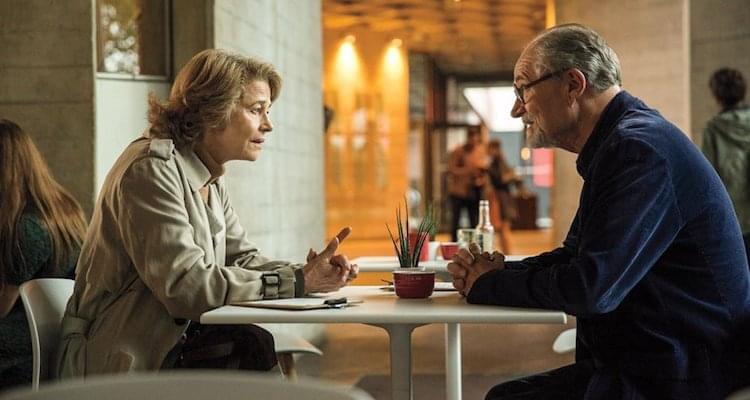
Deepwater Horizon

0
Deepwater Horizon
Not pictured: the funky bunch

This week’s dramatization of a recent disaster is “Deepwater Horizon,” in which director Peter Berg (“Lone Survivor,” “Battleship”) tells how the offshore-drilling rig went kablooey in April 2010, killed 11 people, and eventually dumped 210 million gallons of oil into the Gulf of Mexico. Wisely, instead of dwelling on the economic impact (all that precious oil!) or even the environmental one (morally defensible but hard to dramatize), Berg and screenwriters Matthew Michael Carnahan and Matthew Sand focus on the human element: the noble workers who risked or gave their lives to help others survive, and the greedy British Petroleum executives whose corner-cutting caused the tragedy. Those are things anyone can relate to, even if we don’t understand how drilling rigs work or how the accident happened.

Berg does try to teach us. The film begins with Mike Williams (Mark Wahlberg) preparing for a stint on the Deepwater, saying goodbye to his wife (Kate Hudson) and daughter (Stella Allen), who this very day will present a project to her school class about what her daddy does for a living. She uses a soda can and a straw to demonstrate the basic principles, and when soda suddenly shoots out of the straw uncontrollably, everyone laughs, oblivious to the omen. Other omens as Mike drives to Louisiana and takes a chopper out to the rig include a bird hitting the helicopter and a visiting executive wearing a necktie that is the same color as the Deepwater’s highest alert level. In case viewers didn’t already suspect that something was going to go wrong today.

There are 126 people on the massive rig (which weighs 50,000 tons and is longer and taller than a football field), but only two besides Mike who are of interest to us. One is Andrea Fleytas (Gina Rodriguez), a navigator; the other is Jimmy Harrell (Kurt Russell), aka Mister Jimmy, the conscientious boss who objects when visiting BP execs urge hastiness in order to make up lost time on the behind-schedule project. The BP guys, played by John Malkovich and Brad Leland (Buddy Garrity on “Friday Night Lights”), are suitably oily and snaky, accentuated by Malkovich’s sniveling Cajun accent.

Our review of “Deepwater Horizon” from the Movie B.S. with Bayer and Snider podcast:

Download audio

The movie is about half over when things go irretrievably awry and Berg shifts into the portion of the story dedicated to survival and the dazed aftermath. The action here is moderately exciting, certainly more compelling than the pre-explosion tests and arguing were, though it’s often hard to tell one man from another when they’re covered in oil and mud. As usual, Wahlberg is good as a working-class hero, and Russell shines as an earthy mentor figure. Rodriguez (playing a real person) contributes importantly as the only female voice in the film. (Kate Hudson is just Concerned Wife on Phone.) Other recognizable actors like Ethan Suplee and Dylan O’Brien (from the “Maze Runner” movies) are also onboard, their fates intermingled in one’s memory as soon as the film is over.

But ultimately, despite Berg’s best efforts, the movie can’t overcome its formulaic ordinariness. We’re engaged in the action, but hardly what you’d call emotionally invested. We hiss at the cowardly necktie-wearers whose short-sightedness caused it, but there’s nothing special about those characters or performances. Have you seen other movies about perilous situations and disastrous accidents? Then you’ve seen this one, a serviceable docudrama worth your time, maybe, but not your money.

Miss Peregrine’s Home for Peculiar Children

0
Miss Peregrine’s Home for Peculiar Children
They're totally watching "X-Men."

Tim Burton directed “Miss Peregrine’s Home for Peculiar Children,” and while it’s a perfect fit for the whimsically macabre filmmaker, he doesn’t do much to make it his own. No, the bulk of the story’s Halloweenish delights come straight from the Ransom Riggs novel it’s based on — indeed, the film actually lightens some of its darker elements. This seems like a Tim Burton-for-hire work, where he found something that was already Burton-esque and let it do most of the heavy lifting.

Adapted by Jane Goldman (who’s written some “X-Men” films), it’s about Jake (Asa Butterfield), a Florida teen whose grandfather (Terence Stamp) used to tell stories of spectacular kids and fearsome monsters at the children’s home where he lived during World War II. After Grandpa’s death, Jake and his father (Chris O’Dowd, doing a bad American accent) travel to an island near Wales to see the place the old man spoke of. It was bombed during the war, yet still exists in a time-loop, where it’s forever Sept. 3, 1943.

The children who live here are, as indicated, peculiar. Emma (Ella Purnell) is lighter than air and uses heavy boots to keep her earthbound. Millard (Cameron King) is invisible. A few kids have super strength. One boy can shoot bees out of his mouth. (You never know when you’re going to need a lot of bees!) Their headmistress, Miss Peregrine (Eva Green), is a strict, pipe-smoking, impish woman who can turn into a bird, and whose Willy Wonka-like dark sarcasm makes us wonder if she can be trusted.

The villain (and regrettably the only non-white person in the cast) is Barron (Samuel L. Jackson), leader of a group of rogue peculiars who are hunting the young ones to steal their powers, or whatever. Barron is aided by “hollowgasts,” spindly monsters invisible to everyone except Jake, whose peculiarity — yes, it turns out our hero is also a peculiar! — is being able to see them.

Eva Green, whose weird streak has made her a standout in bad movies like “300: Rise of an Empire” and Burton’s own “Dark Shadows,” warms to the part of Miss Peregrine like it was tailor-made for her, more than compensating for Asa Butterfield’s blandness. There are wry, colorful performances among the other children, and many grimly amusing details in the periphery.

And Burton? It turns out, when he gets out of his own way and stops being eccentric just for eccentricity’s sake, he’s still a crackerjack filmmaker. “Miss Peregrine” belongs to the Harry Potter mold, with a dash of junior “X-Men,” but doesn’t have the stale air of imitation that a lot of such properties do. (Looking at you, Percy Jackson.) Burton may be adapting a book that was goosebump-y and imaginative to begin with, but he does it with flair, bringing the ghouls, creatures, and skeleton armies to life with fantastical mirth.

American Honey

0
American Honey
Hurry! The collapsing socio-economic structure of our country is gaining on us!

“American Honey” won’t make you feel very hopeful about The Kids These Days, but it may fill you with compassion for a generation of unwanted young Americans left to fend for themselves in a cratered economy and a collapsed middle class.

With a perceptive eye and unflinching attitude toward the trashy behaviors exhibited by rudderless, underprivileged teens, writer-director Andrea Arnold presents the story of Star (Sasha Lane), an Oklahoma girl who says she’s 18 (we’ll take her word for it) and escapes her dreary existence by joining a crew of feral kids who go door-to-door, town-to-town selling magazines. (“Does anybody actually buy those anymore?” Star asks. “F*** no” is the reply.) This motley assortment of tattooed, tank-topped youth, many of them played by non-actors found by Arnold, has for their captain one Jake (Shia LaBeouf), a rat-tailed trailer-park Casanova whose charms are the primary reason Star joins up. The real boss, though, is Krystal (Riley Keough), barely older than her employees, sometimes clad in a Confederate flag bikini, and not one to be messed with.

Arnold vividly captures the cocky ignorance and exuberant recklessness of kids who were never taught any better, reminding us that such young people are often sexualized by adults (and each other) while presenting a convincing depiction of a foolish young romance. Newcomer Sasha Lane, whom Arnold discovered on a beach during Spring Break, is uncannily good as the wayward Star, earning our sympathy as she naively navigates her way into adulthood. Her arc is one of redemption, and the film’s unwieldy length (163 minutes) underscores the scope of her personal odyssey. Some of the kids, at least, may be all right.

My Blind Brother

0
My Blind Brother

As a general rule, we do not make jokes at the expense of the handicapped. The bitterly funny, just-sweet-enough “My Blind Brother” gets away with it because the jokes aren’t about his blindness per se, and because the vision-impaired gentleman in question is a total bastard. Total bastards are fair game, joke-wise.

The basic premise is established in the first scene, when blind Robbie (Adam Scott) is lavishly praised for running a marathon while his brother Bill (Nick Kroll) — who ran alongside him the whole way to keep him safe — is completely ignored. Local news media fawn all over Robbie, who’s often doing this sort of thing for charity, as do the boys’ parents. As far as the world is concerned, Robbie’s a saint and Bill’s a nobody.

But Robbie’s actually selfish and unthoughtful, ungrateful for his brother’s help in private and fake-humble in public. He has a canned joke he makes every time he’s interviewed (“You look very beautiful today”) that always results in a self-satisfied smirk. All of the kind things people have said about his bravery and stoicism have gone to his head. Bill, ever dutiful and a little guilt-stricken, suffers in neurotic silence. OK, sometimes he complains to his blind stoner Vanilla Ice-looking friend, GT (Charlie Hewson). But mostly he suffers in silence.

Enter Rose (Jenny Slate), the woman who will come between Robbie and Bill. Also neurotic and guilt-stricken (she blames herself for her ex-boyfriend’s death), Rose is a good match for Bill and has a drunken one-night stand with him. She blows him off after that, but they meet again when she embarks on some conscious-soothing volunteerism and coincidentally becomes Robbie’s new guide. And then Robbie’s new girlfriend. Robbie, of course, doesn’t know about Bill and Rose’s prior connection. He does want Bill to tell him how pretty Rose is, though, so he knows whether he should be seen with her.

Robbie’s inability to see what’s going on around him, both literally and figuratively, is a big part of the humor in the film, which was written and directed by Sophie Goodhart as an expansion of her 2003 short. Robbie’s clueless about how insensitive he is, and he’s oblivious to Bill and Rose’s furtive behavior, even when it’s happening in his presence. You can see the humorous potential in that, and Goodhart caught a break casting three well-trained comedy stalwarts as her leads. Kroll excels at playing frustrated losers; Slate has an endearing trainwreck quality to her; and Scott, notwithstanding his gentleness on “Parks and Recreation,” is really good at being a brittle jerk.

Goodhart pitches most of the humor at farce level, with human behavior exaggerated for comic purposes but kept within the real-world bounds of cause and effect. The tricky thing about farce is that it often has no emotional weight and serves no purpose except to be blithely funny — so it has to be REALLY funny to compensate for its lack of elements we normally want our entertainment to have (warmth, relatable characters, etc.). “My Blind Brother” is frequently hilarious, and it winds up having just enough real emotion to keep it grounded, even as Goodhart wisely refrains from selling out and ending the story with hugs and understanding, like most comedies would. We really enjoy disliking (and laughing at) Robbie, and Goodhart would never be so cruel as to take that away from us.

— Film School Rejects

Queen of Katwe

0
Queen of Katwe

“Queen of Katwe” is a mild Disney film telling the true story of a slum-dwelling Ugandan girl who becomes a chess master (mistress?). Directed by the esteemed Mira Nair, a sensitive chronicler of cultural conflicts (“Monsoon Wedding,” “The Namesake”), the movie means well in offering something we don’t often see — an inspiring story about Africans, played by African actors — but its laborious, too-gentle pace drags it down into vegetable territory (i.e., a movie you watch because it’s good for you).

Lovely performances, though. Newcomer Madina Nalwanga stars as Phiona, a preteen girl in the village of Katwe who stumbles onto chess at a Christian youth center as an alternative to team sports. Robert Katende (David Oyelowo), the devout family man who runs the center, becomes Phiona’s coach after convincing the girl’s mother, Nakku Harriet (Lupita Nyong’o), that there’s no gambling or anything else unsavory involved.

Harriet is a widow with four children, two younger than Phiona, and an older daughter, Night (Taryn Kyaze), who disappears for days at a time with her boyfriend. The family is constantly struggling, poor even by the miserable standards of the town, and Phiona has to be a second mother to her siblings. One of them, Brian (Martin Kabanza), takes up chess with her.

It is difficult to make chess work as a cinematic event, and the film doesn’t really try. Though it technically belongs to the family of Underdog Sports Dramas (complete with snobs who say the Katwe kids are too uncouth to play in a national tournament), Phiona’s wins and losses aren’t the focus of the movie, nor does the story’s climax involve a chess match. (Instead, the story just doesn’t have a climax.) Nair, working from a screenplay by William Wheeler based on Tim Crothers’ book, is more interested in what chess means to Phiona and her family. Unfortunately, Phiona’s brief bout of arrogance after achieving some success, followed quickly by a humbling, is as far as that goes.

Nalwanga, Oyelowo, and Nyong’o exude strength and dignity, well-suited to Nair’s vision of the film as a respectable portrayal of people who are often marginalized in entertainment. It’s no small thing for minorities to see themselves represented in movies, especially a major release from an influential studio like Disney. That is in no way diminished by pointing out, reluctantly, that the movie is tedious and overlong — pleasant, nice, but lacking in compelling drama.

The Magnificent Seven

0
The Magnificent Seven

Except for some slightly more graphic violence and language than its forebears used to get away with, the new version of “The Magnificent Seven” is a Western in the old-fashioned style. That’s mostly a compliment, though not entirely. With its shootouts and showdowns, its dramatic saloon entrances (and window-smashing saloon exits), its rousing musical score that hints at but isn’t Elmer Bernstein’s iconic original, the film has the comfortable feel of something familiar. (Well, duh. It’s a remake.) But it also shares with many Westerns from the first half of the 20th century a lack of subtext. There’s nothing on this film’s mind beyond what’s explicitly spelled out in its simple, morally black-and-white plot. After a few decades of new Westerns that explored, subverted, and questioned the old tropes — often while still indulging in them, so it was a win-win — to see one that’s blithely uninterested in self-examination is a little disappointing.

But only a little. Director Antoine Fuqua, reuniting with his “Training Day” stars Denzel Washington and Ethan Hawke, sets his sights on fun, and he has good aim. In 1879, representatives from the mining town of Rose Creek hire a righteous warrant officer named Chisolm (Washington) to gather a posse to defend the town from Bartholomew Bogue (Peter Sarsgaard, enjoying his villainy), who’s threatening to kill any resident who won’t sell him their land for pennies. Chisolm, who fought for the Union, rounds up silver-tongued Confederate sharp-shooter Goodnight Robicheaux (Hawke); glib gunfighter and card-trick magician Faraday (Chris Pratt); Mexican outlaw Vasquez (Manuel Garcia-Rulfo); old trapper and Indian-killer Jack Horne (Vincent D’Onofrio); Asian blade expert Billy Rocks (Byung-hun Lee); and an Indian named Red Harvest (Martin Sensmeier).

It’s a multicultural group, as Robicheaux points out — though it’s noteworthy that he identifies Chisolm not as “the black guy” but as the Union representative, even though the Mexican, Indian, and “Oriental” are called out as such. Chisolm’s race is never mentioned in the film, despite his being a black man in a position of authority in a story set just after the Civil War. This “Magnificent Seven” is the opposite of “The Hateful Eight,” both in title and philosophy, and is thus even less realistic than Tarantino’s postbellum revenge fantasia.

Our review of “The Magnificent Seven” from the Movie B.S. with Bayer and Snider podcast:

Download audio

The dialogue, written by Nic Pizzolatto (HBO’s “True Detective”) and Richard Wenk (“16 Blocks”), has a snappy energy that sustains it. Chris Pratt serves as comic relief, bickering with (for example) Vasquez over whose grandfather killed whom at the Alamo, and claiming not to remember drunkenly fighting a very short man because “I thought you were a leprechaun.” Robicheaux teaches the townspeople how to shoot while suffering from what we’d call PTSD over his own war experiences. Chisolm rides tall in the saddle and maintains order among his “troops” (“a bunch of strays” someone calls them), and leaves one with the distinct impression that Denzel should be in more Westerns.

Only fierce young widow Emma Cullen (Haley Bennett) stands out among the Rose Creek residents, the rest of whom are expendable (as are Bogue’s men — there’s a high body count). For that matter, some of the Seven get the short shrift, too. But when the town is finally besieged, Fuqua stages the action thrillingly, delivering the crowd-pleasing, six-shooting adventure and heroism that have entertained audiences since the dawn of cinema. It’s not great — it’s no “The Magnificent Seven” — but it’ll satisfy any varmint hungry for some Old West justice.

Friday movie roundup – Sept. 16

0
Friday movie roundup – Sept. 16

This week’s movies range from So-So to Eh, No. To wit:

— “Blair Witch” (R) B-
— “Bridget Jones’s Baby” (R) B-
— “Snowden” (R) C
— “The Hollars” (PG-13) D+
— “Hands of Stone” (R) C- [Crooked Scoreboard]

Over on the podcast, we talked about those movies (minus “Hands of Stone”) and reflected on Jeff’s week of living like a Mormon (because he lost our Summer Box Office Challenge game).

These reviews are mostly funded by readers like YOU, via Patreon. A dollar a month is all it takes to keep ’em coming. To get reviews and recommendations emailed to you each week, sign up for In the Dark. Thanks!

Bridget Jones’s Baby

0
Bridget Jones’s Baby
How Renee Zellweger had to be dragged to the set every day.

“Bridget Jones’s Baby,” in which our favorite diary-keeping singleton has a (spoiler alert) baby, begins with Ms. Jones (Renee Zellweger) alone on her 43rd birthday, listening to “All By Myself.” This tells us two things: that the music choices in these films are still v. on-the-nose, and that Bridget didn’t marry Mr. Darcy (Colin Firth) even though they got engaged at the end of “Bridget Jones: The Edge of Reason.”

This third adventure — which is not based on the third Bridget Jones novel but was written by its author, Helen Fielding, along with Dan Mazer and Emma Thompson — brings original director Sharon Maguire back to the fold, and is an all-around improvement on the lackluster “Edge of Reason” sequel. It’s hindered by a dumb-dumb plot, but Zellweger is as effervescent as ever in her signature role.

Several years have passed. Bridget has finally reached her target weight and is a producer on a TV news show. She hasn’t seen Darcy — who married someone else — in ages, but runs into him at a memorial service for her old flame Daniel, who has died (i.e., Hugh Grant didn’t want to be in the movie). Encouraged by a friend to quit pining and embrace hedonism, Bridget goes to a music festival, where she has a one-night stand (following obligatory meet-cute, of course) with Jack (Patrick Dempsey), an American dating-website billionaire. A week later she bumps into Darcy again, freshly split from his wife, and they, too, fall into the sack.

This is where you start wincing at the inevitability of it all. Bridget finds herself pregnant and isn’t sure whose it is. (I mean, it’s hers, obviously. But who else’s?) Cruelly (though the film doesn’t treat it as such), she lets Jack and Darcy both think they’re the father for a while, going so far as to stage two ultrasound screenings with her hilariously reluctant OB-GYN (played to perfection by Emma Thompson). When Bridget finally confesses that each suitor has a 50/50 chance of being the dad, Darcy and Jack compete to prove their worthiness as a partner and co-parent. These farcical shenanigans range from the very funny to the completely useless, depending on your tolerance for sitcom-y buffoonery.

Now, couldn’t Bridget settle the paternity question with a simple amniocentesis? Yes, yes she could. The doctor recommends this, but Bridget freaks out at the size of the needle and says nope, we have to wait till the baby is born to find out. That’s what I mean about a dum-dum plot: the conflict of the story could be solved easily but is dragged out by a character’s irrational choices.

Another example: When it is time to go to the hospital, Bridget and Jack encounter a roadblock. Instead of finding an alternate route, they abandon the car and Jack carries her to the hospital in his arms. There’s no logical reason for any of this, but the movie wanted to show Jack being chivalrous one more time.

The remarkable thing is that despite Bridget’s romantic double-dealing, despite being objectively terrible at her job (the scene where she unwittingly feeds her TV anchor inappropriate interview questions is more dum-dum stuff, though it made me laugh), she’s still a lovable, unlucky klutz. It’s a pleasure to see the character finally happy with her body, and to see her bumbling through social interactions again as in days of yore. Some sequels arrive too long after the audience’s affection has waned. But in this case, the extended absence — 12 years since the last Bridget Jones movie, and six years since Zellweger has been in any film — has made the heart grow fonder. Put simply, I was happy enough to see Ms. Jones and Ms. Zellweger again, and amused enough by the film’s bubbly comedy, that I don’t mind the flaws.

Snowden

0
Snowden

“Snowden,” the story of a man blowing the whistle on a secret government surveillance program, seems like a perfect match for Oliver Stone, a paranoid moonbat who loves a good rant. Yet his docudrama about Edward Snowden is restrained, almost dispassionate in the way it lays out the facts of the story. Where’s the incendiary, provocative Stone? This Stone is soft.

Joseph Gordon-Levitt plays Snowden, first seen here meeting with reporters in Hong Kong in 2013 to reveal what he has learned from his years working directly for the CIA and as a contractor for the NSA. The film hopscotches between this meeting and the past, starting with Snowden’s brief military career (cut short by an injury), moving through his CIA training (where he excels thanks to his computer wizardry), tracking him as he becomes disillusioned by the disparity between what the Agency says it’s doing and what it’s actually doing: monitoring millions of Americans’ phone calls, texts, and private messages without warrants, using the Foreign Intelligence Surveillance Act (FISA) as cover.

Edward acquires a long-suffering girlfriend in the midst of this, Lindsay Mills (Shailene Woodley), a liberal photographer who joshes conservative Edward about converting him. His job demands secrecy, so he can’t tell her about his day at the office, nor can he confide in her his growing discomfort with what he’s involved in. Their relationship is the only human aspect of the film — Edward doesn’t seem to have other friends or family, and his conflicts are mostly internal — but Stone never draws us in, leaving us with no emotional connection to the material. It isn’t an espionage “thriller,” either, except for a few moments of sneaking around here and there.

When interpreting an Oliver Stone movie, it’s usually a safe bet to assume his intention was to outrage us. And what’s presented here certainly raises one’s ire … if one had no prior knowledge of the Edward Snowden affair. Stone, working from a screenplay by Kieran Fitzgerald (“The Homesman”), doesn’t present any theories or assertions beyond what’s been covered in the press, and his editorializing is all in broad strokes. (Basically: the NSA shouldn’t have done this; Snowden was justified in exposing it.) Perhaps we’ve reached the point where actual events have surpassed Stone’s ability to be paranoid about them?

Blair Witch

0
Blair Witch

Not that “The Blair Witch Project” needed a sequel, but if had to get one, the team of director Adam Wingard and writer Simon Barrett were a good choice. They’ve made a handful of intense horror features in the last six years, including “You’re Next” and “A Horrible Way to Die,” and contributed segments to the “V/H/S” films, anthologies that use the “found footage” style basically invented by “TBWP.”

Wingard and Barrett clearly approached their sequel with reverence for the original, a groundbreaking frightener so authentic that numerous viewers believed it really was documentary footage shot by non-actors who were then never heard from again. (I guess the last part turned out to be true.) The new film, simply titled “Blair Witch,” doesn’t try to improve on the format and tone that worked 16 years ago, and it’s modestly successful at creating a sense of dread as new characters wander those same sinister Maryland woods.

We meet James (James Allen McCune), a college kid whose sister, Heather, was one of the original film’s three ill-fated characters. Now a new tape has been found in those woods, reigniting James’ desire for answers and giving him a glimmer of hope that Heather might actually still be out there. Aided by his film-school-student friend Lisa (Callie Hernandez) and some friends of theirs, Peter (Brandon Scott) and Ashley (Corbin Reid), James sets out to investigate and document the woods where his sister vanished.

They have better technology than their 20th-century predecessors did. Earpiece cameras let them record everything hands-free, solving the “Why are you still filming this??” problem that vexes most POV movies. (Another plus: earpiece cameras are a lot less shaky than handheld ones.) A drone enables them to see the forest from above the trees; GPS on their phones ensures they won’t get lost (at least until whatever supernatural entity haunts the woods messes with their tech, too).

The four are joined by a pair of local yahoos, Lane (Wes Robinson) and Talia (Valorie Curry), fervent believers in the Blair Witch legend who claim familiarity with the geographic area in question. These two are a smart addition to the film: unpredictable X factors who put the other four characters on their guard and introduce more conflict to the group dynamics. They’re also useful for filling us in on the details of the folklore, adding to the Blair Witch mythology already established.

Our review of “Blair Witch” from the Movie B.S. with Bayer and Snider podcast:

Download audio

Though the film isn’t over-long (just 89 minutes), it does take a while to get going. The first hour offers occasional creepiness, but nearly every “scare” in that section is a disappointing jump scare — a cheat, in other words. There isn’t a lot happening — and when it does happen, the low lighting, frantic movements, and choppy editing make it hard to see WHAT is happening.

But it pays off in the last act, when all hell finally breaks loose and we’re treated to a spookhouse full of sustained, mostly dialogue-free terror. Here’s where Wingard and Barrett’s cleverness, resourcefulness, and deep devotion to the dark arts are brought to bear. I wish the whole movie were as tight as that last sequence, but I suppose it’s better to start slow and finish strong than the other way around. As long as everybody leaves with soiled pants, we’re all winners.

(Note: This review may cause you to think that I have forgotten that “The Blair Witch Project” already had a sequel, “Book of Shadows.” Believe me, I wish.)

Friday movie roundup – Sept. 9

0

Movies! Here are my last several reviews, including some short ones of summer movies I saw but didn’t review till now. Several recommended options in here:

— “Sully” (PG-13) C+
— “Other People” (NR) B-
— “Tickled” (R) A-
— “Hunt for the Wilderpeople” (PG-13) B+
— “Swiss Army Man” (R) B+
— “Mechanic: Resurrection” (R) C
— “De Palma” (R) B+

At Vanity Fair (I’m fancy), I have a huge feature: 50 Things That Happened Because of “Star Trek,” one for each year of its existence.

For Mental Floss, I wrote behind-the-scenes accounts of “Welcome to the Dollhouse” and “Sid and Nancy” (which I mistype “Side and Nancy” 95% of the time).

These reviews are mostly funded by readers like YOU, via Patreon. A dollar a month is all it takes to keep ’em coming. To get reviews and recommendations emailed to you each week, sign up for In the Dark. Thanks!