Home Blog Page 23

Various items of updatery

6

Here is what’s happening at Eric D. Snider Enterprises these days!

As you may recall, I’m on the Governing Committee of the Online Film Critics Society, and we’re trying to increase the group’s relevance in the lives of people who aren’t film critics. To that end, we have a blog in which items of interest to movie lovers everywhere are recapped, and a Twitter feed that will link to some of the same things. May I humbly insist that you follow @OFCS on Twitter and also politely demand that you bookmark our blog, or subscribe to its RSS feed, or whatever it is you kids do with your websites nowadays? Thank you very much indeed.

While you’re at the Twitter, remember that I can be found @EricDSnider thereat.

My good friend Dawn Taylor (@DawnTaylor666) recently launched a new weekly podcast, called Ham-Fisted Radio, in which all manner of topics are addressed, but mostly movies. She has a guest each week; so far, of the nine episodes she’s done, I’ve been the guest on five of them. I’m practically a co-host!

If you want to hear me and Dawn talk about stuff — and why wouldn’t you? — all the podcasts are archived at her site, where you’ll also find a link to where you can subscribe at iTunes. The podcasts have the “Explicit” tag on them, but that’s really just a precaution, in case somebody uses a salty word or two. The episodes I’ve been on have stayed at the PG-13 level. And in the most recent one, we performed a scene from “The Golden Girls” in which I played both Blanche and Sophia.

Alert readers may have noticed that it is January, and that January is when the Sundance Film Festival is, and that I usually go to the Sundance Film Festival. Sure enough, it starts Thursday night and runs through next week, and I will be there again, for the 11th year, writing reviews and commentary for Film.com and Cinematical.

Ever since 2003, I’ve also written a daily Sundance diary for your amusement (or, if you were not visiting my site in 2003, for the amusement of those who were). It is my intention, as of this moment, to continue the tradition. However, you should be aware that Sundance is exhausting enough by itself, and that writing a daily diary only increases the exhaustion factor, and that I have recently been trying to divest myself of things that add undue mental stress. It might turn out that the daily diary is one of those things, in which case I reserve the right to not do it. Either way, I’ll keep you apprised here at the blog.

Friday movie roundup – Jan. 15

2

I appear to be in the minority, but I liked “The Book of Eli,” a post-apocalyptic graphic-novel-looking drama starring Denzel Washington. He has this book, you see, and a bad guy wants it. The book is important! This message brought to you by the U.S. Literacy Council and Cap’n O.G. Readmore.

The other new wide release today is “The Spy Next Door,” a kids’ comedy starring Jackie Chan as a former CIA spy who has to babysit his girlfriend’s kids while fighting off a Russian terrorist. Against all odds, this appear to be an actual movie, not a joke. Less surprising is that it’s one of Hollywood’s Shameful Secrets©, not screened for critics before opening. Review to come, unfortunately.

“The Lovely Bones” has been in limited release for a few weeks but goes wide today. As you probably expected, it’s not as good as the book.

Here’s a review of “Youth in Revolt,” which opened last week. Michael Cera needs to do something new, and quick, but this one’s not bad.

And finally, “Crazy Heart” (review at Film.com) is in limited release, starring Jeff Bridges as a washed-up country singer trying to his life back in order. Despite that description, it’s a very pleasant and cheerful movie, almost to its detriment. Bridges is an extremely jovial presence. Love that guy.

The Book of Eli

0

As usual with apocalypses, the one in “The Book of Eli” left America covered in soot, grime, dust, and ash. We know little about what happened, only that it was 30 years ago and the survivors call it “the flash.” Actually, probably The Flash. Kind of a big deal, The Flash was.

One of the few human survivors, and indeed the only human we see for the first 10 minutes of the movie, is played by Denzel Washington, whose name we surmise is probably Eli. People he encounters call him a “walker,” because rather than settle in one of the villages, he keeps traveling on foot across the country. He’s headed West, on a mission of some kind. He holds as his prize possession a thick book with a gold cross on the cover, which we surmise is probably a Bible.

The importance of this book is one of several things that makes the film different from your standard post-apocalyptic drama (including “The Road,” which came out less than two months ago). Written by newcomer Gary Whitta and directed with graphic-novel-like flair by twin brothers Albert and Allen Hughes (“Menace II Society”) — their first film since 2001’s “From Hell” — it has the bleak, desaturated look that these things always have, and not an abundance of new ideas. But the new ideas it does have are thought-provoking and surprising, enough to make the film worth considering.

It is quickly established that, despite the threat of highwaymen, looters, and cannibals, Eli can take care of himself on the road. A hardy survivalist, he’s learned that if you roast a cat for food, the oil that drips out of it can be used as lip balm, a hint I’m fairly certain Martha Stewart never mentioned. And while he isn’t much to look at, Eli can hold his own in a fight, wielding a machete like a pro.

He stops in what looks like an Old West settlement, though it probably used to be a major boulevard in Phoenix or something. (A faded “J Crew” sign is barely visible above one of the storefronts.) Here people can trade what they have for what they need: moist towelettes, cigarette lighters, et cetera, in exchange for drinking water or food. Things are civilized here, more or less — again, the Old West is invoked — and run by a man named Carnegie (Gary Oldman), who operates a saloon/hotel/brothel and employs many henchmen and lackeys. The bulk of all the world’s reading material having been extinguished 30 years ago, Carnegie is one of the few literate men in this society, and he’s been searching for a particular book that he believes will help him gain even more power. What are the odds it’s the same book Eli has??

Solara (Mila Kunis), a young woman in Carnegie’s employ, befriends Eli for the purpose of learning more about him, and is curious about the book. Her mother, Claudia (Jennifer Beals), also somehow beholden to Carnegie, is blind. Blindness is common here, evidently because of The Flash. Outdoors, everyone wears sunglasses or goggles, and the sky is always white. This method of cinematography is frustrating in the beginning, when people appear almost as silhouettes against the bright background, but it’s toned down as the film goes on.

The story amounts to a showdown between Eli and Carnegie, one believing he’s on a mission from God, the other with more selfish motives. What I find interesting is the idea of spiritual faith being as powerful as it is to Eli. He comes across like an Old Testament prophet, willing to do whatever it takes to complete his mission, and unwavering in his dedication to it. These are not common attributes in movie heroes, so it’s intriguing to see these matters handled in what you wouldn’t peg as a “religious” film.

Washington’s performance is solid, as usual, though it’s far from the most demanding role he’s ever played. Gary Oldman’s menacing Carnegie is suitably hammy, and Tom Waits shows up as an amusingly paranoid shopkeeper. Mila Kunis and Jennifer Beals, representing the fairer sex, try to rise above the cliche that women are only victims, but it must be said that women do not fare very well in this society. Still, Solara and Claudia are each given their moments of strength.

The revelations and twists in the story’s finale, clever and satisfying though they are at the time, don’t stand up to much scrutiny: I doubt this is a movie that people will watch over and over again. But it’s shot with style, and the story has enough thrills and dark humor to justify one two-hour trip into the desolate future.

The Spy Next Door

0

When Jackie Chan gave up on acting and decided to retire, he didn’t issue a press release, he made “The Spy Next Door.” The message is poignant and unmistakable: I give up. I have been defeated. My career no longer means anything to me.

It’s sad to see a once-vital star burn out, especially one as likable as Chan, but that sadness wears off quickly while watching “The Spy Next Door.” It is replaced by exasperation, and then annoyance as you realize that what you are watching is the same movie as “The Pacifier,” starring Vin Diesel, which you didn’t like then, either.

Chan plays Bob Ho, a Chinese spy who was loaned to the CIA and is now retiring so he can settle down and marry his girlfriend, Gillian (Amber Valletta), who lives next door and doesn’t know he’s a spy. She thinks he’s a pen importer. Around her, Bob acts like a boring geek, wears eyeglasses, and hides his super-spy abilities. Gillian loves that he’s normal and reliable, not like her ex-husband, who ran off and left her with three kids.

Oh yes! Gillian has three children: Farren (Madeline Carroll), 13, who still thinks Dad is going to come back; Ian (Will Shadley), about 10, a science nerd and a target for bullies; and Nora (Alina Foley), 4, whose job is to be adorable. The kids don’t want Mom to marry Bob. They think he’s a doofus. They may also object to the 20-year age difference between them, although this is not expressed outright.

So Gillian has to go out of town because her father’s in the hospital, and Bob volunteers to babysit so he can bond with the children. This is where we learn that, for all his many talents in the field of espionage, Bob is incompetent as a cook and nanny! Why, he dumps the entire box of Quaker oatmeal into the pot! And he tries to take muffins out of the oven with his bare hands — yowch! It isn’t until he starts using spy gadgets that he gets the household in order: a tracking device on Nora so she won’t get lost, and a miniature flamethrower to cook the toast and bacon. (Why this is easier than simply using a toaster and a frying pan, I do not know. Just remember that a SPY having to do MUNDANE KITCHEN THINGS is HILARIOUS.)

Meanwhile, a Russian terrorist named Poldark (Magnus Scheving) has escaped CIA custody and is looking for a top-secret code that young Ian accidentally downloaded from Bob’s computer, which means Poldark and his goons are going to show up any minute now and kill them all. Bob must save the children — and the world!

Will it impress you to learn that Bob’s CIA friends are played by George Lopez and Billy Ray Cyrus? And that Cyrus, sporting a soul patch, earrings, and pointy sideburns, is apparently visiting us from 1998? No? OK.

Despite the many imminent threats from Poldark and his crew, no one ever calls the police, not even when Bob is racing back to Gillian’s house because he knows Poldark is on his way there. None of the technology makes sense; Bob’s skills occasionally verge on the supernatural; the dialogue is purely functional, devoid of wit. To have any hope of enduring this film, you must abandon all expectations of reason, logic, or laughter.

It is clear that the three credited screenwriters — veterans of “Just My Luck,” “Larry the Cable Guy: Health Inspector,” and “Tomcats” — had no interest in producing something clever, and they probably had little incentive to do so. The director, Brian Levant, whose previous awful kid comedies include “Jingle All the Way” and “Are We There Yet?,” knew all he needed to sell the film to audiences were some scenes of Jackie Chan doing his fast-paced martial-arts thing and the image of Chan holding a mop or a vacuum cleaner or something. The old guy is still fun to watch when he’s fighting; every now and then in “The Spy Next Door” you catch a glimpse of why you like his movies. Then the glimpse fades and it’s back to the domestic shenanigans, which are routine and uninspired and depressing. Send us a postcard from oblivion, Jackie!

Note: Contrary to regular industry practice, this film was not screened for critics before opening.

Eric’s Bad Movies: ‘Cool World’ (1992)

2

“Cool World” holds the distinction of being one of the few movies I’ve ever walked out of. It was the weekend it opened, in July 1992, and my friend Gregg Johnson and I went to see it. Halfway through, we were terribly bored, and we left. My journal from the time — I kept an extensive journal in those days — indicates we went back to his house to watch videotapes of “Ren & Stimpy,” which seems appropriate.

That was the summer between high school and college, and Gregg and I went to a lot of movies. Then I don’t think I ever saw him again. We were friends for like two months, and that was it. I have no idea what became of him. Gregg Johnson, if you see this, send me an e-mail and say hello!

Wait, why did I bring up “Cool World”? Oh, right. It’s the subject of Eric’s Bad Movies at Film.com this week. You might wonder why I would choose to watch, in its entirety, a film that I already walked out of once. You’d have a good point.

What’s the Big Deal? at Film.com this week addresses “Jules and Jim,” a 1962 French film that is often cited as one of the best European movies ever made and which was hugely influential as part of the French New Wave movement. It was directed by François Truffaut; coincidentally, as I was finishing the column, one of his fellow New Wavers, Eric Rohmer, died. I freely confess to you here and now that I have never seen an Eric Rohmer movie. The ones I ought to have seen include “The Collector” (1967), “My Night at Maud’s” (1969), and “Pauline at the Beach” (1983). I will attempt to rectify this oversight in my copious spare time.

Cool World

Cool World

Ralph Bakshi is best known for making “Fritz the Cat,” a 1972 film that holds the distinction of being the first animated feature to receive an X rating. What’s surprising is that it took until 1972 for someone to make a dirty feature-length cartoon. Usually when a new technology is invented, it’s only a matter of days before someone capitalizes on its potential for filth. Just after Johannes Gutenberg used his newly invented movable-type machine to print a Bible, he used it to print Penthouse Forum. The oldest story in the English language is “Beowulf,” but the second-oldest is “Tales of Naughty She-Vixens.” When the Lumiere brothers demonstrated their motion-picture projector in 1895, the first comment from the audience was, “It’s amazing to see pictures move!” The second comment was, “What if those pictures were naked?”

But for whatever reason, animation had been around for several decades before the first full-length sexy-times cartoon came out, and it made Bakshi famous. He went on to make some animated fantasy films, including the 1978 version of “The Lord of the Rings,” before coming back to his true love: drawing dirty pictures.

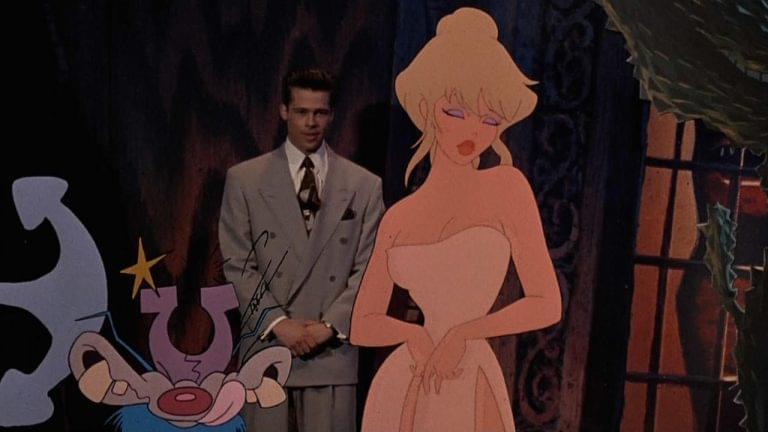
And thus we arrive at “Cool World,” an insufferable 1992 animation/live-action hybrid in the style of “Who Framed Roger Rabbit.” You remember “Who Framed Roger Rabbit,” right? Well, remove all of that film’s wit, cleverness, humor, ingenuity, technical wizardry, and entertainment value, then soak what’s left for 100 minutes in a mixture of sleaze and desperation, and what you’ll come up with will still be better than “Cool World.”

cool world

In fairness, the film’s awfulness is not entirely Ralph Bakshi’s fault. He pitched it to Paramount as a horror film about a man who has sex with a cartoon woman and produces a hybrid child who then tries to kill him, a story straight from the Old Testament. Paramount said, “We love it! It’s perfect! We’ll buy it!,” then hired someone to completely change the story and rewrite the script, which is what movie studios generally do when they love something. (“United 93” was originally a romantic comedy.) Bakshi was obligated to direct the new thing they came up with, even though he hated it, and he has since said that the whole experience was unpleasant. If making the film was even half as awful as watching it, I feel bad for him.

We begin in 1945, with a young Brad Pitt coming home to Las Vegas from Europe, where he’s been busy with World War II, which occupied a lot of people’s time in those days. Brad Pitt, whose name is Frank Harris, takes his mother for a ride on his motorcycle. This leads to her death. (It’s not his fault.) Frank Harris is very sad, and just at the moment that he’s cradling his mother’s dead body, a cartoon character breaks through the barrier between his world and ours and takes Frank over to the ‘toon side. Frank is not as freaked out by this as you would expect, but cut him some slack. He is Brad Pitt, after all, and these were the days when Brad Pitt had not yet learned to show human emotion.

cool world

The cartoon character explains that he lives in the Cool World, where the inhabitants are known as Doodles. They are not Toons, obviously, because that was in “Roger Rabbit,” and this movie is totally different from “Roger Rabbit.” For one thing, “Roger Rabbit” included some familiar characters — Bugs, Daffy, Mickey, Betty Boop, etc. — mingling with the new ones. The makers of “Cool World” were not interested in getting the rights to any such characters, so the Cool World is just a random, cacophonous nightmare of miscellaneous creatures engaging in ceaseless mayhem 24 hours a day. It’s a frightful place, full of generic cartoons loudly hurting one another. It’s like “The View.” How is this fun for anyone to watch?

For some reason, Frank can’t or won’t return to the human world, and so he’s hired as, sure, why not, a police detective in Cool World. Then suddenly it’s 1992. Frank is still the only human in Cool World, and he hasn’t aged since crossing over. Back in Las Vegas, a comic-book artist named Jack Deebs (Gabriel Byrne) is serving time for killing his wife’s lover, making him the only comic-book artist in history to do anything cool. His comic book features the characters of Cool World, which he started drawing after he saw the place in a vision. (He thought he made it up; the inhabitants of Cool World beg to differ. Did God create man, or did man create God? That is an important question that an interesting film might deal with sometime.) Jack’s favorite Doodle is a sexy, buxom, scantily clad nightclub singer named Jessica Rabbit — I beg your pardon, Holli Would (voice of Kim Basinger) — about whom he has frequent daydreams. Is it weird to be in love with a cartoon character? Tell that to my wife, Mulan Snider!

cool world

In Cool World, Holli dreams, like Pinocchio, of someday becoming a real live human so that the flesh-and-blood prison inmate who draws her can paw at her. She even knows how to go about becoming human: She just has to have sex with a human man. She’s been trying to get Frank to assist her in this since 1945, but Frank refuses. It’s against the law. A human cannot diddle a Doodle. Now, why they bother having a law like that when Frank is literally the only human in Cool World, I don’t know. Seems like a waste of legislation. Frank has a Doodle girlfriend, Lonette (Candi Milo), but he’s strictly platonic with her, despite her protests. Somehow, 60 years of celibacy in a world where he’s an unpopular freak is preferable to just going back to live in Las Vegas, which — oh, OK, now I understand.

Anyway, through means that are not explained, Jack the cartoonist is dragged into Cool World, whereupon Frank warns him not to have sex with any hot cartoon characters, whereupon he does anyway. With Holli, of course. He’s in love with her, and thrilled beyond belief to meet her in person — oh, and she basically forces him to do it. I don’t like to throw the “R” word around, but she definitely seduces him. She seduces the hell out of him. Remember, in the minds of horny cartoonists, it’s the women who are always chasing the men for sex.

Sure enough, doin’ it with Jack turns Holli into a human, just like she always wanted. For Jack’s part, his fantasy has literally come to life! There’s no getting away from her now! I mean, you can’t just break up with someone after bringing her from two dimensions into three. Can’t erase her anymore, either. Holli and Jack somehow get back to the human world, where Holli wants to have sex with every man she meets. But her plans are thwarted when she starts turning back into a Doodle — not the Doodle she originally was, but some other random cartoon. Jack starts doing this too, even though he was never a Doodle to begin with. I don’t understand the rules in this stupid movie. Apparently, crossing over from one world to the other messes things up, and the only way to make it stop is for Holli to find the Spike of Power, which is on top of a hotel on the Las Vegas Strip. Turns out the Spike of Power was plugging the hole between the two worlds; when Holli grabs it, it unleashes a torrent of Doodles into our world, turning Las Vegas into an obscene cartoon. (No one notices the difference.) It also turns Holli back into a cartoon permanently, which is the opposite of what she wanted, yet she seems OK with this result. I repeat my previous assertion regarding this stupid movie and the rules I don’t understand.

Oh, and Frank comes back to the human world, gets killed, and is resurrected as a Doodle, which probably comes as a great surprise to most of the world’s theologians. He is then able to live in Cool World with his beloved Lonette and make cartoon babies with her. The end.

One of the difficult things about a movie like this is incorporating the animation into the live action in a way that looks convincing. You can tell it’s difficult because “Cool World” completely fails at it. If it were easy, they’d have at least gotten some of it right. But never for a moment do you buy that the actors and the drawings are occupying the same space. You barely buy that they’re in the same movie. I must admit, it’s a bold move to make a film where cartoons interact with humans when you’re no good at making cartoons interact with humans. Most people would never think of even trying to get away with that. And if they did, they’d probably at least come up with a coherent story and entertaining dialogue to distract from their technical incompetence, maybe find some lively actors to keep the characters from being boring. Not “Cool World,” though! “Cool World” lets its badness all hang out. To paraphrase Jessica Rabbit, it is bad. It’s just drawn that way.

— Film.com

Friday movie roundup – Jan. 8

1

Ah, January. How sad your box office is.

Expanding to wide release after a limited Christmas Day opening is “The Imaginarium of Doctor Parnassus,” now famous for being Heath Ledger’s last movie. It’s also Terry Gilliam’s latest Weird Thing That Only Terry Gilliam Understands. I was not fond of it.

I was even less fond of “Leap Year” (review at Cinematical), which follows the tradition of terrible movies aimed at women being released in January. So far, it’s the worst movie of the decade, but it probably won’t hold that title for very long, not with “Tooth Fairy” on the horizon.

In limited release is “The Young Victoria” (review at Film.com), a rather sumptuous and pleasant account of Queen Victoria’s early reign, and her marriage to Prince Albert. Emily Blunt plays the young queen splendidly, and there has been some talk of her getting an Oscar nomination for it.

“Youth in Revolt,” a dark comedy starring Michael Cera as a dweeby teen who creates a studly alter ego, was screened for critics way back in November. For some reason I missed that screening, probably because I figured there’d be another one before it opened. I was wrong. Review to come.

“Daybreakers” — about vampires, and Ethan Hawke — is one of Hollywood’s Shameful Secrets®, not screened for critics before opening. It’s a new year, but a lot of things are still the same.

In case you missed them, here are my end-of-2009 pieces: The Best and Worst Movies of 2009; and Eric’s Media Inventory: What I Watched and Read in 2009.

And hey! Remember how the Online Film Critics Society announced its awards a couple days ago? Well, we also did a video presentation, which you can see below. It’s split into two sections. I appear at the beginning of the first section and the end of the last section, and I employ sophisticated special effects.

To sign up for the “In the Dark” e-zine, which brings you all the new movie reviews, DVD releases, and other pertinent info in one handy weekly e-mail, visit this page.

Leap Year

0

Every January there’s at least one awful comedy aimed at female audiences that makes you wonder how dumb Hollywood thinks women are. Last year it was “Bride Wars” and “New in Town.” In 2008 it was “27 Dresses.” This year it’s “Leap Year’s” turn to suck.

Amy Adams, in an egregious misuse of Amy Adams, stars as Anna, a punctual, precise woman who has a terrific career in real estate but will not be happy until her cardiologist boyfriend marries her. His name is Jeremy (Adam Scott), and though they’ve been dating for four years, he has yet to pop the question. He is not neglectful or mean or any of the other things that the Wrong Boyfriend usually is in these movies. His only fault, apart from checking his e-mail at dinner (and he IS a cardiologist, for crying out loud), is that he has so far failed to buy her an engagement ring.

But then Anna is reminded that according to Irish custom, on Feb. 29 a woman is allowed to propose marriage to a man. (If she were to do this on any other day, the woman would of course be put to death for her brazenness.) As it happens, Jeremy is going to Ireland for a medical convention. And as it happens, he’ll be there on Feb. 29. And as it happens, Anna has nothing better to do than drop everything, buy a last-minute ticket to Dublin, and show up to surprise Jeremy with a marriage proposal. You will agree that this plan is utterly flawless and logically sound.

Despite the brilliant and entirely non-desperate nature of Anna’s scheme, things go awry. Weather forces her plane to land in Cardiff, Wales, instead of Dublin, and she must hire a ferry to take her across the Irish Sea, whereupon she stumbles in to one of those quaint Irish countryside pubs where elderly drunks spend their days saying charming Irish things. The proprietor of this establishment, a handsome young fellow named Declan (Matthew Goode), tells Anna he hates Dublin but will drive her there for 500 euros. The character doesn’t need to hate Dublin for the story to work, but it gives the screenwriters — Deborah Kaplan and Harry Elfont, who also wrote “Josie and the Pussycats,” “Can’t Hardly Wait,” and “Surviving Christmas” — an excuse to tell us, later on, WHY he hates Dublin, which of course is that it’s where a woman who broke his heart lives. (Spoiler alert.)

Is Declan and Anna’s trek to Dublin full of hijinks and misadventures? You bet your sweet lass it is! What it is not full of is laughter or mirth or any good reason to keep watching. Directed by the usually sophisticated Anand Tucker (“Hilary and Jackie,” “Shopgirl”), “Leap Year” forgets the most important thing about romantic comedies: We know how they’re going to end, so the journey needs to be the fun part. But this journey is merely a rehash of generic road-trip disasters (cows on the road; falling in mud; etc.) and endless, immature bickering between Anna and Declan.

Tell me again why they hate each other so much? No, I misspoke: Tell me for the first time why they hate each other so much. As far as I can tell, it’s only because, well, they’re supposed to. That’s just how these movies are. But while Anna is a little uptight and snobby (she has a Louis Vuitton suitcase and $600 shoes), she’s certainly not unbearable, and I can’t detect any personality traits in Declan at all, positive or negative. He’s not abrasive or sloppy or crude. He’s just … the guy who isn’t Anna’s boyfriend, and thus someone she’s supposed to hate (right up until she falls in love with him) (spoiler alert).

It’s not indicated where on the coast of Ireland the ferry from Wales dropped Anna off, but she couldn’t realistically be more than about 100 miles from Dublin. Yet it takes her three days to get there. Even allowing for missed trains and malfunctioning automobiles and sudden rainstorms, three days? To go a hundred miles? You could walk a hundred miles in three days. I’m just sayin’.

Of course, if the trip went more quickly, we wouldn’t have things like the lengthy sequence in which the two must pretend to be married in order to secure lodging at a bed-and-breakfast owned by an old-fashioned couple. Yes, it’s the ol’ pretend-to-be-married routine, as seen in many other movies! Do not be surprised if the quaint proprietors order Declan and Anna to kiss passionately as a means of proving their love! Do not also be surprised if, before the sequence is over, you find yourself praying for the sweet release of death!

Amy Adams is badly cast here, playing an embarrassingly retro woman who relies on a man (first Jeremy, then Declan) for everything. The only reason Declan continues to accompany Anna on her journey after his car breaks down is that she insists upon it, apparently unable to take a train to Dublin by herself. At one point she’s fed up with him and lets him leave, only to immediately change her mind and chase after him because she’s scared by a dog. (Really.) The fact that Adams, through the sheer force of her feisty screen presence, almost makes this debacle tolerable is a testament to her talent. More resonant, however, is the disappointing realization that she agreed to make such an unfunny, dunderheaded comedy in the first place.

(Note: John Lithgow plays Anna’s father. He appears for one two-minute scene early in the film, solely to tell us about Ireland’s Leap Year tradition, and is never heard from again. This is a waste of John Lithgow. It will not be tolerated.)

Youth in Revolt

0

“Youth in Revolt” could mark the moment where Michael Cera’s standard persona of timid, virginal worrier wears out its welcome. He’s starting to suffer from “Funny, But” Syndrome, i.e., “What you’re doing here is funny, but it’s the same thing you did in the last six movies.” We’re amused and all, but … come on.

His dweeby character this time is Nick Twisp, a 16-year-old Oakland boy who is, in his own words, “a voracious reader of classic prose.” He lives with his mother (Jean Smart) and her series of worthless, younger boyfriends (currently Zach Galifianakis); his dad (Steve Buscemi) is shacked up with a trophy blonde (Ari Graynor). Yes, even Nick’s repulsive parents are getting more action than he is.

While living in a trailer park for a week (something to do with Mom’s boyfriend avoiding some angry sailors), Nick meets Sheeni Saunders (Portia Doubleday), a likeminded teen who also speaks pretentiously and melodramatically and has a thing for vinyl records and foreign movies. The daughter of religious fanatics (M. Emmet Walsh and Mary Kay Place), she’s been dating a strait-laced preppie named Trent (Jonathan B. Wright), but she takes a liking to Nick. Nick is smitten.

They scheme to be together even after Nick goes back to Oakland with his mom and her boyfriend, but this will require some bad behavior, with which Nick is unfamiliar. Sheeni likes a little of the “bad boy.” So here’s the weird part: Nick invents a sort of alter ego, Francois Dillinger, who appears next to him and tells him which naughty things to do and say. Nick doesn’t actually believe that Francois exists — this isn’t schizophrenia — he just represents his baser impulses. Also played by Cera, Francois smokes cigarettes and has a wispy mustache, and is just as eloquent in his speech as Nick is. The difference is that Francois uses his eloquence to say filthy things, and his bright mind to come up with reckless things for Nick to do to assure being sent to live with his dad (which will mean being closer to Sheeni).

Based on a novel by C.D. Payne, the film was written by Gustin Nash (“Charlie Bartlett”) and directed by Miguel Arteta, whose “Chuck & Buck” and “The Good Girl” indicate he’s no stranger to odd, awkward comedy. (He directed a few episodes of “The Office,” too.) Cera is unquestionably amusing in both of his roles, but Francois isn’t proof that Cera can do something different. Francois only works as a contrast: We know he’s the opposite of who Nick Twisp/Michael Cera really is, and that makes him funny.

The cast is good — terrific, actually. Ray Liotta appears as a cop, Fred Willard is a bleeding-heart neighbor, Justin Long has a couple scenes as Sheeni’s brother. Unfortunately, many of these peripheral characters are overly quirky and serve no purpose in the story, which rambles a bit anyway with a detour to a snooty boarding school.

But granted that it’s just the same old thing, the movie isn’t a bad example of it. Part coming-of-age story, part subversive teen satire, it plays to Cera’s strengths, which, though overly familiar at this point, are still strengths.

Eric’s Bad Movies: ‘Firewalker’ (1986)

4

After taking a break for the holidays, Eric’s Bad Movies and What’s the Big Deal? are both back at Film.com this week, thus providing millions of readers with additional reasons to live. I am glad to provide this service.

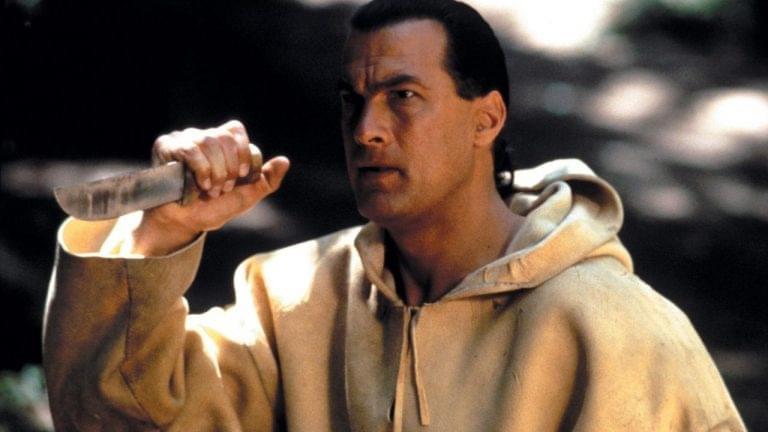
Eric’s Bad Movies is “Firewalker,” a Chuck Norris manure pile from 1986. The movie contains no firewalking whatsoever, though this is just one of its many disappointments.

The subject of What’s the Big Deal?, meanwhile, is “The Manchurian Candidate,” from 1962, in which Angela Lansbury already looked like an old woman. She’s been an old woman for the better part of a century. Good movie, though.

Firewalker

0
Firewalker

Surely the hand of fate has guided Chuck Norris throughout his career. When he agreed to star in the film “Firewalker” in the mid ’80s, he couldn’t have known that several years later he would star in a TV show called “Firewalker, Texas Fire Ranger.” It’s a complete coincidence — unless you believe that there are greater powers at work in the universe.

One of those greater powers is Chuck Norris himself, or at least that was the gist of the jokes that went around the Internet a few years ago. Despite the number of good films on his resume being dangerously close to zero — actually, probably because of that — Norris has a whole new generation of people enjoying his 1980s offerings ironically. But surely even the hardiest of self-aware hipsters can’t find any pleasure in “Firewalker,” which purports to be an action-slash-comedy but which has neither action nor comedy. I am even skeptical of the slash.

Norris and Louis Gossett Jr. play Max and Leo, a pair of bickering treasure hunters who are always getting into Indiana Jones-style scrapes, except that they never find anything useful or make any money or get chased by Nazis or shack up with Calista Flockhart. (So their luck isn’t all bad.) Mostly they just argue, Gossett grinning a lot and looking like one of the title characters in “Gremlins,” Nfirewalkerorris delivering every line in the stone-faced, emotionless manner of a kickboxer who has for some reason become a film star. Norris and Gossett: the liveliest comic duo since Alan Greenspan and Ayn Rand!

While commiserating in a seedy Arizona bar, Max and Leo are approached by Patricia Goodwin (Melody Anderson), a prim, upscale blonde who has a treasure map and wants to hire a couple of idiots to help her find the gold. In the usual manner of buddy films where one guy is white and one is black, the white one, Max, has the hots for Patricia, while the black one, Leo, is asexual. (As you know, this formula can only be reversed if the black character is the more famous actor — but then the woman has to be black, too. These laws are all written down in Hollywood somewhere.)

firewalker

Max and Leo accompany Patricia to an Indian reservation near the Mexican border, where they find a cave made of ancient papier-mache rocks. On one of the walls of this cave is a painting that Leo — who I guess is a history professor of some kind? — says was made in 1527, because I’m sure the ancient tribes always signed and dated their work. He also says it has origins in Aztec, Mayan, AND Spanish cultures, no doubt one of those celebrity collaborations that the entirely separate civilizations were always working on in the 1500s.

The gold is missing, but somehow the painting indicates that it can be found elsewhere, probably with a message like the one at the end of each level of Super Mario Bros. As a consolation prize, one artifact is present: a knife made of pure gold. A gold dagger, just like Kanye West sang about. A very elderly local Indian, Tall Eagle (Will Sampson), gives the treasure hunters the scoop: The dagger belonged to an ancient fellow named Firewalker. Tall Eagle explains, “He was called Firewalker because his soul could fly to the sun,” which means should have been called Sunflyer, not Firewalker. Kind of a stretch there, Tall Eagle. Anyway, Firewalker, the dagger, magic powers, secret treasure, yada yada.

firewalker

Somehow — you’ll see the word “somehow” a lot here, because nothing is ever really explained — Max, Leo, and Patricia decide the missing gold must be in San Miguel, a fictional country located where Mexico used to be. San Miguel is chosen literally at random, when Max jabs a knife at a map of Central America. And then Patricia pronounces it “San Mig-well.” The film has many lines that are supposed to be jokes, but that’s not one of them. That’s just how the actress says it. Her name is Melody Anderson. She previously appeared in “Flash Gordon” and would later star in a TV movie called “Hitler’s Daughter.” That is just for your information.

So the trio heads to San Miguel, whereupon Max and Leo get into a fight with some locals in a bar, as required by Chuck Norris’ contract. No one’s very enthusiastic about the fight, though: lots of weak punches and some halfhearted falling down, like a nursing home’s production of “West Side Story.” Meanwhile, word gets around that the gringos are looking for the Firewalker treasure, which is of particular interest to an evil man with an eyepatch. firewalkerWhich eye the patch covers varies from scene to scene. This could be an act of parody, but it could also be ineptitude. Where is the line between a film that is trying to be bad and a film that is simply bad?

Anyway, our heroes head to the village where the treasure is supposed to be, but since travel to the interior of the country isn’t permitted for outsiders, they have to dress up like two priests and a nun. Lucky for them, the production and sale of religious disguises is San Miguel’s chief industry. They find the village ransacked by soldiers and then get into a fight with the soldiers, who have guns but prefer to stand still and be kicked by Max. The bad guys eventually capture the trio and are about to execute them when suddenly our heroes are saved by … Corky! A guy we’ve never seen before but who is Max and Leo’s old friend and who is named Corky! He’s played by John Rhys-Davies, from “Raiders of the Lost Ark”! And I guess he owns this village! Or something! It is not explained! He sure saves the hell out of their lives, though, and now the soldiers who were about to behead them adore them and make them guests of honor at a festival.

firewalker

Isn’t this movie over yet? Bleh. After this pointless tangent the trio head to ANOTHER village, where there’s a temple that supposedly will have the gold. You start to wonder why Patricia even wants the gold, considering that if she can afford this huge, ridiculous excursion she must be pretty rich already. Then they’re camping by a river and they think Leo has been eaten by a crocodile. Just as well; he was a third wheel. I was impressed by the movie’s willingness to murder a character who wasn’t doing anything, then disappointed to find him still alive, held captive in the temple by Eyepatch Guy, who wants to trade Leo for the gold dagger, which will grant him access to the treasure, et cetera. There is a fight in which Eyepatch Guy takes a bullet to the chest and a knife to the back yet fails to be killed. What finally does the job? Why, a roundhouse kick from Sir Chuck Norris, that’s what! Chuck’s mightiness is diminished considerably by the womany sunglasses he wears in the final scene, though. It’s a powerful reminder that no matter how cool you think you are, you are probably not very cool at all if you are in 1986, or if you are Chuck Norris.

— Film.com

Top OFCS Awards go to ‘Hurt Locker’

3

I’m a member of the Online Film Critics Society, and am currently serving on the three-person Governing Committee, which obligates you to refer to me as Governor Snider. But that is beside the point. The point is that our 143 members have voted on the 13th annual OFCS Awards, and the winners are as follows (links are to my reviews):

Best Picture: “The Hurt Locker”
Best Director: Kathryn Bigelow, “The Hurt Locker”
Best Actor: Jeremy Renner, “The Hurt Locker”
Best Actress: Melanie Laurent, “Inglourious Basterds”
Best Supporting Actor: Christoph Waltz, “Inglourious Basterds”
Best Supporting Actress: Mo’Nique, “Precious”
Best Original Screenplay: Quentin Tarantino, “Inglourious Basterds”
Best Adapted Screenplay: Wes Anderson and Noah Baumbach, “Fantastic Mr. Fox,” based on a book by Roald Dahl
Best Documentary: “Anvil!: The Story of Anvil”
Best Picture Not in the English Language: “The White Ribbon”
Best Animated Feature: “Up”
Best Cinematography: Robert Richardson, “Inglourious Basterds”
Best Score: Michael Giacchino, “Up”
Best Editing: Chris Innis and Bob Murawski, “The Hurt Locker”

(If you want to see the nominees that were previously selected, the list is here.)

In several cases the films I voted for didn’t win, but I’m not disappointed by any of the results. They’re all very solid choices. I note with some interest that “Avatar,” though nominated in three categories, didn’t win anything — but James Cameron’s ex-wife, Kathryn Bigelow, won Best Director. There’s a pretty good chance it will go that way at the Oscars, too.

More OFCS stuff can be found at our blog.

The Best and Worst Movies of 2009

0
The Best and Worst Movies of 2009

Choosing 10 films for my list this year was easy. The hard part was deciding which film should be No. 1. Was I prepared to declare any of these fine movies unequivocally the Best Movie of 2009? But on the other hand, did I want to wuss out and do a lame alphabetical list? The answer to both questions was no.

Someone on Twitter suggested I list them chronologically, which would also be lame but not quite as lame as alphabetical. I mulled that over and rather liked the idea of listing them not in the order in which they were released but in which I saw them. It would be a little trip through my own personal year of movie-watching.

This idea was solidified the day after Christmas, at my parents’ house, when my little nephew was watching a DVD of “Ratatouille.”

Near the end of the movie, the imperious food critic Anton Ego is won over by a chef’s preparation of the title dish. One bite and he is instantly transported to his childhood, savoring the ratatouille his mother used to make. I was struck by something that hadn’t occurred to me the other times I’d seen this movie. While Anton Ego was impressed by the quality of the chef’s cooking, that wasn’t enough to put it over the top. What really did it for him was the fact that it reminded him so much of his mother’s cooking. It was purely a personal reaction.

And I realized that’s how all criticism works. Sometimes we like to point to a particular film and say THIS is an excellent movie, then rattle off the list of reasons why, but all of our technical expertise can only take us so far. In the end it’s that personal response — the feelings and emotions that it inspires in us — that makes us love something. If the ratatouille had merely tasted great and been well prepared, Anton Ego would have given it a high rating — but he wouldn’t have loved it. It was the memories and emotions it conjured up that made it something special.

Similarly, while I can tell you, for example, why “500 Days of Summer” is a terrific movie — it spruces up a familiar story with witty dialogue and clever structural tricks; the performances have an Everyman and Everywoman quality to them; etc. — it’s really the way it strikes me, Eric D. Snider, that makes me, Eric D. Snider, love it. It’s the fact that I can relate to both of the main characters, and the fact that I’ve seen a hundred movies with this basic formula but still managed to be surprised by the way these filmmakers did it, and the fact that there is a song-and-dance number in the middle of the film. None of those elements are quantifiable, and not every viewer will react the same way. But that’s how I reacted. That’s why I love it.

The truly great movies manage to inspire strong personal reactions in a large number of viewers. (The ones that have that effect on a smaller number of people while leaving others cold are called “cult favorites.”) If you think about it, it’s amazing that a work of art can inspire even one person to feel the emotions intended by the artist. When it causes that reaction in millions of people, it’s miraculous.

Here’s my list of what I believe to be the best films of 2009, arranged in the order I saw them, with some personal and self-indulgent reflections.

The Best Movies of 2009:

“Il Divo,” Sept. 5, 2008.* It was on my inaugural trip to the Toronto International Film Festival that I first saw this stylish Italian tragicomic political biography. Despite knowing nothing about Italian politics — I barely know how American politics work — I was riveted by Paolo Sorrentino’s super-cool direction and Toni Servillo’s grimly amusing central performance.

“Humpday,” Jan. 16. Sundance audiences were drawn in by the eyebrow-raising premise — two straight male friends decide to make a sex tape — but were won over by how plausible the outrageous scenario winds up being. That’s because the writer/director, Lynn Shelton, and her actors, Joshua Leonard and Mark Duplass, play everything naturally. The result is a surprisingly insightful and funny look at male friendship, platonic love, and society’s concept of masculinity.

“Precious, Jan. 17. It was still called “Push” at Sundance — that’s the title of the novel it’s based on — and people were already making jokes about it getting mixed up with the other “Push” scheduled for 2009, starring Chris Evans and Dakota Fanning as people with superpowers. Distributors wisely changed this one’s title to “Precious,” but the movie stayed the same: a stark, terrifying portrait of a Harlem girl in awful circumstances, bolstered in the end by a rush of hope and decency. Alarming but never exploitative, this is one of the most emotionally powerful films of the year.

“500 Days of Summer,” Jan. 18. Three days in a row of Sundance premieres that would eventually make the top 10 list! It was a good year for the festival. Check out the diversity, too: While “Precious” was harrowing, “500 Days of Summer” was breezy, hilarious, and resonant, a near-perfect depiction of a failed romance that manages to be realistic (you’ll see yourself in one or both of the main characters) as well as inventive and loopy.

“Drag Me to Hell,” March 15. Sam Raimi’s return to his horror roots is the fun kind of scary, like a roller coaster or haunted house, not the kind that gives you nightmares afterward. That’s my favorite kind of scary, and seeing it at midnight with an enthusiastic South By Southwest audience — introduced in person by Raimi! — was a memorable experience. I saw it again later in a more conventional setting and was just as delighted by its twisted imagination, macabre humor, and good old-fashioned thrills.

“Star Trek,” May 2. A lucky audience in Austin got to see this well ahead of schedule when an Alamo Drafthouse screening of “Star Trek II: The Wrath of Khan” was altered by two things: Leonard Nimoy made a surprise appearance, and he asked if everyone wouldn’t rather watch the new film instead. (Those intent on seeing “Wrath of Khan” were, I guess, disappointed.) The place went nuts, and everyone loved the film. I was skeptical, though — not because I had any reason to believe J.J. Abrams’ “Star Trek” reboot might be lousy, but because it’s hard to trust responses from a crazy premiere like that. You think you’re seeing something else and get the brand-new “Star Trek” instead? A month early? Introduced by Spock himself?? The stunt was designed to produce giddy enthusiasm, so it was no surprise that giddy enthusiasm was the result. It was a relief, then, to see the film a few weeks later, at a regular ol’ press screening, and find myself almost as wowed as that Austin audience had been. There had been no need to stack the deck to get a gracious response. Something this energetically funny, smart, and exciting was going to earn praise no matter where it was shown.

“Up,” May 26. This makes three summers in a row that Pixar has released an animated film that eventually made its way to my top 10. Every year I look forward to the studio’s latest invention, and almost every year I am astonished at how they have managed to surprise me yet again. The dialogue-free segment near the beginning, showing Carl and Ellie’s life together, is one of the most beautiful sequences of the year, not to mention one of the most concise, expressive, and well executed. What other cartoon would even dare to address the issue of Carl and Ellie’s inability to have a baby, let alone pull it off so sublimely?

“In the Loop,” June 11. After hearing raves about this British political comedy at Sundance (where I missed it), I was eager to see it at CineVegas. Then I had to see it again six weeks later, at a local screening, to catch the lines I’d missed the first time because I was laughing (or because their British accents are sometimes a little indecipherable). Imagine a world where everyone speaks in a nonstop barrage of withering sarcasm and profane insults. To live there would be hell, but to view it from a safe distance, as in this film, is comedic bliss.

“A Serious Man,” Sept. 21. Joel and Ethan Coen’s films tend to be among my favorites, and this darkly funny story about a man seeking answers from the Almighty is right up there. It’s a tough movie, though, one that required a lot of thought and scrutiny before I really “got” it. But once I got it, I got it good. Just like Pixar, the Coens always make whatever movie they want, no matter how bizarre or unorthodox, and they nearly always succeed.

“Fantastic Mr. Fox,”, Nov. 9. I was re-watching this with a friend who had not seen it before, and about 10 minutes into it he said, “I can’t believe how Wes Anderson-y this is.” And that’s part of its delight: It’s a typical Wes Anderson movie (“Rushmore,” “The Royal Tenenbaums”), only enacted by woodland creatures. This makes it funnier, of course; the fact that they come to life through stop-motion animation gives the film an extra boost of quaint whimsy. The film also teaches us that moles are good at seeing in the dark, rabbits are fast runners, and badgers are demolition experts. Good to know.

* * *

OK, if I really had to rank them from 1-10, the list would look the way it did in Salt Lake City Weekly. But I had to submit that before I got the better idea of listing them chronologically, so don’t take it as canon.

(*Dates are the first time I saw the films; I’ve seen them all at least once more, too.)

Honorable mentions: “A Single Man,” “Goodbye Solo,” “Coraline,” “Black Dynamite,” “World’s Greatest Dad,” “Cloudy with a Chance of Meatballs,” “Harry Potter and the Half-Blood Prince,” “The Princess and the Frog,” “The Hurt Locker,” “An Education.”

The Worst Movies of 2009:

I had no problem ranking these.

1. “All About Steve” Its therapeutic benefit notwithstanding, the second of Sandra Bullock’s three starring vehicles this year was embarrassing, unfunny, and actively annoying. It is one of the worst comedies ever made without the names Pauly or Shore attached to it.

2. “Old Dogs” If anything gave “All About Steve” a run for its money on the No. 1 spot, it was this putrid, desperate fiasco starring Robin Williams and John Travolta, from the director of “Wild Hogs.” All three men should be on the TSA’s no-fly list for suspicion of smuggling cinematic train wrecks in their underpants.

3. “I Love You, Beth Cooper” There was once a man named Chris Columbus who wrote “Gremlins” and “The Goonies” and directed “Home Alone” and “Mrs. Doubtfire.” Somehow, that is the same Chris Columbus who directed “I Love You, Beth Cooper,” perhaps after receiving a blow to the head and losing all knowledge of how comedy works. As I understand it from television, another solid knock to the brain should restore his memory, so I believe this should be attempted as soon as possible, by anyone in his vicinity, repeatedly.

4. “Dance Flick” If only revealing so many professional writers’ ignorance of how to pluralize the name “Wayans” had been its worst offense!

5. “New in Town” One of those movies about an idiot who goes to an unfamiliar place with absolutely no concept whatsoever of the local weather, customs, or practices, then has hilarious misunderstandings when she gets off the plane in, say, Minnesota, and is shocked to discover that the climate is not conducive to miniskirts. Also one of those movies in which Renee Zellweger walks around all the time looking like she just smelled a fart and not being funny.

6. “Downloading Nancy” The only redeeming thing about this loathsome, fragrant heap of excrement is that nobody saw it.

Miscellaneous data:

A total of 151 films played in wide release (more than 500 screens) in America this year. I reviewed 136 of them, but the ones I missed included the Jonas Brothers concert and something directed by Rob Zombie, so I don’t think those should count. In addition, there were another 59 limited-release movies that I reviewed, for a nice even total of 195 for the year. To see ’em all, go to the Archives page, then click the black arrow at the top of the Date column and filter so only 2009 releases show.

Longest movie: “Avatar” and “Watchmen,” both 162 minutes.

Shortest movie: “The Girlfriend Experience,” 77 minutes

Longest title: “Night at the Museum: Battle of the Smithsonian”

Shortest title: “9”

Most enjoyable bad movie: “Street Fighter: The Legend of Chun-Li” (for Chris Klein’s hilariously bad performance alone)

Least enjoyable good movie: “The Road”

Do not get these movies mixed up: “9,” “Nine,” “District 9”; “Up,” “Up in the Air”; “A Serious Man,” “A Single Man”; “12 Rounds,” “2012”; “I Love You, Beth Cooper,” “I Love You, Man”; “The Informant!,” “The Informers”; “Taking Woodstock,” “The Taking of Pelham 1 2 3”; “(Untitled),” “The Unborn,” “The Uninvited”

Movies in which a character is seen throwing up (with the vomit actually visible as it’s spewed): “Adventureland,” “The Haunting in Connecticut,” “Drag Me to Hell,” “Observe and Report,” “I Love You, Man,” “The Hangover,” “Year One,” “My Sister’s Keeper,” “Miss March,” “Thirst,” “District 9,” “Jennifer’s Body,” “Zombieland,” “The Road,” “The Fourth Kind,” “Gentlemen Broncos,” “Precious,” “The International”

Movies in which fathers enact revenge on their daughters’ tormentors: “The Last House on the Left,” “Taken”

Movies in which someone sings “Limelight” by Rush: “I Love You, Man,” “Adventureland”

Movies in which someone scratches a wall until his or her fingernails bleed: “The Haunting in Connecticut,” “Knowing”

Movies in which a character orders a dirty martini: “Obsessed,” “Ghosts of Girlfriends Past”

Movies that feature vomiting, full-frontal male nudity for comic effect, and dramatic slo-mo shots of the heroes descending an escalator: “Observe and Report,” “The Hangover”

Movies in which characters make up songs that describe their situation: “The Hangover,” “Land of the Lost”

Movies in which babies are harmed: “Grace,” “Dance Flick,” “The Hangover,” “Precious”

Movies with Tyrannosaurus rexes: “Land of the Lost,” “Night at the Museum: Battle of the Smithsonian,” “Ice Age: Dawn of the Dinosaurs”

Movies in which Harrison Ford makes a two-second cameo: “500 Days of Summer,” “Bruno”

Movies in which animals are fitted with devices that translate their sounds or thoughts into human speech: “Up,” “G-Force,” “Cloudy with a Chance of Meatballs”

Movies released on July 31 in which teenagers throw a fit about having to go on a family vacation, and in which people are terrorized by intruders in their homes, and in which the little girl is named Hannah: “Aliens in the Attic,” “The Collector”

Movies with amusing cameos by beloved and/or kitschy pop icons: “I Love You, Man” (Rush), “World’s Greatest Dad” (Bruce Hornsby), “Bandslam” (David Bowie), “Funny People” (James Taylor, Eminem), “Up in the Air” (Young MC)

Movies in which machines attack humans: “Transformers: Revenge of the Fallen,” “G-Force,” “Terminator Salvation,” “District 9,” “9,” “Surrogates,” “Cloudy with a Chance of Meatballs”

Movies in which “Friday Night Lights” stars play frontmen for rock bands: “Bandslam,” “Post Grad”

Movies in which someone’s parents eat marijuana brownies: “Transformers: Revenge of the Fallen,” “World’s Greatest Dad,” “Taking Woodstock”

Movies about people in the news media in Sacramento: “The Ugly Truth,” “All About Steve”

Movies in which people are killed in or near a movie theater: “Public Enemies,” “The Final Destination,” “Inglourious Basterds”

Movies in which a new family member is believed to be evil: “The Uninvited,” “Orphan,” “The Stepfather”

Movies that prominently feature the song “Alright” by Supergrass: “Astro Boy,” “The Men Who Stare at Goats”

Movies in which the main characters’ real names are not provided: “Antichrist,” “The Road,” “Zombieland”

Movies in which teenage girls with health problems have a crush on a guy they meet at the hospital: “Precious,” “My Sister’s Keeper”

Movies about obese, semi-literate black teenagers who are rescued by kindly strangers after leaving public schools: “Precious,” “The Blind Side”

Movies in which a dad builds a ship in a bottle with his daughter before she is murdered: “Law Abiding Citizen,” “The Lovely Bones”
Media Inventory: What I Watched and Read in 2009

0
Media Inventory: What I Watched and Read in 2009

This is a thing that I do. I keep track of all the movies, TV shows, and books I consume over the course of the year, then add them up and reflect upon them. Why would I post something like this, something that is clearly only of interest to me and no one else? Because it’s my website and I can do whatever I want to. (For reals: My name is right there in the URL.) Besides, I like to encourage obsessive stalkers to learn all they can about me.

MOVIES

I watched 392 movies in 2009, down from last year’s total of 430, but still an average of more than one a day. In fact, there were 104 days where I didn’t watch any movies, so those 392 were actually crammed into 261 days. I watch a lot of movies, is my point.

I also watch a lot of bad movies. This struck me as I compiled the lists below. Being a film critic means seeing a fair amount of stinkers anyway, since stinkers are one of Hollywood’s chief exports. But then I also do the Eric’s Bad Movies column at Film.com, which means intentionally seeing 52 more bombs a year. Sometimes for inspiration I’ll watch “Mystery Science Theater 3000,” which is usually very funny but which entails watching a bad movie, too.

Luckily, there are also many pleasant movie-watching experiences. This year I saw the Marx Brothers’ “Duck Soup” for the first time — I think it’s the only one of theirs I’d missed — on a warm summer night on the roof of a downtown Portland hotel, where there’s a weekly film series during the hot months. I saw “The Empire Strikes Back” and “Raising Arizona” on the big screen (actual theatrical prints, too, not DVDs) thanks to Cort and Fatboy‘s monthly midnight movies at the Bagdad Theater. I saw “Plan 9 from Outer Space,” often considered the worst film ever made, heckled by the guys from RiffTrax (formerly the guys from “Mystery Science Theater”), live via satellite when it was beamed to hundreds of theaters around the country.

When “The Wizard of Oz” was released on Bluray, in conjunction with the movie’s 70th anniversary, Netflix made it available for 24 hours to be streamed online or through a Roku player or the other devices that use Netflix’s Watch Instantly feature. So I invited a few friends over and we watched it on my high-definition TV. The colors were stunning — probably even more vivid than they were in 1939 — and the quality was doubly impressive when you consider that it was getting to my TV by way of wireless Internet. We live in the future!

As some of you know, I suffered a major depressive episode in late August and early September. For perhaps the first time, I came to truly appreciate the value of movies as a means of escape. No matter how awful I felt, a good movie could distract me from it, at least for a while. At first I sought out movies that I knew would be gentle and non-abrasive: “Casablanca,” “It Happened One Night,” “The Magnificent Seven.” I caught a Hitchcock I’d never seen before (“Frenzy”), re-watched “Pee-Wee’s Big Adventure” for the first time in about 20 years, and finally saw Steve McQueen in “Bullitt.”

It was also during this time that I tried to do some work by watching “Wing Commander,” starring Freddie Prinze Jr., for Eric’s Bad Movies. I learned that I can’t do Eric’s Bad Movies in this frame of mind. “Wing Commander” is terrible, no question. But watching it, I couldn’t think of anything funny to say about it. All I could think about was how much I hated watching it. And if you’re going to watch a bad movie without being able to make fun of it, well, what’s the point? Rather than distract me from my depression, it added to it. I still want to do “Wing Commander” for Eric’s Bad Movies, but it will be a while before I can muster the strength to watch it again. In the meantime, you’ve won this round, Mr. Prinze Jr.

2009 releases that I saw and reviewed:
If you want to see the whole list, just go to the Archives and filter the date to only include “2009.”

2009 releases that I saw but did not review (with probable grade, where my memory is sufficiently clear):
Sundance Film Festival:
“Arlen Faber” (D)
“Big Fan” (B+)
“Good Hair” (B)
“Cold Souls” (C+)
“Dare” (C-)
“The Missing Person” (B)
“When You’re Strange” (B-)

South By Southwest Film Festival:
“The Snake”
“Ong Bak 2” (C)
“The Overbrook Brothers” (B-)
“Modern Love Is Automatic” (C)
“The Slammin’ Salmon” (B+)
“Lesbian Vampire Killers” (C-)
“Objectified” (B)
“Four Boxes” (C-)
“Afterschool (B+)
“Anvil!: The Story of Anvil” (B)
“Black” (B)
“The Paranoids” (C)

Tribeca Film Festival:
“Tell Tale” (B-)
“Wonderful World” (C+)

CineVegas Film Festival:
“Saint John of Las Vegas” (C)
“Vegas: Based on a True Story”
“The Square” (A-)
“Daylight”
“Patriotville” (D)
“Etienne!” (D+)
“Godspeed” (D)
“The Headless Woman” (B)

Elsewhere:
“9”
“Bright Star”
“Gomorra” (B)
“Lymelife” (C+)
“Sunshine Cleaning” (B+)
“Futurama: Into the Wild Green Yonder” (direct to DVD)

2009 releases that I watched twice:
“Black Dynamite”
“District 9”
“Drag Me to Hell”
“An Education”
“Fantastic Mr. Fox”
“Humpday”
“The Hurt Locker”
“Il Divo”
“In the Loop”
“Observe and Report”
“Precious”
“A Serious Man”
“Sin Nombre”
“Star Trek”
“World’s Greatest Dad”

Pre-2009 releases that I had seen before, and reviewed, that I re-watched this year:
“Best in Show”
“Boys Don’t Cry”
“Bringing out the Dead”
“Deep Blue Sea”
“Donnie Darko”
“Dracula 2000”
“Final Destination”
“Mickey Blue Eyes”
“Mystery Men”
“Pineapple Express”
“Star Wars: Episode I — The Phantom Menace”
“Superbad”
“The Ten”
“Terminator 3: Rise of the Machines”
“Three Kings”
“Tropic Thunder”

Pre-2009 releases that I had seen before but did not review, that I re-watched this year:
“The 13th Warrior”
“The Arrival”
“Blazing Saddles”
“The Blood Waters of Dr. Z”*
“Boggy Creek II”*
“Casablanca”
“Clueless”
“Congo”
“Devil Fish”*
“Diabolik”*
“Do the Right Thing”
“The Empire Strikes Back”
“The Evil Dead”
“The Final Sacrifice”*
“Forrest Gump”
“Future War”*
“Ghostbusters”
“Giant Spider Invasion”*
“The Girl in Gold Boots”*
“The Good Son”
“Heathers”
“Hobgoblins”*
“Horrors of Spider Island”*
“History of the World Part 1”
“Invasion of the Neptune Men”*
“It Lives by Night”*
“Jack”
“James and the Giant Peach”
“The Magnificent Seven”
“The Manchurian Candidate”
“Merlin’s Shop of Magical Wonders”*
“On the Waterfront”
“The Outsiders”
“Overdrawn at the Memory Bank”*
“Pee-Wee’s Big Adventure”
“Quest of the Delta Knights”*
“Raising Arizona”
“Red Zone Cuba”*
“The Screaming Skull”*
“South Park: Bigger, Longer and Uncut”
“Soultaker”*
“Space Children”*
“Squirm”*
“Tarzan” (1999)
“The Terminator”
“Terminator 2: Judgment Day”
“This Is Spinal Tap”
“Time Chasers”*
“The Touch of Satan”*
“Track of the Moon Beast”*
“Volcano”
“Werewolf”*
“The Wizard of Oz”

*Watched via “Mystery Science Theater 3000”

Pre-2009 releases that I saw for the first time this year:
For Eric’s Bad Movies at Film.com:
“Allan Quatermain and the Lost City of Gold”
“The Beastmaster”
“The Care Bears Movie”
“Cobra”
“Death Wish: The Face of Death”
“Firewalker”
“The Forbidden Dance”
“Frogs”
“The Garbage Pail Kids Movie”
“Howard the Duck”
“Hudson Hawk”
“The Ice Pirates”
“It’s Pat”
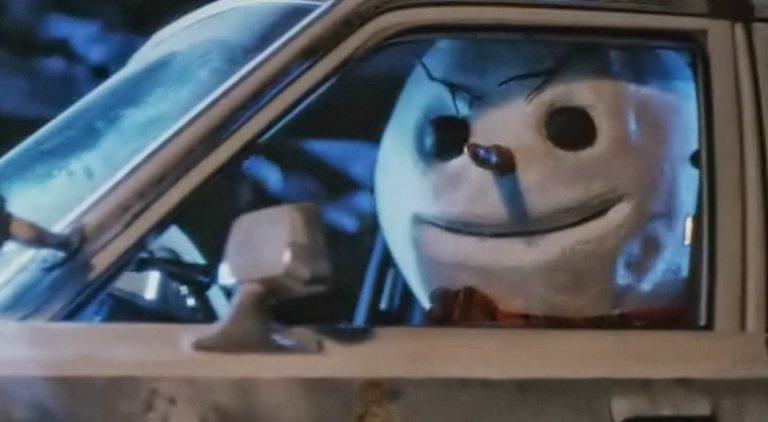
“Jack Frost” (killer snowman, not Michael Keaton)
“Judge Dredd”
“King Kong Lives”
“Krull”
“Leonard Part 6”
“Meteor”
“The Neverending Story III”
“The Next Karate Kid”
“On Deadly Ground”
“Orca”
“The Other Sister”
“Power Rangers: The Movie”
“Red Sonja”
“Shanghai Surprise”
“Showgirls”
“Sleepaway Camp”
“Star Trek V: The Final Frontier”
“Stone Cold”
“Street Fighter”
“Supergirl”
“Surf Ninjas”
“Surviving the Game”
“Teen Witch”
“Timecop”
“Troll”
“Two of a Kind”
“Waterworld”
“The Wizard”
“Zardoz”

For other reasons:
“8 1/2”
“9 1/2 Weeks”
“Alive”
“Backdraft”
“Bad Lieutenant”
“The Basketball Diaries”
“Bob Roberts”
“Bullitt”
“The China Syndrome”
“Cruising”
“Dazed and Confused”
“Dracula” (1931)
“Duck Soup”
“Frenzy”
“Hamburger Hill”
“Ishtar”
“It Happened One Night”
“Losin’ It”
“New Jack City”
“Plan 9 from Outer Space”
“Point Break”
“Red Dawn”
“Psycho II”
“The Searchers”
“The Seventh Seal”
“Sixteen Candles”
“The Sword in the Stone”
“The Thing” (1982)
“Touch of Evil”
“Tremors”
“Troll 2”
“The Trouble with Harry”
“The Unbearable Lightness of Being”
“Who’s Afraid of Virginia Woolf?”
“Wing Commander”
“Withnail & I”

TELEVISION

I watched 345 hours of TV this year, up from 281 last year. Glad to see I’m getting my priorities straight. Those 345 hours represent only about 259 hours in front of the TV, though, since I watch everything on DVR and skip the commercials. That’s about 42 minutes a day, which still seems shamefully low given my status as a lazy American. Aren’t I supposed to be planted on the couch for like five hours a day? What’s wrong with me?

Shows I watched regularly in 2009:

“24”
“30 Rock”
“Community”
“Curb Your Enthusiasm”
“Dollhouse”
“Family Guy”
“FlashForward”
“Flight of the Conchords”
“Friday Night Lights”
“Fringe”
“Glee”
“It’s Always Sunny in Philadelphia”
“Law & Order”
“Law & Order: SVU”
“Life on Mars”
“Lost”
“Mad Men”
“Michael and Michael Have Issues”
“Modern Family”
“The Office”
“Parks and Recreation”
“Saturday Night Live”
“The Simpsons”
“South Park”
“Tim and Eric Awesome Show Great Job”
“V”

I also quit watching a few shows this year, including “Heroes,” “Scrubs,” “Rescue Me,” and “The Mentalist.” Why would I quit those but keep watching the outrageously bad “Law & Order: SVU,” which more and more functions as a parody of cop shows rather than an actual cop show? I don’t know.

My favorite shows in 2009:

1. “30 Rock” (NBC). Despite some ups and downs in quality, this is still the show that amuses and impresses me the most, week after week. All comedy writers aspire to craft something this fast-paced and densely packed.

2. “Modern Family” (ABC). What a swell surprise this fall debut was! Nearly as funny as “30 Rock,” but more reality-based rather than absurd, and with an element of sweetness, too. All the characters are funny individually, as well as in their various combinations. A terrific comedy, right off the bat.

3. “Lost” (ABC). These last two seasons have been fantastic. The upcoming final season could turn out to be the best thing ever. EVER.

4. “Mad Men” (AMC). Is there a more exquisitely photographed, meticulously designed, and brilliantly acted series on all of television? Oh, there is? Well, did whatever show you’re thinking of feature a gruesome lawnmower accident in an office building? I DID NOT THINK SO.

5. “Parks and Recreation” (NBC). I watched the first couple episodes when it premiered in April and thought, “I already watch ‘The Office.’ I don’t need another version of it.” But a few weeks into the new fall season, I was alerted by several reliable people that “Parks and Recreation” had found its own voice and was now very, very funny. I started watching it again and came to the same conclusion. In fact, it makes me laugh more than “The Office” does.

BOOKS

Yikes. I only read 15 books this year. Considering I’m in a book club that makes me read one book a month, that means I only read three on my own time. I need to do more of that, though it will be hard if I’m also going to watch more TV.

I’ve asterisked the ones that I would particularly recommend. Links are to Amazon.

**“The Astonishing Life of Octavian Nothing, Traitor to the Nation, Volume II: The Kingdom on the Waves,” by M.T. Anderson. Having loved “Volume I: The Pox Party,” I eagerly sought out the sequel and was just as delighted by the story of an African boy who gets involved in the Revolutionary War. Of particular note is Anderson’s ability to write prose that sounds like it could have been written in the 1770s, complete with jokes and ribaldry.

“Atmospheric Disturbances,” by Rivka Galchen. Told from the point of view of a psychiatrist who might be losing his own mind: He believes his wife is not actually his wife, but a “simulacrum” put in her place to deceive him. The descriptions of a man’s descent into craziness are fascinating, and I do love a story with an unreliable narrator, but I didn’t enjoy this one as much as I hoped I would.

**“Dear American Airlines,” by Jonathan Miles. This darkly comic novel takes the form of a letter of complaint written to American Airlines after a flight is canceled. In the process, the stranded passenger — a screw-up of a father who’s trying to get to his daughter’s wedding to redeem himself — reveals much of his life story. I found it all very funny, insightfully written, and a joy to read.

**“Fablehaven: Secrets of the Dragon Sanctuary,” by Brandon Mull. Part 4 of the story about an ordinary young brother and sister whose grandparents are caretakers at a secret preserve for magical creatures. The stakes get a little higher this time, though the series still isn’t nearly as heavy as Harry Potter, and Mull’s writing is still simple, witty, and fast-paced.

“The Forest of Hands and Teeth,” by Carrie Ryan. What a great title! Like so many young-adult novels nowadays, it’s set after the zombie apocalypse, where small villages keep themselves separated from the undead with fences and walls, but a teenage girl longs to see what else is out there. The writing style kind of bugged me. Lots of small sentences. Like this. All the time. But the story is terrific, full of adventure and thrills and just a little teen romance.

**“How I Became a Famous Novelist,” by Steve Hely. This is easily the funniest book I read all year. It’s about a guy who sets out to write an intentionally bad but generically crowd-pleasing novel solely for fame and fortune, and to produce envy in his ex-girlfriend, who is about to marry someone else. What’s surprising is that in Hely’s ruthless satire of bland fiction writers, he also expresses genuine admiration for what popular novelists do. The story doesn’t go where you’d expect it to, and there’s a satisfying maturity to it, in addition to all the laughs.

“How Right You Are, Jeeves,” P.G. Wodehouse. Everyone should read more Wodehouse books about Wooster, the carefree British gentleman, and Jeeves, his faithful valet who rescues him from all manner of social scrapes. I read a couple of these books during the Great Depression and found my spirits much lifted.

**“The Hunger Games,” by Suzanne Collins. Another young-adult novel, another one told from the point of view of a teenage girl living in a post-apocalyptic world. This time, she’s chosen to represent her village at the country’s annual Hunger Games, where the winning district gets food and prizes to survive the next year, and the losing districts get nothing. Oh, and to win, you have to kill the other competitors. Brisk writing, fun story, and some legitimate surprises. Obviously sets itself up for a sequel, though, which is a little disappointing if you were hoping to have all the threads tied up.

**“In the Woods,” by Tana French. A crackling good police thriller about an Irish detective investigating a murder that has eerie similarities to something that happened to him when he was a kid, where two of his friends disappeared.

“Jeeves and the Feudal Spirit,” P.G. Wodehouse. The fun thing about Jeeves books is that the titles give you no clue what they’re about, so the only way to remember if you’ve read it before is to start on the first page and see if it looks familiar.

**“Johnny One-Eye,” by Jerome Cheryn. Historical fiction about a resourceful young orphan who was raised in a brothel, gets involved with both sides of the American Revolution (he’s a double agent!), and might be the illegitimate son of George Washington. Colorful characters both real and invented interact amusingly.

“The Monsters of Templeton,” by Lauren Groff. A young woman returns to her hometown, pregnant, just as her own mother did 27 years ago. Her attempt to learn who her father is takes her through several generations of genealogy, and we see the patterns that have repeated themselves throughout this family’s history. A good novel, if not a great one, and an engaging read.

“Serena,” by Ron Rash. George Pemberton sets out to establish a timber empire in North Carolina in 1929, joined by his new wife, Serena, whom he doesn’t really know very well. She proves to be alarmingly adept at overseeing the workingman and eliminating business competitors, giving the story an unsettling mix of beauty and violence.

“Silver,” by Edward Chupack. This is another kind of book I like: the story of a fictional person who was a supporting character in another novel. (See also: “Finn,” about Huck Finn’s dad.) “Silver” is about Long John Silver, the pirate scoundrel in “Treasure Island,” and is written from his distinct point of view. Quite a rollicking good time, though I was disappointed that Chupack didn’t adhere strictly to the events told in “Treasure Island.”

“Treasure Island,” by Robert Louis Stevenson. I was intrigued by the idea of “Silver” but figured I should read “Treasure Island” first, since I had never done so. I can see why boys of yesteryear loved it: pirates, adventure, buried treasure, all that stuff. Not a bad read at all.

The Imaginarium of Doctor Parnassus

0

You know who would love “The Imaginarium of Doctor Parnassus”? Terry Gilliam. It’s bizarre and whimsical and often beautiful to look at, and it makes no sense whatsoever. It’s totally something Terry Gilliam would dig!

Wait, what? He directed it? And co-wrote the screenplay? Oh. Well, I guess that explains that.

As for who other than Terry Gilliam might enjoy it, I’m at a loss. It’s famous now primarily for being Heath Ledger’s last film — he died before shooting was complete — but we might want to go back to thinking “The Dark Knight” was Ledger’s final movie. This one is baffling, obtuse, and tiresome, like listening to someone tell you about a dream they had. For two hours.

“Imaginarium” is about mysterious old Dr. Parnassus (Christopher Plummer), who operates a traveling sideshow with the assistance of his daughter, Valentina (Lily Cole), who claims to be only 12 but is clearly much older, and a crew that includes a dwarf (Verne Troyer) and a regular guy named Anton (Andrew Garfield). There is a mirror on the stage of this sideshow, and if you walk through the mirror you are transported into your imagination, or possibly into Dr. Parnassus’ imagination, and it’s really crazy there. People aren’t supposed to be just randomly barging into the mirror, although it happens pretty frequently, folks just leaping onto the stage and jumping in. Dr. Parnassus needs a bouncer.

Anyway, along comes Tony (Ledger), an amnesiac of uncertain origin who might be sketchy and who becomes the sideshow’s barker, bringing in more paying customers than the show had been getting. Before long, Tony goes through the mirror himself, whereupon he is played, in his imagination, by Johnny Depp, then Jude Law, then Colin Farrell. (Going into an imaginary dimension changes your face, you see. And I’ll be honest: In my imagination I look like those guys, too.)

Oh, and Parnassus owes the devil (Tom Waits) something, and has to accumulate five “souls” in two days. Something to do with Parnassus being immortal and being a storyteller in an age when no one wants stories anymore. If this is Gilliam expressing his own frustrations over the many setbacks he’s had over the years — and they have been numerous — I would gently point out that people DO want stories, and that “Doctor Parnassus” doesn’t have one. It has a sequence of loosely connected events that do not add up to anything.

The imagination sequences are gorgeously imaginative, however. Production designer Anastasia Masaro and cinematographer Nicola Pecorini deserve praise for bringing Gilliam’s wild fantasies to life — and indeed, this is what Gilliam has always been great at, going back to the surreal animations he did for “Monty Python’s Flying Circus.” But the film’s a mess otherwise, with an incoherent story and no relatable characters, and I’m still left wondering whether anyone outside of Gilliam’s brain will appreciate it.

It’s Complicated

0

The message of “It’s Complicated” seems to be that it sure is tough being a wealthy white person in Santa Barbara. Boy howdy! First there’s your highly successful bakery that’s pulling in money hand over fist. Then there are the complications of building an addition to your house (in which you live alone, and which needs no additions). And then, to top it all off, the architect you’ve hired expresses romantic interest in you at the same time that you’re rekindling an affair with your ex-husband! Two perfectly good suitors fall into your lap simultaneously! Where will the nightmare end??

History teaches us that during the Great Depression, poor audiences flocked to movies about rich people, delighted to be whisked away to a glamorous world and escape their own dreary lives. But the current economic crisis isn’t as bad as the one in the 1930s, and people have found numerous other forms of escapism since then, so I don’t foresee “It’s Complicated” appealing to anyone other than people who can relate to it. The rest of us might find it a little smug, a little precious.

Written and directed by Nancy Meyers (“Something’s Gotta Give,” “The Holiday”), it stars Meryl Streep as Jane, a well-to-do restaurant owner in her fifties who has been happily divorced from her husband, Jake (Alec Baldwin), for 10 years. While visiting New York for their son’s college graduation, Jane and Jake happen to stay at the same posh hotel, and happen to get drunk together in the bar, and happen to hit the sheets. You know, for old times’ sake.

Jake, now married to a younger woman named Agnes (Lake Bell) with whom he has little in common, is rejuvenated by the liaison with his ex-wife. Jane, however, feels guilty being a party to adultery, and knows — or thinks she knows — that a relationship with Jake would be a bad idea even if he were single. They had a relationship before, after all, and they ended it on purpose. Nonetheless, back in Santa Barbara, an affair commences.

Meanwhile, Jane has hired an architect named Adam (Steve Martin) to renovate her house, and the quiet, unassuming man clearly has a crush on her. Jake is the more vivacious gentleman friend, but Adam is more stable and responsible. What’s a girl to do?

First of all, she’ll need to have gatherings with her cosmopolitan girlfriends at which everyone drinks wine, eats appetizers with Italian names, and talks about plastic surgery and vaginas. Done and done!

The fact that Jake is unhappy in his marriage to Agnes is supposed to make it OK that he’s cheating on her. Would we be asked to accept that line of reasoning if Agnes were the main character? Probably not. But Alec Baldwin, riding on a new wave of goodwill thanks to “30 Rock,” has a great time playing a giddy, love-struck fiftysomething, and his rapport with Streep is comfortable.

Too bad about Steve Martin, though, completely wasted as a soft-spoken, button-down nobody. I realize you wouldn’t know it to watch most of his recent comedies, but Martin is one of the most talented comic actors in the world. Why cast him in a role that requires so little?

There is one scene that really made me laugh. It’s set at a party. Jane and Adam are there together, and so are Jake and Agnes. Marijuana is involved. There is much giggling and goofiness. Baldwin has a moment with John Krasinski (who plays the fiance of one of Jane and Jake’s daughters) that will live in your memory for years to come. This is also the only scene in which Martin is allowed to cut loose and enjoy himself.

I assume the title refers to the situation Jane is in, having to choose between Jake and Adam. (I hope it doesn’t refer to the “it’s complicated” relationship status on Facebook, because people Jane’s age shouldn’t be on Facebook.) But Jane is a plastic, prefabricated character, taken straight from the Nora Ephron Knock-off shelf at Movie Characters R Us, and her suitors are no better. Their banter isn’t witty. Their situations aren’t usually very funny. If a film isn’t going to show approximations of real people in approximations of real situations, it should at least give us entertaining fantasies. The stuff in “It’s Complicated” isn’t just simple — it’s simple-minded.

Sherlock Holmes

0

Apparently tired of his moderate but waning success as a fringe filmmaker, Guy Ritchie has gone mainstream with “Sherlock Holmes,” his sixth feature and the first one he didn’t write himself. Gone is most (but not all) of the frenetic editing and bone-crunching violence that marked films like “Lock, Stock and Two Smoking Barrels” and “Snatch,” where it often seemed like Ritchie was trying very, very hard to be awesome. Now he has relaxed a bit and made something palatable to a mass audience without sacrificing his famed energy and irreverence, featuring one of Hollywood’s most popular actors as one of the world’s most popular fictional characters. What could go wrong?

Well, a lot, given Ritchie’s usual penchant for excess, but let’s put that behind us. His “Sherlock Holmes,” starring Robert Downey Jr. as the legendary sleuth and Jude Law as his loyal Dr. Watson, gets back to the basics of Arthur Conan Doyle’s stories — Holmes was an amateur boxer and an opium enthusiast — while giving it a modern bromance sensibility. With Holmes childishly jealous that Watson is engaged to be married, trying to sabotage the relationship while letting his manners and personal hygiene go to seed, this isn’t your father’s Sherlock Holmes. And yet it’s quite faithful in its way, too, the Victorian London setting teeming with life (and lowlifes), Holmes delighting observers with his marvelous powers of deduction, constantly saving Scotland Yard’s bacon. He just does it with a slight hint of 21st-century snark, that’s all.

The story begins three months after Holmes and Watson’s last case, with Watson preparing to move out of Holmes’ apartment in preparation for his own marriage to the lovely Mary Morstan (Kelly Reilly). Holmes never knows what to do with himself between jobs anyway, and the imminent breaking up of the old partnership has him especially flustered. He and Watson bicker as if they are the married couple, the good doctor’s patience worn thin by Holmes’ unruly demeanor, his always-rightness, and the dangerous scientific experiments he conducts in his apartment.

Into this chaos comes Irene Adler (Rachel McAdams), an American who is a master criminal and the only woman Holmes has ever loved. She’s one of the few people able to deceive him, too. “Why are you always so suspicious?” she asks, to which he replies, “Should I answer chronologically or alphabetically?” Oh, what a history they must have together! That would be a fun thing to put in a movie someday!

This time, Irene gets Holmes and a reluctant Watson involved in a rather puzzling mystery. It seems Lord Blackwood (Mark Strong), recently hanged for murder, has risen from the grave to commit more murders. Now Holmes’ interest is piqued! Could there be a supernatural explanation this time?

The first half of the film (attributed to four British writers, with “Mr. and Mrs. Smith” and “Invictus” among their prior credits) is buoyant and funny, full of witty Holmes-and-Watson dialogue and numerous amusing instances of Holmes being smarter than everyone else even when he looks like he hasn’t bathed or shaved in a week. (There’s a bit of Tony Stark, aka Iron Man, in Downey’s performance.) Downey and Law have a fine rapport, together and in their interactions with the hapless police Inspector Lestrade (Eddie Marsan).

But the film’s second half is much less entertaining, with more fights — fights are not as interesting as snappy dialogue — and a supremely unsatisfying resolution of the central mystery. Two hours’ buildup and THAT’S the answer? Weak, very weak. In general, Ritchie loses points when he focuses on action sequences, which are a dime a dozen these days, rather than on Holmes and Watson, who are unique. Setting the climax high atop an unfinished bridge only serves to make this look like a hundred other action movies. You can put any action hero in a place like that. Why waste it on Sherlock Holmes?

Nonetheless, despite being overlong and losing much of its steam halfway through, the film comes out ahead thanks to Downey and Law, and thanks to Ritchie’s generally light touch. The elements are in place for further adventures of Holmes and Watson, and there’s potential there, if Ritchie and company can come up with a better story. Which really should be elementary.

Alvin and the Chipmunks: The Squeakquel

0

Being aimed at children isn’t a valid excuse for a movie to be simple-minded and illogical. You know that, right? You know that that’s what lazy filmmakers fall back on, don’t you? “Well, so what if it doesn’t make any sense. It’s for kids!” NO. That is not acceptable. Countless others have made kids’ movies that were smart and engaging, including several in 2009 alone. It can be done.

What’s especially disappointing about “Alvin and the Chipmunks: The Squeakquel” (beyond the fact that it exists at all) is that its writers, Jon Vitti, Jonathan Aibel, and Glenn Berger, have been involved in some of of those high-quality efforts themselves. Their credits include “Monsters vs Aliens,” “Kung Fu Panda,” and TV’s “King of the Hill” and “The Simpsons.” You can imagine the characters in those stories making fun of a lame children’s film like this. And yet here are their creators, making one.

To the extent that the film has a story, the story begins in Paris, where the computer-animated Chipmunks are performing for a sold-out crowd of screaming fans. Dave (Jason Lee), their caretaker and manager, is critically injured backstage in an Alvin-related accident, so his Aunt Jackie (Kathryn Joosten) offers to take care of the rodents while he recuperates. But then Aunt Jackie is herself critically injured, just as hilariously, leaving the Chipmunks in the care of her idiot grandson Toby (Zachary Levi), who only wants to play video games.

I assume all of this is the result of Jason Lee not wanting to be in the movie for more than a few minutes. As a character, Toby doesn’t bring anything to the table that Dave didn’t already have. The film barely even explores the possibilities inherent in Toby being a lousy babysitter. And then it’s decided that, even though Dave is in a hospital in France, the Chipmunks will start attending public school. Because hey, why not? It’s what all superstar musical sensations do, especially when they are woodland creatures.

The girls at school adore the Chipmunks for the same reason they adore the Jonas Brothers: they are cute and cuddly and sexually nonthreatening. And the boys hate the Chipmunks for the same reason they hate the Jonas Brothers: because the girls like them. One of the boys, a jock, says to his friend, “Somebody’s gonna have to knock these guys down to size.” And his friend says, “That should be easy. They’re only eight inches tall.” KAZAAM! OH SNAP!

Alvin (voice of Justin Long), Simon (Matthew Gray Gubler), and Theodore (Jesse McCartney) don’t like school AT ALL, let me tell you. But then the principal, Dr. Rubin (Wendie Malick), a huge Chipmunks fan, asks them to represent the school at a district-wide music competition, and the Chipmunks are glad to help out. Looks like school will be OK after all!

The next morning, the three of them are hiding in the toilet tank so that Toby won’t make them go to school. In the break between scenes, the movie forgot what it had just said.

Also, remember when the jocks picked on the Chipmunks? One of them, whose name is Ryan (Kevin G. Schmidt), now sees that Alvin (voice of Justin Long) has some athletic prowess (what??), and suddenly he wants to be his best friend and get him on the football team. Well, sure. Why not? But will Alvin let his new friends in the sports department turn him against his brothers? Will the Big Game occur on the same night as the Big Music Competition? I am pained by the realization that this is the same plot as “High School Musical,” but more pained to realize that I even know that.

Meanwhile, there are Chipettes. Yes, a trio of lady chipmunks who also sing and dance, their powers not explained but probably the result of a satanic pact. Their voices are provided by Amy Poehler, Anna Faris, and Christina Applegate, three very funny actresses who are completely wasting their time here. (Once a voice is digitally manipulated to sound like a Chipmunk, it is unrecognizable and could literally be anyone. If there was ever a reason not to bother casting “name” actors, this is it.) The Chipettes find Ian (David Cross), the slimy music-industry executive who was the villain in the first “Alvin and the Chipmunks” movie, and get him to represent their careers. His strategy is to enroll them at the same high school as the Chipmunks and have the girls beat the boys for the chance to represent the school at the competition. Then the Chipmunks, Ian’s enemies, will be shamed, and his new proteges will reign supreme!

To the extent that this film was directed at all, it was directed by Betty Thomas, whose past films make her the perfect choice. She dealt with talking animals in “Doctor Dolittle,” TV adaptations in “The Brady Bunch Movie” and “I Spy,” and famous rodents in “Howard Stern’s Private Parts.” She and her writers have no interest in making “Squeakquel” funny or clever or tolerable. They’re not even interested in telling a cohesive story, one that follows a logical progression of events. Characters’ motivations and personalities change depending on the needs of the current scene. But I guess all a movie really needs is for one of the Chipmunks to crawl under the blankets with Toby and then nearly suffocate when Toby farts. Hilarity!

Friday movie roundup – Dec. 18

6

Did you know that there is a movie called “Avatar”?? It was made by James Cameron, his first non-documentary feature since “Titanic,” 12 years ago (almost to the day). Considering it’s not a sequel or based on a book or a superhero or anything, it’s pretty impressive how much attention “Avatar” has gotten. The visual effects are stunning. The rest of it — you know, the story, the dialogue, the characters — not so much.

The only other new wide release today is “Did You Hear About the Morgans?” (review at Cinematical), which isn’t as bad as it looks. That’s about all I can say for it. A curious thing occurred at the press screening, though, when two of the film’s reels were shown out of order. If it’s a six-reel film, we saw them in the sequence of 1, 2, 3, 5, 4, 6. The funny part is that we didn’t notice anything was amiss until the end. I noted, when we jumped from 3 to 5, that it seemed like the story had progressed faster than I thought it would, but then reel 4 didn’t really seem like it was backtracking. Apparently the only crucial action in the movie occurs in the first and last reels; everything in between could be shown in any sequence.

In limited release is a fantastic drama called “A Single Man” (review at Film.com), starring Colin Firth as a 1960s college professor mourning the loss of his partner. It’s probably the best performance of Firth’s career, and it was directed by Tom Ford, a fashion designer who’d never made a movie before. Quite impressive.

And I guess I forgot to do one of these roundups last Friday? Huh. Well, for the record, Disney’s delightful “The Princess and the Frog” and Clint Eastwood’s meh “Invictus” (review at Film.com) opened. I happened to be at Disneyland the week before, when “Princess and the Frog” was only playing on one screen in L.A. and one in New York. The vast majority of people hadn’t seen it yet, but Disneyland sure was pimpin’ it like it was already a beloved treasure, with a live show, employees in character costumes, the whole shebang. I admire the boldness: “Even though you have no idea who these characters are, you will love them because they are in a Disney cartoon, and because we have told you to love them. SO LET IT BE DONE!”

“Nine,” “The Lovely Bones,” and “Up in the Air” are now playing in limited release and will go wide next week. I’m cranking out the reviews as fast as I can. I hope to have those — plus “Sherlock Holmes,” “It’s Complicated,” “The Imaginarium of Doctor Parnassus,” and that damn Chipmunks thing — in next week’s edition of “In the Dark.” Watch for it on Wednesday, to get it out of the way before Christmas Eve, whereupon I will rest from my labors for a season.

To sign up for the “In the Dark” e-zine, which brings you all the new movie reviews, DVD releases, and other pertinent info in one handy weekly e-mail, visit this page.

Jack Frost (1997)

0
Jack Frost (1997)

There were two films released in the late 1990s under the title “Jack Frost.” One was a sappy family comedy in which Michael Keaton dies and is reincarnated as a snowman, all the better to first terrify and then bond with his young son. The other one was a horror film in which a serial killer’s soul is accidentally deposited in a pile of snow, whereupon the snow becomes sentient and turns itself into a snowman, the better to waddle around town and murder people. Having now seen both films, I’m hard pressed to identify which is more unsettling. A snowman that kills people at least makes sense when you understand that it has the soul of a murderer in it. I mean, what else would a murderer-possessed snowman do? Read to the elderly? But a snowman that hangs out with his son for a few days before melting again — that’s just weird.

But we have already examined the Michael Keaton “Jack Frost” in great detail, so let us turn our attention to the other one, the one that, while perhaps less frightening, is more incompetently made and more generally unpleasant, and that has a higher body count.

So there’s this serial killer, see, and his name is actually Jack Frost. When your surname is Frost and you name your son Jack, there is a strong chance he will grow up to be a psychopath, so I hope Mr. and Mrs. Frost are pleased with themselves. After his multi-state killing spree, Jack Frost (Scott MacDonald) was apprehended by a small-town Colorado sheriff and is scheduled to be executed at midnight tonight, a few days before Christmas, because, hey, ’tis the season. But on the way to the gas chamber, the prison transport van smashes into a truck from a genetic research company, like the old Reese’s Peanut Butter Cup commercials (“You got serial killer in my genetic research!” “You got genetic research in my serial killer!”). Jack Frost survives the accident but is then disintegrated by a deluge of acid that bursts forth from the genetic-research truck. Jack Frost’s lawyers immediately file a suit against the state for allowing their client to be recklessly killed on the roadside instead of in a comfortable gas chamber. Jack Frost’s family is awarded several million dollars in damages.

No, I have made some of that up. Everything up through being disintegrated by acid is true, though. And this was no ordinary acid, either, the kind you’d expect to find being transported by the ton in an unsafe truck at midnight. No, this was special acid, the kind being tested in laboratories to see if it can convert an organism into another form. Turns out it can! And now Jack Frost’s soul resides in the snow that he happened to be standing in when the acid melted him! I suppose we are lucky he was not standing in dog poop. For one thing, there wouldn’t be anything clever about a man named Jack Frost being turned into a pile of dog poop.

jack

Jack Frost is now a snowman — or, more accurately, a pile of snow that can shape itself into traditional snowman form. He can also melt himself into water, trickle under a door, and reconstitute himself into a snowman. He can really take any shape he wants, though he prefers to be a snowman, probably because that’s the only costume the filmmakers could afford. We’re informed that his primary goal is to get revenge on the sheriff who arrested him. Having seen far too many of these movies before, we are not surprised that Jack Frost now proceeds to kill pretty much everyone except the sheriff. For some reason, revenge-minded psychopaths always lose focus almost immediately, their meticulous plans of specific punishment devolving into random slayings. I maintain that it is this, not their murderous tendencies, that prevents most psychopaths from functioning in society.

The sheriff in question is named Sam Tiler (Chris Allport), a family man and decent fellow in the small community of Snowmonton. Yes, Snowmonton. Much of the film is obviously tongue-in-cheek, albeit never actually funny. Rather than being scary OR humorous, they tried both and succeeded at neither, the equivalent of flunking out of a double-major in college. Anyway, Sam’s young son, Ryan (Zack Eginton), finds Jack Frost the snowman in his front yard and does the decent thing by giving it a carrot nose and coal eyes. Then the snowman beheads a bully who’s picking on Ryan. No one believes Ryan that a snowman did it, which you can probably understand, given the pacifist nature of most snowmen. No one wants to think a gentle member of the community could turn evil like that. “He was always so quiet,” the neighbors would tell news reporters. “We never would have suspected that a friendly mass of compacted ice crystals would do something like this.”

Sheriff Sam is alarmed by the beheading, as Snowmonton hasn’t had a lot of decapitations before. Sam knows Jack Frost was killed last night on his way to being killed, but just to be sure he calls the FBI. “Is he really dead?” Sheriff Sam asks. “Yes,” the FBI replies. “OK,” Sheriff Sam says. WHEW. Good thing he double-checked.

What the FBI guy, Agent Manners (Stephen Mendel), isn’t telling Sheriff Sam is that Jack Frost isn’t “dead” so much as reincarnated in a pile of snow. Manners knows this because a weaselly representative of the genetic-research company, Mr. Stone (Rob LaBelle), is in his office explaining it to him. Their plan now is to capture Jack Frost and study how he came to be a living snowman. Their research indicates that there must have been some magic in that old silk hat they found — i.e., given the way that when they placed it on his head he began to dance around — but that’s all they have to go on.

It will be tricky for Sheriff Sam and Agent Manners to capture the rascal, though, considering he can turn into water and trickle away when he wants to, and also considering that they are morons. Once it becomes clear that people are indeed being killed by a snowman, they try stupid things like firing their guns at it. They also do a lot of running away and panicking, adding more fuel to the stereotype that people in horror movies are almost universally dimwitted.

Jack Frost kills one guy by jamming an ax handle down his throat, a curious misuse of a perfectly good weapon. Then he says, to no one, “I only axed him a question!” This alone should be grounds for all copies of this film being confiscated and destroyed by U.S. marshals. Then he kills that guy’s wife by strangling her with Christmas tree lights. Oh, and the bully he beheaded earlier? That couple’s son. If you’re scoring along at home, Jack Frost has now murdered three people unrelated to Sheriff Sam and zero people related to him.

That dead couple, the Metzners, have a teenage daughter, Jill, played by Shannon Elizabeth, who would later appear in “American Pie.” Jill is devastated by the beheading of her little brother, of course, but she still goes out that night to fornicate with her boyfriend, Tommy (Darren O. Campbell). I guess they’d had it on the calendar for a while and hated to cancel. Jill’s parents get murdered while she’s out of the house, so she doesn’t know it happened (not that it would have put a damper on her mood). She and Tommy decide, for reasons the film doesn’t even try to explain, to sneak into Sheriff Sam’s house to do their naughty business. Is this a thing that people do? Go to other people’s homes to have sex? An abandoned house, sure. That’s sexy. But one that’s currently occupied, where the owners simply aren’t home right now? Is that for real? What’s wrong with the back seat of Tommy’s car?

Wouldn’t you know it, this is when Jack Frost finally gets around to thinking about killing Sheriff Sam, but when he arrives at Sam’s house he finds only Jill and Tommy. Drat! Well, since you’re here, might as well kill them too. Hate to waste a trip. While Jack is murdering Tommy in the kitchen, Jill is upstairs, unable to hear the commotion because she is blow-drying her hair. The fact that her hair was not wet is of no importance to the movie. The filmmakers needed Jill not to hear her boyfriend’s screams, and a blow dryer was the loudest prop handy. After drying her already-dry hair, Jill gets in the bathtub, immediately soaking her hair. She thinks that Tommy drew a nice warm bath for her, but in fact the water is Jack Frost (who apparently can turn himself not just into water but into warm water), lying in wait for a sneak attack. Sheriff Sam’s family is going to be VERY DISTURBED when they get home.

Jill was the last surviving member of her family, you’ll recall, so if Jack Frost’s plan had been to wipe out the Metzners, he would have succeeded now. Instead, he heads to the center of town, where all the locals have gathered for safety, having already given up on fighting the evil snowman and ceded all their homes and property to their new frozen overlord. Finally it occurs to them that Jack Frost is relatively harmless in his liquid state, and that it’s only when he freezes up that he’s dangerous. If only there were something that could keep him from freezing, some sort of … “anti-freeze.” But wait! There is! It’s called antifreeze! And it’s readily available! Sometimes the most obvious solutions are the hardest ones to see. For example, when someone had the idea to make a movie about a killer snowman, the obvious solution was to abandon the idea because it’s terrible. But no one ever thought of that, and here we are. Even Michael Keaton couldn’t have saved it.

— Film.com

Avatar

0

“Avatar” will seem familiar if you’ve seen “Pocahontas” or “Dances with Wolves,” or any film where an outsider comes to a village and falls in love with the chief’s daughter. You’ll recognize elements from the movies you’ve seen with environmental messages. It also has obvious, un-profound parallels to Iraq and Afghanistan. In short, while writer/director James Cameron is justifiably proud of the groundbreaking special effects employed in “Avatar,” the actual contents of the film — the story, the characters, the dialogue — are disappointingly mediocre. Were it not for the spectacular visuals, this would be a C-grade movie at best.

Oh, but those visuals! Set on a distant moon called Pandora, the film creates, from scratch, a new world with completely convincing plants, animals, and humanoids. The lush jungle scenery is often beautiful to behold. Only George Lucas has invented alien worlds in such fantastic detail, and even his best effects can’t compare to the realism on display here. The computer-generated images interact so seamlessly with the real people that it’s often hard to tell what’s digital and what was actually in front of the camera.

The year is 2154, and an American company is on Pandora to harvest Unobtainium, a valuable energy source found in abundance here. The indigenous people, the Na’vi — thin, blue-skinned, and about 10 feet tall, with catlike facial features — are peaceful jungle-dwellers who worship Eywa, their planet god, and are connected to all of Pandora’s living things. I mean that literally, too: At the end of each Na’vi’s ponytail is a clump of organic fibers that can intertwine with the same fibers on any plant or animal on the planet and exchange information. The Na’vi must hunt in order to eat, but they do it respectfully, and without waste. Naturally, some invading warmongers will need to teach this bunch of blue hippies how we git ‘r done in America!!!

The Na’vi are suspicious of the humans’ intentions, so the company has recruited scientists, doctors, and researchers to help them understand the locals, which really means earning the locals’ trust so they can take their natural resources. The latest improvement is the development of avatars, Na’vi-like bodies, grown in a lab, that humans can control telepathically. You get into what looks like a tanning bed, connect the electrodes, and suddenly you ARE your avatar, free to interact with the natural-born Na’vi like one of their own. Our hero, Jake Sully (Sam Worthington), is a paralyzed Marine who has just arrived on Pandora to take his deceased brother’s spot in the avatar program. The added bonus for Jake is that, through his avatar, he can walk again.

Under the direction of a gruff scientist named Grace Augustine (Sigourney Weaver), these avatars have made some inroads with the Na’vi and have learned a lot about their planet’s biology, but they still haven’t gotten them to hand over their Unobtainium deposits. That’s why we have guns. The company seeking profits here, represented by a slimy corporate type named Selfridge (Giovanni Ribisi), has brought in military contractors, led by Col. Quaritch (Stephen Lang), a stereotypical jarhead who’s tired of diplomacy and thinks we ought to just attack. Kill ’em all and let Eywa sort ’em out, that’s his policy. Selfridge is only mildly resistant to this course of action, having no sympathy whatsoever for the Na’vi. (“Fly-bitten savages,” he calls them.) He probably expects them to move off “his” land and open some casinos. Still, he’ll hold off on the heavy artillery for now if Grace’s avatars can make a peaceful negotiation.

As an avatar, Jake meets Neytiri (Zoe Saldana), who is apparently beautiful, though to be honest all the Na’vi look alike to me. (Please don’t call me a racist!) And why he would be physically attracted to a 10-foot-tall blue woman anyway, I don’t know. The point is, they meet, and she knows he’s a human in an avatar body — how much the Na’vi know about that whole system is unclear, but she calls him a “dreamwalker” — and she’s the daughter of her tribe’s leader. Jake earns her trust and is gradually introduced to the tribe. Predictably, he goes native and comes to doubt his original mission of learning more about the Na’vi so that Col. Quaritch will know where to invade.

Unfortunately, there are a lot of predictable things here — the story has no surprises at all. Once the basics have been established and the story starts moving, you could stop the film at any point, guess what’s going to happen next, and be right almost every time. Take it out of its otherworldly setting, replace the aliens with humans, and you’ve got a plain, generic eco-fable.

The dialogue is no help, either. It’s mostly functional, with little wit or flavor, nothing but a series of cliches pulled from war movies. One character gets shot and says, grimly, “This is gonna ruin my whole day.” Col. Quaritch comes across as a parody of over-the-top military figures, telling his men just before an attack, “All right, ladies! Let’s bring the pain!” At one point he actually uses the term “shock and awe.” He and most of the other characters (including Michelle Rodriguez as a tough Marine pilot), though seen in 3D, are quite one-dimensional, not just in their derivative dialogue but in their personalities and motivations.

The same is true of Jake and Neytiri, the lead characters. We get very little sense of who they are other than star-crossed lovers. Are they playful? Stubborn? Clever? Resourceful? Shy? Curious? What? They are nothing — they have the standard traits that heroes and heroines in action movies usually have, i.e., generic bravery and vague nobility. And I’m sorry, but if I’m going to spend over 2 1/2 hours with a group of characters, I’d like those characters to be, you know, interesting. Save the stock characters for your B-list projects, not your massive, 162-minute ones.

But yeah, the film is pretty cool to look at, and the pace picks up considerably in the last half-hour, when the heavy action begins. The story remains uncompelling, but at least the battles are spectacular, perhaps more so because of the fully immersive 3D. A movie this big ought to offer more than just special effects, though, no matter how fantastic they are. A film that raised the bar technologically and also told a great story with memorable characters? Now that would be a game-changer.

Did You Hear About the Morgans?

0

The makers of “Did You Hear About the Morgans?” probably would not consider this much of an endorsement, but here it is: It’s not THAT bad. There isn’t too much in the plot that’s aggressively stupid, it produces a few chuckles here and there, and the cast is likable. It’s not worth recommending, mind you, unless you’re at the theater and you’ve seen everything else and a screening of this starts in 10 minutes — and even then you should consider re-watching something else — but it doesn’t sink to the level of badness that you’d expect, given the premise. It’s a mere mediocrity, snatched from the jaws of awfulness.

This is the third film written and directed by Marc Lawrence, and the others, “Two Weeks Notice” and “Music and Lyrics,” also starred Hugh Grant. That seems like an odd partnership, but hey, whatever works. This time, Grant plays Paul Morgan, a New York lawyer who has recently separated from his real-estate broker wife, Meryl (Sarah Jessica Parker), due to his infidelity. Paul is deeply sorry for the one-time mistake and wants to reconcile, but Meryl is still hurt.

Then, wouldn’t you know it, just as Paul is making some progress in getting Meryl to forgive him, they both witness a murder and most go into the witness protection program. Isn’t that always the way? At first they stay in New York, with round-the-clock protection by law-enforcement officers, but it turns out the hitman (Michael Kelly) is more capable and savvy than the U.S. marshals, so the Morgans will have to change their names and leave the state altogether.

Their destination is Ray, Wyo., a tiny hick town in the middle of nowhere, the type of place chosen for maximum irony by screenwriters when two city-slickers need to hide. The town has posters warning citizens how to react if they encounter bears! There’s a Costco-like store that the Morgans have never even HEARD of, much less been to, on account of never having left New York City! Meryl is a vegetarian, but all they eat in Wyoming is meat! I reckon these folks are in for a lot of surprises and shenanigans and hijinks and what-have-you!

Clay Wheeler (Sam Elliott), the local sheriff, and his rifle-toting wife, Emma (Mary Steenburgen), are the Morgans’ hosts. The Wheelers are hospitable, amused by the Morgans’ ignorance of small-town things and a little perturbed by their constant bickering. Luckily, there’s a good chance that the experience of roughing it in Wyoming for a week will help the Morgans rekindle their romance (spoiler alert!). Meanwhile, their respective assistants (Elisabeth Moss and Jesse Liebman) are back in Manhattan covering for their bosses’ absence, while the hitman tries to find out where they’ve disappeared to, et cetera.

Grant is charming and self-effacing, as usual, as Paul, the glib partner in the marriage, the one with a sense of humor. I wasn’t keeping track, but I think every time I laughed it was at something he said. Meryl isn’t too different from Parker’s “Sex and the City” character, though she’s more uptight and doesn’t talk quite as much about clothes. Sam Elliott and Mary Steenburgen, both fine character actors, are a welcome breath of fresh air as the Wheelers. For some reason Wilford Brimley is in town, too, probably to compete against Elliott for Biggest, Scariest Mustache.

The obvious, fish-out-of-water, “Why can’t I find a Starbucks??” jokes aren’t laid on too thick, but Lawrence doesn’t do much to establish any of the locals (other than the Wheelers) as interesting characters, either. He seems intent on being neither realistic nor over-the-top ridiculous, settling for a bland, inoffensive middle ground where the Morgans gradually bond with the townsfolk. As is generally the case, we get a heapin’ helpin’ of condescending messages about how small towns are pure and wise and city folks could learn a lot from them if they’d just put down their dang cell phones and lattes and listen. You know who makes movies with that kind of message? People who have never lived in a small town. I’m just sayin’.

It’s odd that so much time is spent dissecting the Morgans’ marital problems, considering this is a light comedy and those are weighty issues. The relationship-focused scenes tend not to be humorous, but they’re not deep or insightful, either. They are obligatory: The real reason the movie has deposited the Morgans in Hickville is so they can fix their marriage, so they might as well get on with it. But that’s not what we came here to see, is it? We came for rural escapades and pleasant tomfoolery. When the movie sticks to that stuff, it’s not too bad.

Nine

0

Federico Fellini’s 1963 film “8 1/2” won the foreign-language Oscar, revealed Fellini’s newfound fascination with the subconscious, and inspired countless cineastes to look more deeply at European movies. It was also, inexplicably, turned into a Broadway musical, a smash hit called “Nine” that ran from 1982-84 and again in 2003. Now, as is the custom, that musical has been turned back into a movie — a rather dull, listless one that doesn’t even capture the spirit of the Broadway version, let alone Fellini’s original.

It was directed by Rob Marshall, whose “Chicago” won the Oscar for best picture of 2002 and ushered in a new era of movie musicals. (The results have been mixed, but that’s not “Chicago’s” fault.) With “Chicago,” Marshall overcame the audience’s aversion to characters spontaneously bursting into song by staging all the musical numbers as fantasy sequences: It’s easier to buy that someone would imagine singing than that he or she would actually do it. Marshall uses the same technique in “Nine” — indeed, this frequently resembles “Chicago,” only without the energy or wit — but so cautious was he about alienating musical-wary viewers that he cut out half the show’s songs. Which is a very strange way to go about making a musical.

Then again, the cutting may have been an act of mercy. Marshall’s skills as a director aside, “Chicago” benefited from the fact that it had a dozen catchy tunes already built in to it. The songs of “Nine,” on the other hand, written by Maury Yeston, are mostly stiff and forgettable. I doubt you’ll leave the theater humming any of them.

Set in 1965, the story, which feels like it’s jogging in place a lot of the time, is about Guido Contini (Daniel Day-Lewis), a fabulously popular Italian filmmaker who’s supposed to start production on a new movie in two weeks. The movie will be ambitiously titled “Italia.” One slight problem: There is no script. Guido doesn’t even know what the subject matter will be. Utterly blocked, he has retreated to a spa to rest his nerves, only to be followed by his producers and crew members, demanding that he get to work.

There are numerous women in Guido’s life, both past and present. He’s married to Luisa (Marion Cotillard) but has a mistress named Carla (Penelope Cruz), both of whom eventually show up at the spa. He has visions of his dead mother (Sophia Loren) and frequent memories of his childhood, when he and the other boys would pay the feral prostitute Saraghina (Stacy “Fergie” Ferguson) to dance for them. Guido’s faithful, matronly costume designer (Judi Dench) gives advice. His leading lady, Claudia (Nicole Kidman), is delighted to be in “Italia” but wonders why she hasn’t gotten a script yet. An American reporter named Stephanie (Kate Hudson) seeks his company.

All the women love Guido! He’s a genius! People adore his work, especially “the early films” (an inside joke about Fellini’s career). But what “Nine” fails to tell us is why. Why does Guido’s wife — played by Cotillard in the film’s only excellent performance — put up with him? Why does his mistress — played by Cruz in the film’s sexiest performance — stay with him? Why do all these women lavish praise and kisses on him? If he is supposed to be charismatic, that is not conveyed by Day-Lewis, who lacks the light touch necessary to play a man this beloved. (Raul Julia and Antonio Banderas played him on Broadway.)

Each character I’ve mentioned sings one song; a lucky few get a second one. These numbers are lavish and eye-catching, resembling a more chaotic version of “Chicago,” and they tend to be lively. They just don’t add up to much. They don’t progress the story, because there is no story to progress. A film about a man who is spinning his wheels runs the risk of spinning its wheels, too, and that’s exactly what happens here. “Nine” feels like a series of loosely related vignettes, not a cohesive whole, and it wears thin long before the final curtain.

The Young Victoria

0

“The Young Victoria” is a noteworthy title because the British queen it refers to lived to be 81 and reigned for 63 years. She was young once, of course, like everyone (except Larry King), but she’s more famous for being old. Moreover, the “Victorian Era” (i.e., most of the 1800s) is characterized by prim moral values and reserved behavior — hardly what you’d call youthful behavior.

Victoria herself was appropriately chaste before her marriage, at least if “The Young Victoria” is to believed, but she was by no means dull. As played by Emily Blunt in this sumptuous, gorgeous-looking costume drama, young Vicky is a determined, stubborn princess who refuses to be coddled. She becomes heir to the throne at age 12, with only her dotty uncle King William IV (Jim Broadbent) between her and the monarchy, leading Parliament to institute a regency: if King William should die before Victoria turns 18, her mother, the Duchess of Kent (Miranda Richardson), will be acting monarch until Victoria is old enough to wear the crown herself. Victoria finds the whole idea offensive, particularly since she knows her mother, as regent, would do whatever she was told by her power-hungry “adviser,” the wormy Sir John Conroy (Mark Strong). Victoria will have none of this!

Plenty of palace intrigue ensues, with the customary squabbles over which of Victoria’s potential husbands would be most suitable from a strategic standpoint. Victoria bucks against the restrictions placed upon her — a palace can be a prison, yada yada — but thrives once she takes the throne and begins to exercise some real power. Written by the reliably upscale Julian Fellowes (“Gosford Park,” “Vanity Fair”), the film often feels like a straightforward historical drama about the early years of Victoria’s early reign — a biopic, in other words — but eventually zeroes in on one story in particular: Victoria’s romantic life.

England’s prime minister, Lord Melbourne (Paul Bettany), becomes a trusted friend and adviser, and the wags of London take to calling the queen “Mrs. Melbourne.” (Oh snap! Where I come from, that earns you a beheading.) But her heart is with Prince Albert (Rupert Friend), an Orlando Bloom-y young German who is her first cousin and eventually the love of her life. There are strategic reasons for Victoria and Albert to be married, though they don’t amount to much (and in truth, it’s hard for a non-anglophile to keep track of who’s king of what and how they relate to one another). The more important thing is that they’re actually in love.

This is where the film is more comfortable, away from the political machinations and focused instead on a sweet, old-fashioned romance. Canadian director Jean-Marc Vallee (whose 2005 coming-of-age story “C.R.A.Z.Y.” was immensely likable) makes excellent use of the stunning sets and costumes at his disposal; between that and the love story, this is bound to cause much swooning within the “Pride and Prejudice” demographic.

Jim Broadbent, in his few scenes as King William, is a doddering delight, and Miranda Richardson scores as the frosty Duchess of Kent. Mark Strong is perhaps a little on-the-nose as the villainous Sir John — at one point he literally kicks a dog — but every palace drama needs a bad guy, I suppose.

Blunt is always compelling as the feisty, good-hearted Victoria, and we get several instances of her wielding righteous indignation over this injustice or that. It’s too bad Rupert Friend comes off as a bit of a drip as Prince Albert. He feels powerless as the husband of a queen, and it’s easy to see why: The way Friend plays him, the guy barely registers. Vicky and Al may have been a match romantically, but Blunt and Friend are on entirely different levels as performers. Still, their ongoing courtship and the royal elegance that surround them are liable to make one smile.

Crazy Heart

0

“Crazy Heart” has been compared to “The Wrestler” in terms of plot and characters, but the tone is completely different. “The Wrestler” was a heavy, mostly very serious movie. “Crazy Heart,” though also about a washed-up performer trying to redeem himself, treats everything lightly, even superficially. In fact, it’s that lightness that keeps it from being a great movie, as even the biggest problems the protagonist faces are resolved cheerily. The movie’s almost too pleasant for its own good.

But it certainly is pleasant! This sunshine is mostly thanks to Jeff Bridges, the 60-year-old actor who has radiated joviality throughout his career. Even when that friendliness is tinged with crankiness, he still usually seems like someone you’d want to hang out with. That’s the major strength of “Crazy Heart,” in which he plays Bad Blake, a grizzled old country singer whose glory days are behind him. (The first song we hear from him begins: “I used to be somebody/Now I’m somebody else.”) He drives his 30-year-old pickup truck around the Southwest, performing in honky-tonk dive bars and greasy bowling alleys in places like Pueblo and Santa Fe. His manager (Paul Herman) books the gigs and arranges for back-up bands in each city; Bad just has to show up with his guitar, get suitably drunk, and take the stage.

In Santa Fe, he meets Jean (Maggie Gyllenhaal), a twentysomething newspaper reporter who interviews him and becomes his local sweetheart. She’s one of those gals who’ve had nothing but trouble with men, and is now fully devoted to her 4-year-old son, Buddy (Jack Nation), trying not to repeat the mistakes of her past. (Tip: To avoid repeating the mistakes of your past, do not sleep with a 57-year-old alcoholic country singer who’s only passing through town.) I cannot imagine what Jean and Bad see in each other, but their fondness feels authentic. When he’s not on the road, Bad lives in Houston and plays regularly at a bar owned by his old pal Wayne (Robert Duvall). Houston and Santa Fe are not adjacent. Can anything real come of this May-December, Texas-New Mexico relationship?

Based on a novel by Thomas Cobb and written and directed by first-timer Scott Cooper, “Crazy Heart” keeps telling us that Bad Blake’s life is miserable. But that’s at odds with what Cooper is showing us. Bad loves the road, he’s genuinely good onstage, the people who come to the shows know who he is and have his old records, and there’s at least one groupie in each town eager to sleep with him. Yes, he’s an alcoholic, and yes, his life is ungrounded. But every time the film hints at deep complications — an illness, an accident, a setback — it’s only a matter of moments before it’s resolved, or at least moved to the background. We never get a strong sense that Bad needs “redemption” so much as he just needs a shave and a shower.

He’s envious that a young musician he trained, Tommy Sweet (Colin Farrell), has eclipsed him in popularity. But Tommy is respectful and grateful, and does what he can to help his mentor. Bad used to write a lot of great songs but hasn’t done so in a while … and then he starts writing again, just like that. Bad’s drinking makes him wake up sick one day; the next day he’s fine. He was never a millionaire, and he doesn’t make much money now. But he gets by, and he still has opportunities, and he loves what he does. A lot of people are a lot worse off.

Besides, he’s so darned gregarious! There are some oversimplified characterizations elsewhere (Bad’s agent is like a Mel Brooks parody of Hollywood agents), but Bad himself is layered and honest, a low-rent Johnny Cash who comes across as a real person: moody and flawed, but always sincere and likable. As usual, Bridges makes it look easy, ramblin’ along through this ramblin’ story as if takes no effort at all to create a three-dimensional character out of nothing. A more substantive examination of Bad Blake’s life would have made for a more powerful movie, but even this shallower treatment is a nice way to spend a couple hours.

Eric’s Bad Movies: ‘Jack Frost’ (1996)

6

Here’s a first for Eric’s Bad Movies at Film.com: a movie that has the same title as another Bad Movie I already wrote about. The title is “Jack Frost.” Last year we covered the one from 1998, with Michael Keaton as a father reincarnated as a snowman; today we cover the one from 1996 (or so), where a serial killer’s soul is transported to a snowman. There’s a third “Jack Frost,” too, a Russian-Finnish production from the ’60s that was handled by “Mystery Science Theater.” Apparently the title “Jack Frost” is cursed. Do not call your movie “Jack Frost”!

There is some question of when this “Jack Frost,” the killer-snowman one, was released. Internet Movie Database just says 1996, no specific date, and I can’t find any evidence that it actually showed in theaters (no box office data, no reviews even from Variety or the New York Times, which generally review everything). IMDb says it was released on video Sept. 22, 1998; some review sites have the year of release as 1997; basically, it’s a mystery. If anyone connected to the film happens to read this and would like to clarify the timetable, I’d be grateful. I do like to have my facts straight.

Also at Film.com is my What’s the Big Deal? column, this week focusing on Federico Fellini’s “8 1/2” (1963). It’s timely, too, because “8 1/2” was the basis for the Broadway musical “Nine,” of which a film version is being released this week. I am on top of things!

A Town Called Panic (French)

0

“A Town Called Panic” is a feature-length version of a children’s TV show produced in Belgium in the early 2000s, in which toy figurines have adventures by way of stop-motion animation. Not having seen the TV show, I can only assume it’s as insane as the movie, which is to say it is one of the most insane things ever devised by man.

Imagine a cross between Wallace and Gromit and “South Park’s” Terence and Philip, as filtered through the imagination of a hyperactive 8-year-old boy who’s delivering his story ideas in random order, as they occur to him. None of the dialogue is ever merely spoken, it is exclaimed, and it doesn’t always make sense, though you can see how it would be logical to a child. (The writer-directors are Stephane Aubier and Vincent Patar, and they are grown-ups.) That is “A Town Called Panic.”

The premise: a cowboy and Indian named Cowboy and Indian live with a horse named Horse in a small town (called Panic) where simple, surreal things happen. In the film, Cowboy and Indian accidentally order too many bricks for the barbecue they plan to build for Horse’s birthday. This leads, somehow, to a journey to the Earth’s core, among other weirdness. There are scientists who throw snowballs. There’s a music class that everyone sends their animals to, taught by a lady horse that Horse has a crush on. At home, by the way, Horse is in charge. Cowboy and Indian are clearly his sidekicks, not the other way around.

The relentlessly enthusiastic creativity is eventually exhausting, and the random, episodic story could end just about anywhere and be just as “over” as it is when it actually ends. The TV show came in five-minute doses, which seems about right. But it’s safe to say you’ve never seen anything as delightfully, blissfully, hilariously strange as this.

Invictus

0

Though “Invictus” has elements of a biopic and a sports drama, it doesn’t belong to either of those categories. Its treatment of Nelson Mandela, the iconic South African president and anti-apartheid leader, is limited to one year of his life, and its treatment of the 1995 Rugby World Cup that brought the country together is just plain limited. This hybrid, pleasant and inoffensive though it is, offers neither the insight of a good biopic nor the elation of a good sports drama.

That’s a shame, too, considering how much potential the project had. Morgan Freeman bought the rights to John Carlin’s book, “Playing the Enemy: Nelson Mandela and the Game That Made a Nation,” and got his old friend Clint Eastwood to direct an adaptation. Even a humble guy like Freeman had to admit he was perfect to play Mandela himself. In addition to the physical resemblance, Freeman brings his dignified, grandfatherly persona to the role. Even if you’ve never given Nelson Mandela much thought before, you view him as a stern but loving authority figure once you hear Freeman is playing him.

And then there’s the sports angle. When Mandela was elected president in 1994, apartheid was over but South Africa was still deeply divided. Many of the country’s whites — the minority who’d been ruling for decades — feared that the blacks, now empowered, would seek revenge. Basically, they were afraid the blacks would mistreat them as badly as they’d mistreated the blacks. To many black South Africans, the national rugby team, the Springboks, represented the old regime, and it had become customary for blacks to root against them, not for them. The Springboks weren’t the “national” team. They were the whites’ team.

With South Africa set to host the Rugby World Cup in 1995, Mandela saw a chance to unify the country. When the film begins in earnest, at the beginning of his term, reconciliation is the watchword. “The past is the past. We look to the future now,” he says, one of many such noble things he says over the course of the film. (His dialogue seems to have been culled entirely from “Great Quotes by Nelson Mandela,” if such a book exists.) He urges whites not to be fearful, blacks not to be vengeful. If he can rally everyone behind the Springboks — and if the team can actually perform well enough to earn their enthusiasm — then perhaps unity can be achieved.

Mandela meets with the team’s captain, Francois Pienaar (Matt Damon), a blond Afrikaner whose father (Patrick Lyster) told him that Mandela’s election marked “the day our country went to the dogs.” Francois is quite a bit more respectful. He’s in awe of being invited to have tea with the president, and stunned to come out of the meeting realizing that Mandela wants him to lead the team to the World Cup.

So how do the Springboks get whipped into shape and become inspirational underdog heroes? Good question! It is a question that perhaps “Invictus” should have addressed! Extracurricular activities like rugby camps in poor black neighborhoods help increase the team’s popularity among that segment of the population — the kids especially love the Springboks’ one black player, Chester Williams (McNeil Hendricks) — but that doesn’t explain how the team starts winning more games. Does it happen just because Mandela wants it to? Well, the guy is pretty persuasive, but….

Frustratingly, we learn very little about Mandela as a man. He’s saintly, magnanimous, quick to ask his staff members about their families, eager to learn the names of all the Springbok players before he meets them. A few passing references are made to his fractured family life, and how his 43 million constituents are his family now, but that’s it. There’s nothing about the man behind the legend. The sports-drama side of the film, as mentioned, is just as unremarkable. This superficial treatment of both aspects, Mandela and the World Cup, means that we never get a sense of what it all means to everyone, how important it is. The message seems to be that sports can bring people together — but I only heard that in my mind; I never felt it in my heart. The poem from which the film takes its title, about overcoming adversity through self-determination (“I am the master of my fate: I am the captain of my soul”), bears little in common with the glossy, two-dimensional feel-good-ness depicted on the screen.

Eastwood, still cranking out modest and occasionally terrific movies as he approaches his 80th birthday, hasn’t exactly struck out here; he’s just missed a good opportunity. Working from a screenplay adaptation by Anthony Peckham (who also co-wrote this season’s “Sherlock Holmes”), Eastwood has no time for nuance or subtlety. Instead, there are generic tensions between Mandela’s black bodyguards and his white ones, tensions that are somehow cured by rugby and that never meant much to the viewer in the first place. Francois’s newfound appreciation for Mandela after visiting the prison cell he languished in for 27 years? Glossed over. Representative of Eastwood’s on-the-nose style is a cheesy, out-of-place pop song he chose to use in a prominent spot in the story. The clearly audible title: “Colorblind.” You know, in case you missed the point.

The Lovely Bones

0

Susie Salmon, the goofy-named girl at the center of the very serious “The Lovely Bones,” tells us her fate right off the bat: “I was 14 years old when I was murdered, on Dec. 6, 1973.” Um, spoiler alert much??

Played by Saoirse Ronan (“Atonement”) in this adaptation of Alice Sebold’s popular 2002 novel, Susie narrates the film from beyond the grave. She’s in a beautiful, computer-generated wonderland, a sort of pre-heaven for people who are still somehow attached to the world. Susie’s lingering is due to the fact that her killer has not been caught, leaving her and her family without closure. The question is whether they can move on without having that final piece of the puzzle. Maybe it wouldn’t help anyway.

That’s a somber topic for a movie, but this story isn’t about the sadness of Susie’s death so much as the hopefulness that can eventually arise out of such sadness. But though that message is expressed in the end, the film doesn’t entirely live up to its emotional potential. We ought to feel the same epiphanies that Susie and her parents feel, not just have them described to us. You may leave the film still wanting some closure.

In life, Susie is an ordinary girl. Flashbacks show her budding interest in photography, her crush on a boy at school (Reece Ritchie), her little quarrels with her parents, Jack (Mark Wahlberg) and Abigail (Rachel Weisz). She’s on her way home that fateful afternoon when she runs into Mr. Harvey (Stanley Tucci), a man she recognizes from the community, who wants to show her something neat he’s made for the neighborhood kids. She is doomed. She knows who killed her, and what happened to her body — but no one else does.

A year passes with no leads in the case. Jack has taken a hands-on approach, pestering the sympathetic police detective, Fenerman (Michael Imperioli), with hunches and clues about who may have killed his daughter. Abigail has taken the opposite approach, sealing off Susie’s bedroom and living in denial. Jack and Abigail’s marriage is strained. Her mother, boozy old Grandma Lynn (Susan Sarandon), arrives to help take care of the other children, Lindsey (Rose McIver) and Buckley (Christian Thomas Ashdale). All the while, Mr. Harvey continues to live in the neighborhood, unsuspected.

This is Peter Jackson’s 10th feature film, but only his second, after “Heavenly Creatures,” not to have fantasy or horror as its foundation. Though he’s a good director overall, you can see where his expertise really shines through: in tense sequences involving the possible discovery of Mr. Harvey’s deeds. Those are liable to make you wish the film really were the mystery-thriller it at first appears to be, rather than the grief drama it actually is. When it comes to pure human emotion, Jackson (who co-wrote the screenplay adaptation with his usual partners, Fran Walsh and Philippa Boyens), isn’t as adept as he is with more tangible thrills.

He’s great with casting, though — the performances are all spot-on. Fifteen-year-old Saoirse Ronan, already an Oscar nominee for “Atonement,” is impressively mature as Susie, with Mark Wahlberg and Rachel Weisz sympathetic as her grieving parents. As the killer, Stanley Tucci walks the line between creepiness and a parody of creepiness — complete with a “heh-heh” creepy-guy chuckle — but ultimately lands on the unsettling side. You can imagine finding him harmless just as easily as you can imagine being murdered by him.

The film’s mystical elements, including Susie’s afterlife and some brief connections between the spirit world and our world, are shot with Jackson’s famed eye for wonder and magic. If the whole thing feels a little earthbound, it’s not because Jackson’s team lacked sincerity or ambition. Call it a good movie — sure, even a lovely one — that doesn’t quite find what it’s searching for.

Up in the Air

0

It’s bad enough being laid off from your job. Imagine getting the news from a suit-wearing stranger you’ve never seen before who was flown in at the company’s expense just to fire you and a bunch of your coworkers. With all that money they spent paying a drone to do their dirty work, they could have kept you on an extra couple days. Jerks.

Such “outsourced termination” companies really exist, and as you might imagine, business is booming these days. “Up in the Air,” based on Walter Kirn’s 2001 novel, takes on a new relevance now. Adapted and directed by Jason Reitman (“Thank You for Smoking,” “Juno”), it addresses the uncertainties of the current economy without becoming mired in them — it’s still a very, very funny movie, too, with a timeless message: You may not always have your job, so make sure it’s not the only thing in your life.

The star firer at Career Transition Corporation is Ryan Bingham (George Clooney), and he loves his work. The company is based in Omaha, but Ryan prides himself on only being home a few days out of the year. For him, “home” is the road: airport lounges, airplane cabins, rental cars, hotels. He’s good at firing people cleanly, in a way that minimizes the drama. Get in, break the news, get out, fly to the next city.

Ryan has two sisters, one of whom is about to get married, but he mostly views family as a burden. His loyalties are to particular airlines and hotels. His goal in life is to rack up 10 million frequent flyer miles on American Airlines. He’s occasionally hired to give motivational seminars, the message of which is that personal relationships only drag you down. (“What kind of f*****-up message is that?!” someone finally says, vocalizing what the viewer has been thinking all along.)

Into this peaceful, unexamined existence come two interruptions, one welcome and one not. First is Alex Goran (Vera Farmiga), a fellow frequent flyer who shares Ryan’s love of non-commitment to other human beings and who is glad to have one-night stands whenever they happen to be in the same city at the same time. Surely there is no danger that either of them will fall in love and want something deeper, right?

The other intruder is also a woman, Natalie Keener (Anna Kendrick), a young new hotshot at Career Transition Corporation who has some bright ideas about streamlining the firing process. Ironically, Ryan’s own job is now in danger, and he must take Natalie on the road with him to show her how it’s done. He scoffs at her inexperience with air travel — her bulky carry-ons, her neck pillows — while she quickly deduces that Ryan lives in “a cocoon of self-banishment.”

The role of a good-looking, charming, 40-ish bachelor who loves being unattached was tailor-made for George Clooney, so it’s no wonder he’s effortlessly funny and engaging in it. Ryan is eventually forced to reconsider his priorities and learn some valuable life lessons, but apart from one trite moment where he’s giving a seminar and has an epiphany midway through it (how often has that cliche been used?), the film avoids the predictable route. Indeed, there are a few honest surprises, some turns in the story that you would not have expected.

Through all the comedy is a timely undercurrent of melancholy, embodied in montages of nameless people reacting to the news of their firing. I admire this tactic, and it improves the film tremendously. It would have been callous to make a film about people getting fired, in today’s economic climate, without acknowledging the reality of it. One of the laid-off victims, played by Zack Galifianakis, speaks up when Ryan gives him the axe: “Who the f*** are you?” Ryan, serving as narrator, says, “Excellent question. Who the f*** am I?” By the end of the film, he’s figured out the answer. As “Fight Club” told us a decade ago, you are not your job. And if you are, you shouldn’t be.

The Princess and the Frog

0
The Princess and the Frog

The people at Disney have been candid about their hopes that “The Princess and the Frog” — their first old-fashioned hand-drawn cartoon since 2004, and their first full-blown Broadway-style musical since 1998 — would recapture some of the magic that used to be associated with Disney animated films. But like the heroine in their story, the Disney folks knew it wasn’t enough to make a wish on the evening star — they needed to work hard, too.

And so it is that after drifting for the last several years through enjoyable but unremarkable computer-animated stories like “Meet the Robinsons” and “Chicken Little,” Disney literally went back to the drawing board. Under the guidance of Ron Clements and John Musker, who wrote and directed “The Little Mermaid” and “Aladdin,” a variation on the old “Frog Prince” fairy tale was devised, set in 1920s New Orleans and featuring all the old hallmarks of a Disney classic: magic spells, talking animals, princes, princesses, and plenty of singing. They got Randy Newman, whose New Orleans upbringing and Dixieland jazz style make him a perfect fit, to write the songs.

The result is an absolute delight, the first Disney film in well over a decade worthy of being mentioned in the same breath as “The Little Mermaid” and “Beauty and the Beast.” Some characters and situations are reminiscent (but not ripoffs) of “Cinderella,” “The Jungle Book,” and other tales from the Disney pantheon, but it has the feel of something new and invigorating, too. Funny, sweet, and perfectly pitched for both children and adults, it moves Disney animation into the 21st century without selling out its history.

Our heroine is Tiana (voice of Anika Noni Rose), a young black woman (Disney’s first!) whose lifelong goal has been to open her own restaurant. Determined to save up enough for the down payment, she works double shifts as a waitress, with no time for friends or fun, barely enough time to see her dear widowed mother (Oprah Winfrey).

For Mardi Gras, super-wealthy Big Daddy La Bouff (John Goodman) and his spoiled daughter, Charlotte (Jennifer Cody), longtime acquaintances of Tiana and her mother, are hosting a masquerade party. Expected to attend is Prince Naveen (Bruno Campos), a handsome, jazz-loving playboy from the nation of Maldonia (his accent puts it somewhere between Italy and Brazil), who’s visiting the Crescent City because his parents cut off his allowance and he wants to find a rich girl to marry.

Meanwhile, Dr. Facilier (Keith David), a deep-voiced voodoo practitioner called the Shadow Man by those who fear him, has sinister plans of his own. Pledging to give Prince Naveen and the prince’s valet, Lawrence (Peter Bartlett), what they want, he makes them a deal that results in Naveen being turned into a frog and Lawrence being transformed into a handsome prince, the better to woo lovely ladies with. Frog-Naveen, believing Tiana to be a princess when he hops up to her at the masquerade party, requests a kiss — which turns her into a frog, too. Whoops.

The rest of the film follows Naveen and Tiana’s odd-couple adventures through the bayous, where they dodge frog-eating creatures and befriend a trumpet-playing alligator named Louis (Michael-Leon Wooley). He tells them of Mama Odie (Jenifer Lewis), a blind old voodoo lady who works good magic, not the dark kind, and might be able to make them human again. Whereas Dr. Facilier gives people what they want and always has tricks up his sleeve, Mama Odie gives them what they actually need. Also involved is Ray (Jim Cummings), a Cajun firefly whose illuminated rump guides the way, the Deep South equivalent of Tinkerbell.

In customary Disney fashion, much attention is paid to the details: what people wore in New Orleans in the ’20s, what the buildings looked like, what the artistic styles were, the funny way Cajuns talk. There’s a “Streetcar Named Desire” reference, of course, because as soon as you see Tiana on the streetcar you want there to be one. Tiana and Naveen, both strong leading characters, become better people through their association with one another, perhaps falling in love in the process (spoiler alert?). The supporting characters are colorful and funny; the villain is appropriately nefarious (Keith David is well cast); the man-hungry rich girl is silly; the ending is happy.

There are enough subtle variations on the classic Disney model to let you know the filmmakers are aware of it, but not so many that the template is changed beyond recognition. Somehow, the result is both magically old-fashioned and wonderfully modern, the natural evolution of the heartwarming, rib-tickling, toe-tapping Disney treasures of yesteryear.

A Single Man

0

What kind of film would you expect from a fashion designer who has never made a film before? Something glossy, favoring style over substance? Something flashy, perhaps? Something ornate and weird that you can’t imagine a regular person ever watching? Yeah, me too. Yet here’s “A Single Man,” directed by Tom Ford — whose designs revitalized Gucci and Yves Saint-Laurent before he opened his own fashion house — and it’s an impressive debut for anyone, let alone someone accustomed to working in such a different medium. The film is elegant and subtle, restrained and sophisticated. It deals with death and grief but doesn’t wallow in melodrama. If he wants it, Ford could have an entirely new career ahead of him.

Based on Christopher Isherwood’s 1964 novel, which Ford adapted with David Scearce, “A Single Man” is told through the eyes of George Falconer (Colin Firth), a middle-aged British college professor in Los Angeles who is still reeling from the death of his partner, Jim (Matthew Goode), eight months earlier. George and Jim had been together for 16 years, but in 1962, when the film is set, such relationships are “invisible,” which only makes the grieving process more difficult. In narration, George tells us that “for the past eight months, waking up has actually hurt.” He was older than Jim, and now he feels too old for anyone else.

On this day, George is going about his normal routine, teaching Aldous Huxley to apathetic young minds and making dinner arrangements with his friend Charlotte (Julianne Moore), a fellow Brit who lives nearby in his upscale suburban neighborhood. It is soon apparent, however, that George is “putting his affairs in order,” as they say. He’s planning something.

The film takes place entirely on this one day except for a few flashbacks to George and Jim’s life together, and in particular to the moment George got the phone call informing him of Jim’s death. That’s the scene that typifies both Colin Firth’s heartbreaking performance and Ford’s marvelously careful directorial touch. We hear the caller’s voice over the phone (it’s Jon Hamm, of TV’s “Mad Men,” which is unfortunately a little distracting) but do not see him. We see only George, hearing the news, reacting, finishing the conversation, hanging up. It’s mostly done in one unbroken take. There isn’t much dialogue; the reaction is in Firth’s face. It’s not over the top. There are no histrionics. But it’s devastating, the very picture of a meticulous actor conveying powerful emotions without tricks or artifice. I don’t think I’ve seen a better bit of acting in one scene all year.

Firth is terrific throughout the film, which rests heavily on his shoulders. He is often the only person on the screen. Second-billed Julianne Moore appears in only a few scenes. Nicholas Hoult (the boy in “About a Boy,” now grown up) plays one of George’s students, a mischievous fellow named Kenny who takes a personal interest in his teacher’s well-being, but he, too, doesn’t approach anything like being a “lead” character. This is George’s film — he is a single man, after all, surrounded by people yet alone — and Firth’s performance must be the best of his career. It would have to be, to make what is almost a one-man show work so well.

Ford has an eye for composing shots that are lovely, even poetic, and though this sometimes makes the film look like a Calvin Klein perfume commercial, the overall effect is one of beauty. This is where Ford’s experience as a fashion designer comes in handy: He knows what is pleasing to the eye. He and his cinematographer, Eduard Grau, have done something highly unusual with the film’s colors, too, often subtly moving from drained grays to more vibrant hues and back again, sometimes in the same scene. When something appears in George’s life that gives him cause for hope, his outlook literally grows brighter. On paper, it may sound like an obvious use of symbolism, but Ford and Grau do it carefully, never drawing undue attention to it. The effect, like everything in the film, is delicate. (I also love Abel Korzeniowski’s urgent and haunting musical score.)

Though the novel’s author was gay, as is the protagonist (as is Ford, for that matter), “A Single Man” doesn’t strike me as a uniquely “gay” story. George’s homosexuality adds dimension to the scenario — he cannot grieve quite as publicly as a straight man losing his wife would, for example — but it’s not what defines him, nor does it define the movie. George is searching for clarity in his life, just as any person would after losing a spouse. The way he approaches that clarity, and what it means for him thereafter, is profound.

I had to think for a while before I determined whether I like the film’s conclusion. It turns out I do. It’s not a question of whether the ending is happy or sad, but of whether it’s the ending the story deserves. What emerges as the film’s message is that despite our efforts to control and organize our lives, some things are out of our hands. We can plan and calculate and take charge all we want, and yet there will still be elements of randomness that are beyond our control. Paradoxically, “A Single Man” is obviously the result of very careful and deliberate work — but it comes off smoothly, without any of that unbidden chaos. That’s a neat trick, especially the first time out. Even if Ford never makes another film, this one will stand as a singular piece of work.

Eric’s Bad Movies: ‘Frogs’ (1972)

5

Disney’s new animated film “The Princess and the Frog” opens in wide release tomorrow, so I thought I’d look at another amphibian tale for Eric’s Bad Movies at Film.com: “Frogs.” The title, the film’s poster, and other elements lead you to believe that people will be killed by frogs in the movie, and yet this never occurs. In fact, frogs are about the only animal that DON’T kill anyone. Maybe the title was meant to be ironic?

“Frogs” strikes me as a perfect film for “Mystery Science Theater 3000.” As fans of the show know, to qualify, it’s not enough for a movie to be bad. There are also practical considerations, like whether it has a lot of swearing, nudity, or violence that would need to be edited for TV, or whether it’s too long. “Frogs” is the right length with no language or violence issues, has a couple recognizable actors, was clearly made cheaply in the South in the 1970s, and features characters who hate each other drinking and complaining while being killed — all hallmarks of many, many MST3K movies. It’s a shame they never got around to it.

At the other end of the quality spectrum, this week’s edition of What’s the Big Deal? is about “On the Waterfront,” from 1954. There’s a lot to say about this movie and why it’s a big deal, so I hope you find the column a suitable way of spending 10 minutes.

Frogs

0
Frogs

Frogs appears to be a movie about killer frogs, and yet — and I cannot overstate this — at no point in the movie are any frogs responsible for the death of any person. There are a lot of frogs in the movie, and many people do die, but those facts are unrelated. The movie could just as logically have been called Trees, since there are also a lot of trees in the movie and those trees also don’t kill anyone. For someone eager to see a movie about killer frogs, this one is a profound disappointment.

For someone eager to see a movie in which lazy, rich, drunken Southerners bicker with one another and are systematically bumped off by swamp fauna, however, Frogs is extremely satisfying. And for someone eager to see all of that, and to be bored in the process, Frogs is a masterpiece!

jack

It’s supposed to be what they call an “ecological horror film,” in which man’s mistreatment of Mother Nature causes Mother Nature to take revenge, like the proverbial Farrah Fawcett setting fire to her husband’s proverbial bed. This idea is established in the patience-trying four-minute opening sequence, featuring no music and very little sound, in which a man clad entirely in denim canoes through a lake and takes pictures of garbage in the water. Our bedenimed hero is apparently a freelance trash photographer. This is what people did in the ’70s, I guess.

His name is Pickett Smith, but everyone calls him Smith, and he’s played by Sam Elliott, who is now old and grizzled and cowboy-ish but who in 1972 was young and rugged and could really make an all-denim ensemble work for him. The peace of his trash-documenting excursion is interrupted when a motorboat swamps his canoe. The boat is occupied by Clint Crockett (Adam Roarke) and his sister Karen (Joan Van Ark), whose wealthy grandfather owns a nearby island. (This lake has an island in it.) They’re vacationing there and are very sorry to have knocked Smith and his camera into the water. To make amends, they invite him back to the island to join the whole Crockett family for lunch. Oddly, the man who just fell into a lake and lost his camera isn’t interested in having lunch with a huge group of strangers, but Clint and Karen won’t take no for an answer. We nearly killed you! Please let us make the rest of your day awkward! It’s the least we can do!

jack

The island, located in a humid Southern state, is home to what looks like a former plantation, including a stately mansion that clearly wants to have Confederate flags strung from its columns. The owner, Grandpa, is named Jason Crockett (Ray Milland), and he’s a grumpy old industrialist in a wheelchair, the kind who always has a blanket on his lap even when it’s not cold. Secretly loathed by everyone, he forces his progeny to gather around him each Fourth of July, which is also his birthday. (He and America were born on the same day, and possibly in the same year.) Grandpa Jason is very strict about the festivities, demanding that his two young great-grandchildren get out of the swimming pool and dress for lunch promptly at the appointed hour, berating them when they are late. He orders his grandchildren around like servants. He orders his servants around like slaves. If he had slaves — and he would definitely enjoy that — he would order them around like, I don’t know, under-slaves.

jack

Smith is alarmed to find the mansion’s phone out of service, but Karen says not to worry — “It’s probably just the holiday.” As you know, the phones usually take the Fourth of July off. And you can forget about calling someone on Christmas! We are led to understand, however, that the lack of telephone service is due not to ordinary holiday-related disruptions, but to sinister forces, i.e., frogs. The movie shows us many, many shots of frogs, and in these shots the frogs always look as menacing as a frog can look, which is to say not the least bit menacing. They’re just sittin’ there, hoppin’ around, being frogs. But the movie seems to think that if it cajacklls itself “Frogs,” and if it regularly shows us images of frogs, and if it accompanies those images with spooky music, that we will be tricked into thinking that we have been scared by frogs. I, for one, am not deceived.

The Crocketts complain a lot about the frogs. Clint’s wife, Jenny (Lynn Borden), is the most vocal. It seems the frogs’ croaking keeps her awake at night. Can’t anything be done??! The Crocketts ask Smith if he’s noticed an unusual increase in the frog population around the island, and he says sure, that happens sometimes when there’s an abundance of food sources or when a snowstorm forces all the frogs to stay inside for a few days and they get frisky. Nothing to worry about. No matter how many frogs there are, they’re not going to hurt you, and if you don’t like the sound of frogs maybe you shouldn’t live on an island in the swamp, you morons.

A few cursory references are made to Grandpa Jason’s company, whatever it is, polluting the Earth and not caring about it. A few other details suggest that everyone in the family enjoys hunting animals for sport. The movie figures this is enough to establish that now the Earth needs to fight back and kill all the Crocketts. Not that I disagree with the notion of killing a family of whining, entitled alcoholics, but the reasoning could use some work.

jack

At any rate, once the movie is half-over, people finally start getting killed by animals. Not by frogs, though. That would be silly. The frogs are here strictly in a supervisory capacity. So how do the Crocketts get killed? One at a time, and slowly, and in stupid ways, that’s how. First Michael, who is Clint and Karen’s brother, I think, goes hunting in the woods, shoots a bird, then accidentally shoots himself in the leg, then lies there screaming while a few tarantulas cover him in foliage. Then another relative, Kenneth, dies in the greenhouse when a lizard knocks over a series of bottles whose chemical contents produce a deadly mixture of fumes. Aunt Iris, a loopy old broad who collects butterflies, wanders into the woods, is harassed by snakes and lizards, falls into a mud puddle full of leeches, and finally gets bitten by a rattlesnake. All of this is clearly Darwinism at work. A person who allows a lizard to asphyxiate him was living on borrowed time anyway. This is Mother Nature taking “revenge” the same way it’s a sandwich taking “revenge” when you stuff the whole thing in your mouth and choke on it.

One guy gets killed by an alligator, which is actually pretty awesome, but the movie’s budget was too cheap to show it. LAME.

jack

Meanwhile, back at the house, everyone who isn’t busy getting killed is drinking bourbon and arguing. Occasionally they pause to complain about the large number of frogs hopping around, whereupon they resume their drinking and bickering. Seriously, it’s like Roger Corman adapted a Tennessee Williams play. Smith suggests that everyone leave the island, not because the animals are running amok — they are in fact doing the normal things animals do — but because the Crocketts are too stupid to survive in their midst. The Crocketts need to be locked in a baby-proofed house and sealed off from nature.

But Grandpa Jason will have none of Smith’s sensible suggestions. He sees no reason to let the death of a few family members spoil the day’s rigidly scheduled enforced merriment. Now pour him another drink and tell those kids to quit screaming! I’m sure I don’t need to tell you what fate befalls Grandpa Jason after Smith and everyone else hightails it out of there: Yep, an awful lot of frogs ribbit their way into the house and frighten him into having a heart attack. I do not credit this death to the frogs, though. It’s not like they did it on purpose. Besides, if the mere presence of frogs can literally scare you to death, you had little chance of surviving in this world anyway.

jack

Final note: It is apparent from the very beginning that Frogs will not be scary, because the credits use the same font as Bewitched. Twenty-one years later, the makers of The Good Son would repeat this mistake. Why do people keep using the Bewitched font for thrillers? Have they ever seen Bewitched? You guys, whoever told you Bewitched was scary was playing a joke on you. Sorry.

— Film.com

Brothers

0

In “Brothers” we have a movie that’s sometimes too intense for its own good, that ends without really resolving its issues, and that relies too much on a plot point that isn’t given the weight it needs. And yet I like it. Based on an acclaimed Danish film from 2004, it has strength and maturity beyond that of many adult dramas. I jotted in my notes early on that it takes highly skilled actors to make a story this melodramatic work, and “Brothers” has them: Natalie Portman, Jake Gyllenhaal, Sam Shepard, and — to a much lesser extent — Tobey Maguire. If Maguire and Gyllenhaal had switched roles, we might have really had something.

They play brothers, which in itself was a smart move, given their physical resemblance. Maguire is Capt. Sam Cahill, a Marine heading out for another tour in Afghanistan in late 2007. He is the pride and joy of his retired Marine father, Hank (Shepard), and a local hero at the fictional California military base where they live. Sam’s wife, Grace (Portman), and their two young daughters, though they miss him, are resilient in his absence. They’ve been through this before.

Gyllenhaal is Tommy Cahill, a total screw-up. He’s released from prison for armed robbery just days before Sam’s deployment, and immediately butts heads with their disappointed father. Grace doesn’t care much for her brother-in-law. The kids hardly know him. But there he is, part of the family, and he’s not going anywhere.

Grace receives word that Sam has been killed in Afghanistan. This is less than a half hour into the film, and we know it can’t be true: Maguire is the top-billed star. Sure enough, he and another soldier, Pvt. Willis (Patrick Flueger), are being held prisoner by cruel insurgents. It’s crucial to the story, however, that Grace, Tommy, and everyone else back home think Sam is dead. Tommy, leaning toward redemption after his prison stint anyway, sees a chance to step up and be useful, comforting Grace and being an uncle to the girls.

The film’s first hour delivers most of its best moments. Director Jim Sheridan (“My Left Foot,” “In America”), working from a screenplay by David Benioff (“25th Hour,” “The Kite Runner”), has Portman and Gyllenhaal — two of the best actors of their age group — doing fantastic work as Grace and Tommy. Both characters are grieving but do not wallow in self-pity, and they find solace in their burgeoning friendship. This is played believably, not at all like the soap opera it could have turned into given the subject matter.

Maguire, unfortunately, seems out of his depth, particularly in the inevitable aftermath of Sam’s return from Afghanistan to civilian life. Sam is ruined, haunted by the things he had to do while imprisoned, and finds it difficult to come back essentially from the dead. There is much potential there, but Maguire’s performance often goes over the top. Moreover, there’s a particularly traumatizing thing that happens during Sam’s captivity that the film doesn’t take the steps necessary to explore in depth. Instead, it hangs there awkwardly, apparently crucial to Sam’s mental health but not granted the screen time and thoughtful consideration it needs.

And yet, as I said, I like the movie, flaws and all. Its flaws are interesting too. Why did Benioff and Sheridan give that plot point the short shrift? Or are the raw materials there, and Maguire simply failed to convey them? Would the movie have been better if it only explored the Grace-and-Tommy dynamic — if Sam had really died? Those are your discussion questions. “Brothers” is actually worth discussing, which is something else that makes it different from most adult dramas.

Everybody’s Fine

0

“Everybody’s Fine” has cuteness and wholesome charm in its very DNA. It was written and directed by Kirk Jones, who made the twee “Waking Ned Divine,” and it’s a remake of a 1990 Italian film by Giuseppe Tornatore, who also made the sentimental “Cinema Paradiso.” The risk was that Jones’ film — about a widower reconnecting with his children — would be unreasonably sappy, but he pulls it off OK, thanks in part to a grounded and sincere performance by Robert De Niro.

De Niro plays Frank Goode, a retired blue-collar worker whose wife died recently, leaving him with the realization that she was the one their children confided in, not him. Frank has invited the four Goode offspring, now living in different parts of the country, to come home for a weekend, only to have them each cancel for various reasons. So what the heck: He’ll take some buses and trains — that’s how old people travel, you know — and pay surprise visits to each of them.

Frank is the kind of good-natured coot who tells strangers what he did for a living and what he’s doing now, and shows them pictures of his children. It’s a good change of pace for De Niro, who has lately been a buffoonish old man in comedies and a scary old man in dramas. Here he gets to play a pleasant codger of the sort that actually exists in real life and that you wouldn’t mind associating with. It isn’t a showy performance; rather, it’s notable for being un-showy — solid, honest, and sweet. That alone makes it out of the norm for De Niro.

Frank’s son David is an artist in New York City, but he’s not there when Frank shows up, so Frank heads to Chicago to see Amy (Kate Beckinsale), an advertising executive with a vast modern home, a husband (Damian Young), and a teenage son (Lucian Maisel). Robert (Sam Rockwell) is a musician in Denver, and Rosie (Drew Barrymore) is a dancer in Las Vegas. Everywhere he goes, Frank finds his children surprised to see him, somewhat glad, but skittish. They’re each hiding at least one secret from him. In between, we catch snippets of phone calls between them, urgently discussing the whereabouts of David and what to do about Dad.

At times it feels like Jones is trying too hard to make us feel sorry for lonely old Frank; it helps that De Niro refuses to go too far in making Frank seem pathetic. (That didn’t stop a few women sitting near me from going “Awwww!” several times, though. I can only imagine how emotional — and audible — their reaction would have been if De Niro had actually angled for their sympathy.) But aside from a few cheap laughs (like the fountain in Frank’s back yard that looks like a peeing cherub), most of the comedy is sharp and most of the drama is plausible. Nothing is contrived — well, I mean, the whole premise is contrived, but within that framework the story adheres to realistic interactions between siblings and parents.

Is it anything special? No, not really. It’s one of Those Movies, the kind about families reconnecting and airing their dirty little secrets and exploring their relationships. You know the kind. There’s at least one every holiday season. But it’s not a bad example of that kind of movie, an agreeable and even touching little snapshot of family life.

Eric’s Bad Movies: ‘Jack’ (1996)

6

Robin Williams is responsible for many atrocities against cinema, and “Jack” — the subject of this week’s Eric’s Bad Movies at Film.com — is, well, one of them. I’m not going to say it’s the worst. How can you quantify a thing like that? It’s pretty bad, though. Enjoy.

Jack

Jack

While some people manage to take bad-sounding ideas and turn them into good films, it’s comforting to know that some ideas are so bad they’re beyond redemption. Like “Jack,” for instance. It’s about a boy who’s born with a rare condition that makes him age at four times the normal rate. When he’s 10, he looks like a 40-year-old man. When he’s 25, his body will be 100, and thus dead. A movie about a dying 10-year-old boy sounds like a terrible idea already — and then they cast Robin Williams to play the boy. It’s as if they thought, “How can we make this worse? Hire Fran Drescher to play the woman who, thinking the boy is a grown man, makes out with him?? Done and done!”

jack

When a screenwriter wants to satirize Hollywood, he has his fictional filmmakers come up with something like “Jack.” To increase the absurdity, the screenwriter might pattern his fictional big-shot director after a highly respected real-life director, someone like, say, Francis Ford Coppola, who really did direct “Jack.” Yes, the man who made “The Godfather” and “Apocalypse Now” also made the movie about the hairy, moribund man-child played by Robin Williams. That’s like finding out that Abraham Lincoln, in addition to freeing the slaves, also murdered a hobo.

Jack’s parents, the Powells (Diane Lane and Brian Kerwin), are alarmed when Mom goes into labor after only two months of pregnancy. They are even more alarmed when, despite being seven months premature, Jack emerges as a healthy, fully developed baby boy. He’s a devil baby, obviously. I don’t see how any other explanation is possible. Normal-looking human infant born after only eight weeks of gestation? Devil baby, every time.

jack

But rather than throw the baby down a well or sell it to gypsies, the Powells take little Jack home and raise him. Ten years later, he’s Robin Williams, doing that thing where he acts like a wise, saintly, mischievous child, i.e., exactly the same thing he does in every movie. (Williams really does seem to have the mind of a 10-year-old, though, which explains why he agreed to make “Old Dogs.”) Since other children would find him weird, the Powells have home-schooled Jack and isolated him from the world, which is a great strategy if you’re trying to keep someone from being perceived as weird. His tutor is Mr. Woodruff, played by Bill Cosby, who for some reason has a soul patch. (“… and after we get Fran Drescher, we’ll hire Bill Cosby and put a soul patch on him!”) If you think people with soul patches look ridiculous anyway, wait till you see Bill Cosby with one. If you don’t think people with soul patches look ridiculous, please reconsider, and then shave off your soul patch.

Jack wants to be a normal boy and go to school with the other kids, so finally his parents relent and send him to fifth grade. Things are very awkward, largely because no one tries to explain to his classmates that Jack has a condition that makes him look old even though he’s only 10. I mean NO ONE. Not his teacher, Miss Marquez (Jennifer Lopez), not his parents, not the principal, not Jack himself. They just put him in the classroom and expect everything to turn out OK. It’s the laissez-faire approach to child development. Everyone stares at him and wonders if he’s a mentally challenged adult or just a kid with a five-o’clock shadow, or some combination of both. Then he sits at his desk and it breaks! Because not only is he big for his age, he also weighs 1,500 pounds! I guess! Later a treehouse crashes to the earth because it’s full of the usual number of children, plus Jack and Mr. Woodruff. Apparently Francis Ford Coppola believes full-grown adults weigh 10 times as much as children, a notion he probably picked up from working with Marlon Brando.

jack

After a while, Jack makes friends with some of the boys in his class, who find his height (comparative to them, anyway) useful in basketball games, and his grown-up appearance useful in buying Penthouse magazine for them and impersonating the principal when their mothers come to the school to talk about their behavioral problems. I know those sound like things I would make up to ridicule the movie, but they’re really in there. One of the boys, Louie (Adam Zolotin), has an unmarried mom named Dolores, played by famed goat impersonator Fran Drescher. She flirts shamelessly with “Principal Jack Powell,” who, for his part, makes no effort whatsoever to act like an adult. That’s “funny,” you see, because we know Jack is really just a kid, but Dolores doesn’t! And in case we forget he’s really just a kid, he keeps acting like one, even when he should be trying not to. Comedy!

It’s somewhere around here that Jack starts to do some math and realizes that he’ll be dead before he’s 30, probably before he’s 25, maybe even sooner if he keeps crushing desks and treehouses under his massive weight. Miss Marquez assigns an essay to the class about what they want to be when they grow up, and Jack says to himself, “What do I want to be when I grow up? Alive.” Ha ha, get it? Look, if a child facing imminent death isn’t funny, I don’t know what is.

jack

Depressed over being trapped between the worlds of adulthood and childhood, Jack does the logical thing, which is to walk into a bar and get drunk. Michael McKean buys him shots and talks to him about erectile dysfunction. Then Dolores shows up, dances with Jack, lets him put his hands on her butt, and kisses him. In a lot of ways, this film is just like “Big,” if “Big” were morbid and creepy and ended with the main character in old-age makeup addressing his high-school graduating class as its valedictorian. That’s how “Jack” ends, you know, with 17-year-old Jack, in his 68-year-old body, giving an inspiring speech to his classmates. “I don’t have very much time these days,” he says, “so I’ll make it quick — like my life.” The crowd laughs appreciatively at this bon mot Jack has delivered, as eager as we are to find mirth in his tragic, fatal condition.

jack

It’s never explained whether Louie’s mom learned the truth about the “man” she threw herself at, and if she did, whether it ranked among her most humiliating acts or was typical for her. Nor are we told what became of Jack after graduation night. Presumably he died very soon thereafter. That’s sad, at least theoretically, but the movie wants us to take comfort in knowing that Jack led such a rich life, what with the Penthouse buying and the desk destroying and the heavy drinking. Why, he did more in 17 years than a lot of kids do in 18 years! We’ll always remember you, Jack. We’ll always remember what a bad idea you were.

— Film.com

How to Plan a Movie Robbery

0
How to Plan a Movie Robbery

If we’ve learned anything from watching movies, it’s that complicated robberies — of banks, casinos, millionaires’ mansions, the Library of Congress, whatever — succeed about 98 percent of the time. This is no doubt due to the meticulous planning that goes into such heists, as well as the general incompetence of all law enforcement officials (except in movies that are about law enforcement officials, in which case they tend to be exemplary). We can’t do anything about the cops in your jurisdiction, but we can help you with your part: the planning. Here’s what you need to do.

Bring back a retired thief for One Last Job.

You need the wisdom and experience of a veteran, preferably one who quit the business long ago but still occasionally pines for the old days. Flatter him by saying this is the kind of heist that only he — a legend among thieves! — could pull off. It’s just One Last Job, for old times’ sake. He won’t be able to resist.

Get a copy of the blueprints.

You can’t plan an elaborate break-in without knowing the layout of the place, including long-forgotten tunnels and secret passageways. Luckily, detailed blueprints of every structure in your city, including sewer and electrical connections, are readily available. You just have to go to … um, some office somewhere, probably … and ask for them. There might be a form to fill out. Look, I don’t know how you get the blueprints. I just know that you DO, and that it’s apparently very, very easy.

Find a computer hacker.

A good computer hacker is key to your success. At a minimum, you’ll need him to take the target’s security cameras offline and disable the alarms. You might also need more advanced services such as putting a repeating loop of fake footage on the security monitors, or sending a fake email message to employees purporting to be from the maintenance department and telling them to leave early because the building is being fumigated. Don’t worry, though. Any experienced computer hacker can accomplish these tasks simply by clickety-clacketing rapidly on his keyboard while making snarky pop-cultural references. It goes without saying that ANY system, no matter how well protected, can be hacked into, including systems that aren’t even connected to computers, like the electricity at some rich dude’s house.

Know every single detail of the target’s operations.

If it’s a bank, that means you need to know exactly how many security guards are on duty, when they take their breaks, and what their work habits are like (lazy, easily distracted, etc.). Whatever the target, you must stake it out every day for several weeks beforehand, tirelessly gathering data on the specifics of the day-to-day workings. Then you must count on those habits being repeated with exactness on the day you choose to rob it. (Relax: All employees always take their breaks at exactly the same time every single day.)

Coincidences are your friends. Rely on them.

No matter how obsessively you stalk your target in preparation for the heist, there’s bound to be a surprise or two. But thanks to extraordinarily lucky coincidences, these curveballs need not derail your nefarious plans. Generally speaking, an unanticipated security guard will need to use the bathroom at just the right moment; the employee returning to the office late at night to retrieve a forgotten item will be distracted by a call on his cell phone; and all graveyard-shift personnel will fall asleep on the job.

Have a woman on the team.

At some point, you may need to occupy a guard’s attention while your men tiptoe behind him. It is therefore expedient to have a buxom, flirtatious woman on your squad, as all men, regardless of age, marital status, or sexuality, will stare at her lasciviously for as long as she deigns to speak to them, utterly oblivious to what transpires behind them.

Do not concern yourself with moral ambiguity.

If you’re a career criminal, one assumes you are also dashing and suave, and this justifies your actions without further explanation needed. If it’s your first heist, no doubt it’s for a good reason: the bank ripped you off; your dying child needs money for an operation; good old-fashioned revenge against an enemy; etc. But newbie or veteran, one thing remains constant: You have every right to steal this money. You are the hero of your story, and the hero’s actions are always right. Don’t ever forget it!

— Film.com

On Deadly Ground

0
On Deadly Ground

When the subject of Steven Seagal trivia comes up — and one could argue that all Seagal-related matters qualify as “trivia” — even a beginner knows the basics. His first film was “Above the Law”; he was married to Kelly LeBrock for a while; as the result of a gypsy curse his ponytail is the source of his power and he will die if it is ever cut off; etc. All of this is common knowledge. But do you know what film Seagal starred in that he also directed? I will tell you: “On Deadly Ground.”

Even if you have seen every movie in the Seagal canon, you might not remember which one “On Deadly Ground” is, since the titles of all his films are interchangeable and have no relation to their stories. “Hard to Kill,” “Marked for Death,” “Out for Justice,” “Under Siege,” “Exit Wounds,” “Half Past Dead” — which is which? I suspect there is a master list of generic titles somewhere, and whenever Seagal makes a new film (to play only in Korean cinemas or on American DVDs, of course) they just pull the next one off the list. Coming soon: “Furious Justice,” “Killing for Death,” “Revenge by Murder,” and “Deadly Murder Justice.”

“On Deadly Ground” is the Seagal movie where in addition to shooting people and blowing things up he also preaches about environmentalism. Seagal was at the high point of his career at this time, and he knew that if his fans loved high-octane action sequences they would also enjoy self-congratulatory activism. The Earth is very important to Seagal; as a Buddhist, he believes in the sanctity of all living things. Except in cases where the living things are people standing in front of his gun. Those living things need to be murdered.

Seagal plays Forrest Taft, a man whose special skills have made him a legend in the oil fields of Alaska. I do not know what these special skills are, but the people in the movie seem to. We first meet him at the scene of an oil-well fire, where he arrives via helicopter to the great relief of everyone present. “Thank goodness, Forrest is here!” they say. He examines the fire up close, which requires no particular skill other than covering your face so you don’t inhale smoke, and then pushes a button that detonates the explosives that have already been placed around the well, which requires no particular skill other than being able to push a button. The explosion puts out the fire. Wikipedia tells me that this is indeed how one extinguishes a fire at an oil well: you set off an explosion that rapidly consumes all the nearby oxygen and thus snuffs out the flame. The movie makes no attempt to explain this, so I’ll assume everyone except me already knew the ins and outs of oil-well firefighting. Perhaps everyone except me also knows why Forrest’s skills as a fire-observer and button-pusher are in such high demand.

The foreman on the job, Forrest’s old friend Hugh (Richard Hamilton), says the fire was started because the owner of the well was cutting corners on equipment costs. The oilman in question is Forrest’s boss, Michael Jennings (Michael Caine), a wealthy and conniving industrialist who wants to suck every last drop of oil out of Alaska even if it kills every animal and Eskimo in the state. Heck, ESPECIALLY if. Despite working directly for Jennings, Forrest never realized until now that his boss was evil. It comes as quite a shock, which is registered on Seagal’s face in the form of a dour squint that is not to be confused with the dour squints that represent his other emotions.

Having so far been called upon only to push a button, Seagal next takes us to a scene that permits him to beat people up. It’s a bar in whatever Alaskan town is nearby, where the oil workers mingle uneasily with the local Native Americans. One of the oil guys is a jerk who picks on a drunk Eskimo, which naturally requires Forrest to beat up not just the jerk but all of his jerk friends, too. When he’s done, he asks the jerk, all Zen-like: “What does it take to change the essence of a man?” The jerk sees the wisdom in this, and there are no hard feelings. Just as in real life, violence has solved the problem and led to greater peace among men.

Back at oil company headquarters, Jennings and his right-hand man, MacGruder (John C. McGinley), figure out that Hugh and Forrest know they’re breaking the law in order to get their new rig up and running on schedule. Eager to prevent any whistle-blowing, Jennings has Hugh killed and then attempts to kill Forrest by luring him into an oil well rigged with explosives. Yes, setting off explosives saved the day earlier, but this time it’s a bad thing. It’s the bad kind of explosives, the kind you use in plots to kill whistle-blowers.

Forrest doesn’t die, obviously. He is nursed back to health by some Eskimos who take him on one of those “spirit quest” things where he sees nude Indian women and swims in a river and stuff. He and the chief’s daughter, Masu (Joan Chen), become partners in stopping Jennings, though I will tell you right now that Masu doesn’t do a single thing for the rest of the film other than run alongside Forrest and try not to get killed. Instead of wasting the lovely Joan Chen, Seagal might just as well have cast a puppy.

Jennings surmises that Forrest is not dead, expending a lot of words to tell MacGruder (and us) just how deadly and powerful Forrest is. Thirty percent of the film’s dialogue is devoted to this topic. “He’s the patron saint of the impossible!” is something Jennings says. He’s a nightmare! He’s indestructible! He’s a one-man wrecking crew! He’s Batman, Rambo, and Jack Bauer rolled into one! Blah blah blah! You know a movie lacks self-esteem when it feels like it has to keep telling you how awesome its main character is. To kill the unkillable Forrest, now on the loose in the wilds of Alaska and planning to sabotage Jennings’ operation, Jennings hires a mercenary named Stone, played by R. Lee Ermey, better known as the Guy Who Always Plays the Loud Army Guy Who Yells at Everyone. If G.W.A.P.T.L.A.G.W.Y.A.E can’t find and kill Forrest, no one can! (Spoiler alert: No one can.)

Well aware that Stone and his team are on his trail, Forrest plots to kill them. First he rigs a shack with explosives, which he detonates as a helicopter approaches. Forrest, 20 feet away, jumps easily to safety ahead of the blast, while the helicopter, a good 50 feet off, explodes before the flames even reach it, apparently terrified into combustion at the mere thought of catching fire. That is how scary Forrest is.

He finally realizes he’ll need to blow up Jennings’ fancy new oil rig and refinery, too. He tells Masu, “It’s like I always say, we gotta blow it, and we gotta blow it now.” Really, Forrest? You ALWAYS say that? Actually, given how prominently explosions figure into most of his plans, it’s probably true. He probably really does always say that.

Blowing up the oil refinery means sneaking into the facility and murdering a lot of innocent security guards and low-level employees, including one that he shoots in the face. Doesn’t try to knock him out or incapacitate him or distract him; just shoots him in the face. It’s worth it, though, ending the lives of numerous people tangentially related to a dishonest businessman, if it saves just one seal from being poisoned by an oil spill.

It turns out Forrest’s beef isn’t just with Jennings but with the oil industry in general. Of course, he’s been working for the oil industry for years, but apparently now he hates it. Apparently he came to this realization at some point when we weren’t looking. Maybe one of those squinty faces he made somewhere in the middle was supposed to signify that. After the film’s climax, where all the bad guys are killed (along with their tertiary employees, the receptionists, and the H.R. department), Seagal tacks on a lengthy speech in which Forrest lectures a room full of legislators and Eskimos on the evils of Big Oil and the importance of alternative fuels. The fact that he makes an excellent point about the necessity of finding clean, renewable energy sources doesn’t diminish the fact that he sounds like a smug d-bag while making it. But hey, you can do whatever you want when you’re Steven Seagal, especially when you’re Steven Seagal and you’re also the director.

— Film.com

Wednesday movie roundup – Nov. 25

0

What would Thanksgiving be without turkeys? “Ninja Assassin,” a mindless bloodbath that manages to be boring despite being full of brutal murders, is pretty bad. But it’s no match for “Old Dogs” (review at Cinematical) an atrocity starring John Travolta and Robin Williams as two bachelors who must suddenly take care of a pair of 7-year-olds for two weeks. I didn’t think “All About Steve” would have any serious competition for Worst Movie of 2009, but I guess the holidays are all about miracles.

In better news, “Fantastic Mr. Fox” is indeed fantastic, a Wes Anderson film told with hand-crafted models and stop-motion animation. Like “Where the Wild Things Are,” it’s an expansion of a beloved children’s story; unlike that film, I don’t think anything in “Mr. Fox” will terrify or bore kids.

“The Road” (review at Film.com) opens today in limited release. It can’t match the power of Cormac McCarthy’s novel, and the unrelenting bleakness might be too much to take, but it’s a respectable effort.

Finally, also in limited release is “(Untitled)” (review at Film.com), a funny and humane satire of pretentious modern artists.

Happy Thanksgiving!

To sign up for the “In the Dark” e-zine, which brings you all the new movie reviews, DVD releases, and other pertinent info in one handy weekly e-mail, visit this page.

Old Dogs

0

I will say this for “Old Dogs”: It is exactly as funny as you’d expect a movie to be that stars John Travolta and Robin Williams as two bachelors who must suddenly take care of precocious 7-year-old twins, and that was directed by the man who made “Wild Hogs.” Which is to say, it is not the least bit funny, not once, not even for a minute. Imagine a season’s worth of plot devices from TV’s most generic sitcom crammed into 88 excruciating minutes.

Here are the thoughts of Williams’ character in this frantic, contrived mess: I had a one-night stand seven years ago, and it turns out I’m the father of twins! And now I have to babysit them for two weeks! But I’m working on the Big Account at my job, and I don’t have time! Oh no, they don’t allow children in my condos — apparently not even temporarily, to visit — so we have to stay with my best friend at his un-child-proofed apartment! Oh no, if I screw up this golf game with the client, it’ll blow everything — and I accidentally took my friend’s medication this morning that gives me hallucinations! Oh no, my friend and I are going to breakfast with the kids, and everyone thinks we’re their grandparents! And now the staff is singing a “welcome to the grandparents’ club” song, which surely does not exist in real life anywhere! How embarrassing! And now we’re on a camping trip with the kids, and the scout leader thinks my friend and I are gay, except we’re too stupid to realize he thinks that, because somehow it’s “funnier” if we don’t know! Doh! We’re on a collision course with wackiness!!

The basic premise of a person changing his or her priorities after suddenly having to take care of a child is overdone to begin with, and this one — directed by Walt Becker and written by David Diamond and David Weissman (“The Family Man,” “Evolution”) — is exceptionally lazy and illogical. Dan (Williams) and Charlie (Travolta), lifelong best friends who own a sports-marketing firm, aren’t characters; they’re blank slates on whom new traits can be written depending on the needs of the scene.

For example, we have no indication that Dan lacks the imagination and sense of fun necessary to play-act with children until suddenly, in one scene, Charlie gets a puppeteer friend of his to hook Dan up to wires so that Charlie can control him remotely and walk him through the motions of having a pretend tea party with his daughter. You could almost forgive how unbelievably stupid that idea is if the film had previously established that Dan was too literal-minded or uptight to play with kids, or if he weren’t played by an actor whose most famous characteristic is being freewheeling and fun. But no such thing had been established. What happened was, they thought it would be funny if Charlie got to control Dan electronically, and so they tried to think of a reasonable plot device that would lead to such a scenario. And when they couldn’t think of one, they did it anyway.

This is typical of the entire film. Nothing about the premise or its execution is logical, and all the complications arise either because something implausible happened, or because something plausible happened but the characters reacted to it idiotically. You have children (played by Conner Rayburn and Ella Bleu Travolta) who have never met or heard about their father until this day, yet who instantly call him “Daddy.” You have a character established as being a hand model whose hands are then slammed in a car trunk — and the trunk actually latches shut, and Dan can’t open it because suddenly the button on his keychain that should pop the trunk instead honks the horn and locks the doors and does everything except pop the trunk. You have Dan getting a fake tan to look good for his reunion with the mother of his children (Kelly Preston), only he accidentally overdoes it and looks dreadfully orange — only to have the woman tell him she knows an “old family secret” that will help him out, and sure enough, in the next scene his skin is normal again. The incident tells us nothing about the characters and has no impact on the plot. It’s there JUST to get a cheap chuckle out of seeing Robin Williams painted orange — one lame sight gag.

In a good comedy, the humor appears to arise naturally out of the situations the characters find themselves in. Bad comedy is retrofitted: The writers think of the “funny” situation first, then find a way to cram the characters into it. Plenty of good comedy writers work backwards like that, too — but what makes them good is that they cover their tracks and make it look totally uncontrived. If I didn’t know better, I’d think this was a parody of movies of this genre, intentionally written to be as generic, imbecilic, and simple-minded as possible. Sadly, I suspect this is actually the best they could do. If you go, expect many kicks to the crotch, a lot of exaggerated, bug-eyed panicking, and no laughs.

(Note: For some reason, Seth Green is in this movie. Do not let that fool you into thinking it might be funny.)

The Road

0

“The Road” is 2009’s entry in the Movies You Admire and Respect but Don’t Ever Want to Watch Again sweepstakes. You know going in that it’s going to be bleak and somber; the question is whether it’s also going to be profound and touching enough to compensate for that, to make you leave the theater thinking, “I’ve just seen a powerfully emotional work of art!” rather than “I’ve just seen something very, very depressing!”

For me, it was more of the latter. The artistic and emotional highs, while praiseworthy, aren’t high enough to counteract the story’s miserable lows. But having read the Cormac McCarthy book it’s based on, it’s impossible for me not to compare the movie to it. The book is one of the most beautiful, emotionally devastating things I’ve ever read. The movie, even at its best, could only be a repeat of that. But a movie can’t replicate McCarthy’s spare, poetic writing, or at least this one doesn’t, not quite.

The story is simple. In a post-apocalyptic America — nuclear war, probably; the details aren’t important — a man and his little boy trudge through the rubble. We don’t learn their names. The man is played by Viggo Mortensen; the boy, who’s about 10, is Kodi Smit-McPhee. The boy has only ever known this world. In flashbacks, we see his mother (Charlize Theron), who evidently gave birth in the early days of the devastation.

Almost all animal and human life has been destroyed. The man and the boy are heading for the coast, ultimately, finding whatever food they can along the way and avoiding the few humans they see signs of. People have proven untrustworthy in this every-man-for-himself world; cannibalism is a legitimate concern. The man has a gun with two bullets in it. He and the boy have discussed what to do if they are ever in imminent danger of being captured. Could you kill your own child to save him from a fate worse than death? That’s one of the questions you’ll be discussing with your friends after the movie, when you’ve gone to a pub to drink until you feel better.

The man and the boy talk about the “good guys,” which includes them, and the “bad guys,” which includes almost everyone else they’ve encountered. The good guys don’t resort to cannibalism, no matter what. The good guys would work together with other good guys to create a society and pool their resources. There must be some good guys out there somewhere, the man hopes. Can he continue to be one of them until he finds them, or will the cruelty of the situation lead him inevitably to badness?

The director, John Hillcoat, who made a splash with the gritty Australian Western “The Proposition” a few years ago, has done a magnificent job creating an appropriately desolate wasteland for the characters to stumble through, bringing the awful world in which the film takes place vividly to life. The skies are relentlessly gray and overcast, and everything is covered in soot and ashes. The characters are suitably filthy and haggard. The musical score, by Nick Cave and his Bad Seeds bandmate Warren Ellis, is simple and evocative.

Central to the novel’s power is the overwhelming love the father and son have for each other. “All I know is the child is my warrant,” the man says in both the book and the movie. “If he is not the word of God, then God never spoke.” By putting the father-son relationship in this horrific setting, McCarthy strips away all the extraneous stuff: These two literally have nothing except each other. A father would do anything to protect his son from the terrors of the world; in the book we see that this holds true even when terrors comprise 99% of what the world has to offer. It’s the discovery of this uplifting truth — that a parent’s love is unconditional and limitless — that makes the arduous journey worthwhile.

In the movie, this message is not conveyed with much strength. Whether it’s due to some missing element of Mortensen’s performance or Joe Penhall’s screenplay adaptation or Hillcoat’s direction — or some combination of those — I can’t tell. What I know is that while the film is often thrilling and generally compelling, it doesn’t have the poignance that it should. Falling under the heading of “good, but not great,” I suspect this “Road” will be less traveled.

Ninja Assassin

0

For a movie about a calculating, silent killer, “Ninja Assassin” sure is dumb and loud. It’s uncreative, too. A typical gory movie might show someone getting sliced in half, but it’s usually the money shot, the big special effect they’ve been saving until the end of the movie. “Ninja Assassin” slices a guy in half in the first scene, and then continues to slice guys in half repeatedly for the next 90 minutes. Kinda loses its impact after the first dozen times, you know?

Directed by James McTeigue (“V for Vendetta”) and produced by “Matrix” creators Andy and Larry Wachowski, it’s about a Berlin-based Europol agent, Mika (Naomie Harris), investigating a series of murders that she believes were committed by ninjas — yes, the medieval Japanese warriors. Mika’s theory is that they have continued to operate in secret for the last couple hundred years, committing murders for hire without ever once being caught. Turns out she’s right, but it’s still a stupid theory. What, Europe doesn’t have regular ol’ serial killers and hitmen?

Among these ninjas is Raizo (Korean pop star Rain), a rogue assassin seeking to settle a score with his old associates, who are trained from childhood by a cruel sensei (Sho Kosugi) at a ninja academy. Abundant flashbacks show a teenage Raizo (Joon Lee) having a crush on a pretty ninjette-in-training, Kiriko (Anna Sawai), and enduring some kind of ill-explained rivalry with fellow teen ninja Takesh (Kai Fung Rieck). But Raizo’s character is never defined enough for us to be interested. Rain may be a pop star, but charismatic he isn’t, and the screenplay — originally by first-timer Matthew Sand, revised by “Babylon 5” creator J. Michael Straczynski — is hopelessly bland. All we really know is that Rain has parted ways with his ninja clan, and that they want him dead because of it. Yawn.

The film is essentially nonstop murder, graphic and bloody to the point of absurdity, and consistently mindless. The ninjas are depicted not just as stealthy and fast but as actual supernatural beings, disappearing as wisps of smoke when they move. Some of the fighting is reasonably stylish, but there’s no investment. It’s action without meaning, which gets boring very, very fast.

Business, items of: Thanksgiving week

8

First, due to popular demand — and due to “New Moon” being really, really easy to make fun of — this week’s Snide Remarks is my rejected “New Moon” screenplay. These things practically write themselves.

At Film.com, the new What’s the Big Deal? column is taking the week off due to the holiday, but Eric’s Bad Movies is here, and in fact has been posted early! It’s a Thanksgiving miracle! The subject is “On Deadly Ground,” starring (and directed by!) Steven Seagal. Can you believe I’ve been doing this for more than a year and a half and this is the first Seagal movie I’ve done? I’ve done a few Van Dammes, though, and they’re pretty much the same.

Finally, allow me to reprint a post from this time last year:

With the Unspecified Holiday Season having descended upon us, you have perhaps wondered, “How can my gift shopping benefit Eric D. Snider?” And the answer lies in the Amazon affiliate program, of which I am a member.

It’s simple. Every time you plan to buy something on Amazon.com, come here to EricDSnider.com first. Under the “Buy Stuff” tab at the top of the page is an option to “Shop on Amazon.com.” Click that, and it takes you to Amazon’s home page, just like normal — except that now there is code embedded in it that will result in a small commission for me on everything you buy in that session.

It’s not a huge amount of money, but it helps cover the web-hosting fees, and it pays the salaries of the Laotian children who work in my sweatshop. It also helps me justify the time spent writing the columns and reviews that nobody’s paying me for, beyond the fact that I like typing and my chair is comfortable.

And hey, you’re shopping at Amazon anyway, so why not? It doesn’t affect anything at all in your shopping experience. It only produces a warm glow in your heart. And that’s really what this season is all about: redirecting incremental portions of holiday-based capitalism to me, Eric D. Snider.

P.S. If you want to bookmark the Eric-encoded Amazon link so you don’t have to come here first every time, this is the URL to bookmark: http://www.amazon.com/gp/redirect.html?ie=UTF8&location=http%3A%2F%2Fwww.amazon.com%2F&tag=thelandoferic&linkCode=ur2&camp=1789&creative=9325

P.P.S. It only works for Amazon.com, not Amazon.ca or Amazon.co.uk or any of the other crazy foreign Amazons. If you shop with one of those non-American Amazons, I don’t want your filthy money.

My Rejected ‘New Moon’ Screenplay

0
My Rejected ‘New Moon’ Screenplay

If it seemed like everywhere you went this weekend you saw nothing but men, it’s because every ovary-bearing creature in America was watching “New Moon.” Fabric stores and Hot Topics throughout the land closed their doors, and the Lifetime Network went off the air, as all of womankind gathered to see the further adventures of their sullen heroine, Bella Swan, and her various supernatural boyfriends. The film made an astonishing amount of money, which makes me all the more bitter that my screenplay adaptation of the book was rejected. Here it is, so you can compare it with what they used instead.

MY SCREENPLAY ADAPTATION OF STEPHENIE MEYER’S “NEW MOON”
By Eric D. Snider
Scene 1

CHARLIE: Happy birthday, Bella! You’re 18 now, old enough to make adult decisions and choose your own path!
BELLA: Eh, I think I’ll just keep doing whatever Edward wants.
CHARLIE: If I had any actual relevance in your life I’d be concerned. Anyway, here’s a camera. Use it to take pictures of your friends.
BELLA: When you say “friends,” do you mean “friend,” and do you specifically mean Edward?
CHARLIE: Who else would I mean? The classmates you’ve been ignoring since you first laid eyes on Whitey von Pastyface?

* * * * *

Scene 2

BELLA: Hello, my undead stalker! How are you?
EDWARD: Brooding and tortured as always.
BELLA: Wonderful! Hey, Charlie gave me a camera. Could you, a vampire, please stand here in broad daylight so I can take your photograph? Oh, and hold this cross, this holy water, and this clove of garlic, too.
BRAM STOKER: (turns over in grave)
JACOB: Hey, Bella! Remember me?
BELLA: By the steroids of A-Rod! Jacob, you’re huge! I’ve never seen such a hunky, delicious slab of Indian meat! Tell the women in your village they don’t have to go down to the river to do laundry anymore, they can beat their clothes against your abs!
EDWARD: I’m standing right here, Bella.
BELLA: Not now, Powder. Jacob, why are you so buff all of a sudden?
JACOB: Oh, um, no reason. This happens to all Native Americans when they turn 16. Hey, you don’t have any Snausages on you, do you?

* * * * *

Scene 3

CARLISLE: Happy birthday, Bella! We thought it would be fun for you if we stood around posing like models while you opened some gifts from us.
BELLA: Well, I’m really not big on birthdays, but OK.
EDWARD: Bella, you’re bleeding!
BELLA: Look, just because I’m in a grumpy mood doesn’t mean you can blame it on —
EDWARD: No, you have a paper cut!
BELLA: Oh. That.
EDWARD: Let me get you a Band-Aid.
BELLA: Jasper, why are you pouring salt and pepper on me?
JASPER: Um, because you’re bland? Hello?
EDWARD: Jasper! Do not eat my girlfriend!
BELLA: (thinking) Dear diary: Today Edward finally called me his girlfriend!!
EDWARD: That’s it. Bella, the Cullens are leaving Forks, and we’re never coming back. It’s totally for other reasons, though, and not because Jasper tried to kill you.
BELLA: What?? What other reasons??
EDWARD: I don’t love you. I don’t want you. I’m no good for you. Stay away from me. I hate you.
BELLA: This is so sudden! It comes immediately after Jasper’s attempt on my life and is clearly nothing more than you lying to protect me, and yet I take you completely at your word that you simply don’t love me anymore! My heart is breaking! My dumb, dumb heart!

* * * * *

Scene 4

JESSICA: I’m so glad we’re hanging out again, Bella! You were such a drag when you were depressed that I’d forgotten what a drag you also are when you’re not depressed!
BIKER DUDE: Hey, sour-faced emo chick! Wanna ride on my motorcycle!
BELLA: Eh, sure, why not?
EDWARD: Bella! Don’t do it!
BELLA: What the eff? Edward?
EDWARD: I’m here in ghost form, or possibly just in your imagination, to warn you against doing things that are obviously stupid and should require no special warning!
BELLA: I’ve missed you so much, Ghost Edward! But I’m doing it anyway.
EDWARD: Don’t! It’s reckless!
BELLA: More reckless than dating a vampire?
EDWARD: Don’t argue with Ghost Edward!
BELLA: What are you, my conscience? Get lost, Jiminy Cricket.

* * * * *

Scene 5

BELLA: Jacob, I was hoping you would help me restore this old motorcycle and in the process fall deeper in love with me despite knowing for certain that you will never have me.
JACOB: I’d love to be your consolation prize! I just need to go for a walk first. Hang on, I’ll get my leash.
BELLA: You’re really sweet, Jacob. I’m gonna ride the HELL out of this motorcycle. Just you try and stop me, Ghost Edward….
JACOB: Bella! You crashed! Are you OK? Here, let me take off my shirt and leave it off for the remainder of the film.
BELLA: I approve of this.
JACOB: Sorry I’ve been acting a little weird lately. The other guys in my pack — I mean tribe — have been hounding me — I mean bugging me — to join them. Here come some of them now!
BELLA: Are they friendly?
JACOB: Hang on, I’ll see. (Sniffs their butts.) Yeah, they’re cool.
SAM: What’s up, dawg? Sorry to interrupt your puppy love here. We’re gonna go chase some cars, wanna come with us?
JACOB: You’re barking up the wrong tree.
BELLA: Right, you’re werewolves, I get it.
JACOB: What gave it away??
BELLA: Oh, probably the story you told me in the last movie about your ancestors being werewolves.
JACOB: In hindsight, that may have been unwise on my part.
BELLA: Vampires, werewolves — it’s like I’m living in “Monster Mash.” My life is a Halloween novelty song.
JACOB: You should stay away from me. I’m dangerous.
BELLA: I’ve been getting that a lot lately.
JACOB: I’m gonna go carouse with my wolf buddies. As you can see, they’re already shirtless, too.
BELLA: I know! I haven’t seen so much smooth, underage beef since Safeway had a special on veal!

* * * * *

Scene 6

ALICE: Bella, Edward thinks you’re dead, and he’s going to kill himself! It’s just like the end of “Romeo and Juliet,” which you happened to be reading earlier in the movie! Who could have foreseen that it would come up again??
BELLA: Well, you, with your psychic powers.
ALICE: Yes. Also, anyone who’s ever seen a movie before.
BELLA: We have to get to Italy to stop Edward!
ALICE: What about your father?
BELLA: My what now?
ALICE: Your dad? Charlie?
BELLA: I don’t even know who you’re talking about.
ALICE: I should warn you, Edward is trying to provoke the Volturi into killing him, and they are not to be messed with. They’re creepy, soulless monsters — and that’s just Dakota Fanning.
BELLA: Please, I know all about vampires. They sparkle in the sunlight, they never drink blood, and they listen to Death Cab for Cutie. Duh.
BRAM STOKER: (head explodes)

* * * * *

Scene 7

ALICE: There’s Edward! He’s standing in the doorway of that church, revealing himself to the crowd!
BELLA: Edward! Stop! Put your shirt back on!
EDWARD: You don’t want people to know I’m a vampire?
BELLA: No, it’s just that after spending so much time with Jacob I’m embarrassed for you.
ARO: Edward, your girlfriend knows too much. She must be killed.
ALICE: Wait! I had a vision! In the future, Bella is a vampire, too.
EDWARD: Spoiler alert!
ARO: Well, why didn’t you say you were thinking of converting? That changes everything! Mazel tov!
BELLA: My parents will be disappointed, but it’s for the best. Interfaith marriages are so difficult.

* * * * *

Scene 8

JACOB: Oh good, you’re back from Italy, and you brought a heroin addict with you. No, wait, that’s Edward.
EDWARD: Cram it, Teen Wolf. Bella is mine now, and she doesn’t need some mangy mutt slobbering all over her.
JACOB: Don’t make me angry. You wouldn’t like me when I’m angry.
EDWARD: I don’t like you now!

(JACOB becomes a wolf, lunges at EDWARD; EDWARD swats him on the nose)

EDWARD: Bad dog! Bad dog!
BELLA: (thinking) Where do his pants go, anyway?
EDWARD: Fetch, boy! (throws a rock; JACOB runs after it) Bella, I’ll agree to turn you into a vampire, but only on two conditions. First, you have to marry me.
BELLA: OK. What’s the second one?
EDWARD: No pets.

(Fade to black; roll credits; pump theaters with Axe Body Spray to neutralize the dangerous levels of estrogen.)


[ I wrote a similar parody of “Twilight” last year that got a lot of links and hits and positive feedback, and what am I if not a shameless whore who will gladly go back to the well if he thinks there’s more stuff there? The “Twilight” parody was based on the book more than the movie, though, whereas this is based only on the movie version of “New Moon,” on account of I haven’t read the book. I’m told the movie is pretty faithful to it, and that nobody ever wears a shirt in the book either. ]

The Blind Side

0

Speaking of being blindsided, “The Blind Side” is good enough to make me almost forgive Sandra Bullock for “All About Steve,” which is the worst movie I’ve seen this year. I wasn’t sure I’d ever get over that debacle, and yet here we are, barely two months later, and already I’m smiling favorably upon Ms. Bullock again. Why, I barely even remember “The Proposal” anymore! Sandy, your healing powers are amazing.

“The Blind Side” is a very sweet and warmhearted drama that’s based on an inspiring true story but doesn’t suffer too much from the emotional manipulation and trite platitudes that often plague such films. Based on Michael Lewis’ book, it was adapted and directed by John Lee Hancock, who made the equally pleasant baseball drama “The Rookie,” as well as “The Alamo” (which, ironically, has been forgotten). Both “The Rookie” and “The Blind Side” demonstrate that a film can stick to a formula and still be worthwhile.

Bullock plays Leigh Anne Tuohy, a wealthy Memphis interior decorator and socialite whose husband, Sean (Tim McGraw), owns several fast-food franchises. Their children, teenage Collins (Lily Collins) and precocious middle-schooler S.J. (Jae Head), attend the tony Wingate Christian School, where an out-of-place new student has recently been admitted on scholarship. His name is Michael Oher (Quinton Aaron), and he stands out because he is black, not to mention being roughly the size of an outhouse. His father is gone, his mother is on crack — he is essentially homeless. He got into Wingate because someone saw the potential for him to be a boon to the sports program.

Leigh Anne, always on the lookout for an opportunity to be a good Christian, sees Michael walking alone at night, not dressed for the cold weather, and learns he has no place to sleep. She invites him to stay on the couch, only briefly wondering whether it’s a good idea to invite a near-stranger into the family’s home. Michael, your standard “gentle giant,” humble and soft-spoken, is astonished by the kindness.

Michael’s stay with the Tuohy family becomes extended, and then semi-permanent, and Leigh Anne starts to learn about the boy’s fiercely protective instincts. In spite of the stereotypes about his size and race, he has no particular talent for football — until he comes to view his teammates as his family, whereupon he sees his job as left tackle as a solemn obligation to protect them from all attackers. Heaven help you if you are an opposing player trying to get at Michael’s quarterback.

This isn’t a sports movie, though, any more than “Friday Night Lights” is a sports TV show. As with that series, the emphasis is on the human story behind the game, and in particular on the selflessness and decency exhibited by the Tuohys and their new family member. It’s always heartening to see people in movies behave kindly and nobly toward their fellow men, especially when the filmmaker has enough restraint not to lay the sentiment on too thick. This allows us to feel the natural warmth that emanates from the story without feeling like we’re being forced to feel it.

Some of the details are disappointingly uninspired, though, notably with the two-dimensional “villains.” Leigh Anne’s shallow socialite friends are predictably appalled that she would visit Michael’s mother (Adriane Lenox) in the part of town where the scary black people are. Michael’s old associates in that neighborhood don’t like his uppity new lifestyle where he goes to school and doesn’t sell drugs and stuff. The players and fans of Wingate’s football rivals are, of course, racist jerks. Why, the father of the player who’s meanest to Michael on the field happens to be sitting right behind Leigh Anne in the bleachers! And he’s mean, too! Come on, movie. In football terms, I believe this is known as piling on.

Maybe this is an overcompensation for the fact that the story doesn’t really have a lot of conflict. Michael bonds well with both of his adoptive siblings, as well as Leigh Anne and Sean. He makes friends at school. His grades, which are atrocious to begin with, need to improve, but there’s not much suspense there, especially with a tutor (Kathy Bates) and a kindly teacher (Kim Dickens) on hand to support him. When a rift develops between Michael and Leigh Anne, it arrives right on schedule, at the point in the movie where the rift always is. It feels obligatory, like the movie can’t wait to resolve it and get back to normal.

Hancock’s screenplay has some genuinely funny and intelligent lines (“Who’d have thought we’d have a black son before we knew a Democrat?” Sean says to Leigh Anne), and in general does not pander to the audience. But it’s the very likable performances that give the film the most resonance. Bullock is entirely believable as Leigh Anne: strong-willed but not pushy, and Christian without being a religious nut (a rarity in films). She works well with Quinton Aaron, in his first big movie role; they appear to have a real connection. I also like young Jae Head as Michael’s pint-sized adoptive brother, who takes the lead in negotiating when college recruiters come calling.

You wouldn’t have guessed that what appears to be a generic inspirational drama — starring Sandra Bullock, in a pronounced Southern accent, helping an unfortunate black teenager — would turn out to be as sophisticated and respectable as this. There are so many ways that these films usually go wrong, and this one mostly avoids them. Like I said, blindsided.

Planet 51

0

As the umpteenth computer-animated film released this year, “Planet 51” must contend with an over-saturated marketplace. That’s one strike. The second strike is that it’s not any good.

Written by “Shrek” veteran Joe Stillman and directed by a trio of Spanish newcomers, it’s set on an alien planet that resembles small-town America in the 1950s except that the people are green and rubbery. One of these alien teenagers, an amateur astronomer named Lem (voice of Justin Long), is in love with the girl next door, Neera (Jessica Biel) — though it’s a little weird that I’m even mentioning it, since the movie itself seems to lose interest in this subplot very quickly.

The important thing is that a spacecraft arrives one day in Lem’s neighborhood, and out of it comes an Earthling named Capt. Charles T. Baker (Dwayne Johnson), a preening, narcissistic NASA astronaut who is alarmed to find that there are life forms on this planet. (I assume it’s called “Planet 51” among Earth’s astronomers; no one in the film ever says it.) The life forms are pretty alarmed, too. They’d calculated the size of the galaxy in hundreds of miles, not billions, and had no idea there were pink-skinned aliens on a place called “Earth.”

Well, except for the leaders. Turns out NASA sent a rover to this planet some years earlier to gather intel, and it’s been hidden away in the local government’s equivalent of Area 51 ever since. Baker has to find it — it’s a robot that acts like a dog, and they call it Rover, and it looks a lot like WALL-E — and take it back to his ship, which is orbiting the planet. Trouble is, he can’t get back to his spacecraft to leave because the local military is monitoring it. I guess there is a reason why he can’t just present himself and say, “I come in peace; I mean you no harm; I just want to leave again” — but if there is, the movie does not explain it in reasonable terms.

Whatever the reason, Baker has to hide, and Lem decides to help him do it. The idea is that it’s just like those “visitors from Mars” B-movies, except reversed: The HUMAN is the alien! Get it?? Lem’s doofus friend, Skiff (Seann William Scott), who espouses all the conspiracy theories about aliens (species on other planets have those too, I guess), gives Lem a cork to put in his butt to prevent alien probes. I’m serious. He really does that. Somehow the word “butt” is avoided, but you get the idea. Later, some of the local kids accidentally see Baker naked, from the front, and one of them says, “That’s a funny place for an antenna.” That’s a fine joke, sure, but in a children’s cartoon? Tsk tsk, movie. TSK TSK.

The story is weak and uninspired. In addition to the lack of clarity about why Baker has to hide, there’s also the matter of his personality. He’s terrified of the aliens one minute, bossing them around smugly the next. There’s nothing real about him; he changes depending on the needs of the story. It’s also never clear why the local scientist (John Cleese) and military commander (Gary Oldman) lie about everything. And what about that girl-next-door thing? Who cares? Why include that obligatory romance if you’re not going to do anything with it?

Unfortunately, while the film is jolly and colorful, it’s also almost entirely laugh-free. This is strictly second-rate material, ignorable in a normal year but even more so when other, better animated entertainment is available.

New Moon

0

Bella Swan’s problem, and the thing that makes her so enviable to many of her adolescent female fans, is that there are two strong, handsome young men deeply in love with her, both of them willing to die for her. Is this not the epitome of the classic romantic melodrama? What teenage girl wouldn’t want to be her? As far as the target audience is concerned, the only way it could be better is if there were three boyfriends instead of two. Of course, the third one would have to be a zombie or something.

Bella (played by Kristen Stewart) has another problem that pops up a lot in “New Moon,” the first sequel to the squeal-inducing “Twilight”: these guys love her so much that they keep telling her to stay away from them for her own good. Edward Cullen (Robert Pattinson), as you already know, is a vampire who can barely resist the urge to gorge himself on a feast of her blood. Jacob Black (Taylor Lautner), as you also already know but aren’t supposed to until well into this film, becomes a werewolf when he gets angry. Vampires and werewolves hate each other anyway, but especially when they’re in love with the same girl. Isn’t it romantic? Swoon.

These are not supernatural movies. I cannot stress that enough. They are teen romances that happen to have supernatural elements. Stephenie Meyer’s novels — or at least the first one, which is all I’ve read — make no attempt to hide this fact, and the two movies so far are likewise pretty straightforward about their intentions. If you come out of “New Moon” wishing there’d been more vampire mythology or werewolf science-fiction, that’s your problem, not the movie’s.

This is unlikely, however. If you go into “New Moon” in the first place, willingly and of your own accord, the odds are very good that you are a fan of the book series, and that you are female, and that you are eager to see a somber, gothic love story. It’s not for nothing that Bella’s English class is studying “Romeo and Juliet.” (According to Hollywood law, this means that specific plot elements of “Romeo and Juliet” must subsequently come into play in the lives of the characters.) I think the movie will probably give you what you’re looking for — which isn’t to say it’s a great movie, only that it’s basically successful at achieving the not-very-lofty goals it sets for itself.

The story begins on Bella’s 18th birthday, a reminder that she is getting older while her boyfriend remains forever 17. What will happen when she is elderly and haggard and Edward is still pasty-faced and adolescent? Bella’s proposed solution to this problem is that Edward vampirize her, which he opposes on the grounds that being a vampire means losing your soul, which evidently is bad. Still, he cannot bear the thought of living without her. If he ever lost her, he says, he would commit suicide by going to the Volturi, an ancient race of hardline vampires, and provoking them into executing him. In the business, we call this sort of casual reference OBVIOUS FORESHADOWING.

After an unfortunate paper-cut incident at Edward’s house reminds him and his vampire family how perilous the Bella situation is, the Cullens leave town. Bella is heartbroken, and director Chris Weitz (“About a Boy,” “The Golden Compass”) does a good job conveying her teenage depression and the passage of several months’ time in about a minute. (Would that he had been so efficient elsewhere: At 130 minutes, the movie overstays its welcome.) Eventually Bella finds solace with her friend, Jacob, who unfortunately is starting to go through certain changes that certain lupine members of his Native American tribe experience in adolescence. Jacob is on the brink of werepuberty.

Weitz’s visual style is steady and polished — this is a very good-looking movie. (Props to cinematographer Javier Aguirresarobe, who also shot “The Road” and apparently specializes in bleak, sullen stories.) Where “Twilight” director Catherine Hardwicke emphasized a realistic, gritty look, Weitz makes “New Moon” glossy, in the fashion of traditional Hollywood romances. The special effects have vastly improved, too. But Weitz is stuck with two male leads who can’t deliver what their roles require. Pattinson’s strategy is to look “brooding” at all times, as if he is constantly on the verge of being sick to his stomach. His Edward seems to have only one emotion: aching. Lautner, his role beefed up for this film (along with his pecs and abs), just doesn’t have the gravitas needed to be convincing as a lovesick young man haunted by powerful secrets. His “intense” moments don’t ring true, like a high-schooler doing “Death of a Salesman.”

Then there is Kristen Stewart. Her performance is fine — but what is there for her character to do? Bella is defined solely by Edward. Every thought she has, every action she takes, is because of her love for him. That may be romantic, but such a one-dimensional protagonist (especially a somber one like Bella) stops being enjoyable to watch after a while.

The cheesy love dialogue makes me gag a little, but I’ll concede that exchanges like this:

BELLA: I don’t have anything to give to you.
EDWARD: You give me everything just by breathing.

— and this —

EDWARD: You just don’t belong in my world, Bella.
BELLA: I belong with you.

— are appropriate to the genre of teen-sanitized Harlequin romances. (The screenplay has again been adapted by Melissa Rosenberg, but I wouldn’t be surprised if those specific lines are in the book.)

Regardless of my status as a grown man who does not belong to the “Twilight” demographic, simply as a moviegoer I’m disappointed by the way “New Moon” is constructed. The story has no climax; it just sort of ends, and you think, “Oh, I guess that little fight was supposed to be the climax. Huh.” Michael Sheen is introduced as one of the Volturi (and Dakota Fanning, too!), then given very little to do. It’s obvious that a lot of threads are being established for later sequels. That sort of seed-planting is acceptable in moderation, but “New Moon” overdoes it, giving us very little payoff here and now. Are they just ASSUMING that everyone will be back for part 3, no matter what? I mean, they’re probably right, but still.

Dracula 2000 (Eric’s Bad Movies)

0
Dracula 2000 (Eric’s Bad Movies)

I know that in previous columns I have demonstrated a tendency to obsess over a film’s title almost as much as its content, and while I strive to overcome that impulse I can’t let it go in the case of “Dracula 2000.” It got that title because it was set in present-day New Orleans rather than Victorian England, and because it came out in 2000. The problem is, it came out Dec. 22, 2000. So it has this nifty, up-to-date title, and then it’s obsolete 10 days later.

This is poor planning. Do not put the year of your film’s release in its title if the film is not going to be released until the year is over. You might as well put an expiration date on it. “Do not watch after Dec. 31!” Come January, audiences would be saying, “‘Dracula 2000′? That’s so last year.” “Dracula 2001” would have worked just as well. Other fitting titles would have been “Dracula in Modern Times, Not the Olden Days,” “Dracula Goes to Mardi Gras,” “Dracula: Still Suckin’,” and “Another @&$*% Dracula Movie.”

“Dracula 2000” was actually billed as “Wes Craven Presents Dracula 2000.” Note that Wes Craven did not write or direct it; he merely “presented” it, whatever that means. I do the same thing when I have friends over to watch a movie. I might say, “Eric D. Snider Presents ‘FernGully: The Last Rain Forest,'” for example. In Wes Craven’s case, it was a marketing gimmick to make people think, “Hey, I’ve heard of Wes Craven! He made a couple dozen films, four or five of which were kind of good! Evidently he’s somehow affiliated with this movie, too! I need no further endorsement!” The film’s failure at the box office suggests that not many people were fooled by this, though it didn’t stop Craven from trying it again two years later, with “Wes Craven Presents They.” Apparently Wes Craven will try anything to get people to watch movies that he has produced, short of producing good ones.

But I digress. The point is, “Dracula 2000” is lame, regardless of what year you watch it in. 2009, for example. You could watch it in 2009 and find it to be just as awful as it was in 2000. Its idiocy is timeless!

See also:

Movie review: “Dracula 2000” (2000) D+

You may recall that there’s a guy named Van Helsing who hunts Dracula in Bram Stoker’s 1897 novel, as well as in most of the Dracula-centered movies, plays, video games, folk songs, theme parks, and ballets. In “Dracula 2000,” we meet his grandson, played by Christopher Plummer, who says that his grandfather was a simple country doctor whose reputation was forever tarnished when Stoker used him as the basis for his fictional vampire hunter. The modern Van Helsing says he doesn’t believe in that vampire nonsense, though he does happen to collect old weapons, including the kind that vampire hunters — if they existed! — would have used.

Van Helsing keeps these artifacts in a vault underneath his collection of non-vampire-related antiques. I guess he is an antiques dealer? Or something? Is that a real thing? “Antiques dealer”? That doesn’t sound right. Anyway, his assistant, Simon, is played by Jonny Lee Miller, who is qualified to appear in a vampire movie because he was once married to Angelina Jolie. Another employee, the super-hot Solina (Jennifer Esposito), helps a team of criminals break into the vault to steal whatever’s inside, which they assume must be more valuable than the boring old priceless antiques on display upstairs. Two of the greedy criminals are killed by booby traps in the vault, and Solina, ringleader Marcus (Omar Epps), and the surviving thieves are barely able to escape with the primary artifact: a coffin.

It’s while they’re on a small plane bound for the Cayman Islands that they manage to pry open the coffin, whose contents include the following:

One (1) Dracula.

Dracula is played by Gerard Butler, wearing fake vampire teeth such as those purchased for 99 cents prior to Halloween. He kills or vampirizes everyone on the plane, which then crashes into a bayou near New Orleans, which is 1,000 miles away from the Cayman Islands but which happens to be where Dracula wanted to go anyway! This is Dracula’s lucky day! He is drawn psychically to a New Orleans resident named Mary (Justine Waddell), who it turns out is Van Helsing’s estranged daughter, and she has been having spooky visions of the Dracula that her great-grandfather once hunted (fictionally) (except not fictionally) (see next paragraph).

As that flurry of parenthetical remarks suggests, it gets very complicated. Turns out Van Helsing is THE Van Helsing, the 1897 one, now well over 130 years old but only looking as old as Christopher Plummer (120). That whole story about Dracula being fictional and Bram Stoker being a reputation-ruiner was a lie. (NOW who’s besmirching whose good name??) Van Helsing managed to capture the real Dracula back in olden days, but the regular vampire-slaying methods didn’t succeed in killing him, though I find it hard to believe that even Dracula could recover from a good old-fashioned beheading. Van Helsing swore he’d stay alive until he could find a way to kill Dracula, and he’s accomplished this by taking some of Dracula’s blood, filtering it through leeches, then injecting it into himself. This gives him immortality without the troublesome byproduct of being evil or a vampire. Leeches, as you know, have been used since ancient times as an evil-removing agent.

So Van Helsing and Simon — who I forgot to mention is very boring and devoid of personality — hurry to New Orleans to recapture Dracula. I need hardly tell you that it is Mardi Gras in New Orleans, because in movies it is always Mardi Gras in New Orleans. Dracula is living it up on Bourbon Street in the traditional fashion (throwing out beads, collecting STDs, etc.) when he finds Mary, who works at the Virgin Megastore, the name and logo of which are shown or mentioned approximately one trillion times. Then he has vampire sex with Mary’s trashy roommate, Lucy (Colleen Fitzpatrick), as a means of getting to Mary. I think. Or maybe he just wanted to have sex with Lucy, with no ulterior motives. Who can say? The last time he was with a woman was in 1897. He’s probably just glad not to have to remove seven layers of petticoats first.

Van Helsing will need to die, obviously, since he is too old to be the movie’s handsome young action hero, and also maybe as punishment for sitting on Dracula’s coffin for a hundred years without figuring out a way to kill him. (Seriously, did you TRY cutting his head off? Or fire? A very, very hot fire that melts his body? Or, you know, sunlight? On the plane, someone shoots a hole in the roof, and the ray of sun that comes through scorches Dracula’s forehead. I’M JUST SAYIN’.) Sure enough, Van Helsing gets his due, and the action-hero duties fall to Simon, who continues to be boring. He’s pretty good with weapons, though, as you’d expect from an antiques dealer’s assistant. When Dracula turns into a wolf and pursues him and Mary, Simon shoots a silver arrow at him, which has the same effect that it would have on a regular wolf, i.e., it makes the wolf shatter into a thousand bats that fly away.

It’s Simon and Mary’s job to figure out Dracula’s secrets so they can kill him. You will recall that Van Helsing spent the entire 20th century trying to do this; naturally, Simon and Mary accomplish it in one night, with minimal effort. In fact, most of what Simon accomplishes, apart from the wolf-shattering, occurs accidentally. In the midst of running for their lives and chasing down Dracula’s newly fanged minions, Simon and Mary stop off at a library to do some research. They know that Dracula hates crosses, holy water, and so forth — anything associated with Christianity. And the only person who hates Christianity that much is … Bill Maher! Bill Maher is Dracula!

No, I kid. I already told you the movie isn’t scary. The real answer is even worse: Dracula is Judas Iscariot, cursed to become an immortal vampire as punishment for betraying Jesus Christ. For realz. I know it sounds like something stupid you would make up if you were parodying a bad movie, but no, this movie parodies itself. The only way to kill Dracula, it turns out, is to hang him by the neck. With a regular ol’ rope, too, not a silver rope or one made of garlic or something. Just rope. (I hasten to point out that Simon and Mary discover this accidentally, not through deduction or intelligence or skill.) Oh, and then the sun comes up and sets him on fire while he’s hanging there. So maybe it’s that specific combination — hanging and sunlight — that Van Helsing never discovered? Or maybe Van Helsing was just a lazy old man who liked injecting himself with leech-filtered vampire blood. Maybe that question will be addressed in the sequel, “Dracula 2000 2.”

— Film.com

Eric’s Bad Movies: ‘Dracula 2000’ (2000)

2

Since it’s vampire week in America, I’ve focused my Film.com columns on a fellow by the name of Dracula. What’s the Big Deal? on Tuesday was about the original Bela Lugosi “Dracula,” and today’s edition of Eric’s Bad Movies is on “Dracula 2000,” a modern addition to the canon.

I broke one of my guidelines with “Dracula 2000,” since I also reviewed it when it came out theatrically. But I wanted to do something vampire-related, and it was clear from re-reading my review that I had not fully explored all the ways in which this particular movie sucks. Also, I wasn’t able to share the preposterous conclusion in the review, since reviews aren’t supposed to be spoiler-y, but I have no such compunction with Eric’s Bad Movies. Enjoy, won’t you?

How the Rotten Tomatoes thing works

4

Last week I posted an angry letter I’d gotten from someone who has presumably found me via Rotten Tomatoes, and in the comments a couple readers asked questions about the Rotten Tomatoes thing. Namely: Do I choose the quote they use, or do they? And how come for a while I was designated a “Top Critic”? What’s up with that? (I am paraphrasing the questions.)

The requirements for becoming a Rotten Tomatoes-approved critic and getting on the Tomatometer have changed over time. The current rules are here. Until very recently, simply being a member of one of the critics groups listed there (including the Online Film Critics Society, of which I’m a member) was enough to get you into RT. But now they’ve started vetting critics individually, so joining one of those groups is a good start but not a guarantee.

I don’t remember exactly what the process was when I got on RT, but I believe it happened in late 2000. I wasn’t a member of the OFCS yet then, so apparently I met whatever the other criteria were at the time. Just general awesomeness, probably.

As for the quotes used for each review, I choose those myself. Every RT-approved critic has an RT login that allows him or her to post a link to a new review, select “Fresh” or “Rotten,” and choose a quote to use. However, RT also has some kind of automated system that goes looking for new reviews at members’ sites, so if I neglect to do it myself, after several days a link will show up anyway, with no quote. (It will just say “Click here to read article.”) Then an RT staffer will eventually go in and find a quote manually, or I can do it myself.

Somehow, here’s a new Snide Remarks

8

Hey, look! It’s a new “Snide Remarks” column! And it’s about the time when I was really sad! It’s called “The Great Depression.” That’s a play on words, see.

Also of note, as long as we’re noting things: The National, an English-language newspaper in the United Arab Emirates, has quoted me in a story about “Where the Wild Things Are.” The reporter contacted me by e-mail, and I believe this is the first time I have been interviewed by someone writing for a newspaper in Abu Dhabi. I wasn’t entirely convinced, before this, that “Abu Dhabi” was even a real place. But it is! It has a newspaper and everything!

This week’s “Snide Remarks,” including the audio version, is here.
The audio version (i.e., the podcast) is also here.
Subscribe to the podcast’s feed with this URL.

The Great Depression

0
The Great Depression

Clinical depression has very different social repercussions from other illnesses. Your boss doesn’t think twice when you call to say you’ve got strep throat and won’t be in for a few days. But when you’re depressed — what, you can’t work because you’re SAD? You’re calling in SAD today??

Or at least that’s how you think people will react. When my anti-depressant medication quit working a couple months ago after 6 1/2 years of faithful service and I was plunged into a devastating pit of depression, I was glad — well, “glad” insofar as I was capable of feeling glad — to find that we live in an enlightened age. Almost everyone I talked to had either dealt with depression or knew someone close who had. There was widespread understanding, and my fear that people wouldn’t take it seriously as a real illness proved unfounded. (Sadly, my efforts to gain similar acknowledgement of the reality of DVR Withdrawal Syndrome have not been as successful.)

Alt text

“Depression is the WORST sickness!” said one writer friend who has suffered from it. “If I had the flu, I could still write. I could vomit on the keyboard and still write. But when I was depressed, I couldn’t do ANYTHING.”

The problem, of course, is that “depressed” has an everyday meaning, too. “That movie was depressing.” “I turn 40 next month — how depressing!” “That guy whose entire family was killed by a bear is really depressing to be around.” In that context, “depression” just means feeling down in the dumps, a little low in spirits.

But real depression — clinical depression — is something else. It’s being down in the dumps times a hundred. It’s being down in the dumps times a hundred, AND you feel like there’s no way to get out of it, AND you hate yourself for feeling that way, AND all you can do is cry, AND would you just look at how fat you are? No amount of ice cream or sympathetic friends or CDs by The Cure can help it. It’s a chemical thing in the brain. It’s a PHYSICAL problem, just like the flu, or having red hair, and just as awful.

The Beginnings

It began suddenly for me. I woke up on Monday, Aug. 24, feeling a little nauseated and generally out-of-sorts. My 35th birthday was two days away; I figured my body was preparing to fall apart just after its warranty expired. (In hindsight, I should have bought the 70-year warranty on my body, not the 35-year.) I still felt a little “off” the next day, and that night I broke down sobbing over the worthlessness of my life. Mind you, this is not a common occurrence, the way it might be for someone whose life actually is worthless, like Bill Maher. Objectively speaking, my life is very pleasant, with no more stress or aggravation than the average person has, and quite a bit less than a lot of people. I do not live in a war-torn country like Afghanistan or Detroit, I am not friendless and unloved like Lou Dobbs or Nancy Pelosi, and I am not impoverished and homeless like Matt LeBlanc. There was no logical reason for me to be so distraught at the state of my life.

The next day was my birthday. It was a Wednesday, which is not conducive to celebrating, so an extravaganza had been planned for Friday. You’ll notice that your calendars for August said “Eric D. Snider’s Birthday” on the 26th, and “Eric D. Snider’s Birthday (Observed)” on the 28th. The point is, the day itself was already going to be low-key, and now it was … extra-low-key. What with the unexplainable sadness and frequent sobbing and all.

It was clear now that my anti-depressant had stopped working and I needed something new. One problem, though: I didn’t know how to get something new because I didn’t have a doctor, because I didn’t have health insurance. None of my employers offer it, and I can’t afford it on my own. I’m one of those uninsured Americans who have been causing so much trouble lately. So how had I been getting my now-useless medication all this time? Well, it was legitimately prescribed at one point, back when I had health insurance and a doctor. After I lost my job and my insurance and my refills ran out, I got a doctor friend to write me a new prescription. When that ran out, my mom, who’s on the same stuff but for some reason gets more than she needs, became my supplier. I’m pretty sure I committed several crimes in the course of that story, but the net result was positive, in that I continued to have access to medication that prevented me from being crazy.

Alt text

But now I was hosed. All I knew about doctors was that they’re expensive and I didn’t have one, and even if I could pay out of pocket for an office visit it’s not like I could call a doctor at random and get an appointment today or tomorrow. My situation was fast becoming urgent, and the additional worry of not knowing how to fix it was making it worse. I was experiencing all the symptoms of hardcore depression that the TV commercials for anti-depressants rattle off: hopelessness, despair, unexplained sadness, loss of appetite, thoughts of suicide, no interest in doing things you love, feelings of– wait, what’s that? Yeah, they always glide right past “thoughts of suicide” in the commercials, like it’s just another symptom. “Oh, you know — you feel sad and lonely, and you can’t eat, and you think about killing yourself, yada yada.”

I’m gonna go ahead and glide right past it, too.

I wondered if I was having one of those nervous breakdowns you hear about. Would I have to check myself into a mental health facility? How do you even do that? Could I park my car there, or would I need to have someone drop me off? What would I need to wear? Should I just go to the emergency room? Was I a danger to myself — more so than usual, when I’m living on Taco Bell and Frosted Mini-Wheats?

I knew enough to know that I needed new medication. But I didn’t know how to get it. I didn’t know what resources were available to a person of modest income with no health insurance who found himself incapacitated by depression. I suspect most people would have no idea. And while I know the issue of health care reform is complicated and thorny, let me just say this: Someone in the throes of a crippling mental disorder should not have to worry, on top of everything else, about how he’s going to obtain and pay for his treatment. And that’s all I have to say about that.

I called a friend of mine whose wife is a doctor at a local hospital, hoping she might have some ideas for me. My friend called me back with the number of a non-profit mental-health facility that has a walk-in clinic, which came to be known in my mind as the Clinic for the Poor and Crazy.

The Clinic for the Poor and Crazy

The Clinic for the Poor and Crazy is located in the southeast quadrant of Portland, presumably because this is where the city’s poorest, craziest residents are most highly concentrated. There was certainly a good showing of them in the waiting room when I arrived. They all seemed to be much poorer and crazier than I was. I immediately thought, defensively, “Hey, I’m not as bad off as THESE people, right?” Even in times of crisis, I like to retain some measure of superiority over at least some of my fellow human beings.

I was right, though. I wasn’t as bad off as most of them. Depression had incapacitated me, but I wasn’t schizophrenic or psychotic. I probably wasn’t going to need constant care or a huge regimen of pills. I wasn’t going to need electroshock treatment or a lobotomy, nor was I going to be institutionalized and eventually suffocated by a mute Indian giant, who would thereafter make his own escape by hurling a hydrotherapy console through a window. (It seemed unlikely, anyway.) I wasn’t sitting on the floor instead of a chair and muttering to myself, as one disheveled man was. I wasn’t on a first-name basis with the receptionist, as several people were. I wasn’t speaking passionately to a clinic employee, as one elderly woman was, about how the only things that get me through the day are my medical marijuana and my Jesus (in that order).

The way it works at the Clinic for the Poor and Crazy is that first you meet with a counselor, who determines what your situation is, then you meet with a prescriber, who prescribes you something but presumably does not counsel you, since that was the counselor’s job. My counselor was a very sympathetic middle-aged woman whose daily life of talking to desperate, troubled people did not seem to have fazed her. We discussed my symptoms — “Yep, that’s depression,” she diagnosed — and then talked about what I would do in the longterm. The clinic doesn’t do ongoing care. It’s for emergencies only. But the counselor gave me a list of local doctors and clinics that work with the uninsured and the indigent, and said to make an appointment with one of them right away. As long as I had an appointment scheduled, even if it was weeks off, I could come back to the Clinic for the Poor and Crazy in the meantime if I needed something. In other words, we want you to fly free, little sad bird, and as long as you are making an effort to do so, you can come back here for help.

I was dismissed back to the waiting room while my counselor consulted with a prescriber. I guess I sat there for another half hour or so. There weren’t really any reading materials there at the clinic; maybe they figure the three-year-old copies of Sports Illustrated and Newsweek that you find at a regular doctor’s office would just depress people more. I wasn’t in the mood to read anyway. This was one of the lulls in the depression, when I wasn’t actively weeping I but didn’t feel good, either. I felt dazed: somber, morose, gloomy, melancholy, doleful, funereal — I can do this all day, folks — lugubrious, sepulchral, woebegone, dolorous. It seemed like one other man in the waiting room was also there for depression, as the adjectives describing his demeanor matched mine, while the other four or five patients seemed to have other disorders or illnesses, including one whose symptoms apparently include feeling it’s OK to leave the house wearing pajama pants (medical name: dementia walmartia).

Alt text

Finally a woman appeared in the waiting room and called my name, beckoning me to follow her. She was evidently my prescriber, though she did not introduce herself. She was a squat, spherical person of about 45, and I followed as she trudged back to her office. “Trudged” is exactly the verb I want, too. She moved slowly, as if stiff from over-exertion (though she seemed like the sedentary type), and yawned frequently, apparently barely able to keep her eyes open. It was three o’clock in the afternoon.

In her office, we discussed my two options: increase the dosage of the medication I’d been taking, or switch to a new drug altogether. She said both solutions probably had an equal chance of working, and that finding the right dosage of the right drug for the right person often involves some trial and error. This was exactly the kind of hilarious optimism I needed to hear. “We don’t know for sure what will fix you; let’s just try something.”

So I weighed the medication options. I looked at it like hiring an employee. My previous medication had worked for me for more than six years with nothing but excellent performance reviews; however, it had also quit suddenly, without so much as two weeks’ notice, and had defecated in my office on its way out. I was wary of rehiring the same employee, even at a higher salary to motivate better performance. I’d heard good things about the employee’s cousin, however, and knew it had all of the same skills. I decided to hire that guy.

Alt text

I did have one concern: Which medication would cost more? All you ever hear about drugs is that they’re very expensive and that old people go to Canada to buy them cheaper (though they still hate the Canadian health care system). The prescriber said that since there are generic versions of both of the options we were considering, either one would cost me only $4 a month. “Four dollars a month!” I exclaimed. “I’ll take them both!”

It turns out this innovation came from Wal-Mart, of all places. In order to lure people into their stores who normally would not go there (i.e., the dignified), in 2006 Wal-Mart introduced a list of a few hundred common generic prescription drugs that it would sell at a rate of $4 for a month’s supply. Several other pharmacy chains have followed suit. I was able to get my cheap drugs at the supermarket I shop at normally. At $4 a month, you really can’t afford not to be on something.

I spent about a half hour with my prescriber. A few minutes of this were occupied by her researching the drugs we were talking about, which at one point involved Googling something. I recognized that she was only using Google because it was faster than pulling out a big, heavy book and looking it up the old-fashioned way, but still. Don’t Google in front of your patients, even if they are getting your services for free and you never told them your name.

Despite apparently being half asleep, my prescriber was very chatty. I barely got a word in edgewise. Over the course of our conversation she mentioned, between yawns and Googlings, that she was a recovering alcoholic and that she had been, at various times, on just about every anti-depressant known to man. This was a recurring motif I’d noticed at the Clinic for the Poor and Crazy, that many of the staff members seemed like they were not just the president, they were also a client, if you know what I mean. I wondered if I would someday come back and work here. They probably at least offer a health plan.

It’s My Party, and I’ll Cry If I Want To

Prescription in hand, I left the Clinic for the Poor and Crazy and headed for my friend Jeff’s house. He’s the one who had found the C. for the P. & C. for me in the first place, and since he lived nearby and I didn’t feel capable of doing anything by myself, I stopped by. Luckily, he had nothing better to do on a Friday afternoon than hang out with me, the Tigger to my Eeyore. We got my prescription filled then returned to his house, where I sat nearly catatonic on the couch for a couple hours while he tried to amuse me. Laughter is the best medicine, right? Well, let me just say that Jeff is no Patch Adams. By which I mean that Jeff is actually funny.

I had new medication and a list of local doctors that offered reduced-rate care for uninsured patients, and having these things in place helped my mood a little. The crisis was not over yet, though. This was Friday afternoon, fast becoming Friday evening. And at seven o’clock, I was supposed to be having a birthday party.

Alt text

Ah, yes, the birthday party. I’d invited a couple dozen people to a casual Portland restaurant where food, drink, and general merriment can be had in abundance. I was in no mood for a party now, but it was too late to cancel it. A proclamation had been sent forth throughout the land. An Evite was involved. People had RSVP’d to that Evite. That’s a sacred contract. You can’t break that. Besides, as unappealing as the idea sounded, I knew that being among friends would be a good thing for me. Whether it would be a good thing for them — spending the evening with a clinically depressed writer — was of no importance. You’re allowed to do whatever you want when it’s your birthday, and that includes staring dead-eyed at the table while your friends look on awkwardly.

To steel myself for the occasion, I did something that I don’t think you are supposed to do. I took a Vicodin. Another good friend of mine had given it to me as a backup, something to dull the senses for a few hours until the new prescription started to take effect, which could be days away. (Due to her many health problems, this friend has so many prescriptions she makes Michael Jackson look like a Christian Scientist.) I figured my birthday party was as good a time as any, and Vicodin is a pain reliever, and maybe that includes emotional pain. I can definitely understand the mindset that leads people to medicate themselves with alcohol and other drugs. In the old days, before anti-depressants, those would have been your only options. No wonder everyone in old photographs always looks so grumpy.

The Vicodin didn’t make me giddy or lightheaded or stoned, which is a shame, as that would have been funny. It smoothed me out, though. It blunted the sharp edges of my state of mind, and it prevented this from being the saddest birthday party in the history of the world. I was able to enjoy myself. Jeff and his wife were there, and the Vicodin friend, and a lot of other friends. Everyone was briefed on the situation when they arrived: Eric’s anti-depressant quit working, this has been the worst week of his life, he got something new prescribed today that hasn’t kicked in yet, he could theoretically have a sobbing meltdown at any point, and he took a Vicodin. Wooo! Par-tay!

The next day wasn’t any better than the previous four. Nor was the day after that. Anti-depressants can take a few weeks to really get up to speed, so I wasn’t expecting anything to happen overnight. I did begin to notice improvements, though. On Monday, I felt well enough to go to a movie screening. After that, I had ups and downs, a few good hours here, a few bad hours there. A couple of those bad hours were spent watching “All About Steve,” but a couple good ones were spent making fun of it. Things started to balance out like that.

I also took this occasion to examine my life. The depression hadn’t been brought on by anything in particular — a death in the family, a divorce, the announcement of a third “Transformers” movie, etc. — and doctors don’t really know why the chemicals in some people’s brains get screwed up like this. But they do know that plenty of external factors can influence it. Surely there were things I could change, physically, spiritually, and emotionally, that would improve my overall mental health. For example, did I really NEED to be spending an hour every afternoon walking down Morrison Street giving panhandlers fake coins? Who was that helping? And was sleeping only three hours a night then keeping myself awake all day with Dr Pepper and crystal meth REALLY increasing my productivity?

Today, almost three months later, I feel pretty much normal, pretty much most of the time. My emotions are still a little tender, and I occasionally get weepy over something minor — but the same could be said of your typical teenage girl, and they seem to get by OK. All in all, I’m operating at about 90 percent capacity. And let’s be honest, 90 percent of Eric D. Snider is better than 100 percent of a lot of people. I’m just sayin’.

Pirate Radio

0

In ancient historical times, i.e., 1966, the officially licensed radio stations in England didn’t play rock ‘n’ roll music. That would have been no great loss in, say, the mid ’70s, but 1966? That was the high point of British rock music: The Beatles, The Rolling Stones, The Kinks, Cream, The Who, et cetera, et cetera. To deprive young Brits of this part of their culture was downright uncivilized.

To fill the need, there arose certain “pirate” radio stations, so called because they operated without licenses, not because they sailed the seven seas, though some of them were, coincidentally, housed on ships anchored in the sea off the coast of England. The film “Pirate Radio” draws from some of the experiences of those real stations to tell a highly amusing fictionalized version of the battle between rock ‘n’ roll and Her Majesty’s government.

“Pirate Radio” (released in the U.K. under the title “The Boat That Rocked”) is a tad oversimplified and not very deep — but then, you could say the same thing about a lot of really good rock tunes. The important thing is that it’s also a lot of fun. It’s got a good beat and you can dance to it, as they say.

These fictional pirates operate a floating radio station called Radio Rock, and, since their workplace is on a ship, they have to live at their jobs. You may well imagine what a ship populated by DJs and radio engineers is like; picture a college radio station’s staff sharing a frat house. The station’s grown-up owner, Quentin (Bill Nighy), straddles the line between businessman respectability and rock ‘n’ roll freedom, pragmatically urging the DJs not to swear on the air since the government hates them enough already. The DJs don’t straddle the line, though. They are unfamiliar with this “line” you speak of. Their job is to make the audience feel like they’re doing something naughty just by tuning in.

Our introduction to this motley crew comes by way of 18-year-old Carl (Tom Sturridge), a misbehaving lad whose mother has sent him to live with his godfather, Quentin, for a while, in the hopes that it will straighten him out. Obviously she sent him to the wrong place. Radio Rock may be a ship, but it ain’t exactly the Royal Navy. The guys onboard take him in as one of their own and become his new family. (Carl’s boozy, footloose mother, played by Emma Thompson, appears for only two scenes — long enough to establish why Carl is in need of a real family, even an unorthodox one.)

Back on land, we meet Sir Alistair Dormandy (Kenneth Branagh), a government official who is the very picture of conservative, horn-rimmed British stuffiness. He and his harrumphing colleagues, who remind me of the bank officers in “Mary Poppins,” despise rock music and pirate radio and are annoyed by the fact that technically no laws are being broken. That’s easily remedied, though. “That’s the whole point of being the government,” Alistair says. “If you don’t like something, you simply pass a law to make it illegal.” He teams up with an underling named Twatt (Jack Davenport) — yes, this movie is sophomoric enough to name a character Twatt — to find some kind of plausible justification for outlawing Radio Rock.

That part of the story stays in the background for most of the film, leaving the emphasis on the station’s in-house antics. Some of these shenanigans are a little wheezy and implausible and rely too much on the men attempting to have sex with whatever women happen to be visiting the ship. You can understand why that would be a major concern for them — the only woman onboard full-time is a lesbian — but surely you can do better than frat-house hijinks like two guys conspiring to trade places in a darkened room so the inexperienced one can sleep with a woman without her realizing there’s been a switch.

The film is at its best when it’s simply letting the radio guys be themselves, cracking jokes in the commons room and broadcasting every part of their lives over the airwaves. Radio Rock is a sort of reality show; one of the DJs even gets married on the air. An off-kilter fellow known as The Count (Philip Seymour Hoffman) is the only American staffer and the station’s most popular personality until the return of Gavin Cavanaugh (Rhys Ifans), a legend in the underground radio world. Angus (Rhys Darby, Murray from “Flight of the Conchords”) is the dork that the others make fun of. Dave (Nick Frost) is the tubby, good-natured horndog. Mark (Tom Wisdom) has a late-night show in which he plays records and barely says a word, yet somehow has all the young women of England swooning over him. Bob (Ralph Brown) is older, wild-haired, and truly obsessed with the music — the others just seem to enjoy playin’ records — and takes his early-morning time slot very, very seriously. Thick Kevin (Tom Brooke) is known for being thick-headed. Others pop up now and then as needed; like “The Office,” you see a lot of familiar faces in the periphery, even when they’re not required for the scene.

What writer/director Richard Curtis (“Love Actually”) does very well is make us feel like part of the gang, and quickly, too. Young Carl has barely set his bags down before he’s laughing and joking with the crew, and we’re right there with him. Not every vignette with every character is a winner, and the eventual showdown between Radio Rock and the British government strains credulity. But most of the story is funny and cheerful enough to outweigh those shortcomings, and it’s bolstered by an utterly fantastic ’60s rock soundtrack that can’t fail to put you in the right frame of mind for the film’s raucous spirit-of-radio revelry.

2012

0

In 2004, Roland Emmerich, having already depicted the destruction of large parts of the world at the hands of aliens (“Independence Day”) and Godzilla (“Godzilla”), upped the ante by introducing a new villain: the weather. “The Day After Tomorrow” was less fun and, if such a thing is possible, less believable than his previous efforts, but now Emmercih (after detouring into prehistoric idiocy with “10,000 B.C.”) has chosen to double down on the Mother-Nature-as-terrorist angle with “2012,” a very long, very loud, and very stupid disaster flick that apparently accomplishes what it set out to do, which was to be long, loud, and stupid.

In the unlikely event that you are interested, here’s the basic story. The ancient Mayans predicted that the world would end in 2012 (no they didn’t, actually, but OK), and now modern science has determined that, son of a bee, they were right. Solar flares sending a surplus of neutrinos earthward are to blame; “The neutrinos are causing a physical reaction!” is typical of the scientific mumbo-jumbo deployed in Emmerich’s screenplay (co-written with Harald Kloser). These ambitious neutrinos will cause the Earth’s crust to become unstable, leading the tectonic plates to shift around willy-nilly, which will be bad news for everyone except surfers.

The scientist whose job is to breathlessly tell the president what’s going on — ideally by interrupting an important meeting of some kind — is Dr. Adrian Helmsley (Chiwetel Ejiofor). Through a wormy adviser named Anheuser (Oliver Platt), Adrian gets the ear of Pres. Wilson (Danny Glover), who, like many disaster-movie presidents, is noble and decent and African American. Wilson secretly informs the other world leaders — well, the important ones, anyway; screw you, India! — about the impending danger. Top-secret plans are made to prepare for the disaster. One key elements of the plan: whatever you do, don’t warn the people! You’ll just create panic.

Among the unwarned is Jackson Curtis (John Cusack), a failed novelist and divorced father who drives a limousine for a Russian billionaire living in Los Angeles. While vacationing with his two children in Yellowstone — which they drive to, the 20-hour trip passing without comment — Jackson meets a crazy mountain man named Charlie (Woody Harrelson, not really “acting”) who broadcasts his end-of-days conspiracy theories on the radio. Charlie tells Jackson that the end is nigh, and that the government has known for years. Jackson thinks Charlie might be telling the truth after he runs into a heavily protected military installation in the middle of Yellowstone. (And by “heavily protected” I mean there’s a chain-link fence that says “keep out,” and Jackson and the kids climb over it.) What are these Army guys monitoring out here in the middle of nature?

We’re about 45 minutes into the film before things really hit the fan, but when they do hit, they hit hard. Jackson’s limousine, apparently as indestructible as a tank but as easily maneuverable as a bicycle, speeds thrillingly through Los Angeles as it’s devastated by colossal earthquakes. To watch it, you’d think Jackson and his passengers will be the only survivors. Those passengers, by the way, are his children (Liam James and Morgan Lily), his ex-wife, Kate (Amanda Peet), and her new boyfriend, Gordon (Tom McCarthy). You think it’s rough having dinner with your ex and her new guy, imagine having to spend the apocalypse with them.

The thrust of the plot is that various people worldwide are trying to get to a place where it is believed they will be safe from the calamities. As is to be expected from the man who brought us “Independence Day,” this will be accomplished through extraordinary coincidences that bring the right characters together at exactly the right time, through imbuing them with unlikely skills (“a couple flight lessons” is all you need to be able to fly a plane!), and through a wanton disregard for the laws of physics.

Along the way there are numerous scenes of awe-inspiring destruction, much of which is genuinely impressive in terms of size and scale. Makers of disaster movies even 10 years ago could only have dreamed of creating this much mayhem so realistically. Emmerich knows how to parcel it out effectively, too. I mean, it’s not just the destruction we’re talking about. You could pull back to a shot from outer space and show the Earth exploding into trillions of pieces if all you wanted was to destroy something huge. But that would be the equivalent of a stripper taking the stage and immediately ripping all her clothes off. The fun is in the tease: first L.A. goes, then Las Vegas, then other cities, then other countries, one at a time, over and over again — the stripper in this analogy was bundled up in a lot of clothing when she started — allowing the audience to savor each new cataclysm.

That kind of thing is fun, sure — I like watching stuff fall over as much as the next guy — but for crying out loud, the movie is 2 1/2 hours long. Most other movies aren’t that long, and most other movies have actual stories and characters to deal with. A hundred and fifty minutes of senseless mayhem, no matter how slickly produced, gets old after a while, and the plot contrivances required to keep things going become absurdly strained. There isn’t a lot in the way of real humor, either, unless you like jokes where a man says to his girlfriend, “I feel like there’s something separating us” and instantly an earthquake makes a huge crack appear in the ground between them. Then again, at least the film isn’t aggressively obnoxious or irritating, the way such destructo-porn often is in the hands of a Michael Bay or a Brett Ratner.

What is a little annoying, however, is the film’s final message, which is that humanity must work together in order to remain truly human. As some survivors have reached safety and close the gates on the stragglers, Adrian asks, “Can we really stand by and watch these people die?” That’s funny — I thought the whole reason this movie existed was so we could stand by and watch people die. Now you’re telling us we shouldn’t be enjoying it? Or does that not apply to “2012” because, after all, despite the endless devastation, very few individual deaths of individual people were actually shown? Billions of people die in “2012,” but mostly just by implication. I guess that lets us be entertained by it guilt-free. If we stand by and watch people die, though: naughty! Cover your eyes when you see a body! Focus only on the buildings!

Fantastic Mr. Fox

0

If you’re familiar with the movies of Wes Anderson you will not be caught unawares by his version of Roald Dahl’s “Fantastic Mr. Fox,” which is every inch a Wes Anderson movie. All that separates it from “The Royal Tenenbaums” or “Rushmore” is that the characters are woodland creatures, and that the film was painstakingly shot using hand-crafted models and stop-motion animation.

These prove to be significant variations. While there is admittedly a certain sameness to all of Anderson’s films, there’s something inherently delightful about seeing his bored, angst-ridden, and bemused dialogue delivered by foxes, badgers, and possums. “Fantastic Mr. Fox” feels like the distillation of everything Anderson has ever done, boiled down to its barest essentials. This is the movie Anderson would make if he were a kid and all he had for actors were toy dolls.

Mr. Fox (voice of George Clooney) is a sly, confident creature who used to steal fowl from nearby farms until his wife, Felicity (Meryl Streep), got pregnant, two years (or 12 fox-years) ago. A life of crime is no way for a family man to live, so Mr. Fox got a job as a columnist for the woodland newspaper.

But Mr. Fox is not content. He wants to move the family out of the burrow and into a tree. He also wants to perpetrate one more heist of the three neighborhood farms, for old times’ sake. He has a semi-willing accomplice in his landlord, Kylie (Wally Wolodarsky), a possum whose eyes frequently glaze over into pinwheels when he’s given critical information.

The heists and their aftermath, with the enraged farmers staging a siege of the Fox family’s tree and the Foxes joining forces with the other animals, is basically from Dahl’s 1970 children’s book. The rest is pure Anderson, drawn from a screenplay by him and Noah Baumbach (who co-wrote “The Life Aquatic with Steve Zissou” and wrote and directed “Margot at the Wedding.”) In Anderson’s world, the carefree Mr. Fox feels pressure to be fantastic all the time. He is disappointed in his son, Ash (Jason Schwartzman), who is sullen and withdrawn and has no athletic prowess. (Mr. Fox was a champion whackbat player, back in the day.) When Ash’s cousin, Kristofferson (Eric Anderson), visits for a few months and immediately becomes a star at school, Ash is jealous and Mr. Fox is enthusiastically proud. What would a Wes Anderson film be without daddy issues?

Anderson regulars Bill Murray and Owen Wilson are on hand as Mr. Fox’s badger lawyer and the school’s whackbat coach, respectively. Willem Dafoe plays a conniving rat who guards the cider supply of one of the farmers. (Between this and “Antichrist,” that’s two Willem Dafoe films this year with talking foxes.) The farmers themselves (voiced by Michael Gambon, Robin Hurlstone, and Hugo Guinness) are exaggeratedly mean and ugly in the tradition of children’s stories.

All the characters are sharply dressed in meticulously designed miniature clothing. The use of models and stop-motion photography gives the film a distinctly charming look that you don’t get from hand-drawn or computer-animated cartoons. It feels old-fashioned and quaint, which fits nicely with foxes who wear well-tailored suits and have exchanges like this:

FOX: Go to the flint mine, tell Mrs. Badger, et al., that help is on the way.
MRS. FOX: Is help on the way?
FOX: I sure as cuss hope so.

He really says “et al.” That detail alone is priceless, and the film is filled with such minutiae. You wouldn’t think merely transferring one of Anderson’s low-key family-in-crisis comedies to the animal kingdom would give it such an immeasurable boost of delightfulness, but that’s sure what happened.

The Messenger

0

The first thing we see in “The Messenger” is a soldier putting drops in his eyes, a war wound having left him with vision trouble. The drops produce tears; it looks like the man is crying — an irony, given that the rest of the film will have him doing a job where crying is forbidden.

The soldier, Army staff sergeant Will Montgomery (Ben Foster), was hurt in Iraq and sent back to the States, where he’ll spend the final three months of his enlistment on the “casualty notification team,” i.e., the officers who come to your house to inform you that your son or daughter was killed in Iraq yesterday. This is not a highly coveted job. It’s hard to do. It’s hard to watch, too, as the movie will sensitively and respectfully demonstrate.

Montgomery is partnered with Capt. Tony Stone (Woody Harrelson), who had his combat action, such as it was, in Desert Storm, in 1991. Stone takes the notification business seriously and fills Montgomery in on the rules. You give the news to the designated next of kin only. You do not touch the next of kin. You do not hug or cry or stay for a cup of tea or become otherwise involved. You do not use euphemisms like “gone” or “passed away,” lest there be any misunderstanding. You express sincere condolences, ask if there’s anyone the bereaved would like you to contact for them, and depart. Stone treats it with military precision, a “hit and get mission,” and expects the same of his new partner.

This professionalism and detachment is compromised on their third or fourth notification, when Montgomery feels drawn to a young widow named Olivia (Samantha Morton). Montgomery is mourning, too. Fellow soldiers died in the explosion that injured him. His longtime girlfriend, Kelly (Jena Malone), got engaged to someone else while he was away, and now sleeps with Montgomery on the sly.

But the film isn’t really about Montgomery’s extracurricular interest in Olivia, nor is it a “new guy questions the rules and becomes a loose cannon” drama (though there is some of that). It is more interested in Montgomery’s and Stone’s separate emotional journeys — Stone is a thrice-divorced recovering alcoholic — and the way the men become true friends despite their very different backgrounds and attitudes. Foster, one of the more interesting actors of his generation, conveys a host of emotions without melodrama or histrionics, while Harrelson leaves behind his off-camera hippy-dippy ways to fully inhabit the mind of a career soldier who doesn’t know what to do without the Army’s rigor and structure.

Written by Oren Moverman (“I’m Not There”) and Alessandro Camon and directed by Moverman, the movie’s greatest strengths are in those notification scenes. Montgomery and Stone encounter a wide range of reactions, all of them earnestly portrayed by actors both familiar (Steve Buscemi is the father of one fallen soldier) and obscure (Angel Caban, Halley Feiffer, Peter Friedman, and the single-named Portia are all standouts as relatives of various soldiers). What could have been a chance for actors to beef up their demo reels — “Look how good I am at GRIEF!” — is instead simple and understated. We learn so much about these strangers’ back stories in just a few lines of dialogue, a few moments of screen time. Even though we don’t know them or their lost children and husbands, we feel instantaneous and sincere sympathy.

The film lands in the gray area between wrapping up the story lines too neatly and not wrapping them up neatly enough. More resolution on Stone’s struggles with alcohol might have been in order; on the other hand, at least Moverman has avoided most of the cliches. There is great power in examining raw human emotions, especially when it’s done so gracefully and honestly. Moverman’s style is to let the camera remain unobtrusive as the characters express themselves, and this subtlety is his best asset.

Volcano

0
Volcano

“Volcano” is a very famous movie because it happened to come out two months after “Dante’s Peak,” which was also about a volcano but which, lucky for the makers of “Volcano,” hadn’t used the word “volcano” in its title. A similar phenomenon happened the next year, when “Deep Impact” and “Armageddon” were released, both about giant space objects hurtling toward Earth. And it happened again in 2001, when you had the two films about grotesque swamp monsters, “Shrek” and “Bridget Jones’s Diary.”

“Volcano” begins with a title card informing us that in Los Angeles, the Office of Emergency Management has authority to take over everything in the event of a major catastrophe (earthquake, mudslide, loss of cell phone reception, etc.). This is to prepare viewers to accept it later on when an Office of Emergency Management bureaucrat shows up at the scene of a natural disaster and starts bossing police and firefighters around, since otherwise the viewers would scoff and throw things at the screen, especially since the cops and firemen don’t even ask the guy for credentials or a badge or anything. They just see he’s wearing an Office of Emergency Management jacket and immediately defer to him on all subjects, even though for all they know he’s just a really big Office of Emergency Management fan. I mean, anyone can go to the Office of Emergency Management gift shop and buy one of those jackets.

It probably helps that the Office of Emergency Management guy is played by Tommy Lee Jones, whose shar pei face and stern, solitary eyebrow make it clear that he is not a man to be trifled with or permitted near children. Jones’ character, Mike Roark, is called into action when an earthquake hits L.A. It’s just a li’l ol’ 4.9 on the Richter scale, barely enough to shake Californians out of their tanning beds, but Roark likes to be thorough. Frankly, I think he enjoys natural disasters.

Then there is a seismologist who shows up at Earthquake Headquarters (or whatever) to tell the news reporters what’s happening. She is Dr. Amy Barnes (Anne Heche), and she’s clearly L.A.’s most beloved seismologist. She works the crowd like a pro. Everyone from her nerdy colleagues to the assembled press corps is glad to see her. “Hey,” she says smoothly when she saunters into the room, flashing a huge grin. “You guys didn’t feel anything this morning, didja?” Oh, she’s a slick one, that Dr. Amy Barnes. She is the standard by which all other celebrity seismologists are measured.

Meanwhile, in standard Disaster Movie fashion, the film is introducing us to other characters in L.A., some of whom will later die horribly. One of them is a medical doctor, Jaye Calder (Jacqueline Kim), whose awful husband, Norman (John Corbett), is a rich jerk first seen protesting the opening of a new subway line. Yes, L.A. has a subway. The only time you ever hear about it — and this goes for actual residents of Los Angeles, too — is when it figures into the plot of a movie. The only way Southern Californians will ever use a subway in large numbers is if they can drive their cars onto it.

It’s not the wastefulness of a subway that Norman is protesting, though, nor is it the risk inherent in digging a network of large tunnels under a city so famous for being geologically unstable. No, he’s protesting because he’s about to open a ritzy new apartment building, and he’s afraid the new subway line will bring too many poor into that part of town. In other words, on the “Should L.A. Have a Subway?” test, Norman gets the right answers but loses points when he shows his work.

That small-ish earthquake doesn’t cause much damage above ground, but down in a sewer tunnel it dislodges a pocket of hot gas that cooks seven Water & Power Department employees. Basically, they were killed when the earth farted. This is what happens when the earth eats too much Indian food. The incident alarms Roark, who thinks something weird is happening and declares, “Find me a scientist!” For many years, this was the least interesting thing ever said in an action movie, until it was replaced by “I have to get to a library — fast!” in “The Da Vinci Code.”

Roark says they should shut down the subway until further notice. But the head subway guy, Stan (John Carroll Lynch), says it was ordinary steam that boiled those men, and that sort of thing has been known to happen, and the tunnels are perfectly safe, and Roark is overreacting and should butt out. Stan has dared to defy the mighty Office of Emergency Management! He will pay for his insolence! More specifically, he will melt like the Wicked Witch of the West in a pool of lava while throwing an injured man to safety.

But I am getting ahead of myself. Roark listens when celebrity seismologist Dr. Amy Barnes tells him that something strange is definitely happening, but he has a hard time believing her theory that a volcano is forming underneath Los Angeles. I mean, who ever heard of anything being created in L.A. without a pitch meeting? But there’s another earthquake early the next morning, a huge one this time, and it’s the result of volcanic activity under the city, probably the result of Satan trying to dig a shortcut between hell and Hollywood. This volcano shoots fire balls out of the La Brea Tar Pits, which is a fairly awesome thing for a volcano to do, and follows that up with a stream of molten lava that oozes down Wilshire Boulevard at a speed of about one mile per hour, which is typical for morning traffic in West Hollywood.

Roark is coincidentally driving past the La Brea Tar Pits when all this happens — perhaps he can sense danger before it occurs, like a woodland creature or a shar pei — with his teenage daughter, Kelly (Gaby Hoffman), who is then imperiled when Roark stops the car to help a couple of firemen who were injured when a fire ball hit their truck. Kelly’s imperilment leads her to say many interesting things. One of the things she says is, “Dad! Hurry! My leg is burning!” (How about that!) Roark sends his daughter to Cedars-Sinai Hospital, where Dr. Jaye Calder works. Dr. Jaye is up to her elbows in disaster victims, and on top of that must field phone calls from her rich jerk husband, who wants her to leave work in the middle of a catastrophic emergency because, as he puts it disdainfully, “God knows what those PEOPLE are coughing up on you!” What a jerk. I hope Roark decides to knock his brand-new apartment building over as a means of stopping the lava flow!

But I’m getting ahead of myself again. Like city employees being boiled alive by steam, this has been known to happen. Anyway, celebrity seismologist Dr. Amy Barnes is for some reason near the La Brea Tar Pits, too, and she and Roark team up to boss around firemen and cops in an attempt to contain the lava, which is politely staying within the confines of the street and not rising up to the sidewalk. Roark’s idea is to get a bunch of those cement barricades you see next to freeways and create a cul-de-sac for the lava. Time is of the essence; luckily, city workers are able to get the barricades to the scene in like 10 minutes. The movie is hoping we won’t ask questions.

Just getting the barricades there is only half the job, though. They still have to be arranged into a wall, and they are very, very heavy. (So how did they get loaded up on a truck and carted across town so fast?) (SHHH!) This is where the movie introduces one of its heartwarming moments. You see, earlier we met a racist white cop (James MacDonald) who harassed a black guy (Marcello Thedford) at the scene of a fender-bender. Now that same racist cop and that same black guy happen to be at the lava scene — Los Angeles is evidently a very small city, with only about 30 residents and two intersections — and the black fellow is very agitated because his neighborhood is on fire. The racist cop, looking for any excuse to arrest him, arrests him. Right in the middle of the apocalypse. But then another cop tells the racist cop that that’s stupid, let the guy go, so he does, but then they need every available man to help lift the heavy barricades, and the black guy offers to stay and help, and they work together to save Los Angeles from the volcano — just as Martin Luther King foretold in his stirring speech, “I Have a Dream About a Racist Cop and a Black Guy Who Lift Something Heavy Together.”

The barricades are only a temporary solution, however. The lava is still flowing through the subway tunnels. Dr. Amy Barnes tells Roark, “The tunnel is keeping the lava heated! Like a lava tube!” (You know, like a lava tube. You know what I’m talking about! A lava tube!) Worse, the tunnel ends underneath Cedar-Sinai — which is where Roark’s daughter is! And a few thousand other wounded people, too, but mostly Roark’s daughter! The only solution, obviously, is to extend the tunnel out to the ocean with some carefully placed dynamite, and to knock over the rich jerk’s apartment building in the meantime. They have only 20 minutes in which to evacuate the hospital, secure the dynamite, and do all the exploding, but I’m sure I don’t need to tell you that what would normally take days to coordinate is accomplished with minutes to spare. That’s why, in times of crisis, you want Office of Emergency Management hero Mike Roark and celebrity seismologist Dr. Amy Barnes on your side!

When it’s over, and the survivors are covered head to toe in ashes and soot, a little boy looking for his mother says, “Look at their faces. They all look the same!” And just like that, decades of racial tension instantly melt away, like a stubborn city employee standing in a pool of lava. It reminds me of the Oscar-winning film “Crash,” only not as funny.

— Film.com

Eric’s Bad Movies: ‘Volcano’ (1997)

5

My choice for this week’s edition of Eric’s Bad Movies at Film.com was easy. With “2012” coming out tomorrow, the 1997 disaster flick “Volcano,” which has been on my list of possibilities since the column began, immediately sprang to mind. It’s actually one of the more agreeable entries in the EBM canon — stupid, sure, but not painful to watch. It’s the kind of bad movie that doesn’t do any serious harm to the viewer.

To be fair, I should mention one exchange of dialogue in “Volcano” that legitimately made me laugh AND was actually supposed to be funny. (Usually it’s one or the other with these movies.) Two grunt workers are struggling as they carry large paintings out of a museum that’s about to be absorbed by lava, and they say this:

ONE WORKER: This Hieronymus Bosch is heavy!
OTHER WORKER: That’s ’cause he deals with man’s inclination toward sin in defiance of God’s will.
ONE WORKER: That’s not what I meant.

Ha!

With “Volcano,” the year 1997 pulls ahead of 1987 for most movies featured in EBM. This is the eighth 1997 entry; 1987 has only seven. The two years have been neck-and-neck the whole time, each vying to be crowned Worst Year in Film History.

Also, please do not forget my new Tuesday column at Film.com, called What’s the Big Deal? This week’s entry is “Touch of Evil,” Orson Welles’ classic B-movie noir from 1958.

Angry letter contains no facts!

29

Land sakes! We’ve got ourselves a good old-fashioned angry letter! It’s been so long. Nowadays people usually just post their angry comments directly on the article that upset them. Very few people take the time to send an angry e-mail anymore. It’s a lost art.

This one came from someone calling himself Arlo Fisher, from an AOL address, which probably means that he is actually somebody’s elderly aunt. “Arlo Fisher” writes:

What credentials do you have to be a reviewer?  Some wanna be filmmaker who can’t even get a legitimate or respected periodical to review movies on.  You start your own website from you basement office and some how finagle your way on to rotten tomatoes…You’re never invited to any real screenings with respected credits so you have to pay your own money or download illegally on bit torrent sites to see the movies…you got a picture of Kubrick on your wall somewhere….You’re in the film business, is that what you tell you friends at your Dungeons and Dragons parties.   Sucks to be you….

Sadly, Aunt Arlo didn’t indicate which specific review of mine he disagreed with. What’s fascinating about his diatribe is that every single detail is wrong. He knows very little about me, of course, and has to guess — and everything he guesses is incorrect. Wannabe filmmaker… don’t write for any legitimate publications… basement office… not invited to screenings… illegally download movies… picture of Kubrick… tell people I’m in the film business… Dungeons and Dragons… Wow. Not a single true thing!

From a statistical standpoint, this is amazing. If I were to make up a bunch of facts about someone that I only knew a couple things about, and if I tried to logically come up with things that might be accurate given what little I knew, I’d probably get at least ONE thing right. But not Arlo! Somehow he managed to be wrong even in matters where he had a 50/50 chance of being right, like whether my office is above ground or in a basement. That level of complete wrongness takes skill, my friends.

Friday movie roundup – Nov. 6

0

It’s a busy and strange week at the movies, with every new release being somehow weird or unusual. They don’t all succeed, but at least they’re trying something a little different.

The best thing you’ll see is “Precious” (review at Cinematical) which has been garnering Oscar buzz since it premiered at Sundance in January. Based on Sapphire’s novel “Push” (the title was changed to avoid confusion with the other 2009 film called “Push”), it’s a harrowing but ultimately hopeful story about an obese, illiterate Harlem teenager who is pregnant for the second time by her own father. Hilarity ensues.

No, there’s no hilarity. But there are some terrific performances and a genuinely touching and uplifting story. Right now it’s only playing in New York, Los Angeles, Chicago, and Atlanta, but it will expand over the next several weeks.

In wide release, your best bet is “The Men Who Stare at Goats,” a funny but insubstantial film, based on a true story, about the U.S. Army’s attempts to harness psychic powers to create super-soldiers. Ewan McGregor, George Clooney, Jeff Bridges, and Kevin Spacey star. I suppose you COULD go wrong with a cast like that, but you’d have to try pretty hard.

Then there’s “The Fourth Kind” (review at Film.com), which claims to be 100 percent true (yeah, right), complete with actual videotape footage shown alongside the reenactments. It’s about alien abductions in Alaska. Milla Jovovich plays a psychologist, and she’s much hotter than the “real” psychologist she’s playing, who looks thin and pale and isn’t real.

For some reason, someone made a joyless 3-D cartoon out of “A Christmas Carol” (review at Cinematical).

“The Box,” based on a “Twilight Zone” story, wasn’t screened until last night, which usually happens because they don’t want reviews appearing first thing Friday morning along with the reviews of other films. I’ll go ahead and oblige them. Review to come.

In limited release are a couple of horrific films: “Antichrist,” which is an art-house version of “Saw,” basically; and “The House of the Devil” (review at Cinematical), a slow-moving but ultimately very satisfying and creepy 1980s-style flick about a babysitter in a spooky house.

To sign up for the “In the Dark” e-zine, which brings you all the new movie reviews, DVD releases, and other pertinent info in one handy weekly e-mail, visit this page.

Precious

0

The premise of “Precious” is so unsettling and bleak that no one would blame you if you didn’t want to see it: It’s the story of an obese 16-year-old illiterate Harlem girl who’s pregnant (for the second time) by her own father, lives with her monstrously abusive mother, and has almost given up on life. But if you do see it, you’ll find that it’s compelling and artistic, punctuated with warm humor and masterful performances, and ultimately triumphant and hopeful.

The girl is named Claireece “Precious” Jones (she goes by Precious), and she’s played with astonishing rawness by newcomer Gabourey Sidibe. Narrating the film, Precious tells us the grim facts. Beyond the ones already noted, she is still in junior high school (where she’s dumbly in love with her kindly math teacher); her first child, born with Down syndrome, is technically in her mother’s custody but is actually cared for by her grandmother; and her mother, Mary (Mo’Nique), is a welfare-absorbing harridan who abuses Precious in every possible way, hating her daughter for “stealing” her man. Precious did no such thing, of course — she was raped by her father — but Mary is not interested in details.

Precious is directed by her principal to an alternative school called Each One Teach One. Her class is populated by other girls who dropped out or were kicked out of public schools for various reasons; it’s telling that even in such a motley group, Precious is still the most timid, the most withdrawn, and the most messed-up. The teacher, Ms. Rain (Paula Patton), is dedicated to her work, perhaps the first adult to ever take a genuine interest in helping Precious. The other students might be Precious’ first friends, too.

Sapphire, the pen name of a New York poet who has worked with at-risk teens like those in the book, published her novel, called “Push,” in 1996, and it’s taken this long for someone to figure out how to film it. (It premiered at Sundance under the title “Push: Based on a Novel by Sapphire,” but was changed to Precious to avoid confusion with the other 2009 film called “Push.”) That someone is Lee Daniels, who produced “Monster’s Ball” and “The Woodsman,” so he’s pretty well-versed in harrowing subject matter. I didn’t see his directorial debut, “Shadowboxer” (I understand it has scenes of Cuba Gooding Jr. doin’ it with Helen Mirren), but “Precious” is an impressive sophomore effort. Daniels (working from a screenplay by first-timer Geoffrey Fletcher) directs boldly and confidently, never exploitative of the film’s subject matter, never wallowing in the depravity, yet not overly cautious or safe, either. Nothing is watered down. He shows us as much as we need to see, artfully conveying Precious’ stark situation without fixating on the sordid details. It helps that Precious tends to retreat into her imagination, giving Daniels a way to rescue us from the situation, too.

Sidibe’s performance as Precious is fantastic — fully realized, perfectly authentic, and without a hint of contrivance. It’s the sort of debut that will either be followed by a stellar career, or that she’ll never be able to live up to. I hope we get a chance to see what else she can do. Meanwhile, there are eye-opening turns by Mo’Nique, who helps us understand Precious’ mother’s frame of mind without making her sympathetic; and Mariah Carey, who’s almost unrecognizably un-glamorous as a social worker.

Precious, in addition to her physical problems, lacks even basic self-esteem, and the film is largely about her journey toward normalcy. Things will never be super-awesome for her; the point is that she can learn to cope with life and find a semblance of happiness and self-respect. She sums up her attitude thus: “The other day, I cried. I felt stupid. But you know what? F*** that day.” That day is gone. What happens today and tomorrow is what’s important. That feeling of hopefulness, not the awfulness that precedes it, is what you’ll take with you when the film is over.

The Box

0

Richard Matheson wrote more than a dozen episodes of “The Twilight Zone,” which, if you’re unfamiliar with his work, should give you an idea of the sort of story he favors: twist endings, moral dilemmas, and monsters on the wings of airplanes. When “The Twilight Zone” was revived in 1985, producers naturally went looking for new Matheson work to adapt, and found “Button, Button,” a short story he’d published since the last “Twilight Zone” had ended. In it, a married couple are visited by a stranger who gives them a mysterious box with a button on it. He tells them that if they push the button, they’ll get a large sum of money, but someone they don’t know will die.

That’s fine “Twilight Zone” material, obviously, and one’s interest is piqued to learn that Richard Kelly, the writer/director of the incoherent “Donnie Darko” and “Southland Tales,” has chosen to make a film version of it. Having conceived his other movies entirely on his own, Kelly might benefit from the structure of adapting an existing source. At the very least, maybe a movie of his will make some sense for once.

Kelly turns out to be a perfect fit for one of Matheson’s ironic-twist morality tales. He had to bulk up the story significantly to make it feature-length — the last part of Matheson’s original plot happens about 30 minutes into the film — but what he added isn’t mere padding. It truly expands on the original ideas and fills them out with trademark Kelly weirdness. Except there’s a purpose this time, some real direction. It reminds me of the kind of carefully constructed, methodically paced mystery that M. Night Shyamalan used to make, before he went off the deep end.

It’s December 1976. The couple faced with the moral dilemma are the Lewises, Norma (Cameron Diaz) and Arthur (James Marsden), both in their mid-30s and happily living in Richmond, Va., with their preteen son, Walter (Sam Oz Stone). Norma is a schoolteacher; Arthur is an engineer at NASA’s nearby Langley Research Center. Everyone speaks with a cute Virginia accent. Life is reasonably good.

Until the old deformed man shows up, that is! He is Arlington Steward (Frank Langella), a courtly gentleman whose face is missing its southwest quadrant, a detail that may or may not be relevant but that certainly increases the air of creepy mystery about him. He gives the Lewises the box and the instructions: Push the button, cause the death of a stranger, but get a million dollars. It’s insane, of course. The box isn’t connected to anything, no wires, no transmitters, nothing. It doesn’t take a rocket scientist to see that, and Arthur actually IS a rocket scientist.

Of course, if it’s all madness, there’s no harm in pushing the button, right?

Two hours of Norma and Arthur Lewis fretting over whether to push the button would be a little tedious, especially since most of the audience will consider this a non-dilemma. The person whose death you cause by pushing the button is guaranteed to be a stranger; tens of thousands of people die every day; the odds are good that it will be someone living in abject poverty anyway; etc. The viewer is thinking, only half-jokingly, that if he were in these people’s shoes, he’d have pushed the button before Steward was even finished talking.

How interesting, then, that Kelly makes this mindset part of the story. The fact that so many people would be willing to kill a stranger for a million dollars emerges as a key element in Mr. Steward’s work, and in Kelly’s larger thesis. Also related, at least tangentially: Sartre’s “No Exit” (“Hell is other people”), NASA’s Viking program, a childhood accident Norma suffered that left her with a limp, a babysitter (Gillian Jacobs) who lives at a motel, the upcoming wedding of Norma’s sister, and a lot of initially unexplained nosebleeds.

I’d be lying if I said my negative experiences with Kelly’s prior work didn’t make me wary of trusting him this time. The film keeps adding one odd detail after another, and I began to worry: Is this all going to add up to something? Or will we be left with a million loose ends and an unsatisfying conclusion, then have to suffer the film’s fans telling us we just “didn’t get it”?

But with “The Box,” Kelly has finally found a way to be himself (i.e., cryptic and obtuse) while still telling an intriguing story with a legitimate resolution. The film’s ideas are dark and thought-provoking, worthy of discussion afterward; there’s some real substance in Kelly’s dense, twisted universe. It’s far from mainstream, but it’s not totally inaccessible, either.

The whole story is preposterous, of course. I’m not even sure what genre it belongs to. Science fiction? Fantasy? Conspiracy thriller? Yet even with its occasional lapses into random weirdness, it remains watchable and engaging, often suspenseful, even creepy. Kelly’s technical prowess — he’s paying attention to things like shot composition and framing now — has greatly improved, too. I like where things are going.

A Christmas Carol

0

The fear many of us had when it was announced Jim Carrey would play Ebenezer Scrooge and other parts in Robert Zemeckis’ adaptation of “A Christmas Carol” was that Carrey’s clowning would turn the story into a goofy farce. This fear turns out to have been unfounded. If anything, the opposite is true: The film has no personality at all, not Carrey’s or anyone else’s.

Charles Dickens’ holiday classic has already been adapted for movies and TV dozens of times, but Zemeckis noticed something peculiar: Somehow, none of the previous incarnations had managed to be in 3-D! He sought to rectify this oversight with that newfangled motion-capture technology he’s been so excited about the last several years, where actors’ movements are translated into animation. “The Polar Express” and “Beowulf” demonstrated that for as neat-o as the technology is for action scenes, characters’ faces — especially their eyes — look dead and soulless. Some improvement has been made in that respect, but most of the people in “A Christmas Carol” still look like creepy robots.

(The one exception: Scrooge himself. Since he’s in nearly every frame of the movie, the animators seem to have focused on getting his details right while letting everyone else’s slip. But even Scrooge’s eyes don’t look as natural and lifelike as Zemeckis keeps insisting they should.)

You are familiar with the story: cranky miser besmirches Christmas; is harassed by a series of terrifying ghosts; changes his ways (and, presumably, his now-soiled nightshirt). Zemeckis has not changed any of this except to add a few action sequences to justify the 3-D animation. For example, Scrooge shrinks to the size of a mouse during the Ghost of Christmas Future segment, for reasons not explained. “A Christmas Carol” is almost like a religious pageant now. You already know the story, even a lot of the dialogue; the fun, if there is to be any fun, is to see what particular flair the current performers have given it.

And what flair do we get here? Not much, sadly. Almost all of the dialogue is straight from Dickens, with those delightful Victorian cadences and vocabulary that will probably baffle young children. Carrey is surprisingly reserved and serious in his portrayal of Scrooge and the three Christmas ghosts. (You’d barely even know it was Jim Carrey were it not for the fact that the characters all kind of resemble him.) The whizzing 3-D stuff aside, this is a very faithful version of “A Christmas Carol,” at least outwardly. It just doesn’t FEEL like “A Christmas Carol.” The heart is missing. The supposedly joyful finale feels inert. The flashbacks meant to show how Scrooge became bitter show nothing of the kind. Very little of the film elicits any emotion other than wonderment at how cool the 3-D looks.

Curiously, there are important details missing. When Scrooge has his change of heart and tells the boy in the street to go buy the giant turkey hanging in the butcher’s window, the movie doesn’t tell us what he’s going to do with it. We know, because we know the story, that he’ll send it to the Cratchits. But that fact is omitted from the film — kind of a crucial point, don’t you think? And Scrooge’s nephew, Fred (voiced by Colin Firth), is never named. I’m not sure we ever hear the name of his childhood sweetheart, either (voiced by Robin Wright Penn). Scrooge is the central character, of course, but he’s not supposed to be the ONLY character. Part of what makes his reformation meaningful is the way it impacts his relationships with others, and the way it reflects on his past mistakes. To ignore everyone except Scrooge is to do the story a disservice. (It’s a waste of some talented actors, too, who include Bob Hoskins, Gary Oldman, and Cary Elwes.)

It goes back to what I said about “A Christmas Carol” being a pageant. We already know all the details; actually watching the film is just a formality. The external trappings here are marvelous to behold, purely from a technical standpoint (except for those dead-eyed robots, but apparently that can’t be fixed). A lot of work has obviously gone into producing the film. The fact that the result has no depth is almost beside the point, since the emphasis was clearly on technology, not storytelling. Most important: Charles Dickens’ lifelong wish to have his story retold as a three-dimensional cartoon has finally been realized. At last his soul may be at peace.

The Men Who Stare at Goats

0

We’re told at the beginning of “The Men Who Stare at Goats” that “more of this is true than you would believe.” But the story of the U.S. Army’s attempts to harness psychic powers to create super-soldiers is so bizarre it almost HAS to be true, in accordance with the “how could anyone make this up?” principle. In fact, I believe more of this admittedly fictionalized story than I do of “The Fourth Kind,” which claims to be 100 percent true. Surely there’s a lesson in there.

Based on Jon Ronson’s nonfiction book, “The Men Who Stare at Goats” stars Ewan McGregor as Bob Wilton, a journalist covering the Iraq War in 2003. Bob meets a man named Lyn Cassady (George Clooney), a private contractor with an unusual past: He claims to have worked for the government as a psychic spy. Bob once met a man, back home in Michigan (played by Stephen Root), who made the same claims, and who named Lyn Cassady as one of his colleagues.

You can see why the military would be interested in psychic spying. Surveillance is a lot less dangerous when you can do it entirely with your mind, rather than having to actually sneak up and eavesdrop on people. And if we could harness things like telekinesis, well, forget about it! We’d beat the Russkies for sure!

Through flashbacks, we learn that in the 1980s, Lyn was mentored by one Bill Django (Jeff Bridges), a Vietnam-veteran-turned-New-Age-hippie who convinced the Army to let him turn soldiers into “warrior monks” through meditation, mind-reading, and so forth. The ultimate goal of this was to be able to kill something with nothing but the power of your mind, hence the goat-staring-at mentioned in the title. Of course, even if you could use the Think System to slay a goat, that doesn’t necessarily mean it would work on a person. Still, it’s a start.

Django’s students also included Larry Hooper (Kevin Spacey), a prickly type who isn’t as psychic as he thinks he is, and who’s jealous at how much more talent Lyn seems to have for it than he does. All of this stuff went on during the Cold War — the film has a bit of fun mocking the military paranoia of the day — but the project never quite died out, and Hooper reappears during the Iraq era to test new applications of it.

Clooney is his usual self, charismatically goofy; Bridges is perfectly cast as a military hippie; and Spacey does that prim, uptight snark that he does so well. McGregor, on the other hand, is likable as always, and game for whatever insanity the movie wants to put him through, but he doesn’t make much of an impression amid the funnier, more interesting characters who surround him. Every comedy needs a straight man, sure, but he needn’t be forgettable.

Directed nimbly by Clooney’s producing partner Grant Heslov, and written by Peter Straughan (“How to Lose Friends & Alienate People”), “Goats” is mildly satirical, and it occasionally endeavors to ask some thoughtful questions about warfare. But mostly it just wants to have a good time. It achieves that well enough, with a quick pace and plenty of laugh-out-loud moments, though you might wish it had tried to do something a little more substantial. Then again, it is a movie about men trying to kill goats with their minds. Maybe this is as “substantial” as such a film could be.

(Note: No goats were stared at in the making of this film.)

The Fourth Kind

0

When so many films are bad in lazy and ordinary ways, it’s refreshing to occasionally see one that fails interestingly. “The Fourth Kind” is that sort of movie: not good, for sure, but at least it appears to have been attempting something intriguing.

Thanks to “Close Encounters of the Third Kind” (which it’s strange no one in this film ever mentions), the common man knows about the degrees of alien contact. The first kind is seeing a UFO; second is seeing evidence of aliens, such as crop circles or Flavor Flav; third is actual physical interaction with them, which in movies usually means either we kill them or they kill us; and the fourth kind is when they abduct you.

The film “The Fourth Kind” purports to be a dramatization of ACTUAL EVENTS! that ACTUALLY OCCURRED! in Nome, Alaska, in 2000, when a psychologist named Abigail Tyler treated several patients who’d had unusual dreams and visions, and whose own husband died under suspicious, possibly alien-related circumstances. To bolster this claim of truth, the film shows actual videotaped footage from Dr. Tyler’s hypnosis sessions, plus police surveillance video, audio recordings, and other source materials. Sometimes the director, Olatunde Osunsanmi (who also wrote the screenplay), will use a split screen, with the original footage next to the reenactment, to show us how accurately he’s recreating it.

Of course, that raises the question of why, if this is a true story with plenty of video evidence, didn’t Osunsanmi just show us the footage? Why hire actors to dramatize it at all? Purely commercial reasons? Gaps in the source material? Or … something else?

I don’t think it’s a spoiler to say I’m confident the “actual” footage is fake. If there really were footage as revelatory as this is, you’d have seen it already. It would have been on YouTube. Heck, some of it would have been on CNN. But that’s almost irrelevant. Even if it’s fake, Osunsanmi and crew have done a truly impressive job of making it look convincing, and that helps amplify the story’s spookiness.

Unfortunately, there still isn’t much spookiness here. Osunsanmi relies too heavily on the “it’s all true!” gimmick and neglects the other elements of filmmaking — acting, story structure, dialogue, and so forth. Apart from a few intense moments in which hypnotized patients relive their alien encounters, nothing here is going to induce much terror in the audience, no matter how much they buy in to the premise.

Milla Jovovich plays Abigail, and even introduces herself — as actress Milla Jovovich — at the beginning of the film, to let us know she’s playing a real person and that this stuff really happened. (Like I said, Osunsanmi is REALLY COMMITTED to this premise, and I’m not being sarcastic when I say I admire that level of P.T. Barnum-ism.) Abigail has been seeing a psychologist of her own, Abel Campos (Elias Koteas), following her husband’s death two months earlier, while treating patients who report a lot of similarities in their separate nighttime disruptions.

There are strange details. Abigail’s young daughter, Ashley (Mia McKenna-Bruce), went blind after her father was killed, a psychological response to the trauma. Abigail’s late husband was attempting, before his death, to contact an anthropologist (Hakeem Kae-Kazim) who specializes in ancient languages. Abigail’s patients keep being woken up at night by a white owl outside their windows, but under hypnosis realize it’s not an owl at all but … something else. Attempting to remember the details only increases their agitation and mental instability.

The town sheriff (Will Patton) has no patience for whatever Abigail is doing to these people in their therapy sessions, since it seems to be making them more dangerous to themselves and others. Dr. Campos, meanwhile, doesn’t buy Abigail’s theories about aliens, but he’s hard-pressed to explain what he’s seen, either.

The makings of a perfectly good alien thriller are here, but Osunsanmi — whose only previous feature, 2005’s straight-to-video “WIthIN,” appears to have been a cheap ripoff of “The Descent” and “The Cave” — doesn’t flesh out the story with enough plausible scenarios and realistic dialogue to give it weight. It only slightly less cheesy, and only a little scarier, than an episode of “Unsolved Mysteries.”

Surf Ninjas

Surf Ninjas

Let’s say you write a weekly column about bad movies, and that this column is extraordinarily popular and has made you beloved the world over. (LET’S JUST SAY.) Then let’s say someone suggests as fodder for this column something called “Surf Ninjas,” which of course you have not seen, because why would you have seen a movie called “Surf Ninjas”? You’d be more likely to watch a movie called “Your Parents Having Sex.” So you watch “Surf Ninjas,” expecting it to be awful — which it is — but when it’s over all you can think about is the title. “Surf Ninjas.” A group of people got together and made a film called “Surf Ninjas.” On purpose. A major Hollywood studio provided financing and employed dozens of technicians, actors, and craftsmen to produce a piece of entertainment, and the end result was offered to consumers under the title “Surf Ninjas.” All of this actually occurred, in our reality, during our lifetimes.

It’s not like “Surf Ninjas” was the only logical title. The film contains very little surfing and no ninjas. Ninjas were medieval Japanese warriors; the people the movie thinks are ninjas are modern-day assassins from a country that is not Japan. The movie seems to think a “ninja” is any Asian person who gets into a fight. But there’s a fighting Asian and a little bit of surfing in “The Karate Kid,” too, and nobody wanted to call that movie “Surf Ninjas.” Why? Because “Surf Ninjas” is a terrible title. It signals to the audience that regardless of what they might have thought based on the previews, watching this movie will cause nothing but misery. For if the filmmakers have made an error as monumental as calling their work “Surf Ninjas,” how can they be trusted to get anything else right?

Oh, and the film co-stars Rob Schneider, which I probably could have mentioned up front and saved myself a lot of time.

Eric’s Bad Movies: Surf Ninjas (1993)

This film co-stars Rob Schneider. The end.

You wouldn’t think a movie about Asian surfers would involve Rob Schneider, but you wouldn’t have thought a movie about the Jamaican bobsled team would involve John Candy, either. Life is full of surprises. “Surf Ninjas” is basically a desperate, smart-alecky sitcom, and Schneider is the wacky neighbor. The main characters are 16-year-old Johnny (Ernie Reyes Jr.) and his 11-year-old brother, Adam (Nicolas Cowan), boys from the fictional island nation of Patu San — located between Vietnam and the Philippines — who were adopted by a nice old white guy named Mac (John Karlen). They live in Santa Monica and spend all their time surfing and playing video games and not doing their homework and just generally slacking off. They are the kind of kids who would be followed around by a laugh track if they were in a sitcom, and who in a few years will be total potheads, you can mark my words.

Schneider plays Iggy, their obnoxious neighbor and classmate. (Yes, 30-year-old Rob Schneider plays a high school student. To be fair, though, Rob Schneider never graduated from high school.) Johnny, Adam, and Iggy go about their school day, actively avoiding work and doing their best to appear ignorant, because ignorance is “funny.” Young audiences love to see their peers depicted as lazy morons! It gives them something to shoot for. While this is going on, the boys are stalked by a pair of “ninjas” who are trying to murder them but keep getting thwarted by another warrior who is also for some reason the film’s narrator, even though the film doesn’t need a narrator. The movie refuses to explain why any of this is happening, making its use of a narrator even more offensive. (“I’m going to talk a lot — but I’m not going to tell you anything!”)

After about 20 minutes of this, during which Rob Schneider says one million things, not one of which is funny, we finally get the lowdown. Unbeknownst to them, Johnny and Adam are the sons of the king of Patu San, who was slain, along with the rest of the royal family, during a violent coup. The “ninja”-thwarting narrator, named Zatch (Ernie Reyes Sr., father of the boy who plays Johnny), managed to get the kids safely to Mac, who happened to be in Patu San when the coup took place, just vacationing, I guess, or whatever one does in fictional unstable Southeast Asian countries. And now the boys are in danger because there was a prophecy that foretold Johnny’s ascension to the throne, and the current leader of Patu San wants to prevent that from happening, hence the “ninjas.”

It’s a little weird that Johnny and Adam have no memory of ever having lived in Patu San. Even if Adam was an infant when the coup happened, Johnny would have been 5 years old. My best guess is that Superman’s Kiss of Forgetfulness was involved. (I mean it. That really is my best guess.) At any rate, while the “ninjas” were unable to kill the boys, they did manage to abduct Mac and take him to Patu San. Newly filled in on their royal pedigree and eager to avenge past wrongs, Johnny, Adam, Iggy, and Zatch head for Patu San! They are accompanied by a teenage Patu Sani girl named Ro-May (Kelly Hu), who was betrothed to Johnny when they were both infants and who lives in L.A. now, which is very convenient. Also joining them on the trip: the rapper Tone Loc.

For reals! I am not making that up! Why would I? I even jotted it in my notes: “For some reason Tone Loc is here.” That’s a direct quote. The gravel-throated warbler of such popular tunes as “Funky Cold Medina” and that other song that sounded like “Funky Cold Medina” but wasn’t does indeed appear in this film. He plays a police lieutenant investigating the attacks on the boys and the abduction of Mac, and somehow he accidentally winds up on the cargo ship taking everyone to Patu San. His luck could have been worse, though. While a normal cargo ship would take more than a week to travel from Los Angeles to Southeast Asia, this particular ship does it in a day. If you have to stumble aboard a cargo ship bound for the Orient, you should definitely stumble aboard the fastest cargo ship ever built!

Johnny is the one destined to be king, but there is greatness in store for his li’l bro Adam, too: He is prophesied to become the king’s seer and prophet. Adam has a Sega Game Gear device, better known as “the thing Sega made after Nintendo made the Game Boy,” and the game he’s playing throughout the film keeps mirroring what’s happening in real life! For example, he knows that “ninja” assassins are about to attack the house because he sees them in the Game Gear. Did Nintendo’s Game Boy ever foretell the future? I DO NOT BELIEVE SO.

Speaking of the future, it is apparently inevitable. It was prophesied that in addition to taking the throne, Johnny would become a great fighter. This is manifested when, while battling the “ninjas,” Johnny suddenly … becomes a great fighter. Just like that. He’s as astonished as everyone else, delighted to see his hands and feet acting with minds of their own to kick the a**es of the a**a**ins. But this introduces some troubling questions about predestination versus free will. What if Johnny doesn’t WANT to become a warrior and king of Patu San? Has he no choice? Evidently his fighting skills are going to emerge no matter what. Will he likewise be thrust onto the throne regardless of his actions? And if so, why bother trying so hard? Why not just sit back and let it happen, since it’s apparently going to happen anyway? These are some of the questions I asked myself when I wasn’t thinking about the title “Surf Ninjas,” which was not very often.

The usurping king of Patu San, by the way, is named Colonel Chi, and he is played by — wait, this can’t be right — Leslie Nielsen? Famed comic actor and non-Asian Leslie Nielsen? Is “Surf Ninjas” going to address 20th-century imperialism and the encroachment of white nations into foreign territories on top of its already insightful examination of theological predestination? Or did they just run out of Asian actors and have to call in a white dude? Whatever the case, Leslie Nielsen is the bumbling leader of Patu San now. Johnny, Adam, Iggy, Zatch, Ro-May, and Tone Loc easily overtake his guards — turns out all it takes to stage a coup in this country is a few kids, a comedian, and a rapper — and order is restored to the nation once again. It proves to be so easy, in fact, that I suspect the only reason no one bothered to overthrow Colonel Chi before now is that no one cared. Well, it’s your country now, Johnny. Sit back and let whatever’s going to happen anyway happen!

“Surf Ninjas”!

— Film.com

Eric’s Bad Movies: ‘Surf Ninjas’ (1993)

8

“Surf Ninjas,” ladies and gentlemen. “Surf Ninjas.” That’s the offender in this week’s edition of Eric’s Bad Movies at Film.com. I’m sure what I’ve written fails to describe exactly how punishing this movie is. There’s nothing worse than a bad comedy. NOTHING.

I see that it opened on Aug. 20, 1993, the same day as Jean-Claude Van Damme’s “Hard Target,” which I distinctly remember seeing in theaters and which I would not be surprised to see turn up in Eric’s Bad Movies someday. “Hard Target” was a box office success, though, while “Surf Ninjas” was an instant flop, so at least there’s occasionally some justice in the world. My “thanks” (I think) to the numerous people who have suggested “Surf Ninjas” as EBM fodder over the last 18 months. I knew you were right; I was just putting it off.

The Searchers (1956)

The Searchers (1956)

“A rip-snorting Western, as brashly entertaining as they come.” So said New York Times film critic Bosley Crowther in his May 31, 1956, review of The Searchers. His estimation of the amount of snort being ripped was generally shared by critics and audiences, and the film was a modest success in its day. It didn’t get any Academy Award nominations, though, and wasn’t anything like an “instant classic.” Its stock began to rise about 15 years later, when up-and-coming filmmakers started referring to it in their work. It was suddenly #18 on Sight & Sound magazine’s 1972 list of the best films ever made, having been overlooked entirely in the 1962 poll. (It cracked the top 10 in the 1982 poll, and by 1992 had reached the #5 spot.) In short, it grew on people over time. So why did that happen? What’s the big deal with The Searchers? The bigness of the deal is exactly what we are considering today.

The praise:

The American Film Institute put The Searchers at the very top of its list of the greatest Westerns, and #12 on its list of the 100 best American films of any kind. In 1989, the U.S. Library of Congress selected it for preservation in the National Film Registry, an honor bestowed so far on only about 350 feature films.

The context:

Released in the spring of 1956, the film came at the tail end of director John Ford’s extraordinarily prolific career. He’d made more than 100 films already and had won four Best Director Oscars (a record that still stands), and he’d had huge hits with Stagecoach (1939), The Grapes of Wrath (1940), and How Green Was My Valley, among others. Twenty of his previous pictures, like this one, had been Westerns starring John Wayne; Ford and Wayne were the Scorsese and De Niro (or, if you prefer, the Apatow and Rogen) of their day. In fact, many of the actors and technicians involved in the production were regular Ford collaborators, and he shot the film in Utah’s famed Monument Valley, a place he’d frequently worked in the past. The Searchers was a pretty safe bet, in other words.

But while Ford was closely associated with horse operas, The Searchers was the only Western he would make in the 1950s. The genre was fading in popularity at the movies just as the TV Western (led by Gunsmoke, which premiered in September 1955) was starting to take its place. Nonetheless, The Searchers was a box-office hit, the 11th highest-grossing film of the year.

The movie:

Based on a novel by Alan Le May that was loosely inspired by real events, the film is set in Texas in the late 1860s and early 1870s. Ethan Edwards (John Wayne), who fought for the Confederacy and then disappeared for a few years after the war ended, teams up with his adopted nephew, Martin (Jeffrey Hunter), to search for two nieces taken captive by Comanche Indians.

Those are the basics. More specifically (but still avoiding spoilers for first-time viewers), the story is complicated by several factors. Ethan is an unrepentant racist with a particular hatred for Comanches. The fact that Martin is one-eighth Cherokee creates a wedge between them, as do Ethan’s views on the mixing of races. If it turns out the girls have been taken as wives by the Comanches, Ethan will consider them tainted, like a good pie befouled with Drano. A pie like that can’t be “rescued”….

What it influenced:

A 1979 article in New York magazine said that “you could construct half the syllabus for a course on contemporary American cinema just from films that, consciously or not, have been influenced by The Searchers.” The 1970s were a rich period for this. Paul Schrader’s screenplay for Taxi Driver (1976) has elements of it (wanting to protect a young girl from corrupting influences; De Niro even calls Harvey Keitel’s pimp character “chief”), and Schrader’s own film, Hardcore (1979), was based on it, as he freely admitted in interviews. The biggest directors of the decade — Martin Scorsese, Steven Spielberg, George Lucas, Michael Cimino, John Milius — referred to it in their films. Scorsese even included a clip from it in Mean Streets (1973).

When Luke Skywalker returns to his aunt and uncle’s home to find it burned to the ground, anyone who has seen The Searchers will instantly recognize the scenario. (Lucas referenced The Searchers again in Attack of the Clones, when Anakin Skywalker sneaks into the camp where his mother is being held.) Milius, who made The Wind and the Lion (1975) and Big Wednesday (and later Conan the Barbarian, 1982), told New York magazine he’d seen the film 60 times and named his son Ethan after Wayne’s character. “I steal from Ford and I don’t care!” he said. “There has been a reference to The Searchers in all … the movies I’ve directed.”

Films as diverse as Shanghai Noon (2000) and O Brother, Where Art Thou? (2000) borrowed plot elements, the latter in the instance of the weaselly man who is Holly Hunter’s “bona fide” suitor, closely paralleling the goofy fellow who tries to marry Martin’s girlfriend while Martin is away. Ron Howard frequently mentioned in interviews that his 2003 film The Missing was essentially a remake of The Searchers, with Tommy Lee Jones in the John Wayne role.

There’s a musical connection, too. According to John Goldrosen’s biography of Buddy Holly, the singer’s hit “That’ll Be the Day” came directly from John Wayne’s catchphrase in the film.

What to look for:

Ford doesn’t use many close-ups, so when he does, it’s for a reason, usually to underscore an emotion or to emphasize the importance of what’s being said.

Ford often frames the characters in doorways, cave entrances, between the walls of canyons, etc. Note that the film’s very first shot, of a doorway looking out into the world, mirrors the very last shot, and has several echoes in between. Ford was a no-nonsense guy who didn’t like to talk about what his films “meant,” but if nothing else the symmetry of his uncluttered shot compositions are pleasing to look at. The doorway imagery was referenced in House of Sand and Fog (2003) and Quentin Tarantino’s Kill Bill: Vol. 2 (2004) and Inglourious Basterds (2009), among other places.

Many viewers believe that Edward and his brother’s wife, Martha (Dorothy Jordan), are in love with each other. There is ample evidence to support this in the film — and yet not a single line of dialogue addresses it. Watch for the way they regard one another in their few scenes together, and notice the way Martha handles Edward’s coat when she thinks no one is watching. Notice also how the man who is watching pretends not to. It’s all very subtle, but it’s there.

Edward’s character is more complicated than most of the roles Wayne played in his career. His racism toward the Indians is obvious — but notice also how he knows a lot about their culture and customs and is in many ways similar to them (nomadic, uncomfortable in “modern” society, etc.). If this were a film class, you’d probably be asked to write an essay on what this dichotomy tells us about Edward. So, you know, be glad this isn’t a film class.

You might be disappointed in a subplot involving Martin’s fiancee back home, Laurie (Vera Miles), and a goofy suitor, Charlie (Ken Curtis), who tries to steal her away. Peter Bogdanovich’s commentary on the 50th anniversary DVD praises these elements as exemplary of Ford’s ability to inject humor into an otherwise serious movie, but I think that’s a stretch, given that the humor isn’t funny. (Maybe it was in 1956.) Roger Ebert’s essay on the film is a little more realistic: “The film … involves the silly romantic subplot and characters hauled in for comic relief, including the Swedish neighbor Lars Jorgensen (John Qualen), who uses a vaudeville accent, and Mose Harper (Hank Worden), a half-wit treated like a mascot…. This … is without interest, and those who value The Searchers filter it out, patiently waiting for a return to the main story line.” I endorse the Ebert view.

What’s the big deal?

While audiences in 1956 generally saw it as a good, solid Western and nothing more, over time people began to appreciate the film’s deeper themes. It is the rare Western that actually addresses the anti-Indian racism that constitutes such a large part of the Western mythology, and it was not common for the heroic John Wayne to play such a flawed, bigoted character. Some of the ideas the film brings up — racism, miscegenation — are much more alarming than what you’d find in a normal Western. It’s so beautifully shot, too, with the widescreen views of those gorgeous Southwestern landscapes. You can fake that sort of thing nowadays with CGI, but you couldn’t in 1956.

Further reading:

(These are all geared toward people who have seen the movie — i.e., they’re full of spoilers — so wait until after you’ve watched it.)

“‘The Searchers’: Cult Movie of the New Hollywood,” by Stuart Byron, New York magazine, March 5, 1979.

Roger Ebert’s “Great Movies” essay, 2001.

D.K. Holm’s review of the 2006 DVD release.

— Film.com

New column: What’s the Big Deal?

20

Point your Internet thingee at Film.com today and you’ll find a new column by yours truly: What’s the Big Deal? (No — that’s the name of the column.)

The idea behind What’s the Big Deal? is that there are many films the average person has heard of that are supposed to be “classics,” but that maybe the average person hasn’t seen. And sometimes you’ll watch one of those movies, expecting a classic, and when it’s over you think, “Well, that was OK. But what’s the big deal?” This column, which will run every Tuesday, will choose a specific film and lay out what, exactly, the big deal is.

My experience has been that if I plop down and watch some “classic” film for the first time, without any advance preparation, often I’ll come away underwhelmed. There’s a good reason for this: A movie from, say, 1960 wasn’t made for me. It was made for people in 1960. I don’t have the same frame of reference that the film’s intended audience would have had. So then I’ll read what other people have written about the movie and I’ll realize, oh, it was the first film to do this, or a good example of that, or it came out while this trend was popular, or while this topic was in the news, or whatever. Once I have some context, it increases my enjoyment of, and my appreciation for, the film.

Roger Ebert has his Great Movies series, and there are numerous other essays about these movies. The problem with them is that they’re generally written for people who have already seen the movie — so they’re not shy about giving away the ending and talking about the film’s surprises. What’s the Big Deal? will be written for people who haven’t seen the movie yet, and will avoid such spoilers. Ideally, a person would read What’s the Big Deal? as “homework,” to get a feel for what to look for, what mindset to be in; then watch the movie and hopefully enjoy it more than they would have if they’d gone in cold.

I’m going to try to maintain a light, non-academic tone, too. These films are worthy of praise, but that doesn’t mean we can’t have fun talking about them. That’s why we went with What’s the Big Deal? rather than our first idea for a title, Movies That Are Really Important That Smart People Like.

The inaugural edition is about “The Searchers,” the 1956 John Wayne film that many people consider the best Western ever made. I hope you enjoy the column, and feedback is always welcome.

(By the way, What’s the Big Deal? is replacing Eric’s Time Capsule and Eric’s 10-Year Itch. Those columns never evolved into something I was really satisfied with, so I pitched What’s the Big Deal? as a replacement. Just three or four more column ideas and I’m sure I’ll nail it.)

Friday movie roundup – Oct. 30

1

Hollywood has forsaken us, friends. The only new wide release this Halloween weekend is Michael Jackson’s “This Is It,” a concert film (sort of) that comprises footage from his rehearsals for what would have been a world tour. It’s fitting that it should be released at Halloween, of course. Jackson is forever associated with that holiday because of “Thriller,” he himself often wore fanciful masks and costumes, and he loved the idea of a parade of unaccompanied young boys coming to his house at night.

I didn’t see “This Is It,” which opened Wednesday. Concert films in general don’t interest me, and especially when it’s an artist whose music I’m indifferent toward. So since no one assigned me to review the film, I abstained.

In limited release, you’ll find two very good, very cheerful films. “An Education” is about a teenage girl coming of age in 1960s London, and it’s smart and funny and all that. “Black Dynamite,” meanwhile, is a spoof of ’70s blaxploitation films, and one of the most consistently funny spoofs since “Airplane!” You’ll have to look around for them, or wait until they come to your city, but they’re out there.

And if you’re interested, I reviewed “Saw VI,” which opened last weekend without screenings. Why would you be interested, though?

To sign up for the “In the Dark” e-zine, which brings you all the new movie reviews, DVD releases, and other pertinent info in one handy weekly e-mail, visit this page.

The House of the Devil

0
The House of the Devil

“The House of the Devil” is a great name for a movie. It hearkens back to the days of grindhouse horror, when a film’s title and its trailer told you basically everything you needed to know. Yet it’s different from those movies, too, in that it prefers slow-building tension over frequent bloodletting and mayhem. You have to wait for “The House of the Devil” to deliver on its promises — but when it does, holy crap. I know that isn’t a very scholarly analysis, but seriously. Holy crap.

The film is set in the early 1980s, apparently, with appropriately synthesized rock on the soundtrack and lots of freeze-frames in the opening credits. Our perky young heroine, Samantha (Jocelin Donahue), is a college student who’s sick of living in the dorms and is preparing to move into an apartment with her friend Megan (Greta Gerwig). Eager to earn some money to facilitate the move, Samantha responds to a flier posted on a campus bulletin board looking for a babysitter. Rather suspiciously (to me, anyway), the flier is blank except for a phone number and the words “BABYSITTER WANTED.”

The clients are the Ulmans — Mr. Ulman (Tom Noonan) is a tall, gentle-voiced man who uses a walking stick; his wife (Mary Woronov) is old-school sophisticated, a woman whose evening wear requires fur. Samantha learns when she arrives at the house — a huge old isolated place, I needn’t tell you — that the babysitting duties will be slightly different from the norm, but it’s not a deal-breaker. And the Ulmans are offering a lot of money.

There are a lot of red flags here, obviously, but part of the fun in films like this is in seeing the protagonist march down a path that we know ends in doom. I mean, it’s called “The House of the Devil,” and there’s only one house in the movie. Everyone except Samantha can see where this is going. The suspense is over what, exactly, will happen when it gets there.

The film was written, directed, and edited by 28-year-old Ti West, who made two features of his own before this one, along with a “Cabin Fever” sequel that Lionsgate might get around to releasing sooner or later. I haven’t seen his other work, but “The House of the Devil” is proof enough that he knows how to create tension and dread without resorting to cheap tricks, and to deliver the goods when the time is right.

He does move slowly, though; it’s not until the last 20 minutes or so that all hell breaks loose. West is on the record complaining that his producers trimmed a few minutes from the film, and while I see his point — removing a couple scenes from a really slow movie doesn’t actually make it any slower — I also feel like there’s more here than there needs to be. The entire opening sequence, in which Samantha finds an apartment to rent, could go (although it would deprive us of a cameo by horror veteran Dee Wallace-Stone). West is trying to balance the slow set-up with the nightmarish climax, and I guess it’s impossible to know exactly what the right mixture is. Either way, this is terrific work, cold and gripping and very devilish indeed.

Gentlemen Broncos

0

The surprise success of “Napoleon Dynamite” earned writer/director Jared Hess some Hollywood clout, which he used to make “Nacho Libre,” a profitable but forgettable mixture of Hess’ deadpan buffoonery and Jack Black’s winking, self-aware slapstick. Black wasn’t a good fit for Hess’ style, so it’s heartening to see the filmmaker return to his “Napoleon Dynamite” roots with “Gentlemen Broncos,” a deeply weird movie that bears no signs of any interference from any Hollywood types. For better or worse, this is what comes out of Hess’ brain when he’s left to his own devices. Love it or hate it — and I can definitely understand why you would hate it — you won’t soon forget it.

It has nothing to do with “Napoleon Dynamite,” but it feels like a spiritual sequel to it, with the same outdated fashions, the same awkward actors who are barely acting, the same rural setting (Utah this time). It also has the same apparent attitude of mockery toward the characters, though it remains up for debate whether Hess (who co-writes with his wife, Jerusha Hess) is mocking them out of affection or disdain. Either way, no one in “Gentlemen Broncos” is very lovable. Fun to laugh at (or laugh with), sure. Endearing, not so much.

This is the story of Benjamin Purvis (Michael Angarano), the home-schooled only child of a widow, Judith (Jennifer Coolidge), who works at a modest-clothing store and designs her own line of unrevealing nightgowns. Benjamin writes fantasy and science-fiction stories about a rugged hero named Bronco (played in fantasy sequences by Sam Rockwell), a freedom fighter of the future whose gonads are stolen by an evil scientist. The name of Benjamin’s latest novella: “Yeast Lords: The Bronco Years.” (Yeast is a prized commodity in Benjamin’s vision of the future.)

At a two-day camp for young writers, Benjamin meets his idol, Ronald Chevalier (Jemaine Clement), an insufferably pretentious but oft-published author who ends speeches with things like “May the glistening dome of the Borg Queen shine light upon us all.” Unbeknownst to his fans, Chevalier is having trouble getting his publisher to accept his latest work. But then he gets a copy of “Yeast Lords: The Bronco Years,” Benjamin’s submission at the conference, and figures plagiarism is a victimless crime as long as the true author is a nobody.

Ah, but I have made it sound like there is more of a story than there is. Chevalier’s theft of Benjamin’s work doesn’t come into play until much later and is never the most important part of the film. Think of it as the “vote for Pedro” element, the thing that’s there just because movies are supposed to have plots. The real point here is to display an abundance of Hessian quirky misfits. Benjamin (who’s a little too normal to be leading this film) meets a couple new friends at the writers conference, Tabatha (Halley Feiffer) and Lonnie (Hector Jimenez). Tabatha is presumptuous and socially awkward; Lonnie is an effeminate amateur filmmaker (he mostly makes trailers) whose vast, expressive mouth is constantly drawn into an amusing smile-frown. Benjamin also gets set up with a “guardian angel” (think Big Brother) named Dusty (Mike White), with a retro-white-trash hairdo, a pet snake, and a fondness for wearing an open jacket over a bare chest. Dusty also has a thing for Benjamin’s mom. Everyone uses cuss words like “dang,” “flippin’,” and “shoot.”

And yet, for as much as it resembles “Napoleon Dynamite,” it’s also … well, did I mention how deeply, deeply weird it is? I have seldom seen a movie with such a bizarre sense of humor and such a uniformly whacked-out aesthetic. The Bronco scenes are surreal, like Michel Gondry as seen through the eyes of a teenager with an overactive imagination. (They get even weirder when Lonnie re-imagines them as one of his movies.) The “real life” scenes are only a little less strange. Everyone is just slightly removed from normal, and the things they do — Judith has a thing with making, selling, and eating popcorn balls, for example — are pleasantly baffling.

I laughed a lot during the film, but it was rarely at something that had followed one of the usual comedy formulas. The closest thing to mainstream humor on display is Jemaine Clement’s (“Flight of the Conchords”) performance as the amusingly phony Chevalier. When I wasn’t laughing, I was often gaping slack-jawed at the singular eccentricity on display, probably making about the same face as my nephew here:

Alt text

On a related topic, isn’t that picture adorable?

All comedy is subjective, but it’s especially so when the style is unorthodox. Either it tickles you or it doesn’t. “Gentlemen Broncos” worked for me, at least overall; even being on the same wavelength, I sometimes found the abundant quirkiness overwhelming. Your experience may be completely different. You’ll always remember Dusty’s snake, though.

Eric’s Bad Movies: ‘King Kong Lives’ (1986)

3

Poor King Kong. He was a mighty and fearsome creature in his original incarnation, terrifying the Depression-era pants off of audiences and inspiring a thousand imitations. But then there was the boring remake in 1976, followed by an even worse sequel to that remake in 1986, called “King Kong Lives.” You might notice a problem with the premise right in the title, given what you know about Kong, i.e., that he’s dead. It only gets worse from there. It’s the subject of this week’s edition of Eric’s Bad Movies at Film.com.

One peculiar thing about this movie: The actors inside the two giant-ape costumes are credited first in the cast list, before the human characters. That’s a sign that maybe the Kongs get too much screen time, don’t you think?

King Kong Lives

0
King Kong Lives

Our film this week is from 1986, and it is called “King Kong Lives.” “What??” you’re saying. “No he doesn’t!” King Kong fell off the Empire State Building in 1933, or off one of the Twin Towers in 1976, or off the Empire State Building again in 2005. In any case, he is dead. He does not live. This film’s title is a falsehood, like “The Neverending Story,” or “Pretty Woman.”

This is a sequel to the 1976 “King Kong” remake, and it begins with footage from the end of that film to bring us up to speed, i.e., so we’ll know exactly which facts are being disregarded in order to produce a cash-grab sequel. We can’t really be annoyed at the preposterousness of Kong being brought back to life unless we first see him plummet 1,300 feet to his death. So here it is. Yep, there he goes, from the roof of the North Tower to the pavement below. That’s a dead ape, all right.

king kong lives

But no! Suddenly it’s 10 years later and we’re at a facility in Georgia, where Kong is on life support, tubes coming out of his mouth and everything. (New York City has a lot of resources, but apparently the nearest giant-ape treatment clinic is in Georgia.) Kong has been in a coma all this time. Scientists have spent millions to manufacture an artificial heart to replace his failing one, but he’s too ill for the surgery. His blood has deteriorated — “he’s been comatose for too long” says one of the doctors, pronouncing it “comma-tose.” Kong needs a blood transfusion from someone of the same species! Quick, get Danny DeVito on the phone!

As luck would have it, at this very moment there is an explorer out in Borneo or somewhere looking for wild creatures to exploit, and wouldn’t you know it, he stumbles across a female Kong. The explorer’s name is Hank Mitchell (Brian Kerwin), or Mitch for short, and he and a few blowdart-wielding natives tranquilize Lady Kong with no trouble at all. Getting her onto a ship and bringing her to the United States proves to be pretty easy, too, so much that the film doesn’t even bother showing it to us. I seem to recall the perils of finding, capturing, and relocating Kong occupying a significant portion of the previous “King Kong” films, but apparently it’s not that hard after all.

king kong lives

Back in the States, the general public is delighted to know that a blood donor for Kong has been found. Everyone is eager to see the big fella up and around and escaping and running loose and terrorizing people again. Kong’s chief physician, Amy (Linda Hamilton), leads the team of surgeons in supplying Kong with new blood and then performing the heart transplant, which requires comically oversized medical instruments, like the Lilliputians operating on Gulliver. (Unanswered question: What did they do with Kong’s old heart? Imagine the practical jokes you could play with that thing!) Meanwhile, Lady Kong is chained up in an airplane hangar a mile away, enjoying the 500 pounds of cookies and oil tanker full of juice that the Red Cross provided for donating blood.

When you perform heart-transplant surgery on King Kong, even a King Kong who has been comma-tose for 10 years, King Kong only needs three days to recover. King Kong doesn’t even have surgical scars on his chest. King Kong is a bad-a em-effer. He wakes up, smells Lady Kong a mile away, breaks out of the facility he’s in, and lumbers across the countryside to get him some lovin’. Lady Kong is smitten with Kong after he rescues her from the Army men holding her captive and carries her — she can walk, but he carries her, because he is chivalrous — out into the mountains. Ladies, when was the last time your man did anything that noble for you? You can’t even get them to carry out the kitchen trash, amirite??

king kong lives

At this point, the viewer is filled with terror as he realizes the next logical step is for King and Lady Kong to make sweet, sweet love. To my great relief, the giant-apes-having-sex motif is only hinted at, not shown. But several minutes are spent showing the monkeys courting one another in the seclusion of the mountains, which might be cute if 1) it weren’t just two actors in monkey suits and 2) this weren’t supposed to be an adventure movie. “Honeymooning with the Kongs,” while a fine idea for a TV sitcom, doesn’t exactly put viewers on the edge of their seats, unless it is to leave.

The Army, adhering to its usual policy in movies of wanting to destroy every living thing that is not normal-sized and American, pursues the Kongs into the mountains but can’t find them. To paraphrase Oscar Wilde, to lose one 50-foot ape may be regarded as misfortune; to lose two 50-foot apes looks like carelessness. Meanwhile, Amy and Mitch, brought together by their shared interest in gargantuan mammals and feathery hairstyles, drive into the mountains on their own and find the Kongs with no problem whatsoever. Mitch apparently has a knack for stumbling across Kongs. You know how some people have a gift for finding a parking spot? Mitch has that with Kongs.

king kong lives

Against the protestations of Amy and Mitch, the Army captures Lady Kong and kills King Kong (again) by knocking him into a river deep in a ravine, wherein he bashes his head against a boulder and drowns. Flash-forward a year, with Lady Kong sitting forlornly in an underground silo, and guess what? She’s knocked up! Oh snap! She and Kong didn’t use protection — what would they have used? A hot-air balloon? — and birth-control pills make her grouchy, so here we are.

But wouldn’t you know it, King Kong still isn’t dead (again) after all! He’s been hanging out in the swamps, eating alligators and pining for his baby mama. Since we enjoyed seeing him break Lady Kong out of jail the first time it happened, earlier in this same movie, now we get to see him do it again, this time with Amy and Mitch’s help (sort of). Kong and his girlfriend — they were never legally married, and their child will be a bastard — head out into the countryside again, stumbling into a square dance and running afoul of some idiot rednecks who, being idiots and rednecks, think it’s a good idea to torment a giant gorilla.

king kong lives

The movie eventually ends, which is good news for all concerned. For a while there it seemed like it was just going to keep repeating itself. King Kong is re-killed again by the Army another time, making three deaths for Mr. Kong (counting the opening recap footage) in one film, his personal best. But Lady Kong delivers a healthy baby boy just before Kong passes on. Unfortunately, it has Godzilla’s face. Whoops! No, just kidding. It’s Kong’s baby for sure, and Kong gets to hold the tyke for a moment before re-dying (again). Then Lady Kong and Junior Kong are shown living a carefree life back in their home jungle, Amy and Mitch apparently having persuaded the government to let them take charge of the beasts and ship them back to Borneo or wherever. The movie doesn’t explain how this happens, probably because it never could.

I’m puzzled by several aspects of “King Kong Lives,” not least of which is why it’s called that when the title character spends more time dead than alive. In the beginning, they want to kill Kong, going so far as to knock him off a skyscraper to accomplish it. Then suddenly they’ll spend millions of dollars to keep him alive. Then they find another member of his presumed-extinct species, use her to revive him, and then immediately want to kill them both. So they hunt them down some more, kill one of them, and let the remaining one and her baby go home to the jungle. How can we expect our government leaders to establish a workable foreign policy when its giant-ape policy is riddled with inconsistencies? Kong/Mitch 2012!

— Film.com

Friday movie roundup – Oct. 23

0

The biggest new release today is one of Hollywood’s Shameful Secrets®, “Saw VI,” the latest chapter in the impressively productive horror series. A new “Saw” film has come out every single year since the first one, in 2004; starting with “Saw III,” they haven’t been screened for critics before opening. I just got back from a Friday afternoon showing, though, and I can report that part 6 is better than parts 4 and 5, not as good as part 3. For whatever that’s worth. Review to come.

For the kids, more or less, there’s “Astro Boy” (review at Film.com), a sci-fi cartoon about a grieving father who makes a robot clone of his dead son. Wheee!

For teenagers, I think, we have “Cirque du Freak: The Vampire’s Assistant,” which offers some good ol’ Halloweentime fun and will probably be forgotten in a month or so.

And for people who enjoy being bored, there’s “Amelia,” about Amelia Earhart. (I was hoping Amelia Bedelia, but no luck.) Everyone assumed it was going to be an Oscar contender: biopic about a famous person, played by two-time Oscar-winner Hilary Swank, seems like a slam dunk. Then we learned that it wasn’t being screened until Wednesday night — too late for many daily papers to get reviews into their Friday entertainment sections. That’s unusual because “prestige” films like this usually rely on old-school critics to get the word out to the potential audience, which is generally older and actually listens to critics. Not letting those critics see it until the last minute was a bad sign, and watching the film only confirmed that. It’s quite dull. But at least I’m pretty sure there won’t be a sequel.

(Oh, and I finally got around to seeing “Cloudy with a Chance of Meatballs.” It’s really, really funny and clever.)

To sign up for the “In the Dark” e-zine, which brings you all the new movie reviews, DVD releases, and other pertinent info in one handy weekly e-mail, visit this page.

Amelia

0

This Amelia Earhart gal can’t catch a break, can she? First she goes missing over the Pacific Ocean in 1937, never to be heard from again; now she’s the subject of a film that’s in the running for the dullest, most lifeless biopic of the decade. Earhart’s life was as fascinating as that of any public figure in the first half of the 20th century, but you wouldn’t know it from this. What a waste of a perfectly good biography.

Hilary Swank, already an Oscar winner twice over for playing plucky, determined women, plays the famed aviatrix between the years of 1928, when Earhart achieved stardom by flying across the Atlantic (as a passenger, technically, but still), and 1937, when she disappeared. Through it all, the normally very competent Swank barely registers any emotion — any thought, even — other than, “Gee, I sure do like flying!” Amelia comes across as a generically determined and willful woman with no discernible personality.

Much of the blame for this lies with the screenplay by Ron Bass (“Snow Falling on Cedars,” “Stepmom”) and Anna Hamilton Phelan (“Gorillas in the Mist”). Rather than structuring this section of Earhart’s life into what you might call a “story,” with a “plot,” Bass and Phelan simply regurgitate a series of incidents. Here’s where Amelia did this. And here’s where she did this other thing. Why, here she is now, doing something else. These scenes have little connection to each other. One does not seem to lead to the next. Many scenes could be shown in random order without affecting anything.

Moreover, the screenplay is laden with trite dialogue and very little wit. It requires Amelia to say things like: “This [weather] report indicates some degree of risk. It’s a risk I’m taking!” Also this: “I want to be free, George. To be a vagabond of the air!”

To be a vagabond of the air, George! That would be George Putnam (Richard Gere), a New York publisher who becomes Amelia’s publicist and, eventually, her husband. (The 25-year age difference between Gere and Swank is slightly more pronounced than the 10-year difference between the real Putnam and Earhart.) Earhart was not a particularly romantic woman, at least not in the traditional lovey-dovey sense, and she didn’t cling to any old-fashioned notions about fidelity. The film shows her having a bit of a fling with Gene Vidal (Ewan McGregor), a well-known athlete and aviator (and father of author Gore Vidal), but the only thing she’s really and truly in love with — at least as far as the film demonstrates — is flying.

Yet is there any beauty in that, any wonder or majesty or thrilling freedom? Not in the perfunctory way the film has been directed by Mira Nair (whose previous work, including “Monsoon Wedding” and “The Namesake,” has mostly been well-regarded). The mechanical details of aviation, which might have lent authenticity and helped the audience feel what Earhart felt, are ignored. None of her rhapsodic speeches, often presented in voice-over narration, convey the magic of flying in anything but cloying, cliched terms. Whatever exhilaration flying produces in her is lost on us. The best we get is a shot of a young Amelia gazing up in awe at the sky from her Kansas home.

The irony is that the final 20 minutes — the part where Amelia goes on a trip that we know she’ll never return from — comprise the most interesting part of the film. Why? Because while the outcome is already known to us, at least now, at last, there is a STORY to follow. Things are happening! We can feel the tension! We can see the worry in Amelia’s face as she loses radio contact with the island she’s looking for! This, finally, is a MOVIE! And then it’s over, and those two hours we spent watching it are gone forever.

Astro Boy

0

You tread on shaky ground when you make an animated film for kids that’s also straight-up science fiction — not “The Jetsons” sci-fi, but real sci-fi, with complex ideas and political metaphors and laws of robotics, all that Isaac Asimov stuff. Kids don’t mind a little intellectual depth in their cartoons, but only if it’s secondary to what they came for, which is usually light comedy and adventure.

“Astro Boy,” the new film based on a Japanese comic book and cartoon series from the 1950s and ’60s, seems to have gotten it backwards. The fun and merriment take a back seat to the sci-fi elements, which of themselves are fine, I guess, but probably not what the intended audience is looking for, and not terribly interesting anyway. I’d recommend waiting for the DVD, then watching it with one eye while you do something else. It’s a good one-eye movie.

The story is set in the futuristic Metro City, which hovers a couple hundred feet above the polluted Earth’s surface and is home to many humans and even more robots. People LOVE their robots! One of the city’s top scientists, Dr. Tenma (voice of Nicolas Cage), takes this enthusiasm a bit too far, perhaps, when he makes a robot clone of his dead son, Toby (Freddie Highmore). He even uses some of the boy’s DNA to give the abomination human properties, including all of dead Toby’s memories.

Robot Toby doesn’t even realize he’s a robot at first, not until he discovers that he can fly and has super-strength and a few other new capabilities. Being part human and part machine, he straddles both worlds yet doesn’t fully belong in either one. This is important given that there is strong anti-human sentiment among some robots and anti-robot sentiment among many humans. Remember that Cher song “Half Breed”? It’s just like that.

Most of the film takes place below Metro City, on the Earth itself, where the “surface dwellers” don’t like the way Metro types look down on them (literally and figuratively). Toby, now calling himself Astro and claiming to be an orphan, joins the crew of a benevolent Fagin type named Hamegg (Nathan Lane), who repairs junked robots and cares for a band of ragtag orphans like Astro. Meanwhile, a group called the Robot Revolutionary Front is trying to rise up and have robots recognized as full citizens rather than slaves. These robot agitators have a Leninist flair, but it’s balanced out by their goofy, stooge-like behavior and lower-class-British accents.

Directed by David Bowers (“Flushed Away”) and written by him and Timothy Harris (“Space Jam”), “Astro Boy” seems to have been made with good intentions by people who admire the source material. The production is slick, and the voice actors (who also include Kristen Bell, Samuel L. Jackson, Bill Nighy, and Eugene Levy) are top-notch. It didn’t come from Pixar or DreamWorks, but its technical specs holds their own against those giants.

It’s the story that threatens to sink it. Never mind the intense themes involved in a grieving father creating a robot clone that he eventually rejects for being too inhuman. (What the H? is right.) Never mind the heady topics of racism, class struggles, and warmongering presidents that are sprinkled in. The film is basically a 30-minute superhero-origins story stretched out to 90 minutes. By the time Astro Boy is defined as a character, with clearly delineated goals and ambitions, the movie is over. It spends so much time explaining how he came to be Astro Boy that we don’t get a chance to him actually being Astro Boy. I guess that means the sequel could be fun; this just feels like exposition — funny sometimes, sure, and easy-going enough, but hardly a stand-out.

Cirque du Freak: The Vampire’s Assistant

0

Just as it would be weird to watch “It’s a Wonderful Life” in any month but December, I can’t imagine enjoying “Cirque du Freak: The Vampire’s Assistant” anytime but now, in October, when the color of the leaves and the crispness of the air put me the mood for some creepy-fun Halloweenism. I might be more concerned about the film’s shortcomings (which are modest anyway) if it didn’t remind me so much of those bowl-of-cold-spaghetti-equals-brains “haunted houses” we used to do when I was a kid, and I can’t imagine it will have a long life in theaters. But for right now? Late October? It’s just what the mad doctor ordered.

Based on Darren Shan’s series of young-adult novels and targeted more or less at that same audience, the film concerns an adolescent boy named after the author (played by Chris Massoglia), and his best friend, Steve (Josh Hutcherson). Darren is “Mr. Perfect,” a good student, obedient to his loving parents, kind to his little sister, and obsessed with spiders. Steve is a troublemaker and a bad influence, and has a thing for vampires.

Both of their hobbies come into play at “Cirque du Freak,” a sideshow for which the boys find a flier under mysterious circumstances. Under the direction of ringmaster Mr. Tall (Ken Watanabe), the boys and the rest of the audience — all adults, mostly shifty-looking men — enjoy performances by a woman who sprouts facial hair when excited (Salma Hayek), a woman whose limbs can regenerate themselves (Jane Krakowski), a man with two stomachs (Frankie Faison), a man with no gut at all (Orlando Jones), and various other freaks. The headliner, though, is Larten Crepsley (John C. Reilly), who plays a pipe to charm a huge, colorful, deadly spider called Octa. Steve recognizes Crepsley from one of his vampire books — the guy’s a bloodsucker.

Through plot points I’ll leave you to discover, the boys learn something of Crepsley’s history. As is often the case with these things, there is an age-old feud between two groups. On the one hand are the vampires, including Crepsley and his old buddy Gavner (Willem Dafoe), who suck human blood to live but don’t kill the victims (or vampirize them, either). These would be the “good” guys. On the other hand are the vampaneze, who favor the old-fashioned slaughter-your-victims method and general havoc-wreaking and are represented by the violent Murlaugh (Ray Stevenson). The vampaneze and the vampires have been at peace with each other for a while, but now a supposedly neutral party named Mr. Tiny (Michael Cerveris), whose name is ironic, has an interest in riling them up — and Darren and Steve somehow fit in with his plans.

The mythology is a little murky; presumably the 12 books in the series explain it a little better, and so might future films, if there are sequels. I was never clear on the theater where Cirque du Freak is held, either. At first I thought it was a traveling show, in that theater for one night only, but later the film’s action returns to the same venue, suggesting it’s the Cirque’s home theater. But the Cirque’s headquarters are a camp out in the woods somewhere, and it’s implied that this is far from Darren and Steve’s hometown. It doesn’t matter a whole lot, but come on. Explain yourself!

What I do know is that the circus freaks are great fun to watch, especially when Darren joins them as Crepsley’s assistant (that’s no spoiler; it’s in the title) and lives with them at their camp. The film has a lot of laughs with the day-to-day realities of being a sideshow performer or a vampire. You’re not onstage 24 hours a day, after all. Someone has to clean out the wolfman’s cage.

Some of the acting between the two central teenagers is clunky at times, but it’s more than balanced out by John C. Reilly’s turn as Crepsley. If you can be both goofy and menacing at the same time, Reilly does it. He comes across as a dorky guy trying to be cool, a sap who became a vampire and thus inherited an obligation to be suave but never quite got the hang of it. The director, Paul Weitz (“American Pie,” “About a Boy”), who co-wrote the screenplay with Brian Helgeland (“A Knight’s Tale”), keeps the tone just dark enough to be effective without being too scary, and always funny but not cartoonish. Universal Pictures was originally going to open it in January. What a mistake that would have been! It has Halloween written all over it.

Saw VI

0

In “Saw VI,” the torture franchise takes a cue from another remarkably long-running series — TV’s “Law & Order” — and rips its story from the headlines. Predatory mortgage lenders and callous health-insurance providers are among those singled out for punishment this time, and while the social commentary is as shallow as ever, the film’s overall quality is better than the last two installments. That isn’t saying much, but it’s something.

Kevin Greutert, who served as editor on the five previous films, makes his feature directorial debut here. (That’s the deal: Edit five films, you get to direct the sixth one.) Returning as writers are Marcus Dunstan and Patrick Melton, who have been onboard since part 4. Their ongoing storyline has become so convoluted that soap-opera-style dialogue is required to keep the audience up to speed. (“The victim was Seth Baxter — the man who killed your sister.” I suspect the man remembers the name of his sister’s murderer, thank you.) People fake their own deaths, plant evidence, are revealed to have surprising family ties, the whole nine yards. Have we had evil twins yet? Surely it’s only a matter of time.

The series continues to make the laughable assertion that the psychopath Jigsaw’s intention is to honor human life, not degrade it. After all, he only targets “worthy” victims who must face death up close in order to appreciate life better. Yes, the “Saw” franchise’s graphic eviscerations and dismemberments are designed to celebrate the sanctity of life!

This contemptible Orwellian doublethink couldn’t possibly fool any but the dumbest of viewers, but “Saw VI” sure tries to sell it. The primary target this time is an insurance-industry executive named William Easton (Peter Outerbridge), whose job, as you know, is to find excuses not to cover people’s medical expenses even if it costs them their lives. I don’t know if it’s idiotic or brilliant to draw a parallel between the “Saw” franchise’s underlying theme — playing games with people’s lives — and the insurance industry. In a way, this is what “Saw” has been about all along, and it’s just a lucky coincidence that health insurance is suddenly topical.

Easton is forced to complete a series of tests in which he must choose who lives and who dies, each time inflicting pain upon himself when he decides. This is how Jigsaw shows him the error of his ways. Not so easy to “deny coverage” to someone when doing so will cause them to be murdered right before your eyes, is it, smart guy?? Of course, Jigsaw is doing the same thing, acting as a one-man death panel, but don’t bring that up. Jigsaw’s purpose is to honor human life, remember?

See all the Saws:

“Saw” (2004) B+
“Saw II” (2005) C
“Saw III” (2006) B-
“Saw IV” (2007) C-
“Saw V” (2008) D
“Saw VI” (2009) C
“Saw 3D” (2010) C-
“Jigsaw” (2017) B-

But what is Jigsaw doing here anyway, you ask? Didn’t he die in, like, part 3? Quite so. But as you no doubt recall, he found a cop named Hoffman (Costas Mandylor) to continue his work. “Saw V” ended with Hoffman killing an FBI agent who was getting too close to the truth; now he has framed the poor dope for the latest Jigsaw murders, remembering the truism that it’s best to pin the blame on someone who’s too dead to defend himself. But the late FBI agent’s colleagues are getting suspicious, too, so “Saw VI” has Hoffman pulling double duty: continuing Jigsaw’s fiendish plans while trying to throw the Feds off his scent.

Jigsaw himself, real name John Kramer (Tobin Bell), still manages to appear in the film quite a bit, as he has in the last few entries, through the magic of flashbacks. We learn more details about his relationship with his wife, Jill (Betsy Russell), to whom he bequeathed a mysterious box in the last film, a box whose contents are not revealed until now. (How very “Days of Our Lives”!) There is also the matter of a TV news reporter, Pamela Jenkins (Samantha Lemole), covering the story of John “Jigsaw” Kramer and expressing great interest in his post-mortem activities.

Pretty much every scene involving people talking to each other is bad, as usual; Dunstan and Melton have some imaginative story ideas, but they still can’t write dialogue for crap. What’s fairly entertaining, though, is the story itself — with its over-the-top lunacy and a few genuine surprises — and the diabolical “games” the characters are put through. Those torture traps, always at the heart of a “Saw” film, seem more creative this time. The series feels newly energized, to the point where I can almost say this is a “good” film, without any qualifiers. Almost.

Antichrist

0

“Antichrist” is the only film I’ve ever seen where the credits mention someone whose job was “research on misogyny.” Apparently Lars von Trier takes his hatred of women so seriously that he assigns someone especially to oversee that portion of the film.

But I’m being unfair to von Trier. His misogyny need not be subdivided from his general misanthropy. “Antichrist” has only two characters, a married couple, and the appalling emotional and physical abuse they inflict upon themselves and each other comprises the bulk of the film. Von Trier depicts this so artfully, at times beautifully, that I’m obligated to declare it a “good movie,” i.e., one that has been well made. But does it have any lasting value? Is there any purpose in showing this cruelty in such shockingly graphic detail, other than to get people talking about how shockingly graphic it is? No.

The husband and wife are played by Willem Dafoe and Charlotte Gainsbourg. The characters aren’t given names. Perhaps they represent All Of Us, or perhaps they are awful creatures who don’t deserve individual identities. They are grieving the death of their young son — or, rather, she is grieving. He, a therapist by profession, is cold and detached, his interest in helping his wife work through her grief more clinical than affectionate. “I never interested you until now, when I’m your ‘patient,'” she says, not without some validity.

They retreat to their cabin in the woods, called Eden, because she has expressed some fear of this place and he thinks working through that fear will be therapeutic. He is good at his job (the credits list someone who oversaw the therapy elements of the movie, too), and his treatment methods with his wife seem to be getting results. In the meantime, however, he starts seeing unusual things in the woods, animals caught between life and death, a fox with the power of speech. Sometimes the landscape warps, like a movie projected on a billowing sheet. Von Trier, with acclaimed cinematographer Anthony Dod Mantle (“Slumdog Millionaire”), captures many images of melancholic beauty in these misty woods. In fact, there’s a lot of visual loveliness in the film, interspersed with the unspeakable ugliness.

I mentioned that misogyny plays a role in the film. It isn’t just subtext, though. It’s addressed outright when it’s revealed that the wife has come to believe that women are evil by nature. Then, as if to prove herself correct, she lashes out violently at her husband, who must now defend himself against a woman for whom he doesn’t seem to have ever cared much anyway. After a lot of gradual, slow-moving weirdness, von Trier finally gets down to the business of horrifying us. And he succeeds, too, using all manner of distasteful violence, much of it sexual in nature, to produce a feeling of … what? What are we supposed to feel here? Repulsion? Ickiness? Well, yeah. Nice job. Hooray for you, Lars.

So what is “Antichrist”? It is arthouse psychological horror, with a dash of sadism and pornography thrown in for good measure. Some of it is “supernatural,” though I hesitate to use that word because it implies it might be fun. There is no payoff, at least not in the traditional sense. My understanding of and appreciation for von Trier’s intentions might be deepened with a second viewing of the film, but I’m not prepared to make that kind of sacrifice. Imagine a “Saw” film with a slower pace and more pretentious ambitions and you’ve got “Antichrist.”

Untitled

0

Few subjects are more ripe for ridicule than pretentious artists, and Jonathan Parker’s “(Untitled)” skewers the world of contemporary art in a way that’s insightful and funny without becoming a broad parody. The characters, satirical though they are, seem like real human beings. Parker helps us understand them even as he delights in their foibles.

Adrian Jacobs (Adam Goldberg) is a composer of “experimental” music, which means it doesn’t have melodies or sound nice. “Harmony was a capitalist plot to sell pianos,” he says in the same way he says everything, which is scornfully. Ever scowling, the space between his eyebrows making a permanent “11,” Adrian performs concerts full of random banging on the piano, atonal horn blasts, and the sound of dropping a heavy chain in a bucket. He hates that audiences don’t appreciate his work, though he’d hate being successful, too, since that would mean he’d “sold out,” or something.

Adrian’s brother, Josh (Eion Bailey), is a painter in the bland, abstract style, the kind of work that hangs in hotels and doctors’ offices because it is inoffensive and makes no statements. But Josh believes he is a real artist. He is dismayed that his friend Madeleine (Marley Shelton), who owns an art gallery, will help him sell paintings to buyers but won’t give him a show.

Madeleine’s position is that she only displays work that’s raw and meaningful, which usually translates into inaccessible and weird. Commercial stuff like Josh’s paintings (which he foolishly believes are meaningful AND commercial) stay in the back room. She’s currently showing stuff by Ray Barko (Vinnie Jones), of whose work someone enthuses, “Taxidermy, household objects, decay, repulsion — everything you’d want in a Ray Barko!”

One of Madeleine’s patrons is Porter Canby (Zak Orth), a nouveau-riche poser who views art as an investment, a way to make money. He has absolutely no sense of aesthetic value or beauty. “Art doesn’t look as good when it goes down in value” is the best he can do at summarizing his tastes.

Since Madeleine is eager to believe whatever B.S. an artist wants to feed her about his complex brilliance, the more bizarre the better, she takes to Adrian right away. (Josh brings her to one of his brother’s concerts.) She thinks Adrian’s jarring, unlistenable cacophony would be the perfect accompaniment for a show at her gallery, the musical equivalent of the pretentious crap she promotes — which, bear in mind, she genuinely admires.

There is subsequently a romantic relationship between Madeleine and Adrian, which produces jealousy in Josh. This aspect of the film isn’t as well executed as the rest of it; there’s no indication that Josh ever had a legitimate claim on Madeleine’s affections anyway, and the subplot distracts from the more central questions: What is “art”? Where is the line between art and commerce? Can they co-exist? These issues have been dealt with before, of course, and “(Untitled)” doesn’t reach any new conclusions, but it’s a sophisticated and entertaining re-examination of them.

Goldberg is very funny as Adrian, his naturally neurotic demeanor making the “misunderstood genius” relatable and human, not just pompous. And while some satirists don’t see a need for their characters to learn anything, Parker (who co-wrote the screenplay with Catherine DiNapoli) lets Adrian find some clarity about his life and his work. Being an artist doesn’t mean you have to suffer, and not everything that’s popular is terrible. “(Untitled)” isn’t just a takedown of highfalutin creative types but a smart, thoughtful deflating of their egos.

Eric’s Bad Movies: ‘The Next Karate Kid’ (1994)

10

This week’s edition of Eric’s Bad Movies at Film.com features “The Next Karate Kid,” starring Hilary Swank and (of course) Pat Morita. Did you know that in real life Pat Morita was born in California to Japanese immigrant parents and spoke perfectly good English with a regular American accent? And that he and his family were put in an internment camp during World War II? It’s true!

It’s a coincidence that today’s film is similar to last week’s, “Death Wish: The Face of Death.” Both are the final chapters in movie franchises about old men who teach punks a lesson through physical violence, and both were released in 1994. But I chose last week’s film because it coincided with “Law Abiding Citizen,” and this week’s because it coincides with Hilary Swank’s new “Amelia,” and didn’t realize until later that they actually had some things in common. The universe is a strange and wonderful place.

The Next Karate Kid

The Next Karate Kid

If there is one thing we learned from Mr. Miyagi in “The Karate Kid,” it’s that you can heal a broken leg by rubbing your hands together and then touching it. Countless lives have been saved with this knowledge. And if there’s another thing we learned from Mr. Miyagi, it’s to never, ever give up, no matter what. Even if the third film in your franchise is a complete disaster, that is no reason not to make a fourth one.

Did you even remember that there WAS a third “Karate Kid” movie? Well, there was, in 1989. It was a financial and critical failure, as Part Threes tend to be. When it came time to make a fourth movie, Ralph Macchio was too old to pass for a teenager, but Pat Morita wasn’t too old to pass for an old guy, so all they needed to do was find him a new protege and call the film “The Next Karate Kid.” (You might think that wasn’t ALL they needed to do, that they also needed to write a screenplay, but that was taken care of with the help of a thousand monkeys and a thousand typewriters.)

When it came to casting someone to wax Mr. Miyagi’s car and pretend to be charmed by his broken-English aphorisms, the producers decided to shake things up a bit. They chose Hilary Swank, who was basically the opposite gender of Ralph Macchio, more or less. Yes, “the next karate kid” is a female girl lady person (essentially)!

next karate kid

Mr. Miyagi is in Boston to attend a ceremony honoring Japanese-Americans who fought in World War II, which apparently includes him. (Whenever he emigrated to America from Okinawa, it must have been before World War II, making him about 80 years old here.) Mr. Miyagi’s Army buddy’s widow lives nearby, and it’s her granddaughter, Julie, who might just be the next karate kid. Grandma has a hard time controlling the rebellious and sullen Julie, who’s still bitter about her parents being killed in a car wreck (DRAMA QUEEN) and sneaks out of the house a lot so she can care for a wounded hawk that she keeps in a cage on the roof of her high school. Julie keeps the hawk a secret because she’s afraid it will be taken away if anyone finds out about it. The last thing she wants is for the injured bird to be cared for by a trained veterinary professional.

Mr. Miyagi suggests that Grandma go back to his place in Los Angeles for a vacation while he stays here in Boston to whip Julie into shape. And what a reasonable, not-at-all-insane suggestion that is! Everyone knows the best way to get through to a stubborn teenager is to make her live alone with an elderly Japanese man who helped her dead grandfather fight Nazis. That was the moral of several After School Specials.

Yeah, yeah, whatever, you think. Get to the part where somebody has to fight! Believe me, I kept thinking the same thing. For a movie called “The Next Karate Kid,” there isn’t much karate in it. A more descriptive title would have been “The Sour-Faced Tomboy Who Met an Inscrutable Immigrant.”

next karate kid

At Julie’s high school there is a group of boys called the Alpha League that is dedicated to preserving law and order through fascism, employing violence and intimidation to prevent incidents of littering, graffiti, and hall-pass-not-having. These jackbooted thugs, fully endorsed by the principal, are led by Col. Dugan (Michael Ironside), an ex-military jerk who treats his Alpha Leaguers like soldiers in a boot camp, complete with hazing and punching. The Alpha Leaguers dress in matching black shirts, blue jeans, and black belts, giving them the appearance of an unfriendly college a cappella group. There is not a single thing about the Alpha League that is remotely plausible (or, in many cases, even legal, at least not at a public school), and I admire the filmmakers for centering the plot around it anyway.

Dugan teaches his boys martial arts, encouraging them to fight whenever possible. This runs contrary to the true ideals of karate, which, as you know, focus less on hitting and kicking and more on waxing and painting. Still, as Mr. Miyagi so eloquently says in this film, “Fighting not good. But if must fight, win.” But if must fight, win, indeed.

next karate kid

Julie runs afoul of the Alpha boys and especially of their student leader, Ned (Michael Cavalieri), who serves as a reminder that it is impossible to take a villain seriously who is named Ned. One night Julie sneaks into the school to go to the roof and feed the hawk, but this time Ned and his gang are waiting for her, and some rather rape-y insinuations are made, and she flees the premises just as the cops arrive … to arrest her for breaking into the school. The Alpha boys are off the hook. It turns out Col. Dugan is in with the police, too. This man must be taught a lesson! Preferably by an Asian man twice his age and half his size!

But I’m getting ahead of myself. Silly me, I keep wanting to get to the karate parts of the movie with “karate” in its title. Mr. Miyagi discovers that Julie has a secret knack for martial arts after she has an argument with him and runs into the street, directly into the path of an oncoming car, which she avoids by leaping onto its hood at the last second. Only someone with fight training would have reflexes like that, and only someone who was an idiot would run into the path of an oncoming car. Mr. Miyagi has found his new Daniel-san!

next karate kid

Julie got suspended from school for two weeks for breaking in to feed the hawk, which makes it convenient for Mr. Miyagi to drive her out to a Buddhist monastery in the countryside to train her to fight. Julie has a hard time grasping Mr. Miyagi’s vague, cryptic instructions, and doesn’t necessarily fit in with the unsmiling monks who live there. One day she almost kills a cockroach crawling on the dinner table, offending the monks and their “respect all life” sensibilities. Then she finds a praying mantis in the meadow and brings it to one of the monks, and all is forgiven. The movie doesn’t even attempt to explain the logic here, but I take it to mean that if you ever hurt a monk’s feelings, a praying mantis will smooth things over. In fact, should you ever visit a monastery, you would do well to bring a praying mantis with you, just in case.

next karate kid

Finally it’s time to get back to Boston so Julie can fight the– oh, geez, first she has to go to the prom. Crap. She’s going with Eric (Chris Conrad), a former Alpha League member who befriended her earlier, when I wasn’t paying attention. Julie is worried that prom might involve waltzing; evidently she has confused prom with a cotillion. Nonetheless, Mr. Miyagi teaches her how to waltz. It is very sweet, not to mention useless. Hey, anything to kill time and avoid showing scenes of karate. No one wants to see a lot of karate in a movie called “The Next Karate Kid.”

At the prom, for some reason, three of the Alpha League jerks bungee-jump from the rafters of the gym. This creates a disruption that makes Julie and Eric decide to leave early. This makes Ned and the Alpha Leaguers pursue them and smash the windows in Ned’s car. This makes everyone go to the docks to have a fight. I don’t see the cause and effect in any of this, either, but the movie seems to think it’s there. Finally, at long last, Julie gets to fight Ned and Mr. Miyagi gets to fight Col. Dugan. The results of both bouts are predictable: Hilary Swank and Pat Morita, neither of them actually skilled at martial arts, do a few kicks and punches, and careful editing almost makes it sort of look like they were fighting. It’s not good karate, but at least it’s karate. Finally.

— Film.com

Friday movie roundup – Oct. 16

2

The much-anticipated “Where the Wild Things Are” (review at Film.com) has some wonderful moments and many beautiful elements, but it didn’t quite come together for me as a whole. The kid in it, Max Records, is terrific, though.

“Wild Things” is a lot better than the hyphen-omitting “Law Abiding Citizen,” a ludicrous revenge thriller that thinks it’s a lot smarter than it is. Gerard Butler and Jamie Foxx can both do much better than this. (Well, Foxx can. Between this and “The Ugly Truth,” I’m starting to wonder about Butler.)

Then there’s “Paranormal Activity,” which Paramount hopes you’ve been hearing buzz about for the last few weeks. Their marketing strategy of opening in only a few cities and claiming they wouldn’t expand it until enough people went to their website to “demand” it (yeah, right) has paid off with stellar per-theater box office scores. And it’s a great horror film, too, really creepy and fun and unsettling.

I actually saw it during Sundance 2008 (on the day Heath Ledger died!). It was playing at Slamdance and someone had a DVD screener that several of us watched in someone’s hotel room. But it was my fifth movie of the day, and we didn’t start it until 11:30 p.m., and I was unconscious for much of it. When I saw it again for real last week here in Portland, most of it felt new, though there were certain key images and events that had stuck with me. Anyway, good stuff, and it’s now playing in wide release.

I wonder how it will do against another thriller, “The Stepfather,” which opens today as one of Hollywood’s Shameful Secrets®. Those PG-13-rated horror films tend to go the non-screening route, and usually for good reason. It’s from the same writer and director as last year’s “Prom Night” and seems geared toward teenage girls and their boyfriends. Review to come.

To sign up for the “In the Dark” e-zine, which brings you all the new movie reviews, DVD releases, and other pertinent info in one handy weekly e-mail, visit this page.

Law Abiding Citizen

0

In its wildest dreams, “Law Abiding Citizen” imagines it’s a 21st-century hybrid of “Death Wish” and “Silence of the Lambs.” In reality, it’s a ludicrous combination of the two, a pointless exercise in phony social commentary that has no idea what its real message is.

Before you’ve even had time to turn off your cell phone and dig in to your popcorn, the wife and daughter of a man named Clyde Shelton (Gerard Butler) are killed in a home invasion. You appreciate a movie that gets to the brutal murders in the first two minutes. One of the attackers testifies against the other in exchange for a lighter sentence, in part because hotshot prosecutor Nick Rice (Jamie Foxx) is obsessed with his conviction rate and doesn’t want to risk a not-guilty verdict by taking the case to court. Some justice is better than no justice, he tells Clyde. Clyde is not placated. One of the men who killed his family is going to get off with just a few years of prison time.

Zip ahead 10 years! Nick is still a big wheel at the district attorney’s office, where he works constantly and neglects his wife (Regina Hall) and young daughter (Emerald-Angel Young). Clyde has gone “off the grid,” as they say. Bad things suddenly happen to the two killers, and Clyde is obviously the main suspect. That ain’t the story, though. The story’s only getting started. It’s after he’s arrested and imprisoned for his vigilantism against the killers that Clyde REALLY puts his plan into action.

That’s the movie’s hook: How is he perpetrating further acts of mayhem from within the confines of a prison cell? What is his master plan? The answers to these questions are laughable when they should have been ingenious. Clyde, like Hannibal Lecter, is portrayed as smarter than everyone around him, a master of multiple technologies and skills. But we only learn about this intelligence and these talents after the fact. At the outset, we know nothing about him except that his family was murdered. After that, he seems to develop new capabilities scene by scene, as required by the plot. At one point he paralyzes someone with a chemical “isolated from the liver of a Caribbean puffer fish.” Mmhmm.

More troubling than this absurd storytelling, however, is the film’s ham-fisted attempts at commentary. Clyde fast becomes one of those movie psychopaths who insist they’re after justice, not revenge, and who say things like, “Lessons not learned in blood are soon forgotten.” He believes that he’s using himself as an indictment of our failed justice system, and the movie — written by Kurt Wimmer (“Ultraviolet”) and directed by F. Gary Gray (“The Italian Job”) — seems to agree with him. The lawyers and judges, all soft on crime, are more interested in getting what they want than in seeing real justice done, even if it means circumventing the law. “What about his civil rights?” someone asks before breaking into a suspect’s property without a warrant. “F*** his civil rights!” replies Nick. Yeah! You tell him!

But wait a minute. In another instance, a judge signs off on a rather shaky warrant that we, the viewers, know will lead to apprehending a criminal. The movie suggests she’s shady for going along with it — Clyde punishes her — even while reminding us that it’s the thing that will result in justice being done. So what’s the message? Must civil rights and due process ALWAYS be followed, no matter what? Or is it occasionally OK to skip them for the greater good? This scatterbrained action thriller wants to have it both ways.

It doesn’t give us anyone to root for, either. On the one hand there’s the bloodthirsty killer who started out with understandable frustrations but went off the deep end. On the other hand there’s the dour, soulless lawyer who ignores his family and barely cracks a smile (no small feat for the normally charismatic Jamie Foxx). Who is our hero here? I don’t like either of them, and both men’s actions are wrong (legally, morally, or ethically) much of the time. Are we even supposed to sympathize with either of them? If so, why? If not, why are we watching this?

The Stepfather

0

You know those movies where the teenage girl thinks her new stepmother is evil, but we don’t know for sure until the end because so many of the stepmother’s actions could be interpreted either way? Like maybe the girl is overreacting, and maybe the stepmom is just kind of odd? It works with the genders switched, too, of course, and it can be any new family member, not just a stepparent. Anyway, you know the type of movie I mean?

Well, “The Stepfather” is not one of those movies. “The Stepfather” reveals in the very first scene that the thing he’s going to be suspected of — killing his previous wife and stepchildren — is true. He really did it. His subsequent behavior is likewise sketchy, and he does something 20 minutes into the film that would establish his evilness even if you missed that first scene. The movie offers no ambiguity. The guy is BAD.

So, um, not to raise an awkward point, but why are we watching this, then? Since there’s no question he’s a murderer, all we’re doing is waiting for his new family to figure it out. The only potential suspense would be in whether he’ll strike again before they do, but that’s not enough to hold our interest for 100 minutes. The film’s very first scene is its own spoiler.

Dylan Walsh, from TV’s “Nip/Tuck,” plays the maniac in question, calling himself David Harris this time around. The way he has successfully evaded law enforcement, who suspect him in the murders of his previous family in Utah, is by changing his name, always paying in cash, never getting any kind of picture ID, and never allowing his photograph to be taken. Seriously. The best the cops can do is put out an artist’s rendering of his face, because apparently no one in his now deceased family ever took a snapshot of him. Not even at the wedding.

He’s in Oregon now, engaged to Susan Harding (Sela Ward), the divorced mother of two young children — it doesn’t matter what their names are; they play no significant role — and a teenager, Michael (Penn Badgley, from TV’s “Gossip Girl”), home for the summer after a year at military school. Michael is skeptical about his mom getting engaged after knowing David for only six months. Susan’s sister, Jackie (Paige Turco), is also concerned. Even Susan’s argumentative ex-husband, Jay (Jon Tenney), asks, “How much do you really know about him?” Basically, everyone except Susan thinks there’s something fishy about this guy. Which there is. We’ve known since the first scene. GET ON WITH IT.

For having done this sort of thing before, David sure isn’t very good at it. His cover story is that his wife and daughter were killed by a drunk driver a year ago, but he calls his fictitious daughter two different names in one conversation — a pretty basic mistake. He’s reckless and hot-tempered when threatened. How has he evaded capture for so long? Oh, right. No one’s ever taken his photograph, so there’s no way to spread the word for people to be on the lookout for him.

Michael becomes increasingly suspicious of David, much to the annoyance of his girlfriend, Kelly (Amber Heard), who thinks he’s just paranoid. Since it’s summertime, heartthrob-y Penn Badgley and Amber Heard are permitted to wear bathing suits for much of the film, and Heard, when not wearing a bikini, is often just in her underwear. Everyone knows that movies like this are made for the sole purpose of titillating easily-titillated teenagers, but seldom are the calculations this obvious.

Dylan Walsh is menacing in a hammy, non-threatening way — you don’t want to actually terrify the teen audience, of course, nor do you want to gross them out, which is why all the violence is downplayed or depicted non-graphically. (It’s a remake of a 1987 R-rated bloodbath; now it’s PG-13, and a tame PG-13 at that.) The screenplay, by J.S. Cardone, is riddled with implausible situations, including many instances of Creepy Stepdad appearing suddenly in doorways and mirrors, and zero instances of genuine suspense or style.

The director is Nelson McCormick, who worked with Cardone on last year’s “Prom Night” remake. That film also revealed the killer’s identity right up front, sucked all the suspense out of things, and depicted law enforcement as comically unable to locate mass murderers who walk freely among us. “Prom Night” made a $57 million return on a $20 million investment, though, so why mess with a profitable formula? Why be creative when no one’s asking you to?

Note: Contrary to regular industry practice, this film was not screened for critics before opening.

Where the Wild Things Are

0

First of all, “Where the Wild Things Are” is not a kids movie. Its content is not inappropriate — no more so than plenty of animated films — but its style, tone, and structure would bewilder young children, if not bore them outright. It’s a movie about childhood, for adults.

With its screenplay by literary hipster hero Dave Eggers and soundtrack by the lead singer of the Yeah Yeah Yeahs, plus Spike Jonze’s playful but melancholic directorial style, the film seems aimed at a particular type of adult, too: the type who knows who Dave Eggers, the Yeah Yeah Yeahs, and Spike Jonze are.

This isn’t a failing, mind you — it just reduces the film’s pool of potential admirers. I find myself in the shallow end of that pool. I like many things about the movie and admire it as an exercise in recreating the logic of childhood imagination. Parts of it are truly beautiful. But as a whole, it just didn’t connect with me. I kept wanting to like it more than I was liking it, and enjoying a film shouldn’t require that kind of effort.

It’s based on Maurice Sendak’s classic children’s book, of course, and I believe all nine sentences of it are represented in Eggers’ screenplay (which by necessity introduces far more plot elements than the original contained). Max (Max Records), an energetic and mischievous boy of about 10, spends most of his time at play — with his teenage sister (Pepita Emmerichs) and his mom (Catherine Keener) when he can get their attention; by himself the rest of the time. Like most little boys, he can turn the couch cushions into a fort and the carpet into molten lava anytime he pleases, and his imagination keeps him company. Still, you can see his face light up when he manages to engage his sister and her friends in a snowball fight.

Max’s life is ordinary. His mother, who is single, adores him, but she’s busy. His sister is a typical teenager. What Eggers and Jonze capture perfectly, though, is the fact that to a little kid, nothing is ordinary. Everything matters a lot, even if it’s the same thing happening to all the other kids. Children feel complicated emotions just like the rest of us; they often just lack the means to express or understand them. That’s where imagination comes in.

After Max’s surplus of enthusiasm and playfulness leads him to misbehave when mom’s boyfriend (Mark Ruffalo) is visiting one evening, he dashes out of the house and into his own land of make-believe. He sails to an island inhabited by large, toothy monsters, whose de facto leader, Carol (voice of James Gandolfini), sees in Max a kindred spirit. “I like the way you destroy stuff!” he tells Max admiringly.

The other creatures — some of which vaguely resemble specific animals, some of which are pure fancy — are curious about Max. There is talk of perhaps eating him. But Max tells them he was a king where he came from, and so the monsters are glad to have him as their king, too.

Max’s sojourn among the wild things doesn’t have a regular “plot,” and the events unfold at a very leisurely pace. This is intentional: It’s the way a little boy making up a story would conceive it. The monsters’ personalities aren’t very well defined, and sometimes they say things that don’t make a lot of sense, dialogue-wise. Max gets the wild things excited about building a fort with “a swimming pool, with a bottom that’s a trampoline!” You can picture a kid coming up with all of this off the top of his head.

Yet hidden within this simple scenario is a running theme that, like many children’s stories, owes something to “The Wizard of Oz.” The monsters’ interactions with each other and with Max reflect Max’s own real-world fears and anxieties. Carol feels bad about losing his temper sometimes, just as Max does. He’s at odds with KW (Lauren Ambrose), a female monster who used to be his friend but lately doesn’t have time for him. One creature, Judith (Catherine O’Hara), is frequently suspicious of Max, doubting his motives and abilities. I wouldn’t go so far as to say that each wild thing represents a particular facet of Max’s psyche, but that’s what they add up to. Max’s time with them is like a therapy session that helps him work out his problems back home.

All of this is interesting to contemplate afterward, but while it’s happening it’s only fitfully entertaining. The film is lacking as a whole; it’s individual moments and scenes that make it worth seeing. Max’s strangely moving relationship with Carol. Odd details like the monster Ira (Forest Whitaker) putting holes in all the tree trunks. The practical, un-computerized design of the creatures, made by Jim Henson’s company, and the realistic look of the scenery and set design. For an imaginary world, it’s pretty down to earth.

And Max Records, now 12 years old, didn’t get the part just because he shares the character’s name. His performance is pure delight, easily the single best thing about the film. It might not sound like much for a kid to play a part where he has to act like a kid, but consider how few children in movies seem like real kids. Records does it, giving the fictional Max a lovable exuberance and sweetness that instantly endears him to the viewer. “Where the Wild Things Are” is an auspicious beginning for him, but I suspect even better films are in his future.

Black Dynamite

0

Someone should abduct the idiots behind the “Date Movie”/”Epic Movie”/“Meet the Spartans” spoofs and force them to watch “Black Dynamite” so they can see how it’s done. This is one of the cleverest, most consistently funny spoof movies since “Airplane!,” and like that film, it doesn’t require much knowledge of the genre it parodies to get the jokes.

That’s a good thing, because its target is 1970s blaxploitation flicks, and let’s be honest, how many of those has the average person actually seen? But you know the genre anyway, embodied by famous examples like “Shaft”: smooth-talking black heroes kick The Man’s butt, refuse to take jive talk from any turkeys, and sex up all the ladies. They were low-budget affairs, often made without much technical skill, and they were not afraid to pander directly to their African-American target audience.

“Black Dynamite” recreates all of that with astonishing, hilarious accuracy, from the ’70s-brown color schemes to the cheesy zoom-ins, from the one-dimensional performances to the editing mistakes. Moreover, it does it all with a straight face, which is crucial in a parody as broad as this one. The cast includes many good actors who are excellent at playing bad actors, and those bad actors are very serious about the campy roles they’re playing.

At the center of it all, and our top contender for Most Surprising Comedy Star of the year, is Michael Jai White, a burly martial artist probably best known for starring in 1997’s “Spawn.” He plays the title character here, an ex-CIA agent and all-around badass whose name really is Black Dynamite. Black Dynamite — he’s always called by his full name — is out for justice after his brother is killed by The Man. There’s also a new drug on the street hurting kids, and a vast The Man-sponsored conspiracy to keep the black man down.

Black Dynamite’s investigations lead him into the beds of many women and the secret hideouts of everyone from Mafiosi to the fiendish Dr. Wu (Roger Yuan). (B.D. to Wu: “Your knowledge of scientific biological transmogrifications is only outmatched by your zest for kung-fu treachery!”) Black Dynamite has multiple friends on the streets, guys with names like Chocolate Giddy-Up (Cedric Yarbrough), Cream Corn (Tommy Davidson), and Tasty Freeze (Arsenio Hall). He’s also a benevolent figure at the local whorehouse, run by a busty gal named Honeybee (Kym Whitley), who tells him, “I wanna thank you for taking care of us girls when we was down and out and didn’t have no pimp.”

White, who wrote the screenplay with Scott Sanders (who also directed) and Byron Minns, never falters in his complete commitment to the character. Whether he’s declaring his intentions in rhyme (“I will not hesitate to lay the hammer down on any clown that comes around”), apologizing for mistreating a lady (“I’m sorry I pimp-slapped you into that china cabinet”), or just generally being smooth (“Freeze, you jive-time suckas!”), Black Dynamite is always preposterously capable, confident, and indestructible. That’s a parody of the way blaxploitation heroes were usually portrayed, but the comedy in “Black Dynamite” works on other levels, too. The film functions not just as a spoof (which might get old after a few minutes) but as a straightforward comedy.

Sanders packs the frame with sight gags and inside jokes and never over-does the intentional cheesiness. It takes a lot of skill to make a movie that looks bad without actually BEING bad, and Sanders walks the line perfectly. The “incompetence” on display — visible boom mikes, continuity errors, and so forth — is entirely plausible, and made funny because we know it was done on purpose. The tone, the style, and the delivery of the gags are spot-on, the inspiration flagging only slightly near the end. A film with this much gleeful energy and satiric creativity can only be described as dynamite.

An Education

0

Many protagonists in coming-of-age stories have their choices boiled down to two options: what their parents want them to do and some other thing. “An Education” gives us a heroine with far more influences than that pulling on her, none of them terribly sinister or dire but enough to overwhelm a 16-year-old. Seeing her navigate the perilous waters of adolescence with aplomb and good humor is what makes “An Education” such a chipper, entertaining treat.

The girl is Jenny, played by 24-year-old Carey Mulligan in one of the year’s most memorable breakout performances. It is 1961 in London, and Jenny is bright, pretty, and full of what the French call joie de vivre. Jenny would call it that, too, enamored as she is of the French language. She also adores art and classical music and other snooty things, but she is not snooty. She is cheerful and effervescent, and on the fast track to attend Oxford next year.

Her affectionate but serious father, Jack (Alfred Molina), shapes Jenny’s agenda for maximum Oxford-admissions-board-impressing potential. Playing the cello is great, for example, but only if it doesn’t take too much time away from studying Latin. Jack wants the best for his daughter, and is glad to have already determined what “the best” is: Oxford, good education, meet a husband, get married. He has no patience for Jenny’s immature quasi-boyfriend, Graham (Matthew Beard), who’s thinking of taking a year off before going to college (if you can imagine such a waste of time!). Through it all, Jenny’s mother (Cara Seymour), a woman of few words — it’s hard to be of many words with Jack around — mostly lets her husband run things.

One day Jenny meets David (Peter Sarsgaard), who’s about 30, sophisticated, and interested in her. The age of consent in England is 16, so legality isn’t an issue. Still, Jenny’s parents will surely never allow her to date a man so much older than her. Ah, but they do, after David charms them with his gift for lie-telling and butt-kissing. (Sarsgaard’s British accent isn’t great, but few actors are better at conveying smarmy insincerity in such a way that the audience catches it but the other characters don’t.)

Through David, Jenny gets a taste of the cosmopolitan world she’s always dreamed of: going to concerts, attending art auctions, eating fancy food, and having an older boyfriend. (The girls at her private school are so jealous!) David’s pal Danny (Dominic Cooper) is a hoot, too, and his girlfriend, Helen (Rosamund Pike), welcomes Jenny into their circle.

Yet something is amiss. Jenny can’t pin down what, exactly, David does for a living. Something about property and art collecting and who-knows-what-else. He isn’t sleazy, though. In fact, he doesn’t even pressure Jenny for sex. She wants to wait until she’s 17 to lose her virginity, and he says he’s OK with that.

Based on Lynn Barber’s memoir and adapted by Nick Hornby (“About a Boy”), “An Education” resides in that magical place where movies are breezy, funny, and smart but also realistic and thoughtful. The issues at hand really are serious: the age difference between Jenny and David, the question of how important a woman’s education is in 1960s British society, matters of “class” and “taste” and “decency,” etc. But rather than be bogged down by them, or treat them too frivolously, the film — confidently directed by Lone Scherfig (“Italian for Beginners”) — presents Jenny’s story realistically, neither as farce nor as melodrama.

Anyone can relate to Jenny’s adolescent uncertainty. She wants Oxford as much as her father does, though she bristles at the idea that the end goal is just to become a housewife. She sees how Helen, vacuous and simple-minded, eschews education but lives a fabulous life, while her schoolteacher (Olivia Williams) and headmistress (Emma Thompson) are well educated but boring. Is there a middle ground for Jenny? And is there room for her to make a few mistakes, or will that ruin everything?

There’s something very likable about almost everyone in the film, even the characters who do naughty things, because they’re all plausible. No one is a villain or a saint. Scherfig sometimes leans too much toward tidying things up, especially in the last 15 minutes, and I’m not clear on why David’s being Jewish — mentioned early on and then never again — was mentioned at all. But the warm, vulnerable performances by Mulligan and Molina in particular are extremely satisfying, and the film is a joy to watch.

Eric’s Bad Movies: ‘Death Wish: The Face of Death’ (1994)

5

All modern movies about vigilante justice owe something to “Death Wish” (including “Law Abiding Citizen,” which comes out tomorrow), and it helped extend Charles Bronson’s notoriety into another couple decades. The four sequels to “Death Wish” are, by most accounts, all terrible; rather than watch them all and choose the worst one for Eric’s Bad Movies at Film.com, I assumed the final entry, “Death Wish: The Face of Death,” would be the worst. That’s usually a safe bet with this sort of thing. Plus, it has that great subtitle. THE FACE OF DEATH!!

Death Wish: The Face of Death

Death Wish: The Face of Death

In 1974, movie audiences were enchanted by “Death Wish,” a delightful romp in which a man named Paul Kersey (Charles Bronson) goes on a killing spree after his wife is murdered and his daughter raped. His killing spree only targeted criminals, though, so he wasn’t a dangerous psychopath but simply a concerned citizen. That’s how audiences were able to root for him. If you think about it, killing criminals is really no different from voting.

The film was popular enough for Bronson to star in a sequel eight years later, in which Paul’s daughter is raped again. She’s killed, too, thus sparing her from having to get raped a third time in the next sequel. (“They wouldn’t have done that!” you say. Well, you wouldn’t have thought they’d do it a second time, either.) “Death Wish III,” having run of out of family members to brutalize, had to attack Paul’s friends instead. “Death Wish 4: The Crackdown” put him up against Los Angeles drug dealers after his girlfriend’s daughter died of an overdose. At this point, he was really just killing anyone who looked at him funny.

death wish

That brings us to the last film in the “Death Wish” series, commonly known as “Death Wish V” but bearing the onscreen title “Death Wish: The Face of Death.” I assume that refers to Bronson’s own face, which is perfectly round, haggard, and weather-beaten, and which was 73 years old when the film was released. Seventy-three is awfully old to still be killing people. Most men have lost their bloodlust by the time they reach retirement age, having replaced it with tapiocalust and Matlocklust.

The victim this time is Paul’s girlfriend, a fashion designer named Olivia (Lesley-Anne Down) who evidently didn’t get the memo that if you have any kind of relationship with Paul Kersey, you will be murdered. She probably thought she’d be safe hooking up with a man 30 years her senior. Her ex-husband, Tommy O’Shea (Michael Parks), is a gangster with his mitts on every aspect of Olivia’s fashion empire. Paul is at Olivia’s headquarters for a fashion show — the one thing Paul loves more than shooting muggers is seeing a new line of haute couture unveiled! — when Tommy shows up, too, to harass the hired help.

death wish

Olivia’s fashion empire is all located in one building, it turns out: The fashion show is upstairs, while downstairs is the actual factory where the clothes are made. Is this how real designers do it? Does Marc Jacobs hold his runway shows one floor up from his sweatshop? Wouldn’t it be risky to have well-paid, temperamental models using the same hallways and elevators as the minimum-wage seamstresses and machinists?

Olivia’s factory also has a huge, open vat of acid, with no guardrails to keep people from falling into it. If you’re wondering why a clothing factory needs a huge, open vat of acid, much less one with nothing to prevent deadly workplace accidents, it’s so that Tommy can toss a mannequin in for the purpose of making a point, and also so that Tommy himself can fall in at the end of the movie. It will be “ironic,” you see, that the very thing he used to taunt others will be the thing that kills him. Better put on your irony pants and get ready!

Anyway, once Paul learns that his girlfriend’s ex-husband is a violent creep, he thinks: Here’s a guy I have something in common with! No, I’m kidding. He doesn’t think that. He thinks: I’m gonna put a stop to this. He calls up an old cop friend named Hoyle (Saul Rubinek) and tells him and his partner, Vasquez (Miguel Sandoval), that Olivia will gladly testify in court against Tommy. The cops are thrilled, as they’ve been trying to build a case against Tommy for 16 years, and evidently never thought that his embittered ex-wife might be a good witness.

Almost immediately, Tommy learns that Olivia is going to rat on him and sends one of his goons, Freddie (Robert Joy), to rough her up. Freddie, who is paranoid and suffers from chronic dandruff — two details that are irrelevant but that the film keeps mentioning — catches Olivia in the bathroom at a fancy restaurant and smashes her face against the mirror several times. Olivia survives the attack but hates how grotesque she looks with all her scars. She goes on and on about it, all sad-like. She’s a monster now! Gaze, if you dare, at her hideous visage!

death wish

I know, right??! Just think of the poor actress, having to sit in the makeup chair for a good five minutes while someone scribbled some lines on her.

Oh, and then Freddie shows up at Olivia’s house and kills her all the way dead, not just face-in-the-mirror dead. He and his assistants also fire about a hundred shots at Paul but never hit him, not once, ever, in the entire movie, no matter how close they are or how many bullets they fire. Paul isn’t just elderly; he’s bulletproof.

Meanwhile, the cops are trying to get some other witnesses, too, which is a pretty good idea under the circumstances. They get a fat guy named Albert (Jefferson Mappin), who works in the factory, to wear a wire while speaking with Tommy’s goons; Tommy’s goons immediately detect this; Freddie runs Albert down with his car, sending him crashing through a restaurant window. (Who ordered the fat guy?) (Hey, I wanted this fat guy TO GO!)

death wish

It’s obvious now that someone in the police department is tipping Tommy off about the investigation. Paul wonders if Hoyle’s phone is bugged, but no — the turncoat, a fellow cop, is listening in by simply picking up the phone in the other room, the same way little boys eavesdrop on their teenage sisters. “Death Wish: The Face of Death” is a state-of-the-art techno-thriller!

This is when Paul finally gets off his lazy septuagenarian butt and starts murdering people. First he goes for one of Tommy’s hired goons, an Italian-American whom Paul kills by putting cyanide in his cannoli (if you know what I mean). Then he kills Freddie with a remote-controlled soccer ball that he buys at a toy store. He rolls the ball into Freddie’s gated front yard, then detonates it when Freddie picks it up. Oh, yeah, I forgot to mention, it’s also a bomb. This is not explained. Is that how it’s sold at the toy store? Did Paul alter it himself? Since when does Paul know how to make explosives? What’s the point of a remote-controlled soccer ball anyway? Is there a company that makes remote-controlled soccer balls that was hoping this would be its Reese’s-Pieces-in-“E.T.” moment?

death wish

I should probably mention that Olivia had a daughter, Chelsea, who is really sad about her mom’s death and doesn’t like her dad, and will probably like him even less when she finds out that he’s the one who had her mom killed. (You expect your divorced parents to fight, sure, but not murder each other. That just isn’t done.) Tommy, as her only relative, gets custody of her when Olivia dies, his involvement in Olivia’s death being irrelevant because it can’t be proven. Well, it probably COULD be proven. Paul saw the men who did the killing, and they can easily be identified as regular associates of Tommy’s. What I meant was that Tommy’s complicity in Olivia’s murder can’t be proven without doing some basic, uncomplicated police work, and that’s where the cops in this film draw the line. Remember, they’ve been trying for 16 years to establish a case against a man who brazenly kills people in broad daylight and throws mannequins into acid vats for purposes of ironic comeuppance.

In previous “Death Wish” movies, Paul would often kill people who were criminals but who didn’t necessarily have anything to do with whatever specific crimes he was avenging. “Death Wish: The Face of Death” is much more focused, though, and the only people at the receiving end of Paul’s metaphorical vigilante hammer are ones who were directly connected to the matter at hand. I imagine Paul, now well into his twilight years, sitting in a quiet room, reflecting on his life, and thinking, “You know, I’m glad to have spent the last 20 years gleefully dispatching any miscreant who happened to cross my path. I cannot imagine a more fruitful and rewarding way to live. Yet as my sojourn on this earth draws to a close, I wonder if killing only specific criminals would grant me more time to relax and enjoy life’s simpler pleasures, lest perchance I go to meet my Maker without ever having done a single good deed that didn’t end with bloodstains on my shirt.” Newly contemplative and Zen-like, Paul now murders only those who have done wrong to him directly. When that’s all taken care of he can be a surrogate father to young Chelsea — and it’s lucky for her they never got around to making “Death Wish 6.”

— Film.com

The Pitch Meeting for ‘Showgirls 2’

0
The Pitch Meeting for ‘Showgirls 2’

For some reason, a German man named Marc Vorlander is apparently making a sequel to the infamous 1995 laughingstock “Showgirls.” Called “Showgirls: The Story of Hope,” this chapter will focus on Hope, a minor character played by Rena Riffel in the original, and more specifically on her brother’s search for revenge after she’s killed by contaminated cocaine. While we have our doubts regarding the actual existence of this film, and whether Vorlander will succeed in securing the legal rights to the “Showgirls” title and characters, that has not stopped us from speculating on the pitch meeting Vorlander gave to his potential investors….

VORLANDER: Hello and I am thanking you for this opportunity of telling you about mine vision for “Showgirls” sequel!

INVESTOR #1: I’ll tell up front, Fritz, I’m skeptical about a sequel to “Showgirls.”

INVESTOR #2: Me too. Have you done any research into whether the public even WANTS a sequel?

VORLANDER: I’m sorry, is this Hollywood? Have I wandered into some other place which is not Hollywood? The original “Showgirls” made only 20 millions of dollars at cinemas, but on home video it made 100 millions of dollars! This movie is very popular, yah? And when movie is popular, a sequel must be made, out of duty, is this not so?

INVESTOR #1: That’s true. Good point.

INVESTOR #2: I apologize. Please, continue.

VORLANDER: Thank you. I have here a chart of research which shows how American men felt about women’s breasts in 1995, when “Showgirls” was made. You can see that at that time, 92 percent of American men “loved” or “liked very much” to be seeing women’s breasts.

INVESTOR #1: Mmm. Fascinating. Yes.

INVESTOR #2: That was 1995, though. Has the trend changed at all since then?

INVESTOR #1: Good question. I wonder if men feel differently about women’s breasts now.

INVESTOR #2: Because of 9/11, maybe.

INVESTOR #1: Right.

VORLANDER: Ah, but I have anticipated your concerns and I have done further researching. Here is a chart of research to show American men’s feelings on women’s breasts now, in 2009. It is still 92 percent!

INVESTOR #2: Wow!

INVESTOR #1: Men STILL like to see women’s breasts. Huh!

INVESTOR #2: I guess some things are timeless.

VORLANDER: This is true. Women’s breasts are classic and beloved. So in making another movie called “Showgirls” which will also have many breasts of women, we are assured victory in this thing!

INVESTOR #1: Agreed. This film is a slam dunk!

INVESTOR #2: But what about the cast? Have you been able to get any of the actors from the first “Showgirls” to appear in the sequel?

VORLANDER: … Actors?

INVESTOR #2: Yes, you know. The cast members. The actors and actresses.

VORLANDER: Pardon me, my English is, how you say, inelegant. Do you mean that the people in first “Showgirls” were professional performers of acting?

INVESTOR #1: Well, yes, of course they were actors.

VORLANDER: Actors who are reading lines from script and pretending to be strippers and pimps and such as this?

INVESTOR #2: Of course. What … what did you think?

VORLANDER: I believed “Showgirls” was a documentary of Las Vegas entertainment industry. This girl who comes to Las Vegas for her dreams, Nomi Malone — she was not a real person?

INVESTOR #1: No. That was an actress, Elizabeth Berkley. She’s not a stripper.

INVESTOR #2: Actually, we don’t know that, do we? She could be now.

INVESTOR #1: Well, yeah, but she wasn’t then.

INVESTOR #2: Right.

VORLANDER: Mine vision for “Showgirls” sequel was to find the strippers and pimps from first movie and film more of their adventures. Now you are telling me these are not real people, yah?

INVESTOR #2: Yeah. Sorry.

INVESTOR #1: But a “Showgirls” sequel is still a great idea!

INVESTOR #2: Absolutely! There are plenty of other women who will show us their breasts!

VORLANDER: This is true. Alas, I was hoping for Nomi Malone. But there are other blond naked women, are there not?

INVESTOR #1: America is full of them!

VORLANDER: Then we will do this thing! Onward to victory!

— Film.com

The worst comic strip in the world

32

Here is Thursday’s episode of a comic strip called Adams’ Apples, which appears exclusively in my local paper, The Oregonian, and is not available online.

The artist, Jim Adams, is a local schoolteacher, and the strip is apparently autobiographical. It is also consistently amateurishly drawn, awkwardly worded, and unfunny.

In this example, he has used a joke that I distinctly remember reading a better-worded version of in a joke book I checked out of the library when I was 7.

But never mind that.

“DICIDED”??

Friday movie roundup – Oct. 9

3

It’s an unusually slow weekend for the movies, with just one new wide release. Martin Scorsese’s thriller “Shutter Island” was supposed to open today but several weeks ago got pushed back to February, and nobody bothered to swoop in and take its place on the calendar.

That leaves us with just “Couples Retreat” (review at Film.com), a mediocre but not unbearable comedy starring Vince Vaughn, Jon Favreau, Jason Bateman, and a bunch of other people. It was directed by Peter Billingsley — Ralphie from “A Christmas Story” — who for some reason is friends with Vaughn and Favreau. (He was an executive producer on “Four Christmases,” “Iron Man,” “The Break-Up,” etc.)

In better news, there’s the Coen brothers’ latest minor masterpiece, “A Serious Man,” playing in Seattle, Portland, San Francisco, L.A., San Diego, Dallas, Philadelphia, Washington D.C., New York, Boston, Chicago, and Minneapolis. It will expand in the coming weeks. It’s vintage Coens: sly, offbeat, funny, sad, profound, and thought-provoking. Seeing it a second time brought it all home for me. How often do you see a movie that even warrants a second viewing, let alone rewards it? How often do you see a movie that actually gives you something to think about afterward? I love it. [Misread the map. It’s in D.C., not Philly.]

To sign up for the “In the Dark” e-zine, which brings you all the new movie reviews, DVD releases, and other pertinent info in one handy weekly e-mail, visit this page.

Couples Retreat

0

If one of the TV networks took the married couples from four of its sitcoms and crammed them into one big crossover stunt for sweeps week, it might resemble “Couples Retreat,” although “Couples Retreat” does not have a laugh track, and only one of the husbands is a fat guy with a hot partner. So the comparison isn’t perfect.

You get the idea, though: standard couples, each with a different defining characteristic, all of them quarrelsome but allegedly in love. This is a broad, cheap comedy that nevertheless occasionally manages to squeeze some real laughs and honest relationship insights into its “Everybody Loves Raymond”/”Yes, Dear”/”‘Til Death”/”According to Jim” formula. My tolerance for such shtick is low, but maybe yours isn’t.

Dave (Vince Vaughn) and Ronnie (Malin Akerman) are a typical suburban couple with two little boys, and when I say “typical” of course I mean that she wants to look at new kitchen tiles and he wants to play video games. They’re friends with three other couples. Joey (Jon Favreau) and Lucy (Kristin Davis) have been married since high school and have a hoochy teenage daughter who is not leaving the house dressed like that!! Shane (Faizon Love) is recently divorced and has taken up with a 20-year-old mall employee named Trudy (Kali Hawk) who calls all her boyfriends “daddy.” Jason (Jason Bateman) and Cynthia (Kristen Bell), both fussy like John Hodgeman in the P.C. vs. Mac commercials, have been systematically but unsuccessfully trying to make a baby for the past year.

It’s Jason and Cynthia who see trouble in their marriage and want to visit a couples-only tropical resort. They convince the other three pairs to join them for purposes of getting a group rate, assuring them that the “couples skill-building” courses are optional and that they can just enjoy the sun and fun. But whaddaya know, it turns out the relationship-improving sessions are NOT optional! Marcel (Jean Reno), the snooty Frenchman who runs the place, is strict about everyone following the prescribed schedule of activities! If you don’t, you have to leave! Doh!

While only Jason and Cynthia were originally interested in improving their relationship, it turns out all four couples need work, as they discover in their mandatory meetings with offbeat therapists (played by John Michael Higgins and Ken Jeong, among others). What’s surprising is that buried in the lowest-common-denominator jokes about infidelity and horniness are some believable couples who aren’t just stereotypes. All four have the potential to be fleshed-out, thoroughly examined couples — if only this were a movie that had any actual interest in examining them.

What the movie really wants to do, unfortunately, is merely hint at depth and then wrap everything up tidily, assuring us that they’re all going to live happily ever after because, well, the movie’s over and just take our word for it. When we brought up those real issues with interesting ramifications? Never mind that. Here’s a joke about Joey trying to get his beautiful masseuse to touch his pee-pee! Ha ha!

Jon Favreau wrote the screenplay, based on Vince Vaughn’s story idea. (Vaughn is given co-writer credit along with Dana Fox, who wrote “What Happens in Vegas” and “The Wedding Date.”) The emphasis is on shallow laughs. There are fish-in-a-barrel jokes about touchy-feely relationship experts and trust-building exercises. There’s a studly, nearly nude yoga instructor (Carlos Ponce) whose every attempt to help someone strike a particular pose looks like he’s having sex with them. (It’s funny once. Then he does it to each one of the eight main characters. First-time director Peter Billingsley — yes, Ralphie from “A Christmas Story” — would have done well to let that gag die much sooner.) There’s an eye-rolling sequence near the end involving a Guitar Hero duel.

A great help to the film, however, is the amiable cast. All eight of them (including Kali Hawk, whom I’d never seen but who is very funny as the immature Trudy) are nimble and charismatic. They play to their strengths — Jason Bateman is fussy; Vaughn is a motormouthed frat boy — and seem to be enjoying themselves. Their enthusiasm goes a long way toward keeping the whole mediocre affair from becoming completely intolerable, though it’s still not a film I’d want to be trapped on a South Pacific island with.

Eric’s Bad Movies at Film.com: ‘Leonard Part 6’ (1987)

12

You could make a pretty strong case for Bill Cosby being the most successful and TV icon of all time. His shows include “The Bill Cosby Show” (1969-71), “The New Bill Cosby Show” (a variety show, 1972-73), “Fat Albert and the Cosby Kids” (1972-76, with later incarnations), “Cos” (another variety show, 1976), “The Cosby Show” (1984-92), “The Cosby Mysteries” (1994-95), and “Cosby” (1996-2000) — and those are just the ones with his name in the title. There was also “I Spy,” “The Electric Company,” and “Captain Kangaroo” (Picture Pages!).

Yet when it comes to movies, his most famous contributions are two huge disasters: “Ghost Dad” and “Leonard Part 6.” It is “Leonard Part 6,” an awful spy comedy from 1987, that we address this week in Eric’s Bad Movies at Film.com. Enjoy Dr. Huxtable’s humiliation!

Leonard Part 6

0
Leonard Part 6

For every George Clooney who makes the transition from a successful TV career to a successful film career, there are a hundred Bill Cosbys who never manage to do anything other than star in self-titled TV shows and associate themselves with Jell-O Pudding Pops — a nice consolation prize, sure, but does it really compensate for embarrassments like “Leonard Part 6”? I hold that it does not.

“Leonard Part 6” was one of Cosby’s few attempts at film stardom, and it’s easy to see why he didn’t try very hard thereafter. I barely had the strength to go on living after watching it; I can only imagine how draining it was to be responsible for it. And Cosby was responsible, too. He conceived the film’s story and served as its producer, and his longtime status as Coca-Cola spokesman probably explains why there’s so much Coke product placement in the movie. His effort to hold a Coke bottle at just the right angle so it’s centered in the frame and has the label showing, all while pretending he’s doing it casually, is a reminder of his limitations as an actor.

leonard

Cosby plays Leonard Parker, a CIA agent who retired seven years ago and now runs the most successful swanky restaurant in San Francisco. Like most retired government employees, he is a millionaire. (Wait, what?) The CIA needs him back, though, because an evil villainess named Medusa Johnson (Gloria Foster) is planning to take over the world by sending specially trained animals to attack people. She already sent a growling rainbow trout to kill a CIA agent in his swimming pool. Yes, really. Yes, it’s weird. No, it’s not funny. Please, hold your questions until the end.

The CIA is led by Joe Don Baker, which explains a lot of its problems. It is he who insists Leonard is the only one who can stop Medusa. He says this to a room full of other CIA operatives. How do you think that makes them feel? Joe Don Baker should be more considerate of people’s feelings, that’s all I’m saying. To convince Leonard to come back, Joe Don Baker sends an assassin to try to kill him, figuring that if the hitman fails, it will prove Leonard really is America’s best agent. I hope Joe Don Baker never wants to recruit me for something! (Actually, I have always had the vague inkling that this was my position, but not until now have I fully understood why.)

Leonard survives the assassin’s attack, but I don’t know if that really proves anything. If the CIA is so incompetent that it has to call in long-retired agents just to deal with one trout-wielding lunatic, how can we expect them to be any good at assassinations? The guy they sent really was mediocre, too, so for all we know Leonard could be only slightly better than mediocre. Of course, he could also be only slightly better than mediocre and still be the best agent in the CIA. So we’ve come full circle.

Also, why is the CIA involved at all? This is a matter for a law-enforcement agency, not an intelligence agency. That sort of thing perturbs me.

Leonard refuses to rejoin the CIA because it broke up his marriage, which is why he quit in the first place. His reluctance to get involved is a boon to the film, however, as it is now free to present a bizarre and unnecessary subplot involving Leonard’s 20-something daughter, Joan (Victoria Rowell), an aspiring actress who is dating her 66-year-old director. These sitcom-style shenanigans were perhaps intended to remind 1980s viewers of the times when they liked Bill Cosby, i.e., Thursdays, at 8/7 Central.

leonard

So the movie’s been going for what feels like a couple hours and still no espionage action. Don’t worry, though — Leonard is just about to change his mind and rejoin the CIA! But first he is thrilled to secure a dinner date with his ex-wife, Allison (Pat Colbert), who has refused to speak to him since the divorce. He’s so excited that he kisses his butler on the mouth (hot!), takes off his shirt (hawwt!) and embarks on a three-minute montage detailing his preparations for the date. This is a refreshing change from most spy comedies, which tend to focus on predictable things like spying and comedy. The date turns out to be an excuse for Allison to dump food on Leonard, as she has not yet forgiven him for the events that led to their divorce. The food-dumping scene lasts for at least 20 minutes, I’m sure of it, and Allison is very calm throughout, as if doped up on Vicodin, which produces envy in the mind of the viewer. Leonard, seeing that there is no chance of reconciliation with his wife, finally agrees to help the CIA save the world, just as the film enters its fourth hour.

We soon learn — well, “soon” is relative; nothing happens quickly in this movie — that when the CIA said Leonard was the only man who could do this job, they meant it literally. He heads over to Medusa’s lair by himself, without backup or assistance, without even checking in with Joe Don Baker. No wonder the CIA couldn’t bring Medusa down before, if they were just sending agents in one at a time. What kind of operation is Joe Don Baker running here??

leonard

The one person Leonard does consult before targeting Medusa is an Albanian fortune-teller who the narrator says lives in a trailer park but who actually lives in an old bus in an alley. Maybe the narrator was watching a different movie. The Albanian gives Leonard a pair of ballet slippers and a box with a queen bee in it, indicating that they will come in handy later. Sure enough, when Leonard busts into Medusa’s lair — which is just a dimly lit and badly photographed warehouse — he is beset by Medusa’s minions, weird people who wear animal costumes and dance when they fight. Somehow, putting on the ballet slippers helps Leonard deal with them better than, say, shooting them would have. And the magical sphere that enables Medusa to control animals is guarded by bees, so the queen bee is handy as a distraction, as worker bees are notoriously horny.

leonard

Once Leonard retrieves the magical sphere and hightails it out of there, you’d think the movie must be pretty close to wrapping things up. This is naive of you. Please don’t speak anymore. Obviously, the film will first need to revisit the subject of Leonard’s daughter and her elderly boyfriend, via a theater production that embarrasses Leonard. The film also needs to have Medusa kidnap Leonard’s ex-wife and demand the magical sphere as ransom. So that long sequence where Leonard sneaked into Medusa’s warehouse and fought the dancers? All for nothing. He has to go back and fight some more. The Albanian gives him more random items, including a hot dog; when Leonard makes one of Medusa’s henchmen eat the hot dog, the henchman’s head explodes. Then the henchman continues to stumble around, headless. It really puts the “W” in “WTF?”

What to make of a film this strange, misguided, and unfunny? In the weeks leading up to its release, Cosby told people not to see it, having determined for himself that it was lousy. One wonders why he didn’t realize that while it was being made, or while he was cooking up the story idea. Perhaps the men who actually wrote the screenplay and directed the film deleted Cosby’s best ideas, replacing all his hilarious scenes of toilet funerals for pet goldfish and Theo getting an earring with crime-fighting and espionage. We’ll probably never know what went wrong, now that Cosby has retired from acting to focus on being an elderly crank who scolds teenagers for listening to gangsta rap. Too bad, because “Leonard Part 7” could only have been an improvement.

(Note: What’s up with the title? We’re told that Leonard’s previous five adventures were so dangerous that they have been withheld for reasons of world security. Only his sixth adventure, this one, can safely be revealed, i.e., is boring and nonsensical enough to be revealed.)

–Film.com

Freaking out about the new FTC rules

6

The Twitters were twitting fervently Monday in response to the Federal Trade Commission’s new guidelines requiring online writers to disclose when they have received freebies in exchange for reviewing a product. But much of the uproar and indignation expressed by bloggers was unfounded, demonstrating a misunderstanding not just of the FTC’s new guidelines but of the underlying ethical principles, too.

Here is the relevant portion of the FTC’s press release on these new guidelines, which take effect Dec. 1:

The revised Guides also add new examples to illustrate the long standing principle that “material connections” (sometimes payments or free products) between advertisers and endorsers — connections that consumers would not expect — must be disclosed. These examples address what constitutes an endorsement when the message is conveyed by bloggers or other “word-of-mouth” marketers. The revised Guides specify that while decisions will be reached on a case-by-case basis, the post of a blogger who receives cash or in-kind payment to review a product is considered an endorsement. Thus, bloggers who make an endorsement must disclose the material connections they share with the seller of the product or service.

That’s from the press release about the guidelines. You can read the actual guidelines in PDF format here. On page 75, at section 255.5, “Disclosure of material connections,” is this: