Home Blog Page 30

The X-Files: I Want to Believe

0

Like many popular TV shows, “The X-Files” stayed on the air a few years longer than it should have, finally stopping in 2002 even though most of its viewers (and one of its cast members) had long since given up on it. But with the new “X-Files” film, subtitled “I Want to Believe,” Chris Carter and company have made the opposite mistake: They waited too long to come back.

Surely all but the most passionate ardor for the iconic paranormal series has cooled by now, leaving only a few particularly devoted X-Philes eager to see Mulder and Scully resume their work of holding cryptic conversations while shining flashlights at things. I loved “The X-Files” and watched the series right up to the end, but while it’s nice to see my old pals again, “I Want to Believe” is mediocre both as an “X-Files” movie and as a standalone mystery thriller.

Carter, the show’s creator, who directed the film and co-wrote the screenplay with series veteran Frank Spotnitz, wisely chose not to explore the show’s complicated mythology in the film — a concession to the fact that a movie aimed only at devoted “X-Files” fans would, at this late date, make very little money. Instead, “I Want to Believe” is what we used to call a “monster of the week” story, an unconnected tale about a missing FBI agent and some nefarious bad guys that could, in theory, be enjoyed and understood even by “X-Files” novices.

Unfortunately, those novices are probably going to say, “Really? That’s it? What was all the fuss about?” Mulder (David Duchovny) and Scully (Gillian Anderson), now living as a paranoid hermit and a doctor, respectively, are called in to help when an FBI agent goes missing and a defrocked priest (Billy Connolly) claims to have had psychic visions relating to the case. FBI Agent Whitney (Amanda Peet) admires Mulder’s work on the X-Files cases and wants his advice on this possible fraud, while her partner (Alvin “Xzibit” Joiner) is already skeptical and insists they’re wasting valuable time listening to the priest.

What follows is an uninspired reworking of the series’ running themes: faith, religion, personal demons, and obsession. It feels exactly like a two-part TV episode, to the extent that you can even tell where the commercials would go. (The story generally follows Mulder and Scully’s investigation; when we cut to a scene of the bad guys doing bad things, it’s to lead up to something horrible, at which point we break for a word from our sponsors.) Nothing about it is so large or cinematic that it had to be told on the big screen — in fact, several actual episodes of “The X-Files” felt bigger than this.

There are quite a few parallels to “Beyond the Sea,” a Season 1 episode that was, to my mind, one of the best of the series: scary, dark, and thoughtful, all at once. Like the film, that episode had an alleged psychic offering clues about an abduction, with Mulder and Scully at different places on the credulity spectrum. Mulder gets hurt and Scully yells at the psychic, not wanting to believe him but believing anyway. The difference is that “Beyond the Sea” is brilliant, while this film is mediocre.

I wouldn’t call it “bad,” though. Duchovny and Anderson slide easily back into their roles as believer and skeptic, and their chemistry is still strong, a reminder of what a great TV duo they were. The direction and editing are solid, too, particularly during the suspenseful scenes. Nothing about the film feels sloppy or rushed.

But if they were going to have a reunion six years after the series ended and 10 years after the last theatrical film, shouldn’t they have come up with a better occasion than this weak-sauce story? There are no shocking revelations or bizarre twists, and most of what we eventually learn about the FBI agent’s disappearance is telegraphed early on. As a TV episode, it would be unmemorable but OK. As a theatrical feature requiring paid admission and a two-hour time commitment, uh, not so much.

Step Brothers

0

Will Ferrell, his longtime director and writing partner Adam McKay, and their new pal John C. Reilly have made a movie that is basically for their own amusement. It is called “Step Brothers,” and while they have graciously permitted it to be screened in public movie theaters, don’t be misled. The people who will enjoy it the most are named Will, Adam, and John C.

The story is credited to all three of them, with Ferrell and McKay officially writing the screenplay and McKay directing. Comedy guru Judd Apatow was involved as a producer, lest an R-rated Hollywood comedy accidentally slip out the door without his name on it. I suspect he mostly stayed out of the way and let the boys do their thing.

As it happens, I often find “their thing” to be very funny, and I laughed quite a bit during “Step Brothers.” But is it a good movie? Not really, no. The two protagonists — 40-year-old Dale (Reilly) and 39-year-old Brennan (Ferrell), both live-at-home losers who become stepbrothers when Dale’s dad marries Brennan’s mom — are one-note sketch characters who seem less and less plausible the more time we spend with them. The story is nonsense. The whole thing is sloppy and slapdash.

And yet … there’s that laughter thing. Not only are Reilly and Ferrell well suited as a comedy duo (they first joined forces for “Talladega Nights,” also directed by McKay), but Richard Jenkins and Mary Steenburgen play their newly married parents with considerable gusto. The two reliable screen veterans, emboldened by the “let’s-shoot-for-an-R-rating” ethos of the production, ad lib all manner of potty-mouthed amazement over the immaturity of their children, and it’s often very funny. Steenburgen, as Ferrell’s doting, enabling mother, just seems happy to be here (she must love Ferrell, having already played essentially the same role opposite him in “Elf”), while Jenkins, his character quickly growing tired of his son and stepson’s uselessness, is a marvelous grump.

Dale and Brennan are essentially interchangeable. They’re unemployed, lazy, entitled, and emotionally stunted. They watch TV and look at dirty magazines and do very little else. If you met them in real life, you would assume they were mentally retarded. They are enemies at first, primarily because the film needs them to be, and they threaten one another with murder their first night of sharing a bedroom when Brennan and his mother move in.

But soon enough they’re best friends, forced by Dale’s dad to go out and look for jobs while harboring fantasies about launching their own company. Prestige Worldwide, it would be called. What would Prestige Worldwide do? Um, something about music, kind of. Dale plays the drums and Brennan sings, although he rarely does so if there are people listening. It seems he was traumatized as a teenager when his older brother, Derek (Adam Scott), mocked him publicly. (Derek, by the way, is a hilarious parody of tooly entrepreneurial SUV-driving bluetooth-earpiece-wearing douchebags.) But Dale insists Brennan has a beautiful voice. “It’s like a combination of Fergie and Jesus,” he says.

The films reminds me a little of last year’s “The Brothers Solomon,” which also had two developmentally arrested siblings, one of them played by an “SNL” alum, who lived in a world all their own. The difference is that “Brothers Solomon” had a certain discipline to its absurdity. It was logical in its own way. “Step Brothers” is more of the loosy-goosy, try-everything school, and while part of me admires that freewheeling spirit, the less charitable part of me calls it self-indulgent to film yourself horsin’ around for 90 minutes and then expect people to pay money to see it.

Even as an ardent lover of Will Ferrell’s comedic stylings, I’m forced to admit that this is far from his best output. It’s worth noting, however, that even a subpar offering from Ferrell produces more laughs than a lot of people’s best work. This one’s strictly for Ferrell, McKay, and Reilly — and for those of us who really, really like them.

The Utah accent strikes again

29

I just discovered this news item from Salt Lake City in April. It seems a would-be robber walked into Cafe Trio, held out a bag to the cashier, and said “fill the bag.” Alas, the cashier thought the crook’s request had been to feel the bag — “feel” and “fill” are often pronounced identically in Utah — and so proceeded to reach out and feel the bag. The crook reportedly said, “You’ve gotta be kidding me,” and stormed away empty-handed.

I feel bad for the criminal here. Apart from the attempted robbery, he did nothing wrong. “Fill the bag” is a reasonable thing to say, and he said it correctly. It’s not his fault people around him are used to hearing “fill” as a mispronunciation of “feel.” Let this be a lesson to those of you considering a career in crime. You must beware of regional homophones.

(P.S. Despite KSL’s assertion to the contrary, the restaurant is spelled Cafe Trio, not Cafe Treo. It’s an Italian place and the food is quite delicious.)

Over the Top

Over the Top

“Over the Top” is about the glamorous, highly competitive world of professional arm-wrestling. Its failure to connect with moviegoers in 1987 can probably be traced to the virulent anti-arm-wrestling propaganda that was so prevalent in the liberal media at the time.

No, I’m kidding. The reason it failed at the box office was probably that it sucked and was about arm-wrestling. On the other hand, it could have been that it didn’t have enough arm-wrestling to satisfy the demands of an arm-wrestling-hungry audience. Indeed, when you look at it analytically — and what better way to look at “Over the Top” than analytically? — the film has only a few scenes of hot, sweaty arm-wrestling action, the bulk of its running time being filled with a story about a deadbeat father reconnecting with his estranged son. Which is BORING. Look, if someone’s humerus isn’t being snapped in half, I’m not interested. That is a longstanding policy of mine.

The arms central to the film belong to Sylvester Stallone, so you can bet they’re swarthy and oiled. Stallone, who also co-wrote the monosyllabic screenplay, plays a trucker named Lincoln Hawk who walked out on his wife and son 10 years ago. The son, Michael (David Mendenhall), now 12 years old, is graduating from a military academy in Colorado, and Hawk shows up after the ceremony to drive him to California. The reason for this, ultimately, is that the movie needed an excuse for Hawk and Michael to spend time together and bond. In the story, it’s because Hawk’s ex-wife is about to have heart surgery and she wants Hawk to reconnect with Michael, and what better way than driving a thousand miles together? But most of that doesn’t make sense, so I’m disregarding it.

Michael has no solid memories of his father and is understandably resentful of him. He’s grown up in the lap of luxury, thanks to his mother’s father, Jason Cutler (Robert Loggia), being a millionaire. Hawk says he’s been writing letters to Michael for years, but Michael never saw them, obviously because mean old Grandpa has been hiding them. Cutler never liked the middle-class Hawk and was glad to have his daughter and grandson rid of him. But Hawk seems to have been in touch with his ex-wife quite a bit, so wouldn’t he have learned that Michael wasn’t getting his letters? And how come people in movies who interfere with personal correspondence in this manner always KEEP the letters, usually in a shoebox somewhere, thus allowing them to be found years later by the intended recipient, who will be furious? Wouldn’t it make more sense to destroy them?

Anyway, Michael is a snob whose academy training has intensified his elitism and conditioned him to call everyone “sir,” which is a strange term to hear applied to Sylvester Stallone. Hawk is eager to make up for lost time and get Michael to warm up to him, but Michael thinks his dad is a big dumb trucker, which isn’t fair, because he’s really not all that big. To prove to Michael that he’s smart and that driving a truck actually takes brains, he moves to the passenger seat and lets Michael drive, to see how well HE does at it. Of course, being intelligent is not the same thing as having training and practice at something, and the fact that Hawk thinks it is just proves his son’s point, i.e., that he’s stupid. Then Michael actually does an OK job of driving the truck, further obliterating whatever point Hawk was trying to make. Hawk should quit while he’s behind.

Over the course of their travels, we learn that Hawk is a competitive arm-wrestler who’s training for an upcoming major tournament in Las Vegas. He is reluctantly drawn into an impromptu match at a roadside diner, trouncing his burly opponent and starting to inspire some respect in Michael’s eyes. At the next stop, Hawk pushes Michael into a match with a belligerent kid his age, apparently trying to prove, once and for all, that he really is a terrible father. Through Hawk’s inspiring words, Michael is driven to succeed, and he beats the bully in a best-of-three series. Of course, his newfound machismo over having won an arm-wrestling contest is probably diminished somewhat by having his dad hug him afterward, but still. The bond is formed. Brute strength wins again! Take that, Dr. Phil.

So far the film is pretty boring, consisting mainly of scenes of Hawk and Michael in the cab of a big rig, growing to love one another while cheesy rock scenes play on the soundtrack. Some excitement breaks out when Cutler, furious that his daughter has allowed that no-good Hawk to drive Michael to California, sends two of his goons to abduct Michael and bring him home. The excitement is mainly in wondering how the goons knew exactly where between Denver and Los Angeles they could find Michael, and at which particular roadside diner. Are the goons psychic?? Do they possess supernatural powers??! See, it’s very exciting.

Fortunately, after Hawk pursues the villains in his truck and rescues Michael, the excitement subdues and the film settles back into its boring pace. Hawk doesn’t even bother to call the police over the kidnapping, as that would only lead to more excitement, and heaven forbid there should be any excitement in a movie about a &*@!% professional arm-wrestler.

Hawk and Michael get to L.A. just in time to miss seeing Michael’s mom, who died in surgery that morning. But if the surgery was scheduled for that morning, why didn’t they hustle to get there sooner? Wasn’t the WHOLE POINT for Michael to see his mother before she went under? Why did they dawdle when they knew they had a deadline? I don’t even know why I try with you, movie.

Michael’s new and tenuous love for his father is shattered by this screw-up, and he runs to the wealthy, wizened arms of his grandfather, who takes him to his fancy mansion and yells at Hawk to go away. Hawk shows up one night at the mansion insistent on seeing his son, then drives his truck through the gate and across the yard and smashes into the front of the house. Somehow, this clever plan fails to yield him custody of his son.

Hawk has to leave for Vegas now, for the tournament — remember, this movie is actually about arm-wrestling — and while he’s gone, that’s when Michael finds the packet of letters that Grandpa Cutler had stupidly stashed away. Having had a change of heart and now wanting to live with his dad permanently, 12-year-old Michael steals one of his grandfather’s cars and drives to the airport. If nothing else, this proves that he inherited some of his dad’s dumb-idea DNA.

Finally, we’re in Vegas for the arm-wrestling. It’s being televised, though I don’t know how, since ESPN-2 didn’t exist yet. It’s a double-elimination tournament, meaning a competitor can lose once and still be in the game, a fact that is mentioned by the announcers no fewer than six times. And I bet there were still some viewers who, upon seeing Hawk lose a match, bellowed at the screen, “OH NO!! HE LOST!! HE’S OUT OF IT NOW!!!”

You will not be surprised to learn that Michael managed to buy a plane ticket and fly to Las Vegas and get to the tournament just in time to appear in the crowd and inspire his father. They have a heart-to-heart talk between matches where Michael reminds Hawk of Hawk’s own personal motto: “The world meets nobody halfway. If you want something, you have to take it!”

Yes, the world meets nobody halfway. This creed is reiterated several times throughout the film, though it might have had more impact if the movie’s main theme song weren’t called “Meet Me Halfway.” I mean, how can I meet you halfway when we’ve already established that the world in general meets nobody halfway? Are you presumptuous enough to suggest that though the world meets nobody halfway, I can do it? That’s ridiculous. I appreciate your confidence in me, but the fact is, nobody can meet anybody halfway. Meeting halfway just isn’t done.

Then Hawk wins the tournament and gets a lot of money and Cutler gives up on trying to get custody of Michael and they all live happily ever after, except for Mom, who of course is still dead. The movie doesn’t explain why Cutler stops battling for custody of his grandson, so I have to assume it’s because his grandson is an insufferable know-it-all. Yes. Let’s go with that. The end.

— Film.com

Eric’s Bad Movies: ‘Over the Top’ (1987)

0

This week’s edition of “Eric’s Bad Movies” at Film.com features “Over the Top,” which has long been regarded as the “Citizen Kane” of arm-wrestling movies.

I’m astonished by how many bad movies Sylvester Stallone has made. I suspect this will not be his last appearance in “Eric’s Bad Movies.”

Oh, and I have a favor to ask. Would you mind posting your comments regarding the article at the article itself, at Film.com? I know, I know, you have to register a user name to post there, but comments are like gold nuggets for the writers. It’s a cheap way of making the Film.com overlords think that readers love us. Thanks, ‘preciate ya.

More evidence that a lot of ‘Dark Knight’ fans are a-holes

40

We’ve already amply covered the subject of negative reviews of “The Dark Knight” being attacked by the movie’s fans (or pre-fans, since most of them hadn’t yet seen it when they went ballistic). But it turns out you can write a glowing, extremely positive review and still upset some of the fanboys!

Here is an e-mail I got yesterday from an anonymous person. His or her — oh heck, let’s assume it’s a guy — e-mail address contains “86,” which usually suggests the year of birth, and the word “kelly.” So it’s probably a 22-year-old guy named Kelly. At any rate, this is what he said:

I have an objection to your superficial and colorless description of the Joker as “the devil.” [Actually, I said he’s like the devil.] How very lazy it was for you to make that comparison.

Boy A

0

The young man sitting in the prison conference room seems perfectly harmless. He has an open smile and a simple, grateful demeanor. You wonder how anyone this meek could have survived in prison. He is being released now, as an adult, after serving several years for a heinous crime he participated in as a child. Is this the face of a killer? Is this a monster? And if so, has he been rehabilitated?

He was called “Boy A” at the trial, but his real name was Eric. Boy B, whose real name was Philip, committed suicide in prison a few years ago. Boy A gets to choose a new name now that he’s being released. That, plus the fact that he’s matured and no longer looks like the 10-year-old who went to prison, will help him keep his past a secret as he goes out into the world. The legal system has sealed his juvenile record. He has a clean slate.

“Boy A” is about the notion of clean slates. It asks whether it’s possible to truly leave your past behind you. It asks whether society as a whole, or people individually, can ever really forgive someone. It does this with heartbreaking precision and insight as it examines the troubled life of Boy A.

He’s calling himself Jack now, and he’s played by Andrew Garfield, the 25-year-old actor who already won a BAFTA award in England for this performance. Jack’s government case worker is Terry (Peter Mullan), a kind, fatherly man whose own familial relationships have suffered because of his dedication to his work. (The film’s one noteworthy flaw is the trite manner in which this aspect of Terry’s life is handled.) Terry helps Jack get settled, find a job, find an apartment, and so forth. He checks in with him regularly. Above all, he tells Jack, don’t tell anyone your past, no matter how much you think you can trust them not to freak out. There are people who are furious that Boy A is being let out of prison, and they would do anything to find out where he is now.

Jack’s job is at a delivery company, loading and unloading vans with Chris (Shaun Evans), a young man about his same age who likes to get into trouble. As the interspersed flashbacks reveal, it was hanging out with troublemakers that got young Jack/Eric into hot water in the first place. One night when Jack and Chris are at a party, a fight erupts and Jack steps in to rescue his friend. His violent streak emerges — a sign of the “monster” he is? Or simply a reaction to seeing his friend in danger?

He starts dating Michelle (Katie Lyons), a nice girl who works in the office at the delivery company. His interactions with her remind us that he spent all of his adolescence behind bars. In many ways, he’s still naive and immature.

The film, directed by John Crowley (“Intermission”) and based on Jonathan Trigell’s novel, rides entirely on Garfield’s emotional performance as Jack. It’s imperative that we sympathize with him, that we see him as he sees himself — not as a killer, but as a scared, humbled young man with a terrible stain on his record. Garfield accomplishes this from the very first scene, and our eagerness to see him succeed never falters. Crucially, Jack never tries to downplay the enormity of his sins; if anything, he feels guiltier than we think he ought to. Terry’s rooting for him, and so are we.

But there are no easy answers, and “Boy A” is a bleak, emotionally draining film. It’s all well and good to talk of second chances and fresh starts, but how do you really move past something like this? (We never learn the graphic details of what Boys A and B did, but we know it resulted in a girl’s death.) Is it possible to truly start over? Can good acts cancel out bad ones? Does saving one person’s life make up for having taken someone else’s?

With a fine supporting cast and steely, atmospheric cinematography by Rob Hardy, “Boy A” takes us on a troubling and cathartic journey. It’s a sad movie, no question — but like most great drama, it inspires admiration for its thoughtfulness and its craft.

Goodbye, dumb UVSC; hello just-as-dumb UVU

26

Earlier this month, a very sad thing happened: Utah Valley State College became Utah Valley University.

Longtime readers will recall that when I lived in Utah Valley (i.e., the Provo/Orem area) and worked for a newspaper there, UVSC was one of my favorite things to make fun of. In fact, it was a favorite thing for many people in that region to make fun of. I wrote several “Snide Remarks” columns for the sole purpose of mocking UVSC, and mocked it in passing in several others. (Search for “UVSC” on this site and you’ll get plenty of hits.)

Becoming a university instead of a state college doesn’t automatically mean it’s now a really awesome center of learning, of course. It may be on the right track, but it still has open enrollment, which means you can go there no matter how stupid you are. I will continue to childishly poke fun at the place regardless of what it’s called.

So why is the switch from UVSC to UVU sad for me? Because it invalidates my song “UVSC,” which was a parody of “Under the Sea” and cannot survive a change in lyrics. I’d have to write a whole new song. And if you’ve heard “UVSC” — which you can do for free here, or download it for 99 cents here — you know that it’s a thing of beauty that can never be duplicated. Not that I do a lot of shows in Provo (the only place the song is funny) anyway, but still. It’s the end of an era.

Farewell, UVSC! I shall always remember you and laugh. (At you, not with you.)

An album I like: ‘Dynamo,’ by Faded Paper Figures

15

I have an old friend named John Williams. Not old in the sense of being elderly, and not John Williams in the sense of being a famous film-score composer; old in the sense of I’ve known him a long time, and John Williams in the sense of being a guy in his mid-30s from Utah.

Anyway, this John Williams, like the other one, is a talented musician. When we were living in the same dorm at BYU, he was in a band called Anyone For Squash, which practiced in our basement and which some of us uncharitably called Anyone For Guitar Lessons. They went on to record a fine CD and do some shows around town and goodness knows what else, and then they all graduated from college and did other things.

John graduated from college a couple times, actually, and was an English teacher at Utah State University for a while before moving to Southern California, where it is my understanding that he continues to be both a college student and a college instructor of some kind. He’s super-smart,  and also a good singer and musician.

And now he’s in a new band! They are called Faded Paper Figures, their MySpace page is here, and you can download their album, “Dynamo,” from CD Baby. You can also listen to their stuff for free at both places, to see if you wanna download it.

Faded Paper Figures belongs to the genres of indie and electronica, or “indietronica” as some of the kids are apparently calling it. They remind me of The Postal Service: electronic but not techno, and indie but not emo.

I like the album a lot, and maybe you will too! At any rate, good luck to you, John. It was great to hear your work again in the new Indiana Jones movie.

‘Snide Remarks’ is from 413 years ago

0

You think “Dark Knight” fans are bad? You should have seen the fervor when Shakespeare’s “Romeo and Juliet” was released! That’s the shaky premise of this week’s “Snide Remarks” column, entitled “The Fanboys Respond to ‘Romeo and Juliet,’ 1595.” Enjoy and forsooth and stuff. Oh, and there’s not a podcast version because much of the effect is lost when it’s spoken rather than written.

The Fanboys Respond to ‘Romeo and Juliet,’ 1595

0

o my lordz and ladiez i am soooo excited 2 C shakezpear’s new play tonite! i totes luv this story! i just hope he don’t ruin it!!

* * *

i hath my doubts… shakesqueer hath ruined many stories before… i hateth his “comedy of errors” becuz it differeth so much from the ancient Roman plays on which ’tis based… also, shakesqueer is gay.

* * *

forsooth, b****es, methinks Romeo & Juliet hath replaced Taming of the Shrew (I mean LAMING of the Shrew) as the vilest concoction mine eyez have beheld upon the london stage… methinks seriously, WTF?

* * *

OMG this is the worst play EVER… hath william SUCKspeare even READ the narrative poem it’s based on?????

* * *

i have read the poem this came from lotz of timez and it is rilly good but this pley is terrible!! Juliet isn’t supposed to have green eyes!!! what were they thinking??

* * *

ROMEO AND JULIET BOTH DIE AT THE END!

* * *

all ye haters must needs chill out. i knoweth not about thee, but i goeth to the theatre for an evening of merry-making. ye who over-analyse such entertainments are geeks.

* * *

the actor who playeth romeo is a man of great muscle and handsome face, which leadeth me to conclude that this play is the greatest ever performed.

* * *

’tis a sad and awful thing to make a play of a real tragedy… do not the families of the real romeo and juliet protest this thing? hath the Globe Theatre no scruple’s but to make entertainment from the death’s of two young, hot people?

* * *

duz anyone knoweth where i can procure medicines such as those given by the apothecary in this play? when it maketh juliet to appear dead, that is some rad s***.

* * *

the end made me cry lol

* * *

in my mind i always imagined what romeo would look like, and he didn’t look like this. therefore, this play is awful.

* * *

omg this play be so stupid. why doth the 2 familys fight one another? play should of explained why!!!!

* * *

shakespeare’s early works were things of beauty and marvel. i had not seen a play of his in many a year. i awaited this new work with bated breath. now i find my anticipation is misplaced, for not only hath he wrecked the story of romeo and juliet, but he hath sullied my recollections of all his prior works. WILLIAM SHAKESPEARE RUINED MY CHILDHOOD!!

* * *

fakespeare should stick to historical tragedies. he knoweth not how to write about teenagers.

* * *

I encamped nearly a fortnight outside teh Globe Theater for the premier of Shakespeare’s latest. I was not dissapointed. It is definately among the finest works ever devised on the subject of murder-suicide. If you like it not, I am forced to conclude that thou art retarded.

* * *

thou art the retarded one, for thou hast decided beforehand that thou wouldst love the play no mattereth how bad it may be. thou art a deluded fanboy, and also, your gay.

* * *

surprise, surprise, suckspeare hath ruined another one! he hath made mercutio to be romeo’s best friend, e’en though in the real story they hardly knew each other. suckspeare’s obscene ignorance filleth me with rage!!! i hope teh Globe Theatre catcheth fire and that william suckspeare dieth in it.

* * *

i have seen none of the plays supposedly considered the “best” plays, but i knoweth that this one surpasses them all!!!!! it maketh me to cry and to swoon and to look at romeo a lot for he is beautiful to look upon lol.

* * *

Francis Bacon would of done a better job.

Friday movie roundup – July 18

3

Holy posthumous Oscar, Batman! Get a load of Heath Ledger in “The Dark Knight,” a groundbreaking and all-around excellent superhero flick that happens to feature one of the most fascinating, most unnerving villain performances ever. I use this term facetiously now and then, but I mean it when I say that this Joker is good old-fashioned nightmare fuel.

For that reason and others — the film’s length, its overall darkness, the gruesome and awful things that happen to people in it — I want to emphasize that it is NOT a movie for children. Teenagers, sure. But young kids? No way. Take that PG-13 rating seriously for once.

Also opening wide today is “Mamma Mia!,” a terrible musical! with a stupid plot! draped around some great ABBA songs! The continued success of the stage version mystifies me, although I suspect it’s a lot more energetic and fun in person than it is on film.

“Space Chimps” (reviewed at Film.com) is a pretty good animated comedy for the kiddies and their parents. It’s gonna make about $3 at the box office this weekend, but if you’ve already taken the tykes to see “WALL-E” and “Kung Fu Panda,” this is a good Plan C.

Finally, in limited release is a comedy called “Kabluey” that’s well worth checking out. It was the opening-night film at the Oxford (Mississippi) Film Festival that I attended back in February (my account of the weekend is here), and I’m delighted that it’s getting some kind of theatrical release, albeit not a very big one. You can visit the film’s website to keep an eye on when/if it’s coming to a theater near you.

Sign up for the “In the Dark” e-zine here.
Listen to this week’s podcast version here.
Subscribe to the podcast’s feed with this URL.

The Dark Knight

0

Saying that “The Dark Knight” is a superhero movie based on a comic book character is like saying “The Godfather” is a crime drama based on a novel: technically accurate yet woefully inadequate.

Christopher Nolan’s new adventure, a sequel to his game-changing “Batman Begins,” is darker, more frightening, and more complex than any superhero film to date. In fact, the difference between “The Dark Knight” and its previous genre-mates is so pronounced that it’s almost useless to describe it in the usual “superhero movie” terms. Is it fun? Well, yeah — but more Martin Scorsese fun than Steven Spielberg fun. Is it exciting? Yes, certainly — but more “psychological nightmare” than “roller coaster.”

Nolan, who co-wrote the film with his brother Jonathan, with story assistance from genre veteran David S. Goyer, shot it primarily in Chicago, resulting in a Gotham that looks like a real city (with daylight and everything!), rather than the elaborate facades of the earlier films (including “Batman Begins”). This is crucial, as “The Dark Knight” explores real-world fears and real-world consequences, and those play out more effectively on the drab, ordinary streets of a real metropolis than they do on a lavishly designed sound stage.

Only a few months have passed since the events of “Batman Begins.” Bruce Wayne (Christian Bale) is living in a penthouse apartment while Wayne Manor is rebuilt, and his lifelong love Rachel Dawes (Maggie Gyllenhaal, replacing Katie Holmes) is still in the district attorney’s office. In fact, following her usual pattern, she is dating the new D.A., Harvey Dent (Aaron Eckhart), an honest man and former cop who’s being praised as Gotham’s white knight. He’s here to clean up the corruption and organized crime that have plagued the city, and that includes taking down mob boss Salvatore Maroni (Eric Roberts).

Batman has made a splash, too, albeit a more controversial one. Some praise him as a do-gooder while others say he’s a dangerous vigilante. He has inspired copycats. Gotham’s police department, now with Lt. Jim Gordon (Gary Oldman) heading up the Major Crimes Unit, officially regards Batman as a criminal for whom there is a standing arrest warrant. Unofficially, there’s that bat-logo searchlight on top of police headquarters.

Apart from the Mafia, Gotham’s newest plague is the Joker (Heath Ledger), a clown-faced lunatic with a fondness for bank robberies and a flair for the dramatic. How crazy is the Joker? Crazy enough to steal from the Maroni crime family, and then crazy enough to walk into their lair and tell them that Batman is their real problem, not him. And crazy enough to get away with it all.

Ledger’s death has certainly inspired more than its share of weepy, hyperbolic testimonials, but make no mistake: People would be buzzing about this performance even if he were still alive. He inhabits the cruel, merciless Joker in a way that’s never less than riveting, a genuinely terrifying (and fascinating) performance that instantly catapults him into the upper echelon of Hollywood’s greatest movie villains.

(But once again the ordinary terms fail us. He’s not really a “villain.” Lex Luthor is a “villain.” Jack Nicholson’s Joker was a “villain.” Ledger’s Joker is a monster, more akin to Hannibal Lecter than the Penguin, more like the evil Emperor than Darth Vader.)

Ledger’s performance is the perfect marriage of an actor unafraid to take risks — you stand a good chance of just looking silly when you do this, after all — and a screenplay that’s bold enough to paint the character not as a campy menace but as a shockingly brutal scourge of humanity. He murders as easily as he cracks jokes, and he’s sociopathic enough to not see a difference in scale between the two. I was unable to take my eyes off him whenever he was on the screen … which means my mind has a good store of visual material ready for when the nightmares come.

Nolan has packed the film with a dense storyline and multiple layers of thematic depth, all to wonderful effect. This is the first Batman movie to really address the character as a symbol, as an ideal. Batman insists he has his limits. He will not kill a criminal. He favors law and order — yet he is, technically, a criminal himself, acting outside the law and even, sometimes, outside the bounds of ethics. But the Joker, representing chaos and randomness, not to mention pure, unfiltered evil, is what throws everything off-balance. He doesn’t follow any rules whatsoever, and that separates him even from the Mafia (which is, after all, highly organized and structured).

The Joker, like the devil himself, wants everyone to delight in chaos the way he does. In his delusional mania, he believes that mankind is inherently amoral, that Joker-style anarchy is our ultimate destiny. And that’s one of the film’s questions: Is he right? Are we more like the Joker, or more like Batman, or more like the gallant Harvey Dent? And come to think of it, isn’t it Dent — who never breaks any laws and is willing to show his face to the public — who’s the real opposite of the Joker, not Batman? In some respects, Batman has more in common with the bad guys than he does with the good guys. And don’t for a moment think that this dichotomy is lost on Bruce Wayne.

The film is epic in every sense of the word, covering a dizzying array of complicated characters and moral questions while functioning as a fast-paced action flick, too. Even Wayne Enterprises CEO Lucius Fox (Morgan Freeman) and Alfred the butler (Michael Caine) are faced with quandaries that lie beyond the usual scope of their duties. Like the greatest crime dramas, “The Dark Knight” presents actions as having consequences, and consequences as requiring further action. It’s a comic-book movie with real-world applications.

There’s a point in the film where the story seems to be wrapping up, and where the running time has certainly been sufficient to call it a day. And then the film continues for another 45 minutes. This is where complaints of “it’s too long” will come into play, and at first I thought I might agree with that.

But upon further reflection, I see that it’s in this last act — the part that, story-wise, could have been fodder for the next sequel — that all the themes come together. The film could have ended earlier and felt complete, but it’s much more satisfying this way, with all the characters firmly set on the paths of their own making, and with one last Batman/Joker face-off cementing the ideas that have been on the film’s mind the whole time.

Even if this doesn’t turn out to be the best film of the year, it will almost certainly have been the most darkly thought-provoking and viscerally stimulating. The performances, while overshadowed by Ledger’s punchy brilliance, are all sharp, even when (as in the case of Rachel Dawes) the characters are underwritten. Nolan has shot “The Dark Knight” with the utmost confidence, and with a gleefully morbid sense of fun that prevents it from becoming oppressively bleak. This isn’t your grandfather’s Batman. I don’t know whose it is, but I like it.

Mamma Mia!

0

The enormous success of the stage musical “Mamma Mia!” (enthusiasm theirs), which uses ABBA songs as its framework, has always puzzled me. ABBA’s songs are catchy, to be sure, and I have several in my iTunes. But they’re not exactly deep, and they certainly don’t tell stories or describe characters. How can you build a musical around them?

Turns out you can’t! Not a good one, anyway. Or maybe you can and these people just didn’t. Whatever. I suspect the live show capitalizes on its exuberance to delight its audiences, but very little of that energy has been translated to the film (directed by Phyllida Lloyd, who also staged the Broadway version). Only in the “Dancing Queen” number, transformed into an ode to Girl Power (defined here as “getting drunk and sleeping around as much as you want”) did I get a sense of the feel-good enthusiasm that must permeate the stage show. The rest of the movie thinks it’s being high-spirited when it’s really just being hyperactive. (What’s the difference? One is annoying, one isn’t.)

Many lighthearted musicals have frilly plots, and I can overlook a few small gaps here and there, but the story cobbled together for “Mamma Mia!” is particularly superficial and imbecilic. It relies on stupid misunderstandings and a complete refusal on everyone’s part to communicate with anyone else. It’s what Roger Ebert calls the Idiot Plot, where all the problems would be solved in the first 10 minutes if all the characters weren’t such morons. A story like this drives me crazy.

Sophie (Amanda Seyfried) is a 20-year-old woman who’s lived her whole life with her mother, Donna (Meryl Streep), on a scenic Greek isle where the two run a rustic hotel. Sophie never knew her father, and in fact Donna isn’t even sure who it is. She was a bit wild in those days, and she slept with three different guys around the time that Sophie was conceived. Now, on the eve of her wedding, Sophie has secretly invited all three fellas to the island, on the assumption that she’ll know which one is her father the minute she lays eyes on him.

That’s pretty stupid, obviously, and it doesn’t work. The men all show up — travel writer Bill (Stellan Skarsgard), business-y guy Sam (Pierce Brosnan), and other business-y guy Harry (Colin Firth) — and Sophie is stymied. What’s more, she doesn’t want Donna seeing that her old flames are here until the actual wedding, 24 hours from now. So the guys have to hide.

Donna finds them anyway, of course, and for some reason believes their stupid lies about why they’re here, i.e., NOT because Sophie invited them. Now Donna thinks she has to hide the guys from Sophie, for surely her daughter would be traumatized to see all of her potential fathers at once. Oh, and none of the guys realize that they might be Sophie’s father, or catch on to why Sophie invited them. When everything does sink in, each man individually comes to believe he must be Sophie’s father, and each separately tells her he’ll walk her down the aisle at the wedding, and Sophie is too inert and dimwitted to say, “Wait, wait, hang on, let’s sort this out.” Instead, she lets each guy think that he’s the one. Hilarity!

When Sophie’s fiance, Sky (Dominic Cooper), learns that she invited her three dads to the wedding, he gets upset. He thinks that was the whole reason she wanted to have this big dumb wedding — he wanted to elope — and he’s angry that she tricked him into it. He storms off. The next time they see each other is at the altar, and the fight they had is never referred to. So why include it at all, especially considering it was such a ridiculous fight to begin with?

As you can see, the screenplay, adapted by Catherine Johnson from her own stage version, is an absolute mess, a symphony of wrong notes and dumb contrivances. Making it worse is the clumsy way the ABBA songs have been crammed into it. Remember, these songs were not originally written for these characters or these situations. One of them says the men’s romances with Donna (supposedly a former hippie) were during “the time of flower power,” but if Sophie is 20, then Donna was sowing her wild oats in the mid ’80s, not the early ’70s. The lyric needs only a minor change to fix it, but no — the song appears exactly as ABBA wrote it, whether it makes any sense or not.

At best, the songs kind of apply to whatever’s going on when they are sung, as when the girls at the bachelorette party sing “Gimme! Gimme! Gimme! (A Man After Midnight)” while they molest all males within arm’s reach. At worst, Donna is giving a heartfelt rendition of “The Winner Takes It All,” and you can tell it’s quite an emotional moment for her, yet you have no idea why it’s so emotional because the lyrics are just generic pop-ballad lyrics and you don’t see how they relate to the situation.

No, I misspoke. The worst is when a character will change the previously established elements of her personality just to sing a song. For example, there’s headstrong Donna, declaring right up front that she doesn’t need a man in her life, then immediately singing “Money, Money, Money,” about how it would be awesome if she met a rich guy who would take care of her. Or at the end, when Donna’s independent, tired-of-men pal Rosie (Julie Walters) suddenly throws herself at Bill. Why? Well, I imagine the conversation in the studio boardroom went like this:

STUDIO EXEC #1: The movie’s almost over, but no one has sung “Take a Chance on Me” yet!
STUDIO EXEC #2: Simple. We’ll have Rosie sing it to Bill.
PERSON WITH COMMON SENSE: But Rosie has been well established as a woman who doesn’t need men to feel good about herself. She has no use for men. Why would she sing a song in which she desperately tells a guy, “If you change your mind, I’m the first in line … If you need me, let me know, I’m gonna be around”?
STUDIO EXEC #1: How did you get in here?
STUDIO EXEC #2: (pushing a button on the phone) Security!

Meryl Streep might occasionally make bad movies like this one, but she never gives anything less than a full performance. Here she is completely committed to her character, even though the character is thinly drawn and buffoonish. She’s got a terrific voice, too (a compliment I cannot extend to Pierce Brosnan). Christine Baranski, playing Donna’s man-hungry, plastic-surgery-enthusiast friend Tanya, is also a welcome sight.

As Sophie, Amanda Seyfried has the advantage of being pretty and having a lovely singing voice. Her character is borderline retarded, but Seyfried almost makes me like her. Frankly, if you really love ABBA, I think you’d be better served staying home and listening to an ABBA CD.

Space Chimps

0

As every schoolchild knows, the world’s first astronauts were animals. After all, you can’t just go sending humans into the unknown reaches of space! You need to try it out on a monkey first, to make sure it isn’t deadly. If it had been around in the 1950s, PETA would have been apoplectic with rage (which is just another reason to keep doing it, in my opinion), but that’s how things worked in those days.

The first monkey in space, way back in 1961, was a chimpanzee named Ham. With that page in history as its jumping-off point, the animated comedy “Space Chimps” follows the endeavors of his fictional grandson, Ham III, a lowly circus monkey who gets a chance to experience some of his grandfather’s glory when NASA comes a-callin’. The film is no classic, certainly, but it’s not one of those throwaway puff pieces, either. Nor does it rely solely on the premise that monkeys are always funny, though it could easily have done so. As one of the human scientists says while watching Ham III and the chimps undergo physical training, “I don’t know what makes me happier, Einstein’s unified field theory or monkeys on a treadmill.”

Ham, voiced by current “SNL” smirker Andy Samberg, is an irresponsible slacker, which means the trio of space chimps also needs a by-the-book commander and a female for Ham to fall in love with. That’d be Titan (Patrick Warburton) and Luna (Cheryl Hines), respectively, the former sporting the simian equivalent of a military haircut, the latter with soft eyes and red lips. A fourth chimp, young Comet (Zach Shada), stays behind with Ham’s mentor, the crotchety old Houston (Carlos Alazraqui), who by all rights should have been voiced by Clint Eastwood.

The mission is to investigate a wormhole that was discovered when an unmanned space probe recently got sucked into it and disappeared. What the scientists don’t know is that the probe wound up on a jelly-bean-colored planet inhabited by blobby, mostly harmless aliens. The cranky old man among them, Zartog (Jeff Daniels), has commandeered the probe and now uses it to wield control over his fellow creatures. All of this is presented in a silly, cartoonish fashion, however, lest the kiddies in the audience be frightened.

Ham, Titan, and Luna wind up on the same planet, and that’s where the usual lessons about believing in yourself and doing the right thing unfold amid loopy supporting characters (including an adorable giant-headed little tyke voiced by Kristin Chenoweth) and sly sci-fi jokes. Most of these are more for the grown-ups, as when Luna notices that there are three suns shining on this world and Ham says, “Just like every science fiction movie involving other planets guessed there would be.” Zing!

Back on Earth, the mission is controlled by a trio of scientists — a fat guy, a geeky woman, and an Indian-American — who fit the nerd stereotypes without being complete caricatures, and their interaction is more genuinely funny than I would have expected. In fact, the film in general is funnier than I anticipated. The pop-cultural references are kept to a minimum, generally spoofing sci-fi devices in general rather than parodying specific films. It’s Samberg’s smart-aleck (and aptly named) Ham that provides most of the laughs, both for the kids and their parents.

And, as it happens, monkeys are pretty much always funny anyway.

Batman & Robin (Eric’s Bad Movies)

Batman & Robin (Eric’s Bad Movies)

Comic book fans are notoriously hard to please, and I don’t mean sexually. (That’s actually easy.) The movie adaptations of their beloved superheroes’ exploits, which have been arriving in theaters at a rate of approximately one a week for the last eight years, have all earned some measure of wrath. Even films generally acknowledged as superior, like “Spider-Man 2” and “Batman Begins,” have been the targets of at least a few vehemently typed dissensions emanating from various parents’ basements.

Then there’s “Batman & Robin.” Here, if nothing else, is something everyone can agree on. Devotees of the Batman comic books hated it because it betrayed everything good and decent about the characters, while ordinary filmgoers hated it because it was pointless, corny, and stupid. At last! Common ground between the nerds and the normals!

The first sign of trouble arrives in the opening credits, where Arnold Schwarzenegger receives top billing even though he plays neither Batman nor Robin but Mr. Freeze, one of the film’s several hundred villains. You may recall that prior to becoming a mediocre governor, Schwarzenegger was a mediocre actor — a popular one, perhaps, but not one who deserved to have his name above Batman’s in a Batman film. True, there was some precedent for this, as Jack Nicholson was billed over Michael Keaton in 1989’s “Batman.” But comparing Nicholson to Schwarzenegger is, if you’ll indulge me in a bit of analogizing, like comparing a really great thing to a really crappy thing.

We are immediately plunged into the jokey world of Batman and Robin, played in this film by George Clooney and Chris O’Donnell. They bicker like a married couple, and they wear costumes that, as has been noted by many others before me, most closely resemble the rubber suits favored by certain fetishists and practitioners of sadomasochism. In particular, the Batsuit has nipples. Why would this be? Is it to accommodate Clooney’s own nipples? Are they so protuberant that they create discomfort when squeezed into an unnippled Batsuit? I’m guessing Clooney tried on the original costume the first day and was like, “Wow, how did Val Kilmer ever fit into this thing? Does he just not have nipples?!,” and the costumers had to make alterations. Meanwhile, all of Hollywood began whispering about George Clooney’s bulging nipples.

Anyway, the running theme of the movie is that the older, wiser Batman does not fully trust the young, brash Robin. I assume that this is because they have not yet established a safe word.

(This concludes the “jokes about Batman and Robin’s private life” portion of this column.)

Mr. Freeze is a tall, brawny man of unspecified foreign origin whose command of the English language extends far enough for him to make cold-based puns and no further. “My condition has left me cold to your pleas for mercy” is something he says. Also: “Let’s kick some ice.” Also: “You just need to chill out.” The film presents this quirk of his as though it were an acceptable way for a supposedly dangerous criminal to behave, which clearly it is not.

In his introductory scene, Mr. Freeze has frozen a museum’s guards so that he can steal a huge diamond, which he needs to help him maintain the energy in the freezer suit that keeps him alive. Why the museum has a giant diamond on display in the same room as the dinosaur exhibit is not explained, though I suspect it arises from the filmmakers having never actually been to a museum and thus assuming that all museum-y things — dinosaurs, paintings, jewels, etc. — are just strewn around the place willy-nilly.

We have already encountered a dozen wholly unacceptable things, and yet the movie is only two minutes old. We are in for a long night. The situation grows worse when Batman and Robin arrive at the museum to do some villain-thwarting and, seeing that the floor is covered in ice, click their heels together to cause ice skates to pop out of the bottoms of their boots.

Let’s consider this. They didn’t know which enemy they were facing when they left the Batcave, so they did not put on special shoes. These are apparently the same boots they always wear when they go out. So are we to understand that there have always been ice skates embedded in them, just waiting for the day when the Dynamic Duo would finally need them? And are we also to understand that neither Batman nor Robin has ever clicked his feet together before, not even accidentally? It’s a pretty basic physical action, really. You’d think it would happen constantly, where Batman is grappling with some villain or other, his ankles smack together, and POW, instant ice skates, throwing him off balance and ruining everything. Frankly, I’m surprised this “helpful” tool didn’t lead to Batman or Robin’s death years ago.

Meanwhile, there’s a mousy scientist (Uma Thurman) who loves plants and nature and stuff. Her crazy boss tries to kill her but instead turns her into Poison Ivy, a sexy villainess whose kiss is deadly and who seeks to destroy all humanity so that plants can regain their ownership of Mother Earth. She’s basically an extreme parody of an environmentalist nutcase — or, if you believe my brother, an accurate representation of all liberals.

Somehow, Poison Ivy gets tangled up with Mr. Freeze, and they join forces to destroy Batman, or something. People are always trying to destroy Batman: the Joker, the Riddler, the Joel Schumacher, etc. Poison Ivy is assisted by yet another villain, a huge man-beast called Bane who grunts a lot, performs brute acts of strength, and drives Poison Ivy places. That’s right, it’s Bane: henchman, mindless killing machine, chauffeur.

But wait! There’s even more stuff going on in this movie that you won’t care about! Bruce Wayne’s decrepit butler Alfred (Michael Gough) is slowly dying (and by slowly I mean it seems to have been happening over the course of the last 85 years), and his rebellious biker-chick niece Barbara (Alicia Silverstone) comes to stay at Wayne Manor. She eventually declares herself to be Batgirl — Uncle Alfred even whipped up a sexy (though nipple-free) rubber costume for her — and she instantly gains all the agility, strength, and dexterity of the Caped Crusaders just by putting the costume on!! Old Alfred must really know his stuff, sexy-rubber-costume-design-wise.

My friend Dawn Taylor once observed that you can choose any five-second clip of “Batman & Robin” at random, show it to someone with no prior knowledge of the movie, and he or she will instantly ascertain that it is a terrible movie. Its badness permeates every frame. This is quite a feat, when you think about it. Most bad movies have at least the occasional blip of averageness, if not actual goodness. But every moment of “Batman & Robin” is bad. It is constructed entirely of failure.

This is a movie in which people do not have conversations; they just barge around declaring things. “I am Mother Nature!” declares Poison Ivy after her transformation. “And the time has come for plants to take back the world so rightfully ours!” What’s strange about this is that she is the only person in the room at the time. What’s extra-strange is that she and Mr. Freeze both do this sort of thing all the time. It’s like they stumbled in from a comic book and nobody told them they were now in a serious, expensive superhero adventure.

See also:

My original review of “Batman & Robin” (1997) D-

You know who also didn’t get that memo? The screenwriter, Akiva Goldsman. He apparently thought he was writing an episode of the campy 1960s TV series, or a parody of it, or a spoof of a parody, or maybe he was just stoned the whole time. Whatever it was, he deserves at least as much blame for ruining the Batman franchise as director Joel Schumacher does. Goldsman wrote “Batman Forever,” too, and would go on to write “Lost in Space,” “Practical Magic,” “I, Robot,” and “The Da Vinci Code.” Oh, and “A Beautiful Mind,” for which he won an Oscar. See, kids? It doesn’t matter how bad you are at your job, eventually someone will reward you for it. Maybe they’ll even make you governor.

— Film.com

Eric’s Bad Movies: ‘Batman & Robin’ (1997)

25

As expected, this week’s edition of “Eric’s Bad Movies” at Film.com is “Batman & Robin,” the disaster that brought the Batman franchise to a screeching halt 11 years ago. One of my rules for this column is that I don’t want to do films that I already reviewed, but I made an exception here because my original review wasn’t a proper one. It was a he-said/she-said thing with another writer at my college paper, and it hardly counts. Plus, ’tis the season, what with that new Batman movie coming out tomorrow.

By the way, one of the reasons I don’t want to use already-reviewed films for “Eric’s Bad Movies” is pretty straightforward: If it’s bad enough to warrant EBM attention, that means it’s bad enough that I don’t want to watch it again. Time had dulled my memory of how awful “Batman & Robin” is, but it all came rushing back when I rewatched it, compounded now by the fact that I knew what was going to happen. At least the first time had the element of surprise, that flavor of fresh badness. The second time was like re-taking a crap.

Next week: a movie starring someone who has already been featured in “Eric’s Bad Movies” as a director, and directed by someone who has a prior directorial offense on our list, too. Using those clues, the EBM archives, and IMDB, you could actually figure out exactly what next week’s movie is. The first person to post the correct answer wins … something. Possibly nothing. But it would be cool, right?

Pretending to hate ‘The Dark Knight’ just to make people mad is fun

11

So I was in the shower Wednesday morning, and I was thinking about the Rotten Tomatoes users’ unusually vicious responses to negative reviews of “The Dark Knight,” and you know me, I’m always looking for a little fun, so I thought, “I should post a negative quote on Rotten Tomatoes just to see if they wish fiery death upon me, too.”

And so I did. I wrote a “review” of the film that simply said this:

This is easily the worst Batman film so far, and I include “Batman & Robin” in that statement.

Just kidding. It’s fantastic. My real review will be posted Thursday. I just wanted to see if a negative quote on Rotten Tomatoes would get me the same kind of psychopathic comments that other negative reviews have gotten. If it does, I guess that means those idiots really are just going by the one-sentence quotes, and not actually clicking over to read the whole review.

At Rotten Tomatoes, I gave it a “Rotten” rating and posted the first sentence as my quote: “Easily the worst Batman film so far, and I include ‘Batman & Robin’ in that statement.”

(Didja know that the RT staff doesn’t assign Fresh or Rotten or choose the quotes, but that the critics themselves usually do it? I suspect the big-time critics like Ebert have interns do it for them, or maybe the RT people give them special consideration. But most critics — particularly those of us on the lower rungs — provide our own quotes.)

I did all of this just before 10 a.m. Within 45 minutes, there were 67 comments posted. You can read them all here. To my great surprise, almost everyone did actually click the link to read the whole review before they posted, and thus saw the joke and laughed at it. In fact, the sudden massive influx of traffic clogged my site for several minutes.

Negative ‘Dark Knight’ reviews bring out people’s Joker-like tendencies

36

At the moment, 37 reviews of “The Dark Knight” have been linked at Rotten Tomatoes, most of them ecstatic. But four are negative, and this does not sit well with some of the movie’s most ardent supporters — most of whom, I should point out, have not actually seen the movie yet.

And since RT has a useless system that allows people to comment on reviews — or, more often, on the one-sentence excerpts from those reviews that are quoted on RT — we are able to peer into the dark, terrifying minds of some of the Internet’s most mentally unstable anonymous cowards.

You’re probably thinking that people’s reactions are along the lines of “You suck!” or “You don’t know what you’re talking about!” But no. It is worse than that. Feel free to have a quick look at the comments posted on any of these four reviews: David Denby, The New Yorker; David Edelstein, New York Magazine; David Fear, Time Out New York; Marshall Fine, Star Magazine.

(It is a curious coincidence that all four negative reviews are from New York critics, and that three of the critics are named David. However, other New York critics have written positive reviews, and so have other Davids.)

Here’s a sampling of people’s responses to these pans:

he’s not just gay, he’s piss-filled *** bag.

Look at his ugly *** face. Just by looking at it you can tell this guy has no life and craves attention

You do not deserve to live.

Filed under: friends, uninterested in making

9

Those of you who watch a lot of reality TV may find this montage amusing. Those of you who don’t watch a lot of reality TV may be reminded of why you don’t.

[youtube:http://www.youtube.com/watch?v=w536Alnon24]

‘The Dark Knight’ update

8

I double-checked with the publicist, and I’m not supposed to publish my review of “The Dark Knight” until Thursday at the earliest. (Friday, really, but since there are screenings at 12:01 a.m. Friday, no one will freak out if the review goes live sometime Thursday.) I’d be inclined to wait until then anyway, just to follow the natural order of things. If I post this review early just because some people are eager to hear about the movie, then why not post the next one early, too? And the one after that? Where does it end?

As you will learn when you see “The Dark Knight,” it is very important that society follow a system of law and order. Otherwise there is chaos.

So this is not a review, it’s simply an observation:

OMGOMGOMGOMGOMG

‘Snide Remarks’; also, gloating

11

Here’s your piping-hot delivery of new “Snide Remarks,” a saucy little number entitled “I Learned It from Watching You” that lists some of the more important things that the films of 2008 have taught us. It includes visual aids, which as you know is caused by visual hiv. (What?)

I would also like to mention that I’m seeing “The Dark Knight” today at noon, and, more to the point, that you are not. Sometimes I don’t bother to get excited about movies because I know I’m going to see them all anyway, so what’s the point in getting worked up about it? But I’ve been looking forward to this one. Digital IMAX projection, a press-only screening, no rowdy unwashed masses detracting from the experience — this is one of the perks of being a film critic. It balances out things like “Meet Dave.”

Finally, a reminder that if you’re on the Twitter you can follow me if you want to. My Twitter name happens to be EricDSnider.

This week’s “Snide Remarks,” including the audio version, is here.
The audio version (i.e., the podcast) is also here.
Subscribe to the podcast’s feed with this URL.

I Learned It from Watching You

0

Going to the movies can be very educational. For example, you learn about sociology when you see teenagers pay $9 for tickets only to ignore the film and spend the whole time sending text messages. You learn about physics when you observe how an ordinary cell phone screen appears as bright as the sun when it’s lit up in a darkened theater. And you learn about civics when you are arrested for shoving a cell phone down a teenager’s throat.

And the movies themselves can teach us, too! If you’ve been avoiding the cinemas this year, here’s what you’ve been missing.

Things the Movies Taught Us in the First Half of 2008

“Cloverfield”: If monsters ever do invade our planet, all the survivors will do is complain about how they wish the witnesses had held their cameras steadier.

“10,000 B.C.”: The prehistoric tribes of 12,000 years ago had better dental plans than the Britons of today.

Alt text

Sylvester Stallone in “Rambo.”

“Rambo”: Burma is a troubled, violent nation, so if you visit, be sure to bring a mentally imbalanced senior citizen with you.

“Meet the Spartans”: Even though the film “300” came out an entire year ago, it’s still possible to do a really, really unfunny parody of it.

“27 Dresses”: If you’ve been a bridesmaid 27 times and still have not gotten married, you should probably take the hint that the universe is sending you.

“Horton Hears a Who!”: A person who claims to hear tiny voices crying out to him for help isn’t necessarily insane. He might just be an elephant.

“Sex and the City”: If a woman gains five pounds and develops just the merest hint of a slight “tummy” — you know, like 95 percent of all women have — then her closest, dearest friends will openly mock and laugh at her for being such a big fat pig. This includes the friend who has the body of a praying mantis and the face of a racehorse.

Alt text

Sarah Jessica Parker in “Sex and the City.”

“21”: When you are secretly counting cards at a Las Vegas blackjack table and you wish to give a stealthy signal to your compatriots to indicate that the table is “hot,” be sure the agreed-upon signal is as conspicuous and unnatural-looking as possible.

“Leatherheads”: Despite the misleading title, this is not the long-awaited reunion of Robert Redford and Paul Newman.

“Prom Night”: Fictional prom nights on which everyone gets murdered are only slightly more traumatic than real prom nights.

“Forgetting Sarah Marshall”: Full-frontal male nudity is always funny. ALWAYS. Or at least that’s what I told the judge.

“What Happens in Vegas”: Despite the Constitution’s guarantee against cruel and unusual punishment, it is legal for a judge to sentence you to be married to Cameron Diaz.

Alt text

Rob Schneider in the upcoming Adam Sandler film “Shabbity Shoobity.”

“You Don’t Mess with the Zohan”: Having now played offensive caricatures of a Chinese man, a Japanese man, a Pacific Islander, and an Arab, it is only a matter of time before Rob Schneider appears in an Adam Sandler film wearing blackface and singing “Mammy.”

“The Chronicles of Narnia: Prince Caspian”: No matter how many slaughters and decapitations your film has, it can still be rated PG if that’s what you ask the ratings board for, and if you happen to be the Disney company.

“Indiana Jones and the Kingdom of the Crystal Skull”: The safest place to be in a nuclear explosion is a refrigerator. This is great news if World War III commences and you happen to be a package of lunchmeat.

“WALL-E”: In the distant future, all humans will be obese, lazy slugs who would rather sit in a chair and communicate electronically than interact with people face-to-face. So you’re on the right path, World of Warcraft players!

Friday movie roundup – July 11

1

I don’t really love anything this week. None of the new movies, I mean. I still love other things.

“Hellboy II: The Golden Army” is fine. Visually spectacular, sometimes funny, kind of exciting, kind of meh. Likewise, “Journey to the Center of the Earth” (which I’ve reviewed for Cinematical) is good enough but not great.

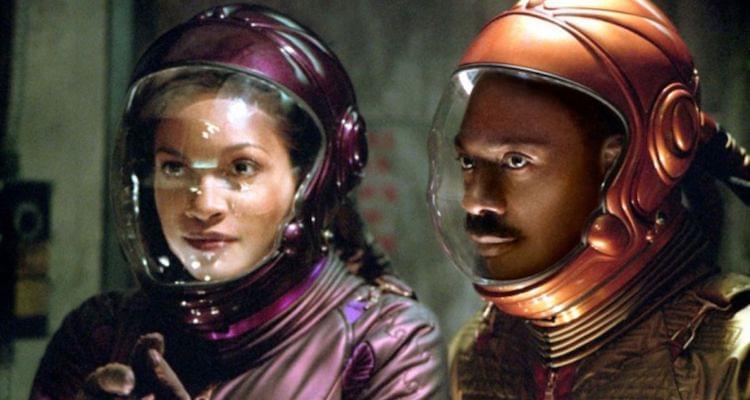
“Meet Dave,” on the other hand, is quite terrible, as expected. (My review is at Film.com.) It’s like Eddie Murphy’s doing it on purpose now. I note that the film is so bad, even Eddie Murphy didn’t want to sit through it.

On the more delightful side of things, “Kit Kittredge: An American Girl” is a perfectly pleasant thing to take your young daughter to. I bought a ticket for “Hancock” when I saw it, lest I appear creepy to the teenager selling tickets. My reputation among movie-theater employees is of the utmost importance to me.

Finally, there’s an independent film called “Garden Party” that isn’t very good and doesn’t have any stars and that you probably weren’t going to see anyway.

Sign up for the “In the Dark” e-zine here.
Listen to this week’s podcast version here.
Subscribe to the podcast’s feed with this URL.

Garden Party

0

They say you’re supposed to write what you know. The only problem with this system is that sometimes the only things you know are the same things everyone else knows, and so why bother?

I sense that this is the case with Jason Freeland, who wrote and directed “Garden Party.” I would guess that either he moved to Los Angeles with big dreams, the way so many other people do, or else he is a native who has seen a steady parade of Big Dreamers come and go. In any case, while “Garden Party” may indeed be an example of writing what you know, it has nothing to say. The characters aren’t interesting, and the stories toggle between tawdry and ridiculous. There’s nothing about the film worthy of outright disdain or disgust, but there’s not much worthy or praise, either. It’s a big fat “meh.”

At the center is Sally St. Clair (Vinessa Shaw), an attractive Realtor whose business is booming in large part because whenever she delivers new information on properties to clients, she also includes a bag of marijuana. Most of the leg work is actually done by her assistant, Nathan (Alexander Cendese), a Midwestern kid who chased his dreams to L.A. and is now the weed delivery boy for a sultry Realtor.

One night Sally meets Todd (Richard Gunn), an artist whose girlfriend doesn’t understand him. Sally and Toddy have a lot of perfectly innocuous conversations that are made, through their tone of voice and through the film’s musical score, to sound dirty.

Meanwhile, there is a teenage girl named April (Willa Holland) who moves out of the house because her pervy stepfather is always ogling her. We learn this when April takes a shower with the bathroom door open, then towels off and gets dressed with the bathroom door open, then gets very angry when she notices her stepfather is watching her through the bathroom door, which is open. I’m not saying he ought to be looking at her, but if your stepdad was often ill-behaved in this manner, wouldn’t you make a point of closing the door when you took a shower? I’m just sayin’.

Anyway, April leaves home and falls in with some lesbians. She also meets a young guy named Sammy (Erik Smith) who is a singer/songwriter and has just moved to town with nothing more than a guitar and some dreams. He’s been hanging out with Nathan, the Realtor’s assistant/weed delivery guy, who might be kind of gay and might have a thing for Sammy.

Finally, there’s a sleazy man who takes nude photographs of people and puts them on the Internet. He pays his models good money, though. I once heard a comedian joke about how if you move to L.A. without already knowing people and having a job lined up, within four days you’ll be doing porn. It’s funny because it’s true.

All of these stories have the potential to be interesting. But instead, they’ve been wound together into one of those “strangers affecting each other’s lives” things, so none of them get the care and handling they need. It doesn’t help that the performances are uniformly bland and unremarkable, and that the dialogue has howlers like this: “Everything around here is so dark, and I’m just looking for some light.”

There’s actually plenty of light in the film (and plenty of lighting up, too — everyone smokes weed all the time), and that’s part of the problem. Even the serious elements are treated superficially. There’s no depth or weight to anything. But then again, maybe that’s an accurate depiction of L.A. after all.

Journey to the Center of the Earth

0

If you thought the latest Indiana Jones adventure was implausible, wait till you see “Journey to the Center of the Earth”! It makes “Kingdom of the Crystal Skull” look like a documentary. It’s fun, though, and a perfectly good way for a family to spend a Saturday afternoon, particularly if that family has a lot of 8-to-12-year-old boys. I have friends with kids in that demographic, and watching the movie I thought, “Those guys will LOVE this.”

It was shot in digital 3D and is being exhibited that way in select theaters. By all means, if you see it, see it in 3D. The filmmakers indulge in some shameless gimmickry every now and then, making characters point things directly at the audience for no good reason, but for the most part the effects look fantastic. It’s a smart way to bring the story to life, even if the story in question is all spectacle and very little brain.

Brendan Fraser, getting back into wholesome action-hero mode, plays Trevor Anderson, a scientist who specializes in tectonic physics. That was the life’s work of his deceased brother, Max, whose 13-year-old son Sean (Josh Hutcherson) has now come to stay with Trevor for a few days. Trevor hasn’t seen his nephew in years and barely knows the lad. Sean, sullen and heavily into his PSP (that’s a portable video game system, old-timers), was only 2 or 3 when his dad disappeared.

Trevor finds his brother’s old paperback copy of Jules Verne’s “A Journey to the Center of the Earth,” in which Max made numerous elaborate notes detailing his theories on the potential reality of some of Verne’s fanciful notions. Somehow this results in Trevor and Sean dashing off to Iceland, where they seek to explore a particular mountain. Their guide is Hannah (Anita Briem), a fetching Icelandic woman whose late father also believed Verne’s tales were more fact than fiction. She leads them up the mountain and into a cave, whereupon the three of them do indeed take a voyage, or “journey,” if you will, to what you might call the “center” of the Earth.

The story has two immediate problems with plausibility. One is how they can possibly descend hundreds of miles into the Earth’s belly, and do so quickly, without killing themselves in the process. They’d have to fall, really, and it’s usually deadly to fall more than about 100 feet, let alone millions of feet.

The other problem is getting back up again.

But never mind. It turns out that the center of the Earth, despite having no light source, is extremely well-lit, and apparently there’s at least one cell phone tower (don’t ask), and the place teems with exotic flora and fauna, some of which are potentially deadly. (Wouldn’t it suck to survive a 100-mile fall, only to be eaten by a fish?) Special-effects veteran Eric Brevig, directing his first feature, keeps things moving quickly, essentially hopping from one action sequence to the next and leaving just enough time in between to catch your breath. The pacing is good. That’s crucial in a film like this, which could otherwise become so action-packed that it grows wearisome.

What the film doesn’t do (and its screenplay, attributed to three writers, is to blame) is bother to flesh out any of its characters. And it only has three of them! It’s exceedingly rare for an action film to have such a small cast — usually there are bad guys and enemies and allies and henchmen to deal with — and you notice that smallness all the more when the three of them are so thinly drawn. And the obligatory romance between Trevor and Hannah? Come on, movie. Your heart’s not in it. It’s OK for a man and a woman to appear together in a film and NOT kiss at the end, you know.

Much of what happens is hard to swallow even for a viewer who has willingly suspended his disbelief, and moments of genuine suspense are rare. On the other hand, a few sequences do produce some giddy enjoyment, and the characters, generic though they may be, are appealing. I never disliked the film. It’s an energetic, good-natured romp, and maybe that’s enough.

Meet Dave

0

“Meet Dave” is bad, obviously. You can tell from the trailer, and from the fact that it stars Eddie Murphy (in a dual role!), and from its director being Brian Robbins, whose previous crimes include “Hardball,” “The Perfect Score,” “The Shaggy Dog,” and “Norbit.” As a critic, you never want a film to be bad — you do have to sit through it, after all — but let’s be honest: The shocker here would have been if it were any good.

The film’s concept is actually promising, as far as sci-fi comedies go. It’s about an alien race of tiny people who come to Earth in a spacecraft built to look like a human man. Inside the ship is a crew of a few dozen of these aliens controlling the body’s movements, leading it around New York City in search of a lost orb that the aliens need to save their dying planet. To observers, of course, it just looks like a guy walkin’ around.

Murphy plays the ship’s inch-tall Captain, who doesn’t have a name, as well as the Earthling-sized spaceship, who calls himself Dave. Evidently the Captain is so renowned and admired on his home planet that they designed the ship to look like a giant version of him. He provides the ship’s speaking voice and governs its movements, barking commands to underlings who are numbered rather than named. Number 2 (Ed Helms) is deeply suspicious of Earthlings and wants to destroy them all. Number 3 (Gabrielle Union) is in charge of researching Earth’s culture (she is very bad at this, though the movie doesn’t acknowledge it) and is in love with the Captain. Number 4 (Pat Kilbane) is a rough and surly security officer, until the ship wanders into a Broadway performance of “A Chorus Line” (what, you can just slip in through a side door now?), whereupon he immediately becomes fantastically, flamboyantly, embarrassingly, stereotypically gay.

Starship Dave (which was the original title of the script, by the way) is crossing the street in New York when he happens to get hit by a car, which happens to be driven by Gina Morrison (Elizabeth Banks), whose young son Josh (Austin Lynd Myers) happens to have found the orb that the aliens are looking for. But a bully took the orb, which just looks like a rock, away from Josh, so there’s a delay in retrieving it. In the meantime, Dave becomes friends with Gina and Josh, who know that Dave is a little odd but have no idea he’s actually made of metal (or whatever) and contains a hundred tiny people.

The film — originally written by Bill Corbett of “Mystery Science Theater” and “Frasier” sitcom writer Rob Greenberg, though heaven knows what indignities befell it in the production process — fails in its execution by refusing to let the story drive the jokes, rather than the other way around. When the story drives the jokes, the laughs flow organically from the characters and the situations. When the jokes drive the story, as they do here, there is no internal logic or consistency. Characters and situations change haphazardly according to the needs of the gag at hand.

The aliens know all about the Earth’s physical properties (they’re after the salt in its oceans), and traveling here was obviously a major undertaking … yet they have done zero advance research on its customs, peoples, and practices. Why? So that we can have jokes where Dave behaves outlandishly or bizarrely. If he was prepared to fit in among the humans, you’d lose all that potential for cheap laughs!

Once they arrive, Number 3 is tasked with using the ship’s computers to learn as much as possible about Earthlings. (Again, why couldn’t they do this before they left?) When Gina mentions the Bee Gees to Dave, Dave quickly internalizes all the ship’s data on the Bee Gees and spouts some facts, then sings “Staying Alive.” Thirty seconds later, Gina hands Dave a bottle of ketchup to go on his eggs, and he drinks it. She mentions the family’s house cat, and when Number 3 Googles “cat,” she gets a video of a lion, so now Dave is terrified of the cat.

Well, which is it, movie? Are they rapidly gathering data and making Dave into a walking, talking computer? Or are they bumbling idiots who don’t know the difference between a house cat and a lion and can’t Google “ketchup” to see what it’s for?

Dave is wearing an out-of-fashion white suit. The explanation for this is that the only transmission the aliens ever got from Earth was an episode of “Fantasy Island,” and Ricardo Montalban wore a similar suit. That’s good for a laugh — but if they’ve been studying that TV show as their only source of information about Earth, they’d have learned at least some basic things like handshakes and customary greetings, and they would know what “laughter” is. Yet Dave is baffled by an outstretched hand, and he thinks “Welcome to Old Navy” is how Earthlings say hello to each other, and he has to mimic people when they laugh because otherwise he wouldn’t know how.

Well, which is it, movie? Was “Fantasy Island” their only source of info? Or was the “Fantasy Island” thing just so you could make the joke about Dave’s suit? Admit it, it was the joke thing, wasn’t it?

When Dave retrieves the orb from the bully, he holds the kid upside-down by his legs. The bully protests, “You’re giving me a wedgie!” I have to conclude from this that the filmmakers themselves are entirely unfamiliar with the human body, as being held upside-down would not produce a wedgie. In fact, it would produce the opposite, i.e., your pants and underwear would slide toward your feet. Why have him declare he’s getting a wedgie when he obviously isn’t? So that Dave can refer to the wedgie in a comically over-clinical fashion, of course, something about “your undergarments being forced uncomfortably into your rectum.”

You can’t go around changing the facts of the story just to fit whichever joke you’re currently trying to make. You have to decide the facts first, and then let the jokes stem from that. That’s Comedy 101. That’s common sense. That’s the difference between a funny movie and one that is weak, amateurish, and stupid.

“Meet Dave” is weak, amateurish, and stupid. It’s little more than an excuse for Murphy to mug, mince, and cavort, which at this point is a sad spectacle indeed. The film supposedly cost $100 million to make, but I don’t know where all that dough went, considering the special effects tend toward the cheap and unconvincing.

By the end, I was cringing with embarrassment over the clownish dialogue these poor actors were being forced to deliver. Hopefully, people like Elizabeth Banks and Ed Helms will learn from their mistakes and be more careful in their future career moves. Sadly, I doubt Eddie Murphy will. He has a history with this kind of thing. His next project? “A Thousand Words,” about a man who learns he only has that many words left to speak before he dies. It’s being directed by Brian Robbins. Heaven help us all.

Hellboy II: The Golden Army

0

What is it about me that makes me fail to love the “Hellboy” movies? I liked the first one well enough, albeit unenthusiastically, and now the sequel — “Hellboy II: The Golden Army” — strikes me as nothing more than moderately enjoyable, occasionally wonderful, and often overblown. Yet all around me people are positively adoring it. Is there a defect in my soul? Did I need to see “Meet Dave” before “Hellboy II,” not after it, in order to appreciate “Hellboy II” better?

Like its predecessor, this comic-book-based adventure was written and directed by Guillermo Del Toro, the supremely talented and visionary Mexican filmmaker whose “Pan’s Labyrinth” was one of the best films of 2006. “Hellboy II” is never less than extraordinary to look at, with all manner of fantasy-world beasties and bizarre contraptions filling the frame. The nice thing about Del Toro is that he’ll go to the trouble of making something look fantastical even when ordinary would have sufficed. His imagination and creativity are seemingly boundless.

Except when it comes to the story itself, that is. Credited to Del Toro and “Hellboy” comics creator Mike Mignola, the plot is standard fantasy stuff. Evil Prince Nuada (Luke Goss), a tall, severe-looking blond man, seeks to reawaken and control the indestructible “golden army” of mechanical super-soldiers by collecting the separate pieces of a magic crown. The crown was divided eons ago precisely to prevent anyone from taking charge of the army, and Nuada is acting against the wishes of his non-evil twin sister, Princess Nuala (Anna Walton).

Getting the crown fragments means wreaking havoc on the human world, which draws the attention of the U.S. Bureau for Paranormal Research and Defense. This secret government organization employs Hellboy (Ron Perlman), a non-evil demon with red skin, horns on his forehead, a tail, and an enormous right hand made of stone. Hellboy’s team is responsible for fighting the monsters when they appear in our world, and that means stopping Prince Nuada before he unleashes hell.

Perlman’s Hellboy continues to be casually sardonic, the way you like him, eager to annoy his officious boss Manning (Jeffrey Tambor) and pleased to appear regularly in YouTube videos. He’s balanced by Doug Jones as Abe Sapien, his prim, half-fish (or something) co-worker. Hellboy and fire-starter Liz Sherman (Selma Blair) are still a couple, but they’re having difficulties. Meanwhile, Abe is drawn to Princess Nuala. All of this sets up the story’s subtext about the crazy things we do for love, as well as justifying the film’s funniest scene: Hellboy and Abe drinking beer and commiserating about dames.

Yes, this summer we prefer our superheroes flawed and mildly alcoholic. Hellboy is a little more stable than Hancock, and “The Golden Army” flirts only briefly with his inner conflict over being a demon in a human world (working for humans, no less). Whatever psychological dramas might play out in Hellboy’s life are mostly left for later sequels (or not).

Del Toro’s action sequences are always a treat, and I’ve already alluded to the fantastic costumes, production design, and special effects. I assume some of the more monstrous characters are computer-generated, but they blend almost seamlessly with the real world. It’s hard to tell who’s a cartoon and who’s actually an actor in a rubber suit. It’s the dialogue that feels weaker this time around, lacking much of the first film’s zest and spark. The main exception: an enthusiastic German-born government agent named Johann Kraus, voiced by “Family Guy’s” Seth MacFarlane, whose cheerful verbosity is good for a lot of laughs.

So … yeah. I feel a little strange being ambiguous (but mostly positive) about a comic book franchise when everyone knows you’re supposed to choose sides and argue to the death, but there you have it. Enjoy your moment in the box office sun, Hellboy, before Batman destroys you.

Baby: Secret of the Lost Legend

Baby: Secret of the Lost Legend

Since the beginning of cinema, filmmakers have had a keen interest in at least two things: stories about dinosaurs, and exploiting Africans. “Baby: Secret of the Lost Legend” is a 1985 exercise in both, and it finally answers the age-old question, “How cheap can we make these dinosaurs look and still expect people to watch the movie?” The answer? Slightly less cheap than this.

“Baby” comes to us from the people at Disney, who were going through a rough patch in the 1980s and decided the best way to get audiences back was to make their films look as terrible as possible. Disney distributed this film under its Touchstone banner, which gave the movie license to do things like say swear words and show naked bosoms and depict a dinosaur eating someone. It is said that upon the release of this film, the angry ghost of Walt Disney stalked the halls of his company’s headquarters and in vengeance devoured three souls.

We start in: A City! Not a specific one, just A City. There is a rather listless African culture parade shuffling down the street, apropos of nothing, and meanwhile a white business-y guy gets stabbed in an alley, perhaps also apropos of nothing. But never mind all that, because immediately the movie takes us to West Africa and acts like that stuff didn’t happen. Now we’re at a paleontological dig, where a prissy sportswriter named George (William Katt) is hanging out with his wife, Susan (Sean Young), who’s actually a paleontologist and has a good reason to be there.

Susan is not very high on the fossil-industry totem pole, so she is not taken seriously when she brings in a bone that seems to have come from a dinosaur except that it’s only a few decades old. Her elderly British boss, Eric (Patrick McGoohan), says it’s just a giraffe. Susan says, “I have the funniest feeling about this bone,” which is not something that people in movies say very often.

It turns out Eric is secretly on an expedition to look for the prehistoric creature that local legend says is living out in the jungles. People have been looking for it for years but have never found definitive proof it exists. Accompanied by his fey, mewling assistant, Nigel (Julian Fellowes) — which is what all British characters are named by default unless the screenwriter manually overrides the system — Eric secretly sets out to investigate Susan’s find.

Meanwhile, Susan learns that native tribes not too far away have been getting sick from eating meat from an animal they’d never eaten before (note to self: do not eat new animals), and thinking this might relate to the funny-feeling-inducing bone she found, she wants to go check it out. Trouble is, she and George were just about to head home to America so George could begin his new sportswriting job. They discuss whether to stay in Africa or go home; George indicates that he is unconcerned about Susan’s needs or desires and that they will head home at once; the matter is settled; Susan sneaks off without him in the middle of the night.

(I should stress that while I’m making George sound like a jerk, the movie doesn’t think he is one. He’s meant to be the male lead, the hero. He just happens to be humorless, controlling, and ineffectual, like all your best leading men.)

George chases after his wife, angrily calling her names the whole time, and is furious when he catches up with her out in the jungle. (George makes his own “George of the Jungle” reference, so I don’t have to.) But they are soon wrapped up in the matter at hand, which is that a dying man has drawn a picture of the animal he ate, and it looks like a brontosaurus. He doesn’t draw the fact that it’s dead, and that it has bites taken out of it, but you get the idea. Our heroes immediately set out to look for it — and the matter of Susan running off and George being a belligerent jerk is never addressed again.

Sure enough, they manage to find a dinosaur. And by “find,” I mean they’re just lying in their tent in a not-particularly-remote part of the jungle when a dinosaur walks past. (How is it that there were numerous failed expeditions before this one? Who were they sending? The blind and deaf?) George and Susan discover three brontosauruses, in fact, a momma dinosaur, a poppa dinosaur, and a baby dinosaur. They look a lot like the miniature models used in films! Except for when they look like animatronic puppets, I mean.

George and Susan are friends with a local tribe of Africans, the kind who carry spears and are mostly naked — you know, the National Geographic kind of Africans. But Eric and his crew have joined forces with a more civilized group of natives, by which I mean they dress in military fatigues and carry guns. It’s the latter group who kill daddy dino and capture mommy dino while George and Susan are off playing with baby dino in the forest. George, our hero, in a rare moment of actual attempted heroism, tries to intervene, and he is laid out by a soldier with a single karate chop to the neck. George will never again try to do anything.

The rest of the film consists of Eric and his bad guys trying to transport a tranquilized adult female brontosaurus through the jungle and back to civilization so Eric can study it, while George and Susan keep the baby dino with them, like a pet, and try to rescue its momma from her captors. The whole scenario lends itself readily to spectacular failure for everyone involved, and I’m pleased to note that all parties take full advantage of this. On Eric’s side of things, they’re faced with the fact that giving the dinosaur too much sedative will kill it, while allowing the sedative to wear off will allow it to wake up, break free from the ropes, and slay them all.

For George and Susan’s part, their difficulties arise from incompetence, apathy, and general ill-suitedness for the tasks at hand. At one point they take a break from running for their lives and thwarting evildoers to engage in sexual congress on the grassy jungle floor. The baby dinosaur, whom they call “Baby,” playfully interrupts them, as tykes are wont to do, and they shoo her away. Then, when they are finished, they are alarmed to discover that Baby is nowhere to be found. In summary: the dinosaur pestered them; they told it to go away; it went away; then they were concerned about the fact that it had gone away. Our heroes, ladies and gentlemen.

What strikes me most about the film is how boring it is. All of the human characters are dull, petulant, and unappealing, and the dinosaurs are barely convincing as Muppets, let alone as actual dinosaurs. Why do films about people traipsing into Africa looking for folkloric beasts always turn out so lousy? Are such adventures not inherently rife with thrilling possibilities? You would think they were. Then again, when the heroine says things like “I have the funniest feeling about this bone,” that’s probably a strong indication that the story will be proceeding downhill rapidly.

— Film.com

Eric’s Bad Movies: ‘Baby: Secret of the Lost Legend’ (1985)

26

Dinosaurs, or at least their cheap-looking equivalents, are at the heart of this week’s edition of “Eric’s Bad Movies” at Film.com. It’s “Baby: Secret of the Lost Legend,” a throwaway offering from Disney in 1985 that stars William Katt, best known for playing the lead in TV’s “The Greatest American Hero.” He appears in the film shorn of his trademark curly blond afro, however.

Do other people approximately my age (33) remember this film? I never saw it, but I vividly remember the commercials for it, and the title and premise have always been at the back of my mind. Maybe it made a big impression on me because it involved dinosaurs, which are very cool to 10-year-olds. What I never realized at the time was that the movie is really, really bad.

Next week’s film will be timely and appropriate. That’s your only clue.

Some ‘WALL-E’ stuff

15

A couple of readers recently posted “WALL-E”-related questions that warrant attention…

I don’t know much about the Oscars, but are animated films eligible for best picture? (I’m thinking of “Wall-E” here obviously).

Yes, any type of film is eligible for Best Picture, including types for which there is also a special category, i.e., animated films, documentaries, and foreign films. Only one cartoon, “Beauty and the Beast,” has ever been nominated, though, and the addition in 2001 of the Best Animated Feature category kind of ghettoizes cartoons, in my opinion. Academy voters figure, “Oh, we don’t have to bother considering the animated films for the top honors, because they have their own special category over here.”

But the fact is, animated films are often among the very best movies of any kind in a given year, and there’s already talk that “WALL-E” might break through the barriers and get a Best Picture nomination. At any rate, it’ll definitely win the Best Animated Film category.

Can it be nominated in both categories? Yes.

Thanks for your bad movie recommendations

16

Thanks to the many people who offered suggestions for “Eric’s Bad Movies” when I put out the call last week! There were some excellent recommendations that I have added to my Netflix queue. The people at Netflix, meanwhile, must think I’ve recently suffered brain damage, or married someone stupid.

By my count, you suggested a total of 177 different films. Many of those had to be eliminated because I’d already reviewed them (including three that were the subjects of “Eric’s Bad Movies,” AHEM), or because they are unavailable on DVD (including “North” and Michael Jackson’s “Moonwalker”), or because I consider them too obscure. I might get to the obscure titles eventually, but for now I think there are enough suitable candidates that are well-known.

I also had to eliminate some for not being bad enough, or, in some cases, for not being bad at all. A few more, like “American Psycho 2,” were disqualified for being direct-to-video films. At least one film had to be disqualified for not existing — unless the person who suggested “Daisies” meant the 1966 Czech film by that name, in which case it’s disqualified for being obscure, as well as for being actually rather well-regarded by those who are familiar with.

Some people freely admitted that the films they were suggesting were ineligible, yet suggested them anyway, presumably because they like to hear the sound of their own voices. You see that a lot on the Internet: “I have nothing useful to add to this discussion, but I must speak anyway, lest others be deprived of my words!” So if someone really, really wanted a forum to post their list of least favorite movies, most of which aren’t eligible for this feature, then I guess I’m glad I could provide an opportunity.

But I wound up with about 30 titles that I’ve added to my list, including several that made me say, “Oh! Yes! Of course! How could I have forgotten ‘Inspector Gadget’?!” (for example). Between those and the ones I’d already come up with, we should be set for a year of “Eric’s Bad Movies.” And that’s if I hold myself to only one Stallone movie! If I cover each of his cinematic offenses, we’re set until the year 2014.

Your obligatory ‘Snide Remarks’ column about gas prices

0

New “Snide Remarks”! Called “Gas Pains”! Topical!

This week’s “Snide Remarks,” including the audio version, is here.
The audio version (i.e., the podcast) is also here.
Subscribe to the podcast’s feed with this URL.

Gas Pains

0
Gas Pains

For years, we Americans have dealt with rising gas prices the way we’ve dealt with most of our other problems: by complaining, and doing nothing else. Until recently, this was sufficient. We’d grumble about the highway robbery at the gas pump, and that made us feel a little better as we continued to drive exactly as much as we had before.

It’s been a rather fascinating experiment in economics and human nature. How expensive would gas have to get before it actually began to affect people’s driving habits? Everyone thought it would happen at $2 a gallon. They thought $2 is where people would say, “OK, enough is enough, I am going to make a concerted effort to drive less!” But no. Two dollars came and went and the only thing that changed was the amount of complaining, which went up. So would it be $3 a gallon, then? Nope. Three dollars made people wistful and nostalgic for the good ol’ days when it was only $2, six months earlier, but the demand for gasoline did not go down. Four dollars, then? Yes! A-ha! Four dollars is the tipping point.

According to the Department of Transportation, Americans drove 1.4 billion fewer highway miles in April 2008 than we did in April 2007, and that was the sixth consecutive month of such declines. On top of that, sales of gas-guzzling SUVs are down 38 percent from last year, while sales of more fuel-efficient cars are way up. Furthermore, the failing economy and continued cutting of jobs have enabled some people to stop driving to work altogether. See? Everybody’s doing their part.

I’ve been lucky. The outrageous gas prices haven’t dramatically affected me because I mostly work from home. Mind you, this has not stopped me from complaining. Sometimes I have to drive 14 miles to a theater in the suburbs for a movie screening, which means I’m using a gallon of gasoline round-trip, and then sometimes the movie turns out to be something terrible like “27 Dresses.” I try to take a deep breath and remind myself that in poor, developing countries, people must travel hundreds of miles to see “27 Dresses,” and that they still have to pay for the movie tickets when they get there. But it’s hard to keep that kind of perspective at all times.

So why have gas prices risen so precipitously? It depends on whom you ask. The obvious culprits would be the oil companies; Exxon Mobil, the largest of them, made $40 billion in profits last year. And considering the Supreme Court recently reduced the company’s fine for the Valdez oil spill from $2.5 billion to just $500 million — or approximately 4 1/2 days’ worth of profits — you’d think they’d be sittin’ mighty pretty these days. But others will tell you that the oil companies aren’t actually doing all that well, and that the real cause of the problem is financial speculators. Speculation is involved in oil prices, and it is a mysterious practice that no one fully understands, not even me. I could tell you what I think speculation is, and what it has to do with oil prices, but I’d only be guessing. I’d be speculating on what speculation is. And that wouldn’t be beneficial to anyone. So I continue to blame the people I’ve always blamed for high gas prices: the gas station employees who actually put the numbers up on the signs. I hate all those guys.

When the topic of gas prices comes up in online discussions, smug people will often say smug things like, “You want to combat gas prices? Buy a bicycle.” Which is all well and good if you live within a couple miles of where you work, and if you work in a place where it’s OK to arrive dripping with sweat. For example, if you work at a gym, or a slaughterhouse. But those conditions don’t apply to most people, so the bike option is unrealistic.

Still, most people can reduce their gasoline usage at least a little bit without grossly inconveniencing themselves, and that’s what many Americans are doing now. It’s often simple things like this.

TIPS FOR REDUCING YOUR GASOLINE USAGE

1. Rather than making many short trips all over town to run your errands, consolidate them into one trip to Wal-Mart, and make your husband go, in his car.

2. Though it is annoying to have to wait for your car to warm up when you first start it in the morning, you should not get around that by just leaving it running overnight.

3. Public transportation is a great way to get around, especially if you like homeless people and being late.

4. Would it kill you to walk someplace every now and then, fatty?

5. Fill up a five-gallon container of gasoline now and keep it in your garage. That way, if inflation continues to rise, you’ll have it handy for when you need to set your house on fire and collect the insurance money.

6. Cars that run on garbage instead of gasoline, like in “Back to the Future,” have not been invented yet. Still, there’s no harm in trying it.

7. Driving less does result in less air pollution, fewer traffic accidents, and greater overall public health. But don’t worry: It’s OK to reduce your driving strictly to save money on gas, too, you selfish bastard.

8. Check around to find out which of your neighbors are carpooling to work. Then, find out which person isn’t driving that day, and take his car.

9. Men who drive Hummers are tools with inferiority complexes. I don’t have a gas-saving tip here; I just wanted to mention it.

10. The more people who reduce their driving, the fewer cars there are on the road — which will make it that much easier for those of us who aren’t poverty-stricken hippies to drive places.


[ This behind-the-scenes tidbit might not be interesting to anyone except me, but I wasn’t sure where this column was going to go when I first sat down to write it. The topic of rising gas prices was pretty much all I had. So I used the time-honored practice, endorsed in high school English classes the world over, of “free writing” — you know, where you just write whatever comes to mind, even if it’s bad, and let the ideas flow out of you. That method actually works, and real writers actually use it. (Most of the other stuff you learned about writing in your high school English class is useless, unfortunately.) Most of what came out didn’t make it into the final column, but the seeds were there.
Specifically, the list of 10 gas-saving tips began as a single sentence: “People are reducing their gas usage through small techniques like consolidating their errands into one trip, and not leaving the car running overnight to avoid having to wait for it to warm up in the morning.” I wanted another ludicrous example of gas-wasting to add to the sentence, and that idea evolved into the list. ]

Kabluey

0

Independent films about 30-year-old boy-men who don’t know what to do with their lives are as plentiful as snowflakes at Sundance. So when someone finds a way to freshen up the old format, as Scott Prendergast does in “Kabluey,” you take notice.

“Kabluey” takes elements of early-mid-life existential crisis, mixes them with Iraq War anxiety, then pours the whole thing into a blue foam-rubber mascot costume. There are terrible children who earn laughs by being monsters. There is someone dressed as a giant wedge of cheese. In short, there is oddness and whimsy and ingenuity — exactly what it takes to get an indie film noticed.

Prendergast wrote and directed the film (his first feature) and stars as Salman (like Rushdie), a layabout who’s been fired from all of his dead-end jobs, most recently at a copy shop, where he became obsessed with the laminator. His brother is a National Reservist whose tour in Iraq has just been extended, so Salman moves in with his sister-in-law, Leslie (Lisa Kudrow), to help her take care of his hellion nephews.

The boys, Lincoln (Landon Henninger) and Cameron (Cameron Wofford), are somewhere between 4 and 7 years old, both undisciplined and awful. Leslie, exhausted from being a single mom and worried sick about her soldier husband, can’t wait to get back to work and leave the brats in the hands of their uncle. And then, for reasons known only to them, the boys decide they hate Salman and want to kill him.

But that is only the first part of the film, a mere diversion before we get to the meat of it. Leslie gets a job for Salman. (Why would she do that when the whole point of his moving in was to take care of the kids during the day? Shh! Don’t ask questions.) The job involves handing out fliers advertising available office space. It also involves wearing the costume of the company’s mascot, Kabluey, a tall blue finger-less figure with an enormously oversize round head and no facial features. The size of Kabluey’s giant noggin makes it lean forward, so that even with no mouth or eyes, Kabluey always looks sad and dejected.

Prendergast, an improvisational comedian, can work a sight gag like nobody’s business (the image of Salman’s hand reaching out from the back of the Kabluey costume will always make me laugh), and Salman’s torment at the hands of his nephews and his misadventures in the big dumb costume are wonderfully funny. Salman is lovably pitiful, but also sensitive to his sister-in-law’s complicated emotions. He may have closed himself off from the world, but he still wants his brother’s family to be safe and happy. If it takes an absurd job and a ridiculous costume to save the day, well, so be it.

Gonzo: The Life and Work of Dr. Hunter S. Thompson (documentary)

0

Hunter S. Thompson approached life like one long, extended suicide attempt, so no one was terribly surprised when he finally finished the job in 2005 at age 67. Least surprised were his family members, who were home with him when he pulled the trigger and today have fond memories of that weekend, like it was a lovely family gathering.

That’s just one of the many delightfully odd details of Thompson’s life conveyed in “Gonzo: The Life and Work of Dr. Hunter S. Thompson,” a smooth new documentary by Alex Gibney (“Enron: The Smartest Guys in the Room,” “Taxi to the Dark Side”). Like most biographies, the film makes ample use of talking heads and old footage — but since everyone’s talking about Hunter S. Thompson, you know they’re going to be interesting, not to mention diverse (Pat Buchanan and Tom Wolfe were both old friends of his).

Thompson was a journalist, a novelist, and an ambitious partaker of mind-altering substances, perhaps best-known to younger audiences for “Fear and Loathing in Las Vegas,” which featured his alter ego Raoul Duke and was made into a film starring Johnny Depp. (Depp reads some of Hunter’s prose in the film.) When Thompson died, NBC’s Brian Williams eulogized him as a “professional troublemaker,” and that’s a pretty accurate summation. Gibney’s documentary gives the impression that Thompson was generally anti-establishment — whatever The Man wanted, Thompson wanted the opposite.

He missed his own high school graduation because he was in jail. He ran for sheriff of Aspen, Colo. When he met Ralph Steadman, who would go on to be his long-time illustrator, the first thing he did was introduce him to mescaline. He spent a year in the 1960s with the Hell’s Angels. He covered the 1972 George McGovern presidential campaign for Rolling Stone, and dutifully reported that there was a rumor about McGovern’s opponent, Edmund Muskie, being on drugs. True enough, such a rumor was making the rounds. And who started the rumor? Hunter S. Thompson.

The documentary benefits from abundant footage of Thompson himself, shot over the last four decades, giving the viewer plenty of opportunities to see the crazy fellow in action. Interviews with his ex-wives reveal that he was both generous and vicious, and that while he was aware of both sides of his personality, he couldn’t seem to control them. Thompson admirers will enjoy the film the most, of course, but even the uninitiated will surely find him a fascinating character, if not always a likable one.

Patch Adams

Patch Adams

In a good movie, the hero faces difficulties that the audience can recognize and identify with, and he overcomes them through his own strength and tenacity. That’s in a good movie. In a bad movie — say, “Patch Adams,” to choose one example purely at random — the hero faces obstacles that are contrived and fake and bear no resemblance to real life but that give him the opportunity to show how awesome he is in defeating them.

Smart audiences see through the ruse. They say, “Why should I feel inspired by this idiot’s ability to overcome phony obstacles? This movie is trying to manipulate me!” Dumb audiences fall for it. They say, “‘Patch Adams’ made me cry! Robin Williams is so funny! I believe ‘Two and a Half Men’ is the wittiest show on TV, and that the most authentic Italian food in America can be found at Olive Garden! I am entertained by anything that is bland, inoffensive, and formulaic!” (I am paraphrasing the dumb audiences.)

“Patch Adams” is so simple-minded and clumsy that you’d think it was a propaganda film made by the Patch Adams Corporation to convince the public that Patch Adams is the Messiah. He is presented as a character without flaws — or, rather, despite his many obvious flaws, the movie tries to convince us that he is perfect. Replace director Tom Shadyac with Leni Riefenstahl and Patch Adams with Hitler and you’ve got “Triumph of the Will,” only less funny.

Hunter “Patch” Adams, who is a real person, is played in the film by one-time funnyman Robin Williams. (I use the term literally: He was funny one time. It was a Thursday, and it was in 1978.) We begin with a suicidal Hunter Adams checking himself into a mental institution and immediately bringing about transformations in the other patients that the trained staff have been unable to achieve despite months of effort. It turns out all anyone ever needed was some soft wisdom, corny jokes, and the fake-humble smile that Robin Williams does that makes me want to never stop slapping him. Why, if they’d only known that before, they could have fired all the doctors and tossed the medications!

It’s while he’s in the nuthouse that Hunter adopts the nickname Patch and decides he wants to be a doctor. After all, he’s a natural at helping people, and doing it makes him happy. And who better to entrust your medical care to than a man who became a doctor on a whim after trying to kill himself?

We skip ahead two years. Now he’s entering medical school and running afoul of everyone he meets. This is because everyone he meets is set up to be prickly, dour, and conservative, all the better to delight us when Patch takes ’em down a peg or two. For example, when he meets his roommate, a serious student named Mitch (Philip Seymour Hoffman), the first thing out of Mitch’s mouth is that he won a scientific achievement award when he was an undergrad. He mentions this apropos of nothing, even though no real person would do so. And why does he do it? So we’ll know instantly that he is a stick-in-the-mud, and so that Patch Adams can deflate his pomposity with a joke about how he, Patch, won a prize for a drawing he made in third grade, or something. See? Patch Adams is down-to-earth and normal! Not like all those stuffed shirts around him!

Another person who doesn’t like Patch (besides me) is the crusty old Dean Walcott (Bob Gunton). He states his mission on the very first day: “We’re going to train the humanity out of you and make you into something better! We’re going to make doctors out of you!” Everyone except Patch thinks this is a great idea. But Patch insists doctors should be humane and nice and interested in people as individuals. The movie wants you to think Patch’s philosophy is revolutionary, conveniently overlooking the fact that it isn’t. Patch is setting out to solve a problem that doesn’t actually exist.

Though medical students aren’t supposed to interact with patients at the hospital until their third year, Patch starts doing so immediately. He doesn’t give diagnoses or dispense medicine, of course; he simply clowns around like a jackass and makes cancer kids laugh. The fact that they are entertained by Patch — whose jokes all sound suspiciously like Robin Williams’ carefully planned “ad libs” — is evidence of their deteriorating mental faculties.

But you’re not supposed to make people laugh! says the crusty old dean. (Boo! He’s the villain! BOOO!)

I’m just trying to treat people like human beings! Patch says. (Yay! Our hero! He’s so wise! I WANT TO LICK HIM!!)

As you watch the film (which I am not suggesting you should do), you might occasionally wonder whether a particular character’s opinions are right or wrong. The movie has made it easy to keep track, however. Simply ask yourself this: Is the character in question named Patch Adams? If yes, then the character is right. If no, then the character is wrong. The only way a person who is not Patch Adams can ever be right is if that person says something that Patch Adams agrees with.

You’ll have to remind yourself of this a lot, because otherwise you might think some of Patch’s attitudes and actions are wrong. Like when he operates a medical clinic without a license, for example, or when he steals supplies from the hospital. Just remember: Right or wrong, Patch Adams is always right.

The dean says to Patch, “You don’t necessarily think the rules apply to you.” This is a very astute observation, and it is accurate. But Patch’s response is, “Not all the rules, sir. But the Golden Rule, I think that applies to everyone.”

Yeah, mm-hmm, good point. Except wait, it has nothing to do with what we were talking about. It’s a complete non sequitur. But again, if the movie has outsmarted you, you think, “You tell him, Patch! Take that jerk down a notch!”

Another example of a faux-wise thing that Patch says: “Only human beings kill their own species.” Which would be very thought-provoking if it were, you know, true.

Late in the film, a terrible event happens. A suicidal man kills someone else and himself. It is Patch’s fault, because he was using his own whimsical method of healthcare — i.e., rubber noses and stupid jokes — to treat a man who clearly needed to see a real psychiatrist and obtain real medication. Patch feels guilty for approximately three seconds and considers abandoning his life’s work. Fortunately, this crisis of faith is resolved when everyone — including his sullen roommate Mitch — tells him how great he is. Whew! Crisis averted!

Here is a partial list of problems in this movie that Patch solves simply by bein’ Patch:

– A man dying of pancreatic cancer who has been grumpy and mean to the nurses warms up to Patch — so much that in his final moments on earth, he prefers to have Patch by his side rather than his own wife and children.

– A fellow student named Carin (Monica Potter) was sexually abused as a child and has hated men ever since — until she meets Patch, that is!

– A crazy guy refuses to leave his bed because of invisible squirrels. Patch cures him by pretending to shoot the squirrels with invisible guns. Done and done!

– Mitch thought to be a doctor meant studying really hard and learning as much as possible about the human body. Patch showed him that it’s actually more important to call patients by their first names and smile when you talk to them. Take that, Hippocrates!

– All of mankind is doomed by nature to eventually grow old and die. Patch uses his powers of mirth to reverse this process and grant everyone immortality. Suck it, Death!

Just kidding on the last one, though it’s not very far-fetched considering how highly the film esteems Patch Adams. Everything he says to everyone else is fodder for deep thought and contemplation, while everything that everyone says to him — particular if it is meant to correct or reprimand him — is foolish and easily dismissed.

Real people — and, I might add, realistic movie characters — suffer setbacks, but not our Patch. He merely endures a few brief moments where it looks like he might have suffered a setback before he discovers that there was no setback after all. Real people also learn and grow and develop and change, but not our Patch. Patch is already a faultless, sainted being when the movie starts. What, would you seek to improve upon perfection?! Blasphemy! He is Patch Adams, mighty savior of all mankind! BOW DOWN BEFORE HIM!

— Film.com

Wanted: ‘Eric’s Bad Movies’ suggestions

125

The “Eric’s Bad Movies” feature at Film.com is three months old now, and it’s time for me to request your help once again in coming up with appropriate selections for the column. Many of you gave suggestions when I first announced “Eric’s Bad Movies,” and I’ve used a few of them and plan to use a few more. So I appreciate your help! And now I want more of it!

The column’s archives are here, so you can see what I’ve already covered. Beyond that, I have a few rules for the types of films that are most useful. I reserve the right to break these rules (except #1 and #2) if I want to; they’re more like personal guidelines. For example, despite rule #3, I think there might be some “Batman & Robin” in my future. But if you’re suggesting titles, try to keep them within these parameters.

1. It needs to be bad. And not just bad, but really bad. Mediocre won’t cut it. A film that is merely mediocre is a waste of my time.

2. It must have been released in theaters. No straight-to-video releases or made-for-TV movies.

Eric’s Bad Movies: Patch Adams (1998)

25

There was a flurry of wrong guesses last week, but only one commenter got it right: This week’s Bad Movie at Film.com is “Patch Adams,” a wretched, manipulative sham that stands as the supreme example of Movies That Make Us Want to Smack Robin Williams. So nice guessing, whoever it was!

Here is my anecdote concerning “Patch Adams.” In early January of 1999, I went with a friend to a theater in Salt Lake City for a screening of “A Civil Action.” I wasn’t really reviewing movies yet, but I’d gotten an invitation at the newspaper I worked for, so hey, why not. However, we arrived with just moments to spare before showtime, and the theater was already packed, so we couldn’t get in. Not wanting to waste the trip, we decided to see something that was also playing at this theater … and for some reason we chose “Patch Adams.” I don’t vividly recall my reaction, but I know it was not positive. Even with my critical skills still at a rudimentary level I saw through the film’s shameless fraudulence. Watching it again last week, I hated it rather passionately. There were a few times when I was yelling and gesticulating at the TV.

As for next week’s movie, it was going to be “My Giant,” starring Billy Crystal and a very tall man. But I sat down to watch it the other night and was dismayed to learn that it’s actually not all that bad. I’m not saying it’s good, just that it’s not terrible. More like a mediocre but good-natured sitcom. I had to turn it off after a half hour or so because I couldn’t afford to waste my time watching something that wasn’t excruciating. You see what my life has become.

So you get to guess on what the replacement film for next week is. (Don’t worry, I’ve watched it, and it’s appropriately awful.) Your clues are that it was released in the mid ’80s (think ’84-’86); it was rated PG and generally aimed at families; it starred someone who had previously starred in a cult-favorite TV show; and though it was a box office flop, I think many people will recognize the title and basic premise. You might have even seen it on video.

Guess away! And in the meantime, enjoy my assessment of “Patch Adams.”

The Wackness

0

A more apt title for “The Wackness” would be “The Wackiness,” as in, “Look at all the wackiness we’ve manufactured for you!” Just as the lily-white central character tries desperately to come off as “street” and “hip” while simultaneously trying to look like he’s NOT trying, so does the film try to assert its coolness without letting its exertions show. The result is a so-so comedy with some genuinely funny scenes, punctuated with too many trying-too-hard elements.

Look at the Ben Kingsley character. He plays a Manhattan psychiatrist who trades therapy for pot. His life is a mess. He makes out with Mary-Kate Olsen. (See preceding statement.) He is kooky and nutty — but not in a real way. He is kooky and nutty in the way that movie characters are. I laughed at him now and then, but I never really believed him. For a film that purports to trade in slice-of-life realism, that’s a major liability.

Kingsley gets his weed from Luke Shapiro, the film’s protagonist, played by Nickelodeon’s Josh Peck. The year is 1994, and New York City is in transition, with Mayor Giuliani cleaning things up, and, some say, eliminating the city’s character and personality in the process. Luke is in a period of flux as well, having just graduated from high school and slumping through life as a typical teenage douchebag. He sells weed full-time from an ice cream cart, stopping in once a week to visit Dr. Squires (Kingsley) while also harboring a crush on Squires’ stepdaughter, Stephanie (Olivia Thirlby).

Luke be frontin’ like he all street and s***, but he know he ain’t. Peppering his slang with gangsta declamations like “I got mad love for you, shorty” and the noun of the film’s title (it’s a state of being that is the opposite of dopeness), he’s a poser and a clown. He’s not the butt of the film’s jokes, though — this isn’t a situation where we’re supposed to laugh at the protagonist’s cluelessness. I think we’re meant to take him more or less at face value and accept his idiocy as nothing more than typical teenage insecurity.

Written and directed by Jonathan Levine (whose feature debut, “All the Boys Love Mandy Lane,” is an outstanding horror flick still awaiting theatrical release), “The Wackness” focuses on two parallel relationships. In one, Stephanie starts to warm up to Luke, their romance expanding over the course of the hot summer. In the other, Dr. Squires tries to rekindle his cold marriage to Stephanie’s trophy-wife mother (Famke Janssen). In the background, Luke’s own parents fight constantly over money problems.

But the strange friendship between Luke and Dr. Squires is the real meat of the story. With as good as both of these actors are — Peck is likable even when his character is annoying; Kingsley’s credits do not need reiteration here — their interaction has the potential to be witty, endearing, and outstanding. But they’re hamstrung by Levine’s jokey screenplay and flagrant attempts to wring laughs out of the audience merely by invoking mid-’90s nostalgia. Sorry, but references to Biggie Smalls and O.J. Simpson are not automatically funny.

Most of the film is presented in bleak, desaturated colors, while at other times the images are gauzy and dreamlike, shot in soft focus. There is no discernible reason for the variations. While the movie can hop from goofy to maudlin at the drop of a hat, the visual shifts don’t correspond to the shifts in tone.

I’ve seen responses to the film both lavish and disdainful, and I find myself in a weird middle ground, in that the movie inspired no particularly strong feelings in me one way or the other. Even at 95 minutes it is definitely too long, with at least a half-dozen scenes that could be eliminated without doing damage to the story. On the other hand, it has some laughs and a story line that’s generally appealing. I wouldn’t expend a lot of effort to see it again, but I probably wouldn’t change the channel if I saw it on cable, either.

The best films of 2008 so far

11

We’ve used up half of 2008, folks. We’d better start conserving or we’ll run out of 2008 within six months, seven tops.

As of the midpoint, I’ve watched 225 movies so far this year. Holy crap, can that be right? Wow. I guess it is. At that rate, I’ll have 450 by the end of the year. But that rate won’t continue, because the first half of the year was crammed with film festivals (Sundance, SXSW, CineVegas), while the second half will have one at the most. Still, the point is the same: I watch a lot of movies.

Not all of those were for review. Some were just me watchin’ a movie for fun. And two of them were “Anchorman.” (Why have I watched “Anchorman” twice so far this year? I dunno. Long story.) But of those that I have reviewed, here’s what I’ve liked the best. Please note that this list is non-binding, and if some of these don’t wind up on the year-end list, or wind up in a different order, you’re not allowed to yell at me or question my methods for YOU ARE NOT THE BOSS OF ME.

Top 10 Movies of 2008 So Far

1. “WALL-E”
2. “American Teen” (in theaters this month)
3. “Son of Rambow”
4. “Young @ Heart”
5. “Cloverfield”
6. “Dear Zachary” (see below)
7. “Snow Angels”
8. “Funny Games”
9. “The Signal”
10. “The Promotion”

Number 6 is a documentary that played at Slamdance and SXSW that I just barely got around to watching. It’s one of the most emotionally wrenching films I’ve ever seen. Last I heard, they’re looking at an August theatrical release for it. I’ll write up a review soon-ish.

Rotten Tomatoes minority report

8

Rotten Tomatoes, now celebrating its 10th anniversary, operates on a simple concept. It looks at all* the movie reviews on the Internet, translates each into either “Fresh” or “Rotten” (i.e., positive or negative), then tells you what percentage of critics liked a particular movie. If the percentage is 60 or higher, then the film is considered “Fresh.”

“WALL-E” is the “Freshest” movie of the year so far, with a current Tomatometer score of 96% — that is, 147 out of 153 critics reviewed it favorably. Those other six critics … well, they’re in the distinct minority.

And so I got to thinking: When have I been in the distinct minority? What is the “Freshest” movie that I’ve ever given a “Rotten” rating to?

Each individual critic’s page at Rotten Tomatoes (here’s mine) actually lets you sort his or her reviews by Tomatometer, making it easy to check: It was “The Pianist,” which has a 95% Tomatometer score. I gave it a C+, which is just barely on the “Rotten” side, but “Rotten” nonetheless. I’m one of only eight critics (out of 165) to review it negatively.

Kit Kittredge: An American Girl

0

You watch that Abigail Breslin. At 12 years old, she’s already been nominated for an Oscar (for “Little Miss Sunshine”), and “Kit Kittredge: An American Girl” proves it was no fluke. She’s the real deal — naturally charismatic, instantly likable, and more than capable as an actress. The kid’s gonna go far! Assuming she stays off the drugs, I mean.

It’s on Breslin’s pre-adolescent little shoulders that “Kit Kittredge” sits, and she carries it along just fine. Kit is part of the American Girl series of dolls, as I suspect many of you already know, and the dolls each have elaborate backstories associated with them, enumerated in books and stories and I don’t know what all. This is the first theatrical film to tell an American Girl’s story (there were some TV movies before), and surely it will delight its target audience. I’m nowhere near that demographic, and I found it quite pleasant, quite pleasant indeed.

The year is 1934, the height of the Great Depression, and Kit lives with her mother (Julia Ormond) and father (Chris O’Donnell) in Cincinnati. Kit, a budding journalist and a fearless lass, has been typing up feature stories and submitting them to the city paper’s gruff editor (Wallace Shawn). She has a treehouse club with her girlfriends, where presumably they have tea parties and give names to stuffed animals. The Depression has not yet affected the Kittredge family, though they’ve seen its effects all around them, with one house after another being foreclosed on.

And then it hits them, too. Dad heads to Chicago to look for work, and Mom starts taking in boarders at the Kittredge house to make ends meet. Among the new tenants are a flirtatious dance instructor (Jane Krakowski), an imperious former social climber (Glenne Headly) and her son, Stirling (Zach Mills), who’s Kit’s age, a dotty librarian (Joan Cusack), and a magician (Stanley Tucci). Yes, a magician! Plus, Mrs. Kittredge has taken pity on a couple of young hobos who work for food — Will (Max Thieriot), a white teenager, and Countee (Willow Smith), a young black boy.

Hobos play a crucial part in the film, which is probably another reason why I like it. Not enough movies today address the hobo issue. Here, there is a a great deal of anti-hobo sentiment in the Cincinnati media, with people blaming the rail-riders for every crime that’s committed. But plucky Kit and her open-minded mother don’t believe all hobos are bad. Will and Countee take Kit, Stirling, and Kit’s best friend Ruthie (Madison Davenport) to the nearby hobo camp, and we see they’re mostly decent folks who take care of each other. They’ve just fallen on hard times, that’s all.

Kit writes an article about it, and the newspaper editor reads the headline aloud incredulously: “‘Kindness and Honor in the Hobo Community’?” Kit corrects him. “There’s no question mark,” she says. “It’s a declaration.” You tell him, Kit!

Directed by Patricia Rozema (“Mansfield Park”), the movie gets by largely on its guileless, upbeat charm, and on those same qualities as found in Breslin. Kit is confident but not obnoxious, smart but not nerdy, and she struggles at times to remain optimistic in the face of hardship — but she always comes out of it with a rosy outlook after all.

Likewise, the film is merry and chipper and doesn’t have much of a conflict until about halfway through, when the friendly hobos are accused of theft and it’s up to Kit and her pals to do some crime solving. But even that plot line is never menacing or scary, and obviously its eventual happy ending is a foregone conclusion.

I got a little restless near the end, thinking maybe a film this sweet and simple, and so lacking in traditional crises and villains, ought to be about 20 minutes shorter. Then again, I didn’t have my American Doll with me, like several of the girls in the audience did, so maybe I was missing out on part of the magic. I’ll be sure to correct that when the G.I. Joe movie comes out.

Tell No One (French)

0

Except for being in French, “Tell No One” is indiscernible from a mid-range American crime thriller, and it’s even based on an American novel, by Harlan Coben. It has twists and revelations and coincidences and some vivid chase sequences, making use of the classic Falsely Accused Man scenario in ways that would make Hitchcock smile, though I don’t think they would make him jealous. It’s a potboiler — not groundbreaking or brilliant, but solidly entertaining.

Our heroic Everyhomme is Alex Beck (François Cluzet), a pediatrician whose beloved wife, Margot (Marie-Josee Croze), was murdered eight years ago. Alex was initially the prime suspect, but the blame eventually shifted to a serial killer who has since been caught. Alex continues to mourn Margot, awkwardly commemorating her death on its anniversary every year by visiting her parents, who do not particularly like him. Margot’s father, Jacques (Andre Dussollier), was the police detective who found Margot’s mutilated body in the woods near the Beck family’s estate.

As Alex shuffles through his post-Margot life, two alarming things happen almost simultaneously: a pair of bodies are found on the Beck property (now owned by Alex’s sister), and Alex gets an e-mail that seems to be from Margot herself. Which is impossible, considering Margot is dead, completely dead, cremated and everything. Suddenly Alex is under surveillance by some shifty no-name types who are spying on his e-mails and who want to know where Margot is, if she is in fact alive. Then a new murder is committed, and Alex framed for it, and a satisfyingly familiar situation emerges: Alex must solve the murder, clear his name, and evade the police in the meantime.

How this new murder is connected to those two bodies and to Margot’s death and possible resurrection is the focus of the story, and Guillaume Canet, who adapted and directed the film, delights in its many nooks and crannies. Details about Margot’s life prior to her death emerge, including a batch of photos documenting bruises she received in a car accident — a car accident that, it now seems, never actually happened. Familiar crime-movie elements, like the dogged old cop (François Berleand) who is nagged by details and believes in Alex’s innocence, don’t feel like cliches; they feel like comfort food. The major scene in which Alex flees the police by escaping from his office building and dashing across town is so enthralling you can practically feel the cold sweat on Alex’s neck.

A few elements keep the film from achieving greatness. An early scene has Alex and his best friend Helene (Kristin Scott Thomas, who it turns out speaks French) engaged in clunky, unnatural dialogue in which they tell each other things that the other already knows, obviously for the sake of letting us know. The climactic scene at the end is ludicrously drawn out, with what must be the lengthiest Villain’s Explanatory Monologue in film history — and then, unsatisfied with all the twists revealed therein, the movie decides to give us one more for good measure. A story can only take so many twists before it breaks, you know.

“Tell No One” is ultimately no better than a lot of films of its genre — but then again, it’s been a while since we’ve seen a film of this genre executed this well. It’s pure popcorn entertainment, with no weightier ambitions getting in the way of its single-minded devotion to telling a good story.

Relax, People: The Message in ‘WALL-E’ Is Harmless

0
Relax, People: The Message in ‘WALL-E’ Is Harmless

“Environmentalism” has become a loaded word that divides people down political lines. Conservatives hear it and envision dirty tree-huggers who care more about plants than people, while liberals think of greedy corporations that see nothing wrong with polluting the planet.

But the word “environmentalism” really only refers to being concerned about natural resources and the beauty of the Earth — and everyone can agree that we shouldn’t destroy the planet any more than we have to. The issue becomes political only when we define “any more than we have to.” But the basic premise — it’s the only planet we’ve got, so let’s take care of it — is entirely apolitical. It shouldn’t be any more controversial than saying, “Most people like ice cream” or “That’s a lovely sunset.”

I bring this up because there is an “environmental” message in “WALL-E.” To some people, “environmental” automatically means “smug preachy hippie liberal.” It’s a turn-off. They don’t want to see a movie with a “message,” especially not a liberal message from the liberal media that wants to turn their kids into liberals. I hope it doesn’t deter them from seeing this fantastic movie, though, because the actual message in the film, if there is one, is the non-political kind. It’s the “Well, duh” kind. It’s the “Who could possibly argue with this?” kind. The message — are you ready for it? — is this:

It is plausible to think that if we continue to produce the same amount of non-biodegradable, un-recycled packaging, products, and debris that we currently produce, we will eventually fill the planet with so much litter that life on Earth will be unsustainable.

That’s all. The movie does NOT add “… so that means we need the government to regulate production.” It does not add “… so we need to close down all the factories and live like hippies in the mountains.” It also doesn’t add “… so all those conservative jerks are wrong” or “… so vote for Al Gore.”

I’m not convinced the movie set out to send a “message” anyway. New York magazine’s Vulture column (which takes a skeptical view of most things) published this quote from “WALL-E” writer/director Andrew Stanton last week:

“I don’t have a political bent or ecological message to push. I don’t mind that it supports that kind of view — it’s certainly a good-citizen kind of way to be — but everything I wanted to do was based on the film’s love story, the last robot on Earth…. I said, ‘I have to get everybody off the planet, and do it in a way that audiences get it without any dialogue.’ So trash did that. You look at it, you just get it. It’s a dump, you’ve gotta move it — even a little kid understands that.”

The reason I take Stanton at his word is that storytelling has always been the prime directive at Pixar. The plot is never just a framework to throw around jokes (not that there’s anything wrong with that). The story itself is the important part, and the humor, drama, and adventure all extend naturally from it.

So in this case, Stanton had the basic scenario of WALL-E being the last robot on Earth, and he needed to figure out why all the people were gone — not extinct, because we need them later in the film, but not present anymore. Why would mankind leave the planet? I guess it could have been a plague or virus that was killing everyone, forcing the survivors to flee. It could have been some kind of natural catastrophe that had knocked the planet out of its orbit, making the climate too hot or too cold to sustain life. Or, much simpler to convey, it could have been … too much trash.

It’s crucial to understand Stanton’s thought process because it reflects on the movie’s purpose. He apparently did NOT think, “I want to make a movie about the Earth being covered with trash and send an environmental message,” and then brainstorm the robot angle. It was the other way around: WALL-E came first, the reason for the Earthlings’ evacuation came later. And it happened to be a reason that lends itself to a harmless, “good citizen” notion like “give a hoot, don’t pollute.” What’s wrong with that?

If the movie had been strident or angry about it, at the expense of the entertainment value, then that would be a problem. We’ve all seen films where the message was so heavy-handed it ruined the fun, even when it was a message we agreed with. But I can’t imagine anyone watching “WALL-E” and coming out if it thinking the “don’t litter” angle detracted from their enjoyment of the story, which is more focused on love, sci-fi adventure, and comedy. If there is such a person, I suspect it’s the kind who’s rabidly opposed to all “environmental” messages, no matter how innocuous, because they hate, hate, hate liberals. And those people are hopeless anyway.

— Film.com

Friday movie roundup – July 1

0

The Friday movie roundup — on a Tuesday?!?!?!?!?!?!?!??!?!?!? It’s crazy, I know, but Tuesday is when they’re releasing “Hancock,” the big Fourth of July blockbuster. Well, Wednesday, officially, except that nearly every theater that’s showing it has “sneak previews” starting tonight at 7. So it’s really opening today. The July 4 movie opens July 2, except really July 1. Makes perfect sense.

Anyway, “Hancock” is fine.

The movie that’s really good is “The Promotion,” which has been kicking around in limited release for a few weeks and opens this Friday in Salt Lake City (which I mention because I know a lot of you live in that area). It was the Cinematical gang’s favorite film at South By Southwest back in March, and it’s a shame it’s not getting more attention now that it’s in theaters. Go see it. It’s funny.

UPDATE: I’ve just received word that “The Promotion” has been bumped back to July 11 in SLC. So wait until July 11, and then go see it.

Also in limited release this week are two Sundance favorites: “The Wackness,” which made me say “meh,” and “Baghead” (review at Cinematical), which made me say “ha ha” and “me likey.”

Sign up for the “In the Dark” e-zine here.
Listen to this week’s podcast version here.
Subscribe to the podcast’s feed with this URL.

Hancock

0

Combining Will Smith — Mr. July, the Biggest Movie Star in the World — with the highly lucrative superhero genre is a no-brainer. The only question about “Hancock” is what took them so long?

Hancock is no ordinary superhero, though, and the movie is unusual, to say the least. It starts as a comedy, becomes an action vehicle, then winds up as a relationship drama. It doesn’t execute these tonal shifts without some problems — director Peter Berg maintains his usual intense, shaky-camera style even in light-hearted scenes with jaunty background music — but the movie is consistently enjoyable nonetheless.

Audiences are already abundantly familiar with superheroes and their origin stories, and we’ve even seen a few instances (as in “The Incredibles”) of people with super powers having to grapple with everyday nuisances like lawsuits and liability. So “Hancock” skips a lot of the formalities and starts with what would normally be Act II, where the hero has already had his moment in the sun and is now suffering setbacks.

John Hancock (Smith) has your basic super powers — he can fly, he’s really strong, bullets bounce off him — but he’s let himself go. He’s drunk and reckless. When he saves people from villains or accidents, it’s generally accompanied by millions of dollars in property damage. He’s grown apathetic. In short, he’s an a-hole (that particular epithet, without the censoring, is leveled against him regularly), and the people of Los Angeles have turned against him.

But one day he saves an idealistic public relations man from an oncoming train. The guy is named Ray Embrey (Jason Bateman), and he sees an opportunity to make the world a better place (Ray is big on that) by tapping into Hancock’s potential. All the man needs is an image makeover, a few public apologies, and better interpersonal skills and he’ll be hailed as a superman again. Hancock gets past his initial reluctance, realizing he’s lonely, angry, and needs help, and he and Ray team up. Ray’s wife, Mary (Charlize Theron), doesn’t want the destructive oaf hanging around the house, but their little boy (Jae Head) loves the idea. What kid doesn’t like a superhero, no matter how ill-behaved he is?

So for a while the film is about the rehabilitation of Hancock, and that’s fun. Jason Bateman deploys his fussy dry wit as a foil for Will Smith’s grumpy charm, and the two — aided by a sharp script from Vy Vincent Ngo and “X-Files” veteran Vince Gilligan — make a fine comic pair.

You could easily make a film about a washed-up superhero who finds redemption, end with him regaining favor with the public, and call it a day. But the two-movies-in-one “Hancock” takes it further, with a great twist halfway through that sends the story in new, unexpected directions.

I admire Berg and Co. for making a superhero movie that’s different from the norm. Whether each specific deviation from the formula works or not is almost beside the point, as is the fact that the story, for all its twists and turns, is ultimately rather thin. What I like is that most of the film is zippy, funny, and fascinatingly strange — all qualities that are often lacking in some of the more bloated action blockbusters. “Hancock” ain’t exactly non-bloated — its budget was around $150 million — but it manages to stay light on its feet anyway.

How religious is ‘WALL-E’?

23

(This post contains minor “WALL-E” spoilers.)

Many of you saw “WALL-E” over the weekend, and no doubt some of you noticed biblical themes in it. You can’t name a main character “Eve” without invoking the Garden of Eden, of course; nobody could miss that. But what about all the humans living on a ship and waiting for an envoy to return with a plant as proof that it was safe to go home? Did that remind anyone of Noah’s Ark and the dove?

In my review, I mentioned that there were biblical allusions along with the cinematic references like “2001: A Space Odyssey” and Buster Keaton. (I didn’t mention it, but writer/director Andrew Stanton is a Christian, and he discusses how that influences his work in this interview.) My review prompted a Methodist minister to write to me:

I have read 7 reviews so far all by the “top” critics, and while they are all excellent writers, they all, until you, have missed the biblical narratives so skillfully woven into the story. Thanks for having the guts to mention it.

Thirst-quenching new ‘Snide Remarks’ perfect for a summer day

0

I’m back from my travels, and “Snide Remarks” is back with me. (I took it along as a sidekick.) This week’s edition, “A Good Sense of Rumor,” pertains to celebrities, and in particular the mocking of them.

Speaking of celebs, you might be interested in this post I wrote for Cinematical during the CineVegas Film Festival, in which Britney Spears and I attended the same party. OMG is right!

This week’s “Snide Remarks,” including the audio version, is here.
The audio version (i.e., the podcast) is also here.
Subscribe to the podcast’s feed with this URL.

A Good Sense of Rumor

0

Every now and then I like to perform a valuable public service by quoting the gossip magazines and then telling you what’s really being said. Gossip magazines aren’t hard to read, of course, as they use a seventh-grade vocabulary. But often the messages are couched in polite language that the uninitiated reader might have trouble deciphering. So here are some samples, along with my translations, all taken from the July 7 issues of Us Weekly and Star magazine.

What they say: “Gwyneth Paltrow turned heads in a Stella McCartney jumpsuit at ‘Iron Man’s’ L.A. premiere.”
What they mean: “Gwyneth Paltrow turned heads because people wondered why someone had put a jumpsuit on an ironing board.”

What they say: “David Hasselhoff said: ‘A while back I tried to buy the rights to do “Baywatch: The Musical.” It would have been fantastic.'”
What they mean: “David Hasselhoff is drinking again.”

What they say: “‘This is false,’ a rep for [Christina Aguilera] tells Us of Star magazine’s report that she would continue nursing her son until he is 2 years old in order to keep her cleavage.”
What they mean: “Aguilera’s son released a statement indicating he was ‘disappointed.'”

What they say: “‘3rd Rock’s’ Kristen Johnson: ‘I realize I’m too skinny.'”
What they mean: “America’s population: ‘Who is Kristen Johnson?'”

What they say: “The Rolling Stones’ Ron Wood gave away daughter Leah, a model, in London June 21.”
What they mean: “He gave her away not as a bride, but in exchange for a pound of cocaine.”

What they say: “Arnold Schwarzenegger stripped down to a Speedo while sunbathing in Cancún.”
What they mean: “Unlike the Terminator, witnesses’ appetites won’t be back.”

What they say: “Being a mother has completely changed Jennifer Lopez.”
What they mean: “Jennifer Lopez is talented now.”

What they say: “Evan Handler, who plays Henry Goldenblatt on ‘Sex and the City,’ hasn’t seen the ‘Sex and the City’ movie yet!”
What they mean: “Evan Handler is not a woman.”

What they say: “After nearly two years together, Ryan Phillippe and Abbie Cornish no longer date in secret.”
What they mean: “Ryan Phillippe and Abbie Cornish would like a little more attention, please.”

What they say: “He sings, he dances, he hosts — he even writes! Is there anything Mario Lopez can’t do?”
What they mean: “The one thing Mario Lopez can’t do is stop looking at himself in the mirror.”

What they say: “She’s three years older than he is, but that’s not stopping Drew Barrymore from affectionately calling boyfriend Justin Long ‘Daddy.'”
What they mean: “Drew Barrymore has found a way to seem even creepier than before.”

What they say: “When Kim Kardashian shows up at an event, most people aren’t looking at her eyes.”
What they mean: “When Kim Kardashian shows up at an event, most people are looking at the guest list to see if a mistake has been made.”

What they say: “Bikini waxing is not just for ladies anymore. Sean ‘Diddy’ Combs recently revealed, ‘I wax my privates.'”
What they mean: “Sean ‘Diddy’ Combs overestimates the public’s interest in his grooming habits.”

What they say: “Megan Fox said, ‘If a guy loses his virginity at 15, that’s great, but if a girl does, it’s shocking and awful. I think that’s wrong.'”
What they mean: “Megan Fox lost her virginity at 15.”

What they say: “They’ve been dating only seven months, but Kristen Bell is already serious with actor Dax Shepard.”
What they mean: “This marks the first time that anyone named ‘Dax’ has ever been taken seriously.

What they say: “Jamie Lynn Spears feels her family doesn’t think she’s mature enough to handle motherhood.”
What they mean: “Jamie Lynn Spears, who just gave birth at 17, isn’t 100 percent certain who the father is, and plans to marry her boyfriend/statutory-rapist Casey, will continue the family tradition of ignoring every good piece of advice she gets.”

What they say: “Mariah Carey’s fee for singing at a private show is $1 million.”
What they mean: “That’s a small price to pay to keep her from singing in public.”

Friday movie roundup – June 27

2

Whoa! Technical difficulties last night at EricDSnider.com headquarters. The server went down at the worst possible time — Thursday night when I’m posting reviews and sending out “In the Dark” — and prevented me from getting a lot of things done. But here we are now! We are OK. We have each other, and that’s the important thing.

Unsurprisingly, Pixar has knocked another one out of the park with “WALL-E,” an animated sci-fi love story that raises the bar yet again in terms of technical excellence and storytelling technique. I dare say it’s brilliant, easily the best movie I’ve seen so far this year. My review is at Film.com.

Then there’s “Wanted,” starring Angelina Jolie and James McAvoy as assassins. My review of this will be posted shortly is at Cinematical.

In limited release: “Stuck,” a horror-comedy about a woman who hits a homeless man with her car, then drives home with him still alive and embedded in the windshield; and “Expired,” an abrasive comedy from Sundance 2007 about two parking-enforcement officers in love.

Sign up for the “In the Dark” e-zine here.
Listen to this week’s podcast version here.
Subscribe to the podcast’s feed with this URL.

Wanted

0

If Timur Bekmambetov is the Russian David Fincher, then “Wanted” is his “Fight Club”: bloody, brutal, funny, lightly satirical, and all about a nobody who shakes himself from his reverie and becomes a real man. There aren’t many deep themes here (not as many as there are supposed to be, anyway), but who cares? The stylized violence and unapologetically ludicrous action sequences are the selling point, and “Wanted” delivers those by the blood-soaked truckload.

“Wanted” is about a Chicago office drone named Wesley Gibson (James McAvoy) whose life is so insubstantial that he gets zero hits when he Googles himself. But like Neo before him (only played by an actual actor, rather than a plank of driftwood), Wesley is rescued from his drudgery by a secret organization that wants to tell him who he really is and what his destiny can be. That’s right, the Mormons.

No, kidding. The group is known as The Fraternity (but they let girls in, too), and it began a thousand years ago when a group of weavers decided that weaving was boring and they should become assassins. Today the group is run by Sloan (Morgan Freeman), with headquarters hidden in an actual textile factory. Every guy in the place is tough and mean, a real brute of the loom, if you will, and they show Wesley the ropes of shooting people from a distance. That’s right: Wesley snipes. (That concludes the pun portion of this review.)

Aided by his new handler, Fox (Angelina Jolie), Wesley learns to control the powers that have been in his DNA all along. Those anxiety attacks he’s been taking pills for? It’s actually his body speeding up so he can react and think more quickly than the average person.

Wesley is needed for a particular mission to assassinate a particular person; why it must be him who does the job is a revelation saved for later, along with many (perhaps too many) other twists and turns and crosses and double-crosses that come spilling out in the last act. In the meantime, Wesley studies The Frat’s history and learns, from Sloan, how their targets are chosen. He takes it on faith that these targets are all bad guys who deserve to die. And why wouldn’t he? Sloan is Morgan Freeman, for crying out loud. You’d believe anything that guy told you.

Angelina Jolie manages to kick some butt (and show her own, briefly), though I think her fans might wish she’d been given more to do. She comes off as a supporting character rather than a co-star, and aloof in a very Angelina Jolie sort of way. The star, James McAvoy, acquits himself well enough in his first big action role, displaying more diverse talents than his performances in staid period pieces like “Atonement” would have indicated.

Bekmambetov, who made the “Night Watch” series of vampire films in Russia, makes his English-language debut with “Wanted.” Based on J.G. Jones and Mark Millar’s comic book, it’s a good fit for the Kazakhstan-born filmmaker, who has already demonstrated his love for creative violence and thorny mythologies. In “Wanted,” as in the “Night Watch” films, you get the feeling you’re never expected to take any of it too seriously because Bekmambetov himself clearly doesn’t. He’s laughing right along with us. This is much better than what usually happens with outrageous action films, where we laugh at how ridiculous it is while the director says, “Hey, why are they laughing? That was supposed to be cool!”

Like Fincher (and like the Wachowskis, whose “Matrix” this film occasionally resembles), Bekmambetov loves intricate camera movement and CGI-assisted tracking shots. He also loves to film violence. He delights in it — not in the violence itself, but in the physical movement associated with it, the way a bullet arcs through the air or a person’s body reacts as it’s hit. “Wanted” is full of such visual poetry, as well as several slam-bang action scenes that suggest the Russian fellow might have a long career ahead of him in Hollywood, if he wants it.

WALL-E

0

Pixar’s latest computer-animated masterpiece, “WALL-E,” is so full of technical innovation, risk-taking, and awe-inspiring imagination that you can get wrapped up in those elements and forget how flat-out entertaining it is. Or, conversely, you could enjoy the immensely satisfying story, the sympathetic characters, and the inventive humor and not even notice how daring the film is, how it raises the bar yet again on the standards for animation, and how it is possibly the first robot chick flick ever made.

“WALL-E,” an instant classic if ever I’ve seen one, offers something for everyone, and it does so on several levels. It’s fundamentally a boy-meets-girl romance, but it’s just as fundamentally a futuristic science-fiction adventure. It features homages to the biblical stories of Adam and Eve and Noah’s Ark, as well as to “2001: A Space Odyssey,” “Alien,” “Star Wars,” and the silent comedies of Buster Keaton and Charlie Chaplin. It’s hilarious, suspenseful, and charming. It’s innocent and exhilarating. It can make you laugh, it can make you cry. It’s the best film of the first half of 2008, and sure to be better than most of what’s released in the second half, too.

It’s set in the late 2700s, several centuries after humans finally filled the Earth with so much garbage that life was no longer sustainable and they had to leave. (Yes, there’s a “give a hoot, don’t pollute” message, but it’s not strident or political.) The cockroaches survived, of course, and the Twinkies are still fresh. But the only other sign of life is a lonely robot who’s still doing what he was programmed to do 700 years earlier: collect trash, compact it into cubes, and gather the cubes into tidy stacks.

He’s called WALL-E, short for Waste Allocation Load Lifter, Earth-Class. He’s a squat, solar-powered, turtle-ish little fellow with soulful binocular eyes and a fondness, like Ariel the mermaid, for human stuff. As he patrols the vast expanses of trash, making skyscraper-size stacks of garbage cubes, he hangs on to whatever artifacts he finds interesting and takes them back to his storage shed. One of the film’s many pure, simple sight gags has him finding a plastic spork and then being uncertain where to file it — does it go with the forks or with the spoons? He settles for laying it down between them.

Except for a cockroach pal that he keeps as a pet, WALL-E is pretty isolated until the day a spacecraft arrives and deposits EVE. She’s a sleek robot, gleaming white and designed like an Apple component, and she’s indifferent to the earnest WALL-E (after determining he’s not a threat to her, that is). Her directive is classified. WALL-E, who has learned about love and dancing and hand-holding from an old VHS tape of “Hello, Dolly!” that he frequently re-watches, is instantly smitten.

The two wind up aboard a spacecraft, as the film’s trailer hints, and more cinematic treasures await us there. Mankind, it turns out, didn’t manage to colonize any other planets after leaving Earth; instead, the humans have been living on a giant intergalactic cruise ship, growing fatter and lazier with each passing generation, relying more and more on robots to do everything for them. The ship’s captain (voice of Jeff Garlin) is barely even aware of what Earth life was like 700 years ago. You mean people used to walk around on their feet instead of lounging on floating chairs?

The film is teeming with small joys, subtle jokes, and sublime details — all the hallmarks of a Pixar production. Yet I marvel at how different it is from previous Pixar films, too. The first 45 minutes are almost dialogue-free, as WALL-E and EVE communicate through robotic beeps and whistles rather than language. (Kudos to Ben Burtt’s brilliant sound design for making it sound authentic and still human-like.) There are actual clips from “Hello, Dolly!,” as well as non-animated footage of Fred Willard as the CEO of the conglomerate that helped over-pollute the Earth. Where Pixar’s past efforts have mostly been about friendship or family, this one is about romantic love — romantic love between robots, I might add.

But that’s what has made Pixar the venerated organization that it is. Each film manifests a loving attention to detail and a devotion to storytelling (it’s never just a set-up for gags), and there’s always a happy ending. But the giddy nerds at Pixar headquarters aren’t afraid to take chances, either. “Finding Nemo” begins with a fish’s wife and most of their unborn children being killed by a barracuda. “The Incredibles” has a woman concerned about her husband’s marital fidelity. “Ratatouille” is about a filthy rat who wants to be a gourmet chef, for crying out loud. On paper, all of those sound like bad ideas for a children’s cartoon, and any focus group or committee would ensure that they be watered down. Thank goodness Pixar doesn’t listen to focus groups or committees.

“WALL-E,” which was written and directed by “Finding Nemo’s” Andrew Stanton, boasts a vision of the future that’s as vivid and plausible as any sci-fi film to come before it. You can see the intricacies in the space-age designs and mechanics. The various types of robots (and there are many more on the space cruiser, including a loony bin full of malfunctioning droids) look like they could actually be built and expected to perform they way they do on film. They don’t move like traditional animated characters, either, with bodies that stretch and bend whimsically. They move only the way real robots of their design would move in the real world.

Yes — it’s cartoon robots behaving like live-action humans. WALL-E and EVE, despite being made of steel and polymers and not really speaking, manage to express an astonishing array of emotions. Their story — WALL-E an earnest, love-struck puppy dog, EVE a strong, career-minded woman — plays out as sweetly and tenderly as if they were people. Having already made us care about toys, bugs, monsters, fish, cars, and rats, I guess it shouldn’t come as a surprise that Pixar has made robots seem lovable. But here I am, surprised and delighted all over again at just how well these people can tell a story.

Kazaam

Kazaam

Upon hearing that a professional basketball player is going to take the lead role in a major film, a normal person’s response would be something along the lines of “No thank you” or “That sounds terrible” or “Please stop talking to me.” But learning that the basketball star is going to play a genie who is also a rapper somehow makes the film irresistible. You know it will be bleak, tragic, and have devastating consequences, yet you are drawn to it. It’s like marrying a stripper, or sending troops to Vietnam.

Morbid curiosity explains why approximately 4 million people paid money, in the summer of 2006, to see Shaquille O’Neal in “Kazaam,” a movie that every single one of those people must have known was not going to be good. No one, including the people who made the film, could have thought that Shaq would be able to act. I mean, there are plenty of famous actors who can’t act. What makes you think a basketball player could do it?

“Kazaam” was made under Disney’s Touchstone banner, which means legally it’s an homage to Disney’s “Aladdin,” not a shameless rip-off of it. The setting is New York City, where our hero is a swaggering, smart-mouthed 12-year-old brat named Max (Francis Capra) whose mom (Ally Walker) is about to marry a fireman. Max’s dad left years ago and Max doesn’t remember him, but he’s still upset that Mom is remarrying. Especially a New York City fireman! Those guys are losers.

Max is frequently picked on by bullies, and it is while fleeing a pack of them that he stumbles into a condemned building and falls down and knocks a boom box off the shelf, and for some reason out of the boom box comes a genie. The genie is freakishly tall, weighs about 400 pounds, and has hands the size of canoes. A marvel of special effects? No! It is just Shaquille O’Neal.

(In fact, the special effects in the film are rather chintzy. I discovered the reason for this in the opening credits, when I saw that the “visual effects supervisor” was Charles Gibson. No wonder! Charles Gibson is an ABC network news anchor, not a visual effects supervisor!)

The genie’s name is Kazaam. He speaks primarily in rhyme — an interesting choice for the screenwriters to make, given that they are incapable of writing good rhymes for him. (Consider: I would not write a screenplay in which the characters spoke a lot of Portuguese. Why? Because I do not speak Portuguese.) One of the first things Kazaam says to Max is “Who’s the sorry wannabe / That disturbed my Z’s?” The street-wise Max does not believe that Kazaam is a wish-granting genie. “You wanna pull the wool over someone’s eyes?” Max says. “Go find a sheep.” And now we understand why the screenwriters were so bad with the rhyming dialogue: because they’re bad with dialogue generally.

Kazaam insists that Max is his master now, that Max owns him. Even in the 21st century, this is a somewhat uncomfortable thing to hear a black man tell a white kid. (It’s even worse later, when Max warms to the idea and reminds Kazaam, “I own you!”) After wasting his first wish on something stupid, Max takes his time on coming up with the other two. This means Kazaam is his new constant companion, hanging around impatiently and awaiting his instructions. I was hoping Max would go home and tell his mom, “A weird man in baggy pants said he’d give me whatever I wanted,” but no luck. I was also hoping there would not be a scene where Max wakes up in the morning and finds Kazaam in bed next to him, but no luck there, either.

While Max is contemplating his wishes, Kazaam reveals that he wants to be a rapper. He also wants to be freed of his wish-granting responsibilities and become a free-agent genie. But I think he wants to be a rapper more. He goes to a club and freestyles. During his performance he holds his boom box aloft and makes it shoot magical sparks, which should terrify the crowd but delights them instead. I wrote down this couplet:

“What’s the matter, your tongue is broken?
At a time like this you should be stokin'”

But maybe that’s from the scene where he first appears to Max. Hmm. Yeah, I think it is. You’ll just have to take my word for it that his actual rapping is approximately that lame, delivered arrhythmically and without inflection. You wouldn’t think Shaquille O’Neal would be an even worse rapper than he is an actor, but “Kazaam” is a movie full of surprises and miracles.

Max finds his long-lost father, who it turns out has been living in the same city the whole time and has a high-profile job as a music producer and part-time pirate (the kind who sells illegal recordings of concerts, not the cool kind.) Somehow Max’s dad’s business associate, a Middle Eastern man named Malik (Marshall Manesh), figures out that Kazaam is a genie and tries to steal ownership of him by stealing the boom box. If that doesn’t make sense, just think how much less sense it will make when I tell you that the movie never bothered to mention that the boom box was the source of Kazaam’s powers in the first place. In fact, Kazaam has many scenes where the boom box is nowhere in sight. But now, suddenly, it is precious, like the movie just barely thought of it. “Oh yeah!” the movie says. “Whoever has the boom box owns Kazaam! Tap-tap, new rule!”

You can see how someone was hoping Kazaam would remind people of Robin Williams’ genie in “Aladdin.” He wears a variety of disguises, freely riffs on whatever’s on his mind, and gets into mischief. The problem, obviously, is that Shaq is no cartoon genie. He’s slow, lumbering, and uncharismatic. His one “move” is to grin cheesily, which he does at random intervals, whether the situation calls for it or not. I guess if anyone on the set ever asked him to do something else, he probably just said, “Hey, you want acting? Maybe you should have hired an actor.”

But if you can get past the embarrassing rapping, the nonsensical story, the out-of-nowhere plot elements, and the general idiocy, it’s actually not a bad way to kill 90 minutes — assuming all the other movies Netflix offers are unavailable, there’s nothing on TV, and you hate yourself. That is my final analysis / This movie is as much fun as dialysis.

— Film.com

Eric’s Bad Movies: Kazaam (1996)

35

Well, I guess this was inevitable. Today’s edition of “Eric’s Bad Movies” at Film.com features “Kazaam,” a movie that for some reason Shaquille O’Neal is the star of. I know! It doesn’t make sense to me, either.

I think next week’s movie, if you’re in a guessing mood, will be one that many people liked — it grossed over $200 million worldwide when it was released in the 1990s — but is terrible nonetheless.

A funny Mormon Princess blog

43

I’m not a sociologist or historian, and the only subject I know anything about is movies, so take this with a grain of salt. But it seems to me that this blog, Seriously So Blessed, is hilarious. It’s a near-perfect satire of a certain subculture of Mormon life in the Provo/SLC area: the 20-year-old life-long-Provo girls who marry newly returned missionaries and write blogs about their fabulous lives. If you’ve never been a Mormon living in Provo you might not fully appreciate the nuances of the character, so you’ll have to take my word for it that it’s funny.

Note: The blog has an irritating music player that begins playing irritating music the moment the page loads. So be ready for that. It’s irritating.

When the status quo is threatened

29

Earlier this year there was a film called “Teeth,” which you might remember hearing about even if you didn’t see it. It’s a horror comedy about a teenage girl who discovers she has teeth in her lady parts, and they act as a defense mechanism against unwanted intruders. In other words, when someone tries to rape her, he gets his wang bitten off. Eventually she learns to use this as a weapon against unsavory men.

The concept was upsetting to some men, as evidenced by comments they posted on my review. Some samples:

So, if someone made a movie where women’s breasts were cut off, would that be hailed as an artistic success? Of course not. I’m willing to bet that all of the men in the film are bad in some way, in order to justify what she’s doing. Geez… just another movie for angry and sadistic women to enjoy, and if we don’t agree in every detail then we’re sexists.

find me one positive male in this movie and then tell me it’s not sexist. And by the way, woman can rape too. The analogy would be perfectly apt if the movie was about a penis that shot acid into women’s vaginas. But no. It’s violence against men — horrific violence, for that matter — so it’s funny.

It seems that this is an example of how extreme violence towards men is somehow acceptable in the media, a film basically that centres around men having their penis’s bitten off, i’ve yet to see a film where the hero of the movie tears wombs out with his barbed penis and then justifies it with sexual political rhetoric!

Expired

0

We are supposed to hate the male lead in “Expired.” He’s a jerk, and he’s dating the protagonist, a mousy, harmless woman who has done nothing to deserve such treatment. And yes, I hate him, so mission accomplished. But I dislike the movie, too, because it forces us to endure so much meanness without a proper resolution at the end of it. It’s all ordeal and no payoff.

The woman is named Claire (Samantha Morton), and she is a timid meter maid in Los Angeles, making her one of the most despised people in town. Her new boyfriend, a fellow parking-enforcement officer named Jay (Jason Patric), responds to people’s contempt for his profession by being an arrogant, aggressive, emotionally immature jackass. This extends to his personal life, too, including the women he dates.

Claire lives with her mother (Teri Garr), a stroke victim who has lost her voice but not her mind. “Dad used to buy her flowers,” Claire tells Jay. Jay replies, “He must have been a great guy, like me.”

Jay is hopelessly insecure, obviously, but the film (the first theatrical feature from writer/director Cecilia Miniucchi) does not want us to sympathize with him. Every now and then we’ll see a side of him that makes us think he’s human, and we start to feel a little compassion — and then he does something absurdly rude or abusive and all bets are off.

A movie like this can go one of two ways. Claire can either muster the self-respect to call Jay on his behavior and dump him, or she can soften his heart and get him to become a better person. In the meantime, though, we must spend two hours fuming over his orneriness, enraged by his hateful, argumentative idiocy. (One of the best examples: He says, “I don’t like music.” She says, “Really?” He says, “What, you think I’m lying?!”)

The film wrings some laughs out of Jay’s caustically funny behavior. Some of what he says is so outrageously mean that shocked laughter is the natural response. Then comes awkwardness, as we realize he’s being mean not to some anonymous pest (like John Cleese used to do in “Fawlty Towers”) but to someone we like.

A further problem is that Jay’s behavior simply rings false. He’s not a jerk in a realistic way; he’s a jerk in a movie-character way. There can be no insight into a character as falsely contrived as he is. There should be insight into Claire’s psyche — Why does she put up with him? — but while Samantha Morton’s performance is acceptable, it’s not very expansive. I wonder why Claire puts up with Jay, but then I also wonder why I put up with the movie. Claire has no excuse, and neither do I.

Get Smart

0

The slick new version of the dusty 1960s television comedy “Get Smart” is one of the better TV adaptations to come along in recent years. It’s faithful to the original without being overly reverential, it modernizes the premise without mocking it, and you can fully enjoy it even if you’ve never seen the TV series. Oh, and best of all — it’s funny.

Steve Carell deserves much of the credit for that, easily rebounding from the dubious “Evan Almighty” (which I thought was OK, thanks to him) and reminding us of the 40-year-old virgin we fell in love with. Carell is a master with awkward, inept characters (as he demonstrates week after week on “The Office”), and Maxwell Smart proves to be a perfect fit for his skills. Or maybe he’s just so good that he can make ANY character seem like it was tailor-made for him.

Maxwell Smart, as you may know from the shticky old show created by Mel Brooks and Buck Henry, is an agent for CONTROL, a secret government organization that’s even more under-the-radar than the CIA. The public was told that CONTROL was disbanded when the Cold War ended, but it continues to operate secretly in the customary underground facilities. (Washington D.C. would have to be completely hollow to house all the various fictional government groups whose headquarters are under its streets.)

Max is an analyst, an expert at gleaning important details from seemingly innocuous conversations that are picked up by CONTROL surveillance. He longs to be a field agent, though, and that dream is fulfilled when CONTROL’s agents’ identities are compromised and the chief (Alan Arkin) must send out someone unrecognizable to defeat the evil KAOS.

As the newly dubbed Agent 86, Max is partnered with Agent 99 (Anne Hathaway), who is safe to use because she recently had plastic surgery that altered her appearance. (The film tries to use this to reduce the 20-year age difference between Hathaway and Carell — Agent 99 is actually older than she looks! — but I ain’t buyin’ it.) Where Max is bumbling and often oblivious, Agent 99 is whip-smart, highly skilled, and unwilling to put up with nonsense. Their mission? Track down Siegfried (Terence Stamp), the evil mastermind who has been obtaining nuclear materials and who no doubt has unsavory plans for them.

Anne Hathaway, who has gradually been developing her comedy chops over the years, surprised me with her complete mastery of the Agent 99 role, and in particular with her prowess as a foil for Carell. They are a far better comic pair than I would have imagined, with crisp timing and a believable wariness of one another. Less believable is the romance that inevitably develops between them; they’re a lot more plausible as platonic work buddies than as lovers.

What I particularly like about the screenplay (from Tom J. Astle and Matt Ember, the duo behind 2006’s “Failure to Launch”) is that Max is not rendered as an incompetent boob who occasionally stumbles into success, nor as a brilliant agent who outsmarts everyone. Instead, he’s a mixture of both. Not only is this less stereotypical — most films would make him one or the other — but it opens the doors for a lot of comic possibilities. Max screws up just often enough for us to feel some satisfaction when he gets it right. We can relate to him, as opposed to pitying or being in awe of him.

Considering the director, Peter Segal, also made “Tommy Boy,” “Nutty Professor II: The Klumps,” and “50 First Dates,” I think it’s safe to say that “Get Smart” is the most sophisticated work of his career. He indulges in a few cheap gags here and there — a vomit-based joke, and one where two guys are wrestling, and observers think it looks like they’re having sex (which it never does; I don’t know why filmmakers keep going back to that one) — but most of the sight gags are better than that. The cast, which also includes Dwayne Johnson, David Koechner, and Bill Murray (in a bizarre cameo) as CONTROL agents, and James Caan as a Bush-like U.S. president, is uniformly sharp, never over-the-top.

The “action” part of action comedies seldom makes much sense, and Siegfried’s plan is typically nonsensical. But as long as the “comedy” part works, it’s OK with me. Did I mention that Max recently lost 150 pounds, and there are flashbacks to his fat days? Heaven help me, but if there’s one thing funnier than Steve Carell, it’s a fat Steve Carell.

The Love Guru

0

In the six years since “Austin Powers in Goldmember,” the last film that Mike Myers conceived and headlined, his obsession with penises has not diminished. If anything, as “The Love Guru” demonstrates, the obsession has only grown stronger. Also especially prized by Myers: jokes about urine, poop, and testicles. The more juvenile, the better!

Yet there are also moments in “The Love Guru” that are wildly inventive and absurdly funny. He and his writing partner, Graham Gordy, conceive all manner of convoluted wordplay and surprising sight gags (staged by first-time director Marco Schnabel), including some that are amusing if only for their out-of-nowhereness. Why begin with a musical number in which an Indian guru sings “9 to 5”? Well, why not?

The combination of depressingly sophomoric and genuinely witty humor makes “Love Guru” a mixed bag, to say the least — but it’s much better than I expected, and not nearly as awful as the film’s trailers (and Myers’ embarrassing in-character public appearances) have made it look. Believe me, I’m as surprised as you are that I wound up sort of enjoying it.

Myers plays Guru Pitka, an Indian-born self-help superstar second only to Deepak Chopra in popularity. With a mantra of “mariska hargitay,” he travels the world dispensing touchy-feely advice at sold-out seminars, where suckers fall for faux-deep linguistic tricks like “Instead of being ‘nowhere,’ I’ll teach you to be ‘now, here.'” Oooh, heavy.

Pitka has written a number of bestselling books with titles like “If You’re Happy and You Know It, Think Again,” and his specialty is helping people with their relationships. His services are called for when Darren Roanoke (Romany Malco), star player for the Toronto Maple Leafs, loses his wife to a rival player and goes into a professional slump. Can Guru Pitka get Darren and the missus back together in time for the Stanley Cup playoffs?

The cuckolding fellow hockey star is Jacques “Le Coq” Grande (Justin Timberlake), a doofy Celine Dion-loving Quebecois nerd who has wooed away Mrs. Roanoke (Meagan Good) with his superior physical gifts. Those gifts are the subject of many, many jokes, few of them funny, except insofar as Justin Timberlake — who has more than adequately proven his comedy skills on “SNL” — imbues the character with unself-conscious glee.

Less successful at providing laughs are Jessica Alba, who can neither act nor be funny but who plays the owner of the Maple Leafs; and regular Myers abuse victim Verne “Mini-Me” Troyer, who plays the team’s tiny coach. I guess work is work, but why would you keep performing in movies where the whole point is to humiliate you?

Myers is the focal point of most of the film, and there’s no question the operation runs out of steam halfway through, if not sooner. Guru Pitka is not as inherently hilarious a character as Myers thinks he is, and the story is scarcely more than an outline. But once again, there are those gem-like moments of inspired comedy that make it worthwhile. The occasional scenes with Stephen Colbert and Jim Gaffigan as sportscasters chronicling the Leafs’ fortunes are unfailingly well-written and sharply performed. If Myers ever employs that kind of discipline again — less mugging, more focus — he might someday recapture the glory of the first Austin Powers movie. Until then, here’s this uneven but funny production.

Friday movie roundup – June 20

3

Two big-budget comedies open today, and early word on both of them has been unpromising. Both are doing poorly on Rotten Tomatoes at the moment. And yet I liked them both — one a lot, and one a little (but enough to lukewarmly recommend it). What can I say?

“Get Smart” is the one I liked a lot, and I’m not entirely alone in that, though I am in the minority. It screened last weekend as a special CineVegas event, and I reviewed it for Cinematical‘s film festival coverage.

The other one is Mike Myers’ “The Love Guru,” which I’m one of only a very few critics to give a “recommended” grade to. I was torn between C-plus and B-minus — the dividing line between recommended and not — and I eventually settled on B-minus because my overall feelings were more favorable than not. But it’s not exactly a glowing recommendation.

I was in Las Vegas when it screened, and the local screening was being handled by Allied Advertising, my relationship with which I have recently chronicled. Normally, my plan would be to check with the local publicist to get invited to the screening, but I already knew the Denver and Seattle offices of Allied were against me, and I didn’t want to test whether the Phoenix office had gotten the memo, too. So I just went to the screening and bummed a spare pass off one of the civilians in line, easy as that. Just in case you were wondering.

Oh, and my review of “The Happening” is up now, too. It’s not good.

The “In the Dark” podcast will return next week, when I’m back in Portland.

Bio-Dome

Bio-Dome

Pauly Shore’s parents were Mitzi and Sammy Shore, showbiz pros who founded The Comedy Store, L.A.’s famous stand-up club, in 1972. Those connections explain how Pauly was able to get his first job in entertainment. But nothing can account for his continued employment, or for the movie “Bio-Dome,” which is — and I do not make this assertion lightly — the worst crime ever perpetrated against humanity throughout all of recorded history.

I apologize. I actually do make that assertion lightly. I do it all the time, in fact. I am like the title character in the children’s story “The Boy Who Cried ‘Worst Crime Ever Perpetrated Against Humanity Throughout All of Recorded History.'” But “Bio-Dome” really is quite bad, certainly one of the worst comedies I’ve ever seen, and I speak as one who has seen the entire output of Martin Lawrence. I had trouble getting through it on DVD. I can only imagine the trauma of seeing it in a theater, engulfed by the giant screen and stereo sound system. It gives me newfound respect for the trailblazing movie critics who had to endure it that way, back in 1996.

The film is a transparent attempt to capitalize on the success of “Dumb & Dumber,” which had proven, in 1994, that comic duos in movies didn’t have to consist of one smart guy and one idiot (nor of one fat guy and one thin guy, though that’s not germane to the present discussion). They could both be idiots, and that way the screenwriter didn’t have to worry about coming up with smart dialogue for anyone. The trouble with writing smart characters, of course, is that the writer has to be smart, too. But anyone can write dumb guys.

In “Bio-Dome,” the two idiots are Bud (Pauly Shore) and Doyle (Stephen Baldwin), lifelong friends who are now roommates, partners in crime, and possibly lovers. They have girlfriends, but I’m pretty sure they’re also “on the down low,” if you know what I mean. They cuddle up together when they sleep, they always stand very close to one another, and one will put his arm around the other’s waist or a hand on his arm when they’re talking. There is also the matter of Bud’s lilting, effeminate manner of speech, though I think that’s just Pauly Shore. They frequently speak in unison in a campy manner. But the smoking gun (as it were): When Doyle makes a reference to being really good at masturbation, Bud confirms that this is true. Then he laughs, as if to say, “Nah, just kidding, how would I know?,” but it’s too late. Their secret is out.

This brazen bisexuality, still bold in 1996, is the only interesting thing about the movie, which is sad, considering I’m probably making it up. Otherwise, it’s your typical “morons get involved in something over their heads and wreak havoc” comedy, similar to “Tommy Boy” or the Vietnam War. Bud and Doyle are driving through the Arizona desert when they pass a bio-dome facility that scientists are planning to live in for a year. For some reason, Bud and Doyle think the bio-dome is a mall, and they stop there to use the bathroom. (Bud sits next to Doyle and watches as Doyle pees in the bushes.) Then they wander into the actual bio-dome habitat and are there when the scientists seal the doors. To unseal the doors and let the idiots out would ruin the delicate balance of blah blah and ruin the experiment and yada yada, and so they’ll have to stay for the year.

At this point, you would expect the film to implode from the sheer force of its own stupidity. Yet somehow it continues.

The team of scientists is led by a grumpy man with ulterior (and boring) motives, Faulkner (William Atherton). He’s joined by two hot lady scientists, a nerdy entomologist, and maybe some others. Seems like there were others. I dunno. Bud and Doyle flirt harmlessly with the hot lady scientists, then chicken out when the ladies finally succumb to their advances. They cite their ongoing relationships with girlfriends back in the real world as the reason, but of course I am skeptical.

While the scientists are doing their experiments and research, Bud and Doyle are left to their own devices, which means they relentlessly destroy everything they touch. When the insect guy shows them two very rare butterflies that he’s studying in the lab, it’s inevitable that Bud and Doyle will accidentally release them. The amazing part is that the film isn’t setting it up for a later payoff; the guys set the butterflies free in that very scene, with the words of caution barely out of the scientist’s mouth. Then, feeling guilty, they try to recapture the insects by putting up a tarp-sized wall of flypaper, which captures them but also kills them. This is stupid of them, but no stupider than the scientists including a tarp-sized wall of flypaper in their bio-dome supplies in the first place.

Bud and Doyle’s gleeful idiocy is so relentless that I began to wonder if they were being annoying intentionally. Some of their behavior is so clueless, so obviously ill-conceived, that they’d have to be doing it on purpose. And yet they remain oblivious to their destructive tendencies — until the film’s last act, when they suddenly are very smart and conscientious and set out to save the bio-dome environment they have ruined. When they succeed in turning things around, they are hailed as heroes, even though they were merely fixing what they’d wrecked in the first place. Since when do we praise anyone over the age of 5 for cleaning up their own messes?

A great deal of the film’s attempted humor revolves around Pauly Shore’s unique personality and attitude. (If the preceding sentence were an algebra problem, you would determine that unique=irritating and make the appropriate substitutions.) Little effort is made to provide him with dialogue that is funny on its own — which means if you don’t like Pauly Shore’s style, you’ll have nothing to laugh at.

That’s the boat I’m in. The S.S. Doesn’t Think Pauly Shore Is Funny. His first appearance in the film is a scene in which Bud and Doyle are deciding which of them will injure himself in order to get out of attending an Earth Day neighborhood clean-up party with their girlfriends. (Bud winds up hitting Doyle in the head with a heavy book, which causes Doyle to fly through the air into a bookcase, whereupon we hear “tweeting birds” sound effects. No, this is not an animated film.) The minute Shore opened his mouth and began to speak in that quasi-surfer-dude-lazy-California-self-aware-trying-too-hard-to-be-cool voice of his, I was annoyed. And I thought: Oh. He’s going to talk like that through the whole movie, isn’t he?

And why shouldn’t he? The fans who made him such a success — whoever these mythical people are — went to see “Bio-Dome” with the expectation that Pauly Shore would continue to be the same unfunny one-trick pony they’d come to know and love. If he had dropped the act and played a real character, the fans would have been outraged. “We no like different Pauly!” they would have grunted at the box office personnel. “We want money return! Movie bad!” This would have spelled disaster for the movie’s financial prospects, and its failure would have been a major setback for the gay film movement. Thank goodness Pauly stuck to his routine.

— Film.com

Eric’s Bad Movies: Bio-Dome (1996)

15

Anyone who is a fan of Pauly Shore better stop reading now!

OK, now that zero people have stopped reading, I’ll tell you about this week’s edition of “Eric’s Bad Movies” at Film.com. It’s “Bio-Dome,” the last of a string of Shore comedies from the mid-’90s, and by all accounts the worst of the bunch. I had seen snippets of it on TV before, but this was the first time I’d attempted to watch the whole thing. It was hard.

Kudos to those readers who correctly predicted this entry based on last week’s clues! I like the part where some people said it was “definitely” someone else. You’re definitely wrong! I haven’t decided what next week’s Bad Movie is, so no clues this time.

Oh! Perhaps you will be interested in this “Snide Remarks” column from 2003 in which I met Pauly Shore in person and lied to him.

Shocking twist to the Paramount ban: Paramount had nothing to do with it!

20

For readers unfamiliar with the saga of the Paramount ban, I will recap it briefly before moving on to the surprising recent developments.

In July 2006, I went on an all-expenses-paid press junket for the film “World Trade Center.” I then wrote a column making fun of the whole shady practice, in which “journalists” are essentially wined and dined in exchange for fluffy, favorable coverage.

Paramount got mad at what I wrote and banned me — not just from future junkets (which I had no interest in anyway; this was a one-time thing), but from its press screenings, too. Press screenings are held, for most films, a few days before they open theatrically. All film critics in the major U.S. markets are invited to attend them. I was now removed from this list.

Now, the way these press screenings work is that they are handled in each market by a local public relations or advertising agency. In Portland, where I live, Paramount is handled by the Seattle office of Allied Advertising, which has branches around the U.S., most of which focus on film publicity. No one from Paramount ever contacted me directly. Instead, they had their Seattle publicist at Allied tell me I’d been banned. It was this Seattle office that had set up the junket I attended.

This Allied publicist also said that, in solidarity with Paramount, they were banning me from their other clients’ screenings too. Luckily, besides Paramount, Allied in Seattle only handled the Weinstein Company and Miramax. The other big studios were handled by other Seattle agencies, and none of them cared. (One of the other publicists even called me to say how funny and dead-on she thought the article was.)

So ever since then, my understanding has been that Paramount was mad, and that Allied in Seattle had removed me from their press list entirely. I kind of assumed that Paramount had strong-armed Allied into the latter decision.

But now new facts have come to light.

Friday movie roundup – June 13

2

My laptop crisis has been solved. Whew! It turns out to have been just a confluence of coincidences — no wifi signal, a dodgy DSL router, and an overtaxed CineVegas server — that made it seem like my computer had lost all connectivity. The fact that these things happened at midnight made it hard to troubleshoot, too.

Several readers here in Vegas e-mailed to offer help, which I appreciate. I am glad to see strangers come together in times of trouble.

I no longer have the ancient laptop, by the way. I bought a new one (well, a new used one) several months ago, and it’s fine for on-the-road purposes.

So “In the Dark” has been sent out. There is no podcast, but that’s because I’m traveling, not because of technical difficulties. “The Incredible Hulk” is good. I just barely saw “The Happening” this afternoon and don’t have a review written yet, but it’s remarkably dull, flat, emotionless, and surprise-free.

In limited release: “The Foot Fist Way” and “Mongol,” both good.

The Foot Fist Way

0

One joke in “The Foot Fist Way” can give you a good idea of what you’re in for. Fred (Danny R. McBride), the belligerent white-trash Tae Kwon Do instructor who is the film’s protagonist, is sitting down to dinner with his skanky wife and a neighbor couple. Just as they’re about to eat, Fred says, “Oh, s***! We forgot to say grace!”

The humor is in the juxtaposition, of course, the incongruity of a man remembering to pray but expressing it so vulgarly. Inappropriate behavior is at the heart of the whole film, which is a raucous and often very funny examination of a man who is a loser in every possible respect, and this sort of thing has a long, proud history in comedy. “Fawlty Towers” derived its laughs from a pathetic man who always said and did the socially incorrect thing, and who consequently never managed to get ahead in life. Both versions of “The Office” center on perpetually awkward men whose unearned confidence in their own abilities creates one uncomfortable situation after another. Will Ferrell has made a career out of playing arrogant, loud-mouthed buffoons who never realize what idiots they are.

It’s no surprise, then, that Ferrell and his writing partner Adam McKay are among the many high-profile fans of “The Foot Fist Way.” It was Ferrell and McKay who discovered the film, which had premiered at Sundance in 2006 and languished in obscurity thereafter, and used their clout to get it into theaters. Now there are ads featuring quotes not from film critics but from comics like Patton Oswalt, Ben Stiller, and Seth Rogen. It’s smart marketing: Who knows “funny” better than these guys?

It definitely has “cult classic” written all over it, insofar as either you think it’s really funny, or you find Fred’s abrasiveness off-putting beyond all tolerance. (Have you noticed that when it comes to “cult classics,” people either love them or hate them? Nothing bland and congenial ever achieves that status.) My take: I sure laughed a lot. Yes, I’m a sucker for gags based on things that you’re not supposed to joke about, as when Fred beats up a young student because he thinks the kid’s father is cheating with Fred’s wife. (“You got a cup on?” he warns the kid beforehand. “‘Cause I will hit you there.”) In fact, I love the basic idea of a Tae Kwon Do instructor starting a dojo not for noble reasons like improving people’s athleticism and self-confidence, but strictly as a means of meeting hot chicks and beating people up with impunity. Because, you know, that’s not why you’re supposed to teach martial arts. Get it?

The film, written and directed by Jody Hill (with co-writers McBride and Ben Best), is shot with handheld cameras in the familiar do-it-yourself fashion. Fred, a redneck with a military haircut and a police officer mustache, believes himself to be a master teacher, yet even he has an idol: Chuck the Truck (Ben Best), a Chuck Norris-like professional fighter who appears in cheesy action movies. The thrust of the film’s story is that Fred wants Chuck to come be a guest judge at his dojo’s upcoming trials.

More important than the story, though, is Fred himself. McBride has played bit parts in other films, and his new friendship with Ferrell means he’ll soon play many more, but Fred is his tour de force. He’s a grossly immature and stubborn bully, a delusional ladies’ man, and a selfish jerk in most respects. His way of building up a young student’s confidence is to keep pointing out that the student has a confidence problem. In trying to patch things up with his trampy wife, Suzie (Mary Jane Bostic), he says with all sincerity, “I can be the bigger man. But you’re gonna have to be the smaller woman.” You wouldn’t want to deal with Fred in real life — though it’s shocking how closely he resembles certain people we all know — but as a fictional character, his idiocy can be highly amusing.

I didn’t laugh at everything the movie threw at me; I’d be curious to watch the film with Ferrell, who says he’s seen it 20 times, and see if he laughs at some of the things that completely fell flat for me. (Then again, maybe I just idolize Ferrell and want to see how compatible our senses of humor are. We should totally be pals, Will! I’m funny too sometimes! Call me!) And there lurks, at the back of my mind, the knowledge that a lot of transgressive comedy is fairly easy: Think of how people are supposed to act, then have your characters do the opposite. It ain’t exactly rocket science. But I laughed, and I’d watch it again, and if I were a more vulgar man I’d quote a lot of the lines in my daily life. So there you go.

The Incredible Hulk

0

“The Incredible Hulk” offers the quantity of action that many people felt was lacking in Ang Lee’s more contemplative 2003 treatment of the big green freak, and it does it without skimping on the other necessary elements. I thought “The Hulk” was an intelligent and captivating comic book adaptation — perhaps the most comic-booky so far, visually speaking — but I understand that those aren’t necessarily the most prized qualities in such a film. Fans want Hulk to smash things. That’s fair, and I respect that.

Hulk smashes a good number of things in Louis Leterrier’s spiffy new reboot, which basically discards the first film, summarizes its own origin story in the opening credits, then rejoins the action five years later. Everyone knew that Leterrier, who worked on adrenalin-happy jaunts like “The Transporter” and “Unleashed,” could bring the energy and mayhem the franchise needed. The nice surprise is that he can deal with Bruce Banner’s sadness, isolation, and pain, too.

When we find him, Bruce (Edward Norton) is hiding out in a Brazilian slum, working at a bottling factory for cash and spending his spare time trying to find a cure for the gamma radiation poisoning that makes him turn hulky when he gets angry. He also studies martial arts and Zen techniques, to help him master his emotions. Bruce is the quintessential candidate for an anger management course, and the screenplay (by “Elektra” and “X-Men: The Last Stand” writer Zak Penn) makes a few good jokes along those lines.

Back in the States, Bruce’s beloved Betty Ross (Liv Tyler) is working at a university while her father, the steel-hearted warmonger Gen. Thaddeus Ross (William Hurt), actively searches for Bruce. The general doesn’t want to cure him, of course — he wants to harness whatever it is that makes him this way and use it as a weapon. If you could imbue a soldier with such strength and indestructibility, he’d be the greatest boon to the military since the invention of gunpowder. If you could control it, that is. Which you couldn’t. Which means Gen. Ross’ plan is a huge disaster waiting to happen. But hey, you try reasoning with a warmonger. It never works.

Bruce’s Brazilian hideout is eventually discovered, and he flees back to the U.S. to retrieve the scientific data regarding his situation that he needs to research a cure. Meanwhile, Ross and his imported protege Emil Blonsky (Tim Roth), eager to sample some of Bruce’s superpowers himself, follow a basic pattern of pursuing Bruce, turning him into the Hulk, destroying a lot of public property in the course of battling him, and then losing him again when the Hulk defeats them and lumbers off into the distance.

The fights are appropriately spectacular and furious; no one will complain that this Hulk film falls short in the respect. There is a certain sameness to it all, though, and a certain familiarity to the plot, too: Sooner or later, nearly every superhero franchise pits the hero against a villain who has the same powers he does; I guess it’s the only way to keep things interesting when the hero himself is virtually unkillable. On the other hand, these face-offs always result in some bone-crunchingly exciting fights, and the Hulk’s match with a creature fittingly called Abomination is no exception.

With crafty homages to the 1970s TV series, a delicious performance by Tim Blake Nelson as a loopy New York university professor, and the best Stan Lee cameo to date, “The Incredible Hulk” hits all the points on the checklist that moviegoers craved in the 2003 edition. My nerd friends assure me it’s pretty faithful to the mythology of the comic book, too, tying in with other Marvel heroes such as Iron Man and Captain America. And if you’ve satisfied the regular movie fans and the comic book devotees, you’ve pretty much nailed all the demographics for something like this.

The Happening

0

When you make a movie about a killer whose identity is a mystery, it is common to have the actual killer be a suspect at some point early on, only to have him exonerated and other avenues pursued. Then, when it turns out he really was the bad guy all along, the audience is surprised. It’s a neat trick. “Law & Order” does it all the time.

I will do my best to avoid huge spoilers here, but M. Night Shyamalan’s “The Happening” takes a more straightforward route — so straightforward that there’s never an ounce of suspense, mystery, or surprise. Someone theorizes about the culprit early on. After a while, everyone accepts it as the most likely explanation. And then in the end, we learn that … well, again, no spoilers, but let’s just say it’s disappointing. I haven’t seen a movie that spoiled so much for its audience so early since “The Assassination of Jesse James by the Coward Robert Ford,” which managed to do it in the title.

(The working title of “The Happening,” which I won’t tell you but which you can easily find on its IMDb page, might have spoiled it too, or at least would have given the audience too big a hint. But when a character gives the same hint 30 minutes into the film, you’ve kind of shot yourself in the foot anyway.)

The scenario: Starting in New York’s Central Park and spreading throughout the Northeast, people are being stricken with what is apparently an airborne toxin. It causes confusion first, then catatonia. Then it makes you kill yourself in whatever fashion is most convenient. Construction workers atop a skyscraper find it very easy to off themselves. A man at a zoo must take more drastic measures and feed himself to lions. So it goes.

In Philadelphia, a high school science teacher named Eliot (Mark Wahlberg) and his wife, Alma (Zooey Deschanel), flee the city with Eliot’s co-worker Julian (John Leguizamo) and his young daughter, Jess (Ashlyn Sanchez). Eliot and Alma’s marriage is strained lately. This proves to be the least interesting aspect of a plot that is altogether uninteresting.

For reasons I cannot fathom, Shyamalan has directed the entire cast to deliver their lines in a flat, affectless manner. Everyone is stilted and blank, like they’re reciting something they’ve memorized — which I guess is technically what acting is, but it’s not supposed to sound like it. The sole exception is Wahlberg, whose delivery is earnest and whiny, like he’s impersonating a naive little boy. But he, too, always sounds starchy, never natural.

Why has Shyamalan done this? The style is clearly intentional, as it’s universal throughout the cast. As written, the dialogue is often goofy in its over-seriousness. Having everyone recite it so that it never sounds like real conversation anyway only draws attention to that.

And then we have the matter of the story. It is never scary. Moderately tense once or twice, sure. But it’s barely even engaging — I started tapping my watch at the 45-minute mark and couldn’t believe we were only halfway done — let alone frightening. It has no twists or turns or unexpected diversions. Shyamalan has surely squandered whatever clout he had left after “The Village” and “Lady in the Water” by convincing Fox to bankroll this disaster. If it were his first screenplay, it never would have gotten produced.

Shyamalan’s strengths as a visual filmmaker are still in evidence, with several nicely composed shots and a few eerily effective images. I encourage him to seek work as a cinematographer and leave the writing and directing to someone else. “The Happening” is even duller than its title.

Glitter

Glitter

Mariah Carey is a lot of things. Famous, for example. That’s a thing she is. Another thing she is, is an Aries. There’s no disputing that. She was born March 27, so she’s an Aries. You can take that one to the bank!

Something Mariah Carey is not, however, is an actress. It would be foolhardy to give her the leading role in a motion picture, particularly if the role was one that required any show of emotion or charisma beyond what you could expect from, say, a handful of gravel, or an orange.

And yet somehow, early in the current millennium, a movie called “Glitter” appeared in theaters, with Mariah Carey as its star. No one is sure how it happened. There is no record of any humans being involved in the film’s production. None of the performers who appear in it have any memory of actually making it. The movie simply appeared one day, its origins mysterious, like Stonehenge.

Films like this are often called “vanity projects,” but nowhere has the term ever been more appropriate than here. “Glitter’s” central message is this: Mariah Carey is a great singer. Scene after scene features someone telling her — or her semi-autobiographical character, anyway — how beautiful her voice is, how beautiful SHE is, how talented she is, how fantastic it is to work with her. It’s not so much a movie as it is a therapy session.

It begins promisingly enough: We’re in a nightclub, and someone other than Mariah Carey is singing. You can tell it’s not her because none of the drink glasses have shattered, and the tables are not covered in the fluids from patrons’ ruptured eardrums. The singer is a boozy jazz chanteuse who turns out to be young Billie’s mother. (Billie = Mariah.) She invites her daughter onstage — she is the kind of mother who takes her 12-year-old daughter to smoky nightclubs — and Billie reluctantly, shyly approaches, hesitantly takes a microphone, looks tentatively at her mom … and then emits a piercing shriek that rises and falls roughly in time with the music, something I would have guessed was a type of tribal war chant but which turns out to be singing. The newly deafened audience greets her with rapturous applause, unaware that it is the last sound they will ever hear.

While the opening credits are still rolling, we breeze past the basics of Billie’s upbringing: absent father, alcoholic mother, and then foster care. Soon enough, Billie is grown up and dancing in hootchie clothes with her two hootchie friends (played by women called Tia Texada and “Da Brat”) at a hootchie dance club. Everyone is wearing leopard prints, because it is 1983, and that sort of thing was OK then. A man who dresses and acts like a pimp but who is actually a music producer — he is played by Terrence Howard, which adds to his seems-like-a-pimp-ness — approaches the three girls and asks if they’d like to be backup singers for his current top earner, an untalented skank named Sylk. Billie says no, they would not, and she is quite adamant about it. Then, after approximately 3.5 seconds of having mild pressure applied to her by her friends, she changes her mind. It is that type of steadfast commitment to her principles that will help Billie go far in this business.

As it turns out, Sylk is a terrible singer, and Pimp Guy knows it. On recordings and in live performances, he turns her vocal tracks way down and turns Billie’s way up. This trick only works if the backup singers and the lead vocalist are singing the exact same thing, so I guess that’s what they’re doing. It doesn’t matter, though: A dance club DJ named Dice (Max Beesley) notices that Billie is the real talent here, and he offers Pimp Guy $100,000 for her contract. Pimp Guy agrees to these terms and then lets Dice have her on credit, without so much as a down payment. He’ll never get that $100,000. Pimp Guy is a failure on many levels.

Billie’s rise to the top is sudden and unconvincing. Her first single — produced by Dice, who is now her boyfriend, too — spends 10 weeks at the top of the pop charts. Dice is a tooly New York guy who often wears his button-up shirts unbuttoned, and he, like the rest of the world, is in awe of Billie’s amazing talent and beauty. But he can also be jealous and possessive. Those times cause great sadness in Billie, which she manifests by slightly altering her facial expression from “vacant” to “what an imbecile thinks ‘sad’ looks like.” (Hint: It looks a lot like “vacant.”)

Meanwhile, the movie spends two or three minutes focusing on Billie’s halfhearted attempts to sort of find her mother, maybe, if it’s not too much trouble. I think we were supposed to get the impression that this was an issue of great importance to Billie — but as with Billie’s facial expressions, the difference between “something” and “nothing” in this movie is very slight. To me, she appears no more concerned about finding her mother than she does about what day it is or what the weather’s like in Nebraska.

Through all her travails, Billie remains un-diva-like and normal, always innocent and unassuming. It’s the people around her who are problematic and difficult, never saintly Mariah herself. When she’s appearing as the musical guest on “Saturday Night Live” (called “Late Night Live” here), and the show has begun and she’s just waiting for her spot, Billie gets the call that Dice has been arrested for assaulting Pimp Guy. She ditches the show to go bail him out. That’s devotion! That’s also stupid. She was 15 minutes away from performing on live TV. What, she couldn’t let Dice sit in jail an extra half-hour?

The film’s story is thin, a mere framework of a plot hung loosely around many, many, many scenes of Billie singing. I suppose if you’re a big fan of Mariah Carey’s unique vocal stylings, it might be a treat to watch her here. On the other hand, even if you like her particular brand of caterwauling, why torture yourself with 104 minutes of this banal drudgery? I would think you’d have suffered enough already.

— Film.com

Eric’s Bad Movies: Glitter (2001)

33

Whoever guessed “Glitter” last week, you win a gold star! That is the subject of this week’s edition of “Eric’s Bad Movies” at Film.com. I had actually watched it once before, back in about 2002, when some friends and I threw a white-trash party, dressed accordingly, and partook of Mariah Carey’s tour de force. Strangely, when I re-watched it last week, I discovered that I didn’t remember a single detail. I take that as a good sign.

Do you like the guessing game? Well, next week’s Bad Movie is from the second half of the ’90s, and it stars one of those people where you go, “I can’t believe there was ever a time when America thought this man was funny.”

Visioneers

0

Most of the individual components of “Visioneers” are not new, nor are the film’s ideas particularly deep. Yet somehow the combination, written and directed by brothers Jared and Brandon Drake — in their first film, amazingly — feels fresh and invigorating. It’s a high-concept comedy, but it’s down-to-earth and accessible, even a little touching. It’s a terrific start for a pair of new filmmakers.

The setting is a dystopian version of modern-day America, where the Jeffers Corporation is the most powerful entity in the world. Even the U.S. president kowtows to the monolithic company, whose employees are called “tunts” and “goobs” and work at ill-defined tasks at various bureaucratic levels. As with most firms in dystopian movies, it’s never established what, exactly, the Jeffers Corp. does, but its influence is felt everywhere. Common people greet each other with the “Jeffers salute,” which looks suspiciously like flipping the bird.

Our hero is a Level 3 tunt named George Washington Winsterhammerman (Zach Galifianakis). He’s the supervisor of a little pod of employees who work in a depressing office where an automated voice announces, every 60 seconds, how many minutes remain before the weekend. Everyone is generally disheartened and depressed, but this has been enhanced in recent weeks as citizens have been spontaneously combusting due to stress.

One way to avoid stress, of course, is to just accept things as they are. (“Forget ourselves, work together” is the Jeffers Corp. motto.) Unfortunately, George Washington Winsterhammerman has been suffering from dreams and ambitions lately, and it’s been established that this is a precursor to exploding. He has a wife, Michelle (Judy Greer), who spends all her time seeking happiness via TV products and eating a lot of butter, but he hardly loves her anymore. Instead, he looks forward to the few minutes each day that he can talk on the phone to Charisma (Mia Maestro), the Level 4 goob who supervises his department. It is the one time that George’s mood brightens.

As George worries more and more about the possibility of explosion, the film dives deeper and deeper into its satire of modern corporate-driven life, where happiness is elusive while complacency is easily achieved. It’s a simple truth that everyone wants to be happy. What separates us is how we go about looking for happiness, or whether we even look for it at all. Sometimes we try elaborate, stupid measures to produce happiness when the real solution is staring us in the face. George’s brother (James LeGros) has already found that pole-vaulting makes him happy, though his refusal to participate in the Jeffers-sanctioned programs has made him a government target.

“Visioneers” is about George’s search for meaning in his life, and comedian Zach Galifianakis plays the role with more conviction and depth than you might have expected. George is subdued and contemplative, but not boring — and that’s a fine line for an actor to walk. He earns laughs through the old-fashioned method of being the only sane person in a sea of crazies, but the filmmakers avoid overplaying the lunacy of the world they’ve created. Understatement is the rule.

And it works magnificently. Like I said, we’ve seen a lot of these ideas before. But even if it’s not reinventing the wheel, “Visioneers” still manages to be insightful, intelligent, and melancholically funny. If the Drake brothers have any more stories as good as this one, they could become an exciting new force in the film world. Let me be the first to give them a Jeffers salute, but in a good way.

Your Name Here

0

Your enjoyment of “Your Name Here” might depend on your tolerance for mind-bending narratives and acid-trip weirdness. Mine is low, I’ll tell you that up front. But “Your Name Here” deserves credit for being different, and Bill Pullman’s central performance is probably the most bizarre and demanding of his career.

Written and directed by first-timer Matthew Wilder, our story is set in Los Angeles in July 1974, when a trippy sci-fi writer named William J. Frick (Pullman) — clearly modeled after Philip K. Dick — is informed that he owes more than $100,000 in back taxes. If he could finish his latest novel, he could probably pay the bill. Trouble is, he’s stuck on putting into words the spiritual epiphany he had on March 2, which he wants to incorporate into the story.

That’s about the last part of the film that makes any kind of normal sense. Next thing you know, Frick is being approached by Nikki (Taryn Manning), a hot actress — “the poor man’s Ali McGraw,” someone calls her — who wants him to help her with the disaster epic she’s currently shooting. Then Frick is being hurried onstage somewhere to accept an award. Then Frick is in the balcony, watching a version of himself deliver a spiel to an audience. Then Frick is being threatened by Kroger (M. Emmet Walsh), a government operative who demands to read Frick’s account of the March 2 thing. Frick insists if they’d just let him go, he could go home and WRITE it, but that’s not an option.

Imagine “Alice in Wonderland” if Lewis Carroll had ingested even more hallucinogens than he already did, and if he had ramped up the perv factor. (Do you want to see a closetful of Barbie-genitaled Taryn Manning clones? Then you’re in luck!) Imagine Watergate-era paranoia and mistrust filtered through a campy, surreal mindscape. Imagine a supporting performance by former porn star Traci Lords as Frick’s angry, dowdy ex-wife.

Frick finds himself encountering situations that he had previously described in his fiction, and it seems like everyone wants a piece of him. “Your Name Here” is ultimately another “writer as God” story, albeit one with loopy logic and a patience-trying devotion to its own weirdness. This sort of thing isn’t everyone’s cup of tea — and even if it is, this might not be a very good batch of it. Though Wilder makes nice use of some long Steadicam shots to suggest Frick’s dreamy, meandering mind, he never makes a convincing case for why we should care what happens to Frick. After all, why get emotionally involved if literally anything can happen next?

The film may be a misfire, but you have to admire Pullman’s commitment to his character. He’s been doing some of these smaller, more unusual films lately, including the gangster comedy “You Kill Me” and this year’s Sundance darling “Phoebe in Wonderland.” It’s a good fit for him. If nothing else, it’s a way to showcase his talents. Not everyone could play a drug-addled hallucinogenic sci-fi writer quite this convincingly.

Happy Birthday Harris Malden

0

If a comedy troupe like Broken Lizard or The Whitest Kids U Know had made “Lars and the Real Girl,” it might have turned out like “Happy Birthday Harris Malden,” a sweet, funny, and very odd comedy about growing up and accepting reality. It’s the work of a Philadelphia filmmaking quintet called Sweaty Robot, and the opening credits are no more specific than that: “Written and directed by Sweaty Robot.” I like that. The film is about friendship, and it was made by a group of friends.

Granted, making a movie with a bunch of your friends isn’t always a good idea — Adam Sandler, I’m looking at you — but “Harris Malden” benefits from Sweaty Robot’s familiarity and camaraderie. While it has some jokes that probably only the guys themselves think are funny, the film is so good-natured and charming, almost innocent, that even when I wasn’t laughing I was content. It’s a movie that wants to be your pal, and hey, doggone it, what’s not to like?

Harris Malden (Nick Gregorio) is a 25-year-old Philly man who cannot grow facial hair. This is the consequence of a childhood tragedy that also had more devastating effects, but to block them out of his mind, Harris uses a black marker to draw a thick mustache on his upper lip every morning. Sometimes he changes things up by drawing a goatee instead. He has been using fake facial hair ever since the incident; the weird part is that no one says anything about it. Not his brother Nelson (Juan Cardarelli), whom he lives with, and not his best friend Paul (Eric Levy), who lives next door. Not the kindly butcher down the street or the middle-aged couple on his block. There is an unspoken agreement among all the people who know and love Harris that they will indulge him in this. They won’t force him to deal with his tragedies until he is ready.

There’s also an agreement, albeit a spoken one, not to let Harris leave the neighborhood by himself. He’s a bit touched in the head — not dumb, not mentally handicapped, just … whimsical. He wants to be an architect at Paul’s company, so he shows up at the office one day with a resume. “I wrote it myself,” he says. “In cursive.” Sure enough, he did. (Somehow, Harris actually IS an architect of some skill, and he’s an apprentice for another draftsman, played by Matt Walsh. The movie does not explain how this arrangement works, or how Harris became an architect.)

The conflict arises when a new person is introduced into Harris’ sunny little world. She is Susan (Brigitte Hagerman), Paul’s girlfriend and coworker, and it is she who addresses the elephant in the room when she finally meets Harris. Now, suddenly, everyone has to face facts. Have they been wrong to let the mustache charade go on this long? After all, they only did it out of love. Were they so concerned about Harris’ psychological well-being that they stifled his growth?

Yes, that is the major problem faced by the characters in “Happy Birthday Harris Malden”: They fear they might have loved Harris too much. How can you not like a film with a crisis as humane and lovely as that? The story’s emphasis is on laughs, most of them gentle, many of them surreal (including an out-of-nowhere subplot in which Nelson becomes a model thanks to his magnificent mane of hair), but there’s always that underlying niceness that makes it a pleasant journey even when some of the jokes aren’t hitting the mark.

But most of the jokes do work. As you might expect given the film’s premise, the Sweaty Robot guys are fond of absurd, surreal humor, though they’re careful not to let the movie become too bizarre. It’s ultimately a very realistic film, at least in terms of the characters and their emotions. Don’t we all apply a little fake mustachery to our lives sometimes?

The return of dumb comments

12

One of the reasons I used to admire Defamer.com was that you had to basically audition to be allowed to post comments. If you weren’t sufficiently literate, witty, and intelligent, they wouldn’t let you post. (They seem to have eased up the restrictions in recent months.) If I weren’t eager to increase traffic to my site — which is the one and only reason that any website allows comments — I’d implement such a system myself.

But in the meantime, here are some of the dumb things that dumb people have said in recent weeks.

(P.S. Most of you post comments that are smart and useful and contribute to the discussion! Really! Keep doing it! And especially, keep coming back to see if anyone has responded to you! That’s the important part!)

DUMB COMMENTS POSTED AT ERICDSNIDER.COM

“Expelled: No Intelligence Allowed”:

Hey Ericdsnider,

i want you to go into a office and say something about God you will soon see that almost everyone will stop talking to you. but if you talk about Darwinism they start asking questions. Ok Ericdsnider i want you to get out a $1 bill there something wrote there. Something that deals with…..GOD not Darwin. Maybe Everyone needs to remember what our fore-fathers based America on.

[The problem with Creationism isn’t that certain elements of it are incompatible with science. It’s that so many of its followers are semi-literate idiots.]

* * * * *

“Iron Man”:

“IRON MAN WAS A BLAST!” You people on this site are “PICKY PICKY PICKY.”

I’m glad this wasn’t a la “CUTESY SPIDERMAN MOVIE.” Finally Hollywood comes out with a movie for everyone. Iron Man is funny, serious, has great special effects,

a great soundtrack and terrific acting by Robert Downey Jr. “WHAT MORE DO YOU WANT?” [He has a point there. Once you have a great central performance and a great soundtrack, the other elements — like plot, direction, supporting performances, screenplay, sets, costumes, makeup, lighting, editing, and cinematography — really don’t matter.] Hollywood came through this time people. You can really tell they tried to please all ages. I can no way complain. Iron Man was pure entertainment and “THIS TIME” I give Hollywood credit for their effort and Eric you should have too with a “A” review rating. “Shame on you!”

[Sometimes I put “quotation marks” around things because I think “quotation marks” are used for “emphasis.” And “shame on you,” movie critic, for failing to hold the same “opinion” that I “hold”!]

Art Depreciation

0

One of the high points of my recent trip to New York City — and I plan to write at least 20 more columns about this trip, so get used to it — was seeing my friends Patrick and Lindsay. They are a married couple, though they were single when I first met them, back in Utah. In fact, I’d like to think I’m part of the reason they got married. It isn’t true, but I’d like to think it.

They live in Hoboken, N.J., now, just across the river from Manhattan, and I had not seen them since I moved to Portland almost three years ago. Our reunion was joyous! We chose to spend our day together at two of New York’s finest museums, appreciating the art and culture and feeling good about how sophisticated we are. I mean, we were in New York City, going to museums! Of our own accord, too, not on a school field trip or to get a merit badge or something!

Our first stop was the Guggenheim Museum, which at this time had an exhibit called “I Want to Believe” by a Chinese artist named Cai Guo-Qiang. You might not have heard of him, so I will quote the Guggenheim’s website, which says he is “internationally acclaimed as an artist whose creative transgressions and cultural provocations have literally exploded the accepted parameters of art-making in our time.” How can he literally explode an abstract concept when the rest of us can only figuratively explode such a thing? That is something that art experts and grammarians have pondered for years.

Alt text

Cai Guo-Qiang doesn’t just hang wolves in midair. He does it with cars, too. And why not?

The Guggenheim is structured with a large rotunda in the middle and a ramp that spirals around the sides up to the top level. Visitors start at the bottom and wind their way up. Whatever the current installation is, it has to fit that layout, and it usually occupies the whole space. It is the canvas, if you will, and the commissioned artist must fill it with his imagination. And, in this case, with a hundred life-size papier-mache wolves, suspended in air as if flying.

And why shouldn’t there be a pack of flying wolves? Like most of the features of Cai’s installation, and like those of the Matthew Barney exhibit that I saw here in 2003, the point seems to be to make patrons look at it and go, “Huh. Cool.” If there are deeper artistic messages being sent, you either have to think about it really hard and hope you guess correctly, or else buy the exhibit’s companion book (on sale at the museum gift shop, all major credit cards accepted!). Patrick and Lindsay and I are all very smart and cosmopolitan, and we have several college degrees between us, all of them in the arts and humanities, and we’ve read many important works of literature, and mostly we looked at the stuff at the Guggenheim and went, “Huh. Cool.”

After the Guggenheim, we had lunch at a quintessential Upper East Side diner — and by “quintessential” I mean a sandwich and fries cost $13 — and then headed to the Met. The Metropolitan Museum of Art is New York’s largest, most famous museum. It is a huge place with a crapload of art. Seriously, just a crapload. It has everything from ancient Greek statues of naked people to modern works by noted paint-flinger Jackson Pollock and Campbell’s Soup spokesperson Andy Warhol, plus works by some of today’s most talented artists, brilliant visionaries who have done what art scholars for decades thought was impossible: produce blank, untitled canvases and somehow convince the Met to hang them in a gallery.

In addition to its vastness and diversity, the Met has another advantage over the Shmuggenheim: It’s cheaper. It’s $18 to get in to the Gugg. The Met has a “recommended” admission price of $20, but it’s actually up to you how much you want to pay. You could show up with a dollar and say, “This is for me and the next 50 people in line behind me! Cheap art for everybody!” You wouldn’t really do that, of course, but you could, and the museum employees at the ticket counter would have no recourse but to glare at you witheringly.

Fortunately, Patrick has developed a very high tolerance for those withering glares. He paid $3 for the three of us. We are urbane, highly cultured individuals who go to fancy museums in our spare time, but like most people with multiple degrees in the arts and humanities, we are also poor. And in our defense, what we did is what most people do. Visitors who pay the full $20 are privately known among museum employees as “suckers.”

The Met is actually a great place to spend a few hours with friends you haven’t seen in a while. You can talk and laugh and reminisce as you wander around, and the artwork can inspire new topics of conversation. I can see why “go to a museum” was always one of the suggestions for inexpensive date ideas that we used to hear when we were teenagers. If you run out of things to talk about, you can always just make fun of the abstract art. And if your date disapproves, you know not to date that person anymore. Abstract art is a lot like poetry, in that it exists primarily so people can make fun of it.

The problem a lot of people have with abstract art comes from what you might call the “I could do that” factor. If something looks extraordinarily simple, people assume it must be easy — and if it’s easy, that means they could have done it themselves, and that means it can’t be great art.

Alt text

The Met’s cleverly titled “No. 13 (White, Red, on Yellow),” by Mark Rothko.

I freely admit that I belong to this class of people. As Patrick and Lindsay and I walked through the Met’s modern galleries, I generally appraised the artwork based on whether I thought I could have done it myself. Surely this makes me a philistine, but I can’t shake the idea that certain paintings hang in the Met only as a prank to see if people will pretend to find them magnificent even though the art itself consists of nothing more than a canvas covered entirely by one solid color.

My friends and I did our best to appreciate these works, but in most cases we failed to “get” them. Adding to our skepticism was the fact that many of these paintings are untitled. This is very frustrating. You look at a piece, and you don’t have a clue what it’s supposed to be about, so you look at the little card next to it to see what it’s called, figuring that will give you a hint. And then it’s not called anything. To me, that’s a dead giveaway that a painting that doesn’t seem to mean anything does not, in fact, mean anything. You took a big canvas, painted half of it red, half of it blue, didn’t bother to come up with a name — how are you any different from a house painter?

It’s especially disheartening when the untitled artwork is something exquisite and beautiful, a portrait or abstract piece that is obviously the work of a talented artist. You spent months, maybe years, on something, and you couldn’t spend five more minutes coming up with a title? Or nothing occurred to you during all those countless hours laboring over it? Come on! Now you’re just being lazy.

These are the sorts of things that smart, educated people such as Patrick and Lindsay and I discuss as we stroll through one of the world’s largest and most respected museums. I don’t want to sound smug or elitist or anything, but I think we literally exploded the accepted parameters of art-viewing in our time.

Generic blog headline for ‘Snide Remarks’

0

Just drove from Portland down to my brother’s house in Stepford, Utah (which the signs call Eagle Mountain, but they’re not fooling anyone). He just mentioned how annoying it is when writers leave “I” off the front of their sentences. Thought I’d try it. Am annoyed by it too. Anyway, the point is, I’m tired from all that driving, so this entry will be purely functional.

This week’s “Snide Remarks” is entitled “Art Depreciation.” There will be no column the next two Mondays because I’m travelin’. A few days in Utah, then down to the CineVegas Film Festival, then down to California to give my parents a thrill. Everything else should be business as usual, just no “Snide Remarks.” So enjoy this one, and savor it for the next couple weeks.

This week’s “Snide Remarks,” including the audio version, is here.
The audio version (i.e., the podcast) is also here.
Subscribe to the podcast’s feed with this URL.

Friday movie roundup – June 6

1

First Texas, now the Zohan — I can’t mess with anything anymore! “Zohan,” an overlong mixed bag, is the subject of my review at Film.com this week.

Then there’s “Kung Fu Panda,” which is pretty funny and very well animated. Not just one of the cheapo throwaways.

Also new: “The Strangers” (scary), “The Fall” (trippy), “Sangre de Mi Sangre” (dreary), and “Savage Grace” (tawdry). (In secret code, I have named four of the Spice Girls.


Sign up for the “In the Dark” e-zine here.
Listen to this week’s podcast version here.
Subscribe to the podcast’s feed with this URL.

Mongol (Mongolian)

0

Am I the only one who gets Genghis Khan confused with Attila the Hun? They’re both military leaders who conquered vast territories hundreds of years ago and are viewed as either brutal killers or heroic commanders, depending on who you ask. (Quick: Which one appears in “Bill & Ted’s Excellent Adventure”?) Thank goodness there are films like “Mongol” to set me straight. An Oscar nominee in the foreign-language category, the Kazakhstan-produced biopic is far more ambitious and cinematic than any previous treatment of the Mongol leader’s life, and it’s as slickly produced as any high-prestige Hollywood biography.

Also in the spirit of Hollywood: They want to make it a trilogy. “Mongol” covers only the early part of Genghis Khan’s life, in the late 1100s, before he assumed his now-legendary name. (“Khan” was a title, like “Caesar”; historians are divided on where “Genghis” came from.) Later chapters will presumably tell the rest of his story as a uniter of Mongol tribes and an unsurpassed conquerer of lands. I hope and pray that the next installment is called “Genghis II: The Wrath of Khan.”

We meet him as a 9-year-old boy named Temudjin (Odnyam Odsuren), the faithful son of a good father, Esugei (Ba Sen). A tribal leader himself, Esugei seeks to make an alliance with the Merkit group by betrothing young Temudjin to a Merkit girl, but on the way there Temudjin meets Borte (Bayertsetseg Erdenebat), a headstrong girl his age. They choose each other, and Esugei concedes to let them be engaged, even though he knows the Merkits will take it as an insult.

Soon thereafter, Esugei dies under suspicious circumstances, and a jealous tribesman named Targutai (Amadu Mamadakov) takes control. Mongol codes of honor prohibit him from killing someone as young as Temudjin, but the boy knows he’ll be a target as soon as he’s of age, so he flees for several years.

As an adult (and now played by Tadanobu Asano), Temudjin does marry Borte (Khulan Chuluun), and sure enough, the act does annoy the Merkits, who kidnap Borte out of spite. With Targutai still in his peripheral vision, and despite the fact that Mongols don’t normally go to war over a woman, Temudjin heads to Merkit territory to get his wife back. He is joined in his quest by his best friend Jamukha (Honglei Sun), who later becomes his rival.

See how epic and grand the whole thing is? Romance, betrayal, and warfare — lots and lots of blood-spraying warfare — are at the heart of the film, which was directed by veteran Russian filmmaker Sergei Bodrov and written by Bodrov and Arif Aliyev. The battle scenes, in particular, are thrilling and visceral without being too nauseating, and Japanese actor Tadanobu Asano’s performance as Temudjin has the stoicism and dedication you need for an effective biopic hero.

In fact, I’d say the film is better than most Hollywood biopics because it doesn’t assume we already know and love the person being depicted. Temudjin emerges as a three-dimensional figure with a real character arc. The film earns our attention and respect the way fictional movies do: by crafting a well-told, entertaining story. The fact that it happens to be true in its basic details is almost beside the point. And hey, maybe one of the sequels will include the part where he meets Bill and Ted.

Kung Fu Panda

0

As with all comics, Jack Black’s antics are a matter of taste. Even those of us who find him funny may occasionally grow weary of him, particularly given that no matter what the role, he always basically plays himself. That’s true in “Kung Fu Panda,” too, yet the fact that it’s an animated version of him, not the flesh-and-blood version, reduces the Tired of Jack Black Factor considerably.

In all, it’s a perfectly serviceable animated comedy, quite funny at times, and with no pop-cultural references to date it. In fact, if it weren’t for the presence of Black and his shtick, you’d never know, 10 years from now, what era the film was made in. That kind of quasi-timelessness goes a long way toward establishing something like this as a real product of consequence (like “Ratatouille”), as opposed to a throwaway confection (like “Madagascar”).

“Kung Fu Panda” is set in an unspecified time period in an unspecified Chinese village where anthropomorphic animals live ordinary peasant lives. One of these is Po (Black), a panda whose father (James Hong) runs a noodle restaurant and assumes Po will one day go into the family business. (Po’s father is a goose. This is not explained.) But Po has bigger dreams, as do all protagonists in animated films, particularly those protagonists who come from single-parent families. Po loves the martial arts and idolizes the Furious 5, a quintet of warriors who train at the palace on the mountain that overlooks the village.

Po is overweight and lazy, however, which is probably due to his being a panda. So you can imagine his astonishment when Oogway (Randall Duk Kim), the ancient turtle who oversees all the fighting masters, declares that he, Po, is the Chosen One. The fates have decreed it. Po must be trained as the new Dragon Warrior who will fight against Tai Lung (Ian McShane), the murderous leopard who is about to break out of prison.

Po isn’t the only one surprised by this decision, of course. The Furious 5 — a tigress, a monkey, a snake, a crane, and a praying mantis — are all shocked that it wasn’t one of them. The tigress (Angelina Jolie), in particular, is offended and resentful. And their trainer, Shifu (Dustin Hoffman), a red panda*, is positively disgusted. But wise old Oogway is seldom wrong. And anyway, you don’t argue with him, even if he is. It’s a respect thing.

So Shifu and the five must train Po, and we are treated to a few too many jokes about Po being fat and hungry. Po awkwardly interacts with his new colleagues, in awe of their skills and well aware that he doesn’t belong with them. An uncouth panda, he must be taught in the ways of the palace. “We do not wash our pits in the Pool of Sacred Tears,” Shifu tells him wearily.

The screenplay is by Jonathan Aibel and Glenn Berger, a duo that has written for TV’s “King of the Hill” and “MAD TV,” from a story by “Bulletproof Monk” writers Ethan Reiff and Cyrus Voris. The martial arts on display are exceedingly well animated (as is the whole film, really), with a near-Pixarian attention to detail that should please viewers who know about this kind of stuff. The directors, Mark Osborne and John Stevenson, both experienced in the biz but never having directed a feature-length cartoon before, pull off some dazzling fight sequences and a prison-break scene that is nothing short of spectacular.

The story is ultimately pretty formulaic, with Po’s unorthodox talents (mostly involving food) proving useful in battle and everyone learning the important lesson of Believing in Yourself. Apart from the tigress and the crane (David Cross), none of the Furious 5 really get any screen time, wasting the talents of Lucy Liu, Jackie Chan, and Seth Rogen, who voice them.

But on the other hand, the conversation between Oogway and Shifu about destiny vs. free will is surprisingly thoughtful for a cartoon, suggesting that “Kung Fu Panda” is more than one of those throwaway confections I mentioned earlier. It’s slick, energetic, and entertaining enough to separate it from most of the in-it-for-the-cash animated products that the studios have been cranking out the last few years. Also, pandas who do kung fu are just plain funny.

*That’s what Wikipedia says, anyway. I watched the whole movie with no idea what he was supposed to be.

You Don’t Mess with the Zohan

0

Adam Sandler has entered a new era of social consciousness and mature thought. Granted, he demonstrates this with jokes about sex and poop, but nonetheless, the ideas are there. First he starred in the post-9/11 drama “Reign over Me,” then in last year’s anti-homophobia comedy “I Now Pronounce You Chuck & Larry,” and now in “You Don’t Mess with the Zohan,” an occasionally baffling, occasionally funny, frequently bizarre comedy about the tensions between Israel and Palestine.

Seriously. I’m not just reading into the subtext. It’s what the movie is really about.

Rest assured, most of the humor is as sophomoric as Sandler fans expect, directed with the usual lack of subtlety by regular Sandler enabler Dennis Dugan. (The first shot of the title character, and the focus of many, many, many subsequent shots, is his comically bulging package.) But mixed with the juvenile gags about sex with old people and using one’s powerful buttocks muscles to catch fish (don’t ask) are a few genuinely intelligent jokes about Israeli/Palestinian relations, as when an optimistic older Israeli woman figures the battle must almost be over because “they’ve been fighting for 2,000 years. It can’t be much longer!”

Sandler co-wrote the screenplay with his old pal Robert Smigel, and with Judd Apatow, whose brand of humor (“The 40-Year-Old Virgin”), while dirty, is generally more sophisticated than Sandler’s. I don’t know how much each of the three men contributed to the screenplay (the credits indicate they actually collaborated, rather than merely revising one another’s work), but it accounts for the different styles and tones. I’m inclined to think it’s Apatow’s involvement that accounts for the smart parts, and for the fact that the movie’s about 20 minutes too long.

Sandler plays Zohan, the Israeli army’s top counter-terrorist, a Bond-style ladies’ man and an expert in hand-to-hand combat. (His abilities are cartoonishly exaggerated; at one point he pursues a jet-ski-riding terrorist by swimming after him like a dolphin.) But he is tired of the business and wants to move to America and become a hairstylist. Why a hairstylist? No reason is given. Let’s assume it’s because Sandler thought it would be really funny for an invincible Mossad agent to do that.

He winds up in New York, inexperienced with hair but eager to learn, and soon has a job at a salon owned by a Palestinian woman named Dalia (Emmanuelle Chriqui). He becomes a sensation among the shop’s old-lady clientele, who love the attention he pays them, and also the fact that after each cut and style he takes them to the back room and has sex with them.

With the exception of a few scenes of sharp comedy and robust jokes, the film is strangely inert, even lifeless. You’ll watch a scene drag on, waiting for the punch line to come, and then wonder why it never happened. Meanwhile, there are far too many dimensions to the plot, including Zohan’s obligatory romance with Dalia, a shady millionaire’s (Michael Buffer) attempts to buy out the neighborhood, the reappearance of Zohan’s old rival (John Turturro), and three New York Arabs (including Rob Schneider, naturally) learning Zohan’s real identity and wanting to kill him. There’s even a random scene of Zohan moonlighting as a limo driver that literally has no connection whatsoever to the rest of the film.

I like the movie’s lowbrow mockery of Israelis and Palestinians alike. The Israelis in New York all work in electronics stores with names like Everything Must Go and Going Out of Business, insisting that all the overpriced, no-name junk they sell has “Sony guts.” The Arabs all drive taxis or own newsstands and call the Hezbollah hotline for bomb-making tips. When the two groups face off in the middle of the street, their arguments quickly turn to common ground: Which political woman would you have sex with? (Someone suggests John McCain’s wife because “you know she’s not getting any.”)

That let’s-all-be-friends attitude is a good one, and there are some solid ideas here. I just wish they’d been put to use in a movie with more discipline and focus. Just when you think they’re on to something, the film reverts to the usual Sandler and Co. laziness where mentioning something repeatedly — the Israelis’ fondness for hummus, for example — is passed off as humor. Apparently the negotiations between Newly Smart Sandler and Regular Ol’ Sandler broke down before an accord could be reached, and this film is the half-finished result of those discussions.

The Promotion

0

The only problem with “The Promotion” is that its premise of two supermarket assistant managers competing for the same job sounds formulaic. It doesn’t help that the awful, similarly themed “Employee of the Month” still lurks in audiences’ memories.

I hope this superficial resemblance does not deter people, though, because “The Promotion” proves to be a delightful surprise, consistently taking the story in directions you would not have expected. Crisply written and directed by Steven Conrad (scribe of “The Pursuit of Happyness” and “The Weather Man”), it’s also relentlessly clever and hilarious. It’s easily one of the freshest, funniest comedies of the year.

It stars Seann William Scott as Doug Stauber, a 32-year-old assistant manager at a Chicago-area grocery store chain called Donaldson’s. He has a wife, Jen (Jenna Fischer), who’s a nurse, and they have a small apartment with thin walls, and their neighbors are banjo-playing homosexuals. Doug wants to be the old-fashioned breadwinner, support his wife, and buy a house. He’s decent and hard-working, a regular American Dream type. When Donaldson’s announces it’s building a new superstore in town, Doug is considered the frontrunner to be its manager.

But then his current store gets a new transfer from Canada. The man’s name is Richard (John C. Reilly), he’s hopelessly earnest and polite (those damn Canadians), and his job history is spotless. Suddenly Doug has competition for the new store’s manager position, and the games begin.

Or at least, that’s what you’d expect. The standard procedure here would be for Doug and Richard to sabotage one another’s efforts to get the job, probably in increasingly uproarious and improbable ways. Also, we’d expect to discover that Richard’s “friendly Canadian” thing is just an act and that he’s really a devious schemer. That would make it easier for us when, in the end, he loses the promotion and Doug — our hero — gets the job after all.

But instead, “The Promotion” goes the smarter, more interesting route. Scenes with Richard and his Scottish wife, Laurie (Lili Taylor), confirm that Richard is every bit as sincere as he seems to be. He and Doug are both reasonable, mature men. What’s more, they both deserve — and need — the promotion.

And so instead of telling lies to their boss (Fred Armisen, funny as the store’s ineffectual manager) and to the Donaldson’s corporate board of directors, Doug and Richard tell the truth. OK, and then they tell lies, too — but they feel guilty about it. The film is keenly interested in the ethics of a scenario like this, and both men struggle with their consciences over how to treat their rivals. In the end, the point isn’t whether you can get the job, but whether you can get the job and still look yourself in the mirror.

All of which is interesting, but not nearly as interesting as this key detail: The film is funny. Conrad demonstrates a rare gift for creating running gags that amuse without overstaying their welcome, and his dialogue crackles with profane, intelligent wit. He has a fascination with words, and particularly with repeating them: “shoo-in,” “schmuck,” and “crack” (as in “cracking the cheese”) all have scenes devoted to them, as does the non-word “blapple.” Conrad also mocks the business world’s appropriation of sports terms like “bear down” and “raise your game,” which are almost meaningless on the playing field and entirely meaningless in the boardroom. He comes off like a more focused, less scattershot Judd Apatow, whose films, while hilarious, tend to meander.

Conrad also proves capable as a director, with camera set-ups that go beyond the static, sitcom-style compositions used by many comedy directors. And considering that timing is the essence of comedy, and that in the movie world editing is the essence of timing, it’s remarkable how well “The Promotion” is cut together. Conrad and his editors, Myron Kerstein and Tim Streeto, know just when to leave a scene to maximize the humor, a skill found in movie comedies all too rarely.

Scott, Fischer, and Armisen all earn plenty of laughs, which is unsurprising in the case of Fischer and Armisen but maybe a little eye-opening for those who only know Scott as the jerky Stifler in the “American Pie” movies. Turns out he’s a skilled comic actor, too, and he carries “The Promotion” with exceptional agility.

But the movie truly belongs to John C. Reilly, a Hollywood veteran who has in recent years become an unlikely comedy superstar. Good heavens, the man is funny. Here, armed with a Canadian accent and a character who has a terrific backstory (which I won’t spoil for you), he’s funny whenever he’s on the screen, sometimes with nothing more than a facial expression and some uncomfortable silence. In one scene, he’s been called on the carpet for a mistake, he offers an explanation … and then we sit there and wait for what feels like an eternity to see if the bosses are buying it. The hopeful face on that goofily likable Canuck is priceless.

This is a quirky comedy that doesn’t overdo the quirk, and a grown-up film that doesn’t go too heavy on the vulgarity. It’s clearly a cut above the usual studio comedy fare, both in its technical quality and its overall laughs-per-minute ratio. It’s a shame that the film’s distributor, Dimension, has barely given this gem any promotion.

I don’t know what Twitter is, but I have it

7

Hey! Do you know what Twitter is? Me either! But I have an account there! You can follow me! My name is EricDSnider! Who knows, maybe sometimes I will think of a funny joke or an insight to share, and it will be one that can be explained in 140 characters or less, and I will send it out as a Twitter update! You’ll certainly want to be among my Twitter followers should that ever occur! I am 100 years old and I do not like or understand Internet fads!

The Adventures of Pluto Nash

The Adventures of Pluto Nash

The continued success of Eddie Murphy is a mystery that has puzzled scientists for centuries. Sure, he’s talented. He was funny during his “Saturday Night Live” stint — and not funny in the way that people remember early “SNL” seasons as being funnier than they were, but actually funny. He then had some terrific film successes with “48 Hrs.,” “Trading Places,” and “Beverly Hills Cop.” The problem? Those were his first movies, and he made them 25 years ago.

Since then? Eh, it’s hit or miss, mostly miss. For every “Coming to America” there’s a “Holy Man.” For every “Golden Child” there’s a “Vampire in Brooklyn.” For every Oscar-nomination-for-“Dreamgirls” there’s a being-pulled-over-with-a-transvestite-hooker-in-your-car. Apart from his work in animated films, almost everything in which he has starred in the last decade has been awful.

The mystery part is that no matter how bad his films are, they almost always do well at the box office. “The Nutty Professor II: The Klumps,” “Daddy Day Care,” “Norbit” — heaven help us, NORBIT — they were all hits. Are we as a nation so enthralled by Eddie Murphy’s antics that we will watch literally anything he stars in, no matter how excremental it is?

I am pleased to report that the dismal failure of “The Adventures of Pluto Nash” in 2002 suggests that there are, thankfully, exceptions to Murphy’s otherwise Svengali-like hold over us. It’s not like me to gloat over people’s failures, but at the same time, yes it is. In fact, it’s exactly like me. I don’t even know why I said it wasn’t.

“Pluto Nash” came from a script that had been passed around like a transvestite hooker from one Hollywood executive to another throughout the 1980s and ’90s before finally landing in the lap of someone at Castle Rock. For some reason, that person read the script and said, “Let’s spend $100 million to bring this turd to life!” The turd-vivification funds were accessed, the film was shot in the summer of 2000 … and then it sat on the shelf until August 2002, when it was finally released. It made $4 million at the box office. That’s a net loss of $96 million. Do you have any idea how many transvestite hookers you can get with that kind of money?

The irony is that “Pluto Nash” is not even the worst film Eddie Murphy has made. I mean, it’s bad, yeah — but it’s no “Norbit.” (Then again, how could it be? The nice thing about “Norbit,” for Eddie Murphy, is that as long as it’s on his record, he can never do anything worse.) The special effects are actually pretty good — which, for $100 million, they ought to be. The problem is with the awful screenplay that went through a hundred rewrites, and with the sleepwalking performances from pretty much everyone involved. It’s like they knew they were making an epic failure and didn’t see any reason to exert themselves. (See also: George Bush’s speechwriters; Britney Spears’ choreographers; Jeremy Piven’s hairpiece manufacturer.)

The setting is the moon in the 2080s. Mankind has colonized the place and turned it basically into Las Vegas, which sounds about right. Pluto Nash (Murphy) is a devil-may-care former smuggler who now runs a successful nightclub named after himself: Club Han Solo Rip-off. No, just kidding. Club Pluto. One night an organized-crime boss named Rex Crater sends some of his goons to make an offer to buy the place. The offer is $10 million. Pluto says no, he loves the club too much, and it’s always hoppin’. So the goons make a counter-offer of blowing the club up and trying to kill Pluto. The goons drive a hard bargain.

Now Pluto is on the run from Rex Crater (whom no one has ever seen) while also trying to figure out how to retaliate against him. He is accompanied by Dina (Rosario Dawson), the new waitress he just hired, and Bruno (Randy Quaid), his humanoid robot bodyguard. And if the movie was sounding like it might sort of be OK up to this point, I assume the mention of Randy Quaid as a humanoid robot bodyguard applied the brakes to that line of thinking. Randy Quaid has given a lot of memorable performances in his career, but this one is memorable for the wrong reasons. The embarrassment he suffered when he stumbled on Ennis and Jack goin’ at it in “Brokeback Mountain” is probably karmic retribution for the embarrassment he caused people who saw him in “Pluto Nash,” talking in a robot voice and walking around robotically and just generally making an ass of himself.

One of the problems with the film is that it’s not funny, which is always a liability for a comedy. Another problem is that when it stops trying to be funny, and focuses on sci-fi adventure instead, it’s not interesting or exciting. There are high-speed chases and some explosions, but nothing you haven’t seen before, and with better characters and wittier repartee. Besides, this is the kind of sci-fi film where the flying cars have to get a running start before they can jump over canyons. The flying cars, mind you. In other words, this is the kind of sci-fi film that is stupid.

Late in the film, Pluto and Dina and Bruno want to talk to a Vegas-style singer named Tony Francis (Jay Mohr), who’s an old friend of Pluto’s. They ask the guy at the desk where Tony’s dressing room is, and the guy says he can’t give out that information. So they buy tickets to his show instead. Then, after the show, the turn up at Tony’s dressing room, unescorted and unguided. Apparently, merely buying seats to the performance endowed them with knowledge of where Tony’s dressing room was. But I wonder: Does that knowledge come with all tickets? Or do you have to specify, “I’d like the seats where, after I’ve sat there for two hours, I automatically know where the performer changes clothes”? What if the entertainer uses a different dressing room one night? Does the extra-sensory transfer of information automatically switch to the new location, or must it be done manually by someone at the front office?

Oh: Pam Grier shows up for exactly one scene as Pluto Nash’s mother. Later, she calls him on the phone. She is never heard from or referred to again. She serves no purpose in the story. It reminds me of the time that someone I was dating dared me to squeeze the word “ambidextrous” into a newspaper column I was writing, just to see if I could do it. I assume Pam Grier’s presence in “Pluto Nash” is the result of a similar dare. Probably not from the same person, though. That would be weird if the “Pluto Nash” director and I were drawing from the same dating pool.

By the way, the director is named Ron Underwood. I don’t feel like talking about him, though. His movie probably didn’t deserve to do as badly as it did. I know I’ve seen far worse films that made far more money than this one. A certain film whose title rhymes with “Blorbit” comes to mind.

Finally, if you are an avid Eddie Murphy fan, you are probably wondering: Does Eddie play multiple characters in “Pluto Nash”? And the answer is yes, of course he does. He plays a clone of Pluto Nash. That’s reasonable, given the futuristic setting, but he would have found a way regardless. Eddie Murphy could star in a film where he’s the last surviving human in the universe, and he’d still find a way to play multiple roles. He’d turn up as a jive-talking fire hydrant, or a family of flatulent raccoons, or something. Actually, I would watch that movie. Let’s throw a hundred million dollars at the idea and see what sticks!

— Film.com

Eric’s Bad Movies: The Adventures of Pluto Nash (2002)

7

If I’ve watched “The Adventures of Pluto Nash” starring former funnyman Eddie Murphy, then you know it must be Thursday, and this must be another one of “Eric’s Bad Movies” at Film.com.

Technically, I should have reviewed this movie when it came out. It was 2002, and I was doing the full-time critic thing. I don’t remember the specifics, but I know it wasn’t screened for critics (which in those days was much rarer), and for whatever reason I couldn’t prevail upon myself to go see it during the one week that it survived in theaters. (Next week’s Bad Movie is also a high-profile flop from the 2000s that I should have reviewed when it opened. Any guesses what it might be???)

The column features a throwaway reference to Jeremy Piven’s ridiculous hairpieces. I made a similar joke about Nicolas Cage’s hair in this week’s “Snide Remarks.” Is this a coincidence? Part of an ongoing campaign against bad toupees? Who can say, really?

‘SATC’ commenters: Maybe not as dumb as they seem

12

My review of “Sex and the City” is among those that come up when you Google the film’s title and click the “reviews” link, so it’s been read by a lot of people who had not been to my website before. Some of these visitors have posted comments along these lines:

why bother to write a nasty review if you never truly watched the show or have decided to hate the movie from the get go?

If you don’t like this type of story- don’t go see it.

I don’t think you should have seen the movie if you never watched the show.

I wonder why you went to see it so quickly if you were not a fan.

Yes it is your job as a movie critic, but why would you even bother writing up a movie review for a movie you know you wouldnt be intersted in and wouldnt understand, it just makes it confusing for the fans who want to see it.

Many regular visitors smile at these comments from people who don’t seem to understand that I’m a film critic, and that film critics see pretty much ALL the movies. And granted, the last comment I cited is a little stupid, as the commenter doesn’t grasp the part of the definition of “job” that includes “getting paid,” which would answer her question of why I wrote the review. (I’m also not sure how a negative review is “confusing” to fans, especially if those fans have already decided they want to see the movie.)

But maybe these comments aren’t so dumb after all. It’s not like the banner at the top of the page says “Eric D. Snider: Professional Film Critic.” (Maybe it should.) To an impartial observer stumbling across the site, it could just be some guy’s blog where he talks about movies. In that case, it’s perfectly reasonable to wonder why he went to see the movie when he didn’t have any interest in it.

And then it hits me: The days of “movie critics” being an entirely separate and distinct group from “regular joes talkin’ about movies” are quickly waning. The Internet has made it so that anyone with a computer can declare himself a “movie critic” — and the fact is, a lot of these self-declared critics are every bit as good as the ones who write for newspapers and magazines. A lot of them are embarrassingly amateurish and detrimental to film criticism as a whole, too. But they’re still part of the group.

Drunk on love

19

Nassau County in New York has recently stepped up its efforts to deter drunken driving by providing news media with the names, hometowns, and mugshots of its DWI arrestees. The idea is that if drunk people know getting arrested means they’ll be in the paper on Monday, then maybe that — if nothing else — will discourage them from getting behind the wheel.

The project is controversial, but that’s not what I wanted to tell you about. What I wanted to tell you about is one of the people they arrested over Memorial Day Weekend, a 17-year-old girl named [redacted because of her age, but it’s in the Gothamist article]. According to Newsday (via Gothamist), her blood-alcohol level was 0.15 percent, almost twice the legal limit of 0.08. (Actually, since she’s underage, her legal limit is 0.00.) But she swears she wasn’t drinking. Her explanation? “I didn’t drink! I was kissing a boy who was drunk!”

Mmhmm. Are you really gonna try to sell that one to a judge? Teenagers are hilarious. Did you ever make up an extraordinary lie to avoid trouble, and then stick to it no matter what? I know I did.

So that’s funny already, and then there’s this quote from her family’s lawyer: “To now have (the arrest) publicized is not only embarrassing, but demeaning as well.”

Really, egghead? It’s embarrassing? Yeah: that’s kind of the point. “Your Honor, this highly publicized effort to embarrass drunken drivers has resulted in my client, a drunken driver, being embarrassed!”

(Also: “Embarrassing” and “demeaning” are almost synonymous anyway, but we’ll let that pass.)

(Also: Maybe Nassau County shouldn’t mess with this girl. With a name like [redacted], she is almost certainly the daughter of someone with Mob ties.)

You’ll laugh; you’ll have nightmares

2

You know how sometimes when you’re bored you’ll find a photo of a man holding a baby and use Photoshop to put the man’s head on the baby’s body and the baby’s head on the man’s body? Or how sometimes you’ll do the same thing with a picture of a lady and a cat? I think we’ve all been there. And in that gray area between “funny” and “creepy” lie these sites: Man Babies and Cat Ladies. Enjoy and/or get the heebie-jeebies!

Monday stuff: ‘Snide Remarks,’ a late review, a birthday greeting

9

Hoo boy, if you read this week’s “Snide Remarks,” entitled “YM I So Tired?,” you’re definitely gonna wind up with a song stuck in your head. Just so you know.

Also of note: I saw “The Strangers” over the weekend, and it’s actually pretty scary. Weird, huh?

Also of note, too: Are you my Fat Brother Jeff? If so, then happy birthday! In fact, let’s all wish Jeff a happy birthday! He handles the technical side of this website, and he does it for almost no money. Of course, I handle the creative side of this website, and I do that for almost no money, too. But it’s not my birthday, so who cares? Happy birthday, JJ!

This week’s “Snide Remarks,” including the audio version, is here.
The audio version (i.e., the podcast) is also here.
Subscribe to the podcast’s feed with this URL.

YM I So Tired?

0
YM I So Tired?
The YMCA house band.

I love New York. This probably comes from not living there. To actually reside there would be hectic, exhausting, and expensive. But visiting! Visiting is a treat. Visiting is also hectic, exhausting, and expensive, but it’s over faster.

I took a trip to The NYC last month and had the pleasure of seeing friends who had moved to New York since the last time I was there. The nice thing about having friends in New York is that they’ll let you crash at their apartments when you visit. The downside is that everyone’s apartment in New York is the size of a public restroom stall, making the accommodations wise from the standpoint of economics but not ergonomics. You have to weigh your options: Sure, I can stay here for free. But is it worth it if I have to sleep on a pile of laundry under the sink?

Besides, you hate to take advantage of someone’s kindness, especially considering they must be driven crazy by their miniature living quarters already, without a freeloader sleeping in the closet (folded in half, stuffed behind a box).

Not wanting to be a burden on my friends, and wanting someplace comfortable to call my own where I could come and go as I pleased, I set out into the wilds of the Internets to find lodgings. Here I discovered that something had changed since my last New York visit. You may recall that in September of 2001 the city experienced some unpleasantness, and that tourism declined thereafter. I guess people were afraid, what, that the bad guys were gonna come back and finish the job? Whatever the reason, for a couple years after that you could get really good deals on hotels, because they were trying to get tourists to return.

Well, tourism must be back to its pre-2001 levels now, because the city has returned to its original position of not giving a damn whether anyone visits or not. In fact, they’d prefer you don’t. Some of the hotels charge prices so high that I have to assume their purpose is to actively discourage people from booking rooms there. “Stay home!” the prices seem to say. “We don’t want you here.”

I searched for creative, low-budget options. There are hostels, but I did that once, in London, and I didn’t want to repeat the experience. You pay only $20 or $30 a night, but you share a room with five strangers, all of whom also don’t want to pay real money for a hotel, which means they’re all hippies or college students or deadbeats or Europeans or some other class of people I don’t want to share quarters with. Plus, being on the registry of known snoring offenders, there was the strong chance I would be murdered in my sleep.

(Also: Once you are above the age of 30, you should not stay in a hostel. I have a lot of rules about what you should and shouldn’t do once you’re 30, and I just thought of that one.)

I also looked at options outside of Manhattan. Hoboken and Weehawken are in New Jersey, which is a shameful place to be, but they’re just across the Hudson River from Manhattan. There were places I could stay in Weehawken, for example, that are closer to Times Square than Brooklyn is.

Unfortunately, most hoteliers in New Jersey have realized how close they are to New York and jacked up their prices accordingly. The exception was a place in Weehawken that offered rooms, through Travelocity and some of the other websites, for as little as $100 a night. This was by far the cheapest thing I’d found anywhere remotely close to the city. One hundred dollars in Manhattan itself wouldn’t get you a spot on a park bench.

I was considering booking a room at this discount hotel when I looked at the reviews it had gotten from other travelers. They were filled with alarm and horror. “THE FILTHIEST PLACE I’VE EVER STAYED!” “THERE WAS STILL POLICE TAPE AROUND THE BED!” “A RAT ATE MY WALLET!” “MY HOOKER DIED!” The litany of complaints against this hotel encompassed every possible aspect of the place, and it convinced me not to stay there, at least eventually. At first I thought it might be fun to stay there just for the stories I would get from it. Then I remembered that it is unwise to spend so much money for the sake of a joke, as Nicolas Cage’s hairpiece will tell you.

Finally, Travelocity suggested something that had not occurred to me: the YMCA. They have cheap, no-frills rooms for out-of-town visitors, there’s one in midtown Manhattan, you can get yourself clean, you can have a good meal, you can do whatever you feel! My understanding was that it’s fun to stay at the YMCA.

Truthfully, all I knew about the YMCA was what I’d heard in the song about it. And yes, I’m aware of the subtextual connotations of that particular anthem; from what I gather, the YMCA in the late ’70s was a much less savory place than it is now (although I guess that’s true of most things in the late ’70s). Today it is far more reputable, free of shenanigans and eager to have people forget its old, seedy image. My only apprehension about staying there, really, was that I might have that song stuck in my head the whole time.

I booked three nights at the YMCA and made arrangements to stay with a couple friends in Hoboken for two nights thereafter. (The YMCA is cheap, but it’s not free.) I breathed a sigh of relief when I checked in and found my room to be clean and seemingly hepatitis-free. The YMCA’s rooms are about the size of a small dorm room, with a narrow twin bed, a desk (but no chair), a small refrigerator, a TV, and an air conditioner in the window. Each floor has men’s and women’s bathrooms with private shower facilities, and while the staff seemed to have booked men and women on different ends of the floor, there were no rules about who was allowed to go where (other than the bathrooms, obviously). So I suppose if a man wanted to bring a lady friend back to his YMCA room to hook up, he’d be free to do so, although such a proposition ought to be seen as a red flag for both parties: for her if he suggests it, and for him if she agrees to it.

Alt text
The room, in all its cheap splendor. Note: The photo is not blurry; the room itself is.

For me, staying here was merely practical, of course; it’s not like I was planning to hang out in my room at the YMCA all day. But that first night, sitting on the bed, reading a book in the dim light, I realized how depressing the whole place was. The room — bare and bleak and uninviting — was like a prison cell. It seemed like the kind of place you would go if you were a troubled loner who wanted to plan an assassination, or commit suicide, or write a manifesto.

And I had not taken into account the bed. My goodness, the bed. I knew the YMCA would be a no-frills operation, and that was fine. What I had not expected was that the bed would consist of a very thin prison-style mattress on top of: a wooden box. No springs, no second mattress, just a box made out of plywood, with that four-inch-thick “mattress” on top of it.

Even in the spirit of “roughing it,” this was unacceptable. The human body, even a soft, doughy one like mine, cannot adjust to such conditions enough to get a comfortable night’s sleep. It turns out it’s not fun to stay at the YMCA. Not fun at all! That song is a liar. Village People? More like Village Idiots!!!!!

As I lay there, trying to fall asleep and constantly failing at it, I knew the only way I could possibly endure two more nights of this was if I had something to look forward to when it was over. Unfortunately, as you’ll recall, my post-YMCA plan was to spend two nights on my friends’ couch in Hoboken. This couch would surely be more comfortable than the YMCA bed — a bed made of car batteries, fiberglass insulation, and fire would be more comfortable than the YMCA bed — but it wasn’t enough of a reward for surviving three nights on the Wooden Box of Sadness. I needed a better incentive for myself.

So the next morning I went on Priceline and booked a real hotel to replace those two Hoboken nights. The hotel promised a comfortable bed and my own bathroom! (It’s amazing what you look forward to after you stay at the YMCA.) Knowing I had this waiting for me when my stint at the Y was finished, I managed those next two nights just fine, the way prisoners of war keep themselves sane by dreaming of the cheeseburgers they’ll eat and the girls they’ll kiss when they get home. Of course, POWs probably sleep on things that are more comfortable than the beds at the YMCA, so I think you’ll agree that I’m even more of a hero than they are.


[ It was one of my Hoboken friends who contributed the line “MY HOOKER DIED!” in reference to the Weehawken hotel. The establishment in question, called the Park Avenue Hotel, has since closed, but the reviews from around the time I almost stayed there are archived here. ]

Friday movie roundup – May 30

1

Two major releases this weekend, and the studios stubbornly screened them at the same time on the same night. Thanks, movie people. I reluctantly chose “Sex and the City” because it’s the higher-profile of the two, and also because I knew that if I didn’t see it for free at the press screening, I would never be able to motivate myself to see it after it opened.

I have already written about the travails of the screening. The movie itself is mediocre, though I say that as someone who never watched the TV show. I assume fans of the show will like the movie, assuming they like the idea of watching five episodes back to back. (Oh yeah: It’s 2 1/2 hours long.)

The other new wide release is “The Strangers,” a horror film that piques my interest because they don’t screen horror films for critics much anymore. Maybe it’s actually good? Or maybe screening it was a diversionary tactic to make us think it’s good? I’ll find out when I catch up with it this weekend.

There are three excellent films in limited release that you should seek out with all due speed. One is “Young @ Heart,” a terrific documentary about a chorus of senior citizens who sing rock ‘n’ roll songs. It’s as sweet and uplifting a doc as I’ve seen in a long time.

The other two are “The Visitor,” about a lonely man who becomes friends with some illegal immigrants in New York, and “Priceless,” a light French farce starring Audrey Tautou (aka Amelie).

They’re predicting big box office for “Sex and the City,” but is anyone other than fans of the show going to watch it? Are there enough fans to make it a giant hit? We’ll see, but color me skeptical.

Sign up for the “In the Dark” e-zine here.
Listen to this week’s podcast version here.
Subscribe to the podcast’s feed with this URL.

Stuck

0

In 2001, a drunken Texas woman struck a homeless man with her car, then drove home with the victim still alive and lodged in her windshield. (Here’s a Wikipedia summary of the incident.) Rather than call an ambulance, she let the man die in her garage while she went in the house and had sex with her boyfriend. She’s now serving a 50-year term in prison.

It’s easy to see why a filmmaker with a fondness for morbid tales would want to adapt this for the silver screen, and Stuart Gordon, the twisted man behind such well-regarded Lovecraftian films as “Re-Animator,” is a good candidate for the job. But “Stuck,” while appropriately brutal and darkly funny, suffers from the story’s inherent thinness. She hits a guy; she drives home; he’s stuck in the windshield. How can you stretch that into a 90-minute feature?

Gordon does better with it than you might expect. He and screenwriter John Strysik (himself a horror veteran) start by introducing us to the two people whose lives will soon intersect. Brandi (Mena Suvari) is an aide at a nursing home whose job dedication has her on the fast track for a promotion. But her off hours are spent drinking and doing drugs — her boyfriend, Rashid (Russell Hornsby), is a dealer, so that’s handy — and she’s under the influence of all of the above when she speeds home one night and hits Tom (Stephen Rea). Tom was recently a respectable, fully employed businessman, now the victim of downsizing and reduced just this very day to living on the street after he couldn’t pay the rent at his flophouse.

Tom is alive but woozy, halfway through the passenger side of the windshield, with his legs — one now gruesomely broken — sticking out onto the hood. Brandi freaks out, drives home, locks the car in the garage, and tries to figure out what to do. Tom, meanwhile, regains consciousness and tries to extricate himself from his predicament.

The film addresses a number of social issues that would be impressive if it didn’t address them all halfheartedly. Among them: people’s mind-your-own-business attitude; immigrants who fear getting involved lest they be deported; the loss of dignity that comes with old age; the irresponsibility of youth; and the natural instinct to weasel your way out of trouble. Gordon could have developed any of these as predominant themes but instead merely tosses them out randomly before moving on to something else.

He does handle two elements particularly well, though: the gore, and the dark humor. Gordon does not shy away from the details of Tom’s injuries — did I mention the gruesomely broken leg? — and viewers who get a kick out of this sort of thing are bound to squirm at some of the more painful moments.

The humor is only slightly less subtle, and the point of view is summarized by one line from Brandi. As she tries to figure out what to do with the half-alive man stuck in her car, she says to him, “Why are you doing this to me?!” The story begins as a nightmare scenario for Brandi, making the viewer think, “What would I do if this happened? How would my life change?” But as Brandi consistently does the things that you and I would NOT do (I hope), it becomes gradually clear that she’s not the protagonist after all — Tom is. Brandi is the villain, a wholly unsympathetic character whom we eventually root against.

Gordon’s fantastic finale (which deviates considerably from the real-life story) is immensely satisfying, more than compensating for the prior weaknesses. “Stuck” is somewhat uneven, but the glass is half-full, not half-empty. Or, to put it another way, the man is halfway out of the car, not halfway in it. Take your pick.

The Strangers

0

True story: I sat near the front of the theater for “The Strangers,” close enough that the screen filled my entire field of vision. During several key moments, I noticed that I was pressing myself into my chair, trying to back away from what was happening in the movie, trying to get out of that house before the bad guys got me, too. This is not typical behavior for a cool customer like myself.

Speaking of true stories, “The Strangers” claims to be “inspired” by one –which probably just means that there was once a real-life incident where some strangers broke into someone’s house. The rest is probably fiction. But oh, what fiction! For what it is — a movie about suspense, dread, and helplessness — “The Strangers” is very well done, mixing old-fashioned tension with new-fashioned violence, careful not to overdo the latter … but not so careful that it won’t show us the blood when it’s warranted. It is, dare I say it, a mature horror film, for grown-ups.

The premise is so similar, even in some of its details, to last year’s French thriller “Them” (“Ils”) that I can’t believe it’s coincidental. James (Scott Speedman) and his girlfriend Kristen (Liv Tyler) are spending the night at James’ family’s summer home in the country when the place is besieged by three masked figures. They do not speak, and we do not see their faces. They are consistently one step ahead of James and Kristen’s escape plans, and while at first they do not inflict any violence, we know that is their eventual aim.

This is the first film by 30-year-old writer-director Bryan Bertino, and I’m glad that he has resisted most of the unartistic impulses that have overtaken so many other filmmakers his age (e.g., easy gore and unnecessarily choppy editing). Instead, he starts subtly, giving us a creepy introduction to the masked villains, then gradually works his way up to a nerve-racking nightmare scenario that has Kristen cowering in a corner, certain there’s someone in the house but unable to see him, while a record player skips repeatedly in the background. That’s an old horror-movie tactic, sure, but it’s a good one for making audiences feel just a little more on edge.

Bertino demonstrates a knack for creating feelings of unease, and he knows how to tap into our fears of defenselessness and of being left alone in times of peril. His characters don’t behave stupidly, the way most horror characters do (though there is an opportunity for escape that doesn’t occur to them), and the instances where Bertino effectively manufactures tension far outweigh the times — including the final few minutes — where he bobbles it.

Bertino’s emphasis on suspense rather than shocking horror is laudable — but on the other hand, it’s unfortunate that he’s not as agile when it comes to the payoff. After all, while it’s true that a madman leaping out with a knife is not nearly as scary as thinking he’s going to leap out with a knife, it’s also true that he does eventually have to leap out. It’s in those moments of actual engagement between heroes and villains that Bertino doesn’t seem quite sure what to do.

Admirably, there is very little to the film beyond the basics. James and Kristen’s relationship is addressed briefly (it’s rocky), and then it’s on to the evening’s cat-and-mouse games and general mayhem. The film has no message to impart — but it doesn’t pretend to, either. That’s where a lot of movies about torturers get themselves into trouble, trying to pass off their violence as some kind of social commentary when it’s obvious the filmmakers really just like being gross. “The Strangers” avoids that can of worms and does what it does without apology or justification or explanation. And what it does is deliver more than an hour of sustained, almost unrelenting terror.

Savage Grace

0

There is nothing very savage or very graceful about “Savage Grace,” a lurid, faux-sophisticated telling of a true story about lurid, faux-sophisticated millionaires. It is very pretty, and it feigns elegance well, but it is tawdry and shallow.

If you do not remember the 1972 incident involving the Baekeland family — the obscenely wealthy Europe-trotting socialites whose money came from the invention of Bakelite plastic — I will not spoil too much of it for you. We begin in 1946, when Brooks Baekeland (Stephen Dillane) and his wife Barbara (Julianne Moore) have just had a baby, an event which has failed to help their frosty, tempestuous relationship. Barbara turns heads when they go out, the very picture of a refined woman; however, her filthy mouth and libertine ways (she and Brooks both cheat on each other regularly) belie any outward appearances of class.

Next it’s 1959 in Paris. The Baekelands’ son, Tony (Barney Clark), is a precocious 12-year-old whose best friend is his mother. This would probably be the case even if Dad weren’t cold and frequently absent, but it doesn’t help. Tony and Barbara’s relationship is unsettlingly close, not entirely inappropriate yet but certainly on a road bound for it. One night Brooks throws a tantrum and leaves, Barbara follows him to a hotel, and Tony is left alone — so he invites a friend his age over to spend the night. Tony’s parents return in the morning to find this strange kid asleep in Tony’s bed while Tony luxuriates in the bathtub.

The Baekelands are a truly effed-up family, and it only increases with time. Eventually Tony is grown up (played by Eddie Redmayne) and gay, though he dallies with a young woman named Blanca (Elena Anaya), whom his father eventually runs off with. Barbara spends time with Sam (Hugh Dancy), a gay gigolo whose sexuality — like seemingly everyone else’s in the film — is not exactly fixed in one place on the spectrum.

For a while the film is passable as a glossy story of rich people’s tedious, melodramatic problems. The direction by Tom Kalin (“Swoon”), working from Howard A. Rodman’s adaptation of Natalie Robins and Steven M.L. Aronson’s book, is fluid and occasionally compelling.

The trouble, ultimately, is in the facts of the story. Some very appalling things happen later on, breaking some serious taboos, and Kalin does not shy away from them. He can’t be blamed for including them, of course, since they comprise the most interesting part of the Baekeland family history; the question is why make a movie about such debased, ludicrous people at all?

If the film delved deeply into Barbara and Tony’s psyches and sought to explain what made them behave the way they did, then there would be some redeeming value in exploring these unpleasant matters. But “Savage Grace” doesn’t delve. It barely wades. Julianne Moore’s typically enchanting performance is not enough to save it, nor can Eddie Redmayne’s work as the listless, spoiled rich kid do much to improve things. I can only imagine that if these two actors run into one another years from now at an awards banquet or charity dinner, they will laugh and laugh at the outrageous things they had to do in “Savage Grace” — that, or they’ll pretend not to see one another and never speak of it again.

Sex and the City

0

I never watched HBO’s “Sex and the City” because it didn’t appeal to me. It seemed to be about four superficial, materialistic women who pranced around New York talking about men and shoes. My interest was diminished further by the way so many people tried to adopt the show’s lifestyle as their own — a shallow copy of something that was shallow to begin with. I guess it’s not fair to hold it against the show that some of its fans sought to be as artificial as it was, but hey, I’m not a TV critic. I don’t have to be fair.

So I approach the new film version with something less than enthusiasm, well aware that it wasn’t made for me anyway. My reward? A few laughs, a couple of likable characters, and a running time of nearly 2 1/2 hours.

Two and a half hours?! Who thought it was a good idea to turn a 30-minute sitcom into an epic-length film? An epic-length film that feels like — you guessed it — five episodes strung together. There’s no reason for this to be a movie. Nothing happens on the big screen that could not have happened on HBO, and the characters’ lives are not changed any more dramatically than they could have been on TV. It’s a movie only because movies make a lot more money than made-for-HBO specials do.

The film picks up four years after the show’s 2004 finale. Carrie (Sarah Jessica Parker) and Big (Chris Noth) are still together and considering marriage. Charlotte (Kristin Davis) and Miranda (Cynthia Nixon) are both married to nice guys, with varying degrees of happiness between them. Samantha (Kim Cattrall) is living in L.A. with her far-too-young movie-star boy toy Smith (Jason Lewis) but misses the girls back in NYC.

It is my understanding that giving away any details of the film’s plot will result in my death at the hands of Manolo-knock-off-wearing SATC wannabes, so I shall refrain. I sure was sad when Carrie died, though! (Just kidding, ladies! Put the stilettos down!)

From as objective a standpoint as I can manage, the film is not put together well. The story (written and directed by regular SATC collaborator Michael Patrick King) is episodic and lurching; it has a beginning and an end, but the 90 minutes in the middle don’t have the peaks and valleys that a story ought to have. Much of it feels like fashion porn: No matter what’s happening, there’s always time to grind things to a halt and play dress-up for a few minutes. A subplot with Jennifer Hudson as Carrie’s new personal assistant goes nowhere and serves no purpose. I know this was made for the fans, but geez, was there no attempt to make it a good film?

The women’s problems range from the melodramatic to the infuriatingly superficial. “I have to spend all the advance money I got for my new book on an interior designer!” “Oh no, I accidentally left a $400 pair of shoes in my old apartment!” “My picture is in Vogue magazine, and now I’m embarrassed!” “This luxury penthouse is beautiful, but the closet is too small!” Wait a minute, those are all just Carrie. Tell me again why people like her? And come on, Sarah Jessica, lighten up. Why the long face?

(I’ll tell you who I like, though: Charlotte and Samantha. Charlotte seems optimistic and sweet, and Samantha’s tart frankness makes me laugh.)

The film tries to tell us that the most important thing, ultimately, is love, but I’m not sure it really believes that. Designer labels and clownish couture and funny-looking purses that cost hundreds of dollars seem to be every bit as important to the women’s lives as finding their soulmates. And again I wonder: Why would I want to spend a protracted 148 minutes with people like that?

The answer is that I wouldn’t. A movie review isn’t really relevant, though. Viewers of the TV show will see the film either way, and non-viewers won’t see it either way. Will the fans like the movie? Probably. Some of the elements that I cite as minuses might be pluses to regular SATC devotees. I can only report my experience, as a “Sex and the City” novice, which is that I was bored a lot of the time, laughed now and then, and wouldn’t repeat the experience without first drinking several cosmos.

Speed 2: Cruise Control

Speed 2: Cruise Control

With some bad movies, you can forgive their badness on the grounds that it might have been hard for the filmmakers to tell, when they first started out, that they were producing something terrible. Maybe the screenplay was actually decent. Maybe it was a risky premise and could go either way in the execution. Maybe they thought casting Michael Caine would smooth out whatever other problems there were. (It didn’t work, did it, “Jaws 4”?)

Then you have something like “Speed 2: Cruise Control,” where it must have been obvious from day one that no good would come of it. The pitch meeting should have gone like this:

“SPEED” DIRECTOR JAN DE BONT: OK, it’s a sequel to “Speed,” only instead of being on a bus that can’t slow down, it’s on a cruise ship that’s going 19 miles an hour.
STUDIO: Thank you, next.

Or, more to the point, the pitch should have gone like this:

JAN DE BONT: OK, it’s a sequel to “Speed”–
STUDIO: Thank you, next.

“Speed” had a terrific basic concept, and the execution was so good that people didn’t even realize the male lead was being played by a piece of drywall. To make a sequel, you’d have to do one of two things, neither of which is a good idea.

1. You could put the protagonists in the same situation all over again, which would strain credibility. I mean, how often can two people wind up on a bus that’s been rigged to explode if it drops below 55 mph? It’s like the old saying goes: “Put me on a bus that’s been rigged to explode if it drops below 55 mph once, shame on you. Put me on a bus that’s been rigged to explode if it drops below 55 mph twice, shame on me.”

2. You could put the protagonists in an entirely different situation, which would beg the question of why you were doing a sequel at all, considering it was the concept that people liked about the first movie, not the characters.

“Speed 2: Cruise Control” boldly takes option #2 and waters it down even further: While “Speed” starred Sandra Bullock and Keanu Reeves, the sequel only has Bullock. And you have to ask yourself, how bad does an idea have to be for Keanu Reeves to want no part in it?

(JAN DE BONT: OK, it’s a sequel to “Speed,” only without Keanu Reeves–
STUDIO: Thank you, next.)

The director, Jan De Bont, is a Dutch-born cinematographer who had four dozen films under his belt when he decided, in the early 1990s, that he wanted to direct a movie himself. He made “Speed,” then went on to make “Twister,” “Speed 2,” “The Haunting,” and “Lara Croft Tomb Raider: The Cradle of Life.” You might detect an underlying theme of suckiness. I suspect “Speed 2” was the product of his giddiness at having scored such a big success with his very first directorial effort. I can sympathize with his desire to recapture the magic of “Speed.” However, when he considered the matter and couldn’t come up with a good idea for a sequel, that’s where he should have stopped. He shouldn’t have gone ahead and made the sequel anyway. That’s where he loses me.

“Speed 2” revives Sandra Bullock’s character, the very memorable … um … shoot. What’s her name? We always just called her “Sandra Bullock” when we talked about “Speed.” Oh: Annie. Right. Annie. OK, so it’s a couple years later, and Annie and Keanu Reeves (whatever his name was) didn’t work out, so now she’s dating a cop named Alex, played by Jason Patric. Alex told Annie that he was a bicycle cop with a cushy job on the beach, when in fact he’s a member of the SWAT team who puts his life on the line every day. Annie is mad about the lying until Alex whips out a pair of cruise tickets. Now everything is all better!

Annie may not have been a sparkling example of modern feminism in “Speed,” but in “Speed 2” she’s just a dumb cow. The first time we see her, she’s taking her driver’s test and blatantly breaking every law in the book, oblivious to her own incompetence. She babbles like a fool to her instructor. Then she’s placated by vacation plans. What is this, “The Lockhorns”?

Anyway, Annie and Alex board a Caribbean cruise ship that is almost immediately taken over by a man named Geiger, who is played by a crazy-even-by-Willem-Dafoe-standards Willem Dafoe. Geiger, it seems, designed the computer software that governs this and most other cruise ships, then was fired by his company when he came down with deadly copper poisoning and was no longer able to work. The cruel irony is that he got the copper poisoning from prolonged exposure to the electromagnetic waves emitted by the computers he worked on day in and day out. Because the software company fired him, he is getting revenge by destroying one of the many ships that uses its software. If that seems logical to you, then maybe you also think it’s logical that a man can get copper poisoning from sitting at a computer all day.

Geiger’s plan is elaborate. I’m actually not entirely sure what his original endgame was, though I admit I wasn’t paying very close attention. (Sue me, I was bored.) I know it involved taking over the ship’s controls, then using smoke bombs to make the crew think there are small fires everywhere, thus causing the ship to be evacuated. (Did he WANT the ship evacuated? Shouldn’t he be trying to increase casualties, not reduce them? What kind of terrorist is he?!) He eventually sets the ship on a collision course with an oil tanker, but I believe that is Plan B, necessitated by Alex’s uncanny ability to figure out that something sinister is afoot merely by observing that Geiger has a set of golf clubs yet is uninterested in the golf match on TV. (That’s seriously why Alex is suspicious of Geiger. If you ever meet Alex, do not claim to be a golf enthusiast and subsequently fail to be riveted by a televised golf match! He will try to murder you.)

The crisis begins while UB40 is playing some awful reggae music in the ballroom, and people are dancing, or perhaps trying to escape. It is just after dinner. An explosion goes off and knocks everything around. Someone yells, “It’s an earthquake!,” and someone else yells, “It can’t be! We’re at sea!” I love that exchange of dialogue. It’s indisputably logical, yet at the same time completely stupid. After maybe two hours of crisis-managing have passed, Alex and the others emerge from below deck and it is broad daylight. So either the dinner and dancing took place at like 4 a.m., or else the sun rises at midnight in the Caribbean. I would do some Googling to get to the bottom of it, but I’m afraid I’ll get Internet poisoning.

Eventually, the problem is that the ship is going to crash into the oil tanker, and no one can control the ship. This is the only thing in the film that is remotely “Speed”-like, and it’s still not very close, mainly because the ship is traveling at 17 knots, which is approximately 19 miles an hour, which is not exactly a breakneck pace.

But the oil tanker collision can only take up a few minutes of the screenplay, so they had to manufacture a bunch of smaller crises to kill time. They’re all run-of-the-mill disaster-movie problems, too, like deaf girls trapped in elevators and fat tourists locked in smoky rooms. Alex and Annie react to these crises in their customary fashion, i.e., he helps, she hinders.

At one point, the cruise ship smashes into a marina, and nobody notices the 10-story behemoth until it’s right on top of them, because for sure a cruise ship crushing beach-front condos and smaller watercraft would be pretty quiet. During this time, one of the crew members calls out the ship’s decreasing velocity: “Eight knots! Seven knots! Six knots!” He does this even though 1) nobody is around him to hear it, and 2) each announcement is accompanied by a shot of the ship’s speed readout, so we can see for ourselves that it’s slowing down. In other words, this character is irrelevant both to his fellow fictional characters AND to the viewer.

I have nothing but contempt for this movie. It is dull, overlong, and punctuated by random bursts of senseless destruction, as if the sight of an oil tanker blowing up would be colorful enough to make viewers believe they’d actually been entertained. Well, it didn’t work on me. I knew I hadn’t been entertained. I knew it! In fact, I suspected this movie was going to be trouble the moment I heard what it was about. I guess that makes me smarter than the people who made it.

— Film.com
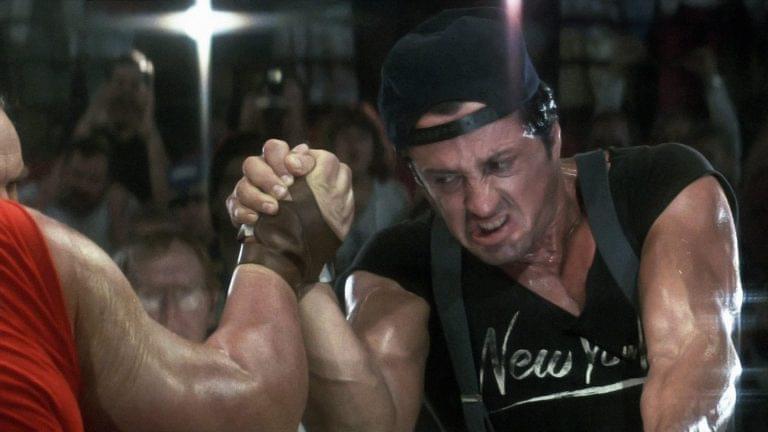
Eric’s Bad Movies: ‘Speed 2: Cruise Control’ (1997)

8

As promised, this week’s edition of “Eric’s Bad Movies” at Film.com is “Speed 2: Cruise Control,” the strangely Keanu-free sequel to the 1994 blockbuster. Despite its title, it contains very little speed and no control. There is a cruise, though, and probably a 2 somewhere. Enjoy.

Weezer’s ‘Pork and Beans’ video: a tribute to the YouTube Era

19

This has racked up a few million hits since being posted on Friday, so maybe you’ve already seen it. But if you haven’t, and if you’ve spent any time at all over the last few years looking at the various famous YouTube videos, you should take a look.

It’s the video for Weezer’s new single “Pork and Beans” (album hits stores next week), and it features cameos by an impressive number of YouTube celebrities: the “leave Britney alone” guy, the fat kid who lip-syncs the Romanian pop tune, the “Chocolate Rain” guy, Miss Teen South Carolina (“Some U.S. Americans don’t have maps”), and on and on. (There are several I’m not familiar with.) They’re the real folks, not impersonators, and they really interact with Weezer and with each other specially for this video. It’s cute, and it’s a terrific song about individuality from the always-terrific Weezer to boot.

[youtube:http://www.youtube.com/watch?v=muP9eH2p2PI]

A miniature new ‘Snide Remarks’ for your Memorial Day

0

For the holiday, in place of a regular-size “Snide Remarks” (or, more likely, in place of no “Snide Remarks” at all), we have a miniature one, entitled “The Signs of New York.” There’s no audio version because it’s really short and mostly pictures.

Happy Memorial Day!

The Signs of New York

0

Some people take photos of historical buildings or landmarks when they go to New York City. But I figure you can see a picture of the Empire State Building anywhere. So I take pictures of signs. Here are some from my recent trip.

Alt text

“Sorry, we’re closed because a High Volumen of Carbon of Monoxid. Thank You”

This was on the window of an Italian restaurant on 9th Avenue. The quaint phrasing — “carbon of monoxid” — distracts you from the fact that carbon monoxide is deadly. “We have a, how you say, leaks of the poison gases!” Aww, cute!

Alt text

“DON’T HONK. $350 PENALTY.”

This is seen in various places around the city. It must be up there with the Surgeon General’s warning on the list of Most Ignored Signs. In fact, I suspect these signs are posted only in places where tourists travel, and only as an inside joke among New Yorkers.

New Yorkers honk constantly. It is their primary method of communication. And they don’t do it to alert other drivers of danger, or to make their presence known to someone who does not see them. No, New Yorkers honk purely out of spite and anger. They honk to let you know that they do not like whatever you have just done, and to indicate that though the moment has passed, and any potential danger with it, they want their extreme disapproval of your actions noted for the record.

They also honk to tell you that they want you to drive forward, even though there are pedestrians or other obstacles in your way. They think you have stopped for no reason at all and that the only thing needed to get you on your way again is for you to be honked at.

At a Starbucks location I saw this:

Alt text

“STORE HOURS: [etc.] Always Open @ Starbucks.com”

“Darn, Starbucks is closed. Oh, but look, honey! We can go online and look at pictures of coffee! Why, that’s practically the same thing! Thank goodness Starbucks.com is always open!”

In many of the subway stations:

Alt text

“Running late? Be sure to slow down on stairs and escalators. 74% of subway customer injuries are caused by slips, trips, and falls.”

The other 26% are caused by stabbings.

Staying Alive

Staying Alive

When you look at the joke that John Travolta is today — his vast, meaty face occupying half the screen in “Wild Hogs,” or his just-barely-fatter dress-wearing self frolicking with Christopher Walken in “Hairspray” — it’s hard to believe that he used to be hugely popular. In fact, he’s been hugely popular TWICE, first in the late ’70s and again in the mid-’90s, when Quentin Tarantino launched his comeback, a deed that now seems like an act of terrorism.

It was during this country’s shameful Disco Era that Travolta first became a phenomenon. His dancing skills and vaguely ethnic good lucks captured the hearts of all the people in America who had easily captured hearts. He also dazzled us with his wide range of acting skills, playing everything from an imbecile Brooklynite in “Welcome Back, Kotter” to an imbecile Brooklynite in “Saturday Night Fever.” There were also occasions when he played imbeciles who were from other places but who had Brooklyn accents. The world was John Travolta’s oyster. Or oysta, rather.

Then came “Staying Alive.” It was nominally a sequel to his 1977 smash hit “Saturday Night Fever,” which had been about a preening disco stud named Tony who treated women like garbage. (Actually, his attitudes toward women were a little more complicated than that. To transform himself from daytime paint-store employee to nighttime disco god, Tony would primp his hair, adorn himself in jewelry, pour his slender, lithe body into a highly fashionable white suit, and then go dancing. In other words, to be somebody special, Tony had to become a woman. It is no wonder, then, that he was so confused, treating women like nuisances and whores one minute, saviors and goddesses the next. This concludes the Gender Studies portion of this week’s film lecture.)

“Staying Alive” was released in 1983, a full six years after “Saturday Night Fever” and a good three years after disco fever had disappeared, leaving all of America’s youth feeling clammy and humiliated, the way you feel when you wake up after a night of partying to discover you’ve slept with a lazy-eyed karaoke waitress with a wooden leg. The sequel moves Tony from Brooklyn to Manhattan and changes his style — he doesn’t do a single step of disco dancing — but thankfully retains the misogyny and general douchebaggery that made him so popular in ’77.

We find him living in a fleabag hotel near Times Square, teaching dance classes by day and serving drinks in a dance club by night. In between, he auditions, going from one casting agent to the next to deliver copies of his headshot (which you’d think, considering it’s Travolta, would have to be poster-size). Tony’s girlfriend, Jackie (Cynthia Rhodes), a feathery-haired wallflower, is a dancer too, and is currently in the ensemble of a Broadway show that eschews plot and dialogue in favor of vigorous, unsexy dancing. On the show’s closing night, Tony comes to watch from backstage — but, being a complete a-hole, he ignores Jackie’s performance and remains fixated on the lead, Laura (Finola Hughes), a long-haired British import who evidently earned her starring position by being the most vigorous and least sexy dancer at the audition. Watching her dance is like watching Laraine Newman have a seizure.

After the show, while sweet Jackie is changing out of her costume, Tony brazenly flirts with the cold, manipulative Laura, eventually persuading her to go on a date with him. When Jackie returns, unaware of what Tony’s been up to, he has the gall to ask her whether Laura is dating anyone. Later, Tony and Laura go out, then have sex in her apartment while Bee Gees songs play on the soundtrack. (The film’s opening credits declare, “Featuring songs by the Bee Gees,” as if that’s something to be proud of.) After their romp, Laura kicks him out. It’s 3 a.m. From a pay phone, Tony calls Jackie and euphorically chats with her for a minute. He doesn’t try to come over and sleep with her. He doesn’t tell her where he’s been. He just … calls her. She seems to think it’s cute that he woke her up for no reason, the same way she thinks every other stupid thing he does is cute.

We learn that Jackie occasionally sings with a barroom band fronted by Frank Stallone. (The only possible explanation for Frank Stallone and his music appearing in a film is that his brother Sylvester is the film’s director; sure enough, that is the case here. Notice I say it’s an explanation, not an excuse.) In a bit of astonishing hypocrisy, Tony is enraged to see Jackie behaving in a friendly manner with Frank Stallone, furious that she would even LOOK at another guy. Jackie soothes Tony’s ego, however, and gives assurances that she loves only him. Tony is placated, promises he’ll be back when the bar closes to pick her up, and then totally blows her off so he can lurk outside Laura’s apartment instead.

Meanwhile, Tony and the two spineless women in his life have all gotten parts in a new Broadway show. It’s called “Satan’s Alley,” and speaking of Satan’s alley, this show seems to be right up it. There is no talking or singing, only dancing, set to prerecorded cheese-rock songs and enacted by dancers in skintight leotards and leg-warmers. Imagine “Cats,” only without the complex story line, and with more suicides among audience members.

Laura, who is independently wealthy and wears a fur coat everywhere, has the lead in the show, but her dance partner is having trouble conveying the director’s unique vision, which seems to consist of a lot of writhing. Tony thinks this might be his big chance, so he asks Jackie to help him practice so that he can replace Laura’s partner in the show. For some reason, Jackie agrees to this.

(Actually, I shouldn’t suggest Jackie’s reasons are mysterious. It’s actually obvious why Jackie helps Tony get closer to Laura: because Jackie is a moron.)

Tony continues to flit back and forth between his two women, each of whom has a different way of dealing with him. Jackie’s method is to go along with whatever he says and instantly forgive him after he’s been a jerk, provided he offers a halfhearted apology and a cute smile. Laura, on the other hand, prefers to be cold one minute and flirtatious the next, often literally turning from one to the other within the span of a 30-second conversation, irrespective of anything Tony has said.

At one point, Tony starts to feel remorse for being a gigantic bastard, so he goes home to Brooklyn to gather his thoughts. (Brooklyn is where you get your best soul-searching done.) He tells his mother (Julie Bovasso) that he’s sorry for his prickly behavior, but she stops him. She says it’s OK because that’s who he is — i.e., an arrogant creep — and that his bastardry must be a good thing because it helped him get out of this dead-end neighborhood and onto Broadway. This is the movie’s way of avoiding any actual character development for Tony. You keep thinking he’s going to learn to be a better person and treat Jackie right, but now we have it on no less an authority than Tony’s own mother that his behavior is, in fact, wholly acceptable. If you don’t like it, well, that must be YOUR problem.

Inevitably, we come to opening night for “Satan’s Alley.” The director, a bearded man whose name is never mentioned, is up in the booth calling the lighting cues himself. (I guess he’s such a control freak that he doesn’t trust the stage managers to do their job. That, or no one involved in this film knew how live theater actually works.) The show opens with a large-scale dance number, involving the entire cast, in which everyone except Tony and Laura writhes around on the floor while Tony and Laura writhe around each other. After this opening number, the stage is bare and silent for two or three minutes while the cast changes costumes. Then they do another number that’s suspiciously similar to the first one, and then more dead time as they all change costumes again. This has got to be the worst Broadway show ever produced, and I say that having seen “Young Frankenstein.”

“Staying Alive” ends with Tony so thrilled by his Broadway success that all he wants to do is strut around Manhattan in tight jeans while the title song blares on the soundtrack. As he does this, we get several close-up shots of his butt, and at least one of his package. This may seem like shameless pandering to the film’s target audience of horny teenage girls, but at least it gives us a few moments’ respite from Travolta’s wide, misshapen face.