Home Blog Page 31

Eric’s Bad Movies: ‘Staying Alive’ (1983)

10

Two discs from Netflix sat on my desk, “Staying Alive” and “Speed 2.” I had planned to do “Speed 2” for this week’s Bad Movie and “Staying Alive” next week. Then it came time to watch one or the other, and I went with “Staying Alive.” Why? Because — and this was literally the reason — it was a half-hour shorter than “Speed 2.” So thank you, “Staying Alive,” for only being 96 minutes long.

Anyway, here it is at Film.com, my treatise on “Staying Alive.” (Spoiler: It’s not a very good movie.)

Thursday movie roundup – May 22

2

The Friday movie roundup — on a Thursday? What kind of deviltry is this?! It is the kind necessitated by the Thursday release of a little film called “Indiana Jones and the Kingdom of the Crystal Skull,” which I quite enjoyed. It has the look and feel of an Indy film, and it fits right in with the collection. I’m pretty sure I like it more than “Temple of Doom,” which has that really annoying Kate Capshaw stinking up the place.

And … that’s it. There aren’t any other films opening this week. I hope to have reviews of a few indie flicks (not to be confused with an Indy flick) within the next several days, though, including “Young @ Heart” and “The Visitor.”

Sign up for the “In the Dark” e-zine here.
Listen to this week’s podcast version here.
Subscribe to the podcast’s feed with this URL.

Indiana Jones and the Kingdom of the Crystal Skull

0

It’s been 19 years since we last saw Indiana Jones, the famed ark-finding, sacred-stone-returning, Hitler’s-autograph-collecting archeologist played by Harrison Ford in three 1980s films. A commensurate amount of time has passed in the new adventure, “Indiana Jones and the Kingdom of the Crystal Skull,” but Indy hasn’t lost his touch. Nor, it would seem, has Steven Spielberg, who directs “Crystal Skull” with the same boyish enthusiasm and love of a good story that he brought to the previous trilogy.

“Crystal Skull” follows the same beloved pattern as “Raiders of the Lost Ark” and “The Last Crusade” (and, to a lesser extent, “Temple of Doom”). There are several spectacular action sequences, including a three-car chase through a jungle. Indy swings from ropes, gets punched a lot, and remains insouciant in the face of peril. The story revolves around an old mentor going missing while searching for an artifact, and it ends with bad guys being destroyed by their own greed and their insistence on meddling with powers they do not understand. There are snakes. There are also millions of something else creepy. This is every inch an Indiana Jones Movie.

The temptation would have been to cobble together a story full of weak imitations of the previous films and call it a day, but almost every familiar element here feels like it belongs, not like it was forced in out of obligation. Were it not for the 19-year gap and the noticeably grayer and craggier Dr. Jones, you’d assume “Crystal Skull” was made a few years after the last one, right on schedule, the next logical chapter in the saga.

But time has passed, of course. It’s 1957 now, and Cold War paranoia is at its peak. Indy’s enemies now are the Communists, for whom he holds nearly as much contempt as he did the Nazis. And the Soviets, for their part, are as interested in obtaining priceless artifacts for their own evil purposes as the Third Reich was.

The items in question this time are a collection of crystal skulls with unusual magnetic properties, believed to hold the key to yada-yada if you something-something. (I don’t want to spoil anything, and it doesn’t matter anyway.) The Russians want them, and whatever they plan to do with them, it can’t be good for America or Decency or Justice. The Soviets’ efforts are led by top Commie scientist Irina Spalko (Cate Blanchett), a severe-looking villainess whose dominatrix demeanor and over-the-top Russian accent practically guarantee her status as a new kitsch icon.

Indy gets involved thanks to Mutt Williams (Shia LaBeouf), a motorcycle-riding greaser punk whose father figure and actual mother have been kidnapped by the Commies and are being forced to help find the skulls. This surrogate father is Professor Oxley (John Hurt), a former mentor of Indy’s; Mutt’s mother is named Marion, and Mutt says she used to know Indy. Indy says he knew a lot of Marions. I suspect he’s not thinking very hard. His surprise upon discovering that it’s Marion Ravenwood (Karen Allen), from “Raiders of the Lost Ark,” is his alone. The rest of us figured it out the minute Mutt said “Marion” (or, for that matter, the minute we saw Karen Allen’s name in the opening credits).

And so it’s off to the Amazonian jungles for Indy and Mutt. The interaction between Ford and LaBeouf is breezy and comical and nicely played; Ford doesn’t seem outpaced by the kid 42 years his junior, and LaBeouf doesn’t freeze in the presence of a legendary actor the way some newbies would. Over the course of the film, Indy’s relationship with Mutt goes from wary adult supervisor to older brother to friendly uncle to father figure — and that’s a lot more progression than we’ve ever seen with any of Indy’s other relationships.

Later, when Marion Ravenwood appears, the interpersonal dynamics become even more fiery. I admire the way the screenplay — credited to David Koepp (“Jurassic Park,” “Spider-Man”), with elements from prior drafts by Jeff Nathanson and input from George Lucas — mixes the relationship bickering with the mechanics of the plot, so that the action never needs to stop just so people can talk about their feelings. In the world of Indiana Jones, ex-lovers can argue over who wronged whom 20 years ago even as both are sinking in quicksand.

Indy seems to have been born around the turn of the last century (he was about 14 in the 1912-set prologue in “Last Crusade”), which means he’s pushing 60 in “Crystal Skull.” The film wisely addresses his advancing age, deploys some humor to the situation — and then gleefully quits worrying about it. Indiana’s bones may be getting a little creakier, and he is slowly turning into his father (even using the elder Jones’ favorite exclamation — “Intolerable!” — to describe a predicament that Mutt has gotten them into), but he’s still the same Indy. He can perform impossible feats of derring-do one minute, then wince over his injuries the next. He’s always been that way, even when he was young. It’s part of what makes us like him so much: His adventures are the stuff of fantasy, his smart-aleck one-liners are clever, but his human fallibility makes him seem like a Regular Guy. And as a wise man once said, it’s not the years, honey, it’s the mileage.

I re-watched the other three Indy films a few days before seeing this one, and having them fresh in my mind helped me notice subtle elements of “Crystal Skull” that make it feel like part of the same collection. Some have to do with the story structure, as when we see a bow-tied Dr. Jones teaching at his university, just as we did in “Raiders” and “Last Crusade.” Other familiar elements are in the dialogue: Indy urging a group of archeology students to get out of the library can only be a response to his line in “Last Crusade” about how “70 percent of archeology is done in the library.”

More important, though, are the film’s intangibles. The look, the feel, the attitude, the mix of humor and adventure, it all lines up with the “Indiana Jones” aesthetic. George Lucas’ philosophy has been to move forward with technology — hence, his “Star Wars” prequels were mostly CGI and looked vastly different from the first trilogy. Steven Spielberg has embraced technology too (his “Jurassic Park” dinosaurs represented a giant leap forward), but he doesn’t do it just for the sake of doing it. He remembers that these films were conceived as a tribute to the cliffhanger serials of the 1940s, and that a slick, digitized film would be stylistically inappropriate. So CGI is kept to a minimum (less than you’d expect for a movie made in 2008, anyway) in favor of good old-fashioned rear-projection, stuntmen, and enormously constructed sets, just as in the other three films.

Going in, I was prepared to defend the finale’s supernatural elements by pointing out that the finales of this series have always ultimately relied on the paranormal (God melting the Nazis’ faces; rocks that light up when you collect them; the Holy Grail’s healing powers). And then I saw this film’s finale and thought: Yeah, that’s too much.

Another minor complaint: Things get a little crowded at times, what with Indy, Mutt, Marion, Oxley, and Indy’s old pal Mac (Ray Winstone) all dashing through the Peruvian jungles together. It feels more natural for Indy to have one or two companions on these excursions, not four, and the film can’t always find something useful for all of them to do.

Oh, but everything else makes me forgive the film’s slight defects. Those who say Spielberg is sleep-walking through this one are taking for granted how good a director he is. Even a halfhearted Spielberg effort will have more complicated shots, more mirthful sight gags, and more elaborate stunts than the best effort from nearly any other director currently working. And I don’t think this is a halfhearted effort anyway. To me, it feels as lively and buoyant, as effortlessly entertaining, as you could realistically want in an Indiana Jones flick.

Movie geeks who worship the original Indy films and are demanding that this one be a life-changing, soul-magnifying movie to surpass all other cinematic experiences will, of course, be disappointed, as they generally are in these situations. The rest of us can just sit back and enjoy.

Hillary Clinton Discusses This Week’s ‘Snide Remarks’

17

(A message from Hillary Clinton.)

My fellow Americans, thank you for letting me take a few moments of your time to address the current situation.

There are some who would look at the comments posted about this week’s “Snide Remarks,” entitled “An Exclusive Interview with Indiana Jones,” and conclude that it’s unpopular. They would take all those negative comments to mean that a lot of regular readers simply did not enjoy this week’s installment.

I know that’s the conclusion the news media wants you to reach. They’ve been hammering it home over and over again. “Eric, forget it!” they say. “This column failed. You gave it a try, it didn’t work, and now it’s time to move on. You lost this one.”

Well, I say that’s a little premature. I don’t know about you, but where I’m from, we wait until ALL the votes have been cast before we reach a conclusion. I’d say Eric still has a very real chance of winning this one and declaring the Indiana Jones edition of “Snide Remarks” a success!

Has every “Snide Remarks” reader sounded off yet? No they have not. At the moment, only 34 comments have been submitted, and a full FIVE of those have been positive! How many regular “Snide Remarks” readers have not voted yet? Hundreds! Thousands, even! Who’s to say the vast majority of those won’t turn out in favor of the column? We don’t know until all the votes have been cast.

There were also some spam comments that showed up in the spam filter that Eric’s opponents are insisting should not be counted in his favor for the simple fact that they are spam and don’t have anything to do with the column. I say that’s undemocratic. Let ALL the votes be counted! The news media has already crowned the detractors as the victors here, so I know they don’t want the truth to come out. They’re afraid that if we count those spam votes, we’ll see what I already know: that most people LOVED the column and Eric has scored another success.

And consider this: Where people have liked the column, they have really, REALLY liked it. The victories, where they have occurred, have been by a substantial margin. That may be an important factor in the general election, when this column will go up against one of Dave Barry’s.

Frankly, I’m also disturbed by the sexist tone that a lot of the comments have taken. “Kinda lame.” “Not my thing.” “I didn’t laugh once.” Is nobody else appalled by this? Where’s the outrage here? If Eric were a woman and people had said these things, the news media would be hysterical with rage! As it is, since he’s a man, people can just say these hurtful things and nobody bats an eye. I thought we’d gotten past this kind of sexism in America, but I see it’s still alive and well.

In conclusion, let me summarize: Eric’s Indiana Jones edition of “Snide Remarks” is overwhelmingly popular and most people have loved it. In fact, it is the MOST POPULAR “SNIDE REMARKS” COLUMN EVER PUBLISHED! Thank you and goodnight!

A big ol’ batch of Film.com articles

7

Here are some articles I’ve written for Film.com that might interest or amuse you, all posted since the last time I did one of these roundups. Which was a while ago, so some of these are kinda old now. But still.

‘Untraceable’s’ European Facebook Campaign Was Tacky, Just Like the Movie – Remember the movie “Untraceable”? No? That’s OK.

Differences Between the ‘Prom Night’ Trailer and My Actual Prom Night – I loved this idea when my Film.com overlord pitched it to me, and I had fun writing it.

‘Fanboys’: When Directors Strike Back – All the background you need on this silly news item is in the story.

Good News! The New Indiana Jones Will NOT Be Non-Stop CGI – This development occurs over George Lucas’ dead body, one assumes.

Hey ‘Dark Knight’: Test Audiences Are Dumb, Don’t Listen to Them – In response to a rumor that certain elements of the new Batman film would be excised to appease certain stupid audience members who were too emotional over the months-ago death of an actor they never met whose demise affected them in no way whatsoever.

Are You Excited About ‘Speed Racer’? – Well, we know the answer now. Turns out my prophecies herein were correct.

Cell Phones Movies?? Nooooooooooooo! – In response to a news item about a Nokia-sponsored “filmmaking” contest.

Animals That Need to Have Horror Movies Made About Them – Self-explanatory.

If Teen Girls Have Anything to Say About It, ‘Twilight’ Will Soon Take Over the World – OMG LOL.

This week’s ‘Snide Remarks’ requires ears

0

This week’s “Snide Remarks” is a first: It’s an all-audio edition! It’s an interview with Indiana Jones, in conjunction with his new film that comes out on Thursday. I hope you appreciate what a coup it was getting him!

This week’s “Snide Remarks” is here.
The audio version (i.e., the podcast) is also here.
Subscribe to the podcast’s feed with this URL.

An Exclusive Interview with Indiana Jones

0

(Note: This feature does not contain any spoilers — unless your definition of “spoiler” is “any information whatsoever about a movie, no matter how widely it has already been disseminated.”)

“Indiana Jones and the Kingdom of the Crystal Skull” arrives in theaters this Thursday — or at midnight Wednesday night, actually, if you feel like having some late-night adventures. In honor of this sacred event, we’ve scored a major coup: an audio interview with Indiana Jones himself! Let’s listen!

Click here to hear the interview.

Alt text

Indy’s policy on Soviets is remarkably similar to his policy on Nazis.

Friday movie roundup – May 16

8

The only wide release this weekend is “The Chronicles of Narnia: Prince Caspian,” which I have reviewed at Film.com. I have also written at Cinematical about how the PG rating for “Prince Caspian” is astoundingly wrong. The level and frequency of violence is definitely PG-13-worthy.

In limited release, I can recommend “My Blueberry Nights” (the English-language debut of director Wong Kar Wai) and “Then She Found Me” (the directorial debut of Helen Hunt).

I saw “Blueberry” when I was in New York City! It cost $11.75!

Finally, I remind you of the existence of “Son of Rambow,” a delightfully joyous comedy, in limited release, that is just about my favorite movie of the year so far. It got mentioned in the podcast a couple weeks ago but not the e-mail version of “In the Dark,” so here it is again.
Sign up for the “In the Dark” e-zine here.
Listen to this week’s podcast version here.
Subscribe to the podcast’s feed with this URL.

Padre Nuestro (Spanish)

0

There are two Mexican teenagers in “Padre Nuestro” (“Our Father”; renamed “Sangre de Mi Sangre,” “Blood of My Blood,” for theatrical release), one honest and one dishonest. It’s the latter who wields the most power in this bleak, emotional drama, yet both boys demonstrate a capacity for good and bad.

The honest kid is Pedro (Jorge Adrián Espí­ndola), 17 years old and on his way from Mexico to New York, where he hopes to find his father. His mother has died, leaving him with a letter of introduction to his long-lost papa, who is now supposedly a wealthy restaurant owner in the Big Apple.

Pedro is smuggled across the border with a van full of other illegal immigrants, including Juan (Armando Hernandez), who was fleeing thugs when we first saw him. It is soon clear that he was not an innocent victim; he had probably done something to earn their wrath. After making nice with Pedro, Juan steals his backpack and the letter and sets off to con Pedro’s father by pretending to be his son.

The father is named Diego (Jesus Ochoa), and he is not a wealthy restaurateur. He is, rather, a poor dishwasher who earns a few extra dollars by making and selling paper flowers. He has no interest in reuniting with the son he abandoned years ago. Juan is persistent, though, sleeping in the hallway outside Diego’s crummy apartment and vowing to be a hard-working, decent son. What he really wants is the money he figures Diego has stashed somewhere inside.

Meanwhile, Diego’s real son, Pedro, is lost in New York, speaking almost no English and having no idea how to find his father. He meets Magda (Paola Mendoza), a street-wise homeless girl who speaks Spanish. She says she’ll help Pedro find Diego, but only for a price. She’s only interested in looking out for herself.

First-time writer/director Christopher Zalla achieves a lot of physical and emotional tension with these precarious situations. Diego slowly warms to his “son” and comes to have fond feelings for him, which can only lead to devastation if he ever learns he’s been duped. Juan starts to like his fake dad, too, and may feel guilty about stealing from him. Pedro, an inherently good kid, wrestles with the ethics of doing “bad” things in order to achieve something good. Even Magda, hardened by years of hustling, prostitution, and street life, begins to soften.

Zalla gets very good performances from his mostly inexperienced actors, and he avoids the clichés and false sentiments that many new filmmakers fall prey to. Above all, the New York City of the film feels gritty and real, and its characters have the complex emotions of real people.

The trouble is that the film is so bleak as to be almost hopeless. There are only a few ways the situation can be resolved, and none of them is pretty. Pedro is driven to desperation by Juan’s theft of his identity, and Pedro is such a sympathetic figure that the viewer demands he achieve some kind of satisfaction. But the only way for him to be fully satisfied is for the truth to come out about Juan’s deception — which would crush poor old Diego, having opened his heart and his home to the impostor. There are a lot of messy emotions and motivations at play here.

Some films are disheartening and dreary yet are so fantastically well-made that a movie lover can “enjoy” watching them anyway. I don’t think “Padre Nuestro” quite rises to that level. Its grimness is not matched by its excellence.

The Chronicles of Narnia: Prince Caspian

0

A few things have changed since the first “Chronicles of Narnia” film arrived on the scene. In the sequel, “Prince Caspian,” the principal actors are a little older and more proficient. The director, Andrew Adamson, seems more confident; the action scenes are smoother and more polished. The Christian allegories are not as awkward and heavy-handed.

It’s a better movie all around, though still not a great one. Like its predecessor, it is plot-heavy, with very little attention paid to characterization. You’ll recall that there are four siblings at the center — and three of them come off as total ciphers here. It wasn’t until I re-read my review of the first film that I remembered Edmund (Skandar Keynes) used to be rebellious. If he still is, there’s little sign of it. If he isn’t anymore, then what is he instead?

The Pevensie child who does not get the short shrift is the oldest, Peter (William Moseley), who returns to Narnia with his siblings when they are summoned by a distress call. It’s been a year for them, but several centuries in Narnia-time, and a usurping family has stolen the throne and forced all the Narnian magical creatures into hiding in the forest. The ruling family’s teenage Prince Caspian (Ben Barnes) is now hiding, too, because his uncle, the evil King Miraz (Sergio Castellitto), having finally produced a male heir for himself, has no reason to let Caspian keep living. Miraz is leading the army into the forest to find and kill Caspian (and any Narnians that get in the way); Caspian and the Pevensie kids must rally the troops, fight back, and at last reclaim the throne.

Peter, now more serious and grown-up than the last time we saw him, readily adopts his previous position as rightful king of Narnia and deeply considers the options that lie before him. Caspian, meanwhile, is more hotheaded and emotional — which is understandable, considering his uncle wants to kill him — and this leads to recklessness. It also leads, inevitably, to Peter’s sister Susan (Anna Popplewell) developing a crush on Caspian, in a subplot so underdeveloped that it is an insult to subplots.

Meanwhile, young Lucy (Georgie Henley) insists that Aslan, the mighty Jesus-lion, will yet return and save the day. Her siblings do not share her faith. Lucy even claims to have glimpsed Aslan here and there. When Peter asks why he didn’t see him, Lucy says, “Maybe you weren’t looking.” This is fraught with spiritual import. In fact, everything with Lucy is fraught that way.

Among the new characters the young people encounter are dwarfs named Trumpkin (Peter Dinklage) and Nikabrik (Warwick Davis), plus a mouse (voiced by Eddie Izzard) whose small stature has given him a persecution complex. No one takes a talking mouse seriously, even if he does have a sword.

Light touches like that abound in the film, but there is ample darkness, too. Its PG rating represents an astounding lapse in judgment on the part of the MPAA, as the film is rife with stabbing, slicing, and death. Someone’s head gets chopped off. Lots of good creatures are slain while others look on, powerless to help. Very little blood is actually shown, but still, the slaughter is endless. (I don’t hold the faulty rating against the film itself, of course. I point it out merely as a reminder for parents with young children. For more on the subject, read my article at Cinematical.)

The battle scenes are well orchestrated and often thrilling. There is also a chilling sequence where someone contemplates a turn to dark magic, and two horrific creatures, one wolflike and one resembling a ghastly bird-headed woman, appear. Moments like that give the film some weight, particularly insofar as they give the characters something complicated to think about.

Predictably, the film’s running time — almost 2 1/2 hours — feels too long, especially given the story’s basic simplicity. And ultimately, the only way the film makes sense is if it’s read as a Christian allegory. Taken strictly at face value, it’s nonsensical: If Aslan is all-powerful, why doesn’t he arrive sooner and defeat the bad guys single-handedly? What makes anyone think he’s going to come back at all? Why does he come back when he does? What, exactly, is Aslan’s connection to everyone? Is he their king? Their god? Their buddy? These questions are easily answered if you replace “Aslan” with “Jesus” and fill in the biblical blanks, but that limits the movie’s potential reach. Someone with no knowledge of Christian theology would be baffled by the movie’s strange narrative and leo ex machina ending.

Of course, the only people with no complex knowledge of Christian theology who are likely to see the film are young children, and they won’t care about the story’s structural flaws. It’s the grown-ups who might feel slightly underwhelmed by it all, though they’ll likely be moderately entertained by the action and adventure.

Eric’s a guest at ‘The Watchers’ podcast

1

Do you enjoy listening to movie geeks talk about movies and TV and video games and movies? Me too! And the nice folks at Always Watching were kind enough to invite me on as a guest geek for this week’s podcast (which is entitled The Watchers). You can view a rundown of what we discuss, and also listen to the podcast itself, and also subscribe to the podcast, here. (A mild warning: I think there’s some naughty language at one point, though I don’t remember when or how much.)

We recorded it Tuesday night, at which time it also was being streamed live for whoever happened to be listening. The regular crew is David Chen (who’s a big fan of mine, inexplicably), Devindra Hardawar, and Adam Quigley; guests were me, Myles McNutt of Cultural Learnings, and Alex Billington of First Showing. A good time was had by all. I think they talked more than I did, though, because I’m nervous around strangers, especially when I can only hear the strangers and not see them.

The Delta Force

The Delta Force

In real life, the Delta Force is an elite squad of Army personnel who handle terrorist threats and other complex matters of national security. In the movie “The Delta Force,” it’s where Chuck Norris and Lee Marvin shoot a lot of people in order to save Martin Balsam, Joey Bishop, and George Kennedy. It might seem excessive to kill literally dozens of bad and semi-bad guys just to save those three, but think how awful it would have been if Martin Balsam, Joey Bishop, and George Kennedy had died. Your grandparents would have been devastated!

“The Delta Force” is a cavalcade of old, craggy-faced, vaguely recognizable actors, all of them eager to take whatever roles they could get now that it was the ’80s (and, in some cases, their 80s). Why, look! It’s Robert Vaughn! And is that Shelley Winters? And Lainie Kazan? I think I know who that Arab terrorist is, too — it’s white American Robert Forster! That’s the best bit of casting since Charlton Heston played a Mexican in “Touch of Evil.”

This film, which helped cement Chuck Norris’ fame as a personality-free action hero (those were big in the ’80s), was based on an actual event. In June 1985, TWA Flight 847 was hijacked en route to Rome from Athens by Lebanese terrorists. One passenger was killed, and dozens of others were held captive for several days. “The Delta Force” uses this as fodder for crass, poorly made entertainment in its first hour before going wildly off the tracks in its second, when it brings in Norris and Marvin to save the day. Imagine a movie about September 11 where in the second half Al-Qaeda is hunted down by Spider-Man. That’s more or less what we’re talking about here.

We begin, for no reason, in 1980, with a helicopter exploding and Scott McCoy (Chuck Norris) rushing into the wreckage to save his buddy. The rest of Delta Force has given the guy up for dead, but not McCoy! His fellow soldier’s leg is stuck under something very heavy that McCoy cannot lift no matter how hard he tries. So he stops trying to lift it and instead just, um, drags the guy out. No explanation is given for how he is able to do this. I expected the man’s severed leg to be left behind, but no, it was intact.

Quickly I ascertained that fans of gravity, physics, and the other laws of nature should lay aside their beliefs before watching “The Delta Force.” Later in the film, McCoy rides around on a motorcycle that can shoot rockets out of its back end, and it doesn’t even really matter if they’re pointed in the right direction. Apparently all McCoy has to do is think about what he wants blown up and the rockets do the rest. The rockets reload themselves, too, perhaps through the controversial principle of spontaneous generation, which many modern scientists scoff at but which must have some truth to it, otherwise how would the rockets reload themselves? Huh? HUH??

Anyway, after it’s 1980 for a couple minutes, it’s 1985. The only reason it was ever 1980 at all was to assure us that this was a Chuck Norris film, since otherwise he doesn’t appear for quite a while. In 1985, we are introduced to two middle-aged Jewish couples at the airport in Athens, waiting to fly home to New York. Joey Bishop and Lainie Kazan are one couple; Martin Balsam and Shelley Winters are the other. They talk excitedly about the fact that they’re all Jewish, and they say things like “Mazel tov!” to remind us that they’re Jewish. It’s VERY IMPORTANT that you know they’re Jews. Why? Because once they’re on the plane, it’s going to be hijacked by two Muslim terrorists who HATE JEWS!!!!!!!!!

Ah, the 1980s. Remember when it was fun to make movies about hijacked planes and Muslim terrorists? It all seemed so innocent back then. It’s amusing to see how easily the bad guys get their weapons onboard, and how easy the whole hijacking process is. It makes you think: If airport security was really this lax in the ’80s, why weren’t more planes hijacked? These guys make it look like you could do it just for fun, on a lark, like toilet-papering someone’s house. Today you’d have to put a lot more effort into it, maybe sneak a gun past security by distracting them with something dangerous like a bottle of water — but then your hostages on the plane would probably beat you to death anyway. Airline customers have developed a very low tolerance for in-flight shenanigans in recent years.

In the movie, the terrorists take over the plane and announce who their enemies are: “American imperialists, Zionists, terrorists, and all other anti-socialist atrocities.” (Whoops! Did you slip up and name yourself in that list? How embarrassing!) What they don’t announce, however, are their demands. We know they want to fly to Beirut, where the Lebanese Minister of Defense first insists he won’t let them land and then immediately changes his mind (because apparently the Lebanese Minister of Defense is kind of a wimp). Why they want to go to Beirut, and what they want in exchange for releasing the hostages, they never say. I don’t know a lot about terrorism procedures, but I do think it’s unwise to take a plane full of hostages if your only intention is to hang out with them for a while. There are much easier ways of staving off loneliness than that.

But back to the Jews. It occurs to the terrorists that there might be some Jews on the plane, so they confiscate everyone’s passports and force a stewardess named Ingrid to peruse them for Jewish-sounding names. The stewardess, hilariously, is German. She asserts her nationality as grounds for being excused from the task, since surely the Muslim terrorists do not want to be associated with Nazism. The terrorists are unmoved. Ingrid’s List is formed. Jews with names like Kaplan and Rabinowitz and Steinenstein are herded together, while the Jews with names like Smith and Jones breathe a sigh of relief.

Anti-Semitism played a part in the real-life hijacking that “Delta Force” is making a mockery of, but probably not as great a part as the filmmakers would have us believe. The director and co-writer is Menahem Golan, an Israeli Jew who, with his cousin Yoram Globus, produced an impressive number of bad movies throughout the 1980s. The Golan-Globus team was responsible for previous “Eric’s Bad Movies” entries “Superman IV: The Quest for Peace” and “Breakin’ 2: Electric Boogaloo,” as well as “Allan Quatermain and the Lost City of Gold,” “Texas Chainsaw Massacre 2,” “Cobra,” and “Masters of the Universe,” to name only a few. Like Roger Corman before them and Uwe Boll after them, they made movies fast and cheap, apparently not caring whether they were any good or not. “Delta Force” is typically shoddy, but it represents something of a passion project for them. They shot the whole thing in Israel and used mostly local crew members. They also infused the film with awkward, self-important condemnations of anti-Semitism, eager to portray the strength of their people the only way they knew how: badly.

Oh yeah! And then finally Chuck Norris and Lee Marvin show up and chase the terrorists and their buddies all over Beirut. I live in a modern era, a time when the government only needs to send one man — namely, Jack Bauer — to fight terrorist cells, so it’s rather quaint to see the entire Delta Force involved. But as it turns out, Lee Marvin mostly just stands around, occupying his time by being very old and having vast, unkempt eyebrows, and the other Delta Force operatives don’t even have names. They just help Chuck Norris as he drives around vaguely aiming rockets in the general vicinity of his targets. When Norris finds a terrorist hiding under a bed, pulls off the mattress, shoots him multiple times, then says, “Sleep tight, sucker” — well, there’s no one else there to hear his bon mot. Being on the Delta Force can be very lonely.

— Film.com

Eric’s Bad Movies: ‘The Delta Force’ (1986)

10

It was inevitable that I would do a Chuck Norris film at some point in the “Eric’s Bad Movies” series, and today is the day! I made perhaps the obvious choice, “The Delta Force,” about terrorists and Jews and motorcycles. The sequel is almost certainly worse, but I figured this one was bad enough. Please to be enjoying my analysis, over at Film.com.

Mormon Horror Movies

20

Mormon Horror Movies

“Children of the Quorum”
“Friday the 31st” (aka “Home Teaching Day”)
“Pet Seminary”
“Enrichment Night of the Living Dead”
“I Know What You Did Last Summer, and I’m Telling Your Bishop”
“The (CTR) Ring”
“Rosemary’s Baby, Which is Her Fourth, and She’s Only 23”
“The Hills Have Tithes”

This is my first Twitter updat…

0

This is my first Twitter update! Want to know what I’m doing right now? I’m, um, updating Twitter. Is that how this works? Seems weird.

Eric Recommends: ‘Heyday’

1

“Heyday,” by Kurt Andersen, is by far the best book I’ve read this year. Set in 1848, and enlivened by fascinating, carefully researched period details, it’s a love letter to America’s spirit of adventure and discovery. A young Englishman comes to New York to see what the Yanks are all about, falls for a local girl, befriends her brother and their cynical journalist pal, and the four wind up traveling all the way to California in search of excitement (and gold). The book brims with all manner of villains and colorful characters, and the story is just plain fun, with plenty of humor, excitement, and romance.

Most appealing to me, however, is the way Andersen completely immerses the reader in the world of 1848. He only uses vocabulary that would have been common then, with characters remarking on new words or usages (“OK” was just coming into vogue at the time). America-inspired democracy is starting to spring up around Europe, and America itself is in the midst of a remarkable era of progress and change. It’s easy to see parallels to modern life, particularly of the “the more things change, the more they stay the same” variety. Someone sends a telegraph, receives a reply almost instantly, sends his own response back, and marvels at how he’s able to have an actual conversation with someone hundreds of miles away — which is exactly what modern instant messaging is. Andersen lets us notice these little parallels without commenting on them.

As a fan of history, I’m also amazed and delighted by how much detail Andersen includes. Sometimes it’s not relevant to the story, but it’s always interesting nonetheless. (Did you know that in New York City, May 1 was a semi-official “moving day”? That’s when leases would run out, resulting in thousands of people changes residences all on the same morning. Thanks, “Heyday”!) He covers every elements of life — religion, politics, courtship, entertainment, etc. — to create a very vivid sense of what it was like to be American in 1848. And it’s in the service of an enjoyable, intelligent story with memorable characters. It’s just out in paperback, and I heartily recommend it.

So You Wanna Be an Internet Movie Critic?

0
So You Wanna Be an Internet Movie Critic?

Being a movie critic for the Internet is nice. Every morning, I drive down to Internet headquarters, punch the ol’ time card, and put in a solid eight hours. Then every Friday, the Internet writes me a check. The Internet is a great boss!

All kidding aside (the Internet is actually kind of a bastard to work for), those of us who make a living writing for online publications are a happy bunch. We’re also very, very lucky. We often get emails from people saying, essentially, “I’d like to be an online movie critic, too. How can I do this?” Here’s what I tell them.

5 Tips for Becoming an Online Film Critic

1. Be prepared to do it for free.

You may have noticed that the vast majority of non-porn websites offer their content to readers free of charge. If they make money, it’s through advertising and affiliate programs. Consequently, most websites don’t pay their writers very much, if they pay them at all. Film.com does. Some of the more heavily trafficked blogs do. But most don’t. A critic just starting out should expect to get paid jack squat for a long, long time. The vast majority of online film critics have day jobs and/or do freelance work for several different publications to make a living.

But let me make an important distinction here. If a website doesn’t have any money and doesn’t pay anyone, you can write for them for free until they become profitable (or until they shut down, or until you find something that pays). Do NOT write for free for a site that pays its writers and just doesn’t want to pay you. In that situation, you are being taken advantage of.

2. Start writing reviews anyway.

The mistake a lot of would-be critics make is thinking they don’t need to waste their time writing reviews until someone is paying them for it. Not only does that show a fundamental misunderstanding of how the online business world works (see above), but it also suggests a lack of commitment. Too many people start out gung-ho about reviewing, then get tired of it after a few reviews, or after the first time they’re forced to sit through something terrible. People who run movie websites don’t want to bring on a writer, even one who’ll work for free, if they think that person is just going to fizzle out. Having several dozen reviews already written shows that you’re serious about it.

3. Launch a blog.

Since no one wants you if you can’t show them multiple samples of your work, you might as well start publishing those samples yourself. Anyone can start a blog and post movie reviews on it. Even if the only people who know about it are your friends and family, at least it’s something. If you keep at it long enough, you’ll eventually have a sizable archive of material that can help you get a job at a larger movie site — or, who knows, your own site might become profitable on its own.

4. Be a good writer.

Anyone can start a blog and call himself or herself a “movie critic,” so it’s vital that you are able to express your opinions in a clear, intelligent, engaging manner. Otherwise, you’re just another fanboy who’s writing just to hear himself write. Writing well isn’t a guarantee that you’ll rise above the noise and distinguish yourself from all the other wannabes — a certain amount of luck is still involved — but if you don’t write well, it’s almost guaranteed that you won’t go anywhere. The people who are terrible writers who have managed to become well-known anyway are the exception, not the rule.

5. Read a lot of reviews and watch a lot of movies.

Think of the critics whose reviews you enjoy the most, the writers you always turn to even when you disagree with them. Pick apart their writing. What are they doing that you can learn from? What techniques can you emulate? And in the meantime, watch movies — and don’t just watch them, think about them. If you’re enjoying a film, why are you enjoying it? If you’re not, why not? Analyze the films the way you analyze the film critics: first let the initial impression wash over you, then ponder it to determine which elements, specifically, contribute to that impression. If thinking more deeply about movies takes the fun out of it for you, then this isn’t the job for you. As a movie critic, you can’t just say a movie is good or bad — you have to say how and why it’s good or bad.

Writing a review that’s appealing, persuasive, and enjoyable to read is harder than it looks. Getting someone to pay you to do it is even harder. That’s why the best film critics are people who simply love movies and love writing about them, and not people who took the gig because it was an easy paycheck. But if you have enthusiasm and a modicum of talent, you might emerge as someone that people listen to. And even if they don’t, at least you’ll be enjoying yourself.

— Film.com

Polidori Chocolates: hand-made, high-quality, absurdly delicious

0

I’ve occasionally mentioned my friend Dawn Taylor, a fellow Portland film critic and one of my best pals here in the Northwest. Before she became a writer, she was a pastry chef, and she retains those skills to this day. She has made me birthday cakes the last two years that were the most delicious things I have ever put in my mouth.

So it is with great delight that I tell you she is starting a homemade-candy business called Polidori Chocolates, and that she’s offering some early sales before the official launch. She has the details on her personal blog. The main offering is a box of eight truffles, seven of them correlating to the Seven Deadly Sins, and then an extra one just for fun, I guess. She also does hand-crafted chocolate-covered marshmallows — she makes marshmallows! I didn’t even know you could do that!

The Seven Deadly Sins (Plus One) collection costs $15. Dawn gave me a sampler box today, and I can personally attest to their extraordinary taste and quality. She has mouth-watering descriptions of them on her blog. A couple of them, I wasn’t sure about. Like the Envy truffle (pictured above): key-lime flavored white chocolate ganache truffle, enhanced with the hot, sweet chewiness of candied ginger.” Lime? Ginger? White chocolate? Hmm. Then I tasted it and repented of my skepticism. It’s my personal favorite of the eight. It made my mouth dance and sing.

These are luxury items, obviously. Fifteen bucks plus shipping for eight chocolates is more than, say, a bag of Hershey’s Kisses would cost. But I can tell you it’s worth it. If you like fancy chocolates and can appreciate the homemade, hand-crafted quality, you simply must take advantage of this offer. Your taste buds will thank you for it!

Eric’s CDs are available again! Sort of!

2

Did you know I wrote and recorded a bunch of comedy songs? Well I did! And they were on two CDs for a while, until I sold all of them (and printed some more … and then sold all of those), and then they became, officially, “out of print.” But now they have returned in digital form, thanks to an online outfit called Snocap.

It works essentially like iTunes: You can download an entire album for $9.99, or individual tracks for 99 cents. You can hear a 30-second sample for free. (For some reason it’s the first 30 seconds of each track on one album, but a random from-the-middle 30-second chunk for the songs on the other album.) Click the + sign next to the album titles to reveal the full track list, and pick ‘n’ choose whatever you want. I’ve noted the songs that deal with Utah and/or Mormon culture specifically, in case you want to only choose (or only avoid) those.

Liner notes for the songs can be found here for “Will Make Jokes for Food” (2003) and here for “Monkeys and Pirates Are Funny” (2006).

I’m going to try to the get the old Garrens Comedy Troupe CDs on here, too, once I’ve cleared it with the various other people involved. Figuring out who gets what percentage of the 99 cents per track is going to be a b-word. Maybe I just won’t tell some of the performers what I’m doing and keep the dozens of dollars I get all for myself.

Let me know if there are any bugs in the system. Snocap seems to have a pretty good set-up, but it’s all new to me, so I don’t know what problems there might be.

(My Snocap store should appear in the space below. If it doesn’t, try reloading the page. You might have to wait several seconds for the store to load.)

Pregnant men are addressed in ‘Snide Remarks’

0

My trip to New York was fun, thank you very much for asking! I’m back now, and “Snide Remarks” is back, though it has nothing to do with New York. (That will come later, surely.) Today’s edition is entitled “Brovaries, Duderus, Sirvix, Vaguyna, and Fellow-pian Tubes: A Guide to Male Pregnancy,” and it’s about that “man” who’s pregnant. He was on Oprah and everything.

A friend of mine said he wanted to subscribe to the “Snide Remarks” podcast but didn’t know how to do it with iTunes. I realized I didn’t know either, since I, um, don’t subscribe to any podcasts. (Just not my thing.) So here’s how you do it, in case anyone else didn’t know: In iTunes, one of the drop-down menus is “Advanced,” and under that is an option that says “Subscribe to Podcast.” Select that, then paste in the URL for the podcast’s feed — which for “Snide Remarks” is https://www.ericdsnider.com/blog/?feed=rss2&cat=25. (There’s always a link to it at the end of these “Snide Remarks” blog entries, too.) And there you go.

Some of you are rolling your eyes, but I guarantee my friend was not the only regular reader of this site who didn’t know how to do it. And yeah, five seconds of searching in iTunes’ “Help” menu would reveal the answer, but I’ve found that a lot of people would rather go without whatever it is they’re trying to do than spend five seconds figuring out how to do it.

This week’s “Snide Remarks,” including the audio version, is here.
The audio version (i.e., the podcast) is also here.
Subscribe to the podcast’s feed with this URL.

Brovaries, Duderus, Sirvix, Vaguyna, and Fellow-pian Tubes: A Guide to Male Pregnancy

0

Pregnancy! It is all the rage! Last year, movies like “Knocked Up,” “Juno,” and “Waitress” dealt with the unwanted kind of fetus-growing, and then hillbilly starlet Jamie Lynn Spears (sister of hillbilly trainwreck Britney Spears) went and got herself a bun in the oven, too. Why, pregnancy is so trendy that even the menfolk are getting in on the act!

I refer to Thomas Beatie, famous in recent weeks as the “pregnant man” who has appeared on Oprah and numerous news programs. When I first heard there was a pregnant man, my reaction was the same as most men’s: WHERE IS THAT BABY GOING TO COME OUT OF?!! (Secondary reaction: IS HE GOING TO BREAST FEED?!!) If men can get pregnant now, that changes everything. For one thing, it means men will actually be concerned about birth control, instead of giving it two seconds of thought during eighth-grade sex-ed class and then forgetting all about it. If men can get pregnant, we’ll start seeing baby showers held at Hooters. Prenatal vitamins will be added to certain brands of beer. Taco Bell’s new slogan: “You’re eating for two, dude.” Men will get high-definition ultrasounds on wall-mounted flat-screen plasma TVs, and then change the channel after 30 seconds. To educate their unborn children, pregnant men will press their bellies up against the TV when Eli Manning is playing.

Alt text

Thomas Beatie: Bare-chested and pregnant.

Yes, male pregnancy opens the door to a whole new world of one-liners and generalizations. So you can imagine my disappointment when I learned that Thomas Beatie is not actually a pregnant man. Pregnant, yes. Man, not really.

You see, Beatie is biologically a woman, originally named Tracy Lagondino. She began the lengthy and complicated process of changing her sex to male some time ago, taking testosterone injections, having her breasts surgically reduced, and removing the part of her brain that knows where the laundry hamper is. Beatie now identifies as a man, and the state of Oregon legally recognizes him as a man. He is married to a woman, and not one of those sanctity-of-marriage-destroying gay marriages, either. A regular ol’ marriage. But he still has his original lady parts down below.

It all comes down to the difference between sex and gender. For the vast majority of people, their sex (i.e., which biological parts they have) is the same as their gender (i.e., whether they consider themselves male or female). Even most homosexuals don’t consider there to be any discrepancy between the two; they’re simply attracted to people of the same sex. But there are people for whom there is a conflict. A person might be a woman physically but feel like a man psychologically and emotionally. That was Thomas Beatie’s — well, Tracy Lagondino’s — situation: She was a woman who felt like she ought to be a man.

Alt text

That one “Cosby Show” episode where all the men were pregnant.

Well, I feel like I ought to be an astronaut, but that doesn’t make me one. It’s difficult even for open-minded people to accept the idea of calling someone a man just because she wants you to, disregarding all the physical evidence of her femaleness in the process. Most people figure you don’t get to choose whether you’re a man or a woman; you are what you are. And most of us feel like if you have ovaries and Fallopian tubes and a uterus and all that paraphernalia, you’re a woman. Having facial hair and a flat chest doesn’t make you a man. If it did, half the women in Germany would be using different bathrooms.

So I was disappointed to discover that in the case of the pregnant man, there was an asterisk next to the word “man.” It was like I’d been told there was a unicorn behind the curtain, and I paid my 50 cents, and then it was just a horse with a cone taped to its forehead. Beatie’s pregnancy is more or less ordinary from a physical standpoint — which means, as it turns out, it’s not really a big deal. Beatie and his wife (who cannot conceive) are married, they’re having a baby (by way of artificial insemination), and there you go. More power to ’em. I’d say this baby has a better chance of having a healthy, normal life than Jamie Lynn Spears’ baby does.

Something about the controversy bugged me, though, and finally I realized what it was: It bugged me because the controversy was manufactured by Beatie himself. Pregnant woman: not newsworthy. Pregnant man: Oprah time! But Beatie’s definition of “man” is different from the one that most people go by.

It’s all the result of Beatie trying to have it both ways. You consider yourself a man, fine. Call yourself a man. Have the injections and the surgeries required, and spend your free time watching sports and porn. But getting pregnant sort of muddies the issue, don’t you think? Carrying a baby means you’re a woman, at least from the belly down. I realize that the English language doesn’t really have a common word for someone who is female biologically but considers himself a man, and that this linguistic oversight means a person in that situation must choose to go by either “man” or “woman” even though neither term is completely accurate. But if you want people to think of you as a man and nothing but a man, then you probably shouldn’t get pregnant. That’s kind of a deal-breaker, being-a-man-wise. You can talk about Xbox and A-Rod and “Transformers” till you’re blue in the face, it won’t convince people you’re a man if you’re doing it with a womb full of fetus.

Alt text

That one movie where the German guy was pregnant.

It’s like if I went on the Oprah show declaring that I was Guatemalan. I would be an object of curiosity: Look at the man who is Guatemalan despite having been born in the United States to American parents and never having been to Guatemala! Listen to his perfect command of the English language and his complete lack of an accent! How is it possible that such a man is actually a Guatemalan?!

Oh, well, you see … biologically, I’m American. But I really, really want to be Guatemalan! I’ve taken a lot of Spanish classes! I dress in customary Guatemalan garb, and every Sept. 15 I celebrate Guatemala’s independence from Spain in 1821. In my heart, mind, and soul, I know I am truly Guatemalan.

After I explained all this, Oprah would scold me for wasting her time, and summon her minions to have me slain.

Anyway, I do hope Beatie’s pregnancy continues to go well, and I agree that it’s unprofessional for doctors to refuse to treat him, as several, shamefully, have done. I hope my comments here have not hurt anyone’s feelings. You’ll have to forgive me — I’m a little on edge because I’m “late” this month, and the last thing I need is to be a single father.

I’m grateful for the link, but…

20

I was browsing through the list of incoming links to this site and spotted one at CougarBoard.com, a discussion site for fans of BYU sports. Here is a screen grab of what the person wrote:

What? Not the “lightly liberal but still funny” part (though I am amused by the implication that usually liberals aren’t funny). I mean the subject line: “Anybody Recall Eric D Snyder’s ‘Snyde Remarks’?” Really? Snyder and Snyde Remarks? You’d expect the link to read http://www.ericdsnyder.com, but somehow he got that right.

Friday movie roundup – May 9

0

Here’s the “Speed Racer” review!

Here’s the “What Happens in Vegas” review (at Film.com)!

I watched them both Thursday night — “Vegas” at 7 p.m., “Speed” at midnight — and now I am tired. “Speed Racer” screened earlier in the week, when I was in New York, and maybe you’re thinking, “Couldn’t Eric have found out where the NYC press screening was and seen it there?” And I thought the same thing. But as it turns out, getting your local publicists to find out information from their NYC counterparts is difficult, especially when your local publicists don’t even try. (At least, you assume they didn’t even try, since they ignored your follow-up e-mails.) But again, I’m tired now. Goodnight!

Sign up for the “In the Dark” e-zine here.
Listen to this week’s podcast version here.
Subscribe to the podcast’s feed with this URL.

The Fall

0

When Tarsem Singh’s “The Cell” was released in 2000, I spent most of my review talking about the way it looked, from the cinematography to the costume design. Eight years later, Tarsem (he’s just going by his first name now) has finally made his second film, and it looks like my review of it might be structured the same way.

And why shouldn’t it be? The films have a lot in common, both set primarily inside someone’s mind, and the new one is only two letters away: It’s called “The Fall.” (Suggested future titles for Tarsem movies: “The Bull,” “The Mill,” and “The Doll.”) “The Fall” is much lighter fare than the unsettling “Cell” was, though not without its dark moments, and if its imaginative story isn’t exactly brilliant, I’m not concerned. I would be content to merely look at the film all day.

And I like the story, too. It’s set in about 1915 at a hospital in Los Angeles, where a despondent movie stuntman named Roy (Lee Pace) is recovering from a mishap that has left him unable to walk. Scampering around the hospital grounds is Alexandria (Carinca Untaru), a mischievous little girl with a broken arm. She speaks with what sounds to me like an Indian accent, though the actress is Romanian. She meanders into Roy’s room one day, and Roy, upon hearing her name, tells her about Alexander the Great. She is so entranced by his yarn-spinning that she wants to hear another. Roy obliges.

This time, he uses details from his own life and from Alexandria’s to weave a tale of old-fashioned adventure, something Robert Louis Stevenson might have written if he’d been a casual LSD user. The story, grandly played out before our eyes with minor characters from Roy’s world appearing as its characters, is about a band of five men from all over the globe who are united by their hatred of an evil man named Governor Odious, upon whom each has sworn to have his vengeance. They are: a former slave (Marcus Wesley), an Indian man (Jeetu Verma), an Italian explosives expert (Robin Smith), a masked bandit who stands in for Roy himself, and, um, Charles Darwin (Leo Bill), accompanied by a monkey that gives him advice from within the satchel in which he is carried. (Well, why not?)

The five revenge-seekers, each wearing costumes of a different predominant color, travel the world to reach Gov. Odious, guided at one point by a babbling mystic warrior (Julian Bleach) who comes out of a burning tree. (Again, why not?) The masked bandit’s beef with Odious is that Odious killed his brother. In real life, the Odious figure stole Roy’s girlfriend, which hints at the cause of Roy’s despondency. It also ties in with why, in the hospital scenes that are interspersed with the storytelling, he wants Alexandria to fetch him some morphine. A lot of it.

The screenplay is credited to Tarsem, regular producing partner Nico Soultanakis, and Dan Gilroy (“Two for the Money”), and it was apparently inspired by a 1981 Bulgarian film called “Yo Ho Ho,” though not in any official, credit-giving, copyright-securing kind of way. Whatever the source, Tarsem and his crew have executed the story in dazzling fashion. Elaborate sets were constructed in 18 different countries (no computer-generated backgrounds are used), and photography was done over the course of a few years. Tarsem’s shot compositions are artful, his camera movements graceful, and Colin Watkinson’s cinematography is extraordinarily vibrant.

Like “The Cell,” the visuals are more compelling than the content, but I don’t have anything against the content, either. The interaction between Lee Pace and young Carinca Untaru is wonderfully charming, the latter giving a performance that’s totally unaffected and natural, and the film’s theme — that we are the protagonists in our own stories and can choose our own destinies — is nicely rendered.

Does the fantasy story go a bit off the rails at times? Yes, but I think that’s part of the fun. (After debuting at Toronto in 2006, the film languished until Spike Jonze and David Fincher championed it — so that should give you an idea of its oddness.) It’s such an exotic, fanciful story, so loony and imaginative and outre — believe me, my summary barely scratches the surface of all the tale’s kooky details and locations — that the crazier it gets, the more intrigued I am. It’s rare that a film sweeps you into its world as fully as “The Fall” does. I can’t wait to see what Tarsem comes up with next.

Note: The film’s R rating is absurd, especially in light of the recent PG rating for “The Chronicles of Narnia: Prince Caspian.” “The Fall’s” violence is no more plentiful or graphic than “Caspian’s”, and neither film has any sex or profanity. Both should have been rated PG-13. I defy any member of the MPAA ratings board to stand up and say otherwise and keep a straight face.

Speed Racer

0

When “The Matrix” burst onto the scene in 1999, its creators, brothers Andy and Larry Wachowski, were hailed as geniuses whose advancements in special-effects technology would forever change the way movies were made. That has proven to be true, but it has also proven to be the undoing of countless imitators. These pretenders often fall into the trap of thinking that spectacular visuals are all they need to make a great film, forgetting that “The Matrix” had a terrific story, too.

The latest filmmakers to succumb to that style-over-substance mentality are the Wachowskis themselves. With their live-action version of the cheesy 1960s cartoon “Speed Racer,” they have created a candy-colored world full of impossibly vivid images and eye-popping visuals. I often found myself agape at the brilliant colors and stunning pictures — during the first 20 minutes, anyway. Then I grew accustomed to the film’s look and started paying attention to its story, dialogue, and characters. That’s when the disappointment settled in.

Why do so many filmmakers forget that 134 minutes of exhilaration is not automatically a good thing? Even the world’s most thrilling roller coaster would grow tiresome if you rode it nonstop for two hours. Action must be supported by story, and the story must lead organically to the action. All of it has to stem from the characters’ motivations. “Speed Racer” is full of people doing things for no discernible reason, and people fighting other people only because, I think, the script labeled one group “good guys” and the other “bad guys.” Other elements exist solely because they existed in the cartoon series — the worst possible excuse.

The title character, played by Emile Hirsch, is a young man of about 17 whose family has racing in its blood. His older brother, Rex Racer (Scott Porter), was a champion driver until his tragic death eight years ago. Speed’s father, Pops (John Goodman), builds the cars while Mom (Susan Sarandon) cheers her boy on. Speed has a chubby little brother, Spritle (Paulie Litt), who is his biggest fan, who gets into trouble a lot, and who for some reason has a pet monkey. Speed’s girlfriend, Trixie (Christina Ricci), for some reason lives with the family (or at least she is always at their house, including late at night and early in the morning).

The plot concerns an effort by an evil corporate auto manufacturer named Royalton (Roger Allam) to insinuate himself into the Racer family’s operation by becoming Speed’s chief sponsor. The Racers prefer to remain independent, thank you very much, which enrages Royalton. He is tangled up with a nefarious organization that fixes races and ruins the purity of the sport, and somehow a couple of Japanese companies are involved. There is an awful lot of dialogue related to the politics of racing and the high-finance skulduggery taking place behind the scenes, so much that I eventually gave up on keeping track of it. Considering the movie is aimed at kids, and kids are not as clever as I am, I doubt they’ll be able to make heads or tails of it either.

The gist is that Speed Racer has to compete in some races in order to … um … stop Royalton from … doing whatever it is that he’s doing. Speed is assisted by Racer X (Matthew Fox), a mysterious figure who fights for the side of good. Speed thinks Racer X might be his presumed-dead brother in disguise. Hey, why not?

So we get a lot of whiz-bang racing sequences in which futuristic cars drive at impossible angles, ricocheting off berms and each other and performing a variety of mechanical stunts that would certainly raise eyebrows among NASCAR officials. Isaac Newton and Albert Einstein might have a few choice words for the drivers, too, what with their blatant disregard for physics and gravity.

And that is part of the problem. In addition to the outrageously convoluted story, the flat characters, and the passionless dialogue, there’s also the fact that there’s no tension in any of the action. We never fear for anyone’s safety because we know that their cars can drive up walls or execute triple somersaults or whatever else might be needed to ensure the driver’s survival. The action is plentiful, but it never feels like it matters.

Were it not for the fact that the film is well over two hours long, I would think that watching it with the sound off might be the most rewarding way to experience it. It certainly is a wonder to look at. Too bad the Wachowskis neglected to concoct a story to go with it. Who would have thought a movie this dazzling could also be so boring?

What Happens in Vegas

0

This week’s New York-based romantic comedy in which two sworn enemies fall in love after being forced to work on something together is “What Happens in Vegas.” The film is mechanical and obvious (“comfortable and familiar,” a more optimistic critic might say), complete with a leading man named Jack. Jack is what you call your leading man when you don’t feel like coming up with a better name for him. When you buy screenplay-writing software, the leading man is named Jack by default, and it remains that way unless you change it.

This Jack (Ashton Kutcher) is a devil-may-care twentysomething who’s just been fired by his own father (Treat Williams) for being lazy and unreliable. The film tells us that Jack is useless more it shows us; I guess casting Ashton Kutcher in the role means half the work of establishing the character has already been done.

Likewise, there is Joy, a Type-A over-planner who’s played by Cameron Diaz in no-nonsense mode. Joy is a stock broker who’s just been dumped by her boyfriend (Jason Sudeikis) for sucking all the fun out of his life. Joy and her friend Tipper (Lake Bell) go to Vegas to recuperate, while Jack and his friend Hater (Rob Corddry) do the same. The two couples are accidentally assigned to the same room — such kooky hilarity! — and sparks fly.

A night of drinking ensues, and the next morning Jack and Joy discover that they somehow got married. They agree to an annulment — but then Jack puts Joy’s quarter in a slot machine, wins $3 million, and now there’s a dispute over whose money it is. A judge (Dennis Miller) back in New York refuses to grant them their annulment on grounds that are shaky from both a legal standpoint and a storytelling standpoint. He orders them to stay married for six months, see a marriage counselor (Queen Latifah) to prove they’re really trying to make it work, and then we’ll see about a divorce. Why? I dunno. Because there wouldn’t be a movie otherwise, I guess. Personally, I think it would take a constitutional amendment to get me to stay married to Cameron Diaz.

None of this setup makes a bit of sense, obviously. We have not evolved much from the old days, when a madcap farce would simply handcuff two characters together, or when a crazy person’s last will and testament would require someone to get married in 24 hours, or sleep in a haunted house.

Anyway, Jack and Joy must share Jack’s apartment. She is appalled by his slovenliness and his odors; he refuses to change a single thing about himself and even goes out of his way to torment her. They both try to get the other spouse to commit adultery, which would violate the court order. There’s plenty of juvenile one-upsmanship. Jack gets hit in the crotch a lot. So it goes.

In the end, Jack learns to be more grown-up. Joy also admits that she hates being a stock broker. Jack seems to know his about her, even though the movie never even hinted at it. (Maybe it meant to but forgot.) And speaking of forgetting to mention things, Jack’s friend’s name is never mentioned. Then, late in the film, he ignores a cell phone call from “Hater,” and we’re like, “Who the hell is ‘Hater’?” We’re not reading the script, folks. You have to TELL us what people’s names are.

As is often the case, the secondary couple in this halfhearted effort is much funnier than the primary pair. Tipper and Hater despise each other from the moment they meet, and I think the fact that there’s no reason for the hostility is why it’s funny. Their random, cruel asides to one another make me laugh … as does Rob Corddry in general, I guess.

Kutcher and Diaz are likable enough to get a few chuckles here and there, but the generic screenplay by Dana Fox (“The Wedding Date”) doesn’t give them much to work with. Director Tom Vaughan (of the under-appreciated British comedy “Starter for 10”) demonstrates some style in the way he constructs the dizzying debauchery of Vegas, and maybe in one or two of the physical comedy pieces.

This is McDonald’s, friends. You know pretty much what you’re going to get before you go in. I didn’t laugh much, and I never felt even an inkling of “aw, cute!” romance — but I didn’t want to claw my eyes out, either. If that counts as a success in the rom-com business, then I guess “What Happens in Vegas” is a hit.

Tarzan, the Ape Man

Tarzan, the Ape Man

Watching “Tarzan, the Ape Man” makes me want to take a shower, and not just because Bo Derek spends most of the film bathing. It’s a creepy movie, with oily subtexts and greasy themes, and a filmy, oleaginous layer of plaque covers the whole thing. It’s exactly the sort of unspeakably filthy movie that you would expect to be made by a dirty old man and his dim trophy wife.

John Derek was 55 when he directed the movie; his wife, bland-model-turned-bland-actress Bo Derek, was 25. They’d been together since he was 46 and she was 16. This age discrepancy had forced them to move to Germany, where the statutory rape laws are much more relaxed, and where perverted Svengalis can live with their child-brides without interference.

When they returned to the U.S. and officially got married, John decided the best way to convince people that their relationship was normal was to direct some mildly pornographic movies starring his naked, barely legal wife. The first of these was “Tarzan, the Ape Man,” a 1981 retelling of the classic Edgar Rice Burroughs stories with a twist: Instead of focusing on the title character, the movie is all about Jane! Who in this instance is boring, one-dimensional, and unconvincing!

Bo Derek’s performance may be bad — indeed, one of the worst leading performances I’ve ever seen in a Hollywood production — but I’ll say this for her: She sure does have two breasts. Yep, sure enough, there they are. Oh, there they are again. Yes, there’s no denying it: Bo Derek is an adult human female. Her qualifications there are beyond dispute.

The film is set in 1910 in West Africa, where young Jane Parker has gone in search of her long-lost father, explorer James Parker (Richard Harris, at the point in his career where one gives up and starts taking whatever roles one is offered). Parker is leading an expedition into the African jungles in search of a mythical elephant burial ground, and he’s quite surprised when a supply ship arrives with his daughter on it. He hasn’t seen her since she was an infant, when he walked out on her and her mother. Parker is aggrieved to learn that his ex-wife is dead now. “Your conception almost killed her,” he tells Jane, surely meaning “birth,” not “conception.” I mean, if merely conceiving Jane was nearly fatal, I suspect that says more about Mr. Parker’s lovemaking style than it does about Mrs. Parker’s physical health.

Anyway, apparently Jane looks just like her mother. Parker looks her in the face and says, “God, how I loved you.”

“Her,” Jane corrects him. “You loved her.”

“Yes,” he says. “But you ARE her!”

No, Mr. Parker. She is your daughter. You may not interact with her in the same manner you interacted with your wife. I CANNOT OVERSTATE THIS.

When we first meet Parker, by the way, he is in bed with a native girl many years his junior. Her name is Nambia, but he calls her Africa. (Well, why not?) He gets out of bed and reveals that his soiled nightshirt is not nearly as long as it ought to be, especially considering he is not wearing underpants.

(Speaking of nude old men, do you suppose it was weird for Bo Derek to play the daughter of a man who was five years younger than her husband at the time? She probably objected at first. “Richard Harris?! He can’t play my father! He’s not even husband-age yet!”)

So Jane tags along with her dad on the expedition, traveling away from the coast and into the jungles of the interior. The problem with that route, of course, is that if there’s no beach, there’s no excuse for Jane to get naked and go swimming. Luckily, the elephant graveyard is rumored to be adjacent to — yes! — an inland sea. This sea looks just like any ol’ sea you’d find anywhere else, complete with sand and waves and plenty of sun. The men go tromping around looking for a place to camp, and Jane is naked in a matter of seconds. She barely waits for her father to get out of sight.

After showing us what seems like hours of footage of Bo Derek being naked, the movie remembers what it was supposed to be doing and introduces: a lion. A lion comes trotting onto the beach, frightening Jane into remaining in the water and almost causing Bo Derek to achieve a facial expression. That’s when Tarzan finally appears, only 45 minutes after the movie named after him started. He grapples with the lion, sends the beast packing, and then half-heartedly attempts to have his way with Jane. I believe his unspoken assertion is that since he saved Jane from the lion, she now has to have sex with him. When you get right down to it, this is really no different from our modern dating rituals.

A few words about Tarzan. He is played by Miles O’Keeffe, known to “Mystery Science Theater 3000” fans as the lead in “Cave Dwellers.” Tarzan was his first role, and a fine Tarzan he was. He never utters a word in the entire movie, yet he still comes across as smarter than Jane, who has the screen presence of an apple-cheeked bucket of paint. He’s in excellent physical shape — the only real requirement to play Tarzan, after all — and evidently this particular Lord of the Apes lives in a part of the jungle that grants him unfettered access to body oil. Clad only in a loincloth, he walks with his chest puffed forward and his glistening buttocks thrust backward, like a steroid-enhanced human-size peacock. At one point, Jane tells him, “Do you know you’re more beautiful than any girl I know?” This says a lot about the company Jane keeps back in England (where she was born and raised, her American accent notwithstanding).

Jane’s dad returns and scares Tarzan away, and he warns his daughter to be careful of the savage ape-man. Naturally, this only makes her want to date him even more. Clearly James Parker has no experience with fatherhood.

Then Africa goes missing. I mean the native girl, not the continent. Parker blames Tarzan, but in fact it was a group of scary natives — not the nice, easily exploited kind who carry Parker’s supplies and equipment, but the mean, human-sacrifice, ooga-booga kind. Then Jane goes missing, too, though this time it really is Tarzan’s fault. He has returned for a second date.

Tarzan drags Jane through a river, whereupon they are attacked by a Burmese python (note: Burmese pythons are not native to West Africa), whereupon we are forced to watch Tarzan wrestle with the snake in slow-motion for, no exaggeration, 247 minutes. When at last the fight is over, Tarzan collapses in the sand, totally exhausted. Jane looks at his unconscious, mostly naked body and says, “I’ve never touched a man before!” and then proceeds to molest him. While this distasteful bit of sliminess is occurring, the film cuts back to her father soliloquizing inappropriately about how beautiful Jane is. All that is good and decent in the world seems to fade, and the viewer is cast into utter despair.

But wait! It is not over yet. Put those razors down. Tarzan introduces Jane to his friends, a chimpanzee and an orangutan. (The latter animal must be very lonely, since it is the only orangutan in Africa. I know they didn’t have Wikipedia in 1981, but come on. Obtaining basic information about the world wasn’t that hard.) Tarzan and Jane spend quality time together, with her partially resisting and partially encouraging his sexual advances. Then she is abducted by the ooga-booga natives, stripped naked (she had given them a head-start on this), and covered in white paint in preparation for her deflowering by the evil ooga-booga king, who is played by a white professional wrestler named Steve Strong. Tarzan comes swingin’ in to save the day, but not before a tribesman kills Jane’s dad with a spear. Then Jane and Tarzan go off to live in the jungle forever, and as the credits roll they frolic delightedly as the chimpanzee licks the paint off Jane (including from her bare nipple) and continually tries to pull Tarzan off her so that he can get on her instead. You can’t make this stuff up, folks. If you did, they’d put you in jail, unless you were in Germany.

— Film.com

Eric’s Bad Movies: ‘Tarzan, the Ape Man’

9

The sixth edition of the new “Eric’s Bad Movies” feature is a doozy. My Film.com overlord said it’s the best one yet! The movie in question is 1981’s “Tarzan, the Ape Man,” a misbegotten Bo Derek vanity project directed by her too-old-for-her husband, John Derek. I hope you enjoy my frank assessment of it.

Animals That Need to Have Horror Movies Made About Them

0
Animals That Need to Have Horror Movies Made About Them

A movie called “Rogue” was dumped into theaters a few weeks ago on just a handful of screens with virtually no advertising. Predictably, nobody saw it. This is a shame, because the movie was about a GIANT CROCODILE THAT EATS PEOPLE! So was last year’s “Primeval,” which nobody saw either.

Movies about man-eating oversize animals have been a fixture since the days of “King Kong.” Some, like “Jaws,” have been great; others, like “Night of the Lepus” (giant rabbits!), not so much. In the 1950s it was popular to make cheap movies where basically all you did was enlarge an animal (usually through nuclear testing or radiation) and assume that audiences would be terrified of it. At various times we’ve seen giant ants, grasshoppers, rats, spiders, snakes, lizards, and even chickens.

The physical ramifications of enlarged animals are usually ignored in these films, which is just one of many reasons to be disillusioned by the Hollywood lie factory. University of Chicago science professor Michael C. LaBarbera wrote a fascinating (and reasonably understandable) paper on this a few years ago, called “The Biology of B-Movie Monsters.” He notes, for example, that an ape the size of King Kong would not be able to leap and gambol about the way he does, as his bones would snap. (Think about it: You don’t see elephants prancing around merrily.) In fact, most of these giant animals would barely be able to move because of their weight.

OK, so maybe that takes the fun out of it. Science is kind of a killjoy. I am strongly in favor of ignoring science, both in movies and in my personal life, and so I got to thinking about the giant-animal movies. Crocodiles and spiders are old standbys. We’ve seen our share of big sharks, too, both in the “Jaws” films and the numerous low-budget rip-offs. These are fine, but why not branch out?

Pay attention, Hollywood! There are many other animals still waiting for their chance in the spotlight!

Bulls

I don’t think there have been any movies about killer bulls, and certainly not about GIANT killer bulls. When I was a kid, I was fascinated by/terrified of them. I thought they were like monsters. The movie could start with the Running of the Bulls in Pamplona and expand from there. Suggested title: “Killermo del Toro.”

Sloths

Don’t be fooled by their slowness! Sloths’ claws are very sharp, and their friendly-looking faces are just a mask for their unceasingly vengeful thoughts. Giant sloths in a movie would still move slowly, but with their really long arms and deadly claws they could do some serious damage. Suggested title: “Three-Toed Death.”

Squirrels

I’m already kind of afraid of squirrels, especially the ones that aren’t afraid of humans and will come right up to you wanting food. Small animals SHOULD be afraid of humans, and it bothers me when they aren’t. So imagine how scary it would be if fearless squirrels were suddenly larger than us! They’d have even less reason to be afraid, and they would eat us. Suggested title: “Squirrels Gone Wild.”

Chipmunks

But this would just be a rip-off of the squirrel movie. Audiences would see right through it. Suggested title: “Chipmunks Gone Crazy.”

Goats

Goats the size of elephants! Rampaging through the city, eating everything they see, and terrifying people with their evil red satanic eyes and their otherworldly bleating! Suggested title: “Lady Goat Die-va” or “You Goat to Hell.”

Ducks

Ducks are fairly harmless, but have you ever had one angry at you? They’ll peck the crap out of you! Imagine ducks the size of horses waddling around town, tearing everything apart, pooping on everything, speaking incoherently. If Warner Bros. makes the film, they could have the climax be where scientists use giant images of Daffy Duck to subdue the crazed birds before luring them into the kitchen of a Chinese restaurant, where a happy ending ensues. Suggested title: “Duck, Duck, Death” or “Murder Most Fowl” or “Run for Your Ducking Lives.”

— Film.com

Fan Rant: Quit Tossing in Extra Scenes After the Movie’s Already Over

0
Fan Rant: Quit Tossing in Extra Scenes After the Movie’s Already Over

Cranky Eric© sez …

Hey, people who make movies: Stop putting scenes after the closing credits. If you want me to watch it, put it IN THE MOVIE, not after it.

It has been well established that when a list of names starts scrolling up against a black screen, the movie is OVER. You’re done. Whatever story you had to tell, you told it. That’s the way movies work.

You want to put something cute after the credits, fine. Knock yourself out. A lot of times that stuff is fun. But it doesn’t count as an actual part of the story. If it’s something we need to know, tell us. Don’t hide it after the list of gaffers and production assistants and humane society certifications.

Oh, what, at the end of the last “Pirates of the Caribbean” — after the 37 minutes of credits have rolled — it turns out Elizabeth has a son and is standing around waiting for her once-in-a-decade evening of romance with Will? No she doesn’t, and no she isn’t. Because the movie ended 37 minutes earlier, when the closing credits started. Whatever happens after that is just you horsin’ around. Doesn’t count. It’s not canon.

What’s that you say? After the credits of “X-Men: The Last Stand” we learn that Professor X is not dead after all? Huh. Interesting. You’d think an important piece of information like that would have been included in the film, not as part of the previews for the next showing to be viewed by the ushers as they’re sweeping out the theater.

Is there an appearance of a certain other Marvel character at the end of “Iron Man”? Why, no, there isn’t. I watched “Iron Man.” I watched it all the way to the end, and there was no Nick Fury. What now? Nick Fury shows up AFTER the movie? Well, good for him! Too bad he didn’t show up sooner, when it would have counted! Oh, well. Maybe next time, Nick! Try to be more punctual!

Cranky Eric® out.

— Cinematical

‘Son of Rambow’ review is up; go read, then go watch!

2

“Son of Rambow” was just about my favorite movie at Sundance last year, and now it has finally hit theaters Stateside. (Apparently there was a delay in obtaining rights to use footage of a certain movie within it.) I love this movie! I’ve seen it twice, and I enjoyed it just as much the second time. My feelings are similar to the feelings I had for “Waitress” last year: It’s so adorable that I’m afraid I’ll take it personally if other people don’t adore it, too.

My review of it is now posted at Film.com. We figured since it’s only in a few theaters now, it could use all the publicity it can get to help it expand. Keep an eye out for it. It’s a funny, sweet, charming, crowd-pleasing (i.e., not just a “critics movie”) little gem.

Friday movie roundup – May 2

2

And the 2008 Summer Blockbuster Season officially begins with “Iron Man,” a slick and funny comic book flick that gets the season off to a good start.

For counter-programming, the womenfolk get a big ol’ piece of crap called “Made of Honor.” It has a pun title, and it’s the worst kind of pun title: the kind that doesn’t actually mean anything. Y’all know I don’t exactly go into romantic comedies expecting the moon, but this one is bad even by the terribly low standards of romantic comedies. Also, despite being marketed exclusively to women, all the female characters are shallow imbeciles. My review is at Film.com.

In limited release, there are a few films worth checking out: David Mamet’s “Redbelt,” David Gordon Green’s “Snow Angels,” and foreign-language Oscar winner “The Counterfeiters” (which, yes, I’ve just barely gotten around to seeing).

Finally, the podcast has a review of “Son of Rambow,” which is terrific, one of the best films of the year, and it opens in limited release today. But ignore the podcast, because the review’s not actually going up until next week. Sorry about that.

Sign up for the “In the Dark” e-zine here.
Listen to this week’s podcast version here.
Subscribe to the podcast’s feed with this URL.

The Favor

0

In the spirit of “Broken Flowers” comes “The Favor,” a quiet, methodical drama with no wasted scenes or dialogue, a film that moves as calmly and rationally as its main character.

It’s not about a man searching for a long-lost son (like “Broken Flowers”), but a man taking a foster son even though he knows nothing about parenthood in general or the boy specifically. That way often lies wackiness, but “The Favor” is a serious movie, albeit a sweet one, about emotional uncertainty and unexpected relationships.

The first feature by writer/director Eva S. Aridjis, it is set in Bayonne, N.J., where a balding bachelor in his mid-40s named Lawrence (Frank Wood) lives alone with his beloved dog and his single-serving dinners. He has a part-time clerical job at the police station, where his love for photography is employed in the mug-shot room, but he makes most of his humble living as a pet photographer.

Through a series of events I think you should wait and be surprised about, Lawrence comes to be the guardian of a troubled 16-year-old boy named Johnny (Ryan Donowho), a would-be bass player and champion pot-smoker whose stringy hair hides his forlorn, petulant face. Johnny isn’t accustomed to obeying rules, and Lawrence isn’t used to giving them — you get the sense he’s never been around children at all, not even nieces or nephews — and thus a conflict is born.

This is not a movie of arguments and accusations, though, at least not for the most part. Lawrence is too even-keeled for that, all mild manners and kindly stated logic, the sort of person it’s impossible to fight with. What Aridjis does very nicely is show how this is exactly the kind of person Johnny needs, in stark contrast to, say, the school counselor who ridiculously tries to “reach” Johnny the way clueless adults often do.

On the minus side, there’s a scene late in the film where Johnny searches for his estranged father, where the attitudes of the characters involved seem to change too abruptly. Also, the inevitable scene in which Lawrence finally loses his temper and yells at Johnny feels oddly muted. I realized it’s because no matter how angry the actor gets, his eyes never change from their soft default setting. Is that a choice, to show that Lawrence isn’t capable of true rage? Or is it a weakness in the actor’s performance? I think it’s the latter.

Frank Wood, the actor in question, is otherwise a strong lead, with a soothing baritone voice and an eagerness to please that instantly endear Lawrence to the viewer. Ryan Donowho, a Johnny Depp-looking young actor who has mastered the Brooding Teen thing but has yet to break into the big-time, walks the line between being whiny and being sympathetic, but I should point out that many real-life teens do that, too.

The overall effect is a positive one for me. It’s an emotionally satisfying film, even a cathartic one, that deserves an audience.

Made of Honor

0

“Made of Honor” is a terrible romantic comedy, and heaven knows I don’t go into romantic comedies with high expectations. The best I can usually hope for is a few funny lines, some charming performances, maybe a slight twist on the usual formula. “Made of Honor” fails in each of those categories, and then some. “Made of Honor” is made of failure.

Set in New York (obviously), it’s about an inveterate womanizer named Tom (Patrick Dempsey) whose platonic best friend, Hannah (Michelle Monaghan), has just returned from an extended business trip to Scotland with a fiance! His name is Colin (Kevin McKidd) and he is perfect, but while Hannah was gone, Tom realized something: He’s in love with her.

Too late now, you think; she’s marrying somebody else. But Tom does not think the same way you do. Tom is a self-centered a-hole. Strangely, the movie expects us to find him rakishly charming, even though “self-centered a-hole” is clearly the more apt description. When Hannah asks him to be her “maid of honor,” he agrees — only so he can break up the wedding from the inside. Spend more time with her, learn more about Colin, and drive a wedge between them. In the process, he’ll prove he’s a changed man, more responsible, more willing to commit. Oh, yeah, and convince her not to marry the man she loves, too, but who cares about that? The important thing is for Tom to get what Tom wants.

Does the whole scenario sound strangely familiar, like maybe you saw it in a movie called “My Best Friend’s Wedding,” only with the genders reversed? Yes, yes indeed. That film even starred Dermot Mulroney, who scientists believe is the same person as Patrick Dempsey. (They’re both the same person as Dylan McDermott, too, but that’s not relevant here.) It was amusing to see Dempsey and producer Neal Moritz dance around the comparison in Entertainment Weekly recently. Moritz said, “We couldn’t do ‘My Best Friend’s Wedding’ again, but we could do the reverse of it.” (Translation: “We think reversing the genders makes it a totally different movie, even though it plainly does not.”) And Dempsey resorted to vague actor-speak: “We knew we were going to get that comparison, and we tried to work against that, in a sense. You didn’t want to hit the same beats.” (“Hit the same beats”? Translation: “It’s the same &#@*! movie.”)

The early scenes of Tom and Hannah palling around town are punctuated by grating character-establishing shorthand. Tom has all these “rules” to help him avoid commitment (never sleep with the same woman two nights in a row, never attend a family function, never let a woman into his apartment, etc.), and he and Hannah talk about the rules incessantly. They also talk incessantly about his reluctance to say “I love you,” and about their aren’t-we-such-cute-best-friends habit of choosing one another’s desserts.

What these scenes mostly establish is that neither Tom nor Hannah is recognizable as a real person. He’s independently wealthy for having invented those cardboard sleeves that go around paper coffee cups (i.e., the script was too lazy to give him a job); she’s an art restorer for a museum. His personality consists entirely of his stupid rules and a bunch of screenwriter-contrived personality quirks; her personality consists entirely of … um … of being Tom’s best friend. That’s about it. (The script is by a first-timer named Adam Sztykiel, with rewrites by the team of Harry Elfont and Deborah Kaplan, previously responsible for “Surviving Christmas” and “Josie and the Pussycats.” The director is Paul Weiland, still infamous for “Leonard Part 6.”)

There are three possible ways that the story can play out, and we might be getting into “spoiler” territory here (if a film as predictable as this one can truly be said to have “spoilers”). One option is for Tom to finally confess his love but for Hannah to marry Colin anyway. One is for Tom to keep silent about his love and/or realize Hannah’s not right for him after all. And one is for Tom to finally confess his love and for Hannah to throw her fiance aside and marry Tom instead.

One of those scenarios is clearly a great deal less realistic, plausible, and deserved than the others. Clearly if Tom waited until Hannah’s very wedding day — until she is actually standing at the altar — to finally confess his love for her, it would absolutely serve him right for her to flat-out reject him. Clearly a finale in which Hannah dumps her fiance — the man who’s perfect for her and whom she loves — in favor of flaky, procrastinating, self-absorbed Tom … well, clearly an ending like that would be an outrageously unfair cop-out. We would be angry if a film tried to pass off that ending as the natural, logical conclusion to this story.

If that’s the ending the film uses, I mean. I’m not saying it is, and I’m not saying it isn’t.

Oh, but also: If Hannah were going to switch to Tom on a whim like that, and if the film wanted to make it look like Colin wasn’t right for her anyway, we would not accept “refusing to share his desserts with her” as legitimate evidence of that. I’m just sayin’.

Finally, for a movie targeted exclusively at women, it sure doesn’t treat any of its female characters well. Hannah has no personality, no life apart from Tom, and she bases her decisions exclusively on what Tom wants. Various women throw themselves shamelessly at super-stud Tom, pleased to be nothing more than one-night stands. One of Hannah’s bridesmaids (Busy Philipps) hates Tom except when she gets drunk and jumps his bones. Another one (Emily Nelson) is overweight but determined to squeeze into that size-8 bridesmaid’s dress even if it kills her. Hannah’s grandmother cluelessly wears a sex toy as a fashion accessory. A creepy young woman stalks Tom and writes a blog about him. Tom’s dad (Sydney Pollack, a welcome sight no matter what) is currently on his sixth gold-digging trophy wife. Tom’s friends encourage him to break up Hannah’s wedding, chanting “Steal the bride! Steal the bride!” as they send him off. I don’t like to throw around the word “misogynist,” but this movie feels like it was made by people who hate women. Probably not a good move, considering women will comprise 90 percent of its audience.

No chemistry, no sparks, no laughs. A story that’s recycled, inane, and unbelievable. A preposterously lazy finale. Yep, all the components are there for this to be the worst romantic comedy of the year. Mazel tov!

Redbelt

0

Anton Chekhov’s rule of drama was that if you introduce a gun as a prop in Act I, it needs to be fired before the end of the play. David Mamet, a playwright and filmmaker who knows as much about the intricacies of drama as Chekhov did, reverses that rule in his new film “Redbelt.” The gun is fired in Act I — it’s the effects of that gunshot that complicate things in Act III.

In fact, most of what we need to know about the film’s themes and plot line are introduced not just in the first act but in the first scene. The movie’s very first image is of two white marbles and a black one, used by jiu-jitsu instructor Mike Terry (Chiwetel Ejiofor) to determine which fighter will be “handicapped.” (If you draw the black marble, you have to fight with one arm tied behind your back.) As two of his students grapple, Mike shouts encouragement that proves to be prophetic: “Who imposes the terms of the battle imposes the terms of the peace.” “Improve the position.” “There’s always an escape.” “Control your emotions.”

Mike is a calm, philosophical teacher, a black-belt who has never fought competitively because to fight for money would be a dishonor to the Brazilian master who taught him. It would ruin the purity. This blitheness toward finances is vexing to Mike’s wife, Sondra (Alice Braga), a Brazilian beauty who handles the bookkeeping for Mike’s not-very-profitable Los Angeles jiu-jitsu academy. Her brother Augusto (John Machado) is a mixed-martial-arts fighter who’s making a fortune in gimmicky, televised battles. Her other brother, Bruno (Rodrigo Santoro), manages him. Bruno would love to put Mike on the undercard of an upcoming pay-per-view event, giving him a shot at $50,000. Mike, who isn’t sanctimonious about his beliefs — he has no problem with other people fighting professionally — smiles and says no thank you.

Mike’s best student is a cop named Joe (Max Martini). One night after class a skittish woman (Emily Mortimer) enters the academy, miscommunication ensues, and Joe’s gun is fired. A plate-glass window is the only casualty, but a police officer can’t fire his gun without it being noticed. The subsequent chain of events unfolds so casually that we barely realize Mamet, ever the manipulator, has contrived it all from start to finish: Mike needs a loan from Bruno to repair the window; he goes to the nightclub Bruno owns; while there, he intercedes in a barroom brawl and probably saves the life of Chet Frank (Tim Allen), a tough-guy movie star who was in over his head; Chet shows his gratitude by inviting Mike and Sondra over for dinner; Mike’s martial-arts expertise is useful in the war movie Chet is currently shooting; and Chet’s producer Jerry Weiss (Joe Mantegna) wants to bring him on as a consultant.

I have told you several things that happen in the film, yet I’ve barely scratched the surface. All of the established elements come into play later with some legal intrigue (good thing that skittish woman is a lawyer), and ultimately Mike finds a good reason to fight competitively — a nod, perhaps, to more formulaic fight pictures, where there is always a reluctant hero. “Redbelt” is the sort of martial-arts movie you would expect David Mamet to make: focused on characters and story rather than fights, full of memorably quirky dialogue (“Let’s financialize the problem,” says fight promoter Ricky Jay in an attempt to solve a conflict), and enlivened by double-crosses and sleight-of-hand. It has some terrific fights — Mamet’s stories have always been masculine, muscular affairs whether they had much “action” or not — but don’t go in expecting “The Karate Kid.”

It’s easy to see Mike as an avatar for Mamet. Both men work in a field where art is often overshadowed by commerce, and perpetual outsider Mamet’s frustrations with the Hollywood machine are well-documented. (His “State & Main” is a fine parody of showbiz lunacy.) To Mike, jiu-jitsu is about honor and discipline; to Mamet, supposedly, filmmaking and playwriting are about ideas and artistic expression.

Nonetheless, they both know how to put on a good show when it comes down to it. “Redbelt” twists and turns with the best of them, with a story line that comprises so many elements it’s impossible to guess which direction it’s going to head next. As Mike Terry, Chiwetel Ejiofor is smooth and controlled, with a tough, Zen-like exterior that seems imperturbable, right up to the moment that he is finally perturbed. His indignation is righteous, his wounds unjust, and we’re eager to see things righted.

Tim Allen is surprisingly good in a non-hammy dramatic role (I suspect the word “surprisingly” will appear in many reviews), marking the first time he has ever been not-funny on purpose. Also in the mix are well-oiled turns by Ricky Jay, Joe Mantegna, and David Paymer (as a loan shark), as well as more serious turns by Max Martini, Cathy Cahlin Ryan (as Joe the cop’s wife), and the exotic Alice Braga. Even Mamet’s minor characters can be pivotal. Part of the fun of a meaty, intrigue-packed flick like this one is trying to figure out on which details the story will ultimately turn. Or better yet, don’t try to guess. Just pay attention and let Mamet entertain you.

Son of Rambow

0

“Son of Rambow” is filled with small surprises and treasures, a veritable bounty of delight. It perfectly captures the innocent, whimsical joys of boyhood, and it does this in the simplest possible way: by being innocent and whimsical itself. When the characters in the movie grow up, I bet they’ll make a film just like this one.

The boys, both about 12 and living in England circa 1983, are as different as can be. Will Proudfoot (Bill Milner) is skinny and timid, obedient to his widowed mother (Jessica Stevenson) and restricted from watching TV or movies by the family’s membership in the no-frills Plymouth Brethren sect. The other lad, Lee Carter (Will Poulter), is a broad-faced bully and mischief-maker. The first time we see him, he’s sitting with his feet up at the local cinema, the only audience member in the non-smoking section, brazenly using a video camera to pirate the film … oh, and smoking, too.

The movie happens to be “First Blood” (often called “Rambo I” nowadays), and Lee Carter has it in his head to make his own Rambo movie and enter it in a young filmmakers contest. He and Will are thrust together by circumstances at school one day, and Lee — an expert con-man as well as a thug — somehow convinces the terrified Will that he owes him something. Lee’s demand is that Will be his stuntman in the film. Will has never seen a movie before, but when he watches the bootlegged “First Blood” at Lee’s house, it instantly becomes the subject of his frequent daydreams.

And why wouldn’t it? All boys, even ones who have been sheltered from mass media, love tales of heroic feats and dangerous adventures. Will’s imagination is his best asset — he draws constantly and has filled an entire notebook with fanciful sketches, and for some reason every day he spits a mouthful of drinking-fountain water into the goldfish bowl outside his classroom. (Why? Because sometimes boys do crazy things that only they understand.) He instantly becomes an enthusiastic participant in Lee Carter’s project — the only participant, in fact, since nobody at school likes Lee. Soon the two are inseparable pals.

Meanwhile, the school is thrown into a tizzy by the arrival of French exchange students, including a super-cool dark-sunglasses type named Didier (Jules Sitruk). All of 14 years old, barely adolescent, and sporting an absurd wisp of a mustache, Didier is considered the very height of awesomeness. He is treated like a rock star. All the boys join his entourage. All the girls line up to take turns kissing him.

Didier’s superstardom eventually intersects with Lee and Will’s film project (conducted in stealth without Will’s mother’s knowledge), which threatens to upset the boys’ new friendship. “Son of Rambow” is ultimately about that delicate balance of childhood relationships, in which the emotions run deep but the kids lack the sophistication to express or understand them. Will and Lee are at the age where everything is in flux, where the kid you used to hate can become your best buddy in a day, and where the social laws that will be strictly enforced in your later teen years — the ones governing who’s allowed to be friends with whom — haven’t been established yet. At this point, even a shy, quiet kid like Will Proudfoot has the potential to be popular, and someone like Didier can use the experience of going to England as an excuse to reinvent himself.

But most of all, “Son of Rambow” is flat-out hilarious — good-naturedly, charmingly, inventively hilarious, with just enough of a subversive streak to give it some zest. Written and directed by Garth Jennings (“Hitchhiker’s Guide to the Galaxy”), it brings Will and Lee’s imagination to life with matter-of-fact special effects (don’t let your impressionable kids see how they do their “stunts”!) and occasional bits of line-drawn animation. It has a grand, Danny Elfman-esque musical score by Joby Talbot and an endlessly creative visual style. Yet even as it’s being funny, the story manages to examine the boys as real, three-dimensional characters: Will’s struggle with his restrictive religion, Lee’s surprising devotion to his mean older brother (Ed Westwick), and the peculiar — but instantly recognizable — dynamic of friendship between the kids.

“Son of Rambow” is for anyone who ever daydreamed about being an action hero, or who had a friend he didn’t understand but loved anyway, or who tried to navigate the perilous waters of adolescence. It’s for anyone who remembers childhood fondly and wants to re-experience some of its magic. In other words, it’s for everyone. This is a thoroughly lovable movie, and I thoroughly love it.

The Beautician and the Beast

The Beautician and the Beast

Throughout most of the 1990s, there was a sitcom on TV called The Nanny. It starred Fran Drescher as a horrifically annoying woman who brayed like a donkey while taking care of a wealthy British man’s children. The series was relatively popular, primarily among the deaf and hard-of-hearing, and at the height of its fame is when Drescher’s The Beautician and the Beast was released in theaters. It tanked — probably because everyone knew it was going to be just like The Nanny, which they could watch at home for free, and without having to admit to anyone that they were watching it.

Another reason it tanked: It was called The Beautician and the Beast. Isn’t it nice how sometimes you can tell a movie is bad just by its title? When you hear the description, it becomes even more obvious: Drescher plays a New York hairstylist who is mistaken for a teacher and hired by the president of an Eastern European country to educate his children. It’s like The Sound of Music, but with Capt. Von Trapp played by Boris Badenov and Maria played by a goat. Or it’s like The King and I, only instead of being overlong, racist, and condescending, it’s merely stupid.

Stupidity propels most of the plot. Indeed, without stupidity, the film would cease to exist. It would be like subtracting skankiness from Lindsay Lohan. We begin in New York, where Joy Miller (Drescher) is a tacky Jewish girl in tacky clothes who teaches night-school hairstyling courses to people who also wish to be tacky. (Yes, you may rest assured that one of her pupils is flamboyantly gay.) One night someone stupidly sets a fire in the classroom, makes it worse through the use of further stupidity, and Joy’s picture winds up on the front page of the paper the next day.

This catches the attention of Ira Grushinsky (Ian McNeice), who’s been sent to New York by the president of Slovetzia to find a teacher for his children. Ira’s tenuous grasp of the English language, not to mention his stupidity, leads him to believe Joy is a teacher-teacher, not a cosmetology teacher. He invites her back to Slovetzia to teach the kids. Joy fails to ask why the kids would need a beauty-school teacher, and Ira fails to ask her any questions about her qualifications. It isn’t until they are in Slovetzia and it’s too late that they realize they’ve misunderstood one another. Many farces rely on misunderstandings, of course, but this one is very special, because both parties have to be extra-stupid for it to be achieved. If even one party had just the slightest bit of common sense, the misunderstanding would have been averted and there would have been no movie.

So Joy is in Slovetzia (don’t look for it on a map) under false pretenses, and now she has to fake being a teacher. The president is Boris Pochenko (Timothy Dalton). He used to be a cruel communist dictator, but now the country is opening up. (And hey! Only seven years after the rest of Europe!) He wants to give his children a Western education … except that once Joy’s in the classroom, we see that no, he doesn’t want that. The textbooks are all full of nationalistic lies. For that matter, President Pochenko is still quashing dissidents and repressing free speech. He even lives in a castle that has a dungeon, and the dungeon is actually used. So maybe the country is still a communist dictatorship after all? Whatever their system of government is, it requires Pochenko to wear a Stalin-like mustache, so clearly reforms are desperately needed.

Pochenko, a widower, has four kids. The oldest is a teenage boy who momentarily has the hots for Joy, which is so icky that the movie seems embarrassed to have brought it up and quickly abandons it. Then there is a teenage girl who has a Romeo-and-Juliet thing going with a young man who hates her father’s political ideologies (whatever those may be). Then there’s a fat girl. I don’t remember else anything about her. Finally, there’s a little boy who’s too young to remember his mom, which is probably just as well, since I’m guessing Pochenko had her killed. Joy helps each of the kids in some way, thanks to her Western (i.e., New York Jewish) view of the world.

The movie is about Joy and the kids for a while, but then it gets bored with that and decides to be about something else. The movie doesn’t seem to have had any definite plans when it started. The kids all but disappear from the story, and the focus shifts to Joy’s relationship with Pochenko, and we realize, oh crap, these two are eventually going to have to fall in love. How cute! Just like Adolf Hitler and Eva Braun! If Eva Braun had been Jewish! (Which, let’s be honest, would have been hilarious.) Joy and Pochenko aren’t exactly a hot couple with a lot of chemistry, and watching them kiss is like watching Borat kiss a seal, but that’s beside the point. When a movie has two unmarried characters living in close proximity to one another, it is mandatory that they fall in love. Otherwise the film would be in violation of Hollywood city ordinances, and severe fines could be levied against it.

So these two unappealing characters — one whiny, sassy, and two-dimensional, the other gruff, reserved, and one-dimensional — spend a lot of time together. Joy helps Pochenko become more friendly and accessible to his people, and Pochenko helps Joy by giving her a lot of opportunities to be meddlesome and loud. At one point he says her laugh reminds him of his late wife, which surely confirms my theory that he had his late wife killed. Joy’s laugh reminds me of a goat being machine-gunned. And when she’s not laughing, she’s saying things like, “Talk to the hand, ’cause the ears ain’t listening!,” a once-popular slang expression that had the distinction of being outdated the first time anyone said it.

Since the movie has now decided that it’s a romantic comedy, it has to follow the laws of that genre. That means Joy must confess her Big Lie to Pochenko, which in this case is that she’s not really a teacher. Unfortunately, this occurs a good 45 minutes after the movie stopped caring that she was supposed to be one. Seriously, I’d all but forgotten that that was why she was in Slovetzia in the first place. It seems like a totally separate movie — although I can’t imagine why I’d be watching two, Fran Drescher movies, especially back-to-back, so I guess it was the same movie after all.

Beautician and the Beast is bad in the way that generic sitcoms are bad. It’s a waste of space and it’s not funny, but to actively hate it seems excessive. Yet here I am, hating it anyway. It’s one of those idiot fish-out-of-water comedies where the fish in question doesn’t even try to fit in or adapt. Joy Miller traipses through the Pochenko family’s lives like a hell-spawned, snort-laughing Mary Poppins, and it’s supposed to be funny because she’s so different from them! Ha ha! Get it? She’s a Jewish girl from New York, you see — and they’re all Eastern Europeans! The comedy practically writes itself! In fact, I believe it did write itself. Surely no humans were involved, or they’d have noticed it wasn’t funny and started over.

— Film.com

Eric’s Bad Movies: ‘The Beautician and the Beast’

5

This week’s bad movie is a throwback to the days when people tolerated Fran Drescher. It’s called “Beautician and the Beast.” Enjoy.

I’m in New York now until Wednesday, taking a little vacation and seein’ shows and crap. There will be no “Snide Remarks” on Monday, but tomorrow’s (tonight’s?) “In the Dark” should be on its regular schedule. Other blogging will be at a minimum.

Iron Man

0

Score one for the underdogs: “Iron Man” is certainly not the most well-known or beloved title in the Marvel comic book canon, yet the film adaptation proves to be as plucky, as confident, and as polished as if it were the keystone. If it lacks a little oomph in the story department, or if you could wish for maybe one more action sequence, Robert Downey Jr.’s dynamo central performance makes overlooking those slight flaws an easy thing to do.

Downey plays Tony Stark, a billionaire playboy and brilliant engineer whose company’s lucrative weapons-manufacturing business has earned him the nickname “Merchant of Death.” But Tony Stark doesn’t care. Everything about him — his sardonic patter, his Scotch-watered eyes, his Malibu beach palace — proclaims that he doesn’t care.

It’s while he’s on a visit to the Middle East, demonstrating Stark Industries’ latest stuff-blowing-up advancements, that Tony starts to care. He has a life-altering experience with a squad of particularly nasty terrorists who want to use his engineering prowess for evil; he uses it to outsmart them and live to drink another day. But he returns to the U.S. a changed man, declaring as soon as he’s back that Stark Industries will no longer manufacture weapons. His business partner and one-time mentor, Obadiah Stane (Jeff Bridges), astutely points out that this will be quite a liability for a weapons-manufacturing company.

But Tony had an epiphany while he was in captivity, and now he sets to work perfecting a big, awesome-looking suit made of titanium and steel and stuff (not actually iron, he points out later). This suit, which makes him look a bit like a Power Ranger, has rocket boosters in the feet and stabilizers in the hands, and he can also shoot … um … power laser energy force wave thingees out of the hands. No effort is made to explain any of the science, and I probably wouldn’t understand it anyway. Trust me, it’s cool.

Tony doesn’t have a specific objective in mind when he builds the suit, but he finds a mission almost immediately after its completion when the terrorists who held him begin attacking small villages in the Middle East with weapons his company designed. His one-man-army tactics gain the attention of the U.S. military, including Jim Rhodes (Terrence Howard), an old friend of Tony’s, and his company’s connection to military buyers. They also rile up Obadiah, who you can tell has ulterior motives because he shaves his head but wears a beard.

Like many origin stories, “Iron Man” is focused more on character and story than on action sequences, and you’ll be disappointed if you go in expecting wall-to-wall explosions and fights. Nonetheless, the action sequences we do get are terrific, high on thrills and low on excess just for the sake of excess. Jon Favreau’s directorial credits — which include “Elf” and “Zathura” — have blended comedy, fantasy, and special effects; “Iron Man” turns out to be a natural extension of his talents.

It’s a good fit for Downey, too. Granted, playing a charming, heavy-drinking playboy isn’t much of a stretch, but he also imbues Tony Stark with just enough real emotion to give him some substance. This is a man who can get just as many laughs interacting with the non-speaking robotic arms that help him create the suit as he does interacting with his faithful assistant Pepper Potts (Gwyneth Paltrow). (And it’s nice to see Paltrow being fun and light, too.)

There’s every chance “Iron Man” will become a franchise (it ends with some tantalizing sequel ideas), and I suspect part 2 will be even better. Part 1 stands well on its own, and it’s a bonus that the non-action scenes are funny and entertaining rather than just valleys between adrenaline peaks. Could the story line be a little stronger, more straightforward? Yeah, sure. It could use better villains, too. But hey, that suit — you can’t go wrong with that suit.

Someone wants to get a hold of Bill Fichtner

8

When you e-mail me through the site, there is a notice that says this:

STOP: If you are going to ask Eric how to contact a celebrity, DON’T. Eric has no such information for ANY famous person. If you ask him anyway, despite this warning, Eric will write back and tell you how stupid you are. And he’ll be right to do so.

You’ll need to know that as you read this e-mail that I received recently, with the subject line “contact Bill Fichtner”:

Eric, I’m not stupid I would just like to get this message to Bill. I meet a lot of celebrities at the Greenbier hotel where my shop is but I ran into Bill in Costa Rica.
If you can help, thanks, if not, don’t bother telling me how stupid I am.

Hey Bill, I met you and a friend at the Orquideas hotel in Costa Rica. Had a bit of breakfast with you and didn’t realize until later that I had seen you in many movies.
If you’re ever in Greenbrier Co. WV please look me up. My website is [website provided].
good luck with your career and it was nice to meet you
Tom [last name]

True to my word, I wrote back to Tom:

You’re actually among the stupidest. You read the notice that said I don’t know how to contact any celebrities, then wrote to me anyway and even acknowledged that you’d read it. What part of “I don’t know how to contact any celebrities” don’t you understand? You thought maybe Bill Fichtner was the ONE exception? Seriously: stupid.

That’s kind of mean, I know, but I did warn him. Bill Fichtner, by the way, is usually credited as William Fichtner, and you’d recognize him. He’s one of those “Hey, it’s that guy!” guys. He’s on “Prison Break,” or at least he was.

Eric Recommends: ‘Last One In’

1

“Last One In” is fictional, but author Nicholas Kulish drew on his real experiences as a journalist embedded with the U.S. military during the 2003 invasion of Iraq to tell this engrossing, sometimes satirical story. The novel is about a shallow gossip columnist who gets sent to Iraq with a Marine convoy. (The reason his newspaper makes him go: He happens to have the same name as the incapacitated war correspondent who was supposed to do it, and the Pentagon refuses to change the name on their list at the last minute.) The character arc is standard (Jimmy learns what’s really important in life), and Kulish’s occasional dips into “Catch-22”-style wartime satire don’t mesh with the rest of the book’s more earnest tone. His believable descriptions of Marine culture and the daily routine of waiting in the desert for marching orders are compelling, though. His vivid, humane treatment of the characters will give you a new appreciation for the military and perhaps give clarity to the often-vague idea of “supporting the troops.”

Eric Recommends: ‘I Love You, Beth Cooper’

0

“I Love You, Beth Cooper,” by former “Simpsons” writer Larry Doyle, is a loving homage to the cheesy teen comedies of the 1980s, albeit set in the present and a book instead of a movie. (It is being made into a movie, though.) Denis Cooverman is a nerdy high school valedictorian who blurts out the title declaration during his graduation speech. The problem: Beth Cooper is the most popular girl in school, and she barely knows who Denis Cooverman is. The book covers the events of graduation night as Denis and his movie-geek best friend Rich interact with Beth, her friends, her angry coke-head boyfriend, and various other classmates. The details of the story are implausible, and some of the jokes are sitcom-ish. But I laughed out loud many, many times while I read the book, particularly in response to Doyle’s droll descriptions of high school angst and the absurdity of the teenage caste system. It is not high literature, but it is definitely funny.

Let ‘Snide Remarks’ chase away the Monday blues

0

Got a case of the Mondays? I know I do! I have to watch “Made of Honor” tonight, and you know how I feel about pun titles.

Speaking of how much I hate pun titles, this week’s “Snide Remarks” is called “Between Barack and a Hard Place,” and while this makes at least two weeks in a row that “Snide Remarks” has dealt with politics, I promise I won’t write about politics next week. (That’s an easy promise to make, because I’m not writing one next week, because I’ll be in New York. So there.) I don’t like to write about anything twice in a row, but I think you’ll agree that today’s column’s primary subject matter really needed to be addressed

This week’s “Snide Remarks,” including the audio version, is here.
The audio version (i.e., the podcast) is also here.
Subscribe to the podcast’s feed with this URL.

Between Barack and a Hard Place

0

We need to overhaul the way we elect our presidents. The current system, where the campaigning lasts forever, is awful. I mean, the 2008 presidential race has been going on since 1994, and candidates interested in becoming president in 2016 have to start running now. It’s already too late to be considered for 2012.

The problem is that it’s too predictable. Since everyone knows there will be an election every four years, politicians anticipate that and start campaigning too far in advance. Could we somehow devise a system where no one knows ahead of time when there’s going to be an election? Maybe we should make it so that when a new president is elected, it’s for not a set length of time. Maybe once a year he has a performance review, and if his approval rating is above 50 percent he gets to stay another year, but if it’s less than 50 percent, he’s out. He’d have 30 days to pack up his stuff and take care of any last-minute pardons or invasions, and in the meantime we’d hurry up and elect someone to replace him. You’d have some perpetual candidates always sort of waiting in the wings, but they wouldn’t be actively campaigning until it was certain the current commander-in-chief was being ousted. And even then, the campaign would only last a month. I see no flaws whatsoever in this proposal, and I pledge to ignore any flaws that are pointed out to me.

Anything would be better than this never-ending primary season. The current presidential election is already annoying, and we don’t even know who the two candidates are yet. Before this year, did anyone even realize how many individual state primaries there were? OK, I guess we probably knew there were 50. But we never had to pay attention to them before! They would just happen in the background, and then the TV news people would finally tell us who the two candidates were, and then in November we would vote for whichever one belonged to the same party we did. It was simple.

This year is different. This year it’s coming down to the wire for the Democratic Party. Every single stupid individual state primary matters. And all the rancor between the two Democratic candidates is troubling. Just as some people think that war protests and political dissent in the homeland give comfort to the enemy overseas, I’m afraid the fighting between Clinton and Obama gives comfort to the Republicans. Not that Republicans are the “enemy,” of course, except in the sense that I don’t want their guy to win. John McCain is probably a decent fellow, and he was funny when he hosted “Saturday Night Live” a few years ago. But he seems too much like the current president, whose name escapes me at the moment, and I don’t want someone like that guy. I want somebody different.

On the other hand, I have resigned myself to the fact that the Democrats nearly always find a way to screw up seemingly un-screw-up-able situations. The Republicans are counting on this. They’ve followed their usual strategy — they’ve chosen the oldest, whitest man they can find to be their candidate — and now they just have to sit back and watch the Democrats somehow snatch defeat from the jaws of victory.

As is usually the case in politics, most of the bickering is about dumb stuff. Unfortunately, dumb stuff happens to be what a lot of voters are most interested in. As an example, I cite the Jonesville Church of God in Jonesville, S.C., where the marquee last week had this message:

Alt text

OBAMA OSAMA
HUMM
ARE THEY BROTHERS

(On the second line, by the way, that’s supposed to say “hmm.” The person who put up the marquee thinks, stupidly, that it’s spelled “humm.” This person probably also thinks that “yeah” is spelled “ya.” But all of this is beside the point.)

Idiocy and prejudice are not typically associated with South Carolina (state motto: “You Gonna Finish That Squirrel?”), so this incident garnered a lot of national attention.

WYFF-TV interviewed the pastor, Roger Byrd, who said the sign wasn’t meant to be political. It seems unnecessary to point that out; after all, why would anyone think a sign that draws a connection between a major political candidate and a terrorist with political motives was political? That’s a bit of a stretch.

Pastor Roger Byrd said:

“It’s simply to cause people to realize and to see what possibly could happen if we were to get someone in there [the White House] that does not believe in Jesus Christ.”

There’s a lot of failure in that sentence, so let’s look at it carefully.

1. Don’t be coy, Pastor Byrd: What COULD happen if we elected a president who doesn’t believe in Jesus Christ? Nearly all of our presidents so far have been Christians, it’s true, and most of them have been fine. But it’s worth noting that the two most recent presidents, despite being Christians, were also adulterers and/or liars and/or stubborn, intractable megalomaniacs. At this point, could a non-Christian be any worse?

Nonetheless, I realize this is a matter of great importance to many people. Pastor Byrd wants to make sure we elect a Christian president. Fine. That brings us to point #2, which is that…

2. Barack Obama IS a Christian, you pig-ignorant hillbilly!

Alt text

Even this lady thinks the sign is stupid!

The TV station asked Pastor Byrd if he thought Obama was a Muslim. Byrd’s response was:

“I don’t know. See it asks a question: Are they brothers? In other words, is he Muslim? I don’t know. He says he’s not. I hope he’s not. But I don’t know.”

You see, folks, this is the difference between ignorant and stupid. An ignorant person is simply unaware of the facts. For example, I am ignorant of the inner workings of the gall bladder, or the British Parliament. Stupid takes it a step further. A stupid person, such as Pastor Byrd, is dimwitted, unable to follow simple logical threads, incapable of grasping basic information. A stupid person is not only ignorant, but also lacks the capacity to overcome his ignorance by learning.

Pastor Byrd thinks it’s possible that Barack Obama is secretly a Muslim. How does he think Obama has so successfully hidden this fact from people? Does he not think that photographers might have caught him slipping into a mosque now and then, or bowing toward Mecca five times daily? You can secretly be a lot of things, but Muslim is not one of them.

Then there’s the question of WHY he would be going to such elaborate lengths to hide his Muslim faith. What’s his game plan? If Pastor Byrd weren’t dumber than a barrel of batteries and incapable of rational thought, I would assume that this is what he thought was going through Obama’s head:

“My plan has almost come to fruition! I will soon win the election, and then, on Inauguration Day, I will peel off this tailored suit to reveal a loose-fitting robe, place a turban upon my head, and laugh maniacally as I announce my plans for America! First on the agenda: fly airplanes into all the nation’s skyscrapers! Then I will put a veil on the Statue of Liberty! Then comes the carving of Louis Farrakhan’s face into Mount Rushmore! And finally, a public stoning of Hillary Clinton! Mwa-ha-ha-ha-ha-ha!”

The root of the problem here is that Pastor Byrd is dumb, and dumb people think that the similarity between the names Obama and Osama is significant. He said it himself: “His name is so close to Osama, I have a feeling he might be Islamic.” Let’s think about this, though. Let’s think real hard. Humm. Roger Byrd … any relation to John William Byrd, executed in 2002 for murdering a convenience store clerk? Are Roger Byrd and the murderer John William Byrd brothers???

Alt text

Pastor Roger Byrd: possibly also a murderer and pervert.

What about Leslie Baird, the Utah high school employee who served jail time for having sex with two underage students? Or Janelle Bird, the Florida woman sent to prison for having sex with a student?

What about murderer Robert Franklin Stroud — aka the Birdman of Alcatraz? Any relation to Roger Byrd?

Pastor Roger Byrd says he’s not connected to any of these people. I hope he’s not. But I don’t know. I’m just asking the question. I think there’s a good chance that Pastor Roger Byrd is closely associated with these murderers and statutory rapists. If he happens to read this column — I’m sorry — if someone happens to read this column to him, and uses some pictures or simple line drawings to explain the more difficult passages, and if he would then like to come forward with evidence that he is NOT a murderer or rapist, I will be glad to listen — although, really, saying he’s not a murderer or rapist is exactly what you would expect a murderer or rapist to say.

Byrd claimed to be mystified by all the attention his sign got, and even said that his church had voted unanimously to keep the sign up. Then, a day later, after getting a lot of harassment from all over the country, he went ahead and changed it anyway. I can’t believe the entire congregation went along with him, though. If that’s true, it doesn’t speak well of his flock. I mean, what kind of person listens to their pastor say something outrageous and offensive without publicly renouncing him?

This kind of pettiness takes up way too much time. The more we get distracted by idiots like Pastor Byrd, the less time there is to concentrate on the important issues — things like fixing the economy, ending the war in Iraq, and making fun of how old John McCain is. The man is well into his 90s, and yet you hardly ever hear about it! We’re so busy focusing on the Clinton vs. Obama battle that we forget to mention how McCain runs a “Matlock” fan site, or how one summer when he was in college he worked as a roadie for Beethoven, or how if he’s elected president he won’t give the neighbor kids’ baseballs back to them when they hit them onto the White House lawn. The Democrats need to settle their business and get back to the matter at hand: figuring out a way to lose to McCain in November.

Friday movie roundup – April 25

1

You know, I sort of forgot about “Harold & Kumar Escape from Guantanamo Bay.” I saw it at South By Southwest over a month ago, wrote my review, and then cast it from my mind. Yet here it is, opening in theaters today. Weird! It’s like I’m living in two different time periods.

A better option for your movie-going dollars is “Baby Mama,” which isn’t quite as funny as a movie with Tina Fey and Amy Poehler should be, but it’s close enough. Those two gals crack me up. My review of it is at Film.com.

Did you know there is a movie opening today called “Deception”? Me either! But it’s opening on more than 2,000 screens, a full-blown wide release! They didn’t screen it for critics, though, so never mind.

In limited release, “Standard Operating Procedure” is a very good documentary about Abu Ghraib, while “The Life Before Her Eyes” is a cheap and mediocre drama about the aftermath of a Columbine-esque school shooting.

Finally, I reviewed “Expelled: No Intelligence Allowed” a few days ago. There’s already been quite a lively discussion in the comments. It’s a much smarter conversation than we get with, say, “Prom Night.”

Sign up for the “In the Dark” e-zine here.
Listen to this week’s podcast version here.
Subscribe to the podcast’s feed with this URL.

Then She Found Me

0

Someone tells a joke at the beginning of “Then She Found Me” that’s meant to be indicative of Jewish humor: more wry than funny, and with a sharp bit of truth behind it. The joke is about trust issues, and so is the movie, which was directed by Helen Hunt (her first stab at filmmaking) and stars her in the leading role.

Hunt’s character, April Epner, a practicing Jew, has a psyche that teems with trust issues. She was adopted as a baby and has always felt that her parents loved their biological son (Ben Shenkman) more than her. She’s 39 and wants a child of her own, but she and her husband, Benjamin (Matthew Broderick), have been unable to conceive. And now he’s leaving her anyway. And now her adoptive mother dies. And now, just to make life more interesting, her birth mother shows up.

Her name is Bernice Graves. She’s a local Oprah-esque TV personality, though April has never heard of her. She’s played by Bette Midler, which probably tells you everything you need to know about the character: She’s larger than life, she’s overbearing, she’s a little presumptuous. Bernice is eager to insinuate herself in April’s life, yet she’s not exactly forthcoming about the details of April’s conception. (She says April was the product of a one-night stand with Steve McQueen.) Soon enough, though, she relaxes and becomes a genuine friend to her long-lost daughter.

April, a kindergarten teacher, starts dating Frank (Colin Firth), the father of one of her students. If Bette Midler is cast exactly according to type, Colin Firth is nearly the opposite: Frank is disheveled, sleep-deprived, and generally a wreck. Single fatherhood (His wife left him! Aww!) has rattled him, yet Firth’s considerable charm cannot be tamped down. He still gets to say impish things like, in response to April telling him he’s perfect, “I am perfect, by the way, I’m glad you’ve noticed.”

There are further complications in April’s life that pertain to her desire to have a baby; soon, she, Frank, Bernice, and immature ex-hubby Benjamin are wading through all sorts of crises. But don’t worry — it’s nothing too heavy. The film straddles the line between comedy and drama but never gets too bogged down in pathos.

Based on Elinor Lipman’s novel, the story addresses thinky topics like religious faith, motherhood, and adoption, always intelligently and maturely. Starting with that opening joke and continuing throughout the film, there is a certain bittersweet humor to everything, including Hunt’s performance as April. Where the protagonist in a film like this is usually entirely sympathetic, even perfect, April is deeply flawed. She’s controlling and emotionally closed off. One of the film’s themes is that you always hurt the ones you love, and April’s journey involves learning not to do that so much anymore.

Despite the deep and complex issues it addresses, “Then She Found Me” is more lightweight than profound — which isn’t a criticism, necessarily, just an observation that the film doesn’t strike any major, powerful chords. It’s solid, though, particularly as a directorial debut, and its story resonates well enough to make it recommendable.

Harold & Kumar Escape from Guantanamo Bay

0

It’s easy to see how Harold and Kumar, the merry stoners last seen looking for a White Castle, could be mistaken for terrorists. One is Middle-Eastern-looking and one is Korean (North Korean???). They are fanatical and devoted, albeit to marijuana and not religion. And on an airplane, over the roar of the engines, the word “bong” can sound a lot like “bomb.”

That is how our heroes, played by the under-appreciated duo of John Cho and Kal Penn, wind up in the predicament suggested by the title of “Harold & Kumar Escape from Guantanamo Bay.” The escape happens with in the film’s first 15 minutes, though; the rest is a meandering road trip movie, just like the last one, with Harold and Kumar trying to clear their names and get the NSA off their backs. Like most comedy sequels, it is not as funny as its predecessor — but, like most comedy sequels, that won’t matter too much if you get stoned before you watch it.

Being on the lam is the boys’ foremost concern, but Kumar has an additional problem in that his ex-girlfriend, Vanessa (Danneel Harris), is about to marry a preppy Republican tool named Colton (Eric Winter). Kumar would like to stop the wedding … oh, and he’d also like to use Colton’s wealthy family’s political ties to get him and Harold out of hot water.

Where “White Castle” blended its stoner humor with race-related comedy that was surprisingly trenchant, “Guantanamo Bay” gets even more ambitious by throwing politics into the mix. The NSA is represented by Ron Fox (Rob Corddry), a breathtakingly racist pinhead who personifies the complaints many people have about the NSA and the “war on terror.” He refuses to believe Harold and Kumar when they tell him he’s made a mistake about their being terrorists; after all he can plainly SEE their ethnicities. What more proof does he need? He doggedly pursues the fugitives throughout the film, and his several attempts to get information from people of various minority groups are gloriously politically incorrect, managing to make fun of racial stereotypes while indulging in them, too.

Written and directed by the team of Jon Hurwitz and Hayden Schlossberg (who wrote the first film but have never directed before), “Guantanamo Bay” repeats a lot of the gags from “White Castle” (there’s that giant bag of weed again!), and the cameo by Neil Patrick Harris as a badass version of himself is once again the highlight. There are some truly good comic ideas sprinkled throughout the film — the problem is, they’re surrounded by a lot of filler, including some very uninspired road-trip hijinks. (It’s weird to think that the “minorities running into a Klan meeting in the woods” scenario could be an overused comedy cliché, but it sure is.) Then again, the stoner-comedy genre is always hit-and-miss, and how much you miss might depend on how many hits you’ve taken, if you catch my drift.

Baby Mama

0

If we cannot agree that Tina Fey and Amy Poehler are two of the funniest women in television, then we have nothing to say to each other. But I know there are people who hate them, who think they ruined “Saturday Night Live,” who automatically despise any sketch in which Poehler (who’s still on the show) appears, and who refuse to watch “30 Rock” (which Fey created and stars in). I am puzzled by these people, but hey, to each his own.

The haters won’t bother seeing “Baby Mama,” of course, nor should they. Directed and written by former “SNL” scribe Michael McCullers, with uncredited script touch-ups by the ladies themselves, the film is so purely a Tina ‘n’ Amy product that you’d swear no one else was even involved. Fey’s character, a 37-year-old businesswoman, is not appreciably different from Liz Lemon, Fey’s “30 Rock” single gal. And Poehler’s belligerent white-trash character is the spitting image of Amber, the flatulent one-legged skank she’s played in several “SNL” sketches.

In “Baby Mama,” Fey plays Kate, vice president of development for a chain of health-food supermarkets, and a happy, fulfilled career woman. (Her boss is a ponytailed New Age hippie played by an unbilled Steve Martin.) The only problem? She really, really wants to have a baby. Her ovaries tingle whenever she sees one. She has no boyfriend or husband, however, and even if she did, her T-shaped uterus makes conception unlikely.

The idea of hiring a surrogate to carry her baby is off-putting at first (“It’s weird; it’s for weirdos” is her frank assessment), but finally she consults with a surrogate-matching agency run by one Chaffee Bicknell (Sigourney Weaver). Chaffee sets Kate up with Angie (Poehler), an irresponsible ignoramus who comes complete with a deadbeat common-law husband (“He never asked me to be his wife, but he never asked me NOT to be his wife, either”) named Carl (Dax Shepard). Angie is eager to carry one of Kate’s anonymous-donor-fertilized eggs, and she and Carl are both eager to cash the large checks that are involved in the arrangement.

After a fight with Carl, the newly pregnant Angie moves in with Kate, giving the film the odd-couple dynamic we were expecting in the first place. Poehler and Fey are a remarkably funny pair with years of experience working together, so it’s no surprise that their scenes — Kate trying to get Angie to eat something other than junk food; Angie sticking wads of gum under the coffee table then insisting she doesn’t know who did it — are sharply performed and often hilarious.

Meanwhile, Kate meets a potential new beau, Rob (Greg Kinnear), owner of a fruit-smoothie shop in the neighborhood where Kate’s company plans to build a new store. It’s disappointing that this subplot takes the predictable romantic-comedy turn of having Kate hide Angie’s existence from Rob for fear he’d think it’s weird (why must movie couples always tell such huge lies?), but Greg Kinnear is a welcome presence nonetheless.

Also disappointing is the main plot’s predictability, right down to the moment when Kate and Angie have a big fight in a public place and call each other names. McCullers seems to have structured his screenplay with a template, complete with unnecessary, regularly scheduled plot complications. The better choice would have been to keep things simple and let the humor flow naturally from the basic scenario. The two central characters are strong enough that you don’t need to throw curveballs at them every 10 minutes just to keep the momentum going.

The film is at its best when it satirizes modern upper-class parenting, as when Kate buys a baby stroller with leather upholstery and dual-side airbags, or when we overhear references to children named Wingspan and Banjo, or when Kate and Angie attending a natural-childbirth class and are instructed to rub the expectant mother’s perineum with olive oil. Kate’s baby angst is also a ripe source for comedy, with Chaffee Bicknell’s own remarkable fertility despite her advancing age serving as a nice rub-your-face-in-it running gag. (When she says she’s “expecting,” Angie whispers to Kate, “Expecting what? A Social Security check?”)

I still eagerly await whatever Fey’s screenplay followup to “Mean Girls” turns out to be, and I hope she and Poehler will continue to make films together. Their fine-tuned personas — the barely coping WASP and the madcap trainwreck — complement one another. “Baby Mama” does not represent the best of either woman’s talent, but it’ll do for now.

Standard Operating Procedure (documentary)

0

Errol Morris is the best documentary filmmaker currently working, maybe the best ever, with a body of work unparalleled in its editorial incisiveness and cinematic elegance. Heck, his “Thin Blue Line” led directly to a criminal case being reopened and an innocent man being freed from Death Row. Errol Morris doesn’t just make fascinating, revelatory documentaries — he saves lives!

His latest, “Standard Operating Procedure,” sets its sights on the Abu Ghraib prison scandal, and that thorny issue’s themes of ethics, war, and the legal system are familiar ground for the justice-minded Morris. The filmmaker’s own standard operating procedure, firmly in place in this project, is to let his interview subjects express themselves freely and be saved or damned by their own words. He uses the old journalism tactic of remaining quiet after the subject has answered a question, often causing the interviewee to keep talking just to fill the silence. Sometimes that’s when the most revealing things are said.

Morris persuaded several key figures to go on camera for “S.O.P.,” including Lynndie England, instantly recognizable as the white-trash girl with the cigarette dangling from her mouth as she smiles and points to the naked soldiers in those famous Abu Ghraib photos. Other military police officers who worked at the prison during the era in question are also interviewed. Why would they be willing to speak out in this way? No doubt some of them wanted to set the record straight, to let the American public that has vilified them see things from their point of view. Perhaps they also wanted to make it clear, even subtly, that some of them were scapegoats. “S.O.P.” points out that while many military personnel have faced courts-martial for the offenses at Abu Ghraib, no one above the rank of staff sergeant has done any prison time — but it’s not like all those lower-ranked personnel were acting entirely on their own whims.

The more we learn about what went on in the fall of 2003 at the Baghdad prison, the shadier the whole operation sounds. The film has soldiers testifying that military police were initially told to stay out of the way of the military intelligence officers, no matter how unorthodox the interrogators’ methods seemed. Eventually some of the MPs were asked to assist, and things deteriorated from there.

The prisoners were basically all the fighting-age Iraqi men that the military police could sweep up, regardless of whether they had any evidence against them personally. If the MPs couldn’t find a specific wanted criminal, they’d bring in the guy’s children and hold them as leverage. When high-ranking military officers would visit, that’s when the prisoners would get their clothes and mattresses back. One detainee was beaten to death, whereupon his body was carted out with props and charades to suggest he had died naturally of a heart attack.

Some MPs insist they were innocent. Roman Krol, who wound up serving eight months in jail for his participation, says bitterly that his crime was “pouring water on someone and throwing a Nerf ball at somebody.” Sabrina Harman, who also did time, wrote many letters home to her wife, Kelly, describing what was going on. (Morris lets Harman’s lesbianism pass without comment.) She reads from these letters in the film, and their tone suggests she was genuinely appalled. She says she took photos simply to document the abuses. And yet in many of these pictures, she’s smiling and giving a thumbs-up — hardly the demeanor of someone who objects to what’s happening. Her best explanation? She had to fake a smile so no one would know her ulterior, whistle-blowing motives.

Whether you buy that or not (I don’t), it represents one of the film’s unexpected themes. Photographs are at the heart of this controversy, and yet photographs can’t tell the whole story. You don’t know what was happening outside the frame, or what happened immediately before or after the snapshot was taken. One of the most famous pictures from this scandal is the one of a prisoner in a black hood standing on a crate, his arms outstretched and wires attached to him. The truth of the matter? Unbeknownst to the prisoner, the wires weren’t connected to anything. The danger was purely psychological. Is that “torture,” telling a man he’ll be electrocuted if he steps off the crate onto the wet floor? An expert in the film says no: As long as he’s not physically being harmed, it’s standard operating procedure. At any rate, it’s not as monstrous as you thought it was when you first saw the picture.

Morris’ methodology is much classier and effective than that of certain in-your-face documentarians I could name. What’s most impressive about his work, including “S.O.P.,” is that even though the bulk of it is nothing more than talking heads, it’s still interesting. He lets people speak uninterrupted, and that makes the first-person accounts more compelling.

Morris usually has a deft cinematic touch, so that even something as simple as one of Sabrina Harman’s letters is photographed artfully. The one flaw in “S.O.P.” is that some of his brief re-creations and re-enactments are egregiously melodramatic, with Danny Elfman’s pounding musical score adding to the histrionics. Given that Morris is usually more prudent than that, I’m willing to write it off as an anomaly.

It’s certainly not enough to detract significantly from the film, which is more than just an enlightening and fact-packed primer on the Abu Ghraib scandal. The eyewitness testimony gives it added depth and importance, a firsthand glimpse into the shameful inner workings of the prison. I love America, but what went on at Abu Ghraib under our watch was profoundly un-American.

Breakin’ 2: Electric Boogaloo

Breakin’ 2: Electric Boogaloo

In 1984, Hollywood discovered that the kids on the streets were doing something called “breakdancing,” and the studio executives knew just what to do: rush out a series of hastily produced movies to cynically capitalize on the trend before it faded. Breakin’ came out in May of that year, followed by Beat Street in June, and Breakin’ 2: Electric Boogaloo in December — just eight months after its predecessor. For a movie to go from concept to finished product in only eight months is extraordinary, but Breakin’ 2 does not suffer from the sped-up schedule. It is every bit as bad as it would have been if they’d spent years on it.

I approached the film somewhat cautiously, as I had not seen Breakin’ and feared I would be hopelessly lost. Unfortunately, Breakin’ 2: Electric Boogaloo does not begin with a recap of the first movie’s plot, the way sequels like Superman II: Electric Boogaloo and Friday the 13th II: Electric Boogaloo do. I was left on my own to figure out who these complex characters were, and what their relationships were, and why they wore their leggings so tight.

Like all of your best urban street-dancing movies, Breakin’ 2 was produced and directed by old white Jewish men. Our heroine is Kelly, played by a woman named Lucinda Dickey, which is much funnier if you pronounce it Loose-in-da Dickey. Kelly is a young dancer who has returned to her rich parents’ WASP-ville mansion after finishing a professional gig elsewhere. Her Dad (John Christy Ewing) wants her to go to Princeton, but Kelly just wants to dance! And after seeing her dance, you’ll agree: She should go to Princeton.

Kelly soon drives to the ‘hood to visit her old friends Ozone and Turbo, played by people named Adolfo “Shabba-Doo” Quinones and Michael “Boogaloo Shrimp” Chambers. (I guess when you show up at Central Casting calling yourself Shabba-Doo and Boogaloo Shrimp, what else are you going to do besides breakdancing movies? King Lear?) Kelly is greeted by all the neighborhood kids like some kind of spandexed Messiah, and they lead her down the street to Miracles, the community center where they now hang out. This happens as part of a huge production number featuring the film’s title song (in French it’s “Boogaloo Électrique”), which contains such explanatory lyrics as these:

We can teach you all too, ’cause we know what to do.
We’re all gonna take a walk on the avenue.

And take a walk on the avenue they do! With the guys in high-waisted harem pants, jheri curls, and oily, pencil-thin mustaches, and the girls in too-tight leggings and yearbook-photo frizzy hair, about a hundred of the street kids boogie down the street to Miracles. If this happened in real life, it would be terrifying. I don’t care what race they are or what part of town it is, if a hundred people came lurching convulsively toward me on a city street, I would make electric boogaloo in my pants.

It turns out that Miracles is in danger of being closed down. The building needs $200,000 in repairs to make it safe, and an evil white land developer named Douglas (Peter MacLean) plans to buy the property from the city, raze Miracles, and put up a shopping center. The kids must band together to put on a show to raise enough money to save the center and stop gentrification! Kelly’s dad, who it turns out is racist, could easily donate the money, but he refuses to do so on the grounds that “I know what you people do with money.” That’s a touchy subject, but let’s be honest. We all know what “those people” do when you give them money. They go out and spend it all on contractors who will bring their community centers up to code, taking into account new regulations concerning earthquake safety, repaint the centers’ exteriors to reflect neighborhood ordinances, and seek attorneys willing to work pro bono to help register them as non-profit organizations eligible for tax exemptions. Oh, and crack.

From this description it may be apparent that Breakin’ 2: Electric Boogaloo is actually a throwback to the musicals that were popular during the Great Depression. Like those films, Electric Boogaloo has stock characters and many dance sequences, it’s about people putting on a show to save a building, and audiences are liable to suffer a great depression when they watch it.

What’s noteworthy is that while the standard practice is to hire performers who are better at dancing than they are at acting, the makers of Breakin’ 2 chose to hire performers who are better at neither. You hear them overact some simple bit of dialogue, and you think, “I’ll bet they’re better at dancing.” Then you see them dance, and you think, “Huh. Weird.” The dancing is usually the saving grace of a film like this; here, the moves are no better than you could have seen on any playground or street corner in urban America in 1984, or middle America in 1989. Adolfo “Shabba-Doo” Quinones and Michael “Boogaloo Shrimp” Chambers are pretty good, but what about the other famous breakdancers of the day? Was there no room in the film for Billy “Cocoa Puffs” Thompson or Raymond “Shibbity-Shibbity-Shoing” MacDonald? What about Raoul “Chicken Fingers” Ramirez and Stevie “Lunch Buffet” Lincoln? Where’s Johnny “Blibbity-Bling” Jones? I mean, honestly.

The kids eventually get the best of Douglas the evil land developer, then proceed with their show, even though the city council already told them it was too late to come up with the $200,000. Ozone appears on a live news broadcast to urge people to attend the festivities, saying, “There’s gonna be dancing and juggling — the whole works!” It’s a little sad that Ozone is so starved for amusement that he believes the entire spectrum of entertainment options can be summarized by “dancing and juggling,” but I guess that’s how it is in the ‘hood.

In the end, Kelly’s dad realizes how important dancing is to her and accepts his daughter’s ambitious dream of working for free at a community center. He donates the last $50,000 needed to save Miracles, and they all live happily ever after. Yes, the film is bad. But I appreciate its inspiring message that no matter how dire things get, if you and your neighbors will rally together for a common cause, then eventually a white guy with money will come in and save you. We would all do well to remember that in our daily lives.

— Film.com

Eric’s Bad Movies: ‘Breakin’ 2: Electric Boogaloo’

10

This week’s bad movie is so famous that people refer to its title even if they haven’t actually seen the movie. It’s “Breakin’ 2: Electric Boogaloo”! There were some technical difficulties that kept the column from seeing the light of the Internet until just moments ago, but it’s at Film.com now, in all its splendor.

The philosophy of ‘Toy Story’

9

Here is a conversation I had with my 3-year-old niece Lindsay last week:

HER: Do you like Buzz Lightyear?
ME: Yes.
HER: Do you like Woody?
ME: Yes.
HER: Does Woody like you?
ME: Uh, yes, I think so.
HER: Does he make you funny?

I think she meant “Does he make you laugh?” I kind of like her version, though. Am I funny? And if I am, did Woody make me that way? These are deep questions.

(That’s Lindsay on the right. On the left is Emily, my 8-year-old niece, who is also adorable. That’s me in the middle, also adorable, but in a different way.)

Your Monday delivery of ‘Snide Remarks’

0

Treadmills, border fences, and bilingualism are among the topics discussed in this week’s edition of “Snide Remarks,” which has the horrible title of “Defence Is De Answer.” Seriously, that’s one of the worst yet.

In other news, we switched to a new server this weekend, almost living up to the promise of no downtime in the process. There are a few kinks in the system — for example, I can’t send any e-mail from my EricDSnider.com account — but that’s none of your concern.

If you find you can’t post comments on the site, that’s because the new host is still propagating, and your ISP is still accessing the old location, and — OK, it’s complicated. But comments should be enabled for some of you, not enabled for others of you, and enabled for one and all within 24 hours or so.

Finally, this is the last week to take the surveys and help us make EricDSnider.com a better place. I really appreciate all the feedback we’ve gotten so far. Some of the comments have had some really good ideas that I’m definitely going to implement and take credit for. There are three surveys; take any or all that apply to you. This one is for all visitors to the site; this one is for “In the Dark” newsletter subscribers; and this one is for “In the Dark” podcast listeners.

This week’s “Snide Remarks,” including the audio version, is here.
The audio version (i.e., the podcast) is also here.
Subscribe to the podcast’s feed with this URL. 

Defence Is De Answer

0

Most of what I know about CNN I get from watching it when I’m on the treadmill at the gym. There are four TVs above the treadmills, two fixed on CNN and two on ESPN. You might think that with four TVs we could have four different channels, but as it turns out, CNN and ESPN are the only two channels that people on treadmills could possibly be interested in watching. Or at least that is the view of Bally Total Fitness. When you look at it that way, having four TVs is an extravagant luxury.

I don’t have any interest in ESPN, which appears to be a channel that talks a lot about sports without ever showing any actual sporting events. (Is this frustrating to sports fans? I would think so.) So instead I watch CNN, which I have some interest in, but only if I’m not at the gym during Lou Dobbs’ show. Lou Dobbs is a cranky-looking man who is very angry all the time about two things: illegal immigration, and the fact that some people are not as angry about illegal immigration as he is. He decided a while back that the only way to really make America safe is to build a 700-mile fence along the Mexican border. This will solve the problem of illegal immigration, and it will also stem the tide of illegal drugs flowing into this country. It will also be an enormous financial boost to the struggling chain-link fencing industry.

Alt text

Loud Obbs

Logically, it is possible to agree with Lou Dobbs about the need to eliminate illegal immigration while also believing that there are better ways of going about it than building a 700-mile fence. However, this does not compute with Lou Dobbs. It makes his cranky-looking head explode. In his mind, there are two possibilities: Either you are in favor of building the fence, or else you don’t want America to be safe.

I had gleaned this much from watching him talk about the fence every chance he got, always with great passion and enthusiasm, like the fence sort of turns him on a little. But he really clarified his point of view a couple weeks ago when he had Rep. Bennie Thompson (D-Miss.) on his show to talk about the fence. Thompson is the chair of the Homeland Security Committee in Congress, and his position is that building a fence is fine, but he wants it to be done in accordance with the laws governing land-use, private property rights, environmental impact, and so forth. Lou Dobbs, on the other hand, wants those laws waived, no matter what they are, and the fence built ASAP, tomorrow if possible. If we have to stop outside Home Depot and pick up a truckload of Mexicans to help us build it fast and cheap, so be it.

Since Thompson wants to move a little more carefully and meticulously on a project as massive as a 700-mile fence, Lou Dobbs takes this to mean that the congressman does not want the borders secured at all. Those were his words, in fact: “Coming up … the chairman of the Homeland Security Committee, Congressman Bennie Thompson, on why he doesn’t want our borders secured.”

Thanks, Lou Dobbs. You’re a sack of crap.

The interview with Thompson went the way of most political “interviews” on TV, in that the interviewer did a lot more talking than the man he was supposed to be interviewing. The discussion soon turned to another subject, the matter of cargo entering the United States. Right now, very little of it is inspected, which makes it a significant security risk. As you know from watching TV and movies, cargo ships are an excellent way of sneaking amnesiac superheroes and Russian sex slaves into and out of the country. Thompson said that under his watch, Congress has passed a law that will have all cargo being inspected within five years. I don’t know why it will take five years to reach 100 percent. I guess if currently they’re only looking at 5 percent of it, it’ll take time to build up the manpower to look at all of it. Also, everything in government takes five years.

Anyway, Lou Dobbs is not happy with that. He wants the Mexican border walled up NOW, and he wants all cargo entering U.S. ports inspected NOW. The reason he wants all of this NOW is September 11. He mentioned September 11 three times in the interview with Thompson. Of course, the September 11 attacks had nothing to do with the unsecured Mexican border, nor with unscreened cargo coming into the United States. But if you mention September 11 a lot, it helps you make your point much more dramatically and convincingly, and no one can really argue with you. September 11 is the new Hitler.

For example, you might have this conversation with your buddy.

YOU: Hey, pal, I need you to lend me a hundred dollars.
YOUR BUDDY: What for?
YOU: Well, it’s because of September 11.
YOUR BUDDY: Oh, OK. By all means, then.

(Gives you one hundred dollars. End of scene.)

Alt text

You don’t have to be a xenophobic douchebag to wear this shirt, but it helps.

The immigration problem has a lot of facets. One of the issues that people get very upset about is bilingualism, or in other words, a reduction in illegal immigration will also mean not having to hear so much of that damn Spanish they’re always speaking. Recently at the airport I saw a young guy wearing a T-shirt featuring Uncle Sam pointing out and saying, “I want you … TO SPEAK ENGLISH!” Uncle Sam is fictional, but I’m pretty sure that’s a bastardization of what the character really stands for. Yet the sentiment is frequently echoed, particularly in areas with large Hispanic populations. People complain about signs being in two languages, as if having to even SEE a foreign language is somehow degrading. So the sign’s in English and Spanish. So what?! Read the part you understand and ignore the part you don’t. Or, if you’re a curious person, compare the two versions and learn how to say something in Spanish. Here’s a sign on a door that says “PUSH / EMPUJE.” Apparently “empuje” is how you say “push” in Spanish. There, you just learned something. That didn’t hurt, did it?

Or you hear this complaint all the time: “All the automated phone systems say ‘For English, press 1’! I shouldn’t have to press anything for English!” Oh, boo-hoo. You have to push one extra button. Just listen to yourself! You’re conducting your business affairs entirely from home using only a telephone and a computer. You live in the future! Just 20 years ago people would have been thrilled to have to press 1 for English! To quote my dad, people who complain about stuff like that need more problems in their lives.

Speaking of important problems, and coming back around to Lou Dobbs, it’s very frustrating to be on the treadmill — a captive audience — and have only two choices in my programming: either “The Lou Dobbs Hour of Fear-Mongering” or “Guys Who Used to Play Football Talk About Sports.” I’m going to tell the gym’s management that their refusal to put the TVs on any other channels can only mean that they want me to cancel my membership. I see no other possible explanation, especially after September 11.

Friday movie roundup – April 18

3

“Forgetting Sarah Marshall,” one of the biggest hits at this year’s South By Southwest Film Festival, opens today in wide release. It should be another victory for the Judd Apatow team, and it really is very funny. There’s a part where the guy is working on a musical about Dracula, and he favors us with a number, and — oh man. When that scene played at SXSW, my friend sitting next to me laughed so I hard I thought he was going to wet my pants.

Over at Film.com, my review this week is of “The Forbidden Kingdom,” a goofy but mostly likable martial-arts fantasy epic. If nothing else, it has Jet Li and Jackie Chan fighting each other, which has never happened before (or at least not in a movie).

Al Pacino’s “88 Minutes” is pretty bad, and it’s not even in real time. I like things that are in real time, like “24.” Not that being in real time would have saved “88 Minutes,” but at least then it would have had a hook.

“Expelled,” a documentary about the bias against Intelligent Design proponents by those mean old evolution-believers, opens on about 1,000 screens today — enough to be considered wide release — without benefit of screening. In fact, when they have shown it to preview audiences (mostly church groups and such), they’ve required viewers to sign nondisclosure agreements. The film was made by an independent studio, but they’re already following Hollywood studio tactics: Spend lots of money on advertising and promotions in order to boost your opening box office — but whatever you do, don’t let anyone actually see the movie in time to spread negative word of mouth.

Finally, in limited release are “Where in the World Is Osama Bin Laden?” (good) and “Chapter 27” (bad).

Oh, more finally: links to the surveys! This one is for all visitors to EricDSnider.com (that means you!); this one is for “In the Dark” subscribers; and this one is for “In the Dark” podcast listeners, whether they subscribe via iTunes or just listen to it here on the site every Friday. One more week and then you won’t have to see me mention them anymore.

Sign up for the “In the Dark” e-zine here.
Listen to this week’s podcast version here.
Subscribe to the podcast’s feed with this URL.

Forgetting Sarah Marshall

0

Forget the talk about Judd Apatow’s laff factory being a sexist boys’ club: “Forgetting Sarah Marshall” emphasizes men’s failures, not women’s. It is men who cry the most in the film, for a variety of reasons, most of them emotional. It is men who are weak and foolish and asinine. And it is a man who presents himself at his most vulnerable: completely naked while his clothed girlfriend dumps him.

The man in question is Jason Segel, an Apatow regular who wrote and stars in “Forgetting Sarah Marshall.” It is another raucous yet sensitive R-rated comedy from producer Apatow, this time directed by writer Nicholas Stoller but bearing all the hallmarks of an Apatow product. Sex and nudity are played for laughs, and they genuinely earn them — not by shocking us, but by reminding us of the awkward hilarity of intimate relationships. The honesty works, and “Sarah Marshall” is another home run for the Apatow team.

Segel plays Peter Bretter, a Los Angeles slacker and the longtime boyfriend of the title woman (played by Kristen Bell), an actress who stars in a “CSI”-style TV show. Peter writes the musical score for the series — a cushy job, since it’s usually nothing more than a few ominous tones played on a synthesizer. He and Sarah love each other. Life is good.

Until she dumps him, that is, having met someone else — Aldous Snow (British comic Russell Brand), a skinny, preening rock star whose music videos have him promoting world peace by kissing nuns and holding up signs that say “Sodomize Intolerance.” Devastated by the breakup, Peter flees to Hawaii to a resort Sarah once recommended to him. Unfortunately, Sarah and Aldous have chosen the same place to spend their vacation. They’re on a collision course with wackiness!

Getting past the sitcom-y setup, the film quickly finds hilarity in Peter’s pathetic sadness. Some of the laughs are the expected kind — the front desk clerk says there have been complaints about sounds of “a woman sobbing” in Peter’s hotel room — while others are much more surprising, as when Peter weeps while playing the theme from “The Muppet Show” on the piano.

Peter is befriended by Rachel (Mila Kunis), a hotel employee who takes pity on his plight. Peter sees her as a potential rebound girlfriend, while Rachel — who has her own batch of relationship craziness to deal with — initially sees Peter as just a pal. In the meantime, he takes surfing lessons from a spacey dude played by Paul Rudd, doing a fantastic parody of the laidback Hawaiian mahalo B.S. that vacationers must endure. (“When life gives you lemons, just say ‘f*** those lemons,’ and bail.”) He also hangs out with Darald (Jack McBrayer, Kenneth the Page on “30 Rock”), a honeymooning bumpkin who can’t seem to work out the specifics of consummating his marriage.

And yes, Peter interacts with Sarah and Aldous, too — fearfully at first, then gradually more comfortably as he gets used to the idea of not being Sarah’s boyfriend anymore. We learn that Peter was not blameless in the dissolution of their relationship. Snippets of flashbacks (several characters have them) give us insight into Peter’s and Sarah’s shortcomings, all of them funny, and all of them having an air of truth about them.

In the periphery is a host of small roles played by sharp-witted pros, including Jonah Hill as an Aldous-obsessed hotel waiter and Bill Hader as Peter’s stepbrother, who offers counsel via iChat. You can imagine the film being assembled by Apatow calling his buddies and saying, “Hey, come hang out on the set for a few days and shoot some scenes.”

Perhaps as a result of the casual attitude, the film sometimes feels episodic and disjointed. There are sequences that don’t reflect any development on the part of the characters who appear in them, and which thus could have appeared in any order (or been cut altogether, which no doubt was the fate of some scenes). There’s a huge section of the film that, while funny, doesn’t go anywhere in terms of telling the story or fleshing out the characters. Maybe that’s more an observation than a complaint, though; the scenes are funny.

What’s most impressive about the film’s abundant comedy is how diverse it is. There is situational humor, relationship humor, and battle-of-the-sexes humor. There’s also Hollywood-insider satire, and plenty of throwaway jokes tossed off in the course of conversation. The humor seems to flow naturally from the characters and their situations, almost never forced or contrived.

This is Segel’s first starring role, and it’s his film all the way. I admire his level of commitment and his ability to center a movie around himself without it becoming a vanity project. (Peter is funny, but I could name 10 other characters in the film who get just as many laughs.) All good writers write what they know, but Segel bares his entire soul here — not to mention his other parts — and lays it all out there for us to laugh at. Better him than me. Thanks, Jason!

88 Minutes

0

So here’s Al Pacino in yet another mediocre drama, his new stock in trade. “88 Minutes” affords him plenty of opportunities to yell and shoot guns at people, so I guess he’s happy. Appearing in a film like this must be the actor’s equivalent of eating ice cream and watching “Law & Order” on a Friday night. You know you could be doing something better with your life, but eh, this is easier.

Pacino plays Dr. Jack Gramm, a forensic psychologist and Seattle college professor who frequently testifies in criminal trials regarding the relative craziness of defendants. One of the killers he helped put away, Jon Forster (Neal McDonough), is about to be executed, but he’s proclaiming his innocence right up to the end. Through a constant series of jailhouse interviews — apparently the news media has unfettered access to Death Row inmates — he insists publicly that Jack is a fraud who perjured himself on the stand.

Just in time to cast some doubt on Forster’s guilt, a murder occurs that has all the signs of Forster’s methods — except, obviously, that it wasn’t Forster who did it. Is it a copycat? Or does this mean Forster was innocent all along?

Jack is convinced Forster is guilty and that he had a hand in the new murder. The fact that the victim was a student of Jack’s confirms (to him) that something personal is afoot. Then Jack gets a phone call from someone whose voice has been disguised to sound like the villain in the “Saw” movies, telling him he has 88 minutes to live. As he scurries around town trying to get to the bottom of things, he continues to get harassing phone calls informing him how much time he has left. That has got to be annoying.

His 88 minutes do not unfold in real time, though there are several minutes-long chunks of unedited action, some of which is punctuated by genuinely interesting developments. All of it benefits from Pacino’s presence, which is always enjoyable even when the movie he’s in isn’t very good.

One thing I like about the film, written by Gary Scott Thompson (“The Fast and the Furious”) and directed by Jon Avnet (“Fried Green Tomatoes”), is the way it continues to expand its cast of characters: Jack’s faithful teaching assistant (Alicia Witt), his lesbian secretary (Amy Brenneman), a skeptical student (Benjamin McKenzie), a devoted student (Leelee Sobieski), a mysterious man on a motorcycle, etc. The regular introduction of new characters is mostly a ploy to keep us guessing about the bad guy’s identity (which doesn’t work, by the way), but it also helps keep up the film’s momentum, which might have stalled if the story were nothing but Jack Gramm barging around barking at FBI agents and such.

But as time passes, the plot gets more and more outrageous, past the point of being a pulpy thriller and well into the territory where you’re embarrassed to be watching it. It culminates in an elaborate James-Bond-villain-style deathtrap, accompanied by a truly hilarious revelation of all the film’s secrets. More than anything else, it plays like a parody of such scenes.

This sucker’s been sitting around for two years and has already played theatrically in a dozen foreign countries. Its U.S. release feels like an obligatory gesture before sending it to DVD — where, truth be told, it should have gone to begin with. It has a nifty middlebrow premise and lively pace, and it’s not unwatchable. For the first hour or so, I wouldn’t even call it bad. But it gets dumber as it goes, and by the end, “bad” is definitely the best word for it. Your best bet is to stick with the ice cream and the “Law & Order.”

Where in the World Is Osama Bin Laden? (documentary)

0

A lot of eyes were on Morgan Spurlock to see what he’d do as a follow-up to “Super Size Me,” an out-of-nowhere documentary hit that became a cultural phenomenon and actually effected some change in the McDonald’s attitude toward healthfulness (though Mickey D’s denies the connection). With Michael Moore’s muckraking sense of mischief but none of his abrasive personality or blatantly unfair manipulations, Spurlock is the new poster child for nonfiction filmmaking that’s both useful and entertaining — and he achieved that status with just one movie.

Having tackled McDonald’s, the self-described West Virginia redneck now has bigger Filet-O-Fish to fry — one of the biggest, in fact, as his new project, “Where in the World Is Osama Bin Laden?,” follows his quest to find the world’s #1 most wanted criminal. The result isn’t quite the dazzling mix of comedy and education that “Super Size Me” was; in fact, you could come away from it wondering whether it actually serves any purpose at all. But I think it’s a solid sophomore effort, and proof enough that Spurlock is not just a one-hit wonder.

Spurlock frames the film around his wife Alexandra’s pregnancy and his desire to make the world safer for his unborn child. Bin Laden is the world’s most notorious terrorist, so why not get him out of the way? “If I’ve learned anything from big-budget action movies,” he says, “it’s that complicated global problems are best solved by one lonely guy.”

That joking assertion and the hilarious video-game-style opening-credit sequence that follows it indicate that Spurlock isn’t 100 percent serious about actually coming face-to-face with Bin Laden. He seems to know the quest itself is futile, and that the process is what’s important. (Not to be a spoiler or anything, but if he’d actually succeeded in finding Bin Laden, you’d have heard about it before you read this review. It would have been big news. I will say, though, that he comes a lot closer than the U.S. government has, probably because he was actually looking and we sorta gave up.)

The process takes him through some preliminary training that recalls his “Super Size Me” style, lightweight stuff like learning some Arabic, taking self-defense classes, growing a beard, etc. The content is negligible, but it reinforces Spurlock’s persona as a savvy, funny regular guy.

It’s when he flies to the Middle East that the film really hits its stride. His search for Bin Laden takes him to countries where the terrorist has left footprints, including Egypt, Saudi Arabia, Afghanistan, and Pakistan. He talks to ordinary Muslims in every country, and the message he hears time and time again is NOT that they hate America. They say quite specifically that they love America and American citizens. It’s our country’s foreign policies that they hate.

They also hate Bin Laden. They assert that he is not a real Muslim, and they’re frustrated by the bad name he and his ilk give Islam. Extremists exploit the conflict between Israel and Palestine to recruit more zealots, and they attract so much attention that it’s easy to feel like those zealots are the majority. Not so, say the everyday Middle Eastern citizens. “Moderates are the majority, but their voices are not loud enough,” says one wise man.

Spurlock presents a litany of facts and figures along the way, and here he proves, as he did in “Super Size Me,” to be adept at alarming us without being obnoxious or divisive. He is the diligent parent who sneaks vegetables into our food. He reminds us that one of America’s best buddies, Saudi Arabia, is one of the most repressive countries in the world, with an atrocious human-rights record, and that it’s rank hypocrisy for us to be so chummy with them while rattling our sabers at, say, Iran. What are Middle Easterners supposed to think about the U.S. when we live by such double standards?

The point of it all is to educate the viewer not on Bin Laden specifically but on the environment that produced Bin Laden. After all, he’s only one man, and no one thinks that getting rid of him would make a dent in terrorism. Much of what Spurlock tells us might not be news to you if you’ve followed the “war on terror” closely, but it’s a good summary and primer otherwise.

More important, I think, is Spurlock’s attitude: hopeful, optimistic, and eager to understand everyone’s point of view. He posits that if we can change the mindset that leads to terrorism and fighting, we can change the world. It sounds pretty simplistic, but Spurlock leads us on such an enlightening, lively adventure that we can believe it.

[Note: The MPAA rates the film PG-13 for “some strong language.” Apparently some cuts have been made since I saw the film at Sundance, as the version I saw had a handful of F-bombs and a brief but graphic childbirth scene and would definitely have been rated R. Whether any other alterations to the film — ones that would change my review of it — have been made, I don’t know.]

The Forbidden Kingdom

0

Part of the charm of “The Forbidden Kingdom” is that, like so many of the foreign martial-arts films it emulates, the plot is a crazy quilt of random developments, bizarre characters, and absurd proclamations. It begins with a Boston kid being magically transported, for no good reason, to ancient China, where he sensibly exclaims, “I can’t free the Monkey King! I gotta get home!” Any movie with a Monkey King is fine by me.

The kid is named Jason, and he’s played by Michael Angarano, who you might recognize as That Guy Who You Always Think Is Shia LeBeouf. (That’s how I know him, anyway.) Jason is an aficionado of kung fu movies, the more obscure the better, and he finds a lot of imports and bootlegs at a pawn shop run by an old Chinese man played by Jackie Chan in makeup. (By the way: Jackie Chan doing an old man’s voice is even harder to understand than Jackie Chan speaking normally.)

It is here that Jason encounters an ancient wooden staff that the old man says his grandfather was holding for someone who never came to collect it. It befalls Jason to return the staff to its rightful owner — and presto, Jason is in China (the time period is not specified, but it’s pre-electricity), with no idea how he got there or what he’s supposed to do with this stupid stick.

Along comes Lu Yan (Jackie Chan again), a drunken vagabond and expert fighter who gives Jason the skinny on the staff. Seems it belongs to the Monkey King (Jet Li, in flashbacks), who years ago was immobilized by the evil Jade Warlord (Collin Chou). Jason must journey to Five Elements Mountain and return the staff to the imprisoned Monkey King, set him loose, and defeat the Jade Warlord. Lu Yan will help, and so will a fellow called the Silent Monk (Jet Li again), whom they meet along the way. Oh, and there’s a girl with them, about Jason’s age, named Sparrow (Yifei Liu), who refers to herself in the third person and seeks revenge on the Jade Warlord for killing her parents.

Meanwhile, the Jade Warlord, a heavily eyeshadowed villain who resides in a palace, learns that this all-important staff is in town, and he rallies his resources to obtain it. “Summon the witch!” he says. “The one born of wolves!” Yes, THAT one. Not the other witch. Don’t bring me the witch born of tigers. I was quite dissatisfied with her performance the last time I contracted her. I need the wolf witch! She’s called Ni Chang (Bingbing Li), and she has long, platinum hair. She and the Jade Warlord have mystical powers; drunken Lu Yan has some supernatural tricks up his sleeve, too.

Screenwriter John Fusco (“Hidalgo,” “Young Guns”) borrows from a collage of old Chinese stories, as well as “The Wizard of Oz” (or maybe “The Wizard of Oz” borrows from the same old Chinese stories) to fashion a tale that mixes fantasy, magic, martial arts, and broad comedy. Some fight sequences are gravity-defying, akin to “Crouching Tiger, Hidden Dragon,” while others are more earthbound and practical. The fight choreography is by Woo-ping Yuen, an acknowledged master of this sort of thing who has more than 40 titles to his credit that range from “The Matrix” to the kind of movies Jason watches.

It is especially thrilling for a fan of martial arts flicks to see Jet Li and Jackie Chan fight one another. The battle is inconsequential to the plot (I was never sure, even at the end, whether they were friends or rivals), but watching them go at it is like watching De Niro and Pacino play a scene together. It’s amusing the way they incorporate the inexperienced Jason into their fights, too, often using him as a prop or weapon against enemies.

Also worth noting: the beautiful, multicolored cinematography by Peter Pau (an Oscar-winner for “Crouching Tiger”), which makes the Chinese countrysides, deserts, and mountaintops come alive.

But with all this heavy-duty talent, expert craftsmen, and on-location shooting, you choose as your director the guy who made “Stuart Little” and “The Haunted Mansion”? No offense to Rob Minkoff, but “The Forbidden Kingdom” may have been a larger bite than he was able to chew. All the different fighting styles and story lines aren’t managed so much as they’re thrown together. (Sparrow’s revenge subplot is abruptly concluded; the Boston framing story is needlessly elaborate.) Part of the charm, yes, is the goofiness of it all — but the film would have been better if it were more cohesive, streamlined, and focused. After all, the most important thing about kung fu is discipline.

Expelled: No Intelligence Allowed (documentary)

0

“Expelled: No Intelligence Allowed” is crap, but it’s well-produced crap. I’ll give it that. It leads the choir gently by the hand and entertains it with snarky humor before settling in to preach to it.

I don’t say the film is crap because I disagree with it. I say it’s crap because it disagrees with itself. It teems with contradictions, false dichotomies, and specious reasoning. It has Ben Stein saying “I know that Darwinism doesn’t automatically lead to Nazism” right after spending 10 minutes very strenuously implying that it does. It has a scientist saying there’s no inherent conflict between Darwinism and belief in God, or else all scientists would be atheists — and then takes several minutes to show that belief in evolution leads directly to atheism, thus negating that professor’s statement.

I could go on and on. In fact, I will.

The documentary’s central thesis is that there is a figurative wall in the scientific community that prevents scientists from even suggesting that Intelligent Design might possibly be a factor in the origin of life on Earth. (Later, this figurative wall is compared to the Berlin Wall, no joke.) Ben Stein, the former Nixon speechwriter, “Ferris Bueller’s Day Off” teacher, and game show host, is our on-camera guide, talking to several scientists who have been pressured to resign or openly fired — essentially blacklisted — for daring to suggest such a thing.

The reason, the film says, is a misunderstanding. Many scientists equate Intelligent Design with Creationism, when the two are not the same thing. Creationism is essentially the belief that the Genesis account of how the world came to be is a true record of how it happened — and yeah, there’s not much a scientist can do with that. But Intelligent Design merely says that certain things about life on Earth are best explained by something supernatural. It does not necessarily specify that the Judeo-Christian God did it, only that it was some force beyond the normal scope of human knowledge.

So consider this. There is no scientific consensus on how, exactly, the first life on Earth came to be. We know there were elements and proteins and primordial soup, and that somehow, a single-celled living organism emerged from that. There are theories on what sparked it, some more fervently held than others, but nothing conclusive.

That’s where the wall comes up. The party line is that we’ll keep experimenting and researching and testing until we come up with a definitive answer. That’s the usual scientific process. But some scientists say, “Well, on that part where we don’t know what happened … maybe it was Intelligent Design? Some kind of creative force or something? Maybe?” And that’s when, according to the film, the blacklisting and name-calling begins.

I agree that it’s unfair to malign a scientist simply for offering a place-holder answer to a currently unsolvable mystery. If you said, “I believe it was Intelligent Design that launched life, so we can stop researching now!,” then I suppose that’s a problem. That’s not very scientific. But if all you’re doing is suggesting the possibility, well, why not? Science can’t prove the existence of God, but it can’t disprove it, either. Why not offer this as one possible solution until we find a definitive one?

On the other hand, the religious explanation isn’t much better. Even if you believe that God (or Someone) provided the initial spark that led to life on Earth, well, where did God come from? “He was just always there” isn’t very satisfying, is it? Scientists and religious practitioners both ultimately reach the same dead end, where you just have to say, “We don’t know.” The only difference is that scientists keep looking, while people of faith leave it at that.

My point is that there is no inherent conflict between science and a belief in God. Plenty of scientists are religious, and plenty of religious people accept the basic ideas of evolution. Most people of faith figure God will explain everything eventually, and in the meantime, don’t sweat it. It’s the extremists on both sides — the narrow-minded scientists and the fundamentalist religionists — who muddy the waters and create a conflict where there shouldn’t be one.

Among those is famed atheist and scientist Richard Dawkins, who says in the film, “Evolution is a fact, and therefore God doesn’t exist.” That is an egregious misuse of the word “therefore,” especially for a scientist. Evolution’s factuality or falseness has nothing to do with the possibility of a higher power. It might contradict Genesis, but not the idea of God altogether. Yet the film takes Dawkins’ statement and runs with it, as if his attitude is representative of Big Science as a whole. The message: If you believe in Darwinian evolution, then you can’t believe in God. And if you start out believing in God, the more you study evolution, the more atheistic you’ll become. Scientists who underwent such a shift personally are cited as cautionary tales. Beware of Darwinism! It will destroy your faith! (Of course, you have to wonder how strong someone’s faith was to begin with if it’s annihilated that easily.)

Ben Stein takes a surprisingly Michael Moore-ish attitude in his on-screen demeanor. Knowing that the comparatively small Discovery Institute in Seattle is at the root of the pro-Intelligent Design movement, he makes a point of wandering the streets pretending not to know where their headquarters are. “It must be this entire building,” he muses, since surely a group that has caused SUCH a ruckus must be a HUGE organization! Elsewhere, he pretends to think that “Intelligent Design is just reheated Creationism,” which he knows full well it isn’t. Those cloying tactics are annoying when Michael Moore uses them, and they’re no less grating coming from Stein.

But the film really turns to crap in its second half, when Stein and Co. take pains to point out that Hitler was a Darwinist. The concept of eugenics, of purifying the human race by killing the weaker members, goes along with Darwin’s “natural selection” theories. So the Nazis were Darwinists. Well, guess what? The Crusaders were Christians. Murdering 6 million Jews is no more a natural extension of Darwinism than killing unconverted Muslims is a natural consequence of Christianity. Evil deeds have been committed in the name of just about every belief system. And if you really want to go down THAT road, Ben Stein, more people have been killed in the name of religion than in the name of Darwin or science. So how about we not go down that road, OK?

The film’s director, Nathan Frankowski, and co-writers Kevin Miller and Walt Ruloff know the buttons to push for their audience, which they know will be mostly fundamentalist Christians and Creationists. Planned Parenthood, which passes out condoms (!) and helps women get abortions (!!), was partially founded by Margaret Sanger, who believed in eugenics! Of course, Planned Parenthood today has nothing to do with eugenics (or atheism, or science, or anything else related to this movie), but why not take the opportunity to increase the audience’s outrage anyway?

I find two quotes in the film to be particularly telling, in an ironic way. Bruce Chapman, the head of the Discovery Institute says, “People who don’t have a good argument are reduced to throwing sand in your eyes.” Indeed.

Then there’s Stein himself. While decrying how staunchly anti-Intelligent Design most scientists are, he says, “Rational discussion is a nice thought, but it’s virtually impossible in the current environment.” This film is evidence that the ID crowd has given up on rational discussion and decided to be guilty of everything they accuse the other side of. It’s always nice when a movie reviews itself right in its title, and “Expelled: No Intelligence Allowed” does just that.

The Life Before Her Eyes

0

Vadim Perelman, the director of “The Life Before Her Eyes,” has said in interviews that he wants people to know how the movie ends before they see it. I’m not going to grant his wish — that’s not how I roll — but his attitude is unusual, and not just for his unorthodox beliefs about spoilers. I think if you knew how “The Life Before Her Eyes” ended before you saw it, it would defeat what little point the movie has. The movie is all ABOUT the ending. If you already know it, you might as well skip it.

It’s a gimmicky twist ending (masquerading as a deeply philosophical one), and it’s not even original. In fact, off the top of my head, I can name four other movies from the last five years alone that use the EXACT. SAME. SURPRISE. (I can’t tell you which movies, of course, as that would spoil those films and this one.) Eighty minutes of the film are reasonably watchable, but then you feel that ending sneaking up, and you realize where it’s going, and then sure enough, it goes there, and the whole thing is ruined.

Based on Laura Kasischke’s novel, the story follows two timelines. In one, Diana (Evan Rachel Wood) is a rebellious Connecticut teenager who smokes pot, sleeps around, and generally squanders her bright mind and abundant potential. Her best friend is Maureen (Eva Amurri), an unlikely match, given that Maureen is a religious “good girl” and more plain-looking than the beautiful Diana. Yet they are an inseparable pair, right up to the moment when a fellow student shoots up the school and kills numerous students and teachers.

The other timeline is 15 years later, with Diana (now played by Uma Thurman) still living in the same small town and tormented by guilt, nightmares, and other repercussions of that awful day. She teaches art history at the local college; her husband, Paul (Brett Cullen), is a respected philosophy professor. They have a young daughter, Emma (Gabrielle Brennan), who’s the spitting image of Diana, right down to her rebellious streak (though it’s manifesting itself earlier than Diana’s did). She attends a parochial school and has taken to hiding from the nuns and worrying everyone.

Perelman, working from a screenplay adapted by Emil Stern, cuts back and forth between timelines almost randomly, and even the separate tracks don’t necessarily flow in strict chronological order. At some point prior to the day of the shootings, Diana has a major Event in her life. Many scenes show Teenage Diana being upset — but is she upset about the Event, or has the Event not happened yet? In many cases, it’s impossible to know. Even before the Event, she had plenty of reasons to have angst. My impression is that the Event was supposed to be traumatic for her, but that thread is not developed sufficiently to give the film the weight it wants.

Thurman and Wood, both known for playing strong, empowered female characters, give typically compelling performances here. Both versions of Diana show vulnerability beneath an independent exterior; Wood’s emotional scenes, in particular, left a greater impression on me than I can recall getting from any of her previous roles. The actresses deserve better movies than this — and so does Perelman, probably, having already gotten one terrific film under his belt with “House of Sand and Fog.”

But Thurman, Wood, and Perelman’s talents not enough, of course. It’s tasteless to invoke a Columbine-like tragedy only to use it for a cheap plot twist. (Once you’ve seen the film, you’ll realize it didn’t have to be a school shooting; it could have been ANY life-or-death situation.) And matters of taste aside, the film’s platitude-heavy dialogue — “The heart is the body’s strongest muscle!” — and pseudo-philosophical themes are ridiculous.

Spice World

Spice World

It was during the height of Spice Girls Mania that the film “Spice World” was released, and oh dear I’ve lost you already, haven’t I? Yes, though it’s hard to believe, there apparently was a time when America was gripped with Spice Girls Mania. It was similar to Beatlemania, only less severe and more shameful.

The year was in 1997, and I say we “apparently” had Spice Girls Mania because I never saw any evidence of it. I didn’t like the Spice Girls. No one I knew liked them. Oh, sure, that one song of theirs was catchy enough. I wouldn’t turn it off if it came on the radio. But mania? I don’t know about that. Maybe the Spice Girls were one of those things that were really popular everywhere except the United States, like soccer, or public transportation.

At any rate, “Spice World” was an attempt to cash in on the group’s sudden success. (Its sudden, baffling, inexplicable, undeserved, apocalypse-foretelling success.) In the spirit of classic films like the Beatles’ “A Hard Day’s Night” and my Uncle Jim’s “Home Movies I Shot on My First-Generation Camcorder Where Nobody Does Anything,” “Spice World” stars the Spice Girls as … themselves. And yet they still aren’t convincing. They are five incoherently British pop-tarts who are just attractive enough to pass themselves off as “beautiful” without anyone asking questions, and wildly popular recording artists to boot. Their gimmick is that they each have a distinct persona and nickname: Scary Spice, Posh Spice, Grumpy Spice, Papa Spice, Sneezy, and Dopey, or whatever. Like 100 percent of bands that use gimmicks, the Spice Girls are not particularly talented, though they harmonize well enough and can dance in unified, choreographed movements. Really, though, this only qualifies them to perform at a state fair, and not even on the main stage.

The film portrays them as wildly popular (which, again, was apparently the case), and it takes us through a week of their hectic lives. At the outset, they announce they will perform their “first-ever” live show this Saturday, which seems suspicious, since I don’t know how they could have gotten so popular without having performed live before. Adding to my suspicion is the fact that, while preparing for their first-ever live show, they fly to Italy and perform … a live show. Perhaps that was a slip-up in the screenplay, which was written by Kim Fuller, who is a man even though he has a lady’s name. The opening credits say the film was “based on an idea by the Spice Girls,” and I’m thinking the “idea” the Spice Girls had was, “Hey, we should make a movie!” Because it’s not exactly brimming with plot.

The Girls are bossed around by their manager, Clifford (Richard E. Grant), who answers to a mysterious and fey man simply known as Chief (Roger Moore). Chief and Clifford have the same agenda, which is to keep the Spice Girls working really hard and never give them a break. These unfair labor practices, along with many complaints about the high price of stardom, and the constant intrusion of the paparazzi, comprise a strangely high percentage of the movie’s story, to the point that I wonder if the film is only interesting if you’re a Spice Girl. It seems to have been made by Spice Girls, for Spice Girls. No wonder I think it’s boring and can’t relate to it! I’m not in the target demographic!

Meanwhile, Alan Cumming plays a filmmaker who is making a documentary about the Spice Girls. He has their permission, yet he still always has to sneak in to places where they are. The fact that he is making a movie proves utterly irrelevant to the plot of the movie we’re watching. Also meanwhile, George Wendt and Mark McKinney are Hollywood producer types who keep pitching terrible movie ideas to Clifford. They are also irrelevant, and I swear George Wendt looks embarrassed. More meanwhile, Barry Humphries plays a spittle-spewing tabloid editor who — let me try to get this straight — loves the fact that the Spice Girls sell papers, but hates the fact that the stories about them are always positive, so he commissions his lackeys to manufacture some more salacious stories, in the hopes of selling papers. Which he’s already doing. This is mildly relevant to the plot, but it’s still stupid.

The bulk of the film consists of production numbers of the Spice Girls lip-synching their most popular songs, including that one that was on the radio a lot where they say “If you wanna be my lover” and you say “But I don’t!” and they say “You gotta get with my friends” and you say “BUT I DON’T LIKE YOUR FRIENDS!!” and they say “Zig-a-zig-ah” and you give up. They lip-synch some other songs too, but I didn’t recognize any of them. They also run into a lot of famous people like Elton John and Elvis Costello, as well as several people listed in the credits as “Himself” or “Themselves,” but I don’t know who they are so I assume people in England do.

The Girls’ personalities are not distinct beyond their gimmick-related costumes (e.g., Posh Spice, the one who is now married to a rugby player or something, always dresses really fancy; Baby Spice carries around a stuffed animal and poops in her pants and has to be changed by Nanny Spice; etc.). Sometimes they are portrayed as savvy and clever. Other times they are hopelessly dumb, as when their pregnant friend asks them to be the baby’s godmothers and one of the Girls says, “Do godmothers get stretch marks?” That’s supposed to be funny, you see, even though 1) it’s not and 2) nobody would really say that. The movie has lots of “funny” lines like that. Another example is when Clifford gets upset about the Girls’ frivolity and declares, “If they want to be spontaneous, they’ve got to clear it with me first!” HA HA HA HA HA HA HA HA HA HA HA HA HA HA HA HA CHOKE VOMIT SUICIDE BLERGH.

Oh yeah, they have this pregnant friend, and she’s overdue, and the Girls decide they should take her out to an all-night dance club. Unsurprisingly, this sends her into labor, and the Girls almost miss their first-ever (i.e., millionth-ever) live show because they’re at the hospital with their pregnant friend whom they almost killed. While they’re there, they visit a boy in a coma, and one of the Girls brings him back to consciousness with her cleavage. I’m not even joking, either. Those are the mighty healing powers of Spice Breasts.

Oh — there’s also a scene where they wander into the woods and encounter a UFO and aliens, and the Spice Girls speak the aliens’ language, and all the aliens wanted was to get tickets to the show but it’s sold out so the Girls give them autographs instead. I swear on Rick Astley’s grave I’m not making any of that up.

The film is unquestionably lighthearted. It is meant to be fun. But it feels like forced fun, the kind the Chinese are going to make people have at the Olympics, marching them through the fairgrounds with bayonets at their backs. Watching “Spice World” is like the Droogs from “A Clockwork Orange” breaking into your house and forcing you to play charades at gunpoint, and you have no choice but to do it, and you try to smile and laugh, but all the time you’re sweating and looking over your shoulder and wishing the nightmare would end, either through rescue or your own death, whichever comes first. That is what watching “Spice World” is like, and that is what I imagine Spice Girls Mania feels like. Thank goodness scientists found a cure when they did.

— Film.com

Eric’s Bad Movies: Spice World

17

This week’s edition of Eric’s Bad Movies at Film.com recalls a shameful period in our nation’s history: the time when for some reason a lot of people liked the Spice Girls. Want to read my assessment of “Spice World”? Oh, yes you do.

When critics think alike

9

It’s common enough for the majority of critics to have the same general opinion of a movie. But what about when they use the exact same words to express that opinion? That’s what we call a freaky coincidence. And readers have alerted me to three examples where my description of a film was echoed by other reviewers (or, if you prefer, where other reviewers’ descriptions were echoed by me).

“Daddy Day Camp”:

I neglected to make a note of who brought this to my attention (sorry!), but I wrote:

“The screenplay is attributed to three writers. That means if the film’s funny parts were divided evenly among them, they each wrote zero.”

Kyle Smith of the New York Post wrote:

“The movie has five writers, so the number of funny jokes they each came up with, on average, is exactly … let’s see if I can do the division in my head … oh yeah, zero.”

Crazy movie coincidence!!!!!!!!!!

7

I watched two movies on April 1, “Nim’s Island” and “Super Mario Bros.” They are very different films, yet I just noticed they have two major things in common. One, they both feature characters who are germphobic (Jodie Foster in one, Dennis Hopper in the other). Two, they were both directed by husband-and-wife teams. Isn’t it a bizarre coincidence that I should happen to watch them on the same day?!!?!!!?!???!??!

Dumb comments for your reading pleasure

12

The vast majority of comments that people post on EricDSnider.com are relevant, reasonable, and useful. But a small minority are dumb. I have cataloged some recent ones here for your enjoyment. My favorite parts are in bold type.

DUMB COMMENTS POSTED ON ERICDSNIDER.COM

“27 Dresses”:
I have no idea what your talking about 27 dresses IS THE BEST MOVIE EVER!!! IF YOU THINK ITS STUPID THAT PROBABLY BECAUSE YOU NEVER WATCHED A GOOD MOVIE~~~ IT IS WORTH WATCHING DON’T LISTEN TO ALL THOUGHT FREAKS!

[You make good points, and you make them very well.]

* * * * *

Snide Remarks: “The Nayme Gaimme”:
I am a teacher and we come across lots of “unique” names. There are two sisters I had Royalty Knight and the little sister Ya’Hinnis Knight is in pre-school. I have had a Scipio, he was from down south ( I teach in MO) There is a Fuchsia!! I could go on as well but I want. It isjust interesting to me to each its own. As for the changing the spelling I am guilty myself with my own children. My daughters’ names are Kaprice and Kamryn i wanted to stick with the K’s

[“Boy, have I ever seen some stupid names! There were two sisters, Royalty and Ya’Hinnis! Then there was a Scipio and a Fuchsia! And what about the idiot who named her daughters Kamryn and Kaprice — which isn’t even a name! Oh, wait, that was me. I am deeply ashamed. P.S. Even though I am a teacher, I write at a remedial level. That is why your children are so stupid.”]

* * * * *

Eric Recommends: ‘Fablehaven: Grip of the Shadow Plague’

1

“Fablehaven: Grip of the Shadow Plague,” the third installment in Brandon Mull’s excellent kid-lit fantasy series, is as delightful as the first two, full of the subtle wit and great storytelling that have made these books my favorite post-Harry-Potter magical series. Our heroes, 14-year-old Kendra and her little brother Seth, spend summers at their grandparents’ estate, which turns out to be a preserve for magical creatures. In “Grip of the Shadow Plague,” there is concern that the head of their good organization might be a traitor to the bad side; meanwhile, a mysterious darkness is overcoming Fablehaven. Mull’s style is to write fantasy for non-fantasy audiences, with kids who act like real modern-day kids. He continues to introduce new facets to the mythology (Kendra’s fairy powers, some Native American-inspired supernaturalism), and he sets up elements that will surely come into play in later books. (Two words: zombies. ZOMBIES!) The book comes out next week, but you can pre-order it now. If you haven’t picked up the series yet, do it! My brief reviews of the first two books are here and here.

‘Snide Remarks’ + Olympics = jokes about China

3

Did you hear they’re having the Olympics this year? And that they’re in China? Well, then you have the background necessary to understand this week’s “Snide Remarks,” entitled “The China Monologues.”

And did you hear I’m conducting some surveys? Well I am! Many of you have responded already and have given some excellent feedback. There have been about a dozen times so far where I’ve read a comment and thought, “Wow, that’s a really good suggestion. Why didn’t I think of that before?” So thank you for your input.

If you haven’t done the surveys yet, won’t you? Please? This one is for all visitors to EricDSnider.com (that means you!); this one is for “In the Dark” subscribers; and this one is for “In the Dark” podcast listeners, whether they subscribe via iTunes or just listen to it here on the site every Friday. If all three surveys apply to you, feel free to take ’em all. And hey, thanks!

This week’s “Snide Remarks,” including the audio version, is here.
The audio version (i.e., the podcast) is also here.
Subscribe to the podcast’s feed with this URL.

The China Monologues

0

It comes around every four years, and while I usually have little interest in it, this year I’m paying close attention. Of course I’m talking about Leap Year.

No, just kidding. Leap Year is stupid. I’m talking about the Olympics, to be held this August in the Chinese capital of Beijing. For the average person, the Olympics are usually nothing more than an opportunity to develop a sudden, passionate interest in obscure sports, and to indulge in some good-natured nationalism. (You suck, Albania!) But this year, there is controversy! Due to a crazy quirk of procedural irregularities, the International Olympic Committee accidentally awarded the Games to a backward, secretive country that regularly murders its own citizens! Whoops!

Just like the Olympics themselves, China’s human rights violations are usually only interesting to the people involved. The rest of us are vaguely aware that something is going on, but we know that if we think about it, we’ll just feel guilty for not thinking more about it. So we don’t think about it at all, and we figure someone else will deal with it. It’s the same mindset that usually kept the kitchen trash in my college apartment piled several feet high.

But being granted the significant privilege of hosting the Olympics has brought the matter to the forefront. (The matter of human rights in China, I mean, not my kitchen trash.) The protesters who have previously been ignored as they chanted “Free Tibet!” on metropolitan street corners are suddenly being heeded. “Go on,” we are saying, now listening attentively. “Tell us more about this free Tibet you’re offering.”

The deal with Tibet is that China says it has always been at least the de facto ruler of that territory, while Tibet says not so fast, there have been plenty of times over the centuries when Tibet has been autonomous. In 1950, China, now all communist and mean, tried to settle the matter once and for all by invading Tibet, figuring that if they wouldn’t respond to reason and diplomacy, then perhaps a little killing would change their minds. The Chinese army shot a lot of people, tore down hundreds of religious structures, and strong-armed Tibetan leaders into signing a treaty that said, basically, “You belong to China now! Oh, and you always have. So there.” Frankly, China seems a bit like an abusive boyfriend who becomes a dangerous stalker after being dumped, shouting, “If I can’t have you, no one can!!” as police put him in the back of the squad car and ask Tibet if it has someplace safe it can stay tonight.

There are differing points of view on China’s right to control Tibet. Some say that for a comparatively weak territory like Tibet, there are advantages to being part of a larger and more powerful country. For example, Tibetans are entitled to discounts at all Chinese buffets worldwide. Others say that we’re talking about land and the earth here, and none of it truly “belongs” to any man-made government. And then others say shut up, you dirty hippies, it has to belong to SOMEBODY. And then the protesters point out that most Tibetans didn’t want Chinese rule in the first place, and that even if they did, they certainly didn’t sign up for all the executions and murders and kidnappings and general abuse that have been a major part of China’s leadership style. That part was a total bait-and-switch.

And of course, that’s just how China treats its occupied territories. Its treatment of its own citizens, in mainland China, is no better. They execute a lot of people over there, even more than Texas does, including for crimes as minor as embezzlement and tax fraud. Anyone speaking out against the government tends to be imprisoned or killed. China also cruelly forces its citizens to eat with chopsticks, rather than with the more efficient knife and fork. That is why Chinese people are so thin. That, and poverty.

But China is eager to change that nasty ol’ reputation! It wants to clear the air, so to speak. (Not literally: Beijing’s air is dangerously polluted and will be a serious health hazard for the athletes.) The reason Chinese leaders wanted to host the Olympics in the first place was so they could show the world how modern, progressive, and easy-going they are. The Olympics are supposed to be fun, after all. To that end, Beijing is forcibly displacing as many as 1 million of its residents to make room for the Games, and local laws will banish the homeless and mentally ill from the city. See? Fun! The official slogan of the Beijing Olympics: “Come and enjoy yourself … OR WE WILL CRUSH YOU.”

Because of all this, many people are opposed to the Games being held in China and are calling for boycotts. It does seem a little incongruous to let China host an event that’s meant to be in the spirit of peaceful camaraderie among nations, and doing so could be seen as tacit endorsement of China’s behavior — or, at the very least, as indicating that China’s egregious misdeeds aren’t awful enough to warrant punishment. You have to wonder why the International Olympic Committee awarded Beijing the Games in the first place. The decision was made in 2001, and it’s not like China was a land of rainbows and buttercups then. The IOC should have said, “Now, China, if you want to host the Olympics, first you have to stop KILLING EVERYONE.” Then China would have looked down and shuffled its feet and said, “Aw, gee, guys.” And then, just when the IOC wasn’t looking, China would have killed them.

Alas, it’s too late for that. The IOC did award the Games to Beijing, and there’s nothing that can be done about that now. So should individual nations refuse to participate in the Games? That’s a tough one. No one wants to support China in anything. Their government is secretive and their laws are draconian. The toys they manufacture poison our children. Their virtual-gold farmers corrupt the sanctity of the World of Warcraft environment. They have that crazy system where their first and last names are reversed, so that when you see a Chinese name you’re never sure which one is the family name and which one is the individual name. Nobody wants to endorse that kind of behavior.

But if nations were to boycott the Games, it would be unfair to the athletes. With a lot of these sports, there’s a very narrow window of opportunity. For example, in 2004, an up-and-coming gymnast might have been only 12 years old and not ready for Olympic competition. Now, she’s 16 and ready to go for the gold — but if she skips this year and waits for 2012, then she’ll be 20, which is like 80 in gymnast years. She’ll be washed up and appearing on “Dancing with the Stars.” It’s now or never.

Many other athletes have been waiting their whole lives, too. There are world-class ping pong players who have dreamed since childhood of competing in the Olympics. They have trained and practiced tirelessly, ignoring the friends and family who kept telling them that ping pong wasn’t a sport and shouldn’t even be in the Olympics, and that they were stupid for wasting their time. Do you want to be the one to tell those poor saps that their friends were right? I know I don’t.

So for better or worse, it’ll be a Chinese Olympics this year. Beijing is ready. The Chinese have been practicing their fire drills, which it turns out are quite different from what I thought, and they’ve beefed up security. (All they had before was that really long wall, which anyone with a ladder could get past.) I say we should give China the same benefit of the doubt that the world gave Salt Lake City back in 2002: We’ll give ’em a chance to prove they’re not as hilariously backwards as everyone thinks … and then we’ll get the hell out of there before they kill us all.

Friday movie roundup – April 11

0

It’s another meh weekend for new releases as we drift through the doldrums before summer blockbuster season begins on the first day of summer (May 2).

The big ticket is “Prom Night,” which has the same title but no other connection to the 1980 Jamie Lee Curtis slasher film, other than that they’re both slasher films. This was one of Hollywood’s Shameful Secrets©™®, not screened for critics before it opened. In fact, there was a promotional screening last night at 7:00, and the studio reps who covered it were specifically told not to let any critics in. “Do not under any circumstances let a movie critic see this movie!” was basically the message. “Negative reviews on opening day might foil our smash-and-grab money-making approach!”

So here’s my review. Thank goodness for midnight screenings!

Then there’s Keanu Reeves in “Street Kings,” an average but not awful L.A. cop movie full of grit and swearing and corruption. My review of it is over at Film.com.

Your best bet is “Smart People,” a funny (if unremarkable) comedy starring Dennis Quaid as a self-absorbed college professor.

If you missed it yesterday, we’re conducting a few surveys of EricDSnider.com visitors. This one is for all visitors to the site (that means you!); this one is for “In the Dark” subscribers; and this one is for “In the Dark” podcast listeners. If you’d fill out any or all of the surveys that apply to you, we’d surely appreciate it.

Sign up for the “In the Dark” e-zine here.
Listen to this week’s podcast version here.
Subscribe to the podcast’s feed with this URL.

The Visitor

0

The bulk of Thomas McCarthy’s professional credits are as an actor, mostly minor roles in film and television, including 10 episodes of “The Wire.” But where he has made his most indelible mark is as the writer and director of the beloved “Station Agent” in 2003, and now of “The Visitor,” a gently moving film that can warm your heart as easily as break it.

McCarthy is interested in stories about how strangers meet and affect one another’s lives. In “The Station Agent,” it was when a dwarf moved in to a dilapidated train depot and encountered the locals. “The Visitor” sets up the meeting in an even more bizarre way: a man returns to his seldom-used apartment to find that two immigrants are living in it.

The man is Walter Vale (Richard Jenkins), a Connecticut economics professor who has lost his passion for teaching and for life. He and his dear departed wife owned an apartment in New York City, but he hasn’t been to it in months, maybe years. Now, in town for a conference, he enters the flat and runs into a man and a woman who have been living there for two months. They’re not squatters — they acquired the apartment in what they thought was a legal fashion, from a man named Ivan, who must know the superintendent or something. They have keys. They’ve taken care of the place. They’re decent people who don’t want any trouble.

The man is a Syrian named Tarek (Haaz Sleiman), and his girlfriend is Zainab (Danai Gurira), from Senegal. Once the initial confusion dies down and Walter’s true ownership of the apartment is established, Tarek and Zainab apologetically gather their belongings and go. But Walter is a reasonable man. It’s a two-bedroom apartment. Why not let them stay another night or two, at least until they can find a new residence?

Tarek plays African drums and has regular gigs with a jazz combo, while Zainab sells her handmade jewelry from a sidewalk booth. In New York, those are both legitimate professions. Zainab, while grateful for Walter’s kindness, has a hard time warming up to him. But Tarek and Walter somehow become fast friends, and Tarek starts giving Walter drum lessons. Walter — the white, balding, bespectacled, middle-aged economics professor in the suit and tie — joining Tarek in an impromptu drum circle in the park is a sight to behold. Also a sight to behold: the way Walter starts to feel happier and more fulfilled through this new expression of creativity.

The crisis of the story comes when Tarek is detained by police after a misunderstanding, and it’s discovered that his immigration status is in question. He and his mother lived in Michigan for a while, and there was some confusion about their visas. Now he is detained, awaiting a deportation hearing, and Walter has to navigate the labyrinthine immigration system to help him stay.

McCarthy takes the high road in not making Tarek’s situation the result of his Middle Eastern background, mentioning only in passing that the government became more interested in illegal immigrants after 9/11. There are, however, a few moments when the film gets in high dudgeon over the unfairness of the immigration process, and it slips dangerously close to becoming an Important Message film rather than a human character study. The question of why Tarek and Zainab, who both knew they were illegal, weren’t doing anything to correct their status is never asked.

But it’s only when the film focuses on the immigration system itself — when that’s what the movie’s “about” — that it can be divisive. For the most part, the movie is about more peaceable things. It’s about strangers helping each other; about a man finding new reasons to be excited about life; about people being kind to one another in times of trouble.

McCarthy’s screenplay benefits from a quality that is often lacking in modern filmmaking: Every scene matters. Every scene, no matter how brief, progresses the plot or adds to our understanding of the characters, and most scenes do both. The upshot for the viewer is that with no extraneous moments — no stalling, no wheel-spinning, no water-treading — we never get tired of the story or the people in it. We are eager to see what will happen next, how our understanding of Walter, Tarek, and Zainab will grow, how the crisis will be resolved.

At the center is Richard Jenkins, a familiar character actor (he was the dead father on “Six Feet Under”) who to my knowledge has not played the lead in a film before. His performance is marvelous, a perfect example of a talented actor fully inhabiting his character. Walter is reserved and even-keeled, which in many actors’ hands would translate as “boring.” But, with shades of Jack Nicholson’s similar turn in “About Schmidt,” Jenkins makes us love the widowed, directionless Walter — sympathize with him, relate to him, and love him.

Jenkins is supported, of course, by Haaz Sleiman and Danai Gurira, and by Hiam Abbass as Tarek’s mother. Sometimes movies like “The Visitor,” made outside the Hollywood factory, have a certain energy to them, where you can tell the performers love acting and are serious about their work. McCarthy will probably continue to support himself as an actor, but I hope he keeps making these small, lovely films, too.

Prom Night

0

One of the production companies for “Prom Night,” a painfully by-the-numbers teen-slasher flick, is an outfit called Original Film. So the movie starts out with a logo that says “ORIGINAL FILM,” and I thought: This film’s been mislabeled.

Beyond the basic “deadly prom night” scenario, the film bears no resemblance to the 1980 Jamie Lee Curtis movie of the same name and is not, officially, a remake of it. Instead, it’s a remake of every slasher film of the last 30 years — why remake one film when you can remake them all? — but with the gore and sex toned down for the sake of the all-important PG-13 rating. Now it’s a wholly acceptable teen date movie for girls to scream at and their boyfriends to laugh at, and if that’s what you need, more power to you.

It is not, however, a good movie. Heavens no. Not by any stretch. My goodness, no, no, please. Don’t even think it. Cast that idea from your mind! Good? Mercy me. Not at all.

Written by J.S. Cardone (“The Covenant”) and directed by highly prolific TV director Nelson McCormick (“E.R.,” “Prison Break,” “Nip/Tuck,” etc.), it is a film entirely devoid of mystery, as we are shown up front who the killer is. His name is Richard Fenton (Johnathon Schaech), and three years ago he became obsessed with a high school student, killing her whole family before being captured and sent to a high-security mental hospital. Now he has escaped (this is easy, apparently) and is coming for the object of his affection, Donna (Brittany Snow), now a high school senior who’s struggling to put the memories of her past behind her and enjoy tonight’s prom.

Richard actually escaped three days ago. He has remained on the loose, however, because no one bothered to look for him in the one obvious place that was he obviously going to go, i.e., the hometown of the girl who everyone knows he wants to kill (or whatever it is he wants to do with her). In fact, no one even told local law enforcement until tonight. Det. Winn (Idris Elba) is furious that he wasn’t informed sooner, but he’s not much better himself: He barges over to the hotel where prom is being held and says, “If there’s some chance the bastard decides to come here, we want to be ready for him!”

“Some chance”? You mean, if there’s a slight chance the guy who’s obsessed with Donna might show up at the one place where he knows she is? Yeah, I guess there might be a sliver of a possibility there. Nice work, Columbo.

In what I can only assume was an intentional effort to prevent us from being frightened by him, the movie gives us lots of face time with Richard the maniac. We even see him check in to the hotel where the inadequately chaperoned prom is being held, for crying out loud. He is mildly creepy, the way all cold-eyed movie killers are, but scary? Dear me, no. Goodness no! The only suspense is over who will die and in what order, and even then a veteran viewer of slasher films could probably put together a pretty accurate itinerary. (Hint: Start with the characters who are close to the Primary Target but whose names we don’t know and who don’t really have any lines.)

So we hang out for a while with Donna and her sensitive boyfriend Bobby (Scott Porter) and her best friend Lisa (Dana Davis) and Lisa’s boyfriend Ronnie (Collins Pennie) and another couple, Claire (Jessica Stroup) and Michael (Kelly Blatz). Lisa has a years-old rivalry with a mean girl named Crissy (Brianne Davis), in a subplot that truly and completely goes nowhere and serves no purpose except to kill time.

And the movie is bad in the usual ways and at approximately the usual level. I can’t quite muster the energy to hate it. It’s too bland for that. One thing made me laugh, though. You know the cheap trick that lame horror movies use where the heroine turns around and is startled by something or someone that turns out to be harmless, and it makes the audience jump, too? Yeah, that happens to Donna about 10 times. One time it turns out to be, no kidding, a houseplant. As jumpy as she is, you’d think she’d be on stronger drugs. And as far as screamers go, she’s no Jamie Lee Curtis.

Street Kings

0

Crime novelist James Ellroy has had several of his stories turned into films, notably “L.A. Confidential” and “The Black Dahlia,” but “Street Kings” marks the first time he’s written something directly for the screen. Too bad he chose an unoriginal plotline, and too bad the script got “helped” by two other scribes and eventually turned into such a generic mess.

The characters in the film — a gritty L.A. crime drama full of crooked cops and double-crosses — speak almost exclusively in clichés and metaphors. I assume the interesting ones, as when a cop tells a hated rival, “Do the department a favor and wash your mouth out with buckshot,” came from Ellroy. It must have been also-credited writers Kurt Wimmer (“The Recruit,” “Ultraviolet”) and Jamie Moss (no prior film work) who came up with clunkers like “It’s time to turn the page and close the book” and “Washington’s problems are over. Yours are just beginning.”

Also: “What happened to you, Terrence? We used to be brothers.”

And: “Keep your dog on a leash!” (Not referring to a real dog or a real leash.)

Our antihero is Det. Tom Ludlow (Keanu Reeves), a vaguely racist and clearly alcoholic vice detective in the grand tradition of drunk, loathsome cops. He’s also a grandstander, eager to bust up a child-kidnapping ring singlehandedly so he can get all the praise for himself, and also so he can shoot unarmed suspects without any witnesses.

His methods may be unorthodox — the film stops just short of actually using the words “loose cannon” — but he Gets the Job Done. He has the support of his squad leader, Capt. Jack Wander (Forest Whitaker), and the implicit support of his fellow vice cops (including Jay Mohr and Amaury Nolasco).

Whose support he does not have is Capt. James Biggs (Hugh Laurie), an internal affairs investigator with a fine-tuned B.S. detector. When Ludlow’s whistle-blowing former partner (Terry Crews) is shot by masked thugs, Biggs wonders if Ludlow is to blame. After all, it’s mighty helpful to his own situation that the guy who knows about his shady deeds has been filled full of lead. Ludlow had nothing to do with the shooting, but he knows it looks bad, and he enlists a straitlaced junior internal affairs detective named Diskant (Chris Evans) to help him find the real shooters.

From there the film becomes an elaborate and complicated tale of police corruption. Ludlow, like Vic Mackey on TV’s “The Shield” (and so many other hard-boiled cops before him), may not go by the book, but he’s ultimately dedicated to the side of justice and goodness. Certain other cops in his department — heck, the vast majority, it would seem — are not nearly as high-minded in their devotions.

Yet there’s a certain unappealing selfishness to Ludlow’s behavior, too. Everyone has personal demons to deal with, yet he considers his own to be of greatest importance. People around him die at an alarming rate, often because of danger he put them in. I’m reminded of “The Big Heat,” Fritz Lang’s cold-blooded 1953 cop noir, in which (as Roger Ebert eloquently describes in his essay on the film) the supposedly heroic leading man is directly or indirectly responsible for the death of several innocent parties. Yeah, you’re fightin’ crime. Does everyone have to die in the process?

“Street Kings,” which was directed by “Training Day” screenwriter David Ayer, is finally undone by a story that manages to be both implausible and overly familiar. The drugs, the corruption, the double-crosses, the late-in-the-game plot twists — we’ve seen all of this before, and we didn’t buy it then, either. Reeves’ performance as a supposedly dark and haunted cop barely scratches the surface of such a character, and while the peculiar ravings of men like Forest Whitaker and Hugh Laurie can hold an audience’s attention, they’re not enough to breathe life into an unoriginal story.

Smart People

0

With the familiar whiff of tweedy films like “Wonder Boys” and “The Squid and the Whale” emanating from it, “Smart People” smells like the kind of movie that would debut at Sundance and appeal to New Yorker subscribers. And what do you know, that’s what it is!

Not in a bad way, though. Directed by first-time feature filmmaker Noam Murro and written by novelist Mark Poirier, the film has a liberal, academic, East Coast tone to it, but most of the characters don’t fit that description. (There’s even a token Republican, though I’m not sure how seriously we’re supposed to take her.) In fact, much of the humor comes from people’s reactions (usually adverse) to the main character, who is a liberal East Coast academic type. He’s also, in the words of an admirer, a “surly, smarter-than-thou a**hole.” Like I said, that’s one of his admirers talking.

How can we like such a man? Well, that’s the interesting part. His name is Lawrence Wetherhold, and he is played by Dennis Quaid. Putting his huge Joker grin to malevolent use, Quaid portrays Lawrence as a smug, self-absorbed Carnegie Mellon literature professor who is uninterested in his students and, it would seem, in teaching itself. Everyone on campus has taken a class from him at some point, and nobody has fond memories of it. It doesn’t help that he consistently fails to remember having met any of his former students before.

As expected, Lawrence’s personal life is just as disheveled as his professional one. His wife is dead. His high-schooler daughter, Vanessa (Ellen Page), is the Young Republican and essentially his replacement wife (no, not like that) and best friend. He has a son, James (Ashton Holmes), at Carnegie Mellon who can’t do anything right in his eyes. He also has a shiftless adopted brother, Chuck (Thomas Haden Church, essentially reprising his “Sideways” character), who shows up to mooch off him for a while and be an irresponsible thorn in his side.

Getting back to that question, how can we like a guy like Lawrence? Because we sympathize with him. Quaid makes him human. He makes him a jerk in ways we can relate to; the dead wife (and his inability to get over her) helps. While Lawrence doesn’t realize, at first, how messed-up he is, we do, and we’re rooting for him to get his head out of his butt and get his life in order.

Chuck’s moving in is a catalyst. Chuck may be shiftless and unreliable, but objectively speaking, is he any less of a blight on society than an apathetic college professor who thinks only of himself? At least Chuck is happy.

In addition, Lawrence meets and starts dating a doctor named Janet Hartigan (Sarah Jessica Parker). She took a class from him way back in her freshman year, and he frightened her out of the English department and into the loving arms of biology. Her opinion of him now is the same as it was then, but she slowly warms to him — and, more importantly, she actually calls him on his arrogance. Few people who mattered to him had done that before.

Though Lawrence is the main character, the relationships among the other figures are important, too, including Vanessa’s interaction with her Uncle Chuck and her jealous reaction to Dr. Janet. The point is that everyone here is smart, but being smart doesn’t necessarily mean you know how to function in life. That’s a common theme in these rumpled-professor stories, but “Smart People” handles it with wit and charm and even a little poignance.

Superman IV: The Quest for Peace

Superman IV: The Quest for Peace

You can speak of rubber-nippled Batsuits and emo-goth Peter Parkers. You can talk about Jessica Alba as an invisible woman or Brett Ratner as a director. But no superhero has ever suffered a greater indignity than Superman did in the form of “Superman IV: The Quest for Peace.”

To watch this film now is to glimpse into a terrifying world, a world known as 1987. I lived through this time, yet I do not remember it being this hideous. What’s with everyone’s hair? Why are all their eyeglasses so big? And where did they find these special effects? 1948?

The behind-the-scenes reasons for the film’s lousiness are the stuff of legend. The Superman film franchise had been bought by a production company that soon overextended itself, forcing “Superman IV” director Sidney J. Furie to operate on a severely (and suddenly) reduced budget. Of course, Furie had previously directed “Iron Eagle” and would go on to make “Ladybugs,” so it was unlikely that he’d have made a good film anyway. He doesn’t seem like the type. But laughably bad special effects — the kind where you can see the wires holding people up — certainly didn’t help.

The film is so boring I’m not sure I can summarize it in human language. It starts with Superman (Christopher Reeve) performing a boring rescue of a cosmonaut at a boring space station. Superman’s cape flaps in the “breeze” of outer space, but even that is boring.

Then things get exciting! Clark Kent is preparing to sell the Kent family farm! He talks to a REAL ESTATE INVESTOR!! Then Superman unconvincingly stops a runaway subway train, preventing passenger Lois Lane (Margot Kidder) from suffering mild injury! Next thing you know the Daily Planet is being bought out by profit-minded tabloid publishers! Meetings are held! Journalistic ethics are discussed! Theater management is not liable for heart attacks suffered by patrons unable to take the excitement!

Lex Luthor (Gene Hackman) gets busted out of a prison chain gang by his Valley Dude nephew (Jon Cryer). Lex immediately moves into a luxury Metropolis apartment and lives a conspicuous lifestyle — I guess the rule is that if you break out of prison, they’re not allowed to come looking for you — and gets back to his prime directive: thinking up ludicrous and impractical ways of killing Superman.

He hits on a doozy of a plan, one of his most ludicrous and impractical yet. The movie wisely does not tell us what it is right away, as it knows we would stop watching instantly. It knows it is on thin ice with us already for being so boring.

First Lex needs a strand of Superman’s hair. He obtains this from a museum’s Superman exhibit, where a piece of superhair is being used to suspend a half-ton weight as proof of its superhuman strength. Lex cuts it loose with a pair of scissors. (Come on, movie! You’re not even trying!) Then we learn his plan. His plan is to extract Superman’s DNA from the hair, affix it to a nuclear missile, and send the missile to the sun. The result of the explosion will be, in Lex’s estimation, a nuclear-powered Superman clone.

At this point the movie shoves its hands in its pockets and whistles nonchalantly, hoping we won’t notice what it just said. Quickly the action switches back to Superman. He is experiencing some internal conflict because a little boy wrote him a letter saying he should end the Cold War by getting rid of all the countries’ nuclear weapons himself. Superman is capable of doing this, but he has also been warned by his dead Kryptonian forefathers, who for some reason can talk to him even though they are dead, about interfering too much with human history. Lend a hand, foil bank robberies, prevent buses from plunging over bridges, sure. But if you get TOO involved with the Earthlings, well, that … would … be bad. For some reason. The dead forefathers aren’t clear on this point.

To help him make up his mind, Clark Kent invites Lois over to his high-rise apartment, and then he grabs her and leaps over the balcony. He does not do this with the intention of killing her, however, although that would have been awesome. Lois doesn’t even look particularly scared as she plummets. Of course, it’s just Margot Kidder standing in front of a blue screen flailing her arms, but still. She could try harder. Clark Supermans up and rescues Lois from the certain death he sentenced her to, revealing his identity in the process, never mind that there were probably better ways of doing that. He flies around the United States with her to look at stock footage of famous monuments before whisking her back to his apartment, giving her the stupid Kiss of Forgetfulness that he used at the end of “Superman II,” and restarting the evening. The sequence ends with Clark deciding he WILL get rid of the nuclear weapons. How that relates to what just happened, I do not know.

Superman rounds up all the world’s nuclear weapons, puts ’em in a big ol’ net, and flings that sucker toward the sun. One stray missile has his DNA on it, though, courtesy of Lex Luthor, and sure enough, when it hits the sun, BLAMMO! Nuclear Man is the result.

Nuclear Man is a buff, vaguely European-looking fellow with feathered hair. He possesses all the same powers as Superman except for personality and mousse. He is the dullest supervillain in the history of supervillains. He even speaks in Lex Luthor’s voice (why?). I have called him Nuclear Man, but only because that’s what the closing credits call him. No one in the film ever calls him anything. That’s right, the evil menace that challenges Superman doesn’t even have an effing name. I don’t know about you, but I do not take people seriously who do not have names. That includes rappers-turned-actors like Common, The Game, and Ice Cube. Those are not names. Those are random nouns and adjectives. Come back when you have names and then maybe I will take you seriously.

Anyway, Nuclear Man and Superman have some boring fights that take them all over the world. Nuclear Man wrecks part of the Great Wall of China. (“Oh, great!” I thought. “Now the Mongol hordes are going to get in!”) Superman saves a tourist and then repairs the wall by, um, looking at it. Superman has telekinetic powers that he has been hiding all this time, waiting until juuuust the right moment, i.e., when a stupid movie about him is too lazy to have him fix the wall another way. (Or just leave the wall broken. Geez, there are a billion people in China. Surely some of them are masons in need of work.)

Superman eventually vanquishes Nuclear Man, but it’s boring and I don’t feel like talking about it. What I want to talk about is the fact that Mariel Hemingway is in this movie as Lacy Warfield, the daughter of the Daily Planet’s new owner, and she has a crush on Clark Kent. Lois tells her she’s never gonna get anywhere with him, stopping just short of saying what she really thinks, which is that Clark is gay. Lacy persists, committing many acts of low-level sexual harassment and making Clark’s workplace a hostile environment. Finally she arranges a double date with her and Clark and Lois and Superman. What’s that? Oh, yes, apparently Lois and Superman are dating. I’m sure that relationship is very healthy and stable and not at all predicated on deception, fantasy, or unrealistic expectations. Mostly I pity whomever Lois dates next.

The double date, held at Lois’ apartment, becomes a wacky farce of shenanigans and hijinks necessitated by Clark and Superman being the same person. Clark has to keep looking for reasons to go into the kitchen or onto the balcony so that he can instantly reappear elsewhere as Superman, and vice versa. It is only a slight variation on the familiar “two dates to the prom” sitcom device. Knowing that the Superman franchise is borrowing plots from “The Brady Bunch” should give you a strong indication of how desperate things have become. Then again, at least “Superman IV” doesn’t have human sleeping pill Kate Bosworth in it, so maybe it’s not so bad after all.

— Film.com

Eric’s Bad Movies: ‘Superman IV: The Quest for Peace’

19

Remember how I told you last week that I’d be writing a column for Film.com every Thursday called “Eric’s Bad Movies”? Well I wasn’t kidding! The second installment, addressing the 1987 debacle “Superman IV: The Quest for Peace,” is now available for your reading pleasure.

(Available for your viewing pleasure is the accompanying photo of Nuclear Man, the film’s “villain.”)

Young @ Heart (documentary)

0

It sounds like a cheap gimmick: a senior citizens’ choral group that performs covers of rock ‘n’ roll songs. But the Young @ Heart Chorus is more than a novelty act. As the beautiful and exhilarating documentary “Young @ Heart” shows, the lyrics to familiar rock tunes take on new significance when sung by a group whose members’ average age is 80. What’s more, the vitality and exuberance of these old folks is incalculably inspiring. A more genuinely sweet and uplifting documentary I have not seen in quite a while.

British filmmaker Stephen Walker spends seven weeks with the Massachusetts-based chorus in the spring of 2006 as they prepare for an upcoming concert. The group, led by Bob Cilman, a 50-ish musician with the air of former hippie about him, has quite a few songs in its repertoire already, and Bob is teaching them several new ones. They meet once a week in what looks like a community center’s rec room, with the frequency of rehearsals increasing as the deadline draws near.

The chorus members are diverse, some living in rest homes while others are still independent, some in poor health while others are still spry, some with musical training and genuine vocal talent while others … just enjoy singing. They’re about evenly split between men and women, the vast majority white with a few African Americans. Soloists are featured on all the songs, with the chorus providing backup.

The singers relish their time together and seem to count one another as friends outside of “work,” too. There’s a carpool group consisting of Lenny, Eileen, and Joe. Lenny drives because he’s the only one of the three who still can. Eileen, 92 and British, is a deliciously saucy old gal with white chin whiskers and a sparkling wit. Joe has a legendary knack for memorizing new lyrics (an impressive skill with this bunch) and has survived six bouts of chemotherapy.

We don’t spend time with every one of the two dozen members, but we do get to know several of them. (Like all good documentaries, the footage here has been chosen according to how compelling and dramatic the people’s stories are.) There’s Steve, who drives a fast car and is almost shockingly active for a man his age. There’s Stan, who for the life of him CANNOT remember his two solo lines in James Brown’s “I Feel Good.” There’s Fred, a giant horse of a man who had to retire from the group due to health problems but is coming back for this show, his vaudevillian sense of humor and rich, deep voice still intact. The sight of him attached to a portable oxygen tank, which he requires at all times, yet still singing as loudly and melodiously as a man with a perfectly healthy heart, is emblematic of the film: These people are old and often infirm, but they’ve still got spirit.

Bob seems to take perverse delight in giving his crew of old folks some really difficult songs to work with. One of the new numbers he’s chosen this time is Sonic Youth’s “Schizophrenia,” a jarring punk number with bizarre lyrics. Everyone hates it. One of the singers exclaims in sarcastic delight, “Ooh! A note!” when she finds a melody. Yet they work at it, having learned to trust Bob’s instincts.

They work just as hard with “Yes We Can Can,” the Pointer Sisters hit whose chorus goes: “Oh yes we can, I know we can can, yes we can can, why can’t we if we wanna, yes we can can.” The word “can” appears in the song 71 times. How is ANYONE supposed to memorize that, let alone a bunch of 80-year-olds? Yet as Eileen says, “It’s keeping your brain going. If you don’t use it, you lose it.”

In the midst of rehearsals, the group takes a field trip to perform at a prison. That very morning, they learn that one of their members has died. These elements all come together in a sublime and powerful performance of Bob Dylan’s “Forever Young”:

May God bless and keep you always,
May your wishes all come true,
May you always do for others
And let others do for you. […]

May you grow up to be righteous,
May you grow up to be true,
May you always know the truth
And see the lights surrounding you.
May you always be courageous,
Stand upright and be strong,
May you stay forever young.

Sung by 80-year-olds whose friend has just died, the song takes on a sense of indomitable strength and optimism. Sung to a crowd of felons, young men who already have serious regrets in their lives, it’s a gentle nudging toward repentance and hope. You can see in the eyes of some of the inmates that the song has touched them. It’s a profoundly moving scene.

The film ends with the performance they’ve been rehearsing for, where there’s still suspense over whether Stan will get his two lines right. More urgently, there’s some question concerning the health of some chorus members. There’s a performance of Coldplay’s “Fix You” that will bring whatever tears are still left after the prison sequence.

And that’s why the Young @ Heart Chorus is more than just a novelty act, and why this documentary is more than just a look-at-the-cute-old-people trifle. These rock songs, as incongruous as they may sound coming from the wizened lips of senior citizens, really mean something. The Talking Heads’ “Road to Nowhere” has them singing, “We’re not little children, and we know what we want,” a not-so-gentle reminder not to condescend to the elderly. The Ramones’ “I Wanna Be Sedated” has obvious significance to a class of people whose lives revolve around medication. The Clash’s “Should I Stay or Should I Go” sounds like a far more cosmic question than the Clash intended.

These people live their lives with the specter of death constantly shadowing them, never sure who will be staying or going this week or the next. And yet they remain upbeat and happy, determined to live their lives to the fullest regardless of how much time they have left. You can’t help but be charmed and inspired by their positivity. The best any of us can hope for when we’re 80 is to have lives as fulfilling as this.

Immature jokes based on an unfortunate book title

7

Richard Wagner’s four operas known as the “Ring Cycle” or simply “The Ring” are the subject of a book with the ill-conceived title “Penetrating Wagner’s Ring.” Inevitably, some smart-alecks have posted entendre-laden reviews of the book on Amazon.com, which our old friend Luscious Malone was kind of enough to bring to our attention. Some of the sophomoric highlights:

“Before reading this book, the thought of penetrating Wagner’s ‘Ring’ left me cold.”

“When I initially came across Wagner’s Ring it was like a revelation. I couldn’t quite put my finger on it — but I wanted to.”

“I found Wagner’s Ring accommodating, even if it had the texture of Bach’s last movement.”

Tee-hee!

Cranky letter to the editor

18

This letter appeared in The Oregonian on April 3, in response to coverage of the Bruce Springsteen concert in Portland several days earlier:
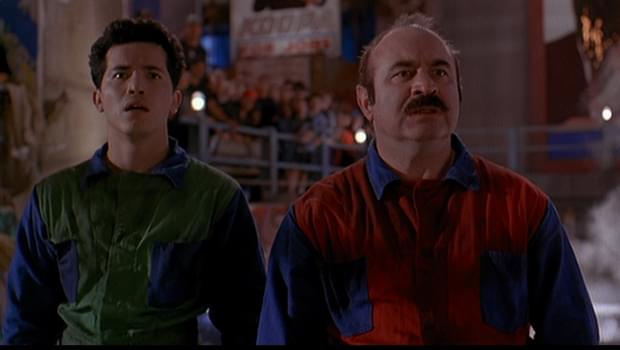
Bruce Springsteen’s band member tells us that it is a rush to him to “turn your guitar amp up to 11 and scream and shout and be presenting amazing music.” Amazing to me that anyone older than a demented 6-year-old can call that racket “music.”

True, my standards are high, as they are generated by the Metropolitan Opera. But the reaction to the Springsteen noise proves the truth of the old adage that “some people grow up, others just grow old.”

Robert E. Vanderzanden
Woodburn, Ore.

Assuming this letter is legit and not meant as a joke, I have to conclude that Robert E. Vanderzanden is the following things:

1. Very, very old. Anyone who was younger than about 20 in the mid ’50s, when rock ‘n’ roll came around, would almost certainly have succumbed to at least SOME of its charms. To have such disdain for the entire art form — and Springsteen isn’t even “niche”; his stuff is pretty much basic, pure rock ‘n’ roll — you’d have to have been already set in your musical tastes in 1955. At least generally speaking.

2. A pompous crotchbag.

For the record, being a fan of the Metropolitan Opera does not automatically make you a pretentious, insufferable jerk. But citing it as a credential does.

The inhabitants of ‘Lost’ island are baffled, too

9

If you’re a “Lost” fan, this video might be particularly amusing to you. It’s simply a montage of characters saying “What?,” presumably comprising every instance in seasons 1-3. (Don’t worry, there are no spoilers.)

[youtube:http://www.youtube.com/watch?v=GcatQSyRK6c]

Note that while some of the What?s are the innocuous kind — “I didn’t hear you, so please repeat yourself”; “What’s wrong?”; etc. — most are the kind that means “What the hell are you talking about?!” or “What you just said is extremely alarming or surprising.” And that’s exactly the reaction you’d expect the people on this show to have on a regular basis. It’s kind of comforting to realize they’re as confused as we are. (Via SlashFilm.)

An educational new ‘Snide Remarks’

0

This week’s “Snide Remarks,” entitled “Little-Known Facts,” is exactly as advertised. Please to be enjoying it, won’t you?

This week’s “Snide Remarks,” including the audio version, is here.
The audio version (i.e., the podcast) is also here.
Subscribe to the podcast’s feed with this
URL.

Little-Known Facts

0

I usually don’t do this, but for this week’s column I wanted to share something I received as an e-mail forward. It’s a collection of trivia that I think is absolutely fascinating. I never knew a lot of this stuff before! I’m passing it on to you as a reminder of what an interesting world we live in!!

* * * * *

Ronald Reagan was not the first U.S. president to have formerly been an actor. Martin Van Buren appeared in several movies prior to his career in politics, mostly quirky, low-budget independent films.

The longest word that can be spelled without repeating a letter is “groupie.”

The classic children’s toys known as “Lincoln logs” are named after U.S. president Harold Log (1841-1845).

Barack Obama’s middle name is Hussein — which, despite its negative connotation in the United States, is actually a very common name in Obama’s home country of Iraq.

The Latin name for the common house cat is garfieldus heathclifficus.

In the time it took you to read this sentence, 63 people around the world also read a sentence.

Due to an outdated law that’s still on the books, in Massachusetts it is illegal to murder someone on Good Friday.

The punctuation mark known as the “period” is called that because writers were formerly encouraged to use it no more than once a month.

John McCain’s middle name is Lucifer.

The hit TV series “Happy Days” spawned several spin-offs, including “Laverne & Shirley,” “Joanie Loves Chachi,” and “60 Minutes.”

A group of witches is a coven. A group of gay men is a cast, a group of lesbians is a munch, and a group of drag queens is a tuck.

The first novel written on a personal computer was “Flowers in the Attic.”

Mountain Dew was invented when someone accidentally poured some 7-Up into a can of gasoline.

Contrary to popular belief, the party game Twister was not named after the 1996 tornado movie. In fact, the game had been on the shelves for a good six months before that movie came out.

At least two of Colonel Sanders’ 11 herbs and spices are poisonous.

Hillary Clinton’s middle name is Steven.

On TV, the first couple ever shown in bed together were Fred Flintstone and Betty Rubble. The episode was banned.

It took the medical examiner four hours to pry the gun from Charlton Heston’s cold, dead hands.

In Denmark, the third most common cause of death is shark attack.

The Hawaiian alphabet has only 12 letters, and three of them are J.

The term “legally blind” has its roots in medieval England, where you had to have the king’s permission to be blind. If you went blind without royal approval, you could be put in the stocks in the town square as punishment, with a sign on you that said “For Unlawful Cataracts” — and the acronym for that is where a certain modern vulgarity came from.

Beloved TV icon Mr. Rogers always claimed that the reason he didn’t visit his fans in Mexico was that he was afraid to fly — but the real reason was that he was a fugitive there, having once killed a guy with his bare hands in a Tijuana bar fight.

Studies show that 98 percent of all “little-known facts” distributed via e-mail are false. Except for this one, of course.

Friday movie roundup correction

0

I made a boo-boo with some of my linkage on Friday, and it prevented some podcast subscribers from getting their weekly dose of “In the Dark.” Here is where the podcast can be found; it should now download properly to your podcast-collecting device.

Friday movie roundup – April 4

5

Three very diverse movies are opening in wide release today. If you’re not the target audience for at least one of them, see your doctor.

I rather enjoyed “Leatherheads,” George Clooney’s screwball comedy about the early days of pro football. An extra treat: Randy Newman, who wrote the film’s delightful old-timey musical score, appears in one scene as a barroom pianist. If he takes requests, I want him to do “Fat Man with His Kids and Dog.”

“Nim’s Island,” aimed at tweenagers (especially girls), is not especially good, nor is it especially bad. It does confirm something that should have been obvious, which is that Jodie Foster should not do slapstick comedy. My review is at Film.com.

Finally, there’s “The Ruins,” a horror flick about American tourists who encounter a threat at a Mayan temple in Mexico. It was one of Hollywood’s Shameful Secrets®, not screened until last night at 10 p.m., and even then press weren’t invited. I sneaked in with the audience, however, and can report that it’s actually not bad.

P.S. If you’re my sister Laura, happy birthday!

Sign up for the “In the Dark” e-zine here.
Listen to this week’s podcast version here.
Subscribe to the podcast’s feed with this URL.

My Blueberry Nights

0

Fans of the acclaimed Hong Kong director Wong Kar Wai (“In the Mood for Love,” “2046,” “Chung King Express”) have awaited his latest, “My Blueberry Nights,” with what you might call reserved curiosity. It is his English-language debut, and jazz singer Norah Jones is making her acting debut in the lead role — two factors that could spell disaster. Happily, the result is a pleasant and sugary romantic dramedy, not as packed with emotional weight as Wong’s best-loved films, but perfectly serviceable.

Jones plays Elizabeth, a young woman who one night stumbles into a New York diner run by Jeremy (Jude Law). At first the two are the film’s only characters, and all of their scenes are set at night, after the diner has closed. In the dreamy world of the film (written by Wong and Lawrence Block), Jeremy’s diner is a place where broken-up couples can leave their apartment keys for ex-lovers to pick up. He has a jar full of keys, and he knows the stories behind every failed romance that they represent.

Then Elizabeth leaves on a cross-country trip of self-discovery, taking waitress jobs first in Memphis and then in Nevada. In Memphis she befriends an alcoholic cop named Arnie (David Strathairn), who is devastated over a recent breakup with Sue Lynne (Rachel Weisz). In Nevada she meets Leslie (Natalie Portman), a gambler with trust issues.

Through their poor examples and emotional misfortunes, these characters all teach Elizabeth a few things about love. Strathairn, Weisz, and Portman are far better performers than Jones (who is affable but not particularly skilled as an actress), and they each have a monologue or two in which to make their mark. There’s a terrifically poignant moment when Elizabeth says to the drunken Arnie, “I know it’s none of my business, but have you ever thought about cutting back?” Arnie replies incredulously, “Have I thought about it?” He goes on to explain, heartbreakingly, how often he has “thought” about it.

Plotwise, the film isn’t much. But Wong has a poet’s touch, giving everything a gauzy, dreamlike feel; his fondness for reds and greens and for setting most of the film in the ethereal nighttime hours adds to the romance of it. It’s sweet and mostly satisfying, like a silky dessert at the end of a relaxed meal.

Leatherheads

0

If the slick and silly “Leatherheads” is any indication, the time George Clooney spent with the Coen brothers has rubbed off on him. Clooney’s third stint in the director’s chair is a loopy Roaring Twenties screwball comedy, and much of its wry, slightly detached humor is reminiscent of the Coens’ Clooney-centric “O Brother, Where Art Thou?” and “Intolerable Cruelty.” It feels a bit “Raising Arizona,” too, which starred Nicolas Cage but could have just as easily starred Clooney.

An even greater influence, of course, are the dialogue-heavy comedies of the 1930s, and Clooney breezes through “Leatherheads” — both as director and star — with the confidence of a man who knows the style forward and backward. When his character, an aging but still footloose playboy, quips, “You’re only as young as the women you feel,” you can imagine it coming from the mouth of Clark Gable or Cary Grant. Or, for that matter, from the real-life Clooney.

The film is set in 1925, at a time when college football is well funded and respected while professional football is a chaotic joke played by unsportsmanlike ruffians. Dodge Connelly (Clooney) is the captain of the Duluth (Minn.) Bulldogs, a pro team that’s on the verge of closing up shop until Dodge gets the bright idea of hiring college golden boy Carter Rutherford (John Krasinski). Carter, fresh-faced and all-American, brings legions of fans with him, thanks not just to his gridiron prowess but to his status as a hero of the Great War, in which it is said he once captured a trench full of Germans single-handedly.

The Bulldogs’ fortunes change overnight. Suddenly the stands are full of spectators, and suddenly the team is occasionally even winning a game or two. There is also new media scrutiny, in the form of Lexie Littleton (Renee Zellweger), a Chicago Tribune reporter who’s been assigned to get the real dirt on Carter’s war heroics. She travels with the team, cozies up to Carter, and butts heads with Dodge in that old Grant-and-Hepburn fashion. Their repartee (originally penned by sports writers Duncan Brantley and Rick Reilly, though Clooney gave the script a major overhaul) is saucy and cute, genuinely recalling the 1930s comedies that it’s meant to evoke, and Zellweger is as adept at playing old-Hollywood characters as Clooney is. (Krasinski, on the other hand, always seems too modern for the film, though his performance is otherwise keen.)

The film’s midsection sags a bit as two plot threads jostle each other for attention. One deals with the Carter-Lexie-Dodge romantic triangle; the other centers on Carter’s war record and his and Lexie’s ever-shifting views on whether to go public with the truth. (Suffice it to say he didn’t exactly capture all those Germans single-handedly. The real story, seen in flashback, is much funnier.) Both facets of the plot are important; they just need to be juggled more elegantly, maybe with a little tighter editing and sharper focus.

Clooney’s grinning, Clark Gable-y insouciance eventually sets the tone for the entire film, with everyone calibrating their own performances to match his. That includes Stephen Root as a consistently inebriated sports writer (is there any other kind?) who usually just prints whatever Dodge dictates to him, and Jonathan Pryce as a conniving sports agent (is there any other kind?) trying to make a buck off of Carter Rutherford. Even Randy Newman’s old-timey musical score feels jaunty and carefree, a perfect match for the goofy merriment of the story. Many people already consider Clooney to be the 21st century’s best example of an old-style Hollywood movie star, and “Leatherheads” cozies right up to that image, and douses it with a bit of modern Coen-style irony for good measure.

Nim’s Island

0

“Nim’s Island” is a so-so live-action movie that would have been better if it were a cartoon. Animated films inspire a greater suspension of disbelief, and so we aren’t bothered by gaping plot holes or (for example) wild animals that respond to complicated commands. A guy in a cartoon asks a pelican to fly across an island and retrieve his tool belt, fine. But when it happens in a live-action film — one supposedly set in something approximating the real world — I start to ask questions.

You don’t want people asking questions during “Nim’s Island,” and the Hannah Montana crowd that the film is aimed at probably won’t. Based on Wendy Orr’s junior novel, it’s packed with wish fulfillment, girl power, broad comedy, and swashbuckling adventure. While all of these elements could have been handled better, I’m not going to quibble too much with a harmless adventure flick meant for tween girls. Then again, I’m not going to knock myself out recommending it, either. SO THERE.

Nim, played by the impossible-not-to-love Abigail Breslin, is a sparky 11-year-old who lives on a Pacific island paradise with her widowed father, Jack (Gerard Butler), a marine microbiologist. (“When [animals] have more than one cell, Jack sort of loses interest,” Nim says.) They moved to this island after Nim’s mother died, apparently because Jack couldn’t bear to face the real world anymore, though that disturbing aspect of Jack’s psychology is not addressed in the film.

No one else lives on this island, and knowledge of its existence is apparently limited to the crew of the monthly supply ship. Nim and Jack have electricity (solar-powered) and Internet access (satellite-powered), and Nim gets to learn all about nature! She’s not learning anything else, and someone who grows up never seeing another human being besides her father is bound to be emotionally screwed up, but no matter! Living on an island is fun!

Nim’s favorite books are a series of adventure novels in which author Alex Rover describes his many globetrotting escapades, and one of the film’s neat maneuvers is to show us these vignettes by way of Nim’s imagination, with her dad as Alex Rover. (Seriously: DADDY ISSUES.) Yet as it turns out, Alex Rover is really Alexandra Rover, and she’s a woman! A woman played by Jodie Foster, but still! What’s more, the real Alex Rover is an agoraphobe who hasn’t even left her San Francisco apartment in months, much less trotted the globe.

That is due to change, however, when Alex begins an e-mail correspondence with Nim while Jack is out on an expedition. A storm strands Jack where he is, Nim is all alone, and Alex wants to come help her. Meanwhile, a tourism company stumbles across the island accidentally and immediately begins plans to turn it into a resort. They show up with guests the next day, without so much as walking along the shore first themselves. Apparently the tourism industry moves very quickly (and recklessly, and without regard for international law).

What we basically have here are three main characters — Nim, Jack, and Alex — who spend the overwhelming majority of the film separated from each other. Jack’s attempts to fix his boat are boring, while Alex’s pratfall-prone shenanigans are cringe-inducing. (The list of things that Jodie Foster is good at does not include slapstick comedy. I’m surprised nobody knew this already.) Nim’s story is lively, however, and she’s the character most viewers will be interested in anyway.

Husband-and-wife directors Jennifer Flackett and Mark Levin show a lot of creativity in the way they bring Alex Rover’s fictional adventures to life, and the film is generally spirited and agreeable. It’s just that 80 percent of it flies in the face of reason. How is it so easy for Alexandra to get to an island that supposedly no one knows about? And how does she do it so fast? And how is it that Nim, despite being a hardy nature girl, doesn’t know how to treat a minor scrape on her leg? And what’s with all the overly communicative wildlife? I don’t care how much you feed that damn pelican, it’s not gonna fly across the island and get your tool belt no matter how nicely you ask it. I’m just sayin’.

The Ruins

0

Scott Smith’s novel “The Ruins” is a great thriller, with the chills evenly divided between those of a psychological nature and those that are more graphic. The film version, adapted by Smith himself and directed by Carter Smith (no relation), removes most of the psychological aspect and goes right for the visceral, gut-churning thrills. And you know what? It may not be as fundamentally unsettling as the book was, but it’s not a bad horror flick.

The story, told briskly and without many extraneous details, concerns four American college students on vacation in Mexico. Jeff (Jonathan Tucker), the responsible one, is heading to medical school soon; his girlfriend, Amy (Jena Malone), drinks too much and flirts a lot. Amy’s best friend is Stacy (Laura Ramsey), who is a perfect match for her own boyfriend, Eric (Shawn Ashmore), because neither one has any distinct personality traits of any kind.

The four meet a German tourist named Mathias (Joe Anderson), and he tells them about an archeological dig out in the jungle that his brother has gone to check out. His brother left a map. Would the four Americans like to join him as he goes to see some cool ancient Mayan artifacts?

All five of them head for the jungle, joined by a Greek fellow whose name we don’t learn until after it’s too late to be useful. (If this were “Star Trek,” the Greek would be wearing a red shirt instead of no shirt at all.) They find an old Mayan temple, and sure enough, there are indications that Mathias’ brother and the archeologists have been here. But where are they now? And why has a group of well-armed local Mayans encircled the temple and forced our heroes to climb to the top of it and stay there?

I won’t say any more about what happens except to give some generalities. Things go awry almost immediately. There is a threat to Mathias and the Americans beyond just the armed Mayans. The film toys briefly with exploring the psychological threat that everyone poses to everyone else — suspicion, panic, human nature, etc. — but as I mentioned earlier, most of that has been excised. It would have made the film better, but it also would have made it longer, and perhaps the wiser choice was to keep things moving, especially if there was to be so little characterization. But now my reasoning has become circular.

I’m not gonna lie to you: This movie is gross. Some characters endure painful injuries, followed by potentially life-saving medical procedures that are arguably worse. The film doesn’t shy away from the gory details, though I wouldn’t say it revels in them, either. There’s a grim matter-of-factness about everything: Here are some people, here is what happened to them, the end.

You may recall that Scott Smith also wrote the book and screenplay of “A Simple Plan,” another story about people getting into a situation they cannot control that only gets worse the more they try to fix it. “The Ruins” is definitely a step down from “A Simple Plan,” but it is reasonably well executed. I certainly won’t be exploring any Mayan temples anytime soon, that’s for sure.

Super Mario Bros.

Super Mario Bros.

Every time Hollywood makes a new film based on a video game, i.e., every two weeks, I pause for a moment and reflect on the history of this misbegotten genre. All the entries so far have been lousy, including the one that everyone always says is the best one, “Resident Evil.” (You’re wrong. It’s lousy.) But how did it begin? How did a seemingly fruitful source for movie inspiration turn so toxic?

To answer that question, we must look at the very first movie adaptation of a video game, 1993’s “Super Mario Bros.” And here we see that right from the very beginning, this genre sucked. Here was a colorful, mischievous game, full of whimsical characters and entertaining situations, and the Hollywood stink factory managed to take all of the fun out of it. Nintendo gave them a good opportunity, and they whizzed it right down the ol’ pant leg.

As you no doubt fondly recall from the many hours you spent playing it as a child, the video game is about two plumbers who go around getting high on wild mushrooms and stomping on turtles. Occasionally they fling themselves recklessly into pipes and collect coins in the sewers. The game comes from Japan, where these are common activities among the nation’s youth.

The movie takes those basic ideas, carefully considers them, then discards them in favor of random, chaotic loudness and forced, unenjoyable mirth. It is the type of film that Satan would make, if he were meaner.

We begin on a dark and stormy night in Brooklyn, where a gaggle of nuns finds an abandoned satchel on their church’s doorstep. You figure the satchel has a baby in it, but in fact it contains a giant egg, the kind Fred Flintstone used to eat. The nuns take this in stride, as if discovering the fertilized ova of prehistoric creatures is commonplace in their line of work. Moments later, the egg hatches, revealing not a bird or reptile but a human baby. Again, the nuns are fine with this. Rather than hastily crossing themselves as they pitch the infant into a fire, or running in terror down the steps of the church and relinquishing their faith forever, they simply go on with their lives.

The baby grows up to be a relatively normal woman named Daisy (Samantha Mathis), a New York University student who likes to go on archaeological digs as long as they don’t involve leaving the city. One day she meets the Mario brothers, Luigi (John Leguizamo) and Mario (Bob Hoskins) — yes, their names are Luigi Mario and Mario Mario — and has just begun a harmless flirtation with Luigi when, wouldn’t you know it, she gets kidnapped by goons and taken to another dimension. Conveniently, this other dimension is located underneath Brooklyn, so the Mario brothers can pursue her without having to deal with rush-hour traffic on the BQE.

The other dimension is ruled by King Koopa (Dennis Hopper, eagerly searching for his career’s low point), a ruthless tyrant who hates all mammals. Wait a minute, you say. Isn’t he a mammal himself? He certainly has all the outward indications of being a mammal: hair, sweat glands, a four-chambered heart, etc. But no, as it turns out, King Koopa and all of his subterranean subjects are reptilian in nature. They came to exist 65 million years ago when the meteorite that wiped out the dinosaurs split the world into two dimensions, one for mammals and one for reptiles. Now they have evolved into … well, into really mammalian-looking reptiles. (What, all the money they spent on this movie and they couldn’t give the underworld denizens scaly skin or something?)

Anyway, the reason Koopa has ordered the kidnapping of Daisy is that she has a chunk of the original meteorite that she wears as a really tacky necklace, her only reminder of the parents she never knew. (She never knew them because they abandoned her, but I guess she’s nostalgic anyway.) Koopa wants to reunite the chunk with the meteorite and thus merge the two dimensions, allowing him to take over the world.

To aid him in his world-domination scheme, he has created a device that can cause an organism to de-evolve back to a lower state. He has a whole army of soldiers that used to look like him (i.e., pretty much human) before he de-evolved them to look like really tall humans with tiny turtle heads. These de-evolved beings are very stupid. His machine can also evolve creatures, though, and make them smarter. When he does this to his two idiotic goons, Iggy (Fisher Stevens) and Spike (Richard Edson), their newfound intelligence takes the form of them now saying “affirmative” instead of “yes,” which of course isn’t really a sign of intelligence at all. Is it possible that no one involved in making the film had ever actually met an intelligent person before? Not only is it possible, it is likely.

Also, if you had a device that would make things more evolved and intelligent, why wouldn’t you use it on yourself? And if your goons’ idiocy has been a thorn in your side for years, why wouldn’t you have used it on them sooner? And why would you intentionally create a stupid army instead of a smart one? These are the questions that you will not be asking yourself as you watch “Super Mario Bros.” You will be too busy trying to figure out what any of this has to do with the video game, and possibly also attempting to escape from the restraining device that has been used to force you to watch the film. Remember that in the case of most knots, struggling against them only makes them tighter. Try to find a cutting implement, such as the sharp edge of a desk, but make sure to do it when your captor’s back is turned.

The movie bears so little resemblance to the video game that I’m tempted to think their matching titles is simply a coincidence. “What?!” the executives at Buena Vista Pictures must have exclaimed. “There’s a video game called ‘Super Mario Bros.’ too? Huh. Weird. Is the game about a cruel reptilian dictator who hates mammals even though he looks like one himself and who also hates evolution and wants to merge two dimensions and rule the world? No? Then we’re safe. Whew. Tell the lawyers to stand down.”

— Film.com

Great moments in publicist hyperbole: ‘Chapter 27’

3

I got an e-mail containing a press release from Peace Arch Entertainment, who is currently distributing “Chapter 27,” the film about the guy who shot John Lennon. You might know it as the movie where Jared Leto got really fat. The headline on the press release reads:

“PEACE ARCH ENTERTAINMENT EXPANDS RELEASE OF CRITICALLY ACCLAIMED ‘CHAPTER 27′”

Can you spot the funny part? That’s right: “critically acclaimed.” At the moment, Rotten Tomatoes has the film at 20%, with 24 negative reviews and only 6 positive. (It’ll be 25 negative as soon as I get around to posting mine.) The average score is 4 out of 10 — which means those who didn’t like it REALLY didn’t like it. Even champion quoted whore Pete Hammond panned it, and he gives out negative reviews about as often as Paula Abdul.

So how, exactly, is Chapter 27 “critically acclaimed”? I guess it did get acclaim from six people, and those people are critics, so technically the description is accurate. But come on, publicists. You’re not foolin’ anyone.

New column! ‘Eric’s Bad Movies’

102

Over the years, many readers have expressed great fondness for my highly negative reviews of highly bad movies. They are fun to write, and I’m glad people like them. They help heal the pain inflicted by the films themselves.

The problem is, sometimes we’ll go for weeks at a stretch without a new F-grade movie being released, and negative-review-loving readers feel deprived.

The solution? Start going after the bombs I missed the first time around.

Today I am delighted to introduce “Eric’s Bad Movies,” a new weekly Film.com feature devoted to the contemplation and evisceration of Hollywood’s terrible mistakes. Every Thursday I will watch and review something awful that I have not seen or reviewed before. The inaugural edition: “Super Mario Bros.” (1993), the very first video-game-based movie, and a frightful omen of things to come.

Longtime readers might recall that I wrote a similar column years ago for the online literary journal White Shoe Irregular. That column was called “In the Dark” (I eventually chose that title to encompass all of my reviews), and “Eric’s Bad Movies” is its natural successor. I’ve been wanting to do something like this for a long time, and I’m grateful that my Film.com overlords have given me the opportunity (not to mention money, which justifies the time and energy involved).

I welcome suggestions for films that should be addressed in future editions of “Eric’s Bad Movies.” The only criteria are that they need to be films I have not already reviewed; they need to be awful; and they need to be available on DVD. I’m trying to avoid obvious “worst movie ever” selections like “Plan 9 from Outer Space” and “Showgirls,” as those have been written about too much already. Feel free to post or e-mail your suggestions.

In the meantime, I hope you enjoy the new column!

UPDATE: Another stipulation: I want to stick to movies that readers will generally have at least heard of, if not actually seen. Trolling the video store for obscure films would no doubt yield some awful movies, but where’s the fun in that? I want to go after films that a major studio actually expected people to pay to see. In my worldview,  underground titles, straight-to-DVD flicks, and made-for-TV movies don’t deserve quite the same punishment that, say, “Kazaam” does.

Fun with closed captioning

12

On the treadmill at the gym today, watching CNN with the closed captioning enabled, and the “news story” (I use the term loosely) is about Barack Obama bowling. The caption says this:

“Obama used bawdy language to will the ball away from the gutter.”

My interest was piqued — until I realized it was body language, not bawdy language, that he was using, and that the closed-captioning transcriber had messed up. Darn! Bawdy language would have been much more interesting. Stupid homophones….

The freaky life of a celebrity

11

Here is a picture of Jake Gyllenhaal and his girlfriend, Reese Witherspoon. Note that just above Reese’s head is a magazine with her ex-husband, Ryan Phillippe, on the cover.

Discussion question: What if you were out shopping with your new boyfriend and you saw a magazine cover with your ex-husband’s face plastered all over it, staring out at you? How freaky would that be?

The 2008 EricDSnider.com Pledge Drive

17

If you’re like me and you check EricDSnider.com constantly throughout the day, you’ve probably noticed that we’ve had some downtime in recent weeks, periods of a few minutes (or hours) where the site was unavailable. According to my webmaster/brother Jeff, this is because our web host, Dotster, is a terrible company. In his words, “I am not exaggerating when I say they don’t care even a little bit whether we are satisfied with the service we are paying them to provide.”

The point is, we need to change to a new host, and the options we’re looking at — the ones that will actually get the job done — will be more expensive than what we’ve been paying. EricDSnider.com brings in some income through affiliate programs and ads and stuff, but not enough. To the extent that it’s possible, I’d like to avoid paying money out of my own pocket to keep the site up.

And that brings us to the 2008 EricDSnider.com Pledge Drive. Now, we’re not going to take the PBS route and try to guilt you into donating a few dollars for our hosting fees. The content on this site, like the content on almost all non-porn sites, is free, and that’s how it should be. If you don’t feel like donating, don’t do it.

But if you do have $5 or $10 to spare, we’d appreciate it. You can use Paypal to send it to me, and I’ll send it right over to Jeff, and he’ll spend it on candy. No! On web hosting. We promise, only web hosting. My Paypal address is eric(at)EricDSnider.com. If you don’t have a Paypal account, you can use a credit or debit card to send the money.

Thank you for your support! As your reward, here’s a video of a Haitian weatherman. You really have to watch it about 10 times in a row to get the full effect.

[youtube:http://www.youtube.com/watch?v=sDXXX4Ta8YU]

Airport-related ‘Snide Remarks’ will chase away the Monday blues

0

This week’s “Snide Remarks,” entitled “WTF, TSA?,” is about airport security. I’m pretty sure I’m the first person ever to make jokes about air travel, so I feel pretty good about that.

It may also interest you to know that I reviewed “Superhero Movie” over the weekend, and that it’s not horrible! The review is at Film.com.

This week’s “Snide Remarks,” including the audio version, is here.
The audio version (i.e., the podcast) is also here.
Subscribe to the podcast’s feed using this URL.

WTF, TSA?

0

Frequently Asked Questions at the Transportation Security Administration (TSA) Website.

Q: Tell me again why we can’t bring bottled water through airport security?
A: Two reasons. One, because we have no way of knowing it’s just plain water and not something that could be used to make a bomb. Two, because we said so.

Q: “Because we said so”?
A: Yeah. I mean, what are you going to do about it? We could make it a rule that you can’t bring ANYTHING on an airplane, that you have to check all your luggage and board the plane buck naked, and you’d have no choice but to go along with it. Anyone who complained that their civil rights were being eroded would be labeled a terrorist sympathizer.

Q: How could a bottle of clear liquid be used to make a bomb?
A: Our scientists tell us that the right combination of liquids, even liquids that are harmless by themselves, can be deadly.

Q: Really?
A: No, not really. We pulled that one out of our butts. It sounds awesome, though, doesn’t it? We think it’s only a matter of time before Hollywood makes a film where a terrorist uses harmless liquids to make a bomb on an plane.

Q: How come the official TSA regulations have been updated to allow up to 3.4 ounces of liquid through security checkpoints, yet the TSA’s own website still has it at 3 ounces?
A: We’re hedging our bets. We want to reserve the right to harass you if you have more than 3 ounces. We’ll enforce whatever the nearest sign says, or whatever rule we happen to make up on the spot. There’s also a good chance we’ll ignore this rule altogether and let an entire bottle of shampoo go by while we’re talking to our co-workers.

Q: Why are all your airport screeners such idiots?
A: On the contrary, the TSA prides itself on selecting only the finest, most qualified high school dropouts and GED-takers to work at its airport security checkpoints.

Q: Why are they so stubborn and belligerent? They’re worse than highway patrolmen.
A: For many of our screeners, this is the first time in their lives that they have had power over anyone. We admit that sometimes it goes to their heads. If you believe a TSA screener has treated you with disrespect, please ask to see a supervisor. The supervisor will listen carefully to your complaints, decide that you’re wrong and the TSA screener is right, and then subject you to a lengthy strip-search and interrogation. Now who’s stubborn and belligerent, eh, smart guy?

Q: This whole thing where you have to put all your liquids in a Ziploc bag — the Ziploc company bribed you to create that rule in order to increase their sales, right?
A: You caught us.

Q: Why do you confiscate bottled water?
A: We already answered this. It’s because we have no way of knowing, just by looking at it, that it’s only water. It could be hazardous.

Q: Then how come when you confiscate it, you just throw it in a garbage can? Shouldn’t it go into a biohazard bin or something?
A: Don’t be silly. It’s only a bottle of water!

Q: So I can’t bring it through security because it might be dangerous, but you throw it in a regular garbage can because you know it’s not dangerous.
A: Correct. Sometimes we go ahead and drink it ourselves.

Q: A few weeks ago, you forced a woman to remove her nipple ring with a pair of pliers before she could be permitted to pass through security. Your spokesman, Christopher White, defended this action, saying, “Incidents of female terrorists hiding explosives in sensitive areas are on the rise all over the world. This scenario must be addressed at our nation’s airports.” You do see the difference between hiding a bomb in your bra and having a small ring in your nipple, don’t you?
A: No.

Q: I’m sorry, I just can’t get past this water thing. Current TSA regulations let passengers bring screwdrivers, scissors, and cigarette lighters through security — but not a bottle of water. Tell me again how a bottle of water is more dangerous than a pair of scissors?
A: We didn’t want to confuse you with a lot of science, but since you’re so persistent, here goes. Water is actually made up of two different chemical elements, hydrogen and oxygen. Hydrogen has been used to make such dangerous weapons as the hydrogen bomb. Oxygen is an accelerant — neutral on its own, but if you light a match near it, it will make the fire burn faster and hotter. Knowing this, would you want to sit next to someone on a plane who had a whole bottle full of such volatile chemicals? We didn’t think so.

Q: Doesn’t it suck to work at a job where all day long you have to enforce arbitrary, illogical rules that someone else made up, all the while pretending that they actually make sense?
A: You have no idea.

Friday movie roundup – March 28

5

One of the things I like about film festivals is that they’re efficient. Case in point: Four of this week’s new releases are films that played at South By Southwest, thus relieving me of having to watch them this week.

“Stop-Loss” and “21” are both C+ movies. “Run Fatboy Run” is better. “Flawless,” in limited release, is also decent. Note that my reviews of “Stop-Loss,” “21,” and “Flawless” are all at Cinematical.

The other new release today is one of Hollywood’s Shameful Secrets©, i.e., it wasn’t screened for critics. It’s “Superhero Movie” … yes, another unimaginatively titled spoof film. I’m seeing it today, and my review will be at Film.com later tonight is at Film.com now.

I also caught Tyler Perry’s “Meet the Browns” this week, and that review is now available. It’s the first film Perry has made that’s actually OK. So just like his characters keep saying, miracles do happen!

Sign up for the “In the Dark” e-zine here.
Listen to this week’s podcast version here.
Subscribe to the podcast’s feed here.

Priceless (French)

0

Since her fabulous success in “Amelie” in 2001, Audrey Tautou has been unsure how to capitalize on her charm and talent without seeming to replay the same character. She made a few French films, including “A Very Long Engagement,” which reunited her with her “Amelie” director. She sampled British filmmaking (“Dirty Pretty Things”) and even an overblown American production, “The Da Vinci Code,” where she was bleached of all personality. Surely that was not the solution to her quest.

Now, at last, she has found her best post-“Amelie” success with “Priceless,” a sunny French romantic farce in which she plays a pixie-ish gold digger. All characters played by Tautou will be pixie-ish, of course; it’s the fact that this one’s a gold digger that makes her noteworthy. Directed and co-written (with Benoit Graffin) by Pierre Salvadori (“Apres Vous”), “Priceless” is light and fluffy enough to compare favorably with “Amelie.” It’s often very funny, too.

Tautou plays Irene, a woman who enjoys — nay, requires — the finer things in life but will not — nay, cannot — acquire them the normal way, i.e., by getting a job and saving up to buy them. Instead, she uses her smashing good looks and considerable charm to woo wealthy man, usually older than herself, and extract lavish gifts from them. She sticks around until the trinkets and baubles dry up, or until the guy wises up and dumps her. Her ultimate goal is to marry one of these fools and be set for life. The difference between Irene and a common prostitute is purely semantical.

At a posh hotel in the south of France, she meets Jean (Gad Elmaleh), a porter whom she initially mistakes for a millionaire. (Imagine her delight: This guy’s actually her own age and actually kind of handsome! She will be the envy of all her gold digger friends.) Jean realizes her error and plays it up for as long as he can; fortunately, the movie only dabbles in the comedy of that mistaken identity for a few minutes before moving on. Jean is deeply smitten with Irene, so much that even after she realizes he’s poor and is angry at him for wasting her time, he continues to gladly bankrupt himself just to be with her. At one point he offers her a one-euro coin for 10 seconds of her time. He spends the 10 seconds gazing at her with huge love-struck eyes.

In the midst of trying to woo Irene the honest, non-monetary way (which is a losing battle), Jean finds himself the object of someone else’s affection: Madeleine (Marie-Christine Adam), a wealthy widow of a certain age. She will gladly supply him with expensive clothes and watches in exchange for being her arm candy. The two are encamped at a hotel on the French Riviera, with Irene and her latest conquest at the place across the street. Irene and Jean meet regularly on the sly — first so that she can give him gold-digging tips, and eventually because she’s realizing her fondness for him.

A story like this must be told in a light, barely two-dimensional fashion, as too much reality or seriousness would bring the unsavory aspects of Irene’s lifestyle to light. Salvadori maintains just the right tone, always subtly reminding us that it’s meant as a merry farce, nothing more. (The film bears some superficial resemblance to “Breakfast at Tiffany’s,” enhanced by certain writers’ frequent assertions that Tautou is the modern-day Audrey Hepburn, but “Priceless” is a different animal altogether.) My only major quibble is with Irene’s somewhat inscrutable character. She cruelly bankrupts Jean as punishment for pretending to be rich, then seems to hate him, then takes him under her wing as a gold-digger-in-training, then is jealous at how quickly he adapts to it. We’re clearly working toward the inevitable moment when she’ll decide to be with him even if it means being poor, but in the meantime it’s hard to tell what her thoughts are.

Nonetheless, Tautou and Gad Elmaleh are a delightful pair of likable French performers. Tautou can be sexy and ridiculous at the same time — no mean feat — and Elmaleh, whose father was a mime, has a gift for subtle physical comedy: a facial expression here, a double take there. Their chemistry together is more whimsical than smoldering, like two kids on a play date.

In fact, the whole film has a certain chasteness to it. Sex is part of the gold-digging lifestyle, but Salvadori never shows it — again, wisely keeping the story from becoming mired in unappealing realities. It has the feel of a classic French farce, and it’s as cute and upbeat as a comedy set on the French Riviera ought to be.

21

0

In “21,” an M.I.T. math whiz joins a secret cabal of card-counters who fly to Vegas on the weekends to make a killing at the blackjack tables. That’s the hook, the part you might not have seen in a thousand other films. But the rest is as generic as the title (“21”? Really? That’s the best you could come up with?), a story about a nobody who becomes a somebody, forsakes his friends, and learns What’s Really Important.

Yawn is right. This is a prime example of a movie that isn’t bad, per se, just unnecessary, a competently made but wholly unremarkable trifle. It trades exclusively in cliches and stock characters — and yet, strangely, director Robert Luketic (“Legally Blonde”) seems to believe he has made something compelling and original. And I have to think, if I’VE seen lots of movies exactly like this one, then shouldn’t Luketic have done so as well?

Based apparently rather loosely on a true story, “21” begins with Ben Campbell (Jim Sturgess), an upstanding, Boston-bred, good-to-his-mother math nerd, trying to win a scholarship to Harvard medical school. Without the free ride, he has no hope of paying the $300,000 his post-secondary education will cost him. In the meantime, he works for $8 an hour at a men’s clothing store and finishes out his senior year at M.I.T., working on robotics projects with his dumpy comic-relief buddies.

After making a dazzling observation in an advanced math class, Ben is summoned by the professor, Mickey Rosa (Kevin Spacey), to a clandestine meeting. Led by Professor Rosa (but please, call him Mickey), a small group of students has mastered the science of counting cards, accurately working the probability statistics to all but ensure a win every time they play blackjack. It’s not illegal to count cards, and by most standards not even immoral or unethical. Of course, the casinos frown on it, but the nice thing about Mickey’s system of decoys and code words is that it’s practically undetectable!

Ben refuses to get involved, of course, then reconsiders after realizing he has no other way to pay for med school … and also after being flirted with by Jill (Kate Bosworth), the pretty girl on Mickey’s team. (I have to say, he’s an awfully easy mark. If you ever need someone to help you execute an ill-advised get-rich-quick scheme, target Ben Campbell, as he will put up almost no resistance.) The rest of the squad comprises jealous loose cannon Fisher (Jacob Pitts), kleptomaniac goofball Choi (Aaron Yoo), and nondescript Kianna (Liza Lapira).

The film, written by Peter Steinfeld and Allan Loeb and based on Ben Mezrich’s book, stalls for a while in the middle, with Ben and the crew having achieved unprecedented success in Vegas on the weekends while maintaining their ordinary, boring lives in Boston the rest of the week. Ben likes being a big-shot in Sin City, wishes he could be that guy 24/7. He puts the moves on Jill, whose affections for him waver frequently and without apparent provocation. He earns the trust and respect of Mickey. And meanwhile, a loss prevention expert named Cole Williams (Laurence Fishburne) watches the security tapes and tries to figure out why certain casinos are taking such big hits at the blackjack tables every Friday and Saturday night.

When the twists start to come in the final act, it’s enough to give the film a boost of energy but not enough to turn it into anything special. Jim Sturgess, recently seen in “Across the Universe” and here affecting an inconsistent American accent, could be a charismatic leading man if the story didn’t require him to make so many dumb decisions (what, there are no banks in Boston to store your huge piles of cash?) and just generally be a sap. Kevin Spacey, though, can use his snaky charm to sell almost anything, even a trite old tale like this one. I’d rather see a movie about his character.

Run Fatboy Run

0

Though “Run Fatboy Run” is genial and often amusing, I can’t help thinking it would have been funnier if a different combination of people had worked on it. Michael Ian Black (the writer), Simon Pegg (the star and co-writer), and David Schwimmer (in his theatrical directorial debut) are all funny guys, sure — but they’re each a different kind of funny. Black’s humor tends to be surreal and odd (see TV’s “Stella” and “The State”), while Pegg — best known for co-writing and starring in the spoofs “Shaun of the Dead” and “Hot Fuzz” — favors subtlety and wordplay. And for all we know, Schwimmer’s sense of humor might be limited to reading “Friends” scripts.

Their collaboration in “Run Fatboy Run” produces mixed results, a likable comedy with some rough edges but a lot of charm. Pegg plays Dennis, a hapless London bloke who is behind on his rent and has a dead-end job chasing shoplifters from a women’s clothing store. He also still pines for his ex-fiancee, Libby (Thandie Newton). Like a sweet but naive child, he can’t understand why Libby won’t let him back into her life.

“You left her at the altar when she was pregnant,” his friend Gordon (Dylan Moran) points out.

“But that was ages ago!”

“Women remember that stuff.”

Indeed they do. Now, five years after Dennis got cold feet and fled their wedding, Libby is dating Whit (Hank Azaria), a handsome and successful American financier. Whit is Mr. Perfect, and he runs marathons, too, an activity that the sedentary Dennis — out-of-shape, nicotine-addicted Dennis — cannot fathom. Yet in an effort to prove to Libby that he is a changed man, he announces that he will run an upcoming marathon, too. He has never finished anything before in his life, but he will finish this!

Finish the race, get the girl. It’s silly and formulaic, and I think Michael Ian Black knew that when he conceived it. I suspect he intended it as an ironic goof before letting it get bogged down in plot details. We wind up with two side bets on Dennis’ marathoning, one involving Gordon’s gambling debts and the other centered on Dennis’ late rent, and neither one is plausible or necessary. A Screenwriting 101 teacher might say that the script MUST have an antagonist who doesn’t want Dennis to finish the race, but common sense should argue that Whit, and Dennis’ own complacency, are his opponents. The other interpolations are superfluous.

Schwimmer sometimes goes for the easy joke, often resorting to clunky slapstick. I’m talking about little things like cops tackling Dennis for no reason (he wasn’t resisting, nor was he committing a serious crime), or Dennis falling down after being hit in the head with a shoe. In the aggregate, Dennis falls down way too much. As a director, you have to ask yourself: Why is this character falling down? Is it because there’s a good reason for him to fall down, or is it just because I think it’s funny when people fall down? If it’s the latter, you need to stop and re-calibrate.

But then there’s Simon Pegg, whose output is more consistently funny than that of anyone else involved in this production. He sticks to his strengths as Dennis, making him frustrated but sympathetic, smart but not brilliant, and luckless but not a loser. You see it best in Dennis’ scenes with Jake (Matthew Fenton), the 5-year-old son that Libby was pregnant with on their botched wedding day. Pegg interacts with the kid as if they were equals, and you realize it’s impossible not to like a character who treats children with such compassion and good humor.

With support from British comic Dylan Moran, who earns laughs as Dennis’ shabby, devil-may-care best friend, “Run Fatboy Run” is commendable if not exactly memorable. Could a better combination of collaborators have produced something greater? Definitely. But this cheerful mix of juvenility and grown-up-relationship angst goes down smoothly enough to be worth watching.