Home Blog Page 29

Battle in Seattle

0

Watching “Battle in Seattle” is like being jabbed in the belly with a police baton, and not in a good way. Written and directed rather ambitiously by the actor Stuart Townsend, who has never written or directed anything before, it uses fictional characters to tell a true story but gives us no reason to care about the people, their lives, or their political causes. The riots that occurred at the World Trade Organization meeting in Seattle in 1999 may well have been historically significant — but you wouldn’t know it from watching “Battle in Seattle,” which insists on telling us how important the issues are rather than showing us.

Townsend gives a cursory explanation of what the WTO is and tells us that many oppose it for its lax policies on human rights and labor standards. The details aren’t important to him, though. He seems to take it as a given that we already dislike the WTO, even though most viewers’ response to WTO is “WTF?” It’s a massive, complicated international organization that deals with stodgy, unsexy issues like trade and commerce, and I guarantee the vast majority of the audience isn’t nearly as interested in it as Townsend is. And if the point is that we SHOULD be interested in it, he fails to explain why.

Our heroes are the protesters, led by the devoted Jay (Martin Henderson), who lost a brother to the cause and is now single-mindedly dedicated to avenging his death. He is at the head of a huge, highly organized, somewhat mischievous group that aims to disrupt the three-day WTO meeting in downtown Seattle without using violence. He is assisted by the hard-nosed Lou (Michelle Rodriguez) and the easy-going Django (Andre Benjamin), the latter fulfilling the requirement that all movies shall have a Comical Sidekick.

The protests go down smoothly until they are marred by two things. First, the labor unions march against the WTO, too, and they have their own agenda separate from that of Jay’s group. Second, some anti-WTO anarchists join the movement and ignore Jay’s pleas that they behave civilly, choosing to smash windows instead. That gives the cops all the incentive they needed to start busting heads.

Oh, yeah. The cops. We’re supposed to care about them, too. The good cop is Dale (Woody Harrelson), whose wife Ella (Charlize Theron) is pregnant, which is screenwriting shorthand for “please sympathize with this character and her husband.” He is eager to follow his commanding officer’s orders, while young cop Johnson (Channing Tatum) wants to unleash hell on the dirty hippies who are clogging up the streets.

The inevitable fracas occurs, and Townsend deserves credit for executing some very large, logistically complicated riot scenes (though they are shot and edited so chaotically that it’s hard to tell who’s doing what to whom). But his tin ear for dialogue almost sinks the film single-handedly. Poor Ray Liotta, playing the city’s fretful mayor, is stuck in an office shouting trite lines like “The press would have a field day!” and “You’re gonna turn downtown into a war zone!” Then there’s Jay telling Lou, “You know nothing about me!,” to which she responds, as if reading from the script of a Lifetime movie, “I’ve been around men like you all my life.” And perhaps the most howlingly bad line in the entire film comes when Ella’s co-worker tells her, in reference to her impending motherhood, “You want adventure? You just signed up for the greatest adventure of all!”

Seriously, don’t you want to crack all these people in the skull with a nightstick?

Townsend’s fatal, fundamental flaw is that for all the yelling and fighting and posturing and debating, he never tells us why the WTO is so bad. He barely even explains what the WTO is. Late in the film, after the riots have stopped the conference and gotten worldwide news coverage, Django makes a joke about it: “Three days ago, nobody even knew what the WTO was. Now they still don’t know what it is, but at least they know it’s bad.” Hardy-har, funny joke, but guess what? You just summarized why the film is a failure. We’re supposed to be on your side and hate the WTO, but you never explain why. This is an “issue movie” that neglects to tell us what the issues are, which is sort of like making a comedy that doesn’t have any jokes. That’s a pretty serious mistake, don’t you think?

Eric’s Bad Movies: ‘Mac and Me’ (1988)

13

As someone immediately guessed last week, today’s edition of Eric’s Bad Movies at Film.com features “Mac and Me,” an extended McDonald’s/Coke/Skittles commercial from 1988. My devoted editor has gone to the trouble of adding YouTube clips of the movie’s two high points — boy in wheelchair falls off cliff; alien in teddy bear costume dances at McDonald’s — and I highly recommend them to you.

This is Eric’s Bad Movies #25, by the way. Can you believe it’s been almost six months since we started? Seems like only yesterday.

As for next week: I’m not 100 percent sure yet, but if I go with the title I’m thinking of, it will be the oldest film yet covered in Eric’s Bad Movies. (Here are the archives for reference.) Some of its actors were Grammy-winning singers. The film was a remake.

/Filmcast link: proof that I was on the podcast

0

Remember when I said I was going to be on the /Filmcast on Monday? Well, I totally was. The recording has been posted, and you can listen to it here. I come in around the 52-minute mark. I believe there may be a bit of saucy language in my segment (though not from my own mouth, of course), but nothing beyond the PG-13.

Comics … IN MY PANTS!

10

You may be familiar with the juvenile (yet endlessly entertaining) game of adding “in my pants” or “in bed” or “in the bathtub” to the end of fortune-cookie fortunes, song titles, or famous sayings. Someone is doing it with comic strips now, replacing the punchlines with “in my pants.” He even matches the fonts, which is a nice touch. Enjoy yourselves (in my pants)!

Comics in My Pants.

Ortega does what now?

21

If you have not already seen the Ortega commercial featuring Olympic gymnasts Shawn Johnson and the Hamm twins, you must watch it immediately. You must subsequently refrain from making vulgar comments. Personally, I find the unwitting double entendre of Johnson’s declarations to be the least trainwreck-y part of the commercial’s overall embarrassment.

Also: How did Paul and Morgan Hamm, who are twins and grew up together, come out pronouncing the word “Ortega” differently?

[youtube:http://www.youtube.com/watch?v=Ms5d9RN0WzY]

TV review: “Fringe”

7

“Fringe” (Wednesdays, Fox): The new show from “Lost” and “Alias” creator J.J. Abrams is promising, though the almost-double-length pilot episode was filled with contrivances and clichés. Then again, it surprised me several times, too, so I guess you take the good with the bad. It’s about an FBI agent named Olivia Dunham (Anna Torv) who’s recruited to help the Bureau investigate weird phenomena, with a civilian genius named Peter Bishop (Joshua Jackson) and his crazy scientist father (John Noble) assisting in an unofficial capacity. Now, how you can make a show about the FBI dealing with paranormal activity and not mention “The X-Files,” I don’t know. But the pilot suggests that, unlike in “The X-Files,” all the stuff they’re going to be investigating is somehow tied together — “The Pattern,” they keep calling it. (Yes, I know some “X-Files” things were tied together, but certainly not all of them.) An evil corporation run by a lady who has a robot arm is involved. Also, I believe they can reanimate the dead. Things like that keep me intrigued, the central characters have potential, and the writing is snappy. I’m gonna stick with it.

Tonight: Eric chats with movie nerds on the Internets

1

Hey, if you wanted to hear me talk about “Burn After Reading” but don’t have my phone number and haven’t run into me in person, you can listen to the /Filmcast (that’s pronounced “Slash Filmcast”) at /Film (that’s pronounced “Slash Film”) tonight at 7 Pacific/10 Eastern. The gentlemen there have honored me with an invitation to join them in their live chat, and I’m told my part will start around 45 minutes into the program. The whole thing will be recorded and subsequently posted at /Film, so you don’t have to listen live if you don’t want to.

I don’t know if my barging into a /Film video had any bearing on my being invited to be a guest on their podcast, but the lesson I’m getting from this is that I should barge into more things.

‘Snide Remarks’ appears on Mondays, including today

0

Today’s “Snide Remarks,” entitled “Your Candidate/My Candidate,” is political only in a general sense. It’s more of a silly language-manipulation thing (which some would say is all politics is anyway).

On another topic, did you ever have SO MUCH WORK to do that it was impossible to do ANY of it, and so instead you took advantage of the absurdly unseasonal heat and sat under a tree all day, eating ice cream and reading a book? If so, then screw you. I have to stay inside and be productive. But believe me, in spirit, I am under that tree.

This week’s “Snide Remarks,” including the audio version, is here.
The audio version (i.e., the podcast) is also here.
Subscribe to the podcast’s feed with this URL.

Your Candidate/My Candidate

0
Your Candidate/My Candidate

Your candidate lacks experience.
My candidate is refreshingly free from the stain of politics.

Your candidate has been part of the Washington system for too long.
My candidate is blessed by years of political know-how.

Your candidate is a reckless loose cannon.
My candidate is a maverick.

Your candidate is exotic and strange.
My candidate represents America’s melting pot.

Your candidate is a flip-flopper.
My candidate adjusts his views as new facts come to light.

Your candidate is cranky and stubborn.
My candidate is tenacious.

Your candidate makes brash, controversial remarks.
My candidate speaks his mind, no matter what.

Your candidate has a checkered past.
My candidate has a colorful past.

Your candidate has served time in prison.
My candidate has an intricate knowledge of our country’s legal system.

Your candidate sold government secrets to Russian spies.
My candidate is a savvy capitalist with international business experience.

Your candidate once killed a Mexican day-laborer and dumped his body in a river.
My candidate takes a tough stance on immigration.

Your candidate is addicted to painkillers.
My candidate takes a pro-active approach when dealing with difficult situations.

Your candidate is a promiscuous bisexual.
My candidate supports gender equality.

Your candidate was seen drinking the blood of a freshly slain goat in unholy tribute to the dark lord Beelzebub at a gathering of Satanists.
My candidate is an active participant in his religious congregation.

Your candidate released a sex tape on the Internet.
My candidate has nothing to hide from the American people.

Your candidate commandeered a Civil War reenactment and fired a cannon into a crowd of people, killing three.
My candidate vigorously defends his right to bear arms.

Your candidate is a pedophile.
My candidate loves children.

Your candidate burglarized a nursing home.
My candidate treasures the things that our senior citizens have to offer.

Your candidate recruited teenagers to work in his meth lab.
My candidate believes in teaching science to young people.

Your candidate visits prostitutes.
My candidate supports small-business owners.

Your candidate is a wealthy elitist who doesn’t trust common Americans to make good decisions.
My candidate shares the views of the Founding Fathers.


[ It’s hard not to notice the double-talk in an election year, where everything “my guy” does is great, while everything “your guy” does is terrible, even when they’re doing the same thing. I think I first started paying attention to it when people were debating which privileged, millionaire senator was more out of touch with typical Americans, McCain or Obama. So I started making a list of these double standards, and then I thought it would be funnier if, after a few normal ones, the accusations and spin-doctoring started getting more ridiculous.
On the format: While writing, I dimly recalled a MAD Magazine article from many, many years ago that used the same basic premise. Subsequent Googling informed me that it was from 1980, and it was called “MAD’s ‘They’ and ‘You’ Book.” (A sample: “THEY are pushy; YOU show self assertion.”) More Googling reminded me that MAD did exactly what I did — “Your Candidate/My Candidate” — in 2004. I don’t remember it, though, and I’d like to think that since my jokes grow increasingly divorced from reality as they progress, that means it’s an entirely different comedic premise altogether.
SnideCast note: It turns out the word “candidate” is hard for me to enunciate. If I’m not very careful, it comes out “cannidate,” almost like “Canada.” This becomes a problem when a particular column uses the word “candidate” 42 times. ]

Dispatches from the 2008 Toronto International Film Festival

0
Dispatches from the 2008 Toronto International Film Festival

9/8/08

Film festivals have a reputation for disdaining mainstream Hollywood movies in favor of obscure, artsy stuff — a reputation that in many cases is well deserved, by the way — but the Toronto International Film Festival seems to have no such compunctions. Among the documentaries and French tragedies are unabashedly populist flicks like “Nick & Norah’s Infinite Playlist” and the Coens’ “Burn After Reading,” to name just two. You could come to TIFF and never bother with a single subtitle or shaky, handheld camera, if you so desired.

Nearly every mainstream film I’ve seen in Toronto so far has been very good — which is a much better yardstick anyway. Sensible people have no problem with mainstream entertainment as long as it’s GOOD mainstream entertainment. Among the most anticipated was “Burn After Reading,” the Coen brothers’ first film since last year’s Oscar-winning “No Country for Old Men.” (There was a time when the Coens would not have been considered mainstream, but those days are long gone.) The new film’s tone of black comedy and general buffoonery is the opposite of “No Country,” though the themes of crime, punishment, and theft — the Coens’ favorite things since day one — are still intact.

Speaking as an ardent Coenite, I don’t think “Burn After Reading” is among their greatest comedies. Detractors have long complained that the Coens don’t exhibit any sympathy for their characters, and this is the first time that I agree with them (or, rather, that the lack of compassion actually bothers me). That said, it’s a very funny movie, a daffy semi-satire of high-tech espionage thrillers in which some ordinary idiots accidentally find what they believe is highly sensitive CIA data. Frances McDormand, George Clooney, John Malkovich, Richard Jenkins, J.K. Simmons, Tilda Swinton, and Brad Pitt are the major players, and their performances are loose, quirky, hilarious, and profane. The film opens theatrically next week.

You won’t have to wait long for “Nick & Norah’s Infinite Playlist,” either, as it opens on Oct. 3. It stars Michael Cera as Nick, a very Michael Cera-ish sort of smart, somewhat awkward high school student who’s just been dumped by his horrid girlfriend. Still nursing his wounds from the breakup (and still compiling mix CDs to woo her back), Nick winds up spending an evening in New York City with Norah (Kat Dennings), who likes Nick but can’t get him to let go of the last girl. It’s a surprisingly sweet comedy about teen romance, the kind where everything takes place over the course of one magical night, and Cera and Dennings are a terrific duo for it. Furthermore, I’m not surprised that it captures young love in the big city as well as it does; the director, Peter Sollett, made a film called “Raising Victor Vargas” a few years ago that was just as evocative.

“The Brothers Bloom” doesn’t have quite as much mainstream street cred as “Burn After Reading” or “Nick & Norah” — it comes from Rian Johnson, writer/director of 2005 indie darling “Brick” — but it has a mainstream cast and it definitely deserves mainstream success. Adrien Brody and Mark Ruffalo star as Bloom and Stephen, con men and brothers who have been pulling one scam after another ever since they were kids, when their hijinks got them bounced from one foster home to another. Now in their 30s, the two agree to do one last caper before Bloom quits the business so he can meet a girl and settle down into a normal life. Naturally, Stephen arranges for the final game to involve a woman, Penelope (Rachel Weisz), a lonely, eccentric heiress, and Bloom finds himself falling for her even as he and Stephen plot to make off with a million of her dollars.

The mechanics of the brothers’ schemes are somewhat murky and maybe illogical, so the film doesn’t work entirely as a con story. But that’s not what it’s trying to be anyway. It’s more of a humorous character study, with a style similar to Wes Anderson’s, and packed with surreal sight gags and random goofiness. “Brick” was a great film, but it’s nice to see that Johnson can be light and jolly, too, making something accessible to general audiences without sacrificing intelligence. Summit Entertainment just moved the film’s release date from October to late December, aka Oscar-bait season. Rachel Weisz’s performance, in particular, might be worthy of some Academy attention when the time comes. She’s so lovable as Penelope that you can see why a fella would do everything in his power to insinuate himself into her life, and not just to steal her money.

9/9/08

Foreign films are big at the Toronto International Film Festival — duh, it has the word “International” right there in the name — and it’s not uncommon for future art-house hits to have their North American premieres here at TIFF. I’ve seen two so far that have the right stuff to wow indie-minded moviegoers. What’s more, they could be hits with young people, who often stick to the multiplexes and don’t like subtitles.

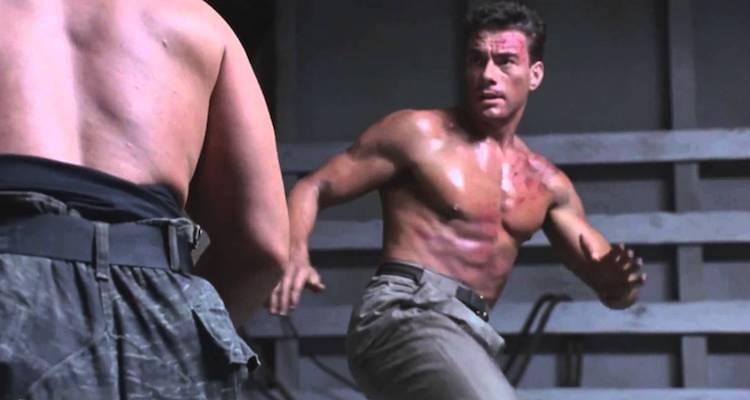
First, let’s talk about Jean-Claude Van Damme, shall we? The Belgian kick-boxing and butt-kicking champ has been making audiences cheer, often with some irony, since the 1980s, but he has rarely been taken seriously or treated with much respect. Today he is nothing more than a kitschy punch line and a regular fixture in the straight-to-DVD film industry. Yet this may change if “JCVD” can find its way into American theaters. After watching it, I find myself admiring and respecting the man. I even think he might be an OK actor, which is not a thought that had ever crossed my mind while watching him before. “JCVD” will change everything you think you know about J-C VD.

“JCVD” stars Van Damme as a slightly fictionalized version of himself, visiting his hometown of Brussels and getting caught in a hostage situation at a post office. Flashbacks show us the events leading up to it: his frustration over the course his career has taken (he’s started losing roles to Steven Seagal!), and his sadness over losing custody of his daughter to his ex-wife. He’s a shell of his former self, filled with existential angst and melancholy. And now he’s in the same kind of cockamamie crisis that his characters always find themselves in.

The film stops just short of parodying Van Damme or his movies, though it’s clear he has a great sense of humor about himself. The director, France’s Mabrouk El Mechri, has obvious affection for the Muscles from Brussels, and he has made the film to feel like a gritty 1970s crime drama (“Dog Day Afternoon,” in particular) — exactly the kind of respectable drama that has thus far eluded Van Damme so far. Van Damme gets a monologue near the end, speaking directly to the audience, which is oddly compelling and even touching. It’s a bizarre idea for a movie, just crazy enough to work, and El Mechri and Van Damme pull it off superbly.

The other foreign flick that caught my attention this weekend was “Il Divo,” which won a jury prize at Cannes earlier this year. I can’t even pretend to care about Italian politics, but “Il Divo,” a cool, crackling biopic of one of Rome’s most scandal-plagued prime ministers, is painted several shades of awesome. The man himself, Giulio Andreotti, is almost 90 now, and in his 70s in the era when the film is set. But the director, Paolo Sorrentino, is only in his mid 30s, and the film benefits tremendously from his young, hip perspective.

The film’s focus is Andreotti’s alleged Mafia ties, and I use the term “alleged” with some sarcasm. One political enemy after another “committed suicide” or “had an accident” over the course of Andreotti’s lengthy career; as a bold reporter tells him in the film, either he’s the most corrupt politician in modern Italian history, or the unluckiest victim of circumstantial evidence. Andreotti never threatens anyone, though. He simply reminds them of his massive personal archive of facts, figures, and evidence, and most potential whistle-blowers keep quiet to save their own skins.

Sorrentino uses modern electronic music, bombastic editing, and even hyperactive subtitles to keep things poppin’, but his best asset is his star, Toni Servillo. His Andreotti has hunched shoulders and a tight, stiff way of carrying himself, like his back is made of steel. His big, droopy face almost never smiles, and his owlish eyes look perpetually weary and humorless. He emerges as a cool sort of anti-hero, a bad guy you love as a character even if you hate him as a person. The film doesn’t have U.S. distribution in place yet, but I trust some indie company or other will jump at the chance to put it on the art house circuit.

9/10/08

If a law were passed forbidding the production of dramas about people who have been screwed up by the death of a loved one, the world’s film festivals would be forced to close down. I’ve seen at least three such films at Toronto so far, and the quality varies widely. It seems the grieving process is tricky to dramatize — there’s a fine line between enriching the viewers with cathartic drama and simply depressing them.

In the former category is “Rachel Getting Married,” which could also be titled “Rachel’s Sister Can’t Get Her S*** Together.” It’s Rachel’s wedding, but it’s her sister, Kym (Anne Hathaway), who’s drawing all the attention. Kym, a drug addict and alcoholic, has been in and out of rehab several times, with the most recent stint ending two days before her sister’s big day. The girls once had a little brother; his death years ago was the source of some (but by no means all) of Kym’s dysfunction.

As it turns out, “Rachel Getting Married” is indeed the right title, even though Rachel is not the protagonist of the story. That’s the point: Kym cannot always be the center of the universe. The family — which includes Bill Irwin as the girls’ eager-to-please father and Debra Winger as their absentee mother — can’t be expected to drop everything and deal with Kym’s drama every time she relapses. Eventually you have to grow up and take care of yourself.

It’s a hard lesson to learn, but as directed by Jonathan Demme and written by Jenny Lumet, it’s an easy movie to watch. All the performances are natural and unaffected, with realistic dialogue and many uncontrived funny moments — the natural humor that emerges from any family’s interactions, no matter how serious things are. Anne Hathaway is terrific, and so is Rosemarie DeWitt, who plays Rachel. The two relate exactly like sisters: fighting one minute, laughing at a shared memory the next, always loving each other underneath it all.

I was somewhat less fond of “Genova,” a well-made drama that I can respect but that I have no interest in ever watching again. This one stars Colin Firth as a newly widowed father of two girls — teenager Kelly (Willa Holland) and younger Mary (Perla Haney-Jardine) — who moves the family to the title Italian city to teach at a university for a year. His hope is that the change of scenery will help the girls work through their grief.

Kelly, like Kym in the other movie, believes her emotional state is more important than her father’s or sister’s, and she starts cavorting with local boys and defying her father’s rules almost immediately upon arriving in Italy. Mary, meanwhile, blames herself for her mother’s death, has nightmares about it, and is often comforted by visions of Mom herself (played by Hope Davis).

The film deals with Mary’s psyche more than anyone else’s, but my problem with it is that it doesn’t really “deal” with anything. There don’t seem to be any character arcs — where they are at the end doesn’t feel much different from where they were when they started. Without some kind of resolution or catharsis, why inflict these people’s sadness upon us, no matter how well acted it may be?

Finally we come to “The Burning Plain,” written and directed by Mexico’s Guillermo Arriaga, whose screenplays for “Amores Perros,” “21 Grams,” and “Babel” are famous for their multiple storylines and nonlinear narratives. True to form, “The Burning Plain” (Arriaga’s first feature as a director), introduces several sets of characters in three different time lines before gradually filling us in on how they’re connected.

Charlize Theron plays an Oregon restaurant manager with what you might call low self-esteem. (She’ll sleep with anyone, and she likes to cut herself.) In Texas or New Mexico or someplace like that, two families are grieving after one family’s mother (Kim Basinger) and the other family’s father (Joaquim de Almeida) died in a mobile-home fire while doin’ it. In Mexico, there’s a crop-duster and his little girl and another crop-duster.

Even though a lot of things happen in it — arson, plane crashes, fistfights, sex — “The Burning Plain” still manages to feel slow and uneventful, which you must admit is pretty impressive. It also feels contrived and melodramatic, like Arriaga threw together a bunch of domestic traumas and hoped we’d be moved by them, just because they’re so “gritty” and “real.” But I find the whole thing lifeless and dull instead. It might be time for Arriaga to try something new.

9/11/08

The best thing I’ve seen so far at the Toronto International Film festival is “The Wrestler,” the much-anticipated fourth film from Darren Aronofsky that stars Mickey Rourke as a washed-up Hulk Hogan type looking for one last shot at glory. It won the Venice Film Festival’s top prize just days before its press screening at Toronto, where every chair in the 580-seat theater had press-and-industry butt cheeks in it.

Aronofsky’s first three movies, “Pi,” “Requiem for a Dream,” and “The Fountain,” established him as a master of visual poetry, albeit one who is sometimes baffling and obtuse. (Those are not necessarily bad qualities.) “The Wrestler,” on the other hand, is fairly straightforward, at least from a storytelling standpoint: Randy “The Ram” Robinson was a huge wrestling star in the 1980s; now he lives alone in a trailer and does small-scale shows on the weekends, where the has-beens and the not-yets are the only people who still treat him with respect; his body is falling apart after all the years of punishment; and he wants to have a 20th anniversary rematch with his former rival to recapture some of his youth.

The film’s genius lies in its subtleties. Randy has an estranged daughter (Evan Rachel Wood, playing the usual Evan Rachel Wood role) with whom he wants to reconnect. He’s in love with a stripper, Cassidy (Marisa Tomei), whose career is similar to Randy’s in that both jobs require a stage name and have little use for anyone older than about 30. Randy comes to realize that despite his best efforts to do something else, the wrestling ring is really the only place he fits. Several moments in the film, particularly in the last scene, are incredibly poignant and moving.

The protagonist in the exuberant crowd-pleaser “Slumdog Millionaire” is looking for a different kind of fame and glory: 20 million rupees on the Indian version of “Who Wants to Be a Millionaire.” (I kept thinking the punch line would be that 20 million rupees was only about fifty bucks U.S., but no.) His name is Jamal (Dev Patel), he comes from the slums of Mumbai, and his lowly background is why the game show’s officials believe he must have cheated to make it as far as he did. After all, if doctors and lawyers couldn’t get all the questions right, how could some uneducated urchin?

Directed by Danny Boyle (“Trainspotting,” “28 Days Later,” “Millions”), “Slumdog” centers around Jamal’s police interrogation, where flashbacks to his youth explain how he happened to know the answers to the questions. For example, he knew whose face was on the American $100 bill — uncommon knowledge in India — because some guilty-feeling American tourists once gave him one. This clever story structure lets us learn about Jamal’s strong moral character, and it also informs us of his true motive for going on the show. It has to do with the love of a girl, of course.

Fox Searchlight and Warner Bros. have partnered to release the film later this fall, when it’s sure to earn more praise as a respectable upbeat indie that connects with audiences and critics alike. Some have wondered if it will be this year’s “Juno,” which also premiered at the Telluride Film Festival, went to Toronto the following week, and subsequently became everybody’s feel-good indie favorite. (The movies don’t have much else in common.) It’s certainly a strong candidate for that kind of acclaim. It even ends with a Bollywood-style musical number, as I believe all movies should.

The title characters in “Zack and Miri Make a Porno” aren’t particularly interested in fame, or even in great fortune. They just want enough money to pay the rent and get their electricity turned back on — which, now that I think about it, is actually a severely depressing reason to make a porn film. So I guess it’s best not to think about that (or anything, really) in this latest vulgar, talky comedy from Kevin Smith, who seems to be playing catch-up after having his Vulgar, Talky Comedy crown stolen by Judd Apatow.

Seth Rogen and Elizabeth Banks — both Apatow alumni, which makes comparisons even more unavoidable — star as lifelong friends and platonic roommates who decide to make a porn flick to pay off their bills. Not just any old sex tape will do, though; you can see those for free on the internet. They want to make an actual porn movie, with a lame plot and terrible acting and everything, and to that end they recruit several willing actors and actresses (including Kevin Smith mainstay Jason Mewes) to assist. But the crucial scene — where Zack and Miri have sex with each other — is the one that messes up everybody’s emotions.

It’s what messes up Smith’s film, too. The laughs are plentiful, the obscene observations witty and well delivered, for two-thirds of the running time. But when Zack and Miri’s feelings for each other become the focus, “Zack and Miri” becomes soggy and trite. Of course, real human emotions have never been Smith’s strong suit (Exhibit A: “Jersey Girl”), so it shouldn’t be too hard for fans to overlook “Zack and Miri‘s” weaknesses and just laugh at the raunchiness.

9/12/08

The difference between right and wrong is not always clear. For example, it is wrong to take another person’s life. But what about when that person is in front of you in line for a press screening at the Toronto International Film Festival and he invites 10 of his friends to join the line with him, cutting in front of you like you don’t even matter? Then the subject becomes much more complicated.

Thorny ethical dilemmas are at the heart of “Pride and Glory,” an ugly and unpleasant cop drama directed by Gavin O’Connor (“Tumbleweeds,” “Miracle”) and starring Edward Norton and Colin Farrell as two of New York’s finest. It begins with four NYPD officers being killed in a botched drug raid, then dissolves into a familiar, uninspired movie about crooked cops.

Yes, it’s crooked cops again, that old chestnut. If what happens in “Pride and Glory” (an arbitrary title, by the way) were the least bit different from what happens in the other 10,000 movies about crooked cops, I’d be a lot more interested in it. But it’s the same old story: scenes of witness coercion and perp-beating are interspersed with scenes of manly men swearing at each other with New York accents. I’ll get my crooked-cop fix on “The Shield,” thank you very much.

“What Doesn’t Kill You,” meanwhile, is on the other side of the law, though it’s just as “gritty” and “stark” and “full of profanity.” This one’s set in Boston and focuses on two low-level criminals, played by Mark Ruffalo and Ethan Hawke, who, like many men, want to increase the size of their racket. This, too, is generic and uncompelling, though certain aspects of it (like Ruffalo’s performance) make it tolerable, whereas “Pride and Glory” is just flat-out bad.

(Bonus: Donnie Wahlberg has a brief, useless cameo as a cop in “What Doesn’t Kill You.” This is in accordance with the Massachusetts state law that says any crime film set in Boston must contain at least one Wahlberg.)

When it comes to matters of right and wrong, the vast majority of the world’s population at least occasionally seeks guidance from a fellow by the name of God. Comedian Bill Maher believes the 4 billion people who believe in a Supreme Being are delusional, and that organized religion is a blight that must be wiped out if humanity is to progress. His film, “Religulous,” documents his conversations with the dumbest, least eloquent, most extreme believers he can find, all in the interest of convincing the audience that religion is silly and that God is imaginary.

Maher is preaching to the choir, of course. No one who believes in God is going to see this film and think, “Hey, he’s right. I’m going to become an atheist.” Maher’s tactics are grossly unfair, and his smarmy disdain for the people he interviews is readily apparent. This would be fine if all he wanted to do was make a comedy. Believe me, I’m very much in favor of making fun of people who disagree with you, and “Religulous” is often very funny. But if Maher genuinely wants to make a serious point — and his impassioned diatribe at the end indicates he does — then he would have to do a better job of it than he has done here.

9/13/08

From what I gather, the Toronto International Film Festival doesn’t traffic much in genres like horror or science fiction unless it’s a film about French-speaking chainsaw-wielding maniacs, or perhaps a quiet coming-of-age story about a gay zombie. What few genre flicks there are at TIFF are programmed in the “Midnight Madness” section, which is where I saw “The Burrowers,” which happens to be both a Western and a horror movie.

Now, first, the title is great because it makes you think that the film is actually “The Borrowers” and that you’re just hearing the Canadian pronunciation. But no, it’s “The Burrowers,” about people or things that burrow. This burrowing is accomplished in the Dakota Territory in 1879, where one family has been slaughtered and another gone missing. A search party is sent, including a young man who was fixin’ to propose marriage to one of the missing young ladies. It is assumed that the Indians are responsible, and there is much consternation over what those savages might be doing to the poor girls at this very moment.

The Indians are not to blame, of course — it’s the Burrowers. I’m not going to tell you what they are. Suffice it to say that the film, a very accomplished effort by up-and-coming horror master J.T. Petty (watch his “S&Man” if you can find it), is suitably creepy and exhilarating once it gets past its slow start. It’s also an impressive mixture of the Western and horror genres, something that has rarely been done at all, let alone this well.

“The Burrowers” is going straight to DVD next spring, a regrettable decision on the part of Lionsgate because it robs viewers of the chance to see the bleak prairie vistas and terrifying nighttime attacks on the big screen. I guess if it’s not a remake of a Japanese film about angry ghosts, or a slasher movie about text-messaging American teenagers being massacred, it’s not commercially viable at the multiplex. So it goes.

A film that is being released theatrically but that surely will not make any money is “Synecdoche, New York.” It’s the directorial debut from Charlie Kaufman, who wrote “Being John Malkovich” and “Adaptation” and has been rightfully hailed as a master of surreal, self-referential comedy. While “Synecdoche, New York” is a terrifically inventive and bizarre movie, it’s also well nigh unmarketable. First there’s that word in the title, which is hard to pronounce (it’s sin-ECK-duh-kee) and which is unfamiliar to most people (it’s a figure of speech where a part of something is used to refer to the whole thing — e.g., “wheels” to mean “car” — or vice versa). And then there’s its subject matter: a man, played by Philip Seymour Hoffman, stages a massive play about his entire life, with actors playing him, and other actors playing the actors playing him, and so forth.

I know it won’t be for everyone, but I find the film’s strange humor and abundant what-the-hell? moments to be hilarious and invigorating. Things happen that don’t make any sense, like some characters aging while others don’t. Time moves randomly — it’s the first day of fall in one scene, then Halloween later in the same scene. A woman says she has twins named Robert, Daniel, and Allen. Someone buys a house that is currently on fire, and that continues to be on fire all the time without ever being consumed.

But the movie is also melancholy and wistful, like Kaufman’s “Eternal Sunshine for the Spotless Mind,” with ruminations on death and loss and the meaning of life. It’s the first movie I’ve seen this year that I wanted to re-watch as soon as it was over, partly to remind myself of some of the brilliant one-liners, and partly just to wallow in the weirdness some more.

My last screening at the film festival was another one coming soon to a theater near you: Spike Lee’s “Miracle at St. Anna.” This is an epic drama, almost three hours long, about four African-American soldiers in World War II who are separated from their unit behind enemy lines. This is beyond the scope of anything Lee has done before, and he rises to the challenge remarkably well, with battle scenes nearly as visceral and jolting as those in “Saving Private Ryan” and a multi-layered story involving the U.S. Army, the Nazis, and the Italian resistance movement.

The film’s only significant flaw is its framing story, set in 1983, which is possibly unnecessary and definitely corny. When we’re in the thick of it, back in 1944, the film is smooth and mature, mostly free of the bombast that has characterized so many of Lee’s other films. Even when the focus is what it’s like for blacks to give their lives in defense of a country that subjugates them, Lee’s tone is never preachy or off-putting. This might be the most accessible and accomplished work of his career, and I’m glad to see it.

— Film.com 

TV reviews: “Do Not Disturb,” “Privileged,” “Hole in the Wall”

8

“Do Not Disturb” (Wednesdays, Fox): Traditional laugh-track sitcom set in an upscale New York City hotel, where the employees sleep with each other and make saucy remarks about the guests. Niecy Nash, hilarious as Raineesha Williams on “Reno 911!,” feels very reined-in and restricted as the hotel’s H.R. supervisor; Jerry O’Connell (aka the fat kid from “Stand By Me”) is a little livelier as the hotel manager. There’s absolutely nothing special about the show, but the pilot episode made me chuckle a few times, and the characters are all vaguely likable. I would say it’s the kind of show you watch if you’re flipping channels and it happens to be on, or if it comes on right after something good — except that we live in the age of TiVo, and such primitive TV-watching methods are outdated.

“Privileged” (Tuesdays, CW): This is a surprisingly watchable lightweight dramedy about a Yale graduate and would-be writer who gets hired to tutor a pair of hellacious teenage billionaire girls. The tutor, played by Joanna Garcia (who apparently was on “Reba”), has a perky, quirky vibe that reminds me of Sarah Michelle Gellar, while the two girls — one secretly studious while the other aspires to be Paris Hilton — have more angles to their personalities than I would have expected. There’s also some backstory with the tutor, who grew up here in Palm Beach and has an estranged sister and father still in town. I actually laughed out loud several times during the pilot episode, which breezed by rather enjoyably, and I was interested in what would happen to the characters. I just might keep this one on the agenda.

“Hole in the Wall” (Tuesdays, Fox): The Americanization of popular Japanese game shows is all the rage right now, but while “Wipeout” is genuinely funny, “Hole in the Wall” is merely loud and shrill. Literally everything that is said by the hosts and the contestants is yelled rather than spoken. The game involves three-person teams standing in front of a wall that’s moving toward them. The wall has shapes cut out of it; the contestants have to position their bodies to fit the cut-outs, lest the wall smash into them and knock them into a pool of water. The actual game play is certainly entertaining, but it adds up to about five minutes of a 30-minute episode. The rest is ridiculous posturing and trash-talking between the teams (so embarrassing) and cheesy banter between the hosts (soooo embarrassing). Thanks to TiVo, you could watch the enjoyable parts and skip the rest, but why bother?

Stuff I wrote in Toronto

2

For the most part, my writing in Toronto was focused into “dispatches” containing mini-reviews of two or three films. Here’s a handy list o’ links to them, with the pertinent titles indicated.

For Film.com:

Dispatch #1 (“Burn After Reading,” “Nick & Norah’s Infinite Playlist,” “The Brothers Bloom”).
Dispatch #2 (“JCVD,” “Il Divo”).
Dispatch #3 (“Rachel Getting Married,” “Genova,” “The Burning Plain”).
Dispatch #4 (“The Wrestler,” “Slumdog Millionaire,” “Zack and Miri Make a Porno”).
Dispatch #5 (“Pride and Glory,” “What Doesn’t Kill You,” “Religulous”).
Dispatch #6 (“The Burrowers,” “Synecdoche, New York,” “Miracle at St. Anna”).

For Cinematical:

Dispatch (“Ghost Town,” “Dean Spanley,” “RockNRolla”).
Review: “Nothing But the Truth”
Review: “The Lucky Ones” (which I actually saw at a pre-Toronto screening)
Review: “Lovely, Still”

(More to come for Cinematical, too. Will update.) (Nope, that’s it.)

Finally, if you’re curious, here’s a list of everything I saw at the Toronto International Film Festival, in order. The links do NOT go to my reviews (which for the most part I haven’t written yet), but to the films’ pages at IMDB. I’ve also indicated what my grade will probably be for each movie, though you must bear in mind that letter grades are an inexact science and sometimes change between seeing the movie and writing the review.

Friday movie roundup – Sept. 12

5

I’m back from Toronto and glad to be on fresh, freedom-enriched American soil again. I flew home on Sept. 11, which turned out to be not nearly as interesting as I had thought it might be.

The Coen Brothers have a new film in theaters today, “Burn After Reading,” which I enjoyed but did not totally love. It’s a minor Coen work — which, after all, is still better than, say, a major Tyler Perry work.

Speaking of which, Perry’s “The Family That Preys” opens today as one of Hollywood’s Shameful Secrets® (movies not screened for critics). I also don’t have a review of the Pacino/De Niro cop thriller “Righteous Kill,” but that’s because it screened when I was in Canada.

I do have a review of “The Women,” a dreadful and unfunny comedy starring a bunch of women. My review is at Cinematical.

As predicted, there is no “In the Dark” podcast this week due to my travels and jet lag and tiredness and malaise. But in general, you can subscribe to the weekly movie podcast using this URL. And you can subscribe to “In the Dark,” the weekly e-mail roundup of new reviews and DVD releases, here.

The Family That Preys

0

Tyler Perry has been growing as a filmmaker right before our eyes. His string of awful, simple-minded comedy-dramas was followed by this March’s “Meet the Browns,” which wasn’t half-bad, and now “The Family That Preys,” which also isn’t half-bad. The more films he makes, the better able he is to attract top-notch talent (a key in making the mawkish dialogue he writes palatable), and the better he gets at the mechanics of filmmaking. Practice makes perfect, after all.

“The Family That Preys” is less compelling than “Meet the Browns,” but one promising aspect jumps out: Except for a few moments early on, this film is not about what it’s like to be black in America. Most of the characters are black, and certainly that affects who they are, but the movie isn’t about those issues. I see this is a huge step forward for Perry, whose previous films tended to plunk the same notes over and over again.

There are two families preying here, the fabulously wealthy (and white) Cartwrights, and the striving (and black) Pratts. Charlotte Cartwright (Kathy Bates) is a tough old Southern belle whose family’s corporation has made her rich and bored. Her long-time best friend, Alice Pratt (Alfre Woodard), runs a diner and is apparently content to be the non-rich half of the friendship. Charlotte’s son, William (Cole Hauser), runs the company and employs Alice’s daughter, Andrea (Sanaa Lathan), as his chief accountant. Andrea’s husband, Chris (Rockmond Dunbar), works for the Cartwrights, too, but as a construction worker on the company’s job sites. Chris’ best friend, Ben (Tyler Perry), is married to Andrea’s sister, Pam (Taraji P. Henson), who helps Mom at the diner.

Thus: Andrea and Chris make decent money (especially Andrea) but are unhappy because Andrea is too ambitious, while Pam and Ben are decidedly middle-class but happy and content.

Things intensify when Charlotte brings in Abigail Dexter (Robin Givens) to be the new C.O.O., and not her son, who Charlotte doesn’t think is qualified. William is angry. Meanwhile, Charlotte and Alice embark on a cross-country road trip for reasons that are supposed to be secret but that you will probably guess after Perry lingers too long on a dewy-eyed Charlotte one too many times. (“We can get a new memory card!” says Alice of their malfunctioning camera. “Oh, I wish it were that simple,” says Charlotte with great import and double-meaning.)

Alfre Woodard and Kathy Bates are terrific, with their part of the movie feeling like another production altogether. The two veteran actresses have never worked together before, but their chemistry is like that of old friends. Their laughter at one another’s jokes and their compassion for each other feels genuine. These two give the film its heart.

Back home, the situation isn’t quite as rosy. Perry has a thing for making his actresses face off against each other like the women on “Dynasty,” growling their catty dialogue while melodramatic music plays in the background. The high-finance and high-emotion squabbles involving Andrea, Pam, and Abigail (plus the various menfolk) don’t do any of these performers any favors. As always, the villains are broad and cartoonish, while the good guys are saintly and heroic. Perry may not be dealing with race issues, but he still writes everything in black-and-white.

Burn After Reading

0

Joel and Ethan Coen have never made a bad movie, and “Burn After Reading” certainly is not one. It is, however, a lesser Coen work, a negligible dark comedy that will be remembered alongside, say, “The Ladykillers” rather than with, say, “The Big Lebowski.”

It’s played like a spoof of techno-thrillers (complete with “24”-style musical score and teletype captions telling us the locations), only instead of smart people outfoxing each other, we have a parade of idiotic jerks screwing up their lives through greed and sheer stupidity.

Our first jerk is Osborne Cox (John Malkovich), a bitter, prissy CIA operative who has just been fired for, among other things, having a drinking problem. (“You’re a Mormon!” he yells at his supervisor. “Next to you we all have a drinking problem!”) Returning to his cold, humorless wife, Katie (Tilda Swinton), in Georgetown, he decides to write a memoir (which he pronounces “mem-wuh”) as a means of exorcising his CIA demons and having the last laugh on the Agency.

Meanwhile, at a local gym called Hardbodies, there is a trainer named Linda (Frances McDormand) who wants a tummy tuck, liposuction, and minor plastic surgery to make herself feel younger and more fit. Like all of Frances McDormand’s characters, Linda is immediately likable and sweet. Unlike most of them, Linda soon turns on us: When a CD containing what she believes is top-secret CIA information is found in the gym’s locker room, she is more than happy to blackmail its owner, Osborne Cox, for the money she needs for the operations.

Her partner in this is Chad (Brad Pitt), a dippy, peppy fellow trainer whose hairstyle and I.Q. are stuck in the eighties. Chad has no malice in him; what he has is childlike excitement at getting involved in a caper, and his enthusiasm for the game of blackmail far exceeds his ability to pull it off. Osborne Cox, for his part, cannot believe how dumb his extortionists are, and he’s not afraid to tell them, in loud, profane terms — Osborne swears at a highly advanced level — just how much they will regret this.

Meanwhile, Osborne’s wife has been sleeping with Harry Pfarrer (George Clooney), a mid-level government agent with several personality quirks (a number of food allergies, an interest in hardwood flooring, etc.) and a wife of his own. Harry likes to meet women over the Internet and have sex with them. The mousy, self-conscious Linda, placing an ad on the very site favored by Harry, soon becomes one of his paramours. Back at Hardbodies, her boss, Ted (Richard Jenkins), pines quietly for her.

As in most Coen comedies (and even some of the dramas), the plot grows more convoluted and absurd while still staying generally within the bounds of reality — i.e., the effects of the characters’ actions are what you would reasonable expect them to be in these circumstances. J.K. Simmons, in a brief role as a CIA higher-up, summarizes the goofiness of the situation to an underling: “Get back to me when it makes sense.” It never does — or, rather, even when it does make sense, it’s still ridiculous.

Detractors have complained that the Coens rarely show any sympathy for their characters. Here, for the first time, I tend to agree. The only characters who get killed onscreen are the nice ones, and while I understand that Linda desperately wants her surgeries, I just don’t buy her being so immediately willing to sell state secrets to the Russians. There is also the matter of Brad Pitt’s performance, which is funny but shallow, like a caricature, while Clooney, McDormand and (especially) Malkovich are funny but grounded.

Quibbles aside, a “lesser” Coen movie is like a “lesser” Pixar movie: still better than most of its competition. “Burn After Reading” is gleefully dark and frequently hilarious. The Coens obviously just wanted to make a silly movie with some of their friends, and the zeal that comes from such an undertaking is all on the screen. If Joel and Ethan want to toss off a frivolous lark every now and then between their major works, that’s fine with me.

The Women

0

The gimmick of “The Women” is that no men appear anywhere in it — not as background extras, not as voices on the phone, nowhere. It’s all women, all the time. Which might sound empowering and feminist, except that the women are all shallow, vain, and petty, and their primary topic of conversation is, you guessed it, men. (Also: shoes, manicures, shopping, facelifts, etc.) If this were any other film, I suspect women would be complaining about Hollywood’s sexism and misogyny. But hey, we men had nothing to do with this one. This one is all you.

Written and directed by Murphy Brown creator Diane English as an update of the 1939 George Cukor comedy (itself based on a Clare Boothe Luce play), the film establishes its tone in its first scene, with two women walking their dogs in New York City. The dogs fight, and the women, their faces invisible to us, respond cattily to one another. One remarks that the other’s shoes are “last season,” then confides to her dog that the other woman is “a word not usually heard outside a kennel.” I think that’s supposed to be a joke, but if the word she’s referring to is “bitch,” then I’ve got news for her about how its usage has spread.

And that’s the movie: women harping on and mistreating one another, and cracking jokes that aren’t funny.

The kennel woman is Sylvia (Annette Bening), a haughty, upscale magazine editor who literally looks down her nose at the world and is, at this moment, entering Saks Fifth Avenue in order to shop and to make fun of other women’s outfits. (She pursues both activities with equal intensity.) Sylvia’s best friend is Mary (Meg Ryan), an upscale fashion designer who throws a lot of charity luncheons at her fabulous Connecticut estate. Sylvia learns through the grapevine that Mary’s financier husband is having an affair, which is appalling enough, and that the mistress is the perfume salesgirl at Saks (played by Eva Mendes), which is downright humiliating. There is much screeching debate among Sylvia and the other women in their circle — upscale artist and frequent baby-haver Edie (Debra Messing) and upscale man-hating lesbian Alex (Jada Pinkett Smith) — over whether they should tell Mary or not. The point is moot — Mary finds out on her own; her world collapses; retreats to faraway spas and resorts are necessary.

As you might expect from the creator of a sitcom (and an out-of-practice one at that), the dialogue here is bland and generally unfunny. When Alex is extolling the virtues of being in a lesbian relationship, she mentions that “if we get lost, we both ask for directions, and when we watch TV we watch one show at a time.” I think that if, as a writer, the best you can come up with for Mars/Venus differences are those old stand-up-comedian tropes, then sister, you need a new line of work.

Mary’s soul-searching is as trite as the rest of the film’s subplots, and every cliché is employed, right down to the obligatory scene of throwing the louse husband’s belongings out on the lawn. We even get a childbirth scene, courtesy of Edie, because goodness knows we haven’t seen enough of those in sitcoms comedy movies.

In one scene Sylvia has a conversation with Mary’s young daughter, Molly (India Ennenga), who is just entering adolescence. Molly has body-image issues, and she points to Sylvia’s fashion magazine, with its impossibly perfect models, as one of the causes. How can the magazine run articles about empowering women while also running pictures that make women feel inferior? Molly’s complaints apply to this movie, too — how can you pretend to be about modern, 21st-century women while repeating all the old female stereotypes? — but Sylvia’s response is simply, “I know, it’s hypocritical. Life is complicated.” That’s it. The movie tries to justify itself with one glib line.

If you changed the names and added an Irving, this could be the movie version of “Cathy,” with women trying on bathing suits and saying “Ack!” That’s how progressive it is. The thing is, I wouldn’t have a problem with the movie’s superficiality if it weren’t trying to so hard to be ABOUT women’s issues. It’s the trying and utterly failing that’s a problem. If it were just a screwball farce about a bunch of dizzy dames, with no pretenses of depth or insight, and without old-school actresses like Candice Bergen, Bette Midler, Carrie Fisher and Cloris Leachman being wasted in dumb cameos … well, it still wouldn’t be funny, but at least it wouldn’t be insulting.

Then again, the film was made entirely by women, and I assume women know what other women want to see in a movie, so … I guess this is it? Apparently? Um, hooray?

Righteous Kill

0

I don’t like to toot my own horn — I prefer to have your mom toot it for me — but I guessed who the bad guy was in “Righteous Kill” based solely on the trailer. The trailer, people. It shouldn’t be this easy. The film has exactly one clever idea that it whips out as a twist late in the game; the rest is all generic cop-movie filler.

It’s vigorous filler, though, enacted by those lovable old hams Al Pacino and Robert De Niro, co-starring together for the very first time. (They both appeared in “Heat,” but shared only a few minutes of screen time.) They play New York City police detectives, of course, and their blustery lieutenant is played by a growling Brian Dennehy, with John Leguizamo and Donnie Wahlberg as another pair of cops, and the beautiful Carla Gugino as a crime scene investigator, and you almost think, hey, what’s not to like here? This could be dumb fun.

And it is, more or less — dumb, certainly, and if not “fun,” exactly, then at least unlikely to annoy you. That should be the blurb: “This film will not annoy you!” As a friend of mine pointed out, if it weren’t for the presence of De Niro and Pacino, this would be just another generic straight-to-DVD police drama. It would probably star Tim Daly and Stephen Baldwin.

De Niro and Pacino work like the old friends they are, giving their cops — nicknamed Turk and Rooster, respectively — an easy, glib rapport. The two are investigating a serial killer who targets lowlifes (pimps, rapists, etc.) and always leaves behind a four-line poem explaining why the victims had to die. Rooster and the detectives played by Leguizamo and Wahlberg think the killer is a rogue cop, while Turk seems offended by the idea.

The director, Jon Avnet, who made the lame Pacino thriller “88 Minutes,” is working from a screenplay by Russell Gewirtz (“Inside Man”), and both writer and director make some key mistakes. The film begins with the De Niro character speaking to the camera, apparently in a courtroom or interrogation room or something, and confessing to all the murders. Well, obviously there’s going to be more to it than that. If he’s confessing in the first moments of the film, that means he’s probably NOT the killer.

Throughout the film, there are snippets of the killer attacking his victims, always shot in such a way that we can’t see the murderer’s face or even identify his or her gender. This usually means that the killer is someone we know — and since there are only about six characters in the movie (and one of them is Turk, who we know probably didn’t do it), it becomes fairly simple to guess.

Like I said, I knew who the killer was. What I did not know was how, exactly, it would all pan out, and why Turk was making that confession, and where that confession would fit chronologically. I give Gewirtz credit for coming up with an ingenious solution to all that.

The credit stops there, though. This is a standard-issue cop thriller, virtually indistinguishable from those you see late at night on the USA Network except for the scenery-chewing performances by our old pals Pacino and De Niro. Their working together is historic; the film itself, not so much.

Towelhead

0

As if being an adolescent teenager weren’t difficult enough, Jasira — the uncertain but strong-willed 13-year-old in “Towelhead” — is also an Arab-American living in Texas in the midst of the 1990 Gulf War. You want more? The family man two doors down has the hots for her.

How can such stuff be the basis of comedy? By putting it in the hands of Alan Ball, the writer of “American Beauty” and HBO’s “Six Feet Under.” Ball, making his big-screen directorial debut, has a good track record with suburban treachery and social taboos. His adaptation of Alicia Erian’s novel is often squirmy but never exploitative or sleazy.

Eighth-grader Jasira (played by Summer Bishil, who was 18 when the film was shot) has lived with her American mother (Maria Bello) for years but is sent to live with her father, Rifat (Peter Macdissi), after Mom’s boyfriend takes too much of a liking to her.

Rifat lives in Houston, where he works for NASA. He is Lebanese and strict — not a Muslim, though. He is Christian, “like everyone else in Texas,” Jasira says. He has Old World ideas about parenting and chastity. When Jasira starts getting her period, he’ll only buy her pads, not tampons. Why? “Tampons are for married women.” Now you know.

Jasira takes a job babysitting Zack Vuoso (Chase Ellison), the 10-year-old brat two doors down. It’s Zack’s dad (Aaron Eckhart) who becomes overly fond of Jasira, whose mature beauty and open, hopeful face make her look like someone who can be taken advantage of.

Meanwhile, Jasira is experiencing a sexual awakening. She learns how to have orgasms without even really trying and looks at girlie magazines that Zack keeps in his closet. It’s not that she’s sexually attracted to women; it’s just that her hormones are running wild and she has no one to talk to about such things.

All of the adults in Jasira’s life are immature and petty, with the exception of the couple next door, Gil (Matt Letscher) and Melina (Toni Collette). Melina senses inappropriateness between Jasira and Mr. Vuoso and is well aware of Rifat’s uselessness when it comes to parenting. She and Gil offer their home as a safe haven if Jasira ever needs it.

The young people in Jasira’s life aren’t much better. She gets taunted at school with the title slur and others; in one delightfully ironic instance she’s called a “sand n*****” — by an African-American kid.

His name is Thomas (Eugene Jones), and he soon apologizes and confesses his fondness for Jasira. He’s a horny teenager, of course, but he’s also respectful and kind to Jasira. He is more concerned about her well-being than Mr. Vuoso, for example, who simply takes what he wants.

Ball does not shy away from the details of Jasira’s experiences. Menstrual cycles, condoms, the shaving of pubic hair, and the physical impact of losing one’s virginity are all addressed as necessary, and it can be uncomfortable to watch at times.

Yet Ball is clearly on Jasira’s side. He lets her keep her dignity at all times, and he gives the film an optimistic, twinkling tone. As in “American Beauty” and “Six Feet Under,” it is possible to smile and cringe at the same time.

Summer Bishil’s performance as Jasira is key. The charismatic young actress conveys vulnerability but not weakness. Even though Jasira is victimized, she does not come across as a victim, and the viewer instantly likes and sympathizes with her.

The rest of the cast is good, too, with Aaron Eckhart and Toni Collette as the stand-outs. Peter Macdissi earns laughs as Jasira’s bafflingly hypocritical father; I just wish the character were developed into something more than just a caricature.

Bad things happen in this film, no question. But Ball is not interested in being shocking just for the sake of being shocking. Nothing is gratuitous, and nothing is so bad that it can’t be overcome in the end.

Eric’s Bad Movies: ‘Mortal Kombat: Annihilation’ (1997)

19

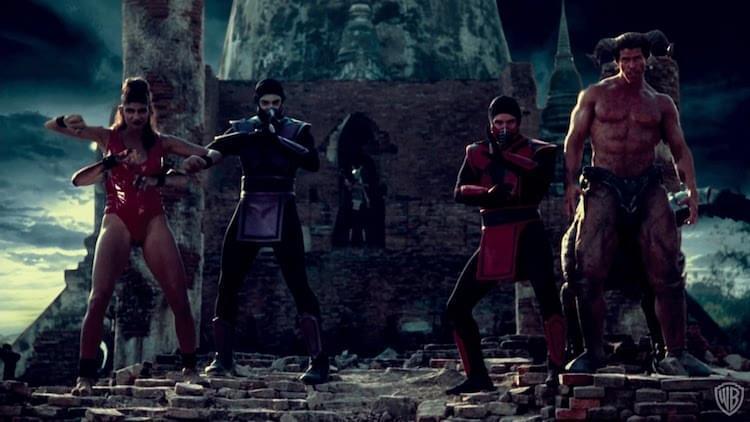
I’d put this one on the short list of Worst Movies Ever Made, Or at Least Among Those That I Have Personally Seen. “Mortal Kombat” is bad enough (for some reason I wrote a review of it a few years ago), but its sequel, “Mortal Kombat: Annihilation,” is breathtakingly incoherent and insane. It is the subject of this week’s edition of Eric’s Bad Movies at Film.com.

My clues last week were such that several films would have qualified. Do you who like guessing prefer that kind of clue — where you really are just guessing — or do you prefer clues that ultimately lead to only one possible correct answer? I am here to serve you, at least until such time as I get tired of it.

In the meantime, next week’s movie is from the 1980s, it is a blatant rip-off of an extremely popular movie that preceded it by several years, and it is derided for its overusage of a certain Hollywood tactic that is acceptable in small doses but not at the levels employed here.

Mac and Me

0
Mac and Me

Hollywood has had an impact on consumer trends ever since the early days of film. Our history books speak of Charlie Chaplin’s “Little Tramp” character being so popular that it inspired millions of people to forsake their jobs and homes and live on the streets in the early 1930s. (The Great Depression also occurred during this time.) In the 1950s, when Cary Grant and Jimmy Stewart were wearing their pants so high that their belts chafed their nipples, all of America followed along. It wasn’t until the early 1970s that men’s trousers re-descended to their proper elevation.

But when Hollywood tries to force a trend by inserting blatant product placement into its films, the results are often mixed. For every “E.T.,” which famously helped the popularity of Reese’s Pieces by making them the title character’s favorite candy, you have a dozen cases like “One Flew over the Cuckoo’s Nest,” which did nothing to increase sales of electro-shock-therapy equipment.

Thus we come to “Mac and Me,” which employs some of the most egregious and outlandish product placement in history. Like all good Americans, I occasionally enjoy a meal at McDonald’s, a drink from the Coca-Cola company, or a handful of Skittles-brand chewy candies — but seeing these products pimped with such enthusiasm and vigor in “Mac and Me” is a turn-off. It makes me want to go to Burger King, order a Pepsi, and eat whatever the generic equivalent of Skittles is. (Little candy-coated globs of toothpaste, maybe?)

What’s alarming is that it’s a terrible movie anyway, a boring, bald-faced rip-off of “E.T.” that’s half-over before the Elliot character even officially meets the E.T. character. There are numerous continuity errors, plot holes, and embarrassing special effects, suggesting that when the people at McDonald’s co-sponsored the production (really!), they had the same attitude they have toward their food, i.e., that it doesn’t matter if it’s good, it just needs to say “McDonald’s” on it.

We begin on a distant, rocky planet that resembles Arizona, except that unlike Arizona, this planet can sustain life. A family of alien creatures who resemble skinny actors wearing tight-fitting alien costumes is out foraging for food when a NASA space probe lands, gathers them up, and heads back to Earth. At NASA headquarters, which are apparently in California now, the Mama, Papa, and Junior aliens make a run for it, while Baby alien gets separated from them and strikes out on his own.

The li’l fella looks just like his parents and sibling, with huge eyes and an O-shaped mouth that makes him look like a constantly surprised Jimmy Stewart (whose surprise no doubt stems from how much his belt has chafed his nipples), and fat, jowly cheeks that make him look like Walter Matthau. He and his fellow aliens do not walk the line between “cute” and “ugly” so much as they shuffle up to the line and frighten it away with their ugliness. They are hideous monsters, and you would not seek to befriend one if it appeared in your house. You would scream in terror, void your bladder, and summon a priest.

The human hero of the story does none of these things. He is 12-year-old Eric Cruise, and he is confined to a wheelchair for unspecified reasons. (The actor who plays him, Jade Calegory, is actually disabled in real life, having been born with spina bifida. I don’t have a joke about this, I just thought it was interesting.) (OK, I do have jokes about it, but they’re in poor taste.) Eric and his mother, Janet (Christine Ebersole), and older brother, Michael (Jonathan Ward), are driving from Chicago to their new home in Southern California when they come upon a pileup caused by the baby alien scampering across the road. In the confusion, the alien sneaks into the family’s van and goes home with them.

The alien stays out of sight, instinctively aware that if humans capture him, they’ll do to him what they do to all freaks: give him his own reality show. But while staying hidden in the Cruise home, he also perpetrates bizarre acts of mischief, like magically filling the living room with desert flora while the family sleeps. The next morning, Janet and Michael accuse Eric of doing it, apparently forgetting that he’s in a &@*# wheelchair. Yeah, morons, he can’t walk, but he can crawl around all night planting bushes in the living room for a practical joke.

Eric catches glimpses of the alien, but no one believes him. Saddened by all this, he wheels himself into the backyard, all the way to the far edge of the grass, where the yard suddenly stops and there’s a steep slope plunging a few hundred feet into a lake. Eric and his wheelchair fall down this slope and Eric nearly drowns. Luckily, he is saved by the alien, whose existence his mother and brother still do not believe in. Perhaps he should tell Child Protective Services about it when they come to ask why Janet Cruise bought a house with a deadly cliff in the backyard and no fence to prevent her wheelchair-bound son from rolling over it.

Eventually Eric and Michael and the neighbor girls, who are annoying and will remain unnamed here, meet the alien for real and name him MAC, as in Mysterious Alien Creature. (MAC might also make you think of “Big Mac,” as in the signature item at McDonald’s, but surely that is coincidental.) They discover that MAC likes to drink Coca-Cola, which is made convenient by the many open cans of Coca-Cola that are placed strategically around the house, some with straws already in them. Does MAC like flat, warm Coke? Apparently! Which I guess means RC Cola would be OK, too.

Then they have to go to a birthday party being held at McDonald’s (obviously), and the neighbor girls’ mother is driving them, but they can’t leave MAC behind because they know that NASA has sent federal agents looking for him. (Oh, I forgot — NASA sent federal agents looking for MAC. They tracked him to the Cruise house, don’t ask me how.) The only viable solution is to dress MAC up in a teddy bear costume and tell the neighbor mom that he’s Eric’s teddy bear. When the neighbor mom points out, reasonably, that this alleged “teddy bear” is moving, Eric says it’s one of those fancy computerized teddy bears. This explanation satisfies neighbor mom, who is evidently as stupid as Eric’s own mom.

(Discussion question: Why does Eric have a junior-size teddy bear costume lying around?)

At McDonald’s, things are hoppin’, my friends. The place is packed with kids, and soon an elaborately choreographed “dance contest” breaks out involving everyone in the store except for those in wheelchairs. (Sorry, Eric!) Among the dancers are three football players in full game-day regalia; their presence and attire are not explained. MAC, in his teddy bear costume that magically makes him appear about a foot taller, as though the occupant of the teddy bear costume were not MAC at all but an 8-year-old child, jumps up on the counter and leads the dancing. He is not very good at it, but I guess an animatronic teddy bear breakin’ it down in a fast-food restaurant is like what Samuel Johnson said about a dog walking on its hind legs: It is not done well, but you are surprised to find it done at all.

Somehow, Eric and Michael and the neighbor girls and MAC wind up fleeing from the feds and driving into the desert, where MAC leads them to his family members, who are hiding in an old mine shaft. (MAC knew they were there via telepathy.) They are ailing, but a little Coca-Cola picks ’em right up again, good as new. Then the whole group somehow winds up in a grocery store, where the shoppers are alarmed by the alien family, especially the alien father, who struts around with his groin thrust forward, Mick Jagger-style, in what I assume was the actor’s best guess at what an alien walk would look like. Then somehow there is a misunderstanding with the security guard, and there’s a gun, and then the alien dad blows up the store in self-defense (note: the aliens can blow things up), and Eric is killed.

It’s not clear what actually killed Eric, since he’s lying there in the parking lot with no visible injuries. Just the sheer surprise of the aliens blowing the place up? Maybe. I was pretty surprised myself. At any rate, the aliens use their dark magic to resurrect Eric, though he’s still confined to a wheelchair. Seems to me if you can raise the dead you ought to be able to make the lame walk and the blind see, too, but what do I know?

The point is, they all live happily ever after — including the aliens, who in the final scene are sworn in as American citizens, and I am NOT MAKING THAT UP. That’s really how the movie ends. There’s a hint of a sequel, but the film’s financial failure put the kibosh on that. Too bad, because a sequel to “Mac and Me” would obviously be called “The Burger King and I,” and that’s a great title.

— Film.com

Mortal Kombat: Annihilation

0
Mortal Kombat: Annihilation

“Mortal Kombat: Annihilation” is 94 minutes long, including 12 minutes of closing credits. That’s a lot of names for a movie that doesn’t contain a single intelligent thought or coherent story element. That’s a lot of names for a movie that no one put any effort into. Imagine how many people they’d have had to employ if they’d wanted to make a good film!

This is a sequel to “Mortal Kombat,” and you can do the math in your head: Most sequels are bad, and all movies based on video games are bad, so a sequel to a movie based on a video game is going to be … let’s see … carry the two … ah, yes: the worst thing in the world.

We start with Rayden (James Remar), the wise leader of a group of fighters, telling us “Mortal Kombat is not about death, but rather the preservation of life.” As I recall from the first film, Mortal Kombat is the name of the martial-arts tournament in which participants fight to the death, which means, uh, that’s a big fat lie, Rayden. Later, he tries to assert that “Earth does not bend to the will of tyrants,” but this is also obviously untrue. People bend to the will of tyrants all the time. The fact that people are obligated to do what they say is what makes them tyrants.

So despite being full of false platitudes (or perhaps because of it), Rayden is the leader of this squad of elite fighters, who are all sitting around one day when suddenly some evil fighters from another dimension called Outworld show up and start beating them up. Among these bad guys are a woman with four arms and a guy with a scorpion-like tail. It turns out he is a centaur who happens to have a scorpion-like tail, but please do not get him confused with the character who is actually called Scorpion, who has no scorpion-like features at all but does shoot snakes out of his hands.

The bad guys are led by Shao Kahn (Brian Thompson), who, for no reason that I can discern, wears a Skeletor mask during battles. Like his role model, he is fond of proclaiming things. He bellows to the good guys, “The Earth was created in six days — so too shall it be destroyed!” Assuming he actually believes this and is not merely reciting it as a form of mockery, that means Shao Kahn adheres to the Judeo-Christian story concerning the creation of the world. Does that mean the God of the Old Testament created Outworld, too? If so, why isn’t it mentioned in Genesis? Shao Kahn’s declaration presents a number of interesting theological questions.

The good guys, who are all humans, are surprised to see the Outworld people. Since the humans won the Mortal Kombat tournament last time, the portal between Outworld and Earth was supposed to be safely closed for at least a generation. Someone points this out, and Rayden says, “What closes can open again,” to which Sonya (Sandra Hess), the blonde, replies, “What is that supposed to mean?” Well, what do you think it means, dummy? It’s a pretty straightforward statement. “What closes can open again.” Not a lot of subtleties or double meanings there. So I pretty much hate Sonya already, and the movie’s only about 30 seconds old.

It turns out the reason the portal has been opened again is that, um, the Outworld guys opened it. Apparently there was nothing actually stopping them from doing this; having lost the tournament, they were merely on the honor system not to. And now they’ve opened it without the knowledge of the Elder Gods, who are going to be SO STEAMED when Rayden runs and tattles.

Wait, Elder Gods? So Jehovah created the heavens and the earth in six days, but there are also these “Elder Gods” who govern the affairs of the Mortal Kombat tournament and the Earthlings and the Outworlders? How do THEY fit in? Why aren’t they mentioned in scripture? I always thought people were exaggerating when they said a movie was so bad it made them doubt the existence of God, but now I see what they mean.

Oh man, we are never gonna get through this if I keep obsessing over every little thing.

OK, big picture: The good guys have to stop the Outworld from fully merging with Earth and ending all life as we know it. To do this, they will have to fight a lot and do a lot of somersaults and yell things at each other. A dominatrix-looking lady named Kitana (Talisa Soto) and fellow good guy Liu Kang (Robin Shou) head off in one direction inside the “velosphere,” which is like one of those balls you put a hamster in, only big enough for humans. Rayden says cheerfully that the velosphere can “travel to anywhere on Earth within mere hours!” Yeah, Rayden, so can an airplane. So I’m not sure what the selling point of the giant hamster ball is.

While they’re traveling through the Earth’s core in the hamster ball, Kitana and Liu Kang encounter Scorpion, who you’ll recall is nothing like a scorpion. Then a good guy named Sub-Zero shows up and helps them fight, and then he goes away and the film never mentions him again.

Meanwhile, Sonya, the dumb blonde who says “What’s that supposed to mean?” in response to statements that only have one possible meaning, goes to a medical laboratory to get her friend Jax (Lynn Williams), a buff black dude who has just had bionic metallic arms attached for reasons that are not mentioned. I assumed he was part of this whole Mortal Kombat thing, but he seems not to have any idea who any of Sonya’s friends are. Also, since he’s The Black Guy, the movie makes him say things like “That’s what I’m talkin’ about!” and “Let’s do this!”

Jax and Sonya fight some ninjas.

Meanwhile, Liu Kang has to rescue Kitana, who got kidnapped by the Outworlders back when they were fighting Scorpion. Did I forget to tell you that? My bad. He’s told to search for a man called Night Wolf, and Night Wolf will help him. So Liu Kang is in the desert, searching, and it’s nighttime, and a guy who seems to be half-man and half-wolf jumps him, and Liu Kang says, “Who are you?,” even though it’s obviously Night Wolf. I mean, who else would it be? Night Wolf replies, “Wouldn’t you like to know?” Then Liu Kang says, “If you ARE Night Wolf, then–” and I couldn’t hear the rest because my brain was exploding.

Eventually, all the good guys reconvene and enter a portal that takes them to Outworld so they can fight the bad guys and rescue Kitana. We find out that Rayden and Shao Kahn are actually brothers, and that their father, the evil Shinnok (Reiner Schone), is one of the Elder Gods. This must have been the “Luke, I am your father” moment of the “Mortal Kombat” series. There’s a lot of fighting, and Rayden gets hit exactly one (1) time and dies. (No big loss.) Kitana is rescued and the bad guys are defeated and Kahn’s portals to Earth are closed and everyone lives happily ever after.

After the ludicrous dialogue and atrocious acting and lousy special effects and indecipherable story line and cheap sets and embarrassing production values, the thing I hate most about this movie is that it has no respect whatsoever for the laws of physics. This movie takes the laws of physics out back and maliciously violates them. People fly around willy-nilly, even the ones who are human mortals with no super powers. What’s more, when they fly (or are thrown, or punched), they move in odd directions, not smoothly like in “The Matrix” or “Crouching Tiger, Hidden Dragon.” Why, it’s almost as if they’re nothing more than a bunch of actors being jerked around on wires by bored Teamsters!

On the plus side, the characters keep talking about the need to “close Kahn’s portals,” which never fails to make me giggle. So there’s that.

— Film.com

In which I barge into someone’s video

7

Peter Sciretta of SlashFilm was doing a video blog with James Rocchi of Cinematical yesterday, and I decided Peter probably wanted to have me in his video, too. I pop up just after the two-minute mark, serve no purpose, then disappear again.

Toronto tidbits

5

– Actual name of a woman on a Canadian TV commercial for laser eye surgery: Cherry Tabb.

– Actual status of everything on Canadian TV, whether intentional or not: hilarious.

– Right now there is a parade marching down the boulevard outside my hotel. It is a parade of local Christian churches, each with its own float and, by the sound of it, marching band. A church parade. And I thought regular parades were boring.

Fear Me Not (Danish)

0

If “The Shining” taught us one thing, it’s that all work and no play makes Jack a dull boy. In the atmospheric thriller “Fear Me Not,” the other side of that equation is unnervingly laid out: all play and no work yields the same result.

Mikael Neumann (Ulrich Thomsen) has been on leave from his job for six weeks when the film begins, a fact he reports to us in the somber-voiced narration that represents his diary. What sort of work he did, and why he went on leave, we don’t know. Whatever it was, he has done well for himself. He and his architect wife, Sigrid (Paprika Steen), and teenage daughter, Selma (Emma Sehstede Hoeg), live in a gorgeous modern home on a picturesque lake.

Like many in his situation, Mikael has had a hard time adjusting to not working: the unstructured days, the lack of purpose. Sigrid is hinting that maybe it’s time to go back to the office, a suggestion he disregards. Then, seemingly on a whim, Mikael volunteers for a clinical trial of a new anti-depression medication being run by Sigrid’s doctor brother, Frederik (Lars Brygmann). He doesn’t particularly suffer from depression, he says, but “you can always be better.”

Like a 21st-century mad scientist, Mikael reports the effects of this medication to his diary and to us. He describes his feelings mostly with matter-of-fact dryness, occasionally lapsing into near-poetic accounts of his newfound joie de vivre. He is energized by two things: his apparently long-simmering resentment of Sigrid’s control over his life, and his new realization that he can do something to change it. I won’t go into detail about the pills’ other effects on him except to say that his behavior becomes unstable — but, creepily enough, he always remains controlled and apparently cautious.

The film is not a straight-up horror, but rather a slow-burning psychological thriller in which the tension is over whether (and how) Mikael will act on his newly freed darker impulses. The director, Kristian Levring, sets up a number of potentially disturbing situations, always exercising patience, never going for cheap, sudden thrills. This is good, but I wonder if the somewhat anti-climatic finale could have used a little more juice. It’s not quite as satisfying a conclusion as the coldly calculated build-up would have you expect. Still, if you’re going to see one Danish psycho-drama this year, make it this one.

Friday movie roundup – Sept. 5

2

The only wide release this week is “Bangkok Dangerous,” starring Nicolas Cage in a mullet, and for some reason Lionsgate didn’t feel comfortable letting critics see it before it opened. Imagine that.

So “In the Dark” is light this week, though it does have a review of a fine French thriller called “Tell No One.”

Toronto is nice so far! It’s smells like New York!

Sign up for the “In the Dark” e-zine here.
Listen to this week’s podcast version here.
Subscribe to the podcast’s feed with this URL.

Mister Foe

0

The title character in “Hallam Foe” (retitled “Mister Foe” in the U.S.) is a 17-year-old Scottish boy, played by Jamie Bell, who has had trouble adjusting to his mother’s death two years ago. And when I say he’s had trouble adjusting, I mean that he’s become a peeping Tom who sometimes wears makeup like war paint and spends hours poring over his mother’s death certificate.

Quirks like that make the film, based on Peter Jinks’ novel, more intriguing than it would be if it were, say, an ordinary coming-of-age story about a young man coping with the loss of his mother, which is essentially what it is. Jamie Bell’s central performance helps, too. Ever since he was Billy Elliot he’s had a knack for getting past the clichés when playing quiet misfits (see also “The Chumscrubber” and “Undertow”), and “Hallam Foe” is another impressive item for his résumé.

Hallam’s home life was disrupted when his businessman father (Ciarán Hinds) married his beautiful secretary, Verity (Claire Forlani), not long after Hallam’s mother died. Hallam resents Verity, and with his older sister now gone off to college, it’s just him, his dad, and his wicked stepmother at home. Circumstances come together to force him out of the nest, though — and “nest” is almost literal, since he’s been living in a treehouse in the back yard since Verity moved in — and he goes to London to live on his own.

He takes a job in the kitchen at a posh hotel, largely because the director of human resources is the beautiful Kate Breck (Sophia Myles), who Hallam thinks looks just like his dear departed mother. Hallam becomes obsessed with her. Does he want to sleep with her, or does he want her to be his mother? Or both? He and Kate have drinks one night, and after Hallam says of his mother, “She’s dead, would you like to meet her?,” Kate says, “I like creepy guys.” She has no idea.

No, it’s not a movie about a serial killer, though it certainly could have gone that way. Hallam’s obsessions are mostly harmless, albeit intrusive of others’ privacy, and director David Mackenzie (“Young Adam”) keeps the focus on the lad’s psychology. (Giles Nuttgen’s moody, sexy cinematography enhances the effect.) Hallam’s still in the grieving process, whether he realizes it or not, and all the odd things he does are part of that. It’s a modestly effective story, even a little moving in a weird way, and worth watching for Bell’s intriguing and sympathetic performance.

Eric’s Bad Movies: ‘Anaconda’ (1997)

12

As you quickly guessed from last week’s clues, this week’s edition of Eric’s Bad Movies at Film.com features “Anaconda.” How come it didn’t appear online until Thursday evening? I don’t know! It’s one of the mysteries!

Next week’s movie is a sequel, less than 15 years old, that stars almost no one from the movie it’s a sequel to — and in fact stars almost no one that you’ve ever heard of at all.

Anaconda

0
Anaconda

The phrase “so bad it’s good” is a misnomer. What we usually mean by it is that we found a movie’s particular brand of badness entertaining. But just because we’ve gotten enjoyment out of it doesn’t mean it’s “good” — it merely means that we’ve made lemonade out of lemons. “So bad it’s entertaining” would be a more accurate phrase.

“Anaconda” falls under this category. It was intended as a scary, suspenseful horror film about a giant snake that pesters travelers on the Amazon. Its flaw is that it is neither scary nor suspenseful, and also that its giant snake looks suspiciously like second-rate computer animation. That’s what makes it bad. What makes it entertaining is that it fails in hilarious ways. And since laughing is an enjoyable experience, you can see why we’d be tempted to call the movie “so bad it’s good.” But it would only be “good” if it had intended to make us laugh. It has failed to do what it set out to do. That we have found some alternate way of enjoying it is merely a testament to our good old American optimism.

I bring this up because while “Anaconda” is unquestionably bad, I do not dislike it. I first saw it in a theater in 1997 with a few friends, and we laughed all the way through it, well aware that laughter was not the film’s intended response. In fact, the other people in the audience (there were not very many) seemed to be as scared as the movie wanted them to be. It is not my custom to review audiences, but if I were reviewing this audience, I would give it a C+ for being easily scared.

“Anaconda” begins with a text scroll basically saying that there’s a snake called the anaconda, and that it’s really big. You know, in case you hadn’t heard of it. This text also mentions a crucial bit of information: “They will regurgitate their prey in order to kill and eat again.” (This is also true of Ann Coulter.) If you’re on top of things, you think, “Hmm, I bet that’s gonna happen at some point in the movie!” If you’re on top of things in the sense of having seen the film before, you think, “I bet the snake is going to eat Jon Voight and then barf him up, whereupon Jon Voight — still half-alive and half-digested — will wink at Jennifer Lopez.”

After the text scroll, the movie begins for real with a terrified man on a boat being pursued by something we can’t see. Many of the shots are from the point of view of the pursuer, very low to the ground, so it looks like the man is being chased by a dwarf with a movie camera. He (the terrified man, not the midget filmmaker) climbs up the ship’s mast and shoots himself in the head. His message is clear: He would rather die than continue to be in this movie.

After all that, THAT’S when the movie begins for-real for real. A filmmaker named Terri Flores (Jennifer Lopez) is on the Amazon to make a documentary about an isolated native tribe. Terri is of normal height, so she evidently was not the miniature filmmaker chasing the scared guy in the first scene. You know, the more I think about it, the more I think it was supposed to be an anaconda that was chasing him. Huh.

Anyway, Terri’s boyfriend, Cale (Eric Stoltz), is the producer, with Danny (Ice Cube) as the cameraman. They’ve brought along a stuffy British guy named Westridge (Jonathan Hyde) to be the film’s host and narrator, and also because a movie like “Anaconda” needs a foppish, wormy guy to be hilariously eaten by whatever the movie’s terror is. (See also: the lawyer-on-the-toilet in “Jurassic Park.”) We learn who the other two crew members are because they announce themselves. One of them, Denise (Kari Wuhrer), tells someone, “I’m the production manager!” So apparently she’s the production manager. Then she refers to the other one, Gary (Owen Wilson), as “sound guy.” So he must be the sound guy. According to the film’s credits, it took three people to write this dialogue.

With a Brazilian named Mateo (Vincent Castellanos) piloting their boat, the film crew is heading down, or possibly up, the Amazon when they encounter a man with a malfunctioning boat of his own. They bring him aboard like good Samaritans, or like whatever the South American equivalent of a good Samaritan is. The man’s name is Paul Sarone, and he is played by Jon Voight channeling Christopher Walken channeling Zorro.

Sarone, an oily, leering, ponytailed Paraguayan, says he was a priest before becoming a snake hunter, and he says he knows where the hidden tribe is. He promises to lead the filmmakers to them. He also says things like “This river can kill you a thousand ways,” which is kind of poetic. Even better is his monologue that goes like this:

“Anacondas are a perfect killing machine…. They strike, wrap around you, hold you tighter than your true love, and you get the privilege of hearing your bones break before the powerful embrace causes your veins to essplode.”

So Sarone obviously has a weird fetish for anacondas, as do the tribespeople they’re looking for, who reportedly worship the snakes, which would be kind of like Californians worshipping earthquakes. But I don’t want to get into a religious debate here.

Cale, the producer, has to get in the water to fix the boat’s propeller — I don’t know why this is his job rather than the pilot’s — and you think he’s going to get eaten by the snake, but no, instead he chokes on a wasp and falls into a coma. Thus Eric Stoltz has found a way to get out of the movie, too. Lots of talk about anacondas so far, but very little actual anaconda action. To tide us over, the movie shows us a scene of an anaconda attacking a panther. Thanks, movie!

After about 45 minutes of wasting our time and implying that the devious Sarone is the “real” monster, the movie finally gets down to business. We came here to see people get eaten one at a time by a giant snake, damn it! Hollywood labor laws require that the least famous actors be killed first, so farewell, Vincent Castellanos as boat pilot Mateo! Better luck next time!

It’s during his death that we get our first good look at the snake, and boy howdy does it ever look fake, even by 1997’s standards of computer-generated images. Fake-looking monsters have been the bane of B-movie producers since the dawn of cinema. It’s hard for audiences to suspend their disbelief when the thing they’re supposed to be afraid is manifestly un-frightening. It seems to me that if I were making a movie about a huge man-eating anaconda, I would first check to see if we had the talent and resources necessary to make one. I would consider that supremely important, given that the movie is ABOUT the anaconda. It’s right there in the title, for crying out loud. How do you make a film called “Anaconda” and then forget until the last minute that oh yeah, we need to draw a snake into some of these scenes?

So the snake is eating people, and Sarone is trying to capture the snake, which it turns out was his goal all along. He uses a monkey for bait and shoots the snake with a tranquilizer dart when it appears. Then someone shoots Sarone with a tranquilizer dart, which falls out of his back, leading someone to say, “The dart came out of his back!,” for the benefit of members of the audience who weren’t watching just now when the dart fell out of his back. (Along those same lines: “He lost consciousness again!,” referring to a character who has just lost consciousness right in front of us. I wonder which of the three writers came up with that one?)

Somehow J-Lo and Ice Cube wind up in an abandoned factory of some kind, located right there on the banks of the Amazon. Maybe it’s a former warehouse belonging to Amazon.com. Somehow Sarone ties them up to use them as bait for the snake, and then somehow they get free, and the snake eats Sarone instead, and then it yaks him up and he winks at J-Lo, and then the snake is trying to eat J-Lo but can’t get past her butt — no, I’m kidding, it’s just chasing her up a chimney, and Ice Cube is hacking at its tail with an ax, and finally somehow the factory blows up and the snake dies. First it’s on fire, though, which makes it even more dangerous because, really, a snake is bad enough, but a flaming snake? Forget about it. Then it dies. The end.

It’s rare nowadays for Jon Voight to be the highlight of anything, but he’s certainly what makes “Anaconda” watchable. I believe his campy, over-the-top performance is the result of his being the only cast member to realize they were making a bad movie. He chose to have fun with it while everyone else behaved very seriously and intensely. It’s hard to be serious when you’re pretending to be eaten by a snake, though, isn’t it? I know I can never keep a straight face in that situation.

— Film.com

I’m taking off! To the Great White North!

3

The Toronto International Film Festival begins tomorrow, and for the first time in its history, it will be attended by me! Eric D. Snider!

This is a huge festival, both in size and importance, and I’m excited to be going. I’m officially covering it for Film.com (that’s what my press pass will say), but I’ll be doing stuff for Cinematical, too. You should keep an eye on both places over the next week.

I don’t know if I’ll be doing my daily festival diaries. Since I haven’t been to TIFF before, I don’t know if a) I’ll have time or b) there will be anything diary-worthy to write about. From what I gather, the situation for members of the press is that you watch a movie, then you get in line and watch another movie in the same venue, then you do that again two or three more times, then you go back to the hotel. I don’t know how much “atmosphere” or “scene” there is. But we’ll see.

There won’t be any “Snide Remarks” on Monday — hopefully I’ll have TIFF shenanigans to amuse you with instead — but “Eric’s Bad Movies” will be on its usual Thursday schedule at Film.com.

“In the Dark” will proceed normally, too, though there’s not much happening this week anyway.

I think that’s all. You kids behave while I’m out of the country. If you happen to be in Toronto, find me and say hello and buy me lunch!

The lighter side of teen pregnancy

36

(Kudos to Peter Sobczynski for the idea and David Cornelius for the Photoshop skillz.)

An epiphany at Starbucks

9

Sometimes I go to Starbucks and get a piece of coffee cake. Often they have two varieties, regular and Portland. I get the Portland kind, and every time I get it, I ask, “What makes it Portland-y?” And then I always answer my own question with a joke along the lines of, “Does it taste like hippies?” or “Is it made from vegetarians?” I try to keep it fresh by mentioning something different every time, just in case it’s the same cashier that I’ve made the joke with before. But the other day I realized that I’ve never actually listened to the answer, which means I still don’t actually know what the difference is between Portland coffee cake and regular coffee cake. So maybe instead of cracking jokes I should shut up and listen? Is that the lesson here? Was my dad was right all along?

‘Boy A’ piracy protection

6

Several weeks ago, movie mogul Harvey Weinstein wrote an impassioned article at Portfolio.com pleading with entertainment reporters and film critics to give one of his company’s films, “Boy A,” more coverage. The movie had already won awards in England and got rave reviews when it played at the Toronto Film Festival in 2007, but now, upon its late-July art house release, it was being ignored, the way most independent films are ignored during the Summer Blockbuster Season.

Another film critic, Dan Lybarger, and I both posted comments saying, basically, “We’d love to review it. But how are we gonna see it?” To our great delight, someone from Weinstein’s office then e-mailed us both and arranged to send us DVD screeners. Weinstein is a polarizing figure in the movie business, and that blog entry he wrote garnered quite a few derogatory comments from other readers. But he and his staff apparently know how to put up or shut up, because he took Dan and me up on our offer to review “Boy A.”

It’s a terrific movie, and I’m working on my review for Film.com. But first I have an anecdote to share. Because of piracy concerns, they have to be very careful about sending out DVD copies of current theatrical releases. My copy was dubbed specifically for me, with my name printed on the disc’s label, with what I assume was a unique bar code under it. (I felt very special.) When I played the DVD, I saw this message on the first screen:

I’ve seen this kind of warning before, and I’ve always wondered how they would know an illegal copy had originated from MY copy. What kind of “invisible watermark” are they talking about? Something encrypted into the digital code of the disc somehow? I don’t know enough about that kind of technology. I always just take their word for it. I’m not inclined to make copies of screeners anyway.

In this case, the mystery of the “invisible watermark” was soon solved as the movie began playing and I saw this:

Yes, in addition to the “Property of The Weinstein Company” bug at the bottom, it also says “Eric Snider” at the top. Any illegal copies I made would literally have my name all over them. I would guess that’s a pretty effective deterrent.

(Note: I hope that taking a screen grab for the purpose of a blog post does not count as “copying.”)

Welcome to September! Here is some stuff

2

This week’s “Snide Remarks” column is the traditional summer blockbuster recap, entitled “The Heat Is Off.” It includes more than one unfair swipe at “Sex and the City,” for no good reason, really.

I also caught “Disaster Movie” and “College” this weekend, and let us never speak of them again. “Disaster Movie” is reviewed at Film.com, and “College” is at Cinematical. Please don’t tell either site that I write for the other one, too!

This week’s “Snide Remarks,” including the audio version, is here.
The audio version (i.e., the podcast) is also here.
Subscribe to the podcast’s feed with this URL.

The Heat Is Off

0

Labor Day marks the end of the Summer Blockbuster Season, that magical time of year when the nation’s multiplexes are stuffed with explosions, comic book characters, and Will Smith saying, “Aw, HELL no!” But before Hollywood puts away its summer toys and starts getting serious for autumn, let’s recall the vivid sights and pungent, bat-like smells that overwhelmed our senses during this most recent Summer Blockbuster Season.

Inhuman, mechanical creatures were at the center of many of this summer’s films — the robot in “WALL-E,” the cars in “Speed Racer,” Kim Cattrall in “Sex and the City” — but the most popular was “Iron Man,” which told the inspiring story of an alcoholic millionaire playboy who reforms himself, and after he reforms himself, he gets the lead role in the movie “Iron Man,” which is about a dude who makes weapons.

“Speed Racer” was a big-budget, live-action adaptation of the cheesy 1960s cartoon series, starring Emile Hirsch as the titular race car driver and Christina Ricci as the large-foreheaded woman who loves him. The film was enthusiastically welcomed by everyone in America who was interested in seeing a big-budget, live-action adaptation of “Speed Racer,” but after those 12 people saw it, there was no audience left.

Snide Remarks summer wrap-up columns:
1999
June 2001
August 2001
2004
2006
2007
2008
2011

There was plenty of audience for “Indiana Jones and the Kingdom of the Crystal Skull,” though, in which everyone’s favorite archeologist/grumpy old man grapples with Russians, aliens, and punk kids who won’t get off his lawn. Indiana’s father does not appear in the film because somehow, between “The Last Crusade” and now, Harrison Ford actually became older than Sean Connery. “Crystal Skull” was criticized by many for being implausible, especially considering how true-to-life the previous Indiana Jones films had been. George Lucas was said to be so bothered by these allegations that he leapt from a plane in a life raft that landed him safely on the slope of a snowy mountain, which he sledded down until the still-inflated raft brought him to a raging river, which he floated on to safety without incident, whereupon he tore a man’s heart out of his chest without killing him in a giant underground cavern populated by child slaves.

Speaking of the excavation of ancient artifacts, “Sex and the City” stumbled drunkenly into theaters at the end of May, answering the pleas of countless fans who had wondered, ever since the series left HBO four years ago, whether their favorite Prada-clad fornicators were still as shallow as before. Thankfully, the answer was yes, and then some. While films like “Journey to the Center of the Earth” made use of three-dimensional photography, “Sex and the City” broke new ground by appearing in only one dimension (horizontal, if you get my drift).

There was a great deal of fighting in the multiplexes this summer, too — and I’m not just talking about the beating my wallet took at the concession stand! (Am I right, folks?!) “Kung Fu Panda” taught kids the inspiring lesson that if you believe in yourself and work sort of hard, you can eventually beat the crap out of your enemies. “You Don’t Mess with the Zohan” shined a satiric light on the Israeli/Palestinian conflict and urged everyone involved to stop fighting and start focusing on the real enemy, Rob Schneider. And what about the horrifying, monstrous hell-beasts fighting in the streets of New York? There was Hellboy vs. a giant tree, the Incredible Hulk vs. Abomination, and Carrie Bradshaw vs. Mr. Big, each battle more devastating and horse-faced than the last.

Don’t think the summer was all violence and mayhem, though. We had plenty of lighthearted fun, too! For example, “The Dark Knight” featured a character called the Joker who performs magic tricks at parties! Whee! As you know, this film came with a lot of somber behind-the-scenes baggage involving one of the cast members — Christian Bale, who had a dreadful sore throat in all of his Batman scenes and desperately needed a lozenge. None could be procured, though, because the film’s budget had already been spent on viral marketing ploys like hidden websites and secret online games, all of which helped draw attention to this small, unassuming movie that might have otherwise slipped through the cracks.

Speaking of “jokers,” beloved funnymen Mike Myers and Eddie Murphy both released comedies this summer. Tragically, neither film was funnier than M. Night Shyamalan’s “The Happening,” which attempted to make us scared of things like trees and wind. Watch for Shyamalan’s next movie, in which the monster will be a discarded napkin (until the last five minutes, that is, when we find out the napkin was actually recycled years ago and we’ve been watching its ghost).

No summer would be complete without an upbeat musical, and “Mamma Mia!” filled the technical requirements of that need with a lively story about an ex-hippie who got pregnant during her wild days and had a daughter, who is now only 20 despite the hippie movement having been 40 years ago. (Maybe she was in utero for 240 months instead of the usual nine?) Meryl Streep, Colin Firth, and Pierce Brosnan were among the film’s stars, and they warbled the songs of ABBA with the voices of angels, except for Brosnan, who warbled them with the voice of Sanjaya.

There was a new “Star Wars” movie, too! Remember when that used to be a big deal?

Speaking of long-played-out franchises that produced sequels that no one wanted that weren’t very good and that didn’t have Indiana Jones in them, “The X-Files” and “The Mummy” both reappeared in theaters this summer after lengthy absences during which audiences managed to get along just fine without them, thank you very much. In “The X-Files: I Want to Believe,” Mulder and Scully finally solved, once and for all, the mystery of whether the TV show’s diehard fans had stopped being interested. (Spoiler: They had.) In “The Mummy: Tomb of the Dragon Emperor,” Brendan Fraser bickered with his son, who is approximately his same age, over whether the film actually contained any mummies, tombs, dragons, or emperors. (Spoiler: tombs and emperors, yes; dragons, only for a minute; mummies, no.)

But summer is over now. The raucous R-rated comedies about marijuana addicts have been moved to the clearance rack, freeing up shelf space for the fall’s onslaught of serious, weighty films about historical figures and people with illnesses. Will Ferrell has been sent to his hibernating chamber, and Tommy Lee Jones is being thawed. We’ll see you when the next Summer Blockbuster Season begins, sometime next February!

— Film.com

My superficial objections to Sarah Palin

33

My superficial objections to Sarah Palin:
1. Her children have the following names: Track, Bristol, Willow, Piper, and Trig Paxson. My objections to non-names are well documented. I have always taken a firm stance on this issue.

2. She speaks with the lazy-vowel accent, common in rural parts of the West, that drives me crazy. Here’s a sound bite from her introductory speech on Friday, in which she refers to “oil fillds” and “the United Stillworkers Union.” Again, my feelings (sorry, “fillings”) about this are on the record.

New series added to TV schedule

0

I’ve updated my previous list of season-premiere dates to include brand-new series. There aren’t as many new shows this year as there usually are (more fallout from the writers’ strike), so it shouldn’t be too hard to check out the ones that look promising. It helps that several of the new entries are on the CW, which makes it easy to write them off.

Friday movie roundup – Aug. 29

3

Hoo boy! Do you smell that? That’s the movie studios dumping their leftover crap into theaters because it’s the last weekend of summer. Four wide releases this week, and THREE of them are Hollywood’s Shameful Secrets©®™. I don’t know if we’ve ever had that many in one weekend before. Perhaps this is Hollywood’s most shameful weekend in history.

The one that was screened for critics was “Traitor,” which actually opened Wednesday. I reviewed it for Film.com. It stars Don Cheadle as a man who might be a terrorist. Great cast, a few good ideas, not a very good movie.

The three that the studios were embarrassed by are:

  • “Disaster Movie,” which is the latest from the masterminds who brought us “Date Movie,” “Epic Movie,” and “Meet the Spartans,” which probably tells you everything you need to know right there.
  • “Babylon A.D.,” starring Vin Diesel as a mercenary transporting a woman from Russia to America. The director, Mathieu Kassovitz, has already publicly disowned the film, saying Twentieth-Century Fox forced him to water it down, cut 15 minutes out of the running time, and totally ruin it. Generally, if the director of a film tells you it’s lousy, you should go ahead and take his word for it.
  • “College,” in which some high school kids go on a “campus preview” weekend at the college; hilarity ensues. The film wants to be the “Animal House” or “American Pie” of the 2000s. I’m not going to hold my breath on that one.

I’ll have reviews of “Disaster Movie” and “College” by tomorrow. I’m seeing them back-to-back this afternoon, so keep me in your prayers. “Babylon A.D.” is still up in the air. Of the three, it’s the one that has the most potential for being entertaining — bad sci-fi films are funnier than bad comedies — but it’s also the one that nobody’s paying me to review, and cramming three Shameful Secrets into one weekend is kind of rough. So we’ll see.

Also reviewed are the terrific indie drama “Frozen River” and the so-so prestige flick “Elegy,” starring Ben Kingsley and Penelope Cruz’s breasts. (For real! Both of them! They practically have speaking roles!)

Sign up for the “In the Dark” e-zine here.
Listen to this week’s podcast version here.
Subscribe to the podcast’s feed with this URL.

Disaster Movie

0

By my count, there are at least 25 movies referenced in “Disaster Movie,” the latest abominable train wreck engineered by the untalented hacks who excreted “Date Movie,” “Epic Movie,” and “Meet the Spartans.” Note that I do not say “Disaster Movie” spoofs or satirizes 25 movies — only that it refers to them.

You and I know that mentioning something is not the same thing as spoofing it. (We also know that spoofing is not the same as satirizing, but that’s a discussion for another day.) Jason Friedberg and Aaron Seltzer, who write and direct these films as a duo, do not know this. In their minds, all it takes to spoof “The Incredible Hulk” is for the character to show up and then be crushed by a falling cow.

Get it?! It’s a character you recognize from a different movie, but here he is in THIS movie! And then he gets hurt!

The title notwithstanding, disaster movies are not the object of “Disaster Movie’s” satire (such as it is). You’re thinking “The Towering Inferno,” “The Poseidon Adventure,” or “The Day After Tomorrow”; they’re thinking “Sex and the City,” “You Don’t Mess with the Zohan,” and “Juno” — any movie that came out within the last year, in other words. The film’s basic structure parallels “Cloverfield” (which sort of qualifies), and there’s a reference to “Twister” — from 12 years ago — and the only joke is that a tornado keeps throwing cows around. But other than that, “Disaster Movie” is really nothing more than an ill-conceived, unfunny series of weak, talent-show-at-summer-camp-level skits.

Pop-cultural icons are included too, no matter how out-of-date they may be. (Dr. Phil parodies? Really? And Michael Jackson? Holy crap, non sequitur Michael Jackson jokes in 2008?!) So here comes a Justin Timberlake impersonator to sing about how many hot chicks he’s slept with. Here’s “Amy Winehouse” pulling objects out of her beehive and name-checking Facebook. (Get it?? Because Facebook is a thing you’ve heard of!) There’s the guys from “Superbad” (look-alikes, that is) trying to steal booze from a party. No real jokes, of course — just people pretending to be these other people.

When the film does bother to actually satirize something — that is, to point out its flaws by way of comic exaggeration or irony — the satire is toothless and obvious. There’s a Juno character called Juney (Crista Flanagan) who, when it’s pointed out that nobody can understand her, says, “That’s because I speak in overly written clever-for-clever’s-sake quips.” That’s a fair satiric criticism of “Juno” — too bad this movie didn’t come out eight months ago, before every single person in the world had already made the same observation. In addition, is it not the height of chutzpah for “Disaster Movie” to mock a comedy that even its detractors would acknowledge is funnier than “Disaster Movie”?

Sometimes I’ll watch a terrible comedy and think, “I bet this actor could be really good if he had better material.” Three of this film’s cast members, Nicole Parker, Crista Flanagan, and Ike Barinholtz, are from “MAD TV,” and I suspect they do well there. With a good script and competent directors, they could probably funnel their natural comedic instincts into something genuinely funny.

I do not believe the same is true for the film’s star, Matt Lanter. Whatever talents this man may have, comedy is not among them. Granted, the combined geniuses of Steve Martin, Bill Murray, Charlie Chaplin, Jerry Lewis, Will Ferrell, and Lucille Ball in their primes could not have made “Disaster Movie” good, but talented comics can usually at least elevate poor material. Lanter, bless his heart, is a blank slate. Then again, his co-stars are MTV “personality” Vanessa Minnillo and scabrous reality whore Kim Kardashian, so I guess no one was looking for real actors anyway.

The movie is cheap, lazy, and sloppy, an obvious throwaway that no one put any effort into. There is not a single laugh in it. As in their last bloodbath, “Meet the Spartans,” Friedberg and Seltzer demonstrate an astonishing unawareness of how to write a gag, much less how to film it. They kill time by staging dance-offs and fight sequences, because those things are easy to write. The few elements that had humorous potential feel dated — after all, even movies that are slapped together take a few months to assemble, and the cultural landscape changes quickly. The “I’m F***ing Matt Damon” parody that appears at the end (PG-13-ified to “dating”) might have been mildly amusing if we’d seen it in February. Now it’s just embarrassing.

Embarrassment. It’s a feeling you should get used to, Freidberg and Seltzer. You should feel it deeply and painfully. You should be ashamed to tell anyone your names. May you never befoul another cinema with your grotesque comic abortions.

College

0

Hey, everybody, it’s a Labor Day clearance sale! We gotta get rid of these leftover summer movies before the fall models come in! Quick, anybody in the market for a rip-off of “Superbad”? All it’s missing are the likable characters and the good performances! Oh, and the comedy. The comedy fell off in the warehouse. But hey, it’s got boobs! That’s worth something, right? Anyone? Hello?

You might guess that a film with the uninspired title of “College” would be lame and derivative, and you’d be right. This laugh-free debacle is the story of three high school seniors who visit a university for a “preview” weekend in the hopes of learning more about the campus, but mostly in the hopes of participating in the legendary college parties. The normal kid is Kevin (Drake Bell), whose girlfriend has just broken up with him. He has a fat, vulgar, slobby best friend named Carter (Andrew Caldwell), and the trio is completed by McLovin — I’m sorry, Morris (Kevin Covais), a nerdy, bespectacled wimp who looks about 14.

These three arrive at Fieldmont University (FU, get it?) to find that the dorm room they’d been scheduled to stay in is unavailable due to its occupant being a chronic masturbator. (The film makes this even less funny than it sounds.) So instead they try their chances at Beta Phi Tau, where the douchebag frat president (pardon the redundancy), Teague (Nick Zano), agrees to let them stay in the basement for the weekend. His motivation for this is that he and his buddies want to torment them. The kids are willing to endure it because it means they can go to frat parties and scam on hot college chicks.

Each of the boys meets a girl who likes him; Kevin has the misfortune of choosing Kendall (Haley Bennett), whom Teague slept with weeks ago and still wants to claim as his own. Thus Teague’s initial interest in harassing the minors is increased tenfold, lest he be outmanned by some boring high schooler.

What follows is a predictably raunchy series of shenanigans, abuse, cruel tricks, bawdy hijinks, and tomfoolery involving alcohol, marijuana, and nitrous oxide. Bodily functions and fluids are amply represented. Immature homoeroticism is the order of the day — remember, gay dudes are gross; two chicks making out is hot — and at one point Teague misdirects Kevin, Carter, and Morris to a gay frat party, which they flee in terror. Returning to the Beta Phi house, they are forced to drink body shots from the hairy, naked body of dimwitted Bearcat (Gary Owen). The irony of all this — “Queers are gross! Now let’s all get naked and touch each other!” — is lost on everyone, just as it usually is on real-life frat boys.

First-time director Deb Hagan (working from a script by first-timers Dan Callahan and Adam Ellison) manages to capture the bacchanalian spirit of college parties, or at least the way they’re portrayed in movies. Yet she manages to miss every available opportunity to create comedy. I see plenty of raucous behavior; what I don’t see are places where I’m supposed to laugh. Apart from the occasional amusing non sequitur, I don’t hear funny dialogue. For a film that’s supposed to be “outrageous,” this one is lifeless and flat. Drake Bell is bland; “American Idol” castoff Kevin Covais is forgettable; and Andrew Caldwell, playing The Fat Guy, is vigorously, abrasively unfunny.

The film is shameless in its copying of “Superbad,” not just in the three friends’ physical characteristics and personalities, but in many of the plot devices. They even get fake IDs, for crying out loud. How do you do this? Do you have the characters acknowledge that their situation is similar to the one in “Superbad”? Do you have one of them make a subtle reference to it, a wink to the audience? Nope: “College” handles the scene with a straight face, hoping we won’t realize what a hollow rip-off it is. The copying wouldn’t be an issue if “College” were funny on its own, but it’s not. Just in case I failed to make that clear already.

TV season premiere dates

28

I stole this from E! Online. (Thanks, Kristin!) Please note that this schedule is only for returning shows. The schedule for premiere dates of brand-new series is forthcoming. Also, note that times are for the Pacific and Eastern time zones. Everything airs an hour earlier in the Mountain and Central zones. (Why? These reasons.)

UPDATE: I’ve added the new shows to the schedule. They’re marked with an asterisk. This info comes from The Futon Critic. If something is wrong or missing, take it up with them.

Monday, Sept. 1
Gossip Girl (CW), 8 p.m.
One Tree Hill (CW), 9 p.m.
Prison Break (Fox), 8 p.m.

Tuesday, Sept. 2
The Shield (FX), 10 p.m.
*90210 (CW), 8 p.m.

Wednesday, Sept. 3
America’s Next Top Model (CW), 8 p.m.
Bones (Fox), 8 p.m.

Cocktail

0
Cocktail

The fact that “Cocktail” was able to make $78 million at the box office in 1988 is a testament to the star power then wielded by Tom Cruise. In the heady days after his success in “Top Gun,” audiences were willing to watch Cruise in anything, no matter how lifeless, uninspired, or drab. I believe that if “Cocktail” had starred anyone other than Tom Cruise, it wouldn’t have made seven dollars, let alone 78 million.

“Cocktail” was filmed as a prank on the part of Touchstone Pictures to see if people would pay to watch nothing more than 100 minutes of Tom Cruise pretending to mix drinks. (The original plan was to release two hours of surveillance-camera footage from a bar in Santa Monica, but Touchstone couldn’t negotiate the rights.) The prank worked: Despite overwhelmingly negative reviews and the obvious fact that the movie was about a man who pours small amounts of liquids into other small amounts of liquids, people came out in droves. Every time someone bought a ticket, the people at Touchstone Pictures laughed harder. Meanwhile, Tom Cruise, bless his heart, actually thought he was appearing in a serious movie.

Cruise plays Brian Flanagan, a young man fresh out of the military who now wants to become a millionaire businessman. He takes business and economics classes during the day and tends bar at night, having learned from his new alcohol mentor, Doug (Bryan Brown), the fine art of throwing bottles around in a flashy manner in order to impress drunk girls. Despite being only 100 minutes long, the film somehow manages to contain well over 20 hours of nonstop footage of Brian and Doug laughin’ it up while they mix drinks, with peppy rock tunes playing on the soundtrack and easily impressed bimbos packed around the bar to watch them.

I am imagining myself going to a bar and ordering a drink. Now I am imagining the bartender turning the production of my drink into a song-and-dance spectacle. Now I am imagining getting bored with my 15-second cocktail taking three minutes to make, and annoyed by the thought that I will probably be expected to leave a bigger tip as a token of my appreciation for this unappreciated service, and I am imagining myself giving up and going to another bar. If you wish to sell me alcohol, please provide it in a speedy fashion, is my point.

But the people in the movie apparently love the razzle-dazzle, and Brian is soon a very popular bartender. He and Doug get hired by a ritzier bar, where a yuppie recites a poem (really — it’s weird), whereupon Brian leaps upon the bar and improvises a poem right there on the spot. You will notice that he has once again found a way to delay performing his actual job, which is to pour drinks. And once again, his customers love him for it. I haven’t seen so many people reward incompetence since the 2004 presidential election. (ZOING!)

Doug, who is Australian and 15 years older than Brian, is not quite as popular. The movie has arranged this on purpose, lest we become confused about which male lead we’re supposed to root for. If they were equally young and handsome, what would we do?! We would become disoriented and uncomfortable and spill our popcorn as we stumbled out of the theater in search of more easily parsed entertainment.

Brian, still an entrepreneur at heart, wants to open a bar called Cocktails & Dreams, not realizing that this is the worst name for anything that anyone has ever come up with. Opening the bar will cost $75,000. Brian’s proposal to Doug is that they get bartender jobs in Jamaica, where the low cost of living and well-known Caribbean fondness for elaborately choreographed martini-preparation routines will allow them to raise the money in no time. Doug is all set to do this, but then he and Brian have a fight over a woman played by Gina Gershon whom Brian was sleeping with, but then she got mad (I think) because Brian told Doug that he was sleeping with her, or something. I’m a little fuzzy on the details. The point is, Brian goes to Jamaica alone.

We skip ahead three years, and we hear a verse from the Beach Boys’ “Kokomo,” little realizing that overexposure to this song on the radio would eventually drive us to murder. (What, I was the only one?) Brian is working at a beach-side bar, and the locals and tourists love his style. Doug shows up to insult him, which Brian takes as a sign of friendship, and they are buddies again. I’d like to say this doesn’t make any sense, but honestly, that’s more or less how male friendships work in real life.

Brian has been sleeping with a woman named Jordan (Elisabeth Shue), whom he met when her friend collapsed from alcohol poisoning and Brian had to call an ambulance, which means they have a totally cute story to tell their grandchildren. Jordan is a struggling artist from New York vacationing indefinitely in Jamaica. Brian insists over and over again that he doesn’t want a wife or children tying him down, and I guess Jordan finds these qualities attractive, because really, who wouldn’t?

But then Doug, who might be the devil, dares Brian to flirt with a rich woman at the bar. He bets Brian that he can’t go to bed with her. Brian takes the bet, succeeds at doin’ it with the lady, and when Jordan finds out she gets angry and flies back to New York. Brian follows her and explains that he HAD to go after the woman because Doug had DARED him to. That’s seriously the reason he gives. Somehow Jordan fails to be swayed by this logical explanation.

Now Brian is back in New York, still not wealthy enough to open Cocktails & Dreams, and stuck living as a kept man with the rich lady, whose name is Bonnie (Lisa Banes). His heart still belongs to Jordan, though, and he will stop at nothing to get her back, no matter how much Jordan’s father or Jordan herself opposes it. We’re supposed to find Brian’s actions noble and romantic, but the film’s major flaw is that Brian is actually an arrogant, narcissistic jerk, and has been from the start. He was cocky back when he had nothing to be cocky about, starting with a montage at the beginning of the film where he applies for various high-level jobs — advertising, finance, television, etc. — and tells his skeptical interviewers that his lack of experience and education is irrelevant because he’s such a go-getter. What kind of self-absorbed idiot barges into a Wall Street banker’s office and claims he should be given a job based on his enthusiasm alone? He’s just wasting everyone’s time — which, when you think about it, is what his drink-mixing tomfoolery is all about, too.

Do not trust your time around this man! He will waste it all!

“Cocktail” is about a bartender who dreams of one day opening a bar. Yet somehow it’s even more boring than that description makes it sound. Tom Cruise had earned a lot of public goodwill in 1988, and he was about to earn even more with “Rain Man” (released later that year), but did people love him so much that they’d overlook all his character’s flaws and watch a tedious movie about him anyway? Apparently so. The only thing more surprising is that I wrote this entire column without making a single Scientology joke.

— Film.com

Eric’s Bad Movies: ‘Cocktail’ (1988)

14

“Cocktail” isn’t the worst film to be featured in Eric’s Bad Movies at Film.com, but it is among the most boring and emotionally hollow. If anyone other than Tom Cruise (at the height of his popularity) had starred in it, it would have been a made-for-USA Network special.

Someone e-mailed me to ask that I reinstate the “guess next week’s movie” game, and I explained to him why I had stopped. (It was because I wasn’t working a week ahead, so I often didn’t know what the next movie would be.) Then that person posted a comment last week imploring me to reinstate it, as if I hadn’t already explained its absence to him privately! So that person is dead to me and can’t guess anymore. We don’t tolerate cheekiness around here.

Anyway, next week’s movie is from the latter half of the 1990s and stars two people who had (and still have) music careers (separately — they’re not a duo) but became famous for their acting. One of them is definitely more famous now for acting than for music, while the other could be argued either way (but I’d lean toward acting). A third cast member is an Oscar-winner who has a close relative who’s also an Oscar-winner. A fourth cast member was in a famous Oscar-winning movie, though he himself did not win one. A fifth cast member has been nominated for an Oscar, but for writing, not acting. Make your guesses below, if you so choose.

Traitor

0

“Traitor” has a fine cast of actors and two or three good ideas. What it mostly offers, though, is lip service, a tendency to bring up hot-button issues, frown thoughtfully at them for a few moments, then set them down again before moving on to the next superficially treated topic. It’s like buying a newspaper and only reading the headlines.

The titular turncoat, maybe, is Samir Horn (Don Cheadle), a Sudan-born, U.S.-raised man who now makes a living selling explosives to whoever wants to buy them. The FBI considers this a bad thing when Samir’s customers are Middle Eastern terrorists; they’re somewhat more forgiving when it’s the U.S. government doing the buying.

Samir is nabbed during a raid in Yemen, and FBI agents named Clayton (Guy Pearce) and Archer (Neal McDonough) start trying to piece together who he is. He was in the U.S. Army’s special forces at one point, getting in touch with his Muslim roots while stationed in the Middle East in the 1980s. Is he connected to the planning and execution of terror plots, or does he merely supply explosives? In other words, is he a terrorist or just an unprincipled capitalist?

The film’s intrigue, such as it is, lies in not knowing the answers to these questions ourselves, at least not for a while. Samir is cagey about his past (and his present) when being interrogated by the Feds, and he’s just as guarded with Omar (Said Taghmaoui), the jihadist he befriends in the Yemeni prison.

But once this bit of mystery has been solved, we’re left with a run-of-the-mill terrorism thriller that’s heavy on terrorism, light on thrills. Written and directed by Jeffrey Nachmanoff (writer of “The Day After Tomorrow”) from a story by Steve Martin (yes, that Steve Martin), the film expects us to be enthralled by Samir’s attempt to live a double life — quick, send that e-mail before so-and-so comes back with your coffee! — while also expecting us to be jazzed as the FBI agents pursue him. As is the case so often with these things, we figure out what’s going on long before the characters do.

Unfortunately, as much as I like Guy Pearce and Neal McDonough, their talents are wasted here, playing FBI characters that the film barely even needs. And is that Jeff Daniels as a secretive government agent? Really? Jeff Daniels? Huh. Weird.

Don Cheadle, an Oscar-nominee for “Hotel Rwanda,” is the wrong fit for Samir Horn. Samir is duplicitous and crafty; Cheadle’s strength is his quiet sincerity. He brings a certain thoughtfulness to Samir — but he also brings a certain dour, dull humorlessness. A film this boisterous needs a livelier protagonist.

Of course, there’s very little room for characterization anyway when your primary focus is Mentioning Important Things So That People Will Think You’re Smart. Among the topics brought up by “Traitor” are: racial profiling, Muslim extremism, the Department of Homeland Security’s uselessness, government secrecy, and fears about Islam in the United States. Samir Horn had a Muslim Sudanese father and a non-Muslim mother from Chicago, which makes it hard not to think of Barack Obama. Yet none of these potentially interesting issues is ever addressed in depth.

You can see why the film has been dumped into theaters on the last weekend of August. It’s serious and intense like a fall political drama, but it’s shallow and meaningless like a summer blockbuster. I wish that, like the traitor himself, the film had been able to fully commit to one or the other.

Celebrity birthdays for August 26

35

The following people are celebrating birthdays today:

Macauley Culkin (28)
Chris Burke, the Down syndrome guy from “Life Goes On” (43)
Mother Teresa (98, except for being dead)
Tom Ridge, first secretary of the Department of Homeland Security (63)
Mark Snow, composer of the “X-Files” theme music (62)
Chris Pine, who plays Capt. Kirk in the upcoming “Star Trek” reboot (28)
Geraldine Ferraro (73)
Will Shortz, New York Times crossword puzzle editor (56)
Eric D. Snider (34)

In some regions, today is also known as Totally Stupid Day.

Feel free to wish any of these people a happy birthday and/or Totally Stupid Day in the space below!

The good news is, we got you a part…

7

My friend Luscious Malone and I like to say this when we’re watching a movie or TV show in which an actor appears onscreen only briefly and only to do or say something dumb, demeaning, or embarrassing. For example:

“The good news is, we got you a part. The bad news is, you play Adam Sandler’s Elderly Sexual Partner #3 in ‘Zohan.’

Or:

“The good news is, we got you a part on ‘Lost.’ The bad news is, you’re going to emerge from one of the Others’ houses just in time to get shot.”

Last night I was watching an old TiVoed episode of “Law & Order: SVU” when I found myself saying this:

“The good news is, we got you a part. The bad news is, you play a forensics technician whose only line is telling Detective Benson at a Central Park murder scene, ‘My team’s looking for sperm clusters and foliage smears.’ Learn that line really well! Deliver it with gusto! Then be sure to put it on your demo tape!”

My team’s looking for sperm clusters and foliage smears. Yeesh. Thanks, SVU. You’re delightful.

Our friends at PETA will love this week’s ‘Snide Remarks’

0

Can you believe it’s been five years since I wrote a “Snide Remarks” column entirely about PETA? Me either! So here’s a new one, “That’s So PETArded,” which seeks to make up for lost time. I confess I’m kind of proud of the Shamu part, and especially the SnideCast recording of it.

This week’s “Snide Remarks,” including the audio version, is here.
The audio version (i.e., the podcast) is also here.
Subscribe to the podcast’s feed with this URL.

That’s So PETArded

0

It’s been a while since we last checked in with PETA (People for the Ethical Treatment of Appetizers), so let’s see what the old stone-faced chicken-worshippers are up to, shall we? Put down that veal sandwich and leave your walrus-skin pants at the door!

First up: When you think of good, lighthearted fun, you naturally think of PETA. A jollier band of merrymakers you’ve never met! That’s why it’s very exciting to learn that the organization has expressed interest in buying SeaWorld, with the intention of setting the animals free and hosting virtual-reality exhibits instead! Wheee!

Perhaps this is surprising because you didn’t realize SeaWorld was for sale. Well it might be! So start digging for change between your couch cushions, unless “couch cushions” is what you call your butt cheeks, in which case do not. Anheuser-Busch, the beer company, owns the SeaWorlds in San Diego, Orlando, and San Antonio, plus seven other theme parks that I have never been to but that I assume are devoted to the wonder and majesty of beer. (Bring the kids!) I don’t know how Anheuser-Busch got the SeaWorlds. Won them in a poker game, probably.

Anyway, Anheuser-Busch is in the process of being purchased by a Belgian company called InBev, and once that’s finished, everyone figures InBev is going to sell off its non-beer-related properties. And when I say “everyone,” I mean “experts,” such as those mentioned but not named in news articles like this one. It must be very exciting to be a financial analyst, always predicting what people who are not you are going to do with money that is not yours. Of course, I don’t understand any of it. I don’t even understand how a company can be “in the process” of being purchased. When I buy a Crunchwrap Supreme at Taco Bell, there’s no “process.” I give the teenager my money, and he gives me a hearty, octagonal treat. I understand that Anheuser-Busch is selling for a lot more than a dubiously ethnic fast-food item, but in my mind, the principle’s the same. Here is $52 billion; may we have our beer company, please? Done and done, here’s your receipt, be sure to feed the Clydesdales.

But that’s not how it works, and I’m an idiot. I know all this. My point is, I like to call the Crunchwrap Supreme the “mexigon.” They should change the name to that. My second point is, the Belgians are probably going to sell off the Anheuser-Busch parks, and PETA — smelling an opportunity so pungent it overpowered the scent of armpits and patchouli that normally pervades PETA’s offices — has stepped forward as a potential buyer.

According to news reports, PETA claims to have an anonymous donor willing to fund the purchase of at least one of the SeaWorlds. (PETA itself doesn’t have any money, of course. They refuse to touch U.S. currency ever since the treasury started making dollar bills out of manatees.) PETA’s plan would be to move the SeaWorld animals to sanctuaries, out of the public eye, and hopefully someday release them back into the wild, where they can be eaten by other animals, as nature intended. And as for SeaWorld? PETA would turn it into a park of virtual-reality tours and pictures of animals, presumably sparing no expense to make the park as lame and unappealing as possible. This is right in line with PETA’s global mission, which is to take the fun out of everything, make people think animals are more important than humans, and eventually fill all political offices with liberated lab monkeys.[1]

Would the Belgians actually sell SeaWorld to PETA? Probably not, but maybe! You never know with the Belgians! The prospect of it has put some SeaWorld employees on edge as they contemplate their job security. For example, read what Shamu wrote on his blog last week:

Whassup homies? It’s your favorite killa whale comin’ atcha from SeaWorld, and lemme tell ya, things is TENSE up in this joint right about now. Errybody who work here be like, “Damn, PETA be takin’ over our jobs? Shoot.” If PETA be buyin’ up SeaWorld and firin’ us, what they think we gon’ do from there? File for unemployment? Ain’t like no damn orca gonna get himself a job at Old Navy. I got skillz, but those skillz is limited to the followin’: jumpin’ up outta the water, eatin’ fishes, and splashin’ fools what be sittin’ in the front rowz. PETA say they all concerned about animals. Well if they so concerned, how they gonna come take away a sea mammal’s job from him? Ain’t no way to show respect to nobody, puttin’ him out in some damn sanctuary, floatin’ around all day, bored as hell. Shoot. Sounds like PETA be watchin’ too much “Free Willy.” Them seals is probably all happy about it — damn seals be kissin’ up to whoever wave a fish at ’em — but us killa whales ain’t gonna stand for it! If I needs to, I be cashin’ in my 401(k) and moving up to Alaska! Holla!

But while attempting to buy and ruin SeaWorld is provocative, it lacks the fundamental illogic and personal offensiveness of a typical PETA publicity stunt. That’s why I was glad to see that the group tried to buy newspaper ads in Canada earlier this month that would have compared the recent decapitation of a Greyhound bus passenger to the standard practice of killing animals for food. That’s the PETA we know and love: crazy, irrational, and eager to ensure that whatever good points they’re making are lost in a sea of sanctimonious grandstanding.

The PETA columns:

9/7/2001: I PETA the Fool
5/24/2002: PETA’s Dragon
9/8/2002: Milking It
5/25/2003: Pet Peeves
8/25/2008: That’s So PETArded
2/16/2009: PETA, PETA, Kitten Eater
3/7/2011: Rooster’s Millions
8/1/2011: For PETA’s Sake
10/16/2012: PETA vs. Pokemon

Surely you heard the gruesome story of the 22-year-old man who was stabbed to death and decapitated by a fellow passenger on a Greyhound bus traveling through Manitoba on July 30. The murderer allegedly tried to eat some of his victim’s flesh, too, which I think you’ll agree is overkill. Murdering Canadians is one thing. We draw the line at eating them.

PETA, like any attention whore worth its salt, immediately sought to capitalize on this tragedy. The group posted the following ad on its website:

Manitoba …

An innocent young victim’s throat is cut …

His struggles and cries are ignored …

The man with the knife shows no emotion …

The victim is slaughtered and his head cut off …

His flesh is eaten.

It’s Still Going On!

Right now, this exact scenario is reality for many. They are sensitive, they value their lives, they see what is happening, they cannot run away, and they often suffer greatly yet are being killed for nothing more than a fleeting taste of their flesh.

Nonviolence can begin at breakfast, with what we eat. For our free “Vegetarian Starter Kit,” visit GoVeg.com.

If this ad leaves a bad taste in your mouth, please give a thought to what sensitive animals think and feel when they come to the end of their frightening journey and see, hear, and smell the slaughterhouse. Try switching to a healthy vegetarian diet and save lives every day, including your own.

PETA tried to run this ad in a Manitoba newspaper, but the publisher refused to accept it. People were outraged by the ad, of course, and called for PETA to apologize. This is unlikely to happen, however, as no one involved with PETA has ever apologized for anything, except for one instance in 1994 when a PETA member accidentally stepped on a spider and spent the next six months making restitution to the spider community before finally taking his own life.

It’s easy to agree with PETA’s tactics if you agree with the group’s central philosophy, which is that even the lowliest animal’s life is just as valuable as a human’s. (Plant life doesn’t count for jack. You can eat all the plants you want.) Most people don’t agree with that position, though. Most people believe that humans are more important than animals — of course, they only believe that because they’re humans. Maybe chickens think that chickens are the most important species. If so, they should figure out a way to convince us of that, because right now all they are is delicious.

[1]This might actually be an improvement over the Bush administration, as at least the lab monkeys would be familiar with science.


[ My first thought on Shamu’s blog was to have him write in a very scholarly, erudite fashion, with a large vocabulary and advanced sentence structure. But that turned out not to be very funny; plus, it’s hard to write that way. (Maybe I can’t write characters who are smarter than I am.) So then I thought that since killer whales are black and white, maybe Shamu would sound like one of those white suburban kids who try to talk black. Sadly, I had no trouble writing in that voice. ]

There are better places to put that…

3

Gazing out the window at my local coffeehouse, I saw a guy ride past on a bicycle with a DVD case from Video Verite (a local rental place specializing in non-mainstream DVDs) sticking out of the back of his pants, half in and half out. It was too big to fit in his pocket, and he didn’t have a backpack or anything, so he put it there. I guess I just wanted to warn you that if you rent a DVD from Video Verite, there is a slight chance that it has recently spent time in a guy’s sweaty butt crack. Just FYI.

(Yes, of course I tried to get a picture, but he was gone before I could do it. It’s a shame, because it would have gone nicely in my Gallery of People’s Unfortunate Butt-Related Choices.)

Friday movie roundup – Aug. 22

3

Movie reviews! Behold them in their splendor!

First, if you happen to live in the Portland area, you should check out “Kabluey,” which opens at the Living Room Theaters today. This was the opening-night film at the Oxford Film Festival, which I attended back in February. The director/writer/star, Scott Prendergast, a Portland native, will be at this weekend’s evening screenings for a Q&A, so that’s cool, and it’s a pretty good movie anyway.

“The Rocker,” which opened Wednesday, is a so-so starring vehicle for Rainn Wilson, in a role seemingly originally meant for Jack Black or Will Ferrell. My review is at Cinematical.

“Hamlet 2” is one of the year’s oddest comedies, and also one of the funniest. It stars Steve Coogan as a loser high-school drama teacher who stages a controversial play that upsets the community. It opens in about 90 theaters today and will go wide next week.

“The House Bunny” stars the brilliant Anna Faris — I’m not kidding, she really does have a great gift for comedy — as an exiled Playboy bunny who becomes house mother to a sorority of misfit college girls. It’s from the writers of “Legally Blonde,” and it shows, but it’s a surprisingly funny movie.

“Death Race” is dumb, obviously, but it’s not even the fun, self-aware kind. Just the dumb kind. And the races — the film’s only real chance to be entertaining — are dull. My review is at Film.com.

“Man on Wire” is a terrific documentary about a French guy who walked on a tightrope between the Twin Towers back in 1974. The film plays out like a bank-heist movie, very exciting and entertaining.

And I caught up with the unscreened “Mirrors” last weekend and declared it meh.

Finally, “The Longshots” opens today without being screened (at least not in this region), which makes it one of Hollywood’s Shameful Secrets®. It’s a family-friendly drama about an 11-year-old girl who wants to play Pop Warner football. Somehow, it managed to be directed by Limp Bizkit’s Fred Durst, and to star Ice Cube.

Sign up for the “In the Dark” e-zine here.
Listen to this week’s podcast version here.
Subscribe to the podcast’s feed with this URL.

The House Bunny

0

Since her big break in “Scary Movie” eight years ago, Anna Faris has appeared in about a dozen comedies, usually as a ditzy blonde, a vain prima donna (she was a scene-stealer in “Lost in Translation”), or a combination thereof. And while the movies themselves have varied in quality, one thing has unified them: Anna Faris is always outstanding.

More people should be singing this woman’s praises. Like Goldie Hawn, to whom she has been compared, Faris can be sexy, funny, AND — and this is the rare part — sexy and funny at the same time. She’s physically beautiful, yet unafraid to perform wild acts of humiliating slapstick and general buffoonery. She has impeccable timing and natural comic instincts. Her failure to appear in many “respectable” comedies thus far is probably why she hasn’t become the superstar she deserves to be. I hope someone wises up and puts her in something brilliant.

In the meantime, there’s “The House Bunny,” an agreeable distaff comedy from the writers of “Legally Blonde” and “10 Things I Hate About You” that benefits immeasurably from Faris’ efforts. (She served as one of the film’s executive producers, too.) It was directed by Fred Wolf, who made this year’s lazy “Strange Wilderness,” and produced, believe it or not, by Adam Sandler’s production company. It is a bizarre world we live in.

Faris plays Shelley, a Playboy Bunny exiled from Hefner’s mansion when she hits the ripe age of 27 (“59 in bunny years,” she’s informed), whereupon she wanders, despondent, onto a Los Angeles university’s Greek row and becomes house mother for a sorority of misfits. The seven Zeta girls are geeky, slovenly, sour, or in some other way different from the norm and thus cannot attract enough new pledges to keep their charter. Their leader, Natalie (Emma Stone), is a nerdy bookworm (“Why do everyone’s eyes glaze over when I talk?) who recognizes that Shelley is a boy magnet, and that if guys start hanging out at the Zeta house, girls will want to become Zetas.

You know the drill from here: Shelley teaches the girls how to break out of their shells and be more confident, and gives them fashion makeovers. (On using makeup: “We must highlight your eyes. The eyes are the nipples of the face.”) The girls teach Shelley how to relate to men in ways other than flirting with them. The sorority of mean girls down the street will try to thwart their plans, jealous of the Zetas’ newfound popularity, and the Zetas will accidentally become the vapid mean girls they used to hate before realizing their error and finding a happy medium between antisocial and shallow.

This ain’t exactly rocket science, and screenwriters Karen McCullah Lutz and Kirsten Smith have borrowed an awful lot from their “Legally Blonde” notes. Some plot threads are unnecessary (like the real reason for Shelley’s eviction), while others are underdeveloped (like Shelley’s romance with a brainy fellow, played by Colin Hanks, who only appears in a couple scenes). A few gags fall thunderously flat. And maybe it’s a little too convenient that all the misfit girls really just needed a makeover. (Is there no hope for the truly ugly?)

Yet there is still plenty of freshness in the delivery of these familiar elements, thanks not just to Faris but to her supporting cast of Zeta girls. Kat Dennings plays an easily offended sourpuss; Dana Goodman is the man-voiced trailer trash; “American Idol” runner-up Katharine McPhee plays a very pregnant loser; and Rumer Willis (Bruce and Demi’s daughter) is sweet, if not a naturally gifted actress, as a shy girl who wears a back brace.

And of course there’s Faris, too. I cannot overstate how much she adds to this film, from Shelley’s stupid-funny tics like growling people’s names to help herself remember them, to her inability to pronounce (or define) the word “philanthropy.” Shelley is a ditzy blonde who believes being a Playboy centerfold is the highest honor one can achieve, but she’s not mean, or even particularly shallow. She’s nice, she’s enthusiastic, she’s naive, and she’s clumsy — qualities that make her sympathetic. She’s someone we can laugh with rather than at.

The film looks at the fine line between making yourself likable and and being obsessed with your appearance. Everyone wants to be attractive, but how much emphasis should you place on it? This dichotomy is nicely encapsulated in the scene where Shelley suggests they hold a car wash to raise money. “Wash this car, you sexy b****es!” she calls to the girls. The easily offended one says, “Did she just call us b****es?,” and one of the others says, hopefully, “Did she just call us sexy?”

The lesson, eventually, is that it’s only bad to be sexy if that’s ALL you are. There’s nothing wrong with changing your hairstyle and clothing to make yourself feel more confident, and there’s nothing wrong with wanting to be appealing to the opposite sex. You just have to be yourself, too, and discover the balance between being popular and being fake. I would argue that “The House Bunny” offers more actual empowerment and inspiration to young women than “Sex and the City” or “Mamma Mia!,” two films that pretended to espouse feminist ideals but that were ultimately shallow and antiquated. And it’s a lot funnier to boot.

Death Race

0

A movie like “Death Race,” in which hardened prisoners drive tricked-out cars and attempt to cross the finish line without being killed by the other racers, has exactly one shot at being enjoyable: It must present the race in a thrilling, dynamic fashion, coaxing viewers into an attitude of “let’s relax and watch these idiots murder each other.”

The fact that “Death Race” can’t even manage this one simple task is a testament to the incompetence of its writer and director, Paul W.S. Anderson (“Event Horizon,” “Resident Evil”), who has never made a good movie and apparently isn’t about to start now. The race itself doesn’t start until 37 minutes into the movie — and what could Anderson possibly think viewers would care about in those first 37 minutes? The backstories of the characters? Their hopes and dreams and motivations? No sir — or, anyway, not the way that material is presented here, i.e., generically. This is a C-movie with delusions of B-movie grandeur.

A loose remake of the 1975 cult favorite “Death Race 2000,” Anderson’s film stars Jason Statham as Jensen Ames, a former racer who is elaborately framed for murder and sent to Terminal Island maximum-security prison. It’s the year 2012, the economy is ruined, and prisons are run for profit by corporations. This particular prison, managed with ruthless precision by a severe woman named Hennessey (Joan Allen), has made a fortune televising Death Race, in which the inmates are given access to cars that they load with weapons and defenses and use to demolish one another in a three-stage race. If a driver wins the race five times without being killed, he’s set free (theoretically, anyway; no one has done it yet).

Hennessey is quick to recruit Ames as a driver, making you wonder if, gee, maybe she had a hand in getting him here in the first place. (The audience picks up on this a lot faster than Ames does.) Each driver gets a crew to help him construct his vehicle, and Ames’ is led by Coach (Ian McShane), a wise, philosophical guru who, like all inmates in movies about prisons, has astonishing access to a wide variety of things that you wouldn’t think a guy in prison would be able to get his hands on so readily. Among them: a TV, VCR, footage of yesterday’s race, a fancy gift box, and various detonators.

On race day, the drivers meet their navigators, who are invariably hot chicks bused in from the women’s facility up the road. This is done for the benefit of Death Race’s TV audience, which likes to look at hot chicks. It is also done for the benefit of “Death Race’s” movie audience, which also likes to look at hot chicks. Ames’ hot chick is named Case (Natalie Martinez). She’s in prison because she killed a cop. Just FYI.

There are nine contestants in the Death Race, but only two of them matter to the movie. One is Pachenko (Max Ryan), a Russian dude with a prior connection to Ames. The other is Machine Gun Joe (Tyrese Gibson), who had a personal rivalry with the racer Ames replaced. Ames inherited that driver’s public persona — “Frankenstein,” a masked, anonymous anti-hero — and the rivalry with it.

The film takes way too long to tell us all this, then fails to redeem itself when the racing begins. The race is shot and edited in the chaotic, spastic style so fashionable these days, and when you can tell what’s going on, what’s going on isn’t very creative: cars running into each other, cars spinning out of control, cars firing machine guns at one another, drivers gritting their teeth and saying tough-guy things, etc. All of this is intercut with shots of Joan Allen looking smug and imperious as she barks orders to underlings and oversees her dominion. No matter where someone is, Joan Allen always manages to be standing above them, observing. I bet Anderson spent three days doing nothing but having Joan Allen stand in various locations and getting shots of her looking coldly satisfied.

Anderson also gave Allen what may be the year’s most bizarre bit of dialogue. Angry at Ames’ attempts to fight against her, Hennessey says, “F*** with me and we’ll see who s***s on the sidewalk!” I have no idea what that means, but I like it. The movie needs more of that — more outrageously bad lines, more bloody deaths, more ingenious methods of dispatching enemies. Anderson offers nothing but crashes and explosions, apparently thinking we’ve never seen crashes and explosions before. He is wrong.

Hamlet 2

0

In a year punctuated with very funny movies, “Hamlet 2” stands out as the most peculiar and comedically risky. Its style of humor is an almost indescribable mixture of social satire, broad slapstick, and dry irony. I’ve seen it twice, seven months apart, and while I laughed through most of it both times, I can also see how some viewers will come away scratching their heads and wondering what’s supposed to be so funny.

The star is Steve Coogan, a beloved British comedian who still isn’t being hailed as a genius in the United States. (Meanwhile, Dane Cook gets one movie deal after another.) He plays Dana Marschz, a mostly untalented actor who endured a number of humiliating show-biz gigs before giving up and moving to Tucson, Ariz. (“Where dreams go to die”). Now he is the drama teacher at West Mesa High School, specializing in stage adaptations of popular movies like “Erin Brockovich,” which he writes himself and which invariably must be two-person shows because he only has two students in his class. One, a girl named Epiphany (Phoebe Strole), is a typical drama queen; the other, Rand (Skylar Astin), idolizes, and is probably in love with, Mr. Marschz.

After budget cutbacks result in the cancellation of most other electives, Dana’s class is suddenly full of students, though most of them have little interest in being there. Determined to be an inspiring educator like the ones he’s seen in “Dead Poet’s Society” and “Mr. Holland’s Opus,” Dana tries to reach out to these kids, who are all Latino and, Dana assumes, from the wrong side of town. Dana is a lot like Michael Scott from “The Office”: unaware of his own imbecility and eager to show everyone how gifted he is, despite not having any gifts.

Soon the budget cutbacks, mixed with a string of scorching reviews from the school paper’s theater critic, threaten to shut down the drama program, too. Dana has one last chance to stage a show that will raise money and awareness. It has to be a doozy. It has to be memorable. He settles on an original script he’s been writing, a little thing called “Hamlet 2.”

That title is arbitrary, perhaps chosen to give the movie a hook. (“‘Hamlet 2’?! Now that sounds like a crazy comedy I should definitely go see!”) What Dana Marschz writes only begins with Hamlet (who escapes death via a time machine) and becomes more accurately a musical investigation into Dana’s own childhood traumas and his unresolved issues with his father. We see snippets of it in rehearsals and a huge chunk of it at the end of the film, when the play is staged before a shocked audience. Hamlet isn’t the only literary figure of note to be included, either — Jesus is here, too, a hip Jesus who moonwalks on water and scores big with the modern generation.

Before we get there, though, there is controversy as the community learns about the edgy elements of Dana’s show. The ACLU steps in (kudos to Amy Poehler for a brief but memorable turn as the group’s humorless representative), and Dana experiences massive self-doubt. He is not helped by his hilariously unsupportive wife, Brie, played with all the scathing sarcasm and apathy that the great Catherine Keener can muster (which is considerable, as you know if you’ve seen Catherine Keener in almost anything). Ultimately, the kids realize the lesson Dana has taught them: “It doesn’t matter how much talent we lack, as long as we have enthusiasm.”

There are elements of several different kinds of movies (the Inspiring Teacher Drama, the Teen Comedy, the Let’s Put On a Show! Musical, etc.), all of them relentlessly and absurdly satirized in a screenplay by Pam Brady, a “South Park” collaborator who also co-wrote the “South Park” movie and “Team America: World Police.” Her work here is co-credited with the film’s director, Andrew Fleming, who made 1999’s under-seen political comedy “Dick” and last year’s better-than-you’d-think “Nancy Drew.”

Dana Marschz (that’s pronounced with three syllables, “Mar-zh-ce”) is an oblivious, “Waiting for Guffman” type, the sort of character who never does realize what a loser he is. I’d be hard-pressed to identify any unifying theme to the film’s whimsy, any connective tissue between the various things it makes fun of. Why do Dana and Brie have a dull boarder (David Arquette) living with them? Why does Elisabeth Shue appear as herself, tired of Hollywood and now working in Tucson as a nurse at a fertility clinic? Because it’s odd and bemusing, that’s why.

When “Hamlet 2” is finally performed, the audience is initially outraged by the portrayal of Jesus (played by Dana, looking strangely like “Weird Al” Yankovic), as well as the show’s other highly offensive sexual material. Then they come to see that the show means no disrespect, that it’s a commentary on stuff, and the scandalous nature of it is necessary to make its point. They say, “Oh, I get it!” But I think the joke is that they’re wrong — there ISN’T any deeper, more honorable message in it. There’s nothing to get. Though Dana earnestly believes he’s making a valid point, I think his show — that is to say, the movie — is being sacrilegious and dirty solely for laughs, a way of poking fun at how high-minded Hollywood satirists like to do something taboo while claiming to have noble purposes for it. (See: the recent controversy surrounding “Tropic Thunder” and the word “retard.”) Many humorists are edgy just for the sake of being edgy, and “Hamlet 2” makes fun of them by doing the same thing, only with self-awareness.

Connie Pashall, 56, of Portland, is ignorant

28

Portland’s Willamette Week went door-to-door to find people who aren’t voting for Obama and to ask them why not. The article is fuzzy on why the newspaper did this, exactly — Willamette Week is often fuzzy on why it does a lot of things — but one of the answers they got caught my attention.

It’s from Connie Pashall, age 56, who says she’s an independent. Willamette Week’s summary of her position:

A supporter of President Clinton during the 1990s, Pashall admits that conservative websites have given her pause about Obama’s heritage. “If there’s anything to his Muslim background, then we’d have al-Qaeda working on our country from the top-down.”

Assuming Willamette Week quoted her correctly, this means Connie Pashall is an astonishingly ignorant woman, one of those people you know exist but rarely encounter, like a billionaire, or a hunchback.

First of all, she apparently believes that being Muslim is the same thing as being connected with al-Qaeda. Really? There really are people who actually think this? I mean, I guess I knew there were. Like I said, it’s just weird to actually come across one.

But what’s more, in Connie Pashall’s view, you don’t even have to be a faithful, practicing Muslim now — all you need is a Muslim background, and that’s enough to make you in league with the terrorists.

I hope the “conservative websites” that have given her pause are on the fringe and don’t represent normal, rational conservatives. I don’t think they do. There are plenty of valid reasons not to vote for Obama, but the belief that his possible Muslim background equals a current sympathy with al-Qaeda is not one of them. That’s an invalid reason, a dumb reason, a reason held by dumb people, a dumb reason held by dumb people such as Connie Pashall, age 56, of Portland. Who is dumb.

Eric’s Bad Movies: ‘Jaws: The Revenge’ (1987)

8

“Jaws: The Revenge” has been one of the most requested films for Eric’s Bad Movies at Film.com, and I’m pleased to announce that its day in court has finally arrived. My on-the-ball editor over there even went to the trouble of locating the film’s nonsensical, explosive climax on YouTube and has included it with the column.

One of the reasons I put this movie off for so long was that it came out in 1987, and I’ve already covered three films from that year: “Superman IV,” “Over the Top,” and “Masters of the Universe.” The last two were back-to-back and just a few weeks ago, so I wanted to put some distance between them and “Jaws.” Ideally, I’d like to hit a film from every year since about 1980, just to keep things broad and wide-ranging. In the meantime, was 1987 the worst year in the history of film? You’d think so.

Jaws: The Revenge

0
Jaws: The Revenge

There are two creatures seeking revenge in “Jaws: The Revenge,” the fourth episode in the fish-centric soap opera. One is Ellen Brody (Lorraine Gary), whose life has been disrupted by one shark after another ever since the first “Jaws,” and who finally snaps when her son is killed by one at the beginning of this movie. The other vengeful being is the shark, who we are asked to believe is hunting down members of the Brody family specifically, even swimming from New England to the Bahamas to pursue them. If it immediately strikes you, as it should, that this is a very stupid idea for a movie, then you are one step ahead of the filmmakers, who were evidently perfectly satisfied with it.

“Jaws,” a masterpiece of suspense and fear-mongering, came out in 1975. It was followed by “Jaws II” in 1978 and by “Jaws 3-D” (in 3-D!) in 1983. Then they followed the old wives’ tale about waiting four years after eating before you make a crappy sequel, and in 1987 came the fourth and worst entry, a film whose single greatest contribution to our culture is that it popularized (really!) the now-generic movie tagline “This time it’s personal.”

“Jaws: The Revenge” pretends that “Jaws 3-D” never happened. (This is something “Jaws: The Revenge” and I have in common.) It is Christmastime on Amity Island, and the widow Ellen Brody is enjoying the season with her grown son, Sean (Mitchell Anderson), a smarmy, obnoxious man who works for the local sheriff’s department. After only a few minutes of enduring Sean Brody’s smugness, I thought, “I hope he gets eaten by the shark first.” And then what do you know, he does! He’s out on a boat on official police business when, after no suspense whatsoever, a shark leaps out of the water and bites his arm off. Then the shark basically chomps through the boat and eats the rest of him.

Pretending “Jaws 3-D” doesn’t exist? Killing off the most annoying character almost immediately? You sure know how to get on my good side, movie!

Oh, but it is short-lived. It seems Ellen Brody has been holding the ten, jack, queen, and king of crazy, and Sean’s death has dealt her the ace she needed for a crazy straight flush. She blames Sean’s death on the shark, which is fair, since the shark ate him. Even the shark would cop to that. But she also blames her husband’s death on the shark. That would be Martin Brody, played by Roy Scheider in the first two films, a character who was alive and well the last time we saw him. Ellen says a shark killed him. When it’s pointed out that he actually died of a heart attack, she says it was FEAR of the shark that got him.

So now we’re left to wonder: Did he have another run-in with a shark between films, an experience so terrifying it frightened him to death? Or did he have a heart attack in the living room while watching TV one night and his wife blames a shark because she’s crazy? Does Ellen Brody feel the same way about Jaws that Mel Gibson feels about Jews?

Sean’s brother, Michael (Lance Guest), a marine biologist, comes home to Amity for the funeral and to help pick up bits of Sean from the shoreline. He brings his wife, Carla (Karen Young), and their aggressively cute 5-year-old daughter, Thea (Judith Barsi), with him. Michael tells Ellen she should go with them back to the Bahamas, where he has a job studying sea snails. Ellen is reluctant at first, I guess because she hates to leave Amity Island, a place that has brought her nothing but misery and grief, but she agrees soon enough and the Brodys are on their way!

In Nassau, Ellen immediately starts harping on the shark thing again. She’s afraid of the water and wants everyone else to be, too. She keeps having flashbacks of Sean’s death, which is impressive, considering she wasn’t there when it happened. (She also wasn’t there when her husband killed the shark in the first movie, but she keeps flashing back to that, too.) Michael assures her that the Caribbean water is too warm for sharks (which is untrue, by the way), but she’s not convinced (maybe because she reads Wikipedia, too). She’s certain “the shark” is after her family. I don’t know what she means by this, because “the shark” gets killed at the end of each “Jaws” film. It’s not the same one every time. Has no one explained this to her? Perhaps she means sharks in general are after the Brodys. Maybe she thinks the Brodys and the sharks are like the Sunnis and the Shiites. I don’t know. At any rate, the only person she can confide in is her new friend Hoagie, a local gambler and airplane pilot played by Michael Caine, who at this point in his career had decided to appear in any movie, no matter how bad, as long as the catering truck had corndogs.

Meanwhile, Michael and his wife, who is an artist working on a sculpture for a public exhibit, occasionally have marital spats. These spats figure into the plot of the film in no way whatsoever. Weirdly, Michael and Carla also have sex a lot, more than you’d think a husband and wife who hate each other would have, and certainly more than needs to be included in a movie about shark attacks. One of their spats has to do with Michael forgetting to take the garbage out. “It’s the third time this month!” Carla says accusingly. That’s where Michael ought to have said, “Well, I guess I’ve been a little preoccupied lately, considering A SHARK ATE MY BROTHER, YOU HATEFUL COW!” Seriously, it’s been like a week since the funeral. What kind of trauma does a guy have to endure to get a little leeway around here?

During the many happy hours that he is away from his wife, Michael is in the company of a fellow scientist named Jake (Mario Van Peebles), whose Jamaican accent comes and goes with the tide and who I believe was the inspiration for Sebastian the crab in “The Little Mermaid.” The two are out looking at sea snails one day when a shark shows up and bites their boat. It is the same shark that ate Sean, though Michael has no way of knowing this, and even if he did know he wouldn’t believe it, since it happened 3,000 miles away and only about a week ago and it would take a shark of this size at least a month to cover that kind of distance. Anyway, he and Jake want to study the shark, not chase it away, so he’s like, “Don’t tell Mom we saw a shark! For reals! She will be so pissed!” Then they put a tracking device on the shark, an act that involves Michael almost getting eaten, but eh, whatever.

While this is happening, Ellen is having a psychic event. She seems to sense that the shark is near. She’s with Hoagie somewhere, enjoying the local color, and suddenly she goes all stiff, like Christopher Walken having a vision in “The Dead Zone.” If Ellen has a psychic connection with the shark, that might explain how she’s able to keep having flashbacks to things she didn’t witness. I’m glad the movie tossed that detail in there, or else I would totally be making fun of it for the flashback thing.

Then one day it’s a lovely afternoon at the beach, and little Thea is with a bunch of other people on a boat near the shore, when suddenly the shark shows up and eats a lady. No hello, no DUN-dun-DUN-dun music, no nothing. Just wham, bam, you were delicious ma’am. Everyone on the beach witnesses it, and Ellen is horrified but also kind of glad because this means she was RIGHT. As the old saying goes, just because you’re paranoid doesn’t mean a shark isn’t out to get you! So SUCK IT, MICHAEL!!

Oh, and Michael is in REALLY BIG TROUBLE when Ellen and Carla find out that he knew the shark was in town and could have eaten little Thea. “You knew there was a shark somewhere in the ocean and you didn’t tell us?!!” is the gist of their complaint against him.

That’s when Ellen becomes Action Grandma! Clad in long, boxy sweaters from the Dorothy Zbornak collection, and with a face that lends credence to the folk belief that married couples start to resemble one another after a while — I’m saying she looks like Roy Scheider — Ellen Brody commandeers a boat and goes off in search of the shark. She doesn’t have weapons or a plan of any kind; maybe she just wants to find the shark and scold it. Whatever the case, she is quickly marooned and in need of rescue. Hoagie, Michael, and Jamaican Jake fly out in Hoagie’s plane, which lands in the water and is attacked by the shark. So far in this film, the shark has demonstrated a much greater interest in eating inanimate objects than humans.

Michael and Jake’s plan is to make the shark swallow a device they’ve rigged up that will send electromagnetic signals and drive the beast crazy. They manage to get the device into the shark’s mouth; unfortunately, this requires Jake getting into the shark’s mouth, too. But hey, like it says in the Bible, you gotta kill a few secondary characters to make an omelet. The electromagnetic impulses do indeed torment the shark, causing it to leap out of the water and roar in pain, an impressive feat for a creature with no lungs or vocal cords. Of course, all that’s really been accomplished here, besides killing the Jamaican, is that they’ve made the shark angry and insane. I submit that this is not really a step in the right direction.

Luckily, the shark has already broken off a piece of the boat’s mast, leaving a sharp, pointy end, and the people manage to get the shark to impale itself upon it, whereupon it (the shark) explodes.

Wait, what? Yes, the shark explodes. I believe we are supposed to infer that the electromagnetic-signal-sending device detonated when the shark’s flesh was pierced, but no one ever says this. It also doesn’t make any sense, though not making any sense has not been a deterrent for the film up to this point, so I don’t know why it should start mattering now. Oh, and Jake turns out to be alive after all! Which also doesn’t make any sense!

All of this no-sense-making is the result of heavy tinkering on the part of the filmmakers, who altered the ending in various ways after test screenings. The theatrical version, which was also shown on cable for many years, had the shark dying from impalement alone. I don’t know when the explosion was added. It’s on the DVD, and we watched it over and over again, frame by frame, like the Zapruder film, trying to determine just what the movie wanted us to believe had caused the shark’s detonation. The question is unanswerable. It just happens. If David Lynch had directed this ending, people would call it brilliant.

What’s strange about “Jaws: The Revenge” is that while every scene set on dry land is boring, every scene involving the shark is also boring. You wouldn’t think a movie about a vengeful, man-eating shark could be dull, but there you go. That’s Hollywood for you, always breaking new ground.

— Film.com

The conversation that must have led to this picture

13

[Photo taken this afternoon in a Portland grocery store parking lot.]

“All right, ladies, let’s go to the grocery store!”

“OK! Let me just put on my too-tight low-rise jeans that leave the back side of my muffin top exposed!”

“And should I change out of my pajamas?”

“Nah, don’t worry about it. I’m wearing the pants that only come up to the bottom of my butt.”

“What if we get to the store and discover we’re out of wiper fluid?”

“Don’t worry, I’ll bring this jug of moonshine just in case.”

“OK, we’re ready!”

“Let’s go!”

“Don’t forget to lock the double-wide!”

The Sad Decline of the National Lampoon Label

0
The Sad Decline of the National Lampoon Label

The producers of a 2006 disaster called “National Lampoon’s Pledge This!” are suing the film’s star, Paris Hilton, for failing to do her part in promoting the movie when it was released. It seems to me that not telling anyone she’s in a movie IS the best way for Paris Hilton to promote it, but the filmmakers disagree.

Imagine the indignity in this. First you’re foolish enough to cast Paris Hilton as the star of your comedy. Then your movie goes straight to DVD*, and nobody wants to see it there, either. Finally, at a loss, you have to declare publicly that if Paris Hilton had made more talk-show appearances and given more magazine interviews, your film would have done better. You must basically announce to the world that your livelihood depends on Paris Hilton.

All of this is especially sad because it’s a reminder that the “National Lampoon” label, once a symbol of quality, is now as rancid and off-putting as Paris Hilton’s cold sores. It used to mean a movie was probably good, or at least OK. Now it always — ALWAYS — means the movie is terrible. How did this happen?

To explain it, we have to go back to the dark, medieval era known as the 1960s. At the end of that decade, some Harvard graduates who had worked on the university’s quarterly humor magazine, Harvard Lampoon, wanted to start a national version of it — hence, National Lampoon. For this privilege they paid Harvard Lampoon a licensing fee, and the first issue of the national publication came out in early 1970.

National Lampoon quickly became very popular. The magazine exhibited a reckless disregard for fairness, good taste, and politeness. It ruthlessly mocked anything its writers considered phony, which apparently included pretty much everything. It was like a more R-rated (or even X-rated) version of MAD magazine.

The success of the magazine led to a radio show, a stage show, and record albums, all featuring sketches written by staff members and performed by budding young comics like Chevy Chase, Gilda Radner, and John Belushi. “Saturday Night Live,” launched in 1975, liberally plundered the National Lampoon Rolodex for writers and performers. Movies were the next logical step, and “National Lampoon’s Animal House” — written by staffers and based on short stories that had appeared in the magazine — was a huge hit.

“National Lampoon Goes to the Movies” (1982) was a flop, but at least it fit the ethos of the magazine and had some connection to it. “National Lampoon’s Vacation” (1983) starred Lampoon buddy Chevy Chase and was based on a John Hughes story that had appeared in the magazine. It was also a huge box office success, leading to — for better or worse — the proliferation of movies with “National Lampoon” in the title.

National Lampoon eventually stopped getting involved in moviemaking altogether, and the magazine ceased publication in 1998. It had been bought in 1991 by a company called J2 Communications, which was only mildly interested in the magazine and sought instead to make money by selling the National Lampoon name. Thus, for a small fee, you could slap the words “National Lampoon” on any pile of trash you’d filmed and be guaranteed a little more notoriety because of it.

Now, of course, the name has become utterly devalued. You probably haven’t even heard of most of the direct-to-video comedies that have borne the “National Lampoon” label in the last few years, and the ones that have snuck into theaters — “Gold Diggers,” “Van Wilder: The Rise of Taj,” etc. — have been loathsome. The words “National Lampoon Presents” are a curse now, not a blessing. If I were Paris Hilton, I wouldn’t promote my appearance in one of these movies either. Of course, if I were Paris Hilton, I’d be making a lot of other changes, too.

*IMDb says it was released theatrically in Los Angeles on Dec. 1, 2006 — but I can’t find any external evidence that this actually occurred. For all intents and purposes, apart from a release in Russia and Ukraine (where it grossed around $1.5 million), the movie went straight to DVD.

— Film.com

The Rocker

0

I like the premise of “The Rocker” so much — middle-aged wannabe rock star insinuates himself into his teenage nephew’s band — that I’m inclined to go easy on it solely out of good will. It’s likable enough, a lightweight rock ‘n’ roll comedy punctuated by several belly laughs — but those laughs are all in response to the one-liners, and mostly from one minor character (more on that later). The story, the central personalities, and the uninspired slapstick are bland.

The title wannabe is Robert “Fish” Fishman, played by Rainn Wilson (of TV’s “The Office”) in his first major film role. Fish was the drummer for Vesuvius, a mid-’80s heavy-metal band, but was kicked out on the eve of the group’s success. Now, two decades later, Vesuvius is huge and Fish is a bitter has-been (or, rather, never-was).

He gets a new shot at glory, though, as drummer of A.D.D., an emo band whose keyboard player is Fish’s chubby nephew Matt (Josh Gad). The lead singer and guitarist, sullen teen Curtis (Teddy Geiger), and bassist Amelia (Emma Stone) are reluctant, but Fish is actually really good on the kit, and he swears he can find them a gig.

The story’s trajectory from there is comfortable and familiar (some would say formulaic), and right in line with director Peter Cattaneo’s previous efforts, “The Full Monty” and “Lucky Break” (about prisoners who stage a musical as a cover for their escape plans). A YouTube video of Fish’s unusual drumming techniques earns the band some attention, followed by a record contract, followed by a tour. Fish seeks to make up for lost time by overdoing the rock star extravagances, while the kids remain fairly well adjusted to their new stardom. Curtis’ mom (Christina Applegate) and Fish are destined to find love, though that feels like an afterthought in the screenplay (by the husband-and-wife team of Maya Forbes and former “Simpsons” writer Wally Wolodarsky). Also afterthought-y: the obligatory puppy love between Amelia and Curtis. Matt, being overweight, is only permitted by movie rules to have a perfunctory romance with an adoring (and nameless) A.D.D. fan.

Wilson plays Fish with a mixture of Dwight Schrute’s no-nonsense prissiness and Ron Burgundy’s bravado. In fact, Wilson seems to have taken several classes at Comedy University from Professor Will Ferrell, particularly Drunken Loutish Overconfidence 101 and Gratuitous Tighty-Whitey Shots 400 (a graduate-level course). I would be very surprised if the script wasn’t waved in front of Ferrell at some point. At the very least, his name must have been invoked in the pitch meeting.

Cattaneo managed to assemble a terrific cast for this congenial but lackluster effort. In addition to those already named, we have Jane Lynch and Jeff Garlin as Matt’s parents; Will Arnett, Fred Armisen, and Bradley Cooper as Vesuvius’ band members; and Jason Sudeikis as a tooly record-label executive. Sadly, nearly everyone’s talents are wasted, or else used only in a couple of scenes.

The exception is Sudeikis, who gets the film’s best one-liners. His character is the kind of fake L.A. type who says things like “There’s a lotta biz buzz back in Hollyweird about you guys.” He flirts with Curtis’ mom, he butters up A.D.D., he generally acts like a douchebag — and he earns a solid laugh on almost every line. His delivery is impeccable, of course, but for some reason his character was written to be funnier than everyone else, too. He basically steals the show.

Am I allowed to like a comedy even though it didn’t make me laugh all that often? Technically, failing to inspire much laughter is a serious liability for a comedy. But “The Rocker,” while certainly not a hit, isn’t exactly a miss, either. It’s modestly entertaining, occasionally funny, and generally agreeable. I just don’t think Wilson should quit his day job yet. Surely being assistant (to the) regional manager is more fulfilling than this.

Snippets from the ‘Snide Remarks’ cutting-room floor

19

So here’s the thing. After I mentioned in “Snide Remarks” last week that I’d been in California for a wedding, I intended to write another column this week about the reception, where my job was to play pretty music on the piano.

But try as I might, I could not come up with more than five so-so paragraphs about the experience. My cousin asked me to play the piano; I did; the end. Nothing funny happened, nor did anything mundane happen that I could make seem funny by means of my scintillating wit and my gift for manipulating the English language.

So there is no “Snide Remarks” this week BUT! If you’re interested, here are the five paragraphs I managed to squeeze out before I hit the wall. Think of them as deleted scenes on the DVD of my life.

Friday movie roundup – Aug. 15

0

It used to be that August was almost entirely a dumping ground for lame movies, but “The 40-Year-Old Virgin” bucked that trend in 2005 and things have been looking up ever since, especially for comedies.

“Tropic Thunder” opened on Wednesday, and it’s a sharp, hilarious, vulgar Hollywood satire worthy of most of the attention it’s been getting. Ben Stiller has been in a few stinkers, but he redeems himself with this one. And so does Tom Cruise! All is forgiven, Tom. Just keep doing things like this.

And hey, did you know there was a “Star Wars” movie opening this week? Remember when that used to be a really big deal? Yeah, not anymore. It’s called “Star Wars: The Clone Wars,” and it’s a cartoon, and it’s frozen poo on a stick. My review is at Film.com.

And hey, did you know there’s another cartoon opening today? It’s called “Fly Me to the Moon,” and it’s a terrible 3D adventure about three houseflies who stow away on Apollo 11 for the 1969 moon landing. Kids, when you make your animated films, keep this in mind: You need to have a story and some interesting characters. You can’t just draw a bunch of pictures of insects buzzing around and then record some actors saying stupid things to go along with them.

“Henry Pool Is Here” is a not-very-good inspirational drama about a depressed man (Luke Wilson) whose stucco wall might be the site of a holy miracle. Or it might just be a water stain that kind of looks like Jesus. You be the judge!

Woody Allen’s latest, “Vicky Cristina Barcelona,” is a very good movie despite its unwieldy title (which nine out of 10 blogs have been misspelling “Christina” anyway), and despite the distracting rumors you may have heard about a three-way sex scene involving Javier Bardem, Penelope Cruz, and Scarlett Johansson. The movie is sexy, but it’s not explicit. It’s still PG-13. Penelope Cruz didn’t even shave her mustache for the role.

Finally, in limited release, there’s the documentary “Gonzo: The Life and Work of Dr. Hunter S. Thompson” (which is good), and the Tarantino-produced biker-flick homage “Hell Ride” (which is bad). My review of the latter is at Cinematical, from way back at Sundance — seven months old, but still fresh!

Sign up for the “In the Dark” e-zine here.
Listen to this week’s podcast version here.
Subscribe to the podcast’s feed with this URL.

Mirrors

0

“Mirrors” operates on two creepy devices that have long been staples of horror movies. One is where a movie character looks into her bathroom mirror, looks away, and when she looks back again there is someone behind her. The other device, less common but still a classic, is the one where someone moves but his reflection in the mirror doesn’t. The idea of your mirror image acting independently from you is profoundly unsettling.

The effect wears off when it’s overused, though, and “Mirrors” really doesn’t have much up its sleeve other than parlor tricks and gimmicks. It’s based on a Korean film called “Into the Mirror,” and like most Asian-horror remakes it boils down to a simple formula: Weird stuff happens; the hero determines that an angry spirit is seeking vengeance; the hero must finish the spirit’s business or pacify it in some other way; the end. Given the skimpiness of the story, the film ought to have been wrapped up in a lot less than 110 minutes.

Kiefer Sutherland stars as Ben Carson, a former NYPD detective now on leave after a shooting. His guilt and alcoholism have fractured his marriage to Amy (Paula Patton), a medical examiner, and he’s been sleeping on the couch at his sister Angela’s (Amy Smart) apartment. He barely gets to see his children (Erica Gluck and Cameron Boyce).

Desperate for work, Ben takes a job as a night watchman at a burned-out department store awaiting renovation. Dozens were killed in the blaze some years back, and Ben almost instantly starts seeing weird things in the mirrors that still occupy almost every wall in the building. It would seem that rather than reflecting what’s in front of them, the mirrors are playing back things that happened in the past. After a particularly unsettling bout with the devil-mirrors and their hellish images, Ben says, “F*** this place,” which is something that you’d think people in movies like this would say more often.

It’s at the film’s halfway point that Ben says to an incredulous Amy, “What if the mirrors are showing something that’s beyond our reality?” He has correctly summarized the situation, but obviously it sounds crazy. (Later, Amy wails, “I should have believed you!,” and I thought, “Really? When he was saying the mirrors were trying to kill him?”) The rest of the film has him switching into Jack Bauer mode: learning the truth, demanding answers from reluctant sources, and shouting into cell phones. This is an improvement over the first half, where he just runs around the dilapidated department store screaming like a ninny and firing bullets into unbreakable mirrors.

The film was directed by French sicko Alexandre Aja (“High Tension,” “The Hills Have Eyes”) and written by him and Gregory Levasseur, his usual collaborator. This is three films in a row from Aja that demonstrate his technical skill while squandering his potential. “Mirrors” mostly avoids over-the-top grotesqueness (save for one genuinely jaw-dropping scene), and it does not wallow in violence as much as Aja’s previous work did. But the story itself is unoriginal, and the more details we learn, the sillier the whole thing sounds. It has a few tense moments, a couple mild scares, and that’s it.

Henry Poole Is Here

0

Full of stock characters doing stock things, “Henry Poole Is Here” is the kind of movie where you could read the first 20 pages of the screenplay and accurately predict what will happen in the remaining 80. Not that predictability is a bad thing, necessarily, but if a film can’t be fresh or original, it at least needs to find a new way of presenting the unfresh and unoriginal. This one doesn’t.

Luke Wilson plays the title character, a morose, disheveled man who moves into a Southern California house and tells the Realtor that he’ll pay whatever the asking price is because he “won’t be here for long” anyway. He means here in the world, not here in this house, which I thought was fairly obvious until the film later confirmed Henry had a terminal illness and expected me to be surprised.

Henry’s neighbor, Esperanza (Adriana Barraza), is a devout Catholic whose name means “hope” — there are characters named Patience and Dawn, too, in case you are not bilingual when it comes to rooting out blatant symbolism — and she is overcome with joy when she notices a water stain on the back of Henry’s house that looks to her exactly like Jesus Christ. Surely this is a miracle, a sign from God, a holy apparition! No, says Henry, surely this is a water stain, and what were you doing in my backyard to begin with? Kindly leave me in peace, says Henry.

But Esperanza will have none of that. She brings in an easy-going priest (George Lopez), who apologizes to Henry for Esperanza’s zeal and hedges his bets on whether the water stain is a bona fide miracle. She brings other pilgrims to worship at the stucco altar. She’s a woman of simple but strong faith, while Henry remains unconvinced. Henry is dying, you’ll remember (though he won’t tell anyone), so if there is a God, Henry wants Him to get off the wall and get on the ball.

Meanwhile, Henry’s other neighbors are Dawn (Radha Mitchell) and her 6-year-old daughter Millie (Morgan Lily). Adorable li’l Millie carries around a tape recorder and microphone as a quirky character trait designed to make us say, “Hey, that little girl has a tape recorder and microphone! What an unusual thing that is!” Speaking of shallow plot devices, Millie also hasn’t spoken a word in a year, not since her dad walked out on her and Dawn. Do you think she will speak again before the movie is over??!!

The film was written by first-timer Albert Torres and directed by Mark Pellington (“Arlington Road”), whose vast experience making music videos might explain why “Henry Poole Is Here” is crammed with about a dozen montages of Henry being sad while indie rock songs play on the soundtrack. His style is repetitious in other ways, too. We get scene after scene of people trying to engage Henry in conversation and Henry resisting, and many instances of Henry walking around all sad and mopey and then getting upset when someone points out that he’s sad and mopey. The film feels like a 30-minute story that’s been dragged out to 100.

It’s meant as a light, faith-promoting drama, so it’s a little strange that the character who represents religious faith is such a buttinski. Esperanza keeps barging into Henry’s yard to look at the water stain, she talks down to him because he lacks faith, and she constantly endeavors to speak to him when all he wants is to be left alone. And yet somehow Henry is treated like HE’S the rude one. Are we supposed to accept Esperanza’s pushy behavior as OK?

This is a square, old-fashioned film that promotes a belief in God and miracles without being overly dogmatic about it. (Esperanza is pushy, but she doesn’t do a lot of sermonizing.) That makes it a rarity in Hollywood, and rarer still for premiering at Sundance. It needs so much more than good intentions, though. It needs a story that goes somewhere, and it needs characters who are more likable than Henry, Dawn, and Esperanza. In short, it needs a miracle.

Fly Me to the Moon

0

Perhaps we’ve been spoiled by the energetic, technologically advanced animated films like “WALL-E” and “Kung Fu Panda.” In the olden days, we’d have been delighted by “Fly Me to the Moon,” not even caring that it’s a flat, lifeless, uninspired 3D exercise. We’d have been thrilled just to see cartoon flies buzzing around in three dimensions!

Those days are gone, though, and “Fly Me to the Moon” cannot hope to compete against modern animated films — you know, the ones with interesting stories, lovable characters, and clever dialogue. This is the first feature-length film from director Ben Stassen, who has previously made several 3D IMAX shorts (including “Haunted Castle” and “Wild Safari 3D”), where the point is to show off the 3D technology, not to tell stories. That’s fine when you’re talking about 40-minute IMAX samples. But when you double the running time and move into the multiplex, you have to make a real MOVIE. A “look what I can do!” 3D demo reel won’t cut it.

“Fly Me to the Moon” is about three young houseflies who stow away on the Apollo 11 mission and accompany Armstrong, Aldrin, and Collins to the moon in July 1969. They come back with them, too. The end.

I’m really not condensing the story much, either. That’s about the extent of the action — well, except for a weird subplot where some Russian flies are angry that the American flies have bested them, and send operatives to try to sabotage the mission. But that subplot is so bizarre and senseless that I’m going to pretend it doesn’t exist.

The three junior flies are normal Nat (voice of Trevor Gagnon), nerdy I.Q. (Philip Bolden), and fat Scooter (David Gore). The flies do point out how uncommon it is for an insect to be obese, but they don’t seem to notice that each of them has only four limbs rather than the usual six. Scooter is chubby primarily because it makes mediocre screenwriter Domonic Paris’ job easier: When you have a fat character, all you have to do is make all his lines be about food. Someone mentions how great it is to be back on “terra firma”; Scooter says, “Terra firma? Is that a dessert?” Presto! Instant lame comedy!

The three fly boys live with their extended families in a junkyard, where Nat’s old grandpa (Christopher Lloyd) regales them with stories of his own aviating adventures of yesteryear. In a flashback, we see Grandpa as a younger fly, accompanying Amelia Earhart on her historic Atlantic crossing and saving her life by flying up her nose when she falls asleep at the controls. That sequence ought to be funny, but it isn’t, because there’s no energy to it. The animation is slow and lugubrious, as if everyone is moving underwater, and the whole film is like that.

Dull dialogue, a dull story, and dull animation. What’s left? Ah, yes — the fact that it’s in 3D. That’s definitely true. No question, the objects in this movie do appear to move in three dimensions. If you want to endure 80 minutes of that — and nothing else — then be my guest.

Vicky Cristina Barcelona

0

For months we have wondered why Woody Allen gave his new film the unwieldy title of “Vicky Cristina Barcelona.” The answer is a bit anti-climactic: the movie opens with a narrator saying, “Vicky and Cristina were spending the summer in Barcelona.” So. There you go.

The film itself, much more nimble than its weird title, is a mature, sexy look at non-traditional relationships, a topic on which Woody Allen may be considered an expert. The Spanish setting, the saucy content, and the presence of Penelope Cruz make it easy to compare the film to the work of Pedro Almodovar, and I suspect Allen wouldn’t entirely disagree with you. But the usual Allen-ish neuroses and angst are here, too, and the filmmaker’s unmistakable fingerprints are all over the place.

Vicky (Rebecca Hall) is a dark-haired, down-to-earth, serious woman who’s getting a master’s degree in Catalan identity and has a fiance, Doug (Chris Messina), back in New York. Her best friend, Cristina (Scarlett Johansson), is blond, romantic, and tortured by love, Vicky’s opposite in every way. The two are approached in a restaurant by Juan Antonio (Javier Bardem), an impossibly suave artist who invites them both to accompany him on a weekend getaway. He makes this offer within seconds of meeting them, and his smoldering forthrightness annoys Vicky and mesmerizes Cristina. They go with him, but Vicky’s only along as a chaperone for Cristina. Vicky has the very sensible policy of not trusting painters who pick up strange women in restaurants and whisk them away to vacation homes

Inevitably, Vicky succumbs to some of Juan Antonio’s charms, though not as completely as Cristina, who is absolutely smitten with the fellow. Cristina and the artist develop a relationship — a relationship that is torn to shreds 50 minutes into the film, when Juan Antonio’s fiery, unstable ex-wife, Maria Elena (Penelope Cruz), barges in and takes over their lives and the movie.

With a characteristically smart mix of comedy and drama (and guided, curiously, by an unseen narrator), the film’s dialogue sounds surprisingly refreshed when it’s spoken, as it often is here, in subtitled Spanish or broken English. Moreover, Bardem and Cruz bring a vitality that Allen’s work hasn’t seen since he converted to Scarlett Johansson-ism a few years ago, and the local scenery, shot by acclaimed Spanish cinematographer Javier Aguirresarobe, is gorgeous. How often does a Woody Allen film LOOK beautiful?

The film is ultimately about the many different permutations that successful relationships can have: monogamous, polygamous, polyamorous, faithful, unfaithful, kinky, and vanilla. Who’s to say that one is better than the other as long as everyone involved is happy and satisfied? And why does everything need to have a label? Allen’s own romantic life has been unorthodox, to say the least (you’ll recall he dated and eventually married his adopted daughter, 35 years his junior), but “Vicky Cristina Barcelona” doesn’t feel like a defense. On the contrary, it feels like the work of a man at peace with love, no matter how thorny or complicated it may be.

Star Wars: The Clone Wars

0

The only thing slightly mollifying my hatred for “Star Wars: The Clone Wars” is that it’s meant for kids, not adults. It’s shallow, cheap, and silly, just like a Saturday-morning cartoon — which is what it’s supposed to be. “The Clone Wars” will launch as an animated series on Cartoon Network and TNT in October, and this movie serves as a sort of pilot episode.

Which means dumping it in theaters is outrageously greedy and cynical, a move designed solely to make money off die-hard “Star Wars” fans who will see anything bearing the “Star Wars” logo, whether they enjoy it or not. (Don’t forget how the geeks punished George Lucas for his “terrible” prequels: Instead of paying to see them in the theater 10 times, they only paid to see them five times.) If this were airing on TV, for free, I’d have no beef with it. The fact that it’s in theaters makes it worse.

But then again, it’s not really fair to judge a movie by how it’s distributed. It’s not the movie’s fault that George Lucas has a bottomless appetite for cannibalizing his own products and tricking nerds into paying for the same material over and over again. Let us therefore judge “Star Wars: The Clone Wars” on its own merits.

On its own merits, “Star Wars: The Clone Wars” is dull, puerile, idiotic, and buffoonish. It represents Lucas’ worst tendencies, taking all the things that people complained about in the prequels (which I thought were OK) and multiplying them by a thousand. Remember how people talked about those prequels like they were the worst movies ever made, when really, come on, they weren’t THAT bad? “The Clone Wars” actually IS that bad.

The story is set between prequels 2 and 3, with the clone wars raging and Count Dooku’s separatists fighting the Republic. In this episode, Jabba the Hutt’s infant son has been kidnapped, and the Jedi Council tasks Obi-Wan Kenobi (voice of James Arnold Taylor) and Anakin Skywalker (Matt Lanter) with rescuing him. Why? Because Jabba controls space routes that the Republic needs to pass through safely in order to fight the war. This fact is mentioned at least a dozen times, in case the viewer forgets why the Republic wants to curry Jabba’s favor.

While Obi-Wan participates in a less-important subplot that I have already forgotten about, Anakin goes on the rescue mission with his new trainee, Ahsoka Tano (Ashley Eckstein). Yes, surly Anakin has a padawan! And she’s a teenage girl, and she’s really spunky, and they get on each other’s nerves! And they have to rescue a baby Hutt and take it to Tattooine! It’s “Star Wars: The Sitcom”!

It’s every bit as awful as it sounds, and maybe worse. The dialogue, credited to three TV-cartoon veterans, has Anakin and Ahsoka bantering and teasing each other relentlessly, though never in a way that’s funny or interesting. It’s always drivel like this:

ANAKIN: (as Ahsoka catches up to him in the heat of battle) I knew you’d get here eventually!
AHSOKA: Always in time to save your life!

Repeat that formula a hundred times and you get the idea.

Then there’s the fact that Jabba refers to his son as his “little punky-muffin,” and the battle droids’ moronic personalities that turn them all into stooges, and Ahsoka’s cutesy nicknames for everything (the junior Hutt is “Stinky,” while R2D2 is “Artooie”). There’s the ongoing battle scenes, which are completely devoid of suspense or excitement — partly because we know who’s going to survive them (we’ve seen the stories that come after this one), and partly because they’re animated in generic, assembly-line fashion.

And then there’s Ziro the Hutt, who is bound to become the most infamous “Star Wars” character since Jar Jar Binks. Ziro is Jabba’s uncle, a jazz-club denizen who seems to be a gay pimp, or possibly a drag queen, and whose voice (provided by Corey Burton) sounds like a combination of Truman Capote and Droopy the dog. He is painfully unfunny comic relief in a movie that’s already lousy with shtick, shenanigans, and cartoon lameness.

Say what you will about the “Star Wars” films, at least they never looked cheap. “The Clone Wars” looks cheap. The computer-animated faces are expressionless, and the general quality of the art is light years behind Lucasfilms’ usual standards. They went with mostly no-name voice actors to save money, hired somebody cheap to bastardize John Williams’ musical themes, and slapped together a movie that insults everyone’s intelligence. Anakin’s conclusion while investigating the kidnapping sums up the entire movie: “This smells like Count Dooku to me.” Yes, Ani, it smells like Dooku to me, too.

Commence weeping: “Harry Potter and the Half-Blood Prince” has been pushed back to 2009

18

Bad news, Harry Potter fans. The sixth movie, “Half-Blood Prince,” originally scheduled for a Nov. 21 release, has been pushed back to next summer.

Eric’s Bad Movies: ‘Double Impact’ (1991)

0

This week’s edition of Eric’s Bad Movies at Film.com features a movie starring Jean-Claude Van Damme … and Jean-Claude Van Damme! It’s two Van Dammes for the price of one in “Double Impact,” about twins separated at birth who reunite to kill the guys who killed their parents. Presumably, the children of the now-killed killers will also band together to kill the Van Damme twins, and the circle of life continues. Read (and comment!) all about it at Film.com.

Double Impact

Double Impact

“Double Impact” takes its title from the fact that Jean-Claude Van Damme plays two characters in it. The strange thing is, contrary to all the prevailing theories of mathematics, the impact of having two Van Dammes in one movie is not doubled, it is halved. Two Van Dammes have only half the impact of one Van Damme. Three Van Dammes would presumably create one-third the impact that one Van Damme makes. If you had 100 Van Dammes in a film, their collective impact would be just 1% of the impact produced by one Van Damme. A thousand Van Dammes would make an impact so small that you wouldn’t even notice Van Damme was in the film — even though there were a thousand of him.

When he made “Double Impact,” Van Damme — aka “Muscles from Brussels,” aka “the Belgian Awful,” aka “That Guy Who Makes Movies Where He Fights a Lot … Not Steven Seagal, the Other One … Yeah, Him” — had already delighted audiences with his knack for kickboxing and bloodsport in films like “Kickboxer” and “Bloodsport.” “Double Impact” allows him to play identical twins, which you will immediately recognize as a poor choice given that acting — i.e., creating a distinct, well-defined character — is not his strong suit. Asking Van Damme to play two different people is like asking a man with no arms to juggle.

Van Damme’s twins are named Chad and Alex, separated at the age of 6 months when their parents were killed in Hong Kong by gangsters. (Dad was a businessman involved in building a tunnel between Hong Kong Island and the mainland.) The family’s Chinese nanny escaped with Alex, whom she deposited at an orphanage run by French nuns (and evidently left a note telling them Alex’s name, since he’s still called Alex years later), while the family’s American bodyguard, Frank (Geoffrey Lewis), managed to save Chad, raise him in France, and then bring him to Los Angeles. Alex’s nuns being French and Chad being brought up in France are details inserted to explain Chad and Alex’s identical accent … which unfortunately is Belgian, not French. But at least someone involved in the movie thought to address the issue, however incompetently.

Now the boys are 25 years old and are unaware of one another’s existence until they meet at summer camp, where they trade hairstyles and sing Annette Funicello songs. Or perhaps I am thinking of “The Parent Trap.” Yes, that’s it. In “Double Impact,” Chad is a karate master and part-time aerobics instructor at a facility owned by Uncle Frank, while Frank has spent the last quarter-century looking for Alex. He believes he has found him now, still living in Hong Kong, and he takes Chad to meet him.

It turns out Alex is a tough guy (as tough as a guy with a Belgian accent can be, anyway), with slicked-back hair, a fondness for cigars, and a leggy blond girlfriend named Danielle (Alonna Shaw). He makes a living as a smuggler, so I guess those nuns didn’t do him much good. The two brothers meet when Alex walks in on Danielle seducing Chad, which happened because she thought he was Alex when he walked into the mah-jongg den where she hangs out. Whoops!

Chad and Alex have gotten off on the wrong foot here, but they soon turn their attentions to getting revenge on the men who killed their parents. Frank lays it all out for them: There was a British man named Nigel Griffith (Alan Scarfe), and a Chinese mobster named Zhang (Philip Chan). They are the Bad Guys. The specifics of why they killed Chad and Alex’s parents are unimportant, or at least I assume they are, since the movie breezes over them in a couple sentences. Bad guys, mobsters, killed your folks, yada yada, the end.

As it happens, Danielle works for Griffith, and she cannot believe he’s shady, thus providing more evidence for the theory that Danielle is impossibly dimwitted. She agrees to poke around in the files, though, I guess in the hopes that she’ll find a folder labeled “Twins’ Parents, Murder of.” While doing this, she is accosted by a lesbian dominatrix security guard (I am not making this up), who alternates between telling Danielle to get away from the filing cabinet and trying to have sex with her. Whatever thought process was involved in putting this in the movie, I do not wish to understand it.

So Alex’s girlfriend happens to work for one of the two guys responsible for the death of Alex’s parents. Would you like some more outrageous coincidences? The other guy responsible, Zhang, approaches Alex with a smuggling job! Except it’s not Alex, it’s Chad. And Chad, posing as Alex, turns down the deal on the grounds that it involves cocaine, and this rejection results in Chad — who is a karate expert, you’ll recall — getting his butt kicked by Zhang’s half-blind henchman and dumped in an alley downtown. You would think that Zhang would just kill Chad, especially since he already told him where and when the cocaine was being delivered, but maybe Zhang is not very smart, either. Maybe nobody in this movie is very smart. Maybe the whole system’s out of order!

Then there’s a big shootout at the docks where the cocaine delivery is happening. The shootout follows this pattern: Chad and Alex hide behind things; they leap out and shoot at the bad guys; they always hit their targets; then they hide behind some more things. The bad guys attempt to follow the same pattern, except that none of their bullets ever come close to hitting Chad or Alex. This is a time-honored device in bad action movies, and it never stops being boring, though I note this did not prevent the makers of “Double Impact” from letting the sequence run for about 45 minutes.

Once THAT’S over with, Chad and Alex can move on to their primary goal of failing to kill Griffith and Zhang. The two bosses are meeting together at Zhang’s nightclub, which the twins infiltrate with bombs hidden in crates of cognac. (Apparently they went to the Wile E. Coyote school of assassination plots.) The bombs go off right there in the room where Griffith and Zhang are sitting, but the villains do not die. The movie does not explain this.

Then, while hiding out at an old property that Frank owns, preparing for their next ineffectual attack, Chad and Alex have a squabble. Alex has been wary of Chad ever since he walked in on him accidentally being sexed up by Danielle. So when Chad takes off one day to pick up Danielle after she calls the hideout in a panic, worried that Griffith is on to her snooping around, Alex assumes the worst. He vividly imagines Chad and Danielle having sex — and I mean vividly, with soft-porn lighting and steamy music and everything. It’s the film’s only sex scene, and it’s only happening in Alex’s head.

Try not to think about the ramifications of a man daydreaming about his identical twin brother having sex. I dare you! Try!

(Side note: While Alex is lingering on these fantasy images, he angrily punches the following objects: a shelf, a wall, and a telephone. Just FYI.)

Of course Chad and Danielle didn’t really have sex, and there’s no reason to think they would. When they get back to the hideout, Alex is furious, and Danielle says, “It’s not what it seems!” Which is weird, because what it seems like is that Chad was nice enough to pick up his brother’s girlfriend and give her a ride over. Alex is unconvinced, however, and he and Chad get into a fistfight requiring a lot of trick photography and stuntmen who vaguely look like Van Damme from behind. After the fight, Alex calls Chad a “faggot,” which contradicts his original thesis, which was that Chad had boned his girlfriend. Also, not for nothin’, but Chad wasn’t the one daydreaming about his brother having sex. I’m just sayin’.

Anyway, the brothers reconcile (I don’t remember or care how) just in time for the final battle against Griffith and Zhang, which finally results in the death of both bad guys, which means the movie can finally be over. Many necks are snapped in the skirmish — that is Chad and Alex’s primary maneuver in hand-to-hand combat — and both twins wind up shirtless for the bulk of the action. This seems to occur naturally, as if the mere act of fisticuffs causes their shirts to melt away from their bodies. This is probably a very useful evolutionary advantage that developed over the course of hundreds of generations of Van Dammes living in the jungles of Belgium. Who knows, maybe a bit of luck in the natural-selection process will eventually lead them to develop an acting gene, too.

— Film.com

Regarding the Movie ‘Bottle Shock’

5
Regarding the Movie ‘Bottle Shock’

Adjectives Actually Used to Describe Wine in the New Film “Bottle Shock”:

round
woolly
chewy
unctuous

Adjectives That Should Also Be Acceptable to Describe Wine, Then, If Those Are OK:

blasphemous
pouty
ambidextrous
runny
bow-legged
pentagonal
quixotic
digital
off-Broadway
unverified
bi-curious
hirsute
circumcised
surreal
unmarried
ergonomic

Other Household Items That Deserve Their Own Horror Movies

0
Other Household Items That Deserve Their Own Horror Movies

This week a creepy-looking film called “Mirrors” will hit theaters, and if it does its job, it will make audiences terrified of all reflective surfaces for months to come. You’ll see people walking around with their makeup badly applied or their hair ridiculously disheveled and you’ll think, “That person has seen ‘Mirrors’” (or, possibly, “That person is Courtney Love”).

This is not the first time that a horror movie has capitalized on the terrors of ordinary household objects. “Poltergeist” used television sets to terrify us. An all-but-forgotten Stephen King film called “The Mangler” had a haunted washing machine as its monster. Sigourney Weaver’s refrigerator was a portal to hell (or something) in “Ghostbusters.” And a few years ago, “Boogeyman” had a guy who was afraid of doors. (Yes, really. Doors.) Plenty of films have explored the fear of closets and basements, and in some cases it’s the house itself that’s scary.

But surely there is more horror in the home just waiting to be tapped. We did some brainstorming, and here are…

5 Household Items That Deserve Their Own Horror Movies

Futon

The premise: This piece of furniture is already a terrifying hybrid. Is it an uncomfortable couch, or is it an uncomfortable bed? IT’S BOTH! The film would be about a futon that devours overnight guests, which maybe isn’t such a bad thing after all.

Tagline: “Your visiting in-laws will get a good night’s rest … before they REST IN PEACE!”

Candlestick

The premise: After being used as a murder weapon in countless games of Clue, the candlestick finally takes on a life of its own and possesses anyone who picks it up with a desire to kill.

Tagline: “In the library, in the conservatory, and IN HELL!”

Wardrobe

The premise: When kids open the old-fashioned wardrobe, they find a portal to a terrifying dimension where talking lions enact biblical allegories and ice witches give addictive candy to children!

Tagline: “The lion, the witch, and THE DEVIL!”

Piano

The premise: Piano wire has been used as a murder weapon plenty of times, but we’re talking about the whole instrument being evil here. Imagine a piano that strikes you dead if you play a certain combination of notes. Then imagine a disgraced concert pianist lures his enemies to their deaths by inviting them to his home and persuading them to tickle the ivories.

Tagline: “Do re mi fa so la ti DIE!”

Garbage Disposal

The premise: A garbage disposal behaves erratically. It’s always getting clogged, and just when the homeowner reaches his hand deep down inside it to investigate — reaches waaaay down deep inside, all the way to his elbow — suddenly, nothing happens. You were expecting it to come to life and pulverize his hand, right? Nah, too generic. Instead, the garbage disposal’s accomplice, the toaster, falls into the sink and electrocutes the guy.

Tagline: “You get that sinking feeling … AND THEN YOU DIE!”

— Film.com

Tropic Thunder

0

Twenty years ago, “Tropic Thunder” would have been too much of an insider comedy, accessible only to the most knowledgeable of Hollywood devotees. But as writer/director/star Ben Stiller has pointed out in interviews, nowadays everyone’s an insider. The inner workings of show business are displayed on the Internet for the whole world to see. Savvy movie fans know about Oscar campaigns and tyrannical studio bosses and self-absorbed actors, and a movie like “Tropic Thunder” — which hacks Hollywood to pieces more astutely, mercilessly, and hilariously than any satire in at least a decade — can emerge as one of the year’s best comedies without going over everyone’s heads.

It begins with fake trailers introducing us to the fake actors in the movie. Tugg Speedman (Stiller) is an action hero who recently made an ill-advised grab for Oscar glory by playing a mentally handicapped man in “Simple Jack” (think Sean Penn in “I Am Sam”). Jeff Portnoy (Jack Black) is known for his flatulent family comedies in which he plays all the roles (think Eddie Murphy in everything), though his personal life is a heroin-flavored mess. And Kirk Lazarus (Robert Downey Jr.) is a five-time-Oscar-winning Method actor known for fully immersing himself in his characters. “I don’t read the script, the script reads me” is one of the pretentious, nonsensical things he likes to say.

These three Hollywood airheads are the stars of a big-budget Vietnam epic being directed by Damien Cockburn (Steve Coogan), who quickly finds that their egos and pampered lifestyles are interfering with the production. (We’re told that the film is “one month behind schedule after only five days of shooting.”) The studio head, Les Grossman (Tom Cruise), a vulgar despot with hairy arms and a gold chain around his neck, is furious, demanding that Damien get the film back on track or heads will roll.

As it happens, Four Leaf Tayback (Nick Nolte), the battle-scarred Vietnam veteran whose memoirs the film is being based on, is on the set as a consultant, and he has an idea for Damien: Drop the actors into a real Vietnamese jungle, with no cell phones or other comforts, and shoot the movie with cameras hidden in the trees. The Hollywood phonies’ reactions to all the deprivations of war will seem a lot more real, and the actors will be forced to focus on their work.

Did you guess that once they’ve been put in the jungle, the stars encounter actual bad guys who they think are fellow actors? And that they’re surprised when the villains seem to be firing actual bullets? Yes, that’s the initial concept, but thankfully it isn’t long before the reality of the situation becomes obvious to them and the film shifts to its new direction: the actors have to rescue Tugg from an Asian heroin factory run by a ruthless teenage warlord (Brandon Soo Hoo).

“Tropic Thunder” (that’s the name of the Vietnam drama they’re making, too) is packed with ingenious running jokes skewering the behind-the-scenes stories that movie fans know so well. Tugg Speedman is a well-meaning but vain idiot (an area of expertise for Stiller), while Jeff Portnoy is suffering from heroin withdrawal during much of their jungle trek. Kirk Lazarus, the Method actor, is playing an African American soldier, so he has had his skin chemically darkened — which means, yes, Robert Downey Jr. is in blackface for most of the film. And not just blackface, but blackvoice, too, because Kirk Lazarus never breaks character. Heightening the tension is the fact that there’s an actual black guy in the movie with them, a rapper-turned-entrepreneur named Alpa Chino (Brandon T. Jackson) who’s trying to break into acting. You may rest assured that he and Kirk Lazarus have some conversations about race.

The fifth member of their team is an eager young actor named Kevin Sandusky (Jay Baruchel). Without a gimmick, this character appears to be superfluous, until you realize it’s his normalcy that makes him important — he’s the straightman surrounded by crazies. Stiller and his co-writers, Etan Cohen (TV’s “King of the Hill”) and actor Justin Theroux, know comedy well enough to appreciate the importance of such a character in a loopy scenario like this one.

All of the supporting characters are fantastic, too (up-and-comer Danny R. McBride scores again as the production’s pyrotechnics expert), and the casting is perfect. Nick Nolte as a grizzled veteran who sleeps in a tent (“Beds give me nightmares”)? Matthew McConaughey as Tugg’s tooly agent Rick Peck, who calls everybody by nicknames, including himself (“the Pecker”)? And Tom Cruise as the terrifyingly foul-mouthed studio head? Genius, sheer genius — especially for Cruise, who might wipe away all the negative impressions people have had of him over the last three years with this single performance.

This is the first film Stiller has directed since 2001’s “Zoolander.” He’s acted in some bad comedies since then, but “Tropic Thunder” is proof that he hasn’t lost his edge, neither as a filmmaker (he’s impressively disciplined here) nor as a performer. It’s no surprise that Stiller, the son of Jerry Stiller and Anne Meara and a Tinseltown insider since birth, should have such keen insight into the vanities of Hollywood. His short-lived sketch series, “The Ben Stiller Show,” had glimpses of it. “Tropic Thunder” feels like it represents everything he and Downey and Black have learned in their years of making movies — and it shows that they’re self-aware enough to realize how silly the whole profession is.

Classic movies that don’t work for me

33

A reader named Dan sent me a nice e-mail that reads as follows:

Just wanted to say that I’ve thoroughly enjoyed your reviews over the years and to keep it up!  But I have a quick question…. what movies that are universally regarded as classics do you feel are overrated??

Ooh, that’s a fun question! I don’t like to say “overrated,” though. That term implies a certain arrogance: “The people who liked this film over-praised it, whereas I am praising it exactly the right amount.” Just because a lot of people loved something and you didn’t doesn’t mean they’re all wrong or deluded or something. It just means you have different opinions.

But I know what you mean. You mean movies that are supposed to be great that I, personally, didn’t care for. I can think of a few.

“2001: A Space Odyssey” does very little for me. It’s a technical marvel in many ways, especially considering when it was made, and I like its ideas. But the way it’s dragged out feels interminable to me.

Avuncular ‘Snide Remarks’; gross story from my brother

7

This week’s “Snide Remarks,” entitled “Uncle Morning Shift,” is all about cute and adorable things! It’s also a little tardy in getting posted, for which I deeply apologize. We were having what’s known in the business as technical times.

Speaking of my family members (which we were), you might be interested in reading my a recent entry on my brother Christopher’s blog. Be forewarned, however: Christopher has irritable bowel syndrome, and the story he relates here, like a Lemony Snicket story, involves a series of unfortunate events. I’m telling you right now that a lot of you will not enjoy this story. The rest of you will think it’s hilarious.

This week’s “Snide Remarks,” including the audio version, is here.
The audio version (i.e., the podcast) is also here.
Subscribe to the podcast’s feed with this URL.

Uncle Morning Shift

0

This weekend I took a quick trip back to the ancestral Snider homeland in California for the wedding of one of my many cousins. Much of my immediate family was able to convene for the occasion, which meant a great many more people than usual were crammed into my parents’ house. It’s a four-bedroom place, but there were 10 of us, so it took some particularly thorny calculus to figure out the sleeping arrangements.

I was lucky to get my own room. This does not always happen, particularly when I’m home at the same time as my fat brother Jeff and his wife, Beth. Married couples always get an actual bed in an actual bedroom when they return home, presumably so they can commit acts of marriage even while traveling. Parents will do anything to ensure that their married children have appropriate accommodations, even if it means spending the week prior to their arrival knocking out a wall and converting the garage.

Unmarried children, meanwhile, can sleep on a pile of rags in the driveway for all anyone cares.

But I got a room this time, albeit one with an air mattress rather than a bed, but hey, you take what you can get. Jeff and Beth had the adjacent room (with a bed), which they shared with their 1-year-old, Logan, who could not be more adorable if he were made of puppies. In the next room was Kelly, who is the girlfriend of my other brother, Lane, who slept on the couch in the living room. In the fourth room were my parents, and on a pair of futons in their master suite were Jeff and Beth’s 3-year-old daughter Lindsay, and 8-year-old Emily, who is my other brother Christopher’s daughter.

The girl cousins were having a slumber party, although when I passed by to say goodnight they were actually being dragons who could roar and scare off enemies, which apparently included me. Emily, who is so adorable she makes you want to poop your pants in sheer ecstasy, is notable for the fact that she is almost always playing a pretend game. She is usually a princess or an animal of some kind, and if you wish to interact with her you will need to adopt a fantasy persona that is appropriate for her situation. (That last part is key. If she is pretending to be a mermaid, it will not be helpful for you to pretend to be a character from a Chekhov play.) Someday a therapist may diagnose this as a dangerous mental condition, but for the time being it is merely adorable.

Friday night I went to bed at around midnight and was awakened six hours later by Lindsay, who was kneeling on the air mattress next to me and staring me in the face.

“I woke up and I’m not tired anymore,” she said.

I was still coming to terms with the fact that it was 6 a.m., an hour that I am not normally called upon to face at all, much less with a 3-year-old.

“I don’t want to wake up Mommy and Daddy or Emily or Grandma and Grandpa,” she said. This was very considerate, but perhaps you are wondering, as was I, why she felt it was OK to wake up Uncle Eric. My best guess is that at various times in her life, she has been instructed not to wake up any of those other people. But no one’s ever told her not to wake up Uncle Eric before.

I said, “You don’t want to go back to sleep?”

“No.”

“What do you want to do?”

“I want to go downstairs.”

“OK,” I said, mentally adding “Knock yourself out” and preparing to go back to sleep.

“But I don’t want to go by myself. I need you to come with me.”

So I had to get up. Surely if any other person woke me up at 6 a.m. for no better reason than that he or she had nothing else to do, I would murder that person where he or she stood. But this was Lindsay, who’s as cute and sweet as a candy bar made out of kittens. I guess when you’re a parent the adorableness of this kind of behavior probably wears thin after a while. But being an uncle, well, I was actually flattered that she chose me. I like the idea of being the uncle that you can go to in times of trouble or insomnia.

I got up, and we quietly crept down the hall to the staircase. She said I needed to hold her hand while we descended, which is silly, since she’s perfectly capable of going up and down stairs by herself — but, again, cute. In the living room we found Lane, as expected, as well as Jeff, whose snoring had evidently been sufficient cause for his eviction from his and Beth’s temporary marital bed. Jeff and Lane each occupied a wing of the sectional couch. Lindsay climbed up into the recliner a few feet away. I crouched next to her and said, “What now?”

She thought for a moment and said, “I want to watch a movie.” I considered putting on some TiVoed “Blue’s Clues” or something and turning the sound down low, but I didn’t want to wake up Lane. (I wasn’t as concerned about waking up Jeff, since technically Lindsay was his responsibility anyway.) I said, “Well, that might wake up Uncle Laney, though.”

Lindsay said, “I want some milk.” That seemed easy enough, so I fetched a glass of milk. She said, “Thank you,” because she is very polite, but then she inspected it and said, “This is the wrong cup. I want my princess cup.” I pointed out that the cup I’d chosen had Scooby-Doo on it, and wasn’t that awesome? She examined the scene, which had Scooby and Shaggy cowering in fear at some unseen terror, and she said delightedly, “They’re afraid of something!”

Aha! I’d convinced her!

“But I want my princess cup.”

Oy. All right. So we went looking around for her princess cup, and we found it on the floor next to the couch. It’s one of those cups with the tight lid and the bendy straw that kids use. It’s also bigger than the Scooby-Doo cup, and it has sparkling images of Disney princesses all over it. Honestly, once I saw it, I agreed with Lindsay that it was far superior. We transferred the milk to the proper vessel and she said thank you again.

But still the question remained: How was she going to occupy herself? I said, “Do you want to read some books?” She liked that idea. However, she told me her books were in a red bag back up in my parents’ room, next to the futons she and Emily had slept on. That meant we had to embark on a stealth mission, back up the stairs and quietly into Grandma and Grandpa’s bedroom. We had a path laid out for us, a simple objective, get in, get out, no heroes. I was Jack Bauer: Babysitter.

The mission was immediately compromised when I opened my parents’ bedroom door and it squeaked, awakening my mom. She sat up and looked at us with an expression more confused and befuddled than it usually is. I shrugged and gestured at Lindsay, which I realize now probably didn’t really explain anything. We got the book bag, and I whispered to Mom, “She woke up and didn’t want to go back to sleep, so she’s going to read books.”

Grandma was having none of this. “You need to go back to bed,” she told Lindsay.

“No, I’m not tired,” Lindsay replied.

“Do you want to climb up here and sleep with Grandma and Grandpa?”

“No.”

If you’re a grandma, that’s about as far as you can go with disciplining your 3-year-old granddaughter: you make her a counteroffer, and if she still says no, then you let her do what she wants.

Now armed with books, Lindsay and I went back downstairs. I settled her in the recliner, turned on the lamp next to it, and asked if she was all set for an early morning of literature. She was. I said I was going back to bed, and she said that was OK. She was all smiles as I gave her a hug and honked her nose. As I tiptoed away, she said, “Good night!”

It was now 6:10 a.m. As I got back into bed, I congratulated myself for successfully handling the situation. Lindsay was set up with plenty of books to look at quietly until the house’s other occupants began to stir, and I figured she’d probably fall asleep in the recliner anyway. Later that morning, after I’d gotten up for real, I told Jeff the story and asked if Lindsay had eventually woken him up. He said she had — at 6:20. The books had entertained her for all of 10 minutes. But hey, she’s 3, what do you want from her? At least she didn’t use her dragon breath to start a fire.

Elegy

0

You can tell “Elegy” is a “prestige” film because when its famous-author main character appears on a talk show, the host is not Jay Leno or Jon Stewart but Charlie Rose. (PBS, represent!) You can also tell it’s a prestige film because it features fantastic acting by respectable thespians, it has interesting themes … and the whole thing leaves you feeling colder than it was supposed to.

Knowing that it is based on a Philip Roth novel (“The Dying Animal”), you will be unsurprised to learn that it’s about an aging, erudite college professor whose life revolves around sex. Not in a dirty way, of course — that’s for the lower classes — but in the respectable way that smart people’s lives revolve around sex, where they treat it with academic scrutiny and detachment and almost hate to admit that they’re obsessed with it.

The professor is David Kepesh (Ben Kingsley), an expert on American social mores who tells Charlie Rose that the Puritans stamped out “sexual happiness.” It wasn’t until the 1960s that it became acceptable to love sex again, and David’s book — “The Origins of American Hedonism” — lays it all out. David loves sex, hates commitment, hates marriage, deeply regrets having gotten married, does not regret abandoning his wife and son many years ago, but regrets that the son, Kenneth (Peter Sarsgaard), hates him for it.

David makes a habit of sleeping with his students. He’s been sleeping with one, Carolyn (Patricia Clarkson), for 20 years! (She’s not a student anymore, obviously. She graduated from college but not from David Kepesh.) Carolyn has fooled herself into thinking she is David’s only regular fling, a wrong impression that David has not put much effort into correcting.

He meets a new woman, Consuela (Penelope Cruz), a smoldering Cuban in her late 20s who has gone back to school after working as a legal secretary. She is too young for David; when he tells his friend, George (Dennis Hopper), a poet, that he’s taking her to the theater, George says, “The theater? Why don’t you take her to the prom?” Consuela arouses new feelings in David. He’s jealous and possessive of her like a teenage boy would be, and while he’s fully aware that his behavior is strange, he can’t seem to stop it.

Written by Nicholas Meyer (who adapted Roth’s “The Human Stain,” too) and directed by Spanish filmmaker Isabel Coixet, “Elegy” has class and respectability up the wazoo. It also has the sensibility of a European film in that the many sex scenes are “artistic” rather than “naughty.” I suspect this is because 1) they involve Ben Kingsley and 2) they’re accompanied by classical piano music rather than wah-wah guitars. Then again, Penelope Cruz’s breasts figure heavily in the film (and even in the plot!), so maybe you can enjoy it on a strictly prurient level, too. Art, shmart, everyone likes boobs.

As it turns out, David is actually an emotionally stunted liar. He’s convinced himself that he’s above such mundane things as human emotions, but the fact is, he just doesn’t know how to deal with them.

Kingsley is fantastic, of course, and Cruz is fearless (if overshadowed by her more fiery performance in “Vicky Cristina Barcelona”). Patricia Clarkson elevates everything she appears in, and I’m glad she gets a scene in which to establish Carolyn as a fully realized character. Dennis Hopper is miscast as a poet — a Pulitzer-winning one at that! — but it’s sure a kick to see him on the big screen, especially when he gets to tell David Kepesh clever things like, “I have spent half my life playing Horatio to your third-rate Hamlet.”

But Kingsley and Cruz have zero chemistry. I believe their characters separately, but when they share a scene, it feels like people from two different films have been spliced together. Morever, while I like some of the film’s ideas — the notion that our actions affect those who come after us, and that art will outlive us all — the high-minded philosophical discussions feel like posturing, like the movie is trying a little too hard to earn that “prestige” title. It’s one of those films that you respect more than you actually enjoy.

Red

0

Consider “Death Wish.” In the original film, Charles Bronson sought revenge against the thugs who raped his daughter and killed his wife — heinous acts that the audience enthusiastically agrees ought to be punished, even if it requires vigilantism.

Now consider “Red,” also about a man seeking justice, only this time the murder victim is his beloved old dog, killed with a shotgun by juvenile delinquents. We agree that the act is monstrous, but what kind of punishment is appropriate? Even the most fervent dog-lovers don’t generally believe in the death penalty for killers of canines.

That’s the dilemma at the heart of “Red,” an emotionally gripping if slightly over-wrought drama based on a novel by Jack Ketchum. It’s set in a small Western town that still has a general store and friendly neighbors, a place where just about everyone has a dog. (The only pet-free families, I note, are the bad guys.) Brian Cox plays Avery Ludlow, a widower whose boon companion is Red, his 14-year-old hound. The two are fishing on the lakeshore one afternoon when a trio of punks comes along to harass and rob him. The leader, Danny (Noel Fisher), ends the encounter by blasting Red with a shotgun.

Av is devastated. His first thought is not to call the police but to simply talk to the boys’ parents. Unfortunately, Danny and his brother Harold (Kyle Gallner) are the offspring of Michael McCormack (Tom Sizemore), a wealthy businessman who eagerly swallows his sons’ lies about their whereabouts on the day in question. The third boy, Pete (Shiloh Fernandez), is poor white trash whose parents want to stay in the McCormacks’ good graces.

In “Death Wish,” there were legal technicalities that prevented the evil-doers from being prosecuted. Here, the problem is simply that what the boys did is nothing more than a misdemeanor, and it’s Av’s word against theirs anyway. It’s not the legal system that has failed Av. It’s the law itself, which holds that animals are simply “property” and that killing one is only barely a crime at all.

A TV newswoman named Carrie (Kim Dickens) does a piece on Av’s plight in the hopes of shaming the district attorney into doing something. The consequence of her report — consequences are a major theme in this story — is that the McCormacks are riled up even further. The battle between Av and Danny escalates, with Av always careful not to break the law while trying to goad Danny into it. It helps that Danny is an easily provoked hothead, while Av is calm and patient. Harold is reluctant and always on the verge of confessing; Pete, the third boy, is virtually ignored by the story. (His parents, seen only in the doorway of their dingy home, are played by Robert Englund and Amanda Plummer and get more screen time than he does.)

The director was Lucky McKee (whose “May” was a darkly comic horror gem a few years back), but he was replaced halfway through by Trygve Allister Diesen. As is often the case with these things, the finale feels a bit tacked on, and the subplot with Carrie the journalist never really gels. The brief moments of Av grappling with the moral implications of his actions are underdone, too.

But Cox’s performance is more than enough to make the film worthwhile. With his gravely folksy demeanor, he has the decency and wisdom of a small-town judge. He lends respectability to a film that is, at its heart, pretty basic and even manipulative. When someone tells Av that he’s crazy, and Av responds, “In that case, you’d better do as I tell you, hadn’t you?” — OK, it’s not the best thing I’ve ever heard, but Cox really sells it. Don’t mess with a man and his dog, folks.

Hell Ride

0

The problem with making movies in the “grindhouse” style is that true grindhouse movies, almost by definition, were not seen by very many people. The target audience for a loving homage to the genre is therefore limited. Quentin Tarantino might adore the shlocky, violent capers of the 1970s, but how many of the rest of us have even seen them, much less love them enough to enjoy a re-creation of them?

“Hell Ride,” which Tarantino executive produced and Larry Bishop wrote and directed, is a salute to the ridiculous biker movies that Bishop frequently acted in back in the late ‘60s and early ‘70s. With titles like “The Savage Seven” and “Chrome and Hot Leather,” these were pure grindhouse cheese, and “Hell Ride” is either a parody of them or an adoring tribute. The line is always fine when it comes to a Tarantino project — does he really like these movies, or does he only like them ironically? — and here it’s nearly invisible.

Bishop stars as Pistolero, the leader of a motorcycle gang called the Victors. Fellow members include Comanche (Eric Balfour) and The Gent (Michael Madsen); a comrade named St. Louie has just been murdered by a rival gang, the 666ers, led by Billy Wings (Vinnie Jones) and The Deuce (David Carradine). The Victors want revenge for this, but the often incomprehensible plot has them searching for a buried treasure, too, planted by a woman named Cherokee Kisum before she was killed back in 1976. Adding to the general mayhem is the reappearance of Eddie Zero (Dennis Hopper), a first-generation Victor who was presumed dead but has now returned to offer guidance to his successors.

The sex and nudity are abundant and cheerfully gratuitous and include a naked oil-wrestling scene. Bishop has made sure to give himself the role that involves cavorting with beautiful nude women as often as possible. He also ratchets up the violence the way grindhouse fans (presumably) want it. Excess can be fun, of course, though it’s always better when it’s in the service of a story that’s actually going somewhere.

The screenplay’s tone is sometimes self-aware, as when a man shot with an arrow in the middle of the desert declares the hopeless situation to be “a nihilist’s dream come true.” One scene has two characters exchanging a lengthy chunk of dialogue full of plays on the word “fire,” and it goes on for so long that it’s either funny or annoying. But other scenes are just flat and dull, the very picture of rushed, uninspired filmmaking.

All of that, plus the uniformly over-cooked acting, makes it hard to tell what Bishop’s attitude is. We don’t know whether to laugh with the movie or at it, and that’s an uncomfortable feeling. A lot of the film is bad, maybe intentionally and maybe not. (Bishop’s previous writing/directing effort, 1996’s Mad Dog Time, aka Trigger Happy, certainly does not inspire a lot of confidence concerning his creative abilities.) But even if it’s bad on purpose — well, that’s not much of a consolation. I get tired of forced cleverness and genre deconstructions, and I have little patience for films whose lousiness is their selling point. If you can do a good job of making a bad movie, why not go the extra mile and make a good one?

Eric’s Bad Movies: ‘Grease 2’ (1982)

5

If “Grease” was “the one that I want,” its sequel is “the one that I had to watch in two one-hour chunks because I couldn’t stand to sit through it all at once.” Yes, it’s “Grease 2” week for Eric’s Bad Movies at Film.com. Enjoy.

Someone correctly guessed this last week. Good for that person! A few people also guessed “Jaws: The Revenge” (aka “Jaws IV”), which fit the criteria I gave but didn’t happen to be the right answer. I promise that film will appear in Eric’s Bad Movies soon, though.

(Another guess was “Texas Chainsaw Massacre 2,” which didn’t quite match the clues. Its star, Dennis Hopper, has since been nominated for one Oscar, not multiple Oscars.)

No guessing game for next week because I’m not sure which movie it’s going to be. So we’ll all be surprised together!

Oh, and thanks for posting comments about “Grease 2” at Film.com rather than here. It doesn’t take much to become a “most commented” article over there, so I appreciate the boost, as it makes my bosses think I’m more popular than I am.

Grease 2

Grease 2

The only way I can imagine enjoying “Grease 2” — short of medicating oneself into a passive stupor, I mean — is to look at it not as a sequel to “Grease” but as a screeching, hideous parody of it.

Consider this. The original film featured songs that were catchy and that matched the style of late-’50s rock ‘n’ roll. But the sequel features songs that sound like they were written in 1980 and that are aggressively un-catchy, as if designed to be completely forgotten within minutes of hearing them. And while “Grease” starred the already-familiar John Travolta and Olivia Newton-John, “Grease 2” starred Michelle Pfeiffer, who was a nobody at the time, and Maxwell Caulfield, who was a nobody at the time and has successfully remained one to this day. “Grease 2” is the opposite of “Grease.” It’s the anti-“Grease.” It’s like Dawn dishwashing liquid.

The wretched sequel is set in 1961, two years after the first film’s characters hand-jived and fornicated their way through the halls of Rydell High School. Now Rydell is populated by a new squad of Pink Ladies, the faux-tough girls who dominate the school’s social network, and they are led by one Stephanie Zinone (Michelle Pfeiffer), who sometimes talks like she’s from the wrong side of the tracks in New Jersey and sometimes talks like Michelle Pfeiffer.

The Pink Ladies’ male counterparts, the T-Birds, are all-new, too, with a greasy thug named Johnny Nogerelli (Adrian Zmed) now commanding them. As lead T-Bird, Johnny is entitled to date (i.e., have sex with) the lead Pink Lady, but as the film opens Stephanie has dumped him, and he has moved on to Paulette (Lorna Luft), a Pink Lady who imitates Marilyn Monroe constantly and badly.

Into this dumb little world comes Michael (Maxwell Caulfield), a British lad spending his senior year in America. In a desperate effort to seem connected to the first “Grease,” the film declares that Michael is Sandy’s cousin. (Whatever, movie. Nobody cares.) Michael is bland and uninteresting — but wait, I already said he was British, didn’t I? With his mouth usually hanging open dumbly, he appears to be the prototype for Joey Lawrence. He befriends Frenchy (Didi Conn), the first film’s beauty-school dropout, who has returned to Rydell in order to take chemistry and become a better cosmetologist, or something. (Whatever; nobody; etc.)

Michael would love to go out with Stephanie, but of course Pink Ladies are only permitted to date T-Birds. This is due to the embarrassingly outdated laws, still on the books in many states in the 1960s, that prevented trampy bimbos and meathead greasers from reproducing outside their species. Stephanie expresses her motorcyclists-only policy in a song called “Cool Rider,” in which she sings, “If he’s cool enough, he can burn me through and through,” which sounds vaguely dirty without actually meaning anything.

Michael figures the obvious solution is to become a T-Bird, which necessitates buying a motorcycle. (Because for sure that’s the T-Birds’ only criterion for selecting new members: motorcycle ownership.) He earns enough money to buy a junker, then instantly becomes a whiz at repairing and riding it, as if he’d been doing both activities his entire life rather than stumbling into the vocation accidentally when he wanted to impress a girl.

In the meantime, life at Rydell proceeds as normal. To remind us that this is still a “Grease” movie, several familiar faces in addition to Frenchy are on hand, including Eve Arden as the principal, Dody Goodman as her imbecile assistant, Sid Caesar as the football coach, and Eddie Deezen as the nerdy Eugene. None of these characters serves any purpose in the story except for Eugene, who is here as a sobering reminder that Eugene is not funny and never was.

The film has many, many pointless scenes involving these ancillary characters, as well as some with the main cast. For example, there is a scene where everyone goes bowling. They even sing a song about it with these lyrics:

Let’s bowl;
Let’s bowl;
Let’s rock ‘n’ roll.

Eat your heart out, Stephen Sondheim!

At the bowling alley, Paulette says, “What’s the final score?,” and Johnny answers, “Final score happens later tonight!” Most of the T-Birds’ dialogue runs along those lines. Another musical number is set in the science classroom, where there is a fairly raunchy song about reproduction sung by the teacher, who is played by Tab Hunter, who it turns out cannot sing. Again double entendre carries the day, as when a male student declares, “I got your pistil right here!” You can see why that’s hilarious, because a “pistil” is part of a flower’s reproductive process, and it sounds like “pistol,” which is a type of gun, and a gun is on the list of objects that men regularly compare their penises to. (That list of objects is approximately 12,000,000 items long.)

But back to Michael. You were probably thinking that what the film needed was a weird, ill-fitting superhero subplot, and Michael is here to provide it. Once he secretly becomes an expert motorcyclist, he adopts a Batman-esque persona and performs feats of derring-do in front of the malt shop while wearing a helmet and goggles that obscure his identity. The T-Birds hate him because he steals their thunder, but Stephanie is smitten with the mystery man and spends several giddy hours with him, making out and talking and never realizing who he really is. Meanwhile, she spurns Michael’s advances at school. It’s totally a Lois/Clark/Superman situation, if Clark were Olivia Newton-John’s English cousin and Superman were a taciturn greaser.

The film’s climax takes place on the night of the big talent show, for which everyone has been preparing since the beginning of the school year. (No joke: Auditions were the first week of school, and the actual event is happening right before graduation.) Stephanie and the Pink Ladies are performing a terrible song that requires them to wear costumes representing the months of the year — I believe the number is a tribute to menstruation — but Stephanie is distracted by the fact that earlier in the evening, the T-Birds chased Mystery Motorcycle Guy off a cliff and he’s presumed dead. So while she’s supposed to be singing, she’s instead catatonic and having a fantasy musical number in her head. Somehow her group wins the talent show anyway, even though all she did was stand there and stare at the audience, so I’m thinking maybe the voting was fixed.

How bad is “Grease 2”? So bad that no one dared set another musical in a high school until “High School Musical,” 24 years later. And that film — well, that’s a column for another day.

— Film.com

A video of Paris Hilton that doesn’t make you hate her

22

Adam McKay is Will Ferrell’s regular collaborator, and the director and co-writer of “Anchorman,” “Talladega Nights,” and “Step Brothers.” So he’s obviously a talented guy. I don’t think I appreciated just how talented he is, though, until I saw this video, in which he actually makes Paris Hilton funny.

This is her campaign video, written by McKay as a response to John McCain using Hilton’s image in one of his ads.

(I know I’ve been posting a lot of videos lately. I don’t know why! At least this one isn’t about Hitler, though.)

Wednesday movie roundup – Aug. 6

1

For some reason everybody decided to release their movies on Wednesday this week instead of Friday, just for funsies! Which suits me fine, because now I can pretend it’s the weekend and just lie around until Monday.

“Pineapple Express”
is the latest stoner comedy from the Judd Apatow Laff Factory, and it’s pretty funny, albeit slightly off from the usual gold standard. Seth Rogen and James Franco are a hilarious pair of potheads, that’s for sure. And so are the characters they play.

Appealing to a slightly different demographic is “The Sisterhood of the Traveling Pants 2” (reviewed at Film.com), which addresses all the nagging questions you had at the end of the first one.

In limited release, there’s a thing called “Bottle Shock.” It’s kind of mediocre.

Sign up for the “In the Dark” e-zine here.
Listen to this week’s podcast version here.
Subscribe to the podcast’s feed with this URL.

Bottle Shock

0

When it comes to movies about wine, you have high-end vintages like “Sideways,” and then you have the cheap stuff like “Bottle Shock.” Based on a true story but overwritten into a cutesy, contrived mess, “Bottle Shock” is the Two Buck Chuck of wine movies.

The facts are these: In 1976, a panel of Parisian wine snobs conducted a blind taste test and were chagrined to learn they’d given top prizes to wines from — gasp — California. “Bottle Shock” (the title refers to the negative effects that shipping can have on wine) tells us about the Napa Valley vineyard that produced the unprecedented results, and about how its products found their way to the French trial.

Jim Barrett (Bill Pullman) is the owner of Chateau Montelena, a struggling, unprepossessing vineyard that Jim opened after leaving his white-collar job. He is not an expert vintner yet, nor does his business run smoothly. His son, Bo (Chris Pine), works at Montelena without really doing much work, and is distracted by the pretty summer intern Sam (Rachael Taylor) anyway. Jim’s top employee, Gustavo (Freddy Rodriguez), also fond of Sam, is secretly starting his own vineyard and making his own wine.

Along comes Steven Spurrier, who is played by the wonderful Alan Rickman and must therefore be a sniveling Brit who will make us adore him even though he’s a jerk. Spurrier operates a wine academy in Paris and wants to expand his stock by including some of the up-and-coming American vintages. The taste test is his idea, and what better time to invite the Yankees to contribute than in the year of their bicentennial? He doesn’t expect any of them to win, of course; it’s questionable whether he’ll even find any California wines good enough to bother entering.

The contest itself occurs at the very end of the film, and the fact that the film even exists is a pretty strong indication of how the judging is going to go. So the bulk of the story deals with Jim and Bo’s fractured relationship, with Jim’s second-guessing his decision to leave the corporate world, with the Bo/Gustavo/Sam triangle, and with all the other mini-dramas endemic to family-run businesses.

The film is what you might call a light drama, or a comedy with dramatic undertones; problematically, very little of the humor is funny. The director, Randall Miller (who co-wrote with his wife Jody Savin), has stuffed the story with wacky quirks that make everything feel staged and fake, not natural. Bo, Gustavo, and Sam like to go to the local bar (where the barmaid is played by Eliza Dushku) and hustle patrons by having Gustavo taste wines and identify their vintages. There’s an embarrassingly unfunny scene where Jim desperately searches for a corkscrew and resorts to using a sword. Sam flashes her breasts at a cop as a strategic maneuver. A rule about carrying wine bottles on airplanes leads Bo and Spurrier to enlist everyone waiting in the terminal to help them. Not one of these devices is believable — and I note that Miller’s last film, “Marilyn Hotchkiss’ Ballroom Dancing and Charm School,” suffered from the same brand of forced whimsy and implausible characters.

The picturesque California scenery is handsomely photographed by cinematographer Mike Ozier, and the performances are pleasant enough, but that’s all there is to it. This is a plain and unremarkable movie — a film for oenophiles, not cinephiles.

Pineapple Express

0

“Pineapple Express” represents significant growth and maturity from the Judd Apatow comedy factory. I realize that sounds incongruous when applied to the guys who brought us immature treats like “The 40-Year-Old Virgin” and “Knocked Up,” but I’m talking about development from a filmmaking standpoint. The new film is more disciplined and less scattershot than Apatow’s previous films — and slightly less funny, too, but we’ll get to that later.

The story was conceived by Seth Rogen and Evan Goldberg (the “Superbad” masterminds), with help from producer Apatow, as an homage to 1980s action comedies. Rogen stars as Dale Denton, a 25-year-old pothead who works as a process server and dates a high school student. He is loath to admit it, but his best friend is his pot dealer, Saul (James Franco), a stringy-haired burnout who is exactly like every pot dealer you’ve ever met (or, um, seen in movies).

After Dale accidentally witnesses a murder committed by a drug kingpin (Gary Cole) and a dirty cop (Rosie Perez), he and Saul go on the run. The “man who knew too much” scenario is familiar, of course; the twist here is that our innocent bystanders must hide, devise strategies, and execute plans of action while completely wasted. It becomes a running joke that they continue to spark up even though it’s obvious that they’d be more efficient sober. They’re not addicted, though! Dale usually smokes through a bong, which he says filters out the addictive parts!

The film’s first act made me wonder if it would be a stoners-only comedy, with many of the gags aimed specifically at the life of a marijuana enthusiast. Happily, that line of thinking runs its course soon enough and the film settles in to more broad-based antics in which the everyday joes just happen to be potheads.

It’s also a good thing, in my opinion, that the film remains an homage to ’80s action comedies (including the occasional burst of graphic violence) without becoming a broad parody of them. References to films like “Lethal Weapon” and “Repo Man” are sprinkled throughout (and Huey Lewis & the News even sing the title song over the closing credits), but familiarity with those types of films is not required to appreciate “Pineapple Express.” It reminds me of “Hot Fuzz” in that there are certain satiric elements, but the main point is that the characters have seen the films in question and find themselves forced to emulate them.

The film’s director is a newcomer to the Apatow family: beloved indie auteur David Gordon Green (“All the Real Girls,” “Snow Angels”). This is Green’s fifth feature film, but it’s his first comedy, his first movie with major action sequences, and the first film that he didn’t write himself. You’d never know this was such a departure for him, though — he oversees it as if he’d been making marijuana-based action comedies all his life.

Rogen, the cuddly loser from “Knocked Up,” is still delightful here; his persona, rooted in character rather than shtick, hasn’t gotten old yet. The revelation is James Franco, who’s been stuck as the whiny Harry Osborn in the “Spider-Man” films lately and hasn’t had an opportunity to stretch out and make himself comfortable. Here he plays Saul hilariously and with alarming accuracy, a pot dealer whose weed-addled attention span is forgivable because he’s just so darned lovable. Saul is an easy-going, low-maintenance friend, if not a very reliable one.

Note that while most of the Apatow team’s previous comedies have been loosely structured (you could cut a scene here or there without affecting the story), “Pineapple Express” must adhere strictly to a plot. There’s more plot here than in “Knocked Up” and “Superbad” combined — which is perfectly reasonable, of course, since the films that inspired it are story-driven.

What this means, though, is that there aren’t as many laughs as in some of the other Apatow-produced films. The mechanics of the plot aren’t always funny; sometimes they’re just necessary, and there’s not really a way to punch them up without turning into a farce or spoof. The film definitely lags in the middle before being enlivened by a terrific car chase (don’t drive while stoned, kids), and it’s smooth sailing after that. Particularly helpful: Danny R. McBride (“The Foot Fist Way”) as Red, a tough-talking, hard-to-kill drug dealer who becomes Dale and Saul’s third partner and nearly steals the show. There are some seriously funny people involved in this movie, and all the pot-smoking only seems to have made them more creative.

The Sisterhood of the Traveling Pants 2

0

It’s not just that “The Sisterhood of the Traveling Pants 2” is meant for a young female audience, and that this audience does not include me. It’s that it’s meant for a young female audience that is intimately familiar with the details of the first “Sisterhood of the Traveling Pants” movie, from 2005. The sequel picks up plot threads from the first film on the assumption that the viewer is already keenly interested in them, without bothering to demonstrate why we should be. Technically, that’s bad. You’re not supposed to do that. Naughty movie!

As you may recall from that first movie, or from the multiple young-adult novels on which the films are based, the Sisterhood comprises four teenage girls who found a magical pair of blue jeans some time ago and now take turns wearing them. The pants are merely a narrative device, however; the story has very little to do with them. Do not go into the film expecting a pants-based story, or you will be sorely disappointed. Mostly the point is to show us what the four girls did over the summer after their first year of college. They went four different places. Four lifelong best friends, and the movie keeps them separated from each other most of the time. Smart.

Bridget (Blake Lively), the soccer player, is on an archeological dig in Turkey. Lena (Alexis Bledel), the art student, is taking a figure-drawing class and having a crush on the nude model, Leo (Jesse Williams), while recovering from the devastating news that the Greek boy she met in the last film, Kostos (Michael Rady), has married someone else. Tibby (Amber Tamblyn), the would-be filmmaker and rebel girl, is working at a video store and freaking out because she had sex with her boyfriend Brian (Leonardo Nam) and now thinks she might be pregnant. And Carmen (America Ferrera), the theater techie and our narrator, is at a theater workshop in Vermont, where the handsome British actor Ian (Tom Wisdom) goads her into auditioning for an acting role.

So everyone has their meet-cute stories and their romantic entanglements except for Bridget, whose quarter of the film is somber and dull. Her mother has died and she wants to reconnect with her grandmother (Blythe Danner), who talks like Blanche on “The Golden Girls” and has been sending Bridget letters that have been intercepted by her father. The movie does not explain why he did this, or why Bridget is so interested in her grandmother. It must have been mentioned in the last film, or maybe we’re just supposed to know from reading the books. At any rate, yawn. You could cut Bridget out of the movie altogether for all I care.

Then there’s Carmen, who gets a lead in the play after an audition that consists, literally, of reading one line of dialogue. Her friend and roommate, Julia (Rachel Nichols), a serious actress, is jealous of this and of Carmen’s interaction with Ian. (Note: When you see a British character named Ian, you think, “Shouldn’t he be named Nigel? Isn’t Nigel the default setting for all British characters in unimaginative screenplays?” But don’t worry — there’s a Nigel in this movie, too, so all the generic bases are covered.) Julia gets petty and back-stabby. Et cetera.

The four Sisterhood girls go through the expected low-impact adolescent angst with boyfriends and relationship drama and so forth, occasionally keeping in touch with one another but mostly drifting apart. But they are reunited in the end, just in time for an unnecessary and lengthy tangent involving Lena and the Greek guy and the pants.

In my review of the first “Sisterhood,” I wrote: “Where the film struggles a bit is in the end, when it obsessively goes around and wraps up every loose end, including minor ones where the audience’s guess at how it would end was probably adequate. The consequence of this is that the film wears out its welcome, going on for at least 15 minutes more than it needs to.” Well, it’s as if someone heard my complaint and said, “You think the first movie was too long? I’ll show you too long!” The sequel, directed this time by Sanaa Hamri (“Something New”) but again written by Elizabeth Chandler, feels like it’s ending at about the 95-minute mark before introducing that Greek subplot and dragging us along with it.

For fans of the books and the first movie, perhaps it’s a delight to spend as much time as possible with these characters. But it’s unwise for a filmmaker to assume people are already emotionally attached. Like “Sex and the City,” this one is strictly for the already-converted.

More fun with Germany

8

I don’t know why I’m on a German kick lately, but here are two amusing YouTube videos that made me sit up and say “Ach!”

First, Adolf Hitler sings.

[youtube:http://www.youtube.com/watch?v=sCJTR3XeiAc]

Second, “ALF” is dubbed into German.

[youtube:http://www.youtube.com/watch?v=OQXrEf4sqvg]

“Willie, mein freund!”

Monday = ‘Snide Remarks’ (usually)

0

This week’s “Snide Remarks” addresses the matter of bikes vs. cars, and it’s called “Bike Curious.” You go read now!

This week’s “Snide Remarks,” including the audio version, is here.
The audio version (i.e., the podcast) is also here.
Subscribe to the podcast’s feed with this URL.

Bike Curious

0

There is growing tension between two of America’s largest factions: people who drive cars, and people who get in the way of cars by riding bicycles.

A bicycle is a perfectly legitimate mode of transportation, of course, particularly if you are 8 years old, or Lance Armstrong. The problem is that American roads were designed with automobiles in mind, and cars make up the bulk of road traffic, and cars and bikes don’t really interact very well. Cyclists are stuck in this ill-defined netherworld. You’re not supposed to ride on the sidewalk, but you’re not supposed to be out in the regular traffic lanes, either, except in cases where there’s no bike lane, and then you can be out in the regular lanes and the drivers are supposed to treat you as if you were a fellow automobile, except that fellow automobiles accelerate more quickly and don’t top out at 15 mph and don’t crumple into bloody piles of metal and flesh when you barely tap them with your bumper.

All of this makes it difficult for drivers and cyclists to co-exist. This tension has led to the rise of bicycle activism, a movement that, like most forms of activism, seems to attract primarily the strident, the humorless, and the unemployed. For example, here is the story of a woman in Virginia who was so annoyed at not being allowed to bring her bicycle into a Wal-Mart that she took her clothes off!

Alt text

Leading bicycle activist P.W. Herman.

Posting on a bicycle-enthusiast website, the woman says she rode four miles to Wal-Mart only to discover that there was no place to lock up her bike outside, so she tried to take it inside the store with her. The elderly woman at the entrance said she couldn’t do this, and the manager was summoned.

“So the manager comes out and says I can’t bring the bike into the store, so I explain to her that there are safe places for people who drive to lock their cars but there is no safe place for me to lock my mode of transportation.” Yes, bicyclists, your people have been oppressed for centuries. Someday a leader will arise who will lead your people to equality. His name will be Martin Luther Schwinn. Is this woman suggesting that if there were no parking lot in which to leave your car, or if your car could not be securely locked, you should be able to bring it inside? Because that’s stupid.

The manager said that the woman couldn’t bring the bike inside because Wal-Mart sells bikes, and she might be mistaken for a shoplifter when she tried to leave with it. So the woman asked if Wal-Mart sells shirts, and the manager said yes, and so the woman took off her shirt, lest there be any confusion. She continued with this line of thought until she had removed her shorts, shoes, and sunglasses, too, leaving her in just her spandex and sports bra.

Now, arguing with a Wal-Mart employee is like arguing with the bookie at a cockfight: You might win the debate, but what were you doing there in the first place? But in this case, the Wal-Mart manager was right, albeit for the wrong reasons. The logic that you can’t bring your bike inside because the store sells bikes is, as demonstrated, faulty. The real reason not to let someone push her bicycle up and down the aisles at Wal-Mart is that Wal-Mart is not an open-air market, and you are not in Morocco. Bikes are for outdoor use; Wal-Mart is located indoors. Wal-Mart reserves the right to refuse service to anyone, and that includes attention whores (which is what you are if you remove your clothing in public for any reason other than being on fire).

But while angry cyclists are disrobing in Virginia, up in New York City, the cops are knocking them off their bikes for no reason and then lying about it. On July 25, a bike rally was taking place in Manhattan, and a cyclist named Christopher Long was arrested for obstructing traffic and attempted assault after he intentionally steered his bike directly into a cop, 22-year-old Patrick Pogan, and knocked the officer down. (You can read the arrest report here.) Except whoops! A video of the incident soon popped up on YouTube, and it turns out everything the cop said in his sworn statement was a big fat lie.

As you can plainly see, there was no traffic to obstruct (there were no cars on the road), and Long didn’t run into the cop or knock him down — the cop ran into him, body-checking him like a hockey player and knocking him off his bike, seemingly for no reason, or at least not for any of the reasons he listed in his arrest report. The actual reason was probably “I’m a 22-year-old meathead who played football in high school, and now I’m a cop who likes to abuse his power by beating up civilians and lying about it.”

Pogan’s badge and gun have been taken away while the incident is investigated. Since proof that Pogan lied and misconducted himself is all over the Internet in video form, I’m curious to see how the NYPD will follow its standard procedure of investigating in a cursory fashion and then declaring that the cops didn’t do anything wrong after all. That’s gonna be a hard sell this time.

But here’s another twist: While Officer Pogan is a lying douchebag who ought to be fired, a lot of people are kind of jealous that he got to knock down one of those bicyclists. The victim was taking part in Critical Mass, a rally held monthly in dozens of cities in which bicyclists converge by the hundreds or even thousands and ride through town. It was originally conceived in San Francisco as a means of calling attention to how bicycle-unfriendly that city was — because really, what better way to get automobile drivers to treat you better than to gather en masse and clog up their roads?

Most Critical Mass participants are law-abiding and reasonable, but there are always a few bad apples who kick cars, intentionally block traffic, and generally make a nuisance of themselves as a form of protest or whatever. Consequently, many city-dwellers dislike the event and have a negative view of bicyclists. This tension is evident here in Portland, a city known all over for being bike-friendly, which is strange, considering how often Portland bicyclists are run over. (What would a bike-unfriendly city be like? Would drivers hunt bicyclists for sport?) A few weeks ago, The Oregonian reported an incident where a drunken bicyclist sped through a couple red lights, prompting an automobile driver — who is also an avid cyclist, it turns out — to pull up next to him and scold him for giving bike riders a bad name. This angered the bicyclist, who got off his bike, picked it up, and started hitting the man’s car with it. When the man got out of his car, the bike guy started swinging the bike at HIM. Then a passerby stepped in and punched the bike guy, laying him flat — which meant we now had a bicyclist lying on the ground next to his battered bike in front of a dented car, which made other passersby think he’d been run over, which led them to start attacking the driver.

Fortunately, the cops arrived and sorted everything out before the bike supporters became an angry, unshaven mob. The bicyclist was arrested for assault, criminal mischief, disorderly conduct, and driving under the influence. (Yes, riding a bike while drunk is against the law, too.) Nobody was seriously hurt. A week later, the tables were turned when a bicyclist yelled at a driver for going too fast on a residential street, whereupon the bicyclist was chased down by the driver and had to leap onto the car’s hood to avoid being hit. The driver then sped through the neighborhood with the bicyclist clinging to the windshield for dear life. The driver, a 21-year-old who already had a terrible driving record, was arrested. Turns out he was intoxicated, too, just like the bicyclist in the last story, making me think the problem here isn’t the tension between drivers and cyclists — it’s the tension between drunks and non-drunks. And I don’t see those issues being resolved any time soon, unfortunately, not as long as our streets are still clogged with those annoying non-drinkers.

Friday movie roundup – Aug. 1

1

I’d like to see “The Dark Knight” stay at the top of the box office this weekend, but there’s a chance it will be unseated by “The Mummy: Tomb of the Dragon Emperor.” Which is a shame, since “The Mummy: Tomb of the Dragon Emperor” is terrible.

Not terrible (but not particularly good, either) is “Swing Vote,” starring Kevin Costner as a man who gets to single-handedly decide the presidential election. My review is at Film.com.

A horror flick called “The Midnight Meat Train” is being dumped … er, released … on about 100 screens today, with no press screenings or publicity. Oh, and most of those theaters are second-run houses (“dollar theaters,” they’re often called, somewhat anachronistically). Lionsgate is obviously fulfilling a contractual obligation to put the film in theaters without actually expending any effort in doing so. I haven’t seen the movie, but surely it’s no worse than many of the films that Lionsgate DOES pay attention to. I’m just sayin’.

Sign up for the “In the Dark” e-zine here.
Listen to this week’s podcast version here.
Subscribe to the podcast’s feed with this URL.

Swing Vote

0

There are three different movies crammed into “Swing Vote,” which I don’t need to tell you is not the best way of doing things. One is an inspiring patriotic comedy along the lines of “Dave,” where you come out of it feeling great about the promise of America. Another is a political satire that lays bare all the cynical inner workings of the campaign process. And the third is a simple drama about a shiftless father getting his act together and restoring his daughter’s faith in him.

Collectively, these diverse threads make for one jumbled, over-long movie. I wanted to like it, and I liked many things about it, but man, slicing off about 20 minutes and three subplots would sure improve it.

The premise is that through a fluke of coincidences and irregularities, the presidential election comes down to one guy’s vote. That guy is Bud Johnson (Kevin Costner), a functional alcoholic and single father in the tiny town of Texico, N.M., whose civic-minded daughter Molly (Madeline Carroll) was actually doing his voting for him when the electronic voting machine lost power and the ballot wasn’t counted. Now the two candidates are tied, with only New Mexico left to be decided — and the state’s popular vote is a dead tie, which means it’s all up to Bud to re-cast his vote and decide the election.

A media circus naturally ensues, as both candidates — the Republican incumbent President Boone (Kelsey Grammer) and Democratic challenger Donald Greenleaf (Dennis Hopper) — descend upon Texico and fine-tune their campaign strategies to appeal directly to Bud Johnson. Bud is a politician’s nightmare, a blue-collar, pickup-truck-driving, beer-drinking, low-income man who doesn’t know the first thing about the issues and was in fact passed out drunk on Election Day. He has no idea whom to vote for, and now the whole world is waiting on his decision.

The movie (which was directed by Joshua Michael Stern and written by him and Jason Richman) makes it surprisingly easy to accept the fantasy premise of one man deciding a presidential election, creating a situation that is at least vaguely possible, if not exactly probable. (The timeline is drastically condensed, though, with events that would take weeks in real life being shoehorned into 10 days.) It helps that the film has appearances by several real-life newscasters representing CNN, Fox, and MSNBC, rather than the fake news channels and talking heads you usually see in movies, and that the situation is treated fairly realistically. The Republican and Democratic campaign strategists (played devilishly by Stanley Tucci and Nathan Lane, respectively) are about as crafty as you’d expect, and both candidates are plausible politicians rather than caricatures. Dennis Hopper hasn’t seemed this sane in years! (Trivia: He and Kelsey Grammer are actually both staunch Republicans.)

We move into the satire portion of the evening’s program when Boone and Greenleaf start shamelessly pandering to the special-interest group known as Bud Johnson. Boone sends a NASCAR hero to pick up Bud at his trailer and drive him to meet the president at Air Force One, while Greenleaf recruits Willie Nelson to film a TV commercial that addresses Bud directly. Both candidates express discomfort at the idea of completely reversing their positions on the issues just to get Bud’s vote, but then they do it anyway, resulting in outrageously over-the-top campaign ads that earn some of the movie’s biggest laughs.

Bud and Molly’s relationship seems based on Homer and Lisa Simpson’s, with the precocious youngster acting as her jackass father’s conscience, teacher, and babysitter. The 12-year-old actress Madeline Carroll is terrific, easily holding her own among the more experienced cast members, and really selling the emotions in a crucial scene where she expresses her love for her screw-up father to her school class. Kevin Costner, meanwhile, is almost always likable when he appears in comedies, though here he sometimes lays on the “Aw, shucks!” hick persona a little thick.

After some unnecessary tangents involving an unscrupulous TV reporter (Paula Patton) and her boss (George Lopez), and Molly’s relationship with her absentee mother, the film finally comes around to its faith-in-America-restoring finale — which is what it should have been focusing on the whole time. An inspiring musical score has been playing throughout the film, but it isn’t until these last minutes that it actually fits. I feel good about where things end up. I just wish there hadn’t been so many sidetracks and tonal shifts leading up to it.

Frozen River

0

For a fictional film, even one based on real-life circumstances, “Frozen River” has surprisingly few false or contrived moments. The dialogue, the emotions, the motivations, and the actions of the characters so closely match what we’d expect from real people that when one of them occasionally says something that sounds like a screenwriter came up with it, we’re jolted. Compare this to most movies, where authenticity is so rare that we’re surprised when something doesn’t sound manufactured.

A well-crafted debut from writer/director Courtney Hunt, “Frozen River” is set in a small, wintry town on the New York/Quebec border. Within this town is a Mohawk Indian reservation that straddles the St. Lawrence River and extends into Canada. You can enter the reservation in America, drive through it, cross the river, drive through the other half of the reservation, and exit in Canada — and thus circumvent the normal border-crossing regulations. Local cops keep a watchful eye just outside the reservation’s boundaries, but as long as you don’t look suspicious, they have no reason to stop you and check your trunk, say, to see if you’ve smuggled something across the border.

I’ve made it sound easier than it is, however. I glossed over “cross the river” as if it were a minor step, when in fact it’s the trickiest part. Most of the year, you’d have to take a boat across it. During the winter, it freezes enough to support motor vehicles … usually … in most spots. You would not want to undertake a major trafficking operation unless you were truly desperate, in other words.

That’s the situation our heroine, Ray (Melissa Leo), finds herself in during the Christmas season when the film takes place. A careworn, exhausted woman, Ray has just been abandoned by her husband and left to support their two sons — T.J. (Charlie McDermott), 15, and Ricky (James Reilly), 5 — by herself. She has a job at the dollar store, which probably pays even less than you’d think. She has been striving to buy a new double-wide house to replace the family’s current trailer, but her husband made off with the down payment they’d been saving.

Then she meets Lila (Misty Upham), a young Mohawk woman who lives in an even smaller trailer on the reservation. Lila knows how to earn money transporting immigrants across the border from Canada to the United States, hiding them in a car’s trunk and taking advantage of the reservation’s peculiar geography. Ray is the perfect driver — being a white woman, she’s less likely to be stopped by the state troopers. It’s easy money, and all you gotta do is drive across the frozen river.

The immigrants are from all over the world — China first, then the Middle East, which worries Ray, who wonders if she’s abetting terrorism. Just to be sure, she throws the couple’s bags out on the ice, in case they have, you know, terrorist stuff in them.

Like most ordinary people drawn into lives of crime, Ray is terrified of being caught, and she has no illusions about the nature of the work she’s doing. Her intention is to earn only as much money as she needs, then get out. But like most ordinary mothers, she will do everything necessary to take care of her boys.

This is not a crime thriller. The drama comes not from tension over whether Ray and Lila will get caught (though that’s always a subliminal concern), but from the general precariousness of Ray and Lila’s lives. Ray’s older son, T.J., is bitter about the family’s poverty and is willing to drop out of school and get a job, an offer Ray refuses. He’s also willing to break the law himself, which Ray doesn’t know about. She wouldn’t exactly have the moral high ground on that issue anyway, though at least her crimes aren’t really hurting anyone.

Lila, meanwhile, lives in that tiny, cold trailer on the reservation. When a stray bullet pierces the door, it compromises the structure’s insulation and makes the place almost unlivable. Not that gunfire is a small thing, but most of us don’t expect such comparatively minor damage to so thoroughly ruin our homes.

The filmmaker, Hunt, keeps that theme of homelessness running throughout the film, making it a constant factor in the characters’ decisions. Ray’s family needs a bigger home, and their current one is threatened when T.J. tries to unfreeze a pipe with a welder’s torch. The immigrants are obviously in search of a place to call home, and Ray’s husband ran off in search of greener pastures. The Mohawk reservation is a reminder that entire nations of people have been displaced, and the uneasy interaction between the reservation and the surrounding towns — each has its own police force, and neither has jurisdiction in the other — suggests that no matter how “permanent” these settlements are, they’re still less than ideal. In other words, no one in this film has a real home. “Home” is a fleeting, uncertain prospect. “Home” is also, ultimately, what you make of it, regardless of the physical structure you use.

Melissa Leo and Misty Upham’s natural, unforced performances give the film tremendous strength. They are Everywomen, with motivations we can relate to and dilemmas we can sympathize with, even if — and this is key — we would not necessarily make the same choices they do. The women’s chemistry, first as adversaries, then gradually as friends, increases our affection for them. By the end I felt protective of them, wishing I could do something to help, glad I’m more fortunate than they are. This is a sharp, emotionally engaging drama, and a powerful debut from a new filmmaker.

The Mummy: Tomb of the Dragon Emperor

0

The first problem I have with “The Mummy: Tomb of the Dragon Emperor” is that it doesn’t have any mummies in it. Oh, sure, there’s a back-from-the-dead villain that everyone keeps calling a “mummy.” In fact, the word “mummy” is uttered — usually yelled, actually — about every 10 seconds, as if the writers were trying to convince us that we were indeed watching a movie about mummies. But the guy’s not a mummy. A mummy needs to have been embalmed and wrapped up — you know, mummified — or else dried and preserved by nature. This guy was a Chinese emperor who got cursed by a witch and turned into stone. He’s not a mummy. If anything, he’s a zombie.

So the movie’s definition of “mummy” seems to be “any dangerous creature that appears in a movie whose title contains the word ‘Mummy.'” This is also the definition used by Rick O’Connell, the dashing adventurer played, for the third time, by Brendan Fraser. The movie never gets tired of winking self-references to the first two “Mummy” movies, and Rick is constantly pointing out, in that sardonic, I’ve-got-a-bad-feeling-about-this! fashion, that he’s an expert at dealing with angry resurrected mummies. That being the case, you’d think he would know a mummy when he sees one. Maybe he’s like the chiropractors who believe any problem can be cured with chiropractic care. No matter what kind of undead monster Rick encounters, he’s sure his mummy-abatement expertise will be useful!

Anyway, the year is 1947, and Rick and his novelist wife Evelyn (Maria Bello, replacing Rachel Weisz), have retired from their mummy-pursuing escapades. Their son Alex (Luke Ford), however, has fled college and taken up the family tomb-raiding business in China, where he and the elderly Professor Wilson (David Calder) have unearthed the burial place of the notorious “dragon emperor.” As we learned in the film’s prologue, this Emperor (Jet Li) sought immortality, lied to a witch named Zi Juan (Michelle Yeoh), and got turned into clay along with his horse and army. If the curse is ever lifted, he and his army will rise and conquer the world, yada yada.

Naturally, some Chinese idiots WANT to awaken him, and they need a certain egg-like artifact to do it, and the artifact happens to be the one that Rick and Evelyn have been hired by the British government to transport to Shanghai. So the evil General Yang (Anthony Wong Chau-Sang) gets the egg, wakes up the Emperor, and all hell breaks loose.

But wait! The Emperor isn’t immortal just yet. He still has to find Shangri-La and drink from the Pool of Immortality, or something, and to find it he has to get a certain magic diamond and place it in a certain spot in the Himalayas, or something. Oh, and a Chinese girl (Isabella Leong) has a sword that can kill the Emperor for good, even if he’s immortal, as long as it’s stabbed through his heart. Why is the sword so special? Dunno. The movie makes up new rules as it goes along. Later, we’re told that the Emperor and his army, while immortal, won’t truly be indestructible until they pass the Great Wall. Why? Well, all his enemies are buried underneath it. What does that have to do with anything? The movie doesn’t say. It just mentions the two facts next to each other and lets us infer that one somehow relates to the other. It’s that kind of movie.

It was written by Alfred Gough and Miles Millar (“Shanghai Noon” and “Shanghai Knights”) and directed by Rob Cohen, whose specialty is big, dumb, loud movies like “The Fast and the Furious,” “XXX,” and “Stealth.” If you thought Stephen Sommers, who made the first two “Mummy” films before moving on to “Van Helsing,” was a hack, wait’ll you get a load of what Cohen and his writers have done. “Tomb of the Dragon Emperor” is excessive and pointless in all the usual ways — if you’ve seen one large-scale battle between CGI armies, you’ve seen them all — and not one line of dialogue that’s supposed to be funny actually is. Evelyn’s fussy brother Jonathan (John Hannah), along for the ride to serve as a vain, materialistic contrast to Rick’s ruggedness, gets covered with yak vomit at one point and observes anachronistically that “the yak yakked.” That’s as good as the jokes get, folks.

Furthermore, none of Rick and Evelyn’s “witty banter” is witty, and it might not even qualify as banter. For the most part, everyone just runs around declaring prefabricated movie punch lines like “Here we go again!” and “He sure knows how to make an entrance!”

Also, Maria Bello has many talents, but speaking with a believable English accent is not among them.

Finally, when everyone is in the Himalayas trying to find out where Shangri-La is, several yeti (aka Abominable Snowmen) appear. They fight on the side of good, which they apparently determine simply by taking your word for it. If you tell the yeti, “I’m one of the good guys; THOSE are the bad guys,” they will believe you. One of the yeti drop-kicks a bad guy, sending him soaring between two mountains, whereupon another yeti raises his arms to make the “touchdown” sign. Because if there’s one thing Himalayan yeti in 1947 would have been intimately familiar with, it’s the hand signals associated with American football.

That’s just one of the many cheap jokes that fill out this shallow, noisy sequel. At first I thought the film seemed like an Indiana Jones rip-off, but now I’m not sure it’s even that good. It’s more like an imitation of a rip-off, like Cohen and Co. once heard someone describe an Indiana Jones rip-off and they just copied down whatever they could remember, and then added some yeti.

Eric’s Bad Movies: ‘Masters of the Universe’ (1987)

22

When I first announced “Eric’s Bad Movies” a few months ago and asked for suggestions, “Masters of the Universe” was one that came up many, many times. And with good reason! It is a very silly movie, and it is the subject of this week’s edition of EBM over at Film.com.

As I mentioned last week, if you want to post a comment about the column, I would love it if you’d do it at Film.com rather than here. The Film.com overlords smile upon us more favorably when our articles get comments.

Now for the guessing! The subject of next week’s edition of “Eric’s Bad Movies” is a sequel from the 1980s whose star has since been nominated for multiple Oscars. Place your bets below!

Masters of the Universe

Masters of the Universe

If you want proof that boys shouldn’t play with dolls, you need only look at the movies based on those dolls. “Transformers” was a debacle, and I’m pretty sure I know the upcoming live-action “G.I. Joe” film is going to suck, and knowing is half the battle.

By comparison, “Masters of the Universe,” the 1987 film based on the He-Man toys and cartoon series, is almost benign. It’s laughably bad, yes, but at least it’s never boring. Well, except for the parts where it’s just scene after scene of people running around firing laser guns at each other. That’s pretty boring. Otherwise, though, it’s a bad movie that can really hold a person’s interest. That’s more than I can say for “Meet Dave.”

In case you are not familiar with He-Man lore, I will fill you in on the pertinent details. He-Man lives on a planet called Eternia, where he has the superpowers of being very strong and owning a sword. His powers emanate from Castle Grayskull, which, with a name like that, you would think was an evil place, but no, it’s good. It’s home to the Sorceress, who governs all of Eternia’s good magic in an unspecified way. I gather she is something of a figurehead, like the Queen of England, rather than a hands-on, day-to-day leader, like Jack Bauer.

He-Man’s mortal enemy is Skeletor, who is kind of a skeleton wearing a hoodie but also kind of a regular guy who is just wearing a skeleton mask and a hoodie. On Halloween, it would be very hard to tell the real Skeletor from someone who was merely dressed up as Skeletor, is my point. As mentioned, you would think that Castle Grayskull would be the home of evil Skeletor, especially with the skull/Skeletor connection, but again, no, that is not the case. Skeletor’s home is called Castle Goodhappy.

No, I made that up. I’m sorry. I am not taking this very seriously. Skeletor’s home is Snake Mountain, although “Masters of the Universe” does not mention this. When the movie begins, Skeletor (Frank Langella) has already seized Castle Grayskull and imprisoned the Sorceress, who evidently wasn’t as powerful as we thought. I guess somebody had better change her Wikipedia entry. (“Can easily be imprisoned by outlandishly costumed supervillains.”) Now Skeletor only has to kill He-Man and he will fully control Eternia!

So now we’re all up to speed, and the movie can really start! He-Man (Dolph Lundgren) is out fighting Skeletor’s armies with his platonic lady friend Teela (Chelsea Field) and her father, the Cliff-Clavin-mustached Man-at-Arms (Jon Cypher). These three apparently comprise Eternia’s entire defense system. While trying to figure out how to get into Castle Grayskull and fight Skeletor, they run into a weird little troll named Gwildor, who is played by Billy Barty in what must be about the 500th weird-little-troll performance of his career. Gwildor, whose face mask does not move when Barty speaks, has invented a Cosmic Key that enables the user to jump to any location in time or space. He uses this Key to open a dimensional door, and he, Teela, Man-at-Arms, and He-Man all fall through it and wind up on Earth, wouldn’t you know it. What’s more, they lose the Cosmic Key, don’t ask me how. I mean, it’s not like it came in on a separate flight.

While the Eternians wander around the strange planet Earth, the Key is found by a couple of teenagers. Julie, played by a pre-“Friends” Courteney Cox, is a high school student whose parents recently died in a plane crash, resulting in her decision to move to New Jersey. (I don’t see the logic either.) She’s not even waiting until the school year ends in a couple weeks; she’s leaving for Jersey TOMORROW. Her boyfriend, Kevin (Robert Duncan McNeill), who apparently was not sufficiently there for her when the rain started to pour, is a wimpy guy whose band is playing at the senior prom tonight. He thinks the Cosmic Key is a musical instrument, a misunderstanding aided by the melodic tones the Key makes when you press its buttons, and by Kevin being an idiot.

Back on Eternia, Skeletor is insistent upon retrieving the other Key. “He-Man lives and possesses that Key!” he declares. “I must possess all, or I possess nothing!” Skeletor’s fondness for melodramatic overstatement is lost on his brutish lackeys and thugs, but not on me. I would gladly serve a master who spoke with such grandiloquence, whether he was master of the universe or merely of the thesaurus.

Skeletor is assisted by an allegedly beautiful woman, Evil-Lyn (Meg Foster), whose name suggests her parents may have mapped out her life’s course right around the time of her christening. Evil-Lyn recommends that Skeletor send his four best mercenaries after He-Man, retrieve him and the Key, and kill everyone else. So the mercenaries use their GPS (I guess) to trace the Cosmic Key to Julie’s high school, where she’s waiting for Kevin to get back from running an errand or something. The bad guys kill a janitor, no questions asked, then take Julie alive because “she might know where the Key is.” What, and the janitor might not have? Unfair.

Julie does know where the Key is — Kevin has it — but she takes off running and eludes the four monstrous villains, who you’ll recall are Skeletor’s best mercenaries. As she flees up one alley and down another (this town’s infrastructure consists primarily of alleys), she runs into He-Man, who helps her scare off Skeletor’s four best mercenaries by engaging in fisticuffs with them. Skeletor’s four best mercenaries, ladies and gentlemen. No wonder Eternia can get away with having a defense system composed of a middle-aged man, a girl, and a bodybuilder. They probably don’t even need the bodybuilder.

By the time Kevin gets back to the school, it’s on fire and Julie is nowhere to be found. A cop named Lubic (James Tolkan) considers Julie a suspect in the arson, so he tags along as Kevin goes looking for her. Eventually Lubic loses interest in the arson, however, and confiscates the Cosmic Key from Kevin on the grounds that Kevin and Julie found it at the cemetery and thus it might be “stolen property,” which is a bit of a stretch even for a Los Angeles police officer. Frankly, I would rather live under Skeletor’s system of government.

What follows is a lot of nonsense: abundant laser-gun firing; Evil-Lyn appearing as Julie’s dead mother and convincing her to hand over the Cosmic Key; He-Man and his friends grappling with Skeletor’s minions; and the eventual capture of He-Man. Skeletor tells him, “I shall wreak unforgettable harm upon you,” which is noteworthy because a guy like He-Man gets his butt kicked all the time and probably forgets most of the harm wreaked upon him. Not this time, though! This time it’ll stick.

But of course He-Man escapes and Skeletor is vanquished, leading to the restoration of peace throughout all Eternia. I’m pretty sure this is no more exciting in the film than it is when you enact it yourself with your He-Man and Skeletor dolls at home.

He-Man is played by Dolph Lundgren. In 1987, Dolph Lundgren was the kind of person you could put in a movie: foreign, muscular, vaguely dumb, and mostly incoherent. Today, of course, a person like that could only get work as a nightclub bouncer or governor of California. But in the freewheeling ’80s, he could play an evil Russian boxer in “Rocky IV,” then turn around and play an extraterrestrial superhero, all without changing his costume or learning English.

The film’s credits indicate that Lundgren, who is from Sweden, worked with an acting coach and a dialect coach. This evidently didn’t do any good, though, because they eventually decided to just not let He-Man say very many things. This was a wise choice. Leave the speechifying to Skeletor, who talks like an embittered English lit major. He-Man just needs to swing a sword around and look muscular, and Dolph Lundgren is pretty good at that. Or at least he was in 1987. I don’t know if time has been any kinder to him than it has been to this movie.

— Film.com

Child’s laughter opens portal to hell

14

I don’t know how many others have tried this — it seems like a pretty simple idea — but this video of a little girl giggling has been dramatically slowed down, thus turning the merry sounds of a child’s laughter into something evil and hilarious.

[youtube:http://www.youtube.com/watch?v=VPIO4YtKrtY]

No ‘Snide Remarks’; consolation prizes instead

0

Look, I could sit here and make excuses for not having a new “Snide Remarks” this week. But I respect you more than that! (As far as you know, anyway.)

Actually, I had two different columns on the ol’ word-processing assembly line at various times and was never able to massage either of them into a presentable condition. I’m all about quality, you know. So they will have to wait until next week.

As a minor consolation prize, please accept this list of four recent Film.com articles that you might find enjoyable:

Some Ideas for the New Hannah Montana Movie – They’re making one, you know. Not a concert film, but an actual movie. *shudder*

Three People Crazier Than Mike Tyson Who Need a Documentary – To experience the article the way I originally wrote it, change the very last word of the second paragraph from “murdered” to “raped.” See? Much more awful my way.

Hey, Internet! Stop Running Movie Photos That Don’t Show Anything! – Self-explanatory.

A Careful Analysis of Will Smith’s July Superpowers – He’s invincible!

And hey, did you see this video of Will Ferrell and John C. Reilly spoiling the ending of “The Dark Knight”? It’s funny, and they’re only kidding about the spoiling. (Contains PG language.)

See more Will Ferrell videos at Funny or Die

Fun new game: comparing Obama to Hitler!

28

I don’t usually think about Adolf Hitler very much. No more than the average person, I guess. Ten or eleven times a day, tops. But my Internet browsing on Thursday led me to two extra Hitler mentions, and in both cases the person being compared to him was Barack Obama.

Now, I don’t know about you, but where I come from, you don’t compare someone to Hitler in a serious political conversation unless that person has done something truly Hitler-like. And it has to be something BAD that Hitler did, too. Comparing someone to Hitler because they have facial hair, speak German, or once wanted to be an artist is unfair. None of those activities is inherently evil, and many people besides Hitler engage in them.

(I have a friend who loves men with blond hair and blue eyes. I once remarked that she had the same standards as Hitler. This was unfair of me — but it was not a serious political conversation. Also, it was funny, which excuses almost everything.)

The first Obama/Hitler reference came from former Nixon speechwriter and Bueller-seeker Ben Stein, who was discussing the Democratic National Convention with CNN’s Glenn Beck. Obama is going to deliver his acceptance speech at a Denver football stadium rather than in the more traditional (and smaller-capacity) indoor facility, and this doesn’t sit well with Ben Stein. He said:

I don’t like the idea of Senator Obama giving his acceptance speech in front of 75,000 wildly cheering people. That is not the way we do things in political parties in the United States of America. We have a contained number of people in an arena. Seventy-five-thousand people at an outdoor sports palace, well, that’s something the Führer would have done. And I think whoever is advising Senator Obama to do this is bringing up all kinds of very unfortunate images from the past.

Friday movie roundup – July 25

3

This is a lull week in the summer blockbuster schedule. Only a couple of wide releases that no one’s all that excited about anyway have been tossed out as sacrificial lambs against “The Dark Knight,” which has made so much money that you could stack the cash into a pyramid and set it on fire with a Chinese man tied to a chair on top of it. Hypothetically speaking, I mean.

Today we have “Step Brothers,” which is a sub-par Will Ferrell effort that, predictably, made me laugh anyway. And then we also have “The X-Files: I Want to Believe” (reviewed at Film.com), which is approximately as good as an average “X-Files” TV episode. Meh.

In limited release, though, is “American Teen,” a fantastically entertaining documentary that I saw at Sundance. It will be expanding in the coming weeks, so watch for it. It’s wonderful.

Sign up for the “In the Dark” e-zine here.
Listen to this week’s podcast version here.
Subscribe to the podcast’s feed with this URL.

Man on Wire (documentary)

0

August 1974 was a significant month for Richard Nixon, my mother, and the whimsical French artist Philippe Petit. While Nixon was claiming he’d had nothing to do with the Watergate break-in (then resigning because of it on Aug. 8), and while I was preparing to break out of my mother’s womb (which I accomplished on Aug. 26), Petit was planning an elaborate break-in at the World Trade Center. His goal? To string a tightrope between the towers and walk across it.

Petit’s death-defying stunt earned some media attention at the time and has since been recounted on multiple occasions in multiple venues (including a children’s book). But “Man on Wire,” a riveting new documentary by James Marsh, tells the story more completely and more entertainingly than ever before. We know it didn’t end with Petit falling to his death — he’s alive to tell the story on camera now — but darned if it isn’t still compelling to see the caper laid out.

It feels exactly like a caper, too — a heist, a job, a scheme. Petit, an expert tightrope-walker, juggler, mime, and all-around Crazy French Guy, had to plan the stunt with precision, and “Man on Wire” captures the details as if it were a movie about a bank robbery. Disguises, fake IDs, and other forms of deception were required to gain access to the upper floors of the Twin Towers after hours, and Petit had to enlist the help of several accomplices (including an “inside man”!) to do it.

Marsh, who made the under-seen 2006 drama “The King” and also has some experience in documentaries, plays up the natural suspense of the story without overdoing it. For example, subsequent events have made it surreal to hear of people planning a top-secret assault on the World Trade Center, and it’s amusingly quaint that the mission turns out to be something as harmless as tightrope-walking between them. But Marsh doesn’t draw any overt 9/11 parallels. He merely lays the facts out and lets our minds do the rest.

The director relies on some re-enactments to fill in some of the caper’s details, but he also benefits from the fact that Petit and his buddies liked to film themselves. Thus there is ample footage of the crew planning the stunt, of Petit practicing on a tightrope spanning the appropriate distance (but only a few feet off the ground) at his home in France, and of Petit & Co. using all manner of spying and skulduggery to case the joint beforehand. At one point they posed as journalists in order to gain access to — and take photographs of — the roof of the towers.

Also boosting the film’s entertainment value is Petit himself. Now in his late 50s, he has a showman’s flair and a poet’s knack for expressing himself. You could probably set a video camera on a tripod and film him just telling his story and come away with a pretty enthralling movie, so animated and passionate is he.

In the end, he amusingly sums up the difference between Americans and the French. All the U.S. news reporters kept asking him WHY he had done it — such a frivolous question! “The beauty of it is I had no ‘why,'” he says. It wasn’t an act of protest, and while it was against the law (sort of — trespassing and disorderly conduct were all the city of New York could come up with), it wasn’t malicious or destructive. It was just something to DO, you know?

Marsh also includes footage of the Twin Towers’ construction, which was completed just before Petit’s stunt. Again, for obvious reasons, there’s some emotional resonance in seeing these images now — though, again, and to his credit, Marsh does nothing to underscore it. It merely adds another layer to the drama.

The story is rich with absurd details (one of Petit’s crew members was probably stoned on the night of the break-in: “I smoked pot every day for 35 years, so there’s no reason to think I didn’t smoke that day”), and plenty of gasp-inducing moments where the plan almost fails. Or almost failed, that is. See, it’s such a great story, and so marvelously told, that when you watch it you’re liable to forget it already happened. Be careful, Philippe! Don’t fall!

Baghead

0

After being suffocated by so many well-made but unoriginal independent films at Sundance, “Baghead” is like a blast of fresh air. It has warmth and innovation, and the mischievous good sense to subtly make fun of the type of film that it is.

And what type of film is it? It’s essentially part of the “mumblecore” sub-movement, featuring hand-held cameras, semi-improvised dialogue, and directionless hipster characters in their twenties. It’s the work of brothers Jay and Mark Duplass, whose “Puffy Chair” beguiled film festival audiences a few years ago and is well worth seeking out on DVD if you haven’t seen it.

The Duplasses stay behind the camera this time but give us four of their kindred spirits as characters. Matt (Ross Partridge) and Catherine (Elise Muller) are long-time on-and-off romantic partners; Chad (Steve Zissis) and Michelle (Greta Gerwig) have been dating a few months, though Michelle thinks of Chad as more of a brother or pal. In fact, she has a thing for Matt.

All four are struggling Los Angeles actors. When we first meet them, they’re at a small film festival enduring “We Are Naked,” a pretentious art flick made by a friend of theirs. Inspired by his relative success with such a crappy product, the four retreat to a cabin at Big Bear Lake to spend the weekend writing their own screenplay that they can produce and star in themselves.

Matt is the de facto commander of the group, with leading-man looks and some measure of ambition. Catherine is slightly aloof and less fun than the rest, while Michelle is bubbly and flighty and Chad is the chubby comic relief. In other words, the dynamics of group strongly resemble what you’d find in a typical low-budget indie comedy.

Michelle has a weird dream the first night at the cabin in which she is stalked by a man wearing a bag over his head. Matt thinks this is a terrific premise for their film and sets out to write it as a thriller. Meanwhile, Michelle tries to put the moves on Matt without Catherine or Chad finding out. But a question lingers: Did Michelle merely dream about Baghead, or is there really a man with a bag on his head prowling the woods?

And so one of the unexpected charms about “Baghead” is that it has elements of a cabin-in-the-woods horror flick, along with its more ordinary delights. The low-key comedy that passes among the four friends is witty and natural, obviously the product of familiarity — not just that the characters know each other, but that the actors do, too (or at least are good at faking it).

“Baghead” has those surface-level amusements that you can appreciate even if you haven’t seen any other mumblecore films. But if you’ve seen more than your share of these little do-it-yourself flicks about mumbly whiners, then “Baghead” has additional layers of comedy – starting with the spot-on re-creation of a film festival’s post-screening Q-and-A at the beginning of the movie, and ending with a pleasantly outrageous solution to the group’s creative woes. If you’re hungry enough to break into the film business, you’ll do just about anything, right? Even make a movie about a guy called Baghead.

American Teen (documentary)

0

“American Teen” is a refreshing palate-cleanser after the recent spate of documentaries about war and terrorism. It is also, to my everlasting joy, just as enthralling as any of those more “serious” docs, and more entertaining, funny, and hopeful than almost any fictional film I’ve seen this year.

Where many docs benefit from subject matter that is automatically compelling because of its inherent novelty or tragedy, “American Teen” earns our attention the hard way by focusing on a group of Midwestern kids who are … normal. It’s up to director Nanette Burstein (“The Kid Stays in the Picture”) to find the stories in these kids’ everyday lives and to assemble the footage into something worth watching. She succeeds at that, and then goes further, to where the film isn’t just fun but deeply moving, too.

Burstein’s crew followed a handful of high school students in Warsaw, Ind., over the course of their senior year, from September right up to graduation. The characters emerge as fully formed as figures in a novel: Megan is the queen bee, a spoiled princess, a gifted athlete, a student council representative, and a complete bitch. Colin is the basketball star, the big man on campus, yet genuinely nice and beloved by everyone. Jake is the band geek, skinny, occasionally plagued by acne, realistic (“I do love the ladies, but the ladies do not love me”) but optimistic about his prospects this year. And Hannah is the rebel who marches to her own beat, the girl who — oh, let’s make this easy. She’s Juno.

These four central characters know each other but don’t travel in the same circles, and their stories overlap only tangentially, as when Colin’s teammate Mitch starts dating one of the girls. For the most part, we’re treated to the kids’ separate arcs, and Burstein’s brilliant editing (assisted by co-editors Tom Haneke and Mary Manhardt) draws out the natural drama of their lives. Characters are introduced at strategic junctures, just as a novelist would do. Minor story threads are left dangling in the background while the more important stories are resolved. The teens evolve and grow like well-written fictional characters, yet remain flawed and imperfect like real people. The film combines the best aspects of documentary realism (it’s all true!) and Hollywood magic (they all lived happily ever after!).

The film’s brilliance lies in the fact that no matter how long it’s been since you were in high school, you’ll recognize and identify with Megan, Colin, Jake, Hannah, and all the supporting characters who weave in and out of their lives. This school was chosen for its normalcy, and that normalcy is what draws us in. The kids, like all teens, are hormonal, cruel, enthusiastic, and melodramatic — and boy, do we ever get caught up in it.

You root for Colin, the basketball hero who MUST get a scholarship because his doting dad — an Elvis impersonator and former Warsaw basketball hero himself — can’t afford to pay for college. Your heart breaks as Jake and Hannah struggle through their separate romances, with all their pitfalls and pettiness and sorrow. You smile with recognition at how Megan is clearly in love with her platonic best friend Geoff, and marvel at how she can be so mean and spiteful — and at how she can genuinely fail to see why her friends are so mad at her all the time.

It would be embarrassing to admit being so emotionally involved with these stories if they were part of a trashy teen-based reality show like “The Hills” or “Laguna Beach.” But “American Teen,” while superficially similar to those shows, is far more respectable. As a documentary, it’s extraordinarily well produced, directed, and edited. It’s also fantastically entertaining, dramatic, and even uplifting, a perfect encapsulation of what it is to be an American teen. Its optimistic final moments will leave you smiling, not just at having seen a great movie, but at having warmly revisited the wonderful world of high school.