Home Blog Page 34

I’m Not There

0

“I’m Not There” is not a biography of Bob Dylan. It’s not as interested in what happened in his life as it is in what his life felt like. In fact, if you don’t already know at least the basics of Dylan’s early career, you’ll be left to flounder while the film ruminates.

This is the work of Todd Haynes, his first film since 2002’s masterpiece “Far from Heaven,” and certainly not the first time he has addressed the music world. Nor is it the first time he’s done it in an unorthodox manner. His 1987 short film “Superstar: The Karen Carpenter Story” used Barbie dolls instead of actors. “Velvet Goldmine” (1998) told a fictional but familiar story of the 1970s glam rock scene.

Here, he uses five actors and one actress to play Bob Dylan, each representing a different part of his life and career — and none of them is ever actually called “Bob Dylan.” (The reason for that is nothing as simple as legal logistics; Dylan gave Haynes his blessing on the film and let his recordings appear on the soundtrack.) Dylan was such a multi-faceted performer in the ’60s and ’70s that it makes a certain amount of sense to split him into separate compartments. The use of a different name for each section reflects the way people talk about him. Which Dylan do you prefer? The acoustic Dylan? The “freewheelin'” Dylan? The “Blonde-on-Blonde”-era Dylan?

Being considerably less of a Dylan scholar than I ought to be, I’m ill-equipped to comment on the film’s biographical accuracy. I can comment, however, on its usefulness as a movie, and there it’s fascinating, oblique, and experimental. Haynes’ style has never been to be weird just for weirdness’ sake, and he retains that gentle approach here. His poetic, often elliptical method of storytelling doesn’t always work, but at least it never feels like he’s forcing himself to be unusual.

A young boxcar-riding Dylan, calling himself Woody (after his idol Woody Guthrie), is played by a young black kid named Marcus Carl Franklin. Christian Bale plays the next incarnation, followed by Heath Ledger, Cate Blanchett, Richard Gere, and Ben Whishaw. The last appears only in what seems to be a deposition of some kind, responding to questions by addressing the camera and giving cryptic replies. The Gere version is in a small Western town trying to prevent land barons from taking over, apparently a reference to the Sam Peckinpah film “Pat Garrett & Billy the Kid,” in which Dylan played a role.

The bulk of the story deals with Blanchett’s section, and if you ever doubted her abilities as an actress, this performance should convince you of your error. It is surprisingly (even alarmingly) easy to accept her as Bob Dylan, not because she dresses and talks like him, but because she seems to embody his behavior during the last half of the 1960s. It’s the beginning of Dylan’s controversial electric phase, which Haynes depicts metaphorically by having Dylan and his band fire machine guns at the stunned audience. Dylan is called “Jude” in this section, too, a reference to the cries of “Judas!” that allegedly were heard on that fateful day.

The film jumps around chronologically and thematically, and the excellent cinematographer Edward Lachman (“Far from Heaven”) uses a different look for each part of Dylan. Blanchett’s segment is black-and-white, for example; so is Whishaw’s, only grainier and more homemade, while Ledger’s is more lush and movie-like.

I’m curious to watch the film again and see what new impressions it gives me. It’s not a challenge to enjoy it (assuming you know what you’re in for), but it is difficult to take it all in at once. Haynes has devoted such time and attention to the project that it’s rife with references, nuances, symbols, and metaphors — more than you can spot in one sitting, and far more than you can spot even in multiple sittings if you aren’t well-versed in Dylanology. Some people are Dylan scholars, but it ain’t me, babe. (See? That’s as good as I can do.)

Margot at the Wedding

0

Noah Baumbach is well acquainted with the darkness of fractured families, and he finds it funny. His autobiographical “Squid and the Whale” earned praise for its unflinching look at an upscale family in crisis, while his screenplay for Wes Anderson’s “Life Aquatic with Steve Zissou,” though lighter in tone, was also awash in daddy issues.

Now we come to “Margot at the Wedding,” where the parents are gone altogether, and where the tone is dark not just in subject matter but in cinematography. (Seriously, some scenes look like the camera had glaucoma.) It is the rare film where a reference to a girl having been “raped by the horse trainer” can be played for laughs — and get them.

Dysfunction is on the menu again, this time involving sisters. Pauline (Jennifer Jason Leigh, Baumbach’s wife) is getting married to Malcolm (Jack Black), a depressed hipster artist and musician with a mustache that he says he’s wearing for ironic purposes. (“It’s meant to be funny.”) Are they a good match? Eh, as good as anyone else is.

Pauline’s sister Margot (Nicole Kidman) is coming to the wedding, which will be held in the backyard of the house the girls grew up in. On the train ride up, Margot tells her early-adolescent son Claude (Zane Pais) all about Aunt Pauline, but she’s really telling us about herself. Margot is bossy, competitive, and meddling, with a persecution complex and a tendency to blame everyone else for her problems. She is also a writer, and the danger of knowing or being related to her is that you’re bound to wind up having your dirty laundry aired in one of her stories.

The film’s story line is simple enough — Margot arrives; conflict bubbles up — but the emotions and characters are complex indeed. Like many real-life siblings, Margot and Pauline can argue one minute and laugh at a shared joke the next. Their relationship can’t be summarized as “they hate each other” or “they’re at odds with one another,” but rather “they’re sisters.”

Her strangled American accent notwithstanding, Kidman’s performance is cool and crisp, a rather engaging portrait of a multi-faceted woman, albeit one whose aloofness (or is it just Kidman’s?) prevents us from completely understanding her. Jennifer Jason Leigh is characteristically natural and unaffected (why doesn’t she make more films?), and even Jack Black — not known for his dramatic range — is less Jack Black-y than usual.

The film’s major problem is that the three central figures are whiny narcissists. Baumbach has a knack for writing and directing honest, believable characters, and that’s laudable. But just because a character is realistic doesn’t mean he or she is worth spending 90 minutes with, especially when seemingly every other independent film released in the last five years has mined much of the same territory. There are laughs here, including a lot where you cringe at the same time, and a fair amount of insight. I just wish Baumbach had something new to bring to the table. Like his pal Wes Anderson, he keeps serving the same thing, and it’s getting old.

Do your shopping at Amazon.com

3

We’re about to run headlong into Thanksgiving, and you know what happens after that: 33 days of relentless Christmas shopping!

Many of us do a lot of our buying through Amazon.com, and there’s a simple way you can do that and support EricDSnider.com at the same time. Every time you click an Amazon link from here and subsequently buy something — even if it’s not the item you originally clicked on — I get a small commission. These small commissions help do things like pay our hosting costs, feed the Laotian kids who work in my sweatshop, etc.

So when you feel an Amazon mood settling upon you, simply come to EricDSnider.com first, go up to the “Buy Stuff” tab at the top of the page, and click the “Shop on Amazon.com” link. That takes you to the regular Amazon front page, and any shopping you do will count as a referral from me. In the process, you win my undying gratitude. What more could you want?

(You can also save the Amazon link as a bookmark in your browser. However, you have to make sure your browser has saved the entire coded URL —

http://www.amazon.com/gp/redirect.html?ie=UTF8&location=http%3A%2F%2Fwww.amazon.com%2F&tag=thelandoferic&linkCode=ur2&camp=1789&creative=9325

— and not just a basic http://www.amazon.com.)

A roundup of Film.com articles

9

Some of my recent articles at Film.com that may or may not amuse you, listed in chronological order:

The Five Worst Ideas of the Fall Movie Season | This was on Oct. 2. I’ve now seen three of the five, and it turns out my skepticism was valid.

What Not to Do at the Movies | Self-explanatory.

Enough ‘Cloverfield’ Already! | J.J. Abrams makes me weary.

Using Oscar’s Unwritten Rules to Predict the Winners | Make pretty actresses look ugly, play a retarded person, etc.

Ten 2008 Films That I Would See Right Now If I Had a Time Machine | Hey, scientists? Where are we on that time machine technology?

Seven People Not Being Considered for Justice League Roles | The idea was that there had been so much fruitless speculation and rumormongering on the Internet that we wanted to list people who most definitely were NOT being considered. It’s a very silly piece.

The Top 5 Directors of the ’00s | No snark here. These five (well, seven, technically) are geniuses.

See ‘The Singles Ward’ mocked ‘MST3K’-style

21

If you live in Utah, you might be aware that KJZZ-TV shows the lousy Mormon comedy “The Singles Ward” now and then. But this Thanksgiving, the broadcast will be different. This time, the movie will be funny!

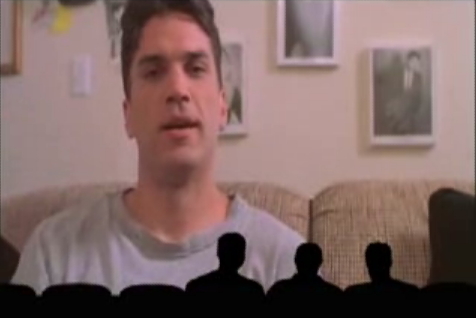
That’s because Daryn Tufts, Randy Tayler, and Trenton James will be providing snarky commentary on it, in the manner of “Mystery Science Theater 3000.” They’re calling it “Talkies.” It will be like watching a bad movie with three of your funniest friends. Or three of my funniest friends, anyway.

But the reason I’m telling you about it isn’t just that the guys are friends of mine, but that some of the snide remarks© they’ll be making were written by me, Eric D. Snider. Yes, though the performance is carefully crafted to look like they’re ad-libbing their responses to the movie, they are in fact scripted. (Such was the case with “Mystery Science Theater,” too.) Daryn asked if I wanted to write some jokes, and I was glad to do it, though it did mean having to watch “The Singles Ward” again.

(Added dimension that the “MST” gang never had to deal with: Daryn is actually in “The Singles Ward.” He’ll be mocking his own performance.)

So if you find yourself in Utah on Thanksgiving, turn your TV dial to KJZZ at 3 p.m. to record this one-time-only broadcast of “Talkies” featuring “The Singles Ward.” If the audience response is favorable, Daryn and the gang may have a chance to give other films in KJZZ’s library the “Talkies” treatment.

After the jump are some YouTube clips of the show. Daryn warns that the picture and sound are rough in these clips, but they’ll be smooth and delightful in the actual broadcast.

Thanksgiving is addressed in ‘Snide Remarks’

0

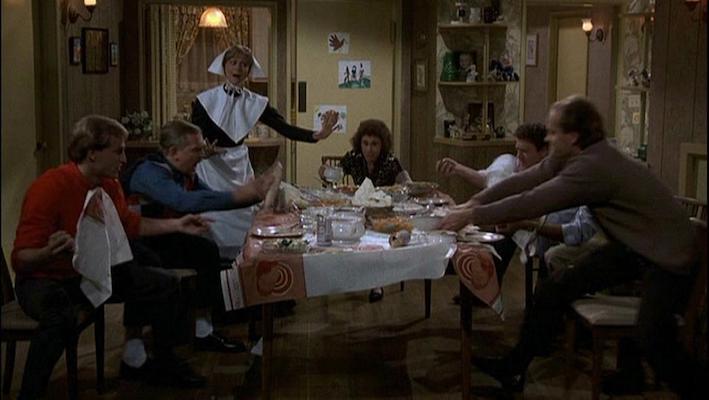
This week’s “Snide Remarks,” entitled “The Perfect Thanksgiving,” examines with great solemnity the different viewpoints held by various members of American society. The treatise is carefully researched and should be approached studiously.
J/K, it’s stupid like always.

You can subscribe to the weekly audio version with this URL, or just listen to today’s recording here. You can also just click the “play” button on the SnideCast player at the top of the page.

The Perfect Thanksgiving

0
The Perfect Thanksgiving

A Conservative’s Guide to the Perfect Thanksgiving

Thanksgiving should be a time of gratitude for all your good fortune (if you can really call it “fortune,” considering you worked for everything you have). Think of the immigrants — illegal, most of them — who performed the backbreaking labor necessary to harvest the vegetables you’re about to enjoy, and remember that this country would be a whole lot better off if they all went back to Mexico or wherever the hell they came from and let some honest-to-goodness Americans have those jobs.

Pause and reflect on the first Thanksgiving, way back in 1621. The savage Indians, tragically unacquainted with God, were so grateful to the Pilgrims for bringing them the light that they prepared a feast for them. In return, the Pilgrims taught the Indians to abandon their primitive ways and embrace Christianity. And thanks to those early settlers converting or killing everyone who opposed them, America has been a Christian nation ever since!

Be sure to thank your wife for preparing the beautiful meal, and remind her that she won’t have to clean up afterward, because that’s what your daughters are for.

As you carve the turkey, try not to feel embittered by the nation of Turkey’s increasingly anti-American sentiment in recent years. Take comfort in the knowledge that President Bush’s foreign policies will be vindicated one day, and let that knowledge make this Thanksgiving turkey taste all the juicier. Lighten the mood by telling your guests that the plump turkey is Michael Moore, only that it’s fully cooked instead of half-baked. If anyone fails to laugh at your joke, eye them with suspicion for the rest of the evening, making a mental note to call Homeland Security later.

You’ll want to offer a prayer before everyone starts eating, of course. To have a Thanksgiving dinner without a prayer would be a slap in the face to the Founding Fathers, devout Christian men who intended that this nation should never stop believing in Jesus, though you wouldn’t know it from the atheists who run Hollywood and Congress.

Thank the Lord for all your blessings, and be sure to pray for our troops in Iraq and Afghanistan, doing all that great work that the traitorous New York Times refuses to report on. Pray that President Bush will continue to be inspired and guided in his decisions, just as he has been for the last seven years, and express gratitude that if it weren’t for his bold leadership, we’d all be speaking Muslim right now. Pray also that your marriage will remain strong despite the constant efforts of homosexuals to undermine it.

You should also take a moment to pray for the less fortunate — pray they’ll get off their lazy butts and work a little harder so they can stop being so poor, that is.

Then enjoy the festivities! Assuming Rush Limbaugh, Sean Hannity, and Glenn Beck all said it was OK, of course.


A Liberal’s Guide to the Perfect Thanksgiving

Thanksgiving is a time to be grateful for everything you have, assuming you can get past the guilt in knowing how many people have suffered so that you can have it. Ideally, you should spend your Thanksgiving volunteering at a homeless shelter or soup kitchen, if only to balance out the karma. But it’s understandable if you’re not prepared yet to entirely give up your possessions and share them equally with everyone. Few of us are! Though it is something we strive for.

Be sure to pause for a moment and reflect on the first Thanksgiving, when America’s legacy of arrogance and aggression was just beginning. Unbidden and unwelcome, our forefathers took food from passive Native Americans whose tribes had existed in complete peace and harmony for hundreds of years without a single inter-tribal conflict. In return, we introduced them to guns, deprivation, and death, just as Der Fuhrer Bush is doing now in Iraq. Light a candle for the lost souls and remember to make a contribution to the Native American Children’s Fund tomorrow.

It’s possible that some of your guests are not yet enlightened and sophisticated enough to be vegetarians. Be tolerant of them! If one of them brings a turkey to go along with your planned meal of tofurkey, organically grown potatoes, and wheat-grass pie for dessert, thank him, her, hym, or hir graciously and warn the other guests that a meat product might be on the table. Lighten the mood by telling everyone the turkey is George W. Bush, only instead of lies, treason, and impeachable offenses, this George W. Bush is filled with stuffing!

As everyone gathers at the table, remember to look outside to see if any passing homeless people want to join you. After all, it’s not their fault that America’s economic, educational, and healthcare situations are so bad, or even that they were born in this miserable country to begin with.

Apologize to your guests for adding to global warming by using an electric oven to prepare the meal. If you have not succeeded in populating your dinner table with at least one Jew, lesbian, African-American, and quadriplegic, apologize to your guests for that oversight, too, and assure them that no offense against those oppressed groups was intended.

Before you eat, allow everyone at the table a moment to silently pray to, or otherwise thank, God, Mother Earth, or whichever higher power they worship, if they worship one — unless it’s the Christian God, in which case they really ought to stop cramming that down everyone’s throats and try to have a little respect for other people’s beliefs.

At the end of the meal, offer a toast to the blessing everyone at the table appreciates most: the fact that Canada is so close by, making their empty threats of moving there seem almost believable.

Then get a good night’s sleep! You’ll need your strength tomorrow, the official start of Unspecified Winter Holiday shopping season.


[ I thought I might like to write something for Thanksgiving, and the joke about liberals allowing everyone except Christians to pray occurred to me first. I quickly determined there was no reason to just do “A Liberal’s Guide to the Perfect Thanksgiving”; why not make fun of everyone equally? Now I’m wondering if the readers who are really conservative or really liberal will still find a way to complain about the way their side is portrayed. (“I thought half of this column was hilarious! But the other half was unfair and not funny at all.”)
If the layout of the site allowed it, I’d have put the two halves side-by-side rather than one after the other, because it really doesn’t matter which order you read them in. One is not meant to be a “response” to the other, or anything like that. ]

Friday movie roundup – Nov. 16

1

Sign up for the “In the Dark” e-zine here.
Listen to this week’s podcast version here.
Subscribe to the podcast’s feed here.

It’s late and I’m tired! You have no idea what Thursdays do to me. They kill me, that’s what they do! All the writing, and the posting, and the e-mailing, and the podcast-recording, all because Friday is when the movies come out. I’m gettin’ too old for this. Which is sad, because I’m only 33, and my job is easy by most reasonable standards of measurement. I guess what I’m really saying is, I’m a wimp and I want sympathy.

Speaking of oldness, “No Country for Old Men” is the spotlight review in this week’s edition of “In the Dark.” It’s one of the best movies of the year, and possibly the best movie the Coen Brothers have ever made. It’s only on about 120 screens right now, but you should definitely seek it out.

In wide release, “Mr. Magorium’s Wonder Emporium” is delightful and whimsical (though my positive review puts me squarely in the minority), while “Beowulf” is great-lookin’ but silly.

Two other limited-release reviews this week: “Control,” the sad but beautiful biopic about the lead singer of Joy Division, and “Southland Tales,” Richard Kelly’s trainwreck of a follow-up to his trainwreck cult hit “Donnie Darko.” I might have enjoyed it more if I had remembered to smoke some crack beforehand. You’d think the publicist would remind us of things like that.

Southland Tales

0

Seeing “Southland Tales” has made me change my opinion of writer/director Richard Kelly. His first film, 2001’s “Donnie Darko,” gave the impression that he was some film-school hotshot who thought incoherence was the same thing as brilliance. Now I realize “Donnie Darko” wasn’t obtuse on purpose: Kelly just doesn’t know how to communicate.

“Southland Tales” is a rambling, senseless mess. But in interviews, Kelly honestly seems to believe he’s made something satirically insightful, something that will get people thinking. It’s sort of like reading a manifesto from the Unabomber. He thinks it’s an eloquent dissertation, while no one else can even figure out what he’s talking about.

I guess it’s nice to know Kelly’s not doing it intentionally, that his faux-provocateur sensibility is just the way his mind works, but I can’t say it makes “Southland Tales” any more bearable. It’s garish and cheesy, with everyone apparently directed to speak their lines as broadly and one-dimensionally as if they were no-name actors appearing in a made-for-USA-Network movie. The story eventually becomes so devoid of reason that I stopped taking notes on it. You might as well try to follow — and make sense of — the plot progression in a dream.

The film is set in July 2008, three years after a nuclear attack on Texas started World War III. The United States has become almost a totalitarian regime, with visas required to travel between states and the USIdent department controlling all of cyberspace to quash dissent.

Neo-Marxist liberal cells have begun to pop up, however, and a porn actress named Krysta Now (Sarah Michelle Gellar) is involved with one in Southern California. She’s recently hooked up with an actor named Boxer Santaros (Dwayne Johnson), whose wife is the daughter of a Republican senator running for vice-president. Boxer disappeared in the Nevada desert a few days ago and has now reappeared with amnesia. He and Krysta have written a screenplay called “The Power,” although since he just showed up a couple days ago, I’m wondering if maybe she had already written it and has just put his name on it.

But back to the neo-Marxists. They want to use Boxer in a scheme to defame the government by making the police appear more brutal and severe than they are. (The police are now called Urban Pacification Units, by the way.) This involves kidnapping a real cop named Taverner (Seann William Scott), putting his uniform on his twin brother, and having the twin go out and do something nefarious while Boxer videotapes it. It’s all for show; no one’s really going to get hurt.

Meanwhile, a scientist named Baron Von Westphalen (Wallace Shawn) has devised an alternative fuel called Fluid Karma. There is something shady going on with Fluid Karma and the U.S. soldiers on whom it may have been tested. There is one particular soldier, Abilene (Justin Timberlake), who now runs two operations, one selling drugs and another perching on a pylon out in the ocean and sniping beachgoers.

Meanwhile, the text of “The Power” has begun to circulate, and a USIdent employee (i.e., a cog in the Big Brother machinery) named Starla (Michele Durrett) has become obsessed with acting it out with Boxer Santaros playing his role.

There is more to the story than what I’ve told you, but describing it wouldn’t do any good, even if I could describe it. There’s a zeppelin. There are doppelgangers. Metaphysics become a factor. At one point someone warns, “The fourth dimension will collapse on itself, you stupid b****!” I grant you, it’s hard to completely hate a movie that says that, or that has Wallace Shawn playing a character named Baron Von Westphalen.

But if the film is good for anything, it’s to marvel at how misguided and dull it is, and at how Kelly has managed to apply his uniquely baffling aesthetic to every element. For good or bad (so far just bad), Kelly knows how to make a film that is entirely his. And in “Southland Tales,” somewhere beneath all the layers of idiocy are some good ideas — if only Kelly knew how to express them.

Beowulf

0

An examination of Wikipedia’s entry on “Beowulf” — I didn’t read it in high school, either — confirms what I suspected, which is that the new computer-animated movie version has added some details not found in the original. The 9th-century epic poem did not portray Grendel’s monstrous mother as a sleek, nude siren, for example, nor did the dragon, in its natural form, look like the Silver Surfer. Just so you know.

Approximately one-third of the theaters showing “Beowulf” will do so digitally and in 3-D. If you’re going to see it, that’s the way to go. Without the elements of crystal-clear digital projection and awe-inspiring 3-D animation, the film doesn’t have much going for it. To see it in a traditional 2-D, 35-millimeter format would be like having someone hum a Beethoven symphony for you. You’d get the idea, but you wouldn’t understand what all the fuss was about.

Even under ideal circumstances, the fuss about the film should be restrained. Robert Zemeckis, fascinated with the motion-capture technology he used in “The Polar Express,” has taken advantage of the latest developments for “Beowulf,” and the action scenes are suitably spectacular. Yet the technology still can’t make people’s eyes look anything other than dead and soulless, and facial expressions still aren’t realistically fluid. They’re not even as good as the characters’ faces are in Pixar films.

The story … well, “Beowulf” is famous for being really old, not for being really brilliant. Set in Denmark in 507 (presumably so it can be exactly 1,500 years ago), the film has a village terrorized by a monster called Grendel (voice of Crispin Glover). The king, Hrothgar (Anthony Hopkins), a drunken old wretch, has been unable to stop it. And so the mighty warrior Beowulf (Ray Winstone), internationally renowned for his fighting prowess, arrives to save the day!

We know that’s why he’s here because the first thing he says is, “I am Beowulf. And I am here to kill your monster.” I’m pretty sure that’s not in the original, either.

As it turns out, Beowulf is kind of a douchebag. His catchphrase is “I am Beowulf!” He likes to yell it during battles. In a flashback where he fights sea monsters, he trims it down to just “BEOWULLLLLFFF!,” hollered apropos of nothing. It reminds me of Will Ferrell’s impersonation of Robert Goulet, blurting out “Goulet!” at random intervals.

Beowulf is also his own biggest fan, bragging constantly about his feats and exaggerating them as necessary. He has this thing where he likes to be naked, ostensibly to level the playing field between himself and the weapon-less, unclothed Grendel, but also apparently because he wants to show off his computer-generated abs to King Hrothgar’s hot wife, Wealthow (Robin Wright Penn). The nudity leads to unintentional hilarity when he fights Grendel and Zemeckis must resort to Austin Powers-style devices to prevent Beowulf’s genitalia from being visible to the audience — a well-placed candlestick here, a mug of mead there, etc.

Grendel’s mother is voiced by Angelia Jolie, and looks quite a bit like her. It turns out Grendel’s not even really her son. She just found him in a Cambodian orphanage and took him home.

Thank you! I’ll be here all century.

English majors will recall that there are three major battles in the story: one with Grendel (who is rendered with astonishingly creepy detail and realism), one with his mom, and one with a dragon. All of these are epic and thrilling. It’s the in-between scenes — the talking, the arguing, the waiting around — that fall a little flat, often spiced up with silly 3-D gimmickry. (Ooh, look, the sword is pointing right at us!! Fifty years of 3-D movies and we’re still doing this?) This is a great-looking movie that doesn’t have much depth to it. Which makes it a little like Beowulf himself, actually.

Mr. Magorium’s Wonder Emporium

0

Many elements of “Mr. Magorium’s Wonder Emporium” may indeed be swiped from “Charlie and the Chocolate Factory,” and there’s no question it has a terrible title. But I am utterly charmed by its imagination and sweetness, by its clever wizardry and inspired bizarreness — and by the fact that it never draws attention to its weirder details, preferring to let us notice them (or not) on our own.

Too many films, drunk on their own wackiness, are eager to make sure we know how wacky they are. When a boy in “Mr. Magorium” uses Lincoln Logs to make a life-size statue of Abraham Lincoln, I kept waiting for someone to say it. “Look! It’s Lincoln … made out of Lincoln Logs!” I felt a great smile spread across my face when the scene was over and no one had pointed it out.

I smiled a lot during “Mr. Magorium,” and laughed quite a bit, too. The directorial debut of Zach Helm (who also wrote last year’s overlooked “Stranger Than Fiction”), this is a curious story of a 243-year-old toy seller (Dustin Hoffman) who, aware of his impending mortality, bequeaths his enchanted store to his clerk, Molly Mahoney (Natalie Portman). But Molly, a once-promising pianist who has let her talents atrophy, is 23 years old and uncertain about her life’s path. She’s not sure she can handle the emporium on her own.

There’s also the matter of the store itself, which is living and full of magic. When you can’t find a particular item on the shelves, you pull out the giant book that lists everything the emporium offers — and then, rather than telling you how to back-order it, the book simply produces the item out of thin air. The store loves Mr. Magorium, who has been its proprietor for 113 years. It rebels at the notion of his departure.

Mr. Magorium brings in an accountant named Henry Weston (Jason Bateman) to go through all his records to determine what the store is worth, in preparation for handing it over to Molly. Henry is a no-nonsense kind of guy who does not believe the store is actually magical. What he does believe — in fact he is sure of it — is that Mr. Magorium has been something less than assiduous in maintaining his financial records.

Mr. Magorium has some important questions for Henry to test his accounting skills. He asks, “The number four: Do we really need it?” Henry replies, “If you like squares, you do.” Mr. Magorium is satisfied, because he does like squares.

Dustin Hoffman is doing a funny voice and behaving in a very Wonka-esque manner, but I did not find his performance tiresome or overly cute. The character presides over his store like a kindly, eccentric uncle, encouraging kids to play with the toys to their hearts’ content, apparently never concerned about actually selling them. He’s reminiscent of a Dr. Seuss creation, all quirks and oddness but with a layer of humanity underneath.

The film is about nothing less than life and death — heady issues for a kids movie, yet handled delicately and profoundly. When Magorium tells Molly, “Your life is an occasion — rise to it,” it comes across as sweet and uplifting, not corny.

It helps that Natalie Portman gives such a smilingly innocent performance, accompanied by young Zach Mills as Eric, a timid 9-year-old boy who counts Molly as his only friend. Eric finds refuge in the emporium’s many delights, and eventually cracks the all-business shell on Henry the accountant. These three, Molly, Eric, and Henry, are vulnerable, lovable characters (Bateman is absolutely perfect as the level-headed comic foil), and their story, while set in a whimsical world, is ultimately down-to-earth and believable. If you don’t feel happy and buoyant when the film’s over, I think you must have watched it wrong.

Angry Letter: Horse Girl rides again!

58

In a shocking development, Horse Girl has responded to yesterday’s post and answered some of our burning questions. Did she misread “uninjured” as “injured”? No! Is she actually a teenage girl? No! Have her reading comprehension skills improved? No! Behold:

Ok Eric, maybe I did get a little worked up but you don’t even know who I am. For one thing i am NOT a teenager, I am a 25 year old mother/riding instructor/horse trainer. Both me and my friends (Simone, Ashley, and Beca) have loved horses ever since we were babies and we have been friends ever since we were babies. I have NEVER GROWN OUT OF LOVING HORSES and nethier have my friends.

Angry Letter: Won’t someone think of the horses?

37

I wrote a “Snide Remarks” column in June that dealt with renewing my driver’s license, and somehow horses were involved, too. Accompanying the column was the picture seen here, of a minor British royal falling off her horse during an equestrian event. I included this caption: “She and the animal were both uninjured, but I don’t care, because that’s an awesome photo anyway.”

This cavalier attitude struck a nerve with a reader named Amber, who discovered the column five months later and posted three very angry comments (#60-62) on it. She also sent me the following scorching e-mail, from a return address of “beautyofhorses@[something].com”:

Have YOU read my posts ERIC!!?!?!!?!?!??? If you have you can tell that I’m pretty pisted off!!!!!!!! All my friends are too and they all [swear word] HATE YOU now!!!! How rude is it to post a picture of an inosint horse and rider getting injured and then say I DON”T CARE!!!!??!?! [So she read the part of the sentence that said I didn’t care, but missed the part of the same sentence where I said they weren’t injured. That is some seriously selective reading.] YOU [swear word]!!! It’s people like YOU who kill animals and the environment!!!!!!!!!!!!!! Maybe I should post a picture of YOU, yes YOU ERIC doing something painful and say “well I just wanted to post this picture because it is a good picture,but I don’t care that Eric’s hurt. I DON”T CARE!!!” [Fine with me! I’ll send you some.] That’s what YOU did with the horse and rider!! Horses are amazing, beautiful animals and deserved to be treated with respect unlike YOU i may add!!!!!! SHOW A LITTLE RESPECT FOR OTHER THINGS IN YOUR PATHETIC LIFE!!!!!!!!!!!!!! and to think I used to like this site!!!!! HA!!!!!!!!!!!!!!!!! I [swear word] hate it now!!!!!!!!!! I bet A LOT of other people do now too!! [How can they fail to, when you make your arguments so convincingly?] Oh ya and the driving learn how to drive YOURSELF [swear word]!!!!!!!!!!So please e-mail me back SOME kind of response.You should read my posts too. THEY might scare away some potential ericsnider site lovers!!!! BYE

P.S.I’m right to be doing so too!!!! Even though I didn’t put this letter in THE ANGRY LETTERS SECTION I want this to go STRAIGHT to YOU!!!!!! [I do wish more readers shared her foresight and labeled their correspondence as “angry” when appropriate. It would save my staff so much sorting time.]

Per her request, I replied to her e-mail. This is what I said:

The stupidest message ever posted on the Internet

17

People have been posting stupid messages on the Internet for as long as the Internet has been around, maybe longer. I always thought it would be hard to single out the single stupidest message.
Until now.

As you know, I often post dumb e-mails written to Raven-Symone by fans who don’t realize the address they’re using is not actually her address. I post those e-mails here in this blog. On Saturday, someone named “Shanae” stumbled across one of the batches of Raven e-mails and posted the following comment. Read it carefully.

hello whoever this is,

i just wanted to say, you are so SICK TO ME. i mean you are saying raven fans are idots and they are not. that is making raven look like a bad person. raven if you ever read this you just lost a fan because of this fake person. i thought i should become a fan of tia and tamara mowery. i am just saying, whoever you are,since the people that write to the FAKE E-MAIL ADDRESS are stupid,you are just making yourself look like a bigger dumbie. i am so sorry raven for saying that but it is true. if you ever get the time, look at what this person is saying online. look at what your number 1 fans are saying. nobody should even e-mail you because of this stupid person. i dont even care if you show this e-mail to your friends,family,and husband this e-mail because it is not going to hurt me. you can thank this SICK PERSON FOR ME WRITING THIS LETTER.thank you and have a nice day or night. i am still going to be a fan but you are my 3rd favorite person in the world.

‘Snide Remarks’ addresses TV strike, coffee

4

New “Snide Remarks” today! It’s kind of brief, which is a good thing, because you can only drag out a joke for so long. It pertains to the ongoing Hollywood writers strike, so that means it’s timely, too! Torn from today’s headlines! The audio version is available on the just-linked page, as well as here.

Speaking of which, WGA member Mark Evanier addresses in his blog a question that several people have brought up, namely: Why should TV writers be entitled to residuals when if I, a software engineer (for example), devise something that makes my company millions of dollars, I don’t get any piece of it? Weren’t the writers already compensated when they received their salaries? Evanier’s explanation is sound and logical, and you should read it. (Thanks to Sean for pointing it out to me.)

Striking TV Writers Are Forced to Find Other Employment

0

INTERNAL MEMO
Starbucks – 6th & Morrison (SE corner)

TO: New employees Rick, Diane, and Marcus
FROM: Store manager April

Hi guys!

I know it’s been stressful for you to join the Starbucks team. I hope we haven’t been too scary! <grin> I know it can be tough to jump in to an operation that’s already in full swing and be expected to learn the ropes. If you ever have any questions, please do not hesitate to ask me!

You guys are doing a great job so far! However, there are a few things that I think need to be addressed. I just want to make sure we’re all “on the same page,” to use some writers’ lingo! 🙂

First of all, the menu board that lists all our products and their prices does not need to be “punched up.” All three of you have mentioned this at some point. It might be fun to put some jokes up there, but I really don’t think there’s room. No, it isn’t “boring.” It’s a menu board. It’s not supposed to be a good read.

I’m also a little concerned about how you guys only want to work for 22 minutes every half-hour, or 44 minutes per hour. That just isn’t how we do things. You work for four hours straight, and then you get a 15-minute break. The timing of your breaks is strange, too. You seem to prefer to go on break just as things are getting interesting. A customer orders something we’re out of; a homeless man walks in and starts yelling; one of the other employees mentions she’s pregnant — and that’s when you want to go off the clock for a few minutes. What gives?

Different stores have different policies about this, but at this Starbucks location, we write our customers’ names on their cups. It helps identify their drinks, and it also makes them feel more like valued customers. But all you need to write is their first name. You do not need to add “FEMALE – MID 40s – PLUMP, WITH A ROSY AND CHEERFUL DISPOSITION” or “MALE – LATE TEENS – TYPICAL MALL RAT W/PIERCINGS – MILD TEXAS ACCENT.” Likewise, it seems counterproductive to jot down where you think the person is from, their hopes and dreams, and their relationship to other people in the store. Marcus, you told me this is known as a “backstory,” but I don’t see how backstory is relevant to selling coffee.

We had a complaint from a customer that I think refers to you, Diane, but I don’t want to single you out, because I’ve seen all three of you do this. If a burly, masculine construction worker comes in and orders a half-caf skinny double mochachino latte with extra foam, sell it to him. It doesn’t matter if it “doesn’t fit his character” or if “people wouldn’t believe that this guy would order that.” Our customers have the right to buy whatever they want, regardless of their motivation for doing so.

By the same token, you may not try to persuade the burly construction worker to buy a froofy drink just because you think “the juxtaposition would be funny.” We do not sell drinks based on how funny they are. Rick, your suggestion the other day that we should call it “crappuccino” because of the effect it has on your system was way out of line. When nobody laughed at your joke, you said, “We can sweeten it in post,” and I don’t even know what that meant.

Of course we all enjoy joking and laughing here. Starbucks should be a fun place to work! But we have to remember the image of the company, too. It’s inappropriate to call the store “Central Perk,” “The Peach Pit,” or “The Regal Beagle.” It is Starbucks. That’s what it says on your apron, and on every square inch of space around you.

Finally, when you answer the phone, please remember to say “goodbye” at the end of the call. I don’t know where you guys got the idea that people end phone calls by just hanging up, but it’s rude.

Please see me if you have any questions. Welcome to the Starbucks team!

Sincerely,
Store manager April

Friday movie roundup – Nov. 9

2

Sign up for the “In the Dark” e-zine here.
Listen to this week’s podcast version here.
Subscribe to the podcast’s feed here.

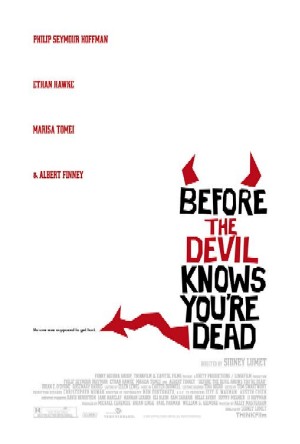
It’s not in wide release yet, but the best movie you’ll find anywhere this weekend is “Before the Devil Knows You’re Dead,” a fantastic crime thriller from director Sidney Lumet. The reasons for its greatness aren’t particularly deep or movie-critic-ish; it’s just an enthralling, well-made, straightforward movie. It’s the kind of movie that regular people will find compelling, too, not just snotty film critics. (The snotty film critics are just better at expressing why they like it. That’s why they make the big bucks.)

In wide release but not worth watching is “Fred Claus.” This movie is made out of poo.

Also made of poo: “P2,” a horror film set in a parking garage. Ooooh…. scaaaarrrryy.

Not made of poo at all: “Lions for Lambs,” starring Tom Cruise, Meryl Streep, and Robert Redford. It’s directed by Redford, too (his first since 2000’s “The Legend of Bagger Vance”), which has led many people to assume that it must be nothing but a liberal tirade. But it’s actually a very thoughtful dialogue between conservatives and liberals, and it makes good points on both sides.

A couple other limited-release films are reviewed this week. “Music Within” is a mediocre biopic of Richard Pimentel, a crusader for the rights of disabled people; “Sleuth” is a slick remake of the 1972 quasi-thriller, this time starring Michael Caine and Jude Law.

Fred Claus

0

Like an obese Santa grunting and wheezing as he hoists himself out of a low-sitting chair, so are the desperate gasps of “Fred Claus” as it runs through its creaky old Christmas-oriented sappiness and its slapdash story and its sub-Tim-Allen-level shtick. It’s like they took the most tiresome elements of 10 different holiday films and patched them together into one ugly quilt.

An ashamed and subdued Vince Vaughn plays the title character, a devil-may-care repo man who is jealous of the adoration that his brother Santa Claus (Paul Giamatti) gets for his yearly benevolence. It doesn’t help that Mom (Kathy Bates) always liked St. Nick best, too, ever since the boys were kids several hundred years ago. (It is “explained” — by which I mean, a narrator says some words that are supposed to convince us — that the magic of being a saint halts the aging process not just on the saint himself but on his spouse and immediate family members. I await the Vatican’s rebuttal.)

Fred has a faithful girlfriend, Wanda (Rachel Weisz), that he takes for granted, and he dreams of opening an off-track betting parlor. Needing $50,000 to get this dubious enterprise off the ground, he calls Nick at the North Pole. (Don’t ask why Santa Claus would have that kind of cash lying around.) Santa, against the wishes of his sensible wife (Miranda Richardson), tells Fred that if he’ll come help out during the Christmas rush, he’ll give him the loan.

What ensues is a surprisingly careless assortment of dangling plot threads, wasted characters, and ham-fisted attempts to rustle up some Christmas spirit. Dan Fogelman’s screenplay is awash in ineptitude; characters like the Claus boys’ mother and Wanda disappear for most of the film, while Fred and Nick’s dad (Trevor Peacock) is in several scenes yet doesn’t have a single line. I understand he has to be present because the saint thing means he can’t be dead, but seriously, couldn’t you come up with something for the character to do?

There’s a villain, Clyde (Kevin Spacey), an efficiency expert from “The Board” (evidently the same one that governs the Tooth Fairy and the Easter Bunny) who arrives at Santa’s village at the same time as Fred with threats of closing the place down. He lays down some arbitrary rules. First, he’ll be keeping close tabs, and if Santa’s operation gets three strikes before Christmas, he shuts the place down. On the other hand, if there are less than three strikes, “I’m required to send back a positive report.” Also, Santa is not allowed to tell anyone who Clyde is or why he’s there. Why? No reason. Purely arbitrary.

Naturally, Fred’s casual attitude disrupts things at the toy factory and gets Santa some strikes, and there’s a truly embarrassing sequence where Fred and a couple elves dance atop a table to a dance-club remix of an Elvis Presley song while a throng of elves cheer them on.

Man, this thing is all over the place. Did I mention Fred has an orphan friend back in Chicago, a young black kid named Slam (Bobb’e J. Thompson)? Well, he does. I don’t know why, but he does.

And then there’s a scene where Fred, fed up with his annoying family, goes to a support group for the siblings of famous people. That’s a funny idea, but it doesn’t go anywhere. It’s there so you’ll say, “Haw haw! They got Frank Stallone and Roger Clinton and one of the lesser Baldwins to be in the movie! Haw haw!”

Oh, and one of the lead elves, Willie (John Michael Higgins), is in love with Santa’s assistant, Charlene (Elizabeth Banks) — who, apart from the Clauses, is the only normal-size person living at the North Pole. (This is not explained.) Fred has to help Willie muster the courage to tell Charlene how he feels. Why? To pad out the running time, I assume. There’s no thematic or story-related reason for it.

The film is a mess, in other words, frantically but joylessly directed by David Dobkin (“Wedding Crashers”). Giamatti and Vaughn have an amusing fraternal rapport, but it’s under-utilized in favor of sight gags where ninja elves protect Santa and where Fred has to sleep on a tiny bed. The tone varies wildly, turning on a dime from slapstick to tearjerker, never getting a solid footing, and there’s no … no … well, not to be pedantic, but the movie has no point. Fred is an ill-defined character to begin with, so it’s unclear what he’s supposed to be learning in all this. The spirit of Christmas? To love his family? That there’s no such thing as a “naughty” kid? All of these and more are hinted at, but there’s never a moment where everything clicks, where you say, “Ahh, now this character has reached the end of his arc.”

Have you ever seen someone start to slip on a patch of ice, but they catch themselves, but they can’t get their balance, and the process of falling down winds up taking several seconds? “Fred Claus” is the movie equivalent of that — 115 minutes of awkward flailing and struggling before it finally collapses, embarrassing everyone in the vicinity. Ho ho horrible.

Lions for Lambs

0

One of the impressive things about “Lions for Lambs,” a thoughtful, up-to-the-minute drama about U.S. involvement in the Middle East, is that despite being directed by outspoken liberal Robert Redford, it is NOT simply a liberal tirade. In fact, the film makes good points on both sides — so much that I occasionally found myself agreeing with the Republican point of view, a sensation I had not experienced in several years.

Redford may have directed the film, but he didn’t write it. Those honors go to Matthew Michael Carnahan, a relatively new scribe whose September film “The Kingdom” was more in the conservative, America-is-always-right line of thinking than most current-events movies are. Certainly “Lions for Lambs” is more balanced than you’d expect a Robert Redford political film to be, if occasionally a little heavy-handed and moralistic (which maybe isn’t as surprising).

The film has three separate stories, all occurring simultaneously in different parts of the world. In Washington, a TV news reporter named Janine Roth (Meryl Streep) interviews Republican Sen. Jasper Irving (Tom Cruise) about the Army’s new strategy for winning in Afghanistan. In California, a political science professor, Malley (Redford himself), meets with a student, Todd (Andrew Garfield), to discuss the latter’s sudden lack of interest in the course. And in Afghanistan, two soldiers, Arian (Derek Luke) and Ernest (Michael Peña), participate in that new strategy Sen. Irving was talking about, though a mishap has left them wounded and trapped in hostile territory.

Perhaps it goes without saying that the thread with Streep and Cruise is the most compelling, but it’s not just because they’re both excellent actors, Streep with her mastery of high-class intellectual femininity, Cruise with his natural charm and intensity. This story is also where the electricity is, as Ms. Roth and Sen. Irving clash — civilly, of course; they’re professionals — about what’s happened in the war so far and what needs to be done next.

The senator is more blithe about the lessons of history than he should be, yet he makes compelling arguments about the War on Terror and fervently believes what he says. This character could have been an anti-Republican smear campaign, but it’s not. The film even rips the news media for failing to do its job in the run-up to the Iraq war and the early days of it, faithfully repeating everything the White House said instead of investigating it first.

At the California university, the dialogue is about Todd’s growing cynicism toward American politics. Where he was once fascinated by it, the more he learns, the more he’s convinced that all politicians, on all sides, are full of crap. But Prof. Malley sees potential greatness in Todd, and he urges him to become part of the solution rather than standing aside and complaining. He tells him about two former students of his who put their money where their mouths were: They enlisted in the Army and went to Afghanistan.

Arian and Ernest, injured and awaiting rescue in the mountains, give the dialogue-heavy film a small dose of action and a sense of real stakes amid the hypotheticals and abstracts. Janine Roth points out that most of the people directing the American war efforts from the comfort of Washington have never actually been in combat. Arian and Ernest are the faces of the real soldiers.

For a film that’s 95 percent talk, “Lions for Lambs” is admirably fast-paced, energized with something often missing in movies: ideas. For the most part, you don’t get the sense that Redford is preaching what he believes so much as giving several characters a platform to preach what they believe. The result is something often missing in American politics: real dialogue.

Music Within

0

The trouble with “Music Within” starts at the opening narration. The biopic’s subject, Richard Pimentel (played by Ron Livingston), tells us, “I was born with the umbilical cord wrapped around my neck. I’ve been pissed off ever since.” That’s a great way to introduce a fiery, angry character — except that nothing we see over the next 90 minutes suggests that Richard is anything like that. Apart from some stubbornness and tenacity, he’s actually pretty easy-going.

That’s emblematic of the film. If Richard Pimentel, a crusader for the rights of disabled people, is an interesting person in real life, you wouldn’t know it from watching “Music Within,” which paints him as average and reduces his experiences to shallow, predictable biopic vignettes. You can almost get away with that kind of superficial treatment in a movie about someone famous, because the question of “Why did you make a movie about this person?” has already been answered. But when the subject is not well-known, and the film about his life is unremarkable, the whole thing starts to feel like an exercise in futility.

Directed by first-time feature filmmaker Steven Sawalich and written by a trio of newcomers, the movie begins with Richard’s troubled childhood in Portland, Ore. (where the movie was filmed), the son of an insane mother and a dead Chinese father. He has a flair for public speaking and seeks a college scholarship on that basis; gets turned down; joins the Army; goes to Vietnam; has a bomb blow up next to him; comes home mostly deaf. He has severe tinnitus, a constant ringing in his ears that effectively drowns out most other sounds. (The film’s sound design very nicely shows us what Richard hears in a few scenes.)

Hearing aids eventually help him, but in the meantime he befriends Art (Michael Sheen), an obscene genius crippled by cerebral palsy whose voice, for some reason, is the only one Richard can understand most of the time. Richard becomes an inseparable pal to Art, as well as an impassioned campaigner for his fellow veterans, helping them find jobs and take advantage of their rights. Soon enough he’s on the governor’s staff, writing guides for businesses to help them deal with — and not discriminate against — disabled employees. He also has a girlfriend somewhere in here, Christine (Melissa George), whom he inevitably neglects when his devotion to the cause becomes so great that he ignores everything else.

Ron Livingston’s performance is likable, as expected, and Michael Sheen expertly walks the line between impersonation and caricature in his performance as the severely disabled Art. But what does it all add up to? As sincere as Sawalich’s intentions are, and as important as Richard Pimentel’s work on behalf of the disabled has been, the film never convinces us that Richard’s life story is movie-worthy. It’s a nice, agreeable film, best enjoyed by those with a personal stake in the material, and best left alone by the rest of us.

P2

0

Technology has forced the makers of horror films to get creative with their locations. It’s no longer sufficient that the victims be isolated in spooky houses or abandoned warehouses; now they have to be in places where they won’t get cell phone reception, either. And so we have “P2,” set in a parking garage. Whoopee.

P2 would be parking level 2, of course, the place where Angela (Rachel Nichols) has left her car on this fateful Christmas Eve. (No matter how often the film repeats it in tense situations, “P2” will always be a silly title.) With a stressful, undefined job at an undefined corporation based in a Manhattan high-rise, Angela hardly has time for friends or family. But after working late tonight, she is heading to New Jersey to spend the holiday with her mother and sister.

She’s the last one out of the building except for the parking garage security guard, Tom (Wes Bentley), who turns out to a) have a crush on her and b) be a psychopath. He chloroforms her. When she wakes up, she’s chained to a table in the garage’s office. It goes downhill from there, both for her and the viewer.

If you think that sounds like a pretty thin story for a 98-minute movie, you have a good point. I’m thinking of other recent films with similar stories and similarly small casts — “Vacancy,” which was just 85 minutes, and the French thriller “Them,” which was a scant 77. Both films are fast-paced and scary, in large part because they don’t waste any time. “P2” takes the opposite route, stretching things out as much as possible.

This is the first film by one Franck Khalfoun, who co-wrote it with Alexandre Aja and Gregory Levasseur, the minds behind “High Tension” and last year’s “The Hills Have Eyes” remake. Their adorable fascination with blood ‘n’ gore continues. “Yeah!” the kids seem to say. “We’re gonna make a movie with guts in it, and it will be super-scary! See if you can borrow your dad’s video camera!”

The main defect in “P2,” though, is Tom, who isn’t creepy so much as pathetic. He’s from the Norman Bates line of psychos who idolize and fear women to the point of wanting to kill them, but Wes Bentley’s screaming and ranting is (unintentionally) funny, not unnerving. If he weren’t armed, and if Angela weren’t often handcuffed, there would be no reason at all to feel intimidated by him. It’s like being menaced by Tobey Maguire.

He’s also not a very believable nutcase. Most movie psychos have a pattern of craziness. In the best films, you can even diagnose the character’s specific mental illnesses. Tom, on the other hand, is crazy in a general, random way. He can be delusional, lucid, gentle, vindictive, rational, or violent — and when he changes, it’s always because the story requires it, not because of the character’s psychosis.

My favorite part is when Angela sneaks into the office to retrieve her cell phone to call for help. She has to crawl across the desk to get it, and as she does so, she climbs over … a phone. You know, the regular desk kind that they have in offices. The kind that use telephone wires instead of cellular towers. Stupid functional telephone! she must be thinking. Get out of my way so I can get to my non-functional one! Way to go, Angie.

No Country for Old Men

0

Cormac McCarthy is considered by many to be America’s greatest living author, and Joel and Ethan Coen certainly comprise one of the finest voices in modern filmmaking. Despite that, I don’t know if I’d have guessed that the McCarthy/Coen combo would be such a perfect fit. They’re all brilliant, but they’re brilliant in different ways.

Or so I thought. “No Country for Old Men,” which the Coens have adapted from McCarthy’s novel, is a quintessential Coen movie, both visually and verbally — and yet most of the dialogue is taken word-for-word from the book.

I discovered this after the fact, not having read the book before seeing the movie. Watching it, I noted scenes that were in the classic Coen style, featuring Southwestern-accented men having quirky conversations a la “Raising Arizona” or “O Brother, Where Art Thou?” In one scene, two rural cops come across a drug deal gone bad, the ground littered with bodies. One of the cops observes that a couple of the victims are dressed differently from the others.

“These boys appear to be managerial,” he says. “I think we’re lookin’ at more than one fracas.”

That kind of cadence and vocabulary is common in Coenland, and it’s just as likely to come from a tertiary character (as it does here) as from the protagonist. And yet in this case, it’s not the Coens’ work. It’s straight from McCarthy.

So it would appear we have a match made in heaven, a novel that’s written cinematically being transferred to the screen by brothers who are highly proficient in the cinematic language, and who have the good sense not to make unnecessary changes.

The film hearkens back to the Coens’ darker films like “Blood Simple” and “Miller’s Crossing,” with a worldview that is decidedly bleak. Set in West Texas in 1980, it has three central characters on different sides of the law. Ed Tom Bell (Tommy Lee Jones) is an aging, weary sheriff saddened by the increasingly violent nature of the world. At the other end of the spectrum is Anton Chigurh (Javier Bardem), a terrifying psychopath who murders with a pneumatic gun (used to kill cattle, I do believe) and is on the trail of a satchel containing $2 million that went missing after that drug deal went awry.

The third figure, Llewelyn Moss (Josh Brolin), falls somewhere in the middle, law-and-order-wise. He’s an ordinary guy, a trailer park denizen with an ordinary wife (Kelly Macdonald), out hunting antelope one day when he comes across the crime scene and the bag of money. He quickly ascertains that the loot will be missed and sends the missus off to her mother’s while he deals with the repercussions.

That is the crux of the film: Chigurh has been sent to retrieve the $2 million; Llewelyn is on the run from him; Sheriff Bell is trying to keep everyone safe. Also in the mix is an unnamed man (Stephen Root) in a well-appointed office who hires the cocky Carson Wells (Woody Harrelson) to go after Chigurh and the money.

Wells seems to be familiar with Chigurh, to the point that he no longer fears him. This is a mistake. Despite his hilariously feminine haircut and calm demeanor — or maybe because of it — Chigurh is one of the creepier psychopaths in recent memory. He has no compunction about killing, no glimmer of humanity to make him reasonable. He’s perfectly content to let a coin toss decide whether he kills you or not. He embodies the film’s general view of life: It’s random, it’s often unfair, and everyone is subject to its whims.

The film has a potent mix of suspense and laughter. The Coens find a lot of dark, accidental humor in all of this, and also devote quiet attention to the details of Moss and Chigurh’s cat-and-mouse game. Moss proves to be a resourceful and intelligent man, maybe even capable of outsmarting the seemingly unstoppable Chigurh. Consequently, every scene is riveting because you never know which way it’s going to go.

That includes the ending, which at first glance may feel disappointing. Something about it stuck in my craw — yet I could tell that the problem was with me, not with McCarthy or the Coens. I was missing something. Seeing the film a second time, I caught subtleties I had missed at first, and everything fell into place. It’s a mistake to take the film for a simple crime thriller. You look at it that way and you’ll surely be let down by the conclusion. Look at it instead as a story about the capriciousness of fate, about how lives can be changed in the blink of an eye in ways that are unpredictable and unfair. One character even vocalizes the film’s theme outright: “You can’t stop what’s comin’. It ain’t all waitin’ on you. That’s vanity.”

Through the combined genius of McCarthy and the Coens, the film is constantly riveting. Even when the scenes are wordless, we are compelled to watch because, now that the dice have been thrown, we want to see where they land. It’s as close to a perfect film as I’ve seen all year: ingeniously crafted, thematically consistent, and haunting in its implications. It’s the kind of movie that sticks with you.

Sheriff Bell is the outsider in the equation, and the soul of the film. He’s outmatched by this new kind of evil represented by Chigurh and the web of people who traffic with him. You can see it in Tommy Lee Jones’ sorrowful eyes, and hear it in his Texas drawl, which he has exaggerated and ruralized. Bell has seen too much sadness in his life, and he can barely find the words to describe the awful things he’s begun to see. It doesn’t make sense. He’s getting too old for this — too old for law enforcement, too old for life, too old for everything.

NOTE: There was much discussion in the comments (back when this website allowed comments) about the fate of Moss, about the final whereabouts of the money, and about an ambiguous scene involving Bell and Chigurh and a motel room. I have blog entries discussing and explaining these subjects here (Moss’ fate), here (Bell and Chigurh, and the money), and here (other questions).

Writers strike updates: The apocalypse deepens

16

I’m guessing the average person doesn’t have Variety and The Hollywood Reporter on their newsfeed, and probably isn’t interested in the minor details of the Writers Guild of America strike anyway. So here’s a brief recap on the latest, and how it affects YOU, John and Jane Q. Public-Citizen. (You hyphenated when you got married.)

• First, don’t hold your breath for a quick resolution. The opposing sides — the WGA (the good guys) and the Alliance of Motion Picture & Television Producers (the greedy fat cats) — became so polarized and incensed during the pre-strike negotiations that now everybody just hates each other. The AMPTP says it has no interest in resuming talks as long as the WGA members are picketing; the WGA isn’t going to end the strike until talks are resumed. Sigh.

• Variety says that “without reviving the WGA talks, the scribes’ work stoppage could easily bleed into the middle of next year” (!!!!!!!!!!) (emphasis mine).

Some baffling movie data

15

Oscar nominee Paul Giamatti!
2-time Oscar nominee Miranda Richardson!
Oscar winner Rachel Weisz!
Oscar winner Kathy Bates!
2-time Oscar winner Kevin Spacey!

The film: “Fred Claus”

* * * * *

Oscar winner Nicolas Cage!
Oscar winner Jon Voight!
Oscar winner Helen Mirren!
Oscar nominee Harvey Keitel!
4-time Oscar nominee Ed Harris!

The film: “National Treasure: Book of Secrets”

Stalking Santa

0

(Full disclosure: I’m friends with a lot of the people involved in this film, including the stars. If I were on assignment, I would have to recuse myself from reviewing it. But as a guy just writing on the Internet, I can do as I please. I tried to separate myself from my familiarity with the actors as much as possible while watching it, and I tried to be impartial in writing the review. If I hadn’t genuinely liked the film, I wouldn’t have reviewed it at all. So take that for what it’s worth.)

“Stalking Santa” has a great premise for a mockumentary, and it hits the mark better than many of the “Waiting for Guffman” wannabes that have come along in the past few years. It’s the story of a man who believes in Santa Claus and has set out to prove his existence, completely unaware of how silly he looks or how dumb he’ll come off in the documentary — perfect fodder, in other words, for a movie about characters who never realize we’re making fun of them.

The man is Lloyd Darrow (Chris Clark), a self-proclaimed “santologist” who has devoted himself full-time to proving that the jolly old elf is more than a myth. His pregnant wife, Barbara (Lisa Clark), supports him both emotionally and financially, though it has begun to strain even her saintly patience. Lloyd has a devoted college-kid research assistant, Clarence (Daryn Tufts), whom he spends more time with than his wife or children.

Lloyd speaks in earnest, Mulder-esque tones about his research: Egyptian hieroglyphics with Santa-ish figures, crop circles that could be alternate landing sites for the sleigh, UFO sightings that were reindeer rather than spaceships, and government cover-ups.

Why is the U.S. government suppressing public knowledge of Santa’s existence? Because if word got out that Kris Kringle is delivering presents free of charge, Christmastime spending would plummet and the American economy would be ruined. It’s in the government’s best interest, therefore, to keep Santa a secret — and to keep Lloyd Darrow from proving anything.

Directed by Greg Kiefer (a Utah-based commercial director) and written by Daryn Tufts, “Stalking Santa” demonstrates a sly sense of humor when it comes to mixing fact with fiction, and William Shatner’s faux-intense narration gives it a nice, homey “Unsolved Mysteries” flavor. The various evidences cited — Bigfoot-style home movies, photos of crashed sleighs at Roswell, etc. — are clever and well-produced, and the movie keeps its straight face on most of the time, eschewing zaniness for satire.

It does get wacky occasionally, though, with the jokey, Christmas-themed names given to some fictional people and places: the “Quetzlclausl” carving at Chichen Itza; “Buddha Craus” in China; a Thai eyewitness named Tinsulanonda. That kind of thing is a little more MAD Magazine than “Best in Show,” and not in keeping with the film’s deadpan attitude.

The real-life husband-and-wife team of Chris Clark and Lisa Valentine Clark are a marvelous screen pair as Lloyd and Barbara, with Lisa’s veiled exasperation hilariously balancing out Chris’ obliviousness. There’s a very nice scene where harsh reality settles in — Lloyd plans to not buy any presents this year as part of his prove-Santa-exists experiment, and Barbara doubts him — and the Clarks play it with an even mixture of satire and realism.

Chris Clark and Daryn Tufts also play off each other nicely. Most of the film’s dialogue is improvised, and these two have a snappy rapport.

Most of the supporting players (including several veterans of Utah’s vibrant improv comedy scene) are solid, and the story moves in a straightforward, linear fashion, leading up to Lloyd’s Christmas Eve experiment. You get the sense that a lot of funny bits were cut because they didn’t add to the plot, while some plot-centric scenes that weren’t terribly funny had to be included in order for the film to be coherent. That’s the tricky part of making a mockumentary, and one of the reasons so many of them don’t pan out. “Stalking Santa” could be funnier, but it’s a smart, jolly affair as it stands — destined, perhaps, to be a new Christmas cult classic.

The difference between ‘right’ and ‘legal’

26

I’ve been thinking about the Westboro Baptist Church lawsuit, and how it reflects on the difference between something being “right” and something being “legal.”

The facts are these. Headed by Fred Phelps, the Westboro Baptist Church of Topeka, Kan., is an unaffiliated Christian congregation focusing on one specific doctrine: that God hates all forms of homosexuality and its practitioners, that all homosexuals will burn in hell, and that so will the people who tolerate them.

Phelps’ teachings cast a wide net with regard to that last point. Basically, if you’re not actively persecuting and preaching against gays, you are tolerating them and thus in danger of hellfire. Phelps teaches that the United States is a cursed nation because it allows homosexuality to exist unpunished, and that when soldiers die in Iraq, it’s God’s punishment for America.

Phelps and his 100-member congregation, composed almost entirely of his family members, are infamous for picketing at funerals. They first came to prominence when they marched at gay murder victim Matthew Shepard’s memorial service, carrying signs declaring that Shepard was at that moment burning in hell. In the last few years, they’ve started doing the same thing at soldiers’ funerals, declaring the soldiers also to be in hell — not because they were gay, but because they were fighting for a nation that tolerates homosexuality.

They also picketed the funerals of Coretta Scott King and Mr. Rogers. Yes, Mr. Rogers. I don’t recall the specific reasons, but it definitely related to homosexuality. Everything comes back to homosexuality with Fred Phelps. You’d hear more references to gay sex in one Phelps sermon than you would in watching 10 hours of gay porn. (That figure is approximate.)

How the Hollywood writers strike affects YOU

25

You may have heard snippets of news items about an impending Hollywood writers strike and didn’t let the magnitude of the situation sink in. Perhaps you were in denial. But I’m here to tell you that it is real, and that it will probably be disastrous.

How does seven nights a week of nothing but “American Idol” and “Dateline NBC” sound?!!

Here’s the lowdown on how the writers strike affects you, John and Jane Q. Public, in handy question-and-answer format.

Q: Who’s striking, and why?
A: It’s the Writers Guild of America (WGA) striking against the Alliance of Motion Picture and Television Producers (AMPTP). The WGA’s contract ended Nov. 1, and they were trying to negotiate some changes for the new contract. The AMPTP wouldn’t budge, the contract expired, and so a strike officially begins today.

No ‘Snide Remarks’ due to writers strike

6

As you may have heard, the Hollywood writers are on strike as of today, and so in solidarity, I have refused to write a “Snide Remarks” column.

J/K! I’m totally J/K. The reason I didn’t write one is that I didn’t have any ideas. But it sounds so much more principled to say it was on purpose, doesn’t it?

More bloggy stuff later today, including a post about the writers strike and how it affects YOU, the average TV-viewing American.

‘Stalking Santa’ coming to DVD … and skipping theaters

11

Remember “Stalking Santa,” the fun mockumentary about a guy trying to prove the existence of Santa Claus? Sure you do! I posted a review several months back, and alerted you to some screenings in the Provo area.

Now I have good news and bad news. The good news is that the film is being released on DVD this Tuesday, so you can buy it or rent it and watch it in the comfort of your own home. The bad news is that this is occurring without the movie ever being released to theaters.

What annoys me is that this is the work of Excel Entertainment, which bought the film earlier this year, full of promises to give it a nice theatrical release and plenty of promotion. The producers had other options. They went with Excel because Excel — despite only having previous experience with Utah-centric Mormon films — pledged to handle it effectively.

And now they’re dumping it straight to DVD. “Stalking Santa” isn’t mentioned anywhere on Excel’s website. It’s not for sale at Amazon. (It is for rent at Netflix, though.) As far as I can tell, the only place you can buy it is at Deseret Book stores or at DeseretBook.com — where it’s incorrectly categorized as an “LDS DVD,” no doubt because it came from Excel, and Deseret Book is used to everything Excel does being LDS-themed.

In other words, it’s being marketed (and halfheartedly at that) only to Mormons, even though it has nothing to do with Mormonism and would appeal to a general audience. Indeed, it HAS appealed to general audiences, when it has played at film festivals over the last year. Excel’s bumbling has slashed the movie’s potential.

Why didn’t Excel release it in theaters? An insider told me it was due to the regrettable circumstances of the season. The marketplace is very crowded this time of year, and it’s hard to get theater chains to give up screens for something small like this.

That’s a good point — but it was also 100 percent foreseeable. They could have known that (and should have known that) months ago, when they acquired the film. The holiday season didn’t exactly sneak up on us this year. It was on the calendar.

Anyway, they are doing three free promotional screenings in theaters, one in Salt Lake City on Monday, one in Los Angeles on Tuesday, and one in New York City on Thursday. The details are at the film’s website. I do believe cast members will be on hand at all the screenings.

(By the way, I can see from the picture on the film’s website that I’m quoted on the DVD cover, but I can’t quite make out who it says I write for. It should say “Eric D. Snider, eFilmCritic.com,” but the text looks a few letters longer than that. Can anyone else make it out?)

Friday movie roundup – Nov. 2

3

Sign up for the “In the Dark” e-zine here.
Listen to this week’s podcast version here.
Subscribe to the podcast’s feed here.

A couple weeks ago we had like six new movies, and they were all rated R. Today there are three new wide releases, and two of them are PG — and worth watching, too, which is kinda rare for PG movies nowadays.

The animated “Bee Movie” is more amusing than not, though it also makes no sense whatsoever and has more bizarre plot turns than you expect in a cartoon.

I was quite fond of “Martian Child,” my affection for John Cusack no doubt coloring my opinion. But honestly, who doesn’t love John Cusack?! (NOTE: That question is rhetorical. If you do not love John Cusack, I DON’T WANT TO HEAR IT.)

Moving deep into R-rated territory, we have “American Gangster,” which has caused Lenny Kravitz’s version of “American Woman” to be stuck in my head all week, except my brain keeps replacing “Woman” with “Gangster.” Dear Brain: YOU ARE ANNOYING. I hate you so much.

Oh, “American Gangster” is pretty good.

Finally, in somewhat limited release is “Wristcutters: A Love Story.” I saw this at Sundance in January 2006 and am glad it’s finally seeing the light of day. It’s an unusual and imaginative film, set in an afterlife that’s only for people who died via suicide. It’s a lot more funny and life-affirming than it sounds.

American Gangster

0

As suggested by the title of the movie about him, Frank Lucas was the most American of gangsters. A poor black kid from North Carolina, he worked his way to the top of the New York City drug world in the early 1970s all by himself, taking full, perverse advantage of the American ideals of self-reliance and capitalism. Like the figures in “The Godfather” — a movie that was popular when Lucas was making it big and which “American Gangster” resembles in many ways — Lucas was living the American dream.

Directed with dazzling energy by Ridley Scott, “American Gangster” stars Denzel Washington as Lucas and Russell Crowe as Richie Roberts, the Brooklyn narcotics officer striving to bring him down. They do not meet until well into the lengthy (but not overlong) film, and for much of the time Roberts doesn’t know that it’s Lucas, specifically, that he’s after. So Scott, with a screenplay by Steven Zaillian (“Gangs of New York”), has plenty of time to establish the alpha males’ characters separately, and they’re both so vivid that if it weren’t for the title, you wouldn’t be able to say that either man was the “main” character.

Lucas and Roberts have stories that run sometimes parallel, sometimes perpendicular. Lucas is a cold-blooded killer, a ruthless businessman, and an unrepentant peddler of heroin to a generation of junkies. He’s also, however, a family man, faithful to his beautiful wife Eva (Lymari Nadal) and kind to his mother (Ruby Dee). The first thing he does when he gets rich is to move everyone up from North Carolina and give them a mansion to live in. It’s no accident that the Thanksgiving scene at Lucas’ house looks exactly like the Norman Rockwell painting.

Roberts, meanwhile, is perhaps the last honest cop left in an increasingly crooked police force. He is ethical to the letter, an unwavering and dogmatic defender of the law. He is also, however, a divorced father with a penchant for womanizing and some lowlife friends left over from his childhood.

When we first meet Lucas, he is the driver for renowned Harlem gangster and Robin Hood figure Bumpy Johnson. Upon Bumpy’s death, Lucas appoints himself his successor and quickly finds a way to make inroads into the heroin marketplace. The way it’s been working is that the crooked cops make drug busts, keep the heroin, dilute it with baby powder, then sell it back to the dealers to put on the streets. Lucas circumvents that by having bribe-receptive servicemen smuggle pure, unfiltered heroin back from Vietnam, which he can sell at a lower price than his competitors — and it’s better stuff, too. He even gives it a brand name, Blue Magic, and gets angry when one of his sellers waters it down but keeps the name. He wants the Blue Magic label to MEAN something, dammit!

Lucas’ system puts him at odds with more or less everyone. The bad cops are angry because they’ve been cut out of the loop. The Italian crime families are upset that someone has become a success without being part of their organization. The other dealers don’t appreciate Lucas creating a de facto monopoly in the heroin industry. No one has ever made it this big before without the backing of a syndicate. It’s like a Mom & Pop store suddenly overwhelming Wal-Mart.

The situation is so unusual that it’s a while before Roberts and his team figure out that Lucas isn’t working for anyone; HE’S the big fish they’re after. But establishing a case against him isn’t easy even after Lucas is identified as the target. His operation is impeccable. Business students should study him.

Lucas and Roberts are both richly portrayed in performances that are big and dynamic without going over the top. Washington gives Lucas calm but fierce menace, always sharply dressed and elegantly mannered, his smile belying the fact that he is capable of the rankest evil. Crowe, meanwhile, remains doggedly affixed to his task, increasingly disheveled in appearance as Roberts gradually comes to terms with hi disastrous personal life. Both men come across as likable, flawed heroes — which is a bit alarming, considering one of them is a murdering drug dealer.

Late in the film there’s a raid on a drug-processing lab that is cringe-inducingly graphic, full of gunshot wounds, nudity, and clouds of heroin floating in the air. It’s a perfect storm of adult content that serves to remind us of us just how sordid the whole thing is — you know, just in case we were getting too caught up in the entertainment value of such a crackling good story about two such fascinating men.

As I mentioned at the top, there are shades of “The Godfather” in Scott’s approach to the material, including a climax that parallels the baptism scene. The film is based on true story, though it’s unlikely that things really happened quite as dramatically as they do here. It makes you stop and reflect a minute. We Americans do revere our gangsters, don’t we? What’s up with that?

Bee Movie

0

Jerry Seinfeld’s “Bee Movie” doesn’t really make sense, even taking into account that it’s a cartoon. The plot is absurd, sometimes so outrageously harebrained that you have to figure Seinfeld and company were doing it on purpose. Other times, you think the whole thing is just a mess and they didn’t know what they were doing.

Both views are at least partially correct. I ultimately come down on the side of liking the movie for its bold disregard for convention (whether it was intentional or not), and also because I laughed quite a bit during it. That said, it’s a minor film. It’ll be amusing once and then forgotten.

Seinfeld hatched the idea and co-wrote the screenplay with some old “Seinfeld” scribes, and he voices the main character: Barry, a bee who has just graduated from school and is preparing to enter the workforce but doesn’t like the idea of doing the same task constantly until the day he dies. Most bees never leave the hive. Barry wants to go out and explore.

He does so, and he’s delighted by the outside world of New York City. He is saved from a squashing by a florist named Vanessa (Renee Zellweger), and even though it is forbidden for bees to talk to humans — apparently, bees can speak English, and they’ve just been hiding it all this time — he feels like he ought to thank her. So he does. And after some initial shock that bees can talk, she becomes his friend.

Because this is Seinfeld, they talk about minutiae, like what’s the deal with women wearing toe rings? It’s like putting a hat on your knee. But more importantly, Barry develops a crush on Vanessa, which is silly, since she is 10,000 times his size. A relationship could never work out. Plus, she already has a boyfriend, Ken (Patrick Warburton), who hates bees. What’s interesting is that in the movie, the boyfriend is the greater obstacle.

The story kicks into high gear when Barry discovers that honey is sold in supermarkets. Since he’d never left the hive before, he didn’t realize what happened to other, less fortunate bee colonies, how their honey was plundered by humans. He is outraged! And so he files a lawsuit against the big honey companies on the grounds that they’ve been stealing what rightfully belonged to the bees.

I don’t think anyone disputes that. I think we were assuming the bees didn’t care, or that, at the very least, they did not speak our language and would be unable to file court papers. If we learned that they were sentient beings who could speak and reason, I suspect it would change a lot of things.

The film gets even more surreal after that. Often, I was laughing at the strangeness of the movie more than at its actual jokes, which are hit-and-miss. Who could have expected a scene where Ken comes home early and is jealous to discover Vanessa eating dinner with Barry? When you have a man envious of his girlfriend’s insect acquaintance, that’s how you know your movie, for better or worse, has gone off the deep end.

The voice cast is plenty of fun, including John Goodman as a conniving Southern lawyer (a role he’s perfect for, you’ll agree), Matthew Broderick as Barry’s worry-wart best friend, and, for some reason, Larry King, Ray Liotta, and Sting as themselves. Actually, Larry King plays Bee Larry King, who has a talk show on a bee cable station. Barry even points out to him what a weird coincidence it is that there’s a human Larry King, too, who also has a TV show and wears suspenders.

What a weird movie. Will kids appreciate its weirdness? I suspect they’ll just find it funny. It’s the adults who will think it’s either a trainwreck or an amusing curiosity.

Martian Child

0

When I asserted in my review of “1408” that everyone loves John Cusack, I heard from a few people who don’t. Apparently, some people can’t stand him. I DO NOT WANT TO HEAR FROM THESE PEOPLE EVER AGAIN. To hate John Cusack is to hate life!

My pro-Cusack philosophy no doubt enhances my appreciation of “Martian Child,” in which he plays a widower who adopts a peculiar young boy. The story has the makings of a sappy, manipulative “family film,” and maybe it is one. I proudly state that I do not care. It’s sweet and lovely and honest, and it made me laugh and cry, and John Cusack and the little boy, Bobby Coleman, are fantastic, and I want them to move next door and be my brother and nephew, respectively.

Cusack plays David, a successful fantasy novelist whose big hit is being made into a movie, while his publisher is chomping at the bit for a sequel. David likes the fantasy genre because he was an odd child and feels a kinship with the strange creatures of his imagination.

His wife died two years ago, and they were childless. Now he has started thinking about adopting, and a young orphan named Dennis is deemed a perfect fit. Dennis claims to be from Mars. He dislikes the sun and hides from it on cloudless days by sitting under a cardboard box on the playground. He wears a weight belt to counteract the Earth’s relatively weak gravity. David writes about Martians; Dennis is a Martian. It’s ideal!

Dennis’ Martian fantasies are a coping mechanism, of course, to guard against his abandonment issues. David’s task is to make him feel safe enough to let his defenses down — to love him so much that he feels comfortable being an Earthling.

Bless Dennis’ little heart! And bless David’s little heart for wanting to help him! Bless everyone’s heart, including director Menno Meyjes (who worked with Cusack on “Max”) and David Gerrold, on whose novel the film is based. (In the novel, David was gay. I guess the adapters didn’t want to open that can of worms, and made him a straight widower instead.) Though the material lends itself to trite platitudes, most of the film rings true.

OK, there is a scene where David, frustrated at not being able to get Dennis to give up the Martian thing, has an epiphany after his publisher yells at him, “Why can’t you just be what we want you to be?!” That’s a forced and obvious summary of the movie’s theme. Also, I’m not sure the character of Harlee (Amanda Peet) — David’s wife’s best friend and David’s possible new love interest — even needs to be in the movie, since David is still in mourning and doesn’t need a new romance. But apart from THAT, most of the film rings true.

I’m glad to report that the story is not about whether David gets to keep Dennis. I feared it was going that way, with a worried child welfare officer (Richard Schiff) expressing concern about David’s more-friend-than-father parenting techniques. (The fact that Richard Schiff played the same role in “I Am Sam,” which WAS about whether the dad gets to keep the kid, made me even more nervous.) Thankfully, that issue is resolved, leaving the movie to focus on its real issues of parental love and acceptance.

Someone reassures David that “all parents feel like they’re the blind leading the blind.” His sister, Liz (played by his real sister, Joan Cusack), thinks he’s crazy for adopting a kid with issues. Thinking he’s a Martian is a big red flag, she says, and she’s right. But David is such a loving and thoughtful person — such a good person — that he wants to help anyway.

I think that’s why I like the movie so much. David and Dennis are kindred spirits, both outsiders from mainstream society, and both inherently decent and full of love. You feel invested in them. You want them to be happy, and it’s no spoiler to say that the movie ends happily. The joy is in seeing them work their way toward it.

Sleuth

0

Fans of the 1972 version of “Sleuth” will not enjoy the new version unless they accept beforehand that it is not a “remake” so much as a “re-imagining.” The same basic story is there, with the same basic twists and surprises, but the tone is different. The new version is sleeker, more streamlined, and more menacing than playful. It’s also 45 minutes shorter.

Kenneth Branagh, taking a break from Shakespeare, directs the new one, with a screenplay that’s been adapted by Harold Pinter from Anthony Shaffer’s stage play. More musical chairs: Where the original was primarily a two-man operation starring Laurence Olivier and Michael Caine, now Caine plays the Olivier role with Jude Law in Caine’s old shoes. (Yes, Law has already done a Caine remake, “Alfie.” No, I don’t know what the deal is with Jude Law and Michael Caine.)

The story is set entirely in the ultra-modern, dimly lit home of Andrew Wyke (Caine), a successful crime novelist with a fascination for gadgets and electronics. There is high-tech surveillance everywhere (and Branagh often shoots the actors from that point of view), with an abundance of nifty things like sliding walls and hidden rooms.

Wyke has requested a visit from Milo Tindle (Law), a struggling young actor who, we soon learn, has been having an affair with Wyke’s wife, Margo. Wyke will grant her a divorce, but only if he’s certain he’ll be rid of her for good — and given Tindle’s poverty and Margo’s fondness for extravagance, he suspects she’ll come crawling back to him and his money before long.

So Wyke has a proposal. He wants Tindle to “steal” some of his diamonds, fence them, and use the money to support Margo. Wyke gets the insurance money, so he’s not out anything, and Margo will be out of his hair.

But of course the plan is not as simple as it sounds, nor is everyone as forthcoming about their real intentions. Tindle and Wyke are playing games with each other, and discovering what the games are, who’s playing them, and whether any of them are lethal is the fun of the story. This is diminished somewhat if you already know the facts from having seen the original (or the play it’s based on, which is still produced now and then).

Yet there is still a lot of enjoyment to be had in these two meaty performances, with rich, clever dialogue by Shaffer and Pinter. Wyke and Tindle are smart men; their dialogue can be coy or blunt, depending on the moment, and neither man is ever far from a moment of explosive rage. They battle with their wits, their words, and their voices, only occasionally resorting to more physical methods of violence. To put it simply, they’re just fun to watch, that’s all.

It wouldn’t work with lesser actors. When a police inspector (played by Alec Cawthorne) appears in the second act, your reaction is “Hey, who’s this interloper?!” Caine and Law approach their roles with theatrical enthusiasm, not to mention a great deal of real talent. They have the chemistry of a seasoned pair of professionals. Devotees of the original (which earned Oscar nominations for Olivier and Caine) may be appalled to see it changed in any way, but on its own terms it’s pretty entertaining.

Angry Letter: I don’t know what it’s about, but my whiteness is to blame (again)

9

I got this e-mail today:

Well eric the George Lopez was funny my family really enjoyed it. The caveman show is a total waste of film nothing funny about,they should had left it just has a commerical. Let me quess your white thats why you are so lame white people just dont get it. Maybe you should join the caveman cast your just as stupid has the show!!!!!!!!

First, let’s pause a moment to bask in the sweet, aromatic irony of someone who writes like this calling anyone else “stupid.” Mmmmm…. refreshing.

Now, then. I assume “the George Lopez” means “The George Lopez Show,” and the strange part is that the only time I have ever mentioned that show on this website was in passing in a blog entry three years ago. Why get so worked up about it now?

As for “Cavemen,” I talked about that more recently — long enough to say it wasn’t very good. Which means I agreed with this person. So why is he or she yelling at me?!

Finally, while I am white, and while I agree that white people are lame, I don’t know that being white is why I’m lame. I have other qualities that contribute to my lameness. Let’s not limit it to just skin color.

What Halloween needs is more cowbell

4

Were you thinking you’d like to be Christopher Walken for Halloween but didn’t know how to pull it off? You are in luck! Someone has made a mask that you can print off, cut out, and attach to your face.

Here it is in action. Either it’s meant for small heads, or else my head is abnormally large. Either way, fun times!

‘Snide Remarks’ Classic: ‘It’s All True’

0

One of the categories of “Snide Remarks” columns is Columns That Eric Finds Much, Much Funnier Than Anyone Else. This week’s “Snide Remarks” Classic, from Aug. 8, 2001, is a prime example. It’s called “It’s All True,” and it’s a list of interesting trivia items similar to those e-mails people used to forward around all the time. Most of those e-mail trivia items aren’t actually true, which annoys me, so I made up a list of things that are also not true in the hopes that it, too, would circulate.

For some reason, this list really makes me giggle. I like how some of them almost sound true at first, for just a second, until you think about them. Sort of like 9/11 conspiracy theories.

Angry Letter: ‘Why Did I Get Married’

7

Just as my review of Tyler Perry’s “Diary of a Mad Black Woman” elicited angry letters, so has my review of his latest, “Why Did I Get Married?” My conversations with other film critics lead me to understand that I am not alone. The e-mail’s sender line says “Latricia Latricia Jenkins,” so apparently she’s named Latricia twice. Good for her! Here’s what she says:

Your review of Tyler Perry’s Why did I get married, is why talented Black film producers will always have a hard time trying to break through mainstream. [It’s even harder when they’re not talented, which is why Perry’s success is so impressive.] Your comments were absolutely ignorant and not true. [Not true? You mean I got my opinion wrong? I actually DID like the movie?! Crap.] But what can you expect when you still have ignorant and pathetic people in 2007 still hanging nooses around trees. You critic are unbelievable, especially when it comes to Black folks.

We critic may be unbelievable, but what’s even more unbelievable is that someone with enough brain power to read a review and write a response could actually think that disliking a Tyler Perry film automatically makes a person racist. I didn’t like Woody Allen’s last movie, either. Does that make me an anti-Semite?

(When I wrote back to Latricia2 and asked her that, she did not reply.)

Seven People Not Being Considered for Justice League Roles

0
Seven People Not Being Considered for Justice League Roles

It was announced a few weeks ago that a Justice League movie was in the works, and the response within the nerd community was overwhelming: “We like Wonder Woman’s breasts!”

Also, there has been some discussion of casting. The Justice League, if you’re not “hip” to the “jive,” is a consortium of DC Comics heroes who work together to battle the forces of evil. The group includes Superman, Batman, Wonder Woman, Aquaman, Flash, Green Lantern, and Martian Manhunter, all of whom besides Superman are of course unnecessary. And while it’s been confirmed that George Miller will direct, no one knows yet who will play any of the superheroes.

This has led to rampant speculation on the Internet and plenty of false rumors. Jessica Biel will play Wonder Woman! No, it’s Shannyn Sossamon! Christian Bale will play Batman! No, he won’t! Rupert Evans is Superman! Whoops, never mind!

As an antidote to all this madness, we offer:

People Who Are Not Being Considered to Play Justice League Members

Superman: John Goodman

While he has the all-American charm, the height, and the deep voice, we don’t think Goodman would be right as the Man of Steel, primarily because he is very fat. And sure enough, Warner Bros. agrees with us, as John Goodman is not being considered to play Superman.

Batman: Zac Efron

Warner Bros. is all about finding hot young stars to play these roles, not old fossils. At first we thought Zac Efron, fresh off his “High School Musical” and “Hairspray” successes, would be a perfect choice for the Caped Crusader. But then we remembered that Batman is supposed to be tough and gritty, and Zac Efron is effeminate and made of satin. Because of this, sure enough, he is not being considered to play Batman.

Wonder Woman: Elizabeth Taylor

On the one hand, she has the dignified air of royalty about her; she’s beautiful; and she’s a Hollywood legend. On the other hand, she is 103 years old and possibly insane. Also, she’s not particularly tall. For these reasons (mostly the height issue), Elizabeth Taylor is not being considered to play Wonder Woman.

Flash: Flash the Basset hound from ‘The Dukes of Hazzard’

It seems like a great idea. Roscoe P. Coltrane’s faithful hound was named Flash, and here’s a character named Flash! The dog that played Flash wouldn’t even have to learn a new name to respond to! Unfortunately, the dog that played Flash has been dead for at least 20 years. Consequently, he is not being considered to play Flash.

Aquaman: Howard Stern

At first blush, he seems born to play the role of Aquaman. Like Aquaman, Howard Stern is fairly useless when compared to his colleagues. He and Aquaman also share a love for water sports. Unfortunately, Stern refused to take the part unless the movie’s title was changed to “Howard Stern in the Adventures of Aquaman, Starring Howard Stern.” And so now he is not being considered to play Aquaman.

Martian Manhunter: We have never heard of Martian Manhunter before.

Our primary exposure to the Justice League comes from old “Super Friends” cartoons, and Mr. Manhunter was not in them. Hence we have no idea who should play him — but we’re pretty sure it shouldn’t be Whoopi Goldberg.

Green Lantern: An actual green lantern

We love the ingenuity in buying a green lantern at Home Depot and using CGI to make it appear to talk, move, fight crime, etc. But since the other characters are being played by traditional human actors, and since there’s a good chance at least one of those roles will be played by someone who could be out-acted even by an inanimate object, a green lantern is not being considered to play Green Lantern.

— Film.com

Free Taco Bell tomorrow!

9

Hey, taco fans! Don’t forget that tomorrow (Tuesday) from 2-5 p.m., every person in America is entitled to eat a free taco at Taco Bell! (Note I said “entitled,” not “obligated.”)

This is because Taco Bell pledged that if someone stole a base during the World Series, they’d give everybody a taco. And sure enough, someone named “Jacoby Ellsbury” on a team called the “Boston Red Sox” stole second base during Game 2.

There are a couple of downsides. One, it’s Taco Bell. Two, it’s only for the regular hard-shell taco, not the better-tasting soft taco. But hey, it’s free, and while you only get one, there’s nothing stopping you from going to every Taco Bell in town, or as many as necessary before you’re not hungry anymore.

I like the legal mumbo-jumbo they had to put at the bottom of the web page promoting the giveaway. It’s pretty elaborate for a taco giveaway. One of the main points is that if you suffer harm from the taco, you won’t hold Major League Baseball liable. Your beef (ha!) is with Taco Bell. Duly noted.

Pants are addressed in ‘Snide Remarks’

0

This week, “Snide Remarks” tackles the very important topic of pants, and the wearing thereof, in an entry entitled “The Saggy Bottom Boys.” There are some important visual components, as well as an audio element, so at least two of your senses will get a workout!

Audio version of the column is here, though you can also listen to it on the page with the SnideCast player. If you wish to subscribe to the “Snide Remarks” podcast, you can do that with this URL.

The Saggy Bottom Boys

0

The city of Dallas, like all large metropolises, has many important problems facing it. For example, a great many of its residents are Texans. That’s a hurdle few cities have been able to overcome. But the most critical issue on the minds of Dallas officials is this: how to get teenagers to quit wearing their pants so low.

The saggy pants trend began in hip-hop culture and has spread among white and Latino youth, but it’s still mostly urban black kids who embrace the style. The look is part of the “gangsta” image. Somehow, wearing your pants so you look like a confused old man on “America’s Funniest Home Videos” is meant to make you seem tougher. Maybe the idea is that you’re so tough, you don’t have to worry about running away from anything, and to prove it you incapacitate yourself by belting your trousers around your knees.

Some American communities have already passed ordinances banning the wearing of saggy pants and allowing for fines of up to $500 for violators. Port Allen, La., recently enacted such a law; Alexandria, La., and Brunswick, Ga., are considering it. Even Atlanta — a city that’s about to run out of water — thinks the saggy pants issue is important.

Alt text

Visible underwear gets people’s panties in a bunch.

Now, the rules here aren’t against letting your pants sag and show your naked butt. That’s already covered (as it were) by indecent-exposure ordinances. What we’re talking about is where the pants hang low and you can see the guy’s underwear, usually boxers, although maybe there are some gangstas who wear thongs.

Ordinances against saggy pants probably won’t pass any legal tests. Laws about fashion are notoriously difficult to justify from a constitutional standpoint, as we all remember from the case of People v. Hammer, which sought to ban the wearing of M.C. Hammer pants in the early 1990s. If a case about saggy pants should make it to the Supreme Court, the law is sure to be struck down, considering the justices don’t even wear pants.

But that hasn’t stopped some communities from getting worked up about it, and Dallas is the latest. Some city councilors have talked about passing a law. In the meantime, the city has launched a campaign against saggy pants, hoping to convince young men to dress more appropriately on their own. There are now billboards in Dallas with three different slogans:

Represent Yourself Like You Present Yourself

Don’t Be Lame, Elevate Your Game

That’s Not Hip-Hop, That’s Flip Flop

The first two are OK, but the third one doesn’t even make sense. It sounds like some old white people tried to envision a slogan that black youth would respond to and came up with a big pile of failure instead. “That’s not hip-hop; that’s flip flop! Word! Bling! Diggity diggity! We know how to ‘rap’ the kind of lingo you kids be jivin’ with!”

The billboards all have this unifying slogan, as seen here:

Alt text

That’s right: “Pullem’ Up.” Now, those of you familiar with the rudimentary laws of English grammar and punctuation know that it should say “Pull ‘Em Up.” The “’em” part is short for “them,” and the apostrophe goes in place of the missing letters. Combining “pull” and “’em” into one word and putting the apostrophe after it is what we in the language business call “wrong.” (Also: “stupid.”) If I were a “gangsta” or a “thug” who wore his pants low and I saw that billboard, I would refuse to comply on principle alone.

Also, you have to wonder just how offensive it is to show people your boxers when the billboards discouraging the practice include a picture of someone who’s doing it.

Much of the discussion in Dallas has been couched in terms of perception: When you wear your pants that low, you look ridiculous, and you look like a thug, and people won’t give you a job. Deputy Mayor Pro Tem Dwaine Caraway (who is black, by the way) told WFAA Channel 8 that it’s to help kids present themselves better.

“It will help the kids that are sagging, it will help them get a job. Because, you know, they can’t go in sagging and get a job. It only perpetuates bad activities and bad habits…. Who wants to come into a neighborhood where there’s a bunch of sagging of pants and people showing they behinds?”

I agree with him that letting your pants hang down that low looks silly. But remember, this is a city where people walk around wearing cowboy hats, which should only be done by actual cowboys, and even then only after prayerful consideration. There are also a lot of people in this area who wear flannel shirts with the sleeves cut off, and who drive Ford trucks onto which they have affixed stickers of Calvin peeing on the Chevrolet logo. I wouldn’t give any of those people a job, either.

In its efforts to win the hearts and minds of the young people, Dallas has joined forces with a rapper named Dooney Da Priest, who has recorded a song called “Pull Your Pants Up.” Dooney even has his own billboard, seen here:

Alt text

“Pull Your Pants Up! It’s rude, not cool … Walking around showin’ your behind to other dudes.”

(Evidently Dooney thinks that saggy pants are invisible to women; only dudes can see them.)

His song continues this theme. Some of the lyrics:

“I think it’s gay but some of y’all think it’s cool / Walkin’ around showin’ your behind to other dudes.”

“You walk the streets with your pants way down low / I don’t know / Looks to me you on the down low.”

In the black community, “on the down low” is slang for having secretive homosexual encounters while otherwise living as, and claiming to be, a straight man. I learned all about it on “Law & Order: SVU” a couple years ago.

Trying to convince kids that wearing their pants low makes them look gay is actually a pretty good approach, even though it’s obviously not true, since gay men dress much better than that. The reason kids wear their pants low is that, whether they’re actually involved in illegal activity or not, they want to look like gangstas ‘n’ thugs. The trend comes from prison, where not being allowed to wear belts means that some prisoners’ pants sag. Kids on the outside started wearing their pants low in emulation, because as you know, there is nothing more awesome than going to prison. That’s the perception they want people to have. They want people to think they’re murderers, thieves, and bullies. They do NOT want people to think they’re gay.

It’s hard not to think that this whole thing is just another example of an older generation being appalled by a younger one. When the complainers were young, their parents and grandparents were griping about how kids nowadays were wearing blue jeans everywhere instead of a nice pair of slacks. Before that, people were outraged by women wearing bloomers instead of elaborate corsets and trusses. Before that, I think men were supposed to wear capes and top hats everywhere, and if they didn’t, they were whipped in the town square.

Granted, none of those revolutionary fashion choices resulted in people’s underwear being visible, but still. There’s nothing inherently indecent or obscene about underwear, especially since the modern fashions make boxers almost indistinguishable from regular short pants or swim trunks, both of which are perfectly OK to display in public.

It all comes down to one of our basic rights as Americans: the right to look stupid. From the powdered wigs of the 1700s to the elaborate mustaches of the 1800s; from the spiked hair and mohawks of the 1980s to the saggy britches of today — we Americans pride ourselves on our tolerance for other people looking ridiculous. Let us not forsake that open-mindedness now. Not while there is still a plague of mullets infesting the land.

(If you would like to hear Dooney Da Priest’s rap song “Pull Your Pants Up,” visit his MySpace page — or just click here.)

Friday movie roundup – Oct. 26

0

Sign up for the “In the Dark” e-zine here.
Listen to this week’s podcast version here.
Subscribe to the podcast’s feed here.

Here’s why I’m sick of the “Saw” movies.

In the pre-“Saw” days, you could usually count on one seriously lousy horror film to come out the weekend before Halloween. Scrolling through my review archives I see gems like “Book of Shadows: Blair Witch 2” (2000), “Thirteen Ghosts” (2001), and “Ghost Ship” (2002). In 2003, there was “The House of the Dead” on Oct. 10 and “The Texas Chainsaw Massacre” (which I kinda liked) on Oct. 17.

Then “Saw” arrived for Halloween 2004, made a pot of money, and started monopolizing the weekend. Now nobody releases crappy horror movies the last week of October because they know they’ll be competing with the latest “Saw” installment.

Yeah, the movies were usually terrible — but at least there was a variety! Now it’s always “Saw.” It’s even on the poster for “Saw IV”: “If it’s Halloween, it must be ‘Saw.'” In other words: “We didn’t make this movie because we had a great idea for a story. We made it because it’s Halloween.”

Anyway, they didn’t screen “Saw IV” for critics; they quit doing that after “Saw II.” But there were midnight showings last night, and my long-time friend and occasional “Snide Remarks” character Rob (you remember Rob) braved the late hour to attend with me. We were just about the oldest people in the theater, given that we are in our early 30s and most of the people who would go to a “Saw” film at midnight are about 18.

Also this week, two movies whose titles sound alike: “Dan in Real Life” and “Lars and the Real Girl.” The former stars Steve Carell as an advice columnist whose personal life is in a state of upheaval; the latter stars Ryan Gosling as a shy man who falls in love with a life-size rubber sex doll. Both are surprising — “Dan” for being smart and funny despite its premise, and “Lars” for being sweet, wholesome, and uplifting despite its premise. (He doesn’t actually, um, “use” the doll.)

The eye-opening Darfur documentary “The Devil Came on Horseback” is making the rounds before its DVD release, so you might catch that on the big screen if you get a chance, and if you want to feel outraged and horrified, and really, who doesn’t?

We also have late reviews of last week’s “The Comebacks” and Tyler Perry’s latest “Why Did I Get Married?” In neither case is a review useful, since both movies are approximately as bad as you thought they would be.

Dan in Real Life

0

As much as I roll my eyes at the generically ironic scenario — he’s an advice columnist, but his personal life is a mess! — I’m delighted by the effortlessly breezy humor of “Dan in Real Life.” It breaks free from that lame set-up’s confines to go deeper into the psyche of its central character. It’s a smart movie with a deceptively simple premise.

Dan (Steve Carell) is a New Jersey newspaper columnist and a widowed father of three daughters whom he loves and wants to keep young forever. He is the epitome of a Steve Carell character: hapless despite being successful, and upbeat despite being a loser. You get the sense he’s just barely keeping his life together, that he’s been just barely doing it for years — and that he could keep just barely doing it indefinitely. He’s got just-barely-coping down to a science.

He and the girls go to Rhode Island for a weekend, an annual gathering of his parents, brothers, sisters, and their families. The clan is large, and I’m not sure I caught, in every case, which were Dan’s siblings and which were his siblings’ spouses. I kind of like the hecticness of it, though. The long take where Dan first arrives and greets everyone felt exactly like my visits home for Christmas, where aunts and uncles and cousins abound and you try to say hello to everyone without making a spectacle of yourself or interrupting the festivities already underway.

The meat of the plot comes in the form of another potentially oh-too-wacky development. Dan goes into town to buy a newspaper and meets a beautiful woman named Marie (Juliette Binoche). They talk and laugh and have what seems to be a great connection. He gets her number and promises to call soon. When he gets back to the house, she is there, too. She is his brother’s girlfriend, here for the weekend to meet the family.

The brother, Mitch (Dane Cook), looks up to Dan and quotes his writings liberally. Dan is smitten with Marie, though obviously now he can’t do anything about it. Less clear is Marie’s attitude toward Dan. She doesn’t seem as head-over-heels about him — or, for that matter, about Mitch — as Dan and Mitch are about her. And would Dan really fall in love this fast, in one weekend, in the crowded, bustling family-reunion atmosphere? I’m skeptical, and the movie doesn’t do much to allay my skepticism.

Yet I’m charmed by the realistically cozy depiction of large families, with their inside jokes and their petty, lovable squabbles. There’s a scene of extended riffing on a family acquaintance named Ruthie “Pig Face” Draper, which is terribly mean but terribly funny. (Don’t worry, Ruthie isn’t present.) Don’t we all do that when we’re together with the family? If it’s not OK to make fun of people we know while in the safe confines of the family circle, when is it OK? That’s what families are for.

This is the second film to be written and directed by Peter Hedges, who previously wrote “What’s Eating Gilbert Grape?” His directorial debut, “Pieces of April,” was one of the indie gems of 2003, and it also dealt humorously and honestly with family ties. Here he lets the family stuff happen primarily in the background, focusing mostly on Dan’s internal struggles. The Marie situation is the catalyst, but Dan’s real issues go deeper than that, and the film is about him trying to get out of the emotional rut he’s in. He could continue to live right on the edge of a nervous breakdown; he’s just rather not.

There’s a happy ending, of course, and maybe it’s just a little too easy. Maybe some of the conflicts are resolved more carelessly than they ought to be. On the other hand, what does Marie even see in Mitch? Look at it this way: It’s Juliette Binoche with Dane Cook. I mean, come on.

Saw IV

0

As nearly everyone knows, the surest way to suck all the scariness out of your villain is to over-explain him. “Saw III” had that in spades, reducing the once-creepy Jigsaw (Tobin Bell) to a laughable, bedridden wreck. In “Saw IV,” Jigsaw is dead — and yet he STILL manages to be in about half the scenes, thanks to the magic of flashbacks. The “Saw” masterminds are apparently so determined to ruin this character that they’ll find ways for him to appear even after he’s dead.

We begin with Jigsaw’s autopsy, presented in gruesome, painstaking detail. It’s so vivid you can’t help but laugh at all the time and expense involved in producing the scene, especially considering it’s entirely unnecessary. Whoever created the fake head and torso for them to tear apart, though, that person deserves a raise.

Even from beyond the grave, Jigsaw is up to his old tricks. The game this time involves Rigg (Lyriq Bent), a fairly bad cop whose primary attributes are recklessness and hotheadedness. He’s intent on figuring out who Jigsaw’s accomplices are, which makes him a perfect candidate to be toyed with by those accomplices.

Through the usual means of recorded messages, Rigg learns that he has 90 minutes in which to save the life of his old partner Eric Mathews (Donnie Wahlberg), who disappeared six months ago and was presumed dead but has in fact been kept alive all this time, pretty much just so he can be used as bait for Rigg. When you see the conditions under which Donnie Wahlberg must spend the entire film, you will be sad to think how badly he must have needed this job.

With the 90-minute deadline firmly established, the film makes the bold decision to go ahead and include several hours’ worth of events. Suspects are interrogated; fiendish traps are explained and activated; critical police legwork is accomplished; and all of this supposedly happens in less than an hour and a half. By comparison, TV’s “24” is a starkly realistic example of time-based fiction.

See all the Saws:

“Saw” (2004) B+
“Saw II” (2005) C
“Saw III” (2006) B-
“Saw IV” (2007) C-
“Saw V” (2008) D
“Saw VI” (2009) C
“Saw 3D” (2010) C-
“Jigsaw” (2017) B-

While Rigg is doing his thing, his commanding officer Hoffman (Costas Mandylor) and FBI agents Strahm (Scott Patterson) and Perez (Athena Karkanis) are investigating him, since evidence at the first crime scene seems to implicate him. They’re also talking to Jigsaw’s ex-wife (Betsy Russell), mostly because, hey, why not? It’s not like there’s a 90-minute deadline or anything.

Darren Lynn Bousman is back as director, having made all the films except the first, and his preference is still to shoot everything as if he were a film student making a Nine Inch Nails video. You get that metallic swooshing sound effect over everything, jittery jump cuts in the middle of people’s sentences, and eerie, atonal music playing almost constantly. All of these devices are employed even in the non-suspenseful scenes in the hopes of creating a false sense of intensity.

This installment has going for it what all of the others have had: a few devilishly clever torture scenarios, and an ironic twist at the end. It’s what “The Twilight Zone” would have been if Rod Serling were less subtle and more evil.

What this installment has even more than its predecessors is howlingly bad dialogue, always delivered with faux-dramatic movie-of-the-week vehemency. Jigsaw is more a nuisance than a terror now that he’s dead, but at least he doesn’t yell all the time. These cops act like they’re auditioning for the road company of “Law & Order: SVU.”

It is impossible to take a movie seriously when the movie obviously doesn’t care if you do or not. Everything that’s not set in a Jigsaw torture lair is tedious and over-acted. They’ve obviously given up on everything except the gore sequences. But even with those, the more sequels we see, the less we’re going to be impressed (or scared, or titillated, or horrified) by Jigsaw’s creative ways of killing people. Even if “Saw IV” were as mildly thrilling as “Saw III” was, it would still be a disappointment, simply because we’ve seen it before.

Lars and the Real Girl

0

At 26, Ryan Gosling has already emerged as one of his generation’s most talented actors, versatile in subtle, unflashy ways that don’t always get mainstream notice. (The great “Half Nelson” and “The Believer” remain underseen, while “The Notebook” is his major box office success.) His latest, “Lars and the Real Girl,” works — and works amazingly well — because of his performance as a reclusive, socially awkward man who buys a life-size, anatomically correct rubber sex doll … and falls in love with her. There are a million ways this film could go wrong, and it succumbs to none of them.

Having heard the premise, many readers no doubt have already decided not to see it, because who needs to see a movie about a sex doll? But one of the film’s delightful surprises is that it has no sex, real, implied, or rubberized. Lars is a chaste Lutheran, so he and the doll sleep in separate beds. The one thing her designers had in mind for her is the one use she’s never put to. The movie isn’t about sex; there isn’t any for it to be about. It’s about emotional connection, and for some reason Lars has an emotional connection to an inanimate object.

Lars is an odd duck, to put it mildly. He and his older brother, Gus (Paul Schneider), inherited their parents’ house, which Gus and his pregnant wife Karin (Emily Mortimer) occupy while Lars lives in the converted garage. This is by Lars’ choice, and so are the other aspects of his solitary, quiet life. He’s painfully shy and socially awkward — not prickly at all (he’s always smiling), but simply ill-at-ease with other humans. When his sister-in-law hugs him, he’s physically hurt by the gentle contact.

Despite his unsocial behavior, or maybe because of it, Lars is well liked by everyone in the small, wintry Wisconsin-or-maybe-Minnesota town where the film is set. His co-workers at his undefined cubicle-based job include him in their activities. One in particular, Margo (Kelli Garner), tries to ask him on dates, but Lars is impervious to hints.

Then Lars’ shipment arrives. Her name is Bianca. He introduces her to Gus and Karin as his girlfriend; they met online; now she has come to live with him, though he’d like her to stay in Gus and Karin’s guest bedroom for propriety’s sake. Gus and Karin are stunned, obviously. Lars treats Bianca like a real person, never giving the slightest hint that he knows she is not. When Gus firmly declares that Bianca is made of plastic, Lars simply ignores him.

They take Lars and Bianca to the doctor, Dagmar (Patricia Clarkson), who is also a psychologist. (“You have to be both up here,” Karin says, hinting at the depression and loneliness endemic in the cold northlands.) Under the guise of examining Bianca, Dagmar psychoanalyzes Lars. Her diagnosis: He’ll snap out of the delusion “when he doesn’t need it anymore.” In the meantime, no purpose would be served in trying to make him face reality. He has to work through this in his own time.

And so the entire town goes along with it. They pretend Bianca is as real as Lars seems to think she is. Bianca gets a part-time job as a mannequin at the mall. She volunteers at the hospital by “reading” to sick children. (The nurses prop a book in her hands and turn on the audiobook version.) Only a few townspeople are initially skeptical, and that dissolves over time. There are no judgments about Lars’ weirdness because, let’s be honest, we all have something weird about us. The pastor at the Lutheran church asks his parishioners, “What would Jesus do?,” and while that question has become a punchline in recent years, the answer is still obvious to them: Jesus would accept Lars despite his eccentricities. Furthermore, he would do whatever is best for Lars’ mental health.

You have to take the film as a fable and not as a strictly realistic account of rural America. It’s valid to point out that in real life there’s no way the entire town would humor Lars — but only because in real life, “entire towns” don’t do anything. You accept it as a necessary element of the story.

Written by Nancy Oliver (TV’s “Six Feet Under”) and directed by Craig Gillespie (after his recent half-direction of “Mr. Woodcock”), “Lars and the Real Girl” has a sweet innocence about it that’s surprising for a “movie about a sex doll,” but that feels perfectly natural in the film itself. Gradually we learn more about Lars’ life story, with his shyness explained in honest, believable terms. The film has many funny elements and moments — I’d call it a comedy with dramatic undertones — yet it’s not Lars we’re laughing at, at least not in a scornful way. We sympathize with him.

The key to the whole film, and what turns the potentially disastrous premise into something special, is Gosling’s sincerity. It’s not enough that Lars believes Bianca is a real person; the important thing is that Gosling believes that Lars believes it. He never winks at us to let on that he (Gosling) is only acting, or that he (Lars) knows Bianca is just a doll.

As a result, we find ourselves surprised in yet another way by this tender and gentle-natured story: Who would have thought a movie about a guy in love with a silicon doll could be so emotionally affecting and spiritually uplifting?

Before the Devil Knows You’re Dead

0

In their discussion of “Before the Devil Knows You’re Dead,” many commentators are focusing on the age of the director, Sidney Lumet, who turned 83 in June. Knowing how much sheer physical and mental effort goes into directing a movie, even a bad one, it is amazing that a man of Lumet’s age would have the stamina. The fact that it turned out to be a sinister and alarming crime thriller better than most of its genre brethren is even more astonishing.

But let us not dwell on the ridiculously large number of candles on Lumet’s birthday cake! “Before the Devil Knows You’re Dead” would be a fine movie for anyone to direct, consistently engaging and suspenseful, tragic in a grand, Greek way, and loaded with sharp performances. Lumet has often been interested in the law, whether in court proceedings (“12 Angry Men,” “The Verdict”) or in the actions of criminals (“Dog Day Afternoon”). It’s in the latter category that the new film falls, covering a robbery that goes poorly, and all of its terrible aftermath.

The first thing we see is Philip Seymour Hoffman, in his misshapen, porcine glory, having sex with Marisa Tomei, whom Lumet somehow convinced to get naked for the film. The scene makes for a jarring sight, especially when it’s the first thing in the movie, and already I’m thinking what I usually think about Hoffman’s characters: One way or another, this guy is a lowlife.

Ah, and that he is. He plays Andy, an accountant with a drug problem, and he and his younger brother, Hank (Ethan Hawke), have conspired to rob a mom-and-pop jewelry store in order to solve their financial woes. The heist starts well but ends badly. There are casualties.

From there the movie starts to shift timelines and perspectives. First we go back three days to see Hank; then it’s Andy the day before that; then we’re in the present again with their parents, Charles (Albert Finney) and Nanette (Rosemary Harris). We learn that Tomei’s character, Gina, is Andy’s wife, but that he has lost interest in her, leading her to seek fulfillment elsewhere.

The lean, efficient screenplay, by first-timer Kelly Masterson, parcels out information carefully, keeping us wrapped up in the story. When a flashback shows Andy and Hank talking about the robbery, we get the impression they’re career criminals, like Frank and Jesse James. Not so. Further flashbacks establish their characters more solidly. Andy has completely lost whatever moral compass he once had, having completely sold his soul to drugs. Hank, meanwhile, has money problems mostly due to having an ex-wife (Amy Ryan) and a daughter to support. His desperation, unlike Andy’s, is not entirely his own fault.

Hank sees the consequences of things. Andy sees only his own needs and desires. “It’s too late to think,” Andy tells his nervous brother at a point when they are neck-deep in trouble. You get the feeling that even if he had thought beforehand, he still would have done it. Neither of them, we gather, has committed a crime before — but Andy sure has a natural affinity for it.

I don’t want to say too much about it, but you should know that the boys’ father, Charles, becomes obsessed with finding an unknown assailant, and that his obsession threatens to destroy him the same way Andy and Hank’s foolish behavior may be their undoing.

It’s not the kind of movie that lends itself to a happy ending, is it? Yet it is the kind of movie that probably rewards multiple viewings, if only to stand in awe of the spot-on performances. Hoffman can make even the most sniveling and despicable character somehow seem human and relatable, always three-dimensional. Hawke is at the top of his game, too, playing Hank as a scared, sweaty mess who deserves something better than the raw deal he’s getting. Finney, Tomei, Harris — everyone’s in rare form. Seeing it a second time would be like seeing a new production of “Macbeth.” You already know the plot, but you can be riveted by the performances.

Lumet guides the film without extraneous details or scenes, using the natural momentum of the story to propel it. He has a musical score by Carter Burwell (who’s done all of the Coen brothers’ films) that feels urgent and ominous, playing the characters off to their destruction. And it sure is fun to watch, in the way that all good crime thrillers are — fun, and heartbreaking, and even scary.

There’s the old adage about desperate times calling for desperate measures. This is a movie about those desperate measures, and how they usually lead to more desperate times.

Cimberli: I really get a cick out of you

32

A 33-year-old middle school principal in Houston is being accused of having an inappropriate relationship with one of her 14-year-old students. There are about 10 news stories like this every day, so I’m not very interested in the details of this one, except when it comes to the principal’s name:

Cimberli Johnson.

She probably thinks her name is pronounced “Kimberly.” No doubt that’s what her parents had in mind when they named her. But there’s a problem here. “Cimberli,” spelled that way, would be pronounced “Simberly.”

English has rules, people! Many of those rules have exceptions, yes, but there are rules!

The letter “C,” when followed by an “I,” “E,” or “Y,” will always make an “S” sound: circus, cinema, cinnamon, Cynthia, century, censor, prophecy, concentrate, calcium, principal, officer, etc. (Words like artificial and special have a “sh” sound rather than “sss,” but the “C” is still functioning as an “S.”)

If you name your daughter Cimberli, you are not being original or clever or unique. All you’re doing is failing.

Eric Recommends: ‘Heart-Shaped Box’

6

I haven’t read a lot of scary novels. Not intentionally; it just hasn’t turned out that way. So maybe it doesn’t mean much when I tell you that Joe Hill’s “Heart-Shaped Box” is the scariest book I’ve ever read.

It is the story of an aging heavy metal superstar named Judas Coyne who, owing to his carefully crafted public image, has developed a habit for acquiring morbid things. This includes a procession of pale Goth girlfriends, groupies who become lovers and think they’re the one who will tame the beastly Judas.

Then Judas buys a ghost online. A woman says she’s selling the suit that belonged to her stepfather, and that the man’s ghost is now “attached” to it so that whoever buys the suit will get the ghost, too. Stupid, of course, but hey, it’s only a thousand bucks, and Judas is rich, and the public eats it up when he does morbid things like buy ghosts. So why not?

Well, I’ll tell you why not. BECAUSE THE GHOST IS EVIL AND MEAN AND HE WANTS TO MAKE JUDAS KILL HIS CURRENT GOTH GIRLFRIEND AND HIMSELF!!

I’m not embarrassed to tell you that this book made me poop my pants a lot. The first half, in particular, is fiendishly creepy and spooky, the kind of chilly ghost story you read only during the daytime and in public. The second half gets bloody and is more horrifying than terrifying (if you catch the difference), but no less thrilling.

It is the first novel from Joe Hill, who had previously written a collection of short stories. I just discovered that Joe Hill’s real name is Joe King, as in son of Stephen King. It’s good that he keeps that fact hidden. It would create unfair expectations of him. Also, it might make some people think that the glowing reviews heaped on “Heart-Shaped Box” are occurring automatically because of his pedigree. No sir! Joe Hill stands on his own. I’m terrified of him.

(Time magazine has a review of the book here, and Entertainment Weekly has one here.)

‘Snide Remarks’ Classic: ‘(His)panic Attacks’

0

This week’s “Snide Remarks” Classic column might just make you stand up and say “¡Olé!” I mean, probably not, but you never know. It’s about illegal immigration, and it’s called “(His)panic Attacks,” and it was originally published on May 8, 2006. That’s recent enough for you to vaguely remember it, maybe.

Alexa tells me how important I am: not very

17

TV has the Nielsen ratings. Radio has Arbitron. But how is Internet viewership measured? The closest thing we have is Alexa, which ranks websites in order of popularity. The catch: It only monitors the activity of people who have the Alexa toolbar installed in their browser.

To their credit, Alexa readily admits that this skews the findings somewhat. They have millions of users, but obviously there are millions more who aren’t being counted. Then again, there’s no reason to assume that Alexa users’ web-surfing habits are terribly different from everyone else’s. (For a while, the Alexa toolbar wasn’t available for Macs. During that time, I would assume Mac-related websites were woefully under-counted in Alexa’s rankings. Alexa still can’t be used with Mac’s Safari browser.) Alexa says its top rankings are pretty accurate; it’s only after about #100,000 that they think the sample size is too small to be completely reliable.

I became interested in all this a few months ago when I installed the Alexa toolbar in my Firefox browser. It includes a nifty extension that displays, down in the corner of the browser window, the Alexa ranking of every site you visit. I love that, because I love ranking things. It’s fun to discover that sites you assumed were hugely popular are less-trafficked than you thought, and vice versa. It’s also nice for me personally to notice sites ranked lower than my own.

My site, EricDSnider.com, is currently at #167,273. Whether that’s high or not depends on how you look at it, I guess. Considering there are more than 80,000,000 websites on the Internet, 167,273 is pretty good. On the other hand, that also means there are 167,272 sites more popular than mine. Coming in 167,273rd in a contest is not very impressive.

If you don’t already have Alexa installed, why not install it? You don’t provide them with any personal information; no one is monitoring which sites YOU, Eric D. Snider (if that is your name), are visiting. All Alexa tracks is that someone from a particular IP address went to a particular site. Plus, if every single EricDSnider.com visitor has the Alexa toolbar installed, it will artificially boost my ranking, which is directly tied to my self-esteem.

By the way, Alexa says the top 10 most visited sites on the Internet are:

1. Yahoo
2. Google
3. MSN
4. YouTube
5. Windows Live (Hotmail)
6. MySpace
7. Facebook
8. Orkut (Google’s Facebook rip-off, which I have never heard of)
9. Wikipedia
10. Hi5.com (yet another MySpace clone, and one I’ve never heard of)

Halloween fun at Cinematical

0

My Cinematical overlords love Halloween, so we’ve been celebrating this month with retrospective reviews, lists, and other features, all related to scary movies.
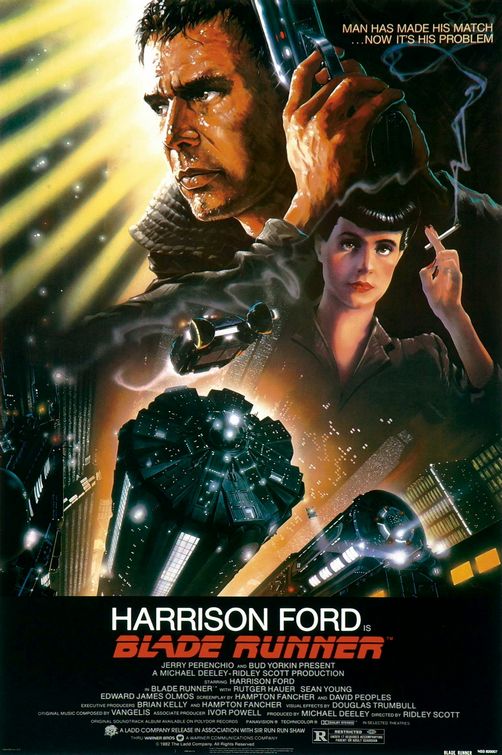
Naturally, I’m here to tell you about my three contributions: a commemoration of “Twilight Zone: The Movie,” a look back on “Blacula,” and a by-the-numbers guide to the “Friday the 13th” films (total victims, number of shower scenes, etc.).

Visit this link for a list of all of Cinematical’s Halloween 2007 entries. There are some fun reviews and lists there.

Using Oscar’s Unwritten Rules to Predict the Winners

0
Using Oscar’s Unwritten Rules to Predict the Winners

The Academy of Motion Picture Arts and Sciences has a lot of rules for the Oscars. For example, a film isn’t eligible if it was shown on TV before it appeared in theaters. Also, a film cannot be nominated as a feature if it is less than 40 minutes long. Also, no film can be considered for an Academy Award if it contains Martin Lawrence.

Okay, that last one is more of an unwritten rule. There are a lot of other unwritten rules too, elements that seem to ensure an Oscar nomination for films that have them. So we thought we’d take a look at these rules, see who’s following them, and thereby try to predict this year’s Oscar winners.

RULE #1: MAKE YOUR PRETTY STARS LOOK UGLY.

Actors who wear prosthetics tend to get nominated. Think Nicole Kidman’s fake nose in “The Hours,” or Charlize Theron’s jacked-up face in “Monster,” or Tommy Lee Jones in anything.

There doesn’t seem to be a lot of this so far in 2007, with one exception: Eddie Murphy’s giant fat suit in “Norbit.” Could this be Eddie’s year???

RULE #2: MENTAL PROBLEMS ARE AWESOME.

The surest way for an actor to get nominated for an Oscar is to play someone who’s crazy or, um, mentally challenged. (We don’t use the “R” word around here. But you know which one we mean.) Some memorable examples: Dustin Hoffman in “Rain Man,” Russell Crowe in “A Beautiful Mind,” Geoffrey Rush in “Shine,” and Anthony Hopkins in “Silence of the Lambs.”

It doesn’t seem to work as easily for women, which is why I’m rooting for Helen Mirren in “National Treasure: Book of Secrets.” She plays Nicolas Cage’s mother. I’m not sure if the character is crazy, but Helen Mirren is obviously insane for appearing in the stupid sequel to begin with. So I hope the Academy rewards her before dementia really sets in and she can’t work anymore.

RULE #3: BE LONG AND, IF POSSIBLE, BORING.

If you want the Academy to even think about voting for your movie, you’d better make sure it runs at least two and a half hours. Sometimes, as with “Lord of the Rings” or “Gladiator,” these movies are a lot of fun. But it’s preferable that they be not just long, but also boring. This is known as the “English Patient Rule.”

The front-runner in this category is “The Assassination of Jesse James by the Coward Robert Ford,” which gets bonus points for also having a really long title. Just be glad they didn’t go with the working title, which was “The Assassination of Jesse James by the Coward Robert Ford, Although the Term ‘Coward’ Is Debatable Because There Were a Lot of Factors at Play, and It’s Not Like Jesse James Was Exactly a Saint, Either.”

RULE #4: ADDRESS IMPORTANT SOCIAL ISSUES.

Remember a couple years ago when it was “Brokeback Mountain” versus “Crash”? Gays versus racism! The Academy was ecstatic with self-congratulation!

For that reason, I’m hoping “I Now Pronounce You Chuck & Larry” gets a nod. Who else but Adam Sandler could make meathead frat boys actually think about the issue of gay marriage?

RULE #5: NO LAUGHING!

Funny movies do not win Oscars. Occasionally someone gets an acting nomination for a comedic role (like Johnny Depp for “Pirates of the Caribbean” or Liam Neeson for “Schindler’s List”), but they never win.

I’m still pulling for “Norbit.” If there was a less funny movie this year, I didn’t see it.

— Film.com

My secret shame: a follow-up

17

I told you last week that I was headed to a press screening of Ridley Scott’s new, final director’s cut of “Blade Runner,” and I said my secret shame was that I’d never seen the film before. I asked what your secret shames are, and you responded!

Now, a lot of people didn’t answer the question. A lot of people instead told us what films they were proud not to have seen, which is sort of the opposite of what I asked, and which is kind of silly anyway, especially if the reason you’re proud of not seeing it is that lots of other people saw it. I mean seriously, what?

But anyway, there were some recurring titles among the films people said they’d never seen but felt like they should have. The “Godfather” trilogy, “Casablanca,” “Citizen Kane,” and “Schindler’s List” were all mentioned by multiple people. I bet if you took a poll of average film-lovers and asked which films they were embarrassed to admit they’d never seen, those would be among the top answers. Really, the only reason you would watch “Citizen Kane” is that you’ve heard it’s the Best Movie Ever Made. And after you watched it, I bet you’d wonder why anyone thinks that.

One commenter referred to “The Princess Bride,” “Monty Python and the Holy Grail” and “Three Amigos” as the “Mormon trilogy,” due to their popularity among BYU students. I’ll vouch for “Princess Bride,” which seems particularly beloved by American Mormon families (although I never saw it until I got to BYU). I never noticed any more affection for “Three Amigos” than you see generally, but maybe it’s different at BYU now. Monty Python in general is beloved by all freshmen males at all universities, a phenomenon whose explanation will require a separate discourse.

Al Gore and the Dalai Lama share ‘Snide Remarks’ space

1

“Snide Remarks” is back today with a current-events-themed entry called “A Nobel Gesture.” As always, the audio version is available at the top of the page I just linked to; it’s also here. You can also subscribe to the “Snide Remarks” podcast and get it sent automatically to your iTunes or whatever every week.

A Nobel Gesture

0

Between Al Gore winning a Nobel Peace Prize and the Dalai Lama of Tibet winning a Congressional Gold Medal, it’s been a big couple weeks in the field of Largely Symbolic Awards Bestowed Upon People Only Tangentially Related to Them. I suspect next we’ll see the Pulitzer Prize for Drama given to an improv troupe.

Al Gore and the Dalai Lama of Tibet don’t have much in common, of course. There is some dispute over Gore’s worthiness for the Nobel Prize, but when it comes to the Dalai Lama, I think we can all agree that we don’t even know where Tibet is.

The Nobel Peace Prize is one of five awards given in the name of Swedish industrialist Alfred Nobel, who also invented dynamite. (It’s true!) His will said the Peace Prize should go to: “the person who shall have done the most or the best work for fraternity between the nations, for the abolition or reduction of standing armies, and for the holding and promotion of peace congresses.”

Alt text

Gore angry! Gore smash!

Even as someone who supports Al Gore’s campaign against global warming, I have to acknowledge that his efforts have nothing to do with Alfred Nobel’s criteria. Of course, previous recipients include warmongers Henry Kissinger and Yasser Arafat, in whose cases receiving the Nobel Peace Prize was not merely baffling, as with Gore, but actually ironic.

But hey, it’s the Nobel committee’s decision. If they want to reward Al Gore for work that’s important but has nothing to do with world peace, that’s their prerogative. Heck, give him a Tony for Best Featured Actress in a Musical for all I care. It’s no skin off my nose.

But some conservatives were very angry when Gore got the Nobel Peace Prize. This is because some conservatives are very angry whenever anything good happens to Al Gore. If his daughter gave him a “World’s Best Dad” coffee mug for Fathers Day, Rush Limbaugh would scream about it for weeks, in between fistfuls of narcotics and pie.

Many right-leaning editorialists made a point of listing other potential Nobel recipients who were surely more deserving of it than Gore was. And they may be right. I just think it’s funny that Al Gore wins, and all of a sudden people are really, really concerned about the integrity of the Nobel Peace Prize, which they’d never even thought about before. Did last year’s winner deserve it? Nobody knows, and nobody cares. As a matter of fact, it was Jay Leno, and he beat Nelson Mandela. WHERE WAS YOUR OUTRAGE THEN?!

Alt text

Word.

The Dalai Lama’s Congressional Gold Medal is much less controversial, although I’m still not sure I “get” it. This award, which must be introduced as legislation and voted on by Congress, is to recognize distinguished contributions or achievements. You don’t have to be an American to get it, though most of the recipients have been. Nelson Mandela got one; so did Frank Sinatra. Unlike the Nobel Peace Prize (which the Dalai Lama got in 1989, by the way) the requirements for the Congressional Gold Medal are pretty vague. It seems to be for general awesomeness in the field of being excellent.

Apparently the U.S. has been wanting to give the Dalai Lama this award for a while but didn’t want to upset China, which kind of hates His Holiness and is bitter about the whole Tibet thing, which is a very complicated and thorny issue that I don’t feel like going to Wikipedia to learn more about.

The way I found out that the Dalai Lama was receiving the Congressional Gold Medal is that a Tibetan woman in downtown Portland handed me a flier. This flier congratulated His Holiness on the award and thanked the United States for the honor. To celebrate, the Portland/Vancouver chapter of the Regional Tibetan Youth Conference was giving out free pizza and soda at Portland’s Pioneer Square. I’d like to think His Holiness is a fan of pizza and soda himself. Although he probably isn’t, considering he’s 72, and Tibetan.

I had a slice of free Dalai Lama pizza, even though I still didn’t really know what was going on or why I should be interested. It was from Pizza Hut, which meant it was really, really greasy, because the way they make their pizza is, they dip it in grease, and then they bake it in the pizza oven, and then they dip it in grease again, and then they put it in a box that’s been pre-coated with more grease. For this reason, I nominate Pizza Hut for the Nobel Grease Prize. HA HA HA HA HA HA HA HA HA HA HA HA HA HA HA HA HA HA HA HA HA HA HA HA HA HA HA HA HA HA HA HA HA HA HA HA HA HA HA HA HA HA HA HA HA HA HA HA HA! But they’ll probably give it to Al Gore instead.

Friday movie roundup – Oct. 19

0

Sign up for the “In the Dark” e-zine here.

Listen to this week’s podcast version here.
Subscribe to the podcast’s feed here.

It’s another active week for movies. Between last week’s huge list and today’s, I have been busier than the proverbial one-legged man (pictured) in the proverbial butt-kicking contest (not pictured).

I really liked “30 Days of Night,” the graphic-novel-based thriller about vampires invading an Alaskan town that has a month of darkness — which is a pretty clever idea for a vampire movie, you must admit. Mayhem ensues.

Critics are split on “30 Days of Night,” but we’re almost unanimous on “Gone Baby Gone”: We likey. It’s Ben Affleck’s directorial debut, and if you want proof that most critics are honest, sincere writers, look at how many of them are freely admitting today that they thought this thing would suck and were pleasantly surprised. If we were as cynical as some people think we are, we would refuse to admit it, the way we refuse to admit how much we secretly love Adam Sandler movies.

Anyway, “Gone Baby Gone” is a fantastic mystery/thriller about a kidnapped child and related crimes. It’s based on a novel by Dennis Lehane, who also wrote “Mystic River.” Got a thing about Boston cops and missing kids, Lehane does.

Next up: “Things We Lost in the Fire,” a respectable drama about loss and grieving and whatnot. It stars Halle Berry and Benicio Del Toro, both very good. Maybe Halle won’t have to give back that Oscar after all. (I said MAYBE.)

More grieving and loss in “Reservation Road,” in limited release today, about two families affected by the accidental death of a young boy. The acting is fine (Joaquin Phoenix and Mark Ruffalo star), but it’s centered around coincidences that are implausible and out of place in an intimate drama like this one.

Then there’s “Rendition,” with an all-star cast of Meryl Streep, Jake Gyllenhaal, Reese Witherspoon, Alan Arkin, and Peter Sarsgaard, all of them coming out very strongly against torture. Yes, they’ve gone out on a limb here. This is my Film.com review this week, so go read it there.

Finally, two films weren’t screened for critics: “The Comebacks,” a spoof of inspiring sports movies, and “Sarah Landon and the Paranormal Hour,” which purports to be a spooky ghost story for family audiences.

Oh, and allegedly there’s an animated version of “The Ten Commandments,” but I’m not sure I believe it really exists.

Wristcutters: A Love Story

0

“Wristcutters: A Love Story” is a great title for a movie, but that’s only the beginning. This is one of the more creative, unusually entertaining things I’ve seen in a while, certainly head and shoulders above most of its competition at this year’s Sundance Film Festival.

Consider: If you commit suicide, you don’t go to the regular afterlife. You go to a special suicides-only afterlife that looks like the world of the living, only without the beauty. There are squalid cities, vast open deserts, and beat-up old cars in this place, and people have jobs and houses and money and the other things they had in life. It’s not hell; it’s just … someplace.

It’s impossible to smile in this world, and everyone bears the scars of how they died. (One man wears a hat to cover the exit wound that the rifle blasted in his skull.) A recent arrival is Zia (Patrick Fugit), a teenager who offed himself when his girlfriend Desiree (Leslie Bibb) dumped him. He got a job working at Kamikaze Pizza as soon as he got to town, and he shares a dumpy apartment with a stranger. He pals around with Eugene (Shea Whigham), a failed Russian rock star whose entire family is here, too. (“Not every family is as lucky as we are,” his mother observes. They may be dead, but at least they’re together.)

No one has any ambitions or goals here, and it’s questionable whether it would be possible to achieve them anyway. But then Zia hears that Desiree has come to town, apparently having killed herself, too. Clearly she did this because she was despondent over Zia’s death! It’s every suicidal person’s fantasy!

Thus armed with a purpose in his afterlife, Zia embarks on a journey to find Desiree, taking Eugene along with him for the ride. (Eugene is one of those “along for the ride” kind of guys.) They soon meet Mikal (Shannyn Sossamon), a hitchhiker who is also on a mission. She insists she doesn’t belong here, that her drug overdose was accidental and not a suicide. She wants to find whoever’s in charge and demand reassignment. No one knows who the head honcho is, or whether there is one, but now these three lost souls are driving across the highway of death together, looking for answers.

Yes, there’s a little Oz in this story, written and directed by Goran Dukic and adapted from Etgar Keret’s short story “Kneller’s Happy Campers” (more on that in a minute). It’s about the search for meaning in life, carried out by people for whom life is over but whose journey has just begun. And it brims with goofy details, like the Bermuda Triangle under the passenger seat of Eugene’s car, and the curious place where people can perform miracles, but only minor, insignificant ones.

That place is run by Kneller (Tom Waits), a grizzled oddball who lets travelers stay at his campground as long as they pull their own weight and don’t cause trouble. This happy commune (Kneller’s Happy Campers, see?) is where Zia becomes frustrated at his inability to perform miracles — not even a simple levitation — and where the wisdom of his search for Desiree begins to seem doubtful.

We do find Desiree eventually, at the same time that we meet a cult leader (Will Arnett) who, having committed mass suicide with his followers, now wants to do it again in a grand ceremony and go to the NEXT world.

The performances are funny, though I can’t say anyone really registers as a fully realized sympathetic “character.” The film is zippy and even sweet, but it could use more warmth. You don’t really feel attached to anyone.

Still, it pokes gentle fun at the foolish places people look for meaning in their lives, and it has an upbeat, redemptive view of the world. Life is short, it says. Live it well, because you may not get a second chance.

Rendition

0

“Rendition” is a Very Important Movie that has a Very Important Point to make. And that point is this. Are you ready? Here it comes: Torture is bad.

Well, put away the nipple clamps and the car battery, because I am ALREADY SHOCKED! Much of the film toys with the idea that there may be gray areas in which the torture of suspected terrorist collaborators is useful, even necessary — and then it decides that no, there aren’t any such grays areas after all. I wish it had taken the more controversial position. I don’t know that I’d agree with that message, but at least it would be interesting for a movie to make it. Coming out against torture is like coming out against cancer.

That’s not to say “Rendition” is a bad movie, only that it’s not as relevant as it thinks it is. The characters and stories are compelling, and you can’t go wrong with the elite band of actors recruited by South African director Gavin Hood (“Tsotsi”) for his first American production. The journey is fine; it’s the destination that’s a little pedestrian.

It begins with a suicide bombing in an unnamed North African city. A CIA agent is among the victims, though the real target was Abassi Fawal (Yigal Naor), a local government official who splits his time between being a devoted husband and father and being a ruthless interrogator of suspects.

A young CIA agent named Douglas Freeman (Jake Gyllenhaal) saw his colleague killed in the blast and is temporarily in charge of the local investigation efforts. Intelligence reports lead his office to Anwar El-Ibrahim (Omar Metwally), an Egyptian-born scientist with a U.S. green card and an American college degree. His cell phone records indicate conversations between him and the terrorist leader suspected in the bombing. Anwar has been lecturing in South Africa and is on his way home to Chicago when U.S. officials intercept him and transport him back to North Africa to be interrogated by Abassi Fawal under the CIA’s watch. The U.S. doesn’t torture people, you see. Fawal is the one doing the dirty work, and he’s not on the CIA’s payroll.

Back in Chicago, Anwar’s American wife, Isabella (Reese Witherspoon), is panicked by her husband’s disappearance, and especially by the airline’s insistence he was never on the flight to begin with. (This is because the CIA deleted his name from the passenger list.) She flies to Washington, where an old college boyfriend, Alan (Peter Sarsgaard), works for a U.S. senator. Her request that he ask his boss to look into Anwar’s disappearance leads to some uncomfortable questions. Senator Hawkins (Alan Arkin) is glad to go on record as being against this kind of under-the-table, civil-rights-evading practice — but not if there’s a chance Anwar might actually be guilty of something.

At the top of it all is Corinne Whitman (Meryl Streep), the vaguely Southern brass-balls woman who heads the CIA. She takes the position that if bending the usual laws saves lives by preventing terrorist attacks, it’s worth it. In a secretive meeting (in a parking garage, of course) with an underling played by J.K. Simmons, she’s informed that Anwar says he’s innocent and has passed a polygraph.

“Polygraphs don’t mean diddly,” she says.

“We only say that when they pass,” he responds with some amusement — until a withering glare from Whitman shuts him up again.

Meanwhile, Anwar is subjected to a variety of “interrogation” tactics aimed at getting him to confess his connections to the terrorist cell. Freeman, the CIA agent, a self-described “pencil pusher” who’s never seen any real action before, silently observes the sessions, half terrified and half intrigued. When he expresses his doubts about Anwar’s guilt on the phone to Whitman, she says, “You’re new to this, aren’t you?”

“This is my first torture, yes,” he says.

“The United States does not torture,” she snaps back, apparently unconcerned about the absurdity of saying this to a U.S. official who is currently overseeing a torture session.

Other characters mingle in the fringe of Kelley Sane’s sprawling screenplay, including Abassi Fawal’s rebellious daughter (Zineb Oukach) and her jihadist boyfriend (Moa Khouas), and the female CIA agent with whom Freeman has been secretly shacking up. Freeman also has contact with the local Minister of the Interior, a wise and friendly man who serves no particular function in the story. Back in Chicago, Anwar’s mother is staying with the family to help Isabella during her pregnancy. (But of course she is pregnant. That makes her role as the worried wife all the more dramatic.)

All the elements are here for something fantastic, but “Rendition” doesn’t coalesce the way it should. It never goes beneath the surface level: the pregnant, concerned wife, her noble, handsome Middle Eastern husband, the clean-cut do-gooder CIA agent, the slightly menacing CIA chief — it all feels a little too pat, too familiar, doesn’t it?

What’s more, Hood can barely keep a handle on all the locations and characters. The timelines are vague; one story seems to span only a few hours while another story, apparently occurring simultaneously, stretches for days. The fractured timeline proves to be intentional in one instance (I won’t say which), but the overall confusion seems to be out of sloppiness, not design.

I have no qualms with any of the performances, nor even with the film’s individual components. It’s the overall effect that’s lackluster, a film that’s good and decent but not as deep it wants to be.

30 Days of Night

0

We’ve all been disappointed by lousy thrillers that had cool ideas but didn’t know how to execute them. “30 Days of Night” is the rare horror film that actually lives up to its potential.

Based on a comic book mini-series by Steve Niles and Ben Templesmith, the film’s premise is so ingeniously simple you’ll wonder why you didn’t think of it yourself: A band of vampires targets an isolated Alaska town where there’s no sunlight for 30 days at a stretch. That’s a lot better than movies about vampires who live in L.A., which makes no sense at all.

These bloodsuckers are smart, making sure to cut off electricity and communication, and to sabotage the local helicopter. Tiny towns like Barrow — population 563, except during the dark month, when all but 152 of the stalwarts move to sunnier digs — need a chopper because the nearest community is 80 miles away, and the road to it is often impassable. Everyone lives here because they like the cold and isolation. They live here because “nobody else can,” as one character puts it.

We begin in the waning hours of the last day of sunlight as town sheriff Eben Oleson (Josh Hartnett) is scurrying from place to place, making sure the town is ready for the month-long night. His estranged wife, Stella (Melissa George), a state fire marshal, is in town on regulatory business but doesn’t want to talk to him. When she finally calls him, it’s only to ask for a ride to the tiny local airport before it closes for the night — so he sends his trusty deputy to chauffeur her instead. Two can play at this game.

Strange things have already begun to happen outside of Eben and Stella’s marriage. Someone stole a cache of satellite phones and burned them in a field. A group of sled dogs were murdered at a kennel. There was the aforementioned helicopter vandalism. The likely culprit for it all is a man referred to as The Stranger (Ben Foster), a filthy, rotten-toothed little weasel who isn’t a local resident and smugly refuses to tell Eben anything about himself or his activities. He warns that dark things are a-comin’, and it ain’t just the 30 days of night.

The vampires — vicious, malformed, shrieking devils who speak their own Germanic-sounding language and have a clear pack leader (Danny Huston) — beset the village in a hellish attack. Most victims are killed, though a few are turned into vampires themselves. (The rules governing when and how that occurs are not clearly established.) Eben, Stella, and a band of survivors alternate between fighting, hiding, and running. Guns aren’t very effective against the beasts, but Eben discovers that an ax can be.

And there you go. There’s your vampire movie, uncomplicated, straightforward, suspenseful, and clever when it needs to be. I find it interesting that it was directed by David Slade, whose first film was “Hard Candy,” a sexual-predator thriller that was all about tension and apprehension rather than actual on-screen mayhem. “30 Days of Night” gets a lot of mileage from that same type of thrill, particularly in the calculated way the scenario is set, and in the strategic use of silence. Much of the film is eerily quiet, with very little musical accompaniment, and always the low howl of the wind in the background.

Then, gradually, the story becomes grislier and more visceral, though it never stoops to wallowing in the gore. By the end, everyone on both sides is grungy and blood-soaked, and you feel almost as worn out from watching it as they are from experiencing it. Not nearly as cold, though, thank goodness.

Reservation Road

0

The story in “Reservation Road” is centered around coincidences so extraordinary they pull me out of the film. One of them isn’t even necessary. It’s there … why? So the film can boast the highest coincidence count of 2007?

It feels like anything I say about the plot will be a spoiler, but what can you do? I’ve just watched the movie’s trailer, and everything I’m about to tell you is in it.

We have two fathers, Ethan Learner (Joaquin Phoenix) and Dwight Arno (Mark Ruffalo). Ethan is a college professor and a contented family man; Dwight is divorced, his life a mess, though he adores his son, Lucas (Eddie Alderson). One night Dwight briefly loses control of his car and hits a kid standing on the side of the road, killing him instantly. Panicked, Dwight drives away. The kid? Ethan’s son.

The men do not know each other, of course, and state troopers are combing the area looking for SUVs that match Ethan’s vague description of the car that hit his son. Ethan’s wife, Grace (Jennifer Connelly), and their daughter Emma (Elle Fanning) are devastated. Ethan is consumed with finding justice. He joins Internet support groups for families of hit-and-run victims. He seethes to know that even if the perpetrator is caught and convicted, he’d probably only get 10 years in prison.

Frustrated by the cops’ inability to find the doer, Ethan goes to a law firm to see what outside help he can get. One of the attorneys at this firm, the one assigned to his case, is Dwight Arno. That’s right, Ethan unknowingly hires as his lawyer the very man he’s looking for.

On paper, that sounds like a juicy scenario, like something out of “The Departed,” and maybe it played better when it was on paper, in John Burnham Schwartz’s novel. But this isn’t a crime thriller. It’s an intimate drama about people coping with loss and grief. Such a contrived situation feels out of place.

(The other huge coincidence, the one that doesn’t serve any purpose, is that Dwight’s ex-wife happens to be young Emma’s piano teacher. The only reason I can fathom for this development is that it gives more screen time to Mira Sorvino, who plays her.)

Joaquin Phoenix and Mark Ruffalo do give impeccable performances, as is their custom, the former obsessed with justice, the latter racked with guilt. Grief is in this season — see also “In the Valley of Elah,” “Things We Lost in the Fire,” even “The Brave One” — and Phoenix and Ruffalo compare favorably with the other heavy-drama heavyweights.

Jennifer Connelly, unfortunately, must fill the generic role of Wife of Man Who Is Lost to His Own Obsessions. She also has one ill-advised scene of anguish where she blames herself for her son’s death — a perfunctory, obligatory detour in movies like this.

The director is Terry George (“Hotel Rwanda”), who co-wrote the screenplay with the novelist on whose book it is based. One scene stands out as particularly forced and clumsy. In it, Dwight’s son Lucas tells him about an incident at school where a boy threw a water balloon, accidentally hit a teacher, and then wouldn’t own up to it. He was a “no-good coward,” Lucas says. Since Dwight is currently struggling with whether to turn himself in for his hit-and-run, he is struck to the core by Lucas’ anecdote, and he pathetically offers up defenses for the cowardly balloon-thrower. The parallel to his own situation is laughably unsubtle, not the kind of thing that earns an audience’s respect.

Gone Baby Gone

0

To give his career a much-needed boost and regain some of the credibility he once had, Ben Affleck has returned to his roots with “Gone Baby Gone.” Not only is the film set in Boston, Affleck’s home turf, but he adapted the screenplay from Dennis Lehane’s novel — and writing is how Affleck rose to fame in the first place, you’ll recall, winning an Oscar for his and Matt Damon’s “Good Will Hunting” script.

Actually, maybe it’s not fair to say that a desire to restart his career is why Affleck made the film, only that it should be one of the byproducts. There’s certainly nothing desperate or calculating about the final product. This is a riveting mystery/thriller that warrants attention regardless of who made it, or why.

Affleck casts his brother Casey in the lead, a private investigator named Patrick Kenzie who has lived on the same Boston block his entire life. He and his girlfriend/business partner, Angie (Michelle Monaghan), mostly work low-profile cases like finding people who have skipped out on their jet-ski payments, so they’re surprised when a woman approaches them wanting help finding her missing niece.

The woman is Beatrice McCready (Amy Madigan), and it’s her husband’s sister’s kid that’s gone missing. Patrick and Angie have seen the TV news reports about it. Whole neighborhood’s out looking for her, poor thing, and of course the whole police force, too. Everyone knows, but no one likes to point out, that the more days that go by, the less the chances are of finding her alive.

Not usually their kind of case, but Patrick and Angie agree to do what they can to help anyway, maybe because of their personal connection to the neighborhood. As duly hired private investigators, they’re entitled to cooperation from the police detectives, who in this case are a couple of hard-noses named Bressant (Ed Harris) and Poole (John Ashton). The cops soon grudgingly admit that Patrick’s contacts can help, and the search is on.

The missing girl’s mother, Helene (Amy Ryan), is strangely complacent with regard to her abducted child. She’s not apathetic, exactly, just … detached. She and little Amanda live in something approaching squalor, and Helene is known as a regular down at the Fillmore Lounge, where booze and cocaine are among her favorite menu items. Not exactly Mother of the Year material, but does it explain what happened to Amanda?

Affleck, who co-wrote the screenplay with Cambridge pal Aaron Stockard, was smart to choose a book set in his old stomping grounds. The film is rich with local color, from the slang to the thick Boston accents, and the crowd scenes and supporting roles are populated by real-looking (i.e., unattractive) people. Patrick’s connections to the neighborhood feel authentic. It doesn’t seem like an outrageous coincidence that he and Helene were in high school together. They’re about the same age, and most of the people in their community have never lived anywhere else, so why shouldn’t they have a vague past connection? Patrick went to school with everyone he runs into, or used to go out drinking with them, or dated their sisters. It gives the film a sense of place, a sense that this is happening to real people in a real community.

The story deepens, going beyond Amanda’s disappearance and reaching into other crimes, with people’s past and present secrets coming to light. Patrick, always on the defensive because of his baby face that makes him look younger than his 31 years (which lines up with Casey Affleck’s real age), can be hotheaded at times, but he struggles to keep a firm grasp on what’s right and wrong. Other characters see things in grayer shades. Detective Bressant, gradually befriending Patrick the P.I., says he’s done things that were technically wrong but that ensured justice would be served. He sleeps with an easy conscience.

After playing small parts in big films (like the “Ocean’s Eleven” series) and big parts in small films (like “Gerry”), Casey Affleck may have found his star-making role in “Gone Baby Gone.” He has his brother’s easy-going likability (without all the extracurricular tabloid baggage) and a seriousness that serves this character well as he believably plays up Patrick’s moral quandaries.

Furthermore, Amy Ryan is a revelation as Helene, a character plucked straight from the streets and dropped into the movie. As Helene gradually transforms from neglectful parent to concerned mother, Ryan changes with her, her eyes slowly opening to the magnitude of what’s happening. The film doesn’t necessarily need Helene to be this fully developed as a character, and that makes Ryan’s extra-mile performance all the more noteworthy.

But that’s true of several other supporting characters, too. Morgan Freeman has a few scenes as a decorated police captain who lost a daughter himself years ago — a complete cliché of a character, yet Freeman uses his considerable talent to make the man fresh and relatable. Look at Amy Madigan as Amanda’s concerned aunt Bearice and Titus Welliver as Bea’s husband, two characters who seem to have a relationship with each other that extends beyond what we see on the screen. They aren’t just figures who serve a function in the plot: They’re actual people, with histories and memories.

As the story gets seedier and the felonies more alarming, the film starts to lose some of its distinct Boston flavor and become a more generic crime thriller. It also suffers a bit by having perhaps one plot twist more than it ought to, straining credibility in what is otherwise a highly credible film. (I assume that’s how Lehane’s novel goes, too.) But none of this detracts much from the absorbing, carefully constructed movie — a boon to the Affleck family and to moviegoers as well.

Things We Lost in the Fire

0

There isn’t a lot of story in “Things We Lost in the Fire.” If you made a list of the plot’s major points, it would look too short. Instead, the movie finds its substance in the personalities and relationships of the characters — so much substance that a conventional “story” isn’t even needed.

It begins with the death of Brian Burke (David Duchovny), beloved husband of Audrey (Halle Berry) and father to a young son and daughter. The timeline is fractured, actually: Scenes of his death’s aftermath are intercut with scenes set weeks and days before it. We learn Brian had a lifelong best friend, Jerry (Benicio Del Toro), whom Audrey never liked and almost forgets to invite to the funeral. When he does arrive, he wears a shabby, ill-fitting suit, and he hoards cigarettes as if they were expensive commodities.

Brian and Audrey’s children, Harper (Alexis Llewellyn) and Dory (Micah Berry) have never heard of him. He tells them he was their dad’s best friend. “When?” Harper asks.

“When I was your age,” he says. “And last week.”

The reason he was never part of the family is that he’s a heroin addict, living in a bare apartment without a phone and struggling from day to day. Audrey always considered him an untrustworthy mooch, a drain on her husband’s goodwill. But Brian loved him, stood up for him, insisted on helping him out. Now Jerry is one of Audrey’s few connections to her late husband.

Brian and Audrey had a fire in their garage a little while back. Aware of Jerry’s handyman skills, Audrey asks if he’d like to move in and help fix it up again. He needs a better place to stay while he goes to Narcotics Anonymous, and Audrey needs … something. At times she wants Jerry to act as surrogate for Brian. At other times, she’s upset when he does things that would have been Brian’s domain, like helping Dory learn to swim.

What’s notable is that such inconsistent behavior, while irritating in principle, seems OK to us here. It’s not just that we understand logically why a young widow would have extremely complicated emotions — we also feel Audrey’s pain and uncertainty. On some level, we relate to her.

The story’s timeline becomes smooth again once Jerry movies in, with no more major flashbacks or jumping around. I like that Jerry can have such a calming influence not just on the people he’s with, but even on the movie itself. His drug addiction notwithstanding, he’s a charismatic, casual guy, easy to like and fun to be with. He is refreshingly unencumbered by society’s usual restrictions on what people should say in polite company. Audrey’s neighbor, Howard (John Carroll Lynch), takes an immediate shine to him, even offering to help him get a job in the mortgage business. Dory and Harper bond with him as well, Dory because of the swimming lessons and Harper because she shares his vegetarianism.

The movie, directed by Danish filmmaker Susanne Bier (“After the Wedding”) from a screenplay by Allan Loeb, is a welcome return for its stars. Benicio Del Toro hasn’t been in a movie since 2005’s “Sin City,” and Halle Berry hasn’t done anything worthwhile since winning an Academy Award almost six years ago. Both actors remind us of their vitality here. A couple more meaty, mature performances like this and people might stop calling for Berry to return her Oscar.

While the story falls prey to a couple of developments so predictable they might be inevitable — has any movie character trying to kick an addiction NOT had a relapse at about the 70-minute mark? — I like that it mostly doesn’t go the way you think it will. The obvious paths wouldn’t be plausible. “Things We Lost” chooses the more satisfying option of letting the characters grow and develop naturally.

The Comebacks

0

I got a few good laughs out of the sports spoof “The Comebacks,” but not nearly enough to make it a worthwhile investment of 84 minutes. I like that one of the football players is named ACL Tear (pronounced “Aseel Taree”), and that the parody of Cuba Gooding Jr.’s “Radio” character is shamelessly retarded in a very un-P.C. way.

And … wow, that’s about it. Huh. I thought there were more.

The genre of inspiring sports movies is ripe with parody possibilities, especially given how similar many of them are to one another, with the same types of characters, conflicts, and cliches. But “The Comebacks,” while purporting to be an all-inclusive spoof of these movies, doesn’t take advantage of the abundant possibilities. Instead, it’s endless gay innuendo jokes, references to breasts, and simple-minded visual puns (as when a commentator says a player is “on fire,” and we cut to a shot of the player running down the field, literally on fire).

The story — do you care about the story? Ugh, all right. Well, the main character is Coach Fields (David Koechner), a lousy all-sports coach who we’re told was responsible for distracting Bill Buckner during the infamous 1986 World Series and for causing Zidane to head-butt that guy during whatever soccer game that was. He gets a job as head football coach at Heartland State University in Plainfolk, Texas, where he’s charged with reversing the pitiful team’s fortunes. The team is actually called the Comebacks. Their mascot is an oil derrick, which in the logo is made to look particularly phallic, har har.

Coach’s daughter, Michelle (Brooke Nevin), dates the showboating running back Trotter (Jackie Long), while the all-American QB Lance Truman (Matthew Lawrence) pines for her. A nerdy weakling player (Martin Spanjers) yearns to get some game time and makes homoerotic double-entendre while he waits. The giant beast of a player (George Back) turns out to be really sweet and wimpy.

Like so many of these things, the screenplay is a barely coherent mishmash of random, throw-it-at-the-wall-and-see-if-it-sticks jokes, with a “story” attributed to four men and the actual script by two others. Doing the math, it would appear that each of the six men involved in the writing of this film contributed an average of 27,473 groin-centric gags.

The director is named Tom Brady, which is also the name of a famous NFL player, which I guess is like a built-in pun for the movie’s poster. Brady’s only previous film was the Rob Schneider vehicle “The Hot Chick.” I wouldn’t be surprised if the football player Tom Brady is actually a better filmmaker than the filmmaker Tom Brady. At the very least, having seen quarterback Tom Brady host “Saturday Night Live” a few years ago, I know he’s better at recognizing comedy when he sees it.

‘Aliens in America’ provides crackpot with excuse to hate Muslims

25

Someone posted a comment on my review of TV’s “Aliens in America” that I suppressed because it’s jaw-droppingly bigoted and I didn’t want it posted without being able to respond to it. I guess I could have just deleted it and been done with it, but you know how I like to scrutinize nutcases.

The TV show, you’ll recall, is a sitcom in which a Muslim Pakistani boy comes to live with a nerdy American high school kid and his family. The pilot episode was hilarious, episode 2 was somewhat disappointing, and episode 3 was back on track. It was episode 3, called “Rocket Club,” that prompted someone to post this:

first we never had to worry about presenting muslims on t.v. until after 911. who give a hoot. now that they are climbing out of the proverbial closets, it is time for american to wake up. while not all muslims are terrorists, all terrorist are muslims. (don’t go there about tim mcveigh). tonight’s episode on the rocket fiasco and the cops taking the computer, then the families computer, and the commentator saying something about our “rights” being taken away, then to the effect of all the “wrongs in america”…why do you think these liberal hollywood writers i.e. backed by the left wing democratic agenda, try to make the U.S. bad and the muslims good? pull your head out the ground while you are watching “pushing daisies” and start paying attention to what the real agenda is. watching people kiss people through body bags is “imagination”? this show the true genius of the American public. if you don’t get it by now, read Laura Ingraham’s book. or do you do that anymore. learn something for the country’s sake!

First, let’s talk about what happened in this episode. The boy, Raja, buys a bunch of supplies at the hardware store to build a model rocket. But to the skittish store manager, he looks like a possible terrorist buying bomb-making materials. The cops come to talk to Raja and his host family and demand access to Raja’s computer so they can see what websites he’s been going to.

Crazy lady sounds off on water usage

35

Last year, I wrote a “Snide Remarks” column about a Portland woman who had bought an ad in the ballot information booklet urging people to vote against the library levy — which is to say, she was in favor of closing down the county libraries.

A long-time devoted reader named Nathan has sent me the voter information booklet for Tucson’s upcoming ballot that has a woman who is even crazier. Proposition 200 has to do with water use. If passed, it would repeal the “residential environmental services fee.” I don’t know what it all means, and it doesn’t matter. The point is, here is what a woman named Raquel Baranow paid $500 to say about Proposition 200:

(Source: PDF file, page 15.)

Well said, crazy Bible-thumping, pot-growing Arizona woman!

‘Snide Remarks’ Classic: ‘Jihad to Be You’

2

It may surprise you to learn that I’ve only ever received one Cease & Desist letter, and it was from Gary Larson! It pertained to “Jihad to Be You,” published Feb. 20, 2006, which is this week’s “Snide Remarks” Classic.The subject matter was the then-hot issue of cartoonists drawing pictures of Mohammed and thus incurring the wrath of certain Muslims. How Gary Larson and “The Far Side” fits in, well, you’ll have to read the column and the post-column discussion.
Also: This column caused my friend Michael to leave me a voice mail in which he pretended to be a Muslim (complete with unconvincing Middle Eastern accent!) who was offended by what I had written. Not much of what Michael does is funny, so I like to give him credit when he succeeds.

My secret shame

55

Warner Bros. is releasing a new, digitally remastered director’s cut of “Blade Runner.” There was a version some years ago called a “director’s cut,” but the director, Ridley Scott, actually had nothing to do with it and publicly disowned it. This time, it’s really Scott’s version, and he’s really happy with it.


I’m attending a press screening of this new version later today, and it brought to mind my secret shame: I have never seen “Blade Runner.” Not the original theatrical version, not the notorious “director’s cut,” nothing. In fact, in my mind, I often get it confused with David Lynch’s “Dune” (which I have also never seen), simply because they’re both futuristic films released in the first half of the ’80s of which there have been multiple versions.

That’s my secret shame, never having seen “Blade Runner” or “Dune.” What movies have you never seen that you feel like you “ought” to have? Go ahead and share. This is a safe place.

Hollywood Is Terrible with History

0
Hollywood Is Terrible with History

Historical epics have been popular in Hollywood ever since the early days of film. Why, one of very the first experimental films was a 30-second mini-scene of Thomas Edison dancing around dressed up as Cleopatra, although it’s possible this was intended strictly for his personal use.

But just as old as the historical film is the historical inaccuracy. Almost every movie based on factual events has gotten something wrong, whether it’s a minor detail or a major plot point. Here’s a list of some of the more egregious flaws that drive historians crazy when they go to the movies.

1) Concerning the movies “Elizabeth” and “Elizabeth: The Golden Age,” there never actually was a queen of England named Elizabeth. This makes the fact that the current monarch is called Elizabeth II even more mysterious.

2) If you watch closely in the famous chariot-race scene in “Ben-Hur,” you can clearly see that one of the “chariots” is actually a Volkswagen Beetle.

3) One of the more glaring anachronisms is in “Titanic.” The ship sank in 1912, yet the film stars Leonardo DiCaprio, who wasn’t born until 1974.

4) The Robin Williams political comedy “Man of the Year” is set in the present, yet all of his jokes are from 1987.

5) Listen carefully to the dialogue in “Gladiator,” set in ancient Rome. You’ll notice that everyone is speaking English — a language that wasn’t even discovered until the 1600s!

6) Much of “Back to the Future” is set in October 1955. Yet the E-string on the guitar Marty plays in the famous “Johnny B. Goode” scene is a type of nylon string that would not go on sale until early 1956.

7) Martin Scorsese’s “The Age of Innocence” depicts the vibrant and exciting social scene of New York in the 1870s, yet the movie is really boring.

8) The 1989 film “Glory” is centered on an 1860s conflict known as the “Civil War.” History bears no record of any such war.

9) It makes no sense for Harold Zidler (Jim Broadbent) to sing “Like a Virgin,” written in 1984, in “Moulin Rouge,” set in 1899. The real Harold Zidler was tone deaf and never sang publicly.

10) “The Assassination of Jesse James by the Coward Robert Ford,” set in the 1880s, is in glorious Technicolor. However, even a cursory examination of photographs from that era will show that everything was actually in black and white.

Bonus: “Mary Poppins” is set in 1910. The scene in which Mary and Bert smoke crystal meth is anachronistic, then, as meth did not become a popular street drug in London until the 1950s.

— Film.com

Film.com article: Historical inaccuracies in movies

7

As further compensation for my failure to produce a “Snide Remarks” column this week, check out today’s entry at Film.com, “Hollywood Is Terrible with History.” It contains gems such as this:

If you watch closely in the famous chariot-race scene in Ben-Hur, you can clearly see that one of the “chariots” is actually a Volkswagen Beetle.

The only thing keeping it from being a “Snide Remarks” column is that it doesn’t say “Snide Remarks” at the top of it.

Children’s Letters to Raven-Symone XIII

19
Children’s Letters to Raven-Symone XIII

(For complete background on this feature, read the introduction here. But here’s the gist: I registered a fake e-mail address for actress/singer Raven-Symone and announced it here, with the disclaimer that it wasn’t real, figuring dumb people would ignore that part and write to it anyway. And I was right.)

It would appear that Raven-Symone’s fans are getting stupider. I know! I wouldn’t have thought it was possible either, but here we are. As has become my custom, I have put my favorite passages in bold type.

CHILDREN’S LETTERS TO RAVEN-SYMONE

Aug. 10, 2007:
hi raven im shakira 4rm texas i love you so much i feel like i can talk to u i like in a person. Also ppl have said u were having a baby is that true. luv shkira

[Does “4rm” mean “from”? It should mean “forearm.” “I’m Shakira, forearm Texas.” I don’t know what that would mean, though.]

Tragic absence of ‘Snide Remarks’ mitigated somewhat by consolation prize

0

There is no new “Snide Remarks” this week. Believe me, I am just as traumatized by this news as you are. Well, perhaps slightly less, since I’ve had all weekend to get used to it, whereas you have been blind-sided by the news first thing on a Monday morning. But I have also had to live with the guilt and shame attendant on not producing a new column, and that burden is mine alone.

However! The next blog entry after this one is a new batch of Children’s Letters to Raven-Symone, so that should make everyone happy.

Friday movie roundup – Oct. 12

0
Alt text

Sign up for the “In the Dark” e-zine here.
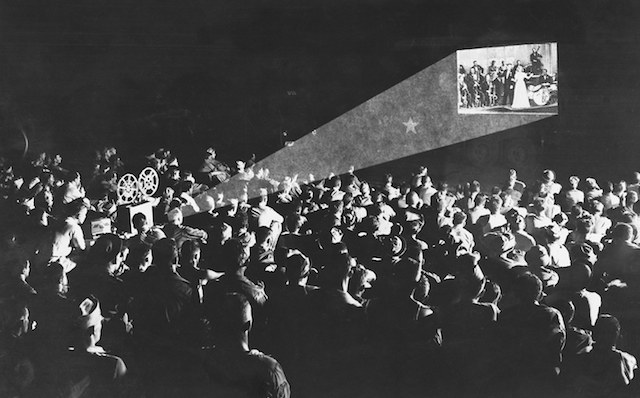
Listen to this week’s podcast version here.
Subscribe to the podcast’s feed here.

Good heavens, we sure have a lot of new films opening this weekend. A trend I note among several of them: beautiful cinematography. There are some really good-lookin’ movies here.

The best of the lot is “Michael Clayton,” which is also my review for Film.com this week. It’s an excellent piece of work, a legal thriller that will appeal to film snobs as well as regular ol’ moviegoers.

A film that I assumed would be excellent but that turned out not to be is “Elizabeth: The Golden Age,” a sequel to the splendid “Elizabeth” from 1998. Cate Blanchett plays Queen Elizabeth I again, only this time the story isn’t very cohesive and the film feels listless and dull. ‘Tis a pity.

(I wasn’t a movie critic yet when “Elizabeth” came out, and somehow I never saw it until last weekend, when I Netflixed it in preparation for the sequel. It’s a very engaging and entertaining historical flick. Do see it, if you have not.)

“The Final Season” is a lame Inspiring Sports Drama starring Sean Astin (aka Rudy) (aka the fat tricksy hobbit) (aka the narrator on “Meerkat Manor”) as a high school baseball coach, and it’s their last season, and they’re underdogs, and pfffft.

Michael Clayton

0

Self-effacing, quick with a joke, and refreshingly unpretentious, George Clooney is Hollywood’s happy-go-lucky poster boy these days. He tosses off lighthearted fare like “Ocean’s Thirteen” just because he enjoys doing it, and then he does something like “Michael Clayton” to remind us that, holy crap, the guy can ACT, too.

Clooney’s face is out of focus on the movie’s poster, a symbolic representation of his title character, a “fixer” for a high-powered law firm who’s undergoing an identity crisis. His duties at the firm of Kenner, Bach & Ledeen are vague but apparently valuable. Early in the film, when a heavy-duty client is the perpetrator in a hit-and-run accident, it’s Michael Clayton they send in to advise and control him. Crisis management is Michael’s specialty, but already we can see that the ethical vacuum he works in is getting to him. When the hit-and-runner — clearly guilty and too rich to believe he should get in trouble for it — complains that Michael isn’t giving him enough help, Michael replies, “I’m not a miracle worker. I’m a janitor.”

As we learn when the movie jumps back to four days earlier, the reality of his job — someone who cleans up rich people’s stupid messes — has only just begun to weigh on him. He was hustled off to Minneapolis after a friend and colleague, Arthur Edens (Tom Wilkinson), went off his meds, lost his mind, and stripped naked while taking a deposition. Arthur has finally reached his own breaking point, having realized he’s wasted the last several years of his life defending a chemical company against a huge class-action lawsuit that, were there any justice in the world, the company would pay every penny of. Arthur can’t take it anymore, and in his half-sane, I’ve-just-seen-the-light zealotry, he urges Michael to get out, too.

The chemical company, United Northfield, is upset that the man Kenner, Bach & Ledeen sent to help them is crazy, which is why Michael has been dispatched to smooth things over. The company’s in-house counsel, Karen Crowder (Tilda Swinton), is not impressed by Michael’s razzle-dazzle routine … and frankly, Michael isn’t too impressed with himself, either. His slowly building disillusionment over the last who-knows-how-many months has been brought to a head by Arthur’s behavior. Furthermore, as he picks up the case where Arthur left off, he finds evidence that Karen Crowder and her company may be guiltier than he thought, even guiltier than most giant corporations that pay millions in attorneys’ fees to avoid billions in settlement fees.

Michael’s personal life has been all but swallowed up in his devotion to the firm. He is divorced. The restaurant he tried to open with his deadbeat brother has failed, putting him in a major financial bind that is particularly humiliating for him, given his unlimited expense account and millionaire clients. He has struggled with a gambling addiction. He is unhappy and haggard for most of the film, always looking like he hasn’t shaved for exactly two days — and considering Clooney’s public persona is that of a carefree, contented bachelor, it’s jarring to see him so clearly miserable. (See? Acting!) It’s also a little exciting, because we get the sense that Michael Clayton is not going to tolerate his own glumness for much longer. He’s a fixer, and he’s going to fix things.

Michael’s angst is existential (who am I, what do I stand for, yada yada), but the film, written and directed by “Bourne” trilogy screenwriter Tony Gilroy, is gritty and plot-centric, too. As Michael juggles his ethical quandaries, his friendship with Arthur, and his investigation into the United Northfield case (which involves people being poisoned by their products), we get the satisfying revelations, twists, and double-crosses that we expect from a legal thriller. Think of it as a classier, more introspective John Grisham story.

Clooney’s performance is bolstered by first-rate turns by Tom Wilkinson, Tilda Swinton, and Sydney Pollack. The latter plays Michael’s boss at the law firm, Marty Bach, who has long ago come to terms with the moral gray areas of his work, not to mention the out-and-out black ones. Is Michael a company man through and through, or does he have limits, the way Arthur Edens turned out to? That’s the central question hanging over Michael’s head in this tasty mix of crowd-pleasing action and whip-smart storytelling.

Why Did I Get Married?

0

“Why Did I Get Married?” is a simple, feeble-minded film with a high-school-level screenplay. Where good writers subtly introduce us to the facts about their characters, Tyler Perry just has them flat-out announce things with phony expository dialogue like this:

“I am a pediatrician!”

“You and your control issues!”

“You wasn’t saying that [complaining about my not having a job] when I was playing pro ball, before I got hurt!”

“You’re the same pain in the butt you were when we were roommates!”

“You could lose about 50 pounds. Then I might be somewhat attracted to you.”

In some cases, we’re already aware of these things even without the characters declaring them. We know, for example, that Mike (Richard T. Jones) no longer loves his wife, Sheila (Jill Scott), and that it’s because she’s overweight. Did he need to actually come out and tell her that? Nope. But it does make him look like a particularly eee-vil villain, so it serves the movie’s purpose in that regard.

In other cases, better writing would present the information in a much less obvious fashion. If a character has control issues, for instance, it’s generally better to let us see him behave controllingly, rather than to have his wife announce, “You and your control issues!” I mean, how stupid do you think we are?

Based on another one of Perry’s seemingly endless pile of stage plays, “Why Did I Get Married?” is about four affluent couples who once a year take a week-long retreat to focus on their unions and try to strengthen their relationships. One of the women, a psychologist named Patricia (Janet Jackson), has written a bestselling self-help book about it. At a college lecture, a student who has read the book asks for follow-up info on one of the couples, and Patricia says, “I don’t really like to talk about my friends….” Which is stupid, since she wrote a book about them.

Anyway, this year’s retreat is in the mountains of Colorado. In a chain of events so improbable as to derail the film before it’s even gotten start, Sheila is kicked off the plane for being too fat, and her husband Mike stays onboard, telling her to drive to Colorado instead. On the plane with him is Trina (Denise Boutte), Sheila’s slim and gorgeous friend whom Mike is obviously — OBVIOUSLY!! — sleeping with. Absurdly, Trina, a single woman whom no one else has met, is joining Sheila and Mike and the three other couples on this couples-only retreat designed to strengthen the couples’ relationships. I know that men cheat, and I know that women are often oblivious to it, and I know that men do dumb things sometimes, but COME ON. Not a bit of this makes any sense.

Patricia the smug psychologist has a smug, ascot-wearing husband named Gavin (Malik Yoba), and their pain is that their child died not too long ago. Terry (Tyler Perry) and Diane (Sharon Leal), the pediatrician and his lawyer wife, are at odds because she’s too busy to spend time with him, and also because he wants another kid and she doesn’t. Marcus (Michael Jai White) and Angela (Tasha Smith), a cheater and an alcoholic, respectively, pretty much just scream at each other all the time.

The first half of the film has the four couples, plus the mistress, plus the rugged local sheriff (Lamman Rucker), spending time at the cabin and eventually shouting out one another’s secrets. The second half is back in whatever city they all live in, where we bounce from one couple to another as they work through the aftermath and resolve their differences one way or the other.

Like all of Perry’s films (“Diary of a Mad Black Woman,” “Madea’s Family Reunion,” and presumably “Daddy’s Little Girls,” though I haven’t seen it), “Why Did I Get Married?” is blunt and ungraceful in the way it presents its messages. The morals and platitudes, enacted by one-note characters without substance, are spelled out like the slogans on a church’s marquee.

Speaking of which, while black Christian women are Perry’s most faithful audience, and while there is consistently a Christian undertone in his work, the religious elements in this film are uncomfortably wedged in with just a few lines of dialogue. It’s almost as if Perry wrote the story, realized he’d forgotten to pay lip service to Jesus, then went back to add a few sentences as an afterthought. It feels artificial, and not the same kind of morality-play-artificial as the rest of the movie.

We Own the Night

0

James Gray wrote and directed “Little Odessa” in 1994, waited until 2000 to make “The Yards,” and has waited since then to do “We Own the Night.” The question I have is: Why the wait? It couldn’t have taken seven years to write a screenplay this leaden and uninspired. Surely something like this could be churned out in a weekend.

He’s rejoined by his “Yards” stars, Joaquin Phoenix and Mark Wahlberg, who no doubt were hoping for something as substantive as their previous collaboration. Phoenix plays Bobby, a Queens nightclub manager who, in these heady times (it’s set in 1988), enjoys his cocaine and other drugs as much as the club’s freewheeling patrons do. He has not followed the same path as his brother Joseph (Wahlberg), who’s a straitlaced cop, as is their father (Robert Duvall).

Bobby’s club is owned by an old Russian man, Marat (Moni Moshonov), who treats Bobby like a son. Bobby is more affectionate with the old guy than he is with his real father, who needless to say considers Bobby something of an embarrassment. Marat’s nephew, Vadim (Alex Veadov), is an increasingly notorious drug lord, and he uses the club as a base of operations; Marat apparently has nothing to do with it. The cops — led by Bobby’s brother and dad — want Bobby to help them take down the whole enterprise. Bobby is torn between his two worlds. Et cetera.

Wahlberg and Phoenix are good enough, of course, and you can’t go wrong with Robert Duvall, and Eva Mendes, who plays Bobby’s girlfriend, is awfully pretty and doesn’t detract much except for when she speaks or tries to emote, at which point everything grinds to a halt. But still. You can ignore her.

What the film lacks is originality. There’s not a single surprise to be found, no twists on the old formula, nothing to distinguish this from a particularly gritty episode of “Hill Street Blues.” Gray manages exactly two noteworthy scenes: In one, Bobby is led into the inner sanctum of the cocaine operation, his tension and nervousness palpable to the viewer; in the other, three cars chase each other in the pouring rain, with the occupants of one vehicle shooting at the occupants in the others. Otherwise? Nada. What has Gray been doing the past seven years? I hope he wasn’t on the clock.

Elizabeth: The Golden Age

0

Queen Elizabeth I caught a lucky break with her navy’s defeat of the Spanish Armada in 1588. Her luck runs out, though, with “Elizabeth: The Golden Age,” a gorgeous but flaccid film about that incident that is all the more disappointing for being a sequel to 1998’s superb “Elizabeth.”

I said the new film is about the war with Spain, but that’s not entirely true. The film is “about” several things, and that’s its problem. Where the 1998 movie, also directed by Shekhar Kapur and starring Cate Blanchett, painted a compelling portrait while also telling a riveting narrative, the sequel simply takes a chunk out of Elizabeth’s life and says, “Here’s what happened during these years,” without bothering to shape it into a story.

It’s about her friendship with Sir Walter Raleigh; about the beef with Spain; about the Catholic/Protestant division; about her desire to be a fulfilled, happy woman despite also being the queen and thus confined in so many ways. But it doesn’t focus enough on any of those things to fairly say that it’s what the film is “about.”

And so this good-looking but dull film floats listlessly from one thing to another, with only a few blessed consistencies to keep us involved. One is Blanchett’s characteristically impeccable performance as the queen, a woman capable of being royal and splendid during state dinners, capricious and angry in the face of betrayal, and shrewd in matters of war and politics. Blanchett’s approach is to play Elizabeth as a woman first, queen second. Even with her outlandish costumes and pancake makeup giving her an air of untouchable regality, Blanchett’s Elizabeth remains recognizably human in her imperfections.

She’s joined this time around by Clive Owen as Sir Walter Raleigh, the dashing, chivalrous New World explorer who is devoted to Elizabeth both as his sovereign and as the object of his affection. Elizabeth likes that he speaks to her honestly, and she’s envious of the freedom he has to jaunt around the world. Yet a full-blown romance is not in the cards, and deep down they both know it. Owen is a perfect choice for the character, very nicely balancing Raleigh’s political and personal loyalty with his manly frustration over Elizabeth’s mercurial behavior.

Geoffrey Rush is the only lead besides Blanchett to return from the first film, reprising his role as the queen’s trusted adviser Walsingham. Once again, Walsingham’s machinations are positively Karl Rovian, the type of snake in the grass you’re glad to have on your side but wouldn’t want to be in opposition to. His role is expanded somewhat this time — we actually meet his family — yet somehow he’s not as vivid a character as he was in the first film. This time, he’s merely a function of the plot.

One of the other consistencies is Remi Adefarasin’s breathtaking cinematography. Oscar-nominated for the first “Elizabeth,” he returns to the vast, echoey palace halls and finds more stunning shots of richly detailed sets and costumes.

The trouble, I suspect, is in the screenplay. Written by Michael Hirst (the first “Elizabeth”) and William Nicholson (“Gladiator”), it is less a study of Elizabeth’s character and more a recitation of the things that occurred during the middle years of her reign. It’s not cohesive — nor, for that matter, is it much of a stickler for historical accuracy. That’s fine if you’re only using history as the backdrop for an interesting story, but if the history is the story, then shouldn’t you adhere to it?

The Final Season

0

I don’t like being the bad guy. Why do I have to be the one to tell you that “The Final Season,” a perfectly wholesome, American, corn-fed film about high school baseball, is amateurish and hackneyed? It makes me look like a jerk.

“What?” people say. “You don’t like inspiring sports dramas — based on true stories, no less — about our national pastime? HAVE YOU NO SOUL?!”

Fine. You want to see it? Be my guest. But it is my duty to inform you that it practically bursts at the seams with the same stock characters and clichés you’ve seen in countless other Inspiring Sports Dramas.

In fact, even within the genre of mediocre Inspiring Sports Dramas, it’s not particularly good. For example, it is a baseball movie, yet it has curiously few scenes of people playing baseball. It starts with a three-minute montage of a team doing infield practice drills, which is even less interesting to watch than it sounds. Later, there are two scenes at school board meetings that are every bit as exciting as, um, school board meetings. (Thrill as a board member tells someone to “file a petition for a feasibility study”!)

This is the true story of Norway, Iowa, where the high school baseball team played its last season in 1991 before being consolidated with a larger school 20 miles away. High school baseball is what that town (pop. 586) lived for, and the team consistently defeated teams from schools 10 times its size.

The film begins in 1990, with the team winning its 19th state championship. Most of those trophies have come under coach Jim Van Scoyoc (Powers Boothe), a beloved and kindly leader who does not want to see his team swallowed up into another school any more than anyone else in town does. It’s a school board decision, prompted by things like budgets and studies and government funding. The board, led by the sinister, suit-wearing Harvey Makepeace (Marshall Bell), is all for the change, even though the whole town is against it.

To keep him quiet, they put Coach Van Scoyoc out to pasture and bring in Kent Stock (Sean Astin) to coach the team’s final season before the high schools are combined. Stock is a girls’ volleyball coach who assisted Van Scoyoc for a couple months but otherwise has no real baseball experience. Makepeace figures he’ll be a lousy coach and lead the team to a humiliating final season. His reasoning is that if the Tigers went out with another championship, it would make the town hate him (Makepeace) all the more for pushing the merger.

The team consists mostly of farmers’ sons who stay out of trouble. They’re shaken up by the appearance of a new student, Mitch Akers (Michael Angarano), a rebellious teen — complete with a leather jacket — whose father (Tom Arnold) has dumped him at his grandparents’ house in Norway in the hopes that living in a small hick town will terrify him into better behavior. Turns out Mitch is whiz at baseball, but how will he ever fit in with his straitlaced teammates?!!!?!

The director is David Mickey Evans, of “The Sandlot” and two straight-to-video “Beethoven” sequels (you know, the movies about the big St. Bernard), and his affection for baseball is evident even if his skill for directing it is not. The characters are all hastily formed, their relationships and conflicts with one another sloppily addressed. I cringed to watch a dead-eyed Rachel Leigh Cook, playing a state government representative, converse with Sean Astin, because I knew it was leading to a perfunctory, unconvincing romance. It’s like the screenwriters (Art D’Alessandro and James Grayford) weren’t even trying. And with hokey lines like “We grow ballplayers here like corn,” how much effort is evident?

When the movie finally gets down to the real business of showing the team play its final season — i.e., the last 20 minutes of the film — it’s passable, though not the least bit suspenseful. All of this has been done before, and in a more polished and exciting manner.

Don’t hate me! I’m just the messenger.

A couple of gay (meaning merry and fun) links

6

What do Wayne Newton, Tony Curtis, and Clay Aiken have in common? Behold: Men Who Look Like Old Lesbians.

And below, fictional presidential candidate Kim McFriendly, a former Republican senator from the state of Heartland, offers her defense of Sen. Larry Craig in a CNN parody. (If you watch it and don’t get the joke, that means you somehow missed seeing this video a couple months ago.)

[youtube:http://www.youtube.com/watch?v=Ncwip6TsLnE]

TV reviews: ‘Life Is Wild,’ ‘Moonlight’

2

“Life Is Wild” (Sundays, The CW): Here’s a nice little family drama about a Brady Bunch-style clan (each parent brought a son and daughter into the arrangement) that moves to South Africa for a year to live at their grandpa’s old run-down resort and reconnect as a family. People are saying it’s “7th Heaven” in Africa, and while I’ve never seen “7th Heaven,” enough people have made the comparison for me to accept its validity. I didn’t expect to enjoy the pilot episode, and while it was a little hokey in places, I wound up watching the whole thing and liking some of the characters. I was also impressed by all the wild animals they interacted with, including lions, giraffes, and elephants. Me likey animals. They set up some side stories about the country’s apartheid history that could be developed into something interesting, too. TiVo verdict: I’m not really in the market for a nice little family drama, but if you are, you might check this one out.

“Moonlight” (Fridays, CBS): A vampire who works as a private detective? We’ve seen that before in “Angel,” and probably in a lot of novels that people who love “Angel” have read. “Moonlight” doesn’t do anything new with that nifty premise, and if the pilot episode is any indication, it’s a pretty generic show anyway, with laughably bad dialogue and obvious story twists. Also, it’s on at the same time as “Friday Night Lights,” which is just about the best drama on TV, so there’s really no reason to watch the vampire-detective show. TiVo verdict: Bite me.

‘Snide Remarks’ Classic: ‘Long, Dark Night of the Soul’

1

Our “Snide Remarks” Classic this week is “Long, Dark Night of the Soul,” from Feb. 6, 2006, in which I eat too much Hershey’s dark chocolate for your amusement. If you were to divide all the “Snide Remarks” columns into categories, one major division would be Eric Talks About His Body, which would cover all the dieting and exercising columns as well as the columns like this, where I do something strange to myself. My body, like my mind, is here for you to laugh at.

Control

0

Ian Curtis was such a mopey fellow that his story can only be told in black-and-white. In “Control,” director Anton Corbijn makes that elemental choice, and everything else seems to follow naturally. The perpetually gray skies of England seem all the more depressing. Ian’s ineffable sadness is more tangible. The melancholy is contagious.

And yet it is a beautiful film, in the way that sad things are sometimes beautiful. Ian Curtis was the lead singer of Joy Division, an influential Manchester band that helped shape the sounds of the new wave of British post-punk pop in the late ’70s and early ’80s. Joy Division’s most famous song was “Love Will Tear Us Apart,” in which Curtis’ deep baritone doesn’t even sound particularly good, musically speaking. It sure sounds convincing, though. You can almost hear the love tearing him apart.

“Control” starts in 1973 in the working-class town of Macclesfield, where Ian (Sam Riley) is 17 and already a moody, introspective poet type. Before you know it, he has swiped his mate’s girlfriend, Debbie (Samantha Morton), and married her just two months after his 19th birthday. He and Debbie are much too young. The film skips whatever courtship or falling-in-love process there might have been.

In 1978, Ian is working at a government employment office when he meets up with some local fellows and becomes the lead singer and lyricist for their new band. The ironic-sounding name of Joy Division is chosen, and their energetically gloomy songs gain the attention of British music impresario Tony Wilson (Craig Parkinson), who signs them to his label.

Those of you who know your pop-music history know that Ian’s story doesn’t end well. But even if you weren’t aware of the particulars, “Control” leaves no doubt that there will not be a sunny Hollywood ending. I don’t think Ian ever smiles in the film. He is plagued with epilepsy and undiagnosed depression, not to mention a wife he doesn’t particularly love. When he meets a Belgian journalist named Annik (Alexandra Maria Lara) and commences an affair with her, we get scenes of them talking and getting to know one another — things that were notably absent from his early relationship with Debbie.

It’s worth mentioning that this is not a story about a Joy Division, but about Ian Curtis specifically. The other three band members — Peter Hook, Stephen Morris, and Bernard Sumner — aren’t even identified by name, at least not enough to register as real characters.

This is Ian’s tale, full of sadness and sorrow, yet not oppressively dour. Nor is it whiny, the way you might expect a story about a 20-year-old poet-martyr to be. When Ian says, “Even the people who love me hate me,” you believe Sam Riley’s sincerity as an actor, as well as Ian’s genuine depression. He’s not just some needy kid looking for pity and attention. Where many biopic actors simply dress like the subject and re-enact his or her life, Riley truly conveys Ian’s heart and soul.

Anton Corbijn, primarily a music-video director, has given “Control” a low-key, do-it-yourself feel that matches Joy Division’s under-produced sound and Ian’s raw, unpolished poetry. With its focus on drab details and a protagonist seemingly incapable of being happy, the movie is an example of the “kitchen sink realism” that was once a major part of English films and art. In short, it seems like the kind of film Ian Curtis would have watched.

Eric Recommends: ‘My Holocaust’

12

“My Holocaust,” by Tova Reich, is a relentlessly savage satire about the modern-day religion of Victimism, where everybody wants in on the martyr action in order to feel special about themselves.

Its central character is Maurice Messer, an old Jew who survived the Holocaust (by hiding in the woods, though he tells everyone he was a resistance fighter) and now runs the lavish U.S. Holocaust Museum in Washington, D.C., with his son Norman. Norman is what they call a “second generation survivor,” even though he didn’t actually survive anything himself, having been born long after the war. Survivorship can be inherited, you see. They spend ridiculous amounts of government money wining and dining potential donors, taking personalized tours of Holocaust sites in Europe and forever claiming everything they do is for “the six million.” You can’t cut their budget or insist they stop flying first class everywhere — it’s for the six million! Many Jews, Reich suggests, worship at the altar of the Holocaust, using it to define themselves and their religion above everything else.

But that’s not all! Reich also has stinging barbs for all the gentiles who try to latch onto the Holocaust for their own needs,

TV reviews: ‘Pushing Daisies,’ ‘Aliens in America’

11

Here they are, folks: the best new hour-long series and half-hour series of the season!

“Pushing Daisies” (Wednesday, ABC): The pilot is one of the most colorful, cinematic, magical TV episodes I’ve ever seen. It’s like a Roald Dahl story come to life, full of dark humor and whimsical fantasy. It’s about a man named Ned (Lee Pace) who has the peculiar gift of being able to bring dead things back to life by touching them. Two caveats, however: If he ever touches the thing again, it will re-die, this time for good. And if the newly resurrected organism remains alive for more than a minute, something else nearby will die to take its place. Ned gets involved with a private detective, reviving murder victims, finding out who killed them, touching them again within 60 seconds to send them back to death, then “solving” the mysteries and collecting the reward money. In the pilot, the victim is his childhood sweetheart, Charlotte “Chuck” Charles (Anna Friel) … and he can’t bear to let her die again. (He lets the evil funeral director take the fall instead after 60 seconds go by.) Now she’s in his life, but he can’t ever touch her.

Eric was on the radio, of all places

0

My friend Mike Russell couldn’t fulfill his normal duties as movie critic on KUFO’s Cort and Fatboy program Friday night, so I stepped in for the assist. The guys were broadcasting live from Portland’s Bagdad Theater in conjunction with their 11 p.m. screening of “Goodfellas,” and I joined them there on the scene to discuss “The Heartbreak Kid” (which is not nearly as good a movie as “Goodfellas”). A fine time was had by all. You can listen to the broadcast here. My appearance starts only a couple minutes into it, so you might as well just listen from the beginning.

I’ve joined Mike a few times in the past to cover films he hadn’t seen (the last time was in February), but this was the first time I’d gone solo, without Mike even there. I was alone with Cort and Fatboy! But it was OK. They were nice to me. I pointed out to Fatboy that he’s really not fat anymore, and he said he’s been losing weight, getting in shape, etc. He said his goal is to get so thin that “Fatboy” becomes an ironic nickname, like when giant guys are called Little John. Also, I finally learned his real first name. (It’s Susan. No wonder he prefers Fatboy!)

Special Columbus Day edition of ‘Snide Remarks’

0

In honor of Columbus Day, this week’s “Snide Remarks” is about Filipinos who got mad about a joke on “Desperate Housewives.” The column is entitled “A Mild Pinoyance,” and the audio version of it can be found here, or you can listen to it right there on the page with the SnideCast© player. (To subscribe to the podcast feed, use the link in the right-hand column of this blog.)

Now that I think about it, it has nothing to do with Columbus Day.

A Mild Pinoyance

0

It was Isaac Newton who said it best: For every action there is an equal and opposite overreaction. This week’s overreactors: the Filipinos. Every last stinkin’ one of ’em.

Last week’s episode of “Desperate Housewives” caused a stir in some sectors when people heard about it and said, “‘Desperate Housewives’ is still on?! I quit watching that show two years ago!” And the people who actually saw the episode were even more upset. It seems the desperate housewife played by Teri Hatcher went to her doctor for a checkup and was shocked when he said she might be going through menopause. She replied, “OK, before we go any further, can I check those diplomas? ‘Cause I would just like to make sure that they’re not from some med school in the Philippines.” And guess who got offended? That’s right: diploma manufacturers.

Just kidding. Filipinos, of course! It was front-page news in the Philippines, and national leaders spoke out angrily against it. Everyone was in an uproar! Why, you would think no one had ever insulted the Philippines before, which seems unlikely. One fellow, Kevin Nadal, a Filipino-American college lecturer in New York, posted an online petition demanding an apology from ABC, and it garnered more than 30,000 online signatures. He told the Associated Press he was so shocked by what he heard in the show, “I had to rewind it over and over again to make sure I heard it right.”

Mmhmm. What, did she mumble when she said it? What else might she have been saying that only sounded like “some med school in the Philippines” but would have been less offensive? A sampling of possibilities:

“Some dead fool on a hill of beans.”

“Cement’s cool in Philip’s peen.”

“Some med school in Vietnam.”

Anyway, Nadal painstakingly determined that Teri Hatcher had indeed said “some med school in the Philippines,” and he sprang into action. His online petition called the statement “hateful,” “hurtful,” “racist,” and “racially discriminatory.”

Uh, hang on. The statement is not racist. Why? Let me break it down for you. “The Philippines” is not a “race.” It is what’s known as a “country.” Now, if she had said, “I don’t want some dirty Filipino doctor touching me” or “Those damn Filipinos, sneaking across the Pacific Ocean and taking our jobs,” that would be racist. Making a crack about the quality of medical schools in the Philippines is a slam against the Philippines. It makes no comment about the race of the people who live there.

Nadal’s petition concludes with this:

“We demand a public apology to the Filipino American community, and we demand the episode be edited to remove the ignorant and racist remark. We will not allow hateful messages against our community (or any other oppressed community) to continue.”

If I were running things at ABC, my response would have been to politely inform Nadal and his 30,000 signers that they can smooch my bum-bum. The day they start paying my salary, that’s the day they can start “demanding” things from me. If you don’t like something on a TV show, you have every right to stop watching it, to encourage others not to watch it, to boycott the advertisers, and to write letters expressing your disapproval. You’re on very solid ground in all of those respects. But issuing demands to the network? Sorry, no. You’re in no position to demand things from something you get for free.

The Associated Press story notes that Nadal didn’t even see the episode when it aired. A friend told him about it, and he watched it online. If I’m ABC, that makes me even less inclined to respond. What do I care what some guy thinks who doesn’t even watch the show?

But I am not ABC. If I were, you can bet “Lost” would have picked up the pace months ago. ABC immediately caved in and apologized for the fictional joke made by the fictional character on its comedy TV series.

“The producers of ‘Desperate Housewives’ and ABC Studios offer our sincere apologies for any offense caused by the brief reference in the season premiere. There was no intent to disparage the integrity of any aspect of the medical community in the Philippines…. As leaders in broadcast diversity, we are committed to presenting sensitive and respectful images of all communities featured in our programs.”

Translation: “Next time, we’ll make a joke about a country that isn’t so touchy.”

It’s kind of sad to realize that “All in the Family” could never make it on the air today. Every time the fictional character Archie Bunker said something ignorant or derogatory, you’d have a thousand phone calls from cranky people with nothing better to do than flip channels looking for things to be offended by. And the network would apologize every time, because that’s how we do things here. The whining of the .01 percent always outweighs the opinion of the other 99.99. One parent complains that Harry Potter is evil? Take it off the school library shelf! One Muslim is bothered by a Christmas tree in the town square? Remove it! Thirty thousand people type their names in a box expressing disapproval about a stupid joke on a TV show, while the other 20 million viewers didn’t care? By all means, fall on the ground sobbing as you apologize for the slight!

As it turns out, they actually have fairly good medical schools in the Philippines. Thousands of doctors in the United States were trained there, came to the U.S., passed our licensing boards, and now practice medicine here. Think about it: The Philippines is in Asia, and you know how good them Asian doctors are. I would have no problem being treated by a doctor who had gone to a med school in the Philippines, as long as he didn’t steal my wallet while I wasn’t looking.

Friday movie roundup – Oct. 5

1

Sign up for the “In the Dark” e-zine here.

Listen to this week’s podcast version here.
Subscribe to the podcast’s feed here.

The wide releases this weekend are nothing to write home about — but then again, why would you be writing home about movies anyway? That expression is outdated. “Nothing to blog about,” that’s the new expression. This week’s new releases are nothing to blog about. And yet here I am, blogging about them. Sigh.

“The Heartbreak Kid” is passable but not great, a semi-desperate attempt by the Farrelly Brothers to recapture their old “There’s Something About Mary” magic. It has its moments.

“The Seeker: The Dark Is Rising” is a dumb fantasy flick that’s too vague and action-less to be interesting to kids or adults.

“Feel the Noise” stars a guy who used to be in a boy band, and it’s about rapping or something. It wasn’t screened for critics. A pox on it.

In limited release but gradually expanding is a much better film, “Into the Wild,” a true story about a privileged youth who went off a-wanderin’ through this great land of ours, living off the fat of the land and eventually residing in a broken-down bus in the Alaska wilderness. No good can come of that, as you may well imagine.

Finally, in limited release but just as mediocre as many wide release films is “December Boys,” noteworthy primarily for co-starring Daniel Radcliffe in his first film role as a muggle.

Also, not that you care, but I saw like a billion movies last week, and another half-billion this week, and I am waaay behind on writing the reviews. The nice thing about seeing movies a few weeks before they open is that I can write the reviews early and get them out of the way. The bad thing about it is that I rarely actually do that, preferring instead to procrastinate the writing until it piles up as it has done now. So I have GOT to catch up this weekend, or there’s going to be trouble. These movies aren’t going to review themselves, people!

The Heartbreak Kid

0

It’s been nearly a decade since Bobby and Peter Farrelly made gross-out history with “There’s Something About Mary,” and with little in the way of success since then (“Fever Pitch,” anyone?), it’s no wonder they’ve tried to recapture the magic by casting Ben Stiller as the lead in “The Heartbreak Kid,” opposite an actress who looks and sounds like Cameron Diaz. If they could have found a way to re-create the hair-gel scene, you know they would have.

“The Heartbreak Kid” seems a little desperate in that way. You can feel it trying really hard to be transgressive and dirty. “Please be shocked into fits of laughter by our impish rudeness!” the brothers seem to say. “Please forget the other, better R-rated comedies you’ve seen this year!”

A remake of the 1972 Neil Simon-written film, “Heartbreak” has Stiller playing Eddie Cantrow, a 40-year-old San Francisco sporting-goods-store owner who has been hesitant to approach marriage ever since his fiancee dumped him five years ago. His randy old father (real-life dad Jerry Stiller) gives him grief about it, as does his whipped married friend Mac (Rob Corddry). And if you were paying attention to that last sentence, you can mark off “Foul-Mouthed Old Man” and “Married Friend Who Hates Being Married” on your Generic Comedy Characters bingo card.

Then Eddie meets Lila (Diaz knockoff Malin Akerman), a beautiful blond environmental researcher who dresses like she’s been digging in the trash behind a thrift store. They have a whirlwind romance and after just six weeks get married and drive down to Cabo San Lucas for a honeymoon. They are happy and in love! Or so they think.

Lila immediately begins to annoy him. She sings along to every song on the radio. (What, they’d never been in a car together before?) Her financial situation is a mess. (What, they never talked about finances before the wedding?) She is sexually voracious, aggressive, and kinky. (What, they … never mind.) She proves to be stubborn, imbecilic, and vulgar. That whirlwind romance was six weeks long, but evidently they never actually spent any time together during it, or surely Eddie would have had an inkling of her strange ways.

On the beach at Cabo, he meets Miranda (Michelle Monaghan), a lovely and smart woman who doesn’t know he’s married, much less that he’s on his honeymoon. Lila is decommissioned by a nasty sunburn (her own fault), leaving Eddie free to wander the shores and spend time with his new pal and her extended family, who are in Cabo for a reunion. Miranda’s cousins and aunts and uncles adore Eddie. He likes them. He likes Miranda, too.

At first Eddie’s failure to tell Miranda of his marital status is a reasonable comedy device: He keeps trying to bring it up, and he keeps getting interrupted by something. But then his behavior shifts and he starts actively lying, both to Miranda and to Lila back in the hotel room. Now he’s no longer a hapless victim of circumstance; he’s just a lout.

It’s a lazy twist in his character, necessitated by the five credited screenwriters’ inability to get him out of the corners they’ve painted him into by any other means. The audience is enjoying the ride, more or less, and looking forward to seeing how everything is resolved. And then the writers give up and don’t even try.

Hmm. This review is turning very negative. I should emphasize that I did laugh quite a bit, particularly in the film’s first half. Stiller is in his element as a quasi-loser to whom bad things keep happening, and his dad and Corddry, while playing one-note characters, play them with enthusiasm. Gotta give credit to Malin Akerman, too, who is unafraid to behave in a humiliating, hilarious manner, and goes topless to boot.

Like almost every Farrelly movie, though, this one feels much longer than it ought to be, and it never really builds any comic momentum. Timing is not the Farrellys’ forte: Nearly everything that made me laugh was a one-liner or a stand-alone bit, unaffected by matters of timing. It’s an average movie, punctuated by funny moments.

The Seeker: The Dark Is Rising

0

From what I gather, “The Seeker: The Dark Is Rising” is not very faithful to the Susan Cooper fantasy novel on which it is based. I certainly hope this is true. I would hate to think that Ms. Cooper had written a book as vague, halfhearted, and uninteresting as this. Surely the film causes her to roll over in her grave, unless she is not dead, in which case surely it causes her to rue the day she sold the movie rights.

This is a slapdash story told hastily, without whimsy or wit. It’s about a boy named Will Stanton (Alexander Ludwig) who learns on his 14th birthday that he is destined to play a role in helping the Light defeat the Dark. He and his large family are Americans living in a small English village, where local strange old people Merriman Lyon (Ian McShane) and Miss Greythorne (Frances Conroy) fill him in on his magical powers and what he’s supposed to be doing to help their ancient organization.

I know the book predates Harry Potter, but sweet Merlin’s underpants does this ever sound like Harry Potter.

Anyway, it seems the Dark — represented by a guy on a horse (Christopher Eccleston) — is going to be regaining its power in a few days, and the only way to stop it is for the Seeker — that’ll be Will — to gather up six special objects that the Light hid all over the place centuries ago. Once he has all the objects, well, then … I don’t know. The movie is pretty noncommittal on what he has to do with them and how they will help him and the others defeat the Dark. He just has to GET them, you know?

Many of the film’s fantasy elements seem arbitrarily assigned. For example, Will has the power to travel through time in order to collect the tokens. But it’s never explained why this is necessary, since they’ve all been hidden in this very village (convenient!) and are presumably still there now, in the present. He also has the power of sudden, useless strength. Oh, and one of those six tokens is actually somebody’s soul. Oh, and he can make fire, but that power wears out if he uses it too much.

More randomness: A supporting character is seduced to the Dark side by Guy on a Horse. Another supporting character turns out to have been evil along (which scores a big fat “duh” when it’s revealed). Neither of these people actually accomplishes anything. The eventual battle between Light and Dark consists mostly of people yelling instructions and falling down. I don’t recall any actual weapons (swords, guns, etc.) being used to any great effect. The objects Will went to all that trouble to collect are more or less disregarded.

What it feels like is that an awful lot of mythology has been crammed into a very tight space. I haven’t even mentioned Will’s parents and their many children and their secret from years ago and the older brother who’s in the Navy and the other one who’s a college dropout. I don’t know why dogs growl at Will or why large groups of ravens gather ominously in the village. It’s all window dressing, and then when you peek inside, the place is empty.

For the Bible Tells Me So (documentary)

0

Many Christians say they believe homosexuality is sinful because the Bible teaches it, but the truth in most cases is that they believe it because it’s what their churches have taught them. Just reading the Bible, with no preconceived notions and no outside coaching, you’d be hard-pressed to remember it referring to homosexuality at all. Only a few verses mention it — and mostly in the all-but-disregarded Old Testament — so it’s hardly a major theme in the Good Book.

To hear some people go on about it, though, you’d think it was on every page! “For the Bible Tells Me So,” a heartbreaking and uplifting documentary, follows the stories of several religious young people whose relationships with God and their families were disrupted when they realized they were gay. The film offers proof that religion and homosexuality need not be mutually exclusive: Good Christians can love and accept their gay brothers and sisters, and gay people can still be religious. Neither concept gets much airtime these days.

We meet Gene Robinson, now the first openly gay Episcopal bishop, and the son of an adorable old church-going couple from Kentucky. The Robinsons have been married since 1946, and the Bethany Christian Church has always been part of their lives. Are they proud of their son? You bet.

We meet the Poteats, a Baptist family from North Carolina with a gay son and daughter. Then there are the Reitans, from Minnesota, whose son Jake comes from a long line of Lutheran pastors. When Jake came out of the closet, some of the locals threw a brick through their windshield and wrote “fag” in chalk outside the house. This was in the 21st century, in a civilized nation.

There’s Mary Lou Wallner, a Christian fundamentalist who rejected her lesbian daughter and whose story will break your heart. Finally, there’s Dick Gephardt, the Democratic congressman from Missouri (and a Catholic) whose gay daughter helped him campaign for the presidency in 2004.

Director Daniel G. Karslake lets these families tell their stories, interspersing them with comments from outside sources: theologians, biblical scholars, and even Desmond Tutu. The point is made repeatedly that the Bible simply doesn’t have much to say about homosexuality — and when it does seem to address the topic, it’s far from crystal-clear what its meaning is.

The Rev. Dr. Laurence C. Keene, a wise, soft-spoken theologian, gently points out that there’s a difference between what the Bible reads (i.e., the words on the page) and what it says (i.e., what it means). This notion of biblical literalism — where you take the Bible at face value and don’t consider the context, the original manuscripts, or anything else — is a 20th century phenomenon. Before that, it was understood that you had to do some work to get at the Bible’s meaning.

Several people point out the silliness of discarding the entire book of Leviticus — which is what most Christians do — but retaining the two verses that refer to homosexuality. If you keep those, shouldn’t you have to keep the verses in the same book that talk about the “abomination” (or “abomb-nation,” as Jimmy Swaggert keeps saying) of eating shellfish and having sex with a woman who’s on her period?

Biblical literalism is just as selectively applied. Plenty of people say, “Well, the Bible says a man lying with a man is sinful, so that’s all there is to it.” But do those people also sell everything they have and give it to the poor, as Jesus instructed in Matthew, Mark, and Luke? Well, no. Why not? “Well, you have to take into account who he was talking to, and the society of the time” — and literalism is replaced with the more reasonable contextualism.

But most people, even Christians, don’t read the Bible extensively at all, let alone work on interpreting and understanding it. They’re content merely to repeat what their pastors tell them, which may or may not be based on careful study of the Bible’s history, doctrines, and origins. This shouldn’t be. As Keene says in the movie’s most quotable moment, “There’s nothing wrong with a fifth-grade understanding of God — as long as you’re in the fifth grade.”

The idea of the Bible NOT being as anti-homosexuality as generally believed sounds heretical because it’s been repeated constantly for decades. As the film points out, however, the Bible has been used throughout the ages to justify racism, slavery, subjugation of women, and persecution of the Jews. People who clung to those beliefs probably had a hard time accepting that the Bible didn’t really endorse those things after all, too.

But here I am telling you what the movie says instead of telling you whether I agree with it, or whether it’s a good movie. It is a good movie. Karslake (who wrote the narration with Helen R. Mendoza) maintains an even mix of reason and emotion. The talking heads give us the former, while the individuals whose stories are told provide the latter. Their faith is inspiring, as is the love demonstrated between the parents and their children. It seems like a very sharp line has been drawn — either you can be gay, or you can be religious — and these brave souls show the wrongness of that thinking.

The 5 Types of Idiots You Meet in Movie Theaters

0
The 5 Types of Idiots You Meet in Movie Theaters

Watching a movie is — or should be — a solitary experience. A good movie can draw you into its world and immerse you completely in the story. That’s why the screens are so big and the sound systems are so loud: to help you lose yourself in the action. If you’re completely absorbed, it doesn’t matter if you’re alone or with friends, because it’s only you in the experience.

The problem, of course, is that you’re usually in a room full of people when you watch a movie. (Unless you’re watching Dragon Wars: then you’ve probably got the place to yourself.) And as Sartre pointed out, hell is other people. People often forget (or don’t care) that they’re not by themselves in their living rooms, and they do things that are distracting to other audience members. These distractions pull you out of the experience and can prevent you from fully enjoying the movie.

Everyone already knows about the people whose cell phones ring, and even worse, the people who actually answer them. To kill such a person is generally looked on by most courts as justifiable homicide. But what about the other jerks, the ones whose crimes are not as frequently discussed? Here’s my list of…

The 5 Types of Idiots You Meet in Movie Theaters

1. Bad parents.

It’s true, I don’t have any children. (That I know of! Wooooo!) And yet I know I’d be a better parent than the morons you see who bring young children to midnight showings on school nights, or to heavy-duty R-rated movies at any time. No joke: When I saw “Superbad,” there was a married couple sitting in front of me with their daughter, who looked to be 7 or 8 years old. Now, for a little kid, at 2 or 3 years old, the dialogue would go over her head. But 7 or 8 is old enough to understand! Her parents were laughing and having a great time, seemingly unconcerned about the movie being inappropriate for their daughter, except when it came to the montage of penis drawings, and then dad covered her eyes. That’s right, let her hear all manner of filth and depravity, that’s fine. But for heaven’s sake, don’t let her see the dirty drawing! Appearing on a stripper pole 10 years from now: her.

2. People who must vocalize every thought they have (a.k.a That’s A Pretty Dress Syndrome).

Let’s say you’re watching a movie that has a female character in it, and at one point that character is wearing a dress that could be described as pretty. This audience member will say, out loud, “That’s a pretty dress.” Now, is this necessary? Obviously not. It is not a useful remark. It contributes nothing. It certainly doesn’t need to be said during a movie, which is a time when you’re not supposed to be talking. So why did the audience member say it? Because with TAPD Syndrome, the sufferer feels compelled to vocalize every thought he or she has. If it pops into her mind, she’s gotta say it out loud. The only known cure is a muzzle.

3. People who must prove that they possess basic comprehension skills.

When you’re watching a movie where the main character mentions a book he loved as a child, and then his girlfriend gives him a gift and it’s the same book, this person will say, out loud, “Oh! It’s that book!” Yes, genius, it’s the same book he mentioned earlier. Recognizing that does not make you smart. The movie wasn’t trying to slip it past you unnoticed. Quite the contrary: the movie wanted you to make the connection. Letting us know that you have succeeded does not impress us. All you’ve proven is that you have the basic, minimum intelligence necessary to understand the movie. Move on to something like “Memento” or “Syriana” and let us know how you do there, smart guy.

4. People at Adam Sandler movies.

Just in general.

5. Poor planners.

There are several subsets. There are people who obviously did no homework whatsoever about a movie’s content before seeing it, then walk out halfway through because they’re mortally offended. (Sorry, folks, but if “Halloween” was too gory for you, there’s no excuse for not having known that beforehand.) Also poor planners: the people who show up when the movie has already started, which means they’re 15 minutes late, because they’ve missed the previews, too, and then wonder why they can’t find two seats together. Don’t ask people to move down so you can sit together. People who are on time get their first pick of seats. People who are late can sit in the aisle, or sit separately, or lie on the floor and sob for all I care. Just show up on time and shut up. It ain’t exactly rocket science.

— Film.com

Two funny videos, one intentional, one not

18

This one made me laugh a lot. All you need to know is what’s in the “About This Video” tag: that it was written, edited, and directed by men. (Note: Contains some bleeped-out profanity.)[youtube:http://www.youtube.com/watch?v=2pENwOBQihs]

And then there’s this, which is hilarious but unintentionally so. It’s a perfect storm of cheesy music, faux-deep lyrics, a goofy title, and a sincere but bizarre performance by a man who looks like a young Janet Jackson.

[youtube:http://www.youtube.com/watch?v=EwTZ2xpQwpA]

TV reviews: ‘Cavemen,’ ‘Carpoolers’

8

“Cavemen” (Tuesdays, ABC): This laugh-track-free sitcom about a race of cavemen who live in modern society isn’t the televisiopacolypse we thought it would be … but it’s not particularly good, either. The pilot episode was screened earlier this year and immediately excoriated by everyone who saw it as stupid, unfunny, and racist: Apparently, every time they said something about “cavemen,” you could just replace it with “black guys.” So ABC sent the show back for “retooling” and came up with this largely inoffensive version. The premise is that cavemen are just another race of people living among us … a race that, yep, still kind of resembles stereotypes about black people. Some homo sapiens women have a “thing” for cavemen, who are wilder, better lovers; the cavemen’s Texas-accented landlady thinks they all look alike; some cavemen are opposed to intermarrying with homo sapiens; etc. I got a few chuckles out of it, which is a few more than I was anticipating. But still. TiVo verdict: I’m even a Geico customer and I’m not gonna watch this.

“Carpoolers” (Tuesdays, ABC): Now HERE’S your awful sitcom! It’s about four guys who carpool to and from work every day. They kind of socialize outside those 90 minutes a day, too, and we’re privy to their unoriginal domestic travails, which do not appear to be very funny, if the pilot is any indication. And what’s with the names? The four guys are called Laird, Dougie, Gracen, and Aubrey, and one has a son named Marmaduke. What? TiVo verdict: Begone, evil one!

‘Twilight’ movie news: It has a director

7

I know a lot of you are big fans of Stephenie Meyer’s book “Twilight” and its sequels, about the teenage girl who falls in love, as so many of us have, with a vampire. (I liked the first book quite a bit, though some of the swoony-teenage-girly parts weren’t my cup of tea, and I haven’t read the others yet.) You may be interested to know that a director has officially signed on for the movie adaptation: Catherine Hardwicke.

Hardwicke is actually a really good choice. Her first film, “Thirteen,” was all about teen-girl angst and frustration. Her second was “Lords of Dogtown,” also about teenagers and also presented realistically and honestly. Her most recent was “The Nativity Story,” which was kind of a bust. But it did have a teenage girl as its protagonist!

The “Twilight” screenplay adaptation will be by Melissa Rosenberg. Apart from her contribution to the silly “Step Up” last year, she has some good sci-fi/fantasy cred, as well as experience with teen romance. Her IMDB entry lists episodes of “The Outer Limits,” “Birds of Prey,” “Dark Skies,” AND “The O.C.” and “Party of Five.” Oh, and Showtime’s current serial-killer series “Dexter.” Sounds like a good fit to me.

No idea yet when the movie is supposed to start filming, but it’s presumably set to be released next year.

(P.S. Apparently this news has been available to people who visit Stephenie Meyer’s website for more than a month, but Variety just got around to reporting it last night. I confess I visit Variety.com more often than I visit StephenieMeyer.com. This should be corrected.)

‘Snide Remarks’ Classic: ‘Ten Little Idiots’

0

The official 10th anniversary of “Snide Remarks” was last week, but that doesn’t mean we’re through commemorating it with a “Snide Remarks” Classic every Wednesday. No sir or madam! We’ll keep it up until 2007 is over, and maybe even into 2008, although probably not, since we’ll have run out of good columns worth revisiting by then.

This week’s nugget is “Ten Little Idiots,” from Oct. 4, 2004. It tells of a trip I made to Las Vegas to see my friends perform in a community theater play. It mentions my friends Pants, Mrs. Pants, and Luscious Malone, all of whom have different names in real life. The noms de column are part of their mystique!

TV reviews: ‘Life,’ ‘Dirty Sexy Money’

7

“Life” (Wednesdays, NBC): What a terrible, unimaginative title for such a fine show! It’s about a police detective who has just been released from prison after serving 12 years of a life sentence before new evidence proved he was innocent after all. A huge cash settlement has made him rich, but he’s returned to the police force anyway, partly to solve the crime he was framed for. What’s fun is that while in prison he adopted a Zen philosophy, and now he’s unflappable and a little kooky. Yeah, yeah, another show about a quirky main character who befuddles everyone around him. But Damian Lewis, the British actor who plays him (with a perfect American accent), is instantly mesmerizing. I got a kick out of that first episode — and since NBC has saddled it with a lousy title, a competitive time slot, and not much promotion, it needs viewers NOW. Watch it! TiVo verdict: ‘Life’ is sweet.

“Dirty Sexy Money” (Wednesdays, ABC): Now here’s a good title! Peter Krause (“Six Feet Under”) stars as a do-gooder lawyer who has inherited his recently deceased father’s clients: the Darlings, the wealthiest family in New York and a group of Grade-A screw-ups. It’s an hour-long comedy-drama, as has been so trendy on ABC the last couple years, and Krause is so watchable that it made me miss “Six Feet Under” all over again. There’s a good variety of Darling family members, including a spoiled debutante, a delusional playboy, a bitter priest, and a would-be senator who’s dating a transvestite, and Donald Sutherland gives it some solid footing as the down-to-earth patriarch of the clan. I was skeptical at first but was won over by the end of the episode. (Added fun: Krause’s father, the family’s previous lawyer, may have died under suspicious circumstances!) The premise will get old fast if every episode is nothing more than “look what hilarious scrapes the Darlings have gotten themselves into now!,” so hopefully they’ll do more with it. TiVo verdict: We’ll give it a few episodes to see if it holds my interest.

Letterman gives Paris Hilton a good slappin’

8

This clip of Paris Hilton appearing on Letterman the other night is a reminder of something I occasionally forget: David Letterman is a national treasure. He may have gone a little soft in recent years, but this merciless — and funny — skewering of Paris’ vapid, self-absorbed stupidity is a classic. It’s like an interview he would have done in the old days.

I especially love the part where she pretends to be sad and hurt and Dave doesn’t fall for it. Priceless.

[youtube:http://www.youtube.com/watch?v=ZKSxHYK_wfs]

Monday festivities: new ‘Snide Remarks,’ some late reviews

1

“Snide Remarks” enters its 11th year with a familiar topic: fatness and dieting. This week’s installment is called “Ahead of the Curves,” and you’ll find the audio version here as well as at the top of the page itself.

(We’ve slightly improved the SnideCast feature, by the way. We don’t have actual fast-forward and rewind buttons, but you can now click anywhere on the recording’s progress bar to jump to that point.)

Also, here are reviews of “Feast of Love” and “Across the Universe.” The latter was a strange case in that they held a press screening for it, only invited a few select critics, and flat-out told the others (like me) that there was no screening. You and I would call that a “lie,” but I think that word means something different to publicists. Anyway, there it is.

Ahead of the Curves

0

The United States has fallen behind other countries in some categories — life expectancy, auto-making, nuclear-weapon-building — but we still lead the pack when it comes to the production of fat people. No other nation on earth holds a candle to us in that regard. If they did, we would eat the candle, especially if it smelled like vanilla. WE WILL EAT ANYTHING.

The latest statistics indicate that if you were to take all the excess fat from every American and put it into a big, giant pot and boil it, the Americans would dip Snickers bars into it and eat them.

How fat are we? In the late 1950s, it was faddish for college students to see how many people they could cram into a phone booth. The record was 25. When a group of average Americans tried to duplicate that feat last year, the most they could fit was zero, because phone booths don’t exist anymore. Some researchers believe that this is because we have eaten them.

Alt text

Once ate a big red candle.

The point is, Americans are fat, and because of this, weight loss is a multi-billion-dollar industry in the United States. We may be the fattest porkers in the world, but we also spend the most money in our efforts to become less fat. This has led to an over-production of gyms and fitness clubs, some of which are open 24 hours a day, because not only are we the fattest people, and the most spendy when it comes to losing weight, but we also have the most screwed-up priorities. Why would you sleep at 3 a.m. when you could be at the gym?

The most recent development has been the proliferation of Curves For Women, a chain of gyms (gynes?) for ladies only. The idea is that women might quit being so dang fat if they had a place to work out where they didn’t have to worry about men ogling them or intimidating them or beating them up, or whatever it is they don’t like that men do in gyms. Curves For Women is a safe place, designed with women in mind. The workout benches are adorned in frilly lace and the barbells come in a variety of festive colors. The locker rooms are decorated in a tasteful blend of Old World beauty and modern functionality. The readouts on the treadmills use “bowls of ice cream” as the unit of measurement for how many calories you’ve burned.

I’m kidding, of course. I have no idea what the inside of a women’s gym looks like. It’s for women, remember? I’m not allowed inside. This makes me nervous — not because I want to join Curves For Women, but because, I don’t know, I just want the option of joining. I’m always suspicious of gender segregation, going back to the day in fifth grade when the boys got extra recess time while the girls went into the cafetorium to watch a movie about their menstrual cycles. I assume that’s what happens at Curves For Women: the women sit around and have menstrual cycles.

Alt text

Now Curves For Women is branching out into diet plans, including a line of snack bars and cereals. That’s right! If you’ve been failed by Weight Watchers, Jenny Craig, Lean Cuisine, Healthy Choice, NutriSystem, SlimFast, Deal-a-Meal, Atkins, South Beach, Hollywood, and all the other food products designed to help you lose weight, well, why not try the Curves products? I mean, really, at this point, what could it hurt?

I became aware of Curves’ foray into the food business when some free samples arrived with my Sunday paper last week. There was a Curves-brand snack bar, a single-serving box of Curves cereal, and another single-serving box of Cinnamon Toast Crunch, which was puzzling, given that Cinnamon Toast Crunch has one of the highest fat and sugar contents of any breakfast cereal. Was this a test of some kind, to see if the target market would take the bait and eat the unhealthy cereal? Sneaky devils.

So, yeah: Curves now makes cereal. Cereal for women. What does it taste like? Chocolate and cuddling?

Alt text

Turns out it tastes like honey-tinged bran flakes. I didn’t really like it, but maybe it has hidden flavors that can only be detected by tongues possessing estrogen. I did enjoy the snack bar, though, which was the chocolate-and-peanut variety, but I noticed it had 3.5 grams of fat and 100 calories, which seemed high for a product meant for people trying to lose weight. Quaker’s Chewy Chocolate Chunk granola bars have 2 grams of fat and 90 calories, and those are for everyone. I eat them a lot when I’m out of Chocolate Fudge Pop-Tarts (which have 5 grams of fat and 200 calories apiece and are meant for people like me who are trying to see how fat they can get).

I think a lot of weight-loss programs take advantage of the fact that the average person isn’t very smart. It says Curves on it, and it has a picture of a very happy woman leaping into the air, so surely it will help you lose weight. I mean, look at how happy and not-fat that woman is! And this is what she eats!

For some reason I get a daily e-mail from Bally Total Fitness giving me health and weight-loss tips. The other day the e-mail said this: “Do you know the difference between the Use By and Sell By date on the foods you purchase?” And I thought: If the answer is no, you’re too stupid to lose weight. Stop trying, and accept your fatness. In fact, maybe that’s a good motto for all of us. If being fat is what we’re good at, why mess with success? Please pass the candle.