Home Blog Page 36

Stardust

0

“Stardust” might be the “Princess Bride” of its generation: a darkly comedic and imaginative fairy tale full of witches, princes, and magic spells, not to mention a happily-ever-after ending. The story (based on a book by Neil Gaiman) is bursting with memorable characters and sly wisdom, with heroes you can love and villains you can love hating. A couple of small missteps aside, it’s one of the most purely delightful movies of the year.

Our hero is 18-year-old Tristan Thorn (Charlie Cox), an unremarkable but good-hearted lad in the 19th-century English village of Wall. He is in love with the vain Victoria (Sienna Miller), and when they see a falling star one night, he vows to bring the star to her as a token of his love. In exchange for this, she says she will marry him.

The star has fallen on the other side of Wall’s wall, in an enchanted land called Stormhold, and Tristan is surprised to learn that stars have a human shape. This one, named Yvaine, has the shape of Claire Danes. She finds Tristan rude at first, and Tristan has eyes only for Victoria, but they can help one another here: Tristan has a magic candle (bequeathed by his long-lost mother) that can get Yvaine back to the heavens where she belongs, and he agrees to let her use it if she’ll accompany him back to Wall and let him show her to Victoria.

Other people want Yvaine, too, though. The king of Stormhold (Peter O’Toole) is dying, and the throne will go to whichever of his sons can 1) get the ruby that is now in Yvaine’s possession, and 2) avoid being killed by his brothers. The Stormhold princes have a tendency to murder one another, you see. Their ghosts, still bearing the marks of the way they were killed, are doomed to hang around, observing and commenting and continuing to quarrel, until the matter of heirship is settled.

Furthermore, a trio of ghastly witches needs the star’s glowing heart to recharge their youth and beauty, which has withered dramatically in the 400 years since they last got a boost. One of these sisters, Lamia (Michelle Pfeiffer), sets out in search of Yvaine, disguised as a younger, beautiful woman. She must use her magic sparingly now, as each spell she casts chips away at her disguise.

I’ll leave the details of the adventure alone and let you be surprised by them, by their daftness and ingenuity. Animals turn into people; people turn into animals; ships sail the skies to capture lightning; heroes engage in swordfights with dead men; a nonagenarian proves skilled in hand-to-hand combat; a prince bleeds actual blue blood. And that barely scratches the surface of the story’s eccentric, thoroughly entertaining details.

There are events in the tale that suggest a great deal of twisted creativity went into it — first from Gaiman, and now from the film’s director, Matthew Vaughn, whose only previous film, the gritty crime caper “Layer Cake,” used his eye-catching visual style for much darker purposes.

The film’s weak points, I think, are its two major bits of stunt casting: Ricky Gervais (England’s “The Office”) as a lowlife merchant, and Robert De Niro as a mean pirate with a soft side. Gervais plays the same unctuous character he always plays — i.e, more or less himself — and this is in contrast to the film’s other actors, most of whom are trying to play actual characters. (Michelle Pfeiffer, for example, is so fearless and funny as the evil witch, in all her varying degrees of grossness, that you almost wish the film were about her.)

De Niro, meanwhile, plays on both of his reputations: that of a tough guy, and that of a guy who likes to make fun of his tough-guy reputation. He overdoes the latter aspect, earning laughs that are hearty but cheap, like a character in a lowbrow sketch-comedy show. I’m not saying it’s not funny; I’m just saying it doesn’t fit in this movie. It throws us off-course for a while, and the film has trouble getting back on track.

But everything else is nearly perfect, an utterly beguiling, magical film from start to finish, with a lovely musical score by Ilan Eshkeri to boot. It’s ultimately a love story, naturally, as Tristan and Yvaine grow fond of each other during their travels and adventures. I find their romance touching, in its fairy-tale-template way, and though the happy ending is as predestined as in any Grimm fable, that doesn’t make it any less sweet when it arrives. The joy is in the journey, and “Stardust” has a lot of joy in it.

Skinwalkers

0

Are you tired of bad movies that are bad in the normal, boring ways? Then “Skinwalkers” could be the answer to your prayers!

“Skinwalkers” is bad in fun, laughable ways, and I’m not using “laughable” figuratively. I mean I literally laughed out loud at some of the things that happen in the film, things that were meant to be taken seriously. It’s the kind of ridiculous “horror” “thriller” that “Mystery Science Theater 3000” used to love: lots of odd-looking supporting characters, a meaty plot, and thick, chewy acting. Any movie in which someone fears for the safety of a loved one by declaring “They’ll torture him mercilessly!” is probably a bad one. But boring? Never!

Oh, where to start, where to start. There are two groups of werewolves, the good ones who have assimilated into human society and lock themselves up during the full moon so they don’t hurt anyone; and the bad ones who roam the woods and love devouring humans every chance they get. The bad ones, led by Varek (Jason Behr), are looking for a young boy who is the subject of an ancient prophecy that could spell doom for them all. They know the time is imminent because the moon is red, and nearly full.

They don’t know who the boy is, but we do! (He’s the only boy in the movie, so it’s not hard to pick him out.) His name is Tim (Matthew Knight), and he lives with his mother Rachel (Rhona Mitra) and her dead husband’s brother (Elias Koteas) in a small town. Tim’s father was a werewolf and his mother is normal, so when Tim turns 13 in a few days, he’ll have the ability to end “the curse” of the werewolves forever. Since the bad guys enjoy their lycanthropy, they don’t want the “curse” ended, hence their desire to find and kill him.

Except, um, Tim and his mom don’t know any of this. Fortunately, everyone else in town does, and everyone else in town is evidently a werewolf, too (the good kind). They’ve been expecting the bad guys to come looking for Tim — which is why, when Varek and his gang do arrive, every person in town has a shotgun handy with which to engage in a shootout in the middle of Main Street. This includes Tim’s grandmother, I kid you not.

Thus begins a battle between the good wolves and the bad wolves … or between the small groups representing each side, anyway. There’s not much indication that this epic struggle affects more than about 10 people, which makes the movie seem even more lightweight than it is. The fact that the climax takes place in an abandoned warehouse — that most cliched of showdown locales — is further evidence that director James Isaac (“Jason X”) and his trio of writers weren’t trying very hard here.

So the movie’s no good — but I don’t hate it, either. Most bad movies are aggressively bad, or irritating in some way. Most bad movies are boring. “Skinwalkers” is predictable overall, but it’s certainly not dull. You’ll laugh and roll your eyes, but at least you won’t be annoyed. It’s silly and it takes itself too seriously, and it looks like it should have gone direct to DVD. It’s lousy, but hey, no hard feelings.

Children’s Letters to Raven-Symone XII

24
Children’s Letters to Raven-Symone XII

(For background on this feature, read the opening paragraphs of the previous entry. But here’s the gist: I registered a fake e-mail address for actress/singer Raven-Symone and announced it here, with the disclaimer that it wasn’t real, figuring dumb people would ignore that part and write to it anyway. And I was right.)

This might be our last edition for a while. You’ll notice by the dates on the e-mails that we’ve FINALLY caught up with the backlog we had, and the e-mails don’t come in as frequently as they did when the address was first leaked. So enjoy this one, and hopefully we’ll have enough for another edition in a couple months!

CHILDREN’S LETTERS TO RAVEN-SYMONE

May 27, 2007:
Y r liein to people and sayin ur rave and answerin the questions?

* * * * *

May 28, 2007:
hey raven i am from australia and iam your biggest fan and i love you and i got you msn and our time is diffrent to you so some time we should try to speak to
eachother.

[“Our concept of ‘time’ is entirely different here in Australia. The clocks move backwards, and if something starts at 2:00, that means it actually happened yesterday.”]

Update on ‘Firefly’ and geekhood

17
Alt text

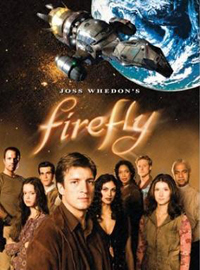
I’ve been enjoying the “Firefly” screenings at Portland’s Mission Theater these last few Tuesdays. It turns out I’d only seen five episodes of the series, so most of it is brand-new to me.

I’m not generally a sci-fi sort of person, and I admit some of the people at these screenings are far geekier than I tend to associate with. (Not that there’s anything wrong with that.) But it’s been interesting to discover that “Firefly,” while surrounded by sci-fi trappings (outer space, the future, etc.), is not always strictly a “sci-fi” show. Many of the stories could just as easily be used in a straightforward action series like “The A-Team” or “MacGyver” or whatever.

For that matter, the show is set on the frontiers of space 500 years hence, and a lot of the frontier resembles the American Old West. Because of that, a lot of what goes on could happen in a Western series, too. Replace “going to visit this planet” with “going to visit this town,” and everything else is the same.

The point is, if you’re generally averse to science-fiction, you might like “Firefly” anyway. Did I mention it’s also very, very funny, often exciting, and full of lively, interesting characters? Well it is!

The free screenings at the Mission have been very well attended, so much so that people are lining up outside an hour early in order to get a seat. And some people have gone even further:

‘Snide Remarks’ Classic: ‘Mister Wind’

0

Alt text

This week’s “Snide Remarks” Classic column is #355, “Mister Wind,” in which a trip to the mall results in a stroll down memory lane. It was originally published on April 20, 2003. April 20 is also Hitler’s birthday, but that’s not really relevant here.

And to the person who posted this comment last week — “What I’m most interested in is the columns that will never be ‘Snide Remarks’ classics. Any chance you’ll let us know which those are?” — first of all, no one likes a smart-aleck, and second of all, yes! I’m preparing a feature to be posted very soon that will count down what I consider to be the 10 worst “Snide Remarks” columns ever. So that should be a great deal of fun. (We’ll balance it out with a list of the 10 best ones, too.)

Daddy Day Camp

0

If you’ve chosen to watch “Daddy Day Camp,” I assume it is because you are a fan of two things: “Daddy Day Care,” the 2003 film to which it is a sequel; and bodily functions. If you are indifferent toward those two things, then I cannot urge you in strong enough terms to avoid “Daddy Day Camp.”

But if you do love those things, then boy howdy, are you ever in for a treat. “Daddy Day Camp” has a naked boy peeing into a toilet while scratching his butt, and a man accidentally eating a bug that was graphically smashed onto a barbecued hamburger patty, all before the opening credits are even finished! From there it is a long, messy ride through scene after scene of farting, peeing, vomiting, and pooping. The screenplay is attributed to three writers. That means if the film’s funny parts were divided evenly among them, they each wrote zero.

The film answers the question “How bad does a sequel have to be for Eddie Murphy to want nothing to do with it?” He starred, with rotund comedian Jeff Garlin, in the 2003 family flick about two dads who start a daycare center. But neither man was interested in the sequel, so they’ve been replaced with Cuba Gooding Jr. and Paul Rae … who are playing the same characters. Not the original characters’ brothers, or two different characters in a similar situation, but the same characters. I guess the thinking was that as long as they had a Black Guy and a Fat White Guy, no one would notice the difference. They could just as easily have gotten Martin Lawrence and George Wendt, or Chris Tucker and James Gandolfini. (Actually, I would watch that movie.)

Gooding plays Charlie and Rae plays Phil, the guys whose daycare center, now in its fourth year, is wildly successful. They originally opened it to take care of their own young children; now those kids are 7 and getting ready to go to summer day camp.

Charlie has bad memories of his own camp days, as he lost a relay race in the inter-camp olympiad of 1977 and has evidently never healed from the emotional scars. That’s right, Charlie is a great big baby. Nonetheless, his wife (Tamala Jones) says their son is going to camp, and that this shouldn’t be news to Charlie, because the permission slip has been on the fridge for three weeks. Now it befalls Charlie and Phil to drive out to the woods to check out the place.

It’s called Camp Driftwood, and it’s a dilapidated old wreck. It’s been closed for quite some time. You have to wonder, then, how the permission slip has been on the fridge for three weeks, because I don’t think a camp that isn’t operational would be sending out permission slips. Maybe it was a generic permission slip: “I give permission for my child to attend some camp at some point.” At any rate, the owner (Brian Doyle-Murray), who evidently just sits in the camp’s office all day every day even though the camp is closed, talks Charlie and Phil into becoming his business partners in order to get the place up and running again. Then he takes off and leaves it entirely in their hands. Then they find out the camp is on the verge of foreclosure — which I think probably would have come up during the becoming-business-partners/looking-at-the-camp’s-financial-status portion of the negotiations, but hey, what do I know. I’ve never even been to day camp, much less bought one.

So they have to get a lot of parents to start sending their kids to Driftwood in order to make enough money to keep it open. As if that weren’t enough stress, they must also contend with neighboring Camp Canola, now owned by rich super-bastard Lance Warner (Lochlyn Munro) — the very same Lance Warner who defeated Charlie in that race 30 years ago and who is still as much a jerk today as he was then!! What are the odds?!

Charlie and Phil’s first day running the camp, with just one affable but incompetent counselor (Josh McLerran) to help, is a disaster, of course. We discover that while the camp has no functioning toilets, it does have a fully stocked snack bar in which all the candy is perfectly fresh despite having been boarded up for several years. (What the F?) We meet a boy who vomits all the time, more or less for no reason. (WTF?) Another kid has a mullet haircut and insists you call him “Mullet,” which is more than you can say for most of the characters, who are never given names despite appearing in most of the film. (Whisky Tango Foxtrot?)

After that, only seven kids show up to camp each day, stalwarts whose parents don’t care that their children are spending their summer days at a deathtrap. With Charlie and Phil’s sons, that makes nine children total. But Charlie figures if they can beat Camp Canola at the annual inter-camp Olympics, it will give Camp Driftwood a great reputation and parents will start sending their kids to them again! That doesn’t make any sense, of course — why would parents care who wins a bunch of camp games? — and Charlie’s wife says so. Then, 30 seconds later, she changes her mind and is fully supportive of Charlie’s stupid plan — even though nothing has changed in those 30 seconds.

But how can he win the olympiad with a ragtag group of nine kids? For that, Charlie calls in his father, Col. Buck (Richard Gant), a tough military man from whom he has been estranged for quite some time. In fact, his father has been disappointed in him ever since … why, ever since Charlie fell down and lost that race in 1977! That was one fateful day, I’ll tell you, with repercussions that affect almost every aspect of Charlie’s life even to this day.

Buck whips the kids into shape, people learn valuable life lessons, and there is much prankery back and forth between the two camps. Then the Olympics happen, and it’s a curious set of games indeed: There are just the two camps involved, Canola’s 50 kids up against Driftwood’s nine.

The movie was directed by Fred Savage, the former star of “The Wonder Years” and now a frequent director of Disney Channel programming. I have nothing but fondness for “The Wonder Years,” but holy crap is Fred Savage ever a pitiful director. This is putrid, insipid comedy at its worst. Nothing makes sense. The characters do things for no reason, and events occur without any apparent cause. The movie really is just a series of broad, lowbrow moments strung together randomly by a wisp of a plot.

In closing, let us discuss Cuba Gooding Jr. Almost immediately after he won that Oscar back in 1997, he launched a campaign to make the Academy sorry for it. He has been in some truly awful films since then. “Radio.” “Boat Trip.” “Snow Dogs.” “Norbit.” (Yes, he had a supporting role in that Eddie Murphy fiasco.) But say what you will about him, he knows his stuff: No living actor is better than Cuba Gooding Jr. at taking a bad film and making it completely unbearable. He’s never seen a potentially comedic moment that he couldn’t ruin with a little bug-eyed overacting. He jumps up and down, he screams like a woman, he sputters and fumes and hisses and stammers — and none of it is funny. In a surprisingly bad movie, he is the most unsurprisingly bad thing about it.

There’s usually a good reason they were deleted

25

Entertainment Weekly’s Chris Nashawaty has a great interview with Matt Damon in the current issue. Damon comes off the way he always has: likable, funny, and level-headed.

In particular, I love what he says about deleted scenes on DVDs. He’s talking about the stuff they cut out of “The Bourne Ultimatum” specifically, but it applies to most movies’ deleted scenes:

Will we get to see them on the DVD?

Never. To me, that’s like walking into a room holding a pile of s— and saying “Look what I almost stepped in!”

That’s a perfect analogy. You had to good sense not to make the mistake — and then you negated that good sense by showing it to everyone anyway.

There are exceptions, of course. In general, a comedy that was made with a lot of improvisation is bound to have plenty of great stuff that had to be cut purely for time and story concerns. Hence, the “Waiting for Guffman” deleted scenes are brilliant; the Will Ferrell comedies tend to have a lot of good leftovers; I anticipate plenty of “Knocked Up” bonuses.

Do you have any favorite deleted scenes that you’ve discovered on DVD? Or do you feel like in most cases, the filmmakers should probably leave that pile of s— outside and be glad they were smart enough not to step in it?

Once a pun a time

11

An update on the situation with the movies that have pun titles: After I mentioned it last week (prompted by “Who’s Your Caddy?”), several readers pointed out some films that use this sort of wordplay. Here’s what they came up with:

“Octopussy”
“The Aristocats”
“The Nightmare Before Christmas”
“Dead & Breakfast”
“Lucky Number Slevin”
“My, Myself, & Irene”
“Miss Congeniality 2: Armed and Fabulous”
“The Work and the Story” (referencing “The Work and the Glory,” a series of Mormon historical-fiction novels)
“The Beautician and the Beast”
“Adam & Steve”
“Juwanna Mann”
“The Flintstones in Viva Rock Vegas”
“Dr. Jekyll and Ms. Hyde”

On my own I remembered “Blacula” (the black version of “Dracula”) and “Shanghai Noon” (variation of “High Noon”).

The sounds, the sights, the smells of a new ‘Snide Remarks’

0
Alt text

This week’s “Snide Remarks,” entitled “Spanks for the Memories,” is a multimedia affair! Words, pictures, a footnote with a sound file attached — it’s all in the service of telling you about some boys who went to jail for smacking a girl on the butt. I am tireless in my efforts to bring you these important news stories.

Futuristic SnideCast® technology allows you to listen to my recording of it right there on the page, or you can listen to it here, or you can subscribe to the podcast here. My apologies for my voice, which is slightly scratchy today due to all the yelling I did Saturday night due to being at a place where it was really loud and you had to yell to be heard. OK, OK, I was at a bullfight. Don’t be judgin’ me!

Spanks for the Memories

0

Oregon’s Yamhill County is taking steps toward doing something we all support, which is to put as many teenagers in jail as possible. Unfortunately, the charges they’re using to justify the incarcerations are getting weaker, as police recently arrested two junior high students for smacking girls’ bottoms in the hallways of their school.

This is against the law now?! Someone better tell Gen. Halftrack in “Beetle Bailey”!

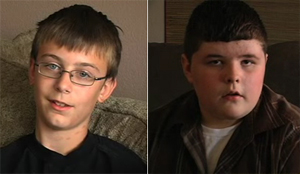
The boys, Cory Mashburn and Ryan Cornelison, both 13, spent five days in juvenile hall thanks to what is apparently a zero-tolerance policy regarding horseplay. Slap a butt, go to jail. The boys will go to trial — an actual, honest-to-goodness court trial — later this month.

Alt text

Jailbirds Mashburn and Cornelison: First they came for the teenagers, and I did not speak out, because I was not a teenager.

And what are the criminal charges? Five counts each of misdemeanor sexual abuse, and five counts each of harassment. Lesser charges of felony roughhousing and second-degree monkey business were dismissed.

If you think it all sounds like a huge overreaction to what was just ordinary adolescent stupidity, you’re not alone. The general public agrees, and the district attorney’s office has had hundreds of letters telling them to drop the charges and quit with the overzealous prosecution already. More than $15,000 in donations to the boys’ legal defense fund has been contributed, too.

In fact, even the attorney for two of the girls believes this shouldn’t be a criminal matter. “Our position has always been this should have been handled internally by the school,” is what attorney William Brandt told The Oregonian. It might sound like Mr. Brandt is surprisingly logical and rational for a lawyer, but not so fast: The reason he doesn’t think it should be a criminal matter is that he’d rather just sue the school. He says school officials failed to protect his young clients from “assault and battery in the form of sexual touching.” Never mind that officials responded as soon as a teacher’s aide noticed the behavior, and suspended the two boys. What they SHOULD have done was see into the future and stop the boys before they acted. What the school needs, really, is some of those albino psychics who lie in bathtubs in “Minority Report.” Sadly, however, our public schools lack the funds necessary to hire fictional precognitive characters. Darn that George Bush and his reduced education spending!

The slap-happy boys’ crime spree occurred in February, when they declared it to be “Slap-Butt Day” at Patton Middle School, then went around celebrating that festive holiday in the traditional fashion, i.e., slapping people on the butt. Other students — including some girls — joined in on the bottom-swatting fun, and a merry time was had by all.

Alt text

You’re next, Amos.

Well, not by all. Some girls evidently were upset, or else became upset when their litigious parents heard about it, or else were convinced to become upset when a lawyer with dollar signs in his eyes showed up on the front porch with legal documents in one hand and a bag of candy in the other. Whatever the sequence of events was, the two boys were arrested, hauled off to juvie, and must now stand trial. If convicted, they would face up to 10 years in juvenile detention and a lifetime of being registered sex offenders. They’ll also be forever known among their peers as The Boys Who Went to Jail for Touching a Girl.

(By the way, how would you like to be the cop who has to respond to that call? All those months of training and years of police experience, and this is what you’re reduced to. “All available units respond to Patton Middle School. Two 13-year-old suspects, white males, spanking girls’ bottoms. Proceed with caution. Suspects are believed to be armed and frisky.”)

Alt text

Albino psychics: Unaffordable due to budget cuts.

In its defense, the school has pointed out that the day in question was not actually Slap-Butt Day, and that the kids’ observances were thus seasonally inappropriate. The real Slap-Butt Day, of course, is Aug. 19 and is also known as Bill Clinton’s birthday.

I should also mention that when the boys were interrogated by the vice principal and a cop, they admitted that in the past they had cupped or poked a girl’s boobular area as well. Two of the charges against each boy stem from that, and not just from the crime of butt-slapping.

Granted, you shouldn’t go around honking girls’ bazooms[1], but come on. Being arrested? Going to trial? I’m not always a fan of the “boys will be boys” excuse, but I think it applies in this case. It would be different if they were adults who were swatting teenage girls. For example, if I were to walk into a middle school and start slapping kids on the butt, it would make sense to arrest me. In fact, I would insist upon it. But these were kids, playfully (albeit ill-advisedly) harassing other kids. They got carried away in their hormonal silliness, they invaded some girls’ personal space, and they should be reprimanded and told to cut it out. Anything beyond that is excessive.

But it does raise some interesting questions. Namely, what if the district attorney’s office started treating all acts of juvenile stupidity as criminal offenses? I foresee court cases such as these:

Alt text

Watch it, athletes. You’re on the list, too.

§The People v. Tyler R.
¶The defendant is accused of administering wedgies, swirlies, and purple nurples to multiple victims.

§The People v. Kyle M.
¶During a game of playground tag, the defendant is accused of immediately tagging the person who had just tagged him, despite the previously established rule of “no tag-backs.”

§The People v. Madison L.
¶The defendant is accused of telling Kylie what Rachel said Hailey had told her, even though Rachel totally made her swear not to.

§The People v. Jason K.
¶The defendant is accused of lighting his farts on fire during a party at Bryan’s house.

But now we’re just being silly.


[1] (Even if they do make this noise.)

Friday movie roundup & fate bemoaning (Jon Voight’s and mine)

17
Alt text

Sure, there are five new wide or semi-wide releases this weekend, but don’t feel overwhelmed! Only two are worth seeing. You can ignore the others completely. Thank goodness!

The good ones are “The Bourne Ultimatum,” which is every bit as good as its 2004 predecessor (I note that most of my review of that movie applies to the new one, too); and “Hot Rod,” a very odd and baffling comedy that will either make you laugh a lot or else have absolutely no effect on you whatsoever.

Then there’s “El Cantante,” a biopic about salsa singer Hector Lavoe, whom I’d never heard of and who, if this film is to be believed, must have been a selfish, sallow-faced, uninteresting lout; “Underdog,” the live-action version of the old cartoon, which is approximately as bad as you’d expect it to be; and “Bratz,” based on the line of slutty dolls for young girls, which is even worse than you’d expect it to be, if such a thing is possible.

Worth noting: “Bratz” and “Transformers”: both live-action movies based on dolls; both featuring Jon Voight in supporting roles. Yes, the same Jon Voight who’s won a Best Actor Oscar and been nominated for three others. That Jon Voight.

Dawn and I were discussing this the other night. Why would Jon Voight agree to appear in these silly movies that are based on toys?

Underdog

0

With “Underdog,” Hollywood once again demonstrates its ability to take a mediocre idea and destroy what little potential it had. They offer a graduate-level course in this skill at Disney University.

The “Underdog” cartoon series of the 1960s and ’70s was a spoof of “Superman” in which a mild-mannered canine could trot into a phone booth, change into a costume, and fly off to save damsels in distress. Underdog often spoke in rhyme, which was probably amusing, or at least cute, coming from a cartoon dog.

The new “Underdog” film is live-action, with the talking animals’ mouths moved via computer wizardry. Switching from the cartoon realm to real life immediately saps a lot of the whimsy out of a project. Things that made sense in a cartoon — or that you had no problem overlooking because it was a cartoon — start to stick out when they’re transferred to the real world.

Personally, I kept getting hung up on Underdog’s paws. How does he put on his costume, or pick things up? You need thumbs for that. Or at least fingers. A cartoon dog’s paw can sort of anthropomorphize into a hand when some kind of gripping action is necessary, and you buy it. But a real dog’s paw can’t do that. So in the scene where Underdog takes Polly (his Lois Lane) flying over the city, he tells her not to worry, he won’t let go of her — but I just kept thinking, “How are you even holding onto her?!” She just had her paw sort of draped over his. HOLY CRAP, SHE’S GONNA FALL!!

But anyway. Nearly every element of spoof or satire is gone in the live-action version. Some details parallel the Superman model, but they come off as dumb, not clever. And all that rhyming he does? ANNOYING. Why does he do that? Just because that cartoon did? Sorry, but that’s not a good enough reason.

Jason Lee is the voice of Underdog, a washed-out police beagle who gets kidnaped by a mad scientist (Peter Dinklage) and given superpowers in a lab accident. He escapes and finds a home with Dan Unger (James Belushi), a cop-turned-security-guard who gives the dog to his teenage son, Jack (Alex Neuberger), as a pet. They name him Shoeshine. Jack soon learns of Shoeshine’s abilities — including being able to speak English — yet hides them from his dad. No explanation is given for this secrecy.

Jack likes a girl named Molly (Taylor Momsen), who has a dog named Polly (voice of Amy Adams), whom Shoeshine has a thing for. As Underdog, he fights crime and saves humans from peril. As Shoeshine, he’s ordinary and unremarkable. The mad scientist threatens the city, claiming he’ll make them pay for what they did to him, although it’s never indicated what, exactly, he thinks the city did to him. (He was injured in a fire, but that was his own damn fault.) People are in danger. Underdog saves the day. Et cetera.

The screenplay, credited to Adam Rifkin (the stupefying “Zoom”), Joe Piscatella, and Craig A. Williams, relies lazily on your basic dog jokes: pooping, dragging their butts across the floor, drinking out of the toilet; you know the routine. (I confess to chuckling at Shoeshine’s delight at discovering the sport of baseball: “Sticks, balls, and running, all in one game?!”) And I note that the director, Frederik Du Chau, also made “Racing Stripes,” which also had talking animals. So I guess he’s got that niche filled. You want a cheap, halfhearted comedy about talking animals and lots of poop jokes? Call Frederik Du Chau.

So here’s a live-action version of a cartoon that originally aired 40 years ago. The movie is meant for kids, but of course kids have no idea who Underdog is. (The film even starts with a clip from the cartoon, for no reason other than to let you know, “Oh, hey, this is based on a cartoon.”) And yet the film insists on including minor details from the cartoon, as if to appease the fans, and these details are awkwardly crammed into the movie in a way that renders it nearly nonsensical. You want to make a movie about a dog who’s a superhero, fine. But you should probably start from scratch, not try to adapt an old product from a completely different medium.

Oh, and a good script with some funny jokes and a story that makes sense wouldn’t hurt, either. Y’know, if you can manage it.

Bratz

0

The Bratz are a line of big-headed, fashion-conscious dolls aimed at tween girls, who are past the age where they want to play with Barbies but just getting to the age where they want to live out their slutty, materialistic fantasies vicariously through playthings. The Bratz dress provocatively and have been the source of controversy among parents who feel they encourage a too-early sexualization of young girls. One of the Bratz toy sets has the Bratz sneaking out of the house to go on blind dates with boys. Hooray for teaching skankiness at an early age!

The Bratz’ first live-action movie, cleverly titled “Bratz” and evidently inspired by the animated TV series of the same name, is appalling and horrific, but for entirely different reasons. The producers have wisely toned down the trampiness of the girls’ outfits, perhaps realizing that what garners a few raised eyebrows when it’s worn by a piece of plastic would garner torch-wielding mobs if it were worn by actual young girls (or even 20-year-old actresses playing young girls). And the Bratz’ fondness for buying clothes is not played up as heavily as you might expect, either, though that’s not to say there’s not still plenty of materialism to be found. MTV and MySpace are name-checked several times each.

No, the Bratz movie is bad in other ways — not for its message or values, but for simply being a flat-out awful abortive trainwreck of a disastrous pile of worthless stupid garbage of an utter mess of a movie, even by the low, low standards of Movies Based on Toys. Every turn of the wandering, aimless story is ill-conceived, the jokes fall flat, and the characters are as plastic and fake as their Toys R Us counterparts.

This last point is particularly delicious, since the movie’s message is that you should be yourself, be unique, and not worry about fitting in with the crowd. Yet the heroines — a quartet of lifelong friends who find themselves drifting into separate cliques when they reach high school — are adorned with personality traits as randomly and as inauthentically as you might put clothes on a doll. You can almost hear the little girls playing with the characters in their Let’s Make a Bratz Movie Playset: “Let’s make this one really good at singing … and journalism!” “I want this one to be an expert scientist — and a brilliant fashion designer!” And how do we convey that those characters really ARE those things? Mostly by having them say so. For example, one girl in the movie keeps mentioning that she’s in the journalism department, yet we never actually see her do anything journalism-y, nor does she hang out with the journalism crowd. If she never said it, we’d never know.

The friends are identified as follows: Yasmin (Nathalia Ramos) is Mexican, a good singer (but plagued with stage fright), and keen on journalism (allegedly). Jade (Janel Parrish) is Asian, good at math and science, has overachieving parents, and secretly wants to be a fashion designer. Sasha (Logan Browning), the black one, loves cheerleading and has divorced parents. Cloe (Skyler Shaye), the blond white girl, is klutzy but is also great at soccer. She’s also really good at having a single mom and being poor; however, those skills don’t emerge until very late in the film, at which point they’re mentioned as if we should have known them all along.

The film starts with their first day at Carry Nation High School, named for the famous hatchet-wielding anti-alcohol activist of the early 20th century. The principal, Mr. Dimly (Jon Voight, wearing fake nose and ears so as not to be recognized), reads a book called “How to Run a Prison.” His perky princess daughter, Meredith (Chelsea Staub), is student body president and his chief supporter. They both want the school to be neatly organized into distinct cliques, as that makes everyone easier to control. There is oppressive signage everywhere about not littering and not running and not speaking out of turn.

Clearly some attempt was being made here to inject satire into the story. It is rather funny to see grumpy-faced Carry Nation, ax in hand, on all the school’s logos, I’ll give them that. Unfortunately, not enough is done with the satirical elements to make them effective. The target audience won’t catch them, and the grown-ups … well, I guess they’ll point out that they’re not very effective. I’m a grown-up, and that’s what I just did.

Never mind that stuff. The point is, the girls have always been a foursome, and now that they’ve entered high school, they’re splitting up into cliques. Then two years pass. (Yes, two years!) Suddenly they’re juniors, and they haven’t really spoken since freshman year, their extracurricular activities keeping them apart despite their best efforts. Then one day there’s a huge food fight during lunch, and for some reason that results in the four Bratz vowing to get back together and never let their cliques separate them again!

This enrages Meredith, who doesn’t like the idea of people not being in cliques. So she throws a huge Sweet Sixteen party for herself (her second one, since she’s been 16 for several months already) and invites people in a way that indicates they have to be part of a group to attend. It has something to do with popping a balloon, and in the balloon is a slip of paper that says “Cheerleading” or “Journalism (alleged)” or whatever. I didn’t really understand it. Anyway, the Bratz (who aren’t called “Bratz” yet, by the way, I forgot to tell you that part) see through Meredith’s transparent attempt to keep them in line, and they decide to just not go to the party.

But then it turns out that Cloe’s mom, who you’ll recall is poor and runs a catering business — oh, did I not mention her catering business? Must be because the movie never mentioned it until now, either — well, she was hired to cater Meredith’s party, and all her employees have bailed out, which means the Bratz have to pitch in and help out by being waitresses at the party. How embarrassing! Even more embarrassing, they’re supposed to wear clown costumes! But don’t worry! One of of the girls — I don’t know, Jade? Cloe? Kitanna? Dikoda? — is a great seamstress, and she alters their clown costumes into eye-catching, fashion-forward ensembles that make them the hit of the party. Crisis averted!

Then for some reason there’s a talent show at school. “The only way to get everyone back together is to win the talent show!” one of the girls declares, as if stating the obvious, when in fact the connection between winning the talent show and getting everyone back together is tenuous at best. This contest is held every year, and Meredith (who fancies herself a singer) always wins. That’s because as student body president, she and she alone gets to decide who competes in the show, and she rejects any act that might give her a run for her money. Having failed in her efforts to separate the not-called-Bratz-yet, she tries to blackmail them into dropping out of the show … which is superfluous, since, as I mentioned, she has the power to just kick them out for no reason.

Her blackmail material is a video-phone recording of Yasmin (the Mexican girl) dancing around her bedroom with her mother (Lainie Kazan) singing — I kid you not — “La Cucaracha.” Now, it seems to me that if you don’t want people to think that you’re an embarrassing ethnic stereotype, then maybe you, as a Mexican girl, shouldn’t dance around singing “La Cucaracha.”

I should also mention that in the first scene set at this house, Yasmin comes downstairs for breakfast and sitting at the kitchen table is … a mariachi band, complete with instruments. Surely this is a remnant from a deleted scene, as it is never explained why a fricking mariachi band is sitting at the kitchen table, and why no one says anything about them.

Then there’s the talent show, and finally Meredith calls them brats, which they interpret as “Bratz,” goodness knows why. They sing a song about having a positive attitude. It involves legions of back-up dancers and live musicians, all of whom appear more or less out of nowhere. Maybe the mariachis were among them.

Oh yeah, earlier Yasmin meets a cute boy named Dylan (Ian Nelson) who is in the jock clique, but he used to be in the band clique, back before he went deaf. He’s newly deaf. But he’s super-good at reading lips — so good that you don’t even have to be facing him when you talk and he’ll still know what you’re saying. Also, he can put his hands on a speaker and feel the vibrations of your singing voice and be able to tell that it’s beautiful. He is a magical deaf boy indeed. I don’t know why he’s in the movie, but since he contributes to its overall idiocy, I thought I’d mention him.

Surprisingly, this movie has a director. His name is Sean McNamara. He made a Hilary Duff movie a few years ago called “Raise Your Voice,” which was also a) about teenage girls and music, and b) lousy. Stick to your strengths, I guess.

(The film allegedly had a writer, too, but I’m going to refrain from identifying him or her until I can get corroboration that it’s not a hoax and that there was, in fact, a script.)

I could go on all day about this film’s implausible scenes, subplots that don’t go anywhere, and misguided attempts at teaching valuable lessons. But I’ll close by just saying this: Even though you assume a “Bratz” movie is going to be bad, you have NO IDEA just how bad this one is. It’s bad in ways I hadn’t expected, ways that surprised me and gave me a headache. It’s definitely one of the worst moviez of the year.

The Bourne Ultimatum

0

It’s been three years since we last saw Jason Bourne, but “The Bourne Ultimatum” begins just minutes after the last film left off, with the CIA-trained assassin (again played to steely perfection by Matt Damon) recovering from that now-legendary car chase through Moscow. The event seems to have jarred loose some memories in the back of his mind. Those glimpses of the past, plus his fury over the murder of his girlfriend in the last film, make him more determined than ever to learn who’s responsible for all this, and to deliver the appropriate punishments.

That’s “Ultimatum” in a nutshell: a sublimely uncomplicated film in which Jason Bourne tries to find the truth and the people who have the truth try to kill Jason Bourne. Directed, as was the last film, by Paul Greengrass (“United 93”) and written by Tony Gilroy from Robert Ludlum’s novel, “Ultimatum” is as lean, efficient, and ruthless as Bourne himself. Dialogue is used sparingly, but when it’s used, it crackles with serious-spy-movie electricity. This movie is not kidding around, and that no-nonsense attitude during all the clever reversals and bruising fight sequences makes it an absolute thrill to watch.

Bourne and the CIA become each other’s enemies again when a London newspaper reporter (Paddy Considine) publishes a story about Bourne that mentions a top-secret operation called “Blackbriar.” The CIA, represented by the power-mad and slightly paranoid Noah Vosen (David Strathairn), furiously searches within itself to learn who the reporter’s source was. Upon learning that Bourne himself may be involved, they bring in Pamela Landy (Joan Allen), the CIA operative who has dealt with the amnesiac killing machine before.

At this point in the story, though, the tide has turned. Some in the CIA have become sympathetic to Bourne and his search for answers about who he was before the CIA trained him. Landy might be among his supporters, and so might Nicky Parsons (Julia Stiles), a field agent whom Bourne re-encounters in Spain (one of many corners of the globe to which Bourne trots in this adventure).

Not that Bourne needs a lot of help. What we’ve learned by now is that, like Jack Bauer, Jason Bourne is more or less indestructible. Killing him only makes him angrier. He has the skills and brains of James Bond, but without that part of Bond’s personality that lets him relax. Bourne does not relax. He does not engage in clever repartee with villains. He does not smile.

“Ultimatum” is very much cut from the same breathlessly suspenseful cloth as “Supremacy” (which I believe was better than the first film, “The Bourne Identity”). Greengrass still favors the shaky camera style of photography, and he’s fond of staging fight sequences without any music or other adornment. Bourne used a magazine as a lethal weapon last time; this time it’s a book and a towel that figure into his hand-to-hand combat, in a fight scene that’s brutal and seemingly never-ending. The Russian car-chase sequence was the last film’s high point; Greengrass wisely doesn’t try to top it this time around, but there is a bone-crushing jaunt through Manhattan that serves as a suitable follow-up.

As the final film in the series, “Ultimatum” is tasked with bringing closure to Bourne’s search for answers. It does this satisfactorily, and we realize that despite the scarcity of dialogue and lack of information about Bourne’s pre-spy life, he has somehow become a real, flesh-and-blood, fully developed character. Damon’s lone-wolf somberness, plus his ability to use just his eyes and face to speak volumes about his character’s thoughts, vitalizes Jason Bourne.

Hot Rod

0

I don’t think “Hot Rod” is going to make any money — not in the era of “Knocked Up” and “Superbad” (which opens Aug. 17), to name two comedies that are slightly better and a great deal raunchier. Which is too bad, because while “Hot Rod” can’t match those films’ dizzying heights of profane hilarity, it is a marvel of odd, surreal humor in its own right. I often found myself laughing, and then laughing at the fact that I was laughing, considering that what I was laughing at shouldn’t have been that funny.

There shouldn’t be any humor in two teenagers repeating the phrase “cool beans” back and forth to each other, changing the pitch and inflection dozens of times over the course of 90 seconds until it becomes something of a song. Nor is there any reason for an exchange like this:

“What’s that song about the grandma getting run over by a reindeer?”
“Um, ‘Grandma Got Run Over by a Reindeer’?”
“No…”

And I fail to see any purpose in a young man asking a young lady who she thinks would win in a fight, a taco or a grilled cheese sandwich.

What?! A taco and a grilled cheese sandwich can’t fight! They’re FOOD, not people! You kids today, with your absurd “comedy”!

(For the record, the girl’s response is: “I’d say the grilled cheese, but only in a fair fight. If it’s prison rules, I’d take the taco.” To which the boy replies, “That’s pretty racist, but OK.”)

No, there’s no sense or reason to be found in “Hot Rod,” which makes it all the more delightful that I laughed and laughed throughout it. It’s the work of “Saturday Night Live’s” Andy Samberg and his partners Akiva Schaffer (the director) and Jorma Taccone (the co-star), collectively known as Lonely Island. This is the trio behind some of “SNL’s” best digital shorts of the last few years, and their sublimely ridiculous film comes from the postmodern, Will Ferrell-inspired, keep-repeating-the-joke-until-it-becomes-funny school of thought.

The thinking goes like this: A guy running through the forest and falling down a hill isn’t particularly funny. But when he continues to fall down the hill in a sequence of shots that seems to go on forever, it becomes funny.

Samberg plays Rod Kimble, a doofy teenager who fancies himself the next Evel Knievel. With his rickety motorized bicycle, he attempts outlandish stunts that have no chance of success, and indeed, his failure rate is fast approaching 100 percent. Yet this does not deter him. Like all the delusional teens of moviedom (he’s more socially well-adjusted than Napoleon Dynamite, but no more self-aware), he believes he can do these things simply because, well, if he somehow WERE able to do them, that would be awesome. And the hope of awesomeness is what motivates us all.

He has a love/hate relationship with his stepfather, Frank (Ian McShane), constantly trying to beat him in a fight and constantly losing. When Frank suffers heart failure and needs a transplant that will cost $50,000, Rod vows to raise the money, save Frank’s life, earn his respect … and then finally beat him up once and for all.

Aided by a couple of loser friends (Bill Hader, Danny R. McBride) and by his worshipful stepbrother Kevin (Jorma Taccone), Rod plans a massive stunt to raise the money. In the meantime, he does smaller jobs to gain publicity and earn start-up capital — and also to impress the girl next door, Denise (Isla Fisher), who’s dating a jerk named Jonathan (played by master-of-jerkiness Will Arnett).

The screenplay was originally written by Pam Brady (the “South Park” movie, “Team America: World Police,” TV’s “The Loop”) as a vehicle for Will Ferrell. The Lonely Island boys have obviously tailored it to suit their purposes; whether the Ferrell-esque oddness (I was reminded of “Anchorman” more than once) is left over from Brady’s work, or whether it’s the guys’ own contribution, I don’t know.

What’s important is that it works, mostly. Some bits of randomness are more inspired than others; some fall flat altogether. The film certainly goes on longer than it should: The plot seems to be on the verge of wrapping up at about the 65-minute mark, and then there’s still 20 minutes left on the clock.

But then there’s the fact that it is often really, really funny. So much of the humor is odd and baffling that I suspect many viewers simply won’t know what to make of it. You’re either going to wet your pants laughing, or you’re going to scratch your head and wonder if you’re getting too old. I’m in the wet-pants camp, but hey, what else is new?

El Cantante

0

Familiarity with someone’s work is not a prerequisite for enjoying a movie about that person’s life. Just last week I saw “La Vie en Rose,” a well-made film about French singer Edith Piaf, about whom I knew almost nothing. But what that film does — and what “El Cantante,” about ’70s salsa singer Hector Lavoe, fails to do — is show us why the performer was so beloved. To put it bluntly: Why should I care who Hector Lavoe was? “El Cantante” does nothing to answer that question.

If the film is any indication, Lavoe’s life was a cycle of fame, drugs, money, and self-destruction. Since this is more or less the same cycle as has been portrayed in countless other musical biopics, you’ll forgive me if my attention is not immediately grabbed.

What I do notice, though, is that this appears to have been a vanity project for Jennifer Lopez and her husband, Marc Anthony. (Hey, appearing onscreen with her lovers has worked so well in the past, so why not try it again?) Anthony plays Lavoe and Lopez plays Puchi, his controlling, enabling, shrewish wife. The jokes practically write themselves, people.

Lavoe was born in Puerto Rico and moved to New York in the mid-’60s, when he was 17. Most of the film is set in the ’60s and ’70s, as the salsa craze — Latin music combining elements of mambo, rumba, meringue, and jazz — is first catching on. Singing for Willie Colon’s band, Hector quickly becomes a star, though his unreliability due to his heroin use and general flakiness creates conflict with his bandmates.

Through it all there is Puchi, a lifelong New Yorker with Puerto Rican roots. She’s the one who first gives Hector some weed to smoke, an experience so nasty for him that he vows never to try drugs again. Then he sees someone doing heroin, and the film moves to slow-motion while the soundtrack swells with dark, ominous music. Dun-dun-DUNNNNNN!

Puchi and Hector’s relationship is stormy, to put it mildly. On their wedding day, he’s late to the church because he’s recovering from a night of hookers and cocaine in a hotel room. Puchi marches in with a priest in tow and orders them married on the spot. For her part, she loves the wealth and fame and may or may not be cheating on Hector. A couple scenes show them happy; a couple dozen scenes show them screaming at each other.

But never mind the trite melodrama. The film’s most glaring deficiency is its utter inability to show us why Hector Lavoe was popular. The performance scenes are plentiful enough, and the music is as spicy and energetic as you’d expect salsa music to be. Yet Hector’s singing ability and general stage presence are merely average. So why was he a big deal? Was it because he was one of the first? Or was the real Hector Lavoe far more charismatic than Marc Anthony is playing him?

I think the latter might be the case. Anthony is a pop star, but he’s not exactly a charmer, nor is he exactly an actor. As Hector, he comes across as grim, sullen, and uninteresting. The fact that his deep-set eyes and pale, wasted face make him look like a zombie anyway does not help.

As for Lopez, though her diva-like attitude is well-documented in real life, in the movies she has usually come across as supremely likable and sweet, even when (as was often the case) her movies weren’t any good. Here, finally, she acts approximately like herself: cold, braying, and materialistic — a perfect match for the equally abrasive Hector.

The director is Leon Ichaso, whose last film, “Piñero,” was about another tortured Puerto Rican artist whose name is unfamiliar to the vast majority of Americans. Ichaso is fond of creamy, soft-focus photography, random uses of black-and-white, and stream-of-conscious editing. It worked a little better for “Piñero,” where the subject was a free-form poet whose work lent itself to a looser filmic representation. Lavoe’s life begs for a more straightforward approach, and Ichaso’s tomfoolery just feels exhausting, an attempt to infuse life into a moribund story.

Becoming Jane

0

The premise behind “Becoming Jane,” the sumptuous-looking quasi-biopic about the beloved Ms. Austen, is that Jane Austen’s life often resembled a Jane Austen novel — “Pride & Prejudice” specifically, I guess, though my familiarity with Austen’s works comes only from having seen the movies based on them.

Which brings this question to my mind: Why make a movie that so closely resembles “Pride & Prejudice” when that story has already been filmed a number of times? Why, there was a perfectly good “Pride & Prejudice” just two years ago! Making it about the author’s life gives it a certain cuteness, I’ll grant you, the way “Shakespeare in Love” was deemed clever for combining elements of the Bard’s plays with his personal life. But take Jane out of the equation — replace her with any of your basic period-piece-romantic-costume-drama heroines — and you’re left with mere trifle.

It’s not bad trifle, though. Anne Hathaway makes for a lively Jane, equal parts gentility and slyness, and we’ll overlook her good-but-not-great English accent. She’s in her early 20s when we meet her, and already considering the idea of living off her writing rather than by finding a husband. Her parents (Julie Walters and James Cromwell) are not amused by this nonsense, of course, and Mrs. Austen makes it clear not just that Jane must get married, but what her criteria should be in finding a mate: “Affection is desirable. Money is indispensable.”

Jane, meanwhile, is learning that wit “is the most treacherous talent of all” for women, and she has it in spades. She finds Mr. Wisley (Laurence Fox), the young man her parents and an old dowager (Maggie Smith) keep trying to set her up with, to be unbearably dull-witted.

Then, dashing into her life like a bull in a china shop, there is Tom Lefroy (James McAvoy). Tom is a budding young lawyer who enjoys boxing and making trouble in his off hours. His uncle has sent him out to the country to cool off for a while, and he stumbles into the Austen home just as Jane is favoring the guests with a reading of some of her work. Tom is bored, and horrified by the apparent length of Jane’s selection. (“There’s writing on both sides of those pages!”)

Jane and Tom meet, disagree, like each other, are at odds with each other, quarrel, make up, etc. You know the drill. The screenplay (by British TV writers Kevin Hood and Sarah Williams) is nothing special, but director Julian Jarrold (“Kinky Boots”) maintains a light touch and gives his talented actors room to create amusing characters. Hathaway and McAvoy show some chemistry together, while James Cromwell and Julie Walters make for a feisty couple of elder Austens. And though we’ve seen Maggie Smith play imperious old women a thousand times before, it’s always fun to see her again.

And that is “Becoming Jane”: nothing you haven’t seen before, but kind of fun to see it again. Kind of. Really, though, there was that “Pride & Prejudice” in 2005. Keira Knightley was in it. She was really good! I’m just sayin’.

Them (French)

0

“Them” is a good title for a horror movie. Its vagueness is disconcerting, and in the right context it sounds menacing. Not you or me or us, but them, you know?

The movie “Them” — not to be confused with 1954’s “Them!,” which was about giant ants — is known by the slightly less ominous title “Ils” in its native France, but it still fits. In the story of a married couple whose house is beset by invaders late one night, we don’t know who “they” are. All we know is what the victims know: that whoever or whatever they are, they have murderous intentions.

The couple are Clementine (Olivia Bonamy) and Lucas (Michael Cohen), both French but currently living in a rustic country house outside of Bucharest, Romania. Clementine works as a French teacher at one of the city’s high schools, while Lucas, an author, stays home and writes.

And there’s your exposition. We call this a “one-act” movie, meaning that instead of there being a story arc with rising action, conflicts, reversals, setbacks, new developments, and so forth, there is instead just this: It’s nighttime, and Clementine and Lucas’s house is attacked by “them.” Apart from a scary prologue involving different victims, and a few moments establishing what the protagonists do for a living, the movie is entirely summarized in that one sentence.

It’s an admirably efficient movie, in other words. Written and directed by David Moreau and Xavier Palud (the duo already slated to remake the Hong Kong thriller “The Eye” next year), the film creates tension and dread better than a lot of more-complicated movies do, and the apprehension is almost unrelenting. The intruders — are there three of them? More? Less? — are silent except for a clicking noise we hear repeatedly. Clem and Lucas desperately try to escape them and flee to safety, taking us through every corner of their large house and its property in the process.

Moreau and Palud might have done a better job establishing the house beforehand, or at the very least explaining some of its more unusual characteristics — like a room full of plastic sheets hanging from the ceiling — when we encounter them. (I’m reminded of “Panic Room,” which did a fantastic job giving us a tour of the house so that we’d appreciate the layout and geography later, when the bad guys arrived.) Clem and Lucas know the house; we should know it, too, if we’re going to see the night’s events through their eyes.

At a scant 77 minutes, the film certainly doesn’t waste any time. Its simplicity may prevent it from being labeled a genre classic; repeat viewings surely would not bring out any nuances that were missed the first time. But as a one-time theatrical experience, it should scare the pee out of anyone.

The Ten

0

It’s hard to explain the comedy style of “The Ten,” the new film from the people behind such subversive offerings as TV’s “The State” and “Stella” and the film “Wet Hot American Summer.” It would be easier if everyone had seen all of those things, because then I could just say, “It’s like that” and you would know what I meant.

But bizarre, post-modern comedy is rarely mainstream, and it (almost by definition) seldom attracts more than a handful of devoted fans. Sure, I think “Stella” (available on DVD) is one of the most inventive and funny TV series of the last decade. It was the work of David Wain, Michael Ian Black, and Michael Showalter, all of whom you’ve seen in other things, too, and Wain has directed and co-written (with Ken Marino, whom you’ll also recognize) “The Ten” as an extension of that absurd, surreal style of comedy. But again, without having seen “Stella,” that description tells you nothing.

So I’ll give it my best shot.

“The Ten” is a collection of comic vignettes, each related to a different one of the Ten Commandments. They are connected by a narrator, Jeff (Paul Rudd), who stands in front of a huge reproduction of the stone tablets and introduces each story. Jeff’s personal life occasionally bubbles over into his introductions, and his ongoing problems with his wife (Famke Janssen) eventually becomes the subject of the Thou Shalt Not Commit Adultery chapter.

None of the stories is straightforward. Thou Shalt Not Steal, for example, stars famed shoplifter Winona Ryder, who steals a ventriloquist’s dummy. Why? Because she’s fallen in love with him. The dummy, I mean.

Not having any gods before God becomes a delightfully bizarre story about media fame, where a skydiver (Adam Brody) miraculously survives an accident only to learn that to move him from the place in the ground where he’s landed would kill him. So there he is, only his head, shoulders, an arm, and a leg sticking up out of the earth, and now he’s famous. He gets a sitcom (with the sets built around him, of course) and a catchphrase. The fame goes to his head, he burns out, yada yada. You know how it goes.

Coveting your neighbor’s stuff? Two next-door neighbors try to one-up each other after they each buy a new CAT-scan machine.

Taking the Lord’s name in vain? A virginal librarian (Gretchen Mol) vacations in Mexico, where she has a steamy romance with a local man named, um, Jesus (Justin Theroux).

You get the idea. The humor is both high and low, ranging from subtle satire to juvenile silliness. There is a fascination with words — “shutterbug” and “prestidigitation” come up — and a lot of characters and jokes that weave their way in and out of the stories. One section is animated. There are some musical numbers.

The cast list is impressive, too. Aside from those already mentioned, there are appearances by recognizable talents such as Oliver Platt, Rob Corddry, Jessica Alba, Bobby Cannavale, Liev Schreiber, and most of the cast of “Reno 911!”

The comedy itself is hit or miss — mostly hit for me, but humor is incredibly subjective, and this style of humor is particularly prone to the “either you like it or you don’t” effect. I suspect that even among people who like the film, there will be wildly differing opinions on which segments are funniest. And the one you think is the least amusing? Someone else will have thought it was the very definition of hilarity.

‘Rush Hour 3’ shows China might be on to something

4

From today’s Internet Movie Database studio briefing:

Jackie Chan Unwanted in China

China has confirmed a report … that Hong Kong star Jackie Chan’s “Rush Hour 3” won’t be shown in China. Although Variety had noted that Chinese censors had objected to some of the film’s racial humor as well as the depiction of a Chinese organized crime family, the vice president of China Film Group merely stated that “the market for the movie is relatively weak.” The government group did not ask for changes to be made in the film.

Wait a minute — in China, the fact that there’s little public interest in a movie is a valid reason not to release it? Why is the U.S. so far behind them in this forward-thinking policy?!

Angry Letters: ‘Clash of the Titanic,’ ????

27
Alt text

Someone named Kellie wrote me an e-mail with no subject line and no indication what, exactly, she was angry about. But her message was clear:

All of your comments are stupid you are an A-HOLE who do you think you are some big time movie director you say one line and make 1 hundred versions of it and call it a review you are an idiot and you should get a job at a donut shop you dumbass loser

The only part I take exception with is the implication that working at a doughnut shop would somehow be demeaning or undignified. On the contrary, what nobler profession is there than a purveyor of delicious doughnuts?!

Our other angry letter comes from a gal named Julia. She was so upset by my nine-year-old “Clash of the Titanic” column (which consists of a shortened, satirical script for the movie “Titanic”) that she didn’t even read the other angry letters already posted in which people said exactly the same things she wanted to say. She posted a comment on the page, and then sent me an e-mail directly:

you are heartless! so many people were killed! i am very into the titnaic, i read books on it. [Titnaic: of or relating to Titna, goddess of voluptuous women.] i loved that movie, and you are a sexist pig to say that women just watch it for Leonardo. [Yes, sweetie, that’s very cute.] Yes he is extremely hot, but it is a touching movie and i would watch it even if he were ugly. [I wish there were a way of proving that. I really do.] do you have any idea what that was like for those people? [For who, the actors? Probably kind of hard, but overall a fun experience, I guess.] they were on the ship, the lifeboats were gone and they knew they were going to die. [Oh, THOSE people.] they sat in there and froze to death. and now they are shaking in their graves [shivering?] knowing a freak named Eric is out there making fun of them! how could you think that is funny in the least?! I watch this movie every sunday night and cry every time. and if you don’t, i am quite sure you have no heart you bastard!

Fox to start being nicer to online film critics

5
Alt text

We have good news to report on the subject of movie studios interacting with online film critics!

I mentioned last week how Fox has been particularly gun-shy lately, inviting print press to early screenings while making onliners wait until the night before a movie opens to see it. Reports among my colleagues across the nation were that the studio was leery of reviews being posted early, which some online critics are notorious for.

I neglected to mention, however, that the Chicago Film Critics Association, tired of the second-class treatment and fed up with being ignored whenever they tried to have a discussion with Fox, recently staged a bit of a protest. They announced that while they would continue to review Fox’s movies, they would not do any other Fox-related articles like interviews or feature stories. Studios count on those stories for extra publicity, and since they’re almost always positive (or at least neutral), they’re less risky than reviews.

Well, Fox blinked and said they’d start being nicer to the Chicago Film Critics Association. (If you’re wondering, Roger Ebert is not a member of that group. He don’t need no group to have clout.) [Edit: The source I read that said that was wrong. Ebert is a member of the group. He still don’t need no group to have clout, though.] The CFCA, for its part, wrote into its bylaws that any CFCA member who violates the no-early-reviews rule is subject to discipline. So now everybody’s happy, sort of.

But there was still the ongoing concern that online critics in general were getting shafted.

‘Snide Remarks’ Classic: ‘Thinking Outside the Box’

3

Alt text

We’re commemorating the 10th anniversary of “Snide Remarks” by highlighting an oldie-but-goodie every Wednesday in 2007. This week’s choice is a lighthearted tale called “Thinking Outside the Box,” in which we planned a special birthday surprise for my mom and in so doing almost made her wet her pants. It’s column #347, and it was published Feb. 23, 2003.

The reason I wanted to fly home for Mom’s birthday was that it was her 50th. I didn’t mention that in the column because in those days Daily Herald readers (being bastards) liked to complain that I was “too young.” If they disagreed with a movie review I wrote, it’s because I was too young to understand the world. If I made a joke they didn’t like, it’s because I was just a kid. Because of this, I was always careful not to mention my actual age, as it would have fueled the fire — and revealing that my mother was a mere 50 would have let the cat out of the bag that I was most likely only in my mid-20s myself.

Mom was actually 21 when she bore me (and quite married, thank you), and I was 28 when this column was published. But when the average age of your readers is 60, even 28 is “too young.” I suspect that even if I were writing for the Herald today, well into my 30s, most of the Herald’s ancient, fussy readership would consider me but a child.

Anyway, just because I can never get enough of it, here’s a picture of my mom with her favorite chihuahua poking his head out from betwixt her bosoms.

Alt text

Eric’s friends are funny: Sack Lunch TV

9

Several of my Utah-based friends are involved in something called Sack Lunch TV, whose output so far is three amusing sketches that have been filmed and uploaded to the Interwebs, where you can view them.

The sketches are called “Humble Pie,” “The Man Date,” and “Cheesebigot.” I think all three of them are funny, albeit in varying degrees.

Pun’s labyrinth

15

Part of the fun of making blanket statements is trying to see if you can come up with exceptions to them. For example, in my review of “Who’s Your Caddy?,” I claimed that no movie with a pun title has ever been any good. This prompted someone to comment that “Shaun of the Dead” has a pun title and is, in fact, an excellent movie.

Indeed! That is an exception to the rule. The ONLY exception!

Let me clarify what kind of pun I’m talking about, though. I mean the kind represented by “Who’s Your Caddy?,” which is a play on the expression “Who’s your daddy?” Consider also: “Delta Farce,” “Maid in Manhattan,” “Down and Derby,” “Happily N’Ever After,” and “Deliver Us from Eva,” all of which hope to earn smiles by being slight variations on familiar phrases.

I don’t mean titles where the words have multiple applicable meanings. Someone pointed out the TV show “Arrested Development.”

Some site upgrades

1

I have a couple of things to mention that are unrelated but that both fall under the category of Making the Site Better.

First, I’ve gotten better at recording the podcasts for “In the Dark” and “Snide Remarks.” Maybe you listened when I first launched them back in December, thought, “Good heavens, was he recording this on an airplane runway?,” and never listened again. I would not blame you.

But as I’ve gotten more practice with them, I’ve found new ways to improve the sound quality. Specifically, I stopped using the lousy microphone I had lying around and started using my iMac’s built-in mic instead. It’s actually better than the one I paid money for, especially when I choose the “use ambient noise reduction” setting. There is a noticeable improvement in quality between the podcasts now and the podcasts a couple months ago. So you might give ’em another try.

Second, you might have noticed that we’ve added some Google ads on most of the site’s pages (although not here on the blog, yet). This isn’t Making the Site Better so much as it’s Making the Site More Profitable.

Monday morsels: new ‘Snide Remarks,’ new reviews of bad movies

2
Alt text

As July slips out of our fingers and a huge, sweaty batch of August prepares to plop down on our heads, let us take solace where we can. In a new “Snide Remarks,” for example, entitled “Inexcusabull Behavior”! It is about the Running of the Bulls, and Michael Vick, and assorted other stupid things.

As always, you can listen to my dramatic reading of the column on the page itself with the SnideCast©, or through what’s technically called a “podcast” here. The “Snide Remarks” podcast feed is here.

Also! It was a big weekend at the movies for me. Friday was an extremely French day, as I saw “Paris, je t’aime” and “La Vie en Rose” back to back at Portland’s indispensable arthouse multiplex, Regal Fox Tower. (Reviews to come; they’re both good.)

Then, on Saturday, I endured the following triple feature: “Bratz,” “I Know Who Killed Me,” and “Who’s Your Caddy?” I’m not allowed to review “Bratz” until it comes out next Friday, so let’s just leave it at that. The reviews for the other two are available, though, and they ain’t pretty.

More blogginess later today, so don’t stray far from your computer. Seriously, no more than five or six feet.

Inexcusabull Behavior

0

So this guy in Spain had his 10-year-old son with him for the weekend, and he thought a good father-son activity would be to participate in Pamplona’s Running of the Bulls. His ex-wife found out about it, and now a judge has revoked the guy’s visitation rights. So we see that the United States is not the only country plagued by activist judges.

Where does this guy get off telling a man he can’t be with his own son just because he let a bunch of a giant angry animals chase him down a narrow street? Oh sure, judge. I guess YOU’VE never intentionally endangered the lives of YOUR children! I guess YOU’RE a perfect father! Judge not lest ye be judged, Judge.

But I am being facetious, like the twinkly-eyed pixie I am. Of course the judge was right to penalize the man for his outrageous lapse in judgment. But it brings up a serious issue, namely: Pamplona’s Running of the Bulls; or, more specifically, what’s the deal with Pamplona’s Running of the Bulls?

Alt text

Note to bad fathers: If you endanger your child’s life in public, there’s a chance a picture of it will appear in the newspapers, thus bringing your shenanigans to your ex-wife’s attention. Consequently, you should only endanger your children’s lives in private.

Now, I am very sensitive to people’s feelings. I would never dismiss another culture’s traditions as being “stupid” or “hilarious,” no matter how stupid or hilarious they were. But I must make an exception for the Running of the Bulls, which I want to go on record as saying is stupid and hilarious.

They’ve been doing it for 500 years? Don’t care. It’s part of their heritage? Don’t care. It involves setting deadly animals loose down a narrow corridor and then trying to outrun them? That’s all I need to know. It doesn’t matter how long it’s been going on, or how big a deal it is, or how much of a fan Ernest Hemingway was, if the point is to voluntarily put yourself in front of aggravated, horned beasts, then the event is idiotic, period. And practicing it makes you, by definition, an idiot.

People are always so worried about criticizing other people’s cultures. We’re afraid of being called racist or insensitive or whatever. I guarantee you there are people in this world who would say, “The Running of the Bulls is a part of Spain’s rich cultural heritage, and while it may not be my cup of tea, it means something to the people of Spain, and far be it from me to dismiss it out of hand” … yet who would also say that Johnny Knoxville’s “Jackass” is moronic, even though they’re exactly the same thing.

I’m not afraid to say it, though! AND THAT’S ONE OF THE REASONS I AM SO AWESOME.

My understanding is that for many Spanish men — you’ll notice it’s always men who do this — running with the bulls is something of a rite of passage. It’s a way to prove that you’re macho and manly and rugged. The man in the news story, Luis Miguel Gomez, told city officials that he wanted to take his son to other bull runs in other cities, too, presumably to make a man out of him, although possibly just to kill him. It’s a great example of how screwed-up men’s thinking can be. “How can we demonstrate to ourselves and the world that we are courageous and brave? I know! By putting ourselves in danger … and then running away from it!” Yes, there’s no better way to establish your manliness than by fleeing in terror from something. What’s the matter, cowards? If you really want to be brave, stay and fight the thing!

Oh, wait. I guess they have that, too. Bullfighting.

Bullfighting is also stupid, now that I think of it. It’s barbaric and cruel, too. It’s amazing that a developed, educated nation like Spain still allows it. I mean, Mexico, sure. They didn’t even have electricity in Mexico until 2003. But Spain? Aren’t they embarrassed by now? I would think bullfighting in Spain would be like Alabama in America: Yeah, it’s part of who we are, but let’s try not to dwell on it.

Nonetheless, I can’t really get on a “high horse” about these things, except of course during the annual running of the high horses. America may not have bullfighting, but we do have dogfighting, which has recently been in the news because of Michael Vick.

Alt text

Michael Vick is, apparently, a professional football player of some renown, acting in the capacity of what’s called a “quarterback” for an organization known as the Atlanta Falcons. Two weeks ago he and three other men were charged with arranging dogfights, gambling on the events, and cruelly killing dogs that failed to fight viciously enough. Some of the underperforming dogs were electrocuted or drowned. Vick is alleged to have had hands-on involvement in every aspect of the operation. He has pleaded not guilty on all charges, but no one believes him.

The weird thing about all this is that professional football players are usually really, really smart. How did Michael Vick get wrapped up in something so dumb? He’s losing his endorsement deals, and the NFL has suspended him while it conducts an investigation. He could wind up losing millions of dollars. You know you’ve really screwed up when football fans — the most red-blooded, meat-eating group of people on the planet — are on the same side of an issue as PETA. In fact, anytime you’ve got normal people agreeing with PETA, you must have done something spectacular. Well done, Michael Vick.

At least that Spanish guy’s son actually wanted to run “with” (by which I mean “from”) the bulls. Michael Vick’s poor dogs never had a choice in the matter. Dogs usually have no interest in fighting unless you present them with an enemy, such as a cat, or a sock. Jerks like Vick and his buddies train them to be vicious and doom them to a life of pain and suffering — which would be fine if they were sharks, because sharks are mean anyway, and watching them fight would be awesome. But not dogs! You shouldn’t mess with dogs that way.

In an ideal world, Vick would go to prison and learn for himself what it’s like to be compelled to fight for survival. Unfortunately, he’s rich and famous, so any real prison time is out of the question. We’ll just have to hope that someday he takes a wrong turn and ends up in the middle of the annual Running of the Angry Dogs. That would be hilarious, and not at all stupid.

Friday movie roundup – July 27 – mmm… roundup…

4
Alt text

Grab a bottle of Duff and yell “Woo-hoo!” “The Simpsons Movie” is a worthy big-screen adaptation of our favorite yellow-skinned family’s adventures. Like the TV show, it’s about one-fourth brilliant and three-fourths just OK — but even the “just OK” parts are full of fast-paced sight gags and extremely clever parodies of modern American life.

Also worth seeing this weekend is “Sunshine,” a thrilling sci-fi tale from director Danny Boyle. I distinctly remember seeing the trailer for this with my friend Brett this past January. It starts with a voice telling us that the sun is dying, and so Earth has sent a spaceship loaded with a nuclear bomb to restart it. Brett and I snorted derisively, and those snorts were saying: What a dumb idea for a movie. Then the trailer showed these words: “From the director of ’28 Days Later’ and ‘Trainspotting.'” That’s when Brett and I repented of our snorting and started paying attention. The movie is proof that even an idea that sounds ridiculous on its face can be made into something compelling and entertaining if you do it right.

“No Reservations” opens today, but there’s no reason for you to watch it. In fact, I only saw it four days ago, and already I’ve forgotten everything about it.

The Simpsons Movie

0

It’s a grand thing to see “The Simpsons” on the big screen, isn’t it? Everyone knows the 18-year-old show show isn’t as funny as it used to be, but those of us who still watch it can testify that about every fourth episode is as brilliant as ever.

“The Simpsons Movie” is almost exactly the length of four 22-minute episodes, and sure enough, about one-fourth of it is brilliant. Like most of the TV episodes, the funniest parts are in the first act — the loopy parodies and freewheeling tangents that dominate before the real plot is introduced. Once the story kicks in, the film has its moments but isn’t quite as breathlessly funny as it was in the beginning.

And yet, it’s still the funniest movie I’ve seen this year that wasn’t rated R. It has the same anarchic spirit of the TV series, the lightning-fast sight gags, the clever self-awareness, and the amazing ability to satirize modern American life without being cruel. “The Simpsons” can make fun of something you love and you’ll still say, “Thank you. May I have another?”

The story comes from the Homer Screws Up and Marge Almost Leaves Him drawer in the big “Simpsons” filing cabinet of plot devices. This time, Homer (voice of Dan Castellaneta) is 1) doing chores around the house, which leads to him 2) getting a pet pig, which naturally leads to 3) the destruction of Lake Springfield, which can only result in 4) the Environmental Protection Agency sealing Springfield inside a protective dome to keep it from infecting the rest of the country. And if those numbered events don’t sound like they could really cause the next numbered events to occur, then you must not have watched much of “The Simpsons.”

With the entire town furious with Homer, he takes the family and flees. They escape to Alaska, where Marge (Julie Kavner) wonders if she has finally been pushed too far by Homer’s cluelessness. Ultimately she decides she must try to save Springfield, and she takes Bart (Nancy Cartwright), Lisa (Yeardley Smith), and baby Maggie with her, leaving Homer to contemplate his fate until an epiphany inspires him to action.

This is, you’ll notice, fairly typical Simpsons fare, and it’s certainly nothing that couldn’t have been done on TV. They take advantage of the freedom of the big screen only by indulging in a tiny bit of swearing, letting Homer flip the bird (which is completely in character, when you think about it), and showing full frontal cartoon nudity — of Bart. I’d heard it was coming, and I still wasn’t prepared for how funny it was when it happened.

The film eventually gets bogged down in the requirements of the plot, though it never becomes boring or tiresome. In fact, the 87 minutes whizz by at a rather impressive pace. The widescreen animation (computer-enhanced to a greater degree than on TV) is smooth and colorful, and the voice work is stellar as always.

My only major complaint is that, with all the extra time available, you’d think they’d give the non-Simpson characters more opportunities to shine. One of the show’s greatest accomplishments is populating the town with dozens and dozens of instantly recognizable characters who can always be counted on to show up, deliver a one-liner, and leave. The increased running time of a movie is a perfect opportunity for that, and yet quite a few Springfielders get a raw deal. Principal Skinner and his mother, Marge’s ghoulish sisters, Grandpa’s aged friend Jasper, the squeaky-voiced teen, ol’ Gil the salesman — they’re all either not present at all, or glimpsed only briefly. Even our beloved Burns and Smithers really only get one scene. Sigh.

But do not allow my nerdy complaints to dampen your enthusiasm! “The Simpsons Movie” has the same qualities and flaws as “The Simpsons” TV show. Which is to say, it’s not perfect, but you’ll be laughing too hard to notice.

No Reservations

0

I already wrote about “No Reservations,” sort of, in my review of “Lucky You,” where I noted that both films seemed to be the type where some activity or profession is used as a Metaphor for Life.

Before “Lucky You” began, I saw a trailer for a film called “No Reservations,” which looks to be the same type of movie. “No Reservations” is about a chef whose personal life is in disarray, so the movie’s tagline is “Sometimes life isn’t made to order.” Then the chef says, “I wish there was a cookbook for life,” and her friend says, “It’s the recipes you create yourself that are the best.”

GET IT?! Cooking is a metaphor for LIFE!

Despite being based only on the trailer, that preliminary dismissal of “No Reservations” turns out to be more or less accurate. (One correction: The “friend” is actually her therapist.) The cooking-represents-life metaphors aren’t overplayed, but the film as a whole is generically pleasant and completely forgettable. Minor conflicts arise in the story at the regularly scheduled intervals, and they are dealt with speedily. There’s nothing to dislike about the movie, but there’s nothing to like, either. Watching it would have the exact same impact on you as not watching it.

Catherine Zeta-Jones is typecast as a cold, unpersonable New York chef named Kate. She rules the kitchen at the fashionable 22 Bleecker (that’s the name of the restaurant) with a firm hand, bristling at the slightest criticism and unwaveringly confident in her culinary brilliance. Her boss (Patricia Clarkson) has urged her to see a therapist (Bob Balaban) about her unyielding rigidness, which seems to have extended into her personal life, too. She tells the shrink that her last relationship ended because, after two years, the guy wanted them to move in together, and she didn’t see any reason to give up her apartment.

Naturally, when you meet a movie character as unbending as Kate, you know she’s about to have her life turned upside-down. Boy howdy, ain’t that always the way? And sure enough, fate gives her the ol’ one-two punch: First she becomes the caretaker of her newly orphaned niece Zoe (Abigail Breslin), and then she butts heads with the restaurant’s new sous chef, Nick (Aaron Eckhart), who — wouldn’t you know it! — is as freewheeling and loosy-goosy as Kate is buttoned-down!

Young Zoe is forlorn over the death of her mother, and goodness knows Kate doesn’t exactly have a light, merry way with children. After one bad babysitting incident, Kate decides the only possible option is to take Zoe to the restaurant with her every night, where she meets Nick, who helps bring her out of her shell, which is a relief to Kate even though Kate is still trying to be mad at Nick for … well, for not being as stuffy as her, I guess.

If you predict a romance between Kate and Nick, then I suspect this is not the first movie you’ve ever seen!

It’s based on a German film called “Mostly Martha” and directed by Scott Hicks (“Shine,” “Hearts in Atlantis”), who manages to present the entire story without ever making us care about its dramatic stakes. Zoe is sad? Eh, she gets over it pretty fast. There’s competition between Kate and Nick? Meh, that blows over before you know it. The film is wholly unremarkable: not particularly funny, not really very interesting, yet not what you’d call “bad,” either. It the kind of movie that will be shown on TNT in a couple years, and when you’re flipping channels you’ll stop and watch it until the next commercial break, at which point you’ll flip away and only come back if there’s nothing else on.

Sunshine

0

At first, “Sunshine” sounds like nothing more than a corny science-fiction tale: The sun is dying, so we send a ship loaded with a nuclear bomb to try to re-ignite it. This is the stuff of loud, dumb disaster flicks like “Armageddon” and “The Core,” isn’t it?

True enough. What makes “Sunshine” different is that it was directed by Danny Boyle, of “Trainspotting” and “28 Days Later” fame, and written by frequent collaborator Alex Garland. Boyle brought freshness to the drug-addict drama and the zombie horror, and he does it again for the sci-fi thriller with “Sunshine.” It’s more compelling and engrossing than any sci-fi film of the last few years.

In the not-too-distant future, eight astronauts on the Icarus II have embarked on a mission to drop a bomb into the sun, a last-ditch effort to save the Earth from the permanent winter it now finds itself in. It’s not a suicide mission — the plan gives them four minutes to hightail it out of range before detonation — but everyone onboard is aware that there are serious risks involved. The bomb itself has a mass equaling that of Manhattan, and making it has sapped all of Earth’s dwindling resources. We made one seven years ago, for the Icarus I, but that ship fell out of communication and evidently never completed its mission. This is our second — and last — chance.

It goes without saying that there are complications. The first arrives when, in the last few days of the ship’s voyage toward the sun, the crew hears a distress signal from the Icarus I. It’s more than likely that no one is left alive and that the signal is automated. But if the ship is intact, it may have supplies that our crew can use. Furthermore, if it never dropped its payload, that second bomb might come in handy as a spare.

The question is, do we veer slightly off-course to investigate, or do we ignore Icarus I and proceed as scheduled? The ship’s captain, Kaneda (Hiroyuki Sanada), looks to his crew to decide. The physicist, Capa (Cillian Murphy), a gentle and soft-spoken wisp of a man, says the likely benefits of the diversion outweigh the potential risks and that they should do it. The engineer, Mace (Chris Evans), whose overabundance of machismo has already provoked fights, says they should not stray from the assigned mission in the least degree.

Capa’s plan is adopted, and a new course is set. The shift in direction, coupled with human error on the part of navigator Trey (Benedict Wong), causes damage to the ship’s heat shields, however, and a setback that occurs during their repair causes Trey to lose what’s left of his fragile, guilt-ridden mind.

I said there are complications. I just named two of them, and yet I have barely scratched the surface. What sounds like a tedious, claustrophobic story — set entirely onboard a spaceship with only eight characters and one mission — is in fact multi-faceted and surprising, thanks to Garland’s smart script and Boyle’s outstanding visual style. Boyle more than adequately conveys the hugeness of the ship, the vastness of the sun, the emptiness of space, and the twin feelings of awe and terror that would necessarily accompany a journey like this one. We sense what the characters knew when they signed up for the mission: On the one hand, this is awesome. On the other hand, we will probably die.

Nearly everyone onboard recognizes that sacrifice may be necessary, from the calm psychologist Searle (Cliff Curtis), to the biologist Corazon (Michelle Yeoh), to the pilot Cassie (Rose Byrne), and particularly to Mace, who seems eager to be a martyr when martyrdom is called for. Only the ship’s communications officer (Troy Garity) is obsessed with survival — a natural tendency, but one that stands out as starkly ugly against the backdrop of heroism.

Or is it even heroism? It might just be pragmatism. Everyone on the crew knows that the lives of several billion Earth inhabitants are at stake here. When oxygen becomes limited and sacrifices are necessary, the decisions are made with unsettling precision and cold logic.

Everyone is obsessed with something, though. The doctor is fascinated by the sun itself, and keeps asking the ship to allow more and more light into the observation room, his sunburned face bearing the consequences of that. Trey cannot get past his simple mistake that cost a crew member’s life. Corazon loves the garden that provides the ship with fresh oxygen, and is devastated when it is compromised, for reasons that go beyond the immediate concern of O2 depletion. Mace insists on following the original course and the original mission. He’s not above saying “I told you so” when things go wrong, either.

Boyle and Garland obviously owe a lot to quite a few other space movies: “Alien,” “2001,” maybe the original “Solaris,” a little “Event Horizon,” probably plenty of others I’m not familiar with. The filmmakers have made no secret of this in interviews, and nothing in “Sunshine” feels like a “rip-off.” Just because you’re building a house out of the same materials as all the other houses doesn’t mean it can’t be new and interesting.

As new perils emerge in the film’s last couple reels, the suspense and tension increase exponentially, and there’s a point where I can’t keep up with what, exactly, the characters are trying to do. More details earlier on about the specifics of launching the bomb and what’s entailed might have cleared up some of that confusion.

The characters aren’t all fully developed (the two women suffer in that regard in particular), but the ones with the most screen time — Mace, Capa, Searle — emerge as real portraits of flawed humans in dire circumstances. It’s especially remarkable that, given the constraints of the genre, Boyle doesn’t fill the thing with the usual character cliches. Mace might be the quintessential hothead, but he’s a believable hothead (and played with a maturity that may be surprising, given Chris Evans’ association with the insubstantial “Fantastic Four” movies).

Cillian Murphy, the Irish actor with the pale blue eyes who is best known for his work in “28 Days Later” and “Batman Begins,” is “Sunshine’s” narrator and emotional center. All of the film has a dark sense of foreboding about it, but Murphy gives it weight and poignance early on when he records a message to send back to his family on Earth. He observes that if the mission is successful, it will take eight minutes for the new light to reach Earth. “So if you wake up one morning and it’s a particularly beautiful day…you’ll know we made it,” he says. That line is used in the film’s trailer, where it seems almost glib. In its proper context, though, it humanizes the movie and helps to express its far-out sci-fi themes in real, understandable terms.

Most films in which “the fate of the world” is at stake fail to convince us of that. We don’t truly feel the importance of what the heroes are doing, largely because the heroes themselves tend to be wise-cracking and cavalier about it, like saving the world is no big deal. “Sunshine” takes the opposite tack. The film is entertaining and fun in the usual ways, but there’s never any doubt about how seriously the characters are taking it. They act the way people would act if the fate of the world really were at stake.

Rescue Dawn

0

The maverick German filmmaker Werner Herzog has often told stories of real people battling nature, themselves, and their sanity. His most famous movies, “Aguirre, Wrath of God” and “Fitzcarraldo,” were set in jungles and primitive lands. His recent documentary “Grizzly Man” followed a mentally unstable man in his quest to live with bears. “Little Dieter Needs to Fly,” his 1997 doc about a Vietnam veteran, recreated the pilot’s jungle ordeal from 30 years earlier.

Now, in “Rescue Dawn,” Herzog returns to that pilot’s story, to the jungle, and to his favorite theme: madness. “Rescue Dawn” is a fictionalized version of “Little Dieter Needs to Fly,” with Christian Bale portraying the German-born American Navy pilot Dieter Dengler, who was shot down over Laos in 1966 and spent six months as a prisoner of war. With nods to “The Great Escape” and “Papillon,” Herzog tells Dieter’s story unromantically and without artifice.

After a beautiful opening score by Klaus Badelt, Herzog greets us with real footage of bombings over Vietnam, then introduces us to Dieter. Stationed in the Gulf of Tonkin in the mid-’60s, before the war began in earnest, Dieter is charismatic and smiling. He and his fellow pilots heckle the survival-training films they’re shown, laughing at techniques like using a large leaf to funnel rainwater into your mouth. What silliness!

Dieter is shot down soon thereafter while on a secret reconnoissance mission, then captured by locals and marched through villages like a pet on a leash. There’s some abuse and torture, none of it shown too graphically. Finally he is deposited into a small prison camp with a handful of fellow POWs: Duane (Steve Zahn), Gene (Jeremy Davies), and three Thai officers.

Dieter and Duane become closest friends in these difficult circumstances, though the latter has begun to despair after wasting away for so long in the camp already. Gene has lost his mind almost entirely, and is emaciated to a horrifying degree. Their captors aren’t generally cruel, and are victims themselves of the war ravaging their homeland, but they’re not exactly permissive, either. At night, the six POWs are bound together at the wrists and ankles to prevent escape.

The others have long since given up any hope of escape. Even if they got out of the camp, the jungle itself — filmed in dark, rich green colors, contrasting against the bleached-out skies — would surely kill them.

But Dieter rallies them, somewhat, and insists he won’t languish in prison. “I’m gonna scram tonight,” he says in his oddly syntaxed English. “This hut? It ain’t no prison.”

Bale’s performance is noteworthy in that it provides further evidence of the Welsh actor’s chameleon-like abilities. Dieter is a vivid character, and Bale’s transformation over the course of the film — from backslapping compatriot to desperate, half-mad refugee — is astonishing.

Just as impressive is Steve Zahn, usually a comic actor, who completely loses himself as the despondent Duane. As for Jeremy Davies, playing crazy, crazy Gene, I admire his commitment — I mean, just LOOK at how skinny he is — but I didn’t always believe he was as loony as he was supposed to be. He seems less like a crazed prisoner and more like an actor pretending to be a crazed prisoner.

Herzog is characteristically matter-of-fact about things, and unsentimental about the death and violence that occur in situations like this. He shoots the film almost like a documentary, with grainy film stock and very little over-dramatization. This is what happened, see. Nothing more, nothing less.

And yet he’s still able to subtly bring out the adventurous elements of the story, the way he would if he were working entirely in the realm of fiction. Even if this story weren’t true, it would still be riveting. Herzog has found inspiration in the wilds of the jungle once again.

Talk to Me

0

If the second half of “Talk to Me” were as good as the first half, the film would easily be one of the year’s best. It starts out breathlessly funny, fast-paced, and energetic before ultimately settling in to a standard biopic formula that’s not nearly as compelling.

It’s the story of Petey Greene, legendary in some circles as a Washington D.C. radio star, comedian, and political activist in the 1960s — all of which he accomplished after doing prison time for armed robbery. His short-lived TV talk show (excerpts of which can be found on YouTube) was a clear inspiration for Tim Meadows’ “Ladies Man” character on “Saturday Night Live.” He was a “shock jock” back when Howard Stern was still in grade school, and he wasn’t doing it just to be shocking, either. He meant what he said.

Greene is played by Don Cheadle, usually a dramatic actor (“Hotel Rwanda,” “Crash,” “Traffic”) but obviously adept at comedy, too. His Petey Greene talks fast and has a certain way with words, peppering his language with profanity the way a chef seasons a particularly zesty dish. Having earned the love of his fellow inmates when he served as their prison radio DJ, Petey heads straight for WOL-AM, an R&B station, when he’s released in 1966.

His contact at the radio station is Dewey Hughes (Chiwetel Ejiofor), an ambitious and successful mid-level management type who Petey assumes will be on his side simply because they’re both black. As it happens, the station manager, Sonderling (Martin Sheen), your basic Uptight White Guy, has recently been complaining that the station is losing touch with the “real” D.C. Advertisers have been catering to the Beltway and Georgetown — that is to say, white — audiences, and the black listeners have been leaving. Dewey Hughes is tasked with making programming changes to woo them back. Petey Greene might be just the thing.

Petey’s a little rough around the edges, of course. His only broadcasting experience was in prison, where he had no competition and where he could swear as much as he wanted to. Commercial radio, even aimed at inner-city listeners, has standards and regulations to abide by.

But Petey’s show on WOL is an instant hit, of course, and soon Dewey appoints himself Petey’s manager, booking public appearances for him as a comedian and entertainer. When Martin Luther King is killed in 1968, Petey’s voice has a calming, soothing influence on the city, quelling some of the rage that threatened to destroy it. He’s a hero within the black community, a voice of the people.

The conflict in the film, written by Michael Genet (“She Hate Me”) and Rick Famuyiwa (“Brown Sugar”) and directed by Kasi Lemmons (“Eve’s Bayou,” “The Caveman’s Valentine”), is twofold. One, Petey is uncomfortable with the popularity and fame, preferring to do his little radio show and go home and drink for a while. Two, Dewey is more ambitious than Petey is. It’s Dewey’s dream to appear on “The Tonight Show,” not Petey’s. He’s living vicariously through Petey, fulfilling the fantasies that he didn’t have the talent to make come true for himself.

The story loses steam around the midpoint, when Petey and Dewey start to clash and their working relationship dissolves. Like many biopics, this one starts out spanning just a couple years’ worth of events, then suddenly picks up speed: By the time it’s over, the year is 1984! Not coincidentally, the film is better when it’s narrowly focused. Trying to tell someone’s ENTIRE life story in two hours is nearly always a losing proposition.

When it’s on-target, though, it’s hilarious, even exciting. Cheadle’s performance is an absolute smash, from Petey’s effortless radio patter to his stormy personal relationships, all of it conveyed believably with just a touch of the theatrical about it. (Also worthy of mention are Taraji P. Henson as Petey’s ghetto-fabulous girlfriend and Cedric the Entertainer as a satin-voiced late-night DJ.)

There’s a scene early in the film where he and Dewey are shooting pool, having beers, and sizing each other up. Dewey thinks Petey is a thug with raw talent; Petey thinks Dewey is a sellout who acts like a white man all day. The sequence is positively electrifying: Both actors are magnificent, and the things their characters say to each other are volatile and full of truth, not to mention caustically funny. It’s a distillation of everything the film is trying to do, all encapsulated into one great scene. Just remember it later, when the story has begun to wallow in biopic moodiness.

I Know Who Killed Me

0

When some mystery thrillers reveal their secrets at the end, you say, “Aaaahh,” in a mix of surprise and satisfaction. When “I Know Who Killed Me” unveils everything, you say, “What? Are you serious? That’s stupid.”

I have to assume that this was not the filmmakers’ intention.

Lurid, over-sexualized, and boring when it’s not being actively unpleasant, “I Know Who Killed Me” stars Lindsay Lohan as Aubrey Fleming, a talented high school senior with a football player boyfriend (Brian Geraghty) and a scholarship to Yale. She writes fiction and plays the piano, both allegedly with great skill, though the examples we’re shown aren’t very impressive.

Aubrey goes missing one night after a football victory, and the town fears she may have been abducted by the same maniac responsible for several other girls’ disappearances in recent months. Sure enough, we see Aubrey as she’s strapped to a table, drugged up, and subjected to a painful-looking removal of the fingers on one hand. Her piano-playing days are over!

Next thing she knows, she’s in the hospital. Her right leg and hand are gone. Oh, and she has no idea who “Aubrey Fleming” is. She says her name is Dakota Moss, that she’s a stripper (obviously; if your name is Dakota Moss, you have no choice but to become a stripper), and that she was raised by a crack-addicted mother in some dirtbag town elsewhere in the state. Aubrey’s parents (Julia Ormond and Neal McDonough) seem nice enough, she says, but they ain’t hers. Hers are dead.

Naturally, this puts everyone in a bit of a dither. The psychiatrist (Gregory Itzin) thinks Aubrey is suffering from post-traumatic stress disorder. The FBI agents (Garcelle Beauvais-Nilon and Spencer Garrett) are annoyed that Aubrey, or Dakota, or whoever she is can’t — or won’t — give them more details on what happened to her and who her captor was. How did she escape when all of the guy’s other victims were never found alive?

If Aubrey’s faking it, she’s doing a convincing job. Whereas Aubrey was holding out on sleeping with the football player boyfriend, Dakota jumps right into the sack with him, upstairs in Aubrey’s bedroom while Aubrey’s mother stands helpless in the kitchen. If you think the lad will be concerned about his sexual partner’s missing limbs, then you underestimate the horniness of a teenage boy.

The film’s director, Chris Sivertson, seems to consider himself clever for having discovered that you can use colors to distinguish different types of scenes. All the scenes involving Aubrey are heavy on the blues. When Dakota tells us her story, we’re shown flashbacks full of reds. This is a fine thing to do when you’re making a movie with themes and messages and subtleties. When you’re making a movie about a girl whose hand and leg got chopped off by a madman, and who now has a split personality that swears and smokes and sleeps around, then I posit that using colors to differentiate moods is probably a wasted effort.

Even less serviceable is Jeff Hammond’s clunky screenplay, which has huge spaces of time where no new information is revealed, leaving us to sit around and wait for something to happen. When things finally do unfold and the mystery of Aubrey/Dakota is explained, you’re liable to feel like you’ve been had. Can this possibly have been what they had in mind the whole time? Yes, apparently: All the clues lead up to it. Can someone have thought it was a good idea for a movie, and that the conclusion would work? Yes, apparently.

Who’s Your Caddy?

0

The funny thing about white people, you see, is that they are very different from black people. Yes! It’s true! And that’s why it’s so funny.

That is the premise behind … well, a lot of movies. But specifically “Who’s Your Caddy?,” a monstrously ill-conceived and unfunny comedy about what happens when some black folks barge into a snooty white country club and start shakin’ things up.

There are two clues that this movie will be worthless:

1) The premise is old and tired.

2) It’s called “Who’s Your Caddy?”

When will Hollywood learn that a pun title is the kiss of death? It’s a sign of desperation, of trying too hard to be funny. (“We’ll even give the movie a FUNNY TITLE! ‘Cause we’re ZANY! KA-ZOING!!”) There has never been a good movie that had a pun title.*

This one stars OutKast’s Antwan Andre Patton (aka “Big Boi”) as C-Note, a millionaire rap producer who wants to join the Carolina Pines Golf & Polo Club. The film is half over before we’re given any clue as to his reason for wanting to join, or even a hint that there IS a reason. All we know is that he wants a membership, and the stuffy white board of governors denies him.

As far as the movie is concerned, that’s all we NEED to know. Stupid ol’ Whitey is trying to keep black people down, and we ain’t gonna stand for it!

Actually, however, though the board’s racism is clearly a factor, they do point out — truthfully, apparently — that there’s a five-year waiting list for new members. Before C-Note and his entourage burst into the club’s office, the board is seen turning down applications from such noteworthies as Bill Clinton and Rosie O’Donnell. (“He had a popular talk show,” someone says of the latter, which kind of made me laugh.) Bigotry aside, the club evidently has a legitimate reason for not granting C-Note an immediate membership: nobody gets an immediate membership.

But hey, let’s play the race card anyway. To retaliate, C-Note buys the estate immediately adjacent to the club’s golf course, then starts filming licentious music videos on the back lawn as a disruption. The head of the board, named Dick Cummings (seriously, movie?) and played by Jeffrey Jones, is shocked and appalled and wants to know how he can buy C-Note off. He sends a lawyer, Shannon Williams (Tamala Jones), carefully chosen because she’s black, to make him an offer on the property. No deal. C-Note won’t sell for any price. He wants a club membership.

So Cummings and the board give him a membership. They have an ace up their sleeve, though: New members are on probation for four weeks, and even the slightest infraction on the club rules is grounds for dismissal. Surely C-Note and his rowdy posse of guests will screw up somehow!

They do, of course, but then they outsmart Cummings when their infractions are revealed. For example, one of C-Note’s buddies brought a gun to the golf course, a strict no-no. But since he has a letter signed by the mayor granting him permission to carry his gun anywhere he pleases, it’s OK! Which is ridiculous, of course. In real life, you might have the right to carry a gun in public (laws differ from state to state), but any private-property owner can bar you from bringing it onto his private property if he so chooses. Yet Cummings just hems and haws and blusters and accepts that, well, if the mayor signed the letter, then I guess the club’s rule is moot!

There’s eventually a golf match planned between Cummings and C-Note that will settle everything, with the losing party leaving the club forever. In the meantime, it’s a parade of the standard jokes. C-Note’s obese friend Big Large (Faizon Love) walks around naked in the locker room, where the old white men are frightened and intrigued by his giant penis. All the white women who encounter C-Note’s group, including Cummings’ trophy wife (Susan Ward), want to sleep with them. They drive a golf cart with spinning rims. They heckle and harass other club members for being white, rich, and reserved — in other words, for being different from them. Being loud and raucous and listening to hip-hop music, that’s the RIGHT way to behave. You old, stuffy white people? You’re ridiculous.

Cummings has a 14-year-old son named Wilson (Andy Milonakis) who hates his dad and is delighted by C-Note’s posse. Big Large takes Wilson to a nightclub and shows him how to slap a go-go dancer’s butt.

“Whose [butt] is that?”
“Hers?”
“No!”
“Oh! It’s mine!”

And soon enough he’s up there on the pedestal, freak-dancing with her and slapping her butt. It is heartwarming to see a young kid be taken under a mentor’s wing, isn’t it?

The director is Don Michael Paul (“Half Past Dead”), a white guy who co-wrote the screenplay with two other white guys, Robert Henny and Bradley Allenstein (“Juwanna Mann”). I’ve addressed the film’s skewed worldview; I should also mention the sloppy subplots and careless storytelling methods.

Why is there an interlude with two midget hitmen hired by Cummings to get rid of C-Note? Why introduce C-Note’s mother (Jenifer Lewis) into the film if she’s not going to serve a purpose? Why wait until 45 minutes into the movie to indicate C-Note’s reason for joining the club in the first place? It’s bad to have characters who behave without motivation — and it doesn’t count if they have a motivation and you just don’t tell us what it is.

Antwan Andre Patton showed considerable charisma in last year’s lackluster “Idlewild,” and he shows it again in this dud. He’s likable even when the movies he’s in aren’t.

As his enemy, Jeffrey Jones is essentially reprising the role that made him famous: Principal Rooney in “Ferris Bueller’s Day Off.” Here he must endure the same physical humiliations (a face full of horse manure, for example) and make the same withering, suspicious facial expressions. The chief difference, I suppose, is that “Ferris Bueller” was funny, and “Who’s Your Caddy?” is not. That may seem obvious, but I’d have thought a lot of things about this movie would be obvious.

*(See the blog for further discussion of this sweeping generalization.)

No End in Sight (documentary)

0

“No End in Sight” is a calm, scathing documentary about the U.S. presence in Iraq, but it does not focus on whether the war was the “right” thing to do in the first place. Reasonable people can disagree on that point, and while the film does take the position that the invasion was a mistake to begin with, its real focus is on the aftermath. And that is where a clear, well nigh irrefutable point emerges: Right or wrong, when we did go into Iraq, we ought to have done a better job of it.

Sure, we were prepared to topple Saddam and liberate the country. We managed that in spectacular form. It was everything that followed that we completely screwed up on.

“No End in Sight” uses interviews with key participants and footage from Baghdad to lay out the facts of America’s occupation of Iraq, methodically and without sensationalism. Charles Ferguson, the producer and director, is a political scientist, not a filmmaker. He doesn’t use the cinematic tricks and techniques that a more accomplished showman like Michael Moore would use — and that’s good. It would detract from his message, which he presents unadorned, aided by the authoritative voice of narrator Campbell Scott.

The result is an excellent summary of the U.S. occupation. Ferguson doesn’t uncover new facts, really, but he does spell them out for audiences who may not have caught them while they were unfolding. It’s like taking a step back to see the big picture.

After the fall of Baghdad in 2003, the city was almost instantly plunged into a state of lawlessness and looting. U.S. soldiers stationed there did not intervene, and in fact were told not to. Their job, they were told, was not to be police officers. The problem with that position was twofold: One, what was their job, then? And two, someone needed to be police officers, because the city was fast falling apart.

It was falling apart literally, too, as the looting extended not just to pulling merchandise out of shops but to actually tearing buildings apart. Meanwhile, there’s Donald Rumsfeld at the White House press briefing, making fun of the news networks for repeatedly showing the same footage of a looter taking a vase from a store. His point was to suggest the looting was a minimal problem and that the news channels were exaggerating it. But the fact was, the news channels — still in their rah-rah, unquestioning phase in those early days of the war — were actually under-reporting the degree of lawlessness in the city. In reality, the city was becoming more and more dangerous.

The Office for Reconstruction and Humanitarian Assitance (ORHA) — established two months before the invasion and given very little in the way of resources or personnel — had made a list of important places in Baghdad that needed to be protected in the difficult time that would inevitably follow Saddam’s ouster. Ferguson reports that all but one of them were left unguarded by the U.S. military, including museums where priceless ancient artifacts of Iraqi culture were destroyed in the anarchy. The one that did get protection? An oil ministry.

There simply weren’t enough U.S. troops on hand to do the job properly. Everyone seemed to realize that later on. But in fact Rumsfeld and Paul Wolfowitz were warned well in advance by people with expertise in the area of post-war reconstruction that several hundred thousand troops would be necessary. Rumsfeld and Wolfowitz — both of whom had no relevant personal experience here — publicly insisted the idea was absurd. The job wouldn’t require any more than 100,000, they said, and that’s what they sent.

That’s emblematic of a theme that runs throughout the war and occupation: arrogance. Bush and his staff seemed to think that whatever they came up with would be good enough to get the job done. Their master plan gave precious little thought to what would happen AFTER Saddam was booted. They routinely either didn’t consult with experts — i.e., people with actual military and reconstruction experience — or consulted with them and then ignored their recommendations. Many key decisions were being made back in Washington by people who not only had little or no experience with military occupations, but who hadn’t even been to Baghdad to see what was going on. The ones who were in Baghdad, who were fervently giving suggestions to the bosses in Washington — well, those are the ones who were constantly disregarded.

“No End in Sight” suggests that our own inadequacy and mistakes led directly to the insurgency that now, four years later, still plagues us. When Baghdad fell into mayhem after Saddam was deposed, and when order was not quickly re-established, many ordinary Iraqis were left feeling desperate and frightened, and some turned to Islamic fundamentalism as a source of security.

Worse, though, was when the ORHA was replaced with the Coalition Provisional Authority (CPA), headed by one L. Paul Bremer. One of Bremer’s first acts was to disband the standing Iraqi army. This came as a surprise to nearly everyone, including Bremer’s own colleagues. (In keeping with the theme, he consulted almost no one before issuing the decree.) The consequence of his careless, rash decision? There were now 400,000 Iraqis who were a) unemployed, b) humiliated over not being able to provide for their families, and c) armed.

People like Rumsfeld and Wolfowitz declined to be interviewed for the film, naturally, but Ferguson has plenty of others on the record, speaking frankly about the series of mistakes the United States made in the early days of the occupation. Most of these are not anti-Bushites or people with axes to grind. They’re the people who were charged with implementing Bush’s policies, people who earnestly strived to do things right and simply didn’t have the resources to do it.

Among the figures interviewed are Jay Garner, who was head ORHA; a Marine lieutenant named Seth Moulton; Col. Paul Hughes, who was in charge of strategic policy and who would have tried to talk sense into Bremer about disbanding the Iraqi army if only he’d known he was planning it; and State Department figures Richard Armitage and Lawrence Wilkerson. It’s particularly eye-opening to see Armitage talk about being ignored every time he and Colin Powell — both experienced military commanders — gave recommendations to their inexperienced higher-ups.

It’s a sad, infuriating story, and it follows the classic themes of tragedy: hubris, and then a fall, all of it preventable. The film’s emphasis is the events of 2003, how those crucial early days were mishandled, and how the endeavor may have been doomed from the start by the lack of preparedness. Ferguson doesn’t indicate what he thinks should be done now, four years later, to rectify the situation, and for that reason some may take his film as nothing more than a liberal gloating over Bush’s failures. That would be a serious misreading, though. The film’s purpose is to analyze this specific period of time, not to make recommendations for the future. It comes across as something of a horror story: This happened, it was a fiasco, it didn’t have to be — and now there might not be any way of fixing it.

Moliere (French)

0

It is the people who are intimately familiar with the works of Moliere who will find the movie “Moliere” most rewarding, as they will recognize lines from his plays when they crop up in his life. People like me, who know Moliere wrote French farces in the 1600s but couldn’t tell you much more than that, miss out on some of the more sublime pleasures of the film.

Nonetheless, even going into it blind, there is much to admire. Written by Laurent Tirard and Gregoire Vigneron and directed by Tirard, it’s an amusing and clever film, often laugh-out-loud funny and filled with sparkling characters. Tirard isn’t overly impressed with his own ingenuity (even when he has every right to be), and that easy-breezy attitude is appealing.

Tirard re-imagines a portion of Moliere’s early career, circa 1650, before he had found success as a farceur. In this version of reality, Moliere (Romain Duris), a struggling young thespian, is hired by a wealthy buffoon named Jourdain (Fabrice Luchini) to give him acting lessons. The purpose? So Jourdain can perform the one-man play he’s written as a means of wooing a beautiful young widow.

Moliere is sworn to secrecy and goes to live at Jourdain’s massive estate. There he discovers that Jourdain, despite being in love with that beautiful young widow, already has a perfectly good wife (Laura Morante). Mme. Jourdain thinks Moliere is a) a priest, b) named Tartuffe, and c) there to be a tutor for her daughter. She knows nothing of her husband’s secret agenda.

Meanwhile, Jourdain’s daughter Henriette (Fanny Valette) is secretly in love with a working-class boy. Jourdain’s best friend, the sycophantic and free-loading Dorante (Edouard Baer), wants to wed his lazy son to Henriette for purely financial reasons. Oh, and Dorante is wooing that beautiful young widow behind Jourdain’s back, too.

There’s a lot happening here. Why, it all sounds like the setup for … a French farce! That is part of the movie’s charm, of course, suggesting that Moliere’s own life inspired the plays he wrote. This concept was explored brilliantly in “Shakespeare in Love” and less brilliantly in the recent “Becoming Jane” (about Ms. Austen). I eagerly await a movie about Stephen King in which the author spends his formative years fleeing from vampires, rabid dogs, and telekinetic psychopaths.

Moliere buffs will immediately recognize that Jourdain is the prototype for the character by that name in the playwright’s “The Bourgeois Gentleman,” and they will smile knowingly when Jourdain says lines that they know Moliere will eventually incorporate into that play. Idiots like me will have to have it spelled out for them later, but I’m relieved the film goes to the trouble of doing so.

I’m also relieved that the film doesn’t rely solely on the art-imitates-life gimmick. Despite the occasionally farcical situations, the characters emerge as believable figures — particularly Moliere himself and Mme. Jourdain, with whom he establishes a friendship that leads to flirtation that nearly leads to disaster. Laura Morante, astonishingly beautiful and elegant (and 51!), gives Mmr. Jourdain heart and soul, and she’s well-matched with Romain Duris as the tireless Moliere. They’re the best thing to watch in this whimsical and lighthearted story.

‘Snide Remarks’ Classic: ‘Are We There Yet?’

0

Alt text

In honor of Pioneer Day, which was yesterday and which is an official state holiday in Utah, we present “Are We There Yet?” as this week’s “Snide Remarks” Classic column. It is #306, originally published July 24, 2002.

Pioneer Day commemorates the day in 1847 when the Mormon pioneers arrived in the Salt Lake Valley, which led to the settling of Utah (if you don’t count the Indians as having already settled it, of course) (which no one does). This column purports to be a diary entry written by a Mormon pioneer woman on that fateful day 160 years ago. Enjoy this bit of fake history, won’t you?

Arctic Tale (documentary)

0

When I reviewed “Happy Feet” last fall, a few readers expressed dismay that I had failed to warn them of the movie’s environmental message. “Boo hoo!” they sobbed, like the big whiny babies they were. “I wanted to see a movie that didn’t have any messages, and then I accidentally saw one that did! And even worse, I disagreed with the message! BOO HOO HOO!”

I was perplexed, and continue to be perplexed, by the mindset that follows this line of reasoning: “I don’t believe in global warming. Therefore, anything that promotes conservation of the environment is nothing more than liberal propaganda, and I will ignore it, and I will not let myself enjoy any entertainment that mentions it.” You can refuse to acknowledge global warming if you want to, but even if you think it’s bunk, isn’t it still a good idea to take care of the Earth? How could “be nice to animals and try not to ruin the places where they live” be an unacceptable message?

The words “global warming” do not appear in “Arctic Tale,” and concerns about the human influence on the rapidly changing environment up north don’t appear until very late in the film. But they are there, and yes, if you hate the liberal lie-mongers who spout “global warming” nonsense then yes, you will hate this movie. Al Gore’s daughter co-wrote it, for crying out loud! AREN’T YOU ENRAGED JUST HEARING ABOUT IT?!!

If you take your kids to see it, there is a strong chance they will come out of it wanting to take better care of the Earth, to use less electricity, and to recycle. I can see why you wouldn’t want your children exposed to ideas like those.

It’s produced by National Geographic and has the look and feel of the National Geographic nature specials we used to love watching on TV. Through some truly amazing and beautiful photography, and aided (or hindered) by Queen Latifah’s narration, we follow a young polar bear and walrus through the first several years of their lives. We call the bear Nanu, and the walrus Seela. Nobody else gets names, not even Nanu’s twin brother. If you’re not one of the two stars, you go nameless. These animals need better agents.

The plight our adorable pals face is a diminishing quantity of ice from one year to the next. (The film was shot over the course of 15 years.) The bears do their best hunting when the ice is solid and thick, and the walruses need ice floes to live on. Less ice means scarcer food for everyone.

But that doesn’t mean Queen Latifah can’t crack an awful lot of lame jokes! For example, did you know that walruses whiskers serve a purpose? It’s true: “Those sweet ‘staches aren’t just for style!” Latifah declares. When Nanu’s nameless brother tumbles backward into a small cave, she says, “Hole in one!” And the walruses? “When one gets hungry, the whole herd does. That’s just how they roll!” PLEASE KILL ME NOW.

The animals are almost certainly anthropomorphized much more than is realistic, with emotions and feelings ascribed to them that they cannot possibly be having. I’m a little disturbed, too, that while the issue of walrus sex is handled very discreetly, the issue of walrus flatulence is put right out in the open for all the world to hear.

All that said, and regardless of your political ideology, the footage captured by directors Adam Ravetch and Sarah Robertson is spectacular. Animals are fascinating to watch in their natural habitats, and it’s not often I find myself in the arctic to see them firsthand. I’m willing to overlook some lowest-common-denominator idiocy in favor of some well-produced nature photography.

The Devil Came on Horseback (documentary)

0

“The Devil Came on Horseback” falls under the category of Horrifying Documentaries That Compel You to Action But That Are Not, Strictly Speaking, Great Movies. (It is an unwieldy category title; we’re working on simplifying it.)

Directed by Ricki Stern and Anne Sundberg, the duo behind the similarly blood-boiling “Trials of Darryl Hunt,” the film is about an ex-Marine named Brian Steidle who went to Sudan in 2004 to help oversee the ceasefire that was supposed to end the civil war. That war had been primarily religious, between the Muslims in the north and the Animists and Christians in the south.

While Steidle was in Sudan, a new problem emerged. The Arab central government started systematically torturing, raping, and murdering the inhabitants of the Sudan’s super-poor western region, known as Darfur. This time it’s not religious but ethnic: The killers are Muslim Arabs, while most of the victims are black.

These death squads are called “Janjaweed,” roughly translated as “devil on horseback,” and Steidle’s mission is to let the world know about what’s going on, what this country is doing to its own people. He’s frustrated by the fact that he’s only allowed to take pictures of the atrocities, and not shoot the bad guys.

Furthermore, there’s a huge semantic debate over whether to even call it a “genocide.” If it is classified that way, then the Geneva Convention requires the United Nations to take action. If it’s not a “genocide,” then the U.N. has no obligation. Of course, even if the U.N. does take action, all that will mean is having more hearings and writing some sternly worded letters. President Bush has called it genocide but hasn’t taken action beyond that. (Let’s be honest: If Sudan had oil, we’d be there right now.)

After his time in Sudan, Steidle returned to the U.S. and told his story to anyone who would listen, armed with a huge collection of photos he had taken and documents he had collected. The New York Times ran a story about him in March 2005, and American awareness of the crisis began to grow.

As a film, “The Devil Came on Horseback” could use a tighter focus. Steidle is earnest, with no self-aggrandizing tendencies; the movie, on the other hand, worships him. But geez, when you see a hero like Steidle feeling guilty because he couldn’t do more — even though he’s already done more than 99 percent of the world’s leaders — well, it’s hard to feel anything but admiration for him and the movie.

Lessons in foamy-mouthed craziness: The Nasson correspondence

35
Alt text

I’ve been hanging on to these e-mails for almost a year, wondering if there would ever be a good time (and a good reason) to post them. And now there is!

This takes us all the way back to my first contact with Tim Nasson last August. Enjoy!

* * * * *

On Aug. 7, 2006, I posted a blog entry detailing the appalling journalistic tactics of one Tim Nasson, of Wild About Movies. Essentially, he was writing articles full of celebrities’ “quotes,” except they weren’t actual direct quotes. They were paraphrases (often with erroneous details) around which he had slapped quotation marks. And you can’t DO that in professional journalism, not even entertainment journalism.

I had brought the situation to his attention privately, but he dismissed my claims and ignored me thereafter. So I posted the blog entry exposing him to the world (well, to the parts of the world that visit my website). This resulted in a lengthy, hilarious exchange of e-mails between us….

Wild About Movies update: He cares enough to make up lies about me!

0
Alt text

My last post was about Tim Nasson of Wild About Movies and his “Movie Junkets Exposed” feature. Somehow I missed that at the end of that piece, he has a few paragraphs about me! I could have sworn the feature originally ended after the part about Sony, and that the stuff about me was a later addition. Maybe it was. Doesn’t matter.

Anyway, here’s what he says!

A ‘one time junketeer,’ whom will not be named, that attended a junket during the summer of 2006 in Seattle, WA, threatened to ‘expose’ Wild About Movies as a site publishing ‘fake interviews.’ While we will not be giving this sniveling creature’s name any publicity, suffice it to say, every movie studio banned him not only from junkets, but also, press screenings because he wrote about the one junket he attended in such a way that he seemed to be a complete psychopath.

Annals of bad journalism: Tim Nasson (again!)

11
Alt text

Last August, I told you about Tim Nasson, a movie junketeer and entertainment writer who had been engaging in some fishy journalistic practices by making up celebrity quotes. He would take what the people actually said, paraphrase it into his own words — and then still put quotation marks around it, as if it were their actual words. That’s a no-no, and I called him on it. Hooray for me.

Nasson, whose site is called Wild About Movies, has now moved on to a different violation. He’s quoting people accurately now — a little too accurately, considering he’s using interviews that he didn’t actually attend.

He says the studios will sometimes send tapes to junket whores like himself who couldn’t attend (or who weren’t invited). That claim is still awaiting independent verification, but even if it’s true, it doesn’t explain why Nasson starts the articles by claiming he met with the interviewee in person. If you weren’t there, why lie to the reader and say you were? In fact, why run the interview at all when the exact same interview can be found on the sites of all the people who WERE there?

A weekend of ‘Deathly Hallows’ nerdery

44
Alt text

NOTE: This is a SPOILER THREAD for “Harry Potter and the Deathly Hallows.” The post itself has no spoilers, but people posting comments on it are welcome to discuss the book as freely as they want to, which includes mentioning plot details.

Well! So much for the Harry Potter books!

I ordered mine from Amazon, and they’d sent an e-mail saying it would be delivered by UPS on Saturday. This meant I spent the first part of the day lurking around my apartment with one eye on the window, keeping watch for the UPS guy. I put off taking a shower for fear of missing him while I was in there. Amazon had said the package wouldn’t require a signature, but there was no guarantee the UPS guy would consider my doorstep safe enough to leave it if no one answered the door. THERE WAS NO GUARANTEE!!

Urine Trouble

0

Note: This column contains too much personal information. Also, the story’s ending is unsatisfying. Complaints about either of those elements will fall on deaf ears.

A few years ago, I discovered one day that I had developed a strange problem: I couldn’t pee. That is to say, I could pee, but only if I pushed really hard. Even when I really, really had to go, I couldn’t actually do it without a lot of effort.

This was a complete reversal from the natural order of things. I had been urinating several times a day, every day, for the previous 20-some-odd years, and I had never had trouble doing it. Usually, when you have to go, it’s as easy as standing there and lettin’ ‘er rip. In fact, some people go even when they don’t want to, like when they’ve been startled by something, or, in the case of women who have had a few babies, when they laugh, or jump on a trampoline.

Tinkling is supposed to be easy, in other words. The other toilet activity, sure, it’s common enough to have trouble there. The pharmacy aisles are lined with products to help you when you’re constipated. But who ever heard of being pee-constipated? It was crazy.

At first the situation was just annoying. I COULD pee, you understand; it’s not like my bladder was inflating to the size of a beach ball. It just required a lot of work. And one of the unfortunate quirks of human physiology is that if you push the muscles up front, it pushes the ones in the back, too. This meant every time I went to make tinkle, I had to sit down, in case the exertion produced undesired secondary results.

After a few days of this, I started to get worried. What if something was wrong with me? What if there was a blockage of some kind? Maybe I’d ingested so many sugary beverages that the sugar had clotted into a big clump that was now barricading the exit from my bladder, like a washcloth covering the bathtub drain. What kind of exit does a bladder have? I didn’t know much about the inner workings of my body’s systems, but I was pretty sure that, like the Internet, it was made up of a series of tubes. Had one of them become kinked?

I had health insurance at the time — thank goodness I wasn’t one of the 50 million Americans who just don’t care enough about their health to get insurance! — so it was easy to go to a doctor. But I put it off, knowing that I tend to be a hypochondriac. Whenever I have to research a medical condition for some freelance writing job, I always come out of it thinking that I have the condition myself. This has at various times included stomach cancer, autism, and fibromyalgia. Yet I had not done any reading on the subject of pee-constipation, or “peestipation” as I was now calling it, so I ruled out hypochondria.

Finally I went to see a doctor. He was young, probably just out of medical school, and he worked out of one of those giant medical complexes with like 11,000 other doctors, where they all just got out of medical school and haven’t gotten around to opening their own practices yet. I’d been to this place a good pile of times for various reasons and had never seen the same doctor twice. I told the new guy my situation, and he listened and frowned and said “Mm-hmm” a lot, the way doctors do when they want to hide the fact that they have no idea what’s wrong with you. Then he told me to take off my pants, which is something else that doctors always do, even in social situations. “Hello, I’m Jonathan,” a doctor might say to you when he meets you at a party. “Please take off your pants.”

It seemed like a logical thing to do in this particular case, given the circumstances, so I unpantsed, and this doctor — we’ll call him Dr. Icy Fingers — began poking around down in my neighborhood. I’m not sure what he was looking for, but all he found were the usual things one expects to find on the front side of a pantsless man. Having turned up no clues there, he said he was going to check out the situation vis-a-vis my prostate, and he told me in hushed and apologetic tones where that was located. I knew this already, but I didn’t let on. Since I have very little natural shame and somehow lost my capacity for embarrassment years ago, I didn’t care too much about this new course of action. I could tell it was very awkward for poor Dr. Icy Fingers, though, and he did not look me in the eye the rest of our time together.

His excursions into Prostate World also yielded no clues as to the cause of my troubles, so he came up with a new idea. He told me to go into the bathroom and pee as much as I possibly could, saving some in a cup for them to run tests on. He told me to tinkle until I had squozen every last drop out. And then they would go into my bladder manually and see how much was actually left over after I thought I was done. Somehow this would tell them something. I don’t know what, exactly. I think maybe they were just trying stuff out.

So I went and did my business, gave them their sample, and returned to the examining room. Dr. Icy Fingers explained that he would not be doing the bladder-draining himself; I gathered that such a task was beneath him, and I think he was still a little uncomfortable around me since our stroll down Prostate Boulevard. Instead, he brought in two nurses, both female lady types, to do the job, and he left the room. The nurses were professional and prepared. Their chief implement? A catheter, which is something I had no prior experience with. They were going to use the catheter to extract whatever was still sloshing around in my bladder.

Now, I don’t know who invented the catheter, but I’m pretty sure it was someone who was completely unfamiliar with male anatomy. A nun, perhaps, or Jodie Foster. The urethra is a very narrow tube, while the catheter is a very wide tube. I saw the catheter, and I saw what the nurses planned to do with it, and I thought, “What? Are you kidding me? You think that’s going to fit? I’m flattered that you think I have such a roomy urethra, but seriously, ladies.” It was going to be like shoving a hot dog into a drinking straw.

I understood now why this was a two-nurse job. One nurse had to hold me still while the other nurse jammed the catheter into a place that, while not the one normally associated with the expression, is indeed a place where the sun does not shine. If you’re keeping score, this was two non-sunshiny locations that had been breached so far today. And it was only 10 a.m.!

The nurses were successful in wringing quite a bit of urine from my supposedly empty bladder, which made me feel a little embarrassed, like when you thought you’ve cleaned your room and then your mom moves the nightstand to reveal a cache of dust bunnies. (Prostate exam, I don’t care. Finding urine in my bladder, I’m embarrassed.) This meant that not only did peeing require a lot of effort from me, but even when I did it, I wasn’t doing it right. I was a man who couldn’t even pee correctly, and that’s just sad.

The doctor conferred with some of his colleagues, and everyone was baffled. The urine tested negative for every disease they could think to test it for, and yes that includes all STDs thank you very much. Eventually they concluded that I should get a CAT-scan. The next available free time on the CAT-scan machine was several days hence, and by that time — after two weeks of bothering me — the problem had gone away on its own. I still went in for the CAT-scan, though, because hey, free CAT-scan. But what had been the source of the trouble? Why did it come on so suddenly, and go away just as quickly? More importantly, why couldn’t the doctor have turned up some legitimate cause for it, thus providing this story with a better ending?

‘Snide Remarks’ and pee: a match made in heaven

1
Alt text

Today’s “Snide Remarks,” with a title that practically writes itself once you know what the story’s about — “Urine Trouble” — belongs to the genre of “Snide Remarks” columns wherein Eric Describes Things That Are Physically Wrong with Him. The incident occurred about five years ago, but I recently remembered it for some odd reason and thought, “Hey, I should tell that story in public!”

You can listen to the SnideCast version of this column on the page itself or here, and this is one that definitely benefits from hearing it read aloud. You can subscribe to the podcast using this URL, if you’re savvy with that sort of thing, you kids and your podcasts.

Hairspray

0

From its ridiculously catchy opening number, through its funny but wholesome satire of early-’60s innocence, to its deliriously happy finale, “Hairspray” is as delightful and entertaining a musical as Hollywood has produced in years. It doesn’t just entertain you; it makes you happy.

Based on the 2002 Broadway musical (which itself was based on the 1988 non-musical John Waters film), “Hairspray” is set in the colorful, not-quite-slummy Baltimore of 1962, where a chubby but happy teenager named Tracy Turnblad (Nikki Blonsky) and her best friend Penny (Amanda Bynes) rush home after school each day to watch “The Corny Collins Show,” a teen dance program similar to “American Bandstand.”

Tracy’s greatest wish is to be a dancer on the show, and to get the attention of lead hoofer Link Larkin (Zac Efron), who goes to her school but never pays attention to her. But Tracy’s mother, the housebound and self-conscious Edna (John Travolta, in a dress and a fat suit), discourages her from auditioning. They don’t choose girls like us, she tells her, “us” being girls who aren’t rail-thin.

Tracy winds up on the show anyway, though, and Link is smitten with her — much to the dismay of his ambitious blond girlfriend and fellow dancer Amber Von Tussle (Brittany Snow), whose former-beauty-queen mother Velma (Michelle Pfeiffer) is the TV station’s manager. Further aggravating the situation: Tracy thinks that instead of having each Tuesday set aside as “Negro Day,” where black teens appear on the show, they should just integrate and let teens of all races dance together every day.

It’s that kind of forward-thinking that causes revolutions, you know, and soon Baltimore is embroiled in the sunniest, toe-tappingest civil rights movement you ever did see. At the center is Tracy and Penny’s new black friend Seaweed (Elijah Kelley) and his mother, Motormouth Maybelle (Queen Latifah), a record-store owner whose business is often the site of ad-hoc dance parties for local black teens.

The issues at play sound serious, but believe me when I tell you the film is not preachy or strident. Its social satire is generally subtle and understated; most of all, the movie’s just FUN. Good heavens, is it ever fun. I marvel at how well the songs, written by Marc Shaiman (“South Park: Bigger, Longer & Uncut”) and Scott Wittman, hit their targets. Each one is optimistic and up-tempo, usually involving a key change that makes an already-invigorating tune soar even higher. The themes are inspiring, too: “Welcome to the ’60s” has Edna Turnblad coming out of her shell, “Run and Tell That” is an infectious “black and proud” number, “Big, Blonde and Beautiful” celebrates being comfortable in your own skin even if you’re overweight. Even the opening number, “Good Morning Baltimore,” which isn’t really about anything other than general teenage cheerfulness, feels like an anthem of positive thinking and goodwill.

The film was directed and choreographed by Adam Shankman. This is Shankman’s sixth film; it is the first one not to be utterly wretched. (Some of his prior offenses: “The Pacifier,” “Cheaper by the Dozen 2.”) I think here he has found his calling. Where so many modern musical films employ fast editing and screwy camera angles, Shankman — justifiably proud of his choreography — lets the camera linger long enough for us to actually see what the dancers are doing. Yet there is enough camera movement and film editing to match the pace and energy of the scenes, too.

Granted, he had excellent source material to work with, but that’s not a guarantee of success. Plenty of shows that worked on the Broadway stage have failed when they were converted to the silver screen. Whether “Hairspray” was closer to Shankman’s heart than his previous projects, or whether he had more help on this one, or whether this is just a fluke, I don’t know. The point is, he guides “Hairspray” as if he were actually a good director. He never has been before, but maybe that’s all in the past now.

The film’s one weakness is that there are obviously some scenes missing — “obviously” not because I remember them from the stage version, but because just watching the movie, you can tell that certain elements are incomplete. Much is made of a local clothier’s desire to make Tracy his spokesmodel, and then we never see him again. There’s a curious scene where Velma Von Tussle tries to seduce Edna’s husband, joke-shop-owner Wilbur (Christopher Walken), and not only is it ineffective, but it’s not even clear why she’s doing it. (She wants Tracy off the show, so she seduces Tracy’s dad? What? Surely there are more direct ways to get rid of Tracy.) I get the feeling there may be scenes on the DVD that bring a little more sense to all this.

So far I’ve made scant mention of John Travolta. This man, like Shankman, has been responsible for a lot of bad movies in recent years. Yet also like Shankman, “Hairspray” is his redemption. His bizarre Baltimore (“Bawmur”) accent, his giant meaty face made even gianter and meatier by prosthetics, his eyes still way too close together — that’s all surface stuff that makes him a curiosity more than a character. But then, son of a gun, Travolta totally nails the performance. He makes Edna sympathetic and likable and strangely real. He makes us cheer when she starts to gain confidence through her daughter’s actions. He doesn’t overplay the part, which is often the temptation when playing a larger-than-life character (especially one of the opposite sex), but he is fully committed to Edna’s quirks and foibles, and to the film’s sunny-side-up ethos.

Edna and Wilbur have a number where they tell each other that their love will remain strong despite their advancing ages, receding hairlines, and growing waistlines. It is indeed a surreal pleasure to see Christopher Walken and John Travolta work together in a charming, old-fashioned song-and-dance number. The two characters are so sweet and sincere that the fact that one of them is being played by a man in drag becomes irrelevant.

All of the supporting cast is fantastic, too, though Zac Efron (cast because of his “High School Musical” fame) could use a little more experience, and Amanda Bynes doesn’t get to do much. There’s still Allison Janney as Penny’s prudish mother, James Marsden’s surprisingly charismatic turn (and what a voice!) as Corny Collins, Elijah Kelley executing some stunning moves as Seaweed, and Michelle Pfeiffer vamping it up deliciously as the villainous Velma Von Tussle.

The film’s philosophy is that you should be yourself and be happy regardless of your race or body type. Old, young, fat, thin, black, white, so what? Let’s all just sing and dance together. You’ll come out of the movie happier than you went in, and humming a few peppy new tunes to boot.

I Now Pronounce You Chuck & Larry

0

The two things that teenage boys and underdeveloped grown men are most terrified of are women and homosexuality. “I Now Pronounce You Chuck & Larry” plays on those fears so well that you’d think the movie had been made by actual 15-year-olds.

Adolescent boys and adult men who haven’t really grown up yet — the Adam Sandler target audience, you’ll note — love girls but don’t understand them. So they call them “whores” and “bitches” and do what they can to control them, to make them more manageable, to assert their dominance over the gender that they secretly fear is dominating THEM. They make movies like “I Now Pronounce You Chuck & Larry,” where every single female character except for one is slutty, desperate, stupid, ugly, or some combination of those. Even the lady doctor who insists that she be treated with respect ends up tied to Chuck’s bed anyway. Why? Because no matter how much they protest, all women (or so goes the thinking) really just want to get laid.

The fear of homosexuality, meanwhile, doesn’t necessarily mean that men are afraid of being gay so much as that they’re afraid of the fact that gays exist. Like women, gays are a group of people that straight men simply don’t understand. Gays aren’t attracted to women; women are all straight men think about. That’s a very basic, fundamental inability to relate to one another. And when men don’t understand or relate to someone, they become hostile. They fall back on immature attitudes and dumb jokes about San Francisco, or the Village People, or not dropping the soap.

What’s surprising about “Chuck & Larry,” in which Adam Sandler and Kevin James play straight firefighters who get married in order to secure pension benefits, is that while the fear of women is constantly on display, the fear of gays is turned into a teaching moment. You think you’re in for two hours of meathead gay jokes, and then the movie gets all serious and preachy instead, going out of its way to present a message of tolerance and acceptance. Sandler actually faces the camera — well, he’s facing a room full of people, but it looks like he’s talking to us — and tells us not to use the word “faggot” anymore. “It’s like ‘kike’ for me,” he says, in character as a Jewish man, though perhaps speaking for himself, too.

This is sure to confuse many of Sandler’s most ardent fans. They came to “Chuck & Larry” in the hopes of seeing some broad, underdeveloped stereotype-based jokes and general dopey homophobia, and then instead they get lectured on why that type of thing is wrong. “Wait, you mean we’re NOT supposed to make fun of them? Aw, c’mon, Adam! Don’t be a sellout!”

I admit to being relieved that the film isn’t as toolish as I thought it was going to be, but I’m disappointed that it’s not particularly funny, either.

There are three ways this could have gone:

1) They could have employed taboo, politically incorrect gay-baiting humor, the kind that makes you laugh even though you know it shouldn’t. Perhaps they could have done it ironically, the way Sarah Silverman and Borat and “South Park” do. If you make the stereotypes broad enough, it can work as a PARODY of the stereotype — in effect mocking the stereotype while indulging in it. You get to have your cake and eat it too.

2) They could have done a sophisticated comedy in which two ordinary straight men come to appreciate the gay world a little better, while earning laughs at the expense of both gays and straights along the way.

3) They could have done that second option, only in a dimwitted, not-very-funny kind of way that becomes too strident and heavy-handed as it tries to get its tolerance message across.

It’s the third choice that they went with here. We shouldn’t be surprised, considering it’s Sandler’s usual band of misfits involved, including regular director Dennis Dugan, with cameos by Rob Schneider and David Spade. The script was originally written by Barry Fanaro (“Kingpin,” “Men in Black II,” “The Crew”), and then Alexander Payne and Jim Taylor — the duo behind “About Schmidt,” “Election,” and “Sideways,” all savvy, funny movies — were brought in to do rewrites. Most of what they added did not make the final cut. In fact, it’s apparent from watching it which parts came from which writers. The idiotic scene where Larry is embarrassed to receive an inflatable sex doll in the mail — already inflated and wrapped in form-fitting brown paper — is surely the work of someone who isn’t actually funny.

The result is an uneven mix, to say the least. It has its messages about tolerance and acceptance alongside the expected male-fantasy wish-fulfillment stuff. For example, average-looking Adam Sandler sleeps with an endless parade of hot, accommodating women, which makes him a hero and a role model for fans of his movies. In another scene, a gorgeous woman, thinking Chuck (Sandler) is gay, invites him to squeeze her breasts. Subsequently, she wants to know how Chuck romances Larry. “How do you turn him on?” she asks. “Try it on me!” Whether or not any of this is plausible is beside the point. The point is to live vicariously through our hero’s conquests.

Chuck is a horndog bachelor whose best friend and firefighter partner, Larry (James), is a widower with two young children. Larry’s wife died a few years ago, and he has since let his pension paperwork lapse. He wants to change the beneficiary from his dead wife to his children, but the bureaucrats tell him the change will take months. Larry can’t wait, though. He’s a firefighter! He could die tomorrow! What would happen to his children?!

I’m pretty sure that in a situation like that, where a policy’s beneficiary was someone who is dead now, the money would go either to that person’s next of kin, or to the policy-holder’s next of kin. Either way, Larry’s kids get the money. And I’m not sure why, rather than waiting a few months for the paperwork to be processed, Larry decides he should marry Chuck and make HIM the beneficiary, comfortable in the knowledge that if he (Larry) dies, Chuck will take care of his children for him. In the time it takes to get married and convince the city of New York that their domestic partnership is legit and not just some scam … well, wouldn’t the paperwork naming Larry’s kids as beneficiaries have gone through in that time? I’m just sayin’.

If we get past the illogical whys and wherefores of it, we can still accept the basic comedy premise of two straight guys pretending to be gay in order to obtain legal benefits. There is potential in that — a 2004 Australian film called “Strange Bedfellows” did it — and the film does get a few legitimate laughs from Chuck and Larry’s cluelessness about how, exactly, to convince people they’re “gay.” They aren’t hateful, these two; they just have no idea how gay people actually think, act, or talk.

To fool the officious city inspector (Steve Buscemi) who’s been pawing through their garbage cans looking for evidence of heterosexuality, they buy a bunch of products that they think scream “gay” to plant in the trash. What goes in? Q-Tips, K-Y Jelly, and a songbook of showtunes. They almost buy a box of tampons before they realize they’re getting carried away.

James and Sandler, both of whom have extensive backgrounds in sketch and sitcom-style humor, are at their best in a scene where a different city official makes a surprise visit to Larry’s house. Observing that he was once married to a woman, Larry says he realized he would never love anyone as much as he loved her — “and that’s when I boarded the dude train.” Chuck, meanwhile, just keeps saying the word “gay,” throwing it in almost randomly. Their befuddlement is the stuff that working-class comedy is made of.

But then again, the movie trots out so many obvious, simple-minded jokes as to make one weary. Larry fears his young son (Cole Morgen), fond of singing and dancing but not sports, might turn out to be gay — a trope already exploited on so many sitcoms that it is old news now. Meanwhile, Chuck has the hots for the lawyer (Jessica Biel) who’s representing their case against the city, and uses the fact that she thinks he’s gay as an excuse to get close to her — another worn-out comedy device. The guys in Chuck and Larry’s firehouse respond coldly at first, except for the one who takes the opportunity to come out of the closet himself. Which one do you think it will be? If you guessed the one who’s meanest, biggest, butchest, and the most intimidating — which means it will be “funniest” when he suddenly starts prancing around effeminately (’cause, you know, that’s how gay people act) — you win!

There was potential in all of this; predictably, Sandler’s crew have botched it. What’s not so predictable is how, despite its occasional bursts of idiocy (especially in the first half-hour), the film eventually comes off as a harmless, modestly entertaining, not-terribly-stupid comedy. Sure, it’s not very funny, but hey, you can’t have everything. At this point in Sandler’s career, I’ll settle for not-terribly-stupid.

Goya’s Ghosts

0

I don’t know how much of “Goya’s Ghosts” is true, or if any of it is. Francisco Goya really was a Spanish painter, obviously, and there really was a Spanish Inquisition (which, contrary to what you may have heard, everyone expected). But was Goya’s muse really suspected of being a closeted Jew because she declined a serving of pork at a tavern? Was she imprisoned for 15 years because of it, and did she come out of the experience slightly crazy? Did a hypocritical priest impregnate her, and did the baby grow up to be a prostitute? These are questions for the ages.

But never mind. “Goya’s Ghosts” isn’t meant to be a biography of the artist. Instead, it uses a few real people and events as the framework for a fictional story that’s part satire, part melodrama, and all ham. It’s set around 1800 in Europe, so the costumes and sets are nicely detailed; I only wish the characters were as nuanced as some of the outfits they wear.

It was written and directed by Milos Forman, who has made a career out of films dealing with eccentrics, artists, and nutcases, e.g., “One Flew over the Cuckoo’s Nest,” “Amadeus,” and “Man on the Moon.” He has Stellan Skarsgard as Goya, a court-commissioned painter whose fantastical, quasi-religious freelance work has raised a few eyebrows over at Catholic headquarters. Lucky for him, one of the Inquisitors, Brother Lorenzo (Javier Bardem), defends Goya to his brethren, saying he has talent and that the church’s efforts are better spent elsewhere.

But do not think Lorenzo is anything less than hardcore when it comes to tracking down heretics! In one scene, he gives instructions to his operatives that include observing how men urinate in public. If they cover themselves too self-consciously, it might be that they are trying to hide the fact that they are circumcised, which of course would mean they are Jews in need of either conversion or torture, whichever is easier.

The Inquisition chooses as one of its targets Ines (Natalie Portman), a beautiful young woman who has posed as a model for Goya. The artist is also friendly with her family, the wealthy Bilbatuas, and they are among his patrons. But Ines was seeing turning down a pork-based meal one night, and Lorenzo’s dutiful Inquisitors figure there is only one possible reason for that: she’s secretly Jewish.

The way to get the truth out of her is to have her “put to The Question,” which is a euphemism for being tortured. The church doesn’t torture people, you see; it just puts them to The Question. Such measures are necessary, Lorenzo says, “in these troubled times.”

If that kind of doublespeak sounds familiar, it should. “In these troubled times” is an echo of the “in times like these” speeches we’ve heard every day since 9/11, and obviously the torture of enemies by their supposedly more civilized captors doesn’t need explaining. Later, the French invade and “free” the Spanish, who they figure must hate the Inquisition so much that they’ll welcome the invaders as liberators. So it gets a little muddy: Are the Inquisitors the Taliban, or are they Abu Ghraib and Guantanamo? Or is the point that America has become so much like the enemy that it’s hard to tell the difference? Or am I making that up because it sounds good, and not because it’s what Forman had in mind?

Who knows. The second half of the film forsakes the political commentary in favor of good old-fashioned soap opera absurdity, with some twists of fate that are truly ludicrous. Ines, having been in prison for 15 years, comes out of it totally insane, and poor Natalie Portman must stumble around dazedly, in ghastly hair and makeup, and give her broadest, silliest performance to date. Making matters worse: When we meet her prostitute daughter, she is played by … Portman again. That’s right, folks: double-casting! I don’t know how many times this gimmick has been used in dramatic films and not turned out to be unintentionally funny, but I know the number is small.

Oh, and back to Goya. Goya is in this movie, too, I almost forgot. He goes deaf for no apparent reason (it happened in real life, too, but there was a reason) but continues to try to help Ines find her daughter. Lorenzo, who fled to France when his hypocrisy started to come to light and is back in Spain now that the French have taken control, insists Ines never had a daughter. She really did, though, and Lorenzo knows it, and he knows who that daughter’s father is, too.

It’s hard to take much of the movie very seriously, especially in the latter half. I don’t think it had to be that way. Milos Forman is a Czech, and he’s said the reason he didn’t make the film — about one of Spain’s greatest artists — in Spanish is that, well, he doesn’t speak Spanish. Fair enough. But why cast a Swedish actor as Goya and an Israeli-born American as his muse while casting a Spanish actor as her Inquisitor? And what about Randy Quaid as Spain’s King Carlos IV? I don’t care what ethnicity Carlos IV was (he didn’t have any Spanish blood in him), and I don’t care if Quaid actually looks a bit like him. There’s just something inherently wrong with Randy Quaid playing the king of Spain, period. It makes you do a double-take and say, “Wait, Randy Quaid is the king of Spain? ¡Que loco!”

Aside from Portman’s missteps (which may have been unavoidable, given what she had to work with), the acting is appropriately solid. Skarsgard is very likable as Goya, an artist who’s a bit of a rebel but not completely reckless, while Bardem is supremely conniving as Lorenzo. He’s got a honey-coated voice that makes you almost believe every hypocritical thing that comes out of his mouth.

That’s more than I can say for the film, which is only about 10 percent believable. Certain sequences work very well in the first half; very little goes right after that. Maybe Forman ought to have put his film to The Question a little longer before letting it loose on the world.

Friday movie roundup & milestone celebration – July 20

3
Alt text

This week’s new films are “Hairspray” and “I Now Pronounce You Chuck & Larry.” So, you know, it’s a big week for the gays.

“Hairspray” is as delightful, upbeat, and entertaining a musical as has been produced in many, many years. Having seen the Broadway version, in which the gravel-voiced Harvey Fierstein played overweight housewife Edna Turnblad and earned a laugh every time he opened his mouth, I was skeptical about John Travolta taking the role for the movie. It didn’t help, of course, that nearly everything Travolta has done in the last 10 years has been horrific, and that the same applied to the director, Adam Shankman, whose previous work includes “The Pacifer,” “The Wedding Planner,” and “Cheaper by the Dozen 2.”

So you can imagine my rapturous surprise, then, when both the director and the actor proved to be just right, as is the entire film. It’s a genuinely positive, happy, feel-good movie, in the best possible way. If you come out of it and you’re not humming, then you must have done something wrong. Go back in and watch it again.

Children’s Letters to Raven-Symone XI

31
Children’s Letters to Raven-Symone XI

Some kids don’t understand the Internet. They see their favorite celebrity’s name mentioned in a movie review, and they think whoever wrote the review knows that celebrity personally. So they write to the reviewer and ask, “Do you have Raven-Symone’s e-mail address?”

This causes the reviewer to post a blog entry making fun of these people — which only makes the problem worse, because now when you Google “Raven-Symone e-mail address,” the reviewer’s site comes up even higher on the search results. This causes more dumb kids to write asking for Raven’s address.

This causes the reviewer to post ANOTHER blog entry, which of course exacerbates the problem even further, Google-wise.

Finally, the reviewer posts a blog entry saying, “Here is Raven-Symone’s e-mail address: symone.raven@gmail.com. By the way, that’s not really her address. I registered it myself; the e-mails come to me. I’m posting it to see if you idiots actually write to it, which I’m sure you will, because you probably are not reading this sentence.”

Post-finally, people reprint that e-mail address all over the Web (without the “it’s not real” disclaimer, of course), and “Raven” gets hundreds and hundreds of e-mails. They are reprinted for you here, with the best parts in bold type, as:

CHILDREN’S LETTERS TO RAVEN-SYMONE

‘Snide Remarks’ Classic: ‘Stuff Happens’

0

Alt text

Do you like reading columns about retarded dogs that poop everywhere? If so, then you’re in for a treat today! This week’s “Snide Remarks” Classic, entitled “Stuff Happens,” is an entry from Feb. 2, 2003, that addresses that very topic! It’s about the week I spent dogsitting for a friend and coworker. She thanked me with a $50 gift card at Nordstrom, which was very thoughtful of her. However, the psychological scars linger to this day, and no amount of overpriced department store merchandise can compensate for that.

Live-in Maid (Spanish)

0

The Spanish title that has been translated “Live-in Maid” is “Cama Adentro,” which really means “Bed Inside.” The bed in question is a small trundle in the back room of an upscale Buenos Aires apartment, and it is the dwelling place of Dora, who has been the family’s maid for 30 years.

The only family member still living at home is Beba (Norma Aleandro), a haughty heiress who has squandered most of her fortune and only recently had to sell her house and move to this apartment. Dora (Norma Argentina), faithful and loyal even though she disapproves of the mistress’ behavior and receives few outward signs of respect from her, knows Beba better than anyone, and is now Beba’s only regular companion. Dora knows to buy the cheap liquor and put it in the expensive bottles before Beba’s friends come over to play cards. When Beba steps on a piece of glass, Dora gently, soothingly strokes her leg as she removes the shard from her foot, like a mother dealing with a temperamental daughter.

“Live-in Maid” is what “Will & Grace” would be if it focused on Karen and Rosario, and if it were in Spanish. It is a droll little movie about an awkward relationship that becomes more real as circumstances require it to. Beba can no longer afford to pay Dora, which means their three-decade professional relationship cannot continue. But surely a woman and her live-in maid are more than just an employer and her employee, especially after 30 years. Beba obviously needs her maid in order to get anything done, but Dora is surprised to find she needs Beba, too. The film’s underlying sweetness comes from both women’s realization that they are, in a convoluted, co-dependent way, best friends.

Written and directed by Jorge Gaggero, the movie has some amusing dialogue, albeit few laugh-out-loud moments. Where it excels is in its casting: Norma Aleandro and Norma Argentina are absolutely perfect, both separately and as a team. Aleandro, an Argentine film veteran, has the look of a woman who wants to be imperious but can no longer afford it, the face of someone trying to keep her dignity. Beba treats Dora poorly, but only because she is too proud to admit she loves her like a sister.

Argentina, meanwhile, a new-comer, has a well-worn face, full of character and honesty, imbuing Dora with a sassy, no-nonsense attitude that is underlined by her inherent kindness. Dora and Beba both seem like real people, independent women who struggle to hide how dependent they really are.

Commenters continue to say the darnedest things!

15

It’s been far too long since we’ve shined a spotlight on some of the less intelligible comments that people have posted on EricDSnider.com. Here’s a batch, taken mostly from movie reviews.

DUMB COMMENTS POSTED ON ERICDSNIDER.COM

“Romeo Must Die”:

Ummmm Hmmm Thas a Lie I love romeo must Die n always will coz ever1 in ther is ma favourite actors but serioursly man u need to ummm hmmm i don no go ova tha movie and actualli get it from a person that has a lyphe point of view… and then mayb you would come back to earth… just a thought dont take it the heart….

[I believe this comment was written by a kitty cat.]

Like everything else in the world, ‘Snide Remarks’ is about Harry Potter this week

0
Alt text

This week’s “Snide Remarks,” entitled “Wand for the Money,” is a fire sale on all the Harry Potter gags that have been lounging in the back of my mind the last few weeks. With the final book going on sale this Saturday, I figured now was the time to get rid of them. You can hear a recording of me reading the column right there on the page, or here, or you can subscribe to the podcast using this URL.

Speaking of Mr. Potter, if you have not already ordered “Harry Potter and the Deathly Hallows” from Amazon for the low low price of $17.99, you only have until Tuesday at noon to do so if you want it delivered on Saturday. Amazon is even guaranteeing Saturday delivery — as in, if it doesn’t arrive on that day, you get your money back. So you can order it from them and rest assured you’ll have it on the day of its official release, just as soon as your fatigued, broken-backed mailman can carry it to your door after carrying 100 other copies to 100 other doors.

You can order it here. Not only can, but should.

Wand for the Money

0

Prepare to have a strong gust of comedy wind blown up your Hogwarts robes! We’re having a close-out sale on all Harry Potter jokes! Everything must go! Hurry and read them before they become obsolete!

* * * * *

“Harry Potter and the Deathly Hallows”
reviewed by an author who submitted his own boy-wizard fantasy novel the day after J.K. Rowling submitted hers.

Oh, geez. Here we go again with this crap. “Harry Potter inspired a whole new generation of young people to read books again!” “Harry Potter is the best series of books in the history of the written word!” “Harry Potter can heal the sick and make the blind to see!” Harry Potter, Harry Potter, Harry Potter!

The seventh and allegedly final book in this interminable series, “Harry Potter and the Deathly Hallows” — whatever THAT means — is another 9 billion pages of blah-bitty-blah-bitty-blah about some magical children and how their use of magic always gets them out of magical trouble. Voldemort always tries to kill Harry, and Harry always manages not to get killed. Every time. Seven times now. Borrrrring.

You know what would be really interesting? If there were a young boy with magical powers who learned about a secret society of wizards and witches that exists in a parallel world, and the boy learns how to go back and forth between worlds using a special dragon-like creature called a Nogard and an enchanted music box that his grandfather left him — because his grandfather, it turns out, was a wizard, too! Wouldn’t that be a marvelously entertaining story for young and old? Soooo much better than this Harry Potter crap, which was totally ripped off from “Star Wars.”

Anyway, Voldemort kills Ron Weasley. Whoops, should I have said “spoiler warning” first? MY BAD. Eat it, nerds.

* * * * *

Despite the heavy secrecy surrounding “Harry Potter and the Deathly Hallows,” I have managed to obtain a copy of it. Don’t ask how! I cannot tell you. Let’s just say that if J.K. Rowling is so bad at holding her liquor, she probably shouldn’t keep accepting free drinks from strange Americans. Anyway, here are some minor spoilers to whet your appetite!

1. Dumbledore joins the Navy.

2. The “Deathly Hallows” of the title turns out to be a rock band.

3. Hagrid learns that house elves taste like chocolate.

4. In a private moment with Professor Trelawney, Snape learns that the “wingardium leviosa” levitation charm does not work in every circumstance.

5. Harry learns that Hermione is his twin sister, that Voldemort is his father, and that Hagrid is a Wookiee.

6. Harry accidentally folds the invisibility cloak inside-out and subsequently can’t find it.

7. The Dursleys are hauled away on child-abuse charges — not for mistreating Harry, but for allowing Dudley to swell to 500 pounds.

8. Dumbledore rises from the dead as a zombie, in search of brains. Ron is safe.

* * * * *

A lot of really dumb people think that the Harry Potter books are Satanic, that they teach witchcraft, and that they’re just generally evil. When I hear this, I always think: Are these people reading the same books I am? And it turns out they’re not. Here’s an excerpt from the special All-Evil edition of “Harry Potter and the Sorcerer’s Stone,” which was published in secret and only made available to fundamentalist Christians who live in Southern states. After reading it, I can see why they’ve been so upset!

Harry arose from his pentagram-shaped bed, flung open the black curtains that covered the windows in his Gryffindor bedroom, and silently thanked the Dark Lord Satan for another blessed day in which to do his bidding. His classmates were nervous about the possible return of Jesus (whom they referred to as He Who Must Not Be Named), but Harry wasn’t afraid. He’d been able to escape some of You-Know-Who’s most devoted servants, the Dursleys; surely he could escape You-Know-Who himself. Especially if he continued to work hard at mastering the nefarious skills of darkness and Satanism being taught here at Hogwarts.

Just then, the mark of the beast on Harry’s forehead began to itch. That meant Satan himself was nearby, probably with some important message or task for Harry! He had to act quickly to prepare for his master’s arrival. He took out his wand and said, “Manifesto capricornus!” Instantly a goat appeared in the room, tied at the hooves and bleating pitifully. Harry knelt next to the goat, uttered the sacred words he’d learned from Professor Dumbledore just days earlier, and slit the animal’s throat with the end of his broomstick, which he had sharpened to a fine point for just this purpose.

* * * * *

Finally, when the film version of “Harry Potter and the Order of the Phoenix” came out last week, I recorded an interview with Harry Potter himself as part of my weekly “In the Dark” movie podcast. You can listen to that interview here.

Act now! Supplies are limited! Once these Harry Potter jokes are gone, they’re gone forever!

Or until J.K. Rowling caves in and writes another book.

Yippee-ki-yay and so forth

32

Speaking of “Live Free or Die Hard,” someone named “Pumpkin” posted a comment on my review of it wondering if, given the PG-13 rating, that meant Bruce Willis didn’t get to say his famous line, “Yippee-ki-yay, mother******.”

“BeeDub” responded, accurately, that Willis does say it, but there’s a gunshot over the crucial syllable.

Meanwhile, “Turkey” said: “I thought you had to drop three F-bombs to deserve an R, depending on the context. Or is MF the exception?”

For years and years, the MPAA wouldn’t lay out specific hard-and-fast rules for which elements would get you which ratings, even though it was apparent that they were (somewhat consistently) following some kind of internal system.

They’ve just recently begun to open up, though, and this page has become very useful.

Captivity

0

Here’s what happened: Roland Joffe made a movie a couple years ago that would best be described as a suspense thriller, albeit not a very suspenseful or thrilling one. It sat around unreleased until Courtney Solomon, kingpin at After Dark Films and the director of “Dungeons & Dragons” and “An American Haunting,” got a hold of it and turned it into one of those torture-horror movies that the kids are so fond of nowadays. It is now being released as “Captivity.”

If you know where to look on the Internet, you can find a cut of the film that’s probably pretty close to what Joffe shot, before Solomon latched onto it and made it even worse. Perhaps someday a film class will analyze both versions, discuss what’s wrong with each of them, and then put their heads down on their desks and weep softly for the remainder of the period.

Elisha Cuthbert, best known as Jack Bauer’s idiot daughter on “24,” plays a New York model named Jennifer who wakes up one day in cement room in a basement somewhere. She has been drugged, and in the room are a number of personal belongings from her own bedroom. In the adjoining room is another captive, Gary (Daniel Gillies) — a guy, you’ll notice, which seems odd, considering these psychos usually prefer female victims. Of course, there was that poor fellow with the plaster cast over his face in the film’s opening scene … but then, we never do learn who he was or what he has to do with anything.

Jennifer and Gary make a few feeble escape attempts, somehow managing to fall in love in the process. Yes, you read that right: They fall in love. In one scene, Jennifer’s mood shifts from hopeless and terrified to erotic and horny in a matter of seconds. I’ve known a lot of hopeless and terrified women in my day, and believe me, none of them ever switched that fast.

Jennifer keeps being given particular outfits and articles of clothing to wear, none of them very provocative or revealing. Once she puts them on, there are no further instructions. Apparently she was just supposed to wear them for a few minutes. It is one of the film’s many, many details that seem ominous by themselves but that, when you put them together, don’t actually mean anything.

In the midst of all this, Jennifer is frequently drugged, only to wake up in some dimly lit “Saw”-like dungeon where the Bad Guy (Pruitt Taylor Vince) inflicts cruel mind games on her. There isn’t much in the way of physical torture — with only one victim/protagonist here, it’s not like the movie can kill or immobilize her right away — but there’s plenty of psychological mayhem. It ranges from the distasteful to the genuinely laughable, always flatly acted by the perpetually flat-acting Cuthbert.

Out in the real world, a pair of bantering police detectives are searching for the missing model. They surmise that this is the work of a serial killer they’ve been pursuing for quite some time. They have no good reason to surmise this, but nonetheless, surmise it they do.

As I mentioned, most of the film was directed by Roland Joffe, who was nominated for two Oscars (for “The Killing Fields” and “The Mission”) before ghost-directing “Super Mario Bros.” “Captivity,” despite a few artfully shot sequences and the occasional glimpse of creativity, represents a backward slide even from that ignominy — and how amusing that after serving as uncredited director of “Super Mario Bros.,” he’s now had one of his own projects taken over by someone else. Hollywood is indeed a cruel place.

Does it go without saying that none of this is scary, suspenseful, alarming, or eyebrow-raising? It does? Then I won’t say it. Let me add, though, that it’s not interesting, entertaining, believable, or original, either. Solomon tried to polish the turd by adding some torture scenes, but all he did was make the turd turdier.

Interview

0

Two jerks fight and make up constantly in “Interview,” the cycle repeating itself over and over for 85 minutes before the movie finally decides we’ve had enough and lets the characters go their separate ways.

I don’t know why you’d want to watch to watch this. Jerks can be funny, of course, and many great movie characters are jerks. The ones in “Interview” are just petulant and abusive, though. I don’t like them, and I don’t like the way their relationship goes from love to hate and back again without any rhyme or reason.

The film is basically a two-person show, starring Steve Buscemi and Sienna Miller as a reporter and an actress in a conversation that unfolds more or less in real time. Buscemi, who also directed the film and co-wrote it (adapting it from a Dutch movie), plays Pierre, a political journalist who’s been bumped down to the entertainment beat and is bitter about it. Miller plays Katya, a TV soap opera vixen now starring in a slasher movie.

Pierre is disdainful of Katya’s work, though he’s never actually watched any of it. (The glimpses we see suggest he may have a point.) Katya shows up to the restaurant for the interview an hour late and makes no apologies for it.

See? Jerks, both of them.

They wind up at Katya’s nearby apartment, where for an hour they talk informally, then on-the-record, then off-the-record again. They become friendly with each other, then hateful again; they confide secrets; they yell at each other.

What’s aggravating is that these switches occur randomly. Katya, in particular, will make a 180-degree turn in her attitude toward Pierre at the drop of a hat. This does not reflect the way real people behave — a major deficit in a movie that is shot and edited as hyper-realistically as this one is.

Apart from that, the performances are good enough, I suppose. Miller surprised me several times with more honesty and naturalism than I would have expected from her, while Buscemi has always been a reliable actor and is every bit the professional here, too. It’s just that what they’re doing is so uninteresting, and their characters so unlikable, that it becomes an exercise in futility.

What the dickens does ‘Live Free or Die Hard’ mean?

30

Got a lovely e-mail from someone named Paul who enjoyed “Live Free or Die Hard,” as well as my review of it. He added this:

But I don’t know who all these people are who think the title is dumb — I think it kicks [butt]. I can just see the guys in Iraq painting that slogan on their tanks.

I thanked Paul for his kind words about my review, and said I guess the title seems dumb because … well, what does it MEAN? “Live Free or Die Hard.” Sure, it sounds cool, but what does it actually mean?

He responded:

I guess I took it as “Live Free or Die Hard (trying to be free).”

Or maybe “(Let us) Live Free (you terrorists, or you’re going to) Die Hard.”

Um…..yeah, I guess it’s dumb.

I applaud Paul’s efforts to try to make sense of the title.

Reviews contain opinions, and yours might be different!

18
Alt text

Some people take umbrage at the way critics write their reviews in such authoritative tones — and that umbrage is entirely misplaced.

I was reminded of this by a comment someone posted here recently:

The issue I have with MOST of the reviews is the same I have with nearly every review ever penned, stating ones opinion as fact, and that IS pompous.

It’s a familiar sentiment, echoed all over the Internet:

I never listen to critics or take them seriously. They like to pass their opinions as fact. Not everyone has the same taste/opinion, ergo their point sort of becomes moot. (Comment on a video-gaming site.)

(In other words, since many readers will have opinions different from the reviewer’s, the reviewer might as well not even bother writing his.)

Portland geeks, unite: ‘Firefly’ episodes every Tuesday at the Mission!

5
Alt text

Portland is a great town for geeks. Several comic book writers, artists, and publishers make their homes here. You can’t swing a light saber in this town without hitting some skinny hipster with black nerdy-cool glasses and a vintage T-shirt, ready to talk about why the second half of season 13 of “The Simpsons” was better than the first half of season 9. And Portlanders love the work of Joss Whedon: “Buffy the Vampire Slayer,” “Firefly,” and the film “Serenity.”

My first up-front exposure to this devotion was Tuesday night, when I joined some friends at the McMenamins Mission Theater to watch the two-hour pilot episode of “Firefly.” Sponsored by KUFO and McMenamins, they’ll be screening two episodes every Tuesday night at the Mission until they’ve finished the series … which won’t take long, since it only lasted 15 episodes, counting the two-hour pilot as two.

I had seen the first six episodes that Fox aired back in 2002, but that did not include the pilot. Fox didn’t like the pilot, so they aired another episode as the premiere and didn’t show the actual pilot until the very end, when they had given up on the series and were just burning off episodes. And by then I wasn’t watching anymore.

Shame on me, because I’ll be doggoned if the pilot isn’t a fine piece of entertainment.

‘Snide Remarks’ Classic: ‘UVS-Legitima-C’; also, the Harry Potter interview is pimped again

2

Alt text

This week’s “Snide Remarks” Classic is a delightful entry from Aug. 7, 2002, entitled “UVS-Legitima-C.” It indulges in what was one of my favorite pastimes when I wrote for the (Provo, Utah) Daily Herald: making fun of nearby Utah Valley State College. It also received some angry letters, which are always good for a laugh.

Oh, and while I have your attention (I do have your attention, don’t I? DON’T I?!): You should totally listen to this week’s “In the Dark” podcast, right here, because it contains elements of humorous comedy jokes! It’s an interview with Harry Potter — not the actor who plays him, but the actual Harry Potter. For reals! Listen, I implore you!

Harry Potter and the Order of the Phoenix

0

At a mere two hours and 18 minutes, “Harry Potter and the Order of the Phoenix” is the shortest film in the series — no small feat, considering the book it’s based on is the longest. Subplots have been cut, and some fans will surely be shocked and appalled, but they needn’t be. Streamlined though the film may be, the important thing is that it doesn’t feel streamlined. It feels like an exciting and fast-paced fantasy adventure — which is exactly what it’s supposed to feel like.

British TV director David Yates is the latest man to walk through the series’ revolving door (he’ll do “Half-Blood Prince,” too), and he brings with him an admirable work ethic. Chris Columbus’ first two entries were rambly, and Alfonso Cuaron and Mike Newell had a great deal of fun putting their own imprimaturs on Nos. 3 and 4. If Yates has an identifying mark to his directorial style, I missed it. He’s a for-hire director who gets the job done with the appropriate levels of humor, energy, and thrills, but without a lot of time-wasting foolishness in between. Get in, get ‘r done, and get out.

And it works. As satisfying as it was to see someone like Cuaron make a movie that was unquestionably “his,” I realize now that it’s also a pleasure to see someone make a movie in a serviceable, cheerfully anonymous style. Yates, working from an adaptation by new-to-the-series Michael Goldenberg (“Peter Pan”), does just that. The movie works the way a Harry Potter movie ought to. It’s not perfect — a few ends remain loose, a few characters get shafted — but it’s very good.

This episode finds Harry (Daniel Radcliffe) more sullen and tormented than usual. Dreams of Lord Voldemort (Ralph Fiennes) plague his sleep. Cornelius Fudge (Robert Hardy), the head of the Ministry of Magic, has spent the summer planting stories in the Daily Prophet that paint Harry as a liar for proclaiming Voldemort’s return. “All is well!” cry the headlines. Fudge has staked his career on the false pretense that the wizarding community has nothing to worry about.

To that end, he sends Hogwarts a new Ministry-approved Defense Against the Dark Arts instructor. She is Dolores Umbridge (Imelda Staunton), a deliciously sweet-seeming little woman clad in pink and always wearing a smile on her plump, grandmotherly face. She is, as you might expect, evil incarnate, albeit a kind of evil Harry has never dealt with before. She earnestly believes the party line that Voldemort is gone and Harry is a liar. It’s her devotion to goodness that has made her a villain and a zealot. When she turns Hogwarts into a police state, abolishing all extracurricular gatherings and encouraging students to rat on one another, she seems to be doing it out of a genuine (though misguided) desire for law and order.

Part of her campaign is to stop teaching any actual defensive spells in Defense Against the Dark Arts. Everything she teaches is theoretical. After all, since Voldemort is no threat, why on earth would you ever need to use a defensive spell in real life?

Since Harry, Ron (Rupert Grint), and Hermione (Emma Watson) know the truth — that Voldemort is out there and rapidly recruiting his followers — they assemble an underground group called Dumbledore’s Army. Under Harry’s instruction, these students practice defense against the dark arts in secret, preparing for the battle that the Ministry says will never happen.

As usual, the adults are the most entertaining figures in the film. Imelda Staunton is a gleefully wicked addition as Umbridge, and Alan Rickman continues to steal every scene he’s in — often with no more than a raised eyebrow — as Professor Snape.

But the kids are doing well, too, with Daniel Radcliffe really coming into his own as an actor in this installment. A brief flashback to the previous film reminds us how much he’s matured just since then, and he plays Harry’s conflicting emotions with impressive range. A significant part of this film’s climax deals entirely with Harry’s internal struggles, and Radcliffe pulls it off with great maturity.

As I write this, the world is once again experiencing a bout of Potter-mania, with the final book in the series due just 10 days after this film opens. Most of us are probably more excited for that book than we are for this movie, since the book is an unknown commodity and the movie is merely a reenactment of stuff we’ve already read. But as an appetizer for what’s to come — and a reminder of how magical and entertaining the Harry Potter universe is — “Order of the Phoenix” satisfies.

Special Harry Potter edition of ‘In the Dark’ podcast

3
Alt text

OK, technically this week’s edition of “In the Dark” shouldn’t be coming out until Wednesday, since that’s when “Harry Potter and the Order of the Phoenix” is being released. But since there are midnight screenings tonight, I’ve already posted the review. And since I’m so tickled with myself over the podcast edition of “In the Dark,” I’ve gone ahead and posted it, too.

If you don’t normally listen to the podcast version, I beseech you to listen to this one, which you can do from your web browser right here. There’s a special surprise that’s a little different from what we usually do, and I hope you’ll get a kick out of it.

The only other wide release this week is “Captivity,” coming out Friday, and it’s not being screened for critics, so forget that noise.

‘Transformers’ fans: angry, hostile people in disguise

13

Against all odds, “Transformers” has become the latest touchstone in America’s culture wars. People who love it say the critics are stuffy and out of touch. They are angry about it, in fact. To them, a failure to appreciate “Transformers” bespeaks a greater failure — the failure to relax and have fun. Who would have thought a movie about giant space robots would tap into such deep-seated resentments?

I gave the film a negative (though not scathing) review. So did dozens of other critics. Almost all of us have subsequently been beset with comments such as these:

You losers should stick with watching “The English Patient” and old Daniel Day Lewis movies…

Well it is a summer movie isn’t it? People go to them because they want dessert. They don’t want Citizen Kane. It’s not because moviegoers are dumb or unintelligent (though some are), they’re just in the mood to be entertained.

Those are from my review as it’s posted here on this site. My friends Dawn Taylor and Scott Weinberg have been the targets of similar sentiments. So has nearly everyone else who panned the film.

‘Snide Remarks’ 10th Anniversary Feature: A Timeline of Important Columns (Part 3)

2

Alt text

[Part 1]
[Part 2]

July 24, 2006, “I Was a Junket Whore”: Fifteen minutes of Internet fame — oh, and it cost me a job, too.

This one earned me 15 minutes of Internet fame, but it had far more lasting repercussions than that: If it weren’t for this column, there is a very good chance that right now I would be the full-time film critic at a major weekly newspaper. Yep, this column cost me a job.

I had been freelancing movie reviews for Portland’s Willamette Week for several months when the paper’s full-time film critic, D., called to see if I wanted to go on this junket. It seemed like it would be fun to do once, just so I could say I did it, and I made the arrangements with Paramount Pictures.

My understanding was that I was going as a freelance writer, not as an official Willamette Week representative, and that WW would buy my story when I got back. The story would be your basic interview feature, incorporating the conversations I’d had with Oliver Stone and his actors.

Alt text

Meanwhile, D. had announced that he was leaving WW, and the paper was seeking his replacement. The other writer who had been freelancing for them wasn’t applying for the job, which meant I was the only applicant who already had a foot in the door. D. indicated that if it were up to him, I’d be his replacement. He put me in touch with K., the features editor, and I went in for a job interview. It went well, K. liked me, I liked her, she was less interested in my past (I’d been fired from a newspaper a few years earlier) than in my ideas for the future, and things looked good.

Later that same day, July 19, I flew to Seattle for the junket.

‘Snide Remarks’ 10th Anniversary Feature: A Timeline of Important Columns (Part 2)

1

Alt text

[Part 1]

Jan. 23 & 25, 2002, “Towed You So” and “Gus Mileage”: A two-part series on tow-truck drivers earns the wrath of an entire profession.

My editors and I fielded many angry phone calls and letters when the first of these, about a bad experience with a towing company, was published. Naturally, the column to elicit the most wrath we’d had in years would be a two-parter, and my bosses were not exactly thrilled at the prospect of getting more angry calls and letters after part two was published. So we had to tone part two down quite a bit, more or less ruining it but successfully staving off the torch-wielding mobs.

These were published in January. In September of that year, I bought a new car at Provo’s Kia dealership, trading in my old Hyundai. (You thought there was nothing lower than a Hyundai, but that’s only because you had forgotten about Kia.) Unfortunately, I accidentally locked my keys in the Hyundai there at the dealership, right at the end of the business day. I had to leave in a hurry to get to Salt Lake City for something, so I didn’t have time to wait for someone to show up with a slim jim and unlock the car. Technically, the car now belonged to Kia anyway and was their problem, not mine, and they were friends with a local towing company that they figured could come over and unlock the car for them. They sent me on my way in my new Kia and said they’d deal with the Hyundai. Just come back tomorrow to get your personal belongings out of it, they said.

‘Snide Remarks’ 10th Anniversary Feature: A Timeline of Important Columns (Part 1)

4

Alt text

“Important” is a relative term, of course. Not one of these columns had any impact on the world outside of my life, and many of them didn’t even go that far. But they’re “important” in the sense that, if you were writing a history of “Snide Remarks” — and heaven knows why you would be doing that — these are the ones you’d have to include as key points in the timeline.

As I read over them, I see a lot of entries that involved my getting in trouble. This might give the reader the false impression that I love causing controversy and trouble, or that I am reckless and irresponsible.

There are 15 columns listed here, a few of which involved trouble. In my defense, those few aftershock-producing columns represent, what, 1 percent of all the columns I’ve written? Usually when I write something, nothing happens at all. Usually people don’t even read them, much less get angry about them.

But here are the ones that played a key part, for good or bad, in the history of “Snide Remarks.”

No ‘Snide Remarks’ today, but: other things!

0

I do not have a new “Snide Remarks” for you this week, but to stave off the unfathomable sadness that announcement would otherwise bring, I have something else instead: a special “Snide Remarks” 10th anniversary feature highlighting the “important” entries in the column’s history. Some never-before-told behind-the-scenes stories are part of this feature, including one about how a particular column prevented me from getting a particular job. Intriguing, no?!

I’m going to post it as a separate entry right after I post this. I do hope you enjoy it, and please watch for a new “Snide Remarks” next Monday.

Joshua

0

“Joshua” is the offspring of “The Omen,” “The Bad Seed,” “The Good Son,” and all the other goosebumpy thrillers about evil children, and like those movies, it’s at least as ludicrous as it is scary. It’s the carnival-fun-house kind of entertainment: genuinely creepy in some places, giggly in other places, and sometimes both at the same time.

Joshua (Jacob Kogan) is a precocious 9-year-old with a budding talent for the piano and a couple of wealthy Manhattanite parents, Abby (Vera Farmgia) and Brad (Sam Rockwell). Mom just had a new baby, and Joshua, a quiet, gentle soul, is experiencing some of the normal jealousy. He seems forlorn, too, more so after he learns that when he was born, Mom had some serious post-partum depression. When the new baby won’t stop crying, Abby starts to lose it all over again. She and Brad both wonder if the cycle is repeating itself.

Abby has a brother, Ned (Dallas Roberts), who’s a gay songwriter and pianist and Joshua’s major cheerleader when it comes to the arts. On the other side, Dad has a mother, Hazel (Celia Weston), who’s a fundamentalist Christian. She’s come to help out with the baby, which is bound to go well, what with the gay uncle in the family.

Then things begin to happen. Nothing supernatural — it’s not that kind of movie — but strange things nonetheless. The family dog is a target. A stuffed animal meets its end. Some of the auxiliary humans don’t fare well. And the title notwithstanding, part of the film’s suspense comes from not knowing for sure who the source of the strangeness is. Joshua’s behavior is odd but not creepy; certainly his mother, father, and the new baby are all possible factors, too. There’s a strong sense that something is wrong in this house — it’s the what, the why, and the who that are in question.

What eventually comes to light is a mouthwateringly twisted scheme, and there are two possible responses to it: You either get the chills, or you laugh. Or, I suppose, you could laugh as a means of shaking off the chills. Either way, director George Ratliff wants you to have fun with his gothic creation (co-written with David Gilbert), and he does solid work at keeping the movie tense and interesting even through some if its less plausible plot points. He was lucky to cast so many good, consistent actors in the leading roles, too, and they play everything with straight faces, believable to the end. Being a member of the comfortable upper class never looked so frightening!

Two more Erics that I am not

14
Alt text

Not me.

The latest development in dumb people e-mailing me is People Who Think I am a Famous Eric. I told you a few weeks ago about the person who thought I was Eric Bana. And now we have two more instances of this phenomenon, bringing the total to three, which makes it a bona fide trend!

First came this e-mail, apparently addressed to Erik Per Sullivan, the kid who played Dewey on “Malcolm in the Middle.”

The subject line: “Eric please write back.” The e-mail:

Hi! Well I have some questions. Do u really like asian and Japanese food? And are u really getting reddy 2 turn 16? Well hey do u ever meet people that u like 2 keep in contact with on the computer? What do u like 2 do for fun when u have time off? Sorry if im asking 2 much. well if u dont write back I understand. Well happy erly B-day.
I have just turned 16 to.
And I am Quarter Japanese. But I dont look it, but my sister does.

Introducing the Dwights

0

Stop me if you’ve heard this one: A boy in his late teens experiences a sexual awakening. Heavy-drinking dysfunctional family members yell at each other. A dotty Brit does wacky things for the movie audience’s amusement.

Sound like every Sundance film you’ve ever seen? You win! Specifically, it is “Introducing the Dwights” (a change from its film festival title, “Clubland”), a surface-level examination of family dynamics that can’t escape its trite origins. You get a few laughs, but there’s nothing here you haven’t seen before.

The dotty Brit is Jeannie Dwight (Brenda Blethyn), who years ago left England for Australia, homeland of her husband, John (Frankie J. Holden), from whom she is now separated. She’s raising two sons, Tim (Khan Chittenden) and Mark (Richard Wilson), both around 20 years old, Tim earning money with a small moving company, Mark being sequestered in the house because he’s mildly retarded. Jeannie herself works in a cafeteria, but her dream is to be a comedian. Not just a comedian, though — an entertainer.

The stars in her eyes hearken back to a bygone era, an era of smoky nightclubs, live orchestras, and tuxedoed MCs. An era where her corny, bawdy jokes about men’s sexual failures and women’s constant need to diet would have been considered funny. Evidently that scene is still thriving enough in Australia for Jeannie to make a decent secondary income performing, and she’s something of a celebrity. Still, she never really made it big. Twenty years in and she’s still hoping for her big break.

Tim, the man of the house since Dad left and since Mark is disabled, is industrious and hard-working, and also a bit naive. Jeannie controls her boys’ lives in subtle and not-so-subtle ways, the consequence of which is that now, when Tim meets a girl he likes, he’s psychologically unprepared to get physical with her. The girl, Jill (Emma Booth), is patient, but she’s at a loss to explain the power Tim’s mum holds over him.

One curious fact about this film, directed by Cherie Nowlan from Keith Thompson’s screenplay, is that Jeannie is much funnier offstage than on. In her act, her jokes are lame and obvious (though her audiences seem to eat them up). At home, played by the irresistible Brenda Blethyn, she’s often a delight. She’s exactly the kind of sassy, matronly gal you’d love to sit and laugh with.

Except that when it comes to her children, she’s a selfish beeyotch. Bitter at the overall failure of her career, she resents her children for limiting her potential, which they did by being born. She tries to control and sabotage poor Tim’s extra-familial relationships in a most unacceptable fashion, and her primary reason for keeping Mark so over-protected is that she’s embarrassed by him. She’s egregiously flawed as a human being, which is indeed the stuff of drama. Problem is, by the time her character “arcs,” gains some perspective, and is redeemed, it’s too little too late. We’ve spent 90 minutes disapproving of her, and now all her mean behavior is supposed to be OK because she feels sorry?

It’s hard to deny Blethyn’s personal charm, though, even when she’s playing a selfish woman like Jeannie. (It is worth noting that Jeannie does an awful lot of yelling in the film’s last act. A LOT of yelling.) Khan Chittenden and Richard Wilson both give very honest, likable performances as her sons, too. Somewhere beneath all the cliches and one-dimensional conflicts there is probably a very good movie here.

‘Snide Remarks’ Classic: ‘The Royal Treatment’

6

Alt text

Happy Independence Day! I hope my American readers are celebrating the occasion by grilling the flesh of animals and drinking cool, refreshing beverages beneath the scorching sun. And I hope my non-American readers are spending the day weeping bitterly over their sad misfortune of not being Americans.

But today isn’t just the Fourth of July! Today is also Wednesday, which means it’s time for a “Snide Remarks” Classic column. We’re doing this every Wednesday this year in commemoration of the 10th anniversary of “Snide Remarks.” Today’s blast from the past is called “The Royal Treatment,” and it was originally published July 12, 2002. It’s about the Queen of England visiting a chat room. The comedy, it writes itself.

Someone disliked ‘Transformers’ more than I did

8

If you thought my C-grade review of “Transformers” was too harsh on the lovable, it’s-summertime-so-we’ve-all-lowered-our-expectations action flick, then you definitely will not enjoy my friend Dawn Taylor’s thorough trashing of it, which is funnier and more insightful than my review was. The part about sociopaths is especially good.

Portland-area woman fights the RIAA

8

The Oregonian ran a great story on Sunday about a local woman who was sued, harassed, and stalked by the RIAA for allegedly illegally downloading music — and now she’s suing them back for the two years of harassment they caused her.

Tanya Andersen is her name, and when the Recording Industry Association of America accused her in 2005 of having downloaded thousands of songs, she responded, quite truthfully, that she hadn’t downloaded any songs. She didn’t even know how. She still belonged to a CD mail-order club, for crying out loud.

She offered to let the RIAA inspect her computer, which would have settled the matter then and there. The RIAA refused, telling her the only way to end the case was to pay them thousands of dollars.

Tuesday movie roundup – July 3

2
Alt text

Patriotism sometimes makes people do crazy things, like release movies on a Tuesday instead of Friday. In order to take advantage of the Fourth of the July holiday, the Hollywood gods have blessed us with two new releases today: “Transformers” and “License to Wed.”

One of the most anticipated films in a summer full of anticipated films,“Transformers” will probably do very well with its target audience: people who are already huge fans of the old cartoon series and the toys it was based on. Without that context, it’s a fairly middling action-adventure movie, a little dumber and not as entertaining as some.

If “Transformers” isn’t your thing, then I recommend as an alternative that you pound a railroad spike into your head — anything to avoid seeing “License to Wed,” which is as big a pile of poo as we’ve seen all year.

This week’s special Tuesday edition of “In the Dark” has been delivered to subscribers (one of which you should be!). The podcast version is here. Do enjoy.

We now return you to your regular pre-holiday schedule of not doing any work.

License to Wed

0

“License to Wed” is one of the year’s worst comedies, and in a year that has already contained “Norbit” and “Wild Hogs,” that’s saying something. How bad is it? Well, Robin Williams is in it — and he’s not even the worst thing about it.

(If that last sentence didn’t make sense to you because you think Robin Williams is usually pretty hilarious, then stop reading this review at once and rush out and see “License to Wed.”)

It has a plot full of contrivances, by which I mean nothing happens as the natural outgrowth of the characters’ personalities or their situation. Everything happens only because the screenwriters NEEDED it to happen. Watch how the details fall into place: Boring guy Ben (John Krasinski) and go-getter Sadie (Mandy Moore) want to get married. She insists the ceremony take place in her family’s traditional church, St. Augustine’s. But Father Frank (Robin Williams) won’t let them get married in his chapel unless they pass his ridiculous “marriage preparation” course. Oh! And the only available date on the church’s schedule is just three weeks from now! So they have to hurry! Can’t you just see the hilarity piling up!?

Father Frank is portrayed as a fun, “hip” pastor. You can tell because when he meets Ben, he asks, “So what do you do? Besides little Sadie here.” When he and Ben go into the church’s gymnasium for a little one-on-one, he notices a deflated basketball and says, “This ball needs Viagra.” See how wacky Father Frank is?!

Frank’s marriage prep course mostly involves doing everything he can to drive a wedge between Ben and Sadie. There are inane “role reversal” games that don’t teach anyone anything, and there are numerous attempts to make Ben feel uncomfortable around Sadie’s wealthy family. If Father Frank weren’t celibate, you’d think he was trying to horn in on Sadie himself. He even plants a microphone in Ben and Sadie’s bedroom so he’ll know if they’ve violated his no-sex-before-the-wedding rule, then sits outside the building in a van like an FBI agent listening to a mobster’s wiretap.

One of Frank’s tactics is to give Ben and Sadie a pair of fake babies to practice taking care of for a couple days to prepare them for parenthood. Rather than give them dolls or eggs or sacks of flour, though, Frank gives them two creepy robotic babies that move, cry, and urinate realistically. Why the elaborate, expensive, state-of-the-art technology just for a simple parenthood lesson? Because dolls and eggs and sacks of flour can’t “pee” into Ben’s hapless face on cue, I assume, and where would the movie be without that priceless gem of a joke? Goodness knows we’ve never seen movie babies pee like geysers while having their diapers changed before! Why, off the top of my head, I can only think of … let’s see … 500,000 other movies in which that has occurred.

It’s one of those movies where a main character is clearly a nuisance and an idiot, yet only the audience and one character recognize it. Frank is the nuisance; Ben is the lone recognizer. Everyone else, including Sadie, thinks Frank is helpful and good-hearted and godly. They go along with his marriage-prep course even though his tactics — like having Sadie drive blindfolded while following Ben’s instructions, to see how well they “trust each other” — are blatantly pointless and stupid. Frank is explaining how the driving thing will work, and Ben is sputtering with disbelief while Sadie is furrowing her cute little brow and nodding, as if Father Frank has said something profoundly thoughtful.

As luck would have it, Ben finds the microphone planted in the bedroom. Ah-HA! we think. The jig is up now, Father Frank! Ben will expose you and everyone will know what a spiteful lunatic you are! And then Ben … doesn’t do anything about it. He tells his friend, Joel (DeRay Davis), who convinces him to let it go. Why, movie? Why use the bug if it’s not going to influence the plot? And why let Ben discover it if he’s not going to do anything about it? What purpose does the microphone serve?

Instead of using Frank’s spying against him, Joel and Ben elect to dig into Frank’s past to find dirt on him, bring him down, and put an end to this farce of a marriage course. It’s mentioned that they must hurry, because the wedding’s in only two days. But if the wedding is in two days, why bother looking for ways to get out of Frank’s marriage class? Just endure the next 48 hours and it will all be over.

(Joel, by the way, fulfills not one but two of the character types required by all bad comedies. He is both the Married Friend Who Warns the Protagonist About How Much Married Life Sucks, and also the Smart-Mouthed Black Guy. If only he were elderly! Then he could have been the Foul-Mouthed Old Person, too, or perhaps the Farting Grandfather. Alas.)

Speaking, parenthetically, of farts, I should point out that the movie is stupid and unfunny in ways unrelated to the marriage-prep course, too. Ben orders a wedding ring for Sadie and has it inscribed “NEVER TO PART.” But the jewelers mistake his “P” for an “F” and inscribe “NEVER TO FART.” When Ben points out the obvious error, they show him the order form he filled out, where evidently his “P” looks like an “F.” They refuse to change it without charging an outrageous fee, insisting they were just following his instructions. But surely a real jeweler would go over a man’s order form with him before getting to work on it, to make sure he has indicated the right size, style, gemstones, inscription, and so on. And surely if they failed to do that, they would recognize this particular mistake was theirs, not the customer’s, and that no reasonable person, jeweler or otherwise, would have thought he actually wanted the word “FART” inscribed on his wife’s wedding ring.

The film was directed by Ken Kwapis, a veteran of excellent TV shows such as “The Office” (which explains the presence of several of Krasinski’s “Office”-mates in cameo roles), “Malcolm in the Middle,” “The Larry Sanders Show,” and “Freaks and Geeks.” How can a man so well-acquainted with the makings of outstanding comedy create a movie as desperately dim-witted as this one?

I suspect the blame lies in the screenplay, credited to Kim Barker, Tim Rasmussen, and Vince Di Meglio. None of the three has ever written a feature-length comedy before. Watching what they wrote for “License to Wed,” I’m not sure they’ve ever even seen a feature-length comedy before, at least not any good ones. This is embarrassing stuff, the kind of thing a sensible movie-studio executive would read about 10 pages of before ordering his assistant to send it back to the high school student who presumably wrote it.

Where Kwapis made the right choice (after making the wrong choice to direct the film) was in keeping Williams on a tight leash. The once and future Mork doesn’t do much of his characteristic fast-talking, stream-of-consciousness shtick. He sticks pretty close to the script — which, while badly written, at least doesn’t call for a rubber-faced improviser to do a manic series of “funny” voices while spouting decade-old pop-cultural references. (I’ll bet you $1,000 the Viagra line I quoted earlier was Williams’ contribution, though.)

If there is a silver lining to it all, it’s that John Krasinski, a beloved and talented actor from TV’s “The Office,” can now say he has starred in a major motion picture. The door is open for him to do other, better films. I hope he will do it soon, if only to wash away all memories of this tedious and aggravating disaster.

Transformers

0

What a big, dumb, silly mess “Transformers” is! And how peculiarly enjoyable, in a bloated, overlong kind of way. It’s like spending a day at the state fair: a little bit of actual entertainment, a lot of embarrassingly cheesy attempts at entertainment, and the faint whiff of bull crap everywhere.

The first words we hear are narration: “Before time began, there was The Cube.” You know you’re in for a treat when a movie starts like that. This Cube wound up on Earth, and two races of mechanical, shape-shifting beings — the good Autobots and the bad Decepticons — have come to our planet in search of it. The Decepticons want it for power and will gladly kill any humans who get in the way, while the Autobots, who won’t harm humans under any circumstances, want to destroy it.

The aliens take the form of our mechanical devices — cars, trucks, helicopters, and portable stereos (yeah, that seemed weird to me, too) — but can also change (or “transform,” if you will) into awesome-looking robots that can shoot lasers and stuff. One of the Autobots, disguised as a beat-up Camaro, gets himself onto a used-car lot, where he’s purchased. I don’t know how the transaction took place, given that the car just showed up out of nowhere and the lot owner wouldn’t have a title for it, but there you go.

The proud owner of the Camaro is Sam Witwicky (Shia LaBeouf), a slightly spacey high-schooler whose dad has helped him buy his first car. Turns out the Camaro, whose Autobot name is Bumblebee, chose Sam on purpose, because Sam is in possession of a family heirloom that may hold the key to discovering where The Cube is.

The Decepticons suspect this too, having learned a lot by stealing top-secret U.S. government documents detailing artifacts found on an old Arctic expedition. The Decepticons want Sam; the Autobots want to protect Sam but use his knowledge. Sam is suddenly very popular, including with a hot chick from his class, Mikaela (Megan Fox), who is on hand for the sole purpose of giving Shia LaBeouf someone to kiss at the end of the movie.

Meanwhile, a group of U.S. soldiers are attacked by a Decepticon in the desert. The onscreen title tells us where this takes place: “QATAR,” followed by the explanatory “THE MIDDLE EAST,” because we’re idiots who don’t know where Qatar is. Familiar names like Josh Duhamel and Tyrese Gibson play the soldiers, but don’t get too attached. Most of them simply disappear once the movie doesn’t need them anymore.

Back in the States, a room full of nerds is ordered by Defense Secretary Keller (Jon Voight) to figure out how these mechanical terrorists are hacking into the government’s system. One of them, an apparently Australian blonde named Maggie (Rachael Taylor), declares with breathless certainty, “There’s only one hacker in the world who can crack this code!” Good thing she happens to know him! And that he happens to live nearby! Whew! He’s played by Anthony Anderson, and the two of them wind up involved in the military’s efforts to stop the killer robots, with Anderson providing additional support in the form of wisecracks.

Part of the problem with all this is that the battle is really between the Autobots and the Decepticons, with Earth (well, Los Angeles, mostly) as the battleground. Introducing a third side, i.e., the military, just complicates things. Does the Army know that the Autobots are good guys? Can they tell them apart? Can WE tell them apart, lacking any prior knowledge of what distinguishes an Autobot from a Decepticon? Since the Army is shooting every robot it sees, including the good guys, does that make the Army bad guys?

The Autobots are led by a semi truck named Optimus Prime (voice of Peter Cullen). There is a momentous scene halfway into the movie when all of the Autobots, the heroes of countless men who were young boys in the ’80s, gather together and introduce themselves to Sam. To a certain audience, it must be like seeing Clark Kent change into Superman for the first time.

And wouldn’t you know it, the movie ruins it, just whizzes it down the ol’ pant leg. One of the Autobots is a black guy (I guess) named Jazz, and he talks all jivey and stuff. Then there’s one who gets fussy when a dog pees on his robot foot. They all sneak over to Sam’s house to wait for him while he goes inside to retrieve the important family heirloom, and these massive figures, these powerful and noble-minded alien beings, start bumbling around like a bunch of girls at a slumber party. Doh! We accidentally ruined Dad’s new lawn! Whoops! We stepped on Mom’s petunias! An Autobot actually utters the words, “Sorry, my bad.” The jivey one says, “What up, little b****es?” Later, in an act that perfectly summarizes the movie’s mindset, one of the robots uncorks his oil pan (located in his crotch area) and “urinates” all over a villainous human. Har!

Optimus Prime does fill us in on the backstory, though. The Autobots and Decepticons lived in peace back on planet Cybertron, until the Decepticons betrayed everyone. And you have to wonder, how did no one see it coming that a group of beings called “Decepticons” might behave, I don’t know, deceptively?

Here on Earth, the Decepticons are mean and have names like Megatron and Bonecrusher. One of them takes the form of a police car in order to blend in … except that where it should say “To Protect and Serve,” it says “To Punish and Enslave.” Hardy-har, funny joke, but you’re kind of blowing your cover with that, aren’t you? I wouldn’t tolerate that kind of nonsense if I were Megatron. I’m just sayin’.

The film was written by Roberto Orci and Alex Kurtzman (the duo behind “The Legend of Zorro” and “Mission: Impossible III”) and directed, if that is the right word, by Michael Bay. Bay has directed only six films prior to this, yet is as reviled as if he had made 50 bad ones. “Transformers” is closest in spirit to his “Armageddon,” with its testosterone-fueled plot, its rag-tag assortment of disparate characters, its unnecessary tacked-on romance, and its frequently inane frat-boy humor.

Bay still loves to film the fight scenes in Confuse-O-Vision®, too, rendering incomprehensible action that might have otherwise been exciting.

I noticed, however, that even when I knew who was firing lasers at whom, I still didn’t care very much. Yet the preview audience, which we knew to be full of lifelong Transformers fans, which had audibly reacted to seeing the Camaro’s pristine engine in the same way they’d have reacted if they’d seen Halle Berry’s breasts — the audience that applauded every time a familiar (to them) Transformer was introduced, they went nuts at the battle scenes. It wasn’t that what the robots were doing to each other was particularly spectacular — goodness knows we’ve seen humanoids and mechanical creatures fight before — but it seemed to be the sheer fact that it was THESE robots, the robots of the audience’s childhood, that delighted them so.

Speaking as one who remembers the Transformers phenomenon of the mid-’80s but has no emotional connection to it, I say the movie is often laughably corny, no more thrilling than any typical action movie, and akin to “Independence Day” in its reliance on questionable science and dubious logic. I think it must be a film that succeeds only for a specific target audience: people who already love Transformers. For the rest of us, it’s no bigger or better than a lot of other summer blockbusters, and quite a bit more senseless than many.

Weapons of Tax Destruction

0

The Fourth of July is coming up fast — it’s on July 4 this year — and to commemorate that special day 231 years ago when the Founding Fathers slapped together this great nation of ours, one New Hampshire couple is insisting that the U.S. government has no right to make them pay taxes. They’ve hunkered down in their house, armed themselves to the teeth, and declared they would sooner die than pay up. Live free or die, indeed!

It is patriotic Americans like these who remind us how great it is to live in a country where you have the freedom to be a complete jackass if you want to. In many countries, they would have been shot dead already by government agents, their bodies dragged through the nearest town square and nailed to the city gates. Germany, for example. But because this is America, the government agents are waiting until juuuuust the right moment to raid the house and kill everyone inside, Waco-style. Because here in America we have a little thing called freedom.

The couple, Ed and Elaine Brown, were convicted in January of failing to pay taxes on nearly $2 million of income between 1996 and 2003. In April, they were sentenced in absentia to 63 months in prison — in absentia because while the court was making its ruling, the Browns were holed up in their house, where they say they have enough guns, food, and supplies to live indefinitely, if you can call that “living.”

The Browns’ contention is that there is no actual law requiring people to pay income tax. In Ed Brown’s own words: “There is no law. We looked and looked.”

Now, you’re thinking they must not have looked very hard, because it’s right there in the Sixteenth Amendment: “The Congress shall have power to lay and collect taxes on incomes, from whatever source derived.” The Browns clearly love the First and Second Amendments; how come they be all hatin’ on the Sixteenth?

Alt text

Ed and Elaine Brown: Baby got back taxes.

Well, you see, according to the Browns and their ilk, “income” only refers to gains — profits, in other words. The salary that you get paid for doing your job, that doesn’t count, because you’re being paid for your time, and the government can’t tax you on your time.

Or if that reasoning doesn’t hold up, which it obviously doesn’t, then the Sixteenth Amendment is invalid because it was never properly ratified, because some states ratified it with slightly different punctuation or with spelling errors. I’m not making that up, either. That’s really one of the excuses the tax protesters give.

All of this rationale, of course, was done in reverse order. It wasn’t that someone was looking at the laws for some other reason, happened to notice a discrepancy, connected the dots, and said, “Hey! We’ve been paying taxes all this time EVEN THOUGH THE LAWS ARE INVALID!!” It was that people didn’t want to pay taxes, so they went looking for reasons why they shouldn’t have to — and hey, what do you know, after a lot of tortured logic and flawed reasoning, they found something! It’s like the religious nuts who make up their beliefs first, then go looking in the Bible for something to support it.

The Browns surely have a lot of sympathizers when it comes to not wanting to pay taxes. Nobody likes paying taxes. Many of us are grateful for modern technology like TurboTax, where the software asks you questions and you answer them, and if it ends up saying you owe more money than you want to pay, you can go back and change your answers until you get a result you like. It’s like having your own dishonest accountant, right there in your computer!

Nonetheless, we understand that we have to pay taxes whether we like it or not. If we’re passionate about it, we can work to change the tax laws, either by persuading our elected officials to institute reform, or by electing new representatives who will do so. None of that will work, of course, and we’ll still have to pay taxes, BUT STILL! We will have participated in the democratic process.

If you’re thinking of joining the Browns in their cause, however, you might consider some of the other things Ed Brown has been saying. In a press conference in front of his house on June 21, he said there’s no way he can get a fair trial in federal court because “the court system falls under freemasonry.”

“There [are] no longer any lawful courts,” he said, according to ABC News. “The Freemasons have taken over our nation….[Freemasons want] to take over our nation and all nations on the planet.”

Oooooo-kay then. At least he’s not blaming the Jews.

But wait! Yes he is! He said in early June that this business of trying to arrest him is part of a “Zionist, Illuminati, Freemason movement.” That’s right, the Jews, the Illuminati, and the Masons are all in this together. They secretly run our country — which, if true, means the Jews, the Illuminati, and the Masons are woefully incompetent. Of course, it’s the Jews and the Freemasons who have to do the bulk of the work, since the Illuminati don’t … you know … exist.

So it would appear that the Browns are crazy, or that Ed Brown is, anyway; Elaine doesn’t seem to say very much. But crazy or not, the Browns are dead serious about not paying taxes. Listen to what Ed told the U.S. marshals outside his property: “Do not under any circumstances make any attempt on this land,” he said in that press conference, carrying a pistol in his waistband. “We will not accept any tomfoolery by any criminal element, be it federal, state, or local. We either walk out of here free, or we die.”

Do you hear that, federal officers? Ed Brown will abide no tomfoolery! I say that’s all well and good, Mr. Brown, but what about shenanigans? What about hijinks? What is your stance on escapades and buffoonery? How strange that you should take such a firm anti-tomfoolery position yet remain silent on the matter of hooliganism, not to mention monkeyshines!

The U.S. marshals have cut off the Browns’ electricity, phone, and Internet access in the hopes that they’ll become uncomfortable enough to surrender. (If it were me, they’d have me at “Internet access.”) The Browns have generators, but those can only last for so long. Nonetheless, the Browns say they are never coming out, and the marshals have said they have no intention of raiding the home guns a-blazin’, probably because it is extremely likely that the Browns, being militia-minded lunatics, have more weapons than the government does.

Either way, both sides are in for the long haul. The feds say they’ll wait until the Browns surrender. The Browns say they will never surrender, that the government will have to pry the back taxes from their cold, dead hands. I say I’m bored with the story already. Wake me up when somebody gets shot.

‘Snide Remarks,’ she is new today

1

Don’t look now, but not only is the weekend gone, so is half of 2007! It’s July now, which means it’s time for fireworks, barbecues, and other patriotic displays — including tax evasion, as recounted in this week’s “Snide Remarks,” entitled “Weapons of Tax Destruction.” If you prefer listening to reading, you can listen to the SnideCast on the page itself, or here, or by subscribing to the podcast with this feed.

In other news, Independence Day occurs smack-dab on a Wednesday, so many people are using that as an excuse not to do any work at all this week. I applaud these people. However, while you are away from your desks and cubicles and salt mines and slave-ship galleys, EricDSnider.com will be buzzing at the usual pace, with daily blog entries and so forth. “Transformers” and “License to Wed” both open tomorrow, and in fact “Transformers” has screenings as early as 8 p.m. tonight, so don’t be surprised if reviews of those movies are posted later today.

(Private to the bold fellow who e-mailed me the other day wanting to know, in advance, whether “Transformers” is any good: I admire your nerve, kid! Ya got moxie! And the answer is: not really, no!)

Friday movie roundup – June 29

3
Alt text

Ratatouille.

‘Tis a busy midsummer week, as far as the movies go. (And how funny it is that June 29 — one week after the actual beginning of summer — is considered “midsummer” in movie terms.) Several high-profile films opening this week, and more in just a few days. So no dawdling!

“Ratatouille” is the latest film from the Pixar geniuses, and it’s almost as lovely and warm and funny a story as they’ve ever done. I recommend it to you in the strongest of terms.

I note, however, that it is not necessarily a children’s film. There’s nothing wrong with it for kids, and kids may well love it, as it is animated, and it does feature talking animals. But more than ever, this Pixar entry feels like a movie for grown-ups, with complex relationships and multiple interwoven themes. Maybe it’s one that kids and adults will love equally. I don’t care, because I’m not a kid, and I thought it was awesome.

Evening

0

The most interesting part of “Evening” happened when the film was cast. The younger version of Meryl Streep’s character is played by Streep’s real-life daughter, Mamie Gummer, while Natasha Richardson plays daughter to her real-life mother, Vanessa Redgrave. Nifty!

The movie itself, meh. Despite being lovely to look at and smoothed and polished around all the edges — the very picture of made-to-order chick-flick precision, down to the last hankie — it’s not the compelling emotional treatise it wants to be. It has the form of such a movie, and occasionally some of the function, but never in great enough quantities.

It does not want for good performances or beautiful locations, though. Directed by Hungarian cinematographer Lajos Koltai, it’s set mostly on a summer weekend in the late 1950s on the Massachusetts coast, home to wealthy New Englanders and their brandy-sipping guests. Young Ann (Claire Danes) is the maid of honor at the wedding of her college friend, Lila (Mamie Gummer), who is marrying some parent-approved doofus from the appropriate social class. Lila’s alcoholic embarrassment of a brother, a would-be writer named Buddy (Hugh Dancy), is there to keep Ann company, and so is Harris (Patrick Wilson), a longtime friend of Lila’s and Buddy’s who’s rugged and seafaring and would be a perfect match for Lila, were it not for the fact that he’s the son of their housekeeper. So Lila’s marrying some rich tool, and maybe Ann can flirt with Harris over the weekend.

All of this is seen in flashbacks. In the present, elderly Ann (Vanessa Redgrave) lies in what seems destined to be her deathbed, drifting in and out of lucidity. She’s cared for by her grown-up daughters, married-with-kids Connie (Natasha Richardson) and single-and-directionless Nina (Toni Collette), who are surprised to hear their mother mention people they’ve never heard of before. Buddy? Harris? Are these real people, or is Mom hallucinating as her mind slowly deteriorates?

The story, adapted by Susan Minot and Michael Cunningham from Minot’s novel, is best when it stays in the past. The modern-day threads (Nina is non-committal to her boyfriend; she and Connie clash; etc.) do little to enrich the film’s texture, and let’s be honest: stories in the present don’t have nearly the same romantic sheen that tales from a bygone era do.

This particular bygone-era tale feels “Great Gatsby”-ish in its nostalgia and tragedy, although (and this may go without saying) it’s considerably less substantive than that or any other piece of real literature. But all of the film’s many women turn in solid performances, particularly the bed-ridden Redgrave, who does more with just her face than most people do with their entire bodies. Glenn Close is notable as Lila’s patrician mother, in a performance that is sabotaged by one unfortunate scene of hysterical melodrama.

The younger set are all fine, too, aided by Claire Danes’ soulfulness, Hugh Dancy’s whisky-soaked tragicomedy, and Patrick Wilson’s stalwartness. There’s a bittersweetness to the film that serves it well. Certain elements of the Ann-Harris-Buddy story resonate with real truth and beauty.

It’s all a little too factory-made, though. It’s the kind of female-centric syrup that isn’t conceived creatively so much as it’s calculated mathematically. But the sheer talent of the assembled cast almost ensures something good will come of it, and for a certain audience, “Evening” may be good enough.

Ratatouille

0

With the brilliant animated films “Iron Giant” and “The Incredibles” already under his belt, writer-director Brad Bird comes to “Ratatouille” with great expectations heaped upon him. Adding to the pressure is the fact that many people viewed “Cars,” Pixar’s last effort, as representing a slight decline in quality after such acclaimed efforts as “Finding Nemo,” “Monsters Inc.,” and Bird’s own “Incredibles.”

“Cars” must have been an anomaly, then, because “Ratatouille” is as almost as funny, joyful, and heartfelt as anything that Pixar’s merry band of genius-nerds has ever done. We’re at the point now where you can just say, “It’s a Pixar movie,” and that sums it up.

Our hero is Remy (voice of Patton Oswalt), a rat of undetermined age who lives with his colony in the French countryside near Paris. He is unique among rats because he has a refined palate. While everyone else sees mere garbage and feasts upon it, he sees the individual ingredients and is appalled by them. Like so many of his Disney brethren before him, he yearns for something more than this humdrum existence! He longs to dine on tasty foods exquisitely prepared. He wishes he were someplace where his gourmet sensibilities were appreciated, not mocked, as they are by his father (Brian Dennehy) and simple-minded brother (Peter Sohn). (Another thing Remy shares in common with his Disney brethren is that he does not seem to have a mother.)

An emergency forces the rats out of their dwelling into the sewers, where Remy is separated from the group and winds up, as luck would have it, in the crawl space at Gusteau’s, the finest restaurant in all of France! The late Chef Gusteau (Brad Garrett) was famous for his “Anyone can cook!” philosophy. Remy has seen reruns of his TV show, courtesy of the old woman whose attic the rats used to live in, who frequently fell asleep in front of the TV. Now the spirit of Gusteau appears to Remy as a guide, a conscience, and a figment of his imagination, encouraging him to follow his dreams.

From Remy’s vantage point in the ceiling, we see the kitchen at Gusteau’s. The new chef is Skinner (Ian Holm), a short, angry little man who has sold out Gusteau’s name to merchandisers, with microwaveable products like Gusteau’s BBQ Dip ‘n Ribs now in your grocer’s freezer. The restaurant’s five-star rating has dwindled to three, due in part to negative reviews from the great food critic Anton Ego (Peter O’Toole), an austere, humorless man who takes no pleasure in anything. The restaurant is surviving, but just barely.

Skinner is obligated to hire a clean-up boy named Linguini (Lou Romano), an awkward young fellow whose mother was a friend of Gusteau’s back in the day. Linguini doesn’t want to become a chef, particularly, recognizing he has no talent for the culinary arts; he can barely take out the trash without screwing it up.

Through a series of hilarious and strangely logical events (if you can accept that a rat understands human speech and knows how to cook), Remy and Linguini become partners. Remy can cook, but he’s a rat. Linguini is in the kitchen and has the opportunity to make something of himself, but he has no skills. Together, they can do it. Or as Linguini sums it up to his new rat friend, “You know how to cook, and I know how to appear human!”

Soon Linguini is the toast of the town, elevating Gusteau’s back to its original place of prominence. He prepares his masterpieces by putting Remy under his chef’s hat, where the rodent pulls Linguini’s hair like a rider controlling a horse’s reins, guiding him to the right ingredients and preparations. No one can know his secret — they would think he was crazy if he told them a rat was his mentor — and Skinner becomes increasingly jealous and suspicious of this gawky new prodigy.

I am delighted by every aspect of the film, from Michael Giacchino’s perfectly breezy score, to the whimsically bizarre storyline (how does anyone even think of something like this?), to the way that crazy story is brought to life reasonably and intelligently by Bird’s nuanced script. There is a surprising complexity to the film, with multiple relationships being juggled all at once. There’s Remy’s connection to his dad and brother, his conflicting desire to be a gourmet chef, Linguini’s crush on fellow cook Colette (Janeane Garofalo), Remy’s association with Colette (they’re both competing for attention from Linguini), Skinner’s paranoia that there’s a rat living in the kitchen. The rightful ownership of the Gusteau brand name comes into play, as does Remy’s desire to stop being a “thief” (that’s what rats are, you know). And somehow, Anton Ego figures into the whole thing.

The comparative ease with which computer-animated films can now be made has led to a rash of bad ones: “Hoodwinked,” “Happily N’Ever After,” “Everyone’s Hero,” “Madagascar,” and so forth. Enduring those movies’ gracelessness makes you appreciate it all the more when someone comes along and does it right. “Ratatouille” is packed with beautiful images of Paris, drawn to look quaint and old-style, though the film is apparently set in the present. There are imaginative camera angles and movement, and a stunning attention to detail. The characters move and emote with fluidity, not stiffly, the way some films would have it. Even the way Skinner pours a glass of wine, with that slight rotation of the bottle at the end of the pour, is perfectly rendered. Pixar has, once again, raised the bar on the technical side of making an animated film.

The non-technical elements don’t lack, either, though it’s fair to say it’s not the most emotionally overwhelming thing Pixar has done. It doesn’t pack the punch of “Toy Story 2” or “Finding Nemo,” for example; the characters, while engaging and sympathetic, don’t connect with the audience at quite that level. That’s more an observation than a complaint, though. There really isn’t much at all that I would change about this visual, imaginative feast.

Sicko (documentary)

0

Michael Moore’s last two films were based on opinions that many people vehemently opposed: that America has too many guns, and that George W. Bush is a bad president. It didn’t matter how persuasive the films might have been, because half the population disagreed with them before the opening credits even rolled.

But with “Sicko,” Moore turns his attention to the American healthcare system, and his central theme is that it needs to be reformed. I think that’s common ground, don’t you? We can argue about what remedies the system needs, and the best way to go about it, and plenty of people will think Moore is off-base for suggesting socialized medicine. But Republican or Democrat, liberal or conservative, don’t we all agree that the current system is screwed up? Let’s use that as the starting point and let the discussion evolve from there.

There are 50 million Americans who have no health coverage at all — and “Sicko” is not about them. “Sicko,” Moore says, is about the other 250 million Americans, the ones who have health insurance yet STILL get a raw deal. This movie is about how American health insurance companies exploit every means possible to avoid actually paying for their customers’ medical needs, and how people sometimes die because of it. The “lucky” ones live, and are stuck with astronomical medical bills — you know, the bills that were supposed to be taken care of by the insurance company.

This topic is fraught with anger and emotion, and someone needs to stick it to the ruthless corporations that deny funding for life-saving operations due to loopholes and technicalities, or that tell a man they can either sew one of his severed fingers back on for $60,000, or the other finger for $12,000. When an insurance company refuses to pay for a woman’s ambulance ride because it wasn’t pre-approved — even though the woman was unconscious at the time and couldn’t call for approval — that’s the kind of outrageous profiteering that needs to be dealt with.

Too bad, then, that Moore is only getting sloppier in the way he presents his arguments. Having been chided in the past for getting his facts wrong, this time he just doesn’t present very many, at least not in the way of statistics. He relies mostly on anecdotal evidence, which is a great way to convince people who already agree with you, but not very compelling to skeptics.

The first half of the film details the despicable way health insurance providers weasel out of paying claims, and how requests for treatment are denied for whimsical, capricious reasons. (One woman was denied an operation to remove her brain tumor because the insurance company said it was “non-life-threatening.” Then she died.) Moore put out a call for Americans to tell their healthcare horror stories, and he shows us enough of them to convince us (if we needed convincing) that the healthcare industry is a maze of blinding bureaucracy and callous indifference.

Enabling them are their hundreds of lobbyists, whom Moore says outnumber members of Congress 4-to-1. Billy Tauzin (R-La.) helped get the Medicare Prescription Drug Bill passed, which helps the pharmaceutical companies make more money. Then what did he do? He left Congress and took a job as the CEO of the drug industry’s main lobbying organization. Hey, he knew the real money was to be had in pharmaceuticals, not Congress.

So what’s to be done? Moore takes us to several foreign countries that have universal health care, where citizens (and even visitors!) get everything for free or almost-free, paid for by the government. The hope is that we will see the merits of these systems and create something similar for ourselves.

And they certainly do seem appealing. Moore regales us with eye-opening factlets. In England, not only is your hospital stay free, but they’ll even reimburse you if you had to take a bus to get there! In France, doctors make house calls! In Cuba, prescriptions cost a nickel! In Canada, everyone has their own personal doctor assigned to live in their house, and the average citizen lives to be 150!

OK, I exaggerate. Moore is enamored of these foreign systems, and he presents them in a very positive light. He is aware of the criticisms, though, and he anticipates the concerns many Americans will have. And how does he answer them? Shiftily, that’s how.

For example, the most common complaint we hear about the Canadian system is the wait. Don’t people have to wait hours and hours in the emergency room? Aren’t there horror stories about waiting nine months for chemotherapy or other desperately needed treatment? Moore’s answer is to talk to a handful of Canadians — including two of his own relatives — all of whom think the Canadian system is perfectly delightful.

In France, he takes up the question of whether a government-funded healthcare system means burdensome taxes for the citizens. He answers it by talking to one family — a family he describes as “middle-class,” even though their income is about 96,000 U.S. dollars a year. And nope, they’re getting by just fine! Taxes don’t worry them!

In England, he addresses another concern: Don’t doctors make a whole lot less money when they’re paid by the government, rather than operating in private practice? His answer: They get paid very well, thank you … or at least this one doctor he interviewed does.

This is all anecdotal. It may well be representative of how the average Torontonian, Parisian, or Londoner feels — but without some actual data, we have no way of knowing. For all we know, these people are in the minority. For all we know, Moore found the only 10 people in all of Canada who like the healthcare system.

How about a poll of 1,000 Canadians to see what their average wait time is? Why not ask 1,000 French if they feel they pay too much in taxes? And surely it would be easy enough to find out at the average salary of a British doctor, or at least a ballpark figure, and compare that to the average U.S. doctor’s income. That would be much more convincing to a skeptical audience than, “Hey, I found this one guy, and he thinks it’s awesome! So what are you Doubting Thomases so worried about?!”

One subject Moore does address smartly is the reason a lot of Americans don’t want universal health care: because another term for it is “socialized medicine,” and if we allow socialism to infiltrate any part of our society, then the next thing you know we’re marching through Red Square with hammer-and-sickle flags. Americans, as a rule, don’t like anything that sounds like socialism, and Moore has the amusing clips from an old anti-socialism educational film (narrated by Ronald Reagan!) to prove it.

The problem with that argument, as Moore explains, is many elements of American society already ARE socialized. You get mail delivered to your house for free, you send your kids to school for free, you can call the fire department for free, you can borrow books from the library for free, you can call the cops to investigate a crime for free. Everyone has access to those things, and no one has to pay for it, except through their tax dollars. Socialized medicine works exactly the same way. If we trust the government to hire teachers to educate us, and firefighters and cops to protect us (and there are private alternatives we can pay for if we don’t), why don’t we trust them to hire doctors to cure us?

Moore loses points for forcing 9/11 connections into the film, including one very condescending lecture about how England suffered 9/11-size losses every day during the Blitz. His tone of voice in that particular segment is infuriating — and this is coming from a guy who generally agrees with Moore.

There’s more eye-rolling when Moore takes a squad of ailing Americans, all of them betrayed by their insurance companies, to seek treatment in Cuba. As usual with Moore, the premise is useful — let’s see if we get better help in a Third World country than we do here — but he behaves like a jackass in the execution of it. His first stop is to take his people to Guantanamo Bay and shout into a bullhorn that they’d like to receive the same expert healthcare that the prisoners are getting, please. And for some reason, Guantanamo DOESN’T open its doors and let them all in! Huh!

Yet there’s that underlying kernel of legitimacy. As it happens, these sick Americans do get excellent treatment in Cuba. Some of them are given procedures and prescriptions that they’ve been needing for months, but that their insurance companies refused to pay for.

That’s why it’s (maddeningly) hard to just dismiss “Sicko” and Moore altogether: because a lot of what he says makes sense. It’s the way he says it that needs work. Despite its flaws, I still think people should see the film, if only to start a discussion about how we should fix our healthcare system, and to make the health insurance companies sweat a little. The movie itself is not important, but its ideas are. The U.S. healthcare system needs medicine. Sadly, all Moore has provided is a placebo.

Children’s Letters to Raven-Symone Part X

21
Children’s Letters to Raven-Symone Part X

Some kids don’t understand the Internet. They see their favorite celebrity’s name mentioned in a movie review, and they think whoever wrote the review knows that celebrity personally. So they write to the reviewer and ask, “Do you have Raven-Symone’s e-mail address?”

This causes the reviewer to post a blog entry making fun of these people — which only makes the problem worse, because now when you Google “Raven-Symone e-mail address,” the reviewer’s site comes up even higher on the search results. This causes more dumb kids to write asking for Raven’s address.

This causes the reviewer to post ANOTHER blog entry, which of course exacerbates the problem even further, Google-wise.

Finally, the reviewer posts a blog entry saying, “Here is Raven-Symone’s e-mail address: symone.raven@gmail.com. By the way, that’s not really her address. I registered it myself; the e-mails come to me. I’m posting it to see if you idiots actually write to it, which I’m sure you will, because you probably are not reading this sentence.”

Post-finally, people reprint that e-mail address all over the Web (without the “it’s not real” disclaimer, of course), and “Raven” gets hundreds and hundreds of e-mails. They are reprinted for you here as:

CHILDREN’S LETTERS TO RAVEN-SYMONE

Eric Recommends: ‘The Yiddish Policemen’s Union’

1
Alt text

“The Yiddish Policemen’s Union” is the latest novel from Michael Chabon, whose stunning mastery of language and gift for storytelling make him one of the best living fiction writers. This book doesn’t approach the genius of his Pulitzer-winning “Amazing Adventures of Kavalier & Clay,” but I guess that’s the hazard of winning the Pulitzer Prize for literature: It’s all downhill from there.

“Yiddish Policemen’s Union” is still a delight, though, a mixture of Jewish mysticism and hard-boiled detective fiction that only someone as clever and imaginative as Chabon could come up with.

It imagines a world where, instead of the nation of Israel being established in the 1940s, the Jews were given a reservation in Alaska to call their own. Now, 60 years later, that territory is about to revert to American control, and the Jews will be dispersed for the umpteenth time in their history.

The story is about a police detective working to solve a murder in the waning days of the Jewish reservation. The book uses many of the old elements of detective stories — including the alcoholic loose-cannon cop who has his badge taken away but keeps working on the case anyway — and drops them into this Jewish culture, with its Yiddish slang, its traditions, and its religious subcultures.

Chabon paints a rich, detailed world of modern Jews living in uncertainty and hoping for redemption, both on a personal and a national level. His writing is humorous, insightful, and evocative. When he uses figurative language to describe a feeling, you know exactly the feeling he’s describing. It’s another fine novel from this very fine author.

Live Free or Die Hard

0

Oh, John McClane. How we have missed you! America has changed since 1995, when we last saw you. We have been attacked by terrorists. We have turned Internet geekery into a viable career option. And most of all, we have become overly concerned about cutting down on the swear words so that we can earn a PG-13 rating and thus open ourselves up to the more lucrative teen moviegoer market. We need you in times like these, John McClane!

McClane is back in “Live Free or Die Hard,” a walloping action flick with a silly title, lots of smarmy tough-guy jokes, and a series of outrageously improbable stunt sequences — exactly what you want in a “Die Hard” movie, in other words. (People who complain about this entry’s ridiculous title should remember that the last one was called “Die Hard: With a Vengeance.”)

Played once again with the perfect combination of bravado and snarkiness by Bruce Willis, McClane is a gruff, by-the-book NYPD detective who, through no fault of his own, winds up in the middle of plot hatched by cyber-terrorists to throw the nation’s computerized systems — which is to say, pretty much everything — into chaos.

Congratulations are in order to the filmmakers for making such a dull-sounding crisis into something genuinely exciting. The bad guy is Thomas Gabriel (Timothy Olyphant), a well-groomed, clean-cut man whose motives, at least for the first two-thirds of the film, are not entirely clear. He has a team of hackers, henchmen, and assassins to aid him in his quest for whatever-he’s-doing, and he executes his plans with ruthless efficiency.

McClane has in his custody an expert hacker named Matt Farrell (Justin Long), a harmless kid who didn’t know he was a pawn in Gabriel’s master plan. He’s also not used to the mayhem that attends John McClane everywhere he goes, which McClane himself seems grimly resigned to, even bemused by. When Matt says he’s tired of people trying to kill him, McClane says, “You get used to it.”

He has plenty of opportunities to do so, as the film is mostly a series of action scenes, punctuated here and there by scenes in which Matt uses his mad computer skillz to thwart evildoers. McClane’s world of fighting and killing and shooting and driving cars backwards at high speeds and launching SUVs into elevator shafts is completely foreign to Matt, while Matt’s connection to the brave new world of technology and cyber-terrorism is baffling to McClane. In the 21st century, you can’t save the day with guns alone. Now you need guns and a DSL connection.

John McTiernan, director of the first and third “Die Hard” movies, is onboard as a producer this time. The directorial duties are handed off to Len Wiseman, whose two lousy “Underworld” films barely hinted at the talent for staging impressive stunt sequences that he exhibits here. Helicopters, police cars, and fighter jets are all involved, as well as a lot of good old-fashioned hand-to-hand butt-kicking. It’s been a while since we’ve had something as enjoyably bombastic and explosive as this. It feels like a summer blockbuster: A little dumb, a little smart, and a lot loud.

It’s pretty funny, too, thanks to Willis and Long, two actors from different generations whose wise-cracking sensibilities mesh surprisingly well. Willis has that deadpan smirk; Long has his Gen-Y straight-faced irony; as a team, they can express their frustrations with succinct, cutting sarcasm. I like that McClane doesn’t just kill a bad guy’s assassin girlfriend; he has to then taunt the bad guy with that fact every time he talks to him. McClane is a bastard — a patriotic, get-the-job-done bastard. You wouldn’t want to mess with him, but you would want to eat pizza and watch football with him.

The film, with a screenplay by Mark Bomback (“Godsend”), stretches credulity almost to the breaking point by dragging McClane’s daughter (Mary Elizabeth Winstead) into things, a transparent attempt to fulfill the action-movie requirement that all heroes have a personal connection to the proceedings. I’m a little bothered by the endless collateral damage, too, with what must be dozens of fatal or near-fatal car accidents and other mishaps occurring regularly. The unstated message is always, “Don’t worry! The characters whose names we know are all OK!”

Then there’s the rating. It’s PG-13, which means there’s no end to the violence, but we hardly see any blood or corpses. So, you know, it’s OK for kids, as long as their Parents Are Strongly Cautioned. They clearly had an R rating in mind when they shot the film, though, because there are many instances where the words you hear do not match what the actors lips would indicate. There are several more places where they’ve intentionally used shots where we can’t see the actors’ mouths at all, apparently to hide the fact that their dialogue was dubbed in later. It doesn’t diminish the film’s entertainment value, but it does mean it loses some technical points. Plus, it’s a glaring reminder that movies like this, as fun as they are, aren’t made JUST for fun. They’re commercial properties, too.

In John McClane’s day, they made movies packed with violence and profanity, movies that were proud of their R ratings! John McClane would never watch a watered-down PG-13 “Die Hard” movie! John McClane eats movies like that for breakfast. We need you, John McClane, now more than ever.

‘Snide Remarks’ Classic: ‘Zombie for Mayor’

5

Alt text

Our year-long celebration of the 10th anniversary of “Snide Remarks,” in which we spotlight a different column each Wednesday, continues apace with “Zombie for Mayor.” This “Snide Remarks” Classic, #290, was published May 29, 2002, and it was met with a lot of blank stares and head-scratching because it was the first time I’d ever written a column that was a work of complete fiction. Usually I talked about news stories, or related things that had happened to me, or just rambled about whatever was on my mind. But this time, I made up a fictional character and a fanciful situation, and the abrupt shift from the norm threw a lot of people off.

I really liked the character, though, and have brought him back on two subsequent occasions. I’ve also done a few complete-fiction pieces since then, and messed with the traditional “Snide Remarks” format quite a bit, so I think readers aren’t as baffled by it as they once were.

Some Disney news, and a punctuation rant

13
Alt text

Tinkerbell: Not coming to a DVD player near you, thank goodness.

I want to mention a couple of Disney-related news items that have come from Jim Hill Media, and then I want to make fun of the way Jim Hill writes.

Hill’s site focuses primarily on Disney, and Hill is a thorough Disney-watcher who has come to be the go-to guy when it comes to Mouse House news. For example, he broke the very encouraging news last week that Disney is doing away with its dreadful straight-to-video sequels to its classic films. That means no “Cinderella III: Stepsister’s Revenge” or “Dumbo IV: Doin’ It Dumbo Style!” or “Peter Pan III: The Third Part of Peter Pan.” Sorry, 3-6-year-olds!

What led to this sudden change of heart? Weren’t those DVDs making obscene profits? Why yes, yes they were. But someone in charge realized that the sequels were usually complete crap, and that they sullied the good name of the originals.

That hero is John Lasseter, head of Pixar.

Eric Recommends: ‘Fablehaven: Rise of the Evening Star’

2
Alt text

“Fablehaven: Rise of the Evening Star,” by Brandon Mull, is the second book in the young-adult fantasy series, and if there was any question before that Mull deserves to inherit the soon-to-be-available Harry Potter audience, this should settle it. It’s even more inventive, more whimsically outrageous, and more fun than the first book.

It’s the ongoing saga of a young brother and sister whose grandparents are caretakers of a magical preserve, and the overarching story has an evil group attempting to collect a series of magic artifacts that will unleash havoc upon the world. Like the Harry Potter books, “Fablehaven” has an unseen magical world existing side-by-side with the regular world, and there are lessons to be taught as the young heroes learn more and more about Fablehaven and its inhabitants.

In “Rise of the Evening Star,” Mull continues to write funny, realistic dialogue for the siblings, and raises the stakes by introducing all manner of death and injury (though not graphically described, don’t worry). His imagination continues to be the most impressive thing about his work, though. This installment incorporates shrinking potions, ax-wielding monkeys, demon poop, and a phantom whose weapon is fear itself, to name just a few. It all makes for a fast-paced, exciting story, one that will have readers breathlessly anticipating Volume 3 — and I don’t usually even read fantasy novels.

Reminder: Thrillionaires will thrillionaire you tonight!

0
Alt text

If you find yourself near Provo, Utah, tonight, do not despair! There is still a reason to live. That reason is the Thrillionaires Improv Theatre, performing at 8:15 p.m. tonight at the Velour Live Music Gallery, 135 N. University Ave. Admission is $5 at the door.

The theme this time is “French Foreign Film,” which causes one to wonder what other kinds of French films there are besides foreign ones. The Thrillionaires’ usual plan is to do a 45-minute improvised play in the chosen style, take a break, then do a 30-minute improvised musical in the same style. I’ve seen the group twice and have been delighted by their skill for merrymaking. And I’ve seen most of the individual actors perform dozens of times in other venues, and they usually make me laugh until I cry great teardrops of laugh-tears. So I heartily recommend tonight’s Thrillionaires show, is what I’m saying.

Reaching for the Stars

0

If you don’t have a life of your own and prefer instead to revel in the details of celebrities’ lives, as reported by the gossip magazines, then you are probably adept at interpreting the truth behind what those rags say. You have learned that they can’t just come out and say the nasty things they’re thinking, or else the stars won’t keep confiding in them, and so they hide the truth behind figurative language. But if you’re still a novice at interpreting gossip-speak, we offer as an exercise the following translations of some quotes from the July 2 issues of Life & Style and OK! Weekly.

What they say: “[Julia Roberts’ new son] Henry’s birth was a breeze compared to the first go-round, when Julia was on bed rest for weeks and the twins were born six weeks premature.”
What they mean: “The first time a mare foals is always the hardest.”

Alt text

New mom Julia Roberts.

What they say: “Denise Richards, on the beach in Malibu, proves that covering up can be sexy, too!”
What they mean: “Denise Richards has finally stopped showing her boobs to everyone!”

What they say: “Nominee Tyra Banks went home empty-handed at the June 15 Daytime Emmy Awards.”
What they mean: “Tyra Banks’ personal assistants were seen fleeing in terror on June 15.”

What they say: “Kristin Cavallari and Nick Zano have tattoos of each other’s initials!”
What they mean: “Nick Zano is now free to date Kelly Clarkson, Kim Cattrall, or Kevin Costner.”

What they say: “It’s just another shirtless day in the life of Matthew McConaughey. On June 16, the surfer dude and a few friends gathered on the beach in Malibu for a little fun in the sun.”
What they mean: “We found out why Malibu smelled like pot and B.O. on June 16.”

What they say: “The View‘s Barbara Walters … received a star on the Hollywood Walk of Fame on June 14. Her star neighbors? Ryan Seacrest and Destiny’s Child!”
What they mean: “The actual Hollywood stars are far, far away.”

Alt text

Ryan Phillippe.

What they say: “‘My priority is and always has been the health and safety of my family,’ Ryan [Phillippe] has said.”
What they mean: “It certainly hasn’t been acting.”

What they say: “Britney [Spears]’s return to chaos could put her career in jeopardy.”
What they mean: “There are some people who believe Britney Spears still has a career.”

What they say: “Reese Witherspoon is the embodiment of a strong, modern woman.”
What they mean: “Reese Witherspoon is a lesbian.”

What they say: “Rosie O’Donnell may get to host The Price Is Right now that Bob Barker has retired.”
What they mean: “Remember how you weren’t sure you’d want to watch The Price Is Right anymore once Bob was gone? Well, CBS is going to make the decision easier for you.”

Alt text

Rosie O’Donnell.

What they say: “Nicole [Richie] is taking the pregnancy seriously. After being advised by her doctor to gain 25 pounds … she’s already [gained] eight pounds.”
What they mean: “Nicole Richie now weighs 78 pounds.”

What they say: “There’s also a practical reason [Angelina Jolie] wants to get hitched: She and Brad plan to adopt many more kids … and the process is much easier for a married couple than it is for a single woman.”
What they mean: “There are some countries in the world that will not hand their orphaned children over to just any old rich white woman. She needs to be a MARRIED rich white woman.”

What they say: “Drew Barrymore [said], ‘Of course I’ve fallen for bad boys. All girls go for a bad boy at some point in their lives.'”
What they mean: “Drew Barrymore has dated her heroin dealer.”

What they say: “Jessica Alba snagged two bags of chocolate-chip cookies from the MTV Movie Awards Room Service station.”
What they mean: “Jessica Alba did a month’s worth of grocery shopping at the MTV Movie Awards.”

Alt text

Angelina Jolie and family.

What they say: “Newly engaged The Hills stars Heidi Montag and Spencer Pratt have put their wedding on the back burner while Heidi records an album.”
What they mean: “We’re now reporting gossip on people even WE’VE never heard of.”

What they say: “Las Vegas club Pure is still promoting a July 2 party to celebrate Lindsay Lohan’s 21st birthday … but a rep for the star, who’s still in rehab, says the event was called off weeks ago.”
What they mean: “Las Vegas club Pure is determined to promote underage alcoholism even if their poster child won’t be in attendance.”

What they say: “Paris [Hilton] will be a huge star again if she plays it smart.”
What they mean: “Paris Hilton will never be a huge star again.”

Monday equals ‘Snide Remarks,’ complete with pictures!

0
Alt text

Socialite and political prisoner Paris Hilton.

Monday already?! I know, I can’t believe it either. To help soothe the pain, I offer you a new “Snide Remarks” column, entitled “Reaching for the Stars.” It is part of the occasional series where we show you quotes from celebrity gossip magazines and then tell you what those quotes really mean. That is the “premise,” as we call it in comedy circles.

The column has its accompanying podcast, as usual, which you can listen to right there on the page. It’s also here, and you can subscribe to the podcast through iTunes or whatever you kids are using nowadays with this URL.

Also, I should mention that the column has pictures. Pictures! Those are always fun.

A side note regarding “Snide Remarks”: I recently swept through the entire archives and reread all 540+ columns. Well, “recently” in the sense that I started back around Christmas and just barely finished. (I got sidetracked here and there. Plus there were a lot of them!) In the process, I updated the Comments & Reaction sections as necessary, repaired broken links, and fixed formatting problems, typos, and other minor problems. This should give you a trouble-free experience as you browse the older columns, but if you encounter any broken links, typos, or other errors, please let me know via e-mail. (Don’t post a comment on the page, because then I’ll have to delete it after I fix the problem — or else leave it and let people wonder what you’re talking about.) We may fall short of perfection, but it will not be for lack of trying!

Broken English

0

If you’re making a comedy about a neurotic New Yorker who’s unlucky in love, you can’t do much better than Parker Posey for the lead. And if, as in “Broken English,” even Posey’s comedic gifts can’t make the film any better than so-so, then friend, your movie needs help.

This is the feature debut of writer-director Zoe Cassavetes, daughter of director John Cassavetes and actress Gena Rowlands. She has filmmaking in her blood, in other words — low-budget, do-it-yourself, independent filmmaking. “Broken English” has that kind of vibe, and it’s smooth sailing for about the first half, before it gets a little too navel-gazey and philosophizey.

Posey plays Nora Wilder, a hotel guest-services manager who tends to choose the wrong guy (e.g., the bad-boy actor staying at the hotel, whom she sleeps with). She spends most of her free time with her best friend, Audrey (Drea de Matteo), whose “perfect marriage” of five years is slowly dissolving. The gals gab, complain, drink, and commiserate like old pros.

Then Nora meets a French fellow named Julian (Melvil Poupaud). He is sensitive, charming, and romantic. He is everything a girl could want. He is also going back to France in a couple days. Same merde, different day, right?

The love story between Nora and Julian is rather sweet, with him accepting all her neuroses and her learning to let her guard down. Cassavetes’ intelligent, cosmopolitan screenplay has some real flavor to it, and Posey’s performance is (of course) expertly calibrated to achieve maximum funny.

Then things get a bit weird. There’s a whirlwind trip to Paris, a bizarre tangent involving the delivery of strange packages to French people, and much introspection and self-actualization. It feels mopey, not to mention ripped off from “Before Sunset.” (Especially disheartening: The people most likely to watch “Broken English” are the people most likely to have also watched “Before Sunset.”)

So it’s only an average film, but that first half is a pip, and the whole thing is refreshingly simple and good-natured. I can give it a lukewarm recommendation, the sort of movie whose admirable qualities — the humor, the gentle warm-heartedness — juuuust outweigh the less admirable ones.

Evan Almighty

0

With “Evan Almighty,” Steve Carell officially joins the ranks of Comic Actors Who Can Save Anything. This is not a particularly well-thought-out movie, nor a cleverly written one, nor will it be remembered five years from now for anything other than its extravagant budget (reportedly $200 million, the most ever spent on a comedy). Yet with Carell in the lead, it sails along smoothly and merrily, with enough laughs and feel-good messages to help it overcome its inherent weaknesses.

It’s a sequel to 2003’s “Bruce Almighty,” pretty much in name only, though director Tom Shadyac and writer Steve Oedekerk, both Jim Carrey veterans, have returned. The tone is completely different, so fans of the first film should be aware that this is an entirely different animal. “Bruce” was raucous and rowdy and starred monkeyboy Jim Carrey; “Evan” is genial and PG-rated and stars Carell, who’s as famous for underplayed subtlety as Carrey is for over-the-top clowning.

Carell plays Evan Baxter, a minor (but memorable) newsman character in “Bruce Almighty” who has now just been elected to Congress on his optimistic “Change the world” campaign platform. He and his family — wife Joan (Lauren Graham) and three sons of varying ages — move to suburban Virginia, and Evan goes to work as a junior congressman.

The speed with which Evan begins to neglect his family in favor of his work is impressive, even compared to other movies in which Dad works too much and must learn What’s Really Important. Honestly, it’s a matter of seconds. In the field of Forgetting Your Priorities and Becoming a Workaholic, this is probably a new speed record.

Then he starts getting little messages from God. The Bible reference “Gen. 6:14” keeps turning up, and strange woodworking tools and pallets of lumber are delivered to the house. Pairs of animals start to follow Evan everywhere he goes. Then God (Morgan Freeman) delivers the news firsthand: Evan is to build an ark, because there is going to be a flood. God is cagey about the details, as is His wont, but that’s the gist of it.

Duly convinced that he’s not hallucinating and that ark-building is indeed his calling, Evan gets to work. God makes things a bit harder on him by making his hair and beard grow wildly and requiring him to wear an Old Testament-style robe, and the film never really explains why, other than that it’s kinda funny. The movie also fails to indicate why it’s necessary to put all the animals on the ark, though I suspect it’s for the same reason. After all, if there were no animals, there could be no jokes about their poop! (That the film limits itself to only a dozen or so such references is indicative of the filmmakers’ extraordinary restraint.)

You get the feeling the film has been watered down in an effort to market it as an inoffensive Judeo-Christian religious comedy, and it’s definitely lost a lot of the bite that “Bruce Almighty” had. Yet it’s undeniably good-natured with its family-togetherness message — what better way to build an ark than to get the kids to help out? — and the lessons learned are not too heavy-handed.

Furthermore, there is Steve Carell. To his everlasting credit, no matter how outrageous a situation becomes, he always refuses to overplay it. He is a master of comic timing and nuance, able to cap off a scene with a reaction that’s perfectly calibrated to be funny without being too “big.” Considering that’s the exact opposite of Jim Carrey’s technique, it’s amazing that these two films have anything to do with each other at all.

Carell is aided by a fine support staff, including Wanda Sykes, Jonah Hill, and John Michael Higgins as congressional aides, and John Goodman as a good ol’ boy fellow representative. Molly Shannon, Ed Helms, and Jon Stewart pop up to steal a few laughs here and there, too, a reminder that no matter how funny you are, you gotta have your supporting players.

We can, and probably should, criticize the film’s laziness in some areas. For example, it’s unnecessary and predictable to make Evan a dog-hater in the beginning (The guy who hates animals is going to become Noah! Ho ho!), and a couple of Wanda Sykes’ jokes are about such ancient topics as fen-phen (taken off the market in 1997) and Whoopi Goldberg’s costume changes at the Oscars (which she last hosted in 2002). The story is, ultimately, rudimentary. But the performances by Carell and company are easy to like, easy to laugh at, and there’s nothing wrong with that.

A Mighty Heart

0

There are a few tactics a filmmaker can use when making a movie whose ending the audience already knows. He can add a fictional element to create suspense, as in “Titanic.” He can emphasize the tension among the central characters, as in “Apollo 13.” Or he can do neither.

Michael Winterbottom takes the last path with “A Mighty Heart,” the story of Daniel Pearl, the American journalist who was beheaded by terrorists in 2002. The director makes no attempt to manufacture false suspense over Daniel’s fate: Daniel is kidnapped, and we know we’ll never see him alive again. But the characters in the movie don’t know that, and that’s why the film works. Winterbottom records it in docudrama fashion, completely unromanticized or Hollywoodized, and while the film conveys a certain grim resignation to the inevitable conclusion, the characters do not. They remain hopeful. And seeing someone remain vigilant when we know they have no reason to be is both heartbreaking and strangely inspiring.

Angelina Jolie — who is an actress, too, remember? — gives what is probably the best performance of her career as Mariane Pearl, Daniel’s French-Cuban wife and fellow journalist. The two are in Karachi, Pakistan, in the months following 9/11, reporting for the Wall Street Journal on the volatile events that have so recently changed the world. Daniel (Dan Futterman) is scheduled to interview a jihadist named Sheikh Gilani, and the advice he keeps getting from everyone is: meet in public. When he doesn’t return from the interview, Mariane gets worried.

It isn’t long before everyone else is worried, too. The U.S. embassy and the local police respond quickly, well aware that when a Jewish American reporter has failed to return on time from a meeting with a Muslim terrorist, it is probably due to more than just being caught in traffic or having stopped at the grocery store.

Based on Mariane Pearl’s memoirs, the movie documents the rushed but methodical efforts made by investigators to find Daniel. Every lead is followed, with Mariane making elaborate flow charts on a whiteboard to keep track of everyone. Daniel is publicly accused by one group of working for Israel’s Mossad (not true), by another group of working for America’s CIA (also not true). The terrorist cell that finally claims responsibility for the kidnapping demands better treatment for prisoners in Guantanamo in exchange for Daniel’s safe return. We know how far that negotiation went. (It’s a nice twist to learn that the man believed responsible for Daniel’s actual execution is now in Guantanamo himself, no doubt wishing his demands for better conditions there had been heeded.)

Mariane is painted as a noble, rational figure, with malice toward no one. Her husband was murdered by terrorists — but so were half a dozen other people in Pakistan the same day. “Their point is to terrorize people,” she tells an interviewer. “I am not terrorized.”

You can attribute the saintly portrayal of Mariane to the film being based on Mariane’s own memoirs, I suppose, but let’s not be cynical. Jolie doesn’t make her superhuman — she still breaks down in a most heart-rending manner when the bad news finally comes. The point is that there is enough hate in the world already without Mariane Pearl allowing herself to be consumed by it in response to her husband’s murder. Her composure in the face of such tragedy is truly uplifting.

However, this is what they call a vegetable movie: You watch it because it’s good for you, not because it’s tasty. Winterbottom’s technique and Jolie’s performance are both top-notch, but they’re not so magnificently artistic that the film warrants repeat viewings. It warrants a single viewing, though, and it works very well on its own terms as an examination of hope in our increasingly frightening world.

You Kill Me

0

As we learned from Christopher on “The Sopranos,” it’s hard to be an effective mobster when you’re also a fall-down drunk. In the dark comedy “You Kill Me,” Frank Falenczyk (Ben Kingsley) learns this the hard way when he’s supposed to take out a rival wiseguy and falls asleep in his car instead. His bosses, displeased with his performance, order him into Alcoholics Anonymous at once. You hate to have your best hitman sidelined, but a drunk hitman doesn’t do anyone any good either.

There’s more comedy in the tale of a drunk assassin than you might expect, and a surprising amount of heart, too. The screenplay is by Christopher Markus and Stephen McFeely, who previously worked on the “Chronicles of Narnia” adaptation. I can only assume all that wholesomeness left them yearning to cut loose and get some foul-mouthed-mobster dialogue out of their systems.

The film begins in Buffalo, where the Polish mob (led by Philip Baker Hall) and the Irish mob (led by Dennis Farina) are always on the brink of war. Now the Irish are about to get in bed with the Chinese, which doesn’t bode well for the Polish. All the more reason to get Frank cleaned up and back in action ASAP.

Frank is sent across the country to San Francisco to do his rehabilitation, for reasons not thoroughly explained. There he’s put under the watchful eye of Dave (Bill Pullman), a Realtor who looks like he just got back from the 1950s and who reports back to Buffalo regularly. Frank also gets a job part-time at a local mortuary. He doesn’t mind. He finds it fascinating to see corpses at the end of their journey for once, instead of the beginning.

His bosses have told him he either has to quit drinking or retire from the business, and we all know how one “retires” from mob life. Having no other choice, Frank starts going to AA meetings, where he meets a nice guy named Tom (Luke Wilson) who becomes his sponsor. Tom is gay, but I think the only reason for that, from a filmmaker’s perspective, is so the audience won’t wonder why he isn’t hitting on Frank’s new girlfriend when the three of them start hanging out.

That new girlfriend is Laurel (Tea Leoni), an ad rep for a local TV station who doesn’t take “no” for an answer, which usually leads her to make poor choices when it comes to men. You are thinking that you can’t imagine Ben Kingsley with Tea Leoni, and I have to say, I just saw a movie where they were together and I can’t picture it it either.

Of course, we’re not meant to take much of the film very seriously anyway. Director John Dahl (“Rounders,” “Joy Ride”) keeps the tone light even when the subject matter is ostensibly serious. It is black comedy, after all, where things like death and murder and alcoholism are meant to be funny. The film’s very first images are of Frank’s peculiar method of shoveling the snow off his sidewalk, a process that involves vodka and a lot of short breaks.

The film is funny, mostly, thanks to Kingsley’s exhausted, booze-soaked performance as Frank, with nice support from Leoni, Pullman, and Wilson. And for as one-note as the characters are, and despite the film having a one-joke story, you can still feel a slight tug at the heartstrings when it comes time for the happy ending. Everyone deserves a second chance, right? Even guys who kill for a living.

1408

0

“1408” is the first theatrical film in quite a while to be based on a Stephen King horror story, and if its creepy excellence is the indication of a new trend after so many misfires, then I say bring ’em on. If you like “spooky” but not “gross” — if you like to be scared without being assaulted — then “1408” should do the trick.

It’s based on a short story, not a novel, and so the premise is admirably simple: A guy plans to spend the night in a hotel room where dozens of previous occupants have died mysteriously. The guy is Mike Enslin (John Cusack), a weary, cynical writer of supernatural-themed travel books along the lines of “Ten Haunted Bed & Breakfasts” or “Ten Haunted Baseball Stadiums,” or whatever. He has long yearned for genuine contact with the Other Side, but in all his travels, even in the places most famous for being haunted, he has never seen anything real. His life is one perpetual disappointment.

He’s intrigued, therefore, by room 1408 at the Dolphin Hotel in New York City. Dozens of people have died there over the decades, a few by the obvious suicide methods but many in unorthodox and disturbing ways, some by no discernible self-inflicted means at all. Before the room was finally made off-limits, it was getting to where no guest survived more than an hour in it. Is it haunted? Possessed? Something else? The hotel manager, Mr. Olin, played by Samuel L. Jackson, puts it more simply, as only Samuel L. Jackson can: “It is an evil f****** room.” Well said, sir.

So why does he agree to let Mike stay in it? Because Mike’s publisher’s lawyers find an obscure law forbidding a hotel manager from declining to give a customer a specific room if that specific room is unoccupied. If Mike wants 1408, and if 1408 is not already booked, then you gotta give him 1408. I’m not sure a law like that exists in real life, but hey, I can buy it. Without it, we don’t have a movie.

Regardless of how it occurs, Mike winds up in the room and waits for spooky stuff to start happening. Which, um, it does. Fairly promptly. Radios turning on by themselves, mints appearing on the pillow where seconds ago there were no mints, things like that. Mike is unnerved, but he’s more excited. Finally! For the first time in his career as a supernaturalist, he’s actually encountering something supernatural!

Suffice it to say that the unexplained phenomena get more extreme than surprise mints and unwelcome radio broadcasts. The room is indeed evil, as Mr. Jackson pointed out, and what happens there messes with Mike’s mind while it causes high blood pressure and wet pants in the audience. It’s good old-fashioned sustained scariness — not shock or terror, just scariness. The fun kind.

Most of the film is set in this hotel room (actually more of a two-room suite), often with Cusack the only actor onstage. His work is a study in acting technique as he passes from skeptical to rattled to terrified to wild-eyed insane over the course of the story, never failing to be interesting as an actor and relatable as a character. His main scene with Jackson is fantastic, two solid actors engaged in don’t-go-in-the-haunted-room! expository dialogue that’s juuuust this side of campy. (Three horror-genre veterans are credited with adapting King’s story for the screen.) And don’t forget, Cusack has a built-in rapport with the audience — who doesn’t like John Cusack? — which means we’re immediately on his side no matter what.

Director Mikael Hafstrom, who previously made the middling American thriller “Derailed” and the well-regarded Swedish thriller “Evil,” does a fine job maintaining the suspense and fearfulness of room 1408. He’s mature enough to know that louder is not necessarily scarier (dig the unbearably tense moments of silence and near-silence), but impish enough to know that sometimes, yeah, loud is awesome. There are some effectively haunting and frightening images throughout the film.

Hafstrom can’t quite overcome the story’s slightly disappointing conclusion, though. Stories like this are ridiculously hard to end. A crazy twist might provide a jolt but ultimately make no sense, while a more logical, realistic finale will feel like a letdown. What “1408” needs is something to make the spookiness last up to the final moments, rather than spending the last several minutes in resolution. Then again, I can’t come up with a better ending than the one they went with, so maybe I should just change my pants and shut up.